EP3525876B1 - System zur steuerung der wahrgenommenen intensität eines sensorischen stimulus - Google Patents
System zur steuerung der wahrgenommenen intensität eines sensorischen stimulus Download PDFInfo
- Publication number
- EP3525876B1 EP3525876B1 EP17787851.9A EP17787851A EP3525876B1 EP 3525876 B1 EP3525876 B1 EP 3525876B1 EP 17787851 A EP17787851 A EP 17787851A EP 3525876 B1 EP3525876 B1 EP 3525876B1
- Authority
- EP
- European Patent Office
- Prior art keywords
- stimulation
- intensity
- acr
- subject
- electrode
- Prior art date
- Legal status (The legal status is an assumption and is not a legal conclusion. Google has not performed a legal analysis and makes no representation as to the accuracy of the status listed.)
- Active
Links
Images




Classifications
-
- A—HUMAN NECESSITIES
- A61—MEDICAL OR VETERINARY SCIENCE; HYGIENE
- A61N—ELECTROTHERAPY; MAGNETOTHERAPY; RADIATION THERAPY; ULTRASOUND THERAPY
- A61N1/00—Electrotherapy; Circuits therefor
- A61N1/18—Applying electric currents by contact electrodes
- A61N1/32—Applying electric currents by contact electrodes alternating or intermittent currents
- A61N1/36—Applying electric currents by contact electrodes alternating or intermittent currents for stimulation
- A61N1/3605—Implantable neurostimulators for stimulating central or peripheral nerve system
- A61N1/3606—Implantable neurostimulators for stimulating central or peripheral nerve system adapted for a particular treatment
- A61N1/36103—Neuro-rehabilitation; Repair or reorganisation of neural tissue, e.g. after stroke
-
- A—HUMAN NECESSITIES
- A61—MEDICAL OR VETERINARY SCIENCE; HYGIENE
- A61F—FILTERS IMPLANTABLE INTO BLOOD VESSELS; PROSTHESES; DEVICES PROVIDING PATENCY TO, OR PREVENTING COLLAPSING OF, TUBULAR STRUCTURES OF THE BODY, e.g. STENTS; ORTHOPAEDIC, NURSING OR CONTRACEPTIVE DEVICES; FOMENTATION; TREATMENT OR PROTECTION OF EYES OR EARS; BANDAGES, DRESSINGS OR ABSORBENT PADS; FIRST-AID KITS
- A61F2/00—Filters implantable into blood vessels; Prostheses, i.e. artificial substitutes or replacements for parts of the body; Appliances for connecting them with the body; Devices providing patency to, or preventing collapsing of, tubular structures of the body, e.g. stents
- A61F2/50—Prostheses not implantable in the body
- A61F2/68—Operating or control means
- A61F2/70—Operating or control means electrical
- A61F2/72—Bioelectric control, e.g. myoelectric
-
- A—HUMAN NECESSITIES
- A61—MEDICAL OR VETERINARY SCIENCE; HYGIENE
- A61N—ELECTROTHERAPY; MAGNETOTHERAPY; RADIATION THERAPY; ULTRASOUND THERAPY
- A61N1/00—Electrotherapy; Circuits therefor
- A61N1/02—Details
- A61N1/04—Electrodes
- A61N1/05—Electrodes for implantation or insertion into the body, e.g. heart electrode
- A61N1/0551—Spinal or peripheral nerve electrodes
- A61N1/0553—Paddle shaped electrodes, e.g. for laminotomy
-
- A—HUMAN NECESSITIES
- A61—MEDICAL OR VETERINARY SCIENCE; HYGIENE
- A61N—ELECTROTHERAPY; MAGNETOTHERAPY; RADIATION THERAPY; ULTRASOUND THERAPY
- A61N1/00—Electrotherapy; Circuits therefor
- A61N1/18—Applying electric currents by contact electrodes
- A61N1/32—Applying electric currents by contact electrodes alternating or intermittent currents
- A61N1/36—Applying electric currents by contact electrodes alternating or intermittent currents for stimulation
- A61N1/36014—External stimulators, e.g. with patch electrodes
- A61N1/36017—External stimulators, e.g. with patch electrodes with leads or electrodes penetrating the skin
-
- A—HUMAN NECESSITIES
- A61—MEDICAL OR VETERINARY SCIENCE; HYGIENE
- A61N—ELECTROTHERAPY; MAGNETOTHERAPY; RADIATION THERAPY; ULTRASOUND THERAPY
- A61N1/00—Electrotherapy; Circuits therefor
- A61N1/18—Applying electric currents by contact electrodes
- A61N1/32—Applying electric currents by contact electrodes alternating or intermittent currents
- A61N1/36—Applying electric currents by contact electrodes alternating or intermittent currents for stimulation
- A61N1/36014—External stimulators, e.g. with patch electrodes
- A61N1/3603—Control systems
- A61N1/36031—Control systems using physiological parameters for adjustment
-
- A—HUMAN NECESSITIES
- A61—MEDICAL OR VETERINARY SCIENCE; HYGIENE
- A61N—ELECTROTHERAPY; MAGNETOTHERAPY; RADIATION THERAPY; ULTRASOUND THERAPY
- A61N1/00—Electrotherapy; Circuits therefor
- A61N1/18—Applying electric currents by contact electrodes
- A61N1/32—Applying electric currents by contact electrodes alternating or intermittent currents
- A61N1/36—Applying electric currents by contact electrodes alternating or intermittent currents for stimulation
- A61N1/36014—External stimulators, e.g. with patch electrodes
- A61N1/3603—Control systems
- A61N1/36034—Control systems specified by the stimulation parameters
-
- A—HUMAN NECESSITIES
- A61—MEDICAL OR VETERINARY SCIENCE; HYGIENE
- A61N—ELECTROTHERAPY; MAGNETOTHERAPY; RADIATION THERAPY; ULTRASOUND THERAPY
- A61N1/00—Electrotherapy; Circuits therefor
- A61N1/18—Applying electric currents by contact electrodes
- A61N1/32—Applying electric currents by contact electrodes alternating or intermittent currents
- A61N1/36—Applying electric currents by contact electrodes alternating or intermittent currents for stimulation
- A61N1/3605—Implantable neurostimulators for stimulating central or peripheral nerve system
- A61N1/36128—Control systems
- A61N1/36132—Control systems using patient feedback
-
- A—HUMAN NECESSITIES
- A61—MEDICAL OR VETERINARY SCIENCE; HYGIENE
- A61N—ELECTROTHERAPY; MAGNETOTHERAPY; RADIATION THERAPY; ULTRASOUND THERAPY
- A61N1/00—Electrotherapy; Circuits therefor
- A61N1/18—Applying electric currents by contact electrodes
- A61N1/32—Applying electric currents by contact electrodes alternating or intermittent currents
- A61N1/36—Applying electric currents by contact electrodes alternating or intermittent currents for stimulation
- A61N1/3605—Implantable neurostimulators for stimulating central or peripheral nerve system
- A61N1/36128—Control systems
- A61N1/36189—Control systems using modulation techniques
- A61N1/36192—Amplitude modulation
-
- A—HUMAN NECESSITIES
- A61—MEDICAL OR VETERINARY SCIENCE; HYGIENE
- A61N—ELECTROTHERAPY; MAGNETOTHERAPY; RADIATION THERAPY; ULTRASOUND THERAPY
- A61N1/00—Electrotherapy; Circuits therefor
- A61N1/18—Applying electric currents by contact electrodes
- A61N1/32—Applying electric currents by contact electrodes alternating or intermittent currents
- A61N1/36—Applying electric currents by contact electrodes alternating or intermittent currents for stimulation
- A61N1/3605—Implantable neurostimulators for stimulating central or peripheral nerve system
- A61N1/36128—Control systems
- A61N1/36189—Control systems using modulation techniques
- A61N1/36196—Frequency modulation
-
- A—HUMAN NECESSITIES
- A61—MEDICAL OR VETERINARY SCIENCE; HYGIENE
- A61F—FILTERS IMPLANTABLE INTO BLOOD VESSELS; PROSTHESES; DEVICES PROVIDING PATENCY TO, OR PREVENTING COLLAPSING OF, TUBULAR STRUCTURES OF THE BODY, e.g. STENTS; ORTHOPAEDIC, NURSING OR CONTRACEPTIVE DEVICES; FOMENTATION; TREATMENT OR PROTECTION OF EYES OR EARS; BANDAGES, DRESSINGS OR ABSORBENT PADS; FIRST-AID KITS
- A61F2/00—Filters implantable into blood vessels; Prostheses, i.e. artificial substitutes or replacements for parts of the body; Appliances for connecting them with the body; Devices providing patency to, or preventing collapsing of, tubular structures of the body, e.g. stents
- A61F2/50—Prostheses not implantable in the body
- A61F2002/5058—Prostheses not implantable in the body having means for restoring the perception of senses
-
- A—HUMAN NECESSITIES
- A61—MEDICAL OR VETERINARY SCIENCE; HYGIENE
- A61F—FILTERS IMPLANTABLE INTO BLOOD VESSELS; PROSTHESES; DEVICES PROVIDING PATENCY TO, OR PREVENTING COLLAPSING OF, TUBULAR STRUCTURES OF THE BODY, e.g. STENTS; ORTHOPAEDIC, NURSING OR CONTRACEPTIVE DEVICES; FOMENTATION; TREATMENT OR PROTECTION OF EYES OR EARS; BANDAGES, DRESSINGS OR ABSORBENT PADS; FIRST-AID KITS
- A61F2/00—Filters implantable into blood vessels; Prostheses, i.e. artificial substitutes or replacements for parts of the body; Appliances for connecting them with the body; Devices providing patency to, or preventing collapsing of, tubular structures of the body, e.g. stents
- A61F2/50—Prostheses not implantable in the body
- A61F2/68—Operating or control means
- A61F2002/6827—Feedback system for providing user sensation, e.g. by force, contact or position
-
- A—HUMAN NECESSITIES
- A61—MEDICAL OR VETERINARY SCIENCE; HYGIENE
- A61N—ELECTROTHERAPY; MAGNETOTHERAPY; RADIATION THERAPY; ULTRASOUND THERAPY
- A61N1/00—Electrotherapy; Circuits therefor
- A61N1/02—Details
- A61N1/04—Electrodes
- A61N1/05—Electrodes for implantation or insertion into the body, e.g. heart electrode
- A61N1/0551—Spinal or peripheral nerve electrodes
- A61N1/0556—Cuff electrodes
-
- A—HUMAN NECESSITIES
- A61—MEDICAL OR VETERINARY SCIENCE; HYGIENE
- A61N—ELECTROTHERAPY; MAGNETOTHERAPY; RADIATION THERAPY; ULTRASOUND THERAPY
- A61N1/00—Electrotherapy; Circuits therefor
- A61N1/18—Applying electric currents by contact electrodes
- A61N1/32—Applying electric currents by contact electrodes alternating or intermittent currents
- A61N1/36—Applying electric currents by contact electrodes alternating or intermittent currents for stimulation
- A61N1/3605—Implantable neurostimulators for stimulating central or peripheral nerve system
- A61N1/36128—Control systems
- A61N1/36135—Control systems using physiological parameters
- A61N1/36139—Control systems using physiological parameters with automatic adjustment
-
- A—HUMAN NECESSITIES
- A61—MEDICAL OR VETERINARY SCIENCE; HYGIENE
- A61N—ELECTROTHERAPY; MAGNETOTHERAPY; RADIATION THERAPY; ULTRASOUND THERAPY
- A61N1/00—Electrotherapy; Circuits therefor
- A61N1/18—Applying electric currents by contact electrodes
- A61N1/32—Applying electric currents by contact electrodes alternating or intermittent currents
- A61N1/36—Applying electric currents by contact electrodes alternating or intermittent currents for stimulation
- A61N1/3605—Implantable neurostimulators for stimulating central or peripheral nerve system
- A61N1/36128—Control systems
- A61N1/36146—Control systems specified by the stimulation parameters
- A61N1/3615—Intensity
-
- A—HUMAN NECESSITIES
- A61—MEDICAL OR VETERINARY SCIENCE; HYGIENE
- A61N—ELECTROTHERAPY; MAGNETOTHERAPY; RADIATION THERAPY; ULTRASOUND THERAPY
- A61N1/00—Electrotherapy; Circuits therefor
- A61N1/18—Applying electric currents by contact electrodes
- A61N1/32—Applying electric currents by contact electrodes alternating or intermittent currents
- A61N1/36—Applying electric currents by contact electrodes alternating or intermittent currents for stimulation
- A61N1/3605—Implantable neurostimulators for stimulating central or peripheral nerve system
- A61N1/36128—Control systems
- A61N1/36146—Control systems specified by the stimulation parameters
- A61N1/36167—Timing, e.g. stimulation onset
- A61N1/36175—Pulse width or duty cycle
Definitions
- the present disclosure relates generally to sensory perception and, more specifically, to systems and methods for controlling levels of perceived intensity of a sensory stimulus.
- Sensation refers to detection of external or internal stimulation by receptors in a subject's body.
- the detected stimulation can be transduced into an electrical signal, which is then transmitted to the brain.
- the sensation conveyed in the electrical signal can be perceived.
- perception utilizes the brain to make sense of the stimulation.
- a subject may be unable to detect such external or internal stimulation.
- the subject may be suffering from paralysis or amputation may be unable to experience such sensations.
- Sensation can be restored to these subjects through electrical stimulation of sensory nerves, where electrical signals can be transmitted to the brain so that the subject can perceive the sensation without communication from the receptors.
- the present disclosure relates generally to sensory perception and, more specifically, to systems and methods for controlling levels of perceived intensity of a sensory stimulus.
- the levels of perceived intensity can be controlled based on an activation charge rate (ACR), a stimulation parameter that combines the pulse frequency and the charge per pulse to approximate the total spike rate evoked in the activated neuronal population.
- ACR activation charge rate
- the present invention provides a system as defined in claim 1. Preferred embodiments are defined by the dependent claims.
- the term "sensory nervous system” can refer to a part of the nervous system responsible for processing sensory information.
- the sensory nervous system includes sensory receptors involved in sensation, sensory nerves and neural pathways, and parts of the brain involved in sensory perception.
- stimulation can refer to detection of external or internal stimulation (otherwise known as a sensory stimulus) by sensory receptors. Upon detection, the stimulation can be transduced into an electrical signal, which is transmitted to the brain through one or more sensory nerves and/or neural pathways.
- the term "artificial" sensation can refer to an electrical signal that is applied to one or more sensory nerves through one or more electrodes of a neural prosthesis and transmitted to the brain.
- the artificial sensation can be used to restore sensation in instances where a subject is unable to detect external or internal stimulation, such as due to amputation or paralysis.
- the term "perception” can refer to the act of one or more parts of the brain processing the electrical signal to determine the sensed stimulation. Perception can be used to determine a level of intensity of a sensation during an action. For example, a subject can perceive differences between a strong handshake and a bone-crushing grasp.
- neural prosthesis can refer to a series of devices that can substitute a modality that may have been damaged as a result of an injury or a disease or enhance a modality that has not been damaged.
- the modality can be motor, sensory, and/or cognitive.
- the neural prosthesis described herein substitutes at least the sensory modality.
- the term “adaptation” can refer to a change over time of the responsiveness of the sensory nervous system to a stimulus.
- the terms "subject” and “patient” can be used interchangeably and refer to any warm-blooded organism including, but not limited to, a human being, a pig, a rat, a mouse, a dog, a cat, a goat, a sheep, a horse, a monkey, an ape, a rabbit, a cow, etc.
- real time can be used to refer to the processing of input data within milliseconds so to be available virtually immediately as feedback.
- the present disclosure relates generally to sensory perception, the act of one or more parts of a subject's brain processing the electrical signal to determine a level of intensity sensation during an action.
- the sensory nervous system includes sensory receptors involved in sensation, sensory nerves and neural pathways, and parts of the brain involved in sensory perception.
- a subject is in need of artificial sensation that bypasses the sensory receptors and relies on electrical stimulation of one or more sensory nerves
- the subject may be suffering from a disease, paralysis, or amputation, which can disrupt sensation and/or perception.
- the subject may be entirely healthy, but emerged in a virtual reality-type environment where physical stimulation may or may not directly exist except in mathematical expressions.
- the data can be from a physics domain, such as ultrasound or other imaging modality.
- electrical stimulation of one or more sensory nerves can provide a degree of sensory perception; however, electrical stimulation alone cannot inform the subject as to the level of intensity of the sensation.
- electrical stimulation can alert a subject of a hand grasp, but cannot allow the subject to distinguish whether the hand grasp is a firm handshake or a bone crushing grip without visual cues and learned behavior.
- the present disclosure relates, more specifically, to systems and methods for controlling levels of perceived intensity of a sensory stimulus.
- the levels of perceived intensity can be controlled based on a single parameter of the electrical stimulation, the activation charge rate (ACR).
- ACR activation charge rate
- the ACR can be updated in real time based on an input (e.g., feedback from a sensor, based on a predefined program, or other types of feedback).
- the ACR approximates the total spike rate evoked in the activated neural population and combines the pulse frequency and the charge per pulse.
- a desired level of perceived intensity can be perceived for a desired action.
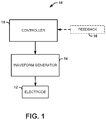
- One aspect of the present disclosure can include a system 10 ( FIG. 1 ) for controlling levels of perceived intensity of a sensory stimulus by a subject.
- the levels can be controlled and updated in real time based on feedback (e.g., from a sensor, based on an input, based on a predefined program, based on an input from an image, or the like).
- the system 10 can be used by a subject to perceive a level of intensity of a certain sensory stimulus based on an action taken by the subject or done onto the subject.
- the subject can be, for example, an able-bodied individual, an ill individual, an amputee, and/or a paralyzed individual.
- the system 10 can be used in connection with a prosthetic limb to replace missing sensation for an amputee.
- system 10 can be used in connection with an alternate reality or video game system that can be used by an ill individual or a healthy individual.
- system 10 can be used in connection with a neural prosthesis device to restore the function of sensation to a paralyzed individual.
- system 10 can be used to transform data recorded in one modality, such as an imaging modality like ultrasound, into sensation.
- the system 10 makes up for the deficiencies of artificial sensation provided by electrical stimulation of one or more sensory nerves (e.g., by a neural prosthesis), which can provide a degree of sensory perception.
- This electrical stimulation alone, however, cannot inform the subject as to the level of intensity of the sensation.
- the system 10 can provide a stimulus that informs the subject as to the level of intensity of the sensory stimulus perceived by the subject.
- the perceived level intensity can be a reflection of the magnitude of the sensory stimulus.
- the system 10 can include one or more electrodes 12, a waveform generator 14 (or stimulator), and a controller 16.
- the controller 16 can configure an electrical signal for stimulation based on a predefined intensity of sensory perception during an action.
- the waveform generator 14 can provide the stimulation signal configured according to instructions from the controller 16 to the one or more electrodes 12.
- the one or more electrodes 12 can apply the stimulation signal to the subject as the action is performed (either by the subject or on the subject).
- the one or more electrodes 12, the waveform generator 14, and/or the controller 16 can be configured to communicate via one or more wired and/or wireless connections.
- the one or more electrodes 12 and the waveform generator 14 can comprise a neural prosthesis device.
- the neural prosthesis device can deliver an electrical stimulation from the waveform generator 14 to a portion of the peripheral nervous system that includes a portion of the sensory nervous system through the one or more electrodes 12.
- the one or more electrodes 12 can be implantable and/or external (e.g., surface electrodes). Examples of internal electrodes can include one or more contacts of a multi-contact electrode, such as a spiral cuff electrode or flat interface neural electrode (FINE) cuff electrode, or one or more single-contact electrodes. An example of an external electrode can include a skin electrode.
- the waveform generator 14 can be configured independently of the one or more electrodes 12 for external or internal (e.g., the waveform generator 14 can be implantable) use.
- the controller 16 shown in more detail in FIG. 2 , can include a non-transitory memory 20 and a one or more processors 21.
- the non-transitory memory 20 and the one or more processors 21 can be hardware devices.
- Software aspects that can be implemented by the controller 16 can be stored as computer program instructions in the non-transitory memory 20.
- the non-transitory memory 20 can be any non-transitory medium that can contain or store the computer program instructions, including, but not limited to, a portable computer diskette; a random access memory; a read-only memory; an erasable programmable read-only memory (or Flash memory); and a portable compact disc read-only memory).
- the computer program instructions may be executed by the one or more processors 21.
- the one or more processors 21 can be one or more processors of a general-purpose computer, special purpose computer, and/or other programmable data processing apparatus. Upon execution of the computer program instructions, various functions/acts can be implemented by the controller 16 related to the configuration of the electrical stimulus signal that is sent to the waveform generator 14.
- the controller 16 can configure parameters of the electrical signal, which can cause the subject to perceive a predefined level of intensity for a stimulation.
- the program instructions stored in the non-transitory memory 20 can include an ACR determination unit 23 and a signal configuration unit 25.
- the ACR determination unit 23 can configure the electrical stimulation signal with an activation charge rate (ACR) based on the predefined intensity of sensory perception by a subject during an action.
- ACR is a single parameter of the electrical stimulation signal, which can be varied based on a desired level of perceived intensity to be perceived for a desired action.
- the ACR approximates the total spike rate evoked in the activated neural population and is directly proportional to the level of intensity perceived by the subject based on the stimulation.
- the ACR determination unit 23 combines the pulse frequency and the charge per pulse, which corresponds to the strength of the pulse (which depends on at least one of a pulse width value and a pulse amplitude value), to determine the ACR.
- the strength of pulses parameter and/or the frequency of pulses parameter in the stimulation signal can be altered throughout the stimulation as long as the ACR remains constant.
- the predefined level of intensity can be predefined based on a certain action.
- the correlation between predefined level of intensity and the action can be stored in a table 24 that may be stored in the non-transitory memory 20 of the controller 16 and consulted by the ACR determination unit 23 upon configuring the electrical stimulation signal for the action.
- the ACR can correspond to at least one of the predefined level of intensity for the action and/or the action stored in a table 24 that may be stored in the non-transitory memory 20 of the controller 16 and consulted by the ACR determination unit 23 upon configuring the electrical stimulation signal for the action.
- the signal configuration unit 25 can configure the electrical stimulation signal with the ACR.
- the signal configuration unit 25 can provide one or more parameters, including the ACR, to the waveform generator 14, which can generate the electrical stimulation signal with the ACR for application by the one or more electrodes 12.
- the subject perceives the desired level of intensity during the action.
- the perception of the level of intensity may be different from the actual predefined level of intensity, but is based on the predefined intensity of sensory perception.
- the signal configuration unit 25 can vary the strength of the pulses parameter and/or the frequency of the pulses parameter in the stimulation such that the ACR remains constant.
- this alteration of the strength of the pulses parameter and/or the frequency of the pulses parameter can be used to combat adaptation or to control another aspect of the sensation, such as the location.
- the signal can be reconfigured with a new ACR based on a new action being performed by or on the subject.
- the non-transitory memory can also store a feedback unit 26.
- the feedback unit 26 can receive feedback 18 and determine whether the level of intensity for the action is suffering from the effects of adaptation.
- the feedback 18, in some instances, can be provided by the subject related to adaptation as an open loop system. In other instances, the feedback 18 can be provided by the system 10 as a closed loop system, in which one or more sensors record a feature related to sensed intensity reflective of adaptation. In either case, the feedback unit 26 can account for the effects of adaptation on the ACR.
- the feedback unit 26 can signal the ACR determination unit 23 to determine a new ACR based on the adaptation.
- the signal configuration unit 25 can reconfigure the electrical stimulation signal with the new ACR (e.g., by controller 16).
- the reconfigured ACR can be based on adaptation exhibited in the feedback signal.
- the new electrical stimulation signal can induce the subject to perceive a new level of intensity during the action based on the reconfigured stimulation signal with the new ACR.
- FIG. 3 shows a method 30 for controlling levels of perceived intensity of a sensory stimulus.
- FIG. 4 shows a method 40 for reconfiguring the stimulation of FIG. 3 to account for a change in perceived intensity.
- the methods 30 and 40 can be executed by hardware - for example, at least a portion of the system 10 shown in FIG. 1 .
- the levels of perceived intensity can be controlled and updated in real time. For example, the levels can be controlled based on an input from a sensor that senses the environment or the subject's body. Additionally, the levels can be controlled based on an image or input/feedback.
- the methods 30 and 40 are illustrated as process flow diagrams with flowchart illustrations. For purposes of simplicity, the methods 30 and 40 are shown and described as being executed serially; however, it is to be understood and appreciated that the present disclosure is not limited by the illustrated order as some steps could occur in different orders and/or concurrently with other steps shown and described herein. Moreover, not all illustrated aspects may be required to implement the methods 30 and 40. Additionally, one or more elements that implement the methods 30 and 40, such as controller 16 of FIG. 1 , can include a non-transitory memory 20 and one or more processors 21.
- the levels of intensity perceived by a subject can be controlled based on the configuration of an electrical stimulation signal with a certain activation charge rate (ACR).
- ACR activation charge rate
- the ACR can be variable based on an input (e.g., from a sensor, based on a predefined program, or another type of input)
- the subject can be, for example, an able-bodied individual, an ill individual, an amputee, and/or a paralyzed individual.
- a stimulation signal can be configured ( e.g., by controller 16) with an ACR that is set to an initial value based on a predefined intensity of sensory perception by a subject during an action.
- the ACR can be constant for a time period, which may be momentarily or indefinitely. In some instances, the ACR can be updated in real time to accommodate a charging input (e.g., from a sensor, from another type of input, etc.).
- the ACR is a single parameter of the stimulation signal that approximates the total spike rate evoked in the activated neural population and combines the pulse frequency and the charge per pulse, which corresponds to the strength of the pulse. In fact, the ACR is directly proportional to the level of intensity perceived by the subject based on the stimulation.
- a desired level of perceived intensity can be perceived for a desired action.
- the strength of pulses parameter (which depends on at least one of a pulse width value and a pulse amplitude value) and/or the frequency of pulses parameter in the stimulation signal can be altered throughout the stimulation as long as the ACR remains constant.
- the level of intensity can be predefined based on a certain action. For example, a firm handshake can be set with a lower level of intensity than a bone-crushing grasp.
- the correlation between predefined level of intensity and the action can be stored in a table that may be stored in a non-transitory memory and consulted by a component of the system executing the method 30 upon configuring the stimulation signal for the action.
- the ACR can correspond to at least one of the predefined level of intensity for the action and/or the action stored in a table that may be stored in the non-transitory memory and consulted by a component by the system executing the method 30 upon configuring the stimulation signal.
- the stimulation signal can be applied (e.g., by one or more electrodes 12 of a neural prosthesis device) to neural tissue.
- the subject can be induced to perceive the predefined level of intensity of sensory perception.
- the predefined level of intensity of sensory perception can correspond to the magnitude of the sensation for the action.
- the level of intensity for the action can suffer from the effects of adaptation.
- the method 40 can account for the effects of adaptation on the ACR.
- feedback related to the level of sensation perceived by the subject can be received ( e.g., by controller 16).
- the stimulation signal can be reconfigured with a new ACR (e.g., by controller 16).
- the reconfigured ACR can be based on adaptation exhibited in the feedback signal.
- the subject can be induced to perceive a new level of intensity during the action based on the reconfigured stimulation signal with the new ACR.
- This example shows how perception of a magnitude of sensation can be manipulated systematically by varying activation charge rate (ACR), a single stimulation quantity.
- ACR activation charge rate
- Tactile intensity was assessed in seven electrode contacts in two upper limb amputee volunteers in a series of forced-choice tasks for intensity discrimination, perceived magnitude rating, and artificial to natural sensation matching. The data were used to create a model of the neural basis of perceived intensity. All experiments were double-blinded with randomized stimulus presentation order. A computer program controlled stimulation and raw data was analyzed by custom programs.
- Subject inclusion criteria included unilateral, upper limb amputees, age 21 or older, who are current users of a myoelectric prosthesis or prescribed to use one, and have viable target nerves in the residual limb. Potential subjects were excluded because of poor health (uncontrolled diabetes, chronic skin ulceration, history of uncontrolled infection, active infection) or the presence of significant, uncontrolled persistent pain in the residual or phantom limb.
- FINEs Flat Interface Nerve Electrodes
- CWRU CWRU spiral cuffs around their median, ulnar, and radial nerves in their residual limbs.
- subject 1 had a right trans-radial amputation just proximal to the wrist in 2010 due to a traumatic injury, and was implanted in May of 2012 with 8-contact FINEs around his right median and ulnar nerves and a 4-contact CWRU spiral cuff around his right radial nerve.
- Subject 2 had a right trans-radial amputation in 2004 due to a traumatic injury, and was implanted in January of 2013 with 8-contact FINEs around his median, ulnar, and radial nerves.
- the present study was carried out between months 32 and 40 post-implant for subject 1 and months 26 and 32 post-implant for subject 2.
- the subjects visited the lab for six-hour testing sessions every 2-6 weeks, depending on their availability.
- the convention Ex.y where x denotes the subject (1 or 2) and y denotes the electrode for that subject (ranging from 1 to 7), was used.
- All electrical stimuli consisted of trains of charge-balanced, square-wave, biphasic pulses with cathodal phase leading delivered by a custom Universal External Control Unit (UECU, Cleveland FES Center) stimulator to a single contact in the median nerve cuff ( FIG. 5 ).
- the electrical returns consisted of 1 to 3 other contacts in the cuff such that stimulation elicited sensations on the palmar surface of the hand and did not interfere with the control of the myoelectric prosthesis.
- the subject's threshold on each cathodic contact was obtained using a two-alternative forced choice tracking paradigm in two stages, focusing on the long-pulse width (PW) portion of the strength-duration curve.
- PW long-pulse width
- the pulse amplitude (PA) threshold was found: On each trial, stimuli consisted of 5 s long pulse trains at a pulse frequency (PF) of 100 Hz and a PW of 255 ⁇ s, the largest PW achievable with the stimulator, and the subject reported if he perceived the stimulus. PA started at 0.3 mA and increased by 0.1 mA until the subject reported sensation. In stage 2, the PW threshold was found: PA was held at threshold, PW started at 130 ⁇ s, and on each trial, decreased by 130/2 n when the subject reported sensation or increased by 130/2 n when the subject did not, where n is the number of reversals. Threshold was assumed once the PW step size became less than 5 ⁇ s.
- PW was increased in small steps to determine the range of parameters that led to sensations without causing discomfort.
- the midpoint of the range of PWs that elicited sensations was then selected as the set point PW for all subsequent discrimination trials.
- stimuli at a range of PFs were presented to ensure that stimuli were perceptible and comfortable.
- the location, intensity, and quality of the sensations were recorded for several stimuli that spanned the range of PWs and PFs used in the discrimination experiments (described below). The quality of sensations tended to remain constant over the range of parameters tested.
- Each experimental block comprised 180 trials and subjects were given a break between blocks.
- each stimulus pair was presented 20 times, and both the order of stimuli within the pair and the order of the pairs was varied pseudo-randomly.
- the two pulse trains lasted 1 s and were separated by a 1-s inter-stimulus interval.
- the subject was instructed to ignore any changes in quality, duration, or location of the sensations, if such changes were to occur, and to focus solely on the intensity or magnitude of the sensation.
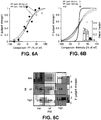
- Both the subject and the experimenter were blinded to the particular stimulation conditions of each trial. Discrimination data were fit with cumulative normal distributions to obtain psychometric functions.
- JND just noticeable difference
- PF discrimination Stimuli in each pair differed only in PF, with PA and PW held constant at their set point values, as described above.
- Each pair consisted of a stimulus at a reference PF and the other was at a test PF.
- test stimuli were 25, 50, 83.3, 90.91, 100, 111.1, 125, 142.9, 166.7 Hz
- test stimuli for the 50 Hz reference were 12.5, 25, 40, 45.5, 50, 55.6, 62.5, 76.9, 90.9 Hz.
- PW discrimination Stimuli in each pair differed in PW, with PF held constant at 100 Hz and PA at its set value.
- One stimulus in each pair was the reference stimulus, where the PW was the set value used in the frequency discrimination trials.
- the other stimulus in the pair was the test stimulus, with PW typically ranging from 75 to 125% of the reference PW.
- PF & PW discrimination Stimuli in each pair differed in PW, PF, or both.
- One stimulus in the pair was always the reference stimulus, in which the PF and PW were at their set point values.
- This reference stimulus was compared to nine test stimuli, that included every possible permutation of PF, which took on one of three values (at the reference level, below it, or above it), paired with a PW, which also took on one of these three values.
- the high and low values were selected based on prior trials to be slightly greater than or less than one JND (estimated from the PF and PW discrimination functions), respectively.
- the PFs for Subject 1 were 83.3, 100, and 125 Hz because the PF JND was found to be around 24 Hz on this contact, and the PWs were 121, 130, and 139 ⁇ s, because the PW JND was found to be around 10 ⁇ s on this contact.
- Indentation stimuli were applied with micron precision ( ⁇ 2 ⁇ m) using a stage driven by a MX80LP servo motor with a 0.5 ⁇ m encoder (Parker Hannifin Corp., Cleveland, OH).
- the motor was controlled by a ViX250-IH servo driver (Parker Hannifin Corp.) under computer control using custom software.
- the stage was mounted on a stable frame constructed from extruded aluminum rods.
- the indenter was positioned over the (intact) left hand with the tactor centered on the location that matched the projected location of the sensations evoked when stimulating through the contact tested on that experimental block.
- the skin was pre-indented by ⁇ 500 ⁇ m to ensure that the tactor maintained contact with the skin over the entire block.
- Each trial consisted of a mechanical stimulus delivered to the intact hand paired with an electrical stimulus delivered through a given contact.
- the stimuli each last 1 s and were separated by a 1 s inter-stimulus interval, followed by a response interval.
- the order of presentation of the stimuli was randomized.
- the subject indicated which stimulus (mechanical or electrical) felt stronger.
- Each experimental block was divided into sub-blocks during which the electrical stimulus remained constant. Within each sub-block, the depth of mechanical indentation increased (decreased) with a step size of 2 dB if the mechanical stimulus on the previous trial had been perceived as more (less) intense.
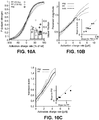
- Discrimination performance does not provide information about the range of elicited sensations. Indeed, all pulse trains might have elicited percepts whose magnitude was only slightly different, but reliably so. To achieve natural somatosensory feedback would require that the artificial sensation perceptions span a wide range of sensory magnitudes that matches the range experienced in every day life through an intact limb. To test the breadth of evoked sensations, subjects were asked to provide judgments of perceived intensity across the range of safe and comfortable stimulation parameters in a free magnitude scaling paradigm. As expected, the perceived intensity increased as PW ( FIG. 7 , elements A, C) and PF ( FIG. 7 , elements B, D) increased over the range of values tested.
- perceived magnitudes of artificial touch spanned a wide range, increasing approximately tenfold from the lowest to the highest intensity tested.
- the perceived magnitude as a function of average current was different depending on the mode of stimulation ( t -test comparing regession slopes, all p ⁇ 0.001, FIG. 7 , element E): Slopes were steepest for PW, shallowest for PF, and intermediate for the combination of PF and PW.
- Electrode contacts that yielded a high slope for indentation depth vs. PF also yielded a high slope for indentation depth vs. PW ( FIG. 8 , element E, r 0.96).
- PW and PF had different effects on matched depths when stimulation was expressed in terms of the average stimulation current ( I ave )( t- test comparing regession slopes, all p ⁇ 0.001).
- Increasing the PF of a stimulation results in an increase in the firing rate of activated neurons with miminal influence on the number of fibers activated, whereas increasing PW results in recruitment of additional neurons while minimally affecting the firing rate of the activated fibers since each pulse is too short to evoke multiple spikes in a given fiber.
- electrical stimulation allows population size (via PW) and population firing rate (via PF) to be varied independently, which is not possible with natural stimulation as these two factors generally co-vary with mechanical stimulation of the skin.
- the perceived intensity is determined by the spike count across the population of afferent neurons whose receptive fields are directly under the stimulus, weighted by fiber type.
- the perceived intensity is determined by the spike count across the entire population of afferent neurons that is activated by the stimulus, again weighted by fiber type.
- results from the present study provide evidence against the hot zone model of perceived intensity.
- increasing the PF of stimulation increases sensory magntude by increasing the firing of neurons while miminally recruiting additional neurons.
- increasing the PW recruits additional neurons while minimally affecting firing rate and has little impact on perceived intensity.
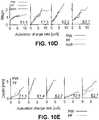
- the population model of perceived intensity predicts that increases in both stimulation parameters should affect perceived magnitude as they both modulate the total number of spikes elicited: one by increasing the spike rate of activated neurons, the other by recruiting more neurons. In other words, both temporal and spatial summation seem to play a role in shaping perceived intensity.
- Recruitment - the proportion of fibers in the fascicle that are activated by each pulse - can be described as a sigmoidal function of PW ( FIG. 9 , element A). While the threshold and slope are expected to vary across electrodes - depending on the distance between the electrode and the stimulated fascicle, the precise electrical properties of the interposed tissue, the layout of surrounding fascicles, and the cross-sectional area of the fascicle, among others - a sigmoid is a generic description of the recruitment function. A detailed biophysical model of the human median nerve and of the effects of electrical stimulation on recruitment was implemented, showing that simulated recruitment curves were well approximated by a sigmoid function.
- ACR activation charge rate
Landscapes
- Health & Medical Sciences (AREA)
- Life Sciences & Earth Sciences (AREA)
- Animal Behavior & Ethology (AREA)
- Veterinary Medicine (AREA)
- Public Health (AREA)
- Engineering & Computer Science (AREA)
- Biomedical Technology (AREA)
- General Health & Medical Sciences (AREA)
- Nuclear Medicine, Radiotherapy & Molecular Imaging (AREA)
- Radiology & Medical Imaging (AREA)
- Neurosurgery (AREA)
- Neurology (AREA)
- Heart & Thoracic Surgery (AREA)
- Biophysics (AREA)
- Cardiology (AREA)
- Orthopedic Medicine & Surgery (AREA)
- Physiology (AREA)
- Rehabilitation Therapy (AREA)
- Vascular Medicine (AREA)
- Transplantation (AREA)
- Oral & Maxillofacial Surgery (AREA)
- Electrotherapy Devices (AREA)
Claims (7)
- System (10), umfassend:
mindestens eine Elektrode (12):eine Steuerung (16), umfassend einen Prozessor (21), um ein Stimulierungssignal mit einer Aktivierungsladerate (ACR) basierend auf einem vorbestimmten Niveau der Intensität von sensorischer Wahrnehmung durch ein Subjekt während einer Aktion zu konfigurieren,wobei die ACR einen Parameter für die Stärke der Impulse und einen Parameter für die Frequenz der Impulse in dem Simulationssignal umfasst und einen Stimulationsparameter definiert, der die Impulsfrequenz und die Ladung pro Impuls kombiniert, um die Gesamt-Spikerate zu approximieren,wobei die Steuerung (16) konfiguriert ist, um mindestens einen aus dem Parameter für die Stärke der Impulse und dem Parameter für die Frequenz der Impulse in der Simulation zu ändern, so dass die ACR während der Aktion konstant bleibt, undwobei die Steuerung konfiguriert ist, um die ACR entsprechend einem gewünschten Niveau der Empfindung einzustellen, die während der Aktion basierend auf dem Stimulationssignal und dem vorbestimmten Niveau der Intensität der sensorischen Wahrnehmung wahrzunehmen ist; undein Wellenformgenerator (14), um ein Stimulationssignal zu erzeugen und das Stimulationssignal an die Elektrode (12) zum Anlegen an das Subjekt bereitzustellen, während die Aktion ausgeführt wird,wobei die mindestens eine Elektrode (12) für das Anlegen des Stimulationssignals an das Subjekt konfiguriert ist, während die Aktion ausgeführt wird. - System (10) nach Anspruch 1, wobei der Parameter für die Stärke der Impulse mindestens auf einem aus einem Wert der Impulsbreite und einem Wert der Impulsamplitude basiert.
- System (10) nach Anspruch 1, wobei die Steuerung (16) ausgelegt ist, um das Stimulationssignal basierend auf einem Eingang von einem Sensor mit einer anderen ACR zu konfigurieren.
- System (10) nach Anspruch 1, wobei das vorbestimmte Niveau der Intensität aus einer Tabelle (24) abgerufen wird, die in einem nichtflüchtigen Speicher (20) gespeichert ist, der basierend auf der Aktion der Steuerung (16) zugeordnet ist.
- System (10) nach Anspruch 1, wobei die mindestens eine Elektrode (12) eine implantierbare Elektrode oder eine externe Elektrode ist.
- System (10) nach Anspruch 1, wobei die mindestens eine Elektrode (12) mindestens eine aus einer Nervenelektrode mit flacher Grenzfläche (FINE) oder einer Spiralmanschettenelektrode umfasst.
- System (10) nach Anspruch 1, wobei die Steuerung (16) konfiguriert ist, um ein Rückkopplungssignal (18) zu empfangen, das sich auf einen Effekt der Anpassung des Subjekts an das Stimulationssignal bezieht, um die ACR weiter basierend auf das Rückkopplungssignal (18) zu bestimmen.
Applications Claiming Priority (3)
| Application Number | Priority Date | Filing Date | Title |
|---|---|---|---|
| US201662407202P | 2016-10-12 | 2016-10-12 | |
| US201762537992P | 2017-07-28 | 2017-07-28 | |
| PCT/US2017/056070 WO2018071494A1 (en) | 2016-10-12 | 2017-10-11 | Systems and methods for controlling levels of perceived intensity of a sensory stimulus |
Publications (2)
| Publication Number | Publication Date |
|---|---|
| EP3525876A1 EP3525876A1 (de) | 2019-08-21 |
| EP3525876B1 true EP3525876B1 (de) | 2020-12-02 |
Family
ID=60153581
Family Applications (1)
| Application Number | Title | Priority Date | Filing Date |
|---|---|---|---|
| EP17787851.9A Active EP3525876B1 (de) | 2016-10-12 | 2017-10-11 | System zur steuerung der wahrgenommenen intensität eines sensorischen stimulus |
Country Status (5)
| Country | Link |
|---|---|
| US (2) | US11116977B2 (de) |
| EP (1) | EP3525876B1 (de) |
| AU (1) | AU2017342076B2 (de) |
| CA (1) | CA3039917C (de) |
| WO (1) | WO2018071494A1 (de) |
Families Citing this family (6)
| Publication number | Priority date | Publication date | Assignee | Title |
|---|---|---|---|---|
| EP3525876B1 (de) * | 2016-10-12 | 2020-12-02 | Case Western Reserve University | System zur steuerung der wahrgenommenen intensität eines sensorischen stimulus |
| WO2020160498A1 (en) | 2019-01-31 | 2020-08-06 | The University Of Chicago | Bionic breast |
| US11809629B1 (en) | 2022-06-10 | 2023-11-07 | Afference Inc. | Wearable electronic device for inducing transient sensory events as user feedback |
| US12182328B2 (en) | 2022-06-10 | 2024-12-31 | Afference Inc. | Wearable electronic device for inducing transient sensory events as user feedback |
| CN121532973A (zh) * | 2023-07-12 | 2026-02-13 | Oppo广东移动通信有限公司 | 感知信息的发送方法、接收方法、装置、设备及存储介质 |
| CN120392103B (zh) * | 2025-05-13 | 2026-02-27 | 合肥中科厚生医疗科技有限公司 | 一种基于脑电特征的感觉神经定量检测方法及系统 |
Family Cites Families (3)
| Publication number | Priority date | Publication date | Assignee | Title |
|---|---|---|---|---|
| US9421366B2 (en) * | 2012-12-14 | 2016-08-23 | Case Western Reserve University | Methods of treating medical conditions by population based encoding of neural information |
| CA2983500C (en) | 2013-12-16 | 2023-04-04 | Case Western Reserve University | Patterned stimulation intensity for neural stimulation |
| EP3525876B1 (de) * | 2016-10-12 | 2020-12-02 | Case Western Reserve University | System zur steuerung der wahrgenommenen intensität eines sensorischen stimulus |
-
2017
- 2017-10-11 EP EP17787851.9A patent/EP3525876B1/de active Active
- 2017-10-11 US US16/341,084 patent/US11116977B2/en active Active
- 2017-10-11 AU AU2017342076A patent/AU2017342076B2/en active Active
- 2017-10-11 CA CA3039917A patent/CA3039917C/en active Active
- 2017-10-11 WO PCT/US2017/056070 patent/WO2018071494A1/en not_active Ceased
-
2021
- 2021-08-09 US US17/397,192 patent/US12427313B2/en active Active
Non-Patent Citations (1)
| Title |
|---|
| None * |
Also Published As
| Publication number | Publication date |
|---|---|
| CA3039917C (en) | 2021-08-17 |
| AU2017342076B2 (en) | 2019-12-05 |
| US20220001183A1 (en) | 2022-01-06 |
| EP3525876A1 (de) | 2019-08-21 |
| WO2018071494A1 (en) | 2018-04-19 |
| CA3039917A1 (en) | 2018-04-19 |
| US20200230416A1 (en) | 2020-07-23 |
| US11116977B2 (en) | 2021-09-14 |
| AU2017342076A1 (en) | 2019-05-02 |
| US12427313B2 (en) | 2025-09-30 |
Similar Documents
| Publication | Publication Date | Title |
|---|---|---|
| US12427313B2 (en) | Systems and methods for controlling levels of perceived intensity of a sensory stimulus | |
| Milosevic et al. | Why brain-controlled neuroprosthetics matter: mechanisms underlying electrical stimulation of muscles and nerves in rehabilitation | |
| US20250276173A1 (en) | Patterned stimulation intensity for neural stimulation | |
| Takeda et al. | Review of devices used in neuromuscular electrical stimulation for stroke rehabilitation | |
| US11433238B2 (en) | Treatment of phantom limb pain and diabetic neuropathy pain, and increasing prosthetic control, by stimulation of dorsal rootlets and lateral spinal cord | |
| Jackson et al. | Neural interfaces for the brain and spinal cord—restoring motor function | |
| Weber et al. | Limb-state information encoded by peripheral and central somatosensory neurons: implications for an afferent interface | |
| London et al. | Electrical stimulation of the proprioceptive cortex (area 3a) used to instruct a behaving monkey | |
| US8346366B2 (en) | Spinal cord implant systems and methods | |
| US20140336722A1 (en) | Method and neuroprosthetic device for monitoring and suppression of pathological tremors through neurostimulation of the afferent pathways | |
| Page et al. | Discriminability of multiple cutaneous and proprioceptive hand percepts evoked by intraneural stimulation with Utah slanted electrode arrays in human amputees | |
| George et al. | Intensity discriminability of electrocutaneous and intraneural stimulation pulse frequency in intact individuals and amputees | |
| Bjånes et al. | A robust encoding scheme for delivering artificial sensory information via direct brain stimulation | |
| Hobbs et al. | Biomimetic stimulation patterns drive natural artificial touch percepts using intracortical microstimulation in humans | |
| Popovic et al. | Recruitment and comfort of BION implanted electrical stimulation: implications for FES applications | |
| Sritharan et al. | Somatosensory encoding with cuneate nucleus microstimulation: detection of artificial stimuli | |
| Dupan et al. | Temporal modulation of transcutaneous electrical nerve stimulation influences sensory perception | |
| Gonzalez et al. | Characterizing sensory thresholds and intensity sensitivity of regenerative peripheral nerve interfaces: a case study | |
| Katic et al. | Modeling of the peripheral nerve to investigate advanced neural stimulation (sensory neural prosthesis) | |
| Dupan et al. | How fast is too fast? Boundaries to the perception of electrical stimulation of peripheral nerves | |
| Kramer et al. | Functional frequency discrimination from cortical somatosensory stimulation in humans | |
| Granata et al. | Cortical plasticity after hand prostheses use: Is the hypothesis of deafferented cortex “invasion” always true? | |
| Andersen et al. | Neural stimulation technologies | |
| Osborn et al. | Cortical response to expectation of tactile stimulation from external anthropomorphic and non-anthropomorphic systems | |
| Wilke et al. | Stimulation of the retinal network in bionic vision devices: From multi-electrode arrays to pixelated vision |
Legal Events
| Date | Code | Title | Description |
|---|---|---|---|
| STAA | Information on the status of an ep patent application or granted ep patent |
Free format text: STATUS: UNKNOWN |
|
| STAA | Information on the status of an ep patent application or granted ep patent |
Free format text: STATUS: THE INTERNATIONAL PUBLICATION HAS BEEN MADE |
|
| PUAI | Public reference made under article 153(3) epc to a published international application that has entered the european phase |
Free format text: ORIGINAL CODE: 0009012 |
|
| STAA | Information on the status of an ep patent application or granted ep patent |
Free format text: STATUS: REQUEST FOR EXAMINATION WAS MADE |
|
| 17P | Request for examination filed |
Effective date: 20190510 |
|
| AK | Designated contracting states |
Kind code of ref document: A1 Designated state(s): AL AT BE BG CH CY CZ DE DK EE ES FI FR GB GR HR HU IE IS IT LI LT LU LV MC MK MT NL NO PL PT RO RS SE SI SK SM TR |
|
| AX | Request for extension of the european patent |
Extension state: BA ME |
|
| DAV | Request for validation of the european patent (deleted) | ||
| DAX | Request for extension of the european patent (deleted) | ||
| GRAP | Despatch of communication of intention to grant a patent |
Free format text: ORIGINAL CODE: EPIDOSNIGR1 |
|
| STAA | Information on the status of an ep patent application or granted ep patent |
Free format text: STATUS: GRANT OF PATENT IS INTENDED |
|
| INTG | Intention to grant announced |
Effective date: 20200716 |
|
| GRAS | Grant fee paid |
Free format text: ORIGINAL CODE: EPIDOSNIGR3 |
|
| GRAA | (expected) grant |
Free format text: ORIGINAL CODE: 0009210 |
|
| STAA | Information on the status of an ep patent application or granted ep patent |
Free format text: STATUS: THE PATENT HAS BEEN GRANTED |
|
| AK | Designated contracting states |
Kind code of ref document: B1 Designated state(s): AL AT BE BG CH CY CZ DE DK EE ES FI FR GB GR HR HU IE IS IT LI LT LU LV MC MK MT NL NO PL PT RO RS SE SI SK SM TR |
|
| REG | Reference to a national code |
Ref country code: GB Ref legal event code: FG4D |
|
| REG | Reference to a national code |
Ref country code: AT Ref legal event code: REF Ref document number: 1340230 Country of ref document: AT Kind code of ref document: T Effective date: 20201215 Ref country code: CH Ref legal event code: EP |
|
| REG | Reference to a national code |
Ref country code: IE Ref legal event code: FG4D |
|
| REG | Reference to a national code |
Ref country code: DE Ref legal event code: R096 Ref document number: 602017028891 Country of ref document: DE |
|
| REG | Reference to a national code |
Ref country code: CH Ref legal event code: NV Representative=s name: SERVOPATENT GMBH, CH |
|
| PG25 | Lapsed in a contracting state [announced via postgrant information from national office to epo] |
Ref country code: GR Free format text: LAPSE BECAUSE OF FAILURE TO SUBMIT A TRANSLATION OF THE DESCRIPTION OR TO PAY THE FEE WITHIN THE PRESCRIBED TIME-LIMIT Effective date: 20210303 Ref country code: NO Free format text: LAPSE BECAUSE OF FAILURE TO SUBMIT A TRANSLATION OF THE DESCRIPTION OR TO PAY THE FEE WITHIN THE PRESCRIBED TIME-LIMIT Effective date: 20210302 Ref country code: RS Free format text: LAPSE BECAUSE OF FAILURE TO SUBMIT A TRANSLATION OF THE DESCRIPTION OR TO PAY THE FEE WITHIN THE PRESCRIBED TIME-LIMIT Effective date: 20201202 Ref country code: FI Free format text: LAPSE BECAUSE OF FAILURE TO SUBMIT A TRANSLATION OF THE DESCRIPTION OR TO PAY THE FEE WITHIN THE PRESCRIBED TIME-LIMIT Effective date: 20201202 |
|
| REG | Reference to a national code |
Ref country code: NL Ref legal event code: MP Effective date: 20201202 |
|
| REG | Reference to a national code |
Ref country code: AT Ref legal event code: MK05 Ref document number: 1340230 Country of ref document: AT Kind code of ref document: T Effective date: 20201202 |
|
| PG25 | Lapsed in a contracting state [announced via postgrant information from national office to epo] |
Ref country code: BG Free format text: LAPSE BECAUSE OF FAILURE TO SUBMIT A TRANSLATION OF THE DESCRIPTION OR TO PAY THE FEE WITHIN THE PRESCRIBED TIME-LIMIT Effective date: 20210302 Ref country code: SE Free format text: LAPSE BECAUSE OF FAILURE TO SUBMIT A TRANSLATION OF THE DESCRIPTION OR TO PAY THE FEE WITHIN THE PRESCRIBED TIME-LIMIT Effective date: 20201202 Ref country code: LV Free format text: LAPSE BECAUSE OF FAILURE TO SUBMIT A TRANSLATION OF THE DESCRIPTION OR TO PAY THE FEE WITHIN THE PRESCRIBED TIME-LIMIT Effective date: 20201202 Ref country code: PL Free format text: LAPSE BECAUSE OF FAILURE TO SUBMIT A TRANSLATION OF THE DESCRIPTION OR TO PAY THE FEE WITHIN THE PRESCRIBED TIME-LIMIT Effective date: 20201202 |
|
| PG25 | Lapsed in a contracting state [announced via postgrant information from national office to epo] |
Ref country code: NL Free format text: LAPSE BECAUSE OF FAILURE TO SUBMIT A TRANSLATION OF THE DESCRIPTION OR TO PAY THE FEE WITHIN THE PRESCRIBED TIME-LIMIT Effective date: 20201202 Ref country code: HR Free format text: LAPSE BECAUSE OF FAILURE TO SUBMIT A TRANSLATION OF THE DESCRIPTION OR TO PAY THE FEE WITHIN THE PRESCRIBED TIME-LIMIT Effective date: 20201202 |
|
| REG | Reference to a national code |
Ref country code: LT Ref legal event code: MG9D |
|
| PG25 | Lapsed in a contracting state [announced via postgrant information from national office to epo] |
Ref country code: SM Free format text: LAPSE BECAUSE OF FAILURE TO SUBMIT A TRANSLATION OF THE DESCRIPTION OR TO PAY THE FEE WITHIN THE PRESCRIBED TIME-LIMIT Effective date: 20201202 Ref country code: LT Free format text: LAPSE BECAUSE OF FAILURE TO SUBMIT A TRANSLATION OF THE DESCRIPTION OR TO PAY THE FEE WITHIN THE PRESCRIBED TIME-LIMIT Effective date: 20201202 Ref country code: EE Free format text: LAPSE BECAUSE OF FAILURE TO SUBMIT A TRANSLATION OF THE DESCRIPTION OR TO PAY THE FEE WITHIN THE PRESCRIBED TIME-LIMIT Effective date: 20201202 Ref country code: CZ Free format text: LAPSE BECAUSE OF FAILURE TO SUBMIT A TRANSLATION OF THE DESCRIPTION OR TO PAY THE FEE WITHIN THE PRESCRIBED TIME-LIMIT Effective date: 20201202 Ref country code: SK Free format text: LAPSE BECAUSE OF FAILURE TO SUBMIT A TRANSLATION OF THE DESCRIPTION OR TO PAY THE FEE WITHIN THE PRESCRIBED TIME-LIMIT Effective date: 20201202 Ref country code: PT Free format text: LAPSE BECAUSE OF FAILURE TO SUBMIT A TRANSLATION OF THE DESCRIPTION OR TO PAY THE FEE WITHIN THE PRESCRIBED TIME-LIMIT Effective date: 20210405 Ref country code: RO Free format text: LAPSE BECAUSE OF FAILURE TO SUBMIT A TRANSLATION OF THE DESCRIPTION OR TO PAY THE FEE WITHIN THE PRESCRIBED TIME-LIMIT Effective date: 20201202 |
|
| PG25 | Lapsed in a contracting state [announced via postgrant information from national office to epo] |
Ref country code: AT Free format text: LAPSE BECAUSE OF FAILURE TO SUBMIT A TRANSLATION OF THE DESCRIPTION OR TO PAY THE FEE WITHIN THE PRESCRIBED TIME-LIMIT Effective date: 20201202 |
|
| REG | Reference to a national code |
Ref country code: DE Ref legal event code: R097 Ref document number: 602017028891 Country of ref document: DE |
|
| PG25 | Lapsed in a contracting state [announced via postgrant information from national office to epo] |
Ref country code: IS Free format text: LAPSE BECAUSE OF FAILURE TO SUBMIT A TRANSLATION OF THE DESCRIPTION OR TO PAY THE FEE WITHIN THE PRESCRIBED TIME-LIMIT Effective date: 20210402 |
|
| PLBE | No opposition filed within time limit |
Free format text: ORIGINAL CODE: 0009261 |
|
| STAA | Information on the status of an ep patent application or granted ep patent |
Free format text: STATUS: NO OPPOSITION FILED WITHIN TIME LIMIT |
|
| PG25 | Lapsed in a contracting state [announced via postgrant information from national office to epo] |
Ref country code: AL Free format text: LAPSE BECAUSE OF FAILURE TO SUBMIT A TRANSLATION OF THE DESCRIPTION OR TO PAY THE FEE WITHIN THE PRESCRIBED TIME-LIMIT Effective date: 20201202 Ref country code: IT Free format text: LAPSE BECAUSE OF FAILURE TO SUBMIT A TRANSLATION OF THE DESCRIPTION OR TO PAY THE FEE WITHIN THE PRESCRIBED TIME-LIMIT Effective date: 20201202 |
|
| 26N | No opposition filed |
Effective date: 20210903 |
|
| PG25 | Lapsed in a contracting state [announced via postgrant information from national office to epo] |
Ref country code: SI Free format text: LAPSE BECAUSE OF FAILURE TO SUBMIT A TRANSLATION OF THE DESCRIPTION OR TO PAY THE FEE WITHIN THE PRESCRIBED TIME-LIMIT Effective date: 20201202 Ref country code: DK Free format text: LAPSE BECAUSE OF FAILURE TO SUBMIT A TRANSLATION OF THE DESCRIPTION OR TO PAY THE FEE WITHIN THE PRESCRIBED TIME-LIMIT Effective date: 20201202 |
|
| PG25 | Lapsed in a contracting state [announced via postgrant information from national office to epo] |
Ref country code: ES Free format text: LAPSE BECAUSE OF FAILURE TO SUBMIT A TRANSLATION OF THE DESCRIPTION OR TO PAY THE FEE WITHIN THE PRESCRIBED TIME-LIMIT Effective date: 20201202 |
|
| PG25 | Lapsed in a contracting state [announced via postgrant information from national office to epo] |
Ref country code: IS Free format text: LAPSE BECAUSE OF FAILURE TO SUBMIT A TRANSLATION OF THE DESCRIPTION OR TO PAY THE FEE WITHIN THE PRESCRIBED TIME-LIMIT Effective date: 20210402 |
|
| PG25 | Lapsed in a contracting state [announced via postgrant information from national office to epo] |
Ref country code: MC Free format text: LAPSE BECAUSE OF FAILURE TO SUBMIT A TRANSLATION OF THE DESCRIPTION OR TO PAY THE FEE WITHIN THE PRESCRIBED TIME-LIMIT Effective date: 20201202 |
|
| PG25 | Lapsed in a contracting state [announced via postgrant information from national office to epo] |
Ref country code: LU Free format text: LAPSE BECAUSE OF NON-PAYMENT OF DUE FEES Effective date: 20211011 |
|
| PG25 | Lapsed in a contracting state [announced via postgrant information from national office to epo] |
Ref country code: IE Free format text: LAPSE BECAUSE OF NON-PAYMENT OF DUE FEES Effective date: 20211011 |
|
| PG25 | Lapsed in a contracting state [announced via postgrant information from national office to epo] |
Ref country code: CY Free format text: LAPSE BECAUSE OF FAILURE TO SUBMIT A TRANSLATION OF THE DESCRIPTION OR TO PAY THE FEE WITHIN THE PRESCRIBED TIME-LIMIT Effective date: 20201202 |
|
| P01 | Opt-out of the competence of the unified patent court (upc) registered |
Effective date: 20230529 |
|
| PG25 | Lapsed in a contracting state [announced via postgrant information from national office to epo] |
Ref country code: HU Free format text: LAPSE BECAUSE OF FAILURE TO SUBMIT A TRANSLATION OF THE DESCRIPTION OR TO PAY THE FEE WITHIN THE PRESCRIBED TIME-LIMIT; INVALID AB INITIO Effective date: 20171011 |
|
| PG25 | Lapsed in a contracting state [announced via postgrant information from national office to epo] |
Ref country code: MK Free format text: LAPSE BECAUSE OF FAILURE TO SUBMIT A TRANSLATION OF THE DESCRIPTION OR TO PAY THE FEE WITHIN THE PRESCRIBED TIME-LIMIT Effective date: 20201202 |
|
| PG25 | Lapsed in a contracting state [announced via postgrant information from national office to epo] |
Ref country code: TR Free format text: LAPSE BECAUSE OF FAILURE TO SUBMIT A TRANSLATION OF THE DESCRIPTION OR TO PAY THE FEE WITHIN THE PRESCRIBED TIME-LIMIT Effective date: 20201202 |
|
| PG25 | Lapsed in a contracting state [announced via postgrant information from national office to epo] |
Ref country code: MT Free format text: LAPSE BECAUSE OF FAILURE TO SUBMIT A TRANSLATION OF THE DESCRIPTION OR TO PAY THE FEE WITHIN THE PRESCRIBED TIME-LIMIT Effective date: 20201202 |
|
| REG | Reference to a national code |
Ref country code: CH Ref legal event code: U11 Free format text: ST27 STATUS EVENT CODE: U-0-0-U10-U11 (AS PROVIDED BY THE NATIONAL OFFICE) Effective date: 20251101 |
|
| PGFP | Annual fee paid to national office [announced via postgrant information from national office to epo] |
Ref country code: DE Payment date: 20251029 Year of fee payment: 9 |
|
| PGFP | Annual fee paid to national office [announced via postgrant information from national office to epo] |
Ref country code: GB Payment date: 20251027 Year of fee payment: 9 |
|
| PGFP | Annual fee paid to national office [announced via postgrant information from national office to epo] |
Ref country code: FR Payment date: 20251027 Year of fee payment: 9 |
|
| PGFP | Annual fee paid to national office [announced via postgrant information from national office to epo] |
Ref country code: BE Payment date: 20251027 Year of fee payment: 9 |
|
| PGFP | Annual fee paid to national office [announced via postgrant information from national office to epo] |
Ref country code: CH Payment date: 20251101 Year of fee payment: 9 |