EP3524095A1 - Furniture system - Google Patents
Furniture system Download PDFInfo
- Publication number
- EP3524095A1 EP3524095A1 EP19156403.8A EP19156403A EP3524095A1 EP 3524095 A1 EP3524095 A1 EP 3524095A1 EP 19156403 A EP19156403 A EP 19156403A EP 3524095 A1 EP3524095 A1 EP 3524095A1
- Authority
- EP
- European Patent Office
- Prior art keywords
- furniture
- energy
- transmission device
- piece
- energy transmission
- Prior art date
- Legal status (The legal status is an assumption and is not a legal conclusion. Google has not performed a legal analysis and makes no representation as to the accuracy of the status listed.)
- Granted
Links
Images

Classifications
-
- A—HUMAN NECESSITIES
- A47—FURNITURE; DOMESTIC ARTICLES OR APPLIANCES; COFFEE MILLS; SPICE MILLS; SUCTION CLEANERS IN GENERAL
- A47B—TABLES; DESKS; OFFICE FURNITURE; CABINETS; DRAWERS; GENERAL DETAILS OF FURNITURE
- A47B9/00—Tables with tops of variable height
-
- A—HUMAN NECESSITIES
- A47—FURNITURE; DOMESTIC ARTICLES OR APPLIANCES; COFFEE MILLS; SPICE MILLS; SUCTION CLEANERS IN GENERAL
- A47B—TABLES; DESKS; OFFICE FURNITURE; CABINETS; DRAWERS; GENERAL DETAILS OF FURNITURE
- A47B13/00—Details of tables or desks
- A47B13/08—Table tops; Rims therefor
- A47B13/081—Movable, extending, sliding table tops
-
- A—HUMAN NECESSITIES
- A47—FURNITURE; DOMESTIC ARTICLES OR APPLIANCES; COFFEE MILLS; SPICE MILLS; SUCTION CLEANERS IN GENERAL
- A47C—CHAIRS; SOFAS; BEDS
- A47C1/00—Chairs adapted for special purposes
- A47C1/02—Reclining or easy chairs
- A47C1/022—Reclining or easy chairs having independently-adjustable supporting parts
- A47C1/024—Reclining or easy chairs having independently-adjustable supporting parts the parts, being the back-rest, or the back-rest and seat unit, having adjustable inclination
- A47C1/0242—Reclining or easy chairs having independently-adjustable supporting parts the parts, being the back-rest, or the back-rest and seat unit, having adjustable inclination by electric motors
-
- A—HUMAN NECESSITIES
- A47—FURNITURE; DOMESTIC ARTICLES OR APPLIANCES; COFFEE MILLS; SPICE MILLS; SUCTION CLEANERS IN GENERAL
- A47C—CHAIRS; SOFAS; BEDS
- A47C20/00—Head-, foot- or like rests for beds, sofas or the like
- A47C20/04—Head-, foot- or like rests for beds, sofas or the like with adjustable inclination
- A47C20/041—Head-, foot- or like rests for beds, sofas or the like with adjustable inclination by electric motors
-
- A—HUMAN NECESSITIES
- A47—FURNITURE; DOMESTIC ARTICLES OR APPLIANCES; COFFEE MILLS; SPICE MILLS; SUCTION CLEANERS IN GENERAL
- A47C—CHAIRS; SOFAS; BEDS
- A47C7/00—Parts, details, or accessories of chairs or stools
- A47C7/50—Supports for the feet or the legs
- A47C7/506—Supports for the feet or the legs of adjustable type
-
- A—HUMAN NECESSITIES
- A47—FURNITURE; DOMESTIC ARTICLES OR APPLIANCES; COFFEE MILLS; SPICE MILLS; SUCTION CLEANERS IN GENERAL
- A47C—CHAIRS; SOFAS; BEDS
- A47C7/00—Parts, details, or accessories of chairs or stools
- A47C7/62—Accessories for chairs
- A47C7/72—Adaptations for incorporating lamps, radio sets, bars, telephones, ventilation, heating or cooling arrangements or the like
-
- H—ELECTRICITY
- H02—GENERATION; CONVERSION OR DISTRIBUTION OF ELECTRIC POWER
- H02J—ELECTRIC POWER NETWORKS; CIRCUIT ARRANGEMENTS OR SYSTEMS FOR SUPPLYING OR DISTRIBUTING ELECTRIC POWER; SYSTEMS FOR STORING ELECTRIC ENERGY
- H02J50/00—Circuit arrangements or systems for wireless supply or distribution of electric power
- H02J50/20—Circuit arrangements or systems for wireless supply or distribution of electric power using microwaves or radio frequency waves
-
- H—ELECTRICITY
- H02—GENERATION; CONVERSION OR DISTRIBUTION OF ELECTRIC POWER
- H02J—ELECTRIC POWER NETWORKS; CIRCUIT ARRANGEMENTS OR SYSTEMS FOR SUPPLYING OR DISTRIBUTING ELECTRIC POWER; SYSTEMS FOR STORING ELECTRIC ENERGY
- H02J7/00—Circuit arrangements for charging or discharging batteries or for supplying loads from batteries
- H02J7/70—Circuit arrangements for charging or discharging batteries or for supplying loads from batteries characterised by the mechanical construction
-
- A—HUMAN NECESSITIES
- A47—FURNITURE; DOMESTIC ARTICLES OR APPLIANCES; COFFEE MILLS; SPICE MILLS; SUCTION CLEANERS IN GENERAL
- A47B—TABLES; DESKS; OFFICE FURNITURE; CABINETS; DRAWERS; GENERAL DETAILS OF FURNITURE
- A47B2200/00—General construction of tables or desks
- A47B2200/0035—Tables or desks with features relating to adjustability or folding
- A47B2200/005—Leg adjustment
- A47B2200/0056—Leg adjustment with a motor, e.g. an electric motor
-
- A—HUMAN NECESSITIES
- A47—FURNITURE; DOMESTIC ARTICLES OR APPLIANCES; COFFEE MILLS; SPICE MILLS; SUCTION CLEANERS IN GENERAL
- A47B—TABLES; DESKS; OFFICE FURNITURE; CABINETS; DRAWERS; GENERAL DETAILS OF FURNITURE
- A47B23/00—Bed-tables; Trays; Reading-racks; Book-rests, i.e. items used in combination with something else
Definitions
- the present disclosure relates to a furniture system comprising, in particular, an electrically adjustable piece of furniture.
- Adjustable furniture is known both in the office furniture sector and in the home sector.
- the most common designs in the office furniture sector are, for example, electrically adjustable tables or chairs, while in the home sector electrically adjustable beds, seating furniture or reclining furniture are known.
- Adjustable pieces of furniture are often part of a furniture system, which in addition to the piece of furniture also has one or more other system components, such as a manual operating device.
- system components regularly have rechargeable batteries or accumulators to make them independent of a mains voltage. However, the latter must be charged regularly to enable operation.
- suitable charging stations are usually available for the system components into which the system component has to be introduced for charging.
- One objective to be achieved is to specify an improved charging concept that makes it easier to charge an energy store of a system component of a furniture system.
- the improved charging concept is based on the idea of charging an electrical energy store of a system component that is connected to an electrically adjustable piece of furniture via a wireless or contactless process.
- a furniture system with the electrically adjustable piece of furniture and an energy transmission device arranged on or in the piece of furniture is proposed, which can provide the necessary energy for charging the energy store without physical contact with the system component.
- the system component further comprises a charging circuit for charging the energy store which is arranged to at least partially receive the energy delivered by the energy transmission device and to use it for charging the energy store.
- the energy transmission device is adapted to deliver the energy based on a radio wave based method, in particular a radio frequency, RF, method.
- a radio wave based method in particular a radio frequency, RF, method.
- RF radio frequency
- a furniture system with an electrically adjustable piece of furniture, a system component and an energy transmission device is proposed.
- the piece of furniture comprises at least one actuator for adjusting the piece of furniture and a controller for controlling the actuator.
- the energy transmission device is arranged on or in the piece of furniture and is adapted to receive energy from a supply network and to emit it wirelessly.
- the system component has an electrical energy store for supplying a voltage to the system component and a charging circuit for charging the energy store.
- the charging circuit is arranged to at least partially receive the energy delivered by the energy transmission device without physical contact with the energy transmission device and to use it to charge the energy store.
- the energy store is designed, for example, as an accumulator or rechargeable battery.
- the supply network is, for example, a direct current network or an alternating current network, i.e. in particular a 230 V or 115 V power network.
- the energy transmission device can be supplied with direct current, for example via the control unit or directly from a power supply unit, and is thus at least indirectly connected to the AC mains.
- the system component is configured for a communication connection with the controller and/or with another system element of the furniture system.
- system elements may be formed by a furniture controller, any other system component with a wireless chargeable energy store, a data collector, data node or communication hub, or other components of the furniture system.
- a data collector, data node or communication hub can be implemented by the LOGIClink product from Logicdata.
- inductive methods can also be used for energy transmission between the energy transmission device and the charging circuit of the system component.
- An RF-based charging technique has the advantage that not only can longer distances be bridged, but also that the energy receiving device does not have to be aligned excessively precisely with respect to the energy transmission device.
- the energy transmission device and the energy receiving device are designed to transmit sufficient energy to charge the energy storage device up to a distance of 50 cm to 150 cm, in particular up to a distance of 60 cm to 90 cm, between the energy transmission device and the energy receiving device.
- the maximum distance sufficient for the energy transfer is thus, for example, within the specified distance ranges.
- Such distances can be achieved, for example, with the described radio wave-based or RF method.
- the charging circuit has an energy receiving device and a charging controller which is configured to control the charging of the energy store with the energy received by the energy receiving device.
- the energy transmission device may be located in a housing of the controller or another furniture component attached to the piece of furniture.
- the controller or the other furniture component has a direct or indirect connection to the mains connection of the piece of furniture.
- the piece of furniture is designed as a height-adjustable table, in particular as an office table, with the energy transmission device arranged under a table top of the table.
- the system component can be formed by an office chair, the energy storage device being designed to supply a sensor and/or a chair actuator of the office chair.
- the chair actuator can be used, for example, to adjust the height of the office chair.
- One or more sensors in the office chair can measure different measured values in connection with the office chair, for example a weight load, a weight distribution, an inclination, a height adjustment or the like.
- such sensors are arranged in or on a gas spring of an office chair.
- the piece of furniture is implemented as a bed with adjustable head part and/or an adjustable foot part, in particular for a bedroom.
- the energy transmission device is arranged in or on a longitudinal frame of the bed.
- the piece of furniture is implemented as an adjustable reclining chair, wherein the energy transmission device is arranged in a frame of the reclining chair, in particular under a cover of the reclining chair.
- the system component is formed, for example, by a side table, wherein the energy store is designed to supply an electrically operated component of the side table.
- the system component or a further system component is formed, for example, by a manual operating device which is configured for a wireless communication connection with the controller.
- the electrical energy store is designed in particular to supply the manual operating device during an operating action.
- the system component or a further system component can also be formed by one of the following:
- the listed pieces of furniture do not represent a conclusive selection of possible adjustable pieces of furniture.
- Other pieces of furniture and system components can also be equipped with the improved charging concept.
- Such pieces of furniture and system components are preferably used in the home or living area or in the office.
- the system component or system components can also be charged at will during operation of the furniture system without the system components having to be brought into a special charging position.
- the energy transmission device is mounted underneath a tabletop, both a manual control unit for adjusting the table and an office chair with corresponding charging circuits can be charged at almost any position in the work area.
- the energy transmission device is mounted in the bed frame in such a way that charging is possible in the area of a bedside table or a side table.
- the maximum transmittable power can be set to a certain level, for example to limit the electromagnetic radiation density and also to keep the losses in the energy transmitter, i.e. the energy transmission device, low. This usually results in a slow charging process.
- this is of secondary importance, especially for the above-mentioned application for charging batteries or accumulators which supply one or more system components of a furniture system with energy and which do not have to be operated continuously.
- the system components in the office area can remain in their traditional places as long as they are within reach of one or more energy transmission devices.
- the energy store(s) can thus be continuously recharged and always provide sufficient energy for the use of the system component. For example, in this way the energy stores collect enough energy overnight to allow sufficient use during the day.
- the furniture system may contain mechanisms that allow the user to temporarily prevent charging.
- the charging process can be activated or deactivated via the system's remote control.
- Such a switch-off can, for example, be used in a bed system.
- the user can, for example, switch off charging during the night or the switch-off is automatically time-dependent.
- the energy store can then be charged during the day or when the user is not using the bed.
- a similar scheme can also be transferred to an office desk, which is then preferably charged at night or when the user is absent from the desk.
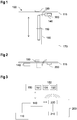
- Figure 1 shows an example implementation of a furniture system with an electrically adjustable piece of furniture in the form of a table 100.
- the table 100 is designed, for example, as a height-adjustable table, in particular an office table, whereby the height of a table top 115 can be adjusted via an actuator 110, which is arranged in a table frame 160.
- Actuator 110 is controlled, for example, by a controller 140.
- Table frame 160 for example, is designed as a telescopic column.
- the table 100 also includes a table foot 170.
- a user Via a manual operating device 150, which is shown lying on the table top 115 as an example, a user can transmit corresponding operating commands to the controller 140 in order to effect a height adjustment via the actuator 110.
- the furniture system also includes an energy transmission device 200, which is installed in the present illustration in the controller 140.
- the energy transmission device 200 is designed to receive energy from a supply network, such as a direct current network or an alternating current network, in particular a 230 V or 115 V power network, and to deliver it wirelessly.
- the energy transmission device 200 can also be supplied with direct current via the controller 140 or from an not shown power supply unit and is therefore at least indirectly connected to the AC mains.
- the manual operating device 150 as an example of a system component is configured for a communication connection with the controller 140.
- the manual operating device 150 has an electrical energy store for supplying a voltage to the system component, which is not shown for reasons of clarity, and a charging circuit for charging the energy store, which is also not shown for reasons of clarity.
- the charging circuit is arranged to at least partially receive the energy delivered by the energy transmission device 200 without physical contact with the energy transmission device and to use it to charge the energy store. This is symbolically represented in Figure 1 by the energy waves emanating from the energy transmission device 200.
- Figure 2 shows an alternative implementation that is basically based on the implementation shown in Figure 1 .
- the energy transmission device 200 is arranged separately from the controller 140 below the tabletop 115.
- FIG 3 shows as an example a schematic block diagram of an example of a furniture system, in particular the components used for the operation of the piece of furniture and wireless charging.
- the energy transmission device 200 is shown, which is formed by a mains connection 210 as a connection to the mains voltage and a mains voltage-side module 220.
- the mains voltage-side module 220 for example, is in connection with the controller 140, especially in a communication connection.
- FIG 3 also shows the manual operating device 150, with the included components of an energy store 151 and a charging circuit 152, which receives energy from the mains voltage-side module 220.
- the charging circuit 152 comprises an energy receiver 132 and a charging controller 131 arranged to control the charging of the energy store 151 with the energy received by the energy receiver 132.
- Figure 3 symbolically shows only one system component in the form of the manual operating device 150, there may also be other system components in the furniture system which charge corresponding energy stores with the energy emitted by the energy transmission device 200.
- simultaneous charging is also possible.
- wireless energy transmission can take place, for example, using a radio wave-based process, in particular an RF process.
- RF process a radio wave-based process
- larger distances for instance up to a distance of 50 to 150 cm, in particular up to a distance of 60 to 90 cm, can be sufficient to transmit sufficient energy for charging the energy storage 151.
- the system component for example the manual operating device 150, can be positioned anywhere on the piece of furniture or table for charging.
- Figure 4 shows another example implementation in accordance with the improved charging concept, in which the adjustable piece of furniture is designed as table 100.
- the system component shown is an office chair 180 which is equipped, for example, with at least one sensor 182 and/or a chair actuator 183 for height adjustment of the office chair.
- An energy supply for the sensor 182 or the associated sensor technology or the chair actuator 183 is exclusively provided by the energy store 151, which is charged by means of the charging circuit 152 with the energy transmitted by the energy transmission device 200.
- the energy transmission device 200 for example, is arranged in the front middle table area in order to keep the distance to the office chair 180 as short as possible.
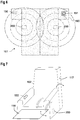
- Figure 5 shows a plan view of the arrangement shown in Figure 4 , in which the arrangement of the energy transmission device 200 under the table top 115 is clearly visible.
- the energy transmission device 200 is arranged centrally with respect to a longitudinal axis of the table, but eccentrically with respect to the transverse axis, in particular closer to a side of the tabletop facing the user.
- FIG. 6 shows a furniture system in which the piece of furniture is embodied as a bed 101, in particular as a double bed, for example with an adjustable head section and/or adjustable foot section. Corresponding actuators are not shown for reasons of clarity. Similar to the configurations described above, a controller can be arranged in a frame or bedstead of the bed 101.
- two energy transmission devices 200 are shown, each on an outward side of the frame, in order to enable energy transmission, particularly in the area of a bedside table or side table 190.
- This in turn makes it possible to charge a manual operating device 150, which is placed on one of the bedside tables or side tables 190.
- the side table 190 is equipped with a lighting component, for example an LED light 191.
- the side table 190 is equipped with a corresponding energy store for supplying the lighting component and a charging circuit for charging the energy store, whereby the charging circuit at least partially uses the energy transmitted by the energy transmission device 200 for charging.
- other electrically operated components can also be supplied by the energy store, for example actuators in an electrically adjustable side table.
- Figure 7 shows a further possible configuration of the furniture system in which the piece of furniture is implemented as an adjustable reclining chair 102.
- the reclining chair 102 has an adjustable back section 117 and/or an adjustable foot section 118.
- An energy transmission device 200 is mounted in a frame of the recliner, in particular under a cover of the recliner 102.
- a manual operating device 150 is again shown, which can be charged in the manner already described by the energy transmitted by the energy transmission device 200.
- the side table 190 has a USB charging interface which is fed from the energy store of the side table to enable charging of a mobile phone, for example. It is also possible to supply other lighting elements or sensors with power from the energy store.
Landscapes
- Engineering & Computer Science (AREA)
- Power Engineering (AREA)
- Health & Medical Sciences (AREA)
- General Health & Medical Sciences (AREA)
- Computer Networks & Wireless Communication (AREA)
- Nursing (AREA)
- Dentistry (AREA)
- Charge And Discharge Circuits For Batteries Or The Like (AREA)
- Selective Calling Equipment (AREA)
Abstract
Description
- The present disclosure relates to a furniture system comprising, in particular, an electrically adjustable piece of furniture.
- Adjustable furniture is known both in the office furniture sector and in the home sector. The most common designs in the office furniture sector are, for example, electrically adjustable tables or chairs, while in the home sector electrically adjustable beds, seating furniture or reclining furniture are known.
- Adjustable pieces of furniture are often part of a furniture system, which in addition to the piece of furniture also has one or more other system components, such as a manual operating device. Such system components regularly have rechargeable batteries or accumulators to make them independent of a mains voltage. However, the latter must be charged regularly to enable operation. For this purpose, suitable charging stations are usually available for the system components into which the system component has to be introduced for charging.
- One objective to be achieved is to specify an improved charging concept that makes it easier to charge an energy store of a system component of a furniture system.
- This objective is achieved by means of the independent claim. Modifications and developments are indicated in the dependent claims.
- The improved charging concept is based on the idea of charging an electrical energy store of a system component that is connected to an electrically adjustable piece of furniture via a wireless or contactless process. For this purpose, a furniture system with the electrically adjustable piece of furniture and an energy transmission device arranged on or in the piece of furniture is proposed, which can provide the necessary energy for charging the energy store without physical contact with the system component. The system component further comprises a charging circuit for charging the energy store which is arranged to at least partially receive the energy delivered by the energy transmission device and to use it for charging the energy store.
- Preferably, the energy transmission device is adapted to deliver the energy based on a radio wave based method, in particular a radio frequency, RF, method. Thus, respective energy stores can be charged by one or more system components without special effort of a user in order to ensure a continuous use of the system component.
- In an exemplary implementation of the improved charging concept, a furniture system with an electrically adjustable piece of furniture, a system component and an energy transmission device is proposed. The piece of furniture comprises at least one actuator for adjusting the piece of furniture and a controller for controlling the actuator. The energy transmission device is arranged on or in the piece of furniture and is adapted to receive energy from a supply network and to emit it wirelessly. The system component has an electrical energy store for supplying a voltage to the system component and a charging circuit for charging the energy store. The charging circuit is arranged to at least partially receive the energy delivered by the energy transmission device without physical contact with the energy transmission device and to use it to charge the energy store. The energy store is designed, for example, as an accumulator or rechargeable battery.
- The supply network is, for example, a direct current network or an alternating current network, i.e. in particular a 230 V or 115 V power network. The energy transmission device can be supplied with direct current, for example via the control unit or directly from a power supply unit, and is thus at least indirectly connected to the AC mains.
- Preferably, the system component is configured for a communication connection with the controller and/or with another system element of the furniture system. In general, such system elements may be formed by a furniture controller, any other system component with a wireless chargeable energy store, a data collector, data node or communication hub, or other components of the furniture system. For example, a data collector, data node or communication hub can be implemented by the LOGIClink product from Logicdata.
- In principle, inductive methods can also be used for energy transmission between the energy transmission device and the charging circuit of the system component. However, these regularly require that an energy receiving device of the charging circuit and the energy transmission device for charging the energy store are brought in close proximity to each other, especially with small maximum distances of less than 5 cm. Therefore, it seems more advantageous to transmit the energy based on a radio wave-based method, in particular an RF method. An RF-based charging technique has the advantage that not only can longer distances be bridged, but also that the energy receiving device does not have to be aligned excessively precisely with respect to the energy transmission device.
- For example, the energy transmission device and the energy receiving device are designed to transmit sufficient energy to charge the energy storage device up to a distance of 50 cm to 150 cm, in particular up to a distance of 60 cm to 90 cm, between the energy transmission device and the energy receiving device. The maximum distance sufficient for the energy transfer is thus, for example, within the specified distance ranges. Such distances can be achieved, for example, with the described radio wave-based or RF method.
- For example, the charging circuit has an energy receiving device and a charging controller which is configured to control the charging of the energy store with the energy received by the energy receiving device.
- For example, the energy transmission device may be located in a housing of the controller or another furniture component attached to the piece of furniture. Preferably the controller or the other furniture component has a direct or indirect connection to the mains connection of the piece of furniture. Alternatively, it is also possible to arrange the energy transmission device in its own housing. There are various possibilities for arranging the energy transmission device in relation to the piece of furniture.
- For example, the piece of furniture is designed as a height-adjustable table, in particular as an office table, with the energy transmission device arranged under a table top of the table. In such a configuration, the system component can be formed by an office chair, the energy storage device being designed to supply a sensor and/or a chair actuator of the office chair. The chair actuator can be used, for example, to adjust the height of the office chair. One or more sensors in the office chair can measure different measured values in connection with the office chair, for example a weight load, a weight distribution, an inclination, a height adjustment or the like. For example, such sensors are arranged in or on a gas spring of an office chair.
- In an alternative configuration, the piece of furniture is implemented as a bed with adjustable head part and/or an adjustable foot part, in particular for a bedroom. The energy transmission device is arranged in or on a longitudinal frame of the bed.
- In another alternative, the piece of furniture is implemented as an adjustable reclining chair, wherein the energy transmission device is arranged in a frame of the reclining chair, in particular under a cover of the reclining chair.
- When the piece of furniture is designed as a bed or recliner, the system component is formed, for example, by a side table, wherein the energy store is designed to supply an electrically operated component of the side table. In various configurations of the piece of furniture, the system component or a further system component is formed, for example, by a manual operating device which is configured for a wireless communication connection with the controller. The electrical energy store is designed in particular to supply the manual operating device during an operating action.
- The system component or a further system component can also be formed by one of the following:
- a lighting component;
- an electrically height-adjustable armchair or chair;
- an electrically adjustable backrest, in particular an armchair or chair ;
- an electrically adjustable monitor holder ;
- a sensor component which is in communication with the controller during an adjustment of the piece of furniture.
- The listed pieces of furniture do not represent a conclusive selection of possible adjustable pieces of furniture. Other pieces of furniture and system components can also be equipped with the improved charging concept. Such pieces of furniture and system components are preferably used in the home or living area or in the office.
- If the range of the energy transmission is not too limited, as for example with a radio wave-based or RF method, the system component or system components can also be charged at will during operation of the furniture system without the system components having to be brought into a special charging position. For example, if the energy transmission device is mounted underneath a tabletop, both a manual control unit for adjusting the table and an office chair with corresponding charging circuits can be charged at almost any position in the work area.
- Also with an adjustable bed, it is almost irrelevant where a manual operating device is placed for charging. For example, the energy transmission device is mounted in the bed frame in such a way that charging is possible in the area of a bedside table or a side table.
- Since no exact alignment of the energy transmitter or energy transmission device and the energy receiver or energy receiving device is required, handling is made easier for the user. Similarly, with the improved charging concept, it is no longer necessary to provide special mechanisms to ensure that a component to be charged is correctly aligned with the energy transmitter, such as mechanical arms, locks or optical feedback to detect that a component is correctly aligned. There is also no need for docking stations or charging stations with which a user would need to connect the system component.
- It is also possible for several system components to simultaneously receive energy from the energy transmission device to charge their respective energy stores.
- In radio wave-based or RF processes, the maximum transmittable power can be set to a certain level, for example to limit the electromagnetic radiation density and also to keep the losses in the energy transmitter, i.e. the energy transmission device, low. This usually results in a slow charging process. However, this is of secondary importance, especially for the above-mentioned application for charging batteries or accumulators which supply one or more system components of a furniture system with energy and which do not have to be operated continuously. For example, the system components in the office area can remain in their traditional places as long as they are within reach of one or more energy transmission devices. The energy store(s) can thus be continuously recharged and always provide sufficient energy for the use of the system component. For example, in this way the energy stores collect enough energy overnight to allow sufficient use during the day.
- Although wireless energy transmission is designed to comply with safety regulations, some people find that electromagnetic radiation, especially in radio wave-based or RF processes, is harmful to their health. For this purpose, the furniture system may contain mechanisms that allow the user to temporarily prevent charging. In the simplest case, the charging process can be activated or deactivated via the system's remote control. However, it is also possible to use a time control or a presence detection integrated in the furniture system. It is also possible to make activation or deactivation dependent on a charge level of the energy store.
- Such a switch-off can, for example, be used in a bed system. In this case, the user can, for example, switch off charging during the night or the switch-off is automatically time-dependent. The energy store can then be charged during the day or when the user is not using the bed. A similar scheme can also be transferred to an office desk, which is then preferably charged at night or when the user is absent from the desk.
- In the following, the invention will be explained in detail with reference to the drawings using exemplary embodiments. Components that are functionally identical or have an identical effect can be provided with identical reference signs. Identical components or components with identical functions may only be explained with reference to the figure in which they appear first. The explanation is not necessarily repeated in subsequent figures.
- In the drawings:
- Figure 1
- shows an example of a furniture system with an electrically adjustable piece of furniture in the form of a table;
- Figure 2
- shows a detail of another example of a furniture system with an electrically adjustable piece of furniture in the form of a table;
- Figure 3
- shows a schematic block diagram of an example of a furniture system;
- Figure 4
- shows another example of a furniture system with an electrically adjustable piece of furniture in the form of a table;
- Figure 5
- shows the example of
Figure 4 in another view; - Figure 6
- an example of a furniture system with an electrically adjustable piece of furniture in the form of a bed; and
- Figure 7
- an example of a furniture system with an electrically adjustable piece of furniture in the form of a reclining chair.
-
Figure 1 shows an example implementation of a furniture system with an electrically adjustable piece of furniture in the form of a table 100. The table 100 is designed, for example, as a height-adjustable table, in particular an office table, whereby the height of atable top 115 can be adjusted via anactuator 110, which is arranged in atable frame 160.Actuator 110 is controlled, for example, by acontroller 140.Table frame 160, for example, is designed as a telescopic column. The table 100 also includes atable foot 170. - Via a
manual operating device 150, which is shown lying on thetable top 115 as an example, a user can transmit corresponding operating commands to thecontroller 140 in order to effect a height adjustment via theactuator 110. - The furniture system also includes an
energy transmission device 200, which is installed in the present illustration in thecontroller 140. Theenergy transmission device 200 is designed to receive energy from a supply network, such as a direct current network or an alternating current network, in particular a 230 V or 115 V power network, and to deliver it wirelessly. Theenergy transmission device 200 can also be supplied with direct current via thecontroller 140 or from an not shown power supply unit and is therefore at least indirectly connected to the AC mains. - The
manual operating device 150 as an example of a system component is configured for a communication connection with thecontroller 140. In addition, themanual operating device 150 has an electrical energy store for supplying a voltage to the system component, which is not shown for reasons of clarity, and a charging circuit for charging the energy store, which is also not shown for reasons of clarity. The charging circuit is arranged to at least partially receive the energy delivered by theenergy transmission device 200 without physical contact with the energy transmission device and to use it to charge the energy store. This is symbolically represented inFigure 1 by the energy waves emanating from theenergy transmission device 200. -
Figure 2 shows an alternative implementation that is basically based on the implementation shown inFigure 1 . In contrast toFigure 1 , only theenergy transmission device 200 is arranged separately from thecontroller 140 below thetabletop 115. -
Figure 3 shows as an example a schematic block diagram of an example of a furniture system, in particular the components used for the operation of the piece of furniture and wireless charging. Among other things, theenergy transmission device 200 is shown, which is formed by amains connection 210 as a connection to the mains voltage and a mains voltage-side module 220. The mains voltage-side module 220, for example, is in connection with thecontroller 140, especially in a communication connection. -
Figure 3 also shows themanual operating device 150, with the included components of anenergy store 151 and acharging circuit 152, which receives energy from the mains voltage-side module 220. For this purpose, the chargingcircuit 152 comprises anenergy receiver 132 and a chargingcontroller 131 arranged to control the charging of theenergy store 151 with the energy received by theenergy receiver 132. - Although
Figure 3 symbolically shows only one system component in the form of themanual operating device 150, there may also be other system components in the furniture system which charge corresponding energy stores with the energy emitted by theenergy transmission device 200. In particular, simultaneous charging is also possible. As already mentioned, wireless energy transmission can take place, for example, using a radio wave-based process, in particular an RF process. Thus also larger distances, for instance up to a distance of 50 to 150 cm, in particular up to a distance of 60 to 90 cm, can be sufficient to transmit sufficient energy for charging theenergy storage 151. Accordingly, the system component, for example themanual operating device 150, can be positioned anywhere on the piece of furniture or table for charging. -
Figure 4 shows another example implementation in accordance with the improved charging concept, in which the adjustable piece of furniture is designed as table 100. In contrast toFigure 1 , the system component shown is anoffice chair 180 which is equipped, for example, with at least onesensor 182 and/or achair actuator 183 for height adjustment of the office chair. An energy supply for thesensor 182 or the associated sensor technology or thechair actuator 183 is exclusively provided by theenergy store 151, which is charged by means of the chargingcircuit 152 with the energy transmitted by theenergy transmission device 200. Theenergy transmission device 200, for example, is arranged in the front middle table area in order to keep the distance to theoffice chair 180 as short as possible. -
Figure 5 shows a plan view of the arrangement shown inFigure 4 , in which the arrangement of theenergy transmission device 200 under thetable top 115 is clearly visible. For example, theenergy transmission device 200 is arranged centrally with respect to a longitudinal axis of the table, but eccentrically with respect to the transverse axis, in particular closer to a side of the tabletop facing the user. - The improved charging concept is not only applicable to furniture systems with tables, but can also be applied to other pieces of furniture. For example,
Figure 6 shows a furniture system in which the piece of furniture is embodied as abed 101, in particular as a double bed, for example with an adjustable head section and/or adjustable foot section. Corresponding actuators are not shown for reasons of clarity. Similar to the configurations described above, a controller can be arranged in a frame or bedstead of thebed 101. - In the illustration of
Figure 6 , twoenergy transmission devices 200 are shown, each on an outward side of the frame, in order to enable energy transmission, particularly in the area of a bedside table or side table 190. This in turn makes it possible to charge amanual operating device 150, which is placed on one of the bedside tables or side tables 190. Furthermore, the side table 190 is equipped with a lighting component, for example anLED light 191. For this purpose, the side table 190 is equipped with a corresponding energy store for supplying the lighting component and a charging circuit for charging the energy store, whereby the charging circuit at least partially uses the energy transmitted by theenergy transmission device 200 for charging. Instead of or in addition to this, other electrically operated components can also be supplied by the energy store, for example actuators in an electrically adjustable side table. In the case of a possible implementation as a single bed, it may also be sufficient to provide a singleenergy transmission device 200 in the bed frame. -
Figure 7 shows a further possible configuration of the furniture system in which the piece of furniture is implemented as anadjustable reclining chair 102. For example, thereclining chair 102 has anadjustable back section 117 and/or anadjustable foot section 118. Anenergy transmission device 200 is mounted in a frame of the recliner, in particular under a cover of therecliner 102. As an example, amanual operating device 150 is again shown, which can be charged in the manner already described by the energy transmitted by theenergy transmission device 200. - In other configurations, the side table 190 has a USB charging interface which is fed from the energy store of the side table to enable charging of a mobile phone, for example. It is also possible to supply other lighting elements or sensors with power from the energy store.
- With regard to the energy transfer procedures in the implementations according to
Figure 6 and Figure 7 , reference is made to the more detailed configurations above, in particular with regard to the table 100.
Claims (15)
- A furniture system with an electrically adjustable piece of furniture (100, 101, 102), a system component (150, 180, 190) and an energy transmission device (200), wherein- the piece of furniture (100, 101, 102) comprises at least one actuator (110) for adjusting the piece of furniture (100, 101, 102) and a controller (140) for controlling the actuator (110);- the energy transmission device (200) is arranged on or in the piece of furniture (100, 101, 102) and is arranged to receive energy from a supply network and to deliver it wirelessly ;- the system component (150, 180, 190) is configured for a communication connection with another system element of the furniture system and/or with the controller (140) and has an electrical energy store (151) for supplying a voltage to the system component (150, 180, 190) and a charging circuit (152) for charging the energy store (151); and- the charging circuit (152) is configured to at least partially receive the energy output from the energy transmission device (200) without physical contact with the energy transmission device (200) and to use it to charge the energy store (151).
- The furniture system according to claim 1, wherein the energy transmission device (200) is configured to deliver the energy based on a radio wave based method, in particular a high frequency method.
- The furniture system according to claim 1 or 2, wherein the charging circuit (152) comprises an energy receiving device (132) and a charging controller (131) which is configured to control the charging of the energy store (151) with the energy received by the energy receiving device (132) .
- The furniture system according to claim 3, wherein the energy transmission device (200) and the energy receiving device (132) are designed to transmit sufficient energy between the energy transmission device (200) and the energy receiving device (132) for charging the energy store (151) up to a distance of 50 cm to 150 cm, in particular up to a distance of 60 cm to 90 cm.
- The furniture system according to one of claims 1 to 4, wherein the energy transmission device (200) is arranged in a housing of the controller (140) or a furniture component attached to the piece of furniture.
- The furniture system according to one of claims 1 to 4, wherein the energy transmission device (200) is arranged in a separate housing.
- The furniture system according to one of claims 1 to 6, wherein the piece of furniture is implemented as a height-adjustable table (100), in particular as an office table, wherein the energy transmission device (200) is arranged under a table top of the table (100).
- The furniture system according to claim 7, wherein the system component is formed by an office chair (180), wherein the energy store (151) is arranged to supply a sensor (182) and/or a chair actuator (183) of the office chair (180).
- The furniture system according to one of claims 1 to 6, wherein the piece of furniture is implemented as a bed (101) with an adjustable head part and/or adjustable foot part, in particular for a bedroom, wherein the energy transmission device (200) is arranged in or on a longitudinal frame (161) of the bed (101).
- The furniture system according to one of claims 1 to 6, wherein the piece of furniture is implemented as an adjustable reclining chair (102), wherein the energy transmission device (200) is arranged in a frame of the reclining chair (102), in particular under a cover of the reclining chair (102).
- The furniture system according to claim 9 or 10, wherein the system component is formed by a side table (190), wherein the energy store (151) is configured to supply an electrically operated component of the side table (190).
- The furniture system according to one of the preceding claims, wherein the system component or a further system component is formed by a manual operating device (150) adapted for wireless communication connection with the controller (140), wherein the electrical energy store (151) is adapted for supplying the manual operating device (150) during an operating action.
- The furniture system according to one of the preceding claims wherein the system component or a further system component of the furniture system is formed by one of the following:- a lighting component (191);- an electrically height-adjustable armchair or chair ;- an electrically adjustable backrest ;- an electrically adjustable monitor holder ;- a sensor component which is in communication with the controller (140) during an adjustment of the piece of furniture (100, 101, 102).
- The furniture system according to one of the preceding claims that is configured to deactivate the energy transmission device (200) independently of an operation of the piece of furniture.
- The furniture system according to claim 14, wherein the deactivation of the energy transmission device (200) is triggered by a user of the furniture system and/or by a presence detection of the user at the furniture system and/or as a function of a charging state of the energy store and/or time-controlled.
Applications Claiming Priority (1)
| Application Number | Priority Date | Filing Date | Title |
|---|---|---|---|
| DE102018103066.5A DE102018103066A1 (en) | 2018-02-12 | 2018-02-12 | furniture system |
Publications (2)
| Publication Number | Publication Date |
|---|---|
| EP3524095A1 true EP3524095A1 (en) | 2019-08-14 |
| EP3524095B1 EP3524095B1 (en) | 2020-06-03 |
Family
ID=65408942
Family Applications (1)
| Application Number | Title | Priority Date | Filing Date |
|---|---|---|---|
| EP19156403.8A Not-in-force EP3524095B1 (en) | 2018-02-12 | 2019-02-11 | Furniture system |
Country Status (4)
| Country | Link |
|---|---|
| US (1) | US20190252903A1 (en) |
| EP (1) | EP3524095B1 (en) |
| CN (1) | CN210203810U (en) |
| DE (1) | DE102018103066A1 (en) |
Families Citing this family (5)
| Publication number | Priority date | Publication date | Assignee | Title |
|---|---|---|---|---|
| DE102018104195A1 (en) * | 2018-02-23 | 2019-08-29 | Logicdata Electronic & Software Entwicklungs Gmbh | Furniture, method for calibrating an actuator and method for adjusting a component of a piece of furniture |
| CN209950747U (en) * | 2019-04-18 | 2020-01-17 | 扬州奥美丽电气科技有限公司 | Intelligent desk and chair |
| EP3868252B1 (en) * | 2020-02-20 | 2022-06-22 | RealThingks GmbH | Receiving device and method for controlling a brake acting on a height-adjustable receiving unit of a receiving device |
| TWI803397B (en) * | 2022-07-21 | 2023-05-21 | 施權航 | electric bed |
| CN116076856A (en) * | 2022-12-29 | 2023-05-09 | 上海飞机制造有限公司 | Wireless Powered Workbench |
Citations (3)
| Publication number | Priority date | Publication date | Assignee | Title |
|---|---|---|---|---|
| DE102014110956A1 (en) * | 2014-08-01 | 2016-02-04 | Dewertokin Gmbh | Operating unit and control system for an electromotive adjusting drive of a piece of furniture |
| TW201707612A (en) * | 2015-08-24 | 2017-03-01 | 第一傳動科技股份有限公司 | Electric-lifting table and method for controlling the same |
| US20170135490A1 (en) * | 2014-06-11 | 2017-05-18 | Gentherm Incorporated | Office climate control system and method |
Family Cites Families (1)
| Publication number | Priority date | Publication date | Assignee | Title |
|---|---|---|---|---|
| US10559971B2 (en) * | 2015-04-10 | 2020-02-11 | Ossia Inc. | Wirelessly chargeable battery apparatus |
-
2018
- 2018-02-12 DE DE102018103066.5A patent/DE102018103066A1/en not_active Ceased
-
2019
- 2019-02-11 EP EP19156403.8A patent/EP3524095B1/en not_active Not-in-force
- 2019-02-11 US US16/273,012 patent/US20190252903A1/en not_active Abandoned
- 2019-02-12 CN CN201920193574.3U patent/CN210203810U/en not_active Expired - Fee Related
Patent Citations (3)
| Publication number | Priority date | Publication date | Assignee | Title |
|---|---|---|---|---|
| US20170135490A1 (en) * | 2014-06-11 | 2017-05-18 | Gentherm Incorporated | Office climate control system and method |
| DE102014110956A1 (en) * | 2014-08-01 | 2016-02-04 | Dewertokin Gmbh | Operating unit and control system for an electromotive adjusting drive of a piece of furniture |
| TW201707612A (en) * | 2015-08-24 | 2017-03-01 | 第一傳動科技股份有限公司 | Electric-lifting table and method for controlling the same |
Also Published As
| Publication number | Publication date |
|---|---|
| CN210203810U (en) | 2020-03-31 |
| EP3524095B1 (en) | 2020-06-03 |
| DE102018103066A1 (en) | 2019-08-14 |
| US20190252903A1 (en) | 2019-08-15 |
Similar Documents
| Publication | Publication Date | Title |
|---|---|---|
| EP3524095B1 (en) | Furniture system | |
| EP3524098B1 (en) | Furniture system | |
| US11484722B2 (en) | System and method for an electrical implant device with increased patient compliance | |
| EP2454969B1 (en) | Height-adjustable table stand | |
| US9572424B2 (en) | Furniture with wireless power | |
| US9608455B2 (en) | Wireless power for portable articles | |
| EP1538953B1 (en) | Chair with onboard electrical power source | |
| EP2533394A2 (en) | Overbed table with wireless power transfer | |
| DK2701557T3 (en) | Electromotive furniture drive | |
| US20140044281A1 (en) | Wirelessly powered audio devices | |
| JP2011010546A (en) | Centrally controlled inductive power transmission platform | |
| CN104271002B (en) | For the emergency power supply unit of the electric furniture driver of furniture, electric furniture driver and corresponding furniture | |
| US20170221350A1 (en) | Operating unit and control system for an electromotive adjusting drive of a piece of furniture | |
| US20200113760A1 (en) | Electric furniture | |
| US8840176B2 (en) | Heated and/or cooled home and office furnishings | |
| JP2014514910A (en) | Electric furniture drive unit with power supply | |
| CN206809015U (en) | A kind of electricity-saving type Intelligent seat | |
| TWI603648B (en) | Lighting system and associated control method | |
| KR101723855B1 (en) | Pad charging system with wireless charging function | |
| Pérez-Nicoli et al. | Limits for increasing the WPT distance in AIMDs | |
| CN221103415U (en) | Electronic device for communication | |
| CN214542851U (en) | Human body induction switch socket | |
| CN217722933U (en) | Intelligent charging table and intelligent chair | |
| JPWO2017126030A1 (en) | Power control device | |
| CN205065652U (en) | Intelligent bedside lamp |
Legal Events
| Date | Code | Title | Description |
|---|---|---|---|
| PUAI | Public reference made under article 153(3) epc to a published international application that has entered the european phase |
Free format text: ORIGINAL CODE: 0009012 |
|
| STAA | Information on the status of an ep patent application or granted ep patent |
Free format text: STATUS: THE APPLICATION HAS BEEN PUBLISHED |
|
| AK | Designated contracting states |
Kind code of ref document: A1 Designated state(s): AL AT BE BG CH CY CZ DE DK EE ES FI FR GB GR HR HU IE IS IT LI LT LU LV MC MK MT NL NO PL PT RO RS SE SI SK SM TR |
|
| AX | Request for extension of the european patent |
Extension state: BA ME |
|
| STAA | Information on the status of an ep patent application or granted ep patent |
Free format text: STATUS: REQUEST FOR EXAMINATION WAS MADE |
|
| 17P | Request for examination filed |
Effective date: 20200122 |
|
| RBV | Designated contracting states (corrected) |
Designated state(s): AL AT BE BG CH CY CZ DE DK EE ES FI FR GB GR HR HU IE IS IT LI LT LU LV MC MK MT NL NO PL PT RO RS SE SI SK SM TR |
|
| RIC1 | Information provided on ipc code assigned before grant |
Ipc: A47C 7/50 20060101ALI20200212BHEP Ipc: A47B 9/00 20060101AFI20200212BHEP Ipc: A47C 20/04 20060101ALI20200212BHEP Ipc: H02J 50/20 20160101ALI20200212BHEP Ipc: A47B 23/00 20060101ALN20200212BHEP |
|
| GRAP | Despatch of communication of intention to grant a patent |
Free format text: ORIGINAL CODE: EPIDOSNIGR1 |
|
| STAA | Information on the status of an ep patent application or granted ep patent |
Free format text: STATUS: GRANT OF PATENT IS INTENDED |
|
| INTG | Intention to grant announced |
Effective date: 20200325 |
|
| GRAS | Grant fee paid |
Free format text: ORIGINAL CODE: EPIDOSNIGR3 |
|
| GRAA | (expected) grant |
Free format text: ORIGINAL CODE: 0009210 |
|
| STAA | Information on the status of an ep patent application or granted ep patent |
Free format text: STATUS: THE PATENT HAS BEEN GRANTED |
|
| AK | Designated contracting states |
Kind code of ref document: B1 Designated state(s): AL AT BE BG CH CY CZ DE DK EE ES FI FR GB GR HR HU IE IS IT LI LT LU LV MC MK MT NL NO PL PT RO RS SE SI SK SM TR |
|
| REG | Reference to a national code |
Ref country code: GB Ref legal event code: FG4D |
|
| REG | Reference to a national code |
Ref country code: CH Ref legal event code: EP Ref country code: AT Ref legal event code: REF Ref document number: 1276090 Country of ref document: AT Kind code of ref document: T Effective date: 20200615 |
|
| REG | Reference to a national code |
Ref country code: DE Ref legal event code: R096 Ref document number: 602019000158 Country of ref document: DE |
|
| REG | Reference to a national code |
Ref country code: SE Ref legal event code: TRGR |
|
| REG | Reference to a national code |
Ref country code: LT Ref legal event code: MG4D |
|
| PG25 | Lapsed in a contracting state [announced via postgrant information from national office to epo] |
Ref country code: LT Free format text: LAPSE BECAUSE OF FAILURE TO SUBMIT A TRANSLATION OF THE DESCRIPTION OR TO PAY THE FEE WITHIN THE PRESCRIBED TIME-LIMIT Effective date: 20200603 Ref country code: FI Free format text: LAPSE BECAUSE OF FAILURE TO SUBMIT A TRANSLATION OF THE DESCRIPTION OR TO PAY THE FEE WITHIN THE PRESCRIBED TIME-LIMIT Effective date: 20200603 Ref country code: GR Free format text: LAPSE BECAUSE OF FAILURE TO SUBMIT A TRANSLATION OF THE DESCRIPTION OR TO PAY THE FEE WITHIN THE PRESCRIBED TIME-LIMIT Effective date: 20200904 Ref country code: NO Free format text: LAPSE BECAUSE OF FAILURE TO SUBMIT A TRANSLATION OF THE DESCRIPTION OR TO PAY THE FEE WITHIN THE PRESCRIBED TIME-LIMIT Effective date: 20200903 |
|
| REG | Reference to a national code |
Ref country code: NL Ref legal event code: MP Effective date: 20200603 |
|
| PG25 | Lapsed in a contracting state [announced via postgrant information from national office to epo] |
Ref country code: BG Free format text: LAPSE BECAUSE OF FAILURE TO SUBMIT A TRANSLATION OF THE DESCRIPTION OR TO PAY THE FEE WITHIN THE PRESCRIBED TIME-LIMIT Effective date: 20200903 Ref country code: HR Free format text: LAPSE BECAUSE OF FAILURE TO SUBMIT A TRANSLATION OF THE DESCRIPTION OR TO PAY THE FEE WITHIN THE PRESCRIBED TIME-LIMIT Effective date: 20200603 Ref country code: RS Free format text: LAPSE BECAUSE OF FAILURE TO SUBMIT A TRANSLATION OF THE DESCRIPTION OR TO PAY THE FEE WITHIN THE PRESCRIBED TIME-LIMIT Effective date: 20200603 Ref country code: LV Free format text: LAPSE BECAUSE OF FAILURE TO SUBMIT A TRANSLATION OF THE DESCRIPTION OR TO PAY THE FEE WITHIN THE PRESCRIBED TIME-LIMIT Effective date: 20200603 |
|
| REG | Reference to a national code |
Ref country code: AT Ref legal event code: MK05 Ref document number: 1276090 Country of ref document: AT Kind code of ref document: T Effective date: 20200603 |
|
| PG25 | Lapsed in a contracting state [announced via postgrant information from national office to epo] |
Ref country code: AL Free format text: LAPSE BECAUSE OF FAILURE TO SUBMIT A TRANSLATION OF THE DESCRIPTION OR TO PAY THE FEE WITHIN THE PRESCRIBED TIME-LIMIT Effective date: 20200603 Ref country code: NL Free format text: LAPSE BECAUSE OF FAILURE TO SUBMIT A TRANSLATION OF THE DESCRIPTION OR TO PAY THE FEE WITHIN THE PRESCRIBED TIME-LIMIT Effective date: 20200603 |
|
| PG25 | Lapsed in a contracting state [announced via postgrant information from national office to epo] |
Ref country code: AT Free format text: LAPSE BECAUSE OF FAILURE TO SUBMIT A TRANSLATION OF THE DESCRIPTION OR TO PAY THE FEE WITHIN THE PRESCRIBED TIME-LIMIT Effective date: 20200603 Ref country code: SM Free format text: LAPSE BECAUSE OF FAILURE TO SUBMIT A TRANSLATION OF THE DESCRIPTION OR TO PAY THE FEE WITHIN THE PRESCRIBED TIME-LIMIT Effective date: 20200603 Ref country code: EE Free format text: LAPSE BECAUSE OF FAILURE TO SUBMIT A TRANSLATION OF THE DESCRIPTION OR TO PAY THE FEE WITHIN THE PRESCRIBED TIME-LIMIT Effective date: 20200603 Ref country code: ES Free format text: LAPSE BECAUSE OF FAILURE TO SUBMIT A TRANSLATION OF THE DESCRIPTION OR TO PAY THE FEE WITHIN THE PRESCRIBED TIME-LIMIT Effective date: 20200603 Ref country code: RO Free format text: LAPSE BECAUSE OF FAILURE TO SUBMIT A TRANSLATION OF THE DESCRIPTION OR TO PAY THE FEE WITHIN THE PRESCRIBED TIME-LIMIT Effective date: 20200603 Ref country code: CZ Free format text: LAPSE BECAUSE OF FAILURE TO SUBMIT A TRANSLATION OF THE DESCRIPTION OR TO PAY THE FEE WITHIN THE PRESCRIBED TIME-LIMIT Effective date: 20200603 Ref country code: IT Free format text: LAPSE BECAUSE OF FAILURE TO SUBMIT A TRANSLATION OF THE DESCRIPTION OR TO PAY THE FEE WITHIN THE PRESCRIBED TIME-LIMIT Effective date: 20200603 Ref country code: PT Free format text: LAPSE BECAUSE OF FAILURE TO SUBMIT A TRANSLATION OF THE DESCRIPTION OR TO PAY THE FEE WITHIN THE PRESCRIBED TIME-LIMIT Effective date: 20201006 |
|
| PG25 | Lapsed in a contracting state [announced via postgrant information from national office to epo] |
Ref country code: PL Free format text: LAPSE BECAUSE OF FAILURE TO SUBMIT A TRANSLATION OF THE DESCRIPTION OR TO PAY THE FEE WITHIN THE PRESCRIBED TIME-LIMIT Effective date: 20200603 Ref country code: SK Free format text: LAPSE BECAUSE OF FAILURE TO SUBMIT A TRANSLATION OF THE DESCRIPTION OR TO PAY THE FEE WITHIN THE PRESCRIBED TIME-LIMIT Effective date: 20200603 Ref country code: IS Free format text: LAPSE BECAUSE OF FAILURE TO SUBMIT A TRANSLATION OF THE DESCRIPTION OR TO PAY THE FEE WITHIN THE PRESCRIBED TIME-LIMIT Effective date: 20201003 |
|
| REG | Reference to a national code |
Ref country code: DE Ref legal event code: R097 Ref document number: 602019000158 Country of ref document: DE |
|
| PLBE | No opposition filed within time limit |
Free format text: ORIGINAL CODE: 0009261 |
|
| STAA | Information on the status of an ep patent application or granted ep patent |
Free format text: STATUS: NO OPPOSITION FILED WITHIN TIME LIMIT |
|
| PG25 | Lapsed in a contracting state [announced via postgrant information from national office to epo] |
Ref country code: DK Free format text: LAPSE BECAUSE OF FAILURE TO SUBMIT A TRANSLATION OF THE DESCRIPTION OR TO PAY THE FEE WITHIN THE PRESCRIBED TIME-LIMIT Effective date: 20200603 |
|
| 26N | No opposition filed |
Effective date: 20210304 |
|
| REG | Reference to a national code |
Ref country code: SE Ref legal event code: EUG |
|
| PG25 | Lapsed in a contracting state [announced via postgrant information from national office to epo] |
Ref country code: MC Free format text: LAPSE BECAUSE OF FAILURE TO SUBMIT A TRANSLATION OF THE DESCRIPTION OR TO PAY THE FEE WITHIN THE PRESCRIBED TIME-LIMIT Effective date: 20200603 |
|
| REG | Reference to a national code |
Ref country code: BE Ref legal event code: MM Effective date: 20210228 |
|
| PG25 | Lapsed in a contracting state [announced via postgrant information from national office to epo] |
Ref country code: LU Free format text: LAPSE BECAUSE OF NON-PAYMENT OF DUE FEES Effective date: 20210211 |
|
| PG25 | Lapsed in a contracting state [announced via postgrant information from national office to epo] |
Ref country code: SE Free format text: LAPSE BECAUSE OF NON-PAYMENT OF DUE FEES Effective date: 20210212 |
|
| PG25 | Lapsed in a contracting state [announced via postgrant information from national office to epo] |
Ref country code: IE Free format text: LAPSE BECAUSE OF NON-PAYMENT OF DUE FEES Effective date: 20210211 Ref country code: FR Free format text: LAPSE BECAUSE OF NON-PAYMENT OF DUE FEES Effective date: 20210228 |
|
| PGFP | Annual fee paid to national office [announced via postgrant information from national office to epo] |
Ref country code: DE Payment date: 20220222 Year of fee payment: 4 |
|
| PG25 | Lapsed in a contracting state [announced via postgrant information from national office to epo] |
Ref country code: IS Free format text: LAPSE BECAUSE OF FAILURE TO SUBMIT A TRANSLATION OF THE DESCRIPTION OR TO PAY THE FEE WITHIN THE PRESCRIBED TIME-LIMIT Effective date: 20201003 |
|
| PG25 | Lapsed in a contracting state [announced via postgrant information from national office to epo] |
Ref country code: BE Free format text: LAPSE BECAUSE OF NON-PAYMENT OF DUE FEES Effective date: 20210228 |
|
| REG | Reference to a national code |
Ref country code: CH Ref legal event code: PL |
|
| PG25 | Lapsed in a contracting state [announced via postgrant information from national office to epo] |
Ref country code: LI Free format text: LAPSE BECAUSE OF NON-PAYMENT OF DUE FEES Effective date: 20220228 Ref country code: CH Free format text: LAPSE BECAUSE OF NON-PAYMENT OF DUE FEES Effective date: 20220228 |
|
| PG25 | Lapsed in a contracting state [announced via postgrant information from national office to epo] |
Ref country code: CY Free format text: LAPSE BECAUSE OF FAILURE TO SUBMIT A TRANSLATION OF THE DESCRIPTION OR TO PAY THE FEE WITHIN THE PRESCRIBED TIME-LIMIT Effective date: 20200603 |
|
| PG25 | Lapsed in a contracting state [announced via postgrant information from national office to epo] |
Ref country code: HU Free format text: LAPSE BECAUSE OF FAILURE TO SUBMIT A TRANSLATION OF THE DESCRIPTION OR TO PAY THE FEE WITHIN THE PRESCRIBED TIME-LIMIT; INVALID AB INITIO Effective date: 20190211 |
|
| REG | Reference to a national code |
Ref country code: DE Ref legal event code: R119 Ref document number: 602019000158 Country of ref document: DE |
|
| PG25 | Lapsed in a contracting state [announced via postgrant information from national office to epo] |
Ref country code: SI Free format text: LAPSE BECAUSE OF FAILURE TO SUBMIT A TRANSLATION OF THE DESCRIPTION OR TO PAY THE FEE WITHIN THE PRESCRIBED TIME-LIMIT Effective date: 20200603 |
|
| GBPC | Gb: european patent ceased through non-payment of renewal fee |
Effective date: 20230211 |
|
| PG25 | Lapsed in a contracting state [announced via postgrant information from national office to epo] |
Ref country code: GB Free format text: LAPSE BECAUSE OF NON-PAYMENT OF DUE FEES Effective date: 20230211 |
|
| PG25 | Lapsed in a contracting state [announced via postgrant information from national office to epo] |
Ref country code: GB Free format text: LAPSE BECAUSE OF NON-PAYMENT OF DUE FEES Effective date: 20230211 Ref country code: DE Free format text: LAPSE BECAUSE OF NON-PAYMENT OF DUE FEES Effective date: 20230901 |
|
| PG25 | Lapsed in a contracting state [announced via postgrant information from national office to epo] |
Ref country code: MK Free format text: LAPSE BECAUSE OF FAILURE TO SUBMIT A TRANSLATION OF THE DESCRIPTION OR TO PAY THE FEE WITHIN THE PRESCRIBED TIME-LIMIT Effective date: 20200603 |
|
| PG25 | Lapsed in a contracting state [announced via postgrant information from national office to epo] |
Ref country code: TR Free format text: LAPSE BECAUSE OF FAILURE TO SUBMIT A TRANSLATION OF THE DESCRIPTION OR TO PAY THE FEE WITHIN THE PRESCRIBED TIME-LIMIT Effective date: 20200603 |
|
| PG25 | Lapsed in a contracting state [announced via postgrant information from national office to epo] |
Ref country code: MT Free format text: LAPSE BECAUSE OF FAILURE TO SUBMIT A TRANSLATION OF THE DESCRIPTION OR TO PAY THE FEE WITHIN THE PRESCRIBED TIME-LIMIT Effective date: 20200603 |