EP3523975B1 - Verfahren und vorrichtung für binäre baumteilungsmoduscodierung - Google Patents
Verfahren und vorrichtung für binäre baumteilungsmoduscodierung Download PDFInfo
- Publication number
- EP3523975B1 EP3523975B1 EP17772442.4A EP17772442A EP3523975B1 EP 3523975 B1 EP3523975 B1 EP 3523975B1 EP 17772442 A EP17772442 A EP 17772442A EP 3523975 B1 EP3523975 B1 EP 3523975B1
- Authority
- EP
- European Patent Office
- Prior art keywords
- block
- split
- splitting
- horizontal
- asymmetric
- Prior art date
- Legal status (The legal status is an assumption and is not a legal conclusion. Google has not performed a legal analysis and makes no representation as to the accuracy of the status listed.)
- Active
Links
Images






Classifications
-
- H—ELECTRICITY
- H04—ELECTRIC COMMUNICATION TECHNIQUE
- H04N—PICTORIAL COMMUNICATION, e.g. TELEVISION
- H04N19/00—Methods or arrangements for coding, decoding, compressing or decompressing digital video signals
- H04N19/90—Methods or arrangements for coding, decoding, compressing or decompressing digital video signals using coding techniques not provided for in groups H04N19/10-H04N19/85, e.g. fractals
- H04N19/91—Entropy coding, e.g. variable length coding [VLC] or arithmetic coding
-
- H—ELECTRICITY
- H04—ELECTRIC COMMUNICATION TECHNIQUE
- H04N—PICTORIAL COMMUNICATION, e.g. TELEVISION
- H04N19/00—Methods or arrangements for coding, decoding, compressing or decompressing digital video signals
- H04N19/30—Methods or arrangements for coding, decoding, compressing or decompressing digital video signals using hierarchical techniques, e.g. scalability
- H04N19/33—Methods or arrangements for coding, decoding, compressing or decompressing digital video signals using hierarchical techniques, e.g. scalability in the spatial domain
-
- H—ELECTRICITY
- H04—ELECTRIC COMMUNICATION TECHNIQUE
- H04N—PICTORIAL COMMUNICATION, e.g. TELEVISION
- H04N19/00—Methods or arrangements for coding, decoding, compressing or decompressing digital video signals
- H04N19/50—Methods or arrangements for coding, decoding, compressing or decompressing digital video signals using predictive coding
- H04N19/503—Methods or arrangements for coding, decoding, compressing or decompressing digital video signals using predictive coding involving temporal prediction
-
- H—ELECTRICITY
- H04—ELECTRIC COMMUNICATION TECHNIQUE
- H04N—PICTORIAL COMMUNICATION, e.g. TELEVISION
- H04N19/00—Methods or arrangements for coding, decoding, compressing or decompressing digital video signals
- H04N19/10—Methods or arrangements for coding, decoding, compressing or decompressing digital video signals using adaptive coding
- H04N19/102—Methods or arrangements for coding, decoding, compressing or decompressing digital video signals using adaptive coding characterised by the element, parameter or selection affected or controlled by the adaptive coding
- H04N19/119—Adaptive subdivision aspects, e.g. subdivision of a picture into rectangular or non-rectangular coding blocks
-
- H—ELECTRICITY
- H04—ELECTRIC COMMUNICATION TECHNIQUE
- H04N—PICTORIAL COMMUNICATION, e.g. TELEVISION
- H04N19/00—Methods or arrangements for coding, decoding, compressing or decompressing digital video signals
- H04N19/10—Methods or arrangements for coding, decoding, compressing or decompressing digital video signals using adaptive coding
- H04N19/169—Methods or arrangements for coding, decoding, compressing or decompressing digital video signals using adaptive coding characterised by the coding unit, i.e. the structural portion or semantic portion of the video signal being the object or the subject of the adaptive coding
- H04N19/17—Methods or arrangements for coding, decoding, compressing or decompressing digital video signals using adaptive coding characterised by the coding unit, i.e. the structural portion or semantic portion of the video signal being the object or the subject of the adaptive coding the unit being an image region, e.g. an object
- H04N19/176—Methods or arrangements for coding, decoding, compressing or decompressing digital video signals using adaptive coding characterised by the coding unit, i.e. the structural portion or semantic portion of the video signal being the object or the subject of the adaptive coding the unit being an image region, e.g. an object the region being a block, e.g. a macroblock
-
- H—ELECTRICITY
- H04—ELECTRIC COMMUNICATION TECHNIQUE
- H04N—PICTORIAL COMMUNICATION, e.g. TELEVISION
- H04N19/00—Methods or arrangements for coding, decoding, compressing or decompressing digital video signals
- H04N19/46—Embedding additional information in the video signal during the compression process
-
- H—ELECTRICITY
- H04—ELECTRIC COMMUNICATION TECHNIQUE
- H04N—PICTORIAL COMMUNICATION, e.g. TELEVISION
- H04N19/00—Methods or arrangements for coding, decoding, compressing or decompressing digital video signals
- H04N19/50—Methods or arrangements for coding, decoding, compressing or decompressing digital video signals using predictive coding
- H04N19/593—Methods or arrangements for coding, decoding, compressing or decompressing digital video signals using predictive coding involving spatial prediction techniques
-
- H—ELECTRICITY
- H04—ELECTRIC COMMUNICATION TECHNIQUE
- H04N—PICTORIAL COMMUNICATION, e.g. TELEVISION
- H04N19/00—Methods or arrangements for coding, decoding, compressing or decompressing digital video signals
- H04N19/70—Methods or arrangements for coding, decoding, compressing or decompressing digital video signals characterised by syntax aspects related to video coding, e.g. related to compression standards
-
- H—ELECTRICITY
- H04—ELECTRIC COMMUNICATION TECHNIQUE
- H04N—PICTORIAL COMMUNICATION, e.g. TELEVISION
- H04N19/00—Methods or arrangements for coding, decoding, compressing or decompressing digital video signals
- H04N19/90—Methods or arrangements for coding, decoding, compressing or decompressing digital video signals using coding techniques not provided for in groups H04N19/10-H04N19/85, e.g. fractals
- H04N19/96—Tree coding, e.g. quad-tree coding
Definitions
- the present principles relate to the field of digital video compression and coding.
- aspects of the present embodiments aim at improved compression efficiency compared to existing video compression systems, such as ITU-T H.265 TELECOMMUNICATION STANDARDIZATION SECTOR OF ITU (10/2014), SERIES H: AUDIOVISUAL AND MULTIMEDIA SYSTEMS, Infrastructure of audiovisual services - Coding of moving video, High efficiency video coding, Recommendation ITU-T H.265, sometimes referred to as HEVC or simply H.265, and " Algorithm Description of Joint Exploration Test Model 3", Document JVET-C1001_v3, Joint Video Exploration Team (JVET) of ISO/IEC JTC1/SC29/WG11, 3rd meeting, 26 May - 1 June 2015, Geneva , for example.
- JVET Joint Video Exploration Team
- Non-patent literature CHEN J ET AL "Algorithm description of Joint Exploration Test Model 3 (JEM3)",3. JVET MEETING; 26-5-2016 - 1-6-2016; GENEVA; (THE JOINT VIDEO EXPLORATION TEAM OF ISO/IEC JTC1/SC29/WG11 AND ITU-T SG.16); URL: HTTP://PHENIX.INT-EVRY.FR/JVET/, no. JVET-C1001, 2 July 2016 (2016-07-02 ) discloses a QTBT block partitioning structure as well as a corresponding encoder implementation.
- Emerging video compression tools include a Coding Tree Unit representation in the compressed domain, in order to represent picture data in a more flexible way in the compressed domain.
- the advantage of this more flexible representation of the coding tree is that it provides increased compression efficiency compared to the CU/PU/TU (Coding Unit/Prediction Unit/Transform Unit) arrangement of the HEVC standard.
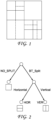
- Quad-Tree plus Binary-Tree (QTBT) coding tool provides this increased flexibility. It consists in a coding tree where coding units can be split both in a quad-tree and in a binary-tree fashion. Such coding tree representation of a Coding Tree Unit is illustrated in Figure 1 .
- the quadtree split can be represented by some combinations of horizontal and vertical Binary-Tree splitting.
- the same partition shape can also be generated by applying the horizontal and vertical binary split in different orders.
- the Binary-Tree is limited by the MinBTSize parameter, which is the imposed minimum size (in width or height) on the blocks issued from binary-tree splitting.
- the embodiments described herein propose to remove the redundant syntax in coding the Binary Tree Split Mode syntax element.
- a method for decoding video image blocks in an entropy decoder comprises determining whether a block is enabled to undergo binary splitting by checking syntax elements representative of a minimum block size and splitting constraints, and if binary splitting is not enabled, do not decode any further split mode flags for the block.
- the method further comprises decoding a first flag to determine whether the block is to be split if binary splitting is enabled, and determining whether horizontal or vertical splitting is allowed for the block if binary splitting is allowed by checking syntax elements representative of a minimum block size and horizontal and vertical splitting constraints.
- the method further comprises decoding a second flag to determine whether the block is split in a horizontal or vertical direction.
- a method for encoding video image blocks in an entropy encoder comprises determining whether a block is to undergo binary splitting by checking its block size relative to a minimum block size and whether there are any splitting constraints, and if binary splitting is not to be enabled, do not encode any further split mode flags for the block.
- the method further comprises encoding a first flag to indicate whether the block is to be split if binary splitting is enabled and determining whether horizontal or vertical splitting is allowed for the block if binary splitting is allowed by checking its block size relative to a minimum block size and whether there are horizontal and vertical splitting constraints, and encoding a second flag to indicate whether the block is split in a horizontal or vertical direction.
- an apparatus for decoding video image blocks in an entropy decoder is comprised of a memory and a processor, configured to perform the steps of one of the methods described above.
- a video signal formatted to include encoded data representative of a block in a picture comprising flags to indicate binary tree split mode coding by determining whether a block is enabled to undergo binary splitting by checking syntax elements representative of a minimum block size and splitting constraints, and if binary splitting is not enabled, do not decode any further split mode flags for the block, by decoding a first flag to determine whether the block is to be split if binary splitting is enabled, by determining whether horizontal or vertical splitting is allowed for the block if binary splitting is allowed by checking syntax elements representative of a minimum block size and horizontal and vertical splitting constraints, and by decoding a second flag to determine whether the block is split in a horizontal or vertical direction.
- a nontransitory computer readable storage medium storing instructions which when executed by a processor cause the processor to perform the method according to any one of the above methods when the computer program is executed by one or more processors.
- a first flag indicates if the block is split or not. If the block is split, a second flag indicates horizontal or vertical partitioning. In some case, the succession of horizontal and vertical partitioning may lead to simulating the Quad-Tree. To avoid such a case, a split constraint is used to forbid a direction of binary split. In Figure 3 , a block is first divided vertically then the first partition is split horizontally. In this case, for the second partition, a horizontal split constraint may be added to avoid simulating the Quad-Tree with the Binary-Tree.
- a combination of MinBTSize parameter and split constraint may give a block that cannot be split.
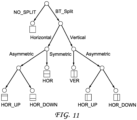
- the described embodiments add a step of checking all the parameters that forbid one Binary-Tree split mode before the coding of the BTsplitMode syntax element. This additional step ensures that the current block may be split at least in one direction or else it is inferred that there is no additional splitting, that is, the BTSplitMode may be inferred to be NO_SPLIT.
- Figure 8 shows the compression performance obtained with the proposed syntax for Binary-Tree split mode in JEM3.0 (Joint Exploration Model 3). This results are obtained in Random-Access, Low-Delay and Low-Delay-P configurations of the official JVET testing conditions.
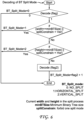
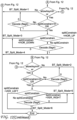
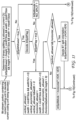
- FIG. 14 depicts the algorithm used to encode the Binary Split Mode, according to a first embodiment of the invention.
- the input to this process is the CU currently being coded, and the Binary Split Mode chosen for this CU.
- the CU is either split in a binary fashion, or is not split, at this stage of the overall CU coding process.
- the first step of the algorithm of Figure 14 checks if binary splitting of a current CU is allowed. This typically consists in checking if the current CU, rectangular or square, is comprised between the minimum and maximum Binary Tree CU size, in width and height. If not, this means the CU is not split, no syntax element is coded at all and the algorithm is over.
- a first flag is encoded to signal if the current CU is split or not.
- the algorithm of Figure 14 ends.
- the next step consists in evaluating if horizontal, vertical, asymmetric horizontal and asymmetric vertical splitting modes are respectively allowed for the current CU.
- the binary splitting of a CU is allowed, given that the CU to split has a size equal to 3 ⁇ 2 n , n ⁇ 1, which means the splitting of a CU could lead to a CU size of 3.
- the asymmetric splitting of a CU is allowed given that a size higher than or equal to 8, and is a power of 2. For instance, this allows an asymmetric split of a CU with size 8x4 into two sub coding units with sizes 6x2 and 2x2. This may be possible in particular in the Chroma component where the QTBT tool allows block sizes down to 2.
- the next step of the algorithm of Figure 14 tests if both horizontal and vertical splitting are allowed for a current CU. If so, a flag is coded to indicate the binary splitting orientation (horizontal or vertical) noted btSplitOrientation. If horizontal of vertical splitting is not allowed, then this flag is not coded, and the binary splitting orientation will be inferred on the decoder side.
- the process tests, for the relevant splitting orientation used, if the asymmetric splitting mode is allowed along this orientation. If not, the algorithm is over and no further syntax element if coded.
- the splitting mode will be inferred to be HOR or VER on the decoder side, depending on the btSplitOrientation value.
- a flag is encoded if asymmetric splitting is used for current CU. If not, the algorithm is over. If asymmetric splitting is used, then the asymmetric splitting is signaled through a flag, which indicates that:
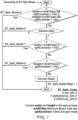
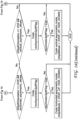
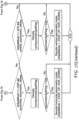
- the decoder size binary tree split mode parsing process is shown of Figure 15 . This is the reciprocal of the coding process of Figure 14 .
- the input to the process is the coded bit-stream and the current CU to decode.
- the first step checks if binary splitting of a current CU is allowed, exactly in the same way as the on encoder side. If not, this means the CU is not split, no syntax element is coded at all and the algorithm is over.
- next step consists in evaluating if horizontal, vertical, asymmetric horizontal and asymmetric vertical splitting are respectively allowed for the current CU, exactly as on the encoder side.
- a flag is coded to indicate the binary splitting orientation (horizontal or vertical), noted as btSplitOrientation. If horizontal of vertical splitting is not allowed, then this flag is not coded, and the binary splitting orientation is inferred.
- the process tests, for the used splitting orientation, if the asymmetric splitting mode is allowed along this orientation. If not, the algorithm is over and no further syntax element if decoded.
- the splitting mode is inferred to be HOR or VER, depending on the btSplitOrientation value.
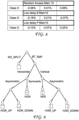
- more BTSplitModes are available, as just described above.
- the checking step proposed herein uses new properties from the new BTSplitModes available. If width or height of the current block is equal to minBTSize, the block cannot be split any further.
- the splitConstrain precludes use of one given BTSplitMode (see Figure 11 ).
- asymmetric CUs are enabled for only certain size of blocks (16 and 32). This information may also be used in the checking step before coding BTSplitMode.
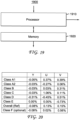
- Figure 20 shows the compression performance obtained with the proposed syntax for Binary-Tree split mode if asymmetric CUs are enabled.
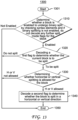
- FIG. 13 One embodiment of a method 1300 for decoding video image blocks in an entropy decoder under the present principles is shown in Figure 13 .
- the method commences at block 1301 and proceeds to block 1310 for determining whether a block is enabled to undergo binary splitting by checking syntax elements representative of a minimum block size and splitting constraints, and if binary splitting is not enabled, do not decode any further split mode flags for the block. Control then proceeds from block 1310 to block 1320, if binary splitting is enabled, for decoding a first flag to determine whether the block is to be split. Control then proceeds from block 1320 to block1330 for determining whether horizontal or vertical splitting is allowed for the block, if binary splitting is allowed, by checking syntax elements representative of a minimum block size and horizontal and vertical splitting constraints.
- FIG. 18 Another embodiment of a method 1800 for encoding video image blocks in an entropy encoder under the present principles is illustrated in Figure 18 .
- the method commences at block 1801 and proceeds to block 1810 for determining whether a block is to undergo binary splitting by checking its block size relative to a minimum block size and whether there are any splitting constraints, and if binary splitting is not to be enabled, do not encode any further split mode flags for the block. If binary splitting is enabled, control proceeds from block 1810 to block 1820 for encoding a first flag to indicate whether the block is to be split.
- the decision as to whether a block, coding unit, or other structure should be split at an encoder can be made by evaluating potential coding efficiency, for example.
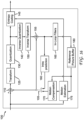
- FIG. 19 One embodiment of an apparatus 1900 for encoding or decoding the binary tree split mode flags using the present principles is illustrated in Figure 19 .
- the apparatus is comprised of Processor 1910 interconnected to Memory 1920. Instructions in Memory 1920 cause Processor 1910 to execute instructions to implement the method of either Figure 13 or Figure 18 on digital video image data or coded digital video image data, which may be input on one of the input ports of Processor 1910 or stored in Memory 1920.
- processor or “controller” should not be construed to refer exclusively to hardware capable of executing software, and may implicitly include, without limitation, digital signal processor (“DSP”) hardware, read-only memory (“ROM”) for storing software, random access memory (“RAM”), and non-volatile storage.
- DSP digital signal processor
- ROM read-only memory
- RAM random access memory
- any switches shown in the figures are conceptual only. Their function may be carried out through the operation of program logic, through dedicated logic, through the interaction of program control and dedicated logic, or even manually, the particular technique being selectable by the implementer as more specifically understood from the context.
- any element expressed as a means for performing a specified function is intended to encompass any way of performing that function including, for example, a) a combination of circuit elements that performs that function or b) software in any form, including, therefore, firmware, microcode or the like, combined with appropriate circuitry for executing that software to perform the function.
- the present principles as defined by such claims reside in the fact that the functionalities provided by the various recited means are combined and brought together in the manner which the claims call for. It is thus regarded that any means that can provide those functionalities are equivalent to those shown herein.
Landscapes
- Engineering & Computer Science (AREA)
- Multimedia (AREA)
- Signal Processing (AREA)
- Compression Or Coding Systems Of Tv Signals (AREA)
Claims (14)
- Verfahren zum Decodieren von Videobildblöcken in einem Entropie-Decoder, umfassend:Bestimmen (1310), ob binäre Teilung für einen Block aktiviert ist, durch Auswerten, ob sich der Block innerhalb eines zulässigen Breiten- und Höhenbereichs befindet;Decodieren (1320) eines ersten Flags, um zu bestimmen, ob der Block geteilt werden soll, wenn binäre Teilung aktiviert ist;Bestimmen (1330), ob horizontale, vertikale, asymmetrische horizontale oder asymmetrische vertikale Teilung jeweils für den Block zulässig sind, wenn der Block geteilt werden soll, durch Überprüfen der Blockgröße gegenüber der minimalen Blockgröße und horizontalen und vertikalen Abmessungen, undDecodieren (1340) eines zweiten Flags, um zu bestimmen, ob der Block in einer horizontalen oder vertikalen Richtung geteilt wird, wenn horizontale oder vertikale Teilung zulässig ist,Decodieren eines dritten Flags, um zu bestimmen, ob asymmetrische Teilung durchgeführt werden soll; undDurchführen einer Teilung in der gewünschten Ausrichtung gemäß Bitstromsyntax.
- Verfahren zum Codieren von Videobildblöcken in einem Entropie-Encoder, umfassend:Bestimmen (1810), ob binäre Teilung für einen Block aktiviert ist, durch Auswerten, ob sich der Block innerhalb eines zulässigen Breiten- und Höhenbereichs befindet;Codieren (1820) eines ersten Flags, um anzugeben, ob der Block geteilt werden soll, wenn binäre Teilung aktiviert ist;Bestimmen (1830), ob horizontale, vertikale, asymmetrische horizontale oder asymmetrische vertikale Teilung jeweils für den Block zulässig sind, wenn der Block geteilt werden soll, durch Überprüfen seiner Blockgröße gegenüber der minimalen Blockgröße, und ob es horizontale und vertikale Abmessungen gibt, undCodieren (1840) eines zweiten Flags, um anzugeben, ob der Block in einer horizontalen oder vertikalen Richtung geteilt wird, wenn horizontale oder vertikale Teilung zulässig ist;Codieren eines dritten Flags, um zu bestimmen, ob asymmetrische Teilung durchgeführt werden soll; undDurchführen einer Teilung in der gewünschten Ausrichtung gemäß Bitstromsyntax.
- Verfahren nach Anspruch 1 oder 2, wobei asymmetrische Codiereinheitenblöcke unter Verwendung von zwei zusätzlichen Flags aktiviert werden, um jeweils anzugeben, ob der Block asymmetrisch horizontal geteilt wird und ob der Block an einer oberen oder unteren Seite des Blocks geteilt wird, wenn der Block asymmetrisch horizontal geteilt wird, oder ob der Block asymmetrisch vertikal geteilt wird und ob der Block an einer linken oder rechten Seite des Blocks geteilt wird, wenn der Block asymmetrisch vertikal geteilt wird.
- Verfahren nach Anspruch 3, wobei asymmetrische Codiereinheiten Blöcke der Größe 16 umfassen.
- Verfahren nach Anspruch 3, wobei asymmetrische Codiereinheiten Blöcke der Größe 32 umfassen.
- Einrichtung zum Decodieren von Videobildblöcken in einem Entropie-Decoder, umfassend:einen Speicher (1920), undeinen Prozessor (1910), der so konfiguriert ist, dass er Videobildblöcke decodiert durch:Bestimmen (1310), ob binäre Teilung für einen Block aktiviert ist, durch Auswerten, ob sich der Block innerhalb eines zulässigen Breiten- und Höhenbereichs befindet;Decodieren eines ersten Flags, um zu bestimmen, ob der Block geteilt werden soll, wenn binäre Teilung aktiviert ist;Bestimmen, ob horizontale, vertikale, asymmetrische horizontale oder asymmetrische vertikale Teilung jeweils für den Block zulässig sind, wenn der Block geteilt werden soll, durch Überprüfen der Blockgröße gegenüber der minimalen Blockgröße und horizontalen und vertikalen Abmessungen, undDecodieren eines zweiten Flags, um zu bestimmen, ob der Block in einer horizontalen oder vertikalen Richtung geteilt wird, wenn horizontale oder vertikale Teilung zulässig ist;Decodieren eines dritten Flags, um zu bestimmen, ob asymmetrische Teilung durchgeführt werden soll; undDurchführen einer Teilung in der gewünschten Ausrichtung gemäß Bitstromsyntax.
- Einrichtung zum Codieren von Videobildblöcken in einem Entropie-Encoder, umfassend:einen Speicher (1920), undeinen Prozessor (1910), der so konfiguriert ist, dass er Videobildblöcke decodiert durch:Bestimmen (1810), ob binäre Teilung für einen Block aktiviert ist, durch Auswerten, ob sich der Block innerhalb eines zulässigen Breiten- und Höhenbereichs befindet;Codieren (1820) eines ersten Flags, um zu bestimmen, ob der Block geteilt werden soll, wenn binäre Teilung aktiviert ist;Bestimmen (1830), ob horizontale, vertikale, asymmetrische horizontale oder asymmetrische vertikale Teilung jeweils für den Block zulässig sind, wenn der Block geteilt werden soll, durch Überprüfen der Blockgröße gegenüber der minimalen Blockgröße und horizontalen und vertikalen Abmessungen, undCodieren (1840) eines zweiten Flags, um zu bestimmen, ob der Block in einer horizontalen oder vertikalen Richtung geteilt wird, wenn horizontale oder vertikale Teilung zulässig ist;Codieren eines dritten Flags, um zu bestimmen, ob asymmetrische Teilung durchgeführt werden soll; undDurchführen einer Teilung in der gewünschten Ausrichtung gemäß Bitstromsyntax.
- Einrichtung nach Anspruch 6 oder 7, wobei asymmetrische Codiereinheitenblöcke unter Verwendung von zwei zusätzlichen Flags aktiviert werden, um jeweils anzugeben, ob der Block asymmetrisch horizontal geteilt wird und ob der Block an einer oberen oder unteren Seite des Blocks geteilt wird, wenn der Block asymmetrisch horizontal geteilt wird, oder ob der Block asymmetrisch vertikal geteilt wird und ob der Block an einer linken oder rechten Seite des Blocks geteilt wird, wenn der Block asymmetrisch vertikal geteilt wird.
- Einrichtung nach Anspruch 8, wobei asymmetrische Codiereinheiten Blöcke der Größe 16 umfassen.
- Einrichtung nach Anspruch 8, wobei asymmetrische Codiereinheiten Blöcke der Größe 32 umfassen.
- Videosignal, das so formatiert ist, dass es beinhaltet:
codierte Daten, die für einen Block in einem Bild repräsentativ sind, die Flags umfassen, um Codierung im Binärbaum-Teilungsmodus nach dem Verfahren nach einem der Ansprüche 2 bis 5 anzugeben. - Nichtflüchtiges computerlesbares Speichermedium, das Anweisungen speichert, die, wenn sie von einem Prozessor ausgeführt werden, den Prozessor veranlassen, das Verfahren nach einem der Ansprüche 1 bis 5 durchzuführen, wenn das Computerprogramm von einem oder mehreren Prozessoren ausgeführt wird.
- Elektronische Vorrichtung, die eine Einrichtung zum Codieren von Videobildblöcken nach einem der Ansprüche 7 bis 10 umfasst.
- Elektronische Vorrichtung, die eine Einrichtung zum Decodieren von Videobildblöcken nach einem der Ansprüche 6 oder 8 bis 10 umfasst.
Priority Applications (1)
| Application Number | Priority Date | Filing Date | Title |
|---|---|---|---|
| EP24162731.4A EP4362461A3 (de) | 2016-10-05 | 2017-09-28 | Verfahren und vorrichtung zur kodierung im binärbaumteilungsmodus |
Applications Claiming Priority (2)
| Application Number | Priority Date | Filing Date | Title |
|---|---|---|---|
| EP16306306.8A EP3306938A1 (de) | 2016-10-05 | 2016-10-05 | Verfahren und vorrichtung für binäre baumteilungsmoduscodierung |
| PCT/EP2017/074694 WO2018065302A1 (en) | 2016-10-05 | 2017-09-28 | Method and apparatus for binary-tree split mode coding |
Related Child Applications (1)
| Application Number | Title | Priority Date | Filing Date |
|---|---|---|---|
| EP24162731.4A Division EP4362461A3 (de) | 2016-10-05 | 2017-09-28 | Verfahren und vorrichtung zur kodierung im binärbaumteilungsmodus |
Publications (2)
| Publication Number | Publication Date |
|---|---|
| EP3523975A1 EP3523975A1 (de) | 2019-08-14 |
| EP3523975B1 true EP3523975B1 (de) | 2024-03-13 |
Family
ID=57153425
Family Applications (3)
| Application Number | Title | Priority Date | Filing Date |
|---|---|---|---|
| EP16306306.8A Withdrawn EP3306938A1 (de) | 2016-10-05 | 2016-10-05 | Verfahren und vorrichtung für binäre baumteilungsmoduscodierung |
| EP17772442.4A Active EP3523975B1 (de) | 2016-10-05 | 2017-09-28 | Verfahren und vorrichtung für binäre baumteilungsmoduscodierung |
| EP24162731.4A Pending EP4362461A3 (de) | 2016-10-05 | 2017-09-28 | Verfahren und vorrichtung zur kodierung im binärbaumteilungsmodus |
Family Applications Before (1)
| Application Number | Title | Priority Date | Filing Date |
|---|---|---|---|
| EP16306306.8A Withdrawn EP3306938A1 (de) | 2016-10-05 | 2016-10-05 | Verfahren und vorrichtung für binäre baumteilungsmoduscodierung |
Family Applications After (1)
| Application Number | Title | Priority Date | Filing Date |
|---|---|---|---|
| EP24162731.4A Pending EP4362461A3 (de) | 2016-10-05 | 2017-09-28 | Verfahren und vorrichtung zur kodierung im binärbaumteilungsmodus |
Country Status (6)
| Country | Link |
|---|---|
| US (1) | US11218738B2 (de) |
| EP (3) | EP3306938A1 (de) |
| JP (1) | JP7319188B2 (de) |
| KR (1) | KR102493319B1 (de) |
| CN (1) | CN109792539B (de) |
| WO (1) | WO2018065302A1 (de) |
Families Citing this family (23)
| Publication number | Priority date | Publication date | Assignee | Title |
|---|---|---|---|---|
| CA3025334C (en) * | 2016-05-25 | 2021-07-13 | Arris Enterprises Llc | Binary ternary quad tree partitioning for jvet coding of video data |
| KR20180045530A (ko) | 2016-10-26 | 2018-05-04 | 디지털인사이트 주식회사 | 임의의 블록 분할을 사용하는 비디오 코딩 방법 및 장치 |
| TWI820019B (zh) * | 2017-03-31 | 2023-11-01 | 美商松下電器(美國)知識產權公司 | 圖像解碼裝置及解碼方法 |
| SG11202010629TA (en) | 2018-05-10 | 2020-12-30 | Samsung Electronics Co Ltd | Method and apparatus for image encoding, and method and apparatus for image decoding |
| ES2945186T3 (es) | 2018-06-15 | 2023-06-29 | Lg Electronics Inc | Método y aparato para la codificación de entropía basada en CABAC |
| CN110636299B (zh) | 2018-06-21 | 2022-06-14 | 北京字节跳动网络技术有限公司 | 用于处理视频数据的方法、装置及计算机可读记录介质 |
| CN114071165B (zh) | 2018-09-18 | 2022-09-23 | 华为技术有限公司 | 视频编码器、视频解码器及对应方法 |
| JP6835177B2 (ja) | 2018-11-30 | 2021-02-24 | 株式会社Jvcケンウッド | 画像復号化装置、画像復号化方法及び画像復号化プログラム |
| CN111277828B (zh) * | 2018-12-04 | 2022-07-12 | 华为技术有限公司 | 视频编解码方法、视频编码器和视频解码器 |
| US11206417B2 (en) * | 2019-05-30 | 2021-12-21 | Tencent America LLC | Method and apparatus for video coding |
| US12096032B2 (en) | 2019-06-24 | 2024-09-17 | Interdigital Vc Holdings, Inc. | Method and apparatus for signaling decoding data using high level syntax elements |
| MX2022002188A (es) | 2019-09-02 | 2022-03-11 | Beijing Bytedance Network Tech Co Ltd | Determinacion de modo de codificacion basada en formato de color. |
| KR102737934B1 (ko) | 2019-09-19 | 2024-12-04 | 두인 비전 컴퍼니 리미티드 | 비디오 코딩에서 레퍼런스 샘플 위치 유도 |
| CN114503574B (zh) | 2019-09-19 | 2025-01-10 | 北京字节跳动网络技术有限公司 | 视频编解码中的缩放窗口 |
| WO2021052494A1 (en) | 2019-09-21 | 2021-03-25 | Beijing Bytedance Network Technology Co., Ltd. | Size restriction based for chroma intra mode |
| MX2022003836A (es) | 2019-10-05 | 2022-05-12 | Beijing Bytedance Network Tech Co Ltd | Se?alizacion basada en los niveles de las herramientas de codificacion de video. |
| CN117499640A (zh) | 2019-10-12 | 2024-02-02 | 北京字节跳动网络技术有限公司 | 视频编解码中的预测类型信令 |
| EP4029274A4 (de) | 2019-10-13 | 2022-11-30 | Beijing Bytedance Network Technology Co., Ltd. | Zwischenspiel zwischen referenzbildaufnahme- und videocodierungswerkzeugen |
| CN111131376A (zh) * | 2019-10-22 | 2020-05-08 | 国网新疆电力有限公司信息通信公司 | 极端网络环境下图片切分传输方法、系统、终端及服务器 |
| US11496741B2 (en) * | 2019-12-17 | 2022-11-08 | Atibaba Group Holding Limited | Methods and apparatuses for block partitioning at picture boundary |
| MX2022007503A (es) | 2019-12-27 | 2022-07-04 | Beijing Bytedance Network Tech Co Ltd | Se?alizacion de tipos de corte en encabezados de imagenes de video. |
| KR20220165277A (ko) | 2020-04-10 | 2022-12-14 | 베이징 바이트댄스 네트워크 테크놀로지 컴퍼니, 리미티드 | 비디오 코딩에서 변환 스킵 블록들에 대한 최소 허용 양자화 |
| CN119732052A (zh) * | 2020-05-01 | 2025-03-28 | 抖音视界有限公司 | 用于运动精度语法的熵编解码 |
Citations (2)
| Publication number | Priority date | Publication date | Assignee | Title |
|---|---|---|---|---|
| EP3306935A1 (de) * | 2015-06-05 | 2018-04-11 | Intellectual Discovery Co., Ltd. | Verfahren und vorrichtung zur bildcodierung und bilddecodierung |
| EP3306920A1 (de) * | 2015-06-05 | 2018-04-11 | Intellectual Discovery Co., Ltd. | Verfahren und vorrichtung zur codierung und decodierung von intra-främe-prädiktion |
Family Cites Families (12)
| Publication number | Priority date | Publication date | Assignee | Title |
|---|---|---|---|---|
| US7302006B2 (en) * | 2002-04-30 | 2007-11-27 | Hewlett-Packard Development Company, L.P. | Compression of images and image sequences through adaptive partitioning |
| US20110310976A1 (en) | 2010-06-17 | 2011-12-22 | Qualcomm Incorporated | Joint Coding of Partition Information in Video Coding |
| CN101990104A (zh) | 2010-11-17 | 2011-03-23 | 中兴通讯股份有限公司 | 视频图像编码方法及装置 |
| US8494290B2 (en) * | 2011-05-05 | 2013-07-23 | Mitsubishi Electric Research Laboratories, Inc. | Method for coding pictures using hierarchical transform units |
| US9332283B2 (en) * | 2011-09-27 | 2016-05-03 | Broadcom Corporation | Signaling of prediction size unit in accordance with video coding |
| JP2013118424A (ja) | 2011-11-04 | 2013-06-13 | Sharp Corp | 画像復号装置、画像符号化装置、および符号化データのデータ構造 |
| US10805617B2 (en) | 2012-01-19 | 2020-10-13 | Texas Instruments Incorporated | Scalable prediction type coding |
| KR102063385B1 (ko) * | 2013-01-30 | 2020-01-07 | 인텔 코포레이션 | 차세대 비디오용 콘텐츠 적응적 엔트로피 코딩 |
| WO2016090568A1 (en) | 2014-12-10 | 2016-06-16 | Mediatek Singapore Pte. Ltd. | Binary tree block partitioning structure |
| MX389723B (es) * | 2016-03-16 | 2025-03-20 | Hfi Innovation Inc | Método y aparato de procesamiento de datos de video con tamaño restringido de bloque en codificación de video. |
| US10623774B2 (en) * | 2016-03-22 | 2020-04-14 | Qualcomm Incorporated | Constrained block-level optimization and signaling for video coding tools |
| US10863186B2 (en) * | 2016-08-26 | 2020-12-08 | Sharp Kabushiki Kaisha | Image decoding apparatus and image coding apparatus |
-
2016
- 2016-10-05 EP EP16306306.8A patent/EP3306938A1/de not_active Withdrawn
-
2017
- 2017-09-28 US US16/336,261 patent/US11218738B2/en active Active
- 2017-09-28 WO PCT/EP2017/074694 patent/WO2018065302A1/en not_active Ceased
- 2017-09-28 EP EP17772442.4A patent/EP3523975B1/de active Active
- 2017-09-28 KR KR1020197012582A patent/KR102493319B1/ko active Active
- 2017-09-28 CN CN201780061609.1A patent/CN109792539B/zh active Active
- 2017-09-28 JP JP2019516136A patent/JP7319188B2/ja active Active
- 2017-09-28 EP EP24162731.4A patent/EP4362461A3/de active Pending
Patent Citations (2)
| Publication number | Priority date | Publication date | Assignee | Title |
|---|---|---|---|---|
| EP3306935A1 (de) * | 2015-06-05 | 2018-04-11 | Intellectual Discovery Co., Ltd. | Verfahren und vorrichtung zur bildcodierung und bilddecodierung |
| EP3306920A1 (de) * | 2015-06-05 | 2018-04-11 | Intellectual Discovery Co., Ltd. | Verfahren und vorrichtung zur codierung und decodierung von intra-främe-prädiktion |
Also Published As
| Publication number | Publication date |
|---|---|
| JP2019535175A (ja) | 2019-12-05 |
| EP3523975A1 (de) | 2019-08-14 |
| KR102493319B1 (ko) | 2023-01-31 |
| KR20190055237A (ko) | 2019-05-22 |
| CN109792539B (zh) | 2022-02-08 |
| EP4362461A2 (de) | 2024-05-01 |
| JP7319188B2 (ja) | 2023-08-01 |
| CN109792539A (zh) | 2019-05-21 |
| US11218738B2 (en) | 2022-01-04 |
| EP4362461A3 (de) | 2024-05-22 |
| US20190215537A1 (en) | 2019-07-11 |
| WO2018065302A1 (en) | 2018-04-12 |
| EP3306938A1 (de) | 2018-04-11 |
Similar Documents
| Publication | Publication Date | Title |
|---|---|---|
| EP4362461A2 (de) | Verfahren und vorrichtung zur kodierung im binärbaumteilungsmodus | |
| CN110999297B (zh) | 在图像或视频编码系统中处理图像的方法和装置 | |
| US10750169B2 (en) | Method and apparatus for intra chroma coding in image and video coding | |
| EP3611922B1 (de) | Verfahren zur decodierung und codierung eines videosignals | |
| EP2946553B1 (de) | Transformationskoeffizientencodierung für kontextadaptive binäre entropiecodierung von video | |
| KR102447450B1 (ko) | 영상 부호화/복호화 방법 및 이를 위한 장치 | |
| CN110720217B (zh) | 用于支持各种块大小的图像编码或解码的设备和方法 | |
| CN110249627B (zh) | 视频编解码的方法、装置及非暂时性计算机可读介质 | |
| EP4297407A1 (de) | Verfahren zur videocodierung mit getrenntem codierungsbaum für luma und chroma | |
| US20240205455A1 (en) | Method and device for processing video signal by using intra-prediction | |
| KR20190090865A (ko) | 영상 처리 방법 및 이를 위한 장치 | |
| CN108322760A (zh) | 一种视频编解码的方法及装置 | |
| US10506241B2 (en) | Method for determining block partition manner in video codec, and related apparatus | |
| CN118101935A (zh) | 用于处理图像的方法及其设备 | |
| CN112166606B (zh) | 用于处理图像的方法及其设备 | |
| KR20200130864A (ko) | 참조 샘플을 이용하는 비디오 신호 처리 방법 및 장치 | |
| US10735728B2 (en) | Method for processing image and apparatus therefor | |
| US11563979B2 (en) | Image coding method on basis of transform, and apparatus therefor | |
| US10893274B2 (en) | Method for processing video signal on basis of arbitrary partition transform | |
| US11818349B2 (en) | Reducing redundancy between tree types | |
| US20200396483A1 (en) | Method and device for processing video signal | |
| CN114731439A (zh) | 基于变换的图像编译方法及其装置 | |
| US20220232215A1 (en) | Transform-based image coding method and device therefor |
Legal Events
| Date | Code | Title | Description |
|---|---|---|---|
| STAA | Information on the status of an ep patent application or granted ep patent |
Free format text: STATUS: UNKNOWN |
|
| STAA | Information on the status of an ep patent application or granted ep patent |
Free format text: STATUS: THE INTERNATIONAL PUBLICATION HAS BEEN MADE |
|
| PUAI | Public reference made under article 153(3) epc to a published international application that has entered the european phase |
Free format text: ORIGINAL CODE: 0009012 |
|
| STAA | Information on the status of an ep patent application or granted ep patent |
Free format text: STATUS: REQUEST FOR EXAMINATION WAS MADE |
|
| 17P | Request for examination filed |
Effective date: 20190429 |
|
| AK | Designated contracting states |
Kind code of ref document: A1 Designated state(s): AL AT BE BG CH CY CZ DE DK EE ES FI FR GB GR HR HU IE IS IT LI LT LU LV MC MK MT NL NO PL PT RO RS SE SI SK SM TR |
|
| AX | Request for extension of the european patent |
Extension state: BA ME |
|
| RAP1 | Party data changed (applicant data changed or rights of an application transferred) |
Owner name: INTERDIGITAL VC HOLDINGS, INC. |
|
| DAV | Request for validation of the european patent (deleted) | ||
| DAX | Request for extension of the european patent (deleted) | ||
| STAA | Information on the status of an ep patent application or granted ep patent |
Free format text: STATUS: EXAMINATION IS IN PROGRESS |
|
| 17Q | First examination report despatched |
Effective date: 20201222 |
|
| RAP1 | Party data changed (applicant data changed or rights of an application transferred) |
Owner name: INTERDIGITAL MADISON PATENT HOLDINGS, SAS |
|
| RAP3 | Party data changed (applicant data changed or rights of an application transferred) |
Owner name: INTERDIGITAL MADISON PATENT HOLDINGS, SAS |
|
| GRAP | Despatch of communication of intention to grant a patent |
Free format text: ORIGINAL CODE: EPIDOSNIGR1 |
|
| STAA | Information on the status of an ep patent application or granted ep patent |
Free format text: STATUS: GRANT OF PATENT IS INTENDED |
|
| INTG | Intention to grant announced |
Effective date: 20231004 |
|
| GRAS | Grant fee paid |
Free format text: ORIGINAL CODE: EPIDOSNIGR3 |
|
| GRAA | (expected) grant |
Free format text: ORIGINAL CODE: 0009210 |
|
| STAA | Information on the status of an ep patent application or granted ep patent |
Free format text: STATUS: THE PATENT HAS BEEN GRANTED |
|
| AK | Designated contracting states |
Kind code of ref document: B1 Designated state(s): AL AT BE BG CH CY CZ DE DK EE ES FI FR GB GR HR HU IE IS IT LI LT LU LV MC MK MT NL NO PL PT RO RS SE SI SK SM TR |
|
| REG | Reference to a national code |
Ref country code: GB Ref legal event code: FG4D |
|
| REG | Reference to a national code |
Ref country code: CH Ref legal event code: EP |
|
| P01 | Opt-out of the competence of the unified patent court (upc) registered |
Effective date: 20240216 |
|
| REG | Reference to a national code |
Ref country code: DE Ref legal event code: R096 Ref document number: 602017079994 Country of ref document: DE |
|
| REG | Reference to a national code |
Ref country code: IE Ref legal event code: FG4D |
|
| REG | Reference to a national code |
Ref country code: NL Ref legal event code: FP |
|
| PG25 | Lapsed in a contracting state [announced via postgrant information from national office to epo] |
Ref country code: LT Free format text: LAPSE BECAUSE OF FAILURE TO SUBMIT A TRANSLATION OF THE DESCRIPTION OR TO PAY THE FEE WITHIN THE PRESCRIBED TIME-LIMIT Effective date: 20240313 |
|
| REG | Reference to a national code |
Ref country code: LT Ref legal event code: MG9D |
|
| PG25 | Lapsed in a contracting state [announced via postgrant information from national office to epo] |
Ref country code: GR Free format text: LAPSE BECAUSE OF FAILURE TO SUBMIT A TRANSLATION OF THE DESCRIPTION OR TO PAY THE FEE WITHIN THE PRESCRIBED TIME-LIMIT Effective date: 20240614 |
|
| PG25 | Lapsed in a contracting state [announced via postgrant information from national office to epo] |
Ref country code: RS Free format text: LAPSE BECAUSE OF FAILURE TO SUBMIT A TRANSLATION OF THE DESCRIPTION OR TO PAY THE FEE WITHIN THE PRESCRIBED TIME-LIMIT Effective date: 20240613 Ref country code: HR Free format text: LAPSE BECAUSE OF FAILURE TO SUBMIT A TRANSLATION OF THE DESCRIPTION OR TO PAY THE FEE WITHIN THE PRESCRIBED TIME-LIMIT Effective date: 20240313 |
|
| PG25 | Lapsed in a contracting state [announced via postgrant information from national office to epo] |
Ref country code: ES Free format text: LAPSE BECAUSE OF FAILURE TO SUBMIT A TRANSLATION OF THE DESCRIPTION OR TO PAY THE FEE WITHIN THE PRESCRIBED TIME-LIMIT Effective date: 20240313 |
|
| PG25 | Lapsed in a contracting state [announced via postgrant information from national office to epo] |
Ref country code: RS Free format text: LAPSE BECAUSE OF FAILURE TO SUBMIT A TRANSLATION OF THE DESCRIPTION OR TO PAY THE FEE WITHIN THE PRESCRIBED TIME-LIMIT Effective date: 20240613 Ref country code: NO Free format text: LAPSE BECAUSE OF FAILURE TO SUBMIT A TRANSLATION OF THE DESCRIPTION OR TO PAY THE FEE WITHIN THE PRESCRIBED TIME-LIMIT Effective date: 20240613 Ref country code: LT Free format text: LAPSE BECAUSE OF FAILURE TO SUBMIT A TRANSLATION OF THE DESCRIPTION OR TO PAY THE FEE WITHIN THE PRESCRIBED TIME-LIMIT Effective date: 20240313 Ref country code: HR Free format text: LAPSE BECAUSE OF FAILURE TO SUBMIT A TRANSLATION OF THE DESCRIPTION OR TO PAY THE FEE WITHIN THE PRESCRIBED TIME-LIMIT Effective date: 20240313 Ref country code: GR Free format text: LAPSE BECAUSE OF FAILURE TO SUBMIT A TRANSLATION OF THE DESCRIPTION OR TO PAY THE FEE WITHIN THE PRESCRIBED TIME-LIMIT Effective date: 20240614 Ref country code: FI Free format text: LAPSE BECAUSE OF FAILURE TO SUBMIT A TRANSLATION OF THE DESCRIPTION OR TO PAY THE FEE WITHIN THE PRESCRIBED TIME-LIMIT Effective date: 20240313 Ref country code: ES Free format text: LAPSE BECAUSE OF FAILURE TO SUBMIT A TRANSLATION OF THE DESCRIPTION OR TO PAY THE FEE WITHIN THE PRESCRIBED TIME-LIMIT Effective date: 20240313 Ref country code: BG Free format text: LAPSE BECAUSE OF FAILURE TO SUBMIT A TRANSLATION OF THE DESCRIPTION OR TO PAY THE FEE WITHIN THE PRESCRIBED TIME-LIMIT Effective date: 20240313 |
|
| REG | Reference to a national code |
Ref country code: AT Ref legal event code: MK05 Ref document number: 1666830 Country of ref document: AT Kind code of ref document: T Effective date: 20240313 |
|
| PG25 | Lapsed in a contracting state [announced via postgrant information from national office to epo] |
Ref country code: SE Free format text: LAPSE BECAUSE OF FAILURE TO SUBMIT A TRANSLATION OF THE DESCRIPTION OR TO PAY THE FEE WITHIN THE PRESCRIBED TIME-LIMIT Effective date: 20240313 Ref country code: LV Free format text: LAPSE BECAUSE OF FAILURE TO SUBMIT A TRANSLATION OF THE DESCRIPTION OR TO PAY THE FEE WITHIN THE PRESCRIBED TIME-LIMIT Effective date: 20240313 |
|
| PG25 | Lapsed in a contracting state [announced via postgrant information from national office to epo] |
Ref country code: IS Free format text: LAPSE BECAUSE OF FAILURE TO SUBMIT A TRANSLATION OF THE DESCRIPTION OR TO PAY THE FEE WITHIN THE PRESCRIBED TIME-LIMIT Effective date: 20240713 |
|
| PG25 | Lapsed in a contracting state [announced via postgrant information from national office to epo] |
Ref country code: SM Free format text: LAPSE BECAUSE OF FAILURE TO SUBMIT A TRANSLATION OF THE DESCRIPTION OR TO PAY THE FEE WITHIN THE PRESCRIBED TIME-LIMIT Effective date: 20240313 Ref country code: PT Free format text: LAPSE BECAUSE OF FAILURE TO SUBMIT A TRANSLATION OF THE DESCRIPTION OR TO PAY THE FEE WITHIN THE PRESCRIBED TIME-LIMIT Effective date: 20240715 |
|
| PG25 | Lapsed in a contracting state [announced via postgrant information from national office to epo] |
Ref country code: CZ Free format text: LAPSE BECAUSE OF FAILURE TO SUBMIT A TRANSLATION OF THE DESCRIPTION OR TO PAY THE FEE WITHIN THE PRESCRIBED TIME-LIMIT Effective date: 20240313 Ref country code: EE Free format text: LAPSE BECAUSE OF FAILURE TO SUBMIT A TRANSLATION OF THE DESCRIPTION OR TO PAY THE FEE WITHIN THE PRESCRIBED TIME-LIMIT Effective date: 20240313 |
|
| PG25 | Lapsed in a contracting state [announced via postgrant information from national office to epo] |
Ref country code: AT Free format text: LAPSE BECAUSE OF FAILURE TO SUBMIT A TRANSLATION OF THE DESCRIPTION OR TO PAY THE FEE WITHIN THE PRESCRIBED TIME-LIMIT Effective date: 20240313 |
|
| PG25 | Lapsed in a contracting state [announced via postgrant information from national office to epo] |
Ref country code: PL Free format text: LAPSE BECAUSE OF FAILURE TO SUBMIT A TRANSLATION OF THE DESCRIPTION OR TO PAY THE FEE WITHIN THE PRESCRIBED TIME-LIMIT Effective date: 20240313 |
|
| PG25 | Lapsed in a contracting state [announced via postgrant information from national office to epo] |
Ref country code: SK Free format text: LAPSE BECAUSE OF FAILURE TO SUBMIT A TRANSLATION OF THE DESCRIPTION OR TO PAY THE FEE WITHIN THE PRESCRIBED TIME-LIMIT Effective date: 20240313 |
|
| PG25 | Lapsed in a contracting state [announced via postgrant information from national office to epo] |
Ref country code: SM Free format text: LAPSE BECAUSE OF FAILURE TO SUBMIT A TRANSLATION OF THE DESCRIPTION OR TO PAY THE FEE WITHIN THE PRESCRIBED TIME-LIMIT Effective date: 20240313 Ref country code: SK Free format text: LAPSE BECAUSE OF FAILURE TO SUBMIT A TRANSLATION OF THE DESCRIPTION OR TO PAY THE FEE WITHIN THE PRESCRIBED TIME-LIMIT Effective date: 20240313 Ref country code: RO Free format text: LAPSE BECAUSE OF FAILURE TO SUBMIT A TRANSLATION OF THE DESCRIPTION OR TO PAY THE FEE WITHIN THE PRESCRIBED TIME-LIMIT Effective date: 20240313 Ref country code: PT Free format text: LAPSE BECAUSE OF FAILURE TO SUBMIT A TRANSLATION OF THE DESCRIPTION OR TO PAY THE FEE WITHIN THE PRESCRIBED TIME-LIMIT Effective date: 20240715 Ref country code: PL Free format text: LAPSE BECAUSE OF FAILURE TO SUBMIT A TRANSLATION OF THE DESCRIPTION OR TO PAY THE FEE WITHIN THE PRESCRIBED TIME-LIMIT Effective date: 20240313 Ref country code: IS Free format text: LAPSE BECAUSE OF FAILURE TO SUBMIT A TRANSLATION OF THE DESCRIPTION OR TO PAY THE FEE WITHIN THE PRESCRIBED TIME-LIMIT Effective date: 20240713 Ref country code: EE Free format text: LAPSE BECAUSE OF FAILURE TO SUBMIT A TRANSLATION OF THE DESCRIPTION OR TO PAY THE FEE WITHIN THE PRESCRIBED TIME-LIMIT Effective date: 20240313 Ref country code: CZ Free format text: LAPSE BECAUSE OF FAILURE TO SUBMIT A TRANSLATION OF THE DESCRIPTION OR TO PAY THE FEE WITHIN THE PRESCRIBED TIME-LIMIT Effective date: 20240313 Ref country code: AT Free format text: LAPSE BECAUSE OF FAILURE TO SUBMIT A TRANSLATION OF THE DESCRIPTION OR TO PAY THE FEE WITHIN THE PRESCRIBED TIME-LIMIT Effective date: 20240313 |
|
| PG25 | Lapsed in a contracting state [announced via postgrant information from national office to epo] |
Ref country code: IT Free format text: LAPSE BECAUSE OF FAILURE TO SUBMIT A TRANSLATION OF THE DESCRIPTION OR TO PAY THE FEE WITHIN THE PRESCRIBED TIME-LIMIT Effective date: 20240313 |
|
| REG | Reference to a national code |
Ref country code: DE Ref legal event code: R097 Ref document number: 602017079994 Country of ref document: DE |
|
| PG25 | Lapsed in a contracting state [announced via postgrant information from national office to epo] |
Ref country code: IT Free format text: LAPSE BECAUSE OF FAILURE TO SUBMIT A TRANSLATION OF THE DESCRIPTION OR TO PAY THE FEE WITHIN THE PRESCRIBED TIME-LIMIT Effective date: 20240313 |
|
| PG25 | Lapsed in a contracting state [announced via postgrant information from national office to epo] |
Ref country code: DK Free format text: LAPSE BECAUSE OF FAILURE TO SUBMIT A TRANSLATION OF THE DESCRIPTION OR TO PAY THE FEE WITHIN THE PRESCRIBED TIME-LIMIT Effective date: 20240313 |
|
| PLBE | No opposition filed within time limit |
Free format text: ORIGINAL CODE: 0009261 |
|
| STAA | Information on the status of an ep patent application or granted ep patent |
Free format text: STATUS: NO OPPOSITION FILED WITHIN TIME LIMIT |
|
| PG25 | Lapsed in a contracting state [announced via postgrant information from national office to epo] |
Ref country code: DK Free format text: LAPSE BECAUSE OF FAILURE TO SUBMIT A TRANSLATION OF THE DESCRIPTION OR TO PAY THE FEE WITHIN THE PRESCRIBED TIME-LIMIT Effective date: 20240313 |
|
| 26N | No opposition filed |
Effective date: 20241216 |
|
| PG25 | Lapsed in a contracting state [announced via postgrant information from national office to epo] |
Ref country code: SI Free format text: LAPSE BECAUSE OF FAILURE TO SUBMIT A TRANSLATION OF THE DESCRIPTION OR TO PAY THE FEE WITHIN THE PRESCRIBED TIME-LIMIT Effective date: 20240313 Ref country code: MC Free format text: LAPSE BECAUSE OF FAILURE TO SUBMIT A TRANSLATION OF THE DESCRIPTION OR TO PAY THE FEE WITHIN THE PRESCRIBED TIME-LIMIT Effective date: 20240313 |
|
| REG | Reference to a national code |
Ref country code: CH Ref legal event code: PL |
|
| PG25 | Lapsed in a contracting state [announced via postgrant information from national office to epo] |
Ref country code: LU Free format text: LAPSE BECAUSE OF NON-PAYMENT OF DUE FEES Effective date: 20240928 |
|
| REG | Reference to a national code |
Ref country code: BE Ref legal event code: MM Effective date: 20240930 |
|
| PG25 | Lapsed in a contracting state [announced via postgrant information from national office to epo] |
Ref country code: BE Free format text: LAPSE BECAUSE OF NON-PAYMENT OF DUE FEES Effective date: 20240930 |
|
| PG25 | Lapsed in a contracting state [announced via postgrant information from national office to epo] |
Ref country code: CH Free format text: LAPSE BECAUSE OF NON-PAYMENT OF DUE FEES Effective date: 20240930 |
|
| PG25 | Lapsed in a contracting state [announced via postgrant information from national office to epo] |
Ref country code: IE Free format text: LAPSE BECAUSE OF NON-PAYMENT OF DUE FEES Effective date: 20240928 |
|
| PGFP | Annual fee paid to national office [announced via postgrant information from national office to epo] |
Ref country code: DE Payment date: 20250926 Year of fee payment: 9 |
|
| PGFP | Annual fee paid to national office [announced via postgrant information from national office to epo] |
Ref country code: NL Payment date: 20250925 Year of fee payment: 9 |
|
| PGFP | Annual fee paid to national office [announced via postgrant information from national office to epo] |
Ref country code: GB Payment date: 20250923 Year of fee payment: 9 |
|
| PGFP | Annual fee paid to national office [announced via postgrant information from national office to epo] |
Ref country code: FR Payment date: 20250925 Year of fee payment: 9 |
|
| PG25 | Lapsed in a contracting state [announced via postgrant information from national office to epo] |
Ref country code: CY Free format text: LAPSE BECAUSE OF FAILURE TO SUBMIT A TRANSLATION OF THE DESCRIPTION OR TO PAY THE FEE WITHIN THE PRESCRIBED TIME-LIMIT; INVALID AB INITIO Effective date: 20170928 |
|
| PG25 | Lapsed in a contracting state [announced via postgrant information from national office to epo] |
Ref country code: HU Free format text: LAPSE BECAUSE OF FAILURE TO SUBMIT A TRANSLATION OF THE DESCRIPTION OR TO PAY THE FEE WITHIN THE PRESCRIBED TIME-LIMIT; INVALID AB INITIO Effective date: 20170928 |
|
| PG25 | Lapsed in a contracting state [announced via postgrant information from national office to epo] |
Ref country code: TR Free format text: LAPSE BECAUSE OF FAILURE TO SUBMIT A TRANSLATION OF THE DESCRIPTION OR TO PAY THE FEE WITHIN THE PRESCRIBED TIME-LIMIT Effective date: 20240313 |