EP3523970B1 - Source color volume information messaging - Google Patents
Source color volume information messaging Download PDFInfo
- Publication number
- EP3523970B1 EP3523970B1 EP17787084.7A EP17787084A EP3523970B1 EP 3523970 B1 EP3523970 B1 EP 3523970B1 EP 17787084 A EP17787084 A EP 17787084A EP 3523970 B1 EP3523970 B1 EP 3523970B1
- Authority
- EP
- European Patent Office
- Prior art keywords
- source
- sei
- color volume
- primaries
- source color
- Prior art date
- Legal status (The legal status is an assumption and is not a legal conclusion. Google has not performed a legal analysis and makes no representation as to the accuracy of the status listed.)
- Active
Links
Images

Classifications
-
- H—ELECTRICITY
- H04—ELECTRIC COMMUNICATION TECHNIQUE
- H04N—PICTORIAL COMMUNICATION, e.g. TELEVISION
- H04N19/00—Methods or arrangements for coding, decoding, compressing or decompressing digital video signals
- H04N19/10—Methods or arrangements for coding, decoding, compressing or decompressing digital video signals using adaptive coding
- H04N19/134—Methods or arrangements for coding, decoding, compressing or decompressing digital video signals using adaptive coding characterised by the element, parameter or criterion affecting or controlling the adaptive coding
- H04N19/136—Incoming video signal characteristics or properties
- H04N19/14—Coding unit complexity, e.g. amount of activity or edge presence estimation
-
- H—ELECTRICITY
- H04—ELECTRIC COMMUNICATION TECHNIQUE
- H04N—PICTORIAL COMMUNICATION, e.g. TELEVISION
- H04N19/00—Methods or arrangements for coding, decoding, compressing or decompressing digital video signals
- H04N19/46—Embedding additional information in the video signal during the compression process
-
- H—ELECTRICITY
- H04—ELECTRIC COMMUNICATION TECHNIQUE
- H04N—PICTORIAL COMMUNICATION, e.g. TELEVISION
- H04N19/00—Methods or arrangements for coding, decoding, compressing or decompressing digital video signals
- H04N19/10—Methods or arrangements for coding, decoding, compressing or decompressing digital video signals using adaptive coding
- H04N19/169—Methods or arrangements for coding, decoding, compressing or decompressing digital video signals using adaptive coding characterised by the coding unit, i.e. the structural portion or semantic portion of the video signal being the object or the subject of the adaptive coding
- H04N19/186—Methods or arrangements for coding, decoding, compressing or decompressing digital video signals using adaptive coding characterised by the coding unit, i.e. the structural portion or semantic portion of the video signal being the object or the subject of the adaptive coding the unit being a colour or a chrominance component
-
- H—ELECTRICITY
- H04—ELECTRIC COMMUNICATION TECHNIQUE
- H04N—PICTORIAL COMMUNICATION, e.g. TELEVISION
- H04N19/00—Methods or arrangements for coding, decoding, compressing or decompressing digital video signals
- H04N19/20—Methods or arrangements for coding, decoding, compressing or decompressing digital video signals using video object coding
-
- H—ELECTRICITY
- H04—ELECTRIC COMMUNICATION TECHNIQUE
- H04N—PICTORIAL COMMUNICATION, e.g. TELEVISION
- H04N19/00—Methods or arrangements for coding, decoding, compressing or decompressing digital video signals
- H04N19/40—Methods or arrangements for coding, decoding, compressing or decompressing digital video signals using video transcoding, i.e. partial or full decoding of a coded input stream followed by re-encoding of the decoded output stream
-
- H—ELECTRICITY
- H04—ELECTRIC COMMUNICATION TECHNIQUE
- H04N—PICTORIAL COMMUNICATION, e.g. TELEVISION
- H04N19/00—Methods or arrangements for coding, decoding, compressing or decompressing digital video signals
- H04N19/70—Methods or arrangements for coding, decoding, compressing or decompressing digital video signals characterised by syntax aspects related to video coding, e.g. related to compression standards
-
- H—ELECTRICITY
- H04—ELECTRIC COMMUNICATION TECHNIQUE
- H04N—PICTORIAL COMMUNICATION, e.g. TELEVISION
- H04N21/00—Selective content distribution, e.g. interactive television or video on demand [VOD]
- H04N21/20—Servers specifically adapted for the distribution of content, e.g. VOD servers; Operations thereof
- H04N21/23—Processing of content or additional data; Elementary server operations; Server middleware
- H04N21/235—Processing of additional data, e.g. scrambling of additional data or processing content descriptors
-
- H—ELECTRICITY
- H04—ELECTRIC COMMUNICATION TECHNIQUE
- H04N—PICTORIAL COMMUNICATION, e.g. TELEVISION
- H04N21/00—Selective content distribution, e.g. interactive television or video on demand [VOD]
- H04N21/20—Servers specifically adapted for the distribution of content, e.g. VOD servers; Operations thereof
- H04N21/23—Processing of content or additional data; Elementary server operations; Server middleware
- H04N21/235—Processing of additional data, e.g. scrambling of additional data or processing content descriptors
- H04N21/2353—Processing of additional data, e.g. scrambling of additional data or processing content descriptors specifically adapted to content descriptors, e.g. coding, compressing or processing of metadata
-
- H—ELECTRICITY
- H04—ELECTRIC COMMUNICATION TECHNIQUE
- H04N—PICTORIAL COMMUNICATION, e.g. TELEVISION
- H04N21/00—Selective content distribution, e.g. interactive television or video on demand [VOD]
- H04N21/80—Generation or processing of content or additional data by content creator independently of the distribution process; Content per se
- H04N21/83—Generation or processing of protective or descriptive data associated with content; Content structuring
- H04N21/84—Generation or processing of descriptive data, e.g. content descriptors
-
- H—ELECTRICITY
- H04—ELECTRIC COMMUNICATION TECHNIQUE
- H04N—PICTORIAL COMMUNICATION, e.g. TELEVISION
- H04N19/00—Methods or arrangements for coding, decoding, compressing or decompressing digital video signals
- H04N19/42—Methods or arrangements for coding, decoding, compressing or decompressing digital video signals characterised by implementation details or hardware specially adapted for video compression or decompression, e.g. dedicated software implementation
- H04N19/436—Methods or arrangements for coding, decoding, compressing or decompressing digital video signals characterised by implementation details or hardware specially adapted for video compression or decompression, e.g. dedicated software implementation using parallelised computational arrangements
Definitions
- the present invention relates generally to images. More particularly, an embodiment of the present invention relates to communicating and processing source color volume information.
- ITU-T H.265 [1] (also known as HEVC) for "coding of moving video," in Annex D, “Supplemental enhancement information” (SEI), and Annex E, “Video usability information” (VUI), describes the syntax for providing supplemental SEI and VUI information in a coded bitstream to enable a decoder to better map the decoded samples into a display.
- SEI Supplemental enhancement information
- VUI Video usability information
- the society of motion picture and television engineers has also defined a number of Recommendations related to communicating metadata related to the color volume information for both the source video and a targeted display.
- the SMPTE ST 2094 suite of documents e.g., [5] and [6]
- metadata may vary scene-by-scene or frame-by-frame.
- such metadata may assist a decoder to present high-dynamic range (HDR) and wide color gamut (WCG) data on a display having a smaller color volume than that of the mastering display used for mastering the source images.
- HDR high-dynamic range
- WCG wide color gamut
- Metadata relates to any auxiliary information that is transmitted as part of the coded bitstream and assists a decoder to render a decoded image.
- metadata may include, but are not limited to, color space or gamut information, prediction parameters, reference display parameters, and auxiliary signal parameters, as those described herein.
- a content-SEI message is proposed to signal content color gamut in 2D, which describes the actual color distribution of the video content.
- VUI the variable colour_primaries is used to indicate the container color gamut instead of true source color gamut [1].
- multiple primary expressions and spatial regions are proposed to be associated with the identified source characteristics.
- a content color volume SEI message is proposed to indicate the color volume occupied by the content. It uses an ( x, y, Y ) description of the color coordinates and has slices of luminance Y with associated polygons for each slice.
- D2 describes a method of color mapping a video signal represented in a first color volume from color mapping data to be applied on a video signal represented in a second color volume.
- the method comprises: color mapping said signal represented in a first color volume from said first color volume into said second color volume in the case where said first and second color volume are different; and color mapping said color mapped video signal based on said color mapping data.
- D4 describes representing color mapping information using a successive application of multiple color mapping functions. Parameters for the multiple color mapping functions can be encoded into a bitstream. Color mapping functions are consecutively applied on their own domains of definition only.
- Example embodiments described herein relate to techniques for communicating source color volume information using SEI messaging.
- a processor for extracting SEI messaging receives a first messaging variable identifying the presence of source color volume information in an input bitstream.
- the processor receives a second messaging variable as part of the source color volume information. If the second messaging variable matches a first predetermined value, then for one or more color primaries, it generates x and y chromaticity coordinates for the one or more color primaries based on the source color volume information in the input bitstream. It generates a minimum, a maximum, and an average luminance value based on the source color volume information in the input bitstream.
- the processor may receive a third messaging variable as part of the source color volume information, and if the third messaging variable matches a second predetermined value, then for one or more color primaries, generate x and y chromaticity coordinates for the one or more color primaries corresponding to the minimum, maximum, and average luminance values based on the source color volume information.
- FIG. 1 depicts an example process of a video delivery pipeline (100) showing various stages from video capture to video content display.
- a sequence of video frames (102) is captured or generated using image generation block (105).
- Video frames (102) may be digitally captured (e.g. by a digital camera) or generated by a computer (e.g. using computer animation) to provide video data (107).
- video frames (102) may be captured on film by a film camera.
- the film after appropriate editing (not shown), is converted to a digital format to provide video data (107).
- the video data (107) is then provided to a processor at block (110) for post-production editing.
- Post-production editing (110) may include adjusting or modifying colors or brightness in particular areas of an image to enhance the image quality or achieve a particular appearance for the image in accordance with the video creator's creative intent. This is sometimes called "color timing" or "color grading.”
- Other editing e.g. scene selection and sequencing, image cropping, addition of computer-generated visual special effects, etc.
- video images are viewed on a reference display (125) (also to be referred to as the "targeted display” since the studio optimizes the video for ).
- video content may be analyzed to extract source-color-volume metadata (119), for example as defined in SMPTE ST 2094-1 [5], or as will be defined later in this invention.
- source-color-volume metadata may also define the characteristics of the targeted display (e.g., reference display (125)) and color remapping information so that a downstream receiver can render the decoded data in the best possible way.
- video data of the final production (117) and associated metadata (119) may be delivered in an appropriate color format (e.g., 10-bit YCbCr in 4:2:0, ICtCp, and the like) to encoding block (120) for delivering downstream to decoding and playback devices such as television sets, set-top boxes, movie theaters, and the like.
- coding block (120) may include audio and video encoders, such as those defined by ATSC, DVB, DVD, Blu-Ray, and other delivery formats, to generate coded bit stream (122).
- Coded bitstream (122) may be represented by a single layer video coded bitstream or by a multi-layer bitstream.
- signal (122) may include a base layer (say, an SDR layer or a 10-bit HDR (HDR10) layer) and an enhancement layer, which when combined with the base layer yields a HDR bitstream with higher dynamic range than the base layer alone (e.g., a 12-bit HDR signal).
- Signal (122), the output bitstream from the encoder (120) may also include metadata (119) and additional coding-related metadata, such as prediction parameters and other data to assist a decoder to better reconstruct an HDR signal.
- the coded bit stream (122) is decoded by decoding unit (130) to generate a decoded signal (132) and associated metadata (119).
- the receiver (or target) display (150) may have completely different characteristics than the reference (or targeted) display (125).
- the reference display (125) may be a 1,000 nits display while the receiver display may be a 500 nits display.
- a display management module (140) may be used to map the dynamic range of decoded signal (132) to the characteristics of the receiver display (150) by generating display-mapped signal (142).
- display management denotes the processing (e.g., tone and gamut mapping) required to map an input video signal of a first dynamic range (e.g., 1000 nits) to a display of a second dynamic range (e.g., 500 nits).
- Display management unit (140) may take into consideration metadata (119) to improve the quality of the output video on display (150). For example, as shown in [7], information about the luminance range of the targeted (or reference) display (e.g., 125) and the source data may be used on a receiver to better map the dynamic range of the video content into the receiver display (e.g., 150).
- FIG. 2 depicts an example of the "largest" possible color volume of a pre-defined container format (e.g., BT. 2020) (also to be referred as the "container color volume").
- a pre-defined container format e.g., BT. 2020
- container color volume also to be referred as the "container color volume”
- 2D two-dimensional
- the source-color volume of the source content (e.g., 112) for a particular frame, or even within a whole scene, may be significantly smaller than the largest possible color volume (310). Because the actual color volume (305) has very irregular shape, transmitting such source color volume information for each frame or the whole scene requires lots of information. For example, in an embodiment, one may signal the color gamut information for multiple luminance values (say, at 0.1, 1, 10, and the like). The question then becomes: how many and which are the most important luminance values? One also needs to take into consideration not only the required overhead of such information on the coded bit stream, but also the complexity of generating such content on an encoder and/or reconstructing color volume information on the decoder.
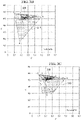
- FIG. 3B and FIG. 3C depict examples of 2D slices of the source color volume (305) and the container color volume (310) at specific luminance ( Y ) values.
- the chromaticity (rgb) triangles, surrounding source color volume (305) and within the container RGB space, are provided for illustration purposes only. An encoder may select to define and communicate to a receiver smaller or bigger such areas.
- Table 1 depicts an example of source-color volume SEI messaging according to an embodiment that follows the nomenclature and syntax of the H.265 specification.
- the description of color primaries follows the definition of CIE 1931 ( x , y ) color chromaticity coordinates for color primaries as defined in ISO 11664-1 (see also ISO 11664-3 and CIE 15), and uses red, green, and blue color primaries.
- Other types of color primaries such four, five, or six, or other polygon-based color primary presentation can also be used.
- the syntax is similar to the definition of the colour_primaries parameter (or variable) defined in Section E.3.1, for Table E.3, of the H.265 specification.
- luminance values may also be encoded using a non-linear representation, e.g., as values encoded according to the inverse EOTF of SMPTE ST 2084.
- the color gamut information corresponding to the max , min , and average ( mid ) luminance values is made optional, allowing applications to reduce the metadata overhead as desired.
- the source color volume metadata should describe the color volume of the source in its original form, before any luma or chroma preprocessing. For example, it should describe source color volume before any chroma subsampling process (e.g., from 4:4:4 to 4:2:0) or bit depth conversion process (e.g., from 12 b to 10 b), because chroma subsampling or bit depth conversion will modify the color volume information.
- the source color gamut is typically different from the container color primaries, which is indicated in Annex E (e.g., Table E.3) of H.265. 3)
- the source color volume is typically different from the mastering display color volume, which may be indicated by the mastering display color volume SEI messages.
- parameters (or variables) and coding semantics in Table 1 may be described as follows:
- source_colour_volume_id contains an identifying number that may be used to identify the purpose of the source color volume.
- the value of source_colour_volume_id shall be in the range of 0 to 2 32 - 2, inclusive. Values of source_colour_volume_id from 0 to 255 and from 512 to 2 31 - 1 may be used as determined by the application. Values of source_colour_volume_id from 256 to 511, inclusive, and from 2 31 to 2 32 - 2, inclusive, are reserved for future use by ITU-T
- Decoders shall ignore all color remapping information SEI messages containing a value of source_colour_volume_id in the range of 256 to 511, inclusive, or in the range of 2 31 to 2 32 - 2, inclusive, and bitstreams shall not contain such values.
- source_colour_volume_cancel_flag 1 indicates that the source color volume SEI message cancels the persistence of any previous source color volume SEI message in output order that applies to the current layer.
- source_colour_volume_cancel_flag 0 indicates that source color volume follows.
- source _ colour_volume_persistence _ flag specifies the persistence of the source color volume SEI message for the current layer.
- source_colour_volume_persistence_flag 0 specifies that the source color volume information applies to the current picture only.
- source_colour_volume_persistence_flag 1 specifies that the source color volume persists for the current layer in output order until either of the following conditions is true:
- source_colour_primaries has the same semantics as specified in clause E.3.1 for the colour_primaries syntax element, except colour_primaries in clause E.3.1 signals the container source color primaries and source _ colour_primaries signals the color primaries the source content truly occupies.
- colour_primaries in clause E.3.1 signals the container source color primaries and source _ colour_primaries signals the color primaries the source content truly occupies.
- source_colour_primaries is explicitly specified by syntax source_primaries_x[c] and source_primaries_y[c].
- source_primaries_x [ c ] and source_primaries_y [ c ] specify the normalized x and y chromaticity coordinates, respectively, of the color primary component c of the source content in increments of 0.00002, according to the CIE 1931 definition of x and y as specified in ISO 11664-1 (see also ISO 11664-3 and CIE 15).
- index value c 0 should correspond to the green primary
- c equal to 1 should correspond to the blue primary
- c equal to 2 should correspond to the red color primary (see also Annex E and Table E.3).
- the values of source_primaries_x[ c ] and source-primaries-y[ c ] shall be in the range of 0 to 50,000, inclusive.
- max_source_luminance, min_source_luminance and avg_source_luminance specify the nominal maximum, minimum and average luminance, respectively, of the source in units of 0.0001 candelas per square metre (nits).
- min_source_luminance shall be less than avg_source_luminanceand avg_source_luminanceshall be less than max_source_luminance.
- luminance _ colour_primaries _ info _ present _ flag 1 specifies that syntax elements luminance_primaries_x and luminance_primaries_y are present, luminance colour primaries info present flag equal to 0 specifies that syntax elements luminance_primaries_x and luminance primaries y are not present.
- luminance_primaries_x [ i ][ c ] and luminance_primaries_y [ i ][ c ] specify the normalized x and y chromaticity coordinates, respectively, of the color primary component c of the source content at one nominal luminance in increments of 0.00002, according to the CIE 1931 definition of x and y as specified in ISO 11664-1 (see also ISO 11664-3 and CIE 15).
- the index value 0, 1 and 2 shall correspond to max_source_luminance, min_source_luminance and avg_source_luminance, respectively.
- index value c 0 should correspond to the green primary
- c equal to 1 should correspond to the blue primary
- c equal to 2 should correspond to the red color primary (see also Annex E and Table E.3).
- the values of source_primaries_x[ c ] and source_primaries_y[ c ] shall be in the range of 0 to 50,000, inclusive.
- Table 1 provides what is believed to be the minimal information for a useful representation of source color volume.
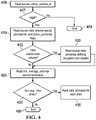
- FIG. 4 depicts an example process for extracting color volume information for a video source using SEI messaging according to an embodiment.
- a decoder may detect whether a first SEI messaging variable indicating an identifying number (ID) of source color volume information (e.g., source_colour_volume id) is present. Then, given the presence of such a variable, the decoder may check (step 407) whether its value is within a permissible range. If it is an illegal value, then the process terminates (step 409).
- ID identifying number
- step (410) the decoder can read additional flags related to the persistence of the first variable across the bit stream (e.g., see the syntax elements for source_colour_volume_cancel_flag and source_colour_volume_persistence_flag).
- step (412) via a second SEI messaging parameter (e.g., source_colour_primaries), a decoder may check whether the metadata define explicitly the color volume that source data content truly occupies.
- step (420) the (x, y) color chromaticity coordinates for each color primary (e.g., red, green, and blue) are read, otherwise, in step (425), the decoder extracts the minimum, maximum, and average luminance values.
- step 430 If no such information is present (step 430), then the process terminates (409), otherwise, (in step 435), the decoder extracts the (x, y ) color chromaticity coordinates for the color primaries for each of the min , mid , and max luminance values.
- a decoder may use the source color volume data during its display management process (e.g., 140).
- display management may include two steps: tone mapping and gamut mapping.
- the min, mid, and max luminance value can be used to generate a tone mapping curve as described in [6-7].
- the maximal RGB color gamut and the sliced RGB gamut can be used to perform gamut mapping.
- an active region as part of the metadata related to the source color volume.
- encoders and decoders should not include the black letterbox areas when computing luma and chroma characteristics of each video frame (e.g., min, max, and average luminance).
- Experimental results have shown that taking into consideration the "framing" or "matting" (e.g., pillarboxing, windowboxing, and letterboxing) of frames in a video sequence can improve significantly overall output picture quality.
- letter box detection can be implemented by a decoder, thus reducing the signaling overhead to define the active picture region, in an embodiment, such signaling may be explicitly signaled to support decoders with low computational complexity.
- Table 2 depicts an example of source-color volume SEI messaging with active region signaling according to an embodiment.
- Table 2 is a superset of Table 1 and considers two different semantics of defining an active region.
- Embodiments of the present invention may be implemented with a computer system, systems configured in electronic circuitry and components, an integrated circuit (IC) device such as a microcontroller, a field programmable gate array (FPGA), or another configurable or programmable logic device (PLD), a discrete time or digital signal processor (DSP), an application specific IC (ASIC), and/or apparatus that includes one or more of such systems, devices or components.
- IC integrated circuit
- FPGA field programmable gate array
- PLD configurable or programmable logic device
- DSP discrete time or digital signal processor
- ASIC application specific IC
- the computer and/or IC may perform, control, or execute instructions related to communicating source color volume information using SEI messaging, such as those described herein.
- the computer and/or IC may compute any of a variety of parameters or values that relate to the processes described herein.
- the image and video embodiments may be implemented in hardware, software, firmware and various combinations thereof.
- Certain implementations of the invention comprise computer processors which execute software instructions which cause the processors to perform a method of the invention.
- processors in a display, an encoder, a set top box, a transcoder or the like may implement methods related to communicating source color volume information using SEI messaging as described above by executing software instructions in a program memory accessible to the processors.
- the invention may also be provided in the form of a program product.
- the program product may comprise any non-transitory medium which carries a set of computer-readable signals comprising instructions which, when executed by a data processor, cause the data processor to execute a method of the invention.
- Program products according to the invention may be in any of a wide variety of forms.
- the program product may comprise, for example, physical media such as magnetic data storage media including floppy diskettes, hard disk drives, optical data storage media including CD ROMs, DVDs, electronic data storage media including ROMs, flash RAM, or the like.
- the computer-readable signals on the program product may optionally be compressed or encrypted.
- a component e.g. a software module, processor, assembly, device, circuit, etc.
- reference to that component should be interpreted as including as equivalents of that component any component which performs the function of the described component (e.g., that is functionally equivalent), including components which are not structurally equivalent to the disclosed structure which performs the function in the illustrated example embodiments of the invention.
Landscapes
- Engineering & Computer Science (AREA)
- Multimedia (AREA)
- Signal Processing (AREA)
- Library & Information Science (AREA)
- Computing Systems (AREA)
- Theoretical Computer Science (AREA)
- Compression Or Coding Systems Of Tv Signals (AREA)
- Two-Way Televisions, Distribution Of Moving Picture Or The Like (AREA)
- Image Processing (AREA)
- Diaphragms For Electromechanical Transducers (AREA)
- Electrochromic Elements, Electrophoresis, Or Variable Reflection Or Absorption Elements (AREA)
- Processing Of Color Television Signals (AREA)
- Compression, Expansion, Code Conversion, And Decoders (AREA)
- Digital Computer Display Output (AREA)
Description
- This application claims the benefit of priority to
U.S. Provisional Patent Application No. 62/427,677, filed November 29, 2016 U.S. Provisional Patent Application No. 62/404,302, filed October 5, 2016 - The present invention relates generally to images. More particularly, an embodiment of the present invention relates to communicating and processing source color volume information.
- Recommendation ITU-T H.265 [1] (also known as HEVC) for "coding of moving video," in Annex D, "Supplemental enhancement information" (SEI), and Annex E, "Video usability information" (VUI), describes the syntax for providing supplemental SEI and VUI information in a coded bitstream to enable a decoder to better map the decoded samples into a display.
- In parallel with the MPEG/ITU standardization processes, the society of motion picture and television engineers (SMPTE) has also defined a number of Recommendations related to communicating metadata related to the color volume information for both the source video and a targeted display. For example, the SMPTE ST 2094 suite of documents (e.g., [5] and [6]) define metadata for use in color volume transforms of video content. These metadata may vary scene-by-scene or frame-by-frame. For example, such metadata may assist a decoder to present high-dynamic range (HDR) and wide color gamut (WCG) data on a display having a smaller color volume than that of the mastering display used for mastering the source images.
- As used herein, the term "metadata" relates to any auxiliary information that is transmitted as part of the coded bitstream and assists a decoder to render a decoded image. Such metadata may include, but are not limited to, color space or gamut information, prediction parameters, reference display parameters, and auxiliary signal parameters, as those described herein.
- While Annexes D and E of H.265 support a number of color volume related metadata, they do not carry all the required metadata for the most efficient display management of HDR content. In July of 2016, in the joint collaborative team on video coding (JCT-VC) meeting in Geneva, three proposals [2-4] were submitted on how to describe content color volume information using SEI or VUI messaging. Some of these proposals were influenced by SMPTE ST. 2094 [5], but they were considerably different in scope.
- In [2], a content-SEI message is proposed to signal content color gamut in 2D, which describes the actual color distribution of the video content. In VUI, the variable colour_primaries is used to indicate the container color gamut instead of true source color gamut [1]. In [3], multiple primary expressions and spatial regions are proposed to be associated with the identified source characteristics. In [4], a content color volume SEI message is proposed to indicate the color volume occupied by the content. It uses an (x, y, Y) description of the color coordinates and has slices of luminance Y with associated polygons for each slice. These proposals have multiple shortcomings such as: provide information of little use to most display manufacturers, may add significant overhead, and may require too much computational overhead to generate. To improve existing coding and decoding schemes, as appreciated by the inventors here, improved techniques for generating and communicating source color volume information are required.
- The European search report additionally cites
EP 3 010 231 A1 ("D2") andEP 3 059 937 A1 ("D4"). D2 describes a method of color mapping a video signal represented in a first color volume from color mapping data to be applied on a video signal represented in a second color volume. The method comprises: color mapping said signal represented in a first color volume from said first color volume into said second color volume in the case where said first and second color volume are different; and color mapping said color mapped video signal based on said color mapping data. D4 describes representing color mapping information using a successive application of multiple color mapping functions. Parameters for the multiple color mapping functions can be encoded into a bitstream. Color mapping functions are consecutively applied on their own domains of definition only. - The approaches described in this section are approaches that could be pursued, but not necessarily approaches that have been previously conceived or pursued. Therefore, unless otherwise indicated, it should not be assumed that any of the approaches described in this section qualify as prior art merely by virtue of their inclusion in this section. Similarly, issues identified with respect to one or more approaches should not assume to have been recognized in any prior art on the basis of this section, unless otherwise indicated.
- An embodiment of the present invention is illustrated by way of example, and not in way by limitation, in the figures of the accompanying drawings and in which like reference numerals refer to similar elements and in which:
-
FIG. 1 depicts an example process for a video delivery pipeline according to an embodiment of this invention; -
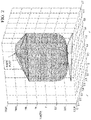
FIG. 2 depicts an example of a "largest" possible color volume plot for a video container format; -
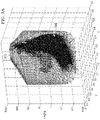
FIG. 3A depicts an example of source content gamut within the container color volume; -
FIG. 3B and FIG. 3C depict examples of 2D slices of the container and source color volume at specific luminance (Y) values; and -
FIG. 4 depicts an example process for extracting source color volume information from SEI messaging according to an embodiment of this invention. - Techniques for communicating source color volume information using SEI messaging are described herein. In the following description, for the purposes of explanation, numerous specific details are set forth in order to provide a thorough understanding of the present invention. It will be apparent, however, that the present invention may be practiced without these specific details. In other instances, well-known structures and devices are not described in exhaustive detail, in order to avoid unnecessarily occluding, obscuring, or obfuscating the present invention.
- Example embodiments described herein relate to techniques for communicating source color volume information using SEI messaging. In a decoder, a processor for extracting SEI messaging receives a first messaging variable identifying the presence of source color volume information in an input bitstream. The processor receives a second messaging variable as part of the source color volume information. If the second messaging variable matches a first predetermined value, then for one or more color primaries, it generates x and y chromaticity coordinates for the one or more color primaries based on the source color volume information in the input bitstream. It generates a minimum, a maximum, and an average luminance value based on the source color volume information in the input bitstream. The processor may receive a third messaging variable as part of the source color volume information, and if the third messaging variable matches a second predetermined value, then for one or more color primaries, generate x and y chromaticity coordinates for the one or more color primaries corresponding to the minimum, maximum, and average luminance values based on the source color volume information.
-
FIG. 1 depicts an example process of a video delivery pipeline (100) showing various stages from video capture to video content display. A sequence of video frames (102) is captured or generated using image generation block (105). Video frames (102) may be digitally captured (e.g. by a digital camera) or generated by a computer (e.g. using computer animation) to provide video data (107). Alternatively, video frames (102) may be captured on film by a film camera. The film, after appropriate editing (not shown), is converted to a digital format to provide video data (107). - The video data (107) is then provided to a processor at block (110) for post-production editing. Post-production editing (110) may include adjusting or modifying colors or brightness in particular areas of an image to enhance the image quality or achieve a particular appearance for the image in accordance with the video creator's creative intent. This is sometimes called "color timing" or "color grading." Other editing (e.g. scene selection and sequencing, image cropping, addition of computer-generated visual special effects, etc.) may be performed at block (110) to yield a final version (112) of the production for distribution. During post-production editing (110), video images are viewed on a reference display (125) (also to be referred to as the "targeted display" since the studio optimizes the video for ).
- In some embodiments, before video coding (120), video content may be analyzed to extract source-color-volume metadata (119), for example as defined in SMPTE ST 2094-1 [5], or as will be defined later in this invention. Such metadata may also define the characteristics of the targeted display (e.g., reference display (125)) and color remapping information so that a downstream receiver can render the decoded data in the best possible way.
- Following post-production (110) and source-color volume analysis (115), video data of the final production (117) and associated metadata (119) may be delivered in an appropriate color format (e.g., 10-bit YCbCr in 4:2:0, ICtCp, and the like) to encoding block (120) for delivering downstream to decoding and playback devices such as television sets, set-top boxes, movie theaters, and the like. In some embodiments, coding block (120) may include audio and video encoders, such as those defined by ATSC, DVB, DVD, Blu-Ray, and other delivery formats, to generate coded bit stream (122). Coded bitstream (122) may be represented by a single layer video coded bitstream or by a multi-layer bitstream. For example, in a multi-layer bitstream, signal (122) may include a base layer (say, an SDR layer or a 10-bit HDR (HDR10) layer) and an enhancement layer, which when combined with the base layer yields a HDR bitstream with higher dynamic range than the base layer alone (e.g., a 12-bit HDR signal). Signal (122), the output bitstream from the encoder (120) may also include metadata (119) and additional coding-related metadata, such as prediction parameters and other data to assist a decoder to better reconstruct an HDR signal.
- In a receiver, the coded bit stream (122) is decoded by decoding unit (130) to generate a decoded signal (132) and associated metadata (119). The receiver (or target) display (150) may have completely different characteristics than the reference (or targeted) display (125). For example, without limitation, the reference display (125) may be a 1,000 nits display while the receiver display may be a 500 nits display. In that case, a display management module (140) may be used to map the dynamic range of decoded signal (132) to the characteristics of the receiver display (150) by generating display-mapped signal (142). As used herein, the term "display management" denotes the processing (e.g., tone and gamut mapping) required to map an input video signal of a first dynamic range (e.g., 1000 nits) to a display of a second dynamic range (e.g., 500 nits). Display management unit (140) may take into consideration metadata (119) to improve the quality of the output video on display (150). For example, as shown in [7], information about the luminance range of the targeted (or reference) display (e.g., 125) and the source data may be used on a receiver to better map the dynamic range of the video content into the receiver display (e.g., 150).
-
FIG. 2 depicts an example of the "largest" possible color volume of a pre-defined container format (e.g., BT. 2020) (also to be referred as the "container color volume"). Such a volume can be constructed by two-dimensional (2D) color-gamut primaries, the white point chromaticity (e.g., D65), a maximum luminance value (e.g., Lmax = 4,000 nits), and a minimum luminance value (e.g., 0.005 nits). Such a plot indicates the largest possible color volume boundary for all the colors within the source video content. - In practice, as depicted by the darker "cloud" (305) in
FIG. 3A or the darker regions (305) inFIG. 3B and FIG. 3C , the source-color volume of the source content (e.g., 112) for a particular frame, or even within a whole scene, may be significantly smaller than the largest possible color volume (310). Because the actual color volume (305) has very irregular shape, transmitting such source color volume information for each frame or the whole scene requires lots of information. For example, in an embodiment, one may signal the color gamut information for multiple luminance values (say, at 0.1, 1, 10, and the like). The question then becomes: how many and which are the most important luminance values? One also needs to take into consideration not only the required overhead of such information on the coded bit stream, but also the complexity of generating such content on an encoder and/or reconstructing color volume information on the decoder. - While communicating minimum and maximum luminance values in the source content is important, as appreciated by the inventors, communicating the average luminance (or mid-point luminance) is also valuable to a receiver. These three values together can help generate a reasonable tone curve for display mapping. In this disclosure, it is proposed to signal the following metadata to describe source color volume: a) the largest 2D color gamut the source occupied (e.g., the source color volume); b) the maximum, minimum and average luminance of the source; and c) optionally, the sliced (2D) color gamut for those three luminance values (e.g., see
FIG. 3B and 3C ). It is assumed that the white points of the container primary and the source content primary should be the same, so there is no reason to retransmit such information. This information may be updated as needed, e.g., on a per-frame or a per-scene basis.FIG. 3B and FIG. 3C depict examples of 2D slices of the source color volume (305) and the container color volume (310) at specific luminance (Y) values. InFIG. 3B , the 2D slice is at Y = 84 nits, and inFIG. 3C , the 2D slice is at Y = 246 nits. The chromaticity (rgb) triangles, surrounding source color volume (305) and within the container RGB space, are provided for illustration purposes only. An encoder may select to define and communicate to a receiver smaller or bigger such areas. - Table 1 depicts an example of source-color volume SEI messaging according to an embodiment that follows the nomenclature and syntax of the H.265 specification. The description of color primaries follows the definition of CIE 1931 (x,y) color chromaticity coordinates for color primaries as defined in ISO 11664-1 (see also ISO 11664-3 and CIE 15), and uses red, green, and blue color primaries. Other types of color primaries, such four, five, or six, or other polygon-based color primary presentation can also be used. For the largest actual color gamut within the source content, in an embodiment, without limitation, the syntax is similar to the definition of the colour_primaries parameter (or variable) defined in Section E.3.1, for Table E.3, of the H.265 specification. It is believed that current source content can reach the P3 color space, but it will take some time to reach BT. 2020/2010 color ("DCI-P3" is defined in SMPTE EG 432-1 and SMPTE RP 431-2). Therefore, in those cases where the source color gamut is smaller or equal to P3, or equal to BT. 2020/2010 color primaries, Table E.3 can be used; however, for sources whose color gamut is larger than P3 but smaller than BT. 2020/2010, explicit signalling of color gamut might be required. Luminance values are specified using their absolute value in nits (cd/m 2). Alternatively, to save bits, luminance values may also be encoded using a non-linear representation, e.g., as values encoded according to the inverse EOTF of SMPTE ST 2084. The color gamut information corresponding to the max, min, and average (mid) luminance values is made optional, allowing applications to reduce the metadata overhead as desired.
- Notes: in a preferred embodiment, 1) the source color volume metadata should describe the color volume of the source in its original form, before any luma or chroma preprocessing. For example, it should describe source color volume before any chroma subsampling process (e.g., from 4:4:4 to 4:2:0) or bit depth conversion process (e.g., from 12 b to 10 b), because chroma subsampling or bit depth conversion will modify the color volume information. 2) The source color gamut is typically different from the container color primaries, which is indicated in Annex E (e.g., Table E.3) of H.265. 3) The source color volume is typically different from the mastering display color volume, which may be indicated by the mastering display color volume SEI messages.
- In an example embodiment, parameters (or variables) and coding semantics in Table 1 may be described as follows:
- source_colour_volume_id contains an identifying number that may be used to identify the purpose of the source color volume. The value of source_colour_volume_id shall be in the range of 0 to 232 - 2, inclusive. Values of source_colour_volume_id from 0 to 255 and from 512 to 231 - 1 may be used as determined by the application. Values of source_colour_volume_id from 256 to 511, inclusive, and from 231 to 232 - 2, inclusive, are reserved for future use by ITU-T | ISO/IEC. Decoders shall ignore all color remapping information SEI messages containing a value of source_colour_volume_id in the range of 256 to 511, inclusive, or in the range of 231 to 232 - 2, inclusive, and bitstreams shall not contain such values.
- source_colour_volume_cancel_flag equal to 1 indicates that the source color volume SEI message cancels the persistence of any previous source color volume SEI message in output order that applies to the current layer. source_colour_volume_cancel_flag equal to 0 indicates that source color volume follows.
- source_colour_volume_persistence_flag specifies the persistence of the source color volume SEI message for the current layer. source_colour_volume_persistence_flag equal to 0 specifies that the source color volume information applies to the current picture only.
- Let picA be the current picture. source_colour_volume_persistence_flag equal to 1 specifies that the source color volume persists for the current layer in output order until either of the following conditions is true:
- A new coded-layer video sequence (CLVS) of the current layer begins
- The bitstream ends
- A picture picB in the current layer in an access unit containing a source color volume SEI message with the same value of source_colour_volume_id and applicable to the current layer is output for which PicOrderCnt( picB ) is greater than PicOrderCnt( picA ), where PicOrderCnt( picB ) and PicOrderCnt( picA ) are the PicOrderCntVal values of picB and picA, respectively, immediately after the invocation of the decoding process for picture order count for picB.
- source_colour_primaries has the same semantics as specified in clause E.3.1 for the colour_primaries syntax element, except colour_primaries in clause E.3.1 signals the container source color primaries and source_colour_primaries signals the color primaries the source content truly occupies.
When the value of source_colour_primaries is equal to 2, the source_colour_primaries is explicitly specified by syntax source_primaries_x[c] and source_primaries_y[c]. - source_primaries_x[ c ] and source_primaries_y[ c ] specify the normalized x and y chromaticity coordinates, respectively, of the color primary component c of the source content in increments of 0.00002, according to the CIE 1931 definition of x and y as specified in ISO 11664-1 (see also ISO 11664-3 and CIE 15). For describing the source content that use red, green, and blue color primaries, it is suggested that index value c equal to 0 should correspond to the green primary, c equal to 1 should correspond to the blue primary, and c equal to 2 should correspond to the red color primary (see also Annex E and Table E.3). The values of source_primaries_x[ c ] and source-primaries-y[ c ] shall be in the range of 0 to 50,000, inclusive.
- max_source_luminance, min_source_luminance and avg_source_luminance specify the nominal maximum, minimum and average luminance, respectively, of the source in units of 0.0001 candelas per square metre (nits). min_source_luminance shall be less than avg_source_luminanceand avg_source_luminanceshall be less than max_source_luminance.
- luminance_colour_primaries_info_present_flag equal to 1 specifies that syntax elements luminance_primaries_x and luminance_primaries_y are present, luminance colour primaries info present flag equal to 0 specifies that syntax elements luminance_primaries_x and luminance primaries y are not present.
- luminance_primaries_x[ i ][ c ] and luminance_primaries_y[ i ][ c ] specify the normalized x and y chromaticity coordinates, respectively, of the color primary component c of the source content at one nominal luminance in increments of 0.00002, according to the CIE 1931 definition of x and y as specified in ISO 11664-1 (see also ISO 11664-3 and CIE 15). For describing the source content luminance, the
index value 0, 1 and 2 shall correspond to max_source_luminance, min_source_luminance and avg_source_luminance, respectively. For describing the source content that use red, green, and blue color primaries, it is suggested that index value c equal to 0 should correspond to the green primary, c equal to 1 should correspond to the blue primary, and c equal to 2 should correspond to the red color primary (see also Annex E and Table E.3). The values of source_primaries_x[ c ] and source_primaries_y[ c ] shall be in the range of 0 to 50,000, inclusive. - Table 1 provides what is believed to be the minimal information for a useful representation of source color volume. In an another embodiment, one may decide to define additional details, like multiple primary expressions [3] or the description of the color primaries of more than three slices of luminance (Y), with associated polygons for each slice.
Table 1: Example of source color volume SEI messaging syntax source_colour_volume( payloadSize ) { Descriptor source colour volume id ue(v) source_colour_volume_cancel_flag u(l) if( !source_colour_volume_cancel flag ) { source_colour_volume_persistence_flag u(l) source colour primaries u(8) if( source_colour_primaries == 2 ) { for( c = 0; c < 3; c++) { source_primaries_x[ c ] u(16) source_primaries_y[ c ] u(16) } } max_source_luminance u(32) min_source_luminance u(32) avg_source luminance u(32) luminance_colour_primaries_info_present_flag u(l) if( luminance_cotour_primaries_info_present_flag ) { for( i = 0; i <= 3; i++ ) { for( c = 0; c < 3; c++ ) { luminance_primaries_x[ i ][ c ] u(16) luminance_primaries_y[ i ][ c ] u(16) } } } } } -
FIG. 4 depicts an example process for extracting color volume information for a video source using SEI messaging according to an embodiment. First (405), a decoder may detect whether a first SEI messaging variable indicating an identifying number (ID) of source color volume information (e.g., source_colour_volume id) is present. Then, given the presence of such a variable, the decoder may check (step 407) whether its value is within a permissible range. If it is an illegal value, then the process terminates (step 409). If it is a legal value, then in step (410), as shown also in Table 1, the decoder can read additional flags related to the persistence of the first variable across the bit stream (e.g., see the syntax elements for source_colour_volume_cancel_flag and source_colour_volume_persistence_flag). In step (412), via a second SEI messaging parameter (e.g., source_colour_primaries), a decoder may check whether the metadata define explicitly the color volume that source data content truly occupies. If it is true (e.g., source_colour_primaries = 2) then, in step (420), the (x, y) color chromaticity coordinates for each color primary (e.g., red, green, and blue) are read, otherwise, in step (425), the decoder extracts the minimum, maximum, and average luminance values. Optionally, SEI messaging may also define the (x, y) color chromaticity coordinates corresponding to the color primaries of the min, mid, and max luminance values defined earlier. In an embodiment, this may be indicated by a third parameter (e.g., luminance_colour_primaries_info_present_flag = 1). If no such information is present (step 430), then the process terminates (409), otherwise, (in step 435), the decoder extracts the (x, y) color chromaticity coordinates for the color primaries for each of the min, mid, and max luminance values. - After extracting the source color volume information, a decoder may use the source color volume data during its display management process (e.g., 140). In an example, display management may include two steps: tone mapping and gamut mapping. The min, mid, and max luminance value can be used to generate a tone mapping curve as described in [6-7]. The maximal RGB color gamut and the sliced RGB gamut can be used to perform gamut mapping.
- In some embodiments it may be beneficial to define an active region as part of the metadata related to the source color volume. For example, when video is encoded in a letterbox format, encoders and decoders should not include the black letterbox areas when computing luma and chroma characteristics of each video frame (e.g., min, max, and average luminance). Experimental results have shown that taking into consideration the "framing" or "matting" (e.g., pillarboxing, windowboxing, and letterboxing) of frames in a video sequence can improve significantly overall output picture quality. Though letter box detection can be implemented by a decoder, thus reducing the signaling overhead to define the active picture region, in an embodiment, such signaling may be explicitly signaled to support decoders with low computational complexity. Table 2 depicts an example of source-color volume SEI messaging with active region signaling according to an embodiment.
Table 2: Example of source color volume SEI message syntax with active region signaling source_colour_volume( payloadSize ) { Descriptor source colour volume id ue(v) source colour volume cancel flag u(l) if( !source_colour_volume_cancel_flag) { source_colour_volume_persistence_flag u(l) source_colour_primaries u(8) if( source_colour_primaries == 2) { for( c = 0; c < 3; c++) { source_primaries_x[ c ] u(16) source_primaries_y[ c ] u(16) } } max source_luminance u(32) min_source_luminance u(32) avg_source luminance u(32) luminance_colour_primaries_info_present_flag u(l) if(luminance_colour_primaries_info_present flag) { for( i = 0; i <= 3; i++) { for(c = 0; c < 3; c++) { luminance_primaries_x[ i ][ c ] u(16) luminance_primaries_y[ i ][ c ] u(16) } } } active region flag u(l) if (active_region_flag) { active_region_left_offset ue(v) active region right offset ue(v) active_region_top_offset ue(v) active_region_bottom_offset ue(v) } } } - Table 2 is a superset of Table 1 and considers two different semantics of defining an active region.
- Semantic 1. In an embodiment, the active region is specified relative to the decoded picture, before conformance window cropping and output. Then the active region parameters may be interpreted as follows:
- active_region_flag equal to 1 indicates that the active region offset parameters follow next in the source colour volume information SEI message. active region flag equal to 0 indicates that the active region offset parameters are not present.
- active_region_left_offset, active_region_right_offset, active_region_top_offset, and active_region_bottom_offset specify an active rectangular region. When active_region_flag is equal to 0, the values of active region_left_offset, active region_right offset, active region top_offset, and active_region_bottom_offset are inferred to be equal to 0.
- The active region is defined with horizontal picture coordinates from SubWidthC ∗ active_region_left_offset to pic_width_in_luma_samples - ( SubWidthC ∗ active region right offset + 1 ) and vertical picture coordinates from SubHeightC ∗ active_region_top_offset to pic_height_in_luma_samples - ( SubHeightC ∗ active region bottom offset + 1 ), inclusive. The value of SubWidthC ∗ ( active_region_left_offset + active region right offset ) shall be less than pic_width_in_luma_samples, and the value of SubHeightC ∗ ( active_region_top_offset + active_region_bottom_offset ) shall be less than pic_height_in_luma_samples.
- Semantic 2. In an embodiment, the active region offset values are defined relative to the final output picture to display, therefore the conformance window parameters need to be taken into consideration. Then the active region parameters may be interpreted as follows:
- active_region_flag equal to 1 indicates that the active region offset parameters follow next in the source colour volume information SEI message. active_region_flag equal to 0 indicates that the active region offset parameters are not present.
- active_region_left_offset, active_region_right_offset, active_region_top_offset, and active_region_bottom_offset specify an active rectangular region. When active_region_flag is equal to 0, the values of active_region_left_offset, active_region_right_offset, active_region_top_offset, and active_region_bottom_offset are inferred to be equal to 0.
- The active region is defined with horizontal picture coordinates from active_region_left_offset + SubWidthC ∗ conf_win_left_offset to CtbSizeY ∗ PicWidthInCtbsY - SubWidthC ∗ conf win right offset - active region right _offset - 1 and vertical picture coordinates from active_region_top_offset + SubHeightC ∗ conf_win_top_offset to CtbSizeY ∗ PicHeightInCtbsY - SubHeightC ∗ conf_win_bottom_offset - active_region_bottom_offset - 1 , inclusive.
- The value of ( active_region_left_offset + active_region right offset ) shall be less than CtbSizeY ∗ PicWidthInCtbsY - SubWidthC ∗ (conf_win_right_offset + conf_win_left_offset) , and the value of ( active_region_top_offset + active_region_bottom_offset ) shall be less than CtbSizeY ∗ PicHeightInCtbsY - SubHeightC ∗ (conf_win_bottom_offset + conf_win_top_offset).
-
- [1] Rec. ITU-T H.265, "Series H: Audiovisual and Multimedia systems, Infrastructure of audiovisual services - Coding of moving video, High efficiency video coding," ITU, Oct. 2014.
- [2]H.M. Oh et al., "Content colour gamut SEI message", JCTVC-X0040, May 2016, Geneva, CH.
- [3] A.M. Tourapis, "Improvements to the Effective Colour Volume SEI", JCTVC-X0052, May 2016, Geneva, CH.
- [4] A.K. Ramasubramonian, "Content colour volume SEI message ", JCTVC-X0052, May 2016, Geneva, CH.
- [5] SMPTE ST 2094-1:2016: "Dynamic Metadata for Color Volume Transform - Core Components," SMPTE, May 18, 2016.
- [6] SMPTE ST 2094-10:2016: "Dynamic Metadata for Color Volume Transform - Application #1," SMPTE, May 18, 2016.
- [7]
R. Atkins et al., U.S. Patent Publication US2016/0005349 , "Display management for high dynamic range video." - Embodiments of the present invention may be implemented with a computer system, systems configured in electronic circuitry and components, an integrated circuit (IC) device such as a microcontroller, a field programmable gate array (FPGA), or another configurable or programmable logic device (PLD), a discrete time or digital signal processor (DSP), an application specific IC (ASIC), and/or apparatus that includes one or more of such systems, devices or components. The computer and/or IC may perform, control, or execute instructions related to communicating source color volume information using SEI messaging, such as those described herein. The computer and/or IC may compute any of a variety of parameters or values that relate to the processes described herein. The image and video embodiments may be implemented in hardware, software, firmware and various combinations thereof.
- Certain implementations of the invention comprise computer processors which execute software instructions which cause the processors to perform a method of the invention. For example, one or more processors in a display, an encoder, a set top box, a transcoder or the like may implement methods related to communicating source color volume information using SEI messaging as described above by executing software instructions in a program memory accessible to the processors. The invention may also be provided in the form of a program product. The program product may comprise any non-transitory medium which carries a set of computer-readable signals comprising instructions which, when executed by a data processor, cause the data processor to execute a method of the invention. Program products according to the invention may be in any of a wide variety of forms. The program product may comprise, for example, physical media such as magnetic data storage media including floppy diskettes, hard disk drives, optical data storage media including CD ROMs, DVDs, electronic data storage media including ROMs, flash RAM, or the like. The computer-readable signals on the program product may optionally be compressed or encrypted.
- Where a component (e.g. a software module, processor, assembly, device, circuit, etc.) is referred to above, unless otherwise indicated, reference to that component (including a reference to a "means") should be interpreted as including as equivalents of that component any component which performs the function of the described component (e.g., that is functionally equivalent), including components which are not structurally equivalent to the disclosed structure which performs the function in the illustrated example embodiments of the invention.
- Example embodiments that relate to communicating source color volume information using SEI messaging are thus described. In the foregoing specification, embodiments of the present invention have been described with reference to numerous specific details that may vary from implementation to implementation. Thus, the sole and exclusive indicator of what is the invention, and is intended by the applicants to be the invention, is the set of claims that issue from this application, in the specific form in which such claims issue, including any subsequent correction. Any definitions expressly set forth herein for terms contained in such claims shall govern the meaning of such terms as used in the claims. Hence, no limitation, element, property, feature, advantage or attribute that is not expressly recited in a claim should limit the scope of such claim in any way. The specification and drawings are, accordingly, to be regarded in an illustrative rather than a restrictive sense.
Claims (12)
- A method for extracting, by a processor of a decoder, source color volume information of an input bitstream from an SEI message, the method comprising:receiving (405), by the processor, the SEI message that includes a first SEI messaging variable (source_colour_volume_id) identifying the presence of source color volume information in the SEI message;receiving (410), by the processor, a second SEI messaging variable (source_colour_primaries) as part of the source color volume information in the SEI message;if the second SEI messaging variable matches a first predetermined value, extracting (420), by the processor, first x and y chromaticity coordinates for one or more color primaries from the source color volume information in the SEI message; andextracting (425), by the processor, a minimum, a maximum, and an average luminance value from the source color volume information in the SEI message.
- The method of claim 1, further comprising:receiving, by the processor, a third SEI messaging variable (luminance_colour_primaries_info_present_flag) as part of the source color volume information in the SEI message; andif the third SEI messaging variable matches a second predetermined value, extracting (435), by the processor, second x and y chromaticity coordinates for one or more color primaries for each of the minimum, maximum, and average luminance values from the source color volume information in the SEI message, the second x and y chromaticity coordinates for one or more color primaries identifying a 2D slice of the source color volume (305) at the minimum, maximum and average luminance values, respectively.
- The method of claim 1, further comprising extracting, by the processor, a fourth SEI messaging variable (source_colour_volume_cancel_flag) from the source color volume information in the SEI message, wherein if the fourth SEI messaging variable is equal to 0, it indicates that source color volume information follows in the source color volume information, and if it is 1, it indicates canceling any previous message related to persistence of source color volume information in the input bitstream.
- The method of claim 1, further comprising extracting, by the processor, a fifth SEI messaging variable (source_colour_volume_persistence_flag) from the source color volume information in the SEI message, wherein the fifth SEI messaging variable is related to persistence of the source color volume information in the input bitstream.
- The method of claim 1, wherein the first predetermined value is equal to 2.
- The method of claim 2, wherein the second predetermined value is equal to 1.
- The method of claim 1, further comprising receiving a sixth SEI messaging variable (active region flag) as part of the source color volume information in the SEI message, wherein the sixth SEI messaging variable indicates the presence of information related to an active region in the SEI message.
- The method of claim 7, wherein the information related to the active region comprises at least one of a left offset, a right offset, a top offset, and a bottom offset for the active region.
- A video bitstream characterized by:
data representing one or more picture frames in a compressed format, wherein a portion of the data that represents the one or more picture frames in the compressed format comprises:
a SEI message including a first SEI messaging variable (source_colour_volume_id) identifying the presence of source color volume information in the SEI message, wherein the source color volume information in the SEI message comprises:a second SEI messaging variable (source_colour_primaries) indicating the presence of a first set of x and y chromaticity coordinates for one or more color primaries for the source color volume (305) of the data in the bitstream; anda minimum, a maximum, and an average luminance variable (min_source_luminance; max_source_luminance; avg_source_luminance) specifying a minimum, a maximum and an average luminance value for the data in the bitstream. - The video bitstream of claim 9, wherein the source color volume information in the SEI message further comprises:
a third SEI messaging variable (luminance_colour_primaries_info_present_flag) indicating the presence of a second set of x and y chromaticity coordinates for one or more color primaries for each of the minimum, maximum, and average luminance variables for identifying a 2D slice of the source color volume of the data in the bitstream at the minimum, maximum and average luminance values, respectively. - The video bitstream of claim 9, the source color volume information in the SEI message further comprising a fourth SEI messaging variable (active_region_flag) indicating the presence of information related to an active region.
- The video bitstream of claim 11, wherein the information related to the active region comprises at least one of a left offset, a right offset, a top offset, and a bottom offset for the active region.
Priority Applications (6)
| Application Number | Priority Date | Filing Date | Title |
|---|---|---|---|
| EP22166778.5A EP4072137B1 (en) | 2016-10-05 | 2017-10-03 | Source color volume information messaging |
| DK22166778.5T DK4072137T3 (en) | 2016-10-05 | 2017-10-03 | REPORTING INFORMATION ABOUT SOURCE COLOR VOLUME |
| HRP20221276TT HRP20221276T1 (en) | 2016-10-05 | 2017-10-03 | Source color volume information messaging |
| EP24208636.1A EP4475540B1 (en) | 2016-10-05 | 2017-10-03 | Source color volume information messaging |
| EP24208773.2A EP4475541A3 (en) | 2016-10-05 | 2017-10-03 | Source color volume information messaging |
| EP26177801.3A EP4787850A2 (en) | 2016-10-05 | 2017-10-03 | Source color volume information messaging |
Applications Claiming Priority (3)
| Application Number | Priority Date | Filing Date | Title |
|---|---|---|---|
| US201662404302P | 2016-10-05 | 2016-10-05 | |
| US201662427677P | 2016-11-29 | 2016-11-29 | |
| PCT/US2017/054920 WO2018067552A1 (en) | 2016-10-05 | 2017-10-03 | Source color volume information messaging |
Related Child Applications (5)
| Application Number | Title | Priority Date | Filing Date |
|---|---|---|---|
| EP24208773.2A Division EP4475541A3 (en) | 2016-10-05 | 2017-10-03 | Source color volume information messaging |
| EP24208636.1A Division EP4475540B1 (en) | 2016-10-05 | 2017-10-03 | Source color volume information messaging |
| EP22166778.5A Division EP4072137B1 (en) | 2016-10-05 | 2017-10-03 | Source color volume information messaging |
| EP22166778.5A Division-Into EP4072137B1 (en) | 2016-10-05 | 2017-10-03 | Source color volume information messaging |
| EP26177801.3A Division EP4787850A2 (en) | 2016-10-05 | 2017-10-03 | Source color volume information messaging |
Publications (2)
| Publication Number | Publication Date |
|---|---|
| EP3523970A1 EP3523970A1 (en) | 2019-08-14 |
| EP3523970B1 true EP3523970B1 (en) | 2022-08-03 |
Family
ID=60138941
Family Applications (5)
| Application Number | Title | Priority Date | Filing Date |
|---|---|---|---|
| EP22166778.5A Active EP4072137B1 (en) | 2016-10-05 | 2017-10-03 | Source color volume information messaging |
| EP24208636.1A Active EP4475540B1 (en) | 2016-10-05 | 2017-10-03 | Source color volume information messaging |
| EP17787084.7A Active EP3523970B1 (en) | 2016-10-05 | 2017-10-03 | Source color volume information messaging |
| EP24208773.2A Pending EP4475541A3 (en) | 2016-10-05 | 2017-10-03 | Source color volume information messaging |
| EP26177801.3A Pending EP4787850A2 (en) | 2016-10-05 | 2017-10-03 | Source color volume information messaging |
Family Applications Before (2)
| Application Number | Title | Priority Date | Filing Date |
|---|---|---|---|
| EP22166778.5A Active EP4072137B1 (en) | 2016-10-05 | 2017-10-03 | Source color volume information messaging |
| EP24208636.1A Active EP4475540B1 (en) | 2016-10-05 | 2017-10-03 | Source color volume information messaging |
Family Applications After (2)
| Application Number | Title | Priority Date | Filing Date |
|---|---|---|---|
| EP24208773.2A Pending EP4475541A3 (en) | 2016-10-05 | 2017-10-03 | Source color volume information messaging |
| EP26177801.3A Pending EP4787850A2 (en) | 2016-10-05 | 2017-10-03 | Source color volume information messaging |
Country Status (23)
| Country | Link |
|---|---|
| US (11) | US10779008B2 (en) |
| EP (5) | EP4072137B1 (en) |
| JP (10) | JP6871366B2 (en) |
| KR (10) | KR102672149B1 (en) |
| CN (10) | CN116582677B (en) |
| AU (9) | AU2017339463B2 (en) |
| CA (6) | CA3310009A1 (en) |
| CL (1) | CL2019000901A1 (en) |
| CO (1) | CO2019004533A2 (en) |
| DK (2) | DK4072137T3 (en) |
| ES (2) | ES3008578T3 (en) |
| FI (1) | FI4072137T3 (en) |
| HR (2) | HRP20241760T1 (en) |
| HU (2) | HUE060276T2 (en) |
| IL (7) | IL296162B2 (en) |
| MX (2) | MX388842B (en) |
| MY (1) | MY201472A (en) |
| PH (3) | PH12022551879A1 (en) |
| PL (2) | PL4072137T3 (en) |
| PT (2) | PT4072137T (en) |
| SA (3) | SA522433405B1 (en) |
| UA (4) | UA124806C2 (en) |
| WO (1) | WO2018067552A1 (en) |
Families Citing this family (37)
| Publication number | Priority date | Publication date | Assignee | Title |
|---|---|---|---|---|
| KR102672149B1 (en) | 2016-10-05 | 2024-06-05 | 돌비 레버러토리즈 라이쎈싱 코오포레이션 | Source color volume information messaging |
| US10812820B2 (en) * | 2016-11-30 | 2020-10-20 | Qualcomm Incorporated | Systems and methods for signaling and constraining a high dynamic range (HDR) video system with dynamic metadata |
| WO2020060980A1 (en) * | 2018-09-17 | 2020-03-26 | Dolby Laboratories Licensing Corporation | Display mapping for high dynamic range images on power-limiting displays |
| US11532261B1 (en) | 2018-10-25 | 2022-12-20 | Baylor University | System and method for a multi-primary wide gamut color system |
| US12444337B2 (en) | 2018-10-25 | 2025-10-14 | Baylor University | System and method for a multi-primary wide gamut color system |
| US12555507B2 (en) | 2018-10-25 | 2026-02-17 | Baylor University | System and method for a multi-primary wide gamut color system |
| US11403987B2 (en) | 2018-10-25 | 2022-08-02 | Baylor University | System and method for a multi-primary wide gamut color system |
| US11289000B2 (en) | 2018-10-25 | 2022-03-29 | Baylor University | System and method for a multi-primary wide gamut color system |
| US11069279B2 (en) | 2018-10-25 | 2021-07-20 | Baylor University | System and method for a multi-primary wide gamut color system |
| US11189210B2 (en) | 2018-10-25 | 2021-11-30 | Baylor University | System and method for a multi-primary wide gamut color system |
| US10950161B2 (en) | 2018-10-25 | 2021-03-16 | Baylor University | System and method for a six-primary wide gamut color system |
| US11315467B1 (en) | 2018-10-25 | 2022-04-26 | Baylor University | System and method for a multi-primary wide gamut color system |
| US11341890B2 (en) | 2018-10-25 | 2022-05-24 | Baylor University | System and method for a multi-primary wide gamut color system |
| US11069280B2 (en) | 2018-10-25 | 2021-07-20 | Baylor University | System and method for a multi-primary wide gamut color system |
| US11488510B2 (en) | 2018-10-25 | 2022-11-01 | Baylor University | System and method for a multi-primary wide gamut color system |
| US10607527B1 (en) | 2018-10-25 | 2020-03-31 | Baylor University | System and method for a six-primary wide gamut color system |
| US11373575B2 (en) | 2018-10-25 | 2022-06-28 | Baylor University | System and method for a multi-primary wide gamut color system |
| US11410593B2 (en) | 2018-10-25 | 2022-08-09 | Baylor University | System and method for a multi-primary wide gamut color system |
| US12475826B2 (en) | 2018-10-25 | 2025-11-18 | Baylor University | System and method for a multi-primary wide gamut color system |
| US11062638B2 (en) | 2018-10-25 | 2021-07-13 | Baylor University | System and method for a multi-primary wide gamut color system |
| US10997896B2 (en) | 2018-10-25 | 2021-05-04 | Baylor University | System and method for a six-primary wide gamut color system |
| US11289003B2 (en) | 2018-10-25 | 2022-03-29 | Baylor University | System and method for a multi-primary wide gamut color system |
| US11475819B2 (en) | 2018-10-25 | 2022-10-18 | Baylor University | System and method for a multi-primary wide gamut color system |
| US11043157B2 (en) | 2018-10-25 | 2021-06-22 | Baylor University | System and method for a six-primary wide gamut color system |
| US12444334B2 (en) | 2018-10-25 | 2025-10-14 | Baylor University | System and method for a multi-primary wide gamut color system |
| US10950162B2 (en) | 2018-10-25 | 2021-03-16 | Baylor University | System and method for a six-primary wide gamut color system |
| US11037481B1 (en) | 2018-10-25 | 2021-06-15 | Baylor University | System and method for a multi-primary wide gamut color system |
| US11030934B2 (en) | 2018-10-25 | 2021-06-08 | Baylor University | System and method for a multi-primary wide gamut color system |
| US11587491B1 (en) | 2018-10-25 | 2023-02-21 | Baylor University | System and method for a multi-primary wide gamut color system |
| CN115699178B (en) * | 2020-06-03 | 2025-02-07 | 杜比实验室特许公司 | Video content editing method, system, medium and computer program product |
| EP4176585A1 (en) * | 2020-07-01 | 2023-05-10 | Dolby Laboratories Licensing Corporation | Distribution of high dynamic range images in a mixed capability playback system |
| ES3060376T3 (en) | 2022-09-22 | 2026-03-26 | Lg Energy Solution Ltd | Sealed portion folding apparatus and method for pouch-shaped battery cells |
| KR20240133602A (en) | 2023-02-27 | 2024-09-04 | 인제대학교 산학협력단 | Micro-needle manufacturing method with touch-off |
| US12707094B2 (en) * | 2023-10-05 | 2026-08-11 | Tencent America LLC | Image metadata for video streams |
| US20250274610A1 (en) * | 2024-02-26 | 2025-08-28 | Tencent America LLC | Icc profile metadata for video streams |
| US12462772B1 (en) | 2024-06-20 | 2025-11-04 | 6P Color, Inc. | System and method for conversion from XYZ to multiple primaries using pseudo white points |
| WO2026055220A1 (en) * | 2024-09-04 | 2026-03-12 | Bytedance Inc. | Improvements on the bitdepth range information sei message |
Citations (1)
| Publication number | Priority date | Publication date | Assignee | Title |
|---|---|---|---|---|
| US20130120656A1 (en) * | 2010-07-22 | 2013-05-16 | Dolby Laboratories Licensing Corporation | Display Management Server |
Family Cites Families (68)
| Publication number | Priority date | Publication date | Assignee | Title |
|---|---|---|---|---|
| JP3681835B2 (en) * | 1995-12-27 | 2005-08-10 | 三菱電機株式会社 | Image encoding apparatus, image decoding apparatus, and encoding / decoding system |
| CN100484252C (en) * | 2001-12-29 | 2009-04-29 | 三星电子株式会社 | Device and method for controlling image brightness |
| US7230594B2 (en) * | 2002-12-16 | 2007-06-12 | Eastman Kodak Company | Color OLED display with improved power efficiency |
| KR100943273B1 (en) | 2003-05-07 | 2010-02-23 | 삼성전자주식회사 | 4-color conversion method and apparatus and organic light emitting display device using the same |
| US7755639B2 (en) | 2004-08-27 | 2010-07-13 | Seiko Epson Corporation | Image reproduction using a particular color space |
| JP4575803B2 (en) | 2005-02-10 | 2010-11-04 | 日本放送協会 | Compression encoding apparatus and compression encoding program |
| US8654848B2 (en) * | 2005-10-17 | 2014-02-18 | Qualcomm Incorporated | Method and apparatus for shot detection in video streaming |
| JP2008048314A (en) * | 2006-08-21 | 2008-02-28 | Fuji Xerox Co Ltd | Image processor, image processing program and image processing method |
| JP5157140B2 (en) | 2006-11-29 | 2013-03-06 | ソニー株式会社 | Recording apparatus, recording method, information processing apparatus, information processing method, imaging apparatus, and video system |
| US8441498B2 (en) * | 2006-11-30 | 2013-05-14 | Entropic Communications, Inc. | Device and method for processing color image data |
| JP4279318B2 (en) | 2007-02-02 | 2009-06-17 | 三菱電機株式会社 | Video display device |
| JP4996338B2 (en) * | 2007-05-21 | 2012-08-08 | キヤノン株式会社 | Color processing method and color processing apparatus |
| EP2023600A1 (en) * | 2007-07-27 | 2009-02-11 | Thomson Licensing | Method of color mapping from non-convex source gamut into non-convex target gamut |
| US8184112B2 (en) * | 2008-09-24 | 2012-05-22 | Global Oled Technology Llc | Increasing dynamic range of display output |
| EP2187337A1 (en) | 2008-11-12 | 2010-05-19 | Sony Corporation | Extracting a moving mean luminance variance from a sequence of video frames |
| CN102771109B (en) * | 2010-02-22 | 2016-10-26 | 杜比实验室特许公司 | Method, device and system for video delivery and control by overwriting video data |
| EP2569949B1 (en) | 2010-05-13 | 2018-02-21 | Dolby Laboratories Licensing Corporation | Gamut compression for video display devices |
| US8928686B2 (en) * | 2010-06-08 | 2015-01-06 | Dolby Laboratories Licensing Corporation | Tone and gamut mapping methods and apparatus |
| EP2617184B1 (en) * | 2010-09-13 | 2019-01-16 | Dolby Laboratories Licensing Corporation | Data transmission using out-of-gamut color coordinates |
| TWI538474B (en) | 2011-03-15 | 2016-06-11 | 杜比實驗室特許公司 | Method and device for converting image data |
| PT3742715T (en) | 2011-05-27 | 2024-10-21 | Dolby Laboratories Licensing Corp | Scalable systems for controlling color management comprising varying levels of metadata |
| EP2788973B1 (en) | 2011-12-08 | 2022-01-26 | Dolby Laboratories Licensing Corporation | Mapping for display emulation based on image characteristics |
| US9024961B2 (en) * | 2011-12-19 | 2015-05-05 | Dolby Laboratories Licensing Corporation | Color grading apparatus and methods |
| US9516351B2 (en) * | 2012-07-13 | 2016-12-06 | Koninklijke Philips N.V. | HDR image encoding and decoding methods and devices |
| US9319703B2 (en) | 2012-10-08 | 2016-04-19 | Qualcomm Incorporated | Hypothetical reference decoder parameter syntax structure |
| US9521393B2 (en) * | 2013-01-07 | 2016-12-13 | Qualcomm Incorporated | Non-nested SEI messages in video coding |
| ES2708954T3 (en) * | 2013-02-21 | 2019-04-12 | Dolby Laboratories Licensing Corp | Display management for high dynamic range video |
| BR112015024172B1 (en) * | 2013-03-26 | 2023-01-31 | Dolby Laboratories Licensing Corporation | METHOD, SYSTEM AND COMPUTER READABLE STORAGE MEDIA |
| US9866730B2 (en) * | 2013-05-31 | 2018-01-09 | Intel Corporation | Semi-fixed-hue gamut compression |
| CN103297729A (en) * | 2013-06-17 | 2013-09-11 | 华为终端有限公司 | Video processing method and device |
| EP2819414A3 (en) | 2013-06-28 | 2015-02-25 | Samsung Electronics Co., Ltd | Image processing device and image processing method |
| TWI713355B (en) | 2013-09-03 | 2020-12-11 | 日商新力股份有限公司 | Decoding device, decoding method, display device, and display method |
| WO2015052935A1 (en) | 2013-10-11 | 2015-04-16 | Sharp Kabushiki Kaisha | Color information and chromaticity signaling |
| US20170171578A1 (en) | 2014-02-13 | 2017-06-15 | Telefonaktiebolaget Lm Ericsson (Publ) | Media content delivery using an obfuscated manifest |
| US9584786B2 (en) * | 2014-03-05 | 2017-02-28 | Dolby Laboratories Licensing Corporation | Graphics blending for high dynamic range video |
| EP3010231A1 (en) * | 2014-10-17 | 2016-04-20 | Thomson Licensing | Method for color mapping a video signal based on color mapping data and method of encoding a video signal and color mapping data and corresponding devices |
| WO2016080754A1 (en) * | 2014-11-19 | 2016-05-26 | 엘지전자 주식회사 | Method and apparatus for transceiving broadcast signal for viewing environment adjustment |
| US10547844B2 (en) * | 2014-12-04 | 2020-01-28 | Lg Electronics Inc. | Broadcasting signal transmission and reception method and device |
| KR20170091744A (en) | 2015-01-19 | 2017-08-09 | 돌비 레버러토리즈 라이쎈싱 코오포레이션 | Display management for high dynamic range video |
| WO2016129891A1 (en) * | 2015-02-11 | 2016-08-18 | 엘지전자 주식회사 | Method and device for transmitting and receiving broadcast signal |
| EP3059937A1 (en) * | 2015-02-20 | 2016-08-24 | Thomson Licensing | Method and apparatus for encoding color mapping information and processing pictures based on color mapping information |
| WO2016153896A1 (en) * | 2015-03-20 | 2016-09-29 | Dolby Laboratories Licensing Corporation | Signal reshaping approximation |
| US20160286241A1 (en) | 2015-03-24 | 2016-09-29 | Nokia Technologies Oy | Apparatus, a method and a computer program for video coding and decoding |
| US20160286226A1 (en) * | 2015-03-24 | 2016-09-29 | Nokia Technologies Oy | Apparatus, a method and a computer program for video coding and decoding |
| WO2016171510A1 (en) * | 2015-04-24 | 2016-10-27 | 엘지전자 주식회사 | Broadcast signal transmitting/receiving method and device |
| US10349095B2 (en) * | 2015-05-07 | 2019-07-09 | Lg Electronics Inc. | Transmission device for processing video data related to HDR/SDR and method for controlling the same |
| WO2016182371A1 (en) * | 2015-05-12 | 2016-11-17 | 엘지전자 주식회사 | Broadcast signal transmitter, broadcast signal receiver, broadcast signal transmitting method, and broadcast signal receiving method |
| JP6574270B2 (en) * | 2015-06-05 | 2019-09-11 | アップル インコーポレイテッドApple Inc. | Rendering and display of high dynamic range content |
| KR102014800B1 (en) * | 2015-07-06 | 2019-08-27 | 엘지전자 주식회사 | A broadcast signal transmitting device, a broadcast signal receiving device, a broadcast signal transmitting method, and a broadcast signal receiving method |
| US10171849B1 (en) | 2015-07-08 | 2019-01-01 | Lg Electronics Inc. | Broadcast signal transmission device, broadcast signal reception device, broadcast signal transmission method, and broadcast signal reception method |
| WO2017018775A1 (en) * | 2015-07-28 | 2017-02-02 | 엘지전자 주식회사 | Broadcast signal transmission apparatus, broadcast signal reception apparatus, broadcast signal transmission method and broadcast signal reception method |
| US20190007709A1 (en) * | 2015-08-20 | 2019-01-03 | Lg Electronics Inc. | Broadcast signal transmission apparatus, broadcast signal reception apparatus, broadcast signal transmission method and broadcast signal reception method |
| AU2015227469A1 (en) * | 2015-09-17 | 2017-04-06 | Canon Kabushiki Kaisha | Method, apparatus and system for displaying video data |
| US10129558B2 (en) | 2015-09-21 | 2018-11-13 | Qualcomm Incorporated | Supplement enhancement information (SEI) messages for high dynamic range and wide color gamut video coding |
| KR102140083B1 (en) | 2015-09-23 | 2020-07-31 | 애리스 엔터프라이지즈 엘엘씨 | System for reshaping and coding high dynamic range and wide color gamut sequences |
| CN108028958B (en) * | 2015-09-25 | 2021-09-03 | 麦克赛尔株式会社 | Broadcast receiving apparatus |
| US10587852B2 (en) * | 2015-10-06 | 2020-03-10 | Lg Electronics Inc. | Broadcast signal transmission device, broadcast signal reception device, broadcast signal transmission method, and broadcast signal reception method |
| EP3220645A1 (en) | 2016-03-18 | 2017-09-20 | Thomson Licensing | A method and a device for encoding a high dynamic range picture, corresponding decoding method and decoding device |
| US10554981B2 (en) * | 2016-05-10 | 2020-02-04 | Qualcomm Incorporated | Methods and systems for generating regional nesting messages for video pictures |
| US11102495B2 (en) * | 2016-05-17 | 2021-08-24 | Qualcomm Incorporated | Methods and systems for generating and processing content color volume messages for video |
| US9916638B2 (en) * | 2016-07-20 | 2018-03-13 | Dolby Laboratories Licensing Corporation | Transformation of dynamic metadata to support alternate tone rendering |
| US10368099B2 (en) | 2016-08-09 | 2019-07-30 | Qualcomm Incorporated | Color remapping information SEI message signaling for display adaptation |
| US10757385B2 (en) * | 2016-08-24 | 2020-08-25 | Qualcomm Incorporated | Color gamut adaptation with feedback channel |
| US10334277B2 (en) | 2016-09-02 | 2019-06-25 | Qualcomm Incorporated | Signaling target display parameters of color remapping information supplemental enhancement information messages |
| US11019399B2 (en) * | 2016-09-12 | 2021-05-25 | Maxell, Ltd. | Broadcast receiving apparatus |
| KR102672149B1 (en) * | 2016-10-05 | 2024-06-05 | 돌비 레버러토리즈 라이쎈싱 코오포레이션 | Source color volume information messaging |
| WO2018070822A1 (en) * | 2016-10-14 | 2018-04-19 | 엘지전자 주식회사 | Data processing method and device for adaptive image playing |
| US10812820B2 (en) | 2016-11-30 | 2020-10-20 | Qualcomm Incorporated | Systems and methods for signaling and constraining a high dynamic range (HDR) video system with dynamic metadata |
-
2017
- 2017-10-03 KR KR1020237013725A patent/KR102672149B1/en active Active
- 2017-10-03 EP EP22166778.5A patent/EP4072137B1/en active Active
- 2017-10-03 IL IL296162A patent/IL296162B2/en unknown
- 2017-10-03 CA CA3310009A patent/CA3310009A1/en active Pending
- 2017-10-03 JP JP2019518495A patent/JP6871366B2/en active Active
- 2017-10-03 CN CN202310734741.1A patent/CN116582677B/en active Active
- 2017-10-03 UA UAA201904550A patent/UA124806C2/en unknown
- 2017-10-03 PL PL22166778.5T patent/PL4072137T3/en unknown
- 2017-10-03 MX MX2019003940A patent/MX388842B/en unknown
- 2017-10-03 UA UAA202202579A patent/UA129781C2/en unknown
- 2017-10-03 MY MYPI2019001860A patent/MY201472A/en unknown
- 2017-10-03 FI FIEP22166778.5T patent/FI4072137T3/en active
- 2017-10-03 IL IL305702A patent/IL305702B2/en unknown
- 2017-10-03 CN CN202310734592.9A patent/CN116744012A/en active Pending
- 2017-10-03 KR KR1020227027860A patent/KR102526108B1/en active Active
- 2017-10-03 CN CN202310733738.8A patent/CN116582675B/en active Active
- 2017-10-03 IL IL319706A patent/IL319706A/en unknown
- 2017-10-03 CN CN202310732688.1A patent/CN116582673B/en active Active
- 2017-10-03 CA CA3112712A patent/CA3112712C/en active Active
- 2017-10-03 CN CN202310734189.6A patent/CN116582676B/en active Active
- 2017-10-03 KR KR1020197012289A patent/KR102222476B1/en active Active
- 2017-10-03 KR KR1020247018229A patent/KR20240091265A/en active Pending
- 2017-10-03 US US16/339,992 patent/US10779008B2/en active Active
- 2017-10-03 CN CN201780069607.7A patent/CN109937572B/en active Active
- 2017-10-03 UA UAA202104074A patent/UA129191C2/en unknown
- 2017-10-03 KR KR1020237042942A patent/KR102717738B1/en active Active
- 2017-10-03 CN CN202310733945.3A patent/CN116744011B/en active Active
- 2017-10-03 CA CA3039361A patent/CA3039361C/en active Active
- 2017-10-03 HU HUE17787084A patent/HUE060276T2/en unknown
- 2017-10-03 EP EP24208636.1A patent/EP4475540B1/en active Active
- 2017-10-03 CN CN202310734474.8A patent/CN116614634B/en active Active
- 2017-10-03 IL IL287875A patent/IL287875B2/en unknown
- 2017-10-03 ES ES22166778T patent/ES3008578T3/en active Active
- 2017-10-03 PL PL17787084.7T patent/PL3523970T3/en unknown
- 2017-10-03 CN CN202310732973.3A patent/CN116744010B/en active Active
- 2017-10-03 KR KR1020247033828A patent/KR20240154085A/en active Pending
- 2017-10-03 HR HRP20241760TT patent/HRP20241760T1/en unknown
- 2017-10-03 KR KR1020217029685A patent/KR102380163B1/en active Active
- 2017-10-03 AU AU2017339463A patent/AU2017339463B2/en active Active
- 2017-10-03 KR KR1020217004950A patent/KR102304448B1/en active Active
- 2017-10-03 CA CA3206194A patent/CA3206194A1/en active Pending
- 2017-10-03 PT PT221667785T patent/PT4072137T/en unknown
- 2017-10-03 HR HRP20221276TT patent/HRP20221276T1/en unknown
- 2017-10-03 CA CA3310004A patent/CA3310004A1/en active Pending
- 2017-10-03 IL IL310366A patent/IL310366B2/en unknown
- 2017-10-03 PT PT177870847T patent/PT3523970T/en unknown
- 2017-10-03 KR KR1020227008975A patent/KR102433239B1/en active Active
- 2017-10-03 ES ES17787084T patent/ES2929035T3/en active Active
- 2017-10-03 WO PCT/US2017/054920 patent/WO2018067552A1/en not_active Ceased
- 2017-10-03 EP EP17787084.7A patent/EP3523970B1/en active Active
- 2017-10-03 DK DK22166778.5T patent/DK4072137T3/en active
- 2017-10-03 UA UAA202202592A patent/UA128323C2/en unknown
- 2017-10-03 KR KR1020217029686A patent/KR102377426B1/en active Active
- 2017-10-03 PH PH1/2022/551879A patent/PH12022551879A1/en unknown
- 2017-10-03 PH PH1/2022/551880A patent/PH12022551880A1/en unknown
- 2017-10-03 HU HUE22166778A patent/HUE069639T2/en unknown
- 2017-10-03 EP EP24208773.2A patent/EP4475541A3/en active Pending
- 2017-10-03 PH PH1/2019/500718A patent/PH12019500718B1/en unknown
- 2017-10-03 DK DK17787084.7T patent/DK3523970T3/en active
- 2017-10-03 EP EP26177801.3A patent/EP4787850A2/en active Pending
- 2017-10-03 CN CN202310733277.4A patent/CN116582674A/en active Pending
- 2017-10-03 CA CA3205776A patent/CA3205776C/en active Active
-
2019
- 2019-04-02 IL IL265771A patent/IL265771B/en active IP Right Grant
- 2019-04-03 CL CL2019000901A patent/CL2019000901A1/en unknown
- 2019-04-04 SA SA522433405A patent/SA522433405B1/en unknown
- 2019-04-04 SA SA522433410A patent/SA522433410B1/en unknown
- 2019-04-04 MX MX2021015315A patent/MX2021015315A/en unknown
- 2019-04-04 SA SA519401492A patent/SA519401492B1/en unknown
- 2019-05-02 CO CONC2019/0004533A patent/CO2019004533A2/en unknown
-
2020
- 2020-09-01 US US17/009,584 patent/US11595693B2/en active Active
- 2020-09-10 AU AU2020230291A patent/AU2020230291B2/en active Active
- 2020-09-15 JP JP2020154435A patent/JP7049419B2/en active Active
-
2021
- 2021-02-07 IL IL280688A patent/IL280688B/en unknown
-
2022
- 2022-03-25 JP JP2022050292A patent/JP7275345B2/en active Active
- 2022-09-21 AU AU2022235573A patent/AU2022235573B2/en active Active
-
2023
- 2023-01-31 US US18/162,492 patent/US12096038B2/en active Active
- 2023-05-02 JP JP2023076028A patent/JP7602572B2/en active Active
- 2023-08-01 AU AU2023210569A patent/AU2023210569B2/en active Active
- 2023-10-13 US US18/486,697 patent/US12348781B2/en active Active
- 2023-12-18 AU AU2023285711A patent/AU2023285711B2/en active Active
-
2024
- 2024-03-05 US US18/596,494 patent/US12075098B2/en active Active
- 2024-03-05 US US18/596,515 patent/US12108086B2/en active Active
- 2024-03-14 AU AU2024201690A patent/AU2024201690B2/en active Active
- 2024-06-28 US US18/758,055 patent/US12356018B2/en active Active
- 2024-07-29 US US18/787,909 patent/US12177488B2/en active Active
- 2024-09-09 AU AU2024219524A patent/AU2024219524B2/en active Active
- 2024-09-24 JP JP2024165067A patent/JP7707397B2/en active Active
- 2024-11-07 US US18/940,641 patent/US12368899B2/en active Active
- 2024-11-07 US US18/940,599 patent/US12375732B2/en active Active
- 2024-12-06 JP JP2024213266A patent/JP7747860B2/en active Active
- 2024-12-06 JP JP2024213265A patent/JP7747859B2/en active Active
-
2025
- 2025-07-02 US US19/258,697 patent/US20250330651A1/en active Pending
- 2025-07-02 JP JP2025112589A patent/JP7843405B2/en active Active
- 2025-07-02 JP JP2025112590A patent/JP7867112B2/en active Active
- 2025-07-02 JP JP2025112591A patent/JP7867113B2/en active Active
- 2025-12-09 AU AU2025279597A patent/AU2025279597B2/en active Active
-
2026
- 2026-02-12 AU AU2026201048A patent/AU2026201048A1/en active Pending
Patent Citations (1)
| Publication number | Priority date | Publication date | Assignee | Title |
|---|---|---|---|---|
| US20130120656A1 (en) * | 2010-07-22 | 2013-05-16 | Dolby Laboratories Licensing Corporation | Display Management Server |
Also Published As
Similar Documents
| Publication | Publication Date | Title |
|---|---|---|
| US12356018B2 (en) | Source color volume information messaging | |
| HK40113563A (en) | Source color volume information messaging | |
| HK40012966B (en) | Source color volume information messaging | |
| HK40012966A (en) | Source color volume information messaging |
Legal Events
| Date | Code | Title | Description |
|---|---|---|---|
| REG | Reference to a national code |
Ref country code: HR Ref legal event code: TUEP Ref document number: P20221276T Country of ref document: HR |
|
| STAA | Information on the status of an ep patent application or granted ep patent |
Free format text: STATUS: UNKNOWN |
|
| STAA | Information on the status of an ep patent application or granted ep patent |
Free format text: STATUS: THE INTERNATIONAL PUBLICATION HAS BEEN MADE |
|
| PUAI | Public reference made under article 153(3) epc to a published international application that has entered the european phase |
Free format text: ORIGINAL CODE: 0009012 |
|
| STAA | Information on the status of an ep patent application or granted ep patent |
Free format text: STATUS: REQUEST FOR EXAMINATION WAS MADE |
|
| 17P | Request for examination filed |
Effective date: 20190506 |
|
| AK | Designated contracting states |
Kind code of ref document: A1 Designated state(s): AL AT BE BG CH CY CZ DE DK EE ES FI FR GB GR HR HU IE IS IT LI LT LU LV MC MK MT NL NO PL PT RO RS SE SI SK SM TR |
|
| AX | Request for extension of the european patent |
Extension state: BA ME |
|
| DAV | Request for validation of the european patent (deleted) | ||
| DAX | Request for extension of the european patent (deleted) | ||
| REG | Reference to a national code |
Ref country code: HK Ref legal event code: DE Ref document number: 40012966 Country of ref document: HK |
|
| STAA | Information on the status of an ep patent application or granted ep patent |
Free format text: STATUS: EXAMINATION IS IN PROGRESS |
|
| 17Q | First examination report despatched |
Effective date: 20200803 |
|
| GRAP | Despatch of communication of intention to grant a patent |
Free format text: ORIGINAL CODE: EPIDOSNIGR1 |
|
| STAA | Information on the status of an ep patent application or granted ep patent |
Free format text: STATUS: GRANT OF PATENT IS INTENDED |
|
| INTG | Intention to grant announced |
Effective date: 20220207 |
|
| GRAJ | Information related to disapproval of communication of intention to grant by the applicant or resumption of examination proceedings by the epo deleted |
Free format text: ORIGINAL CODE: EPIDOSDIGR1 |
|
| STAA | Information on the status of an ep patent application or granted ep patent |
Free format text: STATUS: EXAMINATION IS IN PROGRESS |
|
| GRAP | Despatch of communication of intention to grant a patent |
Free format text: ORIGINAL CODE: EPIDOSNIGR1 |
|
| STAA | Information on the status of an ep patent application or granted ep patent |
Free format text: STATUS: GRANT OF PATENT IS INTENDED |
|
| INTC | Intention to grant announced (deleted) | ||
| INTG | Intention to grant announced |
Effective date: 20220414 |
|
| GRAS | Grant fee paid |
Free format text: ORIGINAL CODE: EPIDOSNIGR3 |
|
| GRAA | (expected) grant |
Free format text: ORIGINAL CODE: 0009210 |
|
| STAA | Information on the status of an ep patent application or granted ep patent |
Free format text: STATUS: THE PATENT HAS BEEN GRANTED |
|
| AK | Designated contracting states |
Kind code of ref document: B1 Designated state(s): AL AT BE BG CH CY CZ DE DK EE ES FI FR GB GR HR HU IE IS IT LI LT LU LV MC MK MT NL NO PL PT RO RS SE SI SK SM TR |
|
| REG | Reference to a national code |
Ref country code: AT Ref legal event code: REF Ref document number: 1509699 Country of ref document: AT Kind code of ref document: T Effective date: 20220815 Ref country code: CH Ref legal event code: EP |
|
| REG | Reference to a national code |
Ref country code: DE Ref legal event code: R096 Ref document number: 602017060233 Country of ref document: DE |
|
| REG | Reference to a national code |
Ref country code: IE Ref legal event code: FG4D |
|
| REG | Reference to a national code |
Ref country code: PT Ref legal event code: SC4A Ref document number: 3523970 Country of ref document: PT Date of ref document: 20221007 Kind code of ref document: T Free format text: AVAILABILITY OF NATIONAL TRANSLATION Effective date: 20221003 |
|
| REG | Reference to a national code |
Ref country code: FI Ref legal event code: FGE |
|
| REG | Reference to a national code |
Ref country code: DK Ref legal event code: T3 Effective date: 20221011 |
|
| REG | Reference to a national code |
Ref country code: SE Ref legal event code: TRGR |
|
| REG | Reference to a national code |
Ref country code: NL Ref legal event code: FP |
|
| REG | Reference to a national code |
Ref country code: NO Ref legal event code: T2 Effective date: 20220803 Ref country code: GR Ref legal event code: EP Ref document number: 20220402096 Country of ref document: GR Effective date: 20221109 |
|
| REG | Reference to a national code |
Ref country code: ES Ref legal event code: FG2A Ref document number: 2929035 Country of ref document: ES Kind code of ref document: T3 Effective date: 20221124 |
|
| REG | Reference to a national code |
Ref country code: LT Ref legal event code: MG9D |
|
| REG | Reference to a national code |
Ref country code: SK Ref legal event code: T3 Ref document number: E 40586 Country of ref document: SK |
|
| REG | Reference to a national code |
Ref country code: HR Ref legal event code: ODRP Ref document number: P20221276T Country of ref document: HR Payment date: 20221020 Year of fee payment: 6 |
|
| REG | Reference to a national code |
Ref country code: EE Ref legal event code: FG4A Ref document number: E022821 Country of ref document: EE Effective date: 20221017 |
|
| REG | Reference to a national code |
Ref country code: HR Ref legal event code: T1PR Ref document number: P20221276 Country of ref document: HR |
|
| PG25 | Lapsed in a contracting state [announced via postgrant information from national office to epo] |
Ref country code: RS Free format text: LAPSE BECAUSE OF FAILURE TO SUBMIT A TRANSLATION OF THE DESCRIPTION OR TO PAY THE FEE WITHIN THE PRESCRIBED TIME-LIMIT Effective date: 20220803 Ref country code: LV Free format text: LAPSE BECAUSE OF FAILURE TO SUBMIT A TRANSLATION OF THE DESCRIPTION OR TO PAY THE FEE WITHIN THE PRESCRIBED TIME-LIMIT Effective date: 20220803 Ref country code: LT Free format text: LAPSE BECAUSE OF FAILURE TO SUBMIT A TRANSLATION OF THE DESCRIPTION OR TO PAY THE FEE WITHIN THE PRESCRIBED TIME-LIMIT Effective date: 20220803 |
|
| PG25 | Lapsed in a contracting state [announced via postgrant information from national office to epo] |
Ref country code: IS Free format text: LAPSE BECAUSE OF FAILURE TO SUBMIT A TRANSLATION OF THE DESCRIPTION OR TO PAY THE FEE WITHIN THE PRESCRIBED TIME-LIMIT Effective date: 20221203 |
|
| REG | Reference to a national code |
Ref country code: HU Ref legal event code: AG4A Ref document number: E060276 Country of ref document: HU |
|
| PG25 | Lapsed in a contracting state [announced via postgrant information from national office to epo] |
Ref country code: SM Free format text: LAPSE BECAUSE OF FAILURE TO SUBMIT A TRANSLATION OF THE DESCRIPTION OR TO PAY THE FEE WITHIN THE PRESCRIBED TIME-LIMIT Effective date: 20220803 Ref country code: RO Free format text: LAPSE BECAUSE OF FAILURE TO SUBMIT A TRANSLATION OF THE DESCRIPTION OR TO PAY THE FEE WITHIN THE PRESCRIBED TIME-LIMIT Effective date: 20220803 |
|
| REG | Reference to a national code |
Ref country code: DE Ref legal event code: R097 Ref document number: 602017060233 Country of ref document: DE |
|
| PLBE | No opposition filed within time limit |
Free format text: ORIGINAL CODE: 0009261 |
|
| STAA | Information on the status of an ep patent application or granted ep patent |
Free format text: STATUS: NO OPPOSITION FILED WITHIN TIME LIMIT |
|
| P01 | Opt-out of the competence of the unified patent court (upc) registered |
Effective date: 20230513 |
|
| PG25 | Lapsed in a contracting state [announced via postgrant information from national office to epo] |
Ref country code: AL Free format text: LAPSE BECAUSE OF FAILURE TO SUBMIT A TRANSLATION OF THE DESCRIPTION OR TO PAY THE FEE WITHIN THE PRESCRIBED TIME-LIMIT Effective date: 20220803 |
|
| 26N | No opposition filed |
Effective date: 20230504 |
|
| PG25 | Lapsed in a contracting state [announced via postgrant information from national office to epo] |
Ref country code: SI Free format text: LAPSE BECAUSE OF FAILURE TO SUBMIT A TRANSLATION OF THE DESCRIPTION OR TO PAY THE FEE WITHIN THE PRESCRIBED TIME-LIMIT Effective date: 20220803 |
|
| REG | Reference to a national code |
Ref country code: HR Ref legal event code: ODRP Ref document number: P20221276 Country of ref document: HR Payment date: 20230926 Year of fee payment: 7 |
|
| REG | Reference to a national code |
Ref country code: AT Ref legal event code: UEP Ref document number: 1509699 Country of ref document: AT Kind code of ref document: T Effective date: 20220803 |
|
| PG25 | Lapsed in a contracting state [announced via postgrant information from national office to epo] |
Ref country code: CY Free format text: LAPSE BECAUSE OF FAILURE TO SUBMIT A TRANSLATION OF THE DESCRIPTION OR TO PAY THE FEE WITHIN THE PRESCRIBED TIME-LIMIT Effective date: 20220803 |
|
| PG25 | Lapsed in a contracting state [announced via postgrant information from national office to epo] |
Ref country code: MK Free format text: LAPSE BECAUSE OF FAILURE TO SUBMIT A TRANSLATION OF THE DESCRIPTION OR TO PAY THE FEE WITHIN THE PRESCRIBED TIME-LIMIT Effective date: 20220803 |
|
| PG25 | Lapsed in a contracting state [announced via postgrant information from national office to epo] |
Ref country code: BG Free format text: LAPSE BECAUSE OF FAILURE TO SUBMIT A TRANSLATION OF THE DESCRIPTION OR TO PAY THE FEE WITHIN THE PRESCRIBED TIME-LIMIT Effective date: 20220803 |
|
| PG25 | Lapsed in a contracting state [announced via postgrant information from national office to epo] |
Ref country code: MT Free format text: LAPSE BECAUSE OF FAILURE TO SUBMIT A TRANSLATION OF THE DESCRIPTION OR TO PAY THE FEE WITHIN THE PRESCRIBED TIME-LIMIT Effective date: 20220803 |
|
| REG | Reference to a national code |
Ref country code: HR Ref legal event code: ODRP Ref document number: P20221276 Country of ref document: HR Payment date: 20240923 Year of fee payment: 8 |
|
| PGFP | Annual fee paid to national office [announced via postgrant information from national office to epo] |
Ref country code: PT Payment date: 20250926 Year of fee payment: 9 Ref country code: FI Payment date: 20250923 Year of fee payment: 9 |
|
| PGFP | Annual fee paid to national office [announced via postgrant information from national office to epo] |
Ref country code: DK Payment date: 20250923 Year of fee payment: 9 |
|
| PGFP | Annual fee paid to national office [announced via postgrant information from national office to epo] |
Ref country code: GR Payment date: 20250925 Year of fee payment: 9 Ref country code: NO Payment date: 20250925 Year of fee payment: 9 Ref country code: MC Payment date: 20250929 Year of fee payment: 9 |
|
| PGFP | Annual fee paid to national office [announced via postgrant information from national office to epo] |
Ref country code: PL Payment date: 20250925 Year of fee payment: 9 Ref country code: TR Payment date: 20250926 Year of fee payment: 9 Ref country code: LU Payment date: 20250923 Year of fee payment: 9 Ref country code: IT Payment date: 20250923 Year of fee payment: 9 Ref country code: NL Payment date: 20250923 Year of fee payment: 9 |
|
| PGFP | Annual fee paid to national office [announced via postgrant information from national office to epo] |
Ref country code: BE Payment date: 20250923 Year of fee payment: 9 Ref country code: GB Payment date: 20250923 Year of fee payment: 9 |
|
| PGFP | Annual fee paid to national office [announced via postgrant information from national office to epo] |
Ref country code: FR Payment date: 20250924 Year of fee payment: 9 |
|
| PGFP | Annual fee paid to national office [announced via postgrant information from national office to epo] |
Ref country code: SE Payment date: 20250923 Year of fee payment: 9 |
|
| PGFP | Annual fee paid to national office [announced via postgrant information from national office to epo] |
Ref country code: CZ Payment date: 20250926 Year of fee payment: 9 Ref country code: EE Payment date: 20250927 Year of fee payment: 9 Ref country code: IE Payment date: 20250925 Year of fee payment: 9 |
|
| REG | Reference to a national code |
Ref country code: HR Ref legal event code: ODRP Ref document number: P20221276 Country of ref document: HR Payment date: 20250929 Year of fee payment: 9 |
|
| PGFP | Annual fee paid to national office [announced via postgrant information from national office to epo] |
Ref country code: SK Payment date: 20250929 Year of fee payment: 9 |
|
| REG | Reference to a national code |
Ref country code: CH Ref legal event code: U11 Free format text: ST27 STATUS EVENT CODE: U-0-0-U10-U11 (AS PROVIDED BY THE NATIONAL OFFICE) Effective date: 20251101 |
|
| PGFP | Annual fee paid to national office [announced via postgrant information from national office to epo] |
Ref country code: HU Payment date: 20241009 Year of fee payment: 9 |
|
| PGFP | Annual fee paid to national office [announced via postgrant information from national office to epo] |
Ref country code: DE Payment date: 20250923 Year of fee payment: 9 |
|
| PGFP | Annual fee paid to national office [announced via postgrant information from national office to epo] |
Ref country code: AT Payment date: 20250926 Year of fee payment: 9 |
|
| PGFP | Annual fee paid to national office [announced via postgrant information from national office to epo] |
Ref country code: HR Payment date: 20251003 Year of fee payment: 9 |
|
| PGFP | Annual fee paid to national office [announced via postgrant information from national office to epo] |
Ref country code: CH Payment date: 20251101 Year of fee payment: 9 |
|
| PGFP | Annual fee paid to national office [announced via postgrant information from national office to epo] |
Ref country code: ES Payment date: 20251103 Year of fee payment: 9 |