EP3522290A1 - Fast charging control method, fast charging control system, and terminal device - Google Patents
Fast charging control method, fast charging control system, and terminal device Download PDFInfo
- Publication number
- EP3522290A1 EP3522290A1 EP16917156.8A EP16917156A EP3522290A1 EP 3522290 A1 EP3522290 A1 EP 3522290A1 EP 16917156 A EP16917156 A EP 16917156A EP 3522290 A1 EP3522290 A1 EP 3522290A1
- Authority
- EP
- European Patent Office
- Prior art keywords
- parts
- charging
- current
- terminal device
- temperature
- Prior art date
- Legal status (The legal status is an assumption and is not a legal conclusion. Google has not performed a legal analysis and makes no representation as to the accuracy of the status listed.)
- Withdrawn
Links
Images



Classifications
-
- H—ELECTRICITY
- H01—ELECTRIC ELEMENTS
- H01M—PROCESSES OR MEANS, e.g. BATTERIES, FOR THE DIRECT CONVERSION OF CHEMICAL ENERGY INTO ELECTRICAL ENERGY
- H01M10/00—Secondary cells; Manufacture thereof
- H01M10/42—Methods or arrangements for servicing or maintenance of secondary cells or secondary half-cells
- H01M10/44—Methods for charging or discharging
- H01M10/443—Methods for charging or discharging in response to temperature
-
- H—ELECTRICITY
- H01—ELECTRIC ELEMENTS
- H01M—PROCESSES OR MEANS, e.g. BATTERIES, FOR THE DIRECT CONVERSION OF CHEMICAL ENERGY INTO ELECTRICAL ENERGY
- H01M10/00—Secondary cells; Manufacture thereof
- H01M10/42—Methods or arrangements for servicing or maintenance of secondary cells or secondary half-cells
- H01M10/44—Methods for charging or discharging
-
- H—ELECTRICITY
- H01—ELECTRIC ELEMENTS
- H01M—PROCESSES OR MEANS, e.g. BATTERIES, FOR THE DIRECT CONVERSION OF CHEMICAL ENERGY INTO ELECTRICAL ENERGY
- H01M10/00—Secondary cells; Manufacture thereof
- H01M10/42—Methods or arrangements for servicing or maintenance of secondary cells or secondary half-cells
- H01M10/44—Methods for charging or discharging
- H01M10/441—Methods for charging or discharging for several batteries or cells simultaneously or sequentially
-
- H—ELECTRICITY
- H02—GENERATION; CONVERSION OR DISTRIBUTION OF ELECTRIC POWER
- H02J—ELECTRIC POWER NETWORKS; CIRCUIT ARRANGEMENTS OR SYSTEMS FOR SUPPLYING OR DISTRIBUTING ELECTRIC POWER; SYSTEMS FOR STORING ELECTRIC ENERGY
- H02J7/00—Circuit arrangements for charging or discharging batteries or for supplying loads from batteries
-
- H—ELECTRICITY
- H02—GENERATION; CONVERSION OR DISTRIBUTION OF ELECTRIC POWER
- H02J—ELECTRIC POWER NETWORKS; CIRCUIT ARRANGEMENTS OR SYSTEMS FOR SUPPLYING OR DISTRIBUTING ELECTRIC POWER; SYSTEMS FOR STORING ELECTRIC ENERGY
- H02J7/00—Circuit arrangements for charging or discharging batteries or for supplying loads from batteries
- H02J7/60—Circuit arrangements for charging or discharging batteries or for supplying loads from batteries including safety or protection arrangements
- H02J7/65—Circuit arrangements for charging or discharging batteries or for supplying loads from batteries including safety or protection arrangements against overtemperature
-
- H—ELECTRICITY
- H02—GENERATION; CONVERSION OR DISTRIBUTION OF ELECTRIC POWER
- H02J—ELECTRIC POWER NETWORKS; CIRCUIT ARRANGEMENTS OR SYSTEMS FOR SUPPLYING OR DISTRIBUTING ELECTRIC POWER; SYSTEMS FOR STORING ELECTRIC ENERGY
- H02J7/00—Circuit arrangements for charging or discharging batteries or for supplying loads from batteries
- H02J7/90—Regulation of charging or discharging current or voltage
- H02J7/971—Regulation of charging or discharging current or voltage the charge cycle being controlled or terminated in response to non-electric parameters
- H02J7/975—Regulation of charging or discharging current or voltage the charge cycle being controlled or terminated in response to non-electric parameters in response to temperature
-
- Y—GENERAL TAGGING OF NEW TECHNOLOGICAL DEVELOPMENTS; GENERAL TAGGING OF CROSS-SECTIONAL TECHNOLOGIES SPANNING OVER SEVERAL SECTIONS OF THE IPC; TECHNICAL SUBJECTS COVERED BY FORMER USPC CROSS-REFERENCE ART COLLECTIONS [XRACs] AND DIGESTS
- Y02—TECHNOLOGIES OR APPLICATIONS FOR MITIGATION OR ADAPTATION AGAINST CLIMATE CHANGE
- Y02E—REDUCTION OF GREENHOUSE GAS [GHG] EMISSIONS, RELATED TO ENERGY GENERATION, TRANSMISSION OR DISTRIBUTION
- Y02E60/00—Enabling technologies; Technologies with a potential or indirect contribution to GHG emissions mitigation
- Y02E60/10—Energy storage using batteries
Definitions
- the present disclosure relates to the technical field of communications, and particularly to a method for controlling fast charging, a system for controlling fast charging, and a terminal device.
- Constant increase of the charging current really causes increase of a charging speed, but also brings a safety risk due to heat generated by charging. Furthermore, the higher the charging current is, the greater the heat generated by the charging is.
- the existing system for controlling fast charging controls adjustment of the charging current only according to the temperature of the battery. Actually, in the fast charging process, heat generated by other heating parts (for example, a central processor on a main board) of the terminal device can also affect heat balance of the terminal device. Therefore, in the fast charging process, if the adjustment of the charging current is controlled only according to the temperature of the battery, a safety problem may still occur due to overheating.
- embodiments of the present disclosure provide a method for controlling fast charging, a system for controlling fast charging, and a terminal device, so as to eliminate a safety risk caused by overheating in a charging process.
- Embodiments of the present disclosure provide a method for controlling fast charging.
- the method includes the following.
- a current temperature of each of multiple parts of a terminal device in a charging process is detected.
- a charging current corresponding to the current temperature of each of at least two parts in the multiple parts is determined according to a correspondence associated with each of the at least two parts, when the current temperature of each of the at least two parts falls within a preset temperature range corresponding to each of the at least two parts, where the correspondence associated with each of the at least two parts is a correspondence between temperatures and charging currents.
- the terminal device is controlled to adjust a present charging current of the terminal device according to a lowest charging current in the determined charging currents, and the adjusted present charging current of the terminal device is equal to or lower than the lowest charging current.
- Embodiments of the present disclosure provide a system for controlling fast charging.
- the system includes a temperature detection module, a charging current determination module, and a charging control module.
- the temperature detection module is configured to detect a current temperature of each of multiple parts of a terminal device in a charging process.
- the charging current determination module is configured to determine a charging current corresponding to the current temperature of each of at least two parts in the multiple parts according to a correspondence associated with each of the at least two parts, when the current temperature of each of the at least two parts falls within a preset temperature range corresponding to each of the at least two parts, where the correspondence associated with each of the at least two parts is a correspondence between temperatures and charging currents.
- the charging control module is configured to control the terminal device to adjust a present charging current of the terminal device according to a lowest charging current in the determined charging currents, and the adjusted present charging current of the terminal device is equal to or lower than the lowest charging current.
- Embodiments of the present disclosure provide a terminal device.
- the terminal device includes a memory storing a set of program codes, and a processor configured to invoke the set of program codes to execute the following.
- a current temperature of each of multiple parts of a terminal device in a charging process is detected.
- a charging current corresponding to the current temperature of each of at least two parts in the multiple parts is determined according to a correspondence associated with each of the at least two parts, when the current temperature of each of the at least two parts falls within a preset temperature range corresponding to each of the at least two parts, where the correspondence associated with each of the at least two parts is a correspondence between temperatures and charging currents.
- the terminal device is controlled to adjust a present charging current of the terminal device according to a lowest charging current in the determined charging currents, and the adjusted present charging current of the terminal device is equal to or lower than the lowest charging current.
- the charging current corresponding to the current temperature of each of the at least two parts is determined according to the correspondence associated with each of the at least two parts, where the correspondence associated with each of the at least two parts is the correspondence between the temperatures and the charging currents; and the terminal device is controlled to adjust the present charging current of the terminal device according to the lowest charging current in the determined charging currents, and the adjusted present charging current of the terminal device is equal to or lower than the lowest charging current, thereby avoiding overheating caused by an overhigh charging current, and accordingly eliminating a safety risk caused by the overheating in the fast charging process.
- a method for controlling fast charging is applied to a terminal device.
- the terminal device may be a smart phone, a tablet computer, a handheld computer, or the like.
- the method includes the following.
- Step 101 a current temperature of each of multiple parts of the terminal device is detected in a charging process.
- the current temperatures of multiple heating parts such as a battery, a central processing unit, and a screen of the terminal device can be detected in a hardware or software manner.
- the current temperature can be obtained in the software manner.
- the current temperature can be obtained via a temperature sensor.
- Step 102 when the current temperature of each of at least two parts in the multiple parts falls within a preset temperature range corresponding to each of the at least two parts, a charging current corresponding to the current temperature of each of the at least two parts is determined according to a correspondence associated with each of the at least two parts, where the correspondence associated with each of the at least two parts is a correspondence between temperatures and charging currents.
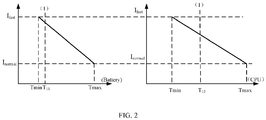
- the charging currents decrease as the temperatures increase (as illustrated in FIG. 2 ). That is to say, the higher the current temperature is, the lower an allowable charging current is, i.e., when the current temperature is high, a low charging current needs to be adopted to charge the terminal device, thereby avoiding overheating of the terminal device.
- Step 103 the terminal device is controlled to adjust a present charging current of the terminal device according to a lowest charging current in the determined charging currents, and the adjusted present charging current of the terminal device is equal to or lower than the lowest charging current.
- FIG. 2 illustrates a correspondence between temperatures and charging currents that is associated with a battery and a correspondence between temperatures and charging currents that is associated with a central processing unit. It is detected that the current temperature of the battery is T11 indicated by a dotted line (1), and the current temperature of the central processing unit is T12 indicated by the dotted line (1). For the battery, when the current temperature is T11, the allowable charging current is relatively high. For the central processing unit, the allowable charging current when the current temperature of the central processing unit is T12 is lower than the allowable charging current of the battery when the current temperature of the battery is T11.
- the present charging current of the terminal device when the present charging current of the terminal device is higher than the charging current corresponding to the temperature T12 of the central processing unit, the present charging current of the terminal device needs to be decreased, and the adjusted present charging current of the terminal device is equal to or lower than the charging current corresponding to the temperature T12 of the central processing unit.
- the charging current corresponding to the current temperature of each of the at least two parts is determined according to the correspondence associated with each of the at least two parts, where the correspondence associated with each of the at least two parts is the correspondence between the temperatures and the charging currents; the terminal device is controlled to adjust the present charging current of the terminal device according to the lowest charging current in the determined charging currents, and the adjusted present charging current of the terminal device is equal to or lower than the lowest charging current, thereby avoiding overheating caused by an overhigh charging current, and accordingly eliminating a safety risk caused by the overheating in the fast charging process.
- FIG. 3 illustrates a method for controlling fast charging according to another embodiment of the present disclosure.
- the method includes the following.
- Step 301 a current temperature of each of multiple parts of a terminal device is detected in a charging process.
- Step 301 is similar to step 101, and details are not repeated herein.
- Step 302 whether the current temperature of at least one part in the multiple parts exceeds a highest threshold of a preset temperature range corresponding to the at least one part is determined. If yes, step 303 is executed; otherwise, step 304 is executed.
- Step 303 a first preset charging strategy is adopted.
- the first preset charging strategy may be stopping charging or decreasing a present charging current of the terminal device by a preset amount. For example, when the number of parts each having the current temperature higher than a highest threshold of a corresponding preset temperature range is large, charging can be immediately stopped, thereby eliminating a safety risk caused by overheating of the terminal device. When the number of parts each having the current temperature higher than a highest threshold of a corresponding preset temperature range is small, for example, one or two, the present charging current of the terminal device is decreased by the preset amount, thereby ensuring normal charging of the terminal device while decreasing heat generated by the terminal device.
- Step 304 whether the current temperature of each of at least two parts in the multiple parts falls within a preset temperature range corresponding to each of the at least two parts is determined.
- Step 305 when the current temperature of each of the at least two parts in the multiple parts falls within the preset temperature range corresponding to each of the at least two parts, a charging current corresponding to the current temperature of each of the at least two parts is determined according to a correspondence associated with each of the at least two parts, where the correspondence associated with each of the at least two parts is a correspondence between temperatures and charging currents.
- Step 306 the terminal device is controlled to adjust the present charging current of the terminal device according to a lowest charging current in the determined charging currents, and the adjusted present charging current of the terminal device is equal to or lower than the lowest charging current.
- Steps 305 and 306 are similar to steps 102 and 103, respectively, and details are not repeated herein.
- the terminal device when the current temperatures of a number of parts respectively fall within corresponding preset temperature ranges, the terminal device is controlled to adjust the present charging current of the terminal device according to the lowest charging current in the determined charging currents, thereby eliminating a safety risk caused by an overhigh charging current. Furthermore, when the temperatures of certain parts of the terminal device are too high, the strategy of stopping charging immediately or decreasing the present charging current of the terminal device by the preset amount is adopted to eliminate the safety risk caused by the overheating of the terminal device.
- FIG. 4 is a schematic flow chart illustrating a method for controlling fast charging according to yet another embodiment of the present disclosure. The method includes the following.
- Step 401 the current temperature of each of multiple parts of a terminal device is detected in a charging process. Step 401 is similar to step 101, and details are not repeated herein.
- Step 402 whether the current temperature of at least one part in the multiple parts falls within a preset temperature range corresponding to the at least one part is determined.
- step 403 is executed.
- step 404 is executed.
- step 405 is executed.
- Step 403 a charging current corresponding to the current temperature of the only one part is determined according to a correspondence associated with the only one part, where the correspondence associated with the only one part is a correspondence between temperatures and charging currents; the terminal device is controlled to adjust a present charging current of the terminal device according to the charging current corresponding to the current temperature of the only one part, and the adjusted present charging current of the terminal device is lower than the charging current corresponding to the current temperature of the only one part.
- Step 404 a charging current corresponding to the current temperature of each of the at least two parts is determined according to a correspondence associated with each of the at least two parts, where the correspondence associated with each of the at least two parts is a correspondence between temperatures and charging currents; the terminal device is controlled to adjust the present charging current of the terminal device according to a lowest charging current in the determined charging currents, and the adjusted present charging current of the terminal device is equal to or lower than the lowest charging current.
- Step 405 a second preset charging strategy is adopted.
- the second preset charging strategy may be increasing the present charging current of the terminal device by a preset amount.
- the current temperature of any part in the multiple parts is lower than a lowest threshold of a preset temperature range corresponding to the any part, it indicates that heat of the terminal device is not high, and the present charging current of the terminal device can be increased to improve a charging speed.
- the terminal device when the current temperatures of a number of parts respectively fall within corresponding preset temperature ranges, the terminal device is controlled to adjust the present charging current of the terminal device according to the lowest charging current in the determined charging currents; when only one part in which the current temperature falls within a preset temperature range corresponding to the only one part, the terminal device is controlled to adjust the present charging current of the terminal device according to the charging current corresponding to the current temperature of the only one part. Therefore, a safety risk caused by an overhigh charging current can be eliminated. Furthermore, when the current temperature of any part in the multiple parts is lower than a lowest threshold of a preset temperature range corresponding to the any part, the present charging current of the terminal device is increased by the preset amount, thereby improving the charging speed without bringing a safety risk.
- FIG. 5 is a schematic structural diagram illustrating a system for controlling fast charging according to an embodiment of the present disclosure.
- the system 500 for controlling fast charging is applied to a terminal device.
- the terminal device may be a smart phone, a tablet computer, a handheld computer, or the like.
- the system 500 includes a temperature detection module 501, a charging current determination module 502, and a charging control module 503.
- the temperature detection module 501 is configured to detect a current temperature of each of multiple parts of the terminal device in a charging process.
- the current temperatures of multiple heating parts such as a battery, a central processing unit, and a screen of the terminal device can be detected in a hardware or software manner.
- the current temperature can be obtained in the software manner.
- the current temperature can be obtained via a temperature sensor.
- the charging current determination module 502 is configured to determine a charging current corresponding to the current temperature of each of at least two parts in the multiple parts according to a correspondence associated with each of the at least two parts, when the current temperature of each of the at least two parts falls within a preset temperature range corresponding to each of the at least two parts, where the correspondence associated with each of the at least two parts is a correspondence between temperatures and charging currents.
- the charging currents decrease as the temperatures increase (as illustrated in FIG. 2 ). That is to say, the higher the current temperature is, the lower an allowable charging current is, i.e., when the current temperature is high, a low charging current needs to be adopted to charge the terminal device, thereby avoiding overheating of the terminal device.
- the charging control module 503 is configured to control the terminal device to adjust a present charging current of the terminal device according to a lowest charging current in the determined charging currents, and the adjusted present charging current of the terminal device is equal to or lower than the lowest charging current.
- FIG. 2 illustrates a correspondence between temperatures and charging currents that is associated with a battery and a correspondence between temperatures and charging currents that is associated with a central processing unit. It is detected that the current temperature of the battery is T11 indicated by a dotted line (1), and the current temperature of the central processing unit is T12 indicated by the dotted line (1). For the battery, when the current temperature is T11, the allowable charging current is relatively high. For the central processing unit, the allowable charging current when the current temperature of the central processing unit is T12 is lower than the allowable charging current of the battery when the current temperature of the battery is T11.
- the present charging current of the terminal device when the present charging current of the terminal device is higher than the charging current corresponding to the temperature T12 of the central processing unit, the present charging current of the terminal device needs to be decreased, and the adjusted present charging current of the terminal device is equal to or lower than the charging current corresponding to the temperature T12 of the central processing unit.
- the charging current corresponding to the current temperature of each of the at least two parts is determined according to the correspondence associated with each of the at least two parts, where the correspondence associated with each of the at least two parts is the correspondence between the temperatures and the charging currents; the terminal device is controlled to adjust the present charging current of the terminal device according to the lowest charging current in the determined charging currents, and the present charging current of the terminal device is equal to or lower than the lowest charging current, thereby avoiding overheating caused by an overhigh charging current, and accordingly eliminating a safety risk caused by the overheating in the fast charging process.
- the charging control module 503 is further configured to adopt a first preset charging strategy when the current temperature of at least one part in the multiple parts exceeds a highest threshold of a preset temperature range corresponding to the at least one part.
- the first preset charging strategy may be stopping charging or decreasing the present charging current of the terminal device by a preset amount. For example, when the number of parts each having the current temperature higher than a highest threshold of a corresponding preset temperature range is large, charging can be immediately stopped, thereby eliminating a safety risk caused by the overheating of the terminal device. When the number of parts each having the current temperature higher than a highest threshold of a corresponding preset temperature range is small, for example, one or two, the present charging current of the terminal device is decreased by the preset amount, thereby ensuring normal charging of the terminal device while decreasing heat of the terminal device.
- the charging control module 503 is further configured, when only one part in which the current temperature falls within a preset temperature range corresponding to the only one part, to control the terminal device to adjust the present charging current of the terminal device according to a charging current corresponding to the current temperature of the only one part, where the adjusted present charging current of the terminal device is equal to or lower than the charging current corresponding to the current temperature of the only one part; and the charging control module 503 is further configured to adopt a second preset charging strategy when the current temperature of any part in the multiple parts is lower than a lowest threshold of a preset temperature range corresponding to the any part.
- the second preset charging strategy may be increasing the present charging current of the terminal device by a preset amount.
- the current temperature of any part in the multiple parts is lower than a lowest threshold of a preset temperature range corresponding to the any part, it indicates that heat of the terminal device is not high, and the charging current of the terminal device can be increased to improve a charging speed.
- a terminal device 600 can be configured to execute the methods for controlling fast charging according to the embodiments of the present disclosure.
- the terminal device 600 may include at least one processor 601, at least one input device 602, at least one output device 603, a memory 604 and so on. These components communicate with each other via one or more buses 605.
- the terminal device may be a bus structure or a star structure.
- the terminal device may include more or fewer components than illustrated, or certain components may be combined, or the terminal device may include different component arrangements.
- the processor 601 is a control center of the terminal device 600, and connects various parts of the whole terminal device 600 through various interfaces and lines, runs or executes software programs and/or units stored in the memory 604 and invokes data stored in the memory 604 to perform various functions of the terminal device 600 and process data.
- the processor 601 may be formed by one or more integrated circuits (ICs).
- the processor 601 may be formed by a single encapsulated IC, and also may be formed by connecting multiple encapsulated ICs having the same function or different functions.
- the processor 601 may just include a central processing unit (CPU), and also may be a combination of the CPU, a digital signal processor (DSP), a graphic processing unit (GPU), and various control chips.
- the CPU may include a signal core, or multiple cores.
- the input device 602 may include a standard touch screen, a keyboard, and so on, and also may include a wired interface, a wireless interface, and so on, to realize interaction between a user and the terminal device 600.
- the output device 603 may be a display screen, a loudspeaker, and may include a wired interface, a wireless interface, and so on.
- the memory 604 may include at least one of the following: a random access memory, a nonvolatile memory, and an external memory.
- the memory 604 may store program codes.
- the processor 601 performs any of the above methods for controlling fast charging by invoking the program codes stored in the memory 604.
- the memory 604 mainly includes a program storage area and a data storage area.
- the program storage area may store an operating system, applications for at least one function, and so on.
- the data storage area may store data created according to usage of the terminal device and so on.
- the operating system may be Android system, iOS system, Windows operating system, or other.
Landscapes
- Engineering & Computer Science (AREA)
- Power Engineering (AREA)
- Manufacturing & Machinery (AREA)
- Chemical & Material Sciences (AREA)
- Chemical Kinetics & Catalysis (AREA)
- Electrochemistry (AREA)
- General Chemical & Material Sciences (AREA)
- Charge And Discharge Circuits For Batteries Or The Like (AREA)
Abstract
Disclosed are a method for controlling fast charging, a system for controlling fast charging, and a terminal device. The method includes the following. A current temperature of each of multiple parts of a terminal device in a charging process is detected (101). When the current temperature of each of at least two parts in the multiple parts falls within a preset temperature range corresponding to each of the at least two parts, a charging current corresponding to the current temperature of each of the at least two parts is determined according to a correspondence associated with each of the at least two parts, where the correspondence associated with each of the at least two parts is a correspondence between temperatures and charging currents (102). The terminal device is controlled to adjust a present charging current of the terminal device according to a lowest charging current in the determined charging currents, and the adjusted present charging current of the terminal device is equal to or lower than the lowest charging current (103). By means of the method, overheating caused by an overhigh charging current can be avoided, and accordingly a safety risk caused by the overheating in the fast charging process can be eliminated.
Description
- The present disclosure relates to the technical field of communications, and particularly to a method for controlling fast charging, a system for controlling fast charging, and a terminal device.
- In recent years, fast charging technology has been increasingly developed. Fast charging is actually that a charging current in a constant current charging phase of a battery is increased to reduce the time of charging the battery. Presently, the charging current in the constant current charging phase of a terminal device has been constantly increased from below 500mA to above 2000mA.
- Constant increase of the charging current really causes increase of a charging speed, but also brings a safety risk due to heat generated by charging. Furthermore, the higher the charging current is, the greater the heat generated by the charging is. The existing system for controlling fast charging controls adjustment of the charging current only according to the temperature of the battery. Actually, in the fast charging process, heat generated by other heating parts (for example, a central processor on a main board) of the terminal device can also affect heat balance of the terminal device. Therefore, in the fast charging process, if the adjustment of the charging current is controlled only according to the temperature of the battery, a safety problem may still occur due to overheating.
- In view of the above, embodiments of the present disclosure provide a method for controlling fast charging, a system for controlling fast charging, and a terminal device, so as to eliminate a safety risk caused by overheating in a charging process.
- Embodiments of the present disclosure provide a method for controlling fast charging. The method includes the following. A current temperature of each of multiple parts of a terminal device in a charging process is detected. A charging current corresponding to the current temperature of each of at least two parts in the multiple parts is determined according to a correspondence associated with each of the at least two parts, when the current temperature of each of the at least two parts falls within a preset temperature range corresponding to each of the at least two parts, where the correspondence associated with each of the at least two parts is a correspondence between temperatures and charging currents. The terminal device is controlled to adjust a present charging current of the terminal device according to a lowest charging current in the determined charging currents, and the adjusted present charging current of the terminal device is equal to or lower than the lowest charging current.
- Embodiments of the present disclosure provide a system for controlling fast charging. The system includes a temperature detection module, a charging current determination module, and a charging control module. The temperature detection module is configured to detect a current temperature of each of multiple parts of a terminal device in a charging process. The charging current determination module is configured to determine a charging current corresponding to the current temperature of each of at least two parts in the multiple parts according to a correspondence associated with each of the at least two parts, when the current temperature of each of the at least two parts falls within a preset temperature range corresponding to each of the at least two parts, where the correspondence associated with each of the at least two parts is a correspondence between temperatures and charging currents. The charging control module is configured to control the terminal device to adjust a present charging current of the terminal device according to a lowest charging current in the determined charging currents, and the adjusted present charging current of the terminal device is equal to or lower than the lowest charging current.
- Embodiments of the present disclosure provide a terminal device. The terminal device includes a memory storing a set of program codes, and a processor configured to invoke the set of program codes to execute the following. A current temperature of each of multiple parts of a terminal device in a charging process is detected. A charging current corresponding to the current temperature of each of at least two parts in the multiple parts is determined according to a correspondence associated with each of the at least two parts, when the current temperature of each of the at least two parts falls within a preset temperature range corresponding to each of the at least two parts, where the correspondence associated with each of the at least two parts is a correspondence between temperatures and charging currents. The terminal device is controlled to adjust a present charging current of the terminal device according to a lowest charging current in the determined charging currents, and the adjusted present charging current of the terminal device is equal to or lower than the lowest charging current.
- In the embodiments of the present disclosure, when the current temperature of each of the at least two parts falls within the preset temperature range corresponding to each of the at least two parts, the charging current corresponding to the current temperature of each of the at least two parts is determined according to the correspondence associated with each of the at least two parts, where the correspondence associated with each of the at least two parts is the correspondence between the temperatures and the charging currents; and the terminal device is controlled to adjust the present charging current of the terminal device according to the lowest charging current in the determined charging currents, and the adjusted present charging current of the terminal device is equal to or lower than the lowest charging current, thereby avoiding overheating caused by an overhigh charging current, and accordingly eliminating a safety risk caused by the overheating in the fast charging process.
- In order to illustrate technical solutions in embodiments of the present disclosure more clearly, the following briefly introduces the accompanying drawings required for describing the embodiments. Apparently, the accompanying drawings in the following description illustrate some but not exhaustive embodiments of the present disclosure. Those of ordinary skill in the art may also obtain other drawings based on these accompanying drawings without creative work.
-
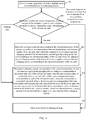
FIG. 1 is a schematic flow chart illustrating a method for controlling fast charging according to an embodiment of the present disclosure. -
FIG. 2 is a schematic diagram illustrating a correspondence between temperatures and charging currents that is associated with a battery and a correspondence between temperatures and charging currents that is associated with a central processing unit according to an embodiment of the present disclosure. -
FIG. 3 is a schematic flow chart illustrating a method for controlling fast charging according to another embodiment of the present disclosure. -
FIG. 4 is a schematic flow chart illustrating a method for controlling fast charging according to yet another embodiment of the present disclosure. -
FIG. 5 is a schematic structural diagram illustrating a system for controlling fast charging according to an embodiment of the present disclosure. -
FIG. 6 is a schematic structural diagram illustrating a terminal device according to an embodiment of the present disclosure. - Technical solutions of embodiments of the present disclosure will be described below clearly and completely in conjunction with the accompanying drawings of the embodiments of the present disclosure. Apparently, merely some but not all embodiments of the present disclosure are described. Based on the embodiments of the present disclosure, all the other embodiments, which a person ordinarily skilled in the art may obtain without paying creative work fall within the scope of protection of the present disclosure.
- Referring to
FIG. 1 , a method for controlling fast charging according to an embodiment of the present disclosure is applied to a terminal device. The terminal device may be a smart phone, a tablet computer, a handheld computer, or the like. The method includes the following. -
Step 101, a current temperature of each of multiple parts of the terminal device is detected in a charging process. - Specifically, the current temperatures of multiple heating parts such as a battery, a central processing unit, and a screen of the terminal device can be detected in a hardware or software manner. For example, for a chip having a temperature output port, the current temperature can be obtained in the software manner. For a component without a temperature output port, the current temperature can be obtained via a temperature sensor.
-
Step 102, when the current temperature of each of at least two parts in the multiple parts falls within a preset temperature range corresponding to each of the at least two parts, a charging current corresponding to the current temperature of each of the at least two parts is determined according to a correspondence associated with each of the at least two parts, where the correspondence associated with each of the at least two parts is a correspondence between temperatures and charging currents. - Specifically, for each of the multiple parts, in the correspondence between the temperatures and the charging currents, the charging currents decrease as the temperatures increase (as illustrated in
FIG. 2 ). That is to say, the higher the current temperature is, the lower an allowable charging current is, i.e., when the current temperature is high, a low charging current needs to be adopted to charge the terminal device, thereby avoiding overheating of the terminal device. -
Step 103, the terminal device is controlled to adjust a present charging current of the terminal device according to a lowest charging current in the determined charging currents, and the adjusted present charging current of the terminal device is equal to or lower than the lowest charging current. - Specifically, as illustrated in
FIG. 2, FIG. 2 illustrates a correspondence between temperatures and charging currents that is associated with a battery and a correspondence between temperatures and charging currents that is associated with a central processing unit. It is detected that the current temperature of the battery is T11 indicated by a dotted line (1), and the current temperature of the central processing unit is T12 indicated by the dotted line (1). For the battery, when the current temperature is T11, the allowable charging current is relatively high. For the central processing unit, the allowable charging current when the current temperature of the central processing unit is T12 is lower than the allowable charging current of the battery when the current temperature of the battery is T11. At this point, when the present charging current of the terminal device is higher than the charging current corresponding to the temperature T12 of the central processing unit, the present charging current of the terminal device needs to be decreased, and the adjusted present charging current of the terminal device is equal to or lower than the charging current corresponding to the temperature T12 of the central processing unit. - In the embodiment, when the current temperature of each of the at least two parts falls within the preset temperature range corresponding to each of the at least two parts, the charging current corresponding to the current temperature of each of the at least two parts is determined according to the correspondence associated with each of the at least two parts, where the correspondence associated with each of the at least two parts is the correspondence between the temperatures and the charging currents; the terminal device is controlled to adjust the present charging current of the terminal device according to the lowest charging current in the determined charging currents, and the adjusted present charging current of the terminal device is equal to or lower than the lowest charging current, thereby avoiding overheating caused by an overhigh charging current, and accordingly eliminating a safety risk caused by the overheating in the fast charging process.
- Referring to
FIG. 3, FIG. 3 illustrates a method for controlling fast charging according to another embodiment of the present disclosure. The method includes the following. -
Step 301, a current temperature of each of multiple parts of a terminal device is detected in a charging process.Step 301 is similar tostep 101, and details are not repeated herein. -
Step 302, whether the current temperature of at least one part in the multiple parts exceeds a highest threshold of a preset temperature range corresponding to the at least one part is determined. If yes, step 303 is executed; otherwise,step 304 is executed. -
Step 303, a first preset charging strategy is adopted. - Specifically, the first preset charging strategy may be stopping charging or decreasing a present charging current of the terminal device by a preset amount. For example, when the number of parts each having the current temperature higher than a highest threshold of a corresponding preset temperature range is large, charging can be immediately stopped, thereby eliminating a safety risk caused by overheating of the terminal device. When the number of parts each having the current temperature higher than a highest threshold of a corresponding preset temperature range is small, for example, one or two, the present charging current of the terminal device is decreased by the preset amount, thereby ensuring normal charging of the terminal device while decreasing heat generated by the terminal device.
-
Step 304, whether the current temperature of each of at least two parts in the multiple parts falls within a preset temperature range corresponding to each of the at least two parts is determined. -
Step 305, when the current temperature of each of the at least two parts in the multiple parts falls within the preset temperature range corresponding to each of the at least two parts, a charging current corresponding to the current temperature of each of the at least two parts is determined according to a correspondence associated with each of the at least two parts, where the correspondence associated with each of the at least two parts is a correspondence between temperatures and charging currents. -
Step 306, the terminal device is controlled to adjust the present charging current of the terminal device according to a lowest charging current in the determined charging currents, and the adjusted present charging current of the terminal device is equal to or lower than the lowest charging current.Steps steps - In the embodiment, when the current temperatures of a number of parts respectively fall within corresponding preset temperature ranges, the terminal device is controlled to adjust the present charging current of the terminal device according to the lowest charging current in the determined charging currents, thereby eliminating a safety risk caused by an overhigh charging current. Furthermore, when the temperatures of certain parts of the terminal device are too high, the strategy of stopping charging immediately or decreasing the present charging current of the terminal device by the preset amount is adopted to eliminate the safety risk caused by the overheating of the terminal device.
- Referring to
FIG. 4, FIG. 4 is a schematic flow chart illustrating a method for controlling fast charging according to yet another embodiment of the present disclosure. The method includes the following. -
Step 401, the current temperature of each of multiple parts of a terminal device is detected in a charging process. Step 401 is similar to step 101, and details are not repeated herein. -
Step 402, whether the current temperature of at least one part in the multiple parts falls within a preset temperature range corresponding to the at least one part is determined. When only one part in which the current temperature falls within a preset temperature range corresponding to the only one part,step 403 is executed. When the current temperature of each of at least two parts in the multiple parts falls within a preset temperature range corresponding to each of the at least two parts,step 404 is executed. When the current temperature of any part in the multiple parts is lower than a lowest threshold of a preset temperature range corresponding to the any part,step 405 is executed. -
Step 403, a charging current corresponding to the current temperature of the only one part is determined according to a correspondence associated with the only one part, where the correspondence associated with the only one part is a correspondence between temperatures and charging currents; the terminal device is controlled to adjust a present charging current of the terminal device according to the charging current corresponding to the current temperature of the only one part, and the adjusted present charging current of the terminal device is lower than the charging current corresponding to the current temperature of the only one part. -
Step 404, a charging current corresponding to the current temperature of each of the at least two parts is determined according to a correspondence associated with each of the at least two parts, where the correspondence associated with each of the at least two parts is a correspondence between temperatures and charging currents; the terminal device is controlled to adjust the present charging current of the terminal device according to a lowest charging current in the determined charging currents, and the adjusted present charging current of the terminal device is equal to or lower than the lowest charging current. -
Step 405, a second preset charging strategy is adopted. - Specifically, the second preset charging strategy may be increasing the present charging current of the terminal device by a preset amount. When the current temperature of any part in the multiple parts is lower than a lowest threshold of a preset temperature range corresponding to the any part, it indicates that heat of the terminal device is not high, and the present charging current of the terminal device can be increased to improve a charging speed.
- In the embodiment, when the current temperatures of a number of parts respectively fall within corresponding preset temperature ranges, the terminal device is controlled to adjust the present charging current of the terminal device according to the lowest charging current in the determined charging currents; when only one part in which the current temperature falls within a preset temperature range corresponding to the only one part, the terminal device is controlled to adjust the present charging current of the terminal device according to the charging current corresponding to the current temperature of the only one part. Therefore, a safety risk caused by an overhigh charging current can be eliminated. Furthermore, when the current temperature of any part in the multiple parts is lower than a lowest threshold of a preset temperature range corresponding to the any part, the present charging current of the terminal device is increased by the preset amount, thereby improving the charging speed without bringing a safety risk.
- Referring to
FIG. 5, FIG. 5 is a schematic structural diagram illustrating a system for controlling fast charging according to an embodiment of the present disclosure. Thesystem 500 for controlling fast charging is applied to a terminal device. The terminal device may be a smart phone, a tablet computer, a handheld computer, or the like. Thesystem 500 includes atemperature detection module 501, a chargingcurrent determination module 502, and a chargingcontrol module 503. - The
temperature detection module 501 is configured to detect a current temperature of each of multiple parts of the terminal device in a charging process. - Specifically, the current temperatures of multiple heating parts such as a battery, a central processing unit, and a screen of the terminal device can be detected in a hardware or software manner. For example, for a chip having a temperature output port, the current temperature can be obtained in the software manner. For a component without a temperature output port, the current temperature can be obtained via a temperature sensor.
- The charging
current determination module 502 is configured to determine a charging current corresponding to the current temperature of each of at least two parts in the multiple parts according to a correspondence associated with each of the at least two parts, when the current temperature of each of the at least two parts falls within a preset temperature range corresponding to each of the at least two parts, where the correspondence associated with each of the at least two parts is a correspondence between temperatures and charging currents. - Specifically, for each of the multiple parts, in the correspondence between the temperatures and the charging currents, the charging currents decrease as the temperatures increase (as illustrated in
FIG. 2 ). That is to say, the higher the current temperature is, the lower an allowable charging current is, i.e., when the current temperature is high, a low charging current needs to be adopted to charge the terminal device, thereby avoiding overheating of the terminal device. - The charging
control module 503 is configured to control the terminal device to adjust a present charging current of the terminal device according to a lowest charging current in the determined charging currents, and the adjusted present charging current of the terminal device is equal to or lower than the lowest charging current. - Specifically, as illustrated in
FIG. 2, FIG. 2 illustrates a correspondence between temperatures and charging currents that is associated with a battery and a correspondence between temperatures and charging currents that is associated with a central processing unit. It is detected that the current temperature of the battery is T11 indicated by a dotted line (1), and the current temperature of the central processing unit is T12 indicated by the dotted line (1). For the battery, when the current temperature is T11, the allowable charging current is relatively high. For the central processing unit, the allowable charging current when the current temperature of the central processing unit is T12 is lower than the allowable charging current of the battery when the current temperature of the battery is T11. At this point, when the present charging current of the terminal device is higher than the charging current corresponding to the temperature T12 of the central processing unit, the present charging current of the terminal device needs to be decreased, and the adjusted present charging current of the terminal device is equal to or lower than the charging current corresponding to the temperature T12 of the central processing unit. - In the embodiment, when the current temperature of each of the at least two parts falls within the preset temperature range corresponding to each of the at least two parts, the charging current corresponding to the current temperature of each of the at least two parts is determined according to the correspondence associated with each of the at least two parts, where the correspondence associated with each of the at least two parts is the correspondence between the temperatures and the charging currents; the terminal device is controlled to adjust the present charging current of the terminal device according to the lowest charging current in the determined charging currents, and the present charging current of the terminal device is equal to or lower than the lowest charging current, thereby avoiding overheating caused by an overhigh charging current, and accordingly eliminating a safety risk caused by the overheating in the fast charging process.
- Alternatively, the charging
control module 503 is further configured to adopt a first preset charging strategy when the current temperature of at least one part in the multiple parts exceeds a highest threshold of a preset temperature range corresponding to the at least one part. - Specifically, the first preset charging strategy may be stopping charging or decreasing the present charging current of the terminal device by a preset amount. For example, when the number of parts each having the current temperature higher than a highest threshold of a corresponding preset temperature range is large, charging can be immediately stopped, thereby eliminating a safety risk caused by the overheating of the terminal device. When the number of parts each having the current temperature higher than a highest threshold of a corresponding preset temperature range is small, for example, one or two, the present charging current of the terminal device is decreased by the preset amount, thereby ensuring normal charging of the terminal device while decreasing heat of the terminal device.
- Alternatively, the charging
control module 503 is further configured, when only one part in which the current temperature falls within a preset temperature range corresponding to the only one part, to control the terminal device to adjust the present charging current of the terminal device according to a charging current corresponding to the current temperature of the only one part, where the adjusted present charging current of the terminal device is equal to or lower than the charging current corresponding to the current temperature of the only one part; and the chargingcontrol module 503 is further configured to adopt a second preset charging strategy when the current temperature of any part in the multiple parts is lower than a lowest threshold of a preset temperature range corresponding to the any part. - Specifically, the second preset charging strategy may be increasing the present charging current of the terminal device by a preset amount. When the current temperature of any part in the multiple parts is lower than a lowest threshold of a preset temperature range corresponding to the any part, it indicates that heat of the terminal device is not high, and the charging current of the terminal device can be increased to improve a charging speed.
- Referring to
FIG. 6 , in an embodiment of the present disclosure, aterminal device 600 can be configured to execute the methods for controlling fast charging according to the embodiments of the present disclosure. Theterminal device 600 may include at least oneprocessor 601, at least oneinput device 602, at least one output device 603, amemory 604 and so on. These components communicate with each other via one ormore buses 605. A person of ordinary skill in the art can understand that the structure of theterminal device 600 illustrated inFIG. 6 does not limit the embodiments of the present disclosure. The terminal device may be a bus structure or a star structure. The terminal device may include more or fewer components than illustrated, or certain components may be combined, or the terminal device may include different component arrangements. - In the embodiment of the present disclosure, the
processor 601 is a control center of theterminal device 600, and connects various parts of the wholeterminal device 600 through various interfaces and lines, runs or executes software programs and/or units stored in thememory 604 and invokes data stored in thememory 604 to perform various functions of theterminal device 600 and process data. Theprocessor 601 may be formed by one or more integrated circuits (ICs). For example, theprocessor 601 may be formed by a single encapsulated IC, and also may be formed by connecting multiple encapsulated ICs having the same function or different functions. For example, theprocessor 601 may just include a central processing unit (CPU), and also may be a combination of the CPU, a digital signal processor (DSP), a graphic processing unit (GPU), and various control chips. In the embodiment of the present disclosure, the CPU may include a signal core, or multiple cores. - In the embodiment of the present disclosure, the
input device 602 may include a standard touch screen, a keyboard, and so on, and also may include a wired interface, a wireless interface, and so on, to realize interaction between a user and theterminal device 600. - In the embodiment of the present disclosure, the output device 603 may be a display screen, a loudspeaker, and may include a wired interface, a wireless interface, and so on.
- In the embodiment of the present disclosure, the
memory 604 may include at least one of the following: a random access memory, a nonvolatile memory, and an external memory. Thememory 604 may store program codes. Theprocessor 601 performs any of the above methods for controlling fast charging by invoking the program codes stored in thememory 604. Thememory 604 mainly includes a program storage area and a data storage area. The program storage area may store an operating system, applications for at least one function, and so on. The data storage area may store data created according to usage of the terminal device and so on. In the embodiment of the present disclosure, the operating system may be Android system, iOS system, Windows operating system, or other. - The above disclosures illustrate preferable embodiments of the present disclosure. It should be pointed out that a person of ordinary skill in the art can make several changes and polish without departing from the principle of the present disclosure, and these changes and polish shall be deemed as the scope of protection of the present disclosure.
Claims (15)
- A method for controlling fast charging, comprising:detecting a current temperature of each of a plurality of parts of a terminal device in a charging process;determining a charging current corresponding to the current temperature of each of at least two parts in the plurality of parts according to a correspondence associated with each of the at least two parts, when the current temperature of each of the at least two parts falls within a preset temperature range corresponding to each of the at least two parts, wherein the correspondence associated with each of the at least two parts is a correspondence between temperatures and charging currents; andcontrolling the terminal device to adjust a present charging current of the terminal device according to a lowest charging current in the determined charging currents, wherein the adjusted present charging current of the terminal device is equal to or lower than the lowest charging current.
- The method for controlling fast charging of claim 1, further comprising the following, after detecting the current temperature of each of the plurality of parts of the terminal device in the charging process:determining whether the current temperature of at least one part in the plurality of parts exceeds a highest threshold of a preset temperature range corresponding to the at least one part;adopting a first preset charging strategy when the current temperature of the at least one part in the plurality of parts exceeds the highest threshold of the preset temperature range corresponding to the at least one part;determining whether the current temperature of each of the at least two parts in the plurality of parts falls within the preset temperature range corresponding to each of the at least two parts, when the current temperature of any part in the plurality of parts fails to exceed a highest threshold of a preset temperature range corresponding to the any part; andexecuting the operation of determining the charging current corresponding to the current temperature of each of the at least two parts according to the correspondence associated with each of the at least two parts, when the current temperature of each of the at least two parts in the plurality of parts falls within the preset temperature range corresponding to each of the at least two parts, wherein the correspondence associated with each of the at least two parts is the correspondence between the temperatures and the charging currents; and executing the operation of controlling the terminal device to adjust the present charging current of the terminal device according to the lowest charging current in the determined charging currents, wherein the adjusted present charging current of the terminal device is equal to or lower than the lowest charging current.
- The method for controlling fast charging of claim 1, further comprising the following, after detecting the current temperature of each of the plurality of parts of the terminal device in the charging process:determining whether the current temperature of at least one part in the plurality of parts falls within a preset temperature range corresponding to the at least one part;determining, when only one part in which the current temperature falls within a preset temperature range corresponding to the only one part in the plurality of parts, a charging current corresponding to the current temperature of the only one part according to a correspondence between temperatures and charging currents of the only one part; and controlling the terminal device to adjust the present charging current of the terminal device according to the charging current corresponding to the current temperature of the only one part, wherein the adjusted present charging current of the terminal device is equal to or lower than the charging current corresponding to the current temperature of the only one part;executing the operation of determining the charging current corresponding to the current temperature of each of the at least two parts according to the correspondence associated with each of the at least two parts, when the current temperature of each of the at least two parts in the plurality of parts falls within the preset temperature range corresponding to each of the at least two parts, wherein the correspondence associated with each of the at least two parts is the correspondence between the temperatures and the charging currents; and executing the operation of controlling the terminal device to adjust the present charging current of the terminal device according to the lowest charging current in the determined charging currents, wherein the adjusted present charging current of the terminal device is equal to or lower than the lowest charging current; andadopting a second preset charging strategy when the current temperature of any part in the plurality of parts is lower than a lowest threshold of a preset temperature range corresponding to the any part.
- The method for controlling fast charging of any of claims 1 to 3, wherein for each of the plurality of parts, in the correspondence between the temperatures and the charging currents, the charging currents decrease as the temperatures increase.
- The method for controlling fast charging of any of claims 1 to 3, wherein detecting the current temperature of each of the plurality of parts of the terminal device comprises:
detecting at least a temperature of a battery of the terminal device, a temperature of a central processing unit of the terminal device, and a temperature of a display screen of the terminal device. - A system for controlling fast charging, comprising:a temperature detection module, configured to detect a current temperature of each of a plurality of parts of a terminal device in a charging process;a charging current determination module, configured to determine a charging current corresponding to the current temperature of each of at least two parts in the plurality of parts according to a correspondence associated with each of the at least two parts, when the current temperature of each of the at least two parts falls within a preset temperature range corresponding to each of the at least two parts, wherein the correspondence associated with each of the at least two parts is a correspondence between temperatures and charging currents; anda charging control module, configured to control the terminal device to adjust a present charging current of the terminal device according to a lowest charging current in the determined charging currents, wherein the adjusted present charging current of the terminal device is equal to or lower than the lowest charging current.
- The system for controlling fast charging of claim 6, wherein the charging control module is further configured to adopt a first preset charging strategy when the current temperature of at least one part in the plurality of parts exceeds a highest threshold of a preset temperature range corresponding to the at least one part.
- The system for controlling fast charging of claim 6, wherein the charging control module is further configured, when only one part in which the current temperature falls within a preset temperature range corresponding to the only one part in the plurality of parts, to control the terminal device to adjust the present charging current of the terminal device according to a charging current corresponding to the current temperature of the only one part, wherein the adjusted present charging current of the terminal device is equal to or lower than the charging current corresponding to the current temperature of the only one part; and to adopt a second preset charging strategy when the current temperature of any part in the plurality of parts is lower than a lowest threshold of a preset temperature range corresponding to the any part.
- The system for controlling fast charging of any of claims 6 to 8, wherein for each of the plurality of parts, in the correspondence between the temperatures and the charging currents, the charging currents decrease as the temperatures increase.
- The system for controlling fast charging of any of claims 6 to 8, wherein the temperature detection module configured to detect the current temperature of each of the plurality of parts of the terminal device in the charging process is configured to detect at least a temperature of a battery of the terminal device, a temperature of a central processing unit of the terminal device, and a temperature of a display screen of the terminal device.
- A terminal device, comprising:a memory storing a set of program codes; anda processor configured to invoke the set of program codes to execute the following:detecting a current temperature of each of a plurality of parts of the terminal device in a charging process;determining a charging current corresponding to the current temperature of each of at least two parts in the plurality of parts according to a correspondence associated with each of the at least two parts, when the current temperature of each of the at least two parts falls within a preset temperature range corresponding to each of the at least two parts, wherein the correspondence associated with each of the at least two parts is a correspondence between temperatures and charging currents; andcontrolling the terminal device to adjust a present charging current of the terminal device according to a lowest charging current in the determined charging currents, wherein the adjusted present charging current of the terminal device is equal to or lower than the lowest charging current.
- The terminal device of claim 11, wherein the set of program codes are further invoked to execute the following, after detecting the current temperature of each of the plurality of parts of the terminal device in the charging process:determining whether the current temperature of at least one part in the plurality of parts exceeds a highest threshold of a preset temperature range corresponding to the at least one part;adopting a first preset charging strategy when the current temperature of the at least one part in the plurality of parts exceeds the highest threshold of the preset temperature range corresponding to the at least one part;determining whether the current temperature of each of the at least two parts in the plurality of parts falls within the preset temperature range corresponding to each of the at least two parts, when the current temperature of any part in the plurality of parts fails to exceed a highest threshold of a preset temperature range corresponding to the any part; andexecuting the operation of determining the charging current corresponding to the current temperature of each of the at least two parts according to the correspondence associated with each of the at least two parts, when the current temperature of each of the at least two parts in the plurality of parts falls within the preset temperature range corresponding to each of the at least two parts, wherein the correspondence associated with each of the at least two parts is the correspondence between the temperatures and the charging currents; and executing the operation of controlling the terminal device to adjust the present charging current of the terminal device according to the lowest charging current in the determined charging currents, wherein the adjusted present charging current of the terminal device is equal to or lower than the lowest charging current.
- The terminal device of claim 11, wherein the set of program codes are further invoked to execute the following, after detecting the current temperature of each of the plurality of parts of the terminal device in the charging process:determining whether the current temperature of at least one part in the plurality of parts falls within a preset temperature range corresponding to the at least one part;determining, when only one part in which the current temperature falls within a preset temperature range corresponding to the only one part in the plurality of parts, a charging current corresponding to the current temperature of the only one part according to a correspondence between temperatures and charging currents of the only one part; and controlling the terminal device to adjust the present charging current of the terminal device according to the charging current corresponding to the current temperature of the only one part, wherein the charging current of the terminal device is equal to or lower than the charging current corresponding to the current temperature of the only one part;executing the operation of determining the charging current corresponding to the current temperature of each of the at least two parts according to the correspondence associated with each of the at least two parts, when the current temperature of each of the at least two parts in the plurality of parts falls within the preset temperature range corresponding to each of the at least two parts, wherein the correspondence associated with each of the at least two parts is the correspondence between the temperatures and the charging currents; and executing the operation of adjusting the present charging current of the terminal device according to the lowest charging current in the determined charging currents, wherein the adjusted present charging current of the terminal device is equal to or lower than the lowest charging current; andadopting a second preset charging strategy when the current temperature of any part in the plurality of parts is lower than a lowest threshold of a preset temperature range corresponding to the any one part.
- The terminal device of any of claims 11 to 13, wherein for each of the plurality of parts, in the correspondence between the temperatures and the charging currents, the charging currents decrease as the temperatures increase.
- The terminal device of any of claims 11 to 13, wherein detecting the current temperature of each of the plurality of parts of the terminal device comprises:
detecting at least a temperature of a battery of the terminal device, a temperature of a central processing unit of the terminal device, and a temperature of a display screen of the terminal device.
Applications Claiming Priority (1)
| Application Number | Priority Date | Filing Date | Title |
|---|---|---|---|
| PCT/CN2016/100726 WO2018058402A1 (en) | 2016-09-29 | 2016-09-29 | Fast charging control method, fast charging control system, and terminal device |
Publications (1)
| Publication Number | Publication Date |
|---|---|
| EP3522290A1 true EP3522290A1 (en) | 2019-08-07 |
Family
ID=61600930
Family Applications (1)
| Application Number | Title | Priority Date | Filing Date |
|---|---|---|---|
| EP16917156.8A Withdrawn EP3522290A1 (en) | 2016-09-29 | 2016-09-29 | Fast charging control method, fast charging control system, and terminal device |
Country Status (6)
| Country | Link |
|---|---|
| US (1) | US20190260093A1 (en) |
| EP (1) | EP3522290A1 (en) |
| JP (1) | JP2019535226A (en) |
| KR (1) | KR20190006550A (en) |
| CN (1) | CN107820656A (en) |
| WO (1) | WO2018058402A1 (en) |
Families Citing this family (8)
| Publication number | Priority date | Publication date | Assignee | Title |
|---|---|---|---|---|
| CN109149690B (en) * | 2018-08-29 | 2021-01-12 | Oppo广东移动通信有限公司 | Charging control device and method and electronic equipment |
| EP3709472A4 (en) | 2018-09-06 | 2021-02-17 | Guangdong Oppo Mobile Telecommunications Corp., Ltd. | CHARGE REGULATION PROCESS, TERMINAL AND COMPUTER STORAGE SUPPORT |
| CN109286219B (en) * | 2018-11-13 | 2020-11-03 | Oppo(重庆)智能科技有限公司 | Charging circuit, charging processing method, electronic device, and storage medium |
| KR102687127B1 (en) | 2019-05-15 | 2024-07-23 | 에스케이온 주식회사 | An apparatus and a control method for battery management system |
| CN116191578A (en) * | 2021-11-26 | 2023-05-30 | 北京小米移动软件有限公司 | Mobile terminal charging control method, device, equipment and medium |
| CN114513029B (en) * | 2022-01-25 | 2025-04-22 | 北京小米移动软件有限公司 | A charging control method, a charging control device and a storage medium |
| CN119182192A (en) * | 2023-06-21 | 2024-12-24 | 北京小米移动软件有限公司 | A multi-charge pump charging method, device and terminal |
| CN119727008B (en) * | 2024-11-18 | 2025-11-11 | 北京新云医疗科技有限公司 | Intelligent regulation charging circuit, control method, device and storage medium |
Family Cites Families (6)
| Publication number | Priority date | Publication date | Assignee | Title |
|---|---|---|---|---|
| CN108418188A (en) * | 2012-11-21 | 2018-08-17 | 夏雨 | Battery protecting method |
| CN103812199B (en) * | 2014-03-05 | 2017-03-01 | 联想(北京)有限公司 | Charge control method and charge control apparatus |
| CN103904377B (en) * | 2014-03-28 | 2016-03-30 | 努比亚技术有限公司 | Fast charge method and mobile terminal |
| CN104955314B (en) * | 2015-05-28 | 2017-10-20 | 广东欧珀移动通信有限公司 | The method and electronic equipment of a kind of control electronics skin temperature |
| CN105098902B (en) * | 2015-08-05 | 2018-02-27 | 联想(北京)有限公司 | A kind of method and electronic equipment for realizing the adjustment of electronic equipment temperature |
| CN105161782B (en) * | 2015-08-19 | 2018-03-02 | 上海斐讯数据通信技术有限公司 | Terminal and its method for charging |
-
2016
- 2016-09-29 WO PCT/CN2016/100726 patent/WO2018058402A1/en not_active Ceased
- 2016-09-29 JP JP2019516108A patent/JP2019535226A/en active Pending
- 2016-09-29 KR KR1020187036252A patent/KR20190006550A/en not_active Ceased
- 2016-09-29 CN CN201680031917.5A patent/CN107820656A/en active Pending
- 2016-09-29 EP EP16917156.8A patent/EP3522290A1/en not_active Withdrawn
- 2016-09-29 US US16/334,254 patent/US20190260093A1/en not_active Abandoned
Also Published As
| Publication number | Publication date |
|---|---|
| JP2019535226A (en) | 2019-12-05 |
| US20190260093A1 (en) | 2019-08-22 |
| CN107820656A (en) | 2018-03-20 |
| WO2018058402A1 (en) | 2018-04-05 |
| KR20190006550A (en) | 2019-01-18 |
Similar Documents
| Publication | Publication Date | Title |
|---|---|---|
| US20190260093A1 (en) | Method for controlling fast charging, system for controlling fast charging, and terminal device | |
| KR102216484B1 (en) | Method and Apparatus for Controlling Battery Charging | |
| CN103904377B (en) | Fast charge method and mobile terminal | |
| CN106464754B (en) | A method, device and equipment for calibrating detection distance | |
| US20160378253A1 (en) | Touch Control Responding Method and Apparatus | |
| KR102251992B1 (en) | Method for controlling current and electronic device | |
| US10459873B2 (en) | Method for adaptively adjusting framerate of graphic processing unit and computer system using thereof | |
| US10439412B2 (en) | Method for eliminating interference of charger to touch screen, and mobile terminal | |
| EP2958006A1 (en) | Electronic device and method for controlling display | |
| CN106412293B (en) | Foreign matter detection method and device and terminal equipment | |
| CN105744034B (en) | Screen brightness output method and device | |
| CN110377414A (en) | Method and device for adjusting capacitive touch screen, terminal and storage medium | |
| US11231759B2 (en) | Power performance management method and electronic device | |
| US9886055B2 (en) | Memory initializing method and electronic device supporting the same | |
| CN111475432B (en) | Slave computer starting control device, single bus system and control method thereof | |
| CN111552617A (en) | NAND Flash temperature acquisition method and device, computer equipment and storage medium | |
| US7363409B2 (en) | Interrupt control system and method for reducing interrupt latency | |
| CN106385486A (en) | A control method, device and mobile terminal of a proximity sensor | |
| CN106339106B (en) | A terminal proximity detection method, device and mobile terminal | |
| CN105677104A (en) | User terminal control method and user terminal | |
| CN108235422A (en) | The setting method and electronic device of antenna power | |
| CN104700815A (en) | Brightness control device and brightness control method | |
| EP3522025A1 (en) | Charging control method, charging control system and computing device | |
| EP3579531A1 (en) | Mobile terminal sensor control method, device, storage medium and mobile terminal | |
| CN117992206A (en) | Central processing unit frequency adjustment method and related device |
Legal Events
| Date | Code | Title | Description |
|---|---|---|---|
| PUAI | Public reference made under article 153(3) epc to a published international application that has entered the european phase |
Free format text: ORIGINAL CODE: 0009012 |
|
| 17P | Request for examination filed |
Effective date: 20190318 |
|
| AK | Designated contracting states |
Kind code of ref document: A1 Designated state(s): AL AT BE BG CH CY CZ DE DK EE ES FI FR GB GR HR HU IE IS IT LI LT LU LV MC MK MT NL NO PL PT RO RS SE SI SK SM TR |
|
| AX | Request for extension of the european patent |
Extension state: BA ME |
|
| DAV | Request for validation of the european patent (deleted) | ||
| DAX | Request for extension of the european patent (deleted) | ||
| STAA | Information on the status of an ep patent application or granted ep patent |
Free format text: STATUS: THE APPLICATION HAS BEEN WITHDRAWN |
|
| 18W | Application withdrawn |
Effective date: 20200205 |