EP3522153B1 - Sprachsteuerungssystem, aufweckverfahren und aufweckvorrichtung dafür, elektrogerät und co-prozessor - Google Patents
Sprachsteuerungssystem, aufweckverfahren und aufweckvorrichtung dafür, elektrogerät und co-prozessor Download PDFInfo
- Publication number
- EP3522153B1 EP3522153B1 EP17854855.8A EP17854855A EP3522153B1 EP 3522153 B1 EP3522153 B1 EP 3522153B1 EP 17854855 A EP17854855 A EP 17854855A EP 3522153 B1 EP3522153 B1 EP 3522153B1
- Authority
- EP
- European Patent Office
- Prior art keywords
- voice
- wakeup
- recognition
- model
- voice information
- Prior art date
- Legal status (The legal status is an assumption and is not a legal conclusion. Google has not performed a legal analysis and makes no representation as to the accuracy of the status listed.)
- Active
Links
Images

Classifications
-
- G—PHYSICS
- G10—MUSICAL INSTRUMENTS; ACOUSTICS
- G10L—SPEECH ANALYSIS TECHNIQUES OR SPEECH SYNTHESIS; SPEECH RECOGNITION; SPEECH OR VOICE PROCESSING TECHNIQUES; SPEECH OR AUDIO CODING OR DECODING
- G10L15/00—Speech recognition
- G10L15/28—Constructional details of speech recognition systems
-
- G—PHYSICS
- G10—MUSICAL INSTRUMENTS; ACOUSTICS
- G10L—SPEECH ANALYSIS TECHNIQUES OR SPEECH SYNTHESIS; SPEECH RECOGNITION; SPEECH OR VOICE PROCESSING TECHNIQUES; SPEECH OR AUDIO CODING OR DECODING
- G10L15/00—Speech recognition
- G10L15/08—Speech classification or search
- G10L15/14—Speech classification or search using statistical models, e.g. Hidden Markov Models [HMMs]
- G10L15/142—Hidden Markov Models [HMMs]
- G10L15/144—Training of HMMs
-
- G—PHYSICS
- G10—MUSICAL INSTRUMENTS; ACOUSTICS
- G10L—SPEECH ANALYSIS TECHNIQUES OR SPEECH SYNTHESIS; SPEECH RECOGNITION; SPEECH OR VOICE PROCESSING TECHNIQUES; SPEECH OR AUDIO CODING OR DECODING
- G10L15/00—Speech recognition
- G10L15/02—Feature extraction for speech recognition; Selection of recognition unit
-
- G—PHYSICS
- G10—MUSICAL INSTRUMENTS; ACOUSTICS
- G10L—SPEECH ANALYSIS TECHNIQUES OR SPEECH SYNTHESIS; SPEECH RECOGNITION; SPEECH OR VOICE PROCESSING TECHNIQUES; SPEECH OR AUDIO CODING OR DECODING
- G10L15/00—Speech recognition
- G10L15/04—Segmentation; Word boundary detection
-
- G—PHYSICS
- G10—MUSICAL INSTRUMENTS; ACOUSTICS
- G10L—SPEECH ANALYSIS TECHNIQUES OR SPEECH SYNTHESIS; SPEECH RECOGNITION; SPEECH OR VOICE PROCESSING TECHNIQUES; SPEECH OR AUDIO CODING OR DECODING
- G10L15/00—Speech recognition
- G10L15/08—Speech classification or search
- G10L15/14—Speech classification or search using statistical models, e.g. Hidden Markov Models [HMMs]
- G10L15/142—Hidden Markov Models [HMMs]
-
- G—PHYSICS
- G10—MUSICAL INSTRUMENTS; ACOUSTICS
- G10L—SPEECH ANALYSIS TECHNIQUES OR SPEECH SYNTHESIS; SPEECH RECOGNITION; SPEECH OR VOICE PROCESSING TECHNIQUES; SPEECH OR AUDIO CODING OR DECODING
- G10L15/00—Speech recognition
- G10L15/22—Procedures used during a speech recognition process, e.g. man-machine dialogue
-
- G—PHYSICS
- G10—MUSICAL INSTRUMENTS; ACOUSTICS
- G10L—SPEECH ANALYSIS TECHNIQUES OR SPEECH SYNTHESIS; SPEECH RECOGNITION; SPEECH OR VOICE PROCESSING TECHNIQUES; SPEECH OR AUDIO CODING OR DECODING
- G10L15/00—Speech recognition
- G10L15/26—Speech to text systems
-
- G—PHYSICS
- G10—MUSICAL INSTRUMENTS; ACOUSTICS
- G10L—SPEECH ANALYSIS TECHNIQUES OR SPEECH SYNTHESIS; SPEECH RECOGNITION; SPEECH OR VOICE PROCESSING TECHNIQUES; SPEECH OR AUDIO CODING OR DECODING
- G10L17/00—Speaker identification or verification techniques
- G10L17/22—Interactive procedures; Man-machine interfaces
- G10L17/24—Interactive procedures; Man-machine interfaces the user being prompted to utter a password or a predefined phrase
-
- G—PHYSICS
- G10—MUSICAL INSTRUMENTS; ACOUSTICS
- G10L—SPEECH ANALYSIS TECHNIQUES OR SPEECH SYNTHESIS; SPEECH RECOGNITION; SPEECH OR VOICE PROCESSING TECHNIQUES; SPEECH OR AUDIO CODING OR DECODING
- G10L15/00—Speech recognition
- G10L15/22—Procedures used during a speech recognition process, e.g. man-machine dialogue
- G10L2015/223—Execution procedure of a spoken command
Definitions
- the present application relates to the field of electrical appliance voice control, and specifically to a voice control system, a wakeup method and wakeup apparatus therefor, an electrical appliance and a co-processor.
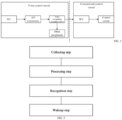
- FIG.1 shows an electrical appliance circuit with a voice control function. It can be seen from FIG.1 that, in order to add the voice control function, it needs to add a voice control circuit on the conventional control circuit. Since the voice control requires real-time monitoring of external sounds, the recognition processor keeps working, which will increase the power consumption.
- US 2014 337031 A1 discloses a method of detecting a target keyword for activating a function in an electronic device.
- the method includes receiving an input sound starting from one of the plurality of portions of the target keyword.
- the input sound may be periodically received based on a duty cycle.
- the method extracts a plurality of sound features from the input sound, and obtains state information on a plurality of states associated with the portions of the target keyword.
- US 5 983 186 A discloses techniques for implementing adaptable voice activation operations for interactive speech recognition devices and instruments.
- speech recognition devices and instruments include an input sound signal power or volume detector in communication with a central CPU for bringing the CPU out of an initial sleep state upon detection of perceived voice exceeding a predetermined threshold volume level and is continuously perceived for at least a certain period of time.
- the present application aims to provide a voice control system, a wakeup method and wakeup apparatus therefor, and an electrical appliance, so as to solve the problem that the voice recognition assembly (voice recognition processor CPU) is activated only when there is a human voice and the human voice includes a voice to be recognized.
- the voice recognition assembly voice recognition processor CPU
- the present application provides a wakeup method of a voice control system, including:
- the voice information includes a plurality of voice information segments collected from different time periods, and all the time periods are spliced into a complete and continuous time chain; and/or, the collecting step includes:
- the wakeup method before the wakeup step, further comprises establishing a wakeup word voice model; and the recognition step includes matching data including the human voice with the wakeup word voice model; determining that the wakeup word is recognized when the matching succeeds; and determining that the wakeup word is not recognized when the matching fails.
- establishing the wakeup word voice model includes:
- establishing the wakeup word voice model includes:
- the processing step includes:
- a method used for blind-source separation is an independent component analysis ICA algorithm based on negative entropy maximization, 4th-order kurtosis, or time-frequency transformation.
- the present application also provides a co-processor, including:
- the processing module includes a separating unit and a determining unit
- the recognition module includes a recognition unit and a storage unit; the storage unit is configured to store a wakeup word voice model; the recognition unit is configured to perform wakeup word matching on the voice information segment including the human voice separated by the determining unit and the wakeup word voice model stored by the storage unit; and generate a wakeup instruction when the matching succeeds.
- establishing the wakeup word voice model includes:
- establishing the wakeup word voice model includes:
- the present application further provides a wakeup apparatus of a voice control system, including a voice collecting assembly and the co-processor; wherein,
- the voice collecting assembly includes a voice collecting module and an A/D conversion module
- the present application further provides a voice control system, including a voice recognition assembly and the wakeup apparatus; wherein the voice recognition assembly is connected to a co-processor of the wakeup apparatus;
- the voice recognition assembly enters a waiting state before a transition from the working-activated state to the non-working dormant state; during a set time period, the voice recognition assembly enters the non-working dormant state when the voice recognition assembly is not woken up; and enters the working-activated state when the voice recognition assembly is woken up.
- the present application further provides an intelligent electrical appliance, including the voice control system and an electrical appliance; the electrical appliance is connected to the voice control system.
- the technical solutions of the present application incorporate the wakeup technology.
- a voice wakeup apparatus as a co-processing apparatus or a pre-processing apparatus, the present application collects voice information in real time, analyzes and recognizes the voice information, and wakes up the voice recognition processor to recognize the voice when the voice is determined to include the wakeup word.
- the voice recognition processor only operates when voice recognition is required, avoiding ceaseless all-weather operation, and having significantly reduced energy consumption.
- the voice wakeup apparatus only recognizes the wakeup word and does not need to recognize the whole voice, therefore it has low power consumption, and consumes very little energy even in all-weather operation, solving the problem of high power consumption in the existing voice recognition.
- the terms “mount”, “connect to”, and “connect with” should be understood in a broad sense, for example, they may be fixed connections or may be removable connections, or integrated connections; they may be mechanical connections or electrical connections; they may also be direct connections or indirect connections through intermediate mediums, or may be an internal connection of two components.
- the present application provides a wakeup method for a voice control system, a wakeup apparatus, a voice control system and an intelligent electrical appliance.
- a co-processor that can reduce the power consumption of voice recognition is mainly applied to the front end of the existing voice recognition processor for voice processing at an early stage and obtaining a wakeup instruction, thereby waking up the voice recognition processor and shortening the working hours of the voice recognition processor to a time period requiring voice recognition.
- the co-processor with a small power has less energy loss and can significantly reduce the power consumption.
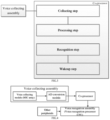
- the co-processor mainly includes: a processing module configured to process collected voice information to determine whether the voice information includes a human voice; and separate a voice information segment including the human voice when the voice information includes a human voice; a recognition module configured to perform wakeup word recognition on the voice information segment including the human voice separated by the processing module, when the wakeup word is recognized, generate a wakeup instruction; a wakeup module configured to wake up a voice recognition processor according to the wakeup instruction.
- a processing module configured to process collected voice information to determine whether the voice information includes a human voice
- a recognition module configured to perform wakeup word recognition on the voice information segment including the human voice separated by the processing module, when the wakeup word is recognized, generate a wakeup instruction
- a wakeup module configured to wake up a voice recognition processor according to the wakeup instruction.
- the processing module is needed to separate the voice segment including the human voice.
- the content of the voice segment including the human voice includes too much information, and not every message needs to be recognized by voice. Therefore, some specific words included in the voice segment are recognized, and the workload of the existing voice recognition processor can be further reduced by determining whether the voice segment is the information that needs voice recognition through these specific words. Therefore, in the present embodiment, the specific words are defined as the wakeup words, and the voice recognition processor is woken up by the wakeup words.
- the collected voice information received by the processing module is usually collected and segmented in the form of time period.
- a voice collecting assembly sends the voice information segment collected in a time period to the processing module as a transmission object, and continues to collect the voices of the next time period.
- the co-processor can be loaded between the voice collecting assembly and the voice recognition processor as a separate hardware.
- the co-processor can be a DSP with low power consumption, and can also be loaded into a chip inside the existing voice recognition processor, or loaded into a chip inside the existing voice collecting assembly.
- the chip includes the processing module, the recognition module and the wakeup module, and can achieve voice processing and wakeup functions.
- the processing module mainly includes a separating unit and a determining unit.
- the separating unit performs blind-source separation processing on the voice information in the digital signal format so as to separate the voice signal having the largest non-Gaussianity value.
- the determining unit determines whether the voice signal includes a human voice through an energy threshold; when the energy threshold is exceeded, the voice information including the human voice is separated, and the voice information segment including the human voice is obtained.
- ICA is a relatively common algorithm, which can be implemented based on negative entropy maximization, 4th-order kurtosis, and time-frequency transformation, and fixed-point fast algorithm is easy to implement on DSP in real time.
- the voice signal Since the voice signal obeys the Laplacian distribution, it belongs to the super Gaussian distribution, while the distributions of most of the noises have Gaussian properties. Negative entropy, kurtosis, etc. can measure the non-Gaussianity of the signal. The larger the value, the larger the non-Gaussianity, therefore the signal with the largest value among the signals is selected and separated for processing.
- the frame including the voice is sent to the recognition module for the wakeup word recognition process, and in the subsequent process, the frame that does not include the voice is dropped.
- the recognition module includes a recognition unit and a storage unit.
- the storage unit stores a wakeup word voice model; and the recognition unit performs wakeup word matching on the voice information segment including the human voice separated by the determining unit and the wakeup word voice model stored by the storage unit. If the matching succeeds, a wakeup instruction is generated.
- the wakeup word recognition determines whether there is a user tries the voice control according to predetermined wakeup words (from the wakeup word voice model, such as "hello, refrigerator”).
- predetermined wakeup words from the wakeup word voice model, such as "hello, refrigerator”
- the wakeup word voice model can be established as follows: collecting wakeup voice data of a number of people; processing all wakeup voice data, and obtaining the wakeup word voice model through training.
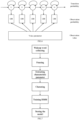
- the wakeup word recognition can be determined by using the more commonly used GMM-HMM model (currently, there also are more commonly used DNN-HMM model and LSTM model).
- a command recognition model thereof is shown in FIG.6 .
- the GMM model is for clustering voice frames.
- the HMM model can be described with 2 state sets and 3 transition probabilities.
- the 2 state sets include observable states O: the states that can be observed; implicit states S: these states conform to the Markov property (the state at time t is only related to the state at time t-1), and generally cannot be observed directly.
- Initial state probability matrix a probability distribution expressing various implicit states in the initial state.
- State transition matrix expressing the transition probability between the implicit states from time t to t+1.
- Output probability of observable state expressing the probability that the observed value is 0 under the condition that the implicit state is S.
- the wakeup word voice model can be specifically established through the follow method, as shown in FIG.7 :
- the recognition step is:
- the threshold is an empirical value obtained through experiments, and the thresholds need to be set for different wakeup words can be adjusted according to experiments.
- the apparatus mainly includes a voice collecting assembly and the above-mentioned co-processor.
- the voice collecting assembly is configured to collect voice information.
- the co-processor is configured to process the voice information collected by the voice collecting assembly to determine whether the voice information includes a human voice; separate a voice information segment including the human voice when the voice information includes the human voice and perform wakeup word recognition on the voice information segment including the human voice; and wake up a voice recognition assembly when the wakeup word is recognized.
- the voice collecting assembly and co-processor can also be integrated into an integral part.
- the voice collecting assembly and the co-processor determine whether to wake up the voice recognition processor by collecting and analyzing so as to start voice recognition, therefore the voice collecting assembly and the co-processor can significantly shorten the working hours of the voice recognition processor and reduce the working loss thereof.
- the voice collecting assembly mainly includes a voice collecting module and an A/D conversion module; the voice collecting module is configured to collect voice information in an analog signal format; and the A/D conversion module is configured to digitally convert the voice information in an analog signal format to obtain voice information in a digital signal format.
- the voice collecting module and the A/D conversion module can be separate hardware devices or integrated into the integral structure of the voice collecting assembly.
- the voice control system is for voice collecting, voice processing and voice recognition, and obtains the control instruction in the voice through the recognition result.
- the voice control system mainly includes a voice recognition assembly (i.e. a voice recognition processor) and a wakeup apparatus; wherein the voice recognition assembly is connected to a co-processor of the wakeup apparatus, and the co-processor wakes up the voice recognition assembly to perform the voice recognition after detecting a wakeup word.
- the voice recognition assembly is configured to perform the voice recognition in a working-activated state; and enter a non-working dormant state after voice recognition. The switch from the non-working dormant state to the working-activated state of the voice recognition assembly is woken up by the co-processor.
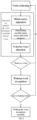
- the voice recognition processor enters a waiting state for a certain period of time after recognizing a voice segment including the human voice. As shown in FIG.9 , in the waiting state, the voice recognition processor continues to recognize when there is a voice segment to be recognized; and enters a non-working dormant state when there is no voice segment to be recognized.
- the voice recognition assembly enters a waiting state before the transition from the working-activated state to the non-working dormant state; the voice recognition assembly enters the non-working dormant state when it is not woken up during a set time period, and enters the working-activated state when it is woken up.
- the above-mentioned voice control system is applied to an intelligent electrical appliance, which mainly includes a voice control system and an electrical appliance.
- the electrical appliance is connected to the voice control system.
- the intelligent electrical appliance can be any home appliance that requires control instructions in the home.
- the present application can also extend the intelligent electrical appliance to electrical equipment in working environment, that is, the electrical equipment that needs to be controlled in other scenarios.
- the wakeup word recognition determines whether there is a user tries the voice control according to predetermined wakeup words (from the wakeup word voice model, such as "hello, refrigerator").
- the basic process is as follows:
- Step 100 establishing a wakeup word voice model
- This step is a step that occurs during the preparation of the earlier stage.
- the subsequent wakeup word recognition is facilitated.
- wakeup voice data of a number of people is collected; and all wakeup voice data is processed and trained to obtain the wake-up word voice model.
- Step 110 collecting voice information;
- the voice information includes a plurality of voice information segments collected from different time periods, and all time periods are spliced into a complete and continuous time chain.
- the voice information segment of a certain time period is sent to the subsequent processing as a unit.
- the step can be detailed as:
- This step is specifically as:
- ICA is a relatively common algorithm, which can be implemented based on negative entropy maximization, 4th-order kurtosis, and time-frequency transformation, and fixed-point fast algorithm is easy to implement on DSP in real time.
- the voice signal Since the voice signal obeys the Laplacian distribution, it belongs to the super Gaussian distribution, while the distributions of most of the noises have Gaussian properties. Negative entropy, kurtosis, etc. can measure the non-Gaussianity of the signal. The larger the value, the larger the non-Gaussianity, therefore the signal with the largest value among the signals is selected and separated for processing.
- Step 1220 determining whether the voice signal includes a human voice through an energy threshold; when the energy threshold is exceeded, the voice signal is determined to include the human voice, and the process enters step 1230; when the energy threshold is not exceeded, the voice signal is determined to do not include the human voice, and the process enters step 110; After the possible signals are selected, whether there is a voice of the speaker is determined according to the energy threshold.
- the frame including the voice is sent to the recognition module for the wakeup word recognition process, and in the subsequent process, the frame that does not include the voice is dropped.
- Step 1230 separating the voice information including the human voice to obtain the voice information segment including the human voice.
- Step 130 performing wakeup word recognition on the voice information segment including the human voice; when the wakeup word is recognized, the process enters step 140; when the wakeup word is not recognized, the process returns to step 110; matching the data including the human voice with the wakeup word voice model; when the matching succeeds, the wakeup word is determined to be recognized; when the matching fails, the wakeup word is determined to be not recognized.
- the step is specifically as: extracting characteristic parameters for the voice frames including the human voice data to obtain a set of new observation values ⁇ ' as a new observation state, and calculating P( ⁇ '
- Step 140 waking up the voice recognition processor.
Landscapes
- Engineering & Computer Science (AREA)
- Physics & Mathematics (AREA)
- Health & Medical Sciences (AREA)
- Audiology, Speech & Language Pathology (AREA)
- Human Computer Interaction (AREA)
- Acoustics & Sound (AREA)
- Multimedia (AREA)
- Computational Linguistics (AREA)
- Probability & Statistics with Applications (AREA)
- Computer Vision & Pattern Recognition (AREA)
- Telephonic Communication Services (AREA)
Claims (15)
- Weckverfahren für ein Sprachsteuerungssystem, umfassend:einen Sammelschritt: Sammeln von Sprachinformationen;einen Verarbeitungsschritt: Verarbeiten der Sprachinformation, um zu bestimmen, ob die Sprachinformation eine menschliche Stimme umfasst, und Abtrennen eines Sprachinformationssegments, das die menschliche Stimme umfasst, wenn die Sprachinformation die menschliche Stimme umfasst; undwobei der Prozess einen Erkennungsschritt einleitet;den Erkennungsschritt: Durchführen einer Weckworterkennung an dem Sprachinformationssegment, das die menschliche Stimme umfasst; wobei der Prozess in einen Weckschritt eintritt, wenn das Weckwort erkannt wird; und der Prozess zum Sammelschritt zurückkehrt, wenn das Weckwort nicht erkannt wird; undden Weckschritt: Wecken eines Spracherkennungsprozessors wobei die Sprachinformation eine Vielzahl von Sprachinformationssegmenten umfasst, die aus verschiedenen Zeitabschnitten gesammelt wurden, dadurch gekennzeichnet, dass alle Zeitabschnitte zu einer vollständigen und kontinuierlichen Zeitkette zusammengefügt sind.
- Weckverfahren für ein Sprachsteuerungssystem gemäß Anspruch 1, dadurch gekennzeichnet, dass
der Sammelschritt Folgendes umfasst:Sammeln von Sprachinformationen in einem analogen Signalformat;digitales Umwandeln der Sprachinformationen im analogen Signalformat, um Sprachinformationen in einem digitalen Signalformat zu erhalten. - Weckverfahren für ein Sprachsteuerungssystem gemäß Anspruch 1, dadurch gekennzeichnet, dass,das Weckverfahren vor dem Weckschritt ferner ein Erstellen eines Weckwort-Stimmenmodells umfasst; undder Erkennungsschritt ein Abgleichen von Daten, die die menschliche Stimme umfassen, mit dem Sprachmodell des Weckworts umfasst; Feststellen, dass das Weckwort erkannt wird, wenn der Abgleich erfolgreich ist; und Feststellen, dass das Weckwort nicht erkannt wird, wenn der Abgleich fehlschlägt.
- Weckverfahren für ein Sprachsteuerungssystem gemäß Anspruch 1, dadurch gekennzeichnet, dass das Erstellen des Weckwort-Sprachmodells Folgendes umfasst:Sammeln der Weck-Sprachdaten einer Reihe von Personen;Verarbeiten aller Weck-Sprachdaten und Erhalten des Weckwort-Sprachmodells durch Training.
- Weckverfahren für ein Sprachsteuerungssystems gemäß Anspruch 3 oder 4, dadurch gekennzeichnet, dass,
das Erstellen des Weckwort-Sprachmodells Folgendes umfasst:in einem Offline-Zustand, Sammeln von von einem Sprecher in verschiedenen Umgebungen aufgezeichneten Weckwörtern und Durchführen einer Rahmenverarbeitung;Extrahieren charakteristischer Parameter nach der Rahmenverarbeitung;Clustern der charakteristischen Parameter und Erstellen eines Beobachtungszustands des Hidden-Markov-HMM-Modells;Einstellen eines Modellparameters des Hidden-Markov-HMM-Modells durch den Baum-Welch-Algorithmus, um die Wahrscheinlichkeit des Beobachtungszustands P(σ|λ) zu maximieren, wobei λ der Modellparameter und σ der Beobachtungszustand ist; Einstellen des Modellparameters λ, um eine maximale Wahrscheinlichkeit des Beobachtungszustands σ zu erhalten;Abschließen des Modelltrainings und Speichern des Weckwort-Sprachmodells; der Erkennungsschritt Folgendes umfasst:Extrahieren von charakteristischen Parametern für Sprachrahmen, die Daten der menschlichen Stimme umfassen, um einen Satz neuer Beobachtungswerte σ' als einen neuen Beobachtungszustand zu erhalten, und Berechnen von P(σ'|λ);Vergleichen von P(σ'|λ) mit einer Vertrauensschwelle, um zu bestimmen, ob das Weckwort erkannt wird. - Weckverfahren für ein Sprachsteuerungssystem gemäß einem der Ansprüche 1-5, dadurch gekennzeichnet, dass der Verarbeitungsschritt Folgendes umfasst:einen ersten Abtrennungsschritt: Durchführen einer Blindquellenabtrennungsverarbeitung an der Sprachinformation in einem digitalen Signalformat, um ein Sprachsignal aufweisend den größten Nicht-Gaußschen Wert abzutrennen;einen Bestimmungsschritt: Bestimmen, ob das Sprachsignal die menschliche Stimme umfasst, durch einen Energieschwellenwert, Bestimmen, dass das Sprachsignal die menschliche Stimme umfasst, wenn der Energieschwellenwert überschritten wird, und Eintreten des Prozesses in einen zweiten Abtrennungsschritt; Bestimmen, dass das Sprachsignal nicht die menschliche Stimme umfasst, wenn der Energieschwellenwert nicht überschritten wird, und Eintreten des Prozesses in den Sammelschritt;den zweiten Abtrennungsschritt: Abtrennen der Sprachinformation, die die menschliche Stimme umfasst, um das Sprachinformationssegment zu erhalten, das die menschliche Stimme umfasst;wobei bevorzugt im ersten Abtrennungsschritt ein Verfahren, das zur Blindquellenabtrennung verwendet wird, ein ICA-Algorithmus zur Analyse unabhängiger Komponenten ist, der auf negativer Entropiemaximierung, Kurtosis der 4. Ordnung oder Zeit-Frequenz-Transformation basiert.
- Co-Prozessor, umfassend:ein Verarbeitungsmodul, das so konfiguriert ist, dass es gesammelte Sprachinformationen verarbeitet, um zu bestimmen, ob die Sprachinformationen eine menschliche Stimme umfassen; und ein Sprachinformationssegment abtrennt, das die menschliche Stimme umfasst, wenn die Sprachinformationen die menschliche Stimme umfassen;ein Erkennungsmodul, das so konfiguriert ist, dass es eine Weckworterkennung an dem Sprachinformationssegment durchführt, das die durch das Verarbeitungsmodul abgetrennte menschliche Stimme umfasst; und eine Weckanweisung erzeugt, wenn das Weckwort erkannt wird; undein Weckmodul, das so konfiguriert ist, dass es einen Spracherkennungsprozessor gemäß der Weckanweisung aufweckt wobei die Sprachinformation eine Vielzahl von Sprachinformationssegmenten umfasst, die aus verschiedenen Zeitabschnitten gesammelt wurden, dadurch gekennzeichnet, dass alle Zeitabschnitte zu einer vollständigen und kontinuierlichen Zeitkette zusammengefügt sind.
- Co-Prozessor gemäß Anspruch 7, dadurch gekennzeichnet, dass das Verarbeitungsmodul eine Abtrenneinheit und eine Bestimmungseinheit umfasst, wobeidie Abtrenneinheit so konfiguriert ist, dass sie eine Blindquellenabtrennungsverarbeitung an der Sprachinformation in einem digitalen Signalformat durchführt, um ein Sprachsignal aufweisend den größten Nicht-Gaußschen Wert abzutrennen; unddie Bestimmungseinheit so konfiguriert ist, dass sie durch einen Energieschwellenwert bestimmt, ob das Sprachsignal die menschliche Stimme umfasst; und die Sprachinformation, die die menschliche Stimme umfasst, abtrennt, wenn der Energieschwellenwert überschritten wird, um ein Sprachinformationssegment zu erhalten, das die menschliche Stimme umfasst.
- Co-Prozessor gemäß Anspruch 7, dadurch gekennzeichnet, dass das Erkennungsmodul eine Erkennungseinheit und eine Speichereinheit umfasst, wobeidie Speichereinheit so konfiguriert ist, dass sie ein Weckwort-Sprachmodell speichert; unddie Erkennungseinheit so konfiguriert ist, dass sie einen Weckwortabgleich mit dem Sprachinformationssegment durchführt, das die von der Bestimmungseinheit abgetrennte menschliche Stimme und das von der Speichereinheit gespeicherte Weckwort-Sprachmodell umfasst; und eine Weckanweisung erzeugt, wenn der Abgleich erfolgreich ist;wobei das Erstellen des Weckwort-Sprachmodells bevorzugt Folgendes umfasst:Sammeln der Weck-Sprachdaten einer Reihe von Personen;Verarbeiten aller Weck-Sprachdaten und Erhalten des Weckwort-Sprachmodells durch Training.
- Co-Prozessor gemäß Anspruch 9, dadurch gekennzeichnet, dass,
das Erstellen des Weckwort-Sprachmodells Folgendes umfasst:in einem Offline-Zustand, Sammeln von von einem Sprecher in verschiedenen Umgebungen aufgezeichneten Weckwörtern und Durchführen einer Rahmenverarbeitung;Extrahieren charakteristischer Parameter nach der Rahmenverarbeitung;Clustern der charakteristischen Parameter und Erstellen eines Beobachtungszustands des Hidden-Markov-HMM-Modells;Einstellen eines Modellparameters des Hidden-Markov-HMM-Modells durch den Baum-Welch-Algorithmus, um P(σ|λ) zu maximieren, wobei λ der Modellparameter und σ der Beobachtungszustand ist; Einstellen des Modellparameters λ, um eine maximale Wahrscheinlichkeit des Beobachtungszustands σ zu erhalten; Abschließen des Modelltrainings und Speichern des Weckwort-Sprachmodells;der Erkennungsschritt des Erkennungsmoduls Folgendes umfasst:Extrahieren von charakteristischen Parametern für Sprachrahmen, die Daten der menschlichen Stimme enthalten, um einen Satz neuer Beobachtungswerte σ' als einen neuen Beobachtungszustand zu erhalten, und Berechnen von P(σ'|λ);Vergleichen von P(σ'|λ) mit einer Vertrauensschwelle, um zu bestimmen, ob das Weckwort erkannt wird. - Weckvorrichtung eines Sprachsteuerungssystems, dadurch gekennzeichnet, dass sie eine Sprachsammelanordnung und den Co-Prozessor gemäß einem der Ansprüche 7-10 umfasst, wobeidie Sprachsammelanordnung so konfiguriert ist, dass sie Sprachinformationen sammelt;der Co-Prozessor so konfiguriert ist, dass er die von der Sprachsammelanordnung gesammelten Sprachinformationen verarbeitet, um zu bestimmen, ob die Sprachinformationen eine menschliche Stimme umfassen; ein Sprachinformationssegment, das die menschliche Stimme umfasst, abtrennt, wenn die Sprachinformationen die menschliche Stimme umfassen, und eine Weckworterkennung an dem Sprachinformationssegment, das die menschliche Stimme umfasst, durchführt; und eine Spracherkennungsanordnung aufweckt, wenn das Weckwort erkannt wird.
- Weckvorrichtung eines Sprachsteuerungssystems gemäß Anspruch 11, dadurch gekennzeichnet, dass die Sprachsammelanordnung ein Sprachsammelmodul und ein A/D-Wandlermodul umfasst, wobeidas Sprachsammelmodul so konfiguriert ist, dass es Sprachinformationen in einem analogen Signalformat sammelt; unddas A/D-Wandlermodul so konfiguriert ist, dass es die Sprachinformationen im analogen Signalformat digital umwandelt, um Sprachinformationen in einem digitalen Signalformat zu erhalten.
- Sprachsteuerungssystem, dadurch gekennzeichnet, dass es eine Spracherkennungsanordnung und die Weckvorrichtung gemäß einem der Ansprüche 11 bis 12 umfasst, wobei die Spracherkennungsanordnung mit einem Co-Prozessor der Weckvorrichtung verbunden ist;die Spracherkennungsanordnung so konfiguriert ist, dass sie eine Spracherkennung in einem arbeitenden aktivierten Zustand durchführt und nach der Spracherkennung in einen Ruhezustand übergeht, in dem sie nicht arbeitet;ein Übergang vom nicht arbeitenden Ruhezustand in den arbeitenden aktivierten Zustand der Spracherkennungsanordnung durch den Co-Prozessor aufgeweckt wird.
- Sprachsteuerungssystem gemäß Anspruch 13, dadurch gekennzeichnet, dass die Spracherkennungsanordnung in einen Wartezustand eintritt, bevor der Übergang vom arbeitenden aktivierten Zustand in den nicht arbeitenden Ruhezustand erfolgt;
während eines festgelegten Zeitabschnitts die Spracherkennungsanordnung in den nicht arbeitenden Ruhezustand eintritt, wenn die Spracherkennungsanordnung nicht aufgeweckt wird, und in den arbeitenden aktivierten Zustand eintritt, wenn die Spracherkennungsanordnung aufgeweckt wird. - Intelligentes elektrisches Haushaltsgerät, dadurch gekennzeichnet, dass es das Sprachsteuerungssystem gemäß Anspruch 13 oder Anspruch 14 und ein elektrisches Haushaltsgerät umfasst; das elektrische Haushaltsgerät mit dem Sprachsteuerungssystem verbunden ist.
Applications Claiming Priority (2)
| Application Number | Priority Date | Filing Date | Title |
|---|---|---|---|
| CN201610867477.9A CN106157950A (zh) | 2016-09-29 | 2016-09-29 | 语音控制系统及其唤醒方法、唤醒装置和家电、协处理器 |
| PCT/CN2017/103514 WO2018059405A1 (zh) | 2016-09-29 | 2017-09-26 | 语音控制系统及其唤醒方法、唤醒装置和家电、协处理器 |
Publications (3)
| Publication Number | Publication Date |
|---|---|
| EP3522153A1 EP3522153A1 (de) | 2019-08-07 |
| EP3522153A4 EP3522153A4 (de) | 2019-10-09 |
| EP3522153B1 true EP3522153B1 (de) | 2023-12-27 |
Family
ID=57340915
Family Applications (1)
| Application Number | Title | Priority Date | Filing Date |
|---|---|---|---|
| EP17854855.8A Active EP3522153B1 (de) | 2016-09-29 | 2017-09-26 | Sprachsteuerungssystem, aufweckverfahren und aufweckvorrichtung dafür, elektrogerät und co-prozessor |
Country Status (6)
| Country | Link |
|---|---|
| US (1) | US20200027462A1 (de) |
| EP (1) | EP3522153B1 (de) |
| JP (1) | JP6801095B2 (de) |
| KR (1) | KR102335717B1 (de) |
| CN (1) | CN106157950A (de) |
| WO (1) | WO2018059405A1 (de) |
Families Citing this family (59)
| Publication number | Priority date | Publication date | Assignee | Title |
|---|---|---|---|---|
| CN106157950A (zh) * | 2016-09-29 | 2016-11-23 | 合肥华凌股份有限公司 | 语音控制系统及其唤醒方法、唤醒装置和家电、协处理器 |
| CN106847283A (zh) * | 2017-02-28 | 2017-06-13 | 广东美的制冷设备有限公司 | 智能家电控制方法和装置 |
| CN106875946B (zh) * | 2017-03-14 | 2020-10-27 | 巨数创新(深圳)科技有限公司 | 语音控制交互系统 |
| CN108663942B (zh) * | 2017-04-01 | 2021-12-07 | 青岛有屋科技有限公司 | 一种语音识别设备控制方法、语音识别设备和中控服务器 |
| TWI643123B (zh) * | 2017-05-02 | 2018-12-01 | 瑞昱半導體股份有限公司 | 具有語音喚醒功能的電子裝置及其操作方法 |
| CN106971719A (zh) * | 2017-05-16 | 2017-07-21 | 上海智觅智能科技有限公司 | 一种离线可切换唤醒词的非特定音语音识别唤醒方法 |
| CN107276777B (zh) * | 2017-07-27 | 2020-05-29 | 苏州科达科技股份有限公司 | 会议系统的音频处理方法及装置 |
| CN109308896B (zh) * | 2017-07-28 | 2022-04-15 | 江苏汇通金科数据股份有限公司 | 语音处理方法及装置、存储介质及处理器 |
| CN107371144B (zh) * | 2017-08-11 | 2021-02-02 | 深圳传音通讯有限公司 | 一种智能发送信息的方法及装置 |
| CN109584860B (zh) * | 2017-09-27 | 2021-08-03 | 九阳股份有限公司 | 一种语音唤醒词定义方法和系统 |
| CN107886947A (zh) * | 2017-10-19 | 2018-04-06 | 珠海格力电器股份有限公司 | 一种图像处理的方法以及装置 |
| CN108270651A (zh) * | 2018-01-25 | 2018-07-10 | 厦门盈趣科技股份有限公司 | 语音传输节点及语音处理系统 |
| CN108259280B (zh) * | 2018-02-06 | 2020-07-14 | 北京语智科技有限公司 | 一种室内智能化控制的实现方法、系统 |
| CN108564941B (zh) * | 2018-03-22 | 2020-06-02 | 腾讯科技(深圳)有限公司 | 语音识别方法、装置、设备及存储介质 |
| CN108665900B (zh) | 2018-04-23 | 2020-03-03 | 百度在线网络技术(北京)有限公司 | 云端唤醒方法及系统、终端以及计算机可读存储介质 |
| CN109218899A (zh) * | 2018-08-29 | 2019-01-15 | 出门问问信息科技有限公司 | 一种语音交互场景的识别方法、装置及智能音箱 |
| CN111199733A (zh) * | 2018-11-19 | 2020-05-26 | 珠海全志科技股份有限公司 | 多级识别语音唤醒方法及装置、计算机存储介质及设备 |
| CN109360552B (zh) * | 2018-11-19 | 2021-12-24 | 广东小天才科技有限公司 | 一种自动过滤唤醒词的方法及系统 |
| CN109215658A (zh) * | 2018-11-30 | 2019-01-15 | 广东美的制冷设备有限公司 | 设备的语音唤醒方法、装置和家电设备 |
| KR102899629B1 (ko) * | 2019-01-03 | 2025-12-15 | 삼성전자주식회사 | 전자 장치 및 이의 제어 방법 |
| CN111414071B (zh) * | 2019-01-07 | 2021-11-02 | 瑞昱半导体股份有限公司 | 处理系统与语音检测方法 |
| CN109785845B (zh) * | 2019-01-28 | 2021-08-03 | 百度在线网络技术(北京)有限公司 | 语音处理方法、装置及设备 |
| BR112021018647A2 (pt) * | 2019-03-27 | 2021-11-23 | Sony Group Corp | Dispositivo e método de processamento de sinais, e, programa para fazer com que um computador execute o processamento |
| CN110049395B (zh) * | 2019-04-25 | 2020-06-05 | 维沃移动通信有限公司 | 耳机控制方法及耳机设备 |
| CN111899730A (zh) * | 2019-05-06 | 2020-11-06 | 深圳市冠旭电子股份有限公司 | 语音控制方法、装置及计算机可读存储介质 |
| CN110473544A (zh) * | 2019-10-09 | 2019-11-19 | 杭州微纳科技股份有限公司 | 一种低功耗语音唤醒方法及装置 |
| CN112820283B (zh) * | 2019-11-18 | 2024-07-05 | 浙江未来精灵人工智能科技有限公司 | 一种语音处理方法、设备及系统 |
| CN110968353A (zh) * | 2019-12-06 | 2020-04-07 | 惠州Tcl移动通信有限公司 | 中央处理器的唤醒方法、装置、语音处理器以及用户设备 |
| CN113031749A (zh) * | 2019-12-09 | 2021-06-25 | Oppo广东移动通信有限公司 | 电子设备 |
| CN111128164B (zh) * | 2019-12-26 | 2024-03-15 | 上海风祈智能技术有限公司 | 一种语音采集和识别的控制系统及其实现方法 |
| US12293196B2 (en) * | 2020-01-17 | 2025-05-06 | Syntiant | Systems and methods for generating wake signals from known users |
| CN111429901B (zh) * | 2020-03-16 | 2023-03-21 | 云知声智能科技股份有限公司 | 一种面向IoT芯片的多级语音智能唤醒方法及系统 |
| CN111246285A (zh) * | 2020-03-24 | 2020-06-05 | 北京奇艺世纪科技有限公司 | 一种解说视频中声音的分离方法、音量调节方法及装置 |
| CN111554288A (zh) * | 2020-04-27 | 2020-08-18 | 北京猎户星空科技有限公司 | 智能设备的唤醒方法、装置、电子设备及介质 |
| CN113593541B (zh) * | 2020-04-30 | 2024-03-12 | 阿里巴巴集团控股有限公司 | 数据处理方法、装置、电子设备和计算机存储介质 |
| CN111583927A (zh) * | 2020-05-08 | 2020-08-25 | 安创生态科技(深圳)有限公司 | 多通道i2s语音唤醒低功耗电路数据处理方法及装置 |
| CN112002320A (zh) * | 2020-08-10 | 2020-11-27 | 北京小米移动软件有限公司 | 语音唤醒方法、装置、电子设备和存储介质 |
| CN112382285B (zh) * | 2020-11-03 | 2023-08-15 | 北京百度网讯科技有限公司 | 语音控制方法、装置、电子设备和存储介质 |
| CN112382294B (zh) * | 2020-11-05 | 2023-10-20 | 北京百度网讯科技有限公司 | 语音识别方法、装置、电子设备和存储介质 |
| CN112382288B (zh) * | 2020-11-11 | 2024-04-02 | 湖南常德牌水表制造有限公司 | 一种语音调试设备的方法、系统、计算机设备和存储介质 |
| CN112669830A (zh) * | 2020-12-18 | 2021-04-16 | 上海容大数字技术有限公司 | 一种端到端多唤醒词的识别系统 |
| CN115148197A (zh) * | 2021-03-31 | 2022-10-04 | 华为技术有限公司 | 语音唤醒方法、装置、存储介质及系统 |
| US11967322B2 (en) | 2021-05-06 | 2024-04-23 | Samsung Electronics Co., Ltd. | Server for identifying false wakeup and method for controlling the same |
| KR20220151504A (ko) * | 2021-05-06 | 2022-11-15 | 삼성전자주식회사 | 오호출을 식별하는 서버 및 이의 제어 방법 |
| CN113257233A (zh) * | 2021-05-11 | 2021-08-13 | 南京博芯电子技术有限公司 | 一种基于神经网络的自配置环境语音识别系统及方法 |
| CN113421558A (zh) * | 2021-08-25 | 2021-09-21 | 北京新河科技有限公司 | 一种语音识别系统及方法 |
| CN113793610A (zh) * | 2021-09-10 | 2021-12-14 | 北京源来善尚科技有限公司 | 一种语音控制物业管理的方法、系统、设备及介质 |
| CN115910049B (zh) * | 2021-09-30 | 2025-06-13 | 博泰车联网(南京)有限公司 | 基于声纹的语音控制方法、系统、电子设备及存储介质 |
| CN114005442A (zh) * | 2021-10-28 | 2022-02-01 | 北京乐驾科技有限公司 | 一种投影仪、投影仪的唤醒系统及方法 |
| EP4198970A1 (de) * | 2021-12-20 | 2023-06-21 | Samsung Electronics Co., Ltd. | Computerimplementiertes verfahren zur bestimmung von falschen positiven in einer aufweckfähigen vorrichtung, zugehörige vorrichtung und system |
| CN114299980B (zh) * | 2021-12-29 | 2025-04-08 | 深圳Tcl新技术有限公司 | 音量调整方法、装置及计算机可读的存储介质 |
| CN114373462B (zh) * | 2022-02-17 | 2025-11-07 | 海信视像科技股份有限公司 | 语音交互设备及其控制方法、控制装置 |
| CN116994572A (zh) * | 2022-04-21 | 2023-11-03 | 北京字跳网络技术有限公司 | 一种语音识别方法、装置、电子设备和存储介质 |
| CN115052300B (zh) * | 2022-05-27 | 2024-08-23 | 深圳艾普蓝科技有限公司 | 一种多组网可离线式语音控制的控制方法及系统 |
| KR102516391B1 (ko) | 2022-09-02 | 2023-04-03 | 주식회사 액션파워 | 음성 구간 길이를 고려하여 오디오에서 음성 구간을 검출하는 방법 |
| CN117012206B (zh) * | 2023-10-07 | 2024-01-16 | 山东省智能机器人应用技术研究院 | 一种人机语音交互系统 |
| CN117456987B (zh) * | 2023-11-29 | 2024-06-21 | 深圳市品生科技有限公司 | 一种语音识别方法及系统 |
| WO2025112044A1 (zh) * | 2023-12-01 | 2025-06-05 | 瑞声声学科技(深圳)有限公司 | 一种语音唤醒方法、电子设备和计算机可读存储介质 |
| KR20250129440A (ko) * | 2024-02-22 | 2025-08-29 | 삼성전자주식회사 | 음성 인식을 위한 전자 장치 및 방법 |
Citations (1)
| Publication number | Priority date | Publication date | Assignee | Title |
|---|---|---|---|---|
| US20160189706A1 (en) * | 2014-12-30 | 2016-06-30 | Broadcom Corporation | Isolated word training and detection |
Family Cites Families (19)
| Publication number | Priority date | Publication date | Assignee | Title |
|---|---|---|---|---|
| US5199077A (en) * | 1991-09-19 | 1993-03-30 | Xerox Corporation | Wordspotting for voice editing and indexing |
| JP3674990B2 (ja) * | 1995-08-21 | 2005-07-27 | セイコーエプソン株式会社 | 音声認識対話装置および音声認識対話処理方法 |
| JP4496378B2 (ja) * | 2003-09-05 | 2010-07-07 | 財団法人北九州産業学術推進機構 | 定常雑音下における音声区間検出に基づく目的音声の復元方法 |
| US7464029B2 (en) * | 2005-07-22 | 2008-12-09 | Qualcomm Incorporated | Robust separation of speech signals in a noisy environment |
| JP4835911B2 (ja) * | 2005-07-28 | 2011-12-14 | 日本電気株式会社 | 音声入力装置、方法、プログラム及び無線通信装置 |
| KR101233271B1 (ko) * | 2008-12-12 | 2013-02-14 | 신호준 | 신호 분리 방법, 상기 신호 분리 방법을 이용한 통신 시스템 및 음성인식시스템 |
| JP4809454B2 (ja) * | 2009-05-17 | 2011-11-09 | 株式会社半導体理工学研究センター | 発話推定による回路起動方法及び回路起動装置 |
| CN103811003B (zh) * | 2012-11-13 | 2019-09-24 | 联想(北京)有限公司 | 一种语音识别方法以及电子设备 |
| US9704486B2 (en) * | 2012-12-11 | 2017-07-11 | Amazon Technologies, Inc. | Speech recognition power management |
| US20140337031A1 (en) * | 2013-05-07 | 2014-11-13 | Qualcomm Incorporated | Method and apparatus for detecting a target keyword |
| CN105096946B (zh) * | 2014-05-08 | 2020-09-29 | 钰太芯微电子科技(上海)有限公司 | 基于语音激活检测的唤醒装置及方法 |
| KR102299330B1 (ko) * | 2014-11-26 | 2021-09-08 | 삼성전자주식회사 | 음성 인식 방법 및 그 전자 장치 |
| CN104538030A (zh) * | 2014-12-11 | 2015-04-22 | 科大讯飞股份有限公司 | 一种可以通过语音控制家电的控制系统与方法 |
| CN104464723B (zh) * | 2014-12-16 | 2018-03-20 | 科大讯飞股份有限公司 | 一种语音交互方法及系统 |
| CN105206271A (zh) * | 2015-08-25 | 2015-12-30 | 北京宇音天下科技有限公司 | 智能设备的语音唤醒方法及实现所述方法的系统 |
| CN105654943A (zh) * | 2015-10-26 | 2016-06-08 | 乐视致新电子科技(天津)有限公司 | 一种语音唤醒方法、装置及系统 |
| CN105632486B (zh) * | 2015-12-23 | 2019-12-17 | 北京奇虎科技有限公司 | 一种智能硬件的语音唤醒方法和装置 |
| CN105912092B (zh) * | 2016-04-06 | 2019-08-13 | 北京地平线机器人技术研发有限公司 | 人机交互中的语音唤醒方法及语音识别装置 |
| CN106157950A (zh) * | 2016-09-29 | 2016-11-23 | 合肥华凌股份有限公司 | 语音控制系统及其唤醒方法、唤醒装置和家电、协处理器 |
-
2016
- 2016-09-29 CN CN201610867477.9A patent/CN106157950A/zh active Pending
-
2017
- 2017-09-26 WO PCT/CN2017/103514 patent/WO2018059405A1/zh not_active Ceased
- 2017-09-26 US US16/338,147 patent/US20200027462A1/en not_active Abandoned
- 2017-09-26 JP JP2019517762A patent/JP6801095B2/ja active Active
- 2017-09-26 KR KR1020197012154A patent/KR102335717B1/ko active Active
- 2017-09-26 EP EP17854855.8A patent/EP3522153B1/de active Active
Patent Citations (1)
| Publication number | Priority date | Publication date | Assignee | Title |
|---|---|---|---|---|
| US20160189706A1 (en) * | 2014-12-30 | 2016-06-30 | Broadcom Corporation | Isolated word training and detection |
Also Published As
| Publication number | Publication date |
|---|---|
| JP2019533193A (ja) | 2019-11-14 |
| JP6801095B2 (ja) | 2020-12-16 |
| US20200027462A1 (en) | 2020-01-23 |
| KR20190052144A (ko) | 2019-05-15 |
| KR102335717B1 (ko) | 2021-12-06 |
| EP3522153A4 (de) | 2019-10-09 |
| CN106157950A (zh) | 2016-11-23 |
| WO2018059405A1 (zh) | 2018-04-05 |
| EP3522153A1 (de) | 2019-08-07 |
Similar Documents
| Publication | Publication Date | Title |
|---|---|---|
| EP3522153A1 (de) | Sprachsteuerungssystem, aufweckverfahren und aufweckvorrichtung dafür, elektrogerät und co-prozessor | |
| CN110428810B (zh) | 一种语音唤醒的识别方法、装置及电子设备 | |
| CN106448663B (zh) | 语音唤醒方法及语音交互装置 | |
| US8972252B2 (en) | Signal processing apparatus having voice activity detection unit and related signal processing methods | |
| CN111192590B (zh) | 语音唤醒方法、装置、设备及存储介质 | |
| US9959865B2 (en) | Information processing method with voice recognition | |
| CN105009204B (zh) | 语音识别功率管理 | |
| US9775113B2 (en) | Voice wakeup detecting device with digital microphone and associated method | |
| CN112102850A (zh) | 情绪识别的处理方法、装置、介质及电子设备 | |
| CN109272991B (zh) | 语音交互的方法、装置、设备和计算机可读存储介质 | |
| CN110265036A (zh) | 语音唤醒方法、系统、电子设备及计算机可读存储介质 | |
| WO2013188007A1 (en) | Power-efficient voice activation | |
| CN111429901B (zh) | 一种面向IoT芯片的多级语音智能唤醒方法及系统 | |
| CN111862943A (zh) | 语音识别方法和装置、电子设备和存储介质 | |
| CN111105796A (zh) | 无线耳机控制装置及控制方法、语音控制设置方法和系统 | |
| KR20240090400A (ko) | 디지털 신호 프로세서 기반 연속 대화 | |
| CN108052195A (zh) | 一种麦克风设备的控制方法及终端设备 | |
| CN103543814A (zh) | 信号处理装置以及信号处理方法 | |
| CN112908310A (zh) | 一种智能电器中的语音指令识别方法及识别系统 | |
| CN113330513A (zh) | 语音信息处理方法及设备 | |
| US11848006B2 (en) | Method of switching a circuit from an idle state to an active state based on a trigger signal from am always-on circuit | |
| CN111179924B (zh) | 一种基于模式切换的唤醒性能优化的方法及系统 | |
| CN117636870A (zh) | 一种语音唤醒方法、电子设备和计算机可读存储介质 | |
| CN118865961A (zh) | 低功耗语音唤醒系统及方法、电子设备 | |
| KR101544671B1 (ko) | 소리 기반 저전력 전단 이벤트 감지 방법 및 장치 |
Legal Events
| Date | Code | Title | Description |
|---|---|---|---|
| STAA | Information on the status of an ep patent application or granted ep patent |
Free format text: STATUS: THE INTERNATIONAL PUBLICATION HAS BEEN MADE |
|
| PUAI | Public reference made under article 153(3) epc to a published international application that has entered the european phase |
Free format text: ORIGINAL CODE: 0009012 |
|
| STAA | Information on the status of an ep patent application or granted ep patent |
Free format text: STATUS: REQUEST FOR EXAMINATION WAS MADE |
|
| 17P | Request for examination filed |
Effective date: 20190429 |
|
| AK | Designated contracting states |
Kind code of ref document: A1 Designated state(s): AL AT BE BG CH CY CZ DE DK EE ES FI FR GB GR HR HU IE IS IT LI LT LU LV MC MK MT NL NO PL PT RO RS SE SI SK SM TR |
|
| AX | Request for extension of the european patent |
Extension state: BA ME |
|
| A4 | Supplementary search report drawn up and despatched |
Effective date: 20190909 |
|
| RIC1 | Information provided on ipc code assigned before grant |
Ipc: G10L 15/26 20060101ALI20190903BHEP Ipc: G10L 15/22 20060101ALI20190903BHEP Ipc: G10L 15/14 20060101ALI20190903BHEP Ipc: G10L 15/02 20060101AFI20190903BHEP |
|
| DAV | Request for validation of the european patent (deleted) | ||
| DAX | Request for extension of the european patent (deleted) | ||
| STAA | Information on the status of an ep patent application or granted ep patent |
Free format text: STATUS: EXAMINATION IS IN PROGRESS |
|
| 17Q | First examination report despatched |
Effective date: 20210617 |
|
| REG | Reference to a national code |
Ref country code: DE Free format text: PREVIOUS MAIN CLASS: G10L0015020000 Ref country code: DE Ref legal event code: R079 Ref document number: 602017077985 Country of ref document: DE Free format text: PREVIOUS MAIN CLASS: G10L0015020000 Ipc: G10L0015140000 |
|
| GRAP | Despatch of communication of intention to grant a patent |
Free format text: ORIGINAL CODE: EPIDOSNIGR1 |
|
| STAA | Information on the status of an ep patent application or granted ep patent |
Free format text: STATUS: GRANT OF PATENT IS INTENDED |
|
| GRAS | Grant fee paid |
Free format text: ORIGINAL CODE: EPIDOSNIGR3 |
|
| RIC1 | Information provided on ipc code assigned before grant |
Ipc: G10L 15/22 20060101ALN20231017BHEP Ipc: G10L 15/14 20060101AFI20231017BHEP |
|
| GRAA | (expected) grant |
Free format text: ORIGINAL CODE: 0009210 |
|
| STAA | Information on the status of an ep patent application or granted ep patent |
Free format text: STATUS: THE PATENT HAS BEEN GRANTED |
|
| INTG | Intention to grant announced |
Effective date: 20231102 |
|
| RIC1 | Information provided on ipc code assigned before grant |
Ipc: G10L 15/22 20060101ALN20231020BHEP Ipc: G10L 15/14 20060101AFI20231020BHEP |
|
| AK | Designated contracting states |
Kind code of ref document: B1 Designated state(s): AL AT BE BG CH CY CZ DE DK EE ES FI FR GB GR HR HU IE IS IT LI LT LU LV MC MK MT NL NO PL PT RO RS SE SI SK SM TR |
|
| REG | Reference to a national code |
Ref country code: GB Ref legal event code: FG4D |
|
| REG | Reference to a national code |
Ref country code: CH Ref legal event code: EP |
|
| REG | Reference to a national code |
Ref country code: DE Ref legal event code: R096 Ref document number: 602017077985 Country of ref document: DE |
|
| REG | Reference to a national code |
Ref country code: IE Ref legal event code: FG4D |
|
| PG25 | Lapsed in a contracting state [announced via postgrant information from national office to epo] |
Ref country code: GR Free format text: LAPSE BECAUSE OF FAILURE TO SUBMIT A TRANSLATION OF THE DESCRIPTION OR TO PAY THE FEE WITHIN THE PRESCRIBED TIME-LIMIT Effective date: 20240328 |
|
| REG | Reference to a national code |
Ref country code: LT Ref legal event code: MG9D |
|
| PG25 | Lapsed in a contracting state [announced via postgrant information from national office to epo] |
Ref country code: LT Free format text: LAPSE BECAUSE OF FAILURE TO SUBMIT A TRANSLATION OF THE DESCRIPTION OR TO PAY THE FEE WITHIN THE PRESCRIBED TIME-LIMIT Effective date: 20231227 |
|
| PG25 | Lapsed in a contracting state [announced via postgrant information from national office to epo] |
Ref country code: ES Free format text: LAPSE BECAUSE OF FAILURE TO SUBMIT A TRANSLATION OF THE DESCRIPTION OR TO PAY THE FEE WITHIN THE PRESCRIBED TIME-LIMIT Effective date: 20231227 |
|
| PG25 | Lapsed in a contracting state [announced via postgrant information from national office to epo] |
Ref country code: LT Free format text: LAPSE BECAUSE OF FAILURE TO SUBMIT A TRANSLATION OF THE DESCRIPTION OR TO PAY THE FEE WITHIN THE PRESCRIBED TIME-LIMIT Effective date: 20231227 Ref country code: GR Free format text: LAPSE BECAUSE OF FAILURE TO SUBMIT A TRANSLATION OF THE DESCRIPTION OR TO PAY THE FEE WITHIN THE PRESCRIBED TIME-LIMIT Effective date: 20240328 Ref country code: FI Free format text: LAPSE BECAUSE OF FAILURE TO SUBMIT A TRANSLATION OF THE DESCRIPTION OR TO PAY THE FEE WITHIN THE PRESCRIBED TIME-LIMIT Effective date: 20231227 Ref country code: ES Free format text: LAPSE BECAUSE OF FAILURE TO SUBMIT A TRANSLATION OF THE DESCRIPTION OR TO PAY THE FEE WITHIN THE PRESCRIBED TIME-LIMIT Effective date: 20231227 Ref country code: BG Free format text: LAPSE BECAUSE OF FAILURE TO SUBMIT A TRANSLATION OF THE DESCRIPTION OR TO PAY THE FEE WITHIN THE PRESCRIBED TIME-LIMIT Effective date: 20240327 |
|
| REG | Reference to a national code |
Ref country code: NL Ref legal event code: MP Effective date: 20231227 |
|
| REG | Reference to a national code |
Ref country code: AT Ref legal event code: MK05 Ref document number: 1645297 Country of ref document: AT Kind code of ref document: T Effective date: 20231227 |
|
| PG25 | Lapsed in a contracting state [announced via postgrant information from national office to epo] |
Ref country code: NL Free format text: LAPSE BECAUSE OF FAILURE TO SUBMIT A TRANSLATION OF THE DESCRIPTION OR TO PAY THE FEE WITHIN THE PRESCRIBED TIME-LIMIT Effective date: 20231227 |
|
| PG25 | Lapsed in a contracting state [announced via postgrant information from national office to epo] |
Ref country code: SE Free format text: LAPSE BECAUSE OF FAILURE TO SUBMIT A TRANSLATION OF THE DESCRIPTION OR TO PAY THE FEE WITHIN THE PRESCRIBED TIME-LIMIT Effective date: 20231227 Ref country code: RS Free format text: LAPSE BECAUSE OF FAILURE TO SUBMIT A TRANSLATION OF THE DESCRIPTION OR TO PAY THE FEE WITHIN THE PRESCRIBED TIME-LIMIT Effective date: 20231227 Ref country code: NO Free format text: LAPSE BECAUSE OF FAILURE TO SUBMIT A TRANSLATION OF THE DESCRIPTION OR TO PAY THE FEE WITHIN THE PRESCRIBED TIME-LIMIT Effective date: 20240327 Ref country code: NL Free format text: LAPSE BECAUSE OF FAILURE TO SUBMIT A TRANSLATION OF THE DESCRIPTION OR TO PAY THE FEE WITHIN THE PRESCRIBED TIME-LIMIT Effective date: 20231227 Ref country code: LV Free format text: LAPSE BECAUSE OF FAILURE TO SUBMIT A TRANSLATION OF THE DESCRIPTION OR TO PAY THE FEE WITHIN THE PRESCRIBED TIME-LIMIT Effective date: 20231227 Ref country code: HR Free format text: LAPSE BECAUSE OF FAILURE TO SUBMIT A TRANSLATION OF THE DESCRIPTION OR TO PAY THE FEE WITHIN THE PRESCRIBED TIME-LIMIT Effective date: 20231227 |
|
| PG25 | Lapsed in a contracting state [announced via postgrant information from national office to epo] |
Ref country code: IS Free format text: LAPSE BECAUSE OF FAILURE TO SUBMIT A TRANSLATION OF THE DESCRIPTION OR TO PAY THE FEE WITHIN THE PRESCRIBED TIME-LIMIT Effective date: 20240427 |
|
| PG25 | Lapsed in a contracting state [announced via postgrant information from national office to epo] |
Ref country code: AT Free format text: LAPSE BECAUSE OF FAILURE TO SUBMIT A TRANSLATION OF THE DESCRIPTION OR TO PAY THE FEE WITHIN THE PRESCRIBED TIME-LIMIT Effective date: 20231227 Ref country code: CZ Free format text: LAPSE BECAUSE OF FAILURE TO SUBMIT A TRANSLATION OF THE DESCRIPTION OR TO PAY THE FEE WITHIN THE PRESCRIBED TIME-LIMIT Effective date: 20231227 |
|
| PG25 | Lapsed in a contracting state [announced via postgrant information from national office to epo] |
Ref country code: SK Free format text: LAPSE BECAUSE OF FAILURE TO SUBMIT A TRANSLATION OF THE DESCRIPTION OR TO PAY THE FEE WITHIN THE PRESCRIBED TIME-LIMIT Effective date: 20231227 |
|
| PG25 | Lapsed in a contracting state [announced via postgrant information from national office to epo] |
Ref country code: SM Free format text: LAPSE BECAUSE OF FAILURE TO SUBMIT A TRANSLATION OF THE DESCRIPTION OR TO PAY THE FEE WITHIN THE PRESCRIBED TIME-LIMIT Effective date: 20231227 Ref country code: SK Free format text: LAPSE BECAUSE OF FAILURE TO SUBMIT A TRANSLATION OF THE DESCRIPTION OR TO PAY THE FEE WITHIN THE PRESCRIBED TIME-LIMIT Effective date: 20231227 Ref country code: RO Free format text: LAPSE BECAUSE OF FAILURE TO SUBMIT A TRANSLATION OF THE DESCRIPTION OR TO PAY THE FEE WITHIN THE PRESCRIBED TIME-LIMIT Effective date: 20231227 Ref country code: IT Free format text: LAPSE BECAUSE OF FAILURE TO SUBMIT A TRANSLATION OF THE DESCRIPTION OR TO PAY THE FEE WITHIN THE PRESCRIBED TIME-LIMIT Effective date: 20231227 Ref country code: IS Free format text: LAPSE BECAUSE OF FAILURE TO SUBMIT A TRANSLATION OF THE DESCRIPTION OR TO PAY THE FEE WITHIN THE PRESCRIBED TIME-LIMIT Effective date: 20240427 Ref country code: EE Free format text: LAPSE BECAUSE OF FAILURE TO SUBMIT A TRANSLATION OF THE DESCRIPTION OR TO PAY THE FEE WITHIN THE PRESCRIBED TIME-LIMIT Effective date: 20231227 Ref country code: CZ Free format text: LAPSE BECAUSE OF FAILURE TO SUBMIT A TRANSLATION OF THE DESCRIPTION OR TO PAY THE FEE WITHIN THE PRESCRIBED TIME-LIMIT Effective date: 20231227 Ref country code: AT Free format text: LAPSE BECAUSE OF FAILURE TO SUBMIT A TRANSLATION OF THE DESCRIPTION OR TO PAY THE FEE WITHIN THE PRESCRIBED TIME-LIMIT Effective date: 20231227 |
|
| PG25 | Lapsed in a contracting state [announced via postgrant information from national office to epo] |
Ref country code: PL Free format text: LAPSE BECAUSE OF FAILURE TO SUBMIT A TRANSLATION OF THE DESCRIPTION OR TO PAY THE FEE WITHIN THE PRESCRIBED TIME-LIMIT Effective date: 20231227 Ref country code: PT Free format text: LAPSE BECAUSE OF FAILURE TO SUBMIT A TRANSLATION OF THE DESCRIPTION OR TO PAY THE FEE WITHIN THE PRESCRIBED TIME-LIMIT Effective date: 20240429 |
|
| PG25 | Lapsed in a contracting state [announced via postgrant information from national office to epo] |
Ref country code: PT Free format text: LAPSE BECAUSE OF FAILURE TO SUBMIT A TRANSLATION OF THE DESCRIPTION OR TO PAY THE FEE WITHIN THE PRESCRIBED TIME-LIMIT Effective date: 20240429 Ref country code: PL Free format text: LAPSE BECAUSE OF FAILURE TO SUBMIT A TRANSLATION OF THE DESCRIPTION OR TO PAY THE FEE WITHIN THE PRESCRIBED TIME-LIMIT Effective date: 20231227 |
|
| REG | Reference to a national code |
Ref country code: DE Ref legal event code: R097 Ref document number: 602017077985 Country of ref document: DE |
|
| PG25 | Lapsed in a contracting state [announced via postgrant information from national office to epo] |
Ref country code: DK Free format text: LAPSE BECAUSE OF FAILURE TO SUBMIT A TRANSLATION OF THE DESCRIPTION OR TO PAY THE FEE WITHIN THE PRESCRIBED TIME-LIMIT Effective date: 20231227 |
|
| PG25 | Lapsed in a contracting state [announced via postgrant information from national office to epo] |
Ref country code: DK Free format text: LAPSE BECAUSE OF FAILURE TO SUBMIT A TRANSLATION OF THE DESCRIPTION OR TO PAY THE FEE WITHIN THE PRESCRIBED TIME-LIMIT Effective date: 20231227 |
|
| PLBE | No opposition filed within time limit |
Free format text: ORIGINAL CODE: 0009261 |
|
| STAA | Information on the status of an ep patent application or granted ep patent |
Free format text: STATUS: NO OPPOSITION FILED WITHIN TIME LIMIT |
|
| 26N | No opposition filed |
Effective date: 20240930 |
|
| PG25 | Lapsed in a contracting state [announced via postgrant information from national office to epo] |
Ref country code: SI Free format text: LAPSE BECAUSE OF FAILURE TO SUBMIT A TRANSLATION OF THE DESCRIPTION OR TO PAY THE FEE WITHIN THE PRESCRIBED TIME-LIMIT Effective date: 20231227 Ref country code: MC Free format text: LAPSE BECAUSE OF FAILURE TO SUBMIT A TRANSLATION OF THE DESCRIPTION OR TO PAY THE FEE WITHIN THE PRESCRIBED TIME-LIMIT Effective date: 20231227 |
|
| REG | Reference to a national code |
Ref country code: CH Ref legal event code: PL |
|
| PG25 | Lapsed in a contracting state [announced via postgrant information from national office to epo] |
Ref country code: LU Free format text: LAPSE BECAUSE OF NON-PAYMENT OF DUE FEES Effective date: 20240926 |
|
| REG | Reference to a national code |
Ref country code: BE Ref legal event code: MM Effective date: 20240930 |
|
| PG25 | Lapsed in a contracting state [announced via postgrant information from national office to epo] |
Ref country code: BE Free format text: LAPSE BECAUSE OF NON-PAYMENT OF DUE FEES Effective date: 20240930 |
|
| PG25 | Lapsed in a contracting state [announced via postgrant information from national office to epo] |
Ref country code: CH Free format text: LAPSE BECAUSE OF NON-PAYMENT OF DUE FEES Effective date: 20240930 |
|
| PG25 | Lapsed in a contracting state [announced via postgrant information from national office to epo] |
Ref country code: IE Free format text: LAPSE BECAUSE OF NON-PAYMENT OF DUE FEES Effective date: 20240926 |
|
| PGFP | Annual fee paid to national office [announced via postgrant information from national office to epo] |
Ref country code: DE Payment date: 20250923 Year of fee payment: 9 |
|
| PGFP | Annual fee paid to national office [announced via postgrant information from national office to epo] |
Ref country code: GB Payment date: 20250915 Year of fee payment: 9 |
|
| PGFP | Annual fee paid to national office [announced via postgrant information from national office to epo] |
Ref country code: FR Payment date: 20250915 Year of fee payment: 9 |
|
| PG25 | Lapsed in a contracting state [announced via postgrant information from national office to epo] |
Ref country code: CY Free format text: LAPSE BECAUSE OF FAILURE TO SUBMIT A TRANSLATION OF THE DESCRIPTION OR TO PAY THE FEE WITHIN THE PRESCRIBED TIME-LIMIT; INVALID AB INITIO Effective date: 20170926 |
|
| PG25 | Lapsed in a contracting state [announced via postgrant information from national office to epo] |
Ref country code: HU Free format text: LAPSE BECAUSE OF FAILURE TO SUBMIT A TRANSLATION OF THE DESCRIPTION OR TO PAY THE FEE WITHIN THE PRESCRIBED TIME-LIMIT; INVALID AB INITIO Effective date: 20170926 |