EP3521449A1 - Biomarker composition for diagnosis of skin barrier function - Google Patents
Biomarker composition for diagnosis of skin barrier function Download PDFInfo
- Publication number
- EP3521449A1 EP3521449A1 EP17856569.3A EP17856569A EP3521449A1 EP 3521449 A1 EP3521449 A1 EP 3521449A1 EP 17856569 A EP17856569 A EP 17856569A EP 3521449 A1 EP3521449 A1 EP 3521449A1
- Authority
- EP
- European Patent Office
- Prior art keywords
- gene
- barrier function
- skin barrier
- or6m1
- or6v1
- Prior art date
- Legal status (The legal status is an assumption and is not a legal conclusion. Google has not performed a legal analysis and makes no representation as to the accuracy of the status listed.)
- Granted
Links
Images




Classifications
-
- C—CHEMISTRY; METALLURGY
- C12—BIOCHEMISTRY; BEER; SPIRITS; WINE; VINEGAR; MICROBIOLOGY; ENZYMOLOGY; MUTATION OR GENETIC ENGINEERING
- C12Q—MEASURING OR TESTING PROCESSES INVOLVING ENZYMES, NUCLEIC ACIDS OR MICROORGANISMS; COMPOSITIONS OR TEST PAPERS THEREFOR; PROCESSES OF PREPARING SUCH COMPOSITIONS; CONDITION-RESPONSIVE CONTROL IN MICROBIOLOGICAL OR ENZYMOLOGICAL PROCESSES
- C12Q1/00—Measuring or testing processes involving enzymes, nucleic acids or microorganisms; Compositions therefor; Processes of preparing such compositions
- C12Q1/68—Measuring or testing processes involving enzymes, nucleic acids or microorganisms; Compositions therefor; Processes of preparing such compositions involving nucleic acids
- C12Q1/6876—Nucleic acid products used in the analysis of nucleic acids, e.g. primers or probes
- C12Q1/6883—Nucleic acid products used in the analysis of nucleic acids, e.g. primers or probes for diseases caused by alterations of genetic material
-
- G—PHYSICS
- G01—MEASURING; TESTING
- G01N—INVESTIGATING OR ANALYSING MATERIALS BY DETERMINING THEIR CHEMICAL OR PHYSICAL PROPERTIES
- G01N33/00—Investigating or analysing materials by specific methods not covered by groups G01N1/00 - G01N31/00
- G01N33/48—Biological material, e.g. blood, urine; Haemocytometers
- G01N33/50—Chemical analysis of biological material, e.g. blood, urine; Testing involving biospecific ligand binding methods; Immunological testing
- G01N33/53—Immunoassay; Biospecific binding assay; Materials therefor
- G01N33/577—Immunoassay; Biospecific binding assay; Materials therefor involving monoclonal antibodies binding reaction mechanisms characterised by the use of monoclonal antibodies
-
- G—PHYSICS
- G01—MEASURING; TESTING
- G01N—INVESTIGATING OR ANALYSING MATERIALS BY DETERMINING THEIR CHEMICAL OR PHYSICAL PROPERTIES
- G01N33/00—Investigating or analysing materials by specific methods not covered by groups G01N1/00 - G01N31/00
- G01N33/48—Biological material, e.g. blood, urine; Haemocytometers
- G01N33/50—Chemical analysis of biological material, e.g. blood, urine; Testing involving biospecific ligand binding methods; Immunological testing
- G01N33/68—Chemical analysis of biological material, e.g. blood, urine; Testing involving biospecific ligand binding methods; Immunological testing involving proteins, peptides or amino acids
-
- G—PHYSICS
- G01—MEASURING; TESTING
- G01N—INVESTIGATING OR ANALYSING MATERIALS BY DETERMINING THEIR CHEMICAL OR PHYSICAL PROPERTIES
- G01N33/00—Investigating or analysing materials by specific methods not covered by groups G01N1/00 - G01N31/00
- G01N33/48—Biological material, e.g. blood, urine; Haemocytometers
- G01N33/50—Chemical analysis of biological material, e.g. blood, urine; Testing involving biospecific ligand binding methods; Immunological testing
- G01N33/68—Chemical analysis of biological material, e.g. blood, urine; Testing involving biospecific ligand binding methods; Immunological testing involving proteins, peptides or amino acids
- G01N33/6881—Chemical analysis of biological material, e.g. blood, urine; Testing involving biospecific ligand binding methods; Immunological testing involving proteins, peptides or amino acids from skin
-
- C—CHEMISTRY; METALLURGY
- C12—BIOCHEMISTRY; BEER; SPIRITS; WINE; VINEGAR; MICROBIOLOGY; ENZYMOLOGY; MUTATION OR GENETIC ENGINEERING
- C12Q—MEASURING OR TESTING PROCESSES INVOLVING ENZYMES, NUCLEIC ACIDS OR MICROORGANISMS; COMPOSITIONS OR TEST PAPERS THEREFOR; PROCESSES OF PREPARING SUCH COMPOSITIONS; CONDITION-RESPONSIVE CONTROL IN MICROBIOLOGICAL OR ENZYMOLOGICAL PROCESSES
- C12Q2525/00—Reactions involving modified oligonucleotides, nucleic acids, or nucleotides
- C12Q2525/10—Modifications characterised by
- C12Q2525/204—Modifications characterised by specific length of the oligonucleotides
-
- C—CHEMISTRY; METALLURGY
- C12—BIOCHEMISTRY; BEER; SPIRITS; WINE; VINEGAR; MICROBIOLOGY; ENZYMOLOGY; MUTATION OR GENETIC ENGINEERING
- C12Q—MEASURING OR TESTING PROCESSES INVOLVING ENZYMES, NUCLEIC ACIDS OR MICROORGANISMS; COMPOSITIONS OR TEST PAPERS THEREFOR; PROCESSES OF PREPARING SUCH COMPOSITIONS; CONDITION-RESPONSIVE CONTROL IN MICROBIOLOGICAL OR ENZYMOLOGICAL PROCESSES
- C12Q2600/00—Oligonucleotides characterized by their use
- C12Q2600/106—Pharmacogenomics, i.e. genetic variability in individual responses to drugs and drug metabolism
-
- C—CHEMISTRY; METALLURGY
- C12—BIOCHEMISTRY; BEER; SPIRITS; WINE; VINEGAR; MICROBIOLOGY; ENZYMOLOGY; MUTATION OR GENETIC ENGINEERING
- C12Q—MEASURING OR TESTING PROCESSES INVOLVING ENZYMES, NUCLEIC ACIDS OR MICROORGANISMS; COMPOSITIONS OR TEST PAPERS THEREFOR; PROCESSES OF PREPARING SUCH COMPOSITIONS; CONDITION-RESPONSIVE CONTROL IN MICROBIOLOGICAL OR ENZYMOLOGICAL PROCESSES
- C12Q2600/00—Oligonucleotides characterized by their use
- C12Q2600/136—Screening for pharmacological compounds
-
- C—CHEMISTRY; METALLURGY
- C12—BIOCHEMISTRY; BEER; SPIRITS; WINE; VINEGAR; MICROBIOLOGY; ENZYMOLOGY; MUTATION OR GENETIC ENGINEERING
- C12Q—MEASURING OR TESTING PROCESSES INVOLVING ENZYMES, NUCLEIC ACIDS OR MICROORGANISMS; COMPOSITIONS OR TEST PAPERS THEREFOR; PROCESSES OF PREPARING SUCH COMPOSITIONS; CONDITION-RESPONSIVE CONTROL IN MICROBIOLOGICAL OR ENZYMOLOGICAL PROCESSES
- C12Q2600/00—Oligonucleotides characterized by their use
- C12Q2600/156—Polymorphic or mutational markers
-
- C—CHEMISTRY; METALLURGY
- C12—BIOCHEMISTRY; BEER; SPIRITS; WINE; VINEGAR; MICROBIOLOGY; ENZYMOLOGY; MUTATION OR GENETIC ENGINEERING
- C12Q—MEASURING OR TESTING PROCESSES INVOLVING ENZYMES, NUCLEIC ACIDS OR MICROORGANISMS; COMPOSITIONS OR TEST PAPERS THEREFOR; PROCESSES OF PREPARING SUCH COMPOSITIONS; CONDITION-RESPONSIVE CONTROL IN MICROBIOLOGICAL OR ENZYMOLOGICAL PROCESSES
- C12Q2600/00—Oligonucleotides characterized by their use
- C12Q2600/158—Expression markers
-
- G—PHYSICS
- G01—MEASURING; TESTING
- G01N—INVESTIGATING OR ANALYSING MATERIALS BY DETERMINING THEIR CHEMICAL OR PHYSICAL PROPERTIES
- G01N2500/00—Screening for compounds of potential therapeutic value
-
- G—PHYSICS
- G01—MEASURING; TESTING
- G01N—INVESTIGATING OR ANALYSING MATERIALS BY DETERMINING THEIR CHEMICAL OR PHYSICAL PROPERTIES
- G01N2800/00—Detection or diagnosis of diseases
- G01N2800/20—Dermatological disorders
Definitions
- the present specification describes a biomarker composition for diagnosis of skin barrier function, a kit for diagnosis of skin barrier function, and a method for screening a skin barrier function improving substance.
- the stratum corneum which is the outermost layer of the epidermis, functions to prevent the skin barrier from being damaged by external factors such as external humidity, temperature change, ultraviolet light and microorganisms and acts as a barrier to prevent water from evaporating out of the skin.
- the skin barrier is subdivided into the barrier of the stratum corneum and the tight junction which prevents water evaporation through intercellular adhesion below the stratum corneum. It is known that a decrease in skin moisture in patients with atopic dermatitis is related to a decrease in intercellular lipid of the stratum corneum due to abnormal epidermal differentiation and the weakening of tight junction due to a decrease in claudin (J Allergy Clin Immunol. 2011 Mar; 127 (3): 773-86 ). Hence, the evaluation on abnormal epidermal differentiation or tight junction is a representative method for evaluating skin barrier damage.
- the olfactory receptors present in the nose are also present in various organs and skin. It is known that the function of the olfactory receptors present in the organs or skin unlike the nose is different from that in the nose, but the specific functions of the various olfactory receptors the functions of which in the sites other than the nose are not all known, and it is expected that the respective receptors have different specific functions.
- a problem to be solved by the present invention is to provide a unit for objective diagnosis of skin barrier function.
- a problem to be solved by the present invention is to provide a unit for objective evaluation on the promotion of epidermal cell differentiation.
- a problem to be solved by the present invention is to provide a unit for objective evaluation on the enhancement of skin moisturization.
- a problem to be solved by the present invention is to provide a unit for objective evaluation on the improvement of tight junction.
- a problem to be solved by the present invention is to provide a method for screening a skin barrier improving substance.
- a problem to be solved by the present invention is to provide a method for screening an epidermal cell differentiating substance.
- a problem to be solved by the present invention is to provide a method for screening a skin moisturizing substance.
- a problem to be solved by the present invention is to provide a method for screening a tight junction improving substance.
- the present invention relates to a method for diagnosing the skin barrier function, comprising testing the expression level of at least one gene of OR6M1 and OR6V1 in a specimen.
- the present invention relates to a biomarker composition for diagnosis of skin barrier function, with which the expression level of at least one gene of OR6M1 and OR6V1 in a specimen is tested.
- the present invention relates to a kit for diagnosis of skin barrier function, with which the expression level of at least one gene of OR6M1 and OR6V1 in a specimen is tested.
- the present invention relates to a method for screening a skin barrier function improving substance, comprising treating an epidermal cell with a test substance; and confirming relative expression levels of at least one gene of OR6M1 and OR6V1 before and after the treatment with a test substance in the epidermal cell treated with a test substance.
- the present invention can provide a unit for objective diagnosis of skin barrier function.
- the present invention can provide a unit for objective evaluation on the promotion of epidermal cell differentiation.
- the present invention can provide a unit for objective evaluation on the enhancement of skin moisturization.
- the present invention can provide a unit for objective evaluation on the improvement of tight junction.
- the present invention can provide a method for screening a skin barrier improving substance.
- the present invention can provide a method for screening an epidermal cell differentiating substance.
- the present invention can provide a method for screening a skin moisturizing substance.
- the present invention can provide a method for screening a tight junction improving substance.
- probe means a polynucleotide having a base sequence which can complementarily bind to a target site of a gene, a variant thereof, or one including the polynucleotide and a labeling substance bound thereto.
- the term "primer” means a polynucleotide having a base sequence which can complementarily bind to the end of a specific region of a gene used for amplifying a specific region corresponding to a target region of the gene using PCR or a variant thereof.
- the primer is not required to be completely complementary to the end of a specific region, and one that is complementary enough to hybridize with the end to form a double-stranded structure can be used.
- hybridization means that two single-stranded nucleic acids form a duplex structure by pairing of complementary base sequences. Hybridization can occur not only in perfect complementarity between single-stranded nucleic acid sequences but also in the presence of some mismatching bases.
- polynucleotide means a polymer of a plurality of nucleotides and means a polynucleotide in a broad sense including oligonucleotides which are polymers of tens of nucleotides in the conventional sense.
- normal value means the expression level in a state in which undamaged skin is normally differentiated.
- the present invention relates to a method for diagnosing the skin barrier function comprising testing the expression level of at least one gene of OR6M1 and OR6V1.
- the human OR6M1 (olfactory receptor family 6 subfamily M member 1) gene encodes the olfactory receptor 6M1 protein of olfactory cells, and the NCBI accession ID of the OF6M1 gene is NM_001005325.1.
- the present inventors have found out that the gene plays a role of improving the skin barrier function when being expressed in epidermal cells.
- the OR6M1 gene can be used as a biomarker for the diagnosis of and evaluation on the skin barrier function in epidermal cells, and objective diagnosis of and evaluation on the skin barrier function is possible through the expression level test.
- the human OR6V1 (olfactory receptor family 6 subfamily V member 1) gene encodes the olfactory receptor 6V1 protein of olfactory cells, and the NCBI accession ID of the OR6V1 gene is NM_001001667.1.
- the present inventors have found out that this gene plays a role of improving the skin barrier function when being expressed in epidermal cells.
- the OR6M1 gene can be used as a biomarker for the diagnosis of and evaluation on the skin barrier function in epidermal cells, and objective diagnosis of and evaluation on the skin barrier function is possible through the expression level test.
- the method for diagnosing the skin barrier function may comprise testing the expression level of at least one gene of OR6M1 and OR6V1 in a specimen.
- the specimen may be a human epidermal cell, for example, at least one of keratinocytes or melanocyte.
- OR6M1 or OR6V1 gene in a specimen When the expression level of OR6M1 or OR6V1 gene in a specimen is high, the skin barrier function is excellent so that the epidermal cell differentiation is promoted, the skin moisturization is enhanced, the intercellular tight junction of the granular layer and stratum spinosum below the stratum corneum is improved, the epidermal cells tightly bind to each other, thus the epidermal cell tissue can be solidified, and as a result, the evaporation of water through the tight junction portion can be prevented.
- the expression level of the OR6M1 or OR6V1 gene in a specimen is increased as compared to that of a normal control group of an undamaged epidermis, it can be diagnosed that the skin barrier function is excellent, the epidermal cell differentiation is promoted, the skin moisturization is enhanced, the tight junction is improved, the epidermal cells tightly bind to each other, thus the epidermal cell tissue is solid.
- the test of the expression level of the OR6M1 or OR6V1 gene can be conducted by conventional methods known in the art.
- the test may comprise measuring the level of at least one of the mRNA of the OR6M1 or OR6V1 gene in a specimen or the protein encoded by the OR6M1 or OR6V1 gene.
- the measurement of the mRNA level of the OR6M1 or OR6V1 gene can be performed using polynucleotides which specifically bind to the whole or a part of the mRNA, but it is not limited thereto.
- the measurement of the mRNA level of the OR6M1 or OR6V1 gene can be performed using a probe for mRNA test of OR6M1 or OR6V1 gene or a primer pair capable of amplifying mRNA of the OR6M1 or OR6V1 gene.
- the measurement of the mRNA level of the OR6M1 or OR6V1 gene can be performed by measuring the amount of the transcript hybridized with the probe in the specimen.
- the probe is a polynucleotide which specifically binds to at least one gene of OR6M1 or OR6V1 and may be a polynucleotide of the gene or a fragment comprising at least 10 consecutive nucleotides of the gene or a polynucleotide complementary to a polynucleotide of the gene or a polynucleotide complementary to a fragment comprising at least 10 consecutive nucleotides of the gene.
- the measurement of the mRNA level of the OR6M1 or OR6V1 gene can be performed by measuring the amount of the polynucleotide amplified using a primer pair capable of amplifying at least one mRNA of the OR6M1 or OR6V1 gene.
- the primer pair may include 10 to 20 consecutive nucleotide fragments of a polynucleotide of the gene and 10 to 20 consecutive nucleotide fragments complementary to a polynucleotide of the gene.
- the measurement of the level of a protein encoded by at least one of the OR6M1 or OR6V1 gene can be performed using an antibody which specifically binds to the protein.
- the measurement of the level of a protein encoded by the OR6M1 or OR6V1 gene can be performed by measuring the amount of a protein hybridized with the antibody.
- the antibody may be a monoclonal antibody of a protein encoded by at least one gene of OR6M1 or OR6V1.
- PCR polymerase chain reaction
- RT-PCR reverse transcriptase polymerase chain reaction
- northern blot analysis western blot analysis
- dot blot assay dot blot assay
- ELISA enzyme-linked immunosorbent assay
- microarray for example, a TaqMan (TM) probe method using an allele-specific hybridization, a probe method using allele-specific hybridization through a polymerization reaction, a restriction fragment length polymorphism (RFLP) method using restriction enzymes, a dynamic allele-specific hybridization (DASH) method using a melting temperature (Tm), pyrosequencing using polymerization, a microarray method using allele-specific extension, and the like may be utilized, but the method is not limited thereto.
- TM TaqMan
- RFLP restriction fragment length polymorphism
- DASH dynamic allele-specific hybridization
- Tm melting temperature
- microarray method using allele-specific extension and the like
- the expression level of at least one gene of OR6M1 or OR6V1 may be 1.1 times or more, 1.2 times or more, 1.3 times or more, 1.4 times or more, 1.5 times or more, 1.6 times or more, 1.7 times or more, 1.8 times or more, 1.9 times or more, 2.0 times or more, 2.1 times or more, 2.2 times or more, 2.3 times or more, 2.4 times or more, 2.5 times or more, 2.6 times or more, 2.7 times or more, 2.8 times or more, 2.9 times or more, 3.0 times or more, 3.1 times or more, 3.2 times or more, 3.3 times or more, 3.4 times or more, 3.5 times or more, 3.6 times or more, 3.7 times or more, 3.8 times or more, 3.9 times or more, 4.0 times or more, 4.1 times or more, 4.2 times or more, 4.3 times or more, 4.4 times or more, 4.5 times or more, 4.6 times or more, 4.7 times or more, 4.8 times or more, 4.9 times or
- the skin barrier function is excellent when the expression level of at least one gene of OR6M1 or OR6V1 is, for example, from 1.1 to 20.0 times, for example, from 1.5 to 10.0 times, and for example, from 2 times to 8 times the normal value.
- a biomarker composition for diagnosis of skin barrier function with which the expression level of at least one gene of OR6M1 or OR6V1 is tested.
- the expression level of at least one gene of OR6M1 or OR6V1 in a specimen can be tested to diagnose the skin barrier function.
- the biomarker composition may contain at least one of a probe or primer pair which specifically binds to mRNA or an antibody which specifically binds to a protein encoded by at least one gene of OR6M1 or OR6V1.
- the specimen, the gene, the probe, the primer pair, and the antibody are the same as those described above with regard to the diagnostic method according to an embodiment of the present invention, and thus the description thereof will be omitted.
- kits for diagnosis of skin barrier function with which the expression level of at least one gene of OR6M1 or OR6V1 is tested.
- the expression level of at least one gene of OR6M1 or OR6V1 in a specimen can be tested to diagnose the skin barrier function.
- the kit may comprise the biomarker composition according to an embodiment of the present invention described above.
- the biomarker composition is the same as that described above and thus the description thereof will be omitted.
- the kit comprises at least one polynucleotide which specifically binds to at least one gene of OR6M1 and OR6V1; and a solid support in which the at least one polynucleotide is bound to the surface, and the polynucleotide which specifically binds to the at least one gene of OR6M1 and OR6V1 may comprise a polynucleotide of the gene or a fragment containing at least 10 consecutive nucleotides of the gene, or a polynucleotide complementary to a polynucleotide of the gene or a polynucleotide complementary to a fragment containing at least 10 consecutive nucleotides of the gene.
- the kit may comprise a primer pair capable of amplifying mRNA of the polynucleotide of at least one gene of OR6M1 and OR6V1.
- the kit may comprise a monoclonal antibody to a protein encoded from at least one gene of OR6M1 and OR6V1.
- the screening method may comprise treating an epidermal cell with a test substance; and confirming relative expression levels of at least one gene of OR6M1 and OR6V1 before and after the treatment with a test substance in the epidermal cell treated with a test substance.
- a test substance is a skin barrier function improving substance when the relative expression levels of the genes before and after the treatment with a test substance are compared and the relative expression level of the gene after the treatment with a test substance is higher than that before the treatment with a test substance.
- the relative expression level of the gene may be 1.1 times or more, 1.2 times or more, 1.3 times or more, 1.4 times or more, 1.5 times or more, 1.6 times or more, 1.7 times or more, 1.8 times or more, 1.9 times or more, 2.0 times or more, 2.1 times or more, 2.2 times or more, 2.3 times or more, 2.4 times or more, 2.5 times or more, 2.6 times or more, 2.7 times or more, 2.8 times or more, 2.9 times or more, 3.0 times or more, 3.1 times or more, 3.2 times or more, 3.3 times or more, 3.4 times or more, 3.5 times or more, 3.6 times or more, 3.7 times or more, 3.8 times or more, 3.9 times or more, 4.0 times or more, 4.1 times or more, 4.2 times or more, 4.3 times or more, 4.4 times or more, 4.5 times or more, 4.6 times or more, 4.7 times or more, 4.8 times or more, 4.9 times or more, or 5.0 times or more and 20.0 times or less
- a test substance is a skin barrier function improving substance when the relative expression level is, for example, from 1.1 to 20.0 times, for example, from 1.5 to 10.0 times, and for example, from 2 times to 8 times that before the treatment with a test substance.
- the neonatal keratinocyte (normal human epidermal keratinocyte: P988, LONZA) was inoculated into 60 mm cell culture dishes using keratinocyte growth medium (KGM) at a density of 1.25 ⁇ 10 4 cells/dish and then cultured in a 5% CO 2 incubator at 37°C until to have a confluency of 80%.
- KGM keratinocyte growth medium
- the change in expression of the olfactory receptor depending on the number of days elapsed was confirmed while culturing the cells for 6 days thereafter. The results are illustrated in FIG. 1 .
- the change in expression was determined by removing the medium for cell growth, adding 1 ml of Trizol (Invitrogen) to the cells, isolating RNA according to the RNA isolation method (Invitrogen), quantifying RNA at 260 nm using an ultraviolet spectrophotometer (HEWLETT PACKARD), and conducting reverse transcription-polymerase chain reaction (RT-PCR).
- RNA isolation method Invitrogen
- HWLETT PACKARD ultraviolet spectrophotometer
- RT-PCR reverse transcription-polymerase chain reaction
- OR6M1 and OR6V1 genes increases as the number of days for which the cells are cultured increases, the expression level of the gene increases until the sixth day, and thus the gene has been confirmed to be a gene of which the expression increases as epidermal cells differentiate.
- the neonatal keratinocyte (normal human epidermal keratinocyte: P988, LONZA) was inoculated into 60 mm cell culture dishes using keratinocyte growth medium (KGM) at a density of 1.25 ⁇ 10 4 cells/dish and then cultured in a 5% CO 2 incubator at 37°C until to have a confluency of 80%.
- KGM keratinocyte growth medium
- the cultured cells were treated with ultraviolet ray (UVB: 25 mJ/cm 2 ) and cultured for 2 days, and then the change in expression was confirmed.
- UVB ultraviolet ray
- OR6M1 and OR6V1 were cultured in the same manner as in Example 1 and then transfected into keratinocytes using siRNA (50 nM, purchased from Dharmacon, trade name ON-TARGET plus siRNA Reagents) and lipofectamine for each of OR6M1 and OR6V1 genes to selectively knock down OR6M1 and OR6V1, and then the degree of knock-down of the two genes was compared to that of a non-target after 2 days. The results are illustrated in FIG. 3 .
- keratin 1 KRT1, Hs01549614_g1
- keratin 10 KRT10, Hs01043114_g1
- loricrin LOR, Hs01894962_s1
- bleomycin hydrolase (BLMH; BH, Hs00166071_m1), filaggrin (FLG, Hs00856927_g1) and caspase 14 (CSAP14, Hs00201637_m1) genes, which are water holding metabolism factors of stratum corneum, in the keratinocytes in which OR6M1 and OR6V1 genes were respectively knocked down in the same manner as in Test Example 3 were compared to those in a non-target in which OR6M1 and OR6V1 genes were not knocked down. The expression levels of these gene were confirmed in the same manner as in Test Example 1 using Real-Time RT-PCR (RT-PCR). The results are illustrated in FIG. 5 .
- occuldin OCLN, Hs00170162_m1
- claudin1 CLDN1, Hs00221623_m1
- TJP1 Hs01551861_m1
Landscapes
- Life Sciences & Earth Sciences (AREA)
- Health & Medical Sciences (AREA)
- Chemical & Material Sciences (AREA)
- Engineering & Computer Science (AREA)
- Immunology (AREA)
- Molecular Biology (AREA)
- Urology & Nephrology (AREA)
- Hematology (AREA)
- Analytical Chemistry (AREA)
- Proteomics, Peptides & Aminoacids (AREA)
- Biomedical Technology (AREA)
- Organic Chemistry (AREA)
- Pathology (AREA)
- Biotechnology (AREA)
- Microbiology (AREA)
- Physics & Mathematics (AREA)
- General Health & Medical Sciences (AREA)
- Biochemistry (AREA)
- Genetics & Genomics (AREA)
- General Physics & Mathematics (AREA)
- Zoology (AREA)
- Medicinal Chemistry (AREA)
- Wood Science & Technology (AREA)
- Cell Biology (AREA)
- Food Science & Technology (AREA)
- Chemical Kinetics & Catalysis (AREA)
- Biophysics (AREA)
- Bioinformatics & Cheminformatics (AREA)
- General Engineering & Computer Science (AREA)
- Measuring Or Testing Involving Enzymes Or Micro-Organisms (AREA)
- Investigating Or Analysing Biological Materials (AREA)
Abstract
Description
- The present specification describes a biomarker composition for diagnosis of skin barrier function, a kit for diagnosis of skin barrier function, and a method for screening a skin barrier function improving substance.
- The stratum corneum, which is the outermost layer of the epidermis, functions to prevent the skin barrier from being damaged by external factors such as external humidity, temperature change, ultraviolet light and microorganisms and acts as a barrier to prevent water from evaporating out of the skin. The skin barrier is subdivided into the barrier of the stratum corneum and the tight junction which prevents water evaporation through intercellular adhesion below the stratum corneum. It is known that a decrease in skin moisture in patients with atopic dermatitis is related to a decrease in intercellular lipid of the stratum corneum due to abnormal epidermal differentiation and the weakening of tight junction due to a decrease in claudin (J Allergy Clin Immunol. 2011 Mar; 127 (3): 773-86). Hence, the evaluation on abnormal epidermal differentiation or tight junction is a representative method for evaluating skin barrier damage.
- Recently, it has been known that the olfactory receptors present in the nose are also present in various organs and skin. It is known that the function of the olfactory receptors present in the organs or skin unlike the nose is different from that in the nose, but the specific functions of the various olfactory receptors the functions of which in the sites other than the nose are not all known, and it is expected that the respective receptors have different specific functions.
- In an aspect, a problem to be solved by the present invention is to provide a unit for objective diagnosis of skin barrier function.
- In another aspect, a problem to be solved by the present invention is to provide a unit for objective evaluation on the promotion of epidermal cell differentiation.
- In still another aspect, a problem to be solved by the present invention is to provide a unit for objective evaluation on the enhancement of skin moisturization.
- In still another aspect, a problem to be solved by the present invention is to provide a unit for objective evaluation on the improvement of tight junction.
- In still another aspect, a problem to be solved by the present invention is to provide a method for screening a skin barrier improving substance.
- In still another aspect, a problem to be solved by the present invention is to provide a method for screening an epidermal cell differentiating substance.
- In still another aspect, a problem to be solved by the present invention is to provide a method for screening a skin moisturizing substance.
- In still another aspect, a problem to be solved by the present invention is to provide a method for screening a tight junction improving substance.
- In an aspect, the present invention relates to a method for diagnosing the skin barrier function, comprising testing the expression level of at least one gene of OR6M1 and OR6V1 in a specimen.
- In another aspect, the present invention relates to a biomarker composition for diagnosis of skin barrier function, with which the expression level of at least one gene of OR6M1 and OR6V1 in a specimen is tested.
- In still another aspect, the present invention relates to a kit for diagnosis of skin barrier function, with which the expression level of at least one gene of OR6M1 and OR6V1 in a specimen is tested.
- In still another aspect, the present invention relates to a method for screening a skin barrier function improving substance, comprising treating an epidermal cell with a test substance; and confirming relative expression levels of at least one gene of OR6M1 and OR6V1 before and after the treatment with a test substance in the epidermal cell treated with a test substance.
- In an aspect, the present invention can provide a unit for objective diagnosis of skin barrier function.
- In another aspect, the present invention can provide a unit for objective evaluation on the promotion of epidermal cell differentiation.
- In still another aspect, the present invention can provide a unit for objective evaluation on the enhancement of skin moisturization.
- In still another aspect, the present invention can provide a unit for objective evaluation on the improvement of tight junction.
- In still another aspect, the present invention can provide a method for screening a skin barrier improving substance.
- In still another aspect, the present invention can provide a method for screening an epidermal cell differentiating substance.
- In still another aspect, the present invention can provide a method for screening a skin moisturizing substance.
- In still another aspect, the present invention can provide a method for screening a tight junction improving substance.
-
-
FIG. 1 illustrates the expression levels of OR6M1 gene and OR6V1 gene in keratinocytes depending on the number of days elapsed (day 2,day 4, and day 6). -
FIG. 2 illustrates the expression levels of OR6M1 gene and OR6V1 gene in keratinocytes after being irradiated with ultraviolet ray (UVB: 25 mJ/cm2). -
FIG. 3 is a graph illustrating the results of knock-down of OR6M1 gene and OR6V1 gene, respectively. -
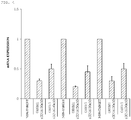
FIG. 4 illustrates changes in the expression levels of KRT1, KRT10, and LOR, which are genes related to epidermal differentiation, when OR6M1 gene and OR6V1 gene are knocked down. -
FIG. 5 illustrates changes in the expression levels of BH, FLG and, Caspase14, which are genes related to moisturization, when OR6M1 gene and OR6V1 gene are knocked down. -
FIG. 6 illustrates changes in the expression levels of Occludin, Claudin1, and TJP1, which are genes related to tight junction, when OR6M1 gene and OR6V1 gene are knocked down. - Hereinafter, embodiments of the present invention will be described in more detail. However, the techniques disclosed in the present application are not limited to the embodiments described herein but may be embodied in other forms. It should be understood, however, that the embodiments disclosed herein are provided so that this disclosure will be thorough and complete and will fully convey the scope of the invention to those skilled in the art. It will be apparent to those skilled in the art that various modifications and variations can be made in the present invention without departing from the spirit and scope of the invention.
- In the present specification, the term "probe" means a polynucleotide having a base sequence which can complementarily bind to a target site of a gene, a variant thereof, or one including the polynucleotide and a labeling substance bound thereto.
- In the present specification, the term "primer" means a polynucleotide having a base sequence which can complementarily bind to the end of a specific region of a gene used for amplifying a specific region corresponding to a target region of the gene using PCR or a variant thereof. The primer is not required to be completely complementary to the end of a specific region, and one that is complementary enough to hybridize with the end to form a double-stranded structure can be used.
- In the present specification, the term "hybridization" means that two single-stranded nucleic acids form a duplex structure by pairing of complementary base sequences. Hybridization can occur not only in perfect complementarity between single-stranded nucleic acid sequences but also in the presence of some mismatching bases.
- In the present specification, the term "polynucleotide" means a polymer of a plurality of nucleotides and means a polynucleotide in a broad sense including oligonucleotides which are polymers of tens of nucleotides in the conventional sense.
- In the present specification, the term "normal value" means the expression level in a state in which undamaged skin is normally differentiated.
- In an embodiment, the present invention relates to a method for diagnosing the skin barrier function comprising testing the expression level of at least one gene of OR6M1 and OR6V1.
- The human OR6M1 (
olfactory receptor family 6 subfamily M member 1) gene encodes the olfactory receptor 6M1 protein of olfactory cells, and the NCBI accession ID of the OF6M1 gene is NM_001005325.1. The present inventors have found out that the gene plays a role of improving the skin barrier function when being expressed in epidermal cells. Hence, the OR6M1 gene can be used as a biomarker for the diagnosis of and evaluation on the skin barrier function in epidermal cells, and objective diagnosis of and evaluation on the skin barrier function is possible through the expression level test. - The human OR6V1 (
olfactory receptor family 6 subfamily V member 1) gene encodes the olfactory receptor 6V1 protein of olfactory cells, and the NCBI accession ID of the OR6V1 gene is NM_001001667.1. The present inventors have found out that this gene plays a role of improving the skin barrier function when being expressed in epidermal cells. Hence, the OR6M1 gene can be used as a biomarker for the diagnosis of and evaluation on the skin barrier function in epidermal cells, and objective diagnosis of and evaluation on the skin barrier function is possible through the expression level test. - In an embodiment, the method for diagnosing the skin barrier function may comprise testing the expression level of at least one gene of OR6M1 and OR6V1 in a specimen.
- The specimen may be a human epidermal cell, for example, at least one of keratinocytes or melanocyte.
- When the expression level of OR6M1 or OR6V1 gene in a specimen is high, the skin barrier function is excellent so that the epidermal cell differentiation is promoted, the skin moisturization is enhanced, the intercellular tight junction of the granular layer and stratum spinosum below the stratum corneum is improved, the epidermal cells tightly bind to each other, thus the epidermal cell tissue can be solidified, and as a result, the evaporation of water through the tight junction portion can be prevented. In contrast, when the expression level of the OR6M1 or OR6V1 gene in a specimen is low, the skin barrier function is poor so that the epidermal cell differentiation is diminished, the skin moisturization is diminished, the tight junction is loosened, thus the evaporation of water is not effectively prevented, and the epidermal cell tissue is loosened.
- Consequently, when the expression level of the OR6M1 or OR6V1 gene in a specimen is increased as compared to that of a normal control group of an undamaged epidermis, it can be diagnosed that the skin barrier function is excellent, the epidermal cell differentiation is promoted, the skin moisturization is enhanced, the tight junction is improved, the epidermal cells tightly bind to each other, thus the epidermal cell tissue is solid.
- The test of the expression level of the OR6M1 or OR6V1 gene can be conducted by conventional methods known in the art. For example, the test may comprise measuring the level of at least one of the mRNA of the OR6M1 or OR6V1 gene in a specimen or the protein encoded by the OR6M1 or OR6V1 gene.
- In a specific embodiment, the measurement of the mRNA level of the OR6M1 or OR6V1 gene can be performed using polynucleotides which specifically bind to the whole or a part of the mRNA, but it is not limited thereto.
- For example, the measurement of the mRNA level of the OR6M1 or OR6V1 gene can be performed using a probe for mRNA test of OR6M1 or OR6V1 gene or a primer pair capable of amplifying mRNA of the OR6M1 or OR6V1 gene.
- In the case of using the probe, the measurement of the mRNA level of the OR6M1 or OR6V1 gene can be performed by measuring the amount of the transcript hybridized with the probe in the specimen.
- The probe is a polynucleotide which specifically binds to at least one gene of OR6M1 or OR6V1 and may be a polynucleotide of the gene or a fragment comprising at least 10 consecutive nucleotides of the gene or a polynucleotide complementary to a polynucleotide of the gene or a polynucleotide complementary to a fragment comprising at least 10 consecutive nucleotides of the gene.
- In the case of using the primer pair, the measurement of the mRNA level of the OR6M1 or OR6V1 gene can be performed by measuring the amount of the polynucleotide amplified using a primer pair capable of amplifying at least one mRNA of the OR6M1 or OR6V1 gene.
- The primer pair may include 10 to 20 consecutive nucleotide fragments of a polynucleotide of the gene and 10 to 20 consecutive nucleotide fragments complementary to a polynucleotide of the gene.
- In another embodiment, the measurement of the level of a protein encoded by at least one of the OR6M1 or OR6V1 gene can be performed using an antibody which specifically binds to the protein.
- In the case of using the antibody the measurement of the level of a protein encoded by the OR6M1 or OR6V1 gene can be performed by measuring the amount of a protein hybridized with the antibody.
- The antibody may be a monoclonal antibody of a protein encoded by at least one gene of OR6M1 or OR6V1.
- For the test of the expression level of at least one gene of OR6M1 or OR6V1, polymerase chain reaction (PCR), reverse transcriptase polymerase chain reaction (RT-PCR), northern blot analysis, western blot analysis, dot blot assay, an enzyme-linked immunosorbent assay (ELISA), and a microarray, for example, a TaqMan (TM) probe method using an allele-specific hybridization, a probe method using allele-specific hybridization through a polymerization reaction, a restriction fragment length polymorphism (RFLP) method using restriction enzymes, a dynamic allele-specific hybridization (DASH) method using a melting temperature (Tm), pyrosequencing using polymerization, a microarray method using allele-specific extension, and the like may be utilized, but the method is not limited thereto.
- In a specific embodiment, the expression level of at least one gene of OR6M1 or OR6V1 may be 1.1 times or more, 1.2 times or more, 1.3 times or more, 1.4 times or more, 1.5 times or more, 1.6 times or more, 1.7 times or more, 1.8 times or more, 1.9 times or more, 2.0 times or more, 2.1 times or more, 2.2 times or more, 2.3 times or more, 2.4 times or more, 2.5 times or more, 2.6 times or more, 2.7 times or more, 2.8 times or more, 2.9 times or more, 3.0 times or more, 3.1 times or more, 3.2 times or more, 3.3 times or more, 3.4 times or more, 3.5 times or more, 3.6 times or more, 3.7 times or more, 3.8 times or more, 3.9 times or more, 4.0 times or more, 4.1 times or more, 4.2 times or more, 4.3 times or more, 4.4 times or more, 4.5 times or more, 4.6 times or more, 4.7 times or more, 4.8 times or more, 4.9 times or more, or 5.0 times or more and 20.0 times or less, 19.5 times or less, 19.0 times or less, 18.5 times or less, 18.0 times or less, 17.5 times or less, 17.0 times or less, 16.5 times or less, 16.0 times or less, 15.5 times or less, 15.0 times or less, 14.5 times or less, 14.0 times or less, 13.5 times or less, 13.0 times or less, 12.5 times or less, 12.0 times or less, 11.5 times or less, 11.0 times or less, 10.5 times or less, 10.0 times or less, 9.5 times or less, 9.0 times or less, 9.0 times or less, 8.5 times or less, 8.0 times or less, 7.5 times or less, 7.0 times or less, 6.5 times or less, 6.0 times or less, 5.5 times or less, or 5.0 times or less the normal value (expression level of normal control group). It may be diagnosed that the skin barrier function is excellent when the expression level of at least one gene of OR6M1 or OR6V1 is, for example, from 1.1 to 20.0 times, for example, from 1.5 to 10.0 times, and for example, from 2 times to 8 times the normal value.
- According to an embodiment of the present invention, it is possible to provide a biomarker composition for diagnosis of skin barrier function, with which the expression level of at least one gene of OR6M1 or OR6V1 is tested. By using the composition of the present embodiment, the expression level of at least one gene of OR6M1 or OR6V1 in a specimen can be tested to diagnose the skin barrier function.
- The biomarker composition may contain at least one of a probe or primer pair which specifically binds to mRNA or an antibody which specifically binds to a protein encoded by at least one gene of OR6M1 or OR6V1.
- The specimen, the gene, the probe, the primer pair, and the antibody are the same as those described above with regard to the diagnostic method according to an embodiment of the present invention, and thus the description thereof will be omitted.
- According to an embodiment of the present invention, it is possible to provide a kit for diagnosis of skin barrier function, with which the expression level of at least one gene of OR6M1 or OR6V1 is tested. By using the kit of the present embodiment, the expression level of at least one gene of OR6M1 or OR6V1 in a specimen can be tested to diagnose the skin barrier function.
- The kit may comprise the biomarker composition according to an embodiment of the present invention described above. The biomarker composition is the same as that described above and thus the description thereof will be omitted.
- In a specific embodiment, the kit comprises at least one polynucleotide which specifically binds to at least one gene of OR6M1 and OR6V1; and a solid support in which the at least one polynucleotide is bound to the surface, and
the polynucleotide which specifically binds to the at least one gene of OR6M1 and OR6V1 may comprise a polynucleotide of the gene or a fragment containing at least 10 consecutive nucleotides of the gene, or a polynucleotide complementary to a polynucleotide of the gene or a polynucleotide complementary to a fragment containing at least 10 consecutive nucleotides of the gene. - In another specific embodiment, the kit may comprise a primer pair capable of amplifying mRNA of the polynucleotide of at least one gene of OR6M1 and OR6V1.
- In still another embodiment, the kit may comprise a monoclonal antibody to a protein encoded from at least one gene of OR6M1 and OR6V1.
- According to an embodiment of the present invention, it is possible to provide a method for screening a skin barrier function improving substance through a change in the expression level of at least one gene of OR6M1 and OR6V1 by a test substance.
- The screening method may comprise treating an epidermal cell with a test substance; and confirming relative expression levels of at least one gene of OR6M1 and OR6V1 before and after the treatment with a test substance in the epidermal cell treated with a test substance.
- It may be judged that a test substance is a skin barrier function improving substance when the relative expression levels of the genes before and after the treatment with a test substance are compared and the relative expression level of the gene after the treatment with a test substance is higher than that before the treatment with a test substance.
- For example, the relative expression level of the gene may be 1.1 times or more, 1.2 times or more, 1.3 times or more, 1.4 times or more, 1.5 times or more, 1.6 times or more, 1.7 times or more, 1.8 times or more, 1.9 times or more, 2.0 times or more, 2.1 times or more, 2.2 times or more, 2.3 times or more, 2.4 times or more, 2.5 times or more, 2.6 times or more, 2.7 times or more, 2.8 times or more, 2.9 times or more, 3.0 times or more, 3.1 times or more, 3.2 times or more, 3.3 times or more, 3.4 times or more, 3.5 times or more, 3.6 times or more, 3.7 times or more, 3.8 times or more, 3.9 times or more, 4.0 times or more, 4.1 times or more, 4.2 times or more, 4.3 times or more, 4.4 times or more, 4.5 times or more, 4.6 times or more, 4.7 times or more, 4.8 times or more, 4.9 times or more, or 5.0 times or more and 20.0 times or less, 19.5 times or less, 19.0 times or less, 18.5 times or less, 18.0 times or less, 17.5 times or less, 17.0 times or less, 16.5 times or less, 16.0 times or less, 15.5 times or less, 15.0 times or less, 14.5 times or less, 14.0 times or less, 13.5 times or less, 13.0 times or less, 12.5 times or less, 12.0 times or less, 11.5 times or less, 11.0 times or less, 10.5 times or less, 10.0 times or less, 9.5 times or less, 9.0 times or less, 9.0 times or less, 8.5 times or less, 8.0 times or less, 7.5 times or less, 7.0 times or less, 6.5 times or less, 6.0 times or less, 5.5 times or less, or 5.0 times or less that before the treatment with a test substance. It may be judged that a test substance is a skin barrier function improving substance when the relative expression level is, for example, from 1.1 to 20.0 times, for example, from 1.5 to 10.0 times, and for example, from 2 times to 8 times that before the treatment with a test substance.
- Hereinafter, the present invention will be described in detail with reference to Examples, Comparative Examples and Test Examples. It will be apparent to those skilled in the art that these are merely illustrative examples of the present invention in order to more specifically explain the present invention and the scope of the present invention is not limited by these Examples, Comparative Examples and Test Examples.
- The neonatal keratinocyte (normal human epidermal keratinocyte: P988, LONZA) was inoculated into 60 mm cell culture dishes using keratinocyte growth medium (KGM) at a density of 1.25 × 10⁴ cells/dish and then cultured in a 5% CO2 incubator at 37°C until to have a confluency of 80%. The change in expression of the olfactory receptor depending on the number of days elapsed was confirmed while culturing the cells for 6 days thereafter. The results are illustrated in
FIG. 1 . The change in expression was determined by removing the medium for cell growth, adding 1 ml of Trizol (Invitrogen) to the cells, isolating RNA according to the RNA isolation method (Invitrogen), quantifying RNA at 260 nm using an ultraviolet spectrophotometer (HEWLETT PACKARD), and conducting reverse transcription-polymerase chain reaction (RT-PCR). For the gene analysis of OR6M1 and OR6V1 in each sample, a TaqMan probe (Hs02339286_s1, Hs01073030_s1) was used and correction was conducted based on the complementary gene RPL13A. - From the results of
FIG. 1 , the expression of OR6M1 and OR6V1 genes increases as the number of days for which the cells are cultured increases, the expression level of the gene increases until the sixth day, and thus the gene has been confirmed to be a gene of which the expression increases as epidermal cells differentiate. - The neonatal keratinocyte (normal human epidermal keratinocyte: P988, LONZA) was inoculated into 60 mm cell culture dishes using keratinocyte growth medium (KGM) at a density of 1.25 × 10⁴ cells/dish and then cultured in a 5% CO2 incubator at 37°C until to have a confluency of 80%. The cultured cells were treated with ultraviolet ray (UVB: 25 mJ/cm2) and cultured for 2 days, and then the change in expression was confirmed. The results are illustrated in
FIG. 2 . The change in expression was measured in the same manner as in Test Example 1 above. A group which was not treated with ultraviolet light was used as the control group. - From the results of
FIG. 2 , it can be confirmed that the expression levels of OR6M1 and OR6V1 genes are remarkably decreased by irradiation with ultraviolet light. - In order to confirm the gene function of OR6M1 and OR6V1 in epidermal cells, cells were cultured in the same manner as in Example 1 and then transfected into keratinocytes using siRNA (50 nM, purchased from Dharmacon, trade name ON-TARGET plus siRNA Reagents) and lipofectamine for each of OR6M1 and OR6V1 genes to selectively knock down OR6M1 and OR6V1, and then the degree of knock-down of the two genes was compared to that of a non-target after 2 days. The results are illustrated in
FIG. 3 . - From the results of
FIG. 3 , it can be confirmed that the expression levels of OR6M1 and OR6V1 genes all decrease to 50% or less. - The expression levels of keratin 1 (KRT1, Hs01549614_g1), keratin 10 (KRT10, Hs01043114_g1) and loricrin (LOR, Hs01894962_s1) genes, which are epidermal differentiation markers, in keratinocytes in which OR6M1 and OR6V1 genes were respectively knocked down in the same manner as in Test Example 3 were compared to those in a non-target in which OR6M1 and OR6V1 genes were not knocked down. The expression levels of these gene were confirmed in the same manner as in Test Example 1 using Real-Time RT-PCR (RT-PCR). The results are illustrated in
FIG. 4 . - From the results of
FIG. 4 , it can be confirmed that the expression ofkeratin 1, keratin 10 and loricrin genes remarkably decreases as the expression of OR6M1 and OR6V1 genes are inhibited, and it can be thus seen that the function of OR6M1 and OR6V1 greatly affects the epidermal differentiation. - The expression levels of bleomycin hydrolase (BLMH; BH, Hs00166071_m1), filaggrin (FLG, Hs00856927_g1) and caspase 14 (CSAP14, Hs00201637_m1) genes, which are water holding metabolism factors of stratum corneum, in the keratinocytes in which OR6M1 and OR6V1 genes were respectively knocked down in the same manner as in Test Example 3 were compared to those in a non-target in which OR6M1 and OR6V1 genes were not knocked down. The expression levels of these gene were confirmed in the same manner as in Test Example 1 using Real-Time RT-PCR (RT-PCR). The results are illustrated in
FIG. 5 . - From the results of
FIG. 5 , it can be confirmed that the expression of bleomycin hydrolase (BH), filaggrin (FLG) and caspase 14 genes decreases to 50% or less as the expression of OR6M1 and OR6V1 genes are inhibited, and it can be thus seen that a decrease in function of OR6M1 and OR6V1 leads to deformation of the outermost stratum corneum and a decrease in moisturizing metabolic function is thus caused. - The expression levels of occuldin (OCLN, Hs00170162_m1), claudin1 (CLDN1, Hs00221623_m1) and TJP1 (Hs01551861_m1) genes, which are factors related to tight junction, in keratinocytes in which OR6M1 and OR6V1 genes were respectively knocked down in the same manner as in Test Example 3 were compared to those in a non-target in which OR6M1 and OR6V1 genes were not knocked down. The expression levels of these gene were confirmed in the same manner as in Test Example 1 using Real-Time RT-PCR (RT-PCR). The results are illustrated in
FIG. 6 . - From the results of
FIG. 6 , it can be confirmed that the expression of occuldin, claudin1, and TJP1 genes decreases to 50% or less as the expression of OR6M1 and OR6V1 genes are inhibited, and it can be thus seen that a decrease in function of OR6M1 and OR6V1 leads to a change in the intercellular adhesion in the granular layer and stratum spinosum below the stratum corneum.
Claims (19)
- A biomarker composition for diagnosis of skin barrier function comprising a reagent for detecting an expression level of at least one gene of OR6M1 and OR6V1.
- The biomarker composition according to claim 1, wherein the reagent comprises at least one of a probe or primer pair which specifically binds to mRNA of at least one gene of OR6M1 and OR6V1; or an antibody which specifically binds to a protein encoded by at least one gene of OR6M1 or OR6V1.
- The biomarker composition according to claim 2, wherein the probe comprises a polynucleotide of the gene or a fragment comprising at least 10 consecutive nucleotides of the gene, or a polynucleotide complementary to a polynucleotide of the gene or a polynucleotide complementary to a fragment comprising at least 10 consecutive nucleotides of the gene.
- The biomarker composition according to claim 2, wherein the primer pair includes 10 to 20 consecutive nucleotide fragments of a polynucleotide of the gene and 10 to 20 consecutive nucleotide fragments complementary to a polynucleotide of the gene.
- The biomarker composition according to claim 2, wherein the antibody is a monoclonal antibody to a protein encoded by at least one gene of OR6M1 and OR6V1.
- The biomarker composition according to claim 1, wherein it is diagnosed that skin barrier function is excellent when a gene expression level is increased as compared to a normal value.
- The biomarker composition according to claim 1, wherein it is diagnosed that skin barrier function is damaged when a gene expression level is decreased as compared to a normal value.
- The biomarker composition according to claim 1, wherein improvement of the skin barrier function comprises at least one of promotion of epidermal cell differentiation, skin moisturization, or improvement of tight junction of epidermal cells.
- A kit for diagnosis of skin barrier function comprising the biomarker composition according to claim 1.
- The kit according to claim 9, wherein the kit comprises at least one polynucleotide which specifically binds to mRNA of at least one gene of OR6M1 and OR6V1; and a solid support having the at least one polynucleotide bound to a surface, wherein
the polynucleotide which specifically binds to mRNA of at least one gene of OR6M1 and OR6V1 comprises a polynucleotide of the gene or a fragment comprising at least 10 consecutive nucleotides of the gene, or a polynucleotide complementary to a polynucleotide of the gene or a polynucleotide complementary to a fragment comprising at least 10 consecutive nucleotides of the gene. - The kit according to claim 9, wherein it is diagnosed that skin barrier function is excellent when an expression level of the gene in a specimen is increased as compared to a normal value and that skin barrier function is damaged when an expression level of the gene is decreased as compared to a normal value.
- A method for diagnosing skin barrier function comprising testing an expression level of at least one gene of OR6M1 and OR6V1.
- The method for diagnosing according to claim 12, comprising diagnosing that skin barrier function is excellent when an expression level of the gene in a specimen is increased as compared to a normal value and that skin barrier function is damaged when an expression level of the gene is decreased as compared to a normal value.
- The method for diagnosing according to claim 12, wherein testing of an expression level of the gene includes detecting an mRNA expression level of the gene in an epidermal cell of a subject.
- A method for screening a skin barrier function improving substance, comprising:treating an epidermal cell with a test substance; andconfirming relative expression levels of at least one gene of OR6M1 and OR6V1 before and after the treatment with a test substance in the epidermal cell treated with a test substance.
- The method for screening according to claim 15, further comprising judging the test substance as a skin barrier function improving substance when a relative expression level of the gene in the epidermal cell treated with a test substance is higher as compared to a relative expression level before the treatment with a test substance.
- The method for screening according to claim 16, wherein the test substance is judged as a skin barrier function improving substance when a relative expression level of the gene is 1.1 times or more the relative expression level before the treatment with a test substance.
- The screening method according to claim 17, wherein the epidermal cell is at least one of a keratinocyte or a melanocyte.
- The screening method according to claim 15, wherein improvement of the skin barrier function includes at least one of promotion of epidermal cell differentiation, skin moisturization, or improvement of tight junction of epidermal cells.
Applications Claiming Priority (2)
| Application Number | Priority Date | Filing Date | Title |
|---|---|---|---|
| KR1020160124663A KR102635191B1 (en) | 2016-09-28 | 2016-09-28 | Biomarker composition for prediction of skin barrier function |
| PCT/KR2017/008955 WO2018062683A1 (en) | 2016-09-28 | 2017-08-17 | Biomarker composition for diagnosis of skin barrier function |
Publications (3)
| Publication Number | Publication Date |
|---|---|
| EP3521449A1 true EP3521449A1 (en) | 2019-08-07 |
| EP3521449A4 EP3521449A4 (en) | 2020-05-06 |
| EP3521449B1 EP3521449B1 (en) | 2021-07-14 |
Family
ID=61760032
Family Applications (1)
| Application Number | Title | Priority Date | Filing Date |
|---|---|---|---|
| EP17856569.3A Active EP3521449B1 (en) | 2016-09-28 | 2017-08-17 | Biomarker composition for diagnosis of skin barrier function |
Country Status (4)
| Country | Link |
|---|---|
| EP (1) | EP3521449B1 (en) |
| JP (1) | JP6983231B2 (en) |
| KR (1) | KR102635191B1 (en) |
| WO (1) | WO2018062683A1 (en) |
Families Citing this family (2)
| Publication number | Priority date | Publication date | Assignee | Title |
|---|---|---|---|---|
| KR102331854B1 (en) * | 2020-10-14 | 2021-12-01 | 연세대학교 산학협력단 | Novel Biomarkers for Diagnosing Skin Aging |
| CN114507729A (en) * | 2022-03-16 | 2022-05-17 | 中南大学湘雅二医院 | Application of OCLN gene or its protein as target point in preparing leucoderma diagnosis kit or medicine |
Family Cites Families (7)
| Publication number | Priority date | Publication date | Assignee | Title |
|---|---|---|---|---|
| KR100901128B1 (en) | 2007-07-10 | 2009-06-04 | 한국과학기술연구원 | Marker gene for searching for teratogenicity-induced drug according to thalidomide treatment and search method using the same |
| US20110212455A1 (en) * | 2008-11-07 | 2011-09-01 | Amorepacific Corporation | Method of screening material for improving skin functions |
| KR100964433B1 (en) * | 2008-11-07 | 2010-06-16 | (주)아모레퍼시픽 | Screening methods for skin function enhancing substances |
| US20100255478A1 (en) | 2009-03-18 | 2010-10-07 | Charis Eng | Targets for use in diagnosis, prognosis and therapy of cancer |
| KR101785347B1 (en) * | 2010-11-19 | 2017-10-17 | (주)아모레퍼시픽 | Screening method of candidate material for improving skin cell differentiation |
| KR101500902B1 (en) * | 2014-06-30 | 2015-03-12 | (주)아모레퍼시픽 | Biomarker for prediction of sensitive skin and test kit using the same |
| JP6366415B2 (en) * | 2014-08-07 | 2018-08-01 | 株式会社 資生堂 | Cell activator comprising Orai3 gene expression inhibitor or ORAI3 protein function inhibitor |
-
2016
- 2016-09-28 KR KR1020160124663A patent/KR102635191B1/en active Active
-
2017
- 2017-08-17 EP EP17856569.3A patent/EP3521449B1/en active Active
- 2017-08-17 WO PCT/KR2017/008955 patent/WO2018062683A1/en not_active Ceased
- 2017-08-17 JP JP2019517005A patent/JP6983231B2/en not_active Expired - Fee Related
Also Published As
| Publication number | Publication date |
|---|---|
| EP3521449B1 (en) | 2021-07-14 |
| WO2018062683A1 (en) | 2018-04-05 |
| KR20180034893A (en) | 2018-04-05 |
| JP2019530451A (en) | 2019-10-24 |
| EP3521449A4 (en) | 2020-05-06 |
| KR102635191B1 (en) | 2024-02-13 |
| JP6983231B2 (en) | 2021-12-17 |
Similar Documents
| Publication | Publication Date | Title |
|---|---|---|
| Ichimi et al. | Identification of novel microRNA targets based on microRNA signatures in bladder cancer | |
| DK3155120T5 (en) | Procedures for diagnosing bone fractures and disorders | |
| Belzeaux et al. | Clinical variations modulate patterns of gene expression and define blood biomarkers in major depression | |
| US20140342937A1 (en) | Methods for diagnosis and therapeutic follow-up of muscular dystrophies | |
| US20130345289A1 (en) | Adult stem cells, molecular signatures, and applications in the evaluation, diagnosis, and therapy of mammalian conditions | |
| EP2800820B1 (en) | Methods and kits for detecting subjects having pancreatic cancer | |
| KR102029775B1 (en) | Biomarkers for diagnosis of Non-muscle invasive bladder cancer and uses thereof | |
| Papageorgiou et al. | Identification and validation of microRNAs directly regulating the UDP-glucuronosyltransferase 1A subfamily enzymes by a functional genomics approach | |
| Papageorgiou et al. | Identification and validation of the microRNA response elements in the 3′-untranslated region of the UDP glucuronosyltransferase (UGT) 2B7 and 2B15 genes by a functional genomics approach | |
| JP2019537436A (en) | Postoperative prognosis or anticancer drug compatibility prediction system for patients with advanced gastric cancer | |
| WO2014114802A1 (en) | Non-invasive prenatal genetic diagnostic methods | |
| JP2010510769A (en) | Methods and compositions for diagnosis of esophageal cancer and prognosis and improvement of patient survival | |
| EP3521449B1 (en) | Biomarker composition for diagnosis of skin barrier function | |
| CN116287258B (en) | Application of a new molecular marker in the diagnosis or prognosis of breast cancer | |
| KR20110015013A (en) | Methods of Evaluating Colorectal Cancer and Compositions for Use Here | |
| CN103343167A (en) | Screening and identifying method of SCA3/MJD molecular marker miRNAs capable of regulating and controlling ATXN3 gene expression | |
| KR101929009B1 (en) | composition for diagnosing stroke and method for diagnosing stroke | |
| CN107312851A (en) | Myocardial infarction biomarker miR 1283 | |
| JP2022028438A (en) | Method, kit and device for evaluating risk of development of alzheimer-type dementia | |
| CN112029864B (en) | A breast cancer miRNA detection kit and its application | |
| WO2012034189A1 (en) | Methods of using mirnas transcribed from the 14q32 region of human chromosome 14 as biomarkers for schizophrenia or symptoms thereof | |
| CN110777199B (en) | Diagnosis and treatment of psoriatic arthritis and corresponding kits | |
| Nogales-Gadea et al. | Expression of glycogen phosphorylase isoforms in cultured muscle from patients with McArdle's disease carrying the p. R771PfsX33 PYGM mutation | |
| CN118853863B (en) | A biomarker for identifying stem cell aging and its application | |
| JP5897823B2 (en) | Bladder cancer diagnostic composition and method |
Legal Events
| Date | Code | Title | Description |
|---|---|---|---|
| STAA | Information on the status of an ep patent application or granted ep patent |
Free format text: STATUS: THE INTERNATIONAL PUBLICATION HAS BEEN MADE |
|
| PUAI | Public reference made under article 153(3) epc to a published international application that has entered the european phase |
Free format text: ORIGINAL CODE: 0009012 |
|
| STAA | Information on the status of an ep patent application or granted ep patent |
Free format text: STATUS: REQUEST FOR EXAMINATION WAS MADE |
|
| 17P | Request for examination filed |
Effective date: 20190326 |
|
| AK | Designated contracting states |
Kind code of ref document: A1 Designated state(s): AL AT BE BG CH CY CZ DE DK EE ES FI FR GB GR HR HU IE IS IT LI LT LU LV MC MK MT NL NO PL PT RO RS SE SI SK SM TR |
|
| AX | Request for extension of the european patent |
Extension state: BA ME |
|
| DAV | Request for validation of the european patent (deleted) | ||
| DAX | Request for extension of the european patent (deleted) | ||
| A4 | Supplementary search report drawn up and despatched |
Effective date: 20200402 |
|
| RIC1 | Information provided on ipc code assigned before grant |
Ipc: C12Q 1/6883 20180101ALI20200328BHEP Ipc: G01N 33/577 20060101ALI20200328BHEP Ipc: G01N 33/68 20060101ALI20200328BHEP Ipc: C12Q 1/68 20180101AFI20200328BHEP |
|
| GRAP | Despatch of communication of intention to grant a patent |
Free format text: ORIGINAL CODE: EPIDOSNIGR1 |
|
| STAA | Information on the status of an ep patent application or granted ep patent |
Free format text: STATUS: GRANT OF PATENT IS INTENDED |
|
| INTG | Intention to grant announced |
Effective date: 20210413 |
|
| RIC1 | Information provided on ipc code assigned before grant |
Ipc: C12Q 1/68 20180101AFI20210330BHEP Ipc: G01N 33/68 20060101ALI20210330BHEP Ipc: G01N 33/577 20060101ALI20210330BHEP Ipc: C12Q 1/6883 20180101ALI20210330BHEP |
|
| GRAS | Grant fee paid |
Free format text: ORIGINAL CODE: EPIDOSNIGR3 |
|
| GRAA | (expected) grant |
Free format text: ORIGINAL CODE: 0009210 |
|
| STAA | Information on the status of an ep patent application or granted ep patent |
Free format text: STATUS: THE PATENT HAS BEEN GRANTED |
|
| AK | Designated contracting states |
Kind code of ref document: B1 Designated state(s): AL AT BE BG CH CY CZ DE DK EE ES FI FR GB GR HR HU IE IS IT LI LT LU LV MC MK MT NL NO PL PT RO RS SE SI SK SM TR |
|
| REG | Reference to a national code |
Ref country code: GB Ref legal event code: FG4D |
|
| REG | Reference to a national code |
Ref country code: IE Ref legal event code: FG4D |
|
| REG | Reference to a national code |
Ref country code: DE Ref legal event code: R096 Ref document number: 602017042278 Country of ref document: DE |
|
| REG | Reference to a national code |
Ref country code: AT Ref legal event code: REF Ref document number: 1410696 Country of ref document: AT Kind code of ref document: T Effective date: 20210815 |
|
| REG | Reference to a national code |
Ref country code: LT Ref legal event code: MG9D |
|
| REG | Reference to a national code |
Ref country code: NL Ref legal event code: MP Effective date: 20210714 |
|
| REG | Reference to a national code |
Ref country code: AT Ref legal event code: MK05 Ref document number: 1410696 Country of ref document: AT Kind code of ref document: T Effective date: 20210714 |
|
| PG25 | Lapsed in a contracting state [announced via postgrant information from national office to epo] |
Ref country code: PT Free format text: LAPSE BECAUSE OF FAILURE TO SUBMIT A TRANSLATION OF THE DESCRIPTION OR TO PAY THE FEE WITHIN THE PRESCRIBED TIME-LIMIT Effective date: 20211115 Ref country code: NL Free format text: LAPSE BECAUSE OF FAILURE TO SUBMIT A TRANSLATION OF THE DESCRIPTION OR TO PAY THE FEE WITHIN THE PRESCRIBED TIME-LIMIT Effective date: 20210714 Ref country code: NO Free format text: LAPSE BECAUSE OF FAILURE TO SUBMIT A TRANSLATION OF THE DESCRIPTION OR TO PAY THE FEE WITHIN THE PRESCRIBED TIME-LIMIT Effective date: 20211014 Ref country code: BG Free format text: LAPSE BECAUSE OF FAILURE TO SUBMIT A TRANSLATION OF THE DESCRIPTION OR TO PAY THE FEE WITHIN THE PRESCRIBED TIME-LIMIT Effective date: 20211014 Ref country code: AT Free format text: LAPSE BECAUSE OF FAILURE TO SUBMIT A TRANSLATION OF THE DESCRIPTION OR TO PAY THE FEE WITHIN THE PRESCRIBED TIME-LIMIT Effective date: 20210714 Ref country code: LT Free format text: LAPSE BECAUSE OF FAILURE TO SUBMIT A TRANSLATION OF THE DESCRIPTION OR TO PAY THE FEE WITHIN THE PRESCRIBED TIME-LIMIT Effective date: 20210714 Ref country code: SE Free format text: LAPSE BECAUSE OF FAILURE TO SUBMIT A TRANSLATION OF THE DESCRIPTION OR TO PAY THE FEE WITHIN THE PRESCRIBED TIME-LIMIT Effective date: 20210714 Ref country code: RS Free format text: LAPSE BECAUSE OF FAILURE TO SUBMIT A TRANSLATION OF THE DESCRIPTION OR TO PAY THE FEE WITHIN THE PRESCRIBED TIME-LIMIT Effective date: 20210714 Ref country code: ES Free format text: LAPSE BECAUSE OF FAILURE TO SUBMIT A TRANSLATION OF THE DESCRIPTION OR TO PAY THE FEE WITHIN THE PRESCRIBED TIME-LIMIT Effective date: 20210714 Ref country code: FI Free format text: LAPSE BECAUSE OF FAILURE TO SUBMIT A TRANSLATION OF THE DESCRIPTION OR TO PAY THE FEE WITHIN THE PRESCRIBED TIME-LIMIT Effective date: 20210714 Ref country code: HR Free format text: LAPSE BECAUSE OF FAILURE TO SUBMIT A TRANSLATION OF THE DESCRIPTION OR TO PAY THE FEE WITHIN THE PRESCRIBED TIME-LIMIT Effective date: 20210714 |
|
| PG25 | Lapsed in a contracting state [announced via postgrant information from national office to epo] |
Ref country code: PL Free format text: LAPSE BECAUSE OF FAILURE TO SUBMIT A TRANSLATION OF THE DESCRIPTION OR TO PAY THE FEE WITHIN THE PRESCRIBED TIME-LIMIT Effective date: 20210714 Ref country code: LV Free format text: LAPSE BECAUSE OF FAILURE TO SUBMIT A TRANSLATION OF THE DESCRIPTION OR TO PAY THE FEE WITHIN THE PRESCRIBED TIME-LIMIT Effective date: 20210714 Ref country code: GR Free format text: LAPSE BECAUSE OF FAILURE TO SUBMIT A TRANSLATION OF THE DESCRIPTION OR TO PAY THE FEE WITHIN THE PRESCRIBED TIME-LIMIT Effective date: 20211015 |
|
| REG | Reference to a national code |
Ref country code: CH Ref legal event code: PL |
|
| REG | Reference to a national code |
Ref country code: DE Ref legal event code: R097 Ref document number: 602017042278 Country of ref document: DE |
|
| REG | Reference to a national code |
Ref country code: BE Ref legal event code: MM Effective date: 20210831 |
|
| PG25 | Lapsed in a contracting state [announced via postgrant information from national office to epo] |
Ref country code: LI Free format text: LAPSE BECAUSE OF NON-PAYMENT OF DUE FEES Effective date: 20210831 Ref country code: DK Free format text: LAPSE BECAUSE OF FAILURE TO SUBMIT A TRANSLATION OF THE DESCRIPTION OR TO PAY THE FEE WITHIN THE PRESCRIBED TIME-LIMIT Effective date: 20210714 Ref country code: CH Free format text: LAPSE BECAUSE OF NON-PAYMENT OF DUE FEES Effective date: 20210831 |
|
| PLBE | No opposition filed within time limit |
Free format text: ORIGINAL CODE: 0009261 |
|
| STAA | Information on the status of an ep patent application or granted ep patent |
Free format text: STATUS: NO OPPOSITION FILED WITHIN TIME LIMIT |
|
| PG25 | Lapsed in a contracting state [announced via postgrant information from national office to epo] |
Ref country code: SM Free format text: LAPSE BECAUSE OF FAILURE TO SUBMIT A TRANSLATION OF THE DESCRIPTION OR TO PAY THE FEE WITHIN THE PRESCRIBED TIME-LIMIT Effective date: 20210714 Ref country code: SK Free format text: LAPSE BECAUSE OF FAILURE TO SUBMIT A TRANSLATION OF THE DESCRIPTION OR TO PAY THE FEE WITHIN THE PRESCRIBED TIME-LIMIT Effective date: 20210714 Ref country code: RO Free format text: LAPSE BECAUSE OF FAILURE TO SUBMIT A TRANSLATION OF THE DESCRIPTION OR TO PAY THE FEE WITHIN THE PRESCRIBED TIME-LIMIT Effective date: 20210714 Ref country code: MC Free format text: LAPSE BECAUSE OF FAILURE TO SUBMIT A TRANSLATION OF THE DESCRIPTION OR TO PAY THE FEE WITHIN THE PRESCRIBED TIME-LIMIT Effective date: 20210714 Ref country code: LU Free format text: LAPSE BECAUSE OF NON-PAYMENT OF DUE FEES Effective date: 20210817 Ref country code: EE Free format text: LAPSE BECAUSE OF FAILURE TO SUBMIT A TRANSLATION OF THE DESCRIPTION OR TO PAY THE FEE WITHIN THE PRESCRIBED TIME-LIMIT Effective date: 20210714 Ref country code: CZ Free format text: LAPSE BECAUSE OF FAILURE TO SUBMIT A TRANSLATION OF THE DESCRIPTION OR TO PAY THE FEE WITHIN THE PRESCRIBED TIME-LIMIT Effective date: 20210714 Ref country code: AL Free format text: LAPSE BECAUSE OF FAILURE TO SUBMIT A TRANSLATION OF THE DESCRIPTION OR TO PAY THE FEE WITHIN THE PRESCRIBED TIME-LIMIT Effective date: 20210714 |
|
| 26N | No opposition filed |
Effective date: 20220419 |
|
| GBPC | Gb: european patent ceased through non-payment of renewal fee |
Effective date: 20211014 |
|
| PG25 | Lapsed in a contracting state [announced via postgrant information from national office to epo] |
Ref country code: IT Free format text: LAPSE BECAUSE OF FAILURE TO SUBMIT A TRANSLATION OF THE DESCRIPTION OR TO PAY THE FEE WITHIN THE PRESCRIBED TIME-LIMIT Effective date: 20210714 Ref country code: IE Free format text: LAPSE BECAUSE OF NON-PAYMENT OF DUE FEES Effective date: 20210817 Ref country code: GB Free format text: LAPSE BECAUSE OF NON-PAYMENT OF DUE FEES Effective date: 20211014 Ref country code: BE Free format text: LAPSE BECAUSE OF NON-PAYMENT OF DUE FEES Effective date: 20210831 |
|
| PGFP | Annual fee paid to national office [announced via postgrant information from national office to epo] |
Ref country code: FR Payment date: 20220620 Year of fee payment: 6 |
|
| PGFP | Annual fee paid to national office [announced via postgrant information from national office to epo] |
Ref country code: DE Payment date: 20220620 Year of fee payment: 6 |
|
| PG25 | Lapsed in a contracting state [announced via postgrant information from national office to epo] |
Ref country code: CY Free format text: LAPSE BECAUSE OF FAILURE TO SUBMIT A TRANSLATION OF THE DESCRIPTION OR TO PAY THE FEE WITHIN THE PRESCRIBED TIME-LIMIT Effective date: 20210714 |
|
| PG25 | Lapsed in a contracting state [announced via postgrant information from national office to epo] |
Ref country code: HU Free format text: LAPSE BECAUSE OF FAILURE TO SUBMIT A TRANSLATION OF THE DESCRIPTION OR TO PAY THE FEE WITHIN THE PRESCRIBED TIME-LIMIT; INVALID AB INITIO Effective date: 20170817 |
|
| REG | Reference to a national code |
Ref country code: DE Ref legal event code: R119 Ref document number: 602017042278 Country of ref document: DE |
|
| PG25 | Lapsed in a contracting state [announced via postgrant information from national office to epo] |
Ref country code: MK Free format text: LAPSE BECAUSE OF FAILURE TO SUBMIT A TRANSLATION OF THE DESCRIPTION OR TO PAY THE FEE WITHIN THE PRESCRIBED TIME-LIMIT Effective date: 20210714 |
|
| PG25 | Lapsed in a contracting state [announced via postgrant information from national office to epo] |
Ref country code: FR Free format text: LAPSE BECAUSE OF NON-PAYMENT OF DUE FEES Effective date: 20230831 Ref country code: DE Free format text: LAPSE BECAUSE OF NON-PAYMENT OF DUE FEES Effective date: 20240301 |
|
| PG25 | Lapsed in a contracting state [announced via postgrant information from national office to epo] |
Ref country code: MT Free format text: LAPSE BECAUSE OF FAILURE TO SUBMIT A TRANSLATION OF THE DESCRIPTION OR TO PAY THE FEE WITHIN THE PRESCRIBED TIME-LIMIT Effective date: 20210714 |
|
| PG25 | Lapsed in a contracting state [announced via postgrant information from national office to epo] |
Ref country code: TR Free format text: LAPSE BECAUSE OF FAILURE TO SUBMIT A TRANSLATION OF THE DESCRIPTION OR TO PAY THE FEE WITHIN THE PRESCRIBED TIME-LIMIT Effective date: 20210714 |