EP3520036B1 - Verarbeitung von textsequenzen mithilfe neuronaler netze - Google Patents
Verarbeitung von textsequenzen mithilfe neuronaler netze Download PDFInfo
- Publication number
- EP3520036B1 EP3520036B1 EP17784512.0A EP17784512A EP3520036B1 EP 3520036 B1 EP3520036 B1 EP 3520036B1 EP 17784512 A EP17784512 A EP 17784512A EP 3520036 B1 EP3520036 B1 EP 3520036B1
- Authority
- EP
- European Patent Office
- Prior art keywords
- tokens
- valid
- neural network
- output
- token
- Prior art date
- Legal status (The legal status is an assumption and is not a legal conclusion. Google has not performed a legal analysis and makes no representation as to the accuracy of the status listed.)
- Active
Links
Images


Classifications
-
- G—PHYSICS
- G06—COMPUTING OR CALCULATING; COUNTING
- G06F—ELECTRIC DIGITAL DATA PROCESSING
- G06F40/00—Handling natural language data
- G06F40/40—Processing or translation of natural language
- G06F40/42—Data-driven translation
- G06F40/47—Machine-assisted translation, e.g. using translation memory
-
- G—PHYSICS
- G06—COMPUTING OR CALCULATING; COUNTING
- G06N—COMPUTING ARRANGEMENTS BASED ON SPECIFIC COMPUTATIONAL MODELS
- G06N3/00—Computing arrangements based on biological models
- G06N3/02—Neural networks
- G06N3/08—Learning methods
- G06N3/084—Backpropagation, e.g. using gradient descent
-
- G—PHYSICS
- G10—MUSICAL INSTRUMENTS; ACOUSTICS
- G10L—SPEECH ANALYSIS TECHNIQUES OR SPEECH SYNTHESIS; SPEECH RECOGNITION; SPEECH OR VOICE PROCESSING TECHNIQUES; SPEECH OR AUDIO CODING OR DECODING
- G10L15/00—Speech recognition
- G10L15/08—Speech classification or search
- G10L15/16—Speech classification or search using artificial neural networks
-
- G—PHYSICS
- G10—MUSICAL INSTRUMENTS; ACOUSTICS
- G10L—SPEECH ANALYSIS TECHNIQUES OR SPEECH SYNTHESIS; SPEECH RECOGNITION; SPEECH OR VOICE PROCESSING TECHNIQUES; SPEECH OR AUDIO CODING OR DECODING
- G10L15/00—Speech recognition
- G10L15/08—Speech classification or search
- G10L15/18—Speech classification or search using natural language modelling
- G10L15/183—Speech classification or search using natural language modelling using context dependencies, e.g. language models
- G10L15/19—Grammatical context, e.g. disambiguation of the recognition hypotheses based on word sequence rules
- G10L15/197—Probabilistic grammars, e.g. word n-grams
Definitions
- This specification relates to training neural networks that generate output sequences.
- Machine learning models receive an input and generate an output, e.g., a predicted output, based on the received input.
- Some machine learning models are parametric models and generate the output based on the received input and on values of the parameters of the model.
- Neural networks are machine learning models that employ one or more layers of nonlinear units to predict an output for a received input.
- Some neural networks include one or more hidden layers in addition to an output layer. The output of each hidden layer is used as input to the next layer in the network, i.e., the next hidden layer or the output layer.
- Each layer of the network generates an output from a received input in accordance with current values of a respective set of parameters.
- Rico SENNRICH et al "Neural Machine Translation of Rare Words with Subword Units", proceedings of the 54TH annual meeting of the association for computational linguistics (volume 1: long papers), 10 June 2016 (2016-06-10), pages 1715-1725, Stroudsburg, PA, USA discloses a computer-implemented method of training a neural network for use in the generation of natural language target output sequences.
- the present invention provides a computer-implemented method of training a neural network for use in the generation of natural language target output sequences according to appended claim 1, a corresponding system according to appended claim 9 and one or more corresponding computer storage media according to appended claim 10.
- Preferred embodiments are defined in the dependent claims.
- Example methods described herein provide trained neural networks which produce results with improved accuracy compared to the state of the art, e.g. translations that are more accurate compared to the state of the art, or more accurate speech recognition compared to the state of the art.
- the system as described in this specification can train neural networks that generate sequences of outputs so that the neural networks achieve results that outperform the state of the art in various tasks that involve accurately generating output sequences from network inputs.
- the neural network once trained using the described techniques, the neural network generates outputs that define a decomposition of the output sequence among different types of n -grams in a manner that is conditioned on the network input, unlike conventional methods, in which a fixed and pre-determined output sequence decomposition is assumed.
- the system can train a neural machine translation neural network to generate translations that are more accurate than the state of the art, a speech recognition system to generate transcriptions that are more accurate than the state of the art, and so on.
- the system as described in this specification is computationally efficient compared to conventional models such as character models, where the output sequence is decomposed into individual characters, which causes long decoder lengths and computationally expensive inference. Therefore, because the system decomposes the sequence into longer n-grams when appropriate, the system as described in this specification can generate sequences of outputs more quickly and with fewer computational resources than conventional models such as character models while still generating high quality outputs.
- This specification describes how a system, e.g. a machine learning system, implemented as computer programs on one or more computers in one or more locations, can train a neural network to receive a network input and process the network input to generate respective score distributions for each of multiple output positions.
- a system e.g. a machine learning system, implemented as computer programs on one or more computers in one or more locations, can train a neural network to receive a network input and process the network input to generate respective score distributions for each of multiple output positions.
- the respective score distribution for each output position includes a respective score for each token in a set of tokens that includes n -grams of multiple different sizes in a natural language.
- the score for a given token in the score distribution for an output position represents the probability of the given token being the token at the output position in a natural language target sequence that corresponds to the network input.
- the neural network can be used to generate a natural language target sequence corresponding to a network input using a standard decoding process.
- FIG. 1 shows an example machine learning system 100.
- the machine learning system 100 is an example of a system implemented as computer programs on one or more computers in one or more locations in which the systems, components, and techniques described below are implemented.
- the machine learning system 100 includes a neural network 104 that is configured to receive a network input 102, process the network input 102 in accordance with the values of a set of neural network model parameters 110, and generate respective score distributions 112 over a set of tokens for each of multiple output positions.
- the neural network 104 can be used to map a network input 102 to a corresponding natural language target sequence 116, i.e., a sequence in a target natural language, using a standard decoding process.
- the score distribution for a given output position assigns a respective score to each token in a set of multiple tokens, with the score for a given token representing a likelihood that the given token should be the token at the output position in the natural language target sequence 116 corresponding to the network input 102.
- the manner in which the neural network 104 generates the score distributions 112 is dependent on the machine learning task the neural network 104 has been configured to perform and on the architecture of the neural network 104.
- the task is a speech recognition task.
- the network input is audio data or audio features representing an utterance and the natural language output sequence is a transcription of the audio data or audio features.
- An example of a speech recognition neural network that generates such score distributions and can be used for speech recognition tasks is described in William Chan, et al., "Listen, attend and spell," arXiv preprint arXiv: 1508.01211 (2015 ).
- the task is a machine translation task.
- the network input is a sequence of words in a source natural language
- the natural language output sequence is a sequence of words in a target natural language that is a translation of the sequence of words in the source natural language.
- An example of a neural machine translation neural network that generates such score distributions and that can be used for machine translation tasks is described in Yonghui Wu, et al., "Google's Neural Machine Translation System: Bridging the Gap between Human and Machine Translation," arXiv preprint arXiv: 1609.08144 (2016 ).
- the task is an image captioning task.
- the network input is an image
- the natural language output sequence is a sequence of words that is descriptive of the input image.
- the task is an auto-encoding task.
- the network input is a sequence of words in a natural language
- the network output is the same as the network input.
- the set of tokens includes n -grams of multiple different sizes in the target natural language.
- the set of tokens can include single characters, word pieces made up of multiple characters, and, optionally, entire words.
- one or more of the n -grams in the set of tokens are prefixes for one or more other n-grams in the set of tokens.
- the set of tokens can include the characters 'c', 'a', 't', and the 2-grams 'ca', 'ct', 'at', and the 3-gram 'cat', amongst others.
- any of the above-referenced neural networks can be modified to generate scores for sets of tokens that include n -grams of multiple different sizes by modifying the output layers of the neural networks, i.e., by increasing the size of the softmax output layer of the neural network and, optionally, of other layers in the neural network, so that the output layer generates a respective score for each token in the set of tokens.
- the neural network 104 can be used to generate a natural language target sequence 116 corresponding to a network input 102 using a standard decoding process, e.g., using the beam search decoding process described in William Chan, et al., "Listen, attend and spell," arXiv preprint arXiv:1508.01211 (2015 ), that of Yonghui Wu, et al., "Google's Neural Machine Translation System: Bridging the Gap between Human and Machine Translation," arXiv preprint arXiv:1609.08144 (2016 ), or another appropriate decoding process.
- a standard decoding process e.g., using the beam search decoding process described in William Chan, et al., "Listen, attend and spell," arXiv preprint arXiv:1508.01211 (2015 ), that of Yonghui Wu, et al., "Google's Neural Machine Translation System: Bridging the Gap between Human and Machine Translation," arXiv preprint arXiv:1609.
- the system 100 obtains training data that includes training inputs, and for each training input, a respective target sequence that includes one or more words in a natural language.
- the neural network 104 For a given training input, the neural network 104 generates the respective score distributions 112 over the set of tokens for each of the multiple output positions in accordance with the current values of the neural network model parameters 110.
- a valid token sampling engine 108 in the system 100 sequentially samples valid tokens from the set of tokens for each output position, where a given token is a valid token for an output position if the ordered concatenation of the given token with the tokens sampled by the valid token sampling engine 108 for the previous output positions yields a prefix of a valid decomposition of the target sequence.
- a valid decomposition of the target sequence decomposes the target sequence into a sequence of tokens from the set of tokens, i.e., so that different valid decompositions can include different numbers of tokens and can be made up of different combinations of n -grams of different sizes and of various kinds.
- the target sequence "banana” has a valid decomposition into 1-grams, i.e. characters, as 'b', 'a', 'n', 'a', 'n', 'a', and a valid decomposition into a combination of 1-grams, 2-grams, and 3-grams, for example as: 'b', 'ana', 'na'.
- a prefix of a valid decomposition is an ordered sequence of consecutive tokens from the valid decomposition starting from the first token of the valid decomposition.
- the set of tokens is the set of all 1-grams, 2-grams, and 3-grams, and the tokens sampled by the valid token sampling engine 108 for the previous output positions are 'b', 'a', and 'n', then 'a', 'an', and 'ana' are all examples of valid tokens at the current output position.
- the valid token sampling engine 108 randomly samples a valid token, and with probability (1 - ⁇ ), the valid token sampling engine 108 samples a valid token in accordance with the scores for the valid tokens in the score distribution for the output position generated by the neural network 104, where ⁇ is a number between 0 and 1.
- the neural network 104 stops sequentially generating respective score distributions for output positions when the concatenation of the valid tokens sampled by the valid token sampling engine 108 corresponds to a valid decomposition of the target sequence, i.e. the sampled valid decomposition 114.
- the system 100 trains the neural network 104 by adjusting the current values of the neural network model parameters 110 to optimize the performance of the neural network 104 with respect to an objective function 106 that depends on the sampled valid decompositions 114 generated for the training inputs in the training data set.
- the system 100 provides the sampled valid token from the previous output position, i.e.
- the neural network 104 generates the score distribution for the current output position based at least in part on the sampled valid token for the previous output position
- the system adjusts the current values of the neural network model parameters 110 to optimize the objective function using standard machine learning training techniques, such as stochastic gradient descent with backpropagation or backpropagation through time.
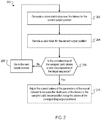
- FIG. 2 is a flow diagram of an example process 200 for training the machine learning system.
- the process 200 will be described as being performed by a system of one or more computers located in one or more locations.
- a machine learning system e.g., the machine learning system 100 of FIG. 1 , appropriately programmed in accordance with this specification, can perform the process 200.
- the system obtains a score distribution over the set of tokens generated by the neural network for the current output position for the given training input (step 202).
- the score distribution for the current output position assigns a respective score to each token in a set of multiple tokens, with the score for a given token representing a likelihood that the given token should be the token at the current output position in the natural language target sequence corresponding to the training input.
- the system provides the sampled valid token from the previous output position, i.e. the output position before the current output position, as an input to the neural network, and the neural network generates the score distribution for the current output position based at least in part on the sampled valid token for the previous output position.
- Reference is directed to Ilya Sutskever, Oriol Vinyals, and Quoc V. Le, "Sequence to sequence learning with neural networks," Advances in neural information processing systems, 2014 .
- the system samples a valid token for the current output position (step 204).
- a given token is a valid token for the current output position if the ordered concatenation of the given token with valid tokens sampled for previous output positions yields a prefix of a valid decomposition of the target sequence.
- An example technique of sampling a valid token for the current output position is described with reference to process 300 of Fig. 3 .
- the system determines whether the ordered concatenation of the sampled valid tokens for previous output positions and sampled valid token for the current output position is a valid decomposition of the target sequence (step 206).
- the system In response to determining that the ordered concatenation of the sampled valid tokens for previous output positions and the sampled valid token for the current output position is not a valid decomposition of the target sequence, the system goes to the next output position, returns to step 202, and repeats the preceding steps (step 208).
- the system adjusts the current values of the parameters of the neural network to increase the likelihoods of the tokens in the sampled valid decomposition being the tokens at the corresponding output positions (step 210).
- adjusting the current values of the parameters of the neural network involves performing an iteration of a neural network training procedure to increase a logarithm of a product of the respective scores for each token in the valid decomposition in the score distribution for the output position corresponding to the position of the token in the sampled valid decomposition.
- the neural network training procedure may be backpropagation or backpropagation through time.
- FIG. 3 is a flow diagram of an example process 300 for sampling a valid token for an output position.
- the process 300 will be described as being performed by a system of one or more computers located in one or more locations.
- a machine learning system e.g., the machine learning system 100 of FIG. 1 , appropriately programmed in accordance with this specification, can perform the process 300.
- the steps of the process 300 are described with reference to a number ⁇ that is between 0 and 1.
- the value of ⁇ may be different for different executions of the process 200 for generating sampled valid decompositions for training inputs.
- the value of epsilon is initially set to a non-zero value, and the value of epsilon is reduced as the system performs the training process 200 multiple times, until it is eventually set to zero.
- the system obtains the score distribution over the tokens for the current output position (step 302).
- the system determines the set of valid tokens for the output position (step 303).
- a given token is a valid token for the output position if the ordered concatenation of the given token with the tokens sampled for the previous output positions yields a prefix of a valid decomposition of the target sequence.
- the system randomly samples a valid token from the set of all possible valid tokens (step 304).
- the system samples a valid token from a probability distribution defined by restricting the score distribution for the current output position generated by the neural network to the set of valid tokens.
- Examples of the subject matter and the functional operations described in this specification can be implemented in digital electronic circuitry, in tangibly-embodied computer software or firmware, in computer hardware, including the structures disclosed in this specification and their structural equivalents, or in combinations of one or more of them.
- Examples of the subject matter described in this specification can be implemented as one or more computer programs, i.e., one or more modules of computer program instructions encoded on a tangible non-transitory storage medium for execution by, or to control the operation of, data processing apparatus.
- the computer storage medium can be a machine-readable storage device, a machine-readable storage substrate, a random or serial access memory device, or a combination of one or more of them.
- the program instructions can be encoded on an artificially-generated propagated signal, e.g., a machine-generated electrical, optical, or electromagnetic signal, that is generated to encode information for transmission to suitable receiver apparatus for execution by a data processing apparatus.
- data processing apparatus refers to data processing hardware and encompasses all kinds of apparatus, devices, and machines for processing data, including by way of example a programmable processor, a computer, or multiple processors or computers.
- the apparatus can also be, or further include, special purpose logic circuitry, e.g., an FPGA (field programmable gate array) or an ASIC (application-specific integrated circuit).
- the apparatus can optionally include, in addition to hardware, code that creates an execution environment for computer programs, e.g., code that constitutes processor firmware, a protocol stack, a database management system, an operating system, or a combination of one or more of them.
- a computer program which may also be referred to or described as a program, software, a software application, an app, a module, a software module, a script, or code, can be written in any form of programming language, including compiled or interpreted languages, or declarative or procedural languages; and it can be deployed in any form, including as a stand-alone program or as a module, component, subroutine, or other unit suitable for use in a computing environment.
- a program may, but need not, correspond to a file in a file system.
- a program can be stored in a portion of a file that holds other programs or data, e.g., one or more scripts stored in a markup language document, in a single file dedicated to the program in question, or in multiple coordinated files, e.g., files that store one or more modules, sub-programs, or portions of code.
- a computer program can be deployed to be executed on one computer or on multiple computers that are located at one site or distributed across multiple sites and interconnected by a data communication network.
- engine is used broadly to refer to a software-based system, subsystem, or process that is programmed to perform one or more specific functions.
- an engine will be implemented as one or more software modules or components, installed on one or more computers in one or more locations. In some cases, one or more computers will be dedicated to a particular engine; in other cases, multiple engines can be installed and running on the same computer or computers.
- the processes and logic flows described in this specification can be performed by one or more programmable computers executing one or more computer programs to perform functions by operating on input data and generating output.
- the processes and logic flows can also be performed by special purpose logic circuitry, e.g., an FPGA or an ASIC, or by a combination of special purpose logic circuitry and one or more programmed computers.
- Computers suitable for the execution of a computer program can be based on general or special purpose microprocessors or both, or any other kind of central processing unit.
- a central processing unit will receive instructions and data from a read-only memory or a random access memory or both.
- the essential elements of a computer are a central processing unit for performing or executing instructions and one or more memory devices for storing instructions and data.
- the central processing unit and the memory can be supplemented by, or incorporated in, special purpose logic circuitry.
- a computer will also include, or be operatively coupled to receive data from or transfer data to, or both, one or more mass storage devices for storing data, e.g., magnetic, magneto-optical disks, or optical disks.
- a computer need not have such devices.
- a computer can be embedded in another device, e.g., a mobile telephone, a personal digital assistant (PDA), a mobile audio or video player, a game console, a Global Positioning System (GPS) receiver, or a portable storage device, e.g., a universal serial bus (USB) flash drive, to name just a few.
- PDA personal digital assistant
- GPS Global Positioning System
- USB universal serial bus
- Computer-readable media suitable for storing computer program instructions and data include all forms of non-volatile memory, media and memory devices, including by way of example semiconductor memory devices, e.g., EPROM, EEPROM, and flash memory devices; magnetic disks, e.g., internal hard disks or removable disks; magneto-optical disks; and CD-ROM and DVD-ROM disks.
- semiconductor memory devices e.g., EPROM, EEPROM, and flash memory devices
- magnetic disks e.g., internal hard disks or removable disks
- magneto-optical disks e.g., CD-ROM and DVD-ROM disks.
- examples of the subject matter described in this specification can be implemented on a computer having a display device, e.g., a CRT (cathode ray tube) or LCD (liquid crystal display) monitor, for displaying information to the user and a keyboard and a pointing device, e.g., a mouse or a trackball, by which the user can provide input to the computer.
- a display device e.g., a CRT (cathode ray tube) or LCD (liquid crystal display) monitor
- keyboard and a pointing device e.g., a mouse or a trackball
- Other kinds of devices can be used to provide for interaction with a user as well; for example, feedback provided to the user can be any form of sensory feedback, e.g., visual feedback, auditory feedback, or tactile feedback; and input from the user can be received in any form, including acoustic, speech, or tactile input.
- a computer can interact with a user by sending documents to and receiving documents from a device that is used by the user; for example, by sending web pages to a web browser on a user's device in response to requests received from the web browser.
- a computer can interact with a user by sending text messages or other forms of message to a personal device, e.g., a smartphone that is running a messaging application, and receiving responsive messages from the user in return.
- Data processing apparatus for implementing machine learning models can also include, for example, special-purpose hardware accelerator units for processing common and compute-intensive parts of machine learning training or production, i.e., inference, workloads.
- Machine learning models can be implemented and deployed using a machine learning framework, e.g., a TensorFlow framework, a Microsoft Cognitive Toolkit framework, an Apache Singa framework, or an Apache MXNet framework.
- a machine learning framework e.g., a TensorFlow framework, a Microsoft Cognitive Toolkit framework, an Apache Singa framework, or an Apache MXNet framework.
- Examples of the subject matter described in this specification can be implemented in a computing system that includes a back-end component, e.g., as a data server, or that includes a middleware component, e.g., an application server, or that includes a front-end component, e.g., a client computer having a graphical user interface, a web browser, or an app through which a user can interact with an implementation of the subject matter described in this specification, or any combination of one or more such back-end, middleware, or front-end components.
- the components of the system can be interconnected by any form or medium of digital data communication, e.g., a communication network. Examples of communication networks include a local area network (LAN) and a wide area network (WAN), e.g., the Internet.
- LAN local area network
- WAN wide area network
- the computing system can include clients and servers.
- a client and server are generally remote from each other and typically interact through a communication network. The relationship of client and server arises by virtue of computer programs running on the respective computers and having a client-server relationship to each other.
- a server transmits data, e.g., an HTML page, to a user device, e.g., for purposes of displaying data to and receiving user input from a user interacting with the device, which acts as a client.
- Data generated at the user device e.g., a result of the user interaction, can be received at the server from the device.
Landscapes
- Engineering & Computer Science (AREA)
- Physics & Mathematics (AREA)
- Theoretical Computer Science (AREA)
- Computational Linguistics (AREA)
- Health & Medical Sciences (AREA)
- Artificial Intelligence (AREA)
- Audiology, Speech & Language Pathology (AREA)
- Evolutionary Computation (AREA)
- General Physics & Mathematics (AREA)
- General Health & Medical Sciences (AREA)
- General Engineering & Computer Science (AREA)
- Human Computer Interaction (AREA)
- Acoustics & Sound (AREA)
- Multimedia (AREA)
- Computing Systems (AREA)
- Mathematical Physics (AREA)
- Software Systems (AREA)
- Molecular Biology (AREA)
- Data Mining & Analysis (AREA)
- Biophysics (AREA)
- Biomedical Technology (AREA)
- Life Sciences & Earth Sciences (AREA)
- Probability & Statistics with Applications (AREA)
- Machine Translation (AREA)
Claims (10)
- Computerimplementiertes Verfahren zum Trainieren eines neuronalen Netzwerks zur Nutzung bei der Erzeugung von Zielausgabesequenzen natürlicher Sprache, umfassend:Erhalten von Trainingsdaten zum Trainieren des neuronalen Netzwerks,wobei das neuronale Netzwerk konfiguriert ist, eine Netzwerkeingabe zu empfangen und die Netzwerkeingabe gemäß einer Vielzahl von Parametern des neuronalen Netzwerks zu verarbeiten, um eine jeweilige Bewertungsverteilung für jede einer Vielzahl von Ausgabepositionen zu erzeugen,wobei die jeweilige Bewertungsverteilung für jede der Ausgabepositionen eine jeweilige Bewertung für jedes Token in einem vorbestimmten Satz von Tokens umfasst,wobei der vorbestimmte Satz von Token n-Gramme mehrerer unterschiedlicher Größen umfasst,wobei, für jede Ausgabeposition, die jeweilige Bewertung für jedes der Token in der Bewertungsverteilung für die Ausgabeposition eine Wahrscheinlichkeit, dass das Token ein Token an der Ausgabeposition in einer Ausgabesequenz für die Netzwerkeingabe ist, darstellt, undwobei die Trainingsdaten eine Vielzahl von Trainingseingaben und, für jede Trainingseingabe, eine jeweilige Zielausgabesequenz, die ein oder mehrere Wörter umfasst, umfassen;für jede Trainingseingabe:Verarbeiten der Trainingseingabe unter Nutzung des neuronalen Netzwerks gemäß aktuellen Werten der Parameter des neuronalen Netzwerks, um eine jeweilige Bewertungsverteilung für jede der Vielzahl von Ausgabepositionen zu erzeugen;Abtasten, anhand einer Vielzahl von möglichen gültigen Dekompositionen der Zielausgabesequenz für die Trainingseingabe, einer gültigen Dekomposition der Zielausgabesequenz, wobei jede mögliche gültige Dekomposition der Zielausgabesequenz die Zielsequenz in eine andere Sequenz von Token aus dem vorbestimmten Satz von Tokens zerlegt; undAnpassen der aktuellen Werte der Parameter des neuronalen Netzwerks, um Wahrscheinlichkeiten, dass es sich bei den Tokens in der abgetasteten gültigen Dekomposition um die Token an den entsprechenden Ausgabepositionen in der Zielausgabesequenz handelt, zu erhöhen,wobei entweder:(i) das neuronale Netzwerk ein neuronales Spracherkennungsnetzwerk ist, die Netzwerkeingabe Audiodaten oder Audiomerkmale, die eine Äußerung darstellen, sind, und die Zielausgabesequenz natürlicher Sprache eine Transkription der Audiodaten oder Audiomerkmale ist, die unter Nutzung der durch das neuronale Spracherkennungsnetzwerk erzeugten Bewertungsverteilungen erhalten wird, oder(ii) das neuronale Netzwerk ein neuronales Bildunterschrifterzeugungsnetzwerk ist, wobei die Netzwerkeingabe ein Bild umfasst und die Zielausgabesequenz natürlicher Sprache eine Sequenz von Wörtern, die das Bild beschreiben, ist, die unter Nutzung der durch das neuronale Bildunterschrifterzeugungsnetzwerk erzeugten Bewertungsverteilungen erhalten wird.
- Verfahren nach Anspruch 1, wobei die abgetastete gültigen Dekomposition n-Gramme mehrerer unterschiedlicher Größen beinhalten.
- Verfahren nach einem der Ansprüche 1 oder 2, wobei das Anpassen der aktuellen Werte der Parameter des neuronalen Netzwerks zum Erhöhen der Wahrscheinlichkeit, dass es sich bei den Token in der abgetasteten gültigen Dekomposition um die Token an den entsprechenden Ausgabepositionen handelt, ein Anpassen der aktuellen Werte der Parameter des neuronalen Netzwerks umfasst, um die Leistung des neuronalen Netzwerks in Bezug auf eine Zielfunktion zu optimieren, wobei die Zielfunktion eine Summe umfasst, über eine oder mehrere Trainingseingaben der folgenden:
ein Logarithmus eines bei der Verarbeitung einer Trainingseingabe erzeugten Produkts von Bewertungen, wobei das Produkt von Bewertungen ein Produkt von jeweiligen Bewertungen für jedes Tokens in der abgetasteten gültigen Dekomposition in der Bewertungsverteilung für die Ausgabeposition umfasst, die der Position des Tokens in der abgetasteten gültigen Dekomposition entspricht. - Verfahren nach einem der Ansprüche 1 bis 3, wobei das Abtasten einer gültigen Dekomposition der Zielausgabesequenz, für jede der Vielzahl von Ausgabepositionen und in einer Reihenfolge beginnend bei einer Anfangsposition, Folgendes umfasst:Abtasten, anhand von gültigen Token in dem vorbestimmten Satz von Token, eines gültigen Tokens zufällig mit Wahrscheinlichkeit ε, wobei ein gültiges Token für die Ausgabeposition ein Token aus dem vorbestimmten Satz von Token ist, die eine gültige Addition zu einer aktuellen partiellen gültigen Dekomposition der Zielausgabesequenz ab der Ausgabeposition wären; undAbtasten, anhand der gültigen Token, eines gültigen Tokens unter Nutzung der Bewertungen für die gültigen Token in der Bewertungsverteilung für die Ausgabeposition für die Trainingseingabe mit Wahrscheinlichkeit 1-ε.
- Verfahren nach Anspruch 4, ferner umfassend, für jede der Vielzahl von Ausgabepositionen und in einer Reihenfolge beginnend bei einer Anfangsposition:
Bereitstellen des abgetasteten gültigen Tokens für die Ausgabeposition als Eingabe in das neuronale Netzwerk zur Nutzung beim Erzeugen der Bewertungsverteilung für eine nächste Ausgabeposition der Vielzahl von Ausgabepositionen. - Verfahren nach einem der Ansprüche 1 bis 5, wobei das eine oder die mehreren der n-Gramme in dem vorbestimmten Satz von Token Präfixe für ein oder mehrere andere n-Gramme in dem vorbestimmten Satz von Token sind.
- Verfahren nach einem der Ansprüche 1 bis 6, wobei die n-Gramme in dem vorbestimmten Satz von Token Zeichen und Wortteile beinhalten.
- Verfahren nach Anspruch 7, wobei die n-Gramme in dem vorbestimmten Satz von Token ferner Wörter beinhalten.
- System, das einen oder mehrere Computer und ein oder mehrere Speichergeräte umfasst, die Anweisungen speichern, die, bei Ausführung durch den einen oder die mehreren Computer, den einen oder die mehreren Computer veranlassen, die jeweiligen Operationen des Verfahrens nach einem der Ansprüche 1 bis 8 durchzuführen.
- Ein oder mehrere Computerspeichermedien, die Anweisungen speichern, die, bei Ausführung durch einen oder mehrere Computer, den einen oder die mehreren Computer veranlassen, die jeweiligen Operationen des Verfahrens nach einem der Ansprüche 1 bis 8 durchzuführen.
Applications Claiming Priority (2)
| Application Number | Priority Date | Filing Date | Title |
|---|---|---|---|
| US201662403615P | 2016-10-03 | 2016-10-03 | |
| PCT/US2017/054833 WO2018067495A1 (en) | 2016-10-03 | 2017-10-03 | Processing text sequences using neural networks |
Publications (2)
| Publication Number | Publication Date |
|---|---|
| EP3520036A1 EP3520036A1 (de) | 2019-08-07 |
| EP3520036B1 true EP3520036B1 (de) | 2020-07-29 |
Family
ID=60084127
Family Applications (1)
| Application Number | Title | Priority Date | Filing Date |
|---|---|---|---|
| EP17784512.0A Active EP3520036B1 (de) | 2016-10-03 | 2017-10-03 | Verarbeitung von textsequenzen mithilfe neuronaler netze |
Country Status (4)
| Country | Link |
|---|---|
| US (1) | US11182566B2 (de) |
| EP (1) | EP3520036B1 (de) |
| CN (1) | CN109891437A (de) |
| WO (1) | WO2018067495A1 (de) |
Cited By (1)
| Publication number | Priority date | Publication date | Assignee | Title |
|---|---|---|---|---|
| US20220020362A1 (en) * | 2020-07-17 | 2022-01-20 | Samsung Electronics Co., Ltd. | Speech signal processing method and apparatus |
Families Citing this family (9)
| Publication number | Priority date | Publication date | Assignee | Title |
|---|---|---|---|---|
| US20200065654A1 (en) * | 2018-08-22 | 2020-02-27 | Electronics And Telecommunications Research Institute | Neural network fusion apparatus and modular neural network fusion method and matching interface generation method for the same |
| CN109146064B (zh) * | 2018-09-05 | 2023-07-25 | 腾讯科技(深圳)有限公司 | 神经网络训练方法、装置、计算机设备和存储介质 |
| KR102646229B1 (ko) * | 2019-12-10 | 2024-03-11 | 구글 엘엘씨 | 주의 기반 클록워크 계층적 변이형 인코더 |
| CN111274764B (zh) * | 2020-01-23 | 2021-02-23 | 北京百度网讯科技有限公司 | 语言生成方法、装置、计算机设备及存储介质 |
| CN111325000B (zh) * | 2020-01-23 | 2021-01-26 | 北京百度网讯科技有限公司 | 语言生成方法、装置及电子设备 |
| US12288030B2 (en) | 2021-02-18 | 2025-04-29 | Samsung Electronics Co., Ltd. | Electronic apparatus and method for controlling thereof |
| KR20230115917A (ko) * | 2022-01-27 | 2023-08-03 | 딥마인드 테크놀로지스 리미티드 | 자동으로 발견된 실패 케이스들을 사용하여 신경 네트워크의 성능 개선하기 |
| CA3264430A1 (en) * | 2022-08-09 | 2024-02-15 | Nokia Technologies Oy | SECURITY KEY MANAGEMENT IN A DUAL-CONNECTIVITY OPERATION |
| US12159693B2 (en) * | 2023-01-09 | 2024-12-03 | Genesis Therapeutics, Inc. | Computational platform for generating molecules |
Family Cites Families (5)
| Publication number | Priority date | Publication date | Assignee | Title |
|---|---|---|---|---|
| US10867597B2 (en) * | 2013-09-02 | 2020-12-15 | Microsoft Technology Licensing, Llc | Assignment of semantic labels to a sequence of words using neural network architectures |
| US9971765B2 (en) * | 2014-05-13 | 2018-05-15 | Nuance Communications, Inc. | Revising language model scores based on semantic class hypotheses |
| US9378731B2 (en) * | 2014-09-25 | 2016-06-28 | Google Inc. | Acoustic model training corpus selection |
| US10319374B2 (en) * | 2015-11-25 | 2019-06-11 | Baidu USA, LLC | Deployed end-to-end speech recognition |
| US10481863B2 (en) * | 2016-07-06 | 2019-11-19 | Baidu Usa Llc | Systems and methods for improved user interface |
-
2017
- 2017-10-03 WO PCT/US2017/054833 patent/WO2018067495A1/en not_active Ceased
- 2017-10-03 US US16/338,174 patent/US11182566B2/en active Active
- 2017-10-03 EP EP17784512.0A patent/EP3520036B1/de active Active
- 2017-10-03 CN CN201780067511.7A patent/CN109891437A/zh active Pending
Non-Patent Citations (1)
| Title |
|---|
| None * |
Cited By (2)
| Publication number | Priority date | Publication date | Assignee | Title |
|---|---|---|---|---|
| US20220020362A1 (en) * | 2020-07-17 | 2022-01-20 | Samsung Electronics Co., Ltd. | Speech signal processing method and apparatus |
| US11670290B2 (en) * | 2020-07-17 | 2023-06-06 | Samsung Electronics Co., Ltd. | Speech signal processing method and apparatus |
Also Published As
| Publication number | Publication date |
|---|---|
| WO2018067495A1 (en) | 2018-04-12 |
| US11182566B2 (en) | 2021-11-23 |
| CN109891437A (zh) | 2019-06-14 |
| EP3520036A1 (de) | 2019-08-07 |
| US20200026765A1 (en) | 2020-01-23 |
Similar Documents
| Publication | Publication Date | Title |
|---|---|---|
| EP3520036B1 (de) | Verarbeitung von textsequenzen mithilfe neuronaler netze | |
| EP3516591B1 (de) | Neuronale maschinenübersetzungssysteme | |
| EP2953065B1 (de) | Erzeugung von repräsentationen von eingangssequenzen unter verwendung neuronaler netzwerke | |
| EP3822863B1 (de) | Erzeugung von audio mit neuronalen netzwerken | |
| EP3586276B1 (de) | Sequenzverarbeitung mit online-aufmerksamkeit | |
| EP3510594B1 (de) | Sehr tiefe neuronale faltungsnetze zur spracherkennung zwischen endpunkten | |
| CN109313719B (zh) | 使用神经网络生成文本段的依存性解析 | |
| US11699074B2 (en) | Training sequence generation neural networks using quality scores | |
| US20190188566A1 (en) | Reward augmented model training | |
| US12327421B2 (en) | Using automatically uncovered failure cases to improve the performance of neural networks | |
| US20160180215A1 (en) | Generating parse trees of text segments using neural networks | |
| US10824946B2 (en) | Training neural networks using posterior sharpening | |
| US11250838B2 (en) | Cross-modal sequence distillation | |
| US11481609B2 (en) | Computationally efficient expressive output layers for neural networks | |
| US12086715B2 (en) | Generating neural network outputs using insertion commands | |
| US12423518B2 (en) | Attention neural networks with N-grammer layers |
Legal Events
| Date | Code | Title | Description |
|---|---|---|---|
| STAA | Information on the status of an ep patent application or granted ep patent |
Free format text: STATUS: UNKNOWN |
|
| STAA | Information on the status of an ep patent application or granted ep patent |
Free format text: STATUS: THE INTERNATIONAL PUBLICATION HAS BEEN MADE |
|
| PUAI | Public reference made under article 153(3) epc to a published international application that has entered the european phase |
Free format text: ORIGINAL CODE: 0009012 |
|
| STAA | Information on the status of an ep patent application or granted ep patent |
Free format text: STATUS: REQUEST FOR EXAMINATION WAS MADE |
|
| 17P | Request for examination filed |
Effective date: 20190430 |
|
| AK | Designated contracting states |
Kind code of ref document: A1 Designated state(s): AL AT BE BG CH CY CZ DE DK EE ES FI FR GB GR HR HU IE IS IT LI LT LU LV MC MK MT NL NO PL PT RO RS SE SI SK SM TR |
|
| AX | Request for extension of the european patent |
Extension state: BA ME |
|
| DAV | Request for validation of the european patent (deleted) | ||
| DAX | Request for extension of the european patent (deleted) | ||
| GRAP | Despatch of communication of intention to grant a patent |
Free format text: ORIGINAL CODE: EPIDOSNIGR1 |
|
| STAA | Information on the status of an ep patent application or granted ep patent |
Free format text: STATUS: GRANT OF PATENT IS INTENDED |
|
| RIC1 | Information provided on ipc code assigned before grant |
Ipc: G06N 3/08 20060101AFI20200115BHEP Ipc: G10L 15/16 20060101ALI20200115BHEP Ipc: G06F 40/47 20200101ALI20200115BHEP |
|
| INTG | Intention to grant announced |
Effective date: 20200212 |
|
| GRAS | Grant fee paid |
Free format text: ORIGINAL CODE: EPIDOSNIGR3 |
|
| GRAA | (expected) grant |
Free format text: ORIGINAL CODE: 0009210 |
|
| STAA | Information on the status of an ep patent application or granted ep patent |
Free format text: STATUS: THE PATENT HAS BEEN GRANTED |
|
| AK | Designated contracting states |
Kind code of ref document: B1 Designated state(s): AL AT BE BG CH CY CZ DE DK EE ES FI FR GB GR HR HU IE IS IT LI LT LU LV MC MK MT NL NO PL PT RO RS SE SI SK SM TR |
|
| REG | Reference to a national code |
Ref country code: CH Ref legal event code: EP |
|
| REG | Reference to a national code |
Ref country code: AT Ref legal event code: REF Ref document number: 1296664 Country of ref document: AT Kind code of ref document: T Effective date: 20200815 |
|
| REG | Reference to a national code |
Ref country code: IE Ref legal event code: FG4D |
|
| REG | Reference to a national code |
Ref country code: DE Ref legal event code: R096 Ref document number: 602017020712 Country of ref document: DE |
|
| REG | Reference to a national code |
Ref country code: DE Ref legal event code: R082 Ref document number: 602017020712 Country of ref document: DE Representative=s name: VENNER SHIPLEY GERMANY LLP, DE Ref country code: DE Ref legal event code: R082 Ref document number: 602017020712 Country of ref document: DE Representative=s name: VENNER SHIPLEY LLP, DE |
|
| REG | Reference to a national code |
Ref country code: LT Ref legal event code: MG4D |
|
| REG | Reference to a national code |
Ref country code: NL Ref legal event code: MP Effective date: 20200729 |
|
| REG | Reference to a national code |
Ref country code: AT Ref legal event code: MK05 Ref document number: 1296664 Country of ref document: AT Kind code of ref document: T Effective date: 20200729 |
|
| PG25 | Lapsed in a contracting state [announced via postgrant information from national office to epo] |
Ref country code: ES Free format text: LAPSE BECAUSE OF FAILURE TO SUBMIT A TRANSLATION OF THE DESCRIPTION OR TO PAY THE FEE WITHIN THE PRESCRIBED TIME-LIMIT Effective date: 20200729 Ref country code: FI Free format text: LAPSE BECAUSE OF FAILURE TO SUBMIT A TRANSLATION OF THE DESCRIPTION OR TO PAY THE FEE WITHIN THE PRESCRIBED TIME-LIMIT Effective date: 20200729 Ref country code: PT Free format text: LAPSE BECAUSE OF FAILURE TO SUBMIT A TRANSLATION OF THE DESCRIPTION OR TO PAY THE FEE WITHIN THE PRESCRIBED TIME-LIMIT Effective date: 20201130 Ref country code: SE Free format text: LAPSE BECAUSE OF FAILURE TO SUBMIT A TRANSLATION OF THE DESCRIPTION OR TO PAY THE FEE WITHIN THE PRESCRIBED TIME-LIMIT Effective date: 20200729 Ref country code: LT Free format text: LAPSE BECAUSE OF FAILURE TO SUBMIT A TRANSLATION OF THE DESCRIPTION OR TO PAY THE FEE WITHIN THE PRESCRIBED TIME-LIMIT Effective date: 20200729 Ref country code: HR Free format text: LAPSE BECAUSE OF FAILURE TO SUBMIT A TRANSLATION OF THE DESCRIPTION OR TO PAY THE FEE WITHIN THE PRESCRIBED TIME-LIMIT Effective date: 20200729 Ref country code: GR Free format text: LAPSE BECAUSE OF FAILURE TO SUBMIT A TRANSLATION OF THE DESCRIPTION OR TO PAY THE FEE WITHIN THE PRESCRIBED TIME-LIMIT Effective date: 20201030 Ref country code: NO Free format text: LAPSE BECAUSE OF FAILURE TO SUBMIT A TRANSLATION OF THE DESCRIPTION OR TO PAY THE FEE WITHIN THE PRESCRIBED TIME-LIMIT Effective date: 20201029 Ref country code: BG Free format text: LAPSE BECAUSE OF FAILURE TO SUBMIT A TRANSLATION OF THE DESCRIPTION OR TO PAY THE FEE WITHIN THE PRESCRIBED TIME-LIMIT Effective date: 20201029 Ref country code: AT Free format text: LAPSE BECAUSE OF FAILURE TO SUBMIT A TRANSLATION OF THE DESCRIPTION OR TO PAY THE FEE WITHIN THE PRESCRIBED TIME-LIMIT Effective date: 20200729 |
|
| PG25 | Lapsed in a contracting state [announced via postgrant information from national office to epo] |
Ref country code: RS Free format text: LAPSE BECAUSE OF FAILURE TO SUBMIT A TRANSLATION OF THE DESCRIPTION OR TO PAY THE FEE WITHIN THE PRESCRIBED TIME-LIMIT Effective date: 20200729 Ref country code: PL Free format text: LAPSE BECAUSE OF FAILURE TO SUBMIT A TRANSLATION OF THE DESCRIPTION OR TO PAY THE FEE WITHIN THE PRESCRIBED TIME-LIMIT Effective date: 20200729 Ref country code: LV Free format text: LAPSE BECAUSE OF FAILURE TO SUBMIT A TRANSLATION OF THE DESCRIPTION OR TO PAY THE FEE WITHIN THE PRESCRIBED TIME-LIMIT Effective date: 20200729 Ref country code: IS Free format text: LAPSE BECAUSE OF FAILURE TO SUBMIT A TRANSLATION OF THE DESCRIPTION OR TO PAY THE FEE WITHIN THE PRESCRIBED TIME-LIMIT Effective date: 20201129 |
|
| PG25 | Lapsed in a contracting state [announced via postgrant information from national office to epo] |
Ref country code: NL Free format text: LAPSE BECAUSE OF FAILURE TO SUBMIT A TRANSLATION OF THE DESCRIPTION OR TO PAY THE FEE WITHIN THE PRESCRIBED TIME-LIMIT Effective date: 20200729 |
|
| PG25 | Lapsed in a contracting state [announced via postgrant information from national office to epo] |
Ref country code: RO Free format text: LAPSE BECAUSE OF FAILURE TO SUBMIT A TRANSLATION OF THE DESCRIPTION OR TO PAY THE FEE WITHIN THE PRESCRIBED TIME-LIMIT Effective date: 20200729 Ref country code: CZ Free format text: LAPSE BECAUSE OF FAILURE TO SUBMIT A TRANSLATION OF THE DESCRIPTION OR TO PAY THE FEE WITHIN THE PRESCRIBED TIME-LIMIT Effective date: 20200729 Ref country code: DK Free format text: LAPSE BECAUSE OF FAILURE TO SUBMIT A TRANSLATION OF THE DESCRIPTION OR TO PAY THE FEE WITHIN THE PRESCRIBED TIME-LIMIT Effective date: 20200729 Ref country code: EE Free format text: LAPSE BECAUSE OF FAILURE TO SUBMIT A TRANSLATION OF THE DESCRIPTION OR TO PAY THE FEE WITHIN THE PRESCRIBED TIME-LIMIT Effective date: 20200729 Ref country code: IT Free format text: LAPSE BECAUSE OF FAILURE TO SUBMIT A TRANSLATION OF THE DESCRIPTION OR TO PAY THE FEE WITHIN THE PRESCRIBED TIME-LIMIT Effective date: 20200729 Ref country code: SM Free format text: LAPSE BECAUSE OF FAILURE TO SUBMIT A TRANSLATION OF THE DESCRIPTION OR TO PAY THE FEE WITHIN THE PRESCRIBED TIME-LIMIT Effective date: 20200729 |
|
| REG | Reference to a national code |
Ref country code: DE Ref legal event code: R097 Ref document number: 602017020712 Country of ref document: DE |
|
| PG25 | Lapsed in a contracting state [announced via postgrant information from national office to epo] |
Ref country code: AL Free format text: LAPSE BECAUSE OF FAILURE TO SUBMIT A TRANSLATION OF THE DESCRIPTION OR TO PAY THE FEE WITHIN THE PRESCRIBED TIME-LIMIT Effective date: 20200729 |
|
| REG | Reference to a national code |
Ref country code: CH Ref legal event code: PL |
|
| PLBE | No opposition filed within time limit |
Free format text: ORIGINAL CODE: 0009261 |
|
| STAA | Information on the status of an ep patent application or granted ep patent |
Free format text: STATUS: NO OPPOSITION FILED WITHIN TIME LIMIT |
|
| PG25 | Lapsed in a contracting state [announced via postgrant information from national office to epo] |
Ref country code: LU Free format text: LAPSE BECAUSE OF NON-PAYMENT OF DUE FEES Effective date: 20201003 Ref country code: MC Free format text: LAPSE BECAUSE OF FAILURE TO SUBMIT A TRANSLATION OF THE DESCRIPTION OR TO PAY THE FEE WITHIN THE PRESCRIBED TIME-LIMIT Effective date: 20200729 Ref country code: SK Free format text: LAPSE BECAUSE OF FAILURE TO SUBMIT A TRANSLATION OF THE DESCRIPTION OR TO PAY THE FEE WITHIN THE PRESCRIBED TIME-LIMIT Effective date: 20200729 |
|
| 26N | No opposition filed |
Effective date: 20210430 |
|
| REG | Reference to a national code |
Ref country code: BE Ref legal event code: MM Effective date: 20201031 |
|
| PG25 | Lapsed in a contracting state [announced via postgrant information from national office to epo] |
Ref country code: FR Free format text: LAPSE BECAUSE OF NON-PAYMENT OF DUE FEES Effective date: 20201031 |
|
| PG25 | Lapsed in a contracting state [announced via postgrant information from national office to epo] |
Ref country code: LI Free format text: LAPSE BECAUSE OF NON-PAYMENT OF DUE FEES Effective date: 20201031 Ref country code: SI Free format text: LAPSE BECAUSE OF FAILURE TO SUBMIT A TRANSLATION OF THE DESCRIPTION OR TO PAY THE FEE WITHIN THE PRESCRIBED TIME-LIMIT Effective date: 20200729 Ref country code: BE Free format text: LAPSE BECAUSE OF NON-PAYMENT OF DUE FEES Effective date: 20201031 Ref country code: CH Free format text: LAPSE BECAUSE OF NON-PAYMENT OF DUE FEES Effective date: 20201031 |
|
| PG25 | Lapsed in a contracting state [announced via postgrant information from national office to epo] |
Ref country code: IE Free format text: LAPSE BECAUSE OF NON-PAYMENT OF DUE FEES Effective date: 20201003 |
|
| PG25 | Lapsed in a contracting state [announced via postgrant information from national office to epo] |
Ref country code: TR Free format text: LAPSE BECAUSE OF FAILURE TO SUBMIT A TRANSLATION OF THE DESCRIPTION OR TO PAY THE FEE WITHIN THE PRESCRIBED TIME-LIMIT Effective date: 20200729 Ref country code: MT Free format text: LAPSE BECAUSE OF FAILURE TO SUBMIT A TRANSLATION OF THE DESCRIPTION OR TO PAY THE FEE WITHIN THE PRESCRIBED TIME-LIMIT Effective date: 20200729 Ref country code: CY Free format text: LAPSE BECAUSE OF FAILURE TO SUBMIT A TRANSLATION OF THE DESCRIPTION OR TO PAY THE FEE WITHIN THE PRESCRIBED TIME-LIMIT Effective date: 20200729 |
|
| PG25 | Lapsed in a contracting state [announced via postgrant information from national office to epo] |
Ref country code: MK Free format text: LAPSE BECAUSE OF FAILURE TO SUBMIT A TRANSLATION OF THE DESCRIPTION OR TO PAY THE FEE WITHIN THE PRESCRIBED TIME-LIMIT Effective date: 20200729 |
|
| P01 | Opt-out of the competence of the unified patent court (upc) registered |
Effective date: 20230508 |
|
| PGFP | Annual fee paid to national office [announced via postgrant information from national office to epo] |
Ref country code: DE Payment date: 20241029 Year of fee payment: 8 |
|
| PGFP | Annual fee paid to national office [announced via postgrant information from national office to epo] |
Ref country code: GB Payment date: 20241028 Year of fee payment: 8 |