EP3519810B1 - Device, method and kit for dissolution testing - Google Patents
Device, method and kit for dissolution testing Download PDFInfo
- Publication number
- EP3519810B1 EP3519810B1 EP17780460.6A EP17780460A EP3519810B1 EP 3519810 B1 EP3519810 B1 EP 3519810B1 EP 17780460 A EP17780460 A EP 17780460A EP 3519810 B1 EP3519810 B1 EP 3519810B1
- Authority
- EP
- European Patent Office
- Prior art keywords
- sample
- substance
- dissolution
- cage
- sample substance
- Prior art date
- Legal status (The legal status is an assumption and is not a legal conclusion. Google has not performed a legal analysis and makes no representation as to the accuracy of the status listed.)
- Active
Links
Images




Classifications
-
- G—PHYSICS
- G01—MEASURING; TESTING
- G01N—INVESTIGATING OR ANALYSING MATERIALS BY DETERMINING THEIR CHEMICAL OR PHYSICAL PROPERTIES
- G01N33/00—Investigating or analysing materials by specific methods not covered by groups G01N1/00 - G01N31/00
- G01N33/15—Medicinal preparations ; Physical properties thereof, e.g. dissolubility
-
- G—PHYSICS
- G01—MEASURING; TESTING
- G01N—INVESTIGATING OR ANALYSING MATERIALS BY DETERMINING THEIR CHEMICAL OR PHYSICAL PROPERTIES
- G01N1/00—Sampling; Preparing specimens for investigation
- G01N1/28—Preparing specimens for investigation including physical details of (bio-)chemical methods covered elsewhere, e.g. G01N33/50, C12Q
- G01N1/36—Embedding or analogous mounting of samples
-
- G—PHYSICS
- G01—MEASURING; TESTING
- G01N—INVESTIGATING OR ANALYSING MATERIALS BY DETERMINING THEIR CHEMICAL OR PHYSICAL PROPERTIES
- G01N13/00—Investigating surface or boundary effects, e.g. wetting power; Investigating diffusion effects; Analysing materials by determining surface, boundary, or diffusion effects
-
- G—PHYSICS
- G01—MEASURING; TESTING
- G01N—INVESTIGATING OR ANALYSING MATERIALS BY DETERMINING THEIR CHEMICAL OR PHYSICAL PROPERTIES
- G01N1/00—Sampling; Preparing specimens for investigation
- G01N1/28—Preparing specimens for investigation including physical details of (bio-)chemical methods covered elsewhere, e.g. G01N33/50, C12Q
- G01N1/286—Preparing specimens for investigation including physical details of (bio-)chemical methods covered elsewhere, e.g. G01N33/50, C12Q involving mechanical work, e.g. chopping, disintegrating, compacting, homogenising
- G01N2001/2866—Grinding or homogeneising
-
- G—PHYSICS
- G01—MEASURING; TESTING
- G01N—INVESTIGATING OR ANALYSING MATERIALS BY DETERMINING THEIR CHEMICAL OR PHYSICAL PROPERTIES
- G01N13/00—Investigating surface or boundary effects, e.g. wetting power; Investigating diffusion effects; Analysing materials by determining surface, boundary, or diffusion effects
- G01N2013/006—Dissolution of tablets or the like
-
- G—PHYSICS
- G01—MEASURING; TESTING
- G01N—INVESTIGATING OR ANALYSING MATERIALS BY DETERMINING THEIR CHEMICAL OR PHYSICAL PROPERTIES
- G01N35/00—Automatic analysis not limited to methods or materials provided for in any single one of groups G01N1/00 - G01N33/00; Handling materials therefor
- G01N2035/00178—Special arrangements of analysers
- G01N2035/00188—Special arrangements of analysers the analyte being in the solid state
- G01N2035/00198—Dissolution analysers
Definitions
- the invention relates generally to methods for dissolving sample substances such as drug molecules, in particular nanoparticles of drug molecules.
- the invention also relates to the use of the method for testing dissolution rates of the sample substance.
- the dissolution rate of a drug is one of the primary physicochemical properties determined and modified during the drug discovery and development process.
- a way to increase the dissolution rate is to decrease the particle size.
- the study of dissolution rates of small particles, in particular nanoparticles may be challenging. For example, it might be difficult to separate the dissolved fraction from non-dissolved particles for analysis.
- USP United States Pharmacopoeia
- I basic and II
- Paddle The United States Pharmacopoeia
- problems with the modified methods include migration of nanoparticles to interfaces e.g. by floating or adhesion, and by diffusional barriers (e.g. gelatin or dialysis membranes).
- the methods also require large amounts of solute and solvent with tedious sample preparation and separation steps before analysis. Separation steps such as filtration and centrifugation are often ineffective with nanoparticles and may significantly affect the dissolution processes. Additionally, adsorption to equipment and containers might become an issue. Therefore, these methods may be impractical when studying nanoparticle dissolution.
- the USP IV flow-through apparatus has been found to be applicable for nanoparticle dissolution studies.
- the use of this apparatus has challenges related to filtering. Too large filter pore size leads to particles escaping and consequently to overestimating the dissolution rate, while too narrow pore size leads to clogging and even breaking of the filter.
- Drug nanoparticles can be analyzed as tablets and as admixed with gel matrices. However, the tableting process may alter the physical form of the drug. It has also been found that particles may detach from the tablet surface during dissolution, thus invalidating the dissolution tests. Analysis of dissolution tests of nanoparticles admixed with gel matrices, in turn, may be complicated by the diffusion of the drug in the matrix.
- WO 2014/053840A1 discloses methods and apparatus for the in vitro modelling of changes that occur on administration of a drug formulation.
- Bredael et al. discloses a strategy for quality control dissolution method development for immediate-release solid oral dosage forms.
- the present invention concerns a device and a method for dissolving a sample substance.
- sample substances are organic substances in the form of granules, films, suspension, lipids, emulsions, more preferably of powder-like substances, most preferably nanoparticles.
- an "organic substance” is a molecule containing carbon, excluding carbon containing alloys, and relatively small number of carbon-containing compounds such as metal carbonates and carbonyls, simple oxides of carbon and cyanides, as well as allotropes of carbon and simple carbon halides and sulfides which are considered inorganic.
- Exemplary organic substrates used in the present technology are biologically active materials including medicaments and their pharmaceutically acceptable organic and inorganic salts.
- a non-limiting list of exemplary classes of biologically active materials that may be of interest to the technology include analgesics, antagonists, anti-inflammatory agents, anthelmintics, antianginal agents, antiarrhythmic agents, antibiotics (including penicillins), anticholesterols, anticoagulants, anticonvulsants, antidepressants, antidiabetic agents, antiepileptics, antigonadotropins, antihistamines, antihypertensive agents, antimuscarinic agents, antimycobacterial agents, antineoplastic agents, antipsychotic agents, immunosuppressants, antithyroid agents, antiviral agents, antifungal agents, anxiolytic sedatives (hypnotics and neuroleptics), astringents, beta-adrenoceptor blocking agents, blood products and substitutes, anti-cancer agents, cardiacinotropic agents, contrast media, corticosterioids, cough suppressants (expectorants and mucolytics), diuretics, dopaminergics (antipar
- the organic substance such as biologically active material, e.g. a medicament, may be crystalline, amorphous or their mixtures.
- the invention is based on one or more lyophilic matrices that create conditions for discriminating the dissolved sample substance from undissolved sample substances.
- the principle is shown in figure 1 , wherein the dissolved species (dots) diffuse significantly faster from the matrix towards the medium than the particles (circles).
- the invention is aimed to prevent dispersion of the undissolved sample substance while it should present no significant membrane effect.
- the invention is aimed to differentiate dissolution rates of small and large sample substance particles, such as nanoparticles and bulk material.
- dm dt A D d C s ⁇ C b
- m the mass of dissolved material
- t time
- A surface area of the interface between the dissolving substance and the solvent
- D diffusion coefficient of the particle in the solvent
- d thickness of the boundary layer of the solvent at the surface of the dissolving substance
- C s mass concentration of the substance on the surface of the interface
- C b mass concentration of the substance in the bulk of the solvent.
- the process of discrimination between undissolved particles and dissolved species is based on different diffusion velocities of particles compared to dissolved species ( I.V. Fedsove et al., Measurement of the Diffusion Coefficient of Nanoparticles by Selective Plane Illumination Microscopy, Optics and Spectroscopy in Biomedical Investigations, Vol 107, No 6, 84-107, 2009 ).
- the diffusion velocity of nanoparticles according to the study of Fedsove et al. is less than 0.5 ⁇ m/s, whereas the diffusion of the dissolved species can be described with Fick's second law.
- FIGS. 2a-c a device for dissolving a sample substance is shown in figures 2a-c .
- Figures 2a and 2b show front and perspective view of the device, respectively.
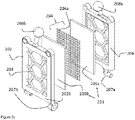
- Figure 2c shows an exploded view of the device and a sample comprising a sample substance.
- the exemplary device 200 includes a shell matrix 201 comprising a first lyophilic, preferably fibrous material, and a cage 202 comprising a plurality of holes. One of the holes is marked with a reference number 203. The hole(s) is/are preferably though the cage to allow sufficient medium flow through the cage.
- the shell matrix is adapted to cover the sample to form a shell matrix-sample system.
- Figure 2c shows an exploded view of the device showing also a sample featuring a plurality of spots 204 one of which is shown as reference number 204a.
- the shell matrix-sample system is adapted to be inserted into the cage.
- the shell matrix is in the form of two sheets 205a,b comprising the first lyophilic material that is preferably selected from cotton, cellulose and viscose, most preferably cotton.
- the sample is covered by the shell matrix, and a shell matrix-sample system is formed.
- the size of the shell matrix-sample system should be such that it fits into the cage, and preferably completely fills the cage.
- the function of the cage is to maintain the geometry of the shell matrix-sample system even upon wetting.
- the geometry of the cage is chosen according to shell matrix-sample system, and is preferably spherical, cylindrical, spiral shaped, coil shaped, toroidal, conical, most preferably plate-like.
- the cage has preferably a frame 206 to apply pressure on the sides of the core-shell system to prevent leaking from the sides.
- the compression level introduced by the frame on the matrix is preferably moderate, more preferably adequate to maintain the geometry as the shell matrix-sample system is exposed to dissolution media.
- the cage comprises preferably plurality of holes, a.k.a 'eyes'.
- the eye size of the cage is preferably such that the eye area is 90 % of the cage area on the matrix surface.
- the number of eyes of the cage is at least one, preferably less than 10 but higher than 3 to produce sufficiently divided compression to the matrix and to prevent changes in the cage geometry. Exemplary combinations for controlling the matrix geometry are: size and density of cotton used, dimensions of the cage and eye size and number.
- the cage is preferably manufactured of inert material, more preferably inert metal, most preferably material that is not affected by ultrasound or electric field. Exemplary suitable cage materials are stainless steel, plastic, or glass.
- the cage comprises means to position the shell matrix-sample system in the cage.
- the cage comprises preferably means, such as locking elements, adapted press and/or keep the shell matrix-sample system inside the cage in a substantially constant volume and shape.
- the cage may comprise a first part 202a comprising a first hinge element 207a and a first locking element 208a, and a second part 202b comprising a second hinge element 207b and a second locking element 208b, the first part adapted to fit to the second part.
- the hinges and the locking elements may also act as means to keep the shell matrix-sample system at substantially constant volume and shape, and/or to avoid the shell matrix-sample system from expanding upon wetting.
- the shell matrix comprises lyophilic fibrous material.
- a suitable matrix should wet thoroughly when exposed to the dissolution medium. As the sample substance is within the matrix, it should be surrounded practically immediately by the dissolution medium. Optimally, the only lag time present in the dissolution process is caused by the delay of the diffusion of the dissolved species.
- the immediate wetting provides conditions where the dissolution medium can freely access the matrix.
- An important property of the matrix is perfusion. Accordingly, the lyophilic material suitable for the present invention should be able to uptake at least five times more solvent than its own weight.
- Exemplary first lyophilic fibrous materials are cotton, cellulose, and viscose.
- a preferable material is cotton that can take up water 10-12 times its weight.
- the device may further comprise a vessel 209 for holding a medium capable of dissolving the sample substance.
- the vessel is preferably equipped with agitating means 210, such as a magnetic stirrer 211 and a stir bar 212.
- the size of the vessel is preferably such that the whole cage fits into the vessel and the cage is immersed into the dissolution medium.
- the device shown in figures 2a , b further comprises means 213 adapted to hold the device at a constant position in the vessel.
- the present invention concerns a method for dissolving a sample substance.
- a flow chart of the method for dissolving a sample substance according to the present invention is shown in figure 3 .
- An exemplary device suitable for the method is shown in figure 2a-c . The method comprises the following actions:
- the sample is first covered with a shell matrix comprising a first lyophilic, preferably fibrous material to form a shell matrix-sample system.
- a shell matrix comprising a first lyophilic, preferably fibrous material to form a shell matrix-sample system.
- first lyophilic fibrous materials are cotton, cellulose, and viscose.
- a preferable material is cotton.
- the shell matrix comprises two, preferably identical, sheets of lyophilic material, such as cotton, and the sheets are pressed against the sample.
- the shell matrix-sample system is inserted into a cage comprising at least one, preferably plurality of holes.
- the geometry of the cage is chosen according to the shell matrix-sample system, and its function is to maintain the geometry of shell matrix-sample system even upon wetting.
- the cage geometry is preferably spherical, cylindrical, spiral shaped, coil shaped, toroidal, conical, most preferably plate-like.
- the cage has preferably a frame to apply pressure on the sides of the shell matrix-sample system to prevent leaking from the sides.
- the force introduced by the frame on the matrix is preferably moderate, more preferably adequate to maintain the geometry as the matrix is inserted into dissolution media.
- the cage comprising the shell matrix-sample system is exposed e.g. by immersing into a vessel comprising a dissolution medium capable of dissolving the sample substance.
- a dissolution medium capable of dissolving the sample substance.
- An exemplary dissolving medium for hydrophilic matrices is phosphate buffered saline.
- Further exemplary dissolving media for lyophilic matrices comprising one or more sample substances are organic solvents, such as octane, hexane, dichloromethane, chloroform, pyridine, THF, diethyl ether, toluene, benzene, methanol, ethanol, propanol, and mixtures thereof.
- the dissolution medium flows through the one or more holes towards the sample substance and dissolves it.
- the arrow in figure 2a shows surface level of the dissolution medium.
- the sample substance prior to covering with the shell matrix, is admixed with a second lyophilic, preferably fibrous material.
- the admixing may be performed by grinding or shaking, more preferably by mixing, in such a manner that the sample substance e.g. sample substance particles are attached to the matrix material.
- Adhesion to matrix is achieved preferably by hydrogen bonding.
- Exemplary second lyophilic materials are cotton, cellulose, and viscose.
- a preferable second lyophilic material is cotton.
- It is essential that the first and the second matrix comprises lyophilic fibrous material.
- a suitable matrix should wet thoroughly when exposed to the dissolution medium.
- the dissolution can be enhanced by agitating the dissolution medium, e.g. by stirring, mixing, shaking or sonicating.
- the lyophilic material suitable for the present invention should be able to take up solvent at least five times its own weight.
- Exemplary first and the second lyophilic fibrous materials are cotton, cellulose, and viscose.
- a preferable material is cotton that is able to take up water 10-12 times its own weight.
- the present invention relates to a method for determining one of more dissolution properties of a sample substance.
- a flow chart of the method is shown in figure 4 . The method comprises the following actions
- Detection of the dissolved species is done preferably by UV-vis, mass, NIR, IR, Raman or spectroscopy, imaging, change in refractive index, and detection of radioactive compounds.
- the detection can be done in offline or online analysis, preferably as a function of time.
- the determining the quantity of the dissolved special is done offline, it is performed preferably without disturbing the hydrodynamics of the dissolution vessel, i.e. near the surface of the dissolution medium.
- the dissolved and/or the undissolved species of the sample substance can be detected also within the matrix. Additionally, light scattering methods may be combined to determine and to ensure that the medium is free from undissolved particles or recrystallized species within the medium.
- the present invention concerns a method for controlling a process for producing a substance.
- a flow chart of the method is shown in figure 5 . The method comprises the following actions:
- WO2016055696 An exemplary device and method suitable for producing the substance according to action 501 is disclosed in WO2016055696 .
- the document discloses a method for preparing nanoparticles by using a gradient pressure reduction process that creates conditions for controlled expansion of supercritical solutions.
- the method disclosed therein comprises admixing a substance and a supercritical fluid to form a mixture at a first pressure, decreasing the first pressure gradually to a second pressure in such a manner that a flow of the mixture is formed and nucleation of the substance in the mixture is initiated, and decreasing the second pressure to a third pressure in such a manner that solidification of the fluid of the mixture, comprising the nucleated sample substance, is initiated.
- the sample of the substance preferably nucleated substance produced as disclosed in WO2016055696
- one or more dissolution properties of the sample substance is determined, and compared to one or more predetermined dissolution properties of the sample substance.
- at least one dissolution property of the sample substance such as concentration in dissolution medium, is analyzed by using any suitable method known in the art. Exemplary methods are HPLC and UV-vis.
- the process for producing the substance can be modified, if needed based on the comparing.
- the modifying comprises typically changing one or more of process parameters.
- one or more of process parameters are changed until the determined dissolution property is as desired. For example, if the dissolution rate of the sample substance is slower than desired, one of more of the process parameters are changed until the desired dissolution rate is achieved.
- Exemplary process parameters disclosed in WO2016055696 include, but are not limited to, the nature of a supercritical fluid, one or more pressures, and temperature.
- the model compound in the dissolution experiments with the exemplary device was indomethacin (Hawkins, MN, USA). Indomethacin was milled with a Fritsch Pulverisette 7 Premium ball mill (Fritsch GmbH, Idar-Oberstein, Germany) to produce nanoparticles. The nanoparticles were prepared also by using the device and method disclosed in WO2016055696 .
- the cotton used was 100% cotton prepared without bleach.
- the matrix material should not contain traces of any chemicals.
- Stainless steel cages were designed with SolidWorks and 3D printed with selective laser sintering. 100 mL containers with 10.5 cm diameter were used as vessels.
- Distribution of nanoparticles was done by wetting the second lyophilic material with nanosuspension of known indomethacin concentration, consisting of water, co-polymer, and indomethacin. The suspension was mixed evenly within the second lyophilic material and the second lyophilic material was left to dry.
- Bulk sample was prepared by mixing quantities, corresponding to those of the suspension, of the bulk indomethacin and co-polymer with the second lyophilic material in a mortal without grinding to evenly distribute the bulk indomethacin and the co-polymer in the second lyophilic material.
- Dissolution tests were conducted in glass vessels under heating and stirring (IKA RT 15 P, IKA Werke GmbH & CO. KG, Staufen, Germany) in pH 5.5 phosphate buffer media prepared according to the instructions of the European Pharmacopeia (European Pharmacopoeia Online 8.8). The temperature was monitored during the dissolution tests and kept at 37.0 ⁇ 0.5 °C under magnetic stirring of 180 rpm. The volume of the phosphate buffer media was 100 mL. Each aliquot was 1 mL and it was replaced with the same volume of fresh media. Aliquots were taken at the time points 30 s, 1 min, 2 min, 5 min, 10 min, 30 min, 1 h, 2 h, 3 h, 4 h, 6 h and 24 h.
Landscapes
- Health & Medical Sciences (AREA)
- Life Sciences & Earth Sciences (AREA)
- Chemical & Material Sciences (AREA)
- Physics & Mathematics (AREA)
- Analytical Chemistry (AREA)
- Biochemistry (AREA)
- General Health & Medical Sciences (AREA)
- General Physics & Mathematics (AREA)
- Immunology (AREA)
- Pathology (AREA)
- Engineering & Computer Science (AREA)
- Bioinformatics & Cheminformatics (AREA)
- Biophysics (AREA)
- Molecular Biology (AREA)
- Pharmacology & Pharmacy (AREA)
- Food Science & Technology (AREA)
- Medicinal Chemistry (AREA)
- Sampling And Sample Adjustment (AREA)
- Medicines That Contain Protein Lipid Enzymes And Other Medicines (AREA)
- Investigating Or Analysing Biological Materials (AREA)
Description
- The invention relates generally to methods for dissolving sample substances such as drug molecules, in particular nanoparticles of drug molecules. The invention also relates to the use of the method for testing dissolution rates of the sample substance.
- The dissolution rate of a drug is one of the primary physicochemical properties determined and modified during the drug discovery and development process. A way to increase the dissolution rate is to decrease the particle size. However, the study of dissolution rates of small particles, in particular nanoparticles, may be challenging. For example, it might be difficult to separate the dissolved fraction from non-dissolved particles for analysis.
- The United States Pharmacopoeia (USP) I (basket) and II (paddle) methods have been modified for nanoparticle dissolution studies. Problems with the modified methods include migration of nanoparticles to interfaces e.g. by floating or adhesion, and by diffusional barriers (e.g. gelatin or dialysis membranes). The methods also require large amounts of solute and solvent with tedious sample preparation and separation steps before analysis. Separation steps such as filtration and centrifugation are often ineffective with nanoparticles and may significantly affect the dissolution processes. Additionally, adsorption to equipment and containers might become an issue. Therefore, these methods may be impractical when studying nanoparticle dissolution.
- The USP IV flow-through apparatus has been found to be applicable for nanoparticle dissolution studies. However, the use of this apparatus has challenges related to filtering. Too large filter pore size leads to particles escaping and consequently to overestimating the dissolution rate, while too narrow pore size leads to clogging and even breaking of the filter.
- Drug nanoparticles can be analyzed as tablets and as admixed with gel matrices. However, the tableting process may alter the physical form of the drug. It has also been found that particles may detach from the tablet surface during dissolution, thus invalidating the dissolution tests. Analysis of dissolution tests of nanoparticles admixed with gel matrices, in turn, may be complicated by the diffusion of the drug in the matrix.
-
WO 2014/053840A1 discloses methods and apparatus for the in vitro modelling of changes that occur on administration of a drug formulation. - Bredael et al. (Dissolution Technologies, vol 22, no 3, pages 10-16) discloses a strategy for quality control dissolution method development for immediate-release solid oral dosage forms.
- Accordingly, there is a need for new methods for determining dissolution rates of sample substances that are suitable also for nanoparticles.
- The following presents a simplified summary in order to provide a basic understanding of some aspects of various embodiments of the invention. The summary is not an extensive overview of the invention. It is neither intended to identify key nor critical elements of the invention, nor to delineate the scope of the invention. The following summary merely presents some concepts of the invention in a simplified form as a prelude to a more detailed description of exemplifying embodiments of the invention.
- In accordance with the invention, there is provided a new method for dissolving a sample substance, the method comprising
- providing a sample comprising the sample substance,
- covering the sample with a shell matrix comprising a first lyophilic material to form a shell matrix-sample system,
- inserting the shell matrix-sample system into a cage comprising at least one hole,
- exposing the cage comprising shell matrix-sample system to a medium capable of dissolving the sample substance, and
- admixing the sample substance with a second lyophilic material prior to covering with the shell matrix.
- In accordance with the invention, there is provided also a new method for determining one of more dissolution properties of a sample substance, the method comprising
- dissolving the sample substance into a dissolution medium by a method according to any of claims 1-6, and
- determining at least one dissolution property, such as concentration, of the sample substance in the dissolution medium.
- In accordance with the invention there is also provided a method for controlling a process for producing a substance, the method comprising,
- (i) producing a substance,
- (ii) providing a sample substance by collecting a sample of the substance,
- (iii) determining one or more dissolution properties of the sample substance according to claim 7,
- (iv) comparing the one of more dissolution properties to one or more predetermined dissolution properties, and
- (v) optionally modifying the producing based on the comparing.
- A number of exemplifying and non-limiting embodiments of the invention are described in accompanied dependent claims.
- Various exemplifying and non-limiting embodiments of the invention both as to constructions and to methods of operation, together with additional objects and advantages thereof, are best understood from the following description of specific exemplifying embodiments when read in connection with the accompanying drawings.
- The verbs "to comprise" and "to include" are used in this document as open limitations that neither exclude nor require the existence of also unrecited features. The features recited in depending claims are mutually freely combinable unless otherwise explicitly stated. Furthermore, it is to be understood that the use of "a" or "an", i.e. a singular form, throughout this document does not exclude a plurality.
- The exemplifying and non-limiting embodiments of the invention and their advantages are explained in greater detail below with reference to the accompanying drawings, in which:
-
figure 1 shows the principle for discriminating the dissolved sample substance (dots) from undissolved sample substances (circles), -
figure 2a illustrates a front view of a device according to exemplary non-limiting embodiment of the present invention, -
figures 2b illustrates a perspective view of a device according to exemplary non-limiting embodiment of the present invention, -
figure 2c illustrates exploded view of a device according to exemplary non-limiting embodiment of the present invention, -
figure 3 illustrates a flow chart of the method of the present invention for dissolving a sample substance, -
figures 4 illustrates a flow chart of a method of the present invention for determining one or more dissolution properties of a sample substance, -
figures 5 illustrates a flow chart of a method of the present invention for nanonization optimization and/or quality control, -
figure 6 shows cumulative percentage of indomethacin released in 22 hours in pH 5.5 phosphate buffer, -
figure 7 shows cumulative percentage of indomethacin released in 3 hours in pH 5.5 phosphate buffer, and -
figure 8 shows cumulative percentage of indomethacin released in 20 minutes in pH 5.5 phosphate buffer. - According to one embodiment the present invention concerns a device and a method for dissolving a sample substance. Exemplary sample substances are organic substances in the form of granules, films, suspension, lipids, emulsions, more preferably of powder-like substances, most preferably nanoparticles. As defined herein an "organic substance" is a molecule containing carbon, excluding carbon containing alloys, and relatively small number of carbon-containing compounds such as metal carbonates and carbonyls, simple oxides of carbon and cyanides, as well as allotropes of carbon and simple carbon halides and sulfides which are considered inorganic. Exemplary organic substrates used in the present technology are biologically active materials including medicaments and their pharmaceutically acceptable organic and inorganic salts.
- A non-limiting list of exemplary classes of biologically active materials that may be of interest to the technology include analgesics, antagonists, anti-inflammatory agents, anthelmintics, antianginal agents, antiarrhythmic agents, antibiotics (including penicillins), anticholesterols, anticoagulants, anticonvulsants, antidepressants, antidiabetic agents, antiepileptics, antigonadotropins, antihistamines, antihypertensive agents, antimuscarinic agents, antimycobacterial agents, antineoplastic agents, antipsychotic agents, immunosuppressants, antithyroid agents, antiviral agents, antifungal agents, anxiolytic sedatives (hypnotics and neuroleptics), astringents, beta-adrenoceptor blocking agents, blood products and substitutes, anti-cancer agents, cardiacinotropic agents, contrast media, corticosterioids, cough suppressants (expectorants and mucolytics), diuretics, dopaminergics (antiparkinsonian agents), haemostatics, immunosuppressive and immunoactive agents, lipid regulating agents, muscle relaxants, parasympathomimetics, parathyroid calcitonin and biphosphonates, prostaglandins, radiopharmaceuticals, sex hormones (including steroids), anti-allergic agents, stimulants and anorexics, sympathomimetics, thyroid agents, vasidilators, neuron blocking agents, anticholinergic and cholinomimetic agents, antimuscarinic and muscarinic agents, vitamins, and xanthines.
- The organic substance, such as biologically active material, e.g. a medicament, may be crystalline, amorphous or their mixtures.
- The invention is based on one or more lyophilic matrices that create conditions for discriminating the dissolved sample substance from undissolved sample substances. The principle is shown in
figure 1 , wherein the dissolved species (dots) diffuse significantly faster from the matrix towards the medium than the particles (circles). - The invention is aimed to prevent dispersion of the undissolved sample substance while it should present no significant membrane effect.
- Accordingly, the invention is aimed to differentiate dissolution rates of small and large sample substance particles, such as nanoparticles and bulk material.
- Small particles dissolve faster than large ones as stated in the Noyes-Whitney equation (1)

- The process of discrimination between undissolved particles and dissolved species is based on different diffusion velocities of particles compared to dissolved species (I.V. Fedsove et al., Measurement of the Diffusion Coefficient of Nanoparticles by Selective Plane Illumination Microscopy, Optics and Spectroscopy in Biomedical Investigations, Vol 107, No 6, 84-107, 2009). The diffusion velocity of nanoparticles according to the study of Fedsove et al. is less than 0.5 µm/s, whereas the diffusion of the dissolved species can be described with Fick's second law.

- According to one example a device for dissolving a sample substance is shown in
figures 2a-c .Figures 2a and2b show front and perspective view of the device, respectively.Figure 2c shows an exploded view of the device and a sample comprising a sample substance. - The
exemplary device 200 includes ashell matrix 201 comprising a first lyophilic, preferably fibrous material, and acage 202 comprising a plurality of holes. One of the holes is marked with areference number 203. The hole(s) is/are preferably though the cage to allow sufficient medium flow through the cage. The shell matrix is adapted to cover the sample to form a shell matrix-sample system.Figure 2c shows an exploded view of the device showing also a sample featuring a plurality ofspots 204 one of which is shown asreference number 204a. The shell matrix-sample system is adapted to be inserted into the cage. - The shell matrix is in the form of two
sheets 205a,b comprising the first lyophilic material that is preferably selected from cotton, cellulose and viscose, most preferably cotton. When the device is in operation, the sample is covered by the shell matrix, and a shell matrix-sample system is formed. The size of the shell matrix-sample system should be such that it fits into the cage, and preferably completely fills the cage. - The function of the cage is to maintain the geometry of the shell matrix-sample system even upon wetting. The geometry of the cage is chosen according to shell matrix-sample system, and is preferably spherical, cylindrical, spiral shaped, coil shaped, toroidal, conical, most preferably plate-like. The cage has preferably a
frame 206 to apply pressure on the sides of the core-shell system to prevent leaking from the sides. The compression level introduced by the frame on the matrix is preferably moderate, more preferably adequate to maintain the geometry as the shell matrix-sample system is exposed to dissolution media. - The cage comprises preferably plurality of holes, a.k.a 'eyes'. The eye size of the cage is preferably such that the eye area is 90 % of the cage area on the matrix surface. The number of eyes of the cage is at least one, preferably less than 10 but higher than 3 to produce sufficiently divided compression to the matrix and to prevent changes in the cage geometry. Exemplary combinations for controlling the matrix geometry are: size and density of cotton used, dimensions of the cage and eye size and number. The cage is preferably manufactured of inert material, more preferably inert metal, most preferably material that is not affected by ultrasound or electric field. Exemplary suitable cage materials are stainless steel, plastic, or glass.
- According to a preferable embodiment the cage comprises means to position the shell matrix-sample system in the cage. The cage comprises preferably means, such as locking elements, adapted press and/or keep the shell matrix-sample system inside the cage in a substantially constant volume and shape. As shown in
figure 2a-c , the cage may comprise afirst part 202a comprising afirst hinge element 207a and afirst locking element 208a, and asecond part 202b comprising asecond hinge element 207b and asecond locking element 208b, the first part adapted to fit to the second part. The hinges and the locking elements may also act as means to keep the shell matrix-sample system at substantially constant volume and shape, and/or to avoid the shell matrix-sample system from expanding upon wetting. - It is essential that the shell matrix comprises lyophilic fibrous material. A suitable matrix should wet thoroughly when exposed to the dissolution medium. As the sample substance is within the matrix, it should be surrounded practically immediately by the dissolution medium. Optimally, the only lag time present in the dissolution process is caused by the delay of the diffusion of the dissolved species.
- The immediate wetting provides conditions where the dissolution medium can freely access the matrix. An important property of the matrix is perfusion. Accordingly, the lyophilic material suitable for the present invention should be able to uptake at least five times more solvent than its own weight. Exemplary first lyophilic fibrous materials are cotton, cellulose, and viscose. A preferable material is cotton that can take up water 10-12 times its weight.
- The device may further comprise a
vessel 209 for holding a medium capable of dissolving the sample substance. The vessel is preferably equipped with agitating means 210, such as amagnetic stirrer 211 and astir bar 212. The size of the vessel is preferably such that the whole cage fits into the vessel and the cage is immersed into the dissolution medium. The device shown infigures 2a ,b further comprisesmeans 213 adapted to hold the device at a constant position in the vessel. - According to another embodiment the present invention concerns a method for dissolving a sample substance. A flow chart of the method for dissolving a sample substance according to the present invention is shown in
figure 3 . An exemplary device suitable for the method is shown infigure 2a-c . The method comprises the following actions: - action 301: providing a sample comprising a sample substance,
- action 302: covering the sample with a shell matrix comprising a first lyophilic material to form a shell matrix-sample system
- action 303: positioning the shell matrix-sample system into a cage comprising at least one hole, and
- action 304: exposing the cage comprising the shell matrix-sample system to a medium capable of dissolving the sample substance.
- Accordingly, the sample is first covered with a shell matrix comprising a first lyophilic, preferably fibrous material to form a shell matrix-sample system. Exemplary first lyophilic fibrous materials are cotton, cellulose, and viscose. A preferable material is cotton.
- According to a particular embodiment, the shell matrix comprises two, preferably identical, sheets of lyophilic material, such as cotton, and the sheets are pressed against the sample.
- Next, the shell matrix-sample system is inserted into a cage comprising at least one, preferably plurality of holes. The geometry of the cage is chosen according to the shell matrix-sample system, and its function is to maintain the geometry of shell matrix-sample system even upon wetting. The cage geometry is preferably spherical, cylindrical, spiral shaped, coil shaped, toroidal, conical, most preferably plate-like. The cage has preferably a frame to apply pressure on the sides of the shell matrix-sample system to prevent leaking from the sides. The force introduced by the frame on the matrix is preferably moderate, more preferably adequate to maintain the geometry as the matrix is inserted into dissolution media.
- According to the method, the cage comprising the shell matrix-sample system is exposed e.g. by immersing into a vessel comprising a dissolution medium capable of dissolving the sample substance. An exemplary dissolving medium for hydrophilic matrices is phosphate buffered saline. Further exemplary dissolving media for lyophilic matrices comprising one or more sample substances are organic solvents, such as octane, hexane, dichloromethane, chloroform, pyridine, THF, diethyl ether, toluene, benzene, methanol, ethanol, propanol, and mixtures thereof.
- When the cage is exposed to a dissolution medium, the dissolution medium flows through the one or more holes towards the sample substance and dissolves it. The arrow in
figure 2a shows surface level of the dissolution medium. - According to the invention the sample substance, prior to covering with the shell matrix, is admixed with a second lyophilic, preferably fibrous material. The admixing may be performed by grinding or shaking, more preferably by mixing, in such a manner that the sample substance e.g. sample substance particles are attached to the matrix material. Adhesion to matrix is achieved preferably by hydrogen bonding. Exemplary second lyophilic materials are cotton, cellulose, and viscose. A preferable second lyophilic material is cotton. It is essential that the first and the second matrix comprises lyophilic fibrous material. A suitable matrix should wet thoroughly when exposed to the dissolution medium. As the sample substance is inside the matrix, it is surrounded immediately with dissolution medium. Optimally, the only lag time present in the dissolution process is caused by the delay of the diffusion of the dissolved species. The dissolution can be enhanced by agitating the dissolution medium, e.g. by stirring, mixing, shaking or sonicating.
- The immediate wetting provides conditions where the dissolution medium can freely access the matrices. An important matrix property is perfusion. Accordingly, the lyophilic material suitable for the present invention should be able to take up solvent at least five times its own weight. Exemplary first and the second lyophilic fibrous materials are cotton, cellulose, and viscose. A preferable material is cotton that is able to take up water 10-12 times its own weight.
- According to another embodiment the present invention relates to a method for determining one of more dissolution properties of a sample substance. A flow chart of the method is shown in
figure 4 . The method comprises the following actions - action 401: dissolving the sample substance into a dissolution medium by a method according to any of claims 6-13, and
- action 402: determining at least one dissolution property of the sample substance in the dissolution medium.
- Detection of the dissolved species is done preferably by UV-vis, mass, NIR, IR, Raman or spectroscopy, imaging, change in refractive index, and detection of radioactive compounds. The detection can be done in offline or online analysis, preferably as a function of time. When the determining the quantity of the dissolved special is done offline, it is performed preferably without disturbing the hydrodynamics of the dissolution vessel, i.e. near the surface of the dissolution medium.
- If the matrices do not disturb the detection method, the dissolved and/or the undissolved species of the sample substance can be detected also within the matrix. Additionally, light scattering methods may be combined to determine and to ensure that the medium is free from undissolved particles or recrystallized species within the medium.
- According to another embodiment, the present invention concerns a method for controlling a process for producing a substance. A flow chart of the method is shown in
figure 5 . The method comprises the following actions: - action 501: producing a substance,
- action 502: providing a sample substance by collecting a sample of the substance,
- action 503: determining one or more dissolution properties of the sample substance according to claim 13,
- action 504: comparing the one of more dissolution properties of the sample substance to one or more predetermined dissolution properties the substance, and
- action 505: optionally modifying the producing based on the comparing.
- An exemplary device and method suitable for producing the substance according to
action 501 is disclosed inWO2016055696 . The document discloses a method for preparing nanoparticles by using a gradient pressure reduction process that creates conditions for controlled expansion of supercritical solutions. The method disclosed therein comprises admixing a substance and a supercritical fluid to form a mixture at a first pressure, decreasing the first pressure gradually to a second pressure in such a manner that a flow of the mixture is formed and nucleation of the substance in the mixture is initiated, and decreasing the second pressure to a third pressure in such a manner that solidification of the fluid of the mixture, comprising the nucleated sample substance, is initiated. - According to an exemplary embodiment the sample of the substance, preferably nucleated substance produced as disclosed in
WO2016055696 , is collected and preferably admixed with the second lyophilic material of the present invention, prior to determining one of more of its dissolution properties. - According to a particular embodiment, one or more dissolution properties of the sample substance is determined, and compared to one or more predetermined dissolution properties of the sample substance. For determining, at least one dissolution property of the sample substance, such as concentration in dissolution medium, is analyzed by using any suitable method known in the art. Exemplary methods are HPLC and UV-vis.
- The process for producing the substance can be modified, if needed based on the comparing. The modifying comprises typically changing one or more of process parameters. For modifying, one or more of process parameters are changed until the determined dissolution property is as desired. For example, if the dissolution rate of the sample substance is slower than desired, one of more of the process parameters are changed until the desired dissolution rate is achieved. Exemplary process parameters disclosed in
WO2016055696 include, but are not limited to, the nature of a supercritical fluid, one or more pressures, and temperature. - The model compound in the dissolution experiments with the exemplary device was indomethacin (Hawkins, MN, USA). Indomethacin was milled with a Fritsch Pulverisette 7 Premium ball mill (Fritsch GmbH, Idar-Oberstein, Germany) to produce nanoparticles. The nanoparticles were prepared also by using the device and method disclosed in
WO2016055696 . - 60 g of milling pearls (zirconium oxide, diameter 1 mm) and 2.00±0.05 g indomethacin suspended in 5.0 ml 0.24 g/ml poloxamer 188 (BASF Co., Ludwigshafen, Germany) solution (60 wt% relative to the drug amount) was added to the milling bowl. Additional 5 ml of water was used to collect the residual suspensions from the beaker to the milling bowl. The suspension was grinded at 850 rpm in 5 grinding cycles of 3 min.
- The cotton used was 100% cotton prepared without bleach. The matrix material should not contain traces of any chemicals. Stainless steel cages were designed with SolidWorks and 3D printed with selective laser sintering. 100 mL containers with 10.5 cm diameter were used as vessels.
- Three parallel tests were conducted for both bulk indomethacin and the indomethacin nanoparticles. The mass of particles and core matrix was normalized for each experiment and materials. The drug compound was evenly distributed within the core cotton (second lyophilic material), and was placed between the shell parts of the matrix (first lyophilic material).
- Distribution of nanoparticles was done by wetting the second lyophilic material with nanosuspension of known indomethacin concentration, consisting of water, co-polymer, and indomethacin. The suspension was mixed evenly within the second lyophilic material and the second lyophilic material was left to dry.
- Bulk sample was prepared by mixing quantities, corresponding to those of the suspension, of the bulk indomethacin and co-polymer with the second lyophilic material in a mortal without grinding to evenly distribute the bulk indomethacin and the co-polymer in the second lyophilic material.
- Dissolution tests were conducted in glass vessels under heating and stirring (IKA RT 15 P, IKA Werke GmbH & CO. KG, Staufen, Germany) in pH 5.5 phosphate buffer media prepared according to the instructions of the European Pharmacopeia (European Pharmacopoeia Online 8.8). The temperature was monitored during the dissolution tests and kept at 37.0 ± 0.5 °C under magnetic stirring of 180 rpm. The volume of the phosphate buffer media was 100 mL. Each aliquot was 1 mL and it was replaced with the same volume of fresh media. Aliquots were taken at the time points 30 s, 1 min, 2 min, 5 min, 10 min, 30 min, 1 h, 2 h, 3 h, 4 h, 6 h and 24 h.
- Samples were analyzed with high performance liquid chromatography (HPLC Thermo System Products, Agilent 1200 Infinity Series, Agilent Technologies, Germany). Discovery C18, 4.6x150 mm, 5 µm (Supelco, Bellefonte, USA), flow rate of 1.5 mL/min with a mobile phase consisting of 60:40 (v/v) acetonitrile (ACN) and 0.2% ortophosphoric acid (H3PO4) in water (milliQ) were used operating at 30 °C. A standard curve for indomethacin quantification was made in triplicate from indomethacin concentrations of 0.08-500 mg/L (R2 = 0.999).
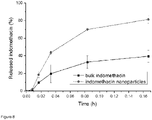
- The cumulative fraction of released indomethacin are presented up to 22 h in
Figure 4 , up to 3 h inFigure 5 , and up to 30 minFigure 6 . As seen, from the figures, milled nanoparticles exhibit a narrower size-distribution than the bulk material. Thus, the standard deviation that can be seen as error bars, inFigures 4-6 , indicates that the effect of particle size-distribution on the bulk material is more significant than that of the nanoparticles. This further indicates that the method is more sensitive to particle size distribution than the conventional methods. The specific examples provided in the description given above should not be construed as limiting the scope of the invention as defined by the appended claims.
Claims (8)
- A method for dissolving a sample substance, the method comprising- providing a sample comprising a sample substance,- covering the sample with a shell matrix (201) comprising first and second sheets (205a, 205b) of a first lyophilic material to form a shell matrix-sample system,- inserting the shell matrix-sample system into a cage (202) comprising at least one hole (203),- exposing the cage comprising the shell matrix-sample system to a medium capable of dissolving the sample substance,characterized in that the method further comprises:- admixing the sample substance with a second lyophilic material prior to covering with the shell matrix.
- The method according to claim 1, wherein the first lyophilic material is selected from cotton, cellulose and viscose, preferably cotton.
- The method according to claim 1 or 2, wherein the second lyophilic material is selected from cotton, cellulose, and viscose, preferably cotton.
- The method according to any of claims 1-3, wherein the inserting comprises pressing the shell matrix-sample system in the cage to a substantially constant volume and shape.
- The method according to any of claims 1-4, wherein the exposing comprises immersing the cage into the medium capable of dissolving the sample substance.
- The method according to any of claims 1-5 comprising agitating the medium capable of dissolving the sample substance.
- A method for determining one of more dissolution properties of a sample substance, the method comprising- dissolving the sample substance into a medium capable of dissolving the sample substance by a method according to any of claims 1-6, and- determining at least one dissolution property, such as concentration, of the sample substance in the dissolution medium, preferably as a function of time.
- A method for controlling a process for producing a substance, the method comprising,(i) producing a substance,(ii) providing a sample substance by collecting a sample of the substance,(iii) determining one or more dissolution properties of the sample substance according to claim 7,(iv) comparing the one of more dissolution properties of the sample substance to one or more predetermined dissolution properties, and(v) optionally modifying the producing based on the comparing.
Applications Claiming Priority (2)
| Application Number | Priority Date | Filing Date | Title |
|---|---|---|---|
| FI20165728A FI127408B (en) | 2016-09-29 | 2016-09-29 | Device, method and kit for dissolution testing |
| PCT/FI2017/050624 WO2018060547A1 (en) | 2016-09-29 | 2017-09-05 | Device, method and kit for dissolution testing |
Publications (2)
| Publication Number | Publication Date |
|---|---|
| EP3519810A1 EP3519810A1 (en) | 2019-08-07 |
| EP3519810B1 true EP3519810B1 (en) | 2022-06-08 |
Family
ID=60022125
Family Applications (1)
| Application Number | Title | Priority Date | Filing Date |
|---|---|---|---|
| EP17780460.6A Active EP3519810B1 (en) | 2016-09-29 | 2017-09-05 | Device, method and kit for dissolution testing |
Country Status (6)
| Country | Link |
|---|---|
| US (1) | US11422121B2 (en) |
| EP (1) | EP3519810B1 (en) |
| JP (1) | JP7078610B2 (en) |
| CA (1) | CA3033903C (en) |
| FI (1) | FI127408B (en) |
| WO (1) | WO2018060547A1 (en) |
Families Citing this family (3)
| Publication number | Priority date | Publication date | Assignee | Title |
|---|---|---|---|---|
| JP7096771B2 (en) * | 2016-04-29 | 2022-07-06 | ザ ソリュビィリティ カンパニー オーユー | Methods and devices for determining the physicochemical properties of materials |
| DE102018102383B4 (en) * | 2018-02-02 | 2019-08-29 | Scienova Gmbh | System for carrying out biological or chemical processes |
| CN117783459B (en) * | 2024-02-28 | 2024-05-07 | 沈阳科惠生物医药科技有限公司 | Drug dissolution curve determination method and system |
Family Cites Families (10)
| Publication number | Priority date | Publication date | Assignee | Title |
|---|---|---|---|---|
| JPS57199956A (en) * | 1981-06-02 | 1982-12-08 | Ss Pharmaceut Co Ltd | Method and apparatus for exuding test of suppository |
| US6929782B1 (en) * | 1999-02-05 | 2005-08-16 | Aventis Pharmaceuticals Inc. | Dissolution test sample holder |
| AU7788701A (en) | 2000-07-14 | 2002-01-30 | Transform Pharmaceuticals Inc | System and method for optimizing tissue barrier transfer of compounds |
| US20070141147A1 (en) * | 2005-12-21 | 2007-06-21 | Auriga Laboratories, Inc. | Sequential release pharmaceutical formulations |
| EP1804045B1 (en) * | 2005-12-30 | 2014-03-12 | QIAGEN GmbH | Method and Kit for treating a biological sample |
| JP5433844B2 (en) | 2007-01-17 | 2014-03-05 | 公益財団法人ヒューマンサイエンス振興財団 | Dissolution test method for pharmaceutical preparations |
| EP2182342A1 (en) | 2008-10-28 | 2010-05-05 | LEK Pharmaceuticals D.D. | Two-Compartment Dissolution Apparatus and Process |
| TWM388344U (en) | 2010-03-22 | 2010-09-11 | Teh Seng Pharmaceutical Mfg Co Ltd | Dissolution rate test kit for active components in external medicine patch |
| GB201217768D0 (en) * | 2012-10-04 | 2012-11-14 | Univ Bath | Methods and apparatus for the in vitro modelling of subcutaneous injection |
| FI20140266A7 (en) | 2014-10-06 | 2016-04-07 | Nanoform Finland Oy | A method for producing nanoparticles |
-
2016
- 2016-09-29 FI FI20165728A patent/FI127408B/en active IP Right Grant
-
2017
- 2017-09-05 EP EP17780460.6A patent/EP3519810B1/en active Active
- 2017-09-05 JP JP2019516409A patent/JP7078610B2/en active Active
- 2017-09-05 US US16/330,004 patent/US11422121B2/en active Active
- 2017-09-05 CA CA3033903A patent/CA3033903C/en active Active
- 2017-09-05 WO PCT/FI2017/050624 patent/WO2018060547A1/en not_active Ceased
Also Published As
| Publication number | Publication date |
|---|---|
| CA3033903A1 (en) | 2018-04-05 |
| US20190204286A1 (en) | 2019-07-04 |
| JP2019529921A (en) | 2019-10-17 |
| CA3033903C (en) | 2024-06-11 |
| JP7078610B2 (en) | 2022-05-31 |
| EP3519810A1 (en) | 2019-08-07 |
| FI127408B (en) | 2018-05-15 |
| FI20165728A7 (en) | 2018-03-30 |
| US11422121B2 (en) | 2022-08-23 |
| WO2018060547A1 (en) | 2018-04-05 |
Similar Documents
| Publication | Publication Date | Title |
|---|---|---|
| D’Souza | A review of in vitro drug release test methods for nano‐sized dosage forms | |
| Damari et al. | Practical aspects in size and morphology characterization of drug-loaded nano-liposomes | |
| Liu et al. | Dissolution studies of poorly soluble drug nanosuspensions in non-sink conditions | |
| Washington | Drug release from microdisperse systems: a critical review | |
| US11422121B2 (en) | Device, method and kit for dissolution testing | |
| EP1301619B1 (en) | System and method for optimizing tissue barrier transfer of compounds | |
| Shapiro et al. | Magnetic resonance imaging of an oral gastrointestinal-therapeutic-system (GITS) tablet | |
| Patel et al. | Adaptive perfusion: An in vitro release test (IVRT) for complex drug products | |
| Beyssac et al. | Dissolution study of active pharmaceutical ingredients using the flow through apparatus USP 4 | |
| Ahnfelt et al. | A miniaturized in vitro release method for investigating drug-release mechanisms | |
| Hu et al. | Nonsolvent-induced solidification of droplets of a polymer solution: from a sphere to a capsule | |
| Vachon et al. | Physico-chemical evaluation of acetylsalicylic acid-Eudragit® RS100 microspheres prepared using a solvent-partition method | |
| Pattnaik et al. | Techniques in the characterization of lipid-based nanotherapeutics: state of the art, challenges, and future direction | |
| May | Dissolution testing of powders for inhalation | |
| Sinko et al. | In vitro characterization of the biomimetic properties of poly (dimethylsiloxane) to simulate oral drug absorption | |
| Fecioru et al. | In vitro performance testing of nanoparticulate drug products for parenteral administration | |
| Pessi et al. | Lyophilic matrix method for dissolution and release studies of nanoscale particles | |
| Pawar et al. | Self-micro emulsifying drug delivery system (smedds): a promising drug delivery system for enhancement of bioavailability | |
| EP3954989A1 (en) | Dissolution test net | |
| Okor | Drug release on certain acrylate methacrylate-salicylic acid coacervated systems | |
| Obeidat et al. | Investigations on the physical structure and the mechanism of drug release from an enteric matrix microspheres with a near-zero-order release kinetics using SEM and quantitative FTIR | |
| Eshun | Probing the release mechanism of a multiparticulate system through the release kinetics of AZT from individual P (MMA/MAA) microspheres | |
| Zambare et al. | Diabetes: Pathophysiology, Management, and Advances in Pharmaceutical Interventions | |
| Shah | An evaluation of the dissolution behaviour of poorly soluble acidic and basic drugs in biorelevant media | |
| Khattab et al. | Formulation and optimization of sustained release terbutaline sulfate microspheres using response surface methodology. |
Legal Events
| Date | Code | Title | Description |
|---|---|---|---|
| STAA | Information on the status of an ep patent application or granted ep patent |
Free format text: STATUS: UNKNOWN |
|
| STAA | Information on the status of an ep patent application or granted ep patent |
Free format text: STATUS: THE INTERNATIONAL PUBLICATION HAS BEEN MADE |
|
| PUAI | Public reference made under article 153(3) epc to a published international application that has entered the european phase |
Free format text: ORIGINAL CODE: 0009012 |
|
| STAA | Information on the status of an ep patent application or granted ep patent |
Free format text: STATUS: REQUEST FOR EXAMINATION WAS MADE |
|
| 17P | Request for examination filed |
Effective date: 20190208 |
|
| AK | Designated contracting states |
Kind code of ref document: A1 Designated state(s): AL AT BE BG CH CY CZ DE DK EE ES FI FR GB GR HR HU IE IS IT LI LT LU LV MC MK MT NL NO PL PT RO RS SE SI SK SM TR |
|
| AX | Request for extension of the european patent |
Extension state: BA ME |
|
| DAV | Request for validation of the european patent (deleted) | ||
| DAX | Request for extension of the european patent (deleted) | ||
| GRAP | Despatch of communication of intention to grant a patent |
Free format text: ORIGINAL CODE: EPIDOSNIGR1 |
|
| STAA | Information on the status of an ep patent application or granted ep patent |
Free format text: STATUS: GRANT OF PATENT IS INTENDED |
|
| INTG | Intention to grant announced |
Effective date: 20220110 |
|
| GRAS | Grant fee paid |
Free format text: ORIGINAL CODE: EPIDOSNIGR3 |
|
| GRAA | (expected) grant |
Free format text: ORIGINAL CODE: 0009210 |
|
| STAA | Information on the status of an ep patent application or granted ep patent |
Free format text: STATUS: THE PATENT HAS BEEN GRANTED |
|
| AK | Designated contracting states |
Kind code of ref document: B1 Designated state(s): AL AT BE BG CH CY CZ DE DK EE ES FI FR GB GR HR HU IE IS IT LI LT LU LV MC MK MT NL NO PL PT RO RS SE SI SK SM TR |
|
| RAP3 | Party data changed (applicant data changed or rights of an application transferred) |
Owner name: NANOFORM FINLAND OYJ |
|
| REG | Reference to a national code |
Ref country code: AT Ref legal event code: REF Ref document number: 1497270 Country of ref document: AT Kind code of ref document: T Effective date: 20220615 Ref country code: CH Ref legal event code: EP |
|
| REG | Reference to a national code |
Ref country code: DE Ref legal event code: R096 Ref document number: 602017058332 Country of ref document: DE |
|
| REG | Reference to a national code |
Ref country code: IE Ref legal event code: FG4D |
|
| REG | Reference to a national code |
Ref country code: LT Ref legal event code: MG9D |
|
| REG | Reference to a national code |
Ref country code: NL Ref legal event code: MP Effective date: 20220608 |
|
| PG25 | Lapsed in a contracting state [announced via postgrant information from national office to epo] |
Ref country code: SE Free format text: LAPSE BECAUSE OF FAILURE TO SUBMIT A TRANSLATION OF THE DESCRIPTION OR TO PAY THE FEE WITHIN THE PRESCRIBED TIME-LIMIT Effective date: 20220608 Ref country code: NO Free format text: LAPSE BECAUSE OF FAILURE TO SUBMIT A TRANSLATION OF THE DESCRIPTION OR TO PAY THE FEE WITHIN THE PRESCRIBED TIME-LIMIT Effective date: 20220908 Ref country code: LT Free format text: LAPSE BECAUSE OF FAILURE TO SUBMIT A TRANSLATION OF THE DESCRIPTION OR TO PAY THE FEE WITHIN THE PRESCRIBED TIME-LIMIT Effective date: 20220608 Ref country code: HR Free format text: LAPSE BECAUSE OF FAILURE TO SUBMIT A TRANSLATION OF THE DESCRIPTION OR TO PAY THE FEE WITHIN THE PRESCRIBED TIME-LIMIT Effective date: 20220608 Ref country code: GR Free format text: LAPSE BECAUSE OF FAILURE TO SUBMIT A TRANSLATION OF THE DESCRIPTION OR TO PAY THE FEE WITHIN THE PRESCRIBED TIME-LIMIT Effective date: 20220909 Ref country code: FI Free format text: LAPSE BECAUSE OF FAILURE TO SUBMIT A TRANSLATION OF THE DESCRIPTION OR TO PAY THE FEE WITHIN THE PRESCRIBED TIME-LIMIT Effective date: 20220608 Ref country code: ES Free format text: LAPSE BECAUSE OF FAILURE TO SUBMIT A TRANSLATION OF THE DESCRIPTION OR TO PAY THE FEE WITHIN THE PRESCRIBED TIME-LIMIT Effective date: 20220608 Ref country code: BG Free format text: LAPSE BECAUSE OF FAILURE TO SUBMIT A TRANSLATION OF THE DESCRIPTION OR TO PAY THE FEE WITHIN THE PRESCRIBED TIME-LIMIT Effective date: 20220908 |
|
| REG | Reference to a national code |
Ref country code: AT Ref legal event code: MK05 Ref document number: 1497270 Country of ref document: AT Kind code of ref document: T Effective date: 20220608 |
|
| PG25 | Lapsed in a contracting state [announced via postgrant information from national office to epo] |
Ref country code: RS Free format text: LAPSE BECAUSE OF FAILURE TO SUBMIT A TRANSLATION OF THE DESCRIPTION OR TO PAY THE FEE WITHIN THE PRESCRIBED TIME-LIMIT Effective date: 20220608 Ref country code: LV Free format text: LAPSE BECAUSE OF FAILURE TO SUBMIT A TRANSLATION OF THE DESCRIPTION OR TO PAY THE FEE WITHIN THE PRESCRIBED TIME-LIMIT Effective date: 20220608 |
|
| PG25 | Lapsed in a contracting state [announced via postgrant information from national office to epo] |
Ref country code: NL Free format text: LAPSE BECAUSE OF FAILURE TO SUBMIT A TRANSLATION OF THE DESCRIPTION OR TO PAY THE FEE WITHIN THE PRESCRIBED TIME-LIMIT Effective date: 20220608 |
|
| PG25 | Lapsed in a contracting state [announced via postgrant information from national office to epo] |
Ref country code: SM Free format text: LAPSE BECAUSE OF FAILURE TO SUBMIT A TRANSLATION OF THE DESCRIPTION OR TO PAY THE FEE WITHIN THE PRESCRIBED TIME-LIMIT Effective date: 20220608 Ref country code: SK Free format text: LAPSE BECAUSE OF FAILURE TO SUBMIT A TRANSLATION OF THE DESCRIPTION OR TO PAY THE FEE WITHIN THE PRESCRIBED TIME-LIMIT Effective date: 20220608 Ref country code: RO Free format text: LAPSE BECAUSE OF FAILURE TO SUBMIT A TRANSLATION OF THE DESCRIPTION OR TO PAY THE FEE WITHIN THE PRESCRIBED TIME-LIMIT Effective date: 20220608 Ref country code: PT Free format text: LAPSE BECAUSE OF FAILURE TO SUBMIT A TRANSLATION OF THE DESCRIPTION OR TO PAY THE FEE WITHIN THE PRESCRIBED TIME-LIMIT Effective date: 20221010 Ref country code: EE Free format text: LAPSE BECAUSE OF FAILURE TO SUBMIT A TRANSLATION OF THE DESCRIPTION OR TO PAY THE FEE WITHIN THE PRESCRIBED TIME-LIMIT Effective date: 20220608 Ref country code: CZ Free format text: LAPSE BECAUSE OF FAILURE TO SUBMIT A TRANSLATION OF THE DESCRIPTION OR TO PAY THE FEE WITHIN THE PRESCRIBED TIME-LIMIT Effective date: 20220608 Ref country code: AT Free format text: LAPSE BECAUSE OF FAILURE TO SUBMIT A TRANSLATION OF THE DESCRIPTION OR TO PAY THE FEE WITHIN THE PRESCRIBED TIME-LIMIT Effective date: 20220608 |
|
| PG25 | Lapsed in a contracting state [announced via postgrant information from national office to epo] |
Ref country code: PL Free format text: LAPSE BECAUSE OF FAILURE TO SUBMIT A TRANSLATION OF THE DESCRIPTION OR TO PAY THE FEE WITHIN THE PRESCRIBED TIME-LIMIT Effective date: 20220608 Ref country code: IS Free format text: LAPSE BECAUSE OF FAILURE TO SUBMIT A TRANSLATION OF THE DESCRIPTION OR TO PAY THE FEE WITHIN THE PRESCRIBED TIME-LIMIT Effective date: 20221008 |
|
| REG | Reference to a national code |
Ref country code: DE Ref legal event code: R097 Ref document number: 602017058332 Country of ref document: DE |
|
| PG25 | Lapsed in a contracting state [announced via postgrant information from national office to epo] |
Ref country code: AL Free format text: LAPSE BECAUSE OF FAILURE TO SUBMIT A TRANSLATION OF THE DESCRIPTION OR TO PAY THE FEE WITHIN THE PRESCRIBED TIME-LIMIT Effective date: 20220608 |
|
| PLBE | No opposition filed within time limit |
Free format text: ORIGINAL CODE: 0009261 |
|
| STAA | Information on the status of an ep patent application or granted ep patent |
Free format text: STATUS: NO OPPOSITION FILED WITHIN TIME LIMIT |
|
| PG25 | Lapsed in a contracting state [announced via postgrant information from national office to epo] |
Ref country code: MC Free format text: LAPSE BECAUSE OF FAILURE TO SUBMIT A TRANSLATION OF THE DESCRIPTION OR TO PAY THE FEE WITHIN THE PRESCRIBED TIME-LIMIT Effective date: 20220608 Ref country code: DK Free format text: LAPSE BECAUSE OF FAILURE TO SUBMIT A TRANSLATION OF THE DESCRIPTION OR TO PAY THE FEE WITHIN THE PRESCRIBED TIME-LIMIT Effective date: 20220608 |
|
| REG | Reference to a national code |
Ref country code: CH Ref legal event code: PL |
|
| 26N | No opposition filed |
Effective date: 20230310 |
|
| REG | Reference to a national code |
Ref country code: BE Ref legal event code: MM Effective date: 20220930 |
|
| PG25 | Lapsed in a contracting state [announced via postgrant information from national office to epo] |
Ref country code: SI Free format text: LAPSE BECAUSE OF FAILURE TO SUBMIT A TRANSLATION OF THE DESCRIPTION OR TO PAY THE FEE WITHIN THE PRESCRIBED TIME-LIMIT Effective date: 20220608 |
|
| PG25 | Lapsed in a contracting state [announced via postgrant information from national office to epo] |
Ref country code: LU Free format text: LAPSE BECAUSE OF NON-PAYMENT OF DUE FEES Effective date: 20220905 |
|
| PG25 | Lapsed in a contracting state [announced via postgrant information from national office to epo] |
Ref country code: LI Free format text: LAPSE BECAUSE OF NON-PAYMENT OF DUE FEES Effective date: 20220930 Ref country code: IE Free format text: LAPSE BECAUSE OF NON-PAYMENT OF DUE FEES Effective date: 20220905 Ref country code: CH Free format text: LAPSE BECAUSE OF NON-PAYMENT OF DUE FEES Effective date: 20220930 |
|
| PG25 | Lapsed in a contracting state [announced via postgrant information from national office to epo] |
Ref country code: BE Free format text: LAPSE BECAUSE OF NON-PAYMENT OF DUE FEES Effective date: 20220930 |
|
| PG25 | Lapsed in a contracting state [announced via postgrant information from national office to epo] |
Ref country code: IT Free format text: LAPSE BECAUSE OF FAILURE TO SUBMIT A TRANSLATION OF THE DESCRIPTION OR TO PAY THE FEE WITHIN THE PRESCRIBED TIME-LIMIT Effective date: 20220608 |
|
| PG25 | Lapsed in a contracting state [announced via postgrant information from national office to epo] |
Ref country code: HU Free format text: LAPSE BECAUSE OF FAILURE TO SUBMIT A TRANSLATION OF THE DESCRIPTION OR TO PAY THE FEE WITHIN THE PRESCRIBED TIME-LIMIT; INVALID AB INITIO Effective date: 20170905 |
|
| PG25 | Lapsed in a contracting state [announced via postgrant information from national office to epo] |
Ref country code: CY Free format text: LAPSE BECAUSE OF FAILURE TO SUBMIT A TRANSLATION OF THE DESCRIPTION OR TO PAY THE FEE WITHIN THE PRESCRIBED TIME-LIMIT Effective date: 20220608 |
|
| PG25 | Lapsed in a contracting state [announced via postgrant information from national office to epo] |
Ref country code: MK Free format text: LAPSE BECAUSE OF FAILURE TO SUBMIT A TRANSLATION OF THE DESCRIPTION OR TO PAY THE FEE WITHIN THE PRESCRIBED TIME-LIMIT Effective date: 20220608 |
|
| PG25 | Lapsed in a contracting state [announced via postgrant information from national office to epo] |
Ref country code: MT Free format text: LAPSE BECAUSE OF FAILURE TO SUBMIT A TRANSLATION OF THE DESCRIPTION OR TO PAY THE FEE WITHIN THE PRESCRIBED TIME-LIMIT Effective date: 20220608 |
|
| PG25 | Lapsed in a contracting state [announced via postgrant information from national office to epo] |
Ref country code: BG Free format text: LAPSE BECAUSE OF FAILURE TO SUBMIT A TRANSLATION OF THE DESCRIPTION OR TO PAY THE FEE WITHIN THE PRESCRIBED TIME-LIMIT Effective date: 20220608 |
|
| PG25 | Lapsed in a contracting state [announced via postgrant information from national office to epo] |
Ref country code: BG Free format text: LAPSE BECAUSE OF FAILURE TO SUBMIT A TRANSLATION OF THE DESCRIPTION OR TO PAY THE FEE WITHIN THE PRESCRIBED TIME-LIMIT Effective date: 20220608 |
|
| PGFP | Annual fee paid to national office [announced via postgrant information from national office to epo] |
Ref country code: DE Payment date: 20250919 Year of fee payment: 9 |
|
| PGFP | Annual fee paid to national office [announced via postgrant information from national office to epo] |
Ref country code: GB Payment date: 20250919 Year of fee payment: 9 |
|
| PGFP | Annual fee paid to national office [announced via postgrant information from national office to epo] |
Ref country code: FR Payment date: 20250922 Year of fee payment: 9 |
|
| PG25 | Lapsed in a contracting state [announced via postgrant information from national office to epo] |
Ref country code: TR Free format text: LAPSE BECAUSE OF FAILURE TO SUBMIT A TRANSLATION OF THE DESCRIPTION OR TO PAY THE FEE WITHIN THE PRESCRIBED TIME-LIMIT Effective date: 20220608 |