EP3518333A1 - Hybrid solid electrolyte for secondary battery and manufacturing method therefor - Google Patents
Hybrid solid electrolyte for secondary battery and manufacturing method therefor Download PDFInfo
- Publication number
- EP3518333A1 EP3518333A1 EP16916864.8A EP16916864A EP3518333A1 EP 3518333 A1 EP3518333 A1 EP 3518333A1 EP 16916864 A EP16916864 A EP 16916864A EP 3518333 A1 EP3518333 A1 EP 3518333A1
- Authority
- EP
- European Patent Office
- Prior art keywords
- solid electrolyte
- hybrid
- hybrid solid
- weight
- parts
- Prior art date
- Legal status (The legal status is an assumption and is not a legal conclusion. Google has not performed a legal analysis and makes no representation as to the accuracy of the status listed.)
- Granted
Links
Images



Classifications
-
- H—ELECTRICITY
- H01—ELECTRIC ELEMENTS
- H01M—PROCESSES OR MEANS, e.g. BATTERIES, FOR THE DIRECT CONVERSION OF CHEMICAL ENERGY INTO ELECTRICAL ENERGY
- H01M10/00—Secondary cells; Manufacture thereof
- H01M10/05—Accumulators with non-aqueous electrolyte
- H01M10/056—Accumulators with non-aqueous electrolyte characterised by the materials used as electrolytes, e.g. mixed inorganic/organic electrolytes
- H01M10/0564—Accumulators with non-aqueous electrolyte characterised by the materials used as electrolytes, e.g. mixed inorganic/organic electrolytes the electrolyte being constituted of organic materials only
- H01M10/0565—Polymeric materials, e.g. gel-type or solid-type
-
- H—ELECTRICITY
- H01—ELECTRIC ELEMENTS
- H01M—PROCESSES OR MEANS, e.g. BATTERIES, FOR THE DIRECT CONVERSION OF CHEMICAL ENERGY INTO ELECTRICAL ENERGY
- H01M10/00—Secondary cells; Manufacture thereof
- H01M10/05—Accumulators with non-aqueous electrolyte
- H01M10/052—Li-accumulators
-
- H—ELECTRICITY
- H01—ELECTRIC ELEMENTS
- H01M—PROCESSES OR MEANS, e.g. BATTERIES, FOR THE DIRECT CONVERSION OF CHEMICAL ENERGY INTO ELECTRICAL ENERGY
- H01M10/00—Secondary cells; Manufacture thereof
- H01M10/05—Accumulators with non-aqueous electrolyte
- H01M10/052—Li-accumulators
- H01M10/0525—Rocking-chair batteries, i.e. batteries with lithium insertion or intercalation in both electrodes; Lithium-ion batteries
-
- H—ELECTRICITY
- H01—ELECTRIC ELEMENTS
- H01M—PROCESSES OR MEANS, e.g. BATTERIES, FOR THE DIRECT CONVERSION OF CHEMICAL ENERGY INTO ELECTRICAL ENERGY
- H01M10/00—Secondary cells; Manufacture thereof
- H01M10/05—Accumulators with non-aqueous electrolyte
- H01M10/054—Accumulators with insertion or intercalation of metals other than lithium, e.g. with magnesium or aluminium
-
- H—ELECTRICITY
- H01—ELECTRIC ELEMENTS
- H01M—PROCESSES OR MEANS, e.g. BATTERIES, FOR THE DIRECT CONVERSION OF CHEMICAL ENERGY INTO ELECTRICAL ENERGY
- H01M10/00—Secondary cells; Manufacture thereof
- H01M10/05—Accumulators with non-aqueous electrolyte
- H01M10/056—Accumulators with non-aqueous electrolyte characterised by the materials used as electrolytes, e.g. mixed inorganic/organic electrolytes
-
- H—ELECTRICITY
- H01—ELECTRIC ELEMENTS
- H01M—PROCESSES OR MEANS, e.g. BATTERIES, FOR THE DIRECT CONVERSION OF CHEMICAL ENERGY INTO ELECTRICAL ENERGY
- H01M10/00—Secondary cells; Manufacture thereof
- H01M10/05—Accumulators with non-aqueous electrolyte
- H01M10/056—Accumulators with non-aqueous electrolyte characterised by the materials used as electrolytes, e.g. mixed inorganic/organic electrolytes
- H01M10/0561—Accumulators with non-aqueous electrolyte characterised by the materials used as electrolytes, e.g. mixed inorganic/organic electrolytes the electrolyte being constituted of inorganic materials only
- H01M10/0562—Solid materials
-
- H—ELECTRICITY
- H01—ELECTRIC ELEMENTS
- H01M—PROCESSES OR MEANS, e.g. BATTERIES, FOR THE DIRECT CONVERSION OF CHEMICAL ENERGY INTO ELECTRICAL ENERGY
- H01M10/00—Secondary cells; Manufacture thereof
- H01M10/05—Accumulators with non-aqueous electrolyte
- H01M10/056—Accumulators with non-aqueous electrolyte characterised by the materials used as electrolytes, e.g. mixed inorganic/organic electrolytes
- H01M10/0564—Accumulators with non-aqueous electrolyte characterised by the materials used as electrolytes, e.g. mixed inorganic/organic electrolytes the electrolyte being constituted of organic materials only
- H01M10/0566—Liquid materials
-
- H—ELECTRICITY
- H01—ELECTRIC ELEMENTS
- H01M—PROCESSES OR MEANS, e.g. BATTERIES, FOR THE DIRECT CONVERSION OF CHEMICAL ENERGY INTO ELECTRICAL ENERGY
- H01M10/00—Secondary cells; Manufacture thereof
- H01M10/05—Accumulators with non-aqueous electrolyte
- H01M10/056—Accumulators with non-aqueous electrolyte characterised by the materials used as electrolytes, e.g. mixed inorganic/organic electrolytes
- H01M10/0564—Accumulators with non-aqueous electrolyte characterised by the materials used as electrolytes, e.g. mixed inorganic/organic electrolytes the electrolyte being constituted of organic materials only
- H01M10/0566—Liquid materials
- H01M10/0569—Liquid materials characterised by the solvents
-
- H—ELECTRICITY
- H01—ELECTRIC ELEMENTS
- H01M—PROCESSES OR MEANS, e.g. BATTERIES, FOR THE DIRECT CONVERSION OF CHEMICAL ENERGY INTO ELECTRICAL ENERGY
- H01M10/00—Secondary cells; Manufacture thereof
- H01M10/05—Accumulators with non-aqueous electrolyte
- H01M10/058—Construction or manufacture
-
- H—ELECTRICITY
- H01—ELECTRIC ELEMENTS
- H01M—PROCESSES OR MEANS, e.g. BATTERIES, FOR THE DIRECT CONVERSION OF CHEMICAL ENERGY INTO ELECTRICAL ENERGY
- H01M2300/00—Electrolytes
- H01M2300/0017—Non-aqueous electrolytes
- H01M2300/0025—Organic electrolyte
- H01M2300/0028—Organic electrolyte characterised by the solvent
- H01M2300/0037—Mixture of solvents
-
- H—ELECTRICITY
- H01—ELECTRIC ELEMENTS
- H01M—PROCESSES OR MEANS, e.g. BATTERIES, FOR THE DIRECT CONVERSION OF CHEMICAL ENERGY INTO ELECTRICAL ENERGY
- H01M2300/00—Electrolytes
- H01M2300/0017—Non-aqueous electrolytes
- H01M2300/0065—Solid electrolytes
-
- Y—GENERAL TAGGING OF NEW TECHNOLOGICAL DEVELOPMENTS; GENERAL TAGGING OF CROSS-SECTIONAL TECHNOLOGIES SPANNING OVER SEVERAL SECTIONS OF THE IPC; TECHNICAL SUBJECTS COVERED BY FORMER USPC CROSS-REFERENCE ART COLLECTIONS [XRACs] AND DIGESTS
- Y02—TECHNOLOGIES OR APPLICATIONS FOR MITIGATION OR ADAPTATION AGAINST CLIMATE CHANGE
- Y02E—REDUCTION OF GREENHOUSE GAS [GHG] EMISSIONS, RELATED TO ENERGY GENERATION, TRANSMISSION OR DISTRIBUTION
- Y02E60/00—Enabling technologies; Technologies with a potential or indirect contribution to GHG emissions mitigation
- Y02E60/10—Energy storage using batteries
-
- Y—GENERAL TAGGING OF NEW TECHNOLOGICAL DEVELOPMENTS; GENERAL TAGGING OF CROSS-SECTIONAL TECHNOLOGIES SPANNING OVER SEVERAL SECTIONS OF THE IPC; TECHNICAL SUBJECTS COVERED BY FORMER USPC CROSS-REFERENCE ART COLLECTIONS [XRACs] AND DIGESTS
- Y02—TECHNOLOGIES OR APPLICATIONS FOR MITIGATION OR ADAPTATION AGAINST CLIMATE CHANGE
- Y02P—CLIMATE CHANGE MITIGATION TECHNOLOGIES IN THE PRODUCTION OR PROCESSING OF GOODS
- Y02P70/00—Climate change mitigation technologies in the production process for final industrial or consumer products
- Y02P70/50—Manufacturing or production processes characterised by the final manufactured product
Definitions
- the present invention relates to a hybrid solid electrolyte for a secondary battery, having improved stability and electrochemical characteristics, and a manufacturing method thereof.
- a liquid electrolyte such as a lithium secondary battery has been widely used for a commercially secondary battery.
- the liquid electrolyte is not satisfactory in terms of stability due to its high inflammability and low thermal stability.
- the solid electrolyte is a ceramic-based solid electrolyte.
- the solid electrolyte is advantageous in that it is light in weight, there is no concern of electrolyte leakage, and it has excellent variability.
- it is disadvantageous in that its ion conductivity at room temperature is low and its resistance at an interfacial with an electrode is high. Such property negatively affects battery performance.
- a hybrid solid electrolyte comprising: a hybrid film including (i) 60 to 100 parts by weight of an ion conductive ceramic and (ii) 1 to 40 parts by weight of a polymer; and a liquid electrolyte including (i) an ion compound selected from the group consisting of lithium ions and sodium ions and (ii) a solvent, wherein the hybrid film is impregnated with the liquid electrolyte.
- the hybrid solid electrolyte includes (i) 60 to 100 parts by weight of the hybrid film and (ii) 1 to 40 parts by weight of the liquid electrolyte.
- the lithium ions are derived from a lithium salt.
- the sodium ions are derived from a sodium salt.
- the liquid electrolyte is a solution obtained by dissolving 0.1-3M of lithium salt or 0.1-3M of sodium salt in the solvent.
- the solvent includes an ionic liquid.
- the hybrid solid electrolyte has a thickness of 10-150 ⁇ m.
- the hybrid solid electrolyte has a thermal stability at 400°C or more.
- a method for producing a hybrid solid electrolyte comprising: mixing 60 to 100 parts by weight of an ion conductive ceramic and 1 to 40 parts by weight of a polymer to prepare a mixture slurry; making the mixture slurry into a film shape to obtain a hybrid film; and interfusing a liquid electrolyte into the hybrid film to form a hybrid solid electrolyte.
- the liquid electrolyte comprises an ionic liquid as a solvent.
- 60 to 100 parts by weight of the hybrid film is impregnated with 1 to 40 parts by weight of the liquid electrolyte.
- a ceramic solid electrolyte has high ion conductivity and a high lithium (or sodium) ion transport rate. However, its electrochemical characteristics as a secondary battery are relatively inferior due to its high interfacial resistance. In contrast, a polymer solid electrolyte has good variability. However, it has low ion conductivity at room temperature, low electrochemical oxidation stability, and high resistance at an interfacial with electrodes.
- the hybrid solid electrolyte according to the present invention has thermal stability at 400°C or more, an electrochemical oxidation stability at 6 V or more, and low interfacial resistance.
- a hybrid solid electrolyte according to an embodiment of the present invention includes a hybrid film and a liquid electrolyte.
- the hybrid film includes (i) 60 to 100 parts by weight of an ion conductive ceramic and (ii) 1 to 40 parts by weight of a polymer.
- the liquid electrolyte includes (i) an ion compound selected from the group consisting of lithium ions and sodium ions and (ii) a solvent.
- the hybrid film is impregnated with the liquid electrolyte.
- the liquid electrolyte is absorbed into the hybrid film.
- the ion conductive ceramic may include Al 2 O 3 -based, SiO 2 -based, BaTiO 3 -based, TiO 2 -based ion conductive ceramics.
- the ion conductive ceramic may include a lithium oxide-based ion conductive ceramic such as Li 1.3 Al 0.3 Ti 1.7 (PO 4 ) 3 (LTAP), Li 7 La 3 Zr 2 O 12 (LLZO), Li 5 La 3 Ta 2 O 12 , and Li 9 SiAlO 8 .
- the ion conductive ceramic may include a lithium sulfide-based compound such as Li 10 GeP 2 S 12 , Li 2 S-P 2 S 5 , Li 2 S-Ga 2 S 3 -GeS 2 .
- the ion conductive ceramic may include a sodium oxide-based compound such as Na 3 Zr 2 Si 2 PO 12 .
- the ion conductive ceramic can be selected from the group consisting of (i) an amorphous ion conductive material (e.g., phosphorus-based glass, oxide-based glass, oxide/sulfide based glass, etc.), (ii) a Na superionic conductor (e.g., NASICON), (iii) a sodium sulfide-based solid electrolyte, (iv) a sodium oxide-based solid electrolyte such as Na 3 Zr 2 Si 2 PO 12 , and (v) a combination thereof.
- an amorphous ion conductive material e.g., phosphorus-based glass, oxide-based glass, oxide/sulfide based glass, etc.
- a Na superionic conductor e.g., NASICON
- a sodium sulfide-based solid electrolyte e.g., sodium sulfide-based solid electrolyte
- a sodium oxide-based solid electrolyte
- the ion conductive ceramic may include: (i) a lithium oxide ceramic selected from the group consisting of Li 1.3 Al 0.3 Ti 1.7 (PO 4 ) 3 , Li 7 La 3 Zr 2 O 12 , Li 5 La 3 Ta 2 O 12 , Li 9 SiAlO 8 , and a combination thereof; (ii) a lithium sulfide ceramic selected from the group consisting of Li 10 GeP 2 S 12 , Li 2 S-P 2 S 5 , Li 2 S-Ga 2 S 3 -GeS 2 , and a combination thereof; (iii) a Na superionic conductor (NASICON); (iv) a sodium sulfide ceramic selected from the group consisting of Na 2 S-SiS 2 , Na 2 S-GeS 2 , and a combination thereof; (v) a sodium compound ceramic selected from the group consisting of NaTi 2 (PO 4 ) 3 , NaFe 2 (PO 4 ) 3 , Na 2 (SO 4 ) 3
- Li 1.3 Al 0.3 Ti 1.7 (PO 4 ) 3 (LTAP) or Na 3 Zr 2 Si 2 PO 12 is more preferable as the ion conductive ceramic.
- Li 1.3 Al 0.3 Ti 1.7 (PO 4 ) 3 (LTAP) or Na 3 Zr 2 Si 2 PO 12 is employed, it is easy to produce the hybrid solid electrolyte. In addition, the resultant hybrid solid electrolyte may have much improved ion conductivity.
- the polymer may be selected from the group consisting of a polyvinylidene fluoride (PVdF)-based polymer, a poly[vinylidenefluoride-co-trifluoroethylene](P(VDF-TrFE))-based polymer, a polyethylene glycol (PEO)-based polymer, a polyacrylonitrile (PAN)-based polymer, a poly(methyl methacrylate) [PMMA]-based polymer, a polyvinyl chloride-based polymer, a polyvinylpyrrolidone (PVP)-based polymer, a polyimide (PI)-based polymer, a polyethylene (PE)-based polymer, a polyurethane (PU)-based polymer, a polypropylene (PP)-based polymer, a poly(propylene oxide) [PPO]-based polymer, a poly(ethylene imine) [PEI]-based polymer, a poly(ethylene sulfide) [
- a polymer including PVdF is preferable.
- a hybrid solid electrolyte employing PVdF has better ion conductivity, thermal stability, and electrochemical stability compared with others.
- the PVdF is excellent in absorbing liquid electrolyte, thereby having the hybrid film hybrid film sufficiently impregnated with the liquid electrolyte.
- a mixture ratio of the ion conductive ceramic : the polymer may be 60 to 100 parts by weight : 1 to 40 parts by weight, preferably, 60 to 78 parts by weight: 22 to 40 parts by weight, and more preferably 95 to 85 parts by weight: 5 to 15 parts by weight.
- the hybrid solid electrolyte When mixed at the above-mentioned ratio, the hybrid solid electrolyte shows excellent characteristics both in stability and in ion conductivity at room temperature. Under the mixture ratio condition, the ion conductive ceramic can be well dispersed into the hybrid film and a binding effect by the polymer is maximized. In addition, no leakage occurs. Thus, under the mixture ratio condition, the hybrid film can be sufficiently impregnated with the liquid electrolyte without a leakage.
- the hybrid film is obtained as follows. First, the ion conductive ceramic and the polymer are mixed with each other. An appropriate solvent can be added to the mixture (or a mixture slurry), if necessary. For example, a mixture of N-methyl-2-pyrrolidone (NMP) and acetone, whose mixture ratio is 1:3 in volume ratio, may serve as the solvent, but the solvent is not limited thereto. Then, the mixture is shaped into the hybrid film.
- NMP N-methyl-2-pyrrolidone
- acetone whose mixture ratio is 1:3 in volume ratio
- the hybrid film which includes an ion conductive ceramic and a polymer, alone may serve as a solid electrolyte in that it has excellent ion conductivity.
- the hybrid film is impregnated with a liquid electrolyte so that the liquid electrolyte is absorbed into the hybrid film.
- the liquid electrolyte includes (i) lithium ions or sodium ions and (ii) a solvent.
- the lithium ions and the sodium ions may be derived from a lithium salt and a sodium salt, respectively, but not limited thereto. That is, any sort of lithium ions and any sort of sodium ions may be employed so long as it can be applicable to a secondary battery.
- the lithium salt may be selected from the group consisting of LiClO 4 , LiPF 6 , LiBF 4 , CF 3 SO 2 NLiSO 2 CF 3 (LiTFSI), LiB(C 2 O 4 ) 2 , Li[N(SO 2 F) 2 ] (LiFSI), Li[B(C 2 O 4 ) 2 ], LiAsF, and a combination thereof.
- the sodium salt may be selected from the group consisting of NaClO 4 , NaBF 4 , NaPF 4 , NaPF 6 , NaAsF 6 , CF 3 SO 2 NNaSO 2 CF 3 (NaTFSI), NaB(C 2 O 4 ) 2 , Na[(C 2 F 5 ) 3 PF 3 ], Na[B(C 2 O 4 ) 2 ], Na[N(SO 2 F) 2 ](NaFSI), NaN[SO 2 C 2 F 5 ] 2 , and a combination thereof.
- a non-aqueous organic solvent may be used as the solvent.
- the non-aqueous organic solvent may be selected from the group consisting of a carbonate-based solvent, an ester-based solvent, an ether-based solvent, a phosphate-based solvent, a ketone-based solvent, an alcohol-based solvent, and a combination thereof.
- an aprotic solvent may also be employed as the solvent.
- the solvent may be an ionic liquid.
- An ionic liquid is advantageous in that stability of an electrolyte, especially thermal stability, is further improved.
- the ionic liquid may include an imidazolium-based ionic liquid, a pyridinium-based ionic liquid, a pyrrolidinium-based ionic liquid, an ammonium-based ionic liquid, a piperidinium-based ionic liquid, or a combination thereof.
- the ionic liquid may include (i) a cation selected from the group consisting of an imidazolium-based ionic liquid, a pyridinium-based ionic liquid, a pyrrolidinium-based ionic liquid, an ammonium-based ionic liquid, a piperidinium-based ionic liquid, and a combination thereof, and (ii) an anion selected from the group consisting of BF 4 - , PF 6 - , AsF 6 - , SbF 6 - , AlCl 4 - , HSO 4 - , ClO 4 - , Cl - , Br - , I - , SO 4 - , CF 3 SO 3 - , CF 3 CO 2 - , (C 2 F 5 SO 2 )(CF 3 SO 2 )N - , NO 3 - , Al 2 Cl 7 - , CH 3 COO - , [N(SO 2 F) 2 ]
- the ionic liquid may be selected from the group consisting of N-methyl-N-butyl pyrrolidinium bis(trifluoromethylsulfonyl)imide, N-methyl-N-propylpyrrolidinium bis(trifluoromethanesulfonyl)imide, N-butyl-N-methylpyrrolidinium bis(3-trifluoromethylsulfonyl)imide, 1-butyl-3-methylimidazolium bis(trifluoromethylsulfonyl)imide, 1-ethyl-3-methylimidazolium bis(trifluoromethylsulfonyl)imide, and a combination thereof.
- Such ionic liquid is advantageous in improving stability of the hybrid solid electrolyte.
- the liquid electrolyte includes the lithium ions or the sodium ions which are dissolved in the solvent.
- the hybrid solid electrolyte is made by infusing the liquid electrolyte into the hybrid film, the ion conductive ceramic's negative property such as high interfacial resistance can be alleviated.
- polymer's disadvantageous property such as low ion conductivity at room temperature can also be subdued.
- the liquid electrolyte is commingled with the polymer. Under this condition, the liquid electrolyte's negative property such as inflammability and leakage tendency can be effectively suppressed. As a result, the resulting hybrid solid electrolyte ends up high thermal stability and low interfacial resistance.
- the liquid electrolyte may be a solution obtained by dissolving 0.1 M-3M of lithium salt or 0.1 M-3M of sodium salt in a solvent.
- the liquid electrolyte may be a solution obtained by dissolving 0.1 M to 2 M of the lithium salt or 0.1 M to 2 M of sodium salt in the solvent.
- the mixture ratio of the hybrid film and the liquid electrolyte may be 60 to 100 parts by weight and 1 to 40 parts by weight, respectively.
- the amount of the liquid electrolyte used is less than 1 parts by weight, the interfacial resistance is too high.
- the amount of the liquid electrolyte used is more than 40 parts by weight, the above-mentioned problems which are found in a conventional liquid electrolyte battery, such as high inflammability and low thermal stability, persists.
- the mixture ratio of the hybrid film and the liquid electrolyte may be 70 to 80 parts by weight and 10 to 20 parts by weight, respectively. At such mixture ratio, an optimum effect can be obtained of improving ion conductivity of the hybrid film and enhancing thermal stability of the liquid electrolyte at the same time.
- the hybrid solid electrolyte may be formed to a thickness of 10-150 ⁇ m, and preferably, 10-30 ⁇ m. It is confirmed from examination that a hybrid solid electrolyte as thin as 10-30 ⁇ m in thickness can have significantly high stability, especially high in thermally stability. It suggests that a hybrid solid electrolyte for use in a commercial secondary battery can be formed as thin as 10-30 ⁇ m in thickness. Specifically, the hybrid solid electrolyte may have excellent thermal stability at a temperature of 400°C or more.
- the hybrid solid electrolyte has excellent electrochemical stability.
- the hybrid solid electrolyte has an electrochemical stability of 6 V or more.
- the hybrid solid electrolyte shows remarkably low interfacial resistance.
- the hybrid solid electrolyte may have an interfacial resistance of 800 ⁇ or less.
- the ion (Li or Na) conductive ceramic can contribute to improve ion conductivity and a transport rate of ion (Li or Na).
- the polymer effectively binds ceramic particles to each other.
- the liquid electrolyte improves ion conductivity, reduces interfacial resistance between ceramic particles, and also reduces interfacial resistance between the electrode and the electrolyte.
- the hybrid solid electrolyte which is manufactured by a combination of the ceramic and the polymer, has excellent thermal and electrochemical stability. Even a small amount of liquid electrolyte can contribute to improve electrochemical characteristics of a secondary battery by reducing interfacial resistance.
- a secondary battery according to an embodiment of the present invention may include a cathode, an anode, and the above-described hybrid solid electrolyte interposed between the cathode and the anode.
- any cathode which is known as applicable to a lithium secondary battery or a sodium secondary battery, can serve as the cathode of the secondary battery according to an embodiment of the present invention.
- any anode which is known as applicable to a lithium secondary battery or a sodium secondary battery, can serve as the anode of the secondary battery according to an embodiment of the present invention.
- a lithium secondary battery may employ LiFePO 4 as a cathode, Li metal an anode, and the above-mentioned hybrid solid electrolyte as an electrolyte.
- thermal and electrochemical stability improve and interfacial resistance reduces.
- resulting lithium secondary battery can have a high capacity of 150 mAh/g or more.
- a sodium secondary battery may employ NaFePO 4 as a cathode, Na metal as an anode, and the above-mentioned hybrid solid electrolyte as an electrolyte.
- thermal and electrochemical stability improve and interfacial resistance reduces.
- resulting lithium secondary battery can have a discharge capacity of 135 mAh/g or more.
- a method for producing a hybrid solid electrolyte according to an embodiment of the present invention includes: mixing 60 to 100 parts by weight of an ion conductive ceramic and 1 to 40 parts by weight of a polymer to prepare a mixture slurry; making the mixture slurry into a film shape to obtain a hybrid film; and interfusing a liquid electrolyte into the hybrid film to form a hybrid solid electrolyte.
- the hybrid film may be prepared by a printing method or a doctor blading method, i.e., a method of coating the mixture slurry onto a given medium and then drying the mixture slurry.
- a printing method or a doctor blading method i.e., a method of coating the mixture slurry onto a given medium and then drying the mixture slurry.
- the present invention is not limited thereto. Any method is applicable without particular limitation as long as the slurry is reduced into a film shape.
- the liquid electrolyte, in the infusing step, may employ an ionic liquid as a solvent.
- an ionic liquid as a solvent.
- Detailed explanation on examples and preferable amounts of the ionic liquid is already provided above. To avoid redundancy, the explanation thereon will not be repeated here.
- the interfusing step 60 to 100 parts by weight of the hybrid film is impregnated with 1 to 40 parts by weight of the liquid electrolyte. To avoid redundancy, a detailed explanation on the mixture ratio and advantages thereof will not be repeated here.
- a secondary battery By employing a hybrid solid electrolyte of the present invention and a production method thereof, a secondary battery can have improved stability and electrochemical characteristics.
- the present invention can also provide a method of manufacturing a hybrid solid electrolyte for use in a secondary battery in a simplified manner.
- a hybrid solid electrolyte according to the present invention a lithium secondary battery or a sodium secondary battery can be obtained which has an excellent discharge capacity, low interfacial resistance, and high stability. That is, the secondary battery has improved characteristics both in stability and in electrochemical characteristics.
- a hybrid solid electrolyte was produced by the following method, e.g., by mixing a conductive ceramic, a polymer, and a liquid electrolyte. Physical properties thereof were evaluated. As described below, the hybrid solid electrolyte has excellent stability, good variability, and excellent electrochemical characteristics.
- a first solvent is prepared by mixing N-methyl-2-pyrrolidone (NMP) and acetone at a volume ratio of 1:3. 70 parts by weight of conductive ceramic and 15 parts by weight of polymer are poured into the first solvent to obtain a slurry.
- the slurry is shaped into a film using a printing method or a doctor blading method. Using this method, the slurry was flatly applied onto a given medium and underwent a phase separation. As a result, a hybrid film is obtained. Then, a liquid electrolyte is prepared.
- the hybrid film obtained as such is impregnated with the liquid electrolyte, resulting in a hybrid solid electrolyte shown in FIG. 1 .
- 15 parts by weight of liquid electrolyte (or an ionic liquid electrolyte) is interfused into 85 parts by weight of the hybrid film.
- a second battery is manufactured using the hybrid film obtained as such. Interfacial resistance, charge-discharge tests, and the like were examined to evaluate electrochemical characteristics of the second battery obtained as such.
- Li 1.3 Al 0.3 Ti 1.7 (PO 4 ) 3 (LTAP) was selected as a lithium conductive ceramic.
- 15 parts by weight of Polyvinylidene fluoride (PVdF) was selected as a polymer.
- the first solvent is prepared by mixing N-methyl-2-pyrrolidone (NMP) and acetone at a volume ratio of 1:3. 70 parts by weight of Li 1.3 Al 0.3 Ti 1.7 (PO 4 ) 3 (LTAP) and 15 parts by weight of Polyvinylidene fluoride (PVdF) were poured into the first solvent. Thereby, a slurry is obtained. The slurry is shaped into a hybrid film.
- NMP N-methyl-2-pyrrolidone
- LTAP Li 1.3 Al 0.3 Ti 1.7 (PO 4 ) 3
- PVdF Polyvinylidene fluoride
- a second solvent is prepared by mixing ethylene carbonate (EC) and dimethyl carbonate (DMC) at a volume ratio of 1 : 1.
- LiPF 6 1 M LiPF 6 is added to the second solvent to obtain a liquid electrolyte.
- the liquid electrolyte obtained as such is examined as Comparative. That is, the liquid electrolyte, which is not combined with the hybrid film, is employed as the Comparative Example. Examination result on the Comparative Example is shown in FIG. 3 .
- liquid electrolyte 15 parts by weight of the liquid electrolyte is applied to 85 parts by weight of the hybrid film to obtain a lithium ion conductive hybrid solid electrolyte.
- the lithium ion conductive hybrid solid electrolyte obtained and its examination result is provided as Example 1 in FIGS. 2-4 .
- FIG. 2 is a SEM-EDX analysis data showing a cross-section of the lithium ion conductive hybrid solid electrolyte which is obtained in Example 1 of the present invention.
- the hybrid solid electrolyte which is obtained in Example 1, is formed into a thickness of 30 ⁇ m. It confirmed from EDX, LTAPO and the polymer were uniformly mixed.
- FIGS. 3 and 4 a TG graph evaluating thermal stability of the lithium ion conductive hybrid solid electrolyte and a linear sweep voltammetry (LSV) evaluating electrochemical stability of the lithium ion conductive hybrid solid electrolyte are illustrated in FIGS. 3 and 4 , respectively.
- the liquid electrolyte which is not combined with the hybrid film and serves as the Comparative Example, was decomposed at 120°C.
- the hybrid solid electrolyte of the present invention showed high thermal stability even at 400°C or more.
- a secondary battery was manufactured using (i) LiF 3 PO 4 as a cathode, (ii) using Li metal, which has the lowest potential, as an anode, and (iii) using the lithium ion conductive hybrid solid electrolyte, which is produced above, as an electrolyte. Physical properties thereof were evaluated.
- the lithium ion conductive hybrid solid electrolyte employs (Li 1.3 Al 0.3 Ti 1.7 (PO 4 ) 3 ) as the lithium ion conductive ceramic.
- the interfacial resistance of the secondary battery manufactured as such was measured. As illustrated in FIG. 5 , the secondary battery showed low resistance of 800 ⁇ or less.
- Charge-discharge characteristics of the secondary battery were examined by charging-discharging the battery at room temperature and at a current density of 0.1 C. Referring to FIG. 6 , discharge capacity was 150 mAh/g, which is pretty high.
- the first solvent is prepared by mixing N-methyl-2-pyrrolidone (NMP) and acetone at a volume ratio of 1:3. 70 parts by weight of Na 3 Zr 2 Si 2 PO 12 and 15 parts by weight of Polyvinylidene fluoride (PVdF) were poured into the first solvent. Thereby, a slurry is obtained. The slurry is shaped into a hybrid film.
- NMP N-methyl-2-pyrrolidone
- PVdF Polyvinylidene fluoride
- Tetraethylene glycol dimethyl ether (TEGDME) solvent is prepared as a second solvent.
- NaCF 3 SO 3 sodium triflate
- the sodium ion conductive hybrid solid electrolyte was examined using EDX. Results are shown in FIG. 2 . Referring to the down side of FIG. 2 , the hybrid solid electrolyte was formed into a thickness of 30 ⁇ m. From FIG. 2 , it is confirmed that the ceramic and the polymer were uniformly mixed with each other.
- a secondary battery was manufactured by using (i) NaFePO 4 as a cathode, (ii) using Na metal as an anode, and (iii) using the sodium ion conductive hybrid solid electrolyte produced above as an electrolyte. Physical properties thereof were evaluated.
- the sodium ion conductive hybrid solid electrolyte employs sodium conductive ceramic (Na 3 Zr 2 Si 2 PO 12 ) as the ionic conductive ceramic.
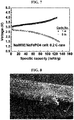
- Charge-discharge characteristics of the secondary battery obtained as such was examined by charging-discharging the battery at room temperature and at a current density of 0.1 C. Result is illustrated in FIG. 7 .
- the secondary battery shows discharge capacity of 135 mAh/g at 1.5 V, which is excellent.
- Li 1.3 Al 0.3 Ti 1.7 (PO 4 ) 3 (LTAP) was selected as a lithium conductive ceramic.
- 15 parts by weight of PVdF was selected as a polymer.
- the first solvent is prepared by mixing N-methyl-2-pyrrolidone (NMP) and acetone at a volume ratio of 1:3.
- NMP N-methyl-2-pyrrolidone
- An ionic liquid electrolyte is produced by dissolving 1 M lithium bis(fluorosulfonyl)imide (LiFSI) in an ionic liquid, N-methyl-N-butylpyrrolidinium bis(trifluoromethylsulfonyl)imide (Py 14 TFSI).
- a lithium ion conductive hybrid solid electrolyte was formed by applying 15 parts by weight of the ionic liquid electrolyte is applied to 85 parts by weight of the hybrid film to obtain a lithium ion conductive hybrid solid electrolyte.
- FIG. 8 is an SEM photograph of a shearing surface of the lithium ion conductive hybrid solid electrolyte produced to a thickness of 30 ⁇ m in Example 3 of the present invention. From FIG. 8 , it is confirmed that the polymer and the conductive ceramic were mixed well with each other.
- FIG. 9 is a TG graph showing thermal stability of the hybrid solid electrolyte obtained in Example 3. Referring to FIG. 9 , it could be confirmed that the hybrid solid electrolyte had thermal stability at 400°C or higher. This is further improved value compared with the hybrid solid electrolyte obtained in Example 1.
Landscapes
- Chemical & Material Sciences (AREA)
- Engineering & Computer Science (AREA)
- Manufacturing & Machinery (AREA)
- Chemical Kinetics & Catalysis (AREA)
- Electrochemistry (AREA)
- General Chemical & Material Sciences (AREA)
- Inorganic Chemistry (AREA)
- General Physics & Mathematics (AREA)
- Condensed Matter Physics & Semiconductors (AREA)
- Physics & Mathematics (AREA)
- Materials Engineering (AREA)
- Dispersion Chemistry (AREA)
- Secondary Cells (AREA)
- Conductive Materials (AREA)
Abstract
Description
- The present invention relates to a hybrid solid electrolyte for a secondary battery, having improved stability and electrochemical characteristics, and a manufacturing method thereof.
- Recently, substantive attention is given to large capacity batteries for use in automobiles and fixed batteries. There is more demand for large capacity batteries applicable to fixed storage batteries for electric automobiles than small batteries applicable to mobile devices. Next-generation secondary batteries are expected to have better stability and an extended life time.
- A liquid electrolyte such as a lithium secondary battery has been widely used for a commercially secondary battery. However, the liquid electrolyte is not satisfactory in terms of stability due to its high inflammability and low thermal stability.
- To improve stability of the lithium secondary battery, replacing the liquid electrolyte with a solid electrolyte was suggested. The solid electrolyte is a ceramic-based solid electrolyte. The solid electrolyte is advantageous in that it is light in weight, there is no concern of electrolyte leakage, and it has excellent variability. However, it is disadvantageous in that its ion conductivity at room temperature is low and its resistance at an interfacial with an electrode is high. Such property negatively affects battery performance.
- To achieve the objective of the present invention, provided is a hybrid solid electrolyte comprising: a hybrid film including (i) 60 to 100 parts by weight of an ion conductive ceramic and (ii) 1 to 40 parts by weight of a polymer; and a liquid electrolyte including (i) an ion compound selected from the group consisting of lithium ions and sodium ions and (ii) a solvent, wherein the hybrid film is impregnated with the liquid electrolyte.
- The hybrid solid electrolyte includes (i) 60 to 100 parts by weight of the hybrid film and (ii) 1 to 40 parts by weight of the liquid electrolyte.
- The lithium ions are derived from a lithium salt. The sodium ions are derived from a sodium salt. The liquid electrolyte is a solution obtained by dissolving 0.1-3M of lithium salt or 0.1-3M of sodium salt in the solvent. The solvent includes an ionic liquid.
- The hybrid solid electrolyte has a thickness of 10-150 µm. The hybrid solid electrolyte has a thermal stability at 400°C or more.
- Also provided is a secondary battery comprising the hybrid solid electrolyte according to the present invention.
- Furthermore, provided is a method for producing a hybrid solid electrolyte, comprising: mixing 60 to 100 parts by weight of an ion conductive ceramic and 1 to 40 parts by weight of a polymer to prepare a mixture slurry; making the mixture slurry into a film shape to obtain a hybrid film; and interfusing a liquid electrolyte into the hybrid film to form a hybrid solid electrolyte.
- The liquid electrolyte comprises an ionic liquid as a solvent. In the interfusing step, 60 to 100 parts by weight of the hybrid film is impregnated with 1 to 40 parts by weight of the liquid electrolyte.
- Hereinafter, the present invention will be described in more detail. A ceramic solid electrolyte has high ion conductivity and a high lithium (or sodium) ion transport rate. However, its electrochemical characteristics as a secondary battery are relatively inferior due to its high interfacial resistance. In contrast, a polymer solid electrolyte has good variability. However, it has low ion conductivity at room temperature, low electrochemical oxidation stability, and high resistance at an interfacial with electrodes.
- Tenacious studies have been made by the inventors to find a composite polymer electrolyte which has electrochemical characteristics appropriate for a battery. To meet this condition, the composite polymer electrolyte needs to have high stability, high ion conductivity at room temperature, and low interfacial resistance with an electrode. Finally, the inventors invented a hybrid solid electrolyte and arrived at the present invention. The hybrid solid electrolyte according to the present invention has thermal stability at 400°C or more, an electrochemical oxidation stability at 6 V or more, and low interfacial resistance.
- A hybrid solid electrolyte according to an embodiment of the present invention includes a hybrid film and a liquid electrolyte. The hybrid film includes (i) 60 to 100 parts by weight of an ion conductive ceramic and (ii) 1 to 40 parts by weight of a polymer. The liquid electrolyte includes (i) an ion compound selected from the group consisting of lithium ions and sodium ions and (ii) a solvent.
- The hybrid film is impregnated with the liquid electrolyte. The liquid electrolyte is absorbed into the hybrid film.
- The ion conductive ceramic may include Al2O3-based, SiO2-based, BaTiO3-based, TiO2-based ion conductive ceramics. In another embodiment, the ion conductive ceramic may include a lithium oxide-based ion conductive ceramic such as Li1.3Al0.3Ti1.7(PO4)3(LTAP), Li7La3Zr2O12(LLZO), Li5La3Ta2O12, and Li9SiAlO8. In yet another embodiment, the ion conductive ceramic may include a lithium sulfide-based compound such as Li10GeP2S12, Li2S-P2S5, Li2S-Ga2S3-GeS2. In yet another embodiment, the ion conductive ceramic may include a sodium oxide-based compound such as Na3Zr2Si2PO12.
- In yet another embodiment, the ion conductive ceramic can be selected from the group consisting of (i) an amorphous ion conductive material (e.g., phosphorus-based glass, oxide-based glass, oxide/sulfide based glass, etc.), (ii) a Na superionic conductor (e.g., NASICON), (iii) a sodium sulfide-based solid electrolyte, (iv) a sodium oxide-based solid electrolyte such as Na3Zr2 Si2PO12, and (v) a combination thereof.
- Preferably, the ion conductive ceramic may include: (i) a lithium oxide ceramic selected from the group consisting of Li1.3Al0.3Ti1.7(PO4)3, Li7La3Zr2O12, Li5La3 Ta2O12, Li9SiAlO8, and a combination thereof; (ii) a lithium sulfide ceramic selected from the group consisting of Li10GeP2S12, Li2S-P2S5, Li2S-Ga2S3-GeS2, and a combination thereof; (iii) a Na superionic conductor (NASICON); (iv) a sodium sulfide ceramic selected from the group consisting of Na2S-SiS2, Na2S-GeS2, and a combination thereof; (v) a sodium compound ceramic selected from the group consisting of NaTi2(PO4)3, NaFe2(PO4)3, Na2(SO4)3, Na3Zr2Si2PO12, and a combination thereof; or (vi) a combination thereof.
- Li1.3Al0.3Ti1.7(PO4)3(LTAP) or Na3Zr2Si2PO12 is more preferable as the ion conductive ceramic. When Li1.3Al0.3Ti1.7(PO4)3(LTAP) or Na3Zr2Si2PO12 is employed, it is easy to produce the hybrid solid electrolyte. In addition, the resultant hybrid solid electrolyte may have much improved ion conductivity.
- The polymer may be selected from the group consisting of a polyvinylidene fluoride (PVdF)-based polymer, a poly[vinylidenefluoride-co-trifluoroethylene](P(VDF-TrFE))-based polymer, a polyethylene glycol (PEO)-based polymer, a polyacrylonitrile (PAN)-based polymer, a poly(methyl methacrylate) [PMMA]-based polymer, a polyvinyl chloride-based polymer, a polyvinylpyrrolidone (PVP)-based polymer, a polyimide (PI)-based polymer, a polyethylene (PE)-based polymer, a polyurethane (PU)-based polymer, a polypropylene (PP)-based polymer, a poly(propylene oxide) [PPO]-based polymer, a poly(ethylene imine) [PEI]-based polymer, a poly(ethylene sulfide) [PES]-based polymer, a poly(vinyl acetate) [PVAc]-based polymer, a poly(ethylene succinate) [PESc]-based polymer, a polyester-based polymer, a polyamine-based polymer, a polysulfide-based polymer, a silicone-based polymer, siloxane-based polymer, and a combination thereof.
- A polymer including PVdF is preferable. A hybrid solid electrolyte employing PVdF has better ion conductivity, thermal stability, and electrochemical stability compared with others. The PVdF is excellent in absorbing liquid electrolyte, thereby having the hybrid film hybrid film sufficiently impregnated with the liquid electrolyte.
- A mixture ratio of the ion conductive ceramic : the polymer may be 60 to 100 parts by weight : 1 to 40 parts by weight, preferably, 60 to 78 parts by weight: 22 to 40 parts by weight, and more preferably 95 to 85 parts by weight: 5 to 15 parts by weight.
- When mixed at the above-mentioned ratio, the hybrid solid electrolyte shows excellent characteristics both in stability and in ion conductivity at room temperature. Under the mixture ratio condition, the ion conductive ceramic can be well dispersed into the hybrid film and a binding effect by the polymer is maximized. In addition, no leakage occurs. Thus, under the mixture ratio condition, the hybrid film can be sufficiently impregnated with the liquid electrolyte without a leakage.
- The hybrid film is obtained as follows. First, the ion conductive ceramic and the polymer are mixed with each other. An appropriate solvent can be added to the mixture (or a mixture slurry), if necessary. For example, a mixture of N-methyl-2-pyrrolidone (NMP) and acetone, whose mixture ratio is 1:3 in volume ratio, may serve as the solvent, but the solvent is not limited thereto. Then, the mixture is shaped into the hybrid film.
- The hybrid film, which includes an ion conductive ceramic and a polymer, alone may serve as a solid electrolyte in that it has excellent ion conductivity. However, for a better electrochemical performance as a battery, the hybrid film is impregnated with a liquid electrolyte so that the liquid electrolyte is absorbed into the hybrid film.
- The liquid electrolyte includes (i) lithium ions or sodium ions and (ii) a solvent. The lithium ions and the sodium ions may be derived from a lithium salt and a sodium salt, respectively, but not limited thereto. That is, any sort of lithium ions and any sort of sodium ions may be employed so long as it can be applicable to a secondary battery.
- The lithium salt may be selected from the group consisting of LiClO4, LiPF6, LiBF4, CF3SO2NLiSO2CF3 (LiTFSI), LiB(C2O4)2, Li[N(SO2F)2] (LiFSI), Li[B(C2O4)2], LiAsF, and a combination thereof. The sodium salt may be selected from the group consisting of NaClO4, NaBF4, NaPF4, NaPF6, NaAsF6, CF3SO2NNaSO2CF3 (NaTFSI), NaB(C2O4)2, Na[(C2F5)3PF3], Na[B(C2O4)2], Na[N(SO2F)2](NaFSI), NaN[SO2C2F5]2, and a combination thereof.
- As the solvent, a non-aqueous organic solvent may be used. The non-aqueous organic solvent may be selected from the group consisting of a carbonate-based solvent, an ester-based solvent, an ether-based solvent, a phosphate-based solvent, a ketone-based solvent, an alcohol-based solvent, and a combination thereof. In another embodiment, an aprotic solvent may also be employed as the solvent.
- In another embodiment, the solvent may be an ionic liquid. An ionic liquid is advantageous in that stability of an electrolyte, especially thermal stability, is further improved. Specifically, the ionic liquid may include an imidazolium-based ionic liquid, a pyridinium-based ionic liquid, a pyrrolidinium-based ionic liquid, an ammonium-based ionic liquid, a piperidinium-based ionic liquid, or a combination thereof.
- More specifically, the ionic liquid may include (i) a cation selected from the group consisting of an imidazolium-based ionic liquid, a pyridinium-based ionic liquid, a pyrrolidinium-based ionic liquid, an ammonium-based ionic liquid, a piperidinium-based ionic liquid, and a combination thereof, and (ii) an anion selected from the group consisting of BF4 -, PF6 -, AsF6 -, SbF6 -, AlCl4 -, HSO4 -, ClO4 -, Cl-, Br-, I-, SO4 -, CF3SO3 -, CF3CO2 -, (C2F5SO2)(CF3SO2)N-, NO3 -, Al2Cl7 -, CH3COO-, [N(SO2F)2]-, CH3SO3 -, CF3SO3, and a combination thereof.
- In another embodiment, the ionic liquid may be selected from the group consisting of N-methyl-N-butyl pyrrolidinium bis(trifluoromethylsulfonyl)imide, N-methyl-N-propylpyrrolidinium bis(trifluoromethanesulfonyl)imide, N-butyl-N-methylpyrrolidinium bis(3-trifluoromethylsulfonyl)imide, 1-butyl-3-methylimidazolium bis(trifluoromethylsulfonyl)imide, 1-ethyl-3-methylimidazolium bis(trifluoromethylsulfonyl)imide, and a combination thereof. Such ionic liquid is advantageous in improving stability of the hybrid solid electrolyte.
- The liquid electrolyte includes the lithium ions or the sodium ions which are dissolved in the solvent. When the hybrid solid electrolyte is made by infusing the liquid electrolyte into the hybrid film, the ion conductive ceramic's negative property such as high interfacial resistance can be alleviated. At the same time, polymer's disadvantageous property such as low ion conductivity at room temperature can also be subdued. Once being absorbed into the hybrid film, the liquid electrolyte is commingled with the polymer. Under this condition, the liquid electrolyte's negative property such as inflammability and leakage tendency can be effectively suppressed. As a result, the resulting hybrid solid electrolyte ends up high thermal stability and low interfacial resistance.
- The liquid electrolyte may be a solution obtained by dissolving 0.1 M-3M of lithium salt or 0.1 M-3M of sodium salt in a solvent. Preferably, the liquid electrolyte may be a solution obtained by dissolving 0.1 M to 2 M of the lithium salt or 0.1 M to 2 M of sodium salt in the solvent.
- The mixture ratio of the hybrid film and the liquid electrolyte may be 60 to 100 parts by weight and 1 to 40 parts by weight, respectively. When the amount of the liquid electrolyte used is less than 1 parts by weight, the interfacial resistance is too high. In contrast, when the amount of the liquid electrolyte used is more than 40 parts by weight, the above-mentioned problems which are found in a conventional liquid electrolyte battery, such as high inflammability and low thermal stability, persists.
- Preferably, the mixture ratio of the hybrid film and the liquid electrolyte may be 70 to 80 parts by weight and 10 to 20 parts by weight, respectively. At such mixture ratio, an optimum effect can be obtained of improving ion conductivity of the hybrid film and enhancing thermal stability of the liquid electrolyte at the same time.
- The hybrid solid electrolyte may be formed to a thickness of 10-150 µm, and preferably, 10-30 µm. It is confirmed from examination that a hybrid solid electrolyte as thin as 10-30 µm in thickness can have significantly high stability, especially high in thermally stability. It suggests that a hybrid solid electrolyte for use in a commercial secondary battery can be formed as thin as 10-30 µm in thickness. Specifically, the hybrid solid electrolyte may have excellent thermal stability at a temperature of 400°C or more.
- In addition, the hybrid solid electrolyte has excellent electrochemical stability. In an embodiment, the hybrid solid electrolyte has an electrochemical stability of 6 V or more.
- Furthermore, the hybrid solid electrolyte shows remarkably low interfacial resistance. In an embodiment, the hybrid solid electrolyte may have an interfacial resistance of 800 Ω or less.
- In the hybrid solid electrolyte of the present invention, the ion (Li or Na) conductive ceramic can contribute to improve ion conductivity and a transport rate of ion (Li or Na). The polymer effectively binds ceramic particles to each other. The liquid electrolyte improves ion conductivity, reduces interfacial resistance between ceramic particles, and also reduces interfacial resistance between the electrode and the electrolyte. Thus, the hybrid solid electrolyte, which is manufactured by a combination of the ceramic and the polymer, has excellent thermal and electrochemical stability. Even a small amount of liquid electrolyte can contribute to improve electrochemical characteristics of a secondary battery by reducing interfacial resistance.
- A secondary battery according to an embodiment of the present invention may include a cathode, an anode, and the above-described hybrid solid electrolyte interposed between the cathode and the anode.
- Any cathode, which is known as applicable to a lithium secondary battery or a sodium secondary battery, can serve as the cathode of the secondary battery according to an embodiment of the present invention. Likewise, any anode, which is known as applicable to a lithium secondary battery or a sodium secondary battery, can serve as the anode of the secondary battery according to an embodiment of the present invention.
- Thus, a detailed explanation will be omitted here on the cathode and the anode. The hybrid solid electrolyte is explained above. So, the description thereof will not be repeated here to avoid redundancy.
- According to an embodiment of the present invention, a lithium secondary battery may employ LiFePO4 as a cathode, Li metal an anode, and the above-mentioned hybrid solid electrolyte as an electrolyte. Upon such combination, thermal and electrochemical stability improve and interfacial resistance reduces. Thereby, resulting lithium secondary battery can have a high capacity of 150 mAh/g or more.
- In another embodiment, a sodium secondary battery may employ NaFePO4 as a cathode, Na metal as an anode, and the above-mentioned hybrid solid electrolyte as an electrolyte. Upon such combination, thermal and electrochemical stability improve and interfacial resistance reduces. Thereby, resulting lithium secondary battery can have a discharge capacity of 135 mAh/g or more.
- A method for producing a hybrid solid electrolyte according to an embodiment of the present invention includes: mixing 60 to 100 parts by weight of an ion conductive ceramic and 1 to 40 parts by weight of a polymer to prepare a mixture slurry; making the mixture slurry into a film shape to obtain a hybrid film; and interfusing a liquid electrolyte into the hybrid film to form a hybrid solid electrolyte.
- The explanation on the ion conductive ceramic, the polymer, a mixing ratio thereof, the hybrid film, the liquid electrolyte, the solvent thereof are already provided above. To avoid redundancy, the description thereof will not be repeated here.
- The hybrid film may be prepared by a printing method or a doctor blading method, i.e., a method of coating the mixture slurry onto a given medium and then drying the mixture slurry. However, the present invention is not limited thereto. Any method is applicable without particular limitation as long as the slurry is reduced into a film shape.
- The liquid electrolyte, in the infusing step, may employ an ionic liquid as a solvent. Detailed explanation on examples and preferable amounts of the ionic liquid is already provided above. To avoid redundancy, the explanation thereon will not be repeated here.
- In the interfusing step, 60 to 100 parts by weight of the hybrid film is impregnated with 1 to 40 parts by weight of the liquid electrolyte. To avoid redundancy, a detailed explanation on the mixture ratio and advantages thereof will not be repeated here.
- By employing a hybrid solid electrolyte of the present invention and a production method thereof, a secondary battery can have improved stability and electrochemical characteristics. The present invention can also provide a method of manufacturing a hybrid solid electrolyte for use in a secondary battery in a simplified manner. By employing a hybrid solid electrolyte according to the present invention, a lithium secondary battery or a sodium secondary battery can be obtained which has an excellent discharge capacity, low interfacial resistance, and high stability. That is, the secondary battery has improved characteristics both in stability and in electrochemical characteristics.
-
-
FIG. 1 is a schematic view of a hybrid solid electrolyte according to an embodiment of the present invention. -
FIG. 2 is a Scanning Electron Microscope-Energy-Dispersive X-ray (SEM-EDX) analysis data showing a cross-section of the hybrid solid electrolyte which is obtained in Example 1 and 2 of the present invention (the upper side: lithium ion conductive hybrid solid electrolyte, the lower side: sodium ion conductive hybrid solid electrolyte). -
FIG. 3 is a thermogravimetric (TG) graph showing thermal stability of the lithium ion conductive hybrid solid electrolyte, which is produced in Example 1 of the present invention. -
FIG. 4 is a linear sweep voltammetry (LVS) showing electrochemical stability of the lithium ion conductive hybrid solid electrolyte, which is produced in Example 1 of the present invention. -
FIG. 5 is a graph showing interfacial resistance characteristics of a battery, which employs the lithium ion conductive hybrid solid electrolyte produced in Example 1 of the present invention. -
FIG. 6 is a charge-discharge curve of a secondary battery, which employs the lithium ion conductive hybrid solid electrolyte produced in Example 1 of the present invention and LiFePO4 electrodes. -
FIG. 7 is a charge-discharge curve of a sodium battery, which employs (i) a sodium ion conductive hybrid solid electrolyte produced in Example 2 of the present invention and (ii) NaFePO4 as an electrode. -
FIG. 8 is an SEM photograph showing a cross section of the lithium ion conductive hybrid solid electrolyte produced in Example 3 of the present invention. -
FIG. 9 is a TG graph showing (i) thermal stability of a lithium ion conductive hybrid solid electrolyte (dotted line) produced in Example 3 of the present invention and (ii) thermal stability of a lithium ion conductive hybrid solid electrolyte (solid line) produced in Example 1 of the present invention. - Hereinafter, embodiments according to the present invention will be described in detail with reference to accompanying drawings to help understanding of the present invention. However, the embodiment described herein does not limit the scope of the present invention.
- A hybrid solid electrolyte was produced by the following method, e.g., by mixing a conductive ceramic, a polymer, and a liquid electrolyte. Physical properties thereof were evaluated. As described below, the hybrid solid electrolyte has excellent stability, good variability, and excellent electrochemical characteristics.
- A first solvent is prepared by mixing N-methyl-2-pyrrolidone (NMP) and acetone at a volume ratio of 1:3. 70 parts by weight of conductive ceramic and 15 parts by weight of polymer are poured into the first solvent to obtain a slurry. The slurry is shaped into a film using a printing method or a doctor blading method. Using this method, the slurry was flatly applied onto a given medium and underwent a phase separation. As a result, a hybrid film is obtained. Then, a liquid electrolyte is prepared.
- The hybrid film obtained as such is impregnated with the liquid electrolyte, resulting in a hybrid solid electrolyte shown in
FIG. 1 . 15 parts by weight of liquid electrolyte (or an ionic liquid electrolyte) is interfused into 85 parts by weight of the hybrid film. - A second battery is manufactured using the hybrid film obtained as such. Interfacial resistance, charge-discharge tests, and the like were examined to evaluate electrochemical characteristics of the second battery obtained as such.
- 70 parts by weight of Li1.3Al0.3Ti1.7(PO4)3 (LTAP) was selected as a lithium conductive ceramic. 15 parts by weight of Polyvinylidene fluoride (PVdF) was selected as a polymer.
- As mentioned above, the first solvent is prepared by mixing N-methyl-2-pyrrolidone (NMP) and acetone at a volume ratio of 1:3. 70 parts by weight of Li1.3Al0.3Ti1.7(PO4)3 (LTAP) and 15 parts by weight of Polyvinylidene fluoride (PVdF) were poured into the first solvent. Thereby, a slurry is obtained. The slurry is shaped into a hybrid film.
- A second solvent is prepared by mixing ethylene carbonate (EC) and dimethyl carbonate (DMC) at a volume ratio of 1 : 1.
- 1 M LiPF6 is added to the second solvent to obtain a liquid electrolyte. The liquid electrolyte obtained as such is examined as Comparative. That is, the liquid electrolyte, which is not combined with the hybrid film, is employed as the Comparative Example. Examination result on the Comparative Example is shown in
FIG. 3 . - 15 parts by weight of the liquid electrolyte is applied to 85 parts by weight of the hybrid film to obtain a lithium ion conductive hybrid solid electrolyte.
- The lithium ion conductive hybrid solid electrolyte obtained and its examination result is provided as Example 1 in
FIGS. 2-4 . -
FIG. 2 is a SEM-EDX analysis data showing a cross-section of the lithium ion conductive hybrid solid electrolyte which is obtained in Example 1 of the present invention. - Referring to the upper side of
FIG. 2 , the hybrid solid electrolyte, which is obtained in Example 1, is formed into a thickness of 30 µm. It confirmed from EDX, LTAPO and the polymer were uniformly mixed. - Thermal stability of Comparative Example and Example 1 is examined and shown in
FIG. 3 . Electrochemical stability of Example 1 is examined and shown inFIG. 4 . - Specifically, a TG graph evaluating thermal stability of the lithium ion conductive hybrid solid electrolyte and a linear sweep voltammetry (LSV) evaluating electrochemical stability of the lithium ion conductive hybrid solid electrolyte are illustrated in
FIGS. 3 and 4 , respectively. - Referring to
FIG. 3 , the liquid electrolyte, which is not combined with the hybrid film and serves as the Comparative Example, was decomposed at 120°C. In contrast, the hybrid solid electrolyte of the present invention showed high thermal stability even at 400°C or more. - For the hybrid solid electrolyte, a slight decrease in weight is observed at 180°C. This is due to the presence of the liquid electrolyte absorbed in the hybrid solid electrolyte.
- From the graph of linear sweep voltammetry shown in
FIG. 4 , it is also confirmed that the hybrid solid electrolyte has excellent stability of 6 V or more. - A secondary battery was manufactured using (i) LiF3PO4 as a cathode, (ii) using Li metal, which has the lowest potential, as an anode, and (iii) using the lithium ion conductive hybrid solid electrolyte, which is produced above, as an electrolyte. Physical properties thereof were evaluated. The lithium ion conductive hybrid solid electrolyte employs (Li1.3Al0.3Ti1.7(PO4)3) as the lithium ion conductive ceramic.
- The interfacial resistance of the secondary battery manufactured as such was measured. As illustrated in
FIG. 5 , the secondary battery showed low resistance of 800 Ω or less. - Charge-discharge characteristics of the secondary battery were examined by charging-discharging the battery at room temperature and at a current density of 0.1 C. Referring to
FIG. 6 , discharge capacity was 150 mAh/g, which is pretty high. - 70 parts by weight of Na3Zr2Si2PO12 was selected as a sodium conductive ceramic 15 parts by weight of PVdF was selected as a polymer.
- The first solvent is prepared by mixing N-methyl-2-pyrrolidone (NMP) and acetone at a volume ratio of 1:3. 70 parts by weight of Na3Zr2Si2PO12 and 15 parts by weight of Polyvinylidene fluoride (PVdF) were poured into the first solvent. Thereby, a slurry is obtained. The slurry is shaped into a hybrid film.
- Tetraethylene glycol dimethyl ether (TEGDME) solvent is prepared as a second solvent.
- 1 M NaCF3SO3 (sodium triflate) is added to the second solvent to obtain a liquid electrolyte. 15 parts by weight of the liquid electrolyte is applied to 85 parts by weight of the hybrid film to obtain a sodium ion conductive hybrid solid electrolyte.
- The sodium ion conductive hybrid solid electrolyte was examined using EDX. Results are shown in
FIG. 2 . Referring to the down side ofFIG. 2 , the hybrid solid electrolyte was formed into a thickness of 30 µm. FromFIG. 2 , it is confirmed that the ceramic and the polymer were uniformly mixed with each other. - A secondary battery was manufactured by using (i) NaFePO4 as a cathode, (ii) using Na metal as an anode, and (iii) using the sodium ion conductive hybrid solid electrolyte produced above as an electrolyte. Physical properties thereof were evaluated.
- As mentioned above, the sodium ion conductive hybrid solid electrolyte employs sodium conductive ceramic (Na3Zr2Si2PO12) as the ionic conductive ceramic.
- Charge-discharge characteristics of the secondary battery obtained as such was examined by charging-discharging the battery at room temperature and at a current density of 0.1 C. Result is illustrated in
FIG. 7 . Referring toFIG. 7 , the secondary battery shows discharge capacity of 135 mAh/g at 1.5 V, which is excellent. - 70 parts by weight of Li1.3Al0.3Ti1.7(PO4)3 (LTAP) was selected as a lithium conductive ceramic. 15 parts by weight of PVdF was selected as a polymer.
- The first solvent is prepared by mixing N-methyl-2-pyrrolidone (NMP) and acetone at a volume ratio of 1:3.
- 70 parts by weight of Li1.3Al0.3Ti1.7(PO4)3 (LTAP) and 15 parts by weight of Polyvinylidene fluoride (PVdF) were poured into the first solvent. Thereby, a slurry is obtained. The slurry is shaped into a hybrid film.
- An ionic liquid electrolyte is produced by dissolving 1 M lithium bis(fluorosulfonyl)imide (LiFSI) in an ionic liquid, N-methyl-N-butylpyrrolidinium bis(trifluoromethylsulfonyl)imide (Py14TFSI).
- A lithium ion conductive hybrid solid electrolyte was formed by applying 15 parts by weight of the ionic liquid electrolyte is applied to 85 parts by weight of the hybrid film to obtain a lithium ion conductive hybrid solid electrolyte.
-
FIG. 8 is an SEM photograph of a shearing surface of the lithium ion conductive hybrid solid electrolyte produced to a thickness of 30 µm in Example 3 of the present invention. FromFIG. 8 , it is confirmed that the polymer and the conductive ceramic were mixed well with each other. -
FIG. 9 is a TG graph showing thermal stability of the hybrid solid electrolyte obtained in Example 3. Referring toFIG. 9 , it could be confirmed that the hybrid solid electrolyte had thermal stability at 400°C or higher. This is further improved value compared with the hybrid solid electrolyte obtained in Example 1. - The scope of the present invention is not limited to the above-mentioned Examples. It should be understood that many variations and modifications, which a person having an ordinary skill in the art can make based on above disclosure, also fall within the right scope of the present invention.
Claims (8)
- A hybrid solid electrolyte comprising:a hybrid film including (i) 60 to 100 parts by weight of an ion conductive ceramic and (ii) 1 to 40 parts by weight of a polymer; anda liquid electrolyte including (i) an ion compound selected from the group consisting of lithium ions and sodium ions and (ii) a solvent,wherein the hybrid film is impregnated with the liquid electrolyte.
- The hybrid solid electrolyte of claim 1,
wherein the hybrid solid electrolyte includes (i) 60 to 100 parts by weight of the hybrid film and (ii) 1 to 40 parts by weight of the liquid electrolyte. - The hybrid solid electrolyte of claim 1,wherein the lithium ions are derived from a lithium salt,wherein the sodium ions are derived from a sodium salt,wherein the liquid electrolyte is a solution obtained by dissolving 0.1-3M of lithium salt or 0.1-3M of sodium salt in the solvent,wherein the solvent includes an ionic liquid.
- The hybrid solid electrolyte of claim 1,
wherein the hybrid solid electrolyte has a thickness of 10-150 µm. - The hybrid solid electrolyte of claim 1,
wherein the hybrid solid electrolyte has a thermal stability at 400°C or more. - A secondary battery comprising the hybrid solid electrolyte according to claim 1.
- A method for producing a hybrid solid electrolyte, comprising:mixing 60 to 100 parts by weight of an ion conductive ceramic and 1 to 40 parts by weight of a polymer to prepare a mixture slurry;making the mixture slurry into a film shape to obtain a hybrid film; andinterfusing a liquid electrolyte into the hybrid film to form a hybrid solid electrolyte.
- The method of claim 7,wherein the liquid electrolyte comprises an ionic liquid as a solvent, andwherein, in the interfusing step, 60 to 100 parts by weight of the hybrid film is impregnated with 1 to 40 parts by weight of the liquid electrolyte.
Priority Applications (1)
| Application Number | Priority Date | Filing Date | Title |
|---|---|---|---|
| SI201631889T SI3518333T1 (en) | 2016-09-21 | 2016-10-06 | Hybrid solid electrolyte for secondary battery |
Applications Claiming Priority (2)
| Application Number | Priority Date | Filing Date | Title |
|---|---|---|---|
| KR1020160120694A KR101879503B1 (en) | 2016-09-21 | 2016-09-21 | Hybrid solid electrolyte for rechargeable batteries and preparation method of the same |
| PCT/KR2016/011180 WO2018056491A1 (en) | 2016-09-21 | 2016-10-06 | Hybrid solid electrolyte for secondary battery and manufacturing method therefor |
Publications (3)
| Publication Number | Publication Date |
|---|---|
| EP3518333A1 true EP3518333A1 (en) | 2019-07-31 |
| EP3518333A4 EP3518333A4 (en) | 2020-04-29 |
| EP3518333B1 EP3518333B1 (en) | 2024-12-25 |
Family
ID=61690903
Family Applications (1)
| Application Number | Title | Priority Date | Filing Date |
|---|---|---|---|
| EP16916864.8A Active EP3518333B1 (en) | 2016-09-21 | 2016-10-06 | Hybrid solid electrolyte for secondary battery |
Country Status (13)
| Country | Link |
|---|---|
| US (1) | US10923766B2 (en) |
| EP (1) | EP3518333B1 (en) |
| JP (2) | JP7046075B2 (en) |
| KR (1) | KR101879503B1 (en) |
| CN (2) | CN119009082A (en) |
| DK (1) | DK3518333T3 (en) |
| FI (1) | FI3518333T3 (en) |
| HU (1) | HUE070013T2 (en) |
| LT (1) | LT3518333T (en) |
| PL (1) | PL3518333T3 (en) |
| PT (1) | PT3518333T (en) |
| SI (1) | SI3518333T1 (en) |
| WO (1) | WO2018056491A1 (en) |
Cited By (1)
| Publication number | Priority date | Publication date | Assignee | Title |
|---|---|---|---|---|
| WO2021138370A1 (en) * | 2019-12-30 | 2021-07-08 | The Board Of Trustees Of The Leland Stanford Junior University | High safety and high capacity lithium metal batteries in ionic liquid electrolyte with a sodium additive |
Families Citing this family (17)
| Publication number | Priority date | Publication date | Assignee | Title |
|---|---|---|---|---|
| US11532836B2 (en) | 2018-10-12 | 2022-12-20 | Samsung Electronics Co., Ltd. | Composite electrolyte, lithium metal battery comprising the same, and method of preparing the composite electrolyte |
| KR102219741B1 (en) * | 2019-03-05 | 2021-02-23 | 김재광 | Preparation of Hybrid Solid Electrolyte and All Solid state Battery Using the Same |
| CN111799502B (en) * | 2019-04-08 | 2022-03-11 | 北京理工大学 | Garnet-type solid-state composite electrolyte, preparation method and application |
| TWI737011B (en) * | 2019-10-22 | 2021-08-21 | 輝能科技股份有限公司 | Adjusting material for contact surface of solid electrolyte and composite electrolyte system thereof |
| WO2021119066A1 (en) * | 2019-12-09 | 2021-06-17 | Trustees Of Dartmouth College | Polyester-based solid polymer composite electrolytes for energy storage devices |
| CN111106380B (en) * | 2019-12-30 | 2020-12-15 | 华南师范大学 | A kind of preparation method of solid electrolyte with surface coating and solid electrolyte battery |
| US20230231272A1 (en) * | 2020-05-26 | 2023-07-20 | Energy11 Co., Ltd. | Composite solid electrolyte separation membrane using inorganic fiber and secondary battery using the same |
| CN111987356A (en) * | 2020-08-31 | 2020-11-24 | 上海空间电源研究所 | A long-term cycle sodium fluoride secondary battery and preparation method |
| KR20220076236A (en) * | 2020-11-30 | 2022-06-08 | 청주대학교 산학협력단 | Preparation of ceramic solid electrolyte |
| CN112886052A (en) * | 2021-03-12 | 2021-06-01 | 昆山宝创新能源科技有限公司 | Composite electrolyte material, preparation method thereof and quasi-solid battery |
| WO2024030111A2 (en) * | 2021-03-16 | 2024-02-08 | Alexander Kosyakov | A composite solid electrolyte |
| KR102851208B1 (en) * | 2022-05-24 | 2025-08-26 | 포항공과대학교 산학협력단 | Liquid-solid composite electrolyte, manufacturing method thereof, and use thereof |
| CN118315654A (en) | 2023-01-06 | 2024-07-09 | 通用汽车环球科技运作有限责任公司 | Free-standing gel films for electrochemical cells |
| KR102878794B1 (en) * | 2023-01-16 | 2025-10-29 | 재단법인차세대융합기술연구원 | Deliquescent dough electrolyte-based zinc-air battery with self-humidification |
| CN117790888B (en) * | 2024-01-04 | 2024-10-22 | 广东工业大学 | Solid electrolyte and preparation method thereof |
| KR20260002017A (en) * | 2024-06-28 | 2026-01-06 | 주식회사 덕산퓨처셀 | Manufacturing Method of All-Solid Electrolyte and Secondary Batteries Using the Same |
| CN119069776B (en) * | 2024-11-01 | 2025-05-02 | 帕瓦(诸暨)固态钠能有限公司 | Solid electrolyte membrane and preparation method and application thereof |
Family Cites Families (20)
| Publication number | Priority date | Publication date | Assignee | Title |
|---|---|---|---|---|
| EP1290749A4 (en) * | 2000-05-24 | 2004-09-22 | Finecell Co Ltd | MICROPOROUS MINERAL SOLID ELECTROLYTES AND METHODS OF PREPARATION |
| KR20030007659A (en) * | 2002-11-20 | 2003-01-23 | 주식회사 파인셀 | Microporous Inorganic Solid Electrolytes and Methods for Preparing Them |
| DE102004018929A1 (en) * | 2004-04-20 | 2005-11-17 | Degussa Ag | Electrolyte composition and its use as electrolyte material for electrochemical energy storage systems |
| KR100739337B1 (en) * | 2004-09-02 | 2007-07-12 | 주식회사 엘지화학 | Organic / inorganic composite porous film and electrochemical device using same |
| JP5226967B2 (en) | 2007-04-27 | 2013-07-03 | 株式会社オハラ | Lithium secondary battery and electrode for lithium secondary battery |
| FR2961634B1 (en) * | 2010-06-17 | 2013-02-15 | Centre Nat Rech Scient | PROCESS FOR THE PRODUCTION OF A LITHIUM OR SODIUM BATTERY |
| KR20120092918A (en) * | 2011-02-14 | 2012-08-22 | 한양대학교 산학협력단 | Polymer composite electrolyte for rechargeable lithium battery and rechargeable lithium battery including same |
| JP5664864B2 (en) * | 2011-03-07 | 2015-02-04 | 日産化学工業株式会社 | Gel electrolyte |
| CN102244292A (en) * | 2011-06-09 | 2011-11-16 | 华南师范大学 | Lithium ion battery ionic liquid based gel polymer electrolyte as well as preparation and applications thereof |
| KR101987008B1 (en) * | 2012-06-15 | 2019-06-12 | 한국전자통신연구원 | Solid polymer electrolytes, methods for manufacturing the same, and lithum cell including thereof |
| DE102012022607A1 (en) * | 2012-11-19 | 2014-05-22 | Fraunhofer-Gesellschaft zur Förderung der angewandten Forschung e.V. | Solid / gel electrolyte accumulator with inorganic-organic hybrid polymer binder and process for its preparation |
| KR102047388B1 (en) * | 2013-02-14 | 2019-11-21 | 캘리포니아 인스티튜트 오브 테크놀로지 | Crosslinked polymer electrolyte |
| JP6081392B2 (en) | 2013-04-04 | 2017-02-15 | 本田技研工業株式会社 | Electrolyte-positive electrode structure and lithium ion secondary battery including the same |
| KR101518587B1 (en) * | 2013-09-30 | 2015-05-07 | 주식회사 포스코 | Hybrid electrolyte, method for manufacturing thereof and flexble lithium-ion battery comprising the same |
| KR101556701B1 (en) * | 2013-10-04 | 2015-10-02 | 한국기계연구원 | Method of manufacturing solid electrolyte-lithium ion conductivity polymer composite film |
| JP6081400B2 (en) * | 2014-03-18 | 2017-02-15 | 本田技研工業株式会社 | A solid electrolyte, a composite electrolyte, and a lithium ion secondary battery including the same. |
| JP6007211B2 (en) * | 2014-07-04 | 2016-10-12 | 本田技研工業株式会社 | Lithium ion secondary battery |
| KR101747864B1 (en) * | 2014-08-28 | 2017-06-27 | 삼성전자주식회사 | Composite electrolyte, and lithium battery comprising electrolyte |
| KR101704172B1 (en) * | 2015-03-09 | 2017-02-07 | 현대자동차주식회사 | All-solid-state batteries containing nano solid electrolyte and method of manufacturing the same |
| KR101796749B1 (en) * | 2015-12-24 | 2017-11-10 | 주식회사 포스코 | Ceramic composite electrolyte, method for manufacturing the same, and lithium secondary battery including the same |
-
2016
- 2016-09-21 KR KR1020160120694A patent/KR101879503B1/en active Active
- 2016-10-06 PL PL16916864.8T patent/PL3518333T3/en unknown
- 2016-10-06 FI FIEP16916864.8T patent/FI3518333T3/en active
- 2016-10-06 LT LTEPPCT/KR2016/011180T patent/LT3518333T/en unknown
- 2016-10-06 CN CN202411221347.9A patent/CN119009082A/en active Pending
- 2016-10-06 CN CN201680089445.9A patent/CN109792077A/en active Pending
- 2016-10-06 HU HUE16916864A patent/HUE070013T2/en unknown
- 2016-10-06 DK DK16916864.8T patent/DK3518333T3/en active
- 2016-10-06 PT PT169168648T patent/PT3518333T/en unknown
- 2016-10-06 JP JP2019536797A patent/JP7046075B2/en active Active
- 2016-10-06 WO PCT/KR2016/011180 patent/WO2018056491A1/en not_active Ceased
- 2016-10-06 SI SI201631889T patent/SI3518333T1/en unknown
- 2016-10-06 EP EP16916864.8A patent/EP3518333B1/en active Active
-
2019
- 2019-03-20 US US16/358,909 patent/US10923766B2/en active Active
-
2021
- 2021-03-17 JP JP2021044085A patent/JP2021101428A/en active Pending
Cited By (1)
| Publication number | Priority date | Publication date | Assignee | Title |
|---|---|---|---|---|
| WO2021138370A1 (en) * | 2019-12-30 | 2021-07-08 | The Board Of Trustees Of The Leland Stanford Junior University | High safety and high capacity lithium metal batteries in ionic liquid electrolyte with a sodium additive |
Also Published As
| Publication number | Publication date |
|---|---|
| JP7046075B2 (en) | 2022-04-01 |
| JP2021101428A (en) | 2021-07-08 |
| CN119009082A (en) | 2024-11-22 |
| KR101879503B1 (en) | 2018-07-18 |
| FI3518333T3 (en) | 2025-02-03 |
| JP2019530195A (en) | 2019-10-17 |
| PT3518333T (en) | 2025-02-05 |
| CN109792077A (en) | 2019-05-21 |
| LT3518333T (en) | 2025-02-10 |
| WO2018056491A1 (en) | 2018-03-29 |
| EP3518333B1 (en) | 2024-12-25 |
| SI3518333T1 (en) | 2025-03-31 |
| EP3518333A4 (en) | 2020-04-29 |
| DK3518333T3 (en) | 2025-02-03 |
| HUE070013T2 (en) | 2025-05-28 |
| PL3518333T3 (en) | 2025-03-24 |
| US20190260077A1 (en) | 2019-08-22 |
| KR20180032037A (en) | 2018-03-29 |
| US10923766B2 (en) | 2021-02-16 |
Similar Documents
| Publication | Publication Date | Title |
|---|---|---|
| US10923766B2 (en) | Hybrid solid electrolyte for secondary battery and manufacturing method thereof | |
| KR102571111B1 (en) | Hybrid Solid State Electrolyte for Lithium Secondary Battery | |
| CN110010956B (en) | Non-negative electrode lithium metal battery and manufacturing method thereof | |
| Gu et al. | Recent progress in liquid electrolyte-based Li–S batteries: shuttle problem and solutions | |
| KR102519182B1 (en) | Membrane-electrode assembly for lithium battery, preparing method thereof, and lithium battery including the same | |
| CN108886164B (en) | A composite electrolyte for secondary battery with multi-layer structure | |
| US11777145B2 (en) | Gel composite cathode for solid-state batteries and methods of manufacturing thereof | |
| EP2741362B1 (en) | Electrolyte for rechargeable lithium battery and rechargeable lithium battery including the same | |
| EP2833468B1 (en) | Non-aqueous electrolyte solution for secondary batteries, and lithium-ion secondary battery | |
| KR102592147B1 (en) | Composite separator, preparing method thereof, and lithium secondary battery including the same | |
| KR102255538B1 (en) | Polymer electrolyte for secondary battery and secondary battery comprising the same | |
| KR20160136686A (en) | Lithium metal battery | |
| CN112805848A (en) | Solid Polymer Matrix Electrolyte (PME) for rechargeable lithium batteries and batteries made therewith | |
| DE102020134460A1 (en) | ELECTROLYTE FOR GRAPHITE BATTERIES WITH HIGH ENERGY DENSITY | |
| EP3605702A2 (en) | Multi-layer structured composite electrolyte and secondary battery using same | |
| US20170345581A1 (en) | Electrolyte composition comprising fluorinated carbonate, and battery comprising the same | |
| EP3614479A1 (en) | Member for electrochemical devices, and electrochemical device | |
| KR20180036410A (en) | All solid state battery | |
| KR102812062B1 (en) | Electrode material comprising layered potassium metal oxide, electrode comprising the electrode material and use of the electrode material in electrochemistry | |
| KR20200089624A (en) | Additive for nonaqueous electrolyte, nonaqueous electrolyte for lithium secondary battery comprising the same, and lithium secondary battery | |
| DE102022117456A1 (en) | GEL POLYMER ELECTROLYTE FOR ELECTROCHEMICAL CELLS | |
| KR20210011342A (en) | Lithium secondary battery | |
| KR20210114026A (en) | Hybrid solid electrolytes for all-solid-state cells | |
| KR20240166405A (en) | Positive electrode for solid state batteries and solid-state batteries comprising the same | |
| KR102327722B1 (en) | Composite cathode material, and secondary cathode comprising the same and preparation method thereof |
Legal Events
| Date | Code | Title | Description |
|---|---|---|---|
| STAA | Information on the status of an ep patent application or granted ep patent |
Free format text: STATUS: THE INTERNATIONAL PUBLICATION HAS BEEN MADE |
|
| PUAI | Public reference made under article 153(3) epc to a published international application that has entered the european phase |
Free format text: ORIGINAL CODE: 0009012 |
|
| STAA | Information on the status of an ep patent application or granted ep patent |
Free format text: STATUS: REQUEST FOR EXAMINATION WAS MADE |
|
| 17P | Request for examination filed |
Effective date: 20190404 |
|
| AK | Designated contracting states |
Kind code of ref document: A1 Designated state(s): AL AT BE BG CH CY CZ DE DK EE ES FI FR GB GR HR HU IE IS IT LI LT LU LV MC MK MT NL NO PL PT RO RS SE SI SK SM TR |
|
| AX | Request for extension of the european patent |
Extension state: BA ME |
|
| DAV | Request for validation of the european patent (deleted) | ||
| DAX | Request for extension of the european patent (deleted) | ||
| A4 | Supplementary search report drawn up and despatched |
Effective date: 20200326 |
|
| RIC1 | Information provided on ipc code assigned before grant |
Ipc: H01M 10/0562 20100101AFI20200321BHEP Ipc: H01M 10/0525 20100101ALI20200321BHEP |
|
| STAA | Information on the status of an ep patent application or granted ep patent |
Free format text: STATUS: EXAMINATION IS IN PROGRESS |
|
| 17Q | First examination report despatched |
Effective date: 20220818 |
|
| GRAP | Despatch of communication of intention to grant a patent |
Free format text: ORIGINAL CODE: EPIDOSNIGR1 |
|
| STAA | Information on the status of an ep patent application or granted ep patent |
Free format text: STATUS: GRANT OF PATENT IS INTENDED |
|
| INTG | Intention to grant announced |
Effective date: 20240314 |
|
| RAP1 | Party data changed (applicant data changed or rights of an application transferred) |
Owner name: DUKSAN FUTURECELL CO., LTD |
|
| GRAS | Grant fee paid |
Free format text: ORIGINAL CODE: EPIDOSNIGR3 |
|
| GRAJ | Information related to disapproval of communication of intention to grant by the applicant or resumption of examination proceedings by the epo deleted |
Free format text: ORIGINAL CODE: EPIDOSDIGR1 |
|
| GRAL | Information related to payment of fee for publishing/printing deleted |
Free format text: ORIGINAL CODE: EPIDOSDIGR3 |
|
| STAA | Information on the status of an ep patent application or granted ep patent |
Free format text: STATUS: EXAMINATION IS IN PROGRESS |
|
| GRAP | Despatch of communication of intention to grant a patent |
Free format text: ORIGINAL CODE: EPIDOSNIGR1 |
|
| STAA | Information on the status of an ep patent application or granted ep patent |
Free format text: STATUS: GRANT OF PATENT IS INTENDED |
|
| INTC | Intention to grant announced (deleted) | ||
| INTG | Intention to grant announced |
Effective date: 20240726 |
|
| GRAA | (expected) grant |
Free format text: ORIGINAL CODE: 0009210 |
|
| STAA | Information on the status of an ep patent application or granted ep patent |
Free format text: STATUS: THE PATENT HAS BEEN GRANTED |
|
| AK | Designated contracting states |
Kind code of ref document: B1 Designated state(s): AL AT BE BG CH CY CZ DE DK EE ES FI FR GB GR HR HU IE IS IT LI LT LU LV MC MK MT NL NO PL PT RO RS SE SI SK SM TR |
|
| P01 | Opt-out of the competence of the unified patent court (upc) registered |
Free format text: CASE NUMBER: APP_61406/2024 Effective date: 20241115 |
|
| REG | Reference to a national code |
Ref country code: GB Ref legal event code: FG4D |
|
| REG | Reference to a national code |
Ref country code: CH Ref legal event code: EP |
|
| REG | Reference to a national code |
Ref country code: IE Ref legal event code: FG4D |
|
| REG | Reference to a national code |
Ref country code: DE Ref legal event code: R096 Ref document number: 602016090765 Country of ref document: DE |
|
| REG | Reference to a national code |
Ref country code: FI Ref legal event code: FGE Ref country code: DK Ref legal event code: T3 Effective date: 20250129 |
|
| REG | Reference to a national code |
Ref country code: PT Ref legal event code: SC4A Ref document number: 3518333 Country of ref document: PT Date of ref document: 20250205 Kind code of ref document: T Free format text: AVAILABILITY OF NATIONAL TRANSLATION Effective date: 20250130 |
|
| REG | Reference to a national code |
Ref country code: NL Ref legal event code: FP |
|
| REG | Reference to a national code |
Ref country code: SE Ref legal event code: TRGR |
|
| REG | Reference to a national code |
Ref country code: EE Ref legal event code: FG4A Ref document number: E024886 Country of ref document: EE Effective date: 20250115 |
|
| PG25 | Lapsed in a contracting state [announced via postgrant information from national office to epo] |
Ref country code: GR Free format text: LAPSE BECAUSE OF FAILURE TO SUBMIT A TRANSLATION OF THE DESCRIPTION OR TO PAY THE FEE WITHIN THE PRESCRIBED TIME-LIMIT Effective date: 20250326 |
|
| PG25 | Lapsed in a contracting state [announced via postgrant information from national office to epo] |
Ref country code: RS Free format text: LAPSE BECAUSE OF FAILURE TO SUBMIT A TRANSLATION OF THE DESCRIPTION OR TO PAY THE FEE WITHIN THE PRESCRIBED TIME-LIMIT Effective date: 20250325 |
|
| REG | Reference to a national code |
Ref country code: HU Ref legal event code: AG4A Ref document number: E070013 Country of ref document: HU |
|
| PG25 | Lapsed in a contracting state [announced via postgrant information from national office to epo] |
Ref country code: SM Free format text: LAPSE BECAUSE OF FAILURE TO SUBMIT A TRANSLATION OF THE DESCRIPTION OR TO PAY THE FEE WITHIN THE PRESCRIBED TIME-LIMIT Effective date: 20241225 |
|
| PG25 | Lapsed in a contracting state [announced via postgrant information from national office to epo] |
Ref country code: ES Free format text: LAPSE BECAUSE OF FAILURE TO SUBMIT A TRANSLATION OF THE DESCRIPTION OR TO PAY THE FEE WITHIN THE PRESCRIBED TIME-LIMIT Effective date: 20241225 |
|
| PG25 | Lapsed in a contracting state [announced via postgrant information from national office to epo] |
Ref country code: IS Free format text: LAPSE BECAUSE OF FAILURE TO SUBMIT A TRANSLATION OF THE DESCRIPTION OR TO PAY THE FEE WITHIN THE PRESCRIBED TIME-LIMIT Effective date: 20250425 |
|
| PG25 | Lapsed in a contracting state [announced via postgrant information from national office to epo] |
Ref country code: RO Free format text: LAPSE BECAUSE OF FAILURE TO SUBMIT A TRANSLATION OF THE DESCRIPTION OR TO PAY THE FEE WITHIN THE PRESCRIBED TIME-LIMIT Effective date: 20241225 |
|
| PG25 | Lapsed in a contracting state [announced via postgrant information from national office to epo] |
Ref country code: SK Free format text: LAPSE BECAUSE OF FAILURE TO SUBMIT A TRANSLATION OF THE DESCRIPTION OR TO PAY THE FEE WITHIN THE PRESCRIBED TIME-LIMIT Effective date: 20241225 |
|
| PG25 | Lapsed in a contracting state [announced via postgrant information from national office to epo] |
Ref country code: CZ Free format text: LAPSE BECAUSE OF FAILURE TO SUBMIT A TRANSLATION OF THE DESCRIPTION OR TO PAY THE FEE WITHIN THE PRESCRIBED TIME-LIMIT Effective date: 20241225 |
|
| REG | Reference to a national code |
Ref country code: DE Ref legal event code: R097 Ref document number: 602016090765 Country of ref document: DE |
|
| PLBE | No opposition filed within time limit |
Free format text: ORIGINAL CODE: 0009261 |
|
| STAA | Information on the status of an ep patent application or granted ep patent |
Free format text: STATUS: NO OPPOSITION FILED WITHIN TIME LIMIT |
|
| 26N | No opposition filed |
Effective date: 20250926 |
|
| PGFP | Annual fee paid to national office [announced via postgrant information from national office to epo] |
Ref country code: DE Payment date: 20251125 Year of fee payment: 10 |
|
| PGFP | Annual fee paid to national office [announced via postgrant information from national office to epo] |
Ref country code: GB Payment date: 20251125 Year of fee payment: 10 |
|
| PGFP | Annual fee paid to national office [announced via postgrant information from national office to epo] |
Ref country code: NO Payment date: 20251202 Year of fee payment: 10 |
|
| PGFP | Annual fee paid to national office [announced via postgrant information from national office to epo] |
Ref country code: HU Payment date: 20251211 Year of fee payment: 10 |
|
| PGFP | Annual fee paid to national office [announced via postgrant information from national office to epo] |
Ref country code: SE Payment date: 20251128 Year of fee payment: 10 |
|
| PGFP | Annual fee paid to national office [announced via postgrant information from national office to epo] |
Ref country code: PL Payment date: 20251204 Year of fee payment: 10 |
|
| PG25 | Lapsed in a contracting state [announced via postgrant information from national office to epo] |
Ref country code: HR Free format text: LAPSE BECAUSE OF FAILURE TO SUBMIT A TRANSLATION OF THE DESCRIPTION OR TO PAY THE FEE WITHIN THE PRESCRIBED TIME-LIMIT Effective date: 20241225 |
|
| REG | Reference to a national code |
Ref country code: LT Ref legal event code: MM4D Effective date: 20251006 |