EP3516055B1 - Scalable biotechnological production of dna single strand molecules of defined sequence and length - Google Patents
Scalable biotechnological production of dna single strand molecules of defined sequence and length Download PDFInfo
- Publication number
- EP3516055B1 EP3516055B1 EP17746416.1A EP17746416A EP3516055B1 EP 3516055 B1 EP3516055 B1 EP 3516055B1 EP 17746416 A EP17746416 A EP 17746416A EP 3516055 B1 EP3516055 B1 EP 3516055B1
- Authority
- EP
- European Patent Office
- Prior art keywords
- dna
- ssdna
- phagemid
- precursor
- target
- Prior art date
- Legal status (The legal status is an assumption and is not a legal conclusion. Google has not performed a legal analysis and makes no representation as to the accuracy of the status listed.)
- Active
Links
Images



Classifications
-
- C—CHEMISTRY; METALLURGY
- C12—BIOCHEMISTRY; BEER; SPIRITS; WINE; VINEGAR; MICROBIOLOGY; ENZYMOLOGY; MUTATION OR GENETIC ENGINEERING
- C12P—FERMENTATION OR ENZYME-USING PROCESSES TO SYNTHESISE A DESIRED CHEMICAL COMPOUND OR COMPOSITION OR TO SEPARATE OPTICAL ISOMERS FROM A RACEMIC MIXTURE
- C12P19/00—Preparation of compounds containing saccharide radicals
- C12P19/26—Preparation of nitrogen-containing carbohydrates
- C12P19/28—N-glycosides
- C12P19/30—Nucleotides
- C12P19/34—Polynucleotides, e.g. nucleic acids, oligoribonucleotides
-
- C—CHEMISTRY; METALLURGY
- C12—BIOCHEMISTRY; BEER; SPIRITS; WINE; VINEGAR; MICROBIOLOGY; ENZYMOLOGY; MUTATION OR GENETIC ENGINEERING
- C12N—MICROORGANISMS OR ENZYMES; COMPOSITIONS THEREOF; PROPAGATING, PRESERVING, OR MAINTAINING MICROORGANISMS; MUTATION OR GENETIC ENGINEERING; CULTURE MEDIA
- C12N15/00—Mutation or genetic engineering; DNA or RNA concerning genetic engineering, vectors, e.g. plasmids, or their isolation, preparation or purification; Use of hosts therefor
- C12N15/09—Recombinant DNA-technology
- C12N15/10—Processes for the isolation, preparation or purification of DNA or RNA
-
- C—CHEMISTRY; METALLURGY
- C12—BIOCHEMISTRY; BEER; SPIRITS; WINE; VINEGAR; MICROBIOLOGY; ENZYMOLOGY; MUTATION OR GENETIC ENGINEERING
- C12N—MICROORGANISMS OR ENZYMES; COMPOSITIONS THEREOF; PROPAGATING, PRESERVING, OR MAINTAINING MICROORGANISMS; MUTATION OR GENETIC ENGINEERING; CULTURE MEDIA
- C12N15/00—Mutation or genetic engineering; DNA or RNA concerning genetic engineering, vectors, e.g. plasmids, or their isolation, preparation or purification; Use of hosts therefor
- C12N15/09—Recombinant DNA-technology
- C12N15/63—Introduction of foreign genetic material using vectors; Vectors; Use of hosts therefor; Regulation of expression
- C12N15/65—Introduction of foreign genetic material using vectors; Vectors; Use of hosts therefor; Regulation of expression using markers
-
- C—CHEMISTRY; METALLURGY
- C12—BIOCHEMISTRY; BEER; SPIRITS; WINE; VINEGAR; MICROBIOLOGY; ENZYMOLOGY; MUTATION OR GENETIC ENGINEERING
- C12N—MICROORGANISMS OR ENZYMES; COMPOSITIONS THEREOF; PROPAGATING, PRESERVING, OR MAINTAINING MICROORGANISMS; MUTATION OR GENETIC ENGINEERING; CULTURE MEDIA
- C12N15/00—Mutation or genetic engineering; DNA or RNA concerning genetic engineering, vectors, e.g. plasmids, or their isolation, preparation or purification; Use of hosts therefor
- C12N15/09—Recombinant DNA-technology
- C12N15/63—Introduction of foreign genetic material using vectors; Vectors; Use of hosts therefor; Regulation of expression
- C12N15/70—Vectors or expression systems specially adapted for E. coli
- C12N15/73—Expression systems using phage (lambda) regulatory sequences
-
- C—CHEMISTRY; METALLURGY
- C12—BIOCHEMISTRY; BEER; SPIRITS; WINE; VINEGAR; MICROBIOLOGY; ENZYMOLOGY; MUTATION OR GENETIC ENGINEERING
- C12Q—MEASURING OR TESTING PROCESSES INVOLVING ENZYMES, NUCLEIC ACIDS OR MICROORGANISMS; COMPOSITIONS OR TEST PAPERS THEREFOR; PROCESSES OF PREPARING SUCH COMPOSITIONS; CONDITION-RESPONSIVE CONTROL IN MICROBIOLOGICAL OR ENZYMOLOGICAL PROCESSES
- C12Q1/00—Measuring or testing processes involving enzymes, nucleic acids or microorganisms; Compositions therefor; Processes of preparing such compositions
- C12Q1/68—Measuring or testing processes involving enzymes, nucleic acids or microorganisms; Compositions therefor; Processes of preparing such compositions involving nucleic acids
- C12Q1/6806—Preparing nucleic acids for analysis, e.g. for polymerase chain reaction [PCR] assay
-
- C—CHEMISTRY; METALLURGY
- C12—BIOCHEMISTRY; BEER; SPIRITS; WINE; VINEGAR; MICROBIOLOGY; ENZYMOLOGY; MUTATION OR GENETIC ENGINEERING
- C12Q—MEASURING OR TESTING PROCESSES INVOLVING ENZYMES, NUCLEIC ACIDS OR MICROORGANISMS; COMPOSITIONS OR TEST PAPERS THEREFOR; PROCESSES OF PREPARING SUCH COMPOSITIONS; CONDITION-RESPONSIVE CONTROL IN MICROBIOLOGICAL OR ENZYMOLOGICAL PROCESSES
- C12Q1/00—Measuring or testing processes involving enzymes, nucleic acids or microorganisms; Compositions therefor; Processes of preparing such compositions
- C12Q1/68—Measuring or testing processes involving enzymes, nucleic acids or microorganisms; Compositions therefor; Processes of preparing such compositions involving nucleic acids
- C12Q1/6876—Nucleic acid products used in the analysis of nucleic acids, e.g. primers or probes
-
- C—CHEMISTRY; METALLURGY
- C12—BIOCHEMISTRY; BEER; SPIRITS; WINE; VINEGAR; MICROBIOLOGY; ENZYMOLOGY; MUTATION OR GENETIC ENGINEERING
- C12N—MICROORGANISMS OR ENZYMES; COMPOSITIONS THEREOF; PROPAGATING, PRESERVING, OR MAINTAINING MICROORGANISMS; MUTATION OR GENETIC ENGINEERING; CULTURE MEDIA
- C12N2795/00—Bacteriophages
- C12N2795/00011—Details
- C12N2795/14011—Details ssDNA Bacteriophages
- C12N2795/14041—Use of virus, viral particle or viral elements as a vector
- C12N2795/14042—Use of virus, viral particle or viral elements as a vector virus or viral particle as vehicle, e.g. encapsulating small organic molecule
-
- C—CHEMISTRY; METALLURGY
- C12—BIOCHEMISTRY; BEER; SPIRITS; WINE; VINEGAR; MICROBIOLOGY; ENZYMOLOGY; MUTATION OR GENETIC ENGINEERING
- C12N—MICROORGANISMS OR ENZYMES; COMPOSITIONS THEREOF; PROPAGATING, PRESERVING, OR MAINTAINING MICROORGANISMS; MUTATION OR GENETIC ENGINEERING; CULTURE MEDIA
- C12N2800/00—Nucleic acids vectors
- C12N2800/10—Plasmid DNA
- C12N2800/101—Plasmid DNA for bacteria
-
- C—CHEMISTRY; METALLURGY
- C12—BIOCHEMISTRY; BEER; SPIRITS; WINE; VINEGAR; MICROBIOLOGY; ENZYMOLOGY; MUTATION OR GENETIC ENGINEERING
- C12Q—MEASURING OR TESTING PROCESSES INVOLVING ENZYMES, NUCLEIC ACIDS OR MICROORGANISMS; COMPOSITIONS OR TEST PAPERS THEREFOR; PROCESSES OF PREPARING SUCH COMPOSITIONS; CONDITION-RESPONSIVE CONTROL IN MICROBIOLOGICAL OR ENZYMOLOGICAL PROCESSES
- C12Q2521/00—Reaction characterised by the enzymatic activity
- C12Q2521/30—Phosphoric diester hydrolysing, i.e. nuclease
- C12Q2521/345—DNAzyme
Definitions
- the present invention relates to a method for the recombinant production of DNA single stranded molecules, comprising the steps of (1) providing a pseudogene nucleic acid; (2) integrating the pseudogene nucleic acid into a vector, transforming bacterial cells with said vector and producing a precursor ssDNA from said vector under bacterial culture conditions; (3) isolating the precursor ssDNA from the bacterial culture; (4) digesting the precursor ssDNA under reaction conditions where self-cleaving DNA sequences become active; and (5) separating and obtaining the target single stranded DNA oligo- or polynucleotide(s).
- the method of the present invention is suitable for the mass production of DNA single stranded molecules.
- DNA oligonucleotides are needed in the life sciences and medicine for a variety of applications. Oligonucleotides are, for example, required as primers for performing the polymerase chain reaction (PCR) or real-time PCR (RT-PCR) or quantitative PCR (Q-PCR), respectively. In addition, oligonucleotides are needed as starting materials for the synthesis of new genes.
- PCR polymerase chain reaction
- RT-PCR real-time PCR
- Q-PCR quantitative PCR
- oligonucleotides are needed as starting materials for the synthesis of new genes.
- the increasing demand for DNA oligonucleotides led to an industry which mainly specializes on the fast production of DNA oligonucleotides of any desired sequence in smallest amounts. DNA oligonucleotides are typically produced base by base in a cyclic chemical synthesis process on a solid phase.
- This process can be carried out on microscopic beads or in an ink-jet method on a chip surface. Since the base addition reactions do not proceed with 100% efficiency, it is not possible to produce DNA single strands in any length. The yield decreases in an exponential manner with the desired length of the target DNA oligonucleotide. Typically, up to 100 bases long molecules can be produced with a justifiable effort. Some firms offer a (cost-intensive) synthesis of DNA oligonucleotides with a length of up to 200 bases. Furthermore, the synthesis of DNA oligonucleotides is typically limited to the milligram scale, which is sufficient for most of the applications hitherto.
- DNA oligonucleotides with user-defined sequence require single stranded DNA oligonucleotides with user-defined sequence in high amounts (> gram scale) and/or with greater lengths (> 200 base length).
- This demand cannot be met by the existing processes for the synthesis of DNA oligonucleotides.
- single stranded DNA oligonucleotides with user-defined sequences are needed in high amounts as "construction material”.
- DNA nanotechnology promises a particular potential for the generation of new drug delivery vehicles and further nanoparticles with potential medical or even chemical/physical relevance (Jones et al., 2015).
- the starting materials needed i.e. DNA oligonucleotides
- DNAzymes catalytically active DNA sequences
- DNA aptamers attain an increasing interest with respect to applications as diagnostics, in therapy and sensing (Krug et al., 2015; Keefe et al., 2010; Ng et al., 2006; Torabi et al., 2015).
- a mass production of DNA oligonucleotides is of great interest.
- Stahl et al. (2014) describe a method for the preparation of DNA origami solutions, wherein the method based on poly(ethylene glycol)-induced depletion of species with high molecular weight.
- this object is solved by a method for the recombinant production of DNA single stranded molecules, comprising the steps of
- 2,998, 2,999, 3,000 and sub-ranges such as from 50 to 150, from 100 to 250, from 200 to 500, from 500 to 2,500 etc.
- This same principle applies to ranges reciting only one numerical value, such as "at least one”. Furthermore, such an interpretation should apply regardless of the breadth of the range or the characteristics being described.
- the present invention provides a method for the recombinant production of DNA single stranded molecules, in particular single stranded DNA oligonucleotides and polypeptides.
- Said method comprises the steps of
- the "pseudogene nucleic acid” is a nucleic acid that comprises at least one target DNA oligo-or polynucleotide sequence and two self-cleaving DNA sequences flanking each target DNA oligo- or polynucleotide sequence.
- the pseudogene nucleic acid comprises one or many target DNA oligo- or polynucleotide sequences, such as two, three, four or more than about 50 target DNA oligo-or polynucleotide sequences.
- the target DNA oligo- or polynucleotide sequences can be identical or be different, in their sequence as well as in their length.
- a target DNA oligo- or polynucleotide sequence has a length in the range from about 20 nucleotides to about several thousand nucleotides, covering and exceeding the range in which chemically synthesized oligonucleotides are available.
- the self-cleaving DNA sequences flanking each of the target DNA oligo- or polynucleotide sequences in the pseudogene nucleic acid are self-cleaving deoxyribozymes or DNAzymes, such as
- Deoxyribozymes are DNA molecules that form structures capable of catalyzing chemical reactions (Breaker, 1997). There are DNAs that catalyze self-processing reactions (Carmi et al., 1996). Such deoxyribozymes can be harnessed to create DNA constructs that become modified based on their inherent catalytic activities when exposed to specific reaction conditions. For example, there are engineered self-cleaving deoxyribozymes that employ oxidation (Carmi et al., 1996), depurination (Sheppard et al., 2000), or hydrolysis (see e.g. Chandra et al., 2009) mechanisms that have been created by using various directed evolution strategies.
- I-R3 carries a small catalytic core composed of 17 nucleotides flanked by either 1 or 2 double stranded substructures.
- Representatives of this deoxyribozyme class exhibit an observed rate constant ( k obs ) for DNA hydrolysis of ⁇ 1 min -1 (half-life of ⁇ 40 s) when incubated at near neutral pH and in the presence of millimolar concentrations of Zn 2+ .
- This deoxyribozyme cleaves the phosphoester bond between the 3' oxygen and the phosphorus center of an ApA linkage to yield a 3' cleavage fragment with a 5' phosphate group.
- the self-cleaving DNA sequences used in the present invention i.e. the self-cleaving desoxyribozymes or DNAzymes
- Zn 2+ -dependent DNAzymes e.g. I-R3 require the addition of Zn ions.
- the pseudogene nucleic acid can be synthesized by conventional/established gene synthesis methods.
- step (2) the pseudogene nucleic acid is integrated into a vector.
- Said vector is introduced into bacterial cells via transformation and a precursor ssDNA is produced from said vector under bacterial culture conditions.
- the vector is at least one vector, such as two, three, four or more vectors.
- the "precursor single stranded DNA” or “precursor ssDNA” comprises the pseudogene nucleic acid in single stranded form and the vector backbone.
- the bacteria are selected from E. coli, in particular K12-derived E. coli safety strains, such as DH5alpha, XL-1blue or JM109.
- the vector in step (2) is a phagemid.
- the phagemid is at least one phagemid, such as two, three, four or more phagemids.
- Said (at least one) phagemid comprises a plasmid backbone and can optionally comprise further component(s), such as
- helper plasmid or a helper phage which comprises further component(s), such as
- both the (at least one) phagemid and the helper plasmid or the helper phage are introduced into the bacterial cells, preferably via simultaneous transformation.
- the phagemid is amplified inside the bacterial cells via rolling circle amplification (RCA).
- RCA rolling circle amplification
- the rolling circle amplification results in the single stranded form of the phagemid, phagemid ssDNA".
- Said phagemid ssDNA is in this embodiment the "precursor ssDNA”.
- Said phagemid ssDNA is preferably packaged into phage-like particles on the cell surface which are preferably secreted from the cells into the surrounding medium.
- the phage-like particles contain the phagemid ssDNA instead of the normal phage genome.
- helper plasmid contains the genes encoding the proteins of M13 bacteriophage
- M13 bacteriophage-like particles are formed which are secreted from the host cells without cell lysis.
- the precursor ssDNA is isolated from the bacterial culture.
- Said isolation or purification can be carried out by using conventional/established methods known in the art, such as centrifugation, precipitation, solvent-based extraction, chromatographic methods, or combinations thereof.
- the isolation or purification comprises
- downstream processing of ssDNA can include the following steps: separation of host cells and extracellular produced phage-like particles, PEG- mediated phage precipitation, chemical phage lysis and ssDNA precipitation with ethanol.
- the isolated precursor ssDNA is then digested, in an autocatalytic-manner, i.e. the self-cleaving DNA sequences will cleave the precursor ssDNA.
- Said digest is carried out under reaction conditions where the self-cleaving DNA sequences become active.
- step (4) said digestion of step (4) is triggered by the addition of Zn 2+ ions, i.e. the reaction conditions where the self-cleaving DNA sequences become active require the presence of Zn 2+ ions.
- the target single stranded DNA oligo- or polynucleotide(s) will be separated, in particular from the self-cleaving DNA sequences which are the by-products of step (4).
- the method of the present invention comprising the further step of (6) further processing of the target single stranded DNA oligo- or polynucleotide(s).
- the target single stranded DNA oligo- or polynucleotide(s) can be self-assembled and/or folded into DNA origami structures, tile-based DNA nanostructures, or crystalline DNA nanomaterials.
- they can be used as aptamers or DNAzymes to bind, detect, or process other molecules.
- the bacterial culture is carried out in a bioreactor, such as a stirred-tank bioreactor.
- Such an embodiment allows for the production of target ssDNA molecules in the gram scale.
- the present disclosure describes the use of the target single stranded DNA oligo- or polynucleotide(s) obtained in the method of the present invention in DNA nanotechnology.
- the target single stranded DNA oligonucleotide(s) and polynucleotide(s) can be designed to be able to self-assemble into DNA origami structures, i.e. being a scaffold strand and several staple strands.
- DNA origami structures can be:
- the present disclosure describes the use of the target single stranded DNA oligo- or polynucleotide(s) obtained in the method of the present invention as research tools.
- the present disclosure describes the use of the target single stranded DNA oligo- or polynucleotide(s) obtained in the method of the present invention as probes for diagnostics.
- the present disclosure describes the use of the target single stranded DNA oligo- or polynucleotide(s) obtained in the method of the present invention in gene therapy.
- the present disclosure describes the use of the target single stranded DNA oligo- or polynucleotide(s) obtained in the method of the present invention in molecular sensing / as a molecular sensor.
- the method comprises seven steps, as shown in the flow diagram of Figure 1 .
- a pseudogene is designed or constructed which comprises the DNA nucleotide sequences to be produced in a special conditioned form. This form, which is described in more detail below, is essential for the method of the invention.
- step (2) the pseudogene is generated via current/established methods of gene synthesis.
- the pseudogene is integrated into vectors or plasmids and produced as "concatenated precursor ssDNA" in a liquid bacterial (E. coli) culture in a scalable manner (step (3)).
- the concatenated precursor ssDNA is purified and isolated (step (4)).
- step (5) the concatenated precursor ssDNA is digested in an autocatalytic manner, wherein said digest is an important feature of the method of the present invention.
- the target single stranded DNA oligonucleotides which result from said digest are isolated using conventional methods (step (6)).
- the target single stranded DNA oligonucleotides can then be further processed, such as for the generation of DNA origami structures in greater scale (step (7): downstream applications).
- the "helper plasmid” contains the genes for the proteins of the M13 bacteriophage and further information (plasmid backbone) which ensure propagation of the helper plasmid into the daughter cells during E. coli cell division.
- each of the two plasmids needs to be generated via cloning.
- a conventional gene synthesis needs to be carried out beforehand.
- the phagemid is amplified (via rolling circle amplification). At the same time, the M13 phage proteins are produced.
- the single stranded phagemid contains a special packaging sequence through which it is recognized by the phage proteins and packaged to phage particles. Consequently, the cell secretes phage-like particles which contain - instead of the normal phage genome - the single stranded form of the phagemid and, thus, the DNA oligonucleotide sequences to be produced.
- the phage particles can be isolated from the supernatant after the cells were pelleted.
- the DNA contained in the phage particles can be purified.
- the biotechnological process described above is scalable, as is the recombinant production of proteins in bacterial cultures (Kick et al., 2015).
- Figure 3 shows the structure of the pseudogene in said special conditioned form, namely the "concatenated precursor ssDNA”.
- the DNA oligonucleotide sequences to be produced are flanked at both termini by catalytically active DNA sequences ("I-R3”), see Gu et al. (2013).
- I-R3 catalytically active DNA sequences
- These DNAzymes have a self-cleaving effect, i.e. said DNAzymes catalyze a backbone hydrolysis (at the positions shown in Figure 3 's inset as black arrow heads) after addition of bivalent zinc cations and under suitable reaction conditions.
- the concatenated precursor ssDNA can, thus, contain many different DNA oligonucleotide sequences.
- the precursor ssDNA separates or falls into the desired single stranded DNA oligonucleotides and in the catalytic DNAzymes, which are a by-product.
- the DNAzymes can be separated from the target DNA oligonucleotides, e.g. via chromatography.
- An essential aspect of the invention is the use of catalytically active DNA sequences produced via directed evolution, i.e. DNAzymes (Gu et al., 2013).
- Said catalytically active DNA sequences are contained in the concatenated precursor ssDNA and are amplified in the biotechnological process together with the target DNA oligonucleotide sequences.
- the method presented by Gu et al. produces oligonucleotides of different lengths, but not of arbitrary sequence. Their precursor DNA contains several copies of the same redundant sequence.
- the method, described herein enables the production of oligonucleotides with arbitrary sequence, as required for the production of DNA origami.
- Gu et al. use the same terminal sequence and thus the same DNAzyme
- the method of the present invention uses different DNAzyme sequences for producing different target oligonucleotide sequences.
- a DNA-based nanorod was generated from DNA materials which were exclusively produced by the method of the present invention.
- the DNA-based nanorod was designed and developed with the DNA origami design method (see Rothemund, 2006; see also US patent applications 2007/117109 A1 and 2012/ 251583 A1 ; US patent Nos. 7,842,793 B2 and 8,501,923 B2 ) and consists of 10 DNA double helices which are aligned in parallel in a honeycomb lattice and are cross-linked via strand connections (see Figure 4A ).
- scaffold strand For the nanorod a 2500 base long single stranded DNA backbone molecule (“scaffold strand”) is needed as well as 21 DNA oligonucleotides (“staple strands”) each with a length of about 100 bases. All required construction elements are derived from a phagemid which was especially constructed therefor.
- a phagemid single stranded DNA was produced in an E.coli liquid culture and purified therefrom.
- chemically competent DH5alpha cells were co-transformed with the phagemid and the helper plasmid.
- the thus obtained strain was grown in 2xYT-medium containing 50 mg/l Kanamycin and 100 mg/l Carbenicillin. After incubation at 37°C overnight, the cultures were centrifuged at 4000 rcf for 30 min. Solid PEG 8000 and NaCl were added to the supernatant to a final concentration of 3% (m/v) each. Phage-like particles were then precipitated by centrifugation at 4000 rcf for 30 min. ssDNA was extracted from these particles as described in Kick et al., 2015.
- the phagemid single stranded DNA was then incubated in reaction buffer (50 mM Hepes pH7, 100 mM NaCl, 2 mM ZnCl 2 ) for three hours at 37°C. After the incubation, the DNA is completely digested into the desired segments, see Figure 5 . Afterwards, the DNA is precipitated with ethanol and potassium acetate and solved in origami folding buffer (10 mM Tris, 5 mM NaCl, 1 mM EDTA, 20 mM MgCl 2 ). The DNA solution is heated for 15 min to 65°C and then slowly cooled down from 60°C to 40°C (three hours per one °C). Gel electrophoretic analysis (see Figure 4B ) and transmission electron microscopy (see Figure 4C ) confirm the successful assembly of the target structure.
- reaction buffer 50 mM Hepes pH7, 100 mM NaCl, 2 mM ZnCl 2
- origami folding buffer 10 mM Tris, 5
- DNAzyme oligonucleotides (as shown in Figure 6A ):
- EXAMPLE 3 Further nanostructures assembled from DNA oligonucleotides produced using the DNAzyme-based method of the invention.
- a 48-helix tube that assembles from a 3200 bases long scaffold and 31 staple oligonucleotides (see Figure 7A ).
- all staples for this 48-helix-tube are encoded on one phagemid, and the backbone of the phagemid serves as scaffold.
- this object assembles efficiently into the desired shape without using an excess of staples over scaffold, due to the intrinsically perfect 1:1 stoichiometry.
Landscapes
- Life Sciences & Earth Sciences (AREA)
- Chemical & Material Sciences (AREA)
- Health & Medical Sciences (AREA)
- Organic Chemistry (AREA)
- Engineering & Computer Science (AREA)
- Genetics & Genomics (AREA)
- Zoology (AREA)
- Wood Science & Technology (AREA)
- Biotechnology (AREA)
- Bioinformatics & Cheminformatics (AREA)
- General Engineering & Computer Science (AREA)
- Molecular Biology (AREA)
- Microbiology (AREA)
- Biochemistry (AREA)
- General Health & Medical Sciences (AREA)
- Biomedical Technology (AREA)
- Proteomics, Peptides & Aminoacids (AREA)
- Biophysics (AREA)
- Physics & Mathematics (AREA)
- Analytical Chemistry (AREA)
- Plant Pathology (AREA)
- Chemical Kinetics & Catalysis (AREA)
- Immunology (AREA)
- Crystallography & Structural Chemistry (AREA)
- General Chemical & Material Sciences (AREA)
- Virology (AREA)
- Measuring Or Testing Involving Enzymes Or Micro-Organisms (AREA)
- Preparation Of Compounds By Using Micro-Organisms (AREA)
- Medicines That Contain Protein Lipid Enzymes And Other Medicines (AREA)
- Pharmaceuticals Containing Other Organic And Inorganic Compounds (AREA)
- Micro-Organisms Or Cultivation Processes Thereof (AREA)
Description
- The present invention relates to a method for the recombinant production of DNA single stranded molecules, comprising the steps of (1) providing a pseudogene nucleic acid; (2) integrating the pseudogene nucleic acid into a vector, transforming bacterial cells with said vector and producing a precursor ssDNA from said vector under bacterial culture conditions; (3) isolating the precursor ssDNA from the bacterial culture; (4) digesting the precursor ssDNA under reaction conditions where self-cleaving DNA sequences become active; and (5) separating and obtaining the target single stranded DNA oligo- or polynucleotide(s). The method of the present invention is suitable for the mass production of DNA single stranded molecules.
- DNA oligonucleotides are needed in the life sciences and medicine for a variety of applications. Oligonucleotides are, for example, required as primers for performing the polymerase chain reaction (PCR) or real-time PCR (RT-PCR) or quantitative PCR (Q-PCR), respectively. In addition, oligonucleotides are needed as starting materials for the synthesis of new genes. The increasing demand for DNA oligonucleotides led to an industry which mainly specializes on the fast production of DNA oligonucleotides of any desired sequence in smallest amounts. DNA oligonucleotides are typically produced base by base in a cyclic chemical synthesis process on a solid phase. This process can be carried out on microscopic beads or in an ink-jet method on a chip surface. Since the base addition reactions do not proceed with 100% efficiency, it is not possible to produce DNA single strands in any length. The yield decreases in an exponential manner with the desired length of the target DNA oligonucleotide. Typically, up to 100 bases long molecules can be produced with a justifiable effort. Some firms offer a (cost-intensive) synthesis of DNA oligonucleotides with a length of up to 200 bases. Furthermore, the synthesis of DNA oligonucleotides is typically limited to the milligram scale, which is sufficient for most of the applications hitherto.
- At the moment, new technologies are developed which require single stranded DNA oligonucleotides with user-defined sequence in high amounts (> gram scale) and/or with greater lengths (> 200 base length). This demand cannot be met by the existing processes for the synthesis of DNA oligonucleotides. In particular in the DNA nanotechnology, single stranded DNA oligonucleotides with user-defined sequences are needed in high amounts as "construction material". DNA nanotechnology promises a particular potential for the generation of new drug delivery vehicles and further nanoparticles with potential medical or even chemical/physical relevance (Jones et al., 2015). However, the starting materials needed (i.e. DNA oligonucleotides) are, at the moment, not available in a scalable manner. Furthermore, catalytically active DNA sequences (DNAzymes) and DNA aptamers attain an increasing interest with respect to applications as diagnostics, in therapy and sensing (Krug et al., 2015; Keefe et al., 2010; Ng et al., 2006; Torabi et al., 2015). For such applications a mass production of DNA oligonucleotides is of great interest.
- Stahl et al. (2014) describe a method for the preparation of DNA origami solutions, wherein the method based on poly(ethylene glycol)-induced depletion of species with high molecular weight.
- The present invention solves the problem as claimed in the claims.
- According to the present invention this object is solved by a method for the recombinant production of DNA single stranded molecules, comprising the steps of
- (1) providing a pseudogene nucleic acid,
wherein said pseudogene nucleic acid is a nucleic acid that comprises at least one target DNA oligo- or polynucleotide sequence and two self-cleaving DNA sequences flanking each target DNA oligo- or polynucleotide sequence, - (2) integrating the pseudogene nucleic acid into a vector, transforming bacterial cells with said vector and producing a precursor ssDNA from said vector under bacterial culture conditions,
wherein said precursor ssDNA comprises the pseudogene nucleic acid; - (3) isolating the precursor ssDNA from the bacterial culture;
- (4) digesting the precursor ssDNA under reaction conditions where the self-cleaving DNA sequences become active; and
- (5) separating the target single stranded DNA oligo- or polynucleotide(s) and obtaining the target single stranded DNA oligo- or polynucleotide(s).
- Before the present invention is described in more detail below, it is to be understood that this invention is not limited to the particular methodology, protocols and reagents described herein as these may vary. It is also to be understood that the terminology used herein is for the purpose of describing particular embodiments only, and is not intended to limit the scope of the present invention which will be limited only by the appended claims. Unless defined otherwise, all technical and scientific terms used herein have the same meanings as commonly understood by one of ordinary skill in the art.
- Concentrations, amounts, and other numerical data may be expressed or presented herein in a range format. It is to be understood that such a range format is used merely for convenience and brevity and thus should be interpreted flexibly to include not only the numerical values explicitly recited as the limits of the range, but also to include all the individual numerical values or sub-ranges encompassed within that range as if each numerical value and sub-range is explicitly recited. As an illustration, a numerical range of "50 to 3,000 nucleotides" should be interpreted to include not only the explicitly recited values of 50 to 3,000, but also include individual values and sub-ranges within the indicated range. Thus, included in this numerical range are individual values such as 50, 51, 52... 2,998, 2,999, 3,000 and sub-ranges such as from 50 to 150, from 100 to 250, from 200 to 500, from 500 to 2,500 etc. This same principle applies to ranges reciting only one numerical value, such as "at least one". Furthermore, such an interpretation should apply regardless of the breadth of the range or the characteristics being described.
- The present invention provides a method for the recombinant production of DNA single stranded molecules, in particular single stranded DNA oligonucleotides and polypeptides.
- Said method comprises the steps of
- (1) providing a pseudogene nucleic acid, wherein said pseudogene nucleic acid is a nucleic acid that comprises at least one target DNA oligo- or polynucleotide sequence and two self-cleaving DNA sequences flanking each target DNA oligo- or polynucleotide sequence;
- (2) integrating the pseudogene nucleic acid into a vector, transforming bacterial cells with said vector and producing a precursor ssDNA from said vector under bacterial culture conditions, wherein said precursor ssDNA comprises the pseudogene nucleic acid;
- (3) isolating the precursor ssDNA from the bacterial culture;
- (4) digesting the precursor ssDNA under reaction conditions where the self-cleaving DNA sequences become active; and
- (5) separating and obtaining the target single stranded DNA oligo- or polynucleotide(s).
- The "pseudogene nucleic acid" is a nucleic acid that comprises at least one target DNA oligo-or polynucleotide sequence and two self-cleaving DNA sequences flanking each target DNA oligo- or polynucleotide sequence.
- Preferably, the pseudogene nucleic acid comprises one or many target DNA oligo- or polynucleotide sequences, such as two, three, four or more than about 50 target DNA oligo-or polynucleotide sequences.
- The target DNA oligo- or polynucleotide sequences can be identical or be different, in their sequence as well as in their length.
- Preferably, a target DNA oligo- or polynucleotide sequence has a length in the range from about 20 nucleotides to about several thousand nucleotides, covering and exceeding the range in which chemically synthesized oligonucleotides are available.
- Preferably, the self-cleaving DNA sequences flanking each of the target DNA oligo- or polynucleotide sequences in the pseudogene nucleic acid are self-cleaving deoxyribozymes or DNAzymes, such as
- Zn2+-dependent DNAzymes, e.g. I-R3, and the other variants described in Gu et al., 2013 as well as variants derived from the ones described in Gu et al., 2013.
- Deoxyribozymes (also called DNAzymes) are DNA molecules that form structures capable of catalyzing chemical reactions (Breaker, 1997). There are DNAs that catalyze self-processing reactions (Carmi et al., 1996). Such deoxyribozymes can be harnessed to create DNA constructs that become modified based on their inherent catalytic activities when exposed to specific reaction conditions. For example, there are engineered self-cleaving deoxyribozymes that employ oxidation (Carmi et al., 1996), depurination (Sheppard et al., 2000), or hydrolysis (see e.g. Chandra et al., 2009) mechanisms that have been created by using various directed evolution strategies.
- Recently, two classes of engineered self-cleaving deoxyribozymes were described that hydrolyze DNA with high speed and sequence specificity (Gu et al., 2013). One such deoxyribozyme, named I-R3 (see
Figure 3 ), carries a small catalytic core composed of 17 nucleotides flanked by either 1 or 2 double stranded substructures. Representatives of this deoxyribozyme class exhibit an observed rate constant (k obs) for DNA hydrolysis of ∼1 min-1 (half-life of ∼40 s) when incubated at near neutral pH and in the presence of millimolar concentrations of Zn2+. This deoxyribozyme cleaves the phosphoester bond between the 3' oxygen and the phosphorus center of an ApA linkage to yield a 3' cleavage fragment with a 5' phosphate group. - P1- TAGTTGAGCTGT- P2 - P3 - P2'- ACGTTGAAG - P1' or
- P2'- ACGTTGAAG - P1- P3 - P1'- TAGTTGAGCTGT - P2
- wherein TAGTTGAGCTGT is SEQ ID NO. 1 and ACGTTGAAG is SEQ ID NO. 2;
- and wherein P3 is a spacer of arbitrary sequence and where P1 and P1' are two complementary sequences that form a DNA double helix. The same holds true for P2 and P2'.
- P1 - [SEQ ID NO. 1] - P2 - P3 - P2' - [SEQ ID NO. 2] - P1'
- P2'- [SEQ ID NO. 2] - P1- P3 - P1'- [SEQ ID NO. 1] - P2
- The self-cleaving DNA sequences used in the present invention (i.e. the self-cleaving desoxyribozymes or DNAzymes) become only active (and catalyze self-cleaving) under defined reaction conditions.
- For example, Zn2+-dependent DNAzymes, e.g. I-R3, require the addition of Zn ions.
- The pseudogene nucleic acid can be synthesized by conventional/established gene synthesis methods.
- For example, it can be ordered and synthesized by a commercial vendor.
- In step (2), the pseudogene nucleic acid is integrated into a vector. Said vector is introduced into bacterial cells via transformation and a precursor ssDNA is produced from said vector under bacterial culture conditions.
- In some embodiments, the vector is at least one vector, such as two, three, four or more vectors.
- The "precursor single stranded DNA" or "precursor ssDNA" comprises the pseudogene nucleic acid in single stranded form and the vector backbone.
- Preferably, the bacteria are selected from E. coli, in particular K12-derived E. coli safety strains, such as DH5alpha, XL-1blue or JM109.
- In a preferred embodiment, the vector in step (2) is a phagemid.
- In some embodiments, the phagemid is at least one phagemid, such as two, three, four or more phagemids.
- Said (at least one) phagemid comprises a plasmid backbone and can optionally comprise further component(s), such as
- a packaging sequence,
- component(s) ensuring propagation of the phagemid during cell division,
- a selection marker, typically an antibiotic resistance gene.
- In said embodiment, furthermore a helper plasmid or a helper phage is used which comprises further component(s), such as
- genes encoding the proteins of a bacteriophage, e.g. M13 bacteriophage
- component(s) ensuring propagation of the helper plasmid during cell division,
- a selection marker, typically an antibiotic resistance gene.
- In this embodiment, both the (at least one) phagemid and the helper plasmid or the helper phage are introduced into the bacterial cells, preferably via simultaneous transformation.
- In this embodiment, where the vector is a phagemid (and which also uses a helper plasmid), the phagemid is amplified inside the bacterial cells via rolling circle amplification (RCA). The same applies for embodiments utilizing more than one phagemid.
- The rolling circle amplification (RCA) results in the single stranded form of the phagemid, phagemid ssDNA". Said phagemid ssDNA is in this embodiment the "precursor ssDNA".
- Said phagemid ssDNA is preferably packaged into phage-like particles on the cell surface which are preferably secreted from the cells into the surrounding medium.
- The phage-like particles contain the phagemid ssDNA instead of the normal phage genome.
- For example, in an embodiment where the helper plasmid contains the genes encoding the proteins of M13 bacteriophage, M13 bacteriophage-like particles are formed which are secreted from the host cells without cell lysis.
- The precursor ssDNA is isolated from the bacterial culture.
- Said isolation or purification can be carried out by using conventional/established methods known in the art,
such as centrifugation, precipitation, solvent-based extraction, chromatographic methods, or combinations thereof. - In one embodiment, where (at least one) phagemid and a helper plasmid are utilized, the isolation or purification comprises
- extracting the phage-like particles from the cell culture, preferably from the culture supernatant,
such as via pelleting the cells and removing/extracting the phage-like particles from the supernatant, such as by precipitation (e.g. using PEG) - extracting the phagemid ssDNA from the phage-like particles, such as via chemical lysis of the protein coat and ethanol precipitation of the ssDNA.
- For example, downstream processing of ssDNA can include the following steps: separation of host cells and extracellular produced phage-like particles, PEG- mediated phage precipitation, chemical phage lysis and ssDNA precipitation with ethanol.
- See e.g. Kick et al., 2015.
- The isolated precursor ssDNA is then digested, in an autocatalytic-manner, i.e. the self-cleaving DNA sequences will cleave the precursor ssDNA.
- Said digest is carried out under reaction conditions where the self-cleaving DNA sequences become active.
- In one embodiment, where Zn2+-dependent DNAzymes, e.g. I-R3, are utilized, said digestion of step (4) is triggered by the addition of Zn2+ ions, i.e. the reaction conditions where the self-cleaving DNA sequences become active require the presence of Zn2+ ions.
- Next, the target single stranded DNA oligo- or polynucleotide(s) will be separated, in particular from the self-cleaving DNA sequences which are the by-products of step (4).
- Said separation or purification can be carried out by using conventional/established methods known in the art, such as
- precipitation, e.g. with ethanol and potassium acetate, or with polyethylene glycol, chromatography,
- or combinations thereof.
- Finally, the target single stranded DNA oligo- or polynucleotide(s) are obtained.
- In one embodiment, the method of the present invention, comprising the further step of
(6) further processing of the target single stranded DNA oligo- or polynucleotide(s). - For example, the target single stranded DNA oligo- or polynucleotide(s) can be self-assembled and/or folded into DNA origami structures, tile-based DNA nanostructures, or crystalline DNA nanomaterials. Alternatively, they can be used as aptamers or DNAzymes to bind, detect, or process other molecules.
- In one embodiment, the bacterial culture is carried out in a bioreactor, such as a stirred-tank bioreactor.
- Such an embodiment allows for the production of target ssDNA molecules in the gram scale.
- Thus, a mass production of single stranded DNA molecules is possible.
- The present disclosure describes the use of the target single stranded DNA oligo- or polynucleotide(s) obtained in the method of the present invention in DNA nanotechnology.
- For example, the target single stranded DNA oligonucleotide(s) and polynucleotide(s) can be designed to be able to self-assemble into DNA origami structures, i.e. being a scaffold strand and several staple strands.
- DNA origami structures can be:
- DNA nanorods, such as described in Example 1 herein;
- DNA nanopores, such as described in
European patent application No. 2 695 949 ; - DNA helix tubes such as described in Example 3 herein;
- DNA pointer objects,
such as described in Example 3 herein or in Bai et al., 2012; therapeutically active DNA nanostructures or drug delivery vehicles, positioning devices, Nanosensors - The present disclosure describes the use of the target single stranded DNA oligo- or polynucleotide(s) obtained in the method of the present invention as research tools.
- The present disclosure describes the use of the target single stranded DNA oligo- or polynucleotide(s) obtained in the method of the present invention as probes for diagnostics.
- The present disclosure describes the use of the target single stranded DNA oligo- or polynucleotide(s) obtained in the method of the present invention in gene therapy.
- The present disclosure describes the use of the target single stranded DNA oligo- or polynucleotide(s) obtained in the method of the present invention in molecular sensing / as a molecular sensor.
- We present a biotechnological method for the recombinant production of single stranded DNA oligonucleotides in bacteria. With said method, single stranded DNA molecules with a length of up to several thousand bases can be produced in any scalable amount. Due to this method, a mass production of DNA-based nanostructures becomes practically possible.
- The method comprises seven steps, as shown in the flow diagram of
Figure 1 . - In step (1), a pseudogene is designed or constructed which comprises the DNA nucleotide sequences to be produced in a special conditioned form. This form, which is described in more detail below, is essential for the method of the invention.
- In step (2), the pseudogene is generated via current/established methods of gene synthesis.
- Next, the pseudogene is integrated into vectors or plasmids and produced as "concatenated precursor ssDNA" in a liquid bacterial (E. coli) culture in a scalable manner (step (3)).
- Then, the concatenated precursor ssDNA is purified and isolated (step (4)).
- In step (5), the concatenated precursor ssDNA is digested in an autocatalytic manner, wherein said digest is an important feature of the method of the present invention.
- The target single stranded DNA oligonucleotides which result from said digest are isolated using conventional methods (step (6)).
- The target single stranded DNA oligonucleotides can then be further processed, such as for the generation of DNA origami structures in greater scale (step (7): downstream applications).
- Two DNA plasmids are introduced into E. coli cells via simultaneous transformation (
Figure 2 ). The "helper plasmid" contains the genes for the proteins of the M13 bacteriophage and further information (plasmid backbone) which ensure propagation of the helper plasmid into the daughter cells during E. coli cell division. The "phagemid" (=phage-plasmid) contains the DNA oligonucleotide sequences to be produced in a special conditioned form ("concatenated precursor ssDNA") and further information which, among other things, ensure propagation of the phagemid during cell division. - At first, each of the two plasmids needs to be generated via cloning. For generating the phagemid with the concatenated precursor ssDNA, a conventional gene synthesis needs to be carried out beforehand.
- Inside the cell, the phagemid is amplified (via rolling circle amplification). At the same time, the M13 phage proteins are produced.
- The single stranded phagemid contains a special packaging sequence through which it is recognized by the phage proteins and packaged to phage particles. Consequently, the cell secretes phage-like particles which contain - instead of the normal phage genome - the single stranded form of the phagemid and, thus, the DNA oligonucleotide sequences to be produced.
- The phage particles can be isolated from the supernatant after the cells were pelleted. The DNA contained in the phage particles can be purified.
- The biotechnological process described above is scalable, as is the recombinant production of proteins in bacterial cultures (Kick et al., 2015).
-
Figure 3 shows the structure of the pseudogene in said special conditioned form, namely the "concatenated precursor ssDNA". - The DNA oligonucleotide sequences to be produced are flanked at both termini by catalytically active DNA sequences ("I-R3"), see Gu et al. (2013). These DNAzymes have a self-cleaving effect, i.e. said DNAzymes catalyze a backbone hydrolysis (at the positions shown in
Figure 3 's inset as black arrow heads) after addition of bivalent zinc cations and under suitable reaction conditions. - The concatenated precursor ssDNA can, thus, contain many different DNA oligonucleotide sequences.
- After purification of the precursor ssDNA the catalysis can be started by adding zinc ("cleavage").
- Due to the cleavage, the precursor ssDNA separates or falls into the desired single stranded DNA oligonucleotides and in the catalytic DNAzymes, which are a by-product. The DNAzymes can be separated from the target DNA oligonucleotides, e.g. via chromatography.
- Methods for the biotechnological production of single stranded phagemid DNA with helper plasmids (Marchi et al., 2014) or enzymes (Schmidt et al, 2015) have been described in the art. Furthermore, methods containing digesting long circular ssDNA with the help of restriction endonucleases at user-defined sequences have been described in the art (Ducani et al., 2013).
- In the method described by Ducani et al. (2013), protein-based restriction nucleases are utilized and, thus, required as additional reagents. These enzymes need to be either purchased or produced in a separate biotechnological process. Furthermore, in the method described by Ducani et al., all staple oligonucleotides are purified using preparative gel electrophoresis, which is tedious and does not scale. In the method, described herein, no further cost intensive or labor intensive reagents are needed for the digest, since all components required for generating the target DNA oligonucleotide sequences are already contained in the combined system of helper plasmid phagemid with pseudogene.
- An essential aspect of the invention is the use of catalytically active DNA sequences produced via directed evolution, i.e. DNAzymes (Gu et al., 2013). Said catalytically active DNA sequences are contained in the concatenated precursor ssDNA and are amplified in the biotechnological process together with the target DNA oligonucleotide sequences. The method presented by Gu et al. produces oligonucleotides of different lengths, but not of arbitrary sequence. Their precursor DNA contains several copies of the same redundant sequence. The method, described herein, enables the production of oligonucleotides with arbitrary sequence, as required for the production of DNA origami. Furthermore, while Gu et al. use the same terminal sequence and thus the same DNAzyme, the method of the present invention uses different DNAzyme sequences for producing different target oligonucleotide sequences.
- The following examples and drawings illustrate the present invention without, however, limiting the same thereto.
-
-
Figure 1 : Flow chart showing the biotechnological production of concatenated precursor single strand DNA. -
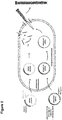
Figure 2 : Schematic illustration of the helper plasmid-assisted production of helper phagemid single strand DNA. -
Figure 3 : Schematic illustration of a phagemid containing 5 target sequences (bold lines) and (5+1)x2 flanking catalytic DNAzyme sequences (hairpin structures) for the extraction of the target molecules. -
Figure 4 : Production of a DNA origami nanorod using biotechnologically produced single stranded starting materials.- A, Schematic representation of the phagemid (left) and the internal strand topology of the DNA nanorod.
- B, View of an agarose gel on which the products of a self-assembly of a 10-helix bundle using staple oligonucleotides produced via chemical solid phase synthesis (left) are compared with the use of staple oligonucleotides produced by the method of the invention (right). Both samples show comparable migration properties which implies a comparable assembly quality.
- C, Transmission electron microscopy picture of nanorods whose staple oligonucleotides were produced by the method of the invention.
-
Figure 5 : Illustration of the autocatalytic digest of the concatenated precursor ssDNA into the desired target DNA oligonucleotides by the contained DNAzyme sequences. Shown is a view of the agarose gel on which the products of the digest reaction of the concatenated precursor ssDNA were electrophoretically separated as function of the incubation time. -
Figure 6 : Optimization of DNAzyme sequences.- A, left: Schematic representation of a DNAzyme (Type I-R3). Essential basepairs (as identified in our experiments) are shown as letters, exchangeable basepairs are indicated as lines. The triangle indicates the cleavage position. Right: Gel-electrophoretic analysis of the reaction kinetics of two variants of the DNAzyme differing in one basepair. The slower migrating band corresponds to the uncleaved oligonucleotide, the faster migrating band to the reaction product. τ is defined as the first time point at which the intensity of the product band exceeds the intensity of the uncleaved DNAzyme. The upper gel shows the cleavage of the original sequence as described in Gu et al., 2013, whereas the lower gel shows the cleavage of a variant in which a G-C-basepair is replaced by an A-T basepair. This exchange leads to a significantly lower catalytic activity of the DNAzyme, although this basepair was classified as exchangeable in the original publication by Gu et al..
- B, left: Schematic representation of two phagemids containing the staples for the nanorod separated by DNAzymes. Right: Gelelectrophoretic analysis of the digestion kinetics of the two phagemids. The lower variant was designed based on the classification of essential bases from the original publication by Gu et al., whereas the upper variant was designed based on our own findings concerning essential bases. While the upper, optimized variant shows fast and complete cleavage (after 40 minutes basically all DNA is in the bands corresponding to the desired products), the lower variant shows incomplete digestion even after 24 hours of incubation.
-
Figure 7 : Nanostructures assembled from DNA oligonucleotides produced using the DNAzyme-based method of the invention.- A, Top left: Schematic representation of a 48-helix-tube assembled from a 3200 bases long scaffold and 31 staple oligonucleotides that are all contained in one phagemid. Bottom left: Image of an agarose gel in which the undigested phagemid (left), the digested phagemid (center) and the folded 48-helix tube (right) have been electrophoresed. Right: Negative stain transmission electron micrograph (bottom) and class averages (top) of the 48-helix-tube.
- B, Top left: schematic representation of a pointer object assembled from a 7249 bases long M13-scaffold and 161 staple oligonucleotides. Bottom left: Image of an agarose gel in which the scaffold (left) and structures assembled using chemically synthesized (center) or biotechnologically produced (right) staples have been electrophoresed. Right: Negative stain transmission electron micrograph and class average (inset) of the pointer object.
- As a prototype, a DNA-based nanorod was generated from DNA materials which were exclusively produced by the method of the present invention. The DNA-based nanorod was designed and developed with the DNA origami design method (see Rothemund, 2006; see also
US patent applications 2007/117109 A1 and2012/ 251583 A1 ;US patent Nos. 7,842,793 B2 and8,501,923 B2 ) and consists of 10 DNA double helices which are aligned in parallel in a honeycomb lattice and are cross-linked via strand connections (seeFigure 4A ). For the nanorod a 2500 base long single stranded DNA backbone molecule ("scaffold strand") is needed as well as 21 DNA oligonucleotides ("staple strands") each with a length of about 100 bases. All required construction elements are derived from a phagemid which was especially constructed therefor. -
- P1 - [SEQ ID NO. 1] - P2 - P3 - P2' - [SEQ ID NO. 2] - P1'
- P2'- [SEQ ID NO. 2] - P1- P3 - P1'- [SEQ ID NO. 1] - P2
- Wherein is SEQ ID NO. 1 = TAGTTGAGCTGT and is SEQ ID NO. 2 = ACGTTGAAG; and wherein P3 is a spacer of arbitrary sequence and where P1 and P1' are two complementary sequences that form a DNA double helix. The same holds true for P2 and P2'.
-
- SEQ ID NO. 3:


- SEQ ID NO. 4:

- SEQ ID NO. 5:

- SEQ ID NO. 6:

- SEQ ID NO. 7:

- SEQ ID NO. 8:

- SEQ ID NO. 9:

- SEQ ID NO. 10:

- SEQ ID NO. 11:

- SEQ ID NO. 12:

- SEQ ID NO. 13:

- SEQ ID NO. 14:

- SEQ ID NO. 15:

- SEQ ID NO. 16:


- SEQ ID NO. 17:

- SEQ ID NO. 18:

- SEQ ID NO. 19:

- SEQ ID NO. 20:

- SEQ ID NO. 21:

- SEQ ID NO. 22:

- SEQ ID NO. 23:

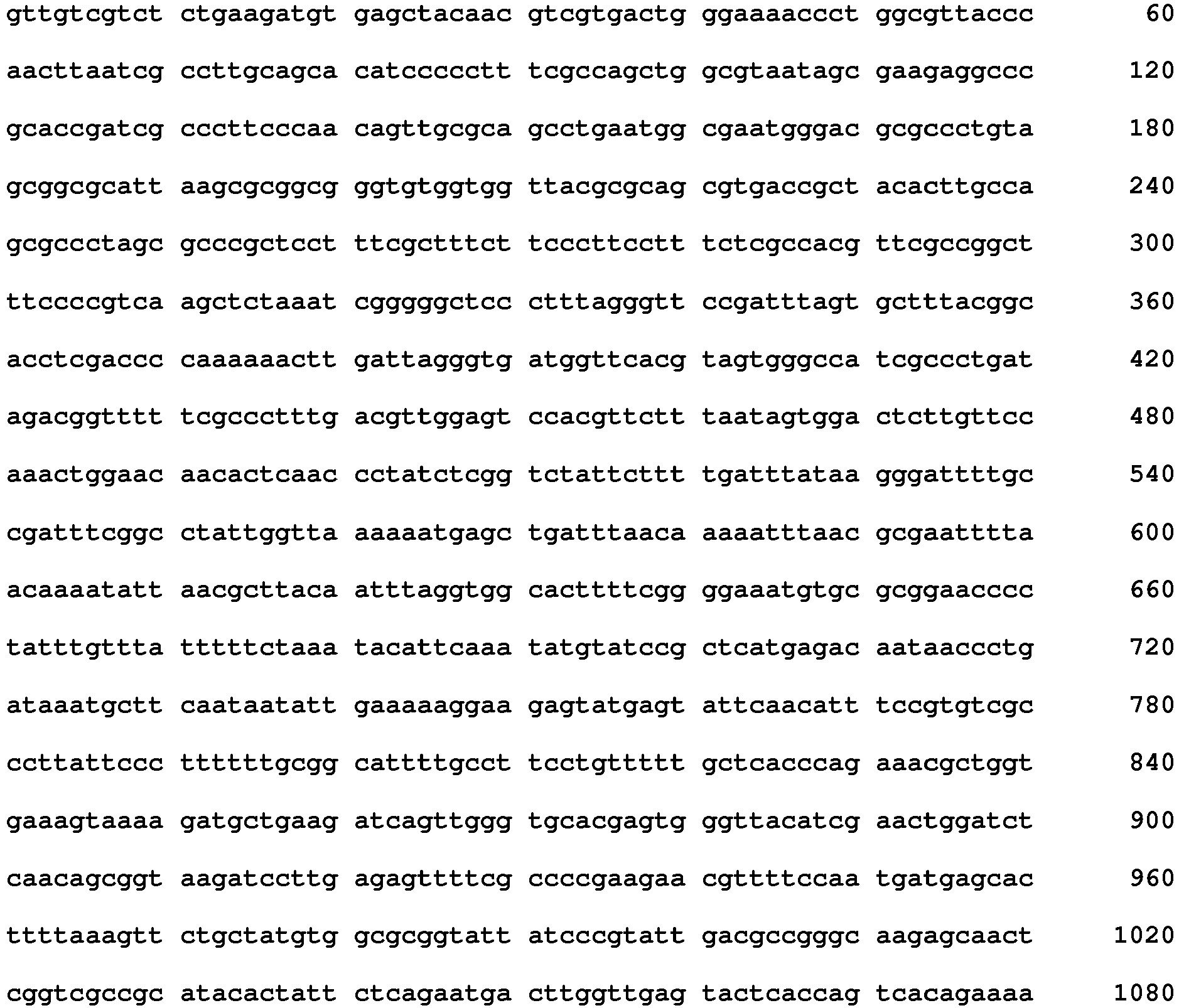
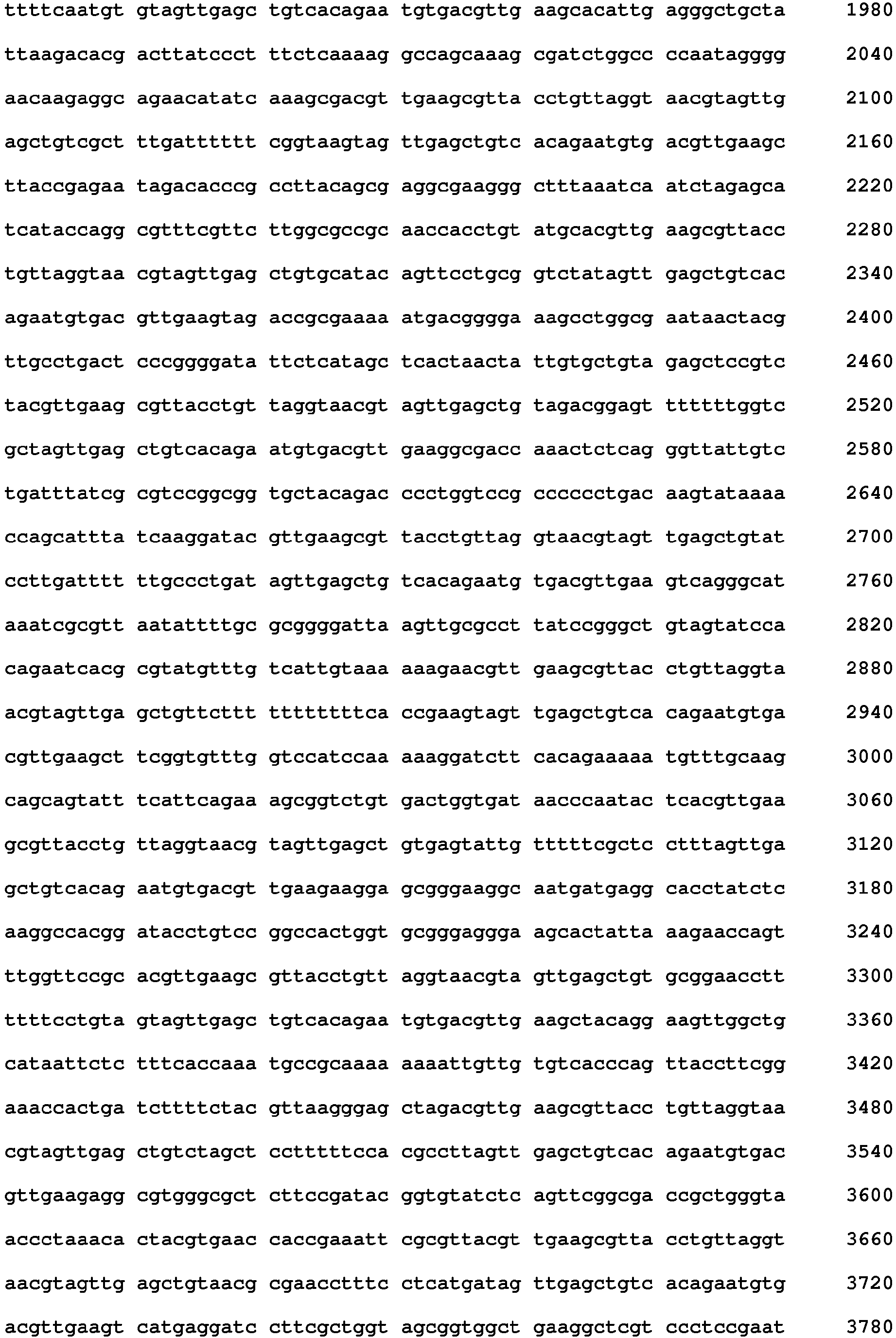
- Phagemid backbone that serves as scaffold: SEQ ID NO. 24

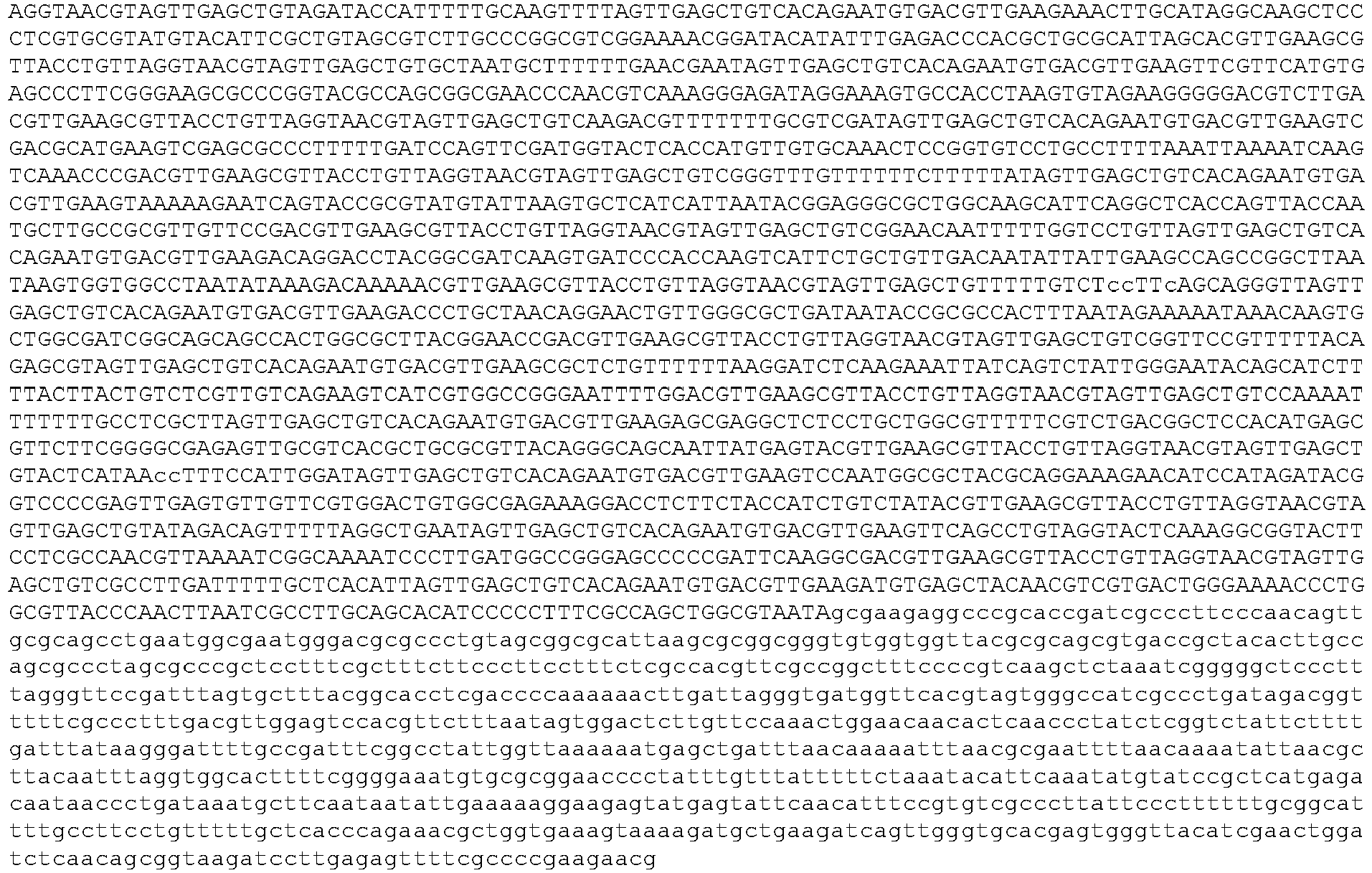
- Full phagemid ssDNA sequence (=precursor ssDNA): SEQ ID NO. 25:


- In this example, a phagemid single stranded DNA was produced in an E.coli liquid culture and purified therefrom. To this end, chemically competent DH5alpha cells were co-transformed with the phagemid and the helper plasmid. The thus obtained strain was grown in 2xYT-medium containing 50 mg/l Kanamycin and 100 mg/l Carbenicillin. After incubation at 37°C overnight, the cultures were centrifuged at 4000 rcf for 30 min. Solid PEG 8000 and NaCl were added to the supernatant to a final concentration of 3% (m/v) each. Phage-like particles were then precipitated by centrifugation at 4000 rcf for 30 min. ssDNA was extracted from these particles as described in Kick et al., 2015.
- The phagemid single stranded DNA was then incubated in reaction buffer (50 mM Hepes pH7, 100 mM NaCl, 2 mM ZnCl2) for three hours at 37°C. After the incubation, the DNA is completely digested into the desired segments, see
Figure 5 . Afterwards, the DNA is precipitated with ethanol and potassium acetate and solved in origami folding buffer (10 mM Tris, 5 mM NaCl, 1 mM EDTA, 20 mM MgCl2). The DNA solution is heated for 15 min to 65°C and then slowly cooled down from 60°C to 40°C (three hours per one °C). Gel electrophoretic analysis (seeFigure 4B ) and transmission electron microscopy (seeFigure 4C ) confirm the successful assembly of the target structure. - In order to construct our phagemids, we do not simply place a constant DNAzyme sequence between the target oligonucleotides in the same way a restriction enzyme binding site would be inserted. The sequence of the DNAzyme depends on the terminal sequences of the oligonucleotides that are to be produced. While Gu et al. (Biotechniques 2013) simply use the same terminal sequence and thus the same DNAzyme, our method uses different DNAzyme sequences for producing different target oligonucleotide sequences.
- In order to identify the essential bases in the DNAzyme sequence we screened about 40 different variants of individual DNAzymes as oligonucleotides (see
Figure 6A for two examples) and 5 versions of the Full-length phagemid (seeFigure 6B for two examples). We find that some bases that are not classified as essential in the original publication of the DNAzyme (Gu et al., JACS 2013) are indeed essential. This allowed us to construct phagemids that cleaved completely into the desired products in acceptable times (seeFigure 6B ). - DNAzyme oligonucleotides (as shown in
Figure 6A ): - G-C (top): SEQ ID NO. 26 TTTTTTGCCCTGATAGTTGAGCTGTCACAGAATGTGACGTTGAAGTCAGGGCATAAAT
- A-T (bottom): SEQ ID NO. 27 TTTTTTGCCCTGATAGTTGAGCTaTCACAGAATGTGAtGTTGAAGTCAGGGCATAAAT
- Phagemids (as shown in
Figure 6B ): - Optimized version (top): SEQ ID NO. 28

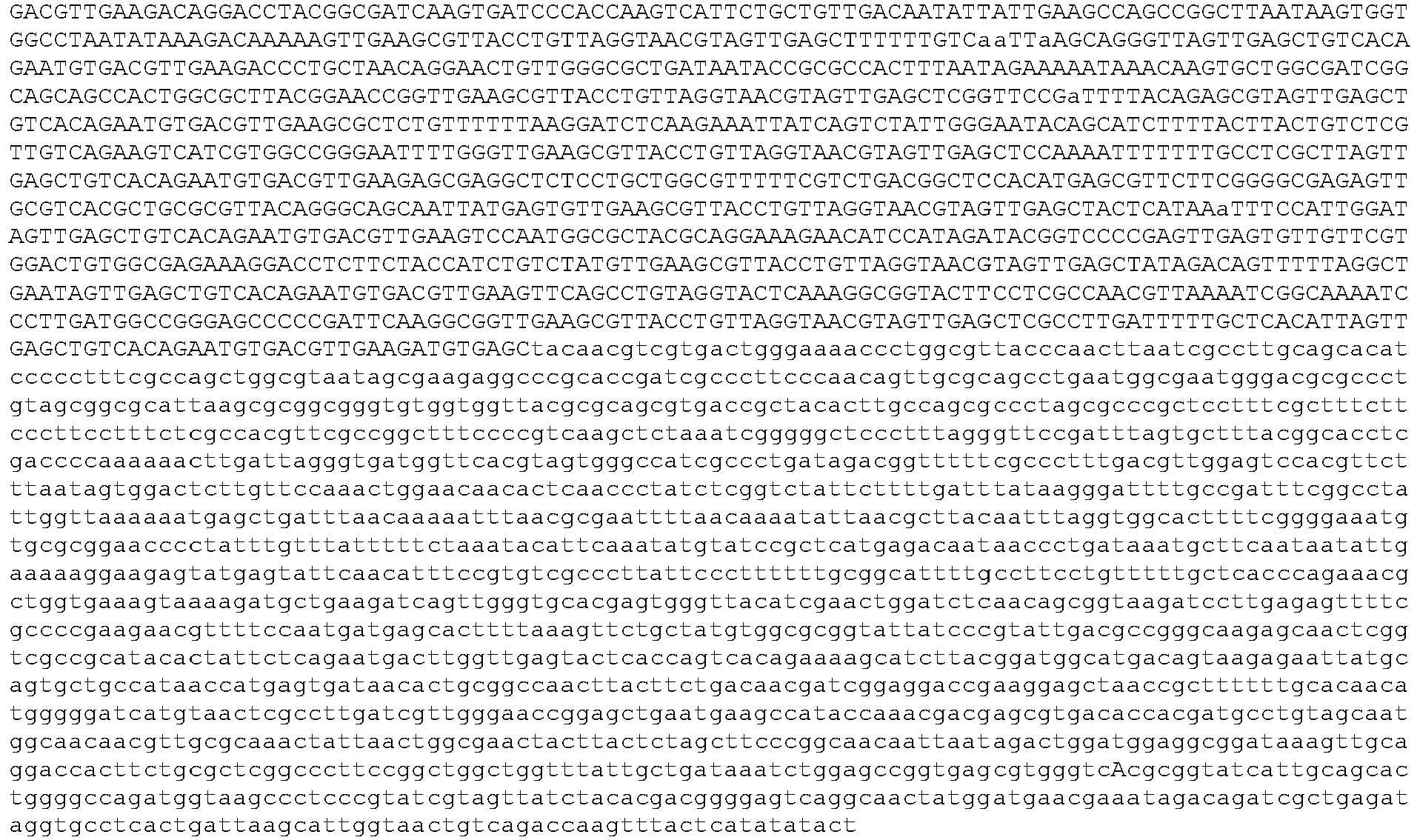
- Not optimized version (bottom): SEQ ID NO. 29

- In addition to the nanorod, we designed a 48-helix tube that assembles from a 3200 bases long scaffold and 31 staple oligonucleotides (see
Figure 7A ). As for the nanorod, all staples for this 48-helix-tube are encoded on one phagemid, and the backbone of the phagemid serves as scaffold. Like the nanorod, this object assembles efficiently into the desired shape without using an excess of staples over scaffold, due to the intrinsically perfect 1:1 stoichiometry. - In order to demonstrate the applicability of our method to the assembly of existing, full-size DNA origami objects, we produced phagemids encoding for all 161 staple oligonucleotides that are needed for the assembly of a pointer object (see
Figure 7B ) that was previously used in cryo electron microscopy studies (Bai et al., 2012). In contrast to the nanorod and the 48-helix-bundle, the staples for the pointer are distributed over four individual phagemids, and a separate scaffold (M13mp18, 7249 bases long, same sequence as was used in the original study by Bai et al.) is used. To compensate uncertainties in relative concentrations we used a slight excess of staples over scaffold (1.25 to 1). In comparison, the assembly using the chemically synthesized staples required a larger excess of 2.5 to 1. -
- 48helix tube (
Figure 7A ): SEQ ID NO. 30

- Pointer part 1 (
Figure 7B ): SEQ ID NO. 31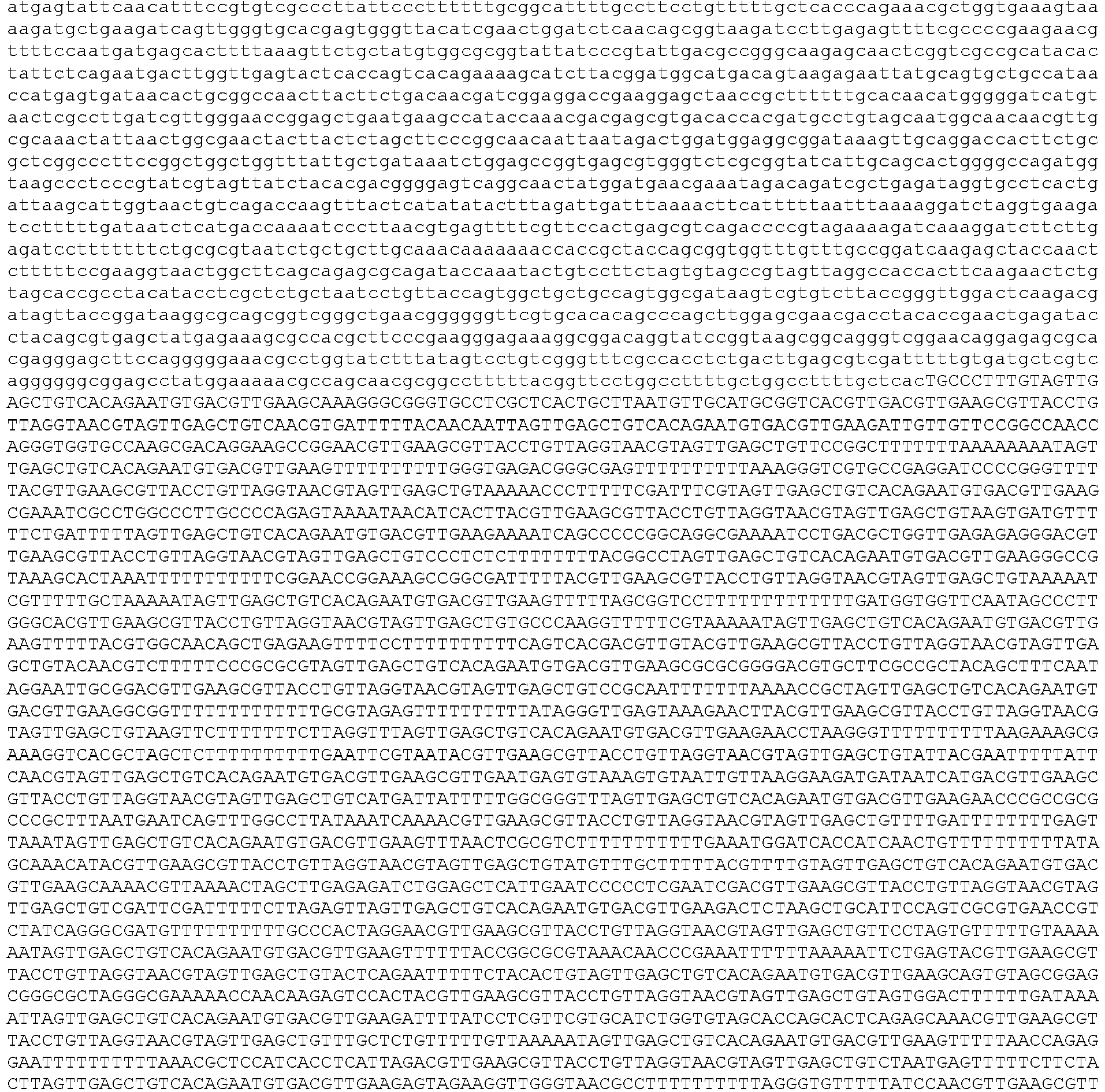

- Pointer part 2 (
Figure 7B ): SEQ ID NO. 32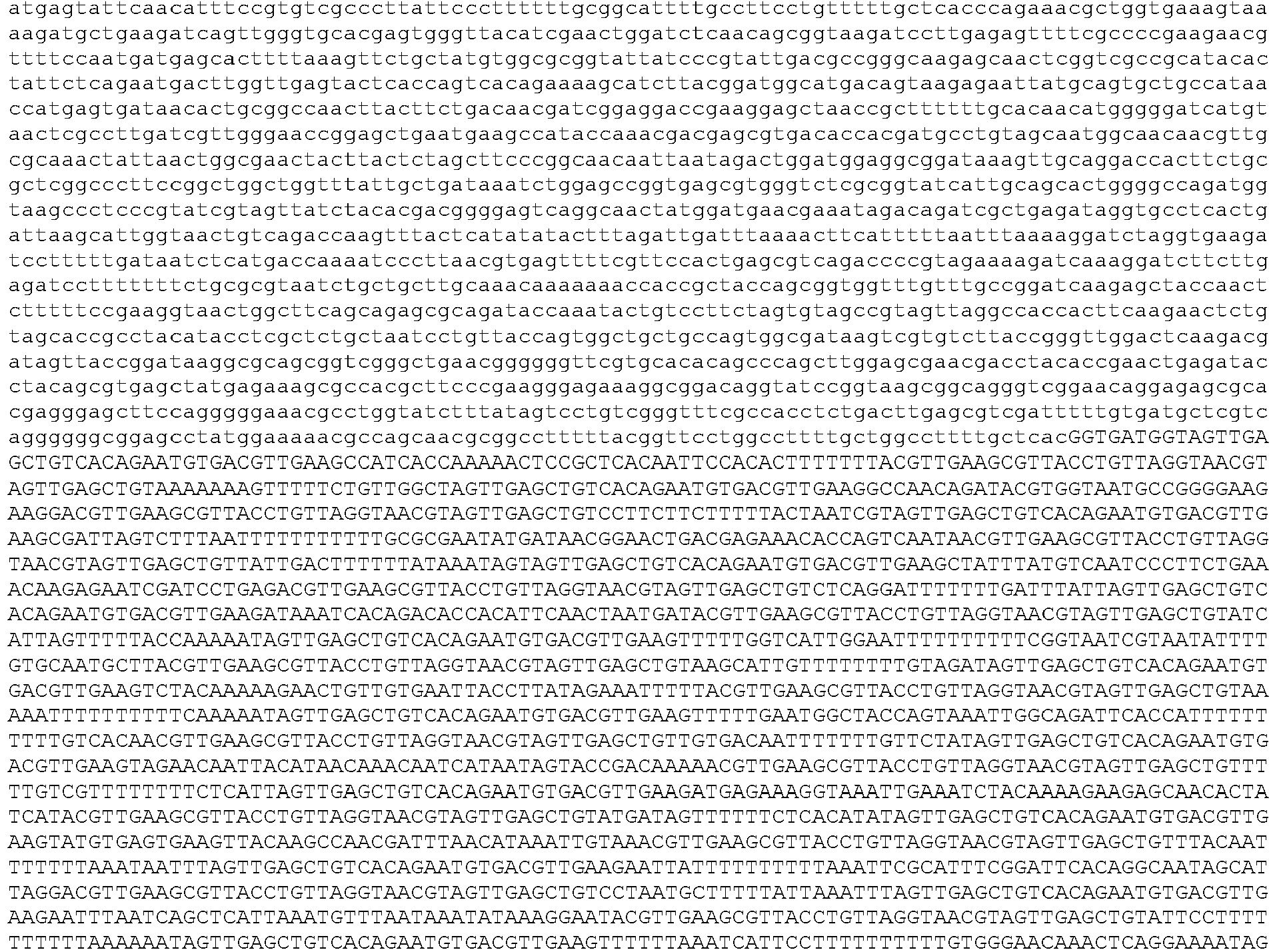
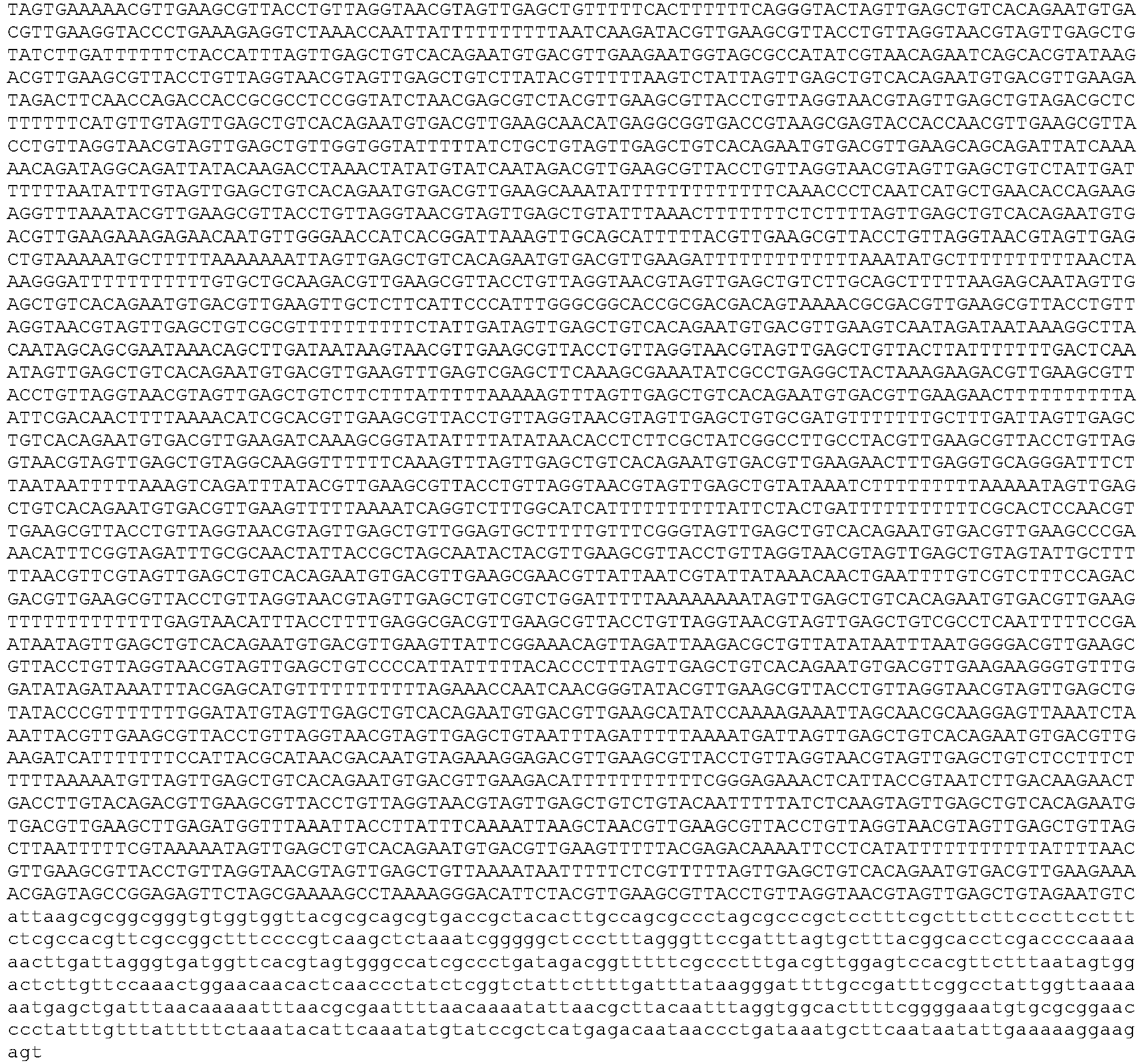
- Pointer part 3 (
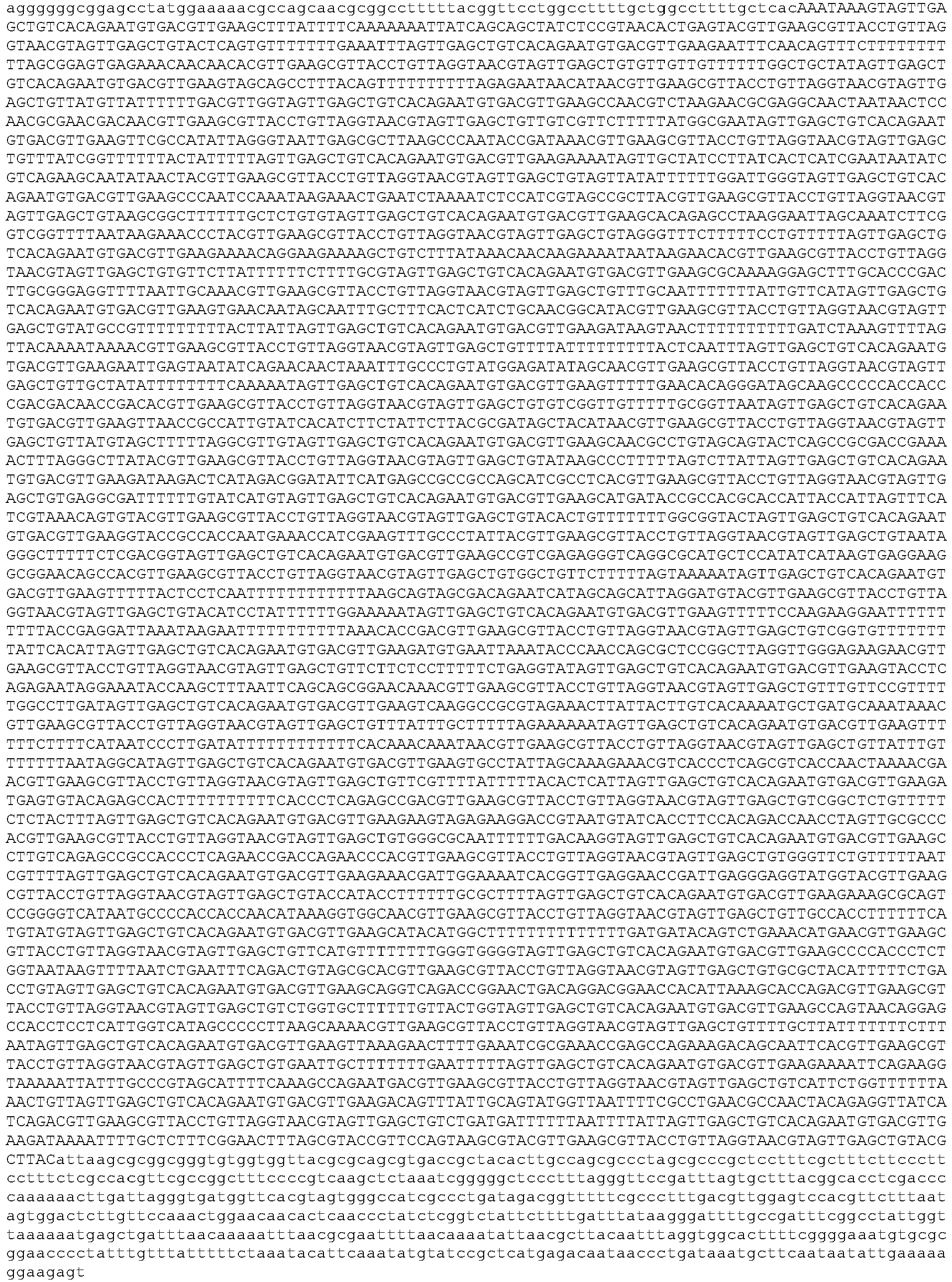
Figure 7B ): SEQ ID NO. 33

- Pointer part 4 (
Figure 7B ): SEQ ID NO. 34
- The features disclosed in the foregoing description, in the claims and/or in the accompanying drawings may, both separately and in any combination thereof, be material for realizing the invention in diverse forms thereof.
-
- Bai X, Martin T, Scheres S, and Dietz H. Cryo-EM structure of a 3D DNA-origami object. P Natl Acad Sci USA, vol 109 (2012), 20012.
- Breaker RR. DNA enzymes. Nat Biotechnol. 1997;15(5):427-31.
- Carmi N, Shultz LA, Breaker RR. In vitro selection of self-cleaving DNAs. Chem Biol. 1996;3(12):1039-46.
- Chandra M, Sachdeva A, Silverman SK. DNA-catalyzed sequence-specific hydrolysis of DNA. Nat Chem Biol. 2009;5(10):718-20. doi: 10.1038/nchembio.201.
- Ducani C, Kaul C, Moche M, Shih WM, Högberg B. Enzymatic production of 'monoclonal stoichiometric' single-stranded DNA oligonucleotides. Nat Methods. 2013;10(7):647-52. doi: 10.1038/nmeth.2503.
- Gu H, Furukawa K, Weinberg Z, Berenson DF, Breaker RR Small, highly active DNAs that hydrolyze DNA. J Am Chem Soc. 2013;135(24):9121-9. doi: 10.1021/ja403585e.
- Gu H, Breaker RR. Production of single-stranded DNAs by self-cleavage of rolling-circle amplification products. Biotechniques. 2013;54(6):337-43. doi: 10.2144/000114009.
- Jones MR, Seeman NC, Mirkin CA. Nanomaterials. Programmable materials and the nature of the DNA bond. Science 2015;347(6224):1260901. doi: 10.1126/science.1260901.
- Keefe AD, Pai S, Ellington A. Aptamers as therapeutics. Nat Rev Drug Discov. 2010 Jul;9(7):537-50. doi: 10.1038/nrd3141.
- Kick B, Praetorius F, Dietz H, Weuster-Botz D. Efficient Production of Single-Stranded Phage DNA as Scaffolds for DNA Origami. Nano Lett. 2015;15(7):4672-6. doi: 10.1021/acs.nanolett.5b01461.
- Krug N, Hohlfeld JM, Kirsten AM, Kornmann O, Beeh KM, Kappeler D, Korn S, Ignatenko S, Timmer W, Rogon C, Zeitvogel J, Zhang N, Bille J, Homburg U, Turowska A, Bachert C, Werfel T, Buhl R, Renz J, Garn H, Renz H. Allergen-induced asthmatic responses modified by a GATA3-specific DNAzyme. N Engl J Med. 2015;372(21):1987-95. doi: 10.1056/NEJMoal411776.
- Marchi AN, Saaem I, Vogen BN, Brown S, LaBean TH. Toward larger DNA origami. Nano Lett. 2014;14(10):5740-7. doi: 10.1021/nl502626s.
- Ng EW, Shima DT, Calias P, Cunningham ET Jr, Guyer DR, Adamis AP. Pegaptanib, a targeted anti-VEGF aptamer for ocular vascular disease. Nat Rev Drug Discov. 2006;5(2):123-32.
- Rothemund PW. Folding DNA to create nanoscale shapes and patterns. Nature. 2006; 440(7082):297-302.
- Schmidt TL, Beliveau BJ, Uca YO, Theilmann M, Da Cruz F, Wu CT, Shih WM. Scalable amplification of strand subsets from chip-synthesized oligonucleotide libraries. Nat Commun. 2015;6:8634. doi: 10.1038/ncomms9634.
- Sheppard TL, Ordoukhanian P, Joyce GF. A DNA enzyme with N-glycosylase activity. Proc Natl Acad Sci USA. 2000;97(14):7802-7.
- Stahl E, Martin TG, Praetorius F, Dietz H. Facile and scalable preparation of pure and dense DNA origami solutions. Angew. Chem. Int. Ed. 2014; 53: 12735-12740.
- Torabi SF, Wu P, McGhee CE, Chen L, Hwang K, Zheng N, Cheng J, Lu Y. In vitro selection of a sodium-specific DNAzyme and its application in intracellular sensing. Proc Natl Acad Sci USA. 2015;112(19):5903-8. doi: 10.1073/pnas.1420361112.
-
- <110> Technische Universität München
- <120> Scalable biotechnological production of DNA single strand molecules of defined sequence and length
- <130> U30718WO
- <150>
EP 16189976
<151> 2016-09-21 - <160> 34
- <170> PatentIn version 3.5
- <210> 1
<211> 12
<212> DNA
<213> Artificial Sequence - <220>
<223> DNAzyme - <400> 1
tagttgagct gt 12 - <210> 2
<211> 9
<212> DNA
<213> Artificial Sequence - <220>
<223> DNAzyme - <400> 2
acgttgaag 9 - <210> 3
<211> 105
<212> DNA
<213> Artificial Sequence - <220>
<223> Oligonucleotide - <400> 3

- <210> 4
<211> 105
<212> DNA
<213> Artificial Sequence - <220>
<223> Oligonucleotide - <400> 4

- <210> 5
<211> 105
<212> DNA
<213> Artificial Sequence - <220>
<223> Oligonucleotide - <400> 5

- <210> 6
<211> 105
<212> DNA
<213> Artificial Sequence - <220>
<223> Oligonucleotide - <400> 6

- <210> 7
<211> 105
<212> DNA
<213> Artificial Sequence - <220>
<223> Oligonucleotide - <400> 7

- <210> 8
<211> 105
<212> DNA
<213> Artificial Sequence - <220>
<223> Oligonucleotide - <400> 8

- <210> 9
<211> 105
<212> DNA
<213> Artificial Sequence - <220>
<223> Oligonucleotide - <400> 9

- <210> 10
<211> 105
<212> DNA
<213> Artificial Sequence - <220>
<223> Oligonucleotide - <400> 10

- <210> 11
<211> 112
<212> DNA
<213> Artificial Sequence - <220>
<223> Oligonucleotide - <400> 11

- <210> 12
<211> 91
<212> DNA
<213> Artificial Sequence - <220>
<223> Oligonucleotide - <400> 12

- <210> 13
<211> 105
<212> DNA
<213> Artificial Sequence - <220>
<223> Oligonucleotide - <400> 13

- <210> 14
<211> 105
<212> DNA
<213> Artificial Sequence - <220>
<223> Oligonucleotide - <400> 14

- <210> 15
<211> 105
<212> DNA
<213> Artificial Sequence - <220>
<223> Oligonucleotide - <400> 15

- <210> 16
<211> 105
<212> DNA
<213> Artificial Sequence - <220>
<223> Oligonucleotide - <400> 16

- <210> 17
<211> 105
<212> DNA
<213> Artificial Sequence - <220>
<223> Oligonucleotide - <400> 17

- <210> 18
<211> 105
<212> DNA
<213> Artificial Sequence - <220>
<223> Oligonucleotide - <400> 18

- <210> 19
<211> 105
<212> DNA
<213> Artificial Sequence - <220>
<223> Oligonucleotide - <400> 19

- <210> 20
<211> 105
<212> DNA
<213> Artificial Sequence - <220>
<223> Oligonucleotide - <400> 20

- <210> 21
<211> 105
<212> DNA
<213> Artificial Sequence - <220>
<223> Oligonucleotide - <400> 21

- <210> 22
<211> 105
<212> DNA
<213> Artificial Sequence - <220>
<223> Oligonucleotide - <400> 22

- <210> 23
<211> 91
<212> DNA
<213> Artificial Sequence - <220>
<223> Oligonucleotide - <400> 23

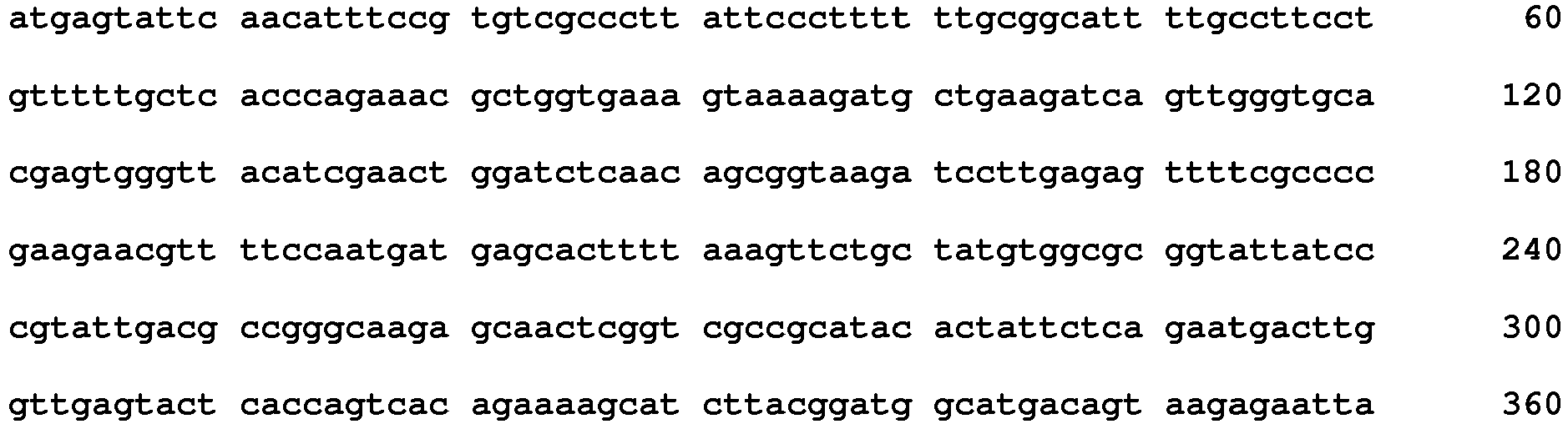
- <210> 24
<211> 2630
<212> DNA
<213> Artificial Sequence - <220>
<223> Phagemid backbone that serves as scaffold - <400> 24

- <210> 25
<211> 6813
<212> DNA
<213> Artificial Sequence - <220>
<223> Full phagemid ssDNA sequence - <400> 25



- <210> 26
<211> 58
<212> DNA
<213> Artificial Sequence - <220>
<223> DNAzyme oligonucleotide - <400> 26
ttttttgccc tgatagttga gctgtcacag aatgtgacgt tgaagtcagg gcataaat 58 - <210> 27
<211> 58
<212> DNA
<213> Artificial Sequence - <220>
<223> DNAzyme oligonucleotide - <400> 27
ttttttgccc tgatagttga gctatcacag aatgtgatgt tgaagtcagg gcataaat 58 - <210> 28
<211> 6813
<212> DNA
<213> Artificial Sequence - <220>
<223> Phagemid - <400> 28


- <210> 29
<211> 6731
<212> DNA
<213> Artificial Sequence - <220>
<223> Phagemid - <400> 29


- <210> 30
<211> 9059
<212> DNA
<213> Artificial Sequence - <220>
<223> Phagemid 48helix tube - <400> 30


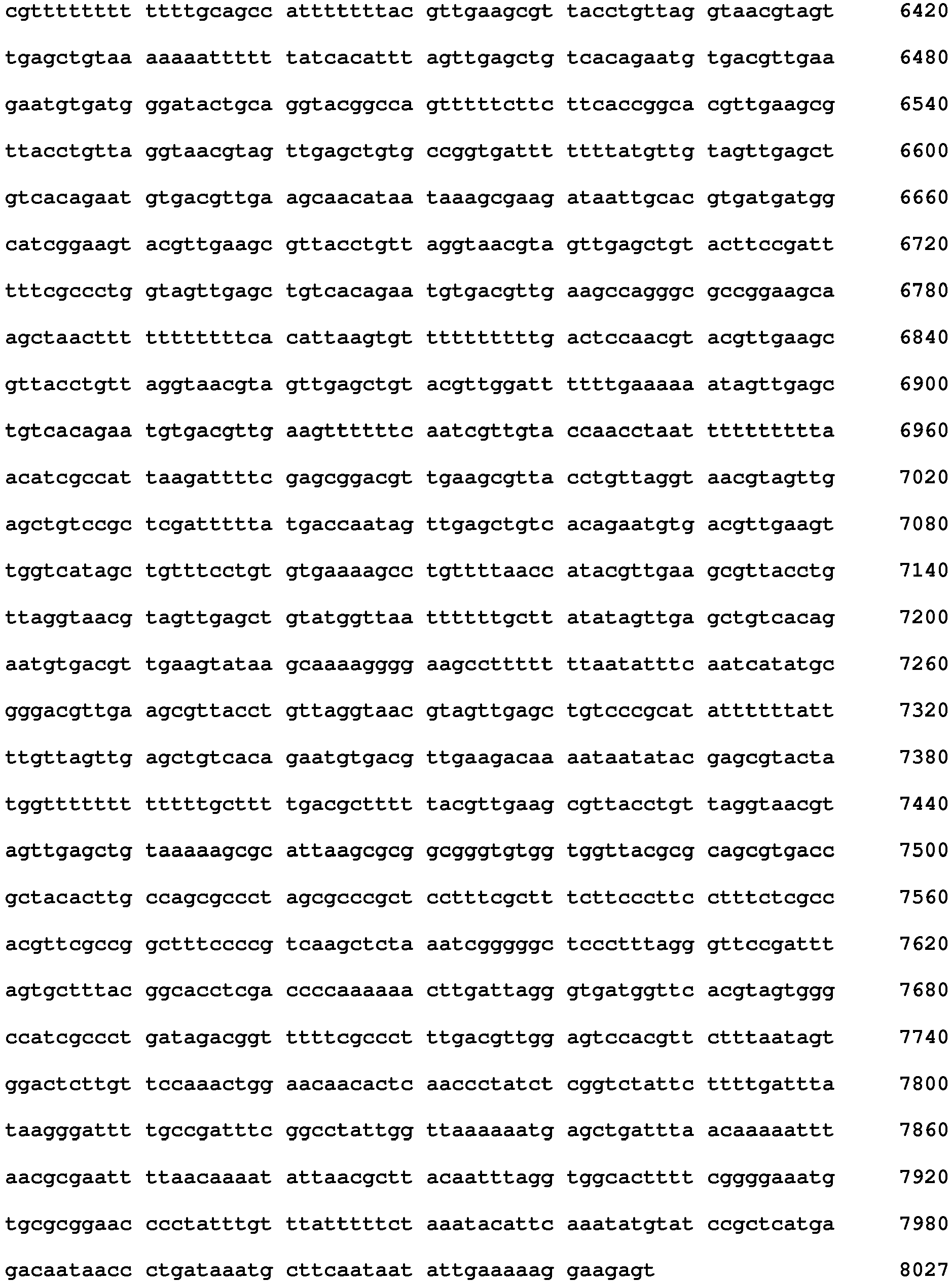
- <210> 31
<211> 8027
<212> DNA
<213> Artificial Sequence - <220>
<223> Phagemid pointer - part 1 - <400> 31


- <210> 32
<211> 7899
<212> DNA
<213> Artificial Sequence - <220>
<223> Phagemid pointer - part 2 - <400> 32


- <210> 33
<211> 8036
<212> DNA
<213> Artificial Sequence - <220>
<223> Phagemid pointer -part 3 - <400> 33


- <210> 34
<211> 7904
<212> DNA
<213> Artificial Sequence - <220>
<223> Phagemid pointer - part 4 - <400> 34


Claims (14)
- A method for the recombinant production of DNA single strand molecules, comprising the steps of(1) providing a pseudogene nucleic acid, wherein said pseudogene nucleic acid is a nucleic acid that comprises at least one target DNA oligo- or polynucleotide sequence and two self-cleaving DNA sequences flanking each target DNA oligo- or polynucleotide sequence,(2) integrating the pseudogene nucleic acid into a vector, transforming bacterial cells with said vector and producing a precursor ssDNA from said vector under bacterial culture conditions, wherein said precursor ssDNA comprises the pseudogene nucleic acid;(3) isolating the precursor ssDNA from the bacterial culture;(4) digesting the precursor ssDNA under reaction conditions where the self-cleaving DNA sequences become active; and(5) separating the target single stranded DNA oligo- or polynucleotide(s) and obtaining the target single stranded DNA oligo- or polynucleotide(s).
- The method of claim 1, wherein the self-cleaving DNA sequences are self-cleaving desoxyribozymes or DNAzymes, such as Zn2+-dependent DNAzymes, e.g. I-R3.
- The method of claim 1 or 2, wherein the pseudogene nucleic acid comprises two, three, four or more than about 50 target DNA oligonucleotide sequences.
- The method of any one of claims 1 to 3, wherein a target DNA oligo- or polynucleotide sequence has a length in the range from about 20 nucleotides to about several thousand nucleotides.
- The method of any one of claims 1 to 4, wherein the bacteria are selected from E. coli, in particular K12-derived E. coli safety strains, such as DH5alpha, XL-1blue or JM109.
- The method of any one of claims 1 to 5, wherein the vector in step (2) is at least one phagemid, optionally comprising further component(s),
such as- a packaging sequence,- component(s) ensuring propagation of the phagemid during cell division,- a selection marker, typically an antibiotic resistance gene. - The method of claim 6, wherein furthermore a helper plasmid or a helper phage is used which comprises further component(s), such as- genes encoding the proteins of a bacteriophage, e.g. M13 bacteriophage- component(s) ensuring propagation of the helper plasmid during cell division,- a selection marker, typically an antibiotic resistance gene.
- The method of any one of the preceding claims, wherein the vector in step (2) is at least one phagemid and is amplified inside the bacterial cells via rolling circle amplification (RCA) resulting in phagemid ssDNA.
- The method of claim 8, wherein the phagemid ssDNA is packaged into phage-like particles which are preferably secreted from the cells.
- The method of any one of claims 6 to 9, wherein step (3) comprises extracting the phage-like particles from the cell culture and extracting the phagemid ssDNA from the phage-like particles.
- The method of any one of the preceding claims, wherein said digestion of step (4) is triggered by the addition of Zn2+ ions.
- The method of any one of the preceding claims, wherein separating the target single stranded DNA oligo- or polynucleotide(s) in step (5) comprises
separating from the self-cleaving DNA sequences, such as DNAzymes, e.g. via chromatography. - The method of any one of the preceding claims, comprising the further step of (6) further processing of the target single stranded DNA oligo- or polynucleotide(s),such as self-assembly and/or folding into DNA origami structures, tile-based DNA nanostructures, or crystalline DNA nanomaterials,or the use as aptamers or DNAzymes to bind, detect, or process other molecules.
- The method of any one of the preceding claims, wherein the bacterial culture is carried out in a bioreactor, such as a stirred-tank bioreactor.
Priority Applications (1)
| Application Number | Priority Date | Filing Date | Title |
|---|---|---|---|
| PL17746416T PL3516055T3 (en) | 2016-09-21 | 2017-07-17 | Scalable biotechnological production of dna single strand molecules of defined sequence and length |
Applications Claiming Priority (2)
| Application Number | Priority Date | Filing Date | Title |
|---|---|---|---|
| EP16189976 | 2016-09-21 | ||
| PCT/EP2017/068051 WO2018054571A1 (en) | 2016-09-21 | 2017-07-17 | Scalable biotechnological production of dna single strand molecules of defined sequence and length |
Publications (2)
| Publication Number | Publication Date |
|---|---|
| EP3516055A1 EP3516055A1 (en) | 2019-07-31 |
| EP3516055B1 true EP3516055B1 (en) | 2021-12-22 |
Family
ID=57083098
Family Applications (1)
| Application Number | Title | Priority Date | Filing Date |
|---|---|---|---|
| EP17746416.1A Active EP3516055B1 (en) | 2016-09-21 | 2017-07-17 | Scalable biotechnological production of dna single strand molecules of defined sequence and length |
Country Status (9)
| Country | Link |
|---|---|
| US (1) | US11913050B2 (en) |
| EP (1) | EP3516055B1 (en) |
| JP (1) | JP7099724B2 (en) |
| KR (1) | KR102528337B1 (en) |
| CN (1) | CN109844113B (en) |
| DK (1) | DK3516055T3 (en) |
| ES (1) | ES2909073T3 (en) |
| PL (1) | PL3516055T3 (en) |
| WO (1) | WO2018054571A1 (en) |
Cited By (2)
| Publication number | Priority date | Publication date | Assignee | Title |
|---|---|---|---|---|
| EP4450637A1 (en) | 2023-04-21 | 2024-10-23 | Technische Universität München | Novel self-cleaving dnazymes and selection process |
| EP4455302A1 (en) | 2023-04-25 | 2024-10-30 | Technische Universität München | Programmable nuclease resistance of nucleic acid assemblies |
Families Citing this family (17)
| Publication number | Priority date | Publication date | Assignee | Title |
|---|---|---|---|---|
| WO2017189914A1 (en) | 2016-04-27 | 2017-11-02 | Massachusetts Institute Of Technology | Sequence-controlled polymer random access memory storage |
| WO2017189870A1 (en) | 2016-04-27 | 2017-11-02 | Massachusetts Institute Of Technology | Stable nanoscale nucleic acid assemblies and methods thereof |
| CN109563539A (en) | 2016-06-15 | 2019-04-02 | 慕尼黑路德维希马克西米利安斯大学 | Use the Single Molecule Detection of DNA nanotechnology or quantitative |
| US10940171B2 (en) | 2017-11-10 | 2021-03-09 | Massachusetts Institute Of Technology | Microbial production of pure single stranded nucleic acids |
| CN108707601A (en) * | 2018-06-07 | 2018-10-26 | 南京大学 | A kind of preparation method for the single-stranded cyclic DNA that sequence and length customize and its application in DNA paper folding arts |
| CN109486911A (en) * | 2018-11-28 | 2019-03-19 | 上海纳米技术及应用国家工程研究中心有限公司 | Method based on rolling circle amplification and DNA paper folding art detection microRNAs |
| WO2020154595A1 (en) | 2019-01-24 | 2020-07-30 | Massachusetts Institute Of Technology | Nucleic acid nanostructure platform for antigen presentation and vaccine formulations formed therefrom |
| US11905532B2 (en) | 2019-06-25 | 2024-02-20 | Massachusetts Institute Of Technology | Compositions and methods for molecular memory storage and retrieval |
| CN110699407B (en) * | 2019-10-17 | 2023-08-01 | 复旦大学附属肿瘤医院 | A kind of preparation method of long single-stranded DNA |
| EP4330388A1 (en) | 2021-04-26 | 2024-03-06 | Camena Bioscience Limited | Compositions and methods for phosphoramedite-free enzymatic synthesis of nucleic acids |
| WO2024220771A1 (en) * | 2023-04-21 | 2024-10-24 | Ohio State Innovation Foundation | Rapid enzyme-free release of single-stranded dna from unmodified dsdna templates |
| CN117143897B (en) * | 2023-09-07 | 2025-05-16 | 华东理工大学 | A method for preparing stable isotope labeled ssDNA by biological fermentation |
| CN118147189A (en) * | 2024-04-03 | 2024-06-07 | 常州智胜生物科技有限公司 | A tetrahedral framework nucleic acid and a preparation method thereof |
| CN118147131A (en) * | 2024-04-03 | 2024-06-07 | 常州智胜生物科技有限公司 | A nucleic acid fragment containing target single-stranded DNA and a method for preparing single-stranded DNA |
| EP4663200A1 (en) | 2024-06-10 | 2025-12-17 | CPTx GmbH | Compositions and methods |
| WO2026008787A1 (en) | 2024-07-04 | 2026-01-08 | Cptx Gmbh | Compositions |
| EP4674984A1 (en) | 2024-07-04 | 2026-01-07 | CPTx GmbH | Compositions |
Family Cites Families (3)
| Publication number | Priority date | Publication date | Assignee | Title |
|---|---|---|---|---|
| US7842793B2 (en) | 2005-06-14 | 2010-11-30 | The California Institute Of Technology | Methods of making nucleic acid nanostructures |
| EP2695949B1 (en) | 2012-08-10 | 2016-10-19 | Technische Universität München | Nucleic acid based nanopores or transmembrane channels and their uses |
| CN103276074B (en) | 2013-05-21 | 2015-08-19 | 昆山彭济凯丰生物科技有限公司 | A kind of method of synthesizing short single strand deoxyribonucleotide probe |
-
2017
- 2017-07-17 ES ES17746416T patent/ES2909073T3/en active Active
- 2017-07-17 WO PCT/EP2017/068051 patent/WO2018054571A1/en not_active Ceased
- 2017-07-17 EP EP17746416.1A patent/EP3516055B1/en active Active
- 2017-07-17 PL PL17746416T patent/PL3516055T3/en unknown
- 2017-07-17 CN CN201780058442.3A patent/CN109844113B/en active Active
- 2017-07-17 US US16/329,495 patent/US11913050B2/en active Active
- 2017-07-17 KR KR1020197008132A patent/KR102528337B1/en active Active
- 2017-07-17 JP JP2019515435A patent/JP7099724B2/en active Active
- 2017-07-17 DK DK17746416.1T patent/DK3516055T3/en active
Non-Patent Citations (1)
| Title |
|---|
| None * |
Cited By (4)
| Publication number | Priority date | Publication date | Assignee | Title |
|---|---|---|---|---|
| EP4450637A1 (en) | 2023-04-21 | 2024-10-23 | Technische Universität München | Novel self-cleaving dnazymes and selection process |
| WO2024218307A1 (en) | 2023-04-21 | 2024-10-24 | Technische Universität München | Novel self-cleaving dnazymes and selection process |
| EP4455302A1 (en) | 2023-04-25 | 2024-10-30 | Technische Universität München | Programmable nuclease resistance of nucleic acid assemblies |
| WO2024223679A1 (en) | 2023-04-25 | 2024-10-31 | Technische Universität München | Programmable nuclease resistance of nucleic acid assemblies |
Also Published As
| Publication number | Publication date |
|---|---|
| CN109844113A (en) | 2019-06-04 |
| PL3516055T3 (en) | 2022-04-11 |
| CN109844113B (en) | 2023-09-29 |
| KR20190050991A (en) | 2019-05-14 |
| KR102528337B1 (en) | 2023-05-02 |
| DK3516055T3 (en) | 2022-03-21 |
| US11913050B2 (en) | 2024-02-27 |
| ES2909073T3 (en) | 2022-05-05 |
| JP2019528743A (en) | 2019-10-17 |
| WO2018054571A1 (en) | 2018-03-29 |
| JP7099724B2 (en) | 2022-07-12 |
| US20190203242A1 (en) | 2019-07-04 |
| EP3516055A1 (en) | 2019-07-31 |
Similar Documents
| Publication | Publication Date | Title |
|---|---|---|
| EP3516055B1 (en) | Scalable biotechnological production of dna single strand molecules of defined sequence and length | |
| US12123014B2 (en) | Class II, type V CRISPR systems | |
| RU2713328C2 (en) | Hybrid dna/rna polynucleotides crispr and methods of appliance | |
| EP4313118A1 (en) | Adenosine deaminase variants and uses thereof | |
| CN113728097A (en) | Enzymes with RUVC domains | |
| EP4121532B1 (en) | Crispr system high throughput diagnostic systems and methods | |
| AU2022346785A1 (en) | Methods for using guide rnas with chemical modifications | |
| US20250179452A1 (en) | Systems and methods for transposing cargo nucleotide sequences | |
| EP4709863A2 (en) | Systems and methods for transposing cargo nucleotide sequences | |
| KR102674574B1 (en) | A novel tracrRNA system for Cas9 | |
| CA3244138A1 (en) | Systems and methods for transposing cargo nucleotide sequences | |
| US20250059568A1 (en) | Class ii, type v crispr systems | |
| JP7010941B2 (en) | Systems used for DNA editing and their applications | |
| EP4423263A2 (en) | Effector proteins, compositions, systems, devices, kits and methods of use thereof | |
| EP4716752A2 (en) | Endonuclease systems | |
| EP4689092A1 (en) | Engineered effector proteins, compositions, systems and methods of use thereof | |
| WO2024107902A2 (en) | Effector proteins, compositions, systems and methods of use thereof | |
| AU2023226059A1 (en) | Fusion proteins | |
| CN120173913A (en) | Novel Cas12a nuclease BEST3 and its application |
Legal Events
| Date | Code | Title | Description |
|---|---|---|---|
| STAA | Information on the status of an ep patent application or granted ep patent |
Free format text: STATUS: UNKNOWN |
|
| STAA | Information on the status of an ep patent application or granted ep patent |
Free format text: STATUS: THE INTERNATIONAL PUBLICATION HAS BEEN MADE |
|
| PUAI | Public reference made under article 153(3) epc to a published international application that has entered the european phase |
Free format text: ORIGINAL CODE: 0009012 |
|
| STAA | Information on the status of an ep patent application or granted ep patent |
Free format text: STATUS: REQUEST FOR EXAMINATION WAS MADE |
|
| 17P | Request for examination filed |
Effective date: 20190321 |
|
| AK | Designated contracting states |
Kind code of ref document: A1 Designated state(s): AL AT BE BG CH CY CZ DE DK EE ES FI FR GB GR HR HU IE IS IT LI LT LU LV MC MK MT NL NO PL PT RO RS SE SI SK SM TR |
|
| AX | Request for extension of the european patent |
Extension state: BA ME |
|
| DAV | Request for validation of the european patent (deleted) | ||
| DAX | Request for extension of the european patent (deleted) | ||
| STAA | Information on the status of an ep patent application or granted ep patent |
Free format text: STATUS: EXAMINATION IS IN PROGRESS |
|
| 17Q | First examination report despatched |
Effective date: 20200709 |
|
| GRAP | Despatch of communication of intention to grant a patent |
Free format text: ORIGINAL CODE: EPIDOSNIGR1 |
|
| STAA | Information on the status of an ep patent application or granted ep patent |
Free format text: STATUS: GRANT OF PATENT IS INTENDED |
|
| INTG | Intention to grant announced |
Effective date: 20210323 |
|
| GRAS | Grant fee paid |
Free format text: ORIGINAL CODE: EPIDOSNIGR3 |
|
| GRAA | (expected) grant |
Free format text: ORIGINAL CODE: 0009210 |
|
| STAA | Information on the status of an ep patent application or granted ep patent |
Free format text: STATUS: THE PATENT HAS BEEN GRANTED |
|
| AK | Designated contracting states |
Kind code of ref document: B1 Designated state(s): AL AT BE BG CH CY CZ DE DK EE ES FI FR GB GR HR HU IE IS IT LI LT LU LV MC MK MT NL NO PL PT RO RS SE SI SK SM TR |
|
| REG | Reference to a national code |
Ref country code: GB Ref legal event code: FG4D |
|
| REG | Reference to a national code |
Ref country code: CH Ref legal event code: EP |
|
| REG | Reference to a national code |
Ref country code: DE Ref legal event code: R096 Ref document number: 602017051258 Country of ref document: DE |
|
| REG | Reference to a national code |
Ref country code: AT Ref legal event code: REF Ref document number: 1457098 Country of ref document: AT Kind code of ref document: T Effective date: 20220115 |
|
| REG | Reference to a national code |
Ref country code: IE Ref legal event code: FG4D |
|
| REG | Reference to a national code |
Ref country code: NL Ref legal event code: FP |
|
| REG | Reference to a national code |
Ref country code: DK Ref legal event code: T3 Effective date: 20220317 |
|
| REG | Reference to a national code |
Ref country code: SE Ref legal event code: TRGR |
|
| REG | Reference to a national code |
Ref country code: LT Ref legal event code: MG9D |
|
| PG25 | Lapsed in a contracting state [announced via postgrant information from national office to epo] |
Ref country code: RS Free format text: LAPSE BECAUSE OF FAILURE TO SUBMIT A TRANSLATION OF THE DESCRIPTION OR TO PAY THE FEE WITHIN THE PRESCRIBED TIME-LIMIT Effective date: 20211222 Ref country code: LT Free format text: LAPSE BECAUSE OF FAILURE TO SUBMIT A TRANSLATION OF THE DESCRIPTION OR TO PAY THE FEE WITHIN THE PRESCRIBED TIME-LIMIT Effective date: 20211222 Ref country code: FI Free format text: LAPSE BECAUSE OF FAILURE TO SUBMIT A TRANSLATION OF THE DESCRIPTION OR TO PAY THE FEE WITHIN THE PRESCRIBED TIME-LIMIT Effective date: 20211222 Ref country code: BG Free format text: LAPSE BECAUSE OF FAILURE TO SUBMIT A TRANSLATION OF THE DESCRIPTION OR TO PAY THE FEE WITHIN THE PRESCRIBED TIME-LIMIT Effective date: 20220322 |
|
| REG | Reference to a national code |
Ref country code: ES Ref legal event code: FG2A Ref document number: 2909073 Country of ref document: ES Kind code of ref document: T3 Effective date: 20220505 |
|
| PG25 | Lapsed in a contracting state [announced via postgrant information from national office to epo] |
Ref country code: LV Free format text: LAPSE BECAUSE OF FAILURE TO SUBMIT A TRANSLATION OF THE DESCRIPTION OR TO PAY THE FEE WITHIN THE PRESCRIBED TIME-LIMIT Effective date: 20211222 Ref country code: HR Free format text: LAPSE BECAUSE OF FAILURE TO SUBMIT A TRANSLATION OF THE DESCRIPTION OR TO PAY THE FEE WITHIN THE PRESCRIBED TIME-LIMIT Effective date: 20211222 Ref country code: GR Free format text: LAPSE BECAUSE OF FAILURE TO SUBMIT A TRANSLATION OF THE DESCRIPTION OR TO PAY THE FEE WITHIN THE PRESCRIBED TIME-LIMIT Effective date: 20220323 |
|
| REG | Reference to a national code |
Ref country code: NO Ref legal event code: T2 Effective date: 20211222 |
|
| PG25 | Lapsed in a contracting state [announced via postgrant information from national office to epo] |
Ref country code: SM Free format text: LAPSE BECAUSE OF FAILURE TO SUBMIT A TRANSLATION OF THE DESCRIPTION OR TO PAY THE FEE WITHIN THE PRESCRIBED TIME-LIMIT Effective date: 20211222 Ref country code: SK Free format text: LAPSE BECAUSE OF FAILURE TO SUBMIT A TRANSLATION OF THE DESCRIPTION OR TO PAY THE FEE WITHIN THE PRESCRIBED TIME-LIMIT Effective date: 20211222 Ref country code: RO Free format text: LAPSE BECAUSE OF FAILURE TO SUBMIT A TRANSLATION OF THE DESCRIPTION OR TO PAY THE FEE WITHIN THE PRESCRIBED TIME-LIMIT Effective date: 20211222 Ref country code: PT Free format text: LAPSE BECAUSE OF FAILURE TO SUBMIT A TRANSLATION OF THE DESCRIPTION OR TO PAY THE FEE WITHIN THE PRESCRIBED TIME-LIMIT Effective date: 20220422 Ref country code: EE Free format text: LAPSE BECAUSE OF FAILURE TO SUBMIT A TRANSLATION OF THE DESCRIPTION OR TO PAY THE FEE WITHIN THE PRESCRIBED TIME-LIMIT Effective date: 20211222 |
|
| REG | Reference to a national code |
Ref country code: DE Ref legal event code: R097 Ref document number: 602017051258 Country of ref document: DE |
|
| PG25 | Lapsed in a contracting state [announced via postgrant information from national office to epo] |
Ref country code: IS Free format text: LAPSE BECAUSE OF FAILURE TO SUBMIT A TRANSLATION OF THE DESCRIPTION OR TO PAY THE FEE WITHIN THE PRESCRIBED TIME-LIMIT Effective date: 20220422 |
|
| PLBE | No opposition filed within time limit |
Free format text: ORIGINAL CODE: 0009261 |
|
| STAA | Information on the status of an ep patent application or granted ep patent |
Free format text: STATUS: NO OPPOSITION FILED WITHIN TIME LIMIT |
|
| PG25 | Lapsed in a contracting state [announced via postgrant information from national office to epo] |
Ref country code: AL Free format text: LAPSE BECAUSE OF FAILURE TO SUBMIT A TRANSLATION OF THE DESCRIPTION OR TO PAY THE FEE WITHIN THE PRESCRIBED TIME-LIMIT Effective date: 20211222 |
|
| 26N | No opposition filed |
Effective date: 20220923 |
|
| PG25 | Lapsed in a contracting state [announced via postgrant information from national office to epo] |
Ref country code: SI Free format text: LAPSE BECAUSE OF FAILURE TO SUBMIT A TRANSLATION OF THE DESCRIPTION OR TO PAY THE FEE WITHIN THE PRESCRIBED TIME-LIMIT Effective date: 20211222 Ref country code: MC Free format text: LAPSE BECAUSE OF FAILURE TO SUBMIT A TRANSLATION OF THE DESCRIPTION OR TO PAY THE FEE WITHIN THE PRESCRIBED TIME-LIMIT Effective date: 20211222 |
|
| REG | Reference to a national code |
Ref country code: AT Ref legal event code: UEP Ref document number: 1457098 Country of ref document: AT Kind code of ref document: T Effective date: 20211222 |
|
| PG25 | Lapsed in a contracting state [announced via postgrant information from national office to epo] |
Ref country code: LU Free format text: LAPSE BECAUSE OF NON-PAYMENT OF DUE FEES Effective date: 20220717 |
|
| PG25 | Lapsed in a contracting state [announced via postgrant information from national office to epo] |
Ref country code: HU Free format text: LAPSE BECAUSE OF FAILURE TO SUBMIT A TRANSLATION OF THE DESCRIPTION OR TO PAY THE FEE WITHIN THE PRESCRIBED TIME-LIMIT; INVALID AB INITIO Effective date: 20170717 |
|
| PG25 | Lapsed in a contracting state [announced via postgrant information from national office to epo] |
Ref country code: MK Free format text: LAPSE BECAUSE OF FAILURE TO SUBMIT A TRANSLATION OF THE DESCRIPTION OR TO PAY THE FEE WITHIN THE PRESCRIBED TIME-LIMIT Effective date: 20211222 Ref country code: CY Free format text: LAPSE BECAUSE OF FAILURE TO SUBMIT A TRANSLATION OF THE DESCRIPTION OR TO PAY THE FEE WITHIN THE PRESCRIBED TIME-LIMIT Effective date: 20211222 |
|
| PG25 | Lapsed in a contracting state [announced via postgrant information from national office to epo] |
Ref country code: MT Free format text: LAPSE BECAUSE OF FAILURE TO SUBMIT A TRANSLATION OF THE DESCRIPTION OR TO PAY THE FEE WITHIN THE PRESCRIBED TIME-LIMIT Effective date: 20211222 |
|
| PGFP | Annual fee paid to national office [announced via postgrant information from national office to epo] |
Ref country code: NL Payment date: 20250723 Year of fee payment: 9 |
|
| PGFP | Annual fee paid to national office [announced via postgrant information from national office to epo] |
Ref country code: DE Payment date: 20250725 Year of fee payment: 9 Ref country code: DK Payment date: 20250723 Year of fee payment: 9 |
|
| PGFP | Annual fee paid to national office [announced via postgrant information from national office to epo] |
Ref country code: PL Payment date: 20250704 Year of fee payment: 9 |
|
| PGFP | Annual fee paid to national office [announced via postgrant information from national office to epo] |
Ref country code: BE Payment date: 20250723 Year of fee payment: 9 Ref country code: GB Payment date: 20250723 Year of fee payment: 9 |
|
| PGFP | Annual fee paid to national office [announced via postgrant information from national office to epo] |
Ref country code: FR Payment date: 20250723 Year of fee payment: 9 Ref country code: AT Payment date: 20250724 Year of fee payment: 9 |
|
| PGFP | Annual fee paid to national office [announced via postgrant information from national office to epo] |
Ref country code: CH Payment date: 20250801 Year of fee payment: 9 |
|
| PGFP | Annual fee paid to national office [announced via postgrant information from national office to epo] |
Ref country code: CZ Payment date: 20250704 Year of fee payment: 9 |
|
| PG25 | Lapsed in a contracting state [announced via postgrant information from national office to epo] |
Ref country code: TR Free format text: LAPSE BECAUSE OF FAILURE TO SUBMIT A TRANSLATION OF THE DESCRIPTION OR TO PAY THE FEE WITHIN THE PRESCRIBED TIME-LIMIT Effective date: 20211222 |
|
| PGFP | Annual fee paid to national office [announced via postgrant information from national office to epo] |
Ref country code: ES Payment date: 20251013 Year of fee payment: 9 |
|
| PGFP | Annual fee paid to national office [announced via postgrant information from national office to epo] |
Ref country code: SE Payment date: 20260313 Year of fee payment: 10 |
|
| PGFP | Annual fee paid to national office [announced via postgrant information from national office to epo] |
Ref country code: NO Payment date: 20260317 Year of fee payment: 10 Ref country code: IE Payment date: 20260318 Year of fee payment: 10 |
|
| PGFP | Annual fee paid to national office [announced via postgrant information from national office to epo] |
Ref country code: IT Payment date: 20260313 Year of fee payment: 10 |