EP3513540B1 - Single sign-on and single logout functionality for a multi-tenant identity and data security management cloud service - Google Patents
Single sign-on and single logout functionality for a multi-tenant identity and data security management cloud service Download PDFInfo
- Publication number
- EP3513540B1 EP3513540B1 EP17772259.2A EP17772259A EP3513540B1 EP 3513540 B1 EP3513540 B1 EP 3513540B1 EP 17772259 A EP17772259 A EP 17772259A EP 3513540 B1 EP3513540 B1 EP 3513540B1
- Authority
- EP
- European Patent Office
- Prior art keywords
- sso
- microservice
- idcs
- user
- service
- Prior art date
- Legal status (The legal status is an assumption and is not a legal conclusion. Google has not performed a legal analysis and makes no representation as to the accuracy of the status listed.)
- Active
Links
Images







Classifications
-
- H—ELECTRICITY
- H04—ELECTRIC COMMUNICATION TECHNIQUE
- H04L—TRANSMISSION OF DIGITAL INFORMATION, e.g. TELEGRAPHIC COMMUNICATION
- H04L63/00—Network architectures or network communication protocols for network security
- H04L63/08—Network architectures or network communication protocols for network security for authentication of entities
- H04L63/0815—Network architectures or network communication protocols for network security for authentication of entities providing single-sign-on or federations
-
- H—ELECTRICITY
- H04—ELECTRIC COMMUNICATION TECHNIQUE
- H04L—TRANSMISSION OF DIGITAL INFORMATION, e.g. TELEGRAPHIC COMMUNICATION
- H04L63/00—Network architectures or network communication protocols for network security
- H04L63/08—Network architectures or network communication protocols for network security for authentication of entities
- H04L63/0884—Network architectures or network communication protocols for network security for authentication of entities by delegation of authentication, e.g. a proxy authenticates an entity to be authenticated on behalf of this entity vis-à-vis an authentication entity
-
- H—ELECTRICITY
- H04—ELECTRIC COMMUNICATION TECHNIQUE
- H04L—TRANSMISSION OF DIGITAL INFORMATION, e.g. TELEGRAPHIC COMMUNICATION
- H04L67/00—Network arrangements or protocols for supporting network services or applications
- H04L67/01—Protocols
- H04L67/02—Protocols based on web technology, e.g. hypertext transfer protocol [HTTP]
-
- H—ELECTRICITY
- H04—ELECTRIC COMMUNICATION TECHNIQUE
- H04L—TRANSMISSION OF DIGITAL INFORMATION, e.g. TELEGRAPHIC COMMUNICATION
- H04L67/00—Network arrangements or protocols for supporting network services or applications
- H04L67/14—Session management
-
- H—ELECTRICITY
- H04—ELECTRIC COMMUNICATION TECHNIQUE
- H04L—TRANSMISSION OF DIGITAL INFORMATION, e.g. TELEGRAPHIC COMMUNICATION
- H04L67/00—Network arrangements or protocols for supporting network services or applications
- H04L67/14—Session management
- H04L67/146—Markers for unambiguous identification of a particular session, e.g. session cookie or URL-encoding
Definitions
- One embodiment is directed generally to identity management, and in particular, to identity management in a cloud system.
- cloud-based applications e.g., enterprise public cloud applications, third-party cloud applications, etc.
- devices e.g., desktop and mobile devices
- users e.g., employees, partners, customers, etc.
- identity management and access security to become a central concern.
- Typical security concerns in a cloud environment are unauthorized access, account hijacking, malicious insiders, etc. Accordingly, there is a need for secure access to cloud-based applications, or applications located anywhere, regardless of from what device type or by what user type the applications are accessed.
- US 2014/0245389 A1 discloses a system and method that include receiving a service provider identity request through a federated authentication protocol; transmitting a proxy identity request to a configured identity provider, receiving an identity assertion; facilitating execution of a second layer of authentication; determining a proxy identity assertion based on the identity assertion and the second layer of authentication; and transmitting the proxy identity assertion to the service provider.
- One embodiment is a cloud-based identity and access management system that implements single sign-on ("SSO").
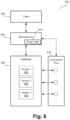
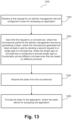
- Embodiments receive a first request for an identity management service configured to allow for accessing an application.
- Embodiments send the first request to a first microservice which performs the identity management service by generating a token.
- the first microservice generates the token at least in part by sending a second request to a SSO microservice.
- the second request comprises request parameters which are normalized, such that the SSO microservice does not need to know specific protocol semantics of said protocol.
- the SSO microservice is configured to provide a common SSO functionality across different microservices that are configured to provide an authentication functionality based on different protocols.
- Embodiments then receive the token from the first microservice and provide the token to the application, where the token allows for accessing the application.
- Embodiments provide single sign-on (“SSO”) functionality in an Identity Cloud Service (“IDCS”) that provides a multi-tenant, cloud-scale, identity and access management (“IAM”) platform.
- the SSO functionality is implemented by providing a global session and then generating protocol-specific tokens based on the global session.
- Embodiments further provide single logout (“SLO”) functionality by using a cookie to iteratively log out of multiple applications and using a redirect so secure information is not stored on the cookie.
- SLO single logout
- Embodiments provide an identity cloud service that implements a microservices based architecture and provides multi-tenant identity and data security management and secure access to cloud-based applications.
- Embodiments support secure access for hybrid cloud deployments (i.e., cloud deployments which include a combination of a public cloud and a private cloud).
- Embodiments protect applications and data both in the cloud and on-premise.
- Embodiments support multichannel access via web, mobile, and application programming interfaces ("APIs").
- Embodiments manage access for different users, such as customers, partners, and employees.
- Embodiments manage, control, and audit access across the cloud as well as on-premise.
- Embodiments integrate with new and existing applications and identities. Embodiments are horizontally scalable.
- One embodiment is a system that implements a number of microservices in a stateless middle tier environment to provide cloud-based multi-tenant identity and access management services.
- each requested identity management service is broken into real-time and near-real-time tasks.
- the real-time tasks are handled by a microservice in the middle tier, while the near-real-time tasks are offloaded to a message queue.
- Embodiments implement access tokens that are consumed by a routing tier and a middle tier to enforce a security model for accessing the microservices. Accordingly, embodiments provide a cloud-scale IAM platform based on a multi-tenant, microservices architecture.
- One embodiment protects applications and data in a cloud environment as well as in an on-premise environment.
- the embodiment secures access to any application from any device by anyone.
- the embodiment provides protection across both environments since inconsistencies in security between the two environments may result in higher risks. For example, such inconsistencies may cause a sales person to continue having access to their Customer Relationship Management ("CRM") account even after they have defected to the competition.
- CRM Customer Relationship Management
- embodiments extend the security controls provisioned in the on-premise environment into the cloud environment. For example, if a person leaves a company, embodiments ensure that their accounts are disabled both on-premise and in the cloud.
- users may access applications and/or data through many different channels such as web browsers, desktops, mobile phones, tablets, smart watches, other wearables, etc. Accordingly, one embodiment provides secured access across all these channels. For example, a user may use their mobile phone to complete a transaction they started on their desktop.
- One embodiment further manages access for various users such as customers, partners, employees, etc.
- applications and/or data may be accessed not just by employees but by customers or third parties.
- many known systems take security measures when onboarding employees, they generally do not take the same level of security measures when giving access to customers, third parties, partners, etc., resulting in the possibility of security breaches by parties that are not properly managed.
- embodiments ensure that sufficient security measures are provided for access of each type of user and not just employees.
- Embodiments provide an IDCS that is a multi-tenant, cloud-scale, IAM platform.
- IDCS provides authentication, authorization, auditing, and federation.
- IDCS manages access to custom applications and services running on the public cloud, and on-premise systems.
- IDCS may also manage access to public cloud services.
- IDCS can be used to provide SSO functionality across such variety of services/applications/systems.
- Embodiments are based on a multi-tenant, microservices architecture for designing, building, and delivering cloud-scale software services.
- Multi-tenancy refers to having one physical implementation of a service securely supporting multiple customers buying that service.
- a service is a software functionality or a set of software functionalities (such as the retrieval of specified information or the execution of a set of operations) that can be reused by different clients for different purposes, together with the policies that control its usage (e.g., based on the identity of the client requesting the service).
- a service is a mechanism to enable access to one or more capabilities, where the access is provided using a prescribed interface and is exercised consistent with constraints and policies as specified by the service description.
- a microservice is an independently deployable service.
- the term microservice contemplates a software architecture design pattern in which complex applications are composed of small, independent processes communicating with each other using language-agnostic APIs.
- microservices are small, highly decoupled services and each may focus on doing a small task.
- the microservice architectural style is an approach to developing a single application as a suite of small services, each running in its own process and communicating with lightweight mechanisms (e.g., an Hypertext Transfer Protocol ("HTTP") resource API).
- HTTP Hypertext Transfer Protocol
- microservices are easier to replace relative to a monolithic service that performs all or many of the same functions. Moreover, each of the microservices may be updated without adversely affecting the other microservices.
- microservices may be beneficially organized around their capabilities.
- the startup time for each of a collection of microservices is much less than the startup time for a single application that collectively performs all the services of those microservices.
- the startup time for each of such microservices is about one second or less, while the startup time of such single application may be about a minute, several minutes, or longer.
- microservices architecture refers to a specialization (i.e., separation of tasks within a system) and implementation approach for service oriented architectures ("SOAs") to build flexible, independently deployable software systems.
- Services in a microservices architecture are processes that communicate with each other over a network in order to fulfill a goal.
- these services use technology-agnostic protocols.
- the services have a small granularity and use lightweight protocols.
- the services are independently deployable. By distributing functionalities of a system into different small services, the cohesion of the system is enhanced and the coupling of the system is decreased. This makes it easier to change the system and add functions and qualities to the system at any time. It also allows the architecture of an individual service to emerge through continuous refactoring, and hence reduces the need for a big up-front design and allows for releasing software early and continuously.
- the unnamed universal port of a microservice is a standard communication channel that the microservice exposes by convention (e.g., as a conventional Hypertext Transfer Protocol ("HTTP") port) and that allows any other module/microservice within the same service to talk to it.
- HTTP Hypertext Transfer Protocol
- a microservice or any other self-contained functional module can be generically referred to as a "service”.
- Embodiments manage the lifecycle of user identities which entails the determination and enforcement of what an identity can access, who can be given such access, who can manage such access, etc.
- Embodiments run the identity management workload in the cloud and support security functionality for applications that are not necessarily in the cloud.
- the identity management services provided by the embodiments may be purchased from the cloud. For example, an enterprise may purchase such services from the cloud to manage their employees' access to their applications.
- Embodiments are based on industry standards (e.g., OpenlD Connect, OAuth2, Security Assertion Markup Language 2 ("SAML2”), System for Cross-domain identity Management (“SCIM”), Representational State Transfer (“REST”), etc.) for ease of integration with various applications.
- SAML2 Security Assertion Markup Language 2
- SCIM System for Cross-domain identity Management
- REST Representational State Transfer
- One embodiment provides a cloud-scale API platform and implements horizontally scalable microservices for elastic scalability.
- the embodiment leverages cloud principles and provides a multi-tenant architecture with per-tenant data separation.
- the embodiment further provides per-tenant customization via tenant self-service.
- the embodiment is available via APIs for on-demand integration with other identity services, and provides continuous feature release.
- an application that is configured to communicate based on LDAP needs an LDAP connection.
- An LDAP connection may not be established by such application through a URL (unlike, e.g., "www.google.com” that makes a connection to Google) since the LDAP needs to be on a local network.
- an LDAP-based application 218 makes a connection to Cloud Cache 402
- Cloud Cache 402 establishes a connection to IDCS 202 and then pulls data from IDCS 202 as it is being requested.
- the communication between IDCS 202 and Cloud Cache 402 may be implemented according to the SCIM protocol.
- Cloud Cache 402 may use SCIM bus 234 to send a SCIM request to IDCS 202 and receive corresponding data in return.
- SCIM is an open standard for automating the exchange of user identity information between identity domains or information technology ("IT") systems, as provided by, e.g., IETF, RFCs 7642, 7643, 7644.
- the SCIM++ platform service provides identity administration services and enables customers to access IDP features of IDCS.
- the administration services expose a set of stateless REST interfaces (i.e., APIs) that cover identity lifecycle, password management, group management, etc., exposing such artifacts as web-accessible resources.
- IDCS Administration APIs use the OAuth2 protocol for authentication and authorization.
- IDCS supports common OAuth2 scenarios such as scenarios for web server, mobile, and JavaScript applications. Access to IDCS APIs is protected by access tokens.
- an application needs to be registered as an OAuth2 client or an IDCS Application (in which case the OAuth2 client is created automatically) through the IDCS Administration console and be granted desired IDCS Administration Roles.
- IDCS Administration API calls the application first requests an access token from the IDCS OAuth2 Service. After acquiring the token, the application sends the access token to the IDCS API by including it in the HTTP authorization header.
- Applications can use IDCS Administration REST APIs directly, or use an IDCS Java Client API Library.
- An IDCS microservice may call another IDCS microservice through a network interface (i.e., an HTTP request).
- a network interface i.e., an HTTP request
- IDCS may also provide a schema service (or a persistence service) that allows for using a database schema.
- a schema service allows for delegating the responsibility of managing database schemas to IDCS. Accordingly, a user of IDCS does not need to manage a database since there is an IDCS service that provides that functionality. For example, the user may use the database to persist schemas on a per tenant basis, and when there is no more space in the database, the schema service will manage the functionality of obtaining another database and growing the space so that the users do not have to manage the database themselves.
- IDCS separates the tasks of a requested service into synchronous real-time and asynchronous near-real-time tasks, where real-time tasks include only the operations that are needed for the user to proceed.
- a real-time task is a task that is performed with minimal delay
- a near-real-time task is a task that is performed in the background without the user having to wait for it.
- a real-time task is a task that is performed with substantially no delay or with negligible delay, and appears to a user as being performed almost instantaneously.
- the real-time tasks perform the main business functionality of a specific identity service. For example, when requesting a login service, an application sends a message to authenticate a user's credentials and get a session cookie in return. What the user experiences is logging into the system. However, several other tasks may be performed in connection with the user's logging in, such as validating who the user is, auditing, sending notifications, etc.
- the corresponding real-time tasks are performed by the microservice in the middle tier, and the remaining near-real-time tasks such as operational logic/events that are not necessarily subject to real-time processing are offloaded to message queues 628 that support a highly scalable asynchronous event management system 630 with guaranteed delivery and processing. Accordingly, certain behaviors are pushed from the front end to the backend to enable IDCS to provide high level service to the customers by reducing latencies in response times. For example, a login process may include validation of credentials, submission of a log report, updating of the last login time, etc., but these tasks can be offloaded to a message queue and performed in near-real-time as opposed to real-time.
- a system may need to register or create a new user.
- the system calls an IDCS SCIM API to create a user.
- IDCS receives a request to register or create a new user
- the corresponding microservice looks at configuration data in the operational database (located in global database 620 in Fig. 6 ) and determines that the "create user" operation is marked with a "create user” event which is identified in the configuration data as an asynchronous operation.
- the microservice returns to the client and indicates that the creation of the user is done successfully, but the actual sending of the notification email is postponed and pushed to the backend.
- the microservice uses a messaging API 616 to queue the message in queue 628 which is a store.
- a messaging microservice which is an infrastructure microservice, continually runs in the background and scans queue 628 looking for events in queue 628.
- the events in queue 628 are processed by event subscribers 630 such as audit, user notification, application subscriptions, data analytics, etc.
- event subscribers 630 may communicate with, for example, audit schema 624, a user notification service 634, an identity event subscriber 632, etc.
- the messaging microservice finds the "create user" event in queue 628, it executes the corresponding notification logic and sends the corresponding email to the user.
- queue 628 queues operational events published by microservices 614 as well as resource events published by APIs 616 that manage IDCS resources.
- IDCS uses a real-time caching structure to enhance system performance and user experience.
- the cache itself may also be provided as a microservice.
- IDCS implements an elastic cache cluster 626 that grows as the number of customers supported by IDCS scales.
- Cache cluster 626 may be implemented with a distributed data grid which is disclosed in more detail below.
- write-only resources bypass cache.
- IDCS may be used to create a user.
- a client application 602 may issue a REST API call to create a user.
- Admin service a platform service in 6114
- a user manager an infrastructure library/service in 614
- the user manager audits the operation to the audit table in audit schema 624, and publishes an "identity.user.create.success” event to message queue 628.
- Identity subscriber 632 picks up the event and sends a "Welcome” email to the newly created user, including newly created login details.
- IDCS may be used to grant a role to a user, resulting in a user provisioning action.
- a client application 602 may issue a REST API call to grant a user a role.
- Admin service a platform service in 6114
- role manager an infrastructure library/service in 614
- the role manager audits the operations to the audit table in audit schema 624, and publishes an "identity.user.role.grant.success" event to message queue 628. identity subscriber 632 picks up the event and evaluates the provisioning grant policy.
- a provisioning subscriber performs some validation, initiates account creation, calls out the target system, creates an account on the target system, and marks the account creation as successful.
- Each of these functionalities may result in publishing of corresponding events, such as "prov.account.create.initiate”, “prov.target.create.initiate”, “prov.target.create.success”, or "prov.account.create.success”.
- These events may have their own business metrics aggregating number of accounts created in the target system over the last N days.
- IDCS may be used for a user to log in.
- a client application 602 may use one of the supported authentication flows to request a login for a user.
- IDCS authenticates the user, and upon success, audits the operation to the audit table in audit schema 624.
- IDCS audits the failure in audit schema 624, and publishes "login.user.login.failure" event in message queue 628.
- a login subscriber picks up the event, updates its metrics for the user, and determines if additional analytics on the user's access history need to be performed.
- embodiments enable additional event queues and subscribers to be added dynamically to test new features on a small user sample before deploying to broader user base, or to process specific events for specific internal or external customers.
- IDCS microservices are stateless, meaning the microservices themselves do not maintain state.
- State refers to the data that an application uses in order to perform its capabilities. IDCS provides multi-tenant functionality by persisting all state into tenant specific repositories in the IDCS data tier. The middle tier (i.e., the code that processes the requests) does not have data stored in the same location as the application code. Accordingly, IDCS is highly scalable, both horizontally and vertically.
- To scale vertically means to add resources to (or remove resources from) a single node in a system, typically involving the addition of CPUs or memory to a single computer.
- Vertical scalability allows an application to scale up to the limits of its hardware.
- To scale horizontally means to add more nodes to (or remove nodes from) a system, such as adding a new computer to a distributed software application.
- Horizontal scalability allows an application to scale almost infinitely, bound only by the amount of bandwidth provided by the network.
- Stateless-ness of the middle tier of IDCS makes it horizontally scalable just by adding more CPUs, and the IDCS components that perform the work of the application do not need to have a designated physical infrastructure where a particular application is running. Stateless-ness of the IDCS middle tier makes IDCS highly available, even when providing identity services to a very large number of customers/tenants. Each pass through an IDCS application/service is focused on CPU usage only to perform the application transaction itself but not use hardware to store data. Scaling is accomplished by adding more slices when the application is running, while data for the transaction is stored at a persistence layer where more copies can be added when needed.
- the IDCS web tier, middle tier, and data tier can each scale independently and separately.
- the web tier can be scaled to handle more HTTP requests.
- the middle tier can be scaled to support more service functionality.
- the data tier can be scaled to support more tenants.
- Fig. 6A is an example block diagram 600b of a functional view of IDCS in one embodiment.
- the IDCS functional stack includes services, shared libraries, and data stores.
- the services include IDCS platform services 640b, IDCS premium services 650b, and IDCS infrastructure services 662b.
- IDCS platform services 640b and IDCS premium services 650b are separately deployed Java-based runtime services implementing the business of IDCS
- IDCS infrastructure services 662b are separately deployed runtime services providing infrastructure support for IDCS.
- the shared libraries include IDCS infrastructure libraries 680b which are common code packaged as shared libraries used by IDCS services and shared libraries.
- the data stores are data repositories required/generated by IDCS, including identity store 698b, global configuration 700b, message store 702b, global tenant 704b, personalization settings 706b, resources 708b, user transient data 71 0b, system transient data 712b, per-tenant schemas (managed ExaData) 714b, operational store (not shown), caching store (not shown), etc.
- IDCS platform services 640b include, for example, OpenlD Connect service 642b, OAuth2 service 644b, SAML2 service 646b, and SCIM++ service 648b.
- IDCS premium services include, for example, cloud SSO and governance 652b, enterprise governance 654b, AuthN broker 656b, federation broker 658b, and private account management 660b.
- IDCS infrastructure services 662b and IDCS infrastructure libraries 680b provide supporting capabilities as required by IDCS platform services 640b to do their work.
- IDCS infrastructure services 662b include job scheduler 664b, UI 666b, SSO 668b, reports 670b, cache 672b, storage 674b, service manager 676b (public cloud control), and event processor 678b (user notifications, app subscriptions, auditing, data analytics).
- IDCS infrastructure libraries 680b include data manager APIs 682b, event APIs 684b, storage APIs 686b, authentication APIs 688b, authorization APIs 690b, cookie APIs 692b, keys APIs 694b, and credentials APIs 696b.
- cloud compute service 602b (internal Nimbula) supports the function of IDCS infrastructure services 662b and IDCS infrastructure libraries 680b.
- IDCS provides various Uls 602b for a consumer of IDCS services, such as customer end user UI 604b, customer admin UI 606b, DevOps admin UI 608b, and login UI 61 0b.
- IDCS allows for integration 612b of applications (e.g., customer apps 614b, partner apps 616b, and cloud apps 618b) and firmware integration 620b.
- applications e.g., customer apps 614b, partner apps 616b, and cloud apps 618b
- firmware integration 620b e.g., firmware integration 620b.
- various environments may integrate with IDCS to support their access control needs. Such integration may be provided by, for example, identity bridge 622b (providing AD integration, WNA, and SCIM connector), Apache agent 624b, or MSFT agent 626b.
- IDCS integrated with the identity services of IDCS over standards-based protocols 628b, such as OpenlD Connect 630b, OAuth2 632b, SAML2 634b, SCIM 636b, and REST/HTTP 638b.
- standards-based protocols 628b such as OpenlD Connect 630b, OAuth2 632b, SAML2 634b, SCIM 636b, and REST/HTTP 638b.
- DNS domain name system
- the IDCS functional view in Fig. 6A further includes public cloud infrastructure services that provide common functionality that IDCS depends on for user notifications (cloud notification service 718b), file storage (cloud storage service 716b), and metrics/alerting for DevOps (cloud monitoring service (EM) 722b and cloud metrics service (Graphite) 720b).
- cloud notification service 718b file storage
- EM cloud monitoring service
- Graphite cloud metrics service
- ⁇ Tenant> defines Cloud Gate's tenancy and is used to construct IDCS service URLs when contacting an IDCS server, and may be overwritten on a per-request basis by an optional X-RESOURCE-IDENTITY-DOMAIN-NAME header including ⁇ tenant-name> (e.g., "acme”).
- ⁇ Host Identifier> defines the cookie domain and is used for managing local session cookies, and may be overwritten on a per-request basis by an optional "host” header supplied by the client or the routing tier (e.g., "acme.pcs1.dc4.oraclecloud.com”).
- one instance of Cloud Gate is deployed for each tenant.
- there may be multiple instances of Cloud Gate deployed for a tenant for example, in a high-availability cluster of servers providing replication and failover.
- Cloud Gate provides a multi-tenant mode that allows a single Cloud Gate instance to support multiple tenants, for example, when an "infrastructure" Cloud Gate is in front of IDCS itself (rather than in front of a tenant's application) and handles requests from multiple tenants before passing them on to IDCS services.
- Cloud Gate supports multi-tenancy by determining a particular tenant from the header values of the requests that are passed to it. Cloud Gate substitutes the tenancies in various URLs, and uses the URLs to look up application/host specific policies. Cloud Gate applies those policies for the request, and uses that information to pass along the request to the appropriate components of IDCS.
- the tenant indicated in the incoming request is not substituted (i.e., the incoming request is not modified), but used in requests made by Cloud Gate itself to IDCS services (e.g., policy lookups, credential validation, etc.).
- Cloud Gate is provisioned with URLs for IDCS services, and these URLs may have placeholders for a tenant (e.g., "http://%tenant%.idcs.oracle.com") or may indicate the Cloud Gate's tenant.
- the placeholder or the Cloud Gate's tenant is replaced with the tenant indicated in the incoming request so that a request by Cloud Gate to an IDCS service is made using the tenant specified in the incoming request.
- Cloud Gate may be protecting a docketing application in an enterprise cloud.
- the application may belong to the IDCS service that is being requested (e.g., may be an application developed by IDCS such as tenant- specific or user-specific administrative consoles) or may be developed by a tenant of IDCS.
- the docketing application may be used by multiple customers corresponding to respective tenants of IDCS.
- a customer needs to access the application, it sends a request to IDCS, and the tenancy of the customer is indicated in the header of the request.
- Cloud Gate infers the tenancy from the request and looks up the particular policy that needs to be applied for that tenancy.
- Cloud Gate then applies the policy to that request, and if the policy allows the request to go through, then Cloud Gate asserts the tenancy and allows the request to reach the docketing application.
- Cloud Gate asserts the tenancy by adding a header to the request with the tenant name, and the request is then forwarded on to the origin server.
- Cloud Gate may only assert some of the tenants in this way, and the headers for the other tenants may already be present in the request or may have been added by a previous load-balancing server.
- Fig. 7 is a block diagram 700 of an embodiment that implements a Cloud Gate 702 running in a web server 712 and acting as a Policy Enforcement Point ("PEP") configured to integrate with IDCS Policy Decision Point (“PDP") using open standards (e.g., OAuth2, OpenlD Connect, etc.) while securing access to web browser and REST API resources 714 of an application.
- PDP Policy Enforcement Point
- open standards e.g., OAuth2, OpenlD Connect, etc.
- the PDP is implemented at OAuth and/or OpenlD Connect microservices 704 of IDCS.
- OAuth is used to generate either a client identity propagation token (e.g., indicating who the client is) or a user identity propagation token (e.g., indicating who the user is).
- client identity propagation token e.g., indicating who the client is
- user identity propagation token e.g., indicating who the user is
- the implementation of OAuth in Cloud Gate is based on a JWT which defines a format for web tokens, as provided by, e.g., IETF, RFC 7519.
- IDCS When a user logs in, a JWT is issued.
- the JWT is signed by IDCS and supports multi-tenant functionality in IDCS.
- Cloud Gate validates the JWT issued by IDCS to allow for multi-tenant functionality in IDCS. Accordingly, IDCS provides multi-tenancy in the physical structure as well as in the logical business process that underpins the security model.
- System 800 is advantageous since microservice 804 is physically decoupled from the data in database 806, and by replicating the data across locations that are closer to the client, microservice 804 can be provided as a local service to the clients and system 800 can manage the availability of the service and provide it globally.
- multi-tenancy is achieved by having stateless, elastic middle tier services process incoming requests in the context of (e.g., in association with) the tenant-specific data store binding established on a per request basis on top of the data connection created in the context of (e.g., in association with) the data store proxy user associated with the resource tenancy, and the database can scale independently of the services.
- proxy user 812 The following provides an example functionality for implementing proxy user 812:
- one table may include all tenants' data mixed together.
- one embodiment provides a tenant-driven data tier.
- the embodiment does not stripe the same database for different tenants, but instead provides a different physical database per tenant.
- multi-tenancy may be implemented by using a pluggable database (e.g., Oracle Database 12c from Oracle Corp.) where each tenant is allocated a separate partition.
- a resource manager processes the request and then asks for the data source for the request (separate from metadata).
- the embodiment performs runtime switch to a respective data source/store per request. By isolating each tenant's data from the other tenants, the embodiment provides improved data security.
- a URL token may identify the tenancy of the application that requests a service.
- An identity token may codify the identity of a user that is to be authenticated.
- An access token may identify multiple tenancies. For example, an access token may codify the tenancy that is the target of such access (e.g., an application tenancy) as well as the user tenancy of the user that is given access.
- a client assertion token may identify a client ID and the client tenancy.
- a user-assertion token may identify the user and the user tenancy.
- an identity token includes at least a "claim” [as used by one of ordinary skill in the security field] indicating the user tenant name (i.e., where the user lives).
- a "claim" in connection with authorization tokens is a statement that one subject makes about itself or another subject. The statement can be about a name, identity, key, group, privilege, or capability, for example. Claims are issued by a provider, and they are given one or more values and then packaged in security tokens that are issued by an issuer, commonly known as a security token service (“STS").
- STS security token service
- an access token includes at least a claim/statement indicating the resource tenant name at the time the request for the access token was made (e.g., the customer), a claim/statement indicating the user tenant name, a claim/statement indicating the name of the OAuth client making the request, and a claim/statement indicating the client tenant name.
- IDCS platform services tier 914 includes IDCS microservices that are invoked from the outside of IDCS, such as OpenlD Connect, OAuth, SAML, SCIM, etc.
- IDCS infrastructure services tier 916 includes supporting microservices that are invoked from the inside of IDCS to support the functionality of other IDCS microservices. Examples of IDCS infrastructure microservices are Ul, SSO, reports, cache, job scheduler, service manager, functionality for making keys, etc.
- An IDCS cache tier 926 supports caching functionality for IDCS platform services tier 914 and IDCS infrastructure services tier 916.
- OAuth protocol is used to protect the communication among IDCS components (e.g., microservices) within IDCS, and the same tokens that are used for securing access from the outside of IDCS are also used for security within IDCS. That is, web routing tier 912 uses the same tokens and protocols for processing the requests it receives regardless of whether a request is received from the outside of IDCS or from the inside of IDCS. Accordingly, IDCS provides a single consistent security model for protecting the entire system, thereby allowing for outstanding security compliance since the fewer security models implemented in a system, the more secure the system is.
- IDCS implements discovery functionality (implemented by an API of OAuth service) to determine where each application is running so that there is no need for the availability of static routing information.
- SSO microservice 1008 issues the sessions (i.e., an SSO cookie 1014 is provided) and is the only system in the architecture that has the authority to issue a session.
- An IDCS session is realized through the use of SSO cookie 1014 by browser 1002.
- Browser 1002 also uses a local session cookie 1016 to manage its local session.
- the SSO service is a common controller system that can be used for any protocol (e.g., OAuth, SAML, social token, social service, etc., or any newly developed specification).
- the request parameters are normalized.
- the SSO service can remain common and serve different types of tokens.
- the SSO service does not need to know specific protocol semantics (e.g., OAuth-specific semantics or SAML- specific semantics).
- the SSO service uses a federation protocol such as SAML to go to the remote IDP.
- the authentication is performed at the remote IDP and a SAML token is generated on the remote IDP.
- the remote IDP sends the SAML token to the SSO service.
- the IDCS SAML service extracts the SAML token, extracts the required attributes/statements from the SAML token (e.g., authentication statement, authorization statement, name, ID, etc.), normalizes that information in a specific format, and then passes it on to the SSO service.
- the IDCS SAML service does not perform assertion.
- the SSO service does not need to orchestrate the user login ceremony since the remote authentication is already performed by the remote IDP on-premise. Instead, the SSO service gets a normalized SAML state in a normalized attribute format, and asserts that state (asserts those attributes) in the local system.
- the common state includes client sessions and client states.
- the embodiment provides a "request state” and includes it in a "request cookie” as header.
- the request cookie is not an SSO cookie or an authenticated session, but a pre-authenticated state that is maintained across different services (e.g., protocol services, SSO service, etc.). It also includes execution context (e.g., states such as auditing, diagnostics, etc.).
- the normalized state e.g., the attributes, the go-back URL, what is required for different flows, etc.
- this cookie is encrypted and the encryption key is securely stored and periodically rolled over (e.g., every 12 hours) so that it cannot be hijacked.
- Table 2 Example functionalities included in "AuthContext” representation String userld Logged in user globally unique ID (“GUID”) String userEmailld User's email ID principal String sessionId Current session ID String userDisplayName User's display name String tenantName User's tenancy Map ⁇ String, String> claims Authentication claims of the user (e.g., user attributes from the IDCS (local) IDP or remote IDP) long session Expiration Time Session expiry time long session Creation Time Session creation time String userLoginld User login attribute value in case of local authentication String userMappingAttr User login attribute name in case of local authentication
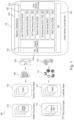
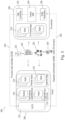
- Fig. 10A illustrates an example block diagram 1 000A of SSO runtime in one embodiment where SSO service 1002A implements the user login/logout ceremonies for local and federated logins.
- the Cloud SSO integration architecture uses the standard OpenlD Connect user authentication flow for browser-based user logins. Since Cloud login is based on OpenlD Connect, OpenlD Provider ("OP," illustrated as OAuth OP 1004A in Fig. 1000A) is where the login request reaches SSO 1002A.
- OAuth OP 1004A illustrated as OAuth OP 1004A in Fig. 1000A
- the runtime authentication model is stateless, maintaining the user's SSO state in the form of a host HTTP cookie.
- the service level agreements (“SLAs”) between OAuth OP 1004A and SSO 1002A include the following:
- One embodiment may also implement a persistent cookie that can store user preferences such as user locale. This cookie may be used to translate the error message to user-specific locale.
- a UI service 1008A (Login App/Logout) is implemented as a separate service, and not as part of SSO 1002A.
- UI service 1008A and SSO service 1002A interact with each other via a REST endpoint implemented in a REST layer 101 0A in Fig. 1000A, and state information is passed as JSON payload between SSO service 1002A and REST layer 1010A.
- SSO service 1002A includes REST layer 1010A, a SSO Controller 1012A, a Credential Collector 1014A, an Authentication Manager 1016A (for plugging in different modules and call, authenticate, and validate on each one), a Session Manager 1018A, an SSO Event Manager 1020A, an SSO Client APIs Integrator 1022A, Error Handling 1024A, and an assertor (asserting based on different identity, not shown in Fig. 1000A).
- the request when an authentication request reaches the GET method of SSO 1002A at "/sso", the request includes request and state data submitted to SSO 1002A by OAuth OP 1004A (corresponding to OAuth RP 1006A) or a SAML IDP 1005A (corresponding to a SAML SP 1007A) as an IDCS_REQUEST HTTP cookie.
- the IDCS_REQUEST cookie is decrypted and parsed, and parameters and other HTTP headers are captured in a Request Context object and passed to SSO Controller 1012A.
- SSO 1002A collects the user's credentials by redirecting to the login page (implemented by UI Service 1008A), and the login page submits the credentials to the POST method of SSO 1002A.
- the state information is passed as JSON Payload between them.
- Authentication Manager 1016A is a class that validates IDCS User ID/password and/or issues Authentication Tokens. There may be various results of Authentication, such as Authentication Success, Invalid Credentials, Disabled User, Password Has Expired, Password Needs To Be Reset, etc. The proper Error code is returned as part of the SSO Response.
- Authentication Manager 1016A talks to "/UserAuthenticator" REST endpoint of a User/Identity Manager 1030A (Resource Manager in Admin service) to execute the actual validation of the credentials.
- Authentication Context 1017A the global session
- Authentication Claims of the user are created at Authentication Manager 1016A. If Authentication Context 1017A is already present in the request, it is asserted by talking to the same User Authentication Service to assert the token instead of validating the credentials.
- Session Manager 1018A communicates with a Cookie Manager 1028A and manages the SSO cookie, including storage of Authentication Context and metadata on connecting applications.
- Cookie Manager 1028A is a common layer shared with all the other layers and generates and optimizes the global session state making it as a client session cookie.
- SSO Service 1002A redirects back to the OAuth Service with the newly created/updated SSO host HTTP cookie that includes the User's Authentication Token.
- SSO service 1002A removes request-specific data from the cookie. The following is an example functionality for reading cookie data from the HTTP Servlet Request:
- an example of cookie data in the HTTP request is as follows:
- SSO Event Manager 1020A communicates with an Event Manager 1032A and publishes events associated with the SSO flow.
- One embodiment defines SSO events and what their targets are (e.g., Audit, Analytics, Notification, Metrics, etc.). The following are corresponding example functionalities:
- SSO Client API Integrator 1022A communicates with Resource Manager 1026A, and tenant specific SSO Settings are stored and available in the Admin Server's Resource Manager 1026A.
- the SSO settings such as AuthN scheme, session timeout, etc., are read in SSO runtime server via REST requests. Since reading these settings involves a network call, they can be cached per tenant, provided there is a callback mechanism to get notified for any change in these settings.
- SSO Controller 1012A serves UI Service 1008A for the above cases according to the following flows.
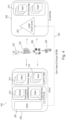
- Fig. 10B illustrates an example state and flow diagram 1000B of SSO functionality in one embodiment.
- the embodiment of Fig. 10B provides an example of the SSO controller engine flow diagram for each identity operation such as forgotten password, account log, a request coming from SAML SPs and IDPs, etc.
- SSO service 1002a has a modular configuration in which the modules use the global state to interact with each other as well as with the protocol layer (e.g., OpenlD connect, SAML, etc.).
- the embodiment provides a novel mechanism to communicate the state in a secure manner.
- the size of the state is configured efficiently so that the state occupies a small space and the operations are performed faster.
- the embodiment is configured in an adaptive way to ensure that it can be enhanced to multifactor authentication, step up authentication, etc.
- the embodiment provides an adaptive configuration so that additional authentication plug-ins can be readily added and additional step up authentication can be provided.
- the embodiment can also use the same components/modules to perform other functionality such as policy based authorization check, etc.
- the interactions between the protocol layers are performed through HTTP. They communicate through a certain state difference in the request context (parsed in the cookie) and they always know where to go back to (based on a fixed attribute in that state). For example, when SSO service 1002a gets control and determines where to go based on the protocol it got the request from, the protocol has set an end URL or a return URL into the state, and SSO service 1002a follows that based on what SSO service 1002a finds out after authentication or after success or failure. Similarly, when a protocol gets some information with respect to, for example, a request for a token, it tracks in a designated component in the request cookie.
- a protocol gets some information with respect to, for example, a request for a token, it tracks in a designated component in the request cookie.
- the state includes different map objects including component data for each protocol.
- OAuth gets an authorized request, it includes tracking information indicating from whom it got the request, etc.
- OAuth tracks the information in a specific component data and initializes the request cookie.
- the key for writing in the request cookie is shared between the components (e.g., OAuth, SAML, SSO, etc.), and there is a common understanding between these components as to, for example, what and where the data should be written, when the data should be written, etc.
- OAuth e.g., OAuth, SAML, SSO, etc.
- IDCS login flow is a sequence of request / response flows between SSO, OP, SAML IDP, SAML SP and Login App (Credential collection and Password Management JS client) to provide Web single sign-on.
- the IDCS_REQUEST http cookie is used to maintain the state between various request/response flows between SSO and Channel components.
- the key for the IDCS_REQUEST cookie will be shared between SSO and Channel components.
- Login App and SSO service will interact with each other via REST endpoint. The state information will be passed as JSON Payload between them.
- IDCS SSO service 1002a processes following different types of requests: (1) Request from IDCS OP/IDP service 1020a; (2) Request from IDCS SP service 1020a; (3) Ajax HTTP POST Request from Login app submitting Authentication credential from Login App 1042b; (4) Ajax HTTP POST Request from Login App 1042b after successful completion of Password management operation; and (5) Ajax HTTP POST Request from Login App 1042b after successful completion of Post Login operation.
- the SP service For the request from SP service, the SP service:
- IDCS_REQUEST cookie For the request from login app after successful completion of password management operation, the login app collects the new password and validates the same with configured tenant specific policy rules. On successful completion of password reset Login App checks the availability of IDCS_REQUEST cookie. If IDCS_REQUEST cookie is available, then it sends Ajax POST request to SSO service REST endpoint with JSON payload having Password management state. If IDCS_REQUEST cookie doesn't exist Login App will redirect to IDCS Admin console URL.
- SSO For response behavior for request from login app after successful completion of password management operation, SSO will assert the user info in Password Management state:
- the login app For the request from login app after successful completion of post login operation, the login app shows the post login pages and process the post login related operations.
- Login App sends Ajax POST request with Login App state with flag to indicate successful post login operation as JSON payload. If IDCS_REQUEST cookie doesn't then Login App will redirect to IDCS Admin console URL.
- Post Login flag is set by Login App in the Login App state. If it is set, then:
- embodiments provide an SSO service that dictates how a user is authenticated and how the login ceremony is performed.
- the login may be based on different types of authentication factor configurations (e.g., one factor, two factor, biometric, etc.).
- the embodiment is modularized (not a monolithic piece of code) and includes a controller layer, and each specific authentication is implemented as a plug-in (e.g., a plug-in module for user ID password which can authenticate to LDAP, a plug-in module for X.509 authentication to authenticate to a certificate store, a plug-in for mobile authentication based on a mobile factor for SMS, a plug-in for registration based on a OR code, etc.).
- a plug-in e.g., a plug-in module for user ID password which can authenticate to LDAP, a plug-in module for X.509 authentication to authenticate to a certificate store, a plug-in for mobile authentication based on a mobile factor for SMS, a plug
- the SSO system includes a service provider interface ("SPI") layer where authentication modules can be plugged in.
- SPI service provider interface
- the embodiment orchestrates the flows where the UI submits credentials to be validated.
- the embodiment performs SSO functionality irrespective of the protocol layer, whether it is OpenlD connect, SAML, OAuth, etc.
- the embodiment provides the SSO service as a central controller for the entire IDCS access for login and logout flows, and uses a rich, optimized, and normalized state to make the service agnostic to all protocols.
- One embodiment provides functionality to assert a user to a different identity stores (e.g., a remote IDP, a local identity store, etc.).
- the OAuth service reaches the SSO service to obtain the entire global session and global state.
- the global state is maintained as a map and includes the normalized state from each protocol. For each protocol, the global state saves the endpoint to go back to and the visited URLs that the protocol has protected.
- the SSO logout can trigger not only the protocol logout but also the logout of each application, the logout images, or the logout endpoints.
- One embodiment securely stores normalized logout endpoint information in the global state.
- One embodiment does not store all the logout redirect URLs, but instead stores a pointer to each client that has access.
- OAuth and SAML both include provisions for storing the logout redirect URLs for individual applications.
- OAuth application accesses the OAuth service
- a corresponding client ID is tracked and is persisted in a respective specific component in the SSO session.
- SAML application accesses the SAML service
- a corresponding SP ID is tracked and is persisted in a respective specific component in the SSO session.
- the control always comes to the SSO service.
- the SSO service then removes the global session, updates the session cookie with expiry set to the current time so that it is no longer used, and causes each component to logout.
- the IDP is an external party that may want to invoke its own logout.
- the embodiment implements information in the request cookie that indicates a SAML invoked logout. Accordingly, the embodiment provides functionality so that remote authentication logout can be invoked.
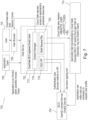
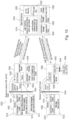
- Fig. 11 is a message sequence flow 1100 of SSO functionality provided by IDCS in one embodiment.
- a user uses a browser 1102 to access a client 1106 (e.g., a browser-based application or a mobile/native application)
- OAuth2 microservice 1110 constructs the application context (i.e., metadata that describes the application, e.g., identity of the connecting application, client ID, configuration, what the application can do, etc.), and redirects browser 1102 to SSO microservice 1112 to log in.
- application context i.e., metadata that describes the application, e.g., identity of the connecting application, client ID, configuration, what the application can do, etc.
- SSO microservice 1112 validates the existing session without starting a login ceremony. If the user does not have a valid SSO session (i.e., no session cookie exists), the SSO microservice 1112 initiates the user login ceremony in accordance with customer's login preferences (e.g., displaying a branded login page). In order to do so, the SSO microservice 1112 redirects browser 1102 to a login application service 1114 implemented in JavaScript. Login application service 1114 provides a login page in browser 1102. Browser 1102 sends a REST POST to the SSO microservice 1112 including login credentials. The SSO microservice 1112 generates an access token and sends it to Cloud Gate 1104 in a REST POST. Cloud Gate 1104 sends the authentication information to Admin SCIM microservice 1116 to validate the user's password. Admin SCIM microservice 1116 determines successful authentication and sends a corresponding message to SSO microservice 1112.
- the login page does not display a consent page, as "login" operation requires no further consent. Instead, a privacy policy is stated on the login page, informing the user about certain profile attributes being exposed to applications.
- the SSO microservice 1112 respects customer's IDP preferences, and if configured, redirects to the IDP for authentication against the configured IDP.
- Cloud Gate 1104 uses the identity token to map the user's authenticated identity to its internal account representation, and it may save this mapping in its own HTTP cookie. Cloud Gate 1104 then redirects browser 1102 to client 1106. Browser 1102 then reaches client 1106 and receives a corresponding response from client 1106._From this point on, browser 1102 can access the application (i.e., client 1106) seamlessly for as long as the application's local cookie is valid. Once the local cookie becomes invalid, the authentication process is repeated.
- the application i.e., client 1106
- distributed data grids such as, e.g., the Oracle Coherence data grid from Oracle Corp., store information in-memory to achieve higher performance, and employ redundancy in keeping copies of that information synchronized across multiple servers, thus ensuring resiliency of the system and continued availability of the data in the event of failure of a server.
- embodiments implement a microservices based architecture to provide cloud-based multi-tenant IAM services.
- each requested identity management service is broken into real-time tasks that are handled by a microservice in the middle tier, and near-real-time tasks that are offloaded to a message queue. Accordingly, embodiments provide a cloud-scale IAM platform.
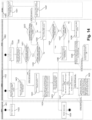
- the SSO functions/steps for performing SLO are as follows:
- the microservice is configured to provide an authentication functionality based on a protocol.
- the protocol is OAuth or SAML
- the single sign-on microservice is configured to provide single sign-on functionality across both OAuth and SAML.
- the single sign-on microservice generates a global session configured as a session cookie and provides the global session to the microservice.
- the microservice converts the global session into the token.
- the single sign-on microservice normalizes request parameters of the second request.
Landscapes
- Engineering & Computer Science (AREA)
- Computer Networks & Wireless Communication (AREA)
- Signal Processing (AREA)
- Computer Hardware Design (AREA)
- Computer Security & Cryptography (AREA)
- Computing Systems (AREA)
- General Engineering & Computer Science (AREA)
- Storage Device Security (AREA)
- Computer And Data Communications (AREA)
- Management, Administration, Business Operations System, And Electronic Commerce (AREA)
- Information Transfer Between Computers (AREA)
Priority Applications (1)
| Application Number | Priority Date | Filing Date | Title |
|---|---|---|---|
| EP19156533.2A EP3528454B1 (en) | 2016-09-14 | 2017-09-14 | Single sign-on and single logout functionality for a multi-tenant identity and data security management cloud service |
Applications Claiming Priority (3)
| Application Number | Priority Date | Filing Date | Title |
|---|---|---|---|
| US201662394273P | 2016-09-14 | 2016-09-14 | |
| US201662394345P | 2016-09-14 | 2016-09-14 | |
| PCT/US2017/051552 WO2018053122A1 (en) | 2016-09-14 | 2017-09-14 | Single sign-on and single logout functionality for a multi-tenant identity and data security management cloud service |
Related Child Applications (2)
| Application Number | Title | Priority Date | Filing Date |
|---|---|---|---|
| EP19156533.2A Division EP3528454B1 (en) | 2016-09-14 | 2017-09-14 | Single sign-on and single logout functionality for a multi-tenant identity and data security management cloud service |
| EP19156533.2A Division-Into EP3528454B1 (en) | 2016-09-14 | 2017-09-14 | Single sign-on and single logout functionality for a multi-tenant identity and data security management cloud service |
Publications (2)
| Publication Number | Publication Date |
|---|---|
| EP3513540A1 EP3513540A1 (en) | 2019-07-24 |
| EP3513540B1 true EP3513540B1 (en) | 2024-07-10 |
Family
ID=59955733
Family Applications (2)
| Application Number | Title | Priority Date | Filing Date |
|---|---|---|---|
| EP17772259.2A Active EP3513540B1 (en) | 2016-09-14 | 2017-09-14 | Single sign-on and single logout functionality for a multi-tenant identity and data security management cloud service |
| EP19156533.2A Active EP3528454B1 (en) | 2016-09-14 | 2017-09-14 | Single sign-on and single logout functionality for a multi-tenant identity and data security management cloud service |
Family Applications After (1)
| Application Number | Title | Priority Date | Filing Date |
|---|---|---|---|
| EP19156533.2A Active EP3528454B1 (en) | 2016-09-14 | 2017-09-14 | Single sign-on and single logout functionality for a multi-tenant identity and data security management cloud service |
Country Status (4)
| Country | Link |
|---|---|
| EP (2) | EP3513540B1 (https=) |
| JP (2) | JP6960450B2 (https=) |
| CN (2) | CN109314704B (https=) |
| WO (1) | WO2018053122A1 (https=) |
Families Citing this family (86)
| Publication number | Priority date | Publication date | Assignee | Title |
|---|---|---|---|---|
| US10931656B2 (en) | 2018-03-27 | 2021-02-23 | Oracle International Corporation | Cross-region trust for a multi-tenant identity cloud service |
| US11165634B2 (en) | 2018-04-02 | 2021-11-02 | Oracle International Corporation | Data replication conflict detection and resolution for a multi-tenant identity cloud service |
| US10798165B2 (en) | 2018-04-02 | 2020-10-06 | Oracle International Corporation | Tenant data comparison for a multi-tenant identity cloud service |
| US11258775B2 (en) | 2018-04-04 | 2022-02-22 | Oracle International Corporation | Local write for a multi-tenant identity cloud service |
| US10764273B2 (en) | 2018-06-28 | 2020-09-01 | Oracle International Corporation | Session synchronization across multiple devices in an identity cloud service |
| CN109150913B (zh) * | 2018-10-17 | 2020-12-18 | 东软集团股份有限公司 | 访问微服务架构下的应用的方法、装置、存储介质及服务器 |
| CN109246146B (zh) * | 2018-11-01 | 2020-10-13 | 北京京航计算通讯研究所 | 基于java中间件集成模式的sap erp单点登录方法 |
| CN109327477A (zh) * | 2018-12-06 | 2019-02-12 | 泰康保险集团股份有限公司 | 认证鉴权方法、装置及存储介质 |
| CN111431838A (zh) * | 2019-01-09 | 2020-07-17 | 北京神州泰岳软件股份有限公司 | 一种集群中单点登录和注销的方法、装置及api网关 |
| US11061929B2 (en) * | 2019-02-08 | 2021-07-13 | Oracle International Corporation | Replication of resource type and schema metadata for a multi-tenant identity cloud service |
| US11321343B2 (en) | 2019-02-19 | 2022-05-03 | Oracle International Corporation | Tenant replication bootstrap for a multi-tenant identity cloud service |
| US11669321B2 (en) | 2019-02-20 | 2023-06-06 | Oracle International Corporation | Automated database upgrade for a multi-tenant identity cloud service |
| CN113678123B (zh) * | 2019-03-25 | 2024-11-19 | 西门子股份公司 | 身份提供器管理sso会话 |
| BR112021019899A2 (pt) * | 2019-04-09 | 2022-01-18 | Twitter Inc | Gerenciar identidades de usuários em um serviço de multi-inquilinos gerenciado |
| IT201900005876A1 (it) * | 2019-04-16 | 2020-10-16 | Roberto Griggio | Sistema e metodo per la gestione delle credenziali di accesso multi-dominio di un utente abilitato ad accedere ad una pluralità di domini |
| CN110086822B (zh) * | 2019-05-07 | 2021-07-27 | 北京智芯微电子科技有限公司 | 面向微服务架构的统一身份认证策略的实现方法及系统 |
| CN110324307A (zh) * | 2019-05-16 | 2019-10-11 | 平安科技(深圳)有限公司 | 一种基于云技术的单点登录验证方法及相关设备 |
| JP7242430B2 (ja) * | 2019-05-30 | 2023-03-20 | キヤノン株式会社 | システム、ネットワークデバイス、制御方法、およびプログラム |
| US11165585B2 (en) | 2019-06-11 | 2021-11-02 | International Business Machines Corporation | Token repository and integration |
| CN110417863B (zh) * | 2019-06-27 | 2021-01-29 | 华为技术有限公司 | 生成身份识别码的方法和装置、身份认证的方法和装置 |
| CN110322940B (zh) * | 2019-07-15 | 2023-06-27 | 山东浪潮智慧医疗科技有限公司 | 一种医疗数据共享的访问授权方法及系统 |
| US11570164B2 (en) * | 2019-07-30 | 2023-01-31 | Dell Products L.P. | System and method of single sign on to master website and silent authentication for subservient websites |
| CN110442396B (zh) * | 2019-07-31 | 2022-12-16 | 网易(杭州)网络有限公司 | 应用程序启动方法及装置、存储介质及电子设备 |
| CN112532413B (zh) * | 2019-09-18 | 2023-06-06 | 亦非云互联网技术(上海)有限公司 | 基于微服务架构的业务支撑Saas系统、方法、介质及设备 |
| CN112543169B (zh) * | 2019-09-20 | 2023-08-08 | 中兴通讯股份有限公司 | 一种认证方法、装置、终端及计算机可读存储介质 |
| US11368461B2 (en) * | 2019-09-30 | 2022-06-21 | Ebay Inc. | Application programming interface authorization transformation system |
| US11689532B2 (en) | 2019-09-30 | 2023-06-27 | Sonitor Technologies As | Method for using OpenID connect to manage access to data with rights granted by multiple authentication providers |
| CN110581897A (zh) * | 2019-09-30 | 2019-12-17 | 山东浪潮通软信息科技有限公司 | 一种单向网络环境下实现两个系统之间数据交互的方法 |
| US10803453B1 (en) | 2019-11-19 | 2020-10-13 | Capital One Services, Llc | System, method and computer-accessible medium for resource centric authorization in multi partner ecosystem |
| US11863673B1 (en) | 2019-12-17 | 2024-01-02 | APPDIRECT, Inc. | White-labeled data connections for multi-tenant cloud platforms |
| CN110933109B (zh) * | 2019-12-17 | 2022-03-29 | 中国建设银行股份有限公司 | 小程序动态认证方法及装置 |
| CN110995504B (zh) * | 2019-12-18 | 2022-11-08 | 北京百度网讯科技有限公司 | 微服务节点异常处理方法、装置及系统 |
| JP7305194B2 (ja) | 2019-12-30 | 2023-07-10 | ティーエムアールダブリュー ファウンデーション アイピー エスエーアールエル | n層アーキテクチャにより仮想世界計算を最適化するためのシステムおよび方法 |
| CN113127821B (zh) * | 2019-12-31 | 2024-08-02 | 远景智能国际私人投资有限公司 | 身份验证方法、装置、电子设备及存储介质 |
| FR3108746B1 (fr) * | 2020-03-27 | 2022-04-01 | Bull Sas | Procédé et système de Découverte et d’Enregistrement de nouveaux microservices pour une Plateforme de gouvernance unifiée d’une pluralité de solutions de calcul intensif |
| CN111538739B (zh) * | 2020-04-28 | 2023-11-17 | 北京思特奇信息技术股份有限公司 | 一种基于wsg的服务网关自动同步的方法和系统 |
| CN111786998A (zh) * | 2020-06-30 | 2020-10-16 | 成都新潮传媒集团有限公司 | 基于微服务调用的权限管理方法、装置及存储介质 |
| EP3937450A1 (en) | 2020-07-07 | 2022-01-12 | Curity AB | A login and consent methodology that follows rest principles and uses the oauth protocol with attested clients |
| EP4193302A1 (en) | 2020-08-05 | 2023-06-14 | Avesha, Inc. | Performing load balancing self adjustment within an application environment |
| US12126675B2 (en) | 2020-08-05 | 2024-10-22 | Avesha, Inc. | Distributed computing system employing application slice overlay networks |
| US12101327B2 (en) | 2020-08-18 | 2024-09-24 | Stardust Technologies, Inc. | Global approach for multifactor authentication incorporating user and enterprise preferences |
| JP7599882B2 (ja) * | 2020-09-28 | 2024-12-16 | Nttテクノクロス株式会社 | 連携装置及びプログラム |
| US11671419B2 (en) | 2020-09-30 | 2023-06-06 | APPDIRECT, Inc. | Multi-cloud data connections for white-labeled platforms |
| US11153374B1 (en) * | 2020-11-06 | 2021-10-19 | Sap Se | Adaptive cloud request handling |
| CN112487390B (zh) * | 2020-11-27 | 2025-01-17 | 网宿科技股份有限公司 | 一种微服务切换方法及系统 |
| LU102236B1 (en) * | 2020-11-27 | 2022-05-30 | Microsoft Technology Licensing Llc | User permission in a multi-tenant environment |
| CN112738184B (zh) * | 2020-12-24 | 2022-11-18 | 上海家睦网络科技有限公司 | 一种插件式动态注册分布式微服务网关系统 |
| KR20220114990A (ko) * | 2021-02-09 | 2022-08-17 | 휴렛-팩커드 디벨롭먼트 컴퍼니, 엘.피. | 클라우드 플랫폼으로의 사용자 초대 |
| US11805073B2 (en) | 2021-05-03 | 2023-10-31 | Avesha, Inc. | Controlling placement of workloads of an application within an application environment |
| CN113347163B (zh) * | 2021-05-20 | 2023-05-16 | 远景智能国际私人投资有限公司 | 单点登录方法、装置、设备及介质 |
| CN113542238B (zh) * | 2021-06-29 | 2023-06-16 | 上海派拉软件股份有限公司 | 一种基于零信任的风险判定方法及系统 |
| CN113660284B (zh) * | 2021-08-26 | 2023-02-21 | 贵州电子商务云运营有限责任公司 | 一种基于票据的分布式认证方法 |
| CN113852669B (zh) * | 2021-09-03 | 2024-01-12 | 紫光云(南京)数字技术有限公司 | 一种适应多种网络环境的高效的容器集群部署方法 |
| CN113965357B (zh) * | 2021-09-28 | 2023-10-17 | 网宿科技股份有限公司 | 跨域网站登录状态同步方法、电子设备及存储介质 |
| US12413569B2 (en) | 2021-09-30 | 2025-09-09 | Oracle International Corporation | Single sign-on between 2 independent states |
| US12147843B2 (en) | 2021-09-30 | 2024-11-19 | Oracle International Corporation | Migration and cutover based on events in a replication stream |
| CN118120181A (zh) * | 2021-09-30 | 2024-05-31 | 甲骨文国际公司 | 单点注销 |
| US12464036B2 (en) | 2021-09-30 | 2025-11-04 | Oracle International Corporation | Maintaining sessions information in multi-region cloud environment |
| US11785082B2 (en) | 2021-09-30 | 2023-10-10 | Oracle International Corporation | Domain replication across regions |
| US12273343B2 (en) | 2021-11-04 | 2025-04-08 | Oracle International Corporation | Techniques for dynamically assigning client credentials to an application |
| CN114024751B (zh) * | 2021-11-05 | 2023-05-23 | 抖音视界有限公司 | 一种应用访问控制方法、装置、计算机设备及存储介质 |
| CN114124571B (zh) * | 2021-12-09 | 2024-07-16 | 上海甄云信息科技有限公司 | 一种多路对接的单点登录方法及系统 |
| CN114448668B (zh) * | 2021-12-24 | 2023-07-14 | 苏州浪潮智能科技有限公司 | 一种实现云平台对接安全服务的方法及装置 |
| WO2023149968A1 (en) | 2022-02-03 | 2023-08-10 | Analytics Hq, Llc | Asynchronous distributed data transfer system |
| CN115473662A (zh) * | 2022-03-04 | 2022-12-13 | 太原科技大学 | 基于IDaaS的云计算多域用户身份一致性供应管理方法 |
| WO2023174006A1 (zh) * | 2022-03-17 | 2023-09-21 | 华为云计算技术有限公司 | 一种服务集成方法及相关设备 |
| CN114745431B (zh) * | 2022-03-18 | 2023-09-29 | 上海道客网络科技有限公司 | 基于边车技术的无侵入式权限认证方法、系统、介质和设备 |
| CN114491652A (zh) * | 2022-04-19 | 2022-05-13 | 广州市保伦电子有限公司 | 一种数据库数据加密备份及解密还原的方法及处理终端 |
| CN114978771B (zh) * | 2022-07-26 | 2023-06-02 | 成都云智数安科技有限公司 | 一种基于区块链技术的数据安全共享方法及系统 |
| CN115643253A (zh) * | 2022-10-14 | 2023-01-24 | 中国银行股份有限公司 | 跨域文件请求方法及装置、业务服务系统 |
| CN115396496B (zh) * | 2022-10-27 | 2023-01-17 | 北京安盟信息技术股份有限公司 | 云环境下租户密码服务会话亲和方法、系统、介质及设备 |
| US12445446B2 (en) | 2022-11-08 | 2025-10-14 | Okta, Inc. | Techniques for unifying multiple identity clouds |
| US12445449B2 (en) * | 2022-11-08 | 2025-10-14 | Okta, Inc. | Techniques for unifying multiple identity clouds |
| JP7799192B2 (ja) * | 2022-11-24 | 2026-01-15 | キヤノンマーケティングジャパン株式会社 | 情報処理システム、情報処理システムの制御方法、及びプログラム |
| CN115987497B (zh) * | 2022-12-05 | 2026-04-21 | 成都魔光数码科技有限公司 | Hss越权访问防护方法、系统、电子设备及存储介质 |
| US20240281341A1 (en) * | 2023-01-31 | 2024-08-22 | Hycu, Inc. | Discovery of services in combination with enabling data protection and other workflows |
| CN116112541A (zh) * | 2023-02-07 | 2023-05-12 | 南方电网数字电网集团信息通信科技有限公司 | 一种域控系统微服务设计方法、系统、设备及可存储介质 |
| CN116723029A (zh) * | 2023-06-28 | 2023-09-08 | 中国联合网络通信集团有限公司 | 一种访问控制方法、装置、设备、存储介质 |
| AU2024355282A1 (en) * | 2023-10-02 | 2026-04-16 | Okta, Inc. | Universal logout and single logout techniques |
| AU2024355032A1 (en) * | 2023-10-02 | 2026-04-16 | Okta, Inc. | Techniques for unifying multiple identity clouds |
| US20250112906A1 (en) * | 2023-10-02 | 2025-04-03 | Okta, Inc. | Dynamic control plane for configuring capabilities across applications via a cloud platform |
| CN117411725B (zh) * | 2023-12-13 | 2024-04-30 | 深圳竹云科技股份有限公司 | 门户应用认证方法、装置、及计算机设备 |
| CN118536097A (zh) * | 2024-04-24 | 2024-08-23 | 内蒙古建亨奥能科技有限公司 | 一种企业用数据交互系统 |
| WO2026009047A1 (en) * | 2024-07-02 | 2026-01-08 | International Business Machines Corporation | Data processing system and method for data security enhancement |
| CN118984251B (zh) * | 2024-10-11 | 2025-01-10 | 中博信息技术研究院有限公司 | 一种基于数字证书实现零接口的安全单点登录方法 |
| CN119646781A (zh) * | 2024-12-31 | 2025-03-18 | 国能数智科技开发(北京)有限公司 | 应用系统集成方法、装置、设备及介质 |
Citations (1)
| Publication number | Priority date | Publication date | Assignee | Title |
|---|---|---|---|---|
| EP3361700A1 (en) * | 2016-05-11 | 2018-08-15 | Oracle International Corporation | Multi-tenant identity and data security management cloud service |
Family Cites Families (22)
| Publication number | Priority date | Publication date | Assignee | Title |
|---|---|---|---|---|
| US7530099B2 (en) * | 2001-09-27 | 2009-05-05 | International Business Machines Corporation | Method and system for a single-sign-on mechanism within application service provider (ASP) aggregation |
| CN1812403A (zh) * | 2005-01-28 | 2006-08-02 | 广东省电信有限公司科学技术研究院 | 一种跨管理域实现身份认证的单点登录方法 |
| US7761911B2 (en) * | 2005-11-21 | 2010-07-20 | Oracle International Corporation | Method and apparatus for facilitating single sign-on |
| CN101166173B (zh) * | 2006-10-20 | 2012-03-28 | 北京直真节点技术开发有限公司 | 一种单点登录系统、装置及方法 |
| CN102098158B (zh) * | 2009-12-10 | 2013-12-11 | 北大方正集团有限公司 | 跨域名单点登录和注销的方法、系统及相应设备 |
| US9118657B1 (en) * | 2011-03-15 | 2015-08-25 | Avior, Inc. | Extending secure single sign on to legacy applications |
| US8533804B2 (en) * | 2011-09-23 | 2013-09-10 | Loyal3 Holdings, Inc. | User login with redirect to home network |
| US9495533B2 (en) * | 2011-09-29 | 2016-11-15 | Oracle International Corporation | Mobile application, identity relationship management |
| CN102315945A (zh) * | 2011-10-20 | 2012-01-11 | 江苏三源教育实业有限公司 | 基于私有协议的统一身份认证方法 |
| CN103188295A (zh) * | 2011-12-28 | 2013-07-03 | 上海格尔软件股份有限公司 | 一种对用户和应用完全透明的web单点登录方法 |
| JP5955106B2 (ja) * | 2012-06-01 | 2016-07-20 | キヤノン株式会社 | マッピングサーバーとシングルサインオンシステム、マッピング機能提供方法 |
| US9838370B2 (en) * | 2012-09-07 | 2017-12-05 | Oracle International Corporation | Business attribute driven sizing algorithms |
| US8769651B2 (en) * | 2012-09-19 | 2014-07-01 | Secureauth Corporation | Mobile multifactor single-sign-on authentication |
| US8893230B2 (en) * | 2013-02-22 | 2014-11-18 | Duo Security, Inc. | System and method for proxying federated authentication protocols |
| JP6482526B2 (ja) * | 2013-03-15 | 2019-03-13 | オラクル・インターナショナル・コーポレイション | コンピュータアプリケーションのオブジェクトコードを変更することによるコンピュータアプリケーションのためのセキュリティサービス管理 |
| US9544293B2 (en) * | 2013-09-20 | 2017-01-10 | Oracle International Corporation | Global unified session identifier across multiple data centers |
| WO2015042546A1 (en) * | 2013-09-20 | 2015-03-26 | Oracle International Corporation | Web-based single sign-on with form-fill proxy application |
| EP3047626B1 (en) * | 2013-09-20 | 2017-10-25 | Oracle International Corporation | Multiple resource servers with single, flexible, pluggable oauth server and oauth-protected restful oauth consent management service, and mobile application single sign on oauth service |
| US9641512B2 (en) * | 2014-04-10 | 2017-05-02 | EMC IP Holding Company LLC | Identity protocol translation gateway |
| US10664495B2 (en) | 2014-09-25 | 2020-05-26 | Oracle International Corporation | System and method for supporting data grid snapshot and federation |
| US9363301B2 (en) * | 2014-10-21 | 2016-06-07 | Twilio, Inc. | System and method for providing a micro-services communication platform |
| JP7027027B2 (ja) | 2016-03-17 | 2022-03-01 | キヤノン株式会社 | 情報処理装置、制御方法、およびそのプログラム |
-
2017
- 2017-09-14 WO PCT/US2017/051552 patent/WO2018053122A1/en not_active Ceased
- 2017-09-14 JP JP2019514027A patent/JP6960450B2/ja active Active
- 2017-09-14 CN CN201780034546.0A patent/CN109314704B/zh active Active
- 2017-09-14 EP EP17772259.2A patent/EP3513540B1/en active Active
- 2017-09-14 CN CN201811551459.5A patent/CN109639687B/zh active Active
- 2017-09-14 EP EP19156533.2A patent/EP3528454B1/en active Active
-
2019
- 2019-03-22 JP JP2019055074A patent/JP6998912B2/ja active Active
Patent Citations (1)
| Publication number | Priority date | Publication date | Assignee | Title |
|---|---|---|---|---|
| EP3361700A1 (en) * | 2016-05-11 | 2018-08-15 | Oracle International Corporation | Multi-tenant identity and data security management cloud service |
Non-Patent Citations (1)
| Title |
|---|
| SEBASTIÁN PEYROTT: "What is and how does Single Sign On Authentication work?", 23 September 2015 (2015-09-23), XP055475047, Retrieved from the Internet <URL:https://auth0.com/blog/what-is-and-how-does-single-sign-on-work/> [retrieved on 20180515] * |
Also Published As
| Publication number | Publication date |
|---|---|
| EP3528454B1 (en) | 2020-08-26 |
| EP3528454A1 (en) | 2019-08-21 |
| WO2018053122A1 (en) | 2018-03-22 |
| JP2019164794A (ja) | 2019-09-26 |
| CN109639687B (zh) | 2021-05-28 |
| CN109639687A (zh) | 2019-04-16 |
| CN109314704A (zh) | 2019-02-05 |
| CN109314704B (zh) | 2021-07-09 |
| JP6960450B2 (ja) | 2021-11-05 |
| JP6998912B2 (ja) | 2022-01-18 |
| JP2019526868A (ja) | 2019-09-19 |
| EP3513540A1 (en) | 2019-07-24 |
Similar Documents
| Publication | Publication Date | Title |
|---|---|---|
| EP3513540B1 (en) | Single sign-on and single logout functionality for a multi-tenant identity and data security management cloud service | |
| EP3841726B1 (en) | Multi-tenant identity cloud service with on-premise authentication integration | |
| EP4029222B1 (en) | Multi-tenant identity cloud service with on-premise authentication integration and bridge high availability | |
| EP3777077B1 (en) | Local write for a multi-tenant identity cloud service | |
| US11023555B2 (en) | Cookie based state propagation for a multi-tenant identity cloud service | |
| EP3566419B1 (en) | Multi-tenant identity cloud service to allow a client to access resources in a remote region after receiving a token from a home region | |
| US10511589B2 (en) | Single logout functionality for a multi-tenant identity and data security management cloud service | |
| EP3577885B1 (en) | Tenant data comparison for replicating data in a multi-tenant identity cloud service based on json objects | |
| US10846390B2 (en) | Single sign-on functionality for a multi-tenant identity and data security management cloud service | |
| EP3311548B1 (en) | Multi-tenant identity and data security management cloud service | |
| EP3513542B1 (en) | Tenant and service management for a multi-tenant identity and data security management cloud service | |
| WO2020005752A1 (en) | Declarative third party identity provider integration for a multi-tenant identity cloud service | |
| WO2017196774A1 (en) | Multi-tenant identity and data security management cloud service | |
| EP3452944A1 (en) | Data management for a multi-tenant identity cloud service |
Legal Events
| Date | Code | Title | Description |
|---|---|---|---|
| STAA | Information on the status of an ep patent application or granted ep patent |
Free format text: STATUS: UNKNOWN |
|
| STAA | Information on the status of an ep patent application or granted ep patent |
Free format text: STATUS: THE INTERNATIONAL PUBLICATION HAS BEEN MADE |
|
| PUAI | Public reference made under article 153(3) epc to a published international application that has entered the european phase |
Free format text: ORIGINAL CODE: 0009012 |
|
| STAA | Information on the status of an ep patent application or granted ep patent |
Free format text: STATUS: REQUEST FOR EXAMINATION WAS MADE |
|
| 17P | Request for examination filed |
Effective date: 20190314 |
|
| AK | Designated contracting states |
Kind code of ref document: A1 Designated state(s): AL AT BE BG CH CY CZ DE DK EE ES FI FR GB GR HR HU IE IS IT LI LT LU LV MC MK MT NL NO PL PT RO RS SE SI SK SM TR |
|
| AX | Request for extension of the european patent |
Extension state: BA ME |
|
| STAA | Information on the status of an ep patent application or granted ep patent |
Free format text: STATUS: EXAMINATION IS IN PROGRESS |
|
| 17Q | First examination report despatched |
Effective date: 20190731 |
|
| DAV | Request for validation of the european patent (deleted) | ||
| DAX | Request for extension of the european patent (deleted) | ||
| P01 | Opt-out of the competence of the unified patent court (upc) registered |
Effective date: 20230522 |
|
| REG | Reference to a national code |
Ref country code: DE Ref legal event code: R079 Free format text: PREVIOUS MAIN CLASS: H04L0029060000 Ipc: H04L0009400000 Ref country code: DE Ref legal event code: R079 Ref document number: 602017083199 Country of ref document: DE Free format text: PREVIOUS MAIN CLASS: H04L0029060000 Ipc: H04L0009400000 |
|
| GRAP | Despatch of communication of intention to grant a patent |
Free format text: ORIGINAL CODE: EPIDOSNIGR1 |
|
| STAA | Information on the status of an ep patent application or granted ep patent |
Free format text: STATUS: GRANT OF PATENT IS INTENDED |
|
| RIC1 | Information provided on ipc code assigned before grant |
Ipc: H04L 67/02 20220101ALI20240131BHEP Ipc: H04L 67/14 20220101ALI20240131BHEP Ipc: H04L 67/146 20220101ALI20240131BHEP Ipc: H04L 9/40 20220101AFI20240131BHEP |
|
| INTG | Intention to grant announced |
Effective date: 20240216 |
|
| GRAS | Grant fee paid |
Free format text: ORIGINAL CODE: EPIDOSNIGR3 |
|
| GRAA | (expected) grant |
Free format text: ORIGINAL CODE: 0009210 |
|
| STAA | Information on the status of an ep patent application or granted ep patent |
Free format text: STATUS: THE PATENT HAS BEEN GRANTED |
|
| AK | Designated contracting states |
Kind code of ref document: B1 Designated state(s): AL AT BE BG CH CY CZ DE DK EE ES FI FR GB GR HR HU IE IS IT LI LT LU LV MC MK MT NL NO PL PT RO RS SE SI SK SM TR |
|
| REG | Reference to a national code |
Ref country code: CH Ref legal event code: EP |
|
| REG | Reference to a national code |
Ref country code: DE Ref legal event code: R096 Ref document number: 602017083199 Country of ref document: DE |
|
| REG | Reference to a national code |
Ref country code: LT Ref legal event code: MG9D |
|
| REG | Reference to a national code |
Ref country code: NL Ref legal event code: MP Effective date: 20240710 |
|
| PG25 | Lapsed in a contracting state [announced via postgrant information from national office to epo] |
Ref country code: PT Free format text: LAPSE BECAUSE OF FAILURE TO SUBMIT A TRANSLATION OF THE DESCRIPTION OR TO PAY THE FEE WITHIN THE PRESCRIBED TIME-LIMIT Effective date: 20241111 |
|
| REG | Reference to a national code |
Ref country code: AT Ref legal event code: MK05 Ref document number: 1703012 Country of ref document: AT Kind code of ref document: T Effective date: 20240710 |
|
| PG25 | Lapsed in a contracting state [announced via postgrant information from national office to epo] |
Ref country code: NL Free format text: LAPSE BECAUSE OF FAILURE TO SUBMIT A TRANSLATION OF THE DESCRIPTION OR TO PAY THE FEE WITHIN THE PRESCRIBED TIME-LIMIT Effective date: 20240710 |
|
| PG25 | Lapsed in a contracting state [announced via postgrant information from national office to epo] |
Ref country code: PT Free format text: LAPSE BECAUSE OF FAILURE TO SUBMIT A TRANSLATION OF THE DESCRIPTION OR TO PAY THE FEE WITHIN THE PRESCRIBED TIME-LIMIT Effective date: 20241111 Ref country code: NL Free format text: LAPSE BECAUSE OF FAILURE TO SUBMIT A TRANSLATION OF THE DESCRIPTION OR TO PAY THE FEE WITHIN THE PRESCRIBED TIME-LIMIT Effective date: 20240710 |
|
| PG25 | Lapsed in a contracting state [announced via postgrant information from national office to epo] |
Ref country code: NO Free format text: LAPSE BECAUSE OF FAILURE TO SUBMIT A TRANSLATION OF THE DESCRIPTION OR TO PAY THE FEE WITHIN THE PRESCRIBED TIME-LIMIT Effective date: 20241010 |
|
| PG25 | Lapsed in a contracting state [announced via postgrant information from national office to epo] |
Ref country code: GR Free format text: LAPSE BECAUSE OF FAILURE TO SUBMIT A TRANSLATION OF THE DESCRIPTION OR TO PAY THE FEE WITHIN THE PRESCRIBED TIME-LIMIT Effective date: 20241011 Ref country code: PL Free format text: LAPSE BECAUSE OF FAILURE TO SUBMIT A TRANSLATION OF THE DESCRIPTION OR TO PAY THE FEE WITHIN THE PRESCRIBED TIME-LIMIT Effective date: 20240710 Ref country code: FI Free format text: LAPSE BECAUSE OF FAILURE TO SUBMIT A TRANSLATION OF THE DESCRIPTION OR TO PAY THE FEE WITHIN THE PRESCRIBED TIME-LIMIT Effective date: 20240710 |
|
| PG25 | Lapsed in a contracting state [announced via postgrant information from national office to epo] |
Ref country code: BG Free format text: LAPSE BECAUSE OF FAILURE TO SUBMIT A TRANSLATION OF THE DESCRIPTION OR TO PAY THE FEE WITHIN THE PRESCRIBED TIME-LIMIT Effective date: 20240710 |
|
| PG25 | Lapsed in a contracting state [announced via postgrant information from national office to epo] |
Ref country code: LV Free format text: LAPSE BECAUSE OF FAILURE TO SUBMIT A TRANSLATION OF THE DESCRIPTION OR TO PAY THE FEE WITHIN THE PRESCRIBED TIME-LIMIT Effective date: 20240710 |
|
| PG25 | Lapsed in a contracting state [announced via postgrant information from national office to epo] |
Ref country code: AT Free format text: LAPSE BECAUSE OF FAILURE TO SUBMIT A TRANSLATION OF THE DESCRIPTION OR TO PAY THE FEE WITHIN THE PRESCRIBED TIME-LIMIT Effective date: 20240710 Ref country code: IS Free format text: LAPSE BECAUSE OF FAILURE TO SUBMIT A TRANSLATION OF THE DESCRIPTION OR TO PAY THE FEE WITHIN THE PRESCRIBED TIME-LIMIT Effective date: 20241110 |
|
| PG25 | Lapsed in a contracting state [announced via postgrant information from national office to epo] |
Ref country code: HR Free format text: LAPSE BECAUSE OF FAILURE TO SUBMIT A TRANSLATION OF THE DESCRIPTION OR TO PAY THE FEE WITHIN THE PRESCRIBED TIME-LIMIT Effective date: 20240710 |
|
| PG25 | Lapsed in a contracting state [announced via postgrant information from national office to epo] |
Ref country code: ES Free format text: LAPSE BECAUSE OF FAILURE TO SUBMIT A TRANSLATION OF THE DESCRIPTION OR TO PAY THE FEE WITHIN THE PRESCRIBED TIME-LIMIT Effective date: 20240710 Ref country code: RS Free format text: LAPSE BECAUSE OF FAILURE TO SUBMIT A TRANSLATION OF THE DESCRIPTION OR TO PAY THE FEE WITHIN THE PRESCRIBED TIME-LIMIT Effective date: 20241010 |
|
| PG25 | Lapsed in a contracting state [announced via postgrant information from national office to epo] |
Ref country code: RS Free format text: LAPSE BECAUSE OF FAILURE TO SUBMIT A TRANSLATION OF THE DESCRIPTION OR TO PAY THE FEE WITHIN THE PRESCRIBED TIME-LIMIT Effective date: 20241010 Ref country code: PL Free format text: LAPSE BECAUSE OF FAILURE TO SUBMIT A TRANSLATION OF THE DESCRIPTION OR TO PAY THE FEE WITHIN THE PRESCRIBED TIME-LIMIT Effective date: 20240710 Ref country code: NO Free format text: LAPSE BECAUSE OF FAILURE TO SUBMIT A TRANSLATION OF THE DESCRIPTION OR TO PAY THE FEE WITHIN THE PRESCRIBED TIME-LIMIT Effective date: 20241010 Ref country code: LV Free format text: LAPSE BECAUSE OF FAILURE TO SUBMIT A TRANSLATION OF THE DESCRIPTION OR TO PAY THE FEE WITHIN THE PRESCRIBED TIME-LIMIT Effective date: 20240710 Ref country code: IS Free format text: LAPSE BECAUSE OF FAILURE TO SUBMIT A TRANSLATION OF THE DESCRIPTION OR TO PAY THE FEE WITHIN THE PRESCRIBED TIME-LIMIT Effective date: 20241110 Ref country code: HR Free format text: LAPSE BECAUSE OF FAILURE TO SUBMIT A TRANSLATION OF THE DESCRIPTION OR TO PAY THE FEE WITHIN THE PRESCRIBED TIME-LIMIT Effective date: 20240710 Ref country code: GR Free format text: LAPSE BECAUSE OF FAILURE TO SUBMIT A TRANSLATION OF THE DESCRIPTION OR TO PAY THE FEE WITHIN THE PRESCRIBED TIME-LIMIT Effective date: 20241011 Ref country code: FI Free format text: LAPSE BECAUSE OF FAILURE TO SUBMIT A TRANSLATION OF THE DESCRIPTION OR TO PAY THE FEE WITHIN THE PRESCRIBED TIME-LIMIT Effective date: 20240710 Ref country code: ES Free format text: LAPSE BECAUSE OF FAILURE TO SUBMIT A TRANSLATION OF THE DESCRIPTION OR TO PAY THE FEE WITHIN THE PRESCRIBED TIME-LIMIT Effective date: 20240710 Ref country code: BG Free format text: LAPSE BECAUSE OF FAILURE TO SUBMIT A TRANSLATION OF THE DESCRIPTION OR TO PAY THE FEE WITHIN THE PRESCRIBED TIME-LIMIT Effective date: 20240710 Ref country code: AT Free format text: LAPSE BECAUSE OF FAILURE TO SUBMIT A TRANSLATION OF THE DESCRIPTION OR TO PAY THE FEE WITHIN THE PRESCRIBED TIME-LIMIT Effective date: 20240710 |
|
| REG | Reference to a national code |
Ref country code: DE Ref legal event code: R097 Ref document number: 602017083199 Country of ref document: DE |
|
| PG25 | Lapsed in a contracting state [announced via postgrant information from national office to epo] |
Ref country code: SM Free format text: LAPSE BECAUSE OF FAILURE TO SUBMIT A TRANSLATION OF THE DESCRIPTION OR TO PAY THE FEE WITHIN THE PRESCRIBED TIME-LIMIT Effective date: 20240710 Ref country code: DK Free format text: LAPSE BECAUSE OF FAILURE TO SUBMIT A TRANSLATION OF THE DESCRIPTION OR TO PAY THE FEE WITHIN THE PRESCRIBED TIME-LIMIT Effective date: 20240710 Ref country code: RO Free format text: LAPSE BECAUSE OF FAILURE TO SUBMIT A TRANSLATION OF THE DESCRIPTION OR TO PAY THE FEE WITHIN THE PRESCRIBED TIME-LIMIT Effective date: 20240710 |
|
| PG25 | Lapsed in a contracting state [announced via postgrant information from national office to epo] |
Ref country code: MC Free format text: LAPSE BECAUSE OF FAILURE TO SUBMIT A TRANSLATION OF THE DESCRIPTION OR TO PAY THE FEE WITHIN THE PRESCRIBED TIME-LIMIT Effective date: 20240710 Ref country code: EE Free format text: LAPSE BECAUSE OF FAILURE TO SUBMIT A TRANSLATION OF THE DESCRIPTION OR TO PAY THE FEE WITHIN THE PRESCRIBED TIME-LIMIT Effective date: 20240710 |
|
| PG25 | Lapsed in a contracting state [announced via postgrant information from national office to epo] |
Ref country code: CZ Free format text: LAPSE BECAUSE OF FAILURE TO SUBMIT A TRANSLATION OF THE DESCRIPTION OR TO PAY THE FEE WITHIN THE PRESCRIBED TIME-LIMIT Effective date: 20240710 |
|
| PG25 | Lapsed in a contracting state [announced via postgrant information from national office to epo] |
Ref country code: SK Free format text: LAPSE BECAUSE OF FAILURE TO SUBMIT A TRANSLATION OF THE DESCRIPTION OR TO PAY THE FEE WITHIN THE PRESCRIBED TIME-LIMIT Effective date: 20240710 Ref country code: IT Free format text: LAPSE BECAUSE OF FAILURE TO SUBMIT A TRANSLATION OF THE DESCRIPTION OR TO PAY THE FEE WITHIN THE PRESCRIBED TIME-LIMIT Effective date: 20240710 |
|
| REG | Reference to a national code |
Ref country code: CH Ref legal event code: PL |
|
| PLBE | No opposition filed within time limit |
Free format text: ORIGINAL CODE: 0009261 |
|
| STAA | Information on the status of an ep patent application or granted ep patent |
Free format text: STATUS: NO OPPOSITION FILED WITHIN TIME LIMIT |
|
| PG25 | Lapsed in a contracting state [announced via postgrant information from national office to epo] |
Ref country code: LU Free format text: LAPSE BECAUSE OF NON-PAYMENT OF DUE FEES Effective date: 20240914 |
|
| 26N | No opposition filed |
Effective date: 20250411 |
|
| REG | Reference to a national code |
Ref country code: BE Ref legal event code: MM Effective date: 20240930 |
|
| PG25 | Lapsed in a contracting state [announced via postgrant information from national office to epo] |
Ref country code: BE Free format text: LAPSE BECAUSE OF NON-PAYMENT OF DUE FEES Effective date: 20240930 |
|
| PG25 | Lapsed in a contracting state [announced via postgrant information from national office to epo] |
Ref country code: FR Free format text: LAPSE BECAUSE OF NON-PAYMENT OF DUE FEES Effective date: 20240930 |
|
| PG25 | Lapsed in a contracting state [announced via postgrant information from national office to epo] |
Ref country code: CH Free format text: LAPSE BECAUSE OF NON-PAYMENT OF DUE FEES Effective date: 20240930 |
|
| PG25 | Lapsed in a contracting state [announced via postgrant information from national office to epo] |
Ref country code: IE Free format text: LAPSE BECAUSE OF NON-PAYMENT OF DUE FEES Effective date: 20240914 |
|
| PG25 | Lapsed in a contracting state [announced via postgrant information from national office to epo] |
Ref country code: SE Free format text: LAPSE BECAUSE OF FAILURE TO SUBMIT A TRANSLATION OF THE DESCRIPTION OR TO PAY THE FEE WITHIN THE PRESCRIBED TIME-LIMIT Effective date: 20240710 |
|
| PGFP | Annual fee paid to national office [announced via postgrant information from national office to epo] |
Ref country code: DE Payment date: 20250730 Year of fee payment: 9 |
|
| PGFP | Annual fee paid to national office [announced via postgrant information from national office to epo] |
Ref country code: GB Payment date: 20250731 Year of fee payment: 9 |
|
| PG25 | Lapsed in a contracting state [announced via postgrant information from national office to epo] |
Ref country code: CY Free format text: LAPSE BECAUSE OF FAILURE TO SUBMIT A TRANSLATION OF THE DESCRIPTION OR TO PAY THE FEE WITHIN THE PRESCRIBED TIME-LIMIT; INVALID AB INITIO Effective date: 20170914 |
|
| PG25 | Lapsed in a contracting state [announced via postgrant information from national office to epo] |
Ref country code: HU Free format text: LAPSE BECAUSE OF FAILURE TO SUBMIT A TRANSLATION OF THE DESCRIPTION OR TO PAY THE FEE WITHIN THE PRESCRIBED TIME-LIMIT; INVALID AB INITIO Effective date: 20170914 |