EP3512175A1 - System and protocol for integrating multiple service providers across various domains using a platform - Google Patents
System and protocol for integrating multiple service providers across various domains using a platform Download PDFInfo
- Publication number
- EP3512175A1 EP3512175A1 EP18163213.4A EP18163213A EP3512175A1 EP 3512175 A1 EP3512175 A1 EP 3512175A1 EP 18163213 A EP18163213 A EP 18163213A EP 3512175 A1 EP3512175 A1 EP 3512175A1
- Authority
- EP
- European Patent Office
- Prior art keywords
- platform
- service providers
- protocol
- application
- module
- Prior art date
- Legal status (The legal status is an assumption and is not a legal conclusion. Google has not performed a legal analysis and makes no representation as to the accuracy of the status listed.)
- Granted
Links
Images

Classifications
-
- H—ELECTRICITY
- H04—ELECTRIC COMMUNICATION TECHNIQUE
- H04L—TRANSMISSION OF DIGITAL INFORMATION, e.g. TELEGRAPHIC COMMUNICATION
- H04L67/00—Network arrangements or protocols for supporting network services or applications
- H04L67/01—Protocols
- H04L67/02—Protocols based on web technology, e.g. hypertext transfer protocol [HTTP]
-
- G—PHYSICS
- G06—COMPUTING OR CALCULATING; COUNTING
- G06F—ELECTRIC DIGITAL DATA PROCESSING
- G06F16/00—Information retrieval; Database structures therefor; File system structures therefor
- G06F16/90—Details of database functions independent of the retrieved data types
- G06F16/95—Retrieval from the web
- G06F16/958—Organisation or management of web site content, e.g. publishing, maintaining pages or automatic linking
-
- G—PHYSICS
- G06—COMPUTING OR CALCULATING; COUNTING
- G06F—ELECTRIC DIGITAL DATA PROCESSING
- G06F21/00—Security arrangements for protecting computers, components thereof, programs or data against unauthorised activity
- G06F21/10—Protecting distributed programs or content, e.g. vending or licensing of copyrighted material ; Digital rights management [DRM]
- G06F21/105—Arrangements for software license management or administration, e.g. for managing licenses at corporate level
-
- G—PHYSICS
- G06—COMPUTING OR CALCULATING; COUNTING
- G06F—ELECTRIC DIGITAL DATA PROCESSING
- G06F21/00—Security arrangements for protecting computers, components thereof, programs or data against unauthorised activity
- G06F21/30—Authentication, i.e. establishing the identity or authorisation of security principals
- G06F21/31—User authentication
- G06F21/41—User authentication where a single sign-on provides access to a plurality of computers
-
- G—PHYSICS
- G06—COMPUTING OR CALCULATING; COUNTING
- G06F—ELECTRIC DIGITAL DATA PROCESSING
- G06F9/00—Arrangements for program control, e.g. control units
- G06F9/06—Arrangements for program control, e.g. control units using stored programs, i.e. using an internal store of processing equipment to receive or retain programs
- G06F9/46—Multiprogramming arrangements
- G06F9/54—Interprogram communication
- G06F9/547—Remote procedure calls [RPC]; Web services
-
- H—ELECTRICITY
- H04—ELECTRIC COMMUNICATION TECHNIQUE
- H04L—TRANSMISSION OF DIGITAL INFORMATION, e.g. TELEGRAPHIC COMMUNICATION
- H04L67/00—Network arrangements or protocols for supporting network services or applications
- H04L67/50—Network services
- H04L67/51—Discovery or management thereof, e.g. service location protocol [SLP] or web services
-
- H—ELECTRICITY
- H04—ELECTRIC COMMUNICATION TECHNIQUE
- H04L—TRANSMISSION OF DIGITAL INFORMATION, e.g. TELEGRAPHIC COMMUNICATION
- H04L67/00—Network arrangements or protocols for supporting network services or applications
- H04L67/50—Network services
- H04L67/56—Provisioning of proxy services
- H04L67/565—Conversion or adaptation of application format or content
-
- H—ELECTRICITY
- H04—ELECTRIC COMMUNICATION TECHNIQUE
- H04L—TRANSMISSION OF DIGITAL INFORMATION, e.g. TELEGRAPHIC COMMUNICATION
- H04L67/00—Network arrangements or protocols for supporting network services or applications
- H04L67/50—Network services
- H04L67/56—Provisioning of proxy services
- H04L67/567—Integrating service provisioning from a plurality of service providers
-
- G—PHYSICS
- G06—COMPUTING OR CALCULATING; COUNTING
- G06F—ELECTRIC DIGITAL DATA PROCESSING
- G06F21/00—Security arrangements for protecting computers, components thereof, programs or data against unauthorised activity
- G06F21/10—Protecting distributed programs or content, e.g. vending or licensing of copyrighted material ; Digital rights management [DRM]
- G06F21/101—Protecting distributed programs or content, e.g. vending or licensing of copyrighted material ; Digital rights management [DRM] by binding digital rights to specific entities
- G06F21/1012—Protecting distributed programs or content, e.g. vending or licensing of copyrighted material ; Digital rights management [DRM] by binding digital rights to specific entities to domains
-
- G—PHYSICS
- G06—COMPUTING OR CALCULATING; COUNTING
- G06F—ELECTRIC DIGITAL DATA PROCESSING
- G06F21/00—Security arrangements for protecting computers, components thereof, programs or data against unauthorised activity
- G06F21/10—Protecting distributed programs or content, e.g. vending or licensing of copyrighted material ; Digital rights management [DRM]
- G06F21/101—Protecting distributed programs or content, e.g. vending or licensing of copyrighted material ; Digital rights management [DRM] by binding digital rights to specific entities
- G06F21/1015—Protecting distributed programs or content, e.g. vending or licensing of copyrighted material ; Digital rights management [DRM] by binding digital rights to specific entities to users
Definitions
- the embodiments herein generally relates to the field of integration of multiple vendors on a common platform, and, more particularly, to a system and protocol for integrating a plurality of service providers offering multiple services across various domains using the common platform.
- the existing techniques involve custom integration to integrate with each market player that offers product based services.
- a coder For integration with multiple vendors, a coder have to write code multiple times, and this is in addition to the detailed study required for each product.
- the earlier frameworks were more about providing a platform / standard to the application developers using which they can integrate with different vendors one by one. These methods consume a lot of time and effort of the coders.
- an embodiment herein provides a system for integrating a plurality of service providers across a plurality of domains with an application using a platform.
- the system comprising a registration module, an API interface, a memory and a processor.
- the registration module registers metadata corresponding to the plurality of service providers and their plurality of domains on the platform, metadata corresponding to a plurality of services provided by each of the registered service providers on the platform, and metadata corresponding to a set of parameters for each of the services for each of the registered service providers on the platform.
- the API interface provides the application for integration via the platform, wherein the application is having a wrapper protocol.
- the processor further comprises a metadata based request builder module, a response capturing module, a response standardization module and an integration module.
- the metadata based request builder module converts the wrapper protocol of the application into a format specific to one of the plurality of services, wherein the conversion is done based on the metadata registered for the service and the service provider corresponding to the application.
- the response capturing module captures a response from the plurality of service providers corresponding to the wrapper protocol.
- the response standardizing module converts the response from the plurality of service providers in to a standardized format defined by the wrapper protocol.
- the integration module integrates the standardized format with the format specific to the application in the platform.
- the embodiment here provides a method for integrating a plurality of service providers across a plurality of domains with an application using a platform. Initially, metadata corresponding to the plurality of service providers and their plurality of domains is registered on the platform. At the same time metadata corresponding to a plurality of services provided by each of the registered service providers registered on the platform, and metadata corresponding to a set of parameters for each of the services for each of the registered service providers is registered on the platform. In the next step, the application is provided for integration via the platform, wherein the application is having a wrapper protocol.
- the wrapper protocol of the application is converted into a format specific to one of the plurality of services using a metadata based request builder module, wherein the conversion is done based on the metadata registered for the service and the service provider corresponding to the application.
- a response is captured from the plurality of service providers corresponding to the wrapper protocol using a response capturing module.
- the captured response from the plurality of service providers is then converted in to a standardized format defined by the wrapper protocol using a response standardization module.
- the standardized format with the format specific to the application in the platform is integrated using an integration module.
- a non-transitory computer-readable medium having embodied thereon a computer program for integrating a plurality of service providers across a plurality of domains with an application using a platform.
- metadata corresponding to the plurality of service providers and their plurality of domains is registered on the platform.
- metadata corresponding to a plurality of services provided by each of the registered service providers registered on the platform, and metadata corresponding to a set of parameters for each of the services for each of the registered service providers is registered on the platform.
- the application is provided for integration via the platform, wherein the application is having a wrapper protocol.
- the wrapper protocol of the application is converted into a format specific to one of the plurality of services using a metadata based request builder module, wherein the conversion is done based on the metadata registered for the service and the service provider corresponding to the application.
- a response is captured from the plurality of service providers corresponding to the wrapper protocol using a response capturing module.
- the captured response from the plurality of service providers is then converted in to a standardized format defined by the wrapper protocol using a response standardization module.
- the standardized format with the format specific to the application in the platform is integrated using an integration module.
- any block diagram herein represent conceptual views of illustrative systems embodying the principles of the present subject matter.
- any flow charts, flow diagrams, state transition diagrams, pseudo code, and the like represent various processes which may be substantially represented in computer readable medium and so executed by a computing device or processor, whether or not such computing device or processor is explicitly shown.
- plural of service providers or “service providers” or “vendors” in the context of the present disclosure refers to the one who provides a “plurality of services” or “products”. Further, those services are being invoked through the present system.
- domains or “vendor types” in the context of the present disclosure refers to the sub-category of vendors, the field or domain in which their services are being offered. For example, “Browser based Video Conferencing” is one of the domain.
- application or “integrating application” or “web application” in the context of the present disclosure refers to an application which is going to be integrated with the existing plurality of services using the present protocol.
- a system 100 for integrating a plurality of service providers across a plurality of domains with an application using a platform 102 is shown in Fig. 1 .
- the platform 102 is provided by a platform owner.
- the platform can also be referred as the hosted platform in the present disclosure.
- the system 100 provides a metadata based approach to integrate the plurality of service providers using a common protocol.
- the common protocol saves custom integration effort with each of the plurality of service provides which offers the plurality of services in the supported domain.
- the system 100 is configured to standardize the integration approach across similar products (Video, Learning, Plagiarism detection etc.) by defining a wrapper protocol across similar products / services.
- the system 100 can also be referred as iON third party framework and protocol (iON TPFP).
- iON TPFP is a cloud based framework.
- the system 100 also involves the creation of a dynamic request and this protocol is extendable to any service provider.
- the system 100 further comprises a registration module 104, an API interface 106, a memory 108 and a processor 110 as shown in the block diagram of Fig. 1 .
- the processor 110 works in communication with the memory 108.
- the processor 110 further comprises a plurality of modules. The plurality of modules accesses the set of algorithms stored in the memory 108 to perform a specific task.
- the processor 110 further comprises a metadata based request builder module 112, a response capturing module 114, a response standardization module 116 and an integration module 118.
- the registration module 104 is configured to register three types of metadata on the hosted platform 102. 1. Metadata corresponding to the plurality of service providers and their plurality of domains on the platform 102. 2. Metadata corresponding to a plurality of services provided by each of the registered service providers on the platform 102. This includes service components. 3. Metadata corresponding to a set of parameters for each of the services for each of the registered service providers on the platform 102.
- the system 100 is also configured to group the services, and standardized input and output for all the same type of services across products providing similar services. Any application integrating with the system 100 will get a host of ready to integrate products. This product repository will keep increasing as we expand.
- the application programming interface (API) interface 106 is configured to provide an input to the system 100.
- the API interface 106 is configured to provide the application for integration via the platform.
- the application is the integrating application.
- the integrating application can be built by anyone, can be built on any technology and can be built on any framework.
- the system 100 is technology agnostic and framework agnostic.
- the API interface 106 can include a variety of software and hardware interfaces, for example, a web interface, a graphical user interface, and the like and can facilitate multiple communications within a wide variety of networks N/W and protocol types, including wired networks, for example, LAN, cable, etc., and wireless networks, such as WLAN, cellular, or satellite.
- the integrating application comprises the wrapper protocol.
- the wrapper protocol further comprises six predefined methods. These six predefined methods are a method for getting the types of the plurality of service providers, a method for getting the list of the plurality of service providers, a method for getting the list of the plurality of services, a method for posting the plurality of services, a method for getting URLs of the plurality of services, and a method for accessing the license repository.
- Each of the six predefined methods are available as HTTP REST URLs.
- the six predefined methods can also be referred as GetVendorTypes, GetVendorList, GetVendorServiceList, PostVendorService, GetVendorServiceURL and LicenseMgmt respectively. These methods have been explained in detail in the later part of this disclosure.
- the processor 110 comprises the metadata based request builder module 112.
- the metadata based request builder module 112 is configured to convert the wrapper protocol of the application into a format specific to one of the plurality of services, wherein the conversion is done based on the metadata registered for the service and the service provider corresponding to the integrating application.
- the metadata based request builder module 112 takes input in the format of the wrapper protocol as key value pairs in JSON over REST.
- the processor 110 further comprises the response capturing module 114 and the response standardization module 116.
- the response capturing module 114 is configured to capture a response from the plurality of service providers corresponding to the wrapper protocol. While the response standardization module 116 converts the captured response from the plurality of service providers in to a standardized format defined by the wrapper protocol. It should be appreciated that in another embodiment of the disclosure, the response standardization module 116 can also be configured to capture the response.
- the integration module 118 integrates the standardized format with the format specific to the application in the platform 102.
- iTPFP will communicate to the plurality of service providers, for few number of type of transactions, and if the integrating applications follow the wrapper protocol, then the integrating application owner don't need to know the set of vendors in order to integrate with them.
- the integrating application can seamlessly interact with a host of Service Providers
- the system 100 further includes a license management module 120.
- the license management module 120 is configured to manage the licenses and corresponding data of the plurality of service providers.
- the license management module 120 is configured to be accessed via one of the six predefined methods of the wrapper protocol.
- the license management module 120 also maintains a license repository 122 for storing the licenses of the plurality of service providers.
- the license repository 122 can have repository of key-value pairs (exposed on an API), where the end user can register multiple key values (like license code, registered mail, App Id etc.) against a vendor from the vendor list. Any license parameter (e.g., registered mail Id, application Id, Admin credentials etc.) can also be captured, and can be further used for passing to iON TPFP to drive integration with the third party product.
- the system 100 significantly reduces the integration effort for the coders.
- the system 100 also provides a ready repository of the vendors which are already integrated with the platform 102.
- the integrating application gets a value add in terms of getting multiple Products readily integrated as well.
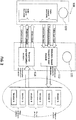
- the system 100 can be explained with the help of a schematic architecture as shown in Fig. 2 .
- the schematic in the figure 2 have been explained with help of three types of service providers, i.e., video conferencing vendors, plagiarism vendors, and content management vendors. There could be various other vendors which could be registered with the platform 102.
- All the applications which need to be integrated are provided on the left hand side.
- All the integrating application are also in communication with the license management module 120.
- the license management module 120 can provide all the necessary license information to the integrating applications.
- All the integrating applications are built over REST / JSON protocol.
- the integrating application can be provided as input to the metadata based request builder module 112. Depending on the type of the vendor, a custom request for each of the vendors.
- the custom request is sent to the repository the plurality of vendors.
- This repository has all the metadata of the registered plurality of service providers.
- a custom output is received from each of the vendors, which is then provided as input to the response standardization module 116.
- the response standardization module 116 is then provides the output in the standardized format which can be used for the integration of the integrating applications.
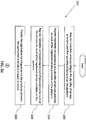
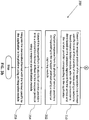
- a flowchart 200 illustrating the steps of the protocol for integrating the plurality of service providers across the plurality of domains with the integrating application using the platform 102 as shown in Fig. 3A-3B .
- steps 202 metadata corresponding to the plurality of service providers and their plurality of domains is registered on the platform 102.
- metadata corresponding to a plurality of services provided by each of the registered service providers is registered on the platform 102
- step 206 metadata corresponding to a set of parameters for each of the services for each of the registered service providers is registered on the platform 102.
- the integrating application is provided for integration via the platform 102.
- the integrating application is having the wrapper protocol.
- the wrapper protocol include six predefined methods. Using the wrapper protocol, any application can communicate with the hosted platform 102, and the hosted platform 102 in turn can execute the request of the integrating application by internally connecting the plurality of service providers across the plurality of domains and provide the output in the standard format.
- the wrapper protocol of the application is converted into a format specific to one of the plurality of services using the metadata based request builder module 112. The conversion is done based on the metadata registered for the service and the service provider corresponding to the application.
- the response from the plurality of service providers corresponding to the wrapper protocol is captured using the response capturing module 114.
- the captured response from the plurality of service providers is converted in to a standardized format defined by the wrapper protocol using the response standardization module 116.
- the standardized format is integrated with the format specific to the application in the platform 102. Since the wrapper protocol defines / standardizes the mannerisms / format of communication (input & output), hence it reduces effort substantially at the end of the integrating application.
- the system 100 or iTPFP can also be explained with the help of following example.
- the iTPFP is currently supporting 20 types of services provides by the seven vendors across four domains. It should be appreciated that the disclosure have further scope for future expansion and development.
- the four domains include video conferencing, LMS content management, plagiarism and virtual labs.
- Table I shows the list of the plurality of services supported by the system 100. TABLE I Domain of the Service Provider Domain Code Service Name Service Description Scanning content for Plagiarism from Web Plagiarism Authenticate This service is used to create a session with your provider, and establish your identity.
- Scanning content for Plagiarism from Web Plagiarism Text Scan This service is used to place a request for scanning plain text Scanning content for Plagiarism from Web Plagiarism File Scan
- This service is used to place a request for scanning a File based document Scanning content for Plagiarism from Web Plagiarism Image Scan
- This service is used to place a request for scanning an Image file.
- Scanning content for Plagiarism from Web Plagiarism Status This service is used to check status of a previous request which has been placed Scanning content for Plagiarism from Web Plagiarism Result
- This service is used to fetch the result of a previous request which has been placed LMS Content Providers Content Authenticate This service is used to create a session with your provider, and establish your identity.
- LMS Content Providers Content Get Courses This service is used to fetch a list of Courses / Catalogues - Basically the entity which is read and completed by a learner LMS Content Providers Content Enrollment This service is used to register your learner Ids to a Course/Catalogue/Learning Entity LMS Content Providers Content Launch URL This service, returns the launch URL for a learning entity, which can be put in a browser/iframe to take the learner to that Entity on you service provider's platform.
- LMS Content Providers Content Get Progress This service is used to fetch the completion status of a learning entity for a learner Browser based Video Conferencing Conference Authenticate This service is used to create a session with your provider, and establish your identity.
- Browser based Video Conferencing Conference Create Conference This service is used to create / schedule a web conference on your vendor's platform.
- Browser based Video Conferencing Conference Enrollment This service is used to enroll users into a conference session that was created earlier.
- Browser based Video Conferencing Conference Join Conference This service is used to fetch a URL using which a conference can be launched
- Browser based Video Conferencing Conference Pull Recording This service is used to pull a recorded session of an earlier conference which was conducted by you Virtual Lab for Programmers Vlab Authenticate This service is used to create a session with your provider, and establish your identity.
- Virtual Lab for Programmers Vlab Get Languages This service used to fetch a list of languages, for which online code compilation is supported by your vendor Virtual Lab for Programmers Vlab Send submission This service is used to push a piece of code for compilation to your vendor Virtual Lab for Programmers Vlab Result This service is used to fetch the result of a compilation. Contains program output and compilation errors
- Table II shows the list of the plurality of service providers supported by the system 100.
- Domain of Service Provider Domain Code Supported Vendor Vendor Website Scanning content for Plagiarism from Web Plagiarism Copyleaks https://copyleaks.com/ Scanning content for Plagiarism from Web Plagiarism
- Plagscan https://www.plagscan.com
- LMS Content Providers Content Moodle https://moodle.com/cloud/ LMS Content Providers Content EdX https://www.edx.org/ Browser based Video Conferencing Conference Vidyo https://vidyo.io/ Browser based Video Conferencing Conference Impartus http://impartus.com/ Virtual Lab for Programmers Vlab Sphere Engine https://sphere-engine.com/
- wrapper protocol has six predefined methods. All the methods are available as HTTP REST URLs. All interactions are done over these 6 methods only. The inputs / outputs may vary in some cases (depending on the type of "Vendor Service" being invoked. Few of the methods are metadata based and are available publicly. While few of the methods are not metadata based need an iTPFP license, and need to be called from a registered domain.
- the six predefined methods are as follows:
- Example 1 Image Scan for a Plagiarism Vendor
- the embodiments of present disclosure herein provides a protocol for integrating a plurality of service providers from various domains with an application using the single platform.
- the protocol thus reduces the effort and time required to custom integrate each of the integrating application on the hosted platform.
- the hardware device can be any kind of device which can be programmed including e.g. any kind of computer like a server or a personal computer, or the like, or any combination thereof.
- the device may also include means which could be e.g. hardware means like e.g. an application-specific integrated circuit (ASIC), a field-programmable gate array (FPGA), or a combination of hardware and software means, e.g.
- ASIC application-specific integrated circuit
- FPGA field-programmable gate array
- the means can include both hardware means and software means.
- the method embodiments described herein could be implemented in hardware and software.
- the device may also include software means.
- the embodiments may be implemented on different hardware devices, e.g. using a plurality of CPUs.
- the embodiments herein can comprise hardware and software elements.
- the embodiments that are implemented in software include but are not limited to, firmware, resident software, microcode, etc.
- the functions performed by various modules described herein may be implemented in other modules or combinations of other modules.
- a computer-usable or computer readable medium can be any apparatus that can comprise, store, communicate, propagate, or transport the program for use by or in connection with the instruction execution system, apparatus, or device.
- the medium can be an electronic, magnetic, optical, electromagnetic, infrared, or semiconductor system (or apparatus or device) or a propagation medium.
- Examples of a computer-readable medium include a semiconductor or solid state memory, magnetic tape, a removable computer diskette, a random access memory (RAM), a read-only memory (ROM), a rigid magnetic disk and an optical disk.
- Current examples of optical disks include compact disk-read only memory (CD-ROM), compact disk-read/write (CD-R/W) and DVD.
- a data processing system suitable for storing and/or executing program code will include at least one processor coupled directly or indirectly to memory elements through a system bus.
- the memory elements can include local memory employed during actual execution of the program code, bulk storage, and cache memories which provide temporary storage of at least some program code in order to reduce the number of times code must be retrieved from bulk storage during execution.
- I/O devices can be coupled to the system either directly or through intervening I/O controllers.
- Network adapters may also be coupled to the system to enable the data processing system to become coupled to other data processing systems or remote printers or storage devices through intervening private or public networks. Modems, cable modem and Ethernet cards are just a few of the currently available types of network adapters.
- a representative hardware environment for practicing the embodiments may include a hardware configuration of an information handling/computer system in accordance with the embodiments herein.
- the system herein comprises at least one processor or central processing unit (CPU).
- the CPUs are interconnected via system bus to various devices such as a random access memory (RAM), read-only memory (ROM), and an input/output (I/O) adapter.
- RAM random access memory
- ROM read-only memory
- I/O input/output
- the I/O adapter can connect to peripheral devices, such as disk units and tape drives, or other program storage devices that are readable by the system.
- the system can read the inventive instructions on the program storage devices and follow these instructions to execute the methodology of the embodiments herein.
- the system further includes a user interface adapter that connects a keyboard, mouse, speaker, microphone, and/or other user interface devices such as a touch screen device (not shown) to the bus to gather user input.
- a communication adapter connects the bus to a data processing network
- a display adapter connects the bus to a display device which may be embodied as an output device such as a monitor, printer, or transmitter, for example.
Landscapes
- Engineering & Computer Science (AREA)
- Theoretical Computer Science (AREA)
- Signal Processing (AREA)
- Computer Networks & Wireless Communication (AREA)
- Software Systems (AREA)
- General Engineering & Computer Science (AREA)
- General Physics & Mathematics (AREA)
- Physics & Mathematics (AREA)
- Databases & Information Systems (AREA)
- Computer Security & Cryptography (AREA)
- Computer Hardware Design (AREA)
- Data Mining & Analysis (AREA)
- Multimedia (AREA)
- Technology Law (AREA)
- Information Transfer Between Computers (AREA)
- Computer And Data Communications (AREA)
- Management, Administration, Business Operations System, And Electronic Commerce (AREA)
Abstract
Description
- The present application claims priority from Indian non-provisional specification no.
201821001416 filed on 12th January, 2018 - The embodiments herein generally relates to the field of integration of multiple vendors on a common platform, and, more particularly, to a system and protocol for integrating a plurality of service providers offering multiple services across various domains using the common platform.
- The rapid evolution of information technology in last couple of decades have resulted in the multiple fold of increase in the online service providers and their products. The corporations have also become largely dependent on the use of these products. There are various products which are more relevant to the organizations such as products related to learning management systems, plagiarism detection, communication, video etc. It would be hugely beneficial to the organizations if there is a single platform or framework which can allow the use and access of these products at one place. It is well-known that software can be used to allow integration of these products. A few methodologies are being used in the art to integrate the multiple products.
- The existing techniques involve custom integration to integrate with each market player that offers product based services. For integration with multiple vendors, a coder have to write code multiple times, and this is in addition to the detailed study required for each product. Further, the earlier frameworks were more about providing a platform / standard to the application developers using which they can integrate with different vendors one by one. These methods consume a lot of time and effort of the coders.
- In addition to that there is no player that shapes according to the end user business model and provides services such as license management within the framework. There is no a common license management module which is managed by the integration layer. Managing the multiple licenses of various products is again a challenging task and requires effort and time. There is no well-defined platform or framework which can be used repeatedly without investing enough efforts and time.
- The following presents a simplified summary of some embodiments of the disclosure in order to provide a basic understanding of the embodiments. This summary is not an extensive overview of the embodiments. It is not intended to identify key/critical elements of the embodiments or to delineate the scope of the embodiments. Its sole purpose is to present some embodiments in a simplified form as a prelude to the more detailed description that is presented below.
- In view of the foregoing, an embodiment herein provides a system for integrating a plurality of service providers across a plurality of domains with an application using a platform. The system comprising a registration module, an API interface, a memory and a processor. The registration module registers metadata corresponding to the plurality of service providers and their plurality of domains on the platform, metadata corresponding to a plurality of services provided by each of the registered service providers on the platform, and metadata corresponding to a set of parameters for each of the services for each of the registered service providers on the platform. The API interface provides the application for integration via the platform, wherein the application is having a wrapper protocol. The processor further comprises a metadata based request builder module, a response capturing module, a response standardization module and an integration module. The metadata based request builder module converts the wrapper protocol of the application into a format specific to one of the plurality of services, wherein the conversion is done based on the metadata registered for the service and the service provider corresponding to the application. The response capturing module captures a response from the plurality of service providers corresponding to the wrapper protocol. The response standardizing module converts the response from the plurality of service providers in to a standardized format defined by the wrapper protocol. The integration module integrates the standardized format with the format specific to the application in the platform.
- In another aspect the embodiment here provides a method for integrating a plurality of service providers across a plurality of domains with an application using a platform. Initially, metadata corresponding to the plurality of service providers and their plurality of domains is registered on the platform. At the same time metadata corresponding to a plurality of services provided by each of the registered service providers registered on the platform, and metadata corresponding to a set of parameters for each of the services for each of the registered service providers is registered on the platform. In the next step, the application is provided for integration via the platform, wherein the application is having a wrapper protocol. In the next step, the wrapper protocol of the application is converted into a format specific to one of the plurality of services using a metadata based request builder module, wherein the conversion is done based on the metadata registered for the service and the service provider corresponding to the application. In the next step, a response is captured from the plurality of service providers corresponding to the wrapper protocol using a response capturing module. The captured response from the plurality of service providers is then converted in to a standardized format defined by the wrapper protocol using a response standardization module. And finally, the standardized format with the format specific to the application in the platform is integrated using an integration module.
- In another embodiment, a non-transitory computer-readable medium having embodied thereon a computer program for integrating a plurality of service providers across a plurality of domains with an application using a platform. Initially, metadata corresponding to the plurality of service providers and their plurality of domains is registered on the platform. At the same time metadata corresponding to a plurality of services provided by each of the registered service providers registered on the platform, and metadata corresponding to a set of parameters for each of the services for each of the registered service providers is registered on the platform. In the next step, the application is provided for integration via the platform, wherein the application is having a wrapper protocol. In the next step, the wrapper protocol of the application is converted into a format specific to one of the plurality of services using a metadata based request builder module, wherein the conversion is done based on the metadata registered for the service and the service provider corresponding to the application. In the next step, a response is captured from the plurality of service providers corresponding to the wrapper protocol using a response capturing module. The captured response from the plurality of service providers is then converted in to a standardized format defined by the wrapper protocol using a response standardization module. And finally, the standardized format with the format specific to the application in the platform is integrated using an integration module.
- It should be appreciated by those skilled in the art that any block diagram herein represent conceptual views of illustrative systems embodying the principles of the present subject matter. Similarly, it will be appreciated that any flow charts, flow diagrams, state transition diagrams, pseudo code, and the like represent various processes which may be substantially represented in computer readable medium and so executed by a computing device or processor, whether or not such computing device or processor is explicitly shown.
- The embodiments herein will be better understood from the following detailed description with reference to the drawings, in which:
-
Fig. 1 illustrates a block diagram of a system for integrating a plurality of service providers across a plurality of domains using a platform according to an embodiment of the present disclosure; -
Fig. 2 shows a schematic architectural view of the system according to an embodiment of the disclosure; and -
Fig. 3A-3B is a flowchart illustrating the steps involved in a protocol for integrating a plurality of service providers across a plurality of domains using a platform according to an embodiment of the present disclosure. - The embodiments herein and the various features and advantageous details thereof are explained more fully with reference to the non-limiting embodiments that are illustrated in the accompanying drawings and detailed in the following description. The examples used herein are intended merely to facilitate an understanding of ways in which the embodiments herein may be practiced and to further enable those of skill in the art to practice the embodiments herein. Accordingly, the examples should not be construed as limiting the scope of the embodiments herein.
- The expression "plurality of service providers" or "service providers" or "vendors" in the context of the present disclosure refers to the one who provides a "plurality of services" or "products". Further, those services are being invoked through the present system.
- The expression "domains" or "vendor types" in the context of the present disclosure refers to the sub-category of vendors, the field or domain in which their services are being offered. For example, "Browser based Video Conferencing" is one of the domain.
- The expression "application" or "integrating application" or "web application" in the context of the present disclosure refers to an application which is going to be integrated with the existing plurality of services using the present protocol.
- Referring now to the drawings, and more particularly to
Fig. 1 through Fig. 3 , where similar reference characters denote corresponding features consistently throughout the figures, there are shown preferred embodiments and these embodiments are described in the context of the following exemplary system and/or method. - According to an embodiment of the disclosure, a
system 100 for integrating a plurality of service providers across a plurality of domains with an application using aplatform 102 is shown inFig. 1 . Theplatform 102 is provided by a platform owner. The platform can also be referred as the hosted platform in the present disclosure. Thesystem 100 provides a metadata based approach to integrate the plurality of service providers using a common protocol. The common protocol saves custom integration effort with each of the plurality of service provides which offers the plurality of services in the supported domain. Thesystem 100 is configured to standardize the integration approach across similar products (Video, Learning, Plagiarism detection etc.) by defining a wrapper protocol across similar products / services. In an example of the disclosure, thesystem 100 can also be referred as iON third party framework and protocol (iON TPFP). iON TPFP is a cloud based framework. Thesystem 100 also involves the creation of a dynamic request and this protocol is extendable to any service provider. - According to an embodiment of the disclosure, the
system 100 further comprises aregistration module 104, anAPI interface 106, amemory 108 and aprocessor 110 as shown in the block diagram ofFig. 1 . Theprocessor 110 works in communication with thememory 108. Theprocessor 110 further comprises a plurality of modules. The plurality of modules accesses the set of algorithms stored in thememory 108 to perform a specific task. Theprocessor 110 further comprises a metadata basedrequest builder module 112, aresponse capturing module 114, aresponse standardization module 116 and anintegration module 118. - According to an embodiment of the disclosure, the
registration module 104 is configured to register three types of metadata on the hostedplatform 102. 1. Metadata corresponding to the plurality of service providers and their plurality of domains on theplatform 102. 2. Metadata corresponding to a plurality of services provided by each of the registered service providers on theplatform 102. This includes service components. 3. Metadata corresponding to a set of parameters for each of the services for each of the registered service providers on theplatform 102. Thesystem 100 is also configured to group the services, and standardized input and output for all the same type of services across products providing similar services. Any application integrating with thesystem 100 will get a host of ready to integrate products. This product repository will keep increasing as we expand. - According to an embodiment of the disclosure the application programming interface (API)
interface 106 is configured to provide an input to thesystem 100. TheAPI interface 106 is configured to provide the application for integration via the platform. The application is the integrating application. The integrating application can be built by anyone, can be built on any technology and can be built on any framework. Thus thesystem 100 is technology agnostic and framework agnostic. TheAPI interface 106 can include a variety of software and hardware interfaces, for example, a web interface, a graphical user interface, and the like and can facilitate multiple communications within a wide variety of networks N/W and protocol types, including wired networks, for example, LAN, cable, etc., and wireless networks, such as WLAN, cellular, or satellite. - According to an embodiment of the disclosure, the integrating application comprises the wrapper protocol. Such that the application interested in integration has a well-defined and repeatable standard to deal with. The wrapper protocol further comprises six predefined methods. These six predefined methods are a method for getting the types of the plurality of service providers, a method for getting the list of the plurality of service providers, a method for getting the list of the plurality of services, a method for posting the plurality of services, a method for getting URLs of the plurality of services, and a method for accessing the license repository. Each of the six predefined methods are available as HTTP REST URLs. In an example of the disclosure, the six predefined methods can also be referred as GetVendorTypes, GetVendorList, GetVendorServiceList, PostVendorService, GetVendorServiceURL and LicenseMgmt respectively. These methods have been explained in detail in the later part of this disclosure.
- According to an embodiment of the disclosure, the
processor 110 comprises the metadata basedrequest builder module 112. The metadata basedrequest builder module 112 is configured to convert the wrapper protocol of the application into a format specific to one of the plurality of services, wherein the conversion is done based on the metadata registered for the service and the service provider corresponding to the integrating application. The metadata basedrequest builder module 112 takes input in the format of the wrapper protocol as key value pairs in JSON over REST. - According to an embodiment of the disclosure, the
processor 110 further comprises theresponse capturing module 114 and theresponse standardization module 116. Theresponse capturing module 114 is configured to capture a response from the plurality of service providers corresponding to the wrapper protocol. While theresponse standardization module 116 converts the captured response from the plurality of service providers in to a standardized format defined by the wrapper protocol. It should be appreciated that in another embodiment of the disclosure, theresponse standardization module 116 can also be configured to capture the response. Further, theintegration module 118 integrates the standardized format with the format specific to the application in theplatform 102. Thus, iTPFP will communicate to the plurality of service providers, for few number of type of transactions, and if the integrating applications follow the wrapper protocol, then the integrating application owner don't need to know the set of vendors in order to integrate with them. Hence instead of coding, the integrating application can seamlessly interact with a host of Service Providers - According to an embodiment of the disclosure, the
system 100 further includes alicense management module 120. Thelicense management module 120 is configured to manage the licenses and corresponding data of the plurality of service providers. Thelicense management module 120 is configured to be accessed via one of the six predefined methods of the wrapper protocol. Thelicense management module 120 also maintains alicense repository 122 for storing the licenses of the plurality of service providers. Thelicense repository 122 can have repository of key-value pairs (exposed on an API), where the end user can register multiple key values (like license code, registered mail, App Id etc.) against a vendor from the vendor list. Any license parameter (e.g., registered mail Id, application Id, Admin credentials etc.) can also be captured, and can be further used for passing to iON TPFP to drive integration with the third party product. - According to an embodiment of the disclosure, the
system 100 significantly reduces the integration effort for the coders. Thesystem 100 also provides a ready repository of the vendors which are already integrated with theplatform 102. Hence in addition to reduction of effort, the integrating application gets a value add in terms of getting multiple Products readily integrated as well. - According to an embodiment of the disclosure, the
system 100 can be explained with the help of a schematic architecture as shown inFig. 2 . The schematic in thefigure 2 have been explained with help of three types of service providers, i.e., video conferencing vendors, plagiarism vendors, and content management vendors. There could be various other vendors which could be registered with theplatform 102. All the applications which need to be integrated are provided on the left hand side. All the integrating application are also in communication with thelicense management module 120. Thelicense management module 120 can provide all the necessary license information to the integrating applications. All the integrating applications are built over REST / JSON protocol. The integrating application can be provided as input to the metadata basedrequest builder module 112. Depending on the type of the vendor, a custom request for each of the vendors. The custom request is sent to the repository the plurality of vendors. This repository has all the metadata of the registered plurality of service providers. A custom output is received from each of the vendors, which is then provided as input to theresponse standardization module 116. Theresponse standardization module 116 is then provides the output in the standardized format which can be used for the integration of the integrating applications. - In operation, a
flowchart 200 illustrating the steps of the protocol for integrating the plurality of service providers across the plurality of domains with the integrating application using theplatform 102 as shown inFig. 3A-3B . Initially atsteps 202, metadata corresponding to the plurality of service providers and their plurality of domains is registered on theplatform 102. Similarly at step 304, metadata corresponding to a plurality of services provided by each of the registered service providers is registered on theplatform 102, and atstep 206 metadata corresponding to a set of parameters for each of the services for each of the registered service providers is registered on theplatform 102. - In the
next step 208, the integrating application is provided for integration via theplatform 102. The integrating application is having the wrapper protocol. The wrapper protocol include six predefined methods. Using the wrapper protocol, any application can communicate with the hostedplatform 102, and the hostedplatform 102 in turn can execute the request of the integrating application by internally connecting the plurality of service providers across the plurality of domains and provide the output in the standard format. - In the
next step 210, the wrapper protocol of the application is converted into a format specific to one of the plurality of services using the metadata basedrequest builder module 112. The conversion is done based on the metadata registered for the service and the service provider corresponding to the application. Atstep 212, the response from the plurality of service providers corresponding to the wrapper protocol is captured using theresponse capturing module 114. In the next step, the captured response from the plurality of service providers is converted in to a standardized format defined by the wrapper protocol using theresponse standardization module 116. And finally atstep 214, the standardized format is integrated with the format specific to the application in theplatform 102. Since the wrapper protocol defines / standardizes the mannerisms / format of communication (input & output), hence it reduces effort substantially at the end of the integrating application. - According to another embodiment of the disclosure, the
system 100 or iTPFP can also be explained with the help of following example. In the present version of this disclosure, the iTPFP is currently supporting 20 types of services provides by the seven vendors across four domains. It should be appreciated that the disclosure have further scope for future expansion and development. The four domains include video conferencing, LMS content management, plagiarism and virtual labs. Table I shows the list of the plurality of services supported by thesystem 100.TABLE I Domain of the Service Provider Domain Code Service Name Service Description Scanning content for Plagiarism from Web Plagiarism Authenticate This service is used to create a session with your provider, and establish your identity. Scanning content for Plagiarism from Web Plagiarism Text Scan This service is used to place a request for scanning plain text Scanning content for Plagiarism from Web Plagiarism File Scan This service is used to place a request for scanning a File based document Scanning content for Plagiarism from Web Plagiarism Image Scan This service is used to place a request for scanning an Image file. Scanning content for Plagiarism from Web Plagiarism Status This service is used to check status of a previous request which has been placed Scanning content for Plagiarism from Web Plagiarism Result This service is used to fetch the result of a previous request which has been placed LMS Content Providers Content Authenticate This service is used to create a session with your provider, and establish your identity. LMS Content Providers Content Get Courses This service is used to fetch a list of Courses / Catalogues - Basically the entity which is read and completed by a learner LMS Content Providers Content Enrollment This service is used to register your learner Ids to a Course/Catalogue/Learning Entity LMS Content Providers Content Launch URL This service, returns the launch URL for a learning entity, which can be put in a browser/iframe to take the learner to that Entity on you service provider's platform. LMS Content Providers Content Get Progress This service is used to fetch the completion status of a learning entity for a learner Browser based Video Conferencing Conference Authenticate This service is used to create a session with your provider, and establish your identity. Browser based Video Conferencing Conference Create Conference This service is used to create / schedule a web conference on your vendor's platform. Browser based Video Conferencing Conference Enrollment This service is used to enroll users into a conference session that was created earlier. Browser based Video Conferencing Conference Join Conference This service is used to fetch a URL using which a conference can be launched Browser based Video Conferencing Conference Pull Recording This service is used to pull a recorded session of an earlier conference which was conducted by you Virtual Lab for Programmers Vlab Authenticate This service is used to create a session with your provider, and establish your identity. Virtual Lab for Programmers Vlab Get Languages This service used to fetch a list of languages, for which online code compilation is supported by your vendor Virtual Lab for Programmers Vlab Send Submission This service is used to push a piece of code for compilation to your vendor Virtual Lab for Programmers Vlab Result This service is used to fetch the result of a compilation. Contains program output and compilation errors - Table II shows the list of the plurality of service providers supported by the
system 100.Domain of Service Provider Domain Code Supported Vendor Vendor Website Scanning content for Plagiarism from Web Plagiarism Copyleaks https://copyleaks.com/ Scanning content for Plagiarism from Web Plagiarism Plagscan https://www.plagscan.com LMS Content Providers Content Moodle https://moodle.com/cloud/ LMS Content Providers Content EdX https://www.edx.org/ Browser based Video Conferencing Conference Vidyo https://vidyo.io/ Browser based Video Conferencing Conference Impartus http://impartus.com/ Virtual Lab for Programmers Vlab Sphere Engine https://sphere-engine.com/ - As explained above the wrapper protocol has six predefined methods. All the methods are available as HTTP REST URLs. All interactions are done over these 6 methods only. The inputs / outputs may vary in some cases (depending on the type of "Vendor Service" being invoked. Few of the methods are metadata based and are available publicly. While few of the methods are not metadata based need an iTPFP license, and need to be called from a registered domain. The six predefined methods are as follows:
- GetVendorTypes (Metadata based): This method would provide, as a JSON output, a list of "Domains" which are supported in the current version of iTPFP
- GetVendorList (Metadata based): This method would provide, as a JSON output, a list of Vendors which are supported in the current version of iTPFP.
- GetVendorServiceList (Metadata based): This method would provide, as a JSON output, a list of Vendor Services which are available for interaction with the particular vendor (The method needs vendor Id or Vendor Type Id as an input to work).
- PostVendorService (Not Metadata based): This method accepts an input JSON (which varies on the type of vendor, the service of which is being invoked), and gives a standardized output JSON, after invoking the Service which has been passed as in input. This method does the actual task of invoking 3rd party vendor services via a standard input / output. The input / output formats for this method have been predefined for every service for every domain, which means (for example), that PostVendorService format for Scanning a Text File for any supported plagiarism vendor will be the same and is defined in the protocol specifications.
- GetVendorServiceURL (Not Metadata based): This method accepts an input JSON (which varies on the type of vendor, the service of which is being invoked), and returns a fully formed URL, along with post parameters. This URL can be invoked directly by the integrating application to invoke the vendor service by directly connecting with the vendor, however, the output will not be standardized in this case.
- LicenseMgmt: 1. Default (Metadata based): The "LicenseMgmt" method when called without any parameters, gives a list of vendors and the license parameters needed (for example secret key, password, registered email etc.) to authenticate with those vendors. 2. With iTPFP License (Not metadata based): This method, when invoked with iTPFP license information serves to fetch and store your license parameters.
- For the sake of further description, a couple of the predefined methods of the protocol are provided as follows. The actual URLs, JSON inputs / outputs have been provided in an elaborate manner.
-
- Description: Returns a list of "Domains" which are supported in the current version of iTPFP URL: GET www.tcsion.com/LX/iONThirdPartyFwNProtocol/GetVendorTypes
- URL Parameters: None
- Type: It is a service Open for Public Consumption and does not need any subscription
-
Output:
- Format: JSON
- Sample:
- [{"vendor_concept master_id":1, "name": "Plagiarism"},
- {"vendor_concept_master_id":2, "name" :"Content"},
- {"vendor_concept_master_id":3, "name":"Conference"}]
- Attributes:
- 1. vendor_concept_master_id - Unique identifier of a "Vendor Type" / "Domain"
- 2. name - Name of the Domain
-
- Description: This method accepts an input JSON (which varies on the type of vendor, the service of which is being invoked), and gives a standardized output JSON, after invoking the Service which has been passed as in input
- URL:POST www.tcsion.com/LX/iONThirdPartyFwNProtocol/PostVendorService?service_id=x&org_id=y&lic ense_code=z
- URL Parameters:
service id - Is the unique identifier of a type of service for a particular vendor (fetched via GetVendorServiceList method).
org_id - Unique identifier provided to Org of integrating application when it subscribes to iON (www.tcsion.com),
license code - License provided to integrating application for using iTPFP, valid for a specific website domain only.
POST Parameters: A JSON is posted (in the post content) along with the URL. This JSON varies with each type of service, but is constant across vendors within a domain. - Type: It is a service offered by iON (www.tcsion.com) on a SAS model. Needs a subscription.
-

-

-


-
{'Status': '<Finished/In Progress>', 'ProgressPercents': <Integer between 1,100>}
Claims (12)
- A protocol for integrating a plurality of service providers across a plurality of domains with an application using a platform, the protocol comprising a processor implemented steps of:registering metadata corresponding to the plurality of service providers and their plurality of domains on the platform;registering metadata corresponding to a plurality of services provided by each of the registered service providers on the platform;registering metadata corresponding to a set of parameters for each of the services for each of the registered service providers on the platform;providing the application for integration via the platform, wherein the application is having a wrapper protocol;converting the wrapper protocol of the application into a format specific to one of the plurality of services using a metadata based request builder module, wherein the conversion is done based on the metadata registered for the service and the service provider corresponding to the application;capturing a response from the plurality of service providers corresponding to the wrapper protocol using a response capturing module;converting the response from the plurality of service providers in to a standardized format defined by the wrapper protocol using a response standardization module; andintegrating the standardized format with the format specific to the application in the platform using an integration module.
- The protocol according to claim 1 further comprising the step of managing the license data for the plurality of service providers by the platform.
- The protocol according to claim 1 further comprising the step of maintaining a license repository of licenses of the plurality of service providers on the platform.
- The protocol according to claim 1, wherein the wrapper protocol comprising six predefined methods as follows:a method for getting the types of the plurality of service providers,a method for getting the list of the plurality of service providers,a method for getting the list of the plurality of services,a method for posting the plurality of services,a method for getting URLs of the plurality of services, anda method for accessing the license repository.
- The protocol according to claim 1, wherein wrapper protocol is made over a representational state transfer (REST) protocol.
- The protocol according to claim 1, wherein the plurality of domains are at least one of a video conferencing, a plagiarism, a learning management system content and a virtual lab.
- The protocol according to claim 1, wherein the platform is built on single sign-on (SSO) logic for the plurality of service providers wherever applicable.
- The protocol according to claim 1, wherein the platform is hosted by a platform provider.
- A system for integrating a plurality of service providers across a plurality of domains with an application using a platform, the system comprising:a registration module configured to register:metadata corresponding to the plurality of service providers and their plurality of domains on the platform;metadata corresponding to a plurality of services provided by each of the registered service providers on the platform; andmetadata corresponding to a set of parameters for each of the services for each of the registered service providers on the platform;an API interface for providing the application for integration via the platform, wherein the application is having a wrapper protocol;a memory; anda processor in communication with the memory, wherein the processor further comprising:a metadata based request builder module for converting the wrapper protocol of the application into a format specific to one of the plurality of services, wherein the conversion is done based on the metadata registered for the service and the service provider corresponding to the application;a response capturing module for capturing a response from the plurality of service providers corresponding to the wrapper protocol;a response standardizing module for converting the response from the plurality of service providers in to a standardized format defined by the wrapper protocol; andan integration module for integrating the standardized format with the format specific to the application in the platform.
- The system according to claim 9 further comprising a license management module for managing the licenses of the plurality of service providers, wherein the license management module is configured to be accessed via one of the six predefined methods of the wrapper protocol.
- The system according to claim 9 further comprising a license repository for storing the licenses of the plurality of service providers.
- A non-transitory computer-readable medium having embodied thereon a computer program for integrating a plurality of service providers across a plurality of domains with an application using a platform, the protocol comprising a processor implemented steps of:registering metadata corresponding to the plurality of service providers and their plurality of domains on the platform;registering metadata corresponding to a plurality of services provided by each of the registered service providers on the platform;registering metadata corresponding to a set of parameters for each of the services for each of the registered service providers on the platform;providing the application for integration via the platform, wherein the application is having a wrapper protocol;converting the wrapper protocol of the application into a format specific to one of the plurality of services using a metadata based request builder module, wherein the conversion is done based on the metadata registered for the service and the service provider corresponding to the application;capturing a response from the plurality of service providers corresponding to the wrapper protocol using a response capturing module;converting the response from the plurality of service providers in to a standardized format defined by the wrapper protocol using a response standardization module; andintegrating the standardized format with the format specific to the application in the platform using an integration module.
Applications Claiming Priority (1)
| Application Number | Priority Date | Filing Date | Title |
|---|---|---|---|
| IN201821001416 | 2018-01-12 |
Publications (2)
| Publication Number | Publication Date |
|---|---|
| EP3512175A1 true EP3512175A1 (en) | 2019-07-17 |
| EP3512175B1 EP3512175B1 (en) | 2022-09-28 |
Family
ID=61912941
Family Applications (1)
| Application Number | Title | Priority Date | Filing Date |
|---|---|---|---|
| EP18163213.4A Active EP3512175B1 (en) | 2018-01-12 | 2018-03-22 | System and protocol for integrating multiple service providers across various domains using a platform |
Country Status (3)
| Country | Link |
|---|---|
| US (1) | US11023565B2 (en) |
| EP (1) | EP3512175B1 (en) |
| JP (1) | JP6810079B2 (en) |
Families Citing this family (4)
| Publication number | Priority date | Publication date | Assignee | Title |
|---|---|---|---|---|
| KR102162711B1 (en) * | 2018-12-26 | 2020-10-07 | 주식회사 무하유 | Method and apparatus for determining plagiarism of non-text region of document |
| US12041396B2 (en) * | 2020-07-16 | 2024-07-16 | R9 Labs, Llc | Systems and methods for processing data proximate to the point of collection |
| CN113139172B (en) * | 2021-04-23 | 2023-08-11 | 上海中通吉网络技术有限公司 | Equipment autonomous docking platform suitable for logistics industry |
| US12360830B2 (en) * | 2022-10-28 | 2025-07-15 | Sap Se | Service mapping and composition infrastructure |
Citations (4)
| Publication number | Priority date | Publication date | Assignee | Title |
|---|---|---|---|---|
| US20110296048A1 (en) * | 2009-12-28 | 2011-12-01 | Akamai Technologies, Inc. | Method and system for stream handling using an intermediate format |
| US20170048079A1 (en) * | 2015-08-12 | 2017-02-16 | Cisco Technology, Inc. | Distributed application hosting environment to mask heterogeneity |
| US20170093700A1 (en) * | 2015-09-30 | 2017-03-30 | WoT. io, Inc. | Device platform integrating disparate data sources |
| US20170220528A1 (en) * | 2014-09-15 | 2017-08-03 | Oracle International Corporation | High performant and high fidelity previews for css preprocessing frameworks |
Family Cites Families (12)
| Publication number | Priority date | Publication date | Assignee | Title |
|---|---|---|---|---|
| US6041362A (en) | 1995-10-20 | 2000-03-21 | Electronics Data Systems Corporation | Method and system for integrating disparate information technology applications and platforms across an enterprise |
| US7058637B2 (en) | 2001-05-15 | 2006-06-06 | Metatomix, Inc. | Methods and apparatus for enterprise application integration |
| US7017140B2 (en) | 2002-08-29 | 2006-03-21 | Bae Systems Information And Electronic Systems Integration Inc. | Common components in interface framework for developing field programmable based applications independent of target circuit board |
| JP2005258682A (en) * | 2004-03-10 | 2005-09-22 | Nippon Telegraph & Telephone East Corp | Schema conversion method, schema conversion apparatus, schema conversion program, and program recording medium |
| US20100299438A1 (en) * | 2008-01-21 | 2010-11-25 | Gottfried Zimmerman | Online resource server for allowing device control and access to digital content trhough pluggable user interfaces |
| US10424000B2 (en) * | 2009-05-30 | 2019-09-24 | Edmond K. Chow | Methods and systems for annotation of digital information |
| US8924569B2 (en) * | 2009-12-17 | 2014-12-30 | Intel Corporation | Cloud federation as a service |
| US9495226B2 (en) | 2011-12-21 | 2016-11-15 | Cbs Interactive Inc. | Integration of client side applications into a fantasy open platform environment |
| US8832252B2 (en) | 2012-04-26 | 2014-09-09 | Adobe Systems Incorporated | Extensible integration between service platforms |
| EP2944055A4 (en) * | 2013-01-11 | 2016-08-17 | Db Networks Inc | SYSTEMS AND METHODS FOR DETECTING AND MITIGATING THREATS AGAINST A STRUCTURED DATA STORAGE SYSTEM |
| US9825881B2 (en) * | 2014-09-30 | 2017-11-21 | Sony Interactive Entertainment America Llc | Methods and systems for portably deploying applications on one or more cloud systems |
| US11128542B2 (en) * | 2018-02-26 | 2021-09-21 | Servicenow, Inc. | Interactive user interface to visually display the impact of configuration changes on a managed network |
-
2018
- 2018-03-22 EP EP18163213.4A patent/EP3512175B1/en active Active
- 2018-03-22 JP JP2018054269A patent/JP6810079B2/en active Active
- 2018-03-26 US US15/935,535 patent/US11023565B2/en active Active
Patent Citations (4)
| Publication number | Priority date | Publication date | Assignee | Title |
|---|---|---|---|---|
| US20110296048A1 (en) * | 2009-12-28 | 2011-12-01 | Akamai Technologies, Inc. | Method and system for stream handling using an intermediate format |
| US20170220528A1 (en) * | 2014-09-15 | 2017-08-03 | Oracle International Corporation | High performant and high fidelity previews for css preprocessing frameworks |
| US20170048079A1 (en) * | 2015-08-12 | 2017-02-16 | Cisco Technology, Inc. | Distributed application hosting environment to mask heterogeneity |
| US20170093700A1 (en) * | 2015-09-30 | 2017-03-30 | WoT. io, Inc. | Device platform integrating disparate data sources |
Also Published As
| Publication number | Publication date |
|---|---|
| US20190220574A1 (en) | 2019-07-18 |
| US11023565B2 (en) | 2021-06-01 |
| JP6810079B2 (en) | 2021-01-06 |
| EP3512175B1 (en) | 2022-09-28 |
| JP2019125330A (en) | 2019-07-25 |
Similar Documents
| Publication | Publication Date | Title |
|---|---|---|
| US12474923B2 (en) | Model construction method and apparatus, and medium and electronic device | |
| US9858271B2 (en) | System and method for translating content between devices | |
| US20250077227A1 (en) | Gap identification and solution recommendation for complex software architecture | |
| US9542391B1 (en) | Processing service requests for non-transactional databases | |
| US20140149554A1 (en) | Unified Server for Managing a Heterogeneous Mix of Devices | |
| KR101615783B1 (en) | Content recommendations based on browsing information | |
| US20140149599A1 (en) | Unified Application Programming Interface for Communicating with Devices and Their Clouds | |
| US20150172237A1 (en) | Unified Application Programming Interface for Communicating with Devices and Their Clouds | |
| US20250077187A1 (en) | Generating software architecture from conversation | |
| US12625680B2 (en) | Creating a model of software architecture | |
| EP3223217A1 (en) | Accessing and configuring meeting attributes | |
| US12585435B2 (en) | Real-time visualization of complex software architecture | |
| US9881011B2 (en) | System and method for generating user profiles for human resources | |
| JP7637127B2 (en) | Connecting web publisher inventory to programmatic exchanges without third-party cookies | |
| US20250077556A1 (en) | Leveraging an architecture blueprint to determine information | |
| EP3512175B1 (en) | System and protocol for integrating multiple service providers across various domains using a platform | |
| CN113495498B (en) | Simulation method, simulator, device and medium for hardware device | |
| US10789573B2 (en) | Method and system for streamlining voting process | |
| US9076117B2 (en) | Proactive maintenance of devices based on usage data | |
| US10341420B1 (en) | Approaches for preparing and delivering bulk data to clients | |
| CN117614943A (en) | Internet application management methods and systems | |
| CN114490104B (en) | Information forwarding method, device, equipment and medium in Android system module | |
| JP2024531874A (en) | Publisher-authorized activation in a cookieless authentication environment | |
| US20250095870A1 (en) | Stream orchestration for variable-length message streams | |
| CN122070688A (en) | Stream orchestration of variable length message streams |
Legal Events
| Date | Code | Title | Description |
|---|---|---|---|
| PUAI | Public reference made under article 153(3) epc to a published international application that has entered the european phase |
Free format text: ORIGINAL CODE: 0009012 |
|
| STAA | Information on the status of an ep patent application or granted ep patent |
Free format text: STATUS: THE APPLICATION HAS BEEN PUBLISHED |
|
| AK | Designated contracting states |
Kind code of ref document: A1 Designated state(s): AL AT BE BG CH CY CZ DE DK EE ES FI FR GB GR HR HU IE IS IT LI LT LU LV MC MK MT NL NO PL PT RO RS SE SI SK SM TR |
|
| AX | Request for extension of the european patent |
Extension state: BA ME |
|
| STAA | Information on the status of an ep patent application or granted ep patent |
Free format text: STATUS: REQUEST FOR EXAMINATION WAS MADE |
|
| 17P | Request for examination filed |
Effective date: 20200117 |
|
| RBV | Designated contracting states (corrected) |
Designated state(s): AL AT BE BG CH CY CZ DE DK EE ES FI FR GB GR HR HU IE IS IT LI LT LU LV MC MK MT NL NO PL PT RO RS SE SI SK SM TR |
|
| STAA | Information on the status of an ep patent application or granted ep patent |
Free format text: STATUS: EXAMINATION IS IN PROGRESS |
|
| 17Q | First examination report despatched |
Effective date: 20200518 |
|
| REG | Reference to a national code |
Ref country code: DE Ref legal event code: R079 Ref document number: 602018041036 Country of ref document: DE Free format text: PREVIOUS MAIN CLASS: H04L0029060000 Ipc: H04L0067565000 |
|
| GRAP | Despatch of communication of intention to grant a patent |
Free format text: ORIGINAL CODE: EPIDOSNIGR1 |
|
| STAA | Information on the status of an ep patent application or granted ep patent |
Free format text: STATUS: GRANT OF PATENT IS INTENDED |
|
| RIC1 | Information provided on ipc code assigned before grant |
Ipc: G06F 16/958 20190101ALI20220328BHEP Ipc: H04L 67/51 20220101ALI20220328BHEP Ipc: H04L 67/02 20220101ALI20220328BHEP Ipc: H04L 67/567 20220101ALI20220328BHEP Ipc: H04L 69/08 20220101ALI20220328BHEP Ipc: H04L 67/565 20220101AFI20220328BHEP |
|
| INTG | Intention to grant announced |
Effective date: 20220413 |
|
| GRAS | Grant fee paid |
Free format text: ORIGINAL CODE: EPIDOSNIGR3 |
|
| GRAA | (expected) grant |
Free format text: ORIGINAL CODE: 0009210 |
|
| STAA | Information on the status of an ep patent application or granted ep patent |
Free format text: STATUS: THE PATENT HAS BEEN GRANTED |
|
| AK | Designated contracting states |
Kind code of ref document: B1 Designated state(s): AL AT BE BG CH CY CZ DE DK EE ES FI FR GB GR HR HU IE IS IT LI LT LU LV MC MK MT NL NO PL PT RO RS SE SI SK SM TR |
|
| REG | Reference to a national code |
Ref country code: GB Ref legal event code: FG4D |
|
| REG | Reference to a national code |
Ref country code: CH Ref legal event code: EP |
|
| REG | Reference to a national code |
Ref country code: AT Ref legal event code: REF Ref document number: 1522032 Country of ref document: AT Kind code of ref document: T Effective date: 20221015 |
|
| REG | Reference to a national code |
Ref country code: DE Ref legal event code: R096 Ref document number: 602018041036 Country of ref document: DE |
|
| REG | Reference to a national code |
Ref country code: IE Ref legal event code: FG4D |
|
| REG | Reference to a national code |
Ref country code: NL Ref legal event code: FP |
|
| REG | Reference to a national code |
Ref country code: LT Ref legal event code: MG9D |
|
| PG25 | Lapsed in a contracting state [announced via postgrant information from national office to epo] |
Ref country code: SE Free format text: LAPSE BECAUSE OF FAILURE TO SUBMIT A TRANSLATION OF THE DESCRIPTION OR TO PAY THE FEE WITHIN THE PRESCRIBED TIME-LIMIT Effective date: 20220928 Ref country code: RS Free format text: LAPSE BECAUSE OF FAILURE TO SUBMIT A TRANSLATION OF THE DESCRIPTION OR TO PAY THE FEE WITHIN THE PRESCRIBED TIME-LIMIT Effective date: 20220928 Ref country code: NO Free format text: LAPSE BECAUSE OF FAILURE TO SUBMIT A TRANSLATION OF THE DESCRIPTION OR TO PAY THE FEE WITHIN THE PRESCRIBED TIME-LIMIT Effective date: 20221228 Ref country code: LV Free format text: LAPSE BECAUSE OF FAILURE TO SUBMIT A TRANSLATION OF THE DESCRIPTION OR TO PAY THE FEE WITHIN THE PRESCRIBED TIME-LIMIT Effective date: 20220928 Ref country code: LT Free format text: LAPSE BECAUSE OF FAILURE TO SUBMIT A TRANSLATION OF THE DESCRIPTION OR TO PAY THE FEE WITHIN THE PRESCRIBED TIME-LIMIT Effective date: 20220928 Ref country code: FI Free format text: LAPSE BECAUSE OF FAILURE TO SUBMIT A TRANSLATION OF THE DESCRIPTION OR TO PAY THE FEE WITHIN THE PRESCRIBED TIME-LIMIT Effective date: 20220928 |
|
| REG | Reference to a national code |
Ref country code: AT Ref legal event code: MK05 Ref document number: 1522032 Country of ref document: AT Kind code of ref document: T Effective date: 20220928 |
|
| PG25 | Lapsed in a contracting state [announced via postgrant information from national office to epo] |
Ref country code: HR Free format text: LAPSE BECAUSE OF FAILURE TO SUBMIT A TRANSLATION OF THE DESCRIPTION OR TO PAY THE FEE WITHIN THE PRESCRIBED TIME-LIMIT Effective date: 20220928 Ref country code: GR Free format text: LAPSE BECAUSE OF FAILURE TO SUBMIT A TRANSLATION OF THE DESCRIPTION OR TO PAY THE FEE WITHIN THE PRESCRIBED TIME-LIMIT Effective date: 20221229 |
|
| PG25 | Lapsed in a contracting state [announced via postgrant information from national office to epo] |
Ref country code: SM Free format text: LAPSE BECAUSE OF FAILURE TO SUBMIT A TRANSLATION OF THE DESCRIPTION OR TO PAY THE FEE WITHIN THE PRESCRIBED TIME-LIMIT Effective date: 20220928 Ref country code: RO Free format text: LAPSE BECAUSE OF FAILURE TO SUBMIT A TRANSLATION OF THE DESCRIPTION OR TO PAY THE FEE WITHIN THE PRESCRIBED TIME-LIMIT Effective date: 20220928 Ref country code: PT Free format text: LAPSE BECAUSE OF FAILURE TO SUBMIT A TRANSLATION OF THE DESCRIPTION OR TO PAY THE FEE WITHIN THE PRESCRIBED TIME-LIMIT Effective date: 20230130 Ref country code: ES Free format text: LAPSE BECAUSE OF FAILURE TO SUBMIT A TRANSLATION OF THE DESCRIPTION OR TO PAY THE FEE WITHIN THE PRESCRIBED TIME-LIMIT Effective date: 20220928 Ref country code: CZ Free format text: LAPSE BECAUSE OF FAILURE TO SUBMIT A TRANSLATION OF THE DESCRIPTION OR TO PAY THE FEE WITHIN THE PRESCRIBED TIME-LIMIT Effective date: 20220928 Ref country code: AT Free format text: LAPSE BECAUSE OF FAILURE TO SUBMIT A TRANSLATION OF THE DESCRIPTION OR TO PAY THE FEE WITHIN THE PRESCRIBED TIME-LIMIT Effective date: 20220928 |
|
| PG25 | Lapsed in a contracting state [announced via postgrant information from national office to epo] |
Ref country code: SK Free format text: LAPSE BECAUSE OF FAILURE TO SUBMIT A TRANSLATION OF THE DESCRIPTION OR TO PAY THE FEE WITHIN THE PRESCRIBED TIME-LIMIT Effective date: 20220928 Ref country code: PL Free format text: LAPSE BECAUSE OF FAILURE TO SUBMIT A TRANSLATION OF THE DESCRIPTION OR TO PAY THE FEE WITHIN THE PRESCRIBED TIME-LIMIT Effective date: 20220928 Ref country code: IS Free format text: LAPSE BECAUSE OF FAILURE TO SUBMIT A TRANSLATION OF THE DESCRIPTION OR TO PAY THE FEE WITHIN THE PRESCRIBED TIME-LIMIT Effective date: 20230128 Ref country code: EE Free format text: LAPSE BECAUSE OF FAILURE TO SUBMIT A TRANSLATION OF THE DESCRIPTION OR TO PAY THE FEE WITHIN THE PRESCRIBED TIME-LIMIT Effective date: 20220928 |
|
| REG | Reference to a national code |
Ref country code: DE Ref legal event code: R097 Ref document number: 602018041036 Country of ref document: DE |
|
| PG25 | Lapsed in a contracting state [announced via postgrant information from national office to epo] |
Ref country code: AL Free format text: LAPSE BECAUSE OF FAILURE TO SUBMIT A TRANSLATION OF THE DESCRIPTION OR TO PAY THE FEE WITHIN THE PRESCRIBED TIME-LIMIT Effective date: 20220928 |
|
| P01 | Opt-out of the competence of the unified patent court (upc) registered |
Effective date: 20230526 |
|
| PG25 | Lapsed in a contracting state [announced via postgrant information from national office to epo] |
Ref country code: DK Free format text: LAPSE BECAUSE OF FAILURE TO SUBMIT A TRANSLATION OF THE DESCRIPTION OR TO PAY THE FEE WITHIN THE PRESCRIBED TIME-LIMIT Effective date: 20220928 |
|
| PLBE | No opposition filed within time limit |
Free format text: ORIGINAL CODE: 0009261 |
|
| STAA | Information on the status of an ep patent application or granted ep patent |
Free format text: STATUS: NO OPPOSITION FILED WITHIN TIME LIMIT |
|
| 26N | No opposition filed |
Effective date: 20230629 |
|
| PG25 | Lapsed in a contracting state [announced via postgrant information from national office to epo] |
Ref country code: MC Free format text: LAPSE BECAUSE OF FAILURE TO SUBMIT A TRANSLATION OF THE DESCRIPTION OR TO PAY THE FEE WITHIN THE PRESCRIBED TIME-LIMIT Effective date: 20220928 |
|
| PG25 | Lapsed in a contracting state [announced via postgrant information from national office to epo] |
Ref country code: SI Free format text: LAPSE BECAUSE OF FAILURE TO SUBMIT A TRANSLATION OF THE DESCRIPTION OR TO PAY THE FEE WITHIN THE PRESCRIBED TIME-LIMIT Effective date: 20220928 |
|
| REG | Reference to a national code |
Ref country code: BE Ref legal event code: MM Effective date: 20230331 |
|
| PG25 | Lapsed in a contracting state [announced via postgrant information from national office to epo] |
Ref country code: LU Free format text: LAPSE BECAUSE OF NON-PAYMENT OF DUE FEES Effective date: 20230322 |
|
| PG25 | Lapsed in a contracting state [announced via postgrant information from national office to epo] |
Ref country code: BE Free format text: LAPSE BECAUSE OF NON-PAYMENT OF DUE FEES Effective date: 20230331 |
|
| PG25 | Lapsed in a contracting state [announced via postgrant information from national office to epo] |
Ref country code: IT Free format text: LAPSE BECAUSE OF FAILURE TO SUBMIT A TRANSLATION OF THE DESCRIPTION OR TO PAY THE FEE WITHIN THE PRESCRIBED TIME-LIMIT Effective date: 20220928 |
|
| PG25 | Lapsed in a contracting state [announced via postgrant information from national office to epo] |
Ref country code: BG Free format text: LAPSE BECAUSE OF FAILURE TO SUBMIT A TRANSLATION OF THE DESCRIPTION OR TO PAY THE FEE WITHIN THE PRESCRIBED TIME-LIMIT Effective date: 20220928 |
|
| PG25 | Lapsed in a contracting state [announced via postgrant information from national office to epo] |
Ref country code: BG Free format text: LAPSE BECAUSE OF FAILURE TO SUBMIT A TRANSLATION OF THE DESCRIPTION OR TO PAY THE FEE WITHIN THE PRESCRIBED TIME-LIMIT Effective date: 20220928 |
|
| PGFP | Annual fee paid to national office [announced via postgrant information from national office to epo] |
Ref country code: CH Payment date: 20250401 Year of fee payment: 8 |
|
| PG25 | Lapsed in a contracting state [announced via postgrant information from national office to epo] |
Ref country code: CY Free format text: LAPSE BECAUSE OF FAILURE TO SUBMIT A TRANSLATION OF THE DESCRIPTION OR TO PAY THE FEE WITHIN THE PRESCRIBED TIME-LIMIT; INVALID AB INITIO Effective date: 20180322 |
|
| PG25 | Lapsed in a contracting state [announced via postgrant information from national office to epo] |
Ref country code: HU Free format text: LAPSE BECAUSE OF FAILURE TO SUBMIT A TRANSLATION OF THE DESCRIPTION OR TO PAY THE FEE WITHIN THE PRESCRIBED TIME-LIMIT; INVALID AB INITIO Effective date: 20180322 |
|
| PG25 | Lapsed in a contracting state [announced via postgrant information from national office to epo] |
Ref country code: TR Free format text: LAPSE BECAUSE OF FAILURE TO SUBMIT A TRANSLATION OF THE DESCRIPTION OR TO PAY THE FEE WITHIN THE PRESCRIBED TIME-LIMIT Effective date: 20220928 |
|
| REG | Reference to a national code |
Ref country code: CH Ref legal event code: U11 Free format text: ST27 STATUS EVENT CODE: U-0-0-U10-U11 (AS PROVIDED BY THE NATIONAL OFFICE) Effective date: 20260401 |
|
| PGFP | Annual fee paid to national office [announced via postgrant information from national office to epo] |
Ref country code: GB Payment date: 20260304 Year of fee payment: 9 |
|
| PGFP | Annual fee paid to national office [announced via postgrant information from national office to epo] |
Ref country code: DE Payment date: 20260320 Year of fee payment: 9 Ref country code: IE Payment date: 20260318 Year of fee payment: 9 |
|
| PGFP | Annual fee paid to national office [announced via postgrant information from national office to epo] |
Ref country code: NL Payment date: 20260323 Year of fee payment: 9 |
|
| PGFP | Annual fee paid to national office [announced via postgrant information from national office to epo] |
Ref country code: FR Payment date: 20260323 Year of fee payment: 9 |