EP3510561B1 - Predicting depth from image data using a statistical model - Google Patents
Predicting depth from image data using a statistical model Download PDFInfo
- Publication number
- EP3510561B1 EP3510561B1 EP17794764.5A EP17794764A EP3510561B1 EP 3510561 B1 EP3510561 B1 EP 3510561B1 EP 17794764 A EP17794764 A EP 17794764A EP 3510561 B1 EP3510561 B1 EP 3510561B1
- Authority
- EP
- European Patent Office
- Prior art keywords
- image
- disparity
- predicted
- input
- binocular stereo
- Prior art date
- Legal status (The legal status is an assumption and is not a legal conclusion. Google has not performed a legal analysis and makes no representation as to the accuracy of the status listed.)
- Active
Links
Images




Classifications
-
- G—PHYSICS
- G06—COMPUTING OR CALCULATING; COUNTING
- G06N—COMPUTING ARRANGEMENTS BASED ON SPECIFIC COMPUTATIONAL MODELS
- G06N3/00—Computing arrangements based on biological models
- G06N3/02—Neural networks
- G06N3/08—Learning methods
- G06N3/084—Backpropagation, e.g. using gradient descent
-
- G—PHYSICS
- G06—COMPUTING OR CALCULATING; COUNTING
- G06T—IMAGE DATA PROCESSING OR GENERATION, IN GENERAL
- G06T7/00—Image analysis
- G06T7/50—Depth or shape recovery
- G06T7/55—Depth or shape recovery from multiple images
- G06T7/593—Depth or shape recovery from multiple images from stereo images
-
- G—PHYSICS
- G06—COMPUTING OR CALCULATING; COUNTING
- G06F—ELECTRIC DIGITAL DATA PROCESSING
- G06F17/00—Digital computing or data processing equipment or methods, specially adapted for specific functions
- G06F17/10—Complex mathematical operations
- G06F17/16—Matrix or vector computation, e.g. matrix-matrix or matrix-vector multiplication, matrix factorization
-
- G—PHYSICS
- G06—COMPUTING OR CALCULATING; COUNTING
- G06F—ELECTRIC DIGITAL DATA PROCESSING
- G06F18/00—Pattern recognition
- G06F18/20—Analysing
- G06F18/24—Classification techniques
- G06F18/241—Classification techniques relating to the classification model, e.g. parametric or non-parametric approaches
- G06F18/2413—Classification techniques relating to the classification model, e.g. parametric or non-parametric approaches based on distances to training or reference patterns
- G06F18/24133—Distances to prototypes
- G06F18/24143—Distances to neighbourhood prototypes, e.g. restricted Coulomb energy networks [RCEN]
-
- G—PHYSICS
- G06—COMPUTING OR CALCULATING; COUNTING
- G06N—COMPUTING ARRANGEMENTS BASED ON SPECIFIC COMPUTATIONAL MODELS
- G06N3/00—Computing arrangements based on biological models
- G06N3/02—Neural networks
-
- G—PHYSICS
- G06—COMPUTING OR CALCULATING; COUNTING
- G06N—COMPUTING ARRANGEMENTS BASED ON SPECIFIC COMPUTATIONAL MODELS
- G06N3/00—Computing arrangements based on biological models
- G06N3/02—Neural networks
- G06N3/04—Architecture, e.g. interconnection topology
- G06N3/045—Combinations of networks
-
- G—PHYSICS
- G06—COMPUTING OR CALCULATING; COUNTING
- G06N—COMPUTING ARRANGEMENTS BASED ON SPECIFIC COMPUTATIONAL MODELS
- G06N3/00—Computing arrangements based on biological models
- G06N3/02—Neural networks
- G06N3/04—Architecture, e.g. interconnection topology
- G06N3/045—Combinations of networks
- G06N3/0455—Auto-encoder networks; Encoder-decoder networks
-
- G—PHYSICS
- G06—COMPUTING OR CALCULATING; COUNTING
- G06N—COMPUTING ARRANGEMENTS BASED ON SPECIFIC COMPUTATIONAL MODELS
- G06N3/00—Computing arrangements based on biological models
- G06N3/02—Neural networks
- G06N3/04—Architecture, e.g. interconnection topology
- G06N3/0464—Convolutional networks [CNN, ConvNet]
-
- G—PHYSICS
- G06—COMPUTING OR CALCULATING; COUNTING
- G06N—COMPUTING ARRANGEMENTS BASED ON SPECIFIC COMPUTATIONAL MODELS
- G06N3/00—Computing arrangements based on biological models
- G06N3/02—Neural networks
- G06N3/04—Architecture, e.g. interconnection topology
- G06N3/047—Probabilistic or stochastic networks
-
- G—PHYSICS
- G06—COMPUTING OR CALCULATING; COUNTING
- G06N—COMPUTING ARRANGEMENTS BASED ON SPECIFIC COMPUTATIONAL MODELS
- G06N3/00—Computing arrangements based on biological models
- G06N3/02—Neural networks
- G06N3/08—Learning methods
- G06N3/0895—Weakly supervised learning, e.g. semi-supervised or self-supervised learning
-
- G—PHYSICS
- G06—COMPUTING OR CALCULATING; COUNTING
- G06T—IMAGE DATA PROCESSING OR GENERATION, IN GENERAL
- G06T1/00—General purpose image data processing
- G06T1/20—Processor architectures; Processor configuration, e.g. pipelining
-
- G—PHYSICS
- G06—COMPUTING OR CALCULATING; COUNTING
- G06T—IMAGE DATA PROCESSING OR GENERATION, IN GENERAL
- G06T11/00—Two-dimensional [2D] image generation
-
- G—PHYSICS
- G06—COMPUTING OR CALCULATING; COUNTING
- G06T—IMAGE DATA PROCESSING OR GENERATION, IN GENERAL
- G06T3/00—Geometric image transformations in the plane of the image
- G06T3/40—Scaling of whole images or parts thereof, e.g. expanding or contracting
- G06T3/4007—Scaling of whole images or parts thereof, e.g. expanding or contracting based on interpolation, e.g. bilinear interpolation
-
- G—PHYSICS
- G06—COMPUTING OR CALCULATING; COUNTING
- G06T—IMAGE DATA PROCESSING OR GENERATION, IN GENERAL
- G06T7/00—Image analysis
- G06T7/50—Depth or shape recovery
-
- G—PHYSICS
- G06—COMPUTING OR CALCULATING; COUNTING
- G06V—IMAGE OR VIDEO RECOGNITION OR UNDERSTANDING
- G06V10/00—Arrangements for image or video recognition or understanding
- G06V10/70—Arrangements for image or video recognition or understanding using pattern recognition or machine learning
- G06V10/764—Arrangements for image or video recognition or understanding using pattern recognition or machine learning using classification, e.g. of video objects
-
- G—PHYSICS
- G06—COMPUTING OR CALCULATING; COUNTING
- G06V—IMAGE OR VIDEO RECOGNITION OR UNDERSTANDING
- G06V10/00—Arrangements for image or video recognition or understanding
- G06V10/70—Arrangements for image or video recognition or understanding using pattern recognition or machine learning
- G06V10/82—Arrangements for image or video recognition or understanding using pattern recognition or machine learning using neural networks
-
- G—PHYSICS
- G06—COMPUTING OR CALCULATING; COUNTING
- G06T—IMAGE DATA PROCESSING OR GENERATION, IN GENERAL
- G06T2207/00—Indexing scheme for image analysis or image enhancement
- G06T2207/10—Image acquisition modality
- G06T2207/10004—Still image; Photographic image
- G06T2207/10012—Stereo images
-
- G—PHYSICS
- G06—COMPUTING OR CALCULATING; COUNTING
- G06T—IMAGE DATA PROCESSING OR GENERATION, IN GENERAL
- G06T2207/00—Indexing scheme for image analysis or image enhancement
- G06T2207/10—Image acquisition modality
- G06T2207/10024—Color image
-
- G—PHYSICS
- G06—COMPUTING OR CALCULATING; COUNTING
- G06T—IMAGE DATA PROCESSING OR GENERATION, IN GENERAL
- G06T2207/00—Indexing scheme for image analysis or image enhancement
- G06T2207/20—Special algorithmic details
- G06T2207/20076—Probabilistic image processing
-
- G—PHYSICS
- G06—COMPUTING OR CALCULATING; COUNTING
- G06T—IMAGE DATA PROCESSING OR GENERATION, IN GENERAL
- G06T2207/00—Indexing scheme for image analysis or image enhancement
- G06T2207/20—Special algorithmic details
- G06T2207/20081—Training; Learning
-
- G—PHYSICS
- G06—COMPUTING OR CALCULATING; COUNTING
- G06T—IMAGE DATA PROCESSING OR GENERATION, IN GENERAL
- G06T2207/00—Indexing scheme for image analysis or image enhancement
- G06T2207/20—Special algorithmic details
- G06T2207/20084—Artificial neural networks [ANN]
-
- H—ELECTRICITY
- H04—ELECTRIC COMMUNICATION TECHNIQUE
- H04N—PICTORIAL COMMUNICATION, e.g. TELEVISION
- H04N13/00—Stereoscopic video systems; Multi-view video systems; Details thereof
- H04N2013/0074—Stereoscopic image analysis
- H04N2013/0081—Depth or disparity estimation from stereoscopic image signals
Definitions
- This invention relates generally to an image data processing system, and more particularly to prediction of depth data from image data using a trained statistical model.
- Depth estimation from images has a long history in computer vision. Fruitful approaches have relied on structure from motion, shape from X, binocular, and multi-view stereo. However, most of these techniques rely on the assumption that multiple observations of the scene of interest are available. These observations can come in the form of multiple viewpoints, or observations of the scene under different lighting conditions. To overcome this limitation, there has recently been a surge in the number of works that pose the task of monocular depth estimation, where there is only a single input image, as a supervised learning problem, for example as discussed in L. Ladicky, J. Shi, and M. Pollefeys, "Pulling Things Out Of Perspective", CVPR 2014 , D. Eigen, C. Puhrsch, and R.
- DeepStereo Learning To Predict New Views From The World's Imagery
- CVPR 2016 discusses a novel image synthesis network called DeepStereo that generates new views by selecting pixels from nearby neighbouring images.
- they choose a set of images, compute their respective camera poses (using a combination of odometry and standard structure from motion), and then train a convolutional neural network (CNN) to predict the appearance of a held out nearby image: the most appropriate depths are selected to sample colours from the neighbouring images, based on plane sweep volumes.
- CNN convolutional neural network
- image synthesis is performed on small overlapping patches.
- DeepStereo is not suitable for monocular depth estimation as it requires several nearby posed images at test time.
- ECCV 2016 also addresses the problem of novel view synthesis in the training stage, where their goal is to generate the corresponding right view from an input left image (i.e. the source image) in the context of binocular stereo pairs of images.
- binocular disparity refers to the difference in coordinates of similar features within two stereo images, i.e. the difference in image location of an object seen by the left and right cameras, resulting from the horizontal separation (parallax) between the cameras.
- Deep3D uses binocular disparity to extract depth information from the two-dimensional images in stereopsis. Again using an image reconstruction loss, their method produces a distribution over all the possible disparities for each pixel in the input left image.
- the pixel values of the resulting synthesized right image are a combination of the pixels on the same scan line from the left image, weighted by the probability of each disparity.
- the disadvantage of their image formation model is that increasing the number of candidate disparity values greatly increases the memory consumption of the algorithm, making it difficult to scale their approach to large output resolutions.
- the present invention provides a fully convolutional model that does not require any depth data, and is instead trained to synthesize depth as an intermediate. It learns to predict the pixel level correspondence between pairs of rectified stereo images that have a known camera baseline.
- an unsupervised deep neural network for monocular depth estimation where there is only a single input image, and where no assumptions about the scene geometry or types of objects present are made.
- the present invention exploits the ease with which binocular stereo data can be captured.
- the learning module implements a loss function that enforces consistency between the predicted depth maps from each camera view during training, leading to improved predictions.
- the resulting output depth data is superior to fully supervised baselines, despite the omission of ground truth depth information in the training stage.
- the trained model can generalize to datasets not seen during training and still produce visually plausible depth maps.
- FIG. 1 is a block diagram of an example system 1 for predicting and processing depth data from colour image data.
- the system 1 includes an image processing system 3 having a depth data generator module 5 that may receive colour image data captured from a camera 7, such as an RGB image describing RGB values for pixels forming objects in the captured view.
- the digital images may be annotated with metadata defining attributes of the respective camera that captured the image.
- the depth data generator module 5 uses a disparity predictor 9 of a trained convolutional neural network (CNN) module 11 to generate a predicted binocular disparity map directly from the received colour image data of the single source image.
- CNN convolutional neural network
- the generated binocular disparity values are representative of the difference in image location of a detected object or feature in the captured source image and a predicted image location of the object or feature in a corresponding notional binocular stereo view, if the source image was one of a pair of stereo images captured by a calibrated pair of binocular stereo cameras.
- the depth data generator module 5 computes depth information from the binocular disparity map output by the disparity predictor 9.
- the CNN 11 includes a dynamic structured arrangement of processing nodes, each node having a corresponding weight parameter.
- the structure and weights defining the CNN 11 are updated by a training module 13 during a training stage.
- the processing nodes of the CNN 11 are arranged into three main components:
- the training module 13 trains the convolutional neural network (CNN) module 11 based on binocular stereo pairs of images 15, retrieved for example from a database 17 of training images.
- the binocular stereo pairs of images 15 include a left view 15a and a right view 15b that are captured at the same time by respective binocular stereo cameras with a known camera focal length and at a known baseline distance apart, whereby depth data may be computed from the predicted binocular disparity values output by the disparity predictor 9.
- the training module 13 optimises a loss function implemented by a loss module 19 of the CNN module 11 and as a result, trains the disparity predictor 9 to accurately and efficiently generate the predicted binocular disparity map directly from colour pixel values of a single source image.
- the CNN module 11, training module 13, and depth data generator module 5 may be combined into a single module or divided into additional modules, and the image processing module 3 may include additional components, such as a memory 21 to store model data of the trained CNN module 11.
- the system 1 may also include other components, sub-components, modules, and devices commonly found in a computing system/device, which are not illustrated in Figure 1 for clarity of the description.
- the depth information output by the image processing system 3 may be provided to one or more depth data processing modules 23 for further data processing.
- the depth data processing modules 23 may be configured to output data and/or control signals to an output device 25 based on the processed depth data.
- the nature and arrangement of the depth data processing modules will be specific to the implementation context of the system 1.
- the depth maps may be predicted from captured image data relating to synthetic object insertion in computer graphics; determining synthetic depth of field in computational photography; generating control instructions for robotic grasping; outputting depth as a cue in human body pose estimation; determining strong cues for hand pose estimation in human computer interaction; automatic 2D to 3D conversion for film video data; low cost obstacle avoidance sensors for autonomous cars; small form factor, single camera, depth sensing, endoscopes for surgery; single camera 3D reconstruction; improved pose estimation for VR headsets; obstacle avoidance and path mapping for the blind; size and volume estimation for object metrology.
- the training data 17 may comprise stereo image pairs 15 of views specific to the particular implementation context.
- FIG. 2 is a schematic illustration of the decoder 14 and training loss module 19 sections of an exemplary CNN according to the present embodiment.
- the exemplary layers of the CNN 11 are set out in Table 1 below, which is based on the fully convolutional architecture by N. Mayer, E. Ilg, P. Häusser, P. Fischer, D. Cremers, A. Dosovitskiy, and T. Brox, "A Large Dataset To Train Convolutional Networks For Disparity, Optical Flow, And Scene Flow Estimation", CVPR 2016 , but adapted to include several modifications that enable the network to be trained without requiring ground truth depth data.
- the CNN consists of 31 million parameters that are learned by the system in the training stage, where 'k' is the kernel size, 's' is the stride, 'channels' is the number of input and output channels of each layer, 'in' and 'out' are the input and output downscaling factor for each layer relative to the input image respectively, and 'input' corresponds to the input of each layer where '+' means concatenation and ' ⁇ ' corresponds to a 2x upsampling of the corresponding layer.
- the CNN 11 includes the encoder 12 (comprising layers conv1 to conv7b) and decoder 14 (comprising layers from upconv7 to disp1).
- the decoder 14 may implement skip connections, as is known in the art, from the encoder's activation blocks, in order to resolve higher resolution details.
- C refers to a Convolution connection
- UC to an Up-Convolution connection
- S to a Bi-linear Sampling connection
- US Up-Sampling connection.
- disparity predictions are output at four different scales (labelled disp4 to displ), which increase in spatial resolution at each of the subsequent scales.
- two disparity maps are predicted for each input image view (e.g.
- One disparity map is aligned with the input to the layer (e.g. a left-to-right disparity map, d r , which is aligned to the encoded data of the left view), and the other disparity map is aligned to its corresponding stereo partner (e.g. a projected right-to-left disparity map, d l (d r ), which is aligned to a corresponding projected right view).
- the processing by the decoder 14 and the loss module 19 is repeated at each of the four different output scales.
- a key advantage is that the trained system 3 produces superior depth maps by predicting the disparity from both binocular cameras and enforcing them to be consistent with each other. Generating the right view with pixels from the left view leads to a disparity map aligned with the right view (and vice versa).
- the training module 13 aims to optimise the alignment of the predicted disparity map to a source input image (in this embodiment, the left view 15a).
- the training module 13 has access to both the left and right stereo images 15a,15b and the training module 13 trains the CNN 11 to estimate both left-to-right and right-to-left disparity maps, as well as to determine corresponding projected right-to-left and left-to-right disparity maps from the respective estimated disparity maps, and to enforce consistency therebetween.
- An additional optimisation goal of the training module 13 is to train the CNN 11 to reconstruct the corresponding left and right views by learning the disparity maps that can shift the pixels to minimize an image reconstruction error.
- the image processing system 3 learns a function that is able to reconstruct an image given the other view, and in so doing, generates a trained model (i.e. the CNN 11) that enables prediction or estimation of the shape of the scene that is being imaged.
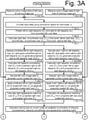
- Figure 4 is a block flow diagram schematically illustrating an example structured arrangement of processing nodes and layers of the CNN 11, according to embodiments of the present invention.
- the up-convolution (UC) and up-sampling (US) layers, as shown in Figure 2 are omitted from Figure 4 for brevity but it should be appreciated that the scaled outputs from the UC and US layers are represented by the subscript s to each of the predicted disparities and the respective calculated cost elements.
- an iteration of the training process for a single pair of training images 15 begins at step S3-1(L) where the CNN 11 receives colour image data of views one of the input stereo pair, the left view in this embodiment.
- the CNN 11 also receives colour image data of the right view, at step S3-1(R).
- the training module 13 may retrieve the two images I l and I r from training data stored in memory 17, corresponding to the left and right colour images of a calibrated stereo pair, captured at the same moment in time, and pass the image data to one or more input nodes (not shown) of the CNN 11.
- the CNN 11 may be configured to advantageously receive and process a plurality of pairs of training images in parallel.
- the stereo pair of images 15 are rectified, whereby the images are projected onto a common image plane using a defined transformation process, as is known in the art.
- the input image data of the left view is passed through the convolutional layers of the encoder 12 to generate encoded input data, for example representing a complex feature vector of identified objects or features in the input image.
- the CNN 11 is trained to find a correspondence field, which in this embodiment is the predicted left-to-right disparity map (d'), that when applied to the left view image 15a enables a right view projector 415a of the CNN 11 to reconstruct a projected right view image (or vice versa).
- the encoded data output at step S3-3 is passed through the processing nodes of the left view disparity predictor 307a, which outputs data values of a predicted left-to-right disparity map (d r s ) based on the current structure and weights.
- the CNN 11 is trained to predict a disparity map from input data by predicting, for each image of the input binocular stereo pair, corresponding disparity values, and updating the CNN 11 based on a cost function that enforces consistency between the predicted disparity values for each image in the stereo pair.
- the encoded data is also passed through the processing nodes of the right view disparity predictor 307b, which outputs data values of a predicted right-to-left disparity map (d l s ) based on the current structure and weights.
- a left-to-right disparity smoothness cost (C r ds ) s may be calculated from the predicted left-to-right disparity map (d 1 ) by a L->R disparity smoothness node 413a of the loss module 13, at step S3-7.
- a right-to-left disparity smoothness cost (C l ds ) s may be calculated from the predicted right-to-left disparity map (d 1 ) by a R->L disparity smoothness node 413b of the loss module 13, at step S3-7.
- the calculated smoothness cost elements of the training loss function encourage the respective predicted disparity maps to be locally smooth with an L1 penalty on the disparity gradients ⁇ d.
- a R->L disparity projector 409a samples the data values of the predicted left-to-right disparity map (d r s ), and applies the predicted right-to-left disparity map (d l s ) to the sampled data to generate a projected right-to-left disparity map (d l (d r ) s ).
- processing of the predicted left-to-right disparity values will be described with reference to steps denoted with an (L) and it should be appreciated that the correspondingly numbered processing steps are mirrored for the right-to-left disparity values, as denoted with an (R).
- the disparity projectors 409 implement image sampling functionality to sample input data using a disparity map, based on the image sampler from a spatial transformer network (STN), as is known in the art for example from M. Jaderberg, K. Simonyan, A. Zisserman, and K. Kavukcuoglu, "Spatial Transformer Networks", NIPS 2015 .
- STN spatial transformer network
- the STN uses bilinear sampling where the output pixel is the weighted sum of four input pixels.
- the bilinear sampler used in this embodiment is locally fully differentiable and integrates seamlessly into the fully convolutional architecture of the CNN 11. This means that the CNN 11 does not require any simplification or approximation of the optimisation cost function.
- the CNN 11 is trained to predict both the left and right image disparities, based only on the left view image data 15a as input to the convolutional loss module 13 part of the network. Accordingly, at step S3-9(L), the projected right disparity predictor node 409a of the CNN 11 outputs a projected right disparity map (d l (d r )), based on the predicted left disparity map (d l ) output by the left view disparity predictor node 407a at step S3-5(L). To ensure coherence, the loss module 13 includes an L1 left-right disparity consistency penalty as part of the model 11.
- the corresponding scaled image data of the left view (I l s ) is passed to a right view projector 415a of the decoder 14 for processing.
- the right view projector 415a generates the projected neighbouring stereo image by sampling pixels from the scaled left view image (I l s ).
- the view projectors 415 also implement the image sampler from a spatial transformer network (STN) as discussed above, to sample the input data using an input disparity map.
- STN spatial transformer network
- a right view projector 415a of the CNN 11 may reconstruct a projected right view image by applying the predicted left-to-right disparity (d 1 ) to the input scaled left view image data (I l s ), at step S3-15(L).
- This process can be formulated as: arg min d r ⁇ I r ⁇ I l d e ⁇ where d corresponds to the image disparity, a scalar value per pixel that the model 11 is trained to predict.
- the reconstructed image I l (d r ) will be referred to as ⁇ r for brevity.
- a projected left view image may be similarly generated by applying the predicted right-to-left disparity map (d 1 ) to the input scaled right view image data (I r s ), at steps S3-13(R) and S3-15(R).
- an appearance matching cost may be calculated by an R appearance matching loss node 417a, as a combination of an L1 and single scale Structured Similarity, SSIM, term as the photometric, image reconstruction cost between the input image I ij l and its reconstruction I ⁇ ij l :
- C ap l 1 N ⁇ i , j ⁇ 1 ⁇ SSIM I i , j l I i , j l 2 + 1 ⁇ ⁇ ⁇ I i , j l ⁇ I ⁇ i , j l ⁇ where N is the number of pixels in the images.
- a simplified SSIM with a 3 x 3 block filter is used, instead of a Gaussian, and ⁇ is set as 0.85.
- Computation of the SSIM term is known in the art per se , for example from Z.Wang, A. C. Bovik, H. R. Sheikh, and E. P. Simoncelli, "Image Quality Assessment: From Error Visibility To Structural Similarity", Transactions on Image Processing 2004, and need not be described further.
- the left appearance matching cost (C l ap ) may be similarly calculated from a projected left view output by the left view projector 415b and the corresponding scaled left view image ouput by the scaler 405, at step S3-17(R).
- a training loss node 419 of the loss module 13 computes a training loss for the stereo pair of training images at the current scale, at step S3-19.
- the scaled training loss is calculated as a weighted combination of the disparity smoothness costs output at steps S3-7(L) and (R), the disparity consistency costs output at steps S3-11(L) and (R), and the appearance matching costs output at steps S3-17(L) and (R).
- Each of the main terms contains both a left and right image variant. In this exemplary embodiment involving all three training cost elements, the left view image 15a is always passed through the CNN 11.
- the CNN 11 can also predict a disparity map in its frame of reference. It should be appreciated that the right view image data need not be passed through the CNN 11 when the appearance matching cost elements are not implemented.
- the decoder 14 of the CNN 11 performs up-convolution of the data output by the encoder 12 at the current scale, as well as up-sampling of the predicted disparity maps output by the disparity predictors 407, as input to a subsequent structured set of processing nodes to compute a scaled training loss for the next scale, as discussed from steps S3-3 above.
- a final total loss is calculated by a sum node 421 of the loss module 13 at step S3-23, as a weighted sum of the individual scaled losses C s :
- the training module 13 may scale the disparity smoothness term ⁇ ds with r for each scale, to get equivalent smoothing at each level.
- ⁇ ds 0.1/ r , where r is the downscaling factor of the corresponding layer with respect to the resolution of the input image that is passed into the CNN 11 (in from Table 1).
- the training module 13 updates the CNN 11 by back-propagating the weighted components of the final total training loss computed by the sum node 421 at step S3-21.
- exponential linear units may be used instead of the commonly used rectified liner units (ReLU), as are both known in the art.
- An initial learning rate of ⁇ 10 -4 is used, which is kept constant for the first 30 epochs before halving it every 10 epochs until the end.
- the training module 13 may be configured to update the CNN 11 using a progressive update schedule, where lower resolution image scales are optimized first.
- optimizing all four scales at once further advantageously leads to more stable convergence.
- an identical weighting of each scale loss can be used in the event that different weightings leads to unstable convergence.
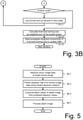
- FIG. 5 is a flow diagram for an exemplary process of generating and processing depth data from a single source image using the trained CNN 11 according to an embodiment.
- step S6-1 colour image data of a single source image is received by the depth data generator 5, for example from the camera 7.
- step S6-3 using a single forward pass through the trained CNN 11, the disparity at the finest scale level for the left image, d r , is output by the trained L-R view disparity predictor 407a as the predicted disparity map (corresponding to disp1 from Table 1).
- the output predicted disparity map is the same resolution as the input image. It should be appreciated that the right-to-left disparity, d l , is not used in the depth data generation stage.
- the depth image is passed to a depth data processing module 23 to be processed depending on the specific implementation context of the system 1.
- the entities described herein such as the image processing system 3 and/or the individual modules of the image processing system 3, may be implemented by computer systems such as computer system 1000 as shown in Figure 6 .
- Embodiments of the present invention may be implemented as programmable code for execution by such computer systems 1000. After reading this description, it will become apparent to a person skilled in the art how to implement the invention using other computer systems and/or computer architectures.
- Computer system 1000 which may be a personal computer, a laptop, a computing terminal, a smart phone, a tablet computer, or the like, includes one or more processors, such as processor 1004.
- Processor 1004 may be any type of processor, including but not limited to a special purpose or a general-purpose digital signal processor.
- Processor 1004 is connected to a communication infrastructure 1006 (for example, a bus or network).
- a communication infrastructure 1006 for example, a bus or network.
- Computer system 1000 also includes a user input interface 1003 connected to one or more input device(s) 1005 and a display interface 1007 connected to one or more display(s) 1009.
- Input devices 1005 may include, for example, a pointing device such as a mouse or touchpad, a keyboard, a touchscreen such as a resistive or capacitive touchscreen, etc.
- Computer system 1000 also includes a main memory 1008, preferably random access memory (RAM), and may also include a secondary memory 610.
- Secondary memory 1010 may include, for example, a hard disk drive 1012 and/or a removable storage drive 1014, representing a floppy disk drive, a magnetic tape drive, an optical disk drive, etc.
- Removable storage drive 1014 reads from and/or writes to a removable storage unit 1018 in a well-known manner.
- Removable storage unit 1018 represents a floppy disk, magnetic tape, optical disk, etc., which is read by and written to by removable storage drive 1014.
- removable storage unit 1018 includes a computer usable storage medium having stored therein computer software and/or data.
- secondary memory 1010 may include other similar means for allowing computer programs or other instructions to be loaded into computer system 1000.
- Such means may include, for example, a removable storage unit 1022 and an interface 1020.
- Examples of such means may include a program cartridge and cartridge interface (such as that previously found in video game devices), a removable memory chip (such as an EPROM, or PROM, or flash memory) and associated socket, and other removable storage units 1022 and interfaces 1020 which allow software and data to be transferred from removable storage unit 1022 to computer system 1000.
- the program may be executed and/or the data accessed from the removable storage unit 1022, using the processor 1004 of the computer system 1000.
- Computer system 1000 may also include a communication interface 1024.
- Communication interface 1024 allows software and data to be transferred between computer system 1000 and external devices. Examples of communication interface 1024 may include a modem, a network interface (such as an Ethernet card), a communication port, a Personal Computer Memory Card International Association (PCMCIA) slot and card, etc.
- Software and data transferred via communication interface 1024 are in the form of signals 1028, which may be electronic, electromagnetic, optical, or other signals capable of being received by communication interface 1024. These signals 1028 are provided to communication interface 1024 via a communication path 1026.
- Communication path 1026 carries signals 1028 and may be implemented using wire or cable, fibre optics, a phone line, a wireless link, a cellular phone link, a radio frequency link, or any other suitable communication channel. For instance, communication path 1026 may be implemented using a combination of channels.
- computer program medium and “computer usable medium” are used generally to refer to media such as removable storage drive 1014, a hard disk installed in hard disk drive 1012, and signals 1028. These computer program products are means for providing software to computer system 1000. However, these terms may also include signals (such as electrical, optical or electromagnetic signals) that embody the computer program disclosed herein.
- Computer programs are stored in main memory 1008 and/or secondary memory 1010. Computer programs may also be received via communication interface 1024. Such computer programs, when executed, enable computer system 1000 to implement embodiments of the present invention as discussed herein. Accordingly, such computer programs represent controllers of computer system 1000, Where the embodiment is implemented using software, the software may be stored in a computer program product 1030 and loaded into computer system 1000 using removable storage drive 1014, hard disk drive 1012, or communication interface 1024, to provide some examples.
- the trained CNN module 11 may be implemented in hardware and/or software as a standalone entity for installation as a component in an image processing system, and may further include the training module functionality and/or the depth data generator functionality.
- the above embodiments implement the trained statistical model as a deep convolutional neural network.
- the underlying aspects of the training process may be applicable to other forms of statistical models suitable for processing image data to generate a predicted depth map, such as random forest and derivatives.
Landscapes
- Engineering & Computer Science (AREA)
- Theoretical Computer Science (AREA)
- Physics & Mathematics (AREA)
- General Physics & Mathematics (AREA)
- Evolutionary Computation (AREA)
- Computing Systems (AREA)
- Software Systems (AREA)
- Artificial Intelligence (AREA)
- Data Mining & Analysis (AREA)
- Health & Medical Sciences (AREA)
- General Health & Medical Sciences (AREA)
- Mathematical Physics (AREA)
- General Engineering & Computer Science (AREA)
- Life Sciences & Earth Sciences (AREA)
- Biomedical Technology (AREA)
- Biophysics (AREA)
- Computational Linguistics (AREA)
- Molecular Biology (AREA)
- Computer Vision & Pattern Recognition (AREA)
- Databases & Information Systems (AREA)
- Medical Informatics (AREA)
- Multimedia (AREA)
- Computational Mathematics (AREA)
- Mathematical Analysis (AREA)
- Mathematical Optimization (AREA)
- Pure & Applied Mathematics (AREA)
- Algebra (AREA)
- Bioinformatics & Cheminformatics (AREA)
- Bioinformatics & Computational Biology (AREA)
- Evolutionary Biology (AREA)
- Probability & Statistics with Applications (AREA)
- Image Analysis (AREA)
- Image Processing (AREA)
Applications Claiming Priority (2)
| Application Number | Priority Date | Filing Date | Title |
|---|---|---|---|
| GB1615470.0A GB2553782B (en) | 2016-09-12 | 2016-09-12 | Predicting depth from image data using a statistical model |
| PCT/GB2017/052671 WO2018046964A1 (en) | 2016-09-12 | 2017-09-12 | Predicting depth from image data using a statistical model |
Publications (2)
| Publication Number | Publication Date |
|---|---|
| EP3510561A1 EP3510561A1 (en) | 2019-07-17 |
| EP3510561B1 true EP3510561B1 (en) | 2022-03-02 |
Family
ID=57234660
Family Applications (1)
| Application Number | Title | Priority Date | Filing Date |
|---|---|---|---|
| EP17794764.5A Active EP3510561B1 (en) | 2016-09-12 | 2017-09-12 | Predicting depth from image data using a statistical model |
Country Status (9)
| Country | Link |
|---|---|
| US (1) | US11100401B2 (enExample) |
| EP (1) | EP3510561B1 (enExample) |
| JP (1) | JP7177062B2 (enExample) |
| KR (1) | KR102487270B1 (enExample) |
| CN (1) | CN109791697B (enExample) |
| AU (1) | AU2017324923B2 (enExample) |
| CA (1) | CA3035298C (enExample) |
| GB (1) | GB2553782B (enExample) |
| WO (1) | WO2018046964A1 (enExample) |
Families Citing this family (132)
| Publication number | Priority date | Publication date | Assignee | Title |
|---|---|---|---|---|
| US10614585B2 (en) * | 2015-07-29 | 2020-04-07 | Kyocera Corporation | Parallax calculation apparatus, stereo camera apparatus, vehicle, and parallax calculation method |
| US10798387B2 (en) | 2016-12-12 | 2020-10-06 | Netflix, Inc. | Source-consistent techniques for predicting absolute perceptual video quality |
| US10803546B2 (en) * | 2017-11-03 | 2020-10-13 | Baidu Usa Llc | Systems and methods for unsupervised learning of geometry from images using depth-normal consistency |
| CN109785376B (zh) * | 2017-11-15 | 2023-02-28 | 富士通株式会社 | 深度估计装置的训练方法、深度估计设备及存储介质 |
| US10643383B2 (en) * | 2017-11-27 | 2020-05-05 | Fotonation Limited | Systems and methods for 3D facial modeling |
| DE112019000070T5 (de) | 2018-01-07 | 2020-03-12 | Nvidia Corporation | Führen von fahrzeugen durch fahrzeugmanöver unter verwendung von modellen für maschinelles lernen |
| US10664953B1 (en) * | 2018-01-23 | 2020-05-26 | Facebook Technologies, Llc | Systems and methods for generating defocus blur effects |
| CN108335322B (zh) * | 2018-02-01 | 2021-02-12 | 深圳市商汤科技有限公司 | 深度估计方法和装置、电子设备、程序和介质 |
| US11079764B2 (en) | 2018-02-02 | 2021-08-03 | Nvidia Corporation | Safety procedure analysis for obstacle avoidance in autonomous vehicles |
| WO2019161300A1 (en) | 2018-02-18 | 2019-08-22 | Nvidia Corporation | Detecting objects and determining confidence scores |
| US10997433B2 (en) | 2018-02-27 | 2021-05-04 | Nvidia Corporation | Real-time detection of lanes and boundaries by autonomous vehicles |
| CN110494863B (zh) | 2018-03-15 | 2024-02-09 | 辉达公司 | 确定自主车辆的可驾驶自由空间 |
| WO2019182974A2 (en) | 2018-03-21 | 2019-09-26 | Nvidia Corporation | Stereo depth estimation using deep neural networks |
| DE112019001605T5 (de) | 2018-03-27 | 2020-12-17 | Nvidia Corporation | Trainieren, testen und verifizieren von autonomen maschinen unter verwendung simulierter umgebungen |
| CN108734693B (zh) * | 2018-03-30 | 2019-10-25 | 百度在线网络技术(北京)有限公司 | 用于生成信息的方法和装置 |
| CN108537837B (zh) * | 2018-04-04 | 2023-05-05 | 腾讯科技(深圳)有限公司 | 一种深度信息确定的方法及相关装置 |
| EP3781366A1 (en) * | 2018-04-17 | 2021-02-24 | ETH Zürich | Robotic camera software and controller |
| WO2019222467A1 (en) * | 2018-05-17 | 2019-11-21 | Niantic, Inc. | Self-supervised training of a depth estimation system |
| CN108961327B (zh) * | 2018-05-22 | 2021-03-30 | 深圳市商汤科技有限公司 | 一种单目深度估计方法及其装置、设备和存储介质 |
| AU2018278901B2 (en) * | 2018-06-14 | 2020-07-16 | Beijing Didi Infinity Technology And Development Co., Ltd. | Systems and methods for updating a high-resolution map based on binocular images |
| US11966838B2 (en) | 2018-06-19 | 2024-04-23 | Nvidia Corporation | Behavior-guided path planning in autonomous machine applications |
| DE102019113114A1 (de) | 2018-06-19 | 2019-12-19 | Nvidia Corporation | Verhaltensgesteuerte wegplanung in autonomen maschinenanwendungen |
| TW202006738A (zh) * | 2018-07-12 | 2020-02-01 | 國立臺灣科技大學 | 應用機器學習的醫學影像分析方法及其系統 |
| CN109166144B (zh) * | 2018-07-20 | 2021-08-24 | 中国海洋大学 | 一种基于生成对抗网络的图像深度估计方法 |
| CN109213147A (zh) * | 2018-08-01 | 2019-01-15 | 上海交通大学 | 一种基于深度学习的机器人避障轨迹规划方法及系统 |
| RU2698402C1 (ru) * | 2018-08-30 | 2019-08-26 | Самсунг Электроникс Ко., Лтд. | Способ обучения сверточной нейронной сети для восстановления изображения и система для формирования карты глубины изображения (варианты) |
| US10986325B2 (en) * | 2018-09-12 | 2021-04-20 | Nvidia Corporation | Scene flow estimation using shared features |
| CN113168541B (zh) * | 2018-10-15 | 2024-07-09 | 泰立戴恩菲力尔商业系统公司 | 用于成像系统的深度学习推理系统和方法 |
| US11507822B2 (en) * | 2018-10-31 | 2022-11-22 | General Electric Company | Scalable artificial intelligence model generation systems and methods for healthcare |
| JP6946255B2 (ja) * | 2018-11-13 | 2021-10-06 | 株式会社東芝 | 学習装置、推定装置、学習方法およびプログラム |
| WO2020102733A1 (en) | 2018-11-16 | 2020-05-22 | Nvidia Corporation | Learning to generate synthetic datasets for training neural networks |
| CN109712228B (zh) * | 2018-11-19 | 2023-02-24 | 中国科学院深圳先进技术研究院 | 建立三维重建模型的方法、装置、电子设备及存储介质 |
| WO2020140049A1 (en) | 2018-12-28 | 2020-07-02 | Nvidia Corporation | Distance to obstacle detection in autonomous machine applications |
| US11170299B2 (en) | 2018-12-28 | 2021-11-09 | Nvidia Corporation | Distance estimation to objects and free-space boundaries in autonomous machine applications |
| DE112019006484T5 (de) | 2018-12-28 | 2021-10-21 | Nvidia Corporation | Detektion von abständen zu hindernissen in autonomen maschinenanwendungen |
| CN111383256B (zh) * | 2018-12-29 | 2024-05-17 | 北京市商汤科技开发有限公司 | 图像处理方法、电子设备及计算机可读存储介质 |
| DE102019100303A1 (de) | 2019-01-08 | 2020-07-09 | HELLA GmbH & Co. KGaA | Verfahren und Vorrichtung zum Ermitteln einer Krümmung einer Fahrbahn |
| WO2020163390A1 (en) | 2019-02-05 | 2020-08-13 | Nvidia Corporation | Driving lane perception diversity and redundancy in autonomous driving applications |
| CN111583321A (zh) * | 2019-02-19 | 2020-08-25 | 富士通株式会社 | 图像处理装置、方法及介质 |
| US10956755B2 (en) * | 2019-02-19 | 2021-03-23 | Tesla, Inc. | Estimating object properties using visual image data |
| US10839543B2 (en) * | 2019-02-26 | 2020-11-17 | Baidu Usa Llc | Systems and methods for depth estimation using convolutional spatial propagation networks |
| WO2020185779A1 (en) | 2019-03-11 | 2020-09-17 | Nvidia Corporation | Intersection detection and classification in autonomous machine applications |
| KR20210123385A (ko) * | 2019-03-11 | 2021-10-13 | 엠오큐아이 테크놀로지 (베이징) 씨오., 엘티디. | 비접촉 지문 획득 장치 및 방법 |
| CN109919993B (zh) * | 2019-03-12 | 2023-11-07 | 腾讯科技(深圳)有限公司 | 视差图获取方法、装置和设备及控制系统 |
| US12399015B2 (en) | 2019-04-12 | 2025-08-26 | Nvidia Corporation | Neural network training using ground truth data augmented with map information for autonomous machine applications |
| CN113808061B (zh) * | 2019-04-28 | 2024-11-22 | 深圳市商汤科技有限公司 | 一种图像处理方法及装置 |
| US11044462B2 (en) * | 2019-05-02 | 2021-06-22 | Niantic, Inc. | Self-supervised training of a depth estimation model using depth hints |
| CN110113595B (zh) * | 2019-05-08 | 2021-04-30 | 北京奇艺世纪科技有限公司 | 一种2d视频转3d视频的方法、装置及电子设备 |
| CN109996056B (zh) * | 2019-05-08 | 2021-03-26 | 北京奇艺世纪科技有限公司 | 一种2d视频转3d视频的方法、装置及电子设备 |
| CN110111244B (zh) * | 2019-05-08 | 2024-01-26 | 北京奇艺世纪科技有限公司 | 图像转换、深度图预测和模型训练方法、装置及电子设备 |
| CN110490919B (zh) * | 2019-07-05 | 2023-04-18 | 天津大学 | 一种基于深度神经网络的单目视觉的深度估计方法 |
| US11138751B2 (en) * | 2019-07-06 | 2021-10-05 | Toyota Research Institute, Inc. | Systems and methods for semi-supervised training using reprojected distance loss |
| CN110443843A (zh) * | 2019-07-29 | 2019-11-12 | 东北大学 | 一种基于生成对抗网络的无监督单目深度估计方法 |
| CN110415284B (zh) * | 2019-07-31 | 2022-04-19 | 中国科学技术大学 | 一种单视彩色图像深度图获得方法及装置 |
| US11468585B2 (en) * | 2019-08-27 | 2022-10-11 | Nec Corporation | Pseudo RGB-D for self-improving monocular slam and depth prediction |
| CN110610486B (zh) * | 2019-08-28 | 2022-07-19 | 清华大学 | 单目图像深度估计方法及装置 |
| US11713978B2 (en) | 2019-08-31 | 2023-08-01 | Nvidia Corporation | Map creation and localization for autonomous driving applications |
| WO2021046530A1 (en) * | 2019-09-07 | 2021-03-11 | Embodied Intelligence, Inc. | Three-dimensional computer vision system for robotic devices |
| EP4025394A1 (en) | 2019-09-07 | 2022-07-13 | Embodied Intelligence, Inc. | Systems and methods for robotic picking and perturbation |
| WO2021046528A1 (en) | 2019-09-07 | 2021-03-11 | Embodied Intelligence, Inc. | Systems and methods for robotic picking |
| US11911901B2 (en) | 2019-09-07 | 2024-02-27 | Embodied Intelligence, Inc. | Training artificial networks for robotic picking |
| CN110738697B (zh) * | 2019-10-10 | 2023-04-07 | 福州大学 | 基于深度学习的单目深度估计方法 |
| CN111047630B (zh) * | 2019-11-13 | 2023-06-13 | 芯启源(上海)半导体科技有限公司 | 神经网络和基于神经网络的目标检测及深度预测方法 |
| CN111047634B (zh) * | 2019-11-13 | 2023-08-08 | 杭州飞步科技有限公司 | 场景深度的确定方法、装置、设备及存储介质 |
| EP4058974A4 (en) * | 2019-11-14 | 2023-12-13 | Zoox, Inc. | Depth data model training with upsampling, losses, and loss balancing |
| US11157774B2 (en) * | 2019-11-14 | 2021-10-26 | Zoox, Inc. | Depth data model training with upsampling, losses, and loss balancing |
| CN114761998A (zh) * | 2019-12-02 | 2022-07-15 | 大学之母博洛尼亚大学 | 通过神经网络的自适应学习从图像确定深度的方法及其系统 |
| CN111192238B (zh) * | 2019-12-17 | 2022-09-20 | 南京理工大学 | 基于自监督深度网络的无损血管三维测量方法 |
| CN111027508B (zh) * | 2019-12-23 | 2022-09-06 | 电子科技大学 | 一种基于深层神经网络的遥感图像覆被变化检测方法 |
| US11244500B2 (en) | 2019-12-31 | 2022-02-08 | Woven Planet North America, Inc. | Map feature extraction using overhead view images |
| US11288522B2 (en) | 2019-12-31 | 2022-03-29 | Woven Planet North America, Inc. | Generating training data from overhead view images |
| US11037328B1 (en) | 2019-12-31 | 2021-06-15 | Lyft, Inc. | Overhead view image generation |
| CN111242999B (zh) * | 2020-01-10 | 2022-09-20 | 大连理工大学 | 基于上采样及精确重匹配的视差估计优化方法 |
| CN111310916B (zh) * | 2020-01-22 | 2022-10-25 | 浙江省北大信息技术高等研究院 | 一种区分左右眼图片的深度系统训练方法及系统 |
| US12112468B2 (en) | 2020-01-30 | 2024-10-08 | Electronics And Telecommunications Research Institute | Method and apparatus for detecting dimension error |
| JP7794450B2 (ja) * | 2020-02-06 | 2026-01-06 | ヴィカリアス・サージカル・インコーポレイテッド | 外科用ロボットシステムにおける生体内の深さ知覚を決定するためのシステムおよび方法 |
| CN111314686B (zh) * | 2020-03-20 | 2021-06-25 | 深圳市博盛医疗科技有限公司 | 一种自动优化3d立体感的方法、系统及介质 |
| CN111523409B (zh) * | 2020-04-09 | 2023-08-29 | 北京百度网讯科技有限公司 | 用于生成位置信息的方法和装置 |
| US12456046B2 (en) * | 2020-04-20 | 2025-10-28 | Nvidia Corporation | Distance determinations using one or more neural networks |
| US12077190B2 (en) | 2020-05-18 | 2024-09-03 | Nvidia Corporation | Efficient safety aware path selection and planning for autonomous machine applications |
| CN113724311B (zh) * | 2020-05-25 | 2024-04-02 | 北京四维图新科技股份有限公司 | 深度图获取方法、设备及存储介质 |
| US12080013B2 (en) * | 2020-07-06 | 2024-09-03 | Toyota Research Institute, Inc. | Multi-view depth estimation leveraging offline structure-from-motion |
| KR102809044B1 (ko) * | 2020-07-29 | 2025-05-19 | 삼성전자주식회사 | 영상의 깊이를 추정하는 방법 및 장치 |
| US12008740B2 (en) * | 2020-08-12 | 2024-06-11 | Niantic, Inc. | Feature matching using features extracted from perspective corrected image |
| JP7389729B2 (ja) * | 2020-09-10 | 2023-11-30 | 株式会社日立製作所 | 障害物検知装置、障害物検知システム及び障害物検知方法 |
| US11238307B1 (en) | 2020-09-24 | 2022-02-01 | Eagle Technology, Llc | System for performing change detection within a 3D geospatial model based upon semantic change detection using deep learning and related methods |
| US11587249B2 (en) | 2020-09-24 | 2023-02-21 | Eagle Technology, Llc | Artificial intelligence (AI) system and methods for generating estimated height maps from electro-optic imagery |
| US11302071B1 (en) | 2020-09-24 | 2022-04-12 | Eagle Technology, Llc | Artificial intelligence (AI) system using height seed initialization for extraction of digital elevation models (DEMs) and related methods |
| US11747468B2 (en) | 2020-09-24 | 2023-09-05 | Eagle Technology, Llc | System using a priori terrain height data for interferometric synthetic aperture radar (IFSAR) phase disambiguation and related methods |
| CN112330795B (zh) * | 2020-10-10 | 2022-10-28 | 清华大学 | 基于单张rgbd图像的人体三维重建方法及系统 |
| US11978266B2 (en) | 2020-10-21 | 2024-05-07 | Nvidia Corporation | Occupant attentiveness and cognitive load monitoring for autonomous and semi-autonomous driving applications |
| DE102020006971A1 (de) * | 2020-11-13 | 2022-05-19 | Alexander Bayer | Kamerabasiertes Assistenzsystem mit Künstlicher Intelligenz für blinde Personen |
| TWI784349B (zh) * | 2020-11-16 | 2022-11-21 | 國立政治大學 | 顯著圖產生方法及使用該方法的影像處理系統 |
| CN112465888A (zh) * | 2020-11-16 | 2021-03-09 | 电子科技大学 | 一种基于单目视觉的无监督深度估计方法 |
| US12080010B2 (en) * | 2020-12-12 | 2024-09-03 | Niantic, Inc. | Self-supervised multi-frame monocular depth estimation model |
| CN112330675B (zh) * | 2020-12-15 | 2022-08-23 | 南昌工程学院 | 基于AOD-Net的交通道路图像大气能见度检测方法 |
| CN112802079A (zh) * | 2021-01-19 | 2021-05-14 | 奥比中光科技集团股份有限公司 | 一种视差图获取方法、装置、终端和存储介质 |
| KR102319237B1 (ko) * | 2021-03-02 | 2021-10-29 | 인하대학교 산학협력단 | 핸드크래프트 비용 기반의 다중 뷰 스테레오 정합 방법 |
| TWI790560B (zh) * | 2021-03-03 | 2023-01-21 | 宏碁股份有限公司 | 並排影像偵測方法與使用該方法的電子裝置 |
| US11908100B2 (en) * | 2021-03-15 | 2024-02-20 | Qualcomm Incorporated | Transform matrix learning for multi-sensor image capture devices |
| JP7447042B2 (ja) | 2021-03-17 | 2024-03-11 | 株式会社東芝 | 画像処理装置、方法及びプログラム |
| US12663290B2 (en) | 2021-04-21 | 2026-06-23 | Nvidia Corporation | Map health monitoring for autonomous systems and applications |
| JP7557425B2 (ja) * | 2021-05-06 | 2024-09-27 | 富士フイルム株式会社 | 学習装置、深度情報取得装置、内視鏡システム、学習方法、及びプログラム |
| AU2022282850B2 (en) | 2021-05-25 | 2026-03-19 | Niantic Spatial, Inc. | Image depth prediction with wavelet decomposition |
| KR102489890B1 (ko) * | 2021-05-28 | 2023-01-17 | 한국항공대학교산학협력단 | 깊이 추정 시스템 및 깊이 추정 방법 |
| US12159466B2 (en) * | 2021-06-07 | 2024-12-03 | Autobrains Technologies Ltd | Context based lane prediction |
| KR102717662B1 (ko) | 2021-07-02 | 2024-10-15 | 주식회사 뷰웍스 | 스테레오 영상을 이용한 고심도 영상 생성 방법 및 장치, 고심도 영상 생성 모델 학습 장치 |
| US11961249B2 (en) * | 2021-07-14 | 2024-04-16 | Black Sesame Technologies Inc. | Generating stereo-based dense depth images |
| CN113762278B (zh) * | 2021-09-13 | 2023-11-17 | 中冶路桥建设有限公司 | 一种基于目标检测的沥青路面损坏识别方法 |
| WO2023065038A1 (en) | 2021-10-20 | 2023-04-27 | Airy3D Inc. | Methods and systems using depth imaging for training and deploying neural networks for biometric anti-spoofing |
| CN114401391B (zh) * | 2021-12-09 | 2023-01-06 | 北京邮电大学 | 虚拟视点生成方法及装置 |
| CN114494386B (zh) * | 2021-12-14 | 2025-05-27 | 南京大学 | 一种多频谱图像监督的红外图像深度估计方法 |
| KR20230106453A (ko) | 2022-01-06 | 2023-07-13 | 삼성전자주식회사 | 전자 장치 및 전자 장치의 동작 방법 |
| KR102559936B1 (ko) * | 2022-01-28 | 2023-07-27 | 포티투닷 주식회사 | 단안 카메라를 이용하여 깊이 정보를 추정하는 방법 및 장치 |
| US12190535B2 (en) * | 2022-03-07 | 2025-01-07 | Black Sesame Technologies Inc. | Generating depth images for image data |
| KR102531286B1 (ko) * | 2022-03-29 | 2023-05-12 | 포티투닷 주식회사 | 깊이 정보 추정 모델 학습을 위한 데이터 처리 방법 및 장치 |
| CN117152223B (zh) * | 2022-05-24 | 2025-12-12 | 鸿海精密工业股份有限公司 | 深度图像生成方法、系统、电子设备及可读存储介质 |
| CN117274347B (zh) * | 2022-06-09 | 2026-04-10 | 鸿海精密工业股份有限公司 | 自编码器训练方法、系统及深度影像生成方法 |
| CN114782911B (zh) * | 2022-06-20 | 2022-09-16 | 小米汽车科技有限公司 | 图像处理的方法、装置、设备、介质、芯片及车辆 |
| CN115205147B (zh) * | 2022-07-13 | 2025-06-06 | 福州大学 | 一种基于Transformer的多尺度优化低照度图像增强方法 |
| KR102813053B1 (ko) * | 2022-07-14 | 2025-05-28 | 재단법인대구경북과학기술원 | 단안 카메라 이미지에 대한 깊이 추정 방법 |
| CN115222917A (zh) * | 2022-07-19 | 2022-10-21 | 腾讯科技(深圳)有限公司 | 三维重建模型的训练方法、装置、设备及存储介质 |
| KR102893120B1 (ko) * | 2022-08-11 | 2025-12-03 | 한국전자기술연구원 | 좁은 베이스라인을 갖는 스테레오 카메라를 위한 고해상 깊이 추정 방법 및 시스템 |
| US12288278B2 (en) | 2022-10-04 | 2025-04-29 | The Weather Company, Llc | Layering modifications defined in a rule on a set of objects detected within a frame |
| CN116258756B (zh) * | 2023-02-23 | 2024-03-08 | 齐鲁工业大学(山东省科学院) | 一种自监督单目深度估计方法及系统 |
| FR3151116B1 (fr) * | 2023-07-10 | 2025-09-26 | Psa Automobiles Sa | Procédé et dispositif de détermination d’une profondeur d’un objet par un système de vision auto-supervisé. |
| CN117388850B (zh) * | 2023-10-13 | 2024-10-29 | 广东省科学院广州地理研究所 | 一种海面风场微波遥感反演数据的空间降尺度方法 |
| FR3160789B1 (fr) * | 2024-03-26 | 2026-02-13 | Stellantis Auto Sas | Procédé et dispositif d’apprentissage d’un modèle de prédiction de profondeur associé à un système de vision stéréoscopique par comparaison de positions de points dans une scène tridimensionnelle. |
| WO2025219748A1 (en) * | 2024-04-19 | 2025-10-23 | Abu Dhabi Gas Development Company Limited | Sand accumulation elevation system and a method for elevating sand accumulation |
| US20260037461A1 (en) * | 2024-07-31 | 2026-02-05 | Nvidia Corporation | Systems and methods for processing data based at least on random regions in a frame |
| CN119810169B (zh) * | 2024-12-16 | 2025-06-03 | 云南民族大学 | 无人机视角下大景深场景的单目深度估计方法 |
| US12659442B1 (en) * | 2025-04-04 | 2026-06-16 | Qualcomm Incorporated | Stereo depth adaptation with viewpoint virtualization |
Family Cites Families (27)
| Publication number | Priority date | Publication date | Assignee | Title |
|---|---|---|---|---|
| US5577130A (en) * | 1991-08-05 | 1996-11-19 | Philips Electronics North America | Method and apparatus for determining the distance between an image and an object |
| JP2005165614A (ja) * | 2003-12-02 | 2005-06-23 | Canon Inc | 画像合成装置および画像合成方法 |
| CA2687213C (en) * | 2007-06-20 | 2015-12-22 | Thomson Licensing | System and method for stereo matching of images |
| JP5153940B2 (ja) * | 2008-06-24 | 2013-02-27 | トムソン ライセンシング | 動き補償を用いた画像の奥行き抽出のためのシステムおよび方法 |
| CN101605270B (zh) * | 2009-07-16 | 2011-02-16 | 清华大学 | 生成深度图的方法和装置 |
| GB2473282B (en) * | 2009-09-08 | 2011-10-12 | Nds Ltd | Recommended depth value |
| US9030530B2 (en) * | 2009-12-15 | 2015-05-12 | Thomson Licensing | Stereo-image quality and disparity/depth indications |
| CN101840574B (zh) * | 2010-04-16 | 2012-05-23 | 西安电子科技大学 | 基于边缘象素特征的深度估计方法 |
| US20110304618A1 (en) * | 2010-06-14 | 2011-12-15 | Qualcomm Incorporated | Calculating disparity for three-dimensional images |
| TR201010438A2 (tr) * | 2010-12-14 | 2012-07-23 | Vestel Elektroni̇k Sanayi̇ Ve Ti̇caret A.Ş. | Stereo video için enformasyon geçirgenliği temelinde disparite tahmini. |
| CN102523464A (zh) * | 2011-12-12 | 2012-06-27 | 上海大学 | 一种双目立体视频的深度图像估计方法 |
| US9117295B2 (en) * | 2011-12-20 | 2015-08-25 | Adobe Systems Incorporated | Refinement of depth maps by fusion of multiple estimates |
| US9571810B2 (en) * | 2011-12-23 | 2017-02-14 | Mediatek Inc. | Method and apparatus of determining perspective model for depth map generation by utilizing region-based analysis and/or temporal smoothing |
| CN103106651B (zh) * | 2012-07-16 | 2015-06-24 | 清华大学深圳研究生院 | 一种基于三维hough变换的获取视差平面的方法 |
| CN102831601A (zh) * | 2012-07-26 | 2012-12-19 | 中北大学 | 基于联合相似性测度和自适应支持权重的立体匹配方法 |
| EP3869797B1 (en) * | 2012-08-21 | 2023-07-19 | Adeia Imaging LLC | Method for depth detection in images captured using array cameras |
| NL2009616C2 (en) * | 2012-10-11 | 2014-04-14 | Ultra D Co Peratief U A | Adjusting depth in a three-dimensional image signal. |
| CN103295229B (zh) * | 2013-05-13 | 2016-01-20 | 清华大学深圳研究生院 | 视频深度信息恢复的全局立体匹配方法 |
| US9373171B2 (en) * | 2013-07-22 | 2016-06-21 | Stmicroelectronics S.R.L. | Method for generating a depth map, related system and computer program product |
| EP2887312A1 (en) * | 2013-12-18 | 2015-06-24 | Nokia Corporation | Method, apparatus and computer program product for depth estimation of stereo images |
| EP2887311B1 (en) * | 2013-12-20 | 2016-09-14 | Thomson Licensing | Method and apparatus for performing depth estimation |
| CN103955954B (zh) * | 2014-04-21 | 2017-02-08 | 杭州电子科技大学 | 一种结合同场景立体图对的高分辨率深度图像重建方法 |
| EP2950269A1 (en) * | 2014-05-27 | 2015-12-02 | Thomson Licensing | Method and apparatus for improving estimation of disparity in a stereo image pair using a hybrid recursive matching processing |
| CN104065947B (zh) * | 2014-06-18 | 2016-06-01 | 长春理工大学 | 一种集成成像系统的深度图获取方法 |
| CN104408710B (zh) * | 2014-10-30 | 2017-05-24 | 北京大学深圳研究生院 | 一种全局视差估计方法和系统 |
| KR20160056132A (ko) * | 2014-11-11 | 2016-05-19 | 삼성전자주식회사 | 영상 변환 장치 및 그 영상 변환 방법 |
| US10200666B2 (en) * | 2015-03-04 | 2019-02-05 | Dolby Laboratories Licensing Corporation | Coherent motion estimation for stereoscopic video |
-
2016
- 2016-09-12 GB GB1615470.0A patent/GB2553782B/en active Active
-
2017
- 2017-09-12 US US16/332,343 patent/US11100401B2/en active Active
- 2017-09-12 CN CN201780055710.6A patent/CN109791697B/zh active Active
- 2017-09-12 WO PCT/GB2017/052671 patent/WO2018046964A1/en not_active Ceased
- 2017-09-12 AU AU2017324923A patent/AU2017324923B2/en active Active
- 2017-09-12 CA CA3035298A patent/CA3035298C/en active Active
- 2017-09-12 KR KR1020197010331A patent/KR102487270B1/ko active Active
- 2017-09-12 EP EP17794764.5A patent/EP3510561B1/en active Active
- 2017-09-12 JP JP2019535986A patent/JP7177062B2/ja active Active
Non-Patent Citations (1)
| Title |
|---|
| None * |
Also Published As
| Publication number | Publication date |
|---|---|
| JP7177062B2 (ja) | 2022-11-22 |
| CN109791697A (zh) | 2019-05-21 |
| EP3510561A1 (en) | 2019-07-17 |
| GB201615470D0 (en) | 2016-10-26 |
| US11100401B2 (en) | 2021-08-24 |
| AU2017324923B2 (en) | 2022-01-27 |
| BR112019004798A8 (pt) | 2023-04-04 |
| AU2017324923A1 (en) | 2019-04-11 |
| JP2019526878A (ja) | 2019-09-19 |
| CN109791697B (zh) | 2023-10-13 |
| BR112019004798A2 (pt) | 2019-06-04 |
| GB2553782A (en) | 2018-03-21 |
| US20190213481A1 (en) | 2019-07-11 |
| GB2553782B (en) | 2021-10-20 |
| CA3035298C (en) | 2023-03-21 |
| KR102487270B1 (ko) | 2023-01-11 |
| WO2018046964A1 (en) | 2018-03-15 |
| KR20190065287A (ko) | 2019-06-11 |
| CA3035298A1 (en) | 2018-03-15 |
Similar Documents
| Publication | Publication Date | Title |
|---|---|---|
| US11100401B2 (en) | Predicting depth from image data using a statistical model | |
| Yang et al. | Dense depth posterior (ddp) from single image and sparse range | |
| US10839543B2 (en) | Systems and methods for depth estimation using convolutional spatial propagation networks | |
| EP3779881B1 (en) | Method for determining depth information and related device | |
| CN108986136B (zh) | 一种基于语义分割的双目场景流确定方法及系统 | |
| Liu et al. | Self-supervised monocular depth estimation with self-reference distillation and disparity offset refinement | |
| EP3644277B1 (en) | Image processing system, image processing method, and program | |
| CN112991413A (zh) | 自监督深度估测方法和系统 | |
| CN111325794A (zh) | 一种基于深度卷积自编码器的视觉同时定位与地图构建方法 | |
| KR20210025942A (ko) | 종단간 컨볼루셔널 뉴럴 네트워크를 이용한 스테레오 매칭 방법 | |
| CN118552596B (zh) | 一种基于多视图自监督学习的深度估计方法 | |
| EP3992908A1 (en) | Two-stage depth estimation machine learning algorithm and spherical warping layer for equi-rectangular projection stereo matching | |
| dos Santos Rosa et al. | Sparse-to-continuous: Enhancing monocular depth estimation using occupancy maps | |
| CN117745944A (zh) | 预训练模型确定方法、装置、设备以及存储介质 | |
| US12450755B2 (en) | Systems and methods for motion estimation and view prediction | |
| CN108491763A (zh) | 三维场景识别网络的无监督训练方法、装置及存储介质 | |
| CN114266900A (zh) | 一种基于动态卷积的单目3d目标检测方法 | |
| Wu et al. | Toward accurate and real-time binocular vision: a lightweight stereo matching network for RGB stereo images | |
| EP3992909A1 (en) | Two-stage depth estimation machine learning algorithm and spherical warping layer for equi-rectangular projection stereo matching | |
| Yuan et al. | Self-supervised monocular depth estimation with depth–motion prior for pseudo-LiDAR | |
| Li et al. | FA-MSVNet: Multi-scale and multi-view feature aggregation methods for stereo 3D reconstruction | |
| Dao et al. | FastMDE: A fast CNN architecture for monocular depth estimation at high resolution | |
| Ji et al. | ETS-3D: An efficient two-stage framework for stereo 3D object detection | |
| Liu et al. | Image depth estimation assisted by multi-view projection | |
| Liu et al. | Depth-enhancement network for monocular 3D object detection |
Legal Events
| Date | Code | Title | Description |
|---|---|---|---|
| STAA | Information on the status of an ep patent application or granted ep patent |
Free format text: STATUS: UNKNOWN |
|
| STAA | Information on the status of an ep patent application or granted ep patent |
Free format text: STATUS: THE INTERNATIONAL PUBLICATION HAS BEEN MADE |
|
| PUAI | Public reference made under article 153(3) epc to a published international application that has entered the european phase |
Free format text: ORIGINAL CODE: 0009012 |
|
| STAA | Information on the status of an ep patent application or granted ep patent |
Free format text: STATUS: REQUEST FOR EXAMINATION WAS MADE |
|
| 17P | Request for examination filed |
Effective date: 20190411 |
|
| AK | Designated contracting states |
Kind code of ref document: A1 Designated state(s): AL AT BE BG CH CY CZ DE DK EE ES FI FR GB GR HR HU IE IS IT LI LT LU LV MC MK MT NL NO PL PT RO RS SE SI SK SM TR |
|
| AX | Request for extension of the european patent |
Extension state: BA ME |
|
| DAV | Request for validation of the european patent (deleted) | ||
| DAX | Request for extension of the european patent (deleted) | ||
| STAA | Information on the status of an ep patent application or granted ep patent |
Free format text: STATUS: EXAMINATION IS IN PROGRESS |
|
| 17Q | First examination report despatched |
Effective date: 20200710 |
|
| REG | Reference to a national code |
Ref country code: DE Ref legal event code: R079 Ref document number: 602017054106 Country of ref document: DE Free format text: PREVIOUS MAIN CLASS: G06T0007593000 Ipc: G06T0007500000 |
|
| GRAP | Despatch of communication of intention to grant a patent |
Free format text: ORIGINAL CODE: EPIDOSNIGR1 |
|
| STAA | Information on the status of an ep patent application or granted ep patent |
Free format text: STATUS: GRANT OF PATENT IS INTENDED |
|
| RIC1 | Information provided on ipc code assigned before grant |
Ipc: G06T 7/50 20170101AFI20210305BHEP Ipc: G06T 7/593 20170101ALI20210305BHEP |
|
| INTG | Intention to grant announced |
Effective date: 20210330 |
|
| GRAJ | Information related to disapproval of communication of intention to grant by the applicant or resumption of examination proceedings by the epo deleted |
Free format text: ORIGINAL CODE: EPIDOSDIGR1 |
|
| STAA | Information on the status of an ep patent application or granted ep patent |
Free format text: STATUS: EXAMINATION IS IN PROGRESS |
|
| INTC | Intention to grant announced (deleted) | ||
| GRAP | Despatch of communication of intention to grant a patent |
Free format text: ORIGINAL CODE: EPIDOSNIGR1 |
|
| STAA | Information on the status of an ep patent application or granted ep patent |
Free format text: STATUS: GRANT OF PATENT IS INTENDED |
|
| INTG | Intention to grant announced |
Effective date: 20210915 |
|
| GRAS | Grant fee paid |
Free format text: ORIGINAL CODE: EPIDOSNIGR3 |
|
| GRAA | (expected) grant |
Free format text: ORIGINAL CODE: 0009210 |
|
| STAA | Information on the status of an ep patent application or granted ep patent |
Free format text: STATUS: THE PATENT HAS BEEN GRANTED |
|
| AK | Designated contracting states |
Kind code of ref document: B1 Designated state(s): AL AT BE BG CH CY CZ DE DK EE ES FI FR GB GR HR HU IE IS IT LI LT LU LV MC MK MT NL NO PL PT RO RS SE SI SK SM TR |
|
| REG | Reference to a national code |
Ref country code: GB Ref legal event code: FG4D |
|
| REG | Reference to a national code |
Ref country code: CH Ref legal event code: EP Ref country code: AT Ref legal event code: REF Ref document number: 1472881 Country of ref document: AT Kind code of ref document: T Effective date: 20220315 |
|
| REG | Reference to a national code |
Ref country code: DE Ref legal event code: R096 Ref document number: 602017054106 Country of ref document: DE |
|
| REG | Reference to a national code |
Ref country code: IE Ref legal event code: FG4D |
|
| REG | Reference to a national code |
Ref country code: NL Ref legal event code: FP |
|
| REG | Reference to a national code |
Ref country code: LT Ref legal event code: MG9D |
|
| PG25 | Lapsed in a contracting state [announced via postgrant information from national office to epo] |
Ref country code: SE Free format text: LAPSE BECAUSE OF FAILURE TO SUBMIT A TRANSLATION OF THE DESCRIPTION OR TO PAY THE FEE WITHIN THE PRESCRIBED TIME-LIMIT Effective date: 20220302 Ref country code: RS Free format text: LAPSE BECAUSE OF FAILURE TO SUBMIT A TRANSLATION OF THE DESCRIPTION OR TO PAY THE FEE WITHIN THE PRESCRIBED TIME-LIMIT Effective date: 20220302 Ref country code: NO Free format text: LAPSE BECAUSE OF FAILURE TO SUBMIT A TRANSLATION OF THE DESCRIPTION OR TO PAY THE FEE WITHIN THE PRESCRIBED TIME-LIMIT Effective date: 20220602 Ref country code: LT Free format text: LAPSE BECAUSE OF FAILURE TO SUBMIT A TRANSLATION OF THE DESCRIPTION OR TO PAY THE FEE WITHIN THE PRESCRIBED TIME-LIMIT Effective date: 20220302 Ref country code: HR Free format text: LAPSE BECAUSE OF FAILURE TO SUBMIT A TRANSLATION OF THE DESCRIPTION OR TO PAY THE FEE WITHIN THE PRESCRIBED TIME-LIMIT Effective date: 20220302 Ref country code: ES Free format text: LAPSE BECAUSE OF FAILURE TO SUBMIT A TRANSLATION OF THE DESCRIPTION OR TO PAY THE FEE WITHIN THE PRESCRIBED TIME-LIMIT Effective date: 20220302 Ref country code: BG Free format text: LAPSE BECAUSE OF FAILURE TO SUBMIT A TRANSLATION OF THE DESCRIPTION OR TO PAY THE FEE WITHIN THE PRESCRIBED TIME-LIMIT Effective date: 20220602 |
|
| REG | Reference to a national code |
Ref country code: AT Ref legal event code: MK05 Ref document number: 1472881 Country of ref document: AT Kind code of ref document: T Effective date: 20220302 |
|
| PG25 | Lapsed in a contracting state [announced via postgrant information from national office to epo] |
Ref country code: PL Free format text: LAPSE BECAUSE OF FAILURE TO SUBMIT A TRANSLATION OF THE DESCRIPTION OR TO PAY THE FEE WITHIN THE PRESCRIBED TIME-LIMIT Effective date: 20220302 Ref country code: LV Free format text: LAPSE BECAUSE OF FAILURE TO SUBMIT A TRANSLATION OF THE DESCRIPTION OR TO PAY THE FEE WITHIN THE PRESCRIBED TIME-LIMIT Effective date: 20220302 Ref country code: GR Free format text: LAPSE BECAUSE OF FAILURE TO SUBMIT A TRANSLATION OF THE DESCRIPTION OR TO PAY THE FEE WITHIN THE PRESCRIBED TIME-LIMIT Effective date: 20220603 Ref country code: FI Free format text: LAPSE BECAUSE OF FAILURE TO SUBMIT A TRANSLATION OF THE DESCRIPTION OR TO PAY THE FEE WITHIN THE PRESCRIBED TIME-LIMIT Effective date: 20220302 |
|
| PG25 | Lapsed in a contracting state [announced via postgrant information from national office to epo] |
Ref country code: SM Free format text: LAPSE BECAUSE OF FAILURE TO SUBMIT A TRANSLATION OF THE DESCRIPTION OR TO PAY THE FEE WITHIN THE PRESCRIBED TIME-LIMIT Effective date: 20220302 Ref country code: SK Free format text: LAPSE BECAUSE OF FAILURE TO SUBMIT A TRANSLATION OF THE DESCRIPTION OR TO PAY THE FEE WITHIN THE PRESCRIBED TIME-LIMIT Effective date: 20220302 Ref country code: RO Free format text: LAPSE BECAUSE OF FAILURE TO SUBMIT A TRANSLATION OF THE DESCRIPTION OR TO PAY THE FEE WITHIN THE PRESCRIBED TIME-LIMIT Effective date: 20220302 Ref country code: PT Free format text: LAPSE BECAUSE OF FAILURE TO SUBMIT A TRANSLATION OF THE DESCRIPTION OR TO PAY THE FEE WITHIN THE PRESCRIBED TIME-LIMIT Effective date: 20220704 Ref country code: EE Free format text: LAPSE BECAUSE OF FAILURE TO SUBMIT A TRANSLATION OF THE DESCRIPTION OR TO PAY THE FEE WITHIN THE PRESCRIBED TIME-LIMIT Effective date: 20220302 Ref country code: CZ Free format text: LAPSE BECAUSE OF FAILURE TO SUBMIT A TRANSLATION OF THE DESCRIPTION OR TO PAY THE FEE WITHIN THE PRESCRIBED TIME-LIMIT Effective date: 20220302 Ref country code: AT Free format text: LAPSE BECAUSE OF FAILURE TO SUBMIT A TRANSLATION OF THE DESCRIPTION OR TO PAY THE FEE WITHIN THE PRESCRIBED TIME-LIMIT Effective date: 20220302 |
|
| PG25 | Lapsed in a contracting state [announced via postgrant information from national office to epo] |
Ref country code: IS Free format text: LAPSE BECAUSE OF FAILURE TO SUBMIT A TRANSLATION OF THE DESCRIPTION OR TO PAY THE FEE WITHIN THE PRESCRIBED TIME-LIMIT Effective date: 20220702 Ref country code: AL Free format text: LAPSE BECAUSE OF FAILURE TO SUBMIT A TRANSLATION OF THE DESCRIPTION OR TO PAY THE FEE WITHIN THE PRESCRIBED TIME-LIMIT Effective date: 20220302 |
|
| REG | Reference to a national code |
Ref country code: DE Ref legal event code: R097 Ref document number: 602017054106 Country of ref document: DE |
|
| PLBE | No opposition filed within time limit |
Free format text: ORIGINAL CODE: 0009261 |
|
| STAA | Information on the status of an ep patent application or granted ep patent |
Free format text: STATUS: NO OPPOSITION FILED WITHIN TIME LIMIT |
|
| PG25 | Lapsed in a contracting state [announced via postgrant information from national office to epo] |
Ref country code: DK Free format text: LAPSE BECAUSE OF FAILURE TO SUBMIT A TRANSLATION OF THE DESCRIPTION OR TO PAY THE FEE WITHIN THE PRESCRIBED TIME-LIMIT Effective date: 20220302 |
|
| 26N | No opposition filed |
Effective date: 20221205 |
|
| PG25 | Lapsed in a contracting state [announced via postgrant information from national office to epo] |
Ref country code: SI Free format text: LAPSE BECAUSE OF FAILURE TO SUBMIT A TRANSLATION OF THE DESCRIPTION OR TO PAY THE FEE WITHIN THE PRESCRIBED TIME-LIMIT Effective date: 20220302 |
|
| PG25 | Lapsed in a contracting state [announced via postgrant information from national office to epo] |
Ref country code: MC Free format text: LAPSE BECAUSE OF FAILURE TO SUBMIT A TRANSLATION OF THE DESCRIPTION OR TO PAY THE FEE WITHIN THE PRESCRIBED TIME-LIMIT Effective date: 20220302 |
|
| REG | Reference to a national code |
Ref country code: CH Ref legal event code: PL |
|
| REG | Reference to a national code |
Ref country code: BE Ref legal event code: MM Effective date: 20220930 |
|
| P01 | Opt-out of the competence of the unified patent court (upc) registered |
Effective date: 20230502 |
|
| PG25 | Lapsed in a contracting state [announced via postgrant information from national office to epo] |
Ref country code: LU Free format text: LAPSE BECAUSE OF NON-PAYMENT OF DUE FEES Effective date: 20220912 |
|
| PG25 | Lapsed in a contracting state [announced via postgrant information from national office to epo] |
Ref country code: LI Free format text: LAPSE BECAUSE OF NON-PAYMENT OF DUE FEES Effective date: 20220930 Ref country code: IE Free format text: LAPSE BECAUSE OF NON-PAYMENT OF DUE FEES Effective date: 20220912 Ref country code: CH Free format text: LAPSE BECAUSE OF NON-PAYMENT OF DUE FEES Effective date: 20220930 |
|
| PG25 | Lapsed in a contracting state [announced via postgrant information from national office to epo] |
Ref country code: BE Free format text: LAPSE BECAUSE OF NON-PAYMENT OF DUE FEES Effective date: 20220930 |
|
| PG25 | Lapsed in a contracting state [announced via postgrant information from national office to epo] |
Ref country code: HU Free format text: LAPSE BECAUSE OF FAILURE TO SUBMIT A TRANSLATION OF THE DESCRIPTION OR TO PAY THE FEE WITHIN THE PRESCRIBED TIME-LIMIT; INVALID AB INITIO Effective date: 20170912 |
|
| PG25 | Lapsed in a contracting state [announced via postgrant information from national office to epo] |
Ref country code: CY Free format text: LAPSE BECAUSE OF FAILURE TO SUBMIT A TRANSLATION OF THE DESCRIPTION OR TO PAY THE FEE WITHIN THE PRESCRIBED TIME-LIMIT Effective date: 20220302 |
|
| PG25 | Lapsed in a contracting state [announced via postgrant information from national office to epo] |
Ref country code: MK Free format text: LAPSE BECAUSE OF FAILURE TO SUBMIT A TRANSLATION OF THE DESCRIPTION OR TO PAY THE FEE WITHIN THE PRESCRIBED TIME-LIMIT Effective date: 20220302 |
|
| PG25 | Lapsed in a contracting state [announced via postgrant information from national office to epo] |
Ref country code: MT Free format text: LAPSE BECAUSE OF FAILURE TO SUBMIT A TRANSLATION OF THE DESCRIPTION OR TO PAY THE FEE WITHIN THE PRESCRIBED TIME-LIMIT Effective date: 20220302 |
|
| PGFP | Annual fee paid to national office [announced via postgrant information from national office to epo] |
Ref country code: NL Payment date: 20250704 Year of fee payment: 9 |
|
| PGFP | Annual fee paid to national office [announced via postgrant information from national office to epo] |
Ref country code: DE Payment date: 20250702 Year of fee payment: 9 |
|
| PGFP | Annual fee paid to national office [announced via postgrant information from national office to epo] |
Ref country code: IT Payment date: 20250825 Year of fee payment: 9 |
|
| PGFP | Annual fee paid to national office [announced via postgrant information from national office to epo] |
Ref country code: GB Payment date: 20250703 Year of fee payment: 9 |
|
| PGFP | Annual fee paid to national office [announced via postgrant information from national office to epo] |
Ref country code: FR Payment date: 20250703 Year of fee payment: 9 |
|
| PG25 | Lapsed in a contracting state [announced via postgrant information from national office to epo] |
Ref country code: TR Free format text: LAPSE BECAUSE OF FAILURE TO SUBMIT A TRANSLATION OF THE DESCRIPTION OR TO PAY THE FEE WITHIN THE PRESCRIBED TIME-LIMIT Effective date: 20220302 |