EP3507326B1 - Ion pump with hyperbranched polymers - Google Patents
Ion pump with hyperbranched polymers Download PDFInfo
- Publication number
- EP3507326B1 EP3507326B1 EP17768710.0A EP17768710A EP3507326B1 EP 3507326 B1 EP3507326 B1 EP 3507326B1 EP 17768710 A EP17768710 A EP 17768710A EP 3507326 B1 EP3507326 B1 EP 3507326B1
- Authority
- EP
- European Patent Office
- Prior art keywords
- hyperbranched polymer
- groups
- polyelectrolyte
- ions
- transport
- Prior art date
- Legal status (The legal status is an assumption and is not a legal conclusion. Google has not performed a legal analysis and makes no representation as to the accuracy of the status listed.)
- Active
Links
Images


Classifications
-
- A—HUMAN NECESSITIES
- A61—MEDICAL OR VETERINARY SCIENCE; HYGIENE
- A61N—ELECTROTHERAPY; MAGNETOTHERAPY; RADIATION THERAPY; ULTRASOUND THERAPY
- A61N1/00—Electrotherapy; Circuits therefor
- A61N1/02—Details
- A61N1/04—Electrodes
- A61N1/0404—Electrodes for external use
- A61N1/0408—Use-related aspects
- A61N1/0428—Specially adapted for iontophoresis, e.g. AC, DC or including drug reservoirs
- A61N1/0444—Membrane
-
- G—PHYSICS
- G01—MEASURING; TESTING
- G01N—INVESTIGATING OR ANALYSING MATERIALS BY DETERMINING THEIR CHEMICAL OR PHYSICAL PROPERTIES
- G01N27/00—Investigating or analysing materials by the use of electric, electrochemical, or magnetic means
- G01N27/26—Investigating or analysing materials by the use of electric, electrochemical, or magnetic means by investigating electrochemical variables; by using electrolysis or electrophoresis
- G01N27/416—Systems
- G01N27/447—Systems using electrophoresis
- G01N27/44704—Details; Accessories
- G01N27/44747—Composition of gel or of carrier mixture
-
- C—CHEMISTRY; METALLURGY
- C08—ORGANIC MACROMOLECULAR COMPOUNDS; THEIR PREPARATION OR CHEMICAL WORKING-UP; COMPOSITIONS BASED THEREON
- C08G—MACROMOLECULAR COMPOUNDS OBTAINED OTHERWISE THAN BY REACTIONS ONLY INVOLVING UNSATURATED CARBON-TO-CARBON BONDS
- C08G83/00—Macromolecular compounds not provided for in groups C08G2/00 - C08G81/00
- C08G83/002—Dendritic macromolecules
- C08G83/005—Hyperbranched macromolecules
- C08G83/006—After treatment of hyperbranched macromolecules
-
- A—HUMAN NECESSITIES
- A61—MEDICAL OR VETERINARY SCIENCE; HYGIENE
- A61N—ELECTROTHERAPY; MAGNETOTHERAPY; RADIATION THERAPY; ULTRASOUND THERAPY
- A61N1/00—Electrotherapy; Circuits therefor
- A61N1/18—Applying electric currents by contact electrodes
- A61N1/20—Applying electric currents by contact electrodes continuous direct currents
- A61N1/30—Apparatus for iontophoresis, i.e. transfer of media in ionic state by an electromotoric force into the body, or cataphoresis
- A61N1/303—Constructional details
-
- C—CHEMISTRY; METALLURGY
- C08—ORGANIC MACROMOLECULAR COMPOUNDS; THEIR PREPARATION OR CHEMICAL WORKING-UP; COMPOSITIONS BASED THEREON
- C08G—MACROMOLECULAR COMPOUNDS OBTAINED OTHERWISE THAN BY REACTIONS ONLY INVOLVING UNSATURATED CARBON-TO-CARBON BONDS
- C08G83/00—Macromolecular compounds not provided for in groups C08G2/00 - C08G81/00
- C08G83/002—Dendritic macromolecules
- C08G83/005—Hyperbranched macromolecules
-
- C—CHEMISTRY; METALLURGY
- C08—ORGANIC MACROMOLECULAR COMPOUNDS; THEIR PREPARATION OR CHEMICAL WORKING-UP; COMPOSITIONS BASED THEREON
- C08J—WORKING-UP; GENERAL PROCESSES OF COMPOUNDING; AFTER-TREATMENT NOT COVERED BY SUBCLASSES C08B, C08C, C08F, C08G or C08H
- C08J3/00—Processes of treating or compounding macromolecular substances
- C08J3/28—Treatment by wave energy or particle radiation
-
- C—CHEMISTRY; METALLURGY
- C08—ORGANIC MACROMOLECULAR COMPOUNDS; THEIR PREPARATION OR CHEMICAL WORKING-UP; COMPOSITIONS BASED THEREON
- C08J—WORKING-UP; GENERAL PROCESSES OF COMPOUNDING; AFTER-TREATMENT NOT COVERED BY SUBCLASSES C08B, C08C, C08F, C08G or C08H
- C08J5/00—Manufacture of articles or shaped materials containing macromolecular substances
- C08J5/20—Manufacture of shaped structures of ion-exchange resins
- C08J5/22—Films, membranes or diaphragms
- C08J5/2206—Films, membranes or diaphragms based on organic and/or inorganic macromolecular compounds
- C08J5/2218—Synthetic macromolecular compounds
- C08J5/2231—Synthetic macromolecular compounds based on macromolecular compounds obtained by reactions involving unsaturated carbon-to-carbon bonds
-
- C—CHEMISTRY; METALLURGY
- C08—ORGANIC MACROMOLECULAR COMPOUNDS; THEIR PREPARATION OR CHEMICAL WORKING-UP; COMPOSITIONS BASED THEREON
- C08J—WORKING-UP; GENERAL PROCESSES OF COMPOUNDING; AFTER-TREATMENT NOT COVERED BY SUBCLASSES C08B, C08C, C08F, C08G or C08H
- C08J5/00—Manufacture of articles or shaped materials containing macromolecular substances
- C08J5/20—Manufacture of shaped structures of ion-exchange resins
- C08J5/22—Films, membranes or diaphragms
- C08J5/2206—Films, membranes or diaphragms based on organic and/or inorganic macromolecular compounds
- C08J5/2218—Synthetic macromolecular compounds
- C08J5/2268—Synthetic macromolecular compounds based on macromolecular compounds obtained by reactions involving unsaturated carbon-to-carbon bonds, and by reactions not involving this type of bond
-
- G—PHYSICS
- G01—MEASURING; TESTING
- G01N—INVESTIGATING OR ANALYSING MATERIALS BY DETERMINING THEIR CHEMICAL OR PHYSICAL PROPERTIES
- G01N27/00—Investigating or analysing materials by the use of electric, electrochemical, or magnetic means
- G01N27/26—Investigating or analysing materials by the use of electric, electrochemical, or magnetic means by investigating electrochemical variables; by using electrolysis or electrophoresis
- G01N27/416—Systems
- G01N27/447—Systems using electrophoresis
- G01N27/44756—Apparatus specially adapted therefor
-
- H—ELECTRICITY
- H10—SEMICONDUCTOR DEVICES; ELECTRIC SOLID-STATE DEVICES NOT OTHERWISE PROVIDED FOR
- H10K—ORGANIC ELECTRIC SOLID-STATE DEVICES
- H10K99/00—Subject matter not provided for in other groups of this subclass
-
- C—CHEMISTRY; METALLURGY
- C08—ORGANIC MACROMOLECULAR COMPOUNDS; THEIR PREPARATION OR CHEMICAL WORKING-UP; COMPOSITIONS BASED THEREON
- C08J—WORKING-UP; GENERAL PROCESSES OF COMPOUNDING; AFTER-TREATMENT NOT COVERED BY SUBCLASSES C08B, C08C, C08F, C08G or C08H
- C08J2300/00—Characterised by the use of unspecified polymers
- C08J2300/20—Polymers characterized by their physical structure
- C08J2300/202—Dendritic macromolecules, e.g. dendrimers or hyperbranched polymers
-
- C—CHEMISTRY; METALLURGY
- C08—ORGANIC MACROMOLECULAR COMPOUNDS; THEIR PREPARATION OR CHEMICAL WORKING-UP; COMPOSITIONS BASED THEREON
- C08J—WORKING-UP; GENERAL PROCESSES OF COMPOUNDING; AFTER-TREATMENT NOT COVERED BY SUBCLASSES C08B, C08C, C08F, C08G or C08H
- C08J3/00—Processes of treating or compounding macromolecular substances
- C08J3/24—Crosslinking, e.g. vulcanising, of macromolecules
Definitions
- the present disclosure relates to a device for transport of ions and/or charged molecules between a source and a target electrolyte comprising a polyelectrolyte.
- the present disclosure further relates to a method for preparing a polyelectrolyte.
- Ion-selective electrophoretic delivery so called "ion-pumping", i.e. migration of ions through a charged membrane/gel by an electric field, is now a proven method for delivery of small molecular ions with electronic precision, as well as a good spatial and temporal control of delivery.
- OEIP organic electronic ionic pump
- OEIP devices have been demonstrated for a variety of in vitro 5,6 as well as in vivo applications 7 , including therapy in awake animals 8 .
- OEIPs are electrophoretic delivery devices that leverage the unique ionic and electronic properties of conducting polymers and polyelectrolytes to convert electronic signals into ionic fluxes.
- the OEIP's polymer delivery channel (i.e., electrophoresis channel) is composed of a polycationic (or polyanionic) material with a high density of fixed charge groups that allows for the selective transport of anions (or cations).
- the electrophoretic transport utilized by OEIP devices is flow-free - only the intended molecules are delivered to the target region, not additional liquid or oppositely charged counter-ions that may be present in the source solution.
- the selective electrophoretic transport of the desired molecular species through an OEIP device results in high concentration gradients localized at the OEIP outlet 6 , on the scale of ⁇ 100 ⁇ m - 1 mm.
- OEIP electronic addressing to the OEIP enables the molecular delivery to be rapidly switched on and off, and importantly, the electrical driving current can be directly correlated with the ionic delivery rate.
- EP 1 862 799 B1 discloses a device for electrically controlled transport of ions from a source to a target electrolyte.
- the device comprises a source electrode and a target electrode, each capable of conducting said ions and electrons.
- the source electrode is arranged to receive said ions from the source electrolyte and the target electrode is arranged to release the ions to the target electrolyte.
- the device further comprises an ion-conductive channel arranged to receive the ions from the source electrode, to release the ions to the target electrode and to provide an ionic connection between the source and the target electrodes.
- the electrodes and the ion-conductive channel are formed of solid or semi-solid materials which are directly or indirectly attached to a support.
- the device comprises means for limiting an electronic current between the source and the target electrodes, such that at least after a voltage is applied across the channel a potential difference between the source and target electrodes is maintained, which effects ion transport from the source to the target electrode.
- the device comprises means for retaining one of the source and target electrolytes on the device, comprising walls for retaining the electrolyte, and being arranged such that the electrolyte is in contact with the desired electrode.
- Another route to cross-linked networks, with ionic groups, is to copolymerize ionic monomers with di-functional monomers.
- One drawback with that route is that unreacted monomers left in the network must be removed, otherwise, ion-selectivity is lost.
- Post-functionalization of polyelectrolytes is a possibility, but limited by the poor solubility in solvents suitable for functionalization; polyelectrolytes are typically only soluble in water.
- the number of available polyelectrolyte materials suitable for OEIP device technologies is limited. It is therefore a wish for improving the current state of the art.
- a device for transport of ions and/or charged molecules between a source and a target electrolyte comprising: a first electrode provided at or in said source electrolyte, and a second electrode provided at or in said target electrolyte; and wherein said first and second electrodes provides an electrical control of an ion flow, and further comprising means for limiting an electronic current between said source and said target electrodes, such that at least after a voltage is applied a potential difference between said source and target electrodes is maintained, which effects ion transport from said source to said target electrode; wherein the device further comprises an ion- and/or permselective polyelectrolyte for transport ions and/or charged molecules via electrophoresis and functions as an ion-selective membrane; and wherein said polyelectrolyte comprises a cross-linked hyperbranched polymer.
- Said hyperbranched polymer has polymerizable groups and groups that are ionic or ionizable, and comprises chemical formulas 1, 2, 3, wherein in the chemical formulas 2 and 3, R1 is sulphonate, phosphonates or carboxylates, R2 is ammonium or phosphonium, R3 is (meth)acryloxy groups, (meth)acrylamido groups, and vinyl groups, R1, R2, R3 terminates alkyl group with C1 ⁇ C20, a aryl group with C6 ⁇ C20, a heteroaryl group with C2 ⁇ C20, a cycloalkyl group with C6 ⁇ C20, and a heterocyclic group with C2-C20.
- the present invention is based on the realization of transporting larger ions and/or charged molecules. This is realized by the use of cross-linked hyperbranched polymers. Fundamental limitations of previous devices for transporting ions and/or charged molecules can be addressed and overcome by the means of the present invention, such as swelling and rigidity of the polymer network which can be controlled by cross-linking; and transport of "larger" or reactive aromatic substances can be facilitated by tuning the void fraction distribution and effective porosity of the bulk.
- Example of such a device is an organic electronic ion pump (OEIP). In this application oranic electronic ion pump as well as the abbrivation OEIP will be used interchangebly with device for transporting ions and/or charged molecules.
- linear polymers which are traditionally used for this kind of devices results in a tighter network as compared with the now discovered hyperbranched polymer.
- the tighter network results in small porous pathways and thus trough the ion-selective membrane.
- this type of polymers results in an ion-selective membrane that works only for smaller molecules.
- the more traditional linear polymers are harder to functionalize and most often post-functionalization has to be used which results in the charges just being distributed over the surface of the network and not evenly distributed throughout the bulk.
- hyperbranched polymers are highly branched three-dimensional (3D) macromolecules. Their spherical architectures give them unique properties such as intramolecular cavities, low viscosity and/or high solubility. Moreover, they can be equipped with plenty of functionalized groups.
- the cross-linked hyperbranched polymer provides large porous pathways in and through the polyelectrolyte due to their intermolecular cavities and thus through the ion-selective membrane. Crosslinking large "spherical" hyperbranched bearing crosslinkable and ionic groups, resulting in membranes and/or gels that have controllable selectivity and large porous pathways. This means that it is possible to transport larger molecules, for instance larger drug molecules such as phospholipids.
- the polyelectrolyte has a homogenously distributed charge. The high solubility of the hyperbranched molecules is due to their amphiphilic character.
- the charges are more homogeneously spread throughout the polyelectrolyte and thereby it is possible to reduce the current needed for transporting ions trough the material as compared with the conventional OEIP.
- the device also provides for way of transporting smaller molecules in a more lenient manner. By avoiding large currents being used, side-reactions usually connected with these, such as water-splitting, can be avoided. Moreover, the reduced amount of current needed reduces the risk heating water. Too warm condition may cause unwished crystallization within the membrane.
- the hyperbranched polymer comprises chemical formulas 1, 2, 3, wherein in the chemical formulas 2 and 3, R1 is sulphonate, phosphonates or carboxylates, R2 is ammonium or phosphonium, R3 is (meth)acryloxy groups, (meth)acrylamido groups, and vinyl groups, R1, R2, R3 terminates alkyl group with C1 ⁇ C20, a aryl group with C6 ⁇ C20, a heteroaryl group with C2 ⁇ C20, a cycloalkyl group with C6 ⁇ C20, and a heterocyclic group with C2-C20.
- R1 is sulphonate, phosphonates or carboxylates
- R2 is ammonium or phosphonium
- R3 is (meth)acryloxy groups, (meth)acrylamido groups, and vinyl groups
- R1, R2, R3 terminates alkyl group with C1 ⁇ C20, a aryl group with C6 ⁇ C20, a heteroaryl group with C
- the hyperbranched polymer may be functionalized with ketone-, aldehyde-, alcohol- and/or iminegroups.
- the wide variety of groups which may be used for functionalization of the hyperbranched polymer enables for a variety of properties of the material itself.
- the hyperbranched polymer may have a degree of branching of 0,05-1 or a degree of branching of 0,2-0,9, or a degree of branching of 0,3-0,8, or a degree of branching of 0,4-0,8.
- the degree of branching of a linear polymer would be 0.
- a degree of branching of 1 corresponds to a dendrimer.
- the properties of a hyperbranched polymer with a high degree of branching are similar to the properties of a dendrimer.
- the hyperbranched polymer may be a hyperbranched polyglycerol.
- Polyglycerol is a very cheap hyperbranched molecule which therefore makes it the most frequently used alternative.
- the monomer used for the synthesis, glycerol, is an easily achieved triol used in a variety of applications.
- the molecules being pumped or transported in the device may be any one of monovalent and divalent atomic ions, multivalent biomolecules, charged aromatic molecules, and nonaromatic molecules.
- mono- and di-valent atomic ions is Na + , Cl-.
- nonaromatic molecules is acetylcholine, and aromatic molecules may be for instance benzoic acid molecules.
- the substances or molecules being transported in the device may comprise both endogenous and synthetic substances, such as drugs.
- Some examples of endogenous molecules that may be transported include neurotransmitters such as gamma-aminobutyric acid (GABA) and dopamine.
- GABA gamma-aminobutyric acid
- dopamine dopamine.
- the molecules that may be pumped or transported through the membrane are thus molecules that are larger than what has previously been possible in the known OPEIPs.
- the device may be used for transporting auxin and/or phospholipids.
- a method for preparing a polyelectrolyte for a device, for transport of ions and/or charged molecules between a source and a target electrolyte comprising the steps of
- a method for preparing a polyelectrolyte for a device according to the first aspect for transport of ions and/or charged molecules between a source and a target electrolyte comprising the steps of
- the preparation of a polyelectrolyte may thus be done as a so called "one-pot 3 component synthesis".
- the one-pot synthesis facilitates the preparation of the polyelectrolyte and the productio of the device, since the polyeelctrolyte may be placed directly onto a support and then crosslinked without the necessity for further treatment steps. After the crosslink step any by products may be removed on the surface of the membrane and support.
- the ion conductive membrane thus filled or formed from the crosslinked hyperbranched polymer polyeelectrolyte can be used in a variety of applications such as for fuel cells, electrophoresis, in microfluidics and in bio-printing.
- the method for preparing the polyelectrolyte may be divided into three steps:
- the first step (i) of the polyelectrolyte is a so called one-pot synthesis. This is enabled due the amphiphilic character of the hyperbranched polymer which makes it easy to dissolve in a variety of solvents.
- the three components, the hyperbranched polymer, the cross-linker and the photo-initiator is mixed together before deposition of the mixture. This enables a homogeneous distribution of bulk charges.
- step (ii) the mixture from step i) is deposited.
- the one-pot synthesis as well as the amphiphilic character of the hyperbranched polymer offers a high degree of compatibility with a variety of deposition and patterning processes.
- the deposition method used for the preparation of the polyelectrolyte may for example be spin-coating, printing and/or any other solution based method.
- the mixture After deposition the mixture will be photo-induced cured (iii). This curing may for example UV-curing.
- a method for preparing a polyelectrolyte for a device according to the first aspect, for transport of ions and/or charged molecules between a source and a target electrolyte comprising the steps of
- step e) of allowing said hyperbranched polymer, said cross-linking agent and said initiator in said reagent solution to react with each other this is performed in a reaction container which is degassed and heated for a specific time.
- a meta-stable gels or aggregates in solution may be provided that solidifies into a solid gel upon specific concentration limits.
- the hyperbranched polymer may have a degree of branching in the range of 0,05-1 or in the range of 0,1 to 1, or in the range of 0,5 to 1, or in the range of 0,7 to 1.
- the hyperbranched polymer comprises chemical formulas 1, 2, 3, wherein in the chemical formulas 2 and 3, R1 is sulphonate, phosphonates or carboxylates, R2 is ammonium or phosphonium, R3 is (meth)acryloxy groups, (meth)acrylamido groups, and vinyl groups, R1, R2, R3 terminates alkyl group with C1 ⁇ C20, a aryl group with C6 ⁇ C20, a heteroaryl group with C2 ⁇ C20, a cycloalkyl group with C6 ⁇ C20, and a heterocyclic group with C2-C20.
- the solvent may be any one of deionozed water, methanol, ethano, propanol, NMP, DMSO and DMF.
- the proprotion of said photoinitiator and said crosslinker in step (ii) may be in the range of 0.1 to 10 parts by weight with respect to 100 parts by weight of said mixed solution.
- a device for transport of ions and/or charged molecules between a source and a target electrolyte, wherein said device comprises a polyelectrolyte and wherein said polyelectrolyte is synthesized according to the second aspect, and wherein said polyelectrolyte is able to transport ions and/or charged molecules via electrophoresis.
- a fourth aspect there is provided the use of a device according to the first aspect or the third aspect for drug delivery.
- the ions that may be transported are cations, for example metal ions, such as potassium or calcium ions.
- the ions that may be transported are anions.
- the transported "ions" may act as stimuli for the cells. These stimuli may turn on a cellular process or turn off a cellular process, or act as an inhibitor.
- a non-limiting example is potassium which may act as stimuli for neuronal cells by opening the voltage-operated Ca2+ channels in the cell membrane.
- a non-limiting example of an inhibitor may be cadmium which may block the voltage-operated Ca2+ channels in the cell membrane.
- the term ion also encompasses species that may be charged by setting a certain pH of the electrolyte solution or channel. The pH needed to charge these species may be calculated from the pKa of these molecules.
- the term ion also encompasses molecules which may be chemically modified to obtain a net charge, e.g. by attaching an ion to them.
- ion-conductive channel used in the disclosure is made of a solid or semi-solid material which is able to conduct ions. According to one embodiment of the disclosure the ion-conductive channel may be essentially electronically nonconductive, i.e. the capability of conducting electrons is substantially limited.
- the substrate onto which the OEIP may be placed, or printed i.e. be fabricated preferably is electrically and ionically insulating and may comprise rigid materials such as Si wafers with an insulating oxide (SiOx) or nitride layer (Si3N4), glass wafers such as pyrex wafers, glass substrates, such as microscope slides, plastic substrates such as PET, polystyrene, used in petridishes, and ceramics.
- SiOx insulating oxide
- Si3N4 nitride layer
- glass wafers such as pyrex wafers
- glass substrates such as microscope slides
- plastic substrates such as PET, polystyrene, used in petridishes, and ceramics.
- the substrates may also be flexible such as plastic films, Orgacon films (both plastic and paper), or paper based materials.
- the ion transport device according to the disclosure is also particularly advantageous in that it can be easily realized on a support, such as polymer film or paper.
- the different components can be deposited on the support by means of conventional printing techniques such as screen printing, offset printing, gravure printing, ink-jet printing and flexographic printing, or coating techniques such as knife coating, doctor blade coating, extrusion coating and curtain coating.
- the ion-conductive channel or membrane (ion channel) may thus be deposited through in situ polymerization and crosslinking.
- the device comprising electrodes and the ion conductive membrane may be directly or indirectly attached to a solid support such as glass or to a flexible support such as polymer film or paper.
- the ion transport device according to the disclosure may preferably be encapsulated, in part or entirely, for protection of the device.
- the device according to the disclosure may also present further features, which facilitate use of the device. Such features include for example terminals for connecting a voltage source to the electrodes of the device, means for encapsulating the device in order to make it more robust to handling, and to prevent evaporation or contamination of liquid electrolytes.
- the general configuration of an OEIP as described in for instance EP2232260 may be used also for the production and configuration of a device according to the present disclosure.
- hyperbranched polymer having polymerizable groups and groups that are ionic or ionizable, wherein the hyperbranched polymer is crosslinked, and forming a polyelectrolyte for the delivery of different molecules such as drugs.
- Fig. 1 illustrates a design of an organic electronic ion pump (OEIP) delivering auxin in vitro.
- Fig. 1a is a schematic diagrams of a OEIP device materials and geometries.
- Fig. 1b is a schematic diagram of a conceptualization of the cationic dendric polyglycerol polyelectrolyte membrane.
- Anionic species such as auxin indole-3-acetic acid (IAA) are selectively transported and migrate through the ion conducting channel in proportion to the applied potential gradient.
- Fig. 1c is a photograph of the fully fabricated OEIP device.
- Fig. 1d illustrates dendric polyglycerol -based polyelectrolyte system showing crosslinking (green), terminal groups (orange), and positive charge functionalization (blue).
- Fig. 2 illustrates the IAA delivered via OEIP.
- Total (summed) OEIP-delivered auxin vs time, e.g., 30 min time-point is sum of 15 min measurement plus 30 min measurement (as marked by dot-lines). Error bars indicate standard deviation.
- Fig. 3 illustrates an in vivo set-up at seedling roots and mounting on vertical macroscope stage.
- Fig. 3a shows an OEIP mounted to a motorized micro-manipulator and A. thaliana plant seedlings positioned vertically on growth-agar plates.
- Fig. 3b shows an OEIP positioned in proximity to the seedling root apical meristem (AM) and elongation zone (EZ).
- Fig. 3c OEIP delivery tip and root cross section shown submerged in the growth agar gel. Delivery of IAA is pictured as a diffusive concentration gradient from the OEIP delivery tip through the agar gel and exogenous to the root tissue.
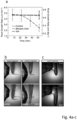
- Fig. 4 shows an OEIP-mediated root growth inhibition by auxin. Bright field images at different time intervals during continuous OEIP delivery of IAA. The position of the 25 ⁇ m wide polyelectrolyte channel is highlighted in green.
- Fig. 4b shows the reduction in growth rate can be observed during delivery of IAA compared to benzoic acid negative control over the same time interval. Start and end root tip positions are indicated with blue dashed lines, image area matching 5b highlighted.
- Fig. 4c DR5 seedlings with image area matching Fig 5c highlighted. Scale bar 250 ⁇ m.
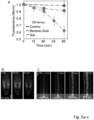
- Fig. 5 illustrates the imaging of OEIP-induced auxin responses.
- Fig. 5b shows the confocal fluorescent image sequence of the root tip of DII-Venus reporter seedling at intervals 0, 30, 60 min.
- Fig. 5c shows the confocal fluorescent image sequence of the elongation zone of DR5rev::GFP reporter seedlings at intervals 0, 1, 2, and 3 h. Image intensities were summed from 16 z-stack layers with 3 ⁇ m spacing. Lateral fluorescent intensity across the root elongation zone is summed vertically, normalized and superimposed. Scale bars, 50 ⁇ m. Images are representative of five roots treated.
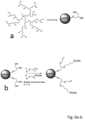
- Fig. 6 illustrates the synthetic method for achieving one example of a hyperbranched polymer.
- the hyperbranched polymer is a dendritic hyperbranched polyglycerols (dPG).
- the dPG is marked HBPG (hyperbranched polyglycerol).
- the synthetic route to dPGs having negative (anionic), sulfonic acid, and allyl groups for cross-linking is outlined in Fig. 6 .
- the density of stationary ionic and cross-linking points in dPG's are controlled by the degree of substitution for the appropriate groups.
- the process for formation of the crosslinked dPGs is also crucial.
- Fig. 6a illustrates the schematics over the core material used in the synthesis, dendritic hyperbranched polyglycerol of molecular weight 10 kDa.
- Fig. 6b illustrates the schematics over the synthesis of the functionalized dPGs with allyl- and sulfonate groups.
- Hyperbranched polymers 23 were investigated as the foundation for a new class of polyelectrolyte materials.
- Hyperbranched polymers are generally spherical and possess a high number of terminal functional groups that define their customizable physio-chemical properties 24 .
- Hyperbranched polymers based on homogenous, flexible polyether alcohols e.g., dendritic hyperbranched polyglycerols, dPGs
- dPG-based polyelectrolytes enable processing from a "one-pot" 3-component mixture of synthesized dPG, crosslinker, and photoinitiator dissolved in methanol.
- One-pot mixing enables a homogeneous distribution of bulk charge and crosslinking in the membrane, and further offers a high degree of compatibility with a variety of patterning processes such as printing or lithographic techniques.
- OEIP devices were prepared by photolithographic patterning of the cationically-functionalized dPG film (2 ⁇ m thick) on a flexible PET plastic substrate. The shape and dimensions of the resulting OEIP device structure are illustrated and pictured in Fig 1a ,c.
- Mass spectrometry was used to quantify the capability of dPG-based OEIPs to transport IAA.
- IAA played the dual role biologically-relevant plant hormone and model aromatic substance.
- the OEIP was operated continuously at 1 ⁇ A and samples were collected in 15 min intervals for 135 min.
- Fig 2 shows the summed amounts of measured IAA vs. time. Under these conditions, OEIP operation was observed to achieve an averaged IAA delivery rate of 0.45 ⁇ 0.16 pmol min -1 , corresponding to nanomolar concentrations in close proximity to the delivery tip. For example, 10 pmol of IAA delivered to a 50 ⁇ l volume corresponds to a concentration of 200 nM in 15 min.
- oxIAA 2-oxindole-3-acetic acid
- the dPG-based OEIPs were used for in vivo experiments on a highly accessible model plant system suitable for live-cell imaging in the intact organism. Specifically, the apical root meristem and early elongation zone of four-day-old Arabidoposis thaliana seedlings positioned on agar gel were targeted for delivery of IAA via the OEIP. Root tips were monitored using a horizontally oriented Nikon AZ100 spectral macro-confocal laser-scanning microscope system schematically illustrated in Fig. 3a . In this arrangement, seedlings were positioned and imaged vertically.
- Root growth was used as a rapidly accessible parameter to demonstrate the physiological activity of OEIP delivered IAA. It is well established that increased levels of IAA inhibit root growth 26,28 . As a negative control, benzoic acid 29 was delivered by the OEIP device, operated in the same configuration.
- Figure 4b shows bright field images taken of the OEIP device and seedling root tips at the beginning, and after 60 min, of delivery of IAA or benzoic acid. Root tip position was measured at 15-min intervals and averaged over 5 trials, and the growth rate of roots targeted with IAA was compared to benzoic acid negative control and non-targeted A. thaliana seedlings. For seedlings targeted with IAA, a rapid decrease in growth rate was observed starting at 15 min of delivery, from 4.7 ⁇ 1.0 ⁇ m min -1 to 2.4 ⁇ 0.7 ⁇ m min -1 after 60 min, while both benzoic acid and non-targeted control seedlings maintained their growth rates ( Fig. 4a ). The reduction in growth rate of plant seedlings by delivery of IAA via the OEIP is consistent with previous findings on exogenous application of IAA 26 .
- thaliana lines were utilized expressing the semi-quantitative DII-Venus 30 or DR5rev::GFP 31 fluorescent auxin-response reporters, both of which are dynamically sensitive to the presence of IAA.
- the DII-Venus reporter is characterized by absence or reduction in fluorescent signal intensity in the presence of auxin or increasing auxin levels, respectively.
- the presence or gain of fluorescent signal intensity indicates presence or increase of auxin concentrations, respectively.
- the relative auxin abundance is visualized faster by DII-Venus than by DR5 29 , because the DII-Venus signal relies on a protein degradation mechanism rather than the slower transcriptional and translational production mechanisms of DR5.
- the dPG-based OEIP was used to target the elongation zone of DR5rev::GFP reporter seedlings with IAA.
- Confocal images of the root elongation zone cells revealed the onset of fluorescence in plant tissues after 1 hour and the signal continued to increase between 2 and 3 hours ( Fig 5c ). From the image sequence and lateral intensity profile, significant variation in the lateral fluorescent intensity can be observed - with cells on the left side (OEIP side) of the root being brighter than those on the right. Roots targeted with the control molecule benzoic acid, did not display alterations in fluorescent intensity of the DR5 reporter.
- fabricated organic electronic devices were fabricated from a newly developed hyperbranched dendritic core-shell polyelectrolyte system that addresses many of the previous limitations of OEIPs and other "iontronic" technologies.
- the hyperbranched dendritic polyglycerols (dPG) polyelectrolyte system overcomes the limited control of material parameters such as porosity, swelling, and process-ability.
- the resulting dPG-based OEIP devices were used to demonstrate delivery of the aromatic plant signaling hormone IAA auxin to elicit rapid physiological changes in developing Arabidopsis thaliana roots. Further, the induction of dynamic auxin-response alterations measured by two different fluorescent auxin reporters in transgenic A. thaliana seedlings was demonstrated.
- the aromatic delivery capability of the dPG-based OEIP devices was also verified with the synthetic auxin analog 1-NAA.
- plant hormones such as abscisic acid, brassinosteroids, gibberellins, and cytokinins all include cyclic or aromatic molecular structures
- this work provides the foundation for organic electronic devices that interact with plants' fundamental chemical signaling systems with unprecedented spatial and temporal resolution.
- This technology will be used to test a range of previously known bioactive molecules and observe their effect on plant growth and behavior at previously unattainable length and time scales.
- This new technology is anticipated to be the starting point for more sophisticated tools to precisely regulate the chemical signaling networks in - and between - living plants and other living systems.
- the disclosure provides a method for manufacturing an ion-conducting membrane filled with crosslinked hyperbranched polymer electrolytes, which may comprise the steps of:
- One method for forming the crosslinked hyperbranched polymer is through a photo-initiated radical coupling, preferably in inert atmosphere to generate stable covalent groups forming the membrane/gels.
- the general method may then comprise the steps of:
- the disclosure provides a method for manufacturing an ion-conducting membrane filled with crosslinked hyperbranched polymer electrolytes, comprising the steps of: (A) mixing the hyperbranched polymer comprised with chemical formula 1, 2, 3, a solvent, which may be deionized water, methanol, ethanol, propanol, NMP, DMSO, DMF; (B) mixing 0.1 to 10 parts by weight of a photoinitiator and crosslinker with respect to 100 parts by weight of the mixed solution; (C) deposit a support with support with the solution; (D) crosslinking an electrolyte-membrane support by coating the electrolyte-membrane on a polyethylelenterephthalate (PET) film and irradiating the electrolyte-membrane with ultraviolet rays at an intensity of 30 to 150 mJ/cm2 ; and (E), removing any byproducts present on the surface of the membrane, support after the crosslinking step.
- a solvent which may
- the hyperbranched polymer may for instance be a so called dendritic hyperbranched polyglycerol (dPG).
- dPG dendritic hyperbranched polyglycerol
- the photoinitiator may for instance be Thiocure 1300 and the crosslinker may for instance be Irgacure 2959. This means that thorugh the inventive method, and a so called “one-pot 3-component mixture" an OEIP canbe very easily manufactured. The need for subsequent treatments before use, is very limited if at all required.
- the primary advantages of the proposed concept/s over existing materials are simplicity, potential for low-cost devices and tuneable sensitivity of material properties.
- the main application for the functionalized dPG membranes are drug-delivery, where bio-active molecules are delivered by OEIP (electrophoretic) selective transport.
- the second advantage is the one-pot 3-component mixture itself.
- the mixture, dPGs:Irgacure:Thiocure, in water or methanol, is easily to deposited on many types of surfaces, more importantly, with a homogenic bulk of charge and crosslinks after UV-Curing.
- the disclosure further provides in the alternative a method for manufacturing a meta-stabel gel or aggregates in a solution, comprising the crosslinked hyperbranched polymer electrolytes, which may comprise the steps of:
- the step e) of allowing said hyperbranched polymer, said cross-linking agent and said initator in said reagent solution to react with each other may be performed in a reaction container which is degassed and heated for a specific time.
- a dendrolyte may thus be added to a container solution, wherein the solution may be any one of water, alcohols, DMSO, DMF, together with a crosslinker.
- the crosslinker or crosslinkers may be any molecule having a linear or branched structure, containing two or more functional groups, capable of radical or chemical reactions with the defined dendrolyte. Examples are allyl, acrolyte ones, sulfur based ones "thiocure” or amine ones “diaminbutan (DAB) and a radical initiator.
- the reaction container is degassed and heated for a specific time. After all reactants have reacted, the excess solvent is removed, and the product isolated as a gel.
- the purified gel may then be used as active ion-selective membranes for electrophoretic ion-pumps.
- the meta-stable gel or network may thus be shifted into a more stable solid gel, i.e. through a concentration increase of the super-molecular network.
- the ion conducting membrane filled with crosslinked hyperbranched polymer electrolytes or the solution comprising the cross-linked hyperbranched polymer according to the present disclosure can be used widely in the industrial field of fuel cells, electrophoresis, microfluidics, bio-printing.
- Synthesis of polyelectrolytes having polymerizable groups is generally complicated. Direct polymerization to form a polymer having polymerizable groups requires monomers having two different types of polymerizable groups, one forming the polymer, and the other type not taking part in the polymerization reaction, but remaining unreacted for later cross-linking. This requires a high selectivity of polymerizability between the groups, or the use of different types of polymerizing groups. Molecules having both acrylic groups and epoxide groups is a common example of monomers that can form a polymer having polymerizable groups. However, epoxide polymerization is not suited in the presence of ionic groups, such as in a polyelectrolyte.
- Dendrimers consisting of ether bonds, and having hydroxyl terminal groups are on the other hand soluble in solvents suitable for a wide range of substitution reactions, in contrast to unbranched poymers having hydroxyl groups.
- the latter type of polymers are difficult to dissolve in other media than water or strong acids, media in which substitution reactions leading to polymerizable groups are difficult to carry out, while hydroxyl-terminated dendrimers can be dissolved in a variety of solvents.
- the ion transport medium can be exposed to extreme pH values. This calls for the use of polymers and cross-links of made up of bond that are stable to hydrolysis. We have used dendrimers built up of ether bonds and cross-linking reactions leading to carbon-carbon bonds to ensure that the ion-transport medium is not hydrolyzed under conditions of ion-pumping.
- Molecules that have been successivefully pumped using the above described polyelctolyte as an ion conductive channel or membrane in an ion pump device are monavalent or divalent atomic ions such as H+, Na+, K+ and Cl-.
- Aromatic molecules molecules such as indole-3-acetic-acid (IAA, auxin), plant hormone, 1-naphthaleneacetic acid (1-NAA), plant hormone analog, naphthalene-2-acetic acid (2-NAA), plant hormone analog, benzoic acid, aromatic control substance, cytokinin, and plant hormone.
- dPG Hyperbranched dendritic polyglycerol
- Circular polyethylene terephthalate (PET) substrates (Policrom Screens) with diameter 101.6 mm (4 inch) were washed with acetone and water and subsequently dried at 110 °C for 10 min before they were treated with 0 2 plasma (150 W, 60 s).
- the activated substrates were spin-coated with a 2 mL solution of 5% (3-glycidyloxypropyl)trimethoxysilane (GOPS, Alfa Aesar) in water at 500 rpm for 30 s and allowed to rest in open air for 15 min.
- the surfaces were washed with ethanol (EtOH) and dried at 110 °C for 10 min.
- Treated surfaces were spin-coated with 2 ml MeOH stock solution containing 264 mg of dPG (compound 4 in Supplementary Information), 18 mg Thiocure 1300 (Bruno Bock Chemische Fabrik GmbH & Co) and 18 mg Irgacure 2959 (Sigma-Aldrich).
- UV crosslinking was carried out under nitrogen atmosphere inside a glove box and the films were exposed to UV light (254 nm) for 10 min.
- Ion channels were patterned utilizing photolithography of Microposit S1818 photoresist, and developed for 60 s in MF319 (both supplied by Shipley). Unpatterened, crosslinked dPG polymer was removed utilizing a CF 4 + O 2 reactive ion etch (150 W, 90 s) and remaining photoresist was removed with acetone. To facilitate ion exchange, patterned wafers were soaked in 1 M NaCl(aq) for 5 min. OEIPs were encapsulated with 2x 10 ⁇ m bar-coated DuPont 5018 UV curing ink. Individual OEIP devices were cut out and packaged in ADW-400 heat shrink tubing containing sealant glue (Kacab Teknik AB). The OEIP delivery tips were shaped by hand using a scalpel.
- OEIP devices were soaked and stored in deionized water prior to use. Additionally, to reduce the amount of unreacted polymers and chemical compounds remaining in the polyelectrolyte after the above processing steps, OEIP devices were preconditioned by operating the device with 0.1 M KCl(aq) in both the target and source reservoirs. Following the KCl flushing, OEIP devices underwent a loading phase to exchange the Cl - ions in the polyelectrolyte with IAA - , OEIPs were operated continuously at 250 nA until steady voltage characteristics were observed (approximately 12 h).
- Arabidopsis thaliana seedlings expressing the auxin-responsive fluorescent markers 35S::DII-Venus 30 or DR5rev::GFP 31 were used to monitor the response of IAA delivered via OEIP.
- seeds of both genotypes and wild-type Col-0 were surface sterilized with 70% ethanol for 1 min, incubated in pool cleaner (Biltema, Sweden; one tablet per 2000 ml H 2 O) for 12 min, and washed four times with sterile, distilled water (dH 2 O).
- MS Murashige and Skoog
- MES 2-(N-morpholino)ethanesulfonic acid
- dpg 4 days post-germination
- a custom reoriented macro confocal laser-scanning microscope with a vertical stage was used to acquire images (Bergman-Labora, Sweden).
- the macro confocal consisted of a horizontally placed AZ100 macroscope (Nikon, Japan) adapted with a specially built XYZ motorized stage (Prior Scientific fitted by Bergman-Labora) and supplied with diascopic white light and episcopic fluorescence light (Nikon).
- a climate enclosure with passive humidification was designed to surround the stage area to keep plants in a humid, dark environment.
- the AZ100 macroscope was connected to a C2+ confocal laser scanning system (Nikon) equipped with lasers for 405 nm, 457/488/514 nm and 561 nm excitation and a transmitted light detector.
- a coarse manipulator, MM-89 (Narishige, Japan), was attached to the stage for placing and keeping the OEIP at a specific position.
- a growth agar plate from which the lid was removed was placed vertically on the macroconfocal stage and an OEIP loaded with IAA was placed with the delivery outlet in the growth agar in close proximity of the seedlings.
- the OEIPs were operated in a target solution of 10 -5 M KCl(aq), and the OEIP device tip was kept from drying excessively during sample loading and OEIP positioning.
- a Keithley 2612b SourceMeter Kelten Instruments Inc, Cleveland, OH, USA
- custom LabVIEW National Instruments Corporation, Austin, TX, USA
- the OEIP device was turned on immediately prior to the first imaging sequence and operated at a constant electrical current of 1 ⁇ A.
- the OEIP delivery tip was submerged in the MS media in close proximity (100 - 200 ⁇ m) to the root epidermal tissue ( Fig. 3 b , c ) and was held at a fixed position in the growth MS media for the duration of each trial.
- the OEIP reservoir was loaded with 80 ⁇ L of 10% methanol in dH 2 O containing IAA at 10 -5 M concentration.
- OEIP outlet tip was submerged in target solution of 50 ⁇ L of 1/2 MS Media, pH 5.7 (see Plant growth conditions) without agar, and containing 0.01 M KCl.
- Poly(3,4-ethylenedioxythiophene) polystyrene sulfonate (PEDOT:PSS) electrodes on a polyethylene terephthalate (PET) substrate (cut from Orgacon F-350 film, AGFA-Gevaert) were used in the source reservoir and the target solution.
- OEIP pump was operated sourcing a constant current of 1 ⁇ A using a Keithley 2612b SourceMeter and custom LabVIEW software.
- the target solution was collected and replaced with fresh solution every 15 minutes - at time intervals of 15, 30, 45, 60, 75, 90, 105, 120 and 135 minutes. In-between the analyses, the pump was washed with methanol/dH 2 O and stored in dH 2 O. This was repeated five times with the same pump.
- IAA analysis was performed. Briefly, 20 ⁇ L from each target solution was mixed with 500 ⁇ L of dH 2 O and purified by solid phase-extraction (SPE) using hydrophilic-lipophilic balance reversed-phase sorbent columns (Oasis HLB; 1 cc/30 mg; Waters, Milford, MA, USA). Prior to purification, 4 pmol of [ 13 C 6 ]-IAA and 4 pmol of [ 13 C 6 ]-oxIAA were added to each sample as internal standards to validate the quantification.
- SPE solid phase-extraction
- LC-MRM-MS liquid chromatography-multiple reaction monitoring-mass spectrometry
- the LC-MS system consisted of 1290 Infinity Binary LC System coupled to 6490 Triple Quad LC/MS System with Jet Stream and Dual Ion Funnel technologies (Agilent Technologies, Santa Clara, CA, USA). Chromatograms were analyzed using MASSHUNTER software version B.05.02 (Agilent Technologies). A Milli-Q deionization unit (Millipore, France) was used for preparation of the purified water for mobile phases and solutions. [ 13 C 6 ]-oxIAA was obtained from Olchemim Ltd (http://www.olchemim.cz/). All other chromatographic solvents and chemicals were of analytical grade or higher purity from Sigma-Aldrich Chemie GmbH (Steinheim, Germany).
Landscapes
- Chemical & Material Sciences (AREA)
- Health & Medical Sciences (AREA)
- Life Sciences & Earth Sciences (AREA)
- Chemical Kinetics & Catalysis (AREA)
- Engineering & Computer Science (AREA)
- Molecular Biology (AREA)
- Medicinal Chemistry (AREA)
- Polymers & Plastics (AREA)
- Organic Chemistry (AREA)
- General Health & Medical Sciences (AREA)
- Manufacturing & Machinery (AREA)
- General Physics & Mathematics (AREA)
- Biochemistry (AREA)
- Analytical Chemistry (AREA)
- Physics & Mathematics (AREA)
- Immunology (AREA)
- Pathology (AREA)
- Electrochemistry (AREA)
- Materials Engineering (AREA)
- Inorganic Chemistry (AREA)
- Nuclear Medicine, Radiotherapy & Molecular Imaging (AREA)
- Radiology & Medical Imaging (AREA)
- Animal Behavior & Ethology (AREA)
- Public Health (AREA)
- Veterinary Medicine (AREA)
- Biomedical Technology (AREA)
- Dispersion Chemistry (AREA)
- Bioinformatics & Cheminformatics (AREA)
- Addition Polymer Or Copolymer, Post-Treatments, Or Chemical Modifications (AREA)
- Medicinal Preparation (AREA)
- Peptides Or Proteins (AREA)
Description
- The present disclosure relates to a device for transport of ions and/or charged molecules between a source and a target electrolyte comprising a polyelectrolyte. The present disclosure further relates to a method for preparing a polyelectrolyte.
- In recent years, a range of organic electronic tools has been developed1-4 which enable precise dynamic delivery of small ionic molecules.
- Ion-selective electrophoretic delivery so called "ion-pumping", i.e. migration of ions through a charged membrane/gel by an electric field, is now a proven method for delivery of small molecular ions with electronic precision, as well as a good spatial and temporal control of delivery.
- The organic electronic ionic pump (OEIP) is one of these technologies and was developed primarily for application to mammalian systems to enable diffusive synapse-like delivery of neurosignaling compounds (alkali ions, neurotransmitters) with high spatiotemporal resolution. Recently, OEIP devices have been demonstrated for a variety of in vitro5,6 as well as in vivo applications7, including therapy in awake animals8. OEIPs are electrophoretic delivery devices that leverage the unique ionic and electronic properties of conducting polymers and polyelectrolytes to convert electronic signals into ionic fluxes. The OEIP's polymer delivery channel (i.e., electrophoresis channel) is composed of a polycationic (or polyanionic) material with a high density of fixed charge groups that allows for the selective transport of anions (or cations). The electrophoretic transport utilized by OEIP devices is flow-free - only the intended molecules are delivered to the target region, not additional liquid or oppositely charged counter-ions that may be present in the source solution. The selective electrophoretic transport of the desired molecular species through an OEIP device results in high concentration gradients localized at the OEIP outlet6, on the scale of ~100 µm - 1 mm. Additionally, electronic addressing to the OEIP enables the molecular delivery to be rapidly switched on and off, and importantly, the electrical driving current can be directly correlated with the ionic delivery rate. These device characteristics allow for the precise control of chemical concentration gradients with high spatial and temporal resolution.
-
EP 1 862 799 B1 - Another route to cross-linked networks, with ionic groups, is to copolymerize ionic monomers with di-functional monomers. One drawback with that route is that unreacted monomers left in the network must be removed, otherwise, ion-selectivity is lost. Post-functionalization of polyelectrolytes is a possibility, but limited by the poor solubility in solvents suitable for functionalization; polyelectrolytes are typically only soluble in water. The number of available polyelectrolyte materials suitable for OEIP device technologies is limited. It is therefore a wish for improving the current state of the art.
- It is an object of the present invention to improve the current state of the art and to mitigate at least some of the above mentioned problems. These and other objects are achieved by a device for transport of ions and/or charged molecules.
- The invention is defined by the appended independent claim.
- According to a first aspect of the present invention there is provided a device for transport of ions and/or charged molecules between a source and a target electrolyte, comprising: a first electrode provided at or in said source electrolyte, and a second electrode provided at or in said target electrolyte; and wherein said first and second electrodes provides an electrical control of an ion flow, and further comprising means for limiting an electronic current between said source and said target electrodes, such that at least after a voltage is applied a potential difference between said source and target electrodes is maintained, which effects ion transport from said source to said target electrode; wherein the device further comprises an ion- and/or permselective polyelectrolyte for transport ions and/or charged molecules via electrophoresis and functions as an ion-selective membrane; and wherein said polyelectrolyte comprises a cross-linked hyperbranched polymer. Said hyperbranched polymer has polymerizable groups and groups that are ionic or ionizable, and comprises
chemical formulas 
chemical formulas - The present invention is based on the realization of transporting larger ions and/or charged molecules. This is realized by the use of cross-linked hyperbranched polymers. Fundamental limitations of previous devices for transporting ions and/or charged molecules can be addressed and overcome by the means of the present invention, such as swelling and rigidity of the polymer network which can be controlled by cross-linking; and transport of "larger" or reactive aromatic substances can be facilitated by tuning the void fraction distribution and effective porosity of the bulk. Example of such a device is an organic electronic ion pump (OEIP). In this application oranic electronic ion pump as well as the abbrivation OEIP will be used interchangebly with device for transporting ions and/or charged molecules.
- The linear polymers which are traditionally used for this kind of devices results in a tighter network as compared with the now discovered hyperbranched polymer. The tighter network results in small porous pathways and thus trough the ion-selective membrane. Hence, this type of polymers results in an ion-selective membrane that works only for smaller molecules. Moreover, the more traditional linear polymers are harder to functionalize and most often post-functionalization has to be used which results in the charges just being distributed over the surface of the network and not evenly distributed throughout the bulk.
- According to at least one example embodiment of the invention hyperbranched polymers are highly branched three-dimensional (3D) macromolecules. Their spherical architectures give them unique properties such as intramolecular cavities, low viscosity and/or high solubility. Moreover, they can be equipped with plenty of functionalized groups. The cross-linked hyperbranched polymer provides large porous pathways in and through the polyelectrolyte due to their intermolecular cavities and thus through the ion-selective membrane. Crosslinking large "spherical" hyperbranched bearing crosslinkable and ionic groups, resulting in membranes and/or gels that have controllable selectivity and large porous pathways. This means that it is possible to transport larger molecules, for instance larger drug molecules such as phospholipids. The polyelectrolyte has a homogenously distributed charge. The high solubility of the hyperbranched molecules is due to their amphiphilic character.
- The charges are more homogeneously spread throughout the polyelectrolyte and thereby it is possible to reduce the current needed for transporting ions trough the material as compared with the conventional OEIP. Hence, the device also provides for way of transporting smaller molecules in a more lenient manner. By avoiding large currents being used, side-reactions usually connected with these, such as water-splitting, can be avoided. Moreover, the reduced amount of current needed reduces the risk heating water. Too warm condition may cause unwished crystallization within the membrane.
- The hyperbranched polymer comprises
chemical formulas 
chemical formulas - The hyperbranched polymer may be functionalized with ketone-, aldehyde-, alcohol- and/or iminegroups.
- The wide variety of groups which may be used for functionalization of the hyperbranched polymer enables for a variety of properties of the material itself.
- The hyperbranched polymer may have a degree of branching of 0,05-1 or a degree of branching of 0,2-0,9, or a degree of branching of 0,3-0,8, or a degree of branching of 0,4-0,8.
- The degree of branching of a linear polymer would be 0. A degree of branching of 1 corresponds to a dendrimer. The properties of a hyperbranched polymer with a high degree of branching are similar to the properties of a dendrimer.
- The hyperbranched polymer may be a hyperbranched polyglycerol.
- Polyglycerol is a very cheap hyperbranched molecule which therefore makes it the most frequently used alternative. The monomer used for the synthesis, glycerol, is an easily achieved triol used in a variety of applications.
- The molecules being pumped or transported in the device may be any one of monovalent and divalent atomic ions, multivalent biomolecules, charged aromatic molecules, and nonaromatic molecules.
- As an example of mono- and di-valent atomic ions is Na+, Cl-. As an example of nonaromatic molecules is acetylcholine, and aromatic molecules may be for instance benzoic acid molecules. The substances or molecules being transported in the device may comprise both endogenous and synthetic substances, such as drugs. Some examples of endogenous molecules that may be transported include neurotransmitters such as gamma-aminobutyric acid (GABA) and dopamine. The molecules that may be pumped or transported through the membrane are thus molecules that are larger than what has previously been possible in the known OPEIPs.
- According to at least one the device may be used for transporting auxin and/or phospholipids.
- According to an aspect (not encompassed by the wording of the claims) there is provided a method for preparing a polyelectrolyte for a device, for transport of ions and/or charged molecules between a source and a target electrolyte comprising the steps of
- i) providing a solution comprising a hyperbranched polymer having having polymerizable groups and groups that are ionic or ionizable,
- ii) depositing said solution on a support; and
- iii) crosslinking said hyperbranched polymer.
- Effects and features of a second aspect of the present invention are largely analogous to those described above in connection with the first aspect of the inventive concept. Embodiments mentioned in relation to the first aspect of the present invention are largely compatible with the second aspect of the invention.
- According to the second aspect there is further provided a method for preparing a polyelectrolyte for a device according to the first aspect for transport of ions and/or charged molecules between a source and a target electrolyte comprising the steps of
- i) providing a solution with a hyperbranched polymer having polymerizable groups and groups that are ionic or ionizable and a solvent, wherein the hyperbranched polymer comprises
chemical formulas 
chemical formulas - ii) mixing a photoinitiator and crosslinker with said solution;
- iii) depositing a support with said mixture;
- iv) photo-induced curing of the deposited mixture for crosslinking of the hyperbranched polymer.
- The preparation of a polyelectrolyte may thus be done as a so called "one-
pot 3 component synthesis". This means that the hyperbranched polymer, the cross-linker and the photo-initiator are mixed in one solvent. This is being made possible by the solubility properties of the hyperbranched polymer. The one-pot synthesis facilitates the preparation of the polyelectrolyte and the productio of the device, since the polyeelctrolyte may be placed directly onto a support and then crosslinked without the necessity for further treatment steps. After the crosslink step any by products may be removed on the surface of the membrane and support. The ion conductive membrane thus filled or formed from the crosslinked hyperbranched polymer polyeelectrolyte can be used in a variety of applications such as for fuel cells, electrophoresis, in microfluidics and in bio-printing. - According to at least one example, the method for preparing the polyelectrolyte may be divided into three steps:
The first step (i) of the polyelectrolyte is a so called one-pot synthesis. This is enabled due the amphiphilic character of the hyperbranched polymer which makes it easy to dissolve in a variety of solvents. The three components, the hyperbranched polymer, the cross-linker and the photo-initiator is mixed together before deposition of the mixture. This enables a homogeneous distribution of bulk charges. - In a following step (ii) the mixture from step i) is deposited. The one-pot synthesis as well as the amphiphilic character of the hyperbranched polymer offers a high degree of compatibility with a variety of deposition and patterning processes. The deposition method used for the preparation of the polyelectrolyte may for example be spin-coating, printing and/or any other solution based method.
- After deposition the mixture will be photo-induced cured (iii). This curing may for example UV-curing.
- According to an alternative there is provided a method for preparing a polyelectrolyte for a device according to the first aspect, for transport of ions and/or charged molecules between a source and a target electrolyte, comprising the steps of
- a) providing a hyperbranched polymer having polymerizable groups and groups that are ionic or ionizable, wherein the hyperbranched polymer comprises
chemical formulas 
chemical formulas - b) adding a cross-linking agent to said hyperbranched polymer;
- c) adding an initiator to hyperbranched polymer and said cross-linking agent;
- d) dissolving said hyperbranched polymer, said cross-linking agent and said initiator in a solvent solution thereby forming a reagent solution;
- e) allowing said hyperbranched polymer, said cross-linking agent and said initiator in said reagent solution to react with each other thereby forming a solution comprising said cross-linked hyperbranched polymer.
- In the step e) of allowing said hyperbranched polymer, said cross-linking agent and said initiator in said reagent solution to react with each other, this is performed in a reaction container which is degassed and heated for a specific time.
- Through this alternative method a meta-stable gels or aggregates in solution may be provided that solidifies into a solid gel upon specific concentration limits.
- The hyperbranched polymer may have a degree of branching in the range of 0,05-1 or in the range of 0,1 to 1, or in the range of 0,5 to 1, or in the range of 0,7 to 1.
- The method according to any one of the above methods, wherein the hyperbranched polymer comprises
chemical formulas 
chemical formulas - The solvent may be any one of deionozed water, methanol, ethano, propanol, NMP, DMSO and DMF.
- According to the second aspect, the proprotion of said photoinitiator and said crosslinker in step (ii) may be in the range of 0.1 to 10 parts by weight with respect to 100 parts by weight of said mixed solution.
- According to a third aspect there is provided a device according to the first aspect for transport of ions and/or charged molecules between a source and a target electrolyte, wherein said device comprises a polyelectrolyte and wherein said polyelectrolyte is synthesized according to the second aspect, and wherein said polyelectrolyte is able to transport ions and/or charged molecules via electrophoresis.
- Effects and features of this third aspect of the present invention are largely analogous to those described above in connection with the first and second aspects of the inventive concept. Embodiments mentioned in relation to the first and second aspects of the present invention are largely compatible with the third aspect of the invention.
- According to a fourth aspect there is provided the use of a device according to the first aspect or the third aspect for drug delivery.
- The above objects, as well as additional objects, features and advantages of the present invention, will be more fully appreciated by reference to the following illustrative and non-limiting detailed description of preferred embodiments of the present invention, when taken in conjunction with the accompanying drawings, wherein:
-
Fig. 1 shows schematic diagrams representing different features of the invention in accordance with at least one embodiment of the invention; -
Fig. 2 shows a diagram of the total OEIP-delivered auxin as a function of time in accordance with at least one embodiment of the invention; -
Fig. 3 shows an in vivo set-up at seedling roots and mounting on vertical macroscope stage in accordance with at least one embodiment of the invention; -
Fig. 4 shows OEIP-mediated root growth in accordance with at least one embodiment of the invention; -
Fig. 5 shows imaging of OEIP-induced auxin responses in accordance with at least one embodiment of the invention. -
Fig. 6 shows a schematic scheme for the synthesis of the hyperbranched polymer in accordance with at least one embodiment of the invention. - In the present detailed description, embodiments of the present invention will be discussed with the accompanying figures. It should be noted that this is also applicable in other circumstances for instance with other types or variants of devices for transporting ions and/or charged molecules than the embodiments shown in the appended drawings. Further, that specific features are mentioned in connection to an embodiment of the dislosure does not mean that those components cannot be used to an advantage together with other embodiments of the dislosure. The embodiments described below are merely examples of possible device architectures and the present invention should not be limited thereto. The scope of the invention is as defined by the appended claims. The term "ion" as used herein encompasses not only positively or negatively charged monovalent or multivalent ionic species of atomic elements, but also other molecular species carrying a net positive or negative charge. Hence, in an embodiment of the disclosure it is intended to transport charged biologically active molecules or macromolecules such as charged amino acids, DNA, DNA sequences/fragments or plasmids, proteins, vitamins, peptides or hormones. In one embodiment of the dislosure, the ions that may be transported are cations, for example metal ions, such as potassium or calcium ions. In another embodiment of the disclosure the ions that may be transported are anions. The transported "ions" may act as stimuli for the cells. These stimuli may turn on a cellular process or turn off a cellular process, or act as an inhibitor. A non-limiting example is potassium which may act as stimuli for neuronal cells by opening the voltage-operated Ca2+ channels in the cell membrane. A non-limiting example of an inhibitor may be cadmium which may block the voltage-operated Ca2+ channels in the cell membrane. The term ion also encompasses species that may be charged by setting a certain pH of the electrolyte solution or channel. The pH needed to charge these species may be calculated from the pKa of these molecules. The term ion also encompasses molecules which may be chemically modified to obtain a net charge, e.g. by attaching an ion to them. ion-conductive channel used in the disclosure is made of a solid or semi-solid material which is able to conduct ions. According to one embodiment of the disclosure the ion-conductive channel may be essentially electronically nonconductive, i.e. the capability of conducting electrons is substantially limited. The general configuration of an organic electronic ion pump (OEIP) has been described in the art. In for instance
EP2232260B1 a general description of the production and the configuration of an OEIP is provided. The substrate onto which the OEIP may be placed, or printed i.e. be fabricated preferably is electrically and ionically insulating and may comprise rigid materials such as Si wafers with an insulating oxide (SiOx) or nitride layer (Si3N4), glass wafers such as pyrex wafers, glass substrates, such as microscope slides, plastic substrates such as PET, polystyrene, used in petridishes, and ceramics. The substrates may also be flexible such as plastic films, Orgacon films (both plastic and paper), or paper based materials. The ion transport device according to the disclosure is also particularly advantageous in that it can be easily realized on a support, such as polymer film or paper. Thus, the different components can be deposited on the support by means of conventional printing techniques such as screen printing, offset printing, gravure printing, ink-jet printing and flexographic printing, or coating techniques such as knife coating, doctor blade coating, extrusion coating and curtain coating. The ion-conductive channel or membrane (ion channel), may thus be deposited through in situ polymerization and crosslinking. An aspect of the disclosure provides such processes for the manufacture of an ion transport device from the materials specified herein. The device, comprising electrodes and the ion conductive membrane may be directly or indirectly attached to a solid support such as glass or to a flexible support such as polymer film or paper. The ion transport device according to the disclosure may preferably be encapsulated, in part or entirely, for protection of the device. The device according to the disclosure may also present further features, which facilitate use of the device. Such features include for example terminals for connecting a voltage source to the electrodes of the device, means for encapsulating the device in order to make it more robust to handling, and to prevent evaporation or contamination of liquid electrolytes. The general configuration of an OEIP as described in for instanceEP2232260 may be used also for the production and configuration of a device according to the present disclosure. Below is described a number of embodiments comprising the hyperbranched polymer having polymerizable groups and groups that are ionic or ionizable, wherein the hyperbranched polymer is crosslinked, and forming a polyelectrolyte for the delivery of different molecules such as drugs. -
Fig. 1 illustrates a design of an organic electronic ion pump (OEIP) delivering auxin in vitro.Fig. 1a is a schematic diagrams of a OEIP device materials and geometries.Fig. 1b is a schematic diagram of a conceptualization of the cationic dendric polyglycerol polyelectrolyte membrane. Anionic species such as auxin indole-3-acetic acid (IAA) are selectively transported and migrate through the ion conducting channel in proportion to the applied potential gradient.Fig. 1c is a photograph of the fully fabricated OEIP device.Fig. 1d illustrates dendric polyglycerol -based polyelectrolyte system showing crosslinking (green), terminal groups (orange), and positive charge functionalization (blue). -
Fig. 2 illustrates the IAA delivered via OEIP. Total (summed) OEIP-delivered auxin vs time, e.g., 30 min time-point is sum of 15 min measurement plus 30 min measurement (as marked by dot-lines). Error bars indicate standard deviation. -
Fig. 3 illustrates an in vivo set-up at seedling roots and mounting on vertical macroscope stage.Fig. 3a shows an OEIP mounted to a motorized micro-manipulator and A. thaliana plant seedlings positioned vertically on growth-agar plates.Fig. 3b shows an OEIP positioned in proximity to the seedling root apical meristem (AM) and elongation zone (EZ).Fig. 3c , OEIP delivery tip and root cross section shown submerged in the growth agar gel. Delivery of IAA is pictured as a diffusive concentration gradient from the OEIP delivery tip through the agar gel and exogenous to the root tissue. -
Fig. 4 shows an OEIP-mediated root growth inhibition by auxin. Bright field images at different time intervals during continuous OEIP delivery of IAA. The position of the 25 µm wide polyelectrolyte channel is highlighted in green.Fig. 4a shows the growth rate of DII-Venus root tips are plotted as a function of OEIP delivery time (Averages ± SEM from n = 5 independent treatments are displayed from a time interval of 15 min) of IAA, benzoic acid, and for non-targeted control.Fig. 4b shows the reduction in growth rate can be observed during delivery of IAA compared to benzoic acid negative control over the same time interval. Start and end root tip positions are indicated with blue dashed lines, image area matching 5b highlighted.Fig. 4c , DR5 seedlings with image area matchingFig 5c highlighted.Scale bar 250 µm. -
Fig. 5 illustrates the imaging of OEIP-induced auxin responses.Fig 5a shows the fluorescence intensity of DII-Venus reporter seedlings plotted for OEIP delivery of IAA, benzoic acid, and non-targeteted. Averages ± SEM from n = 5 independent treatments are displayed.Fig. 5b shows the confocal fluorescent image sequence of the root tip of DII-Venus reporter seedling atintervals Fig. 5c shows the confocal fluorescent image sequence of the elongation zone of DR5rev::GFP reporter seedlings atintervals -
Fig. 6 illustrates the synthetic method for achieving one example of a hyperbranched polymer. Here, the hyperbranched polymer is a dendritic hyperbranched polyglycerols (dPG). In the figure the dPG is marked HBPG (hyperbranched polyglycerol). The synthetic route to dPGs having negative (anionic), sulfonic acid, and allyl groups for cross-linking is outlined inFig. 6 . The density of stationary ionic and cross-linking points in dPG's are controlled by the degree of substitution for the appropriate groups. The process for formation of the crosslinked dPGs is also crucial. We have opted for photo-initiated radical coupling in inert atmosphere to generate stable covalent groups forming the membrane/gels. A high conversion of the cross-linking and binding to the substrate is necessary to provide the cohesive and adhesive strength of the channel to withstand the stress of exposure to lithographic process media, as well as the operation environment. -
Fig. 6a illustrates the schematics over the core material used in the synthesis, dendritic hyperbranched polyglycerol ofmolecular weight 10 kDa.Fig. 6b illustrates the schematics over the synthesis of the functionalized dPGs with allyl- and sulfonate groups. - The skilled person realizes that a number of modifications of the embodiments described herein are possible without departing from the scope of the invention, which is defined in the appended claims.
- To address the need for OEIP technologies capable of transporting larger ionic compounds, hyperbranched polymers23 were investigated as the foundation for a new class of polyelectrolyte materials. Hyperbranched polymers are generally spherical and possess a high number of terminal functional groups that define their customizable physio-chemical properties24. Hyperbranched polymers based on homogenous, flexible polyether alcohols (e.g., dendritic hyperbranched polyglycerols, dPGs), make it possible to tune the density of ionic and cross-linking groups by synthesis25. In this way, fundamental limitations of previous OEIPs can be addressed: swelling and rigidity of the polymer network can be controlled by cross-linking; and transport of "larger" or reactive aromatic substances can be facilitated by tuning the void fraction distribution and effective porosity of the bulk. Importantly, dPG-based polyelectrolytes enable processing from a "one-pot" 3-component mixture of synthesized dPG, crosslinker, and photoinitiator dissolved in methanol. One-pot mixing enables a homogeneous distribution of bulk charge and crosslinking in the membrane, and further offers a high degree of compatibility with a variety of patterning processes such as printing or lithographic techniques.
- In this work, the cross-over of molecular delivery technology to plant applications and the capability of transporting aromatic compounds enabled by the newly-developed dPG-based polyelectrolyte is also discovered,
Fig 1b ,d. OEIP devices were prepared by photolithographic patterning of the cationically-functionalized dPG film (2 µm thick) on a flexible PET plastic substrate. The shape and dimensions of the resulting OEIP device structure are illustrated and pictured inFig 1a ,c. - Mass spectrometry was used to quantify the capability of dPG-based OEIPs to transport IAA. In this regard, IAA played the dual role biologically-relevant plant hormone and model aromatic substance. The OEIP was operated continuously at 1 µA and samples were collected in 15 min intervals for 135 min.
Fig 2 shows the summed amounts of measured IAA vs. time. Under these conditions, OEIP operation was observed to achieve an averaged IAA delivery rate of 0.45±0.16 pmol min-1, corresponding to nanomolar concentrations in close proximity to the delivery tip. For example, 10 pmol of IAA delivered to a 50 µl volume corresponds to a concentration of 200 nM in 15 min. These results indicate that the cationic dPG polymer material system is capable of transporting IAA in biologically active quantities26. Trace amounts of 2-oxindole-3-acetic acid (oxIAA), a known IAA catabolite27, were also detected during mass spectrometry measurements, typically in concentrations 100 - 1 000x lower than the measured IAA. However, oxIAA has been reported to be inactive in previous bioassays27. - The dPG-based OEIPs were used for in vivo experiments on a highly accessible model plant system suitable for live-cell imaging in the intact organism. Specifically, the apical root meristem and early elongation zone of four-day-old Arabidoposis thaliana seedlings positioned on agar gel were targeted for delivery of IAA via the OEIP. Root tips were monitored using a horizontally oriented Nikon AZ100 spectral macro-confocal laser-scanning microscope system schematically illustrated in
Fig. 3a . In this arrangement, seedlings were positioned and imaged vertically. - The root apical meristem of A. thaliana seedlings with IAA (Fig. 2b,c), were targeted ising the OEIP devices. Root growth was used as a rapidly accessible parameter to demonstrate the physiological activity of OEIP delivered IAA. It is well established that increased levels of IAA inhibit root growth26,28. As a negative control, benzoic acid29 was delivered by the OEIP device, operated in the same configuration.
-
Figure 4b shows bright field images taken of the OEIP device and seedling root tips at the beginning, and after 60 min, of delivery of IAA or benzoic acid. Root tip position was measured at 15-min intervals and averaged over 5 trials, and the growth rate of roots targeted with IAA was compared to benzoic acid negative control and non-targeted A. thaliana seedlings. For seedlings targeted with IAA, a rapid decrease in growth rate was observed starting at 15 min of delivery, from 4.7±1.0 µm min-1 to 2.4±0.7 µm min-1 after 60 min, while both benzoic acid and non-targeted control seedlings maintained their growth rates (Fig. 4a ). The reduction in growth rate of plant seedlings by delivery of IAA via the OEIP is consistent with previous findings on exogenous application of IAA26. - To detect, visualize and monitor IAA delivery in near real-time, two widely used engineered transgenic A. thaliana lines were utilized expressing the semi-quantitative DII-Venus30 or DR5rev::GFP 31 fluorescent auxin-response reporters, both of which are dynamically sensitive to the presence of IAA. The DII-Venus reporter is characterized by absence or reduction in fluorescent signal intensity in the presence of auxin or increasing auxin levels, respectively. Conversely, in DR5, the presence or gain of fluorescent signal intensity indicates presence or increase of auxin concentrations, respectively. The relative auxin abundance is visualized faster by DII-Venus than by DR5 29, because the DII-Venus signal relies on a protein degradation mechanism rather than the slower transcriptional and translational production mechanisms of DR5.
- Using DII-Venus seedlings, the fluorescent signal intensity was monitored and onset of strong fluorescence reduction was observed between 30 to 60 min (
Fig. 5 a,b). Similar roots targeted with the control molecule benzoic acid preserved their fluorescence. Quantitative analyses comparing normalized fluorescent intensities of DII-Venus seedlings targeted with IAA or benzoic acid, as well as non-targeted controls, revealed a strong and significant decrease in fluorescence only after IAA delivery via the OEIP (Fig. 3b ). - In the second experiment, the dPG-based OEIP was used to target the elongation zone of DR5rev::GFP reporter seedlings with IAA. Confocal images of the root elongation zone cells revealed the onset of fluorescence in plant tissues after 1 hour and the signal continued to increase between 2 and 3 hours (
Fig 5c ). From the image sequence and lateral intensity profile, significant variation in the lateral fluorescent intensity can be observed - with cells on the left side (OEIP side) of the root being brighter than those on the right. Roots targeted with the control molecule benzoic acid, did not display alterations in fluorescent intensity of the DR5 reporter. - In this study fabricated organic electronic devices were fabricated from a newly developed hyperbranched dendritic core-shell polyelectrolyte system that addresses many of the previous limitations of OEIPs and other "iontronic" technologies. The hyperbranched dendritic polyglycerols (dPG) polyelectrolyte system overcomes the limited control of material parameters such as porosity, swelling, and process-ability. The resulting dPG-based OEIP devices were used to demonstrate delivery of the aromatic plant signaling hormone IAA auxin to elicit rapid physiological changes in developing Arabidopsis thaliana roots. Further, the induction of dynamic auxin-response alterations measured by two different fluorescent auxin reporters in transgenic A. thaliana seedlings was demonstrated. In addition to the natural auxin hormone IAA, the aromatic delivery capability of the dPG-based OEIP devices was also verified with the synthetic auxin analog 1-NAA. Given that the majority of plant hormones such as abscisic acid, brassinosteroids, gibberellins, and cytokinins all include cyclic or aromatic molecular structures, this work provides the foundation for organic electronic devices that interact with plants' fundamental chemical signaling systems with unprecedented spatial and temporal resolution. This technology will be used to test a range of previously known bioactive molecules and observe their effect on plant growth and behavior at previously unattainable length and time scales. This new technology is anticipated to be the starting point for more sophisticated tools to precisely regulate the chemical signaling networks in - and between - living plants and other living systems.
- The disclosure provides a method for manufacturing an ion-conducting membrane filled with crosslinked hyperbranched polymer electrolytes, which may comprise the steps of:
- i) providing a solution comprising a hyperbranched polymer having polymerizable groups and groups that are ionic or ionizable
- ii) depositing said solution on a support
- iii) crosslinking said hyperbranched polymer.
- One method for forming the crosslinked hyperbranched polymer is through a photo-initiated radical coupling, preferably in inert atmosphere to generate stable covalent groups forming the membrane/gels. The general method may then comprise the steps of:
- (A) providing a solution of a hyperbranched polymer having polymerizable groups and groups that are ionic or ionizable and a solvent,
- (B) mixing said solution with a photoinitiator and crosslinker;
- (C) deposit a support with the mixture of stap (B);
- (D) crosslinking an electrolyte-membrane support and irradiating the electrolyte-membrane with ultraviolet rays; and
- (E), removing byproduct on the surface of the membrane, support after the crosslinking step.
- More particularly, the disclosure provides a method for manufacturing an ion-conducting membrane filled with crosslinked hyperbranched polymer electrolytes, comprising the steps of: (A) mixing the hyperbranched polymer comprised with
chemical formula - The hyperbranched polymer may for instance be a so called dendritic hyperbranched polyglycerol (dPG). The photoinitiator may for instance be Thiocure 1300 and the crosslinker may for instance be Irgacure 2959. This means that thorugh the inventive method, and a so called "one-pot 3-component mixture" an OEIP canbe very easily manufactured. The need for subsequent treatments before use, is very limited if at all required.
- The primary advantages of the proposed concept/s over existing materials are simplicity, potential for low-cost devices and tuneable sensitivity of material properties. The main application for the functionalized dPG membranes are drug-delivery, where bio-active molecules are delivered by OEIP (electrophoretic) selective transport.
- The second advantage is the one-pot 3-component mixture itself. The mixture, dPGs:Irgacure:Thiocure, in water or methanol, is easily to deposited on many types of surfaces, more importantly, with a homogenic bulk of charge and crosslinks after UV-Curing.
- The disclosure further provides in the alternative a method for manufacturing a meta-stabel gel or aggregates in a solution, comprising the crosslinked hyperbranched polymer electrolytes, which may comprise the steps of:
- a) providing a hyperbranched polymer having polymerizable groups and groups that are ionic or ionizable;
- b) adding a cross-linking agent to said hyperbranched polymer;
- c) adding an initatior to hyperbranched polymer and said cross-linking agent;
- d) dissolving said hyperbranched polymer, said cross-linking agent and said initiator in a solvent solution thereby forming a reagent solution; allowing said hyperbranched polymer, said cross-linking agent and said initator in said reagent solution to react with each other thereby forming a solution comprising said cross-linked hyperbranched polymer.
- In the above described method the step e) of allowing said hyperbranched polymer, said cross-linking agent and said initator in said reagent solution to react with each other, may be performed in a reaction container which is degassed and heated for a specific time.
- A dendrolyte may thus be added to a container solution, wherein the solution may be any one of water, alcohols, DMSO, DMF, together with a crosslinker. The crosslinker or crosslinkers may be any molecule having a linear or branched structure, containing two or more functional groups, capable of radical or chemical reactions with the defined dendrolyte. Examples are allyl, acrolyte ones, sulfur based ones "thiocure" or amine ones "diaminbutan (DAB) and a radical initiator. The reaction container is degassed and heated for a specific time. After all reactants have reacted, the excess solvent is removed, and the product isolated as a gel. The purified gel may then be used as active ion-selective membranes for electrophoretic ion-pumps. The meta-stable gel or network may thus be shifted into a more stable solid gel, i.e. through a concentration increase of the super-molecular network.
- The ion conducting membrane filled with crosslinked hyperbranched polymer electrolytes or the solution comprising the cross-linked hyperbranched polymer according to the present disclosure can be used widely in the industrial field of fuel cells, electrophoresis, microfluidics, bio-printing.
- Synthesis of polyelectrolytes having polymerizable groups is generally complicated. Direct polymerization to form a polymer having polymerizable groups requires monomers having two different types of polymerizable groups, one forming the polymer, and the other type not taking part in the polymerization reaction, but remaining unreacted for later cross-linking. This requires a high selectivity of polymerizability between the groups, or the use of different types of polymerizing groups. Molecules having both acrylic groups and epoxide groups is a common example of monomers that can form a polymer having polymerizable groups. However, epoxide polymerization is not suited in the presence of ionic groups, such as in a polyelectrolyte.
- The alternative, synthesis of a polyelectrolyte having functional groups, followed by a substitution reaction whereby the functional groups are replaced by polymerizable groups is complicated by the fact that most polyelectrolytes are soluble only in water or alcohols, media in which such substitution reactions are difficult to carry out.
- Dendrimers consisting of ether bonds, and having hydroxyl terminal groups are on the other hand soluble in solvents suitable for a wide range of substitution reactions, in contrast to unbranched poymers having hydroxyl groups. The latter type of polymers are difficult to dissolve in other media than water or strong acids, media in which substitution reactions leading to polymerizable groups are difficult to carry out, while hydroxyl-terminated dendrimers can be dissolved in a variety of solvents.
- In ion-pumps, the ion transport medium can be exposed to extreme pH values. This calls for the use of polymers and cross-links of made up of bond that are stable to hydrolysis. We have used dendrimers built up of ether bonds and cross-linking reactions leading to carbon-carbon bonds to ensure that the ion-transport medium is not hydrolyzed under conditions of ion-pumping.
- Molecules that have been succesfully pumped using the above described polyelctolyte as an ion conductive channel or membrane in an ion pump device are monavalent or divalent atomic ions such as H+, Na+, K+ and Cl-. Aromatic molecules molecules such as indole-3-acetic-acid (IAA, auxin), plant hormone, 1-naphthaleneacetic acid (1-NAA), plant hormone analog, naphthalene-2-acetic acid (2-NAA), plant hormone analog, benzoic acid, aromatic control substance, cytokinin, and plant hormone.
- Circular polyethylene terephthalate (PET) substrates (Policrom Screens) with diameter 101.6 mm (4 inch) were washed with acetone and water and subsequently dried at 110 °C for 10 min before they were treated with 02 plasma (150 W, 60 s). The activated substrates were spin-coated with a 2 mL solution of 5% (3-glycidyloxypropyl)trimethoxysilane (GOPS, Alfa Aesar) in water at 500 rpm for 30 s and allowed to rest in open air for 15 min. The surfaces were washed with ethanol (EtOH) and dried at 110 °C for 10 min. Treated surfaces were spin-coated with 2 ml MeOH stock solution containing 264 mg of dPG (
compound 4 in Supplementary Information), 18 mg Thiocure 1300 (Bruno Bock Chemische Fabrik GmbH & Co) and 18 mg Irgacure 2959 (Sigma-Aldrich). UV crosslinking was carried out under nitrogen atmosphere inside a glove box and the films were exposed to UV light (254 nm) for 10 min. - Ion channels were patterned utilizing photolithography of Microposit S1818 photoresist, and developed for 60 s in MF319 (both supplied by Shipley). Unpatterened, crosslinked dPG polymer was removed utilizing a CF4 + O2 reactive ion etch (150 W, 90 s) and remaining photoresist was removed with acetone. To facilitate ion exchange, patterned wafers were soaked in 1 M NaCl(aq) for 5 min. OEIPs were encapsulated with
2x 10 µm bar-coatedDuPont 5018 UV curing ink. Individual OEIP devices were cut out and packaged in ADW-400 heat shrink tubing containing sealant glue (Kacab Teknik AB). The OEIP delivery tips were shaped by hand using a scalpel. - To hydrate the dPG polyelectrolyte channel, OEIP devices were soaked and stored in deionized water prior to use. Additionally, to reduce the amount of unreacted polymers and chemical compounds remaining in the polyelectrolyte after the above processing steps, OEIP devices were preconditioned by operating the device with 0.1 M KCl(aq) in both the target and source reservoirs. Following the KCl flushing, OEIP devices underwent a loading phase to exchange the Cl- ions in the polyelectrolyte with IAA-, OEIPs were operated continuously at 250 nA until steady voltage characteristics were observed (approximately 12 h).
- Arabidopsis thaliana seedlings expressing the auxin-responsive fluorescent markers 35S::DII-Venus 30 or DR5rev::GFP 31 were used to monitor the response of IAA delivered via OEIP. To this end, seeds of both genotypes and wild-type Col-0 were surface sterilized with 70% ethanol for 1 min, incubated in pool cleaner (Biltema, Sweden; one tablet per 2000 ml H2O) for 12 min, and washed four times with sterile, distilled water (dH2O). After 3 days at 4 °C in the dark, seeds were plated and grown on ½ Murashige and Skoog (MS) (Duchefa Biochemie, Haarlem, The Netherlands), 0.5 g/L 2-(N-morpholino)ethanesulfonic acid (MES, Sigma-Aldrich), 1% sucrose, 0.7% plant agar (Duchefa) growth medium plates (120x120 mm square petridishes; Gosselin) at pH 5.6 in vertical orientation at 23 °C with 16 h of light per day. 12 h prior to the start of the experiments, 4 days post-germination (dpg) seedlings were positioned onto fresh plates of identical MS media composition additionally supplemented with 0.01 M KCl.
- A custom reoriented macro confocal laser-scanning microscope with a vertical stage was used to acquire images (Bergman-Labora, Sweden). The macro confocal consisted of a horizontally placed AZ100 macroscope (Nikon, Japan) adapted with a specially built XYZ motorized stage (Prior Scientific fitted by Bergman-Labora) and supplied with diascopic white light and episcopic fluorescence light (Nikon). A climate enclosure with passive humidification was designed to surround the stage area to keep plants in a humid, dark environment. The AZ100 macroscope was connected to a C2+ confocal laser scanning system (Nikon) equipped with lasers for 405 nm, 457/488/514 nm and 561 nm excitation and a transmitted light detector. A coarse manipulator, MM-89 (Narishige, Japan), was attached to the stage for placing and keeping the OEIP at a specific position. A growth agar plate from which the lid was removed was placed vertically on the macroconfocal stage and an OEIP loaded with IAA was placed with the delivery outlet in the growth agar in close proximity of the seedlings. For imaging, a 2x AZ Plan Fluor objective (NA 0.2,
WD 45 mm, Nikon) or a 5x AZ Plan Fluor objective (NA 0.5, WD 16 mm, Nikon) were used. Excitation was at 488 nm and emission detected with a 525/50 filter. DII Venus fluorescence intensities from a single layer were normalized to initial intensity, averaged and compared (Standard deviation of the mean). DR5rev::GFP image intensities were summed from 16 z-stack layers with 3 µm spacing. The lateral fluorescent intensity, plotted at the bottom of each image (Fig. 5c ), were summed along the y-axis and normalized to the maximum intensity of the image sequence. We tested the OEIP's ability to deliver the synthetic auxin 1-naphthalene acetic acid (NAA), and observed similar dynamic fluorescence quenching in DII-Venus reporter seedlings. - Immediately prior to the experiments, the OEIPs were operated in a target solution of 10-5 M KCl(aq), and the OEIP device tip was kept from drying excessively during sample loading and OEIP positioning. A Keithley 2612b SourceMeter (Keithley Instruments Inc, Cleveland, OH, USA) and custom LabVIEW (National Instruments Corporation, Austin, TX, USA ) software was use to source current and record voltage. The OEIP device was turned on immediately prior to the first imaging sequence and operated at a constant electrical current of 1 µA. For these experiments, the OEIP delivery tip was submerged in the MS media in close proximity (100 - 200 µm) to the root epidermal tissue (
Fig. 3 b ,c ) and was held at a fixed position in the growth MS media for the duration of each trial. - The OEIP reservoir was loaded with 80µL of 10% methanol in dH2O containing IAA at 10-5 M concentration. OEIP outlet tip was submerged in target solution of 50µL of 1/2 MS Media, pH 5.7 (see Plant growth conditions) without agar, and containing 0.01 M KCl. Poly(3,4-ethylenedioxythiophene) polystyrene sulfonate (PEDOT:PSS) electrodes on a polyethylene terephthalate (PET) substrate (cut from Orgacon F-350 film, AGFA-Gevaert) were used in the source reservoir and the target solution. OEIP pump was operated sourcing a constant current of 1 µA using a Keithley 2612b SourceMeter and custom LabVIEW software. The target solution was collected and replaced with fresh solution every 15 minutes - at time intervals of 15, 30, 45, 60, 75, 90, 105, 120 and 135 minutes. In-between the analyses, the pump was washed with methanol/dH2O and stored in dH2O. This was repeated five times with the same pump.
- To estimate the amount of IAA (and oxIAA) pumped into the target solution, an IAA analysis was performed. Briefly, 20 µL from each target solution was mixed with 500 µL of dH2O and purified by solid phase-extraction (SPE) using hydrophilic-lipophilic balance reversed-phase sorbent columns (Oasis HLB; 1 cc/30 mg; Waters, Milford, MA, USA). Prior to purification, 4 pmol of [13C6]-IAA and 4 pmol of [13C6]-oxIAA were added to each sample as internal standards to validate the quantification. Purified samples were analyzed using an LC-MRM-MS (liquid chromatography-multiple reaction monitoring-mass spectrometry) system. The LC-MS system consisted of 1290 Infinity Binary LC System coupled to 6490 Triple Quad LC/MS System with Jet Stream and Dual Ion Funnel technologies (Agilent Technologies, Santa Clara, CA, USA). Chromatograms were analyzed using MASSHUNTER software version B.05.02 (Agilent Technologies). A Milli-Q deionization unit (Millipore, France) was used for preparation of the purified water for mobile phases and solutions. [13C6]-oxIAA was obtained from Olchemim Ltd (http://www.olchemim.cz/). All other chromatographic solvents and chemicals were of analytical grade or higher purity from Sigma-Aldrich Chemie GmbH (Steinheim, Germany).
- Polymer (1.715 mmol, 1 eq.) was added together with Thiocure ETTMP 1300 (0.345 mmol, 0.2 eq.) and initiator AIBN (0.345 mmol, 0.2 eq.) into a micro tube. The reagents was dissolved with deaerated DMSO (3 mL), the container was sealed with a cap and purged for 30min with N2-gas. The reaction tube was then directly submerged into a 70-80 °C oil bath and left to stir overnight (16h) until the reaction was quenched with deionized water and the solvents was evaporated. The product was dissolved in methanol and dialyzed with a Regenerated Cellulose tube 3.5 kDa pore selectivity in methanol.
-
- 1. LaVan, D. A., McGuire, T. & Langer, R. Small-scale systems for in vivo drug delivery. Nat. Biotechnol. 21, 1184-1191 (2003).
- 2. Abidian, M. R., Kim, D. H. & Martin, D. C. Conducting-polymer nanotubes for controlled drug release. Adv. Mater. 18, 405-409 (2006).
- 3. Xu, Q. et al. Preparation of monodisperse biodegradable polymer microparticles using a microfluidic flow-focusing device for controlled drug delivery. Small 5, 1575-1581 (2009).
- 4. Svirskis, D., Travas-Sejdic, J., Rodgers, A. & Garg, S. Electrochemically controlled drug delivery based on intrinsically conducting polymers. J. Control. Release 146, 6-15 (2010).
- 5. Isaksson, J. et al. Electronic control of Ca2+ signalling in neuronal cells using an organic electronic ion pump. Nat. Mater. 6, 673-679 (2007).
- 6. Tybrandt, K. et al. Translating electronic currents to precise acetylcholine-induced neuronal signaling using an organic electrophoretic delivery device. Adv. Mater. 21, 4442-4446 (2009).
- 7. Simon, D. T. et al. Organic electronics for precise delivery of neurotransmitters to modulate mammalian sensory function. Nat. Mater. 8, 742-746 (2009).
- 8. Jonsson, A. et al. Therapy using implanted organic bioelectronics. Sci. Adv. 1, e1500039-e1500039 (2015).
- 9. Stavrinidou, E. et al. Direct measurement of ion mobility in a conducting polymer. Adv. Mater. 25, 4488-93 (2013).
- 24. Astruc, D., Boisselier, E. & Ornelas, C. Dendrimers designed for functions: From physical, photophysical, and supramolecular properties to applications in sensing, catalysis, molecular electronics, photonics, and nanomedicine. Chem. Rev. 110, 1857-1959 (2010).
- 25. Sunder, A., Hanselmann, R., Frey, H. & Mülhaupt, R. Controlled synthesis of hyperbranched polyglycerols by ring-opening multibranching polymerization. Macromolecules 32, 4240-4246 (1999).
- 26. Rahman, A. et al. Auxin, actin and growth of the Arabidopsis thaliana primary root. Plant J. 50, 514-528 (2007).
- 27. Pencik, A. et al. Regulation of Auxin Homeostasis and Gradients in Arabidopsis Roots through the Formation of the Indole-3-Acetic Acid Catabolite 2-Oxindole-3-Acetic Acid. ).
- 28. Grieneisen, V. a., Xu, J., Marée, A. F. M., Hogeweg, P. & Scheres, B. Auxin transport is sufficient to generate a maximum and gradient guiding root growth. Nature 449, 1008-1013 (2007).
- 29. Geisler, M., Wang, B. & Zhu, J. Auxin transport during root gravitropism: transporters and techniques. Plant Biol. 16, 50-57 (2014).
- 30. Brunoud, G. et al. A novel sensor to map auxin response and distribution at high spatio-temporal resolution. Nature 482, 103-106 (2012).
- 31. Friml, J. et al. Efflux-dependent auxin gradients establish the apical-basal axis of Arabidopsis. Nature 426, 147-153 (2003).
Claims (13)
- A device for transport of ions and/or charged molecules between a source and a target electrolyte, comprising: a first electrode provided at or in said source electrolyte, and a second electrode provided at or in said target electrolyte; and wherein said first and second electrodes provides an electrical control of an ion flow, and further comprising means for limiting an electronic current between said source and said target electrodes, such that at least after a voltage is applied a potential difference between said source and target electrodes is maintained, which effects ion transport from said source to said target electrode;the device further comprises an ion- and/or permselective polyelectrolyte for transport ions and/or charged molecules via electrophoresis and functions as an ion-selective membrane; and wherein said polyelectrolyte comprises a cross-linked hyperbranched polymer characterized in thatsaid hyperbranched polymer has polymerizable groups and groups that are ionic or ionizable, and comprises chemical formulas 1, 2, 3,
 wherein in the chemical formulas 2 and 3, R1 is sulphonate, phosphonates or carboxylates, R2 is ammonium or phosphonium, R3 is (meth)acryloxy groups, (meth)acrylamido groups, and vinyl groups, R1, R2, R3 terminates alkyl group with C1~C20, a aryl group with C6~C20, a heteroaryl group with C2~C20, a cycloalkyl group with C6~C20, and a heterocyclic group with C2-C20.
 - The device according to claim 1, wherein said hyperbranched polymer is functionalized with ketone-, aldehyde-, alcohol- and/or iminegroups.
- The device according to any of the preceding claims wherein the hyperbranched polymer has a degree of branching in the range of 0,05 to 1, or in the range of 0,1 to 1, or in the range of 0,5 to 1, or in the range of 0,7 to 1.
- The device according to any of the preceding claims wherein said hyperbranched polymer is a hyperbranched polyglycerol.
- The device according to any of the preceding claims wherein the molecules being pumped are any one of monovalent and divalent atomic ions, multivalent biomolecules, charged aromatic molecules, and nonaromatic molecules.
- A method for preparing a polyelectrolyte for a device according to any one of claims 1 to 5 for transport of ions and/or charged molecules between a source and a target electrolyte comprising the steps ofi) providing a solution with a hyperbranched polymer having polymerizable groups and groups that are ionic or ionizable and a solvent, wherein the hyperbranched polymer comprises chemical formulas 1, 2, 3,
 ii) mixing a photoinitiator and crosslinker with said solution;iii) depositing a support with said mixture;iv) photo-induced curing of the deposited mixture for crosslinking of the hyperbranched polymer.
 - A method for preparing a polyelectrolyte for a device according to any one of claims 1 to 5, for transport of ions and/or charged molecules between a source and a target electrolyte comprising the steps of:a) providing a hyperbranched polymer having polymerizable groups and groups that are ionic or ionizable, wherein the hyperbranched polymer comprises chemical formulas 1, 2, 3,
 b) adding a cross-linking agent to said hyperbranched polymer;c) adding an initatior to hyperbranched polymer and said cross-linking agent;d) dissolving said hyperbranched polymer, said cross-linking agent and said initiator in a solvent solution thereby forming a reagent solution;e) allowing said hyperbranched polymer, said cross-linking agent and said initator in said reagent solution to react with each other thereby forming a solution comprising said cross-linked hyperbranched polymer.
 - The method as according to claim 7, wherein in the step e) of allowing said hyperbranched polymer, said cross-linking agent and said initator in said reagent solution to react with each other, this is performed in a reaction container which is degassed and heated for a specific time.
- The method according to any one of claim 6 to 8, wherein the hyperbranched polymer has a degree of branching in the range of 0,05-1 or in the range of 0,1 to 1, or in the range of 0,5 to 1, or in the range of 0,7 to 1.
- The method as claimed in claim 6, wherein the solvent is any one of deionozed water, methanol, ethano, propanol, NMP, DMSO and DMF.
- The method as claimed in claim 6, wherein in step (ii) the proprotion of said photoinitiator and said crosslinker is in the range of 0.1 to 10 parts by weight with respect to 100 parts by weight of said mixed solution.
- A device according to any one of claims 1 to 5 for transport of ions and/or charged molecules between a source and a target electrolyte, wherein said device comprises a polyelectrolyte and wherein said polyelectrolyte is synthesized according to claim 6-1 and wherein said polyelectrolyte is able to transport ions and/or charged molecules via electrophoresis.
- The use of a device according to any one of claims 1 to 5, and claim 2 for drug delivery.
Applications Claiming Priority (2)
| Application Number | Priority Date | Filing Date | Title |
|---|---|---|---|
| SE1651192A SE540776C2 (en) | 2016-09-05 | 2016-09-05 | Ion pump with hyperbranched polymers |
| PCT/EP2017/072169 WO2018042046A1 (en) | 2016-09-05 | 2017-09-05 | Ion pump with hyperbranched polymers |
Publications (3)
| Publication Number | Publication Date |
|---|---|
| EP3507326A1 EP3507326A1 (en) | 2019-07-10 |
| EP3507326C0 EP3507326C0 (en) | 2023-11-29 |
| EP3507326B1 true EP3507326B1 (en) | 2023-11-29 |
Family
ID=59901491
Family Applications (1)
| Application Number | Title | Priority Date | Filing Date |
|---|---|---|---|
| EP17768710.0A Active EP3507326B1 (en) | 2016-09-05 | 2017-09-05 | Ion pump with hyperbranched polymers |
Country Status (5)
| Country | Link |
|---|---|
| US (1) | US11357971B2 (en) |
| EP (1) | EP3507326B1 (en) |
| CA (1) | CA3035861A1 (en) |
| SE (1) | SE540776C2 (en) |
| WO (1) | WO2018042046A1 (en) |
Families Citing this family (1)
| Publication number | Priority date | Publication date | Assignee | Title |
|---|---|---|---|---|
| CN114583053B (en) * | 2022-02-18 | 2023-07-25 | 电子科技大学 | An all-solid-state organic electrochemical transistor and its preparation method |
Family Cites Families (17)
| Publication number | Priority date | Publication date | Assignee | Title |
|---|---|---|---|---|
| EP0830595A1 (en) | 1995-06-08 | 1998-03-25 | Visible Genetics Inc. | Microelectrophoresis chip for moving and separating nucleic acids and other charged molecules |
| US6716948B1 (en) | 1999-07-31 | 2004-04-06 | Symyx Technologies, Inc. | Controlled-architecture polymers and use thereof as separation media |
| JP2001106916A (en) | 1999-10-01 | 2001-04-17 | Toyota Central Res & Dev Lab Inc | Dendritic branched polymer-containing resin composition and permselective membrane |
| US6977122B2 (en) | 2001-03-27 | 2005-12-20 | The University Of Chicago | Proton conducting membrane for fuel cells |
| WO2005060444A2 (en) | 2003-12-03 | 2005-07-07 | Virginia Tech Intellectual Properties, Inc. | Hyperbranched segmented copolymers and methods of making same |
| EP1862799B1 (en) | 2006-06-02 | 2012-04-11 | Oboe Ipr Ab | Electrically controlled ion transport device |
| MX2008016186A (en) | 2006-07-05 | 2009-01-20 | Tti Ellebeau Inc | Delivery device having self-assembling dendritic polymers and method of use thereof. |
| JP5131652B2 (en) | 2006-10-18 | 2013-01-30 | 富山県 | Polyglycerol dendrimer three-dimensional cross-linked product and three-dimensional cross-linking method, and hydrogel and drug delivery system using the same |
| GB0721557D0 (en) * | 2007-11-01 | 2007-12-12 | Univ Cranfield | Polymeric mediators |
| EP2068146A1 (en) | 2007-12-03 | 2009-06-10 | Oboe Ipr Ab | Electrically controlled ion transport device |
| WO2010017184A2 (en) | 2008-08-08 | 2010-02-11 | Virginia Commonwealth University | Dendrimer hydrogels |
| ATE543857T1 (en) * | 2008-12-16 | 2012-02-15 | Samsung Electronics Co Ltd | HYPERBRANCHED POLYMER, ELECTRODE FOR FUEL CELLS WITH THE HYPERBRANCHED POLYMER, ELECTROLYTE MEMBRANE FOR FUEL CELLS WITH THE HYPERBRANCHED POLYMER AND FUEL CELL WITH AT LEAST ONE ELECTRODE AND THE ELECTROLYTE MEMBRANE |
| WO2010118754A1 (en) * | 2009-04-14 | 2010-10-21 | Oboe Ipr Ab | Selective ion transport device |
| US20110189291A1 (en) | 2009-08-04 | 2011-08-04 | Hu Yang | Dendrimer hydrogels |
| WO2012036554A1 (en) * | 2010-09-16 | 2012-03-22 | Voltea B.V. | Apparatus for removal of ions comprising an ion exchange membrane that comprises a crosslinked hyperbranched (co)polymer (a crosslinked hbp) with ion exchange groups |
| ES2602077T3 (en) * | 2013-02-26 | 2017-02-17 | Fundació Institut De Recerca En Energia De Catalunya | Electrolyte formulations for use in redox flow batteries |
| EP3118613B1 (en) | 2015-07-17 | 2020-07-22 | Acreo Swedish Ict Ab | Electric component with organic part |
-
2016
- 2016-09-05 SE SE1651192A patent/SE540776C2/en unknown
-
2017
- 2017-09-05 WO PCT/EP2017/072169 patent/WO2018042046A1/en not_active Ceased
- 2017-09-05 EP EP17768710.0A patent/EP3507326B1/en active Active
- 2017-09-05 US US16/330,183 patent/US11357971B2/en active Active
- 2017-09-05 CA CA3035861A patent/CA3035861A1/en active Pending
Also Published As
| Publication number | Publication date |
|---|---|
| SE1651192A1 (en) | 2018-03-06 |
| US11357971B2 (en) | 2022-06-14 |
| US20190224472A1 (en) | 2019-07-25 |
| SE540776C2 (en) | 2018-11-06 |
| EP3507326A1 (en) | 2019-07-10 |
| EP3507326C0 (en) | 2023-11-29 |
| WO2018042046A1 (en) | 2018-03-08 |
| CA3035861A1 (en) | 2018-03-08 |
Similar Documents
| Publication | Publication Date | Title |
|---|---|---|
| Qian et al. | Frontiers in poly (ionic liquid) s: syntheses and applications | |
| CN1129003C (en) | Biosensor and method of manufacturing same | |
| US20230165787A1 (en) | Method for Operating a Benefit Agent Delivery System Comprising Microcells Having an Electrically Eroding Sealing Layer | |
| EP3729067B1 (en) | Reference electrode for potentiometric measurement of ion concentrations | |
| WO2012136781A1 (en) | Colloid electrolyte composition | |
| US11357971B2 (en) | Ion pump with hyperbranched polymers | |
| WO2011012225A1 (en) | Method for generation of ionic conducting surface structures and use | |
| Dey et al. | A supramolecular hydrogel for generation of a benign DNA-hydrogel | |
| US8715478B2 (en) | Electrically controlled ion transport device | |
| US9080970B2 (en) | Selective ion transport device | |
| Tierney et al. | New electrorelease systems based on microporous membranes | |
| EP1862799A1 (en) | Electrically controlled ion transport device | |
| Rola et al. | Ionic liquids for active photonics components fabrication | |
| DE102012102321A1 (en) | Miniaturized ion-selective electrode of the second kind | |
| US20080264793A1 (en) | Hydrolytically Stable Isoelectric Hydrogel Compositions | |
| ES2228966T3 (en) | PREPARATION OF DRIVER COMPOUND MATERIALS BY DEPOSITION OF A DRIVING POLYMER IN AN INSULATING POROUS SUBSTRATE AND SOLUTION FOR USE IN SUCH PREPARATION. | |
| Patel et al. | Stimuli-responsive polymers and their biomedical applications | |
| US20080319164A1 (en) | Synthesis and application of a family of new materials resulting from the chemical cross-linking between gelatine and organic salts | |
| WO2003074540A1 (en) | Gelling organic compounds having ferrocene groups and gels and cast films made by using the same | |
| CA3148805A1 (en) | Electrochemical sensor | |
| Danielson | Dynamic Viologen Materials: Working toward Fully Integrated Photoresponsive Hydrogels | |
| DE102020122857A1 (en) | PROCESS FOR MAKING AN ULTRA-THIN FREE-STANDING 2D MEMBRANE AND ITS APPLICATION-SPECIFIC MODIFICATION | |
| Dadras-Toussi | 3D Printing of Composite Organic Semiconductor Microdevices for Biosensors and Organic Bioelectronics | |
| HK40067851B (en) | Benefit agent delivery system comprising microcells having an electrically eroding sealing layer | |
| Patamia et al. | Flexible and Printed Electronics |
Legal Events
| Date | Code | Title | Description |
|---|---|---|---|
| STAA | Information on the status of an ep patent application or granted ep patent |
Free format text: STATUS: UNKNOWN |
|
| STAA | Information on the status of an ep patent application or granted ep patent |
Free format text: STATUS: THE INTERNATIONAL PUBLICATION HAS BEEN MADE |
|
| PUAI | Public reference made under article 153(3) epc to a published international application that has entered the european phase |
Free format text: ORIGINAL CODE: 0009012 |
|
| STAA | Information on the status of an ep patent application or granted ep patent |
Free format text: STATUS: REQUEST FOR EXAMINATION WAS MADE |
|
| 17P | Request for examination filed |
Effective date: 20190403 |
|
| AK | Designated contracting states |
Kind code of ref document: A1 Designated state(s): AL AT BE BG CH CY CZ DE DK EE ES FI FR GB GR HR HU IE IS IT LI LT LU LV MC MK MT NL NO PL PT RO RS SE SI SK SM TR |
|
| AX | Request for extension of the european patent |
Extension state: BA ME |
|
| DAV | Request for validation of the european patent (deleted) | ||
| DAX | Request for extension of the european patent (deleted) | ||
| STAA | Information on the status of an ep patent application or granted ep patent |
Free format text: STATUS: EXAMINATION IS IN PROGRESS |
|
| 17Q | First examination report despatched |
Effective date: 20200728 |
|
| GRAP | Despatch of communication of intention to grant a patent |
Free format text: ORIGINAL CODE: EPIDOSNIGR1 |
|
| STAA | Information on the status of an ep patent application or granted ep patent |
Free format text: STATUS: GRANT OF PATENT IS INTENDED |
|
| INTG | Intention to grant announced |
Effective date: 20230621 |
|
| GRAS | Grant fee paid |
Free format text: ORIGINAL CODE: EPIDOSNIGR3 |
|
| GRAA | (expected) grant |
Free format text: ORIGINAL CODE: 0009210 |
|
| STAA | Information on the status of an ep patent application or granted ep patent |
Free format text: STATUS: THE PATENT HAS BEEN GRANTED |
|
| AK | Designated contracting states |
Kind code of ref document: B1 Designated state(s): AL AT BE BG CH CY CZ DE DK EE ES FI FR GB GR HR HU IE IS IT LI LT LU LV MC MK MT NL NO PL PT RO RS SE SI SK SM TR |
|
| REG | Reference to a national code |
Ref country code: GB Ref legal event code: FG4D |
|
| REG | Reference to a national code |
Ref country code: CH Ref legal event code: EP |
|
| REG | Reference to a national code |
Ref country code: DE Ref legal event code: R096 Ref document number: 602017076993 Country of ref document: DE |
|
| REG | Reference to a national code |
Ref country code: IE Ref legal event code: FG4D |
|
| U01 | Request for unitary effect filed |
Effective date: 20231227 |
|
| U07 | Unitary effect registered |
Designated state(s): AT BE BG DE DK EE FI FR IT LT LU LV MT NL PT SE SI Effective date: 20240110 |
|
| PG25 | Lapsed in a contracting state [announced via postgrant information from national office to epo] |
Ref country code: GR Free format text: LAPSE BECAUSE OF FAILURE TO SUBMIT A TRANSLATION OF THE DESCRIPTION OR TO PAY THE FEE WITHIN THE PRESCRIBED TIME-LIMIT Effective date: 20240301 |
|
| PG25 | Lapsed in a contracting state [announced via postgrant information from national office to epo] |
Ref country code: IS Free format text: LAPSE BECAUSE OF FAILURE TO SUBMIT A TRANSLATION OF THE DESCRIPTION OR TO PAY THE FEE WITHIN THE PRESCRIBED TIME-LIMIT Effective date: 20240329 |
|
| PG25 | Lapsed in a contracting state [announced via postgrant information from national office to epo] |
Ref country code: ES Free format text: LAPSE BECAUSE OF FAILURE TO SUBMIT A TRANSLATION OF THE DESCRIPTION OR TO PAY THE FEE WITHIN THE PRESCRIBED TIME-LIMIT Effective date: 20231129 |
|
| PG25 | Lapsed in a contracting state [announced via postgrant information from national office to epo] |
Ref country code: IS Free format text: LAPSE BECAUSE OF FAILURE TO SUBMIT A TRANSLATION OF THE DESCRIPTION OR TO PAY THE FEE WITHIN THE PRESCRIBED TIME-LIMIT Effective date: 20240329 Ref country code: GR Free format text: LAPSE BECAUSE OF FAILURE TO SUBMIT A TRANSLATION OF THE DESCRIPTION OR TO PAY THE FEE WITHIN THE PRESCRIBED TIME-LIMIT Effective date: 20240301 Ref country code: ES Free format text: LAPSE BECAUSE OF FAILURE TO SUBMIT A TRANSLATION OF THE DESCRIPTION OR TO PAY THE FEE WITHIN THE PRESCRIBED TIME-LIMIT Effective date: 20231129 |
|
| PG25 | Lapsed in a contracting state [announced via postgrant information from national office to epo] |
Ref country code: RS Free format text: LAPSE BECAUSE OF FAILURE TO SUBMIT A TRANSLATION OF THE DESCRIPTION OR TO PAY THE FEE WITHIN THE PRESCRIBED TIME-LIMIT Effective date: 20231129 Ref country code: PL Free format text: LAPSE BECAUSE OF FAILURE TO SUBMIT A TRANSLATION OF THE DESCRIPTION OR TO PAY THE FEE WITHIN THE PRESCRIBED TIME-LIMIT Effective date: 20231129 Ref country code: NO Free format text: LAPSE BECAUSE OF FAILURE TO SUBMIT A TRANSLATION OF THE DESCRIPTION OR TO PAY THE FEE WITHIN THE PRESCRIBED TIME-LIMIT Effective date: 20240229 Ref country code: HR Free format text: LAPSE BECAUSE OF FAILURE TO SUBMIT A TRANSLATION OF THE DESCRIPTION OR TO PAY THE FEE WITHIN THE PRESCRIBED TIME-LIMIT Effective date: 20231129 |
|
| PG25 | Lapsed in a contracting state [announced via postgrant information from national office to epo] |
Ref country code: CZ Free format text: LAPSE BECAUSE OF FAILURE TO SUBMIT A TRANSLATION OF THE DESCRIPTION OR TO PAY THE FEE WITHIN THE PRESCRIBED TIME-LIMIT Effective date: 20231129 |
|
| PG25 | Lapsed in a contracting state [announced via postgrant information from national office to epo] |
Ref country code: SK Free format text: LAPSE BECAUSE OF FAILURE TO SUBMIT A TRANSLATION OF THE DESCRIPTION OR TO PAY THE FEE WITHIN THE PRESCRIBED TIME-LIMIT Effective date: 20231129 |
|
| PG25 | Lapsed in a contracting state [announced via postgrant information from national office to epo] |
Ref country code: SM Free format text: LAPSE BECAUSE OF FAILURE TO SUBMIT A TRANSLATION OF THE DESCRIPTION OR TO PAY THE FEE WITHIN THE PRESCRIBED TIME-LIMIT Effective date: 20231129 Ref country code: SK Free format text: LAPSE BECAUSE OF FAILURE TO SUBMIT A TRANSLATION OF THE DESCRIPTION OR TO PAY THE FEE WITHIN THE PRESCRIBED TIME-LIMIT Effective date: 20231129 Ref country code: RO Free format text: LAPSE BECAUSE OF FAILURE TO SUBMIT A TRANSLATION OF THE DESCRIPTION OR TO PAY THE FEE WITHIN THE PRESCRIBED TIME-LIMIT Effective date: 20231129 Ref country code: CZ Free format text: LAPSE BECAUSE OF FAILURE TO SUBMIT A TRANSLATION OF THE DESCRIPTION OR TO PAY THE FEE WITHIN THE PRESCRIBED TIME-LIMIT Effective date: 20231129 |
|
| REG | Reference to a national code |
Ref country code: DE Ref legal event code: R097 Ref document number: 602017076993 Country of ref document: DE |
|
| U20 | Renewal fee for the european patent with unitary effect paid |
Year of fee payment: 8 Effective date: 20240814 |
|
| PLBE | No opposition filed within time limit |
Free format text: ORIGINAL CODE: 0009261 |
|
| STAA | Information on the status of an ep patent application or granted ep patent |
Free format text: STATUS: NO OPPOSITION FILED WITHIN TIME LIMIT |
|
| 26N | No opposition filed |
Effective date: 20240830 |
|
| PG25 | Lapsed in a contracting state [announced via postgrant information from national office to epo] |
Ref country code: MC Free format text: LAPSE BECAUSE OF FAILURE TO SUBMIT A TRANSLATION OF THE DESCRIPTION OR TO PAY THE FEE WITHIN THE PRESCRIBED TIME-LIMIT Effective date: 20231129 |
|
| REG | Reference to a national code |
Ref country code: CH Ref legal event code: PL |
|
| GBPC | Gb: european patent ceased through non-payment of renewal fee |
Effective date: 20240905 |
|
| PG25 | Lapsed in a contracting state [announced via postgrant information from national office to epo] |
Ref country code: GB Free format text: LAPSE BECAUSE OF NON-PAYMENT OF DUE FEES Effective date: 20240905 |
|
| PG25 | Lapsed in a contracting state [announced via postgrant information from national office to epo] |
Ref country code: CH Free format text: LAPSE BECAUSE OF NON-PAYMENT OF DUE FEES Effective date: 20240930 |
|
| PG25 | Lapsed in a contracting state [announced via postgrant information from national office to epo] |
Ref country code: IE Free format text: LAPSE BECAUSE OF NON-PAYMENT OF DUE FEES Effective date: 20240905 |
|
| U20 | Renewal fee for the european patent with unitary effect paid |
Year of fee payment: 9 Effective date: 20250815 |
|
| PG25 | Lapsed in a contracting state [announced via postgrant information from national office to epo] |
Ref country code: CY Free format text: LAPSE BECAUSE OF FAILURE TO SUBMIT A TRANSLATION OF THE DESCRIPTION OR TO PAY THE FEE WITHIN THE PRESCRIBED TIME-LIMIT; INVALID AB INITIO Effective date: 20170905 |
|
| PG25 | Lapsed in a contracting state [announced via postgrant information from national office to epo] |
Ref country code: HU Free format text: LAPSE BECAUSE OF FAILURE TO SUBMIT A TRANSLATION OF THE DESCRIPTION OR TO PAY THE FEE WITHIN THE PRESCRIBED TIME-LIMIT; INVALID AB INITIO Effective date: 20170905 |