EP3505243B1 - Catalyst used in dehydrogenation of formic acid, method for dehydrogenation of formic acid, and method for producing hydrogen - Google Patents
Catalyst used in dehydrogenation of formic acid, method for dehydrogenation of formic acid, and method for producing hydrogen Download PDFInfo
- Publication number
- EP3505243B1 EP3505243B1 EP19151992.5A EP19151992A EP3505243B1 EP 3505243 B1 EP3505243 B1 EP 3505243B1 EP 19151992 A EP19151992 A EP 19151992A EP 3505243 B1 EP3505243 B1 EP 3505243B1
- Authority
- EP
- European Patent Office
- Prior art keywords
- ion
- formic acid
- group
- catalyst
- hydrogen
- Prior art date
- Legal status (The legal status is an assumption and is not a legal conclusion. Google has not performed a legal analysis and makes no representation as to the accuracy of the status listed.)
- Active
Links
Images

Classifications
-
- B—PERFORMING OPERATIONS; TRANSPORTING
- B01—PHYSICAL OR CHEMICAL PROCESSES OR APPARATUS IN GENERAL
- B01J—CHEMICAL OR PHYSICAL PROCESSES, e.g. CATALYSIS OR COLLOID CHEMISTRY; THEIR RELEVANT APPARATUS
- B01J31/00—Catalysts comprising hydrides, coordination complexes or organic compounds
- B01J31/16—Catalysts comprising hydrides, coordination complexes or organic compounds containing coordination complexes
- B01J31/22—Organic complexes
- B01J31/2282—Unsaturated compounds used as ligands
- B01J31/2295—Cyclic compounds, e.g. cyclopentadienyls
-
- B—PERFORMING OPERATIONS; TRANSPORTING
- B01—PHYSICAL OR CHEMICAL PROCESSES OR APPARATUS IN GENERAL
- B01J—CHEMICAL OR PHYSICAL PROCESSES, e.g. CATALYSIS OR COLLOID CHEMISTRY; THEIR RELEVANT APPARATUS
- B01J31/00—Catalysts comprising hydrides, coordination complexes or organic compounds
- B01J31/16—Catalysts comprising hydrides, coordination complexes or organic compounds containing coordination complexes
- B01J31/18—Catalysts comprising hydrides, coordination complexes or organic compounds containing coordination complexes containing nitrogen, phosphorus, arsenic or antimony as complexing atoms, e.g. in pyridine ligands, or in resonance therewith, e.g. in isocyanide ligands C=N-R or as complexed central atoms
- B01J31/1805—Catalysts comprising hydrides, coordination complexes or organic compounds containing coordination complexes containing nitrogen, phosphorus, arsenic or antimony as complexing atoms, e.g. in pyridine ligands, or in resonance therewith, e.g. in isocyanide ligands C=N-R or as complexed central atoms the ligands containing nitrogen
- B01J31/181—Cyclic ligands, including e.g. non-condensed polycyclic ligands, comprising at least one complexing nitrogen atom as ring member, e.g. pyridine
- B01J31/1815—Cyclic ligands, including e.g. non-condensed polycyclic ligands, comprising at least one complexing nitrogen atom as ring member, e.g. pyridine with more than one complexing nitrogen atom, e.g. bipyridyl, 2-aminopyridine
-
- B—PERFORMING OPERATIONS; TRANSPORTING
- B01—PHYSICAL OR CHEMICAL PROCESSES OR APPARATUS IN GENERAL
- B01J—CHEMICAL OR PHYSICAL PROCESSES, e.g. CATALYSIS OR COLLOID CHEMISTRY; THEIR RELEVANT APPARATUS
- B01J31/00—Catalysts comprising hydrides, coordination complexes or organic compounds
- B01J31/16—Catalysts comprising hydrides, coordination complexes or organic compounds containing coordination complexes
- B01J31/18—Catalysts comprising hydrides, coordination complexes or organic compounds containing coordination complexes containing nitrogen, phosphorus, arsenic or antimony as complexing atoms, e.g. in pyridine ligands, or in resonance therewith, e.g. in isocyanide ligands C=N-R or as complexed central atoms
- B01J31/1805—Catalysts comprising hydrides, coordination complexes or organic compounds containing coordination complexes containing nitrogen, phosphorus, arsenic or antimony as complexing atoms, e.g. in pyridine ligands, or in resonance therewith, e.g. in isocyanide ligands C=N-R or as complexed central atoms the ligands containing nitrogen
- B01J31/181—Cyclic ligands, including e.g. non-condensed polycyclic ligands, comprising at least one complexing nitrogen atom as ring member, e.g. pyridine
- B01J31/1825—Ligands comprising condensed ring systems, e.g. acridine, carbazole
- B01J31/183—Ligands comprising condensed ring systems, e.g. acridine, carbazole with more than one complexing nitrogen atom, e.g. phenanthroline
-
- B—PERFORMING OPERATIONS; TRANSPORTING
- B01—PHYSICAL OR CHEMICAL PROCESSES OR APPARATUS IN GENERAL
- B01J—CHEMICAL OR PHYSICAL PROCESSES, e.g. CATALYSIS OR COLLOID CHEMISTRY; THEIR RELEVANT APPARATUS
- B01J31/00—Catalysts comprising hydrides, coordination complexes or organic compounds
- B01J31/16—Catalysts comprising hydrides, coordination complexes or organic compounds containing coordination complexes
- B01J31/22—Organic complexes
-
- C—CHEMISTRY; METALLURGY
- C01—INORGANIC CHEMISTRY
- C01B—NON-METALLIC ELEMENTS; COMPOUNDS THEREOF; METALLOIDS OR COMPOUNDS THEREOF NOT COVERED BY SUBCLASS C01C
- C01B3/00—Hydrogen; Gaseous mixtures containing hydrogen; Separation of hydrogen from mixtures containing it; Purification of hydrogen; Reversible storage of hydrogen
- C01B3/02—Production of hydrogen; Production of gaseous mixtures containing hydrogen
- C01B3/22—Production of hydrogen; Production of gaseous mixtures containing hydrogen by decomposition of gaseous or liquid organic compounds
-
- C—CHEMISTRY; METALLURGY
- C01—INORGANIC CHEMISTRY
- C01B—NON-METALLIC ELEMENTS; COMPOUNDS THEREOF; METALLOIDS OR COMPOUNDS THEREOF NOT COVERED BY SUBCLASS C01C
- C01B3/00—Hydrogen; Gaseous mixtures containing hydrogen; Separation of hydrogen from mixtures containing it; Purification of hydrogen; Reversible storage of hydrogen
- C01B3/02—Production of hydrogen; Production of gaseous mixtures containing hydrogen
- C01B3/22—Production of hydrogen; Production of gaseous mixtures containing hydrogen by decomposition of gaseous or liquid organic compounds
- C01B3/24—Production of hydrogen; Production of gaseous mixtures containing hydrogen by decomposition of gaseous or liquid organic compounds of hydrocarbons
- C01B3/26—Production of hydrogen; Production of gaseous mixtures containing hydrogen by decomposition of gaseous or liquid organic compounds of hydrocarbons using catalysts
-
- C—CHEMISTRY; METALLURGY
- C01—INORGANIC CHEMISTRY
- C01B—NON-METALLIC ELEMENTS; COMPOUNDS THEREOF; METALLOIDS OR COMPOUNDS THEREOF NOT COVERED BY SUBCLASS C01C
- C01B32/00—Carbon; Compounds thereof
- C01B32/50—Carbon dioxide
-
- C—CHEMISTRY; METALLURGY
- C07—ORGANIC CHEMISTRY
- C07F—ACYCLIC, CARBOCYCLIC OR HETEROCYCLIC COMPOUNDS CONTAINING ELEMENTS OTHER THAN CARBON, HYDROGEN, HALOGEN, OXYGEN, NITROGEN, SULFUR, SELENIUM OR TELLURIUM
- C07F15/00—Compounds containing elements of Groups 8, 9, 10 or 18 of the Periodic Table
- C07F15/0006—Compounds containing elements of Groups 8, 9, 10 or 18 of the Periodic Table compounds of the platinum group
- C07F15/0033—Iridium compounds
-
- C—CHEMISTRY; METALLURGY
- C07—ORGANIC CHEMISTRY
- C07F—ACYCLIC, CARBOCYCLIC OR HETEROCYCLIC COMPOUNDS CONTAINING ELEMENTS OTHER THAN CARBON, HYDROGEN, HALOGEN, OXYGEN, NITROGEN, SULFUR, SELENIUM OR TELLURIUM
- C07F15/00—Compounds containing elements of Groups 8, 9, 10 or 18 of the Periodic Table
- C07F15/0006—Compounds containing elements of Groups 8, 9, 10 or 18 of the Periodic Table compounds of the platinum group
- C07F15/0073—Rhodium compounds
-
- H—ELECTRICITY
- H01—ELECTRIC ELEMENTS
- H01M—PROCESSES OR MEANS, e.g. BATTERIES, FOR THE DIRECT CONVERSION OF CHEMICAL ENERGY INTO ELECTRICAL ENERGY
- H01M8/00—Fuel cells; Manufacture thereof
- H01M8/06—Combination of fuel cells with means for production of reactants or for treatment of residues
- H01M8/0606—Combination of fuel cells with means for production of reactants or for treatment of residues with means for production of gaseous reactants
- H01M8/0612—Combination of fuel cells with means for production of reactants or for treatment of residues with means for production of gaseous reactants from carbon-containing material
-
- B—PERFORMING OPERATIONS; TRANSPORTING
- B01—PHYSICAL OR CHEMICAL PROCESSES OR APPARATUS IN GENERAL
- B01J—CHEMICAL OR PHYSICAL PROCESSES, e.g. CATALYSIS OR COLLOID CHEMISTRY; THEIR RELEVANT APPARATUS
- B01J2231/00—Catalytic reactions performed with catalysts classified in B01J31/00
- B01J2231/70—Oxidation reactions, e.g. epoxidation, (di)hydroxylation, dehydrogenation and analogues
- B01J2231/76—Dehydrogenation
- B01J2231/763—Dehydrogenation of -CH-XH (X= O, NH/N, S) to -C=X or -CX triple bond species
-
- B—PERFORMING OPERATIONS; TRANSPORTING
- B01—PHYSICAL OR CHEMICAL PROCESSES OR APPARATUS IN GENERAL
- B01J—CHEMICAL OR PHYSICAL PROCESSES, e.g. CATALYSIS OR COLLOID CHEMISTRY; THEIR RELEVANT APPARATUS
- B01J2531/00—Additional information regarding catalytic systems classified in B01J31/00
- B01J2531/80—Complexes comprising metals of Group VIII as the central metal
- B01J2531/82—Metals of the platinum group
- B01J2531/822—Rhodium
-
- B—PERFORMING OPERATIONS; TRANSPORTING
- B01—PHYSICAL OR CHEMICAL PROCESSES OR APPARATUS IN GENERAL
- B01J—CHEMICAL OR PHYSICAL PROCESSES, e.g. CATALYSIS OR COLLOID CHEMISTRY; THEIR RELEVANT APPARATUS
- B01J2531/00—Additional information regarding catalytic systems classified in B01J31/00
- B01J2531/80—Complexes comprising metals of Group VIII as the central metal
- B01J2531/82—Metals of the platinum group
- B01J2531/827—Iridium
-
- B—PERFORMING OPERATIONS; TRANSPORTING
- B01—PHYSICAL OR CHEMICAL PROCESSES OR APPARATUS IN GENERAL
- B01J—CHEMICAL OR PHYSICAL PROCESSES, e.g. CATALYSIS OR COLLOID CHEMISTRY; THEIR RELEVANT APPARATUS
- B01J2531/00—Additional information regarding catalytic systems classified in B01J31/00
- B01J2531/90—Catalytic systems characterized by the solvent or solvent system used
- B01J2531/96—Water
-
- B—PERFORMING OPERATIONS; TRANSPORTING
- B01—PHYSICAL OR CHEMICAL PROCESSES OR APPARATUS IN GENERAL
- B01J—CHEMICAL OR PHYSICAL PROCESSES, e.g. CATALYSIS OR COLLOID CHEMISTRY; THEIR RELEVANT APPARATUS
- B01J2540/00—Compositional aspects of coordination complexes or ligands in catalyst systems
- B01J2540/10—Non-coordinating groups comprising only oxygen beside carbon or hydrogen
-
- C—CHEMISTRY; METALLURGY
- C01—INORGANIC CHEMISTRY
- C01B—NON-METALLIC ELEMENTS; COMPOUNDS THEREOF; METALLOIDS OR COMPOUNDS THEREOF NOT COVERED BY SUBCLASS C01C
- C01B2203/00—Integrated processes for the production of hydrogen or synthesis gas
- C01B2203/02—Processes for making hydrogen or synthesis gas
- C01B2203/0266—Processes for making hydrogen or synthesis gas containing a decomposition step
- C01B2203/0277—Processes for making hydrogen or synthesis gas containing a decomposition step containing a catalytic decomposition step
-
- C—CHEMISTRY; METALLURGY
- C01—INORGANIC CHEMISTRY
- C01B—NON-METALLIC ELEMENTS; COMPOUNDS THEREOF; METALLOIDS OR COMPOUNDS THEREOF NOT COVERED BY SUBCLASS C01C
- C01B2203/00—Integrated processes for the production of hydrogen or synthesis gas
- C01B2203/06—Integration with other chemical processes
- C01B2203/066—Integration with other chemical processes with fuel cells
-
- C—CHEMISTRY; METALLURGY
- C01—INORGANIC CHEMISTRY
- C01B—NON-METALLIC ELEMENTS; COMPOUNDS THEREOF; METALLOIDS OR COMPOUNDS THEREOF NOT COVERED BY SUBCLASS C01C
- C01B2203/00—Integrated processes for the production of hydrogen or synthesis gas
- C01B2203/10—Catalysts for performing the hydrogen forming reactions
- C01B2203/1041—Composition of the catalyst
- C01B2203/1047—Group VIII metal catalysts
- C01B2203/1064—Platinum group metal catalysts
-
- H—ELECTRICITY
- H01—ELECTRIC ELEMENTS
- H01M—PROCESSES OR MEANS, e.g. BATTERIES, FOR THE DIRECT CONVERSION OF CHEMICAL ENERGY INTO ELECTRICAL ENERGY
- H01M8/00—Fuel cells; Manufacture thereof
- H01M8/06—Combination of fuel cells with means for production of reactants or for treatment of residues
- H01M8/0606—Combination of fuel cells with means for production of reactants or for treatment of residues with means for production of gaseous reactants
- H01M8/0612—Combination of fuel cells with means for production of reactants or for treatment of residues with means for production of gaseous reactants from carbon-containing material
- H01M8/0618—Reforming processes, e.g. autothermal, partial oxidation or steam reforming
-
- Y—GENERAL TAGGING OF NEW TECHNOLOGICAL DEVELOPMENTS; GENERAL TAGGING OF CROSS-SECTIONAL TECHNOLOGIES SPANNING OVER SEVERAL SECTIONS OF THE IPC; TECHNICAL SUBJECTS COVERED BY FORMER USPC CROSS-REFERENCE ART COLLECTIONS [XRACs] AND DIGESTS
- Y02—TECHNOLOGIES OR APPLICATIONS FOR MITIGATION OR ADAPTATION AGAINST CLIMATE CHANGE
- Y02E—REDUCTION OF GREENHOUSE GAS [GHG] EMISSIONS, RELATED TO ENERGY GENERATION, TRANSMISSION OR DISTRIBUTION
- Y02E60/00—Enabling technologies; Technologies with a potential or indirect contribution to GHG emissions mitigation
- Y02E60/30—Hydrogen technology
- Y02E60/50—Fuel cells
Definitions
- the present invention relates to a catalyst used for dehydrogenation of formic acid, and a method for producing hydrogen.
- Hydrogen (H 2 ) has been produced in an amount of about five hundred billion Nm 3 all over the world.
- the hydrogen has attracted much attention as future clean energy as well as has been applied for a variety of uses such as refinement of oil or production of ammonia.
- a fuel cell is capable of efficiently supplying electricity when the hydrogen is supplied externally thereto.
- the hydrogen is highly reactive gas, so that it is difficult to be transported and stored. Therefore, there has been a need for a safe and inexpensive transportation and storage technology in order to stably supply the hydrogen.
- a poisoning substance is by-produced on a surface of an electrode catalyst by the action of carbon monoxide.
- high purity hydrogen generally containing 10 ppm or less of carbon monoxide.
- a method for storing hydrogen as high pressure gas in a gas cylinder is commonly used.
- this method there are problems of safety upon transportation of the high pressure gas, and hydrogen brittleness of container materials.
- a method for storing hydrogen gas in the form of liquid hydrogen under an extremely low temperature is also used.
- JP 2013 193983 A discloses a bipyridine complex catalyst which contains a bidentate ligand including a 6-membered ring skeleton.
- these catalysts are problematic in durability because they are easily decomposed in a high-concentration formic acid solution or under a high temperature reaction condition (PTLs 8 to 14, NPLs 13 to 21).
- the present invention has an object to provide a catalyst allowing hydrogen to be produced through dehydrogenation of formic acid in a highly efficient, highly energy-efficient, highly selectively, and highly durable manner even in a high-concentration aqueous formic acid solution under a high temperature reaction condition.
- the present invention also has an object to provide a method for producing hydrogen through dehydrogenation of formic acid using the catalyst in a highly efficient and inexpensive manner with simple operation.
- a metal complex as defined in claim 1 which contains a bidentate ligand including an aromatic heterocyclic 5-membered ring having 2 nitrogen atoms or a bidentate ligand including an aromatic heterocyclic 5-membered ring having 2 nitrogen atoms; and an aromatic heterocyclic 6-membered ring having 1 or 2 nitrogen atoms is useful for a dehydrogenation reaction of formic acid, to thereby complete the present invention.
- the catalyst used for a dehydrogenation reaction of at least one of formic acid and a formic acid salt is a salt of a complex, having a structure represented by any selected from the group consisting of the following Formulae (5), (7) to (12): where
- the complex has not a structure represented by any selected from the group consisting of the following Formulae (13) to (18):
- Also disclosed herein is a method for dehydrogenating at least one of formic acid and a formic acid salt, the method including: allowing a solution containing at least one of formic acid and a formic acid salt to react in the presence of the catalyst as disclosed herein.
- the invention also relates to a method for producing hydrogen, the method including: allowing a solution containing at least one of formic acid and a formic acid salt to react in the presence of the catalyst defined above, to thereby dehydrogenate the at least one of formic acid and a formic acid salt.
- an isomer or a salt of the complex as a catalyst enables to provide a high-pressure hydrogen gas free of carbon monoxide through dehydrogenation of formic acid or a formic acid salt in a highly efficient, highly energy-efficient, highly selectively, and highly durable manner.
- hydrogen is allowed to be regenerated easily from formic acid or a formic acid salt which is liquid fuel suitable for transportation and storage.
- a complex catalyst according to the present invention has extremely higher durability than those of the complex catalysts described in PTLs 12 to 14, and has excellent catalytic performance allowing the catalyst to stably maintain high catalytic performance for a long period of time in a high-concentration formic acid solution under a high temperature reaction condition.
- the phrase "at least one of formic acid and a formic acid salt” refers to the formic acid alone, the formic acid salt alone, a mixture of the formic acid with the formic acid salt, or a mixture of the formic acid or the formic acid salt with an acid or a base.
- a dehydrogenation reaction of at least one of formic acid and a formic acid salt represented by the following scheme allows hydrogen and carbon dioxide to be highly efficiently produced.
- Upon the reaction there is a possibility that carbon monoxide and water are by-produced through a decarbonylation reaction of formic acid.
- a catalyst used for dehydrogenation of formic acid according to the present invention allows only the dehydrogenation reaction of formic acid to proceed in a highly selective and highly efficient manner, to thereby produce a hydrogen gas free of carbon monoxide.
- a counter ion thereof is not particularly limited.
- anions serving as the counter ion include a hexafluorophosphate ion (PF 6 - ), a tetrafluoroborate ion (BF 4 - ), a hydroxide ion (OH - ), an acetate ion, a carbonate ion, a phosphate ion, a sulfate ion, a nitrate ion, a halide ion (e.g., a fluoride ion (F - ), a chloride ion (Cl - ), a bromide ion (Br - ), and an iodide ion (I - )), a hypohalite ion (e.g., a hypofluorite ion, a hypochlorite ion, a
- Examples of cations serving as the counter ion include, but are not limited to, various metal ions, such as a lithium ion, a magnesium ion, a sodium ion, a potassium ion, a calcium ion, a barium ion, a strontium ion, an yttrium ion, a scandium ion, and a lanthanoid ion; and a hydrogen ion.
- metal ions such as a lithium ion, a magnesium ion, a sodium ion, a potassium ion, a calcium ion, a barium ion, a strontium ion, an yttrium ion, a scandium ion, and a lanthanoid ion; and a hydrogen ion.
- metal ions such as a lithium ion, a magnesium ion, a sodium ion, a potassium ion, a calcium i
- examples of the alkyl group in the present invention include, but are not limited to, a methyl group, an ethyl group, an n-propyl group, an isopropyl group, an n-butyl group, an isobutyl group, a sec-butyl group and a tert-butyl group, a pentyl group, a hexyl group, a heptyl group, an octyl group, a nonyl group, a decyl group, an undecyl group, a dodecyl group, a tridecyl group, a tetradecyl group, a pentadecyl group, a hexadecyl group, a heptadecyl group, an octadecyl group, a nonadecyl group, and an icosyl group.
- a group and an atomic group e.g., an alkoxy group
- the alcohol and the alkoxide ion include, but are not limited to, alcohols and alkoxide ions derived from the above-described alkyl groups.
- the term "halogen" refers to any halogen element. Examples thereof include fluorine, chlorine, bromine, and iodine. In the present invention, in the case where a substituent has an isomer, any isomer may be used unless otherwise restricted.
- a "propyl group” as simply referred to herein may be an n-propyl group or an isopropyl group.
- a "butyl group” as simply referred to herein may be an n-butyl group, an isobutyl group, a sec-butyl group, or a tert-butyl group.
- a "butyl group” as simply referred to herein may be an n-butyl group, an isobutyl group, a sec-butyl group, or a tert-butyl group.
- the catalyst according to the present invention is a catalyst containing, as an effective ingredient, a complex represented by any of the General Formulae (5), (7) to (12), tautomers or stereoisomers thereof, as salts of the complex, and used for a method for dehydrogenating at least one of formic acid and a formic acid salt (or a method for producing hydrogen) or a method for producing hydrogen.
- a complex represented by any of the General Formulae (5), (7) to (12), tautomers or stereoisomers thereof, as salts of the complex and used for a method for dehydrogenating at least one of formic acid and a formic acid salt (or a method for producing hydrogen) or a method for producing hydrogen.
- one compound or a plurality of compounds serving as the effective ingredient may be used as-is as the complex catalyst according to the present invention, or a mixture of the above-described isomers may be used as the complex catalyst.
- Other ingredients may be appropriately added (preferably in an amount of less than 10% by mass).
- any one of aromatic rings constituting the ligand includes an aromatic heterocyclic 5-membered ring skeleton having 2 nitrogen atoms.
- the ligand significantly improves efficiency of the dehydrogenation reaction of formic acid.
- a bipyridine complex which contains a bidentate ligand including a 6-membered ring skeleton similar to the complex catalyst represented by the General Formula (7) to (12) exhibits only extremely low catalytic performance in the dehydrogenation reaction of formic acid (see, Comparative Example 1). From the above results, it has been found that it is necessary for one or more of aromatic rings constituting the ligand to include an aromatic heterocyclic 5-membered ring skeleton having 2 nitrogen atoms in order to accelerate the dehydrogenation reaction of formic acid.
- a method for dehydrogenating formic acid according to the present disclosure includes at least one step selected from the group consisting of a step of stirring a solution containing at least one of formic acid and a formic acid salt with a catalyst containing, as the effective ingredient, the complex catalyst, tautomers or stereoisomers thereof, or salts thereof according to the present invention, and a step of heating the solution.
- the complex catalyst according to the present invention is added to solution containing at least one of formic acid and a formic acid salt, and then stirred, optionally with heating.
- a temperature may be for example, 0°C to 300°C, preferably 20°C to 120°C, more preferably 60°C to 100°C.
- a method for collecting hydrogen released is not particularly limited. For example, known methods such as a downward displacement of water method or an upward displacement method may be appropriately used.
- the formic acid or the formic acid salt can also be dehydrogenated under pressure by using a sealable reaction container.
- a gas pressure in the reaction container may be for example, 0 MPa to 100 MPa, preferably 1 MPa to 10 MPa. Pressure inside the reaction container is spontaneously increased, which allows high pressure hydrogen gas to be spontaneously supplied without pressurizing by means of external energy.
- a concentration of the complex catalyst may depend on, for example, reaction velocity, solubility of the complex in the reaction solution, and economic efficiency.
- Appropriate concentration of the catalyst is 1 ⁇ 10 -9 M to 1 ⁇ 10 -1 M, preferably 1 ⁇ 10 -7 M to 1 ⁇ 10 -4 M.
- a ratio of an amount of substance (the number of molecules) of catalyst molecules to that of formic acid molecules may, for example, be the ratio of the formic acid molecules to the catalyst molecules of 100:1 to 1:100, 000, 000 at the start of the reaction.
- Hydrogen can be continuously produced by additionally adding or continuously adding dropwise formic acid molecules during the reaction.
- the term formic molecule includes formic acid and a formic acid salt, which may be used alone or as a mixture thereof.
- examples of a positive ion serving as a counter cation may includevarious metal ions such as a lithium ion, a magnesium ion, a sodium ion, a potassium ion, a calcium ion, a barium ion, a strontium ion, an yttrium ion, a scandium ion, or a lanthanoid ion; an ammonium ion, tetramethyl ammonium, and tetraethyl ammonium.
- these counter ions may be used alone or two or more counter ions may be used in combination.
- the catalyst, a tautomer or stereoisomer thereof, or a salt thereof according to the present invention can be used as a catalyst for dehydrogenation of formic acid in, for example, a formic acid fuel cell.
- the catalyst is used in the fuel cell, for example, the cell only has to contain therein the catalyst for dehydrogenation of formic acid according to the present invention and include a mechanism for generating hydrogen by dehydrogenating formic acid according to the above described method.
- a specific configuration of the fuel cell may be for example, a configuration of a known fuel cell which can be appropriately applied thereto.
- an application of the catalyst for dehydrogenation of formic acid according to the present invention is not limited to those mentioned above, and, for example, the catalyst for dehydrogenation of formic acid according to the present invention can be used in every technical field in which hydrogen (H 2 ) is needed to be supplied.
- a reaction solvent to be used is not particularly limited.
- the solvent may be water or an organic solvent, and one solvent may be used alone or two or more solvents may be used in combination.
- water is preferably used from the viewpoint of simplicity and convenience.
- the organic solvent is not particularly limited, but a highly polar solvent is preferable from the viewpoint of solubility of the catalyst.
- nitriles such as acetonitrile, propionitrile, butyronitrile, or benzonitrile
- primary alcohols such as methanol, ethanol, n-propyl alcohol, or n-butyl alcohol
- secondary alcohols such as isopropyl alcohol or s-butyl alcohol
- tertiary alcohols such as t-butyl alcohol
- polyhydric alcohols such as ethylene glycol or propylene glycol
- ethers such as tetrahydrofuran, dioxane, dimethoxyethane, or diethyl ether
- amides such as dimethylformamide or dimethylacetamide
- sulfoxides such as dimethyl sulfoxide
- esters such as ethyl acetate.
- formic acid as a raw material may be in the form of a solution or a salt.
- a solution of the complex catalyst as disclosed herein in water was degassed.
- catalyst solution was added to a 1 M degassed solution of formic acid in water (10 mL), followed by stirring with heating.
- An amount of gas released was measured by means of a gas meter (Shinagawa W-NK-05).
- a gas component released was measured by means of a gas chromatography GL SCIENCES (GC390)
- hydrogen was measured by means of a thermal conductivity detector (TCD)
- carbon dioxide and carbon monoxide were measured by means of a methanizer and a hydrogen flame ionization detector (FID).
- the catalyst represented by the General Formula (26) which was obtained by introducing four methyl groups to the catalyst represented by the General Formula (25), exhibited a turnover frequency (TOF: the number of substrate (i.e., formic acid) molecules on which the catalyst acts per 1 molecule of the catalyst per 1 hour) 1.75 times higher than that of the catalyst represented by the General Formula (25).
- TOF the turnover frequency
- the complex represented by the General Formula (15) in which the hydroxyl group had been substituted exhibited the TOF 5 times or more higher than that of the unsubstituted complex represented by the General Formula (22).
- Table 1 Dehydrogenation reaction of formic acid using complex catalyst Catalyst (Concentration/mM) Concentration of formic acid (M) Time (h) Temperature (°C) TOF (h -1 ) Turnover number of catalyst Conversion rate (%) (22) / 0.5 1 4 60 810 1,970 98 (23) / 0.5 1 7 60 400 2,000 >99 (24) / 0.5 1 6 60 570 2,000 >99 (25) / 0.1 1 5 60 3,980 10,000 100 (26) / 0.1 1 2 60 7,020 10,000 100 (27) / 0.5 2 8 60 250 1,020 26 (26) / 0.1 1 0.5 80 34,000 10,000 100 (15) / 0.1 1 5 60 4,290 10,000 100 (16) / 0.1 1 7 60 2,740 10,000 100 (17) / 0.1 1 3.5 60 5,150 10,000 100 (18) / 0.1 1 7 60 7,050 10,000 100 (19) / 0.1 1 2.5 60 6,300 10,000 100 (20) / 0.1 1 3 60 290 - - - (21) /
- a solution of the complex catalyst represented by the General Formula (18) in water was degassed.
- catalyst solution (1 ⁇ mol) was added to an 80% degassed solution of formic acid in water (10 mL), followed by stirring with heating.
- the catalytic reaction proceeded for 150 hours or longer.
- the formic acid was completely decomposed.
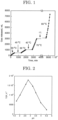
- a time-dependent change in an amount of a gas released is illustrated in FIG. 1 .
- This complex catalyst was able to exhibit stable catalytic performance without deteriorating for 1 week or longer even in a high-concentration formic acid solution.
- the catalytic performance is significantly low under conditions other than the above-described optimal reaction conditions.
- the conversion rate of formic acid after reaction is low (50%).
- the catalytic performance was significantly deteriorated within 1 hour.
- a metal catalyst which contains a bidentate ligand including an aromatic heterocyclic 5-membered ring having 2 nitrogen atoms exhibited extremely high catalytic activity and extremely high durability in production of hydrogen through dehydrogenation of formic acid. Therefore, use of the metal catalyst which contains a bidentate ligand including an aromatic heterocyclic 5-membered ring having 2 nitrogen atoms according to the present invention enables to easily and conveniently produce hydrogen from formic acid which can be easily transported and stored.
- high pressure hydrogen can be produced through a selective dehydrogenation reaction of formic acid without by-producing carbon monoxide. Therefore, hydrogen can be supplied as fuel for fuel cells without using a gas reformer.
Landscapes
- Chemical & Material Sciences (AREA)
- Organic Chemistry (AREA)
- Chemical Kinetics & Catalysis (AREA)
- Engineering & Computer Science (AREA)
- Inorganic Chemistry (AREA)
- Materials Engineering (AREA)
- General Health & Medical Sciences (AREA)
- Combustion & Propulsion (AREA)
- Health & Medical Sciences (AREA)
- Manufacturing & Machinery (AREA)
- Life Sciences & Earth Sciences (AREA)
- Sustainable Development (AREA)
- Sustainable Energy (AREA)
- Electrochemistry (AREA)
- General Chemical & Material Sciences (AREA)
- Catalysts (AREA)
- Hydrogen, Water And Hydrids (AREA)
- Fuel Cell (AREA)
Description
- The present invention relates to a catalyst used for dehydrogenation of formic acid, and a method for producing hydrogen.
- Hydrogen (H2) has been produced in an amount of about five hundred billion Nm3 all over the world. The hydrogen has attracted much attention as future clean energy as well as has been applied for a variety of uses such as refinement of oil or production of ammonia. For example, a fuel cell is capable of efficiently supplying electricity when the hydrogen is supplied externally thereto. However, the hydrogen is highly reactive gas, so that it is difficult to be transported and stored. Therefore, there has been a need for a safe and inexpensive transportation and storage technology in order to stably supply the hydrogen. In the field of the fuel cell, there has been a problem that a poisoning substance is by-produced on a surface of an electrode catalyst by the action of carbon monoxide. Thus, there has been a need to supply high purity hydrogen generally containing 10 ppm or less of carbon monoxide.
- As a hydrogen storage method, at present, a method for storing hydrogen as high pressure gas in a gas cylinder is commonly used. However, in this method, there are problems of safety upon transportation of the high pressure gas, and hydrogen brittleness of container materials. A method for storing hydrogen gas in the form of liquid hydrogen under an extremely low temperature is also used. However, there are problems that much energy is consumed in a liquefaction process and that the liquid hydrogen is lost in a percentage of 3% per day to 6% per day due to vaporization.
- In order to solve the above described problems with regard to hydrogen transportation and storage technologies, there has been considered a method for storing hydrogen as liquid fuel (e.g., methanol and formic acid) which is obtained by hydrogenating carbon dioxide. For example, formic acid (HCOOH) has recently been attracted the attention as a hydrogen storage material since the formic acid, which is in the liquid form at normal temperature and has a relatively low toxicity, can be reversibly converted to hydrogen (H2) and carbon dioxide (CO2). However, there has been a problem that a dehydrogenation reaction of the formic acid using a conventionally known catalyst generally requires a high temperature of 200°C or higher, and generates carbon monoxide as a by-product. Therefore, there has been a need to develop a catalyst which allows high quality hydrogen to be produced from the formic acid under a mild condition.
- Recently, many reports have been made with regard to a dehydrogenation reaction of formic acid using a metal complex catalyst (
PTLs NPLs 1 to 8). In these reactions, although hydrogen is produced through dehydrogenation of formic acid, carbon monoxide is hardly by-produced. However, most of them need organic solvents or amine additives. On the other hand, a reaction in water free of organic additives is problematic in low catalytic activity and durability (PTLs 3 to 7, NPLs 9 to 12). Besides the above reports, the present inventors have been found catalysts which are extremely highly active in the dehydrogenation reaction of formic acid in water free of organic additives.
JP 2013 193983 A -
- PTL 1: International Publication No.
WO2008/047312 - PTL 2: International Publication No.
WO2012/070620 - PTL 3: Japanese Patent (
JP-B) No. 4572393 - PTL 4:
JP-B No. 4875576 - PTL 5: International Publication No.
WO2011/108730 - PTL 6: Japanese Patent Application Laid-Open (
JP-A) No. 2010-083730 - PTL 7:
JP-A No. 2010-208927 - PTL 8:
JP-B No.3968431 - PTL 9:
JP-B No.4009728 - PTL 10:
JP-B No.4822253 - PTL 11:
JP-B No.5030175 - PTL 12: International Publication No.
WO2013/040013 - PTL 13: International Publication No.
WO2013/111860 - PTL 14:
JP-A No. 2013-193983 -
- NPL 1: Schaub, T.; Paciello, R. A. Angew. Chem.-Int. Edit. 2011, 50, 7278.
- NPL 2: Boddien, A.; Gartner, F.; Federsel, C.; Sponholz, P.; Mellmann, D.; Jackstell, R.; Junge, H.; Beller, M. Angew. Chem.-Int. Edit. 2011, 50, 6411.
- NPL 3: Tanaka, R.; Ymashita, M.; Chung, L. W.; Morokuma, K.; Nozaki, K. Organometallics 2011, 30, 6742.
- NPL 4: Boddien, A.; Mellmann, D.; Gaertner, F.; Jackstell, R.; Junge, H.; Dyson, P. J.; Laurenczy, G.; Ludwig, R.; Beller, M. Science 2011, 333, 1733.
- NPL 5: Loges, B.; Boddien, A.; Junge, H.; Beller, M. Angew. Chem.-Int. Edit. 2008, 47, 3962.
- NPL 6: Zell, T.; Butschke, B.; Ben-David, Y.; Milstein, D. Chem.-Eur. J. 2013, 19, 8068.
- NPL 7: Barnard, J. H.; Wang, C.; Berry, N. G.; Xiao, J. Chem. Science 2013, 4, 1234
- NPL 8: Sponholz, P.; Mellmann, D.; Junge, H.; Beller, M. ChemSusChem 2013, 6, 1172.
- NPL 9: Fellay, C.; Dyson, P. J.; Laurenczy, G. Angew. Chem.-Int. Edit. 2008, 47, 3966.
- NPL 10: Papp, G.; Csorba, J.; Laurenczy, G.; Joo, F. Angew. Chem.-Int. Edit. 2011, 50, 10433.
- NPL 11: Fukuzumi, S.; Kobayashi, T.; Suenobu, T. J. Am. Chem. Soc. 2010, 132, 1496.
- NPL 12: Maenaka, Y.; Suenobu, T.; Fukuzumi, S. Energy Environ. Sci. 2012, 5, 7360.
- NPL 13: Himeda, Y.; Onozawa-Komatsuzaki, N.; Sugihara, H.; Arakawa, H.; Kasuga, K. J. Mol. Catal. A-Chem. 2003, 195, 95
- NPL 14: Himeda, Y.; Onozawa-Komatsuzaki, N.; Sugihara, H.; Arakawa, H.; Kasuga, K. Organometallics 2004, 23, 1480.
- NPL 15: Himeda, Y. Eur. J. Inorg. Chem. 2007, 3927.
- NPL 16: Himeda, Y.; Onozawa-Komatsuzaki, N.; Sugihara, H.; Kasuga, K. Organometallics 2007, 26, 702.
- NPL 17: Himeda, Y.; Miyazawa, S.; Onozawa-Komatsuzaki, N.; Hirose, T.; Kasuga, K., Dalton Transactions, 2009, (32), 6286-6288.
- NPL 18: Himeda, Y. Green Chem. 2009, 11, 2018.
- NPL 19: Himeda, Y.; Miyazawa, S.; Hirose, .
- NPL 20: Hull, Jonathan F.; Himeda, Yuichiro; Wang, Wan-Hui; Hashiguchi, Brian; Periana, Roy; Szalda, David J.; Muckerman, James T.; Fujita, Etsuko, .
- NPL 21: Wang, Wan-Hui; Hull, Jonathan F.; Muckerman, James T.; Fujita, Etsuko; Takuji, Hirose; Himeda, Yuichiro, Chemistry - A European Journal 2012, 18, 9397-9404.
- The present invention has an object to provide a catalyst allowing hydrogen to be produced through dehydrogenation of formic acid in a highly efficient, highly energy-efficient, highly selectively, and highly durable manner even in a high-concentration aqueous formic acid solution under a high temperature reaction condition.
- The present invention also has an object to provide a method for producing hydrogen through dehydrogenation of formic acid using the catalyst in a highly efficient and inexpensive manner with simple operation.
- The present inventors conducted extensive studies to solve the above-described problems and consequently have found that a metal complex as defined in
claim 1 which contains a bidentate ligand including an aromatic heterocyclic 5-membered ring having 2 nitrogen atoms ora bidentate ligand including an aromatic heterocyclic 5-membered ring having 2 nitrogen atoms; and an aromatic heterocyclic 6-membered ring having 1 or 2 nitrogen atoms is useful for a dehydrogenation reaction of formic acid, to thereby complete the present invention. - The catalyst used for a dehydrogenation reaction of at least one of formic acid and a formic acid salt is a salt of a complex, having a structure represented by any selected from the group consisting of the following Formulae (5), (7) to (12):

- R1 to R6 each independently denote an alkyl group, a hydroxy group (-OH), an alkoxy group (-OR), a nitro group, a halogen group, a carboxylic acid group, an alkylamino group, or a phenyl group, or adjacent R groups may be linked together to form a ring; and R1 to R6 may be substituted by one substituent or a plurality of substituents,
- Z1 denote a water molecule, a hydrogen atom, an alkoxide ion, a hydroxide ion, a halide ion other than a chloride ion, a carbonate ion, a trifluoromethanesulfonate ion, a sulfate ion, a nitrate ion, a formate ion, or an acetate ion, or are absent; and
- m denote a positive integer, 0, or a negative integer,


- R7 to R13 each independently denote a hydrogen atom, an alkyl group, a hydroxy group (-OH), an alkoxy group (-OR), a nitro group, a halogen group, a carboxylic acid group, an alkylamino group, or a phenyl group, or adjacent R groups may be linked together to form a ring; and R7 to R13 may be substituted by one substituent or a plurality of substituents,
- Z2 denote a water molecule, a hydrogen atom, an alkoxide ion, a hydroxide ion, a halide ion, a carbonate ion, a trifluoromethanesulfonate ion, a sulfate ion, a nitrate ion, a formate ion, or an acetate ion, or are absent; and
- n denote a positive integer, 0, or a negative integer.
- In the catalyst used for a dehydrogenation reaction of at least one of formic acid and a formic acid salt the complex has not a structure represented by any selected from the group consisting of the following Formulae (13) to (18):


- Also disclosed herein (not claimed) is a method for dehydrogenating at least one of formic acid and a formic acid salt, the method including:
allowing a solution containing at least one of formic acid and a formic acid salt to react in the presence of the catalyst as disclosed herein. - The invention also relates to a method for producing hydrogen, the method including:
allowing a solution containing at least one of formic acid and a formic acid salt to react in the presence of the catalyst defined above, to thereby dehydrogenate the at least one of formic acid and a formic acid salt. - Use of a complex according to the present invention, an isomer or a salt of the complex as a catalyst enables to provide a high-pressure hydrogen gas free of carbon monoxide through dehydrogenation of formic acid or a formic acid salt in a highly efficient, highly energy-efficient, highly selectively, and highly durable manner. By the method for dehydrogenating according to the present invention hydrogen is allowed to be regenerated easily from formic acid or a formic acid salt which is liquid fuel suitable for transportation and storage.
- A complex catalyst according to the present invention has extremely higher durability than those of the complex catalysts described in PTLs 12 to 14, and has excellent catalytic performance allowing the catalyst to stably maintain high catalytic performance for a long period of time in a high-concentration formic acid solution under a high temperature reaction condition.
-
-
FIG. 1 is a graph illustrating a time-dependent change in an amount of a gas released through dehydrogenation of formic acid by a dehydrogenation reaction of the formic acid using an 8 M aqueous formic acid solution with the complex catalyst (18). -
FIG. 2 is a graph illustrating a pH-dependent change in reaction velocity of a dehydrogenation reaction of formic acid with the complex catalyst (18). -
FIG. 3 is a graph illustrating a time-dependent change in volume and pressure of a gas released from an 8 M aqueous formic acid solution (50 mL) with the mononuclear catalyst (18) in a sealed glass autoclave with a back pressure valve pressure of 2 MPa at a reaction temperature of 80°C. -
FIG. 4 is a graph illustrating a time-dependent change in ratios of carbon dioxide and a hydrogen gas released from an 8 M aqueous formic acid solution (50 mL) with the mononuclear catalyst (18) in a sealed glass autoclave with a back pressure valve pressure of 2 MPa at a reaction temperature of 80°C. - As used herein, the phrase "at least one of formic acid and a formic acid salt" refers to the formic acid alone, the formic acid salt alone, a mixture of the formic acid with the formic acid salt, or a mixture of the formic acid or the formic acid salt with an acid or a base.
- In the present invention, a dehydrogenation reaction of at least one of formic acid and a formic acid salt represented by the following scheme allows hydrogen and carbon dioxide to be highly efficiently produced. Upon the reaction, there is a possibility that carbon monoxide and water are by-produced through a decarbonylation reaction of formic acid. However, a catalyst used for dehydrogenation of formic acid according to the present invention allows only the dehydrogenation reaction of formic acid to proceed in a highly selective and highly efficient manner, to thereby produce a hydrogen gas free of carbon monoxide.

- In the complex catalyst represented by any of the Formulae (5), (7) to (12), a counter ion thereof is not particularly limited. Examples of anions serving as the counter ion include a hexafluorophosphate ion (PF6 -), a tetrafluoroborate ion (BF4 -), a hydroxide ion (OH-), an acetate ion, a carbonate ion, a phosphate ion, a sulfate ion, a nitrate ion, a halide ion (e.g., a fluoride ion (F-), a chloride ion (Cl-), a bromide ion (Br-), and an iodide ion (I-)), a hypohalite ion (e.g., a hypofluorite ion, a hypochlorite ion, a hypobromite ion, and a hypoiodite ion), a halite ion (e.g., a fluorite ion, a chlorite ion, a bromite ion, and an iodite ion), a halate ion (e.g., a fluorate ion, a chlorate ion, a bromate ion, and an iodate ion), a perhalate ion (e.g., a perfluorate ion, a perchlorate ion, a perbromate ion, and a periodate ion), a trifluoromethanesulfonate ion (OSO2CF3 -), and a tetrakis(pentafluorophenyl)borate ion [B(C6F5)4 -]. Examples of cations serving as the counter ion include, but are not limited to, various metal ions, such as a lithium ion, a magnesium ion, a sodium ion, a potassium ion, a calcium ion, a barium ion, a strontium ion, an yttrium ion, a scandium ion, and a lanthanoid ion; and a hydrogen ion. One type of these counter ions may be used alone, or two or more types may be used in combination. However, the above description is intended to only exemplify possible mechanisms, and the present invention is not limited thereto.
- Notably, examples of the alkyl group in the present invention include, but are not limited to, a methyl group, an ethyl group, an n-propyl group, an isopropyl group, an n-butyl group, an isobutyl group, a sec-butyl group and a tert-butyl group, a pentyl group, a hexyl group, a heptyl group, an octyl group, a nonyl group, a decyl group, an undecyl group, a dodecyl group, a tridecyl group, a tetradecyl group, a pentadecyl group, a hexadecyl group, a heptadecyl group, an octadecyl group, a nonadecyl group, and an icosyl group. The same can be applied to a group and an atomic group (e.g., an alkoxy group) derived from the alkyl group. Examples of the alcohol and the alkoxide ion include, but are not limited to, alcohols and alkoxide ions derived from the above-described alkyl groups. Moreover, as used herein, the term "halogen" refers to any halogen element. Examples thereof include fluorine, chlorine, bromine, and iodine. In the present invention, in the case where a substituent has an isomer, any isomer may be used unless otherwise restricted. For example, a "propyl group" as simply referred to herein may be an n-propyl group or an isopropyl group. Similarly, a "butyl group" as simply referred to herein may be an n-butyl group, an isobutyl group, a sec-butyl group, or a tert-butyl group. However, the above description is intended to only exemplify possible mechanisms, and the present invention is not limited thereto.
- The catalyst according to the present invention is a catalyst containing, as an effective ingredient, a complex represented by any of the General Formulae (5), (7) to (12), tautomers or stereoisomers thereof, as salts of the complex, and used for a method for dehydrogenating at least one of formic acid and a formic acid salt (or a method for producing hydrogen) or a method for producing hydrogen. For example, one compound or a plurality of compounds serving as the effective ingredient may be used as-is as the complex catalyst according to the present invention, or a mixture of the above-described isomers may be used as the complex catalyst. Other ingredients may be appropriately added (preferably in an amount of less than 10% by mass).
- In the complex catalyst according to the present invention, any one of aromatic rings constituting the ligand includes an aromatic heterocyclic 5-membered ring skeleton having 2 nitrogen atoms. The ligand significantly improves efficiency of the dehydrogenation reaction of formic acid. For example, a bipyridine complex which contains a bidentate ligand including a 6-membered ring skeleton similar to the complex catalyst represented by the General Formula (7) to (12) exhibits only extremely low catalytic performance in the dehydrogenation reaction of formic acid (see, Comparative Example 1). From the above results, it has been found that it is necessary for one or more of aromatic rings constituting the ligand to include an aromatic heterocyclic 5-membered ring skeleton having 2 nitrogen atoms in order to accelerate the dehydrogenation reaction of formic acid.
- A method for dehydrogenating formic acid according to the present disclosure (or a method for producing hydrogen according to the present invention) includes at least one step selected from the group consisting of a step of stirring a solution containing at least one of formic acid and a formic acid salt with a catalyst containing, as the effective ingredient, the complex catalyst, tautomers or stereoisomers thereof, or salts thereof according to the present invention, and a step of heating the solution. Specifically, for example, the complex catalyst according to the present invention is added to solution containing at least one of formic acid and a formic acid salt, and then stirred, optionally with heating. In the case of heating, a temperature may be for example, 0°C to 300°C, preferably 20°C to 120°C, more preferably 60°C to 100°C. A method for collecting hydrogen released is not particularly limited. For example, known methods such as a downward displacement of water method or an upward displacement method may be appropriately used.
- In the method for dehydrogenating formic acid according to the present disclosure (or a method for producing hydrogen according to the present invention), the formic acid or the formic acid salt can also be dehydrogenated under pressure by using a sealable reaction container. A gas pressure in the reaction container may be for example, 0 MPa to 100 MPa, preferably 1 MPa to 10 MPa. Pressure inside the reaction container is spontaneously increased, which allows high pressure hydrogen gas to be spontaneously supplied without pressurizing by means of external energy.
- In the method for dehydrogenating formic acid according to the present disclosure (or a method for producing hydrogen according to the present invention), a concentration of the complex catalyst may depend on, for example, reaction velocity, solubility of the complex in the reaction solution, and economic efficiency. Appropriate concentration of the catalyst is 1 × 10⁻⁹ M to 1 × 10⁻¹ M, preferably 1 × 10⁻⁷ M to 1 × 10⁻⁴ M.
- In the method for dehydrogenating formic acid according to the present disclosure (or a method for producing hydrogen according to the present invention), a ratio of an amount of substance (the number of molecules) of catalyst molecules to that of formic acid molecules may, for example, be the ratio of the formic acid molecules to the catalyst molecules of 100:1 to 1:100, 000, 000 at the start of the reaction. Hydrogen can be continuously produced by additionally adding or continuously adding dropwise formic acid molecules during the reaction. As used herein, the term formic molecule includes formic acid and a formic acid salt, which may be used alone or as a mixture thereof. In the case where the mixture is used, it is generally used in a pH range of 1 to 9, preferably 1 to 6, but the formic acid may be dehydrogenated at a pH out of the above range by additionally adding an acid or a base. In the case where the formic acid salt is used alone, examples of a positive ion serving as a counter cation may includevarious metal ions such as a lithium ion, a magnesium ion, a sodium ion, a potassium ion, a calcium ion, a barium ion, a strontium ion, an yttrium ion, a scandium ion, or a lanthanoid ion; an ammonium ion, tetramethyl ammonium, and tetraethyl ammonium. Although these counter ions may be used alone or two or more counter ions may be used in combination.
- The catalyst, a tautomer or stereoisomer thereof, or a salt thereof according to the present invention can be used as a catalyst for dehydrogenation of formic acid in, for example, a formic acid fuel cell. In the case where the catalyst is used in the fuel cell, for example, the cell only has to contain therein the catalyst for dehydrogenation of formic acid according to the present invention and include a mechanism for generating hydrogen by dehydrogenating formic acid according to the above described method. A specific configuration of the fuel cell may be for example, a configuration of a known fuel cell which can be appropriately applied thereto. Furthermore, an application of the catalyst for dehydrogenation of formic acid according to the present invention is not limited to those mentioned above, and, for example, the catalyst for dehydrogenation of formic acid according to the present invention can be used in every technical field in which hydrogen (H2) is needed to be supplied.
- In the method for dehydrogenating formic acid according to the present disclosure, a reaction solvent to be used is not particularly limited. For example, the solvent may be water or an organic solvent, and one solvent may be used alone or two or more solvents may be used in combination. In the case where the complex catalyst according to the present invention is soluble in water, water is preferably used from the viewpoint of simplicity and convenience. The organic solvent is not particularly limited, but a highly polar solvent is preferable from the viewpoint of solubility of the catalyst. Examples thereof include nitriles such as acetonitrile, propionitrile, butyronitrile, or benzonitrile; primary alcohols such as methanol, ethanol, n-propyl alcohol, or n-butyl alcohol; secondary alcohols such as isopropyl alcohol or s-butyl alcohol; tertiary alcohols such as t-butyl alcohol; polyhydric alcohols such as ethylene glycol or propylene glycol; ethers such as tetrahydrofuran, dioxane, dimethoxyethane, or diethyl ether; amides such as dimethylformamide or dimethylacetamide; sulfoxides such as dimethyl sulfoxide; and esters such as ethyl acetate. Furthermore, formic acid as a raw material may be in the form of a solution or a salt.
- Hereinafter, examples of the present invention will be described in more detail. However, the present invention is not limited to the following examples.
- [Cp*Ir(H2O)3]SO4 and a ligand corresponding to it in an equal amount were dissolved into water, followed by stirring at room temperature under an argon stream for 12 hours. The resultant reaction liquid was filtered. The resultant filtrate was concentrated under reduced pressure. The resultant product was dried at 50°C under reduced pressure for 12 hours, to thereby the intended product.
- The spectral data of the resultant complex catalysts are presented below.
- The spectral data of the compound represented by the following Formula (22) is presented below.

- 1H NMR (400 MHz, D2O): δ = 8.95 (dt, J = 5.6, 1.1 Hz, 1H), 8.22 - 8.06 (m,2H), 7.65 (ddd, J = 7.4, 5.6, 1.6 Hz, 1H), 7.56 (dd, J = 19.2, 1.6 Hz, 2H), 1.63 (s, 15H); IR (KBr): 1622, 1474, 1203, 1110, 791cm-1; UV/Vis: λmax 272 nm; ESI-MS (m/z): [M-SO4-H2O-H]+; found, 472.1; Elemental analysis calcd. for C18H24IrN3O5S+H2O: C, 34.83; H, 4.22; N, 6.77. Found: C, 34.74; H, 4.38; N, 6.52.
- The spectral data of the compound represented by the following Formula (23) is presented below.

- 1H NMR (400 MHz, D2O): δ = 8.91 (d, J = 5.7 Hz, 1H), 8.19 - 8.07 (m,2H), 8.04 (d, J = 2.9 Hz, 1H), 7.63 (ddd, J = 7.3, 5.7, 1.9 Hz, 1H), 7.09 (d, J = 2.9 Hz, 1H), 1.63 (s, 15H); IR (KBr):1615, 1458, 1192, 1113, 782cm-1; UV/Vis: λmax 300 nm (shoulder peak); ESI-MS (m/z): [M-SO4-H2O-H]+; found, 472.1; Elemental analysis calcd. for C18H24IrN3O5S+H2O: C, 34.83; H, 4.22; N, 6.77. Found: C, 35.22; H, 4.39; N, 6.85.
- The spectral data of the compound represented by the following Formula (24) is presented below.

- 1H NMR (400 MHz, D2O): δ = 9.11 (d, J = 5.4 Hz, 1H), 8.37 (d, J = 7.8 Hz, 1H), 8.30 (t, J = 7.9 Hz, 1H), 7.91 - 7.75 (m,3H), 7.59 - 7.52 (m,2H), 1.67 (s, 15H); IR (KBr): 1625, 1459, 1118, 1027, 764cm-1; UV/Vis: λmax 330 nm; ESI-MS (m/z): [M-SO4-H2O-H]+; found, 522.1; Elemental analysis calcd. for C22H26IrN3O5S+H2O: C, 39.39; H, 4.21; N, 6.26. Found: C, 39.52; H, 4.19; N, 6.00.
- The spectral data of the compound represented by the following Formula (25) is presented below.

- 1H NMR (400 MHz, D2O): δ = 7.52 (t, J = 1.6 Hz, 2H), 7.41 (t, J = 1.6 Hz, 2H), 1.67 (s, 15H); UV/Vis: λmax 289 nm; ESI-MS (m/z): [M-SO4-H2O-H]+; found, 461.59.
- The spectral data of the compound represented by the following Formula (26) is presented below.

- 1H NMR (400 MHz, D2O): δ = 2.18 (d, J = 1.4 Hz, 6H), 2.27 (d, J = 1.4 Hz, 6H), 1.57 (d, J = 1.5 Hz, 15H); IR (KBr): 1593, 1193, 1114, 799 cm-1; UV/Vis: λmax 314 nm; ESI-MS(m/z): [M-SO4-H2O-H]+; found, 517.1; Elemental analysis calcd. for C20H31IrN4O5S: C, 38.02; H, 4.95; N, 8.87. Found: C, 38.07; H, 4.78; N, 8.63.
- The spectral data of the compound represented by the following Formula (27) is presented below.

- 1H NMR (400 MHz, D2O): δ = 2.31 (s, 6H), 2.18 (s, 6H), 1.59 (s, 15H); IR (KBr): 1622, 1413, 1140 cm-1; UV/Vis: λmax 317 nm; ESI-MS (m/z): [M-SO4-H2O-H]+; found, 427.1; Elemental analysis calcd. for C20H31RhN4O6S+1.3H2O: C, 42.6; H, 5.65; N, 9.94. Found: C, 42.8; H, 5.68; N, 9.65.
- The spectral data of the compound represented by the Formula (15) is presented below.
- 1H NMR (D2O, 400 MHz): 7.38 (s, 1H), 7.19 (s, 1H), 6.01 (s, 1H), 1.63 (s, 15H). 1H NMR (DMSO-ds, 400 MHz): 10.89 (s, 1H), 7.86 (s, 1H), 7.57 (s, 1H), 6.12 (s, 1H), 1.69 (s, 15H); ESI-MS (+): m/z 505.2 [M-H2O-H]+.
- The spectral data of the compound represented by the Formula (16) is presented below.
- 1H NMR (D2O, 400 MHz):8.68 (d, J = 3.2 Hz, 1H), 8.37 (d, J = 3.2 Hz, 1H), 8.00 (t, J = 4.0 Hz, 1H), 7.42 (d, J = 8 Hz, 1H), 6.98 (t, J = 3.2 Hz, 2H), 1.69 (s, 15H); 13C NMR (D2O, 125 MHz): δ = 164.09, 146.86, 145.24, 143.88, 132.22, 112.45, 110.61, 101.99, 89.77, 8.97. ESI-MS (+): m/z 488.1 [M-H2O-H]+.
- The spectral data of the compound represented by the Formula (17) is presented below.
- 1H NMR (DMSO-ds, 400 MHz): 11.38 (s, 1H), 8.65 (s, 1H), 8.45 (s, 1H), 7.03 (s, 1H), 5.29 (s, 1H), 1.73 (s, 15H); 13C NMR (DMSO-d6, 125MHz): 169.56, 168.59, 145.18, 133.44, 111.97, 96.26, 87.89, 8.83; ESI-MS: 505.1 [M-H2O-H]+. Anal. Calc. for C17H23IrN4O7S·0.5H2O: C 32.48, H 3.85, N 8.91. Found: C 32.62, H 3.63, N 8.66.
- The spectral data of the compound represented by the Formula (18) is presented below.
- 1H NMR (D2O, 400 MHz): δ = 7.38 (s, 1H), 7.19 (s, 1H), 6.01 (s, 1H), 1.63 (s, 15H). 1H NMR (d6-DMSO, 400 MHz): 10.89 (s, 1H), 7.86 (s, 1H), 7.57 (s, 1H), 6.12 (s, 1H), 1.69 (s, 15H). 13C NMR (d6-DMSO, 125 MHz): δ = 168.71, 157.91, 127.47, 123.18, 95.95, 87.73, 84.72, 55.90, 8.99. ESI-MS (+): m/z 505.2 [M-H2O-H]+.
- A solution of the complex catalyst as disclosed herein in water was degassed. Thus prepared catalyst solution was added to a 1 M degassed solution of formic acid in water (10 mL), followed by stirring with heating. An amount of gas released was measured by means of a gas meter (Shinagawa W-NK-05). A gas component released was measured by means of a gas chromatography GL SCIENCES (GC390), hydrogen was measured by means of a thermal conductivity detector (TCD), and carbon dioxide and carbon monoxide were measured by means of a methanizer and a hydrogen flame ionization detector (FID). As a result, it was found that hydrogen and carbon dioxide were released in a ratio of 1:1, and that carbon monoxide was not able to be detected (equal to or lower than the detection threshold of 10 ppm). From the reaction results presented in Table 1, all catalysts including a ligand containing a 5-membered ring, which were according to the present invention, exhibited a high catalytic activity. As described in NPL 18, in the dehydrogenation reaction of formic acid, it has been found that a catalyst is activated by the electron-donating action of a substituent on a ligand in the catalyst. Based on this finding, the catalyst represented by the General Formula (26), which was obtained by introducing four methyl groups to the catalyst represented by the General Formula (25), exhibited a turnover frequency (TOF: the number of substrate (i.e., formic acid) molecules on which the catalyst acts per 1 molecule of the catalyst per 1 hour) 1.75 times higher than that of the catalyst represented by the General Formula (25). Further, when a strong electron-donating hydroxyl group was introduced, the complex represented by the General Formula (15) in which the hydroxyl group had been substituted exhibited the
TOF 5 times or more higher than that of the unsubstituted complex represented by the General Formula (22).Table 1: Dehydrogenation reaction of formic acid using complex catalyst Catalyst (Concentration/mM) Concentration of formic acid (M) Time (h) Temperature (°C) TOF (h-1) Turnover number of catalyst Conversion rate (%) (22) / 0.5 1 4 60 810 1,970 98 (23) / 0.5 1 7 60 400 2,000 >99 (24) / 0.5 1 6 60 570 2,000 >99 (25) / 0.1 1 5 60 3,980 10,000 100 (26) / 0.1 1 2 60 7,020 10,000 100 (27) / 0.5 2 8 60 250 1,020 26 (26) / 0.1 1 0.5 80 34,000 10,000 100 (15) / 0.1 1 5 60 4,290 10,000 100 (16) / 0.1 1 7 60 2,740 10,000 100 (17) / 0.1 1 3.5 60 5,150 10,000 100 (18) / 0.1 1 7 60 7,050 10,000 100 (19) / 0.1 1 2.5 60 6,300 10,000 100 (20) / 0.1 1 3 60 290 - - (21) / 0.1 1 3 60 6,620 10,000 100 - A solution of the complex catalyst represented by the General Formula (18) in water was degassed. Thus prepared catalyst solution (1 µmol) was added to an 80% degassed solution of formic acid in water (10 mL), followed by stirring with heating. The catalytic reaction proceeded for 150 hours or longer. After the reaction, the formic acid was completely decomposed. A time-dependent change in an amount of a gas released is illustrated in
FIG. 1 . This complex catalyst was able to exhibit stable catalytic performance without deteriorating for 1 week or longer even in a high-concentration formic acid solution. - A solution of the complex catalyst represented by the General Formula (18) in water was degassed. Thus prepared catalyst solution (100 µL, 1 µmol) was added to a 1 M degassed solution of formic acid/sodium formate (100/0 to 0/100) in water (10 mL) of which pH had been adjusted, followed by stirring at 60°C. A pH-dependent change in reaction velocity is illustrated in
FIG. 2 . - An 8 M degassed solution of formic acid in water (50 mL) containing the complex catalyst represented by the General Formula (18) (5 µmol) was placed into a glass autoclave. The reaction container was stirred with heating at 80°C, and amounts and ratios of gases released from a back pressure valve at 2 MPa were measured (
FIGs. 3 and 4 ). As a result, a turnover efficiency of the catalyst was extremely high, i.e., 34,000 times per 1 hour. It was confirmed that hydrogen and carbon dioxide were released in a ratio of approximately 1:1 and that 99% or more of the formic acid was decomposed after the reaction. These results indicate that hydrogen is released without deteriorating the complex catalyst even under severe reaction conditions, that is, in a high-concentration aqueous formic acid solution, at a high temperature of 80°C and high pressure of 2 MPa. - In a dehydrogenation reaction of formic acid using the unsubstituted bipyridine complex catalyst represented by the General Formula (28) (1 M aqueous formic acid solution, reaction temperature: 60°C), the TOF was 30. The catalyst according to the present invention exhibited significantly higher catalytic activity than that value under the same reaction conditions. The complex represented by the General Formula (29), which was an active form of the complex represented by the General Formula (28) obtained by introducing hydroxyl groups to a ligand thereof, had the TOF of 1,800. Therefore, according to the present invention, it has been found that a catalyst exhibiting excellent catalytic performance can be designed only by including a 5-membered ring skeleton on a ligand thereof. In fact, the complex catalyst represented by the General Formula (18) in which a hydroxyl group had been introduced to a ligand thereof exhibited the highest catalytic performance.

- The catalyst for dehydrogenation of formic acid represented by the General Formula (30) where R = H or OH described in PTLs 12 and 13 exhibits extremely high reaction velocity under the optimal reaction conditions, that is, in a formic acid solution which has a concentration of 1 M or less and of which pH has been adjusted to 3.5, and at a reaction temperature of 70°C or less. However, the catalytic performance is significantly low under conditions other than the above-described optimal reaction conditions. The conversion rate of formic acid after reaction is low (50%). On the other hand, under severe reaction conditions, that is, in a formic acid solution having a concentration of 2 M or more and/or at a temperature of 80°C or higher, the catalytic performance was significantly deteriorated within 1 hour.

- In the present invention, a metal catalyst which contains a bidentate ligand including an aromatic heterocyclic 5-membered ring having 2 nitrogen atoms exhibited extremely high catalytic activity and extremely high durability in production of hydrogen through dehydrogenation of formic acid. Therefore, use of the metal catalyst which contains a bidentate ligand including an aromatic heterocyclic 5-membered ring having 2 nitrogen atoms according to the present invention enables to easily and conveniently produce hydrogen from formic acid which can be easily transported and stored. In particular, high pressure hydrogen can be produced through a selective dehydrogenation reaction of formic acid without by-producing carbon monoxide. Therefore, hydrogen can be supplied as fuel for fuel cells without using a gas reformer.
Claims (2)
- A catalyst used for a dehydrogenation reaction of at least one of formic acid and a formic acid salt, the catalyst being a salt of a complex:
having a structure represented by any selected from the group consisting of the following Formulae (5), (7) to (12): R1 to R6 each independently denote an alkyl group, a hydroxy group (-OH), an alkoxy group (-OR), a nitro group, a halogen group, a carboxylic acid group, an alkylamino group, or a phenyl group, or adjacent R groups may be linked together to form a ring; and R1 to R6 may be substituted by one substituent or a plurality of substituents,Z1 denotes a water molecule, a hydrogen atom, an alkoxide ion, a hydroxide ion, a halide ion other than a chloride ion, a carbonate ion, a trifluoromethanesulfonate ion, a sulfate ion, a nitrate ion, a formate ion, or an acetate ion, or is absent; andm denotes a positive integer, 0, or a negative integer,

 R7 to R13 each independently denote a hydrogen atom, an alkyl group, a hydroxy group (-OH), an alkoxy group (-OR), a nitro group, a halogen group, a carboxylic acid group, an alkylamino group, or a phenyl group, or adjacent R groups may be linked together to form a ring; and R7 to R13 may be substituted by one substituent or a plurality of substituents,Z2 denotes a water molecule, a hydrogen atom, an alkoxide ion, a hydroxide ion, a halide ion, a carbonate ion, a trifluoromethanesulfonate ion, a sulfate ion, a nitrate ion, a formate ion, or an acetate ion, or is absent; andn denotes a positive integer, 0, or a negative integer;
provided that the complex is not having a structure selected from the group consisting of the following formulas (13) to (18):


- A method for producing hydrogen, the method comprising:
allowing a solution comprising at least one of formic acid and a formic acid salt to react in the presence of the catalyst according to claim 1, to thereby dehydrogenate the at least one of formic acid and a formic acid salt.
Applications Claiming Priority (3)
| Application Number | Priority Date | Filing Date | Title |
|---|---|---|---|
| JP2013213576 | 2013-10-11 | ||
| EP14851906.9A EP3056273B1 (en) | 2013-10-11 | 2014-10-08 | Catalyst used for dehydrogenation of formic acid, method for dehydrogenating formic acid, and method for producing hydrogen |
| PCT/JP2014/076953 WO2015053317A1 (en) | 2013-10-11 | 2014-10-08 | Catalyst used for dehydrogenation of formic acid, method for dehydrogenating formic acid, and method for producing hydrogen |
Related Parent Applications (2)
| Application Number | Title | Priority Date | Filing Date |
|---|---|---|---|
| EP14851906.9A Division EP3056273B1 (en) | 2013-10-11 | 2014-10-08 | Catalyst used for dehydrogenation of formic acid, method for dehydrogenating formic acid, and method for producing hydrogen |
| EP14851906.9A Division-Into EP3056273B1 (en) | 2013-10-11 | 2014-10-08 | Catalyst used for dehydrogenation of formic acid, method for dehydrogenating formic acid, and method for producing hydrogen |
Publications (2)
| Publication Number | Publication Date |
|---|---|
| EP3505243A1 EP3505243A1 (en) | 2019-07-03 |
| EP3505243B1 true EP3505243B1 (en) | 2025-06-18 |
Family
ID=52813132
Family Applications (2)
| Application Number | Title | Priority Date | Filing Date |
|---|---|---|---|
| EP19151992.5A Active EP3505243B1 (en) | 2013-10-11 | 2014-10-08 | Catalyst used in dehydrogenation of formic acid, method for dehydrogenation of formic acid, and method for producing hydrogen |
| EP14851906.9A Not-in-force EP3056273B1 (en) | 2013-10-11 | 2014-10-08 | Catalyst used for dehydrogenation of formic acid, method for dehydrogenating formic acid, and method for producing hydrogen |
Family Applications After (1)
| Application Number | Title | Priority Date | Filing Date |
|---|---|---|---|
| EP14851906.9A Not-in-force EP3056273B1 (en) | 2013-10-11 | 2014-10-08 | Catalyst used for dehydrogenation of formic acid, method for dehydrogenating formic acid, and method for producing hydrogen |
Country Status (4)
| Country | Link |
|---|---|
| US (1) | US10315190B2 (en) |
| EP (2) | EP3505243B1 (en) |
| JP (3) | JPWO2015053317A1 (en) |
| WO (1) | WO2015053317A1 (en) |
Families Citing this family (11)
| Publication number | Priority date | Publication date | Assignee | Title |
|---|---|---|---|---|
| CN104923297B (en) * | 2015-05-14 | 2017-08-22 | 大连理工大学 | A kind of iridium catalyst for being catalyzed ammonia borane hydrolysis hydrogen manufacturing, preparation method and applications |
| KR101912251B1 (en) | 2016-09-19 | 2018-10-29 | 한국과학기술연구원 | Catalyst for dehydrogenation reaction of formic acid and method for preparing the same |
| US10688474B2 (en) | 2016-09-29 | 2020-06-23 | Korea Institute Of Science And Technology | Catalyst for dehydrogenation reaction of formate and hydrogenation reaction of bicarbonate and preparation method thereof |
| DE102019205316A1 (en) * | 2019-04-12 | 2020-10-15 | Siemens Aktiengesellschaft | Energy-efficient hydrogen production |
| JP7319155B2 (en) | 2019-09-26 | 2023-08-01 | 日東電工株式会社 | Hydrogen gas production method and hydrogen gas production system |
| JP7372130B2 (en) * | 2019-12-09 | 2023-10-31 | 日東電工株式会社 | Hydrogen storage method, hydrogen gas production method, and hydrogen gas production system |
| WO2021187057A1 (en) | 2020-03-17 | 2021-09-23 | 日東電工株式会社 | Formate production method and formate production system |
| CN114345413B (en) * | 2021-04-19 | 2024-06-04 | 杭州师范大学 | Aromatic acid coordinated iron-cobalt nitrogen fixation catalyst and preparation method and application thereof |
| JPWO2023026860A1 (en) * | 2021-08-24 | 2023-03-02 | ||
| KR102623739B1 (en) * | 2022-07-28 | 2024-01-11 | 주식회사 페라메드 | Complex of comprising the citrate and iron ion and the food composition comprising the same |
| ES3035534A1 (en) * | 2024-03-04 | 2025-09-04 | Univ Alcala Henares | IRIDIUM OR RHODIUM COMPLEX COMPRISING k2-(NN)-PYRIDIL-1,2,3-TRIAZOLE LIGANDS AND ITS USE AS A CATALYST FOR THE DEHYDROGENATION REACTION OF FORMIC ACID AND HYDROGEN PRODUCTION (Machine-translation by Google Translate, not legally binding) |
Family Cites Families (21)
| Publication number | Priority date | Publication date | Assignee | Title |
|---|---|---|---|---|
| JPS4822253B1 (en) | 1970-08-13 | 1973-07-04 | ||
| JPS5030175B1 (en) | 1971-02-12 | 1975-09-29 | ||
| JP4009728B2 (en) | 2002-12-25 | 2007-11-21 | 独立行政法人産業技術総合研究所 | Novel compound, catalyst using the same, method for producing formic acid from carbon dioxide and hydrogen using the same, and method for immobilizing carbon dioxide |
| JP3968431B2 (en) | 2003-01-21 | 2007-08-29 | 独立行政法人産業技術総合研究所 | Method for producing formic acid from carbon dioxide and hydrogen, method for immobilizing carbon dioxide and method for promoting them by irradiating light |
| JP4822253B2 (en) | 2005-08-23 | 2011-11-24 | 独立行政法人産業技術総合研究所 | Method for producing formate from carbon dioxide and hydrogen |
| EP1918247A1 (en) | 2006-10-18 | 2008-05-07 | Ecole Polytechnique Fédérale de Lausanne (EPFL) | Hydrogen production from formic acid |
| JP4572393B2 (en) | 2006-11-17 | 2010-11-04 | 国立大学法人大阪大学 | Catalyst for formic acid decomposition, formic acid decomposition method, hydrogen production method, formic acid production and decomposition apparatus, hydrogen storage and generation method |
| JP4875576B2 (en) | 2007-09-25 | 2012-02-15 | 独立行政法人科学技術振興機構 | Catalyst for formic acid decomposition, formic acid decomposition method, hydrogen production method, formic acid production and decomposition apparatus, hydrogen storage and generation method |
| JP5030175B2 (en) | 2008-09-11 | 2012-09-19 | 独立行政法人産業技術総合研究所 | Catalyst for producing deuterated compound and method for producing deuterated compound using the same |
| JP2010083730A (en) | 2008-10-01 | 2010-04-15 | Osaka Univ | Method for producing at least either deuterium (d2) or hydrogen deuteride (hd) and catalyst for formic acid decomposition used therefor |
| JP5397806B2 (en) | 2009-03-12 | 2014-01-22 | 国立大学法人大阪大学 | Method for producing at least one of deuterium (D2) and deuterated hydrogen (HD), and formic acid decomposition catalyst used therefor |
| WO2011108730A1 (en) | 2010-03-04 | 2011-09-09 | 国立大学法人大阪大学 | Mononuclear metal complex, hydrogenation reduction catalyst, dehydrogenation catalyst, method for producing hydrogenation reduction product, method for producing hydrogen (h2), and method for producing dehydrogenation reaction product |
| NL2005512C2 (en) | 2010-10-14 | 2012-04-17 | Univ Leiden | Metal complex and use as multi-electron catalyst. |
| WO2012070620A1 (en) | 2010-11-25 | 2012-05-31 | 国立大学法人岡山大学 | Metal complex compound, hydrogen production catalyst and hydrogenation reaction catalyst each comprising the metal complex compound, and hydrogen production method and hydrogenation method each using the catalyst |
| JP2014505041A (en) * | 2010-12-23 | 2014-02-27 | ソルヴェイ(ソシエテ アノニム) | Preparation of fac isomer of tris homoleptic metal complex |
| TWI470406B (en) * | 2011-08-05 | 2015-01-21 | Wistron Corp | Casing structure for portable electronic apparatus and locking mechanism thereof |
| JP6071079B2 (en) | 2011-09-13 | 2017-02-01 | ブルックヘヴン サイエンス アソシエイツ リミテッド ライアビリティ カンパニー | Bimetallic catalyst for CO2 hydrogenation and H2 production from formic acid and / or its salts |
| WO2013111860A1 (en) | 2012-01-27 | 2013-08-01 | 独立行政法人産業技術総合研究所 | Dehydrogenation catalyst for formic acid, method for producing hydrogen, and method for producing deuterium gas or deuterated hydrogen |
| WO2013125020A1 (en) * | 2012-02-23 | 2013-08-29 | 関東化学株式会社 | Dehydrogenation catalyst, and carbonyl compound and hydrogen production method using said catalyst |
| JP5812290B2 (en) | 2012-03-19 | 2015-11-11 | 国立研究開発法人産業技術総合研究所 | Catalyst for use in carbon dioxide hydrogenation or formic acid dehydrogenation, carbon dioxide hydrogenation method using the catalyst, formic acid dehydrogenation method, hydrogen storage and production method |
| US9770710B2 (en) * | 2013-02-20 | 2017-09-26 | University Of Washington Through Its Center For Commercialization | Hydrogenation and disproportionation catalysis |
-
2014
- 2014-10-08 JP JP2015541611A patent/JPWO2015053317A1/en active Pending
- 2014-10-08 EP EP19151992.5A patent/EP3505243B1/en active Active
- 2014-10-08 US US15/027,943 patent/US10315190B2/en active Active
- 2014-10-08 WO PCT/JP2014/076953 patent/WO2015053317A1/en not_active Ceased
- 2014-10-08 EP EP14851906.9A patent/EP3056273B1/en not_active Not-in-force
-
2018
- 2018-02-14 JP JP2018023765A patent/JP6461396B2/en active Active
- 2018-02-14 JP JP2018023764A patent/JP6461395B2/en active Active
Also Published As
| Publication number | Publication date |
|---|---|
| WO2015053317A1 (en) | 2015-04-16 |
| EP3056273B1 (en) | 2019-03-06 |
| EP3056273A1 (en) | 2016-08-17 |
| EP3505243A1 (en) | 2019-07-03 |
| JP6461396B2 (en) | 2019-01-30 |
| JP6461395B2 (en) | 2019-01-30 |
| US20160250626A1 (en) | 2016-09-01 |
| JPWO2015053317A1 (en) | 2017-03-09 |
| JP2018126737A (en) | 2018-08-16 |
| JP2018114495A (en) | 2018-07-26 |
| US10315190B2 (en) | 2019-06-11 |
| EP3056273A4 (en) | 2017-08-09 |
Similar Documents
| Publication | Publication Date | Title |
|---|---|---|
| EP3505243B1 (en) | Catalyst used in dehydrogenation of formic acid, method for dehydrogenation of formic acid, and method for producing hydrogen | |
| US9315381B2 (en) | Dehydrogenation catalyst for formic acid, method for producing hydrogen, and method for producing heavy-hydrogen gas or heavy-hydrogenated hydrogen | |
| JP5812290B2 (en) | Catalyst for use in carbon dioxide hydrogenation or formic acid dehydrogenation, carbon dioxide hydrogenation method using the catalyst, formic acid dehydrogenation method, hydrogen storage and production method | |
| Maenaka et al. | Catalytic interconversion between hydrogen and formic acid at ambient temperature and pressure | |
| Kumagai et al. | Electrocatalytic reduction of low concentration CO 2 | |
| Oldenhof et al. | Base-Free Production of H 2 by Dehydrogenation of Formic Acid Using An Iridium-bisMETAMORPhos Complex. | |
| JP4572393B2 (en) | Catalyst for formic acid decomposition, formic acid decomposition method, hydrogen production method, formic acid production and decomposition apparatus, hydrogen storage and generation method | |
| Hull et al. | Reversible hydrogen storage using CO2 and a proton-switchable iridium catalyst in aqueous media under mild temperatures and pressures | |
| Ye et al. | Highly oriented MOF thin film-based electrocatalytic device for the reduction of CO 2 to CO exhibiting high faradaic efficiency | |
| Clark et al. | Electrocatalytic CO 2 reduction by M (bpy-R)(CO) 4 (M= Mo, W; R= H, t Bu) complexes. Electrochemical, spectroscopic, and computational studies and comparison with group 7 catalysts | |
| Kankanamalage et al. | Efficient electro/photocatalytic water reduction using a [Ni II (N 2 Py 3)] 2+ complex | |
| Iturmendi et al. | A highly efficient Ir-catalyst for the solventless dehydrogenation of formic acid: the key role of an N-heterocyclic olefin | |
| US20150021197A1 (en) | Novel metal complex catalysts and uses thereof | |
| CN107855134B (en) | Asymmetric imine-pyridine-cobalt metal catalyst and preparation method and application thereof | |
| JP5397806B2 (en) | Method for producing at least one of deuterium (D2) and deuterated hydrogen (HD), and formic acid decomposition catalyst used therefor | |
| JP6090957B2 (en) | Catalyst used for formic acid dehydrogenation, formic acid dehydrogenation method, hydrogen production method | |
| US20190143310A1 (en) | Hydrogen generation from formic acid catalyzed by a metal complex under amine-free and aqueous conditions | |
| Ferreira et al. | Biomimetic catalysis of nitrite reductase enzyme using copper complexes in chemical and electrochemical reduction of nitrite | |
| Chaugule et al. | Efficient fixation and conversion of CO 2 into dimethyl carbonate catalyzed by an imidazolium containing tri-cationic ionic liquid/super base system | |
| Zhang et al. | Interface-tuned selective reductive coupling of nitroarenes to aromatic azo and azoxy: a first-principles-based microkinetics study | |
| JP6890320B2 (en) | Catalyst used for hydrogenation of carbon dioxide, formic acid production method, hydrogen storage method | |
| Lin et al. | Initial decomposition of methanol and water on In2O3 (110): A periodic DFT study | |
| Manaka et al. | Iridium Catalysts with Diazole-containing Ligands for Hydrogen Generation by Formic Acid Dehydrogenation | |
| US20250223244A1 (en) | Dehydrogenation methods | |
| Radhakrishnan et al. | 13 Carbon dioxide activation |
Legal Events
| Date | Code | Title | Description |
|---|---|---|---|
| PUAI | Public reference made under article 153(3) epc to a published international application that has entered the european phase |
Free format text: ORIGINAL CODE: 0009012 |
|
| STAA | Information on the status of an ep patent application or granted ep patent |
Free format text: STATUS: REQUEST FOR EXAMINATION WAS MADE |
|
| 17P | Request for examination filed |
Effective date: 20190115 |
|
| AC | Divisional application: reference to earlier application |
Ref document number: 3056273 Country of ref document: EP Kind code of ref document: P |
|
| AK | Designated contracting states |
Kind code of ref document: A1 Designated state(s): AL AT BE BG CH CY CZ DE DK EE ES FI FR GB GR HR HU IE IS IT LI LT LU LV MC MK MT NL NO PL PT RO RS SE SI SK SM TR |
|
| RIN1 | Information on inventor provided before grant (corrected) |
Inventor name: WANG, WAN-HUI Inventor name: HIMEDA, YUICHIRO Inventor name: AMAMOTO, YUKI Inventor name: MANAKA, YUICHI |
|
| RIN1 | Information on inventor provided before grant (corrected) |
Inventor name: AMAMOTO, YUKI Inventor name: MANAKA, YUICHI Inventor name: HIMEDA, YUICHIRO Inventor name: WANG, WAN-HUI |
|
| STAA | Information on the status of an ep patent application or granted ep patent |
Free format text: STATUS: EXAMINATION IS IN PROGRESS |
|
| 17Q | First examination report despatched |
Effective date: 20230601 |
|
| GRAP | Despatch of communication of intention to grant a patent |
Free format text: ORIGINAL CODE: EPIDOSNIGR1 |
|
| STAA | Information on the status of an ep patent application or granted ep patent |
Free format text: STATUS: GRANT OF PATENT IS INTENDED |
|
| INTG | Intention to grant announced |
Effective date: 20240812 |
|
| GRAJ | Information related to disapproval of communication of intention to grant by the applicant or resumption of examination proceedings by the epo deleted |
Free format text: ORIGINAL CODE: EPIDOSDIGR1 |
|
| STAA | Information on the status of an ep patent application or granted ep patent |
Free format text: STATUS: EXAMINATION IS IN PROGRESS |
|
| INTC | Intention to grant announced (deleted) | ||
| GRAP | Despatch of communication of intention to grant a patent |
Free format text: ORIGINAL CODE: EPIDOSNIGR1 |
|
| STAA | Information on the status of an ep patent application or granted ep patent |
Free format text: STATUS: GRANT OF PATENT IS INTENDED |
|
| INTG | Intention to grant announced |
Effective date: 20250129 |
|
| GRAS | Grant fee paid |
Free format text: ORIGINAL CODE: EPIDOSNIGR3 |
|
| GRAA | (expected) grant |
Free format text: ORIGINAL CODE: 0009210 |
|
| STAA | Information on the status of an ep patent application or granted ep patent |
Free format text: STATUS: THE PATENT HAS BEEN GRANTED |
|
| AC | Divisional application: reference to earlier application |
Ref document number: 3056273 Country of ref document: EP Kind code of ref document: P |
|
| AK | Designated contracting states |
Kind code of ref document: B1 Designated state(s): AL AT BE BG CH CY CZ DE DK EE ES FI FR GB GR HR HU IE IS IT LI LT LU LV MC MK MT NL NO PL PT RO RS SE SI SK SM TR |
|
| REG | Reference to a national code |
Ref country code: GB Ref legal event code: FG4D |
|
| REG | Reference to a national code |
Ref country code: CH Ref legal event code: EP |
|
| REG | Reference to a national code |
Ref country code: DE Ref legal event code: R096 Ref document number: 602014092052 Country of ref document: DE |
|
| PGFP | Annual fee paid to national office [announced via postgrant information from national office to epo] |
Ref country code: NL Payment date: 20250618 Year of fee payment: 12 |
|
| REG | Reference to a national code |
Ref country code: CH Ref legal event code: EP |
|
| REG | Reference to a national code |
Ref country code: IE Ref legal event code: FG4D Ref country code: NL Ref legal event code: FP |
|
| PG25 | Lapsed in a contracting state [announced via postgrant information from national office to epo] |
Ref country code: FI Free format text: LAPSE BECAUSE OF FAILURE TO SUBMIT A TRANSLATION OF THE DESCRIPTION OR TO PAY THE FEE WITHIN THE PRESCRIBED TIME-LIMIT Effective date: 20250618 |
|
| REG | Reference to a national code |
Ref country code: LT Ref legal event code: MG9D |
|
| PG25 | Lapsed in a contracting state [announced via postgrant information from national office to epo] |
Ref country code: GR Free format text: LAPSE BECAUSE OF FAILURE TO SUBMIT A TRANSLATION OF THE DESCRIPTION OR TO PAY THE FEE WITHIN THE PRESCRIBED TIME-LIMIT Effective date: 20250919 Ref country code: NO Free format text: LAPSE BECAUSE OF FAILURE TO SUBMIT A TRANSLATION OF THE DESCRIPTION OR TO PAY THE FEE WITHIN THE PRESCRIBED TIME-LIMIT Effective date: 20250918 |
|
| PG25 | Lapsed in a contracting state [announced via postgrant information from national office to epo] |
Ref country code: BG Free format text: LAPSE BECAUSE OF FAILURE TO SUBMIT A TRANSLATION OF THE DESCRIPTION OR TO PAY THE FEE WITHIN THE PRESCRIBED TIME-LIMIT Effective date: 20250618 |
|
| PG25 | Lapsed in a contracting state [announced via postgrant information from national office to epo] |
Ref country code: HR Free format text: LAPSE BECAUSE OF FAILURE TO SUBMIT A TRANSLATION OF THE DESCRIPTION OR TO PAY THE FEE WITHIN THE PRESCRIBED TIME-LIMIT Effective date: 20250618 |
|
| PG25 | Lapsed in a contracting state [announced via postgrant information from national office to epo] |
Ref country code: RS Free format text: LAPSE BECAUSE OF FAILURE TO SUBMIT A TRANSLATION OF THE DESCRIPTION OR TO PAY THE FEE WITHIN THE PRESCRIBED TIME-LIMIT Effective date: 20250918 |
|
| PG25 | Lapsed in a contracting state [announced via postgrant information from national office to epo] |
Ref country code: LV Free format text: LAPSE BECAUSE OF FAILURE TO SUBMIT A TRANSLATION OF THE DESCRIPTION OR TO PAY THE FEE WITHIN THE PRESCRIBED TIME-LIMIT Effective date: 20250618 |
|
| PG25 | Lapsed in a contracting state [announced via postgrant information from national office to epo] |
Ref country code: PT Free format text: LAPSE BECAUSE OF FAILURE TO SUBMIT A TRANSLATION OF THE DESCRIPTION OR TO PAY THE FEE WITHIN THE PRESCRIBED TIME-LIMIT Effective date: 20251020 |
|
| REG | Reference to a national code |
Ref country code: AT Ref legal event code: MK05 Ref document number: 1803731 Country of ref document: AT Kind code of ref document: T Effective date: 20250618 |
|
| PG25 | Lapsed in a contracting state [announced via postgrant information from national office to epo] |
Ref country code: IS Free format text: LAPSE BECAUSE OF FAILURE TO SUBMIT A TRANSLATION OF THE DESCRIPTION OR TO PAY THE FEE WITHIN THE PRESCRIBED TIME-LIMIT Effective date: 20251018 |
|
| PGFP | Annual fee paid to national office [announced via postgrant information from national office to epo] |
Ref country code: DE Payment date: 20250922 Year of fee payment: 12 |
|
| PG25 | Lapsed in a contracting state [announced via postgrant information from national office to epo] |
Ref country code: AT Free format text: LAPSE BECAUSE OF FAILURE TO SUBMIT A TRANSLATION OF THE DESCRIPTION OR TO PAY THE FEE WITHIN THE PRESCRIBED TIME-LIMIT Effective date: 20250618 Ref country code: SM Free format text: LAPSE BECAUSE OF FAILURE TO SUBMIT A TRANSLATION OF THE DESCRIPTION OR TO PAY THE FEE WITHIN THE PRESCRIBED TIME-LIMIT Effective date: 20250618 |
|
| PG25 | Lapsed in a contracting state [announced via postgrant information from national office to epo] |
Ref country code: CZ Free format text: LAPSE BECAUSE OF FAILURE TO SUBMIT A TRANSLATION OF THE DESCRIPTION OR TO PAY THE FEE WITHIN THE PRESCRIBED TIME-LIMIT Effective date: 20250618 |
|
| PG25 | Lapsed in a contracting state [announced via postgrant information from national office to epo] |
Ref country code: PL Free format text: LAPSE BECAUSE OF FAILURE TO SUBMIT A TRANSLATION OF THE DESCRIPTION OR TO PAY THE FEE WITHIN THE PRESCRIBED TIME-LIMIT Effective date: 20250618 |
|
| PG25 | Lapsed in a contracting state [announced via postgrant information from national office to epo] |
Ref country code: EE Free format text: LAPSE BECAUSE OF FAILURE TO SUBMIT A TRANSLATION OF THE DESCRIPTION OR TO PAY THE FEE WITHIN THE PRESCRIBED TIME-LIMIT Effective date: 20250618 |
|
| PG25 | Lapsed in a contracting state [announced via postgrant information from national office to epo] |
Ref country code: SK Free format text: LAPSE BECAUSE OF FAILURE TO SUBMIT A TRANSLATION OF THE DESCRIPTION OR TO PAY THE FEE WITHIN THE PRESCRIBED TIME-LIMIT Effective date: 20250618 Ref country code: RO Free format text: LAPSE BECAUSE OF FAILURE TO SUBMIT A TRANSLATION OF THE DESCRIPTION OR TO PAY THE FEE WITHIN THE PRESCRIBED TIME-LIMIT Effective date: 20250618 |
|
| PG25 | Lapsed in a contracting state [announced via postgrant information from national office to epo] |
Ref country code: ES Free format text: LAPSE BECAUSE OF FAILURE TO SUBMIT A TRANSLATION OF THE DESCRIPTION OR TO PAY THE FEE WITHIN THE PRESCRIBED TIME-LIMIT Effective date: 20250618 |
|
| PG25 | Lapsed in a contracting state [announced via postgrant information from national office to epo] |
Ref country code: DK Free format text: LAPSE BECAUSE OF FAILURE TO SUBMIT A TRANSLATION OF THE DESCRIPTION OR TO PAY THE FEE WITHIN THE PRESCRIBED TIME-LIMIT Effective date: 20250618 |
|
| PG25 | Lapsed in a contracting state [announced via postgrant information from national office to epo] |
Ref country code: IT Free format text: LAPSE BECAUSE OF FAILURE TO SUBMIT A TRANSLATION OF THE DESCRIPTION OR TO PAY THE FEE WITHIN THE PRESCRIBED TIME-LIMIT Effective date: 20250618 |
|
| PLBE | No opposition filed within time limit |
Free format text: ORIGINAL CODE: 0009261 |
|
| STAA | Information on the status of an ep patent application or granted ep patent |
Free format text: STATUS: NO OPPOSITION FILED WITHIN TIME LIMIT |
|
| REG | Reference to a national code |
Ref country code: CH Ref legal event code: L10 Free format text: ST27 STATUS EVENT CODE: U-0-0-L10-L00 (AS PROVIDED BY THE NATIONAL OFFICE) Effective date: 20260430 |