EP3504339B1 - Warfarin sensitivity assay - Google Patents
Warfarin sensitivity assay Download PDFInfo
- Publication number
- EP3504339B1 EP3504339B1 EP17758468.7A EP17758468A EP3504339B1 EP 3504339 B1 EP3504339 B1 EP 3504339B1 EP 17758468 A EP17758468 A EP 17758468A EP 3504339 B1 EP3504339 B1 EP 3504339B1
- Authority
- EP
- European Patent Office
- Prior art keywords
- seq
- probe
- cyp2c9
- primers
- sequence homology
- Prior art date
- Legal status (The legal status is an assumption and is not a legal conclusion. Google has not performed a legal analysis and makes no representation as to the accuracy of the status listed.)
- Not-in-force
Links
Images


Classifications
-
- C—CHEMISTRY; METALLURGY
- C12—BIOCHEMISTRY; BEER; SPIRITS; WINE; VINEGAR; MICROBIOLOGY; ENZYMOLOGY; MUTATION OR GENETIC ENGINEERING
- C12Q—MEASURING OR TESTING PROCESSES INVOLVING ENZYMES, NUCLEIC ACIDS OR MICROORGANISMS; COMPOSITIONS OR TEST PAPERS THEREFOR; PROCESSES OF PREPARING SUCH COMPOSITIONS; CONDITION-RESPONSIVE CONTROL IN MICROBIOLOGICAL OR ENZYMOLOGICAL PROCESSES
- C12Q1/00—Measuring or testing processes involving enzymes, nucleic acids or microorganisms; Compositions therefor; Processes of preparing such compositions
- C12Q1/68—Measuring or testing processes involving enzymes, nucleic acids or microorganisms; Compositions therefor; Processes of preparing such compositions involving nucleic acids
- C12Q1/6876—Nucleic acid products used in the analysis of nucleic acids, e.g. primers or probes
- C12Q1/6883—Nucleic acid products used in the analysis of nucleic acids, e.g. primers or probes for diseases caused by alterations of genetic material
-
- C—CHEMISTRY; METALLURGY
- C12—BIOCHEMISTRY; BEER; SPIRITS; WINE; VINEGAR; MICROBIOLOGY; ENZYMOLOGY; MUTATION OR GENETIC ENGINEERING
- C12Q—MEASURING OR TESTING PROCESSES INVOLVING ENZYMES, NUCLEIC ACIDS OR MICROORGANISMS; COMPOSITIONS OR TEST PAPERS THEREFOR; PROCESSES OF PREPARING SUCH COMPOSITIONS; CONDITION-RESPONSIVE CONTROL IN MICROBIOLOGICAL OR ENZYMOLOGICAL PROCESSES
- C12Q2600/00—Oligonucleotides characterized by their use
- C12Q2600/106—Pharmacogenomics, i.e. genetic variability in individual responses to drugs and drug metabolism
-
- C—CHEMISTRY; METALLURGY
- C12—BIOCHEMISTRY; BEER; SPIRITS; WINE; VINEGAR; MICROBIOLOGY; ENZYMOLOGY; MUTATION OR GENETIC ENGINEERING
- C12Q—MEASURING OR TESTING PROCESSES INVOLVING ENZYMES, NUCLEIC ACIDS OR MICROORGANISMS; COMPOSITIONS OR TEST PAPERS THEREFOR; PROCESSES OF PREPARING SUCH COMPOSITIONS; CONDITION-RESPONSIVE CONTROL IN MICROBIOLOGICAL OR ENZYMOLOGICAL PROCESSES
- C12Q2600/00—Oligonucleotides characterized by their use
- C12Q2600/156—Polymorphic or mutational markers
-
- C—CHEMISTRY; METALLURGY
- C12—BIOCHEMISTRY; BEER; SPIRITS; WINE; VINEGAR; MICROBIOLOGY; ENZYMOLOGY; MUTATION OR GENETIC ENGINEERING
- C12Q—MEASURING OR TESTING PROCESSES INVOLVING ENZYMES, NUCLEIC ACIDS OR MICROORGANISMS; COMPOSITIONS OR TEST PAPERS THEREFOR; PROCESSES OF PREPARING SUCH COMPOSITIONS; CONDITION-RESPONSIVE CONTROL IN MICROBIOLOGICAL OR ENZYMOLOGICAL PROCESSES
- C12Q2600/00—Oligonucleotides characterized by their use
- C12Q2600/16—Primer sets for multiplex assays
Definitions
- the present invention relates to methods, kits and devices for assaying for warfarin sensitivity in a patient.
- an assay that can be used in a microfluidic device and which can provide a sufficiently rapid and robust result to allow for point of care diagnosis.
- the invention utilises pairs of oligonucleotide primers specific for genomic regions flanking CYP2C9 ⁇ 2, CYP2C9 ⁇ 3 and VKORC1 single nucleotide polymorphisms (SNPs) to amplify (in a multiplexed reaction) the regions of interest; and, in certain embodiments, the invention also uses specific probes for capturing the amplified regions to allow for analysis.
- the capture probes allow discrimination between different alleles using allele specific probes that also allow us to detect heterozygotes as well as homozygotes and allows for identification of one or more SNPs associated with warfarin sensitivity in the clinical sample.
- Clotting is a complex process, involving a number of clotting factors produced by the liver, which helps control bleeding.
- the clotting factors work with cells that trigger the clotting process (platelets) to ensure blood clots, or coagulates, effectively.
- the liver requires a good supply of vitamin K for certain clotting factors to be produced.
- Warfarin is the most widely prescribed oral anticlotting/ anticoagulant. Warfarin blocks one of the enzymes that uses vitamin K to produce clotting factors, and this in turn disrupts the clotting process, resulting in it taking longer for blood to clot.
- Warfarin at appropriate levels is often prescribed for its antithrombotic benefits to prevent blood clots in people with heart disease, people who have replacement heart valves, people with an irregular heart beat (atrial fibrillation), or those with a history of heart attack, stroke, or a prior blood clot in the deep veins of the arms or legs (deep vein thrombosis (DVT)).
- appropriate dosage levels change from individual to individual and not everyone metabolises warfarin the same way.
- Individuals with warfarin sensitivity take longer than normal to metabolise warfarin, so the medication is in their body longer than usual and they typically require lower doses. These individuals are classified as "slow metabolizers" of warfarin.
- warfarin sensitivity do not need as much drug to prevent clots because their clot forming process is already slower than average and can be inhibited by low warfarin doses. If people with warfarin sensitivity take the average dose (or more) of warfarin, they are at risk of an overdose, which can cause abnormal bleeding in the brain, gastrointestinal tract, or other tissues, and may lead to serious health problems or death.
- warfarin The antithrombotic benefits of warfarin are therefore countered by a narrow therapeutic index that contributes to excessive bleeding or cerebrovascular clotting and stroke in some patients.
- allelic variants A relationship between allelic variants and warfarin sensitivity has been identified, with studies showing considerable allelic variability in CYP2C9 (genbank accession no NG_008385, SEQ ID No 15) and VKORC1 (genbank accession no NG_011564, SEQ ID No 14). Certain alleles are associated with increased sensitivity to warfarin. Several variant CYP2C9 alleles are associated with reduced enzyme activity and lower clearance rates of warfarin. Patients who carry at least one copy of such a variant allele (such as CYP2C9 ⁇ 2 (rs1799853) and CYP2C9 ⁇ 3 (rs1057910)) have reduced metabolism leading to higher warfarin concentrations.
- CYP2C9 ⁇ 2 allele contains a C-to-T transition, leading to substitution of cysteine by arginine at amino acid position 144.
- the CYP2C9 ⁇ 3 allele is defined by an A-to-C nucleotide substitution that leads to an exchange of leucine by isoleucine at amino acid position 359. On average, they require a lower daily warfarin dose than patients who are homozygous for the wild-type CYP2C9 ⁇ 1 allele.
- the VKORC1 gene encodes the vitamin K epoxide reductase enzyme, the target of warfarin.
- Patients who carry the -1639G>A polymorphism (rs9923231) in the promoter region of the VKORC1 gene are more sensitive to warfarin and require lower doses.
- Detection of mutations is typically carried out by direct sequencing of samples. This can be a fairly lengthy and laborious process and requires a certain level of knowledge and experience. It would therefore be beneficial to provide methods and/or kits or devices to allow for rapid personalised indications of warfarin sensitivity.
- references to ⁇ 2 refer to CYP2C9*2(rs1799853), references to ⁇ 3 refer to CYP2C9 ⁇ 3 (rs1057910) and references to VK refer to VKORC1- 1639G>A (rs9923231).
- the -1639G>A transition of rs9923231 relates to position 3588 of NG_011564 (SEQ ID No 14).
- the C>T transition of rs1799853 relates to position 8633 of NG_008385 (SEQ ID No 15).
- the A>C transition of rs1057910 relates to position 47639 of NG_008385 (SEQ ID No 15).
- the SNP sites are amplified substantially simultaneously as a multiplexed reaction. This allows for greater speed but such multiplexed reactions can be challenging due to non-specific binding between primers or primers interfering with each other. This allows a result to be achieved in a microfluidics system in a relatively short timeframe such that it is appropriate for a POC diagnosis.
- the primer pairs are as defined in the claims and Z said primer pairs are each selected to give an amplicon of less than 150 bases
- amplicons for this type of reaction are longer as it is easier to select appropriate primers if the sequence to be amplified is extended outwards to give more sequence options for primer design, this is particularly the case when the primers are for use in multiplex reactions.
- PCR reagents are provided in excess compared to standard PCR protocols, where standard or typical PCR reagent concentrations are; Standard PCR Component Standard Final Concentration 10X Standard Taq Reaction Buffer 1X 10 mM dNTPs 200 ⁇ M 10 ⁇ M Forward Primer 0.2 ⁇ M (0.05-1 ⁇ M) 10 ⁇ M Reverse Primer 0.2 ⁇ M (0.05-1 ⁇ M) Template DNA ⁇ 1,000 ng Taq DNA Polymerase 1.25 units/50 ⁇ l PCR Nuclease-free water to 50 ⁇ l final volume This is to maximise the reaction kinetics and is particularly suited to microfluidic environment where there are challenges with standard PCR reactions such as the adsorption of reagents to the large surface areas.
- the primer concentration it is fairly typical for standard PCR protocols for the primer concentration to be 0.5 ⁇ M, whereas the present invention has primer concentrations where at least one of the primers has a concentration of at least 3, more preferably, 4, times that amount i.e. 1.5 ⁇ M and above, and can be up to 12 times or more in some instances.
- the primers it is the primers that are in excess.
- they may be more than 3-fold the amount used in standard PCR protocols.
- the polymerase may also be at a higher concentration than is standard for a PCR reaction.
- the polymerase may form 2% or more of the reaction mix.
- pairs of oligonucleotide primers are; Primer name Sequence Product/amplicon size (bp) SEQ ID ⁇ 2_v1_F GGCGTTTCTCCCTCATGACGC 126 SEQ ID No 1 ⁇ 2_v1_R GAGTAGGGTCACCCACCCTTGG SEQ ID No 2 ⁇ 3_v1_F GCAAGACAGGAGCCACATGCC 112 SEQ ID No 3 ⁇ 3_v2_R GAATTTAATGTCACAGGTCACTGC SEQ ID No 4 VK_v1_F GGATTATAGGCGTGAGCCACC 97 SEQ ID No 5 VK_v1_R GGTAGGTGCAACAGTAAGGGATCC SEQ ID No 6
- the primer ⁇ 3_v2_R primer is a ⁇ 3_v2_R' primer with a sequence of CTGAATTTAATGTCACAGGTCACTGCATG.
- the primers have at least 80% sequence homology to the above primers. Alternatively, the primers have at least 90% sequence homology to the above primers. Alternatively, the primers have at least 95% sequence homology to the above primers.
- the PCR reaction takes less than 10 minutes, more preferably less than 9 minutes, more preferably less than 8 minutes.
- this rapid reaction can occur in a microfluidic environment due to the selection of shorter length amplicons, and the appropriate use of higher than standard concentrations of PCR reagents. This allows the generation of sufficient amplicon to allow for hybridisation to occur in a sufficiently short period of time, making it suitable for point of care (POC) testing where rapid results are important.
- POC point of care
- the respective primer concentrations CYP2C9 ⁇ 2:CYP2C9 ⁇ 3:VKORC1 are 1:2:4 or 1:2:6.
- the CYP2C9 ⁇ 2:CYP2C9 ⁇ 3:VKORC1 final primer concentrations may be 1 ⁇ M;2 ⁇ M;4 ⁇ M or 0.5 ⁇ M;1 ⁇ M;2 ⁇ M or 1 ⁇ M:2 ⁇ M:6 ⁇ M.
- the concentrations are: Final concentration ( ⁇ M) ⁇ 2F 2.5 ⁇ 2R 2.5 ⁇ 3F 2 ⁇ 3R' 5 vkF 5 vkR 2
- this reduces non-specific amplification and also achieves relatively equal amplification of the three PCR products/amplicons.
- each primer pair is labelled.
- this is a fluorescent label or a charged mass tag.
- labels may be a dye, a radioactive isotope, a chemiluminescent label, a fluorescent moiety, a bioluminescent label an enzyme, and combinations thereof
- the labelled primer is in excess of the unlabelled primer.
- the labelled ⁇ 2 and unlabelled ⁇ 2 are in equal amounts.
- the labelled primer is in excess of the unlabelled primer.
- the labelled primer is in excess of the unlabelled primer.
- the excess amount of labelled primer is most relevant in the CYP2C9 ⁇ 3 primer pair and the VKORC1 primer pair.
- the method further includes providing a plurality of capture probes capable of selectively binding to either wild type or mutant versions of CYP2C9*2(rs1799853),
- CYP2C9 ⁇ 3(rs1057910) and VKORC1-639G>A wherein the binding of amplified products to capture probes indicates the presence or absence of a SNP associated with warfarin sensitivity in the clinical sample.
- the capture probes allow discrimination between different alleles using allele specific probes that also allow us to detect heterozygotes as well as homozygotes.
- the capture probes can be integrated onto a microarray.
- the microarray and capture probes can be used in conjunction with the output of the PCR to determine the genotype for each of CYP2C9*2(rs1799853), CYP2C ⁇ 3(rs1057910) and VKORC1-1639G>A.
- the PCR can be used independently of the microarray and capture probes. Identification or detection can then follow by any appropriate means.
- the probes are; Probe name Sequence ⁇ 2-WT probe GAA CAC GGT CCT CAA TGC T ⁇ 2-M probe GAA CAC AGT CCT CAA TGC T ⁇ 3-WT probe ACG AGG TCC AGA GAT ACA TTG AC ⁇ 3-M probe CGA GGT CCA GAG ATA CCT TGA C VK-WT probe CAA CCA TTG GCC GGG T VK-M probe CAA CCA TTG GCC AGG T
- the probes have at least 80% sequence homology to the above probes.
- the probes have at least 90% sequence homology to the above probes.
- the probes have at least 95% sequence homology to the above probes.
- the probes can bind under stringent hybridisation conditions.
- the capture probes are bound to sensitive detection devices.
- the sensitive detection devices are field effect transistors (FETs).
- FETs field effect transistors
- the sensitive detection devices are nanowires.
- the capture probes comprise a detectable label.
- this is a fluorescent label.
- it is a mass charge.
- labels may be, a dye, a radioactive isotope, a chemiluminescent label, a fluorescent moiety, a bioluminescent label an enzyme, and combinations thereof
- the sample is a whole blood sample.
- the sample is buccal cells.
- the sample is whole blood, plasma, serum, CSF, feces, urine, cultured cells, saliva, cervical or urethral swab, sputum and other biological fluids.
- the PCR reaction uses a Phire TM DNA polymerase.
- Phire TM Hot Start II DNA Polymerase incorporates a dsDNA-binding domain that allows short extension times (10-15 s/kb), helps improve yields, and can increase fidelity two-fold compared to Taq DNA polymerase.
- any DNA polymerase with the ability to achieve less than 10 minute PCR could be used.
- a kit for rapid determination of warfarin sensitivity comprising pairs of oligonucleotide primers, each pair comprising a forward primer and a reverse primer, that are operable to bind genomic regions flanking CYP2C9*2(rs1799853), CYP2C9 ⁇ 3(rs1057910) and VKORC1- 1639G>A single nucleotide polymorphism (SNP) sites and to amplify genomic regions to give amplicons comprising said SNP sites.
- the primer pairs are as defined in the claims.
- Said primer pairs are each selected to give an amplicon of less than 150 bases
- pairs of oligonucleotide primers are; Primer name Sequence Product/amplicon size (bp) ⁇ 2_v1_F GGCGTTTCTCCCTCATGACGC 126 ⁇ 2_v1_R GAGTAGGGTCACCCACCCTTGG ⁇ 3_v1_F GCAAGACAGGAGCCACATGCC 112 ⁇ 3_v2_R GAATTTAATGTCACAGGTCACTGC VK_v1_F GGATTATAGGCGTGAGCCACC 97 VK_v1_R GGTAGGTGCAACAGTAAGGGATCC
- the primer ⁇ 3_v2_R primer is a ⁇ 3_v2_R' primer with a sequence of CTGAATTTAATGTCACAGGTCACTGCATG.
- the primers have at least 80% sequence homology to the above primers.
- the primers have at least 90% sequence homology to the above primers.
- the primers have at least 95% sequence homology to the above primers.
- the kit further includes a plurality of capture probes capable of selectively binding to either wild type or mutant versions of CYP2C9*2(rs1799853), CYP2C9 ⁇ 3(rs1057910) and VKORC1-1639G>A .
- the probes are; Probe name Sequence ⁇ 2-WT probe GAA CAC GGT CCT CAA TGC T ⁇ 2-M probe GAA CAC AGT CCT CAA TGC T ⁇ 3-WT probe ACG AGG TCC AGA GAT ACA TTG AC ⁇ 3-M probe CGA GGT CCA GAG ATA CCT TGA C VK-WT probe CAA CCA TTG GCC GGG T VK-M probe CAA CCA TTG GCC AGG T
- the probes have at least 80% sequence homology to the above probes.
- the probes have at least 90% sequence homology to the above probes.
- the probes have at least 95% sequence homology to the above probes.
- the probes can bind under stringent hybridisation conditions.
- the capture probes are bound to sensitive detection devices.
- the sensitive detection devices are nanowires.
- pairs of oligonucleotide primers are; Primer name Sequence Product/amplicon size (bp) ⁇ 2_v1_F GGCGTTTCTCCCTCATGACGC 126 ⁇ 2_v1_R GAGTAGGGTCACCCACCCTTGG ⁇ 3_v1_F GCAAGACAGGAGCCACATGCC 112 ⁇ 3_v2_R GAATTTAATGTCACAGGTCACTGC VK_v1_F GGATTATAGGCGTGAGCCACC 97 VK_v1_R GGTAGGTGCAACAGTAAGGGATCC
- the primer ⁇ 3_v2_R primer is a ⁇ 3_v2_R' primer with a sequence of CTGAATTTAATGTCACAGGTCACTGCATG.
- the primers have at least 80% sequence homology to the above primers.
- the primers have at least 90% sequence homology to the above primers.
- the primers have at least 95% sequence homology to the above primers.
- the detection region comprises a plurality of capture probes able to capture one or more amplified products.
- the probes are; Probe name Sequence ⁇ 2-WT probe GAA CAC GGT CCT CAA TGC T ⁇ 2-M probe GAA CAC AGT CCT CAA TGC T ⁇ 3-WT probe ACG AGG TCC AGA GAT ACA TTG AC ⁇ 3-M probe CGA GGT CCA GAG ATA CCT TGA C VK-WT probe CAA CCA TTG GCC GGG T VK-M probe CAA CCA TTG GCC AGG T
- the probes have at least 80% sequence homology to the above probes.
- the probes have at least 90% sequence homology to the above probes.
- the probes have at least 95% sequence homology to the above probes.
- the probes can bind under stringent hybridisation conditions.
- the detection region comprises sensitive detection devices.
- the detection region comprises a field effect transistor (FET).
- FET field effect transistor
- this may be a nanowire FET.
- the capture probes are bound to the FET or nanowire FET such that a binding event with an amplicon results in a measureable change in charge density or other electrical property.
- the device is a continuous flow device.
- the device may be in the form of a cartridge or cassette.
- the device is part of a point of care device. Ideally, it is of an appropriate size to be handheld.
- the detection region may comprise a surface to which capture probes are bound and a viewing window that allows the detection region to be viewed or imaged.
- the amplicons comprise fluorophores.
- the means for detecting is a fluorescence imager.
- the device comprises, or is associated with, a means for visually imaging bound amplicons.
- the means for visually imaging bound amplicons is a fluorescence reader.
- the detection region comprises a plurality of capture probes capable of selectively binding to either wild type or mutant versions of C YP2C9 ⁇ 2 (rsI799853), CYP2C9 ⁇ 3(rs1057910) and VKORC1-1639G>A .
- a multiplexed PCR reaction can be performed on a slide using a blood sample from a patient to determine warfarin sensitivity.
- a sample of whole blood is obtained and is used at a 2% v/v ratio in the reaction.
- the following primers are Cy5 labelled at 5' end.
- a dual-fluorophore can be used to boost fluorescence signal and/or reduce time needed to reach detectable signal.
- Primer concentrations for this embodiment are shown below; Primer Final Concentration ( ⁇ M) ⁇ 2_v1_F 0.33 ⁇ 2_v1_R 0.33 ⁇ 3_v1_F 0.25 ⁇ 3_v2_R 1.25 VK_v1_F 3.33 VK_v1_R 0.83
- each dNTP 200uM of each dNTP is used, along with the Phire TM buffer.
- the Phire II TM polymerase is used at 2% (V/V).
- the Phire II TM polymerase is of particular use (although is not the only available polymerase) as it can be used with whole blood - one skilled in the art would appreciate that if the sample had been pre-processed e.g. to provide purified nucleic acid, then a broader range of polymerases would be available for use.
- the ⁇ 3_v2_R primer is a ⁇ 3_v2_R' primer with a sequence of CTGAATTTAATGTCACAGGTCACTGCATG.
- concentrations can be: Final concentration ( ⁇ M) ⁇ 2F 2.5 ⁇ 2R 2.5 ⁇ 3F 2 ⁇ 3R' 5 vkF 5 vkR 2
- a polymerase chain reaction is then carried out.
- the PCR reaction is carried out on a benchtop PCR machine, however it will be appreciated that the PCR could be carried out on a chip, cassette or similar which may be integrated with upstream and/or downstream processing in the same device.
- the following benchtop PCR protocol is exemplary to provide amplicons for further detection and/or processing
- the PCR tube is spun down to separate amplified DNA and blood precipitate. At least a portion of the resulting amplified DNA material is applied to a detection region.
- the detection region comprises a substrate onto which probes are printed.
- the detection region is prepared by printing the probes then washing to remove unbound probe and blocking to prevent unwanted non-specific binding to the substrate;
- the probe concentration is 100 ⁇ M - 2 drops of volume 200picolitres per drop. Amino terminated probes are attached to the surface with a spacer.
- the probes are organised in array to minimise any imaging bias.
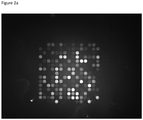
- An exemplary array is shown in Figure 2A .
- the fluorophore is positioned away from 3' end of probe.
- An adhesive hybridisation chamber with inlet and outlet ports is placed over the array of printed probes on the slide.
- the PCR product (amplicon mix/amplified DNA portion) is pipetted into the chamber to cover the array, and the array ports are sealed with adhesive seals.
- the slide is hybridised for 1 hour at 50°C. During this time, hybridisation of the Cy5 labelled PCR strand to the capture probes will take place depending on which SNP is present in the amplicon.
- seals are removed and the unbound PCR product is aspirated out of the chambers.
- 2x water washes are performed at 50°C followed by a room temperature wash in a 50ml falcon tube filled with water.
- VKORC1 probes are visible.
- the image of Figure 2A was analysed, giving the following results: Median Fluorescence Median - Neg Control Discrimination Factor (Wildtype-neg/mutant-neg) Genotype Neg control 15362.95 ⁇ 2 Wild type 37856.74 22493.79 52.22490771 Wild Type Homozygous ⁇ 2 Mutant 15793.66 430.71 ⁇ 3 Wild type 21372.19 6009.24 2.052251957 Heterozygous ⁇ 3 Mutant 18291.07 2928.12 VK Wild type 52900.15 37537.2 2.895414814 Heterozygous VK Mutant 28327.31 12964.36
Landscapes
- Chemical & Material Sciences (AREA)
- Life Sciences & Earth Sciences (AREA)
- Proteomics, Peptides & Aminoacids (AREA)
- Health & Medical Sciences (AREA)
- Organic Chemistry (AREA)
- Wood Science & Technology (AREA)
- Analytical Chemistry (AREA)
- Zoology (AREA)
- Genetics & Genomics (AREA)
- Engineering & Computer Science (AREA)
- Pathology (AREA)
- Immunology (AREA)
- Microbiology (AREA)
- Molecular Biology (AREA)
- Biotechnology (AREA)
- Biophysics (AREA)
- Physics & Mathematics (AREA)
- Biochemistry (AREA)
- Bioinformatics & Cheminformatics (AREA)
- General Engineering & Computer Science (AREA)
- General Health & Medical Sciences (AREA)
- Measuring Or Testing Involving Enzymes Or Micro-Organisms (AREA)
Description
- The present invention relates to methods, kits and devices for assaying for warfarin sensitivity in a patient. In particular, it relates to an assay that can be used in a microfluidic device and which can provide a sufficiently rapid and robust result to allow for point of care diagnosis. The invention utilises pairs of oligonucleotide primers specific for genomic
regions flanking CYP2C9 ∗2, CYP2C9∗3 and VKORC1 single nucleotide polymorphisms (SNPs) to amplify (in a multiplexed reaction) the regions of interest; and, in certain embodiments, the invention also uses specific probes for capturing the amplified regions to allow for analysis. Advantageously the capture probes allow discrimination between different alleles using allele specific probes that also allow us to detect heterozygotes as well as homozygotes and allows for identification of one or more SNPs associated with warfarin sensitivity in the clinical sample. - Clotting (thickening) is a complex process, involving a number of clotting factors produced by the liver, which helps control bleeding. The clotting factors work with cells that trigger the clotting process (platelets) to ensure blood clots, or coagulates, effectively. The liver requires a good supply of vitamin K for certain clotting factors to be produced. Warfarin is the most widely prescribed oral anticlotting/ anticoagulant. Warfarin blocks one of the enzymes that uses vitamin K to produce clotting factors, and this in turn disrupts the clotting process, resulting in it taking longer for blood to clot.
- Warfarin at appropriate levels is often prescribed for its antithrombotic benefits to prevent blood clots in people with heart disease, people who have replacement heart valves, people with an irregular heart beat (atrial fibrillation), or those with a history of heart attack, stroke, or a prior blood clot in the deep veins of the arms or legs (deep vein thrombosis (DVT)). However, appropriate dosage levels change from individual to individual and not everyone metabolises warfarin the same way. Individuals with warfarin sensitivity take longer than normal to metabolise warfarin, so the medication is in their body longer than usual and they typically require lower doses. These individuals are classified as "slow metabolizers" of warfarin. Other people with warfarin sensitivity do not need as much drug to prevent clots because their clot forming process is already slower than average and can be inhibited by low warfarin doses. If people with warfarin sensitivity take the average dose (or more) of warfarin, they are at risk of an overdose, which can cause abnormal bleeding in the brain, gastrointestinal tract, or other tissues, and may lead to serious health problems or death.
- The antithrombotic benefits of warfarin are therefore countered by a narrow therapeutic index that contributes to excessive bleeding or cerebrovascular clotting and stroke in some patients.
- A relationship between allelic variants and warfarin sensitivity has been identified, with studies showing considerable allelic variability in CYP2C9 (genbank accession no NG_008385, SEQ ID No 15) and VKORC1 (genbank accession no NG_011564, SEQ ID No 14). Certain alleles are associated with increased sensitivity to warfarin. Several variant CYP2C9 alleles are associated with reduced enzyme activity and lower clearance rates of warfarin. Patients who carry at least one copy of such a variant allele (such as CYP2C9∗2 (rs1799853) and CYP2C9∗3 (rs1057910)) have reduced metabolism leading to higher warfarin concentrations.
CYP2C9 ∗2 allele contains a C-to-T transition, leading to substitution of cysteine by arginine at amino acid position 144. TheCYP2C9 ∗3 allele is defined by an A-to-C nucleotide substitution that leads to an exchange of leucine by isoleucine at amino acid position 359. On average, they require a lower daily warfarin dose than patients who are homozygous for the wild-type CYP2C9∗1 allele. - The VKORC1 gene encodes the vitamin K epoxide reductase enzyme, the target of warfarin. Patients who carry the -1639G>A polymorphism (rs9923231) in the promoter region of the VKORC1 gene are more sensitive to warfarin and require lower doses.
- Detection of mutations is typically carried out by direct sequencing of samples. This can be a fairly lengthy and laborious process and requires a certain level of knowledge and experience. It would therefore be beneficial to provide methods and/or kits or devices to allow for rapid personalised indications of warfarin sensitivity.
- Assays for assessing warfarin sensitivity are known in the prior art. A lateral flow cell for warfarin genotyping from saliva is described by Thomas et al., (2014). Lyon et al. (2008) describe a number of commercially available assays for determining warfarin sensitivity. Sheth (2015) describes a point-of-care device utilising silicone nanowires for the genotyping of CYP2C9 and VKORC1 alleles. The present invention aims to mitigate the problems associated with the prior art. Reference to a multiplex reaction or multiplexing relates to the simultaneous measurement or detection of multiple amplicons in a single run/cycle of the assay or the simultaneous amplification of multiple different amplicons.
- In the document, references to ∗ 2 refer to CYP2C9*2(rs1799853), references to ∗3 refer to CYP2C9∗3 (rs1057910) and references to VK refer to VKORC1-1639G>A (rs9923231).
- The -1639G>A transition of rs9923231 relates to position 3588 of NG_011564 (SEQ ID No 14). The C>T transition of rs1799853 relates to position 8633 of NG_008385 (SEQ ID No 15). The A>C transition of rs1057910 relates to position 47639 of NG_008385 (SEQ ID No 15).
- According to the present invention there is provided a rapid method Z , as defined in claim 1, of determining
- warfarin sensitivity comprising; contacting a sample with pairs of oligonucleotide primers, each pair comprising a forward primer and a reverse primer, that are operable to bind genomic regions flanking CYP2C9*2(rs1799853), CYP2C9∗3(rs1057910) and VKORC1-1639G>A single nucleotide polymorphism (SNP) sites and to amplify genomic regions to give amplicons comprising said SNP sites;
- amplifying the SNP sites by polymerase chain reaction by annealing the primer pairs to the nucleic acid in the sample; simultaneously extending the annealed primers to synthesize an extension product, wherein each extension product after separation from the nucleic acid, serves as a template for the synthesis of an extension product for the other primer of each pair; and
- detecting the amplified products, if present, to indicate the presence or absence of a single nucleotide polymorphism (SNP) associated with warfarin sensitivity in the sample, wherein detection of single nucleotide polymorphisms is indicative of warfarin sensitivity.
- Preferably the SNP sites are amplified substantially simultaneously as a multiplexed reaction. This allows for greater speed but such multiplexed reactions can be challenging due to non-specific binding between primers or primers interfering with each other. This allows a result to be achieved in a microfluidics system in a relatively short timeframe such that it is appropriate for a POC diagnosis.
- Z The primer pairs are as defined in the claims and Z said primer pairs are each selected to give an amplicon of less than 150 bases
- Advantageously the inventors have found that by utilising reduced length PCR products/amplicons (amplicons of less than 150 bases) the time required for the amplification process is rapid. Typically, amplicons for this type of reaction are longer as it is easier to select appropriate primers if the sequence to be amplified is extended outwards to give more sequence options for primer design, this is particularly the case when the primers are for use in multiplex reactions.
- Preferably at least some of the PCR reagents are provided in excess compared to standard PCR protocols, where standard or typical PCR reagent concentrations are;
Standard PCR Component Standard Final Concentration 10X Standard Taq Reaction Buffer 1X 10 mM dNTPs 200 µM 10 µM Forward Primer 0.2 µM (0.05-1 µM) 10 µM Reverse Primer 0.2 µM (0.05-1 µM) Template DNA <1,000 ng Taq DNA Polymerase 1.25 units/50 µl PCR Nuclease-free water to 50µl final volume - The polymerase may also be at a higher concentration than is standard for a PCR reaction. For example, the polymerase may form 2% or more of the reaction mix.
- Z The pairs of oligonucleotide primers are as defined in claim 1.
- Preferably the pairs of oligonucleotide primers are;
Primer name Sequence Product/amplicon size (bp) SEQ ID ∗2_v1_F GGCGTTTCTCCCTCATGACGC 126 SEQ ID No 1 ∗2_v1_R GAGTAGGGTCACCCACCCTTGG SEQ ID No 2∗3_v1_F GCAAGACAGGAGCCACATGCC 112 SEQ ID No 3∗3_v2_R GAATTTAATGTCACAGGTCACTGC SEQ ID No 4 VK_v1_F GGATTATAGGCGTGAGCCACC 97 SEQ ID No 5 VK_v1_R GGTAGGTGCAACAGTAAGGGATCC SEQ ID No 6 - In the table above the F and R notations in the primer name indicate forward or reverse primers. Notably, it is generally accepted that the optimal length of PCR primers is 18-22bp or greater, however, some of the ones we use are 16bp in length.
- Alternatively, the primer ∗3_v2_R primer is a ∗3_v2_R' primer with a sequence of CTGAATTTAATGTCACAGGTCACTGCATG.
- Alternatively, the primers have at least 80% sequence homology to the above primers. Alternatively, the primers have at least 90% sequence homology to the above primers. Alternatively, the primers have at least 95% sequence homology to the above primers.
- Preferably the PCR reaction takes less than 10 minutes, more preferably less than 9 minutes, more preferably less than 8 minutes. Advantageously, in the present invention this rapid reaction can occur in a microfluidic environment due to the selection of shorter length amplicons, and the appropriate use of higher than standard concentrations of PCR reagents. This allows the generation of sufficient amplicon to allow for hybridisation to occur in a sufficiently short period of time, making it suitable for point of care (POC) testing where rapid results are important.
- Preferably the respective primer concentrations CYP2C9∗2:CYP2C9∗3:VKORC1 are 1:2:4 or 1:2:6. For example the CYP2C9∗2:CYP2C9∗3:VKORC1 final primer concentrations may be 1µM;2µM;4µM or 0.5µM;1µM;2µM or 1µM:2µM:6µM. Alternatively, when the ∗3_v2_R' primer is used the concentrations are:
Final concentration (µM) ∗2F 2.5 ∗2R 2.5 ∗ 3F 2 ∗3R' 5 vkF 5 vkR 2 - These primer concentrations and ratios were used to give a better hybridisation signal for all products. Previously, when the ∗3_v2_R' primer was used they were optimised to give even gel bands when assessed by gel electrophoresis.
- These concentrations have been used for hybridisations from buccal samples and results have been verified using a Agena MassArray™
- Advantageously, by using the relative primer concentrations identified by the inventors, this reduces non-specific amplification and also achieves relatively equal amplification of the three PCR products/amplicons.
- Preferably for each primer pair, one of the pair is labelled. Most preferably this is a fluorescent label or a charged mass tag. Alternatively, labels may be a dye, a radioactive isotope, a chemiluminescent label, a fluorescent moiety, a bioluminescent label an enzyme, and combinations thereof
- Preferably for the fluorescently labelled
CYP2C9 ∗2 primer pair the labelled primer is in excess of the unlabelled primer. Alternatively, the labelled ∗2 and unlabelled ∗2 are in equal amounts. - Preferably for the
CYP2C9 ∗3 primer pair the labelled primer is in excess of the unlabelled primer. - Preferably for the VKORC1 primer pair the labelled primer is in excess of the unlabelled primer.
- The excess amount of labelled primer is most relevant in the
CYP2C9 ∗3 primer pair and the VKORC1 primer pair. - Optionally the method further includes providing a plurality of capture probes capable of selectively binding to either wild type or mutant versions of CYP2C9*2(rs1799853),
- CYP2C9∗3(rs1057910) and VKORC1-639G>A,wherein the binding of amplified products to capture probes indicates the presence or absence of a SNP associated with warfarin sensitivity in the clinical sample.
- Advantageously the capture probes allow discrimination between different alleles using allele specific probes that also allow us to detect heterozygotes as well as homozygotes. The capture probes can be integrated onto a microarray. The microarray and capture probes can be used in conjunction with the output of the PCR to determine the genotype for each of CYP2C9*2(rs1799853), CYP2C∗3(rs1057910) and VKORC1-1639G>A.
- It is possible that the PCR can be used independently of the microarray and capture probes. Identification or detection can then follow by any appropriate means. Optionally the probes are;
Probe name Sequence ∗2-WT probe GAA CAC GGT CCT CAA TGC T ∗2-M probe GAA CAC AGT CCT CAA TGC T ∗3-WT probe ACG AGG TCC AGA GAT ACA TTG AC ∗3-M probe CGA GGT CCA GAG ATA CCT TGA C VK-WT probe CAA CCA TTG GCC GGG T VK-M probe CAA CCA TTG GCC AGG T - In the table above the WT and M notations in the probe name indicate Wild-Type or Mutant probes respectively.
- Alternatively, the probes have at least 80% sequence homology to the above probes. Alternatively, the probes have at least 90% sequence homology to the above probes. Alternatively, the probes have at least 95% sequence homology to the above probes. Preferably the probes can bind under stringent hybridisation conditions.
- Optionally the capture probes are bound to sensitive detection devices.
- Optionally the sensitive detection devices are field effect transistors (FETs). Optionally the sensitive detection devices are nanowires.
- Optionally the capture probes comprise a detectable label. Optionally this is a fluorescent label. Alternatively, it is a mass charge. Alternatively, labels may be, a dye, a radioactive isotope, a chemiluminescent label, a fluorescent moiety, a bioluminescent label an enzyme, and combinations thereof
- Optionally the sample is a whole blood sample. Optionally the sample is buccal cells. Optionally the sample is whole blood, plasma, serum, CSF, feces, urine, cultured cells, saliva, cervical or urethral swab, sputum and other biological fluids.
- Optionally, the PCR reaction uses a Phire™ DNA polymerase. Phire™ Hot Start II DNA Polymerase incorporates a dsDNA-binding domain that allows short extension times (10-15 s/kb), helps improve yields, and can increase fidelity two-fold compared to Taq DNA polymerase. Alternatively, any DNA polymerase with the ability to achieve less than 10 minute PCR could be used.
- According to an aspect of the present invention there is provided a kit for rapid determination of warfarin sensitivity, comprising pairs of oligonucleotide primers, each pair comprising a forward primer and a reverse primer, that are operable to bind genomic regions flanking CYP2C9*2(rs1799853), CYP2C9∗3(rs1057910) and VKORC1-1639G>A single nucleotide polymorphism (SNP) sites and to amplify genomic regions to give amplicons comprising said SNP sites. The primer pairs are as defined in the claims.
- Said primer pairs are each selected to give an amplicon of less than 150 bases
- Preferably the pairs of oligonucleotide primers are;
Primer name Sequence Product/amplicon size (bp) ∗2_v1_F GGCGTTTCTCCCTCATGACGC 126 ∗2_v1_R GAGTAGGGTCACCCACCCTTGG ∗3_v1_F GCAAGACAGGAGCCACATGCC 112 ∗3_v2_R GAATTTAATGTCACAGGTCACTGC VK_v1_F GGATTATAGGCGTGAGCCACC 97 VK_v1_R GGTAGGTGCAACAGTAAGGGATCC - In the table above the F and R notations in the primer name indicate forward or reverse primers.
- Alternatively, the primer ∗3_v2_R primer is a ∗3_v2_R' primer with a sequence of CTGAATTTAATGTCACAGGTCACTGCATG.
- Alternatively, the primers have at least 80% sequence homology to the above primers.
- Alternatively, the primers have at least 90% sequence homology to the above primers.
- Alternatively, the primers have at least 95% sequence homology to the above primers.
- Optionally the kit further includes a plurality of capture probes capable of selectively binding to either wild type or mutant versions of CYP2C9*2(rs1799853), CYP2C9∗3(rs1057910) and VKORC1-1639G>A .
- Optionally the probes are;
Probe name Sequence ∗2-WT probe GAA CAC GGT CCT CAA TGC T ∗2-M probe GAA CAC AGT CCT CAA TGC T ∗3-WT probe ACG AGG TCC AGA GAT ACA TTG AC ∗3-M probe CGA GGT CCA GAG ATA CCT TGA C VK-WT probe CAA CCA TTG GCC GGG T VK-M probe CAA CCA TTG GCC AGG T - Alternatively, the probes have at least 80% sequence homology to the above probes.
- Alternatively, the probes have at least 90% sequence homology to the above probes.
- Alternatively, the probes have at least 95% sequence homology to the above probes.
- Preferably the probes can bind under stringent hybridisation conditions.
- Optionally the capture probes are bound to sensitive detection devices.
- Optionally the sensitive detection devices are nanowires.
- According to an aspect of the present invention there is provided a device , as defined in claim 13, for rapid
- determination of warfarin sensitivity, comprising;
- a sample reception port;
- an amplification region for amplifying genomic regions to give amplicons comprising CYP2C9*2(rs1799853), CYP2C9∗3(rs1057910) and VKORC1-1639G>A single nucleotide polymorphism (SNP) sites, said region in use containing pairs of oligonucleotide primers, each pair comprising a forward primer and a reverse primer, that are operable to bind genomic regions flanking CYP2C9*2(rs1799853),
- CYP2C9∗3(rs1057910) and VKORC1-1639G>A single nucleotide polymorphism (SNP) sites;
- a detection region, said detection region being downstream of the amplification region, for detecting the amplicons to indicate the presence or absence of a single nucleotide polymorphism (SNP) associated with warfarin sensitivity in the sample.
- Preferably the pairs of oligonucleotide primers are;
Primer name Sequence Product/amplicon size (bp) ∗2_v1_F GGCGTTTCTCCCTCATGACGC 126 ∗2_v1_R GAGTAGGGTCACCCACCCTTGG ∗3_v1_F GCAAGACAGGAGCCACATGCC 112 ∗3_v2_R GAATTTAATGTCACAGGTCACTGC VK_v1_F GGATTATAGGCGTGAGCCACC 97 VK_v1_R GGTAGGTGCAACAGTAAGGGATCC - In the table above the F and R notations in the primer name indicate forward or reverse primers.
- Alternatively, the primer ∗3_v2_R primer is a ∗3_v2_R' primer with a sequence of CTGAATTTAATGTCACAGGTCACTGCATG.
- Alternatively, the primers have at least 80% sequence homology to the above primers.
- Alternatively, the primers have at least 90% sequence homology to the above primers.
- Alternatively, the primers have at least 95% sequence homology to the above primers.
- Preferably the detection region comprises a plurality of capture probes able to capture one or more amplified products.
- Optionally the probes are;
Probe name Sequence ∗2-WT probe GAA CAC GGT CCT CAA TGC T ∗2-M probe GAA CAC AGT CCT CAA TGC T ∗3-WT probe ACG AGG TCC AGA GAT ACA TTG AC ∗3-M probe CGA GGT CCA GAG ATA CCT TGA C VK-WT probe CAA CCA TTG GCC GGG T VK-M probe CAA CCA TTG GCC AGG T - Alternatively, the probes have at least 80% sequence homology to the above probes.
- Alternatively, the probes have at least 90% sequence homology to the above probes.
- Alternatively, the probes have at least 95% sequence homology to the above probes.
- Preferably the probes can bind under stringent hybridisation conditions.
- Optionally the detection region comprises sensitive detection devices.
- Optionally the detection region comprises a field effect transistor (FET). Optionally this may be a nanowire FET. Preferably the capture probes are bound to the FET or nanowire FET such that a binding event with an amplicon results in a measureable change in charge density or other electrical property.
- Preferably the device is a continuous flow device. The device may be in the form of a cartridge or cassette.
- Preferably the device is part of a point of care device. Ideally, it is of an appropriate size to be handheld.
- Alternatively, the detection region may comprise a surface to which capture probes are bound and a viewing window that allows the detection region to be viewed or imaged. Most preferably in this case the amplicons comprise fluorophores. and the means for detecting is a fluorescence imager.
- Preferably the device comprises, or is associated with, a means for visually imaging bound amplicons. The means for visually imaging bound amplicons is a fluorescence reader.
- Optionally the detection region comprises a plurality of capture probes capable of selectively binding to either wild type or mutant versions of CYP2C9 ∗ 2(rsI799853), CYP2C9∗3(rs1057910) and VKORC1-1639G>A .
- In order to provide a better understanding of the present invention, embodiments will be descried by way of example only and with reference to the flowing figures in which;
-
Figure 1 shows a gel image of the results of a continuous flow PCR reaction using Phire™ PCR mix and the primers of the invention. Different ratios of primers were used. Ratios in the image have the following format CYP2C9∗2: CYP2C9∗3: VK0RC1 final primer concentration; and -
Figure 2a shows an imaged hybridisation of the multiplex PCR using an imaging rig, whilstFigure 2b shows the probe layout within the array itself. Control (alignment) probes are not visible in this image. To generate a genotype, each probe pair (both probes specific to each SNP) is relevant to one another and not to the other probe pairs. Therefore inFigure 2 theCYP2C9 ∗2 Wildtype probes are visible whereas the mutant is not. The wildtype andmutant CYP2C9 ∗3 probes are visible. The wildtype and mutant VKORC1 probes are visible. - In one embodiment, a multiplexed PCR reaction can be performed on a slide using a blood sample from a patient to determine warfarin sensitivity.
- A sample of whole blood is obtained and is used at a 2% v/v ratio in the reaction.
- The following primers are Cy5 labelled at 5' end.
- Only one in each of the pairs of primers is Cy5 labelled. The forward for ∗2, the reverse for ∗3 and the forward for VK.
Primer name Sequence Product/amplicon size (bp) ∗2_v1_F GGCGTTTCTCCCTCATGACGC 126 ∗2_v1_R GAGTAGGGTCACCCACCCTTGG ∗3_v1_F GCAAGACAGGAGCCACATGCC 112 ∗3_v2_R GAATTTAATGTCACAGGTCACTGC VK_v1_F GGATTATAGGCGTGAGCCACC 97 VK_v1_R GGTAGGTGCAACAGTAAGGGATCC - It would however be appreciated by one skilled in the art that alternative dyes could be used to label the primers. In some embodiments, a dual-fluorophore can be used to boost fluorescence signal and/or reduce time needed to reach detectable signal.
- Primer concentrations for this embodiment are shown below;
Primer Final Concentration (µM) ∗2_v1_F 0.33 ∗2_v1_R 0.33 ∗3_v1_F 0.25 ∗3_v2_R 1.25 VK_v1_F 3.33 VK_v1_R 0.83 - Notably, for the ∗3 and VK primers higher concentrations of one primer in the primer pair. Asymmetry of primers aids downstream hybridisation by limiting single stranded complements that could compete for binding to the fluorescent strand
- 200uM of each dNTP is used, along with the Phire™ buffer. The Phire II™ polymerase is used at 2% (V/V). The Phire II™ polymerase is of particular use (although is not the only available polymerase) as it can be used with whole blood - one skilled in the art would appreciate that if the sample had been pre-processed e.g. to provide purified nucleic acid, then a broader range of polymerases would be available for use.
- In an alternative embodiment, the ∗3_v2_R primer is a ∗3_v2_R' primer with a sequence of CTGAATTTAATGTCACAGGTCACTGCATG. When the ∗3_v2_R' primer is used the concentrations can be:
Final concentration (µM) ∗2F 2.5 ∗2R 2.5 ∗ 3F 2 ∗3R' 5 vkF 5 vkR 2 - Again, there is asymmetry in the concentrations of the ∗3 and VK primers.
- A polymerase chain reaction is then carried out. In this example, the PCR reaction is carried out on a benchtop PCR machine, however it will be appreciated that the PCR could be carried out on a chip, cassette or similar which may be integrated with upstream and/or downstream processing in the same device.
- The following benchtop PCR protocol is exemplary to provide amplicons for further detection and/or processing;
- An example for a 120ul reaction (volumes can be adjusted if necessary depending on reaction volume)
PCR Constituent Volume (ul) Final concentration in Reaction Water 81.2 - 5x Phire buffer 24 1× dNTPs (10mM each) 2.4 200uM each PS145 (100µM) 0.4 0.333333333 µM SN42 (100µM) 0.4 0.333333333 µM SN43 (100µM) 0.3 0.25 µM PS146 (100µM) 1.5 1.25 µM PS120 (100µM) 4 3.333333333 µM PS121 (100µM) 1 0.833333333 µM Blood 2.4 2% Phire Polymerase 2.4 2% - All PCR constituents are mixed together and amplification occurs on a bench-top thermal cycler using the following protocol;
Temperature (°C) Duration (seconds) Cycles 98 60 1 98 1 35 60 2 35 72 2 35 72 60 1 4 ∞ - - After PCR amplification has occurred, the PCR tube is spun down to separate amplified DNA and blood precipitate. At least a portion of the resulting amplified DNA material is applied to a detection region.
- In this example, the detection region comprises a substrate onto which probes are printed. The detection region is prepared by printing the probes then washing to remove unbound probe and blocking to prevent unwanted non-specific binding to the substrate;
- Washing;
- Wash slides to remove unbound probe molecules and buffer substances to avoid interference with subsequent hybridization experiments.
- Rinse 2 × 2 min in 0.2 % SDS at room temperature.
- Rinse 2 × 2 min in diH2O at room temperature.
- <optional>Denaturation step for arrays spotted with PCR-probes: 1 × 3 min in boiling diH2O.
- Rinse 1 × 1 min in diH2O at room temperature. Note: The volume of washing solution is at least 250 ml for 5 slides.
- Proceed to Blocking immediately.
- Slides are not allowed to dry in between washing steps and between washing and blocking.
- Block the slides with Aldehyde Blocking Solution (made by dissolving 1.0 g NaBH4 in 300 ml PBS and 100 ml ethanol) as follows:
- Incubate slides 1 × 15 min in Aldehyde Blocking Solution at room temperature. The volume of blocking solution should be at least 100 ml for 5 slides.
- Rinse 2 × 2 min in 0.2 % SDS at room temperature.
- Rinse 2 × 2 min in diH2O at room temperature.
- Dry the slides in an oil-free air or nitrogen stream or by centrifugation (200 × g for 5 min) to avoid any water stains on the slide surface.
- The probe concentration is 100µM - 2 drops of volume 200picolitres per drop. Amino terminated probes are attached to the surface with a spacer.
- The probes are organised in array to minimise any imaging bias. An exemplary array is shown in
Figure 2A . - When using Cy5 labelled alignment probes, the fluorophore is positioned away from 3' end of probe.
- An adhesive hybridisation chamber with inlet and outlet ports is placed over the array of printed probes on the slide. The PCR product (amplicon mix/amplified DNA portion) is pipetted into the chamber to cover the array, and the array ports are sealed with adhesive seals.
- The slide is hybridised for 1 hour at 50°C. During this time, hybridisation of the Cy5 labelled PCR strand to the capture probes will take place depending on which SNP is present in the amplicon.
- Following the hybridisation, seals are removed and the unbound PCR product is aspirated out of the chambers.
- To ensure all unbound nucleic acid amplicons is removed, 2x water washes are performed at 50°C followed by a room temperature wash in a 50ml falcon tube filled with water.
- The slide is then dried using a slide centrifuge and imaged. Detection of the bound fluorescently labelled Cy5 amplicons is carried out using a fluorescence reader. An exemplary image is shown in
Figure 2A (with the key to the probe printing being shown inFigure 2B ) where theCYP2C9 ∗2 Wildtype probes are visible whereas the mutant is not. The wildtype andmutant CYP2C9 ∗3 probes are visible. The wildtype and mutant - VKORC1 probes are visible. The image of
Figure 2A was analysed, giving the following results:Median Fluorescence Median - Neg Control Discrimination Factor (Wildtype-neg/mutant-neg) Genotype Neg control 15362.95 ∗ 2 Wild type 37856.74 22493.79 52.22490771 Wild Type Homozygous ∗ 2 Mutant 15793.66 430.71 ∗3 Wild type 21372.19 6009.24 2.052251957 Heterozygous ∗3 Mutant 18291.07 2928.12 VK Wild type 52900.15 37537.2 2.895414814 Heterozygous VK Mutant 28327.31 12964.36 - It will be appreciated that features from one embodiment may be appropriately incorporated into another embodiment unless technically unfeasible to do so.
- With respect to the use of substantially any plural and/or singular terms herein, those having skill in the art can translate from the plural to the singular and/or from the singular to the plural as is appropriate to the context and/or application. The various singular/plural permutations may be expressly set forth herein for sake of clarity.
- It will be understood by those within the art that, in general, terms used herein, and especially in the appended claims are generally intended as "open" terms (e.g., the term "including" should be interpreted as "including but not limited to," the term "having" should be interpreted as "having at least," the term "includes" should be interpreted as "includes but is not limited to," etc.). It will be further understood by those within the art that if a specific number of an introduced claim recitation is intended, such an intent will be explicitly recited in the claim, and in the absence of such recitation no such intent is present. For example, as an aid to understanding, the following appended claims may contain usage of the introductory phrases "at least one" and "one or more" to introduce claim recitations. However, the use of such phrases should not be construed to imply that the introduction of a claim recitation by the indefinite articles "a" or "an" limits any particular claim containing such introduced claim recitation to embodiments containing only one such recitation, even when the same claim includes the introductory phrases "one or more" or "at least one" and indefinite articles such as "a" or "an" (e.g., "a" and/or "an" should be interpreted to mean "at least one" or "one or more"); the same holds true for the use of definite articles used to introduce claim recitations. In addition, even if a specific number of an introduced claim recitation is explicitly recited, those skilled in the art will recognize that such recitation should be interpreted to mean at least the recited number (e.g., the bare recitation of "two recitations," without other modifiers, means at least two recitations, or two or more recitations).
- It will be appreciated that various embodiments of the present disclosure have been described herein for purposes of illustration.
- Thomas Sebastian, Christopher G. Cooney, Jennifer Parker, Peter Qu, Alexander Perov, Julia B. Golova, Lindsay Pozza, Rafal M. Iwasiow, Rebecca Holmberg, Integrated amplification microarray system in a lateral flow cell for warfarin genotyping from saliva, Clinica Chimica Acta, Volume 429, 2014, Pages 198-205, ISSN 0009-8981, https://doi.org/10.1016/j.cca.2013.12.009.
- Lyon Elaine, Gwen McMillin, Roberta Melis, Pharmacogenetic Testing for Warfarin Sensitivity, Clinics in Laboratory Medicine, Volume 28, Issue 4, 2008, Pages 525-537, ISSN 0272-2712, https://doi.org/10.1016/j.cll.2008.09.001 .
- Sheth Harsh Jayesh, Genetic determinants of response to aspirin and warfarin and development of silicon nanowire based genotyping, PhD Thesis, 2015, Newcastle University, Institute of Genetic Medicine, http://hdl.handle.net/10443/3042 .
-
- <110> QuantuMDx Group Limited
- <120> Warfarin Sensitivity Assay
- <130> P000057.WO
- <150>
GB1614464.4
<151> 2016-08-24 - <160> 15
- <170> PatentIn version 3.5
- <210> 1
<211> 21
<212> DNA
<213> Artificial Sequence - <220>
<223> Primer - <400> 1
ggcgtttctc cctcatgacg c 21 - <210> 2
<211> 22
<212> DNA
<213> Artificial Sequence - <220>
<223> Primer - <400> 2
gagtagggtc acccaccctt gg 22 - <210> 3
<211> 22
<212> DNA
<213> Artificial Sequence - <220>
<223> Primer - <400> 3
gagtagggtc acccaccctt gg 22 - <210> 4
<211> 24
<212> DNA
<213> Artificial Sequence - <220>
<223> Primer - <400> 4
gaatttaatg tcacaggtca ctgc 24 - <210> 5
<211> 21
<212> DNA
<213> Artificial Sequence - <220>
<223> Primer - <400> 5
ggattatagg cgtgagccac c 21 - <210> 6
<211> 24
<212> DNA
<213> Artificial Sequence - <220>
<223> Primer - <400> 6
ggtaggtgca acagtaaggg atcc 24 - <210> 7
<211> 19
<212> DNA
<213> Artificial Sequence - <220>
<223> Probe - <400> 7
gaacacggtc ctcaatgct 19 - <210> 8
<211> 19
<212> DNA
<213> Artificial Sequence - <220>
<223> Probe - <400> 8
gaacacagtc ctcaatgct 19 - <210> 9
<211> 23
<212> DNA
<213> Artificial Sequence - <220>
<223> Probe - <400> 9
acgaggtcca gagatacatt gac 23 - <210> 10
<211> 22
<212> DNA
<213> Artificial Sequence - <220>
<223> Primer - <400> 10
cgaggtccag agataccttg ac 22 - <210> 11
<211> 16
<212> DNA
<213> Artificial Sequence - <220>
<223> Probe - <400> 11
caaccattgg ccgggt 16 - <210> 12
<211> 16
<212> DNA
<213> Artificial Sequence - <220>
<223> Probe - <400> 12
caaccattgg ccaggt 16 - <210> 13
<211> 29
<212> DNA
<213> Artificial Sequence - <220>
<223> Primer - <400> 13
ctgaatttaa tgtcacaggt cactgcatg 29 - <210> 14
<211> 4158
<212> DNA
<213> Homo sapiens - <400> 14


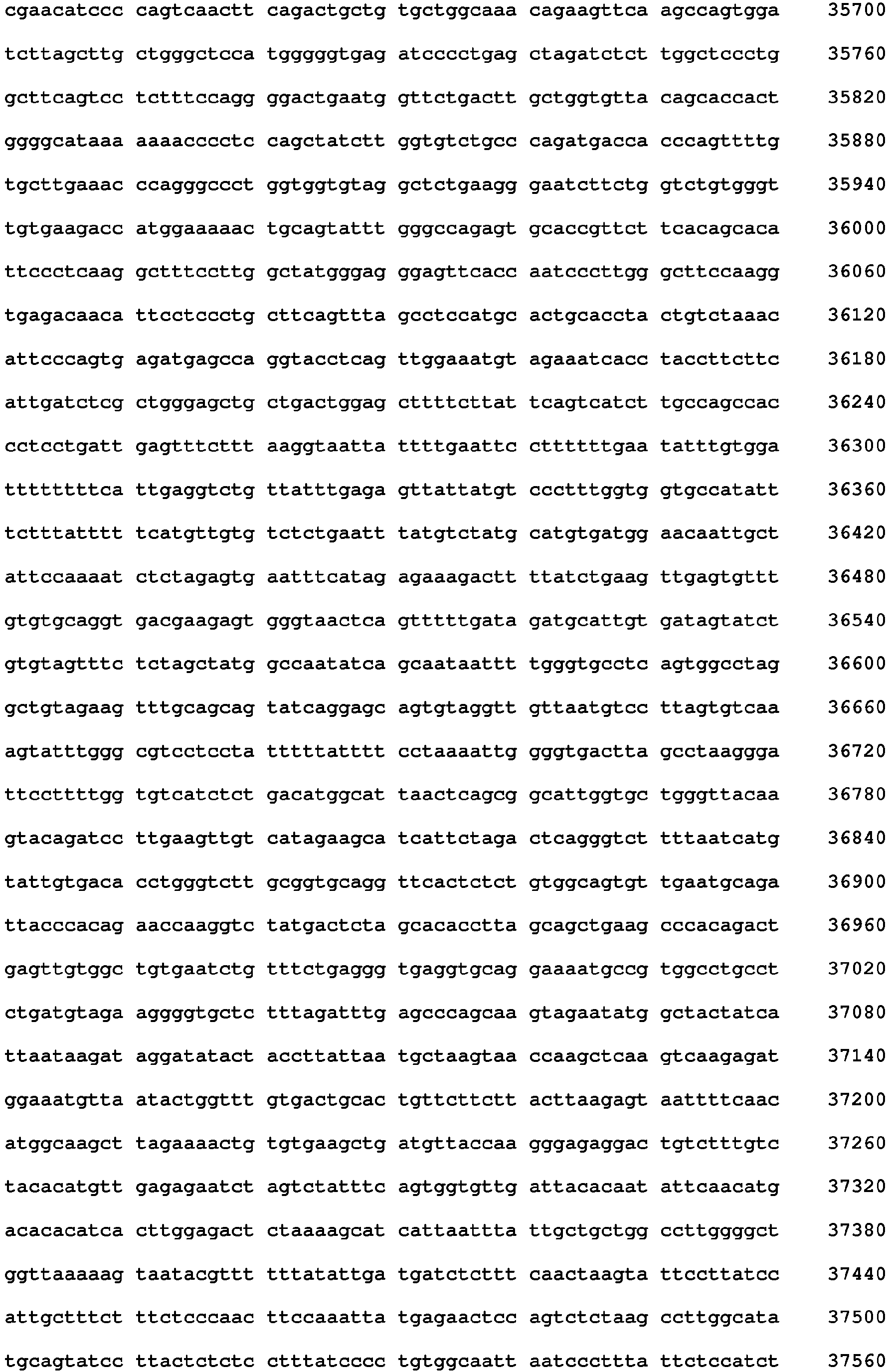
- <210> 15
<211> 57734
<212> DNA
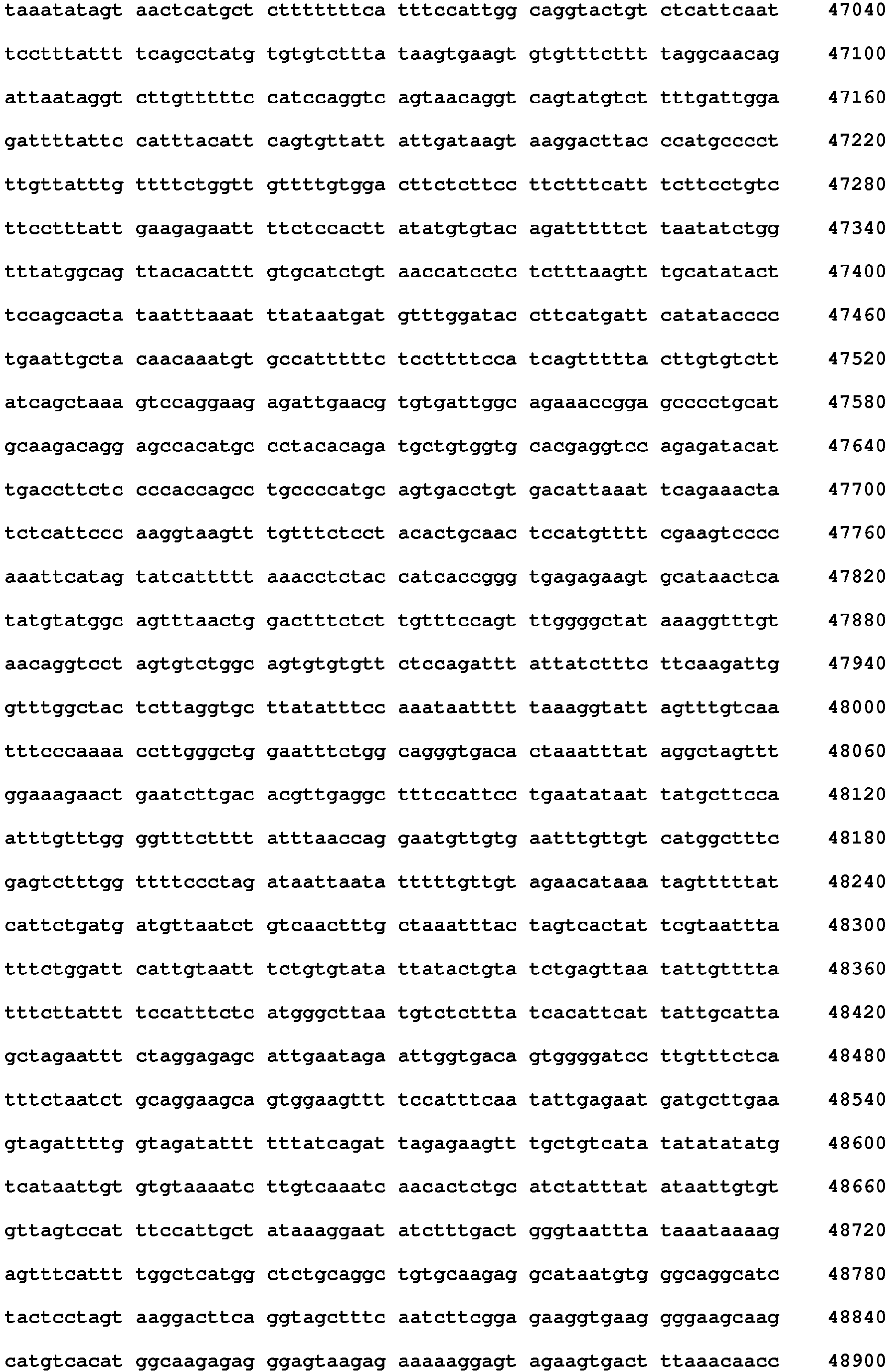
<213> Homo sapiens - <400> 15






Claims (15)
- A rapid method of determining warfarin sensitivity for use in a microfluidic device comprising; contacting Z a sample with pairs of oligonucleotide primers, each pair comprising a forward primer and a reverse primer, wherein the pairs of oligonucleotide primers comprise;
Primer name Sequence SEQ ID ∗2_v1_F GGCGTTTCTCCCTCATGACGC SEQ ID 1 ∗2_v1_R GAGTAGGGTCACCCACCCTTGG SEQ ID 2 ∗3_v1_F GCAAGACAGGAGCCACATGCC SEQ ID 3 ∗3_v2_R or ∗3_v2_R' GAATTTAATGTCACAGGTCACTGC SEQ ID 4 CTGAATTTAATGTCACAGGTCACTGCATG SEQ ID 13 VK_v1_F GGATTATAGGCGTGAGCCACC SEQ ID 5 VK_v1_R GGTAGGTGCAACAGTAAGGGATCC SEQ ID 6 or wherein the pairs of oligonucleotide primers have at least 80% sequence homology to the primers identified as SEQ ID 1, 2, 3, 4, 5 and 6;and are operable to bind genomic regions flanking CYP2C9∗2 (rs1799853), CYP2C9∗3 (rs1057910) and VKORC1-1639G>A (rs9923231) single nucleotide polymorphism (SNP) sites and to amplify genomic regions to give amplicons comprising said SNP sites;amplifying, substantially simultaneously, the SNP sites by polymerase chain reaction by annealing the primer pairs to the nucleic acid present in the sample; simultaneously extending the annealed primers to synthesize an extension product, wherein each extension product after separation from the nucleic acid, serves as a template for the synthesis of an extension product for the other primer of each pair; anddetecting the amplified products, if present, to indicate the presence or absence of a single nucleotide polymorphism (SNP) associated with warfarin sensitivity in the sample, wherein detection of single nucleotide polymorphisms is indicative of warfarin sensitivity. - A method as in Claim 1 wherein the pairs of oligonucleotide primers have at least 90% sequence homology, or at least, 95% sequence homology to the primers identified as SEQ ID 1, 2, 3, 4, 5 and 6.
- A method as in any of the previous claims wherein the respective primer pair concentrations CYP2C9∗2:CYP2C9∗3:VKORC1 are 1:2:4 or 1:2:6.
- A method as in any of the previous claims wherein for each primer pair, one of the pair is labelled.
- A method as in any of the previous Claims wherein the detecting includes the step of providing a plurality of capture probes capable of selectively binding to either wild type or mutant versions Z CYP2C9*2(rs1799853), CYP2C9∗3(rs1057910) and VKORC1-1639G>A, wherein the binding of amplified products to capture probes indicates the presence or absence of a SNP associated with warfarin sensitivity in the clinical sample, wherein the capture probes comprise;
Probe name Sequence SEQ ID ∗2-WT probe GAA CAC GGT CCT CAA TGC T SEQ ID No 7 ∗2-M probe GAA CAC AGT CCT CAA TGC T SEQ ID No 8 ∗3-WT probe ACG AGG TCC AGA GAT ACA TTG AC SEQ ID No 9 ∗3-M probe CGA GGT CCA GAG ATA CCT TGA C SEQ ID No 10 VK-WT probe CAA CCA TTG GCC GGG T SEQ ID No 11 VK-M probe CAA CCA TTG GCC AGG T SEQ ID No 12 - A kit for rapid determination of warfarin sensitivity and for use in a microfluidic device, comprising pairs of oligonucleotide primers, each pair comprising a forward primer and a reverse primer, wherein the pairs of oligonucleotide primers comprise;
Primer name Sequence SEQ ID ∗2_v1_F GGCGTTTCTCCCTCATGACGC SEQ ID 1 ∗2_v1_R GAGTAGGGTCACCCACCCTTGG SEQ ID 2 ∗3_v1_F GCAAGACAGGAGCCACATGCC SEQ ID 3 ∗3_v2_R or ∗3_v2_R' GAATTTAATGTCACAGGTCACTGC SEQ ID 4 CTGAATTTAATGTCACAGGTCACTGCATG SEQ ID 13 VK_v1_F GGATTATAGGCGTGAGCCACC SEQ ID 5 VK_v1_R GGTAGGTGCAACAGTAAGGGATCC SEQ ID 6 or wherein the pairs of oligonucleotide primers have at least 80% sequence homology to the primers identified in SEQ ID No's 1, 2, 3, 4, 5;and are operable to bind genomic regions flanking CYP2C9*2(rs1799853) ZCYP2C9∗3(rs1057910) and VKORC1-1639G>A single nucleotide polymorphism (SNP) sites and to amplify genomic regions to give amplicons comprising said SNP sites; and reagents for carrying out a polymerase chain reaction, including a polymerase. - A kit as in Claim 6 wherein the primers are the primers as identified in SEQ ID No's 1, 2, 3, 4, 5 and 6.
- A kit as in Claim 6 wherein the primers have at least 90% sequence homology, or at least 95% sequence homology, to the primers identified in SEQ ID No's 1, 2, 3, 4, 5 and 6.
- A kit as in any of Claims 6 to 8, further including a plurality of capture probes capable of selectively binding to either wild type or mutant versions of CYP2C9*2(rs1799853), CYP2C9∗3(rs1057910) and VKORC1-1639G>A.
- A kit as in Claim 9 wherein the probes comprise;
Probe name Sequence SEQ ID ∗2-WT probe GAA CAC GGT CCT CAA TGC T SEQ ID No 7 ∗2-M probe GAA CAC AGT CCT CAA TGC T SEQ ID No 8 ∗3-WT probe ACG AGG TCC AGA GAT ACA TTG AC SEQ ID No 9 ∗3-M probe CGA GGT CCA GAG ATA CCT TGA C SEQ ID No 10 VK-WT probe CAA CCA TTG GCC GGG T SEQ ID No 11 VK-M probe CAA CCA TTG GCC AGG T SEQ ID No 12 - A kit as in any of Claims 9 or 10 wherein the capture probes are the probes identified as SEQ ID No's 7, 8, 9, 10, 11 and 12 or have at least 80% sequence homology, or at least 90% sequence homology, or at least, 95% sequence homology to the capture probes identified as SEQ ID No's 7, 8 9, 10, 11 and 12.
- A kit as in any of Claims 9 to 11 wherein the capture probes are bound to sensitive detection devices that may be nanowires.
- A microfluidic device for rapid determination of warfarin sensitivity, comprising;a sample reception port;an amplification region for amplifying genomic regions to give amplicons comprising CYP2C9*2(rs1799853), CYP2C9∗3(rs1057910) and VKORC1-1639G>A single nucleotide polymorphism (SNP) sites, said region in use containing pairs of oligonucleotide primers, each pair comprising a forward primer and a reverse primer, wherein the pairs of oligonucleotide primers comprise;
Primer name Sequence SEQ ID ∗2_v1_F GGCGTTTCTCCCTCATGACGC SEQ ID 1 ∗2_v1_R GAGTAGGGTCACCCACCCTTGG SEQ ID 2 ∗3_v1_F GCAAGACAGGAGCCACATGCC SEQ ID 3 ∗3_v2_R or ∗3_v2_R' GAATTTAATGTCACAGGTCACTGC SEQ ID 4 CTGAATTTAATGTCACAGGTCACTGCATG SEQ ID 13 VK_v1_F GGATTATAGGCGTGAGCCACC SEQ ID 5 VK_v1_R GGTAGGTGCAACAGTAAGGGATCC SEQ ID 6 or wherein the pairs of oligonucleotide primers have at least 80% sequence homology to the primers identified in SEQ ID No's 1, 2, 3, 4, 5 and 6;and are operable to bind genomic regions flanking CYP2C9*2(rs1799853)CYP2C9∗3(rs1057910) and VKORC1-1639G>A single nucleotide polymorphism (SNP) sites;a detection region, said detection region being downstream of the amplification region, for detecting the amplicons to indicate the presence or absence of a single nucleotide polymorphism (SNP) associated with warfarin sensitivity in the sample. - A device as in Claim 13 wherein the primers have at least 90% sequence homology, or at least 95% sequence homology, to the primers identified in SEQ ID No's 1, 2, 3, 4, 5 and 6.
- A device as in any of Claims 13 or 14 wherein the detection region comprises a plurality of capture probes comprising;
Probe name Sequence SEQ ID ∗2-WT probe GAA CAC GGT CCT CAA TGC T SEQ ID No 7 ∗2-M probe GAA CAC AGT CCT CAA TGC T SEQ ID No 8 ∗3-WT probe ACG AGG TCC AGA GAT ACA TTG AC SEQ ID No 9 ∗3-M probe CGA GGT CCA GAG ATA CCT TGA C SEQ ID No 10 VK-WT probe CAA CCA TTG GCC GGG T SEQ ID No 11 VK-M probe CAA CCA TTG GCC AGG T SEQ ID No 12
Applications Claiming Priority (2)
| Application Number | Priority Date | Filing Date | Title |
|---|---|---|---|
| GBGB1614464.4A GB201614464D0 (en) | 2016-08-24 | 2016-08-24 | Warfarin sensitivity assay |
| PCT/EP2017/070767 WO2018036881A1 (en) | 2016-08-24 | 2017-08-16 | Warfarin sensitivity assay |
Publications (2)
| Publication Number | Publication Date |
|---|---|
| EP3504339A1 EP3504339A1 (en) | 2019-07-03 |
| EP3504339B1 true EP3504339B1 (en) | 2022-03-16 |
Family
ID=57045614
Family Applications (1)
| Application Number | Title | Priority Date | Filing Date |
|---|---|---|---|
| EP17758468.7A Not-in-force EP3504339B1 (en) | 2016-08-24 | 2017-08-16 | Warfarin sensitivity assay |
Country Status (3)
| Country | Link |
|---|---|
| EP (1) | EP3504339B1 (en) |
| GB (1) | GB201614464D0 (en) |
| WO (1) | WO2018036881A1 (en) |
Families Citing this family (1)
| Publication number | Priority date | Publication date | Assignee | Title |
|---|---|---|---|---|
| CN111893174A (en) * | 2020-07-23 | 2020-11-06 | 上海联吉医学检验所有限公司 | Method for joint detection of cerebral apoplexy medication gene loci, primer group, probe group and kit thereof |
Family Cites Families (3)
| Publication number | Priority date | Publication date | Assignee | Title |
|---|---|---|---|---|
| KR20110109627A (en) * | 2010-03-31 | 2011-10-06 | 주식회사 파나진 | Method and kit for genotyping of warfarin metabolism-related genes using PNA-based real-time PCR clamping |
| CN103627789A (en) * | 2013-08-21 | 2014-03-12 | 中山大学达安基因股份有限公司 | Kit for detecting warfarin sensitivity gene by using electrochemical gene sensor method |
| CN103710432A (en) * | 2013-10-31 | 2014-04-09 | 上海百傲科技股份有限公司 | Specific primer pair and specific probe for CYP2C9 (cytochrome P450 2C9) and (vitamin K epoxide reductase complex subunit 1) VKORC1 gene chip detection |
-
2016
- 2016-08-24 GB GBGB1614464.4A patent/GB201614464D0/en not_active Ceased
-
2017
- 2017-08-16 WO PCT/EP2017/070767 patent/WO2018036881A1/en not_active Ceased
- 2017-08-16 EP EP17758468.7A patent/EP3504339B1/en not_active Not-in-force
Also Published As
| Publication number | Publication date |
|---|---|
| EP3504339A1 (en) | 2019-07-03 |
| WO2018036881A1 (en) | 2018-03-01 |
| GB201614464D0 (en) | 2016-10-05 |
Similar Documents
| Publication | Publication Date | Title |
|---|---|---|
| CN112080563B (en) | Kit for detecting accurate medication genes of chronic diseases | |
| AU2016266065A1 (en) | Methods for pcr and hla typing using raw blood | |
| JP5290957B2 (en) | Probes for detecting polymorphisms in immune-related genes and uses thereof | |
| CN105473736A (en) | Nanoprobe-based genetic testing | |
| CN101886117A (en) | Assay kits for identifying single nucleotide polymorphisms of target nucleic acids | |
| RU2689400C1 (en) | Method of analyzing polymorphic markers in the genes vkorc1, cyp4f2, cyp2c9, cyp2c19, abcb1, itgb3 to determine individual sensitivity to anticoagulant drugs | |
| TWI567202B (en) | Method and kit for determination of alcohol metabolizing genes | |
| US7914996B2 (en) | Polynucleotide associated with a colon cancer comprising single nucleotide polymorphism, microarray and diagnostic kit comprising the same and method for diagnosing a colon cancer using the polynucleotide | |
| WO2018036881A1 (en) | Warfarin sensitivity assay | |
| JP6053681B2 (en) | Method and kit for diagnosing glaucoma in dogs | |
| KR101100437B1 (en) | Polynucleotides associated with colorectal cancer, including monobasic polymorphs, microarrays and diagnostic kits comprising the same, and methods of diagnosing colorectal cancer using the same | |
| EP1709174A1 (en) | A polynucleotide associated with a type ii diabetes mellitus comprising single nucleotide polymorphism, microarray and diagnostic kit comprising the same and method for analyzing polynucleotide using the same | |
| EP4253564A1 (en) | Target nucleic acid amplification method with high specificity and target nucleic acid amplifying composition using same | |
| RU2549682C1 (en) | Method for analysis of somatic mutations in pi3k gene using lna-blocking multiplex pcr and subsequent hybridisation with oligonucleotide biological microchip (biochip) | |
| CN110684832A (en) | Kit for detecting polymorphism of folate-related gene and using method thereof | |
| EP1848821B1 (en) | Polynucleotide associated with breast cancer comprising single nucleotide polymorphism, microarray and diagnostic kit comprising the same and method for diagnosing breast cancer using the same | |
| KR20170049768A (en) | Single nucleotide polymorphism markers for determining of skin color and melanism sensitivity and use thereof | |
| Shammas et al. | ThalassoChip, an array mutation and single nucleotide polymorphism detection tool for the diagnosis of β-thalassaemia. | |
| JP4859088B2 (en) | Method and kit for detecting human WNT5B gene polymorphism associated with type 2 diabetes | |
| TWI707864B (en) | Oligonucleotide microarray for detection of canine mdr1 gene mutations and determination method thereof and method for determination of the risk of chemotherapy side effects to a subject | |
| RU2297456C2 (en) | Diagnosis of mycobacterium tuberculosis strain sensitivity to isoniaside | |
| JP2025060777A (en) | Gene polymorphism detection method | |
| CN103031321B (en) | Including the CYP2C9 genetic fragment of 896C > G sudden change, coded protein fragments and application thereof | |
| CN103031320B (en) | Comprise the CYP2C9 gene fragment of 329T > C sudden change, coded protein fragments and application thereof | |
| CN103031319B (en) | Including the CYP2C9 genetic fragment of 371G > A sudden change, coded protein fragments and application thereof |
Legal Events
| Date | Code | Title | Description |
|---|---|---|---|
| STAA | Information on the status of an ep patent application or granted ep patent |
Free format text: STATUS: UNKNOWN |
|
| STAA | Information on the status of an ep patent application or granted ep patent |
Free format text: STATUS: THE INTERNATIONAL PUBLICATION HAS BEEN MADE |
|
| PUAI | Public reference made under article 153(3) epc to a published international application that has entered the european phase |
Free format text: ORIGINAL CODE: 0009012 |
|
| STAA | Information on the status of an ep patent application or granted ep patent |
Free format text: STATUS: REQUEST FOR EXAMINATION WAS MADE |
|
| 17P | Request for examination filed |
Effective date: 20190212 |
|
| AK | Designated contracting states |
Kind code of ref document: A1 Designated state(s): AL AT BE BG CH CY CZ DE DK EE ES FI FR GB GR HR HU IE IS IT LI LT LU LV MC MK MT NL NO PL PT RO RS SE SI SK SM TR |
|
| AX | Request for extension of the european patent |
Extension state: BA ME |
|
| DAV | Request for validation of the european patent (deleted) | ||
| DAX | Request for extension of the european patent (deleted) | ||
| STAA | Information on the status of an ep patent application or granted ep patent |
Free format text: STATUS: EXAMINATION IS IN PROGRESS |
|
| 17Q | First examination report despatched |
Effective date: 20210324 |
|
| REG | Reference to a national code |
Ref country code: DE Ref legal event code: R079 Ref document number: 602017054662 Country of ref document: DE Free format text: PREVIOUS MAIN CLASS: C12Q0001680000 Ipc: C12Q0001688300 |
|
| RIC1 | Information provided on ipc code assigned before grant |
Ipc: C12Q 1/6883 20180101AFI20210903BHEP |
|
| GRAP | Despatch of communication of intention to grant a patent |
Free format text: ORIGINAL CODE: EPIDOSNIGR1 |
|
| STAA | Information on the status of an ep patent application or granted ep patent |
Free format text: STATUS: GRANT OF PATENT IS INTENDED |
|
| INTG | Intention to grant announced |
Effective date: 20211020 |
|
| GRAS | Grant fee paid |
Free format text: ORIGINAL CODE: EPIDOSNIGR3 |
|
| GRAA | (expected) grant |
Free format text: ORIGINAL CODE: 0009210 |
|
| STAA | Information on the status of an ep patent application or granted ep patent |
Free format text: STATUS: THE PATENT HAS BEEN GRANTED |
|
| AK | Designated contracting states |
Kind code of ref document: B1 Designated state(s): AL AT BE BG CH CY CZ DE DK EE ES FI FR GB GR HR HU IE IS IT LI LT LU LV MC MK MT NL NO PL PT RO RS SE SI SK SM TR |
|
| REG | Reference to a national code |
Ref country code: GB Ref legal event code: FG4D |
|
| REG | Reference to a national code |
Ref country code: CH Ref legal event code: EP Ref country code: DE Ref legal event code: R096 Ref document number: 602017054662 Country of ref document: DE |
|
| REG | Reference to a national code |
Ref country code: IE Ref legal event code: FG4D |
|
| REG | Reference to a national code |
Ref country code: AT Ref legal event code: REF Ref document number: 1475915 Country of ref document: AT Kind code of ref document: T Effective date: 20220415 |
|
| REG | Reference to a national code |
Ref country code: LT Ref legal event code: MG9D |
|
| REG | Reference to a national code |
Ref country code: NL Ref legal event code: MP Effective date: 20220316 |
|
| PG25 | Lapsed in a contracting state [announced via postgrant information from national office to epo] |
Ref country code: SE Free format text: LAPSE BECAUSE OF FAILURE TO SUBMIT A TRANSLATION OF THE DESCRIPTION OR TO PAY THE FEE WITHIN THE PRESCRIBED TIME-LIMIT Effective date: 20220316 Ref country code: RS Free format text: LAPSE BECAUSE OF FAILURE TO SUBMIT A TRANSLATION OF THE DESCRIPTION OR TO PAY THE FEE WITHIN THE PRESCRIBED TIME-LIMIT Effective date: 20220316 Ref country code: NO Free format text: LAPSE BECAUSE OF FAILURE TO SUBMIT A TRANSLATION OF THE DESCRIPTION OR TO PAY THE FEE WITHIN THE PRESCRIBED TIME-LIMIT Effective date: 20220616 Ref country code: LT Free format text: LAPSE BECAUSE OF FAILURE TO SUBMIT A TRANSLATION OF THE DESCRIPTION OR TO PAY THE FEE WITHIN THE PRESCRIBED TIME-LIMIT Effective date: 20220316 Ref country code: HR Free format text: LAPSE BECAUSE OF FAILURE TO SUBMIT A TRANSLATION OF THE DESCRIPTION OR TO PAY THE FEE WITHIN THE PRESCRIBED TIME-LIMIT Effective date: 20220316 Ref country code: BG Free format text: LAPSE BECAUSE OF FAILURE TO SUBMIT A TRANSLATION OF THE DESCRIPTION OR TO PAY THE FEE WITHIN THE PRESCRIBED TIME-LIMIT Effective date: 20220616 |
|
| REG | Reference to a national code |
Ref country code: AT Ref legal event code: MK05 Ref document number: 1475915 Country of ref document: AT Kind code of ref document: T Effective date: 20220316 |
|
| PG25 | Lapsed in a contracting state [announced via postgrant information from national office to epo] |
Ref country code: LV Free format text: LAPSE BECAUSE OF FAILURE TO SUBMIT A TRANSLATION OF THE DESCRIPTION OR TO PAY THE FEE WITHIN THE PRESCRIBED TIME-LIMIT Effective date: 20220316 Ref country code: GR Free format text: LAPSE BECAUSE OF FAILURE TO SUBMIT A TRANSLATION OF THE DESCRIPTION OR TO PAY THE FEE WITHIN THE PRESCRIBED TIME-LIMIT Effective date: 20220617 Ref country code: FI Free format text: LAPSE BECAUSE OF FAILURE TO SUBMIT A TRANSLATION OF THE DESCRIPTION OR TO PAY THE FEE WITHIN THE PRESCRIBED TIME-LIMIT Effective date: 20220316 |
|
| PG25 | Lapsed in a contracting state [announced via postgrant information from national office to epo] |
Ref country code: NL Free format text: LAPSE BECAUSE OF FAILURE TO SUBMIT A TRANSLATION OF THE DESCRIPTION OR TO PAY THE FEE WITHIN THE PRESCRIBED TIME-LIMIT Effective date: 20220316 |
|
| PG25 | Lapsed in a contracting state [announced via postgrant information from national office to epo] |
Ref country code: SM Free format text: LAPSE BECAUSE OF FAILURE TO SUBMIT A TRANSLATION OF THE DESCRIPTION OR TO PAY THE FEE WITHIN THE PRESCRIBED TIME-LIMIT Effective date: 20220316 Ref country code: SK Free format text: LAPSE BECAUSE OF FAILURE TO SUBMIT A TRANSLATION OF THE DESCRIPTION OR TO PAY THE FEE WITHIN THE PRESCRIBED TIME-LIMIT Effective date: 20220316 Ref country code: RO Free format text: LAPSE BECAUSE OF FAILURE TO SUBMIT A TRANSLATION OF THE DESCRIPTION OR TO PAY THE FEE WITHIN THE PRESCRIBED TIME-LIMIT Effective date: 20220316 Ref country code: PT Free format text: LAPSE BECAUSE OF FAILURE TO SUBMIT A TRANSLATION OF THE DESCRIPTION OR TO PAY THE FEE WITHIN THE PRESCRIBED TIME-LIMIT Effective date: 20220718 Ref country code: ES Free format text: LAPSE BECAUSE OF FAILURE TO SUBMIT A TRANSLATION OF THE DESCRIPTION OR TO PAY THE FEE WITHIN THE PRESCRIBED TIME-LIMIT Effective date: 20220316 Ref country code: EE Free format text: LAPSE BECAUSE OF FAILURE TO SUBMIT A TRANSLATION OF THE DESCRIPTION OR TO PAY THE FEE WITHIN THE PRESCRIBED TIME-LIMIT Effective date: 20220316 Ref country code: CZ Free format text: LAPSE BECAUSE OF FAILURE TO SUBMIT A TRANSLATION OF THE DESCRIPTION OR TO PAY THE FEE WITHIN THE PRESCRIBED TIME-LIMIT Effective date: 20220316 Ref country code: AT Free format text: LAPSE BECAUSE OF FAILURE TO SUBMIT A TRANSLATION OF THE DESCRIPTION OR TO PAY THE FEE WITHIN THE PRESCRIBED TIME-LIMIT Effective date: 20220316 |
|
| PGFP | Annual fee paid to national office [announced via postgrant information from national office to epo] |
Ref country code: GB Payment date: 20220707 Year of fee payment: 6 Ref country code: DE Payment date: 20220808 Year of fee payment: 6 |
|
| PG25 | Lapsed in a contracting state [announced via postgrant information from national office to epo] |
Ref country code: PL Free format text: LAPSE BECAUSE OF FAILURE TO SUBMIT A TRANSLATION OF THE DESCRIPTION OR TO PAY THE FEE WITHIN THE PRESCRIBED TIME-LIMIT Effective date: 20220316 Ref country code: IS Free format text: LAPSE BECAUSE OF FAILURE TO SUBMIT A TRANSLATION OF THE DESCRIPTION OR TO PAY THE FEE WITHIN THE PRESCRIBED TIME-LIMIT Effective date: 20220716 Ref country code: AL Free format text: LAPSE BECAUSE OF FAILURE TO SUBMIT A TRANSLATION OF THE DESCRIPTION OR TO PAY THE FEE WITHIN THE PRESCRIBED TIME-LIMIT Effective date: 20220316 |
|
| PGFP | Annual fee paid to national office [announced via postgrant information from national office to epo] |
Ref country code: FR Payment date: 20220808 Year of fee payment: 6 |
|
| REG | Reference to a national code |
Ref country code: DE Ref legal event code: R097 Ref document number: 602017054662 Country of ref document: DE |
|
| PLBE | No opposition filed within time limit |
Free format text: ORIGINAL CODE: 0009261 |
|
| STAA | Information on the status of an ep patent application or granted ep patent |
Free format text: STATUS: NO OPPOSITION FILED WITHIN TIME LIMIT |
|
| PG25 | Lapsed in a contracting state [announced via postgrant information from national office to epo] |
Ref country code: DK Free format text: LAPSE BECAUSE OF FAILURE TO SUBMIT A TRANSLATION OF THE DESCRIPTION OR TO PAY THE FEE WITHIN THE PRESCRIBED TIME-LIMIT Effective date: 20220316 |
|
| 26N | No opposition filed |
Effective date: 20221219 |
|
| PG25 | Lapsed in a contracting state [announced via postgrant information from national office to epo] |
Ref country code: SI Free format text: LAPSE BECAUSE OF FAILURE TO SUBMIT A TRANSLATION OF THE DESCRIPTION OR TO PAY THE FEE WITHIN THE PRESCRIBED TIME-LIMIT Effective date: 20220316 |
|
| PG25 | Lapsed in a contracting state [announced via postgrant information from national office to epo] |
Ref country code: MC Free format text: LAPSE BECAUSE OF FAILURE TO SUBMIT A TRANSLATION OF THE DESCRIPTION OR TO PAY THE FEE WITHIN THE PRESCRIBED TIME-LIMIT Effective date: 20220316 |
|
| REG | Reference to a national code |
Ref country code: CH Ref legal event code: PL |
|
| PG25 | Lapsed in a contracting state [announced via postgrant information from national office to epo] |
Ref country code: LU Free format text: LAPSE BECAUSE OF NON-PAYMENT OF DUE FEES Effective date: 20220816 Ref country code: LI Free format text: LAPSE BECAUSE OF NON-PAYMENT OF DUE FEES Effective date: 20220831 Ref country code: CH Free format text: LAPSE BECAUSE OF NON-PAYMENT OF DUE FEES Effective date: 20220831 |
|
| REG | Reference to a national code |
Ref country code: BE Ref legal event code: MM Effective date: 20220831 |
|
| P01 | Opt-out of the competence of the unified patent court (upc) registered |
Effective date: 20230516 |
|
| PG25 | Lapsed in a contracting state [announced via postgrant information from national office to epo] |
Ref country code: IT Free format text: LAPSE BECAUSE OF FAILURE TO SUBMIT A TRANSLATION OF THE DESCRIPTION OR TO PAY THE FEE WITHIN THE PRESCRIBED TIME-LIMIT Effective date: 20220316 Ref country code: IE Free format text: LAPSE BECAUSE OF NON-PAYMENT OF DUE FEES Effective date: 20220816 |
|
| PG25 | Lapsed in a contracting state [announced via postgrant information from national office to epo] |
Ref country code: BE Free format text: LAPSE BECAUSE OF NON-PAYMENT OF DUE FEES Effective date: 20220831 |
|
| REG | Reference to a national code |
Ref country code: DE Ref legal event code: R119 Ref document number: 602017054662 Country of ref document: DE |
|
| PG25 | Lapsed in a contracting state [announced via postgrant information from national office to epo] |
Ref country code: HU Free format text: LAPSE BECAUSE OF FAILURE TO SUBMIT A TRANSLATION OF THE DESCRIPTION OR TO PAY THE FEE WITHIN THE PRESCRIBED TIME-LIMIT; INVALID AB INITIO Effective date: 20170816 |
|
| GBPC | Gb: european patent ceased through non-payment of renewal fee |
Effective date: 20230816 |
|
| PG25 | Lapsed in a contracting state [announced via postgrant information from national office to epo] |
Ref country code: CY Free format text: LAPSE BECAUSE OF FAILURE TO SUBMIT A TRANSLATION OF THE DESCRIPTION OR TO PAY THE FEE WITHIN THE PRESCRIBED TIME-LIMIT Effective date: 20220316 |
|
| PG25 | Lapsed in a contracting state [announced via postgrant information from national office to epo] |
Ref country code: MK Free format text: LAPSE BECAUSE OF FAILURE TO SUBMIT A TRANSLATION OF THE DESCRIPTION OR TO PAY THE FEE WITHIN THE PRESCRIBED TIME-LIMIT Effective date: 20220316 |
|
| PG25 | Lapsed in a contracting state [announced via postgrant information from national office to epo] |
Ref country code: GB Free format text: LAPSE BECAUSE OF NON-PAYMENT OF DUE FEES Effective date: 20230816 |
|
| PG25 | Lapsed in a contracting state [announced via postgrant information from national office to epo] |
Ref country code: GB Free format text: LAPSE BECAUSE OF NON-PAYMENT OF DUE FEES Effective date: 20230816 Ref country code: FR Free format text: LAPSE BECAUSE OF NON-PAYMENT OF DUE FEES Effective date: 20230831 Ref country code: DE Free format text: LAPSE BECAUSE OF NON-PAYMENT OF DUE FEES Effective date: 20240301 |
|
| PG25 | Lapsed in a contracting state [announced via postgrant information from national office to epo] |
Ref country code: MT Free format text: LAPSE BECAUSE OF FAILURE TO SUBMIT A TRANSLATION OF THE DESCRIPTION OR TO PAY THE FEE WITHIN THE PRESCRIBED TIME-LIMIT Effective date: 20220316 |
|
| PG25 | Lapsed in a contracting state [announced via postgrant information from national office to epo] |
Ref country code: TR Free format text: LAPSE BECAUSE OF FAILURE TO SUBMIT A TRANSLATION OF THE DESCRIPTION OR TO PAY THE FEE WITHIN THE PRESCRIBED TIME-LIMIT Effective date: 20220316 |