EP3503890B1 - Use of pridopidine for treating dystonias - Google Patents
Use of pridopidine for treating dystonias Download PDFInfo
- Publication number
- EP3503890B1 EP3503890B1 EP17844432.9A EP17844432A EP3503890B1 EP 3503890 B1 EP3503890 B1 EP 3503890B1 EP 17844432 A EP17844432 A EP 17844432A EP 3503890 B1 EP3503890 B1 EP 3503890B1
- Authority
- EP
- European Patent Office
- Prior art keywords
- dystonia
- pridopidine
- bid
- baseline
- placebo
- Prior art date
- Legal status (The legal status is an assumption and is not a legal conclusion. Google has not performed a legal analysis and makes no representation as to the accuracy of the status listed.)
- Active
Links
Images







Classifications
-
- A—HUMAN NECESSITIES
- A61—MEDICAL OR VETERINARY SCIENCE; HYGIENE
- A61K—PREPARATIONS FOR MEDICAL, DENTAL OR TOILETRY PURPOSES
- A61K31/00—Medicinal preparations containing organic active ingredients
- A61K31/33—Heterocyclic compounds
- A61K31/395—Heterocyclic compounds having nitrogen as a ring hetero atom, e.g. guanethidine or rifamycins
- A61K31/435—Heterocyclic compounds having nitrogen as a ring hetero atom, e.g. guanethidine or rifamycins having six-membered rings with one nitrogen as the only ring hetero atom
- A61K31/44—Non condensed pyridines; Hydrogenated derivatives thereof
- A61K31/445—Non condensed piperidines, e.g. piperocaine
- A61K31/451—Non condensed piperidines, e.g. piperocaine having a carbocyclic group directly attached to the heterocyclic ring, e.g. glutethimide, meperidine, loperamide, phencyclidine, piminodine
-
- A—HUMAN NECESSITIES
- A61—MEDICAL OR VETERINARY SCIENCE; HYGIENE
- A61K—PREPARATIONS FOR MEDICAL, DENTAL OR TOILETRY PURPOSES
- A61K9/00—Medicinal preparations characterised by special physical form
- A61K9/0012—Galenical forms characterised by the site of application
- A61K9/0053—Mouth and digestive tract, i.e. intraoral and peroral administration
-
- A—HUMAN NECESSITIES
- A61—MEDICAL OR VETERINARY SCIENCE; HYGIENE
- A61P—SPECIFIC THERAPEUTIC ACTIVITY OF CHEMICAL COMPOUNDS OR MEDICINAL PREPARATIONS
- A61P21/00—Drugs for disorders of the muscular or neuromuscular system
Definitions
- Dystonia is a movement disorder characterized by sustained or intermittent muscle contractions of agonist and antagonist muscles causing abnormal, often repetitive movements, postures, or both.
- Dystonic movements are typically patterned, twisting, and may be tremulous.
- Dystonia is often initiated or worsened by voluntary action and associated with overflow muscle activation.
- Dystonia is classified along two axes: clinical characteristics, including age at onset, body distribution, temporal pattern and associated features (additional movement disorders or neurological features), and etiology, which includes nervous system pathology and inheritance (Albanese 2013a).
- Dystonia is a dynamic condition that often changes in severity depending on the posture assumed and on voluntary activity of the involved body area. Symptoms may progress into adjacent muscles and vary according to the type and location of the dystonia. Patients with dystonia may experience muscle spasms, cramping, pain, impaired vision (eyelid closure), chewing, speech, or swallowing, loss of coordination, and abnormal posture / gait. This feature of dystonia has challenged the development of rating scales with acceptable clinimetric properties. (Albanese 2013a).
- dystonia The clinical characteristics of dystonia include: age at onset (from infancy to late adulthood), body distribution (focal, segmental or, generalized), and temporal pattern (static or progressive and variability related to voluntary actions or to diurnal fluctuations).
- Dystonia can be isolated or combined with another movement disorder, such as parkinsonism or myoclonus, or can be associated with other neurological or systemic manifestations. Isolated dystonia with onset in childhood tends to progress to generalization, whereas dystonia arising in adulthood usually remains focal or segmental.
- dystonia has evolved over time.
- the changing system for categorizing dystonia reflects, in part, an increased understanding of the various clinical manifestations and etiologies, but also the varied opinion on the merits and criteria for grouping certain disorders together. (Albanese 2013a).
- Torsin A The most common hereditary, primary dystonia is DYT1 dystonia caused by a genetic mutation (DYT1) which results in a defect in an ATP-binding protein called Torsin A.
- Torsin A is expressed at high levels in neuronal cytoplasm of specific neuronal populations in the adult human brain, including the substantia nigra (SN), thalamus, cerebellum, hippocampus, and neostriatum.
- SN substantia nigra
- thalamus thalamus
- cerebellum the hippocampus
- neostriatum The defective Torsin A protein creates a disruption in communication in neurons that control muscle movement and muscle control (Ozelius 1997; Albanese 2006).
- DYT1 dystonia The most common symptoms of DYT1 dystonia are dystonic muscle contractions causing posturing of a foot, leg, or arm. Dystonia is usually first apparent with specific actions such as writing or walking. Over time, the contractions frequently (but not invariably) become evident with less specific actions and spread to other body regions. No other neurologic abnormalities are present, except for postural arm tremor. Disease severity varies considerably even within the same family. Isolated writer's cramp may be the only sign (Ozelius 1999).
- DYT1 dystonia symptoms start with a focal dystonia as talipes equinovarus of one leg in early childhood, typically around 6 years of age. The dystonic posturing then gradually progresses with age to other extremities and trunk muscles by the early teens. Dystonia may also start in an arm. There is asymmetry to the dystonia, with involvement of the extremities on the dominant side along with the ipsilateral sternocleidomastoid muscle. In these patients, interlimb coordination and locomotive movements are not affected. Moreover, intellectual, mental, and psychological functions are completely intact in these patients (Ozelius 1997; Ozelius 1999; Albanese 2006).
- DYT1 dystonia can be classified into two types: the postural type with appendicular and truncal dystonias, or the action type, which is associated with violent dyskinetic movements in addition to dystonic posture (Segawa 2014).
- Pridopidine (4-[3-(methylsulfonyl)phenyl]-1-propyl-piperidine) (formerly known as ACR16) is a drug under development for treatment of Huntington's disease. Pridopidine has been shown to modulate motor activity by either suppressing hyperactivity or enhancing hypoactivity. The neuroprotective properties of pridopidine are suggested to be attributed to its high affinity to the Sigma-1 receptor (S1R, binding IC50 ⁇ 100nM), while the motor activity of pridopidine may be mediated primarily by its low-affinity, antagonistic activity at the dopamine D2 receptor (D2R) (binding IC50 ⁇ 10 ⁇ M) (Ponten 2010). Pridopidine shows low-affinity binding to additional receptors in the micromolar range.
- D2R dopamine D2 receptor
- the S1R is an endoplasmic reticulum (ER) chaperone protein which is implicated in cellular differentiation, neuroplasticity, neuroprotection and cognitive function in the brain.
- ER endoplasmic reticulum
- transcriptomic analysis of rat striatum showed that pridopidine treatment activates expression of the BDNF, dopamine receptor 1 (D1R), glucocorticoid receptor (GR), and the serine-threonine kinase protein kinase B (Akt)/phosphoinositide 3-kinase (PI3K) pathways, known to promote neuronal plasticity and survival and to be impaired in HD.
- D1R dopamine receptor 1
- GR glucocorticoid receptor
- Akt serine-threonine kinase protein kinase B
- PI3K protein 3-kinase
- pridopidine gene expression profile showed a reversed pattern of the HD disease gene expression profile in a Q175 knock-in (Q175 KI) HD mouse model (Geva 2016).
- Pridopidine also enhances secretion of the neuroprotective brain-derived neurotrophic factor (BDNF) in a neuroblastoma cell fine, in a S1R-dependent manner (Geva 2016).
- BDNF brain-derived neurotrophic factor
- Michl et al. discloses the use of pridopidine in the pharmacological treatment of Huntington's disease ( Clin. Invest. 2013, 3(7), pages 691-699, DOI: 10.4155/CLI.13.54 ).
- the present invention provides a pharmaceutical composition comprising pridopidine or a pharmaceutically acceptable salt thereof for use in treating dystonia by periodic administration to a human subject afflicted with dystonia, wherein the subject has a Unified Huntington's Disease Rating Scale Total Motor Score dystonia (UHDRS-TMS-dystonia) rating of ⁇ 4, and wherein the pridopidine is administered at a dosage of 45 mg bid to 90 mg bid.
- UHDRS-TMS-dystonia Unified Huntington's Disease Rating Scale Total Motor Score dystonia
- the dystonia is a primary dystonia, an isolated dystonia, a primary generalized dystonia, a genetic form of primary dystonia, a secondary dystonia, a combined dystonia, a focal dystonia, a segmental dystonia, a multifocal dystonia, a hemidystonia, a generalized dystonia, a paroxysmal dystonia or an early onset generalized dystonia.
- the dystonia is Torsion dystonia-1 (DYT1) dystonia, DYT6 dystonia, or DYT-KMT2B (DYT28) dystonia.
- the DYT1 dystonia is postural type dystonia or action type dystonia.
- the secondary dystonia or the combined dystonia is Dopa-responsive dystonia, Myoclonus dystonia, X-linked dystonia-parkinsonism, or Rapid-onset dystonia-parkinsonism.
- the dystonia is action-specific dystonia or a task-specific dystonia, and/or the dystonia is Musician's dystonia.
- the dystonia is not caused by a pathology, for example the dystonia is not caused by a stroke, a traumatic brain injury, a lesion, a brain tumor, neurological tissue damage or neurological tissue degeneration.
- the subject has been confirmed to be afflicted with DYT1 or other primary genetic forms of dystonia by genetic testing; the subject has a 3-base pair in-frame deletion within the coding region of the TOR1A (torsinA) gene located on chromosome 9q34; and/or the subject is not afflicted with Huntington's disease.
- TOR1A torsinA
- the amount of pridopidine is effective to provide a clinically significant improvement in dystonia symptoms.
- the clinically significant improvement in dystonia symptoms is an at least a 20% change from baseline in the subject administered pridopidine in comparison to a human patient not treated with pridopidine as measured by the dystonia items of the UHDRS scale.
- the amount of pridopidine is effective to reduce or maintain a level of one or more symptoms of the dystonia in the subject.
- the one or more symptoms are selected from involuntary limb movement or muscle contractions; twisted posture of the limbs or trunk; abnormal fixed posture of the limbs or trunk; talipes equinovarus; turning in of the leg; turning in of the arm; tremor of the hand, head, trunk or arms; dragging of the leg; torticollis; writer's cramp; and dystonia of trunk and/or extremities.
- the pridopidine is administered at a dosage of 45 mg bid, 67.5 mg bid or 90 mg bid.
- the pridopidine is administered at a unit dose of 22.5 mg, 45 mg, 67.5 mg, or 90 mg pridopidine.
- the pharmaceutical composition is administered orally.
- the pridopidine is in the form of pridopidine hydrochloride, hydrobromide, L-tartrate, nitrate, perchlorate, phosphate, sulphate, formate, acetate, aconate, ascorbate, benzenesulphonate, benzoate, cinnamate, citrate, embonate, enantate, fumarate, glutamate, glycolate, lactate, maleate, malonate, mandelate, methanesulphonate, naphthalene-2-sulphonate, phthalate, salicylate, sorbate, stearate, succinate, tartrate or toluene-p-sulphonate salt.
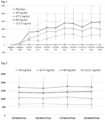
- FIG. 2 Pridopidine concentration in patient's blood (ng/mL). Post-dose (“Cmax”) (+/-sd) at Steady State. For Figures 1 and 2 , a % coefficient of variation (CV) of around 40% for measured values is considered adequate for this setting [1-2 hours post dose, patient population, sparse sampling]. Variability is expected to decrease once true sampling times are taken into consideration.
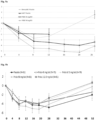
- Figure 3 Total Motor Score (TMS) Change from Baseline (BL) with pridopidine administration. The 90mg bid dose (circles) demonstrated the largest treatment effect. A decrease in TMS indicates an improvement. Table 1 below shows the P-Values corresponding to Figure 3 .
- FIG. 5a Using historical placebo in HART and MermaiHD clinical trials, TMS (change from baseline) results are significant for both 45mg pridopidine bid and 90mg pridopidine bid. A lower number indicates improvement.
- Figure 5b Change from baseline UHDRS-TMS full analysis set plotted over time. PRIDE-HD replicates previous data in TMS changes from baseline as the change from baseline values were similar to those in HART and MermaiHD. In this graph, a decrease in TMS change from baseline indicates improvement. Dark line with diamonds represents placebo, dark line with open circles represents 45mg bid, gray line with triangles represents 67.5mg bid, gray line with diamonds represents 90mg bid, line with squares represents 112.5mg bid.
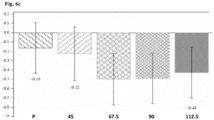
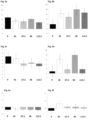
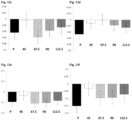
- Figures 6a, 6b and 6c Total Dystonia at week 12 (6a); at week 20 (6b); and at week 26 (6c) in patient groups administered different doses of pridopidine.
- Y-axis is change in dystonia from baseline. All data refer to adjusted means +SE of change in dystonia in full analysis set. A lower number indicates improvement.
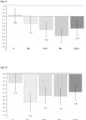
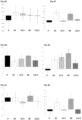
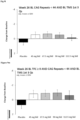
- Figure 7a Change in Dystonia in limbs (UHDRS-dystonia limbs) at week 12;
- Figure 7b Finger Taps and Pronate-Supinate (P/S) hands at week 20;
- Figure 7c Finger Taps and P/S hands at week 26.
- Finger Taps and Pronate-Supinate (P/S) hands is a combination of finger tapping (the ability to tap the fingers of both hands where 15 repetitions in 5 seconds is considered normal) with pronation/supination (the ability to rotate the forearm and hand such that the palm is down (pronation) and to rotate the forearm and hand such that the palm is up (supination) on both sides of the body).
- pronation/supination the ability to rotate the forearm and hand such that the palm is down (pronation) and to rotate the forearm and hand such that the palm is up (supination) on both sides of the body.
- N refers to number of patients.
- Wk26 refers to relevant score at week 26.
- Wk52 refers to relevant score at week 52.
- ⁇ to placebo refers to the difference in score from compared to placebo, specifically, the average change from baseline in the placebo group compared to the average change from baseline of the relevant group.
- ALL refers to pridopidine treated patients irrespective of disease stage.
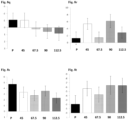
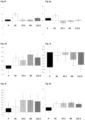
- Y-axes are change from baseline for characteristic listed above the table. X-axes are dose whereby P means “placebo”, 45 means “45mg bid,” 67.5 means “67.5 mg bid,” 90 means “90mg bid,” and 112.5 means “112.5 mg bid.”
- improvement is in the direction from bottom of the graph to top of the graph.
- figure 8b shows the average difference in the UHDRS TMS score of the indicated group of patients (i.e.
- the 90mg bid dose shows the greatest improvement because its data point is the top most data point in the figure, showing an approximately 8 point improvement compared to baseline (i.e. a -8 UHDRS TMS score at week 26 compared to baseline).
- the table below the description of figure 8b shows that the 90mg bid group had 11 patients ("N" row) and an average UHDRS TMS score of 39.1 at baseline ("Baseline" row).
- HD1 refers to an early stage Huntington's disease (HD) patient with a baseline Unified Huntington's Disease Rating Scale Total Functional Capacity (UHDRS-TFC; TFC) score of 11-13.
- HD2 refers to an early stage HD patient with a baseline UHDRS-TFC score of 7-10.
- Figure 8a Change from baseline in UHDRS TMS Week 26 ALL.
- the table below and figure 8a show no significant improvement in UHDRS TMS in all pridopidine treated patients at 26 weeks compared to placebo. Improvement is evidenced by a more negative value in the UHDRS TMS score.
- Figure 8b Change from baseline in UHDRS TMS Week 26 Stage 1 BL TFC 11-13.
- HD patients with a baseline TFC score of 11-13 are generally considered to be first stage (stage 1) HD patients.
- stage 1 The table below and figure 8b show trend towards improvement in UHDRS TMS in HD1 pridopidine treated patients at 26 weeks compared to placebo.
- Figure 8c Change from baseline in UHDRS TMS Week 52 ALL.
- Figure 8e Change from baseline in UHDRS TMS Gait and Balances Week 52. The table below and figure 8e show no significant improvement in UHDRS TMS gait and balances in all pridopidine treated patients at 52 weeks.
- Figure 8f Change from baseline in UHDRS TMS Gait and Balances Week 52 Stage 1 BL TFC 11-13. The table below and figure 8f show a trend towards improvement in UHDRS TMS gait and balances in HD1 pridopidine treated patients at 52 weeks with significance for patients receiving 45 mg bid pridopidine.
- Figure 8i Change from baseline in UHDRS TMS Dystonia Week 26 ALL. The table below and figure 8i show a trend towards improvement in UHDRS TMS dystonia in all pridopidine treated patients at 26 weeks.
- Figure 8j Change from baseline in UHDRS TMS Dystonia Week 26 Stage 1 BL TFC 11-13. The table below and figure 8j show a trend towards improvement in UHDRS TMS dystonia in HD1 pridopidine treated patients at 26 weeks with significance for patients receiving 90mg bid pridopidine.
- Figure 8l Change from baseline in UHDRS TMS Dystonia Week 52 Stage 1 BL TFC 11-13. The table below and figure 8l show a trend towards improvement in UHDRS TMS dystonia in HD1 pridopidine treated patients at 52 weeks with significance for patients receiving 45mg bid pridopidine.
- Figure 8r Change from baseline in UHDRS TMS Excluding Chorea Week 52 Stage 1 BL TFC 11-13. The table below and figure 8r show a trend towards improvement in UHDRS TMS excluding chorea in HD1 pridopidine treated patients at 52 weeks, in particular in the 45 mg bid and 90 mg bid treated patients.
- Figures 9a-9e show bar graphs of changes in UHDRS TMS Finger Tap scores in 26 and 52 week patient groups.
- Figure 9a Change from Baseline in UHDRS TMS Finger Taps ALL. Week 26.
- the table below provides P-Values corresponding to Figure 9a .
- the table below and figure 9a show no significant improvement in the UHDRS TMS finger taps in all pridopidine treated patients, at 26 weeks.
- the table below provides the P-Values corresponding to Figure 9d .
- the table below and figure 9d show statistically significant improvement in the UHDRS TMS finger taps in 45 mg bid pridopidine treated patients who completed 52 weeks, at 26 weeks.
- Figures 9e Change from baseline in UHDRS TMS Finger Taps: Patients who have completed 52 weeks of treatment: UHDRS TMS Finger Tap score at week 52.
- the table below provides the P-Values corresponding to Figure 9e .
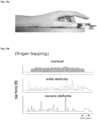
- Figure 10b shows normal and aberrant tapping measurements.
- Figures 11a and 11b Q-motor tap measurements: A well-validated objective measure. (Bechtel 2010)
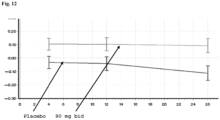
- Figure 12 Q-Motor Tap-Speed-Frequency.
- 90mg pridopidine administered bid demonstrated consistent improvement from baseline.
- the data for 90 mg pridopidine bid is shown by the top line in this graph and the data for the placebo is shown by the bottom line in this graph.
- Difference in p-value of 90 mg pridopidine bid from placebo was 0.0259 at week 4, 0.0365 at week 12, and 0.0056 at week 26.
- Increase in tap speed indicates improvement.
- the unit of measurement of the Y-axis is Frequency (Hz).
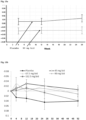
- Figure 13a and 13b Q-Motor Tap Speed Inter Onset interval (IOI).
- 90mg pridopidine administered bid demonstrated consistent and significant improvement from baseline for 90mg bid.
- the data for 90 mg pridopidine bid is shown by the bottom line in this graph and the data for the placebo is shown by the top line in this graph.
- Difference in p-value of 90 mg pridopidine bid from placebo was 0.0342 at week 4, 0.0368 at week 12, and 0.0162 at week 26. Decrease in inter tap interval indicates improvement.
- the unit of measurement of the Y-axis in Figure 13a is Frequency (Hz).
- Figure 13b shows change from baseline in Tap-Speed-Inter-Onset-interval-MN-Hand-L (sec) over time (weeks) for full analysis set.
- Figure 13c Improvement in objective pharmacodynamic measures of motor control: change from baseline in Q-Motor: Tap-Speed-Inter-Onset-interval-MN-Hand (sec), Week 52 FAS.
- the table below provides data and the P-Values corresponding to Figure 13c . A trend towards improvement was noted in 45 mg bid treated patients.
- Figure 13e Improvement in objective pharmacodynamic measures of motor control, change from baseline in Q-Motor: Pro-Sup-Frequency-MN-Hand (Hz), Week 52 FAS. The table below provides the data and P-Values corresponding to Figure 13e . A trend towards improvement was noted in 45 mg bid treated patients.
- Figure 13f Improvement in objective pharmacodynamic measures of motor control, change from baseline in Q-Motor: Pro-Sup-Frequency-MN-Hand (Hz), Week 52 Week 52 in pridopidine treated HD1 and HD2 patients. The table below provides the data and P-Values corresponding to Figure 13f . A trend towards improvement was noted in 45 mg bid treated patients.
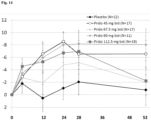
- Figure 14 Change from baseline in UHDRS-TMS plotted over time in HD1 patients. Line with dark diamond represents placebo; line with open circle represents 45 mg bid, line with triangle represents 67.5 mg bid, line with grey diamond represents 90 mg bid, line with square represents 112.5 mg bid. 45 mg bid shows improvement in TMS score after 52 weeks. Y axis represents change from baseline in TMS from baseline, x axis represents treatment time in weeks. (Adj.
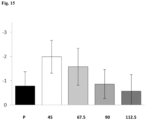
- Figure 15 Comparison of patients with baseline (BL) dystonia score of ⁇ 4 at 52 weeks after dosage with either placebo, 45 mg pridopidine b.i.d, 67.5 mg pridopidine b.i.d., 90 mg pridopidine b.i.d., or 112.5 mg pridopidine b.i.d. Within the full analysis set, no clinically meaningful changes from baseline were noted for patients at Week 26 or Week 52 in the dystonia score across the placebo and all active treatment groups (not shown).
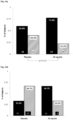
- Figure 16b Of those patients with baseline (BL) dystonia score of ⁇ 4 who completed 52 weeks of treatment with either placebo or 45 mg pridopidine b.i.d., the percentage who were categorized based on the change in UHDRS TMS dystonia from BL to 52 weeks as responders (improved, e.g. change ⁇ 1) or non-responders (worsened or no change ⁇ 1).
- Results of the Responder Analysis for dystonia items ( Figures 16a and 16b ) further support this trend toward improvement by showing that a greater percentage of patients were categorized as Responders within the dystonia items in the 45 mg bid treatment group compared to the placebo group (14 patients [77.8%] and 18 patients [60.0%], respectively in Figure 16a and 66.7% and 33.3%, respectively in Figure 16b ).
- a similar trend of Responders was seen in the chorea + dystonia items in the 45 mg bid treatment group compared to the placebo group (14 patients [77.8%] and 20 patients [66.7%], respectively) (not shown).
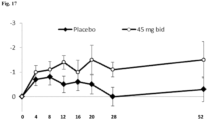
- Figure 17 Plot of change in UHDRS Dystonia score over time for subjects pooled from MermaiHD, HART and Pride-HD studies with baseline (BL) dystonia ( ⁇ 4) who received either placebo or 45 mg pridopidine b.i.d.
- BL baseline dystonia
- ⁇ 4 placebo or 45 mg pridopidine b.i.d.
- Week 26 patients taking 45 mg pridopidine b.i.d showed a statistically significant improvement in the dystonia score compared to those taking placebo. A trend toward this improvement was maintained at Week 52.
- Figure 18 Of those PRIDE-HD patients with baseline (BL) dystonia score of ⁇ 4 who completed 52 weeks of treatment with either placebo or 45 mg pridopidine b.i.d., the percentage who were categorized based on the change in UHDRS limb dystonia from BL to 52 weeks as responders (improved, e.g. change ⁇ 1) or non-responders (worsened or no change ⁇ 1).
- the present invention provides a pharmaceutical composition comprising pridopidine or a pharmaceutically acceptable salt thereof for use in treating dystonia by periodic administration to a human subject afflicted with dystonia, wherein the subject has a Unified Huntington's Disease Rating Scale Total Motor Score dystonia (UHDRS-TMS-dystonia) rating of ⁇ 4, and wherein the pridopidine is administered at a dosage of 45 mg bid to 90 mg bid.
- UHDRS-TMS-dystonia Unified Huntington's Disease Rating Scale Total Motor Score dystonia
- the subject is not afflicted with Huntington's disease.
- the subject is not a Huntington's disease subject.
- the dystonia is a primary dystonia or an isolated dystonia. In another embodiment, the dystonia is a primary generalized dystonia. In another embodiment, the dystonia is a genetic form of primary dystonia. In another embodiment, the dystonia is an early onset generalized dystonia.
- the dystonia is Torsion dystonia-1 (DYT1) dystonia. In another embodiment, the dystonia is DYT6 dystonia or DYT-KMT2B (DYT28) dystonia. In one embodiment, the DYT1 dystonia is postural type dystonia or action type dystonia.
- the dystonia is early onset dystonia or late onset dystonia. In some embodiments, the dystonia manifests at any age. In some embodiments, the dystonia is an early onset generalized dystonia (DYT1 and non-DYT1).
- the dystonia is an isolated or a combined dystonia.
- the dystonia is a secondary dystonia or a combined dystonia.
- the dystonia is Dopa-responsive dystonia, Myoclonus dystonia, X-linked dystonia-parkinsonism, or Rapid-onset dystonia-parkinsonism.
- the dystonia is a focal dystonia, a segmental dystonia, a multifocal dystonia, a hemidystonia or a generalized dystonia.
- the dystonia is a paroxysmal dystonia. In another embodiment the dystonia is action-specific dystonia or a task-specific dystonia. In one embodiment, the dystonia is Musician's dystonia.
- the dystonia is not caused by a pathology.
- the pathology is a stroke, a traumatic brain injury, a lesion, a brain tumor, neurological tissue damage, or neurological tissue degeneration.
- the dystonia is Musician's dystonia, Dopa-responsive dystonia, Myoclonus dystonia, Paroxysmal dystonia and dyskinesia, X-linked dystonia-parkinsonisms, Rapid-onset dystonia-parkinsonisms, Primary dystonia, Secondary dystonia (including Huntington's dystonia), or Psychogenic dystonia.
- the dystonia is postural dystonia. In another embodiment, the dystonia is action dystonia.
- the subject has been confirmed to be afflicted with DYT1 or other primary genetic forms of dystonia by genetic testing.
- the subject has a Burke-Fahn-Marsden Dystonia Rating Scale (BFMDRS) score greater than 6.
- BFMDRS Burke-Fahn-Marsden Dystonia Rating Scale
- the subject has a 3-base pair in-frame deletion within the coding region of the TOR1A (torsinA) gene located on chromosome 9q34.
- the subject does not suffer from cognitive impairment. In another embodiment, the subject suffers from a cognitive impairment.
- the amount of pridopidine is effective to reduce or maintain a level of one or more symptoms of the dystonia in the subject.
- the symptoms are measured by the Burke-Fahn-Marsden Dystonia Rating Scale or the Unified Dystonia Rating Scale.
- the symptoms are measured by the Clinical Global Impression (CGI) scale, Patient Global Assessment score, Visual Analogue Score for pain, Patient Evaluation of Global Response, Burke-Fahn-Marsden Disability Scale (BFMDS), or the Health Related quality of life score (EQ-5D, SF-36).
- CGI Clinical Global Impression
- the one or more symptoms are selected from the group consisting of: involuntary limb movement or muscle contractions; twisted posture of the limbs or trunk; abnormal fixed posture of the limbs or trunk; talipes equinovarus; turning in of the leg; turning in of the arm; tremor of the hand, head, trunk or arms; dragging of the leg; torticollis; writer's cramp; and dystonia of trunk and/or extremities.
- the amount of pridopidine is effective to provide a clinically significant improvement in dystonia symptoms.
- the clinically significant improvement in dystonia symptoms is an at least a 20% change from baseline in the subject administered pridopidine in comparison to a human patient not treated with pridopidine as measured by a rating scale used in clinical practice or clinical research.
- the rating scale used in clinical practice or clinical research is the dystonia items of the UHDRS scale or the Burke-Fahn-Marsden Dystonia Rating Scale.
- a clinically significant improvement in dystonia symptoms is considered to be at least a 20% change from baseline in a pridopidine treated patient compared to placebo treated patient (a patient not receiving pridopidine) when measured using a rating scale used in clinical practice or clinical research such as, for example, the dystonia items of the UHDRS scale or BFMDRS.
- a clinically significant improvement is at least a 25% change from baseline, a 30% change from baseline, a 40% change from baseline or a greater than 50% change from baseline.
- the subject is a human patient. In another embodiment, the subject is a mammal. In one embodiment, the periodic administration is oral.
- 90 mg, 100 mg, 112.5 mg, 125 mg, 135 mg, 150 mg, or 180 mg pridopidine is administered to the patient per day.
- the amount of pridopidine is administered by a unit dose of 45 mg, 67.5 mg, or 90 mg pridopidine.
- the pridopidine is in the form of pridopidine hydrochloride.
- composition may be provided as a package comprising:
- a therapeutic package for dispensing to, or for use in dispensing to, a subject afflicted with dystonia may include:
- compositions for use according to the invention may be administered in the form of the raw compound, it is preferred to introduce the active ingredients, optionally in the form of physiologically acceptable salts, in a pharmaceutical composition together with one or more adjuvants, excipients, carriers, buffers, diluents, and/or other customary pharmaceutical auxiliaries.
- the pharmaceutical compositions comprise the active compounds or pharmaceutically acceptable salts or derivatives thereof, together with one or more pharmaceutically acceptable carriers therefore, and, optionally, other therapeutic and/or prophylactic ingredients know and used in the art.
- the carrier(s) must be "acceptable” in the sense of being compatible with the other ingredients of the formulation and not harmful to the recipient thereof.
- the pharmaceutical composition of the invention may be administered by any convenient route, which suits the desired therapy.
- Preferred routes of administration include oral administration, in particular in tablet, in capsule, in dragé, in powder, or in liquid form, and parenteral administration, in particular cutaneous, subcutaneous, intramuscular, or intravenous injection.
- the pharmaceutical composition of the invention can be manufactured by the skilled person by use of standard methods and conventional techniques appropriate to the desired formulation. When desired, compositions adapted to give sustained release of the active ingredient may be employed.
- an amount effective to achieve an end means the quantity of a component that is sufficient to yield an indicated therapeutic response without undue adverse side effects (such as toxicity, irritation, or allergic response) commensurate with a reasonable benefit/risk ratio when used in the manner of this disclosure.
- an amount effective to treat a movement disorder The specific effective amount varies with such factors as the particular condition being treated, the physical condition of the patient, the type of mammal being treated, the duration of the treatment, the nature of concurrent therapy (if any), and the specific formulations employed and the structure of the compounds or its derivatives.
- to "treat” or “treating” encompasses, e.g., reducing a symptom, inducing inhibition, regression, or stasis of the disorder and/or disease.
- inhibittion of disease progression or disease complication in a subject means preventing or reducing the disease progression and/or disease complication in the subject.
- administering to the subject means the giving of, dispensing of, or application of medicines, drugs, or remedies to a subject/patient to relieve, cure, or reduce the symptoms associated with a condition, e.g., a pathological condition.
- the administration can be periodic administration.
- Periodic administration means repeated/recurrent administration separated by a period of time.
- the period of time between administrations is preferably consistent from time to time.
- Periodic administration can include administration, e.g., once daily, twice daily, three times daily, four times daily, weekly, twice weekly, three times weekly, four times a week and so on, etc.
- Dystonia as referred to herein is a movement disorder characterized by sustained or intermittent muscle contractions causing abnormal, often repetitive, movements, postures, or both. Dystonic movements are typically patterned, twisting, and may be tremulous. Dystonia is often initiated or worsened by voluntary action and associated with overflow muscle activation (Albanese 2013a).
- an “amount” or “dose” of pridopidine as measured in milligrams refers to the milligrams of pridopidine present in a preparation, regardless of the form of the preparation.
- a “dose of 90 mg pridopidine” means the amount of pridopidine acid in a preparation is 90 mg, regardless of the form of the preparation.
- the weight of the salt form necessary to provide a dose of 90 mg pridopidine would be greater than 90 mg due to the presence of the additional salt ion.
- any range disclosed herein it is meant that all hundredth, tenth and integer unit amounts within the range are specifically disclosed as part of the invention.
- 0.01 mg to 50 mg means that 0.02, 0.03 ... 0.09; 0.1; 0.2 ... 0.9; and 1, 2 ... 49 mg unit amounts are included as embodiments of this invention.
- pridopidine means pridopidine base or a pharmaceutically acceptable salt thereof, as well as derivatives, for example deuterium-enriched version of pridopidine and salts. Examples of deuterium-enriched pridopidine and salts and their methods of preparation may be found in U.S. Application Publication Nos. 2013-0197031 , 2016-0166559 and 2016-0095847 .
- pridopidine is a pharmaceutically acceptable salt, such as the HCl salt or tartrate salt.
- the pridopidine is in the form of its hydrochloride salt.
- Deuterium-enriched means that the abundance of deuterium at any relevant site of the compound is more than the abundance of deuterium naturally occurring at that site in an amount of the compound. The naturally occurring distribution of deuterium is about 0.0156%. Thus, in a “deuterium-enriched” compound, the abundance of deuterium at any of its relevant sites is more than 0.0156% and can range from more than 0.0156% to 100%.
- Deuterium-enriched compounds may be obtained by exchanging hydrogen with deuterium or synthesizing the compound with deuterium-enriched starting materials.
- the active compounds for use according to the invention may be provided in any form suitable for the intended administration. Suitable forms include pharmaceutically (i.e. physiologically) acceptable salts, and pre- or prodrug forms.
- Examples of pharmaceutically acceptable addition salts include the non-toxic inorganic and organic acid addition salts such as the hydrochloride, the hydrobromide, the L-tartrate, the nitrate, the perchlorate, the phosphate, the sulphate, the formate, the acetate, the aconate, the ascorbate, the benzenesulphonate, the benzoate, the cinnamate, the citrate, the embonate, the enantate, the fumarate, the glutamate, the glycolate, the lactate, the maleate, the malonate, the mandelate, the methanesulphonate, the naphthalene-2-sulphonate, the phthalate, the salicylate, the sorbate, the stearate, the succinate, the tartrate, the toluene-p-sulphonate, and the like.
- Such salts may be formed by procedures well known and described in the art.
- ALT alanine aminotransferase
- ADL Activities of Daily Living
- AR Autoregressive
- AUC area under the concentration-time curve
- bid or b.i.d. twice daily
- BL Baseline
- CAB cognitive assessment battery
- CGI-C Clinical Global Impression of Change
- CGI-S Clinical Global Impression of Severity
- CI confidence interval
- CIBIC-Plus Clinician's Interview-based Impression of Change plus Caregiver Input
- CIBIS Clinician's Interview-based Impression of Severity
- CIOMS Council for International Organizations of Medical Sciences
- Cmax maximum observed plasma drug concentration
- CNS central nervous system
- CRF case report form
- CRO contract research organization
- CS Compound Symmetry
- C-SSRS Columbia-Suicide Severity Rating Scale
- CYP cytochrome P450
- DSM-IV TR Diagnostic and Statistical Manual - Fourth Edition Text Revision
- TUG timed up and go
- UHDRS Unified Huntington's Disease Rating Scale
- ULN upper limit of the normal range
- US United States
- WBC white blood cell
- WHO World Health Organization
- WHO Drug World Health Organization (WHO) drug dictionary
- ⁇ HR change from baseline in heart rate
- ⁇ QTcF change from baseline in QTcF
- ⁇ HR placebo-corrected change from baseline in heart rate
- ⁇ QTcF placebo-corrected change from baseline in QTcF, wk: week
- EQ5D-5L European Quality of Life-5 Dimensions (5 levels).
- Example 1 A Phase II, Dose-finding, Randomized, Parallel-Group, Double-Blind, Placebo-Controlled Study, Evaluating the Safety and Efficacy of Pridopidine 45 mg, 67.5 mg, 90 mg, and 112.5 mg Twice-Daily versus Placebo for Symptomatic Treatment in Patients with Huntington's Disease ("PRIDE HP")
- PRIDE HP Huntington's Disease
- the PRIDE-HD study assessed the efficacy of pridopidine 45 mg to 112.5 mg twice daily (bid) on motor impairment in patients with HD over at least 52 weeks of treatment using the Unified Huntington's Disease Rating Scale (UHDRS) Total Motor Score (TMS).
- UHDRS Unified Huntington's Disease Rating Scale
- TMS Total Motor Score
- the study also assessed the effect of at least 52 weeks of treatment with pridopidine 45 mg bid to 112.5 mg bid on the Modified Physical Performance Test (mPPT).
- mPPT Modified Physical Performance Test
- the study also assessed the effect of at least 52 weeks of treatment with pridopidine 45 mg bid to 112.5 mg bid on UHDRS measures for total function capacity (TFC) and cognitive assessment battery (CAB).
- TFC total function capacity
- CAB cognitive assessment battery
- the study also compared data from all patients to those obtained in HD subpopulations.
- the study also (i) evaluated the safety and tolerability of a range of pridopidine doses in patients with HD during at least 52 weeks of treatment, (ii) explored the pharmacokinetics (PK) of pridopidine in the study population and (iii) investigated the relationship between exposure to pridopidine and outcome measures (e.g., clinical efficacy and toxicity parameters).
- PK pharmacokinetics
- the primary efficacy variable and endpoint for this study was change from baseline in the UHDRS TMS (defined as the sum of all UHDRS motor domains ratings) at Week 26 or Week 52.
- the primary measure of motor impairment is the UHDRS motor assessment section, which was administered by a trained examiner.
- the first part of the motor assessment consisted of five TMS subscores, provided below.
- the sum total of all the 31 items is referred to as the Total Motor Score (TMS).
- TMS Total Motor Score
- the secondary efficacy variable and endpoint was change from baseline in the mPPT at Week 26 or Week 52.
- the TMS scale includes measurement of dystonia.
- Safety variables and endpoints include the following:
- Tolerability variables and endpoints include the following:
- the primary PK measure was determination of plasma concentration of pridopidine. Concentrations were also incorporated into a pridopidine population PK model and individual exposure for the study patients (Cmax and AUC) was calculated.
- Pridopidine (as pridopidine hydrochloride) was provided as a white hard gelatin capsule, size 2 containing 45 mg pridopidine and a white hard gelatin capsule, size 4 containing 22.5 mg pridopidine. Placebo was presented as white hard gelatin capsules matching the 22.5 mg or 45 mg pridopidine capsules but containing no active ingredient, only the excipients (silicified microcrystalline cellulose and magnesium stearate).
- the UHDRS comprises a broad assessment of features associated with HD (Huntington Study Group 1996). It is a research tool which has been developed to provide a uniform assessment of the clinical features and course of HD.
- the TMS component of UHDRS comprises 31 assessments from the 15 items of the UHDRS, with each assessment rated on a 5-point scale from 0 (normal) to 4 (maximally abnormal).
- the secondary efficacy variable and endpoint quantifies the patient's performance in physical tasks (Brown 2000). It is a standardized 9-item test that measures the patient's performance on functional tasks. Assistive devices are permitted for the tasks that require a standing position (items 6 to 9). Both the speed and accuracy at which the patients complete the items were taken into account during scoring. The maximum score of the test is 36, with higher scores indicating better performance.
- the CIBIC-Plus (version ADCS-CGIC) was developed, validated, and is commonly used in studies of anti-dementia drugs in Alzheimer's disease (Jext 2000).
- An independent rater evaluated the patient's overall disease severity prior to the initiation of pridopidine or placebo. This assessment, known as the CIBIS, rates the patient on a 7-point Likert scale from extremely severe HD to no symptoms of HD.
- the PDS was used during the study as a measure of disability. Patients were scored on a scale from 10 ("Fixed posture requiring total care - gastrotomy, catheterization") to 100 ("Normal; no disease evident”) (Myers 1991).
- the FA scale of the UHDRS assessed functionality in 25 tasks of daily living (e.g., "Could patient engage in gainful employment in his/her accustomed work?"). Each question was answered with 'yes' or 'no.
- CGI-S was assessed at baseline and CGI-C was used at all subsequent time points to assess changes from baseline.
- the CGI-S scale was initially designed to assess treatment response in patients with mental disorders (Guy 1976) but is now used widely in a range of illnesses.
- the TFC scale of the UHDRS is a standardized scale used to assess 5 functional domains associated with disability shown below (occupation, finances, domestic chores (e.g. laundry, washing dishes), activities of daily living, and care level).
- Total functional capacity score has a range of 0-13 and is a well-established endpoint for trials aiming disease progression.
- the Total functional capacity score has been developed and deployed by the Huntington Study Group (HSG, 1996) in multiple trials over 2 decades and is accepted by regulators.
- the independence scale of the UHDRS is a rating scale where the patient's degree of independence was given in percentage, from 10% (tube fed, total bed care) to 100% (no special care needed).
- the HD-QoL is a standardized instrument for measuring health-related quality of life. (Hocaoglu 2012). It is a validated disease-specific measure designed for HD, and can provide a summary score of overall health-related quality of life, as well as scores on several discrete scales.
- UHDRS Hand Movement Score or UHDRS TMS Hand Movement Score
- the hand movement score is defined as the sum of UHDRS domains finger taps, pronate-supinate hands and luria (fist-hand-palm test).
- UHDRS Gait and Balance Score or UHDRS TMS Gait and Balance Score
- the gait and balance score is defined as the sum of UHDRS domains gait, tandem walking and retropulsion pull test.
- the UHDRS-mMS is defined as the sum of following domains from UHDRS-TMS: dysarthria, tongue protrusion, finger taps, pronate-supinate hands, luria, rigidity, bradykinesia, gait, tandem walking, and retropulsion pull test.
- maximal dystonia was scored from 0 (absent) to 4 (marked/prolonged) on each of the following items: trunk, right upper extremity, left upper extremity, right lower extremity, and left lower extremity. Maximal dystonia is the sum of all scores.
- the percentage of responders defined as patients with UHDRS-TMS change from baseline ⁇ 0 at Week 26.
- the Multiple Sclerosis Walking Scale (MSWS-12) was adapted to become a generic measure of walking and mobility and renamed the Walk-12.
- the EQ5D 3 level version (EQ5D-3L) was introduced in 1990 (EuroQol Group 1990). It essentially consists of the EQ5D descriptive system and the EQ visual analogue scale (EQ VAS).
- the EQ5D-3L descriptive system comprises the following 5 dimensions: mobility, self-care, usual activities, pain/discomfort and anxiety/depression.
- Q-Motor assessments are based on the application of precalibrated and temperature controlled force transducers and 3-dimensional position sensors with very high sensitivity and test-retest reliability across sessions and sites in a multicenter clinical study. Q-Motor measures thus aim to reduce the limited sensitivity of categorical clinical rating scales, the intra- and inter-rater variability, and placebo effects observed in scales such as UHDRS-TMS. In addition, Q-Motor assessments allow for the objective monitoring of unintended motor side-effects in clinical studies. Thus, Q-Motor is an objective, reliable, and sensitive measure of motor function that is free of rater bias and limits placebo effect influence.
- Figure 10 shows the Q-motor tap measurements for a normal patient, a patient with mild defects and a patient with severe defects.
- Track-HD the largest natural history study of pre-manifest and early stage HD Q-motor tapping deficits correlated with clinical scores as well as regional brain atrophy ( Figures 11a, 11b , 12 and Bechtel 2010).
- the patient places their hand on a hand rest with their index finger positioned above a force-transducer. Recordings start after practice runs. The patient is instructed to finger tap as fast as possible between 2 auditory cues. The beginning of a tap is defined as a rise of the force by 0.05 N above maximal baseline level. The tap ends when it drops to 0.05 N before the maximal baseline level is reached again.
- the duration and variability of tap durations (TD), inter onset intervals (IOI), inter peak intervals (IPI), and inter tap intervals (ITI) are the exploratory outcome measures for speeded tapping.
- TF peak tapping forces
- Req tapping frequency
- This task assessed the regularity of hand taps performed when alternating between the palm and dorsal surface of the hand performing a repetitive pronation/supination movement.
- the force and duration of the hand taps are recorded similarly to the speeded tapping task.
- a tone cues the start and end of an assessment. Five trials of 10 seconds duration are performed with each hand.
- This task assessed the coordination of isometric grip forces in the precision grip between the thumb and index finger.
- Grip forces are assessed during grip initiation, object transport, and in a static holding phase. Patients are instructed to grasp and lift a device equipped with a force transducer and 3-dimensional position sensor in the precision grip between thumb and index finger and hold it stable adjacent to a marker 10-cm high. Grip forces and 3-dimensional position and orientation of the object are recorded.
- the patient places a foot on the foot device such that the ball of the foot is positioned above a force-transducer. Recordings start after practice runs.
- the patient is instructed to tap with the foot as fast as possible between 2 auditory cues.
- the beginning of a tap is defined as a rise of the force by 0.05 N above maximal baseline level.
- the tap ends when it dropped to 0.05 N before the maximal baseline level is reached again.
- the duration and variability of TD, IOI, IPI, and ITI are the exploratory outcome measures for speeded tapping.
- variability of peak TF is calculated as coefficient of variation, and the tapping Freq, i.e., the number of taps between the onsets of the first and the last tap divided by the time in between, is determined. Five trials of 10 seconds duration are performed with each foot.
- the TUG is a simple test used to assess a person's mobility and requires both static and dynamic balance. It uses the time that a person takes to rise from a chair, walk 3 meters, turn around, walk back to the chair, and sit down. During the test, the person is expected to wear their regular footwear and use any mobility aids that they would normally require.
- the TUG is used frequently in the elderly population, as it is easy to administer and can generally be completed by the majority of older adults. The test is quick, requires no special equipment or training, and is easily included as part of the routine medical examination (Podsiadlo 1991). The use of the TUG test in conjunction with UHDRS has been recommended for clinical studies of HD (Rao 2009).
- the SDMT is a paper-and-pencil test of psychomotor speed and working memory.
- Emotion recognition of facial expressions of emotions is examined using computerized presentations of photographs depicting 6 basic emotions or a neutral expression.
- Trail Making test which consists of 25 circles on a standard sheet of paper.
- Trail A participants are required to connect, as quickly as possible, circles containing numbers in ascending numerical order.
- Trail B participants are to connect, as quickly as possible, circles containing numbers and letters, alternating between numbers and letters in ascending order (e.g., 1, A, 2, B, 3, C, etc.).
- the HVLT-R offers a brief assessment of verbal learning and memory (recognition and recall).
- a Paced Tapping test Participants tap on left and right mouse buttons, alternating between thumbs, at 3.0 Hz. They first listen to a tone presented at the desired tapping rate, and then begin tapping to the tone. After 11 taps with the tone, the repetition of the tone is discontinued, and participants attempt to continue tapping at the same rate until the end of the trial (31 taps later).
- OTS is a spatial planning task which gives a measure of frontal lobe function.
- OTS is a variant of the Stockings of Cambridge task, and places greater demands on working memory as the participant has to visualize the solution.
- Clinical laboratory tests serum chemistry including electrolytes, hematology and urinalysis were performed as listed below.
- the following serum chemistry tests were performed: calcium; phosphorus; sodium; magnesium; potassium; chloride; bicarbonate or carbon dioxide; glucose; blood urea nitrogen; creatinine; cholesterol; uric acid; ALT; AST (aspartate aminotransferase); lactate dehydrogenase; gamma-glutamyl transpeptidase (GGT); alkaline phosphatase; creatine phosphokinase (in case of elevated creatine phosphokinase, the MB fraction should be measured); total protein, albumin; total bilirubin; direct bilirubin; indirect bilirubin; and prolactin.
- Urinalysis includes testing for the following: Protein; glucose; ketones; blood (hemoglobin); pH; specific gravity; leukocyte esterase; microscopic; bacteria; RBCs; WBCs; casts; and crystals.
- the primary PK measure is a determination of plasma concentration of pridopidine. Concentrations were also incorporated into a pridopidine population PK model and individual exposure for the study patients (Cmax and AUC) was calculated.
- Blood samples (4 mL each) were collected for the determination of plasma concentrations via venipuncture or indwelling catheter in the morning before study drug administration at the following visits: Titration Period: day 0 (baseline) - prior and 1 to 2 hours post first dose and day 14 - 1 to 2 hours post afternoon dose.
- Full Treatment Dose Period day 28 - pre afternoon dose and 1 to 2 hours post afternoon dose, day 42 - pre afternoon dose and 1 to 2 hours post afternoon dose, day 84 - 1 to 2 hours post afternoon dose, day 112 - pre afternoon dose and 1 to 2 hours post afternoon dose, day 140 - 1 to 2 hours post afternoon dose, day 182 - prior to morning dose, and follow-up visit.
- Samples were analyzed using an appropriate validated method for pridopidine and its main metabolite TV-45065 (previously called ACR30).
- the lower limits of quantification for pridopidine and TV-45065 in plasma are approximately 1.6 to 1.8 ng/mL and 1.5 to 1.9 ng/mL, respectively.
- Analyses include CAG repeats, CYP2D6 status, and genetic long QT syndrome, or any other genetic analyses related to pridopidine response or HD.
- the change from baseline in UHDRS-TMS was analyzed using a Repeated Measures model (SAS ® MIXED procedure with REPEATED sub-command).
- SAS Repeated Measures model
- the model includes the following fixed effects: categorical week in study by treatment interaction, center, neuroleptic use or no use, and baseline UHDRS-TMS score.
- the unstructured covariance matrix for repeated observations within patients was used.
- the Maximum-Likelihood (ML) estimation method is used instead of the default Restricted ML (REML).
- a sensitivity analysis to evaluate if the observed effect in UHDRS-TMS is driven by the Chorea UHDRS-TMS sub-score, the Dystonia UHDRS-TMS sub-score, or the Involuntary Movements (Chorea + Dystonia) UHDRS-TMS sub-score was performed as follows: Three variables were calculated: (1) The change from baseline to Week 26 and Week 52 in the sum of the UHDRS-TMS items except the Chorea items, (2) The change from baseline to Week 26 and Week 52 in the sum of the UHDRS-TMS items except the Dystonia items, and (3) The change from baseline to Week 26 and Week 52 in the sum of the UHDRS-TMS items except the Chorea and Dystonia items. These variables were analyzed in the same way as the primary efficacy endpoint except that the variable evaluation at baseline were included in the model instead of baseline UHDRS-TMS.
- Plasma concentration data on pridopidine and the main metabolite TV-45065 are presented by descriptive statistics by dose of pridopidine and also by CYP2D6 metabolizer status. Concentrations are also incorporated into a pridopidine population PK model and individual exposure for the study patients (C max and AUC) are calculated.
- TFC pridopidine causes a delay of progression of functional decline.
- a patient affected with HD with a baseline TFC score of 11-13 is considered to be a stage 1 HD patient.
- Rater bias a lack of hope in Huntington's disease, together with a high expectation for an effective treatment and a desire to get better from patients
- overall positive data with pridopidine treatment causes high expectations
- patients have an 80% chance to receive active treatment a high number of pills may cause expectancy
- protocol changes during the study and the number of assessments per visit.
- Figures 6-7 , 8 (i, j, k, l) , 9 (i, j, k, m) and 15-18 demonstrate that patients undergoing pridopidine therapy experienced an improved dystonia score in comparison to those patients receiving a placebo.
- Figures 15-18 show anti-dystonia effect especially in patients who have a degree of dystonia (GE 4) at baseline with doses 45 and 67.5 mg pridopidine bid showing numerical improvement.
- GE 4 degree of dystonia
- the dystonia treated in Figures 6-7 , 8 (i, j, k) , 9 (i, j, k, m) and 15-18 is representative of treating dystonia as described in this application.
- the effects of pridopidine on non-HD dystonias is expected to be similar to its benefit on HD dystonia due to shared areas of direct pathological involvement (e.g. striatum) and/or impaired connectivity between these brain regions (striatum, cerebellum, etc.), plus the known complex effects of pridopidine on multiple targets in the brain, including the striatum and cerebellum.
- the total dystonia treatment exemplified in this application is representative of treatment of, inter alia, the following types of dystonia: early onset generalized dystonia (DYT1 and non-DYT1 dystonias), early onset and late onset dystonias, focal, segmental, multifocal, hemi- or generalized dystonias, Musician's dystonias, Dopa-responsive dystonias, Myoclonus dystonias, Paroxysmal dystonias and dyskinesias, X-linked dystonia-parkinsonisms, Rapid-onset dystonia-parkinsonisms, Primary dystonias, Secondary dystonias (including Huntington's dystonia), and Psychogenic dystonias
- Example 2 Rodent models of Dystonia
- Torla complete torsin-1A
- mice Multiple cellular effects were observed in these mice, including mislocalization of associated proteins, alterations in protein turnover, and age-restricted, region-specific neurodegeneration.
- Liang's model highlights how subtle and selective dystonia associated neurodegeneration can occur in specific cell populations during certain stages of CNS development, with no further neurodegeneration occurring thereafter.
- Example 3 Treatment of patients afflicted with dystonia with pridopidine
- PET Positron Emission Tomography
- DTI Diffusion Tensor Imaging
- Pridopidine has complex pharmacological effects on multiple targets found in the basal ganglia and cerebellum. Without wishing to be bound to theory, the potential synaptic actions of pridopidine may be consistent with a therapeutic effect in dystonia, including promoting synapse formation.
- Example 4 Assessment of Efficacy of pridopidine for treating patients afflicted with dystonia.
- Periodic (e.g., daily or twice daily) oral administration of pridopidine is effective in treating human patients afflicted with dystonia.
- Periodic (e.g., daily or twice daily) oral administration of pridopidine is effective to treat the subject suffering from dystonia.
- the administration of pridopidine is effective to reduce dystonia in afflicted patients.
- a pridopidine composition as described herein is administered orally to a subject suffering from dystonia.
- the administration of the composition is effective to treat the subject suffering from dystonia.
- the administration of the composition is effective to reduce dystonia in afflicted patients.
- Example 5 Assessment of Efficacy of pridopidine for treating DYT1 and other primary genetic generalized forms of dystonia
- This study compares a cohort that receives pridopidine 45 mg b.i.d., 90 mg b.i.d., and placebo b.i.d. for a period of 26 weeks.
- the study population consists of those with DYT1 and other primary genetic forms of dystonia, as confirmed by genetic testing.
- the study's other inclusion criteria are patients with a BFMD score greater than 6, male or female patients, patients of any race or ethnicity, and patients with the ability to provide informed consent.
- BFMDRS Burke-Fahn-Marsden Dystonia Rating Scale
- the UDRS Rating Scale evaluates 14 body parts (eyes and upper face, lower face, jaw and tongue, larynx, neck, trunk, right shoulder/proximal arm, left shoulder/proximal arm, right distal arm/hand, left distal arm/hand, right proximal leg, left proximal leg, right distal leg/foot, and left distal leg/foot) by rating the severity and duration factors for each part.
- the severity factor for each part is rated using a 5-point scale, ranging from 0 (no dystonia) to 4 (severe dystonia).
- the duration factor is rating on a 5 point scale ranging from 0 (at rest/action) to 4 (submaximal/maximal).
- the total score is the sum of each domain (part), with the maximum being 112. A higher score indicates more severe dystonia.
- the primary outcome is the change in the severity of dystonia (using the Burke-Fahn-Marsden Dystonia Rating Scale or the Unified Dystonia Rating Scale) after 26 weeks of treatment compared to baseline in patients on pridopidine vs. placebo.
- the secondary outcomes are Clinical Global Impression (CGI), Patient Global Assessment, Visual Analogue Score for pain, Patient Evaluation of Global Response, Burke-Fahn-Marsden Disability Scale (BFMDS), Health Related quality of life (EQ-5D, SF-36), safety and tolerability of pridopidine including Beck Depression Inventory, cognitive impairment (e.g. Montreal Cognitive Assessment, Mattis Dementia Rating Scale, or Mini-Mental State Examination, and differences in number of treatment responders (at least 25% improvement in BFMDRS).
- CGI Clinical Global Impression
- BFMDS Burke-Fahn-Marsden Disability Scale
- EQ-5D SF-36
- safety and tolerability of pridopidine including Beck Depression Inventory, cognitive impairment (e.g. Montreal Cognitive Assessment, Mattis Dementia Rating Scale, or Mini-Mental State Examination, and differences in number of treatment responders (at least 25% improvement in BFMDRS).
- the study does not enroll patients with segmental and focal dystonias.
- Other exclusion criteria include: patients with primary genetic complex forms of dystonia with clear syndromic features, patients with secondary dystonias, patients whose conditions are judged by their physician to be too severe to participate in the study, patients with active seizure disorder, patients with comorbidities such as Parkinson's disease, schizophrenia, moderate to severe depression, cognitive impairment, dementia, renal failure, or other severe comorbidities, patients who are pregnant, lactating, probably pregnant, and patients who want to become pregnant, patients who cannot agree to contraception, patients who have participated in other trials within 12 weeks before consent, patients who are presently participating in other clinical trials, patients with the inability to follow the study protocol, and patients who are judged by their physician to be a poor candidate for this study.
- the standard of care therapy may include oral medications, injectable medications, deep brain stimulation or intrathecal baclofen.
- Treatment with pridopidine as described in this example is found to improve the severity of dystonia as measured by the primary endpoint. Treatment with pridopidine as described in this example is also found to improve the secondary outcomes discussed in this example.
- mice For each model, 4 doses of the test compound (plus dosage vehicle) are given, and 1 dose of the positive control (plus dosage vehicle). 8 mice will receive each dose.
- the tottering mouse mutants model is a crossover design and the tests in the Bay K 8644-induced dystonia and kainite-induced dystonia models are grouped independently.
- the drug or vehicle is administered before the induction of dystonia. After dystonia is induced, each mouse is observed for 30 seconds every 10 minutes for 60 minutes by a rater who has been blinded to treatment and dose. Raters are trained extensively using an established rating scale with established inter-rater reliability of ⁇ 90%. A total score is calculated for the entire 60 minutes session, with scores also recorded as a function of time over a regular interval for the 60 minute period.
Landscapes
- Health & Medical Sciences (AREA)
- Chemical & Material Sciences (AREA)
- Medicinal Chemistry (AREA)
- Pharmacology & Pharmacy (AREA)
- Life Sciences & Earth Sciences (AREA)
- Animal Behavior & Ethology (AREA)
- General Health & Medical Sciences (AREA)
- Public Health (AREA)
- Veterinary Medicine (AREA)
- Epidemiology (AREA)
- Orthopedic Medicine & Surgery (AREA)
- Engineering & Computer Science (AREA)
- Bioinformatics & Cheminformatics (AREA)
- Neurology (AREA)
- Physical Education & Sports Medicine (AREA)
- Chemical Kinetics & Catalysis (AREA)
- General Chemical & Material Sciences (AREA)
- Nuclear Medicine, Radiotherapy & Molecular Imaging (AREA)
- Organic Chemistry (AREA)
- Physiology (AREA)
- Nutrition Science (AREA)
- Pharmaceuticals Containing Other Organic And Inorganic Compounds (AREA)
Description
- Dystonia is a movement disorder characterized by sustained or intermittent muscle contractions of agonist and antagonist muscles causing abnormal, often repetitive movements, postures, or both. Dystonic movements are typically patterned, twisting, and may be tremulous. Dystonia is often initiated or worsened by voluntary action and associated with overflow muscle activation. Dystonia is classified along two axes: clinical characteristics, including age at onset, body distribution, temporal pattern and associated features (additional movement disorders or neurological features), and etiology, which includes nervous system pathology and inheritance (Albanese 2013a).
- Dystonia is a dynamic condition that often changes in severity depending on the posture assumed and on voluntary activity of the involved body area. Symptoms may progress into adjacent muscles and vary according to the type and location of the dystonia. Patients with dystonia may experience muscle spasms, cramping, pain, impaired vision (eyelid closure), chewing, speech, or swallowing, loss of coordination, and abnormal posture / gait. This feature of dystonia has challenged the development of rating scales with acceptable clinimetric properties. (Albanese 2013a).
- The clinical characteristics of dystonia include: age at onset (from infancy to late adulthood), body distribution (focal, segmental or, generalized), and temporal pattern (static or progressive and variability related to voluntary actions or to diurnal fluctuations). Dystonia can be isolated or combined with another movement disorder, such as parkinsonism or myoclonus, or can be associated with other neurological or systemic manifestations. Isolated dystonia with onset in childhood tends to progress to generalization, whereas dystonia arising in adulthood usually remains focal or segmental.
- Despite the identification of genetic mutations associated with dystonias, there remains uncertainty regarding the causative role of those gene variants. Many familial dystonia cases and the majority of sporadic dystonia cases cannot be explained by validated mutations in known dystonia gene. A list of genes for monogenic forms of isolated and combined dystonias is presented in Table 1 of Verbeek and Gasser. (Verbeek 2017). Additional genes responsible for inherited dystonias are listed in Albanese. (Albanese 2013a).
- The classification of dystonia has evolved over time. The changing system for categorizing dystonia reflects, in part, an increased understanding of the various clinical manifestations and etiologies, but also the varied opinion on the merits and criteria for grouping certain disorders together. (Albanese 2013a).
- The most common hereditary, primary dystonia is DYT1 dystonia caused by a genetic mutation (DYT1) which results in a defect in an ATP-binding protein called Torsin A. Torsin A is expressed at high levels in neuronal cytoplasm of specific neuronal populations in the adult human brain, including the substantia nigra (SN), thalamus, cerebellum, hippocampus, and neostriatum. The defective Torsin A protein creates a disruption in communication in neurons that control muscle movement and muscle control (Ozelius 1997; Albanese 2006).
- The most common symptoms of DYT1 dystonia are dystonic muscle contractions causing posturing of a foot, leg, or arm. Dystonia is usually first apparent with specific actions such as writing or walking. Over time, the contractions frequently (but not invariably) become evident with less specific actions and spread to other body regions. No other neurologic abnormalities are present, except for postural arm tremor. Disease severity varies considerably even within the same family. Isolated writer's cramp may be the only sign (Ozelius 1999).
- In most instances, DYT1 dystonia symptoms start with a focal dystonia as talipes equinovarus of one leg in early childhood, typically around 6 years of age. The dystonic posturing then gradually progresses with age to other extremities and trunk muscles by the early teens. Dystonia may also start in an arm. There is asymmetry to the dystonia, with involvement of the extremities on the dominant side along with the ipsilateral sternocleidomastoid muscle. In these patients, interlimb coordination and locomotive movements are not affected. Moreover, intellectual, mental, and psychological functions are completely intact in these patients (Ozelius 1997; Ozelius 1999; Albanese 2006).
- Based on clinical characteristics, it has been proposed that DYT1 dystonia can be classified into two types: the postural type with appendicular and truncal dystonias, or the action type, which is associated with violent dyskinetic movements in addition to dystonic posture (Segawa 2014).
- Pridopidine (4-[3-(methylsulfonyl)phenyl]-1-propyl-piperidine) (formerly known as ACR16) is a drug under development for treatment of Huntington's disease. Pridopidine has been shown to modulate motor activity by either suppressing hyperactivity or enhancing hypoactivity. The neuroprotective properties of pridopidine are suggested to be attributed to its high affinity to the Sigma-1 receptor (S1R, binding IC50 ~ 100nM), while the motor activity of pridopidine may be mediated primarily by its low-affinity, antagonistic activity at the dopamine D2 receptor (D2R) (binding IC50 ~ 10µM) (Ponten 2010). Pridopidine shows low-affinity binding to additional receptors in the micromolar range.
- The S1R is an endoplasmic reticulum (ER) chaperone protein which is implicated in cellular differentiation, neuroplasticity, neuroprotection and cognitive function in the brain. Recently, transcriptomic analysis of rat striatum showed that pridopidine treatment activates expression of the BDNF, dopamine receptor 1 (D1R), glucocorticoid receptor (GR), and the serine-threonine kinase protein kinase B (Akt)/phosphoinositide 3-kinase (PI3K) pathways, known to promote neuronal plasticity and survival and to be impaired in HD. Moreover, pridopidine gene expression profile showed a reversed pattern of the HD disease gene expression profile in a Q175 knock-in (Q175 KI) HD mouse model (Geva 2016). Pridopidine also enhances secretion of the neuroprotective brain-derived neurotrophic factor (BDNF) in a neuroblastoma cell fine, in a S1R-dependent manner (Geva 2016). Michl et al. discloses the use of pridopidine in the pharmacological treatment of Huntington's disease (Clin. Invest. 2013, 3(7), pages 691-699, DOI: 10.4155/CLI.13.54).
- The present invention provides a pharmaceutical composition comprising pridopidine or a pharmaceutically acceptable salt thereof for use in treating dystonia by periodic administration to a human subject afflicted with dystonia, wherein the subject has a Unified Huntington's Disease Rating Scale Total Motor Score dystonia (UHDRS-TMS-dystonia) rating of ≥4, and wherein the pridopidine is administered at a dosage of 45 mg bid to 90 mg bid.
- In an embodiment, the dystonia is a primary dystonia, an isolated dystonia, a primary generalized dystonia, a genetic form of primary dystonia, a secondary dystonia, a combined dystonia, a focal dystonia, a segmental dystonia, a multifocal dystonia, a hemidystonia, a generalized dystonia, a paroxysmal dystonia or an early onset generalized dystonia.
- In an embodiment, the dystonia is Torsion dystonia-1 (DYT1) dystonia, DYT6 dystonia, or DYT-KMT2B (DYT28) dystonia.
- In an embodiment, the DYT1 dystonia is postural type dystonia or action type dystonia.
- In an embodiment, the secondary dystonia or the combined dystonia is Dopa-responsive dystonia, Myoclonus dystonia, X-linked dystonia-parkinsonism, or Rapid-onset dystonia-parkinsonism.
- In an embodiment, the dystonia is action-specific dystonia or a task-specific dystonia, and/or the dystonia is Musician's dystonia.
- In an embodiment, the dystonia is not caused by a pathology, for example the dystonia is not caused by a stroke, a traumatic brain injury, a lesion, a brain tumor, neurological tissue damage or neurological tissue degeneration.
- In an embodiment, the subject has been confirmed to be afflicted with DYT1 or other primary genetic forms of dystonia by genetic testing; the subject has a 3-base pair in-frame deletion within the coding region of the TOR1A (torsinA) gene located on chromosome 9q34; and/or the subject is not afflicted with Huntington's disease.
- In an embodiment, the amount of pridopidine is effective to provide a clinically significant improvement in dystonia symptoms.
- In an embodiment, the clinically significant improvement in dystonia symptoms is an at least a 20% change from baseline in the subject administered pridopidine in comparison to a human patient not treated with pridopidine as measured by the dystonia items of the UHDRS scale.
- In an embodiment, the amount of pridopidine is effective to reduce or maintain a level of one or more symptoms of the dystonia in the subject.
- In an embodiment, the one or more symptoms are selected from involuntary limb movement or muscle contractions; twisted posture of the limbs or trunk; abnormal fixed posture of the limbs or trunk; talipes equinovarus; turning in of the leg; turning in of the arm; tremor of the hand, head, trunk or arms; dragging of the leg; torticollis; writer's cramp; and dystonia of trunk and/or extremities.
- In an embodiment, the pridopidine is administered at a dosage of 45 mg bid, 67.5 mg bid or 90 mg bid.
- In an embodiment, the pridopidine is administered at a unit dose of 22.5 mg, 45 mg, 67.5 mg, or 90 mg pridopidine.
- In an embodiment, the pharmaceutical composition is administered orally.
- In an embodiment, the pridopidine is in the form of pridopidine hydrochloride, hydrobromide, L-tartrate, nitrate, perchlorate, phosphate, sulphate, formate, acetate, aconate, ascorbate, benzenesulphonate, benzoate, cinnamate, citrate, embonate, enantate, fumarate, glutamate, glycolate, lactate, maleate, malonate, mandelate, methanesulphonate, naphthalene-2-sulphonate, phthalate, salicylate, sorbate, stearate, succinate, tartrate or toluene-p-sulphonate salt.
- The present invention is further illustrated by reference to the accompanying drawings. In the following brief descriptions of the figures and the corresponding figures, efficacy was assessed throughout the 52-week period using Mixed Models Repeated Measures (MMRM) analyses of change from baseline in the Unified Huntington's Disease Rating Scale Total Motor Score (UHDRS TMS; TMS), the modified Physical Performance Test (mPPT), individual TMS subscales, functional, cognitive and other outcomes.
Figure 1 : Pridopidine concentration in patient's blood (ng/mL; Mean (+/-sd) measured values). "Pre" means predose and "post" mean post dose. V2 meansvisit 2, V3 meansvisit 3, etc. Wk2 means second week, Wk3 means third week, etc.
Figure 2 : Pridopidine concentration in patient's blood (ng/mL). Post-dose ("Cmax") (+/-sd) at Steady State.
ForFigures 1 and 2 , a % coefficient of variation (CV) of around 40% for measured values is considered adequate for this setting [1-2 hours post dose, patient population, sparse sampling]. Variability is expected to decrease once true sampling times are taken into consideration.
Figure 3 : Total Motor Score (TMS) Change from Baseline (BL) with pridopidine administration. The 90mg bid dose (circles) demonstrated the largest treatment effect. A decrease in TMS indicates an improvement. Table 1 below shows the P-Values corresponding toFigure 3 .Table 1 Week 45mg bid 67.5mg bid 90mg bid 112.5 mg bid 4 0.0304 0.0004 <.0001 <.0001 8 <.0001 <.0001 <.0001 <.0001 12 0.0002 0.0003 <.0001 0.0002 16 <.0001 <.0001 <.0001 <.0001 20 <.0001 <.0001 <.0001 <.0001 26 0.0013 0.0024 <.0001 0.0063
Figure 4 : Total Motor Score (TMS) - Change from Baseline (90mg pridopidine bid vs historical placebo in HART and MermaiHD clinical trials). There is about a 6.5 TMS point difference atweek 26.
Figures 5a and 5b : Change from baseline in TMS.Figure 5a : Using historical placebo in HART and MermaiHD clinical trials, TMS (change from baseline) results are significant for both 45mg pridopidine bid and 90mg pridopidine bid. A lower number indicates improvement.Figure 5b : Change from baseline UHDRS-TMS full analysis set plotted over time. PRIDE-HD replicates previous data in TMS changes from baseline as the change from baseline values were similar to those in HART and MermaiHD. In this graph, a decrease in TMS change from baseline indicates improvement. Dark line with diamonds represents placebo, dark line with open circles represents 45mg bid, gray line with triangles represents 67.5mg bid, gray line with diamonds represents 90mg bid, line with squares represents 112.5mg bid. The 90mg bid dose demonstrated the largest treatment effect.
Figures 6a, 6b and6c : Total Dystonia at week 12 (6a); at week 20 (6b); and at week 26 (6c) in patient groups administered different doses of pridopidine. Y-axis is change in dystonia from baseline. All data refer to adjusted means +SE of change in dystonia in full analysis set. A lower number indicates improvement.
Figure 7a : Change in Dystonia in limbs (UHDRS-dystonia limbs) atweek 12;Figure 7b : Finger Taps and Pronate-Supinate (P/S) hands atweek 20;Figure 7c : Finger Taps and P/S hands atweek 26. Finger Taps and Pronate-Supinate (P/S) hands is a combination of finger tapping (the ability to tap the fingers of both hands where 15 repetitions in 5 seconds is considered normal) with pronation/supination (the ability to rotate the forearm and hand such that the palm is down (pronation) and to rotate the forearm and hand such that the palm is up (supination) on both sides of the body).
In the tables below, data and the P-Values corresponding to the figures are provided. N refers to number of patients. Wk26 refers to relevant score atweek 26. Wk52 refers to relevant score atweek 52. "Δ to placebo" refers to the difference in score from compared to placebo, specifically, the average change from baseline in the placebo group compared to the average change from baseline of the relevant group. "ALL" refers to pridopidine treated patients irrespective of disease stage. Y-axes are change from baseline for characteristic listed above the table. X-axes are dose whereby P means "placebo", 45 means "45mg bid," 67.5 means "67.5 mg bid," 90 means "90mg bid," and 112.5 means "112.5 mg bid." In the figures, improvement is in the direction from bottom of the graph to top of the graph.
For example,figure 8b shows the average difference in the UHDRS TMS score of the indicated group of patients (i.e. patients having a TFC score of 11-13 at baseline) between the score at baseline (prior to administration of pridopidine at week 0) and the score after 26 weeks of administration of pridopidine (at week 26). In this figure, the 90mg bid dose shows the greatest improvement because its data point is the top most data point in the figure, showing an approximately 8 point improvement compared to baseline (i.e. a -8 UHDRS TMS score atweek 26 compared to baseline). The table below the description offigure 8b shows that the 90mg bid group had 11 patients ("N" row) and an average UHDRS TMS score of 39.1 at baseline ("Baseline" row). The table below the description offigure 8b also shows that the 90mg bid group's change from baseline (about -8, shown in figure, not shown in table) is 6.15 points better (-6.15) than the placebo group's change from placebo (about -2, shown in figure, not shown in table)("Δ to placebo" row). Additionally, the table below the description offigure 8b shows a p value of 0.0361 for the 90mg bid group ("p value" row). HD1 refers to an early stage Huntington's disease (HD) patient with a baseline Unified Huntington's Disease Rating Scale Total Functional Capacity (UHDRS-TFC; TFC) score of 11-13. HD2 refers to an early stage HD patient with a baseline UHDRS-TFC score of 7-10.
Figure 8a : Change from baseline inUHDRS TMS Week 26 ALL. The table below andfigure 8a show no significant improvement in UHDRS TMS in all pridopidine treated patients at 26 weeks compared to placebo. Improvement is evidenced by a more negative value in the UHDRS TMS score.Placebo 45 mg bid 67.5 mg bid 90 mg bid 112.5 mg bid N 81 75 79 81 81 Baseline 46.9 44.5 46.9 47 46.7 Δ to placebo 1.42 1.71 0.67 2.1 p value 0.3199 0.2235 0.6282 0.1337
Figure 8b : Change from baseline inUHDRS TMS Week 26Stage 1 BL TFC 11-13. (The UHDRS TMS score atweek 26 of pridopidine treated patients with a baseline Total Functional Capacity (BL TFC) score of 11 to 13). HD patients with a baseline TFC score of 11-13 are generally considered to be first stage (stage 1) HD patients. The table below andfigure 8b show trend towards improvement in UHDRS TMS in HD1 pridopidine treated patients at 26 weeks compared to placebo.Placebo 45 mg bid 67.5 mg bid 90 mg bid 112.5 mg bid N 12 17 17 11 18 Baseline 37.3 35.4 36.4 39.1 38.7 Δ to placebo -4.47 -3 -6.15 -4.79 p value 0.0976 0.2505 0.0361 0.0676
Figure 8c : Change from baseline inUHDRS TMS Week 52 ALL. The table below andfigure 8c show no significant improvement in UHDRS TMS in all pridopidine treated patients at 52 weeks, compared to placebo.Placebo 45 mg bid 67.5 mg bid 90 mg bid 112.5 mg bid N 81 75 79 81 81 Baseline 46.9 44.5 46.9 47 46.7 Δ to placebo 0.59 2.55 1.78 2.71 p value 0.7468 0.1591 0.3144 0.137
Figure 8d : Change from baseline inUHDRS TMS Week 52Stage 1 BL TFC 11-13. The table below andfigure 8d show a trend towards improvement in UHDRS TMS in HD1 pridopidine treated patients at 52 weeks.Placebo 45 mg bid 67.5 mg bid 90 mg bid 112.5 mg bid N 12 17 17 11 18 Baseline 37.3 35.4 36.4 39.1 38.7 Wk52 Δ to placebo -5.32 -0.84 -7.1 -0.92 p value 0.1065 0.7918 0.047 0.7765
Figure 8e : Change from baseline in UHDRS TMS Gait and BalancesWeek 52. The table below andfigure 8e show no significant improvement in UHDRS TMS gait and balances in all pridopidine treated patients at 52 weeks.Placebo 45 mg bid 67.5 mg bid 90 mg bid 112.5 mg bid N 81 75 79 81 81 Baseline 3.8 4.1 4.1 4 3.8 Δ to placebo -0.09 -0.05 -0.01 0.04 p value 0.7404 0.8532 0.9747 0.8923
Figure 8f : Change from baseline in UHDRS TMS Gait andBalances Week 52Stage 1 BL TFC 11-13. The table below andfigure 8f show a trend towards improvement in UHDRS TMS gait and balances in HD1 pridopidine treated patients at 52 weeks with significance for patients receiving 45 mg bid pridopidine.Placebo 45 mg bid 67.5 mg bid 90 mg bid 112.5 mg bid N 12 17 17 11 18 Baseline 2.3 2.8 2.6 2.6 2.4 Δ to placebo -0.94 -0.53 -0.49 -0.4 p value 0.0445 0.2294 0.3056 0.3797
Figure 8g : Change from baseline in UHDRSTMS Chorea Week 26 ALL. The table below andfigure 8g show no significant improvement in UHDRS TMS chorea in all pridopidine treated patients at 26 weeks.Placebo 45 mg bid 67.5 mg bid 90 mg bid 112.5 mg bid N 81 75 79 81 81 Baseline 11.4 10.9 11 11.2 10.9 Δ to placebo 0.92 0.81 0.36 1.05 p value 0.1083 0.1501 0.5185 0.0609
Figure 8h : Change from baseline in UHDRSTMS Chorea Week 26Stage 1 BL TFC 11-13. The table below andfigure 8h show a trend towards improvement in UHDRS TMS chorea in HD1 pridopidine treated patients at 26 weeks with significance for patients receiving 90mg bid pridopidine.45 mg bid 67.5 mg bid 90 mg bid 112.5 mg bid N 17 17 11 18 Wk26 Δ to placebo -1.4 -2.07 -2.52 -1.08 p value 0.1805 0.0438 0.0271 0.2932
Figure 8i : Change from baseline in UHDRSTMS Dystonia Week 26 ALL. The table below andfigure 8i show a trend towards improvement in UHDRS TMS dystonia in all pridopidine treated patients at 26 weeks.Placebo 45 mg bid 67.5 mg bid 90 mg bid 112.5 mg bid N 81 75 79 81 81 Baseline 4.1 3.6 4.1 4.9 4.5 Δ to placebo -0.06 -0.34 -0.33 -0.29 p value 0.8711 0.3778 0.3845 0.4507
Figure 8j : Change from baseline in UHDRSTMS Dystonia Week 26Stage 1 BL TFC 11-13. The table below andfigure 8j show a trend towards improvement in UHDRS TMS dystonia in HD1 pridopidine treated patients at 26 weeks with significance for patients receiving 90mg bid pridopidine.Placebo 45 mg bid 67.5 mg bid 90 mg bid 112.5 mg bid N 12 17 17 11 18 Baseline 2.8 2.1 2.2 3.2 2.4 Δ to placebo -0.99 -0.89 -1.56 -0.53 p value 0.1569 0.1882 0.0396 0.4303
Figure 8k : Change from baseline in UHDRSTMS Dystonia Week 52. The table below andfigure 8k show a trend toward improvement in UHDRS TMS dystonia in all pridopidine treated patients at 52 weeks.Placebo 45 mg bid 67.5 mg bid 90 mg bid 112.5 mg bid N 81 75 79 81 81 Baseline 4.1 3.6 4.1 4.9 4.5 Δ to placebo -0.39 -0.35 -0.27 -0.24 p value 0.4358 0.4795 0.5858 0.6382
Figure 8l : Change from baseline in UHDRSTMS Dystonia Week 52Stage 1 BL TFC 11-13. The table below andfigure 8l show a trend towards improvement in UHDRS TMS dystonia in HD1 pridopidine treated patients at 52 weeks with significance for patients receiving 45mg bid pridopidine.Placebo 45 mg bid 67.5 mg bid 90 mg bid 112.5 mg bid N 12 17 17 11 18 Baseline 2.8 2.1 2.2 3.2 2.4 Δ to placebo -1.65 -0.1 -1.46 -0.46 p value 0.0243 0.8848 0.0575 0.5228
Figure 8m : Change from baseline in UHDRS TMSInvoluntary Movements Week 26 ALL The table below andfigure 8m show no significant improvement in UHDRS TMS Involuntary Movements in all pridopidine treated patients at 26 weeks.Placebo 45 mg bid 67.5 mg bid 90 mg bid 112.5 mg bid N 81 75 79 81 81 Baseline 15.6 14.4 15.1 16 15.4 Δ to placebo 0.89 0.48 0.01 0.76 p value 0.2594 0.5328 0.9873 0.3268
Figure 8n : Change from baseline in UHDRS TMSInvoluntary Movements Week 26Stage 1 BL TFC 11-13. The table below andfigure 8n show significant improvement in UHDRS TMS Involuntary Movements at 26 weeks in HD1 pridopidine treated patients receiving 45mg bid, 67.5 bid and 90 mg bid pridopidine.Placebo 45 mg bid 67.5 mg bid 90 mg bid 112.5 mg bid N 12 17 17 11 18 Baseline 11.5 12 12.2 12.9 13.2 Δ to placebo -2.49 -3.07 -4 -1.64 p value 0.0469 0.0117 0.0033 0.1731
Figure 8o : Change from baseline in UHDRS TMSInvoluntary Movements Week 52 The table below andfigure 8o show no significant improvement in UHDRS TMS Involuntary Movements in all pridopidine treated patients at 52 weeks.Placebo 45 mg bid 67.5 mg bid 90 mg bid 112.5 mg bid N 81 75 79 81 81 Baseline 15.6 14.4 15.1 16 15.4 Δ to placebo 0.02 0.8 -0.26 0.57 p value 0.9867 0.4196 0.7893 0.5648
Figure 8p : Change from baseline in UHDRS TMSInvoluntary Movements Week 52Stage 1 BL TFC 11-13. The table below andfigure 8p show a trend towards improvement in UHDRS TMS Involuntary Movements in HD1 pridopidine treated patients at 52 weeks, in particular in 45 mg bid and 90 mg bid treated patients.Placebo 45 mg bid 67.5 mg bid 90 mg bid 112.5 mg bid N 12 17 17 11 18 Baseline 11.5 12 12.2 12.9 13.2 Δ to placebo -2.73 -0.2 -3.8 0.8 p value 0.1487 0.9111 0.0643 0.6751
Figure 8q : Change from baseline in UHDRS TMS ExcludingChorea Week 52. The table below andfigure 8q show no significant improvement in UHDRS TMS excluding chorea in all pridopidine treated patients at 52 weeks.Placebo 45 mg bid 67.5 mg bid 90 mg bid 112.5 mg bid N 81 75 79 81 81 Baseline 35.5 33.6 35.9 35.8 35.8 Δ to placebo 0.05 1.31 1.67 1.94 p value 0.9693 0.3495 0.2234 0.1704
Figure 8r : Change from baseline in UHDRS TMS ExcludingChorea Week 52Stage 1 BL TFC 11-13. The table below andfigure 8r show a trend towards improvement in UHDRS TMS excluding chorea in HD1 pridopidine treated patients at 52 weeks, in particular in the 45 mg bid and 90 mg bid treated patients.Placebo 45 mg bid 67.5 mg bid 90 mg bid 112.5 mg bid N 12 17 17 11 18 Baseline 28.6 25.5 26.4 29.4 27.8 Δ to placebo -4.09 -0.18 -4.92 -1.59 p value 0.083 0.9358 0.0505 0.4924
Figure 8s : Change from baseline in UHDRS TMS ExcludingDystonia Week 26 ALL. The table below andfigure 8s show no significant improvement in UHDRS TMS excluding dystonia in all pridopidine treated patients at 26 weeks.Placebo 45 mg bid 67.5 mg bid 90 mg bid 112.5 mg bid N 81 75 79 81 81 Baseline 42.7 40.9 42.8 42.1 42.2 Δ to placebo 1.39 1.97 1.2 2.4 p value 0.2733 0.1137 0.3314 0.0539
Figure 8t : Change from baseline in UHDRS TMS ExcludingDystonia Week 26Stage 1 BL TFC 11-13. The table below andfigure 8t show a trend towards improvement in UHDRS TMS excluding dystonia in HD1 pridopidine treated patients, at 26 weeks.Placebo 45 mg bid 67.5 mg bid 90 mg bid 112.5 mg bid N 12 17 17 11 18 Baseline 34.6 33.4 34.1 35.9 36.3 Δ to placebo -3.6 -2.2 -4.35 -4.31 p value 0.1594 0.376 0.1167 0.0842
Figures 9a-9e show bar graphs of changes in UHDRS TMS Finger Tap scores in 26 and 52 week patient groups.
Figure 9a : Change from Baseline in UHDRS TMS Finger Taps ALL.Week 26. The table below provides P-Values corresponding toFigure 9a . The table below andfigure 9a show no significant improvement in the UHDRS TMS finger taps in all pridopidine treated patients, at 26 weeks.Placebo 45 mg bid 67.5 mg bid 90 mg bid 112.5 mg bid N 81 75 79 81 81 Baseline 3.8 3.5 4.1 3.7 3.9 Δ to placebo -0.3 -0.07 -0.07 -0.12 p value 0.1466 0.7306 0.7114 0.5475
Figure 9b : Change from Baseline in UHDRS TMS Finger Taps:Week 26 patients with baseline total functional capacity (BL TFC) ≥ 9 and CAG Repeats > 44. The table below provides the P-Values corresponding toFigure 9b . The table below andfigure 9b show statistically significant improvement in the UHDRS TMS finger taps in 45 mg bid and 112.5 mg bid pridopidine treated patients having BL TFC greater than or equal to 9 and greater than 44 CAG repeats in their htt gene, at 26 weeks.Placebo 45 mg bid 67.5 mg bid 90 mg bid 112.5 mg bid N 13 15 19 22 11 Baseline 2.6 2.7 3.3 3 3.6 Δ to placebo -0.86 -0.34 -0.52 -1.07 p value 0.0499 0.4255 0.1972 0.0424
Figure 9c : Change from baseline in UHDRS TMS Finger Taps:Week 26 patients with BL TFC ≥ 9, CAG Repeats < 44 and patients who represent three least severe TMS quarters (BL TMS 1st 3 Qs). The table below provides the P-Values corresponding toFigure 9c . The table below andfigure 9c show statistically significant improvement in the UHDRS TMS finger taps in 45 mg bid and 112.5 mg bid pridopidine treated patients having BL TFC greater than or equal to 9 and less than 44 CAG repeats in their htt gene, at 26 weeks.Placebo 45 mg bid 67.5 mg bid 90 mg bid 112.5 mg bid N 13 15 19 21 10 Baseline 2.6 2.7 3.3 3 3.5 Δ to placebo -0.87 -0.36 -0.54 -1.05 p value 0.05 0.41 0.1888 0.0537
Figures 9d : Change from baseline in UHDRS TMS Finger Taps: Patients who have completed 52 weeks of treatment: UHDRS TMS Finger Tap score atweek 26. The table below provides the P-Values corresponding toFigure 9d . The table below andfigure 9d show statistically significant improvement in the UHDRS TMS finger taps in 45 mg bid pridopidine treated patients who completed 52 weeks, at 26 weeks.Placebo 45 mg bid 67.5 mg bid 90 mg bid 112.5 mg bid N 52 43 44 53 44 Baseline 3.8 3.2 4 3.5 3.8 Δ to placebo -0.59 -0.13 -0.01 -0.21 p value 0.0182 0.5881 0.9554 0.3833
Figures 9e : Change from baseline in UHDRS TMS Finger Taps: Patients who have completed 52 weeks of treatment: UHDRS TMS Finger Tap score atweek 52. The table below provides the P-Values corresponding toFigure 9e . The table below andfigure 9e show no significant improvement in the UHDRS TMS finger taps in ALL pridopidine treated patients, at 52 weeks.Placebo 45 mg bid 67.5 mg bid 90 mg bid 112.5 mg bid N 52 43 44 53 44 Baseline 3.8 3.2 4 3.5 3.8 Δ to placebo -0.31 0.13 0.08 0.1 p value 0.2091 0.6027 0.7179 0.6835
Figure 9f : Change from baseline in UHDRS TMS Finger Tapping + Pronate-Supinate Hands: Patients who have completed 52 weeks of treatment - score atweek 26. The table below provides the P-Values corresponding toFigure 9f . The table below andfigure 9f show statistically significant improvement in the UHDRS TMS finger taps and Pronate-Supinate Hands in 45 mg bid pridopidine treated patients who completed 52 weeks, at 26 weeks.Placebo 45 mg bid 67.5 mg bid 90 mg bid 112.5 mg bid N 52 43 44 53 44 Baseline 7.1 6.1 7 6.5 7 Δ to placebo -0.79 0.02 0.02 -0.23 p value 0.0294 0.9443 0.9412 0.5268
Figure 9g : Change from baseline in UHDRS TMS Finger Tapping + Pronate-Supinate Hands: Patients who have completed 52 weeks of treatment - score atweek 52. The table below provides the P-Values corresponding toFigure 9g . The table below andfigure 9g show no significant improvement in the UHDRS TMS finger taps and Pronate-Supinate Hands in pridopidine treated patients at 26 weeks.Placebo 45 mg bid 67.5 mg bid 90 mg bid 112.5 mg bid N 52 43 44 53 44 Baseline 7.1 6.1 7 6.5 7 Δ to placebo -0.37 0.68 0.48 0.28 p value 0.3801 0.1066 0.2337 0.4978
Figure 9h : Change from baseline in UHDRS TMS Gait and Balance: Gait and balance scores atweek 26 for patients with BL TFC ≥ 7. The table below provides the P-Values corresponding toFigure 9h . The table below andfigure 9h show statistically significant improvement in the UHDRS TMS gait and balances in 90 mg bid pridopidine treated HD1 and HD2 patients at 26 weeks.Placebo 45 mg bid 67.5 mg bid 90 mg bid 112.5 mg bid N 62 59 54 56 58 Baseline 3.2 3.7 3.4 3.5 3.1 Δ to placebo -0.48 -0.37 -0.62 -0.49 p value 0.0563 0.1442 0.013 0.0518
Figure 9i : Change from baseline in UHDRS TMS Gait and Balance: Gait and balance scores atweek 52 for patients with BL TFC ≥ 7. The table below provides the P-Values corresponding toFigure 9i . The table below andfigure 9i show no significant improvement in the UHDRS TMS gait and balances in pridopidine treated HD1 and HD2 patients at 52 weeks.Placebo 45 mg bid 67.5 mg bid 90 mg bid 112.5 mg bid N 62 59 54 56 58 Baseline 3.2 3.7 3.4 3.5 3.1 Δ to placebo -0.41 -0.43 -0.28 -0.09 p value 0.1811 0.1691 0.365 0.7719
Figures 9j-9m provide bar graphs of changes in UHDRS TMS Dystonia scores in 26 and 52 week patient groups.
Figure 9j : Change from baseline in UHDRS TMS Dystonia ALL: UHDRS TMS Dystonia scores atweek 26 in all patients. The table below provides the P-Values corresponding toFigure 9j . No significant improvement is observed.Placebo 45 mg bid 67.5 mg bid 90 mg bid 112.5 mg bid N 81 75 79 81 81 Baseline 4.1 3.6 4.1 4.9 4.5 Δ to placebo -0.06 -0.34 -0.33 -0.29 p value 0.8711 0.3778 0.3845 0.4507
Figure 9k : Change from baseline in UHDRS TMS Dystonia: UHDRS TMS Dystonia scores for patients with BL TFC ≥ 9 AND CAG Repeats < 44 atweek 26. The table below provides the P-Values corresponding toFigure 9k . Patients with baseline TFC greater than or equal to 9, show statistically significant improvement in the UHDRS TMS Dystonia score at 45 mg bid- 90 mg bid pridopidine for 26 weeks.Placebo 45 mg bid 67.5 mg bid 90 mg bid 112.5 mg bid N 13 15 19 22 11 Baseline 3.8 1.7 2.8 3.4 1.9 Δ to placebo -1.54 -1.58 -1.72 -1.4 p value 0.0313 0.0191 0.0078 0.0847
Figure 9l : Change from baseline in UHDRS TMS Dystonia: UHDRS TMS Dystonia scores for patients with CAG Repeats < 44 ANDBL TMS 1st 3 Qs atweek 26. The table below provides the P-Values corresponding toFigure 9l . Patients with baseline TMS who represent three least severe TMS quarters and less than 44 CAG repeats in their htt gene, show statistically significant improvement in the UHDRS TMS Dystonia score at 45 mg bid- 90 mg bid pridopidine for 26 weeks.Placebo 45 mg bid 67.5 mg bid 90 mg bid 112.5 mg bid N 29 29 32 37 22 Baseline 3 2.6 2.6 2.9 2.6 Δ to placebo -1.04 -1.15 -1 -0.62 p value 0.0437 0.0235 0.0399 0.2655
Figure 9m : Change from baseline in UHDRS TMS Dystonia: UHDRS TMS Dystonia scores for patients with BL TFC ≥ 9 and CAG Repeats < 44 andBL TMS 1st 3 Qs atweek 26. The table below provides the P-Values corresponding toFigure 9m . Patients with baseline TFC greater than or equal to 9, baseline TMS representing three least severe TMS quarters and less than 44 CAG repeats in their htt gene, show statistically significant improvement in the UHDRS TMS Dystonia score at 45 mg bid 67.5 mg bid and 90 mg bid pridopidine for 26 weeks.Placebo 45 mg bid 67.5 mg bid 90 mg bid 112.5 mg bid N 13 15 19 21 10 Baseline 3.8 1.7 2.8 3.1 2.1 Δ to placebo -1.53 -1.6 -1.64 -1.29 p value 0.0349 0.02 0.0132 0.1276
Figures 10a and 10b : General information regarding Finger tapping (Q-motor tap measurements).Figure 10a shows a drawing of subject's arm with tapper.Figure 10b shows normal and aberrant tapping measurements.
Figures 11a and 11b : Q-motor tap measurements: A well-validated objective measure. (Bechtel 2010)
Figure 12 : Q-Motor Tap-Speed-Frequency. 90mg pridopidine administered bid demonstrated consistent improvement from baseline. The data for 90 mg pridopidine bid is shown by the top line in this graph and the data for the placebo is shown by the bottom line in this graph. Difference in p-value of 90 mg pridopidine bid from placebo was 0.0259 atweek 4, 0.0365 atweek 12, and 0.0056 atweek 26. Increase in tap speed indicates improvement. The unit of measurement of the Y-axis is Frequency (Hz).
Figure 13a and 13b : Q-Motor Tap Speed Inter Onset interval (IOI). 90mg pridopidine administered bid demonstrated consistent and significant improvement from baseline for 90mg bid. The data for 90 mg pridopidine bid is shown by the bottom line in this graph and the data for the placebo is shown by the top line in this graph. Difference in p-value of 90 mg pridopidine bid from placebo was 0.0342 atweek 4, 0.0368 atweek 12, and 0.0162 atweek 26. Decrease in inter tap interval indicates improvement. The unit of measurement of the Y-axis inFigure 13a is Frequency (Hz).Figure 13b shows change from baseline in Tap-Speed-Inter-Onset-interval-MN-Hand-L (sec) over time (weeks) for full analysis set.
Figure 13c : Improvement in objective pharmacodynamic measures of motor control: change from baseline in Q-Motor: Tap-Speed-Inter-Onset-interval-MN-Hand (sec),Week 52 FAS. The table below provides data and the P-Values corresponding toFigure 13c . A trend towards improvement was noted in 45 mg bid treated patients.Placebo 45 mg bid 67.5 mg bid 90 mg bid 112.5 mg bid N 81 75 79 81 81 Baseline 0.4065 0.4154 0.4608 0.4029 0.4366 Δ to placebo -0.0402 0.0152 -0.0064 -0.017 p value 0.1956 0.6063 0.8258 0.5689
Figure 13d : Improvement in objective pharmacodynamic measures of motor control: change from baseline in Q-Motor: Tap-Speed-Inter-Onset-interval-MN-Hand (sec),Week 52 in pridopidine treated HD1 and HD2 patients. The table below provides the data and P-Values corresponding toFigure 13d . A trend towards improvement was noted in all treatment arms.Placebo 45 mg bid 67.5 mg bid 90 mg bid 112.5 mg bid N 62 59 54 56 58 Baseline 0.3725 0.3605 0.3983 0.3789 0.4056 Δ to placebo -0.0351 -0.0464 -0.0291 -0.022 p value 0.1347 0.0449 0.2039 0.3509
Figure 13e : Improvement in objective pharmacodynamic measures of motor control, change from baseline in Q-Motor: Pro-Sup-Frequency-MN-Hand (Hz),Week 52 FAS. The table below provides the data and P-Values corresponding toFigure 13e . A trend towards improvement was noted in 45 mg bid treated patients.Placebo 45 mg bid 67.5 mg bid 90 mg bid 112.5 mg bid N 81 75 79 81 81 Baseline 1.6686 1.7789 1.7255 1.7505 1.7251 Wk52 Δ to placebo 0.0599 -0.0124 -0.0087 0.0127 p value 0.3122 0.8278 0.8763 0.8261
Figure 13f : Improvement in objective pharmacodynamic measures of motor control, change from baseline in Q-Motor: Pro-Sup-Frequency-MN-Hand (Hz),Week 52Week 52 in pridopidine treated HD1 and HD2 patients. The table below provides the data and P-Values corresponding toFigure 13f . A trend towards improvement was noted in 45 mg bid treated patients.Placebo 45 mg bid 67.5 mg bid 90 mg bid 112.5 mg bid N 62 59 54 56 58 Baseline 1.77 1.8513 1.8928 1.8658 1.841 Wk52 Δ to placebo 0.1195 0.0548 0.0575 0.08 p value 0.0692 0.3996 0.3709 0.229
Figure 14 : Change from baseline in UHDRS-TMS plotted over time in HD1 patients. Line with dark diamond represents placebo; line with open circle represents 45 mg bid, line with triangle represents 67.5 mg bid, line with grey diamond represents 90 mg bid, line with square represents 112.5 mg bid. 45 mg bid shows improvement in TMS score after 52 weeks. Y axis represents change from baseline in TMS from baseline, x axis represents treatment time in weeks. (Adj. means ± SEM)
Figure 15 : Comparison of patients with baseline (BL) dystonia score of ≥4 at 52 weeks after dosage with either placebo, 45 mg pridopidine b.i.d, 67.5 mg pridopidine b.i.d., 90 mg pridopidine b.i.d., or 112.5 mg pridopidine b.i.d. Within the full analysis set, no clinically meaningful changes from baseline were noted for patients atWeek 26 orWeek 52 in the dystonia score across the placebo and all active treatment groups (not shown). In patients with a baseline total dystonia score≥4 assessed atWeek 52, a directional clinical improvement in dystonia was noted for all treatment groups, with the greatest decreases observed for the 45, 67.5, and 90 mg bid treatment groups.
Figure 16a : Of those patients with baseline (BL) dystonia score of ≥4 who completed 52 weeks of treatment with either placebo or 45 mg pridopidine b.i.d., the percentage who were categorized based on the change in UHDRS TMS dystonia from BL to 52 weeks as responders (improved or no change, e.g. change ≥0) or non-responders (worsened, change < 0).
Figure 16b : Of those patients with baseline (BL) dystonia score of ≥4 who completed 52 weeks of treatment with either placebo or 45 mg pridopidine b.i.d., the percentage who were categorized based on the change in UHDRS TMS dystonia from BL to 52 weeks as responders (improved, e.g. change ≥1) or non-responders (worsened or no change < 1).
Results of the Responder Analysis for dystonia items (Figures 16a and 16b ) further support this trend toward improvement by showing that a greater percentage of patients were categorized as Responders within the dystonia items in the 45 mg bid treatment group compared to the placebo group (14 patients [77.8%] and 18 patients [60.0%], respectively inFigure 16a and 66.7% and 33.3%, respectively inFigure 16b ). A similar trend of Responders was seen in the chorea + dystonia items in the 45 mg bid treatment group compared to the placebo group (14 patients [77.8%] and 20 patients [66.7%], respectively) (not shown).
Figure 17 : Plot of change in UHDRS Dystonia score over time for subjects pooled from MermaiHD, HART and Pride-HD studies with baseline (BL) dystonia (≥4) who received either placebo or 45 mg pridopidine b.i.d. AtWeek 26, patients taking 45 mg pridopidine b.i.d showed a statistically significant improvement in the dystonia score compared to those taking placebo. A trend toward this improvement was maintained atWeek 52.
Figure 18 : Of those PRIDE-HD patients with baseline (BL) dystonia score of ≥4 who completed 52 weeks of treatment with either placebo or 45 mg pridopidine b.i.d., the percentage who were categorized based on the change in UHDRS limb dystonia from BL to 52 weeks as responders (improved, e.g. change ≥1) or non-responders (worsened or no change < 1). - A statistically significant greater percentage of patients were categorized as Responders for the UHDRS-Limb Dystonia item in the
pridopidine 45 mg bid treatment group compared to the placebo group (77.2% and 36.7%, respectively). - The present invention provides a pharmaceutical composition comprising pridopidine or a pharmaceutically acceptable salt thereof for use in treating dystonia by periodic administration to a human subject afflicted with dystonia, wherein the subject has a Unified Huntington's Disease Rating Scale Total Motor Score dystonia (UHDRS-TMS-dystonia) rating of ≥4, and wherein the pridopidine is administered at a dosage of 45 mg bid to 90 mg bid.
- In some embodiments, the subject is not afflicted with Huntington's disease.
- In some embodiments, the subject is not a Huntington's disease subject.
- In one embodiment, the dystonia is a primary dystonia or an isolated dystonia. In another embodiment, the dystonia is a primary generalized dystonia. In another embodiment, the dystonia is a genetic form of primary dystonia. In another embodiment, the dystonia is an early onset generalized dystonia.
- In one embodiment, the dystonia is Torsion dystonia-1 (DYT1) dystonia. In another embodiment, the dystonia is DYT6 dystonia or DYT-KMT2B (DYT28) dystonia. In one embodiment, the DYT1 dystonia is postural type dystonia or action type dystonia.
- In some embodiments, the dystonia is early onset dystonia or late onset dystonia. In some embodiments, the dystonia manifests at any age. In some embodiments, the dystonia is an early onset generalized dystonia (DYT1 and non-DYT1).
- In some embodiments, the dystonia is an isolated or a combined dystonia.
- In some embodiments, the dystonia is a secondary dystonia or a combined dystonia.
- In one embodiment, the dystonia is Dopa-responsive dystonia, Myoclonus dystonia, X-linked dystonia-parkinsonism, or Rapid-onset dystonia-parkinsonism.
- In some embodiments, the dystonia is a focal dystonia, a segmental dystonia, a multifocal dystonia, a hemidystonia or a generalized dystonia.
- In one embodiment, the dystonia is a paroxysmal dystonia. In another embodiment the dystonia is action-specific dystonia or a task-specific dystonia. In one embodiment, the dystonia is Musician's dystonia.
- In one embodiment, the dystonia is not caused by a pathology. In some embodiments, the pathology is a stroke, a traumatic brain injury, a lesion, a brain tumor, neurological tissue damage, or neurological tissue degeneration.
- In some embodiments, the dystonia is Musician's dystonia, Dopa-responsive dystonia, Myoclonus dystonia, Paroxysmal dystonia and dyskinesia, X-linked dystonia-parkinsonisms, Rapid-onset dystonia-parkinsonisms, Primary dystonia, Secondary dystonia (including Huntington's dystonia), or Psychogenic dystonia.
- In one embodiment, the dystonia is postural dystonia. In another embodiment, the dystonia is action dystonia.
- In an embodiment, the subject has been confirmed to be afflicted with DYT1 or other primary genetic forms of dystonia by genetic testing. In an embodiment, the subject has a Burke-Fahn-Marsden Dystonia Rating Scale (BFMDRS) score greater than 6.
- In one embodiment, the subject has a 3-base pair in-frame deletion within the coding region of the TOR1A (torsinA) gene located on chromosome 9q34.
- In one embodiment, the subject does not suffer from cognitive impairment. In another embodiment, the subject suffers from a cognitive impairment.
- In an embodiment, the amount of pridopidine is effective to reduce or maintain a level of one or more symptoms of the dystonia in the subject. In an embodiment, the symptoms are measured by the Burke-Fahn-Marsden Dystonia Rating Scale or the Unified Dystonia Rating Scale. In another embodiment, the symptoms are measured by the Clinical Global Impression (CGI) scale, Patient Global Assessment score, Visual Analogue Score for pain, Patient Evaluation of Global Response, Burke-Fahn-Marsden Disability Scale (BFMDS), or the Health Related quality of life score (EQ-5D, SF-36).
- In an embodiment, the one or more symptoms are selected from the group consisting of: involuntary limb movement or muscle contractions; twisted posture of the limbs or trunk; abnormal fixed posture of the limbs or trunk; talipes equinovarus; turning in of the leg; turning in of the arm; tremor of the hand, head, trunk or arms; dragging of the leg; torticollis; writer's cramp; and dystonia of trunk and/or extremities.
- The amount of pridopidine is effective to provide a clinically significant improvement in dystonia symptoms. In an embodiment, the clinically significant improvement in dystonia symptoms is an at least a 20% change from baseline in the subject administered pridopidine in comparison to a human patient not treated with pridopidine as measured by a rating scale used in clinical practice or clinical research. In an embodiment, the rating scale used in clinical practice or clinical research is the dystonia items of the UHDRS scale or the Burke-Fahn-Marsden Dystonia Rating Scale. In some embodiments, a clinically significant improvement in dystonia symptoms is considered to be at least a 20% change from baseline in a pridopidine treated patient compared to placebo treated patient (a patient not receiving pridopidine) when measured using a rating scale used in clinical practice or clinical research such as, for example, the dystonia items of the UHDRS scale or BFMDRS. In some embodiments, a clinically significant improvement is at least a 25% change from baseline, a 30% change from baseline, a 40% change from baseline or a greater than 50% change from baseline.
- In an embodiment, the subject is a human patient. In another embodiment, the subject is a mammal. In one embodiment, the periodic administration is oral.
- In another embodiment, 90 mg, 100 mg, 112.5 mg, 125 mg, 135 mg, 150 mg, or 180 mg pridopidine is administered to the patient per day.
- In an embodiment, the amount of pridopidine is administered by a unit dose of 45 mg, 67.5 mg, or 90 mg pridopidine.
- In an embodiment, the pridopidine is in the form of pridopidine hydrochloride.
- The composition may be provided as a package comprising:
- a) a pharmaceutical composition comprising the amount of pridopidine; and
- b) instructions for use of the pharmaceutical composition to treat dystonia in a subject afflicted with a dystonia.
- A therapeutic package for dispensing to, or for use in dispensing to, a subject afflicted with dystonia may include:
- a) one or more unit doses, each such unit dose comprising a pharmaceutical composition of comprising the amount of pridopidine for use according to the invention, and wherein the amount of said pridopidine in said unit dose is effective, upon administration to said subject, to treat the subject, and
- b) a finished pharmaceutical container therefor, said container containing said unit dose or unit doses, said container further containing or comprising labeling directing the use of said package in the treatment of said subject.
- Combinations of the above-described embodiments are also within the scope of the invention.
- Each embodiment disclosed herein is contemplated as being applicable to each of the other disclosed embodiments. For instance, all combinations of the various elements described herein are within the scope of the invention. Additionally, the elements recited in the packaging and pharmaceutical composition embodiments can be used in the treatment embodiments described herein.
- While the compositions for use according to the invention may be administered in the form of the raw compound, it is preferred to introduce the active ingredients, optionally in the form of physiologically acceptable salts, in a pharmaceutical composition together with one or more adjuvants, excipients, carriers, buffers, diluents, and/or other customary pharmaceutical auxiliaries.
- In an embodiment, the pharmaceutical compositions comprise the active compounds or pharmaceutically acceptable salts or derivatives thereof, together with one or more pharmaceutically acceptable carriers therefore, and, optionally, other therapeutic and/or prophylactic ingredients know and used in the art. The carrier(s) must be "acceptable" in the sense of being compatible with the other ingredients of the formulation and not harmful to the recipient thereof.
- The pharmaceutical composition of the invention may be administered by any convenient route, which suits the desired therapy. Preferred routes of administration include oral administration, in particular in tablet, in capsule, in dragé, in powder, or in liquid form, and parenteral administration, in particular cutaneous, subcutaneous, intramuscular, or intravenous injection. The pharmaceutical composition of the invention can be manufactured by the skilled person by use of standard methods and conventional techniques appropriate to the desired formulation. When desired, compositions adapted to give sustained release of the active ingredient may be employed.
- Further details on techniques for formulation and administration may be found in the latest edition of Remington's Pharmaceutical Sciences (Mack Publishing Co., Easton, PA).
- As used herein, and unless stated otherwise, each of the following terms shall have the definition set forth below.
- The articles "a", "an" and "the" are non-limiting. For example, "the method" includes the broadest definition of the meaning of the phrase, which can be more than one method.
- As used herein, "effective" as in an amount effective to achieve an end means the quantity of a component that is sufficient to yield an indicated therapeutic response without undue adverse side effects (such as toxicity, irritation, or allergic response) commensurate with a reasonable benefit/risk ratio when used in the manner of this disclosure. For example, an amount effective to treat a movement disorder. The specific effective amount varies with such factors as the particular condition being treated, the physical condition of the patient, the type of mammal being treated, the duration of the treatment, the nature of concurrent therapy (if any), and the specific formulations employed and the structure of the compounds or its derivatives.
- As used herein, to "treat" or "treating" encompasses, e.g., reducing a symptom, inducing inhibition, regression, or stasis of the disorder and/or disease. As used herein, "inhibition" of disease progression or disease complication in a subject means preventing or reducing the disease progression and/or disease complication in the subject.
- "Administering to the subject" or "administering to the (human) patient" means the giving of, dispensing of, or application of medicines, drugs, or remedies to a subject/patient to relieve, cure, or reduce the symptoms associated with a condition, e.g., a pathological condition. The administration can be periodic administration.
- As used herein, "periodic administration" means repeated/recurrent administration separated by a period of time. The period of time between administrations is preferably consistent from time to time. Periodic administration can include administration, e.g., once daily, twice daily, three times daily, four times daily, weekly, twice weekly, three times weekly, four times a week and so on, etc.
- "Dystonia" as referred to herein is a movement disorder characterized by sustained or intermittent muscle contractions causing abnormal, often repetitive, movements, postures, or both. Dystonic movements are typically patterned, twisting, and may be tremulous. Dystonia is often initiated or worsened by voluntary action and associated with overflow muscle activation (Albanese 2013a).
- As used herein, an "amount" or "dose" of pridopidine as measured in milligrams refers to the milligrams of pridopidine present in a preparation, regardless of the form of the preparation. A "dose of 90 mg pridopidine" means the amount of pridopidine acid in a preparation is 90 mg, regardless of the form of the preparation. Thus, when in the form of a salt, e.g. a pridopidine hydrochloride, the weight of the salt form necessary to provide a dose of 90 mg pridopidine would be greater than 90 mg due to the presence of the additional salt ion.
- By any range disclosed herein, it is meant that all hundredth, tenth and integer unit amounts within the range are specifically disclosed as part of the invention. Thus, for example, 0.01 mg to 50 mg means that 0.02, 0.03 ... 0.09; 0.1; 0.2 ... 0.9; and 1, 2 ... 49 mg unit amounts are included as embodiments of this invention.
- As used herein, "pridopidine" means pridopidine base or a pharmaceutically acceptable salt thereof, as well as derivatives, for example deuterium-enriched version of pridopidine and salts. Examples of deuterium-enriched pridopidine and salts and their methods of preparation may be found in
U.S. Application Publication Nos. 2013-0197031 ,2016-0166559 and2016-0095847 . In certain embodiments, pridopidine is a pharmaceutically acceptable salt, such as the HCl salt or tartrate salt. Preferably, in any embodiments of the invention as described herein, the pridopidine is in the form of its hydrochloride salt. - "Deuterium-enriched" means that the abundance of deuterium at any relevant site of the compound is more than the abundance of deuterium naturally occurring at that site in an amount of the compound. The naturally occurring distribution of deuterium is about 0.0156%. Thus, in a "deuterium-enriched" compound, the abundance of deuterium at any of its relevant sites is more than 0.0156% and can range from more than 0.0156% to 100%. Deuterium-enriched compounds may be obtained by exchanging hydrogen with deuterium or synthesizing the compound with deuterium-enriched starting materials.
- The active compounds for use according to the invention may be provided in any form suitable for the intended administration. Suitable forms include pharmaceutically (i.e. physiologically) acceptable salts, and pre- or prodrug forms.
- Examples of pharmaceutically acceptable addition salts include the non-toxic inorganic and organic acid addition salts such as the hydrochloride, the hydrobromide, the L-tartrate, the nitrate, the perchlorate, the phosphate, the sulphate, the formate, the acetate, the aconate, the ascorbate, the benzenesulphonate, the benzoate, the cinnamate, the citrate, the embonate, the enantate, the fumarate, the glutamate, the glycolate, the lactate, the maleate, the malonate, the mandelate, the methanesulphonate, the naphthalene-2-sulphonate, the phthalate, the salicylate, the sorbate, the stearate, the succinate, the tartrate, the toluene-p-sulphonate, and the like. Such salts may be formed by procedures well known and described in the art.
- Albanese et al., (2013b) describes the results of a task force convened to critique existing dystonia rating scales and place them in clinical and clinimetric context.
- The following abbreviations are used throughout this application:
ALT: alanine aminotransferase; ADL: Activities of Daily Living; AR: Autoregressive; AUC: area under the concentration-time curve; bid or b.i.d.: twice daily; BL = Baseline; CAB: cognitive assessment battery; CGI-C: Clinical Global Impression of Change; CGI-S: Clinical Global Impression of Severity; CI: confidence interval; CIBIC-Plus: Clinician's Interview-based Impression of Change plus Caregiver Input; CIBIS: Clinician's Interview-based Impression of Severity; CIOMS: Council for International Organizations of Medical Sciences; Cmax: maximum observed plasma drug concentration; CNS: central nervous system; CRF: case report form; CRO: contract research organization; CS: Compound Symmetry; C-SSRS: Columbia-Suicide Severity Rating Scale; CYP: cytochrome P450; DSM-IV TR: Diagnostic and Statistical Manual - Fourth Edition Text Revision; EM: extensive metabolizers; EU: European Union; FA: Functional Assessment; FAS: full analysis set; Freq: tapping frequency; GCP: Good Clinical Practice; GFV-C: grip force variability in the static phase; GGT: gamma-glutamyl transpeptidase; HART: Huntington's disease ACR16 Randomized Trial; HCG: human chorionic gonadotropin; HD: Huntington's disease; HD-QoL = Huntington's disease Quality of Life; HVLT-R: HAD-CAB Hopkins Verbal Learning Test-Revised; ICH: International Conference on Harmonisation; IEC: Independent Ethics Committee; IOI: inter onset interval; IPI: inter peak interval; IRB: Institutional Review Board; IRT: interactive response technology; IS: Independence Score; ITI: inter tap interval; ITT: intent-to-treat; LSO: local safety officer; MAD: multiple ascending dose; MedDRA: Medical Dictionary for Regulatory Activities; MermaiHD: Multinational European Multicentre ACR16 study in Huntington's Disease; ML: Maximum-Likelihood; mMS: Modified Motor Score; MoCA: Montreal cognitive assessment; MS: Multiple sclerosis; MTD: maximum tolerated dose; NMDA: N-methyl-D-aspartate; NOAEL: no observed adverse effect level; PBA-s: Problem Behaviors Assessment-Short form; PD: pharmacodynamic(s); PDS: Physical disability scale; PK: pharmacokinetic(s); PM: poor metabolizer; PPT: physical performance test; Qd: once daily; Q-Motor: Quantitative motor; QoL: Quality of life; QTcF: Fridericia-corrected QT interval; RBC: red blood cell; REML: Restricted Maximum-Likelihood; SAE: serious adverse event; SD: standard deviation; SDMT: symbol digit modalities test; SOC: system organ class; SOP: standard operating procedure; SUSAR: suspected unexpected serious adverse reaction; t½: half life; TC = telephone call; TD: tap duration; TF: tapping force; TFC: Total Functional Capacity; TMS: Total Motor Score; TMS Involuntary Movements = TMS for performance of Domestic Chores and Dystonia scores combined. TUG: timed up and go; UHDRS: Unified Huntington's Disease Rating Scale; ULN: upper limit of the normal range; US: United States; WBC: white blood cell; WHO: World Health Organization; WHO: Drug World Health Organization (WHO) drug dictionary; ΔHR: change from baseline in heart rate; ΔQTcF: change from baseline in QTcF; ΔΔHR: placebo-corrected change from baseline in heart rate; Placebo-Controlled Study-Huntington's Disease; ΔΔQTcF: placebo-corrected change from baseline in QTcF, wk: week; EQ5D-5L European Quality of Life-5 Dimensions (5 levels). - Sixteen (16) clinical studies have been completed with pridopidine, including 8 studies in healthy subjects (of which 1 study also included patients with schizophrenia), 1 study in patients with Parkinson's disease, 2 studies in patients with schizophrenia (including the study mentioned above), and 6 studies in patients with HD (including 1 open-label extension study). In addition, a compassionate use program for pridopidine in patients with HD is ongoing in Europe, and an open-label, long term safety study is ongoing in the United States (US) and Canada. An overview of these studies are presented in International Publication No.
WO 2014/205229 . - This invention will be better understood by reference to the Experimental Details which follow, but those skilled in the art will readily appreciate that the specific experiments detailed are only illustrative of the invention as described more fully in the claims which follow thereafter.
- The PRIDE-HD study assessed the efficacy of
pridopidine 45 mg to 112.5 mg twice daily (bid) on motor impairment in patients with HD over at least 52 weeks of treatment using the Unified Huntington's Disease Rating Scale (UHDRS) Total Motor Score (TMS). The study also assessed the effect of at least 52 weeks of treatment withpridopidine 45 mg bid to 112.5 mg bid on the Modified Physical Performance Test (mPPT). The study also assessed the effect of at least 52 weeks of treatment withpridopidine 45 mg bid to 112.5 mg bid on UHDRS measures for total function capacity (TFC) and cognitive assessment battery (CAB). The study also compared data from all patients to those obtained in HD subpopulations. The study also (i) evaluated the safety and tolerability of a range of pridopidine doses in patients with HD during at least 52 weeks of treatment, (ii) explored the pharmacokinetics (PK) of pridopidine in the study population and (iii) investigated the relationship between exposure to pridopidine and outcome measures (e.g., clinical efficacy and toxicity parameters). - This was a randomized, parallel-group, double blind, placebo controlled study that compared the efficacy and safety of
pridopidine 45 mg, 67.5 mg, 90 mg, and 112.5 mg bid versus placebo in the treatment of motor impairment in HD. - The administration of pridopidine to patients is summarized in Table 2. The study procedures and assessments are summarized in Table 3. A detailed clinical procedure, including screening procedures and other procedures, is listed as Example 3 in U.S. Patent Application Publication No.
US 2014/0378508 and International Publication No.WO 2014/205229 . - The primary efficacy variable and endpoint for this study was change from baseline in the UHDRS TMS (defined as the sum of all UHDRS motor domains ratings) at
Week 26 orWeek 52. The primary measure of motor impairment is the UHDRS motor assessment section, which was administered by a trained examiner. The first part of the motor assessment consisted of five TMS subscores, provided below. The sum total of all the 31 items is referred to as the Total Motor Score (TMS). The secondary efficacy variable and endpoint was change from baseline in the mPPT atWeek 26 orWeek 52. The TMS scale includes measurement of dystonia. - Other efficacy variables and endpoints for this study are as follows:
-
- CIBIC-Plus global score as compared to baseline
- Change from baseline in the PDS score
- Change from baseline in UHDRS FA
- CGIC as compared to baseline
- Change from baseline in UHDRS TFC
- Change from baseline in UHDRS IS
-
- Change from baseline in HD QoL
- Change from baseline in Walk-12 scale
-
- Change from baseline in hand movement score (defined as the sum of UHDRS domains finger taps, pronate-supinate hands and luria [fist-hand-palm test])
- Change from baseline in Gait and balance score (defined as the sum of UHDRS domains gait, tandem walking and retropulsion pull test)
- Change from baseline in UHDRS mMS (defined as the sum of UHDRS domains dysarthria, tongue protrusion, finger taps, pronate-supinate hands, luria, rigidity, bradykinesia, gait, tandem walking, retropulsion pull test)
- Change from baseline in UHDRS Chorea
- Change from baseline in UHDRS Dystonia
- Responders, defined as patients with UHDRS TMS change from baseline ≤0
-
- Change from baseline in Q Motor measurements including digitomotography (speeded index finger tapping), dysdiadochomotography (pronation/supination hand tapping), manumotography and choreomotography (grip force and chorea analysis) and pedomotography (speeded foot tapping)
- Change from baseline in the TUG test
-
- Change from baseline in HD-CAB brief: SDMT, Emotion Recognition, Trail Making Test, HVLT-R, Paced Tapping at 3 Hz, OTS.
- Change from baseline in PBA-s
- Safety variables and endpoints include the following:
- AEs throughout the study
- Changes from baseline in QTcF and other ECG parameters throughout the study
- Clinical safety laboratory (clinical chemistry, hematology, and urinalysis) throughout study
- Changes from baseline C-SSRS throughout the study
- Vital signs throughout the study
- Tolerability variables and endpoints include the following:
- the number (%) of patients who failed to complete the study
- the number (%) of patients who failed to complete the study due to AEs
- The primary PK measure was determination of plasma concentration of pridopidine. Concentrations were also incorporated into a pridopidine population PK model and individual exposure for the study patients (Cmax and AUC) was calculated.
- Pridopidine (as pridopidine hydrochloride) was provided as a white hard gelatin capsule,
size 2 containing 45 mg pridopidine and a white hard gelatin capsule,size 4 containing 22.5 mg pridopidine. Placebo was presented as white hard gelatin capsules matching the 22.5 mg or 45 mg pridopidine capsules but containing no active ingredient, only the excipients (silicified microcrystalline cellulose and magnesium stearate).Table 2: Dose Administration (Capsules were Administered Twice Daily to Give the Total Daily Dose) Treatment Titration Period Full Dose Period Week 1 Week 2 Week 3 Week 4a Weeks 4bto 52 Pridopidine 45 mg bid 1 × 22.5 mg Pridopidine 1 × 22.5 mg Pridopidine 1 × 22.5 mg Pridopidine 1 × 22.5 mg Pridopidine 1 × 45 mg Pridopidine 1 × 22.5 mg Placebo 1 × 22.5 mg Placebo 1 × 22.5 mg Placebo 1 × 45 mg Placebo (TDD = 45 mg) 1 × 22.5 mg Placebo 1 × 45 mg Placebo (TDD = 45 mg) 1 × 22.5 mg Placebo 1 × 45 mg Placebo (TDD = 90 mg) 1 × 45 mg Placebo (TDD = 45 mg) 1 × 45 mg Placebo (TDD = 45 mg) Pridopidine 67.5 mg bid 1 × 22.5 mg Pridopidine 1 × 22.5 mg Pridopidine 1 × 45 mg Pridopidine 1 × 45 mg Pridopidine 1 × 22.5 mg Pridopidine 1 × 22.5 mg Placebo 2 × 22.5 mg Placebo 1 × 45 mg Placebo (TDD = 45 mg) 1 × 22.5 mg Placebo 2 × 22.5 mg Placebo 1 × 45 mg Pridopidine 1 × 45 mg Placebo (TDD = 45 mg) (TDD = 90 mg) (TDD = 90 mg) 1 × 45 mg Placebo (TDD = 135 mg) Pridopidine 90 mg bid 1 × 22.5 mg Pridopidine 1 × 45 mg Pridopidine 1 × 45 mg Pridopidine 1 × 45 mg Pridopidine 2 × 45 mg Pridopidine 1 × 22.5 mg Placebo 1 × 22.5 mg Pridopidine 1 × 22.5 mg Placebo 1 × 45 mg Placebo (TDD = 45 mg) 2 × 22.5 mg Placebo 1 × 22.5 mg Placebo (TDD = 135 mg) 1 × 22.5 mg Pridopidine (TDD = 180 mg) (TDD = 90 mg) 1 × 22.5 mg Placebo (TDD = 135 mg) Pridopidine 112.5 mg bid 1 × 22.5 mg Pridopidine 1 × 45 mg Pridopidine 1 × 45 mg Pridopidine 1 × 45 mg Pridopidine 1 × 22.5 mg Pridopidine 1 × 22.5 mg Placebo 1 × 22.5 mg Pridopidine 1 × 45 mg Placebo (TDD = 45 mg) 2 × 22.5 mg Placebo 1 × 22.5 mg Placebo (TDD = 135 mg) 2 × 22.5 mg Pridopidine 2 × 45 mg Pridopidine (TDD = 90 mg) (TDD = 180 mg) (TDD = 225 mg) Placebo 2 × 22.5 mg Placebo 2 × 22.5 mg Placebo 2 × 22.5 mg Placebo 2 × 22.5 mg Placebo 1 × 22.5 mg Placebo 1 × 45 mg Placebo 1 × 45 mg Placebo 1 × 45 mg Placebo 1 × 45 mg Placebo 2 × 45 mg Placebo TDD = total daily dose; a. Excluding Day 28; b.Day 28 only
-
- a The procedures and assessments for these visits (V0 and V4-12) may be performed over several days, as long as they are completed within the defined visit
window. - b Inclusion/exclusion criteria should be met at screening and reviewed on
Day 0 before the patient is randomized. - c Electrolytes only.
- d Serum pregnancy test at screening (with urine test if required for confirmation); urine pregnancy test at subsequent time points. An indeterminate reading for the serum pregnancy test should be checked twice (urine test) and the patient referred to a gynecologist if required.
- e At screening, a single ECG was performed. When evidence of a prolonged QTcF interval at screening (defined as a QTcF interval of >450 msec) was detected then the ECG was repeated twice, and the mean of the 3 screening measurements was used to determine whether or not the patient is suitable for inclusion in the study.
- f At the Baseline visit, the predose QTcF was determined by the average of 3 ECGs (within 10 to 20 minutes of one another), each in triplicate (in
total 9 recordings). A postdose ECG was performed intriplicate 1 to 2 hours after first dosing. PK samples were collected prior to and 1 to 2 hours after first dose administration at the site. When concomitant to ECG, PK samples are collected after the ECG recording. - g One ECG performed in triplicate prior and 1 to 2 hours post afternoon dose.
- h ECG is optional on
Week 8, unless required by local regulations. It is to be performed at the investigator's discretion where there are clinical circumstances that justify an additional ECG, e.g., patients with a previous episode of hypokalemia without QT prolongation. - i On
Week 52, a triplicate ECG and PK sample were collected before the last study (morning) dose. - j ECG is optional at the follow up visit, but should be performed for all patients with a previously observed cardiac concern and/or QTc change from baseline.
- k Including CAG analysis, cytochrome P450 2D6 status, genetic long QT syndrome (assessed only in patients experiencing QT prolongation following study drug administration leading to study discontinuation), or any other genetic analyses related to pridopidine response or Huntington's disease.
- l Evaluated in priority.
- m The safety telephone calls included an abbreviated PBA-s (a subset of PBA questions on depressed mood, suicidal ideation, anxiety, irritability, loss of motivation and obsessive compulsive behaviors).
- n Included digitomotography (speeded index finger tapping), dysdiadochomotography (pronation/supination hand tapping), manumotography and choreomotography (grip force and chorea analysis) and pedomotography (speeded foot tapping).
- o Included SDMT, Emotion recognition, Trail Making Test A+B, HVLT-R; Paced Tapping Test and OTS.
- p On
Weeks - q On
Weeks - r On the last study day (week 52), the study drug administration will take place on site, after the predose PK sample is obtained.
- s At the follow up visit, 1 PK sample were collected. In case of SAE, an additional PK sampling should be aimed to be collected at the closest time to SAE. When concomitant to ECG, PK samples were collected after the ECG recording.
- t This information were collected as part of concomitant medication inquiry.
- u Collection only.
- v Study adherence is reviewed during the TCs.
- w Every patient received 3 capsules twice daily (bid), i.e., 3 capsules in the morning and 3 capsules in the afternoon (7 to 10 hours after the morning dose), during the whole study period. Study drug was not administered at Early Termination visit. At on-site visits, the afternoon dose were taken at the site.
- x Patients, who for safety or tolerability reasons have to stop study drug medication, were asked to continue in the study and follow the visit schedule as outlined without taking study drug.
- The UHDRS comprises a broad assessment of features associated with HD (Huntington Study Group 1996). It is a research tool which has been developed to provide a uniform assessment of the clinical features and course of HD. The TMS component of UHDRS comprises 31 assessments from the 15 items of the UHDRS, with each assessment rated on a 5-point scale from 0 (normal) to 4 (maximally abnormal).
- The secondary efficacy variable and endpoint, the Modified Physical Performance Test (mPPT), quantifies the patient's performance in physical tasks (Brown 2000). It is a standardized 9-item test that measures the patient's performance on functional tasks. Assistive devices are permitted for the tasks that require a standing position (
items 6 to 9). Both the speed and accuracy at which the patients complete the items were taken into account during scoring. The maximum score of the test is 36, with higher scores indicating better performance. - The CIBIC-Plus (version ADCS-CGIC) was developed, validated, and is commonly used in studies of anti-dementia drugs in Alzheimer's disease (Joffres 2000). An independent rater evaluated the patient's overall disease severity prior to the initiation of pridopidine or placebo. This assessment, known as the CIBIS, rates the patient on a 7-point Likert scale from extremely severe HD to no symptoms of HD.
- The PDS was used during the study as a measure of disability. Patients were scored on a scale from 10 ("Fixed posture requiring total care - gastrotomy, catheterization") to 100 ("Normal; no disease evident") (Myers 1991).
- The FA scale of the UHDRS assessed functionality in 25 tasks of daily living (e.g., "Could patient engage in gainful employment in his/her accustomed work?"). Each question was answered with 'yes' or 'no.
- CGI-S was assessed at baseline and CGI-C was used at all subsequent time points to assess changes from baseline. The CGI-S scale was initially designed to assess treatment response in patients with mental disorders (Guy 1976) but is now used widely in a range of illnesses.
- The TFC scale of the UHDRS is a standardized scale used to assess 5 functional domains associated with disability shown below (occupation, finances, domestic chores (e.g. laundry, washing dishes), activities of daily living, and care level). Total functional capacity score has a range of 0-13 and is a well-established endpoint for trials aiming disease progression. The Total functional capacity score has been developed and deployed by the Huntington Study Group (HSG, 1996) in multiple trials over 2 decades and is accepted by regulators.
- Functional Capacity:-
- Occupation: 0 = unable, 1 = marginal work only, 2 = reduced capacity for usual job, 3 = normal. Finances: 0 = unable, 1 = major assistance, 2 = slight assistance, 3 = normal.
- Domestic Chores: 0 = unable, 1 = impaired, 2 = normal.
- ADL: 0 = total care, 1 = gross tasks only, 2 = minimal impairment, 3 = normal.
- Care level: 0 = fill time skill nursing, 1 = home or chronic care, 2 = home.
- The independence scale of the UHDRS is a rating scale where the patient's degree of independence was given in percentage, from 10% (tube fed, total bed care) to 100% (no special care needed).
- The HD-QoL is a standardized instrument for measuring health-related quality of life. (Hocaoglu 2012). It is a validated disease-specific measure designed for HD, and can provide a summary score of overall health-related quality of life, as well as scores on several discrete scales.
- The hand movement score is defined as the sum of UHDRS domains finger taps, pronate-supinate hands and luria (fist-hand-palm test).
- The gait and balance score is defined as the sum of UHDRS domains gait, tandem walking and retropulsion pull test.
- The UHDRS-mMS is defined as the sum of following domains from UHDRS-TMS: dysarthria, tongue protrusion, finger taps, pronate-supinate hands, luria, rigidity, bradykinesia, gait, tandem walking, and retropulsion pull test.
- In the UHDRS, maximal chorea was scored from 0 (absent) to 4 (marked/prolonged) on each of the following items: face, mouth, trunk, right upper extremity, left upper extremity, right lower extremity, and left lower extremity. Maximal chorea is the sum of all scores.
- In the UHDRS, maximal dystonia was scored from 0 (absent) to 4 (marked/prolonged) on each of the following items: trunk, right upper extremity, left upper extremity, right lower extremity, and left lower extremity. Maximal dystonia is the sum of all scores.
- The percentage of responders, defined as patients with UHDRS-TMS change from baseline ≤0 at
Week 26. - The Multiple Sclerosis Walking Scale (MSWS-12) was adapted to become a generic measure of walking and mobility and renamed the Walk-12.
- The
EQ5D 3 level version (EQ5D-3L) was introduced in 1990 (EuroQol Group 1990). It essentially consists of the EQ5D descriptive system and the EQ visual analogue scale (EQ VAS). The EQ5D-3L descriptive system comprises the following 5 dimensions: mobility, self-care, usual activities, pain/discomfort and anxiety/depression. - Motor deficits can be objectively assessed using different Q-Motor assessments. All Q-Motor assessments are based on the application of precalibrated and temperature controlled force transducers and 3-dimensional position sensors with very high sensitivity and test-retest reliability across sessions and sites in a multicenter clinical study. Q-Motor measures thus aim to reduce the limited sensitivity of categorical clinical rating scales, the intra- and inter-rater variability, and placebo effects observed in scales such as UHDRS-TMS. In addition, Q-Motor assessments allow for the objective monitoring of unintended motor side-effects in clinical studies. Thus, Q-Motor is an objective, reliable, and sensitive measure of motor function that is free of rater bias and limits placebo effect influence.
Figure 10 shows the Q-motor tap measurements for a normal patient, a patient with mild defects and a patient with severe defects. In Track-HD, the largest natural history study of pre-manifest and early stage HD Q-motor tapping deficits correlated with clinical scores as well as regional brain atrophy (Figures 11a, 11b ,12 and Bechtel 2010). - The patient places their hand on a hand rest with their index finger positioned above a force-transducer. Recordings start after practice runs. The patient is instructed to finger tap as fast as possible between 2 auditory cues. The beginning of a tap is defined as a rise of the force by 0.05 N above maximal baseline level. The tap ends when it drops to 0.05 N before the maximal baseline level is reached again. The duration and variability of tap durations (TD), inter onset intervals (IOI), inter peak intervals (IPI), and inter tap intervals (ITI) are the exploratory outcome measures for speeded tapping. In addition, variability of peak tapping forces (TF) is calculated as coefficient of variation, and the tapping frequency (Freq), i.e., the number of taps between the onsets of the first and the last tap divided by the time in between, is determined. Five trials of 10 seconds duration are performed with each hand.
- This task assessed the regularity of hand taps performed when alternating between the palm and dorsal surface of the hand performing a repetitive pronation/supination movement. The force and duration of the hand taps are recorded similarly to the speeded tapping task. A tone cues the start and end of an assessment. Five trials of 10 seconds duration are performed with each hand.
- An assessment of the ability to rotate the forearm and hand such that the palm is down (pronation) and to rotate the forearm and hand such that the palm is up (supination) on both sides of the body.
- This task assessed the coordination of isometric grip forces in the precision grip between the thumb and index finger. Grip forces are assessed during grip initiation, object transport, and in a static holding phase. Patients are instructed to grasp and lift a device equipped with a force transducer and 3-dimensional position sensor in the precision grip between thumb and index finger and hold it stable adjacent to a marker 10-cm high. Grip forces and 3-dimensional position and orientation of the object are recorded. Mean isometric grip forces and grip force variability in the static phase (expressed as coefficient of variation = standard deviation [SD]/mean × 100) (GFV-C) are calculated during a 15-second period starting 8 seconds after the first cueing tone. Five trials of 20 seconds duration are performed with each hand. Chorea is assessed calculating a "position-index" and "orientation-index". Start and end of assessment are signaled by a cueing tone.
- The patient places a foot on the foot device such that the ball of the foot is positioned above a force-transducer. Recordings start after practice runs. The patient is instructed to tap with the foot as fast as possible between 2 auditory cues. The beginning of a tap is defined as a rise of the force by 0.05 N above maximal baseline level. The tap ends when it dropped to 0.05 N before the maximal baseline level is reached again. The duration and variability of TD, IOI, IPI, and ITI are the exploratory outcome measures for speeded tapping. In addition, variability of peak TF is calculated as coefficient of variation, and the tapping Freq, i.e., the number of taps between the onsets of the first and the last tap divided by the time in between, is determined. Five trials of 10 seconds duration are performed with each foot.
- The TUG is a simple test used to assess a person's mobility and requires both static and dynamic balance. It uses the time that a person takes to rise from a chair, walk 3 meters, turn around, walk back to the chair, and sit down. During the test, the person is expected to wear their regular footwear and use any mobility aids that they would normally require. The TUG is used frequently in the elderly population, as it is easy to administer and can generally be completed by the majority of older adults. The test is quick, requires no special equipment or training, and is easily included as part of the routine medical examination (Podsiadlo 1991). The use of the TUG test in conjunction with UHDRS has been recommended for clinical studies of HD (Rao 2009).
- The following six sections describe the tests that are part of the CAB brief.
- The SDMT is a paper-and-pencil test of psychomotor speed and working memory.
- Emotion recognition of facial expressions of emotions is examined using computerized presentations of photographs depicting 6 basic emotions or a neutral expression.
- Visual attention and task switching are assessed using the Trail Making test, which consists of 25 circles on a standard sheet of paper. For Trail A, participants are required to connect, as quickly as possible, circles containing numbers in ascending numerical order. For Trail B, participants are to connect, as quickly as possible, circles containing numbers and letters, alternating between numbers and letters in ascending order (e.g., 1, A, 2, B, 3, C, etc.).
- The HVLT-R offers a brief assessment of verbal learning and memory (recognition and recall).
- Psychomotor function is assessed in a Paced Tapping test. Participants tap on left and right mouse buttons, alternating between thumbs, at 3.0 Hz. They first listen to a tone presented at the desired tapping rate, and then begin tapping to the tone. After 11 taps with the tone, the repetition of the tone is discontinued, and participants attempt to continue tapping at the same rate until the end of the trial (31 taps later).
- OTS is a spatial planning task which gives a measure of frontal lobe function. OTS is a variant of the Stockings of Cambridge task, and places greater demands on working memory as the participant has to visualize the solution.
- Because of the prominence of psychiatric symptoms in HD, it is recommended that the PBA-s form be used in all HD studies with any need for behavioral assessment as a comprehensive screen for the most common psychiatric symptoms in HD. (Craufurd 2001, Kingma 2008).
- In this Example, safety was assessed by qualified study staff by evaluating the following: reported AEs, clinical laboratory test results, vital signs measurements, ECG findings, physical and neurological examination findings (including body weight), and concomitant medication usage.
- Clinical laboratory tests (serum chemistry including electrolytes, hematology and urinalysis) were performed as listed below.
- The following serum chemistry tests were performed: calcium; phosphorus; sodium; magnesium; potassium; chloride; bicarbonate or carbon dioxide; glucose; blood urea nitrogen; creatinine; cholesterol; uric acid; ALT; AST (aspartate aminotransferase); lactate dehydrogenase; gamma-glutamyl transpeptidase (GGT); alkaline phosphatase; creatine phosphokinase (in case of elevated creatine phosphokinase, the MB fraction should be measured); total protein, albumin; total bilirubin; direct bilirubin; indirect bilirubin; and prolactin. The following hematology tests were performed: Hemoglobin; hematocrit; red blood cell (RBC) count; platelet count; white blood cell (WBC) count and differential count; absolute neutrophil count; absolute lymphocyte count; absolute eosinophil count; absolute monocytes count; absolute basophil count; and absolute atypical lymphocyte count. Urinalysis includes testing for the following: Protein; glucose; ketones; blood (hemoglobin); pH; specific gravity; leukocyte esterase; microscopic; bacteria; RBCs; WBCs; casts; and crystals.
- Vital signs, including pulse, blood pressure, and body temperature were measured.
- The primary PK measure is a determination of plasma concentration of pridopidine. Concentrations were also incorporated into a pridopidine population PK model and individual exposure for the study patients (Cmax and AUC) was calculated.
- Blood samples (4 mL each) were collected for the determination of plasma concentrations via venipuncture or indwelling catheter in the morning before study drug administration at the following visits:
Titration Period: day 0 (baseline) - prior and 1 to 2 hours post first dose and day 14 - 1 to 2 hours post afternoon dose. Full Treatment Dose Period: day 28 - pre afternoon dose and 1 to 2 hours post afternoon dose, day 42 - pre afternoon dose and 1 to 2 hours post afternoon dose, day 84 - 1 to 2 hours post afternoon dose, day 112 - pre afternoon dose and 1 to 2 hours post afternoon dose, day 140 - 1 to 2 hours post afternoon dose, day 182 - prior to morning dose, and follow-up visit. - Samples were analyzed using an appropriate validated method for pridopidine and its main metabolite TV-45065 (previously called ACR30). The lower limits of quantification for pridopidine and TV-45065 in plasma are approximately 1.6 to 1.8 ng/mL and 1.5 to 1.9 ng/mL, respectively.
- A blood sample (10 mL) was collected in 2 dipotassium ethylenediaminetetraacetic acid (K2EDTA) plastic tubes at the screening visit for genetic analyses. Analyses include CAG repeats, CYP2D6 status, and genetic long QT syndrome, or any other genetic analyses related to pridopidine response or HD.
- The change from baseline in UHDRS-TMS was analyzed using a Repeated Measures model (SAS® MIXED procedure with REPEATED sub-command). The model includes the following fixed effects: categorical week in study by treatment interaction, center, neuroleptic use or no use, and baseline UHDRS-TMS score. The unstructured covariance matrix for repeated observations within patients was used. In case that the model does not converge, the Maximum-Likelihood (ML) estimation method is used instead of the default Restricted ML (REML). If the model still does not converge then a simpler covariance structures with less parameters is used, according to the following order: Heterogeneous Autoregressive(1) [ARH(1)], Heterogeneous Compound Symmetry (CSH), Autoregressive(1) [AR(1)], and Compound Symmetry (CS). The estimated means at the
Week 26 visit of the change from baseline in UHDRS-TMS was compared between the active treatment arms) and the placebo arm. - A sensitivity analysis to evaluate if the observed effect in UHDRS-TMS is driven by the Chorea UHDRS-TMS sub-score, the Dystonia UHDRS-TMS sub-score, or the Involuntary Movements (Chorea + Dystonia) UHDRS-TMS sub-score was performed as follows:
Three variables were calculated: (1) The change from baseline toWeek 26 andWeek 52 in the sum of the UHDRS-TMS items except the Chorea items, (2) The change from baseline toWeek 26 andWeek 52 in the sum of the UHDRS-TMS items except the Dystonia items, and (3) The change from baseline toWeek 26 andWeek 52 in the sum of the UHDRS-TMS items except the Chorea and Dystonia items. These variables were analyzed in the same way as the primary efficacy endpoint except that the variable evaluation at baseline were included in the model instead of baseline UHDRS-TMS. - Plasma concentration data on pridopidine and the main metabolite TV-45065 are presented by descriptive statistics by dose of pridopidine and also by CYP2D6 metabolizer status. Concentrations are also incorporated into a pridopidine population PK model and individual exposure for the study patients (Cmax and AUC) are calculated.
-
Analysis group, n (%) Placebo Pridopidine Total 45 mg bid 67.5 mg bid 90 mg bid 112.5 mg bid All Screened 492 Screened, not in ITT population 84 Death 0 Adverse event 0 Withdrawal by subject 11 Inclusion criteria not met 20 Exclusion criteria met 46 Lost to follow-up 0 Other 7 ITT population 82 (100) 81 (100) 82 (100) 81 (100) 82 (100) 326 (100) 408 (100) ITT population, not treated 0 0 0 0 0 0 0 Safety population (SP) 82 (100) 81 (100) 82 (100) 81 (100) 82 (100) 326 (100) 408 (100) PK population (PK) 0 0 0 0 0 0 0 Full analysis set (FAS) 81 (99) 75 (93) 79 (96) 81 (100) 81 (99) 316(97) 397 (97) Full analysis set on study drug (FASOD) 81 (99) 75 (93) 79 (96) 81 (100) 81 (99) 316(97) 397 (97) Complete 26 weeks of treatment (CO) 70 (85) 59 (73) 65 (79) 67 (83) 62 (76) 253 (78) 323* (79) Discontinued treatment during 1st period 12(15) 22 (27) 17 (21) 14 (17) 20 (24) 73 (22) 85* (21) Death 0 0 0 0 0 0 0 Adverse event 5 (6) 6 (7) 11 (13) 11 (14) 14 (17) 42 (13) 47 (12) Withdrawal by subject 3 (4) 9 (11) 3 (4) 0 3 (4) 15 (5) 18 (4) Non-compliance 2 (2) 1 (1) 1 (1) 0 0 2 (<1) 4 (<1) Protocol violation 1 (1) 1 (1) 1 (1) 1 (1) 0 3 (<1) 4 (<1) Pregnancy 0 0 0 0 0 0 0 Lost to follow-up 0 0 0 0 0 0 0 Lack of efficacy 0 0 1 (1) 0 0 1 (<1) 1 (<1) Other 1 (1) 5 (6) 0 2 (2) 3 (4) 10 (3) 11 (3) Discontinued treatment during 1st period but continue to FU 1 (1) 0 2 (2) 2 (2) 2 (2) 6 (2) 7 (2) Complete 26 weeks of study 70 (85) 61 (75) 66 (80) 67 (83) 66 (80) 260(80) 330 (81) Signed protocol amendment 4 59 (72) 55 (68) 60 (73) 62 (77) 57 (70) 234 (72) 293 (72) Entered 2nd period 57 (70) 49 (60) 54 (66) 56 (69) 46 (56) 205 (63) 262 (64) Started treatment for 2nd period 57 (70) 49 (60) 52 (63) 56 (69) 46 (56) 203 (62) 260 (64) ITT population for the 52 Weeks Analysis (ITT2) 82 (100) 81 (100) 82 (100) 81 (100) 82 (100) 326 (100) 408 (100) Safety population for the 52 Weeks Analysis (SP2) 82 (100) 81 (100) 82 (100) 81 (100) 82 (100) 326 (100) 408 (100) PK population for the 52 Weeks Analysis (PK2) 0 0 0 0 0 0 0 Analysis group, n (%) Placebo 45 mg bid 67.5 mg bid 90 mg bid 112.5 mg bid All Total Full analysis set for the 52 Weeks Analysis (FAS2) 81 (99) 75 (93) 79 (96) 81 (100) 81 (99) 316 (97) 397 (97) Complete 52 weeks of treatment 52 (63) 43 (53) 44 (54) 53 (65) 44 (54) 184 (56) 236 (58) Discontinued treatment during 2nd period 5 (6) 6 (7) 8 (10) 3 (4) 2(2) 19 (6) 24 (6) Death 0 0 0 1 (1) 0 1 (<1) 1 (<1) Adverse event 1 (1) 4 (5) 5 (6) 0 1 (1) 10 (3) 11 (3) Withdrawal by subject 2 (2) 1 (1) 2 (2) 0 0 3 (<1) 5 (1) Non-compliance 1 (1) 0 0 0 0 0 1 (<1) Protocol violation 0 0 0 0 0 0 0 Pregnancy 0 0 0 0 0 0 0 Lost to follow-up 0 0 0 0 0 0 0 Lack of efficacy 1 (1) 0 0 1(1) 1 (1) 2 (<1) 3 (<1) Other 0 1 (1) 1 (1) 1 (1) 0 3 (<1) 3 (<1) Discontinued treatment during 2nd period but continue to FU 0 1 (1) 2 (2) 0 1 (1) 4 (1) 4 (<1) Complete 52 weeks of study 52 (63) 43 (53) 46 (56) 52 (64) 44 (54) 185 (57) 237 (58) - Many clinicians and diagnosticians adopt the Shoulson and Fahn rating scale, based on TFC scores, to follow progression of HD. This rating scale groups total TFC scores into five stages of disease, with lower stages indicating more intact functioning. Table 4, below, provides the TFC scores, average years from diagnosis and broad guidelines for typical care level for each stage of disease. (Johnson 2014.)
Table 4. Stage TFC score Years since motor diagnosis Typical abilities and care level 1 11-13 0-8 Able to work at least part time, may require slight assistance in one of finances, domestic chores or ADL basic functions 2 7-10 3-13 Unable to work, requires some assistance in some basic functions 3 3-6 5-16 Unable to work, requires major assistance in most basic functions 4 1-2 9-21 Requires major assistance in all basic functions and although comprehension may be intact requires assistance to act. 5 0 11-26 Requires major assistance in all basic functions and full time nursing care - The results of this example are shown in
Figures 1-18 . - Overview of preliminary analysis of functional, exploratory endpoints and safety:
Endpoints not dependent on rater bias were less prone to placebo effect, such as the Q-motor assessment. The signals detected suggest biological effects of pridopidine. Total Functional Capacity (TFC) showed trends favoring pridopidine after 26 weeks of treatment. There was no major safety findings despite high doses. - Expected deterioration of about 0.5 points were seen in the placebo group at 6 months. Historical data indicates that TFC deteriorates about 1 point per year in patients with Huntington's disease. TFC starts showing separation from placebo at
week 12 to 20 and separation becomes a strong trend atweek 26. The TFC data supports a finding that pridopidine causes a delay of progression of functional decline. - Without wishing to be bound to this theory, the treatment effects shown in the figures were more pronounced when treating early patients (including
stages 1 and 2), especially early stages with BL TFC greater than or equal to 7, and even more so in stage 1 (BL TFC =11-13). Without wishing to be bound to this theory this is particularly true for TFC finances and ADL, dystonia, involuntary movements (dystonia and chorea). A patient affected with HD with a baseline TFC score of 11-13 is considered to be astage 1 HD patient. - The following items may account for the placebo effect seen in this example: Rater bias, a lack of hope in Huntington's disease, together with a high expectation for an effective treatment and a desire to get better from patients, overall positive data with pridopidine treatment causes high expectations, patients have an 80% chance to receive active treatment, a high number of pills may cause expectancy, protocol changes during the study, and the number of assessments per visit.
- The results shown in the figures, especially
Figures 6-7 ,8 (i, j, k, l) ,9 (i, j, k, m) and15-18 , demonstrate that patients undergoing pridopidine therapy experienced an improved dystonia score in comparison to those patients receiving a placebo. For example,Figures 15-18 show anti-dystonia effect especially in patients who have a degree of dystonia (GE 4) at baseline withdoses 45 and 67.5 mg pridopidine bid showing numerical improvement. - By carefully selecting the patients (e.g. assessing functional capacity at baseline) and selecting patients with a TFC of 11-13 at baseline, doses of pridopidine, in particular at 45 and 90 mg bid, show a treatment effect (
Figures 8j &1 ). - The dystonia treated in
Figures 6-7 ,8 (i, j, k) ,9 (i, j, k, m) and15-18 is representative of treating dystonia as described in this application. The effects of pridopidine on non-HD dystonias is expected to be similar to its benefit on HD dystonia due to shared areas of direct pathological involvement (e.g. striatum) and/or impaired connectivity between these brain regions (striatum, cerebellum, etc.), plus the known complex effects of pridopidine on multiple targets in the brain, including the striatum and cerebellum. - The total dystonia treatment exemplified in this application is representative of treatment of, inter alia, the following types of dystonia: early onset generalized dystonia (DYT1 and non-DYT1 dystonias), early onset and late onset dystonias, focal, segmental, multifocal, hemi- or generalized dystonias, Musician's dystonias, Dopa-responsive dystonias, Myoclonus dystonias, Paroxysmal dystonias and dyskinesias, X-linked dystonia-parkinsonisms, Rapid-onset dystonia-parkinsonisms, Primary dystonias, Secondary dystonias (including Huntington's dystonia), and Psychogenic dystonias
- Motor effects were statistically significant in Huntington's
disease stage 1 subpopulations. For example, statistically significant changes were seen in theHD Stage 1 patient subgroups for Total TMS, Involuntary movements (Dystonia, Chorea), Ambulation (TMS Gait and Balance, Time Up and Go, Walk-12). - In early HD there was a statistically significant effect on TMS at weeks 26 (
Figure 8b ) and 52 (Figure 8d ) driven by a lower placebo effect. Involuntary Movements (chorea and dystonia) as measured by TMS improved in HD1 patients at 26 weeks (Figure 8n ). The effect persisted at 52 weeks as well (Figure 8p ). - Liang, et al. (2014) mouse model for primary generalized dystonia.
- Overt dystonic symptoms were observed in mice with either a conditional deletion of the complete torsin-1A (Torla) gene, or a three-nucleotide Torla deletion that is associated with DYT1 in humans.
- Multiple cellular effects were observed in these mice, including mislocalization of associated proteins, alterations in protein turnover, and age-restricted, region-specific neurodegeneration.
- Liang's model highlights how subtle and selective dystonia associated neurodegeneration can occur in specific cell populations during certain stages of CNS development, with no further neurodegeneration occurring thereafter.
- There is evidence for striatal involvement and abnormal synaptic connectivity in the pathophysiology of most forms of primary and secondary dystonia. In patients with DYT-1 dystonia, Positron Emission Tomography (PET) and Diffusion Tensor Imaging (DTI) MRI studies suggest abnormalities of basal ganglia, thalamic, cortical, and / or cerebellar regions (e.g. metabolism) or circuits.
- Pridopidine has complex pharmacological effects on multiple targets found in the basal ganglia and cerebellum. Without wishing to be bound to theory, the potential synaptic actions of pridopidine may be consistent with a therapeutic effect in dystonia, including promoting synapse formation.
- In clinical trials conducted in HD patients (HART, MermaiHD, and PRIDE-HD), those receiving pridopidine often had better outcomes on specific measures of dystonia. In PRIDE-HD, responder analysis in patients reporting some measure of dystonia further supports a benefit of pridopidine in dystonia.
- Periodic (e.g., daily or twice daily) oral administration of pridopidine is effective in treating human patients afflicted with dystonia. Periodic (e.g., daily or twice daily) oral administration of pridopidine is effective to treat the subject suffering from dystonia. The administration of pridopidine is effective to reduce dystonia in afflicted patients.
- A pridopidine composition as described herein is administered orally to a subject suffering from dystonia. The administration of the composition is effective to treat the subject suffering from dystonia. The administration of the composition is effective to reduce dystonia in afflicted patients.
- To conduct a randomized, double-blind, placebo-controlled study to assess the change in the severity of dystonia (using the Burke-Fahn-Marsden Dystonia (BFMD) Rating Scale or the Unified Dystonia Rating Scale (UDRS)) in a population of patients with DYT1 and other primary genetic forms of dystonia after 26 weeks of treatment compared to baseline in patients on pridopidine versus a placebo.
- This study compares a cohort that receives
pridopidine 45 mg b.i.d., 90 mg b.i.d., and placebo b.i.d. for a period of 26 weeks. The study population consists of those with DYT1 and other primary genetic forms of dystonia, as confirmed by genetic testing. The study's other inclusion criteria are patients with a BFMD score greater than 6, male or female patients, patients of any race or ethnicity, and patients with the ability to provide informed consent. - Burke-Fahn-Marsden Dystonia Rating Scale (BFMDRS) Rating Scale evaluates nine body parts (eyes, mouth, speech, swallowing, neck, trunk, right arm, right leg, left arm, and left leg) by rating the severity factor and provoking factors for each part on a 5 point scale of 0 (no dystonia) to 4 (indicating the presence of dystonia at rest). The dystonia scores of the eyes, mouth and neck are assigned a weighting factor of 0.5, while the other 6 parts are assigned a weighting factor of 1.0. The score of each part is obtained by multiplying the provoking factor by the severity factor and the weighting factor, and then summing the scores of each part. The maximum score possible is 120. A higher score indicates more severe dystonia.
- The UDRS Rating Scale evaluates 14 body parts (eyes and upper face, lower face, jaw and tongue, larynx, neck, trunk, right shoulder/proximal arm, left shoulder/proximal arm, right distal arm/hand, left distal arm/hand, right proximal leg, left proximal leg, right distal leg/foot, and left distal leg/foot) by rating the severity and duration factors for each part. The severity factor for each part is rated using a 5-point scale, ranging from 0 (no dystonia) to 4 (severe dystonia). The duration factor is rating on a 5 point scale ranging from 0 (at rest/action) to 4 (submaximal/maximal). The total score is the sum of each domain (part), with the maximum being 112. A higher score indicates more severe dystonia.
- The primary outcome is the change in the severity of dystonia (using the Burke-Fahn-Marsden Dystonia Rating Scale or the Unified Dystonia Rating Scale) after 26 weeks of treatment compared to baseline in patients on pridopidine vs. placebo.
- The secondary outcomes are Clinical Global Impression (CGI), Patient Global Assessment, Visual Analogue Score for pain, Patient Evaluation of Global Response, Burke-Fahn-Marsden Disability Scale (BFMDS), Health Related quality of life (EQ-5D, SF-36), safety and tolerability of pridopidine including Beck Depression Inventory, cognitive impairment (e.g. Montreal Cognitive Assessment, Mattis Dementia Rating Scale, or Mini-Mental State Examination, and differences in number of treatment responders (at least 25% improvement in BFMDRS).
- The study does not enroll patients with segmental and focal dystonias. Other exclusion criteria include: patients with primary genetic complex forms of dystonia with clear syndromic features, patients with secondary dystonias, patients whose conditions are judged by their physician to be too severe to participate in the study, patients with active seizure disorder, patients with comorbidities such as Parkinson's disease, schizophrenia, moderate to severe depression, cognitive impairment, dementia, renal failure, or other severe comorbidities, patients who are pregnant, lactating, probably pregnant, and patients who want to become pregnant, patients who cannot agree to contraception, patients who have participated in other trials within 12 weeks before consent, patients who are presently participating in other clinical trials, patients with the inability to follow the study protocol, and patients who are judged by their physician to be a poor candidate for this study.
- The standard of care therapy may include oral medications, injectable medications, deep brain stimulation or intrathecal baclofen.
- Treatment with pridopidine as described in this example is found to improve the severity of dystonia as measured by the primary endpoint. Treatment with pridopidine as described in this example is also found to improve the secondary outcomes discussed in this example.
- In the current pre-clinical study, 2 compounds (the test compound, pridopidine, and a positive control) are tested in 3 different mouse models known for testing dystonia: Bay K 8644-induced dystonia; Tottering mouse mutants (with induction by caffeine); and kainite-induced dystonia.
- For each model, 4 doses of the test compound (plus dosage vehicle) are given, and 1 dose of the positive control (plus dosage vehicle). 8 mice will receive each dose. The tottering mouse mutants model is a crossover design and the tests in the Bay K 8644-induced dystonia and kainite-induced dystonia models are grouped independently.
- The drug or vehicle is administered before the induction of dystonia. After dystonia is induced, each mouse is observed for 30 seconds every 10 minutes for 60 minutes by a rater who has been blinded to treatment and dose. Raters are trained extensively using an established rating scale with established inter-rater reliability of ≥90%. A total score is calculated for the entire 60 minutes session, with scores also recorded as a function of time over a regular interval for the 60 minute period.
-
- Albanese, A. et al. A systematic review on the diagnosis and treatment of primary (idiopathic) dystonia and dystonia plus syndromes: report of an EFNS/MDS-ES Task Force. (2006). Eur. J. of Neurology, 13: 433-444.
- Albanese, A., Bhatia, K., Bressman, S. B., DeLong, M. R., Fahn, S., Fung, V. S. C., Hallett, M., Jankovic, J., Jinnah, HA, Klein, C., Lang, AE, Mink, JW, Teller, J. K.. Phenomenology and classification of dystonia: a consensus update. (2013) Movement Disorders : 28(7), 863-873. (Albanese 2013a)
- Albanese, A., Del Sorbo, F., Comella, C., Jinnah, H.A., Mink, JW., Post, B., Vidailhet, M., Volkmann, J., Warner, TT., Leentjens, AFG., Martinez-Martin, P, Stebbins, GT., Goetz, CT, and Schrag, A. Dystonia rating scales: critique and recommendations. (2013) Mov. Disord. 28(7): 874-883. (Albanese 2013b)
- Bechtel, N. et al., Tapping linked to function and structure in premanifest and symptomatic Huntington disease. (2010) Neurology. 75(24):2150-60.
- Bowie CR, Harvey PD. Administration and interpretation of the Trail Making Test. (2006) Nat. Protoc.1 (5):2277-81.
- Brown M, Sinacore DR, Binder EF, Kohrt WM. Physical and performance measures for the identification of mild to moderate frailty. J Gerontol A Biol Sci Med Sci. (2000) Jun;55A(6):M350-5.
- Coenzyme Q10 in Huntington's Disease (HD) (2CARE), ClinicalTrials.gov Identifier: NCT00608881, clinicaltrials.gov/ct2/show/NCT00608881?term=.
- Craufurd D, Thompson JC, Snowden JS. Behavioral changes in Huntington Disease. Neuropsychiatry Neuropsychol Behav Neurol. (2001) Oct-Dec;14(4):219-26.
- Exploratory Population Pharmacokinetic Modeling and Simulations With Pridopidine (Report Number: CP - 13 - 013). Pharsight Consulting Services, 10 July 2013.
- Guy W. Clinical Global Impression: ECDEU assessment manual for psychopharmacology. (1976) Publication ADM-76-338, US Department of Health, Education, and Welfare Washington DC: US Government Printing Office. 1976: 217-22.
- Hocaoglu MB, Gaffan EA, Ho AK. The Huntington's Disease health-related Quality of Life questionnaire (HDQoL): a disease-specific measure of health-related quality of life. (2012) Clin. Genet. Feb;81(2):117-22.
- Huntington Study Group TREND-HD Investigators. Randomized controlled trial of ethyleicosapentaenoic acid in Huntington disease: the TREND-HD study. Arch. Neurol. 2008 Dec;65(12): 1582-9.
- Huntington Study Group. Unified Huntington's Disease Rating Scale: Reliablility and Consistency., Movement Disorders, Vol. 11, No. 2, 1996, pp. 136-142.
- Huntington Study Group. Dosage effects of riluzole in Huntington's disease: a multicenter placebo-controlled study. (2003) Neurology. .
- Huntington Study Group. Tetrabenazine as antichorea therapy in Huntington disease: a randomized controlled trial. (2006) Neurology. .
- Joffres C, Graham J, Rockwood K. Qualitative analysis of the clinician interview-based impression of change (Plus): methodological issues and implications for clinical research. (2000) Int. Psychogeriatr. Sep;12(3):403-13.
- Johnson AC and Paulsen JS. Huntington's Disease: A Guide for Professionals. (2014) D. Lovecky and K. Tarapata eds. Huntington's Disease Society of Americas (HDSA)
- Kieburtz K, Koroshetz W, McDermott M, et al. A randomized, placebo-controlled trial of coenzyme Q10 and remacemide in Huntington's disease. Neurol. 2001 .
- Kingma EM, van Duijn E, Timman R, van der Mast RC, Roos RA. Behavioural problems in Huntington's disease using the Problem Behaviours Assessment. (2008) Gen. Hosp. Psychiatry. Mar-Apr;30(2): 155-6
- Liang CC, Tanabe LM, Jou S, Chi F, Dauer WT. TorsinA hypofunction causes abnormal twisting movements and sensorimotor circuit neurodegeneration. (2014) J. Clin. Invest. Jul;124(7):3080-92.
- Mahant N, McCusker EA, Byth K, Graham S; Huntington Study Group. Huntington's disease: clinical correlates of disability and progression. (2003) Neurology. .
- Marder K, Zhao H, Myers RH, Cudkowicz M, Kayson E, Kieburtz K, Orme C, Paulsen J, Penney JB Jr,Siemers E, Shoulson I. Rate of functional decline in Huntington's disease. Huntington Study Group. (2000) Neurology;54:452
- Mestre T, Ferreira J, Coelho MM, Rosa M, Sampaio C. Therapeutic interventions for symptomatic treatment in Huntington's disease. (2009) Cochrane Database ).
- Myers RH, Sax DS, Koroshetz WJ, Mastromauro C, Cupples LA, Kiely DK, Pettengill FK, Bird ED. Factors associated with slow progression in Huntington's disease. (1991) Arch. Neurol. Aug48(8):800-4.
- Natesan S, Svensson KA, Reckless GE, Nobrega JN, Barlow KB, Johansson AM, Kapur S. The dopamine stabilizers (S)-(-)-(3-methanesulfonyl-phenyl)-1-propyl-piperidine [(-)- OSU6162] and 4-(3-methanesulfonylphenyl)-1-propyl-piperidine (ACR16) show high in vivo D2 receptor occupancy, antipsychotic-like efficacy, and low potential for motor side effects in the rat. (2006) J. Pharmacol. Exp. Ther. Aug;318(2):810-8.
- Open-label Extension Study of Pridopidine (ACR16) in the Symptomatic Treatment of Huntington Disease (OPEN-HART), ClinicalTrials.gov Identifier: NCT01306929, clinicaltrials.gov/ct2/show/NCT01306929, accessed September 13, 2016.
- Ozelius et al. DYT1 Early-Onset Primary Dystonia. 1999 Apr 14 [Updated 2014 Jan 2]. In: Pagon RA, Adam MP, Ardinger HH, et al., editors. GeneReviews® [Internet]. Seattle (WA): University of Washington, Seattle; 1993-2016. Available from: www.ncbi.nlm.nih.gov/books/NBK1492/
- Ozelius et al. The early-onset torsion dystonia gene (DYT1) encodes an ATP-binding protein. (1997) Nature Genetics 17.1: 40-48.
- Podsiadlo D, Richardson S. The timed "Up & Go": a test of basic functional mobility for frail elderly persons (1991). J Am Geriatr Soc.;39(2):142-8.
- Ponten H, Kullingsjö J, Lagerkvist S, Martin P, Pettersson F, Sonesson C, Waters S, Waters N. In vivo pharmacology of the dopaminergic stabilizer pridopidine. (2010) Eur. J. Pharmacol. 644(1-3):88-95.
- Rao AK, Muratori L, Louis ED, Moskowitz CB, Marder KS. Clinical measurement of mobility and balance impairments in Huntington's disease: validity and responsiveness. (2009) Gait Posture. Apr;29(3):433-6.
- Segawa, M, and Nomura Y. Genetics and pathophysiology of primary dystonia with special emphasis on DYT1 and DYT5. (2014) Seminars in Neurology. 34(. 03) :306-311.
- Standaert, DG. Update on the Pathology of Dystonia. (2011) Neurobiology of Disease 42.2: 148-151. PMC.
- The EuroQol Group. EuroQol-a new facility for the measurement of health-related quality of life. (1990) Health Policy16:199-208.
- Verbeek, D.S., and Gasser, T., Unmet Needs in Dystonia: Genetics and Molecular Biology-How Many Dystonias? (2017) Front. Neurol. 7: 241.
Claims (16)
- A pharmaceutical composition comprising pridopidine or a pharmaceutically acceptable salt thereof for use in treating dystonia by periodic administration to a human subject afflicted with dystonia, wherein the subject has a Unified Huntington's Disease Rating Scale Total Motor Score dystonia (UHDRS-TMS-dystonia) rating of ≥4, and wherein the pridopidine is administered at a dosage of 45 mg bid to 90 mg bid.
- The pharmaceutical composition for use according to claim 1, wherein the dystonia is a primary dystonia, an isolated dystonia, a primary generalized dystonia, a genetic form of primary dystonia, a secondary dystonia, a combined dystonia, a focal dystonia, a segmental dystonia, a multifocal dystonia, a hemidystonia, a generalized dystonia, a paroxysmal dystonia or an early onset generalized dystonia.
- The pharmaceutical composition for use according to claim 1 or 2, wherein the dystonia is Torsion dystonia-1 (DYT1) dystonia, DYT6 dystonia, or DYT-KMT2B (DYT28) dystonia.
- The pharmaceutical composition for use according to claim 3, wherein the DYT1 dystonia is postural type dystonia or action type dystonia.
- The pharmaceutical composition for use according to claim 2, wherein the secondary dystonia or the combined dystonia is Dopa-responsive dystonia, Myoclonus dystonia, X-linked dystonia-parkinsonism, or Rapid-onset dystonia-parkinsonism.
- The pharmaceutical composition for use according to any of claims 1-5, wherein the dystonia is action-specific dystonia or a task-specific dystonia, and/or wherein the dystonia is Musician's dystonia.
- The pharmaceutical composition for use according to any of claims 1-6, wherein the dystonia is not caused by a pathology, for example wherein the dystonia is not caused by a stroke, a traumatic brain injury, a lesion, a brain tumor, neurological tissue damage or neurological tissue degeneration.
- The pharmaceutical composition for use according to any of claims 1-7, wherein the subject has been confirmed to be afflicted with DYT1 or other primary genetic forms of dystonia by genetic testing;wherein the subject has a 3-base pair in-frame deletion within the coding region of the TOR1A (torsinA) gene located on chromosome 9q34; and/orwherein the subject is not afflicted with Huntington's disease.
- The pharmaceutical composition for use according to any of claims 1-8, wherein the amount of pridopidine is effective to provide a clinically significant improvement in dystonia symptoms.
- The pharmaceutical composition for use according to claim 9, wherein the clinically significant improvement in dystonia symptoms is an at least a 20% change from baseline in the subject administered pridopidine in comparison to a human patient not treated with pridopidine as measured by the dystonia items of the UHDRS scale.
- The pharmaceutical composition for use according to any of claims 1-8, wherein the amount of pridopidine is effective to reduce or maintain a level of one or more symptoms of the dystonia in the subject.
- The pharmaceutical composition for use according to claim 11, wherein the one or more symptoms are selected from involuntary limb movement or muscle contractions; twisted posture of the limbs or trunk; abnormal fixed posture of the limbs or trunk; talipes equinovarus; turning in of the leg; turning in of the arm; tremor of the hand, head, trunk or arms; dragging of the leg; torticollis; writer's cramp; and dystonia of trunk and/or extremities.
- The pharmaceutical composition for use according to any of the preceding claims, wherein the pridopidine is administered at a dosage of 45 mg bid, 67.5 mg bid or 90 mg bid.
- The pharmaceutical composition for use according to any of the preceding claims, wherein the pridopidine is administered at a unit dose of 22.5 mg, 45 mg, 67.5 mg, or 90 mg pridopidine.
- The pharmaceutical composition for use according to any of the preceding claims, wherein the pharmaceutical composition is administered orally.
- The pharmaceutical composition for use according to any of the preceding claims, wherein the pridopidine is in the form of pridopidine hydrochloride, hydrobromide, L-tartrate, nitrate, perchlorate, phosphate, sulphate, formate, acetate, aconate, ascorbate, benzenesulphonate, benzoate, cinnamate, citrate, embonate, enantate, fumarate, glutamate, glycolate, lactate, maleate, malonate, mandelate, methanesulphonate, naphthalene-2-sulphonate, phthalate, salicylate, sorbate, stearate, succinate, tartrate or toluene-p-sulphonate salt.
Applications Claiming Priority (3)
| Application Number | Priority Date | Filing Date | Title |
|---|---|---|---|
| US201662379175P | 2016-08-24 | 2016-08-24 | |
| US201662395319P | 2016-09-15 | 2016-09-15 | |
| PCT/US2017/048458 WO2018039475A1 (en) | 2016-08-24 | 2017-08-24 | Use of pridopidine for treating dystonias |
Publications (3)
| Publication Number | Publication Date |
|---|---|
| EP3503890A1 EP3503890A1 (en) | 2019-07-03 |
| EP3503890A4 EP3503890A4 (en) | 2020-05-06 |
| EP3503890B1 true EP3503890B1 (en) | 2024-12-18 |
Family
ID=61246309
Family Applications (1)
| Application Number | Title | Priority Date | Filing Date |
|---|---|---|---|
| EP17844432.9A Active EP3503890B1 (en) | 2016-08-24 | 2017-08-24 | Use of pridopidine for treating dystonias |
Country Status (12)
| Country | Link |
|---|---|
| US (2) | US11826361B2 (en) |
| EP (1) | EP3503890B1 (en) |
| JP (2) | JP7278210B2 (en) |
| CN (1) | CN110012661A (en) |
| AU (1) | AU2017315781B2 (en) |
| BR (1) | BR112019003731A2 (en) |
| CA (1) | CA3035099C (en) |
| DK (1) | DK3503890T3 (en) |
| ES (1) | ES3009437T3 (en) |
| MX (1) | MX2019002190A (en) |
| PL (1) | PL3503890T3 (en) |
| WO (1) | WO2018039475A1 (en) |
Families Citing this family (15)
| Publication number | Priority date | Publication date | Assignee | Title |
|---|---|---|---|---|
| WO2012028635A1 (en) | 2010-09-03 | 2012-03-08 | Nsab, Filial Af Neurosearch Sweden Ab, Sverige | Deuterated analogs of pridopidine useful as dopaminergic stabilizers |
| US11090297B2 (en) | 2013-06-21 | 2021-08-17 | Prilenia Neurotherapeutics Ltd. | Pridopidine for treating huntington's disease |
| DK3010506T3 (en) | 2013-06-21 | 2021-07-12 | Prilenia Neurotherapeutics Ltd | PRIDOPIDINE IN THE TREATMENT OF HUNTINGTON'S DISEASE |
| US10603311B2 (en) | 2015-02-25 | 2020-03-31 | Prilenia Neurotherapeutics Ltd. | Use of pridopidine to improve cognitive function and for treating Alzheimer's disease |
| US11471449B2 (en) | 2015-02-25 | 2022-10-18 | Prilenia Neurotherapeutics Ltd. | Use of pridopidine to improve cognitive function and for treating Alzheimer's disease |
| CN110012661A (en) | 2016-08-24 | 2019-07-12 | 普瑞尼亚医疗发展有限公司 | More purposes determined for treating myodystony of Puli |
| DK3504187T3 (en) | 2016-08-24 | 2025-04-14 | Prilenia Neurotherapeutics Ltd | USE OF PRIDOPIDINE FOR THE TREATMENT OF FUNCTIONAL DECLINE |
| US12102627B2 (en) | 2016-09-16 | 2024-10-01 | Prilenia Neurotherapeutics Ltd. | Use of pridopidine for treating rett syndrome |
| JP2020533296A (en) | 2017-09-08 | 2020-11-19 | プリレニア ニューロセラピューティクス リミテッド | Pridopidine for the treatment of drug-induced dyskinesia |
| US12036213B2 (en) | 2017-09-08 | 2024-07-16 | Prilenia Neurotherapeutics Ltd. | Pridopidine for treating drug induced dyskinesias |
| AU2020218158B2 (en) | 2019-02-04 | 2023-08-03 | Prilenia Neurotherapeutics Ltd. | Low dose pridopidine for Parkinson's Disease and other diseases associated with parkinsonism |
| CA3176917A1 (en) * | 2020-05-04 | 2021-11-11 | Prilenia Neurotherapeutics Ltd. | Treatment of viral infection, disease or disorder using a selective s1r agonist |
| WO2024142058A1 (en) * | 2022-12-27 | 2024-07-04 | Prilenia Neurotherapeutics Ltd. | Pridopidine for treating juvenile huntington's disease |
| WO2024258929A1 (en) * | 2023-06-12 | 2024-12-19 | Unravel Biosciences, Inc. | Methods for treating diseases associated with taf1 loss of function |
| US20250281500A1 (en) * | 2024-03-06 | 2025-09-11 | Ovid Therapeutics Inc. | Fused amino pyrimidine compounds and pridopidine for treatment of huntington’s disease |
Family Cites Families (31)
| Publication number | Priority date | Publication date | Assignee | Title |
|---|---|---|---|---|
| SE9904724D0 (en) | 1999-12-22 | 1999-12-22 | Carlsson A Research Ab | New modulators of dopamine neurotransmission I |
| NZ552411A (en) * | 2004-06-08 | 2010-04-30 | Nsab Af Neurosearch Sweden Ab | New disubstituted phenylpiperidines/piperazines as modulators of dopamine neurotransmission |
| SE0401465D0 (en) * | 2004-06-08 | 2004-06-08 | Carlsson A Research Ab | New substituted piperdines as modulators of dopamine neurotransmission |
| PL1802573T3 (en) | 2004-10-13 | 2017-03-31 | Teva Pharmaceuticals International Gmbh | Process for the synthesis of 4-(3-methanesulfonylphenyl)-1-n-propyl-piperidine |
| SE529246C2 (en) * | 2005-10-13 | 2007-06-12 | Neurosearch Sweden Ab | New disubstituted phenyl-piperidines as modulators of dopamine neurotransmission |
| CN101711236B (en) | 2007-04-12 | 2012-10-31 | Nsab神经研究瑞典公司分公司 | N-oxide and/or di-N-oxide derivatives of dopamine receptor stabilizers/modulators displaying improved cardiovascular side-effects profiles |
| US8562488B2 (en) * | 2009-10-05 | 2013-10-22 | The Cleveland Clinic Foundation | Systems and methods for improving motor function with assisted exercise |
| WO2011107583A1 (en) * | 2010-03-04 | 2011-09-09 | Nsab, Filial Af Neurosearch Sweden Ab, Sverige | Substituted 4-phenyl-n-alkyl-piperidines for preventing onset or slowing progression of neurodegenerative disorders |
| WO2012028635A1 (en) | 2010-09-03 | 2012-03-08 | Nsab, Filial Af Neurosearch Sweden Ab, Sverige | Deuterated analogs of pridopidine useful as dopaminergic stabilizers |
| CN103958469B (en) | 2011-09-07 | 2016-04-20 | 梯瓦制药国际有限责任公司 | A kind of new Puli many determines hydrochloride polymorph form |
| MX347209B (en) | 2011-12-08 | 2017-04-19 | Teva Pharmaceuticals Int Gmbh | The hydrobromide salt of pridopidine. |
| US9744155B2 (en) | 2012-03-28 | 2017-08-29 | Ixcela, Inc. | IPA as a therapeutic agent, as a protective agent, and as a biomarker of disease risk |
| AU2013243461A1 (en) | 2012-04-04 | 2014-11-06 | Teva Pharmaceuticals International Gmbh | Pharmaceutical compositions for combination therapy |
| US20140037850A1 (en) * | 2012-08-06 | 2014-02-06 | General Electric Company | Corrosion and wear resistant organic coatings |
| DK3010506T3 (en) * | 2013-06-21 | 2021-07-12 | Prilenia Neurotherapeutics Ltd | PRIDOPIDINE IN THE TREATMENT OF HUNTINGTON'S DISEASE |
| EA201691454A1 (en) * | 2014-01-22 | 2017-01-30 | Тева Фармасьютикалз Интернэшнл Гмбх | COMPOSITIONS OF PRIDOPIDININE MODIFIED SHIPPING |
| TW201613859A (en) | 2014-06-30 | 2016-04-16 | Teva Pharma | Analogs of PRIDOPIDINE, their preparation and use |
| CA2970799A1 (en) | 2014-12-22 | 2016-06-30 | Teva Pharmaceuticals International Gmbh | L-tartrate salt of pridopidine |
| WO2016138135A1 (en) | 2015-02-25 | 2016-09-01 | Teva Pharmaceuticals International Gmbh | Sigma-1 receptor modulators for treating huntington's disease |
| US10603311B2 (en) | 2015-02-25 | 2020-03-31 | Prilenia Neurotherapeutics Ltd. | Use of pridopidine to improve cognitive function and for treating Alzheimer's disease |
| US20170020854A1 (en) | 2015-07-22 | 2017-01-26 | Teva Pharmaceuticals International Gmbh | Pridopidine base formulations and their use |
| AR105434A1 (en) | 2015-07-22 | 2017-10-04 | Teva Pharmaceuticals Int Gmbh | PROCESS TO PREPARE PRIDOPIDINE |
| JP7034488B2 (en) | 2016-02-24 | 2022-03-14 | プリレニア・ニューロセラピューティクス・エルティーディー | Treatment of neurodegenerative eye diseases with predopidine |
| DK3504187T3 (en) | 2016-08-24 | 2025-04-14 | Prilenia Neurotherapeutics Ltd | USE OF PRIDOPIDINE FOR THE TREATMENT OF FUNCTIONAL DECLINE |
| CN110012661A (en) | 2016-08-24 | 2019-07-12 | 普瑞尼亚医疗发展有限公司 | More purposes determined for treating myodystony of Puli |
| ES3031271T3 (en) | 2016-09-15 | 2025-07-07 | Prilenia Neurotherapeutics Ltd | Use of pridopidine for the treatment of anxiety and depression |
| WO2018053275A1 (en) | 2016-09-16 | 2018-03-22 | Teva Pharmaceuticals International Gmbh | Use of pridopidine for the treatment of familial dysautonomia |
| ES2986807T3 (en) | 2016-09-16 | 2024-11-12 | Prilenia Neurotherapeutics Ltd | Pridopidine for use in the treatment of Rett syndrome |
| BR112019015000A2 (en) | 2017-01-20 | 2020-04-07 | Prilenia Neurotherapeutics Ltd. | use of pridopidine for the treatment of fragile x syndrome |
| AU2018317346B2 (en) | 2017-08-14 | 2021-08-26 | Prilenia Neurotherapeutics Ltd. | Method of treating amyotrophic lateral sclerosis with pridopidine |
| JP2020533296A (en) | 2017-09-08 | 2020-11-19 | プリレニア ニューロセラピューティクス リミテッド | Pridopidine for the treatment of drug-induced dyskinesia |
-
2017
- 2017-08-24 CN CN201780066796.2A patent/CN110012661A/en active Pending
- 2017-08-24 EP EP17844432.9A patent/EP3503890B1/en active Active
- 2017-08-24 DK DK17844432.9T patent/DK3503890T3/en active
- 2017-08-24 AU AU2017315781A patent/AU2017315781B2/en active Active
- 2017-08-24 WO PCT/US2017/048458 patent/WO2018039475A1/en not_active Ceased
- 2017-08-24 JP JP2019531546A patent/JP7278210B2/en active Active
- 2017-08-24 BR BR112019003731A patent/BR112019003731A2/en not_active IP Right Cessation
- 2017-08-24 CA CA3035099A patent/CA3035099C/en active Active
- 2017-08-24 PL PL17844432.9T patent/PL3503890T3/en unknown
- 2017-08-24 MX MX2019002190A patent/MX2019002190A/en unknown
- 2017-08-24 ES ES17844432T patent/ES3009437T3/en active Active
-
2019
- 2019-02-24 US US16/283,784 patent/US11826361B2/en active Active
-
2021
- 2021-05-06 JP JP2021078788A patent/JP7278327B2/en active Active
-
2023
- 2023-10-19 US US18/489,846 patent/US12564582B2/en active Active
Also Published As
| Publication number | Publication date |
|---|---|
| JP7278327B2 (en) | 2023-05-19 |
| BR112019003731A2 (en) | 2019-07-16 |
| CA3035099A1 (en) | 2018-03-01 |
| ES3009437T3 (en) | 2025-03-26 |
| PL3503890T3 (en) | 2025-03-24 |
| EP3503890A1 (en) | 2019-07-03 |
| US12564582B2 (en) | 2026-03-03 |
| CA3035099C (en) | 2023-01-17 |
| JP2021119189A (en) | 2021-08-12 |
| AU2017315781A1 (en) | 2019-04-11 |
| WO2018039475A8 (en) | 2018-10-04 |
| US11826361B2 (en) | 2023-11-28 |
| MX2019002190A (en) | 2019-09-11 |
| AU2017315781B2 (en) | 2021-01-28 |
| CN110012661A (en) | 2019-07-12 |
| JP2019524897A (en) | 2019-09-05 |
| EP3503890A4 (en) | 2020-05-06 |
| US20190192496A1 (en) | 2019-06-27 |
| JP7278210B2 (en) | 2023-05-19 |
| WO2018039475A1 (en) | 2018-03-01 |
| US20240075021A1 (en) | 2024-03-07 |
| DK3503890T3 (en) | 2025-01-27 |
Similar Documents
| Publication | Publication Date | Title |
|---|---|---|
| US12564582B2 (en) | Use of pridopidine for treating dystonias | |
| US11207310B2 (en) | Use of pridopidine for treating functional decline | |
| US20230330073A1 (en) | Use of pridopidine for treating functional decline | |
| US20240148708A1 (en) | Method of treating amyotrophic lateral sclerosis with pridopidine | |
| US20210052560A1 (en) | Use of pridopidine for treating functional decline | |
| HK40115915A (en) | Use of pridopidine for treating functional decline | |
| US20250319076A1 (en) | Use of pridopidine and analogs for treating symptoms of huntington disease | |
| US20230355595A1 (en) | Use of pridopidine for treating functional decline | |
| HK40009736A (en) | Use of pridopidine for treating functional decline | |
| HK40009736B (en) | Use of pridopidine for treating functional decline | |
| EA041256B1 (en) | THE USE OF PRIDOPIDINE FOR THE TREATMENT OF FUNCTIONAL IMPAIRMENT | |
| NZ751156B2 (en) | Use of pridopidine for treating functional decline | |
| NZ791717A (en) | Use of pridopidine for treating functional decline |
Legal Events
| Date | Code | Title | Description |
|---|---|---|---|
| STAA | Information on the status of an ep patent application or granted ep patent |
Free format text: STATUS: THE INTERNATIONAL PUBLICATION HAS BEEN MADE |
|
| PUAI | Public reference made under article 153(3) epc to a published international application that has entered the european phase |
Free format text: ORIGINAL CODE: 0009012 |
|
| STAA | Information on the status of an ep patent application or granted ep patent |
Free format text: STATUS: REQUEST FOR EXAMINATION WAS MADE |
|
| 17P | Request for examination filed |
Effective date: 20190322 |
|
| AK | Designated contracting states |
Kind code of ref document: A1 Designated state(s): AL AT BE BG CH CY CZ DE DK EE ES FI FR GB GR HR HU IE IS IT LI LT LU LV MC MK MT NL NO PL PT RO RS SE SI SK SM TR |
|
| AX | Request for extension of the european patent |
Extension state: BA ME |
|
| RAP1 | Party data changed (applicant data changed or rights of an application transferred) |
Owner name: PRILENIA NEUROTHERAPEUTICS LTD. |
|
| DAV | Request for validation of the european patent (deleted) | ||
| DAX | Request for extension of the european patent (deleted) | ||
| A4 | Supplementary search report drawn up and despatched |
Effective date: 20200402 |
|
| RIC1 | Information provided on ipc code assigned before grant |
Ipc: A61K 31/451 20060101AFI20200328BHEP |
|
| REG | Reference to a national code |
Ref country code: HK Ref legal event code: DE Ref document number: 40009735 Country of ref document: HK |
|
| STAA | Information on the status of an ep patent application or granted ep patent |
Free format text: STATUS: EXAMINATION IS IN PROGRESS |
|
| 17Q | First examination report despatched |
Effective date: 20230301 |
|
| P01 | Opt-out of the competence of the unified patent court (upc) registered |
Effective date: 20230523 |
|
| GRAP | Despatch of communication of intention to grant a patent |
Free format text: ORIGINAL CODE: EPIDOSNIGR1 |
|
| STAA | Information on the status of an ep patent application or granted ep patent |
Free format text: STATUS: GRANT OF PATENT IS INTENDED |
|
| RIC1 | Information provided on ipc code assigned before grant |
Ipc: A61P 21/00 20060101ALI20240903BHEP Ipc: A61K 31/451 20060101AFI20240903BHEP |
|
| INTG | Intention to grant announced |
Effective date: 20240926 |
|
| GRAS | Grant fee paid |
Free format text: ORIGINAL CODE: EPIDOSNIGR3 |
|
| GRAA | (expected) grant |
Free format text: ORIGINAL CODE: 0009210 |
|
| STAA | Information on the status of an ep patent application or granted ep patent |
Free format text: STATUS: THE PATENT HAS BEEN GRANTED |
|
| AK | Designated contracting states |
Kind code of ref document: B1 Designated state(s): AL AT BE BG CH CY CZ DE DK EE ES FI FR GB GR HR HU IE IS IT LI LT LU LV MC MK MT NL NO PL PT RO RS SE SI SK SM TR |
|
| REG | Reference to a national code |
Ref country code: GB Ref legal event code: FG4D |
|
| REG | Reference to a national code |
Ref country code: CH Ref legal event code: EP |
|
| REG | Reference to a national code |
Ref country code: DE Ref legal event code: R096 Ref document number: 602017086860 Country of ref document: DE |
|
| REG | Reference to a national code |
Ref country code: IE Ref legal event code: FG4D |
|
| REG | Reference to a national code |
Ref country code: NL Ref legal event code: FP |
|
| REG | Reference to a national code |
Ref country code: DK Ref legal event code: T3 Effective date: 20250120 |
|
| REG | Reference to a national code |
Ref country code: SE Ref legal event code: TRGR |
|
| REG | Reference to a national code |
Ref country code: ES Ref legal event code: FG2A Ref document number: 3009437 Country of ref document: ES Kind code of ref document: T3 Effective date: 20250326 |
|
| REG | Reference to a national code |
Ref country code: LT Ref legal event code: MG9D |
|
| PG25 | Lapsed in a contracting state [announced via postgrant information from national office to epo] |
Ref country code: HR Free format text: LAPSE BECAUSE OF FAILURE TO SUBMIT A TRANSLATION OF THE DESCRIPTION OR TO PAY THE FEE WITHIN THE PRESCRIBED TIME-LIMIT Effective date: 20241218 |
|
| PG25 | Lapsed in a contracting state [announced via postgrant information from national office to epo] |
Ref country code: FI Free format text: LAPSE BECAUSE OF FAILURE TO SUBMIT A TRANSLATION OF THE DESCRIPTION OR TO PAY THE FEE WITHIN THE PRESCRIBED TIME-LIMIT Effective date: 20241218 |
|
| PG25 | Lapsed in a contracting state [announced via postgrant information from national office to epo] |
Ref country code: BG Free format text: LAPSE BECAUSE OF FAILURE TO SUBMIT A TRANSLATION OF THE DESCRIPTION OR TO PAY THE FEE WITHIN THE PRESCRIBED TIME-LIMIT Effective date: 20241218 |
|
| PG25 | Lapsed in a contracting state [announced via postgrant information from national office to epo] |
Ref country code: NO Free format text: LAPSE BECAUSE OF FAILURE TO SUBMIT A TRANSLATION OF THE DESCRIPTION OR TO PAY THE FEE WITHIN THE PRESCRIBED TIME-LIMIT Effective date: 20250318 |
|
| PG25 | Lapsed in a contracting state [announced via postgrant information from national office to epo] |
Ref country code: LV Free format text: LAPSE BECAUSE OF FAILURE TO SUBMIT A TRANSLATION OF THE DESCRIPTION OR TO PAY THE FEE WITHIN THE PRESCRIBED TIME-LIMIT Effective date: 20241218 Ref country code: GR Free format text: LAPSE BECAUSE OF FAILURE TO SUBMIT A TRANSLATION OF THE DESCRIPTION OR TO PAY THE FEE WITHIN THE PRESCRIBED TIME-LIMIT Effective date: 20250319 |
|
| PG25 | Lapsed in a contracting state [announced via postgrant information from national office to epo] |
Ref country code: RS Free format text: LAPSE BECAUSE OF FAILURE TO SUBMIT A TRANSLATION OF THE DESCRIPTION OR TO PAY THE FEE WITHIN THE PRESCRIBED TIME-LIMIT Effective date: 20250318 |
|
| REG | Reference to a national code |
Ref country code: AT Ref legal event code: MK05 Ref document number: 1751696 Country of ref document: AT Kind code of ref document: T Effective date: 20241218 |
|
| PG25 | Lapsed in a contracting state [announced via postgrant information from national office to epo] |
Ref country code: SM Free format text: LAPSE BECAUSE OF FAILURE TO SUBMIT A TRANSLATION OF THE DESCRIPTION OR TO PAY THE FEE WITHIN THE PRESCRIBED TIME-LIMIT Effective date: 20241218 |
|
| PGFP | Annual fee paid to national office [announced via postgrant information from national office to epo] |
Ref country code: PL Payment date: 20250530 Year of fee payment: 9 |
|
| PG25 | Lapsed in a contracting state [announced via postgrant information from national office to epo] |
Ref country code: IS Free format text: LAPSE BECAUSE OF FAILURE TO SUBMIT A TRANSLATION OF THE DESCRIPTION OR TO PAY THE FEE WITHIN THE PRESCRIBED TIME-LIMIT Effective date: 20250418 |
|
| PG25 | Lapsed in a contracting state [announced via postgrant information from national office to epo] |
Ref country code: PT Free format text: LAPSE BECAUSE OF FAILURE TO SUBMIT A TRANSLATION OF THE DESCRIPTION OR TO PAY THE FEE WITHIN THE PRESCRIBED TIME-LIMIT Effective date: 20250421 |
|
| PG25 | Lapsed in a contracting state [announced via postgrant information from national office to epo] |
Ref country code: EE Free format text: LAPSE BECAUSE OF FAILURE TO SUBMIT A TRANSLATION OF THE DESCRIPTION OR TO PAY THE FEE WITHIN THE PRESCRIBED TIME-LIMIT Effective date: 20241218 |
|
| PG25 | Lapsed in a contracting state [announced via postgrant information from national office to epo] |
Ref country code: AT Free format text: LAPSE BECAUSE OF FAILURE TO SUBMIT A TRANSLATION OF THE DESCRIPTION OR TO PAY THE FEE WITHIN THE PRESCRIBED TIME-LIMIT Effective date: 20241218 Ref country code: RO Free format text: LAPSE BECAUSE OF FAILURE TO SUBMIT A TRANSLATION OF THE DESCRIPTION OR TO PAY THE FEE WITHIN THE PRESCRIBED TIME-LIMIT Effective date: 20241218 |
|
| PG25 | Lapsed in a contracting state [announced via postgrant information from national office to epo] |
Ref country code: SK Free format text: LAPSE BECAUSE OF FAILURE TO SUBMIT A TRANSLATION OF THE DESCRIPTION OR TO PAY THE FEE WITHIN THE PRESCRIBED TIME-LIMIT Effective date: 20241218 |
|
| PG25 | Lapsed in a contracting state [announced via postgrant information from national office to epo] |
Ref country code: CZ Free format text: LAPSE BECAUSE OF FAILURE TO SUBMIT A TRANSLATION OF THE DESCRIPTION OR TO PAY THE FEE WITHIN THE PRESCRIBED TIME-LIMIT Effective date: 20241218 |
|
| PGFP | Annual fee paid to national office [announced via postgrant information from national office to epo] |
Ref country code: IE Payment date: 20250610 Year of fee payment: 9 |
|
| PGFP | Annual fee paid to national office [announced via postgrant information from national office to epo] |
Ref country code: NL Payment date: 20250704 Year of fee payment: 9 |
|
| REG | Reference to a national code |
Ref country code: DE Ref legal event code: R097 Ref document number: 602017086860 Country of ref document: DE |
|
| PGFP | Annual fee paid to national office [announced via postgrant information from national office to epo] |
Ref country code: ES Payment date: 20250909 Year of fee payment: 9 |
|
| PGFP | Annual fee paid to national office [announced via postgrant information from national office to epo] |
Ref country code: DK Payment date: 20250814 Year of fee payment: 9 Ref country code: DE Payment date: 20250702 Year of fee payment: 9 |
|
| PGFP | Annual fee paid to national office [announced via postgrant information from national office to epo] |
Ref country code: IT Payment date: 20250722 Year of fee payment: 9 |
|
| PGFP | Annual fee paid to national office [announced via postgrant information from national office to epo] |
Ref country code: GB Payment date: 20250703 Year of fee payment: 9 |
|
| PGFP | Annual fee paid to national office [announced via postgrant information from national office to epo] |
Ref country code: FR Payment date: 20250703 Year of fee payment: 9 |
|
| PGFP | Annual fee paid to national office [announced via postgrant information from national office to epo] |
Ref country code: CH Payment date: 20250901 Year of fee payment: 9 Ref country code: SE Payment date: 20250702 Year of fee payment: 9 |
|
| PLBE | No opposition filed within time limit |
Free format text: ORIGINAL CODE: 0009261 |
|
| STAA | Information on the status of an ep patent application or granted ep patent |
Free format text: STATUS: NO OPPOSITION FILED WITHIN TIME LIMIT |
|
| 26N | No opposition filed |
Effective date: 20250919 |
|
| REG | Reference to a national code |
Ref country code: HK Ref legal event code: WD Ref document number: 40009735 Country of ref document: HK |
|
| PG25 | Lapsed in a contracting state [announced via postgrant information from national office to epo] |
Ref country code: MC Free format text: LAPSE BECAUSE OF FAILURE TO SUBMIT A TRANSLATION OF THE DESCRIPTION OR TO PAY THE FEE WITHIN THE PRESCRIBED TIME-LIMIT Effective date: 20241218 |
|
| PG25 | Lapsed in a contracting state [announced via postgrant information from national office to epo] |
Ref country code: LU Free format text: LAPSE BECAUSE OF NON-PAYMENT OF DUE FEES Effective date: 20250824 |