EP3503002A1 - Enabling of an energy exchange based on social network data - Google Patents
Enabling of an energy exchange based on social network data Download PDFInfo
- Publication number
- EP3503002A1 EP3503002A1 EP17306843.8A EP17306843A EP3503002A1 EP 3503002 A1 EP3503002 A1 EP 3503002A1 EP 17306843 A EP17306843 A EP 17306843A EP 3503002 A1 EP3503002 A1 EP 3503002A1
- Authority
- EP
- European Patent Office
- Prior art keywords
- energy
- consumer
- social network
- producer
- request
- Prior art date
- Legal status (The legal status is an assumption and is not a legal conclusion. Google has not performed a legal analysis and makes no representation as to the accuracy of the status listed.)
- Ceased
Links
Images

Classifications
-
- G—PHYSICS
- G06—COMPUTING OR CALCULATING; COUNTING
- G06Q—INFORMATION AND COMMUNICATION TECHNOLOGY [ICT] SPECIALLY ADAPTED FOR ADMINISTRATIVE, COMMERCIAL, FINANCIAL, MANAGERIAL OR SUPERVISORY PURPOSES; SYSTEMS OR METHODS SPECIALLY ADAPTED FOR ADMINISTRATIVE, COMMERCIAL, FINANCIAL, MANAGERIAL OR SUPERVISORY PURPOSES, NOT OTHERWISE PROVIDED FOR
- G06Q30/00—Commerce
Definitions
- the present invention relates to management of energy demand and supply, particularly but not exclusively to matching of energy demand and supply based on individual requirements.
- both private and commercial energy consumers are purchasing energy based on a set of requirements regarding attributes of the energy supplied. For example, a consumer can require to only purchase energy that has been produced using green methods (solar panels, windfarms), or by a local supplier.
- new actors are supplying energy into the market, such as, for example, small energy producers using specific methods to produce energy (windfarms for example) or even private individuals owning some energy creation apparatus (solar panels for example) and wishing to sell some of the energy produced to others.
- the matching of the requirements is complex, both because of the complexity of finding a match when the requirements have a high level of granularity and because of the complexity of obtaining the requirements from the users. For example, it can be arduous for a user to state the requirements explicitly.
- the present invention improves the situation.
- a first aspect of the invention relates to a method for matching a first entity requesting energy with at least one energy producer, implemented by an energy broker in a telecommunications network, and comprising :
- the present invention therefore proposes to use social network data to match a request for energy with a producer of energy.
- This is advantageous in that social networks enables the access to a huge amount of data, from which it can be derived which producer of energy is the best for the user requesting the energy.
- the user requesting the energy does not need to provide complex requirements as they can also be derived from the social network data.
- the first entity can be a proxy representing a consumer and the selected energy producer provides the amount of energy to the consumer.
- the proxy can be an automate interface or a machine responsible for automatic energy transaction for the consumer, which enables to reduce the interactions to be performed by the consumer.
- the energy request may further comprise an identifier of the consumer
- the metrics may be configurable by the consumer and the metrics may be stored in association with the identifier of the consumer in a database of the energy broker.
- the energy request may further comprise an identifier of the consumer
- the method may further comprise retrieving, from at least one social network, data relating to the consumer and wherein the metrics are further applied to the retrieved data relating to the consumer.
- the metrics may comprise one of, or any combination of:
- the metrics may be weighted to give different levels of importance to each of the metrics. The weighting can then be configured by the user.
- the metrics may further comprise at least one of, or any combination of:
- the attributes of the energy request may further comprise a time or time slot for the energy exchange and the metrics may be further applied to the time or time slot for the energy exchange.
- the step of selecting may comprise a step of ranking producers based on the metrics, on the attributes comprised in the energy request and on the data retrieved for said producers, and a step of selecting at least one producer among the based ranked producers.
- the method may further comprise receiving an offer of energy from a second entity of a producer, said offer of energy comprising at least one attribute comprising at least an amount of energy to be provided in an energy exchange, and the energy broker may select the at least one producer also based on the received offer of energy.
- the energy exchanged may be conditioned by a validation received from a distribution service operator in charge of an energy network supporting the energy exchange.
- the method may further comprise, after the energy exchange, receiving measures from a distribution service operator in charge of an energy network supporting the energy exchange.
- profiles of the consumer and/or producer on the social network may be updated based on the measures.
- a second aspect of the invention concerns computer program product comprising program instruction code stored on a computer-readable medium, for executing the steps of the method according to the first aspect of the invention.
- a third aspect of the invention concerns a non-transitory computer readable storage medium with a program stored thereon, said program comprising instruction code stored on a computer-readable medium, for executing the steps of the method according to the first aspect of the invention.
- a fourth aspect of the invention concerns an energy broker comprising :
- the energy broker may further comprise the social network and comprising a database storing user profiles, and the data retrieved from the social network may be retrieved from the user profiles.
- Figure 1 illustrates a system according to some embodiments of the invention.
- the entities of the system can be interconnected via a communications network, for example an IP network such as the Internet.
- a communications network for example an IP network such as the Internet.
- the system comprises an energy broker 101 communicating with a social network 100.
- the entity "social network 101" encompasses any network entity related to a social network, such as a server dedicated to the social network 101.
- a social network service designates an online platform enabling interconnection between users based on content sharing, activities, or any other social relation.
- the energy broker 101 and the social network 100 are grouped as a unique entity. According to other embodiments, they are separate entities communicating via the communications network.
- the energy broker 101 may also access other social networks 103 storing social network data.
- the social network 100 is an energy social network, which means that it is mostly dedicated to the exchange of energy.
- the energy broker 101 may be a specific actor of the energy social network.
- the social network 100 is a "general" social network, dedicated to more general social interactions, but also integrating interactions relating to the exchange of energy.
- a specific section of the general social network account of a user may be an "energy wallet" dedicated to the energy transactions of the user.
- the energy broker 101 can also communicate with a plurality of users, directly or via the social network 100.
- a user designates an entity representing an energy producer and/or energy consumer. It is to be noted that a user can be energy consumer in the context of a first energy exchange and energy producer in the context of a second energy exchange. For example, storage operators may acquire energy from a first energy producer, and is therefore an energy consumer in that context, and may store the acquired energy for a subsequent transfer to a given energy consumer (and is therefore an energy producer in that context). Therefore, some users might be both consumer and producer at different times.
- the social network 100 and the energy broker 101 share at least some common users.
- a first proxy 102.1 may be dedicated to a first user and a second proxy may be dedicated to a second user.
- a proxy can be an automate interface, or a machine responsible for automatic energy transaction for the energy customer or producer, but it also encompasses a human being (the energy customer or producer).
- the first user is also associated with a first social network account 100.1 on the social network 100 and the second user is associated with a second social network account 100.2 on the social network 100.
- the first and second users may also be associated with accounts and data on other social networks 103.
- Proxys 102 are arranged for generating requests for energy or offers of energy (depending on whether the user is acting as consumer or producer). According to the invention, such requests are basic description of the energy required or the energy to be sold.
- a request for energy may comprise any of the following information, also called attributes hereafter, or any combination of :
- An offer of energy may also comprise similar attributes, such as :
- a proxy is any entity able to act on behalf of a person or entity (above "user” ) acting whether as energy customer or as energy producer.
- the energy broker 101 may also communicate with energy supplier accounts 106.
- "Energy supplier” designates a mass energy producer distributing energy over a given territory, such as a country for example. It is to be differentiated from an energy producer within the meaning of the invention.
- An energy producer according to the invention designates the party (or user) from which the energy transferred during the energy exchange is originated.
- An energy producer according to the invention may have a general contract with an energy supplier supplying energy to the energy producer.
- "Energy supplier account” designates an online platform dedicated to a given energy supplier.
- the energy broker 101 may also communicate with distribution system operators, DSOs, 105, which are arranged to secure and distribute energy in an energy distribution network (not shown on Figure 1 ).
- DSOs distribution system operators
- the energy broker 101 may also communicate with energy markets 104 on which energy can be traded.
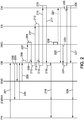
- Figure 2 is a flowchart showing the steps of a method according to some embodiments of the invention.
- a request for energy is transmitted from the first proxy 102.1 for example, to the social network 100 or to the energy broker 101 depending on the embodiment.
- the request for energy can transit via the energy social network, whereas when the social network 100 is a general social network, the request for energy is preferably transmitted directly from the first proxy 102.1 to the energy broker 101.
- the request for energy may comprise a basic description of the required energy such as, at least, the amount of energy to be acquired and an identifier of the requesting customer.
- the request for energy may also comprise a time or time slot of the energy exchange.
- the request for energy is transmitted to the social network and the energy broker 101 regularly polls the energy social network to retrieve the user profiles of the energy social network.
- the request for energy is stored in the energy profile of the consumer on the social network.
- the energy profile of the consumer can be identified based on the identifier of the requesting customer comprises in the request for energy. No restriction applies to the identifier of the requesting customer, which can be a name, a pseudonym, an email address or any sequence of digits and/or letters.
- the identifier of the requesting customer and the identifier of the customer on the social network may be identical, or, alternatively, may be stored in correspondence in a mapping table.
- the request for energy may also comprise further attributes such as category of required energy (renewable such as issued from solar panel or windfarm for example), the location of the consumer, an identifier of the supplier of the consumer, etc. As explained hereafter, and alternatively, these further attributes can be obtained based on social network data.
- the energy broker 101 may request, from the social network 100 and from the other social networks 103, at least data relating to a plurality of energy producers.
- Social network data may encompass any attribute of the energy producers and numerous examples will be given hereafter.
- the energy broker 101 may request social network data relating to the consumer identified in the request for energy.
- social network data relating at least to a plurality of energy producers can be received from the social network 100 and from the other social networks 103.
- Social network data relating to a plurality of energy producers may comprise any data that impacts availability of energy resources by the energy producer.
- it can be any attribute, or any combination of attributes, among:
- the social network data can be related to both the energy consumer identified in the request for energy, and each of the energy producers. For example, it can encompass a number of common social relationships (for example, number of friends or contacts in common), a number of interests in common, common events they participate, common school attendance, etc.
- the social network data can also be related to the energy consumer identified in the request for energy. For example, it can encompass:
- All the attributes above can be extracted from social network feeds by the consumer or producer, either from explicit numerical data, from an analysis of the media they post and consume, and from the text they write and read as port of their interaction with the social network 101 or 103.
- the energy broker selects at least one energy producer matching the request for energy.
- the predetermined metrics may be any of, or any combination of:
- the data input in the above metrics may therefore be the attributes in the request for energy, the data retrieved from the social networks 100 and 103, data issued by the energy suppliers accounts 106 or from the DSO 105.
- the step of selecting at least one producer may comprise a first sub-step of ranking the producers based on the metrics and the input data, and a second sub-step of selection of at least one producer among the based ranked producers.
- the metrics can be weighted. Weighting can be predefined or can be set by the user (the consumer) via the social network 100 for example. The consumer can then decide which metrics should be prioritized (for example e-reputation of the producer over producer/consumer distance). No restriction is applied to the weighting formula that is applied to the metrics.
- only the best ranked producer is selected at step 206, provided it can produce the requested amount of energy.
- the n best ranked producers can be selected, n being an integer greater than 1.
- the energy broker 101 may send a first validation request to the DSO 105, the first validation request identifying the customer and at least one selected producer.
- the DSO 105 checks whether the energy exchange can be validated or not. To this end, the DSO 105 checks whether the distribution network can support the energy exchange or not. When several producers are identified, the DSO may validate some of the exchanges and refuse the other exchanges.
- the DSO 105 sends a first validation response indicating for each exchange (each exchange is identified by a couple of customer identifier and producer identifier) whether it is validated or not.
- the energy broker 101 generate a second validation request for all the exchanges validated by the DSO, and the second validation request may be sent to the energy suppliers 106 at step 211.
- the energy suppliers of the users identified in the second validation request determine whether the energy exchange can be validated or not. No restriction is attached to the criteria that are taken into account by the suppliers for validating or not the energy exchange.
- the energy suppliers 106 send to the energy broker 101 a second validation response (or each given energy supplier sends one or several second validation responses for each energy exchange that involves said given energy supplier), the second validation response indicating, for each identified energy exchange (couple of customer identifier and producer identifier) whether it is validated or not.
- the energy broker 101 determines whether the validated energy exchanges are sufficient to satisfy the requested amount of energy. If not, an additional request for energy can be sent at step 215 to the energy markets 104 so as to request a lacking amount of energy.
- the additional request for energy can optionally further comprise requested production preferences, a time or time slot of the requested exchange, a minimum price, a maximum price, technical constraints, etc.
- the additional request for energy can be processed at step 216 by the energy markets 104 to determine whether an actor on the energy market 104 can propose an energy exchange satisfying the validated energy request.
- the additional request for energy is sent to the energy markets even though the validated energy exchanges are sufficient to satisfy the requested amount of energy.
- the energy broker selects the best producer for the requesting customer for contracting agreements.
- An energy response is then sent at step 217 by the energy markets 104 to the energy broker 101 indicating or not an additional proposal for energy.
- the energy broker 101 selects the final energy exchanges that have been validated, and identifies them in a response that is transmitted to the first proxy 102.1 of the requesting customer at step 219.
- the response can transit through the social network 100 before being forwarded to the first proxy 102.1.
- a transaction contract request can be sent to the energy suppliers 106 of the users involved in the contracted agreements.
- the transaction contract request can identify the energy broker 101, the supplier of the customer and the supplier of the at least one producer.
- a transaction contract answer can be received from each energy supplier validating or not the respective contracted agreements.
- the DSOs that are involved in the energy exchange perform measures in the electrical network(s) while the energy exchanges corresponding to the contracted agreements are performed between the selected producers and the customer.
- the DSO can report the measures performed between the customer and one of the selected producer.
- the measures can then be reported to the energy markets at step 221 and the measures are forwarded by the energy markets to the energy broker 101 at step 222.
- the measures are directly sent from the DSOs 105 to the energy broker 101 at step 223.
- the energy broker 101 checks whether the measures correspond to the contracted agreements and generates a settlement for each energy exchange. Details of the settlement are then transmitted to the energy markets 104 at step 225.
- the energy markets 104 process the settlement based on the received details at step 226, and a settlement status is sent to the energy broker 101 at step 227.
- Information about the settlement are then transmitted to the first proxy 102.1 of the consumer and to the proxys of the producers involved in the energy exchange(s).
- the information about the settlements transits through the social network 100. This may enable to update e-reputation of the users involved in the energy exchange(s).
- the present invention provides the advantage to allow a simple way for users to manage their energy exchanges.
- the energy broker 101 enables to efficiently match profiles of consumers and producers so as to optimize the energy exchanges (choose the appropriate technology of production, reduce the loss of energy on the network, etc).
- the energy broker 101 enables to manage complex energy decisions in a simple way, that is to say without having to provide a complex set of requirements from each user, to manage complex energy decisions matching other users requirements, and to improve the matching of energy supply and demand on the requirements of the users participating to the energy market.
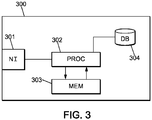
- Figure 3 represents a structure of an energy broker 300, such as the energy broker 101 referenced on Figure 1 , according to some embodiments of the invention.
- the energy broker can be grouped with the social network 100 according to some embodiments of the invention.
- the energy broker 300 comprises a random access memory 303 and a processor 302 that can store instructions for performing the steps described above with reference to Figures 8 and 9, in particular the steps 201 to 207, 209 to 211, 213 to 215, 217 to 219, 222 to 225, 227 and 228.
- the processor can be a dedicated electronic circuitry designed to perform the above steps.
- the energy broker 300 may also comprise a database 304 for storing data resulting from the method according to the invention.
- the database 304 may store metrics, which can be predetermined or can be different for each user, and therefore stored in association with a user identifier.
- the database 304 may further temporarily store the data comprises in the requests and response it receives.
- the database 304 may store the data related to the social network profiles of the users.
- the energy broker 300 comprises a network interface 301 to communicate with the other entities of the communications network that are illustrated on Figure 1 .
Landscapes
- Business, Economics & Management (AREA)
- Accounting & Taxation (AREA)
- Development Economics (AREA)
- Economics (AREA)
- Finance (AREA)
- Marketing (AREA)
- Strategic Management (AREA)
- Physics & Mathematics (AREA)
- General Business, Economics & Management (AREA)
- General Physics & Mathematics (AREA)
- Engineering & Computer Science (AREA)
- Theoretical Computer Science (AREA)
- Management, Administration, Business Operations System, And Electronic Commerce (AREA)
Abstract
Description
- The present invention relates to management of energy demand and supply, particularly but not exclusively to matching of energy demand and supply based on individual requirements.
- Increasingly, both private and commercial energy consumers are purchasing energy based on a set of requirements regarding attributes of the energy supplied. For example, a consumer can require to only purchase energy that has been produced using green methods (solar panels, windfarms), or by a local supplier.
- In parallel, new actors are supplying energy into the market, such as, for example, small energy producers using specific methods to produce energy (windfarms for example) or even private individuals owning some energy creation apparatus (solar panels for example) and wishing to sell some of the energy produced to others.
- Hereafter, "user" refers to any actor producing and/or consuming energy. It therefore also encompasses energy storage actors, which are both consumer and producers at different times.
- The user requirements and the granularity of these requirements according to which the users want their energy supply and demand to be managed, are variable according to the users, which may raise some issues.
- Indeed, the matching of the requirements is complex, both because of the complexity of finding a match when the requirements have a high level of granularity and because of the complexity of obtaining the requirements from the users. For example, it can be arduous for a user to state the requirements explicitly.
- There is therefore a need to :
- manage by the user complex energy decisions in a simple way, that is to say without having to provide a complex set of requirements by each user;
- manage complex energy decisions matching other users requirements;
- improve the matching of energy supply and demand on the requirements of the users participating to the energy market.
- The present invention improves the situation.
- A first aspect of the invention relates to a method for matching a first entity requesting energy with at least one energy producer, implemented by an energy broker in a telecommunications network, and comprising :
- receiving a request for energy from a first entity, said energy request comprising at least one attribute comprising at least an amount of energy to be provided in an energy exchange;
- retrieving, from at least one social network, data relating to a plurality of energy producers ;
- based on metrics applied to the attribute comprised in the energy request and to the data retrieved from the social network, selecting at least one energy producer matching the request for energy, so that the selected energy producer provides the amount of energy to be provided in the energy exchange.
- The present invention therefore proposes to use social network data to match a request for energy with a producer of energy. This is advantageous in that social networks enables the access to a huge amount of data, from which it can be derived which producer of energy is the best for the user requesting the energy. In addition, the user requesting the energy does not need to provide complex requirements as they can also be derived from the social network data.
- According to some embodiments, the first entity can be a proxy representing a consumer and the selected energy producer provides the amount of energy to the consumer.
- The proxy can be an automate interface or a machine responsible for automatic energy transaction for the consumer, which enables to reduce the interactions to be performed by the consumer.
- In complement, the energy request may further comprise an identifier of the consumer, the metrics may be configurable by the consumer and the metrics may be stored in association with the identifier of the consumer in a database of the energy broker.
- This enables to have personalized metrics and therefore to make the selection of the at least one more relevant producer.
- Alternatively or in complement, the energy request may further comprise an identifier of the consumer, the method may further comprise retrieving, from at least one social network, data relating to the consumer and wherein the metrics are further applied to the retrieved data relating to the consumer.
- This enables to make the selection of the at least one more relevant producer without the need to require the consumer to input more requirements in the energy request.
- Alternatively or in complement, the metrics may comprise one of, or any combination of:
- common interests between the consumer and each of the producers on the social network, wherein the data retrieved from the social network is representative of the common interests between the consumer and each of the producers;
- contacts in common between the consumer and each of the producers on the social network, wherein the data retrieved from the social network is representative of the contacts in common between the consumer and each of the producers;
- reputation (such as e-reputation or online reputation) of each of the energy producers, wherein the data retrieved from the social network is representative of the e-reputation of each of the producers and comprises of reviews and feedback relating to previous energy exchanges;
- a "producer/consumer distance" being representative of a compatibility between energy production and requirements of the consumer or representative of a difference of a time slot of production of energy and a time slot of consumption of energy.
- This enables to improve the relevancy of the selection of at least one producer. Also, the metrics may be weighted to give different levels of importance to each of the metrics. The weighting can then be configured by the user.
- In complement, the metrics may further comprise at least one of, or any combination of:
- an electro technical distance between the consumer and each of the producers, the electro technical distance being a value representative of the electric loss during transfer of energy through the electrical network;
- a distance between an energy supplier of the customer and an energy supplier of each producer.
- This enables to improve the relevancy of the selection of at least one producer.
- According to some embodiments, the attributes of the energy request may further comprise a time or time slot for the energy exchange and the metrics may be further applied to the time or time slot for the energy exchange.
- This enables to improve the relevancy of the selection of at least one producer and enables to ensure that the producer is able to provide the requested energy amount at the requested time.
- According to some embodiments, the step of selecting may comprise a step of ranking producers based on the metrics, on the attributes comprised in the energy request and on the data retrieved for said producers, and a step of selecting at least one producer among the based ranked producers.
- This enables to improve the relevancy of the selection of at least one producer.
- According to some embodiments, the method may further comprise receiving an offer of energy from a second entity of a producer, said offer of energy comprising at least one attribute comprising at least an amount of energy to be provided in an energy exchange, and the energy broker may select the at least one producer also based on the received offer of energy.
- This enables also for the producer to specify some requirements to be taken into account when selecting a producer for matching an energy request.
- According to some embodiments, the energy exchanged may be conditioned by a validation received from a distribution service operator in charge of an energy network supporting the energy exchange.
- This enables to ensure that the energy support is technically able to support the energy exchange.
- According to some embodiments, the method may further comprise, after the energy exchange, receiving measures from a distribution service operator in charge of an energy network supporting the energy exchange.
- This enables to monitor the exchange of energy between the consumer and the producer and make it possible to review the quality and effectiveness of the energy exchange. For example, profiles of the consumer and/or producer on the social network may be updated based on the measures.
- A second aspect of the invention concerns computer program product comprising program instruction code stored on a computer-readable medium, for executing the steps of the method according to the first aspect of the invention.
- A third aspect of the invention concerns a non-transitory computer readable storage medium with a program stored thereon, said program comprising instruction code stored on a computer-readable medium, for executing the steps of the method according to the first aspect of the invention.
- A fourth aspect of the invention concerns an energy broker comprising :
- a network interface for accessing a communications network, for receiving a request for energy from a first entity, said energy request comprising at least one attribute comprising at least an amount of energy to be provided in an energy exchange and retrieving, from at least one social network, data relating to a plurality of energy producers ;
- a processor configured for, based on metrics applied to the attribute comprised in the energy request and to the data retrieved from the social network, selecting at least one energy producer matching the request for energy, so that the selected energy producer provides the amount of energy to be provided in the energy exchange.
- According to some embodiments, the energy broker may further comprise the social network and comprising a database storing user profiles, and the data retrieved from the social network may be retrieved from the user profiles.
- Other features and advantages of the invention will become apparent upon examining the following detailed description and the accompanying drawings in which:
-
figure 1 shows a system according to an embodiment of the invention; -
figure 2 is a flowchart showing the steps of a method according to some embodiments of the invention; -
figure 3 is a structure of an energy broker according to some embodiments of the invention. -
Figure 1 illustrates a system according to some embodiments of the invention. - The entities of the system can be interconnected via a communications network, for example an IP network such as the Internet.
- The system comprises an
energy broker 101 communicating with asocial network 100. The entity "social network 101" encompasses any network entity related to a social network, such as a server dedicated to thesocial network 101. A social network service designates an online platform enabling interconnection between users based on content sharing, activities, or any other social relation. - According to some embodiments, the
energy broker 101 and thesocial network 100 are grouped as a unique entity. According to other embodiments, they are separate entities communicating via the communications network. - Optionally, the
energy broker 101 may also access othersocial networks 103 storing social network data. - According to a first embodiment, the
social network 100 is an energy social network, which means that it is mostly dedicated to the exchange of energy. In that case, theenergy broker 101 may be a specific actor of the energy social network. - Alternatively, the
social network 100 is a "general" social network, dedicated to more general social interactions, but also integrating interactions relating to the exchange of energy. For example, a specific section of the general social network account of a user may be an "energy wallet" dedicated to the energy transactions of the user. - The
energy broker 101 can also communicate with a plurality of users, directly or via thesocial network 100. - In what follows, "user" designates an entity representing an energy producer and/or energy consumer. It is to be noted that a user can be energy consumer in the context of a first energy exchange and energy producer in the context of a second energy exchange. For example, storage operators may acquire energy from a first energy producer, and is therefore an energy consumer in that context, and may store the acquired energy for a subsequent transfer to a given energy consumer (and is therefore an energy producer in that context). Therefore, some users might be both consumer and producer at different times.
- According to the invention, the
social network 100 and theenergy broker 101 share at least some common users. - Users can access the energy broker via
proxys 102. For example, a first proxy 102.1 may be dedicated to a first user and a second proxy may be dedicated to a second user. A proxy can be an automate interface, or a machine responsible for automatic energy transaction for the energy customer or producer, but it also encompasses a human being (the energy customer or producer). - The first user is also associated with a first social network account 100.1 on the
social network 100 and the second user is associated with a second social network account 100.2 on thesocial network 100. Optionally, the first and second users may also be associated with accounts and data on othersocial networks 103. -
Proxys 102 are arranged for generating requests for energy or offers of energy (depending on whether the user is acting as consumer or producer). According to the invention, such requests are basic description of the energy required or the energy to be sold. A request for energy may comprise any of the following information, also called attributes hereafter, or any combination of : - amount of energy to be acquired;
- time or time slot of the energy exchange;
- identifier of the requesting user (customer).
- An offer of energy may also comprise similar attributes, such as :
- amount of energy to be sold;
- time or time slot of the energy exchange;
- identifier of the selling user (producer)
- A proxy is any entity able to act on behalf of a person or entity (above "user") acting whether as energy customer or as energy producer.
- The
energy broker 101 may also communicate with energy supplier accounts 106. "Energy supplier" designates a mass energy producer distributing energy over a given territory, such as a country for example. It is to be differentiated from an energy producer within the meaning of the invention. An energy producer according to the invention designates the party (or user) from which the energy transferred during the energy exchange is originated. An energy producer according to the invention may have a general contract with an energy supplier supplying energy to the energy producer. "Energy supplier account" designates an online platform dedicated to a given energy supplier. - The
energy broker 101 may also communicate with distribution system operators, DSOs, 105, which are arranged to secure and distribute energy in an energy distribution network (not shown onFigure 1 ). - The
energy broker 101 may also communicate withenergy markets 104 on which energy can be traded. -
Figure 2 is a flowchart showing the steps of a method according to some embodiments of the invention. - The case of the processing of a request for energy is detailed first. The processing of an offer of energy will be detailed hereafter.
- At
step 201, a request for energy is transmitted from the first proxy 102.1 for example, to thesocial network 100 or to theenergy broker 101 depending on the embodiment. For example, in the case where thesocial network 100 is an energy social network, the request for energy can transit via the energy social network, whereas when thesocial network 100 is a general social network, the request for energy is preferably transmitted directly from the first proxy 102.1 to theenergy broker 101. As explained above, the request for energy may comprise a basic description of the required energy such as, at least, the amount of energy to be acquired and an identifier of the requesting customer. As explained above, the request for energy may also comprise a time or time slot of the energy exchange. - According to another embodiment (not represented on
Figure 2 ), the request for energy is transmitted to the social network and theenergy broker 101 regularly polls the energy social network to retrieve the user profiles of the energy social network. According to that embodiment, the request for energy is stored in the energy profile of the consumer on the social network. The energy profile of the consumer can be identified based on the identifier of the requesting customer comprises in the request for energy. No restriction applies to the identifier of the requesting customer, which can be a name, a pseudonym, an email address or any sequence of digits and/or letters. The identifier of the requesting customer and the identifier of the customer on the social network may be identical, or, alternatively, may be stored in correspondence in a mapping table. - The request for energy may also comprise further attributes such as category of required energy (renewable such as issued from solar panel or windfarm for example), the location of the consumer, an identifier of the supplier of the consumer, etc. As explained hereafter, and alternatively, these further attributes can be obtained based on social network data.
- At
steps energy broker 101 may request, from thesocial network 100 and from the othersocial networks 103, at least data relating to a plurality of energy producers. Social network data may encompass any attribute of the energy producers and numerous examples will be given hereafter. In complement, theenergy broker 101 may request social network data relating to the consumer identified in the request for energy. Atsteps social network 100 and from the othersocial networks 103. - Social network data relating to a plurality of energy producers may comprise any data that impacts availability of energy resources by the energy producer. For example, it can be any attribute, or any combination of attributes, among:
- information relating to the type of production, and more generally any information relating to the production, such as windfarm, solar panels, and the capacity of production;
- information relating to activities of the energy producer, which may enable to deduce that the producer will be away from home during a given time slot, so that an amount of energy will be available;
- information regarding the location of the energy producer and the location of the energy production site;
- information regarding the energy supplier of the energy producer;
- information regarding availability of energy resources of the producer;
- information regarding e-reputation and notation of the energy producer, such as feedbacks relating to previous energy exchanges, regularity of production means, volume and quality of data the producer provide.
- Also, the social network data can be related to both the energy consumer identified in the request for energy, and each of the energy producers. For example, it can encompass a number of common social relationships (for example, number of friends or contacts in common), a number of interests in common, common events they participate, common school attendance, etc.
- The social network data can also be related to the energy consumer identified in the request for energy. For example, it can encompass:
- information regarding preferences of the consumer regarding some preferred types of production (renewable for example);
- information regarding location of the consumer or of the receiving entity of the energy exchange (consumer's house for example);
- information regarding the energy supplier of the consumer;
- information regarding e-reputation and notation of the energy consumer, such as feedbacks relating to previous energy exchanges, volume and quality of data the consumer provide, also the difference between requested amounts of energy and real consumption.
- All the attributes above can be extracted from social network feeds by the consumer or producer, either from explicit numerical data, from an analysis of the media they post and consume, and from the text they write and read as port of their interaction with the
social network - At
step 206, based on predetermined metrics, on the request for energy, and on the data retrieved from the social network, the energy broker selects at least one energy producer matching the request for energy. - For example, the predetermined metrics may be any of, or any combination of:
- interests on social network and friends: this metrics can be defined by a distance between center of interest on social networks (for example companies followed, music groups, events, sports, etc). It can also be defined by the distance between friends or contacts, or the number of links on social networks (groups, friend of friend, etc);
- electro-technical distance : this metrics can be defined as a value representative of the electric loss during transfer of energy through the electrical network. It can also be defined as a distance on the electrical network, or also as a real geographical distance (using location information of the consumer/producer, using GPS or geographical information or address of the customer/producer);
- distance between supplier of the customer and supplier of the producer: this metrics can be defined by a distance between the two suppliers : This can be equal to zero if they are the same, or different from zero if they are different for example). Alternatively or in complement, this can be a price or a capacity difference at a given time. Still alternatively, this can be representative of a type of contracts between the two suppliers, defining for example energy exchange requirements and the distribution system operator, DSO, that is responsible of the distribution network (stability, electro-technical constraints, etc);
- producer/consumer distance : this metrics can be defined as a compatibility between two users of the electrical network, for example between the energy proposed to be produced by a producer and the energy supposed to be consumed by a consumer. For example, if the energy is produced using fossil means and the energy supposed to be consumed is renewable energy, the distance will be great. Alternatively or in complement, this distance can be representative of compatibility between electrical characteristics, such as contractual maximum powers for example. This can be based on electrotechnical data such as register readings, load profiles (maximum power and minimum power), reactive and active power, energy measures, frequency, subscribed power level, etc. According to another alternate or complementary embodiment, the producer/consumer distance can be representative of a temporal criterion such as a difference of the time slot of production of energy and the time slot of consumption of energy (which can be derived from social network data such as social network events, meaning that the producer is not at home and that energy is therefore available);
- e-reputation or notation : this metrics is based on different types of reviews and feedback for a consumer and/or a producer. For the producer, it can be based on the stability and regularity of its productions means (solar panel in a sunny or cloudy region for example), or the volume and quality or data the producers provide to the system (in particular to the
social network 100 or 103). This metrics is also applied to consumers (in the case of the offer of energy which will be discussed after), based on the difference between requested amount of data and real consumption, or the volume and quality of data the consumer provides to the system. This metrics can be calculated from the user reviews retrieved from thesocial networks - The data input in the above metrics may therefore be the attributes in the request for energy, the data retrieved from the
social networks DSO 105. - The step of selecting at least one producer may comprise a first sub-step of ranking the producers based on the metrics and the input data, and a second sub-step of selection of at least one producer among the based ranked producers.
- When a combination of metrics is taken into account for the ranking, the metrics can be weighted. Weighting can be predefined or can be set by the user (the consumer) via the
social network 100 for example. The consumer can then decide which metrics should be prioritized (for example e-reputation of the producer over producer/consumer distance). No restriction is applied to the weighting formula that is applied to the metrics. - According to one embodiment, only the best ranked producer is selected at
step 206, provided it can produce the requested amount of energy. Alternatively, the n best ranked producers can be selected, n being an integer greater than 1. - At
step 207, theenergy broker 101 may send a first validation request to theDSO 105, the first validation request identifying the customer and at least one selected producer. Atstep 208, theDSO 105 checks whether the energy exchange can be validated or not. To this end, theDSO 105 checks whether the distribution network can support the energy exchange or not. When several producers are identified, the DSO may validate some of the exchanges and refuse the other exchanges. - At
step 208, theDSO 105 sends a first validation response indicating for each exchange (each exchange is identified by a couple of customer identifier and producer identifier) whether it is validated or not. - Then, at
step 210, theenergy broker 101 generate a second validation request for all the exchanges validated by the DSO, and the second validation request may be sent to theenergy suppliers 106 atstep 211. - At
step 212, the energy suppliers of the users identified in the second validation request, determine whether the energy exchange can be validated or not. No restriction is attached to the criteria that are taken into account by the suppliers for validating or not the energy exchange. - At
step 213, theenergy suppliers 106 send to the energy broker 101 a second validation response (or each given energy supplier sends one or several second validation responses for each energy exchange that involves said given energy supplier), the second validation response indicating, for each identified energy exchange (couple of customer identifier and producer identifier) whether it is validated or not. - At
step 214, theenergy broker 101 determines whether the validated energy exchanges are sufficient to satisfy the requested amount of energy. If not, an additional request for energy can be sent atstep 215 to theenergy markets 104 so as to request a lacking amount of energy. The additional request for energy can optionally further comprise requested production preferences, a time or time slot of the requested exchange, a minimum price, a maximum price, technical constraints, etc. The additional request for energy can be processed atstep 216 by theenergy markets 104 to determine whether an actor on theenergy market 104 can propose an energy exchange satisfying the validated energy request. - According to another embodiment, the additional request for energy is sent to the energy markets even though the validated energy exchanges are sufficient to satisfy the requested amount of energy. The energy broker then selects the best producer for the requesting customer for contracting agreements.
- An energy response is then sent at
step 217 by theenergy markets 104 to theenergy broker 101 indicating or not an additional proposal for energy. - At
step 218, theenergy broker 101 selects the final energy exchanges that have been validated, and identifies them in a response that is transmitted to the first proxy 102.1 of the requesting customer atstep 219. According to some embodiments, the response can transit through thesocial network 100 before being forwarded to the first proxy 102.1. - At an optional step, not shown on
Figure 2 , a transaction contract request can be sent to theenergy suppliers 106 of the users involved in the contracted agreements. The transaction contract request can identify theenergy broker 101, the supplier of the customer and the supplier of the at least one producer. In response to this, a transaction contract answer can be received from each energy supplier validating or not the respective contracted agreements. - At a
subsequent step 220, the DSOs that are involved in the energy exchange, for example the DSO 105.1, perform measures in the electrical network(s) while the energy exchanges corresponding to the contracted agreements are performed between the selected producers and the customer. For example, the DSO can report the measures performed between the customer and one of the selected producer. - According to some embodiments, the measures can then be reported to the energy markets at
step 221 and the measures are forwarded by the energy markets to theenergy broker 101 atstep 222. Alternatively, according to other embodiments, the measures are directly sent from theDSOs 105 to theenergy broker 101 atstep 223. - At
step 224, theenergy broker 101 checks whether the measures correspond to the contracted agreements and generates a settlement for each energy exchange. Details of the settlement are then transmitted to theenergy markets 104 atstep 225. - The
energy markets 104 process the settlement based on the received details atstep 226, and a settlement status is sent to theenergy broker 101 atstep 227. - Information about the settlement are then transmitted to the first proxy 102.1 of the consumer and to the proxys of the producers involved in the energy exchange(s). According to some embodiments, the information about the settlements transits through the
social network 100. This may enable to update e-reputation of the users involved in the energy exchange(s). - The description of
Figure 2 above has been described when a request for energy is sent atstep 201. This also applies to the reception of an offer of energy from the second proxy 102.2 for example of a first energy producer. In that case, the offer of energy is matched atstep 206 with one of the request for energy which has been previously received by theenergy broker 101 and/orsocial network 100, based on the above metrics, on the attributes contained in the offer of energy, on the attributes contained in the several requests for energy, and on social data related to the first energy producer and/or to the energy consumers from which the requests for energy originate. - In view of the above, the present invention provides the advantage to allow a simple way for users to manage their energy exchanges. The
energy broker 101 enables to efficiently match profiles of consumers and producers so as to optimize the energy exchanges (choose the appropriate technology of production, reduce the loss of energy on the network, etc). - More generally, the
energy broker 101 according to the invention enables to manage complex energy decisions in a simple way, that is to say without having to provide a complex set of requirements from each user, to manage complex energy decisions matching other users requirements, and to improve the matching of energy supply and demand on the requirements of the users participating to the energy market. -
Figure 3 represents a structure of anenergy broker 300, such as theenergy broker 101 referenced onFigure 1 , according to some embodiments of the invention. - As explained above, the energy broker can be grouped with the
social network 100 according to some embodiments of the invention. - The
energy broker 300 comprises arandom access memory 303 and aprocessor 302 that can store instructions for performing the steps described above with reference to Figures 8 and 9, in particular thesteps 201 to 207, 209 to 211, 213 to 215, 217 to 219, 222 to 225, 227 and 228. Alternatively, the processor can be a dedicated electronic circuitry designed to perform the above steps. - The
energy broker 300 may also comprise adatabase 304 for storing data resulting from the method according to the invention. For example, and preferentially, thedatabase 304 may store metrics, which can be predetermined or can be different for each user, and therefore stored in association with a user identifier. Thedatabase 304 may further temporarily store the data comprises in the requests and response it receives. Also, when thesocial network 100 and the energy broker are grouped in the same entity, thedatabase 304 may store the data related to the social network profiles of the users. - The
energy broker 300 comprises anetwork interface 301 to communicate with the other entities of the communications network that are illustrated onFigure 1 .
Claims (15)
- A method for matching a first entity requesting energy with at least one energy producer, implemented by an energy broker (101) in a telecommunications network, and comprising :- receiving (201) a request for energy from a first entity (102.1), said energy request comprising at least one attribute comprising at least an amount of energy to be provided in an energy exchange;- retrieving (204, 205), from at least one social network (100, 103), data relating to a plurality of energy producers ;- based on metrics applied to the attribute comprised in the energy request and to the data retrieved from the social network, selecting (206) at least one energy producer matching the request for energy, so that the selected energy producer provides the amount of energy to be provided in the energy exchange.
- The method according to claim 1, wherein the first entity (102.1) is a proxy representing a consumer and wherein the selected energy producer provides the amount of energy to the consumer.
- The method according to claim 2, wherein the energy request further comprises an identifier of the consumer, wherein the metrics are configurable by the consumer and wherein the metrics are stored in association with the identifier of the consumer in a database of the energy broker (101).
- The method according to claim 2 or 3, wherein the energy request further comprises an identifier of the consumer, wherein the method further comprises retrieving, from at least one social network (100, 103), data relating to the consumer and wherein the metrics are further applied to the retrieved data relating to the consumer.
- The method according to one claims 2 to 4, wherein the metrics comprise one of, or any combination of:- common interests between the consumer and each of the producers on the social network, wherein the data retrieved from the social network is representative of the common interests between the consumer and each of the producers;- contacts in common between the consumer and each of the producers on the social network, wherein the data retrieved from the social network is representative of the contacts in common between the consumer and each of the producers;- reputation of each of the energy producers, wherein the data retrieved from the social network is representative of the e-reputation of each of the producers and comprises of reviews and feedback relating to previous energy exchanges;- a producer/consumer distance being representative of a compatibility between energy production and requirements of the consumer or representative of a difference of a time slot of production of energy and a time slot of consumption of energy.
- The method according to claim 5, wherein the metrics further comprises at least one of, or any combination of:- an electro technical distance between the consumer and each of the producers, the electro technical distance being a value representative of the electric loss during transfer of energy through the electrical network;- a distance between an energy supplier of the customer and an energy supplier of each producer.
- The method according one of the preceding claims, wherein the attributes of the energy request further comprises a time or time slot for the energy exchange and wherein the metrics are further applied to the time or time slot for the energy exchange.
- The method according to one of the preceding claims, wherein the step of selecting comprises a step of ranking producers based on the metrics, on the attributes comprised in the energy request and on the data retrieved for said producers, and a step of selecting at least one producer among the based ranked producers.
- The method according to one of the preceding claims, further comprising receiving an offer of energy from a second entity of a producer, said offer of energy comprising at least one attribute comprising at least an amount of energy to be provided in an energy exchange, and wherein the energy broker selects the at least one producer also based on the received offer of energy.
- The method according to one of the preceding claims, wherein the energy exchanged is conditioned by a validation (209) received from a distribution service operator in charge of an energy network supporting the energy exchange.
- The method according to one of the preceding claims, further comprising, after the energy exchange, receiving (222, 223) measures from a distribution service operator in charge of an energy network supporting the energy exchange.
- A computer program product comprising program instruction code stored on a computer-readable medium, for executing the steps of the method according to any of claims 1 to 11.
- A non-transitory computer readable storage medium with a program stored thereon, said program comprising instruction code stored on a computer-readable medium, for executing the steps of the method according to any of claims 1 to 11.
- An energy broker comprising :- a network interface (301) for accessing a communications network, for receiving a request for energy from a first entity, said energy request comprising at least one attribute comprising at least an amount of energy to be provided in an energy exchange and retrieving, from at least one social network (100, 103), data relating to a plurality of energy producers ;- a processor (302) configured for, based on metrics applied to the attribute comprised in the energy request and to the data retrieved from the social network, selecting at least one energy producer matching the request for energy, so that the selected energy producer provides the amount of energy to be provided in the energy exchange.
- The energy broker according to claim 14 further comprising the social network (100, 103) and comprising a database (304) storing user profiles, wherein the data retrieved from the social network is retrieved from the user profiles.
Priority Applications (2)
| Application Number | Priority Date | Filing Date | Title |
|---|---|---|---|
| EP17306843.8A EP3503002A1 (en) | 2017-12-20 | 2017-12-20 | Enabling of an energy exchange based on social network data |
| PCT/EP2018/083049 WO2019120932A1 (en) | 2017-12-20 | 2018-11-29 | Enabling of an energy exchange based on social network data |
Applications Claiming Priority (1)
| Application Number | Priority Date | Filing Date | Title |
|---|---|---|---|
| EP17306843.8A EP3503002A1 (en) | 2017-12-20 | 2017-12-20 | Enabling of an energy exchange based on social network data |
Publications (1)
| Publication Number | Publication Date |
|---|---|
| EP3503002A1 true EP3503002A1 (en) | 2019-06-26 |
Family
ID=60954831
Family Applications (1)
| Application Number | Title | Priority Date | Filing Date |
|---|---|---|---|
| EP17306843.8A Ceased EP3503002A1 (en) | 2017-12-20 | 2017-12-20 | Enabling of an energy exchange based on social network data |
Country Status (2)
| Country | Link |
|---|---|
| EP (1) | EP3503002A1 (en) |
| WO (1) | WO2019120932A1 (en) |
Citations (3)
| Publication number | Priority date | Publication date | Assignee | Title |
|---|---|---|---|---|
| US20080319893A1 (en) * | 2000-08-25 | 2008-12-25 | Governing Dynamics, Llc | Intelligent Routing Of Electric Power |
| EP2775446A1 (en) * | 2013-03-06 | 2014-09-10 | Deutsche Telekom AG | System for assigning an energy consumer to an energy provider |
| US20170116687A1 (en) * | 2015-10-27 | 2017-04-27 | Nalin Kulatilaka | Methods systems and devices for matching distributed energy consumer preferences with distributed energy investor preferences |
-
2017
- 2017-12-20 EP EP17306843.8A patent/EP3503002A1/en not_active Ceased
-
2018
- 2018-11-29 WO PCT/EP2018/083049 patent/WO2019120932A1/en not_active Ceased
Patent Citations (3)
| Publication number | Priority date | Publication date | Assignee | Title |
|---|---|---|---|---|
| US20080319893A1 (en) * | 2000-08-25 | 2008-12-25 | Governing Dynamics, Llc | Intelligent Routing Of Electric Power |
| EP2775446A1 (en) * | 2013-03-06 | 2014-09-10 | Deutsche Telekom AG | System for assigning an energy consumer to an energy provider |
| US20170116687A1 (en) * | 2015-10-27 | 2017-04-27 | Nalin Kulatilaka | Methods systems and devices for matching distributed energy consumer preferences with distributed energy investor preferences |
Non-Patent Citations (1)
| Title |
|---|
| IOANA G CIUCIU ET AL: "Social network of smart-metered homes and SMEs for grid-based renewable energy exchange", DIGITAL ECOSYSTEMS TECHNOLOGIES (DEST), 2012 6TH IEEE INTERNATIONAL CONFERENCE ON, IEEE, 18 June 2012 (2012-06-18), pages 1 - 6, XP032452874, ISBN: 978-1-4673-1702-3, DOI: 10.1109/DEST.2012.6227922 * |
Also Published As
| Publication number | Publication date |
|---|---|
| WO2019120932A1 (en) | 2019-06-27 |
Similar Documents
| Publication | Publication Date | Title |
|---|---|---|
| Su et al. | Game theoretic resource allocation in media cloud with mobile social users | |
| Tran et al. | How geo-distributed data centers do demand response: A game-theoretic approach | |
| JP6254288B2 (en) | Customer selectable power source options for network accessible service units | |
| US9767221B2 (en) | User profile and its location in a clustered profile landscape | |
| Yu et al. | Risk-constrained operation for internet data centers in deregulated electricity markets | |
| CN111178682A (en) | Control method of demand response management platform based on block chain technology | |
| US20200081519A1 (en) | Customized internet-of-things data packaging and brokering | |
| CN103208092A (en) | Internet-based system for providing consulting information | |
| Aazam et al. | Cloud customer's historical record based resource pricing | |
| CN105488177A (en) | Visual presentation method and system of data | |
| CN107563845A (en) | A kind of on-line machining entrusting system and method | |
| Makris et al. | Digitization era for electric utilities: A novel business model through an inter-disciplinary S/W platform and open research challenges | |
| RU2622850C2 (en) | Method and server for processing product identifiers and machine-readable storage medium | |
| Yao et al. | Dynamic resource integration optimisation of global distributed manufacturing: an embeddedness–interaction perspective | |
| CN115099924A (en) | Financial wind control management method and system, equipment and storage medium | |
| CN113139748A (en) | Service information recommendation method and device, electronic equipment and storage medium | |
| CN120050454A (en) | Resource recommendation optimization method, device, equipment and computer readable medium | |
| WO2019120932A1 (en) | Enabling of an energy exchange based on social network data | |
| CN112035760A (en) | A task assignment method and computer equipment | |
| CN110719325A (en) | Method and device for responding to user request | |
| KR102659256B1 (en) | Idle surplus line sharing and reselling system | |
| US11950173B2 (en) | Method of determining shared service index based on shared service of communication credential | |
| Podobnik et al. | Software agents in new generation networks: Towards the automation of telecom processes | |
| CN118410928A (en) | A route generation method and device | |
| CN109003121A (en) | Establishment of item method and apparatus, shared platform |
Legal Events
| Date | Code | Title | Description |
|---|---|---|---|
| PUAI | Public reference made under article 153(3) epc to a published international application that has entered the european phase |
Free format text: ORIGINAL CODE: 0009012 |
|
| STAA | Information on the status of an ep patent application or granted ep patent |
Free format text: STATUS: THE APPLICATION HAS BEEN PUBLISHED |
|
| AK | Designated contracting states |
Kind code of ref document: A1 Designated state(s): AL AT BE BG CH CY CZ DE DK EE ES FI FR GB GR HR HU IE IS IT LI LT LU LV MC MK MT NL NO PL PT RO RS SE SI SK SM TR |
|
| AX | Request for extension of the european patent |
Extension state: BA ME |
|
| STAA | Information on the status of an ep patent application or granted ep patent |
Free format text: STATUS: REQUEST FOR EXAMINATION WAS MADE |
|
| 17P | Request for examination filed |
Effective date: 20190715 |
|
| RBV | Designated contracting states (corrected) |
Designated state(s): AL AT BE BG CH CY CZ DE DK EE ES FI FR GB GR HR HU IE IS IT LI LT LU LV MC MK MT NL NO PL PT RO RS SE SI SK SM TR |
|
| STAA | Information on the status of an ep patent application or granted ep patent |
Free format text: STATUS: EXAMINATION IS IN PROGRESS |
|
| 17Q | First examination report despatched |
Effective date: 20200520 |
|
| STAA | Information on the status of an ep patent application or granted ep patent |
Free format text: STATUS: THE APPLICATION HAS BEEN REFUSED |
|
| 18R | Application refused |
Effective date: 20210520 |