EP3502054A1 - Functionalized graphene oxide curable formulations - Google Patents
Functionalized graphene oxide curable formulations Download PDFInfo
- Publication number
- EP3502054A1 EP3502054A1 EP18212117.8A EP18212117A EP3502054A1 EP 3502054 A1 EP3502054 A1 EP 3502054A1 EP 18212117 A EP18212117 A EP 18212117A EP 3502054 A1 EP3502054 A1 EP 3502054A1
- Authority
- EP
- European Patent Office
- Prior art keywords
- graphene oxide
- epoxy
- solution
- functionalized graphene
- polymer
- Prior art date
- Legal status (The legal status is an assumption and is not a legal conclusion. Google has not performed a legal analysis and makes no representation as to the accuracy of the status listed.)
- Pending
Links
Images






Classifications
-
- C—CHEMISTRY; METALLURGY
- C08—ORGANIC MACROMOLECULAR COMPOUNDS; THEIR PREPARATION OR CHEMICAL WORKING-UP; COMPOSITIONS BASED THEREON
- C08K—Use of inorganic or non-macromolecular organic substances as compounding ingredients
- C08K3/00—Use of inorganic substances as compounding ingredients
- C08K3/02—Elements
- C08K3/04—Carbon
- C08K3/042—Graphene or derivatives, e.g. graphene oxides
-
- B—PERFORMING OPERATIONS; TRANSPORTING
- B29—WORKING OF PLASTICS; WORKING OF SUBSTANCES IN A PLASTIC STATE IN GENERAL
- B29C—SHAPING OR JOINING OF PLASTICS; SHAPING OF MATERIAL IN A PLASTIC STATE, NOT OTHERWISE PROVIDED FOR; AFTER-TREATMENT OF THE SHAPED PRODUCTS, e.g. REPAIRING
- B29C64/00—Additive manufacturing, i.e. manufacturing of three-dimensional [3D] objects by additive deposition, additive agglomeration or additive layering, e.g. by 3D printing, stereolithography or selective laser sintering
-
- B—PERFORMING OPERATIONS; TRANSPORTING
- B33—ADDITIVE MANUFACTURING TECHNOLOGY
- B33Y—ADDITIVE MANUFACTURING, i.e. MANUFACTURING OF THREE-DIMENSIONAL [3D] OBJECTS BY ADDITIVE DEPOSITION, ADDITIVE AGGLOMERATION OR ADDITIVE LAYERING, e.g. BY 3D PRINTING, STEREOLITHOGRAPHY OR SELECTIVE LASER SINTERING
- B33Y70/00—Materials specially adapted for additive manufacturing
- B33Y70/10—Composites of different types of material, e.g. mixtures of ceramics and polymers or mixtures of metals and biomaterials
-
- C—CHEMISTRY; METALLURGY
- C01—INORGANIC CHEMISTRY
- C01B—NON-METALLIC ELEMENTS; COMPOUNDS THEREOF; METALLOIDS OR COMPOUNDS THEREOF NOT COVERED BY SUBCLASS C01C
- C01B32/00—Carbon; Compounds thereof
- C01B32/15—Nano-sized carbon materials
- C01B32/182—Graphene
- C01B32/198—Graphene oxide
-
- C—CHEMISTRY; METALLURGY
- C07—ORGANIC CHEMISTRY
- C07C—ACYCLIC OR CARBOCYCLIC COMPOUNDS
- C07C69/00—Esters of carboxylic acids; Esters of carbonic or haloformic acids
- C07C69/52—Esters of acyclic unsaturated carboxylic acids having the esterified carboxyl group bound to an acyclic carbon atom
- C07C69/533—Monocarboxylic acid esters having only one carbon-to-carbon double bond
- C07C69/54—Acrylic acid esters; Methacrylic acid esters
-
- C—CHEMISTRY; METALLURGY
- C07—ORGANIC CHEMISTRY
- C07D—HETEROCYCLIC COMPOUNDS
- C07D303/00—Compounds containing three-membered rings having one oxygen atom as the only ring hetero atom
- C07D303/02—Compounds containing oxirane rings
- C07D303/12—Compounds containing oxirane rings with hydrocarbon radicals, substituted by singly or doubly bound oxygen atoms
- C07D303/18—Compounds containing oxirane rings with hydrocarbon radicals, substituted by singly or doubly bound oxygen atoms by etherified hydroxyl radicals
- C07D303/20—Ethers with hydroxy compounds containing no oxirane rings
- C07D303/24—Ethers with hydroxy compounds containing no oxirane rings with polyhydroxy compounds
-
- C—CHEMISTRY; METALLURGY
- C07—ORGANIC CHEMISTRY
- C07D—HETEROCYCLIC COMPOUNDS
- C07D493/00—Heterocyclic compounds containing oxygen atoms as the only ring hetero atoms in the condensed system
- C07D493/22—Heterocyclic compounds containing oxygen atoms as the only ring hetero atoms in the condensed system in which the condensed system contains four or more hetero rings
-
- C—CHEMISTRY; METALLURGY
- C08—ORGANIC MACROMOLECULAR COMPOUNDS; THEIR PREPARATION OR CHEMICAL WORKING-UP; COMPOSITIONS BASED THEREON
- C08G—MACROMOLECULAR COMPOUNDS OBTAINED OTHERWISE THAN BY REACTIONS ONLY INVOLVING UNSATURATED CARBON-TO-CARBON BONDS
- C08G59/00—Polycondensates containing more than one epoxy group per molecule; Macromolecules obtained by polymerising compounds containing more than one epoxy group per molecule using curing agents or catalysts which react with the epoxy groups
- C08G59/18—Macromolecules obtained by polymerising compounds containing more than one epoxy group per molecule using curing agents or catalysts which react with the epoxy groups ; e.g. general methods of curing
- C08G59/40—Macromolecules obtained by polymerising compounds containing more than one epoxy group per molecule using curing agents or catalysts which react with the epoxy groups ; e.g. general methods of curing characterised by the curing agents used
- C08G59/50—Amines
-
- C—CHEMISTRY; METALLURGY
- C08—ORGANIC MACROMOLECULAR COMPOUNDS; THEIR PREPARATION OR CHEMICAL WORKING-UP; COMPOSITIONS BASED THEREON
- C08J—WORKING-UP; GENERAL PROCESSES OF COMPOUNDING; AFTER-TREATMENT NOT COVERED BY SUBCLASSES C08B, C08C, C08F, C08G or C08H
- C08J5/00—Manufacture of articles or shaped materials containing macromolecular substances
- C08J5/005—Reinforced macromolecular compounds with nanosized materials, e.g. nanoparticles, nanofibres, nanotubes, nanowires, nanorods or nanolayered materials
-
- C—CHEMISTRY; METALLURGY
- C08—ORGANIC MACROMOLECULAR COMPOUNDS; THEIR PREPARATION OR CHEMICAL WORKING-UP; COMPOSITIONS BASED THEREON
- C08J—WORKING-UP; GENERAL PROCESSES OF COMPOUNDING; AFTER-TREATMENT NOT COVERED BY SUBCLASSES C08B, C08C, C08F, C08G or C08H
- C08J5/00—Manufacture of articles or shaped materials containing macromolecular substances
- C08J5/18—Manufacture of films or sheets
-
- C—CHEMISTRY; METALLURGY
- C08—ORGANIC MACROMOLECULAR COMPOUNDS; THEIR PREPARATION OR CHEMICAL WORKING-UP; COMPOSITIONS BASED THEREON
- C08L—COMPOSITIONS OF MACROMOLECULAR COMPOUNDS
- C08L33/00—Compositions of homopolymers or copolymers of compounds having one or more unsaturated aliphatic radicals, each having only one carbon-to-carbon double bond, and only one being terminated by only one carboxyl radical, or of salts, anhydrides, esters, amides, imides or nitriles thereof; Compositions of derivatives of such polymers
- C08L33/04—Homopolymers or copolymers of esters
- C08L33/06—Homopolymers or copolymers of esters of esters containing only carbon, hydrogen and oxygen, which oxygen atoms are present only as part of the carboxyl radical
- C08L33/08—Homopolymers or copolymers of acrylic acid esters
-
- C—CHEMISTRY; METALLURGY
- C08—ORGANIC MACROMOLECULAR COMPOUNDS; THEIR PREPARATION OR CHEMICAL WORKING-UP; COMPOSITIONS BASED THEREON
- C08L—COMPOSITIONS OF MACROMOLECULAR COMPOUNDS
- C08L33/00—Compositions of homopolymers or copolymers of compounds having one or more unsaturated aliphatic radicals, each having only one carbon-to-carbon double bond, and only one being terminated by only one carboxyl radical, or of salts, anhydrides, esters, amides, imides or nitriles thereof; Compositions of derivatives of such polymers
- C08L33/04—Homopolymers or copolymers of esters
- C08L33/06—Homopolymers or copolymers of esters of esters containing only carbon, hydrogen and oxygen, which oxygen atoms are present only as part of the carboxyl radical
- C08L33/10—Homopolymers or copolymers of methacrylic acid esters
-
- C—CHEMISTRY; METALLURGY
- C08—ORGANIC MACROMOLECULAR COMPOUNDS; THEIR PREPARATION OR CHEMICAL WORKING-UP; COMPOSITIONS BASED THEREON
- C08L—COMPOSITIONS OF MACROMOLECULAR COMPOUNDS
- C08L63/00—Compositions of epoxy resins; Compositions of derivatives of epoxy resins
Definitions
- This disclosure relates to composite polymer materials, more particularly composite polymer materials including functionalized graphene oxide.
- Graphene and graphene oxide particles have exceptional mechanical properties such as tensile strength up to 130,000 MPa and Elastic Modulus up to 1000 GPa. For this reason, they have drawn significant attention as fillers in polymer composites with the expectation that they would produce polymer composites with mechanical properties far exceeding those of the base polymer materials. However translation of these properties into macroscopically assembled structures has not yet been demonstrated. Typical values for dispersed graphenereinforced epoxy composite structures are modest, ⁇ 70 MPa tensile strength and 2.5-3.5 GPa elastic modulus, respectively, which are orders of magnitude lower than those of graphene [ M. A. Rafiee et al. ACS NANO, (2009), 3884 ].
- 9,718,914 on 01 Aug 2017 disclosed structured hybrid chemically linked graphene/polymer networks wherein functionalized reactive graphene particles are incorporated as "monomers" into the cured composite material. Directed chemical linkage of the functionalized graphene enables the in-situ building of organized structures, which resemble woven carbon fibers with enhanced mechanical strength when compared with the randomly dispersed non-bonded graphene particle composites.
- Typical GO formulations incorporate up to 5% GO. Filling higher concentrations of GO typically does not result in increased mechanical properties, and in some cases results in decreased properties because of the aggregation of the GO particles.
- Graphene/polymer composites with significantly higher mechanical properties may be achieved with high content dispersed exfoliated graphene polymer composites.
- One embodiment is a method of manufacturing a cured polymer resin using functionalized graphene oxide, that includes mixing functionalized graphene oxide with a resin precursor and an optional solvent to produce a functionalized graphene solution wherein the particles contain functional groups nearly identical to, or identical to, a polymer precursor material, adding a curing initiator to the resin solution and mixing to produce a resin solution, depositing the formulation into a desired shape, and curing the formulation to form a polymer having functionalized graphene oxide groups in a base polymer material.
- One embodiment is a method of producing functionalized graphene oxide that includes dispersing graphene oxide into a solvent to produce dispersed graphene oxide, mixing the dispersed graphene oxide with a reactive molecule containing at least one epoxy functional group and a secondary functional group that is selected from vinyl, acrylate, methacrylate and epoxy to form a solution, adding an activation agent, heating and stirring the solution, cooling the solution, separating the particles from solution, and drying the particles to produce functionalized graphene oxide.
- One embodiment is a composition of matter that includes exfoliated, functionalized graphene oxide particles, a curing initiator, a polymer precursor material, wherein the particles contain functional groups nearly identical to, or identical to, a polymer precursor material.
- the embodiments here provide a novel, curable formulation with exfoliated functionalized graphene oxide particles, a curing initiator and a polymer precursor wherein the graphene oxide particles contain functional groups that are highly identical to a precursor polymer material. Because of the identical chemical nature of the functional groups attached onto the graphene oxide particles, functionalized graphene oxide particles disperse easily at high concentration in the polymer precursors and produce highly dispersed and high graphene content cured structures.
- the functionalized graphene oxide particles result from reacting carboxyl and hydroxyl groups present on the graphene oxide with an epoxy reagent that contains functional groups that are similar in chemical nature to the polymer matrix precursors used in the graphene/polymer composite formulation.
- Figure 1 shows a graphical representation of the process for fabrication of functionalized graphene oxide particles.
- Graphene oxide 10 undergoes bonding between the epoxy groups such as 12 using epoxy reagents.
- the functionalized graphene oxide particles are then used to fabricate high concentration and highly dispersed graphene oxide into polymer precursor formulations that are easy to apply and cure.
- the epoxy functionalized graphene oxide 14 has functional groups shown in the diagram as X.
- the X groups enable the fabrication of formulations containing high concentration and highly dispersed graphene oxide in polymer precursors. Formulations having functionalized graphene oxide particles in concentrations comprised in a range from 0.1% to about 80% can be achieved. Particularly, concentrations higher than of 20% are achievable.
- FGO functionalized graphene oxide
- the X group may consist of any group that has a similar chemical nature to the polymer precursor base material.
- it may consist of an epoxy group, if the polymer precursor consists of an epoxy material. It may also consist of radical polymerizable material such as a vinyl group when the precursor is a vinyl monomer. It may also consist of an acrylate or methacrylate when fabricating cured acrylic or methacrylic composites.
- Figure 2 shows some examples of possible X groups.
- Epoxy systems can be used either as a one component epoxy system or as a two part (epoxy + hardener) system.
- a one component epoxy system into which epoxy-functionalized particles (X epoxy) contains epoxy precursor, a crosslinking catalyst such as an ionic liquid that include for example 1-ethyl-3-methylimidazolinium dicyanamide and any other additives as necessary for the intended application.
- a conventional two-part epoxy adhesive consist of a part A, epoxy precursor material, and a part B, hardener.
- the hardener is generally a multifunctional organic amine.
- Suitable examples of vinyl monomers include styrene, divinyl benzene and analogues.
- suitable acrylates and methacrylates include methyl acrylate, methyl methacrylate, bisphenol A dimethacrylate and analogues.
- Suitable epoxy-X reagents 12 may contain one or more X groups.
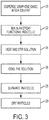
- Figure 3 shows a generalized example of a process to produce functionalized graphene oxide.
- nonfunctionalized graphene oxide is dispersed into a solvent.
- Graphene oxide's dispersibility is increased by the use of high shear mixing equipment, including high shear homogenizers, ball mills, and sonicators.
- An epoxy functional molecule is then added to the mixture at 22.
- An activation agent or other reagent may be added as well.
- the solution may then be transferred to a container more suitable for stirring and the undergoes stirring and heating at 24.
- the solution then cools to room temperature and it then undergoes washing with solvents and filtrating at 28 to separate the particles from solvents. Once the separated particles are dried at 29, one obtains epoxy functionalized graphene oxide (epoxy FGO).
- a suitable activator is for example an in organic base, such as Ca(OH) 2 , NaOH, KOH and the like; an organic base, such as pyridine, isoquinoline, quaternary ammonium and the like; or metal salt, such as barium oxide, cobalt octate, manganese naphthenate, and the like.
- the selection of the curing initiator is dictated by the type of polymer precursor and functional groups present onto the graphene oxide particles.
- the curing initiator can be latent curing agents which initiate the curing triggered by heat, light, pressure and others, like boron trifluoride-amine complex, dicandiamide, organic-acid hydrazide, et al.; amines, like diethylenetriamine, N-aminoethylpiperazine, m-xylenediamine, diaminodiphenylmethane, polyamide resin, piperidine, et al.; imidazoles, like 2-methylimidazole, 2-ethyl-4-methylimidazole, et al.; or their derivatives, like 1-ethyl-3-methylimidazolinium dicyanamide (ionic liquid) et al..
- latent curing agents which initiate the curing triggered by heat, light, pressure and others, like boron trifluoride-amine complex, dicandiamide, organic-acid hydrazide, et al.
- amines like diethylenetriamine, N
- the curing initiator is a radical initiator.
- the radical initiator can be either a thermal radical initiator that generates reactive radicals when heated. Suitable examples include azo compounds such as azobisisobutyronitrile (AIBN) and analogues, organic peroxides such as benzoyl peroxide (BPO).
- Figure 6 shows a generalized example of a process to produce stand-alone cured polymer resin using functionalized graphene oxide, by doctor blade approach.
- a cured polymer resin containing functionalized graphene oxide is fabricated by depositing the formulation into a desired shape and curing the shaped formulation to form a composite having functionalized graphene oxide groups in a base polymer material.
- a suitable process to achieve this deposition is injection molding.
- a cured polymer resin containing functionalized graphene oxide is fabricated by extrusion through a nozzle, creation of multilayered extruded lines in order to produce a 3D printed object.
- 0.5 g of GO is dispersed into 150 ml dimethyl formamide (DMF) through bath sonication.
- DMF dimethyl formamide
- 30 g of EPONTM 826, a low viscosity, light colored, liquid bisphenol A based epoxy resin, and 150 mg of calcium hydroxide Ca(OH) 2 were stirred into the solution.
- the solution was then transferred into a round flask with a reflux condenser and heated and stirred at 125 °C for 12 hours. The color of the solution turns from brown to black. After the solution cools, the solution undergoes washing and filtrating with DMF and acetone for 3 times. The resulting powder is then dried under vacuum at 125 °C overnight.
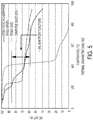
- the composition of the epoxy FGO was investigated by Thermal Gravimetric Analysis (TGA), shown in Figure 5 .
- TGA Thermal Gravimetric Analysis
- GO decomposes by losing oxygen groups when heated up to about 300 °C.
- epoxy FGO approximately 10 wt% is composed by the unreacted oxygen groups.
- EPONTM 826 loses weight in a temperature range comprised from 300 °C to 750 °C.
- epoxy FGO approximately 30 wt% of the epoxy FGO loses weight at this temperature range. This indicates that the epoxy FGO contains approximately 30 wt% of functional molecules.
- FIG. 6 shows an embodiment of a process.
- the epoxy FGO is mixed with a resin precursor and an optional solvent.
- a curing initiator such as anionic liquid in the case when X is an epoxy group, is added at 42. This solution was then mixed and is optionally placed under vacuum to remove air bubbles.
- the process then coats a substrate, such as with a doctor blade at 44. This coated substrate is then cured at 26, and the coated material was peeled off from the substrate at 28.
- EPONTM 826 was mixed with epoxy functionalized GO (FGO), at different concentrations with 15 wt% of nanoclay and 5 wt% of dimethyl methylphosphonate (DMMP). Then, 5 wt% of a curing initiator, in this case 1-ethyl-3-methylimidazolinium dicyanamide, was added and mixed with a planetary mixer under vacuum. This solution was then doctor bladed onto a substrate consisting of Teflon® coated alumina substrate. The coated substrate was then cured at 100 °C for 15 hours and at 220 °C for 2 hours. The cured material was peeled off from the substrate and cut for tensile strength testing.
- a curing initiator in this case 1-ethyl-3-methylimidazolinium dicyanamide
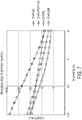
- the printed material must maintain its shape immediately after deposition until is it cured. This requires that the formulation is high enough viscosity to hold shape, but is thixotropic, or shear thinning, to be able to be extruded during the printing process. From the rheological test results in Figure 7 , all the resins containing approximately 15 wt% of fillers in addition of 15wt% of nanoclay and 5wt% of DMMP show thixotropic behavior.
- the Control sample was made from the same formulation, but without any fillers except 15wt% nanoclay and 5wt% of DMMP.
- the GO and GNP are also used as fillers to demonstrate the advantage of functionalization.
- the formulation with epoxy FGO has the highest difference in viscosity at high and low shear rate. This performance may be explained by the good interaction between the epoxy FGO and epoxy monomer because of the similar chemical nature. This feature is not available with the other fillers tested here.
- DSC Differential Scanning Calorimetry
- This process enables formulation with high weight concentration dispersible particles when compared to conventional graphene dispersed epoxy materials of functional groups.
- This formulation is resin extrudable, results in mechanically reinforced polymer composites, increases the Young's' modulus without sacrificing tensile strength, and has high flexibility with high concentration of particles.
- the addition of particle filters increased the Young's modulus of the base epoxy materials in all cases, as shown on the left.
- the enhancement obtained with epoxy FGO is approximately 2 times higher than that produced by unfunctionalized graphene (GNP). This result can be attributed to the better exfoliation of the epoxy FGO, the formation of chemically linked graphene oxide networks and to the higher degree of cure when compared to the GNP filler.
- the tensile strength almost solely depends on the interaction between filler particles and the epoxy material. With poor interaction, like in the case of GNP, higher concentration dispersion cannot be achieved due to particles aggregation. Aggregated particles act as nucleus and grow to fracture under stress. In the case of epoxy FGO, filler enhanced interaction by chemical bonding increases the tensile strength. As one of the results from the good interaction of epoxy FGO with epoxy monomer, the cured composite inherits the flexibility of the cured epoxy but with a greater than 3 times increase of the Young's modulus, as shown in Figure 9 .
Landscapes
- Chemical & Material Sciences (AREA)
- Organic Chemistry (AREA)
- Engineering & Computer Science (AREA)
- Health & Medical Sciences (AREA)
- Chemical Kinetics & Catalysis (AREA)
- Medicinal Chemistry (AREA)
- Polymers & Plastics (AREA)
- Materials Engineering (AREA)
- Manufacturing & Machinery (AREA)
- Nanotechnology (AREA)
- Inorganic Chemistry (AREA)
- Structural Engineering (AREA)
- Ceramic Engineering (AREA)
- Civil Engineering (AREA)
- Composite Materials (AREA)
- Optics & Photonics (AREA)
- Mechanical Engineering (AREA)
- Physics & Mathematics (AREA)
- Compositions Of Macromolecular Compounds (AREA)
- Epoxy Resins (AREA)
- Pigments, Carbon Blacks, Or Wood Stains (AREA)
- Paints Or Removers (AREA)
Abstract
Description
- This disclosure relates to composite polymer materials, more particularly composite polymer materials including functionalized graphene oxide.
- Graphene and graphene oxide particles have exceptional mechanical properties such as tensile strength up to 130,000 MPa and Elastic Modulus up to 1000 GPa. For this reason, they have drawn significant attention as fillers in polymer composites with the expectation that they would produce polymer composites with mechanical properties far exceeding those of the base polymer materials. However translation of these properties into macroscopically assembled structures has not yet been demonstrated. Typical values for dispersed graphenereinforced epoxy composite structures are modest, < 70 MPa tensile strength and 2.5-3.5 GPa elastic modulus, respectively, which are orders of magnitude lower than those of graphene [M. A. Rafiee et al. ACS NANO, (2009), 3884].
- Particularly, one of the outstanding challenges in conventional graphene filled polymer composites has been the difficulty to achieve composites with simultaneously increased elastic modulus and strength. Typically, the addition of graphene particles achieves easily an increase in the material's stiffness, measured by the elastic modulus. but at the cost of decreasing the composite's strength when compared with the base polymer material. As a result, such composites are brittle. Our understanding is that strength loss takes place by two main mechanisms. First, particle aggregation, meaning poor dispersion, and poor particle polymer interface create regions where mechanical failure occurs. Second, the growth of the polymer chains during curing is interrupted at the interface with the reinforcing particles. Shorter polymer chains generally produce polymer structures with reduced strength. To address this challenge,
US Patent No. 9,718,914 on 01 Aug 2017 - However, an outstanding challenge which prevents fabrication of graphene/polymer composites with even further increased mechanical properties remains the poor dispersibility of the functionalized graphene into the polymer base material. This limits the concentration of graphene particles into the formulation with the net result of limited achievable mechanical properties. GO is notoriously difficult to disperse in organic polymer formulations. Because the chemical nature of GO differs from the polymer precursor, GO particles aggregate in the polymer matrix and produce poor quality composites. Current solution to this problem consist in using solvents that solubilize both the GO and the polymer precursor. However, the solvent selection is very limited and the process is energy intensive, lengthy and uses large amounts of solvent.
- Dispersing GO in high concentrations in polymers becomes very difficult. Typical GO formulations incorporate up to 5% GO. Filling higher concentrations of GO typically does not result in increased mechanical properties, and in some cases results in decreased properties because of the aggregation of the GO particles. Graphene/polymer composites with significantly higher mechanical properties may be achieved with high content dispersed exfoliated graphene polymer composites.
- Therefore, a need exists for a method that produces exfoliated functionalized GO particles that can be easily dispersed into and have high compatibility with the polymer base material to enable high content graphene/polymer composites.
- One embodiment is a method of manufacturing a cured polymer resin using functionalized graphene oxide, that includes mixing functionalized graphene oxide with a resin precursor and an optional solvent to produce a functionalized graphene solution wherein the particles contain functional groups nearly identical to, or identical to, a polymer precursor material, adding a curing initiator to the resin solution and mixing to produce a resin solution, depositing the formulation into a desired shape, and curing the formulation to form a polymer having functionalized graphene oxide groups in a base polymer material.
- One embodiment is a method of producing functionalized graphene oxide that includes dispersing graphene oxide into a solvent to produce dispersed graphene oxide, mixing the dispersed graphene oxide with a reactive molecule containing at least one epoxy functional group and a secondary functional group that is selected from vinyl, acrylate, methacrylate and epoxy to form a solution, adding an activation agent, heating and stirring the solution, cooling the solution, separating the particles from solution, and drying the particles to produce functionalized graphene oxide.
- One embodiment is a composition of matter that includes exfoliated, functionalized graphene oxide particles, a curing initiator, a polymer precursor material, wherein the particles contain functional groups nearly identical to, or identical to, a polymer precursor material.
-
-
Figure 1 shows a diagram of an embodiment of a method of synthesizing functionalized graphene oxide using epoxy coupling functional molecules. -
Figure 2 shows a diagram of embodiments of functional molecules for polymer precursors. The circled areas in the figure represent functional groups available for chemical linking of functionalized graphene oxide particles. -
Figure 3 shows a flowchart of an embodiment of a method of producing functionalized graphene oxide. -
Figure 4 shows a graph of a FT-IR spectra characterization of epoxy functionalized graphene oxide. -
Figure 5 shows a graph of thermal gravimetric analysis of epoxy functionalized graphene oxide. -
Figure 6 shows a flowchart of an embodiment of a method of producing a cured epoxy stand-alone film using functionalized graphene oxide formulations. -
Figure 7 shows a graph of rheological results of epoxy functionalized graphene oxide. -
Figure 8 shows a graph of differential scanning calorimetry analysis of epoxy graphene oxide. -
Figure 9 shows graphical comparisons of the mechanical properties of epoxy/graphene formulations, between epoxy functionalized graphene oxide and unfunctionalized raw graphene. - The embodiments here provide a novel, curable formulation with exfoliated functionalized graphene oxide particles, a curing initiator and a polymer precursor wherein the graphene oxide particles contain functional groups that are highly identical to a precursor polymer material. Because of the identical chemical nature of the functional groups attached onto the graphene oxide particles, functionalized graphene oxide particles disperse easily at high concentration in the polymer precursors and produce highly dispersed and high graphene content cured structures. Typically, the functionalized graphene oxide particles result from reacting carboxyl and hydroxyl groups present on the graphene oxide with an epoxy reagent that contains functional groups that are similar in chemical nature to the polymer matrix precursors used in the graphene/polymer composite formulation.
-
Figure 1 shows a graphical representation of the process for fabrication of functionalized graphene oxide particles.Graphene oxide 10 undergoes bonding between the epoxy groups such as 12 using epoxy reagents. The functionalized graphene oxide particles are then used to fabricate high concentration and highly dispersed graphene oxide into polymer precursor formulations that are easy to apply and cure. The epoxy functionalizedgraphene oxide 14 has functional groups shown in the diagram as X. The X groups enable the fabrication of formulations containing high concentration and highly dispersed graphene oxide in polymer precursors. Formulations having functionalized graphene oxide particles in concentrations comprised in a range from 0.1% to about 80% can be achieved. Particularly, concentrations higher than of 20% are achievable. - Another benefit of functionalized graphene oxide (FGO) when compared with nonfunctionalized GO lies is the higher degree of cure and lower activation energy for curing. The functional groups present on the FGO are identical to those of the reactive precursors in the base material and they cure at the same time with the polymer precursor. This allows rapid creation of a network of chemically linked GO networks bonded by the polymer precursor linker.
- The X group may consist of any group that has a similar chemical nature to the polymer precursor base material. For example, it may consist of an epoxy group, if the polymer precursor consists of an epoxy material. It may also consist of radical polymerizable material such as a vinyl group when the precursor is a vinyl monomer. It may also consist of an acrylate or methacrylate when fabricating cured acrylic or methacrylic composites.
Figure 2 shows some examples of possible X groups. Suitable examples of epoxy monomer precursors include difunctional epoxies such as bisphenol A diglycidyl ether and analogues. According to description inFigure 2 , one of the epoxy groups is used for linking to the graphene oxide and the second one is the X = epoxy group. Epoxy systems can be used either as a one component epoxy system or as a two part (epoxy + hardener) system. - A one component epoxy system into which epoxy-functionalized particles (X= epoxy) contains epoxy precursor, a crosslinking catalyst such as an ionic liquid that include for example 1-ethyl-3-methylimidazolinium dicyanamide and any other additives as necessary for the intended application. A conventional two-part epoxy adhesive consist of a part A, epoxy precursor material, and a part B, hardener. The hardener is generally a multifunctional organic amine. Suitable examples of vinyl monomers include styrene, divinyl benzene and analogues. Examples of suitable acrylates and methacrylates include methyl acrylate, methyl methacrylate, bisphenol A dimethacrylate and analogues.
- Suitable epoxy-
X reagents 12, may contain one or more X groups. For example, in the case of X = epoxy a trifunctional epoxy reagent has one bonding epoxy group and two X= epoxy groups that will be used at the next stage for crosslinking when dispersed in epoxy (similar structure) precursor material. -
Figure 3 shows a generalized example of a process to produce functionalized graphene oxide. At 20, nonfunctionalized graphene oxide is dispersed into a solvent. Graphene oxide's dispersibility is increased by the use of high shear mixing equipment, including high shear homogenizers, ball mills, and sonicators. An epoxy functional molecule is then added to the mixture at 22. An activation agent or other reagent may be added as well. The solution may then be transferred to a container more suitable for stirring and the undergoes stirring and heating at 24. The solution then cools to room temperature and it then undergoes washing with solvents and filtrating at 28 to separate the particles from solvents. Once the separated particles are dried at 29, one obtains epoxy functionalized graphene oxide (epoxy FGO). A suitable activator is for example an in organic base, such as Ca(OH)2, NaOH, KOH and the like; an organic base, such as pyridine, isoquinoline, quaternary ammonium and the like; or metal salt, such as barium oxide, cobalt octate, manganese naphthenate, and the like. - The selection of the curing initiator is dictated by the type of polymer precursor and functional groups present onto the graphene oxide particles.
- In one embodiment when the polymerizing or curing groups are epoxy groups, the curing initiator can be latent curing agents which initiate the curing triggered by heat, light, pressure and others, like boron trifluoride-amine complex, dicandiamide, organic-acid hydrazide, et al.; amines, like diethylenetriamine, N-aminoethylpiperazine, m-xylenediamine, diaminodiphenylmethane, polyamide resin, piperidine, et al.; imidazoles, like 2-methylimidazole, 2-ethyl-4-methylimidazole, et al.; or their derivatives, like 1-ethyl-3-methylimidazolinium dicyanamide (ionic liquid) et al..
- In another embodiment when the polymerizing groups include vinyl, acrylate and methacrylate monomers, the curing initiator is a radical initiator. The radical initiator can be either a thermal radical initiator that generates reactive radicals when heated. Suitable examples include azo compounds such as azobisisobutyronitrile (AIBN) and analogues, organic peroxides such as benzoyl peroxide (BPO).
-
Figure 6 shows a generalized example of a process to produce stand-alone cured polymer resin using functionalized graphene oxide, by doctor blade approach. - In a different embodiment, a cured polymer resin containing functionalized graphene oxide is fabricated by depositing the formulation into a desired shape and curing the shaped formulation to form a composite having functionalized graphene oxide groups in a base polymer material. A suitable process to achieve this deposition is injection molding.
- In a further different embodiment, a cured polymer resin containing functionalized graphene oxide is fabricated by extrusion through a nozzle, creation of multilayered extruded lines in order to produce a 3D printed object.
- In a specific example, 0.5 g of GO is dispersed into 150 ml dimethyl formamide (DMF) through bath sonication. Then, 30 g of
EPON™ 826, a low viscosity, light colored, liquid bisphenol A based epoxy resin, and 150 mg of calcium hydroxide Ca(OH)2 were stirred into the solution. The solution was then transferred into a round flask with a reflux condenser and heated and stirred at 125 °C for 12 hours. The color of the solution turns from brown to black. After the solution cools, the solution undergoes washing and filtrating with DMF and acetone for 3 times. The resulting powder is then dried under vacuum at 125 °C overnight. - The incorporation of the epoxy functional groups of epoxy FGO was demonstrated by Fourier Transform Infrared Spectrum (FT-IR) spectra. As the epoxy FGO was synthesized from the GO and
EPON™ 826 through the reaction between carboxyl and hydroxyl groups with epoxy groups, the reduced peak intensities at 1650 and 3000 to 3500 1/cm(-OH) and 1387 1/cm (O-C=O or C-O-H) and the increasing peak intensity at 1184 1/cm (C-O-C) demonstrate incorporation of the epoxy function groups. This is shown inFigure 4 . - The composition of the epoxy FGO was investigated by Thermal Gravimetric Analysis (TGA), shown in
Figure 5 . GO decomposes by losing oxygen groups when heated up to about 300 °C. For epoxy FGO, approximately 10 wt% is composed by the unreacted oxygen groups.EPON™ 826 loses weight in a temperature range comprised from 300 °C to 750 °C. As seen inFigure 5 , epoxy FGO, approximately 30 wt% of the epoxy FGO loses weight at this temperature range. This indicates that the epoxy FGO contains approximately 30 wt% of functional molecules. - Once the epoxy FGO has been produced, it can be used to produce a cured resin film or coating product.
Figure 6 shows an embodiment of a process. At 24, the epoxy FGO is mixed with a resin precursor and an optional solvent. A curing initiator, such as anionic liquid in the case when X is an epoxy group, is added at 42. This solution was then mixed and is optionally placed under vacuum to remove air bubbles. The process then coats a substrate, such as with a doctor blade at 44. This coated substrate is then cured at 26, and the coated material was peeled off from the substrate at 28. -
EPON™ 826 was mixed with epoxy functionalized GO (FGO), at different concentrations with 15 wt% of nanoclay and 5 wt% of dimethyl methylphosphonate (DMMP). Then, 5 wt% of a curing initiator, in this case 1-ethyl-3-methylimidazolinium dicyanamide, was added and mixed with a planetary mixer under vacuum. This solution was then doctor bladed onto a substrate consisting of Teflon® coated alumina substrate. The coated substrate was then cured at 100 °C for 15 hours and at 220 °C for 2 hours. The cured material was peeled off from the substrate and cut for tensile strength testing. - Similar cured formulations were fabricated with non-functional graphene nanoplatelets (GNP).
- For many applications, such as digital manufacturing, the printed material must maintain its shape immediately after deposition until is it cured. This requires that the formulation is high enough viscosity to hold shape, but is thixotropic, or shear thinning, to be able to be extruded during the printing process. From the rheological test results in
Figure 7 , all the resins containing approximately 15 wt% of fillers in addition of 15wt% of nanoclay and 5wt% of DMMP show thixotropic behavior. - The Control sample was made from the same formulation, but without any fillers except 15wt% nanoclay and 5wt% of DMMP. For comparison, the GO and GNP are also used as fillers to demonstrate the advantage of functionalization. Most remarkably, when compared with all the other fillers tested, the formulation with epoxy FGO has the highest difference in viscosity at high and low shear rate. This performance may be explained by the good interaction between the epoxy FGO and epoxy monomer because of the similar chemical nature. This feature is not available with the other fillers tested here.
- Differential Scanning Calorimetry (DSC) investigated the curing dynamic of the resin. The heat of curing directly relates to the degree of cure of the epoxy. The higher the heat of curing, the lower the activation energy and the higher the degree of cure and the stronger the cured epoxy. This experiment obtained the heat of curing by 5 °C/min heating rate. The activation energy of each sample was calculated according to Kissinger model [Wei, J., Zhang, X., Qiu, J. and Weeks, B. L. (2015), Thermal kinetics and thermomechanical properties of graphene integrated fluoroelastomer. J. Polym. Sci. Part B: Polym. Phys., 53: 1691-1700. doi:10.1002/polb.23890] by the peak temperature from 4 DSC heating sweeps with different heating rate from 5 °C/min to 20 °C/min. The summary of the heat of curing and activation energy for control, 15 wt% epoxy FGO, 15 wt% GNP and 15 wt% GO are presented in Table 1. This example demonstrated that the functional formulation accelerates the curing by decreasing the activation energy while the non, or randomly functionalized, graphene slow down the polymerization process due to increased activation energy when compared with the control materials that contains no FGO particles. As a result, more heat is needed to finish the curing which indicates higher degree of curing and crosslinking.
Table 1. Sample Control 15 wt % GNP 15 wt % GO 15 wt% epoxy FGO Heat of curing (J/g) 444.7 390.3 363.0 514.2 Activation Energy (kJ/Mol) 76.5 81.5 158.3 34.9 - This process enables formulation with high weight concentration dispersible particles when compared to conventional graphene dispersed epoxy materials of functional groups. This formulation is resin extrudable, results in mechanically reinforced polymer composites, increases the Young's' modulus without sacrificing tensile strength, and has high flexibility with high concentration of particles.
- Tensile test obtained the mechanical properties, of cured particle-resins formulations. The cured resins with epoxy FGO and GNP, as nonfunctional graphene, with different concentrations were tested and compared.
Figure 9 shows the Young's modulus on the left and tensile strength on the right. In summary, the results are as follows. - As expected, the addition of particle filters increased the Young's modulus of the base epoxy materials in all cases, as shown on the left. However, the enhancement obtained with epoxy FGO is approximately 2 times higher than that produced by unfunctionalized graphene (GNP). This result can be attributed to the better exfoliation of the epoxy FGO, the formation of chemically linked graphene oxide networks and to the higher degree of cure when compared to the GNP filler.
- Increased concentration of the epoxy FGO resulted in increased tensile strength of about 30% when compared with the base epoxy material (no particles at all). In sharp contrast, formulations with non-functionalized graphene (GNP) showed the typical trend generally found with particle filled polymer composites, a steep decrease of the tensile strength (approximatively 5 times decrease when increasing the GNP concentration from 0% to 25%) as the concentration of the filler is increased, as seen on the right of
Figure 9 . - The tensile strength almost solely depends on the interaction between filler particles and the epoxy material. With poor interaction, like in the case of GNP, higher concentration dispersion cannot be achieved due to particles aggregation. Aggregated particles act as nucleus and grow to fracture under stress. In the case of epoxy FGO, filler enhanced interaction by chemical bonding increases the tensile strength. As one of the results from the good interaction of epoxy FGO with epoxy monomer, the cured composite inherits the flexibility of the cured epoxy but with a greater than 3 times increase of the Young's modulus, as shown in
Figure 9 . - It will be appreciated that variants of the above-disclosed and other features and functions, or alternatives thereof, may be combined into many other different systems or applications. Various presently unforeseen or unanticipated alternatives, modifications, variations, or improvements therein may be subsequently made by those skilled in the art which are also intended to be encompassed by the following claims.
Claims (10)
- A composition of matter, comprising:exfoliated, functionalized graphene oxide particles;a curing initiator; anda polymer precursor material;wherein the particles contain functional groups one of either nearly identical to, or identical to, a polymer precursor material.
- The composition of matter of claim 1, wherein the functional groups comprise epoxy groups and the polymer precursor material comprises an epoxy material.
- The composition of matter of claim 2, wherein the polymer precursor material comprises the epoxy material and an ionic liquid curing agent.
- The composition of matter of claim 2, wherein the polymer precursor material comprises the epoxy material and an organic amino hardener material curing initiator.
- The composition of matter of claim 1, wherein the functional groups comprise one of either vinyl groups acrylate or methacrylate groups and the polymer precursor material comprises a vinyl, acrylate, or methacrylate reactive monomer.
- A method of producing functionalized graphene oxide, comprising:dispersing graphene oxide into a solvent to produce dispersed graphene oxide;mixing the dispersed graphene oxide with a reactive molecule containing at least one epoxy functional group and a secondary functional group that is selected from vinyl, acrylate, methacrylate, and epoxy to form a solution;adding an activation agentheating and stirring the solution;cooling the solution;separating the particles from solution; anddrying the particles to produce functionalized graphene oxide.
- The method of claim 6, further comprising washing and filtering the solution after cooling.
- The method of claim 6, wherein dispersing the graphene oxide into a solvent comprises dispersing the graphene oxide into dimethylformamide (DMF).
- A method of manufacturing a cured polymer resin using functionalized graphene oxide, comprising:mixing functionalized graphene oxide with a resin precursor and an optional solvent to produce a functionalized graphene solution wherein the particles contain functional groups nearly identical to, or identical to, a polymer precursor material;adding curing initiator to the resin solution and mixing to produce a resin solution;depositing the formulation into a desired shape; andcuring the formulation to form a polymer having functionalized graphene oxide groups in a base polymer material.
- The method of claim 9, wherein depositing the formulation into the desired shape comprises injection molding.
Applications Claiming Priority (1)
| Application Number | Priority Date | Filing Date | Title |
|---|---|---|---|
| US15/850,871 US10882972B2 (en) | 2017-12-21 | 2017-12-21 | Functionalized graphene oxide curable formulations |
Publications (1)
| Publication Number | Publication Date |
|---|---|
| EP3502054A1 true EP3502054A1 (en) | 2019-06-26 |
Family
ID=64665219
Family Applications (1)
| Application Number | Title | Priority Date | Filing Date |
|---|---|---|---|
| EP18212117.8A Pending EP3502054A1 (en) | 2017-12-21 | 2018-12-12 | Functionalized graphene oxide curable formulations |
Country Status (3)
| Country | Link |
|---|---|
| US (2) | US10882972B2 (en) |
| EP (1) | EP3502054A1 (en) |
| JP (1) | JP7553223B2 (en) |
Cited By (4)
| Publication number | Priority date | Publication date | Assignee | Title |
|---|---|---|---|---|
| CN110510605A (en) * | 2019-08-05 | 2019-11-29 | 厦门大学 | A kind of nitrogen-rich group functionalized graphene, preparation method and application |
| CN111334000A (en) * | 2020-04-09 | 2020-06-26 | 王杨桦 | Graphene epoxy resin composite material, preparation method and application |
| CN111424910A (en) * | 2020-03-04 | 2020-07-17 | 江苏福瑞森塑木科技股份有限公司 | Three-layer co-extrusion high-elastic anti-aging plastic-wood composite material plate and preparation method thereof |
| CN113637387A (en) * | 2021-08-18 | 2021-11-12 | 国网江苏省电力有限公司电力科学研究院 | Graphene anti-corrosion primer and preparation method thereof |
Families Citing this family (18)
| Publication number | Priority date | Publication date | Assignee | Title |
|---|---|---|---|---|
| US10882972B2 (en) | 2017-12-21 | 2021-01-05 | Palo Alto Research Center Incorporated | Functionalized graphene oxide curable formulations |
| US11105038B2 (en) * | 2018-12-20 | 2021-08-31 | Palo Alto Research Center Incorporated | Fiber reinforced plastic enhanced by functionalized particle |
| EP3738771B1 (en) * | 2019-05-13 | 2023-08-16 | Henkel AG & Co. KGaA | Dual cure epoxy formulations for 3d printing applications |
| EP3753653B1 (en) | 2019-06-18 | 2022-01-19 | Daido Steel Co., Ltd. | Powder for additive manufacturing, and die-casting die part |
| WO2021098165A1 (en) * | 2019-11-20 | 2021-05-27 | 厦门大学 | Graphene oxide material, halogenated graphene material, preparation methods therefor, and electrolysis system |
| US12115701B2 (en) | 2020-02-21 | 2024-10-15 | Xerox Corporation | Recyclable enhanced performance carbon fiber reinforced polymers |
| KR102864159B1 (en) * | 2020-08-10 | 2025-09-24 | 주식회사 엘지에너지솔루션 | Positive electrode coating material for lithium secondary battery, method for preparing the same, positive electrode and lithium secondary battery including the coating material |
| CN111944452B (en) * | 2020-08-20 | 2021-10-22 | 安徽大学 | Preparation method of functionalized graphene-modified water-based polyurethane single-component conductive adhesive |
| CN112442187A (en) * | 2020-11-26 | 2021-03-05 | 山东重山光电材料股份有限公司 | FG @ MOF composite material, coating containing composite material, and preparation method and application of composite material |
| US11905411B2 (en) | 2021-01-25 | 2024-02-20 | Xerox Corporation | Laser activated thermoset powder bed printing |
| US11701822B2 (en) | 2021-05-17 | 2023-07-18 | Palo Alto Research Center Incorporated | Inkjet based solid particle powder bed crosslinking |
| US11781027B2 (en) | 2021-06-07 | 2023-10-10 | Xerox Corporation | Printable mixed fillers epoxy composites |
| CN113512341B (en) * | 2021-07-30 | 2022-08-12 | 华南农业大学 | Graphene oxide/epoxy vinyl ester resin heavy-duty anti-corrosion solvent-free composite coating and its preparation method and application |
| CN113698668B (en) * | 2021-10-27 | 2022-01-25 | 潍坊学院 | Method for functionalizing and stabilizing metal/graphene dispersions with polyglycidyl ethers |
| CN114275826B (en) * | 2021-12-14 | 2023-02-28 | 湖北容百锂电材料有限公司 | Graphene carbon surface modified nickel cobalt lithium manganate ternary positive electrode material and preparation method thereof |
| CN114479356B (en) * | 2022-03-21 | 2023-06-30 | 青岛大学 | Preparation method of chitosan-polyethylene glycol diglycidyl ether modified graphene oxide/epoxy resin composite material |
| CN115504463B (en) * | 2022-09-23 | 2024-01-12 | 嘉兴学院 | Synthesis method and application of graphene oxide/silver molybdate composite macroscopic assembly |
| CN117304700B (en) * | 2023-10-19 | 2024-05-31 | 深圳特新界面科技有限公司 | A graphene-modified ultra-flexible carbon fiber prepreg and preparation method thereof |
Citations (1)
| Publication number | Priority date | Publication date | Assignee | Title |
|---|---|---|---|---|
| US9718914B2 (en) | 2015-08-31 | 2017-08-01 | Palo Alto Research Center Incorporated | Mechanically robust linked particle networks |
Family Cites Families (22)
| Publication number | Priority date | Publication date | Assignee | Title |
|---|---|---|---|---|
| BE756693A (en) * | 1969-09-26 | 1971-03-25 | Ciba Geigy | COMPOSITION OF EPOXIDE RESIN |
| JP2683845B2 (en) * | 1993-05-21 | 1997-12-03 | 関西ペイント株式会社 | Topcoat film formation method |
| US6335304B1 (en) * | 1999-11-09 | 2002-01-01 | King Industries, Inc | Metal salts of phosphoric acid esters as cross linking catalysts |
| DE60215236T2 (en) * | 2001-03-12 | 2007-05-03 | Kansai Paint Co., Ltd., Amagasaki | Cationic electrodeposition coating composition |
| CN1275932C (en) * | 2001-07-27 | 2006-09-20 | 昭和电工株式会社 | Polymerizable compound, polymerizable composition and cured product containing the compound |
| JP4564809B2 (en) * | 2004-09-13 | 2010-10-20 | 株式会社Adeka | Surfactant composition |
| US8652362B2 (en) * | 2009-07-23 | 2014-02-18 | Nanotek Instruments, Inc. | Nano graphene-modified curing agents for thermoset resins |
| US9400524B2 (en) * | 2012-11-07 | 2016-07-26 | Dell Products L.P. | Metal ceramic chassis for portable devices |
| KR101378352B1 (en) * | 2012-11-15 | 2014-03-28 | 충남대학교산학협력단 | Photo-curing psa composition comprising modified graphene and manufacturing thereof |
| JP2015040211A (en) * | 2013-08-20 | 2015-03-02 | 尾池工業株式会社 | Graphene dispersion composition, and carbon-containing resin laminated body |
| WO2015099371A1 (en) * | 2013-12-24 | 2015-07-02 | 코오롱인더스트리 주식회사 | Photosensitive resin composition for dry film photoresist |
| US20150344666A1 (en) * | 2014-05-29 | 2015-12-03 | Reagents Of The University Of Minnesota | Laminates Comprising Oligomer-Grafted Nanofillers and Advanced Composite Materials |
| US10266677B2 (en) * | 2015-01-05 | 2019-04-23 | The Boeing Company | Graphene-augmented composite materials |
| US10647857B2 (en) * | 2015-01-14 | 2020-05-12 | Xilico, LLC | Method and resins for creating electrically-conductive objects |
| JP6592268B2 (en) * | 2015-04-01 | 2019-10-16 | 株式会社日本触媒 | Conductive material, thermoelectric conversion element and thermoelectric conversion device using the same |
| US20170349440A1 (en) * | 2015-08-17 | 2017-12-07 | Tesla Nanocoatings, Inc. | Functionalized graphitic materials |
| CN106366983B (en) * | 2016-09-06 | 2019-02-19 | 哈尔滨工业大学无锡新材料研究院 | Acrylate electromagnetic shielding pressure-sensitive adhesive and preparation method thereof |
| US10882972B2 (en) | 2017-12-21 | 2021-01-05 | Palo Alto Research Center Incorporated | Functionalized graphene oxide curable formulations |
| CN108102299A (en) | 2017-12-29 | 2018-06-01 | 青岛昊鑫新能源科技有限公司 | A kind of high-thermal-conductivity epoxy resin composite material and preparation method thereof |
| CN108795107A (en) * | 2018-03-24 | 2018-11-13 | 成都迪泰化工有限公司 | The method of modifying and its product and UV photocureable coating of a kind of graphene |
| CN110615971B (en) | 2019-09-24 | 2021-11-23 | 武汉市三选科技有限公司 | Infrared penetration composite film, packaging film containing infrared penetration composite film, and preparation method and use method of packaging film |
| US10906238B1 (en) | 2020-06-26 | 2021-02-02 | The Florida International University Board Of Trustees | Shape memory polymer inks and methods of printing the same |
-
2017
- 2017-12-21 US US15/850,871 patent/US10882972B2/en active Active
-
2018
- 2018-11-29 JP JP2018223062A patent/JP7553223B2/en active Active
- 2018-12-12 EP EP18212117.8A patent/EP3502054A1/en active Pending
-
2020
- 2020-12-01 US US17/108,170 patent/US11905387B2/en active Active
Patent Citations (1)
| Publication number | Priority date | Publication date | Assignee | Title |
|---|---|---|---|---|
| US9718914B2 (en) | 2015-08-31 | 2017-08-01 | Palo Alto Research Center Incorporated | Mechanically robust linked particle networks |
Non-Patent Citations (9)
| Title |
|---|
| CHENLU BAO ET AL: "In situ preparation of functionalized graphene oxide/epoxy nanocomposites with effective reinforcements", JOURNAL OF MATERIALS CHEMISTRY, vol. 21, no. 35, 1 January 2011 (2011-01-01), GB, pages 13290, XP055569183, ISSN: 0959-9428, DOI: 10.1039/c1jm11434d * |
| KRZYSZTOF KOWALCZYK ET AL.: "Ionic liquids as convenient latent hardeners of epoxy resins", POLIMERY, 48, vol. T.48, no. 11-12, 1 January 2003 (2003-01-01), Warsow, pages 833 - 835, XP055335143, Retrieved from the Internet <URL:http://yadda.icm.edu.pl/yadda/element/bwmeta1.element.baztech-article-BPL9-0007-0022> [retrieved on 20170113] * |
| LI JINHUAN ET AL: "Synthesis and characterization of reinforced acrylate photosensitive resin by 2-hydroxyethyl methacrylate-functionalized graphene nanosheets for 3D printing", JOURNAL OF MATERIALS SCIENCE, KLUWER ACADEMIC PUBLISHERS, DORDRECHT, vol. 53, no. 3, 31 October 2017 (2017-10-31), pages 1874 - 1886, XP036362176, ISSN: 0022-2461, [retrieved on 20171031], DOI: 10.1007/S10853-017-1432-8 * |
| LI ZHENG ET AL: "Control of the functionality of graphene oxide for its application in epoxy nanocomposites", POLYMER, vol. 54, no. 23, 5 October 2013 (2013-10-05), pages 6437 - 6446, XP028743711, ISSN: 0032-3861, DOI: 10.1016/J.POLYMER.2013.09.054 * |
| LUO YUANCONG ET AL: "Fabrication of a three-dimensional reinforcement via grafting epoxy functionalized graphene oxide onto carbon fibers", MATERIALS LETTERS, vol. 209, 12 August 2017 (2017-08-12), pages 463 - 466, XP085204879, ISSN: 0167-577X, DOI: 10.1016/J.MATLET.2017.08.049 * |
| SHAORONG LU ET AL: "Epoxy nanocomposites filled with thermotropic liquid crystalline epoxy grafted graphene oxide", RSC ADVANCES, vol. 3, no. 23, 1 January 2013 (2013-01-01), pages 8915, XP055568889, ISSN: 2046-2069, DOI: 10.1039/c3ra40404h * |
| WAN YAN-JUN ET AL: "Grafting of epoxy chains onto graphene oxide for epoxy composites with improved mechanical and thermal properties", CARBON, ELSEVIER, OXFORD, GB, vol. 69, 21 December 2013 (2013-12-21), pages 467 - 480, XP028820254, ISSN: 0008-6223, DOI: 10.1016/J.CARBON.2013.12.050 * |
| WEI, J.; ZHANG, X.; QIU, J.; WEEKS, B. L.: "Thermal kinetics and thermomechanical properties of graphene integrated fluoroelastomer", J. POLYM. SCI. PART B: POLYM. PHYS., vol. 53, 2015, pages 1691 - 1700 |
| XIA WEI ET AL: "Functionlized graphene serving as free radical scavenger and corrosion protection in gamma-irradiated epoxy composites", CARBON, ELSEVIER, OXFORD, GB, vol. 101, 2 February 2016 (2016-02-02), pages 315 - 323, XP029440578, ISSN: 0008-6223, DOI: 10.1016/J.CARBON.2016.02.004 * |
Cited By (6)
| Publication number | Priority date | Publication date | Assignee | Title |
|---|---|---|---|---|
| CN110510605A (en) * | 2019-08-05 | 2019-11-29 | 厦门大学 | A kind of nitrogen-rich group functionalized graphene, preparation method and application |
| CN110510605B (en) * | 2019-08-05 | 2021-08-03 | 厦门大学 | A kind of nitrogen-rich group functionalized graphene, preparation method and application |
| CN111424910A (en) * | 2020-03-04 | 2020-07-17 | 江苏福瑞森塑木科技股份有限公司 | Three-layer co-extrusion high-elastic anti-aging plastic-wood composite material plate and preparation method thereof |
| CN111334000A (en) * | 2020-04-09 | 2020-06-26 | 王杨桦 | Graphene epoxy resin composite material, preparation method and application |
| CN111334000B (en) * | 2020-04-09 | 2022-09-09 | 英颇瑞智能科技(上海)有限公司 | A kind of graphene epoxy resin composite material, preparation method and application |
| CN113637387A (en) * | 2021-08-18 | 2021-11-12 | 国网江苏省电力有限公司电力科学研究院 | Graphene anti-corrosion primer and preparation method thereof |
Also Published As
| Publication number | Publication date |
|---|---|
| US20190194417A1 (en) | 2019-06-27 |
| JP7553223B2 (en) | 2024-09-18 |
| US10882972B2 (en) | 2021-01-05 |
| US11905387B2 (en) | 2024-02-20 |
| JP2019112613A (en) | 2019-07-11 |
| US20210079193A1 (en) | 2021-03-18 |
Similar Documents
| Publication | Publication Date | Title |
|---|---|---|
| US11905387B2 (en) | Functionalized graphene oxide curable formulations | |
| CN102317361B (en) | Nanocalcite composites | |
| Mousavi et al. | Modification of the epoxy resin mechanical and thermal properties with silicon acrylate and montmorillonite nanoparticles | |
| CN105452347B (en) | Nanocomposites, composites, articles comprising spherical fumed silica nanoparticles, and methods of making the same | |
| CN101802105B (en) | Liquid resin composition and cured product using the liquid resin composition | |
| Jin et al. | Recent advances in carbon-nanotube-based epoxy composites | |
| US20120296012A1 (en) | Room temperature ionic liquid-epoxy systems as dispersants and matrix materials for nanocomposites | |
| CN102015791B (en) | Polymerizable composition | |
| Zabihi et al. | Investigation of mechanical properties and cure behavior of DGEBA/nano-Fe2O3 with polyamine dendrimer | |
| KR101910202B1 (en) | Resin system comprising dispersed multimodel surface-modified nanoparticles | |
| WO2012093631A1 (en) | Polymer microparticle-dispersed resin composition and method for producing same | |
| KR102824800B1 (en) | Cellulose fiber composite | |
| TW201841970A (en) | Epoxy resin composition for fiber-reinforced composite materials, fiber-reinforced composite material and molded body | |
| JPWO2017150521A1 (en) | Molding materials and fiber reinforced composite materials | |
| KR20170101254A (en) | Polymer composition, its method of preparation, its use and composition comprising it | |
| CN101679718B (en) | Reaction resin comprising core-shell particles and method for the production thereof and the use thereof | |
| DE102005018671A1 (en) | Impact-resistant epoxy resin compositions | |
| CN106133235B (en) | Sizing composition for carbon fibers | |
| JP5992547B2 (en) | Method for producing microcapsule particles and method for producing hollow particles | |
| JP2021095486A (en) | Thermally conductive composition and thermally conductive member | |
| EP3265518B1 (en) | Fillers | |
| JP7595489B2 (en) | Method for producing modified carbide particles and composition | |
| JP2838261B2 (en) | Solvent adhesive | |
| JP2020050813A (en) | Epoxy resin composition for fiber reinforced composite material, fiber reinforced composite material and molded article | |
| Su et al. | Mechanical properties and fracture behavior of dual-curable epoxyacrylate composites filled with different functionalized silica particles |
Legal Events
| Date | Code | Title | Description |
|---|---|---|---|
| PUAI | Public reference made under article 153(3) epc to a published international application that has entered the european phase |
Free format text: ORIGINAL CODE: 0009012 |
|
| STAA | Information on the status of an ep patent application or granted ep patent |
Free format text: STATUS: THE APPLICATION HAS BEEN PUBLISHED |
|
| AK | Designated contracting states |
Kind code of ref document: A1 Designated state(s): AL AT BE BG CH CY CZ DE DK EE ES FI FR GB GR HR HU IE IS IT LI LT LU LV MC MK MT NL NO PL PT RO RS SE SI SK SM TR |
|
| AX | Request for extension of the european patent |
Extension state: BA ME |
|
| STAA | Information on the status of an ep patent application or granted ep patent |
Free format text: STATUS: REQUEST FOR EXAMINATION WAS MADE |
|
| 17P | Request for examination filed |
Effective date: 20200102 |
|
| RBV | Designated contracting states (corrected) |
Designated state(s): AL AT BE BG CH CY CZ DE DK EE ES FI FR GB GR HR HU IE IS IT LI LT LU LV MC MK MT NL NO PL PT RO RS SE SI SK SM TR |
|
| STAA | Information on the status of an ep patent application or granted ep patent |
Free format text: STATUS: EXAMINATION IS IN PROGRESS |
|
| 17Q | First examination report despatched |
Effective date: 20220307 |