EP3499482B1 - Method and system for re-parking a vehicle - Google Patents
Method and system for re-parking a vehicle Download PDFInfo
- Publication number
- EP3499482B1 EP3499482B1 EP17465595.1A EP17465595A EP3499482B1 EP 3499482 B1 EP3499482 B1 EP 3499482B1 EP 17465595 A EP17465595 A EP 17465595A EP 3499482 B1 EP3499482 B1 EP 3499482B1
- Authority
- EP
- European Patent Office
- Prior art keywords
- vehicle
- parking
- external device
- environment data
- park
- Prior art date
- Legal status (The legal status is an assumption and is not a legal conclusion. Google has not performed a legal analysis and makes no representation as to the accuracy of the status listed.)
- Active
Links
Images
Classifications
-
- G—PHYSICS
- G05—CONTROLLING; REGULATING
- G05D—SYSTEMS FOR CONTROLLING OR REGULATING NON-ELECTRIC VARIABLES
- G05D1/00—Control of position, course, altitude or attitude of land, water, air or space vehicles, e.g. using automatic pilots
- G05D1/0011—Control of position, course, altitude or attitude of land, water, air or space vehicles, e.g. using automatic pilots associated with a remote control arrangement
-
- B—PERFORMING OPERATIONS; TRANSPORTING
- B62—LAND VEHICLES FOR TRAVELLING OTHERWISE THAN ON RAILS
- B62D—MOTOR VEHICLES; TRAILERS
- B62D1/00—Steering controls, i.e. means for initiating a change of direction of the vehicle
-
- B—PERFORMING OPERATIONS; TRANSPORTING
- B62—LAND VEHICLES FOR TRAVELLING OTHERWISE THAN ON RAILS
- B62D—MOTOR VEHICLES; TRAILERS
- B62D15/00—Steering not otherwise provided for
- B62D15/02—Steering position indicators ; Steering position determination; Steering aids
- B62D15/027—Parking aids, e.g. instruction means
- B62D15/0285—Parking performed automatically
-
- G—PHYSICS
- G06—COMPUTING OR CALCULATING; COUNTING
- G06V—IMAGE OR VIDEO RECOGNITION OR UNDERSTANDING
- G06V20/00—Scenes; Scene-specific elements
- G06V20/10—Terrestrial scenes
Definitions
- the present disclosure relates to a method and system for re-parking a vehicle.
- the present disclosure specifically relates to a method and system for re-parking a vehicle in an emergency situation in absence of a driver.
- Document US 2017/140649 A1 discloses a parking limit notification system for a vehicle which is configured to determine a set of a particular allotment of parking time associated with a parking space where a driver parks the vehicle.
- the notification system sets a timer that reflects the allotment of time.
- the notification system also determines a set of contextual constraints associated with the driver that limit the ability of the driver to return to the vehicle.
- Document EP 2 905 704 A1 discloses a system and a method to perform an operation, by, responsive to receiving a vehicle event notification by a computing system in a vehicle.
- the method includes switching the computing system from a sleep mode to an active mode and sending, to a user, a user notification generated responsive to the vehicle event notification.
- the method further comprises returning the computing system to the sleep mode.
- emergency situations may occur in which a parked vehicle needs to be re-parked, e.g. because the vehicle is blocking an access for emergency vehicles or because the vehicle is parked within a region of an occurring hazard.
- contact information of the driver or the owner of the vehicle can be identified by law enforcement authorities, then the driver or owner of the vehicle can be contacted in order to re-park or having re-parked the vehicle somewhere else.
- contact information to the driver may not be available to law enforcement authorities.
- law enforcement authorities may have the vehicle towed away. This also consumes time as a tower needs to be called.
- the present disclosure relates to a method for re-parking a vehicle.
- the method includes acquiring, by one or more vehicle-side sensors, environment data of an environment of the vehicle.
- the method further includes generating, by one or more vehicle-side processors, a message indicative of a potential necessity to re-park the vehicle based on the environment data.
- the one or more vehicle-side processors pre-evaluate the environment data with respect to a potential necessity to re-park the vehicle.
- the method continues with communicating, by a vehicle-side transceiver, the message indicative of a potential necessity to re-park the vehicle to an external device.
- the method continues with communicating, by the vehicle-side transceiver, the environment data to the external device upon detection of an acknowledgement of the external device.
- the method further includes receiving, by the vehicle-side transceiver, a command to re-park the vehicle in a pre-determined parking space; and initiating, by the one or processors, a re-parking the vehicle based on the command.
- Generating a message indicative of a potential necessity to re-park the vehicle comprises pre-evaluating, by one or more vehicle-side processers, the environment data with respect to a necessity to re-park the vehicle including classifying the environment data with respect to emergency cases.
- Generating a message indicative of a potential necessity to re-park the vehicle by pre-evaluating the environment data can be performed on the vehicle-side.
- Pre-evaluating the environment includes classifying the environment data with respect to emergency cases such as a blocked access, due to the parking position of the vehicle, for ambulances, fire fighters and police.
- the environment data may be searched for street signs indicative of an emergency access or any of the above mentioned classes of vehicles having flashing lights on.
- the environment data may be further searched for other vehicles in the vicinity of the parked car that are currently towed away.
- a vehicle-side classifier may be employed that may be further coupled to a vehicle-side data base.
- Pre-evaluating the environment data on the vehicle-side mainly serves the purpose of deciding whether the environment data is to be communicated to an external device, wherein either the external device itself or a user of the external device makes the final decision on whether to re-park the vehicle or not.
- the final evaluation of the environment data may take place on the side of the external device based on the communicated message and environment data.
- One aspect of the method relates to the generation of the command to re-park the vehicle based on an evaluation of environment data received by the external device.
- the external device may communicate an acknowledgement of a reception of the message indicative of a potential necessity to re-park the vehicle.
- the acknowledgement may be generated at a time instance in which the external device is ready to evaluate environment by itself or upon detection of a user interaction to external device.
- the environment data shall only be communicated to the external device for final evaluation at a time instance in which a user of the external device can make or supplement the final evaluation of the environment data.
- the environment data may be communicated as video for example.
- the external device may be a smartphone or a tablet.
- the video shall only be communicated to the tablet at a time instance in which the user is able to watch the video.
- the user can indicate its ability to watch the video by responding to the message indicative of a potential necessity to re-park the vehicle by interacting with its smartphone or tablet. User interaction then initiates the generation of the acknowledgement which is communicated to the vehicle-side by the external device.
- the final evaluation of the environment data may again include employing classifiers.
- a user of the external device may make or supplement the final evaluation. If the final evaluation of the environment indicates a necessity to re-park the vehicle, then a command to re-park the vehicle is generated in the external device. Generating the command to re-park the vehicle may include identifying a potential parking space suitable for re-parking the vehicle.
- the external device may identify a potential parking space by interrogating a parking-space data base with respect to availability and location of a potential parking space.
- the parking-space data base may be included in the external device. Alternatively, the parking-space data base may be accessible via an App installed on the external device.
- the parking-space may be identified through user interaction by using the App.
- identifying a potential parking space may include searching for a parking space having a minimum distance from the vehicle and reserving the parking space. Accordingly, the re-parked vehicle may be as nearly as easy accessible to the driver or owner as compared to its original parking position.
- the generated command to re-park the vehicle is communicated to the vehicle-side.
- the one or more vehicle-side processors may initiate a re-parking using autonomous driving of the vehicle based on the command.
- the one or more vehicle-side processor may be included in an electronic control unit of the vehicle.
- the electronic control unit may generate control commands for actuators of the vehicle based on the command which includes the new parking position in order to autonomously drive the vehicle to the new parking position, i.e. new parking space.
- the present disclosure further relates to a system for re-parking a vehicle.
- the system includes a vehicle-side electronic control unit and an external device.
- the vehicle-side electronic control unit may be coupled to one or more vehicle-side sensors configured to acquire environment data of an environment of the vehicle.
- the vehicle-side control unit includes one or more vehicle-side processors configured to generate a message indicative of a potential necessity to re-park the vehicle based on the environment data.
- the vehicle-side control unit is further coupled to a vehicle-side transceiver configured to communicate the message to the external device, to communicate the environment data upon detection of an acknowledgement of the external device, to receive a command to re-park the vehicle in a pre-determined parking space.
- the one or more vehicle-side processors are configured to initiate a re-parking of the vehicle based on the command.
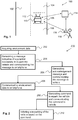
- Fig. 1 shows a block a diagram of a system 100 for re-parking vehicle 110 that further includes a backend 114 and smartphone 116 held by the vehicle's owner 118.
- Vehicle 110 is currently parked on street 102 in parking space 106 located between parking space 104 and parking space 104.
- a team of sewer workers shows up and performs an intervention in that area at one of the underground pipelines underneath parking spaces 104, 106 and 108.
- vehicle 110 being parked in the place where the faulty duct passes, works cannot continue.
- there is a need to relocate the vehicle 110 either automatically or with assistance of its owner 118.
- Fig. 2 shows a flow graph of a method for re-parking vehicle 110.
- Sensors 112 mounted on vehicle 110 acquire environment data of the environment surrounding the vehicle, see method stage 202.
- sensors 112 can include a camera that acquires a series of images of the environment.
- the camera is coupled to vehicle-side processor which performs some kind of pre-evaluation of the series of camera images.
- the processor searches for features in the series of camera images that indicate an emergency situation, i.e. a possible necessity to re-park the vehicle.
- processor searches and finds the typical over-garment worn by construction works, e.g. orange colored vests, as well as construction vehicles.
- the vehicle-side processor Upon detection of these features, the vehicle-side processor generates a message indicative of a potential necessity to re-park vehicle 110 and further communicates said message to smartphone 116 of the owner 118 either directly or via backend 114.
- Owner 118 receives said message and indicates by using the touch screen of his smartphone 116 that he is ready for checking the environment. Subsequently, smartphone 116 generates an acknowledgement message, see method stage 206 and communicates said message back to vehicle 110.
- vehicle 110 Upon reception of the acknowledgement message, vehicle 110 communicates the environment data as video to smartphone 116.
- the owner 118 of vehicle 110 then can watch the video to see what is going on around his vehicle and can make a final assessment whether there is a necessity to re-park vehicle 110.
- the owner 118 can choose a suitable re-parking location and enter said location into its smartphone.
- the owner may consult a map app or a parking app on its smartphone for this purpose.
- Smartphone 116 then generates a command to re-park vehicle 110 and communicates said command back to vehicle 110, see method stage 210.
- the command includes at least an indication of a definite necessity to re-park the vehicle and may further include the desired re-paring location or re-parking space.
- the vehicle-side processor then initiates a re-parking of the vehicle based on the command, see method stage 212, e.g. by translating the command into control commands for autonomously driving the vehicle to the re-parking location.
- the processor may be included in a remote control electronic control unit (RC-ECU) mounted in the vehicle.
- the RC-ECU communicates with sensors mounted in or on the vehicle, processes the information and communicates to the owner or driver via an existing infrastructure the emergency situation and of the vehicle surroundings and situation from in the vehicle.
- the method for re-parking the vehicle may be executed in absence of owner assistance only by backend 114.
- backend 114 Upon reception of the message indicative of a potential necessity to re-park the vehicle, backend 114 attempts to establish a connection to smartphone 116. If that fails, backend 114 generates the acknowledgement message and communicates the message to vehicle 110, see method stage 206. Upon reception of the environment data, backend 114 performs the final assessment of the environment data by itself without the aid of the owner. For this purpose, backend 114 employs sophisticated classifiers. If the classifiers indicate a highly probable necessity to re-park the vehicle, backend 114 interrogates a database of parking locations and searches for parking location having a minimum distance to sparking 106.
- backend 114 Based on the thus determined re-parking location, backend 114 generates the command to re-park the vehicle and communicates the command to the vehicle, see method stage 210.
- the command includes the re-parking location.
- the vehicle-side processor included in RC-ECU initiates a re-parking of vehicle 110, see method stage 212.
- the method provides a safe re-parking of a vehicle in an emergency situation without the driver inside the vehicle. Moreover, data exchange necessary for controlling the vehicle can be provided without the presence of the driver in the vehicle. The driver or owner of the car is informed about the emergency information in real time. Accordingly, possible accidents can be avoided.
Landscapes
- Engineering & Computer Science (AREA)
- Transportation (AREA)
- General Physics & Mathematics (AREA)
- Physics & Mathematics (AREA)
- Mechanical Engineering (AREA)
- Chemical & Material Sciences (AREA)
- Combustion & Propulsion (AREA)
- Multimedia (AREA)
- Theoretical Computer Science (AREA)
- Aviation & Aerospace Engineering (AREA)
- Radar, Positioning & Navigation (AREA)
- Remote Sensing (AREA)
- Automation & Control Theory (AREA)
- Traffic Control Systems (AREA)
Description
- The present disclosure relates to a method and system for re-parking a vehicle. The present disclosure specifically relates to a method and system for re-parking a vehicle in an emergency situation in absence of a driver.
- Document
US 2017/140649 A1 discloses a parking limit notification system for a vehicle which is configured to determine a set of a particular allotment of parking time associated with a parking space where a driver parks the vehicle. The notification system sets a timer that reflects the allotment of time. The notification system also determines a set of contextual constraints associated with the driver that limit the ability of the driver to return to the vehicle. - Document
EP 2 905 704 A1 discloses a system and a method to perform an operation, by, responsive to receiving a vehicle event notification by a computing system in a vehicle. The method includes switching the computing system from a sleep mode to an active mode and sending, to a user, a user notification generated responsive to the vehicle event notification. The method further comprises returning the computing system to the sleep mode. - However, emergency situations may occur in which a parked vehicle needs to be re-parked, e.g. because the vehicle is blocking an access for emergency vehicles or because the vehicle is parked within a region of an occurring hazard. If any contact information of the driver or the owner of the vehicle can be identified by law enforcement authorities, then the driver or owner of the vehicle can be contacted in order to re-park or having re-parked the vehicle somewhere else. However, contact information to the driver may not be available to law enforcement authorities. Moreover, it may take too much time for the driver or the owner to get to his or her vehicle or to have the re-parking organized. Alternatively, law enforcement authorities may have the vehicle towed away. This also consumes time as a tower needs to be called. Moreover, this may become costly to the driver or owner of the vehicle as he or she may be faced with a fine or the costs of towing the vehicle. Hence, there is a need for a more effective and less time consuming re-parking scheme of vehicles in an emergency situation.
- It is therefore an objective of the present disclosure to address the issues stated above and to provide a method and system for re-parking a vehicle that works nicely.
- This objective is achieved by a method according to the independent method claim and a system according to the independent system claim. Dependent claims relate to further aspects of the present disclosure.
- The present disclosure relates to a method for re-parking a vehicle. The method includes acquiring, by one or more vehicle-side sensors, environment data of an environment of the vehicle.
- The method further includes generating, by one or more vehicle-side processors, a message indicative of a potential necessity to re-park the vehicle based on the environment data. For this purpose the one or more vehicle-side processors pre-evaluate the environment data with respect to a potential necessity to re-park the vehicle.
- The method continues with communicating, by a vehicle-side transceiver, the message indicative of a potential necessity to re-park the vehicle to an external device. On the vehicle side the method continues with communicating, by the vehicle-side transceiver, the environment data to the external device upon detection of an acknowledgement of the external device.
The method further includes receiving, by the vehicle-side transceiver, a command to re-park the vehicle in a pre-determined parking space; and initiating, by the one or processors, a re-parking the vehicle based on the command. Generating a message indicative of a potential necessity to re-park the vehicle comprises pre-evaluating, by one or more vehicle-side processers, the environment data with respect to a necessity to re-park the vehicle including classifying the environment data with respect to emergency cases. - Generating a message indicative of a potential necessity to re-park the vehicle by pre-evaluating the environment data can be performed on the vehicle-side. Pre-evaluating the environment includes classifying the environment data with respect to emergency cases such as a blocked access, due to the parking position of the vehicle, for ambulances, fire fighters and police. The environment data may be searched for street signs indicative of an emergency access or any of the above mentioned classes of vehicles having flashing lights on. The environment data may be further searched for other vehicles in the vicinity of the parked car that are currently towed away. For pre-evaluation of the environment data a vehicle-side classifier may be employed that may be further coupled to a vehicle-side data base. Pre-evaluating the environment data on the vehicle-side mainly serves the purpose of deciding whether the environment data is to be communicated to an external device, wherein either the external device itself or a user of the external device makes the final decision on whether to re-park the vehicle or not. The final evaluation of the environment data may take place on the side of the external device based on the communicated message and environment data.
- One aspect of the method relates to the generation of the command to re-park the vehicle based on an evaluation of environment data received by the external device. Prior to receiving the environment data communicated by the vehicle-side, the external device may communicate an acknowledgement of a reception of the message indicative of a potential necessity to re-park the vehicle. Specifically, the acknowledgement may be generated at a time instance in which the external device is ready to evaluate environment by itself or upon detection of a user interaction to external device. In the latter case, the environment data shall only be communicated to the external device for final evaluation at a time instance in which a user of the external device can make or supplement the final evaluation of the environment data. The environment data may be communicated as video for example. The external device may be a smartphone or a tablet. Accordingly, the video shall only be communicated to the tablet at a time instance in which the user is able to watch the video. The user can indicate its ability to watch the video by responding to the message indicative of a potential necessity to re-park the vehicle by interacting with its smartphone or tablet. User interaction then initiates the generation of the acknowledgement which is communicated to the vehicle-side by the external device.
- The final evaluation of the environment data may again include employing classifiers. As mentioned above, alternatively or additionally, a user of the external device may make or supplement the final evaluation. If the final evaluation of the environment indicates a necessity to re-park the vehicle, then a command to re-park the vehicle is generated in the external device. Generating the command to re-park the vehicle may include identifying a potential parking space suitable for re-parking the vehicle. The external device may identify a potential parking space by interrogating a parking-space data base with respect to availability and location of a potential parking space. The parking-space data base may be included in the external device. Alternatively, the parking-space data base may be accessible via an App installed on the external device. Moreover, the parking-space may be identified through user interaction by using the App. Specifically, identifying a potential parking space may include searching for a parking space having a minimum distance from the vehicle and reserving the parking space. Accordingly, the re-parked vehicle may be as nearly as easy accessible to the driver or owner as compared to its original parking position.
- The generated command to re-park the vehicle is communicated to the vehicle-side. The one or more vehicle-side processors may initiate a re-parking using autonomous driving of the vehicle based on the command. The one or more vehicle-side processor may be included in an electronic control unit of the vehicle. The electronic control unit may generate control commands for actuators of the vehicle based on the command which includes the new parking position in order to autonomously drive the vehicle to the new parking position, i.e. new parking space.
- The present disclosure further relates to a system for re-parking a vehicle. The system includes a vehicle-side electronic control unit and an external device. The vehicle-side electronic control unit may be coupled to one or more vehicle-side sensors configured to acquire environment data of an environment of the vehicle. The vehicle-side control unit includes one or more vehicle-side processors configured to generate a message indicative of a potential necessity to re-park the vehicle based on the environment data. The vehicle-side control unit is further coupled to a vehicle-side transceiver configured to communicate the message to the external device, to communicate the environment data upon detection of an acknowledgement of the external device, to receive a command to re-park the vehicle in a pre-determined parking space. The one or more vehicle-side processors are configured to initiate a re-parking of the vehicle based on the command.
- Different implementations of the present invention are shown in the drawings and will be described and discussed below. Therein,
-
Fig. 1 shows a block diagram of a system for re-parking a vehicle; and -
Fig. 2 shows a flow graph of the method for re-parking a vehicle. -
Fig. 1 shows a block a diagram of asystem 100 forre-parking vehicle 110 that further includes abackend 114 andsmartphone 116 held by the vehicle'sowner 118.Vehicle 110 is currently parked onstreet 102 inparking space 106 located betweenparking space 104 andparking space 104. In this situation a team of sewer workers shows up and performs an intervention in that area at one of the underground pipelines underneathparking spaces vehicle 110 being parked in the place where the faulty duct passes, works cannot continue. Hence, there is a need to relocate thevehicle 110, either automatically or with assistance of itsowner 118. - The functionality of the system will be further described with reference to
Fig. 2 which shows a flow graph of a method forre-parking vehicle 110. -
Sensors 112 mounted onvehicle 110 acquire environment data of the environment surrounding the vehicle, seemethod stage 202. Specifically,sensors 112 can include a camera that acquires a series of images of the environment. The camera is coupled to vehicle-side processor which performs some kind of pre-evaluation of the series of camera images. The processor searches for features in the series of camera images that indicate an emergency situation, i.e. a possible necessity to re-park the vehicle. Here processor searches and finds the typical over-garment worn by construction works, e.g. orange colored vests, as well as construction vehicles. Upon detection of these features, the vehicle-side processor generates a message indicative of a potential necessity tore-park vehicle 110 and further communicates said message tosmartphone 116 of theowner 118 either directly or viabackend 114. -
Owner 118 receives said message and indicates by using the touch screen of hissmartphone 116 that he is ready for checking the environment. Subsequently,smartphone 116 generates an acknowledgement message, seemethod stage 206 and communicates said message back tovehicle 110. - Upon reception of the acknowledgement message,
vehicle 110 communicates the environment data as video tosmartphone 116. Theowner 118 ofvehicle 110 then can watch the video to see what is going on around his vehicle and can make a final assessment whether there is a necessity tore-park vehicle 110. Theowner 118 can choose a suitable re-parking location and enter said location into its smartphone. The owner may consult a map app or a parking app on its smartphone for this purpose.Smartphone 116 then generates a command tore-park vehicle 110 and communicates said command back tovehicle 110, seemethod stage 210. The command includes at least an indication of a definite necessity to re-park the vehicle and may further include the desired re-paring location or re-parking space. The vehicle-side processor then initiates a re-parking of the vehicle based on the command, seemethod stage 212, e.g. by translating the command into control commands for autonomously driving the vehicle to the re-parking location. - The processor may be included in a remote control electronic control unit (RC-ECU) mounted in the vehicle. The RC-ECU communicates with sensors mounted in or on the vehicle, processes the information and communicates to the owner or driver via an existing infrastructure the emergency situation and of the vehicle surroundings and situation from in the vehicle.
The method for re-parking the vehicle may be executed in absence of owner assistance only bybackend 114. - Upon reception of the message indicative of a potential necessity to re-park the vehicle,
backend 114 attempts to establish a connection tosmartphone 116. If that fails,backend 114 generates the acknowledgement message and communicates the message tovehicle 110, seemethod stage 206. Upon reception of the environment data,backend 114 performs the final assessment of the environment data by itself without the aid of the owner. For this purpose,backend 114 employs sophisticated classifiers. If the classifiers indicate a highly probable necessity to re-park the vehicle,backend 114 interrogates a database of parking locations and searches for parking location having a minimum distance to sparking 106. Based on the thus determined re-parking location,backend 114 generates the command to re-park the vehicle and communicates the command to the vehicle, seemethod stage 210. The command includes the re-parking location. Based on the command, the vehicle-side processor included in RC-ECU initiates a re-parking ofvehicle 110, seemethod stage 212. - As describe above, the method provides a safe re-parking of a vehicle in an emergency situation without the driver inside the vehicle. Moreover, data exchange necessary for controlling the vehicle can be provided without the presence of the driver in the vehicle. The driver or owner of the car is informed about the emergency information in real time. Accordingly, possible accidents can be avoided.
Claims (13)
- A method for re-parking a vehicle (110), the method comprising:acquiring, by one or more vehicle-side sensors (112), environment data (202) of an environment of the vehicle (110);generating, by one or more vehicle-side processors, a message (204) indicative of a potential necessity to re-park the vehicle (110) based on the environment data;communicating, by a vehicle-side transceiver, the message to an external device (114, 116);communicating, by the vehicle-side transceiver, the environment data (208) to the external device (114, 116) upon detection of an acknowledgement of the external device (114, 116);receiving, by the vehicle-side transceiver, a command to re-park the vehicle (110) in a pre-determined parking space (106); andinitiating (212), by the one or more processors, a re-parking of the vehicle (110) based on the command, wherein generating a message indicative of a potential necessity to re-park the vehicle (110) comprises pre-evaluating, by the one or more vehicle-side processors, the environment data with respect to a necessity to re-park the vehicle (110)characterized in that pre-evaluating the environment data includes classifying the environment data with respect to emergency cases.
- The method of claim 1, the method further comprising:
generating, in the external device (114, 116), the command (210) to re-park the vehicle (110) based on an evaluation of environment data received by the external device (114, 116). - The method of claim 2, wherein generating the command (210) to re-park the vehicle (110) comprises identifying a potential parking space (106) suitable for re-parking the vehicle (110) .
- The method of claim 3, wherein identifying a potential parking space (106) comprises interrogating a parking-space data base with respect to availability and location of a potential parking space (106).
- The method of claim 4, wherein identifying a potential parking space (106) further comprises searching for a parking space (106) having a minimum distance from the vehicle (110) and reserving the parking space (106).
- The method of any of claims 1 to 5, wherein re-parking the vehicle (110) based on the command (212) comprises autonomous driving of the vehicle (110) to the parking location.
- The method of any of claims 1 to 6, wherein the external device is a smart-phone or a tablet (116) and wherein the method further comprises generating an acknowledgement (206) of the external device responsive of a confirmation of a user of the smartphone or tablet (116).
- The method of any of claims 1 to 7, wherein the one or more vehicle-side processors are comprised in an electronic control unit of the vehicle (110).
- A system (100) for re-parking a vehicle (110), the system comprising a vehicle-side electronic control unit and an external device (114, 116); wherein
the vehicle-side electronic control unit:is coupled to one or more vehicle-side sensors (112) configured to acquire environment data of an environment of the vehicle (110) ;comprises one or more vehicle-side processors configured to generate a message indicative of a potential necessity to re-park the vehicle (110) based on the environment data;is further coupled to a vehicle-side transceiver configured to communicate the message to the external device (114, 116), to communicate the environment data upon detection of an acknowledgement of the external device (114, 116), to receive a command to re-park the vehicle (110) in a pre-determined parking space (106); and wherein the one or more vehicle-side processors are configured to initiate a re-parking of the vehicle (110) based on the command, wherein the one or more vehicle-side processors are configured to pre-evaluate the environment data for generating a message indicative of a potential necessity to re-park the vehicle (110)characterized in that pre-evaluating the environment data includes classifying the environment data with respect to emergency cases. - The system of claim 9, wherein the external device (114, 116) is configured to generate the command to re-park the vehicle (110) based on an evaluation of environment data received by the external device (114, 116).
- The system of any of claims 9 or 10, wherein the external device (114, 116) is configured to identify a potential parking space (106) suitable for re-parking the vehicle (110).
- The system of claim 11, wherein the external device (114, 116) is configured to interrogate a parking-space data base with respect to availability and location of a potential parking space (106).
- The system of claim 11 or 12, wherein the external device (114, 116) is configured to search for a parking space (106) having a minimum distance from the vehicle (110) and to reserve the parking space (106).
Priority Applications (2)
| Application Number | Priority Date | Filing Date | Title |
|---|---|---|---|
| ES17465595T ES2828773T3 (en) | 2017-12-15 | 2017-12-15 | Method and system to re-park a vehicle |
| EP17465595.1A EP3499482B1 (en) | 2017-12-15 | 2017-12-15 | Method and system for re-parking a vehicle |
Applications Claiming Priority (1)
| Application Number | Priority Date | Filing Date | Title |
|---|---|---|---|
| EP17465595.1A EP3499482B1 (en) | 2017-12-15 | 2017-12-15 | Method and system for re-parking a vehicle |
Publications (2)
| Publication Number | Publication Date |
|---|---|
| EP3499482A1 EP3499482A1 (en) | 2019-06-19 |
| EP3499482B1 true EP3499482B1 (en) | 2020-08-05 |
Family
ID=60935701
Family Applications (1)
| Application Number | Title | Priority Date | Filing Date |
|---|---|---|---|
| EP17465595.1A Active EP3499482B1 (en) | 2017-12-15 | 2017-12-15 | Method and system for re-parking a vehicle |
Country Status (2)
| Country | Link |
|---|---|
| EP (1) | EP3499482B1 (en) |
| ES (1) | ES2828773T3 (en) |
Family Cites Families (3)
| Publication number | Priority date | Publication date | Assignee | Title |
|---|---|---|---|---|
| US9390567B2 (en) * | 2014-02-05 | 2016-07-12 | Harman International Industries, Incorporated | Self-monitoring and alert system for intelligent vehicle |
| US9752370B2 (en) * | 2015-07-13 | 2017-09-05 | Ford Global Technologies, Llc | Rain onset detection auto-close user interface |
| US20170140649A1 (en) * | 2015-11-18 | 2017-05-18 | Harman International Industries, Inc. | Parking limit notification system |
-
2017
- 2017-12-15 EP EP17465595.1A patent/EP3499482B1/en active Active
- 2017-12-15 ES ES17465595T patent/ES2828773T3/en active Active
Non-Patent Citations (1)
| Title |
|---|
| None * |
Also Published As
| Publication number | Publication date |
|---|---|
| ES2828773T3 (en) | 2021-05-27 |
| EP3499482A1 (en) | 2019-06-19 |
Similar Documents
| Publication | Publication Date | Title |
|---|---|---|
| US20220157160A1 (en) | Systems and Methods for Intra-Vehicle Pedestrian and Infrastructure Communication | |
| CN107608388B (en) | Autonomous police vehicle | |
| US10755491B2 (en) | Electronic device for transmitting relay message to external vehicle and method thereof | |
| KR102417910B1 (en) | Apparatus and method for controlling vehicle platooning | |
| KR102027921B1 (en) | Telematics system and method for providing telematics service in the same | |
| CN105894810B (en) | Method and device for monitoring a vehicle travelling in a parking area | |
| US20190197497A1 (en) | Responses to detected impairments | |
| CN108027615B (en) | Method and device for operating a vehicle | |
| US10994712B2 (en) | Vehicle control device and vehicle control method | |
| US11235756B2 (en) | Vehicle control method and system based on detection of falling of load | |
| EP3523155A1 (en) | Unexpected impulse change collision detector | |
| US9443151B2 (en) | Apparatus and method for searching for wanted vehicle | |
| JP2020095481A (en) | Control device of vehicle and automatic driving system | |
| CN110505631A (en) | The detection of malice wireless security messaging is carried out using angle of arrival | |
| KR20230028263A (en) | Control device, control method, storage medium and control system | |
| US20210192864A1 (en) | Using dynamic triggers in dangerous situations to view sensor data for autonomous vehicle passengers | |
| KR102740147B1 (en) | Method And Apparatus for using an UAV in a vehicle | |
| JP2019185629A (en) | Vehicle height detection device and vehicle height detection method | |
| US11800320B2 (en) | System and method for increasing the security of road users without an own motor vehicle | |
| KR101691751B1 (en) | Accident reporting system using iot safety tripod | |
| US20250189992A1 (en) | Information processing method and information processing device | |
| US11037449B2 (en) | Autonomous bus silent alarm | |
| EP3499482A1 (en) | Method and system for re-parking a vehicle | |
| CN109532756B (en) | Vehicle illegal ignition warning method and device, electronic equipment and storage medium | |
| US10789849B2 (en) | System and method for providing road condition information |
Legal Events
| Date | Code | Title | Description |
|---|---|---|---|
| PUAI | Public reference made under article 153(3) epc to a published international application that has entered the european phase |
Free format text: ORIGINAL CODE: 0009012 |
|
| STAA | Information on the status of an ep patent application or granted ep patent |
Free format text: STATUS: THE APPLICATION HAS BEEN PUBLISHED |
|
| AK | Designated contracting states |
Kind code of ref document: A1 Designated state(s): AL AT BE BG CH CY CZ DE DK EE ES FI FR GB GR HR HU IE IS IT LI LT LU LV MC MK MT NL NO PL PT RO RS SE SI SK SM TR |
|
| AX | Request for extension of the european patent |
Extension state: BA ME |
|
| STAA | Information on the status of an ep patent application or granted ep patent |
Free format text: STATUS: REQUEST FOR EXAMINATION WAS MADE |
|
| 17P | Request for examination filed |
Effective date: 20191219 |
|
| RBV | Designated contracting states (corrected) |
Designated state(s): AL AT BE BG CH CY CZ DE DK EE ES FI FR GB GR HR HU IE IS IT LI LT LU LV MC MK MT NL NO PL PT RO RS SE SI SK SM TR |
|
| GRAP | Despatch of communication of intention to grant a patent |
Free format text: ORIGINAL CODE: EPIDOSNIGR1 |
|
| STAA | Information on the status of an ep patent application or granted ep patent |
Free format text: STATUS: GRANT OF PATENT IS INTENDED |
|
| RIC1 | Information provided on ipc code assigned before grant |
Ipc: G05D 1/00 20060101ALI20200207BHEP Ipc: G08G 1/00 20060101ALI20200207BHEP Ipc: G08G 1/14 20060101AFI20200207BHEP Ipc: B62D 1/00 20060101ALI20200207BHEP Ipc: G06K 9/00 20060101ALN20200207BHEP Ipc: B60W 30/00 20060101ALI20200207BHEP Ipc: B60W 30/06 20060101ALN20200207BHEP Ipc: B62D 15/02 20060101ALI20200207BHEP |
|
| INTG | Intention to grant announced |
Effective date: 20200309 |
|
| GRAS | Grant fee paid |
Free format text: ORIGINAL CODE: EPIDOSNIGR3 |
|
| GRAA | (expected) grant |
Free format text: ORIGINAL CODE: 0009210 |
|
| STAA | Information on the status of an ep patent application or granted ep patent |
Free format text: STATUS: THE PATENT HAS BEEN GRANTED |
|
| AK | Designated contracting states |
Kind code of ref document: B1 Designated state(s): AL AT BE BG CH CY CZ DE DK EE ES FI FR GB GR HR HU IE IS IT LI LT LU LV MC MK MT NL NO PL PT RO RS SE SI SK SM TR |
|
| REG | Reference to a national code |
Ref country code: GB Ref legal event code: FG4D |
|
| REG | Reference to a national code |
Ref country code: CH Ref legal event code: EP |
|
| REG | Reference to a national code |
Ref country code: AT Ref legal event code: REF Ref document number: 1299797 Country of ref document: AT Kind code of ref document: T Effective date: 20200815 |
|
| REG | Reference to a national code |
Ref country code: DE Ref legal event code: R096 Ref document number: 602017020986 Country of ref document: DE |
|
| REG | Reference to a national code |
Ref country code: IE Ref legal event code: FG4D |
|
| REG | Reference to a national code |
Ref country code: LT Ref legal event code: MG4D |
|
| REG | Reference to a national code |
Ref country code: NL Ref legal event code: MP Effective date: 20200805 |
|
| REG | Reference to a national code |
Ref country code: AT Ref legal event code: MK05 Ref document number: 1299797 Country of ref document: AT Kind code of ref document: T Effective date: 20200805 |
|
| PG25 | Lapsed in a contracting state [announced via postgrant information from national office to epo] |
Ref country code: NO Free format text: LAPSE BECAUSE OF FAILURE TO SUBMIT A TRANSLATION OF THE DESCRIPTION OR TO PAY THE FEE WITHIN THE PRESCRIBED TIME-LIMIT Effective date: 20201105 Ref country code: AT Free format text: LAPSE BECAUSE OF FAILURE TO SUBMIT A TRANSLATION OF THE DESCRIPTION OR TO PAY THE FEE WITHIN THE PRESCRIBED TIME-LIMIT Effective date: 20200805 Ref country code: BG Free format text: LAPSE BECAUSE OF FAILURE TO SUBMIT A TRANSLATION OF THE DESCRIPTION OR TO PAY THE FEE WITHIN THE PRESCRIBED TIME-LIMIT Effective date: 20201105 Ref country code: SE Free format text: LAPSE BECAUSE OF FAILURE TO SUBMIT A TRANSLATION OF THE DESCRIPTION OR TO PAY THE FEE WITHIN THE PRESCRIBED TIME-LIMIT Effective date: 20200805 Ref country code: GR Free format text: LAPSE BECAUSE OF FAILURE TO SUBMIT A TRANSLATION OF THE DESCRIPTION OR TO PAY THE FEE WITHIN THE PRESCRIBED TIME-LIMIT Effective date: 20201106 Ref country code: PT Free format text: LAPSE BECAUSE OF FAILURE TO SUBMIT A TRANSLATION OF THE DESCRIPTION OR TO PAY THE FEE WITHIN THE PRESCRIBED TIME-LIMIT Effective date: 20201207 Ref country code: LT Free format text: LAPSE BECAUSE OF FAILURE TO SUBMIT A TRANSLATION OF THE DESCRIPTION OR TO PAY THE FEE WITHIN THE PRESCRIBED TIME-LIMIT Effective date: 20200805 Ref country code: HR Free format text: LAPSE BECAUSE OF FAILURE TO SUBMIT A TRANSLATION OF THE DESCRIPTION OR TO PAY THE FEE WITHIN THE PRESCRIBED TIME-LIMIT Effective date: 20200805 Ref country code: FI Free format text: LAPSE BECAUSE OF FAILURE TO SUBMIT A TRANSLATION OF THE DESCRIPTION OR TO PAY THE FEE WITHIN THE PRESCRIBED TIME-LIMIT Effective date: 20200805 |
|
| PG25 | Lapsed in a contracting state [announced via postgrant information from national office to epo] |
Ref country code: IS Free format text: LAPSE BECAUSE OF FAILURE TO SUBMIT A TRANSLATION OF THE DESCRIPTION OR TO PAY THE FEE WITHIN THE PRESCRIBED TIME-LIMIT Effective date: 20201205 Ref country code: LV Free format text: LAPSE BECAUSE OF FAILURE TO SUBMIT A TRANSLATION OF THE DESCRIPTION OR TO PAY THE FEE WITHIN THE PRESCRIBED TIME-LIMIT Effective date: 20200805 Ref country code: PL Free format text: LAPSE BECAUSE OF FAILURE TO SUBMIT A TRANSLATION OF THE DESCRIPTION OR TO PAY THE FEE WITHIN THE PRESCRIBED TIME-LIMIT Effective date: 20200805 Ref country code: NL Free format text: LAPSE BECAUSE OF FAILURE TO SUBMIT A TRANSLATION OF THE DESCRIPTION OR TO PAY THE FEE WITHIN THE PRESCRIBED TIME-LIMIT Effective date: 20200805 Ref country code: RS Free format text: LAPSE BECAUSE OF FAILURE TO SUBMIT A TRANSLATION OF THE DESCRIPTION OR TO PAY THE FEE WITHIN THE PRESCRIBED TIME-LIMIT Effective date: 20200805 |
|
| PG25 | Lapsed in a contracting state [announced via postgrant information from national office to epo] |
Ref country code: CZ Free format text: LAPSE BECAUSE OF FAILURE TO SUBMIT A TRANSLATION OF THE DESCRIPTION OR TO PAY THE FEE WITHIN THE PRESCRIBED TIME-LIMIT Effective date: 20200805 Ref country code: DK Free format text: LAPSE BECAUSE OF FAILURE TO SUBMIT A TRANSLATION OF THE DESCRIPTION OR TO PAY THE FEE WITHIN THE PRESCRIBED TIME-LIMIT Effective date: 20200805 Ref country code: RO Free format text: LAPSE BECAUSE OF FAILURE TO SUBMIT A TRANSLATION OF THE DESCRIPTION OR TO PAY THE FEE WITHIN THE PRESCRIBED TIME-LIMIT Effective date: 20200805 Ref country code: SM Free format text: LAPSE BECAUSE OF FAILURE TO SUBMIT A TRANSLATION OF THE DESCRIPTION OR TO PAY THE FEE WITHIN THE PRESCRIBED TIME-LIMIT Effective date: 20200805 Ref country code: EE Free format text: LAPSE BECAUSE OF FAILURE TO SUBMIT A TRANSLATION OF THE DESCRIPTION OR TO PAY THE FEE WITHIN THE PRESCRIBED TIME-LIMIT Effective date: 20200805 |
|
| REG | Reference to a national code |
Ref country code: DE Ref legal event code: R097 Ref document number: 602017020986 Country of ref document: DE |
|
| REG | Reference to a national code |
Ref country code: ES Ref legal event code: FG2A Ref document number: 2828773 Country of ref document: ES Kind code of ref document: T3 Effective date: 20210527 |
|
| PG25 | Lapsed in a contracting state [announced via postgrant information from national office to epo] |
Ref country code: AL Free format text: LAPSE BECAUSE OF FAILURE TO SUBMIT A TRANSLATION OF THE DESCRIPTION OR TO PAY THE FEE WITHIN THE PRESCRIBED TIME-LIMIT Effective date: 20200805 |
|
| PLBE | No opposition filed within time limit |
Free format text: ORIGINAL CODE: 0009261 |
|
| STAA | Information on the status of an ep patent application or granted ep patent |
Free format text: STATUS: NO OPPOSITION FILED WITHIN TIME LIMIT |
|
| PG25 | Lapsed in a contracting state [announced via postgrant information from national office to epo] |
Ref country code: SK Free format text: LAPSE BECAUSE OF FAILURE TO SUBMIT A TRANSLATION OF THE DESCRIPTION OR TO PAY THE FEE WITHIN THE PRESCRIBED TIME-LIMIT Effective date: 20200805 |
|
| 26N | No opposition filed |
Effective date: 20210507 |
|
| REG | Reference to a national code |
Ref country code: CH Ref legal event code: PL |
|
| PG25 | Lapsed in a contracting state [announced via postgrant information from national office to epo] |
Ref country code: SI Free format text: LAPSE BECAUSE OF FAILURE TO SUBMIT A TRANSLATION OF THE DESCRIPTION OR TO PAY THE FEE WITHIN THE PRESCRIBED TIME-LIMIT Effective date: 20200805 Ref country code: MC Free format text: LAPSE BECAUSE OF FAILURE TO SUBMIT A TRANSLATION OF THE DESCRIPTION OR TO PAY THE FEE WITHIN THE PRESCRIBED TIME-LIMIT Effective date: 20200805 |
|
| REG | Reference to a national code |
Ref country code: BE Ref legal event code: MM Effective date: 20201231 |
|
| PG25 | Lapsed in a contracting state [announced via postgrant information from national office to epo] |
Ref country code: LU Free format text: LAPSE BECAUSE OF NON-PAYMENT OF DUE FEES Effective date: 20201215 Ref country code: IE Free format text: LAPSE BECAUSE OF NON-PAYMENT OF DUE FEES Effective date: 20201215 |
|
| PG25 | Lapsed in a contracting state [announced via postgrant information from national office to epo] |
Ref country code: CH Free format text: LAPSE BECAUSE OF NON-PAYMENT OF DUE FEES Effective date: 20201231 Ref country code: LI Free format text: LAPSE BECAUSE OF NON-PAYMENT OF DUE FEES Effective date: 20201231 |
|
| PG25 | Lapsed in a contracting state [announced via postgrant information from national office to epo] |
Ref country code: TR Free format text: LAPSE BECAUSE OF FAILURE TO SUBMIT A TRANSLATION OF THE DESCRIPTION OR TO PAY THE FEE WITHIN THE PRESCRIBED TIME-LIMIT Effective date: 20200805 Ref country code: MT Free format text: LAPSE BECAUSE OF FAILURE TO SUBMIT A TRANSLATION OF THE DESCRIPTION OR TO PAY THE FEE WITHIN THE PRESCRIBED TIME-LIMIT Effective date: 20200805 Ref country code: CY Free format text: LAPSE BECAUSE OF FAILURE TO SUBMIT A TRANSLATION OF THE DESCRIPTION OR TO PAY THE FEE WITHIN THE PRESCRIBED TIME-LIMIT Effective date: 20200805 |
|
| PG25 | Lapsed in a contracting state [announced via postgrant information from national office to epo] |
Ref country code: MK Free format text: LAPSE BECAUSE OF FAILURE TO SUBMIT A TRANSLATION OF THE DESCRIPTION OR TO PAY THE FEE WITHIN THE PRESCRIBED TIME-LIMIT Effective date: 20200805 |
|
| REG | Reference to a national code |
Ref country code: DE Ref legal event code: R081 Ref document number: 602017020986 Country of ref document: DE Owner name: CONTINENTAL AUTOMOTIVE TECHNOLOGIES GMBH, DE Free format text: FORMER OWNER: CONTINENTAL AUTOMOTIVE GMBH, 30165 HANNOVER, DE |
|
| PG25 | Lapsed in a contracting state [announced via postgrant information from national office to epo] |
Ref country code: BE Free format text: LAPSE BECAUSE OF NON-PAYMENT OF DUE FEES Effective date: 20201231 |
|
| REG | Reference to a national code |
Ref country code: GB Ref legal event code: 732E Free format text: REGISTERED BETWEEN 20230223 AND 20230301 |
|
| PGFP | Annual fee paid to national office [announced via postgrant information from national office to epo] |
Ref country code: GB Payment date: 20231220 Year of fee payment: 7 |
|
| PGFP | Annual fee paid to national office [announced via postgrant information from national office to epo] |
Ref country code: IT Payment date: 20231228 Year of fee payment: 7 Ref country code: FR Payment date: 20231222 Year of fee payment: 7 Ref country code: DE Payment date: 20231231 Year of fee payment: 7 |
|
| REG | Reference to a national code |
Ref country code: DE Ref legal event code: R081 Ref document number: 602017020986 Country of ref document: DE Owner name: CONTINENTAL AUTOMOTIVE TECHNOLOGIES GMBH, DE Free format text: FORMER OWNER: CONTINENTAL AUTOMOTIVE TECHNOLOGIES GMBH, 30165 HANNOVER, DE |
|
| PGFP | Annual fee paid to national office [announced via postgrant information from national office to epo] |
Ref country code: ES Payment date: 20240129 Year of fee payment: 7 |
|
| REG | Reference to a national code |
Ref country code: ES Ref legal event code: PC2A Owner name: CONTINENTAL AUTOMOTIVE TECHNOLOGIES GMBH Effective date: 20240410 |
|
| REG | Reference to a national code |
Ref country code: DE Ref legal event code: R119 Ref document number: 602017020986 Country of ref document: DE |
|
| GBPC | Gb: european patent ceased through non-payment of renewal fee |
Effective date: 20241215 |
|
| PG25 | Lapsed in a contracting state [announced via postgrant information from national office to epo] |
Ref country code: DE Free format text: LAPSE BECAUSE OF NON-PAYMENT OF DUE FEES Effective date: 20250701 |
|
| PG25 | Lapsed in a contracting state [announced via postgrant information from national office to epo] |
Ref country code: IT Free format text: LAPSE BECAUSE OF NON-PAYMENT OF DUE FEES Effective date: 20241215 |
|
| PG25 | Lapsed in a contracting state [announced via postgrant information from national office to epo] |
Ref country code: GB Free format text: LAPSE BECAUSE OF NON-PAYMENT OF DUE FEES Effective date: 20241215 |
|
| PG25 | Lapsed in a contracting state [announced via postgrant information from national office to epo] |
Ref country code: FR Free format text: LAPSE BECAUSE OF NON-PAYMENT OF DUE FEES Effective date: 20241231 |
|
| REG | Reference to a national code |
Ref country code: ES Ref legal event code: FD2A Effective date: 20260130 |
|
| PG25 | Lapsed in a contracting state [announced via postgrant information from national office to epo] |
Ref country code: ES Free format text: LAPSE BECAUSE OF NON-PAYMENT OF DUE FEES Effective date: 20241216 |