EP3499367B1 - Method and device for starting application - Google Patents
Method and device for starting application Download PDFInfo
- Publication number
- EP3499367B1 EP3499367B1 EP17840758.1A EP17840758A EP3499367B1 EP 3499367 B1 EP3499367 B1 EP 3499367B1 EP 17840758 A EP17840758 A EP 17840758A EP 3499367 B1 EP3499367 B1 EP 3499367B1
- Authority
- EP
- European Patent Office
- Prior art keywords
- application
- terminal
- memory
- started
- background
- Prior art date
- Legal status (The legal status is an assumption and is not a legal conclusion. Google has not performed a legal analysis and makes no representation as to the accuracy of the status listed.)
- Active
Links
Images


Classifications
-
- G—PHYSICS
- G06—COMPUTING OR CALCULATING; COUNTING
- G06F—ELECTRIC DIGITAL DATA PROCESSING
- G06F9/00—Arrangements for program control, e.g. control units
- G06F9/06—Arrangements for program control, e.g. control units using stored programs, i.e. using an internal store of processing equipment to receive or retain programs
- G06F9/46—Multiprogramming arrangements
- G06F9/48—Program initiating; Program switching, e.g. by interrupt
- G06F9/4806—Task transfer initiation or dispatching
- G06F9/4843—Task transfer initiation or dispatching by program, e.g. task dispatcher, supervisor, operating system
- G06F9/485—Task life-cycle, e.g. stopping, restarting, resuming execution
-
- G—PHYSICS
- G06—COMPUTING OR CALCULATING; COUNTING
- G06F—ELECTRIC DIGITAL DATA PROCESSING
- G06F9/00—Arrangements for program control, e.g. control units
- G06F9/06—Arrangements for program control, e.g. control units using stored programs, i.e. using an internal store of processing equipment to receive or retain programs
- G06F9/46—Multiprogramming arrangements
- G06F9/48—Program initiating; Program switching, e.g. by interrupt
-
- G—PHYSICS
- G06—COMPUTING OR CALCULATING; COUNTING
- G06F—ELECTRIC DIGITAL DATA PROCESSING
- G06F9/00—Arrangements for program control, e.g. control units
- G06F9/06—Arrangements for program control, e.g. control units using stored programs, i.e. using an internal store of processing equipment to receive or retain programs
- G06F9/46—Multiprogramming arrangements
- G06F9/48—Program initiating; Program switching, e.g. by interrupt
- G06F9/4806—Task transfer initiation or dispatching
- G06F9/4843—Task transfer initiation or dispatching by program, e.g. task dispatcher, supervisor, operating system
-
- G—PHYSICS
- G06—COMPUTING OR CALCULATING; COUNTING
- G06F—ELECTRIC DIGITAL DATA PROCESSING
- G06F9/00—Arrangements for program control, e.g. control units
- G06F9/06—Arrangements for program control, e.g. control units using stored programs, i.e. using an internal store of processing equipment to receive or retain programs
- G06F9/46—Multiprogramming arrangements
- G06F9/48—Program initiating; Program switching, e.g. by interrupt
- G06F9/4806—Task transfer initiation or dispatching
- G06F9/4843—Task transfer initiation or dispatching by program, e.g. task dispatcher, supervisor, operating system
- G06F9/4881—Scheduling strategies for dispatcher, e.g. round robin, multi-level priority queues
-
- G—PHYSICS
- G06—COMPUTING OR CALCULATING; COUNTING
- G06F—ELECTRIC DIGITAL DATA PROCESSING
- G06F12/00—Accessing, addressing or allocating within memory systems or architectures
- G06F12/02—Addressing or allocation; Relocation
- G06F12/0223—User address space allocation, e.g. contiguous or non contiguous base addressing
- G06F12/023—Free address space management
-
- G—PHYSICS
- G06—COMPUTING OR CALCULATING; COUNTING
- G06F—ELECTRIC DIGITAL DATA PROCESSING
- G06F9/00—Arrangements for program control, e.g. control units
- G06F9/06—Arrangements for program control, e.g. control units using stored programs, i.e. using an internal store of processing equipment to receive or retain programs
- G06F9/46—Multiprogramming arrangements
- G06F9/50—Allocation of resources, e.g. of the central processing unit [CPU]
- G06F9/5005—Allocation of resources, e.g. of the central processing unit [CPU] to service a request
- G06F9/5011—Allocation of resources, e.g. of the central processing unit [CPU] to service a request the resources being hardware resources other than CPUs, Servers and Terminals
- G06F9/5016—Allocation of resources, e.g. of the central processing unit [CPU] to service a request the resources being hardware resources other than CPUs, Servers and Terminals the resource being the memory
-
- G—PHYSICS
- G06—COMPUTING OR CALCULATING; COUNTING
- G06F—ELECTRIC DIGITAL DATA PROCESSING
- G06F9/00—Arrangements for program control, e.g. control units
- G06F9/06—Arrangements for program control, e.g. control units using stored programs, i.e. using an internal store of processing equipment to receive or retain programs
- G06F9/46—Multiprogramming arrangements
- G06F9/50—Allocation of resources, e.g. of the central processing unit [CPU]
- G06F9/5005—Allocation of resources, e.g. of the central processing unit [CPU] to service a request
- G06F9/5011—Allocation of resources, e.g. of the central processing unit [CPU] to service a request the resources being hardware resources other than CPUs, Servers and Terminals
- G06F9/5022—Mechanisms to release resources
-
- G—PHYSICS
- G06—COMPUTING OR CALCULATING; COUNTING
- G06F—ELECTRIC DIGITAL DATA PROCESSING
- G06F2209/00—Indexing scheme relating to G06F9/00
- G06F2209/48—Indexing scheme relating to G06F9/48
- G06F2209/482—Application
-
- G—PHYSICS
- G06—COMPUTING OR CALCULATING; COUNTING
- G06F—ELECTRIC DIGITAL DATA PROCESSING
- G06F2209/00—Indexing scheme relating to G06F9/00
- G06F2209/48—Indexing scheme relating to G06F9/48
- G06F2209/484—Precedence
-
- G—PHYSICS
- G06—COMPUTING OR CALCULATING; COUNTING
- G06F—ELECTRIC DIGITAL DATA PROCESSING
- G06F2209/00—Indexing scheme relating to G06F9/00
- G06F2209/50—Indexing scheme relating to G06F9/50
- G06F2209/5021—Priority
-
- G—PHYSICS
- G06—COMPUTING OR CALCULATING; COUNTING
- G06F—ELECTRIC DIGITAL DATA PROCESSING
- G06F2209/00—Indexing scheme relating to G06F9/00
- G06F2209/50—Indexing scheme relating to G06F9/50
- G06F2209/508—Monitor
Definitions
- the present disclosure relates to the field of wireless communications technologies, and in particular, to an application start method and apparatus.
- an Android terminal for example, a mobile phone, a tablet, or a set top box
- the terminal may kill, based on an low memory killer (LMK) mechanism, an application or a service running in the background to reclaim memory, so as to ensure running of the foreground application.
- LLK low memory killer
- an Android mobile phone before using a camera, a user has started applications such as a chat application, a game application, a news application, a map application, and a video application. After the user opens the camera, all the applications running in the background exit because large memory is needed. Therefore, some applications that are relatively important to the user are closed, causing inconvenience for use. In addition, it takes a relatively long time to start an exited application again.
- a whitelist is preset in a terminal in the prior art, and identifiers of the applications are stored in the whitelist.
- an application identified by an identifier of an application stored in the whitelist is not closed.
- the application corresponding to the identifier of the application stored in the whitelist may also be killed. Therefore, to reduce restart duration of the application when the user starts the application again, the terminal restarts, when placed statically or powered-on, a process of the application identified by the identifier of the application in the whitelist.
- the identifiers of the applications in the whitelist are fixed, and when the terminal is placed statically or powered-on, if the terminal cannot satisfy memory needed for running an application, a background application may be repeatedly killed or restarted, seriously affecting system performance, and affecting user experience.
- TW201232400A discloses a method for pre-loading frequently launched applications and an electronic device using the same are provided.
- the method is adapted for an electronic device to pre-load frequently launched applications in background, and includes following procedures. It is checked whether currently used memory size is less than a first threshold. When the currently used memory size is less than the first threshold, at least a frequently launched application is selectively loaded in background. It is checked whether currently used memory size is greater than a second threshold. When the currently used memory size is greater than the second threshold, the procedure of loading the at least a frequently launched application in background is stopped. Also, the second threshold is greater than the first threshold.
- US20140143791 relates to system, method, and apparatus for improving application-launch latencies.
- Implementations of the present disclosure provide an application start method and apparatus, so as to improve system performance of a terminal, and avoid, to some extent, a phenomenon in which a background application of the terminal is repeatedly restarted and killed.
- Free memory remaining memory, other than memory that is occupied by a current running application program and other data, in all memory.
- Process of an application a running activity of a program about a data set, a basic unit of resource allocation and scheduling by a system, and a basis for an operating system structure.
- the program is a description of an instruction, data and an organization form of the instruction and the data, and the process is an entity of the program.
- Activity an application program component that provides a screen or a window and may be used by a user for interaction to implement a task. All operations in an activity are closely related to the user, and the activity is a component responsible for interaction with the user, and may display a specified control by using setContentView (View). In an Android application, an activity is usually a single screen that may display some controls or may monitor and process a user event to make a response.
- a task includes multiple activities, and specifically, a task is an "application" in terms of user experience.
- the task combines related activities together and manages the related activities in a stack manner.
- an implementation of the present disclosure provides an application start method.
- the method includes: obtaining, by a terminal, a target application list when a size of free memory is greater than a preset threshold, and starting, in the background, a process of an application identified by at least one identifier in the target application list, wherein when started, a size of memory occupied by the process of the at least one second application is not greater than the size of the free memory before the process of the at least one second application is started, where the target application list is used to store an identifier of an application whose memorywas released last time, and the identifier of the application is used to uniquely identify the application.
- the identifier of the application may be a package name.
- a package name of the application program is com.android.mms.
- the terminal triggers starting, in the background, the application (for example, a closed application) whose memory is released last time, so that the previously closed application is automatically restarted when memory is sufficient. Therefore, the following phenomenon in the prior art is avoided to some extent: A terminal automatically restarts, in the background, a process of an application when there is relatively small free memory; then because the free memory is insufficient to run the process of the application, the application is closed; and because memory is released after the application is closed, the process of the application is restarted in the background, resulting in repeatedly restarting and closing of the application.
- the application for example, a closed application
- an identifier of an application stored in the target application list is the identifier of the application whose memory is released last time
- the identifier of the application stored in the target application list can dynamically change with a different application whose memory is released.
- the terminal in this implementation of the present disclosure starts, in the background, the process of the application according to the target application list, and the terminal can start, in the background, the process of the application according to the application whose memory is released, improving a probability of starting a process of an application needed by a user, and thereby improving user experience to some extent.
- the terminal starts, in the background, an activity of the application identified by the at least one identifier, where the process of the application is a main process and a service process of the application, and the activity is an activity of the main process.
- the process of the application is a main process and a service process of the application
- the activity is an activity of the main process.
- the terminal may start, in the background after starting, in the background, the process of the application identified by the at least one identifier in the target application list, the activity of the application identified by the at least one identifier, or may simultaneously start, in the background, the process and the activity of the application identified by the at least one identifier.
- a sequence of starting the process and the activity is not limited in this implementation of the present disclosure.
- a specific manner of starting, in the background by the terminal, the activity of the application identified by the at least one identifier in the target application list includes the following steps: creating, by the terminal, a new task for an application identified by one of the at least one identifier; and if it is determined that a stack used to store a task does not include an application stack other than a desktop stack, creating an application stack, and storing the new task into the created application stack, where the created application stack is located at a stack bottom of the stack, and the desktop stack is located at a stack top of the stack; or if it is determined that a stack includes not only a desktop stack but also an application stack that stores a task for anotherapplication, the terminal reads the use frequency of the application from a storing list.
- the terminal starts, in the background, a process of an associated application, where the associated application is an application associated with the application that is identified by the at least one identifier and that is in applications identified by identifiers stored in the target application list;where the associated application is an application that can be opened by using the started application.
- the identified application is a camera application
- an application associated with the camera is a gallery application (or referred to as a photo application).
- a process of the gallery application is simultaneously started when a process of the camera is started in the background, so that when a user uses the camera and needs to view a photo, the photo can be opened fast by using the camera, thereby further improving user experience.
- a sequence of starting the associated application and the application identified by the at least one identifier in the target application list is not limited.
- the terminal may first start, in the background, the process of the application identified by the at least one identifier in the target application list, and then start, in the background, the process of the associated application; or the terminal first starts, in the background, the process of the associated application, and then starts, in the background, the process of the application identified by the at least one identifier in the target application list.
- the terminal when exiting or killing (kill) an application or exiting an operation of an application or being powered-on and started, the terminal may trigger determining whether the size of the free memory is greater than the preset threshold.
- a size of memory occupied by each application is recorded.
- a recorded size of free memory occupied by all the started applications is less than (or far less than) the size of the free memory, and if the target application list still has an application needing to be started in the background, a process and an activity of the application may still be started in the background.
- a purpose of recording and monitoring the size of the memory occupied by the applications started in the background is to prevent excessive memory occupation of the terminal from affecting a running speed of the terminal.
- a specific memory monitoring manner is not limited in the present disclosure.
- a size of memory occupied by the process and the activity of the application may be recorded in the target application list, or may be recorded in a list that is additionally set.
- an implementation of the present disclosure further provides an application start apparatus, including one or more modules capable of implementing the first aspect or any implementation of the first aspect, where each module may perform one or more steps.
- an implementation of the present disclosure further provides a terminal device.
- the terminal device includes a processor and a memory, where the memory is configured to store a software program, and the processor is configured to read the software program stored in the memory and implement the method provided in the first aspect or any implementation of the first aspect.
- an implementation of the present disclosure further provides a computer storage medium.
- the computer storage medium may be nonvolatile, that is, content cannot be lost after a power failure.
- a software program is stored in the storage medium, and when the software program is read and executed by one or more processors, the method provided in the first aspect or any implementation of the first aspect can be implemented.
- the terminal is also referred to as user equipment (UE ), an mobile station (MS), a mobile terminal, or the like.
- the terminal may be a mobile phone, a tablet computer, a personal digital assistant ( PDA), a point of sales (POS), a vehicle-mounted computer, a set top box, or the like.
- PDA personal digital assistant
- POS point of sales
- the terminal when a size of free memory is greater than a preset threshold, the terminal triggers starting, in the background, an application (for example, a closed application) whose memory is released last time, so that the following phenomenon in the prior art is avoided to some extent:
- an application for example, a closed application
- a terminal may automatically restart, in the background, a process of an application when there is relatively small free memory, resulting in repeatedly restarting and closing of the application.
- an identifier of an application stored in a target application list is an identifier of the application whose memory is released last time, the identifier of the application stored in the target application list dynamically changes with a different application whose memory is released.
- FIG. 1 is a schematic diagram of a hardware structure of a terminal to which an implementation of the present disclosure is applied.
- the terminal 100 includes a display device 140, a processor 150, and a memory 180.
- the memory 180 generally includes an internal memory and an external memory, and the internal memory may be a random access memory (RAM), a read-only memory (ROM), a cache, or the like.
- the external memory may be a hard disk, an optical disc, a USB flash drive, a floppy disk, a tape drive, or the like.
- the memory 180 is configured to store a computer program and other data 183.
- the computer program includes an operating system 182, an application program 181, and the like.
- the other data 183 may include data generated after the operating system 182 or the application program 181 is run, and the data includes system data (for example, configuration parameters of the operating system) and user data. For example, a photo shot by a user is typical user data.
- a target application list in this implementation of the present disclosure is data generated after the application program is run.
- the computer program and the other data are usually stored into the external memory, and the processor may load the computer program or the other data from the external memory to the internal memory before performing processing or calling data.
- the target application list in this implementation of the present disclosure may be stored into the external memory or the internal memory. When the target application list is stored into the external memory, the processor needs to first load the target application list from the external memory to the internal memory when needing to obtain the target application list.
- the processor 150 is configured to read the computer program and then execute a method defined in the computer program. For example, the processor 150 reads the operating system 182, so as to run the operating system on the terminal 100 and implement various functions of the operating system; or the processor 150 reads one or more application programs 181, so as to run the application on the terminal 100.
- the processor 150 may include one or more general purpose processors, or may include one or more DSPs (Digital Signal Processor, digital signal processor), and is configured to perform related operations to implement a technical solution provided in this implementation of the present disclosure.
- DSPs Digital Signal Processor, digital signal processor
- the operating system 182 includes the computer program capable of implementing an application start method provided in this implementation of the present disclosure, so that after the processor 150 reads the operating system 182 and runs the operating system, the operating system may have a function, provided in this implementation of the present disclosure, of starting, in the background, a process of an application. Specifically, the operating system may open, to an application at an upper layer, a call interface for starting, in the background, a process of an application, and the processor 150 reads the application program 181 from the memory 180, and runs, in the background, the process of the application.
- the terminal 100 may further include an input device 130 configured to: receive entered digit information, entered character information, or an entered contact touch operation/non-contact gesture, generate a signal input related to user setting and function control of the terminal 100, and the like.
- the input device 130 may include a touch panel 131.
- the touch panel 131 also referred to as a touchscreen, may collect a touch operation (such as an operation performed by a user on the touch panel 131 or near the touch panel 131 by using a finger or any proper object or accessory such as a stylus) of the user on or near the touch panel, and drive a corresponding connection apparatus according to a preset program.
- the touch panel 131 may include two parts: a touch detection apparatus and a touch controller.
- the touch detection apparatus detects a touch orientation of the user, detects a signal brought by the touch operation, and sends the signal to the touch controller.
- the touch controller receives touch information from the touch detection apparatus, converts the touch information into touch coordinates, and sends the touch coordinates to the processor 150, and can receive and execute a command sent by the processor 150. For example, a user taps a picture on the touch panel 131 by using a finger.
- the touch detection apparatus detects a signal brought by the tap, and then sends the signal to the touch controller.
- the touch controller converts the signal into coordinates, and sends the coordinates to the processor 150.
- the processor 150 determines, according to the coordinates and a type (tap or double tap) of the signal, an operation (for example, picture enlargement or picture full-screen display) to be performed on the picture, and then determines memory space needing to be occupied for performing the operation. If the memory space needing to be occupied is less than free memory, the picture is displayed on a display panel 141 in full screen mode to implement "opening" of the picture. If the memory space needing to be occupied is greater than the free memory, an application running in the background is killed, or an application running in the background is frozen, to release a part of memory, so that the terminal can display the picture on the display panel 141 in full screen mode.
- an operation for example, picture enlargement or picture full-screen display
- the touch panel 131 may be implemented in various types, such as a resistive type, a capacitive type, an infrared type, and a surface acoustic wave type.
- the input device 130 may further include another input device 132.
- the another input device 132 may include but is not limited to one or more of the following: a physical keyboard, a function key (such as a volume control key and an on/off key), a trackball, a mouse, a joystick, and the like.
- the terminal 100 may further include a display device 140.
- the display device 140 includes the display panel 141 and is configured to display information entered by a user or information provided for the user, multiple menu windows of the terminal device 100, and the like.
- the display device 140 is mainly configured to display an icon of an application installed in the terminal 100.
- the display device 140 may include the display panel 141.
- the display panel 141 may be configured in a form such as an liquid crystal display (LCD ) or an organic light-emitting diode (OLED).
- the touch panel 131 may cover the display panel 141 to form a touch display screen.
- the terminal 100 may further include a power supply 190 configured to supply power to another module and a camera 160 configured to shoot a photo or a video.
- the terminal 100 may further include one or more sensors 120, such as an acceleration sensor and an optical sensor.
- the terminal 100 may further include a radio frequency (RF) circuit 110 configured to perform network communication with a wireless network device, and may further include a WiFi module 170 configured to perform WiFi communication with another device.
- RF radio frequency
- An application start method provided in an implementation of the present disclosure may be implemented in the operating system 182 shown in FIG. 1 .
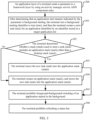
- the application start method in this implementation of the present disclosure includes the following steps:
- the free memory in this implementation of the present disclosure is remaining memory, other than memory that is occupied by a current running application program and other data, in all memory of the terminal.
- a total size of the memory of the terminal is 2 G, and if a size of the memory occupied by the current running application and the other data is 1.2 G, a size of the free memory is 0.8 G.
- preset threshold in this implementation of the present disclosure may be set according to an actual situation.
- the terminal determines that the free memory is greater than the preset threshold.
- process of the application in this implementation of the present disclosure is a main process and a service process of the application.
- the target application list in this implementation of the present disclosure may be generated in the following process:
- the terminal determines a size of memory needing to be requested to run the foregoing process. If the size of the memory needing to be requested is greater than the size of the free memory, the terminal successively releases, in ascending order of preset priorities of other applications that are different from the new application and that currently occupy memory, all or a part of memory occupied by at least one application in the other applications, until the terminal determines that a sum of the released memory and the free memory is not less than the size of the memory needing to be requested to run the new task; and stores an identifier of the application whose memory is released into the target application list.
- the terminal After detecting that a new operation on the application currently running in the foreground is triggered, if the terminal determines that memory needing to be requested to perform the new operation is greater than the size of the free memory, the terminal needs to release all or a part of memory occupied by an application running in the background to run the new operation, and in this case, the terminal stores an identifier of the application whose memory is released into the target application list.
- the identifier of the application may be a package name of an application program.
- the package name of the application program is com.android.mms; when the application is a contacts application, the package name of the application program is com.android.contacts.
- the identifier of the application may also be a preset identifier of the application, such as an Arabic numeral or a name (such as an SMS message or a contact) of the application.
- the terminal releases, by freezing a process of the application and compressing memory occupied by the application, a part of the memory occupied by the application; or if cold start duration of the application is not greater than preset duration, the terminal releases all memory occupied by the application by exiting the application, that is, killing the application.
- Compressing the memory occupied by the application means compressing the memory occupied by the application into compressed memory, where the compressed memory may be a ZRAM (ZIP RAM) or a ZSwap (zip swap).
- the cold start duration is duration needed for the terminal to start the application from a completely closed state of the application.
- One application priority presetting manner In an example of the SMS application, application priorities are stored into an external memory of the terminal in advance, for example, the priorities are measured by using numbers 1 to 9, where a smaller number indicates a higher priority, that is, the number 1 indicates a highest priority and the number 9 indicates a lowest priority.
- a window for selecting a priority of the SMS application pops up on a display screen of the terminal, and if a user selects the number 5, the priority, stored in a memory by the terminal, of the SMS application is 5.
- a priority resetting option may be set in an application of the terminal, and then the terminal reselects a new priority subsequently according to a requirement of the user.
- a priority of an application can be set only in installation of the application, and cannot be changed once being set.
- a priority of an application is preset.
- a developer directly presets the priority of the application in development of the application.
- the preset duration may be correspondingly set according to an actual situation.
- the terminal runs, in the background, an application A, an application B, an application C, an application D, and an application E. It is assumed that 1.8 G memory is occupied, and free memory is 0.2 G. Priorities of the application A and the application B are 5, a priority of the application C is 6, a priority of the application D is 3, and a priority of the application E is 4, where a larger number indicates a lower application priority.
- the terminal detects that a user taps a client of a camera, starting the camera is triggered, and it is assumed that memory needing to be occupied for running the camera is 0.5 G.
- the terminal releases memory in ascending order of the priorities of the application A, the application B, the application C, the application D, and the application E. Specifically, because the priority of the application C in the memory running in the background is the lowest, if cold start duration of the application C is greater than the preset duration, a process of the application is frozen by using a process freezing manager, and a program and data that are for running the application C are compressed into compressed memory. If cold start duration of the application C is not greater than the preset duration, the application C exits, that is, the application C is killed, to release all memory for running the application C by the terminal.
- the terminal After all or a part of the memory occupied by the application C is released, if a sum of the free memory and the released memory is 0.8 G and is greater than the 0.5 G memory needing to be requested to run the camera, no more memory needs to be released.
- the terminal allocates the 0.5 G memory to the camera, runs the camera, and then stores an identifier of the application C into the target application list.
- a manner of releasing memory of one of the application A and the application B is similar to a manner of releasing memory of the application Anipop, and details are not described herein. Then identifiers of all applications whose memory is released are stored into the target application list.
- the terminal prompts, on a display device of the terminal, prompt information indicating that the memory needing to be requested is too large.
- the terminal starts, in the background, an activity of the application identified by the at least one identifier in the target application list.
- an activity of an application indicates resource information related to a display window of the application.
- the activity of the application in this implementation of the present disclosure is an activity of a main process of the application.
- an application means starting a main process and a service process of the application, without starting an activity of the main process.
- the activity of the application is further started in the background, so that the start duration needed for restarting the application is further reduced.
- One task may include multiple activities, and the desktop stack stores a task related to a desktop.
- a method for starting, in the background, an activity of an application includes the following steps: Step 300: An application layer of a terminal sends a parameter to a framework layer by using an activity manager service (AMS ) component entry, where the parameter is used to indicate an application start manner.
- AMS activity manager service
- the application start manner is background starting. It is assumed that a parameter value 1 is used to indicate that the application start manner is background starting, and a parameter value 0 is used to indicate that the application start manner is foreground starting.
- Step 301 After determining that the application start manner indicated by the parameter is background starting, the terminal sets a background starting identifier to true, and then the terminal creates a new task for an application identified by an identifier stored in a target application list.
- Step 302 The terminal determines whether a stack used to store a task includes an application stack other than a desktop stack, and if the stack used to store the task includes the application stack other than the desktop stack, step 303 is performed, or if the stack used to store the task does not include the application stack other than the desktop stack, step 304 is performed.
- Step 303 The terminal stores the new task into the application stack, where the desktop stack is located at a stack bottom of the stack, the application stack is located at a stack top of the stack, and a storage location of the new task is close to a stack bottom of the application stack.
- a stack 400 includes an application stack 410 and a desktop stack 420.
- the application stack 410 is used to store a task for another application, and the desktop sack 420 is used to store a task for a desktop.
- the desktop stack 420 is located at a stack bottom, and the application stack 410 is located at a stack top. If the application stack 410 includes a task for an application E and a task for an application F, a window of the application E is displayed on a display device of a terminal. If a task for an application A and a task for an application B need to be stored, a created task for the application A and a created task for the application B are stored below the task for the application E in the application stack 410. Specifically, a sequence of the task for the application A and the task for the application B is not limited.
- Step 304 The terminal creates an application stack, and stores a new task into the application stack, where the application stack is located at a stack bottom of the stack, and the desktop stack is located at a stack top of the stack.
- the stack 400 includes only the desktop stack 420.
- the task for the desktop is stored in the desktop stack 420, and the desktop is displayed on the display device of the terminal. If the task for the application A and the task for the application B need to be stored, an application stack 430 is created in the stack 400, and then the task for the application A and the task for the application B are stored into the application stack 430.
- the application stack 430 is located at the stack bottom, and the desktop stack 420 is located at the stack top. In this way, an activity of the application can be started in the background.
- Step 305 The terminal prohibits foreground-background switching of an application started in the background.
- the terminal does not call a foreground-background switching function of the started application.
- Step 306 The terminal prohibits refreshing a status bar.
- the terminal does not call a status bar refreshing function.
- the terminal prohibits refreshing the status bar by calling mPolicy.updateSystemUiColorLw(win) by using an addWindow function of a windows manager service.
- Step 301 to Step 306 may be implemented at a framework layer of an operating system.
- this implementation of the present disclosure further provides several optional methods for starting, in the background, a process of a corresponding application:
- First method The terminal starts, in the background, processes of applications identified by all identifiers in the target application list, where memory occupied for running the processes of the applications identified by all the identifiers in the target application list is not greater than a size of free memory.
- a processor of the terminal After determining the size of the free memory of a memory, a processor of the terminal starts, in the background, the processes of the applications identified by all the identifiers in the target application list.
- identifiers of the application A, the application B, an application C, and an application D are stored in the target application list, processes of the application A, the application B, the application C, and the application D are run in the background, but a size of memory occupied for running the processes of the application A, the application B, the application C, and the application D is not greater than the size of the free memory.
- the terminal has different specific implementations according to different policies. For example, because the memory occupied for running the applications is greater than the size of the free memory, the terminal selects some identifiers in the target application list, and then starts, in the background, processes of applications identified by the selected identifiers; or when the memory occupied for running the applications is greater than the size of the free memory, the terminal does not start, in the background, the processes of the applications identified by the identifiers in the target application list.
- Second method The terminal starts, in the background, a process of an application identified by at least one identifier in the target application list, where a size of memory occupied by the started process of the application identified by the at least one identifier is not greater than a size of free memory, and a priority of the application identified by the at least one identifier ranks in the top n of priorities of applications that are identified by identifiers stored in the target application list, where n is greater than 0.
- a value of n is set according to a user requirement. Specifically, when the value of n is 1, it is assumed that identifiers of the application A, the application B, an application C, and an application D are stored in the target application list, a priority of the application A is 5, a priority of the application B is 6, a priority of the application C is 5, and a priority of the application D is 6, where a larger number indicates a lower priority. In this case, processes of the application A and the application C whose priorities rank the first are started in the background, where memory occupied for running the processes of the application A and the application C is not greater than the size of the free memory.
- the terminal starts, in the background, a process of an application identified by at least one identifier in the target application list, where a size of memory occupied by the started process of the application identified by the at least one identifier is not greater than a size of free memory, and a quantity of times of using the application identified by the at least one identifier is not less than a preset quantity of times.
- the preset quantity of times is set according to an actual situation, and a larger quantity of times of using an application indicates that a user may most probably use the application next.
- the application is started in the background in advance.
- the application when the quantity of times of using the application is greater than the preset quantity of times, the application is an application that is most probably to be used by the user next.
- Another method for determining whether the application identified by the identifier in the target application list is the application that is most probably to be used by the user next also falls within the protection scope of the present disclosure. For example, according to power consumption, counted by using the terminal, of each application, several applications whose power consumption ranks the top are used as applications that are most probably to be used by the user next.
- the terminal starts, in the background, a process of an associated application, where the associated application is an application associated with an application that is identified by at least one identifier and that is in applications identified by identifiers stored in the target application list.
- the associated application is an application that can be opened by using the application identified by the identifier.
- an application is a camera
- the photo application is an associated application of the camera. This is also referred to as a "one-touch reachable" application.
- the activity of the application may also be simultaneously started in the background.
- Table 1 shows, by using the application A, the application B, the application C, the application D, and the application E as examples, cold start duration, start duration 1 in the foreground after a process is started in the background, and start duration 2 in the foreground after a process and an activity of an application are started in the background.
- Table 1 Application Cold start duration (second) Start duration 1 (second) Start duration 2 (second) A 1.96 0.75 0.432 B 2.145 0.884 0.445 C 3.3147 2.6117 0.464 D 3.847 2.376 0.659 E 5.17 4.8 0.508
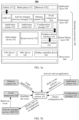
- FIG. 5a is a schematic structural diagram of a computer system 500 according to an implementation of the present disclosure.
- the computer system 500 may be a terminal, or may be another type of computer device.
- the computer system includes an application layer 510 and an operating system layer 550, where the operating system may be an Android operating system.
- the operating system layer 550 is further divided into a framework layer 520, a kernel library layer 530, and a driver layer 540.
- the operating system layer 550 in FIG. 5a may be considered as a specific implementation of the operating system 182 in FIG. 1
- the application layer 510 in FIG. 5a may be considered as a specific implementation of the application program 181 in FIG. 1 .
- the driver layer 540 includes a CPU driver 541, a GPU driver 542, a display controller driver 543, and the like.
- the kernel library layer 530 is a kernel part of the operating system, and includes an input/output service 531, a kernel service 532, a graphics device interface 534, a graphics engine 533 for implementing CPU or GPU graphics processing, and the like.
- the framework layer 520 may include an AMS 521, an activity manager 522, a memory control 523, an event transceiver 524, an application restorer 525, an application control 526, a configuration manager 527, and the like.
- the application layer 510 may include a gallery 511, a media player 512, a browser513, and the like.
- the computer system 500 further includes a hardware layer.
- the hardware layer of the computer system 500 may include a central processing unit (CPU) and a graphics processing unit (GPU) (which are equivalent to a specific implementation of the processor 150 in FIG. 1 ), may further include a memory (which is equivalent to the memory 180 in FIG. 1 ) that includes an internal memory and an external memory, may further include an input device (which is equivalent to the input device 132 in FIG. 1 ), and a display device (which is equivalent to the display device 140 in FIG. 1 ) such as a liquid crystal display (LCD), a holographic imaging device (Holographic), and a projector, and may further include one or more sensors (which are equivalent to the sensor 120 in FIG. 1 ).
- LCD liquid crystal display
- Holographic holographic imaging device
- projector may further include one or more sensors (which are equivalent to the sensor 120 in FIG. 1 ).
- the hardware layer may further include a power supply, a camera, an RF circuit, and a WiFi module that are shown in FIG. 1 , and may further include other hardware modules that are not shown in FIG. 1 , such as a memory controller and a display controller.
- the method provided in any foregoing implementation of the present disclosure may be implemented at the framework layer shown in FIG. 5a .
- FIG. 5b the framework layer in this implementation of the present disclosure is shown in FIG. 5b .
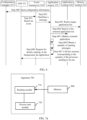
- FIG. 6 a flowchart of restarting, in the background, an application is shown in FIG. 6 .
- the framework layer 520 of the terminal includes the memory control 523, the configuration manager 527, the event transceiver 524, the application restorer 525, the application control 526, the configuration manager 527, and the AMS 521.
- the AMS is configured to collect events such as an application being killed and exited, and an application being switched to the background, and reports the events to the event transceiver 524.
- the event transceiver 524 is configured to provide an event distribution channel.
- the application control 526 is configured to provide a to-be-restored application list, intelligently predict user behavior, and initiate an application request, where the to-be-restored application list is a list of applications commonly used by a user (such as a list of applications frequently used by the user or a list of applications of relatively high priorities).
- the memory control 523 is configured to provide a target application list.
- the configuration manager 527 is configured to provide an interface for reading an extensible markup language (XML) file.
- the terminal in this implementation of the present disclosure may also collect, by using an notification manager service (NMS) or a windows manager service (WMS), the events such as an application being killed and exited, and an application being switched to the background.
- NMS notification manager service
- WMS windows manager service
- the activity manager 522 at the framework layer shown in FIG. 5a is configured to start, in the background, an activity.
- an application start process in this implementation of the present disclosure includes the following steps:
- step 603 There is no definite sequence between step 603 and step 604.
- an implementation of the present disclosure further provides a terminal having an application start function in the implementations of the present disclosure.
- a method corresponding to the terminal in this implementation of the present disclosure is the application start method in the implementations of the present disclosure. Therefore, for implementation of the terminal in this implementation of the present disclosure, refer to the implementation of the method, and repeated descriptions are not provided herein.
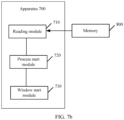
- FIG. 7a is a schematic structural diagram of an apparatus 700 according to an implementation of the present disclosure.
- the application start apparatus includes: a reading module 710, configured to obtain a target application list in a memory 800 when a size of free memory in the memory 800 is greater than a preset threshold, where the target application list is used to store an identifier of an application whose memory is released last time, and the identifier of the application is used to uniquely identify the application; and a process start module 720, configured to start, in the background, a process of an application identified by at least one identifier in the target application list. Further, as shown in FIG. 7b , the application start apparatus includes a window start module 730. The window start module 730 is configured to start, in the background, an activity of the application identified by the at least one identifier in the target application list.
- the window start module 730 is specifically configured to: create a new task for an application identified by one of the at least one identifier; and if it is determined that a stack used to store a task does not include an application stack other than a desktop stack, create an application stack, and store the new task into the created application stack, where the created application stack is located at a stack bottom of the stack, and the desktop stack is located at a stack top of the stack; or if it is determined that a stack includes not only a desktop stack but also an application stack that stores a task for another application different from all applications that are identified by identifiers stored in the target application list, store the new task into the application stack that stores the task for the another application, where the application stack that stores the task for the another application is located at a stack top of the stack, the desktop stack is located at a stack bottom of the stack, and a storage location of the new task is close to a stack bottom of the application stack that stores the task for the another application.
- process start module 720 is specifically configured to start, in the background, the process of the application identified by the at least one identifier in the target application list, where a size of memory occupied by the started application is not greater than the size of the free memory, and a priority of the application identified by the at least one identifier ranks in the top n of priorities of the applications that are identified by the identifiers stored in the target application list, where n is greater than 0.
- the process start module 720 is specifically configured to start, in the background, the process of the application identified by the at least one identifier in the target application list, where a size of memory occupied by the started application identified by the at least one identifier is not greater than the size of the free memory, and a quantity of times of using the application identified by the at least one identifier is not less than a preset quantity of times. Further, the process start module 720 is configured to start, in the background, a process of an associated application, where the associated application is an application associated with an application that is identified by the at least one identifier and that is in the applications that are identified by the identifiers stored in the target application list.
- the described apparatus implementation is merely an example.
- the units described as separate parts may or may not be physically separate, and parts displayed as units may or may not be physical units, that is, may be located in one position, or may be distributed on a plurality of network units.
- Some or all of the modules may be selected according to an actual requirement to achieve the objectives of the solutions of the implementations.
- connection relationships between modules indicate that the modules have communication connections with each other, which may be specifically implemented as one or more communications buses or signal cables. A person of ordinary skill in the art may understand and implement the implementations of the present disclosure without creative efforts.
- the drawing apparatus described in the implementations of the present disclosure may be implemented by using software in addition to necessary universal hardware, or certainly may be implemented by using dedicated hardware, including a dedicated integrated circuit, a dedicated CPU, a dedicated memory, a dedicated component, and the like.
- dedicated hardware including a dedicated integrated circuit, a dedicated CPU, a dedicated memory, a dedicated component, and the like.
- any function that can be performed by using a computer program can be easily implemented by using corresponding hardware.
- a specific hardware structure used to implement a same function may be of various forms, for example, an analog circuit, a digital circuit, or a dedicated circuit.
Landscapes
- Engineering & Computer Science (AREA)
- Theoretical Computer Science (AREA)
- Software Systems (AREA)
- Physics & Mathematics (AREA)
- General Engineering & Computer Science (AREA)
- General Physics & Mathematics (AREA)
- Stored Programmes (AREA)
- Telephone Function (AREA)
- User Interface Of Digital Computer (AREA)
Description
- The present disclosure relates to the field of wireless communications technologies, and in particular, to an application start method and apparatus.
- On an Android terminal (for example, a mobile phone, a tablet, or a set top box), when an application is started or run, if free memory of a system is insufficient, the terminal may kill, based on an low memory killer (LMK) mechanism, an application or a service running in the background to reclaim memory, so as to ensure running of the foreground application. For example, as for an Android mobile phone, before using a camera, a user has started applications such as a chat application, a game application, a news application, a map application, and a video application. After the user opens the camera, all the applications running in the background exit because large memory is needed. Therefore, some applications that are relatively important to the user are closed, causing inconvenience for use. In addition, it takes a relatively long time to start an exited application again.
- To avoid closing some applications that are relatively important to a user, a whitelist is preset in a terminal in the prior art, and identifiers of the applications are stored in the whitelist. When an application needs to be closed to release memory, an application identified by an identifier of an application stored in the whitelist is not closed. However, in this whitelist manner of avoiding killing an application, when an application needing large memory runs, the application corresponding to the identifier of the application stored in the whitelist may also be killed. Therefore, to reduce restart duration of the application when the user starts the application again, the terminal restarts, when placed statically or powered-on, a process of the application identified by the identifier of the application in the whitelist.
- However, the identifiers of the applications in the whitelist are fixed, and when the terminal is placed statically or powered-on, if the terminal cannot satisfy memory needed for running an application, a background application may be repeatedly killed or restarted, seriously affecting system performance, and affecting user experience.
-
TW201232400A -
US20140143791 relates to system, method, and apparatus for improving application-launch latencies. - Implementations of the present disclosure provide an application start method and apparatus, so as to improve system performance of a terminal, and avoid, to some extent, a phenomenon in which a background application of the terminal is repeatedly restarted and killed.
- The invention has been defined in the independent claims. Further specific technical features have been defined in the dependent claims.
- The following first describes terms in the implementations of the present disclosure.
- Free memory: remaining memory, other than memory that is occupied by a current running application program and other data, in all memory.
- Process of an application: a running activity of a program about a data set, a basic unit of resource allocation and scheduling by a system, and a basis for an operating system structure. The program is a description of an instruction, data and an organization form of the instruction and the data, and the process is an entity of the program.
- Activity: an application program component that provides a screen or a window and may be used by a user for interaction to implement a task. All operations in an activity are closely related to the user, and the activity is a component responsible for interaction with the user, and may display a specified control by using setContentView (View). In an Android application, an activity is usually a single screen that may display some controls or may monitor and process a user event to make a response.
- Task: A task includes multiple activities, and specifically, a task is an "application" in terms of user experience. The task combines related activities together and manages the related activities in a stack manner.
- According to a first aspect, an implementation of the present disclosure provides an application start method. The method includes: obtaining, by a terminal, a target application list when a size of free memory is greater than a preset threshold, and starting, in the background, a process of an application identified by at least one identifier in the target application list, wherein when started, a size of memory occupied by the process of the at least one second application is not greater than the size of the free memory before the process of the at least one second application is started, where the target application list is used to store an identifier of an application whose memorywas released last time, and the identifier of the application is used to uniquely identify the application. For example, the identifier of the application may be a package name. In an example of an SMS application, a package name of the application program is com.android.mms.
- When the size of the free memory is greater than the preset threshold, the terminal triggers starting, in the background, the application (for example, a closed application) whose memory is released last time, so that the previously closed application is automatically restarted when memory is sufficient. Therefore, the following phenomenon in the prior art is avoided to some extent: A terminal automatically restarts, in the background, a process of an application when there is relatively small free memory; then because the free memory is insufficient to run the process of the application, the application is closed; and because memory is released after the application is closed, the process of the application is restarted in the background, resulting in repeatedly restarting and closing of the application. Moreover, because an identifier of an application stored in the target application list is the identifier of the application whose memory is released last time, the identifier of the application stored in the target application list can dynamically change with a different application whose memory is released. In comparison with the prior art in which a terminal starts a process of an application according to an identifier of an application that is set in a whitelist, the terminal in this implementation of the present disclosure starts, in the background, the process of the application according to the target application list, and the terminal can start, in the background, the process of the application according to the application whose memory is released, improving a probability of starting a process of an application needed by a user, and thereby improving user experience to some extent.
- Based on the first aspect, in a first implementation, the terminal starts, in the background, an activity of the application identified by the at least one identifier, where the process of the application is a main process and a service process of the application, and the activity is an activity of the main process. In this way, when a user needs to open, in the foreground, an application whose activity is started in the background, duration needed for opening the application in the foreground is greatly reduced in comparison with an application of which only a process is started in the background. Therefore, user experience is improved to some extent.
- It should be noted that the terminal may start, in the background after starting, in the background, the process of the application identified by the at least one identifier in the target application list, the activity of the application identified by the at least one identifier, or may simultaneously start, in the background, the process and the activity of the application identified by the at least one identifier. A sequence of starting the process and the activity is not limited in this implementation of the present disclosure.
- Based on the first implementation of the first aspect, in a second implementation, a specific manner of starting, in the background by the terminal, the activity of the application identified by the at least one identifier in the target application list includes the following steps: creating, by the terminal, a new task for an application identified by one of the at least one identifier; and if it is determined that a stack used to store a task does not include an application stack other than a desktop stack, creating an application stack, and storing the new task into the created application stack, where the created application stack is located at a stack bottom of the stack, and the desktop stack is located at a stack top of the stack; or if it is determined that a stack includes not only a desktop stack but also an application stack that stores a task for anotherapplication, the terminal reads the use frequency of the application from a storing list. Based on the implementation of the third or the fourth aspect, in a fifth implementation, if the size of the free memory permits, the terminal starts, in the background, a process of an associated application, where the associated application is an application associated with the application that is identified by the at least one identifier and that is in applications identified by identifiers stored in the target application list;where the associated application is an application that can be opened by using the started application. For example, the identified application is a camera application, and an application associated with the camera is a gallery application (or referred to as a photo application). If the size of the free memory permits, a process of the gallery application is simultaneously started when a process of the camera is started in the background, so that when a user uses the camera and needs to view a photo, the photo can be opened fast by using the camera, thereby further improving user experience.
- It should be noted that, in the fifth implementation, a sequence of starting the associated application and the application identified by the at least one identifier in the target application list is not limited. Specifically, the terminal may first start, in the background, the process of the application identified by the at least one identifier in the target application list, and then start, in the background, the process of the associated application; or the terminal first starts, in the background, the process of the associated application, and then starts, in the background, the process of the application identified by the at least one identifier in the target application list.
- Based on any implementation of the first aspect to the fifth implementation of the first aspect, when exiting or killing (kill) an application or exiting an operation of an application or being powered-on and started, the terminal may trigger determining whether the size of the free memory is greater than the preset threshold.
- In addition, when the terminal starts, in the background, processes and activities of applications, a size of memory occupied by each application is recorded. When a recorded size of free memory occupied by all the started applications is less than (or far less than) the size of the free memory, and if the target application list still has an application needing to be started in the background, a process and an activity of the application may still be started in the background. Moreover, when the recorded size of the free memory occupied by all the started applications is equal to (or close to) the size of the free memory, the terminal stops starting, in the background, a process and an activity of an application.
- It should be understood that, herein a purpose of recording and monitoring the size of the memory occupied by the applications started in the background is to prevent excessive memory occupation of the terminal from affecting a running speed of the terminal. A specific memory monitoring manner is not limited in the present disclosure. In addition, a size of memory occupied by the process and the activity of the application may be recorded in the target application list, or may be recorded in a list that is additionally set.
- According to a second aspect, an implementation of the present disclosure further provides an application start apparatus, including one or more modules capable of implementing the first aspect or any implementation of the first aspect, where each module may perform one or more steps.
- According to a third aspect, an implementation of the present disclosure further provides a terminal device. The terminal device includes a processor and a memory, where the memory is configured to store a software program, and the processor is configured to read the software program stored in the memory and implement the method provided in the first aspect or any implementation of the first aspect.
- According to a fourth aspect, an implementation of the present disclosure further provides a computer storage medium. The computer storage medium may be nonvolatile, that is, content cannot be lost after a power failure. A software program is stored in the storage medium, and when the software program is read and executed by one or more processors, the method provided in the first aspect or any implementation of the first aspect can be implemented.
-
-
FIG. 1 is a schematic diagram of a hardware structure of a terminal according to an implementation of the present disclosure; -
FIG. 2 is a schematic flowchart of an application start method according to an implementation of the present disclosure; -
FIG. 3 is a schematic flowchart of a method for starting, in the background, an activity according to an implementation of the present disclosure; -
FIG. 4a and FIG. 4b are respectively schematic diagrams of a stack used to store a task according to an implementation of the present disclosure; -
FIG. 5a is a schematic diagram of an Android operating system according to an implementation of the present disclosure; -
FIG. 5b is a schematic diagram of a framework layer according to an implementation of the present disclosure; -
FIG. 6 is a schematic flowchart of an application start method according to an implementation of the present disclosure; and -
FIG. 7a andFIG. 7b are respectively schematic diagrams of an application start apparatus according to an implementation of the present disclosure. - To make the objectives, technical solutions, and advantages of this invention clearer, the following further describes various implementations in detail with reference to the accompanying drawings. The implementations described below are not all claimed, they are included to help understanding the context of the invention. While the description refers to various implementations, the embodiments of the invention are those which comprise at least all the features of an independent claim. Any implementation which does not fall within the scope of the claims does not form part of the invention, but rather included as an illustrative example that is useful for understanding the invention.
- It should be understood that an application start method in an implementation of the present disclosure is mainly applied to a terminal. The terminal is also referred to as user equipment (UE ), an mobile station (MS), a mobile terminal, or the like. Optionally, the terminal may be a mobile phone, a tablet computer, a personal digital assistant ( PDA), a point of sales (POS), a vehicle-mounted computer, a set top box, or the like.
- In the application start method according to this implementation of the present disclosure, when a size of free memory is greater than a preset threshold, the terminal triggers starting, in the background, an application (for example, a closed application) whose memory is released last time, so that the following phenomenon in the prior art is avoided to some extent: Without performing determining on a size of free memory, a terminal may automatically restart, in the background, a process of an application when there is relatively small free memory, resulting in repeatedly restarting and closing of the application. Moreover, because an identifier of an application stored in a target application list is an identifier of the application whose memory is released last time, the identifier of the application stored in the target application list dynamically changes with a different application whose memory is released. Compared with the prior art in which a terminal presets a whitelist that cannot indicate a dynamic change of an application whose memory is released, the application start method in this implementation of the present disclosure is more targeted when the terminal starts a process of an application, and a probability of starting a process of an application needed by a user is improved to some extent. Referring to
FIG. 1, FIG. 1 is a schematic diagram of a hardware structure of a terminal to which an implementation of the present disclosure is applied. As shown inFIG. 1 , the terminal 100 includes adisplay device 140, aprocessor 150, and amemory 180. Thememory 180 generally includes an internal memory and an external memory, and the internal memory may be a random access memory (RAM), a read-only memory (ROM), a cache, or the like. The external memory may be a hard disk, an optical disc, a USB flash drive, a floppy disk, a tape drive, or the like. Thememory 180 is configured to store a computer program andother data 183. The computer program includes an operating system 182, an application program 181, and the like. Theother data 183 may include data generated after the operating system 182 or the application program 181 is run, and the data includes system data (for example, configuration parameters of the operating system) and user data. For example, a photo shot by a user is typical user data. Moreover, a target application list in this implementation of the present disclosure is data generated after the application program is run. The computer program and the other data are usually stored into the external memory, and the processor may load the computer program or the other data from the external memory to the internal memory before performing processing or calling data. The target application list in this implementation of the present disclosure may be stored into the external memory or the internal memory. When the target application list is stored into the external memory, the processor needs to first load the target application list from the external memory to the internal memory when needing to obtain the target application list. - The
processor 150 is configured to read the computer program and then execute a method defined in the computer program. For example, theprocessor 150 reads the operating system 182, so as to run the operating system on the terminal 100 and implement various functions of the operating system; or theprocessor 150 reads one or more application programs 181, so as to run the application on theterminal 100. Theprocessor 150 may include one or more general purpose processors, or may include one or more DSPs (Digital Signal Processor, digital signal processor), and is configured to perform related operations to implement a technical solution provided in this implementation of the present disclosure. - The operating system 182 includes the computer program capable of implementing an application start method provided in this implementation of the present disclosure, so that after the
processor 150 reads the operating system 182 and runs the operating system, the operating system may have a function, provided in this implementation of the present disclosure, of starting, in the background, a process of an application. Specifically, the operating system may open, to an application at an upper layer, a call interface for starting, in the background, a process of an application, and theprocessor 150 reads the application program 181 from thememory 180, and runs, in the background, the process of the application. - The terminal 100 may further include an
input device 130 configured to: receive entered digit information, entered character information, or an entered contact touch operation/non-contact gesture, generate a signal input related to user setting and function control of the terminal 100, and the like. Specifically, in this implementation of the present disclosure, theinput device 130 may include atouch panel 131. Thetouch panel 131, also referred to as a touchscreen, may collect a touch operation (such as an operation performed by a user on thetouch panel 131 or near thetouch panel 131 by using a finger or any proper object or accessory such as a stylus) of the user on or near the touch panel, and drive a corresponding connection apparatus according to a preset program. Optionally, thetouch panel 131 may include two parts: a touch detection apparatus and a touch controller. The touch detection apparatus detects a touch orientation of the user, detects a signal brought by the touch operation, and sends the signal to the touch controller. The touch controller receives touch information from the touch detection apparatus, converts the touch information into touch coordinates, and sends the touch coordinates to theprocessor 150, and can receive and execute a command sent by theprocessor 150. For example, a user taps a picture on thetouch panel 131 by using a finger. The touch detection apparatus detects a signal brought by the tap, and then sends the signal to the touch controller. The touch controller converts the signal into coordinates, and sends the coordinates to theprocessor 150. Theprocessor 150 determines, according to the coordinates and a type (tap or double tap) of the signal, an operation (for example, picture enlargement or picture full-screen display) to be performed on the picture, and then determines memory space needing to be occupied for performing the operation. If the memory space needing to be occupied is less than free memory, the picture is displayed on adisplay panel 141 in full screen mode to implement "opening" of the picture. If the memory space needing to be occupied is greater than the free memory, an application running in the background is killed, or an application running in the background is frozen, to release a part of memory, so that the terminal can display the picture on thedisplay panel 141 in full screen mode. - The
touch panel 131 may be implemented in various types, such as a resistive type, a capacitive type, an infrared type, and a surface acoustic wave type. In addition to thetouch panel 131, theinput device 130 may further include anotherinput device 132. The anotherinput device 132 may include but is not limited to one or more of the following: a physical keyboard, a function key (such as a volume control key and an on/off key), a trackball, a mouse, a joystick, and the like. - The terminal 100 may further include a
display device 140. Thedisplay device 140 includes thedisplay panel 141 and is configured to display information entered by a user or information provided for the user, multiple menu windows of theterminal device 100, and the like. In this implementation of the present disclosure, thedisplay device 140 is mainly configured to display an icon of an application installed in theterminal 100. Thedisplay device 140 may include thedisplay panel 141. Optionally, thedisplay panel 141 may be configured in a form such as an liquid crystal display (LCD ) or an organic light-emitting diode (OLED). In other implementations, thetouch panel 131 may cover thedisplay panel 141 to form a touch display screen. - In addition, the terminal 100 may further include a
power supply 190 configured to supply power to another module and acamera 160 configured to shoot a photo or a video. The terminal 100 may further include one ormore sensors 120, such as an acceleration sensor and an optical sensor. The terminal 100 may further include a radio frequency (RF)circuit 110 configured to perform network communication with a wireless network device, and may further include aWiFi module 170 configured to perform WiFi communication with another device. - An application start method provided in an implementation of the present disclosure may be implemented in the operating system 182 shown in
FIG. 1 . Specifically, as shown inFIG. 2 , the application start method in this implementation of the present disclosure includes the following steps: - Step 200: A terminal obtains a target application list when a size of free memory is greater than a preset threshold, where the target application list is used to store an identifier of an application whose memory is released last time, and the identifier of the application is used to uniquely identify the application.
- Step 201: The terminal starts, in the background, a process of an application identified by at least one identifier in the target application list.
- It should be understood that the free memory in this implementation of the present disclosure is remaining memory, other than memory that is occupied by a current running application program and other data, in all memory of the terminal. For example, a total size of the memory of the terminal is 2 G, and if a size of the memory occupied by the current running application and the other data is 1.2 G, a size of the free memory is 0.8 G.
- It should be understood that the preset threshold in this implementation of the present disclosure may be set according to an actual situation.
- When an application currently running in the foreground exits, or a current foreground operation exits, or another event (such as a screen-on event) that can make the free memory greater than the preset threshold occurs, the terminal determines that the free memory is greater than the preset threshold.
- It should be understood that the process of the application in this implementation of the present disclosure is a main process and a service process of the application.
- Specifically, the target application list in this implementation of the present disclosure may be generated in the following process:
When detecting that starting a new application is triggered, the terminal determines a size of memory needing to be requested to run the foregoing process. If the size of the memory needing to be requested is greater than the size of the free memory, the terminal successively releases, in ascending order of preset priorities of other applications that are different from the new application and that currently occupy memory, all or a part of memory occupied by at least one application in the other applications, until the terminal determines that a sum of the released memory and the free memory is not less than the size of the memory needing to be requested to run the new task; and stores an identifier of the application whose memory is released into the target application list. - In addition, after detecting that a new operation on the application currently running in the foreground is triggered, if the terminal determines that memory needing to be requested to perform the new operation is greater than the size of the free memory, the terminal needs to release all or a part of memory occupied by an application running in the background to run the new operation, and in this case, the terminal stores an identifier of the application whose memory is released into the target application list.
- The identifier of the application may be a package name of an application program. For example, when the application is an SMS application, the package name of the application program is com.android.mms; when the application is a contacts application, the package name of the application program is com.android.contacts. It should be understood that, in this implementation of the present disclosure, the identifier of the application may also be a preset identifier of the application, such as an Arabic numeral or a name (such as an SMS message or a contact) of the application.
- In this implementation of the present disclosure, for one of the at least one application, if cold start duration of the application is greater than preset duration, the terminal releases, by freezing a process of the application and compressing memory occupied by the application, a part of the memory occupied by the application; or if cold start duration of the application is not greater than preset duration, the terminal releases all memory occupied by the application by exiting the application, that is, killing the application. Compressing the memory occupied by the application means compressing the memory occupied by the application into compressed memory, where the compressed memory may be a ZRAM (ZIP RAM) or a ZSwap (zip swap). Specifically, the cold start duration is duration needed for the terminal to start the application from a completely closed state of the application.
- One application priority presetting manner: In an example of the SMS application, application priorities are stored into an external memory of the terminal in advance, for example, the priorities are measured by using numbers 1 to 9, where a smaller number indicates a higher priority, that is, the number 1 indicates a highest priority and the number 9 indicates a lowest priority. When the WeChat application is installed for the terminal, a window for selecting a priority of the SMS application pops up on a display screen of the terminal, and if a user selects the number 5, the priority, stored in a memory by the terminal, of the SMS application is 5. Alternatively, in implementation, a priority resetting option may be set in an application of the terminal, and then the terminal reselects a new priority subsequently according to a requirement of the user. Alternatively, in implementation, a priority of an application can be set only in installation of the application, and cannot be changed once being set.
- Another application priority presetting manner: A priority of an application is preset. A developer directly presets the priority of the application in development of the application.
- It should be noted that the preset duration may be correspondingly set according to an actual situation.
- For example, the terminal runs, in the background, an application A, an application B, an application C, an application D, and an application E. It is assumed that 1.8 G memory is occupied, and free memory is 0.2 G. Priorities of the application A and the application B are 5, a priority of the application C is 6, a priority of the application D is 3, and a priority of the application E is 4, where a larger number indicates a lower application priority. When the terminal detects that a user taps a client of a camera, starting the camera is triggered, and it is assumed that memory needing to be occupied for running the camera is 0.5 G. Because the memory occupied for running the camera by the terminal is greater than a size of the free memory, the terminal releases memory in ascending order of the priorities of the application A, the application B, the application C, the application D, and the application E. Specifically, because the priority of the application C in the memory running in the background is the lowest, if cold start duration of the application C is greater than the preset duration, a process of the application is frozen by using a process freezing manager, and a program and data that are for running the application C are compressed into compressed memory. If cold start duration of the application C is not greater than the preset duration, the application C exits, that is, the application C is killed, to release all memory for running the application C by the terminal.
- After all or a part of the memory occupied by the application C is released, if a sum of the free memory and the released memory is 0.8 G and is greater than the 0.5 G memory needing to be requested to run the camera, no more memory needs to be released. The terminal allocates the 0.5 G memory to the camera, runs the camera, and then stores an identifier of the application C into the target application list.
- After all or a part of the memory occupied by the application C is released, if a sum of the free memory and the released memory is 0.45 G and is less than the 0.5 G memory needing to be occupied for running the camera, memory of one of the application A and the application B further needs to be released, until the terminal determines that the sum of the free memory and the released memory is not less than the memory needing to be requested to run the camera. A manner of releasing memory of one of the application A and the application B is similar to a manner of releasing memory of the application Anipop, and details are not described herein. Then identifiers of all applications whose memory is released are stored into the target application list.
- Optionally, in this implementation of the present disclosure, after all the memory occupied by all the other applications currently occupying memory is released, when a sum of the released memory and the free memory is less than the size of the memory needing to be requested, the terminal prompts, on a display device of the terminal, prompt information indicating that the memory needing to be requested is too large.
- In addition, another manner capable of releasing memory in the prior art may also be used to store the application whose memory is released into the target application list, and details are not described herein.
- Specifically, in this implementation of the present disclosure, to further reduce start duration for restarting the application, optionally, after starting the process of the application identified by the at least one identifier in the target application list, the terminal starts, in the background, an activity of the application identified by the at least one identifier in the target application list. Specifically, an activity of an application indicates resource information related to a display window of the application. The activity of the application in this implementation of the present disclosure is an activity of a main process of the application.
- In the prior art, starting, in the background, an application means starting a main process and a service process of the application, without starting an activity of the main process. In this implementation of the present disclosure, after the process of the application is started, the activity of the application is further started in the background, so that the start duration needed for restarting the application is further reduced.
- Specifically, a manner of starting, in the background, the activity by the terminal is as follows:
- if it is determined that a stack used to store a task does not include an application stack other than a desktop stack, creating, by the terminal, an application stack, and
- storing the new task into the created application stack, where the created application stack is located at a stack bottom of the stack, and the desktop stack is located at a stack top of the stack; or
- if it is determined that a stack includes not only a desktop stack but also an application stack that stores a task for another application different from all applications that are identified by identifiers stored in the target application list, storing, by the terminal, the new task into the application stack that stores the task for the another application, where the application stack is located at a stack top of the stack, the desktop stack is located at a stack bottom of the stack, and a storage location of the new task is close to a stack bottom of the application stack.
- One task may include multiple activities, and the desktop stack stores a task related to a desktop. Specifically, as shown in
FIG. 3 , a method for starting, in the background, an activity of an application according to an implementation of the present disclosure includes the following steps:
Step 300: An application layer of a terminal sends a parameter to a framework layer by using an activity manager service (AMS ) component entry, where the parameter is used to indicate an application start manner. - For example, in a technical solution of this implementation of the present disclosure, the application start manner is background starting. It is assumed that a parameter value 1 is used to indicate that the application start manner is background starting, and a parameter value 0 is used to indicate that the application start manner is foreground starting.
- Step 301: After determining that the application start manner indicated by the parameter is background starting, the terminal sets a background starting identifier to true, and then the terminal creates a new task for an application identified by an identifier stored in a target application list.
- Step 302: The terminal determines whether a stack used to store a task includes an application stack other than a desktop stack, and if the stack used to store the task includes the application stack other than the desktop stack,
step 303 is performed, or if the stack used to store the task does not include the application stack other than the desktop stack,step 304 is performed. Step 303: The terminal stores the new task into the application stack, where the desktop stack is located at a stack bottom of the stack, the application stack is located at a stack top of the stack, and a storage location of the new task is close to a stack bottom of the application stack. As shown inFIG. 4a , astack 400 includes anapplication stack 410 and adesktop stack 420. Theapplication stack 410 is used to store a task for another application, and thedesktop sack 420 is used to store a task for a desktop. Thedesktop stack 420 is located at a stack bottom, and theapplication stack 410 is located at a stack top. If theapplication stack 410 includes a task for an application E and a task for an application F, a window of the application E is displayed on a display device of a terminal. If a task for an application A and a task for an application B need to be stored, a created task for the application A and a created task for the application B are stored below the task for the application E in theapplication stack 410. Specifically, a sequence of the task for the application A and the task for the application B is not limited. Step 304: The terminal creates an application stack, and stores a new task into the application stack, where the application stack is located at a stack bottom of the stack, and the desktop stack is located at a stack top of the stack. - As shown in
FIG. 4b , thestack 400 includes only thedesktop stack 420. The task for the desktop is stored in thedesktop stack 420, and the desktop is displayed on the display device of the terminal. If the task for the application A and the task for the application B need to be stored, anapplication stack 430 is created in thestack 400, and then the task for the application A and the task for the application B are stored into theapplication stack 430. Theapplication stack 430 is located at the stack bottom, and thedesktop stack 420 is located at the stack top. In this way, an activity of the application can be started in the background. - Step 305: The terminal prohibits foreground-background switching of an application started in the background.
- Specifically, the terminal does not call a foreground-background switching function of the started application.
- Step 306: The terminal prohibits refreshing a status bar.
- Specifically, the terminal does not call a status bar refreshing function. The terminal prohibits refreshing the status bar by calling mPolicy.updateSystemUiColorLw(win) by using an addWindow function of a windows manager service.
- Step 301 to Step 306 may be implemented at a framework layer of an operating system. Specifically, this implementation of the present disclosure further provides several optional methods for starting, in the background, a process of a corresponding application:
First method: The terminal starts, in the background, processes of applications identified by all identifiers in the target application list, where memory occupied for running the processes of the applications identified by all the identifiers in the target application list is not greater than a size of free memory. - Specifically, after determining the size of the free memory of a memory, a processor of the terminal starts, in the background, the processes of the applications identified by all the identifiers in the target application list.
- For example, if identifiers of the application A, the application B, an application C, and an application D are stored in the target application list, processes of the application A, the application B, the application C, and the application D are run in the background, but a size of memory occupied for running the processes of the application A, the application B, the application C, and the application D is not greater than the size of the free memory.
- If the processes of the applications identified by all the identifiers in the target application list are started in the background, and the memory occupied for running the applications is greater than the size of the free memory, the terminal has different specific implementations according to different policies. For example, because the memory occupied for running the applications is greater than the size of the free memory, the terminal selects some identifiers in the target application list, and then starts, in the background, processes of applications identified by the selected identifiers; or when the memory occupied for running the applications is greater than the size of the free memory, the terminal does not start, in the background, the processes of the applications identified by the identifiers in the target application list.
- Second method: The terminal starts, in the background, a process of an application identified by at least one identifier in the target application list, where a size of memory occupied by the started process of the application identified by the at least one identifier is not greater than a size of free memory, and a priority of the application identified by the at least one identifier ranks in the top n of priorities of applications that are identified by identifiers stored in the target application list, where n is greater than 0.
- A value of n is set according to a user requirement. Specifically, when the value of n is 1, it is assumed that identifiers of the application A, the application B, an application C, and an application D are stored in the target application list, a priority of the application A is 5, a priority of the application B is 6, a priority of the application C is 5, and a priority of the application D is 6, where a larger number indicates a lower priority. In this case, processes of the application A and the application C whose priorities rank the first are started in the background, where memory occupied for running the processes of the application A and the application C is not greater than the size of the free memory.
- If free memory is still sufficient after the processes of the application A and the application C are started in the background, other applications may be successively started in the background in descending order of priorities of the applications, until the free memory cannot support running, in the background, the processes of the applications.
- Third method: The terminal starts, in the background, a process of an application identified by at least one identifier in the target application list, where a size of memory occupied by the started process of the application identified by the at least one identifier is not greater than a size of free memory, and a quantity of times of using the application identified by the at least one identifier is not less than a preset quantity of times.
- It should be noted that the preset quantity of times is set according to an actual situation, and a larger quantity of times of using an application indicates that a user may most probably use the application next. To enable the user to enter the application relatively fast when using the application, and avoid a relatively long time needed when the application is restarted, the application is started in the background in advance.
- In this implementation of the present disclosure, when the quantity of times of using the application is greater than the preset quantity of times, the application is an application that is most probably to be used by the user next. Another method for determining whether the application identified by the identifier in the target application list is the application that is most probably to be used by the user next also falls within the protection scope of the present disclosure. For example, according to power consumption, counted by using the terminal, of each application, several applications whose power consumption ranks the top are used as applications that are most probably to be used by the user next.
- Fourth method: The terminal starts, in the background, a process of an associated application, where the associated application is an application associated with an application that is identified by at least one identifier and that is in applications identified by identifiers stored in the target application list.
- The associated application is an application that can be opened by using the application identified by the identifier. For example, an application is a camera, and if an application that can be opened by using the camera is a photo application, the photo application is an associated application of the camera. This is also referred to as a "one-touch reachable" application.
- In addition, when the process of the application is started in the foregoing four manners, the activity of the application may also be simultaneously started in the background.
- In this implementation of the present disclosure, when the process of the application is started in the background, the activity of the application is simultaneously started, so that duration needed for restarting the application in the foreground is reduced. Table 1 shows, by using the application A, the application B, the application C, the application D, and the application E as examples, cold start duration, start duration 1 in the foreground after a process is started in the background, and start duration 2 in the foreground after a process and an activity of an application are started in the background.
Table 1 Application Cold start duration (second) Start duration 1 (second) Start duration 2 (second) A 1.96 0.75 0.432 B 2.145 0.884 0.445 C 3.3147 2.6117 0.464 D 3.847 2.376 0.659 E 5.17 4.8 0.508 - The foregoing mainly describes a specific procedure of the method provided in this implementation of the present disclosure. The following describes, with reference to
FIG. 5 by using an Android operating system as an example, an implementation location and a runtime status of the method provided in this implementation of the present disclosure. For a more specific method procedure, refer to descriptions in the foregoing implementation. - Referring to
FIG. 5a, FIG. 5a is a schematic structural diagram of acomputer system 500 according to an implementation of the present disclosure. Thecomputer system 500 may be a terminal, or may be another type of computer device. The computer system includes anapplication layer 510 and anoperating system layer 550, where the operating system may be an Android operating system. Theoperating system layer 550 is further divided into aframework layer 520, akernel library layer 530, and adriver layer 540. Theoperating system layer 550 inFIG. 5a may be considered as a specific implementation of the operating system 182 inFIG. 1 , and theapplication layer 510 inFIG. 5a may be considered as a specific implementation of the application program 181 inFIG. 1 . Thedriver layer 540 includes aCPU driver 541, aGPU driver 542, adisplay controller driver 543, and the like. Thekernel library layer 530 is a kernel part of the operating system, and includes an input/output service 531, akernel service 532, agraphics device interface 534, agraphics engine 533 for implementing CPU or GPU graphics processing, and the like. Theframework layer 520 may include anAMS 521, anactivity manager 522, amemory control 523, anevent transceiver 524, anapplication restorer 525, anapplication control 526, aconfiguration manager 527, and the like. Theapplication layer 510 may include agallery 511, amedia player 512, a browser513, and the like. In addition, below thedriver layer 540, thecomputer system 500 further includes a hardware layer. The hardware layer of thecomputer system 500 may include a central processing unit (CPU) and a graphics processing unit (GPU) (which are equivalent to a specific implementation of theprocessor 150 inFIG. 1 ), may further include a memory (which is equivalent to thememory 180 inFIG. 1 ) that includes an internal memory and an external memory, may further include an input device (which is equivalent to theinput device 132 inFIG. 1 ), and a display device (which is equivalent to thedisplay device 140 inFIG. 1 ) such as a liquid crystal display (LCD), a holographic imaging device (Holographic), and a projector, and may further include one or more sensors (which are equivalent to thesensor 120 inFIG. 1 ). Certainly, in addition, the hardware layer may further include a power supply, a camera, an RF circuit, and a WiFi module that are shown inFIG. 1 , and may further include other hardware modules that are not shown inFIG. 1 , such as a memory controller and a display controller. - The method provided in any foregoing implementation of the present disclosure may be implemented at the framework layer shown in
FIG. 5a . - Specifically, the framework layer in this implementation of the present disclosure is shown in
FIG. 5b . With reference to a block diagram shown inFIG. 5b , a flowchart of restarting, in the background, an application is shown inFIG. 6 . - As shown in
FIG. 5b , theframework layer 520 of the terminal includes thememory control 523, theconfiguration manager 527, theevent transceiver 524, theapplication restorer 525, theapplication control 526, theconfiguration manager 527, and theAMS 521. The AMS is configured to collect events such as an application being killed and exited, and an application being switched to the background, and reports the events to theevent transceiver 524. Theevent transceiver 524 is configured to provide an event distribution channel. Theapplication control 526 is configured to provide a to-be-restored application list, intelligently predict user behavior, and initiate an application request, where the to-be-restored application list is a list of applications commonly used by a user (such as a list of applications frequently used by the user or a list of applications of relatively high priorities). Thememory control 523 is configured to provide a target application list. Theconfiguration manager 527 is configured to provide an interface for reading an extensible markup language (XML) file. In addition, the terminal in this implementation of the present disclosure may also collect, by using an notification manager service (NMS) or a windows manager service (WMS), the events such as an application being killed and exited, and an application being switched to the background. - It should be understood that the
activity manager 522 at the framework layer shown inFIG. 5a is configured to start, in the background, an activity. - Specifically, as shown in
FIG. 6 , an application start process in this implementation of the present disclosure includes the following steps: - Step 600: The
application restorer 525 reads configuration information from theconfiguration manager 527, where the configuration information is a configured preset threshold of free memory, and if the application restorer determines that an actual size of the free memory is greater than the preset threshold,step 601 is performed. - Step 601: The
AMS 521 reports an event to theevent transceiver 524, where the event is a request for starting, in the background, an application. - Step 602: After receiving the reported event, the
event transceiver 524 distributes a request message for starting, in the background, the application to theapplication restorer 525. - Step 603: After receiving the request message for starting, in the background, the application, the
application restorer 525 reads a target application list from thememory control 523, where the target application list stores an identifier of an application whose memory is released last time. - Step 604: The
application restorer 525 obtains a list of restored application from theapplication control 526, where identifiers of applications frequently used by a user or identifiers of applications of relatively high priorities are stored in the list of restored applications. - Step 605: The
application restorer 525 obtains, from the target application list, an application identifier that is the same as an application identifier stored in the list of restored applications. - Step 606: The
application restorer 525 obtains a quantity of processes needing to be run. - Step 607: The
application restorer 525 calls free memory corresponding to the quantity of the processes needing to be run. - Step 608: The
application restorer 525 sends a request for silently starting, in the background, the application to theAMS 521. Specifically, the terminal sends the application request to theapplication layer 510 by using theAMS 521, and then silently starts, in the background, the application, where the application silently started in the background is an application corresponding to the application identifier that is in the target application list and that is the same as the application identifier stored in the list of restored applications. - There is no definite sequence between
step 603 and step 604. - Based on a same inventive concept, an implementation of the present disclosure further provides a terminal having an application start function in the implementations of the present disclosure. A method corresponding to the terminal in this implementation of the present disclosure is the application start method in the implementations of the present disclosure. Therefore, for implementation of the terminal in this implementation of the present disclosure, refer to the implementation of the method, and repeated descriptions are not provided herein. Referring to
FIG. 7a, FIG. 7a is a schematic structural diagram of an apparatus 700 according to an implementation of the present disclosure. - The application start apparatus includes: a
reading module 710, configured to obtain a target application list in amemory 800 when a size of free memory in thememory 800 is greater than a preset threshold, where the target application list is used to store an identifier of an application whose memory is released last time, and the identifier of the application is used to uniquely identify the application; and aprocess start module 720, configured to start, in the background, a process of an application identified by at least one identifier in the target application list. Further, as shown inFIG. 7b , the application start apparatus includes awindow start module 730. Thewindow start module 730 is configured to start, in the background, an activity of the application identified by the at least one identifier in the target application list. - Further, the
window start module 730 is specifically configured to: create a new task for an application identified by one of the at least one identifier; and if it is determined that a stack used to store a task does not include an application stack other than a desktop stack, create an application stack, and store the new task into the created application stack, where the created application stack is located at a stack bottom of the stack, and the desktop stack is located at a stack top of the stack; or if it is determined that a stack includes not only a desktop stack but also an application stack that stores a task for another application different from all applications that are identified by identifiers stored in the target application list, store the new task into the application stack that stores the task for the another application, where the application stack that stores the task for the another application is located at a stack top of the stack, the desktop stack is located at a stack bottom of the stack, and a storage location of the new task is close to a stack bottom of the application stack that stores the task for the another application. - Further, the
process start module 720 is specifically configured to start, in the background, the process of the application identified by the at least one identifier in the target application list, where a size of memory occupied by the started application is not greater than the size of the free memory, and a priority of the application identified by the at least one identifier ranks in the top n of priorities of the applications that are identified by the identifiers stored in the target application list, where n is greater than 0. - Further, the
process start module 720 is specifically configured to start, in the background, the process of the application identified by the at least one identifier in the target application list, where a size of memory occupied by the started application identified by the at least one identifier is not greater than the size of the free memory, and a quantity of times of using the application identified by the at least one identifier is not less than a preset quantity of times. Further, theprocess start module 720 is configured to start, in the background, a process of an associated application, where the associated application is an application associated with an application that is identified by the at least one identifier and that is in the applications that are identified by the identifiers stored in the target application list. - The described apparatus implementation is merely an example. The units described as separate parts may or may not be physically separate, and parts displayed as units may or may not be physical units, that is, may be located in one position, or may be distributed on a plurality of network units. Some or all of the modules may be selected according to an actual requirement to achieve the objectives of the solutions of the implementations. In addition, in the accompanying drawings of the apparatus implementation provided in the present disclosure, connection relationships between modules indicate that the modules have communication connections with each other, which may be specifically implemented as one or more communications buses or signal cables. A person of ordinary skill in the art may understand and implement the implementations of the present disclosure without creative efforts.
- Based on the foregoing descriptions of the implementations, a person skilled in the art may clearly understand that the drawing apparatus described in the implementations of the present disclosure may be implemented by using software in addition to necessary universal hardware, or certainly may be implemented by using dedicated hardware, including a dedicated integrated circuit, a dedicated CPU, a dedicated memory, a dedicated component, and the like. Generally, any function that can be performed by using a computer program can be easily implemented by using corresponding hardware. Moreover, a specific hardware structure used to implement a same function may be of various forms, for example, an analog circuit, a digital circuit, or a dedicated circuit.
- The scope of protection shall be defined by the appended claims.
Claims (12)
- An application start method, the method comprising:responsive to a trigger for performing a terminal operation, wherein the terminal operation is starting a new application or performing a new operation for a first application running in the terminal, determining, by a terminal, a memory size required to perform the terminal operation,when the required memory size is greater than a free memory size, successively releasing, by the terminal, all or a part of memory occupied by one or more second applications running in the terminal in an ascending order of priority assigned to the second applications until the sum of the released memory size and the free memory size is greater than the required memory size, wherein the second applications are different from the first application;characterized in that the method further comprises:storing, by the terminal, in a target application list, a corresponding identifier for each second application of which all or part of memory is released;when the free memory size is greater than a preset threshold,obtaining (S200), by the terminal, the target application list; andstarting (S201), in a background by the terminal, a process of at least one second application corresponding to an identifier stored in the target application list, wherein when started, a size of memory occupied by the process of the at least one second application is not greater than the size of the free memory before the process of the at least one second application is started and wherein the process is a running instance of a computer program of the at least one second application.
- The method according to claim 1, further comprising:
starting, in the background by the terminal, an activity of the at least one second application, wherein the activity is a user interface component of the computer program of the at least one second application. - The method according to claim 1 or 2, wherein when started, a priority of the started process of the at least one second application ranks in the top n of priorities of the at least one second application, wherein n is greater than 0.
- The method according to claim 1 or 2, wherein when started, a quantity of times of using the process of the at least one second application before the process of the at least one second application is started is not less than a preset quantity of times.
- The method according to claim 3 or 4, further comprising:
starting, in the background by the terminal, a process of an associated application, wherein the associated application is an application that can be opened by using the at least one second application. - An application start apparatus, characterized in that the apparatus comprises a processor and a memory comprising instructions that when executed by the processor cause the processor to perform the steps of:responsive to a trigger for performing a terminal operation, wherein the terminal operation is starting a new application or performing a new operation for a first application running in the terminal, determining a memory size required to perform the terminal operation,when the required memory size is greater than a free memory size, successively releasing all or a part of memory occupied by one or more second applications running in the terminal in an ascending order of priority assigned to the second applications until the sum of the released memory size and the free memory size is greater than the required memory size, wherein the second applications are different from the first application;characterized in that the method further comprises:storing in a target application list, a corresponding identifier for each second application of which all or part of memory is released;when the free memory size is greater than a preset threshold,obtaining (S200) the target application list; andstarting (S201), in a background, a process of at least one second application corresponding to an identifier stored in the target application list, wherein when started, a size of memory occupied by the process of the at least one second application is not greater than the size of the free memory before the process of the at least one second application is started and wherein the process is a running instance of a computer program of the at least one second application.
- The apparatus according to claim 6, wherein the processor is further caused to perform the steps of:
starting, in the background, an activity of the at least one second application, wherein the activity is a user interface component of the computer program of the at least one second application. - The apparatus according to claim 6 or 7, wherein when started, a priority of the started process of the at least one second application ranks in the top n of priorities of the at least one second application, wherein n is greater than 0.
- The apparatus according to claim 6 or 7, wherein when started, quantity of times of using the process of the at least one second application before the at least one second application is started is not less than a preset quantity of times.
- The apparatus according to claim 8 or 9, the processor is further caused to perform the steps of:
starting, in the background, a process of an associated application, wherein the associated application is an application that can be opened by using the at least one second application. - A computer program product comprising instructions that when executed by a processor cause the processor to perform any one of the methods according to claims 1-5.
- A non-transitory computer program storage medium comprising instructions that when executed by a processor cause the processor to perform any one of the methods according to claims 1-5.
Applications Claiming Priority (2)
| Application Number | Priority Date | Filing Date | Title |
|---|---|---|---|
| CN201610680862.2A CN107766128B (en) | 2016-08-17 | 2016-08-17 | Method and device for starting application |
| PCT/CN2017/079792 WO2018032782A1 (en) | 2016-08-17 | 2017-04-07 | Method and device for starting application |
Publications (3)
| Publication Number | Publication Date |
|---|---|
| EP3499367A1 EP3499367A1 (en) | 2019-06-19 |
| EP3499367A4 EP3499367A4 (en) | 2019-08-21 |
| EP3499367B1 true EP3499367B1 (en) | 2023-11-22 |
Family
ID=61196445
Family Applications (1)
| Application Number | Title | Priority Date | Filing Date |
|---|---|---|---|
| EP17840758.1A Active EP3499367B1 (en) | 2016-08-17 | 2017-04-07 | Method and device for starting application |
Country Status (6)
| Country | Link |
|---|---|
| US (2) | US11132219B2 (en) |
| EP (1) | EP3499367B1 (en) |
| KR (1) | KR102313882B1 (en) |
| CN (2) | CN107766128B (en) |
| BR (1) | BR112019002527A2 (en) |
| WO (1) | WO2018032782A1 (en) |
Families Citing this family (30)
| Publication number | Priority date | Publication date | Assignee | Title |
|---|---|---|---|---|
| CN107766128B (en) * | 2016-08-17 | 2021-01-29 | 华为技术有限公司 | Method and device for starting application |
| CN109144728B (en) * | 2018-08-22 | 2020-11-06 | Oppo广东移动通信有限公司 | Occupancy control method and device for camera application |
| CN109634776A (en) * | 2018-10-16 | 2019-04-16 | 平安普惠企业管理有限公司 | Application recovery method, apparatus, equipment and storage medium |
| CN109725820B (en) * | 2018-12-29 | 2020-11-10 | 武汉心络科技有限公司 | Method and device for acquiring list items |
| CN109874058A (en) * | 2019-03-04 | 2019-06-11 | 深圳市天威视讯股份有限公司 | Set-top box, readable storage medium storing program for executing, the EMS memory management process of set-top box and system |
| CN109992310B (en) * | 2019-03-12 | 2024-04-05 | 中国平安财产保险股份有限公司 | Application program keep-alive method, device, computer equipment and storage medium |
| CN110795194B (en) * | 2019-10-31 | 2021-09-07 | 北京字节跳动网络技术有限公司 | Desktop display control method, device, terminal and storage medium |
| CN111124632B (en) * | 2019-12-06 | 2024-02-13 | 西安易朴通讯技术有限公司 | Optimization method and device of mobile terminal, terminal equipment and storage medium |
| CN111274093B (en) * | 2020-01-23 | 2023-12-01 | 湖南快乐阳光互动娱乐传媒有限公司 | Application program ordering method and device |
| CN111610849B (en) * | 2020-04-14 | 2022-06-03 | 上海卓易科技股份有限公司 | A method and device for preventing association startup between applications |
| CN113590500B (en) * | 2020-04-30 | 2024-10-11 | 华为技术有限公司 | A memory management method and terminal device |
| CN111708581B (en) * | 2020-05-13 | 2024-01-26 | 北京梧桐车联科技有限责任公司 | Application startup methods, devices, equipment and computer storage media |
| CN113742037A (en) * | 2020-05-29 | 2021-12-03 | 青岛海信移动通信技术股份有限公司 | Mobile terminal and application control method thereof |
| CN111651261B (en) * | 2020-07-07 | 2023-04-07 | Oppo(重庆)智能科技有限公司 | Process management method and device, terminal equipment and computer readable storage medium |
| CN111984401B (en) * | 2020-07-24 | 2024-12-13 | 五八有限公司 | Memory overflow management method, device, electronic device and storage medium |
| KR102750979B1 (en) | 2020-08-04 | 2025-01-08 | 삼성전자 주식회사 | Method and electronic device for managing memory |
| US11861395B2 (en) | 2020-12-11 | 2024-01-02 | Samsung Electronics Co., Ltd. | Method and system for managing memory for applications in a computing system |
| US11392360B2 (en) * | 2020-12-21 | 2022-07-19 | Atlassian Pty Ltd. | Systems and methods for redeploying source code builds |
| CN112612526B (en) * | 2020-12-24 | 2024-04-19 | 深圳市九洲电器有限公司 | Application program control method, device, terminal equipment and storage medium |
| CN115705273B (en) * | 2021-08-17 | 2025-09-09 | 北京搜狗科技发展有限公司 | Detection method, device and device for detection |
| CN114090465B (en) * | 2021-11-23 | 2024-11-19 | 北京紫光展锐通信技术有限公司 | Memory recycling method and device |
| CN114489851B (en) * | 2022-01-20 | 2024-02-20 | 飞腾信息技术有限公司 | Memory chip starting method and device, computer equipment and storage medium |
| CN114579198B (en) * | 2022-01-20 | 2024-02-20 | 飞腾信息技术有限公司 | Memory chip starting method and device, computer equipment and storage medium |
| TWI794000B (en) * | 2022-01-28 | 2023-02-21 | 華碩電腦股份有限公司 | Program kill system and program kill method |
| CN114861209B (en) * | 2022-05-24 | 2024-06-04 | Oppo广东移动通信有限公司 | Method, device and terminal for obtaining memory space occupation information |
| CN115080151B (en) * | 2022-07-22 | 2023-07-14 | 平安银行股份有限公司 | APP starting flow control method, computer readable storage medium and terminal |
| CN115437783B (en) * | 2022-08-17 | 2023-08-04 | 荣耀终端有限公司 | Searching and killing method, electronic equipment and readable storage medium |
| CN115617515A (en) * | 2022-10-12 | 2023-01-17 | 深圳市欧瑞博科技股份有限公司 | Memory allocation method, device and storage medium of intelligent internet of things operating system |
| CN117130767B (en) * | 2023-02-08 | 2024-08-16 | 荣耀终端有限公司 | Method for recycling memory, electronic equipment and storage medium |
| US12389072B2 (en) * | 2023-11-02 | 2025-08-12 | Dish Network L.L.C. | Machine learning based performance tuning of streaming devices |
Citations (1)
| Publication number | Priority date | Publication date | Assignee | Title |
|---|---|---|---|---|
| US20140143791A1 (en) * | 2012-11-19 | 2014-05-22 | Qualcomm Innovation Center, Inc. | System, method, and apparatus for improving application-launch latencies |
Family Cites Families (44)
| Publication number | Priority date | Publication date | Assignee | Title |
|---|---|---|---|---|
| US6204847B1 (en) * | 1995-07-17 | 2001-03-20 | Daniel W. Wright | Shared virtual desktop collaborative application system |
| US5907701A (en) * | 1996-06-14 | 1999-05-25 | The Foxboro Company | Management of computer processes having differing operational parameters through an ordered multi-phased startup of the computer processes |
| US6910210B1 (en) * | 1998-11-24 | 2005-06-21 | Microsoft Corp. | System and method for terminating applications |
| TW495716B (en) * | 2000-01-21 | 2002-07-21 | Dream Technologies Corp | Control device and method for starting computer application software and multi-monitor computer, client-server system, and memory media thereof |
| EP1573538A2 (en) * | 2002-08-28 | 2005-09-14 | Livedevices Limited | IMPROVEMENTS RELATING TO STACK USAGE IN COMPUTER­RELATED OPERATING SYSTEMS |
| JP4291664B2 (en) * | 2003-10-14 | 2009-07-08 | 株式会社日立製作所 | Storage apparatus and system having communication buffer reservation function |
| US7275150B2 (en) * | 2004-03-15 | 2007-09-25 | International Business Machines Corporation | Method and system for adding frequently selected applications to a computer startup sequence |
| US20050265531A1 (en) * | 2004-06-01 | 2005-12-01 | Nokia Corporation | Device management system and method |
| US20060085787A1 (en) * | 2004-09-15 | 2006-04-20 | Nokia Corporation | Method for providing a rapid response to an application launch request |
| US20060136882A1 (en) * | 2004-12-17 | 2006-06-22 | Nokia Corporation | System and method for background JAVA application resource control |
| US7512904B2 (en) * | 2005-03-22 | 2009-03-31 | Microsoft Corporation | Operating system launch menu program listing |
| US7827358B2 (en) * | 2007-01-07 | 2010-11-02 | Apple Inc. | Memory management methods and systems |
| JP5549455B2 (en) * | 2010-07-21 | 2014-07-16 | 富士電機株式会社 | Programmable controller system and program updating method thereof |
| US8635630B2 (en) | 2010-10-25 | 2014-01-21 | Microsoft Corporation | Application lifetime management |
| TW201232400A (en) * | 2011-01-20 | 2012-08-01 | Acer Inc | Method for pre-loading frequently launched application and electronic device using the same |
| CN102117234B (en) | 2011-03-23 | 2013-07-03 | 惠州Tcl移动通信有限公司 | Method for recovering original software by mobile terminal in software upgrading failure |
| CN102129475B (en) * | 2011-04-21 | 2016-04-27 | 北京中创信测科技股份有限公司 | A kind of conflict avoiding method and system of resolution system resource-constrained |
| US20120324481A1 (en) * | 2011-06-16 | 2012-12-20 | Samsung Electronics Co. Ltd. | Adaptive termination and pre-launching policy for improving application startup time |
| US8677189B2 (en) | 2011-11-16 | 2014-03-18 | GM Global Technology Operations LLC | Recovering from stack corruption faults in embedded software systems |
| CN102984580B (en) | 2012-11-12 | 2016-04-20 | 北京奇虎科技有限公司 | Internal memory method for cleaning and system |
| CN103870090A (en) * | 2012-12-10 | 2014-06-18 | 腾讯科技(深圳)有限公司 | Shooting start device and method of internal camera of portable data processing device |
| CN104040496B (en) | 2012-12-10 | 2017-06-23 | 东莞宇龙通信科技有限公司 | Terminal and application recovery method |
| CN103024190B (en) | 2012-12-21 | 2014-10-15 | 广东欧珀移动通信有限公司 | Method and device for freeing internal memory of smart phone |
| CN103914322A (en) * | 2013-01-05 | 2014-07-09 | 腾讯科技(深圳)有限公司 | Terminal acceleration method and terminal |
| CN103092700B (en) * | 2013-02-01 | 2016-09-28 | 华为终端有限公司 | Internal memory method for cleaning, device and terminal unit |
| US9639399B2 (en) * | 2013-02-01 | 2017-05-02 | Tencent Technology (Shenzhen) Company Limited | Method, apparatus and terminal for releasing memory |
| TWI564781B (en) * | 2013-06-07 | 2017-01-01 | Insyde Software Corp | In the mobile operating system of the application window method and apparatus |
| CN103530235B (en) * | 2013-10-18 | 2017-04-12 | 北京奇虎科技有限公司 | Method and device for clearing internal storage in mobile terminal |
| CN104657666B (en) * | 2013-11-21 | 2019-04-02 | 腾讯科技(深圳)有限公司 | Method and device for optimizing terminal operating environment |
| CN103778007B (en) * | 2014-02-14 | 2018-06-08 | 北京猎豹移动科技有限公司 | A kind of application management method and device |
| CN104850414B (en) * | 2014-02-14 | 2018-09-11 | 可牛网络技术(北京)有限公司 | Method for cleaning, device and the mobile terminal of application process |
| WO2015188327A1 (en) * | 2014-06-11 | 2015-12-17 | 华为技术有限公司 | Method and terminal for quickly starting application service |
| CN105335244B (en) | 2014-08-15 | 2018-08-10 | 中国银联股份有限公司 | Method for application recovery |
| CN104239094B (en) * | 2014-08-29 | 2017-12-08 | 小米科技有限责任公司 | Control method, device and the terminal device of background application |
| US10114661B2 (en) * | 2014-11-07 | 2018-10-30 | Roku, Inc. | System and method for fast starting an application |
| CN105786552B (en) * | 2014-12-26 | 2019-09-24 | 联想(北京)有限公司 | A kind of memory method for cleaning and electronic equipment |
| US10264319B2 (en) * | 2015-06-07 | 2019-04-16 | Apple Inc. | Priming media applications and presenting primed media application data |
| CN105824700B (en) * | 2015-07-29 | 2019-12-03 | 维沃移动通信有限公司 | Mobile terminal and its application program management method |
| CN105335099A (en) * | 2015-09-25 | 2016-02-17 | 深圳市金立通信设备有限公司 | Memory cleaning method and terminal |
| CN105242973A (en) * | 2015-11-10 | 2016-01-13 | 上海斐讯数据通信技术有限公司 | Internal memory optimization method of Android system |
| CN105701025B (en) | 2015-12-31 | 2019-07-23 | 华为技术有限公司 | Method and device for reclaiming memory |
| CN105740078B (en) * | 2016-01-29 | 2020-09-08 | 华为技术有限公司 | Memory management method, device and terminal |
| US10747467B2 (en) * | 2016-06-10 | 2020-08-18 | Apple Inc. | Memory management for application loading |
| CN107766128B (en) * | 2016-08-17 | 2021-01-29 | 华为技术有限公司 | Method and device for starting application |
-
2016
- 2016-08-17 CN CN201610680862.2A patent/CN107766128B/en active Active
- 2016-08-17 CN CN202110071228.XA patent/CN112882804A/en active Pending
-
2017
- 2017-04-07 BR BR112019002527A patent/BR112019002527A2/en not_active Application Discontinuation
- 2017-04-07 KR KR1020197006173A patent/KR102313882B1/en active Active
- 2017-04-07 EP EP17840758.1A patent/EP3499367B1/en active Active
- 2017-04-07 WO PCT/CN2017/079792 patent/WO2018032782A1/en not_active Ceased
-
2019
- 2019-02-15 US US16/277,559 patent/US11132219B2/en active Active
-
2021
- 2021-09-08 US US17/469,248 patent/US12386653B2/en active Active
Patent Citations (1)
| Publication number | Priority date | Publication date | Assignee | Title |
|---|---|---|---|---|
| US20140143791A1 (en) * | 2012-11-19 | 2014-05-22 | Qualcomm Innovation Center, Inc. | System, method, and apparatus for improving application-launch latencies |
Also Published As
| Publication number | Publication date |
|---|---|
| US20210406062A1 (en) | 2021-12-30 |
| US12386653B2 (en) | 2025-08-12 |
| WO2018032782A1 (en) | 2018-02-22 |
| BR112019002527A2 (en) | 2019-05-28 |
| US20190179662A1 (en) | 2019-06-13 |
| US11132219B2 (en) | 2021-09-28 |
| CN112882804A (en) | 2021-06-01 |
| CN107766128B (en) | 2021-01-29 |
| KR102313882B1 (en) | 2021-10-18 |
| CN107766128A (en) | 2018-03-06 |
| EP3499367A1 (en) | 2019-06-19 |
| EP3499367A4 (en) | 2019-08-21 |
| KR20190032574A (en) | 2019-03-27 |
Similar Documents
| Publication | Publication Date | Title |
|---|---|---|
| US12386653B2 (en) | Starting method for applications which are closed based on the insuficient memory of the system | |
| US11099900B2 (en) | Memory reclamation method and apparatus | |
| US11416061B2 (en) | Terminal control method and apparatus, and terminal | |
| KR102691293B1 (en) | Method and apparatus for reducing power consumption of electronic device | |
| US10379696B2 (en) | Method and apparatus for displaying popup window message | |
| US10698837B2 (en) | Memory processing method and device and storage medium | |
| EP3663925B1 (en) | Method for processing refreshing display abnormality, and terminal | |
| US20180336060A1 (en) | Method, terminal and storage medium for displaying media files | |
| EP3506105B1 (en) | Method and device for processing a memory and storage medium | |
| CN108595224B (en) | Application program prompting method, device, storage medium and terminal | |
| US20160335014A1 (en) | Method, device and terminal for restoring firmware program | |
| CN107544842A (en) | Application program processing method and device, computer equipment, storage medium | |
| CN108334345B (en) | Application processing method, device, readable storage medium and mobile terminal | |
| CN112231238A (en) | Reducing memory commit overhead using memory compression | |
| CN107491349A (en) | Application program processing method and device, computer equipment, storage medium | |
| CN109992324B (en) | Application freezing method, device, storage medium and terminal | |
| US20140310711A1 (en) | Method for determining performance of process of application and computer system | |
| CN115225966B (en) | Application starting method, device, terminal equipment and storage medium | |
| CN106980498B (en) | Window management method and device | |
| CN106708350B (en) | A kind of methods, devices and systems of storing data object | |
| CN109828803B (en) | Control icon repairing method, terminal and computer readable storage medium | |
| EP3255543B1 (en) | Process management method, apparatus and device | |
| US20230007103A1 (en) | Content Obtaining Method and System, User Terminal, and Content Server | |
| CN117971250A (en) | Application installation method, device, electronic device and readable storage medium | |
| CN116302148A (en) | Application startup method, device, electronic device and storage medium |
Legal Events
| Date | Code | Title | Description |
|---|---|---|---|
| STAA | Information on the status of an ep patent application or granted ep patent |
Free format text: STATUS: THE INTERNATIONAL PUBLICATION HAS BEEN MADE |
|
| PUAI | Public reference made under article 153(3) epc to a published international application that has entered the european phase |
Free format text: ORIGINAL CODE: 0009012 |
|
| STAA | Information on the status of an ep patent application or granted ep patent |
Free format text: STATUS: REQUEST FOR EXAMINATION WAS MADE |
|
| 17P | Request for examination filed |
Effective date: 20190315 |
|
| AK | Designated contracting states |
Kind code of ref document: A1 Designated state(s): AL AT BE BG CH CY CZ DE DK EE ES FI FR GB GR HR HU IE IS IT LI LT LU LV MC MK MT NL NO PL PT RO RS SE SI SK SM TR |
|
| AX | Request for extension of the european patent |
Extension state: BA ME |
|
| A4 | Supplementary search report drawn up and despatched |
Effective date: 20190724 |
|
| RIC1 | Information provided on ipc code assigned before grant |
Ipc: G06F 9/48 20060101AFI20190718BHEP |
|
| DAV | Request for validation of the european patent (deleted) | ||
| DAX | Request for extension of the european patent (deleted) | ||
| STAA | Information on the status of an ep patent application or granted ep patent |
Free format text: STATUS: EXAMINATION IS IN PROGRESS |
|
| 17Q | First examination report despatched |
Effective date: 20210622 |
|
| GRAP | Despatch of communication of intention to grant a patent |
Free format text: ORIGINAL CODE: EPIDOSNIGR1 |
|
| STAA | Information on the status of an ep patent application or granted ep patent |
Free format text: STATUS: GRANT OF PATENT IS INTENDED |
|
| INTG | Intention to grant announced |
Effective date: 20230714 |
|
| GRAS | Grant fee paid |
Free format text: ORIGINAL CODE: EPIDOSNIGR3 |
|
| GRAA | (expected) grant |
Free format text: ORIGINAL CODE: 0009210 |
|
| STAA | Information on the status of an ep patent application or granted ep patent |
Free format text: STATUS: THE PATENT HAS BEEN GRANTED |
|
| AK | Designated contracting states |
Kind code of ref document: B1 Designated state(s): AL AT BE BG CH CY CZ DE DK EE ES FI FR GB GR HR HU IE IS IT LI LT LU LV MC MK MT NL NO PL PT RO RS SE SI SK SM TR |
|
| REG | Reference to a national code |
Ref country code: GB Ref legal event code: FG4D |
|
| REG | Reference to a national code |
Ref country code: CH Ref legal event code: EP Ref country code: DE Ref legal event code: R096 Ref document number: 602017076822 Country of ref document: DE |
|
| REG | Reference to a national code |
Ref country code: IE Ref legal event code: FG4D |
|
| REG | Reference to a national code |
Ref country code: LT Ref legal event code: MG9D |
|
| REG | Reference to a national code |
Ref country code: NL Ref legal event code: MP Effective date: 20231122 |
|
| PG25 | Lapsed in a contracting state [announced via postgrant information from national office to epo] |
Ref country code: GR Free format text: LAPSE BECAUSE OF FAILURE TO SUBMIT A TRANSLATION OF THE DESCRIPTION OR TO PAY THE FEE WITHIN THE PRESCRIBED TIME-LIMIT Effective date: 20240223 |
|
| PG25 | Lapsed in a contracting state [announced via postgrant information from national office to epo] |
Ref country code: IS Free format text: LAPSE BECAUSE OF FAILURE TO SUBMIT A TRANSLATION OF THE DESCRIPTION OR TO PAY THE FEE WITHIN THE PRESCRIBED TIME-LIMIT Effective date: 20240322 |
|
| PG25 | Lapsed in a contracting state [announced via postgrant information from national office to epo] |
Ref country code: LT Free format text: LAPSE BECAUSE OF FAILURE TO SUBMIT A TRANSLATION OF THE DESCRIPTION OR TO PAY THE FEE WITHIN THE PRESCRIBED TIME-LIMIT Effective date: 20231122 |
|
| REG | Reference to a national code |
Ref country code: AT Ref legal event code: MK05 Ref document number: 1634458 Country of ref document: AT Kind code of ref document: T Effective date: 20231122 |
|
| PG25 | Lapsed in a contracting state [announced via postgrant information from national office to epo] |
Ref country code: NL Free format text: LAPSE BECAUSE OF FAILURE TO SUBMIT A TRANSLATION OF THE DESCRIPTION OR TO PAY THE FEE WITHIN THE PRESCRIBED TIME-LIMIT Effective date: 20231122 |
|
| PG25 | Lapsed in a contracting state [announced via postgrant information from national office to epo] |
Ref country code: AT Free format text: LAPSE BECAUSE OF FAILURE TO SUBMIT A TRANSLATION OF THE DESCRIPTION OR TO PAY THE FEE WITHIN THE PRESCRIBED TIME-LIMIT Effective date: 20231122 |
|
| PG25 | Lapsed in a contracting state [announced via postgrant information from national office to epo] |
Ref country code: ES Free format text: LAPSE BECAUSE OF FAILURE TO SUBMIT A TRANSLATION OF THE DESCRIPTION OR TO PAY THE FEE WITHIN THE PRESCRIBED TIME-LIMIT Effective date: 20231122 |
|
| PG25 | Lapsed in a contracting state [announced via postgrant information from national office to epo] |
Ref country code: NL Free format text: LAPSE BECAUSE OF FAILURE TO SUBMIT A TRANSLATION OF THE DESCRIPTION OR TO PAY THE FEE WITHIN THE PRESCRIBED TIME-LIMIT Effective date: 20231122 Ref country code: LT Free format text: LAPSE BECAUSE OF FAILURE TO SUBMIT A TRANSLATION OF THE DESCRIPTION OR TO PAY THE FEE WITHIN THE PRESCRIBED TIME-LIMIT Effective date: 20231122 Ref country code: IS Free format text: LAPSE BECAUSE OF FAILURE TO SUBMIT A TRANSLATION OF THE DESCRIPTION OR TO PAY THE FEE WITHIN THE PRESCRIBED TIME-LIMIT Effective date: 20240322 Ref country code: GR Free format text: LAPSE BECAUSE OF FAILURE TO SUBMIT A TRANSLATION OF THE DESCRIPTION OR TO PAY THE FEE WITHIN THE PRESCRIBED TIME-LIMIT Effective date: 20240223 Ref country code: ES Free format text: LAPSE BECAUSE OF FAILURE TO SUBMIT A TRANSLATION OF THE DESCRIPTION OR TO PAY THE FEE WITHIN THE PRESCRIBED TIME-LIMIT Effective date: 20231122 Ref country code: BG Free format text: LAPSE BECAUSE OF FAILURE TO SUBMIT A TRANSLATION OF THE DESCRIPTION OR TO PAY THE FEE WITHIN THE PRESCRIBED TIME-LIMIT Effective date: 20240222 Ref country code: AT Free format text: LAPSE BECAUSE OF FAILURE TO SUBMIT A TRANSLATION OF THE DESCRIPTION OR TO PAY THE FEE WITHIN THE PRESCRIBED TIME-LIMIT Effective date: 20231122 Ref country code: PT Free format text: LAPSE BECAUSE OF FAILURE TO SUBMIT A TRANSLATION OF THE DESCRIPTION OR TO PAY THE FEE WITHIN THE PRESCRIBED TIME-LIMIT Effective date: 20240322 |
|
| PG25 | Lapsed in a contracting state [announced via postgrant information from national office to epo] |
Ref country code: SE Free format text: LAPSE BECAUSE OF FAILURE TO SUBMIT A TRANSLATION OF THE DESCRIPTION OR TO PAY THE FEE WITHIN THE PRESCRIBED TIME-LIMIT Effective date: 20231122 Ref country code: RS Free format text: LAPSE BECAUSE OF FAILURE TO SUBMIT A TRANSLATION OF THE DESCRIPTION OR TO PAY THE FEE WITHIN THE PRESCRIBED TIME-LIMIT Effective date: 20231122 Ref country code: PL Free format text: LAPSE BECAUSE OF FAILURE TO SUBMIT A TRANSLATION OF THE DESCRIPTION OR TO PAY THE FEE WITHIN THE PRESCRIBED TIME-LIMIT Effective date: 20231122 Ref country code: NO Free format text: LAPSE BECAUSE OF FAILURE TO SUBMIT A TRANSLATION OF THE DESCRIPTION OR TO PAY THE FEE WITHIN THE PRESCRIBED TIME-LIMIT Effective date: 20240222 Ref country code: LV Free format text: LAPSE BECAUSE OF FAILURE TO SUBMIT A TRANSLATION OF THE DESCRIPTION OR TO PAY THE FEE WITHIN THE PRESCRIBED TIME-LIMIT Effective date: 20231122 Ref country code: HR Free format text: LAPSE BECAUSE OF FAILURE TO SUBMIT A TRANSLATION OF THE DESCRIPTION OR TO PAY THE FEE WITHIN THE PRESCRIBED TIME-LIMIT Effective date: 20231122 |
|
| PG25 | Lapsed in a contracting state [announced via postgrant information from national office to epo] |
Ref country code: DK Free format text: LAPSE BECAUSE OF FAILURE TO SUBMIT A TRANSLATION OF THE DESCRIPTION OR TO PAY THE FEE WITHIN THE PRESCRIBED TIME-LIMIT Effective date: 20231122 |
|
| PG25 | Lapsed in a contracting state [announced via postgrant information from national office to epo] |
Ref country code: CZ Free format text: LAPSE BECAUSE OF FAILURE TO SUBMIT A TRANSLATION OF THE DESCRIPTION OR TO PAY THE FEE WITHIN THE PRESCRIBED TIME-LIMIT Effective date: 20231122 |
|
| PG25 | Lapsed in a contracting state [announced via postgrant information from national office to epo] |
Ref country code: SK Free format text: LAPSE BECAUSE OF FAILURE TO SUBMIT A TRANSLATION OF THE DESCRIPTION OR TO PAY THE FEE WITHIN THE PRESCRIBED TIME-LIMIT Effective date: 20231122 |
|
| PG25 | Lapsed in a contracting state [announced via postgrant information from national office to epo] |
Ref country code: SM Free format text: LAPSE BECAUSE OF FAILURE TO SUBMIT A TRANSLATION OF THE DESCRIPTION OR TO PAY THE FEE WITHIN THE PRESCRIBED TIME-LIMIT Effective date: 20231122 Ref country code: SK Free format text: LAPSE BECAUSE OF FAILURE TO SUBMIT A TRANSLATION OF THE DESCRIPTION OR TO PAY THE FEE WITHIN THE PRESCRIBED TIME-LIMIT Effective date: 20231122 Ref country code: RO Free format text: LAPSE BECAUSE OF FAILURE TO SUBMIT A TRANSLATION OF THE DESCRIPTION OR TO PAY THE FEE WITHIN THE PRESCRIBED TIME-LIMIT Effective date: 20231122 Ref country code: IT Free format text: LAPSE BECAUSE OF FAILURE TO SUBMIT A TRANSLATION OF THE DESCRIPTION OR TO PAY THE FEE WITHIN THE PRESCRIBED TIME-LIMIT Effective date: 20231122 Ref country code: EE Free format text: LAPSE BECAUSE OF FAILURE TO SUBMIT A TRANSLATION OF THE DESCRIPTION OR TO PAY THE FEE WITHIN THE PRESCRIBED TIME-LIMIT Effective date: 20231122 Ref country code: DK Free format text: LAPSE BECAUSE OF FAILURE TO SUBMIT A TRANSLATION OF THE DESCRIPTION OR TO PAY THE FEE WITHIN THE PRESCRIBED TIME-LIMIT Effective date: 20231122 Ref country code: CZ Free format text: LAPSE BECAUSE OF FAILURE TO SUBMIT A TRANSLATION OF THE DESCRIPTION OR TO PAY THE FEE WITHIN THE PRESCRIBED TIME-LIMIT Effective date: 20231122 |
|
| REG | Reference to a national code |
Ref country code: DE Ref legal event code: R097 Ref document number: 602017076822 Country of ref document: DE |
|
| PLBE | No opposition filed within time limit |
Free format text: ORIGINAL CODE: 0009261 |
|
| STAA | Information on the status of an ep patent application or granted ep patent |
Free format text: STATUS: NO OPPOSITION FILED WITHIN TIME LIMIT |
|
| PG25 | Lapsed in a contracting state [announced via postgrant information from national office to epo] |
Ref country code: SI Free format text: LAPSE BECAUSE OF FAILURE TO SUBMIT A TRANSLATION OF THE DESCRIPTION OR TO PAY THE FEE WITHIN THE PRESCRIBED TIME-LIMIT Effective date: 20231122 |
|
| 26N | No opposition filed |
Effective date: 20240823 |
|
| PG25 | Lapsed in a contracting state [announced via postgrant information from national office to epo] |
Ref country code: SI Free format text: LAPSE BECAUSE OF FAILURE TO SUBMIT A TRANSLATION OF THE DESCRIPTION OR TO PAY THE FEE WITHIN THE PRESCRIBED TIME-LIMIT Effective date: 20231122 |
|
| PG25 | Lapsed in a contracting state [announced via postgrant information from national office to epo] |
Ref country code: MC Free format text: LAPSE BECAUSE OF FAILURE TO SUBMIT A TRANSLATION OF THE DESCRIPTION OR TO PAY THE FEE WITHIN THE PRESCRIBED TIME-LIMIT Effective date: 20231122 |
|
| PG25 | Lapsed in a contracting state [announced via postgrant information from national office to epo] |
Ref country code: MC Free format text: LAPSE BECAUSE OF FAILURE TO SUBMIT A TRANSLATION OF THE DESCRIPTION OR TO PAY THE FEE WITHIN THE PRESCRIBED TIME-LIMIT Effective date: 20231122 |
|
| REG | Reference to a national code |
Ref country code: CH Ref legal event code: PL |
|
| PG25 | Lapsed in a contracting state [announced via postgrant information from national office to epo] |
Ref country code: LU Free format text: LAPSE BECAUSE OF NON-PAYMENT OF DUE FEES Effective date: 20240407 |
|
| REG | Reference to a national code |
Ref country code: BE Ref legal event code: MM Effective date: 20240430 |
|
| PG25 | Lapsed in a contracting state [announced via postgrant information from national office to epo] |
Ref country code: LU Free format text: LAPSE BECAUSE OF NON-PAYMENT OF DUE FEES Effective date: 20240407 |
|
| PG25 | Lapsed in a contracting state [announced via postgrant information from national office to epo] |
Ref country code: BE Free format text: LAPSE BECAUSE OF NON-PAYMENT OF DUE FEES Effective date: 20240430 |
|
| PG25 | Lapsed in a contracting state [announced via postgrant information from national office to epo] |
Ref country code: FR Free format text: LAPSE BECAUSE OF NON-PAYMENT OF DUE FEES Effective date: 20240430 |
|
| PG25 | Lapsed in a contracting state [announced via postgrant information from national office to epo] |
Ref country code: FR Free format text: LAPSE BECAUSE OF NON-PAYMENT OF DUE FEES Effective date: 20240430 Ref country code: BE Free format text: LAPSE BECAUSE OF NON-PAYMENT OF DUE FEES Effective date: 20240430 Ref country code: CH Free format text: LAPSE BECAUSE OF NON-PAYMENT OF DUE FEES Effective date: 20240430 |
|
| PG25 | Lapsed in a contracting state [announced via postgrant information from national office to epo] |
Ref country code: IE Free format text: LAPSE BECAUSE OF NON-PAYMENT OF DUE FEES Effective date: 20240407 |
|
| PGFP | Annual fee paid to national office [announced via postgrant information from national office to epo] |
Ref country code: DE Payment date: 20250305 Year of fee payment: 9 |
|
| PG25 | Lapsed in a contracting state [announced via postgrant information from national office to epo] |
Ref country code: CY Free format text: LAPSE BECAUSE OF FAILURE TO SUBMIT A TRANSLATION OF THE DESCRIPTION OR TO PAY THE FEE WITHIN THE PRESCRIBED TIME-LIMIT; INVALID AB INITIO Effective date: 20170407 |
|
| PG25 | Lapsed in a contracting state [announced via postgrant information from national office to epo] |
Ref country code: HU Free format text: LAPSE BECAUSE OF FAILURE TO SUBMIT A TRANSLATION OF THE DESCRIPTION OR TO PAY THE FEE WITHIN THE PRESCRIBED TIME-LIMIT; INVALID AB INITIO Effective date: 20170407 |
|
| PG25 | Lapsed in a contracting state [announced via postgrant information from national office to epo] |
Ref country code: FI Free format text: LAPSE BECAUSE OF FAILURE TO SUBMIT A TRANSLATION OF THE DESCRIPTION OR TO PAY THE FEE WITHIN THE PRESCRIBED TIME-LIMIT Effective date: 20231122 |
|
| PGFP | Annual fee paid to national office [announced via postgrant information from national office to epo] |
Ref country code: GB Payment date: 20260310 Year of fee payment: 10 |