EP3498400A1 - Procédé de fabrication d'un produit pyrotechnique - Google Patents
Procédé de fabrication d'un produit pyrotechnique Download PDFInfo
- Publication number
- EP3498400A1 EP3498400A1 EP18210187.3A EP18210187A EP3498400A1 EP 3498400 A1 EP3498400 A1 EP 3498400A1 EP 18210187 A EP18210187 A EP 18210187A EP 3498400 A1 EP3498400 A1 EP 3498400A1
- Authority
- EP
- European Patent Office
- Prior art keywords
- mixture
- resin
- mass content
- layer
- photoinitiator
- Prior art date
- Legal status (The legal status is an assumption and is not a legal conclusion. Google has not performed a legal analysis and makes no representation as to the accuracy of the status listed.)
- Granted
Links
Images

Classifications
-
- B—PERFORMING OPERATIONS; TRANSPORTING
- B33—ADDITIVE MANUFACTURING TECHNOLOGY
- B33Y—ADDITIVE MANUFACTURING, i.e. MANUFACTURING OF THREE-DIMENSIONAL [3D] OBJECTS BY ADDITIVE DEPOSITION, ADDITIVE AGGLOMERATION OR ADDITIVE LAYERING, e.g. BY 3D PRINTING, STEREOLITHOGRAPHY OR SELECTIVE LASER SINTERING
- B33Y10/00—Processes of additive manufacturing
-
- B—PERFORMING OPERATIONS; TRANSPORTING
- B22—CASTING; POWDER METALLURGY
- B22F—WORKING METALLIC POWDER; MANUFACTURE OF ARTICLES FROM METALLIC POWDER; MAKING METALLIC POWDER; APPARATUS OR DEVICES SPECIALLY ADAPTED FOR METALLIC POWDER
- B22F1/00—Metallic powder; Treatment of metallic powder, e.g. to facilitate working or to improve properties
- B22F1/10—Metallic powder containing lubricating or binding agents; Metallic powder containing organic material
-
- B—PERFORMING OPERATIONS; TRANSPORTING
- B22—CASTING; POWDER METALLURGY
- B22F—WORKING METALLIC POWDER; MANUFACTURE OF ARTICLES FROM METALLIC POWDER; MAKING METALLIC POWDER; APPARATUS OR DEVICES SPECIALLY ADAPTED FOR METALLIC POWDER
- B22F1/00—Metallic powder; Treatment of metallic powder, e.g. to facilitate working or to improve properties
- B22F1/10—Metallic powder containing lubricating or binding agents; Metallic powder containing organic material
- B22F1/103—Metallic powder containing lubricating or binding agents; Metallic powder containing organic material containing an organic binding agent comprising a mixture of, or obtained by reaction of, two or more components other than a solvent or a lubricating agent
-
- B—PERFORMING OPERATIONS; TRANSPORTING
- B22—CASTING; POWDER METALLURGY
- B22F—WORKING METALLIC POWDER; MANUFACTURE OF ARTICLES FROM METALLIC POWDER; MAKING METALLIC POWDER; APPARATUS OR DEVICES SPECIALLY ADAPTED FOR METALLIC POWDER
- B22F10/00—Additive manufacturing of workpieces or articles from metallic powder
- B22F10/10—Formation of a green body
- B22F10/12—Formation of a green body by photopolymerisation, e.g. stereolithography [SLA] or digital light processing [DLP]
-
- B—PERFORMING OPERATIONS; TRANSPORTING
- B22—CASTING; POWDER METALLURGY
- B22F—WORKING METALLIC POWDER; MANUFACTURE OF ARTICLES FROM METALLIC POWDER; MAKING METALLIC POWDER; APPARATUS OR DEVICES SPECIALLY ADAPTED FOR METALLIC POWDER
- B22F12/00—Apparatus or devices specially adapted for additive manufacturing; Auxiliary means for additive manufacturing; Combinations of additive manufacturing apparatus or devices with other processing apparatus or devices
- B22F12/40—Radiation means
- B22F12/41—Radiation means characterised by the type, e.g. laser or electron beam
-
- B—PERFORMING OPERATIONS; TRANSPORTING
- B33—ADDITIVE MANUFACTURING TECHNOLOGY
- B33Y—ADDITIVE MANUFACTURING, i.e. MANUFACTURING OF THREE-DIMENSIONAL [3D] OBJECTS BY ADDITIVE DEPOSITION, ADDITIVE AGGLOMERATION OR ADDITIVE LAYERING, e.g. BY 3D PRINTING, STEREOLITHOGRAPHY OR SELECTIVE LASER SINTERING
- B33Y80/00—Products made by additive manufacturing
-
- C—CHEMISTRY; METALLURGY
- C06—EXPLOSIVES; MATCHES
- C06B—EXPLOSIVES OR THERMIC COMPOSITIONS; MANUFACTURE THEREOF; USE OF SINGLE SUBSTANCES AS EXPLOSIVES
- C06B21/00—Apparatus or methods for working-up explosives, e.g. forming, cutting, drying
- C06B21/0033—Shaping the mixture
-
- C—CHEMISTRY; METALLURGY
- C09—DYES; PAINTS; POLISHES; NATURAL RESINS; ADHESIVES; COMPOSITIONS NOT OTHERWISE PROVIDED FOR; APPLICATIONS OF MATERIALS NOT OTHERWISE PROVIDED FOR
- C09D—COATING COMPOSITIONS, e.g. PAINTS, VARNISHES OR LACQUERS; FILLING PASTES; CHEMICAL PAINT OR INK REMOVERS; INKS; CORRECTING FLUIDS; WOODSTAINS; PASTES OR SOLIDS FOR COLOURING OR PRINTING; USE OF MATERIALS THEREFOR
- C09D11/00—Inks
- C09D11/02—Printing inks
- C09D11/10—Printing inks based on artificial resins
- C09D11/101—Inks specially adapted for printing processes involving curing by wave energy or particle radiation, e.g. with UV-curing following the printing
-
- B—PERFORMING OPERATIONS; TRANSPORTING
- B22—CASTING; POWDER METALLURGY
- B22F—WORKING METALLIC POWDER; MANUFACTURE OF ARTICLES FROM METALLIC POWDER; MAKING METALLIC POWDER; APPARATUS OR DEVICES SPECIALLY ADAPTED FOR METALLIC POWDER
- B22F12/00—Apparatus or devices specially adapted for additive manufacturing; Auxiliary means for additive manufacturing; Combinations of additive manufacturing apparatus or devices with other processing apparatus or devices
- B22F12/50—Means for feeding of material, e.g. heads
- B22F12/53—Nozzles
-
- Y—GENERAL TAGGING OF NEW TECHNOLOGICAL DEVELOPMENTS; GENERAL TAGGING OF CROSS-SECTIONAL TECHNOLOGIES SPANNING OVER SEVERAL SECTIONS OF THE IPC; TECHNICAL SUBJECTS COVERED BY FORMER USPC CROSS-REFERENCE ART COLLECTIONS [XRACs] AND DIGESTS
- Y02—TECHNOLOGIES OR APPLICATIONS FOR MITIGATION OR ADAPTATION AGAINST CLIMATE CHANGE
- Y02P—CLIMATE CHANGE MITIGATION TECHNOLOGIES IN THE PRODUCTION OR PROCESSING OF GOODS
- Y02P10/00—Technologies related to metal processing
- Y02P10/25—Process efficiency
Definitions
- the present invention relates to a method of manufacturing a composite pyrotechnic product by three-dimensional printing technique (3D printing), and an associated installation.
- the 3D printing technique is an additive manufacturing technique that allows for layer-by-layer deposition to the desired shape. This technique is particularly interesting for depositing a material in a complex geometry.
- the material to be deposited is generally in wire form and passes through a heating nozzle in order to be softened and then deposited according to the desired geometry.
- This technique may however not be suitable for depositing pyrotechnic compositions.
- the pyrotechnic compositions typically comprise an energy charge present in a binder which has, in general, a relatively high softening temperature, for example greater than 150 ° C.
- UV radiation ultraviolet radiation
- the invention makes it possible to manufacture a pyrotechnic product by 3D printing deposition while limiting the temperature at which the mixture is carried during the process.
- the presence of the plasticizer in the mixture makes the latter sufficiently fluid to be compatible, at low temperature, with a 3D printing deposit. This avoids having to resort to too much heating of the mixture to lower its viscosity during the deposition by 3D printing.
- the use of UV radiation makes it possible to crosslink the resin while limiting the heating of the mixture during crosslinking. The mixture is thus brought to a lower temperature than that used during thermal crosslinking. Limiting the temperature at which the mixture is carried during the process advantageously makes it possible to make the manufacture of the pyrotechnic product more secure.
- the photocrosslinkable resin is an acrylate resin, a methacrylate resin or an epoxy resin, or a mixture of such resins.
- the photocrosslinkable resin may be an acrylate resin or a methacrylate resin, or a mixture of such resins.
- the plasticizer is lauryl acrylate, lauryl methacrylate, isodecyl acrylate, hexanediol diacrylate or trimethylolpropane triacrylate, or a mixture of these compounds.
- the photoinitiator is a radical photoinitiator.
- the photoinitiator may be a cationic photoinitiator.
- radical photoinitiator it is advantageous to use a radical photoinitiator in order to avoid the formation of secondary compounds during the crosslinking, and thus avoid any risk of interaction between such secondary compounds and the energy charge.
- the ultraviolet radiation produces a homolytic cleavage of the photoinitiator to initiate the crosslinking of the resin.
- the mass content of energetic charge in the mixture is greater than or equal to 65%, for example 75%.
- the ratio [mass content of plasticizer in the mixture] / [mass content of photocrosslinkable resin in the mixture] is greater than or equal to 0.6, for example to 1.4.
- Such a characteristic makes it possible to further improve the compatibility, at low temperature, of the mixture with the 3D printing technique.
- the wavelength of ultraviolet radiation is between 315 nm and 400 nm.
- Such a characteristic is advantageous in order to limit the harmful nature of the ultraviolet radiation used for the crosslinking.
- the photocurable resin may comprise at least one of the following functions: methacrylate, epoxy, oxetane, alkenyl, dioxolane, thiolane and episulfide.
- the photocurable resin may, in particular, comprise at least one of the following functions: acrylate, methacrylate and epoxy.
- the photocrosslinkable resin may be a polyether triacrylate oligomer, an aliphatic polybutadiene urethane diacrylate oligomer, an aliphatic urethane diacrylate oligomer or a mixture of these compounds.
- the viscosity of the photo-crosslinkable resin at 60 ° C. may be less than or equal to 20000 mPa.s, for example at 15000 mPa.s.
- the viscosity is measured using a RVT type Brookfield viscometer at a speed of 5 rpm.
- the photocrosslinkable resin may be present in the mixture in a mass content of between 7% and 10.5%, preferably between 9.5% and 10.5%.
- the plasticizer may comprise an acrylate monomer, a methacrylate monomer or a mixture of such monomers.
- the plasticizer may comprise lauryl acrylate, lauryl methacrylate, isodecyl acrylate, hexanediol diacrylate, trimethylolpropane triacrylate or a mixture of these compounds.
- the plasticizer may be different from the photocurable resin.
- the plasticizer may be present in the mixture in a mass content of between 7% and 10.5%, preferably between 7% and 8%.
- the ratio [mass content of plasticizer in the mixture] / [mass content of photocrosslinkable resin in the mixture] may be greater than or equal to 0.6 or even 1.4. This ratio may for example be between 0.6 and 0.8.
- the photoinitiator is liquid at ambient temperature (20 ° C.).
- the photoinitiator absorbs ultraviolet radiation with a wavelength of between 315 nm and 400 nm.
- the photoinitiator may be an alpha-hydroxyketone, a benzoin ether, acetophenone or a derivative thereof, a benzyl ketal, an acylphosphine oxide or a derivative thereof, or a mixture of these compounds.
- a photoinitiator that can be used, mention may be made of an alpha-hydroxyketone marketed under the reference Darocur® 1173 by the company CIBA-GEIGY or a derivative of acylphosphine oxide marketed under the reference Lucirin® TPO-L by the company BASF.
- the photoinitiator may be present in the mixture in a mass content of between 0.18% and 0.54%, preferably between 0.45% and 0.54%.
- the mixture further comprises a pulverulent filler which comprises an energy charge, and optionally a reducing filler.
- the energy charge is known per se and may, for example, be chosen from: ammonium perchlorate (PA), nitrates, such as ammonium nitrate (NA), tetrazole nitrate, guanidine nitrate, alkaline, alkaline earth or metal nitrates, hexogen (RDX), octogen (HMX), hexanitrohexaazaisowurtzitane (CL20), ammonium dinitroamide (ADN), ethylene dinitramine (EDNA), and mixtures thereof compounds.
- PA ammonium perchlorate
- NA ammonium nitrate
- tetrazole nitrate such as ammonium nitrate (NA)
- guanidine nitrate alkaline, alkaline earth or metal nitrates
- RDX hexogen
- HMX octogen
- CL20 ammonium dinitroamide
- ADN ammonium dinitroamide
- the pulverulent filler may further comprise a reducing filler, different from the energy filler.
- the reducing filler is known per se may, for example, be selected from: aluminum, boron, zirconium, magnesium, tungsten and mixtures thereof.
- the reducing charge when present, may be present in the mixture in a mass content of between 15% and 20%, for example between 18% and 20%.
- the mass content of the pulverulent filler in the mixture may be greater than or equal to 75%, for example 80%, for example 85%.
- the mass content of the pulverulent filler in the mixture may be between 75% and 85%, for example.
- the mixture may, in addition, comprise one or more additives known per se, such as an antioxidant.
- the photocurable resin, the plasticizer and the photoinitiator are first introduced into a mixer. These constituents can each be introduced in the liquid state into the mixer. The premix thus formed is then kneaded in the mixer (step E10).
- the mixing of the premix can be carried out at a temperature of less than or equal to 60 ° C., for example between 40 ° C. and 60 ° C.
- the mixing of the premix is carried out under vacuum.
- the premix can be kneaded for a period greater than or equal to 1 hour.
- the energy charge is then introduced into the kneaded premix (step E20).
- the introduction of the energy charge can be carried out at a temperature of less than or equal to 60 ° C, for example between 40 ° C and 60 ° C.
- step E30 mixing of all the constituents is carried out (step E30). This mixing is carried out under vacuum. Mixing of the premix and the introduced energy charge can be carried out at a temperature of less than or equal to 60 ° C, for example between 40 ° C and 60 ° C. This mixing is carried out under vacuum. This mixing can be carried out for a duration greater than or equal to 1 hour.
- the mixture is then obtained which is intended to be deposited by 3D printing. It follows the deposition of the mixture by 3D printing (step E40) and the UV irradiation of the deposited mixture (step E50) in order to obtain the pyrotechnic product. These two steps will now be described in more detail.
- the mixture is deposited using a 3D printer, which is a device known per se.
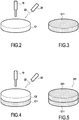
- the 3D printer comprises a dispensing head 10 which is provided with a UV lamp 20 (see figure 2 for example).
- the temperature of the dispensing head 10 during the 3D printing deposition can thus be equal to the ambient temperature (20 ° C.).
- the intensity of this heating is of course limited because of the presence of the energy charge. In the latter case, the dispensing head 10 can typically be heated to a temperature of 60 ° C or lower.
- the dispensing head 10 may comprise a die upstream of a dispensing nozzle. The die is fed with the mixture and the mixture passing through the die is then directly deposited by the nozzle.
- the dispensing head 10 is controlled by a control system.
- the control system is configured to control the movement of the dispensing head 10 and to actuate or stop the deposition of the mixture by the dispensing head 10.
- the dispensing head 10 is thus controlled by the control system in order to give the pyrotechnic product the desired geometry. This allows in particular, if desired, to form a pyrotechnic product having one or more internal channels or having, alternatively, a solid structure.
- the control system is further configured to actuate the UV irradiation by the UV lamp 20. This irradiation makes it possible to crosslink the photocrosslinkable resin present in the deposit produced.
- the main wavelength (corresponding to the maximum emission) of the UV radiation 22 may be between 200 nm and 400 nm, preferably between 315 nm and 400 nm.
- a UV lamp that can be used, mention may be made of the UV lamp marketed under the reference OMNICURE LX400 by LUMEN DYNAMICS.
- FIGS. 2 to 5 illustrate the case where the mixture is deposited layer by layer in order to form the pyrotechnic product PP. Naturally, it is not beyond the scope of the invention when the pyrotechnic product is obtained by depositing a single layer of the mixture.
- a first layer C1 of the mixture is first deposited by 3D printing.
- This layer C1 is then irradiated with a first UV radiation 22 in order to crosslink the resin present in the first layer C1 ( figure 2 ).
- Irradiation by the first UV radiation 22 is then interrupted and a second layer of the mixture C2 is then deposited by 3D printing in contact with this first layer C11.
- the second layer C2 is then irradiated with a second UV radiation 22 in order to crosslink the resin present in the second layer C2 ( figure 4 ).
- the second UV radiation may be the same or different from the first UV radiation.
- more than two layers of the mixture can be deposited in this way in order to form the pyrotechnic product.
- crosslinking of the resin under the effect of UV radiation can advantageously be carried out at ambient temperature (20 ° C.). However, it is not beyond the scope of the invention when moderate heating is imposed during this crosslinking.
- a pyrotechnic product PP comprising a plurality of layers C1-C2 of the mixture superimposed and integral with each other is obtained at the end of the process.
- the pyrotechnic product PP thus manufactured can be used as a pyrotechnic charge of a pyrotechnic gas generator.
- the pyrotechnic product PP obtained may alternatively constitute a propellant block whose combustion is used for propulsion purposes.
- a propellant paste was first prepared by kneading.
- the kneading was continued for 60 minutes at 60 ° C to obtain a homogeneous composition.
- the viscosity of the mixture was then measured using a Brookfield viscometer at room temperature (20 ° C). The measured viscosity was 20000 Poises.
- the mixture obtained was then introduced into an injector in the form of a syringe provided at its end with a spinning die making it possible to produce strands of the mixture.
- This injector was placed in a 3D printer to feed the dispensing head of the printer.
- the mixture was pushed through the die using a piston.
- the imposed piston speed was 1mm / s, and the piston applied a force of 50N.
- the dispensing head was at room temperature (20 ° C) during the deposition.
- the 3D printer was also equipped with a UV lamp emitting a radiation of wavelength 365 nm maximum emission.
- the UV lamp used had a power of 15W and delivered a luminous intensity of 7 mW / cm 2 .
- the UV lamp was located at a distance of 2.5cm from the deposit during the test.
- a propellant paste was first prepared by kneading.
- the kneading was continued for 60 minutes at 60 ° C to obtain a homogeneous composition.
- the viscosity of the mixture was then measured using a Brookfield viscometer at 50 ° C. The measured viscosity was 17,000 Poles.
- the resulting mixture was introduced into a 3D printing system, deposited and polymerized in a manner similar to that described above.
- a pyrotechnic product was thus obtained in a secure way.
Landscapes
- Chemical & Material Sciences (AREA)
- Engineering & Computer Science (AREA)
- Materials Engineering (AREA)
- Manufacturing & Machinery (AREA)
- Organic Chemistry (AREA)
- Physics & Mathematics (AREA)
- Optics & Photonics (AREA)
- Plasma & Fusion (AREA)
- Health & Medical Sciences (AREA)
- General Health & Medical Sciences (AREA)
- Toxicology (AREA)
- Chemical Kinetics & Catalysis (AREA)
- Wood Science & Technology (AREA)
- Life Sciences & Earth Sciences (AREA)
- Heating, Cooling, Or Curing Plastics Or The Like In General (AREA)
Abstract
- le dépôt d'un mélange par impression tridimensionnelle, ledit mélange comprenant au moins :
- une résine photoréticulable,
- un plastifiant,
- un photoamorceur, et
- une charge énergétique, et
- l'irradiation par un rayonnement ultraviolet du mélange déposé afin de réticuler la résine.
Description
- La présente invention concerne un procédé de fabrication d'un produit pyrotechnique composite par technique d'impression tridimensionnelle (impression 3D), ainsi qu'une installation associée.
- La technique d'impression 3D est une technique de fabrication additive permettant de réaliser un dépôt couche par couche à la forme désirée. Cette technique est particulièrement intéressante pour déposer un matériau selon une géométrie complexe.
- Dans la technique d'impression 3D, le matériau à déposer est en général sous forme de fil et traverse une buse chauffante afin d'être ramolli puis déposé selon la géométrie souhaitée.
- Cette technique peut toutefois ne pas être adaptée au dépôt de compositions pyrotechniques.
- En effet, les compositions pyrotechniques comprennent typiquement une charge énergétique présente dans un liant lequel a, en général, une température de ramollissement relativement élevée, par exemple supérieure à 150°C.
- Pour être déposées par impression 3D, de telles compositions pyrotechniques nécessiteraient donc d'être chauffées à relativement haute température, ce qui peut poser un problème de sécurité en raison de la présence de la charge énergétique.
- On connait en outre
EP 3 222 408 qui divulgue des compositions de matériaux énergétiques. - Il existe donc un besoin pour disposer d'un procédé permettant de fabriquer, de manière sécurisée, un produit pyrotechnique par dépôt par impression 3D.
- L'invention vise, selon un premier aspect, un procédé de fabrication d'un produit pyrotechnique composite, comprenant :
- le dépôt d'un mélange par impression tridimensionnelle, ledit mélange comprenant au moins :
- une résine photoréticulable,
- un plastifiant,
- un photoamorceur, et
- une charge énergétique, et
- l'irradiation par un rayonnement ultraviolet du mélange déposé afin de réticuler la résine.
- Par « rayonnement ultraviolet », on entend un rayonnement de longueur d'onde comprise entre 100 nm et 400 nm. Dans la suite, l'expression « rayonnement ultraviolet » sera désignée par « rayonnement UV ».
- L'invention permet de fabriquer un produit pyrotechnique par dépôt par impression 3D tout en limitant la température à laquelle est porté le mélange durant le procédé. La présence du plastifiant dans le mélange rend ce dernier suffisamment fluide pour être compatible, à faible température, avec un dépôt par impression 3D. Cela évite de devoir recourir à un chauffage trop important du mélange pour abaisser sa viscosité lors du dépôt par impression 3D. En outre, l'utilisation d'un rayonnement UV permet de réticuler la résine tout en limitant l'échauffement du mélange lors la réticulation. Le mélange est ainsi porté à une température plus faible que celle employée lors d'une réticulation thermique. Le fait de limiter la température à laquelle est porté le mélange durant le procédé permet avantageusement de rendre la fabrication du produit pyrotechnique plus sécurisée.
- Dans un exemple de réalisation, la résine photoréticulable est une résine acrylate, une résine méthacrylate ou une résine époxy, ou un mélange de telles résines. En particulier, la résine photoréticulable peut être une résine acrylate ou une résine méthacrylate, ou un mélange de telles résines.
- La mise en oeuvre de telles résines permet avantageusement d'améliorer la rapidité de la réticulation sous l'effet du rayonnement UV.
- Dans un exemple de réalisation, le plastifiant est le lauryl acrylate, le lauryl méthacrylate, l'isodécyle acrylate, l'hexanediol diacrylate ou le trimethylolpropane triacrylate, ou un mélange de ces composés.
- Le choix d'un tel plastifiant permet de diminuer la viscosité du mélange de manière particulièrement importante, améliorant davantage encore la compatibilité, à faible température, du mélange avec la technique de dépôt par impression 3D.
- Dans un exemple de réalisation, le photoamorceur est un photoamorceur radicalaire. En variante, le photoamorceur peut être un photoamorceur cationique.
- Il est avantageux d'utiliser un photoamorceur radicalaire afin d'éviter la formation de composés secondaires durant la réticulation, et ainsi éviter tout risque d'interaction entre de tels composés secondaires et la charge énergétique.
- Dans un exemple de réalisation, le rayonnement ultraviolet produit une coupure homolytique du photoamorceur permettant d'initier la réticulation de la résine.
- Dans un exemple de réalisation, la teneur massique en charge énergétique dans le mélange est supérieure ou égale à 65%, par exemple à 75%.
- Le fait que le mélange soit compatible d'une mise en oeuvre à faible température confère avantageusement la possibilité de mettre en oeuvre un fort taux en charge énergétique, de manière sécurisée.
- Dans un exemple de réalisation, le mélange comprend :
- la résine photoréticulable en une teneur massique comprise entre 7% et 10,5%, de préférence entre 9,5% et 10,5%,
- le plastifiant en une teneur massique comprise entre 7% et 10,5%, de préférence entre 7% et 8%,
- le photoamorceur en une teneur massique comprise entre 0,18% et 0,54%, de préférence entre 0,4% et 0,54%, et
- la charge énergétique en une teneur massique comprise entre 65% et 85%, de préférence entre 80% et 82%.
- Dans un exemple de réalisation, le rapport [teneur massique en plastifiant dans le mélange] / [teneur massique en résine photoréticulable dans le mélange] est supérieur ou égal à 0,6, par exemple à 1,4.
- Une telle caractéristique permet d'améliorer davantage encore la compatibilité, à faible température, du mélange avec la technique de dépôt par impression 3D.
- Dans un exemple de réalisation, la longueur d'onde du rayonnement ultraviolet est comprise entre 315 nm et 400 nm.
- Une telle caractéristique est avantageuse afin de limiter le caractère nocif du rayonnement ultraviolet mis en oeuvre pour la réticulation.
- Dans un exemple de réalisation, on réalise :
- le dépôt d'une première couche du mélange par impression tridimensionnelle,
- l'irradiation de la première couche par un premier rayonnement ultraviolet afin de réticuler la résine présente dans la première couche,
- le dépôt d'une deuxième couche du mélange par impression tridimensionnelle sur la première couche comprenant la résine réticulée, et
- l'irradiation de la deuxième couche par un deuxième rayonnement ultraviolet afin de réticuler la résine présente dans la deuxième couche.
- D'autres caractéristiques et avantages de l'invention ressortiront de la description suivante, donnée à titre non limitatif, en référence aux dessins annexés, sur lesquels :
- la
figure 1 est un ordinogramme représentant différentes étapes d'un exemple de procédé selon l'invention, et - les
figures 2 à 5 représentent, de manière schématique, la mise en oeuvre d'un exemple de procédé selon l'invention dans lequel le mélange est déposé couche après couche. - Divers détails relatifs aux constituants formant le mélange vont tout d'abord être décrits.
- La résine photoréticulable peut comporter l'une au moins des fonctions suivantes : méthacrylate, époxy, oxétane, alcényle, dioxolane, thiolane et épisulfure. La résine photoréticulable peut, en particulier, comporter l'une au moins des fonctions suivantes : acrylate, méthacrylate et époxy. A titre d'exemple, la résine photoréticulable peut être un oligomère polyéther triacrylate, un oligomère polybutadiène uréthane diacrylate aliphatique, un oligomère uréthane diacrylate aliphatique ou un mélange de ces composés. On peut par exemple utiliser la résine commercialisée sous la référence « Laromer PO 33F » par la société BASF (exemple d'oligomère polyéther triacrylate), la résine commercialisée sous la référence « Bomar BR-641D » par la société Dymax (exemple d'oligomère polybutadiène uréthane diacrylate aliphatique) ou la résine commercialisée sous la référence « CN9002 » par la société Sartomer (Arkema) (exemple d'oligomère uréthane diacrylate aliphatique).
- La viscosité de la résine photoréticulable à 60°C peut être inférieure ou égale à 20000 mPa.s, par exemple à 15000 mPa.s. La viscosité est mesurée à l'aide d'un viscosimètre Brookfield de type RVT à la vitesse de 5 tours/minute.
- La résine photoréticulable peut être présente dans le mélange en une teneur massique comprise entre 7% et 10,5%, de préférence entre 9,5% et 10,5%.
- Le plastifiant peut comporter un monomère acrylate, un monomère méthacrylate ou un mélange de tels monomères. Le plastifiant peut comporter du lauryl acrylate, du lauryl méthacrylate, de l'isodécyle acrylate, de l'hexanediol diacrylate, du trimethylolpropane triacrylate ou un mélange de ces composés. Le plastifiant peut être différent de la résine photoréticulable.
- Le plastifiant peut être présent dans le mélange en une teneur massique comprise entre 7% et 10,5%, de préférence entre 7% et 8%.
- Le rapport [teneur massique en plastifiant dans le mélange] / [teneur massique en résine photoréticulable dans le mélange] peut être supérieur ou égal à 0,6, voire à 1,4. Ce rapport peut par exemple être compris entre 0,6 et 0,8.
- Il peut y avoir coupure homolytique du photoamorceur afin d'initier la réticulation de la résine photoréticulable. En variante, il y a arrachage d'un atome d'hydrogène du photoamorceur afin d'initier cette réticulation.
- Avantageusement, le photoamorceur est liquide à température ambiante (20°C). Avantageusement, le photoamorceur absorbe le rayonnement ultraviolet de longueur d'onde comprise entre 315 nm et 400 nm.
- Le photoamorceur peut être une alpha-hydroxycétone, un éther de benzoine, l'acétophénone ou un de ses dérivés, un cétal benzylique, un oxyde d'acylphosphine ou un de ses dérivés, ou un mélange de ces composés. A titre d'exemple de photoamorceur utilisable, on peut citer une alpha-hydroxycétone commercialisée sous la référence Darocur® 1173 par la société CIBA-GEIGY ou un dérivé d'oxyde d'acylphosphine commercialisé sous la référence Lucirin® TPO-L par la société BASF.
- Le photoamorceur peut être présent dans le mélange en une teneur massique comprise entre 0,18% et 0,54%, de préférence entre 0,45% et 0,54%.
- Le mélange comprend par ailleurs une charge pulvérulente qui comprend une charge énergétique, et éventuellement une charge réductrice.
- La charge énergétique est connue en soi et peut, par exemple, être choisie parmi : le perchlorate d'ammonium (PA), les nitrates, comme le nitrate d'ammonium (NA), le nitrate de tétrazole, le nitrate de guanidine, les nitrates alcalins, alcalinoterreux ou métalliques, l'hexogène (RDX), l'octogène (HMX), l'hexanitrohexaazaisowurtzitane (CL20), le dinitroamidure d'ammonium (ADN), l'éthylène dinitramine (EDNA), et les mélanges de tels composés. La charge énergétique peut être présente dans le mélange en une teneur massique supérieure ou égale à 65%. Cette teneur massique peut être comprise entre 65% et 85%, par exemple entre 75% et 85%.
- Selon une variante, la charge pulvérulente peut en outre comporter une charge réductrice, différente de la charge énergétique.
- La charge réductrice est connue en soi peut, par exemple, être choisie parmi : l'aluminium, le bore, le zirconium, le magnésium, le tungstène et leurs mélanges. La charge réductrice, lorsqu'elle est présente, peut être présente dans le mélange en une teneur massique comprise entre 15% et 20%, par exemple entre 18% et 20%.
- La teneur massique en charge pulvérulente dans le mélange peut être supérieure ou égale à 75%, par exemple à 80%, par exemple à 85%. La teneur massique en charge pulvérulente dans le mélange peut être comprise entre 75% et 85%, par exemple.
- Le mélange peut, en outre, comporter un ou plusieurs additifs connus en soi, comme un anti-oxydant.
- On va décrire, en lien avec la
figure 1 , différentes étapes d'un exemple procédé selon l'invention. - On introduit tout d'abord dans un mélangeur, la résine photoréticulable, le plastifiant et le photoamorceur. Ces constituants peuvent chacun être introduits à l'état liquide dans le mélangeur. Le pré-mélange ainsi constitué est alors malaxé dans le mélangeur (étape E10).
- Le malaxage du pré-mélange peut être réalisé à une température inférieure ou égale à 60°C, par exemple comprise entre 40°C et 60°C. Le malaxage du pré-mélange est réalisé sous vide. Le pré-mélange peut être malaxé pendant une durée supérieure ou égale à 1 heure.
- On introduit ensuite la charge énergétique dans le pré-mélange malaxé (étape E20). L'introduction de la charge énergétique peut être réalisée à une température inférieure ou égale à 60°C, par exemple comprise entre 40°C et 60°C.
- Une fois la charge introduite dans le pré-mélange, le malaxage de l'ensemble des constituants est effectué (étape E30). Ce malaxage est réalisé sous vide. Le malaxage du pré-mélange et de la charge énergétique introduite peut être réalisé à une température inférieure ou égale à 60°C, par exemple comprise entre 40°C et 60°C. Ce malaxage est réalisé sous vide. Ce malaxage peut être réalisé pendant une durée supérieure ou égale à 1 heure.
- On obtient alors le mélange lequel est destiné à être déposé par impression 3D. Il s'ensuit le dépôt du mélange par impression 3D (étape E40) et l'irradiation UV du mélange déposé (étape E50) afin d'obtenir le produit pyrotechnique. Ces deux étapes vont, à présent, être décrites plus en détails.
- Le dépôt du mélange est effectué à l'aide d'une imprimante 3D, qui constitue un dispositif connu en soi. L'imprimante 3D comprend une tête de dépose 10 laquelle est munie d'une lampe UV 20 (voir
figure 2 par exemple). - Avantageusement, aucun chauffage n'est réalisé au niveau de la tête de dépose 10 durant le dépôt du mélange par impression 3D. La température de la tête de dépose 10 durant le dépôt par impression 3D peut ainsi être égale à la température ambiante (20°C). On ne sort toutefois pas du cadre de l'invention lorsqu'un léger chauffage est effectué au niveau de la tête de dépose 10 durant le dépôt. L'intensité de ce chauffage est bien entendu limitée en raison de la présence de la charge énergétique. Dans ce dernier cas, la tête de dépose 10 peut typiquement être portée à une température inférieure ou égale à 60°C.
- Selon un exemple, la tête de dépose 10 peut comporter une filière en amont d'une buse de dépose. La filière est alimentée par le mélange et le mélange traversant la filière est ensuite directement déposé par la buse de dépose.
- La tête de dépose 10 est commandée par un système de contrôle. Le système de contrôle est configuré pour commander le déplacement de la tête de dépose 10 et pour actionner ou arrêter le dépôt du mélange par la tête de dépose 10.
- La tête de dépose 10 est ainsi contrôlée par le système de contrôle afin de conférer au produit pyrotechnique la géométrie souhaitée. Cela permet en particulier, si cela est souhaité, de former un produit pyrotechnique présentant un ou plusieurs canaux internes ou ayant, en variante, une structure pleine.
- Le système de contrôle est en outre configuré pour actionner l'irradiation UV par la lampe UV 20. Cette irradiation permet de réticuler la résine photoréticulable présente dans le dépôt réalisé.
- La longueur d'onde principale (correspondant au maximum d'émission) du rayonnement UV 22 peut être comprise entre 200 nm et 400 nm, de préférence entre 315 nm et 400 nm. A titre d'exemple de lampe UV 20 utilisable, on peut citer la lampe UV commercialisée sous la référence OMNICURE LX400 par la société LUMEN DYNAMICS.
- Les
figures 2 à 5 illustrent le cas où le mélange est déposé couche par couche afin de former le produit pyrotechnique PP. On ne sort bien entendu pas du cadre de l'invention lorsque le produit pyrotechnique est obtenu par dépôt d'une unique couche du mélange. - Dans l'exemple illustré aux
figures 2 à 5 , une première couche C1 du mélange est tout d'abord déposée par impression 3D. Cette couche C1 est ensuite irradiée par un premier rayonnement UV 22 afin de réticuler la résine présente dans la première couche C1 (figure 2 ). On obtient alors une première couche C11 comprenant la résine réticulée (figure 3 ). L'irradiation par le premier rayonnement UV 22 est alors interrompue et une deuxième couche du mélange C2 est ensuite déposée par impression 3D au contact de cette première couche C11. La deuxième couche C2 est ensuite irradiée par un deuxième rayonnement UV 22 afin de réticuler la résine présente dans la deuxième couche C2 (figure 4 ). Le deuxième rayonnement UV peut être identique ou différent du premier rayonnement UV. On obtient alors une deuxième couche C21 comprenant la résine réticulée (figure 5 ). On peut bien entendu déposer de la sorte plus de deux couches du mélange afin de former le produit pyrotechnique. - La réticulation de la résine sous l'effet du rayonnement UV peut avantageusement être réalisée à température ambiante (20°C). On ne sort toutefois pas du cadre de l'invention lorsqu'un chauffage modéré est imposé durant cette réticulation.
- Selon cet exemple, un produit pyrotechnique PP comprenant une pluralité de couches C1-C2 du mélange superposées et solidaires entre elles est obtenu à la fin du procédé.
- Le produit pyrotechnique PP ainsi fabriqué peut être utilisé en tant que chargement pyrotechnique d'un générateur de gaz pyrotechnique. Le produit pyrotechnique PP obtenu peut en variante constituer un bloc de propergol dont la combustion est utilisée à des fins de propulsion.
- Une pâte de propergol a tout d'abord été préparée par malaxage.
- Dans un mélangeur planétaire de 0,5L, on a tout d'abord introduit 29g (14,52% en masse du mélange total) de polymère Triacrylate Laromer PO 33-F commercialisé par la société BASF.
- Il a ensuite été ajouté sous agitation 14,52g (7,26% en masse du mélange total) de méthacrylate de lauryle, et 0,436g (0,22% en masse du mélange total) de 2-hydroxyl-2-méthyl-1-phényl-1 propanone commercialisée sous la référence Darocur® 1173 par la société CIBA-GEIGY.
- Le malaxage a été poursuivi durant 60 minutes à 60°C afin d'obtenir une composition homogène.
- On a ensuite ajouté 156 g (78% en masse du mélange total) de CL20 (hexanitrohexaazaisowurzitane) par portion sur un temps de 80 minutes à la température de 60°C.
- Après introduction de la charge énergétique, l'agitation a été poursuivie durant 120 minutes à 60°C sous vide afin de dégazer la composition.
- La viscosité du mélange a ensuite été mesurée à l'aide d'un viscosimètre Brookfield à température ambiante (20°C). La viscosité mesurée était de 20000 Poises.
- Le mélange obtenu a ensuite été introduit dans un injecteur sous la forme d'une seringue munie à son extrémité d'une filière de filage permettant de réaliser des brins du mélange. Cet injecteur a été placé dans une imprimante 3D afin d'alimenter la tête de dépose de l'imprimante. Le mélange a été poussé à travers la filière à l'aide d'un piston. La vitesse du piston imposée était de 1mm/s, et le piston appliquait une force de 50N. La tête de dépose était à température ambiante (20°C) durant le dépôt.
- L'imprimante 3D était en outre munie d'une lampe UV émettant un rayonnement de longueur d'onde 365 nm au maximum d'émission. La lampe UV utilisée avait une puissance de 15W et délivrait une intensité lumineuse de 7 mW/cm2. La lampe UV été située à une distance de 2,5cm du dépôt durant l'essai.
- La réticulation de la résine déposée a été amorcée au moyen de la lampe UV. Aucun chauffage n'a été imposé durant cette réticulation. Un produit pyrotechnique a ainsi été obtenu de manière sécurisée.
- Une pâte de propergol a tout d'abord été préparée par malaxage.
- Dans un mélangeur planétaire de 0,5L, on a tout d'abord introduit 24,46g (11,93% en masse du mélange total) d'un oligomère uréthane acrylate (CN9002) commercialisé par la société Arkema.
- Il a ensuite été ajouté sous agitation 10,48g (5,11% en masse du mélange total) d'acrylate de lauryle, et 2g (0,98% en masse du mélange total) de 2-hydroxyl-2-méthyl-1-phényl-1 propanone commercialisée sous la référence Darocur® 1173 par la société CIBA-GEIGY en mélange avec 4g (1,95% en masse du mélange total) d'éthyl(2,4,6-triméthylbenzoyl) phényl phosphinate commercialisé sous la référence Luricin® TPO-L par la société BASF.
- Le malaxage a été poursuivi durant 60 minutes à 60°C afin d'obtenir une composition homogène.
- On a ensuite ajouté 164 g (80% en masse du mélange total) de RDX M3c commercialisé par la société Eurenco en quatre fois sur une durée de 80 minutes à la température de 50°C.
- Après introduction de la charge énergétique, l'agitation a été poursuivie durant 60 minutes à 50°C sous vide afin de dégazer la composition.
- La viscosité du mélange a ensuite été mesurée à l'aide d'un viscosimètre Brookfield à 50°C. La viscosité mesurée était de 17000 Poises.
- Le mélange obtenu a été introduit dans un système d'impression 3D, déposé et polymérisé d'une manière similaire à celle décrite plus haut. Un produit pyrotechnique a ainsi été obtenu de manière sécurisée.
- L'expression « compris(e) entre ... et ... » doit se comprendre comme incluant les bornes.
Claims (8)
- Procédé de fabrication d'un produit pyrotechnique (PP) composite, comprenant :- le dépôt d'un mélange par impression tridimensionnelle, ledit mélange comprenant au moins :- une résine photoréticulable en une teneur massique comprise entre 7% et 10,5%,- un plastifiant en une teneur massique comprise entre 7% et 10,5%, le plastifiant étant le lauryl acrylate, le lauryl méthacrylate, l'isodécyle acrylate, l'hexanediol diacrylate ou le trimethylolpropane triacrylate, ou un mélange de ces composés,- un photoamorceur en une teneur massique comprise entre 0,18% et 0,54%, et- une charge énergétique en une teneur massique comprise entre 65% et 85%, et- l'irradiation par un rayonnement ultraviolet (22) du mélange déposé afin de réticuler la résine.
- Procédé selon la revendication 1, dans lequel la résine photoréticulable est une résine acrylate, une résine méthacrylate ou une résine époxy, ou un mélange de telles résines.
- Procédé selon la revendication 2, dans lequel la résine photoréticulable est une résine acrylate ou une résine méthacrylate, ou un mélange de telles résines.
- Procédé selon l'une quelconque des revendications 1 à 3, dans lequel le photoamorceur est un photoamorceur radicalaire.
- Procédé selon l'une quelconque des revendications 1 à 4, dans lequel le mélange comprend :- la résine photoréticulable en une teneur massique comprise entre 9,5% et 10,5%,- le plastifiant en une teneur massique comprise entre 7% et 8%,- le photoamorceur en une teneur massique comprise entre 0,4% et 0,54%, et- la charge énergétique en une teneur massique comprise entre 80% et 82%.
- Procédé selon l'une quelconque des revendications 1 à 5, dans lequel le rapport [teneur massique en plastifiant dans le mélange] / [teneur massique en résine photoréticulable dans le mélange] est supérieur ou égal à 1,4.
- Procédé selon l'une quelconque des revendications 1 à 6, dans lequel la longueur d'onde du rayonnement ultraviolet (22) est comprise entre 315 nm et 400 nm.
- Procédé selon l'une quelconque des revendications 1 à 7, dans lequel on réalise :- le dépôt d'une première couche (C1) du mélange par impression tridimensionnelle,- l'irradiation de la première couche par un premier rayonnement ultraviolet afin de réticuler la résine présente dans la première couche,- le dépôt d'une deuxième couche (C2) du mélange par impression tridimensionnelle sur la première couche (C11) comprenant la résine réticulée, et- l'irradiation de la deuxième couche par un deuxième rayonnement ultraviolet afin de réticuler la résine présente dans la deuxième couche.
Applications Claiming Priority (1)
| Application Number | Priority Date | Filing Date | Title |
|---|---|---|---|
| FR1701297A FR3074716B1 (fr) | 2017-12-12 | 2017-12-12 | Procede de fabrication d'un produit pyrotechnique |
Publications (2)
| Publication Number | Publication Date |
|---|---|
| EP3498400A1 true EP3498400A1 (fr) | 2019-06-19 |
| EP3498400B1 EP3498400B1 (fr) | 2020-05-13 |
Family
ID=61655817
Family Applications (1)
| Application Number | Title | Priority Date | Filing Date |
|---|---|---|---|
| EP18210187.3A Active EP3498400B1 (fr) | 2017-12-12 | 2018-12-04 | Procédé de fabrication d'un produit pyrotechnique |
Country Status (2)
| Country | Link |
|---|---|
| EP (1) | EP3498400B1 (fr) |
| FR (1) | FR3074716B1 (fr) |
Cited By (2)
| Publication number | Priority date | Publication date | Assignee | Title |
|---|---|---|---|---|
| WO2020070472A1 (fr) * | 2018-10-03 | 2020-04-09 | Bae Systems Plc | Liant polymérisable |
| CN114181354A (zh) * | 2021-12-20 | 2022-03-15 | 杭州之江有机硅化工有限公司 | 一种低湿气透过率的uv光固化组合物及其制备方法 |
Citations (3)
| Publication number | Priority date | Publication date | Assignee | Title |
|---|---|---|---|---|
| US20060005729A1 (en) * | 2004-07-06 | 2006-01-12 | Milton Robert W | Single-piece stereolithographically-produced missile igniter |
| EP3222961A1 (fr) * | 2016-03-22 | 2017-09-27 | Nederlandse Organisatie voor toegepast- natuurwetenschappelijk onderzoek TNO | Grain ou charge propulsif |
| EP3222408A1 (fr) * | 2016-03-22 | 2017-09-27 | Nederlandse Organisatie voor toegepast- natuurwetenschappelijk onderzoek TNO | Matières énergétiques |
-
2017
- 2017-12-12 FR FR1701297A patent/FR3074716B1/fr active Active
-
2018
- 2018-12-04 EP EP18210187.3A patent/EP3498400B1/fr active Active
Patent Citations (3)
| Publication number | Priority date | Publication date | Assignee | Title |
|---|---|---|---|---|
| US20060005729A1 (en) * | 2004-07-06 | 2006-01-12 | Milton Robert W | Single-piece stereolithographically-produced missile igniter |
| EP3222961A1 (fr) * | 2016-03-22 | 2017-09-27 | Nederlandse Organisatie voor toegepast- natuurwetenschappelijk onderzoek TNO | Grain ou charge propulsif |
| EP3222408A1 (fr) * | 2016-03-22 | 2017-09-27 | Nederlandse Organisatie voor toegepast- natuurwetenschappelijk onderzoek TNO | Matières énergétiques |
Cited By (4)
| Publication number | Priority date | Publication date | Assignee | Title |
|---|---|---|---|---|
| WO2020070472A1 (fr) * | 2018-10-03 | 2020-04-09 | Bae Systems Plc | Liant polymérisable |
| GB2577873B (en) * | 2018-10-03 | 2022-10-12 | Bae Systems Plc | Polymerisable Binder |
| CN114181354A (zh) * | 2021-12-20 | 2022-03-15 | 杭州之江有机硅化工有限公司 | 一种低湿气透过率的uv光固化组合物及其制备方法 |
| CN114181354B (zh) * | 2021-12-20 | 2022-07-12 | 杭州之江有机硅化工有限公司 | 一种低湿气透过率的uv光固化组合物及其制备方法 |
Also Published As
| Publication number | Publication date |
|---|---|
| EP3498400B1 (fr) | 2020-05-13 |
| FR3074716B1 (fr) | 2020-12-25 |
| FR3074716A1 (fr) | 2019-06-14 |
Similar Documents
| Publication | Publication Date | Title |
|---|---|---|
| EP2310444B1 (fr) | Procédé de fabrication d'une composition auto-obturante | |
| EP3498400B1 (fr) | Procédé de fabrication d'un produit pyrotechnique | |
| EP0718257B1 (fr) | Procédé de fabrication en continu de chargements pyrotechniques à liant silicone et compositions susceptibles d'être mises en oeuvre par ce procédé | |
| EP0294253B1 (fr) | Compositions thermoplastiques, leur procédé de préparation et leur application à l'obtention d'articles industriels | |
| CA2784311C (fr) | Explosif solide malleable et son obtention | |
| EP1301302A1 (fr) | Pate chargee de poudre metallique et produits metalliques obtenus avec cette pate | |
| FR2955582A1 (fr) | Procede de fabrication d'une composition d'elastomere a propriete auto-obturante | |
| FR2955583A1 (fr) | Procede de fabrication d'une composition auto-obturante | |
| EP0809833B1 (fr) | Procede de fabrication de cartes electroniques | |
| CA3082482A1 (fr) | Composition liquide adaptee a des applications de composites thermoplastiques moulees a base de smc | |
| EP3476821A1 (fr) | Procédé de fabrication d'un produit pyrotechnique composite | |
| EP2935382B1 (fr) | Composition comprenant une résine phénolique, matériau composite comprenant une telle composition et procédé de préparation d'un matériau composite | |
| CA2204840C (fr) | Procede continu de fabrication sans solvant de produits pyrotechniques composites thermodurcissables | |
| EP3473356B1 (fr) | Pate destinée a etre utilisée dans un procedé de stereolithographie pour fabriquer une piece metallique ou en céramique | |
| EP3969432B1 (fr) | Grains de poudre propulsive comprenant des canaux au moins partiellement obtures | |
| EP4352751B1 (fr) | Matériau composite de blindage neutronique et de maintien de la sous-criticité, son procédé de fabrication et ses utilisations | |
| EP3473357B1 (fr) | Pate destinée a etre utilisée dans un procede de stereolithographie pour la fabrication de pièces en titane | |
| FR3165007A1 (fr) | Procédé de fabrication d’une composition de résine réticulée à partir d’un mélange issu d’une dépolymérisation de polystyrène | |
| WO2026003468A1 (fr) | Procédé d'amélioration de la résistance aux alcalins d'un support | |
| WO2026003469A1 (fr) | Procédé de fabrication d'un monobrin en composite filament-résine comprenant des filaments noyés dans une résine réticulée mettant en œuvre une composition de résine spécifique | |
| FR3140792A1 (fr) | Recyclage d’un systeme multicouche | |
| WO2023026008A1 (fr) | Procede de fabrication d'une piece composite, en particulier aeronautique et installation associee | |
| EP4540199A1 (fr) | Utilisation de fibres en composite carbone-resine pour le renforcement du beton | |
| WO2020144433A1 (fr) | Procede de fabrication d'un produit pyrotechnique composite | |
| BE896878A (fr) | Fabrication de compositions propulsives et de charges propulsives. |
Legal Events
| Date | Code | Title | Description |
|---|---|---|---|
| PUAI | Public reference made under article 153(3) epc to a published international application that has entered the european phase |
Free format text: ORIGINAL CODE: 0009012 |
|
| STAA | Information on the status of an ep patent application or granted ep patent |
Free format text: STATUS: REQUEST FOR EXAMINATION WAS MADE |
|
| 17P | Request for examination filed |
Effective date: 20181204 |
|
| AK | Designated contracting states |
Kind code of ref document: A1 Designated state(s): AL AT BE BG CH CY CZ DE DK EE ES FI FR GB GR HR HU IE IS IT LI LT LU LV MC MK MT NL NO PL PT RO RS SE SI SK SM TR |
|
| AX | Request for extension of the european patent |
Extension state: BA ME |
|
| GRAP | Despatch of communication of intention to grant a patent |
Free format text: ORIGINAL CODE: EPIDOSNIGR1 |
|
| STAA | Information on the status of an ep patent application or granted ep patent |
Free format text: STATUS: GRANT OF PATENT IS INTENDED |
|
| INTG | Intention to grant announced |
Effective date: 20191220 |
|
| GRAS | Grant fee paid |
Free format text: ORIGINAL CODE: EPIDOSNIGR3 |
|
| GRAA | (expected) grant |
Free format text: ORIGINAL CODE: 0009210 |
|
| STAA | Information on the status of an ep patent application or granted ep patent |
Free format text: STATUS: THE PATENT HAS BEEN GRANTED |
|
| AK | Designated contracting states |
Kind code of ref document: B1 Designated state(s): AL AT BE BG CH CY CZ DE DK EE ES FI FR GB GR HR HU IE IS IT LI LT LU LV MC MK MT NL NO PL PT RO RS SE SI SK SM TR |
|
| REG | Reference to a national code |
Ref country code: GB Ref legal event code: FG4D Free format text: NOT ENGLISH |
|
| REG | Reference to a national code |
Ref country code: CH Ref legal event code: EP |
|
| REG | Reference to a national code |
Ref country code: DE Ref legal event code: R096 Ref document number: 602018004634 Country of ref document: DE |
|
| REG | Reference to a national code |
Ref country code: AT Ref legal event code: REF Ref document number: 1269599 Country of ref document: AT Kind code of ref document: T Effective date: 20200615 |
|
| REG | Reference to a national code |
Ref country code: NL Ref legal event code: FP |
|
| REG | Reference to a national code |
Ref country code: FI Ref legal event code: FGE |
|
| REG | Reference to a national code |
Ref country code: SE Ref legal event code: TRGR |
|
| REG | Reference to a national code |
Ref country code: NO Ref legal event code: T2 Effective date: 20200513 |
|
| REG | Reference to a national code |
Ref country code: LT Ref legal event code: MG4D |
|
| PG25 | Lapsed in a contracting state [announced via postgrant information from national office to epo] |
Ref country code: IS Free format text: LAPSE BECAUSE OF FAILURE TO SUBMIT A TRANSLATION OF THE DESCRIPTION OR TO PAY THE FEE WITHIN THE PRESCRIBED TIME-LIMIT Effective date: 20200913 Ref country code: PT Free format text: LAPSE BECAUSE OF FAILURE TO SUBMIT A TRANSLATION OF THE DESCRIPTION OR TO PAY THE FEE WITHIN THE PRESCRIBED TIME-LIMIT Effective date: 20200914 Ref country code: GR Free format text: LAPSE BECAUSE OF FAILURE TO SUBMIT A TRANSLATION OF THE DESCRIPTION OR TO PAY THE FEE WITHIN THE PRESCRIBED TIME-LIMIT Effective date: 20200814 Ref country code: LT Free format text: LAPSE BECAUSE OF FAILURE TO SUBMIT A TRANSLATION OF THE DESCRIPTION OR TO PAY THE FEE WITHIN THE PRESCRIBED TIME-LIMIT Effective date: 20200513 |
|
| PG25 | Lapsed in a contracting state [announced via postgrant information from national office to epo] |
Ref country code: BG Free format text: LAPSE BECAUSE OF FAILURE TO SUBMIT A TRANSLATION OF THE DESCRIPTION OR TO PAY THE FEE WITHIN THE PRESCRIBED TIME-LIMIT Effective date: 20200813 Ref country code: LV Free format text: LAPSE BECAUSE OF FAILURE TO SUBMIT A TRANSLATION OF THE DESCRIPTION OR TO PAY THE FEE WITHIN THE PRESCRIBED TIME-LIMIT Effective date: 20200513 Ref country code: HR Free format text: LAPSE BECAUSE OF FAILURE TO SUBMIT A TRANSLATION OF THE DESCRIPTION OR TO PAY THE FEE WITHIN THE PRESCRIBED TIME-LIMIT Effective date: 20200513 Ref country code: RS Free format text: LAPSE BECAUSE OF FAILURE TO SUBMIT A TRANSLATION OF THE DESCRIPTION OR TO PAY THE FEE WITHIN THE PRESCRIBED TIME-LIMIT Effective date: 20200513 |
|
| REG | Reference to a national code |
Ref country code: AT Ref legal event code: MK05 Ref document number: 1269599 Country of ref document: AT Kind code of ref document: T Effective date: 20200513 |
|
| PG25 | Lapsed in a contracting state [announced via postgrant information from national office to epo] |
Ref country code: AL Free format text: LAPSE BECAUSE OF FAILURE TO SUBMIT A TRANSLATION OF THE DESCRIPTION OR TO PAY THE FEE WITHIN THE PRESCRIBED TIME-LIMIT Effective date: 20200513 |
|
| PG25 | Lapsed in a contracting state [announced via postgrant information from national office to epo] |
Ref country code: CZ Free format text: LAPSE BECAUSE OF FAILURE TO SUBMIT A TRANSLATION OF THE DESCRIPTION OR TO PAY THE FEE WITHIN THE PRESCRIBED TIME-LIMIT Effective date: 20200513 Ref country code: EE Free format text: LAPSE BECAUSE OF FAILURE TO SUBMIT A TRANSLATION OF THE DESCRIPTION OR TO PAY THE FEE WITHIN THE PRESCRIBED TIME-LIMIT Effective date: 20200513 Ref country code: SM Free format text: LAPSE BECAUSE OF FAILURE TO SUBMIT A TRANSLATION OF THE DESCRIPTION OR TO PAY THE FEE WITHIN THE PRESCRIBED TIME-LIMIT Effective date: 20200513 Ref country code: DK Free format text: LAPSE BECAUSE OF FAILURE TO SUBMIT A TRANSLATION OF THE DESCRIPTION OR TO PAY THE FEE WITHIN THE PRESCRIBED TIME-LIMIT Effective date: 20200513 Ref country code: ES Free format text: LAPSE BECAUSE OF FAILURE TO SUBMIT A TRANSLATION OF THE DESCRIPTION OR TO PAY THE FEE WITHIN THE PRESCRIBED TIME-LIMIT Effective date: 20200513 Ref country code: AT Free format text: LAPSE BECAUSE OF FAILURE TO SUBMIT A TRANSLATION OF THE DESCRIPTION OR TO PAY THE FEE WITHIN THE PRESCRIBED TIME-LIMIT Effective date: 20200513 Ref country code: IT Free format text: LAPSE BECAUSE OF FAILURE TO SUBMIT A TRANSLATION OF THE DESCRIPTION OR TO PAY THE FEE WITHIN THE PRESCRIBED TIME-LIMIT Effective date: 20200513 Ref country code: RO Free format text: LAPSE BECAUSE OF FAILURE TO SUBMIT A TRANSLATION OF THE DESCRIPTION OR TO PAY THE FEE WITHIN THE PRESCRIBED TIME-LIMIT Effective date: 20200513 |
|
| REG | Reference to a national code |
Ref country code: DE Ref legal event code: R097 Ref document number: 602018004634 Country of ref document: DE |
|
| PG25 | Lapsed in a contracting state [announced via postgrant information from national office to epo] |
Ref country code: SK Free format text: LAPSE BECAUSE OF FAILURE TO SUBMIT A TRANSLATION OF THE DESCRIPTION OR TO PAY THE FEE WITHIN THE PRESCRIBED TIME-LIMIT Effective date: 20200513 |
|
| PLBE | No opposition filed within time limit |
Free format text: ORIGINAL CODE: 0009261 |
|
| STAA | Information on the status of an ep patent application or granted ep patent |
Free format text: STATUS: NO OPPOSITION FILED WITHIN TIME LIMIT |
|
| 26N | No opposition filed |
Effective date: 20210216 |
|
| PG25 | Lapsed in a contracting state [announced via postgrant information from national office to epo] |
Ref country code: SI Free format text: LAPSE BECAUSE OF FAILURE TO SUBMIT A TRANSLATION OF THE DESCRIPTION OR TO PAY THE FEE WITHIN THE PRESCRIBED TIME-LIMIT Effective date: 20200513 |
|
| PG25 | Lapsed in a contracting state [announced via postgrant information from national office to epo] |
Ref country code: MC Free format text: LAPSE BECAUSE OF FAILURE TO SUBMIT A TRANSLATION OF THE DESCRIPTION OR TO PAY THE FEE WITHIN THE PRESCRIBED TIME-LIMIT Effective date: 20200513 |
|
| REG | Reference to a national code |
Ref country code: BE Ref legal event code: MM Effective date: 20201231 |
|
| PG25 | Lapsed in a contracting state [announced via postgrant information from national office to epo] |
Ref country code: IE Free format text: LAPSE BECAUSE OF NON-PAYMENT OF DUE FEES Effective date: 20201204 Ref country code: LU Free format text: LAPSE BECAUSE OF NON-PAYMENT OF DUE FEES Effective date: 20201204 |
|
| PG25 | Lapsed in a contracting state [announced via postgrant information from national office to epo] |
Ref country code: TR Free format text: LAPSE BECAUSE OF FAILURE TO SUBMIT A TRANSLATION OF THE DESCRIPTION OR TO PAY THE FEE WITHIN THE PRESCRIBED TIME-LIMIT Effective date: 20200513 Ref country code: MT Free format text: LAPSE BECAUSE OF FAILURE TO SUBMIT A TRANSLATION OF THE DESCRIPTION OR TO PAY THE FEE WITHIN THE PRESCRIBED TIME-LIMIT Effective date: 20200513 Ref country code: CY Free format text: LAPSE BECAUSE OF FAILURE TO SUBMIT A TRANSLATION OF THE DESCRIPTION OR TO PAY THE FEE WITHIN THE PRESCRIBED TIME-LIMIT Effective date: 20200513 |
|
| PG25 | Lapsed in a contracting state [announced via postgrant information from national office to epo] |
Ref country code: MK Free format text: LAPSE BECAUSE OF FAILURE TO SUBMIT A TRANSLATION OF THE DESCRIPTION OR TO PAY THE FEE WITHIN THE PRESCRIBED TIME-LIMIT Effective date: 20200513 |
|
| PG25 | Lapsed in a contracting state [announced via postgrant information from national office to epo] |
Ref country code: BE Free format text: LAPSE BECAUSE OF NON-PAYMENT OF DUE FEES Effective date: 20201231 |
|
| REG | Reference to a national code |
Ref country code: CH Ref legal event code: PL |
|
| PG25 | Lapsed in a contracting state [announced via postgrant information from national office to epo] |
Ref country code: LI Free format text: LAPSE BECAUSE OF NON-PAYMENT OF DUE FEES Effective date: 20211231 Ref country code: CH Free format text: LAPSE BECAUSE OF NON-PAYMENT OF DUE FEES Effective date: 20211231 |
|
| REG | Reference to a national code |
Ref country code: DE Ref legal event code: R082 Ref document number: 602018004634 Country of ref document: DE Representative=s name: CBDL PATENTANWAELTE GBR, DE Ref country code: DE Ref legal event code: R082 Ref document number: 602018004634 Country of ref document: DE Representative=s name: CBDL PATENTANWAELTE EGBR, DE |
|
| P01 | Opt-out of the competence of the unified patent court (upc) registered |
Effective date: 20230612 |
|
| GBPC | Gb: european patent ceased through non-payment of renewal fee |
Effective date: 20221204 |
|
| PG25 | Lapsed in a contracting state [announced via postgrant information from national office to epo] |
Ref country code: GB Free format text: LAPSE BECAUSE OF NON-PAYMENT OF DUE FEES Effective date: 20221204 |
|
| PGFP | Annual fee paid to national office [announced via postgrant information from national office to epo] |
Ref country code: DE Payment date: 20251211 Year of fee payment: 8 |
|
| PGFP | Annual fee paid to national office [announced via postgrant information from national office to epo] |
Ref country code: FI Payment date: 20251223 Year of fee payment: 8 |
|
| PGFP | Annual fee paid to national office [announced via postgrant information from national office to epo] |
Ref country code: NL Payment date: 20251219 Year of fee payment: 8 Ref country code: FR Payment date: 20251229 Year of fee payment: 8 |
|
| PGFP | Annual fee paid to national office [announced via postgrant information from national office to epo] |
Ref country code: SE Payment date: 20251219 Year of fee payment: 8 |
|
| PGFP | Annual fee paid to national office [announced via postgrant information from national office to epo] |
Ref country code: PL Payment date: 20251126 Year of fee payment: 8 |
|
| PGFP | Annual fee paid to national office [announced via postgrant information from national office to epo] |
Ref country code: NO Payment date: 20251230 Year of fee payment: 8 |