EP3497940B1 - Verfahren und vorrichtung zum senden und wiedergeben von inhalt in einem system der virtuellen realität - Google Patents
Verfahren und vorrichtung zum senden und wiedergeben von inhalt in einem system der virtuellen realität Download PDFInfo
- Publication number
- EP3497940B1 EP3497940B1 EP17849170.0A EP17849170A EP3497940B1 EP 3497940 B1 EP3497940 B1 EP 3497940B1 EP 17849170 A EP17849170 A EP 17849170A EP 3497940 B1 EP3497940 B1 EP 3497940B1
- Authority
- EP
- European Patent Office
- Prior art keywords
- content
- metadata
- user device
- interest
- roi
- Prior art date
- Legal status (The legal status is an assumption and is not a legal conclusion. Google has not performed a legal analysis and makes no representation as to the accuracy of the status listed.)
- Active
Links
Images


Classifications
-
- H—ELECTRICITY
- H04—ELECTRIC COMMUNICATION TECHNIQUE
- H04N—PICTORIAL COMMUNICATION, e.g. TELEVISION
- H04N21/00—Selective content distribution, e.g. interactive television or video on demand [VOD]
- H04N21/40—Client devices specifically adapted for the reception of or interaction with content, e.g. set-top-box [STB]; Operations thereof
- H04N21/43—Processing of content or additional data, e.g. demultiplexing additional data from a digital video stream; Elementary client operations, e.g. monitoring of home network or synchronising decoder's clock; Client middleware
- H04N21/44—Processing of video elementary streams, e.g. splicing a video clip retrieved from local storage with an incoming video stream or rendering scenes according to encoded video stream scene graphs
- H04N21/44008—Processing of video elementary streams, e.g. splicing a video clip retrieved from local storage with an incoming video stream or rendering scenes according to encoded video stream scene graphs involving operations for analysing video streams, e.g. detecting features or characteristics in the video stream
-
- H—ELECTRICITY
- H04—ELECTRIC COMMUNICATION TECHNIQUE
- H04N—PICTORIAL COMMUNICATION, e.g. TELEVISION
- H04N21/00—Selective content distribution, e.g. interactive television or video on demand [VOD]
- H04N21/40—Client devices specifically adapted for the reception of or interaction with content, e.g. set-top-box [STB]; Operations thereof
- H04N21/43—Processing of content or additional data, e.g. demultiplexing additional data from a digital video stream; Elementary client operations, e.g. monitoring of home network or synchronising decoder's clock; Client middleware
- H04N21/435—Processing of additional data, e.g. decrypting of additional data, reconstructing software from modules extracted from the transport stream
- H04N21/4351—Processing of additional data, e.g. decrypting of additional data, reconstructing software from modules extracted from the transport stream involving reassembling additional data, e.g. rebuilding an executable program from recovered modules
-
- G—PHYSICS
- G06—COMPUTING OR CALCULATING; COUNTING
- G06T—IMAGE DATA PROCESSING OR GENERATION, IN GENERAL
- G06T15/00—Three-dimensional [3D] image rendering
- G06T15/10—Geometric effects
- G06T15/20—Perspective computation
- G06T15/205—Image-based rendering
-
- G—PHYSICS
- G06—COMPUTING OR CALCULATING; COUNTING
- G06T—IMAGE DATA PROCESSING OR GENERATION, IN GENERAL
- G06T19/00—Manipulating three-dimensional [3D] models or images for computer graphics
- G06T19/006—Mixed reality
-
- H—ELECTRICITY
- H04—ELECTRIC COMMUNICATION TECHNIQUE
- H04N—PICTORIAL COMMUNICATION, e.g. TELEVISION
- H04N13/00—Stereoscopic video systems; Multi-view video systems; Details thereof
- H04N13/10—Processing, recording or transmission of stereoscopic or multi-view image signals
- H04N13/106—Processing image signals
- H04N13/111—Transformation of image signals corresponding to virtual viewpoints, e.g. spatial image interpolation
-
- H—ELECTRICITY
- H04—ELECTRIC COMMUNICATION TECHNIQUE
- H04N—PICTORIAL COMMUNICATION, e.g. TELEVISION
- H04N13/00—Stereoscopic video systems; Multi-view video systems; Details thereof
- H04N13/10—Processing, recording or transmission of stereoscopic or multi-view image signals
- H04N13/106—Processing image signals
- H04N13/111—Transformation of image signals corresponding to virtual viewpoints, e.g. spatial image interpolation
- H04N13/117—Transformation of image signals corresponding to virtual viewpoints, e.g. spatial image interpolation the virtual viewpoint locations being selected by the viewers or determined by viewer tracking
-
- H—ELECTRICITY
- H04—ELECTRIC COMMUNICATION TECHNIQUE
- H04N—PICTORIAL COMMUNICATION, e.g. TELEVISION
- H04N13/00—Stereoscopic video systems; Multi-view video systems; Details thereof
- H04N13/10—Processing, recording or transmission of stereoscopic or multi-view image signals
- H04N13/106—Processing image signals
- H04N13/172—Processing image signals image signals comprising non-image signal components, e.g. headers or format information
- H04N13/178—Metadata, e.g. disparity information
-
- H—ELECTRICITY
- H04—ELECTRIC COMMUNICATION TECHNIQUE
- H04N—PICTORIAL COMMUNICATION, e.g. TELEVISION
- H04N13/00—Stereoscopic video systems; Multi-view video systems; Details thereof
- H04N13/10—Processing, recording or transmission of stereoscopic or multi-view image signals
- H04N13/194—Transmission of image signals
-
- H—ELECTRICITY
- H04—ELECTRIC COMMUNICATION TECHNIQUE
- H04N—PICTORIAL COMMUNICATION, e.g. TELEVISION
- H04N21/00—Selective content distribution, e.g. interactive television or video on demand [VOD]
- H04N21/40—Client devices specifically adapted for the reception of or interaction with content, e.g. set-top-box [STB]; Operations thereof
- H04N21/41—Structure of client; Structure of client peripherals
- H04N21/4104—Peripherals receiving signals from specially adapted client devices
- H04N21/4112—Peripherals receiving signals from specially adapted client devices having fewer capabilities than the client, e.g. thin client having less processing power or no tuning capabilities
-
- H—ELECTRICITY
- H04—ELECTRIC COMMUNICATION TECHNIQUE
- H04N—PICTORIAL COMMUNICATION, e.g. TELEVISION
- H04N21/00—Selective content distribution, e.g. interactive television or video on demand [VOD]
- H04N21/40—Client devices specifically adapted for the reception of or interaction with content, e.g. set-top-box [STB]; Operations thereof
- H04N21/43—Processing of content or additional data, e.g. demultiplexing additional data from a digital video stream; Elementary client operations, e.g. monitoring of home network or synchronising decoder's clock; Client middleware
- H04N21/435—Processing of additional data, e.g. decrypting of additional data, reconstructing software from modules extracted from the transport stream
- H04N21/4355—Processing of additional data, e.g. decrypting of additional data, reconstructing software from modules extracted from the transport stream involving reformatting operations of additional data, e.g. HTML pages on a television screen
-
- H—ELECTRICITY
- H04—ELECTRIC COMMUNICATION TECHNIQUE
- H04N—PICTORIAL COMMUNICATION, e.g. TELEVISION
- H04N21/00—Selective content distribution, e.g. interactive television or video on demand [VOD]
- H04N21/80—Generation or processing of content or additional data by content creator independently of the distribution process; Content per se
- H04N21/81—Monomedia components thereof
- H04N21/816—Monomedia components thereof involving special video data, e.g 3D video
-
- H—ELECTRICITY
- H04—ELECTRIC COMMUNICATION TECHNIQUE
- H04N—PICTORIAL COMMUNICATION, e.g. TELEVISION
- H04N23/00—Cameras or camera modules comprising electronic image sensors; Control thereof
- H04N23/60—Control of cameras or camera modules
- H04N23/698—Control of cameras or camera modules for achieving an enlarged field of view, e.g. panoramic image capture
-
- G—PHYSICS
- G06—COMPUTING OR CALCULATING; COUNTING
- G06F—ELECTRIC DIGITAL DATA PROCESSING
- G06F3/00—Input arrangements for transferring data to be processed into a form capable of being handled by the computer; Output arrangements for transferring data from processing unit to output unit, e.g. interface arrangements
- G06F3/01—Input arrangements or combined input and output arrangements for interaction between user and computer
- G06F3/048—Interaction techniques based on graphical user interfaces [GUI]
- G06F3/0481—Interaction techniques based on graphical user interfaces [GUI] based on specific properties of the displayed interaction object or a metaphor-based environment, e.g. interaction with desktop elements like windows or icons, or assisted by a cursor's changing behaviour or appearance
- G06F3/0482—Interaction with lists of selectable items, e.g. menus
-
- H—ELECTRICITY
- H04—ELECTRIC COMMUNICATION TECHNIQUE
- H04N—PICTORIAL COMMUNICATION, e.g. TELEVISION
- H04N13/00—Stereoscopic video systems; Multi-view video systems; Details thereof
- H04N13/30—Image reproducers
- H04N13/332—Displays for viewing with the aid of special glasses or head-mounted displays [HMD]
- H04N13/344—Displays for viewing with the aid of special glasses or head-mounted displays [HMD] with head-mounted left-right displays
-
- H—ELECTRICITY
- H04—ELECTRIC COMMUNICATION TECHNIQUE
- H04N—PICTORIAL COMMUNICATION, e.g. TELEVISION
- H04N21/00—Selective content distribution, e.g. interactive television or video on demand [VOD]
- H04N21/40—Client devices specifically adapted for the reception of or interaction with content, e.g. set-top-box [STB]; Operations thereof
- H04N21/47—End-user applications
- H04N21/472—End-user interface for requesting content, additional data or services; End-user interface for interacting with content, e.g. for content reservation or setting reminders, for requesting event notification, for manipulating displayed content
- H04N21/4728—End-user interface for requesting content, additional data or services; End-user interface for interacting with content, e.g. for content reservation or setting reminders, for requesting event notification, for manipulating displayed content for selecting a Region Of Interest [ROI], e.g. for requesting a higher resolution version of a selected region
Definitions
- a field of view (FOV) provided to a user through a display device is also important.
- a human's general horizontal FOV (or an angle of field) is about 200 degrees. Within 200 degrees, 120 degrees overlap in three dimensions.
- a display device for example, a head-mounted device (HMD)
- HMD head-mounted device
- a field of regard (FOR) corresponds to a human's FOV.
- the FOR indicates a degree of spaces that surround a user in a VR ecosystem. For example, an HMD has 100% of a FOR. The reason is that an HMD provides a continuously changed view when a user moves.
- EP 2 824 883 A1 discloses a video client that keeps track of the user's region of interest in a panoramic video, generates information defining the user's region of interest, and communicates the information defining the user's region of interest to a server as part of a request for the panoramic video.
- a method of reproducing content by a virtual reality device includes transmitting parameters related to functions of a user device; receiving interest metadata related to content that matches a set of the transmitted parameters; receiving and decoding the content corresponding to a version that matches the set of transmitted parameters in a unit of at least one tile corresponding to a view area to be displayed in accordance with a user's viewpoint based on the interest metadata; and rendering the decoded tile based on the interest metadata.
- an apparatus for reproducing content in a virtual reality system includes a controller configured to transmit parameters related to functions of a user device and receive interest metadata related to content that matches a set of the transmitted parameters; a decoder configured to receive and decode the content corresponding to a version that matches the set of transmitted parameters in a unit of at least one tile corresponding to a view area to be displayed in accordance with a user's viewpoint based on the interest metadata; and a reproducer configured to render the decoded tile based on the interest metadata.
- a method of transmitting content by a server in a virtual reality system includes receiving, by a controller, parameters related to functions of a user device; transmitting, by the controller, interest metadata related to content that matches a set of the received parameters; and encoding and transmitting, by an encoder, the content corresponding to a version that matches the set of the received parameters in a unit of at least one tile corresponding to a view area to be displayed in accordance with a user's viewpoint based on the interest metadata.
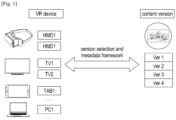
- FIG. 1 illustrates framework for a normal VR experience.
- VR devices may be generally classified according to a device type (HMD, TV, telephone, and the like), but devices in the same category may have different playback functions and characteristics. Accordingly, a user may feel a difference in a VR experience even though devices are in the same category.
- VR content may also have various characteristics (for example, 180 degree video, 360 degree video, video mapping schemes, an interaction function, and the like) to be reproduced.
- the present disclosure provides a method of defining metadata for various types of VR devices and VR content and recognizing, selecting, authenticating, transmitting, and reproducing content version that matches each VR device based on the defined metadata, and an apparatus for the same.
- VR content includes an image content that provides the image through a 360 degree image, a 3D image, or the like.
- a media file format may be a media file format according to various media-related standards such as an International Organization for Standardization (ISO)-based media file format (ISOBMFF).
- ISO International Organization for Standardization
- ISOBMFF International Organization for Standardization-based media file format
- a 360 degree image corresponds to an image photographed and stitched by a stitching camera and may provide a 360 degree view when a user changes position or orientation.
- a projection refers to processing by which a spherical image for expressing a 360 degree image is projected onto a planar surface or an image frame according to a result of the processing.
- Mapping refers to processing by which image data on a planar surface due to projection is mapped to a 2D planar surface or an image frame according to a result of the processing.
- Omnidirectional media include an image or a video and/or relevant audio data that can be rendered according to a direction of a movement of a user's head or a user's viewport when the user uses, for example, an HMD.
- a viewport may be referred to as an FOV and corresponds to an area of an image (e.g., an area of an image may be an image of a spherical area) viewed by a user at a particular time.
- a VR system corresponds to every environment for supporting VR content consumption by a VR device and may be referred to as a VR ecosystem.
- a fundamental of VR is a system that can monitor a user. The system allows the user to use a kind of controller that provides feedback to a content display device or a processing unit. The system may control the content in accordance with the feedback and enable interaction with the user.
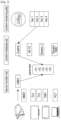
- FIG. 2 illustrates a framework for VR experience according to the present disclosure.
- a plurality of VR devices may be classified into a device function set such as an HMD, a TV, a tablet computer (TAB), and a personal computer (PC) according to their playback functions, and the device function set may be used for recognizing, selecting, and authenticating an optimal content version for optimally reproducing content and content metadata set corresponding to the optimal content version.
- a content server (or a content media entity) may store a plurality of versions of contents with respect to one content and store a plurality of content metadata for helping and optimizing playback of the content.
- the VR device may have an optimal version content to be optimally reproduced and a metadata set corresponding to the optimal version content.
- a predetermined version content and metadata set should be transmitted to the VR device, and determination on how the corresponding version content is transmitted is based on a plurality of parameters defined in the device function set and content metadata set described below.
- VR devices may be classified into, for example, an HMD, a TV, a TAB, a mobile device, a PC, and a laptop. As described above, the VR devices may be classified according to their basic functions, but even devices in the same category may have different playback functions. For example, two HMD devices may have different functions with respect to screen resolution, screen FOV, an interaction function, and a guided VR function. Accordingly, the present disclosure defines a set of device function parameters that may indicate device functions instead of identifying device functions according to VR device types.
- the set of device function parameters includes metadata used for making a request for compatible version contents and content metadata. Types of device function parameters are as follows.
- the simplest HMDs may support 3 DOF.
- the user may search bearing tracking (rotation) for various angles of a 360 degree video
- game-oriented HMDs may support a maximum of 6 DOF and also search the rotation tracking as well as movement tracking.
- Movement tracking is actual position motion tracking and may be performed by another means such as a search input controller.
- interaction functions such as eye tracking, hand tracking, and an action input (e.g., clicking by a mouse/button) may also be instructed to use VR content.
- a screen FOV indicates a view angle that can be viewed by a user.
- a human's general horizontal FOV is about 200 degrees. Within 200 degrees, 120 degrees overlap in three dimensions, but a general HMD may provide an angle of field of 90 to 120 degrees corresponding to tunnel vision of 60 degrees.
- a range of 90 to 120 degrees of an FOV function of the HMD corresponds to a range in which an actual VR experience shown to a user can be greatly changed.
- a framed image that the user views at a particular time and angle may vary depending on the FOV. Accordingly, content metadata should match an FOV characteristic of the VR device.
- a screen and codec function of the VR device should be considered.
- VR devices receive and decode a complete 360 degree video by default according to a system structure. Accordingly, a codec function of a VR device is important in determining which version of content will be received.
- all codec and screen functions such as resolution should be considered for compatibility.
- a use case where a partial decoding function is specified and only a user's current view is decoded should be supported.
- VR content is required to be mapped to a planar video before a 360 degree video is encoded and transmitted. Further, when VR content is received, the VR device should support a mapping technology used for mapping the planar video to a 360 degree video.
- a function of a mapping function of a VR device indicates whether the mapping function for selecting proper version contents and metadata of the corresponding content is supported by the VR device.
- an automated or guided view may be implemented by a VR device (particularly, an HMD device such as a TV or a PC). Further, according to a device DOF function, automated and/or guided view metadata may be required to provide an accurate VR experience to a user. Accordingly, various types of guided view metadata are defined as content parameter metadata.
- VR content may be generated using several 360 degree cameras (VR multi-camera) within the same scene, and in this case, functions of the VR multi-camera may be functions that can be supported by the VR device. For example, movement may be made at various positions within a screen through a plurality of 360 degree cameras.
- VR multi-camera 360 degree cameras
- functions of the VR multi-camera may be functions that can be supported by the VR device. For example, movement may be made at various positions within a screen through a plurality of 360 degree cameras.
- Device function parameters of the above-described VR devices may be described as metadata within a device function set. Syntax of metadata is as shown in Table 2 below. [Table 2] aligned (8) class DeviceCapabilitySet unsigned int(8) device_dof; unsigned int(16) screen_res_vert; unsigned int(16) screen_res_hor; unsigned int(16) screen_fov; unsigned int(16) codec_support; unsigned int(16) mapping_support; unsigned int(16) guided_viewing;
- screen_res_vert denotes a vertical screen resolution of a device in the unit of pixels.
- screen_res_hor denotes a horizontal screen resolution of a device in the unit of pixels.
- screen_fov denotes an FOV capability of a device when 360 degree content is displayed by default.
- the screen_fov field indicates an accurate FOV value for a screen of a device by degrees.
- a normal VR device provides an FOV between 90 and 120 degrees.
- mapping_support denotes a mapping support capability of a device. Support of each mapping method algorithm is indicated through a corresponding bit flag (0: not supported and 1: supported) as defined in Table 4 below. Mapping methods depend on a "geometry_type" field of content as defined in the moving picture experts group (MPEG) omnidirectional media application format (OMAF) standard.
- MPEG moving picture experts group
- OMAF omnidirectional media application format
- the content may be generated using a plurality of VR cameras in one screen, and in this case, the user may change camera views in accordance with a change in his/her own position in the screen. Further, in order to generate a content environment in which a position search is possible, the content may be mixed with graphics during its generation.
- Transmission/playback support metadata may be used for providing optimal VR experience in the target device when a predetermined compatible version content is selected in consideration of function compatible metadata. Further, according to content version and available interest metadata corresponding thereto, interest metadata-based content may be transmitted using interest metadata that specifies particular regions within the content.
- a mapping projection type used for the content is defined in function compatible metadata, but a result planar video may be configured in various schemes that influence quality and playback of the content even though the same mapping projection method is used.
- the plan configurations are specified for each mapping method and predefined in the standard specification such as MPEG OMAF.
- the surface default center point defined in the 3D space is a point at an intersection point between a positive x axis and a geometric surface, and a direction of the positive x axis is perpendicular to a geometric front surface.
- a frame default front field specifies another point in an encoded screen to be used to be mapped to the (geometric) surface default front center point according to each content frame (that is, dynamically).
- a geometric rotation field specifies an amount of rotation of geometry for default orientation (here, the surface default front center point is the front).
- a point within a 360 degree (or another) video is indicated by POI metadata.
- a target VR device may use the metadata for interest metadata tile-based transmission and/or point-based guided or automated playback.
- left_horizontal_offset, top_vertical_offset, viewport_width, and viewport_height denote integer values indicating positions and sizes of multiple viewports.
- left_horizontal_offset and top_vertical_offset indicate horizontal and vertical coordinates of an upper left corner of a corresponding viewport in connection with a basic region through brightness samples.
- viewport_width and viewport_height indicate a width and a height of a corresponding viewport through brightness samples.
- initial_front_x and initial_front_y denote x and y coordinates of a point in an encoded image to which a 3D geometric surface default front center point is mapped and rendered.
- geometry_rotation denotes the existence of geometry _rotation_pitch, geometry_rotation_yaw, and geometry_rotation_roll for a predetermined sample or frame when a value of this filed is 0, and denotes the non-existence of geometry _rotation_pitch, geometry _rotation_yaw, and geometry_rotation_roll for a predetermined sample or frame when a value of this filed is 1.
- interest_metadata denotes a type of interest metadata included in content metadata set as shown below in Table 11. [Table 11] Value Interest_metadata 0x00 Reserved 0x01 Multi-viewport 0x02 POI 0x03 ROI 0x04 Event 0x05-0xFF Reserved
- POI_id, yaw, and pitch denote an ID of a point of interest indicated by POI metadata for a predetermined sample/frame, a yaw, and a pitch, respectively.
- ROI_id, yaw, pitch, start, and end denote an ID of a region of interest indicated by ROI metadata for a predetermined sample/frame, a yaw indicating a rotation angle based on a z axis, a pitch indicating a rotation angle based on a y axis, a start, and an end, respectively.
- event_id, yaw, and pitch denote an ID of an event indicated by event metadata for a predetermined sample/frame, a yaw, and a pitch, respectively.
- time_to_event denotes an amount of remaining time in the unit of millimeter seconds until an event starts.
- a metadata set is determined, content is (tile-) transmitted based on interest metadata, and finally the VR device displays VR content based on the interest metadata.
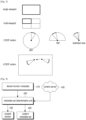
- a case is illustrated where the number of viewports is one, and a case is illustrated where the number of viewports is plural (four).
- a case of 3 DOF is illustrated in which X (horizontal), Y (vertical), and Z (depth) can move
- a case of 6 DOF is illustrated in which all operational elements used in a virtual reality system, that is, X (horizontal), Y (vertical), Z (depth), pitch, yaw, and roll can move.
- Bold lines in FIG. 3 indicate areas which can be viewed by a user at given viewpoints and viewports.
- FIG. 4 is a block diagram of an apparatus for determining a metadata set according to the present disclosure.
- the metadata set determination unit 420 identifies a device_dof field and selects content of a version having a content_dof field corresponding to a value which is less than or equal to "full playback".
- the content can be reproduced only under a condition in which required interest_metadata exists.
- the metadata set determination unit 420 identifies a mapping_support field and selects content of a version having a mapping_projection field corresponding to one of supportable mapping projections indicated by mapping_support.
- the metadata set determination unit 420 first identifies a device_dof field.
- device_dof 1 a guide element within a guided_viewing field is identified through corresponding transmitted interest_metadata.
- the VR device cannot reproduce any VR content.
- a VR optimization device 610 selects a relevant version content and a content metadata set.
- the VR optimization device 610 may include a metadata set determination unit 611, a device function set analysis unit 612, a content metadata analysis unit 613, and a content metadata set configuration unit 614.
- the VR optimization device 610 may be included in a user device 620 or a content/metadata server 630 or may be configured as a separate device.
- FIG. 7D illustrates a case where interest_metadata is an event, and a position and a time of an event to occur in the future within content may be specified using event_id, event_yaw, event_pitch, and event_to_event.
- FIGs. 8A, 8B, and 8C illustrate multi-viewport-based tile transmission.
- multi-viewport interest metadata specifies an accurate position, size, and ID of each viewport within a multi-viewport content. For example, it is possible to make a request for only a corresponding tile by selecting a particular viewport through interest metadata. Since each viewport is encoded as an individual tile, tiles corresponding to selected/shown viewports may be selectively transmitted for multi-viewport-based tile transmission, and thus a bandwidth can be saved.
- FIG. 8A illustrates that multi-viewport content is encoded in four tiles corresponding to a viewport
- FIG. 8B illustrates that an upper left tile is selected through top_left_viewport_interest metadata
- FIG. 8C illustrates that the selected tile/ viewport is transmitted and rendered by a user device. Accordingly, the user device may reproduce accurate viewport(s).
- FIGs. 9A, 9B, and 9C illustrate a POI-based tile transmission operation when only one POI exists in POI metadata for a given frame.
- FIGs. 10A, 10B, and 10C the same process as FIGs. 9A, 9B, and 9C are performed for each of two POIs and the POIs may be transmitted to the user device.
- the user device renders only a viewport corresponding to a current view POI between the transmitted two POIs and a viewport corresponding to the other POI is prepared for fast rendering as necessary (when the user selects/searches for it on the POIs and around them) in FIG. 10C .
- the size of the ROIs matches the size of the device FOVs, and thus a specific artistic intention of the producer of the 360 degree VR content may be transmitted to the user through the device based on the ROI metadata. Further, regardless of the size of the ROI, ROI-based tile transmission may be performed for all regions.
- FIGs. 11A and 11B illustrate ROI metadata-based tile transmission, that is, ROI-based tile transmission when one ROI exists within interest metadata for a given frame. For example, a certain ROI size matches the size of the viewport of the user device.
- FIG. 11A illustrates 360 degree content that has ROI interest metadata and is encoded in 12 tiles
- FIG. 11B illustrates that 4 tiles required for transmission are identified for ROI rendering, and transmission and rendering of the tiles identified for ROI playback.
- FIGs. 12A and 12B illustrate ROI metadata-based tile transmission, that is, ROI-based tile transmission when a plurality of (two in FIGs. 12A and 12B ) ROIs exists within a given frame. For example, certain ROI sizes match the size of the viewport of the user device.
- FIG. 12A illustrates 360 degree content that has two ROI interest metadata and is encoded in 12 tiles
- FIG. 12B illustrates that 7 tiles required for transmission are identified for two ROI rendering, and transmission and rendering of the tiles identified for ROI playback.
- the user device renders only a viewport corresponding to a current view ROI between the transmitted two ROIs, and a viewport corresponding to the other ROI is prepared for fast rendering as necessary (when the user selects/searches for it on the ROIs and around them) in FIG. 12B .
- an ROI content_fov value and a device screen_fov value may be different depending on the size of a region specified by ROI metadata.
- FOV compensation is needed. Operations for the FOV compensation will be described below.
- event interest metadata may be specified by a specific point within a VR content video space or a time (time_to_event field) until the event is generated at the specific point.
- time_to_event fields important tiles that should be transmitted in the event-based tile transmission may be identified in advance through event interest metadata and transmitted to the user device.
- a VR device performs interest metadata-based view/playback using interest metadata.
- the interest metadata-based view/playback may be performed when full VR video content data can already be used or when only a partial section of video content data having guided regions is received like in interest metadata-based tile transmission.
- Multi-viewport interest metadata specifies an accurate position, size, and ID of each viewport available within content.
- the VR device may select a certain viewport ID (viewport_id) and display the corresponding viewport.
- POI and ROI metadata-based views may exist for the same VR content (that is, 3 DOF 360 degree content), accordingly the POI and ROI metadata-based views are described together hereinafter.
- POI and ROI metadata may be used in various methods to guide the VR view. Particularly, for a guided view of VR content on a VR device such as a TV, users may use POI and ROI metadata to easily select a viewport customized for a TV screen.
- the VR device may receive guided or restricted playback or full playback (user manual control for a viewport of the 3 DOF content) to select a viewport to be displayed.
- the VR device may follow POI metadata or ROI metadata.
- the VR device may or may not receive a guide instruction from the POI/ROI metadata.
- FIG. 14 illustrates an ROI metadata-based view, that is, restricted playback of 3 DOF 360 degree content having ROI metadata on a device (for example, a TV) having no motion capability.
- three different ROIs are specified by interest metadata in a particular frame, and a VR device restrictively reproduces only a viewport corresponding to one of the ROIs.
- the VR device may display the viewport based on the POI metadata by using FOV fields within the metadata.
- the viewport to be displayed may be calculated using a device or content FOV metadata (device screen_fov or content_fov).
- regions specified by the ROI metadata may be less than, similar to, equal to, or greater than an FOV viewport of the device, and thus an accurate viewport viewed to the user by the device may be determined according to one of the sizes of regions specified by the ROI metadata, convent_fov, and device screen_fov.
- FOV compensation for rendering may be required according to a difference between device screen_fov and content_fov.
- the accurate viewport to be rendered and displayed may vary depending on device screen_fov and content_fov fields. Further, playback operations using the ROI metadata may vary depending on the size of regions specified by the ROI metadata.
- the ROI metadata specifies an accurate region within a VR content video corresponding to operations generated in a predetermined region or content-specific objects.
- the region size of ROIs may be greater than that of average viewport/device FOVs, similar to that of the device FOV, or less than that of average viewport/device FOVs.
- a viewport specified by device screen_fov or content_fov is displayed based on the ROI metadata.
- interest_metadata having the closest FOV to the device is first selected.
- the VR device identifies device screen_fov and selects corresponding interest metadata having a content_fov field that matches the identified device screen_fov.
- the VR device selects interest metadata having the next largest FOV.
- device screen_fov content_fov
- a region specified by ROI metadata is directly displayed on the device screen.
- the device should enlarge content to fit the ROI to screen_fov or show content of a region wider than specified by the ROI.
- the device should reduce content to fit the ROI to screen_fov or show content of a region narrower than specified by the ROI.
- the interest metadata track is accepted to include POI and/or ROI metadata having different IDs according to time.
- the interest metadata track may include viewports from a plurality of cameras during a path of the track.
- FIG. 19 illustrates a method of determining a metadata set according to the present disclosure, and shows a case where a content server selects and transmits a proper version content and a content metadata set according in a push type.
- the user device 2200 may include at least one of a controller 2202, a reproducer 2206, and a decoder 2204.
- the user device 2200 may optimally display a transmitted 360 degree image based on interest metadata.
- the decoder 2204 may de-encapsulate and decode the transmitted 360 degree image that has been encapsulated in a file form and transmit the image to the user device 2200.
- the controller 2202 may control a series of operations of the reproducer 2206 and the decoder 2204. Further, the controller 2202 may control a series of operations for reproducing content of a version that matches the user device 2200 based on the defined metadata according to the present disclosure.
- FIG. 23 is a block diagram of a system for processing a 360 degree content according to the present disclosure.
- the 2D image in the file form output from the storage unit 2309 is input into the decoder 2311, and the decoder 2311 de-encapsulates the input image and decodes and outputs the image in a predetermined decoding scheme.
- the decoded 2D image is input into the inverse conversion unit 2313, and the inverse conversion unit 2313 inversely converts the input 2D image into a 3D image and outputs the 3D image 2330.
- Various units, modules, and the like of the server or terminal apparatus may be operated using a hardware circuit, for example, a complementary metal oxide semiconductor-based logic circuit, firmware, software, and/or a combination of hardware and firmware and/or software embedded in a non-transitory computer readable storage medium.
- a hardware circuit for example, a complementary metal oxide semiconductor-based logic circuit, firmware, software, and/or a combination of hardware and firmware and/or software embedded in a non-transitory computer readable storage medium.
- various electronic configurations and methods may be implemented using electronic circuits such as transistors, logic gates, and application specific integrated circuits (ASICs).
Landscapes
- Engineering & Computer Science (AREA)
- Multimedia (AREA)
- Signal Processing (AREA)
- Physics & Mathematics (AREA)
- Theoretical Computer Science (AREA)
- Computer Graphics (AREA)
- General Physics & Mathematics (AREA)
- Library & Information Science (AREA)
- General Engineering & Computer Science (AREA)
- Software Systems (AREA)
- Computer Hardware Design (AREA)
- Computing Systems (AREA)
- Geometry (AREA)
- Databases & Information Systems (AREA)
- Human Computer Interaction (AREA)
- Two-Way Televisions, Distribution Of Moving Picture Or The Like (AREA)
Claims (9)
- Verfahren zum Wiedergeben von Inhalt durch ein Benutzergerät (500, 620, 2200) in einem System der virtuellen Realität, wobei das Verfahren Folgendes umfasst:Übertragen (2001) einer Vielzahl von Parametern, die sich auf mindestens eine Funktion des Benutzergeräts (500, 620, 2200) beziehen, an einen Inhaltsserver (450, 2100), wobei die Vielzahl von Parametern einen ersten Parameter enthalten, der einen Freiheitsgrad, DOF, anzeigt, der von dem Benutzergerät (500, 620, 2200) unterstützt wird, und einen zweiten Parameter, der einen Winkel eines Sichtfeldes, FOV, anzeigt, das von einem Bildschirm des Benutzergeräts (500, 620, 2200) unterstützt wird, einen dritten Parameter, der eine senkrechte Bildschirmauflösung des Benutzergeräts (500, 620, 2200) anzeigt, einen vierten Parameter, der eine waagerechte Bildschirmauflösung des Benutzergeräts (500, 620, 2200) anzeigt, einen fünften Parameter, der die Fähigkeit des Benutzergeräts (500, 620, 2200) zur Codec-Auflösungsunterstützung anzeigt, einen sechsten Parameter, der die Fähigkeit anzeigt, jedes einer Vielzahl von Verfahren zum Zuordnen eines planaren Bildes zu einem 360-Grad-Bild zu unterstützen, und einen siebten Parameter, der eine Funktion zum Unterstützen einer Vielzahl von Arten von Metadaten der geführten Ansicht anzeigt;Empfangen (2002) einer Liste von Versionen des Inhalts und Sätzen von Metadaten des Inhalts, die mit der übertragenen Vielzahl von Parametern übereinstimmen, die sich auf die mindestens eine Funktion des Benutzergeräts beziehen, von dem Inhaltsserver (450, 2100);Übertragen (2003) einer Anfrage nach einer gewünschten Version des Inhalts und einem gewünschten Satz der Metadaten, die aus der Liste ausgewählt werden, an den Inhaltsserver (450, 2100);Empfangen (2004) der gewünschten Version des Inhalts und des gewünschten Satzes der Metadaten des Inhalts von dem Inhaltsserver (450, 2100) als Antwort auf das Übertragen der Anfrage;Empfangen (2004) und Decodieren mindestens einer Kachel aus einer Vielzahl von Kacheln, die die gewünschte Version des Inhalts basierend auf der Vielzahl von Parametern konfigurieren, wobei die mindestens eine Kachel einem Ansichtsbereich entspricht, der in Übereinstimmung mit einem Ansichtspunkt angezeigt werden soll; undRendern der decodierten mindestens einen Kachel basierend auf dem empfangenen gewünschten Satz der Metadaten.
- Verfahren nach Anspruch 1, wobei die Metadaten Metadaten zum Auswählen einer Version des Inhalts oder Metadaten zum Übertragen und Wiedergeben des Inhalts enthalten.
- Verfahren nach Anspruch 2, wobei die Metadaten zum Auswählen der Version des Inhalts Metadaten enthalten, die einen DOF, eine Auflösungsversion des Inhalts, eine von dem Inhalt unterstützte teilweise Decodierungsfunktion oder Metadaten anzeigen, die einen Parameter anzeigen, der sich auf das Zuordnen des Inhalts zu einem planaren Bild bezieht,
wobei die Metadaten zum Übertragen und Wiedergeben des Inhalts Metadaten enthalten, die sich auf ein Mehrfachansichtsfenster, einen Punkt von Interesse, POI, einen Bereich von Interesse, ROl, oder ein Ereignis beziehen. - Verfahren nach Anspruch 1, wobei das Rendern der decodierten mindestens einen Kachel Folgendes umfasst:
wenn sich das FOV des Bildschirms des Benutzergeräts (500, 620, 2200) von einem FOV des Inhalts unterscheidet, Ausführen des Renderns durch Steuern des FOV des Inhalts, damit es mit dem FOV des Bildschirms des Benutzergeräts (500, 620, 2200) übereinstimmt. - Verfahren zum Übertragen von Inhalt durch einen Inhaltsserver (450, 2100) in einem System der virtuellen Realität, wobei das Verfahren Folgendes umfasst:Empfangen (2001) einer Vielzahl von Parametern, die sich auf mindestens eine Funktion eines Benutzergeräts (500, 620, 2200) beziehen, durch eine Steuerung (2102), wobei die Vielzahl von Parametern einen ersten Parameter enthalten, der einen Freiheitsgrad, DOF, anzeigt, der von dem Benutzergerät (500, 620, 2200) unterstützt wird, und einen zweiten Parameter, der einen Winkel eines Sichtfeldes, FOV, anzeigt, das von einem Bildschirm des Benutzergeräts unterstützt wird, einen dritten Parameter, der eine senkrechte Bildschirmauflösung des Benutzergeräts (500, 620, 2200) anzeigt, einen vierten Parameter, der eine waagerechte Bildschirmauflösung des Benutzergeräts (500, 620, 2200) anzeigt, einen fünften Parameter, der die Fähigkeit des Benutzergeräts (500, 620, 2200) zur Codec-Auflösungsunterstützung anzeigt, einen sechsten Parameter, der die Fähigkeit anzeigt, jedes einer Vielzahl von Verfahren zum Zuordnen eines planaren Bildes zu einem 360-Grad-Bild zu unterstützen, und einen siebten Parameter, der eine Funktion zum Unterstützen einer Vielzahl von Arten von Metadaten der geführten Ansicht anzeigt;Übertragen (2002) einer Liste von Versionen des Inhalts und Sätzen von Metadaten des Inhalts, die mit der übertragenen Vielzahl von Parametern übereinstimmen, die sich auf die mindestens eine Funktion des Benutzergeräts beziehen, durch die Steuerung (2102) an das Benutzergerät (500, 620, 2200);Empfangen (2003) einer Anfrage nach einer gewünschten Version des Inhalts und einem gewünschten Satz der Metadaten, die an dem Benutzergerät aus der Liste ausgewählt werden, durch die Steuerung (2102) von dem Benutzergerät (500, 620, 2200),Übertragen (2004) der gewünschten Version des Inhalts und des gewünschten Satzes der Metadaten des Inhalts durch die Steuerung (2102) als Antwort auf das Empfangen der Anfrage; undCodieren und Übertragen (2004) mindestens einer Kachel aus einer Vielzahl von Kacheln, die die gewünschte Version des Inhalts basierend auf der Vielzahl von Parametern konfigurieren, durch einen Codierer (2104) an das Benutzergerät (500, 620, 2200), wobei mindestens eine Kachel einem Ansichtsbereich entspricht, der in Übereinstimmung mit einem Ansichtspunkt angezeigt werden soll.
- Verfahren nach Anspruch 5, wobei die Metadaten Metadaten zum Auswählen einer Version des Inhalts oder Metadaten zum Übertragen und Wiedergeben des Inhalts enthalten.
- Verfahren nach Anspruch 6, wobei die Metadaten zum Auswählen der Version des Inhalts Metadaten enthalten, die einen DOF, eine Auflösungsversion des Inhalts, eine von dem Inhalt unterstützte teilweise Decodierung oder Metadaten anzeigen, die einen Parameter anzeigen, der sich auf das Zuordnen des Inhalts zu einem planaren Bild bezieht,
wobei die Metadaten zum Übertragen und Wiedergeben des Inhalts Metadaten enthalten, die sich auf ein Mehrfachansichtsfenster, einen Punkt von Interesse, POI, einen Bereich von Interesse, ROl, oder ein Ereignis beziehen. - Benutzergerät (500, 620, 2200) zum Wiedergeben von Inhalt, das so konfiguriert ist, dass es eines der Verfahren nach den Ansprüchen 1 bis 4 ausführt.
- Inhaltsserver (450, 2100) zum Übertragen von Inhalt in einem System der virtuellen Realität, wobei der Inhaltsserver (450, 2100) so konfiguriert ist, dass er eines der Verfahren nach den Ansprüchen 5 bis 7 ausführt.
Applications Claiming Priority (2)
| Application Number | Priority Date | Filing Date | Title |
|---|---|---|---|
| KR1020160117072A KR102545195B1 (ko) | 2016-09-12 | 2016-09-12 | 가상 현실 시스템에서 컨텐트 전송 및 재생 방법 및 장치 |
| PCT/KR2017/009993 WO2018048286A1 (en) | 2016-09-12 | 2017-09-12 | Method and apparatus for transmitting and reproducing content in virtual reality system |
Publications (3)
| Publication Number | Publication Date |
|---|---|
| EP3497940A1 EP3497940A1 (de) | 2019-06-19 |
| EP3497940A4 EP3497940A4 (de) | 2019-06-19 |
| EP3497940B1 true EP3497940B1 (de) | 2024-07-03 |
Family
ID=61560550
Family Applications (1)
| Application Number | Title | Priority Date | Filing Date |
|---|---|---|---|
| EP17849170.0A Active EP3497940B1 (de) | 2016-09-12 | 2017-09-12 | Verfahren und vorrichtung zum senden und wiedergeben von inhalt in einem system der virtuellen realität |
Country Status (4)
| Country | Link |
|---|---|
| US (1) | US10863235B2 (de) |
| EP (1) | EP3497940B1 (de) |
| KR (1) | KR102545195B1 (de) |
| WO (1) | WO2018048286A1 (de) |
Families Citing this family (57)
| Publication number | Priority date | Publication date | Assignee | Title |
|---|---|---|---|---|
| EP3345184A1 (de) | 2015-09-02 | 2018-07-11 | THOMSON Licensing | Verfahren, vorrichtung und system zur erleichterung der navigation in einer erweiterten szene |
| US20190199921A1 (en) * | 2016-08-29 | 2019-06-27 | Lg Electronics Inc. | Method for transmitting 360-degree video, method for receiving 360-degree video, 360-degree video transmitting device, and 360-degree video receiving device |
| US10536691B2 (en) * | 2016-10-04 | 2020-01-14 | Facebook, Inc. | Controls and interfaces for user interactions in virtual spaces |
| US20180095636A1 (en) * | 2016-10-04 | 2018-04-05 | Facebook, Inc. | Controls and Interfaces for User Interactions in Virtual Spaces |
| US10999602B2 (en) | 2016-12-23 | 2021-05-04 | Apple Inc. | Sphere projected motion estimation/compensation and mode decision |
| US11259046B2 (en) | 2017-02-15 | 2022-02-22 | Apple Inc. | Processing of equirectangular object data to compensate for distortion by spherical projections |
| US10924747B2 (en) | 2017-02-27 | 2021-02-16 | Apple Inc. | Video coding techniques for multi-view video |
| US10231014B2 (en) * | 2017-03-14 | 2019-03-12 | Futurewei Technologies, Inc. | Virtual reality (VR) video distribution using edge resources |
| US11093752B2 (en) | 2017-06-02 | 2021-08-17 | Apple Inc. | Object tracking in multi-view video |
| US20190005709A1 (en) * | 2017-06-30 | 2019-01-03 | Apple Inc. | Techniques for Correction of Visual Artifacts in Multi-View Images |
| US10754242B2 (en) | 2017-06-30 | 2020-08-25 | Apple Inc. | Adaptive resolution and projection format in multi-direction video |
| US11202117B2 (en) * | 2017-07-03 | 2021-12-14 | Telefonaktiebolaget Lm Ericsson (Publ) | Methods for personalized 360 video delivery |
| WO2019034131A1 (en) * | 2017-08-18 | 2019-02-21 | Mediatek Inc. | METHOD AND APPARATUS FOR REDUCING ARTIFACTS IN A PROJECTION-BASED FRAME |
| US10062414B1 (en) * | 2017-08-22 | 2018-08-28 | Futurewei Technologies, Inc. | Determining a future field of view (FOV) for a particular user viewing a 360 degree video stream in a network |
| WO2019037656A1 (en) * | 2017-08-23 | 2019-02-28 | Mediatek Inc. | METHOD AND APPARATUS FOR SYNTAX SIGNALING FOR IMMERSIVE VIDEO ENCODING |
| US10819645B2 (en) | 2017-09-20 | 2020-10-27 | Futurewei Technologies, Inc. | Combined method for data rate and field of view size adaptation for virtual reality and 360 degree video streaming |
| CN111201796A (zh) | 2017-10-04 | 2020-05-26 | Vid拓展公司 | 定制的360度媒体观看 |
| TWI663868B (zh) * | 2017-11-17 | 2019-06-21 | 宏碁股份有限公司 | 顯示系統、內容產生器、運算裝置,及其控制方法 |
| US10798455B2 (en) * | 2017-12-22 | 2020-10-06 | Comcast Cable Communications, Llc | Video delivery |
| CN115842907A (zh) * | 2018-03-27 | 2023-03-24 | 京东方科技集团股份有限公司 | 渲染方法、计算机产品及显示装置 |
| US11032570B2 (en) * | 2018-04-03 | 2021-06-08 | Huawei Technologies Co., Ltd. | Media data processing method and apparatus |
| WO2019194434A1 (ko) * | 2018-04-05 | 2019-10-10 | 엘지전자 주식회사 | 복수의 뷰포인트들에 대한 메타데이터를 송수신하는 방법 및 장치 |
| US11140373B2 (en) * | 2018-04-05 | 2021-10-05 | Lg Electronics Inc. | Method for transmitting 360-degree video, method for receiving 360-degree video, apparatus for transmitting 360-degree video, and apparatus for receiving 360-degree video |
| US20190313074A1 (en) * | 2018-04-05 | 2019-10-10 | Lg Electronics Inc. | Method for transmitting 360-degree video, method for receiving 360-degree video, apparatus for transmitting 360-degree video, and apparatus for receiving 360-degree video |
| EP3780595A4 (de) * | 2018-04-11 | 2022-01-05 | LG Electronics Inc. | Verfahren und vorrichtung zur übertragung von 360-grad-videos unter verwendung von metadaten in bezug auf hotspot und roi |
| WO2019203456A1 (ko) * | 2018-04-15 | 2019-10-24 | 엘지전자 주식회사 | 복수의 뷰포인트들에 대한 메타데이터를 송수신하는 방법 및 장치 |
| WO2019203574A1 (ko) * | 2018-04-17 | 2019-10-24 | 엘지전자 주식회사 | 360 비디오 데이터의 서브픽처 기반 처리 방법 및 그 장치 |
| US10990683B2 (en) | 2018-05-25 | 2021-04-27 | At&T Intellectual Property I, L.P. | Virtual reality for security augmentation in home and office environments |
| WO2019235849A1 (ko) * | 2018-06-06 | 2019-12-12 | 엘지전자 주식회사 | 360 비디오 시스템에서 오버레이 미디어 처리 방법 및 그 장치 |
| KR102157656B1 (ko) * | 2018-06-22 | 2020-10-23 | 엘지전자 주식회사 | 360도 비디오를 송수신하는 방법 및 그 장치 |
| CN113178019B (zh) * | 2018-07-09 | 2023-01-03 | 上海交通大学 | 基于视频内容的指示信息标识方法、系统及存储介质 |
| WO2020013454A1 (ko) * | 2018-07-13 | 2020-01-16 | 엘지전자 주식회사 | 동적 뷰포인트의 좌표계에 대한 메타데이터를 송수신하는 방법 및 장치 |
| KR102278848B1 (ko) * | 2018-07-31 | 2021-07-19 | 엘지전자 주식회사 | 다중 뷰포인트 기반 360 비디오 처리 방법 및 그 장치 |
| US11019449B2 (en) * | 2018-10-06 | 2021-05-25 | Qualcomm Incorporated | Six degrees of freedom and three degrees of freedom backward compatibility |
| JP7484723B2 (ja) * | 2018-12-03 | 2024-05-16 | ソニーグループ株式会社 | 情報処理装置および方法 |
| US10777087B2 (en) * | 2018-12-07 | 2020-09-15 | International Business Machines Corporation | Augmented reality for removing external stimuli |
| US11805303B2 (en) * | 2019-01-04 | 2023-10-31 | Nokia Technologies Oy | Method and apparatus for storage and signaling of media segment sizes and priority ranks |
| EP4568251A3 (de) * | 2019-01-24 | 2025-08-13 | InterDigital VC Holdings, Inc. | System und verfahren für adaptives räumliches inhaltsstreaming mit mehreren detail- und freiheitsgraden |
| KR102251576B1 (ko) * | 2019-04-04 | 2021-05-14 | 한국전자기술연구원 | 관심 영역 기반의 vr 영상 수신 장치 및 방법 |
| CN110476429B (zh) * | 2019-07-03 | 2021-03-09 | 北京小米移动软件有限公司 | 用于构建虚拟现实环境的方法、系统和设备 |
| EP4046384A1 (de) * | 2019-10-15 | 2022-08-24 | Nokia Technologies Oy | Verfahren, vorrichtung und computerprogrammprodukt mit erweiterten rändern um einen blickpunkt für immersiven inhalt |
| US11733667B2 (en) * | 2019-11-18 | 2023-08-22 | Rockwell Automation Technologies, Inc. | Remote support via visualizations of instructional procedures |
| IL271774A (en) * | 2019-12-31 | 2021-06-30 | Bottega Studios Ltd | System and method for dynamic images virtualisation |
| KR102668753B1 (ko) * | 2019-12-31 | 2024-05-23 | 엘지전자 주식회사 | Xr 컨텐트 제공 방법 및 xr 컨텐트 제공 디바이스 |
| US11217027B2 (en) | 2020-03-13 | 2022-01-04 | Wipro Limited | Method and system for generating augmented reality (AR)/virtual reality (VR) content in real-time |
| CN115225937B (zh) * | 2020-03-24 | 2023-12-01 | 腾讯科技(深圳)有限公司 | 沉浸式媒体提供方法、获取方法、装置、设备及存储介质 |
| CN111736689B (zh) * | 2020-05-25 | 2024-05-28 | 苏州端云创新科技有限公司 | 虚拟现实装置、数据处理方法与计算机可读存储介质 |
| US11394932B2 (en) | 2020-06-03 | 2022-07-19 | Honeywell International Inc. | System and method for auto selecting a video for display on a mobile device based on the proximity of the mobile device relative to the video source |
| KR102729032B1 (ko) | 2020-07-23 | 2024-11-13 | 삼성전자주식회사 | 3d xr 미디어 데이터를 전송하는 방법 및 장치 |
| EP4213482A4 (de) | 2020-12-16 | 2024-03-20 | Samsung Electronics Co., Ltd. | Verfahren und vorrichtung zur übertragung mehrerer anwendungsdatenteile mit niedriger latenz |
| CN116648913A (zh) | 2020-12-23 | 2023-08-25 | 抖音视界有限公司 | 视频解码器初始化信息约束 |
| US11716454B2 (en) | 2021-10-15 | 2023-08-01 | Rovi Guides, Inc. | Systems and methods for improved delivery and display of 360-degree content |
| CN114911990B (zh) * | 2022-05-27 | 2023-01-03 | 北京天域北斗文化科技集团有限公司 | 基于虚拟现实和智能交互的地图浏览系统 |
| US12563160B2 (en) * | 2022-07-12 | 2026-02-24 | Avatour Technologies, Inc. | Multiuser teleconferencing with spotlight feature |
| KR20250059427A (ko) * | 2022-08-29 | 2025-05-02 | 인터디지털 씨이 페이튼트 홀딩스, 에스에이에스 | 볼륨 장면의 렌더링된 뷰포트에 대한 누락된 속성 값 전송 |
| EP4558969A4 (de) | 2022-11-15 | 2025-10-29 | Samsung Electronics Co Ltd | Vorrichtung und verfahren zur ermöglichung eines informationsflusses mittels metakontextübertragung |
| WO2024105471A1 (en) * | 2022-11-15 | 2024-05-23 | Samsung Electronics Co., Ltd. | Device and methods for facilitating information flow using meta-context transfer |
Family Cites Families (12)
| Publication number | Priority date | Publication date | Assignee | Title |
|---|---|---|---|---|
| US20060284791A1 (en) | 2005-06-21 | 2006-12-21 | National Applied Research Laboratories National Center For High-Performance Computing | Augmented reality system and method with mobile and interactive function for multiple users |
| KR20090034573A (ko) * | 2007-10-04 | 2009-04-08 | 삼성전자주식회사 | 컨텐트 제공 방법 및 그 장치와 컨텐트 재생 방법 및 그장치 |
| US8234668B2 (en) * | 2008-12-23 | 2012-07-31 | Microsoft Corporation | Content access |
| US20120066304A1 (en) * | 2010-09-14 | 2012-03-15 | Apple Inc. | Content configuration for device platforms |
| KR20130118820A (ko) * | 2012-04-20 | 2013-10-30 | 삼성전자주식회사 | 증강현실 서비스를 위한 미디어 파일의 제공 방법 및 장치 |
| EP2824883A1 (de) * | 2013-07-12 | 2015-01-14 | Alcatel Lucent | Videoclient und Videoserver für Panoramavideokonsum |
| US9608676B2 (en) | 2013-07-12 | 2017-03-28 | Analog Devices Global | Digital pre-distortion systems in transmitters |
| KR20150141461A (ko) | 2014-06-10 | 2015-12-18 | 엘지전자 주식회사 | 헤드 마운티드 디스플레이 및 그 제어 방법 |
| US9363569B1 (en) | 2014-07-28 | 2016-06-07 | Jaunt Inc. | Virtual reality system including social graph |
| US10235714B2 (en) * | 2014-12-01 | 2019-03-19 | Verizon Patent And Licensing Inc. | Customized virtual reality user environment control |
| DE112016002377T5 (de) * | 2015-05-27 | 2018-02-08 | Google Llc | Streamen von sphärischem video |
| US10219008B2 (en) * | 2016-07-29 | 2019-02-26 | At&T Intellectual Property I, L.P. | Apparatus and method for aggregating video streams into composite media content |
-
2016
- 2016-09-12 KR KR1020160117072A patent/KR102545195B1/ko active Active
-
2017
- 2017-09-12 WO PCT/KR2017/009993 patent/WO2018048286A1/en not_active Ceased
- 2017-09-12 EP EP17849170.0A patent/EP3497940B1/de active Active
- 2017-09-12 US US15/702,367 patent/US10863235B2/en active Active
Non-Patent Citations (1)
| Title |
|---|
| BUN PAWEL ET AL: "Application of Professional and Low-cost Head Mounted Devices in Immersive Educational Application", PROCEDIA COMPUTER SCIENCE, vol. 75, 29 December 2015 (2015-12-29), pages 173 - 181, XP029380539, ISSN: 1877-0509, DOI: 10.1016/J.PROCS.2015.12.235 * |
Also Published As
| Publication number | Publication date |
|---|---|
| US10863235B2 (en) | 2020-12-08 |
| KR20180029344A (ko) | 2018-03-21 |
| US20180077451A1 (en) | 2018-03-15 |
| WO2018048286A1 (en) | 2018-03-15 |
| EP3497940A1 (de) | 2019-06-19 |
| EP3497940A4 (de) | 2019-06-19 |
| KR102545195B1 (ko) | 2023-06-19 |
Similar Documents
| Publication | Publication Date | Title |
|---|---|---|
| US10863235B2 (en) | Method and apparatus for transmitting and reproducing content in virtual reality system | |
| US11792378B2 (en) | Suggested viewport indication for panoramic video | |
| Wien et al. | Standardization status of immersive video coding | |
| CN110832883B (zh) | 以计算机为中介的现实系统的混阶立体混响(moa)音频数据 | |
| US10609412B2 (en) | Method for supporting VR content display in communication system | |
| CN107771395B (zh) | 生成和发送用于虚拟现实的元数据的方法和装置 | |
| KR102246002B1 (ko) | 가상 현실 미디어 콘텐트의 스트리밍을 개선하는 방법, 디바이스, 및 컴퓨터 프로그램 | |
| KR20190038664A (ko) | 비디오 데이터의 콘텐츠 기반 스트림 분할 | |
| CN108271044A (zh) | 一种信息的处理方法及装置 | |
| EP3434021B1 (de) | Verfahren, vorrichtung und strom aus der formatierung eines immersiven videos für alte und immersive wiedergabevorichtungen | |
| EP3627439A1 (de) | Verfahren und vorrichtung zur verarbeitung von mediendaten | |
| EP4009644A1 (de) | Verfahren und vorrichtung zur erfassung von immersiven medien, gerät, vorrichtung und speichermedium | |
| WO2018135321A1 (ja) | 画像処理装置および方法 | |
| US12518797B2 (en) | Data processing method and storage medium | |
| EP4258222A1 (de) | Datenverarbeitungsverfahren und -vorrichtung für immersive medien und computerlesbares speichermedium | |
| EP4072149A1 (de) | Medienressourcenabspiel- und textwiedergabeverfahren, -gerät und -vorrichtung und speichermedium | |
| KR102329061B1 (ko) | 3차원 이미지에 대한 메타데이터를 생성하기 위한 방법 및 장치 | |
| EP4078971A1 (de) | Verfahren und vorrichtungen zum codieren, decodieren und wiedergeben von 6dof-inhalten aus zusammengesetzten 3dof+ elementen | |
| HK40014775B (en) | Mixed-order ambisonics (moa) audio data for computer-mediated reality systems | |
| HK40014775A (en) | Mixed-order ambisonics (moa) audio data for computer-mediated reality systems |
Legal Events
| Date | Code | Title | Description |
|---|---|---|---|
| STAA | Information on the status of an ep patent application or granted ep patent |
Free format text: STATUS: THE INTERNATIONAL PUBLICATION HAS BEEN MADE |
|
| PUAI | Public reference made under article 153(3) epc to a published international application that has entered the european phase |
Free format text: ORIGINAL CODE: 0009012 |
|
| STAA | Information on the status of an ep patent application or granted ep patent |
Free format text: STATUS: REQUEST FOR EXAMINATION WAS MADE |
|
| 17P | Request for examination filed |
Effective date: 20190312 |
|
| A4 | Supplementary search report drawn up and despatched |
Effective date: 20190412 |
|
| AK | Designated contracting states |
Kind code of ref document: A1 Designated state(s): AL AT BE BG CH CY CZ DE DK EE ES FI FR GB GR HR HU IE IS IT LI LT LU LV MC MK MT NL NO PL PT RO RS SE SI SK SM TR |
|
| AX | Request for extension of the european patent |
Extension state: BA ME |
|
| DAV | Request for validation of the european patent (deleted) | ||
| DAX | Request for extension of the european patent (deleted) | ||
| STAA | Information on the status of an ep patent application or granted ep patent |
Free format text: STATUS: EXAMINATION IS IN PROGRESS |
|
| 17Q | First examination report despatched |
Effective date: 20200506 |
|
| REG | Reference to a national code |
Ref country code: DE Ref legal event code: R079 Free format text: PREVIOUS MAIN CLASS: H04N0021435000 Ref country code: DE Ref legal event code: R079 Ref document number: 602017083066 Country of ref document: DE Free format text: PREVIOUS MAIN CLASS: H04N0021435000 Ipc: H04N0021440000 |
|
| GRAP | Despatch of communication of intention to grant a patent |
Free format text: ORIGINAL CODE: EPIDOSNIGR1 |
|
| STAA | Information on the status of an ep patent application or granted ep patent |
Free format text: STATUS: GRANT OF PATENT IS INTENDED |
|
| RIC1 | Information provided on ipc code assigned before grant |
Ipc: H04N 23/698 20230101ALI20240116BHEP Ipc: H04N 21/4728 20110101ALI20240116BHEP Ipc: H04N 21/41 20110101ALI20240116BHEP Ipc: H04N 13/178 20180101ALI20240116BHEP Ipc: H04N 13/117 20180101ALI20240116BHEP Ipc: H04N 13/194 20180101ALI20240116BHEP Ipc: H04N 21/81 20110101ALI20240116BHEP Ipc: H04N 21/44 20110101AFI20240116BHEP |
|
| INTG | Intention to grant announced |
Effective date: 20240130 |
|
| RIN1 | Information on inventor provided before grant (corrected) |
Inventor name: CHOI, BYEONG-DOO Inventor name: YIP, ERIC |
|
| GRAS | Grant fee paid |
Free format text: ORIGINAL CODE: EPIDOSNIGR3 |
|
| GRAA | (expected) grant |
Free format text: ORIGINAL CODE: 0009210 |
|
| STAA | Information on the status of an ep patent application or granted ep patent |
Free format text: STATUS: THE PATENT HAS BEEN GRANTED |
|
| AK | Designated contracting states |
Kind code of ref document: B1 Designated state(s): AL AT BE BG CH CY CZ DE DK EE ES FI FR GB GR HR HU IE IS IT LI LT LU LV MC MK MT NL NO PL PT RO RS SE SI SK SM TR |
|
| REG | Reference to a national code |
Ref country code: CH Ref legal event code: EP |
|
| REG | Reference to a national code |
Ref country code: DE Ref legal event code: R096 Ref document number: 602017083066 Country of ref document: DE |
|
| REG | Reference to a national code |
Ref country code: LT Ref legal event code: MG9D |
|
| REG | Reference to a national code |
Ref country code: NL Ref legal event code: MP Effective date: 20240703 |
|
| PG25 | Lapsed in a contracting state [announced via postgrant information from national office to epo] |
Ref country code: PT Free format text: LAPSE BECAUSE OF FAILURE TO SUBMIT A TRANSLATION OF THE DESCRIPTION OR TO PAY THE FEE WITHIN THE PRESCRIBED TIME-LIMIT Effective date: 20241104 |
|
| REG | Reference to a national code |
Ref country code: AT Ref legal event code: MK05 Ref document number: 1701007 Country of ref document: AT Kind code of ref document: T Effective date: 20240703 |
|
| PG25 | Lapsed in a contracting state [announced via postgrant information from national office to epo] |
Ref country code: NL Free format text: LAPSE BECAUSE OF FAILURE TO SUBMIT A TRANSLATION OF THE DESCRIPTION OR TO PAY THE FEE WITHIN THE PRESCRIBED TIME-LIMIT Effective date: 20240703 |
|
| PG25 | Lapsed in a contracting state [announced via postgrant information from national office to epo] |
Ref country code: PT Free format text: LAPSE BECAUSE OF FAILURE TO SUBMIT A TRANSLATION OF THE DESCRIPTION OR TO PAY THE FEE WITHIN THE PRESCRIBED TIME-LIMIT Effective date: 20241104 Ref country code: NL Free format text: LAPSE BECAUSE OF FAILURE TO SUBMIT A TRANSLATION OF THE DESCRIPTION OR TO PAY THE FEE WITHIN THE PRESCRIBED TIME-LIMIT Effective date: 20240703 |
|
| PG25 | Lapsed in a contracting state [announced via postgrant information from national office to epo] |
Ref country code: NO Free format text: LAPSE BECAUSE OF FAILURE TO SUBMIT A TRANSLATION OF THE DESCRIPTION OR TO PAY THE FEE WITHIN THE PRESCRIBED TIME-LIMIT Effective date: 20241003 |
|
| PG25 | Lapsed in a contracting state [announced via postgrant information from national office to epo] |
Ref country code: GR Free format text: LAPSE BECAUSE OF FAILURE TO SUBMIT A TRANSLATION OF THE DESCRIPTION OR TO PAY THE FEE WITHIN THE PRESCRIBED TIME-LIMIT Effective date: 20241004 Ref country code: FI Free format text: LAPSE BECAUSE OF FAILURE TO SUBMIT A TRANSLATION OF THE DESCRIPTION OR TO PAY THE FEE WITHIN THE PRESCRIBED TIME-LIMIT Effective date: 20240703 Ref country code: PL Free format text: LAPSE BECAUSE OF FAILURE TO SUBMIT A TRANSLATION OF THE DESCRIPTION OR TO PAY THE FEE WITHIN THE PRESCRIBED TIME-LIMIT Effective date: 20240703 |
|
| PG25 | Lapsed in a contracting state [announced via postgrant information from national office to epo] |
Ref country code: BG Free format text: LAPSE BECAUSE OF FAILURE TO SUBMIT A TRANSLATION OF THE DESCRIPTION OR TO PAY THE FEE WITHIN THE PRESCRIBED TIME-LIMIT Effective date: 20240703 |
|
| PG25 | Lapsed in a contracting state [announced via postgrant information from national office to epo] |
Ref country code: LV Free format text: LAPSE BECAUSE OF FAILURE TO SUBMIT A TRANSLATION OF THE DESCRIPTION OR TO PAY THE FEE WITHIN THE PRESCRIBED TIME-LIMIT Effective date: 20240703 |
|
| PG25 | Lapsed in a contracting state [announced via postgrant information from national office to epo] |
Ref country code: AT Free format text: LAPSE BECAUSE OF FAILURE TO SUBMIT A TRANSLATION OF THE DESCRIPTION OR TO PAY THE FEE WITHIN THE PRESCRIBED TIME-LIMIT Effective date: 20240703 Ref country code: IS Free format text: LAPSE BECAUSE OF FAILURE TO SUBMIT A TRANSLATION OF THE DESCRIPTION OR TO PAY THE FEE WITHIN THE PRESCRIBED TIME-LIMIT Effective date: 20241103 |
|
| PG25 | Lapsed in a contracting state [announced via postgrant information from national office to epo] |
Ref country code: CZ Free format text: LAPSE BECAUSE OF FAILURE TO SUBMIT A TRANSLATION OF THE DESCRIPTION OR TO PAY THE FEE WITHIN THE PRESCRIBED TIME-LIMIT Effective date: 20240703 Ref country code: HR Free format text: LAPSE BECAUSE OF FAILURE TO SUBMIT A TRANSLATION OF THE DESCRIPTION OR TO PAY THE FEE WITHIN THE PRESCRIBED TIME-LIMIT Effective date: 20240703 |
|
| PG25 | Lapsed in a contracting state [announced via postgrant information from national office to epo] |
Ref country code: ES Free format text: LAPSE BECAUSE OF FAILURE TO SUBMIT A TRANSLATION OF THE DESCRIPTION OR TO PAY THE FEE WITHIN THE PRESCRIBED TIME-LIMIT Effective date: 20240703 Ref country code: RS Free format text: LAPSE BECAUSE OF FAILURE TO SUBMIT A TRANSLATION OF THE DESCRIPTION OR TO PAY THE FEE WITHIN THE PRESCRIBED TIME-LIMIT Effective date: 20241003 |
|
| PG25 | Lapsed in a contracting state [announced via postgrant information from national office to epo] |
Ref country code: RS Free format text: LAPSE BECAUSE OF FAILURE TO SUBMIT A TRANSLATION OF THE DESCRIPTION OR TO PAY THE FEE WITHIN THE PRESCRIBED TIME-LIMIT Effective date: 20241003 Ref country code: PL Free format text: LAPSE BECAUSE OF FAILURE TO SUBMIT A TRANSLATION OF THE DESCRIPTION OR TO PAY THE FEE WITHIN THE PRESCRIBED TIME-LIMIT Effective date: 20240703 Ref country code: NO Free format text: LAPSE BECAUSE OF FAILURE TO SUBMIT A TRANSLATION OF THE DESCRIPTION OR TO PAY THE FEE WITHIN THE PRESCRIBED TIME-LIMIT Effective date: 20241003 Ref country code: LV Free format text: LAPSE BECAUSE OF FAILURE TO SUBMIT A TRANSLATION OF THE DESCRIPTION OR TO PAY THE FEE WITHIN THE PRESCRIBED TIME-LIMIT Effective date: 20240703 Ref country code: IS Free format text: LAPSE BECAUSE OF FAILURE TO SUBMIT A TRANSLATION OF THE DESCRIPTION OR TO PAY THE FEE WITHIN THE PRESCRIBED TIME-LIMIT Effective date: 20241103 Ref country code: HR Free format text: LAPSE BECAUSE OF FAILURE TO SUBMIT A TRANSLATION OF THE DESCRIPTION OR TO PAY THE FEE WITHIN THE PRESCRIBED TIME-LIMIT Effective date: 20240703 Ref country code: GR Free format text: LAPSE BECAUSE OF FAILURE TO SUBMIT A TRANSLATION OF THE DESCRIPTION OR TO PAY THE FEE WITHIN THE PRESCRIBED TIME-LIMIT Effective date: 20241004 Ref country code: FI Free format text: LAPSE BECAUSE OF FAILURE TO SUBMIT A TRANSLATION OF THE DESCRIPTION OR TO PAY THE FEE WITHIN THE PRESCRIBED TIME-LIMIT Effective date: 20240703 Ref country code: ES Free format text: LAPSE BECAUSE OF FAILURE TO SUBMIT A TRANSLATION OF THE DESCRIPTION OR TO PAY THE FEE WITHIN THE PRESCRIBED TIME-LIMIT Effective date: 20240703 Ref country code: CZ Free format text: LAPSE BECAUSE OF FAILURE TO SUBMIT A TRANSLATION OF THE DESCRIPTION OR TO PAY THE FEE WITHIN THE PRESCRIBED TIME-LIMIT Effective date: 20240703 Ref country code: BG Free format text: LAPSE BECAUSE OF FAILURE TO SUBMIT A TRANSLATION OF THE DESCRIPTION OR TO PAY THE FEE WITHIN THE PRESCRIBED TIME-LIMIT Effective date: 20240703 Ref country code: AT Free format text: LAPSE BECAUSE OF FAILURE TO SUBMIT A TRANSLATION OF THE DESCRIPTION OR TO PAY THE FEE WITHIN THE PRESCRIBED TIME-LIMIT Effective date: 20240703 |
|
| REG | Reference to a national code |
Ref country code: DE Ref legal event code: R097 Ref document number: 602017083066 Country of ref document: DE |
|
| PG25 | Lapsed in a contracting state [announced via postgrant information from national office to epo] |
Ref country code: DK Free format text: LAPSE BECAUSE OF FAILURE TO SUBMIT A TRANSLATION OF THE DESCRIPTION OR TO PAY THE FEE WITHIN THE PRESCRIBED TIME-LIMIT Effective date: 20240703 Ref country code: RO Free format text: LAPSE BECAUSE OF FAILURE TO SUBMIT A TRANSLATION OF THE DESCRIPTION OR TO PAY THE FEE WITHIN THE PRESCRIBED TIME-LIMIT Effective date: 20240703 Ref country code: SM Free format text: LAPSE BECAUSE OF FAILURE TO SUBMIT A TRANSLATION OF THE DESCRIPTION OR TO PAY THE FEE WITHIN THE PRESCRIBED TIME-LIMIT Effective date: 20240703 |
|
| PG25 | Lapsed in a contracting state [announced via postgrant information from national office to epo] |
Ref country code: MC Free format text: LAPSE BECAUSE OF FAILURE TO SUBMIT A TRANSLATION OF THE DESCRIPTION OR TO PAY THE FEE WITHIN THE PRESCRIBED TIME-LIMIT Effective date: 20240703 Ref country code: EE Free format text: LAPSE BECAUSE OF FAILURE TO SUBMIT A TRANSLATION OF THE DESCRIPTION OR TO PAY THE FEE WITHIN THE PRESCRIBED TIME-LIMIT Effective date: 20240703 |
|
| PG25 | Lapsed in a contracting state [announced via postgrant information from national office to epo] |
Ref country code: IT Free format text: LAPSE BECAUSE OF FAILURE TO SUBMIT A TRANSLATION OF THE DESCRIPTION OR TO PAY THE FEE WITHIN THE PRESCRIBED TIME-LIMIT Effective date: 20240703 Ref country code: SK Free format text: LAPSE BECAUSE OF FAILURE TO SUBMIT A TRANSLATION OF THE DESCRIPTION OR TO PAY THE FEE WITHIN THE PRESCRIBED TIME-LIMIT Effective date: 20240703 |
|
| REG | Reference to a national code |
Ref country code: CH Ref legal event code: PL |
|
| PLBE | No opposition filed within time limit |
Free format text: ORIGINAL CODE: 0009261 |
|
| STAA | Information on the status of an ep patent application or granted ep patent |
Free format text: STATUS: NO OPPOSITION FILED WITHIN TIME LIMIT |
|
| PG25 | Lapsed in a contracting state [announced via postgrant information from national office to epo] |
Ref country code: LU Free format text: LAPSE BECAUSE OF NON-PAYMENT OF DUE FEES Effective date: 20240912 |
|
| 26N | No opposition filed |
Effective date: 20250404 |
|
| GBPC | Gb: european patent ceased through non-payment of renewal fee |
Effective date: 20241003 |
|
| PG25 | Lapsed in a contracting state [announced via postgrant information from national office to epo] |
Ref country code: GB Free format text: LAPSE BECAUSE OF NON-PAYMENT OF DUE FEES Effective date: 20241003 |
|
| REG | Reference to a national code |
Ref country code: BE Ref legal event code: MM Effective date: 20240930 |
|
| PG25 | Lapsed in a contracting state [announced via postgrant information from national office to epo] |
Ref country code: BE Free format text: LAPSE BECAUSE OF NON-PAYMENT OF DUE FEES Effective date: 20240930 |
|
| PG25 | Lapsed in a contracting state [announced via postgrant information from national office to epo] |
Ref country code: FR Free format text: LAPSE BECAUSE OF NON-PAYMENT OF DUE FEES Effective date: 20240930 |
|
| PG25 | Lapsed in a contracting state [announced via postgrant information from national office to epo] |
Ref country code: CH Free format text: LAPSE BECAUSE OF NON-PAYMENT OF DUE FEES Effective date: 20240930 |
|
| PG25 | Lapsed in a contracting state [announced via postgrant information from national office to epo] |
Ref country code: IE Free format text: LAPSE BECAUSE OF NON-PAYMENT OF DUE FEES Effective date: 20240912 |
|
| PG25 | Lapsed in a contracting state [announced via postgrant information from national office to epo] |
Ref country code: SE Free format text: LAPSE BECAUSE OF FAILURE TO SUBMIT A TRANSLATION OF THE DESCRIPTION OR TO PAY THE FEE WITHIN THE PRESCRIBED TIME-LIMIT Effective date: 20240703 |
|
| PGFP | Annual fee paid to national office [announced via postgrant information from national office to epo] |
Ref country code: DE Payment date: 20250820 Year of fee payment: 9 |
|
| PG25 | Lapsed in a contracting state [announced via postgrant information from national office to epo] |
Ref country code: CY Free format text: LAPSE BECAUSE OF FAILURE TO SUBMIT A TRANSLATION OF THE DESCRIPTION OR TO PAY THE FEE WITHIN THE PRESCRIBED TIME-LIMIT; INVALID AB INITIO Effective date: 20170912 |
|
| PG25 | Lapsed in a contracting state [announced via postgrant information from national office to epo] |
Ref country code: HU Free format text: LAPSE BECAUSE OF FAILURE TO SUBMIT A TRANSLATION OF THE DESCRIPTION OR TO PAY THE FEE WITHIN THE PRESCRIBED TIME-LIMIT; INVALID AB INITIO Effective date: 20170912 |