EP3496870B1 - Vehicle body part and method of forming a vehicle body part - Google Patents
Vehicle body part and method of forming a vehicle body part Download PDFInfo
- Publication number
- EP3496870B1 EP3496870B1 EP16751574.1A EP16751574A EP3496870B1 EP 3496870 B1 EP3496870 B1 EP 3496870B1 EP 16751574 A EP16751574 A EP 16751574A EP 3496870 B1 EP3496870 B1 EP 3496870B1
- Authority
- EP
- European Patent Office
- Prior art keywords
- uncured
- sealer
- primer
- vehicle body
- compatible solvent
- Prior art date
- Legal status (The legal status is an assumption and is not a legal conclusion. Google has not performed a legal analysis and makes no representation as to the accuracy of the status listed.)
- Active
Links
Images

Classifications
-
- B—PERFORMING OPERATIONS; TRANSPORTING
- B05—SPRAYING OR ATOMISING IN GENERAL; APPLYING FLUENT MATERIALS TO SURFACES, IN GENERAL
- B05D—PROCESSES FOR APPLYING FLUENT MATERIALS TO SURFACES, IN GENERAL
- B05D7/00—Processes, other than flocking, specially adapted for applying liquids or other fluent materials to particular surfaces or for applying particular liquids or other fluent materials
- B05D7/50—Multilayers
- B05D7/52—Two layers
- B05D7/54—No clear coat specified
-
- B—PERFORMING OPERATIONS; TRANSPORTING
- B05—SPRAYING OR ATOMISING IN GENERAL; APPLYING FLUENT MATERIALS TO SURFACES, IN GENERAL
- B05D—PROCESSES FOR APPLYING FLUENT MATERIALS TO SURFACES, IN GENERAL
- B05D7/00—Processes, other than flocking, specially adapted for applying liquids or other fluent materials to particular surfaces or for applying particular liquids or other fluent materials
- B05D7/50—Multilayers
- B05D7/52—Two layers
- B05D7/54—No clear coat specified
- B05D7/542—No clear coat specified the two layers being cured or baked together
-
- B—PERFORMING OPERATIONS; TRANSPORTING
- B05—SPRAYING OR ATOMISING IN GENERAL; APPLYING FLUENT MATERIALS TO SURFACES, IN GENERAL
- B05D—PROCESSES FOR APPLYING FLUENT MATERIALS TO SURFACES, IN GENERAL
- B05D7/00—Processes, other than flocking, specially adapted for applying liquids or other fluent materials to particular surfaces or for applying particular liquids or other fluent materials
- B05D7/14—Processes, other than flocking, specially adapted for applying liquids or other fluent materials to particular surfaces or for applying particular liquids or other fluent materials to metal, e.g. car bodies
-
- B—PERFORMING OPERATIONS; TRANSPORTING
- B05—SPRAYING OR ATOMISING IN GENERAL; APPLYING FLUENT MATERIALS TO SURFACES, IN GENERAL
- B05D—PROCESSES FOR APPLYING FLUENT MATERIALS TO SURFACES, IN GENERAL
- B05D2202/00—Metallic substrate
- B05D2202/10—Metallic substrate based on Fe
- B05D2202/15—Stainless steel
-
- B—PERFORMING OPERATIONS; TRANSPORTING
- B05—SPRAYING OR ATOMISING IN GENERAL; APPLYING FLUENT MATERIALS TO SURFACES, IN GENERAL
- B05D—PROCESSES FOR APPLYING FLUENT MATERIALS TO SURFACES, IN GENERAL
- B05D2252/00—Sheets
- B05D2252/10—Applying the material on both sides
-
- B—PERFORMING OPERATIONS; TRANSPORTING
- B05—SPRAYING OR ATOMISING IN GENERAL; APPLYING FLUENT MATERIALS TO SURFACES, IN GENERAL
- B05D—PROCESSES FOR APPLYING FLUENT MATERIALS TO SURFACES, IN GENERAL
- B05D2350/00—Pretreatment of the substrate
- B05D2350/60—Adding a layer before coating
-
- B—PERFORMING OPERATIONS; TRANSPORTING
- B05—SPRAYING OR ATOMISING IN GENERAL; APPLYING FLUENT MATERIALS TO SURFACES, IN GENERAL
- B05D—PROCESSES FOR APPLYING FLUENT MATERIALS TO SURFACES, IN GENERAL
- B05D7/00—Processes, other than flocking, specially adapted for applying liquids or other fluent materials to particular surfaces or for applying particular liquids or other fluent materials
- B05D7/50—Multilayers
- B05D7/56—Three layers or more
- B05D7/57—Three layers or more the last layer being a clear coat
- B05D7/577—Three layers or more the last layer being a clear coat some layers being coated "wet-on-wet", the others not
Definitions
- the present disclosure is related to a vehicle body part, and more particularly to the coating of a vehicle body part.
- the vehicle body parts are generally coated with several coatings.
- an electrodeposition coating is applied.
- the electrodeposition coating allows coating of the inside of the vehicle body which may prove difficult to coat by spray-coating.
- the electrodeposition coating imparts rust resistance and chipping resistance to the vehicle body part.
- a sealer is applied on the electrodeposited part, for example at the openings of the vehicle body parts, to prevent water from entering into the finished vehicle.
- a primer coating is applied.
- a base coat and a clear coat may then be applied.
- the vehicle body part is cured.
- the curing steps are generally performed at temperatures comprised between 60°C (degree Celsius) and 180°C. In view of reducing the energy consumption and the carbon emission, it is sought to reduce the temperature and time of these curing steps and even to reduce the number of curing steps.
- this technique is also known as “wet-on-wet” technique, as the sealer is not dried before applying the primer.
- crawling of the primer may occur. This phenomenon is also known as “paint crawling” and is not acceptable.
- composition of the sealer is generally modified as the composition of the plasticizer itself is very difficult to modify.
- this approach is very complicated and demanding.
- the inventors of the present application have recognized that it is desirable to reduce the number of curing steps and to avoid crawling phenomena of the primer on the sealer.
- a vehicle body part includes a support, an uncured sealer and an uncured primer, the uncured sealer being interposed between the support and the uncured primer, the uncured sealer and the uncured primer each comprising a compatible solvent, each compatible solvent having a log P ow value and an absolute value of a difference between the log P ow value of the compatible solvent of the uncured primer and the compatible solvent of the uncured sealer being equal to or smaller than 3,0 the uncured sealer being configured to prevent water from entering into a finished vehicle comprising the vehicle body part (10) once cured.
- compatible solvent of the uncured primer it is intended a solvent that does not damage the uncured primer.
- compatible solvent of the uncured sealer it is intended a solvent that does not damage the uncured sealer.
- some solvent may cut the polymer chains in the uncured sealer, in particular the polymer chains of the plasticizer and thus, damage the plasticizer and the uncured sealer. Once cured, the cured sealer would therefore no longer be capable of preventing water to enter the finish car.
- the inventors have identified that other parameters than the compatibility between the primer and the chemical composition of the plasticizer may influence the behaviour of the uncured primer on the uncured sealer.
- the log P ow is the logarithmic value of the partition coefficient P.
- the partition coefficient P is the ratio of the concentrations of a solute between two solvents.
- the subscript "o” stands for octanol and the subscript "w” stands for water.
- One method of measuring the distribution coefficient P is the so-called "shake-flask method", which consists of dissolving some of the solute in a volume of octanol and water at 20°C, then measuring the concentration of the solute in each solvent.
- a method for measure the concentration of the solute in each solvent may be for example UV/VIS spectroscopy.
- toluene has a log P ow value of 2,8 at 20°C.
- the crawling phenomena may be reduced or even avoided when the log P ow value of the compatible solvent of the primer and the compatible solvent of the sealer are relatively close to each other, i.e., the absolute value of a difference between the log P ow value of the compatible solvent of the primer and the compatible solvent of the sealer being equal to or smaller than 3,0.
- These phenomena may typically occur during a curing step performed after applying the uncured sealer and the uncured primer. They may also occur when the uncured sealer and uncured primer are let in the open air at room temperature for a certain period of time, for example for two days. The kinetic of such phenomena may vary and depends in particular on the solvents, the temperature, the humidity, etc.
- the solvent of the uncured sealer and the solvent of the uncured primer have log P ow values which are relatively close to each other, the solvent of the uncured sealer may dissolve in the uncured primer and no de-wetting phenomena are observed.
- the absolute value of the difference between the log P ow value of the compatible solvent of the uncured primer and the compatible solvent of the uncured sealer may be equal to or smaller than 2,5.
- the absolute value of the difference between the log P ow value of the compatible solvent of the uncured primer and the compatible solvent of the uncured sealer may be equal to or smaller than 2,0.
- the absolute value of the difference between the log P ow value of the compatible solvent of the uncured primer and the compatible solvent of the uncured sealer may be greater than or equal to 0,1.
- the compatible solvent of the primer may be different from the compatible solvent of the sealer.
- a compatible solvent may be a mixture of solvents.
- the absolute value of a difference between the log P ow value of the compatible solvent of the primer and the compatible solvent of the sealer may be equal to or smaller than 3,0, preferably equal to or smaller than 2,5, more preferably equal to or smaller than 2,0 for each solvent of the mixture of solvents.
- the absolute value of the difference between the log P ow value of the compatible solvent of the uncured primer and the compatible solvent of the uncured sealer may be greater than or equal to 0,1 for each solvent of the mixture of solvents.
- the sealer or the primer or both contain each only one compatible solvent.
- the amount of solvent in the sealer may be smaller than or equal to 10,0 wt%, preferably smaller than or equal to 7,0 wt%, more preferably smaller than or equal to 5,0 wt% and greater than or equal to 0,1 wt%, preferably greater than or equal to 0,2 wt%, more preferably greater than or equal to 0,5 wt%. Except otherwise specified, the amount in wt% is referring to the total amount of the respective composition, like here referring to the total amount of the sealer composition.
- the amount of solvent in the primer may be greater than or equal to 30,0 wt%, preferably greater than or equal to 50,0 wt%, preferably greater than or equal to 70,0 wt%.
- the amount of solvent in the primer may be smaller than or equal to 95,0 wt%.
- the present disclosure also relates to a method, according to claim 4, of forming a finished vehicle body part having a support comprising the steps of:
- a curing step may be performed.
- a cured electrodeposition coating may have been applied on the support before applying the uncured sealer.
- the method may comprise a step of applying a base coat.
- the method may comprise a step of applying a clear coat on the base coat.
- a pre-heating step may be performed.
- a curing step may be performed.
- Fig. 1 shows a representation of an exemplary vehicle body part according to embodiments of the present disclosure, in this example a door 10.
- the door 10 comprises an uncured sealer 12 applied to prevent water to enter the finished vehicle.
- the uncured sealer 12 is applied close to the inner periphery of the door 10.
- Fig. 2 shows a cross-section of the exemplary vehicle body part 10 of Fig. 1 comprising a support 14 of the vehicle body part 10.
- the support 10 is typically made of metal, such as steel or aluminum.
- the support 14 is covered with a cured electrodeposition layer 16' on which the uncured sealer 12 has been applied.
- the vehicle body part 10 also comprises an uncured primer 18 applied on the uncured sealer 12.
- the uncured sealer 12 is interposed between the support 14, through the cured electrodeposition layer 16', and the uncured primer 18.
- Some of the uncured primer 18 is directly applied on the cured electrodeposition layer 16', no uncured sealer being interposed between the support 14, through the cured electrodeposition layer 16', and the uncured primer 18.
- Fig. 3 shows a cross-section of an exemplary finished vehicle body part 24 comprising the support 14, the cured electrodeposition layer 16', the cured sealer 12', the cured primer 18', a cured base coat 20' applied on the cured primer 18' and a cured clear coat 22' applied on the cured base coat 20'.
- An exemplary method of forming the finished vehicle body part 24 is as follows.
- an electrodeposition layer is deposited on the support 14 and then cured to form the electrodeposition layer 16'.
- the uncured sealer 12 is applied on the support 14 coated with the cured electrodeposition layer 16'.
- the uncured primer 18 is applied on the support 14 coated with the cured electrodeposition layer 16' and the uncured sealer 12.
- a first curing step is performed, for example at temperature above 100°C, preferably at 140°C for more than 10 min.
- an uncured base coat is applied and cured at step 40 so as to form a cured base coat 20'.
- an uncured clear coat is applied over the cured base coat 20' and cured at step 44 so as to form a cured clear coat 22' and obtain the finished vehicle body part 24.
- the uncured sealer 12 comprises a plasticizer, preferably 15 - 50 wt%, more preferably 25 - 35 wt%. It also comprises a compatible solvent 26, for example at around 4 wt%, as well as a filler, preferably 20 - 50 wt%, more preferably 30 to 40 wt%, such as calcium carbonate (CaCO 3 ).
- a plasticizer preferably 15 - 50 wt%, more preferably 25 - 35 wt%.
- a compatible solvent 26 for example at around 4 wt%
- a filler preferably 20 - 50 wt%, more preferably 30 to 40 wt%, such as calcium carbonate (CaCO 3 ).
- the uncured primer 18 comprises mainly a resin, such as a polyester resin, a polyacrylic resin or a melamine resin. It also comprises a compatible solvent, additives such as surface control agent and/or rheology control agent, and pigments such as titanium oxide (TiO 2 ) or carbon black.
- a resin such as a polyester resin, a polyacrylic resin or a melamine resin.
- solvent such as toluene, xylene, methanol, butanol, naphtha solvent, and mixture thereof.
- samples are made by applying a layer of plasticizer mixed with the compatible solvent of the plasticizer on a metallic plate coated with a cured electrodeposition layer 16'. Then, the primer is applied on the uncured plasticizer, let to rest at least 3 min., preferably at least 7 min., and then cured at 140°C for 18 min.
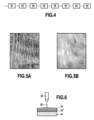
- Fig. 5A is a test sample where the log P ow/primer value of the compatible solvent of the primer is equal to 3,0 and the log P ow/sealer value of the compatible solvent of the sealer is equal to 7,5. As can be seen, crawling of the primer on the sealer occurs.
- the absolute value of a difference between the log P ow value of the compatible solvent of the primer and the compatible solvent of the sealer is equal to 4,5.
- the absolute value of a difference between the log P ow value of the compatible solvent of the primer and the compatible solvent of the sealer is greater than 3,0.
- Fig. 5B is a test sample where the log P ow/primer value of the compatible solvent of the primer is equal to 3,0 and the log P ow/sealer value of the compatible solvent of the sealer is equal to 5,0. As can be seen on Fig. 5B , no crawling of the primer on the sealer occurs.
- the absolute value of a difference between the log P ow value of the compatible solvent of the primer and the compatible solvent of the sealer is equal to 2,0.
- the absolute value of a difference between the log P ow value of the compatible solvent of the primer and the compatible solvent of the sealer is smaller than 3,0, even smaller than 2,5 and equal to 2,0.
- FIG. 6 Another experiment is shown on Fig. 6 .
- the metallic part 14 coated with the cured electrodeposition layer 16' is coated with the uncured primer 18.
- the compatible solvent 26 of the uncured sealer 12 is dropped on the uncured primer 18.
- the compatible solvent 26 spreads over the uncured primer 18.
- the compatible solvent 26 dissolves in the uncured primer 18.
- the compatible solvent 26 does not dissolves in the uncured primer 18.
Landscapes
- Life Sciences & Earth Sciences (AREA)
- Engineering & Computer Science (AREA)
- Wood Science & Technology (AREA)
- Application Of Or Painting With Fluid Materials (AREA)
- Vehicle Interior And Exterior Ornaments, Soundproofing, And Insulation (AREA)
Description
- The present disclosure is related to a vehicle body part, and more particularly to the coating of a vehicle body part.
- Vehicle body parts made of metallic plates, such as steel or aluminum, are coated to protect the parts from corrosion for example and to make the vehicle looks nice.
US2011/291429 discloses an anti-corrosion sealer. - The vehicle body parts are generally coated with several coatings.
- First, an electrodeposition coating is applied. The electrodeposition coating allows coating of the inside of the vehicle body which may prove difficult to coat by spray-coating. The electrodeposition coating imparts rust resistance and chipping resistance to the vehicle body part.
- A sealer is applied on the electrodeposited part, for example at the openings of the vehicle body parts, to prevent water from entering into the finished vehicle.
- Then, a primer coating is applied. A base coat and a clear coat may then be applied.
- Generally, between each applied coat, the vehicle body part is cured. The curing steps are generally performed at temperatures comprised between 60°C (degree Celsius) and 180°C. In view of reducing the energy consumption and the carbon emission, it is sought to reduce the temperature and time of these curing steps and even to reduce the number of curing steps.
- Thus, it has been proposed to apply the primer on the uncured sealer, this technique is also known as "wet-on-wet" technique, as the sealer is not dried before applying the primer. However, crawling of the primer may occur. This phenomenon is also known as "paint crawling" and is not acceptable.
- This phenomenon is attributed to the composition of the sealer and in particular to the plasticizer comprised in the sealer. To solve the problem, the composition of the primer is generally modified as the composition of the plasticizer itself is very difficult to modify. However, this approach is very complicated and demanding.
- Currently, it remains desirable to apply the primer on the uncured sealer. For example, the inventors of the present application have recognized that it is desirable to reduce the number of curing steps and to avoid crawling phenomena of the primer on the sealer.
- Therefore, according to claim 1, a vehicle body part is provided. The vehicle body part includes a support, an uncured sealer and an uncured primer, the uncured sealer being interposed between the support and the uncured primer, the uncured sealer and the uncured primer each comprising a compatible solvent, each compatible solvent having a log Pow value and an absolute value of a difference between the log Pow value of the compatible solvent of the uncured primer and the compatible solvent of the uncured sealer being equal to or smaller than 3,0 the uncured sealer being configured to prevent water from entering into a finished vehicle comprising the vehicle body part (10) once cured.
- By providing such a configuration, it is possible to apply the uncured primer on the uncured sealer and to avoid crawling phenomena of the primer on the sealer.
- By compatible solvent of the uncured primer, it is intended a solvent that does not damage the uncured primer. By compatible solvent of the uncured sealer, it is intended a solvent that does not damage the uncured sealer. Typically, some solvent may cut the polymer chains in the uncured sealer, in particular the polymer chains of the plasticizer and thus, damage the plasticizer and the uncured sealer. Once cured, the cured sealer would therefore no longer be capable of preventing water to enter the finish car.
- The inventors have identified that other parameters than the compatibility between the primer and the chemical composition of the plasticizer may influence the behaviour of the uncured primer on the uncured sealer.
- The log Pow is the logarithmic value of the partition coefficient P. The partition coefficient P is the ratio of the concentrations of a solute between two solvents. The subscript "o" stands for octanol and the subscript "w" stands for water.
- One method of measuring the distribution coefficient P is the so-called "shake-flask method", which consists of dissolving some of the solute in a volume of octanol and water at 20°C, then measuring the concentration of the solute in each solvent. A method for measure the concentration of the solute in each solvent may be for example UV/VIS spectroscopy. For example, toluene has a log Pow value of 2,8 at 20°C.
- In particular, they have identified that the crawling phenomena may be reduced or even avoided when the log Pow value of the compatible solvent of the primer and the compatible solvent of the sealer are relatively close to each other, i.e., the absolute value of a difference between the log Pow value of the compatible solvent of the primer and the compatible solvent of the sealer being equal to or smaller than 3,0.
- When the solvent of the uncured sealer and the solvent of the uncured primer have log Pow values which are too far away from each other, when phenomenon such as bleeding of the solvent out of the uncured plasticizer occurs, there are de-wetting phenomena or crawling phenomena taking place on the surface of the sealer due to incompatibility between the solvent of the uncured sealer and the solvent of the uncured primer.
- These phenomena may typically occur during a curing step performed after applying the uncured sealer and the uncured primer. They may also occur when the uncured sealer and uncured primer are let in the open air at room temperature for a certain period of time, for example for two days. The kinetic of such phenomena may vary and depends in particular on the solvents, the temperature, the humidity, etc.
- On the contrary, when the solvent of the uncured sealer and the solvent of the uncured primer have log Pow values which are relatively close to each other, the solvent of the uncured sealer may dissolve in the uncured primer and no de-wetting phenomena are observed.
- Thus, it is possible to reduce the number of curing steps when making a vehicle body part. It is therefore possible to reduce the amount of energy spent, the amount of carbon emission as well as to reduce the production time of a vehicle body part.
- The absolute value of the difference between the log Pow value of the compatible solvent of the uncured primer and the compatible solvent of the uncured sealer may be equal to or smaller than 2,5.
- The absolute value of the difference between the log Pow value of the compatible solvent of the uncured primer and the compatible solvent of the uncured sealer may be equal to or smaller than 2,0.
- The absolute value of the difference between the log Pow value of the compatible solvent of the uncured primer and the compatible solvent of the uncured sealer may be greater than or equal to 0,1.
- The compatible solvent of the primer may be different from the compatible solvent of the sealer.
- A compatible solvent may be a mixture of solvents.
- When there is a mixture of solvents, the absolute value of a difference between the log Pow value of the compatible solvent of the primer and the compatible solvent of the sealer may be equal to or smaller than 3,0, preferably equal to or smaller than 2,5, more preferably equal to or smaller than 2,0 for each solvent of the mixture of solvents.
- The absolute value of the difference between the log Pow value of the compatible solvent of the uncured primer and the compatible solvent of the uncured sealer may be greater than or equal to 0,1 for each solvent of the mixture of solvents.
- Thus, it is not the average value of the log Pow value of the solvents of the mixture of solvents that is taken into account but the individual log Pow value of each solvent in the mixture of solvents.
- In one embodiment it might be preferred that the sealer or the primer or both contain each only one compatible solvent.
- The amount of solvent in the sealer may be smaller than or equal to 10,0 wt%, preferably smaller than or equal to 7,0 wt%, more preferably smaller than or equal to 5,0 wt% and greater than or equal to 0,1 wt%, preferably greater than or equal to 0,2 wt%, more preferably greater than or equal to 0,5 wt%. Except otherwise specified, the amount in wt% is referring to the total amount of the respective composition, like here referring to the total amount of the sealer composition.
- The amount of solvent in the primer may be greater than or equal to 30,0 wt%, preferably greater than or equal to 50,0 wt%, preferably greater than or equal to 70,0 wt%. The amount of solvent in the primer may be smaller than or equal to 95,0 wt%.
- The present disclosure also relates to a method, according to claim 4, of forming a finished vehicle body part having a support comprising the steps of:
- applying an uncured sealer on the support; and
- applying an uncured primer on the uncured sealer, so as to form the vehicle body part as defined above.
- After applying the uncured primer, a curing step may be performed.
- A cured electrodeposition coating may have been applied on the support before applying the uncured sealer.
- The method may comprise a step of applying a base coat.
- The method may comprise a step of applying a clear coat on the base coat.
- After applying the base coat, a pre-heating step may be performed.
- After applying the clear coat, a curing step may be performed.
- It is intended that combinations of the above-described elements and those within the specification may be made, except where otherwise contradictory.
- It is to be understood that both the foregoing general description and the following detailed description are exemplary and explanatory only and are not restrictive of the disclosure, as claimed.
- The accompanying drawings, which are incorporated in and constitute a part of this specification, illustrate embodiments of the disclosure and together with the description, serve to explain the principles thereof.
-
-
Fig. 1 shows an exemplary vehicle body part with a sealer; -
Fig. 2 shows a cross-section of the exemplary vehicle body part with the sealer and a primer uncured taken along II-II ofFig. 1 ; -
Fig. 3 shows a cross-section of the exemplary finished vehicle body part taken along II-II ofFig. 1 ; -
Fig. 4 shows a block diagram illustrating an exemplary method according to embodiments of the present disclosure; -
Figs. 5A and 5B show a vehicle body part after curing of the sealer and the primer; and -
Fig. 6 shows a test method for determining the compatibility of the solvent of the sealer with the primer. - Reference will now be made in detail to exemplary embodiments of the disclosure, examples of which are illustrated in the accompanying drawings. Wherever possible, the same reference numbers will be used throughout the drawings to refer to the same or like parts.
-
Fig. 1 shows a representation of an exemplary vehicle body part according to embodiments of the present disclosure, in this example adoor 10. Thedoor 10 comprises anuncured sealer 12 applied to prevent water to enter the finished vehicle. As can be seen onFig. 1 , theuncured sealer 12 is applied close to the inner periphery of thedoor 10. -
Fig. 2 shows a cross-section of the exemplaryvehicle body part 10 ofFig. 1 comprising asupport 14 of thevehicle body part 10. Thesupport 10 is typically made of metal, such as steel or aluminum. Thesupport 14 is covered with a cured electrodeposition layer 16' on which theuncured sealer 12 has been applied. Thevehicle body part 10 also comprises anuncured primer 18 applied on theuncured sealer 12. Thus, theuncured sealer 12 is interposed between thesupport 14, through the cured electrodeposition layer 16', and theuncured primer 18. Some of theuncured primer 18 is directly applied on the cured electrodeposition layer 16', no uncured sealer being interposed between thesupport 14, through the cured electrodeposition layer 16', and theuncured primer 18. -
Fig. 3 shows a cross-section of an exemplary finishedvehicle body part 24 comprising thesupport 14, the cured electrodeposition layer 16', the curedsealer 12', the cured primer 18', a cured base coat 20' applied on the cured primer 18' and a cured clear coat 22' applied on the cured base coat 20'. - An exemplary method of forming the finished
vehicle body part 24 is as follows. Atstep 30, an electrodeposition layer is deposited on thesupport 14 and then cured to form the electrodeposition layer 16'. Atstep 32, theuncured sealer 12 is applied on thesupport 14 coated with the cured electrodeposition layer 16'. Atstep 34, theuncured primer 18 is applied on thesupport 14 coated with the cured electrodeposition layer 16' and theuncured sealer 12. Thus, theuncured primer 18 is applied on both theuncured sealer 12 and the cured electrodeposition layer 16'. Atstep 36, a first curing step is performed, for example at temperature above 100°C, preferably at 140°C for more than 10 min. (minutes) so as to cure theuncured sealer 12 and theuncured primer 18, forming a curedsealer 12' and a cured primer 18'. Then, atstep 38, an uncured base coat is applied and cured atstep 40 so as to form a cured base coat 20'. Atstep 42, an uncured clear coat is applied over the cured base coat 20' and cured atstep 44 so as to form a cured clear coat 22' and obtain the finishedvehicle body part 24. - It is to be understood that the curing steps 36, 40 and 44 may or not may be performed.
- As can be seen on
Fig. 4 , there is no curing step performed betweensteps - Typically, the
uncured sealer 12 comprises a plasticizer, preferably 15 - 50 wt%, more preferably 25 - 35 wt%. It also comprises a compatible solvent 26, for example at around 4 wt%, as well as a filler, preferably 20 - 50 wt%, more preferably 30 to 40 wt%, such as calcium carbonate (CaCO3). - Typically, the
uncured primer 18 comprises mainly a resin, such as a polyester resin, a polyacrylic resin or a melamine resin. It also comprises a compatible solvent, additives such as surface control agent and/or rheology control agent, and pigments such as titanium oxide (TiO2) or carbon black. Examples of solvent are, but are not limited to, toluene, xylene, methanol, butanol, naphtha solvent, and mixture thereof. - Thus, samples are made by applying a layer of plasticizer mixed with the compatible solvent of the plasticizer on a metallic plate coated with a cured electrodeposition layer 16'. Then, the primer is applied on the uncured plasticizer, let to rest at least 3 min., preferably at least 7 min., and then cured at 140°C for 18 min.
-
Fig. 5A is a test sample where the log Pow/primer value of the compatible solvent of the primer is equal to 3,0 and the log Pow/sealer value of the compatible solvent of the sealer is equal to 7,5. As can be seen, crawling of the primer on the sealer occurs. - In the test sample of
Fig. 5A , the absolute value of a difference between the log Pow value of the compatible solvent of the primer and the compatible solvent of the sealer is equal to 4,5. Thus, the absolute value of a difference between the log Pow value of the compatible solvent of the primer and the compatible solvent of the sealer is greater than 3,0. -
Fig. 5B is a test sample where the log Pow/primer value of the compatible solvent of the primer is equal to 3,0 and the log Pow/sealer value of the compatible solvent of the sealer is equal to 5,0. As can be seen onFig. 5B , no crawling of the primer on the sealer occurs. - In the test sample of
Fig. 5B , the absolute value of a difference between the log Pow value of the compatible solvent of the primer and the compatible solvent of the sealer is equal to 2,0. Thus, the absolute value of a difference between the log Pow value of the compatible solvent of the primer and the compatible solvent of the sealer is smaller than 3,0, even smaller than 2,5 and equal to 2,0. - Another experiment is shown on
Fig. 6 . Themetallic part 14 coated with the cured electrodeposition layer 16' is coated with theuncured primer 18. Then, the compatible solvent 26 of theuncured sealer 12 is dropped on theuncured primer 18. The compatible solvent 26 spreads over theuncured primer 18. - When, the absolute value of a difference between the log Pow value of the compatible solvent of the primer and the compatible solvent of the sealer is smaller than or equal to 3,0, the compatible solvent 26 dissolves in the
uncured primer 18. - When, the absolute value of a difference between the log Pow value of the compatible solvent of the primer and the compatible solvent of the sealer is greater than 3,0, the compatible solvent 26 does not dissolves in the
uncured primer 18. - Throughout the description, including the claims, the term "comprising a" should be understood as being synonymous with "comprising at least one" unless otherwise stated. In addition, any range set forth in the description, including the claims should be understood as including its end value(s) unless otherwise stated. Specific values for described elements should be understood to be within accepted manufacturing or industry tolerances known to one of skill in the art, and any use of the terms "substantially" and/or "approximately" and/or "generally" should be understood to mean falling within such accepted tolerances.
- Where any standards of national, international, or other standards body are referenced (e.g., ISO, etc.), such references are intended to refer to the standard as defined by the national or international standards body as of the priority date of the present specification. Any subsequent substantive changes to such standards are not intended to modify the scope and/or definitions of the present disclosure and/or claims.
- Although the present disclosure herein has been described with reference to particular embodiments, it is to be understood that these embodiments are merely illustrative of the principles and applications of the present disclosure. It is understood that the present disclosure is not only meant for a
door 10. It may encompass any vehicle body part, such as a frame, a hood, etc. - It is intended that the specification and examples be considered as exemplary only, with a true scope of the disclosure being indicated by the following claims.
Claims (10)
- A vehicle body part (10) comprising a support (14), an uncured sealer (12) and an uncured primer (18), the uncured sealer (12) being interposed between the support (14) and the uncured primer (18), the uncured sealer (12) and the uncured primer (18) each comprising a compatible solvent, each compatible solvent having a log Pow value and an absolute value of a difference between the log Pow value of the compatible solvent of the uncured primer and the compatible solvent of the uncured sealer being equal to or smaller than 3,0, the uncured sealer (12) being configured to prevent water from entering into a finished vehicle comprising the vehicle body part (10) once cured.
- The vehicle body part (10) according to claim 1, wherein the absolute value of the difference between the log Pow value of the compatible solvent of the uncured primer and the compatible solvent of the uncured sealer being equal to or smaller than 2,5.
- The vehicle body part (10) according to claim 2, wherein the absolute value of the difference between the log Pow value of the compatible solvent of the uncured primer and the compatible solvent of the uncured sealer being equal to or smaller than 2,0.
- A method of forming a finished vehicle body part (24) having a support (14) comprising the steps of:- applying an uncured sealer (12) on the support (14); and- applying an uncured primer (18) on the uncured sealer (12), so as to form the vehicle body part (10) according to any of claims 1-3, the uncured sealer (12) being configured to prevent water from entering into the finished vehicle once cured.
- The method according to claim 4, wherein after applying the uncured primer (18), a curing step is performed.
- The method according to claim 4 or 5, wherein a cured electrodeposition coating (16') has been applied on the support before applying the uncured sealer (12).
- The method according to any of claims 4-6, comprising a step of applying a base coat.
- The method according to 7, comprising a step of applying a clear coat on the base coat.
- The method according to claim 7 or 8, wherein after applying the base coat, a curing step is performed.
- The method according to any of claims 7-9, wherein after applying the clear coat, a curing step is performed.
Applications Claiming Priority (1)
| Application Number | Priority Date | Filing Date | Title |
|---|---|---|---|
| PCT/EP2016/069088 WO2018028785A1 (en) | 2016-08-10 | 2016-08-10 | Vehicle body part and method of forming a vehicle body part |
Publications (2)
| Publication Number | Publication Date |
|---|---|
| EP3496870A1 EP3496870A1 (en) | 2019-06-19 |
| EP3496870B1 true EP3496870B1 (en) | 2023-05-03 |
Family
ID=56686809
Family Applications (1)
| Application Number | Title | Priority Date | Filing Date |
|---|---|---|---|
| EP16751574.1A Active EP3496870B1 (en) | 2016-08-10 | 2016-08-10 | Vehicle body part and method of forming a vehicle body part |
Country Status (6)
| Country | Link |
|---|---|
| US (1) | US11179746B2 (en) |
| EP (1) | EP3496870B1 (en) |
| CN (1) | CN109641236B (en) |
| ES (1) | ES2950464T3 (en) |
| MX (1) | MX2019001665A (en) |
| WO (1) | WO2018028785A1 (en) |
Family Cites Families (13)
| Publication number | Priority date | Publication date | Assignee | Title |
|---|---|---|---|---|
| DE4235778A1 (en) * | 1992-10-23 | 1994-04-28 | Herberts Gmbh | Process for the production of multi-layer coatings |
| US5464888A (en) * | 1994-03-31 | 1995-11-07 | Minnesota Mining And Manufacturing Company | Curable sealer and/or adhesive composition, and a method for coating same in a wet state with a base coat paint, and coated substrates formed thereby |
| JP3266818B2 (en) | 1996-11-28 | 2002-03-18 | 神東塗料株式会社 | Steel plate weld finish method |
| US6784222B2 (en) * | 2001-03-07 | 2004-08-31 | Frank David Zychowski | 100% solids radiation curable conductive primer |
| JP2005119434A (en) * | 2003-10-16 | 2005-05-12 | Honda Motor Co Ltd | Car guard pipe |
| JP2005319412A (en) | 2004-05-10 | 2005-11-17 | Nippon Paint Co Ltd | Method for forming multilayer coating film and multilayer coating film |
| US7871708B2 (en) * | 2005-02-23 | 2011-01-18 | Ppg Industries Ohio, Inc. | Metal and polymer substrates having a powder basecoat and liquid topcoat |
| US7544413B2 (en) | 2005-04-14 | 2009-06-09 | December Timothy S | Coatings and coating systems having optimized chip performance and methods of obtaining the same |
| US20060270778A1 (en) * | 2005-05-26 | 2006-11-30 | Dow Global Technologies Inc. | Sealer compositions |
| US20110291429A1 (en) | 2010-05-28 | 2011-12-01 | Flat Rock Metal Inc. | Process for Coating Metal Components With a Coating That Prevents Electrochemical Plating |
| JP5555569B2 (en) * | 2010-07-27 | 2014-07-23 | 日本ペイント株式会社 | Cured electrodeposition coating film and method for forming multilayer coating film |
| JP5773369B2 (en) | 2012-07-31 | 2015-09-02 | 日本ペイント・オートモーティブコーティングス株式会社 | Method of recoating an object having a sealer part |
| US20150064482A1 (en) * | 2013-08-27 | 2015-03-05 | GM Global Technology Operations LLC | Vehicle body and method for coating a vehicle body |
-
2016
- 2016-08-10 ES ES16751574T patent/ES2950464T3/en active Active
- 2016-08-10 US US16/324,899 patent/US11179746B2/en active Active
- 2016-08-10 WO PCT/EP2016/069088 patent/WO2018028785A1/en not_active Ceased
- 2016-08-10 CN CN201680087923.2A patent/CN109641236B/en active Active
- 2016-08-10 MX MX2019001665A patent/MX2019001665A/en unknown
- 2016-08-10 EP EP16751574.1A patent/EP3496870B1/en active Active
Also Published As
| Publication number | Publication date |
|---|---|
| ES2950464T3 (en) | 2023-10-10 |
| EP3496870A1 (en) | 2019-06-19 |
| MX2019001665A (en) | 2019-09-19 |
| US11179746B2 (en) | 2021-11-23 |
| CN109641236A (en) | 2019-04-16 |
| WO2018028785A1 (en) | 2018-02-15 |
| US20190358670A1 (en) | 2019-11-28 |
| CN109641236B (en) | 2022-07-19 |
Similar Documents
| Publication | Publication Date | Title |
|---|---|---|
| US11142654B2 (en) | Composition and process for the generation of a clear or translucent emissive coating | |
| KR101292157B1 (en) | Primerless integrated multilayer coating | |
| US20080171145A1 (en) | Two-tone painting method | |
| JP5187622B2 (en) | Thermal barrier coating composition, method of forming thermal barrier coating using the same, and thermal barrier coating | |
| DE102005005858A1 (en) | Process for coating metal sheet, in particular zinc sheet | |
| EP3057717B1 (en) | Motor vehicle painting process | |
| KR102140600B1 (en) | Pcm steel sheet havign excellent glossiness | |
| US11179746B2 (en) | Vehicle body part and method of forming a vehicle body part | |
| DE102007004229A1 (en) | Decorable plastic profile and method for its production | |
| EP2677010A2 (en) | Paint composition for pre-coated steel plate and a curing method for pre-coated steel plate using same | |
| KR101211849B1 (en) | Painting mathod of aluminium water-tank having good durability | |
| JP4669846B2 (en) | Method for producing a two-tone coated substrate | |
| US6797099B2 (en) | Method for structural bonding on painted surfaces | |
| JP2004322029A (en) | Painting method | |
| TW201518543A (en) | Black coating film-forming vehicle component and/or fastening component, and manufacturing method therefor | |
| AU2017258972B2 (en) | Fastenings and other components for use with treated timber | |
| JP6254970B2 (en) | Method for forming laminated coating film | |
| KR100471036B1 (en) | A black coating composition for automobile | |
| JP4321001B2 (en) | Painting method | |
| Fristad et al. | Autodeposition Coatings: How and Why They Perform | |
| NZ601854B2 (en) | Fastenings and other components for use with treated timber | |
| JP4235761B2 (en) | High corrosion resistance powder coating method | |
| KR20150112515A (en) | Primer for color steel sheet and method of manufacturing color steel sheet using the same | |
| TH88616A (en) | The stainless steel sheet is coated with fluorine. And how to produce the same thing |
Legal Events
| Date | Code | Title | Description |
|---|---|---|---|
| STAA | Information on the status of an ep patent application or granted ep patent |
Free format text: STATUS: THE INTERNATIONAL PUBLICATION HAS BEEN MADE |
|
| PUAI | Public reference made under article 153(3) epc to a published international application that has entered the european phase |
Free format text: ORIGINAL CODE: 0009012 |
|
| STAA | Information on the status of an ep patent application or granted ep patent |
Free format text: STATUS: REQUEST FOR EXAMINATION WAS MADE |
|
| 17P | Request for examination filed |
Effective date: 20190118 |
|
| AK | Designated contracting states |
Kind code of ref document: A1 Designated state(s): AL AT BE BG CH CY CZ DE DK EE ES FI FR GB GR HR HU IE IS IT LI LT LU LV MC MK MT NL NO PL PT RO RS SE SI SK SM TR |
|
| AX | Request for extension of the european patent |
Extension state: BA ME |
|
| DAV | Request for validation of the european patent (deleted) | ||
| DAX | Request for extension of the european patent (deleted) | ||
| STAA | Information on the status of an ep patent application or granted ep patent |
Free format text: STATUS: EXAMINATION IS IN PROGRESS |
|
| 17Q | First examination report despatched |
Effective date: 20210901 |
|
| GRAP | Despatch of communication of intention to grant a patent |
Free format text: ORIGINAL CODE: EPIDOSNIGR1 |
|
| STAA | Information on the status of an ep patent application or granted ep patent |
Free format text: STATUS: GRANT OF PATENT IS INTENDED |
|
| INTG | Intention to grant announced |
Effective date: 20230104 |
|
| GRAS | Grant fee paid |
Free format text: ORIGINAL CODE: EPIDOSNIGR3 |
|
| GRAA | (expected) grant |
Free format text: ORIGINAL CODE: 0009210 |
|
| STAA | Information on the status of an ep patent application or granted ep patent |
Free format text: STATUS: THE PATENT HAS BEEN GRANTED |
|
| AK | Designated contracting states |
Kind code of ref document: B1 Designated state(s): AL AT BE BG CH CY CZ DE DK EE ES FI FR GB GR HR HU IE IS IT LI LT LU LV MC MK MT NL NO PL PT RO RS SE SI SK SM TR |
|
| REG | Reference to a national code |
Ref country code: GB Ref legal event code: FG4D |
|
| REG | Reference to a national code |
Ref country code: AT Ref legal event code: REF Ref document number: 1564133 Country of ref document: AT Kind code of ref document: T Effective date: 20230515 Ref country code: CH Ref legal event code: EP |
|
| REG | Reference to a national code |
Ref country code: DE Ref legal event code: R096 Ref document number: 602016079175 Country of ref document: DE |
|
| REG | Reference to a national code |
Ref country code: IE Ref legal event code: FG4D |
|
| P01 | Opt-out of the competence of the unified patent court (upc) registered |
Effective date: 20230528 |
|
| REG | Reference to a national code |
Ref country code: LT Ref legal event code: MG9D |
|
| REG | Reference to a national code |
Ref country code: NL Ref legal event code: MP Effective date: 20230503 |
|
| REG | Reference to a national code |
Ref country code: ES Ref legal event code: FG2A Ref document number: 2950464 Country of ref document: ES Kind code of ref document: T3 Effective date: 20231010 |
|
| REG | Reference to a national code |
Ref country code: AT Ref legal event code: MK05 Ref document number: 1564133 Country of ref document: AT Kind code of ref document: T Effective date: 20230503 |
|
| PG25 | Lapsed in a contracting state [announced via postgrant information from national office to epo] |
Ref country code: SE Free format text: LAPSE BECAUSE OF FAILURE TO SUBMIT A TRANSLATION OF THE DESCRIPTION OR TO PAY THE FEE WITHIN THE PRESCRIBED TIME-LIMIT Effective date: 20230503 Ref country code: PT Free format text: LAPSE BECAUSE OF FAILURE TO SUBMIT A TRANSLATION OF THE DESCRIPTION OR TO PAY THE FEE WITHIN THE PRESCRIBED TIME-LIMIT Effective date: 20230904 Ref country code: NO Free format text: LAPSE BECAUSE OF FAILURE TO SUBMIT A TRANSLATION OF THE DESCRIPTION OR TO PAY THE FEE WITHIN THE PRESCRIBED TIME-LIMIT Effective date: 20230803 Ref country code: NL Free format text: LAPSE BECAUSE OF FAILURE TO SUBMIT A TRANSLATION OF THE DESCRIPTION OR TO PAY THE FEE WITHIN THE PRESCRIBED TIME-LIMIT Effective date: 20230503 Ref country code: AT Free format text: LAPSE BECAUSE OF FAILURE TO SUBMIT A TRANSLATION OF THE DESCRIPTION OR TO PAY THE FEE WITHIN THE PRESCRIBED TIME-LIMIT Effective date: 20230503 |
|
| PG25 | Lapsed in a contracting state [announced via postgrant information from national office to epo] |
Ref country code: RS Free format text: LAPSE BECAUSE OF FAILURE TO SUBMIT A TRANSLATION OF THE DESCRIPTION OR TO PAY THE FEE WITHIN THE PRESCRIBED TIME-LIMIT Effective date: 20230503 Ref country code: PL Free format text: LAPSE BECAUSE OF FAILURE TO SUBMIT A TRANSLATION OF THE DESCRIPTION OR TO PAY THE FEE WITHIN THE PRESCRIBED TIME-LIMIT Effective date: 20230503 Ref country code: LV Free format text: LAPSE BECAUSE OF FAILURE TO SUBMIT A TRANSLATION OF THE DESCRIPTION OR TO PAY THE FEE WITHIN THE PRESCRIBED TIME-LIMIT Effective date: 20230503 Ref country code: LT Free format text: LAPSE BECAUSE OF FAILURE TO SUBMIT A TRANSLATION OF THE DESCRIPTION OR TO PAY THE FEE WITHIN THE PRESCRIBED TIME-LIMIT Effective date: 20230503 Ref country code: IS Free format text: LAPSE BECAUSE OF FAILURE TO SUBMIT A TRANSLATION OF THE DESCRIPTION OR TO PAY THE FEE WITHIN THE PRESCRIBED TIME-LIMIT Effective date: 20230903 Ref country code: HR Free format text: LAPSE BECAUSE OF FAILURE TO SUBMIT A TRANSLATION OF THE DESCRIPTION OR TO PAY THE FEE WITHIN THE PRESCRIBED TIME-LIMIT Effective date: 20230503 Ref country code: GR Free format text: LAPSE BECAUSE OF FAILURE TO SUBMIT A TRANSLATION OF THE DESCRIPTION OR TO PAY THE FEE WITHIN THE PRESCRIBED TIME-LIMIT Effective date: 20230804 |
|
| PG25 | Lapsed in a contracting state [announced via postgrant information from national office to epo] |
Ref country code: FI Free format text: LAPSE BECAUSE OF FAILURE TO SUBMIT A TRANSLATION OF THE DESCRIPTION OR TO PAY THE FEE WITHIN THE PRESCRIBED TIME-LIMIT Effective date: 20230503 |
|
| PG25 | Lapsed in a contracting state [announced via postgrant information from national office to epo] |
Ref country code: SK Free format text: LAPSE BECAUSE OF FAILURE TO SUBMIT A TRANSLATION OF THE DESCRIPTION OR TO PAY THE FEE WITHIN THE PRESCRIBED TIME-LIMIT Effective date: 20230503 |
|
| PG25 | Lapsed in a contracting state [announced via postgrant information from national office to epo] |
Ref country code: SM Free format text: LAPSE BECAUSE OF FAILURE TO SUBMIT A TRANSLATION OF THE DESCRIPTION OR TO PAY THE FEE WITHIN THE PRESCRIBED TIME-LIMIT Effective date: 20230503 Ref country code: SK Free format text: LAPSE BECAUSE OF FAILURE TO SUBMIT A TRANSLATION OF THE DESCRIPTION OR TO PAY THE FEE WITHIN THE PRESCRIBED TIME-LIMIT Effective date: 20230503 Ref country code: RO Free format text: LAPSE BECAUSE OF FAILURE TO SUBMIT A TRANSLATION OF THE DESCRIPTION OR TO PAY THE FEE WITHIN THE PRESCRIBED TIME-LIMIT Effective date: 20230503 Ref country code: EE Free format text: LAPSE BECAUSE OF FAILURE TO SUBMIT A TRANSLATION OF THE DESCRIPTION OR TO PAY THE FEE WITHIN THE PRESCRIBED TIME-LIMIT Effective date: 20230503 Ref country code: DK Free format text: LAPSE BECAUSE OF FAILURE TO SUBMIT A TRANSLATION OF THE DESCRIPTION OR TO PAY THE FEE WITHIN THE PRESCRIBED TIME-LIMIT Effective date: 20230503 Ref country code: CZ Free format text: LAPSE BECAUSE OF FAILURE TO SUBMIT A TRANSLATION OF THE DESCRIPTION OR TO PAY THE FEE WITHIN THE PRESCRIBED TIME-LIMIT Effective date: 20230503 |
|
| REG | Reference to a national code |
Ref country code: DE Ref legal event code: R097 Ref document number: 602016079175 Country of ref document: DE |
|
| RAP4 | Party data changed (patent owner data changed or rights of a patent transferred) |
Owner name: HENKEL AG & CO. KGAA Owner name: TOYOTA MOTOR EUROPE |
|
| PLBE | No opposition filed within time limit |
Free format text: ORIGINAL CODE: 0009261 |
|
| STAA | Information on the status of an ep patent application or granted ep patent |
Free format text: STATUS: NO OPPOSITION FILED WITHIN TIME LIMIT |
|
| PG25 | Lapsed in a contracting state [announced via postgrant information from national office to epo] |
Ref country code: MC Free format text: LAPSE BECAUSE OF FAILURE TO SUBMIT A TRANSLATION OF THE DESCRIPTION OR TO PAY THE FEE WITHIN THE PRESCRIBED TIME-LIMIT Effective date: 20230503 |
|
| REG | Reference to a national code |
Ref country code: CH Ref legal event code: PL |
|
| PG25 | Lapsed in a contracting state [announced via postgrant information from national office to epo] |
Ref country code: MC Free format text: LAPSE BECAUSE OF FAILURE TO SUBMIT A TRANSLATION OF THE DESCRIPTION OR TO PAY THE FEE WITHIN THE PRESCRIBED TIME-LIMIT Effective date: 20230503 |
|
| 26N | No opposition filed |
Effective date: 20240206 |
|
| REG | Reference to a national code |
Ref country code: DE Ref legal event code: R081 Ref document number: 602016079175 Country of ref document: DE Owner name: TOYOTA JIDOSHA KABUSHIKI KAISHA, TOYOTA-SHI, JP Free format text: FORMER OWNERS: HENKEL AG & CO. KGAA, 40589 DUESSELDORF, DE; TOYOTA MOTOR EUROPE, BRUSSELS, BE Ref country code: DE Ref legal event code: R081 Ref document number: 602016079175 Country of ref document: DE Owner name: HENKEL AG & CO. KGAA, DE Free format text: FORMER OWNERS: HENKEL AG & CO. KGAA, 40589 DUESSELDORF, DE; TOYOTA MOTOR EUROPE, BRUSSELS, BE |
|
| PG25 | Lapsed in a contracting state [announced via postgrant information from national office to epo] |
Ref country code: LU Free format text: LAPSE BECAUSE OF NON-PAYMENT OF DUE FEES Effective date: 20230810 |
|
| PG25 | Lapsed in a contracting state [announced via postgrant information from national office to epo] |
Ref country code: LU Free format text: LAPSE BECAUSE OF NON-PAYMENT OF DUE FEES Effective date: 20230810 Ref country code: CH Free format text: LAPSE BECAUSE OF NON-PAYMENT OF DUE FEES Effective date: 20230831 |
|
| PG25 | Lapsed in a contracting state [announced via postgrant information from national office to epo] |
Ref country code: SI Free format text: LAPSE BECAUSE OF FAILURE TO SUBMIT A TRANSLATION OF THE DESCRIPTION OR TO PAY THE FEE WITHIN THE PRESCRIBED TIME-LIMIT Effective date: 20230503 |
|
| REG | Reference to a national code |
Ref country code: BE Ref legal event code: MM Effective date: 20230831 |
|
| REG | Reference to a national code |
Ref country code: IE Ref legal event code: MM4A |
|
| PG25 | Lapsed in a contracting state [announced via postgrant information from national office to epo] |
Ref country code: SI Free format text: LAPSE BECAUSE OF FAILURE TO SUBMIT A TRANSLATION OF THE DESCRIPTION OR TO PAY THE FEE WITHIN THE PRESCRIBED TIME-LIMIT Effective date: 20230503 |
|
| REG | Reference to a national code |
Ref country code: GB Ref legal event code: 732E Free format text: REGISTERED BETWEEN 20240509 AND 20240515 |
|
| PG25 | Lapsed in a contracting state [announced via postgrant information from national office to epo] |
Ref country code: IE Free format text: LAPSE BECAUSE OF NON-PAYMENT OF DUE FEES Effective date: 20230810 |
|
| PG25 | Lapsed in a contracting state [announced via postgrant information from national office to epo] |
Ref country code: IE Free format text: LAPSE BECAUSE OF NON-PAYMENT OF DUE FEES Effective date: 20230810 |
|
| PG25 | Lapsed in a contracting state [announced via postgrant information from national office to epo] |
Ref country code: BE Free format text: LAPSE BECAUSE OF NON-PAYMENT OF DUE FEES Effective date: 20230831 |
|
| PG25 | Lapsed in a contracting state [announced via postgrant information from national office to epo] |
Ref country code: BG Free format text: LAPSE BECAUSE OF FAILURE TO SUBMIT A TRANSLATION OF THE DESCRIPTION OR TO PAY THE FEE WITHIN THE PRESCRIBED TIME-LIMIT Effective date: 20230503 |
|
| PG25 | Lapsed in a contracting state [announced via postgrant information from national office to epo] |
Ref country code: BG Free format text: LAPSE BECAUSE OF FAILURE TO SUBMIT A TRANSLATION OF THE DESCRIPTION OR TO PAY THE FEE WITHIN THE PRESCRIBED TIME-LIMIT Effective date: 20230503 |
|
| PG25 | Lapsed in a contracting state [announced via postgrant information from national office to epo] |
Ref country code: CY Free format text: LAPSE BECAUSE OF FAILURE TO SUBMIT A TRANSLATION OF THE DESCRIPTION OR TO PAY THE FEE WITHIN THE PRESCRIBED TIME-LIMIT; INVALID AB INITIO Effective date: 20160810 |
|
| PG25 | Lapsed in a contracting state [announced via postgrant information from national office to epo] |
Ref country code: HU Free format text: LAPSE BECAUSE OF FAILURE TO SUBMIT A TRANSLATION OF THE DESCRIPTION OR TO PAY THE FEE WITHIN THE PRESCRIBED TIME-LIMIT; INVALID AB INITIO Effective date: 20160810 |
|
| PGFP | Annual fee paid to national office [announced via postgrant information from national office to epo] |
Ref country code: ES Payment date: 20250908 Year of fee payment: 10 |
|
| PGFP | Annual fee paid to national office [announced via postgrant information from national office to epo] |
Ref country code: DE Payment date: 20250812 Year of fee payment: 10 |
|
| PGFP | Annual fee paid to national office [announced via postgrant information from national office to epo] |
Ref country code: IT Payment date: 20250808 Year of fee payment: 10 |
|
| PGFP | Annual fee paid to national office [announced via postgrant information from national office to epo] |
Ref country code: GB Payment date: 20250826 Year of fee payment: 10 |
|
| PGFP | Annual fee paid to national office [announced via postgrant information from national office to epo] |
Ref country code: FR Payment date: 20250822 Year of fee payment: 10 |
|
| PG25 | Lapsed in a contracting state [announced via postgrant information from national office to epo] |
Ref country code: TR Free format text: LAPSE BECAUSE OF FAILURE TO SUBMIT A TRANSLATION OF THE DESCRIPTION OR TO PAY THE FEE WITHIN THE PRESCRIBED TIME-LIMIT Effective date: 20230503 |