EP3494474B1 - System and method for efficient repurposing of connections in a multi-tenant database environment - Google Patents
System and method for efficient repurposing of connections in a multi-tenant database environment Download PDFInfo
- Publication number
- EP3494474B1 EP3494474B1 EP17752237.2A EP17752237A EP3494474B1 EP 3494474 B1 EP3494474 B1 EP 3494474B1 EP 17752237 A EP17752237 A EP 17752237A EP 3494474 B1 EP3494474 B1 EP 3494474B1
- Authority
- EP
- European Patent Office
- Prior art keywords
- connection
- pool
- database
- wait
- connections
- Prior art date
- Legal status (The legal status is an assumption and is not a legal conclusion. Google has not performed a legal analysis and makes no representation as to the accuracy of the status listed.)
- Active
Links
Images




Classifications
-
- G—PHYSICS
- G06—COMPUTING OR CALCULATING; COUNTING
- G06F—ELECTRIC DIGITAL DATA PROCESSING
- G06F16/00—Information retrieval; Database structures therefor; File system structures therefor
- G06F16/20—Information retrieval; Database structures therefor; File system structures therefor of structured data, e.g. relational data
- G06F16/25—Integrating or interfacing systems involving database management systems
-
- G—PHYSICS
- G06—COMPUTING OR CALCULATING; COUNTING
- G06F—ELECTRIC DIGITAL DATA PROCESSING
- G06F16/00—Information retrieval; Database structures therefor; File system structures therefor
- G06F16/20—Information retrieval; Database structures therefor; File system structures therefor of structured data, e.g. relational data
- G06F16/24—Querying
- G06F16/245—Query processing
- G06F16/2455—Query execution
- G06F16/24552—Database cache management
-
- G—PHYSICS
- G06—COMPUTING OR CALCULATING; COUNTING
- G06F—ELECTRIC DIGITAL DATA PROCESSING
- G06F9/00—Arrangements for program control, e.g. control units
- G06F9/06—Arrangements for program control, e.g. control units using stored programs, i.e. using an internal store of processing equipment to receive or retain programs
- G06F9/46—Multiprogramming arrangements
- G06F9/50—Allocation of resources, e.g. of the central processing unit [CPU]
- G06F9/5061—Partitioning or combining of resources
-
- H—ELECTRICITY
- H04—ELECTRIC COMMUNICATION TECHNIQUE
- H04L—TRANSMISSION OF DIGITAL INFORMATION, e.g. TELEGRAPHIC COMMUNICATION
- H04L67/00—Network arrangements or protocols for supporting network services or applications
- H04L67/01—Protocols
- H04L67/10—Protocols in which an application is distributed across nodes in the network
Definitions
- Embodiments of the invention are generally related to software application servers and databases, and are particularly related to systems and methods for providing access to a database in a multi-tenant environment, including the use of a connection pool, with support for efficient repurposing of connections.
- a connection pool operates as a cache of connection objects, each of which represents a connection that can be used by a software application to connect to a database.
- an application can request a connection from the connection pool. If the connection pool includes a connection that can satisfy the particular request, it can return that connection to the application for its use. In some instances, if no suitable connection is found, then a new connection can be created and returned to the application. The application can borrow the connection to access the database and perform some work, and then return the connection to the pool, where it can then be made available for subsequent connection requests from the same, or from other, applications.
- US 8145759 discloses a dynamically configurable resource pool that provides a pool of computing resource for use in a computing system or application.
- a main unit determines if a connection is available in the pool. If an unassigned connection exists in the requested pool, the main unit assigns the connection to the requester. If an unassigned connection does not exist in the pool, and the current pool size is less than the maximum pool size, then the main unit establishes a connection and assigns the connection to the requester. If an unassigned connection does not exist in the pool, and the current pool size is equal to the maximum pool size, then the wait queue unit places the request for connection on the wait queue and monitors connection usage for the return of connections to the pool.
- connection pool operates as a cache of connection objects, each of which represents a connection that can be used by a software application to connect to a database.
- an application can request a connection from the connection pool. If the connection pool includes a connection that can satisfy the particular request, it can return that connection to the application for its use. In some instances, if no suitable connection is found, then a new connection can be created and returned to the application. The application can borrow the connection to access the database and perform some work, and then return the connection to the pool, where it can then be made available for subsequent connection requests from the same, or from other, applications.
- connection objects can be costly in terms of time and resources. For example, tasks such as network communication, authentication, transaction enlistment, and memory allocation, all contribute to the amount of time and resources it takes to create a particular connection object. Since connection pools allow the reuse of such connection objects, they help reduce the number of times that the various objects must be created.
- connection pool is Oracle Universal Connection Pool (UCP), which provides a connection pool for caching Java Database Connectivity (JDBC) connections.
- JDBC Java Database Connectivity
- the connection pool can operate with a JDBC driver to create connections to a database, which are then maintained by the pool; and can be configured with properties that are used to further optimize pool behavior, based on the performance and availability requirements of a requesting software application.
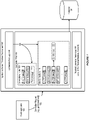
- Figure 1 illustrates a system that includes a connection pool.
- an application server or database environment 100 which includes physical computer resources 101 (e.g., a processor/CPU, memory, and network components), for example an Oracle WebLogic Server, Oracle Fusion Middleware, or other application server or database environment, includes or provides access to a database 102, for example an Oracle database, or other type of database.
- physical computer resources 101 e.g., a processor/CPU, memory, and network components
- Oracle WebLogic Server e.g., Oracle WebLogic Server, Oracle Fusion Middleware, or other application server or database environment
- database 102 for example an Oracle database, or other type of database.
- connection pool logic 104 or program code which when executed by a computer controls 105 the creation and use of connection objects in a connection pool 106, including, for example, connections that are currently in use 108 by a software application, and connections that are idle 110, or are not currently being used.
- Software applications can initialize connections retrieved from a connection pool, before using the connection to access, or perform work at the database.
- Examples of initialization can include simple state re-initializations that require method calls within the application code, or more complex initializations including database operations that require round trips over a network. The computational cost of these latter types of initialization may be significant.
- connection pools for example, UCP
- connection pool properties that have get and set methods, and that are available through a pool-enabled data source instance. These get and set methods provide a convenient way to programmatically configure a pool. If no pool properties are set, then a connection pool uses default property values.
- labeling connections allows a client software application to attach arbitrary name/value pairs to a connection.
- the application can then request a connection with a desired label from the connection pool.
- an application can potentially retrieve an already-initialized connection from the pool, and avoid the time and cost of re-initialization.
- Connection labeling does not impose any meaning on user-defined keys or values; the meaning of any user-defined keys and values is defined solely by the application.
- connection pool can include a plurality of connections that are currently in use by software applications, here indicated as connections A 112 and B 114.
- Each of the connections can be labeled, for example connection A is labeled (Blue) and connection B is labeled (Green).
- connection A is labeled (Blue)
- connection B is labeled (Green).
- Blue labeled
- Green Green
- These labels/colors are provided for purposes of illustration, and as described above can be arbitrary name/value pairs attached to a connection by a client application.
- different types of labels can be used, to distinguish between different connection types; and different applications can attach different labels/colors to a particular connection type.
- connection pool can also include a plurality of connections that are idle, or are not currently being used by software applications, here indicated as connections C 116, D 118, E 120, F 122, G 124 and N 126.
- connections C 116, D 118, E 120, F 122, G 124 and N 126 Each of the idle connections can be similarly labeled, in this illustration as (Blue) or (Green), and again these labels/colors are provided for purposes of illustration.
- connection pool logic will either create a new (Red) connection, here indicated as X 134 (Red); or repurpose an existing idle connection from (Blue or Green) to (Red), here indicated as E 135 (Red).
- Sharding is a database-scaling technique which uses a horizontal partitioning of data across multiple independent physical databases. The part of the data which is stored in each physical database is referred to as a shard. From the perspective of a software client application, the collection of all of the physical databases appears as a single logical database.
- the system can include support for use of a connection pool with sharded databases.
- a shard director or listener provides access by software client applications to database shards.
- a connection pool e.g., UCP
- database driver e.g., a JDBC driver
- UCP UCP
- database driver e.g., a JDBC driver
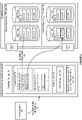
- Figure 2 further illustrates a system that includes a connection pool, including support for use of a sharded database.
- a database table can be partitioned using a shard key (SHARD_KEY), for example as one or more columns that determine, within a particular shard, where each row is stored.
- a shard key can be provided in a connect string or description as an attribute of connect data (CONNECT_DATA). Examples of shard keys can include a VARCHAR2, CHAR, DATE, NUMBER, or TIMESTAMP in the database.
- a sharded database can also accept connections without a shard key or shard group key.
- each shard can be subdivided into smaller pieces or chunks. Each chunk acts as a unit of resharding that can be moved from one shard to another. Chunks also simplify routing, by adding a level of indirection to the shard key mapping.
- each chunk can be automatically associated with a range of shard key values.
- a user-provided shard key can be mapped to a particular chunk, and that chunk mapped to a particular shard. If a database operation attempts to operate on a chunk that is not existent on a particular shard, then an error will be raised.
- each shard group is a collection of those chunks that have a specific value of shard group identifier.
- a shard-aware client application can work with sharded database configurations, including the ability to connect to one or multiple database shards in which the data is partitioned based on one or more sharding methods. Each time a database operation is required, the client application can determine the shard to which it needs to connect.
- a sharding method can be used to map shard key values to individual shards.
- Different sharding methods can be supported, for example: hash-based sharding, in which a range of hash values is assigned to each chunk, so that upon establishing a database connection the system applies a hash function to a given value of the sharding key, and calculates a corresponding hash value which is then mapped to a chunk based on the range to which that value belongs; range-based sharding, in which a range of shard key values is assigned directly to individual shards; and list-based sharding, in which each shard is associated with a list of shard key values.
- a sharded database 140 can comprise a first database region A (here indicated as “DB East”, DBE) 141, including sharded database instances "DBE-1" 142, with a shard A stored as chunks A1, A2, ... An; and "DBE-2" 143, with a shard B stored as chunks B1, B2, ... Bn.
- DB East first database region A
- DBE sharded database instances
- a second database region B (here indicated as "DB West", DBW) 144, includes sharded database instances "DBW-1" 145, with a shard C stored as chunks C1, C2, ... Cn; and "DBW-2" 146, with a shard D stored as chunks D1, D2, .. Dn.
- Each database region or group of sharded database instances can be associated with a shard director or listener (e.g., an Oracle Global Service Managers (GSM) listener, or another type of listener).
- a shard director or listener 147 can be associated with the first database region A; and another shard director or listener 148 can be associated with the second database region B.
- the system can include a database driver (e.g., a JDBC driver) 152 that maintains a shard topology layer 154, which over a period of time learns and caches shard key ranges to the location of each shard in a sharded database.
- a database driver e.g., a JDBC driver
- a client application can provide one or more shard keys to the connection pool during a connection request 162; and, based on the one or more shard keys, and information provided by the shard topology layer, the connection pool can route the connection request to a correct or appropriate shard.
- the connection pool can also identify a connection to a particular shard or chunk by its shard keys, and allow re-use of a connection when a request for a same shard key is received from a particular client application.
- a connection to a particular chunk (e.g., chunk A1) can be used to connect 174, to that chunk. If there are no available connections in the pool to the particular shard or chunk, the system can attempt to repurpose an existing available connection to another shard or chunk, and re-use that connection.
- the data distribution across the shards and chunks in the database can be made transparent to the client application, which also minimizes the impact of re-sharding of chunks on the client.
- connection pool When a shard-aware client application provides one or more shard keys to the connection pool, in association with a connection request; then, if the connection pool or database driver already has a mapping for the shard keys, the connection request can be directly forwarded to the appropriate shard and chunk, in this example, to chunk C2.
- connection request can be forwarded to an appropriate shard director or listener.
- the system can include support for cloud-based or multi-tenant environments using connection labeling.
- a multi-tenant cloud environment can include an application server or database environment that includes or provides access to a database for use by multiple tenants or tenant applications, in a cloud-based environment.
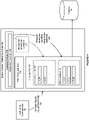
- Figure 3 further illustrates a system that includes a connection pool, including support for use in a multi-tenant environment, in accordance with an embodiment.
- Software applications which can be accessed by tenants via a cloud or other network, may, similarly to the environments described above, initialize connections retrieved from a connection pool before using the connection.
- examples of initialization can include simple state re-initializations that require method calls within the application code, or more complex initializations including database operations that require round trips over a network.
- labeling connections allows an application to attach arbitrary name/value pairs to a connection, so that the application can then request a connection with a desired label from the connection pool, including the ability to retrieve an already-initialized connection from the pool and avoid the time and cost of re-initialization.
- a multi-tenant database environment 180 can include, for example, a container database (CDB) 181, and one or more pluggable database (PDB), here illustrated as “PDB-1” 182, “PDB-2” 183, and “PDB-3” 184.
- CDB container database
- PDB pluggable database
- each PDB can be associated with a tenant, here illustrated as “Tenant-1", “Tenant-2”, and “Tenant-3", of a multi-tenant application that is either hosted by the application server or database environment 185, or provided as an external client application 186, and which provides access to the database environment through the use of one or more Oracle Real Application Cluster (RAC) instances 186, 188, including in this example "RAC-lnstance-1", and “RAC-Instance-2"; one or more services, including in this example Service-1", “Service-2”, and “Service-3", and a mapping of tenants to services 190.
- RAC Oracle Real Application Cluster
- an application being used by a tenant to access the database environment can make connection requests associated with that tenant's data source 192, 194, 196, and the system can switch services 198 if necessary, to utilize connections to existing RAC instances or PDBs.
- the system can utilize a server-side connection pool tagging feature, such as that provided, for example, by Oracle Database Resident Connection Pool (DRCP).
- DRCP Oracle Database Resident Connection Pool
- a server-side connection pool tagging feature allows user applications or clients to selectively obtain a connection to a database environment, based on use of a single tag that is understood by that database environment.
- the database server does not communicate the tag value to the user applications or clients, but rather communicates a tag-match (for example, as a Boolean value).
- the system includes support for efficient repurposing of connections.
- a software application can request that a connection be provided, to enable access to the database.
- the connection pool first determine if a particular connection with the exact desired attributes already exists within the pool, but is borrowed at the time of the request. If such a connection exists, then the connection pool waits a period of time for that particular connection to become available, referred to herein as a double-wait. Subsequently, if the particular connection is not made available within the double-wait time period, the connection pool resumes its usual operation, for example by repurposing other connections.
- connection pool whenever a request is made by a software application for a connection with specific desired attributes (e.g., having a particular connection label or a particular session state), the usual procedure is for the connection pool to: (1) determine if there is an available connection which has the desired attributes; or if not, then (2) determine if there is an available connection having different attributes, but which can be repurposed to satisfy the request, by modifying its attributes; or (3) attempt to create an entirely new connection with the desired attributes.
- desired attributes e.g., having a particular connection label or a particular session state
- connection pool will generally wait for an existing, albeit busy, connection to be released, and then repurpose the released connection.
- connection pool supports a single-wait functionality, i.e., to wait for a suitable connection to become available, and then to act accordingly.
- the system includes a double-wait functionality, which enables the connection pool, instead of or in addition to its single-wait functionality described above, to first determine if a particular connection with the exact desired attributes already exists, but is borrowed at the time of the request; and if so, to wait for a period of time for that connection to become available (referred to herein as a connection double-wait timeout ( ⁇ t cdw )), before resuming its usual procedure as described above.
- ⁇ t cdw connection double-wait timeout
- double-wait functionality With double-wait functionality, the possibility of reusing connections, without repurposing or otherwise having to modify the attributes of those connections, is increased. Since change-connection attributes are computationally-expensive operations, in terms of roundtrip/latency and server-side CPU usage, the use of a double-wait provides an efficient means of providing and/or repurposing connections in response to requests.
- the system can include support for cloud-based or multi-tenant environments, including an application server or database that includes or provides access to a database, for use by multiple tenants or tenant applications.
- connection pool double-waits, including first determining if the pool already includes a connection for the given tenant, even though that particular connection is currently borrowed (i.e., a particular connection with the exact desired attributes). If so, then the connection pool waits for a period of time for that particular (i.e., that given tenant's) connection to become available, so that it can be provided without requiring a change in attributes. The connection pool will only repurpose another tenant's connection if no connection with the exact desired attributes is made available.
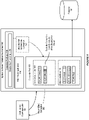
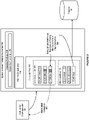
- Figures 4-8 illustrate support for efficient repurposing of connections, in a connection pool environment.
- labeling connections allows a client software application to attach arbitrary name/value pairs to a connection.
- the application can then request a connection with a desired label, to be provided by the connection pool.
- an application can potentially retrieve an already-initialized connection from the pool, and avoid the time and cost of re-initialization. For example, if a software application wishes to make a request on the database, using a particular type of connection, e.g., a (Red) connection, then the connection pool logic can either create a new (Red) connection; or repurpose an existing idle connection from e.g., (Blue or Green) to (Red).
- connection pool's borrow operation is typically complex, comprising several orchestrated connection selection mechanisms - for example, RAC load balancing, high availability, affinity, connection validation, labels processing, harvesting, or processing of various timeouts.
- RAC load balancing high availability, affinity, connection validation, labels processing, harvesting, or processing of various timeouts.
- a repurposing could include a transformation of, for example, a (Blue) connection to a (Red) connection; in actual practice this transformation might require closing a connection on one RAC instance, and creating a replacement on another RAC instance, together with the various procedures required to implement such an operation.
- computationally-expensive attribute changes for example, changing a pluggable database within a container database, as might be implemented in a multi-tenant environment, require a more considered approach.
- a double-wait functionality 250 is used by the connection pool, to perform a wait 252, followed, if appropriate, by a repurpose connection after wait 254, the process of which is described in further detail below.
- the described approach recognizes that, even if there may be a matching connection for a borrow request, and a borrowing thread is double-waiting for this connection, there is no guarantee that the connection is returned within the connection double-wait timeout ( ⁇ t cdw ).
- connection double-wait timeout is set smaller than the connection wait timeout ( ⁇ t cw ), so that the system can revert back to its usual procedure, i.e., to a single-wait borrowing mode, if the double-wait was unsuccessful.
- connection double-wait timeout ( ⁇ t cdw ) can be set as 50 milliseconds, with the (total) connection wait timeout or time period ( ⁇ t cw ) set as 500 milliseconds.
- the described approach recognizes that the system generally may not be able to predict when a borrowed connection will be returned to the pool. However, relying on signal events for such information would be expensive performance-wise. For example, if the system were to wait for a signal API, for every returned connection, this would slow down the performance of the connection borrow/return mechanism.
- connection pool supports a borrow operation that combines a small number of waiting-for-a-signal API calls, with busy-waiting polls of a pool, for obtaining a required connection.
- borrow operation waits to be signaled, is when there is nothing to borrow at the moment. An appearance of a valid available connection triggers all of the currently-borrowing threads to start polling.
- connection pool supports an auto-tuning process, as further described below, to provide a balance between CPU load and endurance of these intervals.
- ⁇ t 0 is an empirical constant time interval
- CPU expected is the percentage CPU utilization expected
- CPU current is the percentage current CPU utilization.
- the value for CPU utilization is an integral value of CPU utilization for all participating threads.
- connection single-wait mode a connection single-wait mode
- connection double-wait mode a connection double-wait mode
- connection pool logic In a connection single-wait mode, the connection pool logic assumes that a borrow request expects any connection to show up available to be reserved (for example, any of (Red), (Blue), or (Green) connections, the particular connection type does not matter), repurposed if needed (e.g., a (Red) connection is transformed to (Green)), and then borrowed.
- This single-wait mode lasts for the duration of the connection wait timeout ( ⁇ t cw ), which can be defined as a configurable connection pool property.
- connection double-wait mode the connection pool assumes that a borrow request expects only a connection of required quality or type, i.e., having the exact desired attributes (e.g. only (Red) connections), such that a repurpose is not needed.
- This double-wait mode lasts for the duration of the connection double-wait timeout ( ⁇ t cdw ), which can be defined as a configurable connection pool property, or automatically/dynamically calculated by the system.
- connection wait timeout ( ⁇ t cw ) is the longest interval of time for a borrowing thread to poll a pool for a connection.
- the value for double-wait timeout ⁇ t cdw can be defined as a configurable property.
- another approach is to use an auto-tuning process.
- n is some amount of most recent ⁇ t i - individual (i) borrow time intervals (i.e., the time passed between a connection borrow, and a return back to a pool) for all connections of a required type in a pool.
- the value for ⁇ t ab is inversely proportional to the number of borrowed connections fitting a pending borrow request (N c ), and is proportional to the number of similar pending borrow requests, i.e., those request looking for connection of the same type (N br ).
- connection pool can receive a request for a particular type (e.g., a (Blue)-labeled) connection 260.
- a particular type e.g., a (Blue)-labeled
- the system includes a double-wait functionality, which enables the connection pool, instead of or in addition to its single-wait functionality described above, to first determine if a particular connection with the exact desired attributes already exists, but is borrowed at the time of the request; and if so, to wait for a period of time for that connection to become available If a desired connection is made available within the double-wait timeout ( ⁇ t cdw ), then it is returned 262 to the client application for its use.
- ⁇ t cdw double-wait timeout
- connection pool resumes its usual procedure, during a single-wait mode.
- connection pool determines whether to repurpose 264 an existing idle connection, in this example to a (Blue) Connection 266, and then return it 268, to the client application.
- Example 1 Consider a pool of 100 connections, in which ⁇ t cw is 10 seconds, there are two types of connections, 50 (Green) and 50 (Blue) ones. Currently there are all 50 (Green) and 25 (Blue) ones borrowed, 25 (Blue) ones are available and there are 150 (Green) borrow requests pending. ⁇ t ab is 1 second for now.
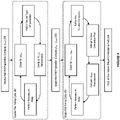
- Figure 9 further illustrates support for efficient repurposing of connections in a connection pool environment.
- connection borrow operation can be viewed as proceeding from a double-wait poll preparation step 280, to a double-wait polling cycle 282, to a single-wait poll preparation step 290, to a single-wait polling cycle 292, to one or more post-borrow action steps 300, each of which are further described below.
- the double-wait poll preparations can include:
- the double-wait polling cycle can include:
- the single-wait poll preparations can include:
- the single-wait polling cycle can include:
- the post-borrow actions can include:
- connection return operation for a double-wait mechanism, a regular connection return logic works as needed, returning a connection from an application because it is not needed anymore.
- the return increments the number of available connections, marks a connection available in the pool, and sends a signal to a pool if it is waiting for at least one available connection.
- Figure 10 illustrates a method of providing support for efficient repurposing of connections, in a connection pool environment, in accordance with an embodiment.
- connection pool logic or program code is provided that controls the creation and use of connection objects in a connection pool, wherein software applications can request a connection from the connection pool, and use a provided connection to access a database.
- a double-wait functionality is provided for use with the connection pool, wherein in response to a request for a particular connection having desired attributes, the connection pool first determines if a connection with those exact desired attributes already exists within the connection pool, but is borrowed at the time of the request; and if so, the connection pool waits for a double-wait timeout or time period for that connection to become available.
- connection pool reverts to a single-wait mode, to determine if there is an available connection having different attributes, but which can be repurposed to satisfy the request, by modifying its attributes; or attempt to create an entirely new connection with the desired attributes.
- connection pool provides one of the connection having the exact desired attributes, the repurposed connection, the new connection, or returns a null or other value.
- Embodiments of the present invention may be conveniently implemented using one or more conventional general purpose or specialized digital computer, computing device, machine, or microprocessor, including one or more processors, memory and/or computer readable storage media programmed according to the teachings of the present disclosure.
- Appropriate software coding can readily be prepared by skilled programmers based on the teachings of the present disclosure, as will be apparent to those skilled in the software art.
- the present invention includes a computer program product which is a non-transitory storage medium or computer readable medium (media) having instructions stored thereon/in which can be used to program a computer to perform any of the processes of the present invention.
- the storage medium can include, but is not limited to, any type of disk including floppy disks, optical discs, DVD, CD-ROMs, microdrive, and magnetooptical disks, ROMs, RAMs, EPROMs, EEPROMs, DRAMs, VRAMs, flash memory devices, magnetic or optical cards, nanosystems (including molecular memory ICs), or any type of media or device suitable for storing instructions and/or data.
Landscapes
- Engineering & Computer Science (AREA)
- Theoretical Computer Science (AREA)
- Databases & Information Systems (AREA)
- Physics & Mathematics (AREA)
- General Engineering & Computer Science (AREA)
- General Physics & Mathematics (AREA)
- Data Mining & Analysis (AREA)
- Software Systems (AREA)
- Computational Linguistics (AREA)
- Computer Networks & Wireless Communication (AREA)
- Signal Processing (AREA)
- Information Retrieval, Db Structures And Fs Structures Therefor (AREA)
Applications Claiming Priority (2)
| Application Number | Priority Date | Filing Date | Title |
|---|---|---|---|
| US15/227,899 US11120036B2 (en) | 2016-08-03 | 2016-08-03 | System and method for efficient repurposing of connections in a multi-tenant database environment |
| PCT/US2017/045288 WO2018027028A1 (en) | 2016-08-03 | 2017-08-03 | System and method for efficient repurposing of connections in a multi-tenant database environment |
Publications (2)
| Publication Number | Publication Date |
|---|---|
| EP3494474A1 EP3494474A1 (en) | 2019-06-12 |
| EP3494474B1 true EP3494474B1 (en) | 2022-10-26 |
Family
ID=59626700
Family Applications (1)
| Application Number | Title | Priority Date | Filing Date |
|---|---|---|---|
| EP17752237.2A Active EP3494474B1 (en) | 2016-08-03 | 2017-08-03 | System and method for efficient repurposing of connections in a multi-tenant database environment |
Country Status (5)
| Country | Link |
|---|---|
| US (1) | US11120036B2 (enExample) |
| EP (1) | EP3494474B1 (enExample) |
| JP (1) | JP7075888B2 (enExample) |
| CN (1) | CN108475216B (enExample) |
| WO (1) | WO2018027028A1 (enExample) |
Cited By (1)
| Publication number | Priority date | Publication date | Assignee | Title |
|---|---|---|---|---|
| WO2025098656A1 (en) * | 2023-11-08 | 2025-05-15 | International Business Machines Corporation | Managing a connection pool for cloud-based applications accessing databases |
Families Citing this family (7)
| Publication number | Priority date | Publication date | Assignee | Title |
|---|---|---|---|---|
| US11323315B1 (en) * | 2017-11-29 | 2022-05-03 | Amazon Technologies, Inc. | Automated host management service |
| US11151150B2 (en) | 2019-09-13 | 2021-10-19 | Salesforce.Com, Inc. | Adjustable connection pool mechanism |
| US11636067B2 (en) | 2019-10-04 | 2023-04-25 | Salesforce.Com, Inc. | Performance measurement mechanism |
| US11165857B2 (en) * | 2019-10-23 | 2021-11-02 | Salesforce.Com, Inc. | Connection pool anomaly detection mechanism |
| US11442928B2 (en) * | 2019-11-04 | 2022-09-13 | Amazon Technologies, Inc. | Multi-tenant provider network database connection management and governance |
| US12050708B2 (en) * | 2022-03-11 | 2024-07-30 | Oracle International Corporation | Cardinal method for hierarchical phased secure access to system entities in isolated multi-tenant database for autonomous cloud environments |
| US11943316B1 (en) * | 2022-12-02 | 2024-03-26 | Amazon Technologies, Inc. | Database connection multiplexing for prepared statements |
Family Cites Families (21)
| Publication number | Priority date | Publication date | Assignee | Title |
|---|---|---|---|---|
| US7207041B2 (en) * | 2001-06-28 | 2007-04-17 | Tranzeo Wireless Technologies, Inc. | Open platform architecture for shared resource access management |
| US7032003B1 (en) * | 2001-08-13 | 2006-04-18 | Union Gold Holdings, Ltd. | Hybrid replication scheme with data and actions for wireless devices |
| US8145759B2 (en) | 2002-11-04 | 2012-03-27 | Oracle America, Inc. | Dynamically configurable resource pool |
| US7953860B2 (en) * | 2003-08-14 | 2011-05-31 | Oracle International Corporation | Fast reorganization of connections in response to an event in a clustered computing system |
| US7937493B2 (en) * | 2003-08-14 | 2011-05-03 | Oracle International Corporation | Connection pool use of runtime load balancing service performance advisories |
| US7657892B2 (en) * | 2004-05-20 | 2010-02-02 | Bea Systems, Inc. | System and method for application server with self-tuned threading model |
| GB0519981D0 (en) | 2005-09-30 | 2005-11-09 | Ignios Ltd | Scheduling in a multicore architecture |
| US8943181B2 (en) * | 2005-11-29 | 2015-01-27 | Ebay Inc. | Method and system for reducing connections to a database |
| JP2007257257A (ja) * | 2006-03-23 | 2007-10-04 | Matsushita Electric Ind Co Ltd | マルチタスクシステムにおけるタスク実行環境切替え方法 |
| US8015524B1 (en) * | 2007-03-23 | 2011-09-06 | Altera Corporation | Method and apparatus for performing incremental delay annotation |
| US8413156B2 (en) * | 2007-04-05 | 2013-04-02 | Ebay, Inc. | Method and system for managing resource connections |
| CN101183377B (zh) * | 2007-12-10 | 2010-09-08 | 华中科技大学 | 一种基于消息中间件的高可用性数据库集群系统 |
| US8417723B1 (en) * | 2008-09-12 | 2013-04-09 | Salesforce.Com, Inc. | System, method and computer program product for enabling access to a resource of a multi-tenant on-demand database service utilizing a token |
| JP5757325B2 (ja) * | 2011-03-29 | 2015-07-29 | 日本電気株式会社 | 仮想デスクトップシステム、ネットワーク処理装置、管理方法、及び管理プログラム |
| US9268798B2 (en) * | 2013-04-26 | 2016-02-23 | Oracle International Corporation | Support for cloud-based multi-tenant environments using connection labeling |
| CN104239365B (zh) * | 2013-06-24 | 2018-09-04 | 北京新媒传信科技有限公司 | 一种获取数据库连接池中连接的方法和数据库连接池 |
| CN103646111B (zh) * | 2013-12-25 | 2017-02-15 | 普元信息技术股份有限公司 | 大数据环境下实现实时数据关联的系统及方法 |
| US9229996B2 (en) * | 2013-12-30 | 2016-01-05 | Microsoft Technology Licensing, Llc | Providing consistent tenant experiences for multi-tenant databases |
| KR102271265B1 (ko) * | 2014-01-21 | 2021-07-01 | 오라클 인터내셔날 코포레이션 | 어플리케이션 서버, 클라우드 또는 다른 환경에서 멀티 테넌시를 지원하기 위한 시스템 및 방법 |
| CN105808638B (zh) * | 2016-02-23 | 2019-03-29 | 平安科技(深圳)有限公司 | 数据处理方法和系统 |
| US10353910B2 (en) * | 2016-07-15 | 2019-07-16 | Ebay Inc. | Preemptive connection pool adjustments |
-
2016
- 2016-08-03 US US15/227,899 patent/US11120036B2/en active Active
-
2017
- 2017-08-03 JP JP2018533871A patent/JP7075888B2/ja active Active
- 2017-08-03 CN CN201780005289.8A patent/CN108475216B/zh active Active
- 2017-08-03 EP EP17752237.2A patent/EP3494474B1/en active Active
- 2017-08-03 WO PCT/US2017/045288 patent/WO2018027028A1/en not_active Ceased
Cited By (2)
| Publication number | Priority date | Publication date | Assignee | Title |
|---|---|---|---|---|
| WO2025098656A1 (en) * | 2023-11-08 | 2025-05-15 | International Business Machines Corporation | Managing a connection pool for cloud-based applications accessing databases |
| US12335163B2 (en) | 2023-11-08 | 2025-06-17 | International Business Machines Corporation | Managing a connection pool for cloud-based applications accessing databases |
Also Published As
| Publication number | Publication date |
|---|---|
| JP2019528490A (ja) | 2019-10-10 |
| CN108475216A (zh) | 2018-08-31 |
| WO2018027028A1 (en) | 2018-02-08 |
| CN108475216B (zh) | 2022-07-22 |
| US20180039678A1 (en) | 2018-02-08 |
| EP3494474A1 (en) | 2019-06-12 |
| JP7075888B2 (ja) | 2022-05-26 |
| US11120036B2 (en) | 2021-09-14 |
Similar Documents
| Publication | Publication Date | Title |
|---|---|---|
| US11120036B2 (en) | System and method for efficient repurposing of connections in a multi-tenant database environment | |
| US10909211B2 (en) | System and method for control of maximum connections in a connection pool environment | |
| US11630692B2 (en) | Efficient worker utilization | |
| US7673029B2 (en) | Grid automation bus to integrate management frameworks for dynamic grid management | |
| US7937493B2 (en) | Connection pool use of runtime load balancing service performance advisories | |
| US8640137B1 (en) | Methods and apparatus for resource management in cluster computing | |
| US10742748B2 (en) | System and method for supporting live addition of a tenant in a connection pool environment | |
| US9785687B2 (en) | System and method for transparent multi key-value weighted attributed connection using uni-tag connection pools | |
| US10592140B2 (en) | Method and system for automated storage provisioning | |
| US9910881B1 (en) | Maintaining versions of control plane data for a network-based service control plane | |
| US20050172029A1 (en) | Method and apparatus for managing a connection pool using heuristic information | |
| US20180039628A1 (en) | System and method for providing dynamic relocation of tenants in a multi-tenant database environment | |
| US11881996B2 (en) | Input and output for target device communication | |
| US12530238B2 (en) | Smart web cluster routing | |
| US11290540B2 (en) | System and method for use of server-side connection pool tagging in a multi-tenant environment | |
| US11917033B2 (en) | Techniques for managing distributed computing components | |
| US10824750B2 (en) | System and method for performing connection validation in a multi-tenant environment | |
| US10397130B2 (en) | Multi-cloud resource reservations | |
| US20040117372A1 (en) | System and method for controlling access to system resources | |
| CN119417146A (zh) | 一种容器化电力应用管理方法及电子设备 | |
| CN116980437A (zh) | 一种深度学习异构计算系统 | |
| US8972346B2 (en) | Method and system for minimizing synchronization efforts of parallel database systems | |
| CN120631510A (zh) | 一种基于共池管理的容器创建方法、设备、介质及产品 | |
| JP2012164190A (ja) | 排他制御装置および排他制御方法 |
Legal Events
| Date | Code | Title | Description |
|---|---|---|---|
| STAA | Information on the status of an ep patent application or granted ep patent |
Free format text: STATUS: UNKNOWN |
|
| STAA | Information on the status of an ep patent application or granted ep patent |
Free format text: STATUS: THE INTERNATIONAL PUBLICATION HAS BEEN MADE |
|
| PUAI | Public reference made under article 153(3) epc to a published international application that has entered the european phase |
Free format text: ORIGINAL CODE: 0009012 |
|
| STAA | Information on the status of an ep patent application or granted ep patent |
Free format text: STATUS: REQUEST FOR EXAMINATION WAS MADE |
|
| 17P | Request for examination filed |
Effective date: 20181020 |
|
| AK | Designated contracting states |
Kind code of ref document: A1 Designated state(s): AL AT BE BG CH CY CZ DE DK EE ES FI FR GB GR HR HU IE IS IT LI LT LU LV MC MK MT NL NO PL PT RO RS SE SI SK SM TR |
|
| AX | Request for extension of the european patent |
Extension state: BA ME |
|
| RIN1 | Information on inventor provided before grant (corrected) |
Inventor name: MAHIDHARA, CHANDRA SEKHAR KRISHNA Inventor name: DOLGOV, YURI Inventor name: DE LAVARENE, JEAN Inventor name: HEGDE, VIDYA Inventor name: VERMA, SAURABH Inventor name: NAMACHIVAYAM, ARAMVALARTHANATHAN |
|
| RIN1 | Information on inventor provided before grant (corrected) |
Inventor name: VERMA, SAURABH Inventor name: HEGDE, VIDYA Inventor name: DE LAVARENE, JEAN Inventor name: MAHIDHARA, CHANDRA SEKHAR KRISHNA Inventor name: NAMACHIVAYAM, ARAMVALARTHANATHAN Inventor name: DOLGOV, YURI |
|
| DAV | Request for validation of the european patent (deleted) | ||
| DAX | Request for extension of the european patent (deleted) | ||
| RIN1 | Information on inventor provided before grant (corrected) |
Inventor name: MAHIDHARA, CHANDRA SEKHAR KRISHNA Inventor name: VERMA, SAURABH Inventor name: DE LAVARENE, JEAN Inventor name: NAMACHIVAYAM, ARAMVALARTHANATHAN Inventor name: HEGDE, VIDYA Inventor name: DOLGOV, YURI |
|
| STAA | Information on the status of an ep patent application or granted ep patent |
Free format text: STATUS: EXAMINATION IS IN PROGRESS |
|
| 17Q | First examination report despatched |
Effective date: 20210408 |
|
| GRAP | Despatch of communication of intention to grant a patent |
Free format text: ORIGINAL CODE: EPIDOSNIGR1 |
|
| STAA | Information on the status of an ep patent application or granted ep patent |
Free format text: STATUS: GRANT OF PATENT IS INTENDED |
|
| INTG | Intention to grant announced |
Effective date: 20220530 |
|
| GRAS | Grant fee paid |
Free format text: ORIGINAL CODE: EPIDOSNIGR3 |
|
| GRAA | (expected) grant |
Free format text: ORIGINAL CODE: 0009210 |
|
| STAA | Information on the status of an ep patent application or granted ep patent |
Free format text: STATUS: THE PATENT HAS BEEN GRANTED |
|
| AK | Designated contracting states |
Kind code of ref document: B1 Designated state(s): AL AT BE BG CH CY CZ DE DK EE ES FI FR GB GR HR HU IE IS IT LI LT LU LV MC MK MT NL NO PL PT RO RS SE SI SK SM TR |
|
| REG | Reference to a national code |
Ref country code: GB Ref legal event code: FG4D |
|
| REG | Reference to a national code |
Ref country code: CH Ref legal event code: EP |
|
| REG | Reference to a national code |
Ref country code: AT Ref legal event code: REF Ref document number: 1527545 Country of ref document: AT Kind code of ref document: T Effective date: 20221115 |
|
| REG | Reference to a national code |
Ref country code: DE Ref legal event code: R096 Ref document number: 602017063019 Country of ref document: DE |
|
| REG | Reference to a national code |
Ref country code: IE Ref legal event code: FG4D |
|
| REG | Reference to a national code |
Ref country code: LT Ref legal event code: MG9D |
|
| REG | Reference to a national code |
Ref country code: NL Ref legal event code: MP Effective date: 20221026 |
|
| REG | Reference to a national code |
Ref country code: AT Ref legal event code: MK05 Ref document number: 1527545 Country of ref document: AT Kind code of ref document: T Effective date: 20221026 |
|
| PG25 | Lapsed in a contracting state [announced via postgrant information from national office to epo] |
Ref country code: NL Free format text: LAPSE BECAUSE OF FAILURE TO SUBMIT A TRANSLATION OF THE DESCRIPTION OR TO PAY THE FEE WITHIN THE PRESCRIBED TIME-LIMIT Effective date: 20221026 |
|
| PG25 | Lapsed in a contracting state [announced via postgrant information from national office to epo] |
Ref country code: SE Free format text: LAPSE BECAUSE OF FAILURE TO SUBMIT A TRANSLATION OF THE DESCRIPTION OR TO PAY THE FEE WITHIN THE PRESCRIBED TIME-LIMIT Effective date: 20221026 Ref country code: PT Free format text: LAPSE BECAUSE OF FAILURE TO SUBMIT A TRANSLATION OF THE DESCRIPTION OR TO PAY THE FEE WITHIN THE PRESCRIBED TIME-LIMIT Effective date: 20230227 Ref country code: NO Free format text: LAPSE BECAUSE OF FAILURE TO SUBMIT A TRANSLATION OF THE DESCRIPTION OR TO PAY THE FEE WITHIN THE PRESCRIBED TIME-LIMIT Effective date: 20230126 Ref country code: LT Free format text: LAPSE BECAUSE OF FAILURE TO SUBMIT A TRANSLATION OF THE DESCRIPTION OR TO PAY THE FEE WITHIN THE PRESCRIBED TIME-LIMIT Effective date: 20221026 Ref country code: FI Free format text: LAPSE BECAUSE OF FAILURE TO SUBMIT A TRANSLATION OF THE DESCRIPTION OR TO PAY THE FEE WITHIN THE PRESCRIBED TIME-LIMIT Effective date: 20221026 Ref country code: ES Free format text: LAPSE BECAUSE OF FAILURE TO SUBMIT A TRANSLATION OF THE DESCRIPTION OR TO PAY THE FEE WITHIN THE PRESCRIBED TIME-LIMIT Effective date: 20221026 Ref country code: AT Free format text: LAPSE BECAUSE OF FAILURE TO SUBMIT A TRANSLATION OF THE DESCRIPTION OR TO PAY THE FEE WITHIN THE PRESCRIBED TIME-LIMIT Effective date: 20221026 |
|
| PG25 | Lapsed in a contracting state [announced via postgrant information from national office to epo] |
Ref country code: RS Free format text: LAPSE BECAUSE OF FAILURE TO SUBMIT A TRANSLATION OF THE DESCRIPTION OR TO PAY THE FEE WITHIN THE PRESCRIBED TIME-LIMIT Effective date: 20221026 Ref country code: PL Free format text: LAPSE BECAUSE OF FAILURE TO SUBMIT A TRANSLATION OF THE DESCRIPTION OR TO PAY THE FEE WITHIN THE PRESCRIBED TIME-LIMIT Effective date: 20221026 Ref country code: LV Free format text: LAPSE BECAUSE OF FAILURE TO SUBMIT A TRANSLATION OF THE DESCRIPTION OR TO PAY THE FEE WITHIN THE PRESCRIBED TIME-LIMIT Effective date: 20221026 Ref country code: IS Free format text: LAPSE BECAUSE OF FAILURE TO SUBMIT A TRANSLATION OF THE DESCRIPTION OR TO PAY THE FEE WITHIN THE PRESCRIBED TIME-LIMIT Effective date: 20230226 Ref country code: HR Free format text: LAPSE BECAUSE OF FAILURE TO SUBMIT A TRANSLATION OF THE DESCRIPTION OR TO PAY THE FEE WITHIN THE PRESCRIBED TIME-LIMIT Effective date: 20221026 Ref country code: GR Free format text: LAPSE BECAUSE OF FAILURE TO SUBMIT A TRANSLATION OF THE DESCRIPTION OR TO PAY THE FEE WITHIN THE PRESCRIBED TIME-LIMIT Effective date: 20230127 |
|
| P01 | Opt-out of the competence of the unified patent court (upc) registered |
Effective date: 20230522 |
|
| REG | Reference to a national code |
Ref country code: DE Ref legal event code: R097 Ref document number: 602017063019 Country of ref document: DE |
|
| PG25 | Lapsed in a contracting state [announced via postgrant information from national office to epo] |
Ref country code: SM Free format text: LAPSE BECAUSE OF FAILURE TO SUBMIT A TRANSLATION OF THE DESCRIPTION OR TO PAY THE FEE WITHIN THE PRESCRIBED TIME-LIMIT Effective date: 20221026 Ref country code: RO Free format text: LAPSE BECAUSE OF FAILURE TO SUBMIT A TRANSLATION OF THE DESCRIPTION OR TO PAY THE FEE WITHIN THE PRESCRIBED TIME-LIMIT Effective date: 20221026 Ref country code: EE Free format text: LAPSE BECAUSE OF FAILURE TO SUBMIT A TRANSLATION OF THE DESCRIPTION OR TO PAY THE FEE WITHIN THE PRESCRIBED TIME-LIMIT Effective date: 20221026 Ref country code: DK Free format text: LAPSE BECAUSE OF FAILURE TO SUBMIT A TRANSLATION OF THE DESCRIPTION OR TO PAY THE FEE WITHIN THE PRESCRIBED TIME-LIMIT Effective date: 20221026 Ref country code: CZ Free format text: LAPSE BECAUSE OF FAILURE TO SUBMIT A TRANSLATION OF THE DESCRIPTION OR TO PAY THE FEE WITHIN THE PRESCRIBED TIME-LIMIT Effective date: 20221026 |
|
| PG25 | Lapsed in a contracting state [announced via postgrant information from national office to epo] |
Ref country code: SK Free format text: LAPSE BECAUSE OF FAILURE TO SUBMIT A TRANSLATION OF THE DESCRIPTION OR TO PAY THE FEE WITHIN THE PRESCRIBED TIME-LIMIT Effective date: 20221026 Ref country code: AL Free format text: LAPSE BECAUSE OF FAILURE TO SUBMIT A TRANSLATION OF THE DESCRIPTION OR TO PAY THE FEE WITHIN THE PRESCRIBED TIME-LIMIT Effective date: 20221026 |
|
| PLBE | No opposition filed within time limit |
Free format text: ORIGINAL CODE: 0009261 |
|
| STAA | Information on the status of an ep patent application or granted ep patent |
Free format text: STATUS: NO OPPOSITION FILED WITHIN TIME LIMIT |
|
| 26N | No opposition filed |
Effective date: 20230727 |
|
| PG25 | Lapsed in a contracting state [announced via postgrant information from national office to epo] |
Ref country code: SI Free format text: LAPSE BECAUSE OF FAILURE TO SUBMIT A TRANSLATION OF THE DESCRIPTION OR TO PAY THE FEE WITHIN THE PRESCRIBED TIME-LIMIT Effective date: 20221026 |
|
| PG25 | Lapsed in a contracting state [announced via postgrant information from national office to epo] |
Ref country code: MC Free format text: LAPSE BECAUSE OF FAILURE TO SUBMIT A TRANSLATION OF THE DESCRIPTION OR TO PAY THE FEE WITHIN THE PRESCRIBED TIME-LIMIT Effective date: 20221026 |
|
| REG | Reference to a national code |
Ref country code: CH Ref legal event code: PL |
|
| PG25 | Lapsed in a contracting state [announced via postgrant information from national office to epo] |
Ref country code: MC Free format text: LAPSE BECAUSE OF FAILURE TO SUBMIT A TRANSLATION OF THE DESCRIPTION OR TO PAY THE FEE WITHIN THE PRESCRIBED TIME-LIMIT Effective date: 20221026 |
|
| PG25 | Lapsed in a contracting state [announced via postgrant information from national office to epo] |
Ref country code: LU Free format text: LAPSE BECAUSE OF NON-PAYMENT OF DUE FEES Effective date: 20230803 |
|
| PG25 | Lapsed in a contracting state [announced via postgrant information from national office to epo] |
Ref country code: LU Free format text: LAPSE BECAUSE OF NON-PAYMENT OF DUE FEES Effective date: 20230803 Ref country code: CH Free format text: LAPSE BECAUSE OF NON-PAYMENT OF DUE FEES Effective date: 20230831 |
|
| REG | Reference to a national code |
Ref country code: BE Ref legal event code: MM Effective date: 20230831 |
|
| REG | Reference to a national code |
Ref country code: IE Ref legal event code: MM4A |
|
| PG25 | Lapsed in a contracting state [announced via postgrant information from national office to epo] |
Ref country code: IT Free format text: LAPSE BECAUSE OF FAILURE TO SUBMIT A TRANSLATION OF THE DESCRIPTION OR TO PAY THE FEE WITHIN THE PRESCRIBED TIME-LIMIT Effective date: 20221026 |
|
| PG25 | Lapsed in a contracting state [announced via postgrant information from national office to epo] |
Ref country code: IE Free format text: LAPSE BECAUSE OF NON-PAYMENT OF DUE FEES Effective date: 20230803 |
|
| PG25 | Lapsed in a contracting state [announced via postgrant information from national office to epo] |
Ref country code: IE Free format text: LAPSE BECAUSE OF NON-PAYMENT OF DUE FEES Effective date: 20230803 Ref country code: FR Free format text: LAPSE BECAUSE OF NON-PAYMENT OF DUE FEES Effective date: 20230831 |
|
| PG25 | Lapsed in a contracting state [announced via postgrant information from national office to epo] |
Ref country code: BE Free format text: LAPSE BECAUSE OF NON-PAYMENT OF DUE FEES Effective date: 20230831 |
|
| PG25 | Lapsed in a contracting state [announced via postgrant information from national office to epo] |
Ref country code: BG Free format text: LAPSE BECAUSE OF FAILURE TO SUBMIT A TRANSLATION OF THE DESCRIPTION OR TO PAY THE FEE WITHIN THE PRESCRIBED TIME-LIMIT Effective date: 20221026 |
|
| PG25 | Lapsed in a contracting state [announced via postgrant information from national office to epo] |
Ref country code: BG Free format text: LAPSE BECAUSE OF FAILURE TO SUBMIT A TRANSLATION OF THE DESCRIPTION OR TO PAY THE FEE WITHIN THE PRESCRIBED TIME-LIMIT Effective date: 20221026 |
|
| PG25 | Lapsed in a contracting state [announced via postgrant information from national office to epo] |
Ref country code: CY Free format text: LAPSE BECAUSE OF FAILURE TO SUBMIT A TRANSLATION OF THE DESCRIPTION OR TO PAY THE FEE WITHIN THE PRESCRIBED TIME-LIMIT; INVALID AB INITIO Effective date: 20170803 |
|
| PG25 | Lapsed in a contracting state [announced via postgrant information from national office to epo] |
Ref country code: HU Free format text: LAPSE BECAUSE OF FAILURE TO SUBMIT A TRANSLATION OF THE DESCRIPTION OR TO PAY THE FEE WITHIN THE PRESCRIBED TIME-LIMIT; INVALID AB INITIO Effective date: 20170803 |
|
| PGFP | Annual fee paid to national office [announced via postgrant information from national office to epo] |
Ref country code: DE Payment date: 20250702 Year of fee payment: 9 |
|
| PGFP | Annual fee paid to national office [announced via postgrant information from national office to epo] |
Ref country code: GB Payment date: 20250703 Year of fee payment: 9 |
|
| PG25 | Lapsed in a contracting state [announced via postgrant information from national office to epo] |
Ref country code: TR Free format text: LAPSE BECAUSE OF FAILURE TO SUBMIT A TRANSLATION OF THE DESCRIPTION OR TO PAY THE FEE WITHIN THE PRESCRIBED TIME-LIMIT Effective date: 20221026 |
|
| PG25 | Lapsed in a contracting state [announced via postgrant information from national office to epo] |
Ref country code: MT Free format text: LAPSE BECAUSE OF NON-PAYMENT OF DUE FEES Effective date: 20230803 |