EP3490992B1 - Spiro-lactam nmda receptor modulators and uses thereof - Google Patents
Spiro-lactam nmda receptor modulators and uses thereof Download PDFInfo
- Publication number
- EP3490992B1 EP3490992B1 EP17751544.2A EP17751544A EP3490992B1 EP 3490992 B1 EP3490992 B1 EP 3490992B1 EP 17751544 A EP17751544 A EP 17751544A EP 3490992 B1 EP3490992 B1 EP 3490992B1
- Authority
- EP
- European Patent Office
- Prior art keywords
- alkyl
- compound
- group
- occurrence
- independently selected
- Prior art date
- Legal status (The legal status is an assumption and is not a legal conclusion. Google has not performed a legal analysis and makes no representation as to the accuracy of the status listed.)
- Active
Links
Classifications
-
- C—CHEMISTRY; METALLURGY
- C07—ORGANIC CHEMISTRY
- C07D—HETEROCYCLIC COMPOUNDS
- C07D487/00—Heterocyclic compounds containing nitrogen atoms as the only ring hetero atoms in the condensed system, not provided for by groups C07D451/00 - C07D477/00
- C07D487/02—Heterocyclic compounds containing nitrogen atoms as the only ring hetero atoms in the condensed system, not provided for by groups C07D451/00 - C07D477/00 in which the condensed system contains two hetero rings
- C07D487/10—Spiro-condensed systems
-
- A—HUMAN NECESSITIES
- A61—MEDICAL OR VETERINARY SCIENCE; HYGIENE
- A61K—PREPARATIONS FOR MEDICAL, DENTAL OR TOILETRY PURPOSES
- A61K31/00—Medicinal preparations containing organic active ingredients
- A61K31/33—Heterocyclic compounds
- A61K31/395—Heterocyclic compounds having nitrogen as a ring hetero atom, e.g. guanethidine or rifamycins
- A61K31/40—Heterocyclic compounds having nitrogen as a ring hetero atom, e.g. guanethidine or rifamycins having five-membered rings with one nitrogen as the only ring hetero atom, e.g. sulpiride, succinimide, tolmetin, buflomedil
- A61K31/407—Heterocyclic compounds having nitrogen as a ring hetero atom, e.g. guanethidine or rifamycins having five-membered rings with one nitrogen as the only ring hetero atom, e.g. sulpiride, succinimide, tolmetin, buflomedil condensed with other heterocyclic ring systems, e.g. ketorolac, physostigmine
-
- A—HUMAN NECESSITIES
- A61—MEDICAL OR VETERINARY SCIENCE; HYGIENE
- A61K—PREPARATIONS FOR MEDICAL, DENTAL OR TOILETRY PURPOSES
- A61K31/00—Medicinal preparations containing organic active ingredients
- A61K31/33—Heterocyclic compounds
- A61K31/395—Heterocyclic compounds having nitrogen as a ring hetero atom, e.g. guanethidine or rifamycins
- A61K31/435—Heterocyclic compounds having nitrogen as a ring hetero atom, e.g. guanethidine or rifamycins having six-membered rings with one nitrogen as the only ring hetero atom
- A61K31/438—The ring being spiro-condensed with carbocyclic or heterocyclic ring systems
-
- A—HUMAN NECESSITIES
- A61—MEDICAL OR VETERINARY SCIENCE; HYGIENE
- A61K—PREPARATIONS FOR MEDICAL, DENTAL OR TOILETRY PURPOSES
- A61K31/00—Medicinal preparations containing organic active ingredients
- A61K31/33—Heterocyclic compounds
- A61K31/395—Heterocyclic compounds having nitrogen as a ring hetero atom, e.g. guanethidine or rifamycins
- A61K31/435—Heterocyclic compounds having nitrogen as a ring hetero atom, e.g. guanethidine or rifamycins having six-membered rings with one nitrogen as the only ring hetero atom
- A61K31/47—Quinolines; Isoquinolines
- A61K31/4747—Quinolines; Isoquinolines spiro-condensed
-
- A—HUMAN NECESSITIES
- A61—MEDICAL OR VETERINARY SCIENCE; HYGIENE
- A61P—SPECIFIC THERAPEUTIC ACTIVITY OF CHEMICAL COMPOUNDS OR MEDICINAL PREPARATIONS
- A61P25/00—Drugs for disorders of the nervous system
-
- A—HUMAN NECESSITIES
- A61—MEDICAL OR VETERINARY SCIENCE; HYGIENE
- A61P—SPECIFIC THERAPEUTIC ACTIVITY OF CHEMICAL COMPOUNDS OR MEDICINAL PREPARATIONS
- A61P25/00—Drugs for disorders of the nervous system
- A61P25/02—Drugs for disorders of the nervous system for peripheral neuropathies
-
- A—HUMAN NECESSITIES
- A61—MEDICAL OR VETERINARY SCIENCE; HYGIENE
- A61P—SPECIFIC THERAPEUTIC ACTIVITY OF CHEMICAL COMPOUNDS OR MEDICINAL PREPARATIONS
- A61P25/00—Drugs for disorders of the nervous system
- A61P25/18—Antipsychotics, i.e. neuroleptics; Drugs for mania or schizophrenia
-
- A—HUMAN NECESSITIES
- A61—MEDICAL OR VETERINARY SCIENCE; HYGIENE
- A61P—SPECIFIC THERAPEUTIC ACTIVITY OF CHEMICAL COMPOUNDS OR MEDICINAL PREPARATIONS
- A61P25/00—Drugs for disorders of the nervous system
- A61P25/22—Anxiolytics
-
- A—HUMAN NECESSITIES
- A61—MEDICAL OR VETERINARY SCIENCE; HYGIENE
- A61P—SPECIFIC THERAPEUTIC ACTIVITY OF CHEMICAL COMPOUNDS OR MEDICINAL PREPARATIONS
- A61P25/00—Drugs for disorders of the nervous system
- A61P25/24—Antidepressants
-
- A—HUMAN NECESSITIES
- A61—MEDICAL OR VETERINARY SCIENCE; HYGIENE
- A61P—SPECIFIC THERAPEUTIC ACTIVITY OF CHEMICAL COMPOUNDS OR MEDICINAL PREPARATIONS
- A61P25/00—Drugs for disorders of the nervous system
- A61P25/28—Drugs for disorders of the nervous system for treating neurodegenerative disorders of the central nervous system, e.g. nootropic agents, cognition enhancers, drugs for treating Alzheimer's disease or other forms of dementia
-
- A—HUMAN NECESSITIES
- A61—MEDICAL OR VETERINARY SCIENCE; HYGIENE
- A61P—SPECIFIC THERAPEUTIC ACTIVITY OF CHEMICAL COMPOUNDS OR MEDICINAL PREPARATIONS
- A61P29/00—Non-central analgesic, antipyretic or antiinflammatory agents, e.g. antirheumatic agents; Non-steroidal antiinflammatory drugs [NSAID]
-
- C—CHEMISTRY; METALLURGY
- C07—ORGANIC CHEMISTRY
- C07D—HETEROCYCLIC COMPOUNDS
- C07D471/00—Heterocyclic compounds containing nitrogen atoms as the only ring hetero atoms in the condensed system, at least one ring being a six-membered ring with one nitrogen atom, not provided for by groups C07D451/00 - C07D463/00
- C07D471/02—Heterocyclic compounds containing nitrogen atoms as the only ring hetero atoms in the condensed system, at least one ring being a six-membered ring with one nitrogen atom, not provided for by groups C07D451/00 - C07D463/00 in which the condensed system contains two hetero rings
- C07D471/10—Spiro-condensed systems
Definitions
- An N-methyl-d-aspartate (“NMDA”) receptor is a postsynaptic, ionotropic receptor that is responsive to, inter alia, the excitatory amino acids glutamate and glycine and the synthetic compound NMDA.
- the NMDA receptor controls the flow of both divalent and monovalent ions into the postsynaptic neural cell through a receptor associated channel ( Foster et al., Nature 1987, 329:395-396 ; Mayer et al., Trends in Pharmacol. Sci. 1990, 11:254-260 ).
- the NMDA receptor has been implicated during development in specifying neuronal architecture and synaptic connectivity, and may be involved in experience-dependent synaptic modifications.
- NMDA receptors are also thought to be involved in long term potentiation and central nervous system disorders.
- the NMDA receptor plays a major role in the synaptic plasticity that underlies many higher cognitive functions, such as memory acquisition, retention and learning, as well as in certain cognitive pathways and in the perception of pain ( Collingridge et al., The NMDA Receptor, Oxford University Press, 1994 ). In addition, certain properties of NMDA receptors suggest that they may be involved in the information-processing in the brain that underlies consciousness itself.
- the NMDA receptor has drawn particular interest since it appears to be involved in a broad spectrum of CNS disorders. For instance, during brain ischemia caused by stroke or traumatic injury, excessive amounts of the excitatory amino acid glutamate are released from damaged or oxygen deprived neurons. This excess glutamate binds to the NMDA receptors which opens their ligand-gated ion channels; in turn the calcium influx produces a high level of intracellular calcium which activates a biochemical cascade resulting in protein degradation and cell death. This phenomenon, known as excitotoxicity, is also thought to be responsible for the neurological damage associated with other disorders ranging from hypoglycemia and cardiac arrest to epilepsy.
- the NMDA receptor is believed to consist of several protein chains embedded in the postsynaptic membrane.
- the first two types of subunits discovered so far form a large extracellular region, which probably contains most of the allosteric binding sites, several transmembrane regions looped and folded so as to form a pore or channel, which is permeable to Ca ++ , and a carboxyl terminal region.
- the opening and closing of the channel is regulated by the binding of various ligands to domains (allosteric sites) of the protein residing on the extracellular surface.
- the binding of the ligands is thought to affect a conformational change in the overall structure of the protein which is ultimately reflected in the channel opening, partially opening, partially closing, or closing.
- WO 2014/120789 WO 2014/120800 and WO 2014/120786 all describe spiro-lactam NMDA receptor modulators and uses thereof.
- the present disclosure includes compounds that can be NMDA modulators. More specifically, the present disclosure provides a compound having the formula: or a pharmaceutically acceptable salt and/or a stereoisomer thereof, wherein:
- the present disclosure also provides a compound having the formula: or a pharmaceutically acceptable salt and/or a stereoisomer thereof, wherein: R 1 is selected from the group consisting of C 1 -C 6 alkyl, phenyl, and -C(O)-C 1 -C 6 alkyl;
- compositions comprising a disclosed compound, and a pharmaceutically acceptable excipient.
- Such compositions can be suitable for administration to a patient orally, parenterally, topically, intravaginally, intrarectally, sublingually, ocularly, transdermally, or nasally.
- compounds described herein bind to NMDA receptors expressing certain NR2 subtypes. In some aspects, the compounds described herein bind to one NR2 subtype and not another.
- compounds for use in a method of treating neuropathic pain are disclosed, wherein the neuropathic pain is selected from the group consisting of herpes, HIV, traumatic nerve injury, stroke, post-ischemia, chronic back pain, post-herpetic neuralgia, fibromyalgia, reflex sympathetic dystrophy, complex regional pain syndrome, spinal cord injury, sciatica, phantom limb pain, diabetic neuropathy, and cancer chemotherapeutic-induced neuropathic pain.
- depression may include one or more of major depressive disorder, dysthymic disorder, psychotic depression, postpartum depression, seasonal affective disorder, bipolar disorder, mood disorder, or depression caused by a chronic medical condition.
- a disclosed method may treat schizophrenia.
- Such schizophrenia may be, for example, paranoid type schizophrenia, disorganized type schizophrenia, catatonic type schizophrenia, undifferentiated type schizophrenia, residual type schizophrenia, post-schizophrenic depression, or simple schizophrenia.
- This disclosure is generally directed to compounds that are capable of modulating NMDA receptors, for example, NMDA receptor antagonists, agonists, or partial agonists, and compositions and/or methods of using the disclosed compounds. It should be appreciated that the disclosed compounds may modulate other protein targets and/or specific NMDA receptor subtype.
- alkyl refers to a saturated straight-chain or branched hydrocarbon, such as a straight-chain or branched group of 1-6, 1-4, or 1-3 carbon atoms, referred to herein as C 1 -C 6 alkyl, C 1 -C 4 alkyl, and C 1 -C 3 alkyl, respectively.
- C 1 -C 6 alkyl refers to a straight-chain or branched saturated hydrocarbon containing 1-6 carbon atoms.
- Examples of a C 1 -C 6 alkyl group include methyl, ethyl, propyl, butyl, pentyl, hexyl, isopropyl, isobutyl, sec -butyl, tert -butyl, isopentyl, and neopentyl.
- C 1 -C 4 alkyl refers to a straight-chain or branched saturated hydrocarbon containing 1-4 carbon atoms.
- Examples of a C 1 -C 4 alkyl group include methyl, ethyl, propyl, butyl, isopropyl, isobutyl, sec -butyl and tert -butyl.
- Exemplary alkyl groups include methyl, ethyl, propyl, isopropyl, 2-methyl-1-propyl, 2-methyl-2-propyl, 2-methyl-1-butyl, 3-methyl-1-butyl, 3-methyl-2-butyl, 2,2-dimethyl-1-propyl, 2-methyl-1-pentyl, 3-methyl-1-pentyl, 4-methyl-1-pentyl, 2-methyl-2-pentyl, 3-methyl-2-pentyl, 4-methyl-2-pentyl, 2,2-dimethyl-1-butyl, 3,3-dimethyl-1-butyl, 2-ethyl-1-butyl, butyl, isobutyl, t-butyl, pentyl, isopentyl, neopentyl, and hexyl.
- alkoxy refers to an alkyl group attached to an oxygen atom (alkyl-O-).
- Alkoxy groups can have 1-6 or 2-6 carbon atoms and are referred to herein as C 1 -C 6 alkoxy and C 2 -C 6 alkoxy, respectively.
- Exemplary alkoxy groups include methoxy, ethoxy, propyloxy, isopropoxy, and tert-butoxy.
- cyano refers to the radical -CN.
- carbocyclic ring refers to a hydrocarbon ring system in which all the ring atoms are carbon.
- exemplary carbocyclic rings including cycloalkyls and phenyl.
- cycloalkyl refers to a monocyclic saturated or partially unsaturated hydrocarbon ring (carbocyclic) system, for example, where each ring is either completely saturated or contains one or more units of unsaturation, but where no ring is aromatic.
- a cycloalkyl can have 3-6 or 4-6 carbon atoms in its ring system, referred to herein as C 3 -C 6 cycloalkyl or C 4 -C 6 cycloalkyl, respectively.
- Exemplary cycloalkyl groups include cyclohexyl, cyclohexenyl, cyclopentyl, cyclopentenyl, cyclobutyl, and cyclopropyl.
- halo and “halogen,” as used herein, refer to fluoro (F), chloro (Cl), bromo (Br), and/or iodo (I).
- heteroatom refers to an atom of any element other than carbon or hydrogen and includes, for example, nitrogen (N), oxygen (O), silicon (Si), sulfur (S), phosphorus (P), and selenium (Se).
- heterocyclic ring or “heterocycloalkyl,” as used herein, is art-recognized and refer to saturated or partially unsaturated 3- to 8-membered ring structures, whose ring system include one, two or three heteroatoms, such as nitrogen, oxygen, and/or sulfur.
- a heterocyclic ring can be fused to one or more phenyl, partially unsaturated, or saturated rings. Examples of heterocyclic ring include pyrrolidinyl, piperidinyl, morpholinyl, thiomorpholinyl, and piperazinyl.
- hydroxy and "hydroxyl,” as used herein, refer to the radical -OH.
- amino acid includes any one of the following alpha amino acids: isoleucine, alanine, leucine, asparagine, lysine, aspartate, methionine, cysteine, phenylalanine, glutamate, threonine, glutamine, tryptophan, glycine, valine, proline, arginine, serine, histidine, and tyrosine.
- An amino acid also can include other art-recognized amino acids such as beta amino acids.
- compound refers to the compound itself and its pharmaceutically acceptable salts, hydrates, esters and N-oxides including its various stereoisomers and its isotopically-labelled forms, unless otherwise understood from the context of the description or expressly limited to one particular form of the compound, i.e., the compound itself, a specific stereoisomer and/or isotopically-labelled compound, or a pharmaceutically acceptable salt, a hydrate, an ester, or an N-oxide thereof. It should be understood that a compound can refer to a pharmaceutically acceptable salt, or a hydrate, an ester or an N-oxide of a stereoisomer of the compound and/or an isotopically-labelled compound.
- the compounds of the disclosure can contain one or more chiral centers and/or double bonds and therefore, can exist as stereoisomers, such as geometric isomers, and enantiomers or diastereomers.
- stereoisomers when used herein, consists of all geometric isomers, enantiomers and/or diastereomers of the compound.
- the compound depicted without such chirality at that and other chiral centers of the compound are within the scope of the present disclosure, i.e., the compound depicted in two-dimensions with "flat” or "straight” bonds rather than in three dimensions, for example, with solid or dashed wedge bonds.
- Stereospecific compounds may be designated by the symbols “R” or “S,” depending on the configuration of substituents around the stereogenic carbon atom.
- the present disclosure encompasses all the various stereoisomers of these compounds and mixtures thereof.
- Mixtures of enantiomers or diastereomers can be designated “( ⁇ )” in nomenclature, but a skilled artisan will recognize that a structure can denote a chiral center implicitly. It is understood that graphical depictions of chemical structures, e.g., generic chemical structures, encompass all stereoisomeric forms of the specified compounds, unless indicated otherwise.
- Individual enantiomers and diastereomers of compounds of the present disclosure can be prepared synthetically from commercially available starting materials that contain asymmetric or stereogenic centers, or by preparation of racemic mixtures followed by resolution methods well known to those of ordinary skill in the art. These methods of resolution are exemplified by (1) attachment of a mixture of enantiomers to a chiral auxiliary, separation of the resulting mixture of diastereomers by recrystallization or chromatography and liberation of the optically pure product from the auxiliary, (2) salt formation employing an optically active resolving agent, (3) direct separation of the mixture of optical enantiomers on chiral liquid chromatographic columns, or (4) kinetic resolution using stereoselective chemical or enzymatic reagents.
- Racemic mixtures also can be resolved into their component enantiomers by well-known methods, such as chiral-phase gas chromatography or crystallizing the compound in a chiral solvent.
- Stereoselective syntheses a chemical or enzymatic reaction in which a single reactant forms an unequal mixture of stereoisomers during the creation of a new stereocenter or during the transformation of a pre-existing one, are well known in the art.
- Stereoselective syntheses encompass both enantio- and diastereoselective transformations. See, for example, Carreira and Kvaerno, Classics in Stereoselective Synthesis, Wiley-VCH: Weinheim, 2009 .
- Geometric isomers resulting from the arrangement of substituents around a carbon-carbon double bond or arrangement of substituents around a cycloalkyl or heterocycloalkyl, can also exist in the compounds of the present disclosure.
- the symbol denotes a bond that may be a single, double or triple bond as described herein.
- Substituents around a carbon-carbon double bond are designated as being in the " Z " or " E " configuration, where the terms “ Z " and “ E “ are used in accordance with IUPAC standards. Unless otherwise specified, structures depicting double bonds encompass both the " E “ and " Z " isomers.
- the disclosure also embraces isotopically-labeled compounds which are identical to those compounds recited herein, except that one or more atoms are replaced by an atom having an atomic mass or mass number different from the atomic mass or mass number usually found in nature.
- isotopes that can be incorporated into compounds described herein include isotopes of hydrogen, carbon, nitrogen, oxygen, phosphorus, fluorine and chlorine, such as 2 H ("D"), 3 H, 13 C, 14 C, 15 N, 18 O, 17 O, 31 P, 32 P, 35 S, 18 F, and 36 Cl, respectively.
- a compound described herein can have one or more H atoms replaced with deuterium.
- Certain isotopically-labeled compounds can be useful in compound and/or substrate tissue distribution assays.
- Tritiated (i.e., 3 H) and carbon-14 (i.e., 14 C) isotopes can be particularly preferred for their ease of preparation and detectability.
- substitution with heavier isotopes such as deuterium (i.e., 2 H) can afford certain therapeutic advantages resulting from greater metabolic stability (e.g., increased in vivo half-life or reduced dosage requirements) and hence can be preferred in some circumstances.
- Isotopically-labeled compounds can generally be prepared by following procedures analogous to those disclosed herein, for example, in the Examples section, by substituting an isotopically-labeled reagent for a non-isotopically-labeled reagent.
- phrases "pharmaceutically acceptable” and “pharmacologically acceptable,” as used herein, refer to compounds, molecular entities, compositions, materials, and/or dosage forms that do not produce an adverse, allergic or other untoward reaction when administered to an animal, or a human, as appropriate.
- preparations should meet sterility, pyrogenicity, general safety and purity standards as required by FDA Office of Biologics standards.
- phrases "pharmaceutically acceptable carrier” and “pharmaceutically acceptable excipient,” as used herein, refer to any and all solvents, dispersion media, coatings, isotonic and absorption delaying agents that are compatible with pharmaceutical administration.
- Pharmaceutical acceptable carriers can include phosphate buffered saline solution, water, emulsions (e.g., such as an oil/water or water/oil emulsions), and various types of wetting agents.
- the compositions also can include stabilizers and preservatives.
- composition refers to a composition comprising at least one compound as disclosed herein formulated together with one or more pharmaceutically acceptable carriers.
- the pharmaceutical compositions can also contain other active compounds providing supplemental, additional, or enhanced therapeutic functions.
- the terms "individual,” “patient,” and “subject,” as used herein, are used interchangeably and include any animal, including mammals, preferably mice, rats, other rodents, rabbits, dogs, cats, swine, cattle, sheep, horses, or primates, and more preferably, humans.
- the compounds described in the disclosure can be administered to a mammal, such as a human, but can also be administered to other mammals such as an animal in need of veterinary treatment, for example, domestic animals (e.g., dogs, cats), farm animals ( e.g., cows, sheep, pigs, horses) and laboratory animals ( e.g., rats, mice, guinea pigs).
- the mammal treated in the methods described in the disclosure is preferably a mammal in which treatment, for example, of pain or depression, is desired.
- treating includes any effect, for example, lessening, reducing, modulating, ameliorating, or eliminating, that results in the improvement of the condition, disease, disorder, including one or more symptoms thereof. Treating can be curing, improving, or at least partially ameliorating the disorder.
- disorder refers to and is used interchangeably with, the terms “disease,” “condition,” or “illness,” unless otherwise indicated.
- modulation refers to and includes antagonism (e.g., inhibition), agonism, partial antagonism, and/or partial agonism.
- therapeutically effective amount refers to the amount of a compound (e.g., a disclosed compound) that will elicit the biological or medical response of a tissue, system, animal or human that is being sought by the researcher, veterinarian, medical doctor or other clinician.
- the compounds described in the disclosure can be administered in therapeutically effective amounts to treat a disease.
- a therapeutically effective amount of a compound can be the quantity required to achieve a desired therapeutic and/or prophylactic effect, such as an amount which results in lessening of a symptom of a disease such as depression.
- salt refers to any salt of an acidic or a basic group that may be present in a compound of the present disclosure, which salt is compatible with pharmaceutical administration.
- salts of the compounds of the present disclosure may be derived from inorganic or organic acids and bases.
- salts include: acetate, adipate, alginate, aspartate, benzoate, benzenesulfonate, bisulfate, butyrate, citrate, camphorate, camphorsulfonate, cyclopentanepropionate, digluconate, dodecylsulfate, ethanesulfonate, fumarate, flucoheptanoate, glycerophosphate, hemisulfate, heptanoate, hexanoate, hydrochloride, hydrobromide, hydroiodide, 2-hydroxyethanesulfonate, lactate, maleate, methanesulfonate, 2-naphthalenesulfonate, nicotinate, oxalate, palmoate, pectinate, persulfate, phenylpropionate, picrate, pivalate, propionate, succinate, tartrate, thiocyanate, tosylate, unde
- salts include anions of the compounds of the present disclosure compounded with a suitable cation such as Na + , NH 4 + , and NW 4 + (where W can be a C 1-4 alkyl group).
- a suitable cation such as Na + , NH 4 + , and NW 4 + (where W can be a C 1-4 alkyl group).
- W can be a C 1-4 alkyl group.
- salts of the compounds of the present disclosure can be pharmaceutically acceptable.
- salts of acids and bases that are non-pharmaceutically acceptable may also find use, for example, in the preparation or purification of a pharmaceutically acceptable compound.
- compositions that are basic in nature are capable of forming a wide variety of salts with various inorganic and organic acids.
- the acids that can be used to prepare pharmaceutically acceptable acid addition salts of such basic compounds are those that form non-toxic acid addition salts, i.e., salts containing pharmacologically acceptable anions, including malate, oxalate, chloride, bromide, iodide, nitrate, sulfate, bisulfate, phosphate, acid phosphate, isonicotinate, acetate, lactate, salicylate, citrate, tartrate, oleate, tannate, pantothenate, bitartrate, ascorbate, succinate, maleate, gentisinate, fumarate, gluconate, glucaronate, saccharate, formate, benzoate, glutamate, methanesulfonate, ethanesulfonate, benzenesulfonate, p
- compositions that are acidic in nature are capable of forming base salts with various pharmacologically acceptable cations.
- examples of such salts include alkali metal or alkaline earth metal salts and, particularly, calcium, magnesium, sodium, lithium, zinc, potassium, and iron salts.
- compositions that include a basic or acidic moiety can also form pharmaceutically acceptable salts with various amino acids.
- the compounds of the disclosure can contain both acidic and basic groups; for example, one amino and one carboxylic acid group. In such a case, the compound can exist as an acid addition salt, a zwitterion, or a base salt.
- the compounds disclosed herein can exist in a solvated form as well as an unsolvated form with pharmaceutically acceptable solvents such as water, ethanol, and it is intended that the disclosure embrace both solvated and unsolvated forms.
- the compound is amorphous.
- the compound is a single polymorph.
- the compound is a mixture of polymorphs.
- the compound is in a crystalline form.
- prodrug refers to compounds that are transformed in vivo to yield a disclosed compound or a pharmaceutically acceptable salt, hydrate or solvate of the compound. The transformation may occur by various mechanisms (such as by esterase, amidase, phosphatase, oxidative and or reductive metabolism) in various locations (such as in the intestinal lumen or upon transit of the intestine, blood or liver). Prodrugs are well known in the art (for example, see Rautio, Kumpulainen, et al, Nature Reviews Drug Discovery 2008, 7, 255 ).
- a prodrug can comprise an ester formed by the replacement of the hydrogen atom of the acid group with a group such as (C 1 -C 8 )alkyl, (C 2 -C 12 )alkanoyloxymethyl, 1-(alkanoyloxy)ethyl having from 4 to 9 carbon atoms, 1-methyl-1-(alkanoyloxy)-ethyl having from 5 to 10 carbon atoms, alkoxycarbonyloxymethyl having from 3 to 6 carbon atoms, 1-(alkoxycarbonyloxy)ethyl having from 4 to 7 carbon atoms, 1-methyl-1-(alkoxycarbonyloxy)ethyl having from 5 to 8 carbon atoms, N-(alkoxycarbonyl)aminomethyl having from 3 to 9 carbon atoms, 1-(N-(alkoxycarbonyl)amino
- a prodrug can be formed by the replacement of the hydrogen atom of the alcohol group with a group such as (C 1 -C 6 )alkanoyloxymethyl, 1-((C 1 -C 6 )alkanoyloxy)ethyl, 1-methyl-1-((C 1 -C 6 )alkanoyloxy)ethyl (C 1 -C 6 )alkoxycarbonyloxymethyl, N-(C 1 -C 6 )alkoxycarbonylaminomethyl, succinoyl, (C 1 -C 6 )alkanoyl, ⁇ -amino(C 1 -C 4 )alkanoyl, aryl acyl and ⁇ -aminoacyl, or ⁇ -aminoacyl- ⁇ -aminoacyl, where each ⁇ -aminoacyl group is independently selected from the naturally occurring L-amino acids, P(O)(OH) 2
- a prodrug can be formed, for example, by creation of an amide or carbamate, an N-acyloxyakyl derivative, an (oxodioxolenyl) methyl derivative, an N-Mannich base, imine or enamine.
- a secondary amine can be metabolically cleaved to generate a bioactive primary amine, or a tertiary amine can metabolically cleaved to generate a bioactive primary or secondary amine.
- compositions and kits are described as having, including, or comprising specific components, or where processes and methods are described as having, including, or comprising specific steps, it is contemplated that, additionally, there are compositions and kits of the present disclosure that consist essentially of, or consist of, the recited components, and that there are processes and methods according to the present disclosure that consist essentially of, or consist of, the recited processing steps.
- an element or component is said to be included in and/or selected from a list of recited elements or components, it should be understood that the element or component can be any one of the recited elements or components, or the element or component can be selected from a group consisting of two or more of the recited elements or components.
- an element means one element or more than one element.
- molecular weight is provided and not an absolute value, for example, of a polymer, then the molecular weight should be understood to be an average molecule weight, unless otherwise stated or understood from the context.
- C 1-6 alkyl is specifically intended to individually disclose C 1 , C 2 , C 3 , C 4 , C 5 , C 6 , C 1 -C 6 , C 1 -C 5 , C 1 -C 4 , C 1 -C 3 , C 1 -C 2 , C 2 -C 6 , C 2 -C 5 , C 2 -C 4 , C 2 -C 3 , C 3 -C 6 , C 3 -C 5 , C 3 -C 4 , C 4 -C 6 , C 4 -C 5 , and C 5 -C 6 alkyl.
- an integer in the range of 0 to 40 is specifically intended to individually disclose 0, 1, 2, 3, 4, 5, 6, 7, 8, 9, 10, 11, 12, 13, 14, 15, 16, 17, 18, 19, 20, 21, 22, 23, 24, 25, 26, 27, 28, 29, 30, 31, 32, 33, 34, 35, 36, 37, 38, 39, and 40, and an integer in the range of 1 to 20 is specifically intended to individually disclose 1, 2, 3, 4, 5, 6, 7, 8, 9, 10, 11, 12, 13, 14, 15, 16, 17, 18, 19, and 20.
- phrases "optionally substituted with 1-5 substituents” is specifically intended to individually disclose a chemical group that can include 0, 1, 2, 3, 4, 5, 0-5, 0-4, 0-3, 0-2, 0-1, 1-5, 1-4, 1-3, 1-2, 2-5, 2-4, 2-3, 3-5, 3-4, and 4-5 substituents.
- variable is defined as found elsewhere in the disclosure unless understood to be different from the context.
- definition of each variable and/or substituent, for example, C 1 -C 6 alkyl, R 2 , R b , w when it occurs more than once in any structure or compound, can be independent of its definition elsewhere in the same structure or compound.
- Definitions of the variables and/or substituents in formulae and/or compounds herein encompass multiple chemical groups.
- the present disclosure includes embodiments where, for example, i) the definition of a variable and/or substituent is a single chemical group selected from those chemical groups set forth herein, ii) the definition is a collection of two or more of the chemical groups selected from those set forth herein, and iii) the compound is defined by a combination of variables and/or substituents in which the variables and/or substituents are defined by (i) or (ii).
- Disclosed compounds include a compound having the formula: or a pharmaceutically acceptable salt and/or stereoisomer thereof, wherein:
- q can be 1. In certain embodiments, q can be 0. In some embodiments, q can be 0 and r can be 2.
- X can be NR 1 and Y can be CR 2 R 2 .
- R 1 can be C(O)-O-C 1 -C 6 alkyl, -C(O)-C 1 -C 6 alkyl, C 1 -C 6 alkyl, or H.
- a disclosed compound has the formula: or a pharmaceutically acceptable salt and/or a stereoisomer thereof.
- Disclosed compounds also include a compound having the formula: or a pharmaceutically acceptable salt and/or a stereoisomer thereof, where
- R 1 can be C(O)-C 1 -C 6 alkyl, where C(O)-C 1 -C 6 alkyl can be represented by: wherein R a and R b can be each independently selected for each occurrence from the group consisting of hydrogen and -C 1 -C 6 alkyl.
- R 1 can be C 1 -C 6 alkyl.
- R 1 can be
- R 1 can be C(O)-O-C 1 -C 6 alkyl.
- R 1 can be tert-butyloxycarbonyl.
- R 3 can be H. In certain embodiments, R 3 can be selected from the group consisting of: wherein R a and R b can be each independently selected for each occurrence from the group consisting of hydrogen and -C 1 -C 6 alkyl.
- R 1 and/or R 3 independently can be an amino acid or a derivative of an amino acid, for example, an alpha "amino amide" represented by H 2 N-CH(amino acid side chain)-C(O)NH 2 .
- the nitrogen atom of the amino group of the amino acid or the amino acid derivative is a ring nitrogen in a chemical formula described herein.
- the carboxylic acid of the amino acid or the amide group of an amino amide (amino acid derivative) is not within the ring structure, i.e., not a ring atom.
- the carboxylic acid group of the amino acid or the amino acid derivative forms an amide bond with a ring nitrogen in a chemical formula disclosed herein, thereby providing an amino amide, where the amino group of the amino amide is not within the ring structure, i.e., not a ring atom.
- R 1 and/or R 3 independently can be an alpha amino acid, an alpha amino acid derivative, and/or another amino acid or amino acid derivative, for example, a beta amino acid or a beta amino acid derivative, for example, a beta amino amide.
- R 2 is H at each occurrence.
- R 5 is H at each occurrence.
- R 6 is H.
- R 7 is H at each occurrence.
- R 9 is H at each occurrence.
- a disclosed compound is selected from the compounds delineated in the Examples, and includes pharmaceutically acceptable salts and/or stereoisomers thereof.
- a disclosed compound includes one having the formula selected from the group consisting of: or a pharmaceutically acceptable salt or a stereoisomer thereof.
- RM-1 RT-1 , RW-1 , and RX-1
- RX-1 a pharmaceutically acceptable salt or a stereoisomer thereof.
- the compounds of the present disclosure and formulations thereof may have a plurality of chiral centers.
- Each chiral center may be independently R, S , or any mixture of R and S.
- a chiral center may have an R : S ratio of between about 100:0 and about 50:50 ("racemate"), between about 100:0 and about 75:25, between about 100:0 and about 85:15, between about 100:0 and about 90:10, between about 100:0 and about 95:5, between about 100:0 and about 98:2, between about 100:0 and about 99:1, between about 0:100 and 50:50, between about 0:100 and about 25:75, between about 0:100 and about 15:85, between about 0:100 and about 10:90, between about 0:100 and about 5:95, between about 0:100 and about 2:98, between about 0:100 and about 1:99, between about 75:25 and 25:75, and about 50:50.
- Formulations of the disclosed compounds comprising a greater ratio of one or more isomers (i.e., R and/or S ) may possess enhanced therapeutic characteristic relative to racemic formulations of a disclosed compounds or mixture of compounds.
- chemical formulas contain the descriptor "-(R)-” or "-(S)-” that is further attached to solid wedge or dashed wedge. This descriptor is intended to show a methine carbon (CH) that is attached to three other substituents and has either the indicated R or S configuration.
- Disclosed compounds may provide for efficient cation channel opening at the NMDA receptor, e.g. may bind or associate with the glutamate site or glycine site or other modulatory site of the NMDA receptor to assist in opening the cation channel.
- the disclosed compounds may be used to regulate (turn on or turn off) the NMDA receptor through action as an agonist or antagonist.
- the compounds described herein may bind to a specific NMDA receptor subtypes.
- a disclosed compound may bind to one NMDA subtype and not another.
- a disclosed compound may bind to one, or more than one NMDA subtype, and/or may have substantially less (or substantial no) binding activity to certain other NMDA subtypes.
- the compounds as described herein may bind to NMDA receptors.
- a disclosed compound may bind to the NMDA receptor resulting in agonist-like activity (facilitation) over a certain dosing range and/or may bind to the NMDA receptor resulting in antagonist-like activity (inhibition) over a certain dosing range.
- a disclosed compound may possess a potency that is 10-fold or greater than the activity of existing NMDA receptor modulators.
- the disclosed compounds may exhibit a high therapeutic index.
- the therapeutic index refers to the ratio of the dose that produces a toxicity in 50% of the population (i.e., TD 50 ) to the minimum effective dose for 50% of the population (i.e., ED 50 ).
- the therapeutic index (TD 50 ):(ED 50 ).
- a disclosed compound may have a therapeutic index of at least about 10:1, at least about 50:1, at least about 100:1, at least about 200:1, at least about 500:1, or at least about 1000: 1.
- a pharmaceutical formulation or a pharmaceutical composition including a disclosed compound and a pharmaceutically acceptable excipient is provided.
- a pharmaceutical composition comprises a racemic mixture of one or more of the disclosed compounds.
- a formulation can be prepared in any of a variety of forms for use such as for administering an active agent to a patient, who may be in need thereof, as are known in the pharmaceutical arts.
- the pharmaceutical compositions of the present disclosure can be formulated for administration in solid or liquid form, including those adapted for the following: (1) oral administration, for example, drenches (aqueous or non-aqueous solutions or suspensions), tablets (e.g., those targeted for buccal, sublingual, and/or systemic absorption), boluses, powders, granules, and pastes for application to the tongue; (2) parenteral administration by, for example, subcutaneous, intramuscular, intraperitoneal, intravenous or epidural injection as, for example, a sterile solution or suspension, or sustained-release formulation; (3) topical administration, for example, as a cream, ointment, or a controlled-release patch or spray applied to the skin; (4) intravaginal or intrarectal administration, for example, as a pessary, cream or
- compositions of the disclosure can be suitable for delivery to the eye, i.e., ocularly.
- Related methods can include administering a pharmaceutically effective amount of a disclosed compound or a pharmaceutical composition including a disclosed compound to a patient in need thereof, for example, to an eye of the patient, where administering can be topically, subconjunctivally, subtenonly, intravitreally, retrobulbarly, peribulbarly, intracomerally, and/or systemically.
- Amounts of a disclosed compound as described herein in a formulation may vary according to factors such as the disease state, age, sex, and weight of the individual. Dosage regimens may be adjusted to provide the optimum therapeutic response. For example, a single bolus may be administered, several divided doses may be administered over time or the dose may be proportionally reduced or increased as indicated by the exigencies of the therapeutic situation. It is especially advantageous to formulate parenteral compositions in dosage unit form for ease of administration and uniformity of dosage.
- Dosage unit form as used herein refers to physically discrete units suited as unitary dosages for the mammalian subjects to be treated; each unit containing a predetermined quantity of active compound calculated to produce the desired therapeutic effect in association with the required pharmaceutical carrier.
- compositions typically must be sterile and stable under the conditions of manufacture and storage.
- the composition can be formulated as a solution, microemulsion, liposome, or other ordered structure suitable to high drug concentration.
- the carrier can be a solvent or dispersion medium containing, for example, water, ethanol, polyol (for example, glycerol, propylene glycol, and liquid polyethylene glycol), and suitable mixtures thereof.
- the proper fluidity can be maintained, for example, by the use of a coating such as lecithin, by the maintenance of the required particle size in the case of dispersion and by the use of surfactants.
- isotonic agents for example, sugars, polyalcohols such as mannitol, sorbitol, or sodium chloride in the composition.
- Prolonged absorption of the injectable compositions can be brought about by including in the composition an agent which delays absorption, for example, monostearate salts and gelatin.
- the compounds can be administered in a time release formulation, for example in a composition which includes a slow release polymer.
- the compounds can be prepared with carriers that will protect the compound against rapid release, such as a controlled release formulation, including implants and microencapsulated delivery systems.
- Biodegradable, biocompatible polymers can be used, such as ethylene vinyl acetate, polyanhydrides, polyglycolic acid, collagen, polyorthoesters, polylactic acid and polylactic, polyglycolic copolymers (PLG). Many methods for the preparation of such formulations are generally known to those skilled in the art.
- Sterile injectable solutions can be prepared by incorporating the compound in the required amount in an appropriate solvent with one or a combination of ingredients enumerated above, as required, followed by filtered sterilization.
- dispersions are prepared by incorporating the active compound into a sterile vehicle which contains a basic dispersion medium and the required other ingredients from those enumerated above.
- the preferred methods of preparation are vacuum drying and freeze-drying which yields a powder of the active ingredient plus any additional desired ingredient from a previously sterile-filtered solution thereof.
- a compound can be formulated with one or more additional compounds that enhance the solubility of the compound.
- a compound disclosed herein, or a composition including such a compound may be for use in methods for treating a condition in a patient in need thereof, which comprise administering a therapeutically effective amount of a compound described herein or a composition including such a compound.
- the condition may be a mental condition.
- a mental illness may be treated.
- a nervous system condition may be treated.
- a condition that affects the central nervous system, the peripheral nervous system, and/or the eye may be treated.
- neurodegenerative diseases may be treated.
- the methods include administering a compound to treat patients suffering from autism, anxiety, depression, bipolar disorder, attention deficit disorder, attention deficit hyperactivity disorder (ADHD), schizophrenia, a psychotic disorder, a psychotic symptom, social withdrawal, obsessive-compulsive disorder (OCD), phobia, post-traumatic stress syndrome, a behavior disorder, an impulse control disorder, a substance abuse disorder (e.g., a withdrawal symptom, opiate addiction, nicotine addiction, and ethanol addition), a sleep disorder, a memory disorder (e.g., a deficit, loss, or reduced ability to make new memories), a learning disorder, urinary incontinence, multiple system atrophy, progressive supra-nuclear palsy, Friedrich's ataxia, Down's syndrome, fragile X syndrome, tuberous sclerosis, olivio-ponto-cerebellar atrophy, cerebral palsy, drug-induced optic neuritis, ischemic retinopathy, diabetic retinopathy, glaucoma, dementia,
- ADHD attention
- compounds and compositions for use in a method of treating a memory disorder associated with aging schizophrenia, special learning disorders, seizures, post-stroke convulsions, brain ischemia, hypoglycemia, cardiac arrest, epilepsy, Lewy body dementia, migraine, AIDS dementia, Huntington's chorea, Parkinson's disease, early stage Alzheimer's disease, and Alzheimer's disease are provided.
- compounds and compositions for use in a method for treating schizophrenia are provided.
- paranoid type schizophrenia disorganized type schizophrenia (i.e., hebephrenic schizophrenia), catatonic type schizophrenia, undifferentiated type schizophrenia, residual type schizophrenia, post-schizophrenic depression, and simple schizophrenia may be treated using the methods and compositions disclosed herein.
- Psychotic disorders such as schizoaffective disorders, delusional disorders, brief psychotic disorders, shared psychotic disorders, and psychotic disorders with delusions or hallucinations may also be treated using the compositions disclosed herein.
- Paranoid schizophrenia may be characterized where delusions or auditory hallucinations are present, but thought disorder, disorganized behavior, or affective flattening are not. Delusions may be persecutory and/or grandiose, but in addition to these, other themes such as MasterCardy, religiosity, or somatization may also be present.
- Disorganized type schizophrenia may be characterized where thought disorder and flat affect are present together.
- Catatonic type schizophrenia may be characterized where the patient may be almost immobile or exhibit agitated, purposeless movement. Symptoms can include catatonic stupor and waxy flexibility.
- Undifferentiated type schizophrenia may be characterized where psychotic symptoms are present but the criteria for paranoid, disorganized, or catatonic types have not been met.
- Residual type schizophrenia may be characterized where positive symptoms are present at a low intensity only.
- Post-schizophrenic depression may be characterized where a depressive episode arises in the aftermath of a schizophrenic illness where some low-level schizophrenic symptoms may still be present.
- Simple schizophrenia may be characterized by insidious and progressive development of prominent negative symptoms with no history of psychotic episodes.
- compounds and compositions for use in methods for treating psychotic symptoms that may be present in other mental disorders are provided, including bipolar disorder, borderline personality disorder, drug intoxication, and drug-induced psychosis.
- compounds and compositions for use in methods for treating delusions e.g., "non-bizarre" that may be present in, for example, delusional disorder are provided.
- compounds and compositions for use in methods for treating social withdrawal in conditions including social anxiety disorder, avoidant personality disorder, and schizotypal personality disorder are provided.
- the disclosure provides compounds and compositions for use in methods for treating a neurodevelopmental disorder related to synaptic dysfunction in a patient in need thereof, where the methods generally include administering to the patient a therapeutically effective amount of a disclosed compound, or a pharmaceutical composition including a disclosed compound.
- the neurodevelopmental disorder related to synaptic dysfunction can be Rett syndrome also known as cerebroatrophic hyperammonemia, MECP2 duplication syndrome (e.g., a MECP2 disorder), CDKL5 syndrome, fragile X syndrome (e.g., a FMR1 disorder), tuberous sclerosis (e.g., a TSC1 disorder and/or a TSC2 disorder), neurofibromatosis (e.g., a NF1 disorder), Angelman syndrome (e.g., a UBE3A disorder), the PTEN hamartoma tumor syndrome, Phelan-McDermid syndrome (e.g., a SHANK3 disorder), or infantile spasms.
- Rett syndrome also known as cerebroatrophic hyperammonemia, MECP2 duplication syndrome (e.g., a MECP2 disorder), CDKL5 syndrome, fragile X syndrome (e.g., a FMR1 disorder), tuberous sclerosis (e.g., a T
- the neurodevelopmental disorder can be caused by mutations in the neuroligin (e.g., a NLGN3 disorder and/or a NLGN2 disorder) and/or the neurexin (e.g., a NRXN1 disorder).
- the neuroligin e.g., a NLGN3 disorder and/or a NLGN2 disorder
- the neurexin e.g., a NRXN1 disorder
- neuropathic pain may be acute or chronic.
- the neuropathic pain may be associated with a condition, for example, herpes, HIV, traumatic nerve injury, stroke, post-ischemia, chronic back pain, post-herpetic neuralgia, fibromyalgia, reflex sympathetic dystrophy, complex regional pain syndrome, spinal cord injury, sciatica, phantom limb pain, diabetic neuropathy, for example, diabetic peripheral neuropathy ("DPN”), and cancer chemotherapeutic-induced neuropathic pain.
- DPN diabetic peripheral neuropathy
- Compounds and compositions for use in methods for enhancing pain relief and for providing analgesia to a patient are also provided.
- compounds and compositions for use in a method of treating autism and/or an autism spectrum disorder in a patient in need thereof comprising administering an effective amount of a compound to the patient.
- compounds and compositions for use in a method for reducing the symptoms of autism in a patient in need thereof are disclosed, and comprise administering an effective amount of the disclosed compound to the patient.
- the compound may decrease the incidence of one or more symptoms of autism, for example, eye contact avoidance, failure to socialize, attention deficit, poor mood, hyperactivity, abnormal sound sensitivity, inappropriate speech, disrupted sleep, and perseveration. Such decreased incidence may be measured relative to the incidence in the untreated individual or an untreated individual(s).
- a compound and composition for use in a method of modulating an autism target gene expression in a cell comprising contacting a cell with an effective amount of the compound described herein.
- the autism gene expression may be for example, selected from ABAT, APOE, CHRNA4, GABRA5,GFAP, GRIN2A, PDYN, and PENK.
- a compound and composition for use in a method of modulating synaptic plasticity in a patient suffering from a synaptic plasticity related disorder is provided, comprising administering to the patient an effective amount of the compound.
- a compound and composition for use in a method of treating Alzheimer's disease, or e.g., treatment of memory loss that e.g., accompanies early stage Alzheimer's disease, in a patient in need thereof comprising administering the compound.
- a compound and composition for use in a method of modulating an Alzheimer's amyloid protein e.g., beta amyloid peptide, e.g. the isoform A ⁇ 1-42
- a compound may block the ability of such amyloid protein to inhibit long-term potentiation in hippocampal slices as well as apoptotic neuronal cell death.
- a disclosed compound may provide neuroprotective properties to a Alzheimer's patient in need thereof, for example, may provide a therapeutic effect on later stage Alzheimer's -associated neuronal cell death.
- compounds and compositions for use in methods of treating a psychosis or a pseudobulbar affect (“PBA") that is induced by another condition are disclosed, for example, a stroke, amyotrophic lateral sclerosis (ALS or Lou Gehrig's disease), multiple sclerosis, traumatic brain injury, Alzheimer's disease, dementia, and/or Parkinson's disease.
- PBA pseudobulbar affect
- Such methods include administration of a pharmaceutically effective amount of a disclosed compound to a patient in need thereof.
- compounds and compositions for use in a method of treating depression are provided, which includes administering a therapeutically effective amount of a compound described herein.
- the treatment may relieve depression or a symptom of depression without affecting behavior or motor coordination and without inducing or promoting seizure activity.
- Exemplary depression conditions that are expected to be treated according to this aspect include major depressive disorder, dysthymic disorder, psychotic depression, postpartum depression, premenstrual syndrome, premenstrual dysphoric disorder, seasonal affective disorder (SAD), bipolar disorder (or manic depressive disorder), mood disorder, and depressions caused by chronic medical conditions, for example, cancer or chronic pain, chemotherapy, chronic stress, and post traumatic stress disorders.
- SAD seasonal affective disorder
- bipolar disorder or manic depressive disorder
- mood disorder and depressions caused by chronic medical conditions, for example, cancer or chronic pain, chemotherapy, chronic stress, and post traumatic stress disorders.
- patients suffering from any form of depression often experience anxiety.
- Various symptoms associated with anxiety include fear, panic, heart palpitations,
- a compound and composition for use in a method of treating depression in a treatment resistant patient comprising a) optionally identifying the patient as treatment resistant and b) administering an effective dose of a compound to said patient.
- a compound described herein may be used for acute care of a patient.
- a compound may be administered to a patient to treat a particular episode (e.g., a severe episode) of a condition disclosed herein.
- a compound for use in combination therapies comprising a compound of the disclosure in combination with one or more other active agents.
- a compound may be combined with one or more antidepressants, for example, tricyclic antidepressants, MAO-I's, SSRI's, and double and triple uptake inhibitors and/or anxiolytic drugs.
- antidepressants for example, tricyclic antidepressants, MAO-I's, SSRI's, and double and triple uptake inhibitors and/or anxiolytic drugs.
- Exemplary drugs that may be used in combination with a compound include Anafranil, Adapin, Aventyl, Elavil, Norpramin, Pamelor, Pertofrane, Sinequan, Surmontil, Tofranil, Vivactil, Parnate, Nardil, Marplan, Celexa, Lexapro, Luvox, Paxil, Prozac, Zoloft, Wellbutrin, Effexor, Remeron, Cymbalta, Desyrel (trazodone), and Ludiomill.
- a compound may be combined with an antipsychotic medication.
- antipsychotics examples include butyrophenones, phenothiazines, thioxanthenes, clozapine, olanzapine, risperidone, quetiapine, ziprasidone, amisulpride, asenapine, paliperidone, iloperidone, zotepine, sertindole, lurasidone, and aripiprazole. It should be understood that combinations of a compound and one or more of the above therapeutics may be used for treatment of any suitable condition and are not limited to use as antidepressants or antipsychotics.
- EXAMPLE 2 Following the above procedures, the following compounds were or are prepared. It should be appreciated that the compound in the first column is a different stereoisomer, for example, a different enantiomer and/or different diastereomer, from the compound in the second column.
- EXAMPLE 4 Following the above procedures, the following compounds were or are prepared. It should be appreciated that the compound in the first column is a different stereoisomer, for example, a different enantiomer and/or different diastereomer, from the compound in the second column.
- the PEL assay measures the acquisition of positive (hedonic) 50-kHz ultrasonic vocalizations (USVs) to a social stimulus, heterospecific rough and tumble play stimulation.
- Heterospecific rough-and-tumble play stimulation was administered by the experimenter's right hand.
- test compound or vehicle negative control (0.5% sodium carboxymethyl cellulose in 0.9% sterile saline vehicle)
- animals received 3 min of heterospecific rough-and-tumble play that consisted of alternating 15 sec blocks of heterospecific play and 15 sec of no-stimulation.
- test compounds were conducted as described by Moskal et al., "GLYX-13: a monoclonal antibody-derived peptide that acts as an N-methyl-D-aspartate receptor modulator," Neuropharmacology, 49, 1077-87, 2005 . These studies were designed to determine if the test compounds act to facilitate NMDAR activation in NMDAR2A, NMDAR2B, NMDAR2C or NMDAR2D expressing HEK cell membranes as measured by increases in [ 3 H]MK-801 binding.
- the DPM disintegrations per minute
- the baseline value was determined from the best fit curve of the DPM values modeled using the GraphPad program and the log(agonist) vs. response(three parameters) algorithm was then subtracted from all points in the dataset.
- the % maximal [ 3 H]MK-801 binding was then calculated relative to that of 1 mM glycine: all baseline subtracted DPM values were divided by the average value for 1 mM glycine.
- the EC 50 and % maximal activity were then obtained from the best fit curve of the % maximal [ 3 H]MK-801 binding data modelled using the GraphPad program and the log(agonist) vs. response(three parameters) algorithm.
- Sprague Dawley rats were dosed intravenously using a normal saline formulation containing 2 mg/kg of the compounds identified in the below table (except for the first four compounds that were delivered in 5 % NMP, 5% Solutol ® HS and 90 % normal saline formulation).
- the table below summarizes the results of the IV pharmacokinetics. Compounds marked with ⁇ are provided for reference purposes.
- Sprague Dawley rats were dosed per os using a normal saline formulation containing 10 mg/kg of the compounds identified in the table below (except for the first four compounds that were delivered in 5 % NMP, 5% Solutol ® HS and 90 % normal saline formulation). Plasma, brain, and CSF samples were analyzed at various time points over a 24 hour period.
- the table below summarizes the results of the oral pharmacokinetics. Compounds marked with ⁇ are provided for reference purposes.
- a non-clinical in vivo pharmacology study was performed to measure antidepressant-like effects.
- a negative control (0.5% sodium carboxymethyl cellulose in 0.9% sterile saline vehicle) and a positive control (fluoxetine) are shown for comparison against test compound.
- the study allowed for the evaluation of the effects of each compound on the Porsolt forced swim test as assessed by the rats' response (reduced floating time) during a 5-minute swimming test.
- the Porsolt forced swim test adapted for use in rats was performed as described by Burgdorf et al., (The long-lasting antidepressant effects of rapastinel (GLYX-13) are associated with a metaplasticity process in the medial prefrontal cortex and hippocampus. Neuroscience 308:202-211, 2015 ). Animals were placed in a 46 cm tall ⁇ 20 cm in diameter clear glass tube filled to 30 cm with tap water (23 ⁇ 1 °C) for 15 min on the first day (habituation) and 5 min on the subsequent test day. Positive control fluoxetine was dosed 3 times (24 h, 5 h and 1 h) prior to testing. Animals were tested 1 h or 24 h post-dosing with the test compounds or vehicle.
Landscapes
- Health & Medical Sciences (AREA)
- Chemical & Material Sciences (AREA)
- Organic Chemistry (AREA)
- Engineering & Computer Science (AREA)
- Bioinformatics & Cheminformatics (AREA)
- Medicinal Chemistry (AREA)
- Public Health (AREA)
- Veterinary Medicine (AREA)
- General Health & Medical Sciences (AREA)
- Animal Behavior & Ethology (AREA)
- Life Sciences & Earth Sciences (AREA)
- Pharmacology & Pharmacy (AREA)
- Biomedical Technology (AREA)
- Neurosurgery (AREA)
- Neurology (AREA)
- Nuclear Medicine, Radiotherapy & Molecular Imaging (AREA)
- General Chemical & Material Sciences (AREA)
- Chemical Kinetics & Catalysis (AREA)
- Psychiatry (AREA)
- Pain & Pain Management (AREA)
- Epidemiology (AREA)
- Hospice & Palliative Care (AREA)
- Rheumatology (AREA)
- Pharmaceuticals Containing Other Organic And Inorganic Compounds (AREA)
- Nitrogen Condensed Heterocyclic Rings (AREA)
Description
- An N-methyl-d-aspartate ("NMDA") receptor is a postsynaptic, ionotropic receptor that is responsive to, inter alia, the excitatory amino acids glutamate and glycine and the synthetic compound NMDA. The NMDA receptor controls the flow of both divalent and monovalent ions into the postsynaptic neural cell through a receptor associated channel (Foster et al., Nature 1987, 329:395-396; Mayer et al., Trends in Pharmacol. Sci. 1990, 11:254-260). The NMDA receptor has been implicated during development in specifying neuronal architecture and synaptic connectivity, and may be involved in experience-dependent synaptic modifications. In addition, NMDA receptors are also thought to be involved in long term potentiation and central nervous system disorders.
- The NMDA receptor plays a major role in the synaptic plasticity that underlies many higher cognitive functions, such as memory acquisition, retention and learning, as well as in certain cognitive pathways and in the perception of pain (Collingridge et al., The NMDA Receptor, Oxford University Press, 1994). In addition, certain properties of NMDA receptors suggest that they may be involved in the information-processing in the brain that underlies consciousness itself.
- The NMDA receptor has drawn particular interest since it appears to be involved in a broad spectrum of CNS disorders. For instance, during brain ischemia caused by stroke or traumatic injury, excessive amounts of the excitatory amino acid glutamate are released from damaged or oxygen deprived neurons. This excess glutamate binds to the NMDA receptors which opens their ligand-gated ion channels; in turn the calcium influx produces a high level of intracellular calcium which activates a biochemical cascade resulting in protein degradation and cell death. This phenomenon, known as excitotoxicity, is also thought to be responsible for the neurological damage associated with other disorders ranging from hypoglycemia and cardiac arrest to epilepsy. In addition, there are preliminary reports indicating similar involvement in the chronic neurodegeneration of Huntington's, Parkinson's and Parkinson's related conditions such as dyskinesia and L-dopa induced dyskinesia and Alzheimer's diseases. Activation of the NMDA receptor has been shown to be responsible for post-stroke convulsions, and, in certain models of epilepsy, activation of the NMDA receptor has been shown to be necessary for the generation of seizures. Neuropsychiatric involvement of the NMDA receptor has also been recognized since blockage of the NMDA receptor Ca++ channel by the animal anesthetic PCP (phencyclidine) produces a psychotic state in humans similar to schizophrenia (reviewed in Johnson, K. and Jones, S., 1990). Further, NMDA receptors have also been implicated in certain types of spatial learning.
- The NMDA receptor is believed to consist of several protein chains embedded in the postsynaptic membrane. The first two types of subunits discovered so far form a large extracellular region, which probably contains most of the allosteric binding sites, several transmembrane regions looped and folded so as to form a pore or channel, which is permeable to Ca++, and a carboxyl terminal region. The opening and closing of the channel is regulated by the binding of various ligands to domains (allosteric sites) of the protein residing on the extracellular surface. The binding of the ligands is thought to affect a conformational change in the overall structure of the protein which is ultimately reflected in the channel opening, partially opening, partially closing, or closing.
- A need continues to exist in the art for novel and more specific and/or potent compounds that are capable of modulating NMDA receptors, and provide pharmaceutical benefits. In addition, a need continues to exist in the medical arts for orally deliverable forms of such compounds.
-
WO 2014/120789 ,WO 2014/120800 andWO 2014/120786 all describe spiro-lactam NMDA receptor modulators and uses thereof. - The present disclosure includes compounds that can be NMDA modulators. More specifically, the present disclosure provides a compound having the formula:

- X is NR1 or CR2R2;
- Y is NR1 or CR2R2, wherein one of X or Y is NR1;
- R1 is selected from the group consisting of H, C1-C6alkyl, phenyl, -C(O)-C1-C6alkyl, and -C(O)-O-C1-C6 alkyl;
- q is 0 and r is 2; or
- q is 1 and r is 1;
- R7 is independently selected from the group consisting of H, -C1-C6alkyl, -S(O)w-C1- C3alkyl, and halogen;
- R9 is independently selected from the group consisting of H, -C1-C6alkyl, -S(O)w-C1- C3alkyl, and halogen, or R7 and R9 taken together with the adjacent carbons to which they are attached form a 3-membered carbocyclic ring which can be optionally substituted by one or two substituents independently selected from the group consisting of halogen, hydroxyl, -C1-C3alkyl, -C1-C3alkoxy, -C(O)NRaRb, and -NRaRb;
- R2 is independently selected for each occurrence from the group consisting of H, C1-C6alkyl, -S(O)w-C1-C3alkyl, -NRaRb and halogen;
- R5 is independently selected for each occurrence from the group consisting of H, C1-C6alkyl, -S(O)w-C1-C3alkyl, -NRaRb and halogen;
- R6 represents one or two optional substitutions each on one or more available ring carbons, and is independently selected for each occurrence from the group consisting of C1-C6alkyl, -S(O)w-C1-C3alkyl, -NRaRb and halogen;
- w is 0, 1, or 2;
- R3 is selected from the group consisting of H, phenyl, C1-C6 alkyl, -C(O)R31 and - C(O)OR32;
- R31 and R32 are each independently selected from the group consisting of H, C1-C6alkyl, -C3-C6cycloalkyl, and phenyl; and
- Ra and Rb are each independently for each occurrence selected from the group consisting of H, phenyl, and C1-C3alkyl, or Ra and Rb taken together with the nitrogen to which they are attached form a 4-6 membered heterocyclic ring;
- The present disclosure also provides a compound having the formula:

R1 is selected from the group consisting of C1-C6alkyl, phenyl, and -C(O)-C1-C6alkyl; - R7 is independently selected from the group consisting of H, -C1-C6alkyl, -S(O)w-C1- C3alkyl, and halogen;
- R9 is independently selected from the group consisting of H, -C1-C6alkyl, -S(O)w-C1- C3alkyl, and halogen, or one R7 and one R9 taken together with the adjacent carbons to which they are attached form a 3-membered carbocyclic ring which can be optionally substituted by one or two substituents independently selected from the group consisting of halogen, hydroxyl, -C1-C3alkyl, -C1-C3alkoxy, -C(O)NRaRb, and -NRaRb;
- R2 is independently selected for each occurrence from the group consisting of H, C1-C6alkyl, -S(O)w-C1-C3alkyl, -NRaRb and halogen;
- R5 is independently selected for each occurrence from the group consisting of H, C1-C6alkyl, -S(O)w-C1-C3alkyl, -NRaRb and halogen;
- R6 represents one or two optional substitutions each on one or more available ring carbons, and is independently selected for each occurrence from the group consisting of C1-C6alkyl, -S(O)w-C1-C3alkyl, -NRaRb and halogen;
- w is 0, 1, or 2;
- R3 is selected from the group consisting of H, C1-C6 alkyl, -C(O)R31 and -C(O)OR32;
- R31 and R32 are each independently selected from the group consisting of H, C1-C6alkyl, -C3-C6cycloalkyl, and phenyl; and
- Ra and Rb are each independently for each occurrence selected from the group consisting of H, phenyl, and C1-C3alkyl, or Ra and Rb taken together with the nitrogen to which they are attached form a 4-6 membered heterocyclic ring;
- wherein any aforementioned C1-C6 alkyl, independently for each occurrence, is optionally substituted by one, two or three substituents each independently selected from - C(O)NRaRb, -NRaRb, hydroxyl, S(O)w-C1-C3alkyl, SH, phenyl and halogen, and any aforementioned phenyl, independently for each occurrence, is optionally substituted by one, two or three substituents each independently selected from -C(O)-C1-C3alkyl, hydroxyl, -C(O)-C1-C3alkyl, methyl, CF3 and halogen.
- Also provided herein are pharmaceutically acceptable compositions comprising a disclosed compound, and a pharmaceutically acceptable excipient. Such compositions can be suitable for administration to a patient orally, parenterally, topically, intravaginally, intrarectally, sublingually, ocularly, transdermally, or nasally.
- In some aspects, compounds described herein bind to NMDA receptors expressing certain NR2 subtypes. In some aspects, the compounds described herein bind to one NR2 subtype and not another.
- In another aspect, a disclosed compound or pharmaceutically acceptable salts, stereoisomers, N-oxides, and hydrates thereof for use in a method of treating a condition selected from the group consisting of autism, anxiety, depression, bipolar disorder, attention deficit disorder, attention deficit hyperactivity disorder (ADHD), schizophrenia, a psychotic disorder, a psychotic symptom, social withdrawal, obsessive-compulsive disorder, phobia, post-traumatic stress syndrome, a behavior disorder, an impulse control disorder, a substance abuse disorder, a sleep disorder, a memory disorder, a learning disorder, urinary incontinence, multiple system atrophy, progressive supra-nuclear palsy, Friedrich's ataxia, Down's syndrome, fragile X syndrome, tuberous sclerosis, olivio-ponto-cerebellar atrophy, Rett syndrome, cerebral palsy, drug-induced optic neuritis, ischemic retinopathy, diabetic retinopathy, glaucoma, dementia, AIDS dementia, Alzheimer's disease, Huntington's chorea, spasticity, myoclonus, muscle spasm, Tourette's syndrome, epilepsy, cerebral ischemia, stroke, a brain tumor, traumatic brain injury, cardiac arrest, myelopathy, spinal cord injury, peripheral neuropathy, fibromyalgia, acute neuropathic pain, and chronic neuropathic pain, in a patient in need thereof is provided. Such methods may comprise administering to the patient a pharmaceutically effective amount of a disclosed compound or pharmaceutically acceptable salts, stereoisomers, N-oxides, and hydrates thereof.
- In some embodiments, compounds for use in a method of treating neuropathic pain are disclosed, wherein the neuropathic pain is selected from the group consisting of herpes, HIV, traumatic nerve injury, stroke, post-ischemia, chronic back pain, post-herpetic neuralgia, fibromyalgia, reflex sympathetic dystrophy, complex regional pain syndrome, spinal cord injury, sciatica, phantom limb pain, diabetic neuropathy, and cancer chemotherapeutic-induced neuropathic pain.
- In some embodiments, compounds for use in a method of treating depression are disclosed. For example, depression may include one or more of major depressive disorder, dysthymic disorder, psychotic depression, postpartum depression, seasonal affective disorder, bipolar disorder, mood disorder, or depression caused by a chronic medical condition. In certain embodiments, a disclosed method may treat schizophrenia. Such schizophrenia may be, for example, paranoid type schizophrenia, disorganized type schizophrenia, catatonic type schizophrenia, undifferentiated type schizophrenia, residual type schizophrenia, post-schizophrenic depression, or simple schizophrenia.
- This disclosure is generally directed to compounds that are capable of modulating NMDA receptors, for example, NMDA receptor antagonists, agonists, or partial agonists, and compositions and/or methods of using the disclosed compounds. It should be appreciated that the disclosed compounds may modulate other protein targets and/or specific NMDA receptor subtype.
- The term "alkyl," as used herein, refers to a saturated straight-chain or branched hydrocarbon, such as a straight-chain or branched group of 1-6, 1-4, or 1-3 carbon atoms, referred to herein as C1-C6 alkyl, C1-C4 alkyl, and C1-C3 alkyl, respectively. For example, "C1-C6 alkyl" refers to a straight-chain or branched saturated hydrocarbon containing 1-6 carbon atoms. Examples of a C1-C6 alkyl group include methyl, ethyl, propyl, butyl, pentyl, hexyl, isopropyl, isobutyl, sec-butyl, tert-butyl, isopentyl, and neopentyl. In another example, "C1-C4 alkyl" refers to a straight-chain or branched saturated hydrocarbon containing 1-4 carbon atoms. Examples of a C1-C4 alkyl group include methyl, ethyl, propyl, butyl, isopropyl, isobutyl, sec-butyl and tert-butyl. Exemplary alkyl groups include methyl, ethyl, propyl, isopropyl, 2-methyl-1-propyl, 2-methyl-2-propyl, 2-methyl-1-butyl, 3-methyl-1-butyl, 3-methyl-2-butyl, 2,2-dimethyl-1-propyl, 2-methyl-1-pentyl, 3-methyl-1-pentyl, 4-methyl-1-pentyl, 2-methyl-2-pentyl, 3-methyl-2-pentyl, 4-methyl-2-pentyl, 2,2-dimethyl-1-butyl, 3,3-dimethyl-1-butyl, 2-ethyl-1-butyl, butyl, isobutyl, t-butyl, pentyl, isopentyl, neopentyl, and hexyl.
- The term "alkoxy," as used herein, refers to an alkyl group attached to an oxygen atom (alkyl-O-). Alkoxy groups can have 1-6 or 2-6 carbon atoms and are referred to herein as C1-C6 alkoxy and C2-C6 alkoxy, respectively. Exemplary alkoxy groups include methoxy, ethoxy, propyloxy, isopropoxy, and tert-butoxy.
- The term "carbonyl," as used herein, refers to the radical -C(O)- or C=O.
- The term "cyano," as used herein, refers to the radical -CN.
- The phrase, "carbocyclic ring," as used herein, refers to a hydrocarbon ring system in which all the ring atoms are carbon. Exemplary carbocyclic rings including cycloalkyls and phenyl.
- The term "cycloalkyl," as used herein, refers to a monocyclic saturated or partially unsaturated hydrocarbon ring (carbocyclic) system, for example, where each ring is either completely saturated or contains one or more units of unsaturation, but where no ring is aromatic. A cycloalkyl can have 3-6 or 4-6 carbon atoms in its ring system, referred to herein as C3-C6 cycloalkyl or C4-C6 cycloalkyl, respectively. Exemplary cycloalkyl groups include cyclohexyl, cyclohexenyl, cyclopentyl, cyclopentenyl, cyclobutyl, and cyclopropyl.
- The terms "halo" and "halogen," as used herein, refer to fluoro (F), chloro (Cl), bromo (Br), and/or iodo (I).
- The term "heteroatom," as used herein, refers to an atom of any element other than carbon or hydrogen and includes, for example, nitrogen (N), oxygen (O), silicon (Si), sulfur (S), phosphorus (P), and selenium (Se).
- The term "heterocyclic ring" or "heterocycloalkyl," as used herein, is art-recognized and refer to saturated or partially unsaturated 3- to 8-membered ring structures, whose ring system include one, two or three heteroatoms, such as nitrogen, oxygen, and/or sulfur. A heterocyclic ring can be fused to one or more phenyl, partially unsaturated, or saturated rings. Examples of heterocyclic ring include pyrrolidinyl, piperidinyl, morpholinyl, thiomorpholinyl, and piperazinyl.
- The terms "hydroxy" and "hydroxyl," as used herein, refer to the radical -OH.
- The term "oxo," as used herein, refers to the radical =O (double bonded oxygen).
- The term "amino acid," as used herein, includes any one of the following alpha amino acids: isoleucine, alanine, leucine, asparagine, lysine, aspartate, methionine, cysteine, phenylalanine, glutamate, threonine, glutamine, tryptophan, glycine, valine, proline, arginine, serine, histidine, and tyrosine. An amino acid also can include other art-recognized amino acids such as beta amino acids.
- The term "compound," as used herein, refers to the compound itself and its pharmaceutically acceptable salts, hydrates, esters and N-oxides including its various stereoisomers and its isotopically-labelled forms, unless otherwise understood from the context of the description or expressly limited to one particular form of the compound, i.e., the compound itself, a specific stereoisomer and/or isotopically-labelled compound, or a pharmaceutically acceptable salt, a hydrate, an ester, or an N-oxide thereof. It should be understood that a compound can refer to a pharmaceutically acceptable salt, or a hydrate, an ester or an N-oxide of a stereoisomer of the compound and/or an isotopically-labelled compound.
- The compounds of the disclosure can contain one or more chiral centers and/or double bonds and therefore, can exist as stereoisomers, such as geometric isomers, and enantiomers or diastereomers. The term "stereoisomers," when used herein, consists of all geometric isomers, enantiomers and/or diastereomers of the compound. For example, when a compound is shown with specific chiral center(s), the compound depicted without such chirality at that and other chiral centers of the compound are within the scope of the present disclosure, i.e., the compound depicted in two-dimensions with "flat" or "straight" bonds rather than in three dimensions, for example, with solid or dashed wedge bonds. Stereospecific compounds may be designated by the symbols "R" or "S," depending on the configuration of substituents around the stereogenic carbon atom. The present disclosure encompasses all the various stereoisomers of these compounds and mixtures thereof. Mixtures of enantiomers or diastereomers can be designated "(±)" in nomenclature, but a skilled artisan will recognize that a structure can denote a chiral center implicitly. It is understood that graphical depictions of chemical structures, e.g., generic chemical structures, encompass all stereoisomeric forms of the specified compounds, unless indicated otherwise.
- Individual enantiomers and diastereomers of compounds of the present disclosure can be prepared synthetically from commercially available starting materials that contain asymmetric or stereogenic centers, or by preparation of racemic mixtures followed by resolution methods well known to those of ordinary skill in the art. These methods of resolution are exemplified by (1) attachment of a mixture of enantiomers to a chiral auxiliary, separation of the resulting mixture of diastereomers by recrystallization or chromatography and liberation of the optically pure product from the auxiliary, (2) salt formation employing an optically active resolving agent, (3) direct separation of the mixture of optical enantiomers on chiral liquid chromatographic columns, or (4) kinetic resolution using stereoselective chemical or enzymatic reagents. Racemic mixtures also can be resolved into their component enantiomers by well-known methods, such as chiral-phase gas chromatography or crystallizing the compound in a chiral solvent. Stereoselective syntheses, a chemical or enzymatic reaction in which a single reactant forms an unequal mixture of stereoisomers during the creation of a new stereocenter or during the transformation of a pre-existing one, are well known in the art. Stereoselective syntheses encompass both enantio- and diastereoselective transformations. See, for example, Carreira and Kvaerno, Classics in Stereoselective Synthesis, Wiley-VCH: Weinheim, 2009.
- Geometric isomers, resulting from the arrangement of substituents around a carbon-carbon double bond or arrangement of substituents around a cycloalkyl or heterocycloalkyl, can also exist in the compounds of the present disclosure. The symboldenotes a bond that may be a single, double or triple bond as described herein. Substituents around a carbon-carbon double bond are designated as being in the "Z" or "E" configuration, where the terms "Z" and "E" are used in accordance with IUPAC standards. Unless otherwise specified, structures depicting double bonds encompass both the "E" and "Z" isomers.

- Substituents around a carbon-carbon double bond alternatively can be referred to as "cis" or "trans," where "cis" represents substituents on the same side of the double bond and "trans" represents substituents on opposite sides of the double bond. The arrangement of substituents around a carbocyclic ring can also be designated as "cis" or "trans." The term "cis" represents substituents on the same side of the plane of the ring and the term "trans" represents substituents on opposite sides of the plane of the ring. Mixtures of compounds wherein the substituents are disposed on both the same and opposite sides of plane of the ring are designated "cis/trans."
- The disclosure also embraces isotopically-labeled compounds which are identical to those compounds recited herein, except that one or more atoms are replaced by an atom having an atomic mass or mass number different from the atomic mass or mass number usually found in nature. Examples of isotopes that can be incorporated into compounds described herein include isotopes of hydrogen, carbon, nitrogen, oxygen, phosphorus, fluorine and chlorine, such as 2H ("D"), 3H, 13C, 14C, 15N, 18O, 17O, 31P, 32P, 35S, 18F, and 36Cl, respectively. For example, a compound described herein can have one or more H atoms replaced with deuterium.
- Certain isotopically-labeled compounds (e.g., those labeled with 3H and 14C) can be useful in compound and/or substrate tissue distribution assays. Tritiated (i.e., 3H) and carbon-14 (i.e., 14C) isotopes can be particularly preferred for their ease of preparation and detectability. Further, substitution with heavier isotopes such as deuterium (i.e., 2H) can afford certain therapeutic advantages resulting from greater metabolic stability (e.g., increased in vivo half-life or reduced dosage requirements) and hence can be preferred in some circumstances. Isotopically-labeled compounds can generally be prepared by following procedures analogous to those disclosed herein, for example, in the Examples section, by substituting an isotopically-labeled reagent for a non-isotopically-labeled reagent.
- The phrases "pharmaceutically acceptable" and "pharmacologically acceptable," as used herein, refer to compounds, molecular entities, compositions, materials, and/or dosage forms that do not produce an adverse, allergic or other untoward reaction when administered to an animal, or a human, as appropriate. For human administration, preparations should meet sterility, pyrogenicity, general safety and purity standards as required by FDA Office of Biologics standards.
- The phrases "pharmaceutically acceptable carrier" and "pharmaceutically acceptable excipient," as used herein, refer to any and all solvents, dispersion media, coatings, isotonic and absorption delaying agents that are compatible with pharmaceutical administration. Pharmaceutical acceptable carriers can include phosphate buffered saline solution, water, emulsions (e.g., such as an oil/water or water/oil emulsions), and various types of wetting agents. The compositions also can include stabilizers and preservatives.
- The phrase "pharmaceutical composition," as used herein, refers to a composition comprising at least one compound as disclosed herein formulated together with one or more pharmaceutically acceptable carriers. The pharmaceutical compositions can also contain other active compounds providing supplemental, additional, or enhanced therapeutic functions.
- The terms "individual," "patient," and "subject," as used herein, are used interchangeably and include any animal, including mammals, preferably mice, rats, other rodents, rabbits, dogs, cats, swine, cattle, sheep, horses, or primates, and more preferably, humans. The compounds described in the disclosure can be administered to a mammal, such as a human, but can also be administered to other mammals such as an animal in need of veterinary treatment, for example, domestic animals (e.g., dogs, cats), farm animals (e.g., cows, sheep, pigs, horses) and laboratory animals (e.g., rats, mice, guinea pigs). The mammal treated in the methods described in the disclosure is preferably a mammal in which treatment, for example, of pain or depression, is desired.
- The term "treating," as used herein, includes any effect, for example, lessening, reducing, modulating, ameliorating, or eliminating, that results in the improvement of the condition, disease, disorder, including one or more symptoms thereof. Treating can be curing, improving, or at least partially ameliorating the disorder.
- The term "disorder" refers to and is used interchangeably with, the terms "disease," "condition," or "illness," unless otherwise indicated.
- The term "modulation," as used herein, refers to and includes antagonism (e.g., inhibition), agonism, partial antagonism, and/or partial agonism.
- The phrase "therapeutically effective amount," as used herein, refers to the amount of a compound (e.g., a disclosed compound) that will elicit the biological or medical response of a tissue, system, animal or human that is being sought by the researcher, veterinarian, medical doctor or other clinician. The compounds described in the disclosure can be administered in therapeutically effective amounts to treat a disease. A therapeutically effective amount of a compound can be the quantity required to achieve a desired therapeutic and/or prophylactic effect, such as an amount which results in lessening of a symptom of a disease such as depression.
- As used herein, the term "pharmaceutically acceptable salt" refers to any salt of an acidic or a basic group that may be present in a compound of the present disclosure, which salt is compatible with pharmaceutical administration. As is known to those of skill in the art, "salts" of the compounds of the present disclosure may be derived from inorganic or organic acids and bases.
- Examples of salts include: acetate, adipate, alginate, aspartate, benzoate, benzenesulfonate, bisulfate, butyrate, citrate, camphorate, camphorsulfonate, cyclopentanepropionate, digluconate, dodecylsulfate, ethanesulfonate, fumarate, flucoheptanoate, glycerophosphate, hemisulfate, heptanoate, hexanoate, hydrochloride, hydrobromide, hydroiodide, 2-hydroxyethanesulfonate, lactate, maleate, methanesulfonate, 2-naphthalenesulfonate, nicotinate, oxalate, palmoate, pectinate, persulfate, phenylpropionate, picrate, pivalate, propionate, succinate, tartrate, thiocyanate, tosylate, undecanoate. Other examples of salts include anions of the compounds of the present disclosure compounded with a suitable cation such as Na+, NH4 +, and NW4 + (where W can be a C1-4 alkyl group). For therapeutic use, salts of the compounds of the present disclosure can be pharmaceutically acceptable. However, salts of acids and bases that are non-pharmaceutically acceptable may also find use, for example, in the preparation or purification of a pharmaceutically acceptable compound.
- Compounds included in the present compositions that are basic in nature are capable of forming a wide variety of salts with various inorganic and organic acids. The acids that can be used to prepare pharmaceutically acceptable acid addition salts of such basic compounds are those that form non-toxic acid addition salts, i.e., salts containing pharmacologically acceptable anions, including malate, oxalate, chloride, bromide, iodide, nitrate, sulfate, bisulfate, phosphate, acid phosphate, isonicotinate, acetate, lactate, salicylate, citrate, tartrate, oleate, tannate, pantothenate, bitartrate, ascorbate, succinate, maleate, gentisinate, fumarate, gluconate, glucaronate, saccharate, formate, benzoate, glutamate, methanesulfonate, ethanesulfonate, benzenesulfonate, p-toluenesulfonate and pamoate (i.e., 1,1'-methylene-bis-(2-hydroxy-3-naphthoate)) salts.
- Compounds included in the present compositions that are acidic in nature are capable of forming base salts with various pharmacologically acceptable cations. Examples of such salts include alkali metal or alkaline earth metal salts and, particularly, calcium, magnesium, sodium, lithium, zinc, potassium, and iron salts.
- Compounds included in the present compositions that include a basic or acidic moiety can also form pharmaceutically acceptable salts with various amino acids. The compounds of the disclosure can contain both acidic and basic groups; for example, one amino and one carboxylic acid group. In such a case, the compound can exist as an acid addition salt, a zwitterion, or a base salt.
- The compounds disclosed herein can exist in a solvated form as well as an unsolvated form with pharmaceutically acceptable solvents such as water, ethanol, and it is intended that the disclosure embrace both solvated and unsolvated forms. In some embodiments, the compound is amorphous. In certain embodiments, the compound is a single polymorph. In various embodiments, the compound is a mixture of polymorphs. In particular embodiments, the compound is in a crystalline form.
- The term "prodrug" refers to compounds that are transformed in vivo to yield a disclosed compound or a pharmaceutically acceptable salt, hydrate or solvate of the compound. The transformation may occur by various mechanisms (such as by esterase, amidase, phosphatase, oxidative and or reductive metabolism) in various locations (such as in the intestinal lumen or upon transit of the intestine, blood or liver). Prodrugs are well known in the art (for example, see Rautio, Kumpulainen, et al, Nature Reviews Drug Discovery 2008, 7, 255). For example, if a compound described herein or a pharmaceutically acceptable salt, hydrate or solvate of the compound contains a carboxylic acid functional group, a prodrug can comprise an ester formed by the replacement of the hydrogen atom of the acid group with a group such as (C1-C8)alkyl, (C2-C12)alkanoyloxymethyl, 1-(alkanoyloxy)ethyl having from 4 to 9 carbon atoms, 1-methyl-1-(alkanoyloxy)-ethyl having from 5 to 10 carbon atoms, alkoxycarbonyloxymethyl having from 3 to 6 carbon atoms, 1-(alkoxycarbonyloxy)ethyl having from 4 to 7 carbon atoms, 1-methyl-1-(alkoxycarbonyloxy)ethyl having from 5 to 8 carbon atoms, N-(alkoxycarbonyl)aminomethyl having from 3 to 9 carbon atoms, 1-(N-(alkoxycarbonyl)amino)ethyl having from 4 to 10 carbon atoms, 3-phthalidyl, 4-crotonolactonyl, gamma-butyrolacton-4-yl, di-N,N-(C1-C2)alkylamino(C2-C3)alkyl (such as β-dimethylaminoethyl), carbamoyl-(C1-C2)alkyl, N,N-di(C1-C2)alkylcarbamoyl-(C1-C2)alkyl and piperidino-, pyrrolidino- or morpholino(C2-C3)alkyl.
- Similarly, if a compound described herein contains an alcohol functional group, a prodrug can be formed by the replacement of the hydrogen atom of the alcohol group with a group such as (C1-C6)alkanoyloxymethyl, 1-((C1-C6)alkanoyloxy)ethyl, 1-methyl-1-((C1-C6)alkanoyloxy)ethyl (C1-C6)alkoxycarbonyloxymethyl, N-(C1-C6)alkoxycarbonylaminomethyl, succinoyl, (C1-C6)alkanoyl, α-amino(C1-C4)alkanoyl, aryl acyl and α-aminoacyl, or α-aminoacyl-α-aminoacyl, where each α-aminoacyl group is independently selected from the naturally occurring L-amino acids, P(O)(OH)2, -P(O)(O(C1-C6)alkyl)2 or glycosyl (the radical resulting from the removal of a hydroxyl group of the hemiacetal form of a carbohydrate).
- If a compound described herein incorporates an amine functional group, a prodrug can be formed, for example, by creation of an amide or carbamate, an N-acyloxyakyl derivative, an (oxodioxolenyl) methyl derivative, an N-Mannich base, imine or enamine. In addition, a secondary amine can be metabolically cleaved to generate a bioactive primary amine, or a tertiary amine can metabolically cleaved to generate a bioactive primary or secondary amine. For examples, see Simplicio, et al., Molecules 2008, 13, 519 and references therein.
- Unless defined otherwise, all technical and scientific terms used herein have the same meaning as commonly understood by one of ordinary skill in the art to which this disclosure pertains.
- Throughout the description, where compositions and kits are described as having, including, or comprising specific components, or where processes and methods are described as having, including, or comprising specific steps, it is contemplated that, additionally, there are compositions and kits of the present disclosure that consist essentially of, or consist of, the recited components, and that there are processes and methods according to the present disclosure that consist essentially of, or consist of, the recited processing steps.
- In the application, where an element or component is said to be included in and/or selected from a list of recited elements or components, it should be understood that the element or component can be any one of the recited elements or components, or the element or component can be selected from a group consisting of two or more of the recited elements or components.
- Further, it should be understood that elements and/or features of a composition or a method described herein can be combined in a variety of ways without departing from the scope of the present disclosure, whether explicit or implicit herein. For example, where reference is made to a particular compound, that compound can be used in various embodiments of compositions of the present disclosure and/or in methods of the present disclosure, unless otherwise understood from the context. In other words, within this application, embodiments have been described and depicted in a way that enables a clear and concise application to be written and drawn, but it is intended and will be appreciated that embodiments can be variously combined or separated without parting from the present teachings and disclosure(s). For example, it will be appreciated that all features described and depicted herein can be applicable to all aspects of the disclosure(s) described and depicted herein.
- The articles "a" and "an" are used in this disclosure to refer to one or more than one (i.e., to at least one) of the grammatical object of the article, unless the context is inappropriate. By way of example, "an element" means one element or more than one element.
- The term "and/or" is used in this disclosure to mean either "and" or "or" unless indicated otherwise.
- It should be understood that the expression "at least one of" includes individually each of the recited objects after the expression and the various combinations of two or more of the recited objects unless otherwise understood from the context and use. The expression "and/or" in connection with three or more recited objects should be understood to have the same meaning unless otherwise understood from the context.
- The use of the term "include," "includes," "including," "have," "has," "having," "contain," "contains," or "containing," including grammatical equivalents thereof, should be understood generally as open-ended and non-limiting, for example, not excluding additional unrecited elements or steps, unless otherwise specifically stated or understood from the context.
- Where the use of the term "about" is before a quantitative value, the present disclosure also include the specific quantitative value itself, unless specifically stated otherwise. As used herein, the term "about" refers to a ±10% variation from the nominal value unless otherwise indicated or inferred.
- Where a percentage is provided with respect to an amount of a component or material in a composition, the percentage should be understood to be a percentage based on weight, unless otherwise stated or understood from the context.
- Where a molecular weight is provided and not an absolute value, for example, of a polymer, then the molecular weight should be understood to be an average molecule weight, unless otherwise stated or understood from the context.
- It should be understood that the order of steps or order for performing certain actions is immaterial so long as the present disclosure remain operable. Moreover, two or more steps or actions can be conducted simultaneously.
- At various places in the present specification, substituents are disclosed in groups or in ranges. It is specifically intended that the description include each and every individual subcombination of the members of such groups and ranges. For example, the term "C1-6 alkyl" is specifically intended to individually disclose C1, C2, C3, C4, C5, C6, C1-C6, C1-C5, C1-C4, C1-C3, C1-C2, C2-C6, C2-C5, C2-C4, C2-C3, C3-C6, C3-C5, C3-C4, C4-C6, C4-C5, and C5-C6 alkyl. By way of other examples, an integer in the range of 0 to 40 is specifically intended to individually disclose 0, 1, 2, 3, 4, 5, 6, 7, 8, 9, 10, 11, 12, 13, 14, 15, 16, 17, 18, 19, 20, 21, 22, 23, 24, 25, 26, 27, 28, 29, 30, 31, 32, 33, 34, 35, 36, 37, 38, 39, and 40, and an integer in the range of 1 to 20 is specifically intended to individually disclose 1, 2, 3, 4, 5, 6, 7, 8, 9, 10, 11, 12, 13, 14, 15, 16, 17, 18, 19, and 20. Additional examples include that the phrase "optionally substituted with 1-5 substituents" is specifically intended to individually disclose a chemical group that can include 0, 1, 2, 3, 4, 5, 0-5, 0-4, 0-3, 0-2, 0-1, 1-5, 1-4, 1-3, 1-2, 2-5, 2-4, 2-3, 3-5, 3-4, and 4-5 substituents.
- The use of any and all examples, or exemplary language herein, for example, "such as" or "including," is intended merely to illustrate better the present disclosure and does not pose a limitation on the scope of the disclosure unless claimed. No language in the specification should be construed as indicating any non-claimed element as essential to the practice of the present disclosure.
- Further, if a variable is not accompanied by a definition, then the variable is defined as found elsewhere in the disclosure unless understood to be different from the context. In addition, the definition of each variable and/or substituent, for example, C1-C6 alkyl, R2, Rb, w when it occurs more than once in any structure or compound, can be independent of its definition elsewhere in the same structure or compound.
- Definitions of the variables and/or substituents in formulae and/or compounds herein encompass multiple chemical groups. The present disclosure includes embodiments where, for example, i) the definition of a variable and/or substituent is a single chemical group selected from those chemical groups set forth herein, ii) the definition is a collection of two or more of the chemical groups selected from those set forth herein, and iii) the compound is defined by a combination of variables and/or substituents in which the variables and/or substituents are defined by (i) or (ii).
- Various aspects of the disclosure are set forth herein under headings and/or in sections for clarity; however, it is understood that all aspects, embodiments, or features of the disclosure described in one particular section are not to be limited to that particular section but rather can apply to any aspect, embodiment, or feature of the present disclosure.
- Disclosed compounds include a compound having the formula:

- X is NR1 or CR2R2;
- Y is NR1 or CR2R2, wherein one of X or Y is NR1;
- R1 is selected from the group consisting of H, C1-C6alkyl, phenyl, -C(O)-C1-C6alkyl, and -C(O)-O-C1-C6 alkyl;
- q is 0 and r is 2; or
- q is 1 and r is 1;
- R7 is independently selected from the group consisting of H, -C1-C6alkyl, -S(O)w-C1- C3alkyl, cyano, and halogen;
- R9 is independently selected from the group consisting of H, -C1-C6alkyl, -S(O)w-C1- C3alkyl, cyano, and halogen, or R7 and R9 taken together with the adjacent carbons to which they are attached form a 3-membered carbocyclic ring which can be optionally substituted by one or two substituents independently selected from the group consisting of halogen, hydroxyl, -C1-C3alkyl, -C1-C3alkoxy, -C(O)NRaRb, and -NRaRb;
- R2 is independently selected for each occurrence from the group consisting of H, C1-C6alkyl, -S(O)w-C1-C3alkyl, -NRaRb and halogen;
- R5 is independently selected for each occurrence from the group consisting of H, C1-C6alkyl, -S(O)w-C1-C3alkyl, -NRaRb, cyano and halogen;
- R6 represents one or two optional substitutions each on one or more available ring carbons, and is independently selected for each occurrence from the group consisting of C1-C6alkyl, -S(O)w-C1-C3alkyl, -NRaRb and halogen;
- w is 0, 1, or 2;
- R3 is selected from the group consisting of H, phenyl, C1-C6 alkyl, -C(O)R31 and - C(O)OR32;
- R31 and R32 are each independently H, C1-C6alkyl, -C3-C6cycloalkyl, and phenyl; and
- Ra and Rb are each independently for each occurrence selected from the group consisting of H, phenyl, and C1-C3alkyl, or Ra and Rb taken together with the nitrogen to which they are attached form a 4-6 membered heterocyclic ring;
- In some embodiments, q can be 1. In certain embodiments, q can be 0. In some embodiments, q can be 0 and r can be 2.
- In some embodiments, X can be NR1 and Y can be CR2R2. In certain embodiments, R1 can be C(O)-O-C1-C6 alkyl, -C(O)-C1-C6alkyl, C1-C6alkyl, or H.
- In various embodiments, a disclosed compound has the formula:

- Disclosed compounds also include a compound having the formula:

- R1 is selected from the group consisting of C1-C6alkyl, phenyl, and -C(O)-C1-C6alkyl;
- R3 is selected from the group consisting of H, C1-C6 alkyl, -C(O)R31 and -C(O)OR32; and
- the variables R2, R6, R7, and R9 are as defined herein.
- In some embodiments, R1 can be C(O)-C1-C6alkyl, where C(O)-C1-C6alkyl can be represented by:

- In some embodiments, R1 can be C1-C6alkyl. For example, R1 can be

- In some embodiments, R1 can be C(O)-O-C1-C6 alkyl. For example, R1 can be tert-butyloxycarbonyl.
- In some embodiments, R3 can be H. In certain embodiments, R3 can be selected from the group consisting of:

- In certain embodiments, R1 and/or R3 independently can be an amino acid or a derivative of an amino acid, for example, an alpha "amino amide" represented by H2N-CH(amino acid side chain)-C(O)NH2. In certain embodiments, the nitrogen atom of the amino group of the amino acid or the amino acid derivative is a ring nitrogen in a chemical formula described herein. In such embodiments, the carboxylic acid of the amino acid or the amide group of an amino amide (amino acid derivative) is not within the ring structure, i.e., not a ring atom. In certain embodiments, the carboxylic acid group of the amino acid or the amino acid derivative forms an amide bond with a ring nitrogen in a chemical formula disclosed herein, thereby providing an amino amide, where the amino group of the amino amide is not within the ring structure, i.e., not a ring atom. In certain embodiments, R1 and/or R3 independently can be an alpha amino acid, an alpha amino acid derivative, and/or another amino acid or amino acid derivative, for example, a beta amino acid or a beta amino acid derivative, for example, a beta amino amide.
- In various embodiments, R2 is H at each occurrence. In some embodiments, R5 is H at each occurrence. In certain embodiments, R6 is H. In particular embodiments, R7 is H at each occurrence. In some embodiments, R9 is H at each occurrence.
- In some embodiments, a disclosed compound is selected from the compounds delineated in the Examples, and includes pharmaceutically acceptable salts and/or stereoisomers thereof.
- In certain embodiments, a disclosed compound includes one having the formula selected from the group consisting of:
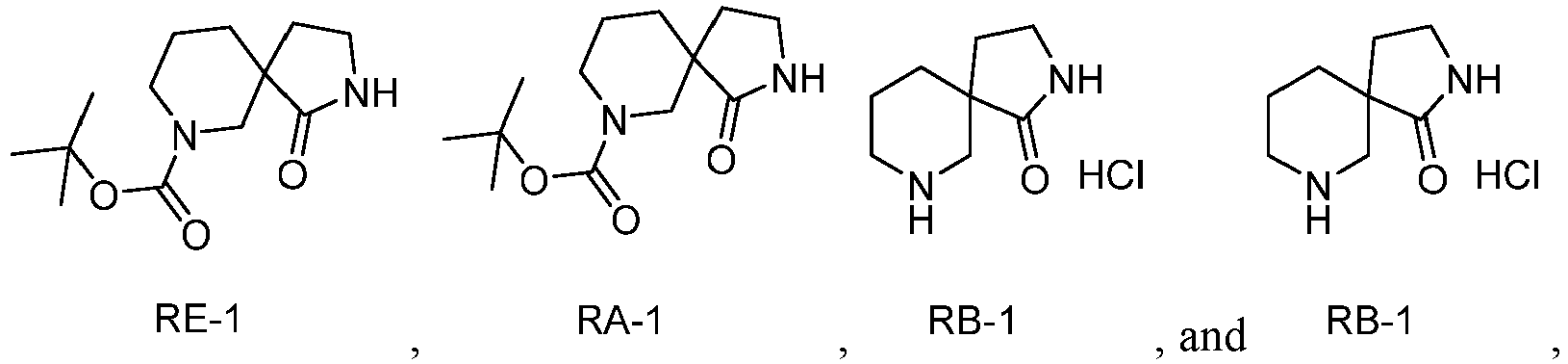
- Also provided for reference purposes are compounds having the formula selected from the group consisting of:

- The compounds of the present disclosure and formulations thereof may have a plurality of chiral centers. Each chiral center may be independently R, S, or any mixture of R and S. For example, in some embodiments, a chiral center may have an R:S ratio of between about 100:0 and about 50:50 ("racemate"), between about 100:0 and about 75:25, between about 100:0 and about 85:15, between about 100:0 and about 90:10, between about 100:0 and about 95:5, between about 100:0 and about 98:2, between about 100:0 and about 99:1, between about 0:100 and 50:50, between about 0:100 and about 25:75, between about 0:100 and about 15:85, between about 0:100 and about 10:90, between about 0:100 and about 5:95, between about 0:100 and about 2:98, between about 0:100 and about 1:99, between about 75:25 and 25:75, and about 50:50. Formulations of the disclosed compounds comprising a greater ratio of one or more isomers (i.e., R and/or S) may possess enhanced therapeutic characteristic relative to racemic formulations of a disclosed compounds or mixture of compounds. In some instances, chemical formulas contain the descriptor "-(R)-" or "-(S)-" that is further attached to solid wedge or dashed wedge. This descriptor is intended to show a methine carbon (CH) that is attached to three other substituents and has either the indicated R or S configuration.
- Disclosed compounds may provide for efficient cation channel opening at the NMDA receptor, e.g. may bind or associate with the glutamate site or glycine site or other modulatory site of the NMDA receptor to assist in opening the cation channel. The disclosed compounds may be used to regulate (turn on or turn off) the NMDA receptor through action as an agonist or antagonist.
- The compounds described herein, in some embodiments, may bind to a specific NMDA receptor subtypes. For example, a disclosed compound may bind to one NMDA subtype and not another. In some embodiments, a disclosed compound may bind to one, or more than one NMDA subtype, and/or may have substantially less (or substantial no) binding activity to certain other NMDA subtypes.
- The compounds as described herein may bind to NMDA receptors. A disclosed compound may bind to the NMDA receptor resulting in agonist-like activity (facilitation) over a certain dosing range and/or may bind to the NMDA receptor resulting in antagonist-like activity (inhibition) over a certain dosing range. In some embodiments, a disclosed compound may possess a potency that is 10-fold or greater than the activity of existing NMDA receptor modulators.
- The disclosed compounds may exhibit a high therapeutic index. The therapeutic index, as used herein, refers to the ratio of the dose that produces a toxicity in 50% of the population (i.e., TD50) to the minimum effective dose for 50% of the population (i.e., ED50). Thus, the therapeutic index = (TD50):(ED50). In some embodiments, a disclosed compound may have a therapeutic index of at least about 10:1, at least about 50:1, at least about 100:1, at least about 200:1, at least about 500:1, or at least about 1000: 1.
- In other aspects of the disclosure, a pharmaceutical formulation or a pharmaceutical composition including a disclosed compound and a pharmaceutically acceptable excipient is provided. In some embodiments, a pharmaceutical composition comprises a racemic mixture of one or more of the disclosed compounds.
- A formulation can be prepared in any of a variety of forms for use such as for administering an active agent to a patient, who may be in need thereof, as are known in the pharmaceutical arts. For example, the pharmaceutical compositions of the present disclosure can be formulated for administration in solid or liquid form, including those adapted for the following: (1) oral administration, for example, drenches (aqueous or non-aqueous solutions or suspensions), tablets (e.g., those targeted for buccal, sublingual, and/or systemic absorption), boluses, powders, granules, and pastes for application to the tongue; (2) parenteral administration by, for example, subcutaneous, intramuscular, intraperitoneal, intravenous or epidural injection as, for example, a sterile solution or suspension, or sustained-release formulation; (3) topical administration, for example, as a cream, ointment, or a controlled-release patch or spray applied to the skin; (4) intravaginal or intrarectal administration, for example, as a pessary, cream or foam; (5) sublingual administration; (6) ocular administration; (7) transdermal administration; or (8) nasal administration.
- For example, pharmaceutical compositions of the disclosure can be suitable for delivery to the eye, i.e., ocularly. Related methods can include administering a pharmaceutically effective amount of a disclosed compound or a pharmaceutical composition including a disclosed compound to a patient in need thereof, for example, to an eye of the patient, where administering can be topically, subconjunctivally, subtenonly, intravitreally, retrobulbarly, peribulbarly, intracomerally, and/or systemically.
- Amounts of a disclosed compound as described herein in a formulation may vary according to factors such as the disease state, age, sex, and weight of the individual. Dosage regimens may be adjusted to provide the optimum therapeutic response. For example, a single bolus may be administered, several divided doses may be administered over time or the dose may be proportionally reduced or increased as indicated by the exigencies of the therapeutic situation. It is especially advantageous to formulate parenteral compositions in dosage unit form for ease of administration and uniformity of dosage. Dosage unit form as used herein refers to physically discrete units suited as unitary dosages for the mammalian subjects to be treated; each unit containing a predetermined quantity of active compound calculated to produce the desired therapeutic effect in association with the required pharmaceutical carrier.
- The specification for the dosage unit forms are dictated by and directly dependent on (a) the unique characteristics of the compound selected and the particular therapeutic effect to be achieved, and (b) the limitations inherent in the art of compounding such an active compound for the treatment of sensitivity in individuals.
- Therapeutic compositions typically must be sterile and stable under the conditions of manufacture and storage. The composition can be formulated as a solution, microemulsion, liposome, or other ordered structure suitable to high drug concentration. The carrier can be a solvent or dispersion medium containing, for example, water, ethanol, polyol (for example, glycerol, propylene glycol, and liquid polyethylene glycol), and suitable mixtures thereof. The proper fluidity can be maintained, for example, by the use of a coating such as lecithin, by the maintenance of the required particle size in the case of dispersion and by the use of surfactants. In many cases, it will be preferable to include isotonic agents, for example, sugars, polyalcohols such as mannitol, sorbitol, or sodium chloride in the composition. Prolonged absorption of the injectable compositions can be brought about by including in the composition an agent which delays absorption, for example, monostearate salts and gelatin.
- The compounds can be administered in a time release formulation, for example in a composition which includes a slow release polymer. The compounds can be prepared with carriers that will protect the compound against rapid release, such as a controlled release formulation, including implants and microencapsulated delivery systems. Biodegradable, biocompatible polymers can be used, such as ethylene vinyl acetate, polyanhydrides, polyglycolic acid, collagen, polyorthoesters, polylactic acid and polylactic, polyglycolic copolymers (PLG). Many methods for the preparation of such formulations are generally known to those skilled in the art.
- Sterile injectable solutions can be prepared by incorporating the compound in the required amount in an appropriate solvent with one or a combination of ingredients enumerated above, as required, followed by filtered sterilization. Generally, dispersions are prepared by incorporating the active compound into a sterile vehicle which contains a basic dispersion medium and the required other ingredients from those enumerated above. In the case of sterile powders for the preparation of sterile injectable solutions, the preferred methods of preparation are vacuum drying and freeze-drying which yields a powder of the active ingredient plus any additional desired ingredient from a previously sterile-filtered solution thereof.
- In some embodiments, a compound can be formulated with one or more additional compounds that enhance the solubility of the compound.
- A compound disclosed herein, or a composition including such a compound, may be for use in methods for treating a condition in a patient in need thereof, which comprise administering a therapeutically effective amount of a compound described herein or a composition including such a compound. In some embodiments, the condition may be a mental condition. For example, a mental illness may be treated. In another aspect, a nervous system condition may be treated. For example, a condition that affects the central nervous system, the peripheral nervous system, and/or the eye may be treated. In some embodiments, neurodegenerative diseases may be treated.
- In some embodiments, the methods include administering a compound to treat patients suffering from autism, anxiety, depression, bipolar disorder, attention deficit disorder, attention deficit hyperactivity disorder (ADHD), schizophrenia, a psychotic disorder, a psychotic symptom, social withdrawal, obsessive-compulsive disorder (OCD), phobia, post-traumatic stress syndrome, a behavior disorder, an impulse control disorder, a substance abuse disorder (e.g., a withdrawal symptom, opiate addiction, nicotine addiction, and ethanol addition), a sleep disorder, a memory disorder (e.g., a deficit, loss, or reduced ability to make new memories), a learning disorder, urinary incontinence, multiple system atrophy, progressive supra-nuclear palsy, Friedrich's ataxia, Down's syndrome, fragile X syndrome, tuberous sclerosis, olivio-ponto-cerebellar atrophy, cerebral palsy, drug-induced optic neuritis, ischemic retinopathy, diabetic retinopathy, glaucoma, dementia, AIDS dementia, Alzheimer's disease, Huntington's chorea, spasticity, myoclonus, muscle spasm, infantile spasm, Tourette's syndrome, epilepsy, cerebral ischemia, stroke, a brain tumor, traumatic brain injury, cardiac arrest, myelopathy, spinal cord injury, peripheral neuropathy, acute neuropathic pain, and chronic neuropathic pain.
- In some embodiments, compounds and compositions for use in a method of treating a memory disorder associated with aging, schizophrenia, special learning disorders, seizures, post-stroke convulsions, brain ischemia, hypoglycemia, cardiac arrest, epilepsy, Lewy body dementia, migraine, AIDS dementia, Huntington's chorea, Parkinson's disease, early stage Alzheimer's disease, and Alzheimer's disease are provided.
- In certain embodiments, compounds and compositions for use in a method for treating schizophrenia are provided. For example, paranoid type schizophrenia, disorganized type schizophrenia (i.e., hebephrenic schizophrenia), catatonic type schizophrenia, undifferentiated type schizophrenia, residual type schizophrenia, post-schizophrenic depression, and simple schizophrenia may be treated using the methods and compositions disclosed herein. Psychotic disorders such as schizoaffective disorders, delusional disorders, brief psychotic disorders, shared psychotic disorders, and psychotic disorders with delusions or hallucinations may also be treated using the compositions disclosed herein.
- Paranoid schizophrenia may be characterized where delusions or auditory hallucinations are present, but thought disorder, disorganized behavior, or affective flattening are not. Delusions may be persecutory and/or grandiose, but in addition to these, other themes such as jealousy, religiosity, or somatization may also be present. Disorganized type schizophrenia may be characterized where thought disorder and flat affect are present together. Catatonic type schizophrenia may be characterized where the patient may be almost immobile or exhibit agitated, purposeless movement. Symptoms can include catatonic stupor and waxy flexibility. Undifferentiated type schizophrenia may be characterized where psychotic symptoms are present but the criteria for paranoid, disorganized, or catatonic types have not been met. Residual type schizophrenia may be characterized where positive symptoms are present at a low intensity only. Post-schizophrenic depression may be characterized where a depressive episode arises in the aftermath of a schizophrenic illness where some low-level schizophrenic symptoms may still be present. Simple schizophrenia may be characterized by insidious and progressive development of prominent negative symptoms with no history of psychotic episodes.
- In some embodiments, compounds and compositions for use in methods for treating psychotic symptoms that may be present in other mental disorders are provided, including bipolar disorder, borderline personality disorder, drug intoxication, and drug-induced psychosis. In some embodiments, compounds and compositions for use in methods for treating delusions (e.g., "non-bizarre") that may be present in, for example, delusional disorder are provided.
- In various embodiments, compounds and compositions for use in methods for treating social withdrawal in conditions including social anxiety disorder, avoidant personality disorder, and schizotypal personality disorder are provided.
- In some embodiments, the disclosure provides compounds and compositions for use in methods for treating a neurodevelopmental disorder related to synaptic dysfunction in a patient in need thereof, where the methods generally include administering to the patient a therapeutically effective amount of a disclosed compound, or a pharmaceutical composition including a disclosed compound. In certain embodiments, the neurodevelopmental disorder related to synaptic dysfunction can be Rett syndrome also known as cerebroatrophic hyperammonemia, MECP2 duplication syndrome (e.g., a MECP2 disorder), CDKL5 syndrome, fragile X syndrome (e.g., a FMR1 disorder), tuberous sclerosis (e.g., a TSC1 disorder and/or a TSC2 disorder), neurofibromatosis (e.g., a NF1 disorder), Angelman syndrome (e.g., a UBE3A disorder), the PTEN hamartoma tumor syndrome, Phelan-McDermid syndrome (e.g., a SHANK3 disorder), or infantile spasms. In particular embodiments, the neurodevelopmental disorder can be caused by mutations in the neuroligin (e.g., a NLGN3 disorder and/or a NLGN2 disorder) and/or the neurexin (e.g., a NRXN1 disorder).
- In some embodiments, compounds and compositions for use in methods for treating neuropathic pain are provided. The neuropathic pain may be acute or chronic. In some cases, the neuropathic pain may be associated with a condition, for example, herpes, HIV, traumatic nerve injury, stroke, post-ischemia, chronic back pain, post-herpetic neuralgia, fibromyalgia, reflex sympathetic dystrophy, complex regional pain syndrome, spinal cord injury, sciatica, phantom limb pain, diabetic neuropathy, for example, diabetic peripheral neuropathy ("DPN"), and cancer chemotherapeutic-induced neuropathic pain. Compounds and compositions for use in methods for enhancing pain relief and for providing analgesia to a patient are also provided.
- Also provided herein are compounds and compositions for use in a method of treating autism and/or an autism spectrum disorder in a patient in need thereof, comprising administering an effective amount of a compound to the patient. In certain embodiments, compounds and compositions for use in a method for reducing the symptoms of autism in a patient in need thereof are disclosed, and comprise administering an effective amount of the disclosed compound to the patient. For example, upon administration, the compound may decrease the incidence of one or more symptoms of autism, for example, eye contact avoidance, failure to socialize, attention deficit, poor mood, hyperactivity, abnormal sound sensitivity, inappropriate speech, disrupted sleep, and perseveration. Such decreased incidence may be measured relative to the incidence in the untreated individual or an untreated individual(s).
- Also provided herein is a compound and composition for use in a method of modulating an autism target gene expression in a cell comprising contacting a cell with an effective amount of the compound described herein. The autism gene expression may be for example, selected from ABAT, APOE, CHRNA4, GABRA5,GFAP, GRIN2A, PDYN, and PENK. In some embodiments, a compound and composition for use in a method of modulating synaptic plasticity in a patient suffering from a synaptic plasticity related disorder is provided, comprising administering to the patient an effective amount of the compound.
- In some embodiments, a compound and composition for use in a method of treating Alzheimer's disease, or e.g., treatment of memory loss that e.g., accompanies early stage Alzheimer's disease, in a patient in need thereof is provided, comprising administering the compound. Also provided herein is a compound and composition for use in a method of modulating an Alzheimer's amyloid protein (e.g., beta amyloid peptide, e.g. the isoform Aβ1-42), in-vitro or in-vivo (e.g. in a cell) comprising contacting the protein with an effective amount of the compound is disclosed. For example, in some embodiments, a compound may block the ability of such amyloid protein to inhibit long-term potentiation in hippocampal slices as well as apoptotic neuronal cell death. In some embodiments, a disclosed compound may provide neuroprotective properties to a Alzheimer's patient in need thereof, for example, may provide a therapeutic effect on later stage Alzheimer's -associated neuronal cell death.
- In certain embodiments, compounds and compositions for use in methods of treating a psychosis or a pseudobulbar affect ("PBA") that is induced by another condition are disclosed, for example, a stroke, amyotrophic lateral sclerosis (ALS or Lou Gehrig's disease), multiple sclerosis, traumatic brain injury, Alzheimer's disease, dementia, and/or Parkinson's disease. Such methods, as with other methods of the disclosure, include administration of a pharmaceutically effective amount of a disclosed compound to a patient in need thereof.
- In some embodiments, compounds and compositions for use in a method of treating depression are provided, which includes administering a therapeutically effective amount of a compound described herein. In some embodiments, the treatment may relieve depression or a symptom of depression without affecting behavior or motor coordination and without inducing or promoting seizure activity. Exemplary depression conditions that are expected to be treated according to this aspect include major depressive disorder, dysthymic disorder, psychotic depression, postpartum depression, premenstrual syndrome, premenstrual dysphoric disorder, seasonal affective disorder (SAD), bipolar disorder (or manic depressive disorder), mood disorder, and depressions caused by chronic medical conditions, for example, cancer or chronic pain, chemotherapy, chronic stress, and post traumatic stress disorders. In addition, patients suffering from any form of depression often experience anxiety. Various symptoms associated with anxiety include fear, panic, heart palpitations, shortness of breath, fatigue, nausea, and headaches among others. Anxiety or any of the symptoms thereof may be treated by administering a compound as described herein.
- Also provided herein are compounds and compositions for use in methods of treating a condition in treatment-resistant patients, e.g., patients suffering from a mental or central nervous system condition that does not, and/or has not, responded to adequate courses of at least one, or at least two, other compounds or therapeutics. For example, provided herein is a compound and composition for use in a method of treating depression in a treatment resistant patient, comprising a) optionally identifying the patient as treatment resistant and b) administering an effective dose of a compound to said patient.
- In some embodiments, a compound described herein may be used for acute care of a patient. For example, a compound may be administered to a patient to treat a particular episode (e.g., a severe episode) of a condition disclosed herein.
- Also provided herein are compounds and compositions for use in combination therapies comprising a compound of the disclosure in combination with one or more other active agents. For example, a compound may be combined with one or more antidepressants, for example, tricyclic antidepressants, MAO-I's, SSRI's, and double and triple uptake inhibitors and/or anxiolytic drugs. Exemplary drugs that may be used in combination with a compound include Anafranil, Adapin, Aventyl, Elavil, Norpramin, Pamelor, Pertofrane, Sinequan, Surmontil, Tofranil, Vivactil, Parnate, Nardil, Marplan, Celexa, Lexapro, Luvox, Paxil, Prozac, Zoloft, Wellbutrin, Effexor, Remeron, Cymbalta, Desyrel (trazodone), and Ludiomill. In another example, a compound may be combined with an antipsychotic medication. Examples of antipsychotics include butyrophenones, phenothiazines, thioxanthenes, clozapine, olanzapine, risperidone, quetiapine, ziprasidone, amisulpride, asenapine, paliperidone, iloperidone, zotepine, sertindole, lurasidone, and aripiprazole. It should be understood that combinations of a compound and one or more of the above therapeutics may be used for treatment of any suitable condition and are not limited to use as antidepressants or antipsychotics.
- The following abbreviations may be used herein and have the indicated definitions: Ac is acetyl (-C(O)CH3), AIDS is acquired immune deficiency syndrome, Boc and BOC are tert-butoxycarbonyl, Boc2O is di-tert-butyl dicarbonate, Bn is benzyl, DCM is dichloromethane, DIPEA is N,N-diisopropylethylamine, DMAP is 4-dimethylaminopyridine, DMSO is dimethyl sulfoxide, ESI is electrospray ionization, EtOAc is ethyl acetate, h is hour, HIV is human immunodeficiency virus, HPLC is high performance liquid chromatography, LCMS is liquid chromatography/mass spectrometry, LiHMDS is lithium hexamethyldisilazane, NMDAR is N-methyl-d-apartate receptor, NMR is nuclear magnetic resonance, RT is room temperature (e.g., from about 20 °C to about 25 °C), TLC is thin layer chromatography, TFA is trifluoroacetic acid, and THF is tetrahydrofuran.
-

- To a stirring solution of piperidine-3-carboxylic acid (SM) (20 g, 154.8 mmol) in EtOH was added thionyl chloride (45 ml, 619.2 mmol) at 0 °C and heated to reflux for 24 h. The reaction mixture was warmed to RT and concentrated under reduced pressure. Crude material was triturated with diethyl ether and dried to afford compound 1.HCl salt (29 g, 99 %) as thick syrup.
- 1H-NMR: (400 MHz, DMSO-d6 ): δ 9.40 (s, 1H), 9.25 (s, 1H), 4.09 (q, J = 7.2 Hz, 2H), 3.32.3.13 (m, 2H), 2.94-2.75 (m, 3H), 1.99-1.96 (m, 1H), 1.77-1.71 (m, 2H), 1.60-1.58 (1H), 1.16 (t, J = 7.2 Hz, 3H).
- LCMS (ESI): m/z 157.3 [M+]
- To a solution of compound 1.HCl salt (30 g, 154.9 mmol) in CH2Cl2 (600 mL) was added Et3N (65 mL, 464.7 mmol) at 0 °C and stirred for 10 min. Then Boc-anhydride (40 mL, 185.8 mmol) at 0 °C warmed to RT and stirred for 16 h. After consumption of the starting material (by TLC), the reaction was diluted with DCM (200 mL) and washed with water (3 x 200 mL). Organic layer was dried over Na2SO4 and concentrated under reduced pressure to afford crude compound which was purified by column chromatography by eluting with 20% EtOAc/ hexanes to obtain compound 2 (34 g, 85%) as thick syrup.
- 1H-NMR: (400 MHz, DMSO-d6 ): δ 4.06 (q, J = 7.2 Hz, 2H), 3.89.3.85 (m, 1H), 3.64.3.59 (m, 1H), 2.93-2.88 (m, 2H), 2.42.2.37 (m, 1H), 1.89-1.86 (m, 1H), 1.63-1.54 (m, 2H), 1.38 (s, 9H), 1.37-1.34 (m, 1H), 1.18 (t, J = 7.2 Hz, 3H).
- LCMS (ESI): m/z 156.1 [(M++1)-Boc]
- To a stirring solution of compound 2 (15 g, 58.3 mmol) in THF (120 mL) was added LiHMDS (1M in THF) (116 mL, 116.7 mmol) drop wise at -40 °C and stirred for 15 minutes. Then bromo acetonitrile (8.4 g, 70.1 mmol) was added drop wise at -40 °C and stirred for 5 h. After consumption of the starting material (by TLC), the reaction was quenched with aqueous NH4Cl solution (100 mL) and extracted with EtOAc (2 x 200 mL). The combined organic layer was washed with water (2 x 150 mL) followed by brine solution (2 x 100 mL). The organic layer was dried over Na2SO4 and concentrated to obtain crude compound which was purified by column chromatography by eluting 30% EtOAc/ hexanes to afford compound 3 (3 g, 17%) as thick syrup.
- 1H NMR (400MHz, DMSO-d6 ): δ 4.16 (q, J = 7.2 Hz, 2H), 3.78 - 3.72 (m, 1H), 3.56-3.52 (m, 1H), 3.23-3.12 (m, 2H), 2.77-2.68 (m, 2H), 2.01 - 1.94 (m, 1H), 1.68-1.58 (m, 3H), 1.39 (s, 9H), 1.24 (t, J = 7.1 Hz, 3H).
- LCMS (ESI): m/z 197.3 [(M++1)-Boc]
- To a stirring solution of compound 3 (2 g, 6.75 mmol) in ethanol (20 mL) was added Raney nickel (2 g) at RT under nitrogen atmosphere and then allowed to stir for 16 h under H2 atmosphere. Then methanolic ammonia (4 mL) was added to the reaction mixture and continued stirring for 16 h under H2 atmosphere (balloon pressure). After completion of the reaction by TLC, the reaction mixture was filtered through a pad of celite and the filtrate was concentrated under reduced pressure. Crude material was purified by combiflash column chromatography by eluting with 50% EtOAc/ hexanes to afford to afford racemic compound 4 (750 mg) followed by chiral HPLC purification to obtain RE-1 (300 mg, %) and RA-1 (310 mg, %) as off white solids.
- RE-1
- 1H NMR (400MHz, DMSO-d6 ): δ 7.64 (s, 1H), 3.97-3.82 (m, 1H), 3.66 (br d, J = 1.5 Hz, 1H), 3.15 (br t, J = 7.0 Hz, 2H), 2.86-2.61 (m, 2H), 1.97-1.86 (m, 1H), 1.84-1.74 (m, 1H), 1.70-1.53 (m, 2H), 1.46 (br d, J = 14.4 Hz, 1H), 1.39 (s, 10H).
- LCMS (ESI): m/z 255.3 [M++1]
- HPLC: 99.45%
- ChiralHPLC: 100.00%
- RA-1
- 1H NMR (400MHz, DMSO-d6 ): δ 7.64 (s, 1H), 3.89 (br d, J = 7.7 Hz, 1H), 3.66 (br s, 1H), 3.15 (br t, J = 7.0 Hz, 2H), 2.84-2.63 (m, 2H), 1.96-1.87 (m, 1H), 1.84-1.74 (m, 1H), 1.70-1.54 (m, 2H), 1.49-1.44 (m, 2H), 1.39 (s, 9H).
- LCMS (ESI): m/z 255.3 [M++1]
- HPLC: 99.55%
- ChiralHPLC: 100.00%
- To a stirring solution of RE-1 (201 mg, 0.79 mmol) in CH2Cl2 (5 mL) was added 2 M HCl- 1, 4-Dioxane (4 mL) at 0 °C warmed to RT and stirred for 2 h, the reaction mixture was concentrated under reduced pressure to afford crude compound which was triturated with ether and n-pentane (2 x 20 mL) and dried to obtain RB-1.HCl (148 g, 99%) as off white solid.
- 1H NMR (400 MHz, DMSO-d6 ): δ 8.69 (br s, 2H), 7.92 (s, 1H), 3.25-3.15 (m, 2H), 3.08-2.91 (m, 4H), 2.13-2.09 (m, 1H), 1.98 -1.88 (m, 1H), 1.86 -1.76 (m, 1H), 1.74-1.63 (m, 2H), 1.59-1.50 (m, 1H).
- LCMS (ESI): m/z 155.0 [M++1]
- HPLC: 99.55%
- Chiral HPLC: 100.00%
- To a stirring solution of RA-1 (218 mg, 0.85 mmol) in CH2Cl2 (5 mL) was added 2 M HCl- 1,4-Dioxane (4 mL) at 0 °C, warmed to RT and stirred for 2 h. the reaction mixture was concentrated under reduced pressure to afford crude compound which was triturated with ether and n-pentane (2x20 mL) and dried to obtain RC-1.HCl (150 g, 92%) as off white solid.
- 1H NMR (400MHz, DMSO-d6 ): δ 8.85 (br s, 2H), 7.91 (s, 1H), 3.24-3.16 (m, 2H), 3.10-2.88 (m, 4H), 2.16-2.12 (m, 1H), 1.98-1.90 (m, 1H), 1.86-1.75 (m, 1H), 1.75-1.63 (m, 2H), 1.57-1.52 (m, 1H).
- LCMS (ESI): m/z 155.0 [M++1]
- HPLC: 99.65%
- ChiralHPLC: 100.00%
-
Structure Compound Structure Compound 
RE-1 
RA-1 
RB-1 
RC-1 
RG-601 
RG-602 
RG-603 
RG-604 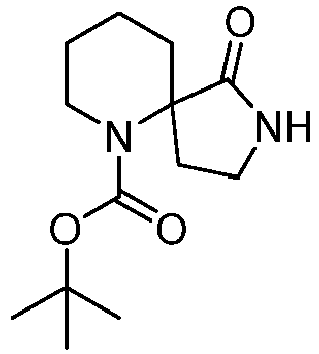
RG-605 
RG-606 
RG-607 
RG-608 
RG-609 
RG-610 
RG-611 
RG-612 
RG-613 
RG-614 
RG-615 
RG-616 
RG-617 
RG-618 
RG-619 
RG-620 
RG-621 
RG-622 
RG-623 
RG-624 
RG-625 
RG-626 
RG-627 
RG-628 
RG-629 
RG-630 
RG-631 
RG-632 
RG-633 
RG-634 
RG-635 
RG-636 
RG-637 
RG-638 
RG-639 
RG-640 
RG-641 
RG-642 
RG-643 
RG-644 
RG-645 
RG-646 
RG-647 
RG-648 
RG-649 
RG-650 
RG-651 
RG-652 
RG-653 
RG-654 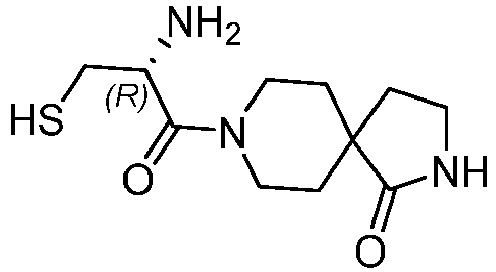
RG-655 
RG-656 
RG-657 
RG-658 
RG-659 
RG-660 
RG-661 
RG-662 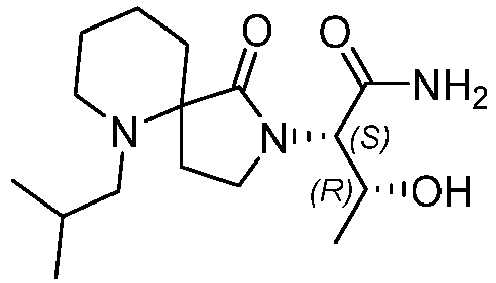
RG-663 
RG-664 
RG-665 
RG-666 
RG-667 
RG-668 
RG-669 
RG-670 
RG-671 
RG-672 
RG-673 
RG-674 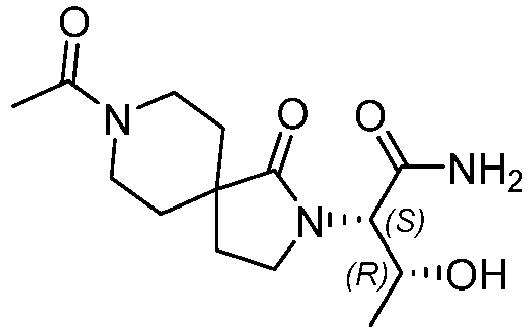
RG-675 
RG-676 
RG-677 
RG-678 
RG-679 
RG-680 -

- To a stirred solution of L-proline SM 1(100.0 g, 869 mmol) in MeOH (1 L), thionyl chloride (100 mL) was added at 0 °C heated to 75 °C and stirred for 16 h. After consumption of the starting material (by TLC), the reaction mixture was concentrated under reduced pressure to afford compound 1 (140 g, crude) as thick oil (HCl salt). Crude compound was use as such for next step without purification.
- 1H NMR (400 MHz, DMSO-d 6) δ 10.50 (br s, 1H), 9.13 (br s, 1H), 4.35 (m, 1H), 3.75 (s, 3H), 3.26-3.11 (m, 2H), 2.28-2.20 (m, 1H), 2.05-1.83 (m, 3H).
- To a stirred solution of compound 1 (140.0 g, 0.848 mol) in CH2Cl2 (1.4 L), triethylamine (295 mL, 2.12 mmol) was added at 0 °C and stirred for 15 min. Boc anhydride (240 g, 1.10 mmol) was added drop wise at 0 °C over a period of 30 min followed by addition of DMAP (20.7 g, 0.169 mmol). The reaction mixture was warmed to RT and stirred for 3 h. After consumption of the starting material (by TLC), the reaction mixture was quenched with ice-cold water (500 mL) and extracted with CH2Cl2 (3 x 300 mL). Combined organic layer was washed with brine (150 mL), dried over Na2SO4 and concentrated under reduced pressure to afford crude compound. The crude compound was purified by column chromatography with 20-30% EtOAc/ hexanes to obtain compound 2 (190.0 g, 98%) as thick oil.
- 1H NMR (400 MHz, DMSO-d6 ) δ 4.18 - 413 (m, 1H), 3.63 (m, 3H), 3.41 - 3.24 (m, 2H), 2.28 - 2.11 (m, 1H), 1.90 - 1.73 (m, 3H), 1.32 (m, 9H).
- To a stirred solution of compound 2 (20.0 g, 93.4 mmol) in THF (150 mL), LiHMDS (140 mL, 140 mmol) was added at -78°C and stirred for 30 min. Bromoacetonitrile (12.3 mL, 102 mmol) was added at -78 °C; warmed to RT and stirred for 4 h. After consumption of the starting material (by TLC), the reaction mixture was quenched with saturated NH4Cl solution (300 mL) and extracted with EtOAc (3 x 300 mL). Combined organic layer was washed with brine (100 mL), dried over Na2SO4 and concentrated under reduced pressure to give crude product. Obtained crude compound was purified by column chromatography using 40% EtOAc/ hexane to provide enantiomeric mixture of compound 3 (15g, 63%) as thick oil.
- 1H NMR (400 MHz, DMSO-d 6) δ 3.64 (m, 3H), 3.57 - 3.46 (m, 1H), 3.42 - 3.36 (m, 1H),3 .26 - 3.09 (m, 5H), 2.25 -2.16 (m, 2H), 2.04 - 1.83 (m, 2H), 1.37 (m, 9H).
- To a stirred solution of compound 3 (5.0 g, 18.6 mmol) in THF: MeOH (1:1, 200 mL), Raney nickel (4.0 g) was added at room temperature and stirred for 48 h at 50 °C under H2 atmosphere. After consumption of the starting material (by TLC), the reaction mixture was filtered through a pad of celite and the pad was washed with MeOH (50 mL). The crude compound was purified by column chromatography using 5% MeOH/ CH2Cl2 to provide enantiomeric mixture of compound 4 (2.5 g, 50%) as thick oil.
- To a stirred solution of compound 4 (10.0 g, 36.9 mmol) in toluene (100 mL), DIPEA (7.7 mL, 44.2 mmol) was added and reaction mixture was heated to reflux for 36 h. After consumption of the starting material (by TLC), reaction mixture was evaporated under reduced pressure. Crude material was purified by Prep HPLC to obtain two separated isomers of compound RM-1 & RT-1 as thick oil.
- Analytical data for RM-1:
- 1H NMR (400 MHz, DMSO-d 6) δ 7.70 (m, 1H), 3.40 - 3.30 (m, 1H), 3.25 - 3.09 (m, 3H), 2.35 - 2.30 (m, 1H), 1.98 - 1.72 (m, 5H), 1.42 (s, 9H).
- LCMS (ESI): m/z 263 [M++Na]
- HPLC: 95.4%
- Chiral HPLC: 100%
- Analytical data for RT-1
- 1H NMR (400 MHz, DMSO-d 6) δ 7.70 (s, 1H), 3.40 - 3.30 (m, 1H), 3.25 - 3.09 (m, 3H), 2.35 - 2.30 (m, 1H), 1.98 - 1.70 (m, 5H), 1.45 (s, 9H).
- LCMS (ESI): m/z 263 [M++Na]
- HPLC: 97.1%
- Chiral HPLC: 100%
- To a stirred solution of compound 5 (1.5 g, 6.07 mmol) in CH2Cl2 (7 mL), trifluoroacetic (7 mL) was added and stirred at room temperature for 3 h. After consumption of the starting material (by TLC), the reaction mixture was concentrated under reduced pressure to obtain compound as a TFA salt. Obtained salt was dissolved in THF (5 ml), triethylamine (5 mL) was added and then stirred at room temperature for 5 h. The crude compound was purified by Prep HPLC to afford two separated isomers of compound RW-1 & RX-1 (free base) as thick oil.
- Analytical data for RW-1
- 1H NMR (400 MHz, DMSO-d 6) δ 7.67 (s, 1H), 3.20 - 3.03 (m, 2H), 3.01 - 2.97 (m, 1H), 2.78 - 2.65 (m, 1H), 2.20 - 2.14 (brs, 1H), 1.99 - 1.80 (m, 2H), 1.78 - 1.60 (m, 4H).
- LCMS (ESI): m/z 141.2 [M++1]
- HPLC: 97.9%
- Chiral HPLC: 100%
- Analytical data for RX-1:
- 1H NMR (400 MHz, DMSO-d 6) δ 7.67 (s, 1H), 3.19 - 3.02 (m, 2H), 3.01 - 2.97 (m, 1H), 2.78 - 2.70 (m, 1H), 1.98 - 1.80 (m, 2H), 1.78 - 1.60 (m, 4H).
- LCMS (ESI): m/z 141.3 [M++1]
- HPLC: 99.4%
- Chiral HPLC: 99.0%
- Compounds marked with † are provided for reference purposes.
Structure Compound Structure Compound 
RM-L† 
RT-1† 
RW-1† 
RX-1† 
RZ-401† 
RZ-402† 
RZ-403 
RZ-404 
RZ-405 
RZ-406 
RZ-407 
RZ-408 
RZ-409† 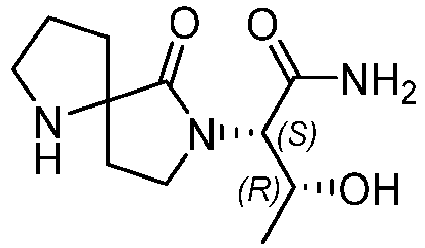
RZ-410† 
RZ-411† 
RZ-412† 
RZ-413† 
RZ-414† 
RZ-415† 
RZ-416† 
RZ-417† 
RZ-418† 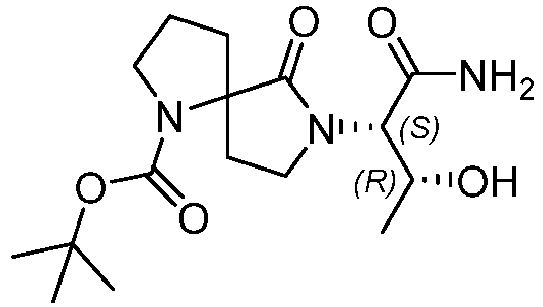
RZ-419† 
RZ-420† 
RZ-421† 
RZ-422† 
RZ-423† 
RZ-424† 
RZ-425† 
RZ-426† 
RZ-427† 
RZ-428† 
RZ-429 
RZ-430 
RZ-431 
RZ-432 
RZ-433 
RZ-434 
RZ-435 
RZ-436 
RZ-437 
RZ-438 
RZ-439 
RZ-440 
RZ-441 
RZ-442 
RZ-443 
RZ-444 
RZ-445 
RZ-446 
RZ-447 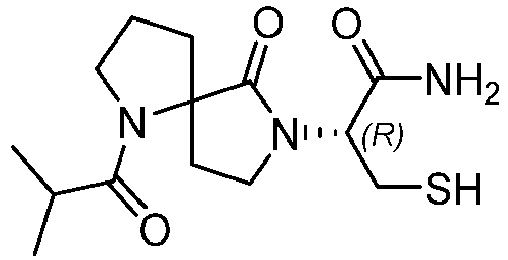
RZ-448 
RZ-449 
RZ-450 
RZ-451 
RZ-452 
RZ-453 
RZ-454 
RZ-455 
RZ-456 
RZ-457 
RZ-458 
RZ-459 
RZ-460 
RZ-461 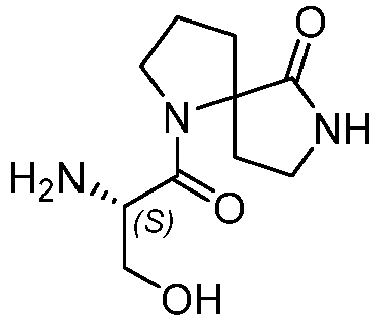
RZ-462 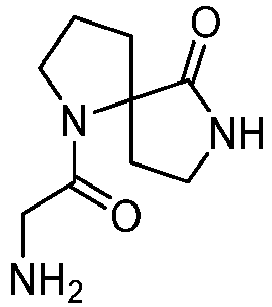
RZ-463 
RZ-464 
RZ-465 
RZ-466 
RZ-467 
RZ-468 
RZ-469 
RZ-470 
RZ-471 
RZ-472 
RZ-473 
RZ-474 
RZ-475 
RZ-476 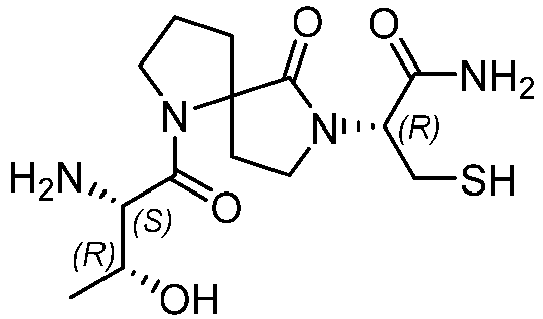
RZ-477 
RZ-478 
RZ-479 
RZ-480 
RZ-481 
RZ-482 
RZ-483 
RZ-484 
RZ-485 
RZ-486 
RZ-487 
RZ-488 
RZ-489 
RZ-490 
RZ-491 
RZ-492 
RZ-493 
RZ-494 
RZ-495 
RZ-496 
RZ-497 
RZ-498 
RZ-499 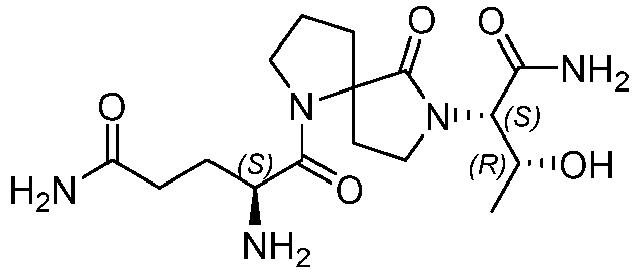
RZ-500 
RZ-501 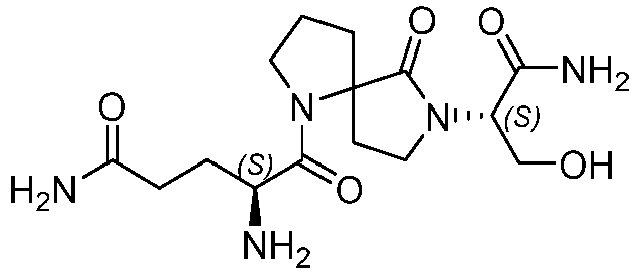
RZ-502 
RZ-503 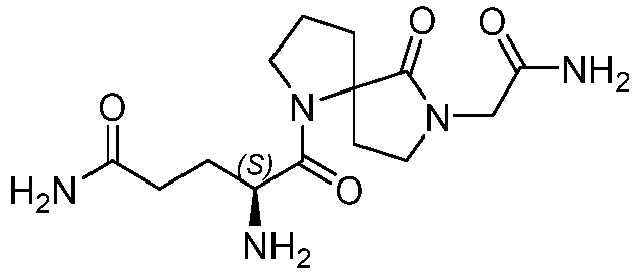
RZ-504 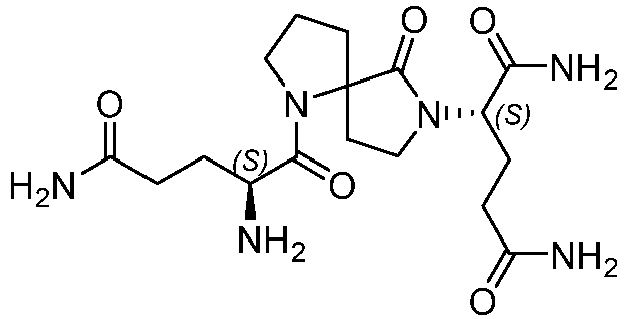
RZ-505 
RZ-506 
RZ-507 
RZ-508 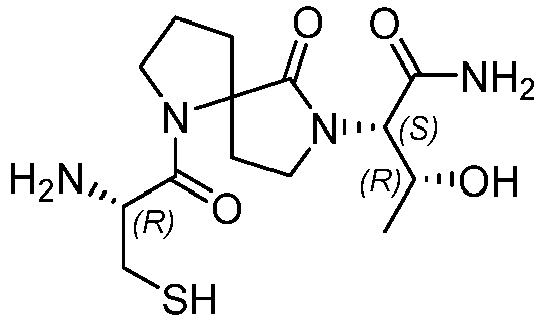
RZ-509 
RZ-510 
RZ-511 
RZ-512 
RZ-513 
RZ-514 
RZ-515 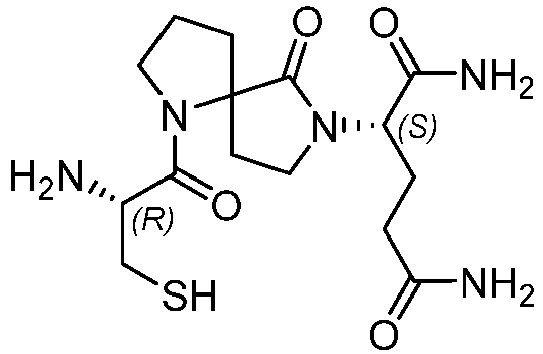
RZ-516 
RZ-517 
RZ-518 - This example demonstrates the positive emotional learning (PEL) test. Experiments were conducted as described in Burgdorf et al., "The effect of selective breeding for differential rates of 50-kHz ultrasonic vocalizations on emotional behavior in rats," Devel. Psychobiol., 51:34-46 (2009). Rat 50-kHz ultrasonic vocalization (hedonic USVs) is a validated model for the study of positive affective state and is best elicited by rough-and-tumble play. 50-kHz ultrasonic vocalizations have previously been shown to be positively correlated with reward and appetitive social behavior in rats, and to reflect a positive affective state.
- The PEL assay measures the acquisition of positive (hedonic) 50-kHz ultrasonic vocalizations (USVs) to a social stimulus, heterospecific rough and tumble play stimulation. Heterospecific rough-and-tumble play stimulation was administered by the experimenter's right hand. One hour after administration of test compound or vehicle negative control (0.5% sodium carboxymethyl cellulose in 0.9% sterile saline vehicle), animals received 3 min of heterospecific rough-and-tumble play that consisted of alternating 15 sec blocks of heterospecific play and 15 sec of no-stimulation. High frequency ultrasonic vocalizations (USVs) were recorded and analyzed by sonogram with Avasoft SASlab Pro (Germany) as previously described by Burgdorf et al., "Positive emotional learning is regulated in the medial prefrontal cortex by GluN2B-containing NMDA receptors," Neuroscience, 192:515-523 (2011). Frequency modulated 50-kHz USVs that occurred during each of the no-stimulation periods were quantified to measure PEL. Animals were not habituated to play stimulation before testing. Positive emotional learning was measured during the conditioned stimulus (CS) trials preceding the tickle unconditioned stimulus (UCS) trials. Animals received 15 second trials consisting of 6 CS and 6 UCS trials each (3 min total).
- The table below summarizes the findings. As each experiment includes its own vehicle group, an example (typical) vehicle score is shown. Max effect (mean number of 50 kHz USVs per 15 seconds) is reported as ^: <6.0; ∗: 6.0-7.6; ∗∗: 7.7-10; ∗∗∗: 10.1-20. Compounds marked with † are provided for reference purposes.
Compound Route Dose (mg/kg) Max Effect Vehicle PO NA ∧ RE-1 PO .001-1 ∗∗∗ RA-1 PO 0.1 ∗∗∗ RB-1 PO .001-1 ∗∗∗ RC-1 PO .001-1 ∗∗∗ RW-1† PO 0.1 ∗∗ RM-1† PO .001-1 ∗∗∗ RT-1† PO 0.1 ∗∗ - Assays were conducted as described by Moskal et al., "GLYX-13: a monoclonal antibody-derived peptide that acts as an N-methyl-D-aspartate receptor modulator," Neuropharmacology, 49, 1077-87, 2005. These studies were designed to determine if the test compounds act to facilitate NMDAR activation in NMDAR2A, NMDAR2B, NMDAR2C or NMDAR2D expressing HEK cell membranes as measured by increases in [3H]MK-801 binding.
- In the assay, 300 µg of NMDAR expressing HEK cell membrane extract protein was preincubated for 15 minutes at 25° C in the presence of saturating concentrations of glutamate (50 µM) and varying concentrations of test compound (1×10-15M - 1×10⁻⁷M), or 1 mM glycine. Following the addition of 0.3 µCi of [3H]MK-801 (22.5 Ci/mmol), reactions were again incubated for 15 minutes at 25 ° C (nonequilibrium conditions). Bound and free [3H]MK-801 were separated via rapid filtration using a Brandel apparatus.
- In analyzing the data, the DPM (disintegrations per minute) of [3H]MK-801 remaining on the filter were measured for each concentration of test compound or for 1 mM glycine. The DPM values for each concentration of a ligand (N=2) were averaged. The baseline value was determined from the best fit curve of the DPM values modeled using the GraphPad program and the log(agonist) vs. response(three parameters) algorithm was then subtracted from all points in the dataset. The % maximal [3H]MK-801 binding was then calculated relative to that of 1 mM glycine: all baseline subtracted DPM values were divided by the average value for 1 mM glycine. The EC50 and % maximal activity were then obtained from the best fit curve of the % maximal [3H]MK-801 binding data modelled using the GraphPad program and the log(agonist) vs. response(three parameters) algorithm.
- The tables below summarize the results for the wild type NMDAR agonists NMDAR2A, NMDAR2B, NMDAR2C, and NMDAR2D, and whether the compound is not an agonist (-), is an agonist (+), or is a strong agonist (++), where column A is based on the % maximal [3H]MK-801 binding relative to 1 mM glycine (- = 0; < 100% = +; and > 100% = ++); and column B is based on log EC50 values (0 = -; ≥ 1×10⁻⁹ M (e.g., -8) = +; and < 1×10⁻⁹ M (e.g., -10) = ++). Compounds marked with † are provided for reference purposes.
Compound NMDAR2A NMDAR2B A B A B RE-1 - - + ++ RA-1 + + + ++ RB-1 + ++ ++ - RC-1 + ++ ++ ++ RW-1† + + + ++ RX-1† - - - - RM-1† + ++ ++ ++ RT-1† + ++ + ++ RG-619 - - - - RG-603 + + + ++ RG-601 + ++ + ++ RG-602 + ++ + ++ RG-605 + ++ - - RG-606 - - + ++ RG-623 - - + ++ RG-621 + ++ ++ ++ RG-609 - - - - RG-610 - - - - RZ-405 + ++ ++ + RZ-406 - - + ++ RZ-403 - - ++ ++ RZ-404 + ++ - - Compound NMDAR2C NMDAR2D A B A B RE-1 - - + ++ RA-1 + ++ - - RB-1 + ++ + + RC-1 + ++ + ++ RM-1† + ++ + ++ RG-601 + ++ ++ ++ RG-602 ++ + + ++ RG-605 - - - - RG-606 - - - - RC-1 - - - - RZ-405 + ++ + ++ - Sprague Dawley rats were dosed intravenously using a normal saline formulation containing 2 mg/kg of the compounds identified in the below table (except for the first four compounds that were delivered in 5 % NMP, 5% Solutol® HS and 90 % normal saline formulation). The table below summarizes the results of the IV pharmacokinetics. Compounds marked with † are provided for reference purposes.
Compound C0 (ng/mL) AUClast (hr*ng/ mL) T1/2 (hr) Cl (mL/min/k g) Vss (L/kg) RE-1 589.9 135.9 0.27 NR 4.12 RA-1 1247.08 234.08 0.19 NR 1.69 RB-1 2065.2 1261 3.35 25.81 2.79 RC-1 2013.4 1511.4 1.36 21.81 1.84 RG-603 5193 1568 0.99 21.1 0.81 RG-601 2847 2279 1.16 13.53 1.14 RG-605 3361 1576 0.3 20.99 0.53 RG-606 2303 804 0.34 41.29 0.91 RG-623 4134 10519 3.98 3.18 0.56 RG-621 4759.45 6231.79 1.71 5.33 0.52 RM-1† 2009.24 1328.09 0.49 24.89 0.91 RZ-405 3040.6 7007.7 4.05 4.74 0.69 - In another experiment, Sprague Dawley rats were dosed per os using a normal saline formulation containing 10 mg/kg of the compounds identified in the table below (except for the first four compounds that were delivered in 5 % NMP, 5% Solutol® HS and 90 % normal saline formulation). Plasma, brain, and CSF samples were analyzed at various time points over a 24 hour period. The table below summarizes the results of the oral pharmacokinetics. Compounds marked with † are provided for reference purposes.
Compound Tmax (hr) Cmax (ng/mL) AUClast (hr*ng/ mL) CSF Cmax (ng/mL) Brain Cmax (ng/mL) % F RE-1 0.25 495.17 272.7 86.1 22 40 RA-1 0.25 592 324.2 102.5 203.6 28 RB-1 1.17 825.1 3288 27.4 40.2 52 RC-1 1.67 990.2 3668.7 20.8 27.6 49 RG-603 1 311 897 - - 11 RG-601 0.83 3989 9509 1151 1447 83 RG-605 0.25 6478 6370 1211 733 81 RG-606 0.25 2812 1933 1077 612 48 RG-623 0.42 10891 42553 4727 4317 81 RG-621 0.58 12037.25 29103.5 3654.37 1977.29 93 RW-1† 1 4074 NR 853 NR NR RM-1† 0.25 4309.99 5008.61 1415 2763 75 RZ-405 0.5 10783 29521 3157 2209 84 - A non-clinical in vivo pharmacology study (Porsolt assay) was performed to measure antidepressant-like effects. A negative control (0.5% sodium carboxymethyl cellulose in 0.9% sterile saline vehicle) and a positive control (fluoxetine) are shown for comparison against test compound. The study allowed for the evaluation of the effects of each compound on the Porsolt forced swim test as assessed by the rats' response (reduced floating time) during a 5-minute swimming test.
- Male 2-3 month old Sprague Dawley rats were used (Harlan, Indianapolis, IN). Rats were housed in Lucite cages with aspen wood chip bedding, maintained on a 12:12 light:dark cycle (lights on at 5 AM), and given ad libitum access to Purina lab chow (USA) and tap water throughout the study.
- The Porsolt forced swim test adapted for use in rats was performed as described by Burgdorf et al., (The long-lasting antidepressant effects of rapastinel (GLYX-13) are associated with a metaplasticity process in the medial prefrontal cortex and hippocampus. Neuroscience 308:202-211, 2015). Animals were placed in a 46 cm tall × 20 cm in diameter clear glass tube filled to 30 cm with tap water (23 ± 1 °C) for 15 min on the first day (habituation) and 5 min on the subsequent test day. Positive control fluoxetine was dosed 3 times (24 h, 5 h and 1 h) prior to testing. Animals were tested 1 h or 24 h post-dosing with the test compounds or vehicle. Animals received a 15 min habituation session 1 day before the 5 min test. A subset of compounds tested at 1 h post-dosing were retested at 1 wk post-dosing in the same sets of animals. Water was changed after every other animal. Animals were videotaped, and floating time as defined as the minimal amount of effort required to keep the animals head above water was scored offline by a blinded experimenter with high inter-rater reliability (Pearson's r > .9).
- The results for test compounds are shown in the table below. Each compound tested at dose level shown. Significance vs. vehicle group for each experiment is marked. A compound marked "Yes" was found to be statistically significant (p <= 0.05) from vehicle at dose level shown. A compound marked "No" was not statistically significant from vehicle. Data was averaged for test compound and vehicle groups (N approximately 8 per group) and the percent reduction in floating for group treated with test compound relative to group treated with vehicle is shown.
Compoun d 1 h post-dose 24 h post-dose 1 wk post-dose Dose (mg/kg ) Significanc c vs. vehicle % reductio n in float time Dose (0.1 mg/kg) Significanc c vs. vehicle % reductio n in float time Dose (0.1 mg/kg) Significanc c vs. vehicle % reductio n in float time Fluoxetine 20 Yes 54% NA NA NA NA NA NA RG-601 0.1 Yes 82.7% NR NR NR 0.1 Yes 34.4% RG-602 0.1 Yes 71.1% NR NR NR 0.1 Yes 55.5% RG-623 0.1 Yes 60.0% 0.1 Yes 52.9% NR NR NR RZ-405 0.1 Yes 78.9% 0.1 Yes 42.7% NR NR NR
Claims (15)
- A compound represented by:
 X is NR1 or CR2R2;Y is NR1 or CR2R2, wherein one of X or Y is NR1;R1 is selected from the group consisting of H, C1-C6alkyl, phenyl, -C(O)-C1-C6alkyl, and -C(O)-O-C1-C6 alkyl;q is 0 and r is 2; orq is 1 and r is 1;R7 is independently selected from the group consisting of H, -C1-C6alkyl, -S(O)w-C1- C3alkyl, and halogen;R9 is independently selected from the group consisting of H, -C1-C6alkyl, -S(O)w-C1- C3alkyl, and halogen, or one R7 and one R9 taken together with the adjacent carbons to which they are attached form a 3-membered carbocyclic ring which can be optionally substituted by one or two substituents independently selected from the group consisting of halogen, hydroxyl, -C1-C3alkyl, -C1-C3alkoxy, -C(O)NRaRb, and -NRaRb;R2 is independently selected for each occurrence from the group consisting of H, C1-C6alkyl, -S(O)w-C1-C3alkyl, -NRaRb and halogen;R5 is independently selected for each occurrence from the group consisting of H, C1-C6alkyl, -S(O)w-C1-C3alkyl, -NRaRb and halogen;R6 represents one or two optional substitutions each on one or more available ring carbons, and is independently selected for each occurrence from the group consisting of C1-C6alkyl, -S(O)w-C1-C3alkyl, -NRaRb and halogen;w is 0, 1, or 2;R3 is selected from the group consisting of H, phenyl, C1-C6 alkyl, -C(O)R31 and - C(O)OR32;R31 and R32 are each independently selected from the group consisting of H, C1-C6alkyl, -C3-C6cycloalkyl, and phenyl; andRa and Rb are each independently for each occurrence selected from the group consisting of H, phenyl, and C1-C3alkyl, or Ra and Rb taken together with the nitrogen to which they are attached form a 4-6 membered heterocyclic ring;wherein any aforementioned C1-C6 alkyl, independently for each occurrence, is optionally substituted by one, two or three substituents each independently selected from -C(O)NRaRb, -NRaRb, hydroxyl, S(O)w-C1-C3alkyl, SH, phenyl and halogen, and any aforementioned phenyl, independently for each occurrence, is optionally substituted by one, two or three substituents each independently selected from -C(O)-C1-C3alkyl, hydroxyl, -C(O)- C1-C3alkyl, methyl, CF3 and halogen.
 - The compound of claim 1, wherein q is 1.
- The compound of claim 1, wherein q is 0.
- The compound of any one of claims 1-3, wherein X is CR2R2 and Y is NR1.
- The compound of any one of claims 1-3, wherein X is NR1 and Y is CR2R2.
- A compound represented by:
 R1 is selected from the group consisting of C1-C6alkyl, phenyl, and -C(O)-C1-C6alkyl;R7 is independently selected from the group consisting of H, -C1-C6alkyl, -S(O)w-C1- C3alkyl, and halogen;R9 is independently selected from the group consisting of H, -C1-C6alkyl, -S(O)w-C1- C3alkyl, and halogen, or one R7 and one R9 taken together with the adjacent carbons to which they are attached form a 3-membered carbocyclic ring which can be optionally substituted by one or two substituents independently selected from the group consisting of halogen, hydroxyl, -C1-C3alkyl, -C1-C3alkoxy, -C(O)NRaRb, and -NRaRb;R2 is independently selected for each occurrence from the group consisting of H, C1-C6alkyl, -S(O)w-C1-C3alkyl, -NRaRb and halogen;R5 is independently selected for each occurrence from the group consisting of H, C1-C6alkyl, -S(O)w-C1-C3alkyl, -NRaRb and halogen;R6 represents one or two optional substitutions each on one or more available ring carbons, and is independently selected for each occurrence from the group consisting of C1-C6alkyl, -S(O)w-C1-C3alkyl, -NRaRb and halogen;w is 0, 1, or 2;R3 is selected from the group consisting of H, C1-C6 alkyl, -C(O)R31 and -C(O)OR32;R31 and R32 are each independently selected from the group consisting of H, C1-C6alkyl, -C3-C6cycloalkyl, and phenyl; andRa and Rb are each independently for each occurrence selected from the group consisting of H, phenyl, and C1-C3alkyl, or Ra and Rb taken together with the nitrogen to which they are attached form a 4-6 membered heterocyclic ring;wherein any aforementioned C1-C6 alkyl, independently for each occurrence, is optionally substituted by one, two or three substituents each independently selected from -C(O)NRaRb, - NRaRb, hydroxyl, S(O)w-C1-C3alkyl, SH, phenyl and halogen, and any aforementioned phenyl, independently for each occurrence, is optionally substituted by one, two or three substituents each independently selected from -C(O)-C1-C3alkyl, hydroxyl, -C(O)- C1-C3alkyl, methyl, CF3 and halogen.
 - The compound of any one of claims 1-5, wherein R1 is C(O)-O-C1-C6 alkyl, -C(O)-C1-C6alkyl, C1-C6alkyl or H.
- The compound of any one of claims 1-6, wherein R1 is selected from the group consisting of:

- The compound of any one of claims 1-6, wherein R1 is

- The compound of any one of claims 1-9, wherein R3 is H or R3 is selected from the group consisting of:

- The compound of any one of claims 1-10, wherein:a) R2 is H at each occurrence; and/orb) R5 is H at each occurrence; and/orc) R6 is H; and/ord) R7 is H at each occurrence; and/ore) R9 is H at each occurrence.
- The compound of claim 1, wherein the compound is selected from:


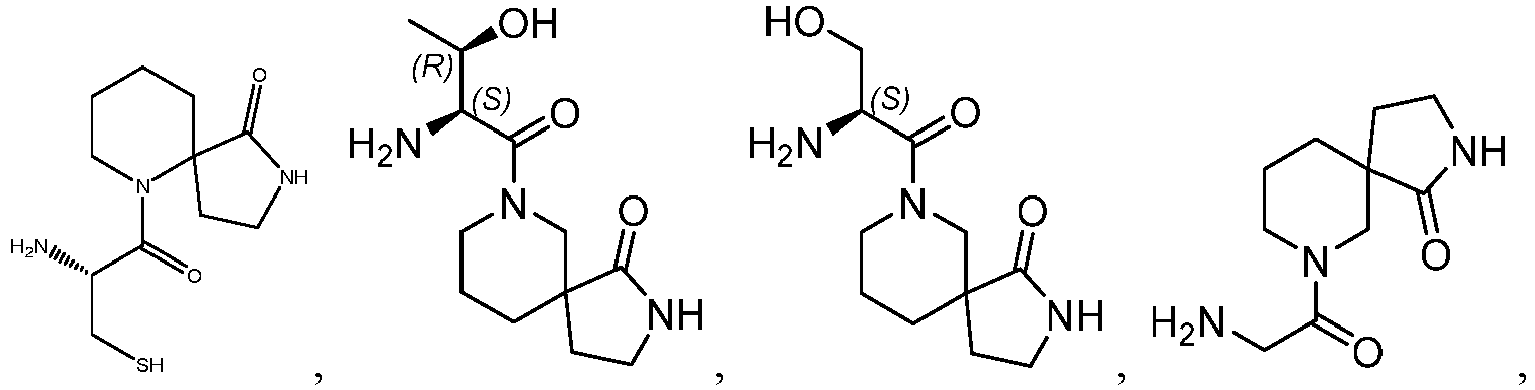


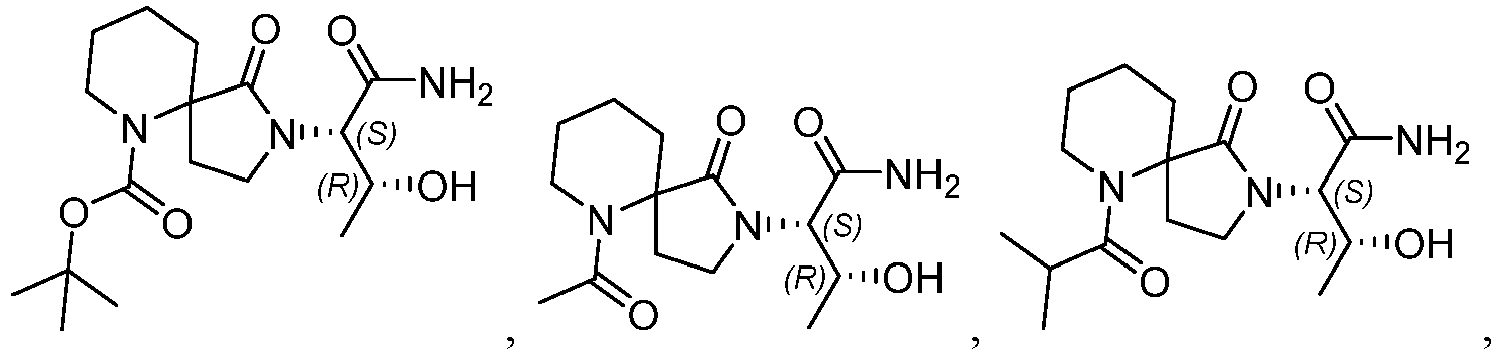


- The compoundof claim 6, wherein the compound is selected from:



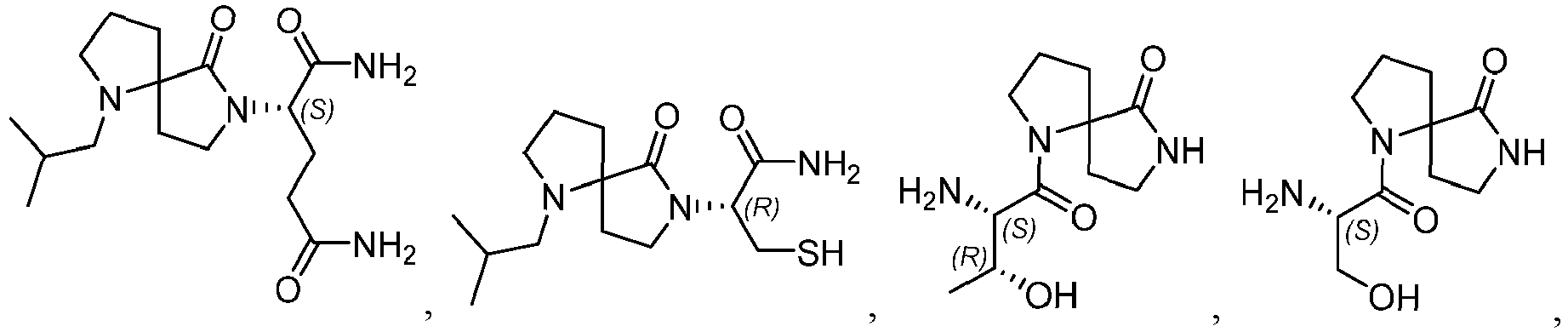


- A pharmaceutical composition comprising a compound of anyone of claims 1-13, and a pharmaceutically acceptable excipient;
optionally wherein the pharmaceutical composition is suitable for oral administration, parenteral administration, topical administration, intravaginal administration, intrarectal administration, sublingual administration, ocular administration, transdermal administration, or nasal administration. - A compound of any one of claims 1-13, or a pharmaceutical composition of claim 14 for use in a method of treating depression, Alzheimer's disease, attention deficit disorder, schizophrenia, anxiety, acute or chronic neuropathic pain, or a neurodevelopmental disorder related to synaptic dysfunction,
optionally wherein the neuropathic pain is selected from the group consisting of herpes, HIV, traumatic nerve injury, stroke, post-ischemia, chronic back pain, post-herpetic neuralgia, fibromyalgia, reflex sympathetic dystrophy, complex regional pain syndrome, spinal cord injury, sciatica, phantom limb pain, diabetic neuropathy, and cancer chemotherapeutic-induced neuropathic pain.
Applications Claiming Priority (2)
| Application Number | Priority Date | Filing Date | Title |
|---|---|---|---|
| US201662369453P | 2016-08-01 | 2016-08-01 | |
| PCT/US2017/044838 WO2018026779A1 (en) | 2016-08-01 | 2017-08-01 | Spiro-lactam nmda receptor modulators and uses thereof |
Publications (2)
| Publication Number | Publication Date |
|---|---|
| EP3490992A1 EP3490992A1 (en) | 2019-06-05 |
| EP3490992B1 true EP3490992B1 (en) | 2023-03-22 |
Family
ID=59582038
Family Applications (1)
| Application Number | Title | Priority Date | Filing Date |
|---|---|---|---|
| EP17751544.2A Active EP3490992B1 (en) | 2016-08-01 | 2017-08-01 | Spiro-lactam nmda receptor modulators and uses thereof |
Country Status (17)
| Country | Link |
|---|---|
| US (3) | US11299495B2 (en) |
| EP (1) | EP3490992B1 (en) |
| JP (2) | JP2019527233A (en) |
| KR (1) | KR102465758B1 (en) |
| CN (1) | CN109937204B (en) |
| AU (2) | AU2017306152A1 (en) |
| BR (1) | BR112019001768A2 (en) |
| CA (1) | CA3031537A1 (en) |
| CL (1) | CL2019000248A1 (en) |
| CO (1) | CO2019000945A2 (en) |
| EA (1) | EA201990424A1 (en) |
| IL (1) | IL264514B (en) |
| MX (1) | MX383650B (en) |
| PE (1) | PE20190503A1 (en) |
| PH (1) | PH12019500202A1 (en) |
| SG (2) | SG10202101055VA (en) |
| WO (1) | WO2018026779A1 (en) |
Families Citing this family (13)
| Publication number | Priority date | Publication date | Assignee | Title |
|---|---|---|---|---|
| JP5702288B2 (en) | 2008-09-18 | 2015-04-15 | ノースウエスタン ユニバーシティ | NMDA receptor modulator and use thereof |
| LT2951183T (en) | 2013-01-29 | 2019-05-27 | Aptinyx Inc. | Spiro-lactam nmda receptor modulators and uses thereof |
| EA201990424A1 (en) | 2016-08-01 | 2019-08-30 | Аптиникс Инк. | SPIRALACTAM MODULERS OF NMDA RECEPTOR AND THEIR APPLICATION |
| PE20190504A1 (en) | 2016-08-01 | 2019-04-10 | Aptinyx Inc | NMDA ESPIRO-LACTAM RECEIVER MODULATORS AND USE OF THE SAME |
| MX385336B (en) | 2016-08-01 | 2025-03-18 | Aptinyx Inc | NMDA SPIRO-LACTAM RECEPTOR MODULATORS AND THEIR USE. |
| AU2017306158B2 (en) | 2016-08-01 | 2021-10-14 | Aptinyx Inc. | Spiro-lactam and bis-spiro-lactam NMDA receptor modulators and uses thereof |
| ES2974090T3 (en) | 2016-08-01 | 2024-06-25 | Tenacia Biotechnology Hong Kong Co Ltd | Spirolactam NMDA modulators and methods of use thereof |
| JP7210599B2 (en) * | 2018-01-31 | 2023-01-23 | アプティニックス インコーポレイテッド | Spirolactam-based NMDA receptor modulators and uses thereof |
| AU2019215049A1 (en) * | 2018-01-31 | 2020-09-17 | Aptinyx Inc. | Spiro-lactam NMDA receptor modulators and uses thereof |
| CN109608460A (en) * | 2018-12-17 | 2019-04-12 | 上海合全药业股份有限公司 | A kind of synthetic method of 1,10-dioxylidene-2,7-diazaspiro[4.5]decane-7-carboxylic acid tert-butyl ester |
| US12012413B2 (en) | 2019-11-11 | 2024-06-18 | Tenacia Biotechnology (Hong Kong) Co., Limited | Methods of treating painful diabetic peripheral neuropathy |
| AU2021270664B2 (en) * | 2020-05-12 | 2024-05-30 | Beijing Greatway Pharmaceutical Technology Co., Ltd. | Compound for adjusting activity of NMDA receptor, and pharmaceutical composition and use thereof |
| CN114591326B (en) * | 2022-02-28 | 2024-02-27 | 上海筛杰生物医药有限公司 | Intermediate of CCT-251921 and preparation method thereof |
Family Cites Families (117)
| Publication number | Priority date | Publication date | Assignee | Title |
|---|---|---|---|---|
| EP0180398A1 (en) | 1984-10-26 | 1986-05-07 | The Regents Of The University Of California | Synthesis of beta-lactam |
| CA1305177C (en) | 1987-06-30 | 1992-07-14 | Yasufumi Ohfune | Carboxycyclopropylglycine and process for producing the same |
| US4904681A (en) | 1987-12-01 | 1990-02-27 | G. D. Searle & Co. | D-cycloserine and its prodrugs as cognitive enhancers |
| EP0360390A1 (en) | 1988-07-25 | 1990-03-28 | Glaxo Group Limited | Spirolactam derivatives |
| US5061721A (en) | 1989-03-15 | 1991-10-29 | G. D. Searle & Co. | Composition containing d-cycloserine and d-alanine for memory and learning enhancement or treatment of a cognitive or psychotic disorder |
| US5086072A (en) | 1990-06-18 | 1992-02-04 | The United States Of America As Represented By The Department Of Health And Human Services | Treatment of mood disorders with functional antagonists of the glycine/nmda receptor complex |
| US5350769A (en) | 1990-10-30 | 1994-09-27 | Ss Pharmaceutical Co., Ltd. | Antiinflammatory gel preparation |
| US5168103A (en) | 1991-01-22 | 1992-12-01 | American Home Products Corporation | [[2-(amino-3,4-dioxo-1-cyclobuten-1-yl) amino]alkyl]-acid derivatives |
| FR2692268B1 (en) | 1992-06-15 | 1994-08-19 | Rhone Poulenc Rorer Sa | New polypeptides having NMDA receptor activity, nucleic acids encoding these polypeptides and uses. |
| SE9301667D0 (en) | 1993-05-14 | 1993-05-14 | Kabi Pharmacia Ab | NEW USE |
| US5523323A (en) | 1993-09-14 | 1996-06-04 | Maccecchini; Maria-Luisa | Use of partial agonists of the NMDA receptor to reduce opiate induced tolerance and dependence |
| US5605911A (en) | 1995-01-31 | 1997-02-25 | Washington University | Use of alpha-2 adrenergic drugs to prevent adverse effects of NMDA receptor hypofunction (NRH) |
| US6335358B1 (en) | 1995-04-12 | 2002-01-01 | President And Fellows Of Harvard College | Lactacystin analogs |
| US5741778A (en) | 1996-03-19 | 1998-04-21 | Amgen Inc. | Method for treating Huntington's disease using glial cell line-derived neurotrophic factor (GDNF) protein product |
| US5763393A (en) | 1996-05-17 | 1998-06-09 | Neurotherapeutics L.P. | Neuroactive peptides |
| NZ332347A (en) | 1996-06-07 | 2000-05-26 | Zeneca Ltd | Peptide derivatives containing a hydrophobic group, L-amino acid residues and modified L-amino acid residues |
| US5959075A (en) | 1996-08-02 | 1999-09-28 | Zymogenetics, Inc. | Testis-specific insulin homolog polypeptides |
| US5902815A (en) | 1996-09-03 | 1999-05-11 | Washington University | Use of 5HT-2A serotonin agonists to prevent adverse effects of NMDA receptor hypofunction |
| JP3955345B2 (en) | 1996-09-27 | 2007-08-08 | サントリー株式会社 | New amino acid Daiji Harvein |
| AU1585999A (en) | 1997-11-12 | 1999-05-31 | Neurotherapeutics | Methods for the detection and treatment of disease using a glycosyltransferase |
| US5952389A (en) | 1998-01-13 | 1999-09-14 | Synchroneuron | Methods of treating tardive dyskinesia and other movement disorders |
| US6007841A (en) | 1998-03-13 | 1999-12-28 | Algos Pharmaceutical Corporation | Analgesic composition and method for treating pain |
| US6274314B1 (en) | 1998-04-02 | 2001-08-14 | Nyxis Neurotherapies, Inc. | Diagnostic assay for the modified nucleosides pseudouridine, 7-methyladenosine, or 1-methyladenosine |
| US6197820B1 (en) | 1998-04-06 | 2001-03-06 | Uab Research Foundation | Use of phenylglycine derivatives to decrease neuronal death caused by brain tumors and brain lesions |
| US6025471A (en) | 1998-06-03 | 2000-02-15 | Deghenghi; Romano | Diazaspiro, azepino and azabicyclo therapeutic peptides |
| WO2000027790A1 (en) | 1998-11-11 | 2000-05-18 | Smithkline Beecham P.L.C. | Mutilin compounds |
| AU1724000A (en) | 1998-11-12 | 2000-05-29 | Nyxis, Inc. | Diagnostic assay for cancer |
| US20030064921A1 (en) | 1999-10-27 | 2003-04-03 | The Regents Of The University Of California | Methods and compounds for modulating melanocortin receptor ligand binding and activity |
| AU1922301A (en) | 1999-11-17 | 2001-05-30 | Nyxis Neurotherapies, Inc. | Differential gene expression in cancer |
| CA2398250A1 (en) | 2000-02-01 | 2001-08-09 | Agy Therapeutics, Inc. | Interaction of nmda receptor with protein tyrosine phosphatase |
| JP2001261679A (en) | 2000-03-21 | 2001-09-26 | Mitsui Chemicals Inc | Pyrrolidinone derivative, method for producing the same and medicament containing the same compound |
| WO2001096606A2 (en) | 2000-06-14 | 2001-12-20 | Nyxis Neurotherapies, Inc. | Identification of genes and compounds for treatment of cancer |
| AU2001271366A1 (en) | 2000-06-22 | 2002-01-02 | Nyxis Neurotherapies, Inc. | Neuroactive peptides for treatment of hypoxia and related conditions |
| GB0018272D0 (en) | 2000-07-25 | 2000-09-13 | Vernalis Research Limited | Chemical compounds IV |
| EP1186303A3 (en) | 2000-09-06 | 2003-12-10 | Pfizer Products Inc. | Pharmaceutical combinations, for the treatment of stroke and traumatic brain injury, containing a neutrophil inhibiting factor and an selective NMDA-NR2B receptor antagonist |
| IL145209A0 (en) | 2000-09-06 | 2002-06-30 | Pfizer Prod Inc | Pharmaceutical combinations for the treatment of stroke and traumatic brain injury |
| UA73619C2 (en) | 2000-12-13 | 2005-08-15 | Pfizer Prod Inc | Stable pharmaceutical compositions of nmda receptor agonist (variants) and method of treatment |
| US20020142287A1 (en) | 2000-12-14 | 2002-10-03 | Hirotaka Yamamoto | High throughput assay to detect inhibitors of the map kinase pathway |
| WO2002072005A2 (en) | 2001-03-07 | 2002-09-19 | University Of Utah Research Foundation | Linear y-carboxyglutamate rich conotoxins |
| AU2002255705A1 (en) | 2001-03-12 | 2002-09-24 | Nyxis Neurotherapies, Inc | Neuroactive peptides for prevention and/or treatment of hypoxia and neuropathic pain |
| WO2003010540A1 (en) | 2001-07-25 | 2003-02-06 | Nyxis Neurotherapies, Inc. | Method of identifying nmda-related agent |
| EA009789B1 (en) | 2002-07-05 | 2008-04-28 | Таргасепт, Инк. | N-aryl diazaspirocyclic compounds and methods of preparation and use thereof |
| US7273889B2 (en) | 2002-09-25 | 2007-09-25 | Innovative Drug Delivery Systems, Inc. | NMDA receptor antagonist formulation with reduced neurotoxicity |
| JP2006523704A (en) | 2003-04-17 | 2006-10-19 | メルク エンド カムパニー インコーポレーテッド | Modulators of chemokine receptor active heterocyclic cyclopentyltetrahydroisoquinoline and tetrahydropyridopyridine |
| CA2573951A1 (en) | 2003-07-18 | 2005-01-27 | Virochem Pharma Inc. | Spiro compounds and methods for the modulation of chemokine receptor activity |
| EP1660634A4 (en) | 2003-08-08 | 2009-02-18 | Burnham Inst | REGULATION OF NMDA RECEPTORS MEDIATED BY PROTEIN P16 |
| WO2005020973A2 (en) | 2003-08-29 | 2005-03-10 | The University Of Houston System | Compositions having antimycrobial activity including a hydroxamate or a hydroxamate and a hydroxylamine |
| GB0323204D0 (en) | 2003-10-03 | 2003-11-05 | Novartis Ag | Organic compounds |
| US20050096311A1 (en) | 2003-10-30 | 2005-05-05 | Cns Response | Compositions and methods for treatment of nervous system disorders |
| EP1683797A1 (en) | 2003-11-13 | 2006-07-26 | Ono Pharmaceutical Co., Ltd. | Heterocyclic spiro compound |
| BRPI0418375A (en) | 2004-01-08 | 2007-05-22 | Hoffmann La Roche | diaza-spiropiperidine derivatives |
| RU2387647C9 (en) * | 2004-08-20 | 2011-05-27 | Таргасепт, Инк. | Use of n-aryldiaza spirocyclic compounds for treating addictions |
| WO2006034196A1 (en) | 2004-09-17 | 2006-03-30 | Lifelike Biomatic Inc. | Compositions for enhancing memory and methods therefor |
| CN101090902B (en) | 2004-10-13 | 2013-05-29 | 默沙东公司 | Cgrp receptor antagonists |
| EP2030622B1 (en) | 2005-03-24 | 2011-02-23 | Emory University | Indication of dosage of progesterone in the treatment of a traumatic brain injury |
| AU2006282942B2 (en) | 2005-08-26 | 2012-07-26 | Wisconsin Alumni Research Foundation | Poly-beta-peptides from functionalized beta-lactam monomers and antibacterial compositions containing same |
| AR059224A1 (en) | 2006-01-31 | 2008-03-19 | Jerini Ag | COMPOUNDS FOR THE INHIBITION OF INTEGRINS AND USE OF THESE |
| WO2007103719A2 (en) | 2006-03-03 | 2007-09-13 | Incyte Corporation | MODULATORS OF 11-β HYDROXYL STEROID DEHYDROGENASE TYPE 1, PHARMACEUTICAL COMPOSITIONS THEREOF, AND METHODS OF USING THE SAME |
| MX2009002921A (en) | 2006-09-15 | 2009-04-01 | Schering Corp | Azetidinone derivatives for the treatment of disorders of the lipid metabolism. |
| JP2008188285A (en) | 2007-02-06 | 2008-08-21 | Bridgestone Corp | Back pad and vehicle seat |
| CN101675041A (en) | 2007-03-20 | 2010-03-17 | 沃泰克斯药物股份有限公司 | Amino-metadiazine compound as kinase inhibitor |
| CN101066945B (en) | 2007-05-25 | 2010-05-19 | 中国科学院上海有机化学研究所 | A method for synthesizing 3-position substituted lactam compounds |
| CN101125817B (en) | 2007-08-03 | 2011-09-14 | 中国科学院上海有机化学研究所 | Method for synthesizing aldehyde substituted small ring amines compounds with high enantioselectivity and 3-substituted lactams compounds with optical activity |
| US20090054392A1 (en) | 2007-08-20 | 2009-02-26 | Wyeth | Naphthylpyrimidine, naphthylpyrazine and naphthylpyridazine analogs and their use as agonists of the wnt-beta-catenin cellular messaging system |
| WO2009039390A2 (en) | 2007-09-20 | 2009-03-26 | Naurex Inc. | The development of glycobiology-based therapeutics for the treatment of brain tumors |
| AU2009217278B2 (en) | 2008-02-20 | 2015-08-20 | The Children's Hospital Of Philadelphia | Genetic alterations associated with autism and the autistic phenotype and methods of use thereof for the diagnosis and treatment of autism |
| EP2293777B1 (en) | 2008-06-24 | 2015-02-25 | Intervet International B.V. | Pharmaceutical transdermal compositions and method for treating inflammation in cattle |
| CN102076679A (en) | 2008-06-27 | 2011-05-25 | 神经研究公司 | Novel tetramethyl substituted piperidine derivatives and their use as monoamine neurotransmitter re-uptake inhibitors |
| KR101647520B1 (en) | 2008-08-07 | 2016-08-10 | 에프. 호프만-라 로슈 아게 | Process for the preparation of a macrocycle |
| GB0814991D0 (en) | 2008-08-15 | 2008-09-24 | Glaxo Group Ltd | Compounds |
| JP5702288B2 (en) | 2008-09-18 | 2015-04-15 | ノースウエスタン ユニバーシティ | NMDA receptor modulator and use thereof |
| WO2010065709A2 (en) | 2008-12-03 | 2010-06-10 | Amin Khan | Hydroxamic acid derivatives, preparation and therapeutic uses thereof |
| DE102009001460B4 (en) | 2009-03-11 | 2010-12-02 | Zf Friedrichshafen Ag | oilcontainer |
| US8329904B2 (en) * | 2009-05-12 | 2012-12-11 | Hoffmann-La Roche Inc. | Azacyclic derivatives |
| WO2011003064A2 (en) | 2009-07-02 | 2011-01-06 | Naurex, Inc. | Methods of treating neuropathic pain |
| US8951968B2 (en) | 2009-10-05 | 2015-02-10 | Northwestern University | Methods of treating depression and other related diseases |
| DK2985032T3 (en) | 2009-10-05 | 2019-04-15 | Univ Northwestern | GLYX TO USE TO TREAT ALZHEIMER'S DISEASE, PARKINSON'S DISEASE OR HUNTINGTON'S DISEASE |
| WO2011068927A2 (en) * | 2009-12-04 | 2011-06-09 | Abbott Laboratories | 11-β-HYDROXYSTEROID DEHYDROGENASE TYPE 1 (11B-HSD1) INHIBITORS AND USES THEREOF |
| EP2516439B1 (en) | 2009-12-21 | 2014-01-22 | Novartis AG | Diaza-spiro[5.5]undecanes as orexin receptor antagonists |
| KR101692275B1 (en) | 2010-02-11 | 2017-01-04 | 노오쓰웨스턴 유니버시티 | Secondary structure stabilized nmda receptor modulators and uses thereof |
| AU2011215704B2 (en) | 2010-02-11 | 2015-07-23 | Northwestern University | Secondary structure stabilized NMDA receptor modulators and uses thereof |
| UY33227A (en) * | 2010-02-19 | 2011-09-30 | Novartis Ag | PIRROLOPIRIMIDINE COMPOUNDS AS INHIBITORS OF THE CDK4 / 6 |
| US8097634B2 (en) | 2010-04-15 | 2012-01-17 | Hoffmann-La Roche Inc. | Azacyclic derivatives |
| GB201007789D0 (en) | 2010-05-10 | 2010-06-23 | Glaxo Group Ltd | Novel Compound |
| CN102267995A (en) * | 2010-06-04 | 2011-12-07 | 艾琪康医药科技(上海)有限公司 | Method for preparing diazaspiro compound |
| AR082633A1 (en) | 2010-08-12 | 2012-12-19 | Tetraphase Pharmaceuticals Inc | TETRACICLINE ANALOGS |
| US9737531B2 (en) | 2012-07-12 | 2017-08-22 | Glytech, Llc | Composition and method for treatment of depression and psychosis in humans |
| AU2012220572A1 (en) | 2011-02-25 | 2013-08-29 | Irm Llc | Compounds and compositions as trk inhibitors |
| EA023876B1 (en) * | 2011-03-14 | 2016-07-29 | Бёрингер Ингельхайм Интернациональ Гмбх | Benzodioxan inhibitors of leukotriene production |
| EA029999B1 (en) | 2011-04-27 | 2018-06-29 | Нортвестерн Юниверсити | Methods of treating autism |
| US9293690B2 (en) | 2011-06-27 | 2016-03-22 | Koninklijke Philips N.V. | Ultrasound transducer assembly and method of manufacturing the same |
| WO2013010275A1 (en) | 2011-07-18 | 2013-01-24 | The Governors Of The University Of Alberta | Catalysts and processes for the hydrogenation of amides |
| MY161925A (en) | 2011-07-27 | 2017-05-15 | Astrazeneca Ab | 2 - (2, 4, 5 - substituted -anilino) pyrimidine derivatives as egfr modulators useful for treating cancer |
| US9546179B2 (en) | 2011-12-20 | 2017-01-17 | Wei Qian | Heterocycle amido alkyloxy substituted quinazoline derivative and use thereof |
| AR092031A1 (en) | 2012-07-26 | 2015-03-18 | Merck Sharp & Dohme | INHIBITORS OF THE EXTERNAL RENAL MEDULAR POTASSIUM CHANNEL |
| CN102936216B (en) | 2012-12-05 | 2015-03-04 | 南京药石药物研发有限公司 | Preparation method of 7,9-dioxo-2,6-aza-spiro[3.5]nona-2-tert-butyl formate and intermediate thereof |
| CA2899010A1 (en) | 2013-01-29 | 2014-08-07 | Naurex, Inc. | Spiro-lactam nmda receptor modulators and uses thereof |
| AU2014212501A1 (en) | 2013-01-29 | 2015-07-30 | Aptinyx, Inc. | Spiro-lactam NMDA receptor modulators and uses thereof |
| CA2898863A1 (en) | 2013-01-29 | 2014-08-07 | Naurex, Inc. | Spiro-lactam nmda receptor modulators and uses thereof |
| LT2951183T (en) | 2013-01-29 | 2019-05-27 | Aptinyx Inc. | Spiro-lactam nmda receptor modulators and uses thereof |
| MX375286B (en) | 2013-01-29 | 2025-03-06 | Aptinyx Inc | Spiro-lactam NMDA receptor modulators and their uses. |
| CN103171641B (en) | 2013-03-19 | 2015-07-15 | 浙江大学 | Hopping robot with wheel movement function |
| JO3517B1 (en) * | 2014-01-17 | 2020-07-05 | Novartis Ag | N-azaspirocycloalkane substituted n-heteroaryl compounds and compositions for inhibiting the activity of shp2 |
| GB2528480A (en) | 2014-07-23 | 2016-01-27 | Givaudan Sa | Improvements in or relating to organic compounds |
| GB201416346D0 (en) | 2014-09-16 | 2014-10-29 | Shire Internat Gmbh | Spirocyclic derivatives |
| WO2017201285A1 (en) | 2016-05-19 | 2017-11-23 | Aptinyx Inc. | Spiro-lactam nmda receptor modulators and uses thereof |
| JP6823083B2 (en) | 2016-05-19 | 2021-01-27 | アプティニックス インコーポレイテッド | Spirolactam NMDA Receptor Modulators and Their Use |
| EA201990424A1 (en) | 2016-08-01 | 2019-08-30 | Аптиникс Инк. | SPIRALACTAM MODULERS OF NMDA RECEPTOR AND THEIR APPLICATION |
| ES2974090T3 (en) | 2016-08-01 | 2024-06-25 | Tenacia Biotechnology Hong Kong Co Ltd | Spirolactam NMDA modulators and methods of use thereof |
| PE20190504A1 (en) | 2016-08-01 | 2019-04-10 | Aptinyx Inc | NMDA ESPIRO-LACTAM RECEIVER MODULATORS AND USE OF THE SAME |
| MX385336B (en) | 2016-08-01 | 2025-03-18 | Aptinyx Inc | NMDA SPIRO-LACTAM RECEPTOR MODULATORS AND THEIR USE. |
| AU2017306158B2 (en) | 2016-08-01 | 2021-10-14 | Aptinyx Inc. | Spiro-lactam and bis-spiro-lactam NMDA receptor modulators and uses thereof |
| AU2019215049A1 (en) | 2018-01-31 | 2020-09-17 | Aptinyx Inc. | Spiro-lactam NMDA receptor modulators and uses thereof |
| JP7210599B2 (en) | 2018-01-31 | 2023-01-23 | アプティニックス インコーポレイテッド | Spirolactam-based NMDA receptor modulators and uses thereof |
| US12012413B2 (en) | 2019-11-11 | 2024-06-18 | Tenacia Biotechnology (Hong Kong) Co., Limited | Methods of treating painful diabetic peripheral neuropathy |
| US20210308101A1 (en) | 2019-11-11 | 2021-10-07 | Aptinyx Inc. | Methods of treating fibromyalgia |
| KR20220110251A (en) | 2019-12-04 | 2022-08-05 | 앱티닉스 인크. | Methods of Treating Cognitive Impairments Associated with Neurodegenerative Diseases |
-
2017
- 2017-08-01 EA EA201990424A patent/EA201990424A1/en unknown
- 2017-08-01 EP EP17751544.2A patent/EP3490992B1/en active Active
- 2017-08-01 JP JP2019505213A patent/JP2019527233A/en active Pending
- 2017-08-01 SG SG10202101055VA patent/SG10202101055VA/en unknown
- 2017-08-01 CA CA3031537A patent/CA3031537A1/en active Pending
- 2017-08-01 BR BR112019001768A patent/BR112019001768A2/en not_active IP Right Cessation
- 2017-08-01 PE PE2019000296A patent/PE20190503A1/en unknown
- 2017-08-01 SG SG11201900443VA patent/SG11201900443VA/en unknown
- 2017-08-01 WO PCT/US2017/044838 patent/WO2018026779A1/en not_active Ceased
- 2017-08-01 AU AU2017306152A patent/AU2017306152A1/en not_active Abandoned
- 2017-08-01 US US16/321,905 patent/US11299495B2/en active Active
- 2017-08-01 MX MX2019001319A patent/MX383650B/en unknown
- 2017-08-01 CN CN201780048099.4A patent/CN109937204B/en active Active
- 2017-08-01 KR KR1020197005666A patent/KR102465758B1/en active Active
-
2019
- 2019-01-28 PH PH12019500202A patent/PH12019500202A1/en unknown
- 2019-01-28 IL IL264514A patent/IL264514B/en unknown
- 2019-01-30 CL CL2019000248A patent/CL2019000248A1/en unknown
- 2019-01-30 CO CONC2019/0000945A patent/CO2019000945A2/en unknown
-
2021
- 2021-08-13 US US17/401,653 patent/US11530223B2/en active Active
- 2021-09-28 AU AU2021240150A patent/AU2021240150A1/en not_active Abandoned
-
2022
- 2022-06-07 JP JP2022092387A patent/JP7448766B2/en active Active
- 2022-11-14 US US18/055,095 patent/US20230312591A1/en not_active Abandoned
Also Published As
| Publication number | Publication date |
|---|---|
| SG10202101055VA (en) | 2021-03-30 |
| CN109937204A (en) | 2019-06-25 |
| CO2019000945A2 (en) | 2019-02-08 |
| KR20190033595A (en) | 2019-03-29 |
| AU2021240150A1 (en) | 2021-10-28 |
| IL264514B (en) | 2021-09-30 |
| IL264514A (en) | 2019-02-28 |
| US11530223B2 (en) | 2022-12-20 |
| JP2019527233A (en) | 2019-09-26 |
| CA3031537A1 (en) | 2018-02-08 |
| MX383650B (en) | 2025-03-14 |
| CL2019000248A1 (en) | 2019-06-21 |
| AU2017306152A1 (en) | 2019-01-31 |
| SG11201900443VA (en) | 2019-02-27 |
| JP7448766B2 (en) | 2024-03-13 |
| EP3490992A1 (en) | 2019-06-05 |
| CN109937204B (en) | 2022-11-25 |
| EA201990424A1 (en) | 2019-08-30 |
| BR112019001768A2 (en) | 2019-06-11 |
| KR102465758B1 (en) | 2022-11-09 |
| US20230312591A1 (en) | 2023-10-05 |
| JP2022120019A (en) | 2022-08-17 |
| US20220220119A1 (en) | 2022-07-14 |
| US20190177334A1 (en) | 2019-06-13 |
| US11299495B2 (en) | 2022-04-12 |
| PE20190503A1 (en) | 2019-04-10 |
| WO2018026779A1 (en) | 2018-02-08 |
| MX2019001319A (en) | 2019-07-04 |
| PH12019500202A1 (en) | 2019-07-29 |
Similar Documents
| Publication | Publication Date | Title |
|---|---|---|
| US11530223B2 (en) | Spiro-lactam NMDA receptor modulators and uses thereof | |
| US12157736B2 (en) | Spiro-lactam NMDA modulators and methods of using same | |
| US11376250B2 (en) | Spiro-lactam NMDA receptor modulators and uses thereof | |
| US10253032B2 (en) | Spiro-lactam NMDA receptor modulators and uses thereof | |
| US10961189B2 (en) | Spiro-lactam NMDA receptor modulators and uses thereof | |
| WO2019152688A1 (en) | Spiro-lactam nmda receptor modulators and uses thereof |
Legal Events
| Date | Code | Title | Description |
|---|---|---|---|
| STAA | Information on the status of an ep patent application or granted ep patent |
Free format text: STATUS: UNKNOWN |
|
| STAA | Information on the status of an ep patent application or granted ep patent |
Free format text: STATUS: THE INTERNATIONAL PUBLICATION HAS BEEN MADE |
|
| PUAI | Public reference made under article 153(3) epc to a published international application that has entered the european phase |
Free format text: ORIGINAL CODE: 0009012 |
|
| STAA | Information on the status of an ep patent application or granted ep patent |
Free format text: STATUS: REQUEST FOR EXAMINATION WAS MADE |
|
| 17P | Request for examination filed |
Effective date: 20190219 |
|
| AK | Designated contracting states |
Kind code of ref document: A1 Designated state(s): AL AT BE BG CH CY CZ DE DK EE ES FI FR GB GR HR HU IE IS IT LI LT LU LV MC MK MT NL NO PL PT RO RS SE SI SK SM TR |
|
| AX | Request for extension of the european patent |
Extension state: BA ME |
|
| DAV | Request for validation of the european patent (deleted) | ||
| DAX | Request for extension of the european patent (deleted) | ||
| STAA | Information on the status of an ep patent application or granted ep patent |
Free format text: STATUS: EXAMINATION IS IN PROGRESS |
|
| 17Q | First examination report despatched |
Effective date: 20201118 |
|
| GRAP | Despatch of communication of intention to grant a patent |
Free format text: ORIGINAL CODE: EPIDOSNIGR1 |
|
| STAA | Information on the status of an ep patent application or granted ep patent |
Free format text: STATUS: GRANT OF PATENT IS INTENDED |
|
| INTG | Intention to grant announced |
Effective date: 20221011 |
|
| GRAS | Grant fee paid |
Free format text: ORIGINAL CODE: EPIDOSNIGR3 |
|
| GRAA | (expected) grant |
Free format text: ORIGINAL CODE: 0009210 |
|
| STAA | Information on the status of an ep patent application or granted ep patent |
Free format text: STATUS: THE PATENT HAS BEEN GRANTED |
|
| AK | Designated contracting states |
Kind code of ref document: B1 Designated state(s): AL AT BE BG CH CY CZ DE DK EE ES FI FR GB GR HR HU IE IS IT LI LT LU LV MC MK MT NL NO PL PT RO RS SE SI SK SM TR |
|
| REG | Reference to a national code |
Ref country code: GB Ref legal event code: FG4D |
|
| REG | Reference to a national code |
Ref country code: CH Ref legal event code: EP |
|
| REG | Reference to a national code |
Ref country code: IE Ref legal event code: FG4D |
|
| REG | Reference to a national code |
Ref country code: DE Ref legal event code: R096 Ref document number: 602017067017 Country of ref document: DE |
|
| REG | Reference to a national code |
Ref country code: AT Ref legal event code: REF Ref document number: 1555247 Country of ref document: AT Kind code of ref document: T Effective date: 20230415 |
|
| REG | Reference to a national code |
Ref country code: NL Ref legal event code: FP |
|
| REG | Reference to a national code |
Ref country code: LT Ref legal event code: MG9D |
|
| PG25 | Lapsed in a contracting state [announced via postgrant information from national office to epo] |
Ref country code: RS Free format text: LAPSE BECAUSE OF FAILURE TO SUBMIT A TRANSLATION OF THE DESCRIPTION OR TO PAY THE FEE WITHIN THE PRESCRIBED TIME-LIMIT Effective date: 20230322 Ref country code: NO Free format text: LAPSE BECAUSE OF FAILURE TO SUBMIT A TRANSLATION OF THE DESCRIPTION OR TO PAY THE FEE WITHIN THE PRESCRIBED TIME-LIMIT Effective date: 20230622 Ref country code: LV Free format text: LAPSE BECAUSE OF FAILURE TO SUBMIT A TRANSLATION OF THE DESCRIPTION OR TO PAY THE FEE WITHIN THE PRESCRIBED TIME-LIMIT Effective date: 20230322 Ref country code: LT Free format text: LAPSE BECAUSE OF FAILURE TO SUBMIT A TRANSLATION OF THE DESCRIPTION OR TO PAY THE FEE WITHIN THE PRESCRIBED TIME-LIMIT Effective date: 20230322 Ref country code: HR Free format text: LAPSE BECAUSE OF FAILURE TO SUBMIT A TRANSLATION OF THE DESCRIPTION OR TO PAY THE FEE WITHIN THE PRESCRIBED TIME-LIMIT Effective date: 20230322 |
|
| REG | Reference to a national code |
Ref country code: AT Ref legal event code: MK05 Ref document number: 1555247 Country of ref document: AT Kind code of ref document: T Effective date: 20230322 |
|
| PG25 | Lapsed in a contracting state [announced via postgrant information from national office to epo] |
Ref country code: SE Free format text: LAPSE BECAUSE OF FAILURE TO SUBMIT A TRANSLATION OF THE DESCRIPTION OR TO PAY THE FEE WITHIN THE PRESCRIBED TIME-LIMIT Effective date: 20230322 Ref country code: GR Free format text: LAPSE BECAUSE OF FAILURE TO SUBMIT A TRANSLATION OF THE DESCRIPTION OR TO PAY THE FEE WITHIN THE PRESCRIBED TIME-LIMIT Effective date: 20230623 Ref country code: FI Free format text: LAPSE BECAUSE OF FAILURE TO SUBMIT A TRANSLATION OF THE DESCRIPTION OR TO PAY THE FEE WITHIN THE PRESCRIBED TIME-LIMIT Effective date: 20230322 |
|
| PG25 | Lapsed in a contracting state [announced via postgrant information from national office to epo] |
Ref country code: SM Free format text: LAPSE BECAUSE OF FAILURE TO SUBMIT A TRANSLATION OF THE DESCRIPTION OR TO PAY THE FEE WITHIN THE PRESCRIBED TIME-LIMIT Effective date: 20230322 Ref country code: RO Free format text: LAPSE BECAUSE OF FAILURE TO SUBMIT A TRANSLATION OF THE DESCRIPTION OR TO PAY THE FEE WITHIN THE PRESCRIBED TIME-LIMIT Effective date: 20230322 Ref country code: PT Free format text: LAPSE BECAUSE OF FAILURE TO SUBMIT A TRANSLATION OF THE DESCRIPTION OR TO PAY THE FEE WITHIN THE PRESCRIBED TIME-LIMIT Effective date: 20230724 Ref country code: ES Free format text: LAPSE BECAUSE OF FAILURE TO SUBMIT A TRANSLATION OF THE DESCRIPTION OR TO PAY THE FEE WITHIN THE PRESCRIBED TIME-LIMIT Effective date: 20230322 Ref country code: EE Free format text: LAPSE BECAUSE OF FAILURE TO SUBMIT A TRANSLATION OF THE DESCRIPTION OR TO PAY THE FEE WITHIN THE PRESCRIBED TIME-LIMIT Effective date: 20230322 Ref country code: AT Free format text: LAPSE BECAUSE OF FAILURE TO SUBMIT A TRANSLATION OF THE DESCRIPTION OR TO PAY THE FEE WITHIN THE PRESCRIBED TIME-LIMIT Effective date: 20230322 |
|
| PG25 | Lapsed in a contracting state [announced via postgrant information from national office to epo] |
Ref country code: SK Free format text: LAPSE BECAUSE OF FAILURE TO SUBMIT A TRANSLATION OF THE DESCRIPTION OR TO PAY THE FEE WITHIN THE PRESCRIBED TIME-LIMIT Effective date: 20230322 Ref country code: PL Free format text: LAPSE BECAUSE OF FAILURE TO SUBMIT A TRANSLATION OF THE DESCRIPTION OR TO PAY THE FEE WITHIN THE PRESCRIBED TIME-LIMIT Effective date: 20230322 Ref country code: IS Free format text: LAPSE BECAUSE OF FAILURE TO SUBMIT A TRANSLATION OF THE DESCRIPTION OR TO PAY THE FEE WITHIN THE PRESCRIBED TIME-LIMIT Effective date: 20230722 |
|
| REG | Reference to a national code |
Ref country code: DE Ref legal event code: R097 Ref document number: 602017067017 Country of ref document: DE |
|
| PLBE | No opposition filed within time limit |
Free format text: ORIGINAL CODE: 0009261 |
|
| STAA | Information on the status of an ep patent application or granted ep patent |
Free format text: STATUS: NO OPPOSITION FILED WITHIN TIME LIMIT |
|
| PG25 | Lapsed in a contracting state [announced via postgrant information from national office to epo] |
Ref country code: SI Free format text: LAPSE BECAUSE OF FAILURE TO SUBMIT A TRANSLATION OF THE DESCRIPTION OR TO PAY THE FEE WITHIN THE PRESCRIBED TIME-LIMIT Effective date: 20230322 Ref country code: DK Free format text: LAPSE BECAUSE OF FAILURE TO SUBMIT A TRANSLATION OF THE DESCRIPTION OR TO PAY THE FEE WITHIN THE PRESCRIBED TIME-LIMIT Effective date: 20230322 Ref country code: CZ Free format text: LAPSE BECAUSE OF FAILURE TO SUBMIT A TRANSLATION OF THE DESCRIPTION OR TO PAY THE FEE WITHIN THE PRESCRIBED TIME-LIMIT Effective date: 20230322 |
|
| 26N | No opposition filed |
Effective date: 20240102 |
|
| PG25 | Lapsed in a contracting state [announced via postgrant information from national office to epo] |
Ref country code: MC Free format text: LAPSE BECAUSE OF FAILURE TO SUBMIT A TRANSLATION OF THE DESCRIPTION OR TO PAY THE FEE WITHIN THE PRESCRIBED TIME-LIMIT Effective date: 20230322 |
|
| PG25 | Lapsed in a contracting state [announced via postgrant information from national office to epo] |
Ref country code: MC Free format text: LAPSE BECAUSE OF FAILURE TO SUBMIT A TRANSLATION OF THE DESCRIPTION OR TO PAY THE FEE WITHIN THE PRESCRIBED TIME-LIMIT Effective date: 20230322 |
|
| PG25 | Lapsed in a contracting state [announced via postgrant information from national office to epo] |
Ref country code: LU Free format text: LAPSE BECAUSE OF NON-PAYMENT OF DUE FEES Effective date: 20230801 |
|
| PG25 | Lapsed in a contracting state [announced via postgrant information from national office to epo] |
Ref country code: LU Free format text: LAPSE BECAUSE OF NON-PAYMENT OF DUE FEES Effective date: 20230801 |
|
| REG | Reference to a national code |
Ref country code: BE Ref legal event code: MM Effective date: 20230831 |
|
| REG | Reference to a national code |
Ref country code: IE Ref legal event code: MM4A |
|
| PG25 | Lapsed in a contracting state [announced via postgrant information from national office to epo] |
Ref country code: IT Free format text: LAPSE BECAUSE OF FAILURE TO SUBMIT A TRANSLATION OF THE DESCRIPTION OR TO PAY THE FEE WITHIN THE PRESCRIBED TIME-LIMIT Effective date: 20230322 |
|
| PG25 | Lapsed in a contracting state [announced via postgrant information from national office to epo] |
Ref country code: IE Free format text: LAPSE BECAUSE OF NON-PAYMENT OF DUE FEES Effective date: 20230801 |
|
| PG25 | Lapsed in a contracting state [announced via postgrant information from national office to epo] |
Ref country code: IE Free format text: LAPSE BECAUSE OF NON-PAYMENT OF DUE FEES Effective date: 20230801 |
|
| PG25 | Lapsed in a contracting state [announced via postgrant information from national office to epo] |
Ref country code: BE Free format text: LAPSE BECAUSE OF NON-PAYMENT OF DUE FEES Effective date: 20230831 |
|
| PG25 | Lapsed in a contracting state [announced via postgrant information from national office to epo] |
Ref country code: BG Free format text: LAPSE BECAUSE OF FAILURE TO SUBMIT A TRANSLATION OF THE DESCRIPTION OR TO PAY THE FEE WITHIN THE PRESCRIBED TIME-LIMIT Effective date: 20230322 |
|
| PG25 | Lapsed in a contracting state [announced via postgrant information from national office to epo] |
Ref country code: BG Free format text: LAPSE BECAUSE OF FAILURE TO SUBMIT A TRANSLATION OF THE DESCRIPTION OR TO PAY THE FEE WITHIN THE PRESCRIBED TIME-LIMIT Effective date: 20230322 |
|
| REG | Reference to a national code |
Ref country code: DE Ref legal event code: R081 Ref document number: 602017067017 Country of ref document: DE Owner name: TENACIA BIOTECHNOLOGY (HONG KONG) CO., LIMITED, HK Free format text: FORMER OWNER: APTINYX INC., EVANSTON, IL, US |
|
| PG25 | Lapsed in a contracting state [announced via postgrant information from national office to epo] |
Ref country code: CY Free format text: LAPSE BECAUSE OF FAILURE TO SUBMIT A TRANSLATION OF THE DESCRIPTION OR TO PAY THE FEE WITHIN THE PRESCRIBED TIME-LIMIT; INVALID AB INITIO Effective date: 20170801 |
|
| PG25 | Lapsed in a contracting state [announced via postgrant information from national office to epo] |
Ref country code: HU Free format text: LAPSE BECAUSE OF FAILURE TO SUBMIT A TRANSLATION OF THE DESCRIPTION OR TO PAY THE FEE WITHIN THE PRESCRIBED TIME-LIMIT; INVALID AB INITIO Effective date: 20170801 |
|
| PG25 | Lapsed in a contracting state [announced via postgrant information from national office to epo] |
Ref country code: TR Free format text: LAPSE BECAUSE OF FAILURE TO SUBMIT A TRANSLATION OF THE DESCRIPTION OR TO PAY THE FEE WITHIN THE PRESCRIBED TIME-LIMIT Effective date: 20230322 |
|
| REG | Reference to a national code |
Ref country code: CH Ref legal event code: U11 Free format text: ST27 STATUS EVENT CODE: U-0-0-U10-U11 (AS PROVIDED BY THE NATIONAL OFFICE) Effective date: 20260127 |
|
| PGFP | Annual fee paid to national office [announced via postgrant information from national office to epo] |
Ref country code: NL Payment date: 20260126 Year of fee payment: 9 |
|
| PGFP | Annual fee paid to national office [announced via postgrant information from national office to epo] |
Ref country code: GB Payment date: 20260127 Year of fee payment: 9 |
|
| PGFP | Annual fee paid to national office [announced via postgrant information from national office to epo] |
Ref country code: DE Payment date: 20260128 Year of fee payment: 9 |
|
| PGFP | Annual fee paid to national office [announced via postgrant information from national office to epo] |
Ref country code: FR Payment date: 20260126 Year of fee payment: 9 |
|
| PGFP | Annual fee paid to national office [announced via postgrant information from national office to epo] |
Ref country code: CH Payment date: 20260127 Year of fee payment: 9 |