EP3487909B1 - Thermogelierender supramolekularer schwamm als selbstheilendes und biokompatibles hydrogel - Google Patents
Thermogelierender supramolekularer schwamm als selbstheilendes und biokompatibles hydrogel Download PDFInfo
- Publication number
- EP3487909B1 EP3487909B1 EP17730074.6A EP17730074A EP3487909B1 EP 3487909 B1 EP3487909 B1 EP 3487909B1 EP 17730074 A EP17730074 A EP 17730074A EP 3487909 B1 EP3487909 B1 EP 3487909B1
- Authority
- EP
- European Patent Office
- Prior art keywords
- block copolymer
- batch
- nprozi
- meox
- methyl
- Prior art date
- Legal status (The legal status is an assumption and is not a legal conclusion. Google has not performed a legal analysis and makes no representation as to the accuracy of the status listed.)
- Active
Links
- WPHKMCRBDLNUTG-UHFFFAOYSA-N CCCC(N(C)CCCN(CCC(C)(C)N(CC1)CCC1C(OCC)=O)C(C)=O)=O Chemical compound CCCC(N(C)CCCN(CCC(C)(C)N(CC1)CCC1C(OCC)=O)C(C)=O)=O WPHKMCRBDLNUTG-UHFFFAOYSA-N 0.000 description 1
Images







Classifications
-
- C—CHEMISTRY; METALLURGY
- C08—ORGANIC MACROMOLECULAR COMPOUNDS; THEIR PREPARATION OR CHEMICAL WORKING-UP; COMPOSITIONS BASED THEREON
- C08G—MACROMOLECULAR COMPOUNDS OBTAINED OTHERWISE THAN BY REACTIONS ONLY INVOLVING UNSATURATED CARBON-TO-CARBON BONDS
- C08G73/00—Macromolecular compounds obtained by reactions forming a linkage containing nitrogen with or without oxygen or carbon in the main chain of the macromolecule, not provided for in groups C08G12/00 - C08G71/00
- C08G73/02—Polyamines
- C08G73/0233—Polyamines derived from (poly)oxazolines, (poly)oxazines or having pendant acyl groups
-
- A—HUMAN NECESSITIES
- A61—MEDICAL OR VETERINARY SCIENCE; HYGIENE
- A61K—PREPARATIONS FOR MEDICAL, DENTAL OR TOILETRY PURPOSES
- A61K47/00—Medicinal preparations characterised by the non-active ingredients used, e.g. carriers or inert additives; Targeting or modifying agents chemically bound to the active ingredient
- A61K47/50—Medicinal preparations characterised by the non-active ingredients used, e.g. carriers or inert additives; Targeting or modifying agents chemically bound to the active ingredient the non-active ingredient being chemically bound to the active ingredient, e.g. polymer-drug conjugates
- A61K47/51—Medicinal preparations characterised by the non-active ingredients used, e.g. carriers or inert additives; Targeting or modifying agents chemically bound to the active ingredient the non-active ingredient being chemically bound to the active ingredient, e.g. polymer-drug conjugates the non-active ingredient being a modifying agent
- A61K47/56—Medicinal preparations characterised by the non-active ingredients used, e.g. carriers or inert additives; Targeting or modifying agents chemically bound to the active ingredient the non-active ingredient being chemically bound to the active ingredient, e.g. polymer-drug conjugates the non-active ingredient being a modifying agent the modifying agent being an organic macromolecular compound, e.g. an oligomeric, polymeric or dendrimeric molecule
- A61K47/59—Medicinal preparations characterised by the non-active ingredients used, e.g. carriers or inert additives; Targeting or modifying agents chemically bound to the active ingredient the non-active ingredient being chemically bound to the active ingredient, e.g. polymer-drug conjugates the non-active ingredient being a modifying agent the modifying agent being an organic macromolecular compound, e.g. an oligomeric, polymeric or dendrimeric molecule obtained otherwise than by reactions only involving carbon-to-carbon unsaturated bonds, e.g. polyureas or polyurethanes
-
- A—HUMAN NECESSITIES
- A61—MEDICAL OR VETERINARY SCIENCE; HYGIENE
- A61L—METHODS OR APPARATUS FOR STERILISING MATERIALS OR OBJECTS IN GENERAL; DISINFECTION, STERILISATION OR DEODORISATION OF AIR; CHEMICAL ASPECTS OF BANDAGES, DRESSINGS, ABSORBENT PADS OR SURGICAL ARTICLES; MATERIALS FOR BANDAGES, DRESSINGS, ABSORBENT PADS OR SURGICAL ARTICLES
- A61L27/00—Materials for grafts or prostheses or for coating grafts or prostheses
- A61L27/14—Macromolecular materials
- A61L27/18—Macromolecular materials obtained otherwise than by reactions only involving carbon-to-carbon unsaturated bonds
-
- A—HUMAN NECESSITIES
- A61—MEDICAL OR VETERINARY SCIENCE; HYGIENE
- A61L—METHODS OR APPARATUS FOR STERILISING MATERIALS OR OBJECTS IN GENERAL; DISINFECTION, STERILISATION OR DEODORISATION OF AIR; CHEMICAL ASPECTS OF BANDAGES, DRESSINGS, ABSORBENT PADS OR SURGICAL ARTICLES; MATERIALS FOR BANDAGES, DRESSINGS, ABSORBENT PADS OR SURGICAL ARTICLES
- A61L27/00—Materials for grafts or prostheses or for coating grafts or prostheses
- A61L27/36—Materials for grafts or prostheses or for coating grafts or prostheses containing ingredients of undetermined constitution or reaction products thereof, e.g. transplant tissue, natural bone, extracellular matrix
- A61L27/38—Materials for grafts or prostheses or for coating grafts or prostheses containing ingredients of undetermined constitution or reaction products thereof, e.g. transplant tissue, natural bone, extracellular matrix containing added animal cells
-
- A—HUMAN NECESSITIES
- A61—MEDICAL OR VETERINARY SCIENCE; HYGIENE
- A61L—METHODS OR APPARATUS FOR STERILISING MATERIALS OR OBJECTS IN GENERAL; DISINFECTION, STERILISATION OR DEODORISATION OF AIR; CHEMICAL ASPECTS OF BANDAGES, DRESSINGS, ABSORBENT PADS OR SURGICAL ARTICLES; MATERIALS FOR BANDAGES, DRESSINGS, ABSORBENT PADS OR SURGICAL ARTICLES
- A61L27/00—Materials for grafts or prostheses or for coating grafts or prostheses
- A61L27/40—Composite materials, i.e. containing one material dispersed in a matrix of the same or different material
- A61L27/44—Composite materials, i.e. containing one material dispersed in a matrix of the same or different material having a macromolecular matrix
-
- C—CHEMISTRY; METALLURGY
- C08—ORGANIC MACROMOLECULAR COMPOUNDS; THEIR PREPARATION OR CHEMICAL WORKING-UP; COMPOSITIONS BASED THEREON
- C08J—WORKING-UP; GENERAL PROCESSES OF COMPOUNDING; AFTER-TREATMENT NOT COVERED BY SUBCLASSES C08B, C08C, C08F, C08G or C08H
- C08J3/00—Processes of treating or compounding macromolecular substances
- C08J3/02—Making solutions, dispersions, lattices or gels by other methods than by solution, emulsion or suspension polymerisation techniques
- C08J3/03—Making solutions, dispersions, lattices or gels by other methods than by solution, emulsion or suspension polymerisation techniques in aqueous media
- C08J3/075—Macromolecular gels
-
- C—CHEMISTRY; METALLURGY
- C08—ORGANIC MACROMOLECULAR COMPOUNDS; THEIR PREPARATION OR CHEMICAL WORKING-UP; COMPOSITIONS BASED THEREON
- C08J—WORKING-UP; GENERAL PROCESSES OF COMPOUNDING; AFTER-TREATMENT NOT COVERED BY SUBCLASSES C08B, C08C, C08F, C08G or C08H
- C08J2379/00—Characterised by the use of macromolecular compounds obtained by reactions forming in the main chain of the macromolecule a linkage containing nitrogen with or without oxygen, or carbon only, not provided for in groups C08J2361/00 - C08J2377/00
- C08J2379/02—Polyamines
-
- C—CHEMISTRY; METALLURGY
- C08—ORGANIC MACROMOLECULAR COMPOUNDS; THEIR PREPARATION OR CHEMICAL WORKING-UP; COMPOSITIONS BASED THEREON
- C08J—WORKING-UP; GENERAL PROCESSES OF COMPOUNDING; AFTER-TREATMENT NOT COVERED BY SUBCLASSES C08B, C08C, C08F, C08G or C08H
- C08J2379/00—Characterised by the use of macromolecular compounds obtained by reactions forming in the main chain of the macromolecule a linkage containing nitrogen with or without oxygen, or carbon only, not provided for in groups C08J2361/00 - C08J2377/00
- C08J2379/04—Polycondensates having nitrogen-containing heterocyclic rings in the main chain; Polyhydrazides; Polyamide acids or similar polyimide precursors
Definitions
- Biocompatible polymers that form thermoreversible supramolecular hydrogels have gained great interest recently as so-called bioinks for 3D bioprinting in tissue engineering and biofabrication.
- thermogelling polymers find application in food and pharmaceutical technology, biology and medicine ( J. D. Kretlow, S. Young, L. Klouda, M. Wong, A. G. Mikos, Adv. Mater. 2009, 21, 3368-3393 ; N. A. Peppas, J. Z. Hilt, A. Khademhosseini, R. Langer, Adv. Mater. 2006, 18, 1345-1360 ). More recently, they raised great interest as bioinks for three-dimensional (3D) cell culture and bioplotting/biofabrication ( R. Censi, W. Schuurman, J. Malda, G. Di Dato, P. E. Burgisser, W. J. A. Dhert, C. F.
- thermogelling properties such as collagen, gelatin, agarose and others
- frequently used materials include poly(N-isopropylacrylamide) (pNIPAAm) ( L. Klouda, Eur. J. Pharm Biopharm. 2015, 97, 338-349 ; H. G. Schild, Prog. Polym. Sci. 1992, 17, 163-249 ; R. A. Stile, W. R. Burghardt, K. E. Healy, Macromolecules 1999, 32, 7370-7379 ) or two members of the family of Pluronics® F127 and P123 ( P. Alexandridis, T. Alan Hatton, Colloids Surf., A 1995, 96, 1-46 ). In recent years, these systems have been investigated extensively for biomedical applications ( A. V. Kabanov, E. V.
- thermoresponsive polymers are polymers obtained from cyclic imino ethers, particularly poly(2-substituted-2-oxazoline)s (POx) and poly(2-substituted-5,6-dihydro-4H-1,3-oxazine)s (in short poly(2-oxazine)s; POzi). These polymers are accessible via living cationic ring-opening polymerization ( K. Aoi, M. Okada, Prog. Polym. Sci. 1996, 21, 151-208 ) and can exhibit LCST in aqueous solution where the transition temperature can be tuned over a large temperature range ( S. Huber, R. Jordan, Colloid Polym. Sci.
- thermoresponsive material C. Weber, R. Hoogenboom, U. S. Schubert, Prog. Polym. Sci. 2012, 37, 686-714 ; R. Hoogenboom, H. Schlaad, Polymers 2011, 3, 467-488 ; J.-H. Kim, Y. Jung, D. Lee, W.-D. Jang, Adv. Mater. 2016 ), but also for biomedical applications ( A. C. Rinkenauer, L. Tauhardt, F. Wendler, K. Kempe, M. Gottschaldt, A. Traeger, U. S. Schubert, Macromol. Biosci. 2015, 15, 414-425 ; Z. He, L.
- thermoresponsive gels are currently heavily investigated, but new materials that allow the tuning of the response temperature and the rheological properties are urgently needed.
- US 3 574 784 A discloses block copolymers being represented by the general formula wherein R represents an aliphatic hydrocarbon radical having from 1 to 8 carbon atoms, which hydrocarbon radical may contain substituents that are inert under the polymerization conditions such as ether, ester, and halogen groups, and wherein R 1 represents an aliphatic hydrocarbon or halogenated hydrocarbon radical having from 4 to 20 carbon atoms.
- the ratio of n:m can range from about 1:9 to about 30:1, preferably from 1:1 to 9:1, and m+n can range from about 20 to about 300, preferably 80 to 200.
- the known block copolymers are solids that are used as antisoilants, in particulars as coating materials to inhibit soiling of a coated material.
- thermogelling and rheological properties due to their specific structural composition.
- a block copolymer characterized by one of the general chemical structures [A] n -[B] m or [B] n -[A] m , wherein [A] is a poly(2-oxazine), and wherein [B] is a poly(2-oxazoline), wherein n and m are in the range of 20 to 300 each, and wherein n and m approximately have the same value.
- the block copolymer with regard to the present invention consists of at least two different blocks [A] and [B] with n or m repetition units each.
- a block copolymer is preferred, which is characterized by one of the general chemical structures [A] n -[B] m or [B] n -[A] m , wherein [A] is a poly(2-oxazine), and wherein [B] is a poly(2-oxazoline), wherein n and m are in the range of 40 to 300 each, and wherein n and m approximately have the same value.
- thermogelling block copolymers comprising a thermoresponsive poly(2-oxazine)s ((POzi)-block) and a hydrophilic poly(2-oxazoline)s ((POx)-block) were synthesized.
- the rheological properties of aqueous solution of these block copolymers were investigated by viscosimetry and rheology.
- thermogelling polymers comprising solely poly(cyclic imino ethers).
- the block copolymers according to the present invention undergo thermogelation in different temperature regions.
- the block copolymers according to the present invention undergo thermogelation above 10°C, particularly above 25°C (for example block copolymers with the general chemical structure [A] 100 -[B] 100 or [B] 100 -[A] 100 ).
- the block copolymers according to the present invention undergo thermogelation above 30°C, particularly above 35 °C (for example block copolymers with the general chemical structure [A] 50 -[B] 50 or [B] 50 -[A] 50 ).
- All block copolymers form transparent hydrogels of surprisingly high strength (G' > 1000 Pa) and show excellent and rapid shear recovery after stress.
- the new optical transparent gels have a very suitable and adjustable gelation temperature.
- the synthesis of the polymers is easy and scalable well. The gelation process is quite fast.
- the material is highly cytocompatible, gives relatively stable hydrogels (G' ⁇ 4 kPa), but shows pronounced shear thinning. As the formed hydrogels are optically clear, they are suitable for light microscopy.
- block copolymer most simply refers to polymers of at least two different polymer blocks, wherein each polymer block comprises two or more adjacent units of the same kind.
- block copolymer is used herein in accordance with its established meaning in the art to refer to copolymers wherein repeating units of a defined type are organized in blocks [A] and [B].
- the block copolymers of the present invention are synthesized by a two-stage copolymerization of 2-oxazin and 2-oxazoline. Further preferred, the block copolymers of the present invention are synthesized by a two-stage copolymerization of 2-oxazoline and 2-oxazin.
- the mechanism showing such a two-stage copolymerization of 2-oxazoline and 2-oxazin is presented in the following general scheme:
- Block A (2-oxazoline as shown in the scheme above) and block B (2-oxazin as shown in the scheme above) can also be interchanged without resulting in a change of mechanical and physico-chemical properties of the synthesized block copolymer.
- the rest R (of 2-oxazoline and 2-oxazin as well) is preferably an alkyl-group, but of course not limited to this.
- [A] is chosen of a group containing 2-n-propyl-2-oxazine, 2-cyclopropyl-2-oxazine and 2-butyl-2-oxazine and [B] is chosen of a group containing 2-methyl-2-oxazoline and 2-ethyl-2-oxazoline.
- the block copolymer is characterized by one of the following general chemical structures: and wherein n is in the range of 20 to 300, wherein m is in the range of 20 to 300, and wherein n and m have the same or approximately the same value.
- the block copolymer is characterized by one of the following general chemical structures: and wherein n is in the range of 40 to 300, wherein m is in the range of 40 to 300, and wherein n and m have the same or approximately the same value.
- the end group R in the above shown general chemical structures is introduced by an initiation molecule, starting the polymerization.
- the final group or termination group R 1 is introduced by a termination molecule or termination agent (nucleophile), which stops the polymerization reaction.
- the initiation molecules as well as the termination molecules may be chosen of a variety of substances. Depending on the selected substances, so depending on the structure of the initiation molecules and the termination molecules, block copolymers with different groups R and R 1 are synthesized.
- R may be introduced by an initiation molecule chosen of a group containing strong Bronsted, Lewis acids or alkylating agents. In a preferred embodiment, trifluoromethanesulfonate esters and p-toluenesulfonate esters are employed. Preferably R may be an alkyl group. Further preferred R 1 may be introduced by a nucleophilic termination molecule. The nucleophilic termination molecule may be chosen of a group containing hydroxide, Ethyl 4-piperidinecarboxylate, tert-butyl-1-piperazinecarboxylate (1-Boc-Piperazine), 3-mercapto-propionic acid methyl ester, piperazine and its derivates. Preferably, R 1 may be a Piperidin-group.
- the invention is not limited neither to the above specified initiation molecules nor to the above specified termination molecules. Rather, these molecules and the resulting groups R and R 1 shall not effect the gelling behavior of the synthesized block copolymers. In other words, the observed effects with regard to the present invention occur basically independent of the groups R and R 1 .
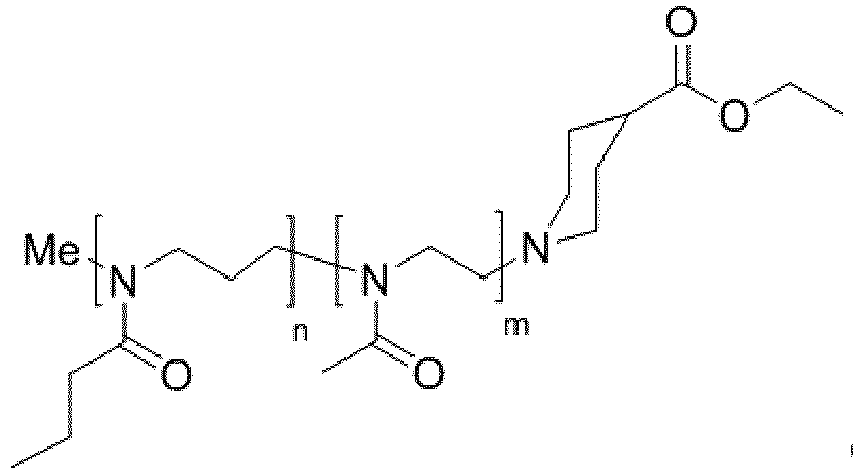
- the block copolymer is characterized by the following chemical structure, wherein n and m have a value of 50 each.
- the block copolymer is characterized by the following chemical structure, wherein n and m have a value of 100 each.
- Methyl-P[nPrOzi 50 -b-MeOx 50 ]-piperidine-4-carboxylic acid ethyl ester as well as Methyl-P[nPrOzi 100 -b-MeOx 100 ]-piperidine-4-carboxylic acid ethyl ester were synthesized by polymerization of 2-n-propyl-2-oxazine (nPrOzi, thermoresponsive POzi block) and 2-methyl-2-oxazoline (MeOx, hydrophilic POx block). The detailed mechanism of the synthesis of the block copolymers is shown later on.
- the chemical purity of block [A] and/or of block [B] of a block copolymer with one of the general chemical structures [A] n -[B] m or [B] n -[A] m is at least 75 %, in particular 90 %.
- block [A] comprises at least 75% of a first 2-oxazoline and up to 25 % of a second 2-oxazoline or 2-oxazine and/or that block [B] comprise at least 75% of a first 2-oxazine and up to 25 % of another 2-oxazine or 2-oxazoline.
- the block copolymer is characterized in forming a thermoresponsive hydrogel.
- the aqueous solution of the block copolymer forms a thermoresponsive hydrogel.
- each block copolymer according to the present invention is characterized by the thermogelling behavior of its aqueous solutions. Gel formation of aqueous polymer solutions only occurs if the concentration exceeds a certain value. With increasing molecular weight, this concentration decreases. For block copolymers with lower molecular weight (as for batches P1 to P5 shown later on), the critical concentration is 20 wt.-% for higher molecular weight is slightly lower at 18 wt.-% (as for batches P1a to P6a shown later on as well).
- the gelling temperature may differ.
- the block copolymers may gel at lower temperatures with increasing chain length, so with higher values of n and m.
- the block copolymers gel preferably at temperatures above 30 °C, particularly above 35 °C (as an example block copolymers with the general chemical structure [A] 50 -[B] 50 or [B] 50 -[A] 50 ). Further preferred, the block copolymers gel at temperatures above 10 °C, preferably above 25 °C (as an example block copolymers with the general chemical structure [A] 100 -[B] 100 or [B] 100 -[A] 100 ).
- the block copolymer with regard to the present invention is used as a carrier material for an active agent.
- the block copolymer is used as a carrier material, wherein the active agent is embedded in carrier material.
- the block copolymer is used as a carrier material for time-delayed disposal of the embedded active agent.
- the usage of the block copolymer as a carrier material in a drug delivery system is also favored.
- the use of the block copolymer as a carrier material for cells is preferred.
- using the block copolymer as a carrier material for proteins is preferred.
- thermogelling in combination with the pronounced isothermal shear-thinning is of advantage for any of these noted applications.
- hydrogels formed from aqueous solution of the polymers disclosed in the present invention are optically transparent, which is advantageous for said applications.
- 96-well plates and 100 mm culture dishes were used from Greiner Bio One (Frickenhausen, Germany).
- Water soluble tetrazolium (WST-1) was used from Rache (Basel, Switzerland).
- Methyl trifluoromethylsulfonate (MeOTf), 2-methyl-2-oxazoline (MeOx), benzonitrile (PhCN) and other solvents were dried by refluxing over CaH 2 under dry argon atmosphere and subsequent distillation prior to use.
- NMR spectra were recorded on a Bruker Fourier 300 ( 1 H 300.12 MHz) at 298 K, Bruker BioSpin (Rheinstetten, Germany). The spectra were calibrated using the solvent signals (MeOD 3.31 ppm). Gel permeation chromatography (GPC) was performed on a Polymer Standard Service (PSS, Mainz, Germany) system (pump mod. 1260 infinity, RI-detector mod.
- IR spectra were recorded on Jasco (Groß-Umstadt, Germany) FT/IR-4100 equipped with an ATR-unit. Rheology experiments were performed using an Anton Paar (Ostfildern, Germany) Physica MCR 301 utilizing a plate-plate geometry (diameter 25 mm). The rheometer was equipped with a Peltier element. All polymer solutions used for rheology were prepared just before the measurement and were kept in the fridge at approx. 8 °C.
- the detector is a 6 Li-glass detector with an active area of 60x60 cm 2 .
- the exposure times were 5, 15 and 35 minutes for the SDDs of 1.61, 7.61 and 19.61 m respectively.
- the sample was filled into a Hellma cuvette with a light path of 1 mm. This cuvette was placed into a Julabo temperature controlled oven. Dark current correction was carried out using boron carbide.
- Murine NIH 3T3 fibroblasts (ATCC-Number CRL-1658, ATCC, Manassas, VA) were maintained in 100 mm culture dishes in growth medium (DMEM containing 10 % heat inactivated FBS, 100 U/mL penicillin G and 100 ⁇ g/ ⁇ L streptomycin) at 37 °C and 5 % CO 2 .
- the lyophilized polymer was dissolved in growth medium at 30 wt.-%. 20.000 NIH 3T3 fibroblasts dispersed in media were incorporated into the polymer stock-solution by stricte mixing with an Eppendorf pipette on ice to yield a 100 ⁇ L solution, in which the final polymer concentration was 25 wt.-%. The solution was subsequently added to one well of a preheated (37° C) 8-well LabTek chambers slide.
- the cells were subsequently analysed by flow cytometry on a FACS Calibur system.
- a 488 nm Laser was chosen with the emission channel FL2 (585 nm / ⁇ 21 nm) for PI or the emission channel FL I (530 nm / ⁇ 15 nm) for FDA, respectively (see Figures 18 and 19 ).
- a total number of 5000 events were counted with BD CellQuestTM Pro and the geometric mean fluorescence intensity was determined for each condition using Flowing Software (version 2.5.1; Turku Bioimaging).
- the cell pellet of NIH 3T3 fibroblasts was FDA-stained and 20.000 cells were incorporated into a 25 wt.-% polymer solution and added into 37 °C preheated 8-well LabTek chambers slides as described above. FDA stained cells were subsequently analyzed with a Zeiss Observer Z1 epi-fluorescence microscope (Zeiss, Oberkochen, Germany) equipped with a 37 °C incubation chamber. 3D stacks with 1 ⁇ m z-stack intervals were taken. Acquired 3D Stacks were analyzed with the ZEN Imaging Software (Zeiss, Oberkochen, Germany).
- 2000 NIH 3T3 fibroblasts were seeded in growth medium in a 96-well-format and incubated overnight at 37 °C and 5 % CO 2 .
- Dilution concentrations of the 30 wt.-% polymer stock solution were prepared (final polymer concentrations: 10 wt.-%, 5 wt.-%, 1 wt.-%, and 0.02 wt.-%) in growth medium on ice and added to the cells.
- Cell growth was stimulated for 48 h at 37°C and 5% CO 2 .
- the cell medium was carefully exchanged and replaced by fresh growth medium.
- the cells were incubated with WST-1 for 3 h at 37°C according to the manufacturer's instructions.
- the absorbance of the soluble formazan product was determined at 570 nm using a Spectramax 250 microplate reader from Mo lecular Devices (Sunnyvale, USA).
- 2-n-propyl-2-oxazine As an example, the synthesis of the monomer 2-n-propyl-2-oxazine (nPrOzi) is shown. 2-n-propyl-2-oxazine was synthesized by an adapted standard procedure ( S. Sinnwell, H. Ritter, Macromol. Rapid Commun. 2006, 27, 1335-1340 ), as shown in the following scheme:
- Zincacetate dihydrate (catalyst) was dissolved in propionitrile and 3-amino-1-propanol was added dropwise at room temperature. The reaction mixture was stirred under reflux conditions for at least 24 h. Progression of the reaction was monitored by IR-spectroscopy. After total nitrile consumption the monomer was purified by fractional distillation under inert argon atmosphere to obtain a clear colorless liquid (yield: 363.5 g, 55.5 %).
- 2-methyl-2-oxazoline was bought with a purity of 99% and distilled before polymerization under reduced pressure on molecular sieve.
- the monomer concentration at the beginning of the reaction is typically laying around 3 mol/l.
- the chain termination is performed typically at 40 ° C and for 4 h at least.
- monofunctional termination agents typically three equivalents per initiator molecule are inserted. At least ten equivalents are used in the case of bifunctional termination agents, as for example piperazine.
- Methyl-Poly[nPrOzi 50 -b-MeOx 50 ]-piperidine-4-carboxylic acid ethyl ester was synthesized by polymerization of 2-n-propyl-2-oxazine (nPrOzi, thermoresponsive POzi block) and 2-methyl-2-oxazoline (MeOx, hydrophilic POx block), as shown in the following mechanism.
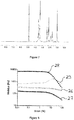
- Figure 1 shows the GPC traces for batches P1 to P5 of Methyl-P[nPrOzi 50 -b-MeOx 50 ]-piperidine-4-carboxylic acid ethyl ester, represented by curves 1, 3, 5, 7, 9.
- the elugrams obtained by GPC appear, with the exception of the first batch P1 (curve 1), nearly monomodal with only minor tailing to lower molar masses.
- Figure 2 shows the temperature dependent rheology with storage modulus (G') and loss modulus (G") for 20 wt.-% of Methyl-P[nPrOzi 50 -b-MeOx 50 ]-piperidine-4-carboxylic acid ethyl ester.
- Storage modulus (G') of batches P1 to P5 is represented by curves 11, 13, 15, 17 and 19 and loss modulus (G") of batches P1 to P5 is represented by curves 21, 22, 23, 24 and 25.
- thermogelling polymers for which values ⁇ 1 kPa are more commonly found in the literature ( C. Li, N. J. Buurma, I. Haq, C. Turner, S. P. Armes, V. Castelletto, I. W. Hamley, A. L. Lewis, Langmuir 2005, 21, 11026-11033 ; S. Xuan, C.-U. Lee, C. Chen, A. B. Doyle, Y. Zhang, L. Guo, V. T. John, D. Hayes, D. Zhang, Chem. Mater. 2016, 28, 727-737 ).
- hydrogels of F127 at 20 wt.-% approximately 10 kPa
- G. Grassi, A. Cre-vatin, R. Farra, G. Guarnieri, A. Pascotto, B. Rehimers, R. Lapasin, M. Grassi, J. Colloid Interface Sci. 2006, 301, 282-290 are hydrogels of F127 at 20 wt.-% (approximately 10 kPa) ( G. Grassi, A. Cre-vatin, R. Farra, G. Guarnieri, A. Pascotto, B. Rehimers, R. Lapasin, M. Grassi, J. Colloid Interface Sci. 2006, 301, 282-290 ).
- thermogelling polymers are quite distinct from F127 and P123, which also form gels at elevated temperature and/or concentration and are commonly used for gel plotting in biofabrication ( N. E. Fedorovich, J. R. de Wijn, A. J. Verbout, J. Alblas, W. J. A. Dhert, Tissue Eng. Part A 2008, 14, 127-133 ).
- the viscosity of the new material at low temperature is relatively low, in particular compared to the viscosity of Pluronic® block copolymers (compare 700 mPa*s (F127) vs.
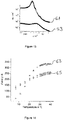
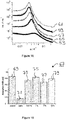
- Figure 14 shows the resulting correlation length ⁇ (curve 63) and characteristic domain size d (curve 65) of Methyl-P[nPrOzi 50 -b-MeOx 50 ]-piperidine-4-carboxylic acid ethyl ester.
- the correlation length is a cutoff length, above which correlations are no longer noticeable in the system. As temperature increases, an increase in the domain size as well as in the correlation length was observed, the latter eventually exceeding the former (at approximately 18 °C).
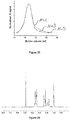
- Figure 15 shows the representative fits for a bi-continuous sponge like structure of selected datasets over the complete temperature range of Methyl-P[nPrOzi 50 -b-MeOx 50 ]-piperidine-4-carboxylic acid ethyl ester.
- SANS scattering data and their respective fits were shifted using a factor of 1 (6.9 °C, curve 53), a factor of 4 (21.1 °C, curve 55), a factor of 16 (30.0 °C, curve 57), a factor of 64 (36.2 °C, curve 59) and a factor of 256 (39.7 °C, curve 61), respectively.
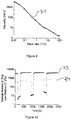
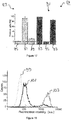
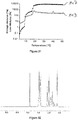
- Figure 17 shows the cell viability of NIH 3T3 fibroblasts as a bar chart 81.
- the bar chart 81 shows results for PI staining 83 with a bar 85 for the control sample, a bar 87 for the methanol treated sample and a bar 89 for the sample with cells in 25% of gel.
- the bar chart 81 shows results for FDA staining 91 with a bar 93 for the control sample, a bar 95 for the methanol treated sample and a bar 97 for the sample with cells in 25% of gel.
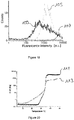
- Figure 18 shows a flow cytometry analysis (FACS Calibur system) of NIH 3T3 fibroblasts cultivated in Methyl-P[nPrOzi 50 -b-MeOx 50 ]-piperidine-4-carboxylic acid ethyl ester, using a 488 nm laser with the emission channel FL2 (585 nm / ⁇ 21 nm) for PI staining 83 (compare to Figure 17 ) with curve 99 for control sample (see bar 85 in Figure 17 ), curve 103 for the methanol treated sample (see bar 87 in Figure 17 ) and curve 101 for the sample with cells in 25% of gel (see bar 89 in Figure 17 ).
- a total number of 5000 events were counted with BD CellQuestTM Pro and the geometric mean fluorescence intensity was determined for each condition using Flowing Software (version 2.5.1; Turku Bioimaging).
- Figure 19 shows a flow cytometry analysis of NIH 3T3 fibroblasts cultivated in Methyl-P[nPrOzi 50 -b-MeOx 50 ]-piperidine-4-carboxylic acid ethyl ester for the emission channel FL1 (530 nm / ⁇ 15 nm) for FDA staining 91 (compare to Figure 17 ) with curve 105 for control sample (see bar 93 in Figure 17 ), curve 107 for the methanol treated sample (see bar 95 in Figure 17 ) and curve 109 for the sample with cells in 25% of gel (see bar 97 in Figure 17 ).
- FIG 20 a temperature-dependent rheological analysis of Methyl-P[nPrOzi 50 -b-MeOx 50 ]-piperidine-4-carboxylic acid ethyl ester at a concentration of 20 wt.-% (batch P2) is shown.
- Curve 111 shows the temperature-dependence of the storage modulus (G')
- curve 113 shows the temperature-dependence of the loss modulus (G").
- the gel point determined at the intersection of G' and G" is located at 35 °C, so just below body temperature. The gel point moves to lower temperatures with increasing the molar mass.
- the resulting hydrogels are quite soft with a loss modulus (G') of around 4 kPa. In contrast to the gelling temperature, the storage modulus (G') seems to be independent of the molar mass.
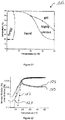
- Figure 21 shows a phase diagram 115 of aqueous solutions of Methyl-P[nPrOzi 50 -b-MeOx 50 ]-piperidine-4-carboxylic acid ethyl ester dependent on concentration and temperature. Increasing temperature, at concentrations below 10 wt.-% muddy solutions are obtained, which can be explained by nano- and microscaling aggregation.
- Figure 22 shows the temperature dependent rheology with storage modulus (G') and loss modulus (G") for 20 wt.-% of Methyl-P[nPrOzi 100 -b-MeOx 100 ]-piperidine-4-carboxylic acid ethyl ester (batch P1a) and Methyl-P[nPrOzi 100 -b-MeOx 100 ]- tert-butyl-piperazine-1-carboxylate (batch P2a).
- Storage modulus (G') and loss modulus (G") of batch P1a are represented by curves 117, 119 and storage modulus (G') and loss modulus (G") of batch P2a are represented by curves 121, 123. It can be seen, that the use of 1-BOC Piperazine (curves 121, 123) instead of ethyl-4-piperidinecarboxylate (curves 117, 119) as a termination molecule does no influence the gelation behavior of the block copolymer. The storage modulus G' as well as loss modulus (G") remain unchanged.
- Figure 23 shows the temperature dependent rheology with storage modulus (G') and loss modulus (G") for 20 wt.-% of Propynyl-P[nPrOzi 100 -b-MeOx 100 ]-piperidine-4-carboxylic acid ethyl ester (batch P3a), Propynyl-P[nPrOzi 100 -b-MeOx 100 ]- methyl 3-mercaptopropionate (batch 4a) and Propynyl-P[nPrOzi 100 -b-MeOx 100 ]-hydroxy (batch 5a).
- Storage modulus (G') and loss modulus (G") of batch P3a are represented by curves 125, 127
- storage modulus (G') and loss modulus (G") of batch P4a are represented by curves 129, 131
- storage modulus (G') and loss modulus (G") of batch P5a are represented by curves 133, 135.
- FIG 24 shows the GPC traces of batch P1a (curve 137) and batch P2a (curve 139) measured in HFIP.
- the GPC elugrammes 137, 139 have a moderately narrow molecular weight distribution (( ⁇ ⁇ 1,5) and also show no differences as a result of the used termination molecule.
- Figure 25 shows the GPC traces of batch P3a (curve 141), batch P4a (curve 143) and batch P5a (curve 145) measured in DMF. These polymers were used for the preparation of the gels, which are characterized by the temperature-sweep shown in Figure 23 .
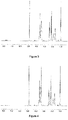
- Figures 26 to 30 show the 1 H-NMR spectra of batches P1a ( Figure 26 ), P2a ( Figure 27 ), P3a ( Figure 28 ), P4a ( Figure 29 ) and P5a ( Figure 30 ) in methanol-d 4 at 298 K each.
- the 1 H-NMR spectra 26, 27, 28, 29, 30 of all block copolymers show that there are no detectable rests of solvent, which may influence the gelling process (the formation of the gel) of the respective block copolymer.
- the desired degree of polymerization could be determined by endgroup analysis.
- Figure 31 shows the temperature dependent rheology with storage modulus (G') and loss modulus (G") for 20 wt.-%of contaminated Methyl-P[nPrOzi 50 -b-MeOx 50 ]-tert-butyl-piperazine-1-carboxylat (batch P6a).
- the storage modulus (G') is represented by curve 147 and the loss modulus (G") is represented by curve 149.
- Figure 32 shows an 1 H-NMR spectra of batch P6a.
- the Poly(2-n-propyl-2-oxazin)-block was deliberately contaminated with 10% Poly(n-butyl-2-oxazin).
- the resulting block copolymers are opaque, but exhibit storage modulus (G') that is increased by a factor of 2 (curve 147).
- G' storage modulus
- the material can store more deformation energy and influences the effect of reverse deformation. Due to the more pronounced elastic character, a higher degree of cross-linking can be assumed. In this context, it must be taken into account, that it is exclusively a reversible physical cross-linking reaction.
- Figure 33 shows a light microscope image of a printed constructs composed of orthogonal stacks of hydrogel strands.
- the cell distribution within the constructs was homogeneous throughout the entire constructs.
- the homogenous cell distribution was facilitated due to the thermoresponsive properties of the material.
- the ink At low temperatures (ice bath) the ink has a very low viscosity and cells are readily distributed within the material via repeated mixing by pipetting. Once taken of the ice, the immediate, temperature driven viscosity increase preserved the homogenous cell distribution within the ink until the material was dispensed.
- it can be challenging to homogeneously distribute cells in highly viscous bioinks due to various issues (air bubbles, difficult pipetting/handling) V. H. M. Mouser, F. P. W. Melchels, J. Visser, W. J. A. Dhert, D. Gawlitta, J. Malda, Biofabrication 2016, 8, 35003 ).
- NIH-3T3 cells included into biofabricated scaffolds were further investigated via flow cytometry.
- the results can be taken out of Figure 35 .
- the untreated control represents cells in medium
- the control represents cells that were dispersed in the bioink but not printed.
- thermogelling synthetic block copolymers comprising a hydrophilic block [A] or [B] and a thermoresponsive block [A] or [B], which are an excellent bioink candidates.
- the new gels are optical transparent and have a very suitable and adjustable gelling temperature.
- the synthesis of the polymers is easy and to be scaled well.
- the gelation process of all describes molecules is very fast.
- the combination of thermogelation, excellent biocompatibility and isothermal shear-thinning is particularly attractive for many applications including drug delivery, biofabrication, cell culture or tissue engineering.
- the particularities of the rheological properties can be conveniently fine-tuned via the polymer composition while the chemical functionalization via chain termini can be realized without having an impeding influence on the desirable rheological properties.
Landscapes
- Health & Medical Sciences (AREA)
- Chemical & Material Sciences (AREA)
- Medicinal Chemistry (AREA)
- Life Sciences & Earth Sciences (AREA)
- Chemical Kinetics & Catalysis (AREA)
- Engineering & Computer Science (AREA)
- Animal Behavior & Ethology (AREA)
- Veterinary Medicine (AREA)
- Public Health (AREA)
- General Health & Medical Sciences (AREA)
- Epidemiology (AREA)
- Polymers & Plastics (AREA)
- Dispersion Chemistry (AREA)
- Organic Chemistry (AREA)
- Dermatology (AREA)
- Transplantation (AREA)
- Oral & Maxillofacial Surgery (AREA)
- Biomedical Technology (AREA)
- Materials Engineering (AREA)
- Composite Materials (AREA)
- Pharmacology & Pharmacy (AREA)
- Bioinformatics & Cheminformatics (AREA)
- Cell Biology (AREA)
- Zoology (AREA)
- Botany (AREA)
- Macromolecular Compounds Obtained By Forming Nitrogen-Containing Linkages In General (AREA)
- Manufacturing & Machinery (AREA)
- Medicinal Preparation (AREA)
Claims (15)
- Blockcopolymer, das die folgenden allgemeinen chemischen Strukturen aufweist,

- Blockcopolymer nach Anspruch 1, synthetisiert durch eine zweistufige CoPolymerisation von 2-Oxazin und 2-Oxazolin.
- Blockcopolymer nach einem der vorhergehenden Ansprüche, gekennzeichnet durch eine der folgenden allgemeinen chemischen Strukturen,


- Blockcopolymer nach einem der vorhergehenden Ansprüche, gekennzeichnet durch die folgende chemische Struktur,
- Blockcopolymer nach einem der Ansprüche 1 bis 3, gekennzeichnet durch die folgende chemische Struktur,

- Blockcopolymer nach einem der vorhergehenden Ansprüche, dadurch gekennzeichnet, dass es bei Temperaturen über 30 °C, insbesondere über 35 °C, geliert.
- Blockcopolymer nach einem der Ansprüche 1 bis 5, dadurch gekennzeichnet, dass es bei Temperaturen über 10 °C, insbesondere über 25 °C, geliert.
- Blockcopolymer nach einem der vorhergehenden Ansprüche, dadurch gekennzeichnet, dass es ein thermoresponsives Hydrogel ist.
- Blockcopolymer nach einem der vorhergehenden Ansprüche, dadurch gekennzeichnet, dass die wässrige Lösung des Blockcopolymers ein thermoresponsives Hydrogel bildet.
- Verwendung eines Blockcopolymers nach einem der vorhergehenden Ansprüche als Trägermaterial für einen Wirkstoff.
- Verwendung eines Blockcopolymers nach Anspruch 9 als Trägermaterial, wobei ein Wirkstoff in das Trägermaterial eingebettet ist.
- Verwendung eines Blockcopolymers nach Anspruch 9 oder 10 als Trägermaterial zur zeitlich verzögerten Abgabe des eingebetteten Wirkstoffs.
- Verwendung eines Blockcopolymers nach einem der vorhergehenden Ansprüche als Trägermaterial in einem Arzneimittelabgabesystem.
- Verwendung eines Blockcopolymers nach einem der vorhergehenden Ansprüche als Trägermaterial für Zellen.
- Verwendung eines Blockcopolymers nach einem der vorhergehenden Ansprüche als Trägermaterial für Proteine.
Applications Claiming Priority (2)
| Application Number | Priority Date | Filing Date | Title |
|---|---|---|---|
| EP16180838 | 2016-07-22 | ||
| PCT/EP2017/062982 WO2018015054A1 (en) | 2016-07-22 | 2017-05-30 | A thermogelling supramolecular sponge as self-healing and biocompatible hydrogel |
Publications (2)
| Publication Number | Publication Date |
|---|---|
| EP3487909A1 EP3487909A1 (de) | 2019-05-29 |
| EP3487909B1 true EP3487909B1 (de) | 2021-05-12 |
Family
ID=56551205
Family Applications (1)
| Application Number | Title | Priority Date | Filing Date |
|---|---|---|---|
| EP17730074.6A Active EP3487909B1 (de) | 2016-07-22 | 2017-05-30 | Thermogelierender supramolekularer schwamm als selbstheilendes und biokompatibles hydrogel |
Country Status (3)
| Country | Link |
|---|---|
| US (2) | US20190153157A1 (de) |
| EP (1) | EP3487909B1 (de) |
| WO (1) | WO2018015054A1 (de) |
Families Citing this family (5)
| Publication number | Priority date | Publication date | Assignee | Title |
|---|---|---|---|---|
| EP3789424B1 (de) | 2019-09-09 | 2025-02-19 | Julius-Maximilians-Universität Würzburg | Gelbildende blockcopolymere |
| EP4172272A4 (de) * | 2020-06-24 | 2024-07-24 | Commonwealth Scientific and Industrial Research Organisation | Hydrogele |
| EP4063429A1 (de) * | 2021-03-25 | 2022-09-28 | Julius-Maximilians-Universität Würzburg | Inverse thermogelierende polyoxazolincopolymere |
| CN113140170B (zh) * | 2021-05-03 | 2022-08-23 | 深圳市汇晨电子股份有限公司 | 一种温度敏感式led光源组模及其敏感脱离方式 |
| CN120365555A (zh) * | 2025-04-07 | 2025-07-25 | 常州大学 | 一种氟化聚丙烯亚胺阳离子抗菌剂及其制备方法和应用 |
Family Cites Families (2)
| Publication number | Priority date | Publication date | Assignee | Title |
|---|---|---|---|---|
| US3574784A (en) * | 1968-03-28 | 1971-04-13 | Allied Chem | Carbon-nitrogen backbone block copolymers as antisoilants |
| US5583273A (en) * | 1994-09-15 | 1996-12-10 | Exxon Production Research Company | Method for inhibiting hydrate formation |
-
2017
- 2017-05-30 EP EP17730074.6A patent/EP3487909B1/de active Active
- 2017-05-30 WO PCT/EP2017/062982 patent/WO2018015054A1/en not_active Ceased
-
2019
- 2019-01-22 US US16/253,897 patent/US20190153157A1/en not_active Abandoned
-
2021
- 2021-06-15 US US17/348,157 patent/US12168718B2/en active Active
Also Published As
| Publication number | Publication date |
|---|---|
| EP3487909A1 (de) | 2019-05-29 |
| WO2018015054A1 (en) | 2018-01-25 |
| US12168718B2 (en) | 2024-12-17 |
| US20190153157A1 (en) | 2019-05-23 |
| US20210317267A1 (en) | 2021-10-14 |
Similar Documents
| Publication | Publication Date | Title |
|---|---|---|
| US12168718B2 (en) | Thermogelling supramolecular sponge as self-healing and biocompatible hydrogel | |
| Ding et al. | Thermo-responsive “hairy-rod” polypeptides for smart antitumor drug delivery | |
| US10752614B2 (en) | Monomers and polymers for functional polycarbonates and poly(ester-carbonates) and peg-co-polycarbonate hydrogels | |
| Varanaraja et al. | Poly (2-oxazine) s: A comprehensive overview of the polymer structures, physical properties and applications | |
| Wang et al. | Temperature-regulated aggregation-induced emissive self-healable hydrogels for controlled drug delivery | |
| Tachibana et al. | Biodegradable thermoresponsive poly (amino acid) s | |
| Luef et al. | UV-mediated thiol-ene click reactions for the synthesis of drug-loadable and degradable gels based on copoly (2-oxazoline) s | |
| Kempe et al. | Poly (2-oxazoline) glycopolymers with tunable LCST behavior | |
| Krüger et al. | A catalyst-free, temperature controlled gelation system for in-mold fabrication of microgels | |
| Li et al. | Synthesis and AIE properties of PEG–PLA–PMPC based triblock amphiphilic biodegradable polymers | |
| Chang et al. | Size effects of self-assembled block copolymer spherical micelles and vesicles on cellular uptake in human colon carcinoma cells | |
| An et al. | Thermo-responsive self-healable hydrogels with extremely mild base degradability and bio-compatibility | |
| Wen et al. | Dual-stimuli reduction and acidic pH-responsive bionanogels: intracellular delivery nanocarriers with enhanced release | |
| Cai et al. | Hyperbranched polycaprolactone-click-poly (N-vinylcaprolactam) amphiphilic copolymers and their applications as temperature-responsive membranes | |
| Zhang et al. | Synthesis and click chemistry of a new class of biodegradable polylactide towards tunable thermo-responsive biomaterials | |
| JP2021530583A (ja) | 3d印刷用途向けのポリ(プロピレンフマレート)ベースのコポリマー | |
| Zhu et al. | Facile synthesis and characterization of biodegradable antimicrobial poly (ester-carbonate) | |
| He et al. | Rapidly in situ forming polyphosphoester-based hydrogels for injectable drug delivery carriers | |
| Biswas et al. | A copper-free click reaction for the synthesis of redox-responsive water-soluble core cross-linked nanoparticles for drug delivery in cancer therapy | |
| Kumar et al. | Insulin-induced conformational transition of fluorescent copolymers: a perspective of self-assembly between protein and micellar solutions of smart copolymers | |
| Christ et al. | Cationic copolymerization of 3, 3-bis (hydroxymethyl) oxetane and glycidol: biocompatible hyperbranched polyether polyols with high content of primary hydroxyl groups | |
| Moriwaki et al. | Phospholipid polymer hydrogels with rapid dissociation for reversible cell immobilization | |
| Fodor et al. | Poly (N-vinylimidazole)-l-poly (propylene glycol) amphiphilic conetworks and gels: molecularly forced blends of incompatible polymers with single glass transition temperatures of unusual dependence on the composition | |
| Rickerby et al. | Water-soluble polyacetals derived from diphenols | |
| Arıcan et al. | Synthesis and properties of novel diisopropyl-functionalized polyglycolide–PEG copolymers |
Legal Events
| Date | Code | Title | Description |
|---|---|---|---|
| STAA | Information on the status of an ep patent application or granted ep patent |
Free format text: STATUS: UNKNOWN |
|
| STAA | Information on the status of an ep patent application or granted ep patent |
Free format text: STATUS: THE INTERNATIONAL PUBLICATION HAS BEEN MADE |
|
| PUAI | Public reference made under article 153(3) epc to a published international application that has entered the european phase |
Free format text: ORIGINAL CODE: 0009012 |
|
| STAA | Information on the status of an ep patent application or granted ep patent |
Free format text: STATUS: REQUEST FOR EXAMINATION WAS MADE |
|
| 17P | Request for examination filed |
Effective date: 20190109 |
|
| AK | Designated contracting states |
Kind code of ref document: A1 Designated state(s): AL AT BE BG CH CY CZ DE DK EE ES FI FR GB GR HR HU IE IS IT LI LT LU LV MC MK MT NL NO PL PT RO RS SE SI SK SM TR |
|
| AX | Request for extension of the european patent |
Extension state: BA ME |
|
| DAV | Request for validation of the european patent (deleted) | ||
| DAX | Request for extension of the european patent (deleted) | ||
| GRAP | Despatch of communication of intention to grant a patent |
Free format text: ORIGINAL CODE: EPIDOSNIGR1 |
|
| STAA | Information on the status of an ep patent application or granted ep patent |
Free format text: STATUS: GRANT OF PATENT IS INTENDED |
|
| INTG | Intention to grant announced |
Effective date: 20201221 |
|
| GRAS | Grant fee paid |
Free format text: ORIGINAL CODE: EPIDOSNIGR3 |
|
| GRAA | (expected) grant |
Free format text: ORIGINAL CODE: 0009210 |
|
| STAA | Information on the status of an ep patent application or granted ep patent |
Free format text: STATUS: THE PATENT HAS BEEN GRANTED |
|
| RIN1 | Information on inventor provided before grant (corrected) |
Inventor name: LORSON, THOMAS Inventor name: LUXENHOFER, ROBERT |
|
| AK | Designated contracting states |
Kind code of ref document: B1 Designated state(s): AL AT BE BG CH CY CZ DE DK EE ES FI FR GB GR HR HU IE IS IT LI LT LU LV MC MK MT NL NO PL PT RO RS SE SI SK SM TR |
|
| REG | Reference to a national code |
Ref country code: GB Ref legal event code: FG4D |
|
| REG | Reference to a national code |
Ref country code: CH Ref legal event code: EP |
|
| REG | Reference to a national code |
Ref country code: DE Ref legal event code: R096 Ref document number: 602017038512 Country of ref document: DE |
|
| REG | Reference to a national code |
Ref country code: IE Ref legal event code: FG4D |
|
| REG | Reference to a national code |
Ref country code: AT Ref legal event code: REF Ref document number: 1392155 Country of ref document: AT Kind code of ref document: T Effective date: 20210615 |
|
| REG | Reference to a national code |
Ref country code: LT Ref legal event code: MG9D |
|
| REG | Reference to a national code |
Ref country code: AT Ref legal event code: MK05 Ref document number: 1392155 Country of ref document: AT Kind code of ref document: T Effective date: 20210512 |
|
| REG | Reference to a national code |
Ref country code: NL Ref legal event code: MP Effective date: 20210512 |
|
| PG25 | Lapsed in a contracting state [announced via postgrant information from national office to epo] |
Ref country code: LT Free format text: LAPSE BECAUSE OF FAILURE TO SUBMIT A TRANSLATION OF THE DESCRIPTION OR TO PAY THE FEE WITHIN THE PRESCRIBED TIME-LIMIT Effective date: 20210512 Ref country code: FI Free format text: LAPSE BECAUSE OF FAILURE TO SUBMIT A TRANSLATION OF THE DESCRIPTION OR TO PAY THE FEE WITHIN THE PRESCRIBED TIME-LIMIT Effective date: 20210512 Ref country code: HR Free format text: LAPSE BECAUSE OF FAILURE TO SUBMIT A TRANSLATION OF THE DESCRIPTION OR TO PAY THE FEE WITHIN THE PRESCRIBED TIME-LIMIT Effective date: 20210512 Ref country code: BG Free format text: LAPSE BECAUSE OF FAILURE TO SUBMIT A TRANSLATION OF THE DESCRIPTION OR TO PAY THE FEE WITHIN THE PRESCRIBED TIME-LIMIT Effective date: 20210812 Ref country code: AT Free format text: LAPSE BECAUSE OF FAILURE TO SUBMIT A TRANSLATION OF THE DESCRIPTION OR TO PAY THE FEE WITHIN THE PRESCRIBED TIME-LIMIT Effective date: 20210512 |
|
| PG25 | Lapsed in a contracting state [announced via postgrant information from national office to epo] |
Ref country code: GR Free format text: LAPSE BECAUSE OF FAILURE TO SUBMIT A TRANSLATION OF THE DESCRIPTION OR TO PAY THE FEE WITHIN THE PRESCRIBED TIME-LIMIT Effective date: 20210813 Ref country code: IS Free format text: LAPSE BECAUSE OF FAILURE TO SUBMIT A TRANSLATION OF THE DESCRIPTION OR TO PAY THE FEE WITHIN THE PRESCRIBED TIME-LIMIT Effective date: 20210912 Ref country code: LV Free format text: LAPSE BECAUSE OF FAILURE TO SUBMIT A TRANSLATION OF THE DESCRIPTION OR TO PAY THE FEE WITHIN THE PRESCRIBED TIME-LIMIT Effective date: 20210512 Ref country code: PL Free format text: LAPSE BECAUSE OF FAILURE TO SUBMIT A TRANSLATION OF THE DESCRIPTION OR TO PAY THE FEE WITHIN THE PRESCRIBED TIME-LIMIT Effective date: 20210512 Ref country code: NO Free format text: LAPSE BECAUSE OF FAILURE TO SUBMIT A TRANSLATION OF THE DESCRIPTION OR TO PAY THE FEE WITHIN THE PRESCRIBED TIME-LIMIT Effective date: 20210812 Ref country code: PT Free format text: LAPSE BECAUSE OF FAILURE TO SUBMIT A TRANSLATION OF THE DESCRIPTION OR TO PAY THE FEE WITHIN THE PRESCRIBED TIME-LIMIT Effective date: 20210913 Ref country code: RS Free format text: LAPSE BECAUSE OF FAILURE TO SUBMIT A TRANSLATION OF THE DESCRIPTION OR TO PAY THE FEE WITHIN THE PRESCRIBED TIME-LIMIT Effective date: 20210512 Ref country code: SE Free format text: LAPSE BECAUSE OF FAILURE TO SUBMIT A TRANSLATION OF THE DESCRIPTION OR TO PAY THE FEE WITHIN THE PRESCRIBED TIME-LIMIT Effective date: 20210512 |
|
| REG | Reference to a national code |
Ref country code: CH Ref legal event code: PL |
|
| PG25 | Lapsed in a contracting state [announced via postgrant information from national office to epo] |
Ref country code: NL Free format text: LAPSE BECAUSE OF FAILURE TO SUBMIT A TRANSLATION OF THE DESCRIPTION OR TO PAY THE FEE WITHIN THE PRESCRIBED TIME-LIMIT Effective date: 20210512 |
|
| PG25 | Lapsed in a contracting state [announced via postgrant information from national office to epo] |
Ref country code: SM Free format text: LAPSE BECAUSE OF FAILURE TO SUBMIT A TRANSLATION OF THE DESCRIPTION OR TO PAY THE FEE WITHIN THE PRESCRIBED TIME-LIMIT Effective date: 20210512 Ref country code: SK Free format text: LAPSE BECAUSE OF FAILURE TO SUBMIT A TRANSLATION OF THE DESCRIPTION OR TO PAY THE FEE WITHIN THE PRESCRIBED TIME-LIMIT Effective date: 20210512 Ref country code: LI Free format text: LAPSE BECAUSE OF NON-PAYMENT OF DUE FEES Effective date: 20210531 Ref country code: LU Free format text: LAPSE BECAUSE OF NON-PAYMENT OF DUE FEES Effective date: 20210530 Ref country code: CH Free format text: LAPSE BECAUSE OF NON-PAYMENT OF DUE FEES Effective date: 20210531 Ref country code: CZ Free format text: LAPSE BECAUSE OF FAILURE TO SUBMIT A TRANSLATION OF THE DESCRIPTION OR TO PAY THE FEE WITHIN THE PRESCRIBED TIME-LIMIT Effective date: 20210512 Ref country code: EE Free format text: LAPSE BECAUSE OF FAILURE TO SUBMIT A TRANSLATION OF THE DESCRIPTION OR TO PAY THE FEE WITHIN THE PRESCRIBED TIME-LIMIT Effective date: 20210512 Ref country code: DK Free format text: LAPSE BECAUSE OF FAILURE TO SUBMIT A TRANSLATION OF THE DESCRIPTION OR TO PAY THE FEE WITHIN THE PRESCRIBED TIME-LIMIT Effective date: 20210512 Ref country code: RO Free format text: LAPSE BECAUSE OF FAILURE TO SUBMIT A TRANSLATION OF THE DESCRIPTION OR TO PAY THE FEE WITHIN THE PRESCRIBED TIME-LIMIT Effective date: 20210512 Ref country code: ES Free format text: LAPSE BECAUSE OF FAILURE TO SUBMIT A TRANSLATION OF THE DESCRIPTION OR TO PAY THE FEE WITHIN THE PRESCRIBED TIME-LIMIT Effective date: 20210512 |
|
| REG | Reference to a national code |
Ref country code: BE Ref legal event code: MM Effective date: 20210531 |
|
| REG | Reference to a national code |
Ref country code: DE Ref legal event code: R097 Ref document number: 602017038512 Country of ref document: DE |
|
| PLBE | No opposition filed within time limit |
Free format text: ORIGINAL CODE: 0009261 |
|
| STAA | Information on the status of an ep patent application or granted ep patent |
Free format text: STATUS: NO OPPOSITION FILED WITHIN TIME LIMIT |
|
| PG25 | Lapsed in a contracting state [announced via postgrant information from national office to epo] |
Ref country code: MC Free format text: LAPSE BECAUSE OF FAILURE TO SUBMIT A TRANSLATION OF THE DESCRIPTION OR TO PAY THE FEE WITHIN THE PRESCRIBED TIME-LIMIT Effective date: 20210512 |
|
| 26N | No opposition filed |
Effective date: 20220215 |
|
| PG25 | Lapsed in a contracting state [announced via postgrant information from national office to epo] |
Ref country code: IE Free format text: LAPSE BECAUSE OF NON-PAYMENT OF DUE FEES Effective date: 20210530 |
|
| PG25 | Lapsed in a contracting state [announced via postgrant information from national office to epo] |
Ref country code: IS Free format text: LAPSE BECAUSE OF FAILURE TO SUBMIT A TRANSLATION OF THE DESCRIPTION OR TO PAY THE FEE WITHIN THE PRESCRIBED TIME-LIMIT Effective date: 20210912 Ref country code: AL Free format text: LAPSE BECAUSE OF FAILURE TO SUBMIT A TRANSLATION OF THE DESCRIPTION OR TO PAY THE FEE WITHIN THE PRESCRIBED TIME-LIMIT Effective date: 20210512 |
|
| PG25 | Lapsed in a contracting state [announced via postgrant information from national office to epo] |
Ref country code: IT Free format text: LAPSE BECAUSE OF FAILURE TO SUBMIT A TRANSLATION OF THE DESCRIPTION OR TO PAY THE FEE WITHIN THE PRESCRIBED TIME-LIMIT Effective date: 20210512 Ref country code: BE Free format text: LAPSE BECAUSE OF NON-PAYMENT OF DUE FEES Effective date: 20210531 |
|
| P01 | Opt-out of the competence of the unified patent court (upc) registered |
Effective date: 20230509 |
|
| PG25 | Lapsed in a contracting state [announced via postgrant information from national office to epo] |
Ref country code: CY Free format text: LAPSE BECAUSE OF FAILURE TO SUBMIT A TRANSLATION OF THE DESCRIPTION OR TO PAY THE FEE WITHIN THE PRESCRIBED TIME-LIMIT Effective date: 20210512 |
|
| PG25 | Lapsed in a contracting state [announced via postgrant information from national office to epo] |
Ref country code: HU Free format text: LAPSE BECAUSE OF FAILURE TO SUBMIT A TRANSLATION OF THE DESCRIPTION OR TO PAY THE FEE WITHIN THE PRESCRIBED TIME-LIMIT; INVALID AB INITIO Effective date: 20170530 |
|
| PG25 | Lapsed in a contracting state [announced via postgrant information from national office to epo] |
Ref country code: MK Free format text: LAPSE BECAUSE OF FAILURE TO SUBMIT A TRANSLATION OF THE DESCRIPTION OR TO PAY THE FEE WITHIN THE PRESCRIBED TIME-LIMIT Effective date: 20210512 |
|
| PG25 | Lapsed in a contracting state [announced via postgrant information from national office to epo] |
Ref country code: MT Free format text: LAPSE BECAUSE OF FAILURE TO SUBMIT A TRANSLATION OF THE DESCRIPTION OR TO PAY THE FEE WITHIN THE PRESCRIBED TIME-LIMIT Effective date: 20210512 |
|
| PGFP | Annual fee paid to national office [announced via postgrant information from national office to epo] |
Ref country code: DE Payment date: 20250520 Year of fee payment: 9 |
|
| PGFP | Annual fee paid to national office [announced via postgrant information from national office to epo] |
Ref country code: GB Payment date: 20250519 Year of fee payment: 9 |
|
| PGFP | Annual fee paid to national office [announced via postgrant information from national office to epo] |
Ref country code: FR Payment date: 20250516 Year of fee payment: 9 |
|
| PG25 | Lapsed in a contracting state [announced via postgrant information from national office to epo] |
Ref country code: TR Free format text: LAPSE BECAUSE OF FAILURE TO SUBMIT A TRANSLATION OF THE DESCRIPTION OR TO PAY THE FEE WITHIN THE PRESCRIBED TIME-LIMIT Effective date: 20210512 |