EP3484200A1 - User device, wireless communication system, and communication method - Google Patents
User device, wireless communication system, and communication method Download PDFInfo
- Publication number
- EP3484200A1 EP3484200A1 EP17823838.2A EP17823838A EP3484200A1 EP 3484200 A1 EP3484200 A1 EP 3484200A1 EP 17823838 A EP17823838 A EP 17823838A EP 3484200 A1 EP3484200 A1 EP 3484200A1
- Authority
- EP
- European Patent Office
- Prior art keywords
- nas
- protocol
- nas protocol
- type
- lte
- Prior art date
- Legal status (The legal status is an assumption and is not a legal conclusion. Google has not performed a legal analysis and makes no representation as to the accuracy of the status listed.)
- Granted
Links
Images







Classifications
-
- H—ELECTRICITY
- H04—ELECTRIC COMMUNICATION TECHNIQUE
- H04W—WIRELESS COMMUNICATION NETWORKS
- H04W48/00—Access restriction; Network selection; Access point selection
- H04W48/08—Access restriction or access information delivery, e.g. discovery data delivery
- H04W48/12—Access restriction or access information delivery, e.g. discovery data delivery using downlink control channel
-
- H—ELECTRICITY
- H04—ELECTRIC COMMUNICATION TECHNIQUE
- H04W—WIRELESS COMMUNICATION NETWORKS
- H04W28/00—Network traffic management; Network resource management
- H04W28/02—Traffic management, e.g. flow control or congestion control
-
- H—ELECTRICITY
- H04—ELECTRIC COMMUNICATION TECHNIQUE
- H04W—WIRELESS COMMUNICATION NETWORKS
- H04W48/00—Access restriction; Network selection; Access point selection
- H04W48/08—Access restriction or access information delivery, e.g. discovery data delivery
- H04W48/10—Access restriction or access information delivery, e.g. discovery data delivery using broadcasted information
-
- H—ELECTRICITY
- H04—ELECTRIC COMMUNICATION TECHNIQUE
- H04W—WIRELESS COMMUNICATION NETWORKS
- H04W48/00—Access restriction; Network selection; Access point selection
- H04W48/18—Selecting a network or a communication service
-
- H—ELECTRICITY
- H04—ELECTRIC COMMUNICATION TECHNIQUE
- H04W—WIRELESS COMMUNICATION NETWORKS
- H04W92/00—Interfaces specially adapted for wireless communication networks
- H04W92/04—Interfaces between hierarchically different network devices
- H04W92/12—Interfaces between hierarchically different network devices between access points and access point controllers
-
- H—ELECTRICITY
- H04—ELECTRIC COMMUNICATION TECHNIQUE
- H04W—WIRELESS COMMUNICATION NETWORKS
- H04W76/00—Connection management
- H04W76/10—Connection setup
- H04W76/12—Setup of transport tunnels
-
- H—ELECTRICITY
- H04—ELECTRIC COMMUNICATION TECHNIQUE
- H04W—WIRELESS COMMUNICATION NETWORKS
- H04W88/00—Devices specially adapted for wireless communication networks, e.g. terminals, base stations or access point devices
- H04W88/02—Terminal devices
- H04W88/06—Terminal devices adapted for operation in multiple networks or having at least two operational modes, e.g. multi-mode terminals
-
- H—ELECTRICITY
- H04—ELECTRIC COMMUNICATION TECHNIQUE
- H04W—WIRELESS COMMUNICATION NETWORKS
- H04W88/00—Devices specially adapted for wireless communication networks, e.g. terminals, base stations or access point devices
- H04W88/08—Access point devices
- H04W88/10—Access point devices adapted for operation in multiple networks, e.g. multi-mode access points
Definitions
- the present invention relates to user equipment, a radio communication system, and a communication method.
- LTE Long Term Evolution
- 5G a radio communication scheme referred to as 5G has been studied to achieve larger capacity of systems, further acceleration of data transmission speeds, further reduction of latency in radio sections, and the like.
- Radio communication systems configured to support 5G radio access technology (new Radio Access Technology (RAT)), evolved E-URTA, and an access technology other than 3GPP (non-3GPP access type) have been studied along with the study of 5G radio communication schemes (for example, see Non-Patent Document 1).
- the radio communication system is referred to as a next generation system.
- the next generation system includes a next generation core network.
- Non-Patent Document 1 3GPP TR23.799 V0.5.0 (2016-05 )
- 5G network architectures have currently started to be studied in 3GPP. Specifically, a network architecture in which 5G is supported by both a radio access network (RAN) and a core network (core NW: CN), a network architecture in which 5G is supported by only an RAN and a CN supporting conventional LTE is utilized in regard to the CNs, and a network architecture in which an RAN supports 5G and a CN supporting conventional LTE and a CN supporting 5G are included in regard to the CNs have been examined.
- RAN radio access network
- core NW core network
- NAS Non-Access Stratum
- a disclosed technology has been developed in view of the foregoing problem and an object is to provide a technology for enabling a UE to use an appropriate NAS protocol according to a network architecture.
- a UE is user equipment of a radio communication system including the user equipment, a base station, and a core network apparatus, the user equipment including a reception unit configured to receive information indicating one or more types of NAS protocols supported by the core network apparatus from the base station; a selection unit configured to select a type of a NAS protocol to be transmitted to the core network apparatus based on the information indicating the one or more types of the NAS protocols received by the reception unit; and a transmission unit configured to transmit a NAS message of the type of the NAS protocol selected by the selection unit to the core network apparatus.
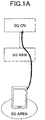
- Fig. 1A illustrates a network architecture in which 5G is supported by both an RAN and a CN.
- user equipment UE
- AS 5G access stratum
- NAS 5G non-access stratum
- the AS protocol is a protocol used between a UE and a base station
- the NAS protocol is a protocol used between a UE and a CN.
- Fig. 1B illustrates a network architecture in which 5G is supported by only an RAN and a CN supporting conventional LTE is utilized in regard to the CNs.
- a UE is assumed to perform communication with an RAN and a CN using a 5G AS protocol and an LTE NAS protocol.
- Fig. 1C illustrates a network architecture in which an RAN supports 5G and a CN supporting conventional LTE and a CN supporting 5G are included in regard to the CNs.
- a UE is assumed to perform communication with an RAN and a CN using a 5G AS protocol, an LTE NAS protocol, and a 5G NAS protocol.
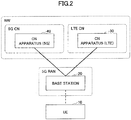
- Fig. 2 is a diagram illustrating a configuration example of a radio communication system according to an embodiment.
- the radio communication system according to the embodiment includes a UE 10, a base station 20, a CN apparatus (LTE) 30, and a CN apparatus (5G) 40.
- a UE 10 one base station 20, one CN apparatus (LTE) 30, and one CN apparatus (5G) 40 are illustrated, but two or more UEs, two or more base stations, two or more CN apparatuses (LTE), and two or more CN apparatuses (5G) may be provided.
- the CN apparatus (LTE) 30 and the CN apparatus (5G) 40 are collectively referred to as "CN apparatuses" or "NWs (networks)."
- the UE 10 may be the UE 10 that supports LTE (that is, supports an LTE NAS protocol), may be the UE 10 that supports 5G (that is, supports a 5G NAS protocol), or may be the UE 10 that supports both LTE and 5G (that is, supports both an LTE NAS protocol and a 5G NAS protocol).
- the base station 20 is a base station that supports 5G RAT and has a function of establishing an interface (connection) between the base station 20 and a CN apparatus so that an NAS message transmitted and received between the UE 10 and the CN apparatus can be transmitted to the CN apparatus.
- the CN apparatus (LTE) 30 has a function of performing various call processes such as attachment and position registration by receiving an NAS message of an LTE NAS protocol.
- the CN apparatus (5G) 40 has a function of performing various call processes such as attachment and position registration by receiving an NAS message of a 5G NAS protocol.
- the radio communication system is assumed to support one of the network architectures described in Fig. 1 . Therefore, when the network architecture illustrated in Fig. 1A is supported, the CN apparatus (LTE) 30 may not be included in the radio communication system. When the network architecture illustrated in Fig. 1B is supported, the CN apparatus (5G) 40 may not be included in the radio communication system.
- Fig. 3A is a diagram illustrating an example of a functional configuration of the UE according to the embodiment.
- the UE 10 includes an AS (5G) processing unit 100, an NAS (5G) processing unit 101, an NAS (LTE) processing unit 102, and an RAT management unit 103.
- Fig. 3A illustrates only function units of the UE 10 particularly related to the embodiment of the invention.
- the functional configuration illustrated in Fig. 3A is merely an example. Any functional division and any names of functional units may be used as long as an operation according to the embodiment can be performed.
- the AS (5G) processing unit 100 has a function of processing various radio signals of layers 1 to 3 of 5G transmitted to and received from the base station 20 using AS protocols (for example, the physical layer (PHY), the medium access control (MAC), the packet data convergence protocol (PDCP), the radio link control (RLC), and the radio resource control (RRC)).
- AS protocols for example, the physical layer (PHY), the medium access control (MAC), the packet data convergence protocol (PDCP), the radio link control (RLC), and the radio resource control (RRC)).
- the AS (5G) processing unit 100 has a function of receiving information indicating types of NAS protocols supported by the CN apparatus from the base station 20.
- the AS (5G) processing unit 100 has a function of transmitting information indicating use of an NAS message of a type of NAS protocol selected by the RAT management unit 103 to the base station 20.
- the NAS (5G) processing unit 101 supports the 5G NAS protocol and has a function of transmitting and receiving an NAS message of the 5G NAS protocol to and from the CN apparatus (5G) 40 via the AS (5G) processing unit 100.
- the NAS (5G) processing unit 101 has a function of transmitting an NAS message of a type of 5G NAS protocol to the CN apparatus (5G) 40 when the 5G NAS protocol is selected by the RAT management unit 103.
- the NAS (LTE) processing unit 102 supports an LTE NAS protocol and has a function of transmitting and receiving an NAS message of an LTE NAS protocol to and from the CN apparatus (LTE) 30 via the AS (5G) processing unit 100.
- the NAS (LTE) processing unit 102 has a function of transmitting an NAS message of a type of LTE NAS protocol to the CN apparatus (LTE) 30 when the LTE NAS protocol is selected by the RAT management unit 103.
- the RAT management unit 103 has a function of selecting a type of NAS protocol to be transmitted to the CN apparatus based on information indicating the type of NAS protocol supported by the CN apparatus and received by the AS (5G) processing unit 100.
- the RAT management unit 103 may select the type of NAS protocol to be transmitted to the CN apparatus based on predetermined priority when the CN apparatus supports a plurality of types of NAS protocols (both a 5G NAS protocol and an LTE NAS protocol).
- the RAT management unit 103 may select the type of NAS protocol to be transmitted to the CN apparatus based on the information indicating the type of NAS protocol supported by the CN apparatus and the type of NAS protocol supported by the UE 10.
- the RAT management unit 103 may select the type of LTE NAS protocol as the type of NAS protocol used for the NAS message and notify the NAS (LTE) processing unit 102 that the type of LTE NAS protocol is selected.
- the RAT management unit 103 may select the type of 5G NAS protocol as the type of NAS protocol used for the NAS message and notify the NAS (5G) processing unit 101 that the type of 5G NAS protocol is selected.
- Fig. 3B is a diagram illustrating an example of a functional configuration of a base station according to the embodiment.
- the base station 20 includes a communication unit 200 and a selection unit 201.
- Fig. 3B illustrates only functions of the base station 20 particularly related to the embodiment of the invention.
- the functional configuration illustrated in Fig. 3B is merely an example. Any functional division and any names of functional units may be used as long as an operation according to the embodiment can be performed.
- the communication unit 200 has a function of processing various radio signals of layers 1 to 3 of 5G transmitted to and received from the UE 10 using AS protocols (for example, the PHY, the MAC, the PDCP, the RLC, and the RRC).
- the communication unit 200 has a function of establishing an interface (connection) to transmit and receive an NAS message to and from the CN apparatus (LTE) 30 and/or the CN apparatus (LTE) 30 using a predetermined protocol (for example, S1-AP).
- the selection unit 201 based on the notification from the UE 10, has a function of selecting an interface (connection) established to transmit and receive the NAS message with the CN apparatus (LTE) 30 and/or selecting the interface with the CN apparatus (5G) 40 and notifying the communication unit 200 that the interface is established.
- each functional block (constituent elements) are realized by any combination of hardware and/or software.
- means for realizing each functional block is not particularly limited. That is, each functional block may be realized by one apparatus in which the functional blocks are combined physically and/or logically or may be realized by two or more apparatuses that are physically and/or logically separated by connecting the plurality of apparatuses directly and/or indirectly (for example, in a wired and/or wireless manner).
- the UE 10 and the base station 20 may function as a computer that performs a process for a communication method according to an embodiment of the invention.
- Fig. 4 is a diagram illustrating an example of a hardware configuration of the UE and the base station according to the embodiment.
- the above-described UE 10 and base station 20 may be physically configured as a computer apparatus that includes a processor 1001, a memory 1002, a storage 1003, a communication apparatus 1004, an input apparatus 1005, an output apparatus 1006, and a bus 1007.
- a term "apparatus” can be replaced with a circuit, a device, a unit, or the like.
- the hardware configuration of the UE 10 and base station 20 may be configured to include one apparatus or a plurality of apparatuses illustrated in the drawing or may be configured not to include some of the apparatuses.
- the functions of the UE 10 and base station 20 are realized by reading predetermined software (program) on hardware such as the processor 1001 or the memory 1002 so that the processor 1001 can perform an arithmetic operation and controlling communication by the communication apparatus 1004 and reading and/or writing of data in the memory 1002 and the storage 1003.
- predetermined software program
- the processor 1001 can perform an arithmetic operation and controlling communication by the communication apparatus 1004 and reading and/or writing of data in the memory 1002 and the storage 1003.
- the processor 1001 controls the entire computer by operating an operating system.
- the processor 1001 may also be configured as a central processing unit (CPU) that includes an interface with a peripheral apparatus, a control apparatus, an arithmetic apparatus, and a register.
- CPU central processing unit
- AS 5G
- NAS 5G
- LTE NAS
- RAT management unit 103 of the UE 10 and the communication unit 200 and the selection unit 201 of the base station 20 may be realized by the processor 1001.
- the processor 1001 reads a program (program codes), a software module, or data from the storage 1003 and/or the communication apparatus 1004 to the memory 1002 and performs various processes according to the program, the software module, or the data.
- a program causing a computer to perform at least some of the operations described in each of the foregoing embodiment is used.
- the processes by the AS (5G) processing unit 100, the NAS (5G) processing unit 101, the NAS (LTE) processing unit 102, and the RAT management unit 103 of the UE 10 and the communication unit 200 and the selection unit 201 of the base station 20 may be realized by a control program that is stored in the memory 1002 and is operated by the processor 1001 or may be realized similarly in another functional block.
- the above-described various processes performed by one processor 1001 have been described, but may be performed simultaneously or sequentially by two or more processors 1001.
- the processor 1001 may be mounted on one or more chips.
- the program may be transmitted from a network via an electric communication circuit.
- the memory 1002 is a computer-readable recording medium and may be configured by at least one of, for example, a read-only memory (ROM), an erasable programmable ROM (EPROM), an electrically erasable programmable ROM (EEPROM), and a random access memory (RAM).
- the memory 1002 may also be referred to as a register, a cache, a main memory (main storage apparatus), or the like.
- the memory 1002 can store a program (program codes), a software module, or the like which can be executed to perform a communication method according to each embodiment of the invention.
- the storage 1003 is a computer-readable recording medium and may be configured by at least one of, for example, an optical disc such as a compact disc ROM (CD-ROM), a hard disk drive, a flexible disc, a magneto-optical disc (for example, a compact disc, a digital versatile disk, a Blu-ray (registered trademark) disc), a smart card, a flash memory (for example, a card, a stick, or a key drive), a floppy (registered trademark) disk, and a magnetic script.
- the storage 1003 may also be referred to as an auxiliary storage apparatus.
- the above-described storage medium may be, for example, a database or a server including the memory 1002 and/or the storage 1003 or another appropriate medium.
- the communication apparatus 1004 is hardware (a transmission and reception device) that performs communication between computers via a wired and/or wireless network and is also referred to as, for example, a network device, a network controller, a network card, or a communication module.
- a network device a network controller, a network card, or a communication module.
- AS (5G) processing unit 100 of the UE 10 and the communication unit 200 of the base station 20 may be realized by the communication apparatus 1004.
- the input apparatus 1005 is an input device (for example, a keyboard, a mouse, a microphone, a switch, a button, or a sensor) that receives an input from the outside.
- the output apparatus 1006 is an output device (for example, a display, a speaker, or an LED lamp) that performs an output to the outside.
- the input apparatus 1005 and the output apparatus 1006 may be configured to be integrated (for example, a touch panel).
- the apparatuses such as the processor 1001 and the memory 1002 are connected to the bus 1007 communicating information.
- the bus 1007 may be configured as a single bus or may be configured by different buses between the apparatuses.
- the UE 10 and base station 20 may be configured to include hardware such as a microprocessor, a digital signal processor (DSP), an application specific integrated circuit (ASIC), a programmable logic device (PLD), or a field programmable gate array (FPGA), or some or all of the functional blocks may be realized by the hardware.
- the processor 1001 may be mounted as at least one of the hardware.
- the UE 10 is notified of the type of NAS protocol supported by the NW using report information (also referred to as broadcast information or system information). Then, the UE 10 selects the type of NAS protocol to be transmitted to the CN based on the type of NAS protocol supported by the CN.
- report information also referred to as broadcast information or system information.
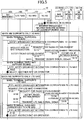
- Figs. 5 and 6 are sequence diagrams illustrating an example of a process procedure performed by a radio communication system according to a first embodiment.
- the AS (5G) processing unit 100 of the UE 10 detects residence in a 5G area (S101) and receives report information from the base station 20 (S102).
- the report information includes the type of NAS protocol supported by the NW.
- the AS (5G) processing unit 100 of the UE 10 notifies the RAT management unit 103 that the NW corresponds to only the 5G NAS protocol (S111).
- the RAT management unit 103 requests the NAS (5G) processing unit 101 to perform NAS connection using the 5G NAS protocol (S112).
- the NAS (5G) processing unit 101 notifies the AS (5G) processing unit 100 of a radio establishment request (S113).
- the AS (5G) processing unit 100 performs a radio establishment procedure with the base station 20 (S114).
- the AS (5G) processing unit 100 notifies the NAS (5G) processing unit 101 that the radio establishment procedure is completed (S115).
- the communication unit 200 of the base station 20 establishes an interface (connection) to transmit and receive an NAS message with the CN apparatus (5G) 40 (S116).
- the NAS (5G) processing unit 101 of the UE 10 transmits an NAS message (attachment) of the 5G NAS protocol to the CN apparatus (5G) 40 (S117).
- the AS (5G) processing unit 100 of the UE 10 notifies the RAT management unit 103 that the NW corresponds to only the 5G NAS protocol (S121). Since the UE 10 does not correspond to the 5G NAS protocol, the RAT management unit 103 selects residence in an area of another RAT (for example, LTE) area or an area of another operator (S122).
- another RAT for example, LTE
- the AS (5G) processing unit 100 of the UE 10 notifies the RAT management unit 103 that the NW corresponds to only the LTE NAS protocol (S131).
- the RAT management unit 103 requests the NAS (LTE) processing unit 102 to perform NAS connection using the LTE NAS protocol (S132).
- the NAS (LTE) processing unit 102 notifies the AS (5G) processing unit 100 of a radio establishment request (S133).
- the AS (5G) processing unit 100 performs a radio establishment procedure with the base station 20 (S134).
- the AS (5G) processing unit 100 notifies the NAS (LTE) processing unit 102 that the radio establishment procedure is completed (S135).
- the communication unit 200 of the base station 20 establishes an interface (connection) to transmit and receive an NAS message with the CN apparatus (LTE) 30 (S136).
- the NAS (LTE) processing unit 102 of the UE 10 transmits an NAS message (attachment) of the LTE NAS protocol to the CN apparatus (LTE) 30 (S137).
- the AS (5G) processing unit 100 of the UE 10 notifies the RAT management unit 103 that the NW corresponds to only the LTE NAS protocol (S141). Since the UE 10 does not correspond to the LTE NAS protocol, the RAT management unit 103 selects residence in an area of another RAT (for example, 5G) area or an area of another operator (S142).
- another RAT for example, 5G
- the AS (5G) processing unit 100 of the UE 10 When the NW corresponds to both the 5G NAS protocol and the LTE NAS protocol and the UE 10 corresponds to only the 5G NAS protocol, the AS (5G) processing unit 100 of the UE 10 notifies the RAT management unit 103 that the NW corresponds to both the 5G NAS protocol and the LTE NAS protocol (S151).
- the RAT management unit 103 requests the NAS (5G) processing unit 101 to perform NAS connection using the 5G NAS protocol (S152).
- the NAS (5G) processing unit 101 notifies the AS (5G) processing unit 100 of a radio establishment request (S153).
- the AS (5G) processing unit 100 performs a radio establishment procedure with the base station 20 (S154).
- the AS (5G) processing unit 100 In the radio establishment procedure, the AS (5G) processing unit 100 notifies the base station 20 that the NAS message of the 5G NAS protocol is scheduled to be transmitted.
- the AS (5G) processing unit 100 notifies the NAS (5G) processing unit 101 that the radio establishment procedure is completed (S155).
- the communication unit 200 of the base station 20 establishes an interface (connection) to transmit and receive an NAS message with the CN apparatus (5G) 40 based on the notification (S156).
- the NAS (5G) processing unit 101 of the UE 10 transmits an NAS message (attachment) of the 5G NAS protocol to the CN apparatus (5G) 40 (S157).
- the AS (5G) processing unit 100 of the UE 10 notifies the RAT management unit 103 that the NW corresponds to both the 5G NAS protocol and the LTE NAS protocol (S161).
- the RAT management unit 103 requests the NAS (LTE) processing unit 102 to perform NAS connection using the LTE NAS protocol (S162).
- the NAS (LTE) processing unit 102 notifies the AS (5G) processing unit 100 of a radio establishment request (S163).
- the AS (5G) processing unit 100 performs a radio establishment procedure with the base station 20 (S164).
- the AS (5G) processing unit 100 notifies the base station 20 that an NAS message of the LTE NAS protocol is scheduled to be transmitted.
- the AS (5G) processing unit 100 notifies the NAS (LTE) processing unit 102 that the radio establishment procedure is completed (S165).
- the communication unit 200 of the base station 20 establishes an interface (connection) to transmit and receive an NAS message with the CN apparatus (LTE) 30 based on the notification (S166).
- the NAS (LTE) processing unit 102 of the UE 10 transmits an NAS message (attachment) of the LTE NAS protocol to the CN apparatus (LTE) 30 (S167).
- the AS (5G) processing unit 100 of the UE 10 notifies the RAT management unit 103 that the NW corresponds to both the 5G NAS protocol and the LTE NAS protocol (S171).
- the RAT management unit 103 performs the NAS connection using the LTE NAS protocol based on information indicating priority and selects whether to perform NAS connection using the 5G NAS protocol (S172).
- the process proceeds to the process procedure of step S152.
- the process proceeds to the process procedure of S162.
- the RAT management unit 103 may perform both of the process procedure of step S152 and the process procedure of step S162 to attach both the CN apparatus (LTE) 30 and the CN apparatus (5G) 40.
- the UE 10 can select the type of NAS protocol to be transmitted to the CN based on the type of NAS protocol supported by the CN.
- the base station 20 in a radio establishment procedure performed between the UE 10 and the base station 20, notifies the UE 10 of a type of NAS protocol supported by an NW and the UE 10 selects the type of NAS protocol to be transmitted to the CN based on the type of NAS protocol supported by the CN.
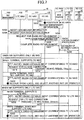
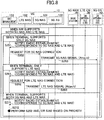
- Figs. 7 and 8 are sequence diagrams illustrating an example of a process procedure performed by the radio communication system according to the second embodiment.
- the AS (5G) processing unit 100 of the UE 10 detects residence in a 5G area (S201) and receives report information from the base station 20 (S202).
- the AS (5G) processing unit 100 notifies the RAT management unit 103 of the report information (S203).
- the RAT management unit 103 requests the AS (5G) processing unit 100 to perform radio establishment (S204).
- the AS (5G) processing unit 100 transmits a radio establishment request to the base station 20 (S205) and the communication unit 200 of the base station 20 transmits a radio establishment instruction signal including a type of NAS protocol supported by the NW to the UE 10 (S206).
- the AS (5G) processing unit 100 notifies the base station 20 that the radio establishment is completed (S207).
- the communication unit 200 of the base station 20 When the NW corresponds to the LTE NAS protocol, the communication unit 200 of the base station 20 establishes an interface (connection) to transmit and receive an NAS message with the CN apparatus (LTE) 30.
- the communication unit 200 of the base station 20 When the NW corresponds to the 5G NAS protocol, the communication unit 200 of the base station 20 establishes an interface (connection) to transmit and receive an NAS message with the CN apparatus (5G) 40 (S208).
- the communication unit 200 of the base station 20 may establish an interface (connection) to transmit and receive the NAS message with both the CN apparatus (LTE) 30 and the CN apparatus (5G) 40.
- the AS (5G) processing unit 100 of the UE 10 notifies the RAT management unit 103 that the NW corresponds to only the 5G NAS protocol along with notification of the radio establishment (S211).
- the RAT management unit 103 requests the NAS (5G) processing unit 101 to perform NAS connection using the 5G NAS protocol (S212).
- the NAS (5G) processing unit 101 transmits the NAS message (attachment) of the 5G NAS protocol to the CN apparatus (5G) 40 (S213).
- the AS (5G) processing unit 100 of the UE 10 notifies the RAT management unit 103 that the NW corresponds to only the 5G NAS protocol along with notification of radio establishment (S211). Since the UE 10 does not correspond to the 5G NAS protocol, the RAT management unit 103 instructs the AS (5G) processing unit 100 to open the radio connection with the base station 20 and selects residence in an area of another RAT (for example, LTE) or an area of another operator (S222).
- another RAT for example, LTE
- S222 area of another operator
- the AS (5G) processing unit 100 of the UE 10 notifies the RAT management unit 103 that the NW corresponds to only the LTE NAS protocol along with notification of the radio establishment (S231).
- the RAT management unit 103 requests the NAS (LTE) processing unit 102 to perform NAS connection using the LTE NAS protocol (S232).
- the NAS (LTE) processing unit 102 transmits the NAS message (attachment) of the LTE NAS protocol to the CN apparatus (LTE) 30 (S233).
- the AS (5G) processing unit 100 of the UE 10 When the NW corresponds to only the LTE NAS protocol and the UE 10 does not correspond to the LTE NAS protocol, the AS (5G) processing unit 100 of the UE 10 notifies the RAT management unit 103 that the NW corresponds to only the LTE NAS protocol along with notification of radio establishment (S241). Since the UE 10 does not correspond to the LTE NAS protocol, the RAT management unit 103 instructs the AS (5G) processing unit 100 to open the radio connection with the base station 20 and selects residence in an area of another RAT (for example, LTE) or an area of another operator (S242).
- another RAT for example, LTE
- S242 area of another operator
- the AS (5G) processing unit 100 of the UE 10 notifies the RAT management unit 103 that the NW corresponds to both the 5G NAS protocol and the LTE NAS protocol along with notification of the radio establishment (S251).
- the RAT management unit 103 requests the NAS (5G) processing unit 101 to perform NAS connection using the 5G NAS protocol (S252).
- the NAS (5G) processing unit 101 transmits the NAS message (attachment) of the 5G NAS protocol to the CN apparatus (5G) 40 (S253).
- the AS (5G) processing unit 100 of the UE 10 notifies the RAT management unit 103 that the NW corresponds to both the 5G NAS protocol and the LTE NAS protocol along with notification of the radio establishment (S261).
- the RAT management unit 103 requests the NAS (LTE) processing unit 102 to perform NAS connection using the LTE NAS protocol (S262).
- the NAS (LTE) processing unit 102 transmits the NAS message (attachment) of the LTE NAS protocol to the CN apparatus (LTE) 30 (S263).
- the AS (5G) processing unit 100 of the UE 10 notifies the RAT management unit 103 that the NW corresponds to both the 5G NAS protocol and the LTE NAS protocol along with the notification of the radio establishment (S271).
- the RAT management unit 103 performs the NAS connection using the LTE NAS protocol based on information indicating priority and selects whether to perform NAS connection using the 5G NAS protocol (S272).
- the process proceeds to the process procedure of step S252.
- the process proceeds to the process procedure of S262.
- the RAT management unit 103 may perform both of the process procedure of step S252 and the process procedure of step S262 to attach both the CN apparatus (LTE) 30 and the CN apparatus (5G) 40.
- the UE 10 can select the type of NAS protocol to be transmitted to the CN based on the type of NAS protocol supported by the CN.
- the UE 10 in a radio establishment procedure performed with the base station 20, notifies of a type of NAS protocol scheduled to be used.
- the base station 20 rejects radio establishment or performs radio releasing.
- the UE 10 notifies the base station 20 that a type of NAS protocol different from the rejected NAS message is scheduled to be used.
- Figs. 9 to 12 are sequence diagrams illustrating an example of a process procedure performed by the radio communication system according to the third embodiment.
- the AS (5G) processing unit 100 of the UE 10 detects residence in a 5G area (S301) and receives report information from the base station 20 (S302).
- the AS (5G) processing unit 100 notifies the RAT management unit 103 of the report information (S303).
- the RAT management unit 103 requests the NAS (5G) processing unit 101 to perform NAS connection using the 5G NAS protocol (S311).
- the NAS (5G) processing unit 101 requests the AS (5G) processing unit 100 to perform radio establishment (S312).
- the AS (5G) processing unit 100 notifies the base station 20 that the NAS message of the 5G NAS protocol is scheduled to be transmitted along with a request for the radio establishment (S313).
- the communication unit 200 of the base station 20 establishes an interface (connection) to transmit and receive the NAS message with the CN apparatus (5G) 40 based on the notification (S321).
- the communication unit 200 of the base station 20 transmits a radio establishment instruction to the UE 10 (S322).
- the AS (5G) processing unit 100 of the UE 10 transmits a radio establishment completion to the base station 20 (S323).
- the AS (5G) processing unit 100 notifies the NAS (5G) processing unit 101 that the radio establishment is completed (S324).
- the NAS (5G) processing unit 101 transmits an NAS message (attachment) of the 5G NAS protocol to the CN apparatus (5G) 40 (S325).
- the communication unit 200 of the base station 20 fails in establishment of an interface (connection) for transmitting and receiving an NAS message with the CN apparatus (5G) 40 (S331).
- the communication unit 200 of the base station 20 notifies the UE 10 that the radio establishment is rejected and notifies the UE 10 that the NW does not correspond to the 5G NAS protocol as a failure reason (rejection reason) (S332).
- the AS (5G) processing unit 100 notifies the RAT management unit 103 of the failure of the radio establishment. Since the NW does not correspond to the 5G NAS protocol, the RAT management unit 103 selects residence in an area of another RAT (for example, LTE) or an area of another operator (S334).
- another RAT for example, LTE
- S334 area of another operator
- the RAT management unit 103 requests the NAS (LTE) processing unit 102 to perform the NAS connection using the LTE NAS protocol (S341).
- the NAS (LTE) processing unit 102 requests the AS (5G) processing unit 100 to perform radio establishment (S342).
- the AS (5G) processing unit 100 requests the base station 20 to perform the radio establishment and notifies the base station 20 that the NAS message of the LTE NAS protocol is scheduled to be transmitted (S343).
- the communication unit 200 of the base station 20 establishes an interface (connection) to transmit and receive the NAS message with the CN apparatus (LTE) 30 based on the notification (S351).
- the communication unit 200 of the base station 20 transmits a radio establishment instruction to the UE 10 (S352).
- the AS (5G) processing unit 100 of the UE 10 transmits a radio establishment completion to the base station 20 (S353).
- the AS (5G) processing unit 100 notifies the NAS (LTE) processing unit 102 that the radio establishment is completed (S354).
- the NAS (LTE) processing unit 102 transmits an NAS message (attachment) of the LTE NAS protocol to the CN apparatus (LTE) 30 (S355).
- the communication unit 200 of the base station 20 fails in establishment of an interface (connection) for transmitting and receiving an NAS message with the CN apparatus (LTE) 30 (S361).
- the communication unit 200 of the base station 20 notifies the UE 10 that the radio establishment is rejected and notifies the UE 10 that the NW does not correspond to the LTE NAS protocol as a failure reason (rejection reason) (S362).
- the AS (5G) processing unit 100 notifies the RAT management unit 103 of the failure of the radio establishment. Since the NW does not correspond to the LTE NAS protocol, the RAT management unit 103 selects residence in an area of another RAT (for example, 5G) or an area of another operator (S364).
- the RAT management unit 103 selects execution of the NAS connection using the LTE NAS protocol or execution of the NAS connection using the 5G NAS protocol based on information indicating priority (S371).
- the process proceeds to the process procedure of step S372.
- the process proceeds to the process procedure of step S411.
- the RAT management unit 103 may perform both of the process procedure of step S372 and the process procedure of step S411 to attach both the CN apparatus (LTE) 30 and the CN apparatus (5G) 40.
- the RAT management unit 103 when RAT management unit 103 selects the execution of the NAS connection using the 5G NAS protocol (S371), the RAT management unit 103 requests the NAS (5G) processing unit 101 to perform the NAS connection using the 5G NAS protocol (S372).
- the NAS (5G) processing unit 101 requests the AS (5G) processing unit 100 to perform the radio establishment (S373).
- the AS (5G) processing unit 100 requests the base station 20 to perform the radio establishment and notifies the base station 20 that the NAS message of the 5G NAS protocol is scheduled to be transmitted (S374).
- steps S381 to S385 are performed. Since steps S381 to S385 in the process procedure are the same as steps S321 to S325, the description thereof will be omitted.
- steps S391 to S393 are performed. Since steps S391 to S393 in the process procedure are the same as steps S331 to S333, the description thereof will be omitted.
- the RAT management unit 103 performs neither the process procedure of step S372 nor the process procedure of step S411 to attach both the CN apparatus (LTE) 30 and the CN apparatus (5G) 40 (S371), the RAT management unit 103 performs the process procedure of steps S401 to S408. Since steps S401 to S403 in the process procedure are the same as steps S341 to S343, the description thereof will be omitted. Since steps S404 to S408 in the process procedure are the same as steps S351 to S355, the description thereof will be omitted.
- the RAT management unit 103 When the RAT management unit 103 selects the execution of the NAS connection using the LTE NAS protocol (S371), the RAT management unit 103 requests the NAS (LTE) processing unit 102 to perform the NAS connection using the LTE NAS protocol (S411).
- the NAS (LTE) processing unit 102 requests to the AS (5G) processing unit 100 to perform the radio establishment (S412).
- the AS (5G) processing unit 100 requests the base station 20 to perform the radio establishment and notifies the base station 20 that the NAS message of the LTE NAS protocol is scheduled to be transmitted (S413).
- steps S421 to S425 are performed. Since steps S421 to S425 in the process procedure are the same as steps S351 to S355, the description thereof will be omitted.
- the process procedure of steps S426 to S428 is performed. Since steps S426 to S428 in the process procedure are the same as steps S361 to S363, the description thereof will be omitted.
- the RAT management unit 103 performs neither the process procedure of step S372 nor the process procedure of step S411 to attach both the CN apparatus (LTE) 30 and the CN apparatus (5G) 40 (S371), the RAT management unit 103 performs the process procedure of steps S431 to S438. Since steps S431 to S433 in the process procedure are the same as steps S311 to S313, the description thereof will be omitted. Since steps S434 to S438 in the process procedure are the same as steps S321 to S325, the description thereof will be omitted.
- the third embodiment has been described above. According to the third embodiment, when the UE 10 notifies the base station 20 of the NAS message of the type of NAS protocol desired to be transmitted by the UE 10 and is notified by the base station 20 that the NW does not correspond to the type of NAS protocol, the UE 10 can select another type of NAS protocol.
- step S313 the AS (5G) processing unit 100 notifies the base station 20 that the NAS message of the type of 5G NAS protocol is scheduled to be transmitted, the AS (5G) processing unit 100 may perform this notification in the process procedure of step S323.
- the process procedure of step S321 is performed after the process of step S323.
- step S343 the AS (5G) processing unit 100 notifies the base station 20 that the NAS message of the type of LTE NAS protocol is scheduled to be transmitted, but the AS (5G) processing unit 100 may perform this notification in the process procedure of step S353.
- the process procedure of step S351 is performed after the process of step S353.
- step 374 the AS (5G) processing unit 100 notifies the base station 20 that the NAS message of the type of 5G NAS protocol is scheduled to be transmitted, but the AS (5G) processing unit 100 may perform this notification in the process procedure of step S383.
- the process procedure of step S381 is performed after the process of step S383.
- step S403 the AS (5G) processing unit 100 notifies the base station 20 that the NAS message of the type of LTE NAS protocol is scheduled to be transmitted, but the AS (5G) processing unit 100 may perform this notification in the process procedure of step S406. In this case, the process procedure of step S404 is performed after the process of step S406.
- step S413 the AS (5G) processing unit 100 notifies the base station 20 that the NAS message of the type of LTE NAS protocol is scheduled to be transmitted, but the AS (5G) processing unit 100 may perform this notification in the process procedure of step S423.
- the process procedure of step S421 is performed after the process of step S423.
- step S433 the AS (5G) processing unit 100 notifies the base station 20 that the NAS message of the type of 5G NAS protocol is scheduled to be transmitted, but the AS (5G) processing unit 100 may perform this notification in the process procedure of step S436.
- the process procedure of step S434 is performed after the process procedure of step S436.
- the UE 10 transmits the NAS message of the type of NAS protocol supported by the UE 10 to the NW.
- the CN apparatus When the CN apparatus is notified of the NAS message of the type of NAS protocol not supported by the CN apparatus, the CN apparatus transmits a response message indicating rejection of the NAS message to the UE 10.
- the UE 10 transmits the NAS message of the type of NAS protocol different from the rejected NAS message to the CN apparatus.
- Figs. 13 to 16 are sequence diagrams illustrating an example of a process procedure performed by the radio communication system according to the fourth embodiment.
- the AS (5G) processing unit 100 of the UE 10 detects residence in a 5G area (S511) and receives report information from the base station 20 (S512).
- the AS (5G) processing unit 100 notifies the RAT management unit 103 of the report information (S513).
- the RAT management unit 103 requests the NAS (5G) processing unit 101 to perform NAS connection using the 5G NAS protocol (S521).
- the NAS (5G) processing unit 101 requests the AS (5G) processing unit 100 to perform radio establishment (S522).
- the AS (5G) processing unit 100 requests the base station 20 to perform the radio establishment (S523).
- the selection unit 201 of the base station 20 selects the CN apparatus establishing an interface (connection) to transmit and receive an NAS message based on the type of NAS protocol supported by the NW (S524).
- the CN apparatus (5G) 40 is selected, the process proceeds to S531.
- the CN apparatus (LTE) 30 is selected, the process proceeds to S541.
- the communication unit 200 of the base station 20 establishes an interface (connection) to transmit and receive the NAS message with the CN apparatus (5G) 40 (S531).
- the communication unit 200 of the base station 20 transmits a radio establishment instruction to the UE 10 (S532).
- the AS (5G) processing unit 100 of the UE 10 transmits a radio establishment completion to the base station 20 (S533).
- the AS (5G) processing unit 100 notifies the NAS (5G) processing unit 101 that the radio establishment is completed (S534).
- the NAS (5G) processing unit 101 transmits an NAS message (attachment) of the 5G NAS protocol to the CN apparatus (5G) 40 (S535).
- the CN apparatus (5G) 40 transmits an NAS message (attach OK) to the UE 10 (S536).
- the selection unit 201 of the base station 20 selects the CN apparatus (LTE) 30 (S524)
- the communication unit 200 of the base station 20 establishes an interface (connection) to transmit and receive the NAS message with the CN apparatus (LTE) 30 (S541).
- the communication unit 200 of the base station 20 transmits a radio establishment instruction to the UE 10 (S542).
- the AS (5G) processing unit 100 of the UE 10 transmits a radio establishment completion to the base station 20 (S543).
- the AS (5G) processing unit 100 notifies the NAS (5G) processing unit 101 that the radio establishment is completed (S544).
- the NAS (5G) processing unit 101 transmits an NAS message (attachment) of the 5G NAS protocol to the CN apparatus (LTE) 30 (S545).
- the CN apparatus (LTE) 30 Since the CN apparatus (LTE) 30 receives the NAS message not supported by the CN apparatus (LTE) 30, the CN apparatus (LTE) 30 transmits an NAS message for rejecting the NAS message (attachment) of the 5G NAS protocol to the UE 10 (S546).
- the NAS (5G) processing unit 101 notifies the RAT management unit 103 that the NAS message (attachment) is rejected (S547). Since the NW does not correspond to the 5G NAS protocol, the RAT management unit 103 selects residence in an area of another RAT (for example, LTE) or an area of another operator (S548).
- the RAT management unit 103 requests the NAS (LTE) processing unit 102 to perform the NAS connection using the LTE NAS protocol (3551).
- the NAS (LTE) processing unit 102 requests the AS (5G) processing unit 100 to perform radio establishment (S552).
- the AS (5G) processing unit 100 requests the base station 20 to perform the radio establishment and notifies the base station 20 that the NAS message of the LTE NAS protocol is scheduled to be transmitted (S553).
- the selection unit 201 of the base station 20 selects the CN apparatus establishing an interface (connection) to transmit and receive an NAS message based on the type of NAS protocol supported by the NW (S554).
- the CN apparatus (5G) 40 is selected, the process proceeds to S561.
- the CN apparatus (LTE) 30 is selected, the process proceeds to S571.
- the selection unit 201 of the base station 20 selects the CN apparatus (LTE) 30 (S554)
- the communication unit 200 of the base station 20 establishes an interface (connection) to transmit and receive the NAS message with the CN apparatus (LTE) 30 (S561).
- the communication unit 200 of the base station 20 transmits a radio establishment instruction to the UE 10 (S562).
- the AS (5G) processing unit 100 of the UE 10 transmits a radio establishment completion to the base station 20 (S563).
- the AS (5G) processing unit 100 notifies the NAS (LTE) processing unit 102 that the radio establishment is completed (S564).
- the NAS (LTE) processing unit 102 transmits an NAS message (attachment) of the LTE NAS protocol to the CN apparatus (LTE) 30 (S565).
- the CN apparatus (LTE) 30 transmits an NAS message (attach OK) to the UE 10 (S566).
- the selection unit 201 of the base station 20 selects the CN apparatus (5G) 40 (S554)
- the communication unit 200 of the base station 20 establishes an interface (connection) to transmit and receive the NAS message with the CN apparatus (5G) 40 (S571).
- the communication unit 200 of the base station 20 transmits a radio establishment instruction to the UE 10 (S572).
- the AS (5G) processing unit 100 of the UE 10 transmits a radio establishment completion to the base station 20 (S573).
- the AS (5G) processing unit 100 notifies the NAS (LTE) processing unit 102 that the radio establishment is completed (S574).
- the NAS (LTE) processing unit 102 transmits an NAS message (attachment) of the LTE NAS protocol to the CN apparatus (LTE) 30 (S575). Since the CN apparatus (5G) 40 receives the NAS message not supported by the CN apparatus (5G) 40, the CN apparatus (5G) 40 transmits an NAS message for rejecting the NAS message (attachment) of the LTE NAS protocol to the UE 10 (S576). The NAS (LTE) processing unit 102 notifies the RAT management unit 103 that the NAS message (attachment) is rejected (S577). Since the NW does not correspond to the LTE NAS protocol, the RAT management unit 103 selects residence in an area of another RAT (for example, 5G) or an area of another operator (S578).
- another RAT for example, 5G
- S578 area of another operator
- the RAT management unit 103 selects execution of the NAS connection using the LTE NAS protocol or execution of the NAS connection using the 5G NAS protocol based on information indicating priority (S581).
- the process proceeds to the process procedure of step S582.
- the process proceeds to the process procedure of S621.
- the RAT management unit 103 may perform both of the process procedure of step S582 and the process procedure of step S621 to attach both the CN apparatus (LTE) 30 and the CN apparatus (5G) 40.
- the RAT management unit 103 When the RAT management unit 103 selects the execution of the NAS connection using the 5G NAS protocol (S581), the RAT management unit 103 requests the NAS (5G) processing unit 101 to perform the NAS connection using the 5G NAS protocol (S582).
- the NAS (5G) processing unit 101 requests the AS (5G) processing unit 100 to perform the radio establishment (S583).
- the AS (5G) processing unit 100 requests the base station 20 to perform the radio establishment (S584).
- the selection unit 201 of the base station 20 selects the CN apparatus establishing an interface (connection) to transmit and receive an NAS message based on the type of NAS protocol supported by the NW (S585).
- the process proceeds to S591.
- the process proceeds to S601.
- the process procedure of S591 to S596 is performed. Since the process procedure of S591 to S596 is the same as the process procedure of S531 to S536, the description thereof will be omitted.
- the process procedure of S601 to S614 is performed. Since the process procedure of S601 to S607 is the same as the process procedure of S541 to S547, the description thereof will be omitted.
- the RAT management unit 103 performs neither the process procedure of step S582 nor the process procedure of step S621 to attach both the CN apparatus (LTE) 30 and the CN apparatus (5G) 40 (S581), the RAT management unit 103 requests the NAS (LTE) processing unit 102 to perform the NAS connection using the LTE NAS protocol (S611).
- the NAS (LTE) processing unit 102 transmits a radio establishment request to the AS (5G) processing unit 100 and the AS (5G) processing unit 100 transmits a radio establishment response to the NAS (LTE) processing unit 102 (S612).
- the NAS (LTE) processing unit 102 transmits an NAS message (attachment) of the LTE NAS protocol to the CN apparatus (LTE) 30 (S613).
- the CN apparatus (LTE) 30 transmits an NAS message (attach OK) to the UE 10 (S614).
- the RAT management unit 103 When the RAT management unit 103 selects the execution of the NAS connection using the LTE NAS protocol (S581), the RAT management unit 103 requests the NAS (LTE) processing unit 102 to perform the NAS connection using the LTE NAS protocol (S621).
- the NAS (LTE) processing unit 102 requests the AS (5G) processing unit 100 to perform the radio establishment (S622).
- the AS (5G) processing unit 100 requests the base station 20 to perform the radio establishment (S623).
- the selection unit 201 of the base station 20 selects the CN apparatus establishing an interface (connection) to transmit and receive an NAS message based on the type of NAS protocol supported by the NW (S624).
- the process proceeds to S631.
- the CN apparatus (5G) 40 is selected, the process proceeds to S641.
- the process procedure of S631 to S636 is performed. Since the process procedure of S631 to S636 is the same as the process procedure of S561 to S566, the description thereof will be omitted.
- the process procedure of S641 to S654 is performed. Since the process procedure of S641 to S647 is the same as the process procedure of S571 to S577, the description thereof will be omitted.
- the RAT management unit 103 performs neither the process procedure of step S582 nor the process procedure of step S621 to attach both the CN apparatus (LTE) 30 and the CN apparatus (5G) 40 (S581), the RAT management unit 103 requests the NAS (5G) processing unit 101 to perform the NAS connection using the 5G NAS protocol (S651).
- the NAS (5G) processing unit 101 transmits a radio establishment request to the AS (5G) processing unit 100 and the AS (5G) processing unit 100 transmits a radio establishment response to the NAS (5G) processing unit 101 (S652).
- the NAS (5G) processing unit 101 transmits an NAS message (attachment) of the 5G NAS protocol to the CN apparatus (5G) 40 (S653).
- the CN apparatus (5G) 40 transmits an NAS message (attach OK) to the UE 10 (S654).
- the fourth embodiment has been described above. According to the fourth embodiment, when the UE 10 transmits the NAS message of the type of NAS protocol desired to be transmitted by the UE 10 to the CN apparatus and is notified by the CN apparatus that the NW does not correspond to the type of NAS protocol, the UE 10 can select another type of NAS protocol.
- the "information indicating the priority" used in the first to fourth embodiments may be stored set in advance in the UE 10, may be stored in a USIM, or may be included in the report information.
- the information indicating the priority may be, for example, information prioritizing the 5G NAS protocol or information prioritizing the LTE NAS protocol.
- the information indicating the priority may be information designating the NAS protocol prioritized based on the type of communication so that the LTE NAS protocol is used when communication using IMS is performed and the 5G NAS protocol is used when other communication is performed.
- a CN used according to a type of call can be switched in such a manner that an UE is connected to a CN supporting LTE at the time of calling an IMS voice and is connected to a CN supporting 5G at the time of calling a best effort packet.
- IMS IP multimedia subsystem
- the base station 20 according to each embodiment is not limited to a base station supporting 5G RAT and may be a base station supporting LTE RAT.
- Each embodiment is not limited to the LTE scheme and the 5G scheme.
- Each embodiment may be applied to other radio schemes.
- the UE 10 can switch a CN to be used by attaching both the CN apparatus (LTE) 30 and the CN apparatus (5G) 40.
- LTE CN apparatus
- 5G CN apparatus
- the user equipment includes a reception unit configured to receive information indicating one or more types of NAS protocols supported by the core network apparatus from the base station; a selection unit configured to select a type of a NAS protocol to be transmitted to the core network apparatus based on the information indicating the one or more type of the NAS protocols received by the reception unit; and a transmission unit configured to transmit a NAS message of the type of the NAS protocol selected by the selection unit to the core network apparatus.
- the selection unit may select a type of a NAS protocol to be transmitted to the core network apparatus based on predetermined priority.
- the UE 10 can select a CN apparatus of an attachment destination based on, for example, a type of call or the like.
- the user equipment includes a selection unit configured to select a first type of a NAS protocol to be transmitted to the core network; and a transmission unit configured to transmit information indicating use of a NAS message of the first type of the NAS protocol selected by the selection unit to the base station or to transmit a NAS message of the first type of the NAS protocol selected by the selection unit to the core network apparatus.
- the selection unit selects a second type of a NAS protocol different from the first type of the NAS protocol when it is notified that the first type of the NAS protocol is not supported by the core network apparatus.
- the transmission unit transmits a NAS message of the second type of the NAS protocol selected by the selection unit to the core network apparatus.
- the selection unit may select the first type of the NAS protocol to be transmitted to the core network apparatus based on predetermined priority.
- the UE 10 can select a CN apparatus of an attachment destination based on, for example, a type of call or the like.
- a radio communication system including user equipment; a base station; a first core network apparatus configured to support a first type of a NAS protocol; and a second core network apparatus configured to support a second type of a NAS protocol.
- the base station includes a transmission unit that transmits information indicating that the radio communication system supports the first type of the NAS protocol and the second type of the NAS protocol to the user equipment.
- the user equipment includes a reception unit that receives the information from the base station, a selection unit that selects a type of a NAS protocol to be transmitted to the first core network apparatus or the second core network apparatus based on the information received by the reception unit, and a transmission unit that transmits a NAS message of the first type of the NAS protocol to the first core network apparatus when the selection unit selects the first type of the NAS protocol, transmits a NAS message of the second type of the NAS protocol to the second core network apparatus when the selection unit selects the second type of the NAS protocol, and transmits the NAS message of the first type of the NAS protocol and the NAS message of the second type of the NAS protocol to the first and second core network apparatuses, respectively, when the selection unit selects the first and second types of the NAS protocols.
- the radio communication system there is provided a technology for enabling the UE to use an appropriate NAS protocol according to the network architecture.
- a communication method to be performed by user equipment of a radio communication system including the user equipment, a base station, and a core network apparatus.
- the communication method includes receiving information indicating one or more types of NAS protocols supported by the core network apparatus from the base station; selecting a type of a NAS protocol to be transmitted to the core network apparatus based on the information indicating the received type of the NAS protocol; and transmitting a NAS message of the selected type of the NAS protocol to the core network apparatus.
- the communication method there is provided a technology for enabling the UE to use an appropriate NAS protocol according to the network architecture.
- LTE Long Term Evolution
- LTE-A LTE-Advanced
- SUPER 3G IMT-Advanced
- 4G 5G
- Future Radio Access FAA
- W-CDMA registered trademark
- GSM registered trademark
- CDMA2000 Code Division Multiple Access 2000
- UMB Ultra Mobile Broadband
- IEEE 802.11 Wi-Fi
- IEEE 802.16 WiMAX
- IEEE 802.20 Ultra-WideBand (UWB)
- Bluetooth registered trademark
- notification of predetermined information is not limited to being performed explicitly and may be performed implicitly (for example, the notification of the predetermined information is not performed).
- system and "network” used in the present specification are compatibly used.
- the UE 10 is referred to as a subscriber station, a mobile unit, a subscriber unit, a radio unit, a remote unit, a mobile device, a radio device, a radio communication device, a remote device, a mobile subscriber station, an access terminal, a mobile terminal, a radio terminal, a remote terminal, a handset, a user agency, a mobile client, a client, or several other appropriate terms by those skilled in the art in some cases.
- the term "determining” used in the present specification include a wide variety of operations in some cases.
- the "determining” can include cases in which performing, for example, judging, calculating, computing, processing, deriving, investigating, looking up (for example, looking up in a table, a database, or another data structure), and ascertaining is considered to perform "determining.”
- the “determining” can include cases in which performing, for example, receiving (for example, receiving information), transmitting (for example, transmitting information), inputting, outputting, and accessing (for example, accessing data in a memory) is considered to perform “determining.”
- the “determining” can include cases in which performing, for example, resolving, selecting, choosing, establishing, and comparing is considered to be perform “determining.” That is, the "determining” can include a case in which any operation is considered to perform "determining.”
- connection or “coupled” or all modifications of the term means all direct or indirect connection or coupling between two or more elements and can include presence of one or more intermediate elements between two mutually “connected” or “coupled” elements.
- the connection or the coupling between elements may be physical connection, logical connection, or any combination thereof.
- two elements can be considered to be mutually “connected” or “coupled” by using one or more electric wires, cables, and/or printed electric connection and using electromagnetic energy such as electromagnetic energy with a wavelength of a radio frequency region, a microwave region, and a light (both visible light and invisible light) region as several non-limited and non-inclusive examples.
- first and second elements When reference to elements in which names "first,” “second,” and the like used in the present specification are used is made, the amount or order of the elements is not limited generally either.
- the names can be used in the present specification as methods used to conveniently distinguish two or more elements from each other. Accordingly, reference to first and second elements does not imply that only two elements are employed or a first element is prior to a second element in a certain form.
- Notification of information is not limited the aspect/embodiment described in the present specification any may be performed by other methods.
- notification of information may be performed via physical layer signaling (for example, Downlink Control Information (DCI) or Uplink Control Information (UCI)), upper-layer signaling (for example, RRC signaling, MAC signaling, broadcast information (Master Information Block (MIB), or System Information Block (SIB)), other signals, or by a combination thereof.
- DCI Downlink Control Information
- UCI Uplink Control Information
- RRC signaling for example, RRC signaling, MAC signaling, broadcast information (Master Information Block (MIB), or System Information Block (SIB)
- MIB Master Information Block
- SIB System Information Block
- an RRC message may be referred to as the RRC signaling.
- the RRC message may be an RRC connection setup (RRC Connection Setup) message, a RRC connection reconfiguration (RRC Connection Reconfiguration) message, or the like, for example.
- Determination or decision may be made by a value (0 or 1) represented by one bit, may be made by a Boolean value (Boolean: true or false), and may be made by comparison of numerical values (comparison with a predetermined value, for example).
- the channel and/or symbol may be signaling (signal).
- a signal may be a message.
- Input and output Information and the like may be stored in a specific location (for example, a memory) and may be managed by a management table.
- the input and output information and the like may be overwritten, updated, or rewritten.
- the output information and the like may be erased.
- the input information and the like may be transmitted to other apparatuses.
- Information, signals, and the like described in the present specification may be represented using any of various other techniques.
- data, instructions, commands, information, signals, bits, symbols, chips, and the like mentioned in the entire description may be represented by voltage, current, electromagnetic waves, magnetic field or magnetic particles, optical field or photons, or any combination thereof.
- the AS (5G) processing unit 100 is an example of a reception unit.
- the RAT management unit 103 is an example of a selection unit.
- the NAS (5G) processing unit 101 and/or the NAS (LTE) processing unit 102 are an example of a transmission unit.
- the communication unit 200 is an example of the transmission unit.
Landscapes
- Engineering & Computer Science (AREA)
- Computer Networks & Wireless Communication (AREA)
- Signal Processing (AREA)
- Computer Security & Cryptography (AREA)
- Mobile Radio Communication Systems (AREA)
Abstract
Description
- The present invention relates to user equipment, a radio communication system, and a communication method.
- In Long Term Evolution (LTE), a radio communication scheme referred to as 5G has been studied to achieve larger capacity of systems, further acceleration of data transmission speeds, further reduction of latency in radio sections, and the like.
- Radio communication systems configured to support 5G radio access technology (new Radio Access Technology (RAT)), evolved E-URTA, and an access technology other than 3GPP (non-3GPP access type) have been studied along with the study of 5G radio communication schemes (for example, see Non-Patent Document 1). According to Non-Patent
Document 1, the radio communication system is referred to as a next generation system. The next generation system includes a next generation core network. - Non-Patent Document 1: 3GPP TR23.799 V0.5.0 (2016-05)
- Meanwhile, 5G network architectures have currently started to be studied in 3GPP. Specifically, a network architecture in which 5G is supported by both a radio access network (RAN) and a core network (core NW: CN), a network architecture in which 5G is supported by only an RAN and a CN supporting conventional LTE is utilized in regard to the CNs, and a network architecture in which an RAN supports 5G and a CN supporting conventional LTE and a CN supporting 5G are included in regard to the CNs have been examined.
- However, in current 3GPP regulations, there is no structure that enables a UE to use an appropriate Non-Access Stratum (NAS) protocol according to a network architecture.
- A disclosed technology has been developed in view of the foregoing problem and an object is to provide a technology for enabling a UE to use an appropriate NAS protocol according to a network architecture.
- A UE according to the disclosed technology is user equipment of a radio communication system including the user equipment, a base station, and a core network apparatus, the user equipment including a reception unit configured to receive information indicating one or more types of NAS protocols supported by the core network apparatus from the base station; a selection unit configured to select a type of a NAS protocol to be transmitted to the core network apparatus based on the information indicating the one or more types of the NAS protocols received by the reception unit; and a transmission unit configured to transmit a NAS message of the type of the NAS protocol selected by the selection unit to the core network apparatus.
- According to the technology of the present disclosure, it is possible to provide a technology for enabling a UE to use an appropriate NAS protocol according to a network architecture.
-
-
Fig. 1A is a diagram illustrating examples of network architectures examined in 3GPP; -
Fig. 1B is a diagram illustrating examples of network architectures examined in 3GPP; -
Fig. 1C is a diagram illustrating examples of network architectures examined in 3GPP; -
Fig. 2 is a diagram illustrating a configuration example of a radio communication system according to an embodiment; -
Fig. 3A is a diagram illustrating an example of a functional configuration of a UE according to the embodiment; -
Fig. 3B is a diagram illustrating an example of a functional configuration of a base station according to the embodiment; -
Fig. 4 is a diagram illustrating an example of a hardware configuration of the UE and the base station according to the embodiment; -
Fig. 5 is a sequence diagram illustrating an example of a process procedure performed by a radio communication system according to a first embodiment; -
Fig. 6 is a sequence diagram illustrating an example of a process procedure performed by the radio communication system according to the first embodiment; -
Fig. 7 is a sequence diagram illustrating an example of a process procedure performed by a radio communication system according to a second embodiment; -
Fig. 8 is a sequence diagram illustrating an example of a process procedure performed by the radio communication system according to the second embodiment; -
Fig. 9 is a sequence diagram illustrating an example of a process procedure performed by a radio communication system according to a third embodiment; -
Fig. 10 is a sequence diagram illustrating an example of a process procedure performed by the radio communication system according to the third embodiment; -
Fig. 11 is a sequence diagram illustrating an example of a process procedure performed by the radio communication system according to the third embodiment; -
Fig. 12 is a sequence diagram illustrating an example of a process procedure performed by the radio communication system according to the third embodiment; -
Fig. 13 is a sequence diagram illustrating an example of a process procedure performed by a radio communication system according to a fourth embodiment; -
Fig. 14 is a sequence diagram illustrating an example of a process procedure performed by the radio communication system according to the fourth embodiment; -
Fig. 15 is a sequence diagram illustrating an example of a process procedure performed by the radio communication system according to the fourth embodiment; and -
Fig. 16 is a sequence diagram illustrating an example of a process procedure performed by the radio communication system according to the fourth embodiment. - Hereinafter, embodiments of the invention will be described with reference to the drawings. The embodiments to be described below are merely examples and embodiments to which the invention is applied are not limited to the following embodiments.
- At present, 5G network architectures have started to be examined in 3GPP.
Fig. 1A illustrates a network architecture in which 5G is supported by both an RAN and a CN. In the case ofFig. 1A , user equipment (UE) is assumed to perform communication with an RAN and a CN using a 5G access stratum (AS) protocol and a 5G non-access stratum (NAS) protocol. The AS protocol is a protocol used between a UE and a base station and the NAS protocol is a protocol used between a UE and a CN. -
Fig. 1B illustrates a network architecture in which 5G is supported by only an RAN and a CN supporting conventional LTE is utilized in regard to the CNs. In the case ofFig. 1B , a UE is assumed to perform communication with an RAN and a CN using a 5G AS protocol and an LTE NAS protocol. -
Fig. 1C illustrates a network architecture in which an RAN supports 5G and a CN supporting conventional LTE and a CN supporting 5G are included in regard to the CNs. In the case ofFig. 1C , a UE is assumed to perform communication with an RAN and a CN using a 5G AS protocol, an LTE NAS protocol, and a 5G NAS protocol. - In future, it is considered that which network architecture is adopted is decided among a plurality of network architectures according to a policy or the like of an operator. Accordingly, it is necessary for a UE to ascertain a network architecture of a network to be connected, determines whether an LTE NAS protocol is used or a 5G NAS protocol is used, and uses an appropriate NAS protocol.
-
Fig. 2 is a diagram illustrating a configuration example of a radio communication system according to an embodiment. As illustrated inFig. 2 , the radio communication system according to the embodiment includes aUE 10, abase station 20, a CN apparatus (LTE) 30, and a CN apparatus (5G) 40. InFig. 2 , oneUE 10, onebase station 20, one CN apparatus (LTE) 30, and one CN apparatus (5G) 40 are illustrated, but two or more UEs, two or more base stations, two or more CN apparatuses (LTE), and two or more CN apparatuses (5G) may be provided. In the following description, the CN apparatus (LTE) 30 and the CN apparatus (5G) 40 are collectively referred to as "CN apparatuses" or "NWs (networks)." - The
UE 10 may be theUE 10 that supports LTE (that is, supports an LTE NAS protocol), may be theUE 10 that supports 5G (that is, supports a 5G NAS protocol), or may be theUE 10 that supports both LTE and 5G (that is, supports both an LTE NAS protocol and a 5G NAS protocol). - The
base station 20 is a base station that supports 5G RAT and has a function of establishing an interface (connection) between thebase station 20 and a CN apparatus so that an NAS message transmitted and received between theUE 10 and the CN apparatus can be transmitted to the CN apparatus. - The CN apparatus (LTE) 30 has a function of performing various call processes such as attachment and position registration by receiving an NAS message of an LTE NAS protocol.
- The CN apparatus (5G) 40 has a function of performing various call processes such as attachment and position registration by receiving an NAS message of a 5G NAS protocol.
- The radio communication system according to an embodiment is assumed to support one of the network architectures described in
Fig. 1 . Therefore, when the network architecture illustrated inFig. 1A is supported, the CN apparatus (LTE) 30 may not be included in the radio communication system. When the network architecture illustrated inFig. 1B is supported, the CN apparatus (5G) 40 may not be included in the radio communication system. -
Fig. 3A is a diagram illustrating an example of a functional configuration of the UE according to the embodiment. As illustrated inFig. 3A , theUE 10 includes an AS (5G)processing unit 100, an NAS (5G)processing unit 101, an NAS (LTE)processing unit 102, and anRAT management unit 103.Fig. 3A illustrates only function units of theUE 10 particularly related to the embodiment of the invention. The functional configuration illustrated inFig. 3A is merely an example. Any functional division and any names of functional units may be used as long as an operation according to the embodiment can be performed. - The AS (5G)
processing unit 100 has a function of processing various radio signals oflayers 1 to 3 of 5G transmitted to and received from thebase station 20 using AS protocols (for example, the physical layer (PHY), the medium access control (MAC), the packet data convergence protocol (PDCP), the radio link control (RLC), and the radio resource control (RRC)). - The AS (5G)
processing unit 100 has a function of receiving information indicating types of NAS protocols supported by the CN apparatus from thebase station 20. The AS (5G)processing unit 100 has a function of transmitting information indicating use of an NAS message of a type of NAS protocol selected by theRAT management unit 103 to thebase station 20. - The NAS (5G)
processing unit 101 supports the 5G NAS protocol and has a function of transmitting and receiving an NAS message of the 5G NAS protocol to and from the CN apparatus (5G) 40 via the AS (5G)processing unit 100. The NAS (5G)processing unit 101 has a function of transmitting an NAS message of a type of 5G NAS protocol to the CN apparatus (5G) 40 when the 5G NAS protocol is selected by theRAT management unit 103. - The NAS (LTE)
processing unit 102 supports an LTE NAS protocol and has a function of transmitting and receiving an NAS message of an LTE NAS protocol to and from the CN apparatus (LTE) 30 via the AS (5G)processing unit 100. The NAS (LTE)processing unit 102 has a function of transmitting an NAS message of a type of LTE NAS protocol to the CN apparatus (LTE) 30 when the LTE NAS protocol is selected by theRAT management unit 103. - The
RAT management unit 103 has a function of selecting a type of NAS protocol to be transmitted to the CN apparatus based on information indicating the type of NAS protocol supported by the CN apparatus and received by the AS (5G)processing unit 100. TheRAT management unit 103 may select the type of NAS protocol to be transmitted to the CN apparatus based on predetermined priority when the CN apparatus supports a plurality of types of NAS protocols (both a 5G NAS protocol and an LTE NAS protocol). TheRAT management unit 103 may select the type of NAS protocol to be transmitted to the CN apparatus based on the information indicating the type of NAS protocol supported by the CN apparatus and the type of NAS protocol supported by theUE 10. - When the
base station 20 or the CN apparatus notifies theUE 10 that the type of 5G NAS protocol is not supported in the CN apparatus, theRAT management unit 103 may select the type of LTE NAS protocol as the type of NAS protocol used for the NAS message and notify the NAS (LTE)processing unit 102 that the type of LTE NAS protocol is selected. When thebase station 20 or the CN apparatus notifies theUE 10 that the LTE NAS protocol is not supported in the CN apparatus, theRAT management unit 103 may select the type of 5G NAS protocol as the type of NAS protocol used for the NAS message and notify the NAS (5G)processing unit 101 that the type of 5G NAS protocol is selected. -
Fig. 3B is a diagram illustrating an example of a functional configuration of a base station according to the embodiment. As illustrated inFig. 3(b) , thebase station 20 includes acommunication unit 200 and aselection unit 201.Fig. 3B illustrates only functions of thebase station 20 particularly related to the embodiment of the invention. The functional configuration illustrated inFig. 3B is merely an example. Any functional division and any names of functional units may be used as long as an operation according to the embodiment can be performed. - The
communication unit 200 has a function of processing various radio signals oflayers 1 to 3 of 5G transmitted to and received from theUE 10 using AS protocols (for example, the PHY, the MAC, the PDCP, the RLC, and the RRC). Thecommunication unit 200 has a function of establishing an interface (connection) to transmit and receive an NAS message to and from the CN apparatus (LTE) 30 and/or the CN apparatus (LTE) 30 using a predetermined protocol (for example, S1-AP). - The
selection unit 201, based on the notification from theUE 10, has a function of selecting an interface (connection) established to transmit and receive the NAS message with the CN apparatus (LTE) 30 and/or selecting the interface with the CN apparatus (5G) 40 and notifying thecommunication unit 200 that the interface is established. - The block diagram (see
Figs. 3A and 3B ) used to describe the above-described functional configuration illustrates blocks of functional units. The functional blocks (constituent elements) are realized by any combination of hardware and/or software. In addition, means for realizing each functional block is not particularly limited. That is, each functional block may be realized by one apparatus in which the functional blocks are combined physically and/or logically or may be realized by two or more apparatuses that are physically and/or logically separated by connecting the plurality of apparatuses directly and/or indirectly (for example, in a wired and/or wireless manner). - For example, the
UE 10 and thebase station 20 according to the embodiment of the invention may function as a computer that performs a process for a communication method according to an embodiment of the invention.Fig. 4 is a diagram illustrating an example of a hardware configuration of the UE and the base station according to the embodiment. The above-describedUE 10 andbase station 20 may be physically configured as a computer apparatus that includes aprocessor 1001, amemory 1002, astorage 1003, acommunication apparatus 1004, aninput apparatus 1005, anoutput apparatus 1006, and abus 1007. - In the following description, a term "apparatus" can be replaced with a circuit, a device, a unit, or the like. The hardware configuration of the
UE 10 andbase station 20 may be configured to include one apparatus or a plurality of apparatuses illustrated in the drawing or may be configured not to include some of the apparatuses. - The functions of the
UE 10 andbase station 20 are realized by reading predetermined software (program) on hardware such as theprocessor 1001 or thememory 1002 so that theprocessor 1001 can perform an arithmetic operation and controlling communication by thecommunication apparatus 1004 and reading and/or writing of data in thememory 1002 and thestorage 1003. - For example, the
processor 1001 controls the entire computer by operating an operating system. Theprocessor 1001 may also be configured as a central processing unit (CPU) that includes an interface with a peripheral apparatus, a control apparatus, an arithmetic apparatus, and a register. For example, the AS (5G)processing unit 100, the NAS (5G)processing unit 101, the NAS (LTE)processing unit 102, and theRAT management unit 103 of theUE 10 and thecommunication unit 200 and theselection unit 201 of thebase station 20 may be realized by theprocessor 1001. - The
processor 1001 reads a program (program codes), a software module, or data from thestorage 1003 and/or thecommunication apparatus 1004 to thememory 1002 and performs various processes according to the program, the software module, or the data. As the program, a program causing a computer to perform at least some of the operations described in each of the foregoing embodiment is used. For example, the processes by the AS (5G)processing unit 100, the NAS (5G)processing unit 101, the NAS (LTE)processing unit 102, and theRAT management unit 103 of theUE 10 and thecommunication unit 200 and theselection unit 201 of thebase station 20 may be realized by a control program that is stored in thememory 1002 and is operated by theprocessor 1001 or may be realized similarly in another functional block. The above-described various processes performed by oneprocessor 1001 have been described, but may be performed simultaneously or sequentially by two ormore processors 1001. Theprocessor 1001 may be mounted on one or more chips. The program may be transmitted from a network via an electric communication circuit. - The
memory 1002 is a computer-readable recording medium and may be configured by at least one of, for example, a read-only memory (ROM), an erasable programmable ROM (EPROM), an electrically erasable programmable ROM (EEPROM), and a random access memory (RAM). Thememory 1002 may also be referred to as a register, a cache, a main memory (main storage apparatus), or the like. Thememory 1002 can store a program (program codes), a software module, or the like which can be executed to perform a communication method according to each embodiment of the invention. - The
storage 1003 is a computer-readable recording medium and may be configured by at least one of, for example, an optical disc such as a compact disc ROM (CD-ROM), a hard disk drive, a flexible disc, a magneto-optical disc (for example, a compact disc, a digital versatile disk, a Blu-ray (registered trademark) disc), a smart card, a flash memory (for example, a card, a stick, or a key drive), a floppy (registered trademark) disk, and a magnetic script. Thestorage 1003 may also be referred to as an auxiliary storage apparatus. The above-described storage medium may be, for example, a database or a server including thememory 1002 and/or thestorage 1003 or another appropriate medium. - The
communication apparatus 1004 is hardware (a transmission and reception device) that performs communication between computers via a wired and/or wireless network and is also referred to as, for example, a network device, a network controller, a network card, or a communication module. For example, the AS (5G)processing unit 100 of theUE 10 and thecommunication unit 200 of thebase station 20 may be realized by thecommunication apparatus 1004. - The
input apparatus 1005 is an input device (for example, a keyboard, a mouse, a microphone, a switch, a button, or a sensor) that receives an input from the outside. Theoutput apparatus 1006 is an output device (for example, a display, a speaker, or an LED lamp) that performs an output to the outside. Theinput apparatus 1005 and theoutput apparatus 1006 may be configured to be integrated (for example, a touch panel). - The apparatuses such as the
processor 1001 and thememory 1002 are connected to thebus 1007 communicating information. Thebus 1007 may be configured as a single bus or may be configured by different buses between the apparatuses. - The
UE 10 andbase station 20 may be configured to include hardware such as a microprocessor, a digital signal processor (DSP), an application specific integrated circuit (ASIC), a programmable logic device (PLD), or a field programmable gate array (FPGA), or some or all of the functional blocks may be realized by the hardware. For example, theprocessor 1001 may be mounted as at least one of the hardware. - Next, a process procedure in which the radio communication system according to the embodiment will be described separately according to a plurality of embodiments.
- In a first embodiment, the
UE 10 is notified of the type of NAS protocol supported by the NW using report information (also referred to as broadcast information or system information). Then, theUE 10 selects the type of NAS protocol to be transmitted to the CN based on the type of NAS protocol supported by the CN. -
Figs. 5 and6 are sequence diagrams illustrating an example of a process procedure performed by a radio communication system according to a first embodiment. - The AS (5G)
processing unit 100 of theUE 10 detects residence in a 5G area (S101) and receives report information from the base station 20 (S102). The report information includes the type of NAS protocol supported by the NW. - When the NW corresponds to only the 5G NAS protocol and the
UE 10 corresponds to the 5G NAS protocol, the AS (5G)processing unit 100 of theUE 10 notifies theRAT management unit 103 that the NW corresponds to only the 5G NAS protocol (S111). TheRAT management unit 103 requests the NAS (5G)processing unit 101 to perform NAS connection using the 5G NAS protocol (S112). The NAS (5G)processing unit 101 notifies the AS (5G)processing unit 100 of a radio establishment request (S113). The AS (5G)processing unit 100 performs a radio establishment procedure with the base station 20 (S114). The AS (5G)processing unit 100 notifies the NAS (5G)processing unit 101 that the radio establishment procedure is completed (S115). Thecommunication unit 200 of thebase station 20 establishes an interface (connection) to transmit and receive an NAS message with the CN apparatus (5G) 40 (S116). The NAS (5G)processing unit 101 of theUE 10 transmits an NAS message (attachment) of the 5G NAS protocol to the CN apparatus (5G) 40 (S117). - When the NW corresponds to only the 5G NAS protocol and the
UE 10 does not correspond to the 5G NAS protocol, the AS (5G)processing unit 100 of theUE 10 notifies theRAT management unit 103 that the NW corresponds to only the 5G NAS protocol (S121). Since theUE 10 does not correspond to the 5G NAS protocol, theRAT management unit 103 selects residence in an area of another RAT (for example, LTE) area or an area of another operator (S122). - When the NW corresponds to only the LTE NAS protocol and the
UE 10 corresponds to the LTE NAS protocol, the AS (5G)processing unit 100 of theUE 10 notifies theRAT management unit 103 that the NW corresponds to only the LTE NAS protocol (S131). TheRAT management unit 103 requests the NAS (LTE)processing unit 102 to perform NAS connection using the LTE NAS protocol (S132). The NAS (LTE)processing unit 102 notifies the AS (5G)processing unit 100 of a radio establishment request (S133). The AS (5G)processing unit 100 performs a radio establishment procedure with the base station 20 (S134). The AS (5G)processing unit 100 notifies the NAS (LTE)processing unit 102 that the radio establishment procedure is completed (S135). Thecommunication unit 200 of thebase station 20 establishes an interface (connection) to transmit and receive an NAS message with the CN apparatus (LTE) 30 (S136). The NAS (LTE)processing unit 102 of theUE 10 transmits an NAS message (attachment) of the LTE NAS protocol to the CN apparatus (LTE) 30 (S137). - When the NW corresponds to only the LTE NAS protocol and the
UE 10 does not correspond to the LTE NAS protocol, the AS (5G)processing unit 100 of theUE 10 notifies theRAT management unit 103 that the NW corresponds to only the LTE NAS protocol (S141). Since theUE 10 does not correspond to the LTE NAS protocol, theRAT management unit 103 selects residence in an area of another RAT (for example, 5G) area or an area of another operator (S142). - When the NW corresponds to both the 5G NAS protocol and the LTE NAS protocol and the
UE 10 corresponds to only the 5G NAS protocol, the AS (5G)processing unit 100 of theUE 10 notifies theRAT management unit 103 that the NW corresponds to both the 5G NAS protocol and the LTE NAS protocol (S151). TheRAT management unit 103 requests the NAS (5G)processing unit 101 to perform NAS connection using the 5G NAS protocol (S152). The NAS (5G)processing unit 101 notifies the AS (5G)processing unit 100 of a radio establishment request (S153). The AS (5G)processing unit 100 performs a radio establishment procedure with the base station 20 (S154). In the radio establishment procedure, the AS (5G)processing unit 100 notifies thebase station 20 that the NAS message of the 5G NAS protocol is scheduled to be transmitted. The AS (5G)processing unit 100 notifies the NAS (5G)processing unit 101 that the radio establishment procedure is completed (S155). Thecommunication unit 200 of thebase station 20 establishes an interface (connection) to transmit and receive an NAS message with the CN apparatus (5G) 40 based on the notification (S156). The NAS (5G)processing unit 101 of theUE 10 transmits an NAS message (attachment) of the 5G NAS protocol to the CN apparatus (5G) 40 (S157). - When the NW corresponds to both the 5G NAS protocol and the LTE NAS protocol and the
UE 10 corresponds to only the LTE NAS protocol, the AS (5G)processing unit 100 of theUE 10 notifies theRAT management unit 103 that the NW corresponds to both the 5G NAS protocol and the LTE NAS protocol (S161). TheRAT management unit 103 requests the NAS (LTE)processing unit 102 to perform NAS connection using the LTE NAS protocol (S162). The NAS (LTE)processing unit 102 notifies the AS (5G)processing unit 100 of a radio establishment request (S163). The AS (5G)processing unit 100 performs a radio establishment procedure with the base station 20 (S164). In the radio establishment procedure, the AS (5G)processing unit 100 notifies thebase station 20 that an NAS message of the LTE NAS protocol is scheduled to be transmitted. The AS (5G)processing unit 100 notifies the NAS (LTE)processing unit 102 that the radio establishment procedure is completed (S165). Thecommunication unit 200 of thebase station 20 establishes an interface (connection) to transmit and receive an NAS message with the CN apparatus (LTE) 30 based on the notification (S166). The NAS (LTE)processing unit 102 of theUE 10 transmits an NAS message (attachment) of the LTE NAS protocol to the CN apparatus (LTE) 30 (S167). - When the NW and the
UE 10 correspond to both the 5G NAS protocol and the LTE NAS protocol, respectively, the AS (5G)processing unit 100 of theUE 10 notifies theRAT management unit 103 that the NW corresponds to both the 5G NAS protocol and the LTE NAS protocol (S171). TheRAT management unit 103 performs the NAS connection using the LTE NAS protocol based on information indicating priority and selects whether to perform NAS connection using the 5G NAS protocol (S172). When the NAS connection is performed using the 5G NAS protocol, the process proceeds to the process procedure of step S152. When the NAS connection is performed using the LTE NAS protocol, the process proceeds to the process procedure of S162. TheRAT management unit 103 may perform both of the process procedure of step S152 and the process procedure of step S162 to attach both the CN apparatus (LTE) 30 and the CN apparatus (5G) 40. - The first embodiment has been described above. According to the first embodiment, the
UE 10 can select the type of NAS protocol to be transmitted to the CN based on the type of NAS protocol supported by the CN. - In a second embodiment, in a radio establishment procedure performed between the
UE 10 and thebase station 20, thebase station 20 notifies theUE 10 of a type of NAS protocol supported by an NW and theUE 10 selects the type of NAS protocol to be transmitted to the CN based on the type of NAS protocol supported by the CN. -
Figs. 7 and8 are sequence diagrams illustrating an example of a process procedure performed by the radio communication system according to the second embodiment. - The AS (5G)
processing unit 100 of theUE 10 detects residence in a 5G area (S201) and receives report information from the base station 20 (S202). The AS (5G)processing unit 100 notifies theRAT management unit 103 of the report information (S203). TheRAT management unit 103 requests the AS (5G)processing unit 100 to perform radio establishment (S204). The AS (5G)processing unit 100 transmits a radio establishment request to the base station 20 (S205) and thecommunication unit 200 of thebase station 20 transmits a radio establishment instruction signal including a type of NAS protocol supported by the NW to the UE 10 (S206). The AS (5G)processing unit 100 notifies thebase station 20 that the radio establishment is completed (S207). When the NW corresponds to the LTE NAS protocol, thecommunication unit 200 of thebase station 20 establishes an interface (connection) to transmit and receive an NAS message with the CN apparatus (LTE) 30. When the NW corresponds to the 5G NAS protocol, thecommunication unit 200 of thebase station 20 establishes an interface (connection) to transmit and receive an NAS message with the CN apparatus (5G) 40 (S208). When the NW corresponds to both the LTE NAS protocol and the 5G NAS protocol, thecommunication unit 200 of thebase station 20 may establish an interface (connection) to transmit and receive the NAS message with both the CN apparatus (LTE) 30 and the CN apparatus (5G) 40. - When the NW corresponds to only the 5G NAS protocol and the
UE 10 corresponds to the 5G NAS protocol, the AS (5G)processing unit 100 of theUE 10 notifies theRAT management unit 103 that the NW corresponds to only the 5G NAS protocol along with notification of the radio establishment (S211). TheRAT management unit 103 requests the NAS (5G)processing unit 101 to perform NAS connection using the 5G NAS protocol (S212). The NAS (5G)processing unit 101 transmits the NAS message (attachment) of the 5G NAS protocol to the CN apparatus (5G) 40 (S213). - When the NW corresponds to only the 5G NAS protocol and the
UE 10 does not correspond to the 5G NAS protocol, the AS (5G)processing unit 100 of theUE 10 notifies theRAT management unit 103 that the NW corresponds to only the 5G NAS protocol along with notification of radio establishment (S211). Since theUE 10 does not correspond to the 5G NAS protocol, theRAT management unit 103 instructs the AS (5G)processing unit 100 to open the radio connection with thebase station 20 and selects residence in an area of another RAT (for example, LTE) or an area of another operator (S222). - When the NW corresponds to only the LTE NAS protocol and the
UE 10 corresponds to the LTE NAS protocol, the AS (5G)processing unit 100 of theUE 10 notifies theRAT management unit 103 that the NW corresponds to only the LTE NAS protocol along with notification of the radio establishment (S231). TheRAT management unit 103 requests the NAS (LTE)processing unit 102 to perform NAS connection using the LTE NAS protocol (S232). The NAS (LTE)processing unit 102 transmits the NAS message (attachment) of the LTE NAS protocol to the CN apparatus (LTE) 30 (S233). - When the NW corresponds to only the LTE NAS protocol and the
UE 10 does not correspond to the LTE NAS protocol, the AS (5G)processing unit 100 of theUE 10 notifies theRAT management unit 103 that the NW corresponds to only the LTE NAS protocol along with notification of radio establishment (S241). Since theUE 10 does not correspond to the LTE NAS protocol, theRAT management unit 103 instructs the AS (5G)processing unit 100 to open the radio connection with thebase station 20 and selects residence in an area of another RAT (for example, LTE) or an area of another operator (S242). - When the NW corresponds to both the 5G NAS protocol and the LTE NAS protocol and the
UE 10 corresponds to only the 5G NAS protocol, the AS (5G)processing unit 100 of theUE 10 notifies theRAT management unit 103 that the NW corresponds to both the 5G NAS protocol and the LTE NAS protocol along with notification of the radio establishment (S251). TheRAT management unit 103 requests the NAS (5G)processing unit 101 to perform NAS connection using the 5G NAS protocol (S252). The NAS (5G)processing unit 101 transmits the NAS message (attachment) of the 5G NAS protocol to the CN apparatus (5G) 40 (S253). - When the NW corresponds to both the 5G NAS protocol and the LTE NAS protocol and the
UE 10 corresponds to only the LTE NAS protocol, the AS (5G)processing unit 100 of theUE 10 notifies theRAT management unit 103 that the NW corresponds to both the 5G NAS protocol and the LTE NAS protocol along with notification of the radio establishment (S261). TheRAT management unit 103 requests the NAS (LTE)processing unit 102 to perform NAS connection using the LTE NAS protocol (S262). The NAS (LTE)processing unit 102 transmits the NAS message (attachment) of the LTE NAS protocol to the CN apparatus (LTE) 30 (S263). - When the NW and the
UE 10 correspond to both the 5G NAS protocol and the LTE NAS protocol, respectively, the AS (5G)processing unit 100 of theUE 10 notifies theRAT management unit 103 that the NW corresponds to both the 5G NAS protocol and the LTE NAS protocol along with the notification of the radio establishment (S271). TheRAT management unit 103 performs the NAS connection using the LTE NAS protocol based on information indicating priority and selects whether to perform NAS connection using the 5G NAS protocol (S272). When the NAS connection is performed using the 5G NAS protocol, the process proceeds to the process procedure of step S252. When the NAS connection is performed using the LTE NAS protocol, the process proceeds to the process procedure of S262. TheRAT management unit 103 may perform both of the process procedure of step S252 and the process procedure of step S262 to attach both the CN apparatus (LTE) 30 and the CN apparatus (5G) 40. - The second embodiment has been described above. According to the second embodiment, the
UE 10 can select the type of NAS protocol to be transmitted to the CN based on the type of NAS protocol supported by the CN. - In a third embodiment, in a radio establishment procedure performed with the
base station 20, theUE 10 notifies of a type of NAS protocol scheduled to be used. When a type of NAS protocol not supported by the NW is notified of, thebase station 20 rejects radio establishment or performs radio releasing. When the radio establishment is rejected or the radio releasing is performed and theUE 10 corresponds to both the types of 5G and LTE NAS protocols, theUE 10 notifies thebase station 20 that a type of NAS protocol different from the rejected NAS message is scheduled to be used. -
Figs. 9 to 12 are sequence diagrams illustrating an example of a process procedure performed by the radio communication system according to the third embodiment. - The AS (5G)
processing unit 100 of theUE 10 detects residence in a 5G area (S301) and receives report information from the base station 20 (S302). The AS (5G)processing unit 100 notifies theRAT management unit 103 of the report information (S303). - When the
UE 10 corresponds to only the 5G NAS protocol, theRAT management unit 103 requests the NAS (5G)processing unit 101 to perform NAS connection using the 5G NAS protocol (S311). The NAS (5G)processing unit 101 requests the AS (5G)processing unit 100 to perform radio establishment (S312). The AS (5G)processing unit 100 notifies thebase station 20 that the NAS message of the 5G NAS protocol is scheduled to be transmitted along with a request for the radio establishment (S313). - When the NW corresponds to the 5G NAS protocol, the
communication unit 200 of thebase station 20 establishes an interface (connection) to transmit and receive the NAS message with the CN apparatus (5G) 40 based on the notification (S321). Thecommunication unit 200 of thebase station 20 transmits a radio establishment instruction to the UE 10 (S322). The AS (5G)processing unit 100 of theUE 10 transmits a radio establishment completion to the base station 20 (S323). The AS (5G)processing unit 100 notifies the NAS (5G)processing unit 101 that the radio establishment is completed (S324). The NAS (5G)processing unit 101 transmits an NAS message (attachment) of the 5G NAS protocol to the CN apparatus (5G) 40 (S325). - When the NW does not correspond to the 5G NAS protocol, the
communication unit 200 of thebase station 20 fails in establishment of an interface (connection) for transmitting and receiving an NAS message with the CN apparatus (5G) 40 (S331). Thecommunication unit 200 of thebase station 20 notifies theUE 10 that the radio establishment is rejected and notifies theUE 10 that the NW does not correspond to the 5G NAS protocol as a failure reason (rejection reason) (S332). The AS (5G)processing unit 100 notifies theRAT management unit 103 of the failure of the radio establishment. Since the NW does not correspond to the 5G NAS protocol, theRAT management unit 103 selects residence in an area of another RAT (for example, LTE) or an area of another operator (S334). - When the
UE 10 corresponds to only the LTE NAS protocol, theRAT management unit 103 requests the NAS (LTE)processing unit 102 to perform the NAS connection using the LTE NAS protocol (S341). The NAS (LTE)processing unit 102 requests the AS (5G)processing unit 100 to perform radio establishment (S342). The AS (5G)processing unit 100 requests thebase station 20 to perform the radio establishment and notifies thebase station 20 that the NAS message of the LTE NAS protocol is scheduled to be transmitted (S343). - When the NW corresponds to the LTE NAS protocol, the
communication unit 200 of thebase station 20 establishes an interface (connection) to transmit and receive the NAS message with the CN apparatus (LTE) 30 based on the notification (S351). Thecommunication unit 200 of thebase station 20 transmits a radio establishment instruction to the UE 10 (S352). The AS (5G)processing unit 100 of theUE 10 transmits a radio establishment completion to the base station 20 (S353). The AS (5G)processing unit 100 notifies the NAS (LTE)processing unit 102 that the radio establishment is completed (S354). The NAS (LTE)processing unit 102 transmits an NAS message (attachment) of the LTE NAS protocol to the CN apparatus (LTE) 30 (S355). - When the NW does not correspond to the LTE NAS protocol, the
communication unit 200 of thebase station 20 fails in establishment of an interface (connection) for transmitting and receiving an NAS message with the CN apparatus (LTE) 30 (S361). Thecommunication unit 200 of thebase station 20 notifies theUE 10 that the radio establishment is rejected and notifies theUE 10 that the NW does not correspond to the LTE NAS protocol as a failure reason (rejection reason) (S362). The AS (5G)processing unit 100 notifies theRAT management unit 103 of the failure of the radio establishment. Since the NW does not correspond to the LTE NAS protocol, theRAT management unit 103 selects residence in an area of another RAT (for example, 5G) or an area of another operator (S364). - When the
UE 10 corresponds to both the 5G NAS protocol and the LTE NAS protocol and theUE 10 corresponds to only the 5G NAS protocol, theRAT management unit 103 selects execution of the NAS connection using the LTE NAS protocol or execution of the NAS connection using the 5G NAS protocol based on information indicating priority (S371). When the NAS connection is performed using the 5G NAS protocol, the process proceeds to the process procedure of step S372. When the NAS connection is performed using the LTE NAS protocol, the process proceeds to the process procedure of step S411. TheRAT management unit 103 may perform both of the process procedure of step S372 and the process procedure of step S411 to attach both the CN apparatus (LTE) 30 and the CN apparatus (5G) 40. - when
RAT management unit 103 selects the execution of the NAS connection using the 5G NAS protocol (S371), theRAT management unit 103 requests the NAS (5G)processing unit 101 to perform the NAS connection using the 5G NAS protocol (S372). The NAS (5G)processing unit 101 requests the AS (5G)processing unit 100 to perform the radio establishment (S373). The AS (5G)processing unit 100 requests thebase station 20 to perform the radio establishment and notifies thebase station 20 that the NAS message of the 5G NAS protocol is scheduled to be transmitted (S374). - When the NW corresponds to the 5G NAS protocol, the process procedure of steps S381 to S385 is performed. Since steps S381 to S385 in the process procedure are the same as steps S321 to S325, the description thereof will be omitted.
- When the NW does not correspond to the 5G NAS protocol, the process procedure of steps S391 to S393 is performed. Since steps S391 to S393 in the process procedure are the same as steps S331 to S333, the description thereof will be omitted. Here, when the
RAT management unit 103 performs neither the process procedure of step S372 nor the process procedure of step S411 to attach both the CN apparatus (LTE) 30 and the CN apparatus (5G) 40 (S371), theRAT management unit 103 performs the process procedure of steps S401 to S408. Since steps S401 to S403 in the process procedure are the same as steps S341 to S343, the description thereof will be omitted. Since steps S404 to S408 in the process procedure are the same as steps S351 to S355, the description thereof will be omitted. - When the
RAT management unit 103 selects the execution of the NAS connection using the LTE NAS protocol (S371), theRAT management unit 103 requests the NAS (LTE)processing unit 102 to perform the NAS connection using the LTE NAS protocol (S411). The NAS (LTE)processing unit 102 requests to the AS (5G)processing unit 100 to perform the radio establishment (S412). The AS (5G)processing unit 100 requests thebase station 20 to perform the radio establishment and notifies thebase station 20 that the NAS message of the LTE NAS protocol is scheduled to be transmitted (S413). - When the NW corresponds to the LTE NAS protocol, the process procedure of steps S421 to S425 is performed. Since steps S421 to S425 in the process procedure are the same as steps S351 to S355, the description thereof will be omitted.
- When the NW does not correspond to the LTE NAS protocol, the process procedure of steps S426 to S428 is performed. Since steps S426 to S428 in the process procedure are the same as steps S361 to S363, the description thereof will be omitted. Here, when the
RAT management unit 103 performs neither the process procedure of step S372 nor the process procedure of step S411 to attach both the CN apparatus (LTE) 30 and the CN apparatus (5G) 40 (S371), theRAT management unit 103 performs the process procedure of steps S431 to S438. Since steps S431 to S433 in the process procedure are the same as steps S311 to S313, the description thereof will be omitted. Since steps S434 to S438 in the process procedure are the same as steps S321 to S325, the description thereof will be omitted. - The third embodiment has been described above. According to the third embodiment, when the
UE 10 notifies thebase station 20 of the NAS message of the type of NAS protocol desired to be transmitted by theUE 10 and is notified by thebase station 20 that the NW does not correspond to the type of NAS protocol, theUE 10 can select another type of NAS protocol. - In the process procedure of step S313, the AS (5G)
processing unit 100 notifies thebase station 20 that the NAS message of the type of 5G NAS protocol is scheduled to be transmitted, the AS (5G)processing unit 100 may perform this notification in the process procedure of step S323. In this case, the process procedure of step S321 is performed after the process of step S323. - In the process procedure of step S343, the AS (5G)
processing unit 100 notifies thebase station 20 that the NAS message of the type of LTE NAS protocol is scheduled to be transmitted, but the AS (5G)processing unit 100 may perform this notification in the process procedure of step S353. In this case, the process procedure of step S351 is performed after the process of step S353. - In the process procedure of step 374 the AS (5G)
processing unit 100 notifies thebase station 20 that the NAS message of the type of 5G NAS protocol is scheduled to be transmitted, but the AS (5G)processing unit 100 may perform this notification in the process procedure of step S383. In this case, the process procedure of step S381 is performed after the process of step S383. - In the process procedure of step S403, the AS (5G)
processing unit 100 notifies thebase station 20 that the NAS message of the type of LTE NAS protocol is scheduled to be transmitted, but the AS (5G)processing unit 100 may perform this notification in the process procedure of step S406. In this case, the process procedure of step S404 is performed after the process of step S406. - In the process procedure of step S413, the AS (5G)
processing unit 100 notifies thebase station 20 that the NAS message of the type of LTE NAS protocol is scheduled to be transmitted, but the AS (5G)processing unit 100 may perform this notification in the process procedure of step S423. In this case, the process procedure of step S421 is performed after the process of step S423. - In the process procedure of step S433, the AS (5G)
processing unit 100 notifies thebase station 20 that the NAS message of the type of 5G NAS protocol is scheduled to be transmitted, but the AS (5G)processing unit 100 may perform this notification in the process procedure of step S436. In this case, the process procedure of step S434 is performed after the process procedure of step S436. - In a fourth embodiment, the
UE 10 transmits the NAS message of the type of NAS protocol supported by theUE 10 to the NW. When the CN apparatus is notified of the NAS message of the type of NAS protocol not supported by the CN apparatus, the CN apparatus transmits a response message indicating rejection of the NAS message to theUE 10. When the NAS message is rejected and theUE 10 corresponds to both the types of 5G and LTE NAS protocols, theUE 10 transmits the NAS message of the type of NAS protocol different from the rejected NAS message to the CN apparatus. -
Figs. 13 to 16 are sequence diagrams illustrating an example of a process procedure performed by the radio communication system according to the fourth embodiment. - The AS (5G)
processing unit 100 of theUE 10 detects residence in a 5G area (S511) and receives report information from the base station 20 (S512). The AS (5G)processing unit 100 notifies theRAT management unit 103 of the report information (S513). - When the
UE 10 corresponds to only the 5G NAS protocol, theRAT management unit 103 requests the NAS (5G)processing unit 101 to perform NAS connection using the 5G NAS protocol (S521). The NAS (5G)processing unit 101 requests the AS (5G)processing unit 100 to perform radio establishment (S522). The AS (5G)processing unit 100 requests thebase station 20 to perform the radio establishment (S523). - Here, the
selection unit 201 of thebase station 20 selects the CN apparatus establishing an interface (connection) to transmit and receive an NAS message based on the type of NAS protocol supported by the NW (S524). When the CN apparatus (5G) 40 is selected, the process proceeds to S531. When the CN apparatus (LTE) 30 is selected, the process proceeds to S541. - When the
selection unit 201 of thebase station 20 selects the CN apparatus (5G) 40 (S524), thecommunication unit 200 of thebase station 20 establishes an interface (connection) to transmit and receive the NAS message with the CN apparatus (5G) 40 (S531). Thecommunication unit 200 of thebase station 20 transmits a radio establishment instruction to the UE 10 (S532). The AS (5G)processing unit 100 of theUE 10 transmits a radio establishment completion to the base station 20 (S533). The AS (5G)processing unit 100 notifies the NAS (5G)processing unit 101 that the radio establishment is completed (S534). The NAS (5G)processing unit 101 transmits an NAS message (attachment) of the 5G NAS protocol to the CN apparatus (5G) 40 (S535). The CN apparatus (5G) 40 transmits an NAS message (attach OK) to the UE 10 (S536). - When the
selection unit 201 of thebase station 20 selects the CN apparatus (LTE) 30 (S524), thecommunication unit 200 of thebase station 20 establishes an interface (connection) to transmit and receive the NAS message with the CN apparatus (LTE) 30 (S541). Thecommunication unit 200 of thebase station 20 transmits a radio establishment instruction to the UE 10 (S542). The AS (5G)processing unit 100 of theUE 10 transmits a radio establishment completion to the base station 20 (S543). The AS (5G)processing unit 100 notifies the NAS (5G)processing unit 101 that the radio establishment is completed (S544). The NAS (5G)processing unit 101 transmits an NAS message (attachment) of the 5G NAS protocol to the CN apparatus (LTE) 30 (S545). Since the CN apparatus (LTE) 30 receives the NAS message not supported by the CN apparatus (LTE) 30, the CN apparatus (LTE) 30 transmits an NAS message for rejecting the NAS message (attachment) of the 5G NAS protocol to the UE 10 (S546). The NAS (5G)processing unit 101 notifies theRAT management unit 103 that the NAS message (attachment) is rejected (S547). Since the NW does not correspond to the 5G NAS protocol, theRAT management unit 103 selects residence in an area of another RAT (for example, LTE) or an area of another operator (S548). - When the
UE 10 corresponds to only the LTE NAS protocol, theRAT management unit 103 requests the NAS (LTE)processing unit 102 to perform the NAS connection using the LTE NAS protocol (3551). The NAS (LTE)processing unit 102 requests the AS (5G)processing unit 100 to perform radio establishment (S552). The AS (5G)processing unit 100 requests thebase station 20 to perform the radio establishment and notifies thebase station 20 that the NAS message of the LTE NAS protocol is scheduled to be transmitted (S553). - Here, the
selection unit 201 of thebase station 20 selects the CN apparatus establishing an interface (connection) to transmit and receive an NAS message based on the type of NAS protocol supported by the NW (S554). When the CN apparatus (5G) 40 is selected, the process proceeds to S561. When the CN apparatus (LTE) 30 is selected, the process proceeds to S571. - When the
selection unit 201 of thebase station 20 selects the CN apparatus (LTE) 30 (S554), thecommunication unit 200 of thebase station 20 establishes an interface (connection) to transmit and receive the NAS message with the CN apparatus (LTE) 30 (S561). Thecommunication unit 200 of thebase station 20 transmits a radio establishment instruction to the UE 10 (S562). The AS (5G)processing unit 100 of theUE 10 transmits a radio establishment completion to the base station 20 (S563). The AS (5G)processing unit 100 notifies the NAS (LTE)processing unit 102 that the radio establishment is completed (S564). The NAS (LTE)processing unit 102 transmits an NAS message (attachment) of the LTE NAS protocol to the CN apparatus (LTE) 30 (S565). The CN apparatus (LTE) 30 transmits an NAS message (attach OK) to the UE 10 (S566). - When the
selection unit 201 of thebase station 20 selects the CN apparatus (5G) 40 (S554), thecommunication unit 200 of thebase station 20 establishes an interface (connection) to transmit and receive the NAS message with the CN apparatus (5G) 40 (S571). Thecommunication unit 200 of thebase station 20 transmits a radio establishment instruction to the UE 10 (S572). The AS (5G)processing unit 100 of theUE 10 transmits a radio establishment completion to the base station 20 (S573). The AS (5G)processing unit 100 notifies the NAS (LTE)processing unit 102 that the radio establishment is completed (S574). The NAS (LTE)processing unit 102 transmits an NAS message (attachment) of the LTE NAS protocol to the CN apparatus (LTE) 30 (S575). Since the CN apparatus (5G) 40 receives the NAS message not supported by the CN apparatus (5G) 40, the CN apparatus (5G) 40 transmits an NAS message for rejecting the NAS message (attachment) of the LTE NAS protocol to the UE 10 (S576). The NAS (LTE)processing unit 102 notifies theRAT management unit 103 that the NAS message (attachment) is rejected (S577). Since the NW does not correspond to the LTE NAS protocol, theRAT management unit 103 selects residence in an area of another RAT (for example, 5G) or an area of another operator (S578). - When the
UE 10 corresponds to both the 5G NAS protocol and the LTE NAS protocol and theUE 10 corresponds to only the 5G NAS protocol, theRAT management unit 103 selects execution of the NAS connection using the LTE NAS protocol or execution of the NAS connection using the 5G NAS protocol based on information indicating priority (S581). When the NAS connection is performed using the 5G NAS protocol, the process proceeds to the process procedure of step S582. When the NAS connection is performed using the LTE NAS protocol, the process proceeds to the process procedure of S621. TheRAT management unit 103 may perform both of the process procedure of step S582 and the process procedure of step S621 to attach both the CN apparatus (LTE) 30 and the CN apparatus (5G) 40. - When the
RAT management unit 103 selects the execution of the NAS connection using the 5G NAS protocol (S581), theRAT management unit 103 requests the NAS (5G)processing unit 101 to perform the NAS connection using the 5G NAS protocol (S582). The NAS (5G)processing unit 101 requests the AS (5G)processing unit 100 to perform the radio establishment (S583). The AS (5G)processing unit 100 requests thebase station 20 to perform the radio establishment (S584). - Here, the
selection unit 201 of thebase station 20 selects the CN apparatus establishing an interface (connection) to transmit and receive an NAS message based on the type of NAS protocol supported by the NW (S585). When the CN apparatus (5G) 40 is selected, the process proceeds to S591. When the CN apparatus (LTE) 30 is selected, the process proceeds to S601. - When the
selection unit 201 of thebase station 20 selects the CN apparatus (5G) 40 (S585), the process procedure of S591 to S596 is performed. Since the process procedure of S591 to S596 is the same as the process procedure of S531 to S536, the description thereof will be omitted. - When the
selection unit 201 of thebase station 20 selects the CN apparatus (LTE) 30 (S585), the process procedure of S601 to S614 is performed. Since the process procedure of S601 to S607 is the same as the process procedure of S541 to S547, the description thereof will be omitted. Here, when theRAT management unit 103 performs neither the process procedure of step S582 nor the process procedure of step S621 to attach both the CN apparatus (LTE) 30 and the CN apparatus (5G) 40 (S581), theRAT management unit 103 requests the NAS (LTE)processing unit 102 to perform the NAS connection using the LTE NAS protocol (S611). The NAS (LTE)processing unit 102 transmits a radio establishment request to the AS (5G)processing unit 100 and the AS (5G)processing unit 100 transmits a radio establishment response to the NAS (LTE) processing unit 102 (S612). The NAS (LTE)processing unit 102 transmits an NAS message (attachment) of the LTE NAS protocol to the CN apparatus (LTE) 30 (S613). The CN apparatus (LTE) 30 transmits an NAS message (attach OK) to the UE 10 (S614). - When the
RAT management unit 103 selects the execution of the NAS connection using the LTE NAS protocol (S581), theRAT management unit 103 requests the NAS (LTE)processing unit 102 to perform the NAS connection using the LTE NAS protocol (S621). The NAS (LTE)processing unit 102 requests the AS (5G)processing unit 100 to perform the radio establishment (S622). The AS (5G)processing unit 100 requests thebase station 20 to perform the radio establishment (S623). - Here, the
selection unit 201 of thebase station 20 selects the CN apparatus establishing an interface (connection) to transmit and receive an NAS message based on the type of NAS protocol supported by the NW (S624). When the CN apparatus (LTE) 30 is selected, the process proceeds to S631. When the CN apparatus (5G) 40 is selected, the process proceeds to S641. - When the
selection unit 201 of thebase station 20 selects the CN apparatus (LTE) 30 (S624), the process procedure of S631 to S636 is performed. Since the process procedure of S631 to S636 is the same as the process procedure of S561 to S566, the description thereof will be omitted. - When the
selection unit 201 of thebase station 20 selects the CN apparatus (5G) 40 (S624), the process procedure of S641 to S654 is performed. Since the process procedure of S641 to S647 is the same as the process procedure of S571 to S577, the description thereof will be omitted. Here, when theRAT management unit 103 performs neither the process procedure of step S582 nor the process procedure of step S621 to attach both the CN apparatus (LTE) 30 and the CN apparatus (5G) 40 (S581), theRAT management unit 103 requests the NAS (5G)processing unit 101 to perform the NAS connection using the 5G NAS protocol (S651). The NAS (5G)processing unit 101 transmits a radio establishment request to the AS (5G)processing unit 100 and the AS (5G)processing unit 100 transmits a radio establishment response to the NAS (5G) processing unit 101 (S652). The NAS (5G)processing unit 101 transmits an NAS message (attachment) of the 5G NAS protocol to the CN apparatus (5G) 40 (S653). The CN apparatus (5G) 40 transmits an NAS message (attach OK) to the UE 10 (S654). - The fourth embodiment has been described above. According to the fourth embodiment, when the
UE 10 transmits the NAS message of the type of NAS protocol desired to be transmitted by theUE 10 to the CN apparatus and is notified by the CN apparatus that the NW does not correspond to the type of NAS protocol, theUE 10 can select another type of NAS protocol. - The "information indicating the priority" used in the first to fourth embodiments may be stored set in advance in the
UE 10, may be stored in a USIM, or may be included in the report information. The information indicating the priority may be, for example, information prioritizing the 5G NAS protocol or information prioritizing the LTE NAS protocol. For example, the information indicating the priority may be information designating the NAS protocol prioritized based on the type of communication so that the LTE NAS protocol is used when communication using IMS is performed and the 5G NAS protocol is used when other communication is performed. When there is no correspondence to an IP multimedia subsystem (IMS) in a CN supporting 5G, a CN used according to a type of call can be switched in such a manner that an UE is connected to a CN supporting LTE at the time of calling an IMS voice and is connected to a CN supporting 5G at the time of calling a best effort packet. - The
base station 20 according to each embodiment is not limited to a base station supporting 5G RAT and may be a base station supporting LTE RAT. Each embodiment is not limited to the LTE scheme and the 5G scheme. Each embodiment may be applied to other radio schemes. - The
UE 10 can switch a CN to be used by attaching both the CN apparatus (LTE) 30 and the CN apparatus (5G) 40. - As described above, according to an embodiment, there is provided user equipment of a radio communication system including the user equipment, a base station, and a core network apparatus. The user equipment includes a reception unit configured to receive information indicating one or more types of NAS protocols supported by the core network apparatus from the base station; a selection unit configured to select a type of a NAS protocol to be transmitted to the core network apparatus based on the information indicating the one or more type of the NAS protocols received by the reception unit; and a transmission unit configured to transmit a NAS message of the type of the NAS protocol selected by the selection unit to the core network apparatus. Thus, there is provided a technology for enabling the
UE 10 to use an appropriate NAS protocol according to the network architecture. - When the core network apparatus supports a plurality of types of NAS protocols, the selection unit may select a type of a NAS protocol to be transmitted to the core network apparatus based on predetermined priority. Thus, the
UE 10 can select a CN apparatus of an attachment destination based on, for example, a type of call or the like. - According to an embodiment, there is provided user equipment of a radio communication system including the user equipment, a base station, and a core network apparatus. The user equipment includes a selection unit configured to select a first type of a NAS protocol to be transmitted to the core network; and a transmission unit configured to transmit information indicating use of a NAS message of the first type of the NAS protocol selected by the selection unit to the base station or to transmit a NAS message of the first type of the NAS protocol selected by the selection unit to the core network apparatus. The selection unit selects a second type of a NAS protocol different from the first type of the NAS protocol when it is notified that the first type of the NAS protocol is not supported by the core network apparatus. The transmission unit transmits a NAS message of the second type of the NAS protocol selected by the selection unit to the core network apparatus. Thus, there is provided a technology for enabling the
UE 10 to use an appropriate NAS protocol according to the network architecture. - When the user equipment supports a plurality of types of NAS protocols, the selection unit may select the first type of the NAS protocol to be transmitted to the core network apparatus based on predetermined priority. Thus, the
UE 10 can select a CN apparatus of an attachment destination based on, for example, a type of call or the like. - According to an embodiment, there is provided a radio communication system including user equipment; a base station; a first core network apparatus configured to support a first type of a NAS protocol; and a second core network apparatus configured to support a second type of a NAS protocol. The base station includes a transmission unit that transmits information indicating that the radio communication system supports the first type of the NAS protocol and the second type of the NAS protocol to the user equipment. The user equipment includes a reception unit that receives the information from the base station, a selection unit that selects a type of a NAS protocol to be transmitted to the first core network apparatus or the second core network apparatus based on the information received by the reception unit, and a transmission unit that transmits a NAS message of the first type of the NAS protocol to the first core network apparatus when the selection unit selects the first type of the NAS protocol, transmits a NAS message of the second type of the NAS protocol to the second core network apparatus when the selection unit selects the second type of the NAS protocol, and transmits the NAS message of the first type of the NAS protocol and the NAS message of the second type of the NAS protocol to the first and second core network apparatuses, respectively, when the selection unit selects the first and second types of the NAS protocols. In the radio communication system, there is provided a technology for enabling the UE to use an appropriate NAS protocol according to the network architecture.
- According to an embodiment, there is provided a communication method to be performed by user equipment of a radio communication system including the user equipment, a base station, and a core network apparatus. The communication method includes receiving information indicating one or more types of NAS protocols supported by the core network apparatus from the base station; selecting a type of a NAS protocol to be transmitted to the core network apparatus based on the information indicating the received type of the NAS protocol; and transmitting a NAS message of the selected type of the NAS protocol to the core network apparatus. In the communication method, there is provided a technology for enabling the UE to use an appropriate NAS protocol according to the network architecture.
- Each aspect/embodiment described in the present specification may be applied to a system in which Long Term Evolution (LTE), LTE-Advanced (LTE-A), SUPER 3G, IMT-Advanced, 4G, 5G, Future Radio Access (FRA), W-CDMA (registered trademark), GSM (registered trademark), CDMA2000, Ultra Mobile Broadband (UMB), IEEE 802.11 (Wi-Fi), IEEE 802.16 (WiMAX), IEEE 802.20, Ultra-WideBand (UWB), Bluetooth (registered trademark), and other appropriate systems are used and/or a next generation system extended based on the system.
- The order of the process procedure, the sequence, the flowchart, or the like of each aspect/embodiment described in the present specification may be interchanged unless there is contradiction. For example, in the method described in the present specification, elements of various steps have been proposed in exemplary orders and the invention is not limited to the proposed specific orders.
- The aspects/embodiments described in the present specification may be singly used, may be combined, or may be switched and used in accordance with execution. In addition, notification of predetermined information (for example, notification of "being X") is not limited to being performed explicitly and may be performed implicitly (for example, the notification of the predetermined information is not performed).
- The terms "system" and "network" used in the present specification are compatibly used.
- The
UE 10 is referred to as a subscriber station, a mobile unit, a subscriber unit, a radio unit, a remote unit, a mobile device, a radio device, a radio communication device, a remote device, a mobile subscriber station, an access terminal, a mobile terminal, a radio terminal, a remote terminal, a handset, a user agency, a mobile client, a client, or several other appropriate terms by those skilled in the art in some cases. - The term "determining" used in the present specification include a wide variety of operations in some cases. The "determining" can include cases in which performing, for example, judging, calculating, computing, processing, deriving, investigating, looking up (for example, looking up in a table, a database, or another data structure), and ascertaining is considered to perform "determining." In addition, the "determining" can include cases in which performing, for example, receiving (for example, receiving information), transmitting (for example, transmitting information), inputting, outputting, and accessing (for example, accessing data in a memory) is considered to perform "determining." In addition, the "determining" can include cases in which performing, for example, resolving, selecting, choosing, establishing, and comparing is considered to be perform "determining." That is, the "determining" can include a case in which any operation is considered to perform "determining."
- The term "connected" or "coupled" or all modifications of the term means all direct or indirect connection or coupling between two or more elements and can include presence of one or more intermediate elements between two mutually "connected" or "coupled" elements. The connection or the coupling between elements may be physical connection, logical connection, or any combination thereof. When the connection or the coupling is used in the present specification, two elements can be considered to be mutually "connected" or "coupled" by using one or more electric wires, cables, and/or printed electric connection and using electromagnetic energy such as electromagnetic energy with a wavelength of a radio frequency region, a microwave region, and a light (both visible light and invisible light) region as several non-limited and non-inclusive examples.
- The description "based on" used in the present specification does not imply "based on only" as long as otherwise mentioned. In other words, the description of "based on" implies both of "based on only" and "based on at least."
- When reference to elements in which names "first," "second," and the like used in the present specification are used is made, the amount or order of the elements is not limited generally either. The names can be used in the present specification as methods used to conveniently distinguish two or more elements from each other. Accordingly, reference to first and second elements does not imply that only two elements are employed or a first element is prior to a second element in a certain form.
- Throughout the present disclosure, for example, when the article such as a, an, and the in English is added in translation, the article is assumed to include plurality unless indicated that the article is not clear in a context.
- Notification of information is not limited the aspect/embodiment described in the present specification any may be performed by other methods. For example, notification of information may be performed via physical layer signaling (for example, Downlink Control Information (DCI) or Uplink Control Information (UCI)), upper-layer signaling (for example, RRC signaling, MAC signaling, broadcast information (Master Information Block (MIB), or System Information Block (SIB)), other signals, or by a combination thereof. Moreover, an RRC message may be referred to as the RRC signaling. Furthermore, the RRC message may be an RRC connection setup (RRC Connection Setup) message, a RRC connection reconfiguration (RRC Connection Reconfiguration) message, or the like, for example.
- Determination or decision may be made by a value (0 or 1) represented by one bit, may be made by a Boolean value (Boolean: true or false), and may be made by comparison of numerical values (comparison with a predetermined value, for example).
- Note that the terms described in this specification and/or the terms necessary for understanding of this specification may be replaced with terms having the same or similar meaning. For example, the channel and/or symbol may be signaling (signal). Furthermore, a signal may be a message.
- Input and output Information and the like may be stored in a specific location (for example, a memory) and may be managed by a management table. The input and output information and the like may be overwritten, updated, or rewritten. The output information and the like may be erased. The input information and the like may be transmitted to other apparatuses.
- Information, signals, and the like described in the present specification may be represented using any of various other techniques. For example, data, instructions, commands, information, signals, bits, symbols, chips, and the like mentioned in the entire description may be represented by voltage, current, electromagnetic waves, magnetic field or magnetic particles, optical field or photons, or any combination thereof.
- The invention has been described in detail above, it should be apparent to those skilled in the art that the invention is not limited to the embodiments described in the present specification. The invention can be embodied in correction and change aspects without departing from the gist and scope of the invention described in the claims. Accordingly, the description of the present specification is intended to describe examples and does not have meanings limited to the invention.
- In each embodiment, the AS (5G)
processing unit 100 is an example of a reception unit. TheRAT management unit 103 is an example of a selection unit. The NAS (5G)processing unit 101 and/or the NAS (LTE)processing unit 102 are an example of a transmission unit. Thecommunication unit 200 is an example of the transmission unit. - This international patent application is based on and claims priority to Japanese Patent Application No.
2016-136422 filed on July 8, 2016 2016-136422 -
- 10
- UE
- 20
- base station
- 30
- CN apparatus (LTE)
- 40
- CN apparatus (5G)
- 100
- AS (5G) processing unit
- 101
- NAS (5G) processing unit
- 102
- NAS (LTE) processing unit
- 103
- RAT management unit
- 200
- communication unit
- 201
- selection unit
- 1001
- processor
- 1002
- memory
- 1003
- storage
- 1004
- communication device
- 1005
- input device
- 1006
- output device
Claims (6)
- User equipment of a radio communication system including the user equipment, a base station, and a core network apparatus, the user equipment comprising:a reception unit configured to receive information indicating one or more types of NAS protocols supported by the core network apparatus from the base station;a selection unit configured to select a type of a NAS protocol to be transmitted to the core network apparatus based on the information indicating the one or more types of NAS protocols received by the reception unit; anda transmission unit configured to transmit a NAS message of the type of NAS protocol selected by the selection unit to the core network apparatus.
- The user equipment according to claim 1,
wherein when the core network apparatus supports a plurality of types of NAS protocols, the selection unit selects a type of a NAS protocol to be transmitted to the core network apparatus based on predetermined priority. - User equipment of a radio communication system including the user equipment, a base station, and a core network apparatus, the user equipment comprising:a selection unit configured to select a first type of a NAS protocol to be transmitted to the core network; anda transmission unit configured to transmit information indicating use of a NAS message of the first type of the NAS protocol selected by the selection unit to the base station or to transmit a NAS message of the first type of the NAS protocol selected by the selection unit to the core network apparatus,wherein the selection unit selects a second type of a NAS protocol different from the first type of the NAS protocol when it is notified that the first type of the NAS protocol is not supported by the core network apparatus, andwherein the transmission unit transmits a NAS message of the second type of the NAS protocol selected by the selection unit to the core network apparatus.
- The user equipment according to claim 3,
wherein when the user equipment supports a plurality of types of NAS protocols, the selection unit selects the first type of the NAS protocol to be transmitted to the core network apparatus based on predetermined priority. - A radio communication system comprising:user equipment;a base station;a first core network apparatus configured to support a first type of a NAS protocol; anda second core network apparatus configured to support a second type of a NAS protocol,wherein the base station includes a transmission unit configured to transmit information indicating that the radio communication system supports the first type of the NAS protocol and the second type of the NAS protocol to the user equipment, andwherein the user equipment includesa reception unit configured to receive the information from the base station,a selection unit configured to select a type of a NAS protocol to be transmitted to the first core network apparatus or the second core network apparatus based on the information received by the reception unit, anda transmission unit configured to transmit an NAS message of the first type of the NAS protocol to the first core network apparatus when the selection unit selects the first type of the NAS protocol, transmit a NAS message of the second type of the NAS protocol to the second core network apparatus when the selection unit selects the second type of the NAS protocol, and transmit the NAS message of the first type of the NAS protocol and the NAS message of the second type of the NAS protocol to the first and second core network apparatuses, respectively, when the selection unit selects the first and second types of the NAS protocols.
- A communication method performed by user equipment of a radio communication system including the user equipment, a base station, and a core network apparatus, the communication method comprising:receiving information indicating one or more types of NAS protocols supported by the core network apparatus from the base station;selecting a type of a NAS protocol to be transmitted to the core network apparatus based on the information indicating the received type of the NAS protocol; andtransmitting a NAS message of the selected type of the NAS protocol to the core network apparatus.
Applications Claiming Priority (2)
| Application Number | Priority Date | Filing Date | Title |
|---|---|---|---|
| JP2016136422 | 2016-07-08 | ||
| PCT/JP2017/015674 WO2018008230A1 (en) | 2016-07-08 | 2017-04-19 | User device, wireless communication system, and communication method |
Publications (3)
| Publication Number | Publication Date |
|---|---|
| EP3484200A1 true EP3484200A1 (en) | 2019-05-15 |
| EP3484200A4 EP3484200A4 (en) | 2020-02-26 |
| EP3484200B1 EP3484200B1 (en) | 2021-09-22 |
Family
ID=60912068
Family Applications (1)
| Application Number | Title | Priority Date | Filing Date |
|---|---|---|---|
| EP17823838.2A Active EP3484200B1 (en) | 2016-07-08 | 2017-04-19 | User equipment, radio communication system, and communication method |
Country Status (4)
| Country | Link |
|---|---|
| US (1) | US10694458B2 (en) |
| EP (1) | EP3484200B1 (en) |
| JP (1) | JP6954901B2 (en) |
| WO (1) | WO2018008230A1 (en) |
Families Citing this family (8)
| Publication number | Priority date | Publication date | Assignee | Title |
|---|---|---|---|---|
| CN108156645A (en) * | 2016-12-06 | 2018-06-12 | 中国移动通信有限公司研究院 | Access processing method, base station and mobile communication terminal |
| CN109474987B (en) * | 2017-09-07 | 2022-02-11 | 宏达国际电子股份有限公司 | Apparatus and method for communicating with long term evolution network and new wireless network |
| GB2572754B (en) * | 2018-04-05 | 2020-12-02 | Tcl Communication Ltd | Indicating supported network protocols |
| CN111757428B (en) * | 2018-05-18 | 2022-02-18 | Oppo广东移动通信有限公司 | Information processing method, network device, terminal device |
| US10856182B1 (en) * | 2019-01-15 | 2020-12-01 | Sprint Spectrum L.P. | Controlling voice-over-packet service where base stations provide overlapping coverage on overlapping RF carriers |
| CN118695245A (en) * | 2023-03-23 | 2024-09-24 | 大唐移动通信设备有限公司 | Message transmission method, device and storage medium |
| EP4694247A1 (en) * | 2024-08-08 | 2026-02-11 | Deutsche Telekom AG | Nas mode selection |
| WO2026031601A1 (en) * | 2025-04-01 | 2026-02-12 | Lenovo (Beijing) Limited | Method and apparatus of supporting non-access stratum (nas) message delivery |
Family Cites Families (4)
| Publication number | Priority date | Publication date | Assignee | Title |
|---|---|---|---|---|
| EP2745607A1 (en) * | 2011-08-19 | 2014-06-25 | Interdigital Patent Holdings, Inc. | Method and apparatus for using non-access stratum procedures in a mobile station to access resources of component carriers belonging to different radio access technologies |
| CN104770016B (en) | 2013-08-30 | 2019-03-08 | 华为技术有限公司 | Non-access stratum message processing method, user equipment and network side equipment |
| US10051527B2 (en) * | 2015-02-11 | 2018-08-14 | Futurewei Technologies, Inc. | Systems and methods for evolved packet core cluster and session handling |
| US9730056B2 (en) * | 2015-08-14 | 2017-08-08 | Telefonaktiebolaget Lm Ericsson (Publ) | System, method, and apparatus for facilitating selection of a serving node |
-
2017
- 2017-04-19 JP JP2018525946A patent/JP6954901B2/en active Active
- 2017-04-19 US US16/315,334 patent/US10694458B2/en active Active
- 2017-04-19 WO PCT/JP2017/015674 patent/WO2018008230A1/en not_active Ceased
- 2017-04-19 EP EP17823838.2A patent/EP3484200B1/en active Active
Also Published As
| Publication number | Publication date |
|---|---|
| WO2018008230A1 (en) | 2018-01-11 |
| US20190313326A1 (en) | 2019-10-10 |
| JPWO2018008230A1 (en) | 2019-04-25 |
| JP6954901B2 (en) | 2021-10-27 |
| US10694458B2 (en) | 2020-06-23 |
| EP3484200B1 (en) | 2021-09-22 |
| EP3484200A4 (en) | 2020-02-26 |
Similar Documents
| Publication | Publication Date | Title |
|---|---|---|
| EP3484200B1 (en) | User equipment, radio communication system, and communication method | |
| US10952067B2 (en) | Terminal and base station | |
| US10966270B2 (en) | User equipment and base station | |
| EP3668222A1 (en) | User device and base station device | |
| KR102301902B1 (en) | user device | |
| US10952276B2 (en) | Radio communication system | |
| JPWO2017195478A1 (en) | User equipment and base station | |
| JP7066751B2 (en) | Terminals and base stations | |
| EP3621347B1 (en) | User equipment, base station, and random access method | |
| CN113261315A (en) | User device, network node and communication system | |
| US20190116534A1 (en) | Communication method | |
| WO2018084192A1 (en) | User device and access control method | |
| US10542580B2 (en) | Radio communication system | |
| JP2019036869A (en) | User device and access control method | |
| CN113273252A (en) | Network node and user device | |
| EP3471505B1 (en) | Wireless communication system and communication method | |
| US20190230734A1 (en) | Communication control method and communication system | |
| WO2019159372A1 (en) | Information transfer method and node group | |
| WO2018203416A1 (en) | Base station and configuration information transmission method | |
| US20190166642A1 (en) | Radio communication system | |
| JP2020150418A (en) | Terminal device and communication method | |
| WO2019146574A1 (en) | User device and preamble transmission method | |
| WO2022034676A1 (en) | Terminal, position registration method, and communication network | |
| WO2019215824A1 (en) | Communication device and base station | |
| JP7099903B2 (en) | Communication control system and communication control method |
Legal Events
| Date | Code | Title | Description |
|---|---|---|---|
| STAA | Information on the status of an ep patent application or granted ep patent |
Free format text: STATUS: THE INTERNATIONAL PUBLICATION HAS BEEN MADE |
|
| PUAI | Public reference made under article 153(3) epc to a published international application that has entered the european phase |
Free format text: ORIGINAL CODE: 0009012 |
|
| STAA | Information on the status of an ep patent application or granted ep patent |
Free format text: STATUS: REQUEST FOR EXAMINATION WAS MADE |
|
| 17P | Request for examination filed |
Effective date: 20190118 |
|
| AK | Designated contracting states |
Kind code of ref document: A1 Designated state(s): AL AT BE BG CH CY CZ DE DK EE ES FI FR GB GR HR HU IE IS IT LI LT LU LV MC MK MT NL NO PL PT RO RS SE SI SK SM TR |
|
| AX | Request for extension of the european patent |
Extension state: BA ME |
|
| DAV | Request for validation of the european patent (deleted) | ||
| DAX | Request for extension of the european patent (deleted) | ||
| A4 | Supplementary search report drawn up and despatched |
Effective date: 20200123 |
|
| RIC1 | Information provided on ipc code assigned before grant |
Ipc: H04W 80/04 20090101ALN20200117BHEP Ipc: H04W 28/02 20090101AFI20200117BHEP Ipc: H04W 92/12 20090101ALI20200117BHEP Ipc: H04W 80/02 20090101ALI20200117BHEP |
|
| GRAP | Despatch of communication of intention to grant a patent |
Free format text: ORIGINAL CODE: EPIDOSNIGR1 |
|
| STAA | Information on the status of an ep patent application or granted ep patent |
Free format text: STATUS: GRANT OF PATENT IS INTENDED |
|
| RIC1 | Information provided on ipc code assigned before grant |
Ipc: H04W 76/12 20180101ALN20210602BHEP Ipc: H04W 48/18 20090101ALI20210602BHEP Ipc: H04W 48/12 20090101ALI20210602BHEP Ipc: H04W 92/12 20090101ALI20210602BHEP Ipc: H04W 28/02 20090101AFI20210602BHEP |
|
| INTG | Intention to grant announced |
Effective date: 20210628 |
|
| RIC1 | Information provided on ipc code assigned before grant |
Ipc: H04W 76/12 20180101ALN20210618BHEP Ipc: H04W 48/18 20090101ALI20210618BHEP Ipc: H04W 48/12 20090101ALI20210618BHEP Ipc: H04W 92/12 20090101ALI20210618BHEP Ipc: H04W 28/02 20090101AFI20210618BHEP |
|
| GRAS | Grant fee paid |
Free format text: ORIGINAL CODE: EPIDOSNIGR3 |
|
| GRAA | (expected) grant |
Free format text: ORIGINAL CODE: 0009210 |
|
| STAA | Information on the status of an ep patent application or granted ep patent |
Free format text: STATUS: THE PATENT HAS BEEN GRANTED |
|
| AK | Designated contracting states |
Kind code of ref document: B1 Designated state(s): AL AT BE BG CH CY CZ DE DK EE ES FI FR GB GR HR HU IE IS IT LI LT LU LV MC MK MT NL NO PL PT RO RS SE SI SK SM TR |
|
| REG | Reference to a national code |
Ref country code: GB Ref legal event code: FG4D |
|
| REG | Reference to a national code |
Ref country code: IE Ref legal event code: FG4D |
|
| REG | Reference to a national code |
Ref country code: DE Ref legal event code: R096 Ref document number: 602017046488 Country of ref document: DE |
|
| REG | Reference to a national code |
Ref country code: CH Ref legal event code: EP Ref country code: AT Ref legal event code: REF Ref document number: 1433318 Country of ref document: AT Kind code of ref document: T Effective date: 20211015 |
|
| REG | Reference to a national code |
Ref country code: LT Ref legal event code: MG9D |
|
| REG | Reference to a national code |
Ref country code: NL Ref legal event code: MP Effective date: 20210922 |
|
| PG25 | Lapsed in a contracting state [announced via postgrant information from national office to epo] |
Ref country code: SE Free format text: LAPSE BECAUSE OF FAILURE TO SUBMIT A TRANSLATION OF THE DESCRIPTION OR TO PAY THE FEE WITHIN THE PRESCRIBED TIME-LIMIT Effective date: 20210922 Ref country code: RS Free format text: LAPSE BECAUSE OF FAILURE TO SUBMIT A TRANSLATION OF THE DESCRIPTION OR TO PAY THE FEE WITHIN THE PRESCRIBED TIME-LIMIT Effective date: 20210922 Ref country code: HR Free format text: LAPSE BECAUSE OF FAILURE TO SUBMIT A TRANSLATION OF THE DESCRIPTION OR TO PAY THE FEE WITHIN THE PRESCRIBED TIME-LIMIT Effective date: 20210922 Ref country code: FI Free format text: LAPSE BECAUSE OF FAILURE TO SUBMIT A TRANSLATION OF THE DESCRIPTION OR TO PAY THE FEE WITHIN THE PRESCRIBED TIME-LIMIT Effective date: 20210922 Ref country code: NO Free format text: LAPSE BECAUSE OF FAILURE TO SUBMIT A TRANSLATION OF THE DESCRIPTION OR TO PAY THE FEE WITHIN THE PRESCRIBED TIME-LIMIT Effective date: 20211222 Ref country code: LT Free format text: LAPSE BECAUSE OF FAILURE TO SUBMIT A TRANSLATION OF THE DESCRIPTION OR TO PAY THE FEE WITHIN THE PRESCRIBED TIME-LIMIT Effective date: 20210922 Ref country code: BG Free format text: LAPSE BECAUSE OF FAILURE TO SUBMIT A TRANSLATION OF THE DESCRIPTION OR TO PAY THE FEE WITHIN THE PRESCRIBED TIME-LIMIT Effective date: 20211222 |
|
| REG | Reference to a national code |
Ref country code: AT Ref legal event code: MK05 Ref document number: 1433318 Country of ref document: AT Kind code of ref document: T Effective date: 20210922 |
|
| PG25 | Lapsed in a contracting state [announced via postgrant information from national office to epo] |
Ref country code: LV Free format text: LAPSE BECAUSE OF FAILURE TO SUBMIT A TRANSLATION OF THE DESCRIPTION OR TO PAY THE FEE WITHIN THE PRESCRIBED TIME-LIMIT Effective date: 20210922 Ref country code: GR Free format text: LAPSE BECAUSE OF FAILURE TO SUBMIT A TRANSLATION OF THE DESCRIPTION OR TO PAY THE FEE WITHIN THE PRESCRIBED TIME-LIMIT Effective date: 20211223 |
|
| PG25 | Lapsed in a contracting state [announced via postgrant information from national office to epo] |
Ref country code: AT Free format text: LAPSE BECAUSE OF FAILURE TO SUBMIT A TRANSLATION OF THE DESCRIPTION OR TO PAY THE FEE WITHIN THE PRESCRIBED TIME-LIMIT Effective date: 20210922 |
|
| PG25 | Lapsed in a contracting state [announced via postgrant information from national office to epo] |
Ref country code: IS Free format text: LAPSE BECAUSE OF FAILURE TO SUBMIT A TRANSLATION OF THE DESCRIPTION OR TO PAY THE FEE WITHIN THE PRESCRIBED TIME-LIMIT Effective date: 20220122 Ref country code: SK Free format text: LAPSE BECAUSE OF FAILURE TO SUBMIT A TRANSLATION OF THE DESCRIPTION OR TO PAY THE FEE WITHIN THE PRESCRIBED TIME-LIMIT Effective date: 20210922 Ref country code: RO Free format text: LAPSE BECAUSE OF FAILURE TO SUBMIT A TRANSLATION OF THE DESCRIPTION OR TO PAY THE FEE WITHIN THE PRESCRIBED TIME-LIMIT Effective date: 20210922 Ref country code: PT Free format text: LAPSE BECAUSE OF FAILURE TO SUBMIT A TRANSLATION OF THE DESCRIPTION OR TO PAY THE FEE WITHIN THE PRESCRIBED TIME-LIMIT Effective date: 20220124 Ref country code: PL Free format text: LAPSE BECAUSE OF FAILURE TO SUBMIT A TRANSLATION OF THE DESCRIPTION OR TO PAY THE FEE WITHIN THE PRESCRIBED TIME-LIMIT Effective date: 20210922 Ref country code: NL Free format text: LAPSE BECAUSE OF FAILURE TO SUBMIT A TRANSLATION OF THE DESCRIPTION OR TO PAY THE FEE WITHIN THE PRESCRIBED TIME-LIMIT Effective date: 20210922 Ref country code: ES Free format text: LAPSE BECAUSE OF FAILURE TO SUBMIT A TRANSLATION OF THE DESCRIPTION OR TO PAY THE FEE WITHIN THE PRESCRIBED TIME-LIMIT Effective date: 20210922 Ref country code: EE Free format text: LAPSE BECAUSE OF FAILURE TO SUBMIT A TRANSLATION OF THE DESCRIPTION OR TO PAY THE FEE WITHIN THE PRESCRIBED TIME-LIMIT Effective date: 20210922 Ref country code: CZ Free format text: LAPSE BECAUSE OF FAILURE TO SUBMIT A TRANSLATION OF THE DESCRIPTION OR TO PAY THE FEE WITHIN THE PRESCRIBED TIME-LIMIT Effective date: 20210922 Ref country code: AL Free format text: LAPSE BECAUSE OF FAILURE TO SUBMIT A TRANSLATION OF THE DESCRIPTION OR TO PAY THE FEE WITHIN THE PRESCRIBED TIME-LIMIT Effective date: 20210922 |
|
| REG | Reference to a national code |
Ref country code: DE Ref legal event code: R097 Ref document number: 602017046488 Country of ref document: DE |
|
| PG25 | Lapsed in a contracting state [announced via postgrant information from national office to epo] |
Ref country code: DK Free format text: LAPSE BECAUSE OF FAILURE TO SUBMIT A TRANSLATION OF THE DESCRIPTION OR TO PAY THE FEE WITHIN THE PRESCRIBED TIME-LIMIT Effective date: 20210922 |
|
| PLBE | No opposition filed within time limit |
Free format text: ORIGINAL CODE: 0009261 |
|
| STAA | Information on the status of an ep patent application or granted ep patent |
Free format text: STATUS: NO OPPOSITION FILED WITHIN TIME LIMIT |
|
| 26N | No opposition filed |
Effective date: 20220623 |
|
| PG25 | Lapsed in a contracting state [announced via postgrant information from national office to epo] |
Ref country code: SI Free format text: LAPSE BECAUSE OF FAILURE TO SUBMIT A TRANSLATION OF THE DESCRIPTION OR TO PAY THE FEE WITHIN THE PRESCRIBED TIME-LIMIT Effective date: 20210922 |
|
| REG | Reference to a national code |
Ref country code: BE Ref legal event code: MM Effective date: 20220430 |
|
| PG25 | Lapsed in a contracting state [announced via postgrant information from national office to epo] |
Ref country code: MC Free format text: LAPSE BECAUSE OF FAILURE TO SUBMIT A TRANSLATION OF THE DESCRIPTION OR TO PAY THE FEE WITHIN THE PRESCRIBED TIME-LIMIT Effective date: 20210922 Ref country code: LU Free format text: LAPSE BECAUSE OF NON-PAYMENT OF DUE FEES Effective date: 20220419 Ref country code: IT Free format text: LAPSE BECAUSE OF FAILURE TO SUBMIT A TRANSLATION OF THE DESCRIPTION OR TO PAY THE FEE WITHIN THE PRESCRIBED TIME-LIMIT Effective date: 20210922 |
|
| PG25 | Lapsed in a contracting state [announced via postgrant information from national office to epo] |
Ref country code: BE Free format text: LAPSE BECAUSE OF NON-PAYMENT OF DUE FEES Effective date: 20220430 |
|
| PG25 | Lapsed in a contracting state [announced via postgrant information from national office to epo] |
Ref country code: IE Free format text: LAPSE BECAUSE OF NON-PAYMENT OF DUE FEES Effective date: 20220419 |
|
| P01 | Opt-out of the competence of the unified patent court (upc) registered |
Effective date: 20230509 |
|
| PG25 | Lapsed in a contracting state [announced via postgrant information from national office to epo] |
Ref country code: HU Free format text: LAPSE BECAUSE OF FAILURE TO SUBMIT A TRANSLATION OF THE DESCRIPTION OR TO PAY THE FEE WITHIN THE PRESCRIBED TIME-LIMIT; INVALID AB INITIO Effective date: 20170419 |
|
| PG25 | Lapsed in a contracting state [announced via postgrant information from national office to epo] |
Ref country code: SM Free format text: LAPSE BECAUSE OF FAILURE TO SUBMIT A TRANSLATION OF THE DESCRIPTION OR TO PAY THE FEE WITHIN THE PRESCRIBED TIME-LIMIT Effective date: 20210922 Ref country code: MK Free format text: LAPSE BECAUSE OF FAILURE TO SUBMIT A TRANSLATION OF THE DESCRIPTION OR TO PAY THE FEE WITHIN THE PRESCRIBED TIME-LIMIT Effective date: 20210922 Ref country code: CY Free format text: LAPSE BECAUSE OF FAILURE TO SUBMIT A TRANSLATION OF THE DESCRIPTION OR TO PAY THE FEE WITHIN THE PRESCRIBED TIME-LIMIT Effective date: 20210922 |
|
| PG25 | Lapsed in a contracting state [announced via postgrant information from national office to epo] |
Ref country code: MT Free format text: LAPSE BECAUSE OF FAILURE TO SUBMIT A TRANSLATION OF THE DESCRIPTION OR TO PAY THE FEE WITHIN THE PRESCRIBED TIME-LIMIT Effective date: 20210922 |
|
| PGFP | Annual fee paid to national office [announced via postgrant information from national office to epo] |
Ref country code: DE Payment date: 20250422 Year of fee payment: 9 |
|
| PGFP | Annual fee paid to national office [announced via postgrant information from national office to epo] |
Ref country code: GB Payment date: 20250423 Year of fee payment: 9 |
|
| PGFP | Annual fee paid to national office [announced via postgrant information from national office to epo] |
Ref country code: FR Payment date: 20250425 Year of fee payment: 9 |
|
| PGFP | Annual fee paid to national office [announced via postgrant information from national office to epo] |
Ref country code: CH Payment date: 20250501 Year of fee payment: 9 |
|
| PG25 | Lapsed in a contracting state [announced via postgrant information from national office to epo] |
Ref country code: TR Free format text: LAPSE BECAUSE OF FAILURE TO SUBMIT A TRANSLATION OF THE DESCRIPTION OR TO PAY THE FEE WITHIN THE PRESCRIBED TIME-LIMIT Effective date: 20210922 |