EP3482589B1 - Verwaltung einer pdu-sitzung - Google Patents
Verwaltung einer pdu-sitzung Download PDFInfo
- Publication number
- EP3482589B1 EP3482589B1 EP17891491.7A EP17891491A EP3482589B1 EP 3482589 B1 EP3482589 B1 EP 3482589B1 EP 17891491 A EP17891491 A EP 17891491A EP 3482589 B1 EP3482589 B1 EP 3482589B1
- Authority
- EP
- European Patent Office
- Prior art keywords
- request message
- resources
- registration request
- amf
- information
- Prior art date
- Legal status (The legal status is an assumption and is not a legal conclusion. Google has not performed a legal analysis and makes no representation as to the accuracy of the status listed.)
- Active
Links
Images


Classifications
-
- H—ELECTRICITY
- H04—ELECTRIC COMMUNICATION TECHNIQUE
- H04W—WIRELESS COMMUNICATION NETWORKS
- H04W60/00—Affiliation to network, e.g. registration; Terminating affiliation with the network, e.g. de-registration
-
- H—ELECTRICITY
- H04—ELECTRIC COMMUNICATION TECHNIQUE
- H04W—WIRELESS COMMUNICATION NETWORKS
- H04W72/00—Local resource management
- H04W72/20—Control channels or signalling for resource management
- H04W72/21—Control channels or signalling for resource management in the uplink direction of a wireless link, i.e. towards the network
-
- H—ELECTRICITY
- H04—ELECTRIC COMMUNICATION TECHNIQUE
- H04W—WIRELESS COMMUNICATION NETWORKS
- H04W76/00—Connection management
- H04W76/10—Connection setup
-
- H—ELECTRICITY
- H04—ELECTRIC COMMUNICATION TECHNIQUE
- H04W—WIRELESS COMMUNICATION NETWORKS
- H04W76/00—Connection management
- H04W76/20—Manipulation of established connections
-
- H—ELECTRICITY
- H04—ELECTRIC COMMUNICATION TECHNIQUE
- H04W—WIRELESS COMMUNICATION NETWORKS
- H04W76/00—Connection management
- H04W76/20—Manipulation of established connections
- H04W76/25—Maintenance of established connections
-
- H—ELECTRICITY
- H04—ELECTRIC COMMUNICATION TECHNIQUE
- H04W—WIRELESS COMMUNICATION NETWORKS
- H04W80/00—Wireless network protocols or protocol adaptations to wireless operation
- H04W80/08—Upper layer protocols
- H04W80/10—Upper layer protocols adapted for application session management, e.g. SIP [Session Initiation Protocol]
Definitions
- the present invention relates to PDU session management and in particular to establishing user plane resources for PDU sessions.
- Cellular telecommunication networks comprise on a high level an access infrastructure and a core infrastructure.
- the access infrastructure provides radio access for connecting devices and handles the connectivity of these devices.
- the core infrastructure provide authentication, billing, quality of service (QoS) handling, and similar user/device management features.
- the core network also provides access to external networks such as for instance Internet access.
- the connecting devices are often denoted user equipment UE but the devices do not necessarily need a user but can be any type of device connecting to the network, i.e., a device capable of wireless communication with a radio access network node, the UE may for example be a smartphone, laptop, PC, utility device, vehicle, a smart sensor, etc.
- IoT Internet of Things
- 3GPP The Third Generation Partnership Project (3GPP) has begun work on the development and design of the next generation mobile communications system (a.k.a., the 5G mobile communication system or the Next Generation (NG) system or simply “5G” or “NG” for short). 3GPP is currently in the process of specifying the 5G radio interface called New Radio (NR) or "G-UTRA” as well as a Next Generation Packet Core Network (NG-CN or NGC).
- NR New Radio
- NG-CN Next Generation Packet Core Network
- a user equipment needs to register with a network in order to receive services which require registration.
- a registration procedure is utilized in the following situations: (1) when the UE initially registers to a 5G system; (2) when the UE initiates a registration procedure due to mobility, e.g. when the UE changes to a new Tracking Area (TA) in idle mode; (3) when the UE performs a periodic update due to expiration of a predefined time period of inactivity, etc.
- TA Tracking Area
- ME Mobile Equipment
- An Access and Mobility Management function (AMF) operator may check the ME Identity with an EIR.
- the AMF then passes the ME Identity (IMEISV) to a Unified Data Management (UDM), a Session Management function (SMF) and a Policy Control function (PCF).
- IMEISV Unified Data Management
- UDM Unified Data Management
- SMF Session Management function
- PCF Policy Control function
- MMF Mobility Management function
- UE At registration of a user equipment, UE, to a 5G Core Network (CN) it is not possible for the access and mobility management function, AMF, to know to setup or initiate user plane (UP) resources required for a particular Protocol Data Unit, PDU, session in which the UE has UP data to transmit.
- AMF access and mobility management function
- the UE includes information in a registration request message (e.g. Attach Request message, Tracking Area Update (TAU), Registration Request, or similar) regarding which PDU session(s) require(s) UP resources (e.g. Data Radio Bearers (DBRs) on a radio interface and related UP tunnels between network functions in the network).
- UP resources e.g. Data Radio Bearers (DBRs) on a radio interface and related UP tunnels between network functions in the network.
- DBRs Data Radio Bearers
- the AMF requests the establishment of the UP resources, in accordance with the information regarding which PDU session(s) requires the UP resources in the registration request message transmitted by the UE.
- a Radio Access Network (RAN) and SMF(s) allocate the UP resources accordingly.
- RAN Radio Access Network
- SMF(s) allocate the UP resources accordingly.
- An advantage provided by embodiments disclosed herein is that the network can configure the UP resources to enable the transfer of UP data for PDU session(s) indicated in a registration request message transmitted by a UE.
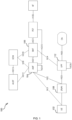
- FIG. 1 illustrates an exemplary 5G communication system 100.
- the 5G communication system 100 illustrates a point to point reference point representation. In Fig. 1 some nodes and functions of the network are shown.
- a user equipment (UE) 102 connects to the network via a radio access network node (RAN) 108.
- the RAN may be a for instance a base station, NodeB, or an eNodeB.
- the UE may be a mobile phone, for instance a smart phone, or some other type of unit with wireless communication capabilities, such as Internet of Thing (IoT) devices, Machine-to-machine devices, vehicles, sensors, computers, laptops, and so on.
- the RAN 108 is in turn connected to a core network comprising a User Plane function (UPF) 112, an Access and Mobility Management function (AMF) 104, a Session Management function (SMF) 106, a Policy Control function (PCF) 120.
- the network may comprise an Authentication Server Function /AUSF) 121, a Unified Data Management node (UDM) 122, an application function (AF) 123, and connecting to an external data network (DN) 124.
- UDM Unified Data Management node
- AF application function
- DN external data network
- nodes and functions may be physically located as separate nodes or partly incorporated into different nodes together with other nodes/functions but for illustrative purposes shown as separate entities.
- the registration procedure is utilized in the following situations: (1) when the UE 102 initially registers to a 5G system; (2) when the UE 102 initiates a registration procedure due to mobility, e.g. when the UE 102 changes to a new registration area (e.g. a new Tracking Area (TA)) in idle mode; (3) when the UE 102 performs a periodic update due to expiration of a predefined time period of inactivity, etc.
- TA Tracking Area
- ME Identity is obtained from the UE 102.
- AMF Access and Mobility Management function
- ME Identity is passed to a Unified Data
- UDM Session Management
- SMF Session Management function
- PCF Policy Control function
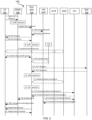
- FIG. 2 is a message flow diagram illustrating a UE registration process 200, according to one embodiment.
- the UE 102 transmits a registration request message to the RAN 108.
- the registration request message may comprise: a registration type identifier (ID) for identifying a registration type, a UE ID (e.g., a Permanent ID or a Temporary ID), security parameters, network slice selection assistance information (NSSAI), UE 5GCN Capability information, PDU session status information, and Radio Resource Control (RRC) parameters indicating Permanent ID or the Temporary ID, the Selected Network and NSSAI.
- ID a registration type identifier
- the registration type ID indicates whether the UE 102 wants to perform an "initial registration" (i.e. the UE 102 is in non-registered state), a "mobility registration" (i.e.
- the registration request message may further include information identifying one or more Protocol Data Unit (PDU) sessions that require user plane (UP) resources, such as Data Radio Bearer(s) and tunnels between the UP function (UPF) and RAN.
- PDU Protocol Data Unit
- UP User Plane
- the UE 102 marks the PDU session(s) which requires the establishment of UP resources with an Active flag in the registration request message.
- the marked PDU session(s) require the establishment of the UP resources because the UE 102 has UP data to transmit to the network.
- the registration request message includes a first ordered set of N bits (i.e., a "bitmap")), where each one of the N bits corresponds to a different one of N possible PDU sessions that could require UP resources (e.g., the first bit in the string corresponds to a first PDU session, the second bit in the string corresponds to a second PDU session, etc.).
- the value of each bit in the bit string indicates whether the PDU session corresponding to the bit requires UP resources (e.g.
- bit n is set to a value of 1, then the PDU session corresponding to this bit requires UP resources, but if the bit n is set to a value of 0, then the corresponding PDU session does not require UP resources). In this way, the UE can signal to the network the identity of the PDU session that require UP resources.
- the registration request message may also include information (e.g. a flag) indicating that the UE 102 is requesting "Follow-On" - that is, the UE is requesting the network to maintain the signaling connection with the UE after the registration procedure is completed because, for example, the UE has additional messages (e.g., a PDU session establishment message) to send to the network.
- information e.g. a flag
- the UE 102 is requesting "Follow-On" - that is, the UE is requesting the network to maintain the signaling connection with the UE after the registration procedure is completed because, for example, the UE has additional messages (e.g., a PDU session establishment message) to send to the network.
- step 2 if the registration request message includes an ID (Permanent or Temporary) that does not indicate a valid AMF, the RAN 108 selects an AMF 104 based on Radio Access Technology (RAT) and NSSAI, if available.
- ID Permanent or Temporary
- RAT Radio Access Technology
- the RAN 108 transmits the registration request message to the AMF 104.
- the registration request message transmitted to the AMF 104 further comprises: Location Information, Cell Identity, and RAT type.
- the Location Information, Cell Identity and RAT type relates to the cell in which the UE is located.
- step 4 if the registration request message includes the UE's Temporary ID and the serving AMF 104 has changed since the last registration, the AMF 104 may transmit an Information Request to the old AMF.
- the Information Request includes the complete registration request message IE in order to request the UE's Permanent ID and Mobility Management (MM) Context.
- the old AMF responds with an Information Response.
- the Information Response comprises the Permanent ID, the MM Context, and the SMF information.
- the old AMF has stored information regarding active PDU sessions. If the old AMF has stored information about active PDU sessions, the old AMF includes SMF information comprising SMF identities and corresponding PDU session identities in the Information Response so that the AMF 104 can map PDU sessions to SMFs.
- step 6 if the Permanent ID is not provided by the UE 102 nor retrieved from the old AMF in the Information Response, an Identity Request procedure is initiated by the AMF 104 transmitting an Identity Request message to the UE 102.
- step 7 in response to the Identity Request message, the UE 102 responds to the AMF 104 with an Identity Response message including the Permanent ID.
- step 8 the AMF 104 selects an AUSF if the registration request message is not sent with integrity protection or the integrity protection is indicated as failed based on the Permanent ID contained in the Information Response (step 5).
- step 9 if the AMF 104 selects the AUSF because the registration request message is not sent with integrity protection or the integrity protection is indicated as failed, the AUSF initiates authentication of the UE 102 and NAS security functions. Once security for the registration request message is established, the AMF 104 may fetch IMEI from the UE 102.
- the AMF 104 transmits an Identity Request to the UE 102 to retrieve the UE's ME identity if the ME identity is not provided by the UE 102 in the registration request message nor retrieved from the old AMF in the Information Response.
- step 11 in some embodiments, the AMF initiates an ME identity check.
- the AMF 104 sends a request (e.g., N11 Request) to SMF 106. If the AMF 104 is changed, the AMF 104 notifies each SMF 106 of the new AMF 104 serving the UE 102 (i.e., the AMF 104 sends the request to each SMF). The new AMF 104 verifies the PDU session status received from the UE 102 with the SMF information received from the old AMF. If the AMF 104 has not changed, the AMF 104 verifies the PDU session status received from the UE 102 with the available SMF information. After the AMF 104 determines the active PDU sessions in the UE 102, the AMF 104 releases any network resources related to PDU sessions that are not active in the UE 102.
- a request e.g., N11 Request
- the AMF 104 transmits to the SMF responsible for handling the PDU session a UP resource request for causing the SMF to establish UP resources for the PDU session. For example, if the registration request message indicates that a PDU session being handled by SMF 106 requires UP resources, the request sent to SMF 106 in step 11a will further includes the UP resource request.
- the SMF 106 transmits a UP resource response (e.g., N11 Response).
- the SMF 106 decides to trigger a UPF relocation.
- the SMF 106 provides the SM information (e.g., N2 SM information) in the UP resource response (e.g., N11 Response).
- the SM information may include quality-of-service (QoS) service information and tunnel endpoint information for establishing a tunnel between the radio access network (RAN) and UPF.
- QoS quality-of-service
- the SMF provides the SM information in the response only if the AMF specifically requested it in the request.
- the AMF 104 selects a UDM based on the UE's 102 Permanent ID.
- the AMF 104 initiates an Update Location procedure if: (1) the AMF 104 has changed since the last registration; (2) there is no valid subscription context for the UE 102 in the AMF 104; or (3) the UE 102 provides a Permanent ID which does not refer to a valid context in the AMF 104.
- the UDM initiates Cancel Location to the old AMF, if available.
- the old AMF removes the associated MM context and notifies all possibly associated SMF(s).
- interactions between the UDM and the PCF includes mobility restriction related information.
- the AMF 104 selects the PCF based on the UE's 102 Permanent ID.
- the AMF 104 transmits a UE Context Establishment Request to the PCF to apply operator policies for the UE 102.
- step 16 the PCF responds to the UE Context Establishment Request with a UE Context Establishment Acknowledged to the AMF 104.
- step 17 in some embodiments, the old AMF transmits a UE Context Termination Request to the PCF.
- step 18 the PCF responds to the UE Context Termination Request with a UE Context Termination Acknowledged to the old AMF.
- the AMF 104 transmits a UE Context setup (Access Stratum (AS) Security Context information) to the RAN 108. If in step 11b the AMF receives the SM information from SMF 106, then this SM information and an N2 PDU Session Request (Quality of Service (QoS), tunnel information, etc.) is included in the UE Context setup.
- AS Access Stratum
- N2 PDU Session Request Quality of Service
- tunnel information etc.
- the AMF 104 validates the UE's 102 presence in the (new) location and if all checks are successful and the UE marked a PDU session as requiring UP resources or requested Follow-On, then the connection is to be maintained and the AMF requests RAN to set up a secure connection to the UE by providing Access Stratum (AS) security context information in the UE Context Setup message sent to the RAN.
- AS Access Stratum
- the AMF 104 rejects the registration request message with an appropriate reject cause if the UE is not allowed to register in the current location.
- step 19a if the UE Context setup request includes a PDU Session Request, the RAN 108 performs RRC Connection Reconfiguration with the UE 102 in order to establish the default radio bearer (DRB) for the PDU Session(s) request received in step 19.
- DRB radio bearer
- the AMF 104 sends a Registration Accept message to the UE 102 indicating that the registration request message has been accepted.
- the Registration Accept message comprises: Temporary ID, Registration area. Mobility restrictions, and PDU session status.
- the AMF 104 indicates the PDU session status to the UE 102. Accordingly, the UE removes any internal resources related to PDU sessions that are not marked active in the received PDU session status. If the PDU session status information was in the registration request message, the AMF 104 indicates the corresponding PDU session status to the UE 102.
- the Registration Accept message includes the Temporary ID if the AMF 104 allocates a new Temporary ID for the UE 102.
- the Registration Accept message includes Mobility restrictions if mobility restrictions apply to the UE 102.
- step 21 in response to the Registration Accept message, the UE 102 transmits a Registration Complete message to the AMF 104. If a new Temporary ID is included in the Registration Accept message, the Registration Complete message acknowledges to the AMF 104 that the new Temporary ID is assigned.
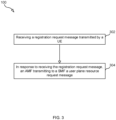
- FIG. 3 is a flow chart illustrating a process 300, according to one embodiment, that is performed by the AMF 104 for PDU session management.
- Process 300 may begin with step 302 in which the AMF 104 receives a registration request message transmitted by the UE 102, wherein the registration request message comprises information identifying a PDU session that requires UP resources.
- step 304 in response to receiving the registration request message, the AMF 104 transmits to the SMF 106, a UP resource request message for requesting the SMF 106 to establish UP resources for the identified PDU session.
- the SMF 106 in response to receiving the UP resource request message, the SMF 106 triggers a UP function relocation.
- the AMF 104 further receives session management information (e.g., N2 SM information) transmitted by the SMF 106 in response to the UP resource request message.
- session management information e.g., N2 SM information
- the AMF 104 transmits to an access node 108 serving the UE 102 a message (e.g., N2 PDU Session Request), wherein the message includes the session management information (e.g., N2 SM information).
- a message e.g., N2 PDU Session Request
- the session management information e.g., N2 SM information
- the session management information (e.g., N2 SM information) comprises information indicating a quality of service (QoS) and tunnel endpoint information.
- QoS quality of service
- the UP resources for the identified PDU session include data radio bearers (DRBs) on a radio interface and UP tunnels between a UP function and the access node 108 serving the UE 102.
- DRBs data radio bearers
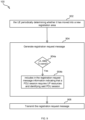
- FIG. 4 is a flow chart illustrating a process 400, according to one embodiment, that is performed by the UE 102 for PDU session management.
- Process 400 may begin with step 402 in which the UE 102 determines a first PDU session that requires UP resources.
- step 404 the UE determines that a registration request message needs to be transmitted (e.g., the UE determines that it needs to perform a mobility registration).
- step 404 is performed as a result of the UE determining that the first PDU session requires UP resources.
- step 404 is performed periodically (e.g., before step 402).
- the step of the UE determining that a registration request message needs to be transmitted comprises the UE determining that the UE has moved into a new registration area (e.g., the UE has moved out of the registration area in which the UE previously registered).
- the UE 102 transmits a registration request message after determining that i) the first PDU session requires UP resources and ii) a registration request message needs to be transmitted.
- the registration request message comprises information indicating that the first PDU session requires UP resources.
- the UE may further determine that a second PDU session also requires UP resources and the registration request message transmitted in step 406 includes information indicating that both the first and the second PDU sessions require UP resources.
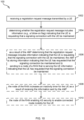
- the UE performs a process 900 (see fig. 9 ), which process includes: 1) the UE periodically determining whether it has moved into a new registration area (step 902) (i.e., determines that a registration request message needs to be sent) and, as a result of determining that it has moved into a new registration area, the UE generates a registration request message (step 904) and transmits the registration request message (step 906), wherein the step of generating the registration request message comprise the UE determining whether the UE has uplink (UL) data to send (step 904a) and, if that is the case, the UE includes in the registration request message information indicating that a PDU session requires UP resources and identifying said PDU session.
- a process 900 includes: 1) the UE periodically determining whether it has moved into a new registration area (step 902) (i.e., determines that a registration request message needs to be sent) and, as a result of determining that it has moved into a new registration area, the
- the registration request message includes a registration type identifier.
- the registration type ID indicates one of the following: (1) the UE 102 is in a non-registered state and is requesting an initial registration; (2) the UE 102 is in a registered state and is initiating a registration due to mobility; and (3) the UE 102 is in the registered state and is initiating the registration due to expiration of a periodic update timer.
- the UP resources for the identified PDU session include data radio bearers (DRBs) on a radio interface and a UP tunnel between a UP function and an access node 108 serving the UE 102.
- DRBs data radio bearers
- FIG. 9 is a flow chart illustrating a process 900 according to some embodiments.
- Process 900 includes: UE (102) determining whether the UE has moved into a new registration area (step 902); and as a result of determining that the UE has moved into a new registration area, the UE generating a registration request message (904) and transmitting the registration request message (906), wherein the step of generating the registration request message comprise: the UE determining whether the UE has uplink (UL) data to send (904a) and, if that is the case, the UE includes in the registration request message information i) indicating that a PDU session requires UP resources and ii) identifying said PDU session (904b).
- FIG. 10 is a flow chart illustrating a process 1000 according to some embodiments.
- Process 100 includes: AMF (104) receiving a registration request message transmitted by a UE (102); and the AMF (104) determining whether the registration request message includes information (e.g., a follow-on flag) indicating that the UE is requesting that a signaling connection with the UE be maintained.
- the AMF receives a registration request from a UE.
- the AMF determines whether the registration request message includes information (e.g., a follow-on flag) indicating that the UE is requesting that a signaling connection with the UE be maintained.
- the AMF as shown in step 1006 may store information that the UE has requested the signaling connection is to be maintained and the AMF may send to a node of a serving RAN information indicating that the UE has requested that the signaling connection be maintained.
- the node of the RAN may increase an inactivity timer for the UE as a result of receiving the information sent by the AMF.
- the node of the RAN may enable AS security to enable connected mode mobility for the UE as shown in step 1010.
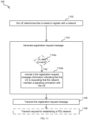
- FIG. 11 is a flow chart illustrating a process 1100 according to some embodiments.
- Process 1100 includes: the UE (102) determining that the UE needs to register with a network (1102); and the UE, as a result of determining that the UE needs to register with the network, generating a registration request message (1104) and transmitting the registration request message to the network (1106), wherein generating the registration request message comprises including in the registration request message information (e.g., a follow-on flag) indicating that the UE is requesting that the network maintain a signaling connection with the UE (1 104b).
- the registration request message information e.g., a follow-on flag
- FIG. 5 is a block diagram of AMF 104 according to some embodiments.
- the AMF 104 may comprise: a data processing system (DPS) 502, which may include one or more processors 555 (e.g., a general purpose microprocessor and/or one or more other processors, such as an application specific integrated circuit (ASIC), field-programmable gate arrays (FPGAs), and the like); network interface 505 for use in connecting AMF 104 to a network 110 such that AMF 104 can communicate with the other described functions (e.g., SMF 106) and RAN 108; and local storage unit (a.k.a., "data storage system") 508, which may include one or more non-volatile storage devices and/or one or more volatile storage devices (e.g., random access memory (RAM)).
- DPS data processing system
- processors 555 e.g., a general purpose microprocessor and/or one or more other processors, such as an application specific integrated circuit (ASIC), field-programmable gate arrays
- CPP computer program product
- CPP 541 includes a computer readable medium (CRM) 542 storing a computer program (CP) 543 comprising computer readable instructions (CRI) 544.
- CRM 542 may be a non-transitory computer readable medium, such as, but not limited, to magnetic media (e.g., a hard disk), optical media (e.g., a DVD), memory devices (e.g., random access memory), and the like.
- the CRI 544 of computer program 543 is configured such that when executed by data processing system 502, the CRI causes the AMF 104 to perform steps described above (e.g., steps described above with reference to the flow charts).
- the AMF 104 may be configured to perform steps described herein without the need for code. That is, for example, data processing system 502 may consist merely of one or more ASICs. Hence, the features of the embodiments described herein may be implemented in hardware and/or software.
- FIG. 6 is a block diagram of a UE 102 according to some embodiments.
- UE 102 may comprise: a data processing system (DPS) 602, which may include one or more processors 655 (e.g., a general purpose microprocessor and/or one or more other processors, such as an application specific integrated circuit (ASIC), field-programmable gate arrays (FPGAs), and the like); a radio transmitter 605 and a radio receiver 606 coupled to an antenna 622 for use in wirelessly communicating with a radio access network (RAN) node (e.g., a Tx/Rx Point (TRP)); and local storage unit (a.k.a., "data storage system") 608, which may include one or more non-volatile storage devices and/or one or more volatile storage devices (e.g., random access memory (RAM)).
- RAN radio access network
- TRP Tx/Rx Point
- local storage unit a.k.a., "data storage system”
- RAM random access memory
- CPP 641 includes a computer readable medium (CRM) 642 storing a computer program (CP) 643 comprising computer readable instructions (CRI) 644.
- CRM 642 may be a non-transitory computer readable medium, such as, but not limited, to magnetic media (e.g., a hard disk), optical media (e.g., a DVD), memory devices (e.g., random access memory), and the like.
- the CRI 644 of computer program 643 is configured such that when executed by data processing system 602, the CRI causes UE 102 to perform steps described above (e.g., steps described above with reference to the flow charts).
- UE 102 may be configured to perform steps described herein without the need for code. That is, for example, data processing system 602 may consist merely of one or more ASICs. Hence, the features of the embodiments described herein may be implemented in hardware and/or software.
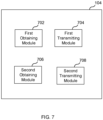
- FIG. 7 is a diagram showing functional modules of an AMF 104 according to some embodiments.
- the AMF 104 comprises a number of functional modules, including: a first obtaining module 702 configured to obtain via a receiver a registration request message transmitted by the UE 102, wherein the registration request message comprises information identifying a PDU session that requires UP resources; a first transmitting module 704 configured to configured to employ a transmitter to transmit to a SMF 106 a UP resource request message for requesting the SMF 106 to establish UP resources for the identified PDU session in response to receiving the registration request message; a second obtaining module 706 configured to obtain via the receiver session management information (e.g., N2 SM information) transmitted by the SMF 106 in response to the UP resource request message; and a second transmitting module 708 configured to employ a transmitter to transmit to an access node 108 serving the UE 102 a message (e.g., N2 PDU Session Request), wherein the message
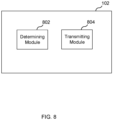
- FIG. 8 is a diagram showing functional modules of a UE 102 according to some embodiments.
- the UE 102 comprises a number of functional modules, including: a determining module 802 configured to determine a first PDU session that requires UP resources; and a first transmitting module 804 configured to employ a transmitter to transmit a registration request message, wherein the registration request message comprises information identifying the first PDU session that requires the UP resources.
- the modules 802-804 in one embodiment may be enabled through software instructions and in another embodiment through hardware, such as ASICs and DSPs, and in further embodiments through a mix of hardware and software.
Landscapes
- Engineering & Computer Science (AREA)
- Computer Networks & Wireless Communication (AREA)
- Signal Processing (AREA)
- Mobile Radio Communication Systems (AREA)
- Computer And Data Communications (AREA)
- Data Exchanges In Wide-Area Networks (AREA)
Claims (26)
- Verfahren (300) zur Verwaltung einer Protokolldateneinheitssitzung, PDU-Sitzung, wobei das Verfahren (300) Folgendes umfasst:- Empfangen (302), an einer Funktionseinheit für Zugangs- und Mobilitätsmanagement, AMF (104), einer Registrierungsanforderungsnachricht, die von einer Benutzerausrüstung, UE (102), übertragen wird, dadurch gekennzeichnet, dassdie Registrierungsanforderungsnachricht Informationen umfasst, die anzeigen, dass eine oder mehrere PDU-Sitzungen Benutzerebenenressourcen, UP-Ressourcen, erfordern, und Identifizieren jeder der PDU-Sitzungen, die UP-Ressourcen erfordern, wobei die Informationen ein oder mehrere Bits umfassen, jedes des einen oder der mehreren Bits anzeigen, dass Uplink-Daten für eine entsprechende PDU-Sitzung der einen oder der mehreren PDU-Sitzungen zu übertragen sind und dass die UP-Ressourcen für die entsprechende PDU-Sitzung erforderlich sind,wobei eine oder mehrere PDU-Sitzungen UP-Ressourcen erfordern, weil die UE (102) UP-Daten, die in der einen oder den mehreren PDU-Sitzungen zu übertragen sind, aufweist; undwobei das Verfahren Folgendes umfasst:- als Reaktion auf das Empfangen der Registrierungsanforderungsnachricht und wenn die Registrierungsanforderungsnachricht anzeigt, dass eine oder mehrere PDU-Sitzungen UP-Ressourcen erfordern, Übertragen (304), durch die AMF (104), an eine Sitzungsverwaltungsfunktion, SMF (106), einer UP-Ressourcenanforderungsnachricht, um die SMF (106) aufzufordern, UP-Ressourcen für mindestens eine der PDU-Sitzungen, die UP-Ressourcen erfordert, einzurichten.
- Verfahren (300) nach Anspruch 1, wobei das Verfahren ferner Folgendes umfasst:- als Reaktion auf das Empfangen der UP-Ressourcenanforderungsnachricht, Auslösen einer UP-Funktionsverlagerung durch die SMF (106).
- Verfahren (300) nach Anspruch 1 oder 2, wobei die Registrierungsanforderungsnachricht ferner eine Registrierungstypkennung, ID, umfasst, die anzeigt, dass sich die UE (102) in einem registrierten Zustand befindet und aufgrund von Mobilität eine Registrierung einleitet.
- Verfahren (300) nach einem der vorhergehenden Ansprüche, wobei das Verfahren ferner Folgendes umfasst:- Empfangen von Sitzungsverwaltungsinformationen, SM-Informationen, die von der SMF (106) als Reaktion auf die UP-Ressourcenanforderungsnachricht übertragen werden, wobei es sich bei den SM-Informationen um N2-SM-Informationen handelt.
- Verfahren (300) nach Anspruch 4, wobei das Verfahren ferner Folgendes umfasst:- Übertragen, durch die AMF (104), an einen Zugangsknoten (108), der die UE (102) bedient, einer N2-PDU-Sitzungsanforderungsnachricht, wobei die Nachricht die Sitzungsverwaltungsinformationen beinhaltet.
- Verfahren (300) nach Anspruch 4 oder 5, wobei die N2-SM-Informationen Informationen umfassen, die eine Dienstqualität, QoS, und Tunnelendpunktinformationen anzeigen.
- Verfahren nach einem der vorhergehenden Ansprüche, wobei die UP-Ressourcen für eine identifizierte PDU-Sitzung, die UP-Ressourcen erfordert, Datenfunkträger, DRBs, auf einer Funkschnittstelle und einen UP-Tunnel zwischen einer UP-Funktion und dem Zugangsknoten (108), der die UE (102) bedient, beinhalten.
- Verfahren nach einem der vorhergehenden Ansprüche, wobei die Registrierungsanforderungsnachricht ein Folgekennzeichen umfasst, das anzeigt, dass die UE (102) anfordert, dass das Netzwerk eine Signalverbindung mit der UE (102) aufrechterhält.
- Verfahren nach Anspruch 8, ferner umfassend die folgenden Schritte:- Speichern, durch die AMF (104), von Informationen, die anzeigen, dass die UE (102) angefordert hat, dass die Signalverbindung aufrechterhalten wird, und- Senden, durch die AMF (104), von Informationen an einen Knoten eines Funkzugangsnetzwerks, RAN, das die UE (102) bedient, wobei die Informationen, die an den Knoten gesendet werden, anzeigen, dass die UE (102) angefordert hat, dass die Signalverbindung aufrechterhalten wird.
- Funktionseinheit für Zugangs- und Mobilitätsmanagement, AMF (104), zur Verwaltung einer Protokolldateneinheitssitzung, PDU-Sitzung, wobei die AMF (104) ein Datenverarbeitungssystem (502), ein Datenspeichersystem (508) und eine Netzwerkschnittstelle (505) umfasst, wobei das Datenverarbeitungssystem dazu angepasst ist, computerlesbare Anweisungen, die in dem Datenspeichersystem gespeichert sind, zu Folgendem auszuführen:- Empfangen (304), über die Netzwerkschnittstelle (505), einer Registrierungsanforderungsnachricht, die von einer Benutzerausrüstung, UE (102), übertragen wird,
dadurch gekennzeichnet, dassdie Registrierungsanforderungsnachricht Informationen umfasst, die anzeigen, dass eine oder mehrere PDU-Sitzungen Benutzerebenenressourcen, UP-Ressourcen, erfordern, und Identifizieren jeder der PDU-Sitzungen, die UP-Ressourcen erfordern,wobei die Informationen ein oder mehrere Bits umfassen, jedes des einen oder der mehreren Bits anzeigen, dass Uplink-Daten für eine entsprechende PDU-Sitzung der einen oder der mehreren PDU-Sitzungen zu übertragen sind und dass die UP-Ressourcen für die entsprechende PDU-Sitzung erforderlich sind,wobei eine oder mehrere PDU-Sitzungen UP-Ressourcen erfordern, weil die UE (102) UP-Daten, die in der einen oder den mehreren PDU-Sitzungen zu übertragen sind, aufweist; undwobei das Datenverarbeitungssystem zu Folgendem angepasst ist:- als Reaktion auf das Empfangen der Registrierungsanforderungsnachricht und wenn die Registrierungsanforderungsnachricht anzeigt, dass eine oder mehrere PDU-Sitzungen UP-Ressourcen erfordern, Übertragen (304), über die Netzwerkschnittstelle (505), an eine Sitzungsverwaltungsfunktion, SMF (106), einer UP-Ressourcenanforderungsnachricht, um die SMF (106) aufzufordern, UP-Ressourcen für mindestens eine der identifizierten PDU-Sitzungen, die UP-Ressourcen erfordert, einzurichten. - AMF (104) nach Anspruch 10, wobei die Registrierungsanforderungsnachricht ferner eine Registrierungstypkennung, ID, umfasst, die anzeigt, dass sich die UE (102) in einem registrierten Zustand befindet und aufgrund von Mobilität eine Registrierung einleitet.
- AMF (104) nach einem der Ansprüche 10 bis 11, wobei die AMF (104) ferner dazu angepasst ist, Sitzungsverwaltungsinformationen, die von der SMF (106) als Reaktion auf die UP-Ressourcenanforderungsnachricht übertragen werden, zu empfangen, wobei es sich bei den Sitzungsverwaltungsinformationen um N2-SM-Informationen handelt.
- AMF (104) nach Anspruch 12, wobei:- die AMF (104) ferner dazu angepasst ist, an einen Zugangsknoten (108), der die UE (102) bedient, eine N2-PDU-Sitzungsanforderungsnachricht zu übertragen, wobei die Nachricht die Sitzungsverwaltungsinformationen beinhaltet.
- AMF (104) nach Anspruch 12 oder 13, wobei die Sitzungsverwaltungsinformationen Informationen umfassen, die eine Dienstqualität, QoS, und Tunnelendpunktinformationen anzeigen.
- AMF (104) nach einem der Ansprüche 10 bis 14, wobei die UP-Ressourcen für die identifizierte PDU-Sitzung Datenfunkträger, DRBs, auf einer Funkschnittstelle und einen UP-Tunnel zwischen einer UP-Funktion und dem Zugangsknoten (108), der die UE (102) bedient, beinhalten.
- AMF (104) nach einem der Ansprüche 10-15, wobei die Registrierungsanforderungsnachricht ein Folgekennzeichen umfasst, das anzeigt, dass die UE (102) anfordert, dass das Netzwerk eine Signalverbindung mit der UE (102) aufrechterhält.
- Verfahren (400), in einer Benutzerausrüstung, UE (102), zur Verwaltung einer Protokolldateneinheitssitzung, PDU-Sitzung, wobei das Verfahren (400) Folgendes umfasst:- Bestimmen (402), durch eine Benutzerausrüstung, UE (102), dass eine oder mehrere PDU-Sitzungen Benutzerebenenressourcen, UP-Ressourcen, erfordern und dass die UE (102) Uplink-Daten, UL-Daten, die in der einen oder den mehreren PDU-Sitzungen zu übertragen sind, aufweist; undBestimmen (404), durch die UE (102), dass eine Registrierungsanforderungsnachricht zu übertragen ist;dadurch gekennzeichnet, dass das Verfahren Folgendes umfasst:nach dem Bestimmen, dass a) die Registrierungsanforderungsnachricht zu übertragen ist und b) die eine oder die mehreren PDU-Sitzungen UP-Ressourcen erfordern und die UE (102) UL-Daten, die zu übertragen sind, aufweist, Übertragen (404), durch die UE (102), der Registrierungsanforderungsnachricht, wobei die Registrierungsanforderungsnachricht Informationen umfasst, die anzeigen, dass die eine oder die mehreren PDU-Sitzungen UP-Ressourcen erfordern,wobei die Informationen ein oder mehrere Bits umfassen, jedes des einen oder der mehreren Bits anzeigen, dass Uplink-Daten für eine entsprechende PDU-Sitzung der einen oder der mehreren PDU-Sitzungen zu übertragen sind und dass die UP-Ressourcen für die entsprechende PDU-Sitzung erforderlich sind.
- Verfahren (400) nach Anspruch 17, wobei die Registrierungsanforderungsnachricht ferner eine Registrierungstypkennung, ID, zum Identifizieren eines Registrierungstyps, eine UE-ID, Sicherheitsparameter und Unterstützungsinformationen zur Netzwerk-Slice-Auswahl, NSSAI, umfasst.
- Verfahren (400) nach Anspruch 17 oder 18, wobei die Registrierungsanforderungsnachricht ferner eine Registrierungstypkennung umfasst, die anzeigt, dass sich die UE (102) in einem registrierten Zustand befindet und aufgrund von Mobilität eine Registrierung einleitet.
- Verfahren (400) nach einem der Ansprüche 17 bis 19, wobei die UP-Ressourcen für die identifizierte PDU-Sitzung Datenfunkträger, DRBs, auf einer Funkschnittstelle und einen UP-Tunnel beinhalten.
- Verfahren nach einem der Ansprüche 17-20, wobei die Registrierungsanforderungsnachricht ein Folgekennzeichen umfasst, das anzeigt, dass die UE (102) anfordert, dass das Netzwerk eine Signalverbindung mit der UE (102) aufrechterhält.
- Benutzerausrüstung, UE, (102), umfassend ein Datenverarbeitungssystem (602), ein Datenspeichersystem (608), einen Funksender (605) und einen Empfänger (606), die mit einer Antenne (622) gekoppelt sind, wobei das Datenverarbeitungssystem dazu angepasst ist, computerlesbare Anweisungen für Folgendes auszuführen:- Bestimmen, dass eine oder mehrere Protokolldateneinheitssitzungen, PDU-Sitzungen, Benutzerebenenressourcen, UP-Ressourcen, erfordern und dass die UE (102) Uplink-Daten, UL-Daten, die in der einen oder den mehreren PDU-Sitzungen zu übertragen sind, aufweist; und- Bestimmen, dass eine Registrierungsanforderungsnachricht unter Verwendung des Funksenders (605) zu übertragen ist;dadurch gekennzeichnet, dass das Datenverarbeitungssystem dazu angepasst ist, computerlesbare Anweisungen für Folgendes auszuführen:- nach dem Bestimmen, dass a) die Registrierungsanforderungsnachricht zu übertragen ist und b) die eine oder die mehreren PDU-Sitzungen UP-Ressourcen erfordern und die UE (102) UL-Daten, die zu übertragen sind, aufweist, Übertragen, unter Verwendung des Funksenders (605), der Registrierungsanforderungsnachricht, wobei die Registrierungsanforderungsnachricht Informationen umfasst, die anzeigen, dass die eine oder die mehreren PDU-Sitzungen UP-Ressourcen erfordern,wobei die Informationen ein oder mehrere Bits umfassen, jedes des einen oder der mehreren Bits anzeigen, dass Uplink-Daten für eine entsprechende PDU-Sitzung der einen oder der mehreren PDU-Sitzungen zu übertragen sind und dass die UP-Ressourcen für die entsprechende PDU-Sitzung erforderlich sind.
- UE (102) nach Anspruch 22, wobei die Registrierungsanforderungsnachricht ferner eine Registrierungstypkennung, ID, zum Identifizieren eines Registrierungstyps, eine UE-ID, eine dauerhafte ID oder eine zeitweise ID, Sicherheitsparameter und Unterstützungsinformationen zur Netzwerk-Slice-Auswahl, NSSAI, umfasst.
- UE (102) nach Anspruch 22 oder 23, wobei die Registrierungsanforderungsnachricht ferner eine Registrierungstypkennung, ID, umfasst, die anzeigt, dass sich die UE (102) in einem registrierten Zustand befindet und aufgrund von Mobilität eine Registrierung einleitet.
- UE (102) nach einem der Ansprüche 22 bis 24, wobei die UP-Ressourcen für die identifizierte PDU-Sitzung Datenfunkträger, DRBs, auf einer Funkschnittstelle und einen UP-Tunnel beinhalten.
- UE (102) nach einem der Ansprüche 22-25, wobei die Registrierungsanforderungsnachricht ferner ein Folgekennzeichen umfasst, das anzeigt, dass die UE (102) anfordert, dass das Netzwerk eine Signalverbindung mit der UE (102) aufrechterhält.
Priority Applications (1)
| Application Number | Priority Date | Filing Date | Title |
|---|---|---|---|
| EP25151722.3A EP4514056A3 (de) | 2017-01-10 | 2017-12-15 | Verwaltung einer pdu-sitzung |
Applications Claiming Priority (2)
| Application Number | Priority Date | Filing Date | Title |
|---|---|---|---|
| US201762444565P | 2017-01-10 | 2017-01-10 | |
| PCT/SE2017/051281 WO2018132050A1 (en) | 2017-01-10 | 2017-12-15 | Pdu session management |
Related Child Applications (1)
| Application Number | Title | Priority Date | Filing Date |
|---|---|---|---|
| EP25151722.3A Division EP4514056A3 (de) | 2017-01-10 | 2017-12-15 | Verwaltung einer pdu-sitzung |
Publications (4)
| Publication Number | Publication Date |
|---|---|
| EP3482589A1 EP3482589A1 (de) | 2019-05-15 |
| EP3482589A4 EP3482589A4 (de) | 2019-11-27 |
| EP3482589B1 true EP3482589B1 (de) | 2025-02-05 |
| EP3482589C0 EP3482589C0 (de) | 2025-02-05 |
Family
ID=62840284
Family Applications (2)
| Application Number | Title | Priority Date | Filing Date |
|---|---|---|---|
| EP17891491.7A Active EP3482589B1 (de) | 2017-01-10 | 2017-12-15 | Verwaltung einer pdu-sitzung |
| EP25151722.3A Pending EP4514056A3 (de) | 2017-01-10 | 2017-12-15 | Verwaltung einer pdu-sitzung |
Family Applications After (1)
| Application Number | Title | Priority Date | Filing Date |
|---|---|---|---|
| EP25151722.3A Pending EP4514056A3 (de) | 2017-01-10 | 2017-12-15 | Verwaltung einer pdu-sitzung |
Country Status (9)
| Country | Link |
|---|---|
| US (2) | US11412473B2 (de) |
| EP (2) | EP3482589B1 (de) |
| JP (1) | JP7027431B2 (de) |
| KR (2) | KR102371951B1 (de) |
| CN (2) | CN109644419A (de) |
| AR (1) | AR110882A1 (de) |
| BR (1) | BR112019014110A2 (de) |
| ES (1) | ES3014446T3 (de) |
| WO (1) | WO2018132050A1 (de) |
Families Citing this family (37)
| Publication number | Priority date | Publication date | Assignee | Title |
|---|---|---|---|---|
| CN109417766B (zh) | 2016-07-01 | 2022-06-07 | 瑞典爱立信有限公司 | 用于用户设备(ue)注册的系统和方法 |
| KR102449475B1 (ko) * | 2016-10-21 | 2022-09-30 | 삼성전자 주식회사 | 무선 통신 시스템에서 단말이 지원 가능한 네트워크 정보에 기반한 단말의 네트워크 접속 방법 및 장치 |
| CN108401273B (zh) * | 2017-02-06 | 2020-04-17 | 电信科学技术研究院 | 一种路由方法和装置 |
| US10764785B2 (en) * | 2017-03-07 | 2020-09-01 | Htc Corporation | Device and method of handling network slice information |
| EP3902333B1 (de) * | 2017-03-16 | 2024-12-18 | Samsung Electronics Co., Ltd. | Registrierung eines terminals für die verbindung zum roaming-netzwerk |
| CN113141608A (zh) * | 2017-03-31 | 2021-07-20 | 华为技术有限公司 | 一种通信方法及设备 |
| US11184838B2 (en) * | 2017-06-17 | 2021-11-23 | Lg Electronics Inc. | Method for registering terminal in wireless communication system and apparatus therefor |
| US11129017B2 (en) * | 2017-09-28 | 2021-09-21 | Futurewei Technologies, Inc. | System and method for security activation with session granularity |
| US10986602B2 (en) * | 2018-02-09 | 2021-04-20 | Intel Corporation | Technologies to authorize user equipment use of local area data network features and control the size of local area data network information in access and mobility management function |
| WO2019182430A1 (en) * | 2018-03-23 | 2019-09-26 | Samsung Electronics Co., Ltd. | Method and system for handling service request procedure in communication network |
| CN110366241B (zh) | 2018-04-09 | 2024-09-17 | 华为技术有限公司 | 通信方法、装置和系统 |
| CN110636579B (zh) * | 2018-06-22 | 2021-07-09 | 华为技术有限公司 | 通信方法、寻呼方法、设备和系统 |
| CN110913389B (zh) | 2018-09-15 | 2022-04-05 | 华为技术有限公司 | 获取安全上下文的方法和装置 |
| US10863556B2 (en) | 2018-10-11 | 2020-12-08 | Verizon Patent And Licensing Inc. | Method and system for network slice identification and selection |
| PH12021552394A1 (en) * | 2019-04-02 | 2022-06-13 | Nokia Technologies Oy | Method and apparatus for cellular internet of things (ciot) data transfer over a control plane in a wireless communication system |
| EP3737151B1 (de) * | 2019-05-06 | 2023-07-19 | Ntt Docomo, Inc. | Mobilkommunikationskernnetzwerkvorrichtung und verfahren zur verwaltung drahtloser kommunikationen nach dem einfügen einer zwischensitzungsverwaltungsfunktion |
| EP3967065A1 (de) * | 2019-05-06 | 2022-03-16 | Telefonaktiebolaget Lm Ericsson (Publ) | Abbildung einer benutzerebenenfunktion auf ein benutzergerät |
| US12048054B2 (en) | 2019-06-17 | 2024-07-23 | Telefonaktiebolaget Lm Ericsson (Publ) | Handling of session context |
| CN112118639B (zh) * | 2019-06-21 | 2022-05-10 | 大唐移动通信设备有限公司 | 一种信息释放方法和装置 |
| CN113412665B (zh) * | 2019-07-12 | 2023-09-22 | Oppo广东移动通信有限公司 | 一种会话设置方法、网络设备、用户设备 |
| KR102701230B1 (ko) * | 2019-08-19 | 2024-09-02 | 엘지전자 주식회사 | 비구조화 트래픽을 중계하기 위한 방법 및 릴레이 ue |
| CN113473414B (zh) * | 2019-09-24 | 2023-03-17 | Oppo广东移动通信有限公司 | 获取车与万物通信策略的方法和装置 |
| CN118158688A (zh) | 2019-09-26 | 2024-06-07 | 中兴通讯股份有限公司 | 基于服务的接入网架构和通信 |
| CN112583619B (zh) | 2019-09-30 | 2025-01-24 | 中国移动通信有限公司研究院 | 一种服务调用方法及网络设备 |
| KR20220079886A (ko) * | 2019-10-03 | 2022-06-14 | 아이디에이씨 홀딩스, 인크. | 프로토콜 데이터 유닛(pdu) 세션 확립 |
| JP7370460B2 (ja) * | 2019-10-11 | 2023-10-27 | テレフオンアクチーボラゲット エルエム エリクソン(パブル) | 複数usimのueのための移動体終端の情報配信 |
| US12022418B2 (en) * | 2019-11-01 | 2024-06-25 | Apple Inc. | Establishing a multiple access connection |
| CN111614767B (zh) * | 2020-05-22 | 2021-11-26 | 中国联合网络通信集团有限公司 | 一种数据存储方法及装置 |
| CN113891340B (zh) * | 2020-07-02 | 2023-10-27 | 中国移动通信集团安徽有限公司 | 自适应流控方法、装置、计算设备和存储介质 |
| US11206535B1 (en) | 2020-07-13 | 2021-12-21 | T-Mobile Usa, Inc. | Device authentication in a wireless telecommunications network |
| CN113973291B (zh) * | 2020-07-22 | 2022-09-23 | 大唐移动通信设备有限公司 | 用户面会话管理方法、装置、设备及存储介质 |
| GB202015676D0 (en) | 2020-10-02 | 2020-11-18 | Samsung Electronics Co Ltd | Methods to support increased number of pdu sessions |
| CN117044388A (zh) * | 2020-10-14 | 2023-11-10 | 欧芬诺有限责任公司 | 通信网络 |
| WO2022077261A1 (zh) * | 2020-10-14 | 2022-04-21 | Oppo广东移动通信有限公司 | 一种通信方法及相关设备 |
| CN115696217A (zh) * | 2021-07-23 | 2023-02-03 | 大唐移动通信设备有限公司 | 多播会话处理方法、网络功能实体、装置及存储介质 |
| KR20230071541A (ko) * | 2021-11-16 | 2023-05-23 | 삼성전자주식회사 | 단말 원격 권한 설정을 위한 제어 평면 또는 사용자 평면의 선택을 위한 방법 및 장치 |
| WO2025164948A1 (en) * | 2024-01-29 | 2025-08-07 | Lg Electronics Inc. | Method and apparatus of transmitting data unit with fake code in wireless communication system |
Family Cites Families (11)
| Publication number | Priority date | Publication date | Assignee | Title |
|---|---|---|---|---|
| FI109169B (fi) | 1999-07-02 | 2002-05-31 | Nokia Corp | Kontrollisignalointien järjestäminen tietoliikennejärjestelmässä |
| WO2006012909A1 (en) * | 2004-08-02 | 2006-02-09 | Telefonaktiebolaget L.M. Ericsson (Publ) | Handover in a mobile communications network |
| GB2441409A (en) * | 2006-08-03 | 2008-03-05 | Sepura Ltd | Method of registering an entity |
| US8711846B2 (en) * | 2008-09-18 | 2014-04-29 | Futurewei Technologies, Inc. | Network attachment for IMS systems for legacy CS UE with home node B access |
| US20120289181A1 (en) * | 2011-05-12 | 2012-11-15 | Qualcomm Incorporated | In-vehicle emergency call service registration and call setup using follow-on request |
| CN102917332B (zh) * | 2012-10-11 | 2015-06-03 | 大唐移动通信设备有限公司 | 一种实现移动设备附着的方法及装置 |
| US9148765B2 (en) | 2012-11-27 | 2015-09-29 | Alcatel Lucent | Push service without persistent TCP connection in a mobile network |
| KR102325935B1 (ko) | 2015-04-07 | 2021-11-15 | 주식회사 엘지유플러스 | 베어러 수정 요청 메시지의 전송을 위한 통신 처리 시스템, 이동성 관리 엔티티, 및 서빙 게이트웨이와, 그 제어방법 |
| US10602472B2 (en) * | 2016-08-22 | 2020-03-24 | Samsung Electronics Co., Ltd. | Method and system for regional data network configuration in wireless communication network |
| US10462840B2 (en) * | 2017-01-09 | 2019-10-29 | Huawei Technologies Co., Ltd. | System and methods for session management |
| US10505718B1 (en) * | 2018-06-08 | 2019-12-10 | Cisco Technology, Inc. | Systems, devices, and techniques for registering user equipment (UE) in wireless networks using a native blockchain platform |
-
2017
- 2017-12-15 EP EP17891491.7A patent/EP3482589B1/de active Active
- 2017-12-15 ES ES17891491T patent/ES3014446T3/es active Active
- 2017-12-15 BR BR112019014110-3A patent/BR112019014110A2/pt unknown
- 2017-12-15 KR KR1020217030076A patent/KR102371951B1/ko active Active
- 2017-12-15 JP JP2019537140A patent/JP7027431B2/ja active Active
- 2017-12-15 EP EP25151722.3A patent/EP4514056A3/de active Pending
- 2017-12-15 KR KR1020197014313A patent/KR20190057435A/ko not_active Ceased
- 2017-12-15 US US15/744,238 patent/US11412473B2/en active Active
- 2017-12-15 CN CN201780050745.0A patent/CN109644419A/zh active Pending
- 2017-12-15 WO PCT/SE2017/051281 patent/WO2018132050A1/en not_active Ceased
- 2017-12-15 CN CN202310093299.9A patent/CN116074990B/zh active Active
-
2018
- 2018-01-08 AR ARP180100040A patent/AR110882A1/es active IP Right Grant
-
2022
- 2022-07-22 US US17/871,087 patent/US12328703B2/en active Active
Also Published As
| Publication number | Publication date |
|---|---|
| EP4514056A3 (de) | 2025-05-07 |
| CN116074990A (zh) | 2023-05-05 |
| US12328703B2 (en) | 2025-06-10 |
| KR102371951B1 (ko) | 2022-03-07 |
| EP4514056A2 (de) | 2025-02-26 |
| AR110882A1 (es) | 2019-05-15 |
| WO2018132050A1 (en) | 2018-07-19 |
| ES3014446T3 (en) | 2025-04-22 |
| CN109644419A (zh) | 2019-04-16 |
| BR112019014110A2 (pt) | 2020-02-27 |
| JP7027431B2 (ja) | 2022-03-01 |
| EP3482589A4 (de) | 2019-11-27 |
| US20230016378A1 (en) | 2023-01-19 |
| EP3482589C0 (de) | 2025-02-05 |
| KR20190057435A (ko) | 2019-05-28 |
| CN116074990B (zh) | 2025-08-29 |
| EP3482589A1 (de) | 2019-05-15 |
| US11412473B2 (en) | 2022-08-09 |
| US20190007921A1 (en) | 2019-01-03 |
| JP2020504559A (ja) | 2020-02-06 |
| KR20210118247A (ko) | 2021-09-29 |
Similar Documents
| Publication | Publication Date | Title |
|---|---|---|
| US12328703B2 (en) | PDU session management | |
| CN108605383B (zh) | 无线通信系统中执行用于基于网络切片的nr的小区规范过程的方法和装置 | |
| US9544709B2 (en) | Small data transmission techniques in a wireless communication network | |
| US9184977B2 (en) | System for controlling access to device-to-device communication services in wireless network | |
| US11206580B2 (en) | Communication method and communications apparatus | |
| CN103891344B (zh) | 一种多用户协作通信的方法、设备及系统 | |
| WO2021136211A1 (zh) | 授权结果的确定方法及装置 | |
| US10681597B2 (en) | Device and method for handling a packet flow in inter-system mobility | |
| US20190116526A1 (en) | Device and Method of Handling a Protocol Data Unit Session and a Network Slice | |
| CN114788344A (zh) | 向可接入性和移动性管理功能重新分配进行注册 | |
| CN114302447B (zh) | 5gsm拥塞定时器的处理方法及用户设备 | |
| CN115707062B (zh) | 一种网络切片准入控制方法和装置 | |
| US10172027B2 (en) | Device and method of reporting a WLAN connection status | |
| US11153925B2 (en) | Handling of QoS flow description without valid EPS bearer context | |
| US10057871B2 (en) | Data transmission method and base station | |
| CN113329392B (zh) | 家庭网关接入网络的方法和通信装置 | |
| US20250234415A1 (en) | Methods and apparatuses for management of a data session in home routed session breakout mode | |
| WO2023160390A1 (zh) | 通信方法与装置 | |
| WO2023202337A1 (zh) | 通信方法和装置 | |
| CN119497047A (zh) | 通信方法及装置 |
Legal Events
| Date | Code | Title | Description |
|---|---|---|---|
| STAA | Information on the status of an ep patent application or granted ep patent |
Free format text: STATUS: THE INTERNATIONAL PUBLICATION HAS BEEN MADE |
|
| PUAI | Public reference made under article 153(3) epc to a published international application that has entered the european phase |
Free format text: ORIGINAL CODE: 0009012 |
|
| STAA | Information on the status of an ep patent application or granted ep patent |
Free format text: STATUS: REQUEST FOR EXAMINATION WAS MADE |
|
| 17P | Request for examination filed |
Effective date: 20190207 |
|
| AK | Designated contracting states |
Kind code of ref document: A1 Designated state(s): AL AT BE BG CH CY CZ DE DK EE ES FI FR GB GR HR HU IE IS IT LI LT LU LV MC MK MT NL NO PL PT RO RS SE SI SK SM TR |
|
| AX | Request for extension of the european patent |
Extension state: BA ME |
|
| A4 | Supplementary search report drawn up and despatched |
Effective date: 20191024 |
|
| RIC1 | Information provided on ipc code assigned before grant |
Ipc: H04W 76/20 20180101ALI20191018BHEP Ipc: H04W 60/00 20090101AFI20191018BHEP Ipc: H04W 76/10 20180101ALI20191018BHEP |
|
| DAV | Request for validation of the european patent (deleted) | ||
| DAX | Request for extension of the european patent (deleted) | ||
| STAA | Information on the status of an ep patent application or granted ep patent |
Free format text: STATUS: EXAMINATION IS IN PROGRESS |
|
| 17Q | First examination report despatched |
Effective date: 20210708 |
|
| GRAP | Despatch of communication of intention to grant a patent |
Free format text: ORIGINAL CODE: EPIDOSNIGR1 |
|
| STAA | Information on the status of an ep patent application or granted ep patent |
Free format text: STATUS: GRANT OF PATENT IS INTENDED |
|
| INTG | Intention to grant announced |
Effective date: 20240822 |
|
| GRAS | Grant fee paid |
Free format text: ORIGINAL CODE: EPIDOSNIGR3 |
|
| GRAA | (expected) grant |
Free format text: ORIGINAL CODE: 0009210 |
|
| STAA | Information on the status of an ep patent application or granted ep patent |
Free format text: STATUS: THE PATENT HAS BEEN GRANTED |
|
| AK | Designated contracting states |
Kind code of ref document: B1 Designated state(s): AL AT BE BG CH CY CZ DE DK EE ES FI FR GB GR HR HU IE IS IT LI LT LU LV MC MK MT NL NO PL PT RO RS SE SI SK SM TR |
|
| REG | Reference to a national code |
Ref country code: GB Ref legal event code: FG4D |
|
| REG | Reference to a national code |
Ref country code: CH Ref legal event code: EP |
|
| REG | Reference to a national code |
Ref country code: IE Ref legal event code: FG4D |
|
| REG | Reference to a national code |
Ref country code: DE Ref legal event code: R096 Ref document number: 602017087659 Country of ref document: DE |
|
| U01 | Request for unitary effect filed |
Effective date: 20250211 |
|
| U07 | Unitary effect registered |
Designated state(s): AT BE BG DE DK EE FI FR IT LT LU LV MT NL PT RO SE SI Effective date: 20250217 |
|
| REG | Reference to a national code |
Ref country code: ES Ref legal event code: FG2A Ref document number: 3014446 Country of ref document: ES Kind code of ref document: T3 Effective date: 20250422 |
|
| PG25 | Lapsed in a contracting state [announced via postgrant information from national office to epo] |
Ref country code: RS Free format text: LAPSE BECAUSE OF FAILURE TO SUBMIT A TRANSLATION OF THE DESCRIPTION OR TO PAY THE FEE WITHIN THE PRESCRIBED TIME-LIMIT Effective date: 20250505 |
|
| PG25 | Lapsed in a contracting state [announced via postgrant information from national office to epo] |
Ref country code: PL Free format text: LAPSE BECAUSE OF FAILURE TO SUBMIT A TRANSLATION OF THE DESCRIPTION OR TO PAY THE FEE WITHIN THE PRESCRIBED TIME-LIMIT Effective date: 20250205 |
|
| PG25 | Lapsed in a contracting state [announced via postgrant information from national office to epo] |
Ref country code: IS Free format text: LAPSE BECAUSE OF FAILURE TO SUBMIT A TRANSLATION OF THE DESCRIPTION OR TO PAY THE FEE WITHIN THE PRESCRIBED TIME-LIMIT Effective date: 20250605 Ref country code: NO Free format text: LAPSE BECAUSE OF FAILURE TO SUBMIT A TRANSLATION OF THE DESCRIPTION OR TO PAY THE FEE WITHIN THE PRESCRIBED TIME-LIMIT Effective date: 20250505 |
|
| PG25 | Lapsed in a contracting state [announced via postgrant information from national office to epo] |
Ref country code: HR Free format text: LAPSE BECAUSE OF FAILURE TO SUBMIT A TRANSLATION OF THE DESCRIPTION OR TO PAY THE FEE WITHIN THE PRESCRIBED TIME-LIMIT Effective date: 20250205 |
|
| PG25 | Lapsed in a contracting state [announced via postgrant information from national office to epo] |
Ref country code: GR Free format text: LAPSE BECAUSE OF FAILURE TO SUBMIT A TRANSLATION OF THE DESCRIPTION OR TO PAY THE FEE WITHIN THE PRESCRIBED TIME-LIMIT Effective date: 20250506 |
|
| PG25 | Lapsed in a contracting state [announced via postgrant information from national office to epo] |
Ref country code: SM Free format text: LAPSE BECAUSE OF FAILURE TO SUBMIT A TRANSLATION OF THE DESCRIPTION OR TO PAY THE FEE WITHIN THE PRESCRIBED TIME-LIMIT Effective date: 20250205 |
|
| PG25 | Lapsed in a contracting state [announced via postgrant information from national office to epo] |
Ref country code: CZ Free format text: LAPSE BECAUSE OF FAILURE TO SUBMIT A TRANSLATION OF THE DESCRIPTION OR TO PAY THE FEE WITHIN THE PRESCRIBED TIME-LIMIT Effective date: 20250205 |
|
| PG25 | Lapsed in a contracting state [announced via postgrant information from national office to epo] |
Ref country code: SK Free format text: LAPSE BECAUSE OF FAILURE TO SUBMIT A TRANSLATION OF THE DESCRIPTION OR TO PAY THE FEE WITHIN THE PRESCRIBED TIME-LIMIT Effective date: 20250205 |