EP3482546B1 - System zur sicheren elektronischen nachrichtenübertragung - Google Patents
System zur sicheren elektronischen nachrichtenübertragung Download PDFInfo
- Publication number
- EP3482546B1 EP3482546B1 EP17739674.4A EP17739674A EP3482546B1 EP 3482546 B1 EP3482546 B1 EP 3482546B1 EP 17739674 A EP17739674 A EP 17739674A EP 3482546 B1 EP3482546 B1 EP 3482546B1
- Authority
- EP
- European Patent Office
- Prior art keywords
- secure
- user
- electronic message
- module
- Prior art date
- Legal status (The legal status is an assumption and is not a legal conclusion. Google has not performed a legal analysis and makes no representation as to the accuracy of the status listed.)
- Active
Links
Images




Classifications
-
- H—ELECTRICITY
- H04—ELECTRIC COMMUNICATION TECHNIQUE
- H04L—TRANSMISSION OF DIGITAL INFORMATION, e.g. TELEGRAPHIC COMMUNICATION
- H04L63/00—Network architectures or network communication protocols for network security
- H04L63/10—Network architectures or network communication protocols for network security for controlling access to devices or network resources
- H04L63/105—Multiple levels of security
-
- H—ELECTRICITY
- H04—ELECTRIC COMMUNICATION TECHNIQUE
- H04L—TRANSMISSION OF DIGITAL INFORMATION, e.g. TELEGRAPHIC COMMUNICATION
- H04L51/00—User-to-user messaging in packet-switching networks, transmitted according to store-and-forward or real-time protocols, e.g. e-mail
- H04L51/07—User-to-user messaging in packet-switching networks, transmitted according to store-and-forward or real-time protocols, e.g. e-mail characterised by the inclusion of specific contents
- H04L51/08—Annexed information, e.g. attachments
-
- H—ELECTRICITY
- H04—ELECTRIC COMMUNICATION TECHNIQUE
- H04L—TRANSMISSION OF DIGITAL INFORMATION, e.g. TELEGRAPHIC COMMUNICATION
- H04L63/00—Network architectures or network communication protocols for network security
- H04L63/04—Network architectures or network communication protocols for network security for providing a confidential data exchange among entities communicating through data packet networks
- H04L63/0428—Network architectures or network communication protocols for network security for providing a confidential data exchange among entities communicating through data packet networks wherein the data content is protected, e.g. by encrypting or encapsulating the payload
Definitions
- the present invention relates to a system for secure transmission of electronic mail (email) and other forms of electronic messaging.
- Secure email systems have been developed in which both the sender and receiver need to sign up to a private email service. However this requires the sender and the recipient to use a bespoke email service which may not use their usual or preferred email application or email addresses.
- An alternative approach is for the email to be sent to and stored on a secure central server. However, this may place heavy processing and storage demands on the central server, and remove the ability of the sender to remain in control of the information which is sent.
- Systems have been developed which allow secure data storage and sharing over cloud based networks. Such systems typically encrypt data files before uploading them to public cloud storage, while maintain the ability to share the data files.
- a user device is only able to make decisions about a level of security required for a particular recipient based on information which that user device holds about the recipient. Since the amount of information which may be held about another user may be restricted due to confidentially requirements and data governance regulations, this may limit the ability of the user device to make an assessment about a required level of security.
- US2006230461A1 discloses a system for secure communication comprising a secure electronic messaging server which is accessible by the public and a database for storing data of messaging users.
- the data comprises the tracking of trust establishing out-of-band verification and the monitoring of the trust relations derived thereof, messaging user-based instructions related to the handling of incoming mails, wherein the instructions comprise information related to an at least one security level chosen by the messaging user.
- US2007086592A1 discloses a method and system for determining the reputation of a sender for sending desirable communications.
- the reputation system identifies senders of communications by keys sent along with the communications. Once the reputation of a sender is established, the reputation system can discard communications from senders with undesired reputations, provide to the recipient communications from senders with desired reputations, and place in a suspect folder communications from senders with an unknown reputation.
- a secure system core for use in sending a secure electronic message from a sender device to a receiver device as defined in claim 1.
- Such a secure system core allows a record to be kept of a user's participation in the secure electronic message system, while allowing the sender to remain in control of its challenge parameters and the electronic message payload.
- the secure system core may facilitate the derivation of the security metric, while maintaining the anonymity of the email content and the challenge parameters.
- the present invention may provide the advantage that, by providing the system core with a security metric module arranged to derive a security metric associated with the user based on the record of the user's participation in the secure email system, an interrogating party can gain an understanding of factors such as the number, frequency and nature of connections and the success or failure rate of associated communication challenges, while maintaining anonymity of the contributing factors. This in turn may allow a sender device to make decisions about a security level required for an electronic message.
- the electronic message may be, for example, an electronic mail (email), or other form of electronic messaging such as an instant message, a personal message or a text message.
- the storage means may be any form of computer storage such as one or more hard drives and/or solid-state memory.
- the security metric module is arranged to store the security metric in the storage means.
- the security metric is stored as part of a user profile in the storage means. This may facilitate later retrieval of the security metric.
- the system may further comprise means for updating a user profile to record a successful or unsuccessful communication between a sender and a receiver. This may allow the security metric to be updated.
- the security metric module is arranged to recalculate the security metric on an ongoing basis.
- the security metric may be recalculated as secure messages are exchanged, and/or based on other events such as a change in status of a node.
- the security metric may evolve in dependence on the user's participation in the system, and with whom they communicate.
- the security metric module is arranged to communicate the security metric to another user.
- the secure system core may comprise means for extracting a security metric associated with the identifier from the storage means.
- the identifier may be an identifier of a recipient of an electronic message.
- the identifier may be the email address of the recipient.
- the request may also include an identifier of the sender, such as the sender's email address.
- the secure system core may comprise means for creating a user profile, storing the user profile in the storage means, and/or updating the user profile.
- the secure system core may further comprise means for creating and storing a record with information about the electronic message. The record may be stored as part of the user profile.
- the information released to the receiver device comprises a storage location of an encrypted information file, and an information file decryption key.
- system core may determine whether the user's response matches a response supplied by the sender.
- system core may further comprise:
- the security metric module is arranged to derive the security metric using a centrality measure to take into consideration the number and quality of connections a node may have.
- the security metric module may be arranged to derive the security metric based on at least one of:
- the security metric module may be arranged to provide a multi-bit record containing a plurality of parameters which contribute to the security metric. This may allow a sender device to make a more sophisticated assessment of a required security level, while still not revealing details of the communications made.
- a corresponding sender device may also be provided.
- a secure electronic message module for use in sending an electronic message from a sender device to a receiver device as defined in claim 11.
- the identifier may be an identifier of a recipient of an electronic message.
- the identifier may be the email address of the recipient.
- the request may also include an identifier of the sender, such as the sender's email address.
- the module may be arranged to enforce secure communication based on the received security metric. Alternatively or in addition, the module may be arranged to display a security level to a user of the module.
- the secure electronic message module may be arranged to set a security level used with electronic message to be communicated to the user based on the received security metric. For example, lighter touch security measures, which may require less processing and/or less user intervention, may be used if the security metric is relatively high, while higher security measures may be used if the security metric is relatively low. A plurality of different security levels could be used in dependence on the value of the security metric.
- the module may be arranged to set a level of ID validation that is required before the recipient can access the electronic message.
- the module may be arranged to require (or not to require) a challenge and response to be used in dependence on the received security metric.
- the module may also be arranged to set the number and/or nature of challenges that are required, in dependence on the value of the security metric.
- the module may be arranged to set an encryption level of the electronic message payload in dependence on the received security metric.
- a lower level encryption which is less secure but requires less processing, could be used if the security metric is relatively high, while a higher level encryption, which is more secure but requires more processing, could be used if the security metric is relatively low.
- the module may be arranged to display a "traffic light" system to surface the security metric at the point of the sender authoring a secure communication. This may allow the sender to make a decision about the required security level.
- a secure electronic message system comprising a secure system core in any of the forms described above, and a module in any of the forms described above.
- the system may also include a receiver device.
- the secure electronic message system in any of the forms described above may comprise a secure email module arranged to store an encrypted email payload in a data storage environment accessible by third parties, and to store information allowing the retrieval of the encrypted email payload in a secure system core.
- the module may be part of the secure electronic message system described above.
- the above aspect of the invention may provide the advantage that, by storing the encrypted email payload in a data storage environment accessible by third parties, and storing information allowing the retrieval of the encrypted email payload in a secure system core, a secure email system can be provided in which the sender can remain in control of the email payload. Furthermore, processing and storage requirements of the system core can be relatively low, which may reduce the cost and complexity of the system and allow the system to be easily expanded. In addition, privacy issues which may arise if the system core were to store the email can be avoided.
- the email payload may comprise, for example, an email body and/or any attachments.
- the data storage environment to be used is configurable by a sender of the email.
- This can allow the sender to store the encrypted email payload in an environment which is most appropriate to their needs.
- the storage environment may be a cloud storage service. This may provide a simple and convenient mechanism for storing the encrypted email payload in a way in which it may ultimately be accessed by a recipient of the email.
- the data storage environment may be provided by the sender, or by an organisation or enterprise with which the sender is associated.
- the module comprises means for extracting an email payload (such as an email body) from an email, means for encrypting the email payload, and means for storing the encrypted email payload in the storage environment.
- the email payload may be encrypted using a pseudo-random encryption key generated by an algorithm.
- the encrypted email payload is decryptable using an email decryption key. This can ensure that the email payload can only be read by an entity in possession of the email decryption key.
- the encryption process may use a symmetric key scheme, in which the encryption and decryption keys are the same, or an asymmetric scheme using a public and private key. In the latter case the encryption key may be private and the decryption key public, or vice versa.
- the module further comprises means for storing the email decryption key and the storage location of the encrypted email payload in an information file. This may provide a mechanism by which the intended recipient can ultimately access the email payload.
- the module comprises means for receiving a challenge and a response from a sender of the email for use in allowing retrieval of the encrypted email payload. This can provide a way in which the identity of the recipient can be verified.
- the challenge and response may be, for example, a security question and a security answer, or an alternative method of verification.
- the module further comprises means for applying a hash function to the response using a hash key, to yield a response hash.
- the hash function may be a one-way or cryptographic hash function which is difficult or practically impossible to invert. This may allow a response which is provided by a recipient to be compared to the response supplied by the sender without revealing the response itself.
- the module further comprises means for storing the challenge, the response hash, and the hash key in an information file.
- the information file may be the same as an information file in which the email decryption key and the storage location of the encrypted email payload are stored, although they could be stored in different files.
- an email to be sent may include one or more attachments.
- the module may comprise means for extracting an attachment from an email, means for encrypting the attachment, and means for storing the encrypted attachment in the storage environment.
- the encrypted attachment is preferably decryptable using an attachment decryption key.
- the attachment decryption key and the storage location of the encrypted attachment may be stored in an information file, which may be the same as or different from the information file used to store the email decryption key, the storage location of the encrypted email body, the security question, the answer hash, and/or the hash key.
- the information file is preferably not made available to the recipient in full, but elements of its content may be surfaced once the recipient has successfully answered the challenge.
- the secure email module further comprises means for encrypting the or each information file.
- the or each information file is decryptable using an information file decryption key.
- the secure email module further comprises means for storing the encrypted information file in a storage environment from which it is accessible by a recipient and/or the secure system core.
- the storage environment may be the same as that used to store the encrypted email body.
- the encrypted information file could be sent to and stored at or by the system core.
- the secure system core As discussed below, this can allow the system core to later release the information file decryption key and the storage location of the encrypted information file to the recipient under certain conditions.
- the encrypted information file itself could be sent to the system core.
- the secure email module may further comprise means for jointly establishing the information file decryption key with a recipient device. This may be achieved, for example, using a key exchange technique such as the Diffie-Hellman Key Exchange. In this embodiment the need to transmit the information file decryption key to the secure system core may be avoided.
- the secure email module further comprises means for sending information about the email to the secure system core.
- the information may include one or more of: the email address of the sender, the email address of the recipient, the subject of the email (derived from the subject line), whether there are any attachments, the time of the email, and the date of the email. This information may allow the system core to identify the email.
- the system core may generate an identifier for that email.
- the identifier is preferably a unique identifier, such as a globally unique identifier (GUID). This identifier may be sent from the system core to the secure email module.
- GUID globally unique identifier
- the secure email module further comprises means for receiving an identifier of the email from the secure system core.
- the secure email module further comprises means for sending a generic email to a recipient, the generic email containing a link to the system core, and the identifier of the email. This can notify the recipient that a secure email has been sent, and provide the means by which they can initiate its receipt.
- the email to be sent includes an email body and an email subject
- the generic email includes the email subject.
- the generic email may also include the sender email address and/or name.
- the email payload (e.g. email body and any attachments) is preferably not sent to the system core.
- the secure email module may be used to receive secure emails sent by another party/device.
- the secure email module in any of the forms described above may be adapted to receive a secure email.
- the secure electronic message system in any of the forms described above may further comprise a secure email module which is arranged to receive a secure email.
- the secure email module may be arranged to obtain, from a secure system core, information allowing the retrieval of an encrypted email payload from a storage environment accessible by third parties, and to use the information to download the encrypted email payload.
- the module further comprises means for receiving a link to the system core and an identifier of the email from a sender of the email, means for following the link, and means for sending the identifier to the system core.
- the link to the system core and an identifier of the email may be contained, for example, in a generic email sent by the sender (e.g. the sender's secure email module).
- the secure email module may further comprise means for receiving a storage location of an encrypted information file and an information file decryption key from the system core.
- the secure email module may further comprise means for jointly establishing an information file decryption key between the sender device and the receiver device.
- the secure email module may further comprise means for downloading an encrypted information file from the storage environment, and means for decrypting the information file using the information file decryption key.
- the system core may send the information file to the secure email module.
- the secure email module may further comprise means for receiving an information file from the system core.
- the secure email module may further comprise means for extracting a challenge from the information file.
- the module may further comprise means for providing the challenge to and means for receiving a response from a user of the secure email module.
- the module may further comprise means for determining whether the user's response matches a response supplied by the sender. This can allow the recipient to verify that they are the intended recipient.
- the secure email module may further comprise means for extracting a storage location of an encrypted email payload and email decryption key from the information file if it is determined that the user's response matches the response supplied by the sender.
- the secure email module may further comprise means for downloading the encrypted email payload from the storage environment using the extracted storage location, and means for decrypting the email payload using the extracted email decryption key.
- the secure email module may further comprise means for displaying the decrypted email payload.
- the secure email module may interact with a general purpose email application in order to display the decrypted email payload.
- the secure email module may further comprising means for sending a message to the system core indicating that the email has been opened by the intended recipient if it is determined that the user's response matches the response supplied by the sender. This may allow a log to be maintained of who has read the email, and/or when (using a date or time stamp), and/or on what device and/or where (using a location stamp).
- the secure email module itself may determine whether the user's response matches the response supplied by the sender.
- means for determining whether the user's response matches a response supplied by the sender may comprise:
- system core may determine whether the user's response matches the response supplied by the sender.
- means for determining whether the user's response matches a response supplied by the sender may comprise:
- the secure electronic message system in any of the forms described above may comprise a secure email module for use in receiving an email sent from a sender to a recipient, the secure email module comprising:
- the information file decryption key may be obtained from the system core.
- the information file decryption key may be jointly established between the sender and recipient using a key exchange technique such as the Diffie-Hellman Key Exchange.
- the secure email module itself may determine whether the user's response matches the response supplied by the sender.
- the means for determining whether the user's response matches a response supplied by the sender may comprise:
- system core may determine whether the user's response matches the response supplied by the sender.
- means for determining whether the user's response matches a response supplied by the sender may comprise:
- the secure email module may be a plugin to an email application, such as a general purpose email application. This may allow the sender and/or receiver to use their preferred or usual email application for sending secure emails.
- the secure email module may be provided as a stand-alone application installable on a user device.
- the secure electronic message system in any of the forms described above may comprise a user device for sending and/or receiving secure emails, the device comprising means for composing and/or displaying an email, and a secure email module in any of the forms described above.
- the user device may be any type of processing device, such as a desktop computer, laptop, tablet device, handheld device or smartphone.
- the device may include a processor for executing computer code, memory, a display, and an input device such as a keyboard, mouse and/or touch screen.
- the secure email module may be in the form of program code installed on the device.
- the secure email module may be a plugin to a general purpose email application, or stand-alone application installed on the device.
- the module may be part of a secure website accessed by a browser installed on a user device.
- Embodiments of this invention may allow an interrogating party to gain an understanding of factors such as the number, frequency and nature of connections and the success or failure rate of associated communication challenges. This in turn may allow the interrogating party to make decisions about whether and how to send a secure email, or as part of an assessment as to the associated user's creditworthiness or credentials.
- an interrogating party may gain an understanding of factors such as the number, frequency and nature of connections and the success or failure rate of associated communication challenges. This in turn may allow the interrogating party to make decisions about whether and how to send a secure email, or as part of an assessment as to the associated user's creditworthiness or credentials.
- anonymity of the contributing factors to an individual's security metric can be maintained.
- the security metric module may be arranged to derive the security metric based on at least one of:
- the secure system core may further comprise means for updating a user profile to record a successful communication between a sender and a receiver, preferably with a time stamp indicating when the communication took place.
- the secure system core may be arranged to communicate the security metric to another user.
- a secure email system comprising a secure email module in any of the forms described above, and a secure system core in any of the forms described above.
- Embodiments of this invention may allow a method to be carried out by the receiver device itself and/or by a website being accessed by the receiver device.
- Any of the means or steps described above may be implemented as a program module or program code in a computer program executable by a processing device.
- a computer program or computer program product comprising program code which, when executed on a processing device, causes the processing device to provide a secure email module or a secure system core in any of the forms described above, or to carry out a method in any of the forms described above.
- a storage medium storing such a computer program may also be provided.
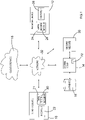
- Figure 1 shows the overall architecture of a secure email system in an embodiment of the invention.
- the system comprises sender device 10, receiver device 12, system core 14, system database 16, sender repository (cloud storage) 18, and secure website 30.
- the sender device 10 may be any type of computing device capable of sending and receiving emails, such as a desktop computer, laptop, tablet device, handheld device or smartphone.
- the device includes a processor for executing computer code, memory, a display, and an input device such as a keyboard, touch screen and/or mouse.
- the sender device 10 includes a secure email module 20 installed on the device.
- the secure email module 20 may be a plugin to an email application 21 such as Outlook (RTM) or Apple Mail (RTM), or a stand-alone application installed on the sender device 10, or any other suitable module in the form of program code.
- the sender device also includes a web browser 22 such as Internet Explorer (RTM), Firefox (RTM), Chrome (RTM) or Safari (RTM).
- the receiver device 12 may also be any type of computing device, such as a desktop computer, laptop, tablet device or smartphone.
- the receiver device 12 typically includes an email application 24 and a web browser 26. However, rather than having a separate email application, the receiver device may access a web-based email service using web browser 26.
- the receiver device 12 shown in Figure 1 also includes a secure email module 28, which may be installed as a plugin in the email application 24, or as a stand-alone application on the receiver device 12. However, as will be explained later, it is also possible for the receiver device 12 to receive secure emails without the secure email module 28 being installed. In this case the browser 26 is used to access the secure website 30 provided by the system administrator which performs the functions of the module 28.
- the system core 14 is operated by the administrator of the secure email system.
- the system core 14 may be in the form of a process running on a server which is remote from both the sender device 10 and the receiver device 12.
- the system core 14 interacts with system database 16 which stores profiles of users of the system.
- the database 16 may be any form of computer storage such as one or more hard drives and/or solid-state memory.
- the system administrator also provides secure website 30 which is linked to the system core 14.
- the system core 14 may also include a secure metric module 72, as will be described later.
- the sender repository may be may be any form of storage capable of being accessed by third parties.
- the sender repository may be cloud storage 18, such as Dropbox (RTM), Google Drive (RTM), OneDrive (RTM) or iCloud (RTM).
- a user of the system or an organisation with which they are associated may provide their own storage environment which is accessible by an external third party.
- the sender device 10, receiver device 12, system core 14, cloud storage 18 and secure website 30 are all connected via one or more networks 32 which is typically the Internet.
- the sender device uses web browser 22 to access the secure website 30 provided by the system administrator.
- the secure website 30 provided by the system administrator.
- an account is created for that user, and the user's profile is stored in the database 16.
- the user then downloads and installs the secure email module 20 on their device.
- the user may first download the secure email module, and then use the module to register, or the user may be pre-registered.
- the user also designates the cloud storage 18 which they wish to use for secure emails. The designated cloud storage is then linked to their account in the user profile stored in database 16.
- the secure email module 20 is provided as a plugin to the email application 21.
- the email application may be the user's usual or preferred email application, which can also be used to send conventional (unsecured) emails.
- the secure email module 20 may also be provided as a stand-alone application, in which case the secure email module itself may perform the functions of an email client.
- the secure email module 20 may be provided as a plugin to web browser 22 to enable the user to use a web based email service.
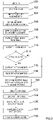
- FIG. 2 is a flowchart showing steps taken by the sender device 10 when the user wishes to send a secure email.
- the sender first signs into the secure email system. This step is performed by the secure email module 20 in conjunction with the system core 14. Then in step 102 the sender composes the email.
- the email typically includes a subject line containing the subject of the email, an email body contain the email content, and optionally one or more attachments.
- the secure email module 20 is provided as a plugin to the email application 21
- the email application 21 is used to compose the email.
- the secure email module is provided as a stand-alone application, the secure email module itself may be used to compose the email.
- step 104 the user initiates secure transmission of the email. This may be achieved, for example, by clicking on a "send" button which the secure email module displays on the user's screen.
- the secure transmission may be initiated in other ways, such as through key strokes on a keyboard or by touching the appropriate area of a touch screen.
- secure email module 20 prompts the user to input a challenge and response.
- the challenge and response may be based on knowledge which is shared between the sender and recipient, but which is not generally known or easily obtainable.
- the challenge and response are in the form of a security question and answer.
- a security question could be "where did we first meet?" or "who first introduced us?".
- the question and answer pair could be based on a password agreed between the parties in advance.
- alternative verification techniques such as a fingerprint reader or a hardware authentication device such as YubiKey (RTM) could be used instead.
- the secure email module 20 performs a hash function on the answer to produce a hash value ("answer hash").
- the hash function is preferably a "one way” or cryptographic hash function which is prohibitively difficult to invert.
- the hash function is performed using a hash key which is provided by the secure email module 20.
- step 110 the secure email module 20 extracts the email body from the rest of the email.
- step 112 the sender module 20 performs an encryption process on the email body to produce an encrypted email body.
- the encryption process preferably uses asymmetric key cryptography as a method to encrypt the email body / attachments in a manner conducive with only granting access to the intended recipient.
- step 114 the secure email module 20 checks to see whether the email has any attachments. If there are any attachments, then in step 116 the secure email module 20 extracts these from the email. In step 118 the sender module 20 performs an encryption process on each of the attachments to produce an encrypted attachment.
- the encryption process preferably uses asymmetric key cryptography, with a private key being used to encrypt the attachment. The encrypted attachment can then only be decrypted with the appropriate key.
- step 120 the secure email module 20 stores the encrypted email body and the encrypted attachments (if any) in the cloud storage 18.
- a cloud storage token is stored against their record in the system database 16.
- the secure email module 20 retrieves the token from their profile in the database 16 each time they send a secure email.
- the system database 16 may store the locations of the encrypted email body and any attachments. In this case the secure email module 20 retrieves these locations from the system database 16.
- step 122 the secure email module 20 stores information in an information file for the email which is to be sent.
- the information file includes the following information:
- step 124 the secure email module 20 encrypts the information file. This is preferably done using asymmetric key cryptography, with a private key being used to encrypt the information file. The information file can then only be decrypted by the appropriate key.
- step 126 the secure email module 20 stores the encrypted information file in the cloud storage 18.
- the location at which the encrypted information file is stored is held in the system database 16, against the sender's record.
- a handshake process takes place between the secure email module 20 and the system core 14.
- the secure email module 20 sends light touch information about the email to the system core.
- This light touch information includes the email addresses of the sender and recipient, the subject of the email (derived from the subject line), whether there are any attachments, and the time and date of the email.
- the secure email module 20 also sends the key for decrypting the information file, and the location of the information file in the cloud storage 18, to the system core 14. However the content of the email, the attachments (if any), and the information file itself are not sent to the system core.
- the system core 14 creates a record for the email, and generates a globally unique identifier (GUID) to identify the email and its record.
- GUID globally unique identifier
- the email record contains information about the email which has been sent by the sender device 10.
- the email record may include the following fields:
- the email record is stored in the system database 16, and can be accessed using the GUID.
- the GUID is also sent to and received by the secure email module 20 as part of the handshake process.
- step 130 the secure email module 20 generates a generic email which is to be sent to the recipient.
- This generic email includes the subject of the message, the GUID identifying the message, and a link to the secure website 30. However the generic email does not contain the email body or the attachments (if any).
- the generic email is then sent to the recipient by the sender device 10.
- the email application 21 is used to send the generic email to the recipient.
- the secure email module is provided as a stand-alone application, the secure email module itself may be used to send the generic email.
- Figure 3 illustrates the situation within the secure email system of Figure 1 once the steps of Figure 2 have been carried out.
- the user profile 50 and the email record 52 as described above are stored in the system database 16.
- the GUID 54 and the link 56 as described above are received and processed by the secure email module 20.
- the secure email module 20 also references secure key storage 58 which holds the encryption/decryption keys for the email body, the attachments (if any) and the information file, as well as the answer hash key.
- the encrypted email body 60 and the encrypted information file 62 are stored in the cloud storage 18.
- Encrypted attachments 64, 66 are also stored in the cloud storage 18.
- a generic email 70 containing the GUID 54 and the link 56 is sent from the sender device 10 to the receiver device 12.
- the arrangement described above can provide the advantage that the sender device can remain in control of the email and decide where it is stored. For example, the sender may if they wish store the email in their own networked storage device. Privacy or security issues which may arise if the system core were to store the email are avoided, because the email is not sent to the system core. Furthermore, the system core 14 can be very light, since it does not need to store actual emails or their attachments. Thus the processing and storage requirements of the system core are relatively low, which can allow a relatively low cost and easily expandable system to be provided.
- system core 14 may store the encrypted information file in its own secure storage, such as database 16.
- Figure 4 shows steps carried out by the receiver device 12 in order to receive a secure email in an embodiment of the invention.
- step 202 the generic email sent by the sender device 10 is received by the receiver device 12 using the email application 24 (or where applicable the browser 26 accessing a web-based email service).
- the recipient receives the generic email they are able to see who the email is from and the subject of the email.
- the email also invites the recipient to follow the link in the email to access the content of the email.
- step 204 the browser 26 in the receiver device 12 is used to follow the link to the secure website 30.
- the secure email module 28 is already installed on the receiver device 12, then the secure email module 28 is used to follow the link.
- the secure email system is a closed system, and so it is necessary for the recipient to use either a secure email module 28 provided by the system administrator, or the secure website 30 controlled by the system administrator, in order to access the content of the email. It may also necessary for the recipient to sign in to the system before they can access the content, although this is configurable.
- the recipient If the recipient has not previously used the system, then they are first invited to register. Alternatively, depending on the settings of the sender, it may be possible for the recipient to be pre-registered.
- an account is created for that user by the system core 14, and the user's profile is stored in the system database 16.
- the recipient may also download and install secure email module 28. However it is also possible for the recipient to access the email without downloading this module. This is achieved by using the browser 26 to access the secure website 30 provided by the system administrator.
- step 206 the recipient signs in to the secure email system using either the secure module 28 or the browser 26.
- the secure module 28 or the secure website 30 being accessed by the browser 26
- the system core 14 uses the GUID to retrieve the record corresponding to the email from the database 16.
- the system core then retrieves the location of the corresponding information file 62 in the cloud storage, and the decryption key for that information file, from the record.
- the location of the information file and the decryption key are then sent to the secure email module 28 (or the secure website 30 being accessed by the browser).
- step 210 the secure module 28 (or secure website 30) receives the location of the information file and the decryption key from the system core 14.
- step 212 the secure module 28 (or secure website 30) uses the location of the information file to locate and download the information file 62 from the cloud storage 18.
- the secure module 28 receives the information file directly from the system core.
- step 214 the secure module 28 (or secure website 30) decrypts the information file using the decryption key.
- step 216 the secure module 28 (or secure website 30) displays the security question on the receiver device 12, and receives the answer supplied by the recipient.
- step 218 the secure module 28 (or secure website 30) performs a hash function on the answer supplied by the recipient, using the hash key contained in the information file.
- the hash function is the same as that performed by the sender module 20 to produce the answer hash stored in the information file.
- step 220 the secure module 28 (or secure website 30) compares the hash of the answer supplied by the recipient with the answer hash stored in the information file. If the two hashes do not match, then in step 222 a message is sent to the system core 14 indicating that the fact that an incorrect answer has been provided. The system core 14 then updates a field in the record stored in the database 16 to show that an incorrect answer has been supplied. The system core may also send a message to the sender device 10 indicating the fact that an incorrect answer has been supplied.
- step 224 the secure module 28 (or secure website 30) determines whether the number of times N that an incorrect answer has been supplied, is greater than a threshold T.
- T is configurable and may be any natural number including zero. If the number of times an incorrect answer has been supplied does not exceed the threshold, then the fact that the answer was incorrect is indicated to the recipient, and processing returns to step 216. However if the number of times an incorrect answer has been supplied does exceed the threshold, then in step 226 the secure module 28 (or secure website 30) blocks access to the email for that recipient. In step 227 a message is sent to the system core indicating that the sender has been blocked. The system core then updates the email record 52 to indicate that the recipient has been blocked.
- step 220 If on the other hand in step 220 it is determined that the two hashes match, then it is deemed that the recipient is the intended recipient of the email. Then in step 228 the decryption key for the body file and the location of the body file within the cloud storage 18 are released from the information file.
- step 230 the secure module 28 (or secure website 30) downloads the encrypted body file from the cloud storage 18 using the location released from the information file.
- step 232 the secure module 28 (or secure website 30) decrypts the body file using the decryption key released from the information file.
- step 234 the body of the email is displayed to the recipient using the email application 24 or the web browser 26.
- step 236 the secure module 28 (or secure website 30) processes any attachments as described below with reference to Figure 5 .
- step 238 the secure module 28 (or secure website 30) performs a handshake process with the system core 14.
- the secure module 28 (or secure website 30) informs the system core 14 that the recipient has answered the security question, and that the location of the body file and the body file key have been released to the recipient. The time and date at which this happened are also transmitted to the system core.
- the system core 14 updates the email record 52 stored in the system database 16, in order to keep a log of who has accessed the email and when.
- the system core 14 may also indicate to the sender device 10 that the email has been accessed. This allows the sender to keep track of who has received the email and when.
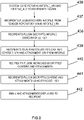
- Figure 5 illustrates steps taken by the receiver device 12 when processing an attachment.
- the steps of Figure 5 correspond to the attachment processing step 236 of Figure 4 .
- the secure module 28 determines whether there are any attachments from the information contained in the information file. If there are any attachments, then in step 244 the location of each attachment within the cloud storage 18, and the decryption key for each attachment, are released from the information file.
- the attachments are indicated to the recipient, for example by displaying an icon representing each attachment. When the recipient tries to open an attachment, for example by clicking on an attachment icon, then in step 248 secure module 28 (or secure website 30) downloads the attachment from the cloud storage 18 using the location released from the information file.
- the secure module 28 or secure website 30
- the attachment is released to the recipient.
- the secure email module 28 may also be operable to send a secure email, in the way described above with reference to Figures 2 and 3 .
- the secure email module 20 may also be operable to receive an email in the way described above with reference to Figures 4 and 5 .
- each of the devices 10, 12 may be operable to send and receive secure emails.
- the secure email module 28 is operable to perform the same or similar functions as the secure email module 20 (although it may operate on a different type of device).
- An advantage of the system described above is that the sender device can remain in control of the email, since the email is held in encrypted form in a storage location designated by the sender. If the sender wishes to revoke the email, the secure module 20 sends a message to the system core 14 indicating that the email is to be revoked. The system core 14 then updates a revoked flag in the email record 52 stored in the database 16 to indicate that the email has been revoked. If the email is indicated as being revoked, the system core will prevent release of the location of the information file or any decryption keys to the receiver device. Without this information it is not possible for the recipient to access the email body or the attachments.
- Figure 6 illustrates steps carried out by the system core 14 during the transmission of a secure email.
- step 302 the core system signs in the sender of the email to the secure email system.
- step 304 the system core 14 receives light touch information about the email which is to be sent as part of a handshake process.
- This light touch information includes:
- step 306 the system core 14 generates a globally unique identifier (GUID) to identify the email.
- GUID globally unique identifier
- step 308 the system core 14 creates a record for the email.
- the email record contains the following fields:
- step 310 the system core 14 stores the email record 52 in the system database 16 such that it can be accessed by the system core using the GUID.
- step 312 the system core 14 sends the GUID to the secure email module 20 as part of the handshake process.
- step 314 the system core 14 signs in the recipient to the secure email system.
- step 316 the system core 14 receives the GUID (obtained from the generic email) from the receiver device 12.
- step 318 the system core 14 uses the GUID to retrieve the email record 52 corresponding to the email from the database 16.
- step 320 the system core checks the revoked flag in the email record 52 to see whether the email has been revoked by the sender. If the email has not been revoked, then in step 322 the system core 14 checks whether access to the email by the recipient is blocked. If the email has been revoked or the recipient is blocked, then in step 324 the system core restricts access to the location of the information file and any associated decryption key for the information file to suppress access to the email on the part of the recipient. In step 326 the system core 14 sends a message to the sender device indicating that an attempt has been made to access the email but the email is revoked or the sender is blocked.
- step 328 the system core 14 retrieves the location of the information file, and the associated decryption key for that information file, from the email record 52.
- step 330 the system core 14 sends the location of the information file and the decryption key to the secure email module 28 (or the secure website 30 being accessed by the browser).
- step 332 the system core 14 receives a message from the secure module 28 (or secure website 30) indicating that the recipient has answered the security question, that the location of the body file and the body file key have been released to the recipient, and the time and date at which this happened.
- step 334 the system core 14 then updates the email record stored in the system database 16, in order to keep a log of who has accessed the email and when.
- step 338 the system core 14 sends a message to the sender device 10 indicating that the email has been accessed, and the time and date at which this happened.
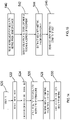
- FIG. 7 is a flowchart illustrating send tasks which are carried out in one embodiment of the invention.
- the sender uses a secure email module which is provided as a plugin to an email application.
- step 401 the sender composes a message using the email application, adds attachments as required and presses SEND.
- the sender composes challenge question and answer pair and presses OK.
- step 403 the plugin generates a hash key for the answer, ANSWERHASH_KEY.
- step 404 the plugin generates an encryption key for the information file, INFOFILE_KEY.
- step 405 the plugin generates an encryption key for the email payload, PAYLOAD_KEY.
- step 406 creates an information file, INFOFILE.
- step 407 the plugin stores the sender's question in INFOFILE. Depending on the implementation, the question may or may not be encrypted.
- step 408 the plugin hashes the sender's answer using ANSWERHASH_KEY and a hashing algorithm such as SHA512 to yield HASHED_ANSWER and stores HASHED_ANSWER in INFOFILE.
- step 409 the plugin stores ANSWERHASH_KEY in INFOFILE.
- step 410 the plugin stores PAYLOAD_KEY in INFOFILE.
- step 411 the plugin creates a record RECORD on the system core indexed by a GUID and stores light touch information such as subject, to and from email addresses and attachment status (Y/N) in the record.
- the plugin encrypts the email content using an encryption algorithm such as AES256 and PAYLOAD_KEY and stores the encrypted content in the sender repository (e.g. cloud storage).
- the plugin encrypts the email attachments using an encryption algorithm such as AES256 and PAYLOAD_KEY and stores each encrypted attachment separately in the sender repository.
- the plugin stores the Uniform Resource Identifier (URI) of the content, CONTENT_URI, and those of any attachments, ATTACHMENT_URI (may be multiple instances) in INFOFILE.
- the plugin encrypts INFOFILE using an encryption algorithm and INFOFILE_KEY, and stores the encrypted INFOFILE in the sender repository.
- the plugin stores the URI of the information file, INFOFILE_URI and INFOFILE_KEY on the system core against the database record indexed by the GUID.
- Figures 8 and 9 are flowcharts illustrating the receive tasks which are carried out in an embodiment of the invention.
- the recipient uses a secure email module which is provided as a plugin to an email application.
- the system core rather than the secure email module is used to determine whether or not a correct answer has been supplied.
- step 421 the recipient logs in to the system.
- step 422 the recipient clicks to open a secure email message.
- the recipient's plugin requests the sender question from the system core, passing in the GUID reference to identify the specific email.
- the system core retrieves the specific database record referenced by the GUID and recovers INFOFILE_URI and INFOFILE_KEY.
- step 425 the system core retrieves the INFOFILE, decrypts it using a decryption algorithm (for example, AES256) and the INFOFILE_KEY.
- step 426 the system core recovers the sender question from the INFOFILE and returns the sender question to the recipient's plugin.
- step 427 the recipient's plugin displays the sender question to the recipient.
- the send tasks and receive tasks in this embodiment correspond generally to those described above with reference to Figures 2 and 4-6 .
- the system core 14 rather than the secure email module is used to determine whether or not a correct answer has been supplied.
- step 429 the recipient's plugin sends the recipient's answer to system core, referenced by the GUID identifying the specific email.
- the system core retrieves the specific database record referenced by the GUID and recovers INFOFILE_URI and the INFOFILE_KEY.
- the system core retrieves the INFOFILE and decrypts it using the INFOFILE_KEY.
- the system core recovers the sender's HASHED_ANSWER and the ANSWERHASH_KEY from the INFOFILE.
- step 433 the system core computes a TEMPHASH_ANSWER by hashing the answer sent to it by the recipient's plugin (in step 429) using ANSWERHASH_KEY.
- step 434 the system core compares TEMPHASH_ANSWER to HASHED_ANSWER. If the comparison fails, in step 435 the system core alerts the recipient's plugin that access to the email is denied. If on the other hand the comparison passes then processing proceeds to step 436 in Figure 9 .
- step 436 the system core returns the INFOFILE_URI and the INFOFILE_KEY to the recipient's plugin.
- step 437 the recipient's plugin recovers the encrypted INFOFILE from the sender repository using the INFOFILE_URI.
- step 438 the recipient's plugin decrypts the INFOFILE using the INFOFILE_KEY.
- step 439 the recipient's plugin recovers the PAYLOAD_KEY, CONTENT_URI and ATTACHMENT_URI (may be multiple) from the INFOFILE.
- step 440 retrieves the encrypted CONTENT and ATTACHMENT(S).
- step 441 the recipient's plugin decrypts the CONTENT and ATTACHMENT(S) using PAYLOAD_KEY.
- step 442 the email and any attachments are displayed to the recipient using the recipient's email application.
- the sender's plugin and the recipient's plugin may jointly establish INFOFILE_KEY using a key exchange technique such as the Diffie-Hellman Key Exchange.
- a key exchange technique such as the Diffie-Hellman Key Exchange.
- This can allow the INFOFILE_KEY to be established without being known to third parties, or to the system core.
- This embodiment can avoid the need to store the INFOFILE_KEY for multiple users at the system core.
- the system core is used to coordinate activities between the sender and the receiver, but without storing keys which could potentially be used to access confidential information.
- Figure 10 illustrates schematically the elements held and the processes performed by the various components of the secure email system during participation in the secure email process.
- the secure email system described above can enable consumer and corporate users to encrypt and send email securely whilst simultaneously verifying the target recipient's identity; only when the recipient's identity has been verified to a degree of certainty determined by the sender are the secure email content and attachments released for viewing on behalf of the sender.
- the system may also provide client side "adapters" (executable applications that seamlessly integrate with existing email systems, such as secure email modules 20, 28 illustrated in Figure 1 ) to allow users to perform the described functions.
- the secure email system is further adapted to allow third parties to make inferences about the trustworthiness of the user, without necessarily having been party to email exchanges with the user.
- the system core 14 is arranged to keep a record of a user's participation in the secure email system, and to associate a value with that participation. This value can be used by third parties to assess the degree to which a user has been authenticated which may provide, amongst other things, an indication of the trustworthiness of a user. If desired, certain actions may be taken (or not taken) in dependence on this value.
- Figure 11(A) illustrates a user A enrolling as a user of the system.
- the user A provides the following registration parameters:
- the secure email system then creates a user profile 50 for the user which is stored in the database 16 (see Figure 3 ).
- the user profile contains the registration parameters, along with other information concerning that particular user.
- a unique identifier is used to identify the user and their user profile.
- the secure email system associates a base value with the user.
- the base value is a metric which reflects the nature of the user; for example, whether the user is an individual, an enterprise, a bank, a government department, and so forth. This value is stored or associated with the user profile 50 in the database 16.
- User A then downloads and installs an adapter 20 on their device.
- they wish to send an email they compose email content on their device (appending attachments as required) and define the email address applicable to their intended recipient(s).
- Figure 11(B) illustrates the user A communicating securely with a user Y.
- User A elects to send the email communication securely, invoking the adapter 20 via a button hosted within their existing email client.
- User A's adapter 20 prompts user A (the sender) to define identity challenge parameters to verify user Y's (the recipient's) identity.
- User A defines these parameters with a view to establishing the recipient's identity to a degree of certainty that they, as the sender, are comfortable with. In its simplest form, this may be a question and answer pair.
- the adapter 20 being integrated with user A's systems, is able to send a secure email to user Y at the specified email address, this emanating directly from the sender's email address.
- user Y On receipt of the secure email, user Y registers to become a member of the secure email system (providing the "cornerstone" registration details listed above). User Y is then prompted to meet user A's challenge, either by way of an adapter 28 (if installed by the recipient), or via a web browser.
- the system core 14 knows the following information about both user A and user Y:
- the system core 14 may now make the following assertions:
- Figure 11(C) illustrates users A, X, Y & Z now communicating using the secure email system.
- Each user may be considered as a node in a network.
- users A and Y are consumer nodes, while users X and Z are corporate or "enterprise" nodes.
- the secure email system enables organisations X and Z to host their encrypted email content and the associated challenge parameters within their own secure repositories.
- user Z is a bank which, given its procedures as associated with challenge parameters used to secure their customer's ID, is considered a "high value" node.
- User Z (the bank) is able to confirm user A's (the consumer) identity using exactly the same identity verification procedures already in use within their banking processes (e.g. telephone or Internet banking processes). This is because the secure email system allows the sender to host and retain full control of the challenge without exposing these parameters to anyone; not even the system core.
- the system core 14 In facilitating a secure email communication from user Z (the bank) to user A (the consumer), the system core 14 is able to assert that user A's identity has been satisfactorily verified by user Z (the bank) without being party to any of the details of the challenge parameters or indeed to the email content itself.
- a measure or metric may then be attributed to each user within the network with the value assigned to it dependent upon factors derived from a combination of the following non-limiting examples:
- This metric can be used by third parties to assess the degree of authentication of a user. If desired, certain actions may be taken (or not taken) in dependence on the value of this metric, for example, automatically selecting the level of security required in future communications.
- the sender device 10 uses the adapter (secure email module) 20 in order to encrypt the message content, any attachments and the associated ID challenge parameters and to deposit these message elements, along with associated referencing information, on their hosted cloud storage 18.
- An email including a unique reference GUID 54 and link 56 is dispatched by the sender device 10 to the recipient's email address.
- the recipient can only access the secure content by way of a validated answer to the sender's identity challenge. If the challenge is successfully met, the system core 14 makes available the decryption key and releases the location of the referenced email content and any attachments.
- the system core 14 then updates the email record 52 stored in the system database 16, in order to keep a log of who has accessed the email and when.
- the user profile 50 is also updated, in order to record the fact that the sender and receiver have successfully communicated, together with a time stamp indicating when the communication took place.
- the security metric module 72 then derives the variables noted above and combines them algorithmically to yield a security metric.
- the security metric is then associated with the user's identity, in the user profile 50. Each user's security metric is recalculated on an ongoing basis as secure messages are exchanged.
- system core 14 is aware that an ID verification process has taken place and the outcome of that verification process (success or failure) it is not a party to any of the following:
- FIG 12 illustrates steps carried out by the security metric module 72 in calculating the security metric.
- the module 72 derives the base value of the node from the user profile 50 stored in the database 16.
- the module 72 derives the number of nodes with which the user has communicated, together with the identities of those nodes. This is done by querying the user profile 50.
- a reflected value may be an incremental value attributed to a user's base value, as derived from weighted base values of its connected nodes.
- the security metric module 72 queries the user profiles of the nodes with which the user has successfully communicated, and obtains the base values of those nodes, as well as information concerning their connected nodes. The reflected value may then be calculated based on this information.
- a cumulative value of the nodes with which the user has communicated as confirmed identity parties is calculated. This is done by combining the relevant reflected values.
- step 510 the frequency of communication between the user and its connected nodes is calculated from the records stored in the user profile 50.
- step 512 it is determined, from the records stored in the user profile 50, how recently the user has communicated securely.
- a security metric is calculated by combining the values obtained in steps 502 through 512. For example, each of the values described above could be combined through addition and/or multiplication, in each case with an appropriate weighting factor.
- the security metric is stored as part of the user profile 50 in the database 16.
- the security metric is made available to external third parties as a measure of an individual's identity and credibility, these being inferred by their connection and communication with other third parties. Whether consumer or enterprise, these connections act as a gauge of the integrity of an individual's identity, connecting their online and offline personas: a form of "crowd authentication".
- the calculation of the security metric uses widely accepted mathematical models and analysis of networks, whereby the users, be they consumers or corporates, are represented by nodes in the network or graph. Communications between users are represented graphically by lines connecting them called edges.
- this network is represented using an adjacency matrix, which in this case may be represented by a n x n asymmetric matrix, where n is the number of nodes in the network.
- the adjacency matrix has elements A ij which have a non-zero value if there is an edge, or communication between nodes i and j and a zero value if there is no edge.
- the adjacency matrix might be asymmetric as it might represent a directed network, that is, one where the network will record not only the fact that a communication has been made between users, but also the direction of that communication.
- the network edges are weighted to take into consideration the factors described above such as base value, security challenge settings, frequency of communications.
- a centrality measure For the analysis of the network data to establish the 'trustworthiness' of a node, we use a centrality measure to take into consideration the number and quality of connections a node may have. Given the weighting associated with the edges an eigenvector centrality function might be appropriate. This helps to reflect that communications with established trustworthy individuals or institutions are valued more highly than communications with unverified individuals. In the case of an asymmetric adjacency matrix the calculation may be adjusted to use alpha centrality rather than eigenvector centrality.
- the output of the security metric module may also be in the form of a multi-bit (for example, 32-bit) record associated with the user or node profile.
- a multi-bit record maintains qualitative information affecting the security metric in addition to the score itself without revealing the detail of the communications made.
- This multi-bit record may be organised in such a way as to contain information such as information about the connection count, split between individuals and institutions, direction of conversations, challenge levels sets, currency of communications, frequency of communications, and/or whether a user has a paid for account, and as a result has been further verified by way of bank details.
- An example of such a multi-bit record is illustrated in Figure 13 .
- a sender Given a security metric value and/or multi-bit record for their target recipient, a sender might choose to vary their ID process at the point of authoring and sending a secure communication.
- an individual consumer may receive a secure communication from their bank, which has a high security metric.
- the secure email system allows the bank to verify the recipient's ID using their existing verification parameters without sharing them externally (even with the secure email system). This effectively raises the value of the security metric of the consumer recipient.
- the security metric can be interrogated/interpreted by a third party without contravening the anonymity of the contributing verification factors and parties.
- an adaptor (secure email module) 20 in a sender device 10 is arranged to perform, or not to perform, certain actions in dependence on the value of the security metric of the party with which the sender is to communicate.
- the adaptor may set a level of ID validation that is required before the recipient can access the electronic message. For example, the adaptor could require that a challenge/response is used if the value of the security metric is below a threshold, but not require a challenge/response if the value of the security metric is above the threshold.
- the adaptor may also set the number of challenges that are required, out of a plurality of possible challenges. Thus the adaptor may automatically set the number and/or nature of challenges that are required, based on the value of the security metric.
- the adaptor could require the value of the security metric to be above a threshold before a secure email is sent.
- the adaptor could set an encryption level of the email payload in dependence on the value of the security metric.
- a lower level encryption which is less secure but requires less processing, could be used if the security metric is relatively high, while a higher level encryption, which is more secure but requires more processing, could be used if the security metric is relatively low.
- the secure email module could use the security metric output of the secure metric module to present the user with a traffic light system as a rapid and simple indication of the crowd authentication status of the intended recipient.
- a traffic light system For example, the red light might signify that a recipient is not known to the sender and has not been crowd authenticated so a high challenge level must be used, whereas a green light might indicate the recipient has been crowd authenticated to a satisfactory level and a lower level of challenge setting may be applied. An amber light might indicate that an intermediate level of security is required.
- different quantization levels and other ways of presenting the information may be used instead.
- Figure 14 illustrates steps taken by a sender device 10 using the security metric described above in one embodiment.
- the sender signs in to the secure email system.
- the sender initiates a new email communication, for example, by clicking on a "new email" button.
- the sender enters the recipient's email address.
- the sender device sends a request for a security metric to the system core.
- the request for a security metric includes the email address of the sender and that of the recipient.
- the sender device receives the security metric corresponding to the recipient from the secure core.
- the sender device takes the appropriate action based on the security metric received from the secure core.
- the secure email module 20 in the sender device may set the security level of the email in dependence on the value of the security metric.
- the secure email module may require the sender to follow the secure email process illustrated in Figure 2 (step 102 onwards) in order to communicate with the recipient.
- the secure email module may allow the user to use a less secure form of communication, for example without a challenge and response.
- the secure email module 20 may chose the encryption key and/or encryption technique used to encrypt the email body and/or any attachments in dependence on the value of the security metric.
- the sender device may display a "traffic light" system or some other indication of the degree of authentication of the recipient, based on the value of the security metric.
- the sender device may require the user to confirm the type of communication to be used based on the security metric. Any of the above examples may be used alone or in combination with one or more of the others.
- Figure 15 illustrates steps taken by the system core 14 when receiving a request for a security metric.
- the system core receives a request for a security metric.
- the request includes the email address of the sender and that of the recipient.
- the system core queries the user profile 50 corresponding to the email address of the recipient.
- the system core extracts from the user profile the security metric associated with the recipient.
- the system core sends the security metric to the sender device.
- the secure email system's unique ability to utilise a sender's ID verification parameters without ever being party to them allows the system to benefit from the successful, or otherwise, usage of these ID parameters.
- the enterprise In the case of an enterprise (business) sending secure communications to its clients using its existing risk policies and ID verification parameters, the enterprise (sender) might be considered a high value node in a communications network. Whilst the enterprise to consumer relationship must remain confidential, its very existence may be reflected within the security metric, and interrogated by a third party as part of their own ID verification process.
- the system described above allows an assessment of the degree of authentication of a user to be made, while maintaining the anonymity of the email content and security challenge parameters. This may allow the system to maintain compliance with the appropriate data governance regulations.
- each of the sender device 10, receiver device 12 and system core 14 may include a processor, along with associated memory, with computer code arranged to carry out the appropriate methods described above.
Landscapes
- Engineering & Computer Science (AREA)
- Computer Security & Cryptography (AREA)
- Computer Networks & Wireless Communication (AREA)
- Signal Processing (AREA)
- Computer Hardware Design (AREA)
- Computing Systems (AREA)
- General Engineering & Computer Science (AREA)
- Information Transfer Between Computers (AREA)
Claims (15)
- Sicherer Systemkern (14) zur Verwendung beim Senden einer sicheren elektronischen Nachricht von einem Sendegerät (10) zu einem Empfangsgerät (12) in einem sicheren elektronischen Nachrichtensystem, wobei der sichere Systemkern (14) Folgendes umfasst:Mittel zum Empfangen von Informationen über eine elektronische Nachricht von dem Sendegerät (10);Mittel zum Erzeugen einer Kennung (54) der elektronischen Nachricht;Mittel zum Senden der Kennung (54) zum Sendegerät (10);Mittel zum Empfangen der Kennung (54) vom Empfangsgerät (12);Mittel zum Freigeben von Informationen an das Empfangsgerät (12), die das Abrufen eines verschlüsselten Elektronische-Nachricht-Texts (60) aus einer Speicherumgebung (18), auf die Dritte zugreifen können, nach Empfang der Kennung (54) vom Empfangsgerät (12) ermöglichen, wobei die an das Empfangsgerät (12) freigegebenen Informationen einen Speicherort einer verschlüsselten Informationsdatei (62) und einen Informationsdatei-Entschlüsselungsschlüssel umfassen;ein Speichermittel (16), das einen Datensatz der Teilnahme eines Benutzers an dem sicheren elektronischen Nachrichtensystem speichert;ein Sicherheitsmetrikmodul (72), das zum Ableiten einer mit dem Benutzer assoziierten Sicherheitsmetrik auf der Basis des Datensatzes der Teilnahme des Benutzers an dem sicheren elektronischen Nachrichtensystem ausgelegt ist;Mittel zum Empfangen einer Anforderung für eine Sicherheitsmetrik von einem Sendegerät (10), wobei die Anforderung eine Kennung eines Benutzers beinhaltet; undMittel zum Übermitteln einer mit der Kennung assoziierten Sicherheitsmetrik an das Sendegerät (10) als Reaktion auf die Anforderung.
- Sicherer Systemkern (14) nach Anspruch 1, wobei das Sicherheitsmetrikmodul (72) ausgelegt ist zum Durchführen von mindestens einem von:Speichern der Sicherheitsmetrik in einem Benutzerprofil in dem Speichermittel (16); undAktualisieren eines Benutzerprofils, um eine erfolgreiche Kommunikation zwischen einem Sender und einem Empfänger aufzuzeichnen.
- Sicherer Systemkern (14) nach Anspruch 1 oder 2, wobei das Sicherheitsmetrikmodul (72) zum fortlaufenden Neuberechnen der Sicherheitsmetrik ausgelegt ist.
- Sicherer Systemkern (14) nach einem der vorherigen Ansprüche, wobei das Sicherheitsmetrikmodul (72) zum Übermitteln der Sicherheitsmetrik an einen anderen Benutzer ausgelegt ist.
- Sicherer Systemkern (14) nach einem der vorherigen Ansprüche, wobei der sichere Systemkern (14) Folgendes umfasst:
Mittel zum Extrahieren der mit der Kennung assoziierten Sicherheitsmetrik aus dem Speichermittel (16), wobei die Kennung vorzugsweise eine Kennung eines Empfängers einer elektronischen Nachricht ist. - Sicherer Systemkern (14) nach einem der vorherigen Ansprüche, der ferner Mittel zum Erzeugen und Speichern eines Datensatzes (52) mit Informationen über die elektronische Nachricht umfasst.
- Sicherer Systemkern (14) nach einem der vorherigen Ansprüche, wobei der Systemkern (14) ferner Folgendes umfasst:Mittel zum Empfangen einer Antwort eines Benutzers vom Empfangsgerät (12);Mittel zum Extrahieren eines Antwort-Hash und eines Hash-Schlüssels aus der Informationsdatei;Mittel zum Vergleichen des Hash der Antwort des Benutzers mit dem aus der Informationsdatei extrahierten Antwort-Hash, um festzustellen, ob die Antwort des Benutzers mit einer vom Sender gelieferten Antwort übereinstimmt; undMittel zum Senden einer Anzeige zum Empfangsgerät (12), ob die Antwort des Benutzers mit der vom Sender gelieferten Antwort übereinstimmt.
- Sicherer Systemkern (14) nach einem der vorherigen Ansprüche, wobei das Sicherheitsmetrikmodul (72) zum Ableiten der Sicherheitsmetrik anhand eines Zentralitätsmaßes ausgelegt ist, um die Anzahl und Qualität von Verbindungen, die ein Knoten haben kann, zu berücksichtigen.
- Sicherer Systemkern (14) nach einem der vorherigen Ansprüche, wobei das Sicherheitsmetrikmodul (72) ausgelegt ist zum Ableiten der Sicherheitsmetrik auf der Basis von mindestens einem von:(a) einem Basiswert des Benutzers als Knoten;(b) einem reflektierten Wert von Knoten, mit denen der Benutzer nach einer erfolgreichen ID-Verifizierung verbunden ist;(c) der Anzahl von Knoten und deren kumuliertem Wert als bestätigte Identitätsparteien;(d) der Häufigkeit von Kommunikationen zwischen dem Benutzer und den mit ihm verbundenen Knoten;(e) der Zeit seit der letzten sicheren Kommunikation des Benutzers, und(f) der Natur von Knoten, mit denen der Benutzer nach einer erfolgreichen ID-Verifizierung verbunden ist.
- Sicherer Systemkern (14) nach einem der vorherigen Ansprüche, wobei das Sicherheitsmetrikmodul (72) zum Bereitstellen eines Multi-Bit-Datensatzes ausgelegt ist, der mehrere Parameter enthält, die zu der Sicherheitsmetrik beitragen.
- Sicheres elektronisches Nachrichtenmodul (20) zur Verwendung beim Senden einer elektronischen Nachricht von einem Sendegerät (10) zu einem Empfangsgerät (12), wobei das Modul zum Speichern einer verschlüsselten Elektronische-Nachrichten-Nutzlast in einer Datenspeicherumgebung (18), auf die Dritte zugreifen können, und zum Speichern von Informationen ausgelegt ist, die das Abrufen der verschlüsselten Elektronische-Nachrichten-Nutzlast in einem sicheren Systemkern (14) ermöglichen, wobei das Modul (20) Folgendes umfasst:Mittel zum Extrahieren einer Elektronische-Nachrichten-Nutzlast aus der elektronischen Nachricht;Mittel zum Verschlüsseln der Elektronische-Nachrichten-Nutzlast, wobei die verschlüsselte Elektronische-Nachrichten-Nutzlast mittels eines Elektronische-Nachrichten-Entschlüsselungsschlüssels entschlüsselbar ist;Mittel zum Speichern der verschlüsselten Elektronische-Nachrichten-Nutzlast in der Speicherumgebung (18), auf die Dritte zugreifen können, wobei die zu verwendende Speicherumgebung (18) durch den Sender konfigurierbar ist;Mittel zum Empfangen einer Abfrage und einer Antwort vom Sender;Mittel zum Anwenden einer Hash-Funktion auf die Antwort mit einem Hash-Schlüssel, um einen Antwort-Hash zu erhalten;Mittel zum Speichern der Abfrage, des Antwort-Hash, des Hash-Schlüssels, des Elektronische-Nachricht-Entschlüsselungsschlüssels und des Speicherorts der verschlüsselten Elektronische-Nachrichten-Nutzlast in einer Informationsdatei;Mittel zum Verschlüsseln der Informationsdatei, wobei die Informationsdatei mittels eines Informationsdatei-Entschlüsselungsschlüssels entschlüsselbar ist;Mittel zum Speichern der verschlüsselten Informationsdatei (62) in einer Speicherumgebung (18), von der aus das Empfangsgerät (12) und/oder der sichere Systemkern (14) auf sie zugreifen kann/können;Mittel zum Senden von Informationen über die elektronische Nachricht zum Systemkern (14);Mittel zum Empfangen einer Kennung (54) der elektronischen Nachricht vom Systemkern (14);Mittel zum Senden einer generischen elektronischen Nachricht zum Empfänger, wobei die generische E-Mail einen Link zum Systemkern (14) und die Kennung (54) der elektronischen Nachricht enthält;Mittel zum Senden einer Anforderung für eine Sicherheitsmetrik zu dem sicheren Systemkern (14), wobei die Anforderung eine Kennung eines Benutzers des Systems beinhaltet;Mittel zum Empfangen einer Sicherheitsmetrik als Antwort auf die Anforderung; undMittel zum Zuordnen einer Sicherheitsstufe zu einer Kommunikation mit dem Benutzer auf der Basis der empfangenen Sicherheitsmetrik.
- Modul nach Anspruch 11, wobei das Modul ausgelegt ist zum Durchführen von mindestens einem von:Erzwingen einer sicheren Kommunikation auf der Basis der empfangenen Sicherheitsmetrik,Anzeigen einer Sicherheitsstufe für einen Benutzer des Moduls, undEinstellen einer Sicherheitsstufe, die mit einer an den Benutzer zu übermittelnden elektronischen Nachricht verwendet wird, auf der Basis der empfangenen Sicherheitsmetrik.
- Sicheres elektronisches Nachrichtensystem, das einen sicheren Systemkern (14) nach einem der Ansprüche 1-10 und ein Modul nach Anspruch 11 oder 12 umfasst.
- Verfahren zur Anwendung in einem sicheren elektronischen Nachrichtensystem, wobei das Verfahren von einem sicheren Systemkern (14) ausgeführt wird und Folgendes beinhaltet:Empfangen von Informationen über eine elektronische Nachricht vom Sendegerät (10);Erzeugen einer Kennung (54) der elektronischen Nachricht;Senden der Kennung (54) zum Sendegerät (10);Empfangen der Kennung (54) vom Empfangsgerät (12);Freigeben von Informationen an das Empfangsgerät (12), die das Abrufen eines verschlüsselten Elektronische-Nachricht-Texts (60) aus einer Speicherumgebung (18) ermöglichen, auf die Dritte zugreifen können, nach Empfang der Kennung (54) vom Empfangsgerät (12), wobei die an das Empfangsgerät (12) freigegebenen Informationen einen Speicherort einer verschlüsselten Informationsdatei (62) und einen Informationsdatei-Entschlüsselungsschlüssel umfassen;Speichern eines Datensatzes der Teilnahme eines Benutzers an dem sicheren elektronischen Nachrichtensystem;Ableiten einer mit dem Benutzer assoziierten Sicherheitsmetrik auf der Basis des Datensatzes der Teilnahme des Benutzers an dem sicheren elektronischen Nachrichtensystem;Empfangen einer Anforderung für eine Sicherheitsmetrik von einem Sendegerät (10), wobei die Anforderung eine Kennung eines Benutzers beinhaltet; undÜbermitteln einer mit der Kennung assoziierten Sicherheitsmetrik an das Sendegerät (10) als Reaktion auf die Anforderung.
- Computerprogramm oder Computerprogrammprodukt, das Programmcode umfasst, der bei Ausführung auf einem Verarbeitungsgerät bewirkt, dass das Verarbeitungsgerät einen sicheren Systemkern (14) nach einem der Ansprüche 1-10 oder ein Modul nach Anspruch 11 oder 12 oder ein System nach Anspruch 13 bereitstellt oder ein Verfahren nach Anspruch 14 ausführt.
Applications Claiming Priority (3)
| Application Number | Priority Date | Filing Date | Title |
|---|---|---|---|
| GBGB1611924.0A GB201611924D0 (en) | 2016-07-08 | 2016-07-08 | System for secure email transmission |
| GBGB1621476.9A GB201621476D0 (en) | 2016-07-08 | 2016-12-16 | System for secure email transmission |
| PCT/GB2017/052009 WO2018007832A1 (en) | 2016-07-08 | 2017-07-07 | System for secure electronic message transmission |
Publications (2)
| Publication Number | Publication Date |
|---|---|
| EP3482546A1 EP3482546A1 (de) | 2019-05-15 |
| EP3482546B1 true EP3482546B1 (de) | 2022-09-07 |
Family
ID=56890759
Family Applications (1)
| Application Number | Title | Priority Date | Filing Date |
|---|---|---|---|
| EP17739674.4A Active EP3482546B1 (de) | 2016-07-08 | 2017-07-07 | System zur sicheren elektronischen nachrichtenübertragung |
Country Status (3)
| Country | Link |
|---|---|
| EP (1) | EP3482546B1 (de) |
| GB (3) | GB201611924D0 (de) |
| WO (1) | WO2018007832A1 (de) |
Family Cites Families (2)
| Publication number | Priority date | Publication date | Assignee | Title |
|---|---|---|---|---|
| WO2004107700A1 (en) * | 2003-05-30 | 2004-12-09 | Privasphere Gmbh | System and method for secure communication |
| US7979703B2 (en) * | 2005-10-19 | 2011-07-12 | Microsoft Corporation | Determining the reputation of a sender of communications |
-
2016
- 2016-07-08 GB GBGB1611924.0A patent/GB201611924D0/en not_active Ceased
- 2016-12-16 GB GBGB1621476.9A patent/GB201621476D0/en not_active Ceased
-
2017
- 2017-07-07 GB GBGB1710988.5A patent/GB201710988D0/en not_active Ceased
- 2017-07-07 WO PCT/GB2017/052009 patent/WO2018007832A1/en not_active Ceased
- 2017-07-07 EP EP17739674.4A patent/EP3482546B1/de active Active
Also Published As
| Publication number | Publication date |
|---|---|
| GB201621476D0 (en) | 2017-02-01 |
| GB201710988D0 (en) | 2017-08-23 |
| WO2018007832A1 (en) | 2018-01-11 |
| EP3482546A1 (de) | 2019-05-15 |
| GB201611924D0 (en) | 2016-08-24 |
Similar Documents
| Publication | Publication Date | Title |
|---|---|---|
| Abid et al. | NovidChain: Blockchain‐based privacy‐preserving platform for COVID‐19 test/vaccine certificates | |
| US10944563B2 (en) | Blockchain systems and methods for user authentication | |
| US11184157B1 (en) | Cryptographic key generation and deployment | |
| US7624421B2 (en) | Method and apparatus for managing and displaying contact authentication in a peer-to-peer collaboration system | |
| KR102799781B1 (ko) | 안전한 정보 교환과 계층 구조적이고 결정론적인 암호키를 위한 공통 비밀 결정 | |
| US7711120B2 (en) | Cryptographic key management | |
| US12141267B1 (en) | Recipient credentialing leveraging private keys on keystores read by provisioned devices | |
| US8984611B2 (en) | System, apparatus and method for securing electronic data independent of their location | |
| US11848754B1 (en) | Access delegation leveraging private keys on keystores read by provisioned devices | |
| US20140164769A1 (en) | Custodian securing a secret of a user | |
| US20200235925A1 (en) | Access to secured information | |
| US11416821B1 (en) | Apparatuses and methods for determining and processing dormant user data in a job resume immutable sequential listing | |
| Murray et al. | Cloud service security & application vulnerability | |
| US20250337602A1 (en) | Key derivation for account management | |
| Ahmad et al. | Protecting data in the cloud: a systematic literature review of key management | |
| US10892892B1 (en) | Method and apparatus for end-to-end secure sharing of information with multiple recipients without maintaining a key directory | |
| Sharma et al. | A two-tier security solution for storing data across public cloud | |
| US11367148B2 (en) | Distributed ledger based mass balancing via secret sharing | |
| US11374753B2 (en) | System and method for selective transparency for public ledgers | |
| Purushothama et al. | Secure cloud storage service and limited proxy re-encryption for enforcing access control in public cloud | |
| EP3482546A1 (de) | System zur sicheren elektronischen nachrichtenübertragung | |
| Brauer | Authentication and security aspects in an international multi-user network | |
| US20240421987A1 (en) | Systems, methods, and media for generating and using a multi-signature token for electronic communication validation | |
| Yan et al. | Financial Privacy Information Protection Scheme Based on Data Encryption Algorithm | |
| JP2025504037A (ja) | 電子メールのハイブリッドコンテンツ保護アーキテクチャ |
Legal Events
| Date | Code | Title | Description |
|---|---|---|---|
| STAA | Information on the status of an ep patent application or granted ep patent |
Free format text: STATUS: UNKNOWN |
|
| STAA | Information on the status of an ep patent application or granted ep patent |
Free format text: STATUS: THE INTERNATIONAL PUBLICATION HAS BEEN MADE |
|
| PUAI | Public reference made under article 153(3) epc to a published international application that has entered the european phase |
Free format text: ORIGINAL CODE: 0009012 |
|
| STAA | Information on the status of an ep patent application or granted ep patent |
Free format text: STATUS: REQUEST FOR EXAMINATION WAS MADE |
|
| 17P | Request for examination filed |
Effective date: 20190108 |
|
| AK | Designated contracting states |
Kind code of ref document: A1 Designated state(s): AL AT BE BG CH CY CZ DE DK EE ES FI FR GB GR HR HU IE IS IT LI LT LU LV MC MK MT NL NO PL PT RO RS SE SI SK SM TR |
|
| AX | Request for extension of the european patent |
Extension state: BA ME |
|
| DAV | Request for validation of the european patent (deleted) | ||
| DAX | Request for extension of the european patent (deleted) | ||
| STAA | Information on the status of an ep patent application or granted ep patent |
Free format text: STATUS: EXAMINATION IS IN PROGRESS |
|
| 17Q | First examination report despatched |
Effective date: 20210219 |
|
| RAP3 | Party data changed (applicant data changed or rights of an application transferred) |
Owner name: MAILOCK LIMITED |
|
| RIN1 | Information on inventor provided before grant (corrected) |
Inventor name: HOLLAND, PAUL |
|
| REG | Reference to a national code |
Ref country code: DE Ref legal event code: R079 Ref document number: 602017061508 Country of ref document: DE Free format text: PREVIOUS MAIN CLASS: H04L0029060000 Ipc: H04L0009400000 |
|
| GRAP | Despatch of communication of intention to grant a patent |
Free format text: ORIGINAL CODE: EPIDOSNIGR1 |
|
| STAA | Information on the status of an ep patent application or granted ep patent |
Free format text: STATUS: GRANT OF PATENT IS INTENDED |
|
| RIC1 | Information provided on ipc code assigned before grant |
Ipc: H04L 51/08 20220101ALI20220224BHEP Ipc: H04L 9/40 20220101AFI20220224BHEP |
|
| INTG | Intention to grant announced |
Effective date: 20220318 |
|
| GRAS | Grant fee paid |
Free format text: ORIGINAL CODE: EPIDOSNIGR3 |
|
| GRAA | (expected) grant |
Free format text: ORIGINAL CODE: 0009210 |
|
| STAA | Information on the status of an ep patent application or granted ep patent |
Free format text: STATUS: THE PATENT HAS BEEN GRANTED |
|
| AK | Designated contracting states |
Kind code of ref document: B1 Designated state(s): AL AT BE BG CH CY CZ DE DK EE ES FI FR GB GR HR HU IE IS IT LI LT LU LV MC MK MT NL NO PL PT RO RS SE SI SK SM TR |
|
| REG | Reference to a national code |
Ref country code: GB Ref legal event code: FG4D |
|
| REG | Reference to a national code |
Ref country code: CH Ref legal event code: EP Ref country code: AT Ref legal event code: REF Ref document number: 1517962 Country of ref document: AT Kind code of ref document: T Effective date: 20220915 |
|
| REG | Reference to a national code |
Ref country code: IE Ref legal event code: FG4D |
|
| REG | Reference to a national code |
Ref country code: DE Ref legal event code: R096 Ref document number: 602017061508 Country of ref document: DE |
|
| REG | Reference to a national code |
Ref country code: NL Ref legal event code: FP |
|
| REG | Reference to a national code |
Ref country code: LT Ref legal event code: MG9D |
|
| PG25 | Lapsed in a contracting state [announced via postgrant information from national office to epo] |
Ref country code: SE Free format text: LAPSE BECAUSE OF FAILURE TO SUBMIT A TRANSLATION OF THE DESCRIPTION OR TO PAY THE FEE WITHIN THE PRESCRIBED TIME-LIMIT Effective date: 20220907 Ref country code: RS Free format text: LAPSE BECAUSE OF FAILURE TO SUBMIT A TRANSLATION OF THE DESCRIPTION OR TO PAY THE FEE WITHIN THE PRESCRIBED TIME-LIMIT Effective date: 20220907 Ref country code: NO Free format text: LAPSE BECAUSE OF FAILURE TO SUBMIT A TRANSLATION OF THE DESCRIPTION OR TO PAY THE FEE WITHIN THE PRESCRIBED TIME-LIMIT Effective date: 20221207 Ref country code: LV Free format text: LAPSE BECAUSE OF FAILURE TO SUBMIT A TRANSLATION OF THE DESCRIPTION OR TO PAY THE FEE WITHIN THE PRESCRIBED TIME-LIMIT Effective date: 20220907 Ref country code: LT Free format text: LAPSE BECAUSE OF FAILURE TO SUBMIT A TRANSLATION OF THE DESCRIPTION OR TO PAY THE FEE WITHIN THE PRESCRIBED TIME-LIMIT Effective date: 20220907 Ref country code: FI Free format text: LAPSE BECAUSE OF FAILURE TO SUBMIT A TRANSLATION OF THE DESCRIPTION OR TO PAY THE FEE WITHIN THE PRESCRIBED TIME-LIMIT Effective date: 20220907 |
|
| REG | Reference to a national code |
Ref country code: AT Ref legal event code: MK05 Ref document number: 1517962 Country of ref document: AT Kind code of ref document: T Effective date: 20220907 |
|
| PG25 | Lapsed in a contracting state [announced via postgrant information from national office to epo] |
Ref country code: HR Free format text: LAPSE BECAUSE OF FAILURE TO SUBMIT A TRANSLATION OF THE DESCRIPTION OR TO PAY THE FEE WITHIN THE PRESCRIBED TIME-LIMIT Effective date: 20220907 Ref country code: GR Free format text: LAPSE BECAUSE OF FAILURE TO SUBMIT A TRANSLATION OF THE DESCRIPTION OR TO PAY THE FEE WITHIN THE PRESCRIBED TIME-LIMIT Effective date: 20221208 |
|
| PG25 | Lapsed in a contracting state [announced via postgrant information from national office to epo] |
Ref country code: SM Free format text: LAPSE BECAUSE OF FAILURE TO SUBMIT A TRANSLATION OF THE DESCRIPTION OR TO PAY THE FEE WITHIN THE PRESCRIBED TIME-LIMIT Effective date: 20220907 Ref country code: RO Free format text: LAPSE BECAUSE OF FAILURE TO SUBMIT A TRANSLATION OF THE DESCRIPTION OR TO PAY THE FEE WITHIN THE PRESCRIBED TIME-LIMIT Effective date: 20220907 Ref country code: PT Free format text: LAPSE BECAUSE OF FAILURE TO SUBMIT A TRANSLATION OF THE DESCRIPTION OR TO PAY THE FEE WITHIN THE PRESCRIBED TIME-LIMIT Effective date: 20230109 Ref country code: ES Free format text: LAPSE BECAUSE OF FAILURE TO SUBMIT A TRANSLATION OF THE DESCRIPTION OR TO PAY THE FEE WITHIN THE PRESCRIBED TIME-LIMIT Effective date: 20220907 Ref country code: CZ Free format text: LAPSE BECAUSE OF FAILURE TO SUBMIT A TRANSLATION OF THE DESCRIPTION OR TO PAY THE FEE WITHIN THE PRESCRIBED TIME-LIMIT Effective date: 20220907 Ref country code: AT Free format text: LAPSE BECAUSE OF FAILURE TO SUBMIT A TRANSLATION OF THE DESCRIPTION OR TO PAY THE FEE WITHIN THE PRESCRIBED TIME-LIMIT Effective date: 20220907 |
|
| PG25 | Lapsed in a contracting state [announced via postgrant information from national office to epo] |
Ref country code: SK Free format text: LAPSE BECAUSE OF FAILURE TO SUBMIT A TRANSLATION OF THE DESCRIPTION OR TO PAY THE FEE WITHIN THE PRESCRIBED TIME-LIMIT Effective date: 20220907 Ref country code: PL Free format text: LAPSE BECAUSE OF FAILURE TO SUBMIT A TRANSLATION OF THE DESCRIPTION OR TO PAY THE FEE WITHIN THE PRESCRIBED TIME-LIMIT Effective date: 20220907 Ref country code: IS Free format text: LAPSE BECAUSE OF FAILURE TO SUBMIT A TRANSLATION OF THE DESCRIPTION OR TO PAY THE FEE WITHIN THE PRESCRIBED TIME-LIMIT Effective date: 20230107 Ref country code: EE Free format text: LAPSE BECAUSE OF FAILURE TO SUBMIT A TRANSLATION OF THE DESCRIPTION OR TO PAY THE FEE WITHIN THE PRESCRIBED TIME-LIMIT Effective date: 20220907 |
|
| REG | Reference to a national code |
Ref country code: DE Ref legal event code: R097 Ref document number: 602017061508 Country of ref document: DE |
|
| PG25 | Lapsed in a contracting state [announced via postgrant information from national office to epo] |
Ref country code: AL Free format text: LAPSE BECAUSE OF FAILURE TO SUBMIT A TRANSLATION OF THE DESCRIPTION OR TO PAY THE FEE WITHIN THE PRESCRIBED TIME-LIMIT Effective date: 20220907 |
|
| PLBE | No opposition filed within time limit |
Free format text: ORIGINAL CODE: 0009261 |
|
| STAA | Information on the status of an ep patent application or granted ep patent |
Free format text: STATUS: NO OPPOSITION FILED WITHIN TIME LIMIT |
|
| PG25 | Lapsed in a contracting state [announced via postgrant information from national office to epo] |
Ref country code: DK Free format text: LAPSE BECAUSE OF FAILURE TO SUBMIT A TRANSLATION OF THE DESCRIPTION OR TO PAY THE FEE WITHIN THE PRESCRIBED TIME-LIMIT Effective date: 20220907 |
|
| 26N | No opposition filed |
Effective date: 20230608 |
|
| PG25 | Lapsed in a contracting state [announced via postgrant information from national office to epo] |
Ref country code: SI Free format text: LAPSE BECAUSE OF FAILURE TO SUBMIT A TRANSLATION OF THE DESCRIPTION OR TO PAY THE FEE WITHIN THE PRESCRIBED TIME-LIMIT Effective date: 20220907 |
|
| PG25 | Lapsed in a contracting state [announced via postgrant information from national office to epo] |
Ref country code: IT Free format text: LAPSE BECAUSE OF FAILURE TO SUBMIT A TRANSLATION OF THE DESCRIPTION OR TO PAY THE FEE WITHIN THE PRESCRIBED TIME-LIMIT Effective date: 20220907 |
|
| PG25 | Lapsed in a contracting state [announced via postgrant information from national office to epo] |
Ref country code: BG Free format text: LAPSE BECAUSE OF FAILURE TO SUBMIT A TRANSLATION OF THE DESCRIPTION OR TO PAY THE FEE WITHIN THE PRESCRIBED TIME-LIMIT Effective date: 20220907 |
|
| PG25 | Lapsed in a contracting state [announced via postgrant information from national office to epo] |
Ref country code: BG Free format text: LAPSE BECAUSE OF FAILURE TO SUBMIT A TRANSLATION OF THE DESCRIPTION OR TO PAY THE FEE WITHIN THE PRESCRIBED TIME-LIMIT Effective date: 20220907 |
|
| PG25 | Lapsed in a contracting state [announced via postgrant information from national office to epo] |
Ref country code: CY Free format text: LAPSE BECAUSE OF FAILURE TO SUBMIT A TRANSLATION OF THE DESCRIPTION OR TO PAY THE FEE WITHIN THE PRESCRIBED TIME-LIMIT; INVALID AB INITIO Effective date: 20170707 |
|
| PG25 | Lapsed in a contracting state [announced via postgrant information from national office to epo] |
Ref country code: HU Free format text: LAPSE BECAUSE OF FAILURE TO SUBMIT A TRANSLATION OF THE DESCRIPTION OR TO PAY THE FEE WITHIN THE PRESCRIBED TIME-LIMIT; INVALID AB INITIO Effective date: 20170707 |
|
| PGFP | Annual fee paid to national office [announced via postgrant information from national office to epo] |
Ref country code: NL Payment date: 20250708 Year of fee payment: 9 Ref country code: LU Payment date: 20250715 Year of fee payment: 9 |
|
| PGFP | Annual fee paid to national office [announced via postgrant information from national office to epo] |
Ref country code: DE Payment date: 20250708 Year of fee payment: 9 |
|
| PGFP | Annual fee paid to national office [announced via postgrant information from national office to epo] |
Ref country code: MC Payment date: 20250711 Year of fee payment: 9 |
|
| PGFP | Annual fee paid to national office [announced via postgrant information from national office to epo] |
Ref country code: BE Payment date: 20250708 Year of fee payment: 9 Ref country code: GB Payment date: 20250715 Year of fee payment: 9 |
|
| PGFP | Annual fee paid to national office [announced via postgrant information from national office to epo] |
Ref country code: FR Payment date: 20250715 Year of fee payment: 9 |
|
| PGFP | Annual fee paid to national office [announced via postgrant information from national office to epo] |
Ref country code: CH Payment date: 20250801 Year of fee payment: 9 |
|
| PGFP | Annual fee paid to national office [announced via postgrant information from national office to epo] |
Ref country code: IE Payment date: 20250708 Year of fee payment: 9 |
|
| PG25 | Lapsed in a contracting state [announced via postgrant information from national office to epo] |
Ref country code: TR Free format text: LAPSE BECAUSE OF FAILURE TO SUBMIT A TRANSLATION OF THE DESCRIPTION OR TO PAY THE FEE WITHIN THE PRESCRIBED TIME-LIMIT Effective date: 20220907 |
|
| REG | Reference to a national code |
Ref country code: CH Ref legal event code: U11 Free format text: ST27 STATUS EVENT CODE: U-0-0-U10-U11 (AS PROVIDED BY THE NATIONAL OFFICE) Effective date: 20260801 |