EP3482539B1 - Bandbreiten- und abr-video-qoe-verwaltung auf basis von ott-video-anbietern und vorrichtungen - Google Patents
Bandbreiten- und abr-video-qoe-verwaltung auf basis von ott-video-anbietern und vorrichtungen Download PDFInfo
- Publication number
- EP3482539B1 EP3482539B1 EP17745504.5A EP17745504A EP3482539B1 EP 3482539 B1 EP3482539 B1 EP 3482539B1 EP 17745504 A EP17745504 A EP 17745504A EP 3482539 B1 EP3482539 B1 EP 3482539B1
- Authority
- EP
- European Patent Office
- Prior art keywords
- client device
- traffic
- adaptive bitrate
- bandwidth
- abr
- Prior art date
- Legal status (The legal status is an assumption and is not a legal conclusion. Google has not performed a legal analysis and makes no representation as to the accuracy of the status listed.)
- Active
Links
Images







Classifications
-
- H—ELECTRICITY
- H04—ELECTRIC COMMUNICATION TECHNIQUE
- H04L—TRANSMISSION OF DIGITAL INFORMATION, e.g. TELEGRAPHIC COMMUNICATION
- H04L47/00—Traffic control in data switching networks
- H04L47/50—Queue scheduling
- H04L47/62—Queue scheduling characterised by scheduling criteria
- H04L47/629—Ensuring fair share of resources, e.g. weighted fair queuing [WFQ]
-
- H—ELECTRICITY
- H04—ELECTRIC COMMUNICATION TECHNIQUE
- H04N—PICTORIAL COMMUNICATION, e.g. TELEVISION
- H04N21/00—Selective content distribution, e.g. interactive television or video on demand [VOD]
- H04N21/20—Servers specifically adapted for the distribution of content, e.g. VOD servers; Operations thereof
- H04N21/25—Management operations performed by the server for facilitating the content distribution or administrating data related to end-users or client devices, e.g. end-user or client device authentication, learning user preferences for recommending movies
- H04N21/266—Channel or content management, e.g. generation and management of keys and entitlement messages in a conditional access system, merging a VOD unicast channel into a multicast channel
- H04N21/2662—Controlling the complexity of the video stream, e.g. by scaling the resolution or bitrate of the video stream based on the client capabilities
-
- H—ELECTRICITY
- H04—ELECTRIC COMMUNICATION TECHNIQUE
- H04N—PICTORIAL COMMUNICATION, e.g. TELEVISION
- H04N21/00—Selective content distribution, e.g. interactive television or video on demand [VOD]
- H04N21/20—Servers specifically adapted for the distribution of content, e.g. VOD servers; Operations thereof
- H04N21/23—Processing of content or additional data; Elementary server operations; Server middleware
- H04N21/236—Assembling of a multiplex stream, e.g. transport stream, by combining a video stream with other content or additional data, e.g. inserting a URL [Uniform Resource Locator] into a video stream, multiplexing software data into a video stream; Remultiplexing of multiplex streams; Insertion of stuffing bits into the multiplex stream, e.g. to obtain a constant bit-rate; Assembling of a packetised elementary stream
- H04N21/23605—Creation or processing of packetized elementary streams [PES]
-
- H—ELECTRICITY
- H04—ELECTRIC COMMUNICATION TECHNIQUE
- H04N—PICTORIAL COMMUNICATION, e.g. TELEVISION
- H04N21/00—Selective content distribution, e.g. interactive television or video on demand [VOD]
- H04N21/20—Servers specifically adapted for the distribution of content, e.g. VOD servers; Operations thereof
- H04N21/23—Processing of content or additional data; Elementary server operations; Server middleware
- H04N21/24—Monitoring of processes or resources, e.g. monitoring of server load, available bandwidth, upstream requests
- H04N21/2402—Monitoring of the downstream path of the transmission network, e.g. bandwidth available
-
- H—ELECTRICITY
- H04—ELECTRIC COMMUNICATION TECHNIQUE
- H04N—PICTORIAL COMMUNICATION, e.g. TELEVISION
- H04N21/00—Selective content distribution, e.g. interactive television or video on demand [VOD]
- H04N21/20—Servers specifically adapted for the distribution of content, e.g. VOD servers; Operations thereof
- H04N21/25—Management operations performed by the server for facilitating the content distribution or administrating data related to end-users or client devices, e.g. end-user or client device authentication, learning user preferences for recommending movies
- H04N21/262—Content or additional data distribution scheduling, e.g. sending additional data at off-peak times, updating software modules, calculating the carousel transmission frequency, delaying a video stream transmission, generating play-lists
- H04N21/26258—Content or additional data distribution scheduling, e.g. sending additional data at off-peak times, updating software modules, calculating the carousel transmission frequency, delaying a video stream transmission, generating play-lists for generating a list of items to be played back in a given order, e.g. playlist, or scheduling item distribution according to such list
-
- H—ELECTRICITY
- H04—ELECTRIC COMMUNICATION TECHNIQUE
- H04N—PICTORIAL COMMUNICATION, e.g. TELEVISION
- H04N21/00—Selective content distribution, e.g. interactive television or video on demand [VOD]
- H04N21/40—Client devices specifically adapted for the reception of or interaction with content, e.g. set-top-box [STB]; Operations thereof
- H04N21/43—Processing of content or additional data, e.g. demultiplexing additional data from a digital video stream; Elementary client operations, e.g. monitoring of home network or synchronising decoder's clock; Client middleware
- H04N21/436—Interfacing a local distribution network, e.g. communicating with another STB or one or more peripheral devices inside the home
-
- H—ELECTRICITY
- H04—ELECTRIC COMMUNICATION TECHNIQUE
- H04N—PICTORIAL COMMUNICATION, e.g. TELEVISION
- H04N21/00—Selective content distribution, e.g. interactive television or video on demand [VOD]
- H04N21/60—Network structure or processes for video distribution between server and client or between remote clients; Control signalling between clients, server and network components; Transmission of management data between server and client, e.g. sending from server to client commands for recording incoming content stream; Communication details between server and client
- H04N21/63—Control signaling related to video distribution between client, server and network components; Network processes for video distribution between server and clients or between remote clients, e.g. transmitting basic layer and enhancement layers over different transmission paths, setting up a peer-to-peer communication via Internet between remote STB's; Communication protocols; Addressing
- H04N21/637—Control signals issued by the client directed to the server or network components
- H04N21/6373—Control signals issued by the client directed to the server or network components for rate control, e.g. request to the server to modify its transmission rate
-
- H—ELECTRICITY
- H04—ELECTRIC COMMUNICATION TECHNIQUE
- H04N—PICTORIAL COMMUNICATION, e.g. TELEVISION
- H04N21/00—Selective content distribution, e.g. interactive television or video on demand [VOD]
- H04N21/80—Generation or processing of content or additional data by content creator independently of the distribution process; Content per se
- H04N21/83—Generation or processing of protective or descriptive data associated with content; Content structuring
- H04N21/845—Structuring of content, e.g. decomposing content into time segments
- H04N21/8456—Structuring of content, e.g. decomposing content into time segments by decomposing the content in the time domain, e.g. in time segments
-
- H—ELECTRICITY
- H04—ELECTRIC COMMUNICATION TECHNIQUE
- H04L—TRANSMISSION OF DIGITAL INFORMATION, e.g. TELEGRAPHIC COMMUNICATION
- H04L47/00—Traffic control in data switching networks
- H04L47/50—Queue scheduling
- H04L47/62—Queue scheduling characterised by scheduling criteria
- H04L47/6215—Individual queue per QOS, rate or priority
-
- H—ELECTRICITY
- H04—ELECTRIC COMMUNICATION TECHNIQUE
- H04L—TRANSMISSION OF DIGITAL INFORMATION, e.g. TELEGRAPHIC COMMUNICATION
- H04L47/00—Traffic control in data switching networks
- H04L47/50—Queue scheduling
- H04L47/62—Queue scheduling characterised by scheduling criteria
- H04L47/622—Queue service order
- H04L47/623—Weighted service order
-
- H—ELECTRICITY
- H04—ELECTRIC COMMUNICATION TECHNIQUE
- H04L—TRANSMISSION OF DIGITAL INFORMATION, e.g. TELEGRAPHIC COMMUNICATION
- H04L47/00—Traffic control in data switching networks
- H04L47/50—Queue scheduling
- H04L47/62—Queue scheduling characterised by scheduling criteria
- H04L47/625—Queue scheduling characterised by scheduling criteria for service slots or service orders
- H04L47/6275—Queue scheduling characterised by scheduling criteria for service slots or service orders based on priority
Definitions
- the present disclosure relates to communication systems, and more particularly to a system, apparatus, and method for controlling delivery of data to a user to remain within a data cap while avoiding excessive data throttling.
- QoS Quality of Service
- QoE Quality of Experience
- QoS metrics capture objective and system-related characteristics, such as latency, throughput, and the like, while QoE metrics are typically subjective and user-oriented, such as consistent video quality.
- QoS focuses on the performance of the network while QoE focuses on the end users' experience of a service.
- ABR Adaptive bitrate
- ABR streaming is a technology for streaming multimedia over computer networks. It adjusts video stream quality in real time by detecting the user's available bandwidth throughout the video session.
- the source content is compressed at multiple bit rates.
- Each bit rate stream is then partitioned into multiple segments and stored in the server.
- the stream set has a designated segment duration (typically between 2 and 10 seconds) and is divided into uniform segments accordingly.
- the streaming client is provided a manifest file with the available bit rate streams and the segments of the streams.
- the client depending on implementation, selects the video rate that is most appropriate for its needs based on network conditions.
- ABR attempts to provide a good viewing experience to users to all devices.
- HTTP is a connectionless protocol; meaning it does not maintain a fixed link between the source and the destination for the entire duration of the session.
- HTTP traffic can easily traverse through firewalls and Network Address Translation (NAT) in the Internet.
- HTTP works well with standard transparent caching and Content Delivery Networks (CDNs), making it much more scalable than Real-time Transport Protocol (RTP).
- CDNs Content Delivery Networks
- Low QoE means that there is no guarantee that the video quality remains consistent.
- a device that is downloading content at 8 Mbps and watching content at 1080p at any instant may experience network congestion and lower its download bit rate to 2.5 Mbps, thereby degrading the quality of the video to, for example, 480p.
- the device Upon improvement of the network state, the device will shift back to a higher bit rate and hence a better video quality.
- Such frequent switching of video quality causes poor QoE.
- Some existing systems attempt to manage QoE and bandwidth by generating a custom manifest based on bandwidth or devices.
- suboptimal client behavior of flushing and reloading segments results in a lot of wasted bandwidth and inconsistency in video QoE.
- bandwidth contention causes inaccurate client models of available bandwidth resulting in suboptimal bitrate selection. It is important to note that with ABR streaming, the encoded video bit rate and the delivery bit rate over the network are not the same. Thus, the manifest does not control the bandwidth delivery of each segment.
- Traffic management in routers is controlled based on the traffic class.
- HTTP traffic can be assigned a priority classification and UDP traffic can have another priority classification.
- ABR video is delivered over http/https, there are no router implementations which improve ABR bandwidth management and QoE.
- ABR video is encrypted, so deep packed inspection algorithms are not good for determining ABR traffic.
- US 2014/0280764 A1 discloses a method for managing bandwidth while delivering electronic content utilising OTT adaptive streaming to a plurality of client devices at a customer premises.
- the OTT content provider server receives client device priorities from a customer and stores in a customer profile, a device weighting for each of the plurality of client devices.
- the OTT content provider also stores an indication of an available bandwidth of a premises connection at the customer premises.
- a delivery server in a Content Delivery Network allocates a bitrate for the requesting client device based on the available bandwidth for the premises and the weighting of the requesting client device, and delivers the requested OTT content to the requesting client device at the allocated bitrate.
- US 681614 B1 discloses an edge network device controlling the quality-of-service of incoming network traffic flows by limiting the bandwidth of incoming network traffic flows.
- the maximum bandwidth allocation to each network traffic class is dynamically varied based on current overall usage.
- the maximum bandwidth allocated to each traffic class at any given moment is the sum of its minimum guaranteed bandwidth and a portion of the available excess bandwidth.
- Each traffic class' portion of the excess bandwidth is proportional to the ratio between its minimum guaranteed bandwidth and the sum of all the traffic classes' minimum guaranteed bandwidths.
- Phantom network packets equivalent to the difference between each traffic class' allocated and actual bandwidths may be added to its scheduling queue to implement this dynamic variation. Phantom packets occupy transmission slots during packet scheduling and are discarded when selected for transmission.
- the invention proposes a method, device and system, as defined by the independent claims.
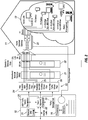
- FIG. 1 is a simplified block diagram of a first exemplary embodiment of the disclosed ABR QoE Management Unit 10 implemented in a home or other premises 11 containing a plurality of client devices, which may be connected to a Home Local Area Network (LAN) 12.
- Data may reach the home from a service provider's gateway 13 in an operator's network 14 via, for example, a Digital Subscriber Line (DSL) or Data Over Cable Service Interface Specification (DOCSIS) link.
- the service provider's gateway may be, for example a Digital Subscriber Line Access Multiplexer (DSLAM) or a Cable Modem Termination System (CMTS).
- DSL Digital Subscriber Line
- DOCSIS Data Over Cable Service Interface Specification
- the service provider's gateway may be, for example a Digital Subscriber Line Access Multiplexer (DSLAM) or a Cable Modem Termination System (CMTS).
- DSL Digital Subscriber Line Access Multiplexer
- CMTS Cable Modem Termination System
- the ABR QoE Management Unit 10 may be implemented, for example, in an operator supplied cable modem or residential gateway (RGW) 15, in an OTT provider supplied GW, in a consumer grade home Wi-Fi router, or the like.
- the ABR QoE Management Unit may include a number of units controlled by a processing circuit comprising one or more processors 16 executing computer program instructions stored on a memory 17.
- the units may include a bandwidth rate calculator 18 (specifically for Data Over Cable Service Interface Specification (DOCSIS) links), a policy management unit 19, an ABR traffic pattern recognition unit 20 (as in U.S. Patent Application Publication No.
- DOCSIS Data Over Cable Service Interface Specification
- the ABR QoE Management Unit 10 includes nested virtual pipes 23-29.
- An outer virtual pipe 23 is sized the same as the physical pipe (same size as the Internet pipe).
- the outer virtual pipe carries both http traffic (ABR and non-ABR) and non-http traffic.
- ABR http traffic
- non-ABR non-http traffic
- inside the outer pipe there are a number of inner virtual pipes including an http dynamic ABR throttled virtual pipe 24, an http dynamic non-ABR throttled virtual pipe 25, and a non-http traffic virtual pipe 26.
- the http dynamic ABR throttled virtual pipe 24 may be additionally divided into inner virtual pipes 27-29, which use Phantom packet transmission WFQ to allow weighting at the pipe level.
- Each OTT provider may be assigned to an inner virtual pipe.
- Phantom packet transmission WFQ is applied to each of the flows inside the pipe, which allows for weighting/setting a priority (e.g., P1-P4) based on the corresponding user device and OTT provider.
- a priority e.g., P1-P4
- the http dynamic non-ABR throttled virtual pipe 25 allows for devices to be weighted as well.
- the non ABR pipe is managed by a standard WFQ bandwidth management technique.
- Phantom packet transmission WFQ is described in U.S. Patent No. 9,467,387 entitled System and Method for Managing Bandwidth Responsive to the Duty Cycle of an ABR Client and U.S. Patent Application Publication No. 2016/0234126 entitled System and Method for Managing Bandwidth Responsive to the Duty Cycle of an ABR Client. Phantom packet transmission WFQ enables non-ABR video traffic to use the available bandwidth inside the http pipe at any point in time.
- the rate is locked per session, preventing the ABR device from constantly changing bit rates and resolution/quality based on the duty cycles of other ABR devices. The only time the rate changes is based on when another ABR session is terminated.
- U.S. Patent No. 9,467,387 and U.S. Patent Application Publication No. 2016/0234126 all http flows are inside the same virtual pipe, and ABR video sessions are allocated bandwidth differently than non-ABR http sessions.
- the present disclosure expands on these previous publications in that the ABR device duty cycle bandwidth is now shared from the ABR Video virtual pipe to the non-ABR http pipe.
- FIG. 2 is a simplified block diagram of a second exemplary embodiment of the disclosed ABR QoE Management Unit 10.
- FIG. 2 illustrates an implementation of the unit in a DSL network edge.
- FIG. 2 illustrates an example in which the ABR QoE Management Unit 10 is implemented as a virtual instance immediately upstream of a Broadband Network Gateway (BNG) 31. This implementation could also be inside a vRGW instance or inside of the BNG, for example.
- BNG Broadband Network Gateway
- the basic functionality of the ABR QoE Management Unit is the same as in FIG. 1 .
- the various virtual pipes carry the data flows to the home or other premises 11 through, for example, a DSLAM 32 and a home residential gateway (RGW) 33.
- RGW home residential gateway
- FIG. 3 is a flow chart of an overall method of managing bandwidth usage and QoE at a customer premises in an exemplary embodiment of the present disclosure.
- the customer premises includes multiple client devices that independently download content from multiple providers.
- the ABR QoE Management Unit 10 assigns a priority level to each provider and to each client device.
- the ABR the ABR QoE Management Unit utilizes the weights in a WFQ algorithm to control, at any given time, an amount of bandwidth each client device is allowed to utilize to download content from any given provider, thereby maintaining a desired QoE for each client device/provider combination.
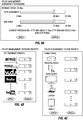
- FIGS. 4A-4C show exemplary embodiments of user interfaces for provisioning pipe bandwidth, setting priorities for OTT providers, and setting priorities for client devices, respectively, in the disclosed system.
- FIG. 4A shows an exemplary embodiment of a user interface for provisioning pipe bandwidth.
- the outer virtual pipe 23 is sized to the Internet pipe size of 25 Mbs.
- An http virtual pipe is provisioned for 20 Mbs.
- an http dynamic ABR throttled virtual pipe 24 is provisioned for 15 Mbs. This leaves 5 Mbs for the http dynamic non-ABR throttled virtual pipe 25 and 5 Mbs for the non-http traffic virtual pipe 26.
- FIG. 4B provides examples for assigning a priority level (from Priority 1 to Priority 4 in this example) for each OTT provider.
- FIG. 4C provides examples for assigning a priority level (from Priority 1 to Priority 4 in this example) for each client device.
- the priority translates into a weight, which is used by the Weighted Fair Queuing (WFQ) bandwidth systems discussed below.
- WFQ algorithms enable the fraction of link capacity that will be allocated to each flow to be specified. Each household and client gets its weighted share of the bandwidth over time without a control plane having to adjust bandwidth caps. Although routers are already equipped with a WFQ algorithm, several problems arise when applying it to ABR bandwidth management:
- FIG. 5 shows an example of generic (plain) WFQ for bandwidth management for non-ABR HTTP traffic flows.
- a plurality of Network Transmission Threads (NTTs) 41 associated with multiple client sessions, e.g., media streaming sessions involving one or more ABR clients, and optionally, one or more non-ABR clients, are illustratively provided, which may be stored in a suitable storage area or memory associated with the ABR QoE Management Unit 10.
- a plurality of leaf sequencers 42 are configured to receive transmission request tokens from one or more NTTs.
- the transmission class for a leaf sequencer may be configured based on a client's IP address.
- a transmission class may also be configured based on a session ID of a communication session, flow or stream IDs, QoS level, Class of Service (CoS) level, group ID of devices, source/destination IP addresses, and the like. For example, one client may be assigned a different priority based on the type of video content. In that case, the transmission class may be identified by a session ID. In the case of data download, it could be a session ID associated with a download of data or a session ID for a particular gaming session, as an example.
- CoS Class of Service
- leaf sequencers 42 may represent individual devices in a subscriber premises or a group of mobile devices being served by a base station for video delivery.
- the leaf sequencers may represent on-demand video assets from various content sources, and the like.
- a first stage component 43 facilitates the token selection process.
- the queuing functionality is based on WFQ and may be configured to perform an approval process.
- a Weighted Transmission Queue 44 stores local accounting data 45 and applies a Weighted Transmission Queuing Algorithm 46 as shown in the box below.
- An approval loop process 47 for a single thread indicates the iterative nature of the selection, arbitration, and transmission aspects of the ABR QoE Management Unit 10.
- the illustrative token approval loop may be iteratively executed for transmission of payload data from a plurality of NTTs corresponding to different client devices.
- an NTT lists a number of bytes to be transmitted on the link.
- a token is generated for a specified amount of payload data, e.g., N bytes, where N equals the byte chunk size.
- the token for the thread is loaded into the hierarchical approval framework described above.
- the N bytes are transmitted on the link.
- decision block 52 it is determined whether any payload remains to be transmitted.
- the approval loop 47 proceeds to block 53 where the transmission socket is closed. On the other hand, if payload remains, process 47 loops back to block 49 where additional tokens may be generated for corresponding chunks of data. As noted previously, the foregoing approval loop process may take place for multiple transmit buffer threads, each submitting respective tokens to the approval framework as needed.
- Plain WFQ traffic management is best for non-ABR traffic and provides for the bandwidth management of non-ABR streams.
- ABR clients When using plain WFQ, ABR clients will often change bit rates as a result of other ABR clients sleeping due to a full buffer.
- plain WFQ is used for ABR video delivery, a degraded QoE occurs.
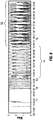
- FIG. 6 is a network graph showing a generic WFQ algorithm and its impact on three ABR clients utilizing a 3 Mbs network pipe.
- a video manifest includes segments of 2 Mbs, 1.6 Mbs, 1.2 Mbs, 900 Kbs, 600 Kbs, and 300 Kbs.
- the three clients include Device-1 with a 3.0 weighting, Device-2 with a 1.5 weighting, and Device-3 with a 0.6 weighting.
- Generic WFQ caps the bandwidth, thus saturating the link.
- the problem occurs when lower weighted clients wake up from their duty cycle to pull a segment while the higher weighted clients are sleeping. This causes the lower weighted clients to periodically attempt to move up in their manifest profile and become aggressive only to get knocked down again in the future.
- the 3.0-weighted Device-1 begins playing video. Its allocated bandwidth is 3.0 Mbs and Device-1's buffer fill begins.
- the 0.6-weighted Device-3 begins playing video. Allocated bandwidths are 2.5 Mbs for Device-1 and 0.4999 Mbs for Device-3.
- Device-3 fills the pipe while Device-1 is in its duty cycle (full buffer with 2 Mbs segments and maintaining buffer state. Device-3 pulls segments on buffer fill. Spikes in bandwidth usage should be noted. Device-1 does not saturate the pipe and WFQ is not activated while Device-1 is sleeping, thus allowing Device-3 to fully consume the pipe.
- Device-3 is playing an 800 Kbs profile.
- Device-2 joins. Allocated bandwidths are 1.68 Mbs for Device-1, 0.981 Mbs for Device-2, and 0.336 Mbs for Device-3. During Device-2's buffer fill, the pipe is always saturated by Device-2. Bandwidth allocations are correct for all three devices. At time T5, all three devices' buffers are full for correct bitrate segments based on WFQ calculations. All three devices begin their duty cycles.
- FIGS. 7A-7B are network graphs showing a generic WFQ algorithm and its impact on a non-ABR data download and an ABR video playout, respectively.
- the network graph shows the bandwidth usage for a non-ABR data download such as downloading a large email attachment in a 4 Mbs pipe.
- the email download could take advantage of the free bandwidth when the ABR client is sleeping. Once the download starts, the pull of data is continuous until the download is completed. There is always link activity until the session ends or all data is downloaded.
- the network graph shows the bandwidth usage for an ABR video playout in a 4 Mbs pipe.
- FIG. 8 shows an example system employing Phantom Packet ABR optimized WFQ for bandwidth management for ABR http traffic flows.
- Phantom Packet Transmission PPT
- PPT Phantom Packet Transmission
- the example system incorporates hierarchical token approval logic based on suitable queuing for managing bandwidth allocation and QoS of video delivery in a number of scenarios.
- the system may be configured to be operative at a subscriber premises or in the network, depending on the application.
- a hierarchical token approval logic module (TALM) 60 creates phantom tokens so as to simulate the network contention that would exist if the ABR clients were to experience no peaks and valleys of a duty cycle. In other words, the sleep phases of an ABR client's duty cycle are "masked" such that the rest of the ABR clients are "tricked” into behaving as though there is no extra bandwidth made available.
- phantom tokens/packets can be replaced with real network traffic, for example non-ABR traffic, in an optional replacement stage, if any bandwidth remains that would have otherwise been used by other opportunistic ABR clients to artificially inflate their video quality.
- a phantom token is a token that is not associated with any actual payload traffic of an NTT corresponding to a client's communication session.
- phantom tokens may be issued by leaf sequencer nodes in a nested/hierarchical WFQ arrangement when a parent node queries or polls its child sequencer node and the child sequencer node has not loaded a normal or regular token from a client session's NTT.
- leaf sequencer nodes in a nested/hierarchical WFQ arrangement when a parent node queries or polls its child sequencer node and the child sequencer node has not loaded a normal or regular token from a client session's NTT.
- an NTT loads a token into an associated leaf sequencer, it is a real token or request for permission to transmit a chunk of actual payload data.
- the NTT has not loaded a token into its corresponding leaf sequencer, e.g., because the client is not currently downloading a segment (i.e., sleep phase or sleep mode), then when the parent node queries the leaf sequencer of the ABR session, it will provide a phantom token to generate the illusion that the client is downloading rather than "resting" in the sleep phase of its duty cycle.
- a plurality of NTTs 61 associated with multiple client sessions e.g., media streaming sessions involving one or more ABR clients, and optionally, one or more non-ABR clients, are illustratively provided, which may be stored in a suitable storage area or memory associated with the ABR QoE Management Unit 10.
- a plurality of leaf sequencers 62 are configured to receive transmission request tokens 63 from one or more NTTs.
- the transmission class for a leaf sequencer may be configured based on a client's IP address. That is, if one client is trying to download multiple segments, they must share the same leaf sequencer.
- a transmission class may also be configured based on a session ID of a communication session, flow or stream IDs, QoS level, Class of Service (CoS) level, group ID of devices, source/destination IP addresses, and the like.
- a session ID For example, one client may be assigned a different priority based on the type of video content.
- the transmission class may be identified by a session ID.
- the transmission class In the case of data download, it could be a session ID associated with a download of data or a session ID for a particular gaming session, as an example.
- leaf sequencers 62 may represent individual devices in a subscriber premises or a group of mobile devices being served by a base station for video delivery. In other embodiments, the leaf sequencers may represent on-demand video assets from various content sources, and the like.
- hierarchical TALM 60 may be implemented as a nested two-stage approval framework or scheme with components that may be selectively activated.
- a first stage component 64 is configured to receive: (i) phantom tokens from leaf sequencers servicing NTTs that correspond to one or more ABR clients in inactive phases of their respective traffic download duty cycles, (ii) regular tokens from leaf sequencers servicing NTTs that correspond to one or more ABR clients in active phases of their respective traffic download duty cycles, and/or (iii) regular tokens from leaf sequencers servicing NTTs that correspond to one or more non-ABR clients continuously pulling data for respective communication sessions.
- a second stage component 65 operating selectively in conjunction with the first stage component 64 is provided for receiving only regular tokens.
- Such regular tokens are the same regular tokens provided to the first stage component, i.e., (i) tokens from leaf sequencers servicing NTTs that correspond to one or more ABR clients in active phases of their respective traffic download duty cycles, and/or (ii) tokens from leaf sequencers servicing NTTs that correspond to one or more non-ABR clients continuously pulling data for respective communication sessions.
- the structure and functionality of the first stage component 64 may be selectively inactivated via suitable feature selection control signals, e.g., from a network operator, when the functionality of utilizing phantom tokens/packets in bandwidth estimations or computations is not needed in a network.
- the first stage component may be bypassed when inactivated, in which case only the token approval logic of the second stage component is operative for servicing the tokens emanating from the NTTs 61.
- the second stage component 65 may be selectively bypassed (e.g., where are there no non-ABR clients or where bandwidth allocation to a replacement client is desired), whereby only the first stage component 64 is operative (provided it has been selected) for providing bitrate locking with respect to the ABR clients.
- the first stage component 64 is configured to receive phantom tokens, it may be referred to as a phantom-enabled token approval stage.
- the second stage component 65 may be referred to as a normal token approval stage (when operating solely) and/or replacement token approval stage (when operating in conjunction with the phantom-enabled token approval first stage).
- each stage may be provided with its own accounting log module for reconciling tokens being submitted for selection.
- a first accounting log module 66 which may be referred to as a phantom-enabled accounting log module
- a second accounting log module 67 which may be referred to as a replacement or normal accounting log module, are provided in association with the first and second stage components 64, 65, respectively.
- the system determines whether there are any phantom packets. If not, regular packets go into a weighted transmission queue 69, which stores local accounting data 70 and applies a Weighted Transmission Queuing Algorithm 71 as shown in the box below.
- the system may execute the Weighted Transmission Queuing Algorithm 71 by the first stage component 64 or the second stage component 65, or both, to facilitate the token selection process depending on selective activation of the components as described above.
- the hierarchical token approval process and arbitration of selected tokens for transmission queuing may be performed in multiple iterations for each NTT as long as there is payload data to be transmitted.
- An approval loop process 72 for a single thread is shown to indicate the iterative nature of the selection, arbitration, and transmission aspects of the system.
- an NTT lists a number of bytes to be transmitted on the link.
- a token is generated for a specified amount of payload data, e.g., N bytes, where N equals the byte chunk size.
- the token for the thread is loaded into the hierarchical approval framework described above.
- the N bytes are transmitted on the link.
- the approval loop 72 proceeds to block 78 where the transmission socket is closed. On the other hand, if payload remains, process 72 loops back to block 74 where additional tokens may be generated for corresponding chunks of data. As noted previously, the foregoing approval loop process may take place for multiple transmit buffer threads, each submitting respective tokens to the approval framework as needed.
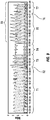
- FIG. 9 is a network usage graph showing the effect of Phantom Packet Transmission (PPT) on http/https data streams in a 4 Mbs pipe.
- PPT Phantom Packet Transmission
- a video manifest includes segments of 2 Mbs, 1.6 Mbs, 1.2 Mbs, 900 Kbs, 600 Kbs, and 300 Kbs.
- the 3.0-weighted Device-1 and the 0.75-weighted Device-2 are playing ABR video.
- Device-1 is allocated 3.2 Mbs and Device-2 is allocated 0.8 Mbs.
- the devices never leave their allocated bitrates during their duty cycles.
- the 0.175-weighted non-ABR download client joins. Bandwidth allocations are recalculated as 3.05 Mbs for Device-1, 0.764 Mbs for Device-2, and 0.178 Mbs for the non-ABR download client.
- unused bandwidth is given to the non-ABR download client. Neither of the ABR clients is allowed bandwidth above their allocations.
- Device-1 forces a buffer fill as a result of jumping to another time in the video. This forces the non-ABR download client to remain in the bitrate calculation with the exception that Device-2 remains within its allocated bandwidth and continues playing the same QoS video. Device-2's unused duty cycle bandwidth is shared with the non-ABR download client.
- time interval T5 a constant QoS is maintained for all ABR video clients regardless of their duty cycles. Unused bandwidth as a result of the ABR clients' duty cycles is allocated to the non-ABR download client. Bandwidth allocations remain as 3.05 Mbs for Device-1, 0.764 Mbs for Device-2, and 0.178 Mbs for the non-ABR download client.
- ABR Device-3 joins. Bandwidth allocations are recalculated as 2.71 Mbs for Device-1, 2.75 Mbs for Device-2, 0.452 for Device-3, and 0.158 Mbs for the non-ABR download client.
- Device-3 begins buffer fill. All ABR clients remain in their allocated bandwidths in and out of their duty cycles. The non-ABR download client receives unused bandwidth from Devices-1 and 2 that remain in their duty cycles.
- PPT WFQ provides a number of advantages over generic WFQ, including consistency in video quality and delivery throughout the video session; well behaved ABR clients because their greedy behaviors are controlled; better utilization of network resources; improved sharing of network resources; higher bandwidth utilization; and optimization and control for non-ABR traffic flows.
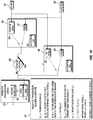
- FIG. 10 shows an example of mixed Phantom WFQ for bandwidth management combining ABR and non-ABR http traffic flows.
- FIG. 9 is an example flow of filtering the ABR vs the non-ABR http traffic.
- This is an enhancement or extension of the generic/plain WFQ and PPT WFQ where ABR flows travel through the PPT WFQ flow 81 and the non-ABR flows travel through the plain WFQ flow 82.
- the PPT WFQ flow sends a phantom token 83 to a first stage component 84 and no token 85 to a second stage component 86.
- the plain WFQ flow sends a regular token 87 to the first stage component 84 and a regular token 88 to the second stage component 86.
- the first stage component 84 is configured to receive phantom tokens, it may be referred to as a phantom-enabled token approval stage.
- the second stage component 86 may be referred to as a normal token approval stage.
- the system determines whether there are any phantom packets. If not, regular packets go into a weighted transmission queue 90, which stores local accounting data 91 and applies a Weighted Transmission Queuing Algorithm 92 as shown in the box below.
- the system may execute the Weighted Transmission Queuing Algorithm 92 by the first stage component 84 or the second stage component 86, or both, to facilitate the token selection process.
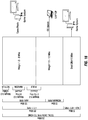
- FIG. 11 shows an example of mixed http ABR/non-ABR Managed and Non-http Best Effort bandwidth management utilizing mixed nested virtual pipes.
- an ABR identified traffic flow travels through leaf sequencers 102 into a number of Phantom WFQ processing flows 103a-103c, one per OTT provider for each of the active ABR sessions.
- a non-ABR http traffic flow travels through leaf sequencers 102 into the plain WFQ processing flow 104. If the content is not http traffic, it travels through leaf sequencers 102 into the best effort processing flow 105.
- the output for each of the Phantom ABR optimized WFQ process flows 103a-103c feeds into a Phantom WFQ per provider flow 106.
- This type of nesting enables the generation of a WFQ-controlled virtual pipe per provider where control of the bandwidth in each pipe is based on a defined pipe priority/weight.
- both the output from the plain WFQ processing flow 104 and the phantom WFQ per provider flow 106 feeds into a mixed Phantom WFQ processing flow 107.
- the mixed phantom WFQ processing flow allows for the non-ABR traffic to use unused bandwidth from the ABR delivery virtual pipe as a result of the ABR clients sleep and wake duty cycles. This provides the optimal in http bandwidth management and ABR video QoE for both ABR and non-ABR http traffic.
- the final stage in the processing in the nested pipes is to manage the bandwidth limits and sharing for the non-http traffic. This may be done by a simple means referred to in this disclosure as "Chris's packet queuing" (CPQ).
- CPQ Chris's packet queuing
- the http traffic from the mixed phantom WFQ processing flow 107 and the non-http traffic from the best effort processing flow 105 is fed into a CPQ algorithm 108, which confines all of the traffic to fit in the outermost pipe.
- the CPQ algorithm 108 also receives a calculated bitrate from a bandwidth rate estimation module 110 (specifically for DOCSIS).
- a bandwidth rate estimation module 110 specifically for DOCSIS.
- the one embodiment for DOCSIS in this disclosure is s bandwidth must be calculated throughout time.
- DOCSIS allows for up to a set maximum data rate, but that is not guaranteed. In some DOCSIS systems, the maximum data rate may be 50 Mb/s while in others it may be 9 Mb/s. It can be changing regularly based on neighboring usage.
- This invention must dynamically change the size of the outermost virtual pipe in order to achieve proper bandwidth management in the non-stable connect speed of a DOCSIS network. For DSL networks, based on their differences in architecture, bandwidth is always guaranteed.
- FIG. 12 shows an exemplary allocation of bandwidth across all pipes in a first use-case scenario.
- there are three OTT providers two devices watching Netflix®, one device watching Amazon Prime®, one device watching Hulu®, one device using http non-ABR, and one device gaming.
- FIG. 13 shows an exemplary allocation of bandwidth across all pipes in a second use-case scenario.
- there are three OTT providers one device watching Netflix®, two devices watching Amazon Prime®, one device watching Hulu®, one device using http non-ABR, and one device gaming.
- FIG. 14 shows an exemplary allocation of bandwidth across all pipes in a third use-case scenario.
- there are three OTT providers one device watching Netflix®, two devices watching Amazon Prime®, no devices watching Hulu®, one device using http non-ABR, and one device gaming.
- FIG. 15 shows an exemplary allocation of bandwidth across all pipes in a fourth use-case scenario.
- there are three OTT providers one device watching Netflix®, two devices watching Amazon Prime®, two devices watching Hulu®, no devices using http non-ABR, and one device gaming.
- FIG. 16 shows an exemplary allocation of bandwidth across all pipes in a fifth use-case scenario.
- this scenario there are no devices watching ABR content, two devices using http non-ABR, and one device gaming.
- the disclosed system provides for a greatly improved ability to manage bandwidth used in a fixed network pipe to a home with a focus on the ability to manage QoE across OTT providers as well as multiple devices watching content.
Landscapes
- Engineering & Computer Science (AREA)
- Signal Processing (AREA)
- Multimedia (AREA)
- Databases & Information Systems (AREA)
- Computer Networks & Wireless Communication (AREA)
- Data Exchanges In Wide-Area Networks (AREA)
Claims (15)
- Computergesteuertes Verfahren in einer Nutzerzufriedenheit-Verwaltungseinheit adaptiver Bitrate (10) zur Verwaltung von Bandbreitennutzung und Nutzerzufriedenheit (Quality of Experience, QoE) in Einrichtungen eines Kunden (11), wo vielfache Client-Vorrichtungen unabhängig voneinander Inhalte von mehreren Anbietern herunterladen, das Verfahren umfassend:Zuweisen (35) einer Prioritätsebene an jeden Anbieter und jede Client-Vorrichtung;Übersetzen (36) der zugewiesenen Prioritätsebenen in Gewichtungen; undVerwenden (37) der Gewichtungen in einem gewichteten fairen Einreihalgorithmus, um jederzeit eine bestimmte Menge an Bandbreite zu steuern, die jeder Client-Vorrichtung zum Herunterladen von Inhalten von einem gegebenen Anbieter erlaubt ist, wodurch eine gewünschte QoE für jede Kombination Client-Vorrichtung/Anbieter aufrechterhalten wird, unddadurch gekennzeichnet, dass ein Verwenden des gewichteten fairen Einreihalgorithmus ein Verwenden (64) eines gewichteten fairen Phantompaketübertragung-Einreihens beinhaltet, um zu verhindern, dass eine erste Client-Vorrichtung ihre Bitrate erhöht, wenn eine zweite Client-Vorrichtung aufgrund eines vollen Zwischenspeichers in einer Inaktivitätsphase ihres Arbeitszyklus ist.
- Verfahren nach Anspruch 1, wobei ein Verwenden von gewichtetem fairem Phantompaketübertragung-Einreihen Folgendes beinhaltet:Erfassen, dass die zweite Client-Vorrichtung in die Inaktivitätsphase ihres Arbeitszyklus eingetreten ist; undErzeugen von Phantompaketen, die mit keinem tatsächlichen Nutzlastverkehr assoziiert sind, wobei die Phantompakete eine kontinuierliche Netzwerkanforderung durch die zweite Client-Vorrichtung simulieren, während sich die zweite Client-Vorrichtung in der Inaktivitätsphase ihres Arbeitszyklus befindet, wodurch verhindert wird, dass die erste Client-Vorrichtung ihre Bitrate erhöht.
- Verfahren nach Anspruch 2, wobei ein Verwenden von gewichtetem fairem Phantompaketübertragung-Einreihen auch Folgendes beinhaltet:Auswählen von Paketen zur Übertragung an die Client-Vorrichtungen;wenn ein echtes Paket, das tatsächlichen Nutzlastverkehr für eine assoziierte Client-Vorrichtung enthält, zur Übertragung ausgewählt ist, Übertragen des ausgewählten echten Pakets an die assoziierte Client-Vorrichtung übertragen wird; undwenn ein Phantompaket zur Übertragung ausgewählt ist, Übertragen eines echten Ersatzpakets an eine Client-Vorrichtung nicht adaptiver Bitrate, die einen Datenstrom verwendet, der keinen Lastzyklus aufweist.
- Verfahren nach Anspruch 1, wobei die Nutzerzufriedenheit-Verwaltungseinheit adaptiver Bitrate (10) verschachtelte virtuelle Leitungen (23-29) zum Bereitstellung von Bandbreite für verschiedene Verkehrsklassen beinhaltet, wobei eine äußere virtuelle Leitung (23) die gleiche Größe wie eine physische Internet-Leitung aufweist und innere virtuelle Leitungen für http-Verkehr adaptiver Bitrate (24), http-Verkehr nicht-adaptiver Bitrate (25) und nicht-http-Verkehr (26) beinhaltet;
wobei das Verfahren ferner ein Aufrechterhalten von zwei Abrechnungsschichten umfasst, eine erste Schicht für alle Verkehrsklassen und eine zweite Schicht für alle Verkehrsklassen nicht adaptiver Bitrate, um sicherzustellen, dass Bandbreite gerecht unterteilt wird. - Verfahren nach Anspruch 4, ferner umfassend:Unterteilen der inneren virtuellen Leitung für http-Verkehr adaptiver Bitrate (24) in mehrere dynamisch gedrosselte innere virtuelle Leitungen (27-29);Zuweisen verschiedener Anbieter zu verschiedenen dynamisch gedrosselten inneren virtuellen Leitungen; undAnwenden von gewichtetem fairem Phantompaketübertragung-Einreihen auf Verkehrsfluss in jeder dynamisch gedrosselten inneren virtuellen Leitung, um eine Gewichtung auf Leitungsebene basierend auf einer entsprechenden Client-Vorrichtung und einem Anbieter zu ermöglichen.
- Nutzerzufriedenheit-Verwaltungseinheit adaptiver Bitrate (10) zur Verwaltung von Bandbreitennutzung und Nutzerzufriedenheit in Einrichtungen eines Kunden (11), in denen mehrere Client-Vorrichtungen unabhängig Inhalte von mehreren Anbietern herunterladen, die Nutzerzufriedenheit-Verwaltungseinheit adaptiver Bitrate umfassend:eine Schnittstelle, die konfiguriert ist, um alle Daten zu empfangen, die in die Einrichtungen gelangen, und die gesamte Datennutzung durch die Einrichtungen zu überwachen; undeine Verarbeitungsschaltung (16-17), die zu Folgendem konfiguriert ist:Zuweisen (35) einer Prioritätsebene an jeden Anbieter und jede Client-Vorrichtung;Übersetzen (36) der zugewiesenen Prioritätsebenen in Gewichtungen; undVerwenden (37) der Gewichtungen in einem gewichteten fairen Einreihalgorithmus, um jederzeit eine bestimmte Menge an Bandbreite zu steuern, die jeder Client-Vorrichtung zum Herunterladen von Inhalten von einem gegebenen Anbieter erlaubt ist, wodurch eine gewünschte Nutzerzufriedenheit für jede Kombination Client-Vorrichtung/Anbieter aufrechterhalten wird;dadurch gekennzeichnet, dass die Verarbeitungsschaltung konfiguriert ist, um gewichtetes faires Phantompaketübertragung-Einreihen zu verwenden (64), um zu verhindern, dass eine erste Client-Vorrichtung ihre Bitrate erhöht, wenn eine zweite Client-Vorrichtung aufgrund eines vollen Zwischenspeichers in einer Inaktivitätsphase ihres Arbeitszyklus ist.
- Nutzerzufriedenheit-Verwaltungseinheit adaptiver Bitrate nach Anspruch 6, wobei die Verarbeitungsschaltung konfiguriert ist, um gewichtetes faires Phantompaketübertragung-Einreihen zu verwenden, durch:Erfassen, dass die zweite Client-Vorrichtung in die Inaktivitätsphase ihres Arbeitszyklus eingetreten ist; undErzeugen von Phantompaketen, die mit keinem tatsächlichen Nutzlastverkehr assoziiert sind, wobei die Phantompakete eine kontinuierliche Netzwerkanforderung durch die zweite Client-Vorrichtung simulieren, während sich die zweite Client-Vorrichtung in der Inaktivitätsphase ihres Arbeitszyklus befindet, wodurch verhindert wird, dass die erste Client-Vorrichtung ihre Bitrate erhöht.
- Nutzerzufriedenheit-Verwaltungseinheit adaptiver Bitrate nach Anspruch 7, wobei die Verarbeitungsschaltung ferner konfiguriert ist, um gewichtetes faires Phantompaketübertragung-Einreihen zu verwenden, durch:Auswählen von Paketen zur Übertragung an die Client-Vorrichtungen;wenn ein echtes Paket, das tatsächlichen Nutzlastverkehr für eine assoziierte Client-Vorrichtung enthält, zur Übertragung ausgewählt ist, Übertragen des ausgewählten echten Pakets an die assoziierte Client-Vorrichtung übertragen wird; undwenn ein Phantompaket zur Übertragung ausgewählt ist, Übertragen eines echten Ersatzpakets an eine Client-Vorrichtung nicht adaptiver Bitrate.
- Nutzerzufriedenheit-Verwaltungseinheit adaptiver Bitrate nach Anspruch 6, wobei die Nutzerzufriedenheit-Verwaltungseinheit adaptiver Bitrate (10) verschachtelte virtuelle Leitungen (23-29) zum Bereitstellung von Bandbreite für verschiedene Verkehrsklassen beinhaltet, wobei eine äußere virtuelle Leitung (23) die gleiche Größe wie eine physische Internet-Leitung aufweist und innere virtuelle Leitungen für http-Verkehr adaptiver Bitrate (24), http-Verkehr nicht-adaptiver Bitrate (25) und nicht-http-Verkehr (26) beinhaltet;
wobei die Verarbeitungsschaltung konfiguriert ist, um zwei Abrechnungsschichten aufrechtzuerhalten, eine erste Schicht für alle Verkehrsklassen und eine zweite Schicht für alle Verkehrsklassen nicht adaptiver Bitrate, um sicherzustellen, dass Bandbreite gerecht unterteilt wird. - Nutzerzufriedenheit-Verwaltungseinheit adaptiver Bitrate nach Anspruch 9, wobei die Verarbeitungsschaltung ferner zu Folgendem konfiguriert ist:Unterteilen der inneren virtuellen Leitung für http-Verkehr adaptiver Bitrate (24) in mehrere dynamisch gedrosselte innere virtuelle Leitungen (27-29);Zuweisen verschiedener Anbieter zu verschiedenen dynamisch gedrosselten inneren virtuellen Leitungen; undAnwenden von gewichtetem fairem Phantompaketübertragung-Einreihen auf Verkehrsfluss in jeder dynamisch gedrosselten inneren virtuellen Leitung, um eine Gewichtung auf Leitungsebene basierend auf einer entsprechenden Client-Vorrichtung und einem Anbieter zu ermöglichen.
- System zum Verwalten von Bandbreitennutzung und Nutzerzufriedenheit in Einrichtungen eines Kunden (11), bei dem mehrere Client-Vorrichtungen unabhängig Inhalte von mehreren Anbietern herunterladen, das System umfassend:ein Gateway (15), das einen einzigen Zugangspunkt für Daten bereitstellt, die in die Einrichtungen gelangen; undeine Nutzerzufriedenheit-Verwaltungseinheit adaptiver Bitrate (10) in Kommunikation mit dem Gateway, umfassend:
eine Verarbeitungsschaltung (16-17), die zu Folgendem konfiguriert ist:Zuweisen (35) einer Prioritätsebene an jeden Anbieter und jede Client-Vorrichtung;Übersetzen (36) der zugewiesenen Prioritätsebenen in Gewichtungen; undVerwenden (37) der Gewichtungen in einem gewichteten fairen Einreihalgorithmus, um jederzeit eine bestimmte Menge an Bandbreite zu steuern, die jeder Client-Vorrichtung zum Herunterladen von Inhalten von einem gegebenen Anbieter erlaubt ist, wodurch eine gewünschte Nutzerzufriedenheit für jede Kombination Client-Vorrichtung/Anbieter aufrechterhalten wird;dadurch gekennzeichnet, dass die Verarbeitungsschaltung Nutzerzufriedenheit-Verwaltungseinheit adaptiver Bitrate konfiguriert ist, um gewichtetes faires Phantompaketübertragung-Einreihen zu verwenden (64), um zu verhindern, dass eine erste Client-Vorrichtung ihre Bitrate erhöht, wenn eine zweite Client-Vorrichtung aufgrund eines vollen Zwischenspeichers in einer Inaktivitätsphase ihres Arbeitszyklus ist. - System nach Anspruch 11, wobei die Verarbeitungsschaltung der Nutzerzufriedenheit-Verwaltungseinheit adaptiver Bitrate konfiguriert ist, um gewichtetes faires Phantompaketübertragung-Einreihen zu verwenden, durch:Erfassen, dass die zweite Client-Vorrichtung in die Inaktivitätsphase ihres Arbeitszyklus eingetreten ist; undErzeugen von Phantompaketen, die mit keinem tatsächlichen Nutzlastverkehr assoziiert sind, wobei die Phantompakete eine kontinuierliche Netzwerkanforderung durch die zweite Client-Vorrichtung simulieren, während sich die zweite Client-Vorrichtung in der Inaktivitätsphase ihres Arbeitszyklus befindet, wodurch verhindert wird, dass die erste Client-Vorrichtung ihre Bitrate erhöht.
- System nach Anspruch 12, wobei die Verarbeitungsschaltung der Nutzerzufriedenheit-Verwaltungseinheit adaptiver Bitrate ferner konfiguriert ist, um gewichtetes faires Phantompaketübertragung-Einreihen zu verwenden, durch:Auswählen von Paketen zur Übertragung an die Client-Vorrichtungen;wenn ein echtes Paket, das tatsächlichen Nutzlastverkehr für eine assoziierte Client-Vorrichtung enthält, zur Übertragung ausgewählt ist, Übertragen des ausgewählten echten Pakets an die assoziierte Client-Vorrichtung übertragen wird; undwenn ein Phantompaket zur Übertragung ausgewählt ist, Übertragen eines echten Ersatzpakets an eine Client-Vorrichtung nicht adaptiver Bitrate.
- System nach Anspruch 11, wobei die Nutzerzufriedenheit-Verwaltungseinheit adaptiver Bitrate (10) verschachtelte virtuelle Leitungen (23-29) zum Bereitstellung von Bandbreite für verschiedene Verkehrsklassen beinhaltet, wobei eine äußere virtuelle Leitung (23) die gleiche Größe wie eine physische Internet-Leitung aufweist und innere virtuelle Leitungen für http-Verkehr adaptiver Bitrate (24), http-Verkehr nicht-adaptiver Bitrate (25) und nicht-http-Verkehr (26) beinhaltet;
wobei die Verarbeitungsschaltung der Nutzerzufriedenheit-Verwaltungseinheit adaptiver Bitrate konfiguriert ist, um zwei Abrechnungsschichten aufrechtzuerhalten, eine erste Schicht für alle Verkehrsklassen und eine zweite Schicht für alle Verkehrsklassen nicht adaptiver Bitrate, um sicherzustellen, dass Bandbreite gerecht unterteilt wird. - System nach Anspruch 14, wobei die Verarbeitungsschaltung der Nutzerzufriedenheit-Verwaltungseinheit adaptiver Bitrate ferner zu Folgendem konfiguriert ist:Unterteilen der inneren virtuellen Leitung für http-Verkehr adaptiver Bitrate (24) in mehrere dynamisch gedrosselte innere virtuelle Leitungen (27-29);Zuweisen verschiedener Anbieter zu verschiedenen dynamisch gedrosselten inneren virtuellen Leitungen; undAnwenden von gewichtetem fairem Phantompaketübertragung-Einreihen auf Verkehrsfluss in jeder dynamisch gedrosselten inneren virtuellen Leitung, um eine Gewichtung auf Leitungsebene basierend auf einer entsprechenden Client-Vorrichtung und einem Anbieter zu ermöglichen.
Applications Claiming Priority (3)
| Application Number | Priority Date | Filing Date | Title |
|---|---|---|---|
| US201662359388P | 2016-07-07 | 2016-07-07 | |
| US15/437,077 US10104413B2 (en) | 2016-07-07 | 2017-02-20 | Bandwidth and ABR video QoE management based on OTT video providers and devices |
| PCT/IB2017/053889 WO2018007905A1 (en) | 2016-07-07 | 2017-06-28 | Bandwidth and abr video qoe management based on ott video providers and devices |
Publications (2)
| Publication Number | Publication Date |
|---|---|
| EP3482539A1 EP3482539A1 (de) | 2019-05-15 |
| EP3482539B1 true EP3482539B1 (de) | 2020-05-13 |
Family
ID=60911262
Family Applications (1)
| Application Number | Title | Priority Date | Filing Date |
|---|---|---|---|
| EP17745504.5A Active EP3482539B1 (de) | 2016-07-07 | 2017-06-28 | Bandbreiten- und abr-video-qoe-verwaltung auf basis von ott-video-anbietern und vorrichtungen |
Country Status (3)
| Country | Link |
|---|---|
| US (1) | US10104413B2 (de) |
| EP (1) | EP3482539B1 (de) |
| WO (1) | WO2018007905A1 (de) |
Families Citing this family (13)
| Publication number | Priority date | Publication date | Assignee | Title |
|---|---|---|---|---|
| US10201477B2 (en) * | 2016-11-21 | 2019-02-12 | Prophy Research Corporation | Dose calculating dispenser using a body weight scale on a medicine dropper |
| US11330333B2 (en) * | 2018-10-19 | 2022-05-10 | Telefonaktiebolaget Lm Ericsson (Publ) | Methods of and devices for adaptive bit rate, ABR, video resolution shaping of a video stream in a telecommunications system |
| US10887796B2 (en) * | 2018-12-18 | 2021-01-05 | Intel Corporation | Methods and apparatus to enable multi-AP WLAN with a limited number of queues |
| US11329902B2 (en) | 2019-03-12 | 2022-05-10 | The Nielsen Company (Us), Llc | Methods and apparatus to credit streaming activity using domain level bandwidth information |
| CN113132765A (zh) * | 2020-01-16 | 2021-07-16 | 北京达佳互联信息技术有限公司 | 码率决策模型训练方法、装置、电子设备及存储介质 |
| EP3930285B1 (de) | 2020-06-05 | 2023-10-11 | Sandvine Corporation | System und verfahren zur verwaltung der überlastung von video-streaming |
| US11818435B2 (en) * | 2021-07-28 | 2023-11-14 | Charter Communications Operating, Llc | Generating video on demand (VOD) using network digital video recording (NDVR) |
| US11968245B2 (en) * | 2021-08-27 | 2024-04-23 | Bitmovin, Inc. | Adaptive bitrate algorithm deployed at edge nodes |
| KR102734487B1 (ko) * | 2021-12-21 | 2024-11-26 | 한국전자통신연구원 | 멀티뷰 스트림을 위한 적응적 스트리밍 처리 방법 및 장치 |
| US12166997B2 (en) | 2022-04-28 | 2024-12-10 | Bitmovin, Gmbh | Perceptually-aware online per-title encoding for live video streaming |
| US12355939B2 (en) | 2022-09-13 | 2025-07-08 | Bitmovin Gmbh | Content-adaptive encoder preset prediction for adaptive live streaming |
| US12513303B2 (en) | 2022-09-23 | 2025-12-30 | Bitmovin Gmbh | Video encoding complexity predictor |
| US12501084B2 (en) | 2022-09-26 | 2025-12-16 | Bitmovin Gmbh | Efficient two-pass encoding scheme for adaptive live streaming |
Family Cites Families (18)
| Publication number | Priority date | Publication date | Assignee | Title |
|---|---|---|---|---|
| US7123622B2 (en) | 2000-04-13 | 2006-10-17 | International Business Machines Corporation | Method and system for network processor scheduling based on service levels |
| US20080037420A1 (en) | 2003-10-08 | 2008-02-14 | Bob Tang | Immediate ready implementation of virtually congestion free guaranteed service capable network: external internet nextgentcp (square waveform) TCP friendly san |
| US7873074B1 (en) | 2006-06-01 | 2011-01-18 | Avaya Inc. | Adaptive selection of bandwidth parameters to meet a service provider pricing model |
| US8041808B1 (en) | 2007-03-30 | 2011-10-18 | United Services Automobile Association | Managing the performance of an electronic device |
| US9456226B2 (en) * | 2009-09-15 | 2016-09-27 | Weidong Mao | Dynamic content packaging in a content delivery system |
| US8681614B1 (en) | 2011-03-29 | 2014-03-25 | Riverbed Technology, Inc. | Quality of service for inbound network traffic flows |
| US9264508B2 (en) | 2011-08-19 | 2016-02-16 | Time Warner Cable Enterprises Llc | Apparatus and methods for reduced switching delays in a content distribution network |
| US10069885B2 (en) | 2013-03-18 | 2018-09-04 | Ericsson Ab | Bandwidth management for over-the-top adaptive streaming |
| US9100464B2 (en) | 2012-08-29 | 2015-08-04 | Ericsson Television Inc. | Regulating content streams from a weighted fair queuing scheduler using weights defined for user equipment nodes |
| US20130346624A1 (en) | 2012-06-20 | 2013-12-26 | Steven Chervets | Dynamic media throttling based on data quotas |
| US20140281002A1 (en) | 2013-03-14 | 2014-09-18 | General Instrument Corporation | Devices, systems, and methods for managing and adjusting adaptive streaming traffic |
| US9402107B2 (en) * | 2013-03-15 | 2016-07-26 | Time Warner Cable Enterprises Llc | Apparatus and methods for delivery of multicast and unicast content in a content delivery network |
| US9521177B2 (en) | 2013-09-11 | 2016-12-13 | Cisco Technology, Inc. | Network-based adaptive rate limiting |
| US9455932B2 (en) | 2014-03-03 | 2016-09-27 | Ericsson Ab | Conflict detection and resolution in an ABR network using client interactivity |
| US9628405B2 (en) | 2014-04-07 | 2017-04-18 | Ericsson Ab | Merging multicast ABR and unicast ABR with progressive download ABR in a customer premises device within the same video delivery pipe |
| US9906458B2 (en) | 2015-02-10 | 2018-02-27 | Ericsson Ab | System and method for managing bandwidth responsive to the duty cycle of an ABR client |
| US9467387B2 (en) | 2015-02-10 | 2016-10-11 | Ericsson Ab | System and method for managing bandwidth responsive to the duty cycle of an ABR client |
| US9961001B2 (en) | 2015-03-17 | 2018-05-01 | Telefonaktiebolaget L M Ericsson (Publ) | System and method for categorizing packet flows in a network |
-
2017
- 2017-02-20 US US15/437,077 patent/US10104413B2/en active Active
- 2017-06-28 WO PCT/IB2017/053889 patent/WO2018007905A1/en not_active Ceased
- 2017-06-28 EP EP17745504.5A patent/EP3482539B1/de active Active
Non-Patent Citations (1)
| Title |
|---|
| None * |
Also Published As
| Publication number | Publication date |
|---|---|
| WO2018007905A1 (en) | 2018-01-11 |
| US20180014050A1 (en) | 2018-01-11 |
| EP3482539A1 (de) | 2019-05-15 |
| US10104413B2 (en) | 2018-10-16 |
Similar Documents
| Publication | Publication Date | Title |
|---|---|---|
| EP3482539B1 (de) | Bandbreiten- und abr-video-qoe-verwaltung auf basis von ott-video-anbietern und vorrichtungen | |
| US10939153B2 (en) | Bandwidth and ABR video QoE management based on OTT video providers and devices | |
| US7859998B2 (en) | System and method for managing pre-emption of quality of service (QoS) allocations in a network | |
| KR101255529B1 (ko) | 고객 트리거된 예약 요청들 및 네트워크 트리거된 예약 요청들에 대한 리소스 승인 제어 | |
| EP3130150B1 (de) | Unicast-strömung mit adaptiver bitrate | |
| KR102059867B1 (ko) | 가상 파이프에서 멀티미디어 스트림에 의해 사용되는 망자원들을 관리하기 위한 방법 및 장치 | |
| US9197559B1 (en) | Adaptive streaming using non-local information | |
| CN105164982B (zh) | 通过指派丢弃优先级来管理流之间的带宽分配 | |
| CN107431719B (zh) | 响应abr客户端的工作循环而用于管理带宽的系统和方法 | |
| CN100502338C (zh) | 一种宽带接入系统中动态带宽调整方法 | |
| US9660932B2 (en) | Scheduling for flows in a point-to-multipoint communications network | |
| US9820275B2 (en) | Proactive upstream scheduling for flows in a point-to-multipoint communications network | |
| US20150288617A1 (en) | Merging multicast abr and unicast abr with progressive download abr in a customer premises device within the same video delivery pipe | |
| EP2573997A1 (de) | Verfahren zur Steuerung der Bandbreite und zugehörige Vorrichtung | |
| CN105340234A (zh) | 在电缆Wi-Fi网络上用于多屏幕视频应用的自适应资源管理 | |
| EP2100418A1 (de) | Zuteilung von netzwerkressourcen | |
| Chaabnia et al. | Slicing aware QoS/QoE in software defined smart home network | |
| US20100005176A1 (en) | Method and devices for resource allocation | |
| Diot et al. | Quality of service in heterogeneous distributed systems | |
| CN101715118A (zh) | 视频点播服务的流量管理的方法和系统 | |
| Yang et al. | Conan: Content-aware access network flow scheduling to improve QoE of home users | |
| Martin et al. | Managing fairness and application performance with active queue management in docsis-based cable networks | |
| Dong | Efficient resource management in multimedia streaming networks | |
| Bai et al. | Dynamic end-to-end QoS support for video over the Internet | |
| Saparilla | Broadcasting and streaming stored video |
Legal Events
| Date | Code | Title | Description |
|---|---|---|---|
| STAA | Information on the status of an ep patent application or granted ep patent |
Free format text: STATUS: UNKNOWN |
|
| STAA | Information on the status of an ep patent application or granted ep patent |
Free format text: STATUS: THE INTERNATIONAL PUBLICATION HAS BEEN MADE |
|
| PUAI | Public reference made under article 153(3) epc to a published international application that has entered the european phase |
Free format text: ORIGINAL CODE: 0009012 |
|
| STAA | Information on the status of an ep patent application or granted ep patent |
Free format text: STATUS: REQUEST FOR EXAMINATION WAS MADE |
|
| 17P | Request for examination filed |
Effective date: 20181217 |
|
| AK | Designated contracting states |
Kind code of ref document: A1 Designated state(s): AL AT BE BG CH CY CZ DE DK EE ES FI FR GB GR HR HU IE IS IT LI LT LU LV MC MK MT NL NO PL PT RO RS SE SI SK SM TR |
|
| AX | Request for extension of the european patent |
Extension state: BA ME |
|
| DAV | Request for validation of the european patent (deleted) | ||
| DAX | Request for extension of the european patent (deleted) | ||
| GRAP | Despatch of communication of intention to grant a patent |
Free format text: ORIGINAL CODE: EPIDOSNIGR1 |
|
| STAA | Information on the status of an ep patent application or granted ep patent |
Free format text: STATUS: GRANT OF PATENT IS INTENDED |
|
| RIC1 | Information provided on ipc code assigned before grant |
Ipc: H04L 12/863 20130101ALN20200205BHEP Ipc: H04L 12/867 20130101AFI20200205BHEP Ipc: H04L 12/865 20130101ALN20200205BHEP |
|
| RIC1 | Information provided on ipc code assigned before grant |
Ipc: H04L 12/865 20130101ALN20200207BHEP Ipc: H04L 12/867 20130101AFI20200207BHEP Ipc: H04L 12/863 20130101ALN20200207BHEP |
|
| INTG | Intention to grant announced |
Effective date: 20200306 |
|
| GRAS | Grant fee paid |
Free format text: ORIGINAL CODE: EPIDOSNIGR3 |
|
| GRAA | (expected) grant |
Free format text: ORIGINAL CODE: 0009210 |
|
| STAA | Information on the status of an ep patent application or granted ep patent |
Free format text: STATUS: THE PATENT HAS BEEN GRANTED |
|
| AK | Designated contracting states |
Kind code of ref document: B1 Designated state(s): AL AT BE BG CH CY CZ DE DK EE ES FI FR GB GR HR HU IE IS IT LI LT LU LV MC MK MT NL NO PL PT RO RS SE SI SK SM TR |
|
| REG | Reference to a national code |
Ref country code: GB Ref legal event code: FG4D |
|
| REG | Reference to a national code |
Ref country code: CH Ref legal event code: EP |
|
| REG | Reference to a national code |
Ref country code: DE Ref legal event code: R096 Ref document number: 602017016642 Country of ref document: DE |
|
| REG | Reference to a national code |
Ref country code: AT Ref legal event code: REF Ref document number: 1271693 Country of ref document: AT Kind code of ref document: T Effective date: 20200615 |
|
| REG | Reference to a national code |
Ref country code: LT Ref legal event code: MG4D |
|
| REG | Reference to a national code |
Ref country code: NL Ref legal event code: MP Effective date: 20200513 |
|
| PG25 | Lapsed in a contracting state [announced via postgrant information from national office to epo] |
Ref country code: IS Free format text: LAPSE BECAUSE OF FAILURE TO SUBMIT A TRANSLATION OF THE DESCRIPTION OR TO PAY THE FEE WITHIN THE PRESCRIBED TIME-LIMIT Effective date: 20200913 Ref country code: SE Free format text: LAPSE BECAUSE OF FAILURE TO SUBMIT A TRANSLATION OF THE DESCRIPTION OR TO PAY THE FEE WITHIN THE PRESCRIBED TIME-LIMIT Effective date: 20200513 Ref country code: NO Free format text: LAPSE BECAUSE OF FAILURE TO SUBMIT A TRANSLATION OF THE DESCRIPTION OR TO PAY THE FEE WITHIN THE PRESCRIBED TIME-LIMIT Effective date: 20200813 Ref country code: GR Free format text: LAPSE BECAUSE OF FAILURE TO SUBMIT A TRANSLATION OF THE DESCRIPTION OR TO PAY THE FEE WITHIN THE PRESCRIBED TIME-LIMIT Effective date: 20200814 Ref country code: FI Free format text: LAPSE BECAUSE OF FAILURE TO SUBMIT A TRANSLATION OF THE DESCRIPTION OR TO PAY THE FEE WITHIN THE PRESCRIBED TIME-LIMIT Effective date: 20200513 Ref country code: LT Free format text: LAPSE BECAUSE OF FAILURE TO SUBMIT A TRANSLATION OF THE DESCRIPTION OR TO PAY THE FEE WITHIN THE PRESCRIBED TIME-LIMIT Effective date: 20200513 Ref country code: PT Free format text: LAPSE BECAUSE OF FAILURE TO SUBMIT A TRANSLATION OF THE DESCRIPTION OR TO PAY THE FEE WITHIN THE PRESCRIBED TIME-LIMIT Effective date: 20200914 |
|
| PG25 | Lapsed in a contracting state [announced via postgrant information from national office to epo] |
Ref country code: LV Free format text: LAPSE BECAUSE OF FAILURE TO SUBMIT A TRANSLATION OF THE DESCRIPTION OR TO PAY THE FEE WITHIN THE PRESCRIBED TIME-LIMIT Effective date: 20200513 Ref country code: RS Free format text: LAPSE BECAUSE OF FAILURE TO SUBMIT A TRANSLATION OF THE DESCRIPTION OR TO PAY THE FEE WITHIN THE PRESCRIBED TIME-LIMIT Effective date: 20200513 Ref country code: HR Free format text: LAPSE BECAUSE OF FAILURE TO SUBMIT A TRANSLATION OF THE DESCRIPTION OR TO PAY THE FEE WITHIN THE PRESCRIBED TIME-LIMIT Effective date: 20200513 Ref country code: BG Free format text: LAPSE BECAUSE OF FAILURE TO SUBMIT A TRANSLATION OF THE DESCRIPTION OR TO PAY THE FEE WITHIN THE PRESCRIBED TIME-LIMIT Effective date: 20200813 |
|
| REG | Reference to a national code |
Ref country code: AT Ref legal event code: MK05 Ref document number: 1271693 Country of ref document: AT Kind code of ref document: T Effective date: 20200513 |
|
| PG25 | Lapsed in a contracting state [announced via postgrant information from national office to epo] |
Ref country code: AL Free format text: LAPSE BECAUSE OF FAILURE TO SUBMIT A TRANSLATION OF THE DESCRIPTION OR TO PAY THE FEE WITHIN THE PRESCRIBED TIME-LIMIT Effective date: 20200513 Ref country code: NL Free format text: LAPSE BECAUSE OF FAILURE TO SUBMIT A TRANSLATION OF THE DESCRIPTION OR TO PAY THE FEE WITHIN THE PRESCRIBED TIME-LIMIT Effective date: 20200513 |
|
| PG25 | Lapsed in a contracting state [announced via postgrant information from national office to epo] |
Ref country code: SM Free format text: LAPSE BECAUSE OF FAILURE TO SUBMIT A TRANSLATION OF THE DESCRIPTION OR TO PAY THE FEE WITHIN THE PRESCRIBED TIME-LIMIT Effective date: 20200513 Ref country code: EE Free format text: LAPSE BECAUSE OF FAILURE TO SUBMIT A TRANSLATION OF THE DESCRIPTION OR TO PAY THE FEE WITHIN THE PRESCRIBED TIME-LIMIT Effective date: 20200513 Ref country code: DK Free format text: LAPSE BECAUSE OF FAILURE TO SUBMIT A TRANSLATION OF THE DESCRIPTION OR TO PAY THE FEE WITHIN THE PRESCRIBED TIME-LIMIT Effective date: 20200513 Ref country code: ES Free format text: LAPSE BECAUSE OF FAILURE TO SUBMIT A TRANSLATION OF THE DESCRIPTION OR TO PAY THE FEE WITHIN THE PRESCRIBED TIME-LIMIT Effective date: 20200513 Ref country code: RO Free format text: LAPSE BECAUSE OF FAILURE TO SUBMIT A TRANSLATION OF THE DESCRIPTION OR TO PAY THE FEE WITHIN THE PRESCRIBED TIME-LIMIT Effective date: 20200513 Ref country code: IT Free format text: LAPSE BECAUSE OF FAILURE TO SUBMIT A TRANSLATION OF THE DESCRIPTION OR TO PAY THE FEE WITHIN THE PRESCRIBED TIME-LIMIT Effective date: 20200513 Ref country code: AT Free format text: LAPSE BECAUSE OF FAILURE TO SUBMIT A TRANSLATION OF THE DESCRIPTION OR TO PAY THE FEE WITHIN THE PRESCRIBED TIME-LIMIT Effective date: 20200513 Ref country code: CZ Free format text: LAPSE BECAUSE OF FAILURE TO SUBMIT A TRANSLATION OF THE DESCRIPTION OR TO PAY THE FEE WITHIN THE PRESCRIBED TIME-LIMIT Effective date: 20200513 |
|
| REG | Reference to a national code |
Ref country code: CH Ref legal event code: PL |
|
| REG | Reference to a national code |
Ref country code: DE Ref legal event code: R097 Ref document number: 602017016642 Country of ref document: DE |
|
| PG25 | Lapsed in a contracting state [announced via postgrant information from national office to epo] |
Ref country code: PL Free format text: LAPSE BECAUSE OF FAILURE TO SUBMIT A TRANSLATION OF THE DESCRIPTION OR TO PAY THE FEE WITHIN THE PRESCRIBED TIME-LIMIT Effective date: 20200513 Ref country code: SK Free format text: LAPSE BECAUSE OF FAILURE TO SUBMIT A TRANSLATION OF THE DESCRIPTION OR TO PAY THE FEE WITHIN THE PRESCRIBED TIME-LIMIT Effective date: 20200513 Ref country code: MC Free format text: LAPSE BECAUSE OF FAILURE TO SUBMIT A TRANSLATION OF THE DESCRIPTION OR TO PAY THE FEE WITHIN THE PRESCRIBED TIME-LIMIT Effective date: 20200513 |
|
| PLBE | No opposition filed within time limit |
Free format text: ORIGINAL CODE: 0009261 |
|
| STAA | Information on the status of an ep patent application or granted ep patent |
Free format text: STATUS: NO OPPOSITION FILED WITHIN TIME LIMIT |
|
| PG25 | Lapsed in a contracting state [announced via postgrant information from national office to epo] |
Ref country code: LU Free format text: LAPSE BECAUSE OF NON-PAYMENT OF DUE FEES Effective date: 20200628 |
|
| REG | Reference to a national code |
Ref country code: BE Ref legal event code: MM Effective date: 20200630 |
|
| 26N | No opposition filed |
Effective date: 20210216 |
|
| PG25 | Lapsed in a contracting state [announced via postgrant information from national office to epo] |
Ref country code: IE Free format text: LAPSE BECAUSE OF NON-PAYMENT OF DUE FEES Effective date: 20200628 Ref country code: FR Free format text: LAPSE BECAUSE OF NON-PAYMENT OF DUE FEES Effective date: 20200713 Ref country code: CH Free format text: LAPSE BECAUSE OF NON-PAYMENT OF DUE FEES Effective date: 20200630 Ref country code: LI Free format text: LAPSE BECAUSE OF NON-PAYMENT OF DUE FEES Effective date: 20200630 |
|
| PG25 | Lapsed in a contracting state [announced via postgrant information from national office to epo] |
Ref country code: SI Free format text: LAPSE BECAUSE OF FAILURE TO SUBMIT A TRANSLATION OF THE DESCRIPTION OR TO PAY THE FEE WITHIN THE PRESCRIBED TIME-LIMIT Effective date: 20200513 Ref country code: BE Free format text: LAPSE BECAUSE OF NON-PAYMENT OF DUE FEES Effective date: 20200630 |
|
| REG | Reference to a national code |
Ref country code: DE Ref legal event code: R079 Ref document number: 602017016642 Country of ref document: DE Free format text: PREVIOUS MAIN CLASS: H04L0012867000 Ipc: H04L0047629000 |
|
| PG25 | Lapsed in a contracting state [announced via postgrant information from national office to epo] |
Ref country code: TR Free format text: LAPSE BECAUSE OF FAILURE TO SUBMIT A TRANSLATION OF THE DESCRIPTION OR TO PAY THE FEE WITHIN THE PRESCRIBED TIME-LIMIT Effective date: 20200513 Ref country code: MT Free format text: LAPSE BECAUSE OF FAILURE TO SUBMIT A TRANSLATION OF THE DESCRIPTION OR TO PAY THE FEE WITHIN THE PRESCRIBED TIME-LIMIT Effective date: 20200513 Ref country code: CY Free format text: LAPSE BECAUSE OF FAILURE TO SUBMIT A TRANSLATION OF THE DESCRIPTION OR TO PAY THE FEE WITHIN THE PRESCRIBED TIME-LIMIT Effective date: 20200513 |
|
| PG25 | Lapsed in a contracting state [announced via postgrant information from national office to epo] |
Ref country code: MK Free format text: LAPSE BECAUSE OF FAILURE TO SUBMIT A TRANSLATION OF THE DESCRIPTION OR TO PAY THE FEE WITHIN THE PRESCRIBED TIME-LIMIT Effective date: 20200513 |
|
| P01 | Opt-out of the competence of the unified patent court (upc) registered |
Effective date: 20230517 |
|
| PGFP | Annual fee paid to national office [announced via postgrant information from national office to epo] |
Ref country code: DE Payment date: 20250627 Year of fee payment: 9 |
|
| PGFP | Annual fee paid to national office [announced via postgrant information from national office to epo] |
Ref country code: GB Payment date: 20250627 Year of fee payment: 9 |