EP3480683A1 - Method and device for processing hyperlink object - Google Patents
Method and device for processing hyperlink object Download PDFInfo
- Publication number
- EP3480683A1 EP3480683A1 EP17819116.9A EP17819116A EP3480683A1 EP 3480683 A1 EP3480683 A1 EP 3480683A1 EP 17819116 A EP17819116 A EP 17819116A EP 3480683 A1 EP3480683 A1 EP 3480683A1
- Authority
- EP
- European Patent Office
- Prior art keywords
- predetermined event
- page
- operation instruction
- hyperlink
- simplified
- Prior art date
- Legal status (The legal status is an assumption and is not a legal conclusion. Google has not performed a legal analysis and makes no representation as to the accuracy of the status listed.)
- Pending
Links
Images




Classifications
-
- G—PHYSICS
- G06—COMPUTING OR CALCULATING; COUNTING
- G06F—ELECTRIC DIGITAL DATA PROCESSING
- G06F16/00—Information retrieval; Database structures therefor; File system structures therefor
- G06F16/90—Details of database functions independent of the retrieved data types
- G06F16/95—Retrieval from the web
- G06F16/954—Navigation, e.g. using categorised browsing
-
- G—PHYSICS
- G06—COMPUTING OR CALCULATING; COUNTING
- G06F—ELECTRIC DIGITAL DATA PROCESSING
- G06F16/00—Information retrieval; Database structures therefor; File system structures therefor
- G06F16/90—Details of database functions independent of the retrieved data types
- G06F16/95—Retrieval from the web
- G06F16/955—Retrieval from the web using information identifiers, e.g. uniform resource locators [URL]
- G06F16/9558—Details of hyperlinks; Management of linked annotations
-
- G—PHYSICS
- G06—COMPUTING OR CALCULATING; COUNTING
- G06F—ELECTRIC DIGITAL DATA PROCESSING
- G06F16/00—Information retrieval; Database structures therefor; File system structures therefor
- G06F16/90—Details of database functions independent of the retrieved data types
- G06F16/95—Retrieval from the web
- G06F16/958—Organisation or management of web site content, e.g. publishing, maintaining pages or automatic linking
-
- G—PHYSICS
- G06—COMPUTING OR CALCULATING; COUNTING
- G06F—ELECTRIC DIGITAL DATA PROCESSING
- G06F3/00—Input arrangements for transferring data to be processed into a form capable of being handled by the computer; Output arrangements for transferring data from processing unit to output unit, e.g. interface arrangements
- G06F3/01—Input arrangements or combined input and output arrangements for interaction between user and computer
- G06F3/048—Interaction techniques based on graphical user interfaces [GUI]
- G06F3/0481—Interaction techniques based on graphical user interfaces [GUI] based on specific properties of the displayed interaction object or a metaphor-based environment, e.g. interaction with desktop elements like windows or icons, or assisted by a cursor's changing behaviour or appearance
- G06F3/04812—Interaction techniques based on cursor appearance or behaviour, e.g. being affected by the presence of displayed objects
-
- G—PHYSICS
- G06—COMPUTING OR CALCULATING; COUNTING
- G06F—ELECTRIC DIGITAL DATA PROCESSING
- G06F3/00—Input arrangements for transferring data to be processed into a form capable of being handled by the computer; Output arrangements for transferring data from processing unit to output unit, e.g. interface arrangements
- G06F3/01—Input arrangements or combined input and output arrangements for interaction between user and computer
- G06F3/048—Interaction techniques based on graphical user interfaces [GUI]
- G06F3/0484—Interaction techniques based on graphical user interfaces [GUI] for the control of specific functions or operations, e.g. selecting or manipulating an object, an image or a displayed text element, setting a parameter value or selecting a range
- G06F3/04842—Selection of displayed objects or displayed text elements
-
- G—PHYSICS
- G06—COMPUTING OR CALCULATING; COUNTING
- G06F—ELECTRIC DIGITAL DATA PROCESSING
- G06F40/00—Handling natural language data
- G06F40/10—Text processing
- G06F40/12—Use of codes for handling textual entities
- G06F40/134—Hyperlinking
Definitions
- the present application relates to the field of Internet technologies, and in particular, to a method and device for processing a hyperlink object.
- a hyperlink is essentially a part of a webpage, and is a connection relationship in which a hyperlink object points to a hyperlink target.
- the hyperlink object can be a text or a picture
- the hyperlink target can be a picture, an email address, a file, or an application.
- a user clicks on a hyperlink object to open or run a corresponding hyperlink target.
- the same hyperlink target is opened or run.
- This hyperlink mode is relatively simple and cannot satisfy diversified user demands.
- the present application aims to resolve one of technical problems in related technologies at least to a certain extent.
- an objective of the present application is to provide a method for processing a hyperlink object.
- the method when users perform operations on the same hyperlink object, different instructions can be generated to point to different hyperlink targets, to satisfy diversified user demands.
- Another objective of the present application is to provide a device for processing a hyperlink object.
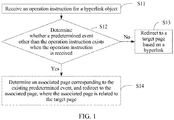
- a first aspect of implementations of the present application provides a method for processing a hyperlink object, including: receiving an operation instruction for a hyperlink object; determining whether a predetermined event other than the operation instruction exists when the operation instruction is received; and redirecting to a target page based on a hyperlink if the previously mentioned predetermined event does not exist; determining an associated page corresponding to the existing predetermined event, and redirecting to the associated page, if the previously mentioned predetermined event exists, where the associated page is related to the target page.
- the associated page corresponding to the existing predetermined event is determined and the associated page is redirected to, so that different events can be generated to redirect to different associated pages, to satisfy diversified user demands.
- a second aspect of implementations of the present application provides a method for processing a hyperlink object, including: receiving an operation instruction for a hyperlink object; determining whether a predetermined event other than the operation instruction exists when the operation instruction is received; and redirecting to a target page based on a hyperlink if the previously mentioned predetermined event does not exist; or determining a simplified page corresponding to the existing predetermined event, and displaying the simplified page in the form of a floating window, if the previously mentioned predetermined event exists, where the simplified page is generated based on the target page or an associated page related to the target page.
- the simplified page corresponding to the existing predetermined event is determined and the simplified page is displayed in the form of a floating window, so that different events can be generated to display different simplified pages, to satisfy diversified user demands.
- a third aspect of implementations of the present application provides a method for processing a hyperlink object, including: displaying a webpage, where the webpage includes a merchandise picture with a hyperlink; receiving an operation instruction for the picture; determining whether a predetermined event other than the operation instruction exists when the operation instruction is received; and redirecting to a target page of the merchandise included in the picture if the previously mentioned predetermined event does not exist; or redirecting to a purchase window of the merchandise included in the picture if the previously mentioned predetermined event exists.
- the target page is redirected to if no other predetermined event exists when the operation instruction is received; or the purchase window is redirected to if another predetermined event exists when the operation instruction is received, so that different pages can be redirected to in different cases, to satisfy diversified user demands.
- a fourth aspect of implementations of the present application provides a method for processing a hyperlink object, including: displaying a webpage, where the webpage includes a merchandise picture with a hyperlink; receiving an operation instruction for the picture; determining whether a predetermined event other than the operation instruction exists when the operation instruction is received; and redirecting to a target page of the merchandise included in the picture if the previously mentioned predetermined event does not exist; or displaying a simplified page of a purchase window of the merchandise included in the picture in the form of a floating window if the previously mentioned predetermined event exists.
- the target page is redirected to if no other predetermined event exists when the operation instruction is received; or the simplified page of the purchase window is displayed in the form of a floating window if another predetermined event exists when the operation instruction is received, so that different pages can be displayed in different cases, to satisfy diversified user demands.
- a fifth aspect of implementations of the present application provides a device for processing a hyperlink object, including: a receiving module, configured to receive an operation instruction for a hyperlink object; a determination module, configured to determine whether a predetermined event other than the operation instruction exists when the operation instruction is received; a first redirecting module, configured to redirect to a target page based on a hyperlink if the previously mentioned predetermined event does not exist; and a second redirecting module, configured to determine an associated page corresponding to the existing predetermined event, and redirect to the associated page, if the previously mentioned predetermined event exists, where the associated page is related to the target page.
- the device for processing a hyperlink object that is provided in the fifth aspect of the implementations of the present application, if another predetermined event exists when an operation is performed on the hyperlink object, the associated page corresponding to the existing predetermined event is determined and the associated page is redirected to, so that different events can be generated to redirect to different associated pages, to satisfy diversified user demands.
- a sixth aspect of implementations of the present application provides a device for processing a hyperlink object, including: a receiving module, configured to receive an operation instruction for a hyperlink object; a determination module, configured to determine whether a predetermined event other than the operation instruction exists when the operation instruction is received; a redirecting module, configured to redirect to a target page based on a hyperlink if the previously mentioned predetermined event does not exist; and a floating window module, configured to determine a simplified page corresponding to the existing predetermined event, and display the simplified page in the form of a floating window, if the previously mentioned predetermined event exists, where the simplified page is generated based on the target page or an associated page related to the target page.
- the simplified page corresponding to the existing predetermined event is determined and the simplified page is displayed in the form of a floating window, so that different events can be generated to display different simplified pages, to satisfy diversified user demands.
- a seventh aspect of implementations of the present application provides a device for processing a hyperlink object, including: a display module, configured to display a webpage, where the webpage includes a merchandise picture with a hyperlink; a receiving module, configured to receive an operation instruction for the picture; a determination module, configured to determine whether a predetermined event other than the operation instruction exists when the operation instruction is received; a first redirecting module, configured to redirect to a target page of the merchandise included in the picture if the previously mentioned predetermined event does not exist; and a second redirecting module, configured to redirect to a purchase window of the merchandise included in the picture if the previously mentioned predetermined event exists.
- the target page is redirected to if no other predetermined event exists when the operation instruction is received; or the purchase window is redirected to if another predetermined event exists when the operation instruction is received, so that different pages can be redirected to in different cases, to satisfy diversified user demands.
- an eighth aspect of implementations of the present application provides a device for processing a hyperlink object, including: a display module, configured to display a webpage, where the webpage includes a merchandise picture with a hyperlink; a receiving module, configured to receive an operation instruction for the picture; a determination module, configured to determine whether a predetermined event other than the operation instruction exists when the operation instruction is received; a redirecting module, configured to redirect to a target page of the merchandise included in the picture if the previously mentioned predetermined event does not exist; and a floating window module, configured to display a simplified page of a purchase window of the merchandise included in the picture in the form of a floating window if the previously mentioned predetermined event exists.
- the target page is redirected to if no other predetermined event exists when the operation instruction is received; or the simplified page of the purchase window is displayed in the form of a floating window if another predetermined event exists when the operation instruction is received, so that different pages can be displayed in different cases, to satisfy diversified user demands.
- FIG. 1 is a schematic flowchart illustrating a method for processing a hyperlink object, according to an implementation of the present application.
- the method in this implementation includes the following steps:
- the operation instruction can be specifically a click instruction.
- the method can include: displaying a prompt message to a user when it is detected that a mouse hovers over a location of the hyperlink object, where the prompt message is used to prompt for a mapping relationship between the predetermined event and the associated page.
- the previously described mapping relationship can be displayed in the form of a floating window, a bubble, etc.
- the previous mapping relationship can be pressing the key "G” to open a quick purchase window, or pressing the key "W” to open an add to cart window.
- the predetermined event is a document object model (DOM) event.
- the DOM event can include a keyboard event and a mouse event.
- the keyboard event is pressing a key or some keys in a keyboard
- the mouse event is clicking or sliding a mouse.
- the predetermined event is not limited to the keyboard event or the mouse event, and can be a screen touch event, etc.
- a script can be embedded in a webpage, so that a browser implements a corresponding function based on the script.
- the script includes an event (event) detection part and an event processing part.
- the event detection part can detect an event occurring on the webpage.
- the event is an interaction occurring when the user performs an operation on the webpage, for example, a click (click) or a move (move).
- the event can be document loading, window scrolling, or size adjustment.
- the event processing part can define an event model, and the browser can process an event based on the event model.
- the event model can include an event capture model, an event bubbling model, a W3C model, etc.
- a specific event model is not limited in this implementation.
- the browser can detect an event and perform corresponding processing based on the script configured in the webpage. For example, when receiving a click instruction, the browser can determine, through detection, whether a keyboard event or a mouse event further exists, and if yes, determine a specific keyboard event or mouse event.
- the target page can be redirected to based on the hyperlink if no other predetermined event exists when the click instruction is received.
- the target page is a common page corresponding to the hyperlink, and is relatively fixed. Therefore, a hyperlink function can still be implemented even if no other predetermined event exits. Compatibility can be improved in the present solution in comparison with a common shortcut key solution in which a shortcut function cannot be implemented in absence of any key that needs to be combined.
- a predetermined event list can be locally configured in the browser, so that when the browser detects that the click instruction for the hyperlink object is received and another event exists, the browser can determine, based on the locally configured information, whether the another event is a predetermined event. As such, when the another event is a predetermined event, it can be determined that the another predetermined event exists; otherwise, it can be determined that no other predetermined event exists.
- the predetermined event list can alternatively be configured in a server.
- the browser detects that the click instruction for the hyperlink object is received and another event exists, the browser sends the another event to the server.
- the server determines whether the another event is a predetermined event, and sends a determining result to the browser.
- the browser can determine, based on the locally configured information or the information configured in the server, whether another predetermined event exists.
- the mapping relationship between the predetermined event and the associated page can be preconfigured, to determine, based on the mapping relationship, the associated page corresponding to the existing predetermined event.
- mapping relationship can be locally stored in the browser, or the browser can receive the mapping relationship sent by the server, so that if the browser determines that another predetermined event further exists when the click instruction is received, the browser can determine the corresponding associated page based on the locally configured or received mapping relationship.
- the mapping relationship can be configured in the server, so that if the browser determines that another predetermined event further exists when the click instruction is received, the browser sends the existing another predetermined event to the server, the server determines the corresponding associated page based on the configured mapping relationship, and the browser receives the associated page sent by the server.
- the associated page can include any one of the following cases: a simplified page of the target page; a page obtained after an operation is performed on the target page; and a simplified page of a page obtained after an operation is performed on the target page.
- the page obtained after the operation is performed on the target page can include a page displayed after a certain button on the target page is clicked on, or can include a page displayed after a certain button on a first page is clicked on, where the first page is a page displayed after a certain button on the target page is clicked on.
- the page obtained after the operation is performed on the target page can further include a page obtained after another subsequent operation.
- the predetermined event is a keyboard event
- the mapping relationship between the predetermined event and the associated page can be shown in Table 1.
- Table 1 Predetermined event Associated page Press the key “G” Open a quick purchase window Press the key “Q” Open a simplified version page of a merchandise homepage Press the key “W” Open an add to cart window Press the key “S” Open an information comparison page of similar merchandise
- a plurality of pages corresponding to each type of merchandise can include an existing type of page, or can include a customized page.
- the add to cart window and the information comparison page of similar merchandise are existing types of pages
- the simplified version page and the quick purchase window are customized pages.
- the simplified version page is a page with less content and/or a smaller picture than an original version
- the quick purchase window is a page with less content and/or a smaller picture than a common purchase window.
- various types of pages of the hyperlink object can be pre-generated, and uniform resource locator (URL) addresses of the various types of pages are recorded, to open a corresponding page based on a URL address.
- URL uniform resource locator
- the browser can send a request message to the server, where the request message includes information about the hyperlink object and information about the associated page, so that after receiving the request message, the server determines the corresponding associated page based on the information included in the request message, and sends the information about the associated page to the browser.
- the information about the hyperlink object is a picture identifier
- the information about the associated page is page type information (for example, a purchase window).
- the server can determine, based on a preconfigured mapping relationship between the picture identifier and merchandise, the merchandise included in a picture, and then obtain, based on the page type information included in the request message, a URL address of a corresponding type of page of the merchandise. For example, the server obtains a URL address of a quick purchase window of merchandise. Afterwards, the server can send the URL address of the quick purchase window of the merchandise to the browser, so that the browser opens the corresponding page based on the URL address.
- the server can obtain information about the corresponding associated page based on information about the hyperlink object and the determined associated page. For example, after detecting a click instruction of the user for a picture, the browser can send an identifier of the clicked picture to the server.
- the server can determine, based on a preconfigured mapping relationship between the picture identifier and merchandise, the merchandise included in the picture, and then obtain, based on a page type indicated by the associated page, information about a corresponding type of page of the merchandise. For example, the server obtains a URL address of a quick purchase window of merchandise. Afterwards, the server can send the URL address of the quick purchase window of the merchandise to the browser, so that the browser opens the corresponding page based on the URL address.
- the hyperlink object is specifically a merchandise picture
- the following procedure can be performed: displaying a webpage, where the webpage includes a merchandise picture with a hyperlink; receiving an operation instruction for the picture; determining whether a predetermined event other than the operation instruction exists when the operation instruction is received; and redirecting to a target page of merchandise included in the picture if the previously mentioned predetermined event does not exist; or redirecting to a purchase window of merchandise included in the picture if the previously mentioned predetermined event exists.
- the operation instruction can specifically include a click instruction.
- the predetermined event can include a keyboard event or a mouse event.
- the predetermined event can be a specific event, for example, an event of pressing the key "G".
- the purchase window can be specifically a quick purchase window, namely, a page that includes only purchase-related information without including information such as merchandise details on a homepage.
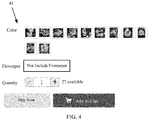
- target page 31 shown in FIG. 3 is directly redirected to if no other predetermined event exists; or quick purchase window 41 shown in FIG. 4 is directly redirected to if another predetermined event exists, specifically, if an event of pressing the key "G" exists.
- different pages can be redirected to based on whether another predetermined event exits when the hyperlink object is clicked on, so that a plurality of pages corresponding to the hyperlink can be displayed based on different cases.
- FIG. 5 is a schematic flowchart illustrating a method for processing a hyperlink object, according to another implementation of the present application.
- a procedure in this implementation includes the following steps:
- the simplified page is determined and the simplified page is displayed in the form of a floating window.
- the simplified page can include a simplified page of the target page, or a simplified page of the associated page of the target page.
- the associated page can specifically include a page obtained after an operation is performed on the target page.
- the hyperlink object is a merchandise picture
- the following procedure can be performed: displaying a webpage, where the webpage includes a merchandise picture with a hyperlink; receiving an operation instruction for the picture; determining whether a predetermined event other than the operation instruction exists when the operation instruction is received; and redirecting to a target page of merchandise included in the picture if the previously mentioned predetermined event does not exist; or displaying a simplified page of a purchase window of merchandise included in the picture in the form of a floating window if the previously mentioned predetermined event exists.
- the operation instruction can specifically include a click instruction.
- the predetermined event can include a keyboard event or a mouse event.
- the predetermined event can be a specific event, for example, an event of pressing the key "G".
- the purchase window can be s a quick purchase window, namely, a page that includes only purchase-related information without including information such as merchandise details on a homepage.
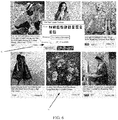
- target page 31 shown in FIG. 3 is directly redirected to if no other predetermined event exists; or quick purchase window 61 shown in FIG. 6 is displayed in the form of a floating window if another predetermined event exists, specifically, if an event of pressing the key "G" exists.
- different pages can be displayed based on whether another predetermined event exits when the hyperlink object is clicked on, so that a plurality of pages corresponding to the hyperlink can be displayed based on different cases.
- a procedure in an implementation of the present application is described below by using an example in which a predetermined event is a keyboard event and a mapping relationship between the predetermined event and an associated page is stored in a server.
- This implementation can be specifically applied when a hyperlink object is a merchandise picture.
- FIG. 7 is a schematic flowchart illustrating a method for processing a hyperlink object, according to another implementation of the present application.
- a procedure in this implementation includes the following steps: S71. Configure extended data in a server and store the extended data in an extended data center.
- the extended data is used to record a mapping relationship between a predetermined event and an associated page.
- the mapping relationship is shown in the previously described Table 1.
- an administrator can configure the extended data through one or more of adding, deleting, modifying, and searching.
- a browser receives a click instruction of a user for a merchandise picture.
- the browser can first display a webpage to the user, where the webpage includes the merchandise picture, and a hyperlink is set for the merchandise picture.
- the user can click on the merchandise picture as wanted.
- the browser receives the click instruction of the user for the merchandise picture.
- the corresponding simplified page is a quick purchase window based on the mapping relationship shown in Table 1.
- the quick purchase window is displayed in the form of a floating window.
- a common target page of merchandise included in the merchandise picture for example, the target page shown in FIG. 3 , is redirected to.
- the browser can further receive an operation instruction of the user for the displayed page, and perform an operation corresponding to the operation instruction.
- the method can further receive a click instruction of the user for "Buy Now” or "Add To Cart” on the quick purchase window, and perform a corresponding operation based on the click instruction.
- the simplified page corresponding to the predetermined event is obtained and the simplified page is displayed, so that when users click on the same hyperlink object, different events can be generated to open different simplified pages, to satisfy diversified user demands Further, if no predetermined event is detected or no simplified page corresponds to the predetermined event, a common hyperlink mode can be used for implementation, so that the present solution is compatible with the existing solution, and can be applied to an existing page.
- FIG. 8 is a schematic structural diagram illustrating a device for processing a hyperlink object, according to an implementation of the present application.
- device 80 includes receiving module 81, determination module 82, first redirecting module 83, and second redirecting module 84.
- Receiving module 81 is configured to receive an operation instruction for a hyperlink object.
- Determination module 82 is configured to determine whether a predetermined event other than the operation instruction exists when the operation instruction is received.
- First redirecting module 83 is configured to redirect to a target page based on a hyperlink if the previously mentioned predetermined event does not exist.
- Second redirecting module 84 is configured to determine an associated page corresponding to the existing predetermined event, and redirect to the associated page, if the previously mentioned predetermined event exists.
- the associated page is related to the target page.
- the predetermined event includes a keyboard event or a mouse event.
- the associated page includes a simplified page of the target page.
- the associated page includes a page for performing a further operation on content related to the hyperlink object on the target page.
- the associated page includes a simplified page of a page for performing a further operation on content related to the hyperlink object on the target page.
- the determining an associated page corresponding to the existing predetermined event includes: determining, based on a mapping relationship between the predetermined event and the associated page, the associated page corresponding to the existing predetermined event.
- the determining, based on a mapping relationship between the predetermined event and the associated page, the associated page corresponding to the existing predetermined event includes determining, based on the pre-obtained mapping relationship between the predetermined event and the associated page, the associated page corresponding to the existing predetermined event.
- the pre-obtained mapping relationship includes the locally configured mapping relationship or the mapping relationship obtained from a server.
- the determining, based on a mapping relationship between the predetermined event and the associated page, the associated page corresponding to the existing predetermined event includes: sending the existing predetermined event to a server, so that the server determines, based on the configured mapping relationship between the predetermined event and the associated page, the associated page corresponding to the existing predetermined event; and receiving information that is about the associated page and that is sent by the server.
- the operation instruction includes a click instruction.
- corresponding device 90 can specifically include display module 91, receiving module 92, determination module 93, first redirecting module 94, and second redirecting module 95.
- Display module 91 is configured to display a webpage, where the webpage includes a merchandise picture with a hyperlink.
- Receiving module 92 is configured to receive an operation instruction for the picture.
- Determination module 93 is configured to determine whether a predetermined event other than the operation instruction exists when the operation instruction is received.
- First redirecting module 94 is configured to redirect to a target page of merchandise included in the picture if the previously mentioned predetermined event does not exist.
- Second redirecting module 95 is configured to redirect to a purchase window of merchandise included in the picture if the previously mentioned predetermined event exists.
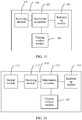
- FIG. 10 is a schematic structural diagram illustrating a device for processing a hyperlink object, according to an implementation of the present application.
- device 100 includes receiving module 101, determination module 102, redirecting module 103, and floating window module 104.
- Receiving module 101 is configured to receive an operation instruction for a hyperlink object.
- Determination module 102 is configured to determine whether a predetermined event other than the operation instruction exists when the operation instruction is received.
- Redirecting module 103 is configured to redirect to a target page based on a hyperlink if the previously mentioned predetermined event does not exist.
- Floating window module 104 is configured to determine a simplified page corresponding to the existing predetermined event, and display the simplified page in the form of a floating window, if the previously mentioned predetermined event exists.
- the simplified page is generated based on the target page or an associated page related to the target page.
- the predetermined event includes a keyboard event or a mouse event.
- the associated page includes a page obtained after an operation is performed on the target page.
- the determining a simplified page corresponding to the existing predetermined event includes: determining, based on a mapping relationship between the predetermined event and the simplified page, the simplified page corresponding to the existing predetermined event.
- the determining, based on a mapping relationship between the predetermined event and the simplified page, the simplified page corresponding to the existing predetermined event includes: determining, based on the pre-obtained mapping relationship between the predetermined event and the simplified page, the simplified page corresponding to the existing predetermined event.
- the pre-obtained mapping relationship includes the locally configured mapping relationship or the mapping relationship obtained from a server.
- the determining, based on a mapping relationship between the predetermined event and the simplified page, the simplified page corresponding to the existing predetermined event includes: sending the existing predetermined event to a server, so that the server determines, based on the configured mapping relationship between the predetermined event and the simplified page, the simplified page corresponding to the existing predetermined event; and receiving information that is about the simplified page and that is sent by the server.
- the operation instruction includes a click instruction.
- corresponding device 110 when the previously described device is applied to a shopping website, corresponding device 110 includes display module 111, receiving module 112, determination module 113, redirecting module 114, and floating window module 115.
- Display module 111 is configured to display a webpage, where the webpage includes a merchandise picture with a hyperlink.
- the receiving module 112 is configured to receive an operation instruction for the picture.
- Determination module 113 is configured to determine whether a predetermined event other than the operation instruction exists when the operation instruction is received.
- Redirecting module 114 is configured to redirect to a target page of merchandise included in the picture if the previously mentioned predetermined event does not exist.
- Floating window module 115 is configured to display a simplified page of a purchase window of merchandise included in the picture in the form of a floating window if the previously mentioned predetermined event exists.
- a hyperlink target corresponding to the predetermined event is obtained and the hyperlink target is displayed, so that when users click on the same hyperlink object, different events can be generated to open different hyperlink targets, to satisfy diversified user demands. Further, if no predetermined event is detected or no feedback action corresponds to the predetermined event, a common hyperlink mode can be used for implementation, so that the present solution is compatible with the existing solution, and can be applied to an existing page.
- a plurality of steps or methods can be implemented by using software or firmware that is stored in a memory and that is executed by an appropriate instruction execution system.
- any one or a combination of the following well-known technologies in the art can be used for implementation: a discrete logic circuit with a logic gate circuit configured to implement a logical function for a data signal, an application-specific integrated circuit with an appropriate combinatorial logic gate circuit, a programmable gate array (PGA), a field programmable gate array (FPGA), etc.
- a person of ordinary skill in the art can understand that all or some of the steps included in the method implementations can be implemented by using a program instructing relevant hardware.
- the program can be stored in a computer readable storage medium. When the program is executed, one or a combination of the steps in the method implementations is performed.
- the function units in the implementations of the present application can be integrated into one processing module, or each of the units can exist alone physically, or two or more units can be integrated into one module.
- the integrated module can be implemented in the form of hardware, or can be implemented in the form of a software function module. When the integrated module is implemented in the form of a software function module and sold or used as independent merchandise, the integrated unit can be stored in a computer readable storage medium.
- the storage medium can be a read-only memory, a magnetic disk, an optical disc, etc.
- references terms such as "an implementation”, “some implementations”, “an example”, “a specific example”, and “some examples” mean that specific features, structures, materials, or characteristics described with reference to the implementations or examples are included in at least one implementation or example of the present application.
- example expressions of the terms are not necessarily with respect to the same embodiment or example.
- the described specific features, structures, materials, or characteristics can be combined in a proper way in any one or more of the implementations or examples.
Landscapes
- Engineering & Computer Science (AREA)
- Theoretical Computer Science (AREA)
- Databases & Information Systems (AREA)
- General Engineering & Computer Science (AREA)
- Physics & Mathematics (AREA)
- General Physics & Mathematics (AREA)
- Data Mining & Analysis (AREA)
- Human Computer Interaction (AREA)
- Computational Linguistics (AREA)
- Health & Medical Sciences (AREA)
- Artificial Intelligence (AREA)
- Audiology, Speech & Language Pathology (AREA)
- General Health & Medical Sciences (AREA)
- Remote Sensing (AREA)
- Radar, Positioning & Navigation (AREA)
- User Interface Of Digital Computer (AREA)
- Information Transfer Between Computers (AREA)
- Two-Way Televisions, Distribution Of Moving Picture Or The Like (AREA)
Abstract
Description
- The present application claims priority to Chinese Patent Application No.
201610509248.X, filed on June 30, 2016 - The present application relates to the field of Internet technologies, and in particular, to a method and device for processing a hyperlink object.
- A hyperlink is essentially a part of a webpage, and is a connection relationship in which a hyperlink object points to a hyperlink target. The hyperlink object can be a text or a picture, and the hyperlink target can be a picture, an email address, a file, or an application.
- In related technologies, a user clicks on a hyperlink object to open or run a corresponding hyperlink target. When different users click on the same hyperlink object, the same hyperlink target is opened or run. This hyperlink mode is relatively simple and cannot satisfy diversified user demands.
- The present application aims to resolve one of technical problems in related technologies at least to a certain extent.
- Therefore, an objective of the present application is to provide a method for processing a hyperlink object. In the method, when users perform operations on the same hyperlink object, different instructions can be generated to point to different hyperlink targets, to satisfy diversified user demands.
- Another objective of the present application is to provide a device for processing a hyperlink object.
- To achieve the previous objectives, a first aspect of implementations of the present application provides a method for processing a hyperlink object, including: receiving an operation instruction for a hyperlink object; determining whether a predetermined event other than the operation instruction exists when the operation instruction is received; and redirecting to a target page based on a hyperlink if the previously mentioned predetermined event does not exist; determining an associated page corresponding to the existing predetermined event, and redirecting to the associated page, if the previously mentioned predetermined event exists, where the associated page is related to the target page.
- According to the method for processing a hyperlink object that is provided in the first aspect of the implementations of the present application, if another predetermined event exists when an operation is performed on the hyperlink object, the associated page corresponding to the existing predetermined event is determined and the associated page is redirected to, so that different events can be generated to redirect to different associated pages, to satisfy diversified user demands.
- To achieve the previous objectives, a second aspect of implementations of the present application provides a method for processing a hyperlink object, including: receiving an operation instruction for a hyperlink object; determining whether a predetermined event other than the operation instruction exists when the operation instruction is received; and redirecting to a target page based on a hyperlink if the previously mentioned predetermined event does not exist; or determining a simplified page corresponding to the existing predetermined event, and displaying the simplified page in the form of a floating window, if the previously mentioned predetermined event exists, where the simplified page is generated based on the target page or an associated page related to the target page.
- According to the method for processing a hyperlink object that is provided in the second aspect of the implementations of the present application, if another predetermined event exists when an operation is performed on the hyperlink object, the simplified page corresponding to the existing predetermined event is determined and the simplified page is displayed in the form of a floating window, so that different events can be generated to display different simplified pages, to satisfy diversified user demands.
- To achieve the previous objectives, a third aspect of implementations of the present application provides a method for processing a hyperlink object, including: displaying a webpage, where the webpage includes a merchandise picture with a hyperlink; receiving an operation instruction for the picture; determining whether a predetermined event other than the operation instruction exists when the operation instruction is received; and redirecting to a target page of the merchandise included in the picture if the previously mentioned predetermined event does not exist; or redirecting to a purchase window of the merchandise included in the picture if the previously mentioned predetermined event exists.
- According to the method for processing a hyperlink object that is provided in the third aspect of the implementations of the present application, the target page is redirected to if no other predetermined event exists when the operation instruction is received; or the purchase window is redirected to if another predetermined event exists when the operation instruction is received, so that different pages can be redirected to in different cases, to satisfy diversified user demands.
- To achieve the previous objectives, a fourth aspect of implementations of the present application provides a method for processing a hyperlink object, including: displaying a webpage, where the webpage includes a merchandise picture with a hyperlink; receiving an operation instruction for the picture; determining whether a predetermined event other than the operation instruction exists when the operation instruction is received; and redirecting to a target page of the merchandise included in the picture if the previously mentioned predetermined event does not exist; or displaying a simplified page of a purchase window of the merchandise included in the picture in the form of a floating window if the previously mentioned predetermined event exists.
- According to the method for processing a hyperlink object that is provided in the fourth aspect of the implementations of the present application, the target page is redirected to if no other predetermined event exists when the operation instruction is received; or the simplified page of the purchase window is displayed in the form of a floating window if another predetermined event exists when the operation instruction is received, so that different pages can be displayed in different cases, to satisfy diversified user demands.
- To achieve the previous objectives, a fifth aspect of implementations of the present application provides a device for processing a hyperlink object, including: a receiving module, configured to receive an operation instruction for a hyperlink object; a determination module, configured to determine whether a predetermined event other than the operation instruction exists when the operation instruction is received; a first redirecting module, configured to redirect to a target page based on a hyperlink if the previously mentioned predetermined event does not exist; and a second redirecting module, configured to determine an associated page corresponding to the existing predetermined event, and redirect to the associated page, if the previously mentioned predetermined event exists, where the associated page is related to the target page.
- According to the device for processing a hyperlink object that is provided in the fifth aspect of the implementations of the present application, if another predetermined event exists when an operation is performed on the hyperlink object, the associated page corresponding to the existing predetermined event is determined and the associated page is redirected to, so that different events can be generated to redirect to different associated pages, to satisfy diversified user demands.
- To achieve the previous objectives, a sixth aspect of implementations of the present application provides a device for processing a hyperlink object, including: a receiving module, configured to receive an operation instruction for a hyperlink object; a determination module, configured to determine whether a predetermined event other than the operation instruction exists when the operation instruction is received; a redirecting module, configured to redirect to a target page based on a hyperlink if the previously mentioned predetermined event does not exist; and a floating window module, configured to determine a simplified page corresponding to the existing predetermined event, and display the simplified page in the form of a floating window, if the previously mentioned predetermined event exists, where the simplified page is generated based on the target page or an associated page related to the target page.
- According to the device for processing a hyperlink object that is provided in the sixth aspect of the implementations of the present application, if another predetermined event exists when an operation is performed on the hyperlink object, the simplified page corresponding to the existing predetermined event is determined and the simplified page is displayed in the form of a floating window, so that different events can be generated to display different simplified pages, to satisfy diversified user demands.
- To achieve the previous objectives, a seventh aspect of implementations of the present application provides a device for processing a hyperlink object, including: a display module, configured to display a webpage, where the webpage includes a merchandise picture with a hyperlink; a receiving module, configured to receive an operation instruction for the picture; a determination module, configured to determine whether a predetermined event other than the operation instruction exists when the operation instruction is received; a first redirecting module, configured to redirect to a target page of the merchandise included in the picture if the previously mentioned predetermined event does not exist; and a second redirecting module, configured to redirect to a purchase window of the merchandise included in the picture if the previously mentioned predetermined event exists.
- According to the device for processing a hyperlink object that is provided in the seventh aspect of the implementations of the present application, the target page is redirected to if no other predetermined event exists when the operation instruction is received; or the purchase window is redirected to if another predetermined event exists when the operation instruction is received, so that different pages can be redirected to in different cases, to satisfy diversified user demands.
- To achieve the previous objectives, an eighth aspect of implementations of the present application provides a device for processing a hyperlink object, including: a display module, configured to display a webpage, where the webpage includes a merchandise picture with a hyperlink; a receiving module, configured to receive an operation instruction for the picture; a determination module, configured to determine whether a predetermined event other than the operation instruction exists when the operation instruction is received; a redirecting module, configured to redirect to a target page of the merchandise included in the picture if the previously mentioned predetermined event does not exist; and a floating window module, configured to display a simplified page of a purchase window of the merchandise included in the picture in the form of a floating window if the previously mentioned predetermined event exists.
- According to the device for processing a hyperlink object that is provided in the eighth aspect of the implementations of the present application, the target page is redirected to if no other predetermined event exists when the operation instruction is received; or the simplified page of the purchase window is displayed in the form of a floating window if another predetermined event exists when the operation instruction is received, so that different pages can be displayed in different cases, to satisfy diversified user demands.
- Some of additional aspects and advantages of the present application are provided in the following description, and some of the additional aspects and advantages of the present application become apparent from the following description or are understood through the practice of the present application.
- The previous and/or additional aspects and advantages of the present application become apparent and easily understood from the following description of the implementations with reference to the accompanying drawings.
-
FIG. 1 is a schematic flowchart illustrating a method for processing a hyperlink object, according to an implementation of the present application; -
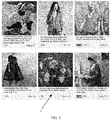
FIG. 2 is a schematic diagram illustrating a merchandise picture used as a hyperlink object, according to an implementation of the present application; -
FIG. 3 is a schematic diagram illustrating a page displayed through redirecting if no other predetermined event exists when the merchandise picture shown inFIG. 2 is clicked on, according to an implementation of the present application; -
FIG. 4 is a schematic diagram illustrating a page displayed through redirecting if another predetermined event exists when the merchandise picture shown inFIG. 2 is clicked on, according to an implementation of the present application; -
FIG. 5 is a schematic flowchart illustrating a method for processing a hyperlink object, according to another implementation of the present application; -
FIG. 6 is a schematic diagram illustrating a page displayed in the form of a floating window if another predetermined event exists when the merchandise picture shown inFIG. 2 is clicked on, according to an implementation of the present application; -
FIG. 7 is a schematic flowchart illustrating a method for processing a hyperlink object, according to another implementation of the present application; -
FIG. 8 is a schematic structural diagram illustrating a device for processing a hyperlink object, according to an implementation of the present application; -
FIG. 9 is a schematic structural diagram illustrating a device for processing a hyperlink object, according to another implementation of the present application; -
FIG. 10 is a schematic structural diagram illustrating a device for processing a hyperlink object, according to another implementation of the present application; and -
FIG. 11 is a schematic structural diagram illustrating a device for processing a hyperlink object, according to another implementation of the present application. - The implementations of the present application are described below in detail, and examples of the implementations are shown in the accompanying drawings. The same or similar reference signs always represent the same or similar modules or modules with the same or similar functions. The implementations described below with reference to the accompanying drawings are examples and are merely intended to explain the present application, but should not be construed as a limitation on the present application. On the contrary, the implementations of the present application include all changes, modifications, and equivalents falling within the spirit and connotation scope of the appended claims.
-
FIG. 1 is a schematic flowchart illustrating a method for processing a hyperlink object, according to an implementation of the present application. - Referring to
FIG. 1 , the method in this implementation includes the following steps: - S 11. Receive an operation instruction for a hyperlink object.
- S12. Determine whether a predetermined event other than the operation instruction exists when the operation instruction is received.
- S13. Redirect to a target page based on a hyperlink if the previously mentioned predetermined event does not exist.
- S14. Determine an associated page corresponding to the existing predetermined event, and redirect to the associated page, if the previously mentioned predetermined event exists, where the associated page is related to the target page.
- The operation instruction can be specifically a click instruction.
- Therefore, in this implementation, when an operation is performed on the hyperlink object, there is no limitation that only a click operation is performed on the hyperlink object, and another predetermined event can further exist, so that different associated pages can be redirected to based on different predetermined events, to satisfy different user demands.
- Further, the method can include: displaying a prompt message to a user when it is detected that a mouse hovers over a location of the hyperlink object, where the prompt message is used to prompt for a mapping relationship between the predetermined event and the associated page.
- For example, when the user hovers the mouse on a certain merchandise picture with a hyperlink, the previously described mapping relationship can be displayed in the form of a floating window, a bubble, etc. For example, the previous mapping relationship can be pressing the key "G" to open a quick purchase window, or pressing the key "W" to open an add to cart window.
- In this implementation, for example, the predetermined event is a document object model (DOM) event. The DOM event can include a keyboard event and a mouse event. For example, the keyboard event is pressing a key or some keys in a keyboard, and the mouse event is clicking or sliding a mouse. Certainly, it can be understood that with development of technologies, the predetermined event is not limited to the keyboard event or the mouse event, and can be a screen touch event, etc.
- A script (JavaScript) can be embedded in a webpage, so that a browser implements a corresponding function based on the script. Specifically, the script includes an event (event) detection part and an event processing part.
- The event detection part can detect an event occurring on the webpage. The event is an interaction occurring when the user performs an operation on the webpage, for example, a click (click) or a move (move). In addition to the user-triggered action, the event can be document loading, window scrolling, or size adjustment.
- The event processing part can define an event model, and the browser can process an event based on the event model. The event model can include an event capture model, an event bubbling model, a W3C model, etc. A specific event model is not limited in this implementation.
- Therefore, the browser can detect an event and perform corresponding processing based on the script configured in the webpage. For example, when receiving a click instruction, the browser can determine, through detection, whether a keyboard event or a mouse event further exists, and if yes, determine a specific keyboard event or mouse event.
- Further, in this implementation, the target page can be redirected to based on the hyperlink if no other predetermined event exists when the click instruction is received. The target page is a common page corresponding to the hyperlink, and is relatively fixed. Therefore, a hyperlink function can still be implemented even if no other predetermined event exits. Compatibility can be improved in the present solution in comparison with a common shortcut key solution in which a shortcut function cannot be implemented in absence of any key that needs to be combined.
- In some implementations, a predetermined event list can be locally configured in the browser, so that when the browser detects that the click instruction for the hyperlink object is received and another event exists, the browser can determine, based on the locally configured information, whether the another event is a predetermined event. As such, when the another event is a predetermined event, it can be determined that the another predetermined event exists; otherwise, it can be determined that no other predetermined event exists.
- In some implementations, the predetermined event list can alternatively be configured in a server. When the browser detects that the click instruction for the hyperlink object is received and another event exists, the browser sends the another event to the server. The server determines whether the another event is a predetermined event, and sends a determining result to the browser.
- Therefore, the browser can determine, based on the locally configured information or the information configured in the server, whether another predetermined event exists.
- In some implementations, the mapping relationship between the predetermined event and the associated page can be preconfigured, to determine, based on the mapping relationship, the associated page corresponding to the existing predetermined event.
- Further, the mapping relationship can be locally stored in the browser, or the browser can receive the mapping relationship sent by the server, so that if the browser determines that another predetermined event further exists when the click instruction is received, the browser can determine the corresponding associated page based on the locally configured or received mapping relationship.
- Alternatively, the mapping relationship can be configured in the server, so that if the browser determines that another predetermined event further exists when the click instruction is received, the browser sends the existing another predetermined event to the server, the server determines the corresponding associated page based on the configured mapping relationship, and the browser receives the associated page sent by the server.
- The associated page can include any one of the following cases: a simplified page of the target page; a page obtained after an operation is performed on the target page; and a simplified page of a page obtained after an operation is performed on the target page.
- Further, the page obtained after the operation is performed on the target page can include a page displayed after a certain button on the target page is clicked on, or can include a page displayed after a certain button on a first page is clicked on, where the first page is a page displayed after a certain button on the target page is clicked on. By analogy, the page obtained after the operation is performed on the target page can further include a page obtained after another subsequent operation.
- For example, the predetermined event is a keyboard event, and the mapping relationship between the predetermined event and the associated page can be shown in Table 1.
Table 1 Predetermined event Associated page Press the key "G" Open a quick purchase window Press the key "Q" Open a simplified version page of a merchandise homepage Press the key "W" Open an add to cart window Press the key "S" Open an information comparison page of similar merchandise - In addition, a plurality of pages corresponding to each type of merchandise can include an existing type of page, or can include a customized page.
- For example, the add to cart window and the information comparison page of similar merchandise are existing types of pages, and the simplified version page and the quick purchase window are customized pages. The simplified version page is a page with less content and/or a smaller picture than an original version, and the quick purchase window is a page with less content and/or a smaller picture than a common purchase window.
- Further, various types of pages of the hyperlink object can be pre-generated, and uniform resource locator (URL) addresses of the various types of pages are recorded, to open a corresponding page based on a URL address.
- Specifically, if the browser determines, based on the locally configured mapping relationship or the received mapping relationship sent by the server, the associated page corresponding to the predetermined event, the browser can send a request message to the server, where the request message includes information about the hyperlink object and information about the associated page, so that after receiving the request message, the server determines the corresponding associated page based on the information included in the request message, and sends the information about the associated page to the browser. For example, the information about the hyperlink object is a picture identifier, and the information about the associated page is page type information (for example, a purchase window). After the browser adds the picture identifier and the page type information to the request message and sends the request message to the server, the server can determine, based on a preconfigured mapping relationship between the picture identifier and merchandise, the merchandise included in a picture, and then obtain, based on the page type information included in the request message, a URL address of a corresponding type of page of the merchandise. For example, the server obtains a URL address of a quick purchase window of merchandise. Afterwards, the server can send the URL address of the quick purchase window of the merchandise to the browser, so that the browser opens the corresponding page based on the URL address.
- If the server determines, based on the locally configured mapping relationship, the associated page corresponding to the predetermined event, the server can obtain information about the corresponding associated page based on information about the hyperlink object and the determined associated page. For example, after detecting a click instruction of the user for a picture, the browser can send an identifier of the clicked picture to the server. The server can determine, based on a preconfigured mapping relationship between the picture identifier and merchandise, the merchandise included in the picture, and then obtain, based on a page type indicated by the associated page, information about a corresponding type of page of the merchandise. For example, the server obtains a URL address of a quick purchase window of merchandise. Afterwards, the server can send the URL address of the quick purchase window of the merchandise to the browser, so that the browser opens the corresponding page based on the URL address.
- When the hyperlink object is specifically a merchandise picture, the following procedure can be performed: displaying a webpage, where the webpage includes a merchandise picture with a hyperlink; receiving an operation instruction for the picture; determining whether a predetermined event other than the operation instruction exists when the operation instruction is received; and redirecting to a target page of merchandise included in the picture if the previously mentioned predetermined event does not exist; or redirecting to a purchase window of merchandise included in the picture if the previously mentioned predetermined event exists.
- Further, the operation instruction can specifically include a click instruction.
- The predetermined event can include a keyboard event or a mouse event.
- Specifically, the predetermined event can be a specific event, for example, an event of pressing the key "G".
- Further, the purchase window can be specifically a quick purchase window, namely, a page that includes only purchase-related information without including information such as merchandise details on a homepage.
- In the previous procedure, referring to
FIG. 2 , when a user clicks onmerchandise picture 21 with a hyperlink on a webpage,target page 31 shown inFIG. 3 is directly redirected to if no other predetermined event exists; orquick purchase window 41 shown inFIG. 4 is directly redirected to if another predetermined event exists, specifically, if an event of pressing the key "G" exists. - In this implementation, different pages can be redirected to based on whether another predetermined event exits when the hyperlink object is clicked on, so that a plurality of pages corresponding to the hyperlink can be displayed based on different cases.
-
FIG. 5 is a schematic flowchart illustrating a method for processing a hyperlink object, according to another implementation of the present application. - Referring to
FIG. 5 , a procedure in this implementation includes the following steps: - S51. Receive an operation instruction for a hyperlink object.
- S52. Determine whether a predetermined event other than the operation instruction exists when the operation instruction is received.
- S53. Redirect to a target page based on a hyperlink if the previously mentioned predetermined event does not exist.
- S54. Determine a simplified page corresponding to the existing predetermined event, and display the simplified page in the form of a floating window, if the previously mentioned predetermined event exists, where the simplified page is generated based on the target page or an associated page related to the target page.
- Different from the previous implementation, in this implementation, when another predetermined event exists, the simplified page is determined and the simplified page is displayed in the form of a floating window.
- Further, the simplified page can include a simplified page of the target page, or a simplified page of the associated page of the target page.
- The associated page can specifically include a page obtained after an operation is performed on the target page.
- It can be understood that for a part that is not specifically described in this implementation, reference can be made to related content in the previous implementation, and details are omitted here for simplicity.
- Further, when the hyperlink object is a merchandise picture, the following procedure can be performed: displaying a webpage, where the webpage includes a merchandise picture with a hyperlink; receiving an operation instruction for the picture; determining whether a predetermined event other than the operation instruction exists when the operation instruction is received; and redirecting to a target page of merchandise included in the picture if the previously mentioned predetermined event does not exist; or displaying a simplified page of a purchase window of merchandise included in the picture in the form of a floating window if the previously mentioned predetermined event exists.
- Further, the operation instruction can specifically include a click instruction.
- The predetermined event can include a keyboard event or a mouse event.
- Specifically, the predetermined event can be a specific event, for example, an event of pressing the key "G".
- Further, the purchase window can be s a quick purchase window, namely, a page that includes only purchase-related information without including information such as merchandise details on a homepage.
- In the previous procedure, referring to
FIG. 2 , when a user clicks onmerchandise picture 21 with a hyperlink on a webpage,target page 31 shown inFIG. 3 is directly redirected to if no other predetermined event exists; or quick purchase window 61 shown inFIG. 6 is displayed in the form of a floating window if another predetermined event exists, specifically, if an event of pressing the key "G" exists. - In this implementation, different pages can be displayed based on whether another predetermined event exits when the hyperlink object is clicked on, so that a plurality of pages corresponding to the hyperlink can be displayed based on different cases.
- A procedure in an implementation of the present application is described below by using an example in which a predetermined event is a keyboard event and a mapping relationship between the predetermined event and an associated page is stored in a server.
- This implementation can be specifically applied when a hyperlink object is a merchandise picture.
- An example in which a simplified page is displayed in the form of a floating window is used in this implementation.
-
FIG. 7 is a schematic flowchart illustrating a method for processing a hyperlink object, according to another implementation of the present application. - Referring to
FIG. 7 , a procedure in this implementation includes the following steps:
S71. Configure extended data in a server and store the extended data in an extended data center. - The extended data is used to record a mapping relationship between a predetermined event and an associated page. For example, the mapping relationship is shown in the previously described Table 1.
- Specifically, an administrator can configure the extended data through one or more of adding, deleting, modifying, and searching.
- S72. A browser receives a click instruction of a user for a merchandise picture.
- For example, the browser can first display a webpage to the user, where the webpage includes the merchandise picture, and a hyperlink is set for the merchandise picture.
- Afterwards, the user can click on the merchandise picture as wanted. For example, the browser receives the click instruction of the user for the merchandise picture.
- S73. Detect a keyboard event.
- S74. Determine whether the keyboard event is detected; and if yes, perform S75; otherwise, perform S78.
- S75. Search the extended data.
- S76. Determine whether a simplified page corresponding to the existing keyboard event is found; and if yes, perform S77; otherwise, perform S78.
- S77. Display the simplified page corresponding to the existing keyboard event.
- For example, when the existing keyboard event is pressing the key "G", the corresponding simplified page is a quick purchase window based on the mapping relationship shown in Table 1. In this case, the quick purchase window is displayed in the form of a floating window.
- S78. Perform a common hyperlink action.
- For example, a common target page of merchandise included in the merchandise picture, for example, the target page shown in
FIG. 3 , is redirected to. - Further, after displaying the corresponding type of page to the user, the browser can further receive an operation instruction of the user for the displayed page, and perform an operation corresponding to the operation instruction.
- For example, after the browser displays the quick purchase window, regardless of whether the page is redirected to or is displayed in the form of a floating window, the method can further receive a click instruction of the user for "Buy Now" or "Add To Cart" on the quick purchase window, and perform a corresponding operation based on the click instruction.
- In this implementation, the simplified page corresponding to the predetermined event is obtained and the simplified page is displayed, so that when users click on the same hyperlink object, different events can be generated to open different simplified pages, to satisfy diversified user demands Further, if no predetermined event is detected or no simplified page corresponds to the predetermined event, a common hyperlink mode can be used for implementation, so that the present solution is compatible with the existing solution, and can be applied to an existing page.
-
FIG. 8 is a schematic structural diagram illustrating a device for processing a hyperlink object, according to an implementation of the present application. - Referring to
FIG. 8 ,device 80 includes receivingmodule 81,determination module 82, first redirectingmodule 83, and second redirectingmodule 84. - Receiving
module 81 is configured to receive an operation instruction for a hyperlink object. -
Determination module 82 is configured to determine whether a predetermined event other than the operation instruction exists when the operation instruction is received. - First redirecting
module 83 is configured to redirect to a target page based on a hyperlink if the previously mentioned predetermined event does not exist. - Second redirecting
module 84 is configured to determine an associated page corresponding to the existing predetermined event, and redirect to the associated page, if the previously mentioned predetermined event exists. - The associated page is related to the target page.
- In some implementations, the predetermined event includes a keyboard event or a mouse event.
- In some implementations, the associated page includes a simplified page of the target page.
- In some implementations, the associated page includes a page for performing a further operation on content related to the hyperlink object on the target page.
- In some implementations, the associated page includes a simplified page of a page for performing a further operation on content related to the hyperlink object on the target page.
- In some implementations, the determining an associated page corresponding to the existing predetermined event includes: determining, based on a mapping relationship between the predetermined event and the associated page, the associated page corresponding to the existing predetermined event.
- In some implementations, the determining, based on a mapping relationship between the predetermined event and the associated page, the associated page corresponding to the existing predetermined event includes determining, based on the pre-obtained mapping relationship between the predetermined event and the associated page, the associated page corresponding to the existing predetermined event.
- The pre-obtained mapping relationship includes the locally configured mapping relationship or the mapping relationship obtained from a server.
- The determining, based on a mapping relationship between the predetermined event and the associated page, the associated page corresponding to the existing predetermined event includes: sending the existing predetermined event to a server, so that the server determines, based on the configured mapping relationship between the predetermined event and the associated page, the associated page corresponding to the existing predetermined event; and receiving information that is about the associated page and that is sent by the server.
- The operation instruction includes a click instruction.
- Further, referring to
FIG. 9 , when the previously described device is applied to a shopping website,corresponding device 90 can specifically includedisplay module 91, receivingmodule 92,determination module 93, first redirectingmodule 94, and second redirectingmodule 95.Display module 91 is configured to display a webpage, where the webpage includes a merchandise picture with a hyperlink. - Receiving
module 92 is configured to receive an operation instruction for the picture. -
Determination module 93 is configured to determine whether a predetermined event other than the operation instruction exists when the operation instruction is received. - First redirecting
module 94 is configured to redirect to a target page of merchandise included in the picture if the previously mentioned predetermined event does not exist. - Second redirecting
module 95 is configured to redirect to a purchase window of merchandise included in the picture if the previously mentioned predetermined event exists. -
FIG. 10 is a schematic structural diagram illustrating a device for processing a hyperlink object, according to an implementation of the present application. - Referring to
FIG. 10 ,device 100 includes receivingmodule 101,determination module 102, redirectingmodule 103, and floatingwindow module 104. - Receiving
module 101 is configured to receive an operation instruction for a hyperlink object. -
Determination module 102 is configured to determine whether a predetermined event other than the operation instruction exists when the operation instruction is received. - Redirecting
module 103 is configured to redirect to a target page based on a hyperlink if the previously mentioned predetermined event does not exist. - Floating
window module 104 is configured to determine a simplified page corresponding to the existing predetermined event, and display the simplified page in the form of a floating window, if the previously mentioned predetermined event exists. - The simplified page is generated based on the target page or an associated page related to the target page.
- In some implementations, the predetermined event includes a keyboard event or a mouse event.
- In some implementations, the associated page includes a page obtained after an operation is performed on the target page.
- In some implementations, the determining a simplified page corresponding to the existing predetermined event includes: determining, based on a mapping relationship between the predetermined event and the simplified page, the simplified page corresponding to the existing predetermined event.
- In some implementations, the determining, based on a mapping relationship between the predetermined event and the simplified page, the simplified page corresponding to the existing predetermined event includes: determining, based on the pre-obtained mapping relationship between the predetermined event and the simplified page, the simplified page corresponding to the existing predetermined event.
- The pre-obtained mapping relationship includes the locally configured mapping relationship or the mapping relationship obtained from a server.
- In some implementations, the determining, based on a mapping relationship between the predetermined event and the simplified page, the simplified page corresponding to the existing predetermined event includes: sending the existing predetermined event to a server, so that the server determines, based on the configured mapping relationship between the predetermined event and the simplified page, the simplified page corresponding to the existing predetermined event; and receiving information that is about the simplified page and that is sent by the server.
- In some implementations, the operation instruction includes a click instruction.
- Further, referring to
FIG. 11 , when the previously described device is applied to a shopping website,corresponding device 110 includesdisplay module 111, receivingmodule 112,determination module 113, redirectingmodule 114, and floatingwindow module 115. -
Display module 111 is configured to display a webpage, where the webpage includes a merchandise picture with a hyperlink. - The receiving
module 112 is configured to receive an operation instruction for the picture. -
Determination module 113 is configured to determine whether a predetermined event other than the operation instruction exists when the operation instruction is received. - Redirecting
module 114 is configured to redirect to a target page of merchandise included in the picture if the previously mentioned predetermined event does not exist. - Floating
window module 115 is configured to display a simplified page of a purchase window of merchandise included in the picture in the form of a floating window if the previously mentioned predetermined event exists. - It can be understood that the devices in the implementations are corresponding to the method implementations. For specific content, reference can be made to related descriptions in the method implementations, and details are omitted here for simplicity.
- In the implementations, a hyperlink target corresponding to the predetermined event is obtained and the hyperlink target is displayed, so that when users click on the same hyperlink object, different events can be generated to open different hyperlink targets, to satisfy diversified user demands. Further, if no predetermined event is detected or no feedback action corresponds to the predetermined event, a common hyperlink mode can be used for implementation, so that the present solution is compatible with the existing solution, and can be applied to an existing page.
- It is worthwhile to note that in the description of the present application, the terms "first", "second", etc. are merely used for description, but cannot be understood as an indication or implication of relative importance. In addition, in the description of the present application, "a plurality of' means "at least two" unless otherwise stated.
- Descriptions of any process or method described in a flowchart or described in another way here can be understood as follows: One or more modules, segments, or parts of code of an executable instruction that is used to implement a specific logical function or operation step are included, the scope of the example implementations of the present application includes other implementations, and functions can be performed in a sequence other than a shown or discussed sequence, for example, in a basically simultaneous way or a reverse sequence based on the functions. It should be understood by a person skilled in the art of the implementations of the present application.
- It should be understood that the parts of the present application can be implemented by using hardware, software, firmware, or a combination thereof. In the previous implementations, a plurality of steps or methods can be implemented by using software or firmware that is stored in a memory and that is executed by an appropriate instruction execution system. For example, if hardware is used for implementation, similar to implementation in another implementation, any one or a combination of the following well-known technologies in the art can be used for implementation: a discrete logic circuit with a logic gate circuit configured to implement a logical function for a data signal, an application-specific integrated circuit with an appropriate combinatorial logic gate circuit, a programmable gate array (PGA), a field programmable gate array (FPGA), etc.
- A person of ordinary skill in the art can understand that all or some of the steps included in the method implementations can be implemented by using a program instructing relevant hardware. The program can be stored in a computer readable storage medium. When the program is executed, one or a combination of the steps in the method implementations is performed.
- In addition, the function units in the implementations of the present application can be integrated into one processing module, or each of the units can exist alone physically, or two or more units can be integrated into one module. The integrated module can be implemented in the form of hardware, or can be implemented in the form of a software function module. When the integrated module is implemented in the form of a software function module and sold or used as independent merchandise, the integrated unit can be stored in a computer readable storage medium.
- The storage medium can be a read-only memory, a magnetic disk, an optical disc, etc.
- In the description of the present specification, descriptions of reference terms such as "an implementation", "some implementations", "an example", "a specific example", and "some examples" mean that specific features, structures, materials, or characteristics described with reference to the implementations or examples are included in at least one implementation or example of the present application. In the present specification, example expressions of the terms are not necessarily with respect to the same embodiment or example. In addition, the described specific features, structures, materials, or characteristics can be combined in a proper way in any one or more of the implementations or examples.
- Although the implementations of the present application are shown and described above, it can be understood that the previous implementations are examples, and cannot be construed as a limitation on the present application. A person of ordinary skill in the art can make changes, modifications, replacements, and variations to the previous implementations within the scope of the present application.
Claims (28)
- A method for processing a hyperlink object, comprising:receiving an operation instruction for a hyperlink object;determining whether a predetermined event other than the operation instruction exists when the operation instruction is received; andredirecting to a target page based on a hyperlink if the previously mentioned predetermined event does not exist; ordetermining an associated page corresponding to the existing predetermined event, and redirecting to the associated page, if the previously mentioned predetermined event exists, whereinthe associated page is related to the target page.
- The method according to claim 1, wherein the predetermined event comprises:
a keyboard event or a mouse event. - The method according to claim 1, wherein the associated page comprises:
a simplified page of the target page. - The method according to claim 1, wherein the associated page comprises:
a page obtained after an operation is performed on the target page. - The method according to claim 1, wherein the associated page comprises:
a simplified page of a page obtained after an operation is performed on the target page. - The method according to claim 1, wherein the determining an associated page corresponding to the existing predetermined event comprises:
determining, based on a mapping relationship between the predetermined event and the associated page, the associated page corresponding to the existing predetermined event. - The method according to claim 6, wherein the determining, based on a mapping relationship between the predetermined event and the associated page, the associated page corresponding to the existing predetermined event comprises:determining, based on the pre-obtained mapping relationship between the predetermined event and the associated page, the associated page corresponding to the existing predetermined event, whereinthe pre-obtained mapping relationship comprises the locally configured mapping relationship or the mapping relationship obtained from a server.
- The method according to claim 6, wherein the determining, based on a mapping relationship between the predetermined event and the associated page, the associated page corresponding to the existing predetermined event comprises:sending the existing predetermined event to a server, so that the server determines, based on the configured mapping relationship between the predetermined event and the associated page, the associated page corresponding to the existing predetermined event; andreceiving information that is about the associated page and that is sent by the server.
- The method according to claim 1, wherein the operation instruction comprises:
a click instruction. - The method according to claim 2, further comprising:
displaying a prompt message to a user when it is detected that a mouse hovers over a location of the hyperlink object, wherein the prompt message is used to prompt for a mapping relationship between the predetermined event and the associated page. - A method for processing a hyperlink object, comprising:receiving an operation instruction for a hyperlink object;determining whether a predetermined event other than the operation instruction exists when the operation instruction is received; andredirecting to a target page based on a hyperlink if the previously mentioned predetermined event does not exist; ordetermining a simplified page corresponding to the existing predetermined event, and displaying the simplified page in the form of a floating window, if the previously mentioned predetermined event exists, whereinthe simplified page is generated based on the target page or an associated page related to the target page.
- The method according to claim 11, wherein the predetermined event comprises:
a keyboard event or a mouse event. - The method according to claim 11, wherein the associated page comprises:
a page obtained after an operation is performed on the target page. - The method according to claim 11, wherein the determining a simplified page corresponding to the existing predetermined event comprises:
determining, based on a mapping relationship between the predetermined event and the simplified page, the simplified page corresponding to the existing predetermined event. - The method according to claim 14, wherein the determining, based on a mapping relationship between the predetermined event and the simplified page, the simplified page corresponding to the existing predetermined event comprises:determining, based on the pre-obtained mapping relationship between the predetermined event and the simplified page, the simplified page corresponding to the existing predetermined event, whereinthe pre-obtained mapping relationship comprises the locally configured mapping relationship or the mapping relationship obtained from a server.
- The method according to claim 14, wherein the determining, based on a mapping relationship between the predetermined event and the simplified page, the simplified page corresponding to the existing predetermined event comprises:sending the existing predetermined event to a server, so that the server determines, based on the configured mapping relationship between the predetermined event and the simplified page, the simplified page corresponding to the existing predetermined event; andreceiving information that is about the simplified page and that is sent by the server.
- The method according to claim 11, wherein the operation instruction comprises:
a click instruction. - The method according to claim 12, further comprising:
displaying a prompt message to a user when it is detected that a mouse hovers over a location of the hyperlink object, wherein the prompt message is used to prompt for a mapping relationship between the predetermined event and the associated page. - A method for processing a hyperlink object, comprising:displaying a webpage, wherein the webpage comprises a merchandise picture with a hyperlink;receiving an operation instruction for the picture;determining whether a predetermined event other than the operation instruction exists when the operation instruction is received; andredirecting to a target page of merchandise comprised in the picture if the previously mentioned predetermined event does not exist; orredirecting to a purchase window of merchandise comprised in the picture if the previously mentioned predetermined event exists.
- The method according to claim 19, wherein the predetermined event comprises:
a keyboard event or a mouse event. - The method according to claim 19, wherein the operation instruction comprises:
a click instruction. - A method for processing a hyperlink object, comprising:displaying a webpage, wherein the webpage comprises a merchandise picture with a hyperlink;receiving an operation instruction for the picture;determining whether a predetermined event other than the operation instruction exists when the operation instruction is received; andredirecting to a target page of merchandise comprised in the picture if the previously mentioned predetermined event does not exist; ordisplaying a simplified page of a purchase window of merchandise comprised in the picture in the form of a floating window if the previously mentioned predetermined event exists.
- The method according to claim 22, wherein the predetermined event comprises:
a keyboard event or a mouse event. - The method according to claim 22, wherein the operation instruction comprises:
a click instruction. - A device for processing a hyperlink object, comprising:a receiving module, configured to receive an operation instruction for a hyperlink object;a determination module, configured to determine whether a predetermined event other than the operation instruction exists when the operation instruction is received;a first redirecting module, configured to redirect to a target page based on a hyperlink if the previously mentioned predetermined event does not exist; anda second redirecting module, configured to determine an associated page corresponding to the existing predetermined event, and redirect to the associated page, if the previously mentioned predetermined event exists, whereinthe associated page is related to the target page.
- A device for processing a hyperlink object, comprising:a receiving module, configured to receive an operation instruction for a hyperlink object;a determination module, configured to determine whether a predetermined event other than the operation instruction exists when the operation instruction is received;a redirecting module, configured to redirect to a target page based on a hyperlink if the previously mentioned predetermined event does not exist; anda floating window module, configured to determine a simplified page corresponding to the existing predetermined event, and display the simplified page in the form of a floating window, if the previously mentioned predetermined event exists, whereinthe simplified page is generated based on the target page or an associated page related to the target page.
- A device for processing a hyperlink object, comprising:a display module, configured to display a webpage, wherein the webpage comprises a merchandise picture with a hyperlink;a receiving module, configured to receive an operation instruction for the picture;a determination module, configured to determine whether a predetermined event other than the operation instruction exists when the operation instruction is received;a first redirecting module, configured to redirect to a target page of merchandise comprised in the picture if the previously mentioned predetermined event does not exist; anda second redirecting module, configured to redirect to a purchase window of merchandise comprised in the picture if the previously mentioned predetermined event exists.
- A device for processing a hyperlink object, comprising:a display module, configured to display a webpage, wherein the webpage comprises a merchandise picture with a hyperlink;a receiving module, configured to receive an operation instruction for the picture;a determination module, configured to determine whether a predetermined event other than the operation instruction exists when the operation instruction is received;a redirecting module, configured to redirect to a target page of merchandise comprised in the picture if the previously mentioned predetermined event does not exist; anda floating window module, configured to display a simplified page of a purchase window of merchandise comprised in the picture in the form of a floating window if the previously mentioned predetermined event exists.
Applications Claiming Priority (2)
| Application Number | Priority Date | Filing Date | Title |
|---|---|---|---|
| CN201610509248.XA CN107016010A (en) | 2016-06-30 | 2016-06-30 | The treating method and apparatus of hyperlinked object |
| PCT/CN2017/088587 WO2018001119A1 (en) | 2016-06-30 | 2017-06-16 | Method and device for processing hyperlink object |
Publications (2)
| Publication Number | Publication Date |
|---|---|
| EP3480683A1 true EP3480683A1 (en) | 2019-05-08 |
| EP3480683A4 EP3480683A4 (en) | 2019-05-08 |
Family
ID=59439048
Family Applications (1)
| Application Number | Title | Priority Date | Filing Date |
|---|---|---|---|
| EP17819116.9A Pending EP3480683A4 (en) | 2016-06-30 | 2017-06-16 | Method and device for processing hyperlink object |
Country Status (9)
| Country | Link |
|---|---|
| US (2) | US11080353B2 (en) |
| EP (1) | EP3480683A4 (en) |
| JP (1) | JP2019523487A (en) |
| KR (1) | KR102242780B1 (en) |
| CN (1) | CN107016010A (en) |
| PH (1) | PH12019500009A1 (en) |
| SG (1) | SG11201811741PA (en) |
| TW (1) | TW201802707A (en) |
| WO (1) | WO2018001119A1 (en) |
Families Citing this family (8)
| Publication number | Priority date | Publication date | Assignee | Title |
|---|---|---|---|---|
| CN107016010A (en) | 2016-06-30 | 2017-08-04 | 阿里巴巴集团控股有限公司 | The treating method and apparatus of hyperlinked object |
| CN107705182B (en) * | 2017-09-30 | 2020-11-03 | 北京京东尚科信息技术有限公司 | Method and apparatus for determining the origin of an order |
| CN110032687B (en) * | 2019-01-28 | 2023-08-01 | 创新先进技术有限公司 | Webpage content processing method and device |
| CN111612558A (en) * | 2019-02-25 | 2020-09-01 | 福特全球技术公司 | Method and system for itinerary invitation |
| CN111309422B (en) * | 2020-02-13 | 2026-02-06 | 腾讯科技(深圳)有限公司 | Display method, processing method and related device in feature value transfer |
| CN111753229B (en) * | 2020-06-10 | 2024-07-09 | 支付宝(杭州)信息技术有限公司 | A page configuration method, device and equipment |
| CN111966507A (en) * | 2020-07-22 | 2020-11-20 | 招联消费金融有限公司 | WEB-based event response method and device, computer equipment and storage medium |
| CN116910405A (en) * | 2023-06-28 | 2023-10-20 | 浙江海亮科技有限公司 | Page processing method, device, computer equipment and storage medium |
Family Cites Families (35)
| Publication number | Priority date | Publication date | Assignee | Title |
|---|---|---|---|---|
| US20030208472A1 (en) * | 2000-04-11 | 2003-11-06 | Pham Peter Manh | Method and apparatus for transparent keyword-based hyperlink |
| JP2003091345A (en) * | 2001-09-18 | 2003-03-28 | Sony Corp | Information processing apparatus, guidance presentation method, guidance presentation program, and recording medium on which guidance presentation program is recorded |
| US7171625B1 (en) * | 2002-06-18 | 2007-01-30 | Actify, Inc. | Double-clicking a point-and-click user interface apparatus to enable a new interaction with content represented by an active visual display element |
| US20040004632A1 (en) * | 2002-06-28 | 2004-01-08 | International Business Machines Corporation | Tooltip hyperlinks |
| US7568002B1 (en) * | 2002-07-03 | 2009-07-28 | Sprint Spectrum L.P. | Method and system for embellishing web content during transmission between a content server and a client station |
| US7975020B1 (en) * | 2005-07-15 | 2011-07-05 | Amazon Technologies, Inc. | Dynamic updating of rendered web pages with supplemental content |
| US7975019B1 (en) * | 2005-07-15 | 2011-07-05 | Amazon Technologies, Inc. | Dynamic supplementation of rendered web pages with content supplied by a separate source |
| US9740794B2 (en) * | 2005-12-23 | 2017-08-22 | Yahoo Holdings, Inc. | Methods and systems for enhancing internet experiences |
| KR20090024541A (en) * | 2007-09-04 | 2009-03-09 | 삼성전자주식회사 | Hyperlink selection method and mobile communication terminal using same |
| US8423889B1 (en) * | 2008-06-05 | 2013-04-16 | Amazon Technologies, Inc. | Device specific presentation control for electronic book reader devices |
| KR101580003B1 (en) * | 2008-06-27 | 2015-12-23 | 톰슨 라이센싱 | Graphical user interface for non mouse-based activation of links |
| JP5222717B2 (en) * | 2008-12-26 | 2013-06-26 | 株式会社Access | Display window selection method, display window selection program, and terminal device |
| WO2010085773A1 (en) * | 2009-01-24 | 2010-07-29 | Kontera Technologies, Inc. | Hybrid contextual advertising and related content analysis and display techniques |
| TWI409699B (en) * | 2009-10-01 | 2013-09-21 | Inventec Corp | Browsing system based on deploying hot key for web page redirecting element and method thereof |
| US9838744B2 (en) * | 2009-12-03 | 2017-12-05 | Armin Moehrle | Automated process for segmenting and classifying video objects and auctioning rights to interactive sharable video objects |
| US20110202934A1 (en) * | 2010-02-12 | 2011-08-18 | Ludwig Lester F | Window manger input focus control for high dimensional touchpad (htpd), advanced mice, and other multidimensional user interfaces |
| US8552999B2 (en) * | 2010-06-14 | 2013-10-08 | Apple Inc. | Control selection approximation |
| US10346498B2 (en) * | 2012-02-06 | 2019-07-09 | Microsoft Technology Licensing, Llc | Presenting and interacting with a hyperlink dialog for generating hyperlinks |
| CA2865267A1 (en) | 2012-02-21 | 2013-08-29 | Ensighten, Inc. | Graphical overlay related to data mining and analytics |
| GB2504270A (en) * | 2012-07-23 | 2014-01-29 | Wirewax Ltd | Synchronising hyperlink and associated object positions using frame numbers encoded as pixel data |
| US10162492B2 (en) * | 2012-09-11 | 2018-12-25 | Microsoft Technology Licensing, Llc | Tap-to-open link selection areas |
| US9575653B2 (en) * | 2013-01-15 | 2017-02-21 | Blackberry Limited | Enhanced display of interactive elements in a browser |
| KR20140114645A (en) * | 2013-03-19 | 2014-09-29 | 삼성전자주식회사 | Method for displaying preview screen of hyperlinks |
| CN104123282B (en) * | 2013-04-24 | 2017-12-01 | 腾讯科技(深圳)有限公司 | A kind of method, device and mobile terminal for selecting hyperlink |
| WO2015097729A1 (en) * | 2013-12-27 | 2015-07-02 | 株式会社マーズフラッグ | Information processing device, web server and computer program |
| US10511580B2 (en) * | 2014-03-31 | 2019-12-17 | Monticello Enterprises LLC | System and method for providing a social media shopping experience |
| US10002396B2 (en) * | 2014-03-31 | 2018-06-19 | Monticello Enterprises LLC | System and method for transitioning from a first site to a second site |
| CN103984727B (en) * | 2014-05-16 | 2017-05-24 | 北京奇虎科技有限公司 | Webpage interaction method device based on browser |
| CN105468275A (en) * | 2014-09-10 | 2016-04-06 | 阿里巴巴集团控股有限公司 | Method and apparatus for performing operation on presented object |
| WO2016065310A1 (en) * | 2014-10-23 | 2016-04-28 | rocket-fueled, Inc. | Systems and methods for providing user analytics |
| CN106598972B (en) * | 2015-10-14 | 2020-05-08 | 阿里巴巴集团控股有限公司 | Information display method and device and intelligent terminal |
| CA2942396A1 (en) * | 2015-11-24 | 2017-05-24 | Via Capitale | Image-based search engine |
| CN105607857B (en) * | 2015-12-29 | 2018-11-23 | 小米科技有限责任公司 | page selection method and device |
| CN105718156A (en) * | 2016-01-14 | 2016-06-29 | 百度在线网络技术(北京)有限公司 | Business processing method and system |
| CN107016010A (en) | 2016-06-30 | 2017-08-04 | 阿里巴巴集团控股有限公司 | The treating method and apparatus of hyperlinked object |
-
2016
- 2016-06-30 CN CN201610509248.XA patent/CN107016010A/en active Pending
-
2017
- 2017-04-12 TW TW106112254A patent/TW201802707A/en unknown
- 2017-06-16 SG SG11201811741PA patent/SG11201811741PA/en unknown
- 2017-06-16 JP JP2019500306A patent/JP2019523487A/en active Pending
- 2017-06-16 EP EP17819116.9A patent/EP3480683A4/en active Pending
- 2017-06-16 WO PCT/CN2017/088587 patent/WO2018001119A1/en not_active Ceased
- 2017-06-16 KR KR1020197003123A patent/KR102242780B1/en active Active
-
2018
- 2018-12-28 US US16/235,770 patent/US11080353B2/en active Active
-
2019
- 2019-01-03 PH PH12019500009A patent/PH12019500009A1/en unknown
- 2019-12-19 US US16/721,092 patent/US11086956B2/en active Active
Also Published As
| Publication number | Publication date |
|---|---|
| WO2018001119A1 (en) | 2018-01-04 |
| KR102242780B1 (en) | 2021-04-23 |
| SG11201811741PA (en) | 2019-01-30 |
| US11086956B2 (en) | 2021-08-10 |
| US20190138564A1 (en) | 2019-05-09 |
| PH12019500009A1 (en) | 2019-10-14 |
| US11080353B2 (en) | 2021-08-03 |
| US20200125622A1 (en) | 2020-04-23 |
| KR20190025000A (en) | 2019-03-08 |
| TW201802707A (en) | 2018-01-16 |
| JP2019523487A (en) | 2019-08-22 |
| CN107016010A (en) | 2017-08-04 |
| EP3480683A4 (en) | 2019-05-08 |
Similar Documents
| Publication | Publication Date | Title |
|---|---|---|
| EP3480683A1 (en) | Method and device for processing hyperlink object | |
| JP6130335B2 (en) | Information display program, distribution device, information display method, and information display device | |
| US20170192798A1 (en) | User interface method and apparatus | |
| CN107256109A (en) | Method for information display, device and terminal | |
| US20130024873A1 (en) | Context-aware applications and methods | |
| US8949858B2 (en) | Augmenting user interface elements with information | |
| CN105868096A (en) | Methods and apparatuses used for displaying web page test result in browser and device | |
| CN106097072A (en) | The control methods of a kind of merchandise news, device and terminal unit | |
| CN102999342A (en) | Full-screen browsing method and device for picture in web page | |
| US10002113B2 (en) | Accessing related application states from a current application state | |
| CN106815374A (en) | A kind of method for page jump and device | |
| CN107180032A (en) | Comment on content display method and system | |
| US20260003491A1 (en) | Drag and drop interactions for a browser software application | |
| CN105528446A (en) | Abstract generating method and device meeting extended product demands | |
| US12126579B2 (en) | Method and apparatus for messaging service | |
| US11921986B1 (en) | System and method for web page navigation behavior | |
| CN114077371B (en) | Information display method, device, electronic equipment and storage medium | |
| WO2021138542A1 (en) | Presenting indicators associated with network-associated content | |
| CN112732464B (en) | Pasting method, device and electronic equipment | |
| US20240005103A1 (en) | Method and user apparatus for generating and applying translation marker | |
| US11704014B1 (en) | Supporting micro swipes for generating custom user interface responses | |
| WO2020068704A1 (en) | Detecting selection of disabled inner links within nested content | |
| CN111104620A (en) | Webpage browsing method, server and system | |
| CN116956964A (en) | Data processing method and device based on two-dimension code and electronic terminal | |
| JPWO2015198479A1 (en) | Information processing apparatus, information processing method, and information processing program |
Legal Events
| Date | Code | Title | Description |
|---|---|---|---|
| STAA | Information on the status of an ep patent application or granted ep patent |
Free format text: STATUS: THE INTERNATIONAL PUBLICATION HAS BEEN MADE |
|
| PUAI | Public reference made under article 153(3) epc to a published international application that has entered the european phase |
Free format text: ORIGINAL CODE: 0009012 |
|
| STAA | Information on the status of an ep patent application or granted ep patent |
Free format text: STATUS: REQUEST FOR EXAMINATION WAS MADE |
|
| 17P | Request for examination filed |
Effective date: 20190126 |
|
| A4 | Supplementary search report drawn up and despatched |
Effective date: 20190401 |
|
| AK | Designated contracting states |
Kind code of ref document: A1 Designated state(s): AL AT BE BG CH CY CZ DE DK EE ES FI FR GB GR HR HU IE IS IT LI LT LU LV MC MK MT NL NO PL PT RO RS SE SI SK SM TR |
|
| AX | Request for extension of the european patent |
Extension state: BA ME |
|
| DAV | Request for validation of the european patent (deleted) | ||
| DAX | Request for extension of the european patent (deleted) | ||
| RAP1 | Party data changed (applicant data changed or rights of an application transferred) |
Owner name: ADVANCED NEW TECHNOLOGIES CO., LTD. |
|
| STAA | Information on the status of an ep patent application or granted ep patent |
Free format text: STATUS: EXAMINATION IS IN PROGRESS |
|
| 17Q | First examination report despatched |
Effective date: 20210205 |
|
| GRAP | Despatch of communication of intention to grant a patent |
Free format text: ORIGINAL CODE: EPIDOSNIGR1 |
|
| STAA | Information on the status of an ep patent application or granted ep patent |
Free format text: STATUS: GRANT OF PATENT IS INTENDED |
|
| INTG | Intention to grant announced |
Effective date: 20251017 |
|
| GRAJ | Information related to disapproval of communication of intention to grant by the applicant or resumption of examination proceedings by the epo deleted |
Free format text: ORIGINAL CODE: EPIDOSDIGR1 |
|
| STAA | Information on the status of an ep patent application or granted ep patent |
Free format text: STATUS: EXAMINATION IS IN PROGRESS |
|
| GRAP | Despatch of communication of intention to grant a patent |
Free format text: ORIGINAL CODE: EPIDOSNIGR1 |
|
| STAA | Information on the status of an ep patent application or granted ep patent |
Free format text: STATUS: GRANT OF PATENT IS INTENDED |
|
| INTC | Intention to grant announced (deleted) | ||
| INTG | Intention to grant announced |
Effective date: 20260211 |
|
| P01 | Opt-out of the competence of the unified patent court (upc) registered |
Free format text: CASE NUMBER: UPC_APP_0006624_3480683/2026 Effective date: 20260224 |