EP3479891A2 - Composition for forming reverse osmosis membrane protection layer, method for preparing reverse osmosis membrane using same, reverse osmosis membrane, and water treatment module - Google Patents
Composition for forming reverse osmosis membrane protection layer, method for preparing reverse osmosis membrane using same, reverse osmosis membrane, and water treatment module Download PDFInfo
- Publication number
- EP3479891A2 EP3479891A2 EP17861884.9A EP17861884A EP3479891A2 EP 3479891 A2 EP3479891 A2 EP 3479891A2 EP 17861884 A EP17861884 A EP 17861884A EP 3479891 A2 EP3479891 A2 EP 3479891A2
- Authority
- EP
- European Patent Office
- Prior art keywords
- reverse osmosis
- osmosis membrane
- protective layer
- forming
- composition
- Prior art date
- Legal status (The legal status is an assumption and is not a legal conclusion. Google has not performed a legal analysis and makes no representation as to the accuracy of the status listed.)
- Granted
Links
Images
Classifications
-
- C—CHEMISTRY; METALLURGY
- C02—TREATMENT OF WATER, WASTE WATER, SEWAGE, OR SLUDGE
- C02F—TREATMENT OF WATER, WASTE WATER, SEWAGE, OR SLUDGE
- C02F1/00—Treatment of water, waste water, or sewage
- C02F1/44—Treatment of water, waste water, or sewage by dialysis, osmosis or reverse osmosis
- C02F1/441—Treatment of water, waste water, or sewage by dialysis, osmosis or reverse osmosis by reverse osmosis
-
- B—PERFORMING OPERATIONS; TRANSPORTING
- B01—PHYSICAL OR CHEMICAL PROCESSES OR APPARATUS IN GENERAL
- B01D—SEPARATION
- B01D61/00—Processes of separation using semi-permeable membranes, e.g. dialysis, osmosis or ultrafiltration; Apparatus, accessories or auxiliary operations specially adapted therefor
- B01D61/02—Reverse osmosis; Hyperfiltration ; Nanofiltration
- B01D61/025—Reverse osmosis; Hyperfiltration
-
- B—PERFORMING OPERATIONS; TRANSPORTING
- B01—PHYSICAL OR CHEMICAL PROCESSES OR APPARATUS IN GENERAL
- B01D—SEPARATION
- B01D67/00—Processes specially adapted for manufacturing semi-permeable membranes for separation processes or apparatus
- B01D67/0002—Organic membrane manufacture
- B01D67/0006—Organic membrane manufacture by chemical reactions
-
- B—PERFORMING OPERATIONS; TRANSPORTING
- B01—PHYSICAL OR CHEMICAL PROCESSES OR APPARATUS IN GENERAL
- B01D—SEPARATION
- B01D67/00—Processes specially adapted for manufacturing semi-permeable membranes for separation processes or apparatus
- B01D67/0081—After-treatment of organic or inorganic membranes
- B01D67/0088—Physical treatment with compounds, e.g. swelling, coating or impregnation
-
- B—PERFORMING OPERATIONS; TRANSPORTING
- B01—PHYSICAL OR CHEMICAL PROCESSES OR APPARATUS IN GENERAL
- B01D—SEPARATION
- B01D69/00—Semi-permeable membranes for separation processes or apparatus characterised by their form, structure or properties; Manufacturing processes specially adapted therefor
- B01D69/02—Semi-permeable membranes for separation processes or apparatus characterised by their form, structure or properties; Manufacturing processes specially adapted therefor characterised by their properties
-
- B—PERFORMING OPERATIONS; TRANSPORTING
- B01—PHYSICAL OR CHEMICAL PROCESSES OR APPARATUS IN GENERAL
- B01D—SEPARATION
- B01D69/00—Semi-permeable membranes for separation processes or apparatus characterised by their form, structure or properties; Manufacturing processes specially adapted therefor
- B01D69/10—Supported membranes; Membrane supports
- B01D69/107—Organic support material
- B01D69/1071—Woven, non-woven or net mesh
-
- B—PERFORMING OPERATIONS; TRANSPORTING
- B01—PHYSICAL OR CHEMICAL PROCESSES OR APPARATUS IN GENERAL
- B01D—SEPARATION
- B01D69/00—Semi-permeable membranes for separation processes or apparatus characterised by their form, structure or properties; Manufacturing processes specially adapted therefor
- B01D69/12—Composite membranes; Ultra-thin membranes
- B01D69/1213—Laminated layers
-
- B—PERFORMING OPERATIONS; TRANSPORTING
- B01—PHYSICAL OR CHEMICAL PROCESSES OR APPARATUS IN GENERAL
- B01D—SEPARATION
- B01D69/00—Semi-permeable membranes for separation processes or apparatus characterised by their form, structure or properties; Manufacturing processes specially adapted therefor
- B01D69/12—Composite membranes; Ultra-thin membranes
- B01D69/1214—Chemically bonded layers, e.g. cross-linking
-
- B—PERFORMING OPERATIONS; TRANSPORTING
- B01—PHYSICAL OR CHEMICAL PROCESSES OR APPARATUS IN GENERAL
- B01D—SEPARATION
- B01D69/00—Semi-permeable membranes for separation processes or apparatus characterised by their form, structure or properties; Manufacturing processes specially adapted therefor
- B01D69/12—Composite membranes; Ultra-thin membranes
- B01D69/1216—Three or more layers
-
- B—PERFORMING OPERATIONS; TRANSPORTING
- B01—PHYSICAL OR CHEMICAL PROCESSES OR APPARATUS IN GENERAL
- B01D—SEPARATION
- B01D69/00—Semi-permeable membranes for separation processes or apparatus characterised by their form, structure or properties; Manufacturing processes specially adapted therefor
- B01D69/12—Composite membranes; Ultra-thin membranes
- B01D69/125—In situ manufacturing by polymerisation, polycondensation, cross-linking or chemical reaction
- B01D69/1251—In situ manufacturing by polymerisation, polycondensation, cross-linking or chemical reaction by interfacial polymerisation
-
- B—PERFORMING OPERATIONS; TRANSPORTING
- B01—PHYSICAL OR CHEMICAL PROCESSES OR APPARATUS IN GENERAL
- B01D—SEPARATION
- B01D71/00—Semi-permeable membranes for separation processes or apparatus characterised by the material; Manufacturing processes specially adapted therefor
- B01D71/06—Organic material
-
- B—PERFORMING OPERATIONS; TRANSPORTING
- B01—PHYSICAL OR CHEMICAL PROCESSES OR APPARATUS IN GENERAL
- B01D—SEPARATION
- B01D71/00—Semi-permeable membranes for separation processes or apparatus characterised by the material; Manufacturing processes specially adapted therefor
- B01D71/06—Organic material
- B01D71/38—Polyalkenylalcohols; Polyalkenylesters; Polyalkenylethers; Polyalkenylaldehydes; Polyalkenylketones; Polyalkenylacetals; Polyalkenylketals
- B01D71/381—Polyvinylalcohol
-
- B—PERFORMING OPERATIONS; TRANSPORTING
- B01—PHYSICAL OR CHEMICAL PROCESSES OR APPARATUS IN GENERAL
- B01D—SEPARATION
- B01D71/00—Semi-permeable membranes for separation processes or apparatus characterised by the material; Manufacturing processes specially adapted therefor
- B01D71/06—Organic material
- B01D71/52—Polyethers
- B01D71/521—Aliphatic polyethers
- B01D71/5211—Polyethylene glycol or polyethyleneoxide
-
- B—PERFORMING OPERATIONS; TRANSPORTING
- B01—PHYSICAL OR CHEMICAL PROCESSES OR APPARATUS IN GENERAL
- B01D—SEPARATION
- B01D71/00—Semi-permeable membranes for separation processes or apparatus characterised by the material; Manufacturing processes specially adapted therefor
- B01D71/06—Organic material
- B01D71/52—Polyethers
- B01D71/522—Aromatic polyethers
- B01D71/5222—Polyetherketone, polyetheretherketone, or polyaryletherketone
-
- B—PERFORMING OPERATIONS; TRANSPORTING
- B01—PHYSICAL OR CHEMICAL PROCESSES OR APPARATUS IN GENERAL
- B01D—SEPARATION
- B01D71/00—Semi-permeable membranes for separation processes or apparatus characterised by the material; Manufacturing processes specially adapted therefor
- B01D71/06—Organic material
- B01D71/56—Polyamides, e.g. polyester-amides
-
- C—CHEMISTRY; METALLURGY
- C02—TREATMENT OF WATER, WASTE WATER, SEWAGE, OR SLUDGE
- C02F—TREATMENT OF WATER, WASTE WATER, SEWAGE, OR SLUDGE
- C02F1/00—Treatment of water, waste water, or sewage
- C02F1/44—Treatment of water, waste water, or sewage by dialysis, osmosis or reverse osmosis
-
- C—CHEMISTRY; METALLURGY
- C08—ORGANIC MACROMOLECULAR COMPOUNDS; THEIR PREPARATION OR CHEMICAL WORKING-UP; COMPOSITIONS BASED THEREON
- C08J—WORKING-UP; GENERAL PROCESSES OF COMPOUNDING; AFTER-TREATMENT NOT COVERED BY SUBCLASSES C08B, C08C, C08F, C08G or C08H
- C08J7/00—Chemical treatment or coating of shaped articles made of macromolecular substances
- C08J7/04—Coating
- C08J7/0427—Coating with only one layer of a composition containing a polymer binder
-
- C—CHEMISTRY; METALLURGY
- C09—DYES; PAINTS; POLISHES; NATURAL RESINS; ADHESIVES; COMPOSITIONS NOT OTHERWISE PROVIDED FOR; APPLICATIONS OF MATERIALS NOT OTHERWISE PROVIDED FOR
- C09D—COATING COMPOSITIONS, e.g. PAINTS, VARNISHES OR LACQUERS; FILLING PASTES; CHEMICAL PAINT OR INK REMOVERS; INKS; CORRECTING FLUIDS; WOODSTAINS; PASTES OR SOLIDS FOR COLOURING OR PRINTING; USE OF MATERIALS THEREFOR
- C09D129/00—Coating compositions based on homopolymers or copolymers of compounds having one or more unsaturated aliphatic radicals, each having only one carbon-to-carbon double bond, and at least one being terminated by an alcohol, ether, aldehydo, ketonic, acetal, or ketal radical; Coating compositions based on hydrolysed polymers of esters of unsaturated alcohols with saturated carboxylic acids; Coating compositions based on derivatives of such polymers
- C09D129/02—Homopolymers or copolymers of unsaturated alcohols
- C09D129/04—Polyvinyl alcohol; Partially hydrolysed homopolymers or copolymers of esters of unsaturated alcohols with saturated carboxylic acids
-
- B—PERFORMING OPERATIONS; TRANSPORTING
- B01—PHYSICAL OR CHEMICAL PROCESSES OR APPARATUS IN GENERAL
- B01D—SEPARATION
- B01D2323/00—Details relating to membrane preparation
- B01D2323/30—Cross-linking
-
- B—PERFORMING OPERATIONS; TRANSPORTING
- B01—PHYSICAL OR CHEMICAL PROCESSES OR APPARATUS IN GENERAL
- B01D—SEPARATION
- B01D2323/00—Details relating to membrane preparation
- B01D2323/32—Use of chain transfer agents or inhibitors
-
- B—PERFORMING OPERATIONS; TRANSPORTING
- B01—PHYSICAL OR CHEMICAL PROCESSES OR APPARATUS IN GENERAL
- B01D—SEPARATION
- B01D2323/00—Details relating to membrane preparation
- B01D2323/40—Details relating to membrane preparation in-situ membrane formation
-
- B—PERFORMING OPERATIONS; TRANSPORTING
- B01—PHYSICAL OR CHEMICAL PROCESSES OR APPARATUS IN GENERAL
- B01D—SEPARATION
- B01D2325/00—Details relating to properties of membranes
- B01D2325/20—Specific permeability or cut-off range
-
- B—PERFORMING OPERATIONS; TRANSPORTING
- B01—PHYSICAL OR CHEMICAL PROCESSES OR APPARATUS IN GENERAL
- B01D—SEPARATION
- B01D2325/00—Details relating to properties of membranes
- B01D2325/24—Mechanical properties, e.g. strength
-
- B—PERFORMING OPERATIONS; TRANSPORTING
- B01—PHYSICAL OR CHEMICAL PROCESSES OR APPARATUS IN GENERAL
- B01D—SEPARATION
- B01D2325/00—Details relating to properties of membranes
- B01D2325/34—Molecular weight or degree of polymerisation
-
- B—PERFORMING OPERATIONS; TRANSPORTING
- B01—PHYSICAL OR CHEMICAL PROCESSES OR APPARATUS IN GENERAL
- B01D—SEPARATION
- B01D2325/00—Details relating to properties of membranes
- B01D2325/36—Hydrophilic membranes
-
- C—CHEMISTRY; METALLURGY
- C08—ORGANIC MACROMOLECULAR COMPOUNDS; THEIR PREPARATION OR CHEMICAL WORKING-UP; COMPOSITIONS BASED THEREON
- C08J—WORKING-UP; GENERAL PROCESSES OF COMPOUNDING; AFTER-TREATMENT NOT COVERED BY SUBCLASSES C08B, C08C, C08F, C08G or C08H
- C08J2379/00—Characterised by the use of macromolecular compounds obtained by reactions forming in the main chain of the macromolecule a linkage containing nitrogen with or without oxygen, or carbon only, not provided for in groups C08J2361/00 - C08J2377/00
- C08J2379/04—Polycondensates having nitrogen-containing heterocyclic rings in the main chain; Polyhydrazides; Polyamide acids or similar polyimide precursors
- C08J2379/08—Polyimides; Polyester-imides; Polyamide-imides; Polyamide acids or similar polyimide precursors
-
- C—CHEMISTRY; METALLURGY
- C08—ORGANIC MACROMOLECULAR COMPOUNDS; THEIR PREPARATION OR CHEMICAL WORKING-UP; COMPOSITIONS BASED THEREON
- C08J—WORKING-UP; GENERAL PROCESSES OF COMPOUNDING; AFTER-TREATMENT NOT COVERED BY SUBCLASSES C08B, C08C, C08F, C08G or C08H
- C08J2429/00—Characterised by the use of homopolymers or copolymers of compounds having one or more unsaturated aliphatic radicals, each having only one carbon-to-carbon double bond, and at least one being terminated by an alcohol, ether, aldehydo, ketonic, acetal, or ketal radical; Hydrolysed polymers of esters of unsaturated alcohols with saturated carboxylic acids; Derivatives of such polymer
- C08J2429/02—Homopolymers or copolymers of unsaturated alcohols
- C08J2429/04—Polyvinyl alcohol; Partially hydrolysed homopolymers or copolymers of esters of unsaturated alcohols with saturated carboxylic acids
-
- C—CHEMISTRY; METALLURGY
- C08—ORGANIC MACROMOLECULAR COMPOUNDS; THEIR PREPARATION OR CHEMICAL WORKING-UP; COMPOSITIONS BASED THEREON
- C08J—WORKING-UP; GENERAL PROCESSES OF COMPOUNDING; AFTER-TREATMENT NOT COVERED BY SUBCLASSES C08B, C08C, C08F, C08G or C08H
- C08J2471/00—Characterised by the use of polyethers obtained by reactions forming an ether link in the main chain; Derivatives of such polymers
- C08J2471/02—Polyalkylene oxides
-
- Y—GENERAL TAGGING OF NEW TECHNOLOGICAL DEVELOPMENTS; GENERAL TAGGING OF CROSS-SECTIONAL TECHNOLOGIES SPANNING OVER SEVERAL SECTIONS OF THE IPC; TECHNICAL SUBJECTS COVERED BY FORMER USPC CROSS-REFERENCE ART COLLECTIONS [XRACs] AND DIGESTS
- Y02—TECHNOLOGIES OR APPLICATIONS FOR MITIGATION OR ADAPTATION AGAINST CLIMATE CHANGE
- Y02A—TECHNOLOGIES FOR ADAPTATION TO CLIMATE CHANGE
- Y02A20/00—Water conservation; Efficient water supply; Efficient water use
- Y02A20/124—Water desalination
- Y02A20/131—Reverse-osmosis
Definitions
- the present specification relates to a composition for forming a reverse osmosis membrane protective layer and a method for preparing a reverse osmosis membrane using the same.
- Liquid separation is divided into microfiltration, ultrafiltration, nanofiltration, reverse osmosis, stannizing, active transport, electrodialysis, and the like, depending on the pore of the membrane.
- the reverse osmosis method refers to a process of desalinization using a semipermeable membrane permeating water but having impermeableness for salts, and when salt-dissolved highpressure water is introduced to one side of the semipermeable membrane, salt-removed pure water comes out of the other side with a low pressure.
- typical examples of such a water-treatment membrane include a polyamide-based water-treatment membrane, and the polyamide-based water-treatment membrane is manufactured using a method in which a microporous support is formed by forming a polysulfone layer on a nonwoven fabric, this microporous support is immersed in an aqueous m-phenylenediamine (mPD) solution to form an mPD layer, and this mPD layer is brought into contact with trimesoyl chloride (TMC) by being immersed in a TMC organic solvent, or coated, and is interfacial polymerized to form a polyamide active layer.
- TMC trimesoyl chloride
- a non-polar solvent and a polar solvent are in contact with each other, and polymerization occurs only at the interface, and as a result, a polyamide active layer having a very small thickness is formed.
- Salt rejection of a separation membrane commercially required is at least 97% or greater for brackish water, and an ability to pass through a relatively large amount of water under a relatively low pressure, that is, a high flux property, is required.
- Membrane contamination means suspended matters or dissolved matters adsorbing or attaching to the membrane surface, and when contamination occurs, flux is reduced, and microorganisms adsorb and grow on the separation membrane surface due to contaminants readily causing secondary contamination forming a bio-film on the separation membrane surface.
- the contaminated separation membrane has declined penetrability, and it is not preferred since, in order to obtain permeated water in a certain flux, the pressure needs to be frequently corrected, or when the membrane contamination is serious, the membrane needs to be washed.
- the present specification is directed to providing a composition for forming a reverse osmosis membrane protective layer and a method for preparing a reverse osmosis membrane using the same.
- composition for forming a reverse osmosis membrane protective layer comprising a material represented by the following Chemical Formula 1 and having a weight average molecular weight of 500,000 to 700,000.
- R1 and R2 are the same as or different from each other, and each independently hydrogen; deuterium; or a substituted or unsubstituted alkyl group, and n is from 10,000 to 20,000.
- Another embodiment of the present specification provides a method for preparing a reverse osmosis membrane comprising forming a polyamide active layer on a porous support; and forming a protective layer on the polyamide active layer using the composition for forming a reverse osmosis membrane protective layer described above.
- a reverse osmosis membrane comprising a porous support; a polyamide active layer provided on the porous support; and a protective layer formed on the polyamide active layer, wherein the protective layer comprises the material described above or a crosslinked product thereof.
- Another embodiment of the present specification provides a water-treatment module comprising one or more of the reverse osmosis membranes described above.
- Another embodiment of the present specification provides a water-treatment system comprising one or more of the water-treatment modules described above.
- a reverse osmosis membrane prepared using a composition for forming a reverse osmosis membrane protective layer according to one embodiment of the present specification exhibits high salt rejection and boron rejection of 99.89% or greater by crosslink-coating a polymer having viscoelasticity on a protective layer.
- the reverse osmosis membrane prepared using a composition for forming a reverse osmosis membrane protective layer according to one embodiment of the present specification increases mechanical strength by the crosslink-coating, and thereby minimizes damages to the reverse osmosis membrane.
- a description of a certain member being placed "on" another member includes not only a case of the one member adjoining the another member but a case of still another member being present between the two members.
- composition for forming a reverse osmosis membrane protective layer comprising a material represented by the following Chemical Formula 1 and having a weight average molecular weight of 500,000 to 700,000.
- R1 and R2 are the same as or different from each other, and each independently hydrogen; deuterium; or a substituted or unsubstituted alkyl group, and n is from 10,000 to 20,000.
- R1 and R2 are the same as or different from each other, and each independently a substituted or unsubstituted alkyl group having 1 to 10 carbon atoms.
- R1 and R2 may be hydrogen.
- the alkyl group may be linear, branched or cyclic.
- the alkyl group may be a methyl group, an ethyl group, an n-propyl group, an iso-propyl group, an n-butyl group, a sec-butyl group, a t-butyl group, an n-pentyl group, an iso-pentyl group, a neo-pentyl group, an n-hexyl group, a cyclopropyl group, a cyclobutyl group, a cyclopentyl group or a cyclohexyl group.
- the alkyl group is not limited thereto.
- n may be from 10,000 to 20,000, preferably from 11,000 to 16,000, and more preferably from 12,000 to 15,000.
- the material having a weight average molecular weight of less than 500,000 functions as impurities in a protective layer comprising the material reducing salt rejection and flux, and when the weight average molecular weight is greater than 700,000, flux may decrease due to the excessive molecular weight.
- the material content may be from 0.3% by weight to 0.5% by weight and more preferably from 0.4% by weight to 0.5% by weight based on the total weight of the composition for forming a reverse osmosis membrane protective layer.
- the material content is less than 0.3% by weight, a reaction of the material may not occur in the overall protective layer, and accordingly, the protective layer may be partially formed on the membrane, and salt rejection and boron rejection may decrease.
- the material content is greater than 0.5% by weight, the protective layer is excessively formed on the polyamide membrane surface reducing flux.
- the composition for forming a reverse osmosis membrane protective layer may further comprise one or more of a hydrophilic polymer and a crosslinking agent.
- the composition for forming a reverse osmosis membrane protective layer may further comprise a hydrophilic polymer.
- the composition for forming a reverse osmosis membrane protective layer may further comprise a crosslinking agent.
- the composition for forming a reverse osmosis membrane protective layer may further comprise a hydrophilic polymer and a crosslinking agent.
- the hydrophilic polymer may be polyvinyl alcohol (PVA), and the crosslinking agent may be glutaraldehyde (GA).
- PVA polyvinyl alcohol
- GA glutaraldehyde
- the material represented by Chemical Formula 1 may form a crosslinked product by being crosslinked with one or more of the hydrophilic polymer and the crosslinking agent.
- the polyvinyl alcohol is a hydrophilic polymer allowing a hydrophilic group to be present on the membrane surface, and as a result, resistance for pollution sources is obtained as well as obtaining an effect of flux enhancement.
- the glutaraldehyde performs a role of the material crosslinking with a surface of a polyamide layer to describe later, and may contribute to enhancing salt rejection by a protective layer to describe later being physically adsorbed to the polyamide layer.
- composition for forming a reverse osmosis membrane protective layer may further comprise water in addition to the material represented by Chemical Formula 1.
- the composition for forming a reverse osmosis membrane protective layer may further comprise a hydrophilic polymer in addition to the material represented by Chemical Formula 1, and the rest may be water.
- the composition for forming a reverse osmosis membrane protective layer may further comprise a crosslinking agent in addition to the material represented by Chemical Formula 1, and the rest may be water.
- the composition for forming a reverse osmosis membrane protective layer may further comprise a hydrophilic polymer and a crosslinking agent in addition to the material represented by Chemical Formula 1, and the rest may be water.
- the composition for forming a reverse osmosis membrane protective layer may be formed with the material represented by Chemical Formula 1, a hydrophilic polymer, a crosslinking agent and the remainder of water.
- the hydrophilic polymer content may be from 0.1% by weight to 10% by weight, preferably from 0.1% by weight to 5% by weight, and more preferably from 1% by weight to 4% by weight based on the total weight of the composition for forming a reverse osmosis membrane protective layer.
- the crosslinking agent content may be from 0.01% by weight to 10% by weight, preferably from 0.01% by weight to 5% by weight, and more preferably from 0.1% by weight to 2% by weight based on the total weight of the composition for forming a reverse osmosis membrane protective layer.
- the material represented by Chemical Formula 1 is a polymer having more viscoelasticity than polyvinyl alcohol, and exhibits high salt rejection of 99.89% or greater and enhanced boron rejection compared to when coating only polyvinyl alcohol as a protective layer.
- a reverse osmosis membrane comprising a protective layer formed using a composition for forming a protective layer comprising the material represented by Chemical Formula 1 exhibits salt rejection of 99.89% or greater and preferably 99.9% or greater.
- a reverse osmosis membrane comprising a protective layer formed using a composition for forming a protective layer comprising the material represented by Chemical Formula 1 exhibits boron rejection of 93% or greater, preferably 93.2% or greater, and more preferably 94.3% or greater.
- Another embodiment of the present specification provides a method for preparing a reverse osmosis membrane comprising forming a polyamide active layer on a porous support; and forming a protective layer on the polyamide active layer using the composition described above.
- those forming a coating layer made of polymer materials on a nonwoven fabric may be used as the support.
- the polymer material may include polysulfone, polyether sulfone, polycarbonate, polyethylene oxide, polyimide, polyether imide, polyetheretherketone, polypropylene, polymethylpentene, polymethyl chloride, polyvinylidene fluoride or the like, but are not limited thereto.
- polysulfone may be used as the polymer material.
- the polyamide active layer may be formed through interfacial polymerization of an aqueous solution comprising an amine compound and an organic solution comprising an acyl halide compound.
- the polyamide active layer may be formed through forming an aqueous solution layer comprising an amine compound on a porous support; and forming a polyamide active layer on the aqueous solution layer by bringing an organic solution comprising an acyl halide compound and an organic solvent into contact with the aqueous solution layer comprising an amine compound.
- polyamide is produced by interfacial polymerization while the amine compound and the acyl halide compound coated on the surface of the porous support react, and the result is adsorbed to a microporous support to form a thin film.
- the polyamide active layer may be also formed through methods such as immersion, spray or coating.
- the method of forming an aqueous solution layer comprising an amine compound on the porous support is not particularly limited, and any method capable of forming an aqueous solution layer on a support may be used without limit.
- the method of forming an aqueous solution layer comprising an amine compound on the porous support may include spraying, coating, immersion, dripping or the like.
- the aqueous solution layer may additionally go through a step of removing an excess aqueous solution comprising the amine compound as necessary.
- the aqueous solution layer formed on the porous support may be non-uniformly distributed when the aqueous solution present on the support is too much, and when the aqueous solution is non-uniformly distributed, a non-uniform polyamide active layer may be formed by interfacial polymerization thereafter. Accordingly, an excess aqueous solution is preferably removed after forming an aqueous solution layer on the support.
- the excess aqueous solution removal is not particularly limited, and, for example, a sponge, an air knife, nitrogen gas blowing, natural drying, a press roll or the like may be used for the removal.
- the amine compound in the aqueous solution comprising an amine compound, is not limited in the type as long as it is an amine compound used in the manufacture of a water-treatment membrane, and specific examples thereof preferably include m-phenylenediamine (mPD), p-phenylenediamine, 1,2,4-benzenetriamine, 4-chloro-1,3-phenylenediamine, 2-chloro-1,4-phenylenediamine or mixtures thereof.
- mPD m-phenylenediamine
- p-phenylenediamine 1,2,4-benzenetriamine
- 4-chloro-1,3-phenylenediamine 2-chloro-1,4-phenylenediamine or mixtures thereof.
- examples of the acyl halide compound may include, but are not limited to, aromatic compounds having 2 to 3 carboxylic acid halides, and may be one or more types of mixtures selected from the chemical compound group consisting of trimesoyl chloride (TMC), isophthaloyl chloride and terephthaloyl chloride.
- TMC trimesoyl chloride
- isophthaloyl chloride isophthaloyl chloride
- terephthaloyl chloride terephthaloyl chloride
- the organic solvent aliphatic hydrocarbon solvents such as Freon and hydrophobic liquids that are not mixed with water and have 5 to 12 carbon atoms such as hexane, cyclohexane, heptane and alkane, and for example, IsoPar (Exxon), IsoPar G (Exxon), ISOL-C (SK Chem.) and ISOL-G (Exxon) and the like that are alkane having 5 to 12 carbon atoms and mixtures thereof may be used, however, the organic solvent is not limited thereto.
- the forming of a protective layer on the polyamide active layer may be, for example, carried out through a method of immersing the polyamide active layer-formed support into the composition for forming a reverse osmosis membrane protective layer described above, or a method of coating the composition for forming a reverse osmosis membrane protective layer described above on the polyamide active layer-formed support, however, the method is not limited thereto.
- the time of immersion may be properly controlled considering a thickness of a protective layer to form and the like, and for example, may be approximately from 0.1 minutes to 10 hours, and preferably approximately from 1 minute to 1 hour.
- a thickness of a protective layer to form and the like may be approximately from 0.1 minutes to 10 hours, and preferably approximately from 1 minute to 1 hour.
- a reverse osmosis membrane comprising a porous support; a polyamide active layer provided on the porous support; and a protective layer formed on the polyamide active layer, wherein the protective layer comprises the material described above or a crosslinked product thereof.
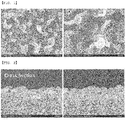
- FIG. 1 showing a surface of the protective layer
- FIG. 2 showing a cross section thereof
- the protective layer is crosslink-coated on the polyamide active layer in a physically adsorbed form.
- the content of the material described above may be from 5% by weight to 20% by weight, and more preferably from 10% by weight to 15% by weight based on the weight of the protective layer.
- the material content is less than 5% by weight, a crosslinking property between the polyamide active layer and the protective layer declines reducing salt rejection and boron rejection, and when the material content is greater than 20% by weight, flux may decrease due to an excessive thickness of the protective layer.
- the protective layer may have a thickness of 100 nm to 300 nm.
- the protective layer having a thickness of less than 100 nm may readily damage the polyamide active layer, and the thickness being greater than 300 nm may reduce flux and salt rejection of the reverse osmosis membrane.
- the reverse osmosis membrane may have elastic modulus (Young's modulus) of 2 GPa or greater, and specifically 2 GPa to 10 GPa.
- the elastic modulus may be preferably from 4.5 GPa to 10 GPa and more preferably from 6 GPa to 10 GPa.
- the elastic modulus being less 2 GPa may readily damage the reverse osmosis membrane due to insufficient mechanical strength, and when the elastic modulus is greater than 10 GPa, flexibility of the reverse osmosis membrane decreases due to mechanical strength, which may also cause damages to the reverse osmosis membrane.
- atomic force microscopy is a high resolution scanning probe microscopy having a resolution at a nanometer level that is higher by 1,000 times compared to general optical diffraction limits.
- An AFM is manufactured for overcoming disadvantages of a scanning tunneling microscopy (STM).
- STM scanning tunneling microscopy
- a STM is based on a quantum tunneling concept, and thereby needs a conductive probe, and may be used in conductive or semiconducting samples, whereas an AFM uses an atomic force, and may be widely used in a certain form of surface, for example, polymer, ceramic, composite, glass and biological samples.
- An AFM generally includes a probe located at the end of a cantilever, and measures a force acting between the probe end and a sample surface.
- this is dependent on a spring constant of the probe-located cantilever.
- a spring constant of the cantilever approximately 0.1 N/m to 1 N/m
- the cantilever bends and deflection is observed.
- An AFM may be operated in three different modes of 1) contact mode, 2) intermittent mode (or tapping mode) and 3) non-contact mode depending on a contact between a sample and an AFM probe.
- a probe and a sample surface have a distance of less than 0.5 nm, and repulsive Van der Waals force is applied therebetween.
- the contact mode is capable of fast measurements and suited for rough samples, and thereby has an advantage of being used in friction analyses, however, has a disadvantage in that soft samples may be damaged or deformed.
- the intermittent mode a cantilever vibrates on a certain resonance cycle, and a probe moves at a distance of 0.5 nm to 2 nm from a sample surface.
- the intermittent mode has advantages in that it may analyze damageable samples or samples weakly binding on a surface in high resolution, and is suited in analyzing biological samples. Meanwhile, there are disadvantages in that imaging is difficult and a scan rate is low in a liquid state. Lastly, in the non-contact mode, a probe is not in direct contact with a sample surface maintaining a distance of 0.1 nm to 10 nm from the surface, and attractive Van der Waals force is applied between the probe and the sample surface. Very small force at a pico newton (10 -12 N) level is applied on the sample, and therefore, the probe has a long lifetime. However, there is a disadvantage in that a very high degree of vacuum is required to obtain best images since resolution is low compared to other modes, and an analysis capability may be inhibited by a contaminated layer on the sample surface.
- elastic modulus of the reverse osmosis membrane is measured using the atomic force microscopy, and when crosslink-coating the material having viscoelasticity on the protective layer, it is seen that mechanical strength of the reverse osmosis membrane is enhanced with elastic modulus of the reverse osmosis membrane being 2 Gpa or greater, preferably 4.5 GPa or greater, and more preferably 6 GPa or greater, compared to when the material is not used.
- Another embodiment of the present specification provides a water-treatment module comprising one or more of the reverse osmosis membranes described above.
- the water-treatment module is not particularly limited, and examples thereof may include a plate & frame module, a tubular module, a hollow & fiber module, a spiral wound module or the like.
- the water-treatment module comprises the reverse osmosis membrane described above, the water-treatment module is not particularly limited in other constitutions and manufacturing methods, and general means known in the art may be employed without limit.
- Another embodiment of the present specification provides a water-treatment system comprising one or more of the water-treatment modules described above.
- the water-treatment system is useful in water-treatment systems such as household/industrial water-purification systems, sewage treatment systems or sea to fresh water treatment systems.
- porous polysulfone support prepared using the above-mentioned method was formed into an aqueous solution layer using an aqueous solution comprising 4% by weight of metaphenylenediamine (mPD).
- TMC trimesoyl chloride
- TMB 1,3,5-trimethylbenzene
- Isopar-G interfacial polymerization
- a composition for forming a reverse osmosis membrane protective layer comprising 2% by weight of polyvinyl alcohol (PVA), 0.1% by weight of glutaraldehyde (GA) and 0.3% by weight of polyethylene oxide (PEO) having a weight average molecular weight of 600,000 was stirred for 20 minutes or longer.
- PVA polyvinyl alcohol
- G glutaraldehyde
- PEO polyethylene oxide
- the porous support having a polyamide active layer prepared by preparation Example 1 was washed with high temperature (60°C) distilled water, then the composition was coated, and the result was dried for 10 minutes in a 90°C oven to form a protective layer and prepare a reverse osmosis membrane.
- a reverse osmosis membrane was prepared in the same manner as in Example 1, except that a composition for forming a reverse osmosis membrane protective layer comprising 2% by weight of polyvinyl alcohol (PVA), 0.1% by weight of glutaraldehyde (GA) and 0.5% by weight of polyethylene oxide (PEO) having a weight average molecular weight of 600,000 was used instead of the composition for forming a reverse osmosis membrane protective layer of Example 1.
- PVA polyvinyl alcohol
- GA glutaraldehyde
- PEO polyethylene oxide
- a reverse osmosis membrane was prepared in the same manner as in Example 1, except that a composition for forming a reverse osmosis membrane protective layer comprising 2% by weight of polyvinyl alcohol (PVA) and 0.3% by weight of polyethylene oxide (PEO) having a weight average molecular weight of 600,000 was used instead of the composition for forming a reverse osmosis membrane protective layer of Example 1.
- PVA polyvinyl alcohol
- PEO polyethylene oxide
- a reverse osmosis membrane was prepared in the same manner as in Example 1, except that a composition for forming a reverse osmosis membrane protective layer comprising 2% by weight of polyvinyl alcohol (PVA) was used instead of the composition for forming a reverse osmosis membrane protective layer of Example 1.
- PVA polyvinyl alcohol
- a reverse osmosis membrane was prepared in the same manner as in Example 1, except that a composition for forming a reverse osmosis membrane protective layer comprising 2% by weight of polyvinyl alcohol (PVA), 0.1% by weight of glutaraldehyde (GA) and 0.3% by weight of polyethylene oxide (PEO) having a weight average molecular weight of 200,000 was used instead of the composition for forming a reverse osmosis membrane protective layer of Example 1.
- PVA polyvinyl alcohol
- GA glutaraldehyde
- PEO polyethylene oxide
- a reverse osmosis membrane was prepared in the same manner as in Example 1, except that a composition for forming a reverse osmosis membrane protective layer comprising 2% by weight of polyvinyl alcohol (PVA), 0.1% by weight of glutaraldehyde (GA) and 1% by weight of polyethylene oxide (PEO) having a weight average molecular weight of 200,000 was used instead of the composition for forming a reverse osmosis membrane protective layer of Example 1.
- PVA polyvinyl alcohol
- GA glutaraldehyde
- PEO polyethylene oxide
- a reverse osmosis membrane was prepared in the same manner as in Example 1, except that a composition for forming a reverse osmosis membrane protective layer comprising 2% by weight of polyvinyl alcohol (PVA), 0.1% by weight of glutaraldehyde (GA) and 0.3% by weight of polyethylene glycol (PEG) having a weight average molecular weight of 4,000 was used instead of the composition for forming a reverse osmosis membrane protective layer of Example 1.
- PVA polyvinyl alcohol
- GA glutaraldehyde
- PEG polyethylene glycol
- a reverse osmosis membrane was prepared in the same manner as in Example 1, except that a composition for forming a reverse osmosis membrane protective layer comprising 2% by weight of polyvinyl alcohol (PVA), 0.1% by weight of glutaraldehyde (GA) and 3% by weight of polyethylene glycol (PEG) having a weight average molecular weight of 4,000 was used instead of the composition for forming a reverse osmosis membrane protective layer of Example 1.
- PVA polyvinyl alcohol
- GA glutaraldehyde
- PEG polyethylene glycol
- a reverse osmosis membrane was prepared in the same manner as in Example 1, except that a composition for forming a reverse osmosis membrane protective layer comprising 2% by weight of polyvinyl alcohol (PVA) and 0.1% by weight of glutaraldehyde (GA) was used instead of the composition for forming a reverse osmosis membrane protective layer of Example 1.
- PVA polyvinyl alcohol
- GA glutaraldehyde
- Performance of the reverse osmosis membranes prepared according to Examples 1 to 3 and Comparative Examples 1 to 6 was evaluated under 800 psi using salt water containing 32,000 ppm of NaCl and 5 ppm of boron. Salt rejection was measured by measuring a difference in the conductivity between the produced water and the original water, and a volume of the produced water secured per unit time (5 minutes) and unit area of the separation membrane was measured to calculate flux. A pH of the original water was adjusted to pH 8.
- Young's modulus stiffness and adhesion were measured through an electrical contact between the tip and the sample using a PinPoint Conductive AFM mode, and calculation was carried out through a Hertzian model.
- composition for forming a reverse osmosis membrane protective layer included all of polyvinyl alcohol (PVA), glutaraldehyde (GA) and polyethylene oxide (PEO) represented by Chemical Formula 1 compared to when comprising only polyvinyl alcohol (PVA) and glutaraldehyde (GA).
- PVA polyvinyl alcohol
- G glutaraldehyde
- PEO polyethylene oxide
- composition for forming a reverse osmosis membrane protective layer included all of polyvinyl alcohol (PVA), glutaraldehyde (GA) and polyethylene oxide (PEO) represented by Chemical Formula 1 compared to when comprising compared to when comprising only polyethylene oxide (PEO) represented by Chemical Formula 1 and polyvinyl alcohol (PVA).
- PVA polyvinyl alcohol
- G glutaraldehyde
- PEO polyethylene oxide
Landscapes
- Chemical & Material Sciences (AREA)
- Chemical Kinetics & Catalysis (AREA)
- Engineering & Computer Science (AREA)
- Water Supply & Treatment (AREA)
- Organic Chemistry (AREA)
- Life Sciences & Earth Sciences (AREA)
- Manufacturing & Machinery (AREA)
- Environmental & Geological Engineering (AREA)
- Hydrology & Water Resources (AREA)
- Inorganic Chemistry (AREA)
- Nanotechnology (AREA)
- Materials Engineering (AREA)
- Wood Science & Technology (AREA)
- Polymers & Plastics (AREA)
- Medicinal Chemistry (AREA)
- Health & Medical Sciences (AREA)
- Separation Using Semi-Permeable Membranes (AREA)
Abstract
Description
- This application claims priority to and the benefits of Korean Patent Application No.
10-2016-0136571 10-2017-0126158 - The present specification relates to a composition for forming a reverse osmosis membrane protective layer and a method for preparing a reverse osmosis membrane using the same.
- Developing a new source of water resources has surfaced as an urgent facing challenge due to recent serious pollution of water quality environments and water shortage. Researches on the pollution of water quality environments aim for high-quality residential and industrial water, and treatment of various domestic sewage and industrial wastewater, and interests in water-treatment processes using a separation membrane with an advantage of energy saving has been rising. In addition, accelerated reinforcement on environment regulations is expected to advance wide utilization of separation membrane technologies. Traditional water-treatment processes are difficult to satisfy the tightened regulations, however, separation membrane technologies secure excellent treatment efficiency and stable treatment, therefore, are expected to become a leading technology in the field of water-treatment in the future.
- Liquid separation is divided into microfiltration, ultrafiltration, nanofiltration, reverse osmosis, stannizing, active transport, electrodialysis, and the like, depending on the pore of the membrane. Among these, the reverse osmosis method refers to a process of desalinization using a semipermeable membrane permeating water but having impermeableness for salts, and when salt-dissolved highpressure water is introduced to one side of the semipermeable membrane, salt-removed pure water comes out of the other side with a low pressure.
- Specifically, typical examples of such a water-treatment membrane include a polyamide-based water-treatment membrane, and the polyamide-based water-treatment membrane is manufactured using a method in which a microporous support is formed by forming a polysulfone layer on a nonwoven fabric, this microporous support is immersed in an aqueous m-phenylenediamine (mPD) solution to form an mPD layer, and this mPD layer is brought into contact with trimesoyl chloride (TMC) by being immersed in a TMC organic solvent, or coated, and is interfacial polymerized to form a polyamide active layer. According to such a manufacturing method, a non-polar solvent and a polar solvent are in contact with each other, and polymerization occurs only at the interface, and as a result, a polyamide active layer having a very small thickness is formed.
- Meanwhile, there is a qualification for a polyamide-based water-treatment membrane to be commercially used, and it is having superior performance as a separation membrane such as high salt rejection and flux. Salt rejection of a separation membrane commercially required is at least 97% or greater for brackish water, and an ability to pass through a relatively large amount of water under a relatively low pressure, that is, a high flux property, is required.
- Meanwhile, preventing membrane contamination of a water-treatment membrane has emerged as an important challenge together with enhancing performance such as salt rejection and flux. Membrane contamination means suspended matters or dissolved matters adsorbing or attaching to the membrane surface, and when contamination occurs, flux is reduced, and microorganisms adsorb and grow on the separation membrane surface due to contaminants readily causing secondary contamination forming a bio-film on the separation membrane surface. The contaminated separation membrane has declined penetrability, and it is not preferred since, in order to obtain permeated water in a certain flux, the pressure needs to be frequently corrected, or when the membrane contamination is serious, the membrane needs to be washed.
- Accordingly, development of more economical methods for preparing a reverse osmosis membrane having high flux while having excellent salt rejection by preventing membrane contamination has been required.
- The present specification is directed to providing a composition for forming a reverse osmosis membrane protective layer and a method for preparing a reverse osmosis membrane using the same.
- One embodiment of the present specification provides a composition for forming a reverse osmosis membrane protective layer comprising a material represented by the following Chemical Formula 1 and having a weight average molecular weight of 500,000 to 700,000.

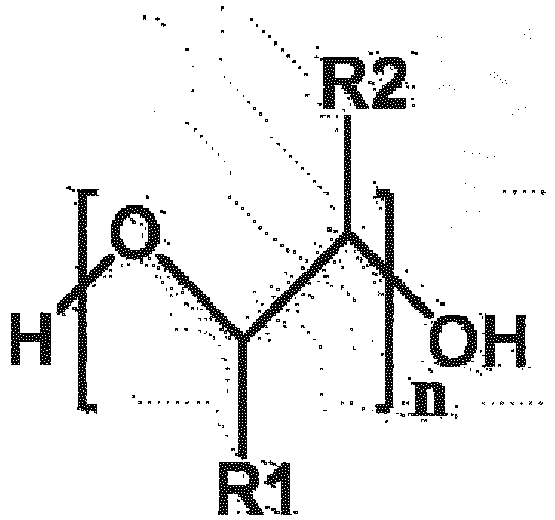
- In Chemical Formula 1, R1 and R2 are the same as or different from each other, and each independently hydrogen; deuterium; or a substituted or unsubstituted alkyl group, and n is from 10,000 to 20,000.
- Another embodiment of the present specification provides a method for preparing a reverse osmosis membrane comprising forming a polyamide active layer on a porous support; and forming a protective layer on the polyamide active layer using the composition for forming a reverse osmosis membrane protective layer described above.
- Another embodiment of the present specification provides a reverse osmosis membrane comprising a porous support; a polyamide active layer provided on the porous support; and a protective layer formed on the polyamide active layer, wherein the protective layer comprises the material described above or a crosslinked product thereof.
- Another embodiment of the present specification provides a water-treatment module comprising one or more of the reverse osmosis membranes described above.
- Another embodiment of the present specification provides a water-treatment system comprising one or more of the water-treatment modules described above.
- A reverse osmosis membrane prepared using a composition for forming a reverse osmosis membrane protective layer according to one embodiment of the present specification exhibits high salt rejection and boron rejection of 99.89% or greater by crosslink-coating a polymer having viscoelasticity on a protective layer.
- In addition, the reverse osmosis membrane prepared using a composition for forming a reverse osmosis membrane protective layer according to one embodiment of the present specification increases mechanical strength by the crosslink-coating, and thereby minimizes damages to the reverse osmosis membrane.
-
-
FIG. 1 shows a surface of a reverse osmosis membrane according to one embodiment of the present specification. -
FIG. 2 shows a cross section of a protective layer in a reverse osmosis membrane according to one embodiment of the present specification. - In the present specification, a description of a certain member being placed "on" another member includes not only a case of the one member adjoining the another member but a case of still another member being present between the two members.
- In the present specification, a description of a certain part "comprising" certain constituents means capable of further comprising other constituents, and does not exclude other constituents unless particularly stated on the contrary.
- Hereinafter, the present specification will be described in more detail.
- One embodiment of the present specification provides a composition for forming a reverse osmosis membrane protective layer comprising a material represented by the following Chemical Formula 1 and having a weight average molecular weight of 500,000 to 700,000.

- In Chemical Formula 1, R1 and R2 are the same as or different from each other, and each independently hydrogen; deuterium; or a substituted or unsubstituted alkyl group, and n is from 10,000 to 20,000.
- According to one embodiment of the present specification, R1 and R2 are the same as or different from each other, and each independently a substituted or unsubstituted alkyl group having 1 to 10 carbon atoms.
- According to one embodiment of the present specification, R1 and R2 may be hydrogen.
- According to one embodiment of the present specification, the alkyl group may be linear, branched or cyclic. In addition, according to one embodiment of the present specification, the alkyl group may be a methyl group, an ethyl group, an n-propyl group, an iso-propyl group, an n-butyl group, a sec-butyl group, a t-butyl group, an n-pentyl group, an iso-pentyl group, a neo-pentyl group, an n-hexyl group, a cyclopropyl group, a cyclobutyl group, a cyclopentyl group or a cyclohexyl group. However, the alkyl group is not limited thereto.
- According to one embodiment of the present specification, n may be from 10,000 to 20,000, preferably from 11,000 to 16,000, and more preferably from 12,000 to 15,000.
- According to one embodiment of the present specification, the material having a weight average molecular weight of less than 500,000 functions as impurities in a protective layer comprising the material reducing salt rejection and flux, and when the weight average molecular weight is greater than 700,000, flux may decrease due to the excessive molecular weight.
- According to one embodiment of the present specification, the material content may be from 0.3% by weight to 0.5% by weight and more preferably from 0.4% by weight to 0.5% by weight based on the total weight of the composition for forming a reverse osmosis membrane protective layer. When the material content is less than 0.3% by weight, a reaction of the material may not occur in the overall protective layer, and accordingly, the protective layer may be partially formed on the membrane, and salt rejection and boron rejection may decrease. When the material content is greater than 0.5% by weight, the protective layer is excessively formed on the polyamide membrane surface reducing flux.
- According to one embodiment of the present specification, the composition for forming a reverse osmosis membrane protective layer may further comprise one or more of a hydrophilic polymer and a crosslinking agent.
- According to one embodiment of the present specification, the composition for forming a reverse osmosis membrane protective layer may further comprise a hydrophilic polymer.
- According to one embodiment of the present specification, the composition for forming a reverse osmosis membrane protective layer may further comprise a crosslinking agent.
- According to one embodiment of the present specification, the composition for forming a reverse osmosis membrane protective layer may further comprise a hydrophilic polymer and a crosslinking agent.
- More specifically, the hydrophilic polymer may be polyvinyl alcohol (PVA), and the crosslinking agent may be glutaraldehyde (GA). When the composition for forming a reverse osmosis membrane protective layer further comprises one or more of the hydrophilic polymer and the crosslinking agent, the material represented by Chemical Formula 1 may form a crosslinked product by being crosslinked with one or more of the hydrophilic polymer and the crosslinking agent.
- The polyvinyl alcohol is a hydrophilic polymer allowing a hydrophilic group to be present on the membrane surface, and as a result, resistance for pollution sources is obtained as well as obtaining an effect of flux enhancement.
- The glutaraldehyde performs a role of the material crosslinking with a surface of a polyamide layer to describe later, and may contribute to enhancing salt rejection by a protective layer to describe later being physically adsorbed to the polyamide layer.
- According to one embodiment of the present specification, the composition for forming a reverse osmosis membrane protective layer may further comprise water in addition to the material represented by Chemical Formula 1.
- According to one embodiment of the present specification, the composition for forming a reverse osmosis membrane protective layer may further comprise a hydrophilic polymer in addition to the material represented by Chemical Formula 1, and the rest may be water.
- According to one embodiment of the present specification, the composition for forming a reverse osmosis membrane protective layer may further comprise a crosslinking agent in addition to the material represented by Chemical Formula 1, and the rest may be water.
- According to one embodiment of the present specification, the composition for forming a reverse osmosis membrane protective layer may further comprise a hydrophilic polymer and a crosslinking agent in addition to the material represented by Chemical Formula 1, and the rest may be water.
- According to one embodiment of the present specification, the composition for forming a reverse osmosis membrane protective layer may be formed with the material represented by Chemical Formula 1, a hydrophilic polymer, a crosslinking agent and the remainder of water.
- According to one embodiment of the present specification, the hydrophilic polymer content may be from 0.1% by weight to 10% by weight, preferably from 0.1% by weight to 5% by weight, and more preferably from 1% by weight to 4% by weight based on the total weight of the composition for forming a reverse osmosis membrane protective layer.
- According to one embodiment of the present specification, the crosslinking agent content may be from 0.01% by weight to 10% by weight, preferably from 0.01% by weight to 5% by weight, and more preferably from 0.1% by weight to 2% by weight based on the total weight of the composition for forming a reverse osmosis membrane protective layer.
- According to one embodiment of the present specification, the material represented by Chemical Formula 1 is a polymer having more viscoelasticity than polyvinyl alcohol, and exhibits high salt rejection of 99.89% or greater and enhanced boron rejection compared to when coating only polyvinyl alcohol as a protective layer.
- According to one embodiment of the present specification, a reverse osmosis membrane comprising a protective layer formed using a composition for forming a protective layer comprising the material represented by Chemical Formula 1 exhibits salt rejection of 99.89% or greater and preferably 99.9% or greater.
- According to one embodiment of the present specification, a reverse osmosis membrane comprising a protective layer formed using a composition for forming a protective layer comprising the material represented by Chemical Formula 1 exhibits boron rejection of 93% or greater, preferably 93.2% or greater, and more preferably 94.3% or greater.
- Another embodiment of the present specification provides a method for preparing a reverse osmosis membrane comprising forming a polyamide active layer on a porous support; and forming a protective layer on the polyamide active layer using the composition described above.
- According to one embodiment of the present specification, those forming a coating layer made of polymer materials on a nonwoven fabric may be used as the support. Examples of the polymer material may include polysulfone, polyether sulfone, polycarbonate, polyethylene oxide, polyimide, polyether imide, polyetheretherketone, polypropylene, polymethylpentene, polymethyl chloride, polyvinylidene fluoride or the like, but are not limited thereto. Specifically, polysulfone may be used as the polymer material.
- According to one embodiment of the present specification, the polyamide active layer may be formed through interfacial polymerization of an aqueous solution comprising an amine compound and an organic solution comprising an acyl halide compound. Specifically, the polyamide active layer may be formed through forming an aqueous solution layer comprising an amine compound on a porous support; and forming a polyamide active layer on the aqueous solution layer by bringing an organic solution comprising an acyl halide compound and an organic solvent into contact with the aqueous solution layer comprising an amine compound.
- When the aqueous solution layer comprising an amine compound and the organic solution are brought into contact with each other, polyamide is produced by interfacial polymerization while the amine compound and the acyl halide compound coated on the surface of the porous support react, and the result is adsorbed to a microporous support to form a thin film. In the contact method, the polyamide active layer may be also formed through methods such as immersion, spray or coating.
- According to one embodiment of the present specification, the method of forming an aqueous solution layer comprising an amine compound on the porous support is not particularly limited, and any method capable of forming an aqueous solution layer on a support may be used without limit. Specifically, the method of forming an aqueous solution layer comprising an amine compound on the porous support may include spraying, coating, immersion, dripping or the like.
- Herein, the aqueous solution layer may additionally go through a step of removing an excess aqueous solution comprising the amine compound as necessary. The aqueous solution layer formed on the porous support may be non-uniformly distributed when the aqueous solution present on the support is too much, and when the aqueous solution is non-uniformly distributed, a non-uniform polyamide active layer may be formed by interfacial polymerization thereafter. Accordingly, an excess aqueous solution is preferably removed after forming an aqueous solution layer on the support. The excess aqueous solution removal is not particularly limited, and, for example, a sponge, an air knife, nitrogen gas blowing, natural drying, a press roll or the like may be used for the removal.
- According to one embodiment of the present specification, in the aqueous solution comprising an amine compound, the amine compound is not limited in the type as long as it is an amine compound used in the manufacture of a water-treatment membrane, and specific examples thereof preferably include m-phenylenediamine (mPD), p-phenylenediamine, 1,2,4-benzenetriamine, 4-chloro-1,3-phenylenediamine, 2-chloro-1,4-phenylenediamine or mixtures thereof.
- According to one embodiment of the present specification, examples of the acyl halide compound may include, but are not limited to, aromatic compounds having 2 to 3 carboxylic acid halides, and may be one or more types of mixtures selected from the chemical compound group consisting of trimesoyl chloride (TMC), isophthaloyl chloride and terephthaloyl chloride.
- According to one embodiment of the present specification, as the organic solvent, aliphatic hydrocarbon solvents such as Freon and hydrophobic liquids that are not mixed with water and have 5 to 12 carbon atoms such as hexane, cyclohexane, heptane and alkane, and for example, IsoPar (Exxon), IsoPar G (Exxon), ISOL-C (SK Chem.) and ISOL-G (Exxon) and the like that are alkane having 5 to 12 carbon atoms and mixtures thereof may be used, however, the organic solvent is not limited thereto.
- Next, the forming of a protective layer on the polyamide active layer may be, for example, carried out through a method of immersing the polyamide active layer-formed support into the composition for forming a reverse osmosis membrane protective layer described above, or a method of coating the composition for forming a reverse osmosis membrane protective layer described above on the polyamide active layer-formed support, however, the method is not limited thereto.
- Meanwhile, the time of immersion may be properly controlled considering a thickness of a protective layer to form and the like, and for example, may be approximately from 0.1 minutes to 10 hours, and preferably approximately from 1 minute to 1 hour. When the time of immersion is less than 0.1 minutes, a protective layer is not sufficiently formed, and when the time of immersion is longer than 10 hours, a protective layer becomes too thick having an adverse effect of reducing flux of a reverse osmosis membrane.
- Another embodiment of the present specification provides a reverse osmosis membrane comprising a porous support; a polyamide active layer provided on the porous support; and a protective layer formed on the polyamide active layer, wherein the protective layer comprises the material described above or a crosslinked product thereof.
- When referring to
FIG. 1 showing a surface of the protective layer andFIG. 2 showing a cross section thereof, it is seen that the protective layer is crosslink-coated on the polyamide active layer in a physically adsorbed form. - According to one embodiment of the present specification, the content of the material described above may be from 5% by weight to 20% by weight, and more preferably from 10% by weight to 15% by weight based on the weight of the protective layer. When the material content is less than 5% by weight, a crosslinking property between the polyamide active layer and the protective layer declines reducing salt rejection and boron rejection, and when the material content is greater than 20% by weight, flux may decrease due to an excessive thickness of the protective layer.
- According to one embodiment of the present specification, the protective layer may have a thickness of 100 nm to 300 nm. The protective layer having a thickness of less than 100 nm may readily damage the polyamide active layer, and the thickness being greater than 300 nm may reduce flux and salt rejection of the reverse osmosis membrane.
- According to one embodiment of the present specification, the reverse osmosis membrane may have elastic modulus (Young's modulus) of 2 GPa or greater, and specifically 2 GPa to 10 GPa. The elastic modulus may be preferably from 4.5 GPa to 10 GPa and more preferably from 6 GPa to 10 GPa.
- The elastic modulus being less 2 GPa may readily damage the reverse osmosis membrane due to insufficient mechanical strength, and when the elastic modulus is greater than 10 GPa, flexibility of the reverse osmosis membrane decreases due to mechanical strength, which may also cause damages to the reverse osmosis membrane.
- The elastic modulus is measured using an atomic-force microscopy (AFM). Physical properties of the reverse osmosis membrane may be quantified, and may be quantified using the following equation.

- The term "atomic force microscopy (AFM)" of the present disclosure is a high resolution scanning probe microscopy having a resolution at a nanometer level that is higher by 1,000 times compared to general optical diffraction limits. An AFM is manufactured for overcoming disadvantages of a scanning tunneling microscopy (STM). A STM is based on a quantum tunneling concept, and thereby needs a conductive probe, and may be used in conductive or semiconducting samples, whereas an AFM uses an atomic force, and may be widely used in a certain form of surface, for example, polymer, ceramic, composite, glass and biological samples. An AFM generally includes a probe located at the end of a cantilever, and measures a force acting between the probe end and a sample surface. Specifically, this is dependent on a spring constant of the probe-located cantilever. For example, when a spring constant of the cantilever (approximately 0.1 N/m to 1 N/m) is smaller than an interaction with a sample surface, the cantilever bends and deflection is observed.
- An AFM may be operated in three different modes of 1) contact mode, 2) intermittent mode (or tapping mode) and 3) non-contact mode depending on a contact between a sample and an AFM probe. First, in the contact mode, a probe and a sample surface have a distance of less than 0.5 nm, and repulsive Van der Waals force is applied therebetween. The contact mode is capable of fast measurements and suited for rough samples, and thereby has an advantage of being used in friction analyses, however, has a disadvantage in that soft samples may be damaged or deformed. Next, in the intermittent mode, a cantilever vibrates on a certain resonance cycle, and a probe moves at a distance of 0.5 nm to 2 nm from a sample surface. The intermittent mode has advantages in that it may analyze damageable samples or samples weakly binding on a surface in high resolution, and is suited in analyzing biological samples. Meanwhile, there are disadvantages in that imaging is difficult and a scan rate is low in a liquid state. Lastly, in the non-contact mode, a probe is not in direct contact with a sample surface maintaining a distance of 0.1 nm to 10 nm from the surface, and attractive Van der Waals force is applied between the probe and the sample surface. Very small force at a pico newton (10-12 N) level is applied on the sample, and therefore, the probe has a long lifetime. However, there is a disadvantage in that a very high degree of vacuum is required to obtain best images since resolution is low compared to other modes, and an analysis capability may be inhibited by a contaminated layer on the sample surface.
- In the present specification, elastic modulus of the reverse osmosis membrane is measured using the atomic force microscopy, and when crosslink-coating the material having viscoelasticity on the protective layer, it is seen that mechanical strength of the reverse osmosis membrane is enhanced with elastic modulus of the reverse osmosis membrane being 2 Gpa or greater, preferably 4.5 GPa or greater, and more preferably 6 GPa or greater, compared to when the material is not used.
- Another embodiment of the present specification provides a water-treatment module comprising one or more of the reverse osmosis membranes described above.
- Specific types of the water-treatment module are not particularly limited, and examples thereof may include a plate & frame module, a tubular module, a hollow & fiber module, a spiral wound module or the like. In addition, as long as the water-treatment module comprises the reverse osmosis membrane described above, the water-treatment module is not particularly limited in other constitutions and manufacturing methods, and general means known in the art may be employed without limit.
- Another embodiment of the present specification provides a water-treatment system comprising one or more of the water-treatment modules described above. The water-treatment system is useful in water-treatment systems such as household/industrial water-purification systems, sewage treatment systems or sea to fresh water treatment systems.
- Hereinafter, the present specification will be described in detail with reference to examples in order to specifically describe the present specification. However, examples according to the present specification may be modified to various different forms, and the scope of the present specification is not construed as being limited to the examples described below. The examples of the present specification are provided in order to more fully describe the present specification to those having average knowledge in the art.
- 16% by weight of a polysulfone solid was introduced to N,N-dimethylformamide (DMF) and dissolved for 12 hours or longer at 80°C to obtain a uniform liquid phase. This solution was casted to a thickness of 45 µm to 50 µm on a non-woven fabric having a thickness of 95 µm to 100 µm made of polyester to form a porous polysulfone support.
- The porous polysulfone support prepared using the above-mentioned method was formed into an aqueous solution layer using an aqueous solution comprising 4% by weight of metaphenylenediamine (mPD).
- Then, a composition comprising trimesoyl chloride (TMC), 1,3,5-trimethylbenzene (TMB) and Isopar-G was coated on the aqueous solution layer to form an organic layer, and interfacial polymerization was performed to prepare a polyamide active layer-formed porous support.
- A composition for forming a reverse osmosis membrane protective layer comprising 2% by weight of polyvinyl alcohol (PVA), 0.1% by weight of glutaraldehyde (GA) and 0.3% by weight of polyethylene oxide (PEO) having a weight average molecular weight of 600,000 was stirred for 20 minutes or longer. After that, the porous support having a polyamide active layer prepared by preparation Example 1 was washed with high temperature (60°C) distilled water, then the composition was coated, and the result was dried for 10 minutes in a 90°C oven to form a protective layer and prepare a reverse osmosis membrane.
- A reverse osmosis membrane was prepared in the same manner as in Example 1, except that a composition for forming a reverse osmosis membrane protective layer comprising 2% by weight of polyvinyl alcohol (PVA), 0.1% by weight of glutaraldehyde (GA) and 0.5% by weight of polyethylene oxide (PEO) having a weight average molecular weight of 600,000 was used instead of the composition for forming a reverse osmosis membrane protective layer of Example 1.
- A reverse osmosis membrane was prepared in the same manner as in Example 1, except that a composition for forming a reverse osmosis membrane protective layer comprising 2% by weight of polyvinyl alcohol (PVA) and 0.3% by weight of polyethylene oxide (PEO) having a weight average molecular weight of 600,000 was used instead of the composition for forming a reverse osmosis membrane protective layer of Example 1.
- A reverse osmosis membrane was prepared in the same manner as in Example 1, except that a composition for forming a reverse osmosis membrane protective layer comprising 2% by weight of polyvinyl alcohol (PVA) was used instead of the composition for forming a reverse osmosis membrane protective layer of Example 1.
- A reverse osmosis membrane was prepared in the same manner as in Example 1, except that a composition for forming a reverse osmosis membrane protective layer comprising 2% by weight of polyvinyl alcohol (PVA), 0.1% by weight of glutaraldehyde (GA) and 0.3% by weight of polyethylene oxide (PEO) having a weight average molecular weight of 200,000 was used instead of the composition for forming a reverse osmosis membrane protective layer of Example 1.
- A reverse osmosis membrane was prepared in the same manner as in Example 1, except that a composition for forming a reverse osmosis membrane protective layer comprising 2% by weight of polyvinyl alcohol (PVA), 0.1% by weight of glutaraldehyde (GA) and 1% by weight of polyethylene oxide (PEO) having a weight average molecular weight of 200,000 was used instead of the composition for forming a reverse osmosis membrane protective layer of Example 1.
- A reverse osmosis membrane was prepared in the same manner as in Example 1, except that a composition for forming a reverse osmosis membrane protective layer comprising 2% by weight of polyvinyl alcohol (PVA), 0.1% by weight of glutaraldehyde (GA) and 0.3% by weight of polyethylene glycol (PEG) having a weight average molecular weight of 4,000 was used instead of the composition for forming a reverse osmosis membrane protective layer of Example 1.
- A reverse osmosis membrane was prepared in the same manner as in Example 1, except that a composition for forming a reverse osmosis membrane protective layer comprising 2% by weight of polyvinyl alcohol (PVA), 0.1% by weight of glutaraldehyde (GA) and 3% by weight of polyethylene glycol (PEG) having a weight average molecular weight of 4,000 was used instead of the composition for forming a reverse osmosis membrane protective layer of Example 1.
- A reverse osmosis membrane was prepared in the same manner as in Example 1, except that a composition for forming a reverse osmosis membrane protective layer comprising 2% by weight of polyvinyl alcohol (PVA) and 0.1% by weight of glutaraldehyde (GA) was used instead of the composition for forming a reverse osmosis membrane protective layer of Example 1.
- Performance of the reverse osmosis membranes prepared according to Examples 1 to 3 and Comparative Examples 1 to 6 was evaluated under 800 psi using salt water containing 32,000 ppm of NaCl and 5 ppm of boron. Salt rejection was measured by measuring a difference in the conductivity between the produced water and the original water, and a volume of the produced water secured per unit time (5 minutes) and unit area of the separation membrane was measured to calculate flux. A pH of the original water was adjusted to pH 8.
- As for Young's modulus, stiffness and adhesion were measured through an electrical contact between the tip and the sample using a PinPoint Conductive AFM mode, and calculation was carried out through a Hertzian model.
- Sample size: up to 50 mm x 50 mm, 20 mm thickness
- XY stage: 20 mm x 20 mm motorized stage
- Z stage: 25 mm motorized stage
- Performance of the reverse osmosis membranes according to Examples 1 to 3 and Comparative Examples 1 to 6 measured as above is as shown in the following Table 1.
[Table 1] Salt Rejection (%) Flux (GFD) Boron Rejection (%) Young's Modulus (GPa) Example 1 99.92 1.2.27 95.0 6.37 Example 2 99.93 11.77 94.3 6.40 Example 3 99.89 12.41 93.2 5.94 Comparative Example 1 99.85 15.59 92.2 4.08 Comparative Example 2 99.86 8.84 92.1 4.05 Comparative Example 3 99.87 7.58 92.3 4.20 Comparative Example 4 99.62 8.17 91.5 4.02 Comparative Example 5 99.45 6.91 91.3 3.95 Comparative Example 6 99.65 9.67 91.7 3.92 GFD of the flux means gallon/ft2·day. - According to Table 1, it was seen that the reverse osmosis membranes according to Examples 1 to 3 had salt rejection of 99.89% or greater, and had excellent flux, boron rejection and mechanical strength, whereas the reverse osmosis membrane according to Comparative Example 1 comprising only polyvinyl alcohol (PVA) in the protective layer composition had low salt rejection, boron rejection and mechanical strength despite excellent flux.
- In addition, when comparing Examples 1 to 3 and Comparative Examples 2 and 3, it was identified that the reverse osmosis membrane comprising polyethylene oxide (PEO) having a weight average molecular weight of 600,000 had significantly higher salt rejection, boron rejection, and flux and also had excellent mechanical strength compared to the reverse osmosis membrane comprising polyethylene oxide (PEO) having a weight average molecular weight of 200,000.
- When comparing Examples 1 to 3 and Comparative Examples 4 and 5, it was identified that the reverse osmosis membrane comprising polyethylene oxide (PEO) represented by Chemical Formula 1 and having a weight average molecular weight of 600,000 had significantly superior salt rejection, boron rejection and flux compared to when comprising polyethylene glycol (PEG) having a weight average molecular weight of 4,000.
- When comparing Examples 1 and 2 and Comparative Example 6, it was identified that salt rejection and boron rejection increased when the composition for forming a reverse osmosis membrane protective layer included all of polyvinyl alcohol (PVA), glutaraldehyde (GA) and polyethylene oxide (PEO) represented by Chemical Formula 1 compared to when comprising only polyvinyl alcohol (PVA) and glutaraldehyde (GA).
- When comparing Examples 1 and 2, and Example 3, it was identified that salt rejection and boron rejection increased when the composition for forming a reverse osmosis membrane protective layer included all of polyvinyl alcohol (PVA), glutaraldehyde (GA) and polyethylene oxide (PEO) represented by Chemical Formula 1 compared to when comprising compared to when comprising only polyethylene oxide (PEO) represented by Chemical Formula 1 and polyvinyl alcohol (PVA).
- Hereinbefore, preferred embodiments of the present specification have been described, however, the present disclosure is not limited thereto, and various modifications may be made within the scope of the claims and the detailed descriptions of the disclosure, and the modifications are also included in the scope of the present disclosure.
Claims (13)
- A composition for forming a reverse osmosis membrane protective layer comprising a material represented by the following Chemical Formula 1 and having a weight average molecular weight of 500,000 to 700,000:
 R1 and R2 are the same as or different from each other, and each independently hydrogen; deuterium; or a substituted or unsubstituted alkyl group; andn is from 10,000 to 20,000.
 - The composition for forming a reverse osmosis membrane protective layer of Claim 1, wherein R1 and R2 are hydrogen.
- The composition for forming a reverse osmosis membrane protective layer of Claim 1, further comprising one or more of a hydrophilic polymer and a crosslinking agent.
- The composition for forming a reverse osmosis membrane protective layer of Claim 1, wherein a content of the material is from 0.3% by weight to 0.5% by weight based on a total weight of the composition for forming a reverse osmosis membrane protective layer.
- The composition for forming a reverse osmosis membrane protective layer of Claim 3, wherein the hydrophilic polymer is polyvinyl alcohol (PVA), and the crosslinking agent is glutaraldehyde (GA).
- The composition for forming a reverse osmosis membrane protective layer of Claim 3, wherein a content of the hydrophilic polymer is from 0.1% by weight to 10% by weight based on a total weight of the composition for forming a reverse osmosis membrane protective layer.
- The composition for forming a reverse osmosis membrane protective layer of Claim 3, wherein a content of the crosslinking agent is from 0.01% by weight to 10% by weight based on a total weight of the composition for forming a reverse osmosis membrane protective layer.
- A method for preparing a reverse osmosis membrane comprising:forming a polyamide active layer on a porous support; andforming a protective layer on the polyamide active layer using the composition for forming a reverse osmosis membrane protective layer of any one of Claims 1 to 7.
- A reverse osmosis membrane comprising:a porous support;a polyamide active layer provided on the porous support; anda protective layer formed on the polyamide active layer,wherein the protective layer comprises a material represented by the following Chemical Formula 1 and having a weight average molecular weight of 500,000 to 700,000, or a crosslinked product thereof:
 R1 and R2 are the same as or different from each other, and each independently hydrogen; deuterium; or a substituted or unsubstituted alkyl group; andn is from 10,000 to 20,000.
 - The reverse osmosis membrane of Claim 9, wherein a content of the material is from 5% by weight to 20% by weight based on a weight of the protective layer.
- The reverse osmosis membrane of Claim 9, which has elastic modulus (Young's modulus) of 2 GPa or greater.
- A water-treatment module comprising one or more of the reverse osmosis membranes of any one of Claims 9 to 11.
- A water-treatment system comprising one or more of the water-treatment modules of Claim 12.
Applications Claiming Priority (3)
| Application Number | Priority Date | Filing Date | Title |
|---|---|---|---|
| KR20160136571 | 2016-10-20 | ||
| KR1020170126158A KR102002367B1 (en) | 2016-10-20 | 2017-09-28 | Composition for preparing protection layer, method for preparing reverse osmosis membrane using the same, and reverse osmosis membrane and water treatment module |
| PCT/KR2017/010989 WO2018074767A2 (en) | 2016-10-20 | 2017-09-29 | Composition for forming reverse osmosis membrane protection layer, method for preparing reverse osmosis membrane using same, reverse osmosis membrane, and water treatment module |
Publications (3)
| Publication Number | Publication Date |
|---|---|
| EP3479891A2 true EP3479891A2 (en) | 2019-05-08 |
| EP3479891A4 EP3479891A4 (en) | 2019-08-21 |
| EP3479891B1 EP3479891B1 (en) | 2020-04-22 |
Family
ID=62081215
Family Applications (1)
| Application Number | Title | Priority Date | Filing Date |
|---|---|---|---|
| EP17861884.9A Active EP3479891B1 (en) | 2016-10-20 | 2017-09-29 | Composition for forming reverse osmosis membrane protection layer, method for preparing reverse osmosis membrane using same, reverse osmosis membrane, and water treatment module |
Country Status (5)
| Country | Link |
|---|---|
| US (1) | US11577971B2 (en) |
| EP (1) | EP3479891B1 (en) |
| JP (1) | JP6729725B2 (en) |
| KR (1) | KR102002367B1 (en) |
| CN (1) | CN109475824B (en) |
Cited By (1)
| Publication number | Priority date | Publication date | Assignee | Title |
|---|---|---|---|---|
| CN110038446A (en) * | 2019-05-31 | 2019-07-23 | 自然资源部天津海水淡化与综合利用研究所 | A kind of antipollution aromatic polyamide composite reverse osmosis membrane and preparation method thereof |
Families Citing this family (4)
| Publication number | Priority date | Publication date | Assignee | Title |
|---|---|---|---|---|
| KR102212128B1 (en) | 2018-05-10 | 2021-02-17 | 주식회사 엘지화학 | Reverse osmosis membrane, method for preparing reverse osmosis membrane, and water treatment module |
| US20220226785A1 (en) * | 2019-06-26 | 2022-07-21 | Lg Chem, Ltd. | Composition for forming separation membrane active layer, method for producing separation membrane, separation membrane, and water treatment module |
| KR102466235B1 (en) * | 2020-12-10 | 2022-11-10 | 도레이첨단소재 주식회사 | Polyamide reverse osmosis membrane having fouling resistencee and excellent durability and manufacturing method thereof |
| JP7200427B1 (en) | 2022-03-24 | 2023-01-06 | 日東電工株式会社 | Composite semipermeable membrane and spiral membrane element |
Family Cites Families (29)
| Publication number | Priority date | Publication date | Assignee | Title |
|---|---|---|---|---|
| ES2110621T3 (en) | 1992-07-22 | 1998-02-16 | Valence Technology Inc | COMPOSITIONS AND METHODS TO PERFECT THE ACCUMULATIVE CAPACITY OF SOLID, SECONDARY ELECTROCHEMICAL CELLS. |
| GB9504251D0 (en) * | 1995-03-03 | 1995-04-19 | Kalsep Ltd | Improved membrane |
| US6509098B1 (en) | 1995-11-17 | 2003-01-21 | Massachusetts Institute Of Technology | Poly(ethylene oxide) coated surfaces |
| JPH1066845A (en) * | 1996-08-26 | 1998-03-10 | Nitto Denko Corp | Reverse osmosis composite membrane |
| KR19990019008A (en) | 1997-08-28 | 1999-03-15 | 한형수 | Manufacturing method of high flow rate reverse osmosis membrane |
| US20070251883A1 (en) * | 2006-04-28 | 2007-11-01 | Niu Q Jason | Reverse Osmosis Membrane with Branched Poly(Alkylene Oxide) Modified Antifouling Surface |
| US7815987B2 (en) | 2008-12-04 | 2010-10-19 | Dow Global Technologies Inc. | Polyamide membrane with coating of polyalkylene oxide and polyacrylamide compounds |
| WO2011069050A1 (en) | 2009-12-03 | 2011-06-09 | Yale University | High flux thin-film composite forward osmosis and pressure-retarded osmosis membranes |
| JP5397772B2 (en) | 2010-01-13 | 2014-01-22 | 独立行政法人物質・材料研究機構 | Polymer self-supporting membrane and separation membrane using the same |
| US8709536B2 (en) * | 2010-09-01 | 2014-04-29 | International Business Machines Corporation | Composite filtration membranes and methods of preparation thereof |
| JP2012250192A (en) * | 2011-06-03 | 2012-12-20 | Nitto Denko Corp | Composite semipermeable membrane and manufacturing method thereof |
| KR101440968B1 (en) | 2011-06-17 | 2014-09-17 | 주식회사 엘지화학 | Reverse osmosis comprising ultra ultra-hydrophilic protective layer |
| GB201117950D0 (en) * | 2011-10-18 | 2011-11-30 | Imp Innovations Ltd | Membranes for separation |
| SG11201401768WA (en) * | 2011-10-27 | 2014-05-29 | Univ Nanyang Tech | A method of forming forward osmosis membranes and the forward osmosis membranes thus formed |
| KR101440971B1 (en) * | 2012-01-05 | 2014-09-17 | 주식회사 엘지화학 | Reverse osmosis membrane having a excellent antifouling property and method of preparing the same |
| KR101394317B1 (en) * | 2012-05-31 | 2014-05-13 | 주식회사 엘지화학 | High flux reverse osmosis membrane comprising carbodiimide compound and manufacturing method thereof |
| KR101399587B1 (en) | 2012-09-11 | 2014-05-30 | 서울대학교산학협력단 | Reverse osmosis membrane using CNT and preparing thereof |
| KR101517686B1 (en) * | 2012-11-05 | 2015-05-04 | 주식회사 엘지화학 | Polyamide-based water-treatment membrane having an excellent antifouling property and manufacturing method thereof |
| EP2759332B1 (en) * | 2012-11-30 | 2018-01-31 | Lg Chem, Ltd. | Chlorine-resistant highly permeable water-treatment membrane, and method for preparing same |
| WO2014133133A1 (en) * | 2013-02-28 | 2014-09-04 | 東レ株式会社 | Composite semipermeable membrane |
| JP5863140B2 (en) * | 2013-03-07 | 2016-02-16 | エルジー・ケム・リミテッド | Polyamide-based water treatment separation membrane having excellent contamination resistance, water treatment module including the same, water treatment apparatus, and method for producing water treatment separation membrane |
| US10974206B2 (en) * | 2013-05-30 | 2021-04-13 | Toray Industries, Inc. | Composite semipermeable membrane |
| WO2014204220A1 (en) * | 2013-06-18 | 2014-12-24 | 주식회사 엘지화학 | Method for preparing polyamide-based reverse osmosis membrane having remarkable salt rejection and permeation flux, and reverse osmosis membrane prepared by said preparation method |
| JP6420339B2 (en) | 2013-08-01 | 2018-11-07 | エルジー・ケム・リミテッド | Polyamide-based water treatment separation membrane with excellent durability and method for producing the same |
| JP6302074B2 (en) * | 2013-09-16 | 2018-03-28 | エルジー・ケム・リミテッド | Water treatment separation membrane including ion exchange polymer layer and method for producing the same |
| WO2015080259A1 (en) * | 2013-11-29 | 2015-06-04 | 独立行政法人物質・材料研究機構 | Nanofiltration or reverse osmosis membrane made of hard carbon film, filtering filter, two-layer-bonded-type filtering filter, and methods for manufacturing same |
| KR102160309B1 (en) | 2013-12-30 | 2020-09-25 | 도레이첨단소재 주식회사 | Hollow fiber type nanofiltration membrane having high ions removal capacity, and manufacturing method thereof |
| JP6303837B2 (en) | 2014-06-06 | 2018-04-04 | 栗田工業株式会社 | Anti-contamination treatment method for reverse osmosis membranes |
| US20180272286A1 (en) | 2015-09-17 | 2018-09-27 | Basf Se | Process for making membranes |
-
2017
- 2017-09-28 KR KR1020170126158A patent/KR102002367B1/en active Active
- 2017-09-29 US US16/317,776 patent/US11577971B2/en active Active
- 2017-09-29 CN CN201780042996.4A patent/CN109475824B/en active Active
- 2017-09-29 EP EP17861884.9A patent/EP3479891B1/en active Active
- 2017-09-29 JP JP2018566579A patent/JP6729725B2/en active Active
Cited By (1)
| Publication number | Priority date | Publication date | Assignee | Title |
|---|---|---|---|---|
| CN110038446A (en) * | 2019-05-31 | 2019-07-23 | 自然资源部天津海水淡化与综合利用研究所 | A kind of antipollution aromatic polyamide composite reverse osmosis membrane and preparation method thereof |
Also Published As
| Publication number | Publication date |
|---|---|
| CN109475824A (en) | 2019-03-15 |
| JP2019522562A (en) | 2019-08-15 |
| JP6729725B2 (en) | 2020-07-22 |
| US11577971B2 (en) | 2023-02-14 |
| KR20180043733A (en) | 2018-04-30 |
| KR102002367B1 (en) | 2019-07-23 |
| EP3479891A4 (en) | 2019-08-21 |
| CN109475824B (en) | 2021-08-17 |
| US20190291058A1 (en) | 2019-09-26 |
| EP3479891B1 (en) | 2020-04-22 |
Similar Documents
| Publication | Publication Date | Title |
|---|---|---|
| An et al. | Study on a novel nanofiltration membrane prepared by interfacial polymerization with zwitterionic amine monomers | |
| EP3479891B1 (en) | Composition for forming reverse osmosis membrane protection layer, method for preparing reverse osmosis membrane using same, reverse osmosis membrane, and water treatment module | |
| Li et al. | Preparation and characterization of positively charged polyamide composite nanofiltration hollow fiber membrane for lithium and magnesium separation | |
| EP3677330A1 (en) | Selectively permeable graphene oxide membrane | |
| KR101517686B1 (en) | Polyamide-based water-treatment membrane having an excellent antifouling property and manufacturing method thereof | |
| US20230055803A1 (en) | Highly selective ultrathin polymer nanofilm composite membrane and process for preparation thereof | |
| EP3053643A1 (en) | Composite semipermeable membrane and method for manufacturing same | |
| Misdan et al. | Study on the thin film composite poly (piperazine-amide) nanofiltration membranes made of different polymeric substrates: Effect of operating conditions | |
| KR20140110810A (en) | Polyamide water-treatment membranes having an excellent antifouling property and manufacturing method thereof | |
| EP3088073B1 (en) | High-functional polyamide-based dry water treatment separator and method for manufacturing same | |
| US20130292325A1 (en) | Method for preparing reverse osmosis membrane, and reverse osmosis membrane prepared thereby | |
| KR102233177B1 (en) | Composite semipermeable membrane and composite semipermeable membrane element | |
| KR101961344B1 (en) | Composition for interfacial polymerizing polyamide, method for manufacturing reverse osmosis membrane using the same | |
| JP6642860B2 (en) | Water treatment separation membrane and method for producing the same | |
| US10124297B1 (en) | Thin film nanocomposite nanofiltration membrane | |
| KR101477848B1 (en) | Reverse osmosis membrane having ultra hydrophilic layer and method of manufacturing the same | |
| KR20210105360A (en) | composite semipermeable membrane | |
| WO2018074767A2 (en) | Composition for forming reverse osmosis membrane protection layer, method for preparing reverse osmosis membrane using same, reverse osmosis membrane, and water treatment module | |
| KR20180086037A (en) | Composition for preparing reverse osmosis membrane, method for preparing reverse osmosis membrane using the same, reverse osmosis membrane and water treatment module | |
| KR102041657B1 (en) | Method for manufacturing water-treatment membrane, water-treatment membrane manufactured by thereof, and water treatment module comprising membrane | |
| KR102238290B1 (en) | Reverse osmosis membrane, water treatment module comprising the same and method for preparing the same | |
| KR102042299B1 (en) | Method for manufacturing water-treatment membrane, water-treatment membrane manufactured by thereof, and water treatment module comprising membrane | |
| KR102054544B1 (en) | Method for manufacturing water-treatment membrane, water-treatment membrane manufactured by thereof, and water treatment module comprising membrane | |
| Álvarez-Sánchez et al. | Development, characterization, and applications of capsaicin composite nanofiltration membranes | |
| KR101946983B1 (en) | Method for manufacturing water-treatment membrane, water-treatment membrane manufactured by thereof, and water treatment module comprising membrane |
Legal Events
| Date | Code | Title | Description |
|---|---|---|---|
| STAA | Information on the status of an ep patent application or granted ep patent |
Free format text: STATUS: THE INTERNATIONAL PUBLICATION HAS BEEN MADE |
|
| PUAI | Public reference made under article 153(3) epc to a published international application that has entered the european phase |
Free format text: ORIGINAL CODE: 0009012 |
|
| STAA | Information on the status of an ep patent application or granted ep patent |
Free format text: STATUS: REQUEST FOR EXAMINATION WAS MADE |
|
| 17P | Request for examination filed |
Effective date: 20181218 |
|
| AK | Designated contracting states |
Kind code of ref document: A2 Designated state(s): AL AT BE BG CH CY CZ DE DK EE ES FI FR GB GR HR HU IE IS IT LI LT LU LV MC MK MT NL NO PL PT RO RS SE SI SK SM TR |
|
| AX | Request for extension of the european patent |
Extension state: BA ME |
|
| A4 | Supplementary search report drawn up and despatched |
Effective date: 20190724 |
|
| RIC1 | Information provided on ipc code assigned before grant |
Ipc: B01D 71/56 20060101ALI20190718BHEP Ipc: B01D 67/00 20060101ALI20190718BHEP Ipc: B01D 61/02 20060101ALI20190718BHEP Ipc: B01D 69/10 20060101ALI20190718BHEP Ipc: B01D 71/06 20060101AFI20190718BHEP Ipc: C02F 1/44 20060101ALI20190718BHEP |
|
| GRAP | Despatch of communication of intention to grant a patent |
Free format text: ORIGINAL CODE: EPIDOSNIGR1 |
|
| STAA | Information on the status of an ep patent application or granted ep patent |
Free format text: STATUS: GRANT OF PATENT IS INTENDED |
|
| DAV | Request for validation of the european patent (deleted) | ||
| DAX | Request for extension of the european patent (deleted) | ||
| INTG | Intention to grant announced |
Effective date: 20200107 |
|
| GRAS | Grant fee paid |
Free format text: ORIGINAL CODE: EPIDOSNIGR3 |
|
| GRAA | (expected) grant |
Free format text: ORIGINAL CODE: 0009210 |
|
| STAA | Information on the status of an ep patent application or granted ep patent |
Free format text: STATUS: THE PATENT HAS BEEN GRANTED |
|
| AK | Designated contracting states |
Kind code of ref document: B1 Designated state(s): AL AT BE BG CH CY CZ DE DK EE ES FI FR GB GR HR HU IE IS IT LI LT LU LV MC MK MT NL NO PL PT RO RS SE SI SK SM TR |
|
| REG | Reference to a national code |
Ref country code: CH Ref legal event code: EP |
|
| REG | Reference to a national code |
Ref country code: IE Ref legal event code: FG4D |
|
| REG | Reference to a national code |
Ref country code: DE Ref legal event code: R096 Ref document number: 602017015428 Country of ref document: DE |
|
| REG | Reference to a national code |
Ref country code: AT Ref legal event code: REF Ref document number: 1259338 Country of ref document: AT Kind code of ref document: T Effective date: 20200515 |
|
| REG | Reference to a national code |
Ref country code: LT Ref legal event code: MG4D |
|
| REG | Reference to a national code |
Ref country code: NL Ref legal event code: MP Effective date: 20200422 |
|
| PG25 | Lapsed in a contracting state [announced via postgrant information from national office to epo] |
Ref country code: NO Free format text: LAPSE BECAUSE OF FAILURE TO SUBMIT A TRANSLATION OF THE DESCRIPTION OR TO PAY THE FEE WITHIN THE PRESCRIBED TIME-LIMIT Effective date: 20200722 Ref country code: FI Free format text: LAPSE BECAUSE OF FAILURE TO SUBMIT A TRANSLATION OF THE DESCRIPTION OR TO PAY THE FEE WITHIN THE PRESCRIBED TIME-LIMIT Effective date: 20200422 Ref country code: GR Free format text: LAPSE BECAUSE OF FAILURE TO SUBMIT A TRANSLATION OF THE DESCRIPTION OR TO PAY THE FEE WITHIN THE PRESCRIBED TIME-LIMIT Effective date: 20200723 Ref country code: IS Free format text: LAPSE BECAUSE OF FAILURE TO SUBMIT A TRANSLATION OF THE DESCRIPTION OR TO PAY THE FEE WITHIN THE PRESCRIBED TIME-LIMIT Effective date: 20200822 Ref country code: PT Free format text: LAPSE BECAUSE OF FAILURE TO SUBMIT A TRANSLATION OF THE DESCRIPTION OR TO PAY THE FEE WITHIN THE PRESCRIBED TIME-LIMIT Effective date: 20200824 Ref country code: NL Free format text: LAPSE BECAUSE OF FAILURE TO SUBMIT A TRANSLATION OF THE DESCRIPTION OR TO PAY THE FEE WITHIN THE PRESCRIBED TIME-LIMIT Effective date: 20200422 Ref country code: SE Free format text: LAPSE BECAUSE OF FAILURE TO SUBMIT A TRANSLATION OF THE DESCRIPTION OR TO PAY THE FEE WITHIN THE PRESCRIBED TIME-LIMIT Effective date: 20200422 Ref country code: LT Free format text: LAPSE BECAUSE OF FAILURE TO SUBMIT A TRANSLATION OF THE DESCRIPTION OR TO PAY THE FEE WITHIN THE PRESCRIBED TIME-LIMIT Effective date: 20200422 |
|
| REG | Reference to a national code |
Ref country code: AT Ref legal event code: MK05 Ref document number: 1259338 Country of ref document: AT Kind code of ref document: T Effective date: 20200422 |
|
| PG25 | Lapsed in a contracting state [announced via postgrant information from national office to epo] |
Ref country code: RS Free format text: LAPSE BECAUSE OF FAILURE TO SUBMIT A TRANSLATION OF THE DESCRIPTION OR TO PAY THE FEE WITHIN THE PRESCRIBED TIME-LIMIT Effective date: 20200422 Ref country code: BG Free format text: LAPSE BECAUSE OF FAILURE TO SUBMIT A TRANSLATION OF THE DESCRIPTION OR TO PAY THE FEE WITHIN THE PRESCRIBED TIME-LIMIT Effective date: 20200722 Ref country code: LV Free format text: LAPSE BECAUSE OF FAILURE TO SUBMIT A TRANSLATION OF THE DESCRIPTION OR TO PAY THE FEE WITHIN THE PRESCRIBED TIME-LIMIT Effective date: 20200422 Ref country code: HR Free format text: LAPSE BECAUSE OF FAILURE TO SUBMIT A TRANSLATION OF THE DESCRIPTION OR TO PAY THE FEE WITHIN THE PRESCRIBED TIME-LIMIT Effective date: 20200422 |
|
| PG25 | Lapsed in a contracting state [announced via postgrant information from national office to epo] |
Ref country code: AL Free format text: LAPSE BECAUSE OF FAILURE TO SUBMIT A TRANSLATION OF THE DESCRIPTION OR TO PAY THE FEE WITHIN THE PRESCRIBED TIME-LIMIT Effective date: 20200422 |
|
| REG | Reference to a national code |
Ref country code: DE Ref legal event code: R097 Ref document number: 602017015428 Country of ref document: DE |
|
| PG25 | Lapsed in a contracting state [announced via postgrant information from national office to epo] |
Ref country code: ES Free format text: LAPSE BECAUSE OF FAILURE TO SUBMIT A TRANSLATION OF THE DESCRIPTION OR TO PAY THE FEE WITHIN THE PRESCRIBED TIME-LIMIT Effective date: 20200422 Ref country code: DK Free format text: LAPSE BECAUSE OF FAILURE TO SUBMIT A TRANSLATION OF THE DESCRIPTION OR TO PAY THE FEE WITHIN THE PRESCRIBED TIME-LIMIT Effective date: 20200422 Ref country code: IT Free format text: LAPSE BECAUSE OF FAILURE TO SUBMIT A TRANSLATION OF THE DESCRIPTION OR TO PAY THE FEE WITHIN THE PRESCRIBED TIME-LIMIT Effective date: 20200422 Ref country code: SM Free format text: LAPSE BECAUSE OF FAILURE TO SUBMIT A TRANSLATION OF THE DESCRIPTION OR TO PAY THE FEE WITHIN THE PRESCRIBED TIME-LIMIT Effective date: 20200422 Ref country code: AT Free format text: LAPSE BECAUSE OF FAILURE TO SUBMIT A TRANSLATION OF THE DESCRIPTION OR TO PAY THE FEE WITHIN THE PRESCRIBED TIME-LIMIT Effective date: 20200422 Ref country code: EE Free format text: LAPSE BECAUSE OF FAILURE TO SUBMIT A TRANSLATION OF THE DESCRIPTION OR TO PAY THE FEE WITHIN THE PRESCRIBED TIME-LIMIT Effective date: 20200422 Ref country code: RO Free format text: LAPSE BECAUSE OF FAILURE TO SUBMIT A TRANSLATION OF THE DESCRIPTION OR TO PAY THE FEE WITHIN THE PRESCRIBED TIME-LIMIT Effective date: 20200422 Ref country code: CZ Free format text: LAPSE BECAUSE OF FAILURE TO SUBMIT A TRANSLATION OF THE DESCRIPTION OR TO PAY THE FEE WITHIN THE PRESCRIBED TIME-LIMIT Effective date: 20200422 |
|
| PG25 | Lapsed in a contracting state [announced via postgrant information from national office to epo] |
Ref country code: SK Free format text: LAPSE BECAUSE OF FAILURE TO SUBMIT A TRANSLATION OF THE DESCRIPTION OR TO PAY THE FEE WITHIN THE PRESCRIBED TIME-LIMIT Effective date: 20200422 Ref country code: PL Free format text: LAPSE BECAUSE OF FAILURE TO SUBMIT A TRANSLATION OF THE DESCRIPTION OR TO PAY THE FEE WITHIN THE PRESCRIBED TIME-LIMIT Effective date: 20200422 |
|
| PLBE | No opposition filed within time limit |
Free format text: ORIGINAL CODE: 0009261 |
|
| STAA | Information on the status of an ep patent application or granted ep patent |
Free format text: STATUS: NO OPPOSITION FILED WITHIN TIME LIMIT |
|
| 26N | No opposition filed |
Effective date: 20210125 |
|
| REG | Reference to a national code |
Ref country code: CH Ref legal event code: PL |
|
| PG25 | Lapsed in a contracting state [announced via postgrant information from national office to epo] |
Ref country code: SI Free format text: LAPSE BECAUSE OF FAILURE TO SUBMIT A TRANSLATION OF THE DESCRIPTION OR TO PAY THE FEE WITHIN THE PRESCRIBED TIME-LIMIT Effective date: 20200422 |
|
| REG | Reference to a national code |
Ref country code: BE Ref legal event code: MM Effective date: 20200930 |
|
| PG25 | Lapsed in a contracting state [announced via postgrant information from national office to epo] |
Ref country code: LU Free format text: LAPSE BECAUSE OF NON-PAYMENT OF DUE FEES Effective date: 20200929 |
|
| PG25 | Lapsed in a contracting state [announced via postgrant information from national office to epo] |
Ref country code: BE Free format text: LAPSE BECAUSE OF NON-PAYMENT OF DUE FEES Effective date: 20200930 Ref country code: CH Free format text: LAPSE BECAUSE OF NON-PAYMENT OF DUE FEES Effective date: 20200930 Ref country code: IE Free format text: LAPSE BECAUSE OF NON-PAYMENT OF DUE FEES Effective date: 20200929 Ref country code: LI Free format text: LAPSE BECAUSE OF NON-PAYMENT OF DUE FEES Effective date: 20200930 |
|
| PG25 | Lapsed in a contracting state [announced via postgrant information from national office to epo] |
Ref country code: TR Free format text: LAPSE BECAUSE OF FAILURE TO SUBMIT A TRANSLATION OF THE DESCRIPTION OR TO PAY THE FEE WITHIN THE PRESCRIBED TIME-LIMIT Effective date: 20200422 Ref country code: MT Free format text: LAPSE BECAUSE OF FAILURE TO SUBMIT A TRANSLATION OF THE DESCRIPTION OR TO PAY THE FEE WITHIN THE PRESCRIBED TIME-LIMIT Effective date: 20200422 Ref country code: CY Free format text: LAPSE BECAUSE OF FAILURE TO SUBMIT A TRANSLATION OF THE DESCRIPTION OR TO PAY THE FEE WITHIN THE PRESCRIBED TIME-LIMIT Effective date: 20200422 |
|
| PG25 | Lapsed in a contracting state [announced via postgrant information from national office to epo] |
Ref country code: MK Free format text: LAPSE BECAUSE OF FAILURE TO SUBMIT A TRANSLATION OF THE DESCRIPTION OR TO PAY THE FEE WITHIN THE PRESCRIBED TIME-LIMIT Effective date: 20200422 Ref country code: MC Free format text: LAPSE BECAUSE OF FAILURE TO SUBMIT A TRANSLATION OF THE DESCRIPTION OR TO PAY THE FEE WITHIN THE PRESCRIBED TIME-LIMIT Effective date: 20200422 |
|
| PGFP | Annual fee paid to national office [announced via postgrant information from national office to epo] |
Ref country code: DE Payment date: 20250820 Year of fee payment: 9 |
|
| PGFP | Annual fee paid to national office [announced via postgrant information from national office to epo] |
Ref country code: GB Payment date: 20250820 Year of fee payment: 9 |
|
| PGFP | Annual fee paid to national office [announced via postgrant information from national office to epo] |
Ref country code: FR Payment date: 20250821 Year of fee payment: 9 |
|
| REG | Reference to a national code |
Ref country code: DE Ref legal event code: R081 Ref document number: 602017015428 Country of ref document: DE Owner name: NANOH2O CO., LTD., CHEONGJU-SI, KR Free format text: FORMER OWNER: LG CHEM. LTD., SEOUL, KR |
|
| REG | Reference to a national code |
Ref country code: GB Ref legal event code: 732E Free format text: REGISTERED BETWEEN 20251218 AND 20251224 |