EP3476397B1 - Novel composition their use in treating bacterial infections - Google Patents
Novel composition their use in treating bacterial infections Download PDFInfo
- Publication number
- EP3476397B1 EP3476397B1 EP18203291.2A EP18203291A EP3476397B1 EP 3476397 B1 EP3476397 B1 EP 3476397B1 EP 18203291 A EP18203291 A EP 18203291A EP 3476397 B1 EP3476397 B1 EP 3476397B1
- Authority
- EP
- European Patent Office
- Prior art keywords
- oil
- borrelia
- composition
- linoleic acid
- forms
- Prior art date
- Legal status (The legal status is an assumption and is not a legal conclusion. Google has not performed a legal analysis and makes no representation as to the accuracy of the status listed.)
- Active
Links
Images




Classifications
-
- A—HUMAN NECESSITIES
- A61—MEDICAL OR VETERINARY SCIENCE; HYGIENE
- A61K—PREPARATIONS FOR MEDICAL, DENTAL OR TOILETRY PURPOSES
- A61K31/00—Medicinal preparations containing organic active ingredients
- A61K31/185—Acids; Anhydrides, halides or salts thereof, e.g. sulfur acids, imidic, hydrazonic or hydroximic acids
- A61K31/19—Carboxylic acids, e.g. valproic acid
- A61K31/20—Carboxylic acids, e.g. valproic acid having a carboxyl group bound to a chain of seven or more carbon atoms, e.g. stearic, palmitic, arachidic acids
-
- A—HUMAN NECESSITIES
- A61—MEDICAL OR VETERINARY SCIENCE; HYGIENE
- A61K—PREPARATIONS FOR MEDICAL, DENTAL OR TOILETRY PURPOSES
- A61K31/00—Medicinal preparations containing organic active ingredients
- A61K31/045—Hydroxy compounds, e.g. alcohols; Salts thereof, e.g. alcoholates
- A61K31/05—Phenols
-
- A—HUMAN NECESSITIES
- A61—MEDICAL OR VETERINARY SCIENCE; HYGIENE
- A61K—PREPARATIONS FOR MEDICAL, DENTAL OR TOILETRY PURPOSES
- A61K31/00—Medicinal preparations containing organic active ingredients
- A61K31/075—Ethers or acetals
- A61K31/085—Ethers or acetals having an ether linkage to aromatic ring nuclear carbon
-
- A—HUMAN NECESSITIES
- A61—MEDICAL OR VETERINARY SCIENCE; HYGIENE
- A61K—PREPARATIONS FOR MEDICAL, DENTAL OR TOILETRY PURPOSES
- A61K31/00—Medicinal preparations containing organic active ingredients
- A61K31/11—Aldehydes
-
- A—HUMAN NECESSITIES
- A61—MEDICAL OR VETERINARY SCIENCE; HYGIENE
- A61K—PREPARATIONS FOR MEDICAL, DENTAL OR TOILETRY PURPOSES
- A61K31/00—Medicinal preparations containing organic active ingredients
- A61K31/12—Ketones
- A61K31/122—Ketones having the oxygen directly attached to a ring, e.g. quinones, vitamin K1, anthralin
-
- A—HUMAN NECESSITIES
- A61—MEDICAL OR VETERINARY SCIENCE; HYGIENE
- A61K—PREPARATIONS FOR MEDICAL, DENTAL OR TOILETRY PURPOSES
- A61K36/00—Medicinal preparations of undetermined constitution containing material from algae, lichens, fungi or plants, or derivatives thereof, e.g. traditional herbal medicines
- A61K36/18—Magnoliophyta (angiosperms)
- A61K36/185—Magnoliopsida (dicotyledons)
- A61K36/53—Lamiaceae or Labiatae (Mint family), e.g. thyme, rosemary or lavender
- A61K36/534—Mentha (mint)
-
- A—HUMAN NECESSITIES
- A61—MEDICAL OR VETERINARY SCIENCE; HYGIENE
- A61K—PREPARATIONS FOR MEDICAL, DENTAL OR TOILETRY PURPOSES
- A61K36/00—Medicinal preparations of undetermined constitution containing material from algae, lichens, fungi or plants, or derivatives thereof, e.g. traditional herbal medicines
- A61K36/18—Magnoliophyta (angiosperms)
- A61K36/185—Magnoliopsida (dicotyledons)
- A61K36/54—Lauraceae (Laurel family), e.g. cinnamon or sassafras
-
- A—HUMAN NECESSITIES
- A61—MEDICAL OR VETERINARY SCIENCE; HYGIENE
- A61K—PREPARATIONS FOR MEDICAL, DENTAL OR TOILETRY PURPOSES
- A61K36/00—Medicinal preparations of undetermined constitution containing material from algae, lichens, fungi or plants, or derivatives thereof, e.g. traditional herbal medicines
- A61K36/18—Magnoliophyta (angiosperms)
- A61K36/185—Magnoliopsida (dicotyledons)
- A61K36/61—Myrtaceae (Myrtle family), e.g. teatree or eucalyptus
-
- A—HUMAN NECESSITIES
- A61—MEDICAL OR VETERINARY SCIENCE; HYGIENE
- A61K—PREPARATIONS FOR MEDICAL, DENTAL OR TOILETRY PURPOSES
- A61K36/00—Medicinal preparations of undetermined constitution containing material from algae, lichens, fungi or plants, or derivatives thereof, e.g. traditional herbal medicines
- A61K36/18—Magnoliophyta (angiosperms)
- A61K36/88—Liliopsida (monocotyledons)
- A61K36/899—Poaceae or Gramineae (Grass family), e.g. bamboo, corn or sugar cane
-
- A—HUMAN NECESSITIES
- A61—MEDICAL OR VETERINARY SCIENCE; HYGIENE
- A61P—SPECIFIC THERAPEUTIC ACTIVITY OF CHEMICAL COMPOUNDS OR MEDICINAL PREPARATIONS
- A61P31/00—Antiinfectives, i.e. antibiotics, antiseptics, chemotherapeutics
- A61P31/04—Antibacterial agents
-
- Y—GENERAL TAGGING OF NEW TECHNOLOGICAL DEVELOPMENTS; GENERAL TAGGING OF CROSS-SECTIONAL TECHNOLOGIES SPANNING OVER SEVERAL SECTIONS OF THE IPC; TECHNICAL SUBJECTS COVERED BY FORMER USPC CROSS-REFERENCE ART COLLECTIONS [XRACs] AND DIGESTS
- Y02—TECHNOLOGIES OR APPLICATIONS FOR MITIGATION OR ADAPTATION AGAINST CLIMATE CHANGE
- Y02A—TECHNOLOGIES FOR ADAPTATION TO CLIMATE CHANGE
- Y02A50/00—TECHNOLOGIES FOR ADAPTATION TO CLIMATE CHANGE in human health protection, e.g. against extreme weather
- Y02A50/30—Against vector-borne diseases, e.g. mosquito-borne, fly-borne, tick-borne or waterborne diseases whose impact is exacerbated by climate change
Definitions
- This disclosure relates generally to novel compositions and their use in a method for treating bacterial disease.
- Lyme disease is the most common tick-borne illness today in Europe and North America (Anderson et al. 1983, Burgdorfer et al. 1982, Johnson et al. 2014, Dryden et al. 2010).
- the Center for Disease Control (CDC) states that there may be more than 300,000 cases and as high as one million cases per year in United States alone (Stricker et al. 2014).
- This publication further states that Lyme disease is approaching an epidemic proportion and the monotherapy of using antibiotics may not be sufficient.
- Chronic/persistent Lyme disease involves latent forms such as rounded bodies and biofilm formation (Stricher et al. 2011).
- Bacteria from genus Borrelia are pathogenic mico-aerophilic and slow-growing pathogens known for their persistency (Embers et al. 2012, Sapi et al. 2011, Hodzic et al. 2014, Stanek et al. 2012, Hodzic et al. 2008, Stricker et al. 2013, Barthold et al. 2010). Out of 36 currently recognized species, 17 of them are either acknowledged or suspected to cause LD.
- Borrelia burgdorferi sensu lato include species such as Borrelia burgdorferi sensu stricto (predominantly causing this illness in North America) as well as Borrelia afzelii and Borrelia garinii (predominantly causing this illness in Europe) (Lovrich et al . 1994).
- the vegetative form of Borrelia sp Borrelia species ) are spirochetes that are motile and can survive viscous conditions in human and animal blood, and as well they are capable of entering their cells (Miller et al. 2014, Zhao et al. 2014, Wu et al. 2011, Coleman et al. 1995).
- Doxycycline is a broad-spectrum antibiotic belonging to the class of tetracyclines.
- doxycycline is classified as a class D drug and is thus restricted for administration to pregnant women and children under the age of eight (Mylonas 2011). Although, doxycycline is one of the most frequently prescribed antibiotics, especially for the early stages of LD, its continued treatment is not recommended since the long-term effectiveness has not been proven (Stanek et al. 2012, Delong et al. 2012).
- US-A 2016/106777 teaches a composition comprising a vitamin, a small fatty acid signaling molecule, an essential amino acid, a flavonoid, a plant extract and a mineral for the treatment of Lyme disease caused by Borrelia sp.
- US-A 2007/178128 refers to emulsifiable concentrate formulations for pesticides which contain plant-derived components selected from a plethora of alternatives.
- Natural components tested against Borrelia sp. were limited to individual compounds or extracts isolated from a specific plant species. There is a need for new and improved treatments against Borrelia sp.
- the instant application describes a novel composition and use of novel composition in the treatment and/or prevention of Lyme disease caused by Borrelia sp.
- the present invention relates to a novel composition as defined in the claims and such composition for use in a method of treatment and/or prevention of Lyme disease caused by Borrelia sp.
- the novel composition comprises fatty acids, essential oils, plant extracts, phenols, and terpenoids in various combinations.
- the composition of the present invention is defined by the claims.
- the novel composition may comprise or consist of fatty acids, essential oils, plant extracts, phenols, and terpenoids in various combinations.
- the novel composition is effective against both the active (spirochetes) and dormant/latent persistent (knob/rounded-shaped bodies, biofilm) forms of Borrelia sp.
- a treatment/prevention for Lyme disease is disclosed.
- a novel composition for treating/preventing Lyme disease is disclosed.
- a novel composition for use in a method of treating/preventing Lyme disease is disclosed. It is disclosed that knob/rounded-shaped forms (persisters), spirochetes, and biofilm may be treated using the novel composition.
- the present invention relates to the composition for use in a method of treating knob/rounded-shaped forms (persisters), spirochetes, and biofilm. It is disclosed that two species of Lyme disease bacteria and their various forms may be treated by the novel composition.
- the composition for use in a method of treating two species of Lyme disease bacteria and their various forms is disclosed. Once the mixture is administered the infected mammal is treated simultaneously for all forms, such as persistent forms (knob/rounded-shaped forms), biofilm, and active/ spirochete forms of Borrelia sp.
- the present invention also relates to the composition for use in a method of treating all forms of Borrelia species, wherein the composition is administered the infected mammal that is treated simultaneously for all forms, such as persistent forms (knob/rounded-shaped forms), biofilm, and active/ spirochete forms of Borrelia sp. Examples for administration are mentioned in the experimental section below and form part of the present invention.
- the term “treating Borrelia sp” is treating against Borrelia sp, in other words, treating diseases caused by Borrelia sp.
- the present invention also relates to a composition for treating all forms of a Borrelia sp simultaneously, comprising a fatty acid, essential oil, plant extract, phenol, and terpenoid in a specific concentration individually, wherein the specific concentration is between 0.075mg/ml to 0.3mg/ml for each of the ingredients in the composition.
- the present invention also relates to a composition for use in a method of treating (all forms of) a Borrelia sp (simultaneously), said composition comprising a fatty acid, essential oil, plant extract, phenol, and terpenoid in a specific concentration individually, wherein the specific concentration is between 0.075mg/ml to 0.3mg/ml for each of the ingredients in the composition.
- the combination of all the above ingredients does not exceed 0.3mg/ml.
- the present invention also relates to a composition for treating all forms of a Borrelia sp simultaneously, comprising or consisting a combination of a fatty acid that is a linoleic acid, an essential oil that is at least one of a lemongrass oil, spearmint oil, clove oil, citral or cinnamon oil, a plant extract that is at least one of a clove oil, cinnamon oil, citral, thyme or ginger, a phenol that is an eugenol, and a terpenoid that is at least one of a carvone wherein the combination of all the above ingredients does not exceed 0.3mg/ml.
- the present invention also relates to a composition for use in a method of treating (all forms of) a Borrelia sp (simultaneously), wherein said composition comprises a combination of linoleic acid, an essential oil that is at least one selected from the group consisting of a lemongrass oil, spearmint oil, clove oil, citral and cinnamon oil, a plant extract that is one selected from the group consisting of a clove oil, cinnamon oil, citral, thyme and ginger, a phenol that is an eugenol, and/or a terpenoid that is at least one selected from the group consisting of a carvone, wherein the combination of all the above ingredients does not exceed 0.3mg/ml.
- the present invention also relates to the use of a composition of the invention for removing a Borrelia sp biofilm, preferably in vitro. Such use is preferably non-therapeutic and non-diagnostic.
- the composition comprises of a fatty acid between 0.075-0.1mg/ml, essential oil in the range of 0.075-0.1mg/ml, plant extract in the range of 0.075- 0.1mg/ml and terpenoids in the range of 0.75-0.1mg/ml All the composition ingredients are grouped in different combinations composed of 3 to 4 ingredients so in total they comprise 0.3mg/ml of the entire treatment portion of the mixture.
- a composition of clove oil (0.075mg/ml), lemongrass oil (0.075mg/ml), spearmint oil (0.075mg/ml) or cinnamon oil (0.075mg/ml) and linoleic acid (0.075mg/ml) are used as a composition (Mix 1) to treat active spirochete form of Borrelia burgdorferi and Borrelia garinii in mammals.
- linoleic acid 0.075mg/ml
- eugenol 0.075mg/ml citral
- R-carvone 0.075mg/ml or cinnamon
- Men 2 linoleic acid
- eugenol 0.075mg/ml citral
- R-carvone 0.075mg/ml or cinnamon
- Tested composition mixes according to the invention contained: Mix 1: clove oil (0.075mg/ml) lemongrass oil (0.075mg/ml) spearmint oil (0.075mg/ml) or cinnamon oil (0.075mg/ml)and linoleic acid (0.075mg/ml).
- Mix 2 eugenol (0.075mg/ml), citral (0.075mg/ml), linoleic acid (0.075mg/ml), and R-carvone or cinnamon oil (0.075mg/ml).
- the final concentration for each component of Mix 1 and Mix 2 assembled in sets of three were 0.3mg/ml. Final concentration of all ingredients in any particular combination of the mixes was 0.3mg/ml.
- Live/Dead ratio of rounded forms evaluated after 72 hours post-treatment with tested individual compounds against persistent (rounded) form of Borrelia burgdorferi and Borrelia garinii was determined by SYTO9/IP assay staining.
- the components for the test included: clove oil (0.075-0.3mg/ml), lemongrass oil (0.075-0.3mg/ml spearmint oil (0.075-0.3mg/ml) or cinnamon oil (0.075-0.3mg/ml linoleic acid (0.075-0.3mg/ml), eugenol (0.075-0.3mg/ml), citral (0.075-0.3mg/ml), R-carvone (0.075-0.3mg/ml).
- Live/Dead ratio of rounded forms evaluated after 72 hours post-treatment with mixtures according to the invention (Mixes 1 and 2) against persistent (rounded) form of Borrelia burgdorferi and Borrelia garinii determined by SYTO9/IP assay staining.
- Tested mixes contained: Mix 1: clove oil (0.075mg/ml), lemongrass oil (0.075mg/ml), spearmint oil (0.075mg/ml) or cinnamon oil (0.075mg/ml), linoleic acid (0.075mg/ml), and Mix 2: eugenol (0.075mg/ml), citral (0.075mg/ml), linoleic acid (0.075mg/ml), R-carvone (0.075mg/ml) or cinnamon oil (0.075mg/ml); and were compared with control (0.3mg/ml) ethanol.
- Tested mixes contained: Mix 1: clove oil (0.075mg/ml), lemongrass oil (0.075mg/ml), spearmint oil (0.075mg/ml) or cinnamon oil (0.075mg/ml), linoleic acid (0.075mg/ml), and Mix 2: eugenol (0.075mg/ml), citral (0.075mg/ml), linoleic acid (0.075mg/ml), R-carvone (0.075mg/ml) or cinnamon oil (0.075mg/ml); and were compared with control (0.3mg/ml) ethanol.
- compositions in various combinations and concentration to test the treatment for Lyme disease using these compositions and simultaneously addressing the treatment of persistent/latent forms, i.e., knob/rounded-shaped form and biofilm and active and motile spirochetes for both the bacteria, i.e., Borrelia burgdorferi and Borrelia garinii, are claimed and disclosed.
- the inventors have designed and prepared novel compositions for use against Borrelia sp. infection and in the treatment and/or prevention of Lyme disease.
- the novel compositions comprise of plant oil extracts and other active chemical compounds applied in different combinations.
- the novel compositions are effective against both the active (spirochetes) and latent forms (knob/rounded-shaped bodies, biofilm) of Borrelia sp .
- compositions comprising plant extracts, essential oils, fatty acids, terpenoids and phenols were tested against active (spirochete) and latent persistent forms (knob/rounded-shaped forms, biofilm) of Borrelia burgdorferi and Borrelia garinii.
- the terpenoids are carvone, citral, menthol, camphor, salvinorin etc. Plant extracts like cumin, pomegranate, clove oil, cinnamon oil, thyme and ginger etc., can be used. Examples of essential oils are spearmint oil, lemongrass oil, clove oil, citral, cinnamon oil etc.
- Fatty acids such as linoleic acid are used for the mixers.
- the phenols are eugenol etc.
- the compounds were combined in various mixtures. Mixes 1-8 were prepared are as follows, and Table 1 below further outlines the concentration of the various components in the composition:
- Test compounds The following compounds, with the purity between 90%-98% according to the manufacturer, were obtained from Sigma (St. Louis, MO): clove oil, eugenol, lemongrass, citral, spearmint oil, cinnamon oil, R-carvone, linoleic acid.
- clove oil eugenol
- lemongrass citral
- spearmint oil cinnamon oil
- R-carvone linoleic acid
- B31 strain is an isolate from Ixodes dammini whereas CIP103362 strain is an isolate from Ixodes ricinus. Both strains are well known human pathogenic factors of Lyme disease. So far, Borrelia burgdorferi has been found in ticks from North America and Eurasia, while Borrelia garinii only in ticks in Eurasia.
- test microorganisms for susceptibility testing.
- the strains of B. burgdorferi and B. garinii were prepared for testing as described in the art (Sapi et al. , 2011). Briefly, the strains were activated from original cryobank vials and inoculated into 10 mL BSK-H compete medium, and maintained at 33°C.
- BSK-H BSK-H compete medium
- bacterial cells were inoculated and maintained in a shaking incubator at 33°C and 250 rpm, where there is no biofilm formation (Sapi et al. , 2011; supported by own observation).
- biofilm-like colonies of B. burgdorferi or B. garinii bacterial cells were inoculated in four-well chambers (BD Biosciences, Sparks, MD) coated with rat-tail collagen type I and incubated for 1 week without shaking.
- the composition is administered to mammals to treat Lyme disease.
- the mode of administration may include non-invasive perioral, topical (example transdermal), enteral, transmucosal, targeted delivery, sustained release delivery, delayed release, pulsed release and parenteral methods. Various combinations of these administration modes may be combined.
- Formulations suitable for oral administration may be in the form of capsules, cachets, pills, tablets, lozenges (using a flavored basis, usually sucrose and acacia or tragacanth), powders, granules, or as a solution or a suspension in an aqueous or non-aqueous liquid, or as an oil-in-water or water-in-oil liquid emulsion, or as an elixir or syrup, or as pastilles (using an inert base, such as gelatin and glycerin, or sucrose and acacia), each containing a predetermined amount of the composition as active ingredient.
- an inert base such as gelatin and glycerin, or sucrose and acacia
- test compounds/mixtures on bacterial biofilm Qualitative effect of the individual test compounds and their mixtures against biofilm-like colonies of B. burgdorferi and B. garinii was evaluated using commonly used and well accepted crystal violet (CV) staining method, according to protocol provided by Sapi et al. Briefly, 1x10 7 bacterial cells/mL from homogeneous cultures of spirochetes were grown on extracellular matrix proteins (i.e., collagen type I) coated four-well chambers and incubated for 1 week.
- extracellular matrix proteins i.e., collagen type I
- biofilm-like colonies were treated with various compounds/mixtures.
- Control wells were treated with ethanol (i.e., 0.075-0.3mg/ml) alone.
- doxycycline as a positive control, the final used concentration was 0.03% (v/v).
- the chambers were then incubated at 33°C for 72 hours. The whole experiment was repeated three times for each strain and each concentration.
- all wells were fixed with 500 ⁇ L of cold methanol-formalin (1:1) for 30 minutes and stained with 1 mL of crystal violet (0.1%) for 10 minutes.
- the biofilm-like colonies were carefully washed three times with 1 x PBS and 1 mL of methanol was added to each well to extract a dye, which was measured at 595 nm wavelength.
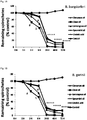
- FIG. 1A, 1B , 1C and 1D Time-dependent evaluation of the anti-borreliae effect of tested individual compounds against active (spirochete) form of Borrelia burgdorferi and Borrelia garinii determined by SYTO9/IP assay staining.
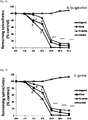
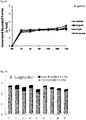
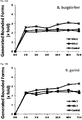
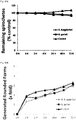
- FIG. 2A, 2B , 2C and 2D Time-dependent evaluation of the anti-borreliae effect of tested individual compounds against persistent (rounded) form of Borrelia burgdorferi and Borrelia garinii determined by SYTO9/IP assay staining.
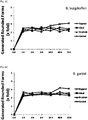
- Tested ingredients clove oil (0. 3mg/ml), lemongrass oil (0.3mg/ml), spearmint oil (0.3mg/ml), linoleic acid (0.3mg/ml), eugenol (0.3mg/ml), citral (0.3mg/ml), R-carvone (0.3mg/ml), cinnamon oil (0.3mg/ml), control (0.3mg/ml ethanol). All tested agents did not stimulate generation of latent rounded forms of B. burgdorferi and B. garinii from spirochetes compared to controls.
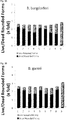
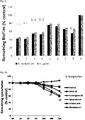
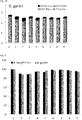
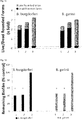
- FIG. 3A and 3B Live/Dead ratio of rounded forms evaluated after 72 hours post-treatment with tested individual compounds against persistent (rounded) form of Borrelia burgdorferi and Borrelia garinii determined by SYTO9/IP assay staining.
- FIG. 4 Evaluation of the anti-borreliae effect of tested individual compounds against persistent (biofilm) form of Borrelia burgdorferi and Borrelia garinii determined by SYTO9/IP assay staining.
- Tested ingredients 1 - clove oil (0.3mg/ml), 2 - eugenol (0.3mg/ml), 3 - lemongrass oil (0.3mg/ml), 4 - citral (0.3mg/ml), 5 - spearmint oil (0.3mg/ml), 6 - R-carvone (0.3mg/ml); 7 - linoleic acid (0.3mg/ml), 8 - cinnamon oil (0.3mg/ml), 9 - control (0.03mg/ml ethanol); ⁇ p ⁇ 0.01, * p ⁇ 0.001. Biofilms of B. burgdorferi and B. garinii are susceptible to the treatment with clove oil and its main active constituent eugenol as well as lemongrass
- Fig 5A and 5B , 5C and 5D Time-dependent evaluation of the anti-borreliae effect of tested individual compounds used at 0.075mg/ml concentrations against active (spirochete) form of Borrelia burgdorferi and Borrelia garinii determined by SYTO9/IP assay staining.
- FIG. 6A , 6B , 6C and 6D Time-dependent evaluation of the anti-borreliae effect of tested individual compounds used at 0.075mg/ml concentrations against persistent (knob-shaped/rounded) forms of Borrelia burgdorferi and Borrelia garinii determined by SYTO9/IP assay staining
- FIG. 7A and 7B Live/Dead ratio of rounded forms evaluated after 72 hours post-treatment with tested individual compounds used at 0.075mg/ml concentrations against persistent (knob-shaped/rounded) form of Borrelia burgdorferi and Borrelia garinii determined by SYTO9/IP assay staining.
- FIG. 8 Evaluation of the anti-borreliae effect of tested individual compounds used at 0.075mg/ml concentrations against persistent (biofilm) form of Borrelia burgdorferi and Borrelia garinii determined by SYTO9/IP assay
- Fig. 9A and 9B Time dependent evaluation of the anti-borreliae effects of tested mixes (Mix 1 and Mix 2) against active (spirochete) form of Borrelia burgdorferi and Borrelia garinii determined by SYTO9/IP assay staining.
- Tested mixes contained: Mix 1: clove oil (0.075mg/ml), lemongrass oil (0.075mg/ml), spearmint oil (0.075mg/ml) or cinnamon oil (0.075mg/ml), linoleic acid (0.075mg/ml); Mix 2: eugenol (0.075mg/ml), citral (0.075mg/ml), linoleic acid (0.075mg/ml, R-carvone (0.075mg/ml) or cinnamon oil (0.075mg/ml). Control (0.3mg/ml ethanol). # p ⁇ 0.05, ⁇ p ⁇ 0.01, * p ⁇ 0.001. The results shows that c.a.
- Fig. 10A and 10B Time-dependent evaluation of the anti-borreliae effect of tested mixes against persistent (knob-shaped/rounded) form of Borrelia burgdorferi and Borrelia garinii determined by SYTO9/IP assay staining.
- Tested mixes contained: Mix 1: clove oil (0.075mg/ml), lemongrass oil (0.075mg/ml), spearmint oil (0.075mg/ml) or cinnamon oil (0.075mg/ml), linoleic acid (0.075mg/ml); Mix 2: eugenol (0.075mg/ml), citral (0.075mg/ml), linoleic acid (0.075mg/ml), R-carvone (0.075mg/ml) or cinnamon oil (0.075mg/ml); Control (0.075mg/ml ethanol). All tested mixtures do not generate latent knob/rounded-shaped forms of B. burgdorferi and B. garinii.
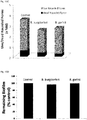
- FIG.11 Live/Dead ratio of rounded forms evaluated after 72 hours post-treatment with tested mixes (1-2) against persistent (rounded) form of Borrelia burgdorferi and Borrelia garinii determined by SYTO9/IP assay staining.
- Tested mixes contained: Mix 1: clove oil (0.075mg/ml), lemongrass oil (0.075mg/ml), spearmint oil (0.075mg/ml) or cinnamon oil (0.075mg/ml), linoleic acid (0.075mg/ml); Mix 2: eugenol (0.075mg/ml), citral (0.075mg/ml), linoleic acid (0.075mg/ml), R-carvone (0.075mg/ml) or cinnamon oil (0.075mg/ml); Control (0.075mg/ml ethanol.
- Latent rounded forms of B. burgdorferi and B. garinii are susceptible to the treatment with tested mixtures (more than 2-fold increase in dead latent forms compared to control that contains mostly alive forms).
- FIG.12 Evaluation of the anti-borreliae effect of tested mixes against persistent (biofilm) form of Borrelia burgdorferi and Borrelia garinii determined by SYTO9/IP assay staining.
- Tested mixes contained: Mix 1: clove oil (0.075mg/ml), lemongrass oil (0.075mg/ml), spearmint oil (0.075 mg/ml) or cinnamon oil (0.075mg/ml), linoleic acid (0.075mg/ml); Mix 2: eugenol (0.075mg/ml), citral (0.075mg/ml), linoleic acid (0.075mg/ml), R-carvone (0.075mg/ml) or cinnamon oil (0.075mg/ml); Control (0.075mg/ml ethanol * p ⁇ 0.001. Biofilms of B. burgdorferi and B. garinii are susceptible to the treatment with both tested mixtures (biofilm eliminated in about 60%).
- FIG.13A, 13B , 13C and 13D Evaluation of the anti-borreliae effect of doxycycline against active (spirochete) and persistent forms (rounded forms, biofilm) of Borrelia burgdorferi and Borrelia garinii determined by SYTO9/IP staining; doxycycline (0.3mg/ml), control (0.3mg/ml ethanol). Neither spirochetes nor latent forms (knob-shaped/rounded forms, biofilm) of B. burgdorferi and B. garinii are susceptible to doxycycline treatment used at the same concentration as tested compounds and mixtures.
- compositions according to the invention are useful in the treatment and/or prevention of Borrelia burgdorferi and Borrelia garinii infection that is in its active form or dormant forms in mammal. Specifically in animals and human.
Landscapes
- Health & Medical Sciences (AREA)
- Natural Medicines & Medicinal Plants (AREA)
- Life Sciences & Earth Sciences (AREA)
- Chemical & Material Sciences (AREA)
- Medicinal Chemistry (AREA)
- Pharmacology & Pharmacy (AREA)
- Animal Behavior & Ethology (AREA)
- General Health & Medical Sciences (AREA)
- Public Health (AREA)
- Veterinary Medicine (AREA)
- Epidemiology (AREA)
- Alternative & Traditional Medicine (AREA)
- Biotechnology (AREA)
- Mycology (AREA)
- Microbiology (AREA)
- Medical Informatics (AREA)
- Botany (AREA)
- Engineering & Computer Science (AREA)
- Organic Chemistry (AREA)
- Communicable Diseases (AREA)
- Oncology (AREA)
- Chemical Kinetics & Catalysis (AREA)
- Nuclear Medicine, Radiotherapy & Molecular Imaging (AREA)
- General Chemical & Material Sciences (AREA)
- Pharmaceuticals Containing Other Organic And Inorganic Compounds (AREA)
- Acyclic And Carbocyclic Compounds In Medicinal Compositions (AREA)
- Medicines Containing Plant Substances (AREA)
Description
- This disclosure relates generally to novel compositions and their use in a method for treating bacterial disease.
- Lyme disease (LD) is the most common tick-borne illness today in Europe and North America (Anderson et al. 1983, Burgdorfer et al. 1982, Johnson et al. 2014, Dryden et al. 2010). The Center for Disease Control (CDC) states that there may be more than 300,000 cases and as high as one million cases per year in United States alone (Stricker et al. 2014). This publication further states that Lyme disease is approaching an epidemic proportion and the monotherapy of using antibiotics may not be sufficient. Chronic/persistent Lyme disease involves latent forms such as rounded bodies and biofilm formation (Stricher et al. 2011).
- Bacteria from genus Borrelia are pathogenic mico-aerophilic and slow-growing pathogens known for their persistency (Embers et al. 2012, Sapi et al. 2011, Hodzic et al. 2014, Stanek et al. 2012, Hodzic et al. 2008, Stricker et al. 2013, Barthold et al. 2010). Out of 36 currently recognized species, 17 of them are either acknowledged or suspected to cause LD. They are known as Borrelia burgdorferi sensu lato and include species such as Borrelia burgdorferi sensu stricto (predominantly causing this illness in North America) as well as Borrelia afzelii and Borrelia garinii (predominantly causing this illness in Europe) (Lovrich et al. 1994). The vegetative form of Borrelia sp (Borrelia species) are spirochetes that are motile and can survive viscous conditions in human and animal blood, and as well they are capable of entering their cells (Miller et al. 2014, Zhao et al. 2014, Wu et al. 2011, Coleman et al. 1995). When hostile conditions are introduced, these bacteria can adopt different latent persistent forms such as knob-shaped/rounded bodies (cysts, granular forms, L-forms) and aggregates (biofilm-like structures) both in vitro and in vivo (Gruntar et al. 2001, Brorson et al. 1998, Krause et al. 2006). Especially the ability of Borrelia burgdorferi sensu lato to convert and re-convert to cystic form was observed, which may be one of the reasons why this infection can sometimes become persistent and/or re-surface after being silent for a long time (Krause et al. 2006, Brorson et al. 1997, Donta 2002). Moreover, genomic analysis revealed that Borrelia burgdorferi sensu lato has a gene for efflux mechanism. This might be responsible for developing antibiotic resistance, although more in depth studies are warranted to prove such hypothesis (Fraser et al. 1997).
- Based on diagnostic test results, the most recent estimates indicate that the number of LD cases in just the United States reaches 300,000 each year; however, there might be unreported cases that are not reflected in the statistics (Johnson et al. 2014, Krause et al. 2006, Stricker et al. 2014 Meek et al. 1996). This has made this disease the most common vector-born disease in the Northern Hemisphere (Johnson et al. 2014, Dryden et al. 2010, Krause et al. 2006). Currently, the frontline treatment for LD is based on antibiotics. Lactams and tetracyclines are the most frequently applied and include doxycycline, amoxicillin, and cefuroxime axetil. Macrolides, such as azithromycin, clarithromycin, and erythromycin, are the second class and appear to be less effective than lactams (Shapiro 2014).
- Currently one of the most often prescribed antibiotics against Borrelia burgdorferi sensu lato infection is doxycycline (Shapiro 2014, Cameron et al. 2014, Nadelman et al. 2001, Wormser et al. 2006, Mygland et al. 2010). Its use began in the late sixties last century against infections other than LD (Li et al. 2013, Nelson et al. 2011). Since then, the application of doxycycline extended and has been on the World Health Organization's List of Essential Medicines as one of the most important medications needed in a basic health system (Nelson et al. 2011, World Health Organization 2015). Doxycycline is a broad-spectrum antibiotic belonging to the class of tetracyclines. Like other agents in this class, it is an anti-bacterial and anti-parasite agent targeting protein production in general (Nelson et al. 2011, World Health Organization 2015), The American Society of Health-System Pharmacists 2015). Its side effects are similar to those of other members of this antibiotic class, including the development of an erythematous rash after exposure to sun. Moreover, doxycycline is classified as a class D drug and is thus restricted for administration to pregnant women and children under the age of eight (Mylonas 2011). Although, doxycycline is one of the most frequently prescribed antibiotics, especially for the early stages of LD, its continued treatment is not recommended since the long-term effectiveness has not been proven (Stanek et al. 2012, Delong et al. 2012). In vitro studies revealed that doxycycline is effective against active (vegetative) form of Borrelia sp., with moderate action against their biofilms, and ineffective against the latent knob-shaped/rounded forms (Sapi et al. 2011, Baradaran-Dilmaghani et al. 1996). Observed persistency and/or relapse of LD symptoms in the absence of ongoing antibiotic treatment were observed as well (Krause et al. 2006, Donta 2002, Klempner et al. 2001). This would suggest that doxycycline may either facilitate generation of latent forms or is inefficient in their elimination (Hodzic et al. 2008, Gruntar et al. 2001, Oksi et al. 1999, Straubinger et al. 1997, Straubinger 2000).
- Antimicrobials derived from natural sources such as plants, herbs, and fruits, and essential oils, have shown activity against a plethora of bacteria and fungi, but are poorly explored against Borrelia sp. (Morrison et al. 2014, Takeuchi et al. 2014, Zhang et al. 2013). Despite a rather small pool of available data on this subject, Bronson and Bronson study exhibited grapefruit seed extract as a powerful in vitro agent against spirochetes and their cystic forms of Borrelia burgdorferi sensu lato (Brorson et al. 2007). Dipsacus sylvestris extract against Borrelia burgdorferi sensu stricto revealed growth inhibiting activity as well (Liebold et al. 2011), whereas Sapi et al., reported significant efficacy of leaf extracts from Stevia Rebaudiana on all forms of Borrelia burgdorferi (Theophilus et al. 2015).
US-A 2016/106777 teaches a composition comprising a vitamin, a small fatty acid signaling molecule, an essential amino acid, a flavonoid, a plant extract and a mineral for the treatment of Lyme disease caused by Borrelia sp.US-A 2007/178128 refers to emulsifiable concentrate formulations for pesticides which contain plant-derived components selected from a plethora of alternatives. - Natural components tested against Borrelia sp. were limited to individual compounds or extracts isolated from a specific plant species. There is a need for new and improved treatments against Borrelia sp.
- Several compositions and efficacy of treating several forms of bacterial infection are discussed in this application and disclosure of the invention. The instant application describes a novel composition and use of novel composition in the treatment and/or prevention of Lyme disease caused by Borrelia sp. In other words, the present invention relates to a novel composition as defined in the claims and such composition for use in a method of treatment and/or prevention of Lyme disease caused by Borrelia sp. The novel composition comprises fatty acids, essential oils, plant extracts, phenols, and terpenoids in various combinations. The composition of the present invention is defined by the claims. The novel composition may comprise or consist of fatty acids, essential oils, plant extracts, phenols, and terpenoids in various combinations. The novel composition is effective against both the active (spirochetes) and dormant/latent persistent (knob/rounded-shaped bodies, biofilm) forms of Borrelia sp. A treatment/prevention for Lyme disease is disclosed. A novel composition for treating/preventing Lyme disease is disclosed. A novel composition for use in a method of treating/preventing Lyme disease is disclosed. It is disclosed that knob/rounded-shaped forms (persisters), spirochetes, and biofilm may be treated using the novel composition. The present invention relates to the composition for use in a method of treating knob/rounded-shaped forms (persisters), spirochetes, and biofilm. It is disclosed that two species of Lyme disease bacteria and their various forms may be treated by the novel composition. Thus, the composition for use in a method of treating two species of Lyme disease bacteria and their various forms is disclosed. Once the mixture is administered the infected mammal is treated simultaneously for all forms, such as persistent forms (knob/rounded-shaped forms), biofilm, and active/ spirochete forms of Borrelia sp. Thus, the present invention also relates to the composition for use in a method of treating all forms of Borrelia species, wherein the composition is administered the infected mammal that is treated simultaneously for all forms, such as persistent forms (knob/rounded-shaped forms), biofilm, and active/ spirochete forms of Borrelia sp. Examples for administration are mentioned in the experimental section below and form part of the present invention. It will be understood that, as used herein, the term "treating Borrelia sp" is treating against Borrelia sp, in other words, treating diseases caused by Borrelia sp. The present invention also relates to a composition for treating all forms of a Borrelia sp simultaneously, comprising a fatty acid, essential oil, plant extract, phenol, and terpenoid in a specific concentration individually, wherein the specific concentration is between 0.075mg/ml to 0.3mg/ml for each of the ingredients in the composition. Accordingly, the present invention also relates to a composition for use in a method of treating (all forms of) a Borrelia sp (simultaneously), said composition comprising a fatty acid, essential oil, plant extract, phenol, and terpenoid in a specific concentration individually, wherein the specific concentration is between 0.075mg/ml to 0.3mg/ml for each of the ingredients in the composition. In a preferred embodiment, the combination of all the above ingredients does not exceed 0.3mg/ml. The present invention also relates to a composition for treating all forms of a Borrelia sp simultaneously, comprising or consisting a combination of a fatty acid that is a linoleic acid, an essential oil that is at least one of a lemongrass oil, spearmint oil, clove oil, citral or cinnamon oil, a plant extract that is at least one of a clove oil, cinnamon oil, citral, thyme or ginger, a phenol that is an eugenol, and a terpenoid that is at least one of a carvone wherein the combination of all the above ingredients does not exceed 0.3mg/ml. Accordingly, the present invention also relates to a composition for use in a method of treating (all forms of) a Borrelia sp (simultaneously), wherein said composition comprises a combination of linoleic acid, an essential oil that is at least one selected from the group consisting of a lemongrass oil, spearmint oil, clove oil, citral and cinnamon oil, a plant extract that is one selected from the group consisting of a clove oil, cinnamon oil, citral, thyme and ginger, a phenol that is an eugenol, and/or a terpenoid that is at least one selected from the group consisting of a carvone, wherein the combination of all the above ingredients does not exceed 0.3mg/ml. The present invention also relates to the use of a composition of the invention for removing a Borrelia sp biofilm, preferably in vitro. Such use is preferably non-therapeutic and non-diagnostic.
- In one embodiment, the composition comprises of a fatty acid between 0.075-0.1mg/ml, essential oil in the range of 0.075-0.1mg/ml, plant extract in the range of 0.075- 0.1mg/ml and terpenoids in the range of 0.75-0.1mg/ml All the composition ingredients are grouped in different combinations composed of 3 to 4 ingredients so in total they comprise 0.3mg/ml of the entire treatment portion of the mixture.
- In one embodiment, a composition of clove oil (0.075mg/ml), lemongrass oil (0.075mg/ml), spearmint oil (0.075mg/ml) or cinnamon oil (0.075mg/ml) and linoleic acid (0.075mg/ml) are used as a composition (Mix 1) to treat active spirochete form of Borrelia burgdorferi and Borrelia garinii in mammals.
- In one embodiment, linoleic acid (0.075mg/ml), eugenol (0.075mg/ml citral (0.075mg/ml) R-carvone (0.075mg/ml or cinnamon are used as a composition (Mix 2) to treat active spirochete form of Borrelia burgdorferi and Borrelia garinii in mammals.
- In one embodiment, time-dependent evaluation of the anti-borreliae effect of tested composition mixes against persistent (rounded) form of Borrelia burgdorferi and Borrelia garinii was determined by SYTO9/IP assay staining. Tested composition mixes according to the invention contained: Mix 1: clove oil (0.075mg/ml) lemongrass oil (0.075mg/ml) spearmint oil (0.075mg/ml) or cinnamon oil (0.075mg/ml)and linoleic acid (0.075mg/ml). In another composition, Mix 2: eugenol (0.075mg/ml), citral (0.075mg/ml), linoleic acid (0.075mg/ml), and R-carvone or cinnamon oil (0.075mg/ml).In another embodiment the final concentration for each component of
Mix 1 andMix 2 assembled in sets of three were 0.3mg/ml. Final concentration of all ingredients in any particular combination of the mixes was 0.3mg/ml. - In another embodiment, Live/Dead ratio of rounded forms evaluated after 72 hours post-treatment with tested individual compounds against persistent (rounded) form of Borrelia burgdorferi and Borrelia garinii was determined by SYTO9/IP assay staining. The components for the test included: clove oil (0.075-0.3mg/ml), lemongrass oil (0.075-0.3mg/ml spearmint oil (0.075-0.3mg/ml) or cinnamon oil (0.075-0.3mg/ml linoleic acid (0.075-0.3mg/ml), eugenol (0.075-0.3mg/ml), citral (0.075-0.3mg/ml), R-carvone (0.075-0.3mg/ml).
- In another embodiment, Live/Dead ratio of rounded forms evaluated after 72 hours post-treatment with mixtures according to the invention (
Mixes 1 and 2) against persistent (rounded) form of Borrelia burgdorferi and Borrelia garinii determined by SYTO9/IP assay staining. Tested mixes contained: Mix 1: clove oil (0.075mg/ml), lemongrass oil (0.075mg/ml), spearmint oil (0.075mg/ml) or cinnamon oil (0.075mg/ml), linoleic acid (0.075mg/ml), and Mix 2: eugenol (0.075mg/ml), citral (0.075mg/ml), linoleic acid (0.075mg/ml), R-carvone (0.075mg/ml) or cinnamon oil (0.075mg/ml); and were compared with control (0.3mg/ml) ethanol. - In another embodiment, evaluation of the anti-borrelia effect of tested mixes against persistent (biofilm) form of Borrelia burgdorferi and Borrelia garinii determined by SYTO9/IP assay staining. Tested mixes (1-2) contained: Mix 1: clove oil (0.075mg/ml), lemongrass oil (0.075mg/ml), spearmint oil (0.075mg/ml) or cinnamon oil (0.075mg/ml), linoleic acid (0.075mg/ml), and Mix 2: eugenol (0.075mg/ml), citral (0.075mg/ml), linoleic acid (0.075mg/ml), R-carvone (0.075mg/ml) or cinnamon oil (0.075mg/ml); and were compared with control (0.3mg/ml) ethanol.
- Individual ingredients (clove oil, lemongrass oil, spearmint oil, cinnamon oil, linoleic acid, eugenol, citral, R-carvone) tested at 0.075mg/ml concentrations each showed lower efficacy against biofilm than their combinations at respective concentrations used in mixes (Mix1 and Mix2)
- Other features will be apparent from the accompanying drawings and from the detailed description that follows.
- Example embodiments are illustrated by way of example and not limitation in the figures of the accompanying drawings, in which like references indicate similar elements and in which:
-
FIG. 1A, 1B ,1C and 1D : Time-dependent evaluation of the anti-borreliae effect of tested individual compounds used at 0.3mg/ml concentrations against active (spirochete) form of Borrelia burgdorferi and Borrelia garinii determined by SYTO9/IP assay staining. -
FIG. 2A, 2B ,2C and 2D : Time-dependent evaluation of the effect of tested individual compounds used at 0.3mg/ml concentrations against persistent (knob-shaped/rounded) form of Borrelia burgdorferi and Borrelia garinii determined by SYTO9/IP assay staining. -
FIG. 3A and 3B : Live/Dead ratio of rounded forms evaluated after 72 hours post-treatment with tested individual compounds used at 0.3mg/ml concentrations against persistent (knob-shaped/rounded) form of Borrelia burgdorferi and Borrelia garinii determined by SYTO9/IP assay staining. -
FIG. 4 : Evaluation of the anti-borreliae effect of tested individual compounds used at 0.3mg/ml concentrations against persistent (biofilm) form of Borrelia burgdorferi and Borrelia garinii determined by SYTO9/IP assay staining. -
FIG. 5A ,5B ,5C and5D : Time-dependent evaluation of the anti-borreliae effect of tested individual compounds used at 0.075mg/ml concentrations against active (spirochete) form of Borrelia burgdorferi and Borrelia garinii determined by SYTO9/IP assay staining. -
FIG. 6A ,6B ,6C and6D : Time-dependent evaluation of the effect of tested individual compounds used at 0.075mg/ml concentrations against persistent (knob-shaped/rounded) form of Borrelia burgdorferi and Borrelia garinii determined by SYTO9/IP assay staining. -
FIG. 7A and7B : Live/Dead ratio of rounded forms evaluated after 72 hours post-treatment with tested individual compounds used at 0.075mg/ml concentrations against persistent (knob-shaped/rounded) form of Borrelia burgdorferi and Borrelia garinii determined by SYTO9/IP assay staining. -
FIG. 8 : Evaluation of the anti-borreliae effect of tested individual compounds used at 0.075mg/ml concentrations against persistent (biofilm) form of Borrelia burgdorferi and Borrelia garinii determined by SYTO9/IP assay staining. -
FIG. 9A and 9B : Time-dependent evaluation of the anti-borreliae effect of tested mixes against active (spirochete) form of Borrelia burgdorferi and Borrelia garinii determined by SYTO9/IP assay staining. -
FIG. 10A and 10B : Time-dependent evaluation of the anti-borreliae effect of tested mixes against persistent (rounded) form of Borrelia burgdorferi and Borrelia garinii determined by SYTO9/IP assay staining. -
FIG. 11 : Live/Dead ratio of rounded forms evaluated after 72 hours post-treatment with tested mixes (1-2) against persistent (knob-shaped/rounded) form of Borrelia burgdorferi and Borrelia garinii determined by SYTO9/IP assay staining. -
FIG. 12 : Evaluation of the anti-borreliae effect of tested mixes against persistent (biofilm) form of Borrelia burgdorferi and Borrelia garinii determined by SYTO9/IP assay staining. -
FIG. 13A, 13B ,13C and 13D : Evaluation of the anti-borreliae effect of doxycycline against active (spirochete) and persistent forms (rounded forms, biofilm) of Borrelia burgdorferi and Borrelia garinii determined by SYTO9/IP staining; doxycycline (0.3mg/ml), control (0.3mg/ml ethanol). - Other features of the present embodiments will be apparent from the accompanying drawings and from the detailed description that follows.
- Several compositions in various combinations and concentration to test the treatment for Lyme disease using these compositions and simultaneously addressing the treatment of persistent/latent forms, i.e., knob/rounded-shaped form and biofilm and active and motile spirochetes for both the bacteria, i.e., Borrelia burgdorferi and Borrelia garinii, are claimed and disclosed. Although the present embodiments have been described with reference to specific example embodiments, it will be evident that various modifications and changes may be made. The invention is defined by the claims. The inventors have designed and prepared novel compositions for use against Borrelia sp. infection and in the treatment and/or prevention of Lyme disease. The novel compositions comprise of plant oil extracts and other active chemical compounds applied in different combinations. The novel compositions are effective against both the active (spirochetes) and latent forms (knob/rounded-shaped bodies, biofilm) of Borrelia sp.
- In embodiments of the invention the experimental results of two compositions comprising plant extracts, essential oils, fatty acids, terpenoids and phenols were tested against active (spirochete) and latent persistent forms (knob/rounded-shaped forms, biofilm) of Borrelia burgdorferi and Borrelia garinii. The terpenoids are carvone, citral, menthol, camphor, salvinorin etc. Plant extracts like cumin, pomegranate, clove oil, cinnamon oil, thyme and ginger etc., can be used. Examples of essential oils are spearmint oil, lemongrass oil, clove oil, citral, cinnamon oil etc. Fatty acids such as linoleic acid are used for the mixers. The phenols are eugenol etc. The compounds were combined in various mixtures. Mixes 1-8 were prepared are as follows, and Table 1 below further outlines the concentration of the various components in the composition:
- Mix 1: linoleic acid, clove oil, lemongrass oil, and spearmint oil or cinnamon oil.
- Mix 2: linoleic acid, eugenol, citral and R-carvone or cinnamon oil.
- Mix 3: linoleic acid, clove oil and lemongrass oil.
- Mix 4: linoleic acid, eugenol and citral.
- Mix 5: spearmint oil and/or cinnamon oil, clove oil and lemongrass oil.
- Mix 6: R-carvone and/or cinnamon oil, eugenol and citral.
- Mix 7: linoleic acid, clove oil and spearmint oil or cinnamon oil.
- Mix 8: linoleic acid, eugenol and R-carvone or cinnamon oil
- Test compounds. The following compounds, with the purity between 90%-98% according to the manufacturer, were obtained from Sigma (St. Louis, MO): clove oil, eugenol, lemongrass, citral, spearmint oil, cinnamon oil, R-carvone, linoleic acid. As a positive control antibiotic doxycycline (100mg/mL stock suspension in absolute ethanol) was used, since it is considered a standard therapeutic treatment for patients with Lyme disease.
- Test microorganisms. Two Borrelia species, namely, Borrelia burgdorferi and Borrelia garinii were tested in this study. Low passage isolates of the B31 strain of B. burgdorferi and CIP103362 strain of B. garinii were obtained from the American Type Culture Collection (Manassas, VA). The stocks of both species were cultured in commonly used conditions, i.e. medium such as Barbour-Stoner-Kelly H (BSK-H) supplemented with 6% rabbit serum (Sigma, St Louis, MO) without antibiotics at 33°C with 5% CO2, in sterile screw-cap 15 mL polypropylene tubes with or without gentile shaking depends on type of experiment. B31 strain is an isolate from Ixodes dammini whereas CIP103362 strain is an isolate from Ixodes ricinus. Both strains are well known human pathogenic factors of Lyme disease. So far, Borrelia burgdorferi has been found in ticks from North America and Eurasia, while Borrelia garinii only in ticks in Eurasia.
- Preparation of test microorganisms for susceptibility testing. The strains of B. burgdorferi and B. garinii were prepared for testing as described in the art (Sapi et al., 2011). Briefly, the strains were activated from original cryobank vials and inoculated into 10 mL BSK-H compete medium, and maintained at 33°C. For generation of homogeneous cultures of B. burgdorferi or B. garinii, bacterial cells were inoculated and maintained in a shaking incubator at 33°C and 250 rpm, where there is no biofilm formation (Sapi et al., 2011; supported by own observation). For generation of biofilm-like colonies of B. burgdorferi or B. garinii, bacterial cells were inoculated in four-well chambers (BD Biosciences, Sparks, MD) coated with rat-tail collagen type I and incubated for 1 week without shaking.
- Evaluation of bacteriostatic and bactericidal effect of individual test compounds and their mixtures on test microorganisms. To determine what compound and/or mixture will have the bacteriostatic and/or bactericidal effect a fluorescence method was used according to Sapi et al. Briefly,
5x 10⁶ bacterial cells/mL of the homogenous bacterial suspension was inoculated into each sterile 1.8 mL test tightly caps screwed tubes containing 1 mL BSK-H medium, supplemented with the test compound/mixture of interest. Control cultures were treated with ethanol (i.e., 0.075-0.3mg/ml) alone. For doxycycline, as a positive control, the final used concentration was 0.075-0.3mg/ml). The tubes were then incubated at 33°C and viability was monitored at regular intervals for up to 72 hours. The whole experiment was repeated three times for each strain and each concentration. The susceptibility of spirochetes and knob/rounded-shaped body forms to the test compound was then assessed after 1 hour, 3 hours, 6 hours, 24 hours, 48 hours, 72 hours by LIVE/DEAD® BacLight™ Bacterial Viability Assay using fluorescent microscopy, were the ratio of live (green) and dead (red) B. burgdorferi and B. garinii morphological forms were calculated. The composition is administered to mammals to treat Lyme disease. The mode of administration may include non-invasive perioral, topical (example transdermal), enteral, transmucosal, targeted delivery, sustained release delivery, delayed release, pulsed release and parenteral methods. Various combinations of these administration modes may be combined. - Formulations suitable for oral administration may be in the form of capsules, cachets, pills, tablets, lozenges (using a flavored basis, usually sucrose and acacia or tragacanth), powders, granules, or as a solution or a suspension in an aqueous or non-aqueous liquid, or as an oil-in-water or water-in-oil liquid emulsion, or as an elixir or syrup, or as pastilles (using an inert base, such as gelatin and glycerin, or sucrose and acacia), each containing a predetermined amount of the composition as active ingredient.
- Evaluation of test compounds/mixtures on bacterial biofilm. Qualitative effect of the individual test compounds and their mixtures against biofilm-like colonies of B. burgdorferi and B. garinii was evaluated using commonly used and well accepted crystal violet (CV) staining method, according to protocol provided by Sapi et al. Briefly, 1x10⁷ bacterial cells/mL from homogeneous cultures of spirochetes were grown on extracellular matrix proteins (i.e., collagen type I) coated four-well chambers and incubated for 1 week.
- After the 1 week of incubation, biofilm-like colonies were treated with various compounds/mixtures. Control wells were treated with ethanol (i.e., 0.075-0.3mg/ml) alone. For doxycycline, as a positive control, the final used concentration was 0.03% (v/v). The chambers were then incubated at 33°C for 72 hours. The whole experiment was repeated three times for each strain and each concentration. Next, all wells were fixed with 500 µL of cold methanol-formalin (1:1) for 30 minutes and stained with 1 mL of crystal violet (0.1%) for 10 minutes. The biofilm-like colonies were carefully washed three times with 1 x PBS and 1 mL of methanol was added to each well to extract a dye, which was measured at 595 nm wavelength.
- Statistical analysis. Means and standard deviations were determined for all experiments and Student's t test analysis was used to determine significant differences. Statistical analysis was performed by t-test using GraphPad statistical software. COLBY equation was applied to calculate synergistic cooperation of the components in the test mixtures as described (Ferry N, Stanley BH, Armel G. 2005, Design and analysis of biological assay of mixtures. 17th Annual Conference on Applied Statistics in Agriculture, Kansas State University Libraries, New Prairie Press).
-
FIG. 1A, 1B ,1C and 1D : Time-dependent evaluation of the anti-borreliae effect of tested individual compounds against active (spirochete) form of Borrelia burgdorferi and Borrelia garinii determined by SYTO9/IP assay staining. Tested ingredients: clove oil (0.3mg/ml), lemongrass oil (0.3mg/ml), spearmint oil (0.3mg/ml), linoleic acid (0.3mg/ml), eugenol (0.3mg/ml), citral (0.3mg/ml), R-carvone (0.3mg/ml), cinnamon oil (0.3mg/ml), control (0.3mg/ml ethanol); # p ≤ 0.05, Δ p ≤ 0.01, * p ≤ 0.001. The results show 50% bactericidal effect against B. burgdorferi and B. garinii was achieved by clove oil and its main active constituent eugenol after 6 hours of incubation. 100 % bactericidal effect was achieved after 24 hours of incubation with these agents. The rest of tested compounds revealed 75-90 % bactericidal effect after 24-72 hours of incubation. -
FIG. 2A, 2B ,2C and 2D : Time-dependent evaluation of the anti-borreliae effect of tested individual compounds against persistent (rounded) form of Borrelia burgdorferi and Borrelia garinii determined by SYTO9/IP assay staining. Tested ingredients: clove oil (0. 3mg/ml), lemongrass oil (0.3mg/ml), spearmint oil (0.3mg/ml), linoleic acid (0.3mg/ml), eugenol (0.3mg/ml), citral (0.3mg/ml), R-carvone (0.3mg/ml), cinnamon oil (0.3mg/ml), control (0.3mg/ml ethanol). All tested agents did not stimulate generation of latent rounded forms of B. burgdorferi and B. garinii from spirochetes compared to controls. -
FIG. 3A and 3B : Live/Dead ratio of rounded forms evaluated after 72 hours post-treatment with tested individual compounds against persistent (rounded) form of Borrelia burgdorferi and Borrelia garinii determined by SYTO9/IP assay staining. Tested ingredients: 1 - clove oil (0.3mg/ml), 2 - eugenol (0.3mg/ml), 3 - lemongrass oil (0.3mg/ml), 4 - citral (0.3mg/ml), 5 - spearmint oil (0.3mg/ml), 6 - R-carvone (0.3mg/ml); 7 - linoleic acid (0.3mg/ml), 8 - cinnamon oil (0.3mg/ml), 9-control (0.3mg/ml ethanol). Latent rounded forms of B. burgdorferi and B. garinii are susceptible to the treatment with all tested agents, at these concentrations. -
FIG. 4 : Evaluation of the anti-borreliae effect of tested individual compounds against persistent (biofilm) form of Borrelia burgdorferi and Borrelia garinii determined by SYTO9/IP assay staining. Tested ingredients: 1 - clove oil (0.3mg/ml), 2 - eugenol (0.3mg/ml), 3 - lemongrass oil (0.3mg/ml), 4 - citral (0.3mg/ml), 5 - spearmint oil (0.3mg/ml), 6 - R-carvone (0.3mg/ml); 7 - linoleic acid (0.3mg/ml), 8 - cinnamon oil (0.3mg/ml), 9 - control (0.03mg/ml ethanol); Δ p ≤ 0.01, * p ≤ 0.001. Biofilms of B. burgdorferi and B. garinii are susceptible to the treatment with clove oil and its main active constituent eugenol as well as lemongrass and its main active constituent citral at used concentrations. -
Fig 5A and5B ,5C and5D : Time-dependent evaluation of the anti-borreliae effect of tested individual compounds used at 0.075mg/ml concentrations against active (spirochete) form of Borrelia burgdorferi and Borrelia garinii determined by SYTO9/IP assay staining. -
FIG. 6A ,6B ,6C and6D ; Time-dependent evaluation of the anti-borreliae effect of tested individual compounds used at 0.075mg/ml concentrations against persistent (knob-shaped/rounded) forms of Borrelia burgdorferi and Borrelia garinii determined by SYTO9/IP assay staining -
FIG. 7A and7B : Live/Dead ratio of rounded forms evaluated after 72 hours post-treatment with tested individual compounds used at 0.075mg/ml concentrations against persistent (knob-shaped/rounded) form of Borrelia burgdorferi and Borrelia garinii determined by SYTO9/IP assay staining. -
FIG. 8 : Evaluation of the anti-borreliae effect of tested individual compounds used at 0.075mg/ml concentrations against persistent (biofilm) form of Borrelia burgdorferi and Borrelia garinii determined by SYTO9/IP assay -
Fig. 9A and 9B : Time dependent evaluation of the anti-borreliae effects of tested mixes (Mix 1 and Mix 2) against active (spirochete) form of Borrelia burgdorferi and Borrelia garinii determined by SYTO9/IP assay staining. Tested mixes contained: Mix 1: clove oil (0.075mg/ml), lemongrass oil (0.075mg/ml), spearmint oil (0.075mg/ml) or cinnamon oil (0.075mg/ml), linoleic acid (0.075mg/ml); Mix 2: eugenol (0.075mg/ml), citral (0.075mg/ml), linoleic acid (0.075mg/ml, R-carvone (0.075mg/ml) or cinnamon oil (0.075mg/ml). Control (0.3mg/ml ethanol). # p ≤ 0.05, Δ p ≤ 0.01, * p ≤ 0.001. The results shows that c.a. 50% bactericidal effect against B. burgdorferi and B. garinii was achieved by all tested mixtures (composition provided in Table 1) after 6 hours of incubation. 100% bactericidal effect was achieved after 24 hours of incubation with these mixtures. -
Fig. 10A and 10B : Time-dependent evaluation of the anti-borreliae effect of tested mixes against persistent (knob-shaped/rounded) form of Borrelia burgdorferi and Borrelia garinii determined by SYTO9/IP assay staining. Tested mixes contained: Mix 1: clove oil (0.075mg/ml), lemongrass oil (0.075mg/ml), spearmint oil (0.075mg/ml) or cinnamon oil (0.075mg/ml), linoleic acid (0.075mg/ml); Mix 2: eugenol (0.075mg/ml), citral (0.075mg/ml), linoleic acid (0.075mg/ml), R-carvone (0.075mg/ml) or cinnamon oil (0.075mg/ml); Control (0.075mg/ml ethanol). All tested mixtures do not generate latent knob/rounded-shaped forms of B. burgdorferi and B. garinii. -
FIG.11 : Live/Dead ratio of rounded forms evaluated after 72 hours post-treatment with tested mixes (1-2) against persistent (rounded) form of Borrelia burgdorferi and Borrelia garinii determined by SYTO9/IP assay staining. Tested mixes contained: Mix 1: clove oil (0.075mg/ml), lemongrass oil (0.075mg/ml), spearmint oil (0.075mg/ml) or cinnamon oil (0.075mg/ml), linoleic acid (0.075mg/ml); Mix 2: eugenol (0.075mg/ml), citral (0.075mg/ml), linoleic acid (0.075mg/ml), R-carvone (0.075mg/ml) or cinnamon oil (0.075mg/ml); Control (0.075mg/ml ethanol. Latent rounded forms of B. burgdorferi and B. garinii are susceptible to the treatment with tested mixtures (more than 2-fold increase in dead latent forms compared to control that contains mostly alive forms). -
FIG.12 Evaluation of the anti-borreliae effect of tested mixes against persistent (biofilm) form of Borrelia burgdorferi and Borrelia garinii determined by SYTO9/IP assay staining. Tested mixes contained: Mix 1: clove oil (0.075mg/ml), lemongrass oil (0.075mg/ml), spearmint oil (0.075 mg/ml) or cinnamon oil (0.075mg/ml), linoleic acid (0.075mg/ml); Mix 2: eugenol (0.075mg/ml), citral (0.075mg/ml), linoleic acid (0.075mg/ml), R-carvone (0.075mg/ml) or cinnamon oil (0.075mg/ml); Control (0.075mg/ml ethanol * p ≤ 0.001. Biofilms of B. burgdorferi and B. garinii are susceptible to the treatment with both tested mixtures (biofilm eliminated in about 60%). -
FIG.13A, 13B ,13C and 13D : Evaluation of the anti-borreliae effect of doxycycline against active (spirochete) and persistent forms (rounded forms, biofilm) of Borrelia burgdorferi and Borrelia garinii determined by SYTO9/IP staining; doxycycline (0.3mg/ml), control (0.3mg/ml ethanol). Neither spirochetes nor latent forms (knob-shaped/rounded forms, biofilm) of B. burgdorferi and B. garinii are susceptible to doxycycline treatment used at the same concentration as tested compounds and mixtures. - TABLE 2: Colby calculations (Colby, 1967) were conducted in order to determine whether the effect of the ingredients combined in form of different mixes was based on their synergistic, additive or antagonistic interactions. Data obtained from the calculation are outlined in Table 2 below. The results show that synergistic effects were obtained in all cases. No antagonistic effect was obtained. Instant results as shown in figures prove that for individual ingredients that were tested at two tested concentrations: 0.075mg/ml and 0.3mg/ml in order to show that individual ingredients at low concentrations are not very effective, but they become effective as a mixture. Using these nutrient combinations one may avoid any possible toxicity of high doses of individual components, enhance their absorption and utilization and maintain metabolism in balance. These results further prove synergistic effect applicable as a treatment for Lyme disease and all forms of the bacteria simultaneously using one mixture.
Table 2: Colby calculation. Mix B. burgdorferi B. garinii B. burgdorferi Spirochetes Spirochetes Rounded forms/Persisters Obser ved Expec ted Obser ved Expected Observed Expected Mix 199.9± 9.8 87.5± 3.0* 99.9± 10.1 89.3±3.4* 90.9±9.9 52.6±5.0 # Mix 2 99.9± 9.6 88.9± 3.7* 99.9± 10.8 89.5±4.3* 91.2±9.5 57.0±6.1 # Mix 3 99.9± 10.1 91.8± 2.9* 99.9± 11.1 92.3±3.7* 89.8±10. 2 63.4±5.8 # Mix 4 99.9± 11.2 92.8± 3.5* 99.9± 10.9 93.2±3.5* 88.9±11. 4 65.2±5.5 # Mix 5 99.9± 8.6 91.1± 4.2* 99.9± 9.7 91.6±4.0* 90.4±10. 9 61.9±6.0 # Mix 6 99.9± 8.9 91.6± 4.2* 99.9± 8.9 92.4±4.0* 90.2±9.7 63.4±6.1 # Mix 7 99.9± 9.7 90.2± 5.0* 99.9± 10.6 92.1±4.0* 89.7±8.6 55.9±7.2 # Mix 8 99.9± 11.2 91.5± 4.4* 99.9± 9.9 91.4±4.3* 90.7±10. 3 57.6±6.7# Table 3: Colby calculation. Mix B. garinii B. burgdorferi B. garinii Rounded forms/Persisters Biofilm Biofilm Observed Expect ed Observe d Expected Observ ed Expect ed Mix 1 90.4±8.8 55.0±6. 0# 60.3±6.8 55.7±6.6* 57.3±4. 1 53.6±4. 8* Mix 290.5±10.8 57.4±6. 2# 60.6±7.2 52.3±6.6* 57.6±5. 0 52.6±4. 8* Mix 390.2±11.1 65.4±6. 0# 61.3±5.9 46.9±6.2* 59.9±5. 7 48.2±6. 1* Mix 489.5±10.9 70.0±5. 0# 59.3±6.2 46.0±6.3* 58.6±5. 2 47.3±6. 2* Mix 590.1±8.7 64.0±5. 8# 60.7±5.3 47.5±6.1* 53.3±4. 6 48.9±6. 1* Mix 690.5±9.3 68.8±5. 4# 60.8±5.4 46.2±6.0* 54.9±6. 1 46.5±6. 3* Mix 790.0±8.8 58.5±6. 8# 59.9±6.3 45.0±6.3* 55.2±5. 8 48.3±6. 1* Mix 890.3±10.7 57.7±6. 9# 58.2±6.8 46.0±6.1* 55.4±5. 7 47.0±6. 3* COLBY calculation: according to Ferry et al. (2005), DESIGN AND ANALYSIS OF BIOLOGICAL ASSAYS OF MIXTURES; Annual Conference on Applied Statistics in Agriculture.
Observed > Expected COLBY = synergistic effect, Observed < Expected COLBY = antagonistic effect;* p < 0.05, # p < 0.01 - As used herein when referring to numerical values or percentages, the term "about" includes variations due to the methods used to determine the values or percentages, statistical variance and human error. Moreover, each numerical parameter in this application should at least be construed in light of the number of reported significant digits and by applying ordinary rounding techniques.
- Various compositions according to the invention are useful in the treatment and/or prevention of Borrelia burgdorferi and Borrelia garinii infection that is in its active form or dormant forms in mammal. Specifically in animals and human. Although the present embodiments have been described with reference to specific example embodiments, it will be evident that various modifications and changes may be made. The invention is defined by the claims. Accordingly, the specification and drawings are to be regarded in an illustrative rather than a restrictive sense.
- Further disclosed in the following items:
- 1. A composition for treating all forms of a Borrelia sp simultaneously, comprising; a fatty acid, essential oil, plant extract, phenol, and terpenoid in a specific concentration individually, wherein the specific concentration is between 0.075mg/ml - 0.3mg/ml for each of the ingredients in the composition.
- 2. The composition of disclosed
item 1, wherein the fatty acid is a linoleic acid, the essential oil is at least one of a lemongrass oil, spearmint oil, clove oil, citral or cinnamon oil, the plant extract is at least one of a clove oil, cinnamon oil, citral, thyme or ginger, the phenol is an eugenol, the terpenoid is at least one carvone. - 3. The composition of disclosed
item 2, consists of 0.075mg/ml each of the linoleic acid, clove oil, lemongrass oil, spearmint oil and/or cinnamon oil. - 4. The composition of disclosed
item 2, consists of 0.075mg/ml each of the linoleic acid, eugenol, citral, R-carvone and/or cinnamon oil. - 5. The composition of disclosed
item 2, consists of 0.01mg/ml each of the linoleic acid, clove oil and lemongrass oil. - 6. The composition of disclosed
item 2, consists of 0.01mg/ml each of the spearmint oil and/or cinnamon oil, clove oil and lemongrass oil. - 7. The composition of disclosed
item 2, consists of 0.01mg/ml each of the linoleic acid, eugenol and lemongrass oil. - 8. The composition of disclosed
item 2, consists of 0.01mg/ml each of the R-Carvone and/or cinnamon oil, eugenol and citral. - 9. The composition of disclosed
item 2, consists of 0.01mg/ml each of the linoleic acid, clove oil and spearmint oil and/or cinnamon oil. - 10. The composition of disclosed
item 2, consists of 0.01mg/ml each of the linoleic acid, clove oil and R-carvone and/or cinnamon oil. - 11. The composition of disclosed
item 1, wherein all forms of the Borrelia sp is a spirochete, knob/rounded shape form and biofilm. - 12. The composition of disclosed
item 1, wherein the Borrelia sp is one of a Borrelia Burgdorferi and Borrelia Garinii. - 13. A composition for treating all forms of a Borrelia sp simultaneously, consisting a combination of a fatty acid is a linoleic acid, an essential oil is at least one of a lemongrass oil, spearmint oil, clove oil, citral or cinnamon oil, a plant extract is at least one of a clove oil, cinnamon oil, citral, thyme or ginger, a phenol is an eugenol, and a terpenoid is at least one of a carvone, wherein the combination of all the above ingredients does not exceed 0.3mg/ml.
- 14. The composition of disclosed item 13, wherein all forms of the Borrelia sp is a spirochete, knob/rounded shape form and biofilm.
- 15. The composition of disclosed item 13, wherein the Borrelia sp is one of a Borrelia Burgdorferi and Borrelia Garinii.
- 16. The composition of disclosed item 13, further consists of 0.075mg/ml each of the linoleic acid, clove oil, lemongrass oil, spearmint oil and/or cinnamon oil.
- 17. The composition of disclosed item 13, further consists of 0.075mg/ml each of the linoleic acid, eugenol, citral, R-carvone and/or cinnamon oil.
| | | | | | | | |
| 0.075 mg/ml Linoleic acid | 0.075 mg/ml Linoleic acid | 0.1 mg/ml Linoleic acid | 0.1 mg/ml Linoleic acid | 0.1 mg/ml Spearmint Oil/Cinnamo n oil | 0.1 mg/ml R-carvone/ Cinnamo n oil | 0.1 mg/ml Linoleic acid | 0.1 mg/ml Linoleic acid |
| 0.075 mg/ml Clove Oil | 0.075 mg/ml Eugenol | 0.1 mg/ml Clove Oil | 0.1 mg/ml Eugenol | 0.1 mg/ml Clove Oil | 0.1 mg/ml Eugenol | 0.1 mg/ml Clove Oil | 0.1 mg/ml Eugenol |
| 0.075 mg/ml Lemongra ss Oil | 0.075 mg/ml Citral | 0.1 mg/ml Lemongr ass Oil | 0.1 mg/ml Citral | 0.1 mg/ml Lemongrass Oil | 0.1 mg/ml Citral | 0.1 mg/ml Spearmin t Oil/Cinna mon oil | 0.1 mg/ml R-carvone/Ci nnamon oil |
| 0.075 mg/ml Spearmint Oil/Cinna mon oil | 0.075 mg/ml R-Carvone/ Cinnamo n oil |
Claims (15)
- A composition for treating all forms of a Borrelia sp simultaneously, comprising:fatty acid, essential oil, plant extract, phenol, and terpenoid in a specific concentration individually, wherein the specific concentration is between 0.075mg/ml - 0.3mg/ml for each of the ingredients in the composition,wherein:the fatty acid is a linoleic acid;the essential oil is at least one selected from the group consisting of a lemongrass oil, spearmint oil, and citral;the plant extract is at least one selected from the group consisting of a clove oil,cinnamon oil, thyme and ginger;the phenol is an eugenol; andthe terpenoid is at least one selected from the group consisting of a carvone.
- The composition of claim 1, comprising each 0.075mg/ml of linoleic acid, clove oil, lemongrass oil, spearmint oil and/or cinnamon oil.
- The composition of claim 1, comprising each 0.075mg/ml of linoleic acid, eugenol, citral, R-carvone and/or cinnamon oil.
- The composition of claim 1, wherein the plant extract is clove oil.
- The composition of claim 1, comprising each 0.1 mg/ml of:(a) linoleic acid, clove oil and lemongrass oil;(b) spearmint oil and/or cinnamon oil, clove oil and lemongrass oil;(c) linoleic acid, eugenol and lemongrass oil;(d) R-carvone and/or cinnamon oil, eugenol and citral;(e) linoleic acid, clove oil and spearmint oil and/or cinnamon oil; or(f) linoleic acid, clove oil and R-carvone and/or cinnamon oil.
- The composition of any one of claims 1 to 5 for use in a method for treating an infection with at least one Borrelia sp.
- The composition for use according to claim 6 wherein all forms of the Borrelia sp is selected from the group consisting of a spirochete, knob/rounded shape form and biofilm.
- The composition for use according to claims 6 or 7 wherein the Borrelia sp is selected from the group consisting of Borrelia burgdorferi and Borrelia garinii.
- A composition for treating all forms of a Borrelia sp simultaneously, comprising of consisting a combination of linoleic acid, an essential oil that is at least one selected from the group consisting of a lemongrass oil, citral and spearmint oil, a plant extract that is at least one selected from the group consisting of a clove oil, cinnamon oil, thyme and ginger a phenol that is an eugenol, and a terpenoid that is at least one selected from the group consisting of a carvone wherein the combination of all the above ingredients does not exceed 0.3mg/ml.
- The composition of claim 9 for use in a method for treating an infection with at least one Borrelia sp.
- The composition according to claim 9 or the composition for use according to claim 10, wherein all forms of the Borrelia sp is a spirochete, knob/rounded shape form and biofilm.
- The composition according to claim 9 or the composition for use according to claims 10 and 11, wherein the Borrelia sp is one of a Borrelia burgdorferi and Borrelia garinii.
- The composition according to claim 9 or the composition for use according to claims 10-12, further comprising each 0.075mg/ml of(a) linoleic acid, clove oil, lemongrass oil, spearmint oil and/or cinnamon oil; or(b) linoleic acid, eugenol, citral, R-carvone and/or cinnamon oil.
- The composition any one of claims 1 to 13 for use in a method for treating Lyme disease.
- Use of a composition of any one of claims 1 to 5, 7 to 9 or 11 to 13 for removing a Borrelia sp biofilm in vitro.
Priority Applications (1)
| Application Number | Priority Date | Filing Date | Title |
|---|---|---|---|
| PL18203291T PL3476397T3 (en) | 2017-10-31 | 2018-10-30 | NEW COMPOSITIONS AND THEIR USE IN THE TREATMENT OF BACTERIAL INFECTIONS |
Applications Claiming Priority (1)
| Application Number | Priority Date | Filing Date | Title |
|---|---|---|---|
| US15/799,573 US10238619B1 (en) | 2017-10-31 | 2017-10-31 | Composition and method of using the same |
Publications (2)
| Publication Number | Publication Date |
|---|---|
| EP3476397A1 EP3476397A1 (en) | 2019-05-01 |
| EP3476397B1 true EP3476397B1 (en) | 2021-07-21 |
Family
ID=64048730
Family Applications (1)
| Application Number | Title | Priority Date | Filing Date |
|---|---|---|---|
| EP18203291.2A Active EP3476397B1 (en) | 2017-10-31 | 2018-10-30 | Novel composition their use in treating bacterial infections |
Country Status (4)
| Country | Link |
|---|---|
| US (1) | US10238619B1 (en) |
| EP (1) | EP3476397B1 (en) |
| DK (1) | DK3476397T3 (en) |
| PL (1) | PL3476397T3 (en) |
Families Citing this family (3)
| Publication number | Priority date | Publication date | Assignee | Title |
|---|---|---|---|---|
| US20200397711A1 (en) * | 2019-06-22 | 2020-12-24 | Gregory Brian LEE | Microparticle compositions for treatment of infection or disease, methods of making the same, and methods of treating subjects with microparticle compositions |
| US20220280734A1 (en) * | 2021-03-07 | 2022-09-08 | Sultan A. M. Daham | Intaking an antiviral by inhalation or spraying for respiratory tract infection |
| EP4233547B1 (en) * | 2022-12-24 | 2025-06-25 | Patentpool Target GmbH | Composition with anti-borrelia effect and method for the production thereof |
Family Cites Families (3)
| Publication number | Priority date | Publication date | Assignee | Title |
|---|---|---|---|---|
| US20070178128A1 (en) * | 2006-01-06 | 2007-08-02 | Ecosmart Technologies, Inc. | Emulsifiable concentrate (ec) formulations for pesticides |
| GB2473460B (en) * | 2009-09-10 | 2016-02-10 | Univ Surrey | Antimicrobial Composition |
| US20160106777A1 (en) * | 2014-10-19 | 2016-04-21 | Matthias W. Rath | Novel composition method of using the same for the treatment of lyme disease |
-
2017
- 2017-10-31 US US15/799,573 patent/US10238619B1/en active Active
-
2018
- 2018-10-30 PL PL18203291T patent/PL3476397T3/en unknown
- 2018-10-30 EP EP18203291.2A patent/EP3476397B1/en active Active
- 2018-10-30 DK DK18203291.2T patent/DK3476397T3/en active
Non-Patent Citations (1)
| Title |
|---|
| None * |
Also Published As
| Publication number | Publication date |
|---|---|
| DK3476397T3 (en) | 2021-10-04 |
| PL3476397T3 (en) | 2021-12-27 |
| EP3476397A1 (en) | 2019-05-01 |
| US10238619B1 (en) | 2019-03-26 |
Similar Documents
| Publication | Publication Date | Title |
|---|---|---|
| Gomes et al. | Plant phenolic extracts as an effective strategy to control Staphylococcus aureus, the dairy industry pathogen | |
| Chakraborty et al. | Bactericidal activity of selected medicinal plants against multidrug resistant bacterial strains from clinical isolates | |
| Bordini et al. | Antimicrobial effects of terpinen-4-ol against oral pathogens and its capacity for the modulation of gene expression | |
| Almeida et al. | Antimicrobial activity of Rheedia brasiliensis and 7-epiclusianone against Streptococcus mutans | |
| Imran et al. | Antibacterial activity of Syzigium cumini leaf extracts against multidrug resistant pathogenic bacteria | |
| EP3476397A1 (en) | Novel composition and method of using the same | |
| Bakour et al. | Antioxidant and Antibacterial Effects of Pollen Extracts on Human Multidrug‐Resistant Pathogenic Bacteria | |
| Millo et al. | Antibacterial inhibitory effects of punica granatum gel on cariogenic bacteria: an in vitro study | |
| Akrayi et al. | Evaluation of the antibacterial efficacy and the phytochemical analysis of some plant extracts against human pathogenic bacteria | |
| da S. Moraes et al. | In vitro evaluation of Copaifera oblongifolia oleoresin against bacteria causing oral infections and assessment of its cytotoxic potential | |
| Amalia et al. | Propolis nanoemulsion extract from celebes stingless bee (Tetragonula biroi) phytochemistry and antibacterial analysis to periodontopathogen bacteria | |
| Ahmad et al. | Drug resistance modulation of dairy Mrsa through berberine, artesunate and quercetin in combination with β-lactams | |
| Goc et al. | Anti-borreliae efficacy of selected organic oils and fatty acids | |
| Rezvani et al. | The synergistic effect of honey and cinnamon against Streptococcus mutans bacteria | |
| Goc et al. | Cooperation of doxycycline with phytochemicals and micronutrients against active and persistent forms of Borrelia sp | |
| Tawfik et al. | Evaluation of the antibacterial activity of citrus juices: an in vitro study | |
| Fayyad et al. | Evaluation of synergistic effect of nicotinic acid with imipenem as antibiofilm for clinical Pseudomonas Aeruginosa isolates | |
| Ahmed et al. | Formulation and evaluation of therapeutic antimicrobial citrus and Manuka honey creams with aloe vera, mint essential oil, and Indian costus | |
| Váczi et al. | Synergistic effect of essential oils and chlorhexidine against planktonic and biofilm-forming cells of Malassezia pachydermatis | |
| Lakkana et al. | Revealing the synergistic antimicrobial effects of essential oil combinations via simplex lattice design | |
| Munir et al. | Native oregano essential oil: Phytochemical composition, antibacterial and synergistic activities with oxytetracycline against multi-drug resistant (MDR) Bacteria | |
| Guzman et al. | Antibacterial and antibiofilm activities of Sesbania grandiflora against foodborne pathogen Vibrio cholerae | |
| Al–Âni et al. | Antimicrobial activity of grapefruit seeds extracts (in vitro study) | |
| Gonçalves Dias et al. | Polyhexamethylene guanidine hydrochloride as active ingredient for anticariogenic products: studies in vitro and in vivo | |
| Sumarna et al. | Phytochemicals screening and antibacterial activity of Teijsmaniadendron holrungii from West Papua |
Legal Events
| Date | Code | Title | Description |
|---|---|---|---|
| PUAI | Public reference made under article 153(3) epc to a published international application that has entered the european phase |
Free format text: ORIGINAL CODE: 0009012 |
|
| STAA | Information on the status of an ep patent application or granted ep patent |
Free format text: STATUS: THE APPLICATION HAS BEEN PUBLISHED |
|
| AK | Designated contracting states |
Kind code of ref document: A1 Designated state(s): AL AT BE BG CH CY CZ DE DK EE ES FI FR GB GR HR HU IE IS IT LI LT LU LV MC MK MT NL NO PL PT RO RS SE SI SK SM TR |
|
| AX | Request for extension of the european patent |
Extension state: BA ME |
|
| RIN1 | Information on inventor provided before grant (corrected) |
Inventor name: NIEDZWIECKI, ALEKSANDRA Inventor name: GOC, ANNA Inventor name: RATH, MATTHIAS |
|
| STAA | Information on the status of an ep patent application or granted ep patent |
Free format text: STATUS: REQUEST FOR EXAMINATION WAS MADE |
|
| 17P | Request for examination filed |
Effective date: 20191029 |
|
| RBV | Designated contracting states (corrected) |
Designated state(s): AL AT BE BG CH CY CZ DE DK EE ES FI FR GB GR HR HU IE IS IT LI LT LU LV MC MK MT NL NO PL PT RO RS SE SI SK SM TR |
|
| STAA | Information on the status of an ep patent application or granted ep patent |
Free format text: STATUS: EXAMINATION IS IN PROGRESS |
|
| 17Q | First examination report despatched |
Effective date: 20200326 |
|
| REG | Reference to a national code |
Ref country code: DE Ref legal event code: R079 Ref document number: 602018020351 Country of ref document: DE Free format text: PREVIOUS MAIN CLASS: A61K0036899000 Ipc: A61K0031050000 |
|
| GRAP | Despatch of communication of intention to grant a patent |
Free format text: ORIGINAL CODE: EPIDOSNIGR1 |
|
| STAA | Information on the status of an ep patent application or granted ep patent |
Free format text: STATUS: GRANT OF PATENT IS INTENDED |
|
| RIC1 | Information provided on ipc code assigned before grant |
Ipc: A61K 31/085 20060101ALI20210125BHEP Ipc: A61K 31/122 20060101ALI20210125BHEP Ipc: A61K 31/20 20060101ALI20210125BHEP Ipc: A61P 31/04 20060101ALI20210125BHEP Ipc: A61K 31/11 20060101ALI20210125BHEP Ipc: A61K 36/899 20060101ALI20210125BHEP Ipc: A61K 36/54 20060101ALI20210125BHEP Ipc: A61K 36/534 20060101ALI20210125BHEP Ipc: A61K 36/61 20060101ALI20210125BHEP Ipc: A61K 31/05 20060101AFI20210125BHEP |
|
| INTG | Intention to grant announced |
Effective date: 20210212 |
|
| GRAS | Grant fee paid |
Free format text: ORIGINAL CODE: EPIDOSNIGR3 |
|
| GRAA | (expected) grant |
Free format text: ORIGINAL CODE: 0009210 |
|
| STAA | Information on the status of an ep patent application or granted ep patent |
Free format text: STATUS: THE PATENT HAS BEEN GRANTED |
|
| AK | Designated contracting states |
Kind code of ref document: B1 Designated state(s): AL AT BE BG CH CY CZ DE DK EE ES FI FR GB GR HR HU IE IS IT LI LT LU LV MC MK MT NL NO PL PT RO RS SE SI SK SM TR |
|
| REG | Reference to a national code |
Ref country code: GB Ref legal event code: FG4D |
|
| REG | Reference to a national code |
Ref country code: CH Ref legal event code: EP |
|
| REG | Reference to a national code |
Ref country code: DE Ref legal event code: R096 Ref document number: 602018020351 Country of ref document: DE |
|
| REG | Reference to a national code |
Ref country code: AT Ref legal event code: REF Ref document number: 1411943 Country of ref document: AT Kind code of ref document: T Effective date: 20210815 |
|
| REG | Reference to a national code |
Ref country code: IE Ref legal event code: FG4D |
|
| REG | Reference to a national code |
Ref country code: SE Ref legal event code: TRGR |
|
| REG | Reference to a national code |
Ref country code: DK Ref legal event code: T3 Effective date: 20210929 |
|
| REG | Reference to a national code |
Ref country code: NL Ref legal event code: FP |
|
| REG | Reference to a national code |
Ref country code: LT Ref legal event code: MG9D |
|
| REG | Reference to a national code |
Ref country code: NO Ref legal event code: T2 Effective date: 20210721 |
|
| PG25 | Lapsed in a contracting state [announced via postgrant information from national office to epo] |
Ref country code: RS Free format text: LAPSE BECAUSE OF FAILURE TO SUBMIT A TRANSLATION OF THE DESCRIPTION OR TO PAY THE FEE WITHIN THE PRESCRIBED TIME-LIMIT Effective date: 20210721 Ref country code: ES Free format text: LAPSE BECAUSE OF FAILURE TO SUBMIT A TRANSLATION OF THE DESCRIPTION OR TO PAY THE FEE WITHIN THE PRESCRIBED TIME-LIMIT Effective date: 20210721 Ref country code: FI Free format text: LAPSE BECAUSE OF FAILURE TO SUBMIT A TRANSLATION OF THE DESCRIPTION OR TO PAY THE FEE WITHIN THE PRESCRIBED TIME-LIMIT Effective date: 20210721 Ref country code: HR Free format text: LAPSE BECAUSE OF FAILURE TO SUBMIT A TRANSLATION OF THE DESCRIPTION OR TO PAY THE FEE WITHIN THE PRESCRIBED TIME-LIMIT Effective date: 20210721 Ref country code: BG Free format text: LAPSE BECAUSE OF FAILURE TO SUBMIT A TRANSLATION OF THE DESCRIPTION OR TO PAY THE FEE WITHIN THE PRESCRIBED TIME-LIMIT Effective date: 20211021 Ref country code: LT Free format text: LAPSE BECAUSE OF FAILURE TO SUBMIT A TRANSLATION OF THE DESCRIPTION OR TO PAY THE FEE WITHIN THE PRESCRIBED TIME-LIMIT Effective date: 20210721 Ref country code: PT Free format text: LAPSE BECAUSE OF FAILURE TO SUBMIT A TRANSLATION OF THE DESCRIPTION OR TO PAY THE FEE WITHIN THE PRESCRIBED TIME-LIMIT Effective date: 20211122 |
|
| PG25 | Lapsed in a contracting state [announced via postgrant information from national office to epo] |
Ref country code: LV Free format text: LAPSE BECAUSE OF FAILURE TO SUBMIT A TRANSLATION OF THE DESCRIPTION OR TO PAY THE FEE WITHIN THE PRESCRIBED TIME-LIMIT Effective date: 20210721 Ref country code: GR Free format text: LAPSE BECAUSE OF FAILURE TO SUBMIT A TRANSLATION OF THE DESCRIPTION OR TO PAY THE FEE WITHIN THE PRESCRIBED TIME-LIMIT Effective date: 20211022 |
|
| REG | Reference to a national code |
Ref country code: DE Ref legal event code: R097 Ref document number: 602018020351 Country of ref document: DE |
|
| PLBE | No opposition filed within time limit |
Free format text: ORIGINAL CODE: 0009261 |
|
| STAA | Information on the status of an ep patent application or granted ep patent |
Free format text: STATUS: NO OPPOSITION FILED WITHIN TIME LIMIT |
|
| PG25 | Lapsed in a contracting state [announced via postgrant information from national office to epo] |
Ref country code: SM Free format text: LAPSE BECAUSE OF FAILURE TO SUBMIT A TRANSLATION OF THE DESCRIPTION OR TO PAY THE FEE WITHIN THE PRESCRIBED TIME-LIMIT Effective date: 20210721 Ref country code: SK Free format text: LAPSE BECAUSE OF FAILURE TO SUBMIT A TRANSLATION OF THE DESCRIPTION OR TO PAY THE FEE WITHIN THE PRESCRIBED TIME-LIMIT Effective date: 20210721 Ref country code: RO Free format text: LAPSE BECAUSE OF FAILURE TO SUBMIT A TRANSLATION OF THE DESCRIPTION OR TO PAY THE FEE WITHIN THE PRESCRIBED TIME-LIMIT Effective date: 20210721 Ref country code: EE Free format text: LAPSE BECAUSE OF FAILURE TO SUBMIT A TRANSLATION OF THE DESCRIPTION OR TO PAY THE FEE WITHIN THE PRESCRIBED TIME-LIMIT Effective date: 20210721 Ref country code: CZ Free format text: LAPSE BECAUSE OF FAILURE TO SUBMIT A TRANSLATION OF THE DESCRIPTION OR TO PAY THE FEE WITHIN THE PRESCRIBED TIME-LIMIT Effective date: 20210721 Ref country code: AL Free format text: LAPSE BECAUSE OF FAILURE TO SUBMIT A TRANSLATION OF THE DESCRIPTION OR TO PAY THE FEE WITHIN THE PRESCRIBED TIME-LIMIT Effective date: 20210721 |
|
| 26N | No opposition filed |
Effective date: 20220422 |
|
| PG25 | Lapsed in a contracting state [announced via postgrant information from national office to epo] |
Ref country code: MC Free format text: LAPSE BECAUSE OF FAILURE TO SUBMIT A TRANSLATION OF THE DESCRIPTION OR TO PAY THE FEE WITHIN THE PRESCRIBED TIME-LIMIT Effective date: 20210721 |
|
| PG25 | Lapsed in a contracting state [announced via postgrant information from national office to epo] |
Ref country code: IT Free format text: LAPSE BECAUSE OF FAILURE TO SUBMIT A TRANSLATION OF THE DESCRIPTION OR TO PAY THE FEE WITHIN THE PRESCRIBED TIME-LIMIT Effective date: 20210721 |
|
| REG | Reference to a national code |
Ref country code: AT Ref legal event code: UEP Ref document number: 1411943 Country of ref document: AT Kind code of ref document: T Effective date: 20210721 |
|
| PGFP | Annual fee paid to national office [announced via postgrant information from national office to epo] |
Ref country code: SE Payment date: 20220912 Year of fee payment: 5 Ref country code: IE Payment date: 20220912 Year of fee payment: 5 |
|
| PGFP | Annual fee paid to national office [announced via postgrant information from national office to epo] |
Ref country code: BE Payment date: 20220916 Year of fee payment: 5 |
|
| PGFP | Annual fee paid to national office [announced via postgrant information from national office to epo] |
Ref country code: NO Payment date: 20221011 Year of fee payment: 5 Ref country code: LU Payment date: 20221019 Year of fee payment: 5 Ref country code: DK Payment date: 20221011 Year of fee payment: 5 |
|
| P01 | Opt-out of the competence of the unified patent court (upc) registered |
Effective date: 20230516 |
|
| PG25 | Lapsed in a contracting state [announced via postgrant information from national office to epo] |
Ref country code: CY Free format text: LAPSE BECAUSE OF FAILURE TO SUBMIT A TRANSLATION OF THE DESCRIPTION OR TO PAY THE FEE WITHIN THE PRESCRIBED TIME-LIMIT Effective date: 20210721 |
|
| PG25 | Lapsed in a contracting state [announced via postgrant information from national office to epo] |
Ref country code: HU Free format text: LAPSE BECAUSE OF FAILURE TO SUBMIT A TRANSLATION OF THE DESCRIPTION OR TO PAY THE FEE WITHIN THE PRESCRIBED TIME-LIMIT; INVALID AB INITIO Effective date: 20181030 |
|
| REG | Reference to a national code |
Ref country code: DE Ref legal event code: R082 Ref document number: 602018020351 Country of ref document: DE Representative=s name: ALTMANN STOESSEL DICK PATENTANWAELTE PARTG MBB, DE |
|
| PGFP | Annual fee paid to national office [announced via postgrant information from national office to epo] |
Ref country code: CH Payment date: 20231102 Year of fee payment: 6 Ref country code: AT Payment date: 20231020 Year of fee payment: 6 |
|
| PG25 | Lapsed in a contracting state [announced via postgrant information from national office to epo] |
Ref country code: MK Free format text: LAPSE BECAUSE OF FAILURE TO SUBMIT A TRANSLATION OF THE DESCRIPTION OR TO PAY THE FEE WITHIN THE PRESCRIBED TIME-LIMIT Effective date: 20210721 |
|
| REG | Reference to a national code |
Ref country code: SE Ref legal event code: EUG |
|
| REG | Reference to a national code |
Ref country code: DK Ref legal event code: EBP Effective date: 20231031 |
|
| REG | Reference to a national code |
Ref country code: BE Ref legal event code: MM Effective date: 20231031 |
|
| PG25 | Lapsed in a contracting state [announced via postgrant information from national office to epo] |
Ref country code: LU Free format text: LAPSE BECAUSE OF NON-PAYMENT OF DUE FEES Effective date: 20231030 |
|
| PG25 | Lapsed in a contracting state [announced via postgrant information from national office to epo] |
Ref country code: LU Free format text: LAPSE BECAUSE OF NON-PAYMENT OF DUE FEES Effective date: 20231030 |
|
| PG25 | Lapsed in a contracting state [announced via postgrant information from national office to epo] |
Ref country code: NO Free format text: LAPSE BECAUSE OF NON-PAYMENT OF DUE FEES Effective date: 20231031 |
|
| PG25 | Lapsed in a contracting state [announced via postgrant information from national office to epo] |
Ref country code: SE Free format text: LAPSE BECAUSE OF NON-PAYMENT OF DUE FEES Effective date: 20231031 Ref country code: BE Free format text: LAPSE BECAUSE OF NON-PAYMENT OF DUE FEES Effective date: 20231031 |
|
| PG25 | Lapsed in a contracting state [announced via postgrant information from national office to epo] |
Ref country code: MT Free format text: LAPSE BECAUSE OF FAILURE TO SUBMIT A TRANSLATION OF THE DESCRIPTION OR TO PAY THE FEE WITHIN THE PRESCRIBED TIME-LIMIT Effective date: 20210721 |
|
| PG25 | Lapsed in a contracting state [announced via postgrant information from national office to epo] |
Ref country code: IE Free format text: LAPSE BECAUSE OF NON-PAYMENT OF DUE FEES Effective date: 20231030 |
|
| PG25 | Lapsed in a contracting state [announced via postgrant information from national office to epo] |
Ref country code: DK Free format text: LAPSE BECAUSE OF NON-PAYMENT OF DUE FEES Effective date: 20231031 |
|
| PG25 | Lapsed in a contracting state [announced via postgrant information from national office to epo] |
Ref country code: IE Free format text: LAPSE BECAUSE OF NON-PAYMENT OF DUE FEES Effective date: 20231030 Ref country code: DK Free format text: LAPSE BECAUSE OF NON-PAYMENT OF DUE FEES Effective date: 20231031 |
|
| REG | Reference to a national code |
Ref country code: CH Ref legal event code: PL |
|
| REG | Reference to a national code |
Ref country code: AT Ref legal event code: MM01 Ref document number: 1411943 Country of ref document: AT Kind code of ref document: T Effective date: 20241030 |
|
| PG25 | Lapsed in a contracting state [announced via postgrant information from national office to epo] |
Ref country code: CH Free format text: LAPSE BECAUSE OF NON-PAYMENT OF DUE FEES Effective date: 20241031 |
|
| PG25 | Lapsed in a contracting state [announced via postgrant information from national office to epo] |
Ref country code: AT Free format text: LAPSE BECAUSE OF NON-PAYMENT OF DUE FEES Effective date: 20241030 |
|
| PGFP | Annual fee paid to national office [announced via postgrant information from national office to epo] |
Ref country code: NL Payment date: 20251021 Year of fee payment: 8 |
|
| PG25 | Lapsed in a contracting state [announced via postgrant information from national office to epo] |
Ref country code: TR Free format text: LAPSE BECAUSE OF FAILURE TO SUBMIT A TRANSLATION OF THE DESCRIPTION OR TO PAY THE FEE WITHIN THE PRESCRIBED TIME-LIMIT Effective date: 20210721 |
|
| PGFP | Annual fee paid to national office [announced via postgrant information from national office to epo] |
Ref country code: DE Payment date: 20251021 Year of fee payment: 8 |
|
| PGFP | Annual fee paid to national office [announced via postgrant information from national office to epo] |
Ref country code: GB Payment date: 20251022 Year of fee payment: 8 |
|
| PGFP | Annual fee paid to national office [announced via postgrant information from national office to epo] |
Ref country code: FR Payment date: 20251030 Year of fee payment: 8 |
|
| PGFP | Annual fee paid to national office [announced via postgrant information from national office to epo] |
Ref country code: PL Payment date: 20251017 Year of fee payment: 8 |