EP3473739A1 - Titanium-based alloy and method for manufacturing a titanium-based alloy component by an additive manufacturing process - Google Patents
Titanium-based alloy and method for manufacturing a titanium-based alloy component by an additive manufacturing process Download PDFInfo
- Publication number
- EP3473739A1 EP3473739A1 EP18198064.0A EP18198064A EP3473739A1 EP 3473739 A1 EP3473739 A1 EP 3473739A1 EP 18198064 A EP18198064 A EP 18198064A EP 3473739 A1 EP3473739 A1 EP 3473739A1
- Authority
- EP
- European Patent Office
- Prior art keywords
- titanium
- based alloy
- component
- alloy
- lanthanide series
- Prior art date
- Legal status (The legal status is an assumption and is not a legal conclusion. Google has not performed a legal analysis and makes no representation as to the accuracy of the status listed.)
- Granted
Links
Images




Classifications
-
- B—PERFORMING OPERATIONS; TRANSPORTING
- B22—CASTING; POWDER METALLURGY
- B22F—WORKING METALLIC POWDER; MANUFACTURE OF ARTICLES FROM METALLIC POWDER; MAKING METALLIC POWDER; APPARATUS OR DEVICES SPECIALLY ADAPTED FOR METALLIC POWDER
- B22F3/00—Manufacture of workpieces or articles from metallic powder characterised by the manner of compacting or sintering; Apparatus specially adapted therefor ; Presses and furnaces
- B22F3/10—Sintering only
- B22F3/105—Sintering only by using electric current other than for infrared radiant energy, laser radiation or plasma ; by ultrasonic bonding
-
- C—CHEMISTRY; METALLURGY
- C22—METALLURGY; FERROUS OR NON-FERROUS ALLOYS; TREATMENT OF ALLOYS OR NON-FERROUS METALS
- C22C—ALLOYS
- C22C14/00—Alloys based on titanium
-
- B—PERFORMING OPERATIONS; TRANSPORTING
- B22—CASTING; POWDER METALLURGY
- B22F—WORKING METALLIC POWDER; MANUFACTURE OF ARTICLES FROM METALLIC POWDER; MAKING METALLIC POWDER; APPARATUS OR DEVICES SPECIALLY ADAPTED FOR METALLIC POWDER
- B22F10/00—Additive manufacturing of workpieces or articles from metallic powder
- B22F10/20—Direct sintering or melting
- B22F10/28—Powder bed fusion, e.g. selective laser melting [SLM] or electron beam melting [EBM]
-
- B—PERFORMING OPERATIONS; TRANSPORTING
- B33—ADDITIVE MANUFACTURING TECHNOLOGY
- B33Y—ADDITIVE MANUFACTURING, i.e. MANUFACTURING OF THREE-DIMENSIONAL [3D] OBJECTS BY ADDITIVE DEPOSITION, ADDITIVE AGGLOMERATION OR ADDITIVE LAYERING, e.g. BY 3D PRINTING, STEREOLITHOGRAPHY OR SELECTIVE LASER SINTERING
- B33Y10/00—Processes of additive manufacturing
-
- B—PERFORMING OPERATIONS; TRANSPORTING
- B33—ADDITIVE MANUFACTURING TECHNOLOGY
- B33Y—ADDITIVE MANUFACTURING, i.e. MANUFACTURING OF THREE-DIMENSIONAL [3D] OBJECTS BY ADDITIVE DEPOSITION, ADDITIVE AGGLOMERATION OR ADDITIVE LAYERING, e.g. BY 3D PRINTING, STEREOLITHOGRAPHY OR SELECTIVE LASER SINTERING
- B33Y70/00—Materials specially adapted for additive manufacturing
-
- B—PERFORMING OPERATIONS; TRANSPORTING
- B22—CASTING; POWDER METALLURGY
- B22F—WORKING METALLIC POWDER; MANUFACTURE OF ARTICLES FROM METALLIC POWDER; MAKING METALLIC POWDER; APPARATUS OR DEVICES SPECIALLY ADAPTED FOR METALLIC POWDER
- B22F10/00—Additive manufacturing of workpieces or articles from metallic powder
-
- B—PERFORMING OPERATIONS; TRANSPORTING
- B22—CASTING; POWDER METALLURGY
- B22F—WORKING METALLIC POWDER; MANUFACTURE OF ARTICLES FROM METALLIC POWDER; MAKING METALLIC POWDER; APPARATUS OR DEVICES SPECIALLY ADAPTED FOR METALLIC POWDER
- B22F10/00—Additive manufacturing of workpieces or articles from metallic powder
- B22F10/20—Direct sintering or melting
- B22F10/22—Direct deposition of molten metal
-
- B—PERFORMING OPERATIONS; TRANSPORTING
- B22—CASTING; POWDER METALLURGY
- B22F—WORKING METALLIC POWDER; MANUFACTURE OF ARTICLES FROM METALLIC POWDER; MAKING METALLIC POWDER; APPARATUS OR DEVICES SPECIALLY ADAPTED FOR METALLIC POWDER
- B22F10/00—Additive manufacturing of workpieces or articles from metallic powder
- B22F10/30—Process control
- B22F10/38—Process control to achieve specific product aspects, e.g. surface smoothness, density, porosity or hollow structures
-
- C—CHEMISTRY; METALLURGY
- C22—METALLURGY; FERROUS OR NON-FERROUS ALLOYS; TREATMENT OF ALLOYS OR NON-FERROUS METALS
- C22F—CHANGING THE PHYSICAL STRUCTURE OF NON-FERROUS METALS AND NON-FERROUS ALLOYS
- C22F1/00—Changing the physical structure of non-ferrous metals or alloys by heat treatment or by hot or cold working
- C22F1/16—Changing the physical structure of non-ferrous metals or alloys by heat treatment or by hot or cold working of other metals or alloys based thereon
- C22F1/18—High-melting or refractory metals or alloys based thereon
- C22F1/183—High-melting or refractory metals or alloys based thereon of titanium or alloys based thereon
-
- Y—GENERAL TAGGING OF NEW TECHNOLOGICAL DEVELOPMENTS; GENERAL TAGGING OF CROSS-SECTIONAL TECHNOLOGIES SPANNING OVER SEVERAL SECTIONS OF THE IPC; TECHNICAL SUBJECTS COVERED BY FORMER USPC CROSS-REFERENCE ART COLLECTIONS [XRACs] AND DIGESTS
- Y02—TECHNOLOGIES OR APPLICATIONS FOR MITIGATION OR ADAPTATION AGAINST CLIMATE CHANGE
- Y02P—CLIMATE CHANGE MITIGATION TECHNOLOGIES IN THE PRODUCTION OR PROCESSING OF GOODS
- Y02P10/00—Technologies related to metal processing
- Y02P10/25—Process efficiency
Definitions
- This field of this application relates to titanium-based alloys and methods for manufacturing titanium-based alloy components.
- Components produced from titanium-based alloys are widely used for aerospace applications due to high strength-to-weight, excellent corrosion resistance, and high-temperature properties.
- the high cost of raw materials along with a high buy-to-fly ratio drives the aerospace industry in the development of near net-shape technologies, including additive manufacturing processes.
- Titanium-based alloys exhibit solidification behavior in which crystals of high-temperature beta phase nucleate and grow to long dimensions during additive deposition processes. Microstructure containing large grains results in material with lower static as well as fatigue properties. Also, the elongated beta grains leave a crystallographic texture that results in more anisotropic properties.
- a titanium-based alloy which includes 0.001-1.0 wt.% in total of at least one lanthanide series element, remainder of titanium and impurities.
- a method for manufacturing a titanium-based alloy component includes providing a titanium-based alloy starting material comprising 0.001-1.0% by weight in total of at least one lanthanide series element, remainder of titanium and impurities, and forming a titanium-based alloy component by an additive manufacturing process from the titanium-based alloy starting material.
- the present description relates to a titanium-based alloy comprising 0.001-1.0% by weight in total of at least one lanthanide series element.
- a titanium-based alloy is defined as any alloy having more than 50% by weight of titanium.
- Lanthanide series elements consist of lanthanum (La), cerium (Ce), praseodymium (Pr), neodymium (Nd), promethium (Pm), samarium (Sm), europium (Eu), gadolinium (Gd), terbium (Tb), dysprosium (Dy), holmium (Ho), erbium (Er), thulium (Tm), ytterbium (Tb), and lutetium (Lu). These elements are termed as "lanthanide series elements" because each of the elements in the lanthanide series are chemically similar.
- lanthanide series elements are added to the titanium-based alloy of the present description to decrease the tendency for the development of large grains during solidification.
- this effect of the addition of lanthanide series elements is believed to be result from their high affinity for oxygen, tendency to cluster in the liquid phase, and low solubility in the solid phase, all of which tend perturb the solid/liquid front during solidification, thereby disrupting the growth of large grains, resulting in a finer grain size in the solidified microstructure. Finer grain size in a solidified titanium-based alloy provides for better strength, ductility and fatigue properties.
- a minimum total amount of the one or more lanthanide series elements in the titanium-based alloy is 0.001%, preferably 0.01%, by weight.
- a maximum total amount of the one or more lanthanide series elements is 1.0%, preferably 0.5%, by weight.
- the titanium-based alloy of the present description includes a total of one or more lanthanide series elements in a range of 0.001-1.0% by weight, and preferably in a range of 0.01-0.5% by weight.
- the one or more lanthanide series elements can be selected from neodymium (Nd), gadolinium (Gd), dysprosium (Dy), and erbium (Er), and the titanium-based alloy includes 0.001-1.0% by weight, preferably 0.01-0.5% by weight, in total of Nd, Gd, Dy, and Er.
- the lanthanide series element can be gadolinium (Gd), and the titanium-based alloy can include 0.001-1.0% by weight, preferably 0.01-0.5% by weight, of Gd.
- titanium alloys are divided into three main classes: alpha, alpha-beta, and beta. Each class has distinctive well-known characteristics. Alpha and beta stabilizers are added to titanium-based alloys to stabilize the different phases of titanium.
- the titanium-based alloys of the present description can include alpha, alpha-beta, and beta classes of titanium-based alloys, in which the one or more lanthanide series elements are added as described above. Accordingly, the titanium-based alloy may further include various alpha and/or beta stabilizers.
- the titanium-based alloy can be an alpha-beta titanium-based alloy.
- Alpha-beta titanium-based alloys have excellent corrosion resistance and high temperature properties and are heat-treatable to high strengths. For these and other reasons, alpha-beta alloys are particularly attractive for components formed by additive manufacturing processes.
- the solidification of alpha-beta titanium-based alloys may cause large grains of high-temperature beta phase to nucleate and grow to long dimensions during the additive deposition processes. These large grain dimensions degrade ductility, strength and other properties of the alpha-beta titanium alloys. Therefore, the effect of the addition of small amounts of lanthanide series elements on decreasing the tendency for the development of large grains during solidification may find particular utility in regards to alpha-beta titanium-based alloys.
- Exemplary conventional alpha-beta titanium-based alloys may include, for example, Ti-6Al-2Sn-4Zr-2Mo, Ti-6Al-4Zr-0.5Nb-0.8Mo-3Sn-0.3Si (VT18Y), and Ti-6Al-4V.
- the alpha-beta titanium-base alloy of the present description may include, by weight percent, 5.0-7.0% (preferably 5.5-6.5%) aluminum (Al), 1.0-3.0% (preferably 1.5-2.5%) tin (Sn), 3.0-5.0% (preferably 3.5-4.5%) zirconium (Zr), 1.0-3.0% (preferably 1.5-2.5%) molybdenum (Mo), and 0.001-1.0% (preferably 0.01-0.5%), in total of one or more lanthanide series elements, remainder of titanium and impurities.
- titanium-base alloy may be termed as a variation of Ti-6Al-2Sn-4Zr-2Mo alloy.
- the alpha-beta titanium-base alloy of the present description may include, by weight percent, 5.0-7.0% (preferably 5.5-6.5%) aluminum (Al), 3.0-5.0% (preferably 3.5-4.5%) zirconium (Zr), 0.01-1.0% (preferably 0.25-0.75%) niobium (Nb), 0.01-1.5% (preferably 0.5-1.0%) molybdenum (Mo), 2.0-4.0% (preferably 2.5-3.5%) tin (Sn), 0.01-1.0% (preferably 0.1-0.5%) silicon (Si), and 0.001-1.0% (preferably 0.01-0.5%), in total of one or more lanthanide series elements, remainder of titanium and impurities.
- titanium-base alloy may be termed as a variation of Ti-6Al-4Zr-0.5Nb-0.8Mo-3Sn-0.3Si ("VT18Y").
- the alpha-beta titanium-base alloy of the present description may include 5.0-7.0% (preferably 5.5-6.5%) aluminum (Al), 3.0-5.0% (preferably 3.5-4.5%) vanadium (V), and 0.001-1.0% (preferably 0.01-0.5%), in total of one or more lanthanide series elements, remainder of titanium and impurities.
- titanium-base alloy may be termed as a variation of Ti-6Al-4V alloy.
- the titanium-based alloy may be in the form of a starting material that can be melted and solidified to result in a component having above-recited composition.
- the starting material may be in the form of a wire having the above-recited composition.
- the starting material may be in the form of powder particulates having the above-recited composition, or the starting material may be in the form of powder particulates of different compositions that, when combined, have the above-recited composition.
- the starting material can be in the form of powder particulates and may be produced by any suitable process (e.g. gas atomization).
- the powder particulates may be produced in a noncontaminating atmosphere from appropriate feed materials.
- the feed materials may be multiple melted in which a first melt is made by consumable electrode, non-consumable electrode, electron beam cold hearth, or plasma arc cold hearth melting practice, and subsequent melt or melts made under vacuum using vacuum arc remelting (VAR) practice, in which alloy additions are added prior to the final VAR melt.
- VAR vacuum arc remelting
- the atmosphere for non-consumable electrode melting may be vacuum or argon and/or helium at an absolute pressure less than or equal to 1000 mm of mercury.
- the size of the exemplary powder particulates is not limited.
- the powder particulates may be sized to pass through a No. 35 (500 ⁇ m) sieve, with not more than 5% by weight passing through a No. 325 (45 ⁇ m) sieve, determined in accordance with ASTM B 214.
- the density of the exemplary powder particulates is not limited.
- the density of the powder particulates may be 60% or more of a hot compacted density value determined in accordance with ASTM B 527.
- An exemplary starting material in the form of wire may be produced by any suitable process (e.g. drawing).
- the titanium-based alloy may be in the form of a component having above-recited composition, in which the component is a net-shape component having its final size and shape or a near net-shaped component that can be post-processed to result in a component having its final size and shape.
- the shape and size of the component are not limited.
- the component is preferably a component of an aircraft or space vehicle.
- a component formed from the titanium-based alloy may be produced by any suitable process.
- One benefit of the titanium-based alloy of the present description is its decrease in the tendency for the development of large grains during solidification. Therefore, the titanium-based alloy of the present description may be advantageously employed in manufacturing processes, such as additive manufacturing processes, in which avoiding large grains during solidification would be highly beneficial.
- the present description relates to a method for manufacturing a titanium-based alloy component 10 including providing a titanium-based alloy starting material comprising 0.001-1.0% by weight in total of at least one lanthanide series element, remainder of titanium and impurities 12, and forming the titanium-based alloy component by an additive manufacturing process from the titanium-based alloy starting material 14.
- the additive manufacturing process can include heating the titanium-based alloy to above or within a melting temperature range of the titanium-based alloy. Thereby, the addition of the at least one lanthanide series element to the titanium-based alloy decreases the tendency for the development of large grains during solidification during cooling from above or within the melting temperature range to below the melting temperature range of the titanium-based alloy.
- An additive manufacturing process for manufacturing a component formed from the titanium-based alloy is not limited.
- the additive manufacturing process may include a powder-feed process or a wire-feed process, in which the powder or wire are formed of the titanium-based alloy.
- the powder-based additive manufacturing may include steps of: (i) depositing a first layer of powder material; (ii) at least partly melting and solidifying a first portion of a first layer of powder material, the first portion corresponding to a first region of a component; (iii) depositing a second layer of powder material onto the first layer; (iv) at least partly melting and solidifying a second portion of the second layer of powder material, the second portion corresponding to a second region of the component, the first region and the second region being joined to one another; and (v) depositing successive layers of powder material onto the previous layers and at least partly melting and solidifying a portion of each successive layer to produce the component, each successive layer portion corresponding to a successive region of the component.
- a wire-based additive manufacturing process may include steps of: (i) melting, depositing and solidifying a first portion of a wire material to form a first region of a component; (ii) melting, depositing and solidifying a second portion of the wire material to form a second region of the component, the first region and the second region being joined to one another; and (iii) melting, depositing and solidifying successive portions of the wire material to form successive regions of the component onto the previous regions of the component.
- Exemplary additive manufacturing processes include electron beam melting (EBM), selective laser melting (SLM), selective laser sintering (SLS), laser metal forming (LMF), direct metal laser sintering (DMLS), and direct metal laser melting (DMLM).
- EBM electron beam melting
- SLM selective laser melting
- SLS selective laser sintering
- LMF laser metal forming
- DMLS direct metal laser sintering
- DMLM direct metal laser melting
- Ti6Al2Sn4Zr2Mo0.1Si alpha-beta Large, elongated beta grains (dark contrast) visible in fusion zone 2 Ti6Al2Sn4Zr0.4Nb0.7Mo0.18Si0.05 Gd alpha-beta Beta grain size is refined in fusion zone 3 Ti6Al2Sn4Zr0.5Nb0.7Mo0.18Si0.2G d alpha-beta Beta grain size is refined in fusion zone 4 Ti6Al2Sn4Zr0.5Nb0.7Mo0.18Si0.1G d alpha-beta Beta grain size is refined in fusion zone
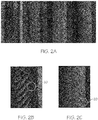
- Figs. 2A, 2B, and 2C An effect of additions of lanthanide series elements on the resulting as-cast structure is shown in Figs. 2A, 2B, and 2C.
- Fig. 2A shows, from left to right, the microstructures of the fusion zones of alloy nos. 1, 2, 3, 4, respectively, in the as-cast condition.
- Fig. 2B shows an enlarged view of a portion of the microstructure of alloy no. 1
- Fig. 2C shows an enlarged view of a portion of the microstructure of alloy no. 4.
- the addition of lanthanide series elements, in alloy nos. 2, 3, and 4 results in a refinement of the grain size of beta 20 in the fusion zone as compared to alloy no. 1, in which large elongated grains of beta 20 are visible in the fusion zone.
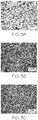
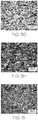
- Figs. 3A through 3I An effect of the additions of lanthanide series elements on the structure after annealing at 900 degrees C for 60 minutes followed by air cooling is shown in Figs. 3A through 3I .
- Figs. 3A, 3B, and 3C show microstructures of the base metal, the heat affected zone, and the fusion zone, respectively, for alloy no. 1.
- Figs. 3D, 3E, and 3F show microstructures of the base metal, the heat affected zone, and the fusion zone, respectively, for alloy no. 2.
- Figs. 3G, 3H, and 3I shows microstructures of the base metal, the heat affected zone, and the fusion zone, respectively, for alloy no. 3.
- the beta grain size is refined in fusion zone of the lanthanide series element containing titanium-based alloys.
- Figs. 4A and 4B show the microstructures containing lanthanide series element rich intermetallic particles 40, 42.
- Table 2 shows analysis of the chemical compositions of intermetallic particles 40, 42. TABLE 2 Gd Sn Ti Mo Nb Si Al Fe Zr "40" 44.22 10.37 36.08 0.6838 0.6749 0.2239 4.98 0.0072 2.7586 "42" 55.14 22.09 17.94 0.4298 0.3319 0.0516 2.4719 0.0051 1.539
- Examples of the titanium-based alloy and method for manufacturing a titanium-based alloy component may be described in the context of an aircraft manufacturing and service method 100, as shown in Fig. 5 , and an aircraft 102, as shown in Fig. 6 .
- the aircraft manufacturing and service method 100 may include specification and design 104 of the aircraft 102 and material procurement 106.
- component/subassembly manufacturing 108 and system integration 110 of the aircraft 102 takes place.
- the aircraft 102 may go through certification and delivery 112 in order to be placed in service 114.
- routine maintenance and service 116 which may also include modification, reconfiguration, refurbishment and the like.
- a system integrator may include without limitation any number of aircraft manufacturers and major-system subcontractors; a third party may include without limitation any number of venders, subcontractors, and suppliers; and an operator may be an airline, leasing company, military entity, service organization, and so on.
- the disclosed titanium-based alloy and method for manufacturing a titanium-based alloy component may be employed during any one or more of the stages of the aircraft manufacturing and service method 100, including specification and design 104 of the aircraft 102, material procurement 106, component/subassembly manufacturing 108, system integration 110, certification and delivery 112, placing the aircraft in service 114, and routine maintenance and service 116.
- the aircraft 102 produced by example method 100 may include an airframe 118 with a plurality of systems 120 and an interior 122.
- the plurality of systems 120 may include one or more of a propulsion system 124, an electrical system 126, a hydraulic system 128, and an environmental system 130. Any number of other systems may be included.
- the disclosed titanium-based alloy and method for manufacturing a titanium-based alloy component may be employed for any of the systems of the aircraft 102, including the airframe 118, the plurality of systems 120, and the interior 922.
- the disclosed titanium-based alloy and method for manufacturing a titanium-based alloy component are described in the context of an aircraft; however, one of ordinary skill in the art will readily recognize that the disclosed titanium-based alloy and method for manufacturing a titanium-based alloy component may be utilized for a variety of vehicles and non-vehicles.
- implementations of the embodiments described herein may be implemented in any type of vehicle including, e.g., helicopters, passenger ships, automobiles and the like.
Landscapes
- Engineering & Computer Science (AREA)
- Chemical & Material Sciences (AREA)
- Materials Engineering (AREA)
- Manufacturing & Machinery (AREA)
- Mechanical Engineering (AREA)
- Physics & Mathematics (AREA)
- Organic Chemistry (AREA)
- Metallurgy (AREA)
- Plasma & Fusion (AREA)
- Optics & Photonics (AREA)
- Powder Metallurgy (AREA)
- Manufacture Of Metal Powder And Suspensions Thereof (AREA)
- Manufacture And Refinement Of Metals (AREA)
- Inorganic Compounds Of Heavy Metals (AREA)
Abstract
Description
- This field of this application relates to titanium-based alloys and methods for manufacturing titanium-based alloy components.
- Components produced from titanium-based alloys are widely used for aerospace applications due to high strength-to-weight, excellent corrosion resistance, and high-temperature properties. However, the high cost of raw materials along with a high buy-to-fly ratio drives the aerospace industry in the development of near net-shape technologies, including additive manufacturing processes.
- Titanium-based alloys exhibit solidification behavior in which crystals of high-temperature beta phase nucleate and grow to long dimensions during additive deposition processes. Microstructure containing large grains results in material with lower static as well as fatigue properties. Also, the elongated beta grains leave a crystallographic texture that results in more anisotropic properties.
- In addition, the condition that results in formation of coarse beta grain size can also contribute to formation of alpha phase at the grain boundary, which, if severe, contributes to low elongation. Another issue manifesting during additive manufacturing processes is a combination of slow solidification (lower cooling rate) with high thermal gradient-this combination especially promotes large, elongated grains. Thus, such deficiencies limit the use of titanium-based alloys in additive manufacturing in more critical applications, such as those sized by cyclic or thermal fatigue or static property-sized applications with smaller tensile property margins. Accordingly, those skilled in the art continue with research and development in field of titanium-based alloys and methods for manufacturing titanium-based alloy components by an additive manufacturing process.
- A titanium-based alloy is disclosed which includes 0.001-1.0 wt.% in total of at least one lanthanide series element, remainder of titanium and impurities.
- A method for manufacturing a titanium-based alloy component is also disclosed which includes providing a titanium-based alloy starting material comprising 0.001-1.0% by weight in total of at least one lanthanide series element, remainder of titanium and impurities, and forming a titanium-based alloy component by an additive manufacturing process from the titanium-based alloy starting material.
- Other details of the disclosed titanium-based alloy and method for manufacturing a titanium-based alloy component will become apparent from the following detailed description, the accompanying drawings and the appended claims.
-
-
Fig. 1 is a flow diagram showing a method for manufacturing a titanium-based alloy component; -
Figs. 2A, 2B and 2C show microstructures of experimental alloys in the as-cast condition; -
Figs. 3A through 3I show microstructures of experimental alloys after annealing; -
Figs. 4A and 4B show microstructures containing lanthanide series element rich intermetallic particles; -
Fig. 5 is flow diagram of an aircraft manufacturing and service methodology; and -
Fig. 6 is a block diagram of an aircraft. - The present description relates to a titanium-based alloy comprising 0.001-1.0% by weight in total of at least one lanthanide series element. A titanium-based alloy is defined as any alloy having more than 50% by weight of titanium.
- , The titanium-based alloy may include additional amounts at least one of aluminum (Al), zirconium (Zr), tin (Sn), oxygen (O), molybdenum (Mo), vanadium (V), niobium (Nb), iron (Fe), and chromium (Cr), wherein the amounts are defined based on their aluminum equivalent and molybdenum equivalent values in which the aluminum equivalent (Al-eq) is between 0 to 7.5% and the molybdenum equivalent (Mo-eq) is between 2.7 to 47.5, and in which Al-eq and Mo-eq are defined as follows:


- Lanthanide series elements consist of lanthanum (La), cerium (Ce), praseodymium (Pr), neodymium (Nd), promethium (Pm), samarium (Sm), europium (Eu), gadolinium (Gd), terbium (Tb), dysprosium (Dy), holmium (Ho), erbium (Er), thulium (Tm), ytterbium (Tb), and lutetium (Lu). These elements are termed as "lanthanide series elements" because each of the elements in the lanthanide series are chemically similar.
- Small amounts of lanthanide series elements are added to the titanium-based alloy of the present description to decrease the tendency for the development of large grains during solidification. Although the present invention is not limited by theory, this effect of the addition of lanthanide series elements is believed to be result from their high affinity for oxygen, tendency to cluster in the liquid phase, and low solubility in the solid phase, all of which tend perturb the solid/liquid front during solidification, thereby disrupting the growth of large grains, resulting in a finer grain size in the solidified microstructure. Finer grain size in a solidified titanium-based alloy provides for better strength, ductility and fatigue properties.
- A minimum total amount of the one or more lanthanide series elements in the titanium-based alloy is 0.001%, preferably 0.01%, by weight.
- A maximum total amount of the one or more lanthanide series elements is 1.0%, preferably 0.5%, by weight.
- The titanium-based alloy of the present description includes a total of one or more lanthanide series elements in a range of 0.001-1.0% by weight, and preferably in a range of 0.01-0.5% by weight.
- The one or more lanthanide series elements can be selected from neodymium (Nd), gadolinium (Gd), dysprosium (Dy), and erbium (Er), and the titanium-based alloy includes 0.001-1.0% by weight, preferably 0.01-0.5% by weight, in total of Nd, Gd, Dy, and Er.
- The lanthanide series element can be gadolinium (Gd), and the titanium-based alloy can include 0.001-1.0% by weight, preferably 0.01-0.5% by weight, of Gd.
- Using the phases present at room temperature, titanium alloys are divided into three main classes: alpha, alpha-beta, and beta. Each class has distinctive well-known characteristics. Alpha and beta stabilizers are added to titanium-based alloys to stabilize the different phases of titanium.
- The titanium-based alloys of the present description can include alpha, alpha-beta, and beta classes of titanium-based alloys, in which the one or more lanthanide series elements are added as described above. Accordingly, the titanium-based alloy may further include various alpha and/or beta stabilizers.
- The titanium-based alloy can be an alpha-beta titanium-based alloy. Alpha-beta titanium-based alloys have excellent corrosion resistance and high temperature properties and are heat-treatable to high strengths. For these and other reasons, alpha-beta alloys are particularly attractive for components formed by additive manufacturing processes. However, the solidification of alpha-beta titanium-based alloys may cause large grains of high-temperature beta phase to nucleate and grow to long dimensions during the additive deposition processes. These large grain dimensions degrade ductility, strength and other properties of the alpha-beta titanium alloys. Therefore, the effect of the addition of small amounts of lanthanide series elements on decreasing the tendency for the development of large grains during solidification may find particular utility in regards to alpha-beta titanium-based alloys. Exemplary conventional alpha-beta titanium-based alloys may include, for example, Ti-6Al-2Sn-4Zr-2Mo, Ti-6Al-4Zr-0.5Nb-0.8Mo-3Sn-0.3Si (VT18Y), and Ti-6Al-4V.
- The alpha-beta titanium-base alloy of the present description may include, by weight percent, 5.0-7.0% (preferably 5.5-6.5%) aluminum (Al), 1.0-3.0% (preferably 1.5-2.5%) tin (Sn), 3.0-5.0% (preferably 3.5-4.5%) zirconium (Zr), 1.0-3.0% (preferably 1.5-2.5%) molybdenum (Mo), and 0.001-1.0% (preferably 0.01-0.5%), in total of one or more lanthanide series elements, remainder of titanium and impurities. Thus, titanium-base alloy may be termed as a variation of Ti-6Al-2Sn-4Zr-2Mo alloy.
- , The alpha-beta titanium-base alloy of the present description may include, by weight percent, 5.0-7.0% (preferably 5.5-6.5%) aluminum (Al), 3.0-5.0% (preferably 3.5-4.5%) zirconium (Zr), 0.01-1.0% (preferably 0.25-0.75%) niobium (Nb), 0.01-1.5% (preferably 0.5-1.0%) molybdenum (Mo), 2.0-4.0% (preferably 2.5-3.5%) tin (Sn), 0.01-1.0% (preferably 0.1-0.5%) silicon (Si), and 0.001-1.0% (preferably 0.01-0.5%), in total of one or more lanthanide series elements, remainder of titanium and impurities. Thus, titanium-base alloy may be termed as a variation of Ti-6Al-4Zr-0.5Nb-0.8Mo-3Sn-0.3Si ("VT18Y").
- The alpha-beta titanium-base alloy of the present description may include 5.0-7.0% (preferably 5.5-6.5%) aluminum (Al), 3.0-5.0% (preferably 3.5-4.5%) vanadium (V), and 0.001-1.0% (preferably 0.01-0.5%), in total of one or more lanthanide series elements, remainder of titanium and impurities. Thus, titanium-base alloy may be termed as a variation of Ti-6Al-4V alloy.
- The titanium-based alloy may be in the form of a starting material that can be melted and solidified to result in a component having above-recited composition. The starting material may be in the form of a wire having the above-recited composition. The starting material may be in the form of powder particulates having the above-recited composition, or the starting material may be in the form of powder particulates of different compositions that, when combined, have the above-recited composition.
- The starting material can be in the form of powder particulates and may be produced by any suitable process (e.g. gas atomization). The powder particulates may be produced in a noncontaminating atmosphere from appropriate feed materials. The feed materials may be multiple melted in which a first melt is made by consumable electrode, non-consumable electrode, electron beam cold hearth, or plasma arc cold hearth melting practice, and subsequent melt or melts made under vacuum using vacuum arc remelting (VAR) practice, in which alloy additions are added prior to the final VAR melt. The atmosphere for non-consumable electrode melting may be vacuum or argon and/or helium at an absolute pressure less than or equal to 1000 mm of mercury. The size of the exemplary powder particulates is not limited. The powder particulates may be sized to pass through a No. 35 (500 µm) sieve, with not more than 5% by weight passing through a No. 325 (45 µm) sieve, determined in accordance with ASTM B 214. The density of the exemplary powder particulates is not limited. The density of the powder particulates may be 60% or more of a hot compacted density value determined in accordance with ASTM B 527.
- An exemplary starting material in the form of wire may be produced by any suitable process (e.g. drawing).
- The titanium-based alloy may be in the form of a component having above-recited composition, in which the component is a net-shape component having its final size and shape or a near net-shaped component that can be post-processed to result in a component having its final size and shape. The shape and size of the component are not limited. The component is preferably a component of an aircraft or space vehicle.
- A component formed from the titanium-based alloy may be produced by any suitable process. One benefit of the titanium-based alloy of the present description is its decrease in the tendency for the development of large grains during solidification. Therefore, the titanium-based alloy of the present description may be advantageously employed in manufacturing processes, such as additive manufacturing processes, in which avoiding large grains during solidification would be highly beneficial.
- As illustrated in
Fig. 1 , the present description relates to a method for manufacturing a titanium-basedalloy component 10 including providing a titanium-based alloy starting material comprising 0.001-1.0% by weight in total of at least one lanthanide series element, remainder of titanium andimpurities 12, and forming the titanium-based alloy component by an additive manufacturing process from the titanium-basedalloy starting material 14. - The additive manufacturing process can include heating the titanium-based alloy to above or within a melting temperature range of the titanium-based alloy. Thereby, the addition of the at least one lanthanide series element to the titanium-based alloy decreases the tendency for the development of large grains during solidification during cooling from above or within the melting temperature range to below the melting temperature range of the titanium-based alloy.
- An additive manufacturing process for manufacturing a component formed from the titanium-based alloy is not limited. The additive manufacturing process may include a powder-feed process or a wire-feed process, in which the powder or wire are formed of the titanium-based alloy.
- The powder-based additive manufacturing may include steps of: (i) depositing a first layer of powder material; (ii) at least partly melting and solidifying a first portion of a first layer of powder material, the first portion corresponding to a first region of a component; (iii) depositing a second layer of powder material onto the first layer; (iv) at least partly melting and solidifying a second portion of the second layer of powder material, the second portion corresponding to a second region of the component, the first region and the second region being joined to one another; and (v) depositing successive layers of powder material onto the previous layers and at least partly melting and solidifying a portion of each successive layer to produce the component, each successive layer portion corresponding to a successive region of the component.
- A wire-based additive manufacturing process may include steps of: (i) melting, depositing and solidifying a first portion of a wire material to form a first region of a component; (ii) melting, depositing and solidifying a second portion of the wire material to form a second region of the component, the first region and the second region being joined to one another; and (iii) melting, depositing and solidifying successive portions of the wire material to form successive regions of the component onto the previous regions of the component.
- Exemplary additive manufacturing processes include electron beam melting (EBM), selective laser melting (SLM), selective laser sintering (SLS), laser metal forming (LMF), direct metal laser sintering (DMLS), and direct metal laser melting (DMLM).
- Four experimental alpha-beta titanium-based alloys having the compositions indicated in Table 1 were produced by gas tungsten arc welding (GTAW) to determine the effects of lanthanide series elements on solidification of titanium-based alloys.
TABLE 1 1 Ti6Al2Sn4Zr2Mo0.1Si alpha-beta Large, elongated beta grains (dark contrast) visible in fusion zone 2 Ti6Al2Sn4Zr0.4Nb0.7Mo0.18Si0.05 Gd alpha-beta Beta grain size is refined in fusion zone 3 Ti6Al2Sn4Zr0.5Nb0.7Mo0.18Si0.2G d alpha-beta Beta grain size is refined in fusion zone 4 Ti6Al2Sn4Zr0.5Nb0.7Mo0.18Si0.1G d alpha-beta Beta grain size is refined in fusion zone - An effect of additions of lanthanide series elements on the resulting as-cast structure is shown in
Figs. 2A, 2B, and 2C. Fig. 2A shows, from left to right, the microstructures of the fusion zones of alloy nos. 1, 2, 3, 4, respectively, in the as-cast condition.Fig. 2B shows an enlarged view of a portion of the microstructure of alloy no. 1, andFig. 2C shows an enlarged view of a portion of the microstructure of alloy no. 4. As evidenced byFigs. 2A, 2B, and 2C , the addition of lanthanide series elements, in alloy nos. 2, 3, and 4, results in a refinement of the grain size ofbeta 20 in the fusion zone as compared to alloy no. 1, in which large elongated grains ofbeta 20 are visible in the fusion zone. - An effect of the additions of lanthanide series elements on the structure after annealing at 900 degrees C for 60 minutes followed by air cooling is shown in
Figs. 3A through 3I .Figs. 3A, 3B, and 3C show microstructures of the base metal, the heat affected zone, and the fusion zone, respectively, for alloy no. 1.Figs. 3D, 3E, and 3F show microstructures of the base metal, the heat affected zone, and the fusion zone, respectively, for alloy no. 2.Figs. 3G, 3H, and 3I shows microstructures of the base metal, the heat affected zone, and the fusion zone, respectively, for alloy no. 3. As evidenced byFigs. 3A through 3I , the beta grain size is refined in fusion zone of the lanthanide series element containing titanium-based alloys. -
Figs. 4A and 4B show the microstructures containing lanthanide series element richintermetallic particles intermetallic particles TABLE 2 Gd Sn Ti Mo Nb Si Al Fe Zr "40" 44.22 10.37 36.08 0.6838 0.6749 0.2239 4.98 0.0072 2.7586 "42" 55.14 22.09 17.94 0.4298 0.3319 0.0516 2.4719 0.0051 1.539 - Although the present invention is not limited by theory, it is believed that these lanthanide series element rich intermetallic particles form and cluster during solidification and perturb the solid/liquid solidification front, and thereby limit growth of large grains of high-temperature beta phase, resulting in a finer grain size in the solidified microstructure.
- Examples of the titanium-based alloy and method for manufacturing a titanium-based alloy component may be described in the context of an aircraft manufacturing and
service method 100, as shown inFig. 5 , and anaircraft 102, as shown inFig. 6 . During pre-production, the aircraft manufacturing andservice method 100 may include specification anddesign 104 of theaircraft 102 andmaterial procurement 106. During production, component/subassembly manufacturing 108 andsystem integration 110 of theaircraft 102 takes place. Thereafter, theaircraft 102 may go through certification anddelivery 112 in order to be placed in service 114. While in service by a customer, theaircraft 102 is scheduled for routine maintenance andservice 116, which may also include modification, reconfiguration, refurbishment and the like. - Each of the processes of
method 100 may be performed or carried out by a system integrator, a third party, and/or an operator (e.g., a customer). For the purposes of this description, a system integrator may include without limitation any number of aircraft manufacturers and major-system subcontractors; a third party may include without limitation any number of venders, subcontractors, and suppliers; and an operator may be an airline, leasing company, military entity, service organization, and so on. - The disclosed titanium-based alloy and method for manufacturing a titanium-based alloy component may be employed during any one or more of the stages of the aircraft manufacturing and
service method 100, including specification anddesign 104 of theaircraft 102,material procurement 106, component/subassembly manufacturing 108,system integration 110, certification anddelivery 112, placing the aircraft in service 114, and routine maintenance andservice 116. - As shown in
Fig. 6 , theaircraft 102 produced byexample method 100 may include anairframe 118 with a plurality ofsystems 120 and an interior 122. Examples of the plurality ofsystems 120 may include one or more of a propulsion system 124, anelectrical system 126, ahydraulic system 128, and an environmental system 130. Any number of other systems may be included. The disclosed titanium-based alloy and method for manufacturing a titanium-based alloy component may be employed for any of the systems of theaircraft 102, including theairframe 118, the plurality ofsystems 120, and the interior 922. - The disclosed titanium-based alloy and method for manufacturing a titanium-based alloy component are described in the context of an aircraft; however, one of ordinary skill in the art will readily recognize that the disclosed titanium-based alloy and method for manufacturing a titanium-based alloy component may be utilized for a variety of vehicles and non-vehicles. For example, implementations of the embodiments described herein may be implemented in any type of vehicle including, e.g., helicopters, passenger ships, automobiles and the like.
- Although various embodiments of the disclosed titanium-based alloy and method for manufacturing a titanium-based alloy component have been shown and described, modifications may occur to those skilled in the art upon reading the specification. The present application includes such modifications and is limited only by the scope of the claims.
Claims (15)
- A titanium-based alloy comprising 0.001-1.0 wt.% in total of at least one lanthanide series element, remainder of titanium and impurities.
- The titanium-based alloy of Claim 1, wherein the total amount of the at least one lanthanide series element is 0.01-0.5 wt.%.
- The titanium-based alloy of Claim 1 or 2, wherein the at least one lanthanide series element includes at least one of Nd, Gd, Dy, and Er.
- The titanium-based alloy of Claim 3, wherein the total amount of Nd, Gd, Dy, and Er is 0.001-1.0% by weight.
- The titanium-based alloy of Claim 3 or 4, wherein the total amount of Nd, Gd, Dy, and Er is 0.01-0.5% by weight.
- The titanium-based alloy of any of the preceding claims, wherein the at least one lanthanide series element includes Gd.
- The titanium-based alloy of Claim 6, wherein the amount of Gd is 0.001-1.0% by weight.
- The titanium-based alloy of Claim 6 or 7, wherein the amount of Gd is 0.01-0.5% by weight.
- The titanium-based alloy of any of the preceding claims, wherein the titanium-base alloy is an alpha-beta titanium based-alloy.
- The titanium-based alloy of any of the preceding claims, wherein the titanium-based alloy is in the form of a starting material.
- The titanium-based alloy of Claim 10, wherein starting material is in the form of a wire or powder particulates.
- The titanium-based alloy of any of the preceding claims, wherein the titanium-based alloy is in the form of a component.
- The titanium-based alloy of any of the preceding claims, wherein the alloy further comprises additional amounts at least one of aluminum (Al), zirconium (Zr), tin (Sn), oxygen (O), molybdenum (Mo), vanadium (V), niobium (Nb), iron (Fe), and chromium (Cr), wherein the amounts are defined based on their aluminum equivalent and molybdenum equivalent in which the aluminum equivalent (Al-eq) is between 0 to 7.5% and the molybdenum equivalent (Mo-eq) is between 2.7 to 47.5, and in which Al-eq and Mo-eq are defined as follows: Al-eq=Al%+Zr%/6+Sn%/3+10*(O%); Mo-eq= =Mo%+0.67*V%+0.33*Nb%+2.9*Fe%+1.6*Cr%.
- A method for manufacturing a titanium-based alloy component, the method comprising:providing a titanium-based alloy starting material comprising 0.001-1.0% by weight in total of at least one lanthanide series element, remainder of titanium and impurities; andforming a titanium-based alloy component by an additive manufacturing process from the titanium-based alloy starting material.
- A vehicle component preferably an aircraft or spacecraft component, comprising a titanium based alloy according to any of the preceding claims 1-13, and/or use of a titanium based alloy according to any of the preceding claims 1-13 in manufacturing a vehicle component, preferably an aircraft or spacecraft component.
Applications Claiming Priority (1)
| Application Number | Priority Date | Filing Date | Title |
|---|---|---|---|
| RU2017136865A RU2744837C2 (en) | 2017-10-19 | 2017-10-19 | Titanium-based alloy and method for producing titanium-based alloy component through additive manufacturing technologies |
Publications (2)
| Publication Number | Publication Date |
|---|---|
| EP3473739A1 true EP3473739A1 (en) | 2019-04-24 |
| EP3473739B1 EP3473739B1 (en) | 2021-06-23 |
Family
ID=63722160
Family Applications (1)
| Application Number | Title | Priority Date | Filing Date |
|---|---|---|---|
| EP18198064.0A Active EP3473739B1 (en) | 2017-10-19 | 2018-10-01 | Titanium-based alloy and method for manufacturing a titanium-based alloy component by an additive manufacturing process |
Country Status (7)
| Country | Link |
|---|---|
| US (2) | US10851439B2 (en) |
| EP (1) | EP3473739B1 (en) |
| JP (1) | JP7353031B2 (en) |
| CN (1) | CN109680183B (en) |
| BR (1) | BR102018071109B1 (en) |
| CA (1) | CA3017191C (en) |
| RU (1) | RU2744837C2 (en) |
Families Citing this family (16)
| Publication number | Priority date | Publication date | Assignee | Title |
|---|---|---|---|---|
| US11235389B2 (en) | 2018-09-19 | 2022-02-01 | Molyworks Materials Corp. | Deployable manufacturing center (DMC) system and process for manufacturing metal parts |
| US11590574B2 (en) | 2018-12-18 | 2023-02-28 | Molyworks Materials Corp. | Method for manufacturing metal components using recycled feedstock and additive manufacturing |
| CN111992711B (en) * | 2019-05-10 | 2022-08-16 | 天津大学 | Method for improving tensile property of titanium alloy additive manufacturing by adding Nb powder |
| CN112626372B (en) * | 2019-10-08 | 2022-06-07 | 大田精密工业股份有限公司 | Titanium alloy sheet and method of making the same |
| CN110524000A (en) * | 2019-10-15 | 2019-12-03 | 江苏思睿迪快速制造科技有限公司 | A kind of preparation method of 3D printing medical titanium alloy dusty material |
| JP7503486B2 (en) * | 2020-12-11 | 2024-06-20 | 株式会社豊田中央研究所 | Non-magnetic member and method of manufacturing same |
| CN113046595B (en) * | 2021-03-17 | 2022-05-10 | 大连理工大学 | High-strength and high-toughness titanium alloy with good additive manufacturing forming performance and used at high temperature of 600 DEG C |
| CN113604703A (en) * | 2021-07-09 | 2021-11-05 | 宝鸡安钛泽科技金属有限公司 | Manufacturing method of near-alpha type titanium alloy for golf |
| CN113637871A (en) * | 2021-07-09 | 2021-11-12 | 宝鸡安钛泽科技金属有限公司 | Method for manufacturing hot-forming titanium alloy for golf tool |
| CN113355560B (en) * | 2021-08-10 | 2021-12-10 | 北京煜鼎增材制造研究院有限公司 | High-temperature titanium alloy and preparation method thereof |
| CN114635056B (en) * | 2022-05-17 | 2022-07-29 | 北京煜鼎增材制造研究院有限公司 | High-temperature high-strength titanium alloy and additive preparation method thereof |
| WO2023249868A2 (en) * | 2022-06-22 | 2023-12-28 | MolyWorks Materials Corporation | System and method for producing rare earth magnets from a metal powder using recycled materials and additive manufacturing |
| CN115889812B (en) * | 2022-11-23 | 2024-04-02 | 上海交通大学 | Additive manufacturing high-strength plastic titanium alloy and preparation method and application thereof |
| CN116694956B (en) * | 2023-06-13 | 2025-12-05 | 宜宾上交大新材料研究中心 | A laser cladding powder and a method for laser cladding on aluminum alloy surfaces |
| CN119800138B (en) * | 2025-03-12 | 2025-08-12 | 中国科学院宁波材料技术与工程研究所 | A method for preparing fine-grained near-alpha high-temperature titanium alloy |
| CN120272762B (en) * | 2025-06-12 | 2025-08-15 | 西北工业大学 | A fine β-crystalline titanium alloy and laser stereo forming method |
Citations (2)
| Publication number | Priority date | Publication date | Assignee | Title |
|---|---|---|---|---|
| US4919886A (en) * | 1989-04-10 | 1990-04-24 | The United States Of America As Represented By The Secretary Of The Air Force | Titanium alloys of the Ti3 Al type |
| US5478524A (en) * | 1992-08-24 | 1995-12-26 | Nissan Motor Co., Ltd. | Super high vacuum vessel |
Family Cites Families (22)
| Publication number | Priority date | Publication date | Assignee | Title |
|---|---|---|---|---|
| JPH066767B2 (en) * | 1986-07-03 | 1994-01-26 | 株式会社神戸製鋼所 | Ti-based alloy with excellent neutron absorption |
| WO1990007016A1 (en) * | 1988-12-19 | 1990-06-28 | Barry Mollenhauer | Orthodontic treatment |
| US5256369A (en) * | 1989-07-10 | 1993-10-26 | Nkk Corporation | Titanium base alloy for excellent formability and method of making thereof and method of superplastic forming thereof |
| US5074907A (en) * | 1989-08-16 | 1991-12-24 | General Electric Company | Method for developing enhanced texture in titanium alloys, and articles made thereby |
| DE69107758T2 (en) * | 1990-10-01 | 1995-10-12 | Sumitomo Metal Ind | Process for improving the machinability of titanium and titanium alloys, and titanium alloys with good machinability. |
| JP2626344B2 (en) * | 1990-10-01 | 1997-07-02 | 住友金属工業株式会社 | Method for improving free-cutting ability of Ti alloy and free-cutting Ti alloy |
| JP2943520B2 (en) * | 1992-08-24 | 1999-08-30 | 日産自動車株式会社 | Ultra high vacuum vessel |
| JP3370352B2 (en) * | 1992-08-24 | 2003-01-27 | 株式会社アイ・エイチ・アイ・エアロスペース | Ultra-high vacuum titanium alloy with low outgassing |
| JPH06306514A (en) * | 1993-04-22 | 1994-11-01 | Nippon Steel Corp | Production of sintered titanium alloy |
| EP0748876B1 (en) * | 1995-06-16 | 2003-10-15 | Daido Tokushuko Kabushiki Kaisha | Titanium alloy, member made of the titanium alloy and method for producing the titanium alloy member |
| US6824667B2 (en) * | 2002-02-12 | 2004-11-30 | Surfect Technologies, Inc. | Metal hydride composite materials |
| JP4459832B2 (en) * | 2005-02-03 | 2010-04-28 | 株式会社神戸製鋼所 | Α-β type titanium alloy with excellent tool life and chip separation |
| CN101289717A (en) * | 2007-04-17 | 2008-10-22 | 李世琼 | Alpha+beta type titanium alloy |
| JP2009030146A (en) | 2007-07-26 | 2009-02-12 | Kazuo Ogasa | High performance elastic metal alloy member, and method for producing the same |
| JP2012251235A (en) * | 2011-06-06 | 2012-12-20 | Three O Co Ltd | Fine crystallite high-performance metal alloy member, and manufacturing method therefor |
| JP2013047369A (en) | 2011-07-26 | 2013-03-07 | Sumitomo Metal Ind Ltd | Titanium alloy |
| CN102586647B (en) | 2012-03-05 | 2014-06-25 | 北京工业大学 | Erbium-containing high-temperature titanium alloy and preparation process thereof |
| US10094003B2 (en) * | 2015-01-12 | 2018-10-09 | Ati Properties Llc | Titanium alloy |
| US20180318922A1 (en) * | 2015-11-06 | 2018-11-08 | Innomaq 21, S.L. | Method for the economic manufacturing of metallic parts |
| CN105522152B (en) * | 2016-01-19 | 2018-12-14 | 王碧群 | A kind of method of 3D printing rare earth titanium alloy material |
| CN106756232A (en) * | 2016-12-12 | 2017-05-31 | 苏州陈恒织造有限公司 | A kind of low temperature resistant oil-immersed type transformer housing of cracking resistance |
| CN106636746B (en) * | 2016-12-28 | 2018-06-01 | 北京工业大学 | A kind of high-strength high-elongation ratio high-temperature titanium alloy and its preparation process |
-
2017
- 2017-10-19 RU RU2017136865A patent/RU2744837C2/en active
- 2017-11-01 US US15/801,050 patent/US10851439B2/en active Active
-
2018
- 2018-08-27 CN CN201810978802.8A patent/CN109680183B/en active Active
- 2018-09-12 CA CA3017191A patent/CA3017191C/en active Active
- 2018-10-01 EP EP18198064.0A patent/EP3473739B1/en active Active
- 2018-10-11 BR BR102018071109-1A patent/BR102018071109B1/en active IP Right Grant
- 2018-10-15 JP JP2018194033A patent/JP7353031B2/en active Active
-
2020
- 2020-03-27 US US16/832,072 patent/US11486025B2/en active Active
Patent Citations (2)
| Publication number | Priority date | Publication date | Assignee | Title |
|---|---|---|---|---|
| US4919886A (en) * | 1989-04-10 | 1990-04-24 | The United States Of America As Represented By The Secretary Of The Air Force | Titanium alloys of the Ti3 Al type |
| US5478524A (en) * | 1992-08-24 | 1995-12-26 | Nissan Motor Co., Ltd. | Super high vacuum vessel |
Non-Patent Citations (1)
| Title |
|---|
| S. M. L. SASTRY ET AL: "Structure and properties of rapidly solidified dispersion-strengthened titanium alloys: Part I. Characterization of dispersoid distribution, structure, and chemistry", METALLURGICAL TRANSACTIONS A- PHYSICAL METALLURGY AND MATERIALS SCIENCE, vol. 15, no. 7, 1 July 1984 (1984-07-01), United States, pages 1451 - 1463, XP055524090, ISSN: 0360-2133, DOI: 10.1007/BF02648575 * |
Also Published As
| Publication number | Publication date |
|---|---|
| BR102018071109A2 (en) | 2019-05-07 |
| US20200354815A1 (en) | 2020-11-12 |
| CA3017191A1 (en) | 2019-04-19 |
| JP2019131883A (en) | 2019-08-08 |
| RU2744837C2 (en) | 2021-03-16 |
| RU2017136865A3 (en) | 2020-11-25 |
| CA3017191C (en) | 2023-05-09 |
| JP7353031B2 (en) | 2023-09-29 |
| CN109680183A (en) | 2019-04-26 |
| US11486025B2 (en) | 2022-11-01 |
| RU2017136865A (en) | 2019-04-19 |
| US10851439B2 (en) | 2020-12-01 |
| US20190119787A1 (en) | 2019-04-25 |
| BR102018071109B1 (en) | 2022-11-16 |
| CN109680183B (en) | 2022-10-28 |
| EP3473739B1 (en) | 2021-06-23 |
Similar Documents
| Publication | Publication Date | Title |
|---|---|---|
| EP3473739B1 (en) | Titanium-based alloy and method for manufacturing a titanium-based alloy component by an additive manufacturing process | |
| US12492453B2 (en) | High-performance Al—Zn—Mg—Zr base aluminum alloys for welding and additive manufacturing | |
| EP3994288B1 (en) | Method for producing a nickel-cobalt alloy powder | |
| EP3717150B1 (en) | Multicomponent aluminum alloys for applications such as additive manufacturing | |
| EP3844313B1 (en) | High-strength titanium alloy for additive manufacturing | |
| WO2021004579A1 (en) | Nckel base alloy for powder and method for producing a powder | |
| KR102775801B1 (en) | Powder of cobalt-chromium alloy | |
| EP3701054B1 (en) | Titanium alloy | |
| KR20180117203A (en) | BCC materials made of titanium, aluminum, vanadium, and iron, and products made therefrom | |
| EP3276018B1 (en) | Powdered titanium alloy composition and article formed therefrom | |
| KR20180112071A (en) | HCP materials consisting of aluminum, titanium, and zirconium, and products made therefrom | |
| ES2991114T3 (en) | Nickel-based alloy for powder and method for producing said powder | |
| CA3020502A1 (en) | Alpha-beta titanium alloys having aluminum and molybdenum, and products made therefrom | |
| WO2017189459A1 (en) | Bcc materials of titanium, aluminum, niobium, vanadium, and molybdenum, and products made therefrom |
Legal Events
| Date | Code | Title | Description |
|---|---|---|---|
| PUAI | Public reference made under article 153(3) epc to a published international application that has entered the european phase |
Free format text: ORIGINAL CODE: 0009012 |
|
| STAA | Information on the status of an ep patent application or granted ep patent |
Free format text: STATUS: REQUEST FOR EXAMINATION WAS MADE |
|
| 17P | Request for examination filed |
Effective date: 20181001 |
|
| AK | Designated contracting states |
Kind code of ref document: A1 Designated state(s): AL AT BE BG CH CY CZ DE DK EE ES FI FR GB GR HR HU IE IS IT LI LT LU LV MC MK MT NL NO PL PT RO RS SE SI SK SM TR |
|
| AX | Request for extension of the european patent |
Extension state: BA ME |
|
| GRAP | Despatch of communication of intention to grant a patent |
Free format text: ORIGINAL CODE: EPIDOSNIGR1 |
|
| STAA | Information on the status of an ep patent application or granted ep patent |
Free format text: STATUS: GRANT OF PATENT IS INTENDED |
|
| INTG | Intention to grant announced |
Effective date: 20200526 |
|
| GRAJ | Information related to disapproval of communication of intention to grant by the applicant or resumption of examination proceedings by the epo deleted |
Free format text: ORIGINAL CODE: EPIDOSDIGR1 |
|
| STAA | Information on the status of an ep patent application or granted ep patent |
Free format text: STATUS: REQUEST FOR EXAMINATION WAS MADE |
|
| INTC | Intention to grant announced (deleted) | ||
| GRAP | Despatch of communication of intention to grant a patent |
Free format text: ORIGINAL CODE: EPIDOSNIGR1 |
|
| STAA | Information on the status of an ep patent application or granted ep patent |
Free format text: STATUS: GRANT OF PATENT IS INTENDED |
|
| INTG | Intention to grant announced |
Effective date: 20201027 |
|
| GRAJ | Information related to disapproval of communication of intention to grant by the applicant or resumption of examination proceedings by the epo deleted |
Free format text: ORIGINAL CODE: EPIDOSDIGR1 |
|
| STAA | Information on the status of an ep patent application or granted ep patent |
Free format text: STATUS: REQUEST FOR EXAMINATION WAS MADE |
|
| INTC | Intention to grant announced (deleted) | ||
| GRAS | Grant fee paid |
Free format text: ORIGINAL CODE: EPIDOSNIGR3 |
|
| STAA | Information on the status of an ep patent application or granted ep patent |
Free format text: STATUS: GRANT OF PATENT IS INTENDED |
|
| GRAS | Grant fee paid |
Free format text: ORIGINAL CODE: EPIDOSNIGR3 |
|
| GRAP | Despatch of communication of intention to grant a patent |
Free format text: ORIGINAL CODE: EPIDOSNIGR1 |
|
| GRAA | (expected) grant |
Free format text: ORIGINAL CODE: 0009210 |
|
| STAA | Information on the status of an ep patent application or granted ep patent |
Free format text: STATUS: THE PATENT HAS BEEN GRANTED |
|
| INTG | Intention to grant announced |
Effective date: 20210429 |
|
| AK | Designated contracting states |
Kind code of ref document: B1 Designated state(s): AL AT BE BG CH CY CZ DE DK EE ES FI FR GB GR HR HU IE IS IT LI LT LU LV MC MK MT NL NO PL PT RO RS SE SI SK SM TR |
|
| REG | Reference to a national code |
Ref country code: GB Ref legal event code: FG4D |
|
| REG | Reference to a national code |
Ref country code: CH Ref legal event code: EP |
|
| REG | Reference to a national code |
Ref country code: DE Ref legal event code: R096 Ref document number: 602018018909 Country of ref document: DE Ref country code: AT Ref legal event code: REF Ref document number: 1404376 Country of ref document: AT Kind code of ref document: T Effective date: 20210715 |
|
| REG | Reference to a national code |
Ref country code: IE Ref legal event code: FG4D |
|
| REG | Reference to a national code |
Ref country code: LT Ref legal event code: MG9D |
|
| PG25 | Lapsed in a contracting state [announced via postgrant information from national office to epo] |
Ref country code: BG Free format text: LAPSE BECAUSE OF FAILURE TO SUBMIT A TRANSLATION OF THE DESCRIPTION OR TO PAY THE FEE WITHIN THE PRESCRIBED TIME-LIMIT Effective date: 20210923 Ref country code: FI Free format text: LAPSE BECAUSE OF FAILURE TO SUBMIT A TRANSLATION OF THE DESCRIPTION OR TO PAY THE FEE WITHIN THE PRESCRIBED TIME-LIMIT Effective date: 20210623 Ref country code: LT Free format text: LAPSE BECAUSE OF FAILURE TO SUBMIT A TRANSLATION OF THE DESCRIPTION OR TO PAY THE FEE WITHIN THE PRESCRIBED TIME-LIMIT Effective date: 20210623 Ref country code: HR Free format text: LAPSE BECAUSE OF FAILURE TO SUBMIT A TRANSLATION OF THE DESCRIPTION OR TO PAY THE FEE WITHIN THE PRESCRIBED TIME-LIMIT Effective date: 20210623 |
|
| REG | Reference to a national code |
Ref country code: AT Ref legal event code: MK05 Ref document number: 1404376 Country of ref document: AT Kind code of ref document: T Effective date: 20210623 |
|
| PG25 | Lapsed in a contracting state [announced via postgrant information from national office to epo] |
Ref country code: SE Free format text: LAPSE BECAUSE OF FAILURE TO SUBMIT A TRANSLATION OF THE DESCRIPTION OR TO PAY THE FEE WITHIN THE PRESCRIBED TIME-LIMIT Effective date: 20210623 Ref country code: RS Free format text: LAPSE BECAUSE OF FAILURE TO SUBMIT A TRANSLATION OF THE DESCRIPTION OR TO PAY THE FEE WITHIN THE PRESCRIBED TIME-LIMIT Effective date: 20210623 Ref country code: LV Free format text: LAPSE BECAUSE OF FAILURE TO SUBMIT A TRANSLATION OF THE DESCRIPTION OR TO PAY THE FEE WITHIN THE PRESCRIBED TIME-LIMIT Effective date: 20210623 Ref country code: NO Free format text: LAPSE BECAUSE OF FAILURE TO SUBMIT A TRANSLATION OF THE DESCRIPTION OR TO PAY THE FEE WITHIN THE PRESCRIBED TIME-LIMIT Effective date: 20210923 Ref country code: GR Free format text: LAPSE BECAUSE OF FAILURE TO SUBMIT A TRANSLATION OF THE DESCRIPTION OR TO PAY THE FEE WITHIN THE PRESCRIBED TIME-LIMIT Effective date: 20210924 |
|
| REG | Reference to a national code |
Ref country code: NL Ref legal event code: MP Effective date: 20210623 |
|
| PG25 | Lapsed in a contracting state [announced via postgrant information from national office to epo] |
Ref country code: EE Free format text: LAPSE BECAUSE OF FAILURE TO SUBMIT A TRANSLATION OF THE DESCRIPTION OR TO PAY THE FEE WITHIN THE PRESCRIBED TIME-LIMIT Effective date: 20210623 Ref country code: ES Free format text: LAPSE BECAUSE OF FAILURE TO SUBMIT A TRANSLATION OF THE DESCRIPTION OR TO PAY THE FEE WITHIN THE PRESCRIBED TIME-LIMIT Effective date: 20210623 Ref country code: SM Free format text: LAPSE BECAUSE OF FAILURE TO SUBMIT A TRANSLATION OF THE DESCRIPTION OR TO PAY THE FEE WITHIN THE PRESCRIBED TIME-LIMIT Effective date: 20210623 Ref country code: SK Free format text: LAPSE BECAUSE OF FAILURE TO SUBMIT A TRANSLATION OF THE DESCRIPTION OR TO PAY THE FEE WITHIN THE PRESCRIBED TIME-LIMIT Effective date: 20210623 Ref country code: AT Free format text: LAPSE BECAUSE OF FAILURE TO SUBMIT A TRANSLATION OF THE DESCRIPTION OR TO PAY THE FEE WITHIN THE PRESCRIBED TIME-LIMIT Effective date: 20210623 Ref country code: CZ Free format text: LAPSE BECAUSE OF FAILURE TO SUBMIT A TRANSLATION OF THE DESCRIPTION OR TO PAY THE FEE WITHIN THE PRESCRIBED TIME-LIMIT Effective date: 20210623 Ref country code: PT Free format text: LAPSE BECAUSE OF FAILURE TO SUBMIT A TRANSLATION OF THE DESCRIPTION OR TO PAY THE FEE WITHIN THE PRESCRIBED TIME-LIMIT Effective date: 20211025 Ref country code: RO Free format text: LAPSE BECAUSE OF FAILURE TO SUBMIT A TRANSLATION OF THE DESCRIPTION OR TO PAY THE FEE WITHIN THE PRESCRIBED TIME-LIMIT Effective date: 20210623 Ref country code: NL Free format text: LAPSE BECAUSE OF FAILURE TO SUBMIT A TRANSLATION OF THE DESCRIPTION OR TO PAY THE FEE WITHIN THE PRESCRIBED TIME-LIMIT Effective date: 20210623 |
|
| PG25 | Lapsed in a contracting state [announced via postgrant information from national office to epo] |
Ref country code: PL Free format text: LAPSE BECAUSE OF FAILURE TO SUBMIT A TRANSLATION OF THE DESCRIPTION OR TO PAY THE FEE WITHIN THE PRESCRIBED TIME-LIMIT Effective date: 20210623 |
|
| REG | Reference to a national code |
Ref country code: DE Ref legal event code: R097 Ref document number: 602018018909 Country of ref document: DE |
|
| PG25 | Lapsed in a contracting state [announced via postgrant information from national office to epo] |
Ref country code: DK Free format text: LAPSE BECAUSE OF FAILURE TO SUBMIT A TRANSLATION OF THE DESCRIPTION OR TO PAY THE FEE WITHIN THE PRESCRIBED TIME-LIMIT Effective date: 20210623 |
|
| PLBE | No opposition filed within time limit |
Free format text: ORIGINAL CODE: 0009261 |
|
| STAA | Information on the status of an ep patent application or granted ep patent |
Free format text: STATUS: NO OPPOSITION FILED WITHIN TIME LIMIT |
|
| REG | Reference to a national code |
Ref country code: CH Ref legal event code: PL |
|
| 26N | No opposition filed |
Effective date: 20220324 |
|
| PG25 | Lapsed in a contracting state [announced via postgrant information from national office to epo] |
Ref country code: AL Free format text: LAPSE BECAUSE OF FAILURE TO SUBMIT A TRANSLATION OF THE DESCRIPTION OR TO PAY THE FEE WITHIN THE PRESCRIBED TIME-LIMIT Effective date: 20210623 |
|
| REG | Reference to a national code |
Ref country code: BE Ref legal event code: MM Effective date: 20211031 |
|
| PG25 | Lapsed in a contracting state [announced via postgrant information from national office to epo] |
Ref country code: MC Free format text: LAPSE BECAUSE OF FAILURE TO SUBMIT A TRANSLATION OF THE DESCRIPTION OR TO PAY THE FEE WITHIN THE PRESCRIBED TIME-LIMIT Effective date: 20210623 |
|
| PG25 | Lapsed in a contracting state [announced via postgrant information from national office to epo] |
Ref country code: LU Free format text: LAPSE BECAUSE OF NON-PAYMENT OF DUE FEES Effective date: 20211001 Ref country code: IT Free format text: LAPSE BECAUSE OF FAILURE TO SUBMIT A TRANSLATION OF THE DESCRIPTION OR TO PAY THE FEE WITHIN THE PRESCRIBED TIME-LIMIT Effective date: 20210623 Ref country code: BE Free format text: LAPSE BECAUSE OF NON-PAYMENT OF DUE FEES Effective date: 20211031 |
|
| PG25 | Lapsed in a contracting state [announced via postgrant information from national office to epo] |
Ref country code: LI Free format text: LAPSE BECAUSE OF NON-PAYMENT OF DUE FEES Effective date: 20211031 Ref country code: CH Free format text: LAPSE BECAUSE OF NON-PAYMENT OF DUE FEES Effective date: 20211031 |
|
| PG25 | Lapsed in a contracting state [announced via postgrant information from national office to epo] |
Ref country code: IE Free format text: LAPSE BECAUSE OF NON-PAYMENT OF DUE FEES Effective date: 20211001 |
|
| P01 | Opt-out of the competence of the unified patent court (upc) registered |
Effective date: 20230516 |
|
| PG25 | Lapsed in a contracting state [announced via postgrant information from national office to epo] |
Ref country code: CY Free format text: LAPSE BECAUSE OF FAILURE TO SUBMIT A TRANSLATION OF THE DESCRIPTION OR TO PAY THE FEE WITHIN THE PRESCRIBED TIME-LIMIT Effective date: 20210623 |
|
| PG25 | Lapsed in a contracting state [announced via postgrant information from national office to epo] |
Ref country code: HU Free format text: LAPSE BECAUSE OF FAILURE TO SUBMIT A TRANSLATION OF THE DESCRIPTION OR TO PAY THE FEE WITHIN THE PRESCRIBED TIME-LIMIT; INVALID AB INITIO Effective date: 20181001 |
|
| PG25 | Lapsed in a contracting state [announced via postgrant information from national office to epo] |
Ref country code: MK Free format text: LAPSE BECAUSE OF FAILURE TO SUBMIT A TRANSLATION OF THE DESCRIPTION OR TO PAY THE FEE WITHIN THE PRESCRIBED TIME-LIMIT Effective date: 20210623 |
|
| PG25 | Lapsed in a contracting state [announced via postgrant information from national office to epo] |
Ref country code: MT Free format text: LAPSE BECAUSE OF FAILURE TO SUBMIT A TRANSLATION OF THE DESCRIPTION OR TO PAY THE FEE WITHIN THE PRESCRIBED TIME-LIMIT Effective date: 20210623 |
|
| PG25 | Lapsed in a contracting state [announced via postgrant information from national office to epo] |
Ref country code: TR Free format text: LAPSE BECAUSE OF FAILURE TO SUBMIT A TRANSLATION OF THE DESCRIPTION OR TO PAY THE FEE WITHIN THE PRESCRIBED TIME-LIMIT Effective date: 20210623 |
|
| PGFP | Annual fee paid to national office [announced via postgrant information from national office to epo] |
Ref country code: DE Payment date: 20251029 Year of fee payment: 8 |
|
| PGFP | Annual fee paid to national office [announced via postgrant information from national office to epo] |
Ref country code: GB Payment date: 20251027 Year of fee payment: 8 |
|
| PGFP | Annual fee paid to national office [announced via postgrant information from national office to epo] |
Ref country code: FR Payment date: 20251027 Year of fee payment: 8 |