EP3470500A1 - Aircraft hydraulic system and hydraulic fluid - Google Patents
Aircraft hydraulic system and hydraulic fluid Download PDFInfo
- Publication number
- EP3470500A1 EP3470500A1 EP18199440.1A EP18199440A EP3470500A1 EP 3470500 A1 EP3470500 A1 EP 3470500A1 EP 18199440 A EP18199440 A EP 18199440A EP 3470500 A1 EP3470500 A1 EP 3470500A1
- Authority
- EP
- European Patent Office
- Prior art keywords
- heat transfer
- aircraft hydraulic
- transfer fluid
- fluid
- set forth
- Prior art date
- Legal status (The legal status is an assumption and is not a legal conclusion. Google has not performed a legal analysis and makes no representation as to the accuracy of the status listed.)
- Withdrawn
Links
Images
Classifications
-
- C—CHEMISTRY; METALLURGY
- C10—PETROLEUM, GAS OR COKE INDUSTRIES; TECHNICAL GASES CONTAINING CARBON MONOXIDE; FUELS; LUBRICANTS; PEAT
- C10M—LUBRICATING COMPOSITIONS; USE OF CHEMICAL SUBSTANCES EITHER ALONE OR AS LUBRICATING INGREDIENTS IN A LUBRICATING COMPOSITION
- C10M169/00—Lubricating compositions characterised by containing as components a mixture of at least two types of ingredient selected from base-materials, thickeners or additives, covered by the preceding groups, each of these compounds being essential
- C10M169/04—Mixtures of base-materials and additives
-
- C—CHEMISTRY; METALLURGY
- C10—PETROLEUM, GAS OR COKE INDUSTRIES; TECHNICAL GASES CONTAINING CARBON MONOXIDE; FUELS; LUBRICANTS; PEAT
- C10M—LUBRICATING COMPOSITIONS; USE OF CHEMICAL SUBSTANCES EITHER ALONE OR AS LUBRICATING INGREDIENTS IN A LUBRICATING COMPOSITION
- C10M129/00—Lubricating compositions characterised by the additive being an organic non-macromolecular compound containing oxygen
- C10M129/02—Lubricating compositions characterised by the additive being an organic non-macromolecular compound containing oxygen having a carbon chain of less than 30 atoms
- C10M129/26—Carboxylic acids; Salts thereof
-
- C—CHEMISTRY; METALLURGY
- C10—PETROLEUM, GAS OR COKE INDUSTRIES; TECHNICAL GASES CONTAINING CARBON MONOXIDE; FUELS; LUBRICANTS; PEAT
- C10M—LUBRICATING COMPOSITIONS; USE OF CHEMICAL SUBSTANCES EITHER ALONE OR AS LUBRICATING INGREDIENTS IN A LUBRICATING COMPOSITION
- C10M2205/00—Organic macromolecular hydrocarbon compounds or fractions, whether or not modified by oxidation as ingredients in lubricant compositions
- C10M2205/02—Organic macromolecular hydrocarbon compounds or fractions, whether or not modified by oxidation as ingredients in lubricant compositions containing acyclic monomers
- C10M2205/0206—Organic macromolecular hydrocarbon compounds or fractions, whether or not modified by oxidation as ingredients in lubricant compositions containing acyclic monomers used as base material
-
- C—CHEMISTRY; METALLURGY
- C10—PETROLEUM, GAS OR COKE INDUSTRIES; TECHNICAL GASES CONTAINING CARBON MONOXIDE; FUELS; LUBRICANTS; PEAT
- C10M—LUBRICATING COMPOSITIONS; USE OF CHEMICAL SUBSTANCES EITHER ALONE OR AS LUBRICATING INGREDIENTS IN A LUBRICATING COMPOSITION
- C10M2205/00—Organic macromolecular hydrocarbon compounds or fractions, whether or not modified by oxidation as ingredients in lubricant compositions
- C10M2205/02—Organic macromolecular hydrocarbon compounds or fractions, whether or not modified by oxidation as ingredients in lubricant compositions containing acyclic monomers
- C10M2205/028—Organic macromolecular hydrocarbon compounds or fractions, whether or not modified by oxidation as ingredients in lubricant compositions containing acyclic monomers containing aliphatic monomers having more than four carbon atoms
- C10M2205/0285—Organic macromolecular hydrocarbon compounds or fractions, whether or not modified by oxidation as ingredients in lubricant compositions containing acyclic monomers containing aliphatic monomers having more than four carbon atoms used as base material
-
- C—CHEMISTRY; METALLURGY
- C10—PETROLEUM, GAS OR COKE INDUSTRIES; TECHNICAL GASES CONTAINING CARBON MONOXIDE; FUELS; LUBRICANTS; PEAT
- C10M—LUBRICATING COMPOSITIONS; USE OF CHEMICAL SUBSTANCES EITHER ALONE OR AS LUBRICATING INGREDIENTS IN A LUBRICATING COMPOSITION
- C10M2207/00—Organic non-macromolecular hydrocarbon compounds containing hydrogen, carbon and oxygen as ingredients in lubricant compositions
- C10M2207/10—Carboxylix acids; Neutral salts thereof
- C10M2207/12—Carboxylix acids; Neutral salts thereof having carboxyl groups bound to acyclic or cycloaliphatic carbon atoms
-
- C—CHEMISTRY; METALLURGY
- C10—PETROLEUM, GAS OR COKE INDUSTRIES; TECHNICAL GASES CONTAINING CARBON MONOXIDE; FUELS; LUBRICANTS; PEAT
- C10M—LUBRICATING COMPOSITIONS; USE OF CHEMICAL SUBSTANCES EITHER ALONE OR AS LUBRICATING INGREDIENTS IN A LUBRICATING COMPOSITION
- C10M2207/00—Organic non-macromolecular hydrocarbon compounds containing hydrogen, carbon and oxygen as ingredients in lubricant compositions
- C10M2207/10—Carboxylix acids; Neutral salts thereof
- C10M2207/12—Carboxylix acids; Neutral salts thereof having carboxyl groups bound to acyclic or cycloaliphatic carbon atoms
- C10M2207/125—Carboxylix acids; Neutral salts thereof having carboxyl groups bound to acyclic or cycloaliphatic carbon atoms having hydrocarbon chains of eight up to twenty-nine carbon atoms, i.e. fatty acids
-
- C—CHEMISTRY; METALLURGY
- C10—PETROLEUM, GAS OR COKE INDUSTRIES; TECHNICAL GASES CONTAINING CARBON MONOXIDE; FUELS; LUBRICANTS; PEAT
- C10N—INDEXING SCHEME ASSOCIATED WITH SUBCLASS C10M RELATING TO LUBRICATING COMPOSITIONS
- C10N2020/00—Specified physical or chemical properties or characteristics, i.e. function, of component of lubricating compositions
- C10N2020/01—Physico-chemical properties
- C10N2020/02—Viscosity; Viscosity index
-
- C—CHEMISTRY; METALLURGY
- C10—PETROLEUM, GAS OR COKE INDUSTRIES; TECHNICAL GASES CONTAINING CARBON MONOXIDE; FUELS; LUBRICANTS; PEAT
- C10N—INDEXING SCHEME ASSOCIATED WITH SUBCLASS C10M RELATING TO LUBRICATING COMPOSITIONS
- C10N2030/00—Specified physical or chemical properties which is improved by the additive characterising the lubricating composition, e.g. multifunctional additives
- C10N2030/02—Pour-point; Viscosity index
-
- C—CHEMISTRY; METALLURGY
- C10—PETROLEUM, GAS OR COKE INDUSTRIES; TECHNICAL GASES CONTAINING CARBON MONOXIDE; FUELS; LUBRICANTS; PEAT
- C10N—INDEXING SCHEME ASSOCIATED WITH SUBCLASS C10M RELATING TO LUBRICATING COMPOSITIONS
- C10N2030/00—Specified physical or chemical properties which is improved by the additive characterising the lubricating composition, e.g. multifunctional additives
- C10N2030/06—Oiliness; Film-strength; Anti-wear; Resistance to extreme pressure
-
- C—CHEMISTRY; METALLURGY
- C10—PETROLEUM, GAS OR COKE INDUSTRIES; TECHNICAL GASES CONTAINING CARBON MONOXIDE; FUELS; LUBRICANTS; PEAT
- C10N—INDEXING SCHEME ASSOCIATED WITH SUBCLASS C10M RELATING TO LUBRICATING COMPOSITIONS
- C10N2030/00—Specified physical or chemical properties which is improved by the additive characterising the lubricating composition, e.g. multifunctional additives
- C10N2030/08—Resistance to extreme temperature
-
- C—CHEMISTRY; METALLURGY
- C10—PETROLEUM, GAS OR COKE INDUSTRIES; TECHNICAL GASES CONTAINING CARBON MONOXIDE; FUELS; LUBRICANTS; PEAT
- C10N—INDEXING SCHEME ASSOCIATED WITH SUBCLASS C10M RELATING TO LUBRICATING COMPOSITIONS
- C10N2040/00—Specified use or application for which the lubricating composition is intended
- C10N2040/08—Hydraulic fluids, e.g. brake-fluids
-
- C—CHEMISTRY; METALLURGY
- C10—PETROLEUM, GAS OR COKE INDUSTRIES; TECHNICAL GASES CONTAINING CARBON MONOXIDE; FUELS; LUBRICANTS; PEAT
- C10N—INDEXING SCHEME ASSOCIATED WITH SUBCLASS C10M RELATING TO LUBRICATING COMPOSITIONS
- C10N2040/00—Specified use or application for which the lubricating composition is intended
- C10N2040/12—Gas-turbines
- C10N2040/13—Aircraft turbines
Definitions
- the present disclosure relates to a hydraulic system, and more particularly, to an aircraft hydraulic system and the hydraulic fluid used.
- Aircraft hydraulic systems may include systems having a friction plate brake and/or a clutch. Applications of the aircraft hydraulic system may include flight control actuation systems, helicopter hoists, and others. Traditionally, hydraulic fluids are used to provide lubrication between the plates, and friction modifiers are used as an additive to the hydraulic fluid to modify the frictional properties of the fluid in order to prevent stick and/or slip between the friction plates. Unfortunately, the hydraulic fluids typically used in friction plate brake and clutch systems exhibit viscosities at low temperature (e.g., -65°F) that are higher than desired to achieve optimal performance of the friction plate brake and/or clutch systems.
- low temperature e.g., -65°F
- An aircraft hydraulic system includes a hydraulic fluid including a heat transfer fluid and a friction modifier.
- the heat transfer fluid is hydrocarbon-based.
- the aircraft hydraulic system is a friction plate brake system.
- the aircraft hydraulic system is a clutch system.
- the aircraft hydraulic system includes a friction plate exposed to the hydraulic fluid.
- the friction modifier includes a long chain molecule having a polar end associated with the friction plate and a non-polar end associated with the hydrocarbon based heat transfer fluid.
- the friction modifier is a fatty acid.
- the friction modifier is a carboxylic acid.
- the hydrocarbon-based heat transfer fluid is a synthetic hydrocarbon-based heat transfer fluid.
- the synthetic hydrocarbon-based heat transfer fluid is polyalphaolefin.
- the hydrocarbon-based heat transfer fluid is mineral-based.
- the heat transfer fluid has a viscosity of about 0.0011 m 2 /s (1100 centistokes) or less at 219 Kelvin (negative sixty-five degrees Fahrenheit).
- the heat transfer fluid has a viscosity within a range of about 0.0005 m 2 /s to 0.0011 m 2 /s (500 to 1100 centistokes) at 219 Kelvin (negative sixty-five degrees Fahrenheit).
- An aircraft hydraulic fluid includes a heat transfer fluid; and a friction modifier.
- the heat transfer fluid is hydrocarbon-based.
- the friction modifier is a fatty acid.
- the friction modifier is a carboxylic acid.
- the heat transfer fluid is polyalphaolefin.
- the heat transfer fluid has a viscosity of about 0.0011 m 2 /s (1100 centistokes) or less at 219 Kelvin (negative sixty-five degrees Fahrenheit).
- the heat transfer fluid has a viscosity within a range of about 0.0005 m 2 /s to 0.0011 m 2 /s (500 to 1100 centistokes) at 219 Kelvin (negative sixty-five degrees Fahrenheit).
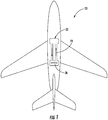
- an aircraft 20 is illustrated having an aircraft hydraulic system 22 that utilizes a hydraulic fluid (i.e., see arrow 24).
- the hydraulic system 22 may include a friction plate brake system, a clutch system, a flight control actuation system, a helicopter hoist, and others.
- the aircraft hydraulic system 22 may include at least one friction plate 26 as is commonly known to one having skill in the art of hydraulic systems. It is contemplated and understood that the aircraft system may further include systems that utilize gear arrangement requiring lubrication.
- hydraulic fluids that may be hydrocarbon-based, are commonly used in known aircraft hydraulic systems. Such hydraulic fluids may exhibit undesirably high viscosities at low temperatures of, for example, about 219 Kelvin (negative sixty-five degrees Fahrenheit (-65°F)).
- a traditional hydraulic fluid used in the aviation industry is Castrol Brayco® 795 (manufactured by the BP Corporation headquartered in the UK) having a viscosity of about 0.0024 m 2 /s (2400 centistokes) at about 219 Kelvin (negative sixty-five degrees Fahrenheit (-65°F)).
- the low temperature requirement i.e., 219 Kelvin (-65°F)
- may be a government aviation regulation e.g., Federal Aviation Authority regulation.
- Hydraulic fluid 24 of the present disclosure includes a low temperature heat transfer fluid and a friction modifier.
- the low temperature heat transfer fluid may be hydrocarbon-based and traditionally is not used as a hydraulic fluid.
- the low temperature heat transfer fluid is known to be used as an electrical coolant fluid.
- the heat transfer fluid may have a viscosity of about 0.0011 m 2 /s (1100 centistokes), or less, at temperatures of about 219 Kelvin (-65°F), or less.
- the viscosity at 219 Kelvin (-65°F) may be within a range of about 0.0005 m 2 /s to 0.0011 m 2 /s (500 to 1100 centistokes).
- a preferred viscosity of the heat transfer fluid may be about 0.0005 m 2 /s (500 centistokes) at about 219 Kelvin (-65°F).
- the heat transfer fluid may include a synthetic polyalphaolefin (e.g., Castrol Brayco Micronic 889), a mineral-based hydrocarbon, and others.
- Castrol Brayco Micronic 889 has a viscosity of about 0.0008 m 2 /s (800 centistokes) at about 219 Kelvin (negative sixty-five degrees Fahrenheit (-65°F)).
- the heat transfer fluid may be Royco® 602 (manufactured by the Univar Company headquartered in Redmond, Washington) having a viscosity of about 0.0011 m 2 /s (1087 centistokes) at about 219 Kelvin (negative sixty-five degrees Fahrenheit (-65°F)).
- the friction modifier provides a uniform friction upon the friction plate(s) 26.
- the friction modifier may be, or may include, long chain molecules with a polar end associated with, for example, the friction plate 26 of the aircraft hydraulic system 22, and a non-polar end associated with the aircraft hydraulic fluid 24.
- Examples of a friction modifier may be a fatty acid, a carboxylic acid, and others.
Landscapes
- Chemical & Material Sciences (AREA)
- Chemical Kinetics & Catalysis (AREA)
- General Chemical & Material Sciences (AREA)
- Oil, Petroleum & Natural Gas (AREA)
- Organic Chemistry (AREA)
- Lubricants (AREA)
- Braking Arrangements (AREA)
- Mechanical Operated Clutches (AREA)
Abstract
Description
- The present disclosure relates to a hydraulic system, and more particularly, to an aircraft hydraulic system and the hydraulic fluid used.
- Aircraft hydraulic systems may include systems having a friction plate brake and/or a clutch. Applications of the aircraft hydraulic system may include flight control actuation systems, helicopter hoists, and others. Traditionally, hydraulic fluids are used to provide lubrication between the plates, and friction modifiers are used as an additive to the hydraulic fluid to modify the frictional properties of the fluid in order to prevent stick and/or slip between the friction plates. Unfortunately, the hydraulic fluids typically used in friction plate brake and clutch systems exhibit viscosities at low temperature (e.g., -65°F) that are higher than desired to achieve optimal performance of the friction plate brake and/or clutch systems.
- An aircraft hydraulic system according to one, non-limiting, embodiment of the present disclosure includes a hydraulic fluid including a heat transfer fluid and a friction modifier.
- Additionally to the foregoing embodiment, the heat transfer fluid is hydrocarbon-based.
- In the alternative or additionally thereto, in the foregoing embodiment, the aircraft hydraulic system is a friction plate brake system.
- In the alternative or additionally thereto, in the foregoing embodiment, the aircraft hydraulic system is a clutch system.
- In the alternative or additionally thereto, in the foregoing embodiment, the aircraft hydraulic system includes a friction plate exposed to the hydraulic fluid.
- In the alternative or additionally thereto, in the foregoing embodiment, the friction modifier includes a long chain molecule having a polar end associated with the friction plate and a non-polar end associated with the hydrocarbon based heat transfer fluid.
- In the alternative or additionally thereto, in the foregoing embodiment, the friction modifier is a fatty acid.
- In the alternative or additionally thereto, in the foregoing embodiment, the friction modifier is a carboxylic acid.
- In the alternative or additionally thereto, in the foregoing embodiment, the hydrocarbon-based heat transfer fluid is a synthetic hydrocarbon-based heat transfer fluid.
- In the alternative or additionally thereto, in the foregoing embodiment, the synthetic hydrocarbon-based heat transfer fluid is polyalphaolefin.
- In the alternative or additionally thereto, in the foregoing embodiment, the hydrocarbon-based heat transfer fluid is mineral-based.
- In the alternative or additionally thereto, in the foregoing embodiment, the heat transfer fluid has a viscosity of about 0.0011 m2/s (1100 centistokes) or less at 219 Kelvin (negative sixty-five degrees Fahrenheit).
- In the alternative or additionally thereto, in the foregoing embodiment, the heat transfer fluid has a viscosity within a range of about 0.0005 m2/s to 0.0011 m2/s (500 to 1100 centistokes) at 219 Kelvin (negative sixty-five degrees Fahrenheit).
- An aircraft hydraulic fluid according to another, non-limiting, embodiment includes a heat transfer fluid; and a friction modifier.
- Additionally to the foregoing embodiment, the heat transfer fluid is hydrocarbon-based.
- In the alternative or additionally thereto, in the foregoing embodiment, the friction modifier is a fatty acid.
- In the alternative or additionally thereto, in the foregoing embodiment, the friction modifier is a carboxylic acid.
- In the alternative or additionally thereto, in the foregoing embodiment, the heat transfer fluid is polyalphaolefin.
- In the alternative or additionally thereto, in the foregoing embodiment, the heat transfer fluid has a viscosity of about 0.0011 m2/s (1100 centistokes) or less at 219 Kelvin (negative sixty-five degrees Fahrenheit).
- In the alternative or additionally thereto, in the foregoing embodiment, the heat transfer fluid has a viscosity within a range of about 0.0005 m2/s to 0.0011 m2/s (500 to 1100 centistokes) at 219 Kelvin (negative sixty-five degrees Fahrenheit).
- The foregoing features and elements may be combined in various combinations without exclusivity, unless expressly indicated otherwise. These features and elements as well as the operation thereof will become more apparent in light of the following description and the accompanying drawings. However, it should be understood that the following description and drawings are intended to be exemplary in nature and non-limiting.
- Various features will become apparent to those skilled in the art from the following detailed description of the disclosed non-limiting embodiments. The drawings that accompany the detailed description can be briefly described as follows:
-
FIG. 1 is a schematic of an aircraft utilizing an aircraft hydraulic system as one exemplary embodiment. - Referring to
FIG. 1 , anaircraft 20 is illustrated having an aircrafthydraulic system 22 that utilizes a hydraulic fluid (i.e., see arrow 24). Examples of thehydraulic system 22 may include a friction plate brake system, a clutch system, a flight control actuation system, a helicopter hoist, and others. The aircrafthydraulic system 22 may include at least onefriction plate 26 as is commonly known to one having skill in the art of hydraulic systems. It is contemplated and understood that the aircraft system may further include systems that utilize gear arrangement requiring lubrication. - Known "hydraulic fluids" that may be hydrocarbon-based, are commonly used in known aircraft hydraulic systems. Such hydraulic fluids may exhibit undesirably high viscosities at low temperatures of, for example, about 219 Kelvin (negative sixty-five degrees Fahrenheit (-65°F)). One example of a traditional hydraulic fluid used in the aviation industry is Castrol Brayco® 795 (manufactured by the BP Corporation headquartered in the UK) having a viscosity of about 0.0024 m2/s (2400 centistokes) at about 219 Kelvin (negative sixty-five degrees Fahrenheit (-65°F)). For aviation applications, the low temperature requirement (i.e., 219 Kelvin (-65°F)) may be a government aviation regulation (e.g., Federal Aviation Authority regulation).
-
Hydraulic fluid 24 of the present disclosure includes a low temperature heat transfer fluid and a friction modifier. The low temperature heat transfer fluid may be hydrocarbon-based and traditionally is not used as a hydraulic fluid. For example, the low temperature heat transfer fluid is known to be used as an electrical coolant fluid. The heat transfer fluid may have a viscosity of about 0.0011 m2/s (1100 centistokes), or less, at temperatures of about 219 Kelvin (-65°F), or less. Preferably, the viscosity at 219 Kelvin (-65°F) may be within a range of about 0.0005 m2/s to 0.0011 m2/s (500 to 1100 centistokes). In one embodiment, a preferred viscosity of the heat transfer fluid may be about 0.0005 m2/s (500 centistokes) at about 219 Kelvin (-65°F). Examples of the heat transfer fluid may include a synthetic polyalphaolefin (e.g., Castrol Brayco Micronic 889), a mineral-based hydrocarbon, and others. Castrol Brayco Micronic 889 has a viscosity of about 0.0008 m2/s (800 centistokes) at about 219 Kelvin (negative sixty-five degrees Fahrenheit (-65°F)). In yet another example, the heat transfer fluid may be Royco® 602 (manufactured by the Univar Company headquartered in Redmond, Washington) having a viscosity of about 0.0011 m2/s (1087 centistokes) at about 219 Kelvin (negative sixty-five degrees Fahrenheit (-65°F)). - The friction modifier provides a uniform friction upon the friction plate(s) 26. The friction modifier may be, or may include, long chain molecules with a polar end associated with, for example, the
friction plate 26 of the aircrafthydraulic system 22, and a non-polar end associated with the aircrafthydraulic fluid 24. Examples of a friction modifier may be a fatty acid, a carboxylic acid, and others. - Advantages and benefits of the present disclosure include aviation friction plate and clutch systems that incorporate hydrocarbon-based heat transfer fluids with improved low temperature fluidity and containing friction modifiers, which results in improved performance at lower temperatures.
- The term "about" is intended to include the degree of error associated with measurement of the particular quantity based upon the equipment available at the time of filing the application. For example, "about" can include a range of ± 8% or 5%, or 2% of a given value.
- The terminology used herein is for the purpose of describing particular embodiments only and is not intended to be limiting of the present disclosure. As used herein, the singular forms "a", "an" and "the" are intended to include the plural forms as well, unless the context clearly indicates otherwise. It will be further understood that the terms "comprises" and/or "comprising," when used in this specification, specify the presence of stated features, integers, steps, operations, elements, and/or components, but do not preclude the presence or addition of one or more other features, integers, steps, operations, element components, and/or groups thereof.
- While the present disclosure has been described with reference to an exemplary embodiment or embodiments, it will be understood by those skilled in the art that various changes may be made and equivalents may be substituted for elements thereof without departing from the scope of the present disclosure. In addition, many modifications may be made to adapt a particular situation or material to the teachings of the present disclosure without departing from the essential scope thereof. Therefore, it is intended that the present disclosure not be limited to the particular embodiment disclosed as the best mode contemplated for carrying out this present disclosure, but that the present disclosure will include all embodiments falling within the scope of the claims.
Claims (15)
- An aircraft hydraulic system (22) comprising:a hydraulic fluid (24) including a heat transfer fluid and a friction modifier.
- The aircraft hydraulic system (22) set forth in claim 1, wherein the heat transfer fluid is hydrocarbon-based.
- The aircraft hydraulic system (22) set forth in claim 2, wherein the aircraft hydraulic system is a friction plate brake system.
- The aircraft hydraulic system (22) set forth in claim 2, wherein the aircraft hydraulic system is a clutch system.
- The aircraft hydraulic system (22) set forth in claim 3, further comprising:a friction plate exposed to the hydraulic fluid, wherein the friction modifier includes a long chain molecule having a polar end associated with the friction plate and a non-polar end associated with the hydrocarbon based heat transfer fluid.
- The aircraft hydraulic system (22) set forth in any of claims 2 to 5, wherein the friction modifier is at least one of a fatty acid and a carboxylic acid.
- The aircraft hydraulic system (22) set forth in any of claims 2 to 6, wherein the hydrocarbon-based heat transfer fluid is one of a synthetic hydrocarbon-based heat transfer fluid, a polyalphaolefin, and a mineral-based fluid.
- The aircraft hydraulic system (22) set forth in any of claims 2 to 7, wherein the heat transfer fluid has a viscosity of about 0.0011 m2/s (1100 centistokes) or less at negative sixty-five degrees Fahrenheit.
- The aircraft hydraulic system (22) set forth in claim 8, wherein the heat transfer fluid has a viscosity within a range of about 0.0005 m2/s to 0.0011 m2/s (500 to 1100 centistokes) at 219 Kelvin (negative sixty-five degrees Fahrenheit).
- An aircraft hydraulic fluid (24) comprising:a heat transfer fluid; anda friction modifier.
- The aircraft hydraulic fluid set forth in claim 10, wherein the heat transfer fluid is hydrocarbon-based.
- The aircraft hydraulic fluid set forth in claims 10 or 11, wherein the friction modifier is a carboxylic acid.
- The aircraft hydraulic fluid set forth in claim 10, wherein the heat transfer fluid is polyalphaolefin.
- The aircraft hydraulic fluid set forth in any of claims 10 to 13, wherein the heat transfer fluid has a viscosity of about 0.0011 m2/s (1100 centistokes) or less at 219 Kelvin (negative sixty-five degrees Fahrenheit).
- The aircraft hydraulic fluid set forth in claim 14, wherein the heat transfer fluid has a viscosity within a range of about 0.0005 m2/s to 0.0011 m2/s (500 to 1100 centistokes) at 219 Kelvin (negative sixty-five degrees Fahrenheit).
Applications Claiming Priority (1)
| Application Number | Priority Date | Filing Date | Title |
|---|---|---|---|
| US15/783,166 US20190112543A1 (en) | 2017-10-13 | 2017-10-13 | Aircraft hydraulic system |
Publications (1)
| Publication Number | Publication Date |
|---|---|
| EP3470500A1 true EP3470500A1 (en) | 2019-04-17 |
Family
ID=63832248
Family Applications (1)
| Application Number | Title | Priority Date | Filing Date |
|---|---|---|---|
| EP18199440.1A Withdrawn EP3470500A1 (en) | 2017-10-13 | 2018-10-09 | Aircraft hydraulic system and hydraulic fluid |
Country Status (4)
| Country | Link |
|---|---|
| US (1) | US20190112543A1 (en) |
| EP (1) | EP3470500A1 (en) |
| BR (1) | BR102018070939A2 (en) |
| CA (1) | CA3019457A1 (en) |
Citations (3)
| Publication number | Priority date | Publication date | Assignee | Title |
|---|---|---|---|---|
| US3533952A (en) * | 1965-08-11 | 1970-10-13 | Western Co Of North America | Transmission of mechanical power |
| US4493509A (en) * | 1982-09-27 | 1985-01-15 | The Boeing Company | Two-fluid nonflammable hydraulic system |
| US4519932A (en) * | 1982-09-20 | 1985-05-28 | National Distillers And Chemical Corporation | Low temperature hydraulic fluids based on two centistoke synthetic hydrocarbons |
Family Cites Families (2)
| Publication number | Priority date | Publication date | Assignee | Title |
|---|---|---|---|---|
| US6803350B2 (en) * | 2002-05-22 | 2004-10-12 | Chevron Oronite Company Llc | Lubricating compositions for friction material interfaces |
| MX385886B (en) * | 2014-07-03 | 2025-03-18 | Pilot Polymer Tech Inc | STAR MACROMOLECULES COMPATIBLE WITH SURFACTANTS. |
-
2017
- 2017-10-13 US US15/783,166 patent/US20190112543A1/en not_active Abandoned
-
2018
- 2018-10-01 CA CA3019457A patent/CA3019457A1/en not_active Abandoned
- 2018-10-09 EP EP18199440.1A patent/EP3470500A1/en not_active Withdrawn
- 2018-10-10 BR BR102018070939-9A patent/BR102018070939A2/en not_active Application Discontinuation
Patent Citations (3)
| Publication number | Priority date | Publication date | Assignee | Title |
|---|---|---|---|---|
| US3533952A (en) * | 1965-08-11 | 1970-10-13 | Western Co Of North America | Transmission of mechanical power |
| US4519932A (en) * | 1982-09-20 | 1985-05-28 | National Distillers And Chemical Corporation | Low temperature hydraulic fluids based on two centistoke synthetic hydrocarbons |
| US4493509A (en) * | 1982-09-27 | 1985-01-15 | The Boeing Company | Two-fluid nonflammable hydraulic system |
Non-Patent Citations (1)
| Title |
|---|
| US DEPARTMENT OF DEFENSE: "Military Specification Hydraulic Fluid, Petroleum Base; Aircraft , Missle and Ordnance MIL-H-5606G", 9 September 1994 (1994-09-09), US, pages 1 - 17, XP055551843, Retrieved from the Internet <URL:http://www.everyspec.com> [retrieved on 20190205] * |
Also Published As
| Publication number | Publication date |
|---|---|
| US20190112543A1 (en) | 2019-04-18 |
| BR102018070939A2 (en) | 2019-06-04 |
| CA3019457A1 (en) | 2019-04-13 |
Similar Documents
| Publication | Publication Date | Title |
|---|---|---|
| DE850047C (en) | Greases | |
| CN107236581A (en) | High-performance graphene complex grease | |
| US11274263B2 (en) | Hybrid grease with low friction coefficients and high wearing protection | |
| CN107075402A (en) | Lubricant oil composite | |
| IL31490A (en) | A fluid composition comprising a base and an epoxy compound | |
| KR101659319B1 (en) | Lubricating oil additive composition, method for preparing the same and lubricating oil including the same | |
| US20190112543A1 (en) | Aircraft hydraulic system | |
| CN104403765A (en) | Vehicle central controlled lock lubricating grease | |
| US3450636A (en) | Automatic transmission fluid of reduced susceptibility oxidative degradation | |
| CN111433335A (en) | Lubricant composition and lubricating oil composition containing same | |
| JP2015010138A (en) | Lubricant oil composition for drive system transmission | |
| CN106609172A (en) | Ashless hydraulic oil composition and preparation method and application thereof | |
| US2616854A (en) | Hydraulic fluid | |
| CN109913296A (en) | A kind of low-friction coefficient assembly cup grease and preparation method | |
| CN107418682A (en) | A kind of unmanned plane special lube | |
| CN105368543B (en) | A kind of gear-box lubricating oil and preparation method thereof | |
| US2395380A (en) | Low temperature-high temperature lubricant | |
| US2665253A (en) | Mineral oil containing 1, 2-dialkoxy benzene as an oxidation inhibitor | |
| CN106221881A (en) | Biodegradable antiwear hydraulic oil compositions | |
| US20220010228A1 (en) | Lubricating compositions comprising a non-silicone anti-foaming agent | |
| US2396191A (en) | Instrument lubricant | |
| US2913415A (en) | Method of inhibiting squawking in mineral oil transmission fluids | |
| CN108148651A (en) | A kind of antifreezing oil | |
| JP4953117B2 (en) | Die-cast oil release agent | |
| CN105602691B (en) | A kind of energy conservation manual gear box oil and preparation method thereof |
Legal Events
| Date | Code | Title | Description |
|---|---|---|---|
| PUAI | Public reference made under article 153(3) epc to a published international application that has entered the european phase |
Free format text: ORIGINAL CODE: 0009012 |
|
| STAA | Information on the status of an ep patent application or granted ep patent |
Free format text: STATUS: THE APPLICATION HAS BEEN PUBLISHED |
|
| AK | Designated contracting states |
Kind code of ref document: A1 Designated state(s): AL AT BE BG CH CY CZ DE DK EE ES FI FR GB GR HR HU IE IS IT LI LT LU LV MC MK MT NL NO PL PT RO RS SE SI SK SM TR |
|
| AX | Request for extension of the european patent |
Extension state: BA ME |
|
| STAA | Information on the status of an ep patent application or granted ep patent |
Free format text: STATUS: REQUEST FOR EXAMINATION WAS MADE |
|
| 17P | Request for examination filed |
Effective date: 20191017 |
|
| RBV | Designated contracting states (corrected) |
Designated state(s): AL AT BE BG CH CY CZ DE DK EE ES FI FR GB GR HR HU IE IS IT LI LT LU LV MC MK MT NL NO PL PT RO RS SE SI SK SM TR |
|
| STAA | Information on the status of an ep patent application or granted ep patent |
Free format text: STATUS: EXAMINATION IS IN PROGRESS |
|
| 17Q | First examination report despatched |
Effective date: 20200728 |
|
| STAA | Information on the status of an ep patent application or granted ep patent |
Free format text: STATUS: THE APPLICATION HAS BEEN WITHDRAWN |
|
| 18W | Application withdrawn |
Effective date: 20210125 |