EP3469764B1 - Vorrichtung, computerprogramm und verfahren für peer-to-peer-sicherheitsprotokoll - Google Patents
Vorrichtung, computerprogramm und verfahren für peer-to-peer-sicherheitsprotokoll Download PDFInfo
- Publication number
- EP3469764B1 EP3469764B1 EP17809485.0A EP17809485A EP3469764B1 EP 3469764 B1 EP3469764 B1 EP 3469764B1 EP 17809485 A EP17809485 A EP 17809485A EP 3469764 B1 EP3469764 B1 EP 3469764B1
- Authority
- EP
- European Patent Office
- Prior art keywords
- message
- peer
- key
- server
- computer program
- Prior art date
- Legal status (The legal status is an assumption and is not a legal conclusion. Google has not performed a legal analysis and makes no representation as to the accuracy of the status listed.)
- Active
Links
Images



Classifications
-
- G—PHYSICS
- G06—COMPUTING OR CALCULATING; COUNTING
- G06F—ELECTRIC DIGITAL DATA PROCESSING
- G06F21/00—Security arrangements for protecting computers, components thereof, programs or data against unauthorised activity
- G06F21/60—Protecting data
- G06F21/62—Protecting access to data via a platform, e.g. using keys or access control rules
- G06F21/6218—Protecting access to data via a platform, e.g. using keys or access control rules to a system of files or objects, e.g. local or distributed file system or database
-
- H—ELECTRICITY
- H04—ELECTRIC COMMUNICATION TECHNIQUE
- H04L—TRANSMISSION OF DIGITAL INFORMATION, e.g. TELEGRAPHIC COMMUNICATION
- H04L9/00—Cryptographic mechanisms or cryptographic arrangements for secret or secure communications; Network security protocols
- H04L9/08—Key distribution or management, e.g. generation, sharing or updating, of cryptographic keys or passwords
- H04L9/0894—Escrow, recovery or storing of secret information, e.g. secret key escrow or cryptographic key storage
- H04L9/0897—Escrow, recovery or storing of secret information, e.g. secret key escrow or cryptographic key storage involving additional devices, e.g. trusted platform module [TPM], smartcard or USB
-
- H—ELECTRICITY
- H04—ELECTRIC COMMUNICATION TECHNIQUE
- H04L—TRANSMISSION OF DIGITAL INFORMATION, e.g. TELEGRAPHIC COMMUNICATION
- H04L63/00—Network architectures or network communication protocols for network security
- H04L63/06—Network architectures or network communication protocols for network security for supporting key management in a packet data network
-
- H—ELECTRICITY
- H04—ELECTRIC COMMUNICATION TECHNIQUE
- H04L—TRANSMISSION OF DIGITAL INFORMATION, e.g. TELEGRAPHIC COMMUNICATION
- H04L63/00—Network architectures or network communication protocols for network security
- H04L63/06—Network architectures or network communication protocols for network security for supporting key management in a packet data network
- H04L63/061—Network architectures or network communication protocols for network security for supporting key management in a packet data network for key exchange, e.g. in peer-to-peer networks
-
- H—ELECTRICITY
- H04—ELECTRIC COMMUNICATION TECHNIQUE
- H04L—TRANSMISSION OF DIGITAL INFORMATION, e.g. TELEGRAPHIC COMMUNICATION
- H04L2463/00—Additional details relating to network architectures or network communication protocols for network security covered by H04L63/00
- H04L2463/062—Additional details relating to network architectures or network communication protocols for network security covered by H04L63/00 applying encryption of the keys
-
- H—ELECTRICITY
- H04—ELECTRIC COMMUNICATION TECHNIQUE
- H04L—TRANSMISSION OF DIGITAL INFORMATION, e.g. TELEGRAPHIC COMMUNICATION
- H04L63/00—Network architectures or network communication protocols for network security
- H04L63/04—Network architectures or network communication protocols for network security for providing a confidential data exchange among entities communicating through data packet networks
- H04L63/0428—Network architectures or network communication protocols for network security for providing a confidential data exchange among entities communicating through data packet networks wherein the data content is protected, e.g. by encrypting or encapsulating the payload
- H04L63/0442—Network architectures or network communication protocols for network security for providing a confidential data exchange among entities communicating through data packet networks wherein the data content is protected, e.g. by encrypting or encapsulating the payload wherein the sending and receiving network entities apply asymmetric encryption, i.e. different keys for encryption and decryption
-
- H—ELECTRICITY
- H04—ELECTRIC COMMUNICATION TECHNIQUE
- H04L—TRANSMISSION OF DIGITAL INFORMATION, e.g. TELEGRAPHIC COMMUNICATION
- H04L63/00—Network architectures or network communication protocols for network security
- H04L63/12—Applying verification of the received information
- H04L63/123—Applying verification of the received information received data contents, e.g. message integrity
-
- H—ELECTRICITY
- H04—ELECTRIC COMMUNICATION TECHNIQUE
- H04L—TRANSMISSION OF DIGITAL INFORMATION, e.g. TELEGRAPHIC COMMUNICATION
- H04L63/00—Network architectures or network communication protocols for network security
- H04L63/16—Implementing security features at a particular protocol layer
- H04L63/166—Implementing security features at a particular protocol layer at the transport layer
Definitions
- the present invention relates to security protocols, and more particularly to peer-to-peer security protocols.
- Modern security communication protocols typically protect data with peer-to-peer cryptographic message protection, and exhibit future secrecy property. Designing a protocol with peer-to-peer cryptographic message protection ensures that there is no security gap in the middle that could become an attractive attack entry point. Future secrecy is also a desirable property for a security protocol that ensures that exchanged messages cannot be compromised even if peer long-term keys are compromised in the future.
- target hash-values are stored at the equipment. Each specific one of the target hash-values represents a specific target attribute identifying, e.g., a targeted calling party or a targeted called party in a targeted communication.
- a candidate hash-value is determined of the candidate attribute that identifies, e.g., the calling party or the called party of the candidate communication. The candidate communication is considered a targeted communication only if the candidate hash-value matches any of the stored target hash-values.
- US patent 6 158 007 A discloses a security system for communicating messages on computer networks.
- the messages are each assigned a subject having a security policy, which includes an access control list and a quality of protection.
- the access control list may specify who may publish, who may subscribe, and who may ask for guaranteed delivery of messages on the associated subject.
- the quality of protection may specify whether such messages are privacy, integrity, or non-repudiation protected, and whether they are to be audited.
- the broker then employs the security policy to control publishing and subscribing of the messages and to provide the requested security protections.
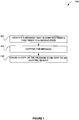
- Figure 1 illustrates a method 100 for a peer-to-peer security protocol, in accordance with one embodiment helpful in the understanding of the present invention.
- a message is identified that is directed from a first peer device to a second peer device.
- the message may include any information (e.g. plaintext, media objects, other objects, etc.) that is capable of being communicated between the peer devices.
- the peer devices may refer to any devices capable of peer-to-peer communication.
- such peer devices may include a phone, a personal data assistant (PDA), a tablet, a laptop, notebook, computer, vehicle, appliance, machine, and/or any other type of device, for that matter.
- PDA personal data assistant
- the message is copied.
- Such copying may refer to the creation of another version of the message so that at least one version is capable of being used for auditing purposes.
- the copy of the message is caused to be sent to an auditing server, per operation 106.
- the copy of the message caused to be sent to the auditing server may refer to any version of the message that is capable of being used for auditing purposes.
- such copy of the message may include an original copy (i.e. the message, etc.), a created copy, and/or any copy, for that matter.
- the copy may or may not be identical to the message.
- a header (and/or any other control layer/portion) of the copy may be slightly different (from that of the message) for messaging purposes, but a plaintext body thereof may or may not remain identical.
- the auditing server may refer to any distributed or non-distributed combination of hardware and/or software that is configured for subsequent auditing of the message. Still yet, the sending of the message copy may be caused directly and/or indirectly in any desired manner.
- any one or more of the operations 102-106 may be performed by a routing server.
- the routing server may refer to any distributed or non-distributed combination of hardware and/or software that is configured for routing the message.
- different ones of the operations 102-106 may be carried out by a different system component or even by a number of different system components.
- a first public key and a first private key of a first key pair may be received at the auditing server.
- the first key pair may be received in connection with a peer device initialization process that is carried out for all peers.
- the first private key of the first key pair may be encrypted utilizing a second public key of a second key pair (e.g. an auditing key pair including a second private key and the second public key, etc.).
- the first private key of the first key pair may be encrypted utilizing a third key pair (e.g.
- first, second, and third key pairs are set forth for illustrative purposes only and should not be construed as limiting in any manner. As will soon become apparent, the use of such first/second key pairs may contribute to multiple layers of security, in some embodiments.
- the first public key of the first key pair may be accessible by the auditing server.
- the first public key of the first key pair may be stored by the auditing server in association with a peer identifier that identifies at least one peer device.
- the first public key of the first key pair may be retrieved (e.g. using the peer identifier, etc.) in connection with sending a message.
- the second private key of the second key pair may be inaccessible by the auditing server.
- the second private key of the second key pair may be stored separate from the auditing server (e.g. in a hardware security module, etc.). As will soon become apparent, such segregation of the second private key of the second key pair may be used to restrict auditing of messages using the auditing server, to prevent malicious infiltration.
- the message Prior to the message being delivered to the second peer device, the message may be encrypted utilizing the first public key of the first key pair (e.g. DAR key pair, etc.) associated with the second peer device.
- the first public key of the first key pair e.g. DAR key pair, etc.
- such encryption may be carried out by the first peer device. Further, such encryption may further involve an ephemeral key pair for obtaining a symmetric key, as described earlier in the context of encrypting the first private key, during initialization.
- an additional security measure may be implemented in the form of a communication initiated with the auditing server.
- Such communication may include the copy of the message to be delivered to the second peer device, and such copy of the message may be encrypted by the auditing server, before being stored by the auditing server.
- the delivery of the message to the second peer device may be conditioned upon receiving a response to the communication from the auditing server.
- the message that is sent to the second peer device and the copy of the message to be sent to the auditing server may be identical. Still yet, the copy of the message sent to the auditing server may not be able to be decrypted without a separately stored private key.
- future secrecy may be afforded in a secure peer-to-peer protocol environment with secure auditing capabilities.
- Figure 2 illustrates a system 200 for auditing messages in the context of a peer-to-peer security protocol, in accordance with one embodiment helpful in the understanding of the present invention.
- the system 200 may be implemented in the context of any one or more of the embodiments set forth in any previous and/or subsequent figure(s) and/or description thereof. However, it is to be appreciated that the system 200 may be implemented in the context of any desired environment.
- a plurality of peer devices 204A, 204B are provided which are capable of communication over one or more networks 205.
- the peer devices 204A, 204B include a first peer device 204A that operates as a sending device and a second peer device 204B that operates as a receiving device.
- two peer devices 204A, 204B are illustrated in Figure 2 , it should be noted that any number of the peer devices 204A, 204B may be provided (e.g. one sending peer device and multiple receiving peer devices, etc.).
- the peer devices 204A, 204B communicate using a peer-to-peer protocol that provides enhanced security.
- an auditing server 206 that is capable of communication with the peer devices 204A, 204B and other components of the system 200 over the one or more networks 205.
- the auditing server 206 also participates in the aforementioned peer-to-peer protocol, as a peer.
- the auditing server 206 serves for receiving and storing encrypted messages that are communicated between the peer devices 204A, 204B.
- the first peer device 204A that operates as a sending device copies the auditing server 206 on outgoing messages, for reasons that will soon become apparent.
- the auditing server 206 may verify an authenticity and integrity of the messages upon receipt, prior to storage.
- an auditing database 208 is provided that is capable of communication with the auditing server 206. While such communication is shown to be direct, it should be noted that the auditing database 208 may reside anywhere and may thus be capable of communication with the auditing server 206 via any network (e.g. networks(s) 205, etc.). In still other embodiments, the auditing database 208 may be integrated in the auditing server 206.
- the auditing database 208 (and/or the auditing server 206 ) stores the encrypted messages received by the auditing server 206 for subsequent access. Further, the auditing database 208 (and/or the auditing server 206 ) stores a plurality of peer identifiers that each uniquely identify the peer devices 204A, 204B in association with various information that is used to support the aforementioned peer-to-peer protocol. More information regarding such peer-specific information will be set forth hereinafter in greater detail.
- the auditing database 208 (and/or the auditing server 206 ) further stores an auditing key pair including an auditing public key (e.g. AuditingPublicKey, etc.) and an auditing private key (e.g. AuditingPrivateKey, etc.).
- an auditing public key e.g. AuditingPublicKey, etc.
- an auditing private key e.g. AuditingPrivateKey, etc.
- only certified compliance officers may be given access to the auditing private key.
- the auditing private key may be stored on a hardware security module (HSM), and the compliance officers may be equipped with special keys in order to perform operations using the stored auditing private key.
- HSM hardware security module
- a routing server 212 is provided that is capable of communication with the peer devices 204A, 204B, the auditing server 206, and other components of the system 200 over the one or more networks 205. While the one or more networks 205 (over which the components of the system 200 communicate) are shown to be the same network(s), it should be noted that embodiments are contemplated where the components of the system 200 communicate over one or more different networks.
- the routing server 212 serves to propagate messages received from the first peer device 204A operating as the sending device, to the second peer device 204B that operates as the receiving device. Further, the routing server 212 serves to propagate messages received from the first peer device 204A, to the auditing server 206 (as a peer), and any other peer devices (not shown).
- a routing database 214 is provided that is capable of communication with the routing server 212. While such communication is shown to be direct, it should be noted that the routing database 214 may reside anywhere and thus be capable of communication with the routing server 212 via any network (e.g. networks(s) 205, etc.). In still other embodiments, the routing database 214 may be integrated in the routing server 212. In use, the routing database 214 serves to store data (e.g. message queues, authenticated chat group information, encrypted file transfers, presence information, etc.) associated with the peer devices 204A, 204B.
- data e.g. message queues, authenticated chat group information, encrypted file transfers, presence information, etc.
- a compliance client 216 that is capable of communication with the auditing server 206 and/or the auditing database 208. While such communication is shown to be direct, it should be noted that the compliance client 216 may reside anywhere and thus be capable of communication with the auditing server 206 and/or the auditing database 208 via any network (e.g. networks(s) 205, etc.). In still other embodiments, the compliance client 216 may be integrated in the auditing server 206 and/or the auditing database 208.
- the compliance client 216 provides an interface for compliance officer(s) to view messages that are communicated among the peer devices 204A, 204B. To accomplish this, the compliance client 216 may access the messages via the auditing database 208 and decrypt the same using the aforementioned HSM. More information will now be set forth regarding the interoperability of the foregoing components, in accordance with different embodiments.
- Figure 3 illustrates a method 300 for auditing messages in the context of a peer-to-peer security protocol, in accordance with one embodiment helpful in the understanding of the present invention.
- the method 300 may be implemented in the context of any one or more of the embodiments set forth in any previous and/or subsequent figure(s) and/or description thereof.
- the method 300 may reflect an interoperability among the components of the system 200 of Figure 2 .
- the method 300 may be implemented in the context of any desired environment.
- Such components include a first peer 304A operating as a sending device (e.g. first peer device 204A of Figure 2 , etc.), a second peer 304B operating as a receiving device (e.g. second peer device 204B of Figure 2 , etc.), an auditing server/database 306 (e.g. the auditing server 206 and/or auditing database 208 of Figure 2 , etc.), and a routing server/database 312 (e.g. routing server 212 and/or routing database 214 of Figure 2 , etc.).
- a sending device e.g. first peer device 204A of Figure 2 , etc.
- a second peer 304B operating as a receiving device
- an auditing server/database 306 e.g. the auditing server 206 and/or auditing database 208 of Figure 2 , etc.
- a routing server/database 312 e.g. routing server 212 and/or routing database 214 of Figure 2 , etc.
- the peers 304A, 304B perform an initialization process that results in initialization information being generated for use in connection with a security peer-to-peer protocol that secures messages communicated between the first peer 304A and the second peer 304B, in a manner that permits secure subsequent auditing of such messages without sacrificing future secrecy. So that such initialization information may be used in such manner, the initialization information is sent from the peers 304A, 304B to the auditing server/database 306, as shown in operation 2.
- the first peer 304A Prior to sending a message by the first peer 304A, the first peer 304A prepares to send such message by retrieving key information from the auditing server/database 306 and further prepares such message by encrypting the same, as shown in operation 3. To this end, the encrypted message to be broadcasted may be created and then sent to the routing server/database 312. See operation 4.
- the routing server/database 312 processes the encrypted message received in operation 4, by sending the same to the auditing server/database 306 so that the auditing server/database 306 has an opportunity to approve of the encrypted message broadcast and store an encrypted message copy. See operation 6.
- the routing server/database 312 broadcasts the encrypted message to all peers, including the second peer 304B operating as the receiving device. See operation 7.
- the encrypted message is received by the second peer 304B operating as the receiving device, for being decrypted such that plaintext of the message may be output. See operation 8. More information will now be set forth regarding various details of the foregoing operations, in accordance with different embodiments.
- Figure 4 illustrates a method 400 for initializing a peer device prior to message broadcast, in accordance with one embodiment helpful in the understanding of the present invention.
- the method 400 may be implemented in the context of any one or more of the embodiments set forth in any previous and/or subsequent figure(s) and/or description thereof.
- the method 400 may reflect various steps of operations 1/2 of the method 300 of Figure 3 .
- the method 400 may be implemented in the context of any desired environment.
- a first peer device (e.g. first peer device 204A of Figure 2 , first peer device 304A of Figure 3 , etc.) generates a data at rest (DAR) key pair including a DAR public key and a DAR private key (e.g. DARPublicKey, DARPrivateKey, etc.). See operation 402. Still yet, the first peer device encrypts the DAR private key with an auditing public key (e.g. AuditingPublicKey, etc.) to generate an encrypted DAR private key [e.g. E AuditingPublicKey (DARPrivateKey), etc.). Note operation 404.
- DAR data at rest
- the auditing public key may be stored/provided by an auditing server (e.g. auditing server 206 and/or auditing database 208 of Figure 2 , auditing server/database 306 of Figure 3 , etc.).
- the foregoing encryption may be achieved by using the auditing public key with an ephemeral key pair using a key agreement algorithm (e.g. Diffie-Hellman, etc.) to obtain a symmetric key that protects the key data.
- a key agreement algorithm e.g. Diffie-Hellman, etc.
- the auditing public key, along with an ephemeral public key may participate in a cryptographic key agreement scheme (e.g. Diffie-Hellman, etc.) to obtain the symmetric key that will be used to encrypt messages.
- the auditing public key may be used to encrypt a randomly generated symmetric key using an asymmetric encryption scheme such as RSA.
- asymmetric encryption scheme such as RSA.
- Diffie-Hellman may be used if elliptic curve crypto (ECC) is used (since it is not possible to encrypt a symmetric key directly with a public key in ECC).
- ECC elliptic curve crypto
- Data integrity may be further protected by a media access control (MAC) key on the cipher text.
- MAC media access control
- Such MAC key may be derived from the symmetric key (obtained from a key exchange).
- the first peer device sends the DAR public key and the encrypted DAR private key to the auditing server.
- communication with the auditing server may be protected with transport layer security (TLS) and/or any other desired protocol.
- TLS transport layer security
- the auditing server may store the encrypted DAR private key in association with a peer identifier, for subsequent retrieval using the peer identifier.
- Figure 5 illustrates a method 500 for preparing a message and sending the same, in accordance with one embodiment helpful in the understanding of the present invention.
- the method 500 may be implemented in the context of any one or more of the embodiments set forth in any previous and/or subsequent figure(s) and/or description thereof.
- the method 500 may reflect various steps of operations 3/4 of the method 300 of Figure 3 , and/or may follow the method 400 of Figure 4 .
- the method 500 may be implemented in the context of any desired environment.
- the method 500 is performed by a first peer device (e.g. first peer device 204A of Figure 2 , the first peer device 304A of Figure 3 , etc.), and at least a portion of such method 500 is iterated for each recipient peer device (e.g. second peer device 204B of Figure 1 , the second peer device 304B of Figure 3 , etc.), but excluding an auditing server (e.g. auditing server 206 and/or auditing database 208 of Figure 2 , auditing server/database 306 of Figure 3 , etc.).
- a first peer device e.g. first peer device 204A of Figure 2 , the first peer device 304A of Figure 3 , etc.
- an auditing server e.g. auditing server 206 and/or auditing database 208 of Figure 2 , auditing server/database 306 of Figure 3 , etc.
- the first peer device operating as the sending device identifies each recipient peer device in operation 502, for the purpose of fetching a recipient peer device DAR public key [e.g. DARPublicKey(RecipientPeerID), etc.] from the auditing server. See operation 504.
- DAR public key e.g. DARPublicKey(RecipientPeerID), etc.
- the auditing server may be treated as a peer device (for the purpose of broadcasting encrypted messages), such auditing server does not necessarily have a corresponding DAR public key, because the auditing server (when operating as a peer) does not necessarily need to be audited (but may, in some embodiments).
- the first peer device generates an ephemeral key pair including an ephemeral public key (e.g. EphemeralPublicKey, etc.) and an ephemeral public key (e.g. EphemeralPrivateKey, etc.). Further, the first peer device uses the ephemeral key pair together with the aforementioned DAR public key [e.g. DARPublicKey(RecipientPeerID), etc.] to obtain a symmetric key [e.g. SymmetricKey(RecipientPeerID), etc.] using a key agreement algorithm (e.g. Diffie-Hellman, etc.) that may or may not be similar to the key agreement algorithm set forth earlier. See operation 508. As indicated by decision 510, operations 502-508 are repeated for each recipient peer device.
- a key agreement algorithm e.g. Diffie-Hellman, etc.
- the first peer device has a symmetric key for each recipient.
- the first peer device may thus use the symmetric keys to create a DAR broadcast message component (e.g. DataAtRestBroadcastPart, etc.) using a secure message broadcast protocol. See operation 512.
- the secure message broadcast protocol may involve a sender generating a broadcast symmetric key and encrypting the message using the broadcast symmetric key.
- the broadcast symmetric key could be encrypted using the recipient's symmetric key (described earlier) for every recipient.
- Each recipient may receive the encrypted broadcast key, decrypt the encrypted broadcast key using the recipient symmetric key, and then use the broadcast key to decrypt the message.
- a MAC key could be generated for each recipient from the symmetric key (described earlier) to protect message authenticity and integrity.
- a DAR message is created using the ephemeral public key (e.g. EphemeralPublicKey, etc.).
- the first peer device adds the ephemeral public key to the DAR broadcast message component (e.g. DataAtRestBroadcastPart, etc.) to create the DAR message, in accordance with Equation #2 below.
- the ephemeral public key may be obtained using a recipient peer identifier which has an associated the ephemeral public key.
- DataAtRestMessage EphemeralPublicKey RecipientPeerID , DataAtRestBroadcastPart .
- the first peer device creates a peer-to-peer broadcast message by wrapping the DAR message with the peer-to-peer security protocol.
- a routing server e.g. routing server/database 312 of Figure 3 and/or routing server 212, routing database 214 of Figure 2 , etc.
- the wrapped DAR message is sent to the routing server, as indicated in operation 518.
- secure broadcasting may be used to ensure that the same peer-to-peer message is sent to all recipients, including the routing server.
- Figure 6 illustrates a method 600 for processing a received encrypted message utilizing a routing server, in accordance with one embodiment helpful in the understanding of the present invention.
- the method 600 may be implemented in the context of any one or more of the embodiments set forth in any previous and/or subsequent figure(s) and/or description thereof.
- the method 600 may reflect various steps of operations 5/6 of the method 300 of Figure 3 , and/or may follow the method 500 of Figure 5 .
- the method 600 may be implemented in the context of any desired environment.
- an encrypted broadcast message is received at a routing server (e.g. routing server/database 312 of Figure 3 , routing server 212 and/or routing database 214 of Figure 2 , etc.) from a first peer device operating as a sending peer device (e.g. first peer device 204A of Figure 2 , first peer device 304A of Figure 3 , etc.).
- the routing server sends the encrypted broadcast message to an auditing server (e.g. auditing server 206 and/or auditing database 208 of Figure 2 , auditing server/database 306 of Figure 3 , etc.).
- the routing server then polls until receipt of an indication of success in decision 606.
- indication of success may be condition upon the auditing server.
- the auditing server may ensure that the broadcast message contains a message copy for the auditing server. For example, if the message is encrypted by a peer-to-peer layer, the auditing server is a recipient in the peer-to-peer layer and can decrypt the peer-to-peer layer encryption. The auditing server may also verify a digital signature on the message. The auditing server may also check if it has encrypted DAR public keys for all listed recipients.
- the encrypted message is broadcasted to all peers (e.g. the second peer device 204B of Figure 1 , the second peer device 304B of Figure 3 , etc.). See operation 608. As shown, the first peer device may also be a designated recipient of such broadcast.
- Figure 7 illustrates a method 700 for processing a broadcasted encrypted message received at a recipient peer device, in accordance with one embodiment helpful in the understanding of the present invention.
- the method 700 may be implemented in the context of any one or more of the embodiments set forth in any previous and/or subsequent figure(s) and/or description thereof.
- the method 700 may reflect various steps of operation 8 of the method 300 of Figure 3 , and/or may follow the method 600 of Figure 6 .
- the method 700 may be implemented in the context of any desired environment.
- an encrypted broadcast message is received by a second peer device operating as a receiving peer device (e.g. second peer device 204B of Figure 1 , the second peer device 304B of Figure 3 , etc.).
- a second peer device operating as a receiving peer device
- the second peer device unwraps the peer-to-peer security in operation 704.
- the second peer device locates the ephemeral public key that matches a recipient identifier (e.g. RecipientID, etc.) of the second peer device. See operation 706. Thereafter, in operation 708, the second peer device computes the symmetric key using its DAR private key (e.g. DARPrivateKey, etc.) and the ephemeral public key. The second peer device then inputs the symmetric key into the broadcast protocol to decrypt the message and verify message integrity. See operation 710. The second peer device may then have access to the message (e.g. plaintext, etc.), which is output for providing access thereto. See operation 712.
- a recipient identifier e.g. RecipientID, etc.
- Figure 8 illustrates a method 800 for storing a broadcasted encrypted message received at an auditing server, in accordance with one embodiment helpful in the understanding of the present invention.
- the method 800 may be implemented in the context of any one or more of the embodiments set forth in any previous and/or subsequent figure(s) and/or description thereof.
- the method 800 may reflect various steps of operation 6 of the method 300 of Figure 3 , and/or may coincide with the method 700 of Figure 7 .
- the method 800 may be implemented in the context of any desired environment.
- the encrypted broadcast message is received by an auditing server (e.g. auditing server 206 and/or auditing database 208 of Figure 2 , auditing server/database 306 of Figure 3 , etc.).
- an auditing server e.g. auditing server 206 and/or auditing database 208 of Figure 2 , auditing server/database 306 of Figure 3 , etc.
- the auditing server unwraps the peer-to-peer security in operation 803 (similar to that in operation 704 of Figure 7 ).
- the auditing server encrypts the message M with its auditing public key (e.g. AuditingPublicKey, etc.) to get E AuditingPublicKey (M).
- E AuditingPublicKey M
- Such encryption may be achieved by using the auditing public key (e.g. AuditingPublicKey, etc.) with an ephemeral key pair with a key agreement algorithm (e.g. Diffie-Hellman, etc.) to obtain a symmetric key that protects the message.
- Data integrity may be further protected by a media access control (MAC) key on the cipher text.
- MAC media access control
- Such MAC key may be derived from the symmetric key (obtained from a key exchange).
- the auditing server stores the encrypted message in an associated database along with any necessary metadata including, but not limited to sender, recipients, timestamp, etc. See operation 806. It should be noted that the auditing server cannot necessarily, by itself, decrypt the message since it does not have access to the auditing private key (e.g. AuditingPrivateKey, etc.). It is also worth noting that the message plaintext is not available to the auditing server as a result of the method 800, since such requires a compliance client for which additional information will now be set forth.
- the auditing private key e.g. AuditingPrivateKey, etc.
- Figure 9 illustrates a method 900 for accessing logged encrypted messages on an auditing server utilizing a compliance client, in accordance with one embodiment helpful in the understanding of the present invention.
- the method 900 may be implemented in the context of any one or more of the embodiments set forth in any previous and/or subsequent figure(s) and/or description thereof. However, it is to be appreciated that the method 900 may be implemented in the context of any desired environment.
- the method 900 is initiated when access is desired to one or more encrypted messages stored by an auditing server (e.g. auditing server 206 and/or auditing database 208 of Figure 2 , auditing server/database 306 of Figure 3 , etc.). As shown, the method 900 begins by assembling a predetermined number of compliance officers, per operation 902. It should be noted that a HSM may enforce a rule where n out of m officers are required to decrypt the messages.
- an auditing server e.g. auditing server 206 and/or auditing database 208 of Figure 2 , auditing server/database 306 of Figure 3 , etc.
- the method 900 begins by assembling a predetermined number of compliance officers, per operation 902. It should be noted that a HSM may enforce a rule where n out of m officers are required to decrypt the messages.
- the compliance officers When assembled, the compliance officers initiate access to the auditing private key (e.g. AuditingPrivateKey, etc.), as indicated in operation 904.
- the compliance officers may use universal serial bus (USB) keys and/or smart cards to authenticate to the HSM, and open the auditing private key (e.g. AuditingPrivateKey, etc.).
- the compliance officers may choose a log record to which access is desired, per operation 906, which then initiates a series of operations for accessing the same.
- a compliance client e.g. compliance client 216 of Figure 2 , etc.
- the compliance client may be used to decrypt the encrypted auditing public key associated with the message M (e.g. E AuditingPublicKey (M), etc.), using the auditing private key (e.g. AuditingPrivateKey, etc.) to obtain access to the message.
- the compliance client may be used to identify the first recipient in the message, and thereby locate the encrypted DAR private key [e.g. E AuditingPublicKey (DARPrivateKey), etc.] for such recipient in a database (e.g. auditing database 208 of Figure 2 , etc.).
- DARPrivateKey e.g. auditing database 208 of Figure 2 , etc.
- the compliance client decrypts the encrypted DAR private key [e.g. E AuditingPublicKey (DARPrivateKey), etc.] to obtain the DAR private key (e.g. DARPrivateKey, etc.). See operation 912. Further, as indicated in operation 914, the compliance client uses the DAR private key (e.g. DARPrivateKey, etc.) with the ephemeral public key from the message to obtain the symmetric key. Still yet, the compliance client inputs the symmetric key into the broadcast protocol to decrypt the message and verify message integrity, as indicated in operation 916.
- DAR private key e.g. E AuditingPublicKey (DARPrivateKey), etc.
- the compliance client uses the DAR private key (e.g. DARPrivateKey, etc.) with the ephemeral public key from the message to obtain the symmetric key.
- the compliance client inputs the symmetric key into the broadcast protocol to decrypt the message and verify message integrity, as indicated in operation 916.
- decision 918 it is determined whether one or more of the previous operations 906-916 failed, in which case, the compliance client raises a red flag in operation 906, and chooses a next recipient and associated DAR private key (in operation 921) in order to attempt to decrypt the message starting again at operation 912. On the other hand, if there is success per decision 918, the compliance officers may gain access to the message (e.g. by viewing outputted plaintext, etc.). See operation 922.
- the method 900 may continue for any additional logged encrypted messages per decision 924. Again, because the auditing server does not have access to the auditing private key (e.g. AuditingPrivateKey, etc.), the auditing server cannot decrypt the messages.
- the auditing private key e.g. AuditingPrivateKey, etc.
- a malicious sender may register an invalid encrypted DAR private key [e.g. E AuditingPublicKey (DARPrivateKey), etc.] with the hope that the compliance client will not be able to decrypt the messages the peer receives.
- DAR private key e.g. E AuditingPublicKey (DARPrivateKey), etc.
- the sender sends the encrypted DAR private key
- the compliance client would be able to use the sender's encrypted DAR private key to decrypt the message. While this approach does not necessarily work when the sender and receiver are both malicious, in such case, the malicious users would simply be able to communicate outside of this system to avoid being audited anyway.
- the routing server would not receive an acknowledgement from the auditing server and would thus not forward the message to the recipients.
- the messages are additionally encrypted by the auditing server, which aids in preventing a situation when an attacker compromises a user device and retrieves a user's DAR private key (e.g. DARPrivateKey, etc.). If the messages are not encrypted in such manner, an attacker who can access the auditing log would also be able to decrypt all messages ever sent to such user.
- a peer-to-peer protocol is afforded that provides future secrecy to protect communication over hostile networks.
- the auditing server never has access to message plaintext, so compromising the auditing server does not result in immediately compromised messages.
- the sending peer device cannot send one message to the recipient and a different message to the auditing server. In fact, if a valid message has been received on another peer device, it is logged.
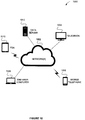
- FIG 10 illustrates a network architecture 1000 in which one or more of the aforementioned features may be implemented, in accordance with one embodiment helpful in the understanding of the present invention.
- the network 1002 may take any form including, but not limited to a telecommunications network, a local area network (LAN), a wireless network, a wide area network (WAN) such as the Internet, peer-to-peer network, cable network, etc. While only one network is shown, it should be understood that two or more similar or different networks 1002 may be provided.
- LAN local area network
- WAN wide area network
- Coupled to the network 1002 is a plurality of devices.
- a server computer 1012 and an end user computer 1008 may be coupled to the network 1002 for communication purposes.
- Such end user computer 1008 may include a desktop computer, lap-top computer, and/or any other type of logic.
- various other devices may be coupled to the network 1002 including a personal digital assistant (PDA) device 1010, a mobile phone device 1006, a television 1004, etc.
- PDA personal digital assistant
- FIG 11 illustrates an exemplary system 1100, in accordance with one embodiment helpful in the understanding of the present invention.
- the system 1100 may be implemented in the context of any of the devices of the network architecture 1000 of Figure 10 .
- the system 1100 may be implemented in any desired environment.
- a system 1100 including at least one central processor 1102 which is connected to a bus 1112.
- the system 1100 also includes main memory 1104 [e.g., hard disk drive, solid state drive, random access memory (RAM), etc.].
- the system 1100 also includes a graphics processor 1108 and a display 1110.
- the system 1100 may also include a secondary storage 1106.
- the secondary storage 1106 includes, for example, a hard disk drive and/or a removable storage drive, representing a floppy disk drive, a magnetic tape drive, a compact disk drive, etc.
- the removable storage drive reads from and/or writes to a removable storage unit in a well-known manner.
- Computer programs, or computer control logic algorithms may be stored in the main memory 1104, the secondary storage 1106, and/or any other memory, for that matter. Such computer programs, when executed, enable the system 1100 to perform various functions (as set forth above, for example). Memory 1104, secondary storage 1106 and/or any other storage are possible examples of non-transitory computer-readable media.
- a "computer-readable medium” includes one or more of any suitable media for storing the executable instructions of a computer program such that the instruction execution machine, system, apparatus, or device may read (or fetch) the instructions from the computer readable medium and execute the instructions for carrying out the described methods.
- Suitable storage formats include one or more of an electronic, magnetic, optical, and electromagnetic format.
- a non-exhaustive list of conventional exemplary computer readable medium includes: a portable computer diskette; a RAM; a ROM; an erasable programmable read only memory (EPROM or flash memory); optical storage devices, including a portable compact disc (CD), a portable digital video disc (DVD), a high definition DVD (HD-DVDTM), a BLU-RAY disc; and the like.
- one or more of these system components may be realized, in whole or in part, by at least some of the components illustrated in the arrangements illustrated in the described Figures.
- the other components may be implemented in software that when included in an execution environment constitutes a machine, hardware, or a combination of software and hardware.
- At least one component defined by the claims is implemented at least partially as an electronic hardware component, such as an instruction execution machine (e.g., a processor-based or processor-containing machine) and/or as specialized circuits or circuitry (e.g., discreet logic gates interconnected to perform a specialized function).
- an instruction execution machine e.g., a processor-based or processor-containing machine
- specialized circuits or circuitry e.g., discreet logic gates interconnected to perform a specialized function.
- Other components may be implemented in software, hardware, or a combination of software and hardware. Moreover, some or all of these other components may be combined, some may be omitted altogether, and additional components may be added while still achieving the functionality described herein.
- the subject matter described herein may be embodied in many different variations, and all such variations are contemplated to be within the scope of what is claimed.
Landscapes
- Engineering & Computer Science (AREA)
- Computer Security & Cryptography (AREA)
- Computer Networks & Wireless Communication (AREA)
- Signal Processing (AREA)
- Computer Hardware Design (AREA)
- General Engineering & Computer Science (AREA)
- Computing Systems (AREA)
- Theoretical Computer Science (AREA)
- Health & Medical Sciences (AREA)
- Bioethics (AREA)
- General Health & Medical Sciences (AREA)
- Software Systems (AREA)
- Physics & Mathematics (AREA)
- General Physics & Mathematics (AREA)
- Databases & Information Systems (AREA)
- Computer And Data Communications (AREA)
- Data Exchanges In Wide-Area Networks (AREA)
Claims (15)
- Computerprogrammprodukt zum Bereitstellen eines Peer-to-Peer-Sicherheitsprotokolls, wobei das Computerprogrammprodukt computerausführbare Instruktionen umfasst, die auf einem nicht-transitorischen computerlesbaren Medium gespeichert sind und die, wenn sie durch einen Prozessor ausgeführt werden, den Prozessor anweisen, Folgendes zu tun:Identifizieren (102) einer Nachricht, die von einer ersten Peer-Vorrichtung (204a, 304a) an eine zweite Peer-Vorrichtung (204b, 304b) gerichtet ist;Kopieren (104) der Nachricht;Veranlassen (106), dass eine Kopie der Nachricht an einen auditierenden Server (206, 306) gesendet wird; undEmpfangen, in dem auditierenden Server, eines ersten öffentlichen Schlüssels und eines ersten privaten Schlüssels eines ersten Schlüsselpaares,wobei der erste private Schlüssel des ersten Schlüsselpaares, bevor er in dem auditierenden Server empfangen wird, unter Verwendung eines zweiten öffentlichen Schlüssels eines zweiten Schlüsselpaares, das einen zweiten privaten Schlüssel und den zweiten öffentlichen Schlüssel enthält, verschlüsselt wird,wobei der zweite private Schlüssel des zweiten Schlüsselpaares für den auditierenden Server unzugänglich ist, undwobei, bevor die Nachricht an die zweite Peer-Vorrichtung übermittelt wird, die Nachricht unter Verwendung des ersten öffentlichen Schlüssels des ersten Schlüsselpaares, das der zweiten Peer-Vorrichtung zugeordnet ist, verschlüsselt wird.
- Computerprogrammprodukt nach Anspruch 1, wobei das Computerprogrammprodukt des Weiteren so konfiguriert ist, dass das Identifizieren, das Erzeugen und das Veranlassen durch einen Routing-Server (212, 312) durchgeführt werden.
- Computerprogrammprodukt nach Anspruch 1, wobei das Computerprogrammprodukt des Weiteren so konfiguriert ist, dass der erste private Schlüssel des ersten Schlüsselpaares unter Verwendung eines dritten Schlüsselpaares verschlüsselt wird, um einen symmetrischen Schlüssel (506-508) zu erhalten.
- Computerprogrammprodukt nach Anspruch 1, wobei das Computerprogrammprodukt des Weiteren so konfiguriert ist, dass der erste öffentliche Schlüssel des ersten Schlüsselpaares durch den auditierenden Server (206, 306) in Verbindung mit einem Peer-Identifizierer gespeichert wird.
- Computerprogrammprodukt nach Anspruch 1, wobei das Computerprogrammprodukt des Weiteren so konfiguriert ist, dass der zweite private Schlüssel des zweiten Schlüsselpaares getrennt von dem auditierenden Server (206, 306) gespeichert wird.
- Computerprogrammprodukt nach Anspruch 1, wobei das Computerprogrammprodukt des Weiteren so konfiguriert ist, dass der zweite private Schlüssel des zweiten Schlüsselpaares in einem Hardware-Sicherheitsmodul gespeichert wird.
- Computerprogrammprodukt nach Anspruch 1, wobei das Computerprogrammprodukt des Weiteren so konfiguriert ist, dass vor der Übermittlung der Nachricht an die zweite Peer-Vorrichtung (204b, 304b) eine Kommunikation mit dem auditierenden Server (206, 306) initiiert wird.
- Computerprogrammprodukt nach Anspruch 7, wobei das Computerprogrammprodukt des Weiteren so konfiguriert ist, dass die Kommunikation die Kopie der Nachricht enthält.
- Computerprogrammprodukt nach Anspruch 8, wobei das Computerprogrammprodukt des Weiteren so konfiguriert ist, dass die Nachricht durch den auditierenden Server (206, 306) verschlüsselt wird.
- Computerprogrammprodukt nach Anspruch 9, wobei das Computerprogrammprodukt des Weiteren so konfiguriert ist, dass die verschlüsselte Nachricht durch den auditierenden Server (206, 306) gespeichert wird.
- Computerprogrammprodukt nach Anspruch 7, wobei das Computerprogrammprodukt des Weiteren so konfiguriert ist, dass die Übermittlung der Nachricht an die zweite Peer-Vorrichtung (204b, 304b) von einer Antwort auf die Kommunikation von dem auditierenden Server (206, 306) abhängig ist.
- Computerprogrammprodukt nach Anspruch 1, wobei das Computerprogrammprodukt des Weiteren so konfiguriert ist, dass die Nachricht, die an die zweite Peer-Vorrichtung (204b, 304b) gesendet wird, und die Kopie der Nachricht, die an den auditierenden Server (206, 306) gesendet werden soll, identisch sind.
- Computerprogrammprodukt nach Anspruch 1, wobei das Computerprogrammprodukt des Weiteren so konfiguriert ist, dass die Kopie der Nachricht, die an den auditierenden Server (206, 306) gesendet werden soll, nicht ohne einen separat gespeicherten privaten Schlüssel entschlüsselt werden kann.
- Vorrichtung (200, 300) zum Bereitstellen eines Peer-to-Peer-Sicherheitsprotokolls, wobei die Vorrichtung umfasst:einen ersten Server (212, 312), der für Folgendes konfiguriert ist:Identifizieren einer Nachricht, die von einer ersten Peer-Vorrichtung (204a, 304a) an eine zweite Peer-Vorrichtung (204b, 304b) gerichtet ist;Kopieren der Nachricht; undVeranlassen, dass eine Kopie der Nachricht an einen zweiten Server (206, 306) gesendet wird; undeinen zweiten Server (206, 306), der so konfiguriert ist, dass er einen ersten öffentlichen Schlüssel und einen ersten privaten Schlüssel eines ersten Schlüsselpaares empfängt,wobei der erste private Schlüssel des ersten Schlüsselpaares, bevor er in dem zweiten Server empfangen wird, unter Verwendung eines zweiten öffentlichen Schlüssels eines zweiten Schlüsselpaares, das einen zweiten privaten Schlüssel und den zweiten öffentlichen Schlüssel enthält, verschlüsselt wird,wobei der zweite private Schlüssel des zweiten Schlüsselpaares für den zweiten Server unzugänglich ist, undwobei, bevor die Nachricht an die zweite Peer-Vorrichtung übermittelt wird, die Nachricht unter Verwendung des ersten öffentlichen Schlüssels des ersten Schlüsselpaares, das der zweiten Peer-Vorrichtung zugeordnet ist, verschlüsselt wird.
- Verfahren (100) zum Bereitstellen eines Peer-to-Peer-Sicherheitsprotokolls, wobei das Verfahren umfasst:Identifizieren (102), unter Verwendung eines ersten Servers (212, 312), einer Nachricht, die von einer ersten Peer-Vorrichtung (204a, 304a) an eine zweite Peer-Vorrichtung (204b, 304b) gerichtet ist;Kopieren, unter Verwendung des ersten Servers, der Nachricht;Veranlassen, unter Verwendung des ersten Servers, dass eine Kopie der Nachricht an einen zweiten Server (206, 306) gesendet wird; undEmpfangen, in dem zweiten Server, eines ersten öffentlichen Schlüssels und eines ersten privaten Schlüssels eines ersten Schlüsselpaares,wobei der erste private Schlüssel des ersten Schlüsselpaares, bevor er in dem zweiten Server empfangen wird, unter Verwendung eines zweiten öffentlichen Schlüssels eines zweiten Schlüsselpaares, das einen zweiten privaten Schlüssel und den zweiten öffentlichen Schlüssel enthält, verschlüsselt wird,wobei der zweite private Schlüssel des zweiten Schlüsselpaares für den zweiten Server unzugänglich ist, undwobei, bevor die Nachricht an die zweite Peer-Vorrichtung übermittelt wird, die Nachricht unter Verwendung des ersten öffentlichen Schlüssels des ersten Schlüsselpaares, das der zweiten Peer-Vorrichtung zugeordnet ist, verschlüsselt wird.
Applications Claiming Priority (2)
| Application Number | Priority Date | Filing Date | Title |
|---|---|---|---|
| US15/179,903 US10754968B2 (en) | 2016-06-10 | 2016-06-10 | Peer-to-peer security protocol apparatus, computer program, and method |
| PCT/CA2017/000143 WO2017210772A1 (en) | 2016-06-10 | 2017-06-09 | Peer-to-peer security protocol apparatus, computer program, and method |
Publications (3)
| Publication Number | Publication Date |
|---|---|
| EP3469764A1 EP3469764A1 (de) | 2019-04-17 |
| EP3469764A4 EP3469764A4 (de) | 2019-08-07 |
| EP3469764B1 true EP3469764B1 (de) | 2021-06-09 |
Family
ID=60574031
Family Applications (1)
| Application Number | Title | Priority Date | Filing Date |
|---|---|---|---|
| EP17809485.0A Active EP3469764B1 (de) | 2016-06-10 | 2017-06-09 | Vorrichtung, computerprogramm und verfahren für peer-to-peer-sicherheitsprotokoll |
Country Status (3)
| Country | Link |
|---|---|
| US (1) | US10754968B2 (de) |
| EP (1) | EP3469764B1 (de) |
| WO (1) | WO2017210772A1 (de) |
Families Citing this family (7)
| Publication number | Priority date | Publication date | Assignee | Title |
|---|---|---|---|---|
| US10666642B2 (en) * | 2016-02-26 | 2020-05-26 | Ca, Inc. | System and method for service assisted mobile pairing of password-less computer login |
| US10754968B2 (en) * | 2016-06-10 | 2020-08-25 | Digital 14 Llc | Peer-to-peer security protocol apparatus, computer program, and method |
| US10805086B2 (en) * | 2017-12-20 | 2020-10-13 | Intel Corporation | Methods and arrangements for vehicle-to-vehicle communications |
| WO2020180754A1 (en) * | 2019-03-01 | 2020-09-10 | Singulardtv, Gmbh | Decentralized digital content distribution system and process using block chains and encrpyted peer-to-peer network |
| CN111275406B (zh) * | 2020-02-13 | 2023-07-28 | 布比(北京)网络技术有限公司 | 区块链交易合约审计方法、装置、计算机设备和存储介质 |
| US20230155811A1 (en) * | 2021-11-12 | 2023-05-18 | Micron Technology, Inc. | Encrypted information sharing with lightweight devices |
| WO2025054088A2 (en) * | 2023-09-05 | 2025-03-13 | SlashNext, Inc. | Integrated security for cloud applications |
Family Cites Families (88)
| Publication number | Priority date | Publication date | Assignee | Title |
|---|---|---|---|---|
| US5577209A (en) * | 1991-07-11 | 1996-11-19 | Itt Corporation | Apparatus and method for providing multi-level security for communication among computers and terminals on a network |
| CN1312549C (zh) * | 1995-02-13 | 2007-04-25 | 英特特拉斯特技术公司 | 用于安全交易管理和电子权利保护的系统和方法 |
| US6272639B1 (en) * | 1996-07-30 | 2001-08-07 | Micron Technology, Inc. | Mixed enclave operation in a computer network |
| US5828832A (en) * | 1996-07-30 | 1998-10-27 | Itt Industries, Inc. | Mixed enclave operation in a computer network with multi-level network security |
| US6272538B1 (en) * | 1996-07-30 | 2001-08-07 | Micron Technology, Inc. | Method and system for establishing a security perimeter in computer networks |
| US5692124A (en) * | 1996-08-30 | 1997-11-25 | Itt Industries, Inc. | Support of limited write downs through trustworthy predictions in multilevel security of computer network communications |
| US6158007A (en) * | 1997-09-17 | 2000-12-05 | Jahanshah Moreh | Security system for event based middleware |
| US7025209B2 (en) * | 1998-05-29 | 2006-04-11 | Palmsource, Inc. | Method and apparatus for wireless internet access |
| US7689563B1 (en) * | 1998-10-20 | 2010-03-30 | Jacobson Andrea M | Electronic record management system |
| US6154543A (en) * | 1998-11-25 | 2000-11-28 | Hush Communications Anguilla, Inc. | Public key cryptosystem with roaming user capability |
| US6937726B1 (en) * | 1999-04-06 | 2005-08-30 | Contentguard Holdings, Inc. | System and method for protecting data files by periodically refreshing a decryption key |
| US6988199B2 (en) * | 2000-07-07 | 2006-01-17 | Message Secure | Secure and reliable document delivery |
| TW560144B (en) * | 2000-03-24 | 2003-11-01 | Sanyo Electric Co | Data distribution method, data distribution system, computer, regeneration device and recording medium |
| US20020059144A1 (en) * | 2000-04-28 | 2002-05-16 | Meffert Gregory J. | Secured content delivery system and method |
| GB0014414D0 (en) * | 2000-06-12 | 2000-08-09 | Business Information Publicati | Electronic deposit box system |
| US7251728B2 (en) * | 2000-07-07 | 2007-07-31 | Message Secure Corporation | Secure and reliable document delivery using routing lists |
| US7743259B2 (en) * | 2000-08-28 | 2010-06-22 | Contentguard Holdings, Inc. | System and method for digital rights management using a standard rendering engine |
| US7073199B1 (en) * | 2000-08-28 | 2006-07-04 | Contentguard Holdings, Inc. | Document distribution management method and apparatus using a standard rendering engine and a method and apparatus for controlling a standard rendering engine |
| US7237125B2 (en) * | 2000-08-28 | 2007-06-26 | Contentguard Holdings, Inc. | Method and apparatus for automatically deploying security components in a content distribution system |
| CA2431491C (en) * | 2000-12-11 | 2012-03-20 | Sentillion, Inc. | Context management with audit capability |
| US20020129261A1 (en) * | 2001-03-08 | 2002-09-12 | Cromer Daryl Carvis | Apparatus and method for encrypting and decrypting data recorded on portable cryptographic tokens |
| US7181017B1 (en) * | 2001-03-23 | 2007-02-20 | David Felsher | System and method for secure three-party communications |
| US7146009B2 (en) * | 2002-02-05 | 2006-12-05 | Surety, Llc | Secure electronic messaging system requiring key retrieval for deriving decryption keys |
| GB2386802A (en) * | 2002-03-18 | 2003-09-24 | Hewlett Packard Co | Auditing of secure communication sessions over a communication network |
| US6959393B2 (en) * | 2002-04-30 | 2005-10-25 | Threat Guard, Inc. | System and method for secure message-oriented network communications |
| GB2390703A (en) * | 2002-07-02 | 2004-01-14 | Ascent Group Ltd | Storage and authentication of data transactions |
| GB2392262A (en) * | 2002-08-23 | 2004-02-25 | Hewlett Packard Co | A method of controlling the processing of data |
| US20050100166A1 (en) * | 2003-11-10 | 2005-05-12 | Parc Inc. | Systems and methods for authenticating communications in a network medium |
| BRPI0318621B1 (pt) * | 2003-11-27 | 2017-07-18 | Telecom Italia S.P.A. | Method of arranging communication between an administrator device and a device managed on a network, system of an administrator device and a device managed on a network, and communication network |
| JP2005173197A (ja) * | 2003-12-11 | 2005-06-30 | Buffalo Inc | 暗号復号処理システム及び暗号復号処理装置 |
| US20050216531A1 (en) * | 2004-03-24 | 2005-09-29 | Blandford Robert R | Personal web diary |
| US8073911B2 (en) * | 2004-05-12 | 2011-12-06 | Bluespace Software Corporation | Enforcing compliance policies in a messaging system |
| US20050278335A1 (en) * | 2004-05-21 | 2005-12-15 | Bea Systems, Inc. | Service oriented architecture with alerts |
| US8200794B1 (en) * | 2004-06-30 | 2012-06-12 | Kaseya International Limited | Primitive functions for use in remote computer management |
| US8312267B2 (en) * | 2004-07-20 | 2012-11-13 | Time Warner Cable Inc. | Technique for securely communicating programming content |
| US20060048224A1 (en) * | 2004-08-30 | 2006-03-02 | Encryptx Corporation | Method and apparatus for automatically detecting sensitive information, applying policies based on a structured taxonomy and dynamically enforcing and reporting on the protection of sensitive data through a software permission wrapper |
| US7599907B2 (en) * | 2004-11-30 | 2009-10-06 | Microsoft Corporation | Method and system applying policy on screened files |
| EP1694027B1 (de) | 2005-02-22 | 2009-01-28 | Microsoft Corporation | Netzwerkinformationen in einem Peer-to-Peer Netzwerk |
| US8386520B2 (en) * | 2005-03-30 | 2013-02-26 | Hewlett-Packard Development Company, L.P. | Database security structure |
| US8688790B2 (en) * | 2005-07-01 | 2014-04-01 | Email2 Scp Solutions Inc. | Secure electronic mail system with for your eyes only features |
| WO2007071041A1 (en) * | 2005-12-19 | 2007-06-28 | Kryptiva Inc. | System and method for end-to-end electronic mail encryption |
| US20070157292A1 (en) * | 2006-01-03 | 2007-07-05 | Netiq Corporation | System, method, and computer-readable medium for just in time access through dynamic group memberships |
| US20070162554A1 (en) * | 2006-01-12 | 2007-07-12 | International Business Machines Corporation | Generating a public key and a private key in an instant messaging server |
| US20070208857A1 (en) * | 2006-02-21 | 2007-09-06 | Netiq Corporation | System, method, and computer-readable medium for granting time-based permissions |
| US20080022088A1 (en) * | 2006-06-06 | 2008-01-24 | Red Hat, Inc. | Methods and systems for key escrow |
| US7822209B2 (en) * | 2006-06-06 | 2010-10-26 | Red Hat, Inc. | Methods and systems for key recovery for a token |
| US8484718B2 (en) * | 2006-08-03 | 2013-07-09 | Citrix System, Inc. | Systems and methods for enabling assured records using fine grained auditing of virtual private network traffic |
| US20090092252A1 (en) * | 2007-04-12 | 2009-04-09 | Landon Curt Noll | Method and System for Identifying and Managing Keys |
| US20090204817A1 (en) * | 2007-09-17 | 2009-08-13 | Oci Mobile Llc | Communication system |
| WO2009070430A2 (en) * | 2007-11-08 | 2009-06-04 | Suridx, Inc. | Apparatus and methods for providing scalable, dynamic, individualized credential services using mobile telephones |
| GB2450197B (en) * | 2008-04-09 | 2009-07-08 | Egress Software Technologies L | Media device access control mechanism |
| EP2150027B1 (de) * | 2008-07-31 | 2014-09-03 | BlackBerry Limited | Systeme und Verfahren zum Aufbewahren von auditierbaren Aufnahmen auf einer elektronischen Vorrichtung |
| US8756704B2 (en) * | 2008-12-15 | 2014-06-17 | International Business Machines Corporation | User impersonation and authentication |
| EP2412123B1 (de) * | 2009-03-26 | 2020-07-08 | Trustcorp S.A. | Verfahren und einrichtung zum archivieren eines dokuments |
| US20110231452A1 (en) * | 2010-03-19 | 2011-09-22 | Hitachi, Ltd. | Storage system and resource management method for storage system |
| US8909928B2 (en) * | 2010-06-02 | 2014-12-09 | Vmware, Inc. | Securing customer virtual machines in a multi-tenant cloud |
| US8863225B2 (en) * | 2010-06-29 | 2014-10-14 | International Business Machines Corporation | Generalized identity mediation and propagation |
| US9032512B2 (en) * | 2010-11-11 | 2015-05-12 | International Business Machines Corporation | Secure access to healthcare information |
| US8713300B2 (en) * | 2011-01-21 | 2014-04-29 | Symantec Corporation | System and method for netbackup data decryption in a high latency low bandwidth environment |
| US20120210134A1 (en) * | 2011-02-09 | 2012-08-16 | Navroop Mitter | Method of securing communication |
| US8869244B1 (en) * | 2011-05-03 | 2014-10-21 | Symantec Corporation | Techniques for providing role-based access control using dynamic shared accounts |
| WO2012151675A1 (en) * | 2011-05-09 | 2012-11-15 | I Think Security Ltd. | System, apparatus and method for securing electronic data independent of their location |
| ES2400893B2 (es) * | 2011-05-11 | 2013-10-22 | Mytech Ingenieria Aplicada, S.L. | Nodos central y terminal de instrumentación y sistema domótico autoconfigurable y seguro. |
| EP2566126A1 (de) | 2011-09-02 | 2013-03-06 | Koninklijke KPN N.V. | Sichere Speicherung von Beschaffungsdaten in einem Netzwerk zur Steuerung legalen Abhörens |
| US20130254536A1 (en) | 2012-03-22 | 2013-09-26 | Workshare, Ltd. | Secure server side encryption for online file sharing and collaboration |
| IL217559A (en) * | 2012-01-16 | 2016-11-30 | Amdocs Dev Ltd | A system and method for maintaining user anonymity |
| GB201205117D0 (en) * | 2012-03-23 | 2012-05-09 | Saasid Ltd | Dynamic rendering of a document object model |
| US10771448B2 (en) * | 2012-08-10 | 2020-09-08 | Cryptography Research, Inc. | Secure feature and key management in integrated circuits |
| US9094205B2 (en) * | 2012-08-31 | 2015-07-28 | Freescale Semiconductor, Inc. | Secure provisioning in an untrusted environment |
| US9100174B2 (en) * | 2012-08-31 | 2015-08-04 | Freescale Semiconductor, Inc. | Secure provisioning in an untrusted environment |
| US9280677B1 (en) * | 2013-09-06 | 2016-03-08 | Google Inc. | Secure native application messaging with a browser application |
| US9231923B1 (en) * | 2013-11-12 | 2016-01-05 | Amazon Technologies, Inc. | Secure data destruction in a distributed environment using key protection mechanisms |
| US9235714B1 (en) * | 2013-11-12 | 2016-01-12 | Amazon Technologies, Inc. | Preventing persistent storage of cryptographic information using signaling |
| US9628516B2 (en) * | 2013-12-12 | 2017-04-18 | Hewlett Packard Enterprise Development Lp | Policy-based data management |
| US9531688B2 (en) * | 2014-01-15 | 2016-12-27 | Blackhawk Network, Inc. | Approach for message level encryption for service APIs |
| US9225742B2 (en) * | 2014-03-24 | 2015-12-29 | Airwatch Llc | Managed real-time communications between user devices |
| WO2015163736A1 (en) * | 2014-04-25 | 2015-10-29 | Samsung Electronics Co., Ltd. | Methods of providing social network service and server performing the same |
| US20160036792A1 (en) * | 2014-07-31 | 2016-02-04 | Rhovo, LLC | Systems, apparatus, and methods for private communication |
| US20160180022A1 (en) * | 2014-12-18 | 2016-06-23 | Fortinet, Inc. | Abnormal behaviour and fraud detection based on electronic medical records |
| US9659170B2 (en) * | 2015-01-02 | 2017-05-23 | Senteon LLC | Securing data on untrusted devices |
| US9760720B2 (en) * | 2015-07-10 | 2017-09-12 | Senteon LLC | Securing temporary data on untrusted devices |
| US10169602B2 (en) * | 2016-02-22 | 2019-01-01 | Dell Products, L.P. | Method for local key management setup and recovery |
| US10158991B2 (en) * | 2016-03-17 | 2018-12-18 | M2MD Technologies, Inc. | Method and system for managing security keys for user and M2M devices in a wireless communication network environment |
| US10341410B2 (en) * | 2016-05-11 | 2019-07-02 | Oracle International Corporation | Security tokens for a multi-tenant identity and data security management cloud service |
| US10204341B2 (en) * | 2016-05-24 | 2019-02-12 | Mastercard International Incorporated | Method and system for an efficient consensus mechanism for permissioned blockchains using bloom filters and audit guarantees |
| US10754968B2 (en) * | 2016-06-10 | 2020-08-25 | Digital 14 Llc | Peer-to-peer security protocol apparatus, computer program, and method |
| US10102533B2 (en) * | 2016-06-10 | 2018-10-16 | OneTrust, LLC | Data processing and communications systems and methods for the efficient implementation of privacy by design |
| US10169587B1 (en) * | 2018-04-27 | 2019-01-01 | John A. Nix | Hosted device provisioning protocol with servers and a networked initiator |
-
2016
- 2016-06-10 US US15/179,903 patent/US10754968B2/en active Active
-
2017
- 2017-06-09 EP EP17809485.0A patent/EP3469764B1/de active Active
- 2017-06-09 WO PCT/CA2017/000143 patent/WO2017210772A1/en not_active Ceased
Non-Patent Citations (1)
| Title |
|---|
| None * |
Also Published As
| Publication number | Publication date |
|---|---|
| CA3026469A1 (en) | 2017-12-14 |
| EP3469764A4 (de) | 2019-08-07 |
| WO2017210772A1 (en) | 2017-12-14 |
| EP3469764A1 (de) | 2019-04-17 |
| US10754968B2 (en) | 2020-08-25 |
| US20170357819A1 (en) | 2017-12-14 |
Similar Documents
| Publication | Publication Date | Title |
|---|---|---|
| EP3469764B1 (de) | Vorrichtung, computerprogramm und verfahren für peer-to-peer-sicherheitsprotokoll | |
| US11290267B2 (en) | Multi-party security computing method and apparatus, and electronic device | |
| US11206132B2 (en) | Multiparty secure computing method, device, and electronic device | |
| US12001579B1 (en) | Cloud messaging system | |
| US8155311B2 (en) | Method and apparatus for encrypting message for maintaining message integrity, and method and apparatus for decrypting message for maintaining message integrity | |
| US10505950B2 (en) | System, method, and computer program product for multi-layer encryption of an efficient broadcast message | |
| US11888832B2 (en) | System and method to improve user authentication for enhanced security of cryptographically protected communication sessions | |
| WO2020023132A1 (en) | System and method to protect data privacy of lightweight devices using blockchain and multi-party computation | |
| US20140052989A1 (en) | Secure data exchange using messaging service | |
| EP3340559A1 (de) | Verfahren und system zur ermöglichung von sicherer kommunikation zwischen zwei oder mehr vorrichtungen | |
| Isobe et al. | Breaking message integrity of an end-to-end encryption scheme of LINE | |
| JP2022523068A (ja) | 安全な電子データ転送のためのシステムと方法 | |
| Arora et al. | Novel Approach of Integrity Verification in Dynamic Cloud Environment | |
| EP3482527B1 (de) | Vorrichtung, computerprogramm und verfahren zur sicheren übertragung von nachrichten | |
| CN114117406A (zh) | 一种数据处理方法、装置、设备及存储介质 | |
| CN109831446B (zh) | 一种请求校验方法、装置、设备和存储介质 | |
| Mata et al. | Enhanced secure data storage in cloud computing using hybrid cryptographic techniques (AES and Blowfish) | |
| CA3026469C (en) | Peer-to-peer security protocol apparatus, computer program, and method | |
| CN113411347B (zh) | 交易报文的处理方法及处理装置 | |
| JP6718466B2 (ja) | 動的データ暗号化方法、及び復号権を制御する関連方法 | |
| Pfluegel et al. | A secure channel using social messaging for distributed low-entropy steganography | |
| CN113779634A (zh) | 一种数据存储方法及系统 | |
| CN114095157A (zh) | 密钥管理方法、装置、计算机设备及可读存储介质 | |
| Saudagar et al. | Securing Cloud Based Transmission Through Integration of Cryptographic Method | |
| Aranha et al. | LINE-Break: Cryptanalysis and Reverse Engineering of Letter Sealing |
Legal Events
| Date | Code | Title | Description |
|---|---|---|---|
| STAA | Information on the status of an ep patent application or granted ep patent |
Free format text: STATUS: THE INTERNATIONAL PUBLICATION HAS BEEN MADE |
|
| PUAI | Public reference made under article 153(3) epc to a published international application that has entered the european phase |
Free format text: ORIGINAL CODE: 0009012 |
|
| STAA | Information on the status of an ep patent application or granted ep patent |
Free format text: STATUS: REQUEST FOR EXAMINATION WAS MADE |
|
| 17P | Request for examination filed |
Effective date: 20190107 |
|
| AK | Designated contracting states |
Kind code of ref document: A1 Designated state(s): AL AT BE BG CH CY CZ DE DK EE ES FI FR GB GR HR HU IE IS IT LI LT LU LV MC MK MT NL NO PL PT RO RS SE SI SK SM TR |
|
| AX | Request for extension of the european patent |
Extension state: BA ME |
|
| REG | Reference to a national code |
Ref country code: DE Ref legal event code: R079 Ref document number: 602017040104 Country of ref document: DE Free format text: PREVIOUS MAIN CLASS: H04L0009320000 Ipc: H04L0029060000 |
|
| A4 | Supplementary search report drawn up and despatched |
Effective date: 20190709 |
|
| RIC1 | Information provided on ipc code assigned before grant |
Ipc: H04L 12/58 20060101ALI20190703BHEP Ipc: H04L 9/32 20060101ALI20190703BHEP Ipc: G06F 21/62 20130101ALI20190703BHEP Ipc: H04L 9/08 20060101ALI20190703BHEP Ipc: H04L 29/06 20060101AFI20190703BHEP |
|
| DAV | Request for validation of the european patent (deleted) | ||
| DAX | Request for extension of the european patent (deleted) | ||
| RAP1 | Party data changed (applicant data changed or rights of an application transferred) |
Owner name: DIGITAL 14 LLC |
|
| STAA | Information on the status of an ep patent application or granted ep patent |
Free format text: STATUS: EXAMINATION IS IN PROGRESS |
|
| 17Q | First examination report despatched |
Effective date: 20200707 |
|
| GRAP | Despatch of communication of intention to grant a patent |
Free format text: ORIGINAL CODE: EPIDOSNIGR1 |
|
| STAA | Information on the status of an ep patent application or granted ep patent |
Free format text: STATUS: GRANT OF PATENT IS INTENDED |
|
| INTG | Intention to grant announced |
Effective date: 20210406 |
|
| GRAS | Grant fee paid |
Free format text: ORIGINAL CODE: EPIDOSNIGR3 |
|
| GRAA | (expected) grant |
Free format text: ORIGINAL CODE: 0009210 |
|
| STAA | Information on the status of an ep patent application or granted ep patent |
Free format text: STATUS: THE PATENT HAS BEEN GRANTED |
|
| AK | Designated contracting states |
Kind code of ref document: B1 Designated state(s): AL AT BE BG CH CY CZ DE DK EE ES FI FR GB GR HR HU IE IS IT LI LT LU LV MC MK MT NL NO PL PT RO RS SE SI SK SM TR |
|
| REG | Reference to a national code |
Ref country code: GB Ref legal event code: FG4D |
|
| REG | Reference to a national code |
Ref country code: CH Ref legal event code: EP Ref country code: AT Ref legal event code: REF Ref document number: 1401400 Country of ref document: AT Kind code of ref document: T Effective date: 20210615 |
|
| REG | Reference to a national code |
Ref country code: DE Ref legal event code: R096 Ref document number: 602017040104 Country of ref document: DE |
|
| REG | Reference to a national code |
Ref country code: IE Ref legal event code: FG4D |
|
| REG | Reference to a national code |
Ref country code: FI Ref legal event code: FGE |
|
| REG | Reference to a national code |
Ref country code: LT Ref legal event code: MG9D |
|
| PG25 | Lapsed in a contracting state [announced via postgrant information from national office to epo] |
Ref country code: LT Free format text: LAPSE BECAUSE OF FAILURE TO SUBMIT A TRANSLATION OF THE DESCRIPTION OR TO PAY THE FEE WITHIN THE PRESCRIBED TIME-LIMIT Effective date: 20210609 Ref country code: HR Free format text: LAPSE BECAUSE OF FAILURE TO SUBMIT A TRANSLATION OF THE DESCRIPTION OR TO PAY THE FEE WITHIN THE PRESCRIBED TIME-LIMIT Effective date: 20210609 Ref country code: BG Free format text: LAPSE BECAUSE OF FAILURE TO SUBMIT A TRANSLATION OF THE DESCRIPTION OR TO PAY THE FEE WITHIN THE PRESCRIBED TIME-LIMIT Effective date: 20210909 |
|
| PGFP | Annual fee paid to national office [announced via postgrant information from national office to epo] |
Ref country code: IT Payment date: 20210930 Year of fee payment: 5 |
|
| REG | Reference to a national code |
Ref country code: AT Ref legal event code: MK05 Ref document number: 1401400 Country of ref document: AT Kind code of ref document: T Effective date: 20210609 |
|
| REG | Reference to a national code |
Ref country code: NL Ref legal event code: MP Effective date: 20210609 |
|
| REG | Reference to a national code |
Ref country code: DE Ref legal event code: R079 Ref document number: 602017040104 Country of ref document: DE Free format text: PREVIOUS MAIN CLASS: H04L0029060000 Ipc: H04L0065000000 |
|
| PG25 | Lapsed in a contracting state [announced via postgrant information from national office to epo] |
Ref country code: GR Free format text: LAPSE BECAUSE OF FAILURE TO SUBMIT A TRANSLATION OF THE DESCRIPTION OR TO PAY THE FEE WITHIN THE PRESCRIBED TIME-LIMIT Effective date: 20210910 Ref country code: LV Free format text: LAPSE BECAUSE OF FAILURE TO SUBMIT A TRANSLATION OF THE DESCRIPTION OR TO PAY THE FEE WITHIN THE PRESCRIBED TIME-LIMIT Effective date: 20210609 Ref country code: NO Free format text: LAPSE BECAUSE OF FAILURE TO SUBMIT A TRANSLATION OF THE DESCRIPTION OR TO PAY THE FEE WITHIN THE PRESCRIBED TIME-LIMIT Effective date: 20210909 Ref country code: RS Free format text: LAPSE BECAUSE OF FAILURE TO SUBMIT A TRANSLATION OF THE DESCRIPTION OR TO PAY THE FEE WITHIN THE PRESCRIBED TIME-LIMIT Effective date: 20210609 Ref country code: SE Free format text: LAPSE BECAUSE OF FAILURE TO SUBMIT A TRANSLATION OF THE DESCRIPTION OR TO PAY THE FEE WITHIN THE PRESCRIBED TIME-LIMIT Effective date: 20210609 |
|
| PG25 | Lapsed in a contracting state [announced via postgrant information from national office to epo] |
Ref country code: NL Free format text: LAPSE BECAUSE OF FAILURE TO SUBMIT A TRANSLATION OF THE DESCRIPTION OR TO PAY THE FEE WITHIN THE PRESCRIBED TIME-LIMIT Effective date: 20210609 Ref country code: PT Free format text: LAPSE BECAUSE OF FAILURE TO SUBMIT A TRANSLATION OF THE DESCRIPTION OR TO PAY THE FEE WITHIN THE PRESCRIBED TIME-LIMIT Effective date: 20211011 Ref country code: RO Free format text: LAPSE BECAUSE OF FAILURE TO SUBMIT A TRANSLATION OF THE DESCRIPTION OR TO PAY THE FEE WITHIN THE PRESCRIBED TIME-LIMIT Effective date: 20210609 Ref country code: EE Free format text: LAPSE BECAUSE OF FAILURE TO SUBMIT A TRANSLATION OF THE DESCRIPTION OR TO PAY THE FEE WITHIN THE PRESCRIBED TIME-LIMIT Effective date: 20210609 Ref country code: CZ Free format text: LAPSE BECAUSE OF FAILURE TO SUBMIT A TRANSLATION OF THE DESCRIPTION OR TO PAY THE FEE WITHIN THE PRESCRIBED TIME-LIMIT Effective date: 20210609 Ref country code: AT Free format text: LAPSE BECAUSE OF FAILURE TO SUBMIT A TRANSLATION OF THE DESCRIPTION OR TO PAY THE FEE WITHIN THE PRESCRIBED TIME-LIMIT Effective date: 20210609 Ref country code: SM Free format text: LAPSE BECAUSE OF FAILURE TO SUBMIT A TRANSLATION OF THE DESCRIPTION OR TO PAY THE FEE WITHIN THE PRESCRIBED TIME-LIMIT Effective date: 20210609 Ref country code: SK Free format text: LAPSE BECAUSE OF FAILURE TO SUBMIT A TRANSLATION OF THE DESCRIPTION OR TO PAY THE FEE WITHIN THE PRESCRIBED TIME-LIMIT Effective date: 20210609 Ref country code: ES Free format text: LAPSE BECAUSE OF FAILURE TO SUBMIT A TRANSLATION OF THE DESCRIPTION OR TO PAY THE FEE WITHIN THE PRESCRIBED TIME-LIMIT Effective date: 20210609 |
|
| REG | Reference to a national code |
Ref country code: CH Ref legal event code: PL |
|
| PG25 | Lapsed in a contracting state [announced via postgrant information from national office to epo] |
Ref country code: PL Free format text: LAPSE BECAUSE OF FAILURE TO SUBMIT A TRANSLATION OF THE DESCRIPTION OR TO PAY THE FEE WITHIN THE PRESCRIBED TIME-LIMIT Effective date: 20210609 |
|
| REG | Reference to a national code |
Ref country code: BE Ref legal event code: MM Effective date: 20210630 |
|
| REG | Reference to a national code |
Ref country code: DE Ref legal event code: R097 Ref document number: 602017040104 Country of ref document: DE |
|
| PG25 | Lapsed in a contracting state [announced via postgrant information from national office to epo] |
Ref country code: MC Free format text: LAPSE BECAUSE OF FAILURE TO SUBMIT A TRANSLATION OF THE DESCRIPTION OR TO PAY THE FEE WITHIN THE PRESCRIBED TIME-LIMIT Effective date: 20210609 Ref country code: LU Free format text: LAPSE BECAUSE OF NON-PAYMENT OF DUE FEES Effective date: 20210609 |
|
| PLBE | No opposition filed within time limit |
Free format text: ORIGINAL CODE: 0009261 |
|
| STAA | Information on the status of an ep patent application or granted ep patent |
Free format text: STATUS: NO OPPOSITION FILED WITHIN TIME LIMIT |
|
| PG25 | Lapsed in a contracting state [announced via postgrant information from national office to epo] |
Ref country code: LI Free format text: LAPSE BECAUSE OF NON-PAYMENT OF DUE FEES Effective date: 20210630 Ref country code: IE Free format text: LAPSE BECAUSE OF NON-PAYMENT OF DUE FEES Effective date: 20210609 Ref country code: DK Free format text: LAPSE BECAUSE OF FAILURE TO SUBMIT A TRANSLATION OF THE DESCRIPTION OR TO PAY THE FEE WITHIN THE PRESCRIBED TIME-LIMIT Effective date: 20210609 Ref country code: CH Free format text: LAPSE BECAUSE OF NON-PAYMENT OF DUE FEES Effective date: 20210630 |
|
| 26N | No opposition filed |
Effective date: 20220310 |
|
| PG25 | Lapsed in a contracting state [announced via postgrant information from national office to epo] |
Ref country code: AL Free format text: LAPSE BECAUSE OF FAILURE TO SUBMIT A TRANSLATION OF THE DESCRIPTION OR TO PAY THE FEE WITHIN THE PRESCRIBED TIME-LIMIT Effective date: 20210609 |
|
| PG25 | Lapsed in a contracting state [announced via postgrant information from national office to epo] |
Ref country code: BE Free format text: LAPSE BECAUSE OF NON-PAYMENT OF DUE FEES Effective date: 20210630 |
|
| PG25 | Lapsed in a contracting state [announced via postgrant information from national office to epo] |
Ref country code: CY Free format text: LAPSE BECAUSE OF FAILURE TO SUBMIT A TRANSLATION OF THE DESCRIPTION OR TO PAY THE FEE WITHIN THE PRESCRIBED TIME-LIMIT Effective date: 20210609 |
|
| PG25 | Lapsed in a contracting state [announced via postgrant information from national office to epo] |
Ref country code: IT Free format text: LAPSE BECAUSE OF NON-PAYMENT OF DUE FEES Effective date: 20220609 Ref country code: HU Free format text: LAPSE BECAUSE OF FAILURE TO SUBMIT A TRANSLATION OF THE DESCRIPTION OR TO PAY THE FEE WITHIN THE PRESCRIBED TIME-LIMIT; INVALID AB INITIO Effective date: 20170609 |
|
| PG25 | Lapsed in a contracting state [announced via postgrant information from national office to epo] |
Ref country code: MK Free format text: LAPSE BECAUSE OF FAILURE TO SUBMIT A TRANSLATION OF THE DESCRIPTION OR TO PAY THE FEE WITHIN THE PRESCRIBED TIME-LIMIT Effective date: 20210609 |
|
| PG25 | Lapsed in a contracting state [announced via postgrant information from national office to epo] |
Ref country code: TR Free format text: LAPSE BECAUSE OF FAILURE TO SUBMIT A TRANSLATION OF THE DESCRIPTION OR TO PAY THE FEE WITHIN THE PRESCRIBED TIME-LIMIT Effective date: 20210609 |
|
| PG25 | Lapsed in a contracting state [announced via postgrant information from national office to epo] |
Ref country code: MT Free format text: LAPSE BECAUSE OF FAILURE TO SUBMIT A TRANSLATION OF THE DESCRIPTION OR TO PAY THE FEE WITHIN THE PRESCRIBED TIME-LIMIT Effective date: 20210609 |
|
| PGFP | Annual fee paid to national office [announced via postgrant information from national office to epo] |
Ref country code: FI Payment date: 20250627 Year of fee payment: 9 |
|
| PGFP | Annual fee paid to national office [announced via postgrant information from national office to epo] |
Ref country code: DE Payment date: 20250618 Year of fee payment: 9 |
|
| PGFP | Annual fee paid to national office [announced via postgrant information from national office to epo] |
Ref country code: GB Payment date: 20250618 Year of fee payment: 9 |
|
| PGFP | Annual fee paid to national office [announced via postgrant information from national office to epo] |
Ref country code: FR Payment date: 20250625 Year of fee payment: 9 |
|
| REG | Reference to a national code |
Ref country code: DE Ref legal event code: R081 Ref document number: 602017040104 Country of ref document: DE Owner name: KATIM LLC, AE Free format text: FORMER OWNER: DIGITAL 14 LLC, ABU DHABI, AE |