EP3466944B1 - Nicotinyl alcohol ether derivative, preparation method therefor, and pharmaceutical composition and uses thereof - Google Patents
Nicotinyl alcohol ether derivative, preparation method therefor, and pharmaceutical composition and uses thereof Download PDFInfo
- Publication number
- EP3466944B1 EP3466944B1 EP17802120.0A EP17802120A EP3466944B1 EP 3466944 B1 EP3466944 B1 EP 3466944B1 EP 17802120 A EP17802120 A EP 17802120A EP 3466944 B1 EP3466944 B1 EP 3466944B1
- Authority
- EP
- European Patent Office
- Prior art keywords
- bromo
- pyridin
- chloro
- methyleneoxy
- phenylbenzyloxy
- Prior art date
- Legal status (The legal status is an assumption and is not a legal conclusion. Google has not performed a legal analysis and makes no representation as to the accuracy of the status listed.)
- Active
Links
Images


Classifications
-
- C—CHEMISTRY; METALLURGY
- C07—ORGANIC CHEMISTRY
- C07C—ACYCLIC OR CARBOCYCLIC COMPOUNDS
- C07C255/00—Carboxylic acid nitriles
- C07C255/49—Carboxylic acid nitriles having cyano groups bound to carbon atoms of six-membered aromatic rings of a carbon skeleton
- C07C255/54—Carboxylic acid nitriles having cyano groups bound to carbon atoms of six-membered aromatic rings of a carbon skeleton containing cyano groups and etherified hydroxy groups bound to the carbon skeleton
-
- C—CHEMISTRY; METALLURGY
- C07—ORGANIC CHEMISTRY
- C07C—ACYCLIC OR CARBOCYCLIC COMPOUNDS
- C07C237/00—Carboxylic acid amides, the carbon skeleton of the acid part being further substituted by amino groups
- C07C237/02—Carboxylic acid amides, the carbon skeleton of the acid part being further substituted by amino groups having the carbon atoms of the carboxamide groups bound to acyclic carbon atoms of the carbon skeleton
- C07C237/20—Carboxylic acid amides, the carbon skeleton of the acid part being further substituted by amino groups having the carbon atoms of the carboxamide groups bound to acyclic carbon atoms of the carbon skeleton the carbon skeleton containing six-membered aromatic rings
-
- C—CHEMISTRY; METALLURGY
- C07—ORGANIC CHEMISTRY
- C07D—HETEROCYCLIC COMPOUNDS
- C07D295/00—Heterocyclic compounds containing polymethylene-imine rings with at least five ring members, 3-azabicyclo [3.2.2] nonane, piperazine, morpholine or thiomorpholine rings, having only hydrogen atoms directly attached to the ring carbon atoms
- C07D295/04—Heterocyclic compounds containing polymethylene-imine rings with at least five ring members, 3-azabicyclo [3.2.2] nonane, piperazine, morpholine or thiomorpholine rings, having only hydrogen atoms directly attached to the ring carbon atoms with substituted hydrocarbon radicals attached to ring nitrogen atoms
- C07D295/14—Heterocyclic compounds containing polymethylene-imine rings with at least five ring members, 3-azabicyclo [3.2.2] nonane, piperazine, morpholine or thiomorpholine rings, having only hydrogen atoms directly attached to the ring carbon atoms with substituted hydrocarbon radicals attached to ring nitrogen atoms substituted by carbon atoms having three bonds to hetero atoms with at the most one bond to halogen, e.g. ester or nitrile radicals
- C07D295/155—Heterocyclic compounds containing polymethylene-imine rings with at least five ring members, 3-azabicyclo [3.2.2] nonane, piperazine, morpholine or thiomorpholine rings, having only hydrogen atoms directly attached to the ring carbon atoms with substituted hydrocarbon radicals attached to ring nitrogen atoms substituted by carbon atoms having three bonds to hetero atoms with at the most one bond to halogen, e.g. ester or nitrile radicals with the ring nitrogen atoms and the carbon atoms with three bonds to hetero atoms separated by carbocyclic rings or by carbon chains interrupted by carbocyclic rings
-
- A—HUMAN NECESSITIES
- A61—MEDICAL OR VETERINARY SCIENCE; HYGIENE
- A61K—PREPARATIONS FOR MEDICAL, DENTAL OR TOILETRY PURPOSES
- A61K31/00—Medicinal preparations containing organic active ingredients
- A61K31/13—Amines
- A61K31/135—Amines having aromatic rings, e.g. ketamine, nortriptyline
- A61K31/137—Arylalkylamines, e.g. amphetamine, epinephrine, salbutamol, ephedrine or methadone
-
- A—HUMAN NECESSITIES
- A61—MEDICAL OR VETERINARY SCIENCE; HYGIENE
- A61K—PREPARATIONS FOR MEDICAL, DENTAL OR TOILETRY PURPOSES
- A61K31/00—Medicinal preparations containing organic active ingredients
- A61K31/16—Amides, e.g. hydroxamic acids
- A61K31/165—Amides, e.g. hydroxamic acids having aromatic rings, e.g. colchicine, atenolol, progabide
-
- A—HUMAN NECESSITIES
- A61—MEDICAL OR VETERINARY SCIENCE; HYGIENE
- A61K—PREPARATIONS FOR MEDICAL, DENTAL OR TOILETRY PURPOSES
- A61K31/00—Medicinal preparations containing organic active ingredients
- A61K31/16—Amides, e.g. hydroxamic acids
- A61K31/17—Amides, e.g. hydroxamic acids having the group >N—C(O)—N< or >N—C(S)—N<, e.g. urea, thiourea, carmustine
-
- A—HUMAN NECESSITIES
- A61—MEDICAL OR VETERINARY SCIENCE; HYGIENE
- A61K—PREPARATIONS FOR MEDICAL, DENTAL OR TOILETRY PURPOSES
- A61K31/00—Medicinal preparations containing organic active ingredients
- A61K31/185—Acids; Anhydrides, halides or salts thereof, e.g. sulfur acids, imidic, hydrazonic or hydroximic acids
- A61K31/19—Carboxylic acids, e.g. valproic acid
- A61K31/195—Carboxylic acids, e.g. valproic acid having an amino group
- A61K31/197—Carboxylic acids, e.g. valproic acid having an amino group the amino and the carboxyl groups being attached to the same acyclic carbon chain, e.g. gamma-aminobutyric acid [GABA], beta-alanine, epsilon-aminocaproic acid or pantothenic acid
- A61K31/198—Alpha-amino acids, e.g. alanine or edetic acid [EDTA]
-
- A—HUMAN NECESSITIES
- A61—MEDICAL OR VETERINARY SCIENCE; HYGIENE
- A61K—PREPARATIONS FOR MEDICAL, DENTAL OR TOILETRY PURPOSES
- A61K31/00—Medicinal preparations containing organic active ingredients
- A61K31/33—Heterocyclic compounds
- A61K31/395—Heterocyclic compounds having nitrogen as a ring hetero atom, e.g. guanethidine or rifamycins
- A61K31/40—Heterocyclic compounds having nitrogen as a ring hetero atom, e.g. guanethidine or rifamycins having five-membered rings with one nitrogen as the only ring hetero atom, e.g. sulpiride, succinimide, tolmetin, buflomedil
- A61K31/401—Proline; Derivatives thereof, e.g. captopril
-
- A—HUMAN NECESSITIES
- A61—MEDICAL OR VETERINARY SCIENCE; HYGIENE
- A61K—PREPARATIONS FOR MEDICAL, DENTAL OR TOILETRY PURPOSES
- A61K31/00—Medicinal preparations containing organic active ingredients
- A61K31/33—Heterocyclic compounds
- A61K31/395—Heterocyclic compounds having nitrogen as a ring hetero atom, e.g. guanethidine or rifamycins
- A61K31/435—Heterocyclic compounds having nitrogen as a ring hetero atom, e.g. guanethidine or rifamycins having six-membered rings with one nitrogen as the only ring hetero atom
- A61K31/44—Non condensed pyridines; Hydrogenated derivatives thereof
- A61K31/4402—Non condensed pyridines; Hydrogenated derivatives thereof only substituted in position 2, e.g. pheniramine, bisacodyl
-
- A—HUMAN NECESSITIES
- A61—MEDICAL OR VETERINARY SCIENCE; HYGIENE
- A61K—PREPARATIONS FOR MEDICAL, DENTAL OR TOILETRY PURPOSES
- A61K31/00—Medicinal preparations containing organic active ingredients
- A61K31/33—Heterocyclic compounds
- A61K31/395—Heterocyclic compounds having nitrogen as a ring hetero atom, e.g. guanethidine or rifamycins
- A61K31/435—Heterocyclic compounds having nitrogen as a ring hetero atom, e.g. guanethidine or rifamycins having six-membered rings with one nitrogen as the only ring hetero atom
- A61K31/44—Non condensed pyridines; Hydrogenated derivatives thereof
- A61K31/4406—Non condensed pyridines; Hydrogenated derivatives thereof only substituted in position 3, e.g. zimeldine
-
- A—HUMAN NECESSITIES
- A61—MEDICAL OR VETERINARY SCIENCE; HYGIENE
- A61K—PREPARATIONS FOR MEDICAL, DENTAL OR TOILETRY PURPOSES
- A61K31/00—Medicinal preparations containing organic active ingredients
- A61K31/33—Heterocyclic compounds
- A61K31/395—Heterocyclic compounds having nitrogen as a ring hetero atom, e.g. guanethidine or rifamycins
- A61K31/435—Heterocyclic compounds having nitrogen as a ring hetero atom, e.g. guanethidine or rifamycins having six-membered rings with one nitrogen as the only ring hetero atom
- A61K31/44—Non condensed pyridines; Hydrogenated derivatives thereof
- A61K31/4427—Non condensed pyridines; Hydrogenated derivatives thereof containing further heterocyclic ring systems
- A61K31/443—Non condensed pyridines; Hydrogenated derivatives thereof containing further heterocyclic ring systems containing a five-membered ring with oxygen as a ring hetero atom
-
- A—HUMAN NECESSITIES
- A61—MEDICAL OR VETERINARY SCIENCE; HYGIENE
- A61K—PREPARATIONS FOR MEDICAL, DENTAL OR TOILETRY PURPOSES
- A61K31/00—Medicinal preparations containing organic active ingredients
- A61K31/33—Heterocyclic compounds
- A61K31/395—Heterocyclic compounds having nitrogen as a ring hetero atom, e.g. guanethidine or rifamycins
- A61K31/435—Heterocyclic compounds having nitrogen as a ring hetero atom, e.g. guanethidine or rifamycins having six-membered rings with one nitrogen as the only ring hetero atom
- A61K31/44—Non condensed pyridines; Hydrogenated derivatives thereof
- A61K31/4427—Non condensed pyridines; Hydrogenated derivatives thereof containing further heterocyclic ring systems
- A61K31/4439—Non condensed pyridines; Hydrogenated derivatives thereof containing further heterocyclic ring systems containing a five-membered ring with nitrogen as a ring hetero atom, e.g. omeprazole
-
- A—HUMAN NECESSITIES
- A61—MEDICAL OR VETERINARY SCIENCE; HYGIENE
- A61K—PREPARATIONS FOR MEDICAL, DENTAL OR TOILETRY PURPOSES
- A61K31/00—Medicinal preparations containing organic active ingredients
- A61K31/33—Heterocyclic compounds
- A61K31/395—Heterocyclic compounds having nitrogen as a ring hetero atom, e.g. guanethidine or rifamycins
- A61K31/535—Heterocyclic compounds having nitrogen as a ring hetero atom, e.g. guanethidine or rifamycins having six-membered rings with at least one nitrogen and one oxygen as the ring hetero atoms, e.g. 1,2-oxazines
- A61K31/5375—1,4-Oxazines, e.g. morpholine
-
- A—HUMAN NECESSITIES
- A61—MEDICAL OR VETERINARY SCIENCE; HYGIENE
- A61P—SPECIFIC THERAPEUTIC ACTIVITY OF CHEMICAL COMPOUNDS OR MEDICINAL PREPARATIONS
- A61P31/00—Antiinfectives, i.e. antibiotics, antiseptics, chemotherapeutics
-
- A—HUMAN NECESSITIES
- A61—MEDICAL OR VETERINARY SCIENCE; HYGIENE
- A61P—SPECIFIC THERAPEUTIC ACTIVITY OF CHEMICAL COMPOUNDS OR MEDICINAL PREPARATIONS
- A61P31/00—Antiinfectives, i.e. antibiotics, antiseptics, chemotherapeutics
- A61P31/04—Antibacterial agents
-
- A—HUMAN NECESSITIES
- A61—MEDICAL OR VETERINARY SCIENCE; HYGIENE
- A61P—SPECIFIC THERAPEUTIC ACTIVITY OF CHEMICAL COMPOUNDS OR MEDICINAL PREPARATIONS
- A61P31/00—Antiinfectives, i.e. antibiotics, antiseptics, chemotherapeutics
- A61P31/12—Antivirals
-
- A—HUMAN NECESSITIES
- A61—MEDICAL OR VETERINARY SCIENCE; HYGIENE
- A61P—SPECIFIC THERAPEUTIC ACTIVITY OF CHEMICAL COMPOUNDS OR MEDICINAL PREPARATIONS
- A61P35/00—Antineoplastic agents
-
- A—HUMAN NECESSITIES
- A61—MEDICAL OR VETERINARY SCIENCE; HYGIENE
- A61P—SPECIFIC THERAPEUTIC ACTIVITY OF CHEMICAL COMPOUNDS OR MEDICINAL PREPARATIONS
- A61P37/00—Drugs for immunological or allergic disorders
-
- A—HUMAN NECESSITIES
- A61—MEDICAL OR VETERINARY SCIENCE; HYGIENE
- A61P—SPECIFIC THERAPEUTIC ACTIVITY OF CHEMICAL COMPOUNDS OR MEDICINAL PREPARATIONS
- A61P37/00—Drugs for immunological or allergic disorders
- A61P37/02—Immunomodulators
-
- C—CHEMISTRY; METALLURGY
- C07—ORGANIC CHEMISTRY
- C07C—ACYCLIC OR CARBOCYCLIC COMPOUNDS
- C07C17/00—Preparation of halogenated hydrocarbons
- C07C17/093—Preparation of halogenated hydrocarbons by replacement by halogens
- C07C17/10—Preparation of halogenated hydrocarbons by replacement by halogens of hydrogen atoms
- C07C17/14—Preparation of halogenated hydrocarbons by replacement by halogens of hydrogen atoms in the side-chain of aromatic compounds
-
- C—CHEMISTRY; METALLURGY
- C07—ORGANIC CHEMISTRY
- C07C—ACYCLIC OR CARBOCYCLIC COMPOUNDS
- C07C17/00—Preparation of halogenated hydrocarbons
- C07C17/26—Preparation of halogenated hydrocarbons by reactions involving an increase in the number of carbon atoms in the skeleton
- C07C17/263—Preparation of halogenated hydrocarbons by reactions involving an increase in the number of carbon atoms in the skeleton by condensation reactions
-
- C—CHEMISTRY; METALLURGY
- C07—ORGANIC CHEMISTRY
- C07C—ACYCLIC OR CARBOCYCLIC COMPOUNDS
- C07C211/00—Compounds containing amino groups bound to a carbon skeleton
- C07C211/01—Compounds containing amino groups bound to a carbon skeleton having amino groups bound to acyclic carbon atoms
- C07C211/26—Compounds containing amino groups bound to a carbon skeleton having amino groups bound to acyclic carbon atoms of an unsaturated carbon skeleton containing at least one six-membered aromatic ring
- C07C211/29—Compounds containing amino groups bound to a carbon skeleton having amino groups bound to acyclic carbon atoms of an unsaturated carbon skeleton containing at least one six-membered aromatic ring the carbon skeleton being further substituted by halogen atoms or by nitro or nitroso groups
-
- C—CHEMISTRY; METALLURGY
- C07—ORGANIC CHEMISTRY
- C07C—ACYCLIC OR CARBOCYCLIC COMPOUNDS
- C07C227/00—Preparation of compounds containing amino and carboxyl groups bound to the same carbon skeleton
- C07C227/12—Formation of amino and carboxyl groups
-
- C—CHEMISTRY; METALLURGY
- C07—ORGANIC CHEMISTRY
- C07C—ACYCLIC OR CARBOCYCLIC COMPOUNDS
- C07C227/00—Preparation of compounds containing amino and carboxyl groups bound to the same carbon skeleton
- C07C227/14—Preparation of compounds containing amino and carboxyl groups bound to the same carbon skeleton from compounds containing already amino and carboxyl groups or derivatives thereof
- C07C227/16—Preparation of compounds containing amino and carboxyl groups bound to the same carbon skeleton from compounds containing already amino and carboxyl groups or derivatives thereof by reactions not involving the amino or carboxyl groups
-
- C—CHEMISTRY; METALLURGY
- C07—ORGANIC CHEMISTRY
- C07C—ACYCLIC OR CARBOCYCLIC COMPOUNDS
- C07C229/00—Compounds containing amino and carboxyl groups bound to the same carbon skeleton
- C07C229/02—Compounds containing amino and carboxyl groups bound to the same carbon skeleton having amino and carboxyl groups bound to acyclic carbon atoms of the same carbon skeleton
- C07C229/04—Compounds containing amino and carboxyl groups bound to the same carbon skeleton having amino and carboxyl groups bound to acyclic carbon atoms of the same carbon skeleton the carbon skeleton being acyclic and saturated
- C07C229/22—Compounds containing amino and carboxyl groups bound to the same carbon skeleton having amino and carboxyl groups bound to acyclic carbon atoms of the same carbon skeleton the carbon skeleton being acyclic and saturated the carbon skeleton being further substituted by oxygen atoms
-
- C—CHEMISTRY; METALLURGY
- C07—ORGANIC CHEMISTRY
- C07C—ACYCLIC OR CARBOCYCLIC COMPOUNDS
- C07C229/00—Compounds containing amino and carboxyl groups bound to the same carbon skeleton
- C07C229/02—Compounds containing amino and carboxyl groups bound to the same carbon skeleton having amino and carboxyl groups bound to acyclic carbon atoms of the same carbon skeleton
- C07C229/34—Compounds containing amino and carboxyl groups bound to the same carbon skeleton having amino and carboxyl groups bound to acyclic carbon atoms of the same carbon skeleton the carbon skeleton containing six-membered aromatic rings
- C07C229/36—Compounds containing amino and carboxyl groups bound to the same carbon skeleton having amino and carboxyl groups bound to acyclic carbon atoms of the same carbon skeleton the carbon skeleton containing six-membered aromatic rings with at least one amino group and one carboxyl group bound to the same carbon atom of the carbon skeleton
-
- C—CHEMISTRY; METALLURGY
- C07—ORGANIC CHEMISTRY
- C07C—ACYCLIC OR CARBOCYCLIC COMPOUNDS
- C07C231/00—Preparation of carboxylic acid amides
- C07C231/12—Preparation of carboxylic acid amides by reactions not involving the formation of carboxamide groups
-
- C—CHEMISTRY; METALLURGY
- C07—ORGANIC CHEMISTRY
- C07C—ACYCLIC OR CARBOCYCLIC COMPOUNDS
- C07C233/00—Carboxylic acid amides
- C07C233/01—Carboxylic acid amides having carbon atoms of carboxamide groups bound to hydrogen atoms or to acyclic carbon atoms
- C07C233/34—Carboxylic acid amides having carbon atoms of carboxamide groups bound to hydrogen atoms or to acyclic carbon atoms having the nitrogen atom of at least one of the carboxamide groups bound to a carbon atom of a hydrocarbon radical substituted by amino groups
- C07C233/35—Carboxylic acid amides having carbon atoms of carboxamide groups bound to hydrogen atoms or to acyclic carbon atoms having the nitrogen atom of at least one of the carboxamide groups bound to a carbon atom of a hydrocarbon radical substituted by amino groups with the substituted hydrocarbon radical bound to the nitrogen atom of the carboxamide group by an acyclic carbon atom
- C07C233/36—Carboxylic acid amides having carbon atoms of carboxamide groups bound to hydrogen atoms or to acyclic carbon atoms having the nitrogen atom of at least one of the carboxamide groups bound to a carbon atom of a hydrocarbon radical substituted by amino groups with the substituted hydrocarbon radical bound to the nitrogen atom of the carboxamide group by an acyclic carbon atom having the carbon atom of the carboxamide group bound to a hydrogen atom or to a carbon atom of an acyclic saturated carbon skeleton
-
- C—CHEMISTRY; METALLURGY
- C07—ORGANIC CHEMISTRY
- C07C—ACYCLIC OR CARBOCYCLIC COMPOUNDS
- C07C235/00—Carboxylic acid amides, the carbon skeleton of the acid part being further substituted by oxygen atoms
- C07C235/02—Carboxylic acid amides, the carbon skeleton of the acid part being further substituted by oxygen atoms having carbon atoms of carboxamide groups bound to acyclic carbon atoms and singly-bound oxygen atoms bound to the same carbon skeleton
- C07C235/04—Carboxylic acid amides, the carbon skeleton of the acid part being further substituted by oxygen atoms having carbon atoms of carboxamide groups bound to acyclic carbon atoms and singly-bound oxygen atoms bound to the same carbon skeleton the carbon skeleton being acyclic and saturated
- C07C235/18—Carboxylic acid amides, the carbon skeleton of the acid part being further substituted by oxygen atoms having carbon atoms of carboxamide groups bound to acyclic carbon atoms and singly-bound oxygen atoms bound to the same carbon skeleton the carbon skeleton being acyclic and saturated having at least one of the singly-bound oxygen atoms further bound to a carbon atom of a six-membered aromatic ring, e.g. phenoxyacetamides
- C07C235/20—Carboxylic acid amides, the carbon skeleton of the acid part being further substituted by oxygen atoms having carbon atoms of carboxamide groups bound to acyclic carbon atoms and singly-bound oxygen atoms bound to the same carbon skeleton the carbon skeleton being acyclic and saturated having at least one of the singly-bound oxygen atoms further bound to a carbon atom of a six-membered aromatic ring, e.g. phenoxyacetamides having the nitrogen atoms of the carboxamide groups bound to hydrogen atoms or to acyclic carbon atoms
-
- C—CHEMISTRY; METALLURGY
- C07—ORGANIC CHEMISTRY
- C07C—ACYCLIC OR CARBOCYCLIC COMPOUNDS
- C07C235/00—Carboxylic acid amides, the carbon skeleton of the acid part being further substituted by oxygen atoms
- C07C235/02—Carboxylic acid amides, the carbon skeleton of the acid part being further substituted by oxygen atoms having carbon atoms of carboxamide groups bound to acyclic carbon atoms and singly-bound oxygen atoms bound to the same carbon skeleton
- C07C235/32—Carboxylic acid amides, the carbon skeleton of the acid part being further substituted by oxygen atoms having carbon atoms of carboxamide groups bound to acyclic carbon atoms and singly-bound oxygen atoms bound to the same carbon skeleton the carbon skeleton containing six-membered aromatic rings
- C07C235/34—Carboxylic acid amides, the carbon skeleton of the acid part being further substituted by oxygen atoms having carbon atoms of carboxamide groups bound to acyclic carbon atoms and singly-bound oxygen atoms bound to the same carbon skeleton the carbon skeleton containing six-membered aromatic rings having the nitrogen atoms of the carboxamide groups bound to hydrogen atoms or to acyclic carbon atoms
-
- C—CHEMISTRY; METALLURGY
- C07—ORGANIC CHEMISTRY
- C07C—ACYCLIC OR CARBOCYCLIC COMPOUNDS
- C07C239/00—Compounds containing nitrogen-to-halogen bonds; Hydroxylamino compounds or ethers or esters thereof
- C07C239/08—Hydroxylamino compounds or their ethers or esters
- C07C239/18—Hydroxylamino compounds or their ethers or esters having nitrogen atoms of hydroxylamino groups further bound to carbon atoms of hydrocarbon radicals substituted by carboxyl groups
-
- C—CHEMISTRY; METALLURGY
- C07—ORGANIC CHEMISTRY
- C07C—ACYCLIC OR CARBOCYCLIC COMPOUNDS
- C07C259/00—Compounds containing carboxyl groups, an oxygen atom of a carboxyl group being replaced by a nitrogen atom, this nitrogen atom being further bound to an oxygen atom and not being part of nitro or nitroso groups
- C07C259/04—Compounds containing carboxyl groups, an oxygen atom of a carboxyl group being replaced by a nitrogen atom, this nitrogen atom being further bound to an oxygen atom and not being part of nitro or nitroso groups without replacement of the other oxygen atom of the carboxyl group, e.g. hydroxamic acids
- C07C259/06—Compounds containing carboxyl groups, an oxygen atom of a carboxyl group being replaced by a nitrogen atom, this nitrogen atom being further bound to an oxygen atom and not being part of nitro or nitroso groups without replacement of the other oxygen atom of the carboxyl group, e.g. hydroxamic acids having carbon atoms of hydroxamic groups bound to hydrogen atoms or to acyclic carbon atoms
-
- C—CHEMISTRY; METALLURGY
- C07—ORGANIC CHEMISTRY
- C07C—ACYCLIC OR CARBOCYCLIC COMPOUNDS
- C07C269/00—Preparation of derivatives of carbamic acid, i.e. compounds containing any of the groups, the nitrogen atom not being part of nitro or nitroso groups
- C07C269/02—Preparation of derivatives of carbamic acid, i.e. compounds containing any of the groups, the nitrogen atom not being part of nitro or nitroso groups from isocyanates with formation of carbamate groups
-
- C—CHEMISTRY; METALLURGY
- C07—ORGANIC CHEMISTRY
- C07C—ACYCLIC OR CARBOCYCLIC COMPOUNDS
- C07C271/00—Derivatives of carbamic acids, i.e. compounds containing any of the groups, the nitrogen atom not being part of nitro or nitroso groups
- C07C271/62—Compounds containing any of the groups, X being a hetero atom, Y being any atom, e.g. N-acylcarbamates
- C07C271/64—Y being a hydrogen or a carbon atom, e.g. benzoylcarbamates
-
- C—CHEMISTRY; METALLURGY
- C07—ORGANIC CHEMISTRY
- C07C—ACYCLIC OR CARBOCYCLIC COMPOUNDS
- C07C273/00—Preparation of urea or its derivatives, i.e. compounds containing any of the groups, the nitrogen atoms not being part of nitro or nitroso groups
-
- C—CHEMISTRY; METALLURGY
- C07—ORGANIC CHEMISTRY
- C07C—ACYCLIC OR CARBOCYCLIC COMPOUNDS
- C07C275/00—Derivatives of urea, i.e. compounds containing any of the groups, the nitrogen atoms not being part of nitro or nitroso groups
- C07C275/04—Derivatives of urea, i.e. compounds containing any of the groups, the nitrogen atoms not being part of nitro or nitroso groups having nitrogen atoms of urea groups bound to acyclic carbon atoms
- C07C275/06—Derivatives of urea, i.e. compounds containing any of the groups, the nitrogen atoms not being part of nitro or nitroso groups having nitrogen atoms of urea groups bound to acyclic carbon atoms of an acyclic and saturated carbon skeleton
- C07C275/16—Derivatives of urea, i.e. compounds containing any of the groups, the nitrogen atoms not being part of nitro or nitroso groups having nitrogen atoms of urea groups bound to acyclic carbon atoms of an acyclic and saturated carbon skeleton being further substituted by carboxyl groups
-
- C—CHEMISTRY; METALLURGY
- C07—ORGANIC CHEMISTRY
- C07C—ACYCLIC OR CARBOCYCLIC COMPOUNDS
- C07C311/00—Amides of sulfonic acids, i.e. compounds having singly-bound oxygen atoms of sulfo groups replaced by nitrogen atoms, not being part of nitro or nitroso groups
- C07C311/01—Sulfonamides having sulfur atoms of sulfonamide groups bound to acyclic carbon atoms
- C07C311/02—Sulfonamides having sulfur atoms of sulfonamide groups bound to acyclic carbon atoms of an acyclic saturated carbon skeleton
- C07C311/03—Sulfonamides having sulfur atoms of sulfonamide groups bound to acyclic carbon atoms of an acyclic saturated carbon skeleton having the nitrogen atoms of the sulfonamide groups bound to hydrogen atoms or to acyclic carbon atoms
- C07C311/05—Sulfonamides having sulfur atoms of sulfonamide groups bound to acyclic carbon atoms of an acyclic saturated carbon skeleton having the nitrogen atoms of the sulfonamide groups bound to hydrogen atoms or to acyclic carbon atoms to acyclic carbon atoms of hydrocarbon radicals substituted by nitrogen atoms, not being part of nitro or nitroso groups
-
- C—CHEMISTRY; METALLURGY
- C07—ORGANIC CHEMISTRY
- C07C—ACYCLIC OR CARBOCYCLIC COMPOUNDS
- C07C317/00—Sulfones; Sulfoxides
- C07C317/16—Sulfones; Sulfoxides having sulfone or sulfoxide groups and singly-bound oxygen atoms bound to the same carbon skeleton
- C07C317/22—Sulfones; Sulfoxides having sulfone or sulfoxide groups and singly-bound oxygen atoms bound to the same carbon skeleton with sulfone or sulfoxide groups bound to carbon atoms of six-membered aromatic rings of the carbon skeleton
-
- C—CHEMISTRY; METALLURGY
- C07—ORGANIC CHEMISTRY
- C07C—ACYCLIC OR CARBOCYCLIC COMPOUNDS
- C07C323/00—Thiols, sulfides, hydropolysulfides or polysulfides substituted by halogen, oxygen or nitrogen atoms, or by sulfur atoms not being part of thio groups
- C07C323/50—Thiols, sulfides, hydropolysulfides or polysulfides substituted by halogen, oxygen or nitrogen atoms, or by sulfur atoms not being part of thio groups containing thio groups and carboxyl groups bound to the same carbon skeleton
- C07C323/51—Thiols, sulfides, hydropolysulfides or polysulfides substituted by halogen, oxygen or nitrogen atoms, or by sulfur atoms not being part of thio groups containing thio groups and carboxyl groups bound to the same carbon skeleton having the sulfur atoms of the thio groups bound to acyclic carbon atoms of the carbon skeleton
- C07C323/57—Thiols, sulfides, hydropolysulfides or polysulfides substituted by halogen, oxygen or nitrogen atoms, or by sulfur atoms not being part of thio groups containing thio groups and carboxyl groups bound to the same carbon skeleton having the sulfur atoms of the thio groups bound to acyclic carbon atoms of the carbon skeleton the carbon skeleton being further substituted by nitrogen atoms, not being part of nitro or nitroso groups
- C07C323/58—Thiols, sulfides, hydropolysulfides or polysulfides substituted by halogen, oxygen or nitrogen atoms, or by sulfur atoms not being part of thio groups containing thio groups and carboxyl groups bound to the same carbon skeleton having the sulfur atoms of the thio groups bound to acyclic carbon atoms of the carbon skeleton the carbon skeleton being further substituted by nitrogen atoms, not being part of nitro or nitroso groups with amino groups bound to the carbon skeleton
-
- C—CHEMISTRY; METALLURGY
- C07—ORGANIC CHEMISTRY
- C07C—ACYCLIC OR CARBOCYCLIC COMPOUNDS
- C07C45/00—Preparation of compounds having >C = O groups bound only to carbon or hydrogen atoms; Preparation of chelates of such compounds
- C07C45/61—Preparation of compounds having >C = O groups bound only to carbon or hydrogen atoms; Preparation of chelates of such compounds by reactions not involving the formation of >C = O groups
-
- C—CHEMISTRY; METALLURGY
- C07—ORGANIC CHEMISTRY
- C07C—ACYCLIC OR CARBOCYCLIC COMPOUNDS
- C07C45/00—Preparation of compounds having >C = O groups bound only to carbon or hydrogen atoms; Preparation of chelates of such compounds
- C07C45/61—Preparation of compounds having >C = O groups bound only to carbon or hydrogen atoms; Preparation of chelates of such compounds by reactions not involving the formation of >C = O groups
- C07C45/67—Preparation of compounds having >C = O groups bound only to carbon or hydrogen atoms; Preparation of chelates of such compounds by reactions not involving the formation of >C = O groups by isomerisation; by change of size of the carbon skeleton
- C07C45/68—Preparation of compounds having >C = O groups bound only to carbon or hydrogen atoms; Preparation of chelates of such compounds by reactions not involving the formation of >C = O groups by isomerisation; by change of size of the carbon skeleton by increase in the number of carbon atoms
- C07C45/70—Preparation of compounds having >C = O groups bound only to carbon or hydrogen atoms; Preparation of chelates of such compounds by reactions not involving the formation of >C = O groups by isomerisation; by change of size of the carbon skeleton by increase in the number of carbon atoms by reaction with functional groups containing oxygen only in singly bound form
- C07C45/71—Preparation of compounds having >C = O groups bound only to carbon or hydrogen atoms; Preparation of chelates of such compounds by reactions not involving the formation of >C = O groups by isomerisation; by change of size of the carbon skeleton by increase in the number of carbon atoms by reaction with functional groups containing oxygen only in singly bound form being hydroxy groups
-
- C—CHEMISTRY; METALLURGY
- C07—ORGANIC CHEMISTRY
- C07D—HETEROCYCLIC COMPOUNDS
- C07D207/00—Heterocyclic compounds containing five-membered rings not condensed with other rings, with one nitrogen atom as the only ring hetero atom
- C07D207/02—Heterocyclic compounds containing five-membered rings not condensed with other rings, with one nitrogen atom as the only ring hetero atom with only hydrogen or carbon atoms directly attached to the ring nitrogen atom
- C07D207/04—Heterocyclic compounds containing five-membered rings not condensed with other rings, with one nitrogen atom as the only ring hetero atom with only hydrogen or carbon atoms directly attached to the ring nitrogen atom having no double bonds between ring members or between ring members and non-ring members
- C07D207/08—Heterocyclic compounds containing five-membered rings not condensed with other rings, with one nitrogen atom as the only ring hetero atom with only hydrogen or carbon atoms directly attached to the ring nitrogen atom having no double bonds between ring members or between ring members and non-ring members with hydrocarbon radicals, substituted by hetero atoms, attached to ring carbon atoms
-
- C—CHEMISTRY; METALLURGY
- C07—ORGANIC CHEMISTRY
- C07D—HETEROCYCLIC COMPOUNDS
- C07D207/00—Heterocyclic compounds containing five-membered rings not condensed with other rings, with one nitrogen atom as the only ring hetero atom
- C07D207/02—Heterocyclic compounds containing five-membered rings not condensed with other rings, with one nitrogen atom as the only ring hetero atom with only hydrogen or carbon atoms directly attached to the ring nitrogen atom
- C07D207/04—Heterocyclic compounds containing five-membered rings not condensed with other rings, with one nitrogen atom as the only ring hetero atom with only hydrogen or carbon atoms directly attached to the ring nitrogen atom having no double bonds between ring members or between ring members and non-ring members
- C07D207/10—Heterocyclic compounds containing five-membered rings not condensed with other rings, with one nitrogen atom as the only ring hetero atom with only hydrogen or carbon atoms directly attached to the ring nitrogen atom having no double bonds between ring members or between ring members and non-ring members with hetero atoms or with carbon atoms having three bonds to hetero atoms with at the most one bond to halogen, e.g. ester or nitrile radicals, directly attached to ring carbon atoms
- C07D207/16—Carbon atoms having three bonds to hetero atoms with at the most one bond to halogen, e.g. ester or nitrile radicals
-
- C—CHEMISTRY; METALLURGY
- C07—ORGANIC CHEMISTRY
- C07D—HETEROCYCLIC COMPOUNDS
- C07D211/00—Heterocyclic compounds containing hydrogenated pyridine rings, not condensed with other rings
- C07D211/04—Heterocyclic compounds containing hydrogenated pyridine rings, not condensed with other rings with only hydrogen or carbon atoms directly attached to the ring nitrogen atom
- C07D211/06—Heterocyclic compounds containing hydrogenated pyridine rings, not condensed with other rings with only hydrogen or carbon atoms directly attached to the ring nitrogen atom having no double bonds between ring members or between ring members and non-ring members
- C07D211/36—Heterocyclic compounds containing hydrogenated pyridine rings, not condensed with other rings with only hydrogen or carbon atoms directly attached to the ring nitrogen atom having no double bonds between ring members or between ring members and non-ring members with hetero atoms or with carbon atoms having three bonds to hetero atoms with at the most one bond to halogen, e.g. ester or nitrile radicals, directly attached to ring carbon atoms
- C07D211/60—Carbon atoms having three bonds to hetero atoms with at the most one bond to halogen, e.g. ester or nitrile radicals
-
- C—CHEMISTRY; METALLURGY
- C07—ORGANIC CHEMISTRY
- C07D—HETEROCYCLIC COMPOUNDS
- C07D213/00—Heterocyclic compounds containing six-membered rings, not condensed with other rings, with one nitrogen atom as the only ring hetero atom and three or more double bonds between ring members or between ring members and non-ring members
- C07D213/02—Heterocyclic compounds containing six-membered rings, not condensed with other rings, with one nitrogen atom as the only ring hetero atom and three or more double bonds between ring members or between ring members and non-ring members having three double bonds between ring members or between ring members and non-ring members
- C07D213/04—Heterocyclic compounds containing six-membered rings, not condensed with other rings, with one nitrogen atom as the only ring hetero atom and three or more double bonds between ring members or between ring members and non-ring members having three double bonds between ring members or between ring members and non-ring members having no bond between the ring nitrogen atom and a non-ring member or having only hydrogen or carbon atoms directly attached to the ring nitrogen atom
- C07D213/24—Heterocyclic compounds containing six-membered rings, not condensed with other rings, with one nitrogen atom as the only ring hetero atom and three or more double bonds between ring members or between ring members and non-ring members having three double bonds between ring members or between ring members and non-ring members having no bond between the ring nitrogen atom and a non-ring member or having only hydrogen or carbon atoms directly attached to the ring nitrogen atom with substituted hydrocarbon radicals attached to ring carbon atoms
- C07D213/28—Radicals substituted by singly-bound oxygen or sulphur atoms
- C07D213/30—Oxygen atoms
-
- C—CHEMISTRY; METALLURGY
- C07—ORGANIC CHEMISTRY
- C07D—HETEROCYCLIC COMPOUNDS
- C07D213/00—Heterocyclic compounds containing six-membered rings, not condensed with other rings, with one nitrogen atom as the only ring hetero atom and three or more double bonds between ring members or between ring members and non-ring members
- C07D213/02—Heterocyclic compounds containing six-membered rings, not condensed with other rings, with one nitrogen atom as the only ring hetero atom and three or more double bonds between ring members or between ring members and non-ring members having three double bonds between ring members or between ring members and non-ring members
- C07D213/04—Heterocyclic compounds containing six-membered rings, not condensed with other rings, with one nitrogen atom as the only ring hetero atom and three or more double bonds between ring members or between ring members and non-ring members having three double bonds between ring members or between ring members and non-ring members having no bond between the ring nitrogen atom and a non-ring member or having only hydrogen or carbon atoms directly attached to the ring nitrogen atom
- C07D213/60—Heterocyclic compounds containing six-membered rings, not condensed with other rings, with one nitrogen atom as the only ring hetero atom and three or more double bonds between ring members or between ring members and non-ring members having three double bonds between ring members or between ring members and non-ring members having no bond between the ring nitrogen atom and a non-ring member or having only hydrogen or carbon atoms directly attached to the ring nitrogen atom with hetero atoms or with carbon atoms having three bonds to hetero atoms with at the most one bond to halogen, e.g. ester or nitrile radicals, directly attached to ring carbon atoms
- C07D213/78—Carbon atoms having three bonds to hetero atoms, with at the most one bond to halogen, e.g. ester or nitrile radicals
- C07D213/84—Nitriles
- C07D213/85—Nitriles in position 3
-
- C—CHEMISTRY; METALLURGY
- C07—ORGANIC CHEMISTRY
- C07D—HETEROCYCLIC COMPOUNDS
- C07D221/00—Heterocyclic compounds containing six-membered rings having one nitrogen atom as the only ring hetero atom, not provided for by groups C07D211/00 - C07D219/00
-
- C—CHEMISTRY; METALLURGY
- C07—ORGANIC CHEMISTRY
- C07D—HETEROCYCLIC COMPOUNDS
- C07D265/00—Heterocyclic compounds containing six-membered rings having one nitrogen atom and one oxygen atom as the only ring hetero atoms
- C07D265/28—1,4-Oxazines; Hydrogenated 1,4-oxazines
- C07D265/30—1,4-Oxazines; Hydrogenated 1,4-oxazines not condensed with other rings
-
- C—CHEMISTRY; METALLURGY
- C07—ORGANIC CHEMISTRY
- C07D—HETEROCYCLIC COMPOUNDS
- C07D295/00—Heterocyclic compounds containing polymethylene-imine rings with at least five ring members, 3-azabicyclo [3.2.2] nonane, piperazine, morpholine or thiomorpholine rings, having only hydrogen atoms directly attached to the ring carbon atoms
- C07D295/04—Heterocyclic compounds containing polymethylene-imine rings with at least five ring members, 3-azabicyclo [3.2.2] nonane, piperazine, morpholine or thiomorpholine rings, having only hydrogen atoms directly attached to the ring carbon atoms with substituted hydrocarbon radicals attached to ring nitrogen atoms
- C07D295/08—Heterocyclic compounds containing polymethylene-imine rings with at least five ring members, 3-azabicyclo [3.2.2] nonane, piperazine, morpholine or thiomorpholine rings, having only hydrogen atoms directly attached to the ring carbon atoms with substituted hydrocarbon radicals attached to ring nitrogen atoms substituted by singly bound oxygen or sulfur atoms
- C07D295/096—Heterocyclic compounds containing polymethylene-imine rings with at least five ring members, 3-azabicyclo [3.2.2] nonane, piperazine, morpholine or thiomorpholine rings, having only hydrogen atoms directly attached to the ring carbon atoms with substituted hydrocarbon radicals attached to ring nitrogen atoms substituted by singly bound oxygen or sulfur atoms with the ring nitrogen atoms and the oxygen or sulfur atoms separated by carbocyclic rings or by carbon chains interrupted by carbocyclic rings
-
- C—CHEMISTRY; METALLURGY
- C07—ORGANIC CHEMISTRY
- C07D—HETEROCYCLIC COMPOUNDS
- C07D295/00—Heterocyclic compounds containing polymethylene-imine rings with at least five ring members, 3-azabicyclo [3.2.2] nonane, piperazine, morpholine or thiomorpholine rings, having only hydrogen atoms directly attached to the ring carbon atoms
- C07D295/16—Heterocyclic compounds containing polymethylene-imine rings with at least five ring members, 3-azabicyclo [3.2.2] nonane, piperazine, morpholine or thiomorpholine rings, having only hydrogen atoms directly attached to the ring carbon atoms acylated on ring nitrogen atoms
- C07D295/18—Heterocyclic compounds containing polymethylene-imine rings with at least five ring members, 3-azabicyclo [3.2.2] nonane, piperazine, morpholine or thiomorpholine rings, having only hydrogen atoms directly attached to the ring carbon atoms acylated on ring nitrogen atoms by radicals derived from carboxylic acids, or sulfur or nitrogen analogues thereof
- C07D295/182—Radicals derived from carboxylic acids
- C07D295/192—Radicals derived from carboxylic acids from aromatic carboxylic acids
-
- C—CHEMISTRY; METALLURGY
- C07—ORGANIC CHEMISTRY
- C07D—HETEROCYCLIC COMPOUNDS
- C07D295/00—Heterocyclic compounds containing polymethylene-imine rings with at least five ring members, 3-azabicyclo [3.2.2] nonane, piperazine, morpholine or thiomorpholine rings, having only hydrogen atoms directly attached to the ring carbon atoms
- C07D295/16—Heterocyclic compounds containing polymethylene-imine rings with at least five ring members, 3-azabicyclo [3.2.2] nonane, piperazine, morpholine or thiomorpholine rings, having only hydrogen atoms directly attached to the ring carbon atoms acylated on ring nitrogen atoms
- C07D295/20—Heterocyclic compounds containing polymethylene-imine rings with at least five ring members, 3-azabicyclo [3.2.2] nonane, piperazine, morpholine or thiomorpholine rings, having only hydrogen atoms directly attached to the ring carbon atoms acylated on ring nitrogen atoms by radicals derived from carbonic acid, or sulfur or nitrogen analogues thereof
- C07D295/205—Radicals derived from carbonic acid
-
- C—CHEMISTRY; METALLURGY
- C07—ORGANIC CHEMISTRY
- C07D—HETEROCYCLIC COMPOUNDS
- C07D309/00—Heterocyclic compounds containing six-membered rings having one oxygen atom as the only ring hetero atom, not condensed with other rings
- C07D309/02—Heterocyclic compounds containing six-membered rings having one oxygen atom as the only ring hetero atom, not condensed with other rings having no double bonds between ring members or between ring members and non-ring members
- C07D309/08—Heterocyclic compounds containing six-membered rings having one oxygen atom as the only ring hetero atom, not condensed with other rings having no double bonds between ring members or between ring members and non-ring members with hetero atoms or with carbon atoms having three bonds to hetero atoms with at the most one bond to halogen, e.g. ester or nitrile radicals, directly attached to ring carbon atoms
- C07D309/14—Nitrogen atoms not forming part of a nitro radical
-
- C—CHEMISTRY; METALLURGY
- C07—ORGANIC CHEMISTRY
- C07D—HETEROCYCLIC COMPOUNDS
- C07D319/00—Heterocyclic compounds containing six-membered rings having two oxygen atoms as the only ring hetero atoms
- C07D319/10—1,4-Dioxanes; Hydrogenated 1,4-dioxanes
- C07D319/14—1,4-Dioxanes; Hydrogenated 1,4-dioxanes condensed with carbocyclic rings or ring systems
- C07D319/16—1,4-Dioxanes; Hydrogenated 1,4-dioxanes condensed with carbocyclic rings or ring systems condensed with one six-membered ring
-
- C—CHEMISTRY; METALLURGY
- C07—ORGANIC CHEMISTRY
- C07D—HETEROCYCLIC COMPOUNDS
- C07D319/00—Heterocyclic compounds containing six-membered rings having two oxygen atoms as the only ring hetero atoms
- C07D319/10—1,4-Dioxanes; Hydrogenated 1,4-dioxanes
- C07D319/14—1,4-Dioxanes; Hydrogenated 1,4-dioxanes condensed with carbocyclic rings or ring systems
- C07D319/16—1,4-Dioxanes; Hydrogenated 1,4-dioxanes condensed with carbocyclic rings or ring systems condensed with one six-membered ring
- C07D319/18—Ethylenedioxybenzenes, not substituted on the hetero ring
-
- C—CHEMISTRY; METALLURGY
- C07—ORGANIC CHEMISTRY
- C07D—HETEROCYCLIC COMPOUNDS
- C07D401/00—Heterocyclic compounds containing two or more hetero rings, having nitrogen atoms as the only ring hetero atoms, at least one ring being a six-membered ring with only one nitrogen atom
- C07D401/02—Heterocyclic compounds containing two or more hetero rings, having nitrogen atoms as the only ring hetero atoms, at least one ring being a six-membered ring with only one nitrogen atom containing two hetero rings
- C07D401/12—Heterocyclic compounds containing two or more hetero rings, having nitrogen atoms as the only ring hetero atoms, at least one ring being a six-membered ring with only one nitrogen atom containing two hetero rings linked by a chain containing hetero atoms as chain links
-
- C—CHEMISTRY; METALLURGY
- C07—ORGANIC CHEMISTRY
- C07D—HETEROCYCLIC COMPOUNDS
- C07D401/00—Heterocyclic compounds containing two or more hetero rings, having nitrogen atoms as the only ring hetero atoms, at least one ring being a six-membered ring with only one nitrogen atom
- C07D401/14—Heterocyclic compounds containing two or more hetero rings, having nitrogen atoms as the only ring hetero atoms, at least one ring being a six-membered ring with only one nitrogen atom containing three or more hetero rings
-
- C—CHEMISTRY; METALLURGY
- C07—ORGANIC CHEMISTRY
- C07D—HETEROCYCLIC COMPOUNDS
- C07D405/00—Heterocyclic compounds containing both one or more hetero rings having oxygen atoms as the only ring hetero atoms, and one or more rings having nitrogen as the only ring hetero atom
- C07D405/02—Heterocyclic compounds containing both one or more hetero rings having oxygen atoms as the only ring hetero atoms, and one or more rings having nitrogen as the only ring hetero atom containing two hetero rings
- C07D405/12—Heterocyclic compounds containing both one or more hetero rings having oxygen atoms as the only ring hetero atoms, and one or more rings having nitrogen as the only ring hetero atom containing two hetero rings linked by a chain containing hetero atoms as chain links
-
- C—CHEMISTRY; METALLURGY
- C07—ORGANIC CHEMISTRY
- C07D—HETEROCYCLIC COMPOUNDS
- C07D407/00—Heterocyclic compounds containing two or more hetero rings, at least one ring having oxygen atoms as the only ring hetero atoms, not provided for by group C07D405/00
- C07D407/02—Heterocyclic compounds containing two or more hetero rings, at least one ring having oxygen atoms as the only ring hetero atoms, not provided for by group C07D405/00 containing two hetero rings
- C07D407/12—Heterocyclic compounds containing two or more hetero rings, at least one ring having oxygen atoms as the only ring hetero atoms, not provided for by group C07D405/00 containing two hetero rings linked by a chain containing hetero atoms as chain links
-
- A—HUMAN NECESSITIES
- A61—MEDICAL OR VETERINARY SCIENCE; HYGIENE
- A61K—PREPARATIONS FOR MEDICAL, DENTAL OR TOILETRY PURPOSES
- A61K31/00—Medicinal preparations containing organic active ingredients
- A61K31/275—Nitriles; Isonitriles
- A61K31/277—Nitriles; Isonitriles having a ring, e.g. verapamil
-
- A—HUMAN NECESSITIES
- A61—MEDICAL OR VETERINARY SCIENCE; HYGIENE
- A61K—PREPARATIONS FOR MEDICAL, DENTAL OR TOILETRY PURPOSES
- A61K31/00—Medicinal preparations containing organic active ingredients
- A61K31/33—Heterocyclic compounds
- A61K31/335—Heterocyclic compounds having oxygen as the only ring hetero atom, e.g. fungichromin
- A61K31/357—Heterocyclic compounds having oxygen as the only ring hetero atom, e.g. fungichromin having two or more oxygen atoms in the same ring, e.g. crown ethers, guanadrel
- A61K31/36—Compounds containing methylenedioxyphenyl groups, e.g. sesamin
-
- A—HUMAN NECESSITIES
- A61—MEDICAL OR VETERINARY SCIENCE; HYGIENE
- A61K—PREPARATIONS FOR MEDICAL, DENTAL OR TOILETRY PURPOSES
- A61K45/00—Medicinal preparations containing active ingredients not provided for in groups A61K31/00 - A61K41/00
- A61K45/06—Mixtures of active ingredients without chemical characterisation, e.g. antiphlogistics and cardiaca
-
- C—CHEMISTRY; METALLURGY
- C07—ORGANIC CHEMISTRY
- C07C—ACYCLIC OR CARBOCYCLIC COMPOUNDS
- C07C2601/00—Systems containing only non-condensed rings
- C07C2601/02—Systems containing only non-condensed rings with a three-membered ring
-
- C—CHEMISTRY; METALLURGY
- C07—ORGANIC CHEMISTRY
- C07C—ACYCLIC OR CARBOCYCLIC COMPOUNDS
- C07C2601/00—Systems containing only non-condensed rings
- C07C2601/12—Systems containing only non-condensed rings with a six-membered ring
- C07C2601/14—The ring being saturated
Definitions
- the present invention discloses a nicotinyl alcohol ether derivative, a preparation method therefor, and a pharmaceutical composition.
- the invention relates to nicotinyl alcohol ether derivatives represented by formula (I), a pharmaceutically-acceptable salt thereof, a stereoisomer thereof, a preparation method therefor, a pharmaceutical composition containing the one or more compounds.
- the compounds may be for use in the prevention and/or treatment of diseases related to PD-1/PD-L1 signal channels, such as cancers, infectious diseases and autoimmune diseases.
- Tumor cells evade the immune system by the binding of programmed cell death ligand (PD-L1) produced on its surface to the PD-1 protein of T cells.
- the tumor microenvironment induces high expression of PD-1 molecules in infiltrating T cells, and tumor cells highly express PD-1 ligands PD-L1 and PD-L2, resulting in continuous activation of the PD-1 pathway in the tumor microenvironment.
- the inhibited T cells cannot find the tumor so that it cannot signal the immune system to attack and kill the tumor cells.
- the PD-1 antibody against PD-1 or PD-L1 blocks this pathway by preventing the two proteins from binding and partially restores the function of T cells, enabling them to kill tumor cells.
- PD-1/PD-L1-based immunotherapy is a new generation high-profile immunotherapy, aiming to use the body's own immune system to fight tumors. It has the potential to treat multiple types of tumors by blocking the PD-1/PD-L1 signaling pathway to induce apoptosis. Recently, a series of surprising studies have confirmed that PD-1/PD-L1 inhibitory antibodies have strong anti-tumor activity against a variety of tumors, which is particularly eye-catching. On September 4, 2014, Keytruda ® (pembrolizumab) from Merck, USA, became the first FDA-approved PD-1 monoclonal antibody for the treatment of advanced or unresectable melanoma patients who were unresponsive for other medications.
- MSD is investigating the potential of Keytruda in more than 30 different types of cancer, including various types of blood cancer, lung cancer, breast cancer, bladder cancer, stomach cancer, and head and neck cancer.
- pharmaceutical giant Bristol-Myers Squibb took the lead in obtaining accelerated approval from the US Food and Drug Administration (FDA).
- FDA US Food and Drug Administration
- Its anti-cancer immunotherapy drug nivolumab was listed under the trade name Opdivo for the treatment of unresectable or metastatic melanoma patients who have not responded to other drugs and it is the second US-listed PD-1 inhibitor after MSD's Keytruda.
- nivolumab for the treatment of metastatic squamous non-small cell lung cancer that progressed during platinum-based chemotherapy or after chemotherapy.
- Keytruda pembrolizumab
- MSD Keytruda treatment achieved a 28% overall response rate (ORR) in 25 patients with pleural mesothelioma (PM). And 48% of patients have stable disease and the disease control rate has reached 76%.
- Tumor immunotherapy is considered a revolution in cancer treatment after tumor targeting therapy.
- the monoclonal antibody therapeutic drug has its own defects: it is easily decomposed by proteases, so it is unstable within the body and cannot be taken orally; it is easy to produce immune cross-reaction; the product quality is not easy to control and the production technology is high; a large amount of preparation and purification is difficult, and the cost is high; it is inconvenient to use and it only can be injected or drip. Therefore, small molecule inhibitors of PD-1/PD-L1 interaction are a better choice for tumor immunotherapy.
- WO2015/160641 A1 generally relates to compounds of formula: useful as immunomodulators. It provides compounds, compositions comprising such compounds, and methods of their use and further pertains to pharmaceutical compositions comprising at least one compound according to the disclosure that are useful for the treatment of various diseases, including cancer and infectious diseases.
- the technical problem to be solved by the present invention is to provide a nicotinyl alcohol ether derivative with the structural formula (I) which inhibits the interaction of PD-1/PD-L1, and a stereoisomer thereof and a pharmaceutically acceptable salt thereof, and a preparation method therefor and medicament compositions thereof and to provide the compounds for use in the prevention or treatment of a disease associated with the PD-1/PD-L1 signaling pathway.
- nicotinyl alcohol ether derivatives, stereoisomers thereof and pharmaceutically acceptable salts thereof wherein the compound is represented in the above formulae, wherein R 3 is selected from: wherein R is selected from methyl, ethyl, propyl, isopropyl, butyl, pentyl, hexyl, heptyl, octyl; and X is selected from hydrogen, fluorine, chlorine, bromine, methyl, ethenyl, and trifluoromethyl.
- the pharmaceutically acceptable salt of the nicotinyl alcohol ether derivative of the above formulae may comprise a salt formed with an inorganic acid, a salt formed with an organic acid salt, alkali metal ion salt, alkaline earth metal ion salt or a salt formed with organic base which provides a physiologically acceptable cation, and an ammonium salt.
- Said inorganic acid may be selected from hydrochloric acid, hydrobromic acid, phosphoric acid or sulfuric acid; said organic acid may be selected from methanesulfonic acid, p-toluenesulfonic acid, trifluoroacetic acid, citric acid, maleic acid, tartaric acid, fumaric acid, citric acid or lactic acid; said alkali metal ion may be selected from lithium ion, sodium ion, potassium ion; said alkaline earth metal ion may be selected from calcium ion, magnesium ion; said organic base, which provides physiologically acceptable cation, may be selected from methylamine, dimethylamine, trimethylamine, piperidine, morpholine or tris(2-hydroxyethyl)amine.
- nicotinyl alcohol ether derivative or a pharmaceutically acceptable salt, or a stereoisomer thereof, wherein the nicotinyl alcohol ether derivative is selected from:
- the third aspect of the present invention provides a process, as defined in claim 10, for preparing the compounds of the first aspect.
- the starting materials and intermediates in the above reaction are obtained easily, and each step of the reaction can be performed easily according to the reported literature or by a skilled worker in the art by a conventional method in organic synthesis.
- the compound of formula I may exist in solvated or unsolvated forms, and crystallization from different solvents may result in different solvates.
- the pharmaceutically acceptable salts of the formula (I) include different acid addition salts, such as the acid addition salts of the following inorganic or organic acids: hydrochloric acid, hydrobromic acid, phosphoric acid, sulfuric acid, methanesulfonic acid, p-toluenesulfonic acid, Trifluoroacetic acid, citric acid, maleic acid, tartaric acid, fumaric acid, citric acid, lactic acid.
- the pharmaceutically acceptable salts of formula I also include various alkali metal salts such as lithium, sodium, potassium salts; various alkaline-earth metal salts such as calcium, magnesium salts and ammonium salts; and various organic base salts which provide physiologically acceptable cations, such as methylamine, dimethylamine, trimethylamine, piperidine, morpholine salts and tris(2-hydroxyethyl)amine salts. All of these salts within the scope of the invention can be prepared by conventional methods. During the preparation of the compounds of the formula (I) and their solvates or salts, polycrystalline or eutectic may occur under different crystallization conditions.
- the fourth aspect of the present invention provides a pharmaceutical composition as defined in claim 11, comprising the nicotinyl alcohol ether derivative of the first aspect of the present invention, or a stereoisomer or pharmaceutically acceptable salt thereof, as an active ingredient, and one or more pharmaceutically acceptable carriers or excipients.
- the invention further relates to a pharmaceutical composition
- a pharmaceutical composition comprising a compound of the invention as an active ingredient.
- the pharmaceutical composition can be prepared according to methods well known in the art. Any dosage form suitable for human or animal use can be prepared by combining a compound of the invention with one or more pharmaceutically acceptable excipients and/or adjuvants in solid or liquid.
- the content of the compound of the present invention in its pharmaceutical composition is usually from 0.1 to 95 % by weight.
- the compound of the present invention or the pharmaceutical composition containing the same can be administered in a unit dosage form, via enteral or parenteral route, such as oral, intravenous, intramuscular, subcutaneous, nasal, oral mucosa, eye, lung and the respiratory tract, skin, vagina, rectum, etc.
- enteral or parenteral route such as oral, intravenous, intramuscular, subcutaneous, nasal, oral mucosa, eye, lung and the respiratory tract, skin, vagina, rectum, etc.
- the dosage form can be a liquid dosage form, a solid dosage form or a semi-solid dosage form.
- Liquid dosage forms can be solution (including true solution and colloidal solution), emulsion (including o/w type, w/o type and double emulsion), suspension, injection (including water injection, powder injection and infusion), eye drops, nasal drops, lotions, liniments, etc.; solid dosage forms may be tablets (including ordinary tablets, enteric tablets, lozenges, dispersible tablets, chewable tablets, effervescent tablets, orally disintegrating tablets), capsules (including hard capsules, soft capsules, enteric capsules), granules, powders, pellets, dropping pills, suppositories, films, patches, gas (powder) sprays, sprays, etc.; semi-solid dosage forms can be ointments, gel, paste, etc.
- the compounds of the present invention can be formulated into common preparations, as well as sustained release preparations, controlled release preparations, targeted preparations, and various microparticle delivery systems.
- diluents may be starch, dextrin, sucrose, glucose, lactose, mannitol, sorbitol, xylitol, microcrystalline cellulose, calcium sulfate, calcium hydrogen phosphate, calcium carbonate, etc.
- wetting agent may be water, ethanol, or isopropanol, etc.
- the binder may be starch syrup, dextrin, syrup, honey, glucose solution, microcrystalline cellulose, acacia mucilage, gelatine, sodium carboxymethyl cellulose, methyl cellulose, hydroxypropylmethyl cellulose, ethyl cellulose, acrylic resin, carbomer, polyvinylpyrrolidone, polyethylene glycol, etc.
- disintegrants can be dry starch, micro
- Tablets may also be further formulated into coated tablets such as sugar coated tablets, film-coated tablets, enteric coated tablets, or bilayer tablets and multilayer tablets.
- the active ingredient compound of the present invention may be mixed with a diluent, a glidant, and the mixture may be directly placed in a hard capsule or a soft capsule.
- the active ingredient can also be formulated into a granule or pellet with a diluent, a binder, a disintegrant, and then placed in a hard or soft capsule.
- Various diluents, binders, wetting agents, disintegrating agents and glidants for preparing the tablets of the compound of the invention can also be used to prepare the capsules of the compound of the invention.
- water, ethanol, isopropanol, propylene glycol or their mixture may be used as a solvent.
- an appropriate amount of a solubilizing agent, a co-solvent, a pH adjusting agent, and an osmotic pressure adjusting agent which are commonly used in the art can be added.
- the solubilizing agent or co-solvent may be poloxamer, lecithin, hydroxypropyl- ⁇ -cyclodextrin, etc.; the pH adjusting agent may be phosphate, acetate, hydrochloric acid, sodium hydroxide, etc.; osmotic pressure regulating agent may be sodium chloride, mannitol, glucose, phosphate, acetate, etc.
- mannitol, glucose and so on may also be added as a proppant.
- coloring agents may also be added to the pharmaceutical preparations as needed.
- the compound or pharmaceutical composition of the present invention can be administered by any known administration method for the purpose of administration and enhancing the therapeutic effect.
- the dosage of the compound or the pharmaceutical composition of the present invention can be administered in a wide range depending on the nature and severity of the disease to be prevented or treated, the individual condition of the patient or animal, the route of administration and the dosage form, etc.
- a suitable daily dose of the compound of the invention will range from 0.001 to 150 mg/kg body weight, preferably from 0.01 to 100 mg/kg body weight.
- the above dosages may be administered in a single dosage unit or in divided dose units depending on the clinical experience of the physician and the dosage regimen including the use of other therapeutic means.
- the compounds or compositions of the invention may be administered alone or in combination with other therapeutic or symptomatic agents.
- the compound of the present invention synergizes with other therapeutic agents, its dosage should be adjusted according to the actual situation.
- the fifth aspect of the present invention provides the nicotinyl alcohol ether derivative, or a stereoisomer thereof, or a pharmaceutically acceptable salt thereof, for use in preventing and/or treating a disease associated with the PD-1/PD-L1 signaling pathway.
- the disease associated with the PD-1/PD-L1 signaling pathway may be selected from cancer, infectious diseases, and autoimmune diseases.
- the cancer may be selected from skin cancer, lung cancer, urinary tumor, hematological tumor, breast cancer, glioma, digestive system tumor, reproductive system tumor, lymphoma, nervous system tumor, brain tumor, head and neck cancer.
- the infectious disease may be selected from bacterial infection and viral infection.
- the autoimmune disease may be selected from organ-specific autoimmune disease, systemic autoimmune disease, wherein the organ-specific autoimmune disease includes chronic lymphocytic thyroiditis, hyperthyroidism, insulin-dependent diabetes mellitus, myasthenia gravis, ulcerative colitis, malignant anemia with chronic atrophic gastritis, pulmonary hemorrhagic nephritis syndrome, primary biliary cirrhosis, multiple cerebrospinal sclerosis, and acute idiopathic polyneuritis.
- organ-specific autoimmune disease includes chronic lymphocytic thyroiditis, hyperthyroidism, insulin-dependent diabetes mellitus, myasthenia gravis, ulcerative colitis, malignant anemia with chronic atrophic gastritis, pulmonary hemorrhagic nephritis syndrome, primary biliary cirrhosis, multiple cerebrospinal sclerosis, and acute idiopathic polyneuritis.
- Systemic autoimmune diseases include rheumatoid arthritis, systemic lupus erythematosus, systemic vasculitis, scleroderma, pemphigus, dermatomyositis, mixed connective tissue disease, autoimmune hemolytic anemia.
- the compounds of the present invention have high inhibitory activity on PD-1/PD-L1 interaction, much higher than the reported compounds. They have strong ability of binding PD-L1 protein, and the kD value of affinity can reach 2.025E-11, even stronger than the reported antibodies of PD-L1. These compounds also have the ability to relieve the inhibition of IFN- ⁇ by PD-L1, whose IC 50 value can reach 1.8 ⁇ 10 -10 mol/L level.
- the pharmacodynamic studies in vivo show that the compounds can significantly inhibit the growth of subcutaneous tumors in both tumor volume and weight. The number of lymphocytes in blood and spleen of mice can be increased obviously.
- Measuring instrument Nuclear magnetic resonance spectroscopy was carried out by using a Varian Mercury 300 nuclear magnetic resonance apparatus.
- Mass spectrometry was performed by using ZAD-2F mass spectrometer and VG300 mass spectrometer.
- 2-Bromo-3-methyl-1, 1'-biphenyl To a 100ml flask were added 2-bromo-3-iodotoluene (700mg) and dioxane/water (volume ratio 5/1) with stirring. The solution was bubbled with argon for 10 min to remove dissolved oxygen. Then, phenylboronic acid (350 mg), cesium carbonate (1800 mg), and triphenylphosphine palladium (80 mg) were sequentially added. The mixture was stirred for 12h at 80-100 °C under argon protection. The reaction was stopped. After cooling to room temperature, the mixture was filtered with diatomaceous earth.
- 2-Bromo-3-(bromomethyl)-1,1'-biphenyl 2-Bromo-3-methyl-1,1'-biphenyl (450mg) as a starting material was weighed and was dissolved in 40ml of CCl 4 in a 100ml flask. To this solution was added NBS (360mg) while stirring. And the mixture was warmed to 80 °C and refluxed. Then benzoyl peroxide (8 mg) was added, and after 2 h, benzoyl peroxide (8 mg) was added again, and the reaction was continued for another 2 h. The reaction was stopped. After cooling to room temperature, the mixture was quenched with water, extracted with dichloromethane and water.
- 4-(2-bromo-3-phenylbenzyloxy)-5-chloro-2-(pyridin-3-yl-methyleneoxy) benzaldehyde 4-(2-bromo-3-phenylbenzyloxy)-5-chloro-2-hydroxybenzaldehyde (100 mg) was dissolved in 6 ml of DMF in a 50ml flask, and then cesium carbonate (127.53 mg) was added. After stirring at room temperature for 15 min, a solution of 3-bromomethylenepyridine (76.65 mg) in DMF (4 ml) was added dropwise. After the mixture was stirred at 80 °C for 2 h, the reaction was stopped.
- Example 9 (S)-N-(4-(2-chloro-3-phenylbenzyloxy)-5-chloro-2-(pyridin-3-yl-methyleneoxy) benzyl) serine
- Example 10 (S)-N-(4-(2-fluoro-3-phenylbenzyloxy)-5-chloro-2-(pyridin-3-yl-methyleneoxy) benzyl) serine
- Example 11 (S)-N-(4-(3-phenylbenzyloxy)-5-chloro-2-(pyridin-3-yl-methyleneoxy)benzyl) serine
- Cisbio PD-1/PD-L1 binding assay kit was applied for the detection method of in vitro enzymology level.
- Cisbio HTRF detection showed that the interaction of PD-1 and PD-L1 could be significantly inhibited by the Example 4 compound at the molecular level, with IC 50 ⁇ 10 -13 mol/L.
- Example 4 compound's capacity of relieving the inhibition of IFN ⁇ by ligand PD-L1:
- the expression level of IFN ⁇ can reflect the proliferative activity of T lymphocytes.
- PBMC peripheral blood mononuclear cell
- the ligand PD-L1 was added to the inhibit T lymphocyte, the example compounds' capacity of relieving the inhibition by the PD-L1 was investigated.
- DAKEWE human lymphocyte separation solution (DKW-KLSH-0100) was used to extract PBMC from human whole blood, and PBMC was inoculated into 96 well plate, with 3 ⁇ 10 5 cells per well.
- Human PD-L1 protein (final concentration 5 ⁇ g/ml), anti-CD3/ anti-CD28 antibody (final concentration 1 ⁇ g/ml) and proportional dilution of the Example 4 compound were added respectively.
- the expression level of IFN ⁇ in the supernatant was detected by Cisbio IFN ⁇ test kit.
- the methods of pharmacodynamics were as follows: The method in subcutaneous xenograft tumor was as follows. The cultured specific tumor cells were digested and collected by centrifugation, and washed with sterile physiological saline for two times and then counted. The cell concentration was adjusted to 5 ⁇ 10 6 /ml by physiological saline, and 0.2ml of cell suspension was inoculated to the right armpit of C57BL/6 or BALB/c mice. After inoculation, the animals were randomly divided into two groups in next day. Each group had 6-7 mice. After weighing, the animals were dosed once each day to monitor tumor size.
- mice When the tumor size reached to a certain size, the mice was weighed and blood was collected from mice orbit and then the mice were killed by removing the neck. The tumor tissue, thymus tissue and spleen tissue were collected and weighed respectively. Finally, the tumor growth inhibition rate was calculated, and the tumor growth inhibition rate was used to evaluate the level of anti-tumor effect
- the method in B16F10 lung metastasis model was as follows.
- the cultured B16F10 tumor cells were digested and centrifuged and washed for two times with sterile physiological saline and then counted. And the cell concentration was adjusted to 2.5 ⁇ 10 6 /ml by physiological saline.
- 0.2ml of cells were injected into the C57BL/6 mice through the tail vein, and the tumor cells will gather in the lung of the mice. After inoculation, the animals were randomly divided into two groups in next day. Each group had 6-7 mice. After weighing, the animals were dosed once each day.
- mice were weighed and killed, the lung tissue was collected and weighed, and the number of lung tumors was counted after being fixed by the Bouin's Fluid. Finally, the tumor growth inhibition rate was calculated, and the tumor growth inhibition rate was used to evaluate the level of anti-tumor effect.
- the method in Lewis lung cancer hydrothorax model was as follows: The subcutaneous xenograft tumor of Lewis lung cancer was homogenized and washed for two times with sterile physiological saline, and the cell concentration was adjusted to 2.5 ⁇ 10 5 /ml by physiological saline. 0.2ml of cells were injected into the thoracic cavity of C57BL/6 mice. After inoculation, the animals were randomly divided into two groups in next day. Each group had 6-7 mice. After weighing, the animals were dosed once each day. Animals were sacrificed when the weight of the animals in the control group suddenly dropped. The liquid in thoracic cavity was extracted with syringe and the volume of fluid was recorded.
- the method of flow cytometry was adopted in measuring the total cell proportion of T cells of various types.
- the specific steps were as follows. The samples were treated at first. For blood tissue, the orbital blood was taken. The red cell lysate was used to remove the red blood cells, and then the PBS buffer was used for wash. After being washed, the cells were collected. For the tumor and spleen, the tissues were grinded with a homogenizer, and then diluted with PBS buffer, then filtered by 300 meshes of screen. After the number of cells was counted for each sample, 1 ⁇ 10 6 cells were added into EP tube and stained for flow antibody. After incubation for 1 h on ice, each sample was washed 2 times with PBS buffer.
- the cell population was analyzed by VERSE flow instrument of BD Company.
- the total number of cells in tumor tissue was 1 ⁇ 10 5 and the total number of cells in blood and spleen tissues was 1 ⁇ 10 4 .
- the ratio of T cells to total number of cells was analyzed after flow cytometry.
- the example compounds can significantly inhibit the growth of the subcutaneous tumor, with the respect of tumor volume or weight ( Fig. 2 , Fig. 3 and Table 2) and the rate of inhibition of tumor weight can be 45.27%, 38.37% and 64.11% respectively.
- Example 5 compound, sodium salt of Example 4 compound and hydrochloride form of Example 4 compound can increase the proportion of tumor-infiltrating lymphocytes ( Fig. 4 , Table 3) and sodium salt of Example 4 compound can increase the proportion of lymphocytes in the spleen samples ( Fig. 5 , Table 4).
- Example 4 and Example 5 Effects of Example 4 and Example 5 on tumor-infiltrating T lymphocytes Group CD3+(%) CD4+(%) CD8+(%) Vehicle control 6.5 ⁇ 0.8 4.8 ⁇ 3.7 3.4 ⁇ 0.1 Cyclophosphamide (CTX) 3.6 ⁇ 1.5 1.7 ⁇ 0.4 1.4 ⁇ 0.3
- Example 5 45mg 10.1 ⁇ 4.5 9.0 ⁇ 4.7 5.2 ⁇ 2.8
- Example 4 sodium salt 15mg 13.3 ⁇ 6.9 7.2 ⁇ 3.4 3.9 ⁇ 1.4
- Table 4 Effects of sodium salt of Example 4 compound on T lymphocytes in spleen Group CD3+(%) CD4+(%) CD8+(%) Vehicle control 62.5 ⁇ 7.6 21.3 ⁇ 4.0 9.6 ⁇ 2.1 Cyclophosphamide (CTX) 78.6 ⁇ 2.5 24.6 ⁇ 2.6 15.2 ⁇ 3.1
- Example 4 compound can significantly inhibit the number of lung metastases at 15mg/kg dose ( Fig. 6 , Table 5). Table 5.
- Example 5 15mg/kg 5/5 20.6 ⁇ 0.7 20.2 ⁇ 1.5 18 ⁇ 18 85.7(14.3) 45mg/kg 5/5 20.5 ⁇ 0.6 21.2 ⁇ 0.7 16 ⁇ 7 76.2(23.8)
- Example 4 and Example 5 could increase the percentage of lymphocyte in mouse blood ( Fig. 7 , Table 6).
- Table 6 Example comounds' effect on the percentage of T lymphocyte in mouse blood Group CD3+ CD4+ CD8+ Vehicle control 21.0 ⁇ 2.6 12.3 ⁇ 2.1 7.0 ⁇ 1.1 Cyclophosphamide (CTX) 22.4 ⁇ 5.5 13.0 ⁇ 2.4 7.5 ⁇ 2.4
- Example 5 15mg 22.7 ⁇ 4.8 14.4 ⁇ 3.3 7.4 ⁇ 1.9
- Example 5 45mg 25.8 ⁇ 3.0 15.7 ⁇ 2.5 7.6 ⁇ 1.8
- Example 4 compound For subcutaneous xenograft model of mouse breast cancer EMT6, sodium salt of Example 4 compound has some inhibition effect on mouse breast cancer EMT6. At the dose of 10mg and 15mg, sodium salt of Example 4 compound has 20% and 22% inhibition effect respectively ( Fig. 8 , Table 6). In addition, the combination of sodium salt of Example 4 compound and Cyclophosphamide can significantly increase the tumor growth inhibition rate of Cyclophosphamide from 85% to 95% ( Fig. 8 , Table 7).
- Example 4 compound's inhibition effect on mouse subcutaneous xenograft of EMT6 Group Dose Number (End /Begin) Body weight (g) Mean ⁇ SD Tumor weight (g) Begin End X ⁇ SD T/C% (TGI%) Vehicle control 6/6 18.4 ⁇ 0.3 20.3 ⁇ 0.3 1.72 ⁇ 0.22 NA Cyclophosph amide 60mg/kg 5/5 18.4 ⁇ 0.3 19.4 ⁇ 0.7 ⁇ 0.25 ⁇ 0.17 ⁇ 14.1(85.9) ⁇ Cyclophosph amide + Example 4 sodium salt 60mg/kg+1 0mg/kg 5/5 17.8 ⁇ 1.1 18.9 ⁇ 0.4 ⁇ 0.08 ⁇ 0.04 ⁇ 4.8(95.2) ⁇ Example 4 sodium salt 1.5mg/kg 6/6 18.4 ⁇ 0.9 22.0 ⁇ 1.6 1.5 ⁇ 0.61 86.9(13.1) 5mg/kg 6/6 18.4 ⁇ 0.4 21.0 ⁇ 1.6 1.37 ⁇ 0.23 ⁇ 79.8(20.2) ⁇ 10mg/kg 6/6 18.4 ⁇ 0.6 21.6 ⁇ 1.3
- Example 4 compound has inhibition effect on mouse Lewis lung cancer hydrothorax model.
- the hydrothorax incidence rate in vehicle control group was 75%, whereas at the dose of 10 mg, sodium salt of Example 4 compound can reduce the rate to 33% (Table 8).
- the mean volume of the hydrothorax of mice was 0.3ml in the vehicle control group and in the group administrated with sodium salt of Example 4 compound the mouse only had 0.2ml of hydrothorax ( Fig. 9 , Table 9). Further, sodium salt of Example 4 compound can significantly increase thymus index ( Fig. 10 ).
- Example 4 compound For subcutaneous xenograft model of mouse colon cancer MC38, sodium salt of Example 4 compound has significant inhibition effect. Furthermore, sodium salt of Example 4 compound has a synergistic antitumor effect on this cancer with Cyclophosphamide (CTX) ( Fig. 11 , Table 10).
- CX Cyclophosphamide
- Example 4 The interaction of Example 4 compound / PD-L1 antibody with PD-L1 protein was tested by Biacore
- SPR Surface plasmon is a kind of electromagnetic wave on the surface of metal, produced by the interaction of photon and electron in free vibration.
- SPR Surface plasmon resonance
- the phenomenon of total reflection of light from light dense medium into light scattering medium will form evanescent wave into light scattering medium.
- the resonance may occur, and the energy of reflected light decreases and the resonance peak appears on the reflected light energy spectrum. This resonance is called the surface plasmon resonance.
- the incident angle of the surface plasmon resonance is called the SPR angle.
- the SPR biosensor provides a sensitive, real-time, non-label detection technique for monitoring the interaction of molecules.
- the sensor detects the change of the SPR angle, and SPR is also related to the refractive index of the metal surface.
- SPR is also related to the refractive index of the metal surface.
- an analyte is bond on the surface of the chip, it leads to the change of the refractive index of the chip surface, which leads to the change of the SPR angle.
- This is the basic principle of the real-time detection of intermolecular interaction by the SPR biosensor. In the interaction analysis, the change of SPR angle is recorded on the sensor map in real time.
- the PD-L1 protein was captured on the Fc4 channel of NTA chip by capture method, and the buffer system was PBS-P+, pH7.4, 0.01% DMSO. A series of concentration of compounds and PD-L1 antibodies were prepared and flowed through the surface of the chip for the determination of interaction.
- Example 4 The affinity of Example 4 compound and PD-L 1 antibody to PD-L 1 Ligand Analyte ka (1/Ms) kd (1/s) KD (M) PD-L1 protein PD-L1 antibody 2.016E+5 1.358E-4 6.736E-10 PD-L1protein
- Example 4 1.390E+6 2.815E-5 2.025E-11
- the binding protein of the Example 4 is PD-L1 ( Fig. 12 ). Further Biacore experiments confirmed that the combination of Example 4 has a strong ability of binding PD-L1 and the affinity kD value is 2.025E-11 which is even stronger than that of the antibody of PD-L1 (Table 11, Fig.12-14 ).
Landscapes
- Chemical & Material Sciences (AREA)
- Organic Chemistry (AREA)
- Health & Medical Sciences (AREA)
- Life Sciences & Earth Sciences (AREA)
- Veterinary Medicine (AREA)
- Public Health (AREA)
- Medicinal Chemistry (AREA)
- Pharmacology & Pharmacy (AREA)
- Animal Behavior & Ethology (AREA)
- General Health & Medical Sciences (AREA)
- Chemical Kinetics & Catalysis (AREA)
- General Chemical & Material Sciences (AREA)
- Nuclear Medicine, Radiotherapy & Molecular Imaging (AREA)
- Epidemiology (AREA)
- Oncology (AREA)
- Communicable Diseases (AREA)
- Immunology (AREA)
- Engineering & Computer Science (AREA)
- Bioinformatics & Cheminformatics (AREA)
- Virology (AREA)
- Emergency Medicine (AREA)
- Pharmaceuticals Containing Other Organic And Inorganic Compounds (AREA)
- Organic Low-Molecular-Weight Compounds And Preparation Thereof (AREA)
- Acyclic And Carbocyclic Compounds In Medicinal Compositions (AREA)
- Plural Heterocyclic Compounds (AREA)
- Pyridine Compounds (AREA)
- Hydrogenated Pyridines (AREA)
- Heterocyclic Compounds That Contain Two Or More Ring Oxygen Atoms (AREA)
- Pyrrole Compounds (AREA)
Description
- The present invention discloses a nicotinyl alcohol ether derivative, a preparation method therefor, and a pharmaceutical composition. Specifically, the invention relates to nicotinyl alcohol ether derivatives represented by formula (I), a pharmaceutically-acceptable salt thereof, a stereoisomer thereof, a preparation method therefor, a pharmaceutical composition containing the one or more compounds. The compounds may be for use in the prevention and/or treatment of diseases related to PD-1/PD-L1 signal channels, such as cancers, infectious diseases and autoimmune diseases.
- With the deepening of research on cancer immunology, it has been found that the tumor microenvironment can protect tumor cells from being recognized and killed by the human immune system. The immune escape of tumor cells plays a very important role in tumor occurrence and development. In 2013, Science magazine ranked tumor immunotherapy as the first of the top ten breakthroughs, once again making immunotherapy a "focus" in the field of cancer treatment. Activation or inhibition of immune cells is regulated by positive and negative signals, wherein programmed death 1 (PD-1)/ PD-1 ligand (PD-L1) is a negative immune regulatory signal that inhibits the immune activity of tumor-specific CD8+ T cells and mediates immune escape.
- Tumor cells evade the immune system by the binding of programmed cell death ligand (PD-L1) produced on its surface to the PD-1 protein of T cells. The tumor microenvironment induces high expression of PD-1 molecules in infiltrating T cells, and tumor cells highly express PD-1 ligands PD-L1 and PD-L2, resulting in continuous activation of the PD-1 pathway in the tumor microenvironment. The inhibited T cells cannot find the tumor so that it cannot signal the immune system to attack and kill the tumor cells. The PD-1 antibody against PD-1 or PD-L1 blocks this pathway by preventing the two proteins from binding and partially restores the function of T cells, enabling them to kill tumor cells.
- PD-1/PD-L1-based immunotherapy is a new generation high-profile immunotherapy, aiming to use the body's own immune system to fight tumors. It has the potential to treat multiple types of tumors by blocking the PD-1/PD-L1 signaling pathway to induce apoptosis. Recently, a series of surprising studies have confirmed that PD-1/PD-L1 inhibitory antibodies have strong anti-tumor activity against a variety of tumors, which is particularly eye-catching. On September 4, 2014, Keytruda® (pembrolizumab) from Merck, USA, became the first FDA-approved PD-1 monoclonal antibody for the treatment of advanced or unresectable melanoma patients who were unresponsive for other medications. Currently, MSD is investigating the potential of Keytruda in more than 30 different types of cancer, including various types of blood cancer, lung cancer, breast cancer, bladder cancer, stomach cancer, and head and neck cancer. On December 22, 2014, pharmaceutical giant Bristol-Myers Squibb took the lead in obtaining accelerated approval from the US Food and Drug Administration (FDA). Its anti-cancer immunotherapy drug nivolumab was listed under the trade name Opdivo for the treatment of unresectable or metastatic melanoma patients who have not responded to other drugs and it is the second US-listed PD-1 inhibitor after MSD's Keytruda. On March 4, 2015, FDA approved nivolumab for the treatment of metastatic squamous non-small cell lung cancer that progressed during platinum-based chemotherapy or after chemotherapy. According to a Phase Ib KEYNOTE-028 study of the treatment of solid tumors by Keytruda (pembrolizumab) published by MSD, Keytruda treatment achieved a 28% overall response rate (ORR) in 25 patients with pleural mesothelioma (PM). And 48% of patients have stable disease and the disease control rate has reached 76%. Patients with advanced Hodgkin's lymphoma (HL) who had no treatment response to any of the approved drugs were able to achieve complete remission after receiving treatment with MSD's Keytruda and Bristol-Myers' Opdivo. At the 2015 AACR Annual Meeting, Leisha A. Emens, MD, PhD, associate professor of oncology at the Johns Hopkins Kimmel Cancer Center, reported that Roche's PD-L1 monoclonal antibody MPDL3280A has a long-lasting effect in advanced triple-negative breast cancer.
- Tumor immunotherapy is considered a revolution in cancer treatment after tumor targeting therapy. However, the monoclonal antibody therapeutic drug has its own defects: it is easily decomposed by proteases, so it is unstable within the body and cannot be taken orally; it is easy to produce immune cross-reaction; the product quality is not easy to control and the production technology is high; a large amount of preparation and purification is difficult, and the cost is high; it is inconvenient to use and it only can be injected or drip. Therefore, small molecule inhibitors of PD-1/PD-L1 interaction are a better choice for tumor immunotherapy.
-
WO2015/160641 A1 generally relates to compounds of formula:
- The technical problem to be solved by the present invention is to provide a nicotinyl alcohol ether derivative with the structural formula (I) which inhibits the interaction of PD-1/PD-L1, and a stereoisomer thereof and a pharmaceutically acceptable salt thereof, and a preparation method therefor and medicament compositions thereof and to provide the compounds for use in the prevention or treatment of a disease associated with the PD-1/PD-L1 signaling pathway.
- The technical solutions below are provided by the present invention in order to solve the above technical problem.
- The first aspect of the technical solution, which is defined in
claim 1, is to provide a nicotinyl alcohol ether derivative represented by formula (I), a stereoisomer thereof and a pharmaceutically-acceptable salt thereof: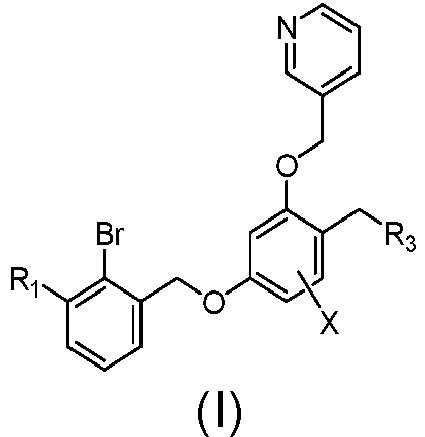


- Preferable are nicotinyl alcohol ether derivatives, stereoisomers thereof and pharmaceutically acceptable salts thereof, wherein the compound is represented by formula (IA):


- Preferable are nicotinyl alcohol ether derivatives, stereoisomers thereof and pharmaceutically acceptable salts thereof, wherein the compound is represented by formula (IA-1):

R3 is selected from substituted C1-C8 saturated alkylamino, substituted C2-C6 unsaturated alkylamino, substituted N-containing C2-C6 heterocycle-1-yl, wherein each is mono-, di-, tri-, or tetra-substituted with substituent(s) selected from fluorine, chlorine, bromine, iodine, hydroxy, C1-C5 alkyl, C1-C5 alkoxy, amino, C1-C6 alkylamino, acetylamino, cyano, ureido (-NH(C=O)NH2), guanidino (-NH(C=NH)NH2), ureido amino (-NH-NH(C=O)NH2), guanidino amino (-NH-NH(C=NH)NH2), sulfonylamino (-NHSO3H), sulfamoyl (-SO2NH2), methanesulfonylamino (-NH-SO2CH3), hydroxyformyl (-COOH), C1-C8 alkoxyl carbonyl, sulfydryl, imidazolyl, thiazolyl, oxazolyl, tetrazolyl,

- Preferable are nicotinyl alcohol ether derivatives, stereoisomers thereof and pharmaceutically acceptable salts thereof, wherein the compound is represented by formula (IA-2):

R3 is selected from substituted C1-C8 saturated alkylamino, substituted C2-C6 unsaturated alkylamino, substituted N-containing C2-C6 heterocycle-1-yl, wherein each is mono-, di-, tri-, or tetra-substituted with substituent(s) selected from fluorine, chlorine, bromine, iodine, hydroxy, C1-C5 alkyl, C1-C5 alkoxy, amino, C1-C6 alkylamino, acetylamino, cyano, ureido (-NH(C=O)NH2), guanidino (-NH(C=NH)NH2), ureido amino (-NH-NH(C=O)NH2), guanidino amino (-NH-NH(C=NH)NH2), sulfonylamino (-NHSO3H), sulfamoyl (-SO2NH2), methanesulfonylamino (-NH-SO2CH3), hydroxyformyl (-COOH), C1-C8 alkoxyl carbonyl, sulfydryl, imidazolyl, thiazolyl, oxazolyl, tetrazolyl,

- Preferable are nicotinyl alcohol ether derivatives, stereoisomers thereof and pharmaceutically acceptable salts thereof, wherein the compound is represented in the above formulae, wherein R3 is selected from:



X is selected from hydrogen, fluorine, chlorine, bromine, methyl, ethenyl, and trifluoromethyl. - Most preferable compounds are selected from the following:
- Ethyl N-(4-(2-bromo-3-phenylbenzyloxy)-5-chloro-2-(pyridin-3-yl-methyleneoxy)benzyl) serinate dihydrochloride

- N-(4-(2-bromo-3-phenylbenzyloxy)-5-chloro-2-(pyridin-3-yl-methyleneoxy)benzyl) serine

- (S)-Ethyl N-(4-(2-bromo-3-phenylbenzyloxy)-5-chloro-2-(pyridin-3-yl-methyleneoxy)benzyl) serinate

- (S)-N-(4-(2-bromo-3-phenylbenzyloxy)-5-chloro-2-(pyridin-3-yl-methyleneoxy) benzyl) serine

- (S)-Ethyl N-(4-(2-bromo-3-phenylbenzyloxy)-5-chloro-2-(pyridin-3-yl-methyleneoxy)benzyl) serinate dihydrochloride

- (S)-isopropyl N-(4-(2-bromo-3-phenylbenzyloxy)-5-chloro-2-(pyridin-3-yl-methyleneoxy)benzyl) serinate dihydrochloride

- (R)-Ethyl N-(4-(2-bromo-3-phenylbenzyloxy)-5-chloro-2-(pyridin-3-yl-methyleneoxy)benzyl) serinate

- (R)-N-(4-(2-bromo-3-phenylbenzyloxy)-5-chloro-2-(pyridin-3-yl-methyleneoxy) benzyl) serine

- N-(4-(2-bromo-3-phenylbenzyloxy)-5-chloro-2-(pyridin-3-yl-methyleneoxy)benzyl) glycine

- N-(4-(2-bromo-3-phenylbenzyloxy)-5-chloro-2-(pyridin-3-yl-methyleneoxy)benzyl) valine

- (E)-3-(4-(2-bromo-3-phenylbenzyloxy)-5-chloro-2-(pyridin-3-yl-methyleneoxy) benzylamino) but-2-enenitrile

- N, N-bis(hydroxyethyl)-4-(2-bromo-3-phenylbenzyloxy)-5-chloro-2-(pyridin-3-yl-methyleneoxy) benzylamine

- N-(2-methanesulfonaminoethyl)-4-(2-bromo-3-phenylbenzyloxy)-5-chloro-2-(pyridin-3-yl-methyleneoxy) benzylamine

- N-(2-acetylaminoethyl)-4-(2-bromo-3-phenylbenzyloxy)-5-chloro-2-(pyridin-3-yl-methyleneoxy) benzylamine

- (E)-3-(4-(2-bromo-3-phenylbenzyloxy)-5-chloro-2-(pyridin-3-yl-methyleneoxy) benzylamino) but-2-enoic acid

- N-(4-(2-bromo-3-phenylbenzyloxy)-5-chloro-2-(pyridin-3-yl-methyleneoxy)benzyl) leucine

- N-(4-(2-bromo-3-phenylbenzyloxy)-5-chloro-2-(pyridin-3-yl-methyleneoxy)benzyl) isoleucine

- N-(hydroxyethyl)-4-(2-bromo-3-phenylbenzyloxy)-5-chloro-2-(pyridin-3-yl-methyleneoxy) benzylamine

- N-(4-(2-bromo-3-phenylbenzyloxy)-5-chloro-2-(pyridin-3-yl-methyleneoxy)benzyl) alanine

- N-(4-(2-bromo-3-phenylbenzyloxy)-5-chloro-2-(pyridin-3-yl-methyleneoxy)benzyl) proline

- (S)-Sodium N-(4-(2-bromo-3-phenylbenzyloxy)-5-chloro-2-(pyridin-3-yl-methyleneoxy)benzyl) serinate

- (S)-Calcium N-(4-(2-bromo-3-phenylbenzyloxy)-5-chloro-2-(pyridin-3-yl-methyleneoxy)benzyl) serinate

- (S)-(5-methyl-2-oxo-1,3-dioxol-4-yl)methyl N-(4-(2-bromo-3-phenylbenzyloxy)-5-chloro-2-(pyridin-3-yl-methyleneoxy)benzyl) serinate

- The pharmaceutically acceptable salt of the nicotinyl alcohol ether derivative of the above formulae may comprise a salt formed with an inorganic acid, a salt formed with an organic acid salt, alkali metal ion salt, alkaline earth metal ion salt or a salt formed with organic base which provides a physiologically acceptable cation, and an ammonium salt.
- Said inorganic acid may be selected from hydrochloric acid, hydrobromic acid, phosphoric acid or sulfuric acid; said organic acid may be selected from methanesulfonic acid, p-toluenesulfonic acid, trifluoroacetic acid, citric acid, maleic acid, tartaric acid, fumaric acid, citric acid or lactic acid; said alkali metal ion may be selected from lithium ion, sodium ion, potassium ion; said alkaline earth metal ion may be selected from calcium ion, magnesium ion; said organic base, which provides physiologically acceptable cation, may be selected from methylamine, dimethylamine, trimethylamine, piperidine, morpholine or tris(2-hydroxyethyl)amine.
- Another aspect of the invention, as defined in claim 9, provides a nicotinyl alcohol ether derivative, or a pharmaceutically acceptable salt, or a stereoisomer thereof, wherein the nicotinyl alcohol ether derivative is selected from:
- 2-(4-(2-bromo-3-phenylbenzyloxy)-5-chloro-2-(pyridin-3-yl-methyleneoxy) benzylamino) ethanesulfonic acid:
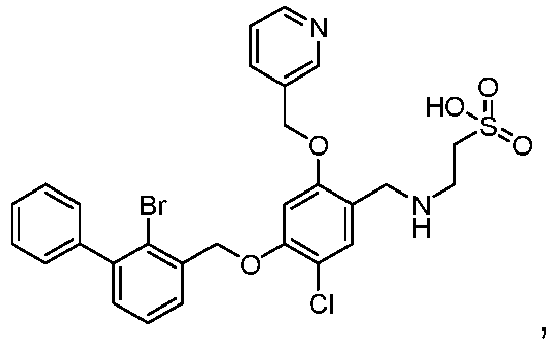
- N-(4-(2-bromo-3-phenylbenzyloxy)-5-chloro-2-(pyridin-3-yl-methyleneoxy)benzyl) tyrosine

- N-(4-(2-bromo-3-phenylbenzyloxy)-5-chloro-2-(pyridin-3-yl-methyleneoxy) benzyl) asparagine

- The third aspect of the present invention provides a process, as defined in
claim 10, for preparing the compounds of the first aspect. - In an example, the process for the preparation of the compounds of the formula (I), according to its structure, is divided into five steps.

- (a) 2-bromo-3-
iodotoluene 1 and benzene boronic acid or substituted benzene boronic acid or boric acid ester of benzene or substituted benzene as starting materials are reacted via Suzuki coupling reaction to obtainIntermediate compound 2; - (b) intermediate 2 as a starting material is subjected to bromination of the methyl group by a bromination reagent to give the bromo intermediate 3;
- (c) intermediate 3 as a starting material is reacted with 2,4-dihydroxy-X-substituted benzaldehyde under basic conditions to obtain benzyl aryl ether intermediate 4;
- (d) intermediate 4 as a starting material is reacted with pyridin-3-yl-methylene halide under basic conditions to give
intermediate compound 5; - (e) an aldehyde group-containing
intermediate compound 5 as a starting material is condensed with an amino group- or an imino group-containing HR3 and the resultant product is reduced to obtain the target compound I. - In addition, the starting materials and intermediates in the above reaction are obtained easily, and each step of the reaction can be performed easily according to the reported literature or by a skilled worker in the art by a conventional method in organic synthesis. The compound of formula I may exist in solvated or unsolvated forms, and crystallization from different solvents may result in different solvates. The pharmaceutically acceptable salts of the formula (I) include different acid addition salts, such as the acid addition salts of the following inorganic or organic acids: hydrochloric acid, hydrobromic acid, phosphoric acid, sulfuric acid, methanesulfonic acid, p-toluenesulfonic acid, Trifluoroacetic acid, citric acid, maleic acid, tartaric acid, fumaric acid, citric acid, lactic acid. The pharmaceutically acceptable salts of formula I also include various alkali metal salts such as lithium, sodium, potassium salts; various alkaline-earth metal salts such as calcium, magnesium salts and ammonium salts; and various organic base salts which provide physiologically acceptable cations, such as methylamine, dimethylamine, trimethylamine, piperidine, morpholine salts and tris(2-hydroxyethyl)amine salts. All of these salts within the scope of the invention can be prepared by conventional methods. During the preparation of the compounds of the formula (I) and their solvates or salts, polycrystalline or eutectic may occur under different crystallization conditions.
- The fourth aspect of the present invention provides a pharmaceutical composition as defined in claim 11, comprising the nicotinyl alcohol ether derivative of the first aspect of the present invention, or a stereoisomer or pharmaceutically acceptable salt thereof, as an active ingredient, and one or more pharmaceutically acceptable carriers or excipients.
- The invention further relates to a pharmaceutical composition comprising a compound of the invention as an active ingredient. The pharmaceutical composition can be prepared according to methods well known in the art. Any dosage form suitable for human or animal use can be prepared by combining a compound of the invention with one or more pharmaceutically acceptable excipients and/or adjuvants in solid or liquid. The content of the compound of the present invention in its pharmaceutical composition is usually from 0.1 to 95 % by weight.
- The compound of the present invention or the pharmaceutical composition containing the same can be administered in a unit dosage form, via enteral or parenteral route, such as oral, intravenous, intramuscular, subcutaneous, nasal, oral mucosa, eye, lung and the respiratory tract, skin, vagina, rectum, etc.
- The dosage form can be a liquid dosage form, a solid dosage form or a semi-solid dosage form. Liquid dosage forms can be solution (including true solution and colloidal solution), emulsion (including o/w type, w/o type and double emulsion), suspension, injection (including water injection, powder injection and infusion), eye drops, nasal drops, lotions, liniments, etc.; solid dosage forms may be tablets (including ordinary tablets, enteric tablets, lozenges, dispersible tablets, chewable tablets, effervescent tablets, orally disintegrating tablets), capsules ( including hard capsules, soft capsules, enteric capsules), granules, powders, pellets, dropping pills, suppositories, films, patches, gas (powder) sprays, sprays, etc.; semi-solid dosage forms can be ointments, gel, paste, etc.
- The compounds of the present invention can be formulated into common preparations, as well as sustained release preparations, controlled release preparations, targeted preparations, and various microparticle delivery systems.
- In order to form tablets of the compound of the present invention into, various excipients known in the art, including diluents, binders, wetting agents, disintegrating agents, lubricants, and glidants, can be used widely. The diluent may be starch, dextrin, sucrose, glucose, lactose, mannitol, sorbitol, xylitol, microcrystalline cellulose, calcium sulfate, calcium hydrogen phosphate, calcium carbonate, etc.; the wetting agent may be water, ethanol, or isopropanol, etc.; the binder may be starch syrup, dextrin, syrup, honey, glucose solution, microcrystalline cellulose, acacia mucilage, gelatine, sodium carboxymethyl cellulose, methyl cellulose, hydroxypropylmethyl cellulose, ethyl cellulose, acrylic resin, carbomer, polyvinylpyrrolidone, polyethylene glycol, etc.; disintegrants can be dry starch, microcrystalline cellulose, low-substituted hydroxypropyl cellulose, cross-linked poly vinyl pyrrolidone, croscarmellose sodium, sodium carboxymethyl starch, sodium hydrogencarbonate and citric acid, polyoxyethylene sorbitan fatty acid ester, sodium dodecyl sulfonate, etc.; lubricant and glidant may be talc, silica, stearate, tartaric acid, liquid paraffin, polyethylene glycol, etc.
- Tablets may also be further formulated into coated tablets such as sugar coated tablets, film-coated tablets, enteric coated tablets, or bilayer tablets and multilayer tablets.
- In order to prepare the dose unit as a capsule, the active ingredient compound of the present invention may be mixed with a diluent, a glidant, and the mixture may be directly placed in a hard capsule or a soft capsule. The active ingredient can also be formulated into a granule or pellet with a diluent, a binder, a disintegrant, and then placed in a hard or soft capsule. Various diluents, binders, wetting agents, disintegrating agents and glidants for preparing the tablets of the compound of the invention can also be used to prepare the capsules of the compound of the invention.
- In order to prepare the compound of the present invention as an injection, water, ethanol, isopropanol, propylene glycol or their mixture may be used as a solvent. In addition, an appropriate amount of a solubilizing agent, a co-solvent, a pH adjusting agent, and an osmotic pressure adjusting agent which are commonly used in the art can be added. The solubilizing agent or co-solvent may be poloxamer, lecithin, hydroxypropyl-β-cyclodextrin, etc.; the pH adjusting agent may be phosphate, acetate, hydrochloric acid, sodium hydroxide, etc.; osmotic pressure regulating agent may be sodium chloride, mannitol, glucose, phosphate, acetate, etc. For preparing a lyophilized powder injection, mannitol, glucose and so on may also be added as a proppant.
- In addition, coloring agents, preservatives, perfumes, flavoring agents or other additives may also be added to the pharmaceutical preparations as needed.
- The compound or pharmaceutical composition of the present invention can be administered by any known administration method for the purpose of administration and enhancing the therapeutic effect.
- The dosage of the compound or the pharmaceutical composition of the present invention can be administered in a wide range depending on the nature and severity of the disease to be prevented or treated, the individual condition of the patient or animal, the route of administration and the dosage form, etc. In general, a suitable daily dose of the compound of the invention will range from 0.001 to 150 mg/kg body weight, preferably from 0.01 to 100 mg/kg body weight. The above dosages may be administered in a single dosage unit or in divided dose units depending on the clinical experience of the physician and the dosage regimen including the use of other therapeutic means.
- The compounds or compositions of the invention may be administered alone or in combination with other therapeutic or symptomatic agents. When the compound of the present invention synergizes with other therapeutic agents, its dosage should be adjusted according to the actual situation.
- The fifth aspect of the present invention, as defined in
claim 12, provides the nicotinyl alcohol ether derivative, or a stereoisomer thereof, or a pharmaceutically acceptable salt thereof, for use in preventing and/or treating a disease associated with the PD-1/PD-L1 signaling pathway. - The disease associated with the PD-1/PD-L1 signaling pathway may be selected from cancer, infectious diseases, and autoimmune diseases. The cancer may be selected from skin cancer, lung cancer, urinary tumor, hematological tumor, breast cancer, glioma, digestive system tumor, reproductive system tumor, lymphoma, nervous system tumor, brain tumor, head and neck cancer. The infectious disease may be selected from bacterial infection and viral infection. The autoimmune disease may be selected from organ-specific autoimmune disease, systemic autoimmune disease, wherein the organ-specific autoimmune disease includes chronic lymphocytic thyroiditis, hyperthyroidism, insulin-dependent diabetes mellitus, myasthenia gravis, ulcerative colitis, malignant anemia with chronic atrophic gastritis, pulmonary hemorrhagic nephritis syndrome, primary biliary cirrhosis, multiple cerebrospinal sclerosis, and acute idiopathic polyneuritis. Systemic autoimmune diseases include rheumatoid arthritis, systemic lupus erythematosus, systemic vasculitis, scleroderma, pemphigus, dermatomyositis, mixed connective tissue disease, autoimmune hemolytic anemia.
- The compounds of the present invention have high inhibitory activity on PD-1/PD-L1 interaction, much higher than the reported compounds. They have strong ability of binding PD-L1 protein, and the kD value of affinity can reach 2.025E-11, even stronger than the reported antibodies of PD-L1. These compounds also have the ability to relieve the inhibition of IFN-γ by PD-L1, whose IC50 value can reach 1.8 × 10⁻¹⁰ mol/L level. The pharmacodynamic studies in vivo show that the compounds can significantly inhibit the growth of subcutaneous tumors in both tumor volume and weight. The number of lymphocytes in blood and spleen of mice can be increased obviously.
- The invention is further illustrated by the following examples; however, the invention is not limited by the illustrative examples set herein below.
- Measuring instrument: Nuclear magnetic resonance spectroscopy was carried out by using a Varian Mercury 300 nuclear magnetic resonance apparatus.
- Mass spectrometry was performed by using ZAD-2F mass spectrometer and VG300 mass spectrometer.
-

- 2-Bromo-3-methyl-1, 1'-biphenyl:
To a 100ml flask were added 2-bromo-3-iodotoluene (700mg) and dioxane/water (volume ratio 5/1) with stirring. The solution was bubbled with argon for 10 min to remove dissolved oxygen. Then, phenylboronic acid (350 mg), cesium carbonate (1800 mg), and triphenylphosphine palladium (80 mg) were sequentially added. The mixture was stirred for 12h at 80-100 °C under argon protection. The reaction was stopped. After cooling to room temperature, the mixture was filtered with diatomaceous earth. The filtrate was concentrated under reduced pressure and extracted with water and ethyl acetate for three times. The organic phase was combined, washed with saturated brine, and dried over anhydrous sodium sulfate. The organic layer was filtered and evaporated under reduced pressure to dryness to afford 2-bromo-3-methyl-1, 1'-biphenyl as colorless oil (480mg). 1H NMR (400 MHz, DMSO-d 6), δ 7.49 - 7.29 (m, 7H, Ar-H), 7.14 (d, 1H, Ar-H), 2.42 (s, 3H, ArCH3). MS (FAB): 248 (M+1). - 2-Bromo-3-(bromomethyl)-1,1'-biphenyl:
2-Bromo-3-methyl-1,1'-biphenyl (450mg) as a starting material was weighed and was dissolved in 40ml of CCl4 in a 100ml flask. To this solution was added NBS (360mg) while stirring. And the mixture was warmed to 80 °C and refluxed. Then benzoyl peroxide (8 mg) was added, and after 2 h, benzoyl peroxide (8 mg) was added again, and the reaction was continued for another 2 h. The reaction was stopped. After cooling to room temperature, the mixture was quenched with water, extracted with dichloromethane and water. The organic phase was washed with saturated brine, and dried over anhydrous sodium sulfate. The organic layer was filtered and evaporated under reduced pressure to dryness to afford 2-bromo-3-(bromomethyl)-1, 1'-biphenyl as yellow oil (380mg), which was used for the next step without further purification. - 4-(2-bromo-3-phenylbenzyloxy)-5-chloro-2-hydroxybenzaldehyde:
5-chloro-2, 4-dihydroxybenzaldehyde (160mg) was weighed and dissolved in 12ml of anhydrous acetonitrile in a 50ml flask, and sodium hydrogen carbonate (200 mg) was added. After stirring at room temperature for 40 min, 2-bromo-3-phenylbenzyl bromide (380 mg, dissolved in 16 ml of DMF) was slowly added dropwise to the reaction mixture via a constant pressure dropping funnel, and heated to reflux until the reaction was completed. After cooling to room temperature, the mixture was extracted with water and ethyl acetate. The organic phase was washed with saturated brine, and dried over anhydrous sodium sulfate, then filtrated and evaporated under reduced pressure to dryness. The crude residue was purified by silica gel column chromatography to afford 4-(2-bromo-3-phenylbenzyloxy)-5-chloro-2-hydroxy benzaldehyde (300mg) as a white solid. 1H NMR (400 MHz, DMSO-d 6) δ 10.99 (s, 1H, -OH), 10.03 (s, 1H, -CHO), 7.64 (d, 1H, Ar-H), 7.57 (d, 1H, Ar-H), 7.45 (m, 4H, Ar-H), 7.37 (d, 2H, Ar-H), 6.67 (d, 1H, Ar-H), 6.59 (s, 1H, Ar-H), 5.25 (s, 2H, -CH2-). MS (FAB): 418(M+1). - 4-(2-bromo-3-phenylbenzyloxy)-5-chloro-2-(pyridin-3-yl-methyleneoxy) benzaldehyde:
4-(2-bromo-3-phenylbenzyloxy)-5-chloro-2-hydroxybenzaldehyde (100 mg) was dissolved in 6 ml of DMF in a 50ml flask, and then cesium carbonate (127.53 mg) was added. After stirring at room temperature for 15 min, a solution of 3-bromomethylenepyridine (76.65 mg) in DMF (4 ml) was added dropwise. After the mixture was stirred at 80 °C for 2 h, the reaction was stopped. After cooling to room temperature, the mixture was extracted with water and ethyl acetate. The organic phase was washed with saturated brine, and dried over anhydrous sodium sulfate, then filtrated and evaporated under reduced pressure to dryness. The crude residue was purified by silica gel column chromatography to afford a white solid (70mg). 1H NMR (400 MHz, DMSO-d 6) δ 10.26 (s, 1H, -CHO), 8.00 (s, 1H, Ar-H), 7.83 (dd, 2H, Ar-H), 7.72 (d, 1H, Ar-H), 7.61 (t, 2H, Ar-H), 7.55 - 7.23 (m, 6H, Ar-H), 6.95 (s, 1H, Ar-H), 6.81 (d, 1H, Ar-H), 5.35 (s, 2H, -CH2-), 5.30 (s, 2H, -CH2-). MS (FAB): 510 (M+1). - Ethyl N-(4-(2-bromo-3-phenylbenzyloxy)-5-chloro-2-(pyridin-3-yl-methyleneoxy)benzyl) serinate dihydrochloride:
4-(2-bromo-3-phenylbenzyloxy)-5-chloro-2-(pyridin-3-yl-methyleneoxy)benzaldehyde (80 mg) was dissolved in 5 ml of DMF, and then racemic ethyl ester of serine (59 mg) and acetic acid glacial (57mg) were added. After stirring at room temperature for 20 min, sodium cyanoborohydride (25 mg) was added and the mixture was stirred at 25 °C for 14 h. The reaction was stopped. The mixture was extracted with water and ethyl acetate. The organic phase was washed with saturated brine, and dried over anhydrous sodium sulfate, then filtrated and evaporated under reduced pressure to dryness. The residue was dissolved in ethanol, heated to reflux until the reaction was complete. The mixture was evaporated to dryness. The crude residue was purified by silica gel column chromatography to afford ethyl N-(4-(2-bromo-3-phenylbenzyloxy)- 5-chloro-2-(pyridin-3-yl-methyleneoxy)benzyl) serinate (60mg) as yellow oil. The product was then reacted with a solution of hydrogen chloride in ethanol to afford N-(4-(2-bromo-3-phenylbenzyloxy)-5-chloro-2-(pyridin-3-yl-methyleneoxy)benzyl)serinate dihydrochloride as a white solid. 1H NMR (400 MHz, DMSO-d6) δ 9.65 (s, 1H, -HCI), 9.41 (s, 1H, -HCI), 9.06 (s, 1H, -ArH), 8.88 - 8.76 (m, 1H, -ArH), 8.56 (d, J = 7.9 Hz, 1H, -ArH), 8.01 - 7.86 (m, 1H, -ArH), 7.64 (d, J = 13.4 Hz, 2H, -ArH), 7.56 - 7.30 (m, 7H, -ArH), 7.12 (s, 1H, -ArH), 5.42 (s, 2H, -CH2-), 5.32 (s, 2H, -CH2-), 4.18 (s, 2H, -CH2-), 4.13 - 4.07 (m, 1H, - CH-), 4.04 (m, 2H, -CH2-), 3.94 (dd, 1H, -CH2-), 3.82 (dd, 1H, -CH2-), 1.15 (t, J = 7.1 Hz, 3H, -CH3). MS (FAB): 626 (M). -

- Ethyl N-(4-(2-bromo-3-phenylbenzyloxy)-5-chloro-2-(pyridin-3-yl-methyleneoxy)benzyl) serinate as pale yellow oil (60mg) was dissolved in methanol/H2O (4ml/1ml), and then lithium hydroxide monohydrate (20mg) was added. After stirring at room temperature for 2 h, a few drops of acetic acid were added to the mixture in an ice bath to adjust the pH to acidity. The mixture was filtrated under reduced pressure to afford N-(4-(2-bromo-3-phenylbenzyloxy)-5-chloro-2-(pyridin-3-yl-methyleneoxy)benzyl) serine (45mg) as a white solid. 1H NMR (400 MHz, DMSO-d 6) δ 8.73 (s, 1H, -ArH), 8.55 (d, 1H, -ArH), 7.97 (d, 1H, -ArH), 7.65 (d, 1H, -ArH), 7.54 - 7.51 (m, 2H, -ArH), 7.47 (d, 2H, -ArH), 7.44 (d1H, -ArH), 7.42-7.40 (m, 2H, -ArH), 7.39 - 7.36 (m, 2H, -ArH), 7.11 (s, 1H, -ArH), 5.32 (s, 2H, -CH2-), 5.28 (m, 2H, -CH2-), 3.94 (s, 2H, -CH2-), 3.69 (dd, 1H, -CH2-), 3.62 (dd, 1H, -CH2-), 3.16 (t, 1H, -CH-). MS (FAB): 599 (M+1).
-

- The procedure was the same as in Example 1, except that ethyl ester of L-serine was used in place of racemic ethyl ester of serine to afford (S)-Ethyl N-(4-(2-bromo-3-phenylbenzyloxy)-5-chloro-2-(pyridin-3-yl-methyleneoxy)benzyl) serinate as a white solid. 1H NMR (400 MHz, DMSO-d 6) δ 8.68 (d, J = 2.1 Hz, 1H, -ArH), 8.55 (dd, J = 4.8, 1.7 Hz, 1H, -ArH), 7.88 (d, J = 7.9 Hz, 1H, -ArH), 7.65 (dd, J = 7.6, 1.7 Hz, 1H, -ArH), 7.54 - 7.45 (m, 3H, -ArH), 7.45 - 7.35 (m, 6H, - ArH), 7.06 (s, 1H, -ArH), 5.30 (s, 2H, -CH2-), 5.24 (s, 2H, -CH2-), 4.81 (t, J = 5.8 Hz, 1H, -CH-), 3.99 (q, J = 7.1 Hz, 2H, -CH2-), 3.74 - 3.57 (m, 2H, -CH2-), 3.54 (t, J = 5.6 Hz, 2H, -CH2-), 1.12 (t, J = 7.1 Hz, 3H, -CH3). MS (FAB): 626 (M).
-

- The procedure was the same as in Example 2, except that (S)-Ethyl N-(4-(2-bromo-3-phenylbenzyloxy)-5-chloro-2-(pyridin-3-yl-methyleneoxy)benzyl)serinate was used in place of racemic Ethyl N-(4-(2-bromo-3- phenylbenzyloxy)-5-chloro-2-(pyridin-3-yl-methyleneoxy)benzyl) serinate to afford (S)-N-(4-(2-bromo-3-phenylbenzyloxy)-5-chloro-2-(pyridin-3-yl-methyleneoxy)benzyl) serine as a white solid. 1H NMR (400 MHz, DMSO-d 6) δ 8.73 (s, 1H, -ArH), 8.55 (d, J = 4.7 Hz, 1H, -ArH), 7.97 (d, J = 7.9 Hz, 1H, -ArH), 7.65 (d, J = 8.7 Hz, 1H, -ArH), 7.54 - 7.51 (m, 2H, -ArH), 7.47 (d, J = 7.7 Hz, 2H, -ArH), 7.44 (d, J = 1.7 Hz, 1H, -ArH), 7.42-7.40 (m, 2H, -ArH), 7.39 - 7.36 (m, 2H, -ArH), 7.11 (s, 1H, -ArH), 5.32 (s, 2H, -CH2-), 5.28 (m, 2H, -CH2-), 3.94 (s, 2H, - CH2-), 3.69 (dd, J = 11.1, 4.7 Hz, 1H, -CH2-), 3.62 (dd, J = 11.1, 6.2 Hz, 1H, -CH2- ), 3.16 (t, J = 5.4 Hz, 1H, -CH-). MS (FAB): 599 (M+1). [α]27 D=-1.84 (C=0.434, DMSO).
-

- (S)-N-(4-(2-bromo-3-phenylbenzyloxy)-5-chloro-2-(pyridin-3-yl-methyleneoxy) benzyl) serine (598mg) and 60ml of anhydrous ethanol were placed in a 100ml round-bottom flask. To the mixture were added 6ml of dichlorosulfoxide and two drops of DMF with stirring in an ice water bath. And after the mixture was stirred at room temperature for 2h it was heated to reflux until the reaction was completed. The mixture was concentrated under reduced pressure to remove the solvent and afford (S)-ethyl N-(4-(2-bromo-3-phenylbenzyloxy)-5-chloro-2-(pyridin-3-yl-methyleneoxy)benzyl) serinate dihydrochloride as a white solid. 1H NMR (400 MHz, DMSO-d6) δ 9.65 (s, 1H, -HCI), 9.41 (s, 1H, -HCI), 9.06 (s, 1H, -ArH), 8.88 - 8.76 (m, 1H, -ArH), 8.56 (d, J = 7.9 Hz, 1H, -ArH), 8.01 - 7.86 (m, 1H, -ArH), 7.64 (d, J = 13.4 Hz, 2H, -ArH), 7.56 - 7.30 (m, 7H, -ArH), 7.12 (s, 1H, -ArH), 5.42 (s, 2H, -CH2-), 5.32 (s, 2H, -CH2-), 4.18 (s, 2H, -CH2-), 4.13 - 4.07 (m, 1H, -CH-), 4.04 (m, 2H, -CH2-), 3.94 (dd, J = 12.1, 2.9 Hz, 1H, -CH2-), 3.82 (dd, J = 12.1, 3.8 Hz, 1H, -CH2-), 1.15 (t, J = 7.1 Hz, 3H, -CH3). MS (FAB): 626 (M). [α]27 D=-1.90 (C=0.422, ethanol).
-

- (S)-N-(4-(2-bromo-3-phenylbenzyloxy)-5-chloro-2-(pyridin-3-yl-methyleneoxy) benzyl) serine (598mg) and 60ml of anhydrous isopropanol were placed in a 100ml round-bottom flask. To the mixture were added 6ml of dichlorosulfoxide and two drops of DMF with stirring in an ice water bath. And after the mixture was stirred at room temperature for 2h it was heated to reflux until the reaction was completed. The mixture was concentrated under reduced pressure to remove the solvent and afford (S)-isopropyl N-(4-(2-bromo-3-phenylbenzyloxy)-5-chloro-2-(pyridin-3-yl-methyleneoxy)benzyl) serinate dihydrochloride as a white solid. 1H NMR (400 MHz, DMSO-d 6) δ 9.62 (s, 1H, -HCI), 9.40 (s, 1H, -HCI), 9.10 (s, 1H, - ArH), 8.86 (d, 1H, -ArH), 8.59 (d, J = 7.6 Hz, 1H, -ArH), 8.01 - 7.91 (m, 1H, -ArH), 7.73 - 7.64 (m, 2H, -ArH), 7.57 - 7.46 (m, 3H, -ArH), 7.46 - 7.37 (m, 4H, -ArH), 7.16 (s, 1H, -ArH), 5.47 (s, 2H, -CH2-), 5.36 (s, 2H, -CH2-), 4.92 (m1H, -CH-), 4.30 - 4.15 (m, 2H, -CH2-), 4.05 (s, 1H, -CH-), 3.97 (dd, J = 12.0, 3.0 Hz, 1H, -CH2-), 3.84 (dd, J = 12.0, 3.8 Hz, 1H, -CH2-), 1.20 (d, J = 6.4Hz, 3H, -CH3), 1.18 (d, J = 6.4 Hz, 3H, -CH3).MS (FAB): 640 (M).[α]27 D=-5.33(C=0.075, methanol).
-

- The procedure was the same as in Example 1, except that ethyl ester of D-serine was used in place of racemic ethyl ester of serine to afford (R)-ethyl N-(4-(2-bromo-3-phenylbenzyloxy)-5-chloro-2-(pyridin-3-yl-methyleneoxy)benzyl) serinate as a white solid. 1H NMR (400 MHz, DMSO-d 6) δ 8.68 (d, 1H, -ArH), 8.55 (dd, 1H, -ArH), 7.88 (d, 1H, -ArH), 7.65 (dd, J = 7.6, 1.7 Hz, 1H, -ArH), 7.54 - 7.45 (m, 3H, -ArH), 7.45 - 7.35 (m, 6H, -ArH), 7.06 (s, 1H, -ArH), 5.30 (s, 2H, - CH2-), 5.24 (s, 2H, -CH2-), 4.81 (t, J = 5.8 Hz, 1H, -CH-), 3.99 (q, J = 7.1 Hz, 2H, -CH2-), 3.74 - 3.57 (m, 2H, -CH2-), 3.54 (t, 2H, -CH2-), 1.12 (t, J = 7.1 Hz, 3H, - CH3). MS (FAB): 626 (M).
-

- The procedure was the same as in Example 2, except that (R)-ethyl N-(4-(2-bromo-3-phenylbenzyloxy)-5-chloro-2-(pyridin-3-yl-methyleneoxy)benzyl) serinate was used in place of racemic ethyl N-(4-(2-bromo-3- phenylbenzyloxy)-5-chloro-2-(pyridin-3-yl-methyleneoxy)benzyl) serinate to afford (R)-N-(4-(2-bromo-3-phenylbenzyloxy)-5-chloro-2-(pyridin-3-yl-methyleneoxy) benzyl)serine as a white solid. 1H NMR (400 MHz, DMSO-d 6) δ 8.73 (s, 1H, -ArH), 8.55 (d, J = 4.7 Hz, 1H, -ArH), 7.97 (d, J = 7.9 Hz, 1H, -ArH), 7.65 (d, J = 8.7 Hz, 1H, -ArH), 7.54 - 7.51 (m, 2H, -ArH), 7.47 (d, J = 7.7 Hz, 2H, -ArH), 7.44 (d, J = 1.7 Hz, 1H, -ArH), 7.42-7.40 (m, 2H, -ArH), 7.39 - 7.36 (m, 2H, -ArH), 7.11 (s, 1H, -ArH), 5.32 (s, 2H, -CH2-), 5.28 (m, 2H, -CH2-), 3.94 (s, 2H, -CH2-), 3.69 (dd, J = 11.1, 4.7 Hz, 1H, -CH2-), 3.62 (dd, J = 11.1, 6.2 Hz, 1H, -CH2-), 3.16 (t, J = 5.4 Hz, 1H, -CH-). MS (FAB): 599 (M+1). [α]
-

- The procedure was the same as in Example 1, except that 4-(2-chloro-3-phenylbenzyloxy)-5-chloro-(pyridin-3-yl-methyleneoxy) benzaldehyde was used in place of 4-(2-bromo-3-phenylbenzyloxy)-5-chloro-2-(pyridin-3-yl-methyleneoxy) benzaldehyde, and ethyl ester of L-serine was used in place of racemic ethyl ester of serine to afford (S)-ethyl N-(4-(2-chloro-3-phenylbenzyloxy)- 5-chloro-2-(pyridin-3-yl-methyleneoxy)benzyl)serinate.
- The procedure was the same as in Example 2, except that (S)-ethyl N-(4-(2-chloro-3-phenylbenzyloxy)-5-chloro-2-(pyridin-3-yl-methyleneoxy)benzyl) serinate was used in place of ethyl N-(4-(2-bromo-3-phenylbenzyloxy)-5-chloro-2-(pyridin-3-yl-methyleneoxy)benzyl) serinate to afford (S)-N-(4-(2-chloro-3-phenylbenzyloxy)-5-chloro-2-(pyridin-3-yl-methyleneoxy) benzyl) serine as a white solid. 1H NMR (400 MHz, DMSO-d6) δ 8.69 (s, 1H, -ArH), 8.51 (d, J = 4.6 Hz, 1H, -ArH), 7.93 (d, J = 7.6 Hz, 1H, -ArH), 7.63 (d, J = 7.4 Hz, 1H, -ArH), 7.54 - 7.33 (m, 9H, -ArH), 7.12 (s, 1H, -ArH), 5.31 (s, 2H, -CH2-), 5.25 (m, 2H, -CH2-), 3.91 (s, 2H, -CH2-), 3.66 (dd, J = 11.0, 4.0 Hz, 1H, -CH2-), 3.59 (dd, J = 11.0, 6.0 Hz, 1H, -CH2-), 3.14 (t, J = 4.8 Hz, 1H, -CH-). MS(FAB): 554(M+1).
-

- The procedure was the same as in Example 1, except that 4-(2-fluoro-3-phenylbenzyloxy)-5-chloro-2-(pyridin-3-yl-methyleneoxy) benzaldehyde was used in place of 4-(2-bromo-3-phenylbenzyloxy)-5-chloro-2-(pyridin-3-yl-methyleneoxy) benzaldehyde, and ethyl ester of L-serine was used in place of racemic ethyl ester of serine to afford (S)-ethyl N-(4-(2-fluoro-3-phenylbenzyloxy)-5-chloro-2-(pyridin-3-yl-methyleneoxy)benzyl) serinate.
- The procedure was the same as in Example 2, except that (S)-ethyl N-(4-(2-fluoro-3-phenyl benzyloxy)-5-chloro-2-(pyridin-3-yl-methyleneoxy)benzyl) serinate was used in place of ethyl N-(4-(2-bromo-3-phenylbenzyloxy)-5-chloro-2-(pyridin-3-yl-methyleneoxy)benzyl) serinate to afford (S)-N-(4-(2-fluoro-3-phenylbenzyloxy)-5-chloro-2-(pyridin-3-yl-methyleneoxy) benzyl) serine as a white solid. 1H NMR (400 MHz, DMSO-d6) δ 8.72 (dd, J = 8.0, 1.9 Hz, 1H, -ArH), 8.56 (dd, J = 4.8, 1.5 Hz, 1H, -ArH), 7.97 (d, J = 7.9 Hz, 1H, -ArH), 7.72 - 7.30 (m, 10H, -ArH), 7.16 (d, J = 15.1 Hz, 1H, -ArH), 5.35 (d, J = 6.7 Hz, 2H, -CH2-), 5.27 (dd, J = 15.2, 3.2 Hz, 2H, -CH2-), 3.95 (s, 2H, -CH2-), 3.70 (dd, J = 11.2, 4.5 Hz, 1H, -CH2-), 3.63 (dd, J = 11.2, 6.2 Hz, 1H, -CH2-), 3.18 (t, J = 5.3 Hz, 1H, - CH-). MS(FAB): 538(M+1).
-

- The procedure was the same as in Example 1, except that 4-(3-phenylbenzyloxy)-5-chloro-2-(pyridin-3-yl-methyleneoxy)benzaldehyde was used in place of 4-(2-bromo-3-phenylbenzyl oxy)-5-chloro-2-(pyridin-3-yl-methyleneoxy)benzaldehyde, and ethyl ester of L-serine was used in place of racemic ethyl ester of serine to afford (S)-ethyl N-(4-(3-phenylbenzyloxy)-5-chloro-2-(pyridin-3-yl-methyleneoxy)benzyl) serinate.
- The procedure was the same as in Example 2, except that (S)-ethyl N-(4-(3-phenylbenzyloxy)-5-chloro-2-(pyridin-3-yl-methyleneoxy)benzyl) serinate was used in place of ethyl N-(4-(2-bromo-3- phenylbenzyloxy)-5-chloro-2-(pyridin-3-yl-methyleneoxy)benzyl) serinate to afford (S)-N-(4-(3-phenylbenzyloxy)-5-chloro-2-(pyridin-3-yl-methyleneoxy)benzyl) serine as a white solid. 1H NMR (400 MHz, DMSO-d6) δ 8.67 (s, 1H, Ar-H), 8.50 (s, 1H, Ar-H), 7.91 (d, J = 5.6 Hz, 1H, Ar-H), 7.75 (s, 1H, Ar-H), 7.61 (d, J = 13.2 Hz, 3H, Ar-H), 7.44 (d, J = 15.2 Hz, 5H, Ar-H), 7.36 (d, J = 8.4 Hz, 2H, Ar-H), 7.09 (s, 1H, Ar-H), 5.29 (s, 2H, -CH2-), 5.19 (m, 2H, -CH2-), 3.90 (s, 2H, -CH2-), 3.69-3.55 (m, 2H, -CH2-), 3.12 (m, 1H, - CH-). MS(FAB): 520(M+1).
-

- 2-Bromo-3-iodotoluene (350 mg) was placed in 50 ml flask and dioxane/water was added with stirring. And the solution was bubbled with argon for 10 min to remove the dissolved oxygen. Then, phenylboronic acid (172.65 mg), cesium carbonate (961.2 mg) and triphenylphosphine palladium (40.91 mg) were added and the resulting mixture was stirred at 80-100 °C for 12 h under protection of argon. The reaction was stopped. After cooling to room temperature, the mixture was filtered with diatomaceous earth. The filtrate was concentrated under reduced pressure and extracted with water and ethyl acetate for three times. The organic phase was combined, washed with saturated brine and dried by anhydrous Na2SO4. The solution was filtered and evaporated under reduced pressure to dryness. The residue was purified by silica gel column chromatography (petroleum ether) to give colorless oil (221 mg). 1H NMR (400 MHz, DMSO-d 6), δ 7.49 - 7.29 (m, 7H, Ar-H), 7.14 (d, 1H, Ar-H), 2.42 (s, 3H, ArCH3).
- 2-Bromo-3-phenyltoluene (234 mg) was weighed and placed in a 100 ml flask and 20 ml of CCl4 was added. After 2-Bromo-3-phenyltoluene was completely dissolved, NBS (178 mg) was added under stirring. And the resulting mixture was heated to 80 °C to reflux. Then benzoyl peroxide (4 mg) was added and another 4 mg of benzoyl peroxide was added after 2 h, and the reaction was continued for another 2 h. The reaction was stopped. The reaction was cooled to room temperature and a suitable amount of water was added and the mixture was extracted with dichloromethane. The organic phase was washed with saturated brine and dried by anhydrous Na2SO4. The solution was filtered and evaporated under reduced pressure to dryness to give yellow oil (192 mg). The material was used for the next step without further purification.
- To anhydrous acetonitrile (6ml) in 50 ml flask was added 2,4-dihydroxy- 5-chlorobenzaldehyde (73.94 mg) and sodium bicarbonate (98.88 mg). After stirring 40 min at room temperature, the solution of 2-bromo-3-(bromomethyl)-1,1'-biphenyl (192 mg) in 8 ml of DMF was slowly added dropwise to the reaction mixture via a constant pressure dropping funnel. The resulting mixture was refluxed until the reaction completed. After cooling to room temperature, the mixture was extracted with water and ethyl acetate. The organic phase was washed with saturated brine, dried over anhydrous sodium sulfate, filtered and evaporated under reduced pressure to dryness. The crude residue was purified by silica gel column chromatography to afford 2-hydroxy-4-(2-bromo-3-phenylbenzoxy)-5-chlorobenzaldehyde (152 mg) as a white solid. 1H NMR (500 MHz, DMSO-d 6) δ 11.18 (s, 1H, -OH), 10.09 (s, 1H, -CHO), 7.74 (s, 1H, -ArH), 7.66 (d, 1H, -ArH), 7.57 (t, 1H, -ArH), 7.51 (m, 2H, -ArH), 7.46 (d, 1H, -ArH), 7.42 (d, 3H, -ArH), 6.85 (s, 1H, -ArH), 5.37 (s, 2H, -CH2-).
- 2-Hydroxy-4-(2-bromo-3-phenylbenzoxy)-5-chlorobenzaldehyde (100 mg) was dissolved in 6 ml of DMF in a 50ml flask, and then cesium carbonate (127.53 mg) was added. After stirring at room temperature for 15 min, a solution of 3-bromomethyleneoxy pyridine (76.65 mg) in DMF (4 ml) was added dropwise. After the mixture was stirred at 80 °C for 2 h, the reaction was stopped. After cooling to room temperature, the mixture was extracted with water and ethyl acetate. The organic phase was washed with saturated brine, and dried over anhydrous sodium sulfate, then filtrated and evaporated under reduced pressure to dryness. The crude residue was purified by silica gel column chromatography to afford a white solid (60mg). 1H NMR (400 MHz, DMSO-d 6) δ 10.14 (s, 1H, - CHO), 8.71 (d, J = 1.6 Hz, 1H, -ArH), 8.54 (d, J = 4.8 Hz, 1H, -ArH), 7.94 (d, J = 7.8 Hz, 1H, -ArH), 7.83 (s, 1H, -ArH), 7.66 (d, J = 7.6 Hz, 1H, -ArH), 7.50 (t, J = 7.6 Hz, 1H, -ArH), 7.48 - 7.32 (m, 7H, -ArH), 7.20 (s, 1H, -ArH), 5.42 (s, 2H, - CH2-), 5.41 (s, 2H, -CH2-).
- 4-(2-bromo-3-phenylbenzoxy)-5-chloro-2-(pyridin-3-yl-methyleneoxy) benzaldehyde (80 mg) was dissolved in 5 ml of DMF, and then ethyl glycinate (49 mg, 0.472mmol) and acetic acid glacial (57mg) were added. After stirring at room temperature for 20 min, sodium cyanoborohydride (25 mg) was added and the mixture was stirred at 25 °C for 14 h. The reaction was stopped. The mixture was extracted with water and ethyl acetate. The organic phase was washed with saturated brine, and dried over anhydrous sodium sulfate, then filtrated and evaporated under reduced pressure to dryness. The residue was dissolved in ethanol, heated to reflux until the reaction was complete. The mixture was evaporated to dryness. The crude residue was purified by silica gel column chromatography to afford ethyl N-(4-(2-bromo-3-phenylbenzyloxy)-5-chloro-2-(pyridin-3-yl-methyleneoxy)benzyl) glycinate (70 mg) as yellow oil. The product was dissolved in methanol/H2O (4ml/1ml), and then lithium hydroxide monohydrate (20mg) was added. After stirring at room temperature for 2 h, a few drops of acetic acid were added to the mixture in an ice bath to adjust the pH to acidity. The mixture was filtrated under reduced pressure to afford N-(4-(2-bromo-3-phenylbenzyloxy)-5-chloro-2- (pyridin-3-yl-methyleneoxy)benzyl) glycine (45mg) as a white solid. 1H NMR (400 MHz, DMSO ) δ 8.73 (d, J = 1.7 Hz, 1H, - ArH), 8.55 (dd, J = 4.8, 1.6 Hz, 1H, DMSO), 7.96 (dt, J = 7.9, 1.9 Hz, 1H, DMSO), 7.65 (dd, J = 7.6, 1.6 Hz, 1H, -ArH), 7.55 - 7.35 (m, 9H, -ArH), 7.12 (s, 1H, -ArH), 5.33 (s, 2H, -CH2-), 5.29 (s, 2H, -CH2-), 3.91 (s, 2H, -CH2-), 3.11 (s, 2H, -CH2-). MS (FAB): 569 (M+1).
-
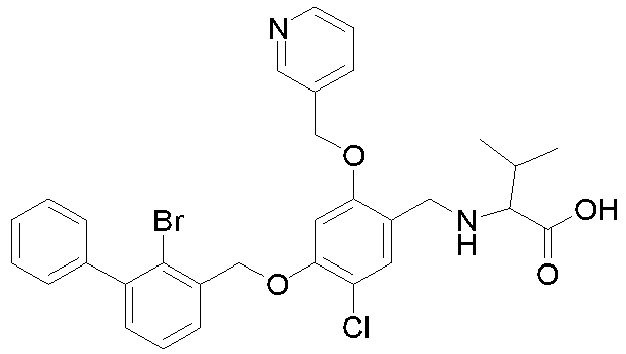
- The procedure was the same as in Example 12, except that ethyl ester of valine was used in place of ethyl ester of glycine to afford N-(4-(2-bromo-3-phenylbenzyloxy)-5-chloro-2-(pyridin-3-yl-methyleneoxy)benzyl) valine as a white solid. 1H NMR (400 MHz, DMSO) δ 8.69 (s, 1H, -ArH), 8.56 (d, J = 3.9 Hz, 1H, -ArH), 7.88 (d, J = 7.8 Hz, 1H, -ArH), 7.66 (d, J = 7.4 Hz, 1H, -ArH), 7.55 - 7.33 (m, 9H, -ArH), 7.06 (s, 1H, -ArH), 5.31 (s, 2H, -CH2-), 5.22 (d, J = 11.2 Hz, 2H, -CH2-), 3.52 (s, 2H, -CH2-), 2.91 (d, J = 6.4 Hz, 1H, -CH-), 1.80 (dq, J = 13.2, 6.5 Hz, 1H, -CH-), 0.86 (dd, J = 18.9, 6.7 Hz, 6H, -CH3). MS (FAB): 611 (M+1).
-

- The procedure was the same as in Example 12, except that (E)-3-aminobut-2-enenitrile was used in place of ethyl ester of glycine without hydrolysis to afford (E)-3-(4-(2-bromo-3-phenylbenzyloxy)-5-chloro-2-(pyridin-3-yl-methyleneoxy) benzylamino) but-2-enenitrile as a white solid. 1H NMR (400 MHz, ) δ 8.70 (s, 1H, -ArH), 8.55 (d, J = 4.2 Hz, 1H, -ArH), 7.99 - 7.81 (m, 1H, -ArH), 7.65 (d, J = 7.0 Hz, 1H, -ArH), 7.58 - 7.31 (m, 9H, -ArH), 7.11 (d, J = 33.8 Hz, 1H), 6.30 (s, 1H, =CH), 5.28 (d, J = 14.1 Hz, 4H, -CH2-), 3.27 (s, 2H, -CH2-), 2.21 - 1.96 (m, 3H). MS (FAB): 576 (M+1).
-

- The procedure was the same as in Example 12, except that bis(2-hydroxyethyl)amine was used in place of ethyl ester of glycine without hydrolysis to afford N, N-bis(2-hydroxyethyl)-4-(2-bromo-3-phenylbenzyloxy)-5-chloro-2-(pyridin-3-yl- methyleneoxy)benzylamine as a white solid. 1H NMR (400 MHz, DMSO-d6 ) δ 8.68 (s, 1H, ArH), 8.58-8.51 (m, 1H, ArH), 7.88 (d, J = 7.2 Hz, 1H, ArH), 7.65 (d, J = 7.6 Hz, 1H, ArH), 7.56-7.32 (m, 9H, ArH), 7.05 (d, J = 2.4 Hz, 1H, ArH), 5.29 (s, 2H, -OCH2-), 5.24 (s, 2H, -OCH2-), 4.35 (s, 2H, -OH), 3.58 (s, 2H, -CH2-), 3.41 (br s, 4H, -CH2-), 2.51 (m, 4H, -CH2-, overlapped in solvent peak). MS (FAB): 598 (M+1).
-

- The procedure was the same as in Example 12, except that N-(2-aminoethyl)methanesulfonamide was used in place of ethyl ester of glycine without hydrolysis to afford N-(2-methanesulfonaminoethyl)- 4-(2-bromo-3-phenylbenzyloxy)-5-chloro-2-(pyridin-3-yl-methyleneoxy)benzylamine as a white solid. 1H NMR (400 MHz, DMSO-d6) δ 8.69 (s, 1H, ArH), 8.55 (d, J = 4.4 Hz, 1H, ArH), 7.89 (d, J = 7.6 Hz, 1H, ArH), 7.65 (d, J = 8.0 Hz, 1H, ArH), 7.56-7.33 (m, 9H, ArH), 7.07 (s, 1H, ArH), 6.95 (s, 1H, -NH-), 5.30 (s, 2H, -OCH2-), 5.25 (s, 2H, -OCH2-), 3.64 (s, 2H, -CH2-), 3.01 (m, 2H, -CH2-), 2.88 (s, 3H, -CH3), 2.59 (t, J = 6.4 Hz, 2H, -CH2-). MS (FAB): 631 (M).
-

- The procedure was the same as in Example 12, except that N-(2-aminoethyl)acetamide was used in place of ethyl ester of glycine without hydrolysis to afford N-(2-acetylaminoethyl)-4-(2-bromo-3-phenylbenzyloxy)- 5-chloro-2-(pyridin-3-yl-methyleneoxy)benzylamine as a white solid. 1H NMR (400 MHz, DMSO-d 6) δ 8.69 (s, 1H, ArH), 8.55 (d, J = 4.0 Hz, 1H, ArH), 7.88 (d, J = 8.0 Hz, 1H, ArH), 7.80 (t, J = 6.0 Hz, 1H, -NH-), 7.65 (d, J = 6.0 Hz, 1H, ArH), 7.57-7.35 (m, 9H, ArH), 7.07 (s, 1H, ArH), 5.30 (s, 2H, -OCH2-), 5.25 (s, 2H, - OCH2-), 3.65 (s, 2H, -CH2-), 3.12 (q, J = 6.0 Hz, 2H, -CH2-), 2.54 (t, J = 6.4 Hz, 2H, -CH2-), 1.78 (s, 3H). MS (FAB): 595 (M).
-

- The procedure was the same as in Example 12, except that (E)-3-aminobut-2-enoic acid was used in place of ethyl ester of glycine without hydrolysis to afford (E)-3-(4-(2-bromo-3-phenylbenzyloxy)- 5-chloro-2-(pyridin-3-yl-methyleneoxy)benzylamino) but-2-enoic acid as a white solid. 1H NMR (400 MHz, DMSO-d 6) δ 8.74 (s, 1H, ArH), 8.55 (d, J = 4.4 Hz, 1H, ArH), 7.98 (d, J = 8.0 Hz, 1H, ArH), 7.65 (dd, J 1 = 7.6 Hz, J2 = 1.2 Hz, 1H, ArH), 7.55-7.34 (m, 9H, ArH), 7.13 (s, 1H, ArH), 5.33 (s, 2H, -OCH2-), 5.29 (s, 2H, -OCH2-), 3.85 (dd, J 1 = 52.4 Hz, J2 = 13.2 Hz,, 2H), 3.05 (s, 1H, =CH), 1.12 (d, J = 6.4 Hz, 3H). MS (FAB): 594 (M+1).
-
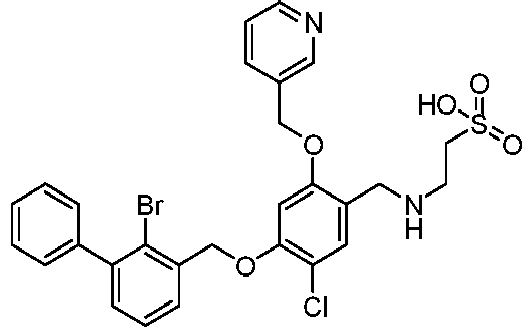
- The procedure was the same as in Example 12, except that 2-aminoethanesulfonic acid was used in place of ethyl ester of glycine without hydrolysis to afford 2-(4-(2-bromo-3-phenylbenzyloxy)-5-chloro-2-(pyridin-3-yl-methyleneoxy) benzylamino)ethanesulfonic acid as a white solid. 1H NMR (400 MHz, DMSO) δ 8.79 (s, 1H), 8.62 (d, J = 4.8 Hz, 1H), 8.42 (d, J = 7.2 Hz, 1H), 7.85 (t, J = 4.8 Hz, 1H), 7.43 (m, 9H), 7.04 (s, 1H), 5.37 (s, 2H), 5.24 (s, 2H), 4.33 (s, 2H),3.39 (m, 2H), 2.97 (m, 2H), 2.65 (br,1H). MS (FAB): 618 (M+1).
-

- The procedure was the same as in Example 12, except that ethyl ester of leucine was used in place of ethyl ester of glycine to afford N-(4-(2-bromo-3-phenylbenzyloxy)-5-chloro-2-(pyridin-3-yl-methyleneoxy)benzyl) leucine as a white solid. 1H NMR (400 MHz, DMSO) δ 8.69 (s, 1H), 8.52 (d, J = 4.8 Hz, 1H), 8.42 (d, J = 7.2 Hz, 1H), 7.85 (t, J = 4.8 Hz, 1H), 7.43 (m, 9H), 7.04 (s, 1H), 5.37 (s, 2H), 5.24 (s, 2H), 3.79 (m, 2H),3.18 (m, 1H), 1.86 (m,1H), 1.41 (m,2H), 0.74 (m, 6H). MS (FAB): 624 (M).
-
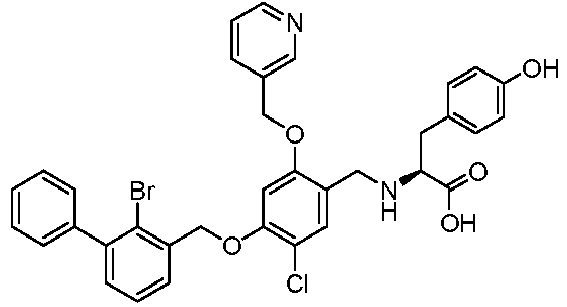
- The procedure was the same as in Example 12, except that ethyl ester of tyrosine was used in place of ethyl ester of glycine to afford N-(4-(2-bromo-3-phenylbenzyloxy)-5-chloro-2-(pyridin-3-yl-methyleneoxy)benzyl) tyrosine as a white solid. 1H NMR (400 MHz, DMSO) δ 8.62 (s, 1H), 8.50 (d, J = 3.2 Hz, 1H), 7.81(t, J = 7.6 Hz, 1H), 7.60(t, J = 9.2 Hz, 1H), 7.38 (m, 8H), 7.21(s, 1H), 7.00(s, 1H), 6.93(d, J = 8.0 Hz, 2H), 6.59(d, J = 8.0 Hz, 2H), 5.25 (s, 2H), 5.17 (s, 2H), 3.64 (m, 2H), 3.21 (t, J = 6.8 Hz, 1H), 2.78 (m,2H). MS (FAB): 674 (M).
-

- The procedure was the same as in Example 12, except that ethyl ester of isoleucine was used in place of ethyl ester of glycine to afford N-(4-(2-bromo-3-phenylbenzyloxy)-5-chloro-2-(pyridin-3-yl-methyleneoxy)benzyl) isoleucine as a white solid.1H NMR (400 MHz, DMSO) δ 8.64(s, 1H), 8.50(d, J = 4.8 Hz, 1H), 8.38 (d, J = 7.2 Hz, 1H), 7.82 (t, J = 4.8 Hz, 1H), 7.43 (m, 9H), 7.00 (s, 1H), 5.25 (s, 2H), 5.18 (s, 2H), 3.63 (m, 2H), 3.48(m, 1H),2.28 (m, 1H), 1.50(m,2H), 1.06(m, 3H), 0.73(m,3H). MS (FAB): 624 (M).
-

- The procedure was the same as in Example 12, except that ethyl ester of asparagine was used in place of ethyl ester of glycine to afford N-(4-(2-bromo-3-phenylbenzyloxy)-5-chloro-2-(pyridin-3-yl-methyleneoxy)benzyl) asparagine as a white solid.1H NMR (400 MHz, DMSO) δ11.96(s,1H), 8.72(s, 1H), 8.52(d, J = 8.0 Hz, 1H), 8.16 (s, 1H), 7.68 (t, J = 8.0 Hz, 1H), 7.44(m, 10H), 7.01 (m, 2H), 5.26 (s, 2H), 5.21 (s, 2H), 3.65 (m, 2H), 3.35(m, 1H), 2.65(m, 2H). MS (FAB): 625 (M+1).
-

-
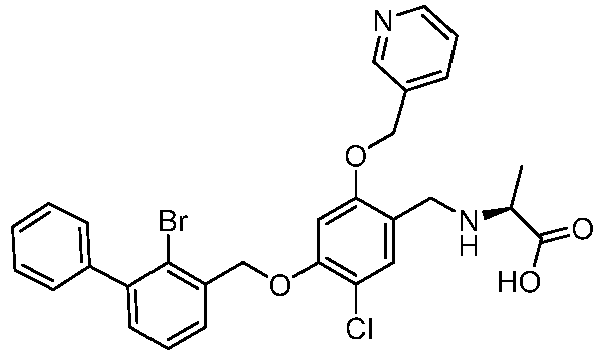
- The procedure was the same as in Example 12, except that ethyl ester of alanine was used in place of ethyl ester of glycine to afford N-(4-(2-bromo-3-phenylbenzyloxy)-5-chloro-2-(pyridin-3-yl-methyleneoxy)benzyl) alanine as a white solid. 1H NMR (400 MHz, DMSO-d6) δ 8.69 (s, 1H, Ar-H), 8.53 (m, 1H, Ar-H), 7.93 (d, J = 8.0 Hz, 1H, Ar-H), 7.61 (d, J = 8.1 Hz, 1H, Ar-H), 7.53 - 7.31 (m, 9H, Ar-H), 7.08 (s, 1H, Ar-H), 5.29 (s, 2H, -CH2-),5.27 - 5.23 (m, 2H, -CH2-), 3.96 - 3.77 (m, 2H, -CH2-), 3.12 (m, 1H, -CH-), 1.19 (d, J = 7.0 Hz, 3H, -CH3).MS (FAB): 582 (M+1).
-
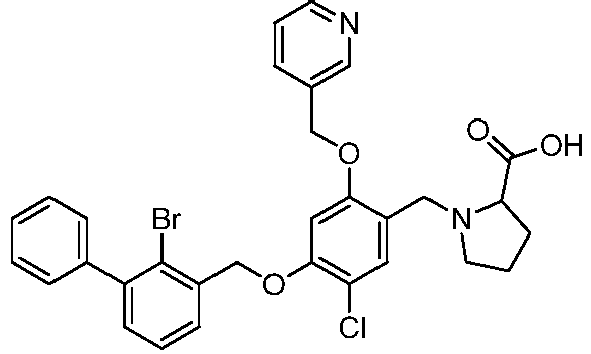
- The procedure was the same as in Example 12, except that ethyl ester of proline was used in place of ethyl ester of glycine to afford N-(4-(2-bromo-3-phenylbenzyloxy)-5-chloro-2-(pyridin-3-yl-methyleneoxy)benzyl) proline as a white solid. 1H NMR (400 MHz, DMSO-d 6) δ 8.72 (s, 1H, ArH), 8.56 (d, J = 6.0 Hz, 1H, ArH), 7.95 (d, J = 8.0 Hz, 1H, ArH), 7.66 (d, J = 7.6 Hz, 1H, ArH), 7.5-7.34 (m, 9H, ArH), 7.12 (s, 1H, ArH), 5.35-5.27 (m, 4H, -OCH2-), 3.95 (dd, J 1 = 51.6 Hz, J2 = 13.2 Hz, 2H, -CH2-), 3.12 (m, 1H, -CH-), 2.67 (m, 1H, -CH2-), 2.07 (m, 1H, - CH2-), 1.89 (m, 1H, -CH2-), 1.78 (m, 1H, -CH2-), 1.68 (m, 1H, -CH2-), 0.84 (m, 1H, -CH2-). MS (FAB): 608 (M).
-

- (S)-N-(4-(2-bromo-3-phenylbenzyloxy)-5-chloro-2-(pyridin-3-yl-methyleneoxy) benzyl) serine (299mg) was dissolved in 1ml of 0.5 N sodium hydroxide aqueous solution. After being stirred for 30 min at room temperature, absolute ethanol was added to the solution until solids appeared. After being heated to dissolve and cooled to room temperature, the mixture was placed in the refrigerator for freezing. Then the mixture was filtered to afford the product (300mg) as a white solid. 1H NMR (400 MHz, Methanol-d 4) δ 8.65 (s, 1H, -ArH), 8.49 (d, 1H, -ArH), 8.04 (d, 1H, -ArH), 7.63 (d, J = 8.0 Hz, 1H, -ArH), 7.50 - 7.34 (m, 8H, -ArH), 7.31 (d, J = 7.5 Hz, 1H, -ArH), 6.84 (s, 1H, -ArH), 5.28 (s, 2H, -CH2-), 5.23 (s, 2H, -CH2-), 3.85 - 3.74 (m, 2H, -CH2-), 3.72 (d, J = 4.6 Hz, 1H, -CH2-), 3.67 (m, 1H, -CH2-), 3.15 (t, J = 5.6 Hz, 1H, -CH-). MS (FAB): 599 (M+1).
-

- (S)-Sodium N-(4-(2-bromo-3-phenylbenzyloxy)-5-chloro-2-(pyridin-3-yl-methyleneoxy)benzyl) serinate (243mg) was dissolved in 5 ml of water. Aqueous solution of calcium dichloride (1%, 2.22ml) was added dropwise while being stirred at room temperature. Then the mixture was stirred overnight, filtered, washed with water, and dried to afford the product (240mg) as a white solid. MS (FAB): 599 (M+1).
-

- (S)-N-(4-(2-bromo-3-phenylbenzyloxy)-5-chloro-2-(pyridin-3-yl-methyleneoxy) benzyl) serine (299mg) and 4-(chloromethyl)-5-methyl-1,3-dioxol-2-one (74mg) were dissolved in 10 ml of DMF. After a catalytic amount of potassium iodide was added, the mixture was stirred at 30 °C until the reaction was completed. The mixture was poured into a stirred ice-cold saturated aqueous solution of sodium bicarbonate, then filtered, and the solid was washed with water and dried to afford the product (98mg). MS (FAB):711 (M+1).
- Screening principles and methods of PD-1/PD-L1 small molecule inhibitors
- 1) Principle: PD-1 protein is with HIS tag, and PD-1 ligand PD-L1 is with hFc tag. Eu labeled anti-hFc antibody and XL665 labeled anti-HIS antibody are combined with the above two label proteins respectively. After laser excitation, energy can be transferred from donor Eu to receptor XL665, allowing XL665 to glow. After adding inhibitors (compounds or antibodies), blocking the binding of PD-1 and PD-L1 makes the distance between Eu and XL665 far away, the energy cannot be transferred, and XL665 does not glow.
- 2) Experimental method: The specific method can be referred to Cisbio's PD-1/PD-L1 Kit (item 64CUS000C-2). Reagents should be dispensed in the following order. For 384-well white ELISA plate, 2 µl of diluent or target compound diluted with diluent was added to each well, and then 4 µl of PD-1 protein and 4 µl of PD-L1 protein were added per well, incubated for 15 min at room temperature; and 10 µl of a mixture of anti-Tag1-Eu3+ and anti-Tag2-XL665 was added per well and incubated for 1 h to 4 h at room temperature and the fluorescence signals at 665 nm and 620 nm were measured with an Envison instrument. HTRF rate = (665 nm / 620 nm) * 104. 8-10 concentrations were detected for each compound and IC50 was calculated by Graphpad software.
- 3) The results of the screening were shown in Table 1.
- Cisbio HTRF detection showed that the interaction of PD-1 and PD-L1 could be significantly inhibited by the Example 4 compound at the molecular level, with IC50<10-13 mol/L.
- The expression level of IFNγ can reflect the proliferative activity of T lymphocytes. Using the extracted human PBMC (peripheral blood mononuclear cell), on the basis that T lymphocyte could be activated by the anti-CD3/ anti-CD28 antibody, the ligand PD-L1 was added to the inhibit T lymphocyte, the example compounds' capacity of relieving the inhibition by the PD-L1 was investigated.
- The specific procedure is as follows. DAKEWE human lymphocyte separation solution (DKW-KLSH-0100) was used to extract PBMC from human whole blood, and PBMC was inoculated into 96 well plate, with 3×10⁵ cells per well. Human PD-L1 protein (final concentration 5µg/ml), anti-CD3/ anti-CD28 antibody (
final concentration 1 µg/ml) and proportional dilution of the Example 4 compound were added respectively. After 72 h, the expression level of IFNγ in the supernatant was detected by Cisbio IFNγ test kit. The experimental results showed that the inhibition of PD-L1 to expression level of IFNγ could be partially relieved by the Example 4 compound (YPD29B) at 10nM, and the level of IC50 was determined as the level of 1.8×10⁻¹⁰ mol/L by testing different concentrations (Fig. 1 ). - The methods of pharmacodynamics were as follows:
The method in subcutaneous xenograft tumor was as follows. The cultured specific tumor cells were digested and collected by centrifugation, and washed with sterile physiological saline for two times and then counted. The cell concentration was adjusted to 5×10⁶/ml by physiological saline, and 0.2ml of cell suspension was inoculated to the right armpit of C57BL/6 or BALB/c mice. After inoculation, the animals were randomly divided into two groups in next day. Each group had 6-7 mice. After weighing, the animals were dosed once each day to monitor tumor size. When the tumor size reached to a certain size, the mice was weighed and blood was collected from mice orbit and then the mice were killed by removing the neck. The tumor tissue, thymus tissue and spleen tissue were collected and weighed respectively. Finally, the tumor growth inhibition rate was calculated, and the tumor growth inhibition rate was used to evaluate the level of anti-tumor effect - The method in B16F10 lung metastasis model was as follows. The cultured B16F10 tumor cells were digested and centrifuged and washed for two times with sterile physiological saline and then counted. And the cell concentration was adjusted to 2.5×10⁶/ml by physiological saline. 0.2ml of cells were injected into the C57BL/6 mice through the tail vein, and the tumor cells will gather in the lung of the mice. After inoculation, the animals were randomly divided into two groups in next day. Each group had 6-7 mice. After weighing, the animals were dosed once each day. After 3 weeks, the mice were weighed and killed, the lung tissue was collected and weighed, and the number of lung tumors was counted after being fixed by the Bouin's Fluid. Finally, the tumor growth inhibition rate was calculated, and the tumor growth inhibition rate was used to evaluate the level of anti-tumor effect.
- The method in Lewis lung cancer hydrothorax model was as follows: The subcutaneous xenograft tumor of Lewis lung cancer was homogenized and washed for two times with sterile physiological saline, and the cell concentration was adjusted to 2.5×10⁵/ml by physiological saline. 0.2ml of cells were injected into the thoracic cavity of C57BL/6 mice. After inoculation, the animals were randomly divided into two groups in next day. Each group had 6-7 mice. After weighing, the animals were dosed once each day. Animals were sacrificed when the weight of the animals in the control group suddenly dropped. The liquid in thoracic cavity was extracted with syringe and the volume of fluid was recorded.
- In the study of the mechanism of the above models, the method of flow cytometry was adopted in measuring the total cell proportion of T cells of various types. The specific steps were as follows. The samples were treated at first. For blood tissue, the orbital blood was taken. The red cell lysate was used to remove the red blood cells, and then the PBS buffer was used for wash. After being washed, the cells were collected. For the tumor and spleen, the tissues were grinded with a homogenizer, and then diluted with PBS buffer, then filtered by 300 meshes of screen. After the number of cells was counted for each sample, 1×10⁶ cells were added into EP tube and stained for flow antibody. After incubation for 1 h on ice, each sample was washed 2 times with PBS buffer. The cell population was analyzed by VERSE flow instrument of BD Company. The total number of cells in tumor tissue was 1×10⁵ and the total number of cells in blood and spleen tissues was 1×10⁴. The ratio of T cells to total number of cells was analyzed after flow cytometry.
- For the high metastatic melanoma B16F10, the example compounds (45mg/kg of Example 5 compound, 15mg/kg of hydrochloride form of Example 4 compound and 15mg/kg of sodium salt of Example 4 compound) can significantly inhibit the growth of the subcutaneous tumor, with the respect of tumor volume or weight (
Fig. 2 ,Fig. 3 and Table 2) and the rate of inhibition of tumor weight can be 45.27%, 38.37% and 64.11% respectively.Table 2 Inhibition of B16F10 subcutaneous xenograft tumors by Example compounds Group Dose Number (Begin/E nd) Body weight (g) Mean±SD Tumor weight(g) Begin End X±SD T/C% (TGI%) Vehicle Control 6/6 20.3±1.0 23.7±1.7 2.58±1.56 NA Cyclophosph amide (CTX) 80 mg/ kg 5/5 20.3±0.8 23.3±1.4 1.55±0.59 60.00(40.00) Example 5 15mg/ kg 5/5 20.4±1.0 24.2±2.2 2.69±1.99 104.26(-4.26) 45mg/ kg 5/5 20.3±1.0 22.6±1.4 1.41±0.60 54.73(45.27) Example 4 sodium salt 15mg/ kg 5/5 20.3±0.4 21.8±2.1 0.93±0.89 35.89(64.11)∗ 45mg/ kg 5/5 20.4±0.9 23.8±1.4 2.57±0.85 99.77(0.23) Example 4 hydrochlori deform 15mg/ kg 5/5 20.3±0.6 22.6±1.4 1.59±0.91 61.63(38.37) 45mg/ kg 5/5 20.3±0.7 23.1±1.7 2.19±0.92 84.81(15.19) T/C: Relative tumor proliferation rate
TGI: Tumor growth inhibition rate
NA: Not applicable
∗P<0.05 vs Vehicle control - From the analysis of mechanism, it can be seen that Example 5 compound, sodium salt of Example 4 compound and hydrochloride form of Example 4 compound can increase the proportion of tumor-infiltrating lymphocytes (
Fig. 4 , Table 3) and sodium salt of Example 4 compound can increase the proportion of lymphocytes in the spleen samples (Fig. 5 , Table 4).Table 3 Effects of Example 4 and Example 5 on tumor-infiltrating T lymphocytes Group CD3+(%) CD4+(%) CD8+(%) Vehicle control 6.5±0.8 4.8±3.7 3.4±0.1 Cyclophosphamide (CTX) 3.6±1.5 1.7±0.4 1.4±0.3 Example 5 45mg 10.1±4.5 9.0±4.7 5.2±2.8 Example 4 sodium salt 15mg 13.3±6.9 7.2±3.4 3.9±1.4 Example 4 hydrochloride form 15mg 15.2±3.9 15.0±10.7 9.6±3.6 Table 4 Effects of sodium salt of Example 4 compound on T lymphocytes in spleen Group CD3+(%) CD4+(%) CD8+(%) Vehicle control 62.5±7.6 21.3±4.0 9.6±2.1 Cyclophosphamide (CTX) 78.6±2.5 24.6±2.6 15.2±3.1 Example 4 sodium salt 15mg 74.3.3±3.5 27.0+1.8 13.6+1.8 - For metastatic lung cancer models with high metastatic melanoma B16F10, the sodium salt of Example 4 compound can significantly inhibit the number of lung metastases at 15mg/kg dose (
Fig. 6 , Table 5).Table 5. Example compounds' inhibition effect on Pulmonary metastasis model of B16F10 Group Dose Number (End/Begin) Body weight(g) Mean±SD Tumor number Begin End X ±SD T/C% (TGI%) Vehicle control 6/6 20.2±0.4 21.0±0.3 21±15 NA Cyclophosphamide (CTX) 80 mg/ kg 5/5 20.1±0.8 21.4±0.5 18±14 85.7(14.3) Example 5 15mg/ kg 5/5 20.6±0.7 20.2±1.5 18±18 85.7(14.3) 45mg/ kg 5/5 20.5±0.6 21.2±0.7 16±7 76.2(23.8) Example 4 sodium salt 15mg/ kg 5/5 20.1±0.9 21.5±1.2 12±3 57.1(42.3) 45mg/ kg 5/5 20.3±0.6 21.4±0.3 19±15 90.5(9.5) Example 4 hydrochloride form 45mg/kg 15mg/ kg 5/5 20.5±0.6 21.3±1.0 14±10 66.7(33.3) 5/5 20.6±1.0 21.3±0.4 17±12 81.0(19.0) T/C: Relative tumor proliferation rate
TGI: Tumor growth inhibition rate
NA: Not applicable
∗P<0.05 vs Vehicle control - From analysis of the mechanism, it can be seen Example 4 and Example 5 could increase the percentage of lymphocyte in mouse blood (
Fig. 7 , Table 6).Table 6 Example comounds' effect on the percentage of T lymphocyte in mouse blood Group CD3+ CD4+ CD8+ Vehicle control 21.0±2.6 12.3±2.1 7.0±1.1 Cyclophosphamide (CTX) 22.4±5.5 13.0±2.4 7.5±2.4 Example 5 15mg 22.7±4.8 14.4±3.3 7.4±1.9 Example 5 45mg 25.8±3.0 15.7±2.5 7.6±1.8 Example 4 sodium salt 15mg 29.0±3.7 17.8±2.4 9.6±0.8 Example 4 sodium salt 45mg 23.2±3.6 14.7±2.5 7.6±1.3 Example 4 hydrochloride 15mg 29.3±2.9 18.6±1.6 10.7±1.3 Example 4 hydrochloride 45mg 26.8±4.1 17.4±2.0 8.5±2.3 - For subcutaneous xenograft model of mouse breast cancer EMT6, sodium salt of Example 4 compound has some inhibition effect on mouse breast cancer EMT6. At the dose of 10mg and 15mg, sodium salt of Example 4 compound has 20% and 22% inhibition effect respectively (
Fig. 8 , Table 6). In addition, the combination of sodium salt of Example 4 compound and Cyclophosphamide can significantly increase the tumor growth inhibition rate of Cyclophosphamide from 85% to 95% (Fig. 8 , Table 7).Table 7 Example 4 compound's inhibition effect on mouse subcutaneous xenograft of EMT6 Group Dose Number (End /Begin) Body weight (g) Mean ±SD Tumor weight (g) Begin End X±SD T/C% (TGI%) Vehicle control 6/6 18.4±0.3 20.3±0.3 1.72±0.22 NA Cyclophosph amide 60mg/ kg 5/5 18.4±0.3 19.4±0.7∗ 0.25±0.17∗∗∗ 14.1(85.9)∗∗∗ Cyclophosph amide + Example 4 sodium salt 60mg/kg+1 0mg/ kg 5/5 17.8±1.1 18.9±0.4∗∗∗ 0.08±0.04∗∗∗ 4.8(95.2)∗∗∗ Example 4 sodium salt 1.5mg/kg 6/6 18.4±0.9 22.0±1.6 1.5±0.61 86.9(13.1) 5mg/kg 6/6 18.4±0.4 21.0±1.6 1.37±0.23∗ 79.8(20.2)∗ 10mg/kg 6/6 18.4±0.6 21.6±1.3 1.34±0.34∗ 77.7(22.3)∗ 15mg/kg 6/6 18.5±0.4 22.0±1.1∗ 1.47±0.65 85.3(14.7) T/C: Relative tumor proliferation rate
TGI: Tumor growth inhibition rate
NA: Not applicable
∗P<0.05 vs Vehicle control - Sodium salt of Example 4 compound has inhibition effect on mouse Lewis lung cancer hydrothorax model. The hydrothorax incidence rate in vehicle control group was 75%, whereas at the dose of 10 mg, sodium salt of Example 4 compound can reduce the rate to 33% (Table 8). The mean volume of the hydrothorax of mice was 0.3ml in the vehicle control group and in the group administrated with sodium salt of Example 4 compound the mouse only had 0.2ml of hydrothorax (
Fig. 9 , Table 9). Further, sodium salt of Example 4 compound can significantly increase thymus index (Fig. 10 ).Table 8 Example 4's effect on hydrothorax incidence rate of Lewis lung cancer Vehicle control Example 4 sodium salt 10mg 75% 33% Table 9 Example 4's effect on hydrothorax volume of Lewis lung cancer Vehicle control Example 4 sodium salt 10mg 0.3ml 0.2ml - For subcutaneous xenograft model of mouse colon cancer MC38, sodium salt of Example 4 compound has significant inhibition effect. Furthermore, sodium salt of Example 4 compound has a synergistic antitumor effect on this cancer with Cyclophosphamide (CTX) (
Fig. 11 , Table 10).Table 10 Example compounds' effect on subcutaneous xenograft model of mouse colon cancer MC38 Group Dose Number(E nd/begin) Body weight (g) Mean ±SD Tumor weight(g) Begin End Mean ±SD T/C% (TGI%) Vehicle control 6/6 17.9±0.5 22.3±1.1 3.18±0.82 NA Cyclopho sphamide 60mg/kg 6/6 17.9±0.6 19.1±0.8∗∗∗ 0.17±0.05∗∗∗ 5.4(94.6)∗∗∗ Cyclopho sphamide + Example 4 sodium salt 60mg/kg +10mg 6/6 18.2±0.6 18.8±0.8∗∗∗ 0.06±0.04∗∗∗ ## 1.9(98.1)∗∗∗ ## Example 4 2.5mg/kg 6/6 18.0±0.4 21.9±0.7 3.25±0.61 -2.3(102.3) 5mg/kg 6/6 18.2±0.3 22.8±0.6 2.78±0.44 87.3(12.7) 10mg/kg 6/6 18.2±0.3 21.5±0.8 2.14±0.78∗ 67.3(32.7)∗ 20mg/kg 6/6 18.2±0.4 20.9±1.1 1.87±0.90∗ 58.8(41.2)∗ T/C: Relative tumor proliferation rate
TGI: Tumor growth inhibition rate
NA: Not applicable
∗P<0.05 vs Vehicle control; ∗∗∗P<0.001 vs Vehicle control; ##p<0.01 vs Cyclophosphamide (CTX) - Surface plasmon is a kind of electromagnetic wave on the surface of metal, produced by the interaction of photon and electron in free vibration. Surface plasmon resonance (SPR) is an optical phenomenon that occurs on the surface of two kinds of media, which can be induced by photon or electron. The phenomenon of total reflection of light from light dense medium into light scattering medium will form evanescent wave into light scattering medium. When the total reflected evanescent wave meets the plasma wave on the metal surface, the resonance may occur, and the energy of reflected light decreases and the resonance peak appears on the reflected light energy spectrum. This resonance is called the surface plasmon resonance. The incident angle of the surface plasmon resonance is called the SPR angle. The SPR biosensor provides a sensitive, real-time, non-label detection technique for monitoring the interaction of molecules. The sensor detects the change of the SPR angle, and SPR is also related to the refractive index of the metal surface. When an analyte is bond on the surface of the chip, it leads to the change of the refractive index of the chip surface, which leads to the change of the SPR angle. This is the basic principle of the real-time detection of intermolecular interaction by the SPR biosensor. In the interaction analysis, the change of SPR angle is recorded on the sensor map in real time.
- The PD-L1 protein was captured on the Fc4 channel of NTA chip by capture method, and the buffer system was PBS-P+, pH7.4, 0.01% DMSO. A series of concentration of compounds and PD-L1 antibodies were prepared and flowed through the surface of the chip for the determination of interaction.
-
Table 11 The affinity of Example 4 compound and PD- L 1 antibody to PD-L 1Ligand Analyte ka (1/Ms) kd (1/s) KD (M) PD-L1 protein PD-L1 antibody 2.016E+5 1.358E-4 6.736E-10 PD-L1protein Example 4 1.390E+6 2.815E-5 2.025E-11 - It was preliminarily determined that the binding protein of the Example 4 is PD-L1 (
Fig. 12 ). Further Biacore experiments confirmed that the combination of Example 4 has a strong ability of binding PD-L1 and the affinity kD value is 2.025E-11 which is even stronger than that of the antibody of PD-L1 (Table 11,Fig.12-14 ).
| Example | IC50 (M) | Example | IC50 (M) |
| 1 | 1.48×10⁻⁷ | 16 | 1.99×10⁻⁷ |
| 4 | <10-13 | 17 | 5.51×10⁻⁷ |
| 6 | 8.23×10⁻⁸ | 18 | 2.33×10⁻⁹ |
| 8 | 4.29×10⁻⁸ | 19 | 1.62×10⁻⁵ |
| 9∗ | 4.01×10⁻⁸ | 20 | 6.10×10⁻⁸ |
| 10∗ | 1.34×10⁻⁷ | 21 | 4.06×10⁻⁷ |
| 11∗ | 3.1×10⁻⁷ | 22 | 4.99×10⁻⁶ |
| 12 | 4.11×10⁻⁸ | 23 | 8.35×10⁻⁷ |
| 13 | 2.00×10--7 | 24 | 5.38×10⁻⁸ |
| 14 | 2.69×10⁻⁵ | 25 | 5.29×10⁻⁹ |
| 15 | 5.10×10⁻⁸ | 26 | 10-12~10-13 |
| *Examples 9, 10 and 11 are reference examples, not in accordance with the present claims. |
Claims (14)
- A nicotinyl alcohol ether derivative of Formula (I):

R1 is selected from

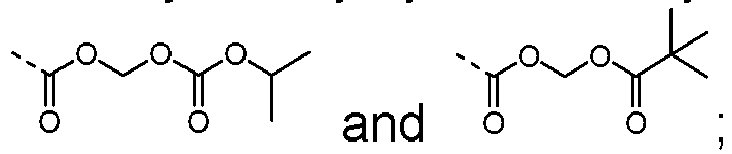
- A nicotinyl alcohol ether derivative of claim 1, represented by formula (IA), or a pharmaceutically acceptable salt or a stereoisomer thereof;

R1 is selected from


- A nicotinyl alcohol ether derivative of claim 2, represented by formula (IA-1), or a pharmaceutically acceptable salt or a stereoisomer thereof;

R3 is selected from substituted C1-C8 saturated alkylamino, substituted C2-C6 unsaturated alkylamino, substituted N-containing C2-C6 heterocycle-1-yl, wherein each is mono-, di-, tri-, or tetra-substituted with substituent(s) selected from fluorine, chlorine, bromine, iodine, hydroxy, C1-C5 alkyl, C1-C5 alkoxy, amino, C1-C6 alkylamino, acetylamino, cyano, ureido (-NH(C=O)NH2), guanidino (-NH(C=NH)NH2), ureido amino (-NH-NH(C=O)NH2), guanidino amino (-NH-NH(C=NH)NH2), sulfonylamino (-NHSO3H), sulfamoyl (-SO2NH2), methanesulfonylamino (-NH-SO2CH3), hydroxyformyl (-COOH), C1-C8 alkoxyl carbonyl, sulfydryl, imidazolyl, thiazolyl, oxazolyl, tetrazolyl,

- A nicotinyl alcohol ether derivative of claim 2, represented by formula (IA-2), or a pharmaceutically acceptable salt, or a stereoisomer thereof:

R3 is selected from substituted C1-C8 saturated alkylamino, substituted C2-C6 unsaturated alkylamino, substituted N-containing C2-C6 heterocycle-1-yl, wherein each is mono-, di-, tri-, or tetra-substituted with substituent(s) selected from fluorine, chlorine, bromine, iodine, hydroxy, C1-C5 alkyl, C1-C5 alkoxy, amino, C1-C6 alkylamino, acetylamino, cyano, ureido (-NH(C=O)NH2), guanidino (-NH(C=NH)NH2), ureido amino (-NH-NH(C=O)NH2), guanidino amino (-NH-NH(C=NH)NH2), sulfonylamino (-NHSO3H), sulfamoyl (-SO2NH2), methanesulfonylamino (-NH-SO2CH3), hydroxyformyl (-COOH), C1-C8 alkoxyl carbonyl, sulfydryl, imidazolyl, thiazolyl, oxazolyl, tetrazolyl,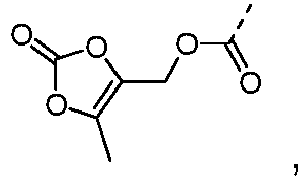

- A nicotinyl alcohol ether derivative of any one of claims 1-4, or a pharmaceutically acceptable salt, or a stereoisomer thereof, wherein R3 is selected from:


X is selected from hydrogen, fluorine, chlorine, bromine, methyl, ethenyl, and trifluoromethyl. - A nicotinyl alcohol ether derivative of claim 1, or a pharmaceutically acceptable salt, or a stereoisomer thereof, wherein the compound is selected from:Ethyl N-(4-(2-bromo-3-phenylbenzyloxy)-5-chloro-2-(pyridin-3-yl-methyleneoxy)benzyl) serinate dihydrochloride
 N-(4-(2-bromo-3-phenylbenzyloxy)-5-chloro-2-(pyridin-3-yl-methyleneoxy)benzyl) serine
 (S)-Ethyl N-(4-(2-bromo-3-phenylbenzyloxy)-5-chloro-2-(pyridin-3-yl-methyleneoxy) benzyl)serinate
 (S)-N-(4-(2-bromo-3-phenylbenzyloxy)-5-chloro-2-(pyridin-3-yl-methyleneoxy) benzyl) serine
 (S)-Ethyl N-(4-(2-bromo-3-phenylbenzyloxy)-5-chloro-2-(pyridin-3-yl-methyleneoxy)benzyl) serinate dihydrochloride
 (S)-isopropyl N-(4-(2-bromo-3-phenylbenzyloxy)-5-chloro-2-(pyridin-3-yl-methyleneoxy)benzyl) serinate dihydrochloride
 (R)-Ethyl N-(4-(2-bromo-3-phenylbenzyloxy)-5-chloro-2-(pyridin-3-yl-methyleneoxy)benzyl) serinate
 (R)-N-(4-(2-bromo-3-phenylbenzyloxy)-5-chloro-2-(pyridin-3-yl-methyleneoxy) benzyl) serine
 N-(4-(2-bromo-3-phenylbenzyloxy)-5-chloro-2-(pyridin-3-yl-methyleneoxy)benzyl) glycine
 N-(4-(2-bromo-3-phenylbenzyloxy)-5-chloro-2-(pyridin-3-yl-methyleneoxy)benzyl) valine
 (E)-3-(4-(2-bromo-3-phenylbenzyloxy)-5-chloro-2-(pyridin-3-yl-methyleneoxy) benzylamino) but-2-enenitrile
 N, N-bis(hydroxyethyl)-4-(2-bromo-3-phenylbenzyloxy)-5-chloro-2-(pyridin-3-yl-methyleneoxy) benzylamine
 N-(2-methanesulfonaminoethyl)-4-(2-bromo-3-phenylbenzyloxy)-5-chloro-2-(pyridin-3-yl-methyleneoxy) benzylamine
 N-(2-acetylaminoethyl)-4-(2-bromo-3-phenylbenzyloxy)-5-chloro-2-(pyridin-3-yl-methyleneoxy) benzylamine
 (E)-3-(4-(2-bromo-3-phenylbenzyloxy)-5-chloro-2-(pyridin-3-yl-methyleneoxy) benzylamino) but-2-enoic acid
 N-(4-(2-bromo-3-phenylbenzyloxy)-5-chloro-2-(pyridin-3-yl-methyleneoxy)benzyl) leucine
 N-(4-(2-bromo-3-phenylbenzyloxy)-5-chloro-2-(pyridin-3-yl-methyleneoxy)benzyl) isoleucine
 N-(hydroxyethyl)-4-(2-bromo-3-phenylbenzyloxy)-5-chloro-2-(pyridin-3-yl-methyleneoxy) benzylamine
 N-(4-(2-bromo-3-phenylbenzyloxy)-5-chloro-2-(pyridin-3-yl-methyleneoxy)benzyl) alanine
 N-(4-(2-bromo-3-phenylbenzyloxy)-5-chloro-2-(pyridin-3-yl-methyleneoxy)benzyl) proline
 (S)-Sodium N-(4-(2-bromo-3-phenylbenzyloxy)-5-chloro-2-(pyridin-3-yl-methyleneoxy)benzyl) serinate
 (S)-Calcium N-(4-(2-bromo-3-phenylbenzyloxy)-5-chloro-2-(pyridin-3-yl-methyleneoxy)benzyl) serinate
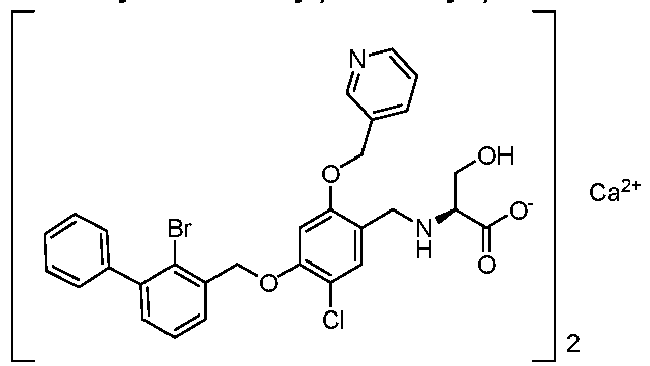 (S)-(5-methyl-2-oxo-1,3-dioxol-4-yl)methyl N-(4-(2-bromo-3-phenylbenzyloxy)-5-chloro-2-(pyridin-3-yl-methyleneoxy) benzyl) serinate
- A nicotinyl alcohol ether derivative of claim 1, or a stereoisomer or a pharmaceutically acceptable salt thereof, wherein the pharmaceutically acceptable salt comprises a salt formed with an inorganic acid, a salt formed with an organic acid salt, alkali metal ion salt, alkaline earth metal ion salt or a salt formed with organic base which provides a physiologically acceptable cation, and an ammonium salt.
- A nicotinyl alcohol ether derivative of claim 7, or a stereoisomer or a pharmaceutically acceptable salt thereof, wherein the inorganic acid is selected from hydrochloric acid, hydrobromic acid, phosphoric acid or sulfuric acid; the organic acid is selected from methanesulfonic acid, p-toluenesulfonic acid, trifluoroacetic, citric acid, maleic acid, tartaric acid, fumaric acid, citric acid or lactic acid; the alkali metal ion is selected from lithium ion, sodium ion, potassium ion; the alkaline earth metal ion is selected from calcium ion and magnesium ion; and the organic base which provides a physiologically acceptable cation is selected form methylamine, dimethylamine, trimethylamine, piperidine, morpholine or tris(2-hydroxyethyl) amine.
- A nicotinyl alcohol ether derivative, or a pharmaceutically acceptable salt, or a stereoisomer thereof, wherein the compound is selected from:2-(4-(2-bromo-3-phenylbenzyloxy)-5-chloro-2-(pyridin-3-yl-methyleneoxy) benzylamino) ethanesulfonic acid
 N-(4-(2-bromo-3-phenylbenzyloxy)-5-chloro-2-(pyridin-3-yl-methyleneoxy)benzyl) tyrosine
 N-(4-(2-bromo-3-phenylbenzyloxy)-5-chloro-2-(pyridin-3-yl-methyleneoxy) benzyl) asparagine
- A process for the preparation of a nicotinyl alcohol ether derivative of any one of claims 1-8, or a stereoisomer thereof, or a pharmaceutically acceptable salt thereof:
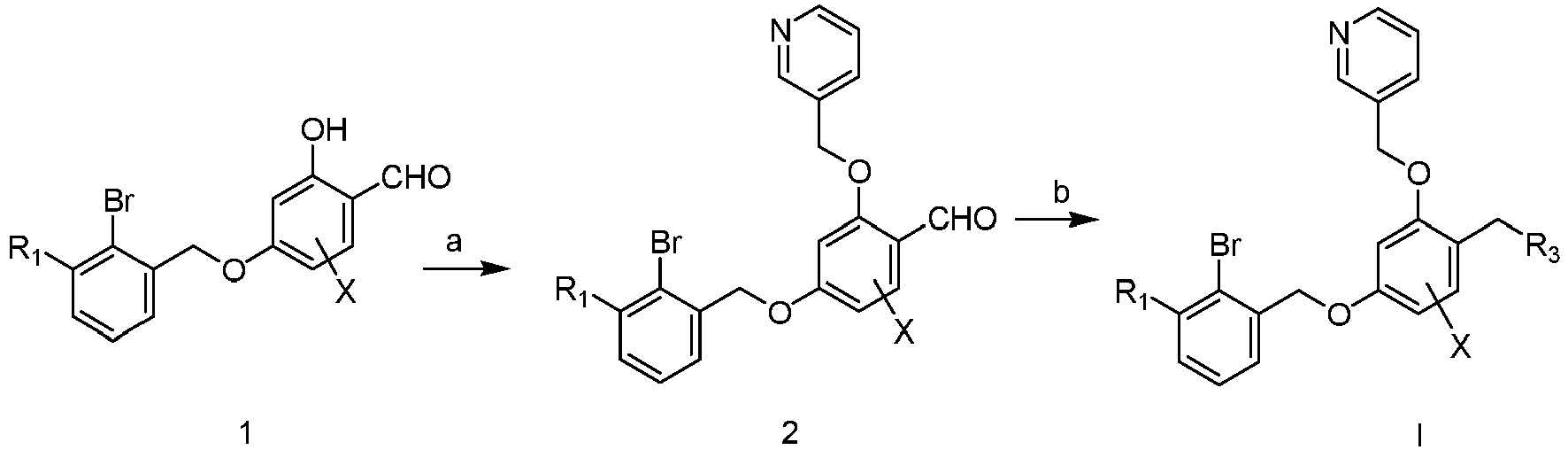 (a) reacting a 2-hydroxy-4-(2-bromo-3-R1 benzyloxy)-X-substituted benzaldehyde (1) as a starting material with pyridin-3-yl-methylene halide under basic conditions to obtain an aldehyde-containing intermediate compound (2); and(b) condensing the aldehyde-containing intermediate compound (2) as the starting material with an amino group- or an imino group-containing HR3 and reducing the resultant product to obtain the nicotinyl alcohol ether (I);wherein R1, R3 and X are each as defined in any one of claims 1-8.
 - A pharmaceutical composition, characterized in that it comprises a nicotinyl alcohol ether derivative of any one of claims 1-9, or a stereoisomer or a pharmaceutically acceptable salt thereof, as an active ingredient, and one or more pharmaceutically acceptable carriers or excipients.
- A nicotinyl alcohol ether derivative of any one of claims 1-9, or a stereoisomer thereof, or a pharmaceutically acceptable salt thereof, for use in the prevention and/ or treatment of a disease associated with the PD-1/PD-L1 signaling pathway.
- The nicotinyl alcohol ether derivative, stereoisomer thereof, or pharmaceutically-acceptable salt thereof for use as in claim 12, wherein the disease associated with the PD-1/PD-L1 signaling pathway is selected from cancer, an infectious disease, and an autoimmune disease.
- The nicotinyl alcohol ether derivative, stereoisomer thereof, or pharmaceutically-acceptable salt thereof for use as in claim 13, wherein the cancer is selected from skin cancer, lung cancer, urinary tumor, blood tumor, breast cancer, glioma, digestive system tumor, reproductive system tumor, lymphoma, nervous system tumor, brain tumor, head and neck cancer; the infectious disease is selected from bacterial infection and viral infection; the autoimmune disease is selected from an organ specific autoimmune disease and a systemic autoimmune disease; wherein the organ specific autoimmune disease is selected from chronic lymphocytic thyroiditis, hyperthyroidism, insulin dependent diabetes, severe myasthenia, ulcerative colitis, malignant anemia with chronic atrophic gastritis, pulmonary hemorrhagic nephritis syndrome, primary biliary cirrhosis, multiple cerebrospinal sclerosis, and acute idiopathic polyneuritis; and the systemic autoimmune disease is selected from rheumatoid arthritis, systemic lupus erythematosus, systemic vasculitis, scleroderma, pemphigus, dermatomyositis, mixed connective tissue disease, and autoimmune hemolytic anemia.
Applications Claiming Priority (2)
| Application Number | Priority Date | Filing Date | Title |
|---|---|---|---|
| CN201610343960 | 2016-05-23 | ||
| PCT/CN2017/085418 WO2017202274A1 (en) | 2016-05-23 | 2017-05-23 | Nicotinyl alcohol ether derivative, preparation method therefor, and pharmaceutical composition and uses thereof |
Publications (3)
| Publication Number | Publication Date |
|---|---|
| EP3466944A1 EP3466944A1 (en) | 2019-04-10 |
| EP3466944A4 EP3466944A4 (en) | 2020-03-11 |
| EP3466944B1 true EP3466944B1 (en) | 2022-06-15 |
Family
ID=60411053
Family Applications (4)
| Application Number | Title | Priority Date | Filing Date |
|---|---|---|---|
| EP17802119.2A Active EP3450423B1 (en) | 2016-05-23 | 2017-05-23 | Benzyl phenyl ether derivative, preparation method therefor, and pharmaceutical composition and uses thereof |
| EP17802123.4A Active EP3459925B1 (en) | 2016-05-23 | 2017-05-23 | Method for preparing 2-hydroxyl-4-(2, 3-disubstituted benzyloxy)-5-substituted benzaldehyde derivative |
| EP17802122.6A Active EP3459926B1 (en) | 2016-05-23 | 2017-05-23 | Phenylate derivative, preparation method therefor, and pharmaceutical composition and uses thereof |
| EP17802120.0A Active EP3466944B1 (en) | 2016-05-23 | 2017-05-23 | Nicotinyl alcohol ether derivative, preparation method therefor, and pharmaceutical composition and uses thereof |
Family Applications Before (3)
| Application Number | Title | Priority Date | Filing Date |
|---|---|---|---|
| EP17802119.2A Active EP3450423B1 (en) | 2016-05-23 | 2017-05-23 | Benzyl phenyl ether derivative, preparation method therefor, and pharmaceutical composition and uses thereof |
| EP17802123.4A Active EP3459925B1 (en) | 2016-05-23 | 2017-05-23 | Method for preparing 2-hydroxyl-4-(2, 3-disubstituted benzyloxy)-5-substituted benzaldehyde derivative |
| EP17802122.6A Active EP3459926B1 (en) | 2016-05-23 | 2017-05-23 | Phenylate derivative, preparation method therefor, and pharmaceutical composition and uses thereof |
Country Status (7)
| Country | Link |
|---|---|
| US (4) | US10882833B2 (en) |
| EP (4) | EP3450423B1 (en) |
| JP (3) | JP6905053B2 (en) |
| KR (3) | KR102364344B1 (en) |
| CN (10) | CN109153626B (en) |
| RU (3) | RU2735541C2 (en) |
| WO (5) | WO2017202274A1 (en) |
Families Citing this family (69)
| Publication number | Priority date | Publication date | Assignee | Title |
|---|---|---|---|---|
| US10882833B2 (en) | 2016-05-23 | 2021-01-05 | Institute Of Materia Medica, Chinese Academy Of Medical Sciences | Phenylate derivative, preparation method therefor, and pharmaceutical composition and uses thereof |
| EP3474845B1 (en) | 2016-06-27 | 2024-03-20 | ChemoCentryx, Inc. | Immunomodulator compounds |
| WO2018124766A2 (en) | 2016-12-28 | 2018-07-05 | 주식회사 녹십자랩셀 | Chimeric antigen receptor and natural killer cells expressing same |
| US10654815B2 (en) * | 2016-12-29 | 2020-05-19 | Shenzhen Chipscreen Biosciences Co., Ltd. | Urea compound and preparation method and application thereof |
| BR102018007822A2 (en) | 2017-04-20 | 2018-11-06 | Gilead Sciences, Inc. | compound, methods for inhibiting pd-1, pd-11 and / or interaction of pd-1 / pd-11 and for cancer treatment, pharmaceutical composition, and kit for treating or preventing cancer or a disease or condition |
| US10919852B2 (en) | 2017-07-28 | 2021-02-16 | Chemocentryx, Inc. | Immunomodulator compounds |
| KR102670486B1 (en) | 2017-08-08 | 2024-05-28 | 케모센트릭스, 인크. | Macrocyclic immunomodulators |
| US11649294B2 (en) | 2017-11-14 | 2023-05-16 | GC Cell Corporation | Anti-HER2 antibody or antigen-binding fragment thereof, and chimeric antigen receptor comprising same |
| KR102774451B1 (en) | 2017-11-14 | 2025-02-28 | 앱클론(주) | Anti-HER2 Antibody or Antigen Binding Fragment Thereof, and Chimeric Antigen Receptor Comprising The Same |
| WO2019160882A1 (en) | 2018-02-13 | 2019-08-22 | Gilead Sciences, Inc. | Pd-1/pd-l1 inhibitors |
| WO2019165043A2 (en) | 2018-02-22 | 2019-08-29 | Chemocentryx, Inc. | Indane-amines as pd-l1 antagonists |
| US12083118B2 (en) * | 2018-03-29 | 2024-09-10 | Arbutus Biopharma Corporation | Substituted 1,1′-biphenyl compounds, analogues thereof, and methods using same |
| KR102591947B1 (en) | 2018-04-19 | 2023-10-25 | 길리애드 사이언시즈, 인코포레이티드 | PD-1/PD-L1 inhibitors |
| MX2020012939A (en) | 2018-05-31 | 2021-02-15 | Ono Pharmaceutical Co | Biomarker for judging efficacy of immune checkpoint inhibitor. |
| TW202017569A (en) | 2018-05-31 | 2020-05-16 | 美商佩樂敦治療公司 | Compositions and methods for inhibiting cd73 |
| PE20210642A1 (en) | 2018-07-13 | 2021-03-23 | Gilead Sciences Inc | PD-1 / PD-L1 INHIBITORS |
| CN109305934A (en) * | 2018-08-07 | 2019-02-05 | 成都海博锐药业有限公司 | Phenyl ether derivatives, pharmaceutically acceptable salts, and medicinal uses |
| CN110872275A (en) * | 2018-08-31 | 2020-03-10 | 深圳微芯生物科技股份有限公司 | Biphenyl compounds as immunomodulators and uses thereof |
| TW202446772A (en) | 2018-10-11 | 2024-12-01 | 日商小野藥品工業股份有限公司 | Sting agonist compound |
| US11236085B2 (en) | 2018-10-24 | 2022-02-01 | Gilead Sciences, Inc. | PD-1/PD-L1 inhibitors |
| WO2020169058A1 (en) * | 2019-02-21 | 2020-08-27 | 杭州阿诺生物医药科技有限公司 | Pd-l1 antagonist compound |
| CN109761952A (en) * | 2019-02-25 | 2019-05-17 | 南方医科大学 | A kind of resorcinol methyl ether derivative containing substituted biphenyl and use thereof |
| CN111662270A (en) * | 2019-03-05 | 2020-09-15 | 中国医学科学院药物研究所 | Iodine isotope-labeled benzyl phenyl ether derivative, its preparation method, pharmaceutical composition and use |
| AU2020246317A1 (en) | 2019-03-22 | 2021-11-18 | Guangzhou Maxinovel Pharmaceuticals Co., Ltd | Small-molecule inhibitor of PD-1/PD-L1, pharmaceutical composition thereof with PD-L1 antibody, and application of same |
| BR112021022659A2 (en) | 2019-05-15 | 2022-03-29 | Chemocentryx Inc | Triaryl compounds for the treatment of pd-l1 diseases |
| CN111978287A (en) * | 2019-05-23 | 2020-11-24 | 中国科学院上海有机化学研究所 | A class of immune checkpoint small molecule inhibitor and preparation method and use thereof |
| CN112028870B (en) * | 2019-06-04 | 2021-11-05 | 中国科学院上海药物研究所 | A kind of compound with benzyloxy aromatic ring structure, its preparation method and use |
| KR102841588B1 (en) | 2019-06-20 | 2025-08-01 | 케모센트릭스, 인크. | Compounds for the treatment of PD-L1 disease |
| KR102890201B1 (en) | 2019-07-10 | 2025-11-24 | 케모센트릭스, 인크. | Indan as a PD-L1 inhibitor |
| WO2021011891A1 (en) | 2019-07-18 | 2021-01-21 | Gilead Sciences, Inc. | Long-acting formulations of tenofovir alafenamide |
| CN114206386A (en) | 2019-08-05 | 2022-03-18 | 小野药品工业株式会社 | Determining biomarkers for effectiveness of immune checkpoint inhibitors |
| CN110256290A (en) * | 2019-08-06 | 2019-09-20 | 宜春学院 | A kind of preparation method of -4 '-cyano-phenyl ether of 4- cyano benzyloxy |
| EP4029863B1 (en) * | 2019-09-09 | 2025-05-07 | Institute Of Materia Medica, Chinese Academy Of Medical Sciences | Maleate of nicotinyl alcohol ether derivative, crystal form thereof, and application thereof |
| ES3068390T3 (en) | 2019-10-16 | 2026-05-29 | Chemocentryx Inc | Heteroaryl-biphenyl amides for the treatment of pd-l1 diseases |
| AU2020368392B2 (en) | 2019-10-16 | 2026-01-08 | Chemocentryx, Inc. | Heteroaryl-biphenyl amines for the treatment of PD-L1 diseases |
| CN111187172B (en) * | 2020-01-20 | 2021-10-29 | 中国药科大学 | Nitrophenyl ether compound, its preparation method and pharmaceutical composition and use |
| KR102987126B1 (en) | 2020-03-20 | 2026-07-07 | 길리애드 사이언시즈, 인코포레이티드 | Prodrug of 4'-C-substituted-2-halo-2'-deoxyadenosine nucleoside and method of preparation and use thereof |
| CN113444075B (en) * | 2020-03-27 | 2024-06-21 | 中国医学科学院药物研究所 | Indoline derivatives, preparation methods, pharmaceutical compositions and uses thereof |
| CN111333629B (en) * | 2020-04-10 | 2021-03-05 | 颜建发 | phenyl-1H-pyrazole derivatives and application thereof in antitumor drugs |
| US20230141284A1 (en) | 2020-04-10 | 2023-05-11 | Ono Pharmaceutical Co., Ltd. | Cancer therapeutic method |
| US20230151024A1 (en) | 2020-04-10 | 2023-05-18 | Ono Pharmaceutical Co., Ltd. | Sting agonistic compound |
| CN113563260A (en) * | 2020-04-28 | 2021-10-29 | 药康众拓(江苏)医药科技有限公司 | Benzamide compound, preparation method and application |
| KR20230041654A (en) | 2020-05-05 | 2023-03-24 | 테온 테라퓨틱스, 인크. | Cannabinoid receptor type 2 (CB2) modulators and uses thereof |
| CN114075123B (en) | 2020-08-11 | 2023-06-06 | 中国人民解放军军事科学院军事医学研究院 | Benzylamine derivative and preparation method and application thereof |
| CN111943876B (en) * | 2020-09-08 | 2022-04-19 | 江苏省原子医学研究所 | N2S2 bromo-benzyl ether derivative, preparation method and application |
| EP4262830A4 (en) | 2020-12-17 | 2025-01-15 | Artiva Biotherapeutics, Inc. | TREATMENT OF CANCER WITH NK CELLS AND AN ANTIBODY TARGETING CD20 |
| EP4262829A4 (en) | 2020-12-17 | 2025-01-01 | Artiva Biotherapeutics, Inc. | NATURAL KILLER CELLS MULTIPLIED AND STIMULATED |
| KR20240024048A (en) | 2021-04-08 | 2024-02-23 | 아티바 바이오테라퓨틱스, 인크. | Cancer treatment method using NK cells and HER2 targeting antibodies |
| KR20240024047A (en) | 2021-04-08 | 2024-02-23 | 아티바 바이오테라퓨틱스, 인크. | Cancer treatment method using NK cells and CD38 targeting antibodies |
| AU2022254978A1 (en) | 2021-04-08 | 2023-11-16 | Artiva Biotherapeutics, Inc. | Treatment of cancer with nk cells and a cd20 targeted antibody |
| US20240366664A1 (en) | 2021-04-08 | 2024-11-07 | Artiva Biotherapeutics, Inc. | Treatment of cancer with nk cells and an egfr targeted antibody |
| CN113135895A (en) * | 2021-04-30 | 2021-07-20 | 中国药科大学 | Novel biphenyl derivative, preparation method and medical application thereof |
| CN115611889A (en) * | 2021-07-16 | 2023-01-17 | 上海华汇拓医药科技有限公司 | A kind of PD-L1 inhibitor and its preparation method and application |
| WO2023034530A1 (en) | 2021-09-02 | 2023-03-09 | Teon Therapeutics, Inc. | Methods of improving growth and function of immune cells |
| WO2023050104A1 (en) * | 2021-09-28 | 2023-04-06 | 中国医学科学院药物研究所 | Indoline derivative, preparation method therefor, pharmaceutical composition, and use |
| WO2023081730A1 (en) | 2021-11-03 | 2023-05-11 | Teon Therapeutics, Inc. | 4-hydroxy-2-oxo-1,2-dihydro-1,8-naphthyridine-3-carboxamide derivatives as cannabinoid cb2 receptor modulators for the treatment of cancer |
| WO2023097211A1 (en) | 2021-11-24 | 2023-06-01 | The University Of Southern California | Methods for enhancing immune checkpoint inhibitor therapy |
| CN114181144B (en) * | 2021-12-06 | 2023-04-04 | 浙江工业大学 | Fluorobiphenyl methyl resorcinol ether derivative, preparation method and application thereof |
| WO2023104744A1 (en) | 2021-12-06 | 2023-06-15 | Helmholtz-Zentrum Dresden-Rossendorf E.V. | 3-((3-([1,1'-biphenyl]-3-ylmethoxy)phenoxy)methyl)benzonitrile derivatives and the use thereof |
| CN114956977B (en) * | 2022-06-09 | 2024-03-26 | 朗捷睿(苏州)生物科技有限公司 | A biphenyl compound, pharmaceutical composition and preparation method and application thereof |
| EP4554943A1 (en) | 2022-07-14 | 2025-05-21 | Teon Therapeutics, Inc. | Adenosine receptor antagonists and uses thereof |
| WO2024043227A1 (en) | 2022-08-23 | 2024-02-29 | 小野薬品工業株式会社 | Bispecific antibody |
| CN115417870B (en) * | 2022-09-20 | 2024-02-27 | 中国药科大学 | PD-L1 & NAMPT dual target inhibitors and uses |
| CN118619942A (en) * | 2023-03-07 | 2024-09-10 | 上海再极医药科技有限公司 | A benzene ring-containing compound and its preparation method and application |
| CN118908922A (en) * | 2023-05-08 | 2024-11-08 | 广西大学 | Benzylphenyl ether compound containing benzofuran and benzothiophene, and preparation method and application thereof |
| CN116589395B (en) * | 2023-05-17 | 2025-03-04 | 浙江工业大学 | Carbazole methylphenyl ether derivative, preparation method and application thereof |
| CN117003822A (en) * | 2023-08-08 | 2023-11-07 | 江苏省原子医学研究所 | A kind of SG3C brominated benzyl ether derivative, preparation method and application |
| CN117003815A (en) * | 2023-08-08 | 2023-11-07 | 江苏省原子医学研究所 | A kind of SG2C brominated benzyl ether derivative, preparation method and application |
| WO2026035860A1 (en) | 2024-08-07 | 2026-02-12 | Teon Therapeutics, Inc. | Formulations of adenosine receptor antagonist |
Family Cites Families (16)
| Publication number | Priority date | Publication date | Assignee | Title |
|---|---|---|---|---|
| US4329518A (en) * | 1979-09-18 | 1982-05-11 | Fmc Corporation | Insecticidal [1,1'-biphenyl]-3-ylmethyl esters |
| ZA816442B (en) * | 1980-10-02 | 1982-12-29 | Fmc Corp | Insecticidal(1,1'-biphenyl)-3-ylmethyl esters |
| SK56896A3 (en) | 1994-08-04 | 1997-05-07 | Sumitomo Chemical Co | Dihalopropene compounds, insecticidal/acaricidal agents containing same, and intermediates for their production |
| US6291465B1 (en) | 1999-03-09 | 2001-09-18 | Hoffmann-La Roche Inc. | Biphenyl derivatives |
| JP4594611B2 (en) * | 2002-11-08 | 2010-12-08 | 武田薬品工業株式会社 | Receptor function regulator |
| CN1735408A (en) | 2002-11-08 | 2006-02-15 | 武田药品工业株式会社 | Receptor function controlling agent |
| JP2007114968A (en) * | 2005-10-19 | 2007-05-10 | Junji Mizuma | Charging system and charging method for battery |
| AU2007225208A1 (en) * | 2006-03-14 | 2007-09-20 | Amgen Inc. | Bicyclic carboxylic acid derivatives useful for treating metabolic disorders |
| EP2354134B1 (en) * | 2008-12-05 | 2016-02-24 | Astellas Pharma Inc. | 2h-chromene derivatives as stimulators of sphingosine 1-phosphate receptor |
| CN101735408B (en) | 2010-01-18 | 2011-12-21 | 中国海洋石油总公司 | High-decoration alcohol acid-organosilicon crylic acid composite waterborne resin |
| US8754066B2 (en) * | 2012-02-21 | 2014-06-17 | Allergan, Inc. | Phenoxy derivatives as sphingosine 1-phosphate (S1P) receptor modulators |
| CN105555766A (en) * | 2013-07-18 | 2016-05-04 | 诺华股份有限公司 | Aminomethyl-biaryl derivatives as complement factor D inhibitors and uses thereof |
| MX2016002544A (en) | 2013-09-04 | 2016-06-17 | Squibb Bristol Myers Co | Compounds useful as immunomodulators. |
| CN103787902B (en) * | 2014-02-17 | 2016-08-17 | 华东理工大学 | The substituted amino benzenes compounds of benzyl and application thereof |
| US9850225B2 (en) * | 2014-04-14 | 2017-12-26 | Bristol-Myers Squibb Company | Compounds useful as immunomodulators |
| US10882833B2 (en) | 2016-05-23 | 2021-01-05 | Institute Of Materia Medica, Chinese Academy Of Medical Sciences | Phenylate derivative, preparation method therefor, and pharmaceutical composition and uses thereof |
-
2017
- 2017-05-23 US US16/303,641 patent/US10882833B2/en active Active
- 2017-05-23 CN CN201780031942.8A patent/CN109153626B/en active Active
- 2017-05-23 EP EP17802119.2A patent/EP3450423B1/en active Active
- 2017-05-23 EP EP17802123.4A patent/EP3459925B1/en active Active
- 2017-05-23 CN CN201710365671.1A patent/CN107417572A/en active Pending
- 2017-05-23 EP EP17802122.6A patent/EP3459926B1/en active Active
- 2017-05-23 WO PCT/CN2017/085418 patent/WO2017202274A1/en not_active Ceased
- 2017-05-23 KR KR1020187037378A patent/KR102364344B1/en active Active
- 2017-05-23 WO PCT/CN2017/085421 patent/WO2017202277A1/en not_active Ceased
- 2017-05-23 RU RU2018145296A patent/RU2735541C2/en active
- 2017-05-23 KR KR1020187037129A patent/KR102456572B1/en active Active
- 2017-05-23 CN CN201780031954.0A patent/CN109153670B/en active Active
- 2017-05-23 US US16/303,649 patent/US10975049B2/en active Active
- 2017-05-23 CN CN201710359979.5A patent/CN107417564A/en active Pending
- 2017-05-23 KR KR1020187037375A patent/KR102400592B1/en active Active
- 2017-05-23 EP EP17802120.0A patent/EP3466944B1/en active Active
- 2017-05-23 CN CN201710363523.6A patent/CN107417506A/en active Pending
- 2017-05-23 CN CN201780031898.0A patent/CN109219592B/en active Active
- 2017-05-23 CN CN201780031943.2A patent/CN109195960B/en active Active
- 2017-05-23 WO PCT/CN2017/085417 patent/WO2017202273A1/en not_active Ceased
- 2017-05-23 CN CN201780031899.5A patent/CN109311792B/en active Active
- 2017-05-23 WO PCT/CN2017/085420 patent/WO2017202276A1/en not_active Ceased
- 2017-05-23 RU RU2018145009A patent/RU2743165C2/en active
- 2017-05-23 US US16/303,650 patent/US10815208B2/en active Active
- 2017-05-23 WO PCT/CN2017/085419 patent/WO2017202275A1/en not_active Ceased
- 2017-05-23 CN CN201710365696.1A patent/CN107417666A/en active Pending
- 2017-05-23 JP JP2019514166A patent/JP6905053B2/en active Active
- 2017-05-23 US US16/303,646 patent/US10941129B2/en active Active
- 2017-05-23 CN CN202210287082.7A patent/CN114853634A/en active Pending
- 2017-05-23 RU RU2018145534A patent/RU2744975C2/en active
- 2017-05-23 JP JP2019514168A patent/JP7075928B2/en active Active
- 2017-05-23 JP JP2019514167A patent/JP6980767B2/en active Active
Also Published As
Similar Documents
| Publication | Publication Date | Title |
|---|---|---|
| EP3459926B1 (en) | Phenylate derivative, preparation method therefor, and pharmaceutical composition and uses thereof | |
| CN108658983A (en) | N-benzenesulfonylbenzamide compound for inhibiting Bcl-2 protein, its composition and application | |
| US20240197678A1 (en) | Inhibitors of the peptidyl-prolyl cis/trans isomerase (pin1) and uses thereof | |
| CN113444075B (en) | Indoline derivatives, preparation methods, pharmaceutical compositions and uses thereof | |
| WO2023050104A1 (en) | Indoline derivative, preparation method therefor, pharmaceutical composition, and use | |
| CN114591318A (en) | Pyrazolo heterocyclic compound, its preparation method, pharmaceutical composition and use | |
| CN114507243A (en) | Isothiazole heterocyclic compound, preparation method thereof, pharmaceutical composition and application thereof | |
| WO2022105782A1 (en) | Benzisothiazole compound, and preparation method therefor and pharmaceutical composition and use thereof |
Legal Events
| Date | Code | Title | Description |
|---|---|---|---|
| STAA | Information on the status of an ep patent application or granted ep patent |
Free format text: STATUS: THE INTERNATIONAL PUBLICATION HAS BEEN MADE |
|
| PUAI | Public reference made under article 153(3) epc to a published international application that has entered the european phase |
Free format text: ORIGINAL CODE: 0009012 |
|
| STAA | Information on the status of an ep patent application or granted ep patent |
Free format text: STATUS: REQUEST FOR EXAMINATION WAS MADE |
|
| 17P | Request for examination filed |
Effective date: 20181219 |
|
| AK | Designated contracting states |
Kind code of ref document: A1 Designated state(s): AL AT BE BG CH CY CZ DE DK EE ES FI FR GB GR HR HU IE IS IT LI LT LU LV MC MK MT NL NO PL PT RO RS SE SI SK SM TR |
|
| AX | Request for extension of the european patent |
Extension state: BA ME |
|
| RAP1 | Party data changed (applicant data changed or rights of an application transferred) |
Owner name: INSTITUTE OF MATERIA MEDICA, CHINESE ACADEMY OF ME Owner name: TIANJIN CHASE SUN PHARMACEUTICAL CO. LTD. |
|
| DAV | Request for validation of the european patent (deleted) | ||
| DAX | Request for extension of the european patent (deleted) | ||
| RAP1 | Party data changed (applicant data changed or rights of an application transferred) |
Owner name: INSTITUTE OF MATERIA MEDICA, CHINESE ACADEMY OF ME Owner name: TIANJIN CHASE SUN PHARMACEUTICAL CO., LTD. |
|
| REG | Reference to a national code |
Ref country code: DE Ref legal event code: R079 Ref document number: 602017058565 Country of ref document: DE Free format text: PREVIOUS MAIN CLASS: C07D0405140000 Ipc: C07D0213300000 |
|
| A4 | Supplementary search report drawn up and despatched |
Effective date: 20200212 |
|
| RIC1 | Information provided on ipc code assigned before grant |
Ipc: A61P 35/00 20060101ALI20200206BHEP Ipc: A61P 31/12 20060101ALI20200206BHEP Ipc: C07D 401/12 20060101ALI20200206BHEP Ipc: A61P 31/04 20060101ALI20200206BHEP Ipc: C07D 213/30 20060101AFI20200206BHEP Ipc: A61K 31/443 20060101ALI20200206BHEP Ipc: A61P 37/02 20060101ALI20200206BHEP Ipc: A61K 31/4406 20060101ALI20200206BHEP Ipc: C07D 405/12 20060101ALI20200206BHEP Ipc: A61K 31/4439 20060101ALI20200206BHEP |
|
| STAA | Information on the status of an ep patent application or granted ep patent |
Free format text: STATUS: EXAMINATION IS IN PROGRESS |
|
| 17Q | First examination report despatched |
Effective date: 20210423 |
|
| GRAP | Despatch of communication of intention to grant a patent |
Free format text: ORIGINAL CODE: EPIDOSNIGR1 |
|
| STAA | Information on the status of an ep patent application or granted ep patent |
Free format text: STATUS: GRANT OF PATENT IS INTENDED |
|
| INTG | Intention to grant announced |
Effective date: 20220125 |
|
| GRAS | Grant fee paid |
Free format text: ORIGINAL CODE: EPIDOSNIGR3 |
|
| GRAA | (expected) grant |
Free format text: ORIGINAL CODE: 0009210 |
|
| STAA | Information on the status of an ep patent application or granted ep patent |
Free format text: STATUS: THE PATENT HAS BEEN GRANTED |
|
| AK | Designated contracting states |
Kind code of ref document: B1 Designated state(s): AL AT BE BG CH CY CZ DE DK EE ES FI FR GB GR HR HU IE IS IT LI LT LU LV MC MK MT NL NO PL PT RO RS SE SI SK SM TR |
|
| REG | Reference to a national code |
Ref country code: CH Ref legal event code: EP Ref country code: GB Ref legal event code: FG4D |
|
| REG | Reference to a national code |
Ref country code: IE Ref legal event code: FG4D |
|
| REG | Reference to a national code |
Ref country code: DE Ref legal event code: R096 Ref document number: 602017058565 Country of ref document: DE |
|
| REG | Reference to a national code |
Ref country code: AT Ref legal event code: REF Ref document number: 1498334 Country of ref document: AT Kind code of ref document: T Effective date: 20220715 |
|
| REG | Reference to a national code |
Ref country code: LT Ref legal event code: MG9D |
|
| REG | Reference to a national code |
Ref country code: NL Ref legal event code: MP Effective date: 20220615 |
|
| PG25 | Lapsed in a contracting state [announced via postgrant information from national office to epo] |
Ref country code: SE Free format text: LAPSE BECAUSE OF FAILURE TO SUBMIT A TRANSLATION OF THE DESCRIPTION OR TO PAY THE FEE WITHIN THE PRESCRIBED TIME-LIMIT Effective date: 20220615 Ref country code: NO Free format text: LAPSE BECAUSE OF FAILURE TO SUBMIT A TRANSLATION OF THE DESCRIPTION OR TO PAY THE FEE WITHIN THE PRESCRIBED TIME-LIMIT Effective date: 20220915 Ref country code: LT Free format text: LAPSE BECAUSE OF FAILURE TO SUBMIT A TRANSLATION OF THE DESCRIPTION OR TO PAY THE FEE WITHIN THE PRESCRIBED TIME-LIMIT Effective date: 20220615 Ref country code: HR Free format text: LAPSE BECAUSE OF FAILURE TO SUBMIT A TRANSLATION OF THE DESCRIPTION OR TO PAY THE FEE WITHIN THE PRESCRIBED TIME-LIMIT Effective date: 20220615 Ref country code: GR Free format text: LAPSE BECAUSE OF FAILURE TO SUBMIT A TRANSLATION OF THE DESCRIPTION OR TO PAY THE FEE WITHIN THE PRESCRIBED TIME-LIMIT Effective date: 20220916 Ref country code: FI Free format text: LAPSE BECAUSE OF FAILURE TO SUBMIT A TRANSLATION OF THE DESCRIPTION OR TO PAY THE FEE WITHIN THE PRESCRIBED TIME-LIMIT Effective date: 20220615 Ref country code: BG Free format text: LAPSE BECAUSE OF FAILURE TO SUBMIT A TRANSLATION OF THE DESCRIPTION OR TO PAY THE FEE WITHIN THE PRESCRIBED TIME-LIMIT Effective date: 20220915 |
|
| REG | Reference to a national code |
Ref country code: AT Ref legal event code: MK05 Ref document number: 1498334 Country of ref document: AT Kind code of ref document: T Effective date: 20220615 |
|
| PG25 | Lapsed in a contracting state [announced via postgrant information from national office to epo] |
Ref country code: RS Free format text: LAPSE BECAUSE OF FAILURE TO SUBMIT A TRANSLATION OF THE DESCRIPTION OR TO PAY THE FEE WITHIN THE PRESCRIBED TIME-LIMIT Effective date: 20220615 Ref country code: LV Free format text: LAPSE BECAUSE OF FAILURE TO SUBMIT A TRANSLATION OF THE DESCRIPTION OR TO PAY THE FEE WITHIN THE PRESCRIBED TIME-LIMIT Effective date: 20220615 |
|
| PG25 | Lapsed in a contracting state [announced via postgrant information from national office to epo] |
Ref country code: NL Free format text: LAPSE BECAUSE OF FAILURE TO SUBMIT A TRANSLATION OF THE DESCRIPTION OR TO PAY THE FEE WITHIN THE PRESCRIBED TIME-LIMIT Effective date: 20220615 |
|
| PG25 | Lapsed in a contracting state [announced via postgrant information from national office to epo] |
Ref country code: SM Free format text: LAPSE BECAUSE OF FAILURE TO SUBMIT A TRANSLATION OF THE DESCRIPTION OR TO PAY THE FEE WITHIN THE PRESCRIBED TIME-LIMIT Effective date: 20220615 Ref country code: SK Free format text: LAPSE BECAUSE OF FAILURE TO SUBMIT A TRANSLATION OF THE DESCRIPTION OR TO PAY THE FEE WITHIN THE PRESCRIBED TIME-LIMIT Effective date: 20220615 Ref country code: RO Free format text: LAPSE BECAUSE OF FAILURE TO SUBMIT A TRANSLATION OF THE DESCRIPTION OR TO PAY THE FEE WITHIN THE PRESCRIBED TIME-LIMIT Effective date: 20220615 Ref country code: PT Free format text: LAPSE BECAUSE OF FAILURE TO SUBMIT A TRANSLATION OF THE DESCRIPTION OR TO PAY THE FEE WITHIN THE PRESCRIBED TIME-LIMIT Effective date: 20221017 Ref country code: ES Free format text: LAPSE BECAUSE OF FAILURE TO SUBMIT A TRANSLATION OF THE DESCRIPTION OR TO PAY THE FEE WITHIN THE PRESCRIBED TIME-LIMIT Effective date: 20220615 Ref country code: EE Free format text: LAPSE BECAUSE OF FAILURE TO SUBMIT A TRANSLATION OF THE DESCRIPTION OR TO PAY THE FEE WITHIN THE PRESCRIBED TIME-LIMIT Effective date: 20220615 Ref country code: CZ Free format text: LAPSE BECAUSE OF FAILURE TO SUBMIT A TRANSLATION OF THE DESCRIPTION OR TO PAY THE FEE WITHIN THE PRESCRIBED TIME-LIMIT Effective date: 20220615 Ref country code: AT Free format text: LAPSE BECAUSE OF FAILURE TO SUBMIT A TRANSLATION OF THE DESCRIPTION OR TO PAY THE FEE WITHIN THE PRESCRIBED TIME-LIMIT Effective date: 20220615 |
|
| PG25 | Lapsed in a contracting state [announced via postgrant information from national office to epo] |
Ref country code: PL Free format text: LAPSE BECAUSE OF FAILURE TO SUBMIT A TRANSLATION OF THE DESCRIPTION OR TO PAY THE FEE WITHIN THE PRESCRIBED TIME-LIMIT Effective date: 20220615 Ref country code: IS Free format text: LAPSE BECAUSE OF FAILURE TO SUBMIT A TRANSLATION OF THE DESCRIPTION OR TO PAY THE FEE WITHIN THE PRESCRIBED TIME-LIMIT Effective date: 20221015 |
|
| REG | Reference to a national code |
Ref country code: DE Ref legal event code: R097 Ref document number: 602017058565 Country of ref document: DE |
|
| PG25 | Lapsed in a contracting state [announced via postgrant information from national office to epo] |
Ref country code: AL Free format text: LAPSE BECAUSE OF FAILURE TO SUBMIT A TRANSLATION OF THE DESCRIPTION OR TO PAY THE FEE WITHIN THE PRESCRIBED TIME-LIMIT Effective date: 20220615 |
|
| PLBE | No opposition filed within time limit |
Free format text: ORIGINAL CODE: 0009261 |
|
| STAA | Information on the status of an ep patent application or granted ep patent |
Free format text: STATUS: NO OPPOSITION FILED WITHIN TIME LIMIT |
|
| PG25 | Lapsed in a contracting state [announced via postgrant information from national office to epo] |
Ref country code: DK Free format text: LAPSE BECAUSE OF FAILURE TO SUBMIT A TRANSLATION OF THE DESCRIPTION OR TO PAY THE FEE WITHIN THE PRESCRIBED TIME-LIMIT Effective date: 20220615 |
|
| 26N | No opposition filed |
Effective date: 20230316 |
|
| PG25 | Lapsed in a contracting state [announced via postgrant information from national office to epo] |
Ref country code: SI Free format text: LAPSE BECAUSE OF FAILURE TO SUBMIT A TRANSLATION OF THE DESCRIPTION OR TO PAY THE FEE WITHIN THE PRESCRIBED TIME-LIMIT Effective date: 20220615 |
|
| REG | Reference to a national code |
Ref country code: CH Ref legal event code: PL |
|
| PG25 | Lapsed in a contracting state [announced via postgrant information from national office to epo] |
Ref country code: MC Free format text: LAPSE BECAUSE OF FAILURE TO SUBMIT A TRANSLATION OF THE DESCRIPTION OR TO PAY THE FEE WITHIN THE PRESCRIBED TIME-LIMIT Effective date: 20220615 |
|
| REG | Reference to a national code |
Ref country code: BE Ref legal event code: MM Effective date: 20230531 |
|
| PG25 | Lapsed in a contracting state [announced via postgrant information from national office to epo] |
Ref country code: MC Free format text: LAPSE BECAUSE OF FAILURE TO SUBMIT A TRANSLATION OF THE DESCRIPTION OR TO PAY THE FEE WITHIN THE PRESCRIBED TIME-LIMIT Effective date: 20220615 Ref country code: LU Free format text: LAPSE BECAUSE OF NON-PAYMENT OF DUE FEES Effective date: 20230523 Ref country code: LI Free format text: LAPSE BECAUSE OF NON-PAYMENT OF DUE FEES Effective date: 20230531 Ref country code: CH Free format text: LAPSE BECAUSE OF NON-PAYMENT OF DUE FEES Effective date: 20230531 |
|
| REG | Reference to a national code |
Ref country code: IE Ref legal event code: MM4A |
|
| PG25 | Lapsed in a contracting state [announced via postgrant information from national office to epo] |
Ref country code: IE Free format text: LAPSE BECAUSE OF NON-PAYMENT OF DUE FEES Effective date: 20230523 |
|
| PG25 | Lapsed in a contracting state [announced via postgrant information from national office to epo] |
Ref country code: IE Free format text: LAPSE BECAUSE OF NON-PAYMENT OF DUE FEES Effective date: 20230523 |
|
| PG25 | Lapsed in a contracting state [announced via postgrant information from national office to epo] |
Ref country code: BE Free format text: LAPSE BECAUSE OF NON-PAYMENT OF DUE FEES Effective date: 20230531 |
|
| PG25 | Lapsed in a contracting state [announced via postgrant information from national office to epo] |
Ref country code: BG Free format text: LAPSE BECAUSE OF FAILURE TO SUBMIT A TRANSLATION OF THE DESCRIPTION OR TO PAY THE FEE WITHIN THE PRESCRIBED TIME-LIMIT Effective date: 20220615 |
|
| PG25 | Lapsed in a contracting state [announced via postgrant information from national office to epo] |
Ref country code: BG Free format text: LAPSE BECAUSE OF FAILURE TO SUBMIT A TRANSLATION OF THE DESCRIPTION OR TO PAY THE FEE WITHIN THE PRESCRIBED TIME-LIMIT Effective date: 20220615 |
|
| PG25 | Lapsed in a contracting state [announced via postgrant information from national office to epo] |
Ref country code: CY Free format text: LAPSE BECAUSE OF FAILURE TO SUBMIT A TRANSLATION OF THE DESCRIPTION OR TO PAY THE FEE WITHIN THE PRESCRIBED TIME-LIMIT; INVALID AB INITIO Effective date: 20170523 |
|
| PG25 | Lapsed in a contracting state [announced via postgrant information from national office to epo] |
Ref country code: HU Free format text: LAPSE BECAUSE OF FAILURE TO SUBMIT A TRANSLATION OF THE DESCRIPTION OR TO PAY THE FEE WITHIN THE PRESCRIBED TIME-LIMIT; INVALID AB INITIO Effective date: 20170523 |
|
| PG25 | Lapsed in a contracting state [announced via postgrant information from national office to epo] |
Ref country code: TR Free format text: LAPSE BECAUSE OF FAILURE TO SUBMIT A TRANSLATION OF THE DESCRIPTION OR TO PAY THE FEE WITHIN THE PRESCRIBED TIME-LIMIT Effective date: 20220615 |
|
| PGFP | Annual fee paid to national office [announced via postgrant information from national office to epo] |
Ref country code: GB Payment date: 20260323 Year of fee payment: 10 |
|
| PGFP | Annual fee paid to national office [announced via postgrant information from national office to epo] |
Ref country code: IT Payment date: 20260428 Year of fee payment: 10 |
|
| PGFP | Annual fee paid to national office [announced via postgrant information from national office to epo] |
Ref country code: DE Payment date: 20260416 Year of fee payment: 10 |
|
| PGFP | Annual fee paid to national office [announced via postgrant information from national office to epo] |
Ref country code: FR Payment date: 20260421 Year of fee payment: 10 |