EP3466531A1 - Reaction apparatus for obtaining inorganic particles, and method for producing inorganic particles - Google Patents
Reaction apparatus for obtaining inorganic particles, and method for producing inorganic particles Download PDFInfo
- Publication number
- EP3466531A1 EP3466531A1 EP17810117.6A EP17810117A EP3466531A1 EP 3466531 A1 EP3466531 A1 EP 3466531A1 EP 17810117 A EP17810117 A EP 17810117A EP 3466531 A1 EP3466531 A1 EP 3466531A1
- Authority
- EP
- European Patent Office
- Prior art keywords
- raw material
- mother liquid
- liquid
- material liquid
- adjusting tank
- Prior art date
- Legal status (The legal status is an assumption and is not a legal conclusion. Google has not performed a legal analysis and makes no representation as to the accuracy of the status listed.)
- Withdrawn
Links
Images



Classifications
-
- B—PERFORMING OPERATIONS; TRANSPORTING
- B01—PHYSICAL OR CHEMICAL PROCESSES OR APPARATUS IN GENERAL
- B01J—CHEMICAL OR PHYSICAL PROCESSES, e.g. CATALYSIS OR COLLOID CHEMISTRY; THEIR RELEVANT APPARATUS
- B01J19/00—Chemical, physical or physico-chemical processes in general; Their relevant apparatus
- B01J19/0086—Processes carried out with a view to control or to change the pH-value; Applications of buffer salts; Neutralisation reactions
-
- B—PERFORMING OPERATIONS; TRANSPORTING
- B01—PHYSICAL OR CHEMICAL PROCESSES OR APPARATUS IN GENERAL
- B01J—CHEMICAL OR PHYSICAL PROCESSES, e.g. CATALYSIS OR COLLOID CHEMISTRY; THEIR RELEVANT APPARATUS
- B01J14/00—Chemical processes in general for reacting liquids with liquids; Apparatus specially adapted therefor
-
- B—PERFORMING OPERATIONS; TRANSPORTING
- B01—PHYSICAL OR CHEMICAL PROCESSES OR APPARATUS IN GENERAL
- B01J—CHEMICAL OR PHYSICAL PROCESSES, e.g. CATALYSIS OR COLLOID CHEMISTRY; THEIR RELEVANT APPARATUS
- B01J19/00—Chemical, physical or physico-chemical processes in general; Their relevant apparatus
- B01J19/0053—Details of the reactor
- B01J19/0066—Stirrers
-
- B—PERFORMING OPERATIONS; TRANSPORTING
- B01—PHYSICAL OR CHEMICAL PROCESSES OR APPARATUS IN GENERAL
- B01J—CHEMICAL OR PHYSICAL PROCESSES, e.g. CATALYSIS OR COLLOID CHEMISTRY; THEIR RELEVANT APPARATUS
- B01J19/00—Chemical, physical or physico-chemical processes in general; Their relevant apparatus
- B01J19/06—Solidifying liquids
-
- B—PERFORMING OPERATIONS; TRANSPORTING
- B01—PHYSICAL OR CHEMICAL PROCESSES OR APPARATUS IN GENERAL
- B01J—CHEMICAL OR PHYSICAL PROCESSES, e.g. CATALYSIS OR COLLOID CHEMISTRY; THEIR RELEVANT APPARATUS
- B01J19/00—Chemical, physical or physico-chemical processes in general; Their relevant apparatus
- B01J19/18—Stationary reactors having moving elements inside
- B01J19/1868—Stationary reactors having moving elements inside resulting in a loop-type movement
- B01J19/1881—Stationary reactors having moving elements inside resulting in a loop-type movement externally, i.e. the mixture leaving the vessel and subsequently re-entering it
-
- B—PERFORMING OPERATIONS; TRANSPORTING
- B01—PHYSICAL OR CHEMICAL PROCESSES OR APPARATUS IN GENERAL
- B01J—CHEMICAL OR PHYSICAL PROCESSES, e.g. CATALYSIS OR COLLOID CHEMISTRY; THEIR RELEVANT APPARATUS
- B01J19/00—Chemical, physical or physico-chemical processes in general; Their relevant apparatus
- B01J19/24—Stationary reactors without moving elements inside
- B01J19/2415—Tubular reactors
-
- B—PERFORMING OPERATIONS; TRANSPORTING
- B01—PHYSICAL OR CHEMICAL PROCESSES OR APPARATUS IN GENERAL
- B01J—CHEMICAL OR PHYSICAL PROCESSES, e.g. CATALYSIS OR COLLOID CHEMISTRY; THEIR RELEVANT APPARATUS
- B01J19/00—Chemical, physical or physico-chemical processes in general; Their relevant apparatus
- B01J19/26—Nozzle-type reactors, i.e. the distribution of the initial reactants within the reactor is effected by their introduction or injection through nozzles
-
- B—PERFORMING OPERATIONS; TRANSPORTING
- B01—PHYSICAL OR CHEMICAL PROCESSES OR APPARATUS IN GENERAL
- B01J—CHEMICAL OR PHYSICAL PROCESSES, e.g. CATALYSIS OR COLLOID CHEMISTRY; THEIR RELEVANT APPARATUS
- B01J4/00—Feed or outlet devices; Feed or outlet control devices
- B01J4/001—Feed or outlet devices as such, e.g. feeding tubes
- B01J4/002—Nozzle-type elements
-
- C—CHEMISTRY; METALLURGY
- C01—INORGANIC CHEMISTRY
- C01G—COMPOUNDS CONTAINING METALS NOT COVERED BY SUBCLASSES C01D OR C01F
- C01G53/00—Compounds of nickel
- C01G53/80—Compounds containing nickel, with or without oxygen or hydrogen, and containing one or more other elements
- C01G53/82—Compounds containing nickel, with or without oxygen or hydrogen, and containing two or more other elements
-
- B—PERFORMING OPERATIONS; TRANSPORTING
- B01—PHYSICAL OR CHEMICAL PROCESSES OR APPARATUS IN GENERAL
- B01J—CHEMICAL OR PHYSICAL PROCESSES, e.g. CATALYSIS OR COLLOID CHEMISTRY; THEIR RELEVANT APPARATUS
- B01J2219/00—Chemical, physical or physico-chemical processes in general; Their relevant apparatus
- B01J2219/00049—Controlling or regulating processes
- B01J2219/00177—Controlling or regulating processes controlling the pH
-
- C—CHEMISTRY; METALLURGY
- C01—INORGANIC CHEMISTRY
- C01P—INDEXING SCHEME RELATING TO STRUCTURAL AND PHYSICAL ASPECTS OF SOLID INORGANIC COMPOUNDS
- C01P2004/00—Particle morphology
- C01P2004/01—Particle morphology depicted by an image
- C01P2004/03—Particle morphology depicted by an image obtained by SEM
-
- C—CHEMISTRY; METALLURGY
- C01—INORGANIC CHEMISTRY
- C01P—INDEXING SCHEME RELATING TO STRUCTURAL AND PHYSICAL ASPECTS OF SOLID INORGANIC COMPOUNDS
- C01P2004/00—Particle morphology
- C01P2004/60—Particles characterised by their size
- C01P2004/61—Micrometer sized, i.e. from 1-100 micrometer
-
- C—CHEMISTRY; METALLURGY
- C01—INORGANIC CHEMISTRY
- C01P—INDEXING SCHEME RELATING TO STRUCTURAL AND PHYSICAL ASPECTS OF SOLID INORGANIC COMPOUNDS
- C01P2006/00—Physical properties of inorganic compounds
- C01P2006/11—Powder tap density
-
- C—CHEMISTRY; METALLURGY
- C01—INORGANIC CHEMISTRY
- C01P—INDEXING SCHEME RELATING TO STRUCTURAL AND PHYSICAL ASPECTS OF SOLID INORGANIC COMPOUNDS
- C01P2006/00—Physical properties of inorganic compounds
- C01P2006/12—Surface area
-
- H—ELECTRICITY
- H01—ELECTRIC ELEMENTS
- H01M—PROCESSES OR MEANS, e.g. BATTERIES, FOR THE DIRECT CONVERSION OF CHEMICAL ENERGY INTO ELECTRICAL ENERGY
- H01M4/00—Electrodes
- H01M4/02—Electrodes composed of, or comprising, active material
- H01M4/36—Selection of substances as active materials, active masses, active liquids
- H01M4/48—Selection of substances as active materials, active masses, active liquids of inorganic oxides or hydroxides
- H01M4/52—Selection of substances as active materials, active masses, active liquids of inorganic oxides or hydroxides of nickel, cobalt or iron
- H01M4/525—Selection of substances as active materials, active masses, active liquids of inorganic oxides or hydroxides of nickel, cobalt or iron of mixed oxides or hydroxides containing iron, cobalt or nickel for inserting or intercalating light metals, e.g. LiNiO2, LiCoO2 or LiCoOxFy
-
- Y—GENERAL TAGGING OF NEW TECHNOLOGICAL DEVELOPMENTS; GENERAL TAGGING OF CROSS-SECTIONAL TECHNOLOGIES SPANNING OVER SEVERAL SECTIONS OF THE IPC; TECHNICAL SUBJECTS COVERED BY FORMER USPC CROSS-REFERENCE ART COLLECTIONS [XRACs] AND DIGESTS
- Y02—TECHNOLOGIES OR APPLICATIONS FOR MITIGATION OR ADAPTATION AGAINST CLIMATE CHANGE
- Y02E—REDUCTION OF GREENHOUSE GAS [GHG] EMISSIONS, RELATED TO ENERGY GENERATION, TRANSMISSION OR DISTRIBUTION
- Y02E60/00—Enabling technologies; Technologies with a potential or indirect contribution to GHG emissions mitigation
- Y02E60/10—Energy storage using batteries
Definitions
- the present invention relates to a reaction apparatus for causing a mother liquid to continuously circulate to obtain inorganic particles as a reaction product, and a method for manufacturing inorganic particles in which a mother liquid is continuously circulated.
- an apparatus which simultaneously charges an aqueous solution containing a transition metal salt as a raw material and an alkaline solution into a reaction tank from the upper part of the reaction tank, introduces the aqueous solution containing a transition metal salt into the reaction tank from a feed opening provided in the lower part of the reaction tank, and flows the aqueous solution upward from the bottom of the reaction tank to cause the aqueous solution to collide with coprecipitating microcrystals falling downward, to obtain a transition metal hydroxide or oxide from a capturing part provided in the lower part of the equipment (Patent Literature 1).
- Patent Literature 1 has the following problems: the dispersion of the aqueous solution containing a transition metal salt as a raw material liquid in the reaction tank is not sufficient, whereby various physical properties of inorganic particles such as improvements in a bulk density and a tapping density, crystal growth of particles (that is, improvement in a particle diameter), and improvement in a crystallinity are not sufficiently obtained.
- Patent Literature 2 the dispersibility of the raw material liquid in a mother liquid is improved, but the crystal growth (that is, improvement in a particle diameter) of particles is not sufficient.
- Patent Literature 2 causes a problem that spherical particles are less likely to be obtained, that is, a problem that various excellent physical properties of inorganic particles are not still obtained.
- An aspect of the present invention is a reaction apparatus including: a pH adjusting tank for adjusting a pH of a mother liquid stored therein; a pH adjuster feeding means for feeding a pH adjuster to the pH adjusting tank; a circulating path for continuously extracting a portion of the mother liquid having the adjusted pH from the pH adjusting tank, and returning the extracted mother liquid to the pH adjusting tank; and a raw material liquid feeding means for feeding a raw material liquid to the mother liquid circulating in the circulating path.
- an additional pH adjuster is newly fed to the mother liquid containing the raw material liquid in the pH adjusting tank (when the reaction apparatus is started, the pH adjuster is fed to the mother liquid which does not contain the pH adjuster), but the raw material liquid is not fed.
- an additional raw material liquid is newly fed to the mother liquid containing the raw material liquid (when the reaction apparatus is started, the raw material liquid is fed to the mother liquid which does not contain the raw material liquid), but the pH adjuster is not fed.
- An aspect of the present invention is the reaction apparatus, wherein the raw material liquid is fed to the mother liquid from a direction parallel to, or an acute angle direction with respect to, a flow direction of the mother liquid circulating in the circulating path.
- the raw material liquid is not fed to the mother liquid from a direction orthogonal to the flow direction of the mother liquid circulating in the circulating path.
- An aspect of the present invention is the reaction apparatus, wherein the circulating path is a tubular body, and the raw material liquid is fed by the raw material liquid feeding means from a region of the tubular body.
- An aspect of the present invention is the reaction apparatus, wherein an overflow pipe for taking out a reaction product is provided in the pH adjusting tank.
- An aspect of the present invention is the reaction apparatus for manufacturing a positive electrode active material precursor of a rechargeable battery.
- An aspect of the present invention is a method for manufacturing inorganic particles including the steps of: continuously feeding a raw material liquid to a mother liquid circulating in a circulating path for continuously extracting a portion of the mother liquid having an adjusted pH from a pH adjusting tank, and returning the extracted mother liquid to the pH adjusting tank; and continuously feeding a pH adjuster to the pH adjusting tank storing the mother liquid with the fed raw material liquid, to adjust a pH of the mother liquid.
- an additional pH adjuster is newly fed to the mother liquid containing the raw material liquid in the pH adjusting tank (when the manufacturing method of the present invention is started, the pH adjuster is fed to the mother liquid which does not contain the pH adjuster), but the raw material liquid is not fed.
- an additional raw material liquid is newly fed to the mother liquid containing the raw material liquid (when the manufacturing method of the present invention is started, the raw material liquid is fed to the mother liquid which does not contain the raw material liquid), but the pH adjuster is not fed.
- An aspect of the present invention is the method for manufacturing inorganic particles, wherein the raw material liquid is fed to the mother liquid from a direction parallel to, or an acute angle direction with respect to, a flow direction of the mother liquid circulating in the circulating path.
- the raw material liquid is not fed to the mother liquid from a direction orthogonal to the flow direction of the mother liquid circulating in the circulating path.
- An aspect of the present invention is the method for manufacturing inorganic particles, wherein the circulating path is a tubular body; and the raw material liquid is fed from a region of the tubular body.
- An aspect of the present invention is the method for manufacturing inorganic particles, wherein an overflow pipe for taking out the inorganic particles is provided in the pH adjusting tank.
- An aspect of the present invention is the method for manufacturing inorganic particles, wherein a value of a flow rate of the mother liquid circulating in the circulating path/a feed flow rate of the raw material liquid is 400 or more and less than 2400.
- An aspect of the present invention is the method for manufacturing inorganic particles, wherein the raw material liquid contains a transition metal ion.
- An aspect of the present invention is the method for manufacturing inorganic particles, wherein the pH adjuster further contains a complexing agent.
- An aspect of the present invention is the method for manufacturing inorganic particles, wherein the inorganic particles manufacture a positive electrode active material precursor of a rechargeable battery.
- the dispersibility of the raw material liquid in the mother liquid in the circulating path can be improved, whereby the crystal growth potential of the particles as a reaction product from the raw material liquid is improved, which can improve fundamental properties such as a bulk density, a tapping density, a particle diameter, and a BET specific surface area in a balanced manner without impairing the fundamental properties, and obtain particles having an excellent crystallinity and a higher degree of sphericity.
- the raw material liquid is fed to the mother liquid from a direction parallel to, or an acute angle direction with respect to, the flow direction of the mother liquid circulating in the circulating path, whereby the raw material liquid can be prevented from adhering to the inner surface of the circulating path, and the dispersibility of the raw material liquid in the mother liquid is further improved.
- the circulating path is the tubular body, and the raw material liquid is fed from the region of the tubular body, whereby the structure of the feed region of the raw material liquid in the circulating path can be simplified, and therefore, the whole structure of the circulating path can be simplified.
- the flow rate of the mother liquid circulating in the circulating path/the feed flow rate of the raw material liquid is 400 or more and less than 2400, which can improve fundamental properties such as a bulk density, a tapping density, a particle diameter, and a BET specific surface area in a balanced manner without impairing the fundamental properties, and obtain particles having an excellent crystallinity and a higher degree of sphericity.
- a reaction apparatus 1 includes a pH adjusting tank 10 for adjusting the pH of a mother liquid 14 stored therein, a pH adjuster feeding means 11 for feeding a pH adjuster 15 to the pH adjusting tank 10, a circulating path 12 for continuously extracting a portion of the mother liquid 14 having the adjusted pH from the pH adjusting tank 10, and continuously returning the extracted mother liquid 14 to the pH adjusting tank 10, and a raw material liquid feeding means 13 for feeding a raw material liquid 16 to the mother liquid 14 circulating in the circulating path 12.
- the pH adjuster feeding means 11 provided in the pH adjusting tank 10 is a tubular body including one end part communicated with the pH adjusting tank 10 and another end part communicated with a pH adjuster storing tank (not shown) storing the pH adjuster 15.
- the inner diameter of the tubular body is substantially uniform in any region.
- the pH of the mother liquid 14 stored in the pH adjusting tank 10 is continuously measured by using a pH measuring instrument (not shown).
- a pump (not shown) provided in the pH adjuster storing tank is operated, to feed the pH adjuster 15 to the mother liquid 14 stored in pH adjusting tank 10 from the pH adjuster storing tank via the pH adjuster feeding means 11.
- the pH of the mother liquid 14 stored in the pH adjusting tank 10 is adjusted within a predetermined range.
- a stirrer 17 is provided in the pH adjusting tank 10.
- the stirrer 17 mixes the raw material liquid 16 contained in the mother liquid 14 stored in the pH adjusting tank 10 with the pH adjuster 15 fed from the pH adjuster feeding means 11, to uniformize the whole OH concentration of the mother liquid 14 stored in the pH adjusting tank 10.
- the whole OH concentration of the mother liquid 14 is uniformized while the mother liquid 14 is stored in the pH adjusting tank 10, whereby the reaction condition of the mother liquid 14 is stable, and the reaction of the raw material liquid 16 in the mother liquid 14 is stable. Even when the pH adjuster 15 and another ingredient (for example, complexing agent) are added by using the pH adjuster feeding means 11, the whole reaction condition of the mother liquid 14 is uniformized, whereby the reaction of the raw material liquid 16 in the mother liquid 14 is stable.
- another ingredient for example, complexing agent
- Particles as the reaction product which has been produced and grown are obtained from the pH adjusting tank 10 storing the mother liquid 14 having the uniformized OH concentration and containing an ingredient derived from the raw material liquid 16.
- An overflow pipe 18 communicated with the pH adjusting tank 10 is provided in a side surface part located on the top part side of the pH adjusting tank 10. The particles which have been produced and grown are taken out to the outside from the pH adjusting tank 10 via the overflow pipe 18.
- a mother liquid extracting port 19 (in Fig. 1 , provided in the bottom surface of the pH adjusting tank 10) and a mother liquid returning port 20 (in Fig. 1 , provided in the top part of the pH adjusting tank 10) are provided in the pH adjusting tank 10.
- the circulating path 12 is a path of a tubular body connecting the mother liquid extracting port 19 to the mother liquid returning port 20.
- the inner diameter of the tubular body is substantially uniform in any region.
- a portion of the mother liquid 14 in the pH adjusting tank 10 is continuously extracted from the mother liquid extracting port 19, and the extracted mother liquid 14 is fed to the circulating path 12.
- the mother liquid 14 fed to the circulating path 12 circulates in the direction of the mother liquid returning port 20 from the mother liquid extracting port 19 in the circulating path 12.
- the mother liquid 14 circulating in the direction of the mother liquid returning port 20 from the mother liquid extracting port 19 in the circulating path 12 is fed to the mother liquid returning port 20 from the circulating path 12. Furthermore, the mother liquid 14 is returned into the pH adjusting tank 10 from the mother liquid returning port 20.
- the flow of the mother liquid 14 from mother liquid extracting port 19 in the circulating path 12 to the direction of the mother liquid returning port 20 is achieved by a circulating pump 21 provided in the circulating path 12.
- the raw material liquid feeding means 13 for feeding the raw material liquid 16 to the mother liquid 14 circulating in the circulating path 12 is provided in the circulating path 12.
- the raw material liquid feeding means 13 is a tubular body having one end part communicated with the circulating path 12 and another end part communicated with a raw material liquid storing tank (not shown) storing the raw material liquid 16.
- the inner diameter of the tubular body is substantially uniform in any region.
- the raw material liquid 16 is fed to the mother liquid 14 flowing in the circulating path 12 from the raw material liquid feeding means 13, whereby the dispersibility of the raw material liquid 16 in the mother liquid 14 is improved in the circulating path 12. Therefore, the reactivity of the raw material liquid 16 in the mother liquid 14 is improved, which causes the particles as the reaction product to be satisfactorily produced, and causes the produced particles to be satisfactorily grown.
- the reactivity of the raw material liquid 16 is improved in the mother liquid 14, and furthermore, as described above, the reaction condition of the mother liquid 14 is stable, and the reaction of the raw material liquid 16 in the mother liquid 14 is also stable, which can improve fundamental properties such as a bulk density, a tapping density, a particle diameter, and a BET specific surface area in a balanced manner without impairing the fundamental properties, and obtain particles having an excellent crystallinity and a higher degree of sphericity.
- the raw material liquid 16 is fed to the mother liquid 14 from a direction parallel to the flow direction of the mother liquid 14 circulating in the circulating path 12. That is, in the reaction apparatus 1, in a region in which one end part of the raw material liquid feeding means 13 is communicated with the circulating path 12, the flow direction of the raw material liquid 16 circulating in the raw material liquid feeding means 13 and the flow direction of the mother liquid 14 circulating in the circulating path 12 are parallel to each other in plan view. Therefore, in plan view, the raw material liquid feeding means 13 is provided so that the position of one end part side of the raw material liquid feeding means 13 is overlapped with the position of the circulating path 12 in a region communicated with one end part of the raw material liquid feeding means 13. That is, in a region in which the raw material liquid feeding means 13 and the circulating path 12 are communicated with each other, the raw material liquid feeding means 13 is provided in a direction parallel to the circulating path 12 in plan view.
- the raw material liquid feeding means 13 in the reaction apparatus 1, in the region in which the raw material liquid feeding means 13 and the circulating path 12 are communicated with each other, the raw material liquid feeding means 13 is provided in the direction of an acute angle (the direction of about 45° in Fig. 1 ) in side view with respect to the circulating path 12. Therefore, the raw material liquid feeding means 13 is not provided in an orthogonal direction designed in order to generate swirl flow with respect to the circulating path 12 in both plan view and side view.
- the raw material liquid 16 can be prevented from adhering to the inner surface of the circulating path 12.
- the raw material liquid 16 can be certainly fed to a region in which the flow velocity of the mother liquid 14 is high, whereby the dispersibility of the raw material liquid 16 in the mother liquid 14 is further improved, and therefore, the reactivity of the raw material liquid 16 in the mother liquid 14 is further improved.
- the positional relationship can suppress the disorder of the flow of the mother liquid 14 even if the flow of the mother liquid 14 and the flow of the raw material liquid 16 converge, whereby the mother liquid 14 can smoothly circulate in the circulating path 12. Furthermore, the positional relationship provides easy maintenance when the clogging of the raw material liquid 16, or the like occurs.
- the raw material liquid feeding means in a region in which a raw material liquid feeding means and a circulating path are communicated with each other, the raw material liquid feeding means is provided in a direction parallel to the circulating path in plan view, but the feed direction of a raw material liquid to a mother liquid in the circulating path is not particularly limited.
- the raw material liquid feeding means is provided in a direction substantially parallel to, or an acute angle direction with respect to, the circulating path in plan view, the effect of the positional relationship can be obtained.
- the raw material liquid feeding means in the region in which the raw material liquid feeding means and the circulating path are communicated with each other, is provided in a direction parallel to the circulating path in plan view.
- the raw material liquid feeding means may be provided in a direction parallel to the circulating path 12 in the region in which the raw material liquid feeding means and the circulating path are communicated with each other in side view.
- a flow rate regulating member for example, funnel or the like
- the flow velocity and flow rate of the mother liquid are adjusted just before an additional raw material liquid is fed to the mother liquid, whereby the dispersibility of the raw material liquid in the mother liquid can be adjusted.
- a particle size distribution controller may be provided in the reaction apparatus.
- the particle size distribution controller include an apparatus including a discharge pump for pumping a portion of the mother liquid and discharging it to the outside of the system after the amount of the mother liquid stored in the pH adjusting tank reaches a predetermined amount, a solid-liquid separator for subjecting the mother liquid discharged to the outside of the system to solid-liquid separation to remove a liquid phase, and producing a concentration slurry of the mother liquid, and a returning piping system for returning the concentration slurry obtained in the solid-liquid separator to the pH adjusting tank.
- the overflow pipe for continuously taking out the particles from the pH adjusting tank is provided. In place of the constitution, the particles may be taken out in a batch type from the pH adjusting tank without providing the overflow pipe.
- the ingredient of inorganic particles is not particularly limited, and can be suitably selected according to the use application.
- a method used for manufacture of transition metal hydroxide particles such as nickel/cobalt/zinc composite hydroxide particles, and nickel/cobalt/magnesium composite hydroxide particles as a positive electrode active material precursor of a nickel hydrogen rechargeable battery as the inorganic particles, and nickel/cobalt/manganese composite hydroxide particles as a positive electrode active material precursor of a lithium rechargeable battery will be described as an example.
- an aqueous solution containing a nickel salt, a cobalt salt, and a transition metal salt is used as the raw material liquid 16
- an aqueous solution of an alkali metal hydroxide for example, sodium hydroxide
- a complexing agent for example, ammonium ion donor such as ammonia or ammonium sulfate
- the complexing agent may be previously dissolved in the raw material liquid 16 and sent with the raw material liquid 16.
- a portion of the mother liquid 14 having a pH adjusted by the pH adjuster 15 is continuously extracted from the mother liquid extracting port 19 of the pH adjusting tank 10 to the circulating path 12, and the extracted mother liquid 14 is caused to circulate in the circulating path 12.
- the raw material liquid 16 is continuously fed to the mother liquid 14 flowing in the circulating path 12 by using the raw material liquid feeding means 13.
- the circulating path 12 continuously returns the mother liquid 14 to which the raw material liquid 16 has been fed, to the pH adjusting tank 10 via the mother liquid returning port 20.
- the pH adjuster 15 and the complexing agent are continuously fed to the pH adjusting tank 10 storing the mother liquid 14 to which the raw material liquid 16 has been fed, by using the pH adjuster feeding means 11, to feed the complexing agent to the mother liquid 14 while adjusting the pH of the mother liquid 14.
- the value of the flow rate of the mother liquid 14 circulating in the circulating path 12 (circulating flow rate)/the feed amount of the raw material liquid 16 (raw material liquid flow rate) is not particularly limited.
- the value is preferably 400 or more and less than 2400 from the viewpoints of improving fundamental properties such as a bulk density, a tapping density, a particle diameter, and a BET specific surface area in a balanced manner without impairing the fundamental properties, and obtaining spherical particles having an excellent crystallinity, particularly preferably 1200 or more and less than 2400 from the viewpoints of obtaining an excellent crystallinity and further improving a bulk density, a tapping density, and a particle diameter, and particularly preferably 800 or more and less than 1200 from the viewpoint of further improving a crystallinity without impairing a bulk density, a tapping density, and a particle diameter.
- the transition metal hydroxide particles (herein, nickel/cobalt/zinc composite hydroxide particles, nickel/cobalt/magnesium composite hydroxide particles, nickel/cobalt/manganese composite hydroxide particles) can be obtained.
- the transition metal hydroxide particles can be continuously taken out from the pH adjusting tank 10.
- the inorganic particles obtained as described above may be subjected to surface modification due to metallic coating of cobalt or the like.
- inorganic particles as oxyhydroxide particles of a transition metal can also be manufactured by further adding an oxidizer.
- the reaction apparatus of the present invention may perform only the covering of the particles. That is, by separately charging the manufactured particles into the mother liquid of the reaction apparatus of the present invention in another reaction apparatus without using the reaction apparatus of the present invention, and adding the raw material liquid for covering from the raw material liquid feeding means to the circulating path, the covering may be provided on the particles.
- Examples 1, 2, and 3 and Comparative Examples 1 and 2 are examples for obtaining nickel/cobalt/zinc composite hydroxide particles.
- a reaction apparatus a reaction apparatus including an overflow pipe
- a reaction apparatus a reaction apparatus including no overflow pipe
- transition metal hydroxide particles were manufactured under conditions shown in the following Table 1.
- Example 3 using the reaction apparatus of the present invention of a batch type, a raw material liquid was fed to a mother liquid circulating in a circulating path in a state where the mother liquid was present at a depth capable of being stirred by a stirring blade in a pH adjusting tank, to start the reaction.
- Example 4 and Comparative Example 3 are examples for obtaining nickel/cobalt/magnesium composite hydroxide particles
- Examples 5 and 6 and Comparative Example 4 are examples for obtaining nickel/cobalt/manganese composite hydroxide particles.
- transition metal hydroxide particles were manufactured under conditions shown in the following Table 1 by using a reaction apparatus (a reaction apparatus including an overflow pipe) of the present invention designed in a continuation type.
- Sodium hydroxide of 32% by mass was used as the pH adjuster. Together with the pH adjuster, 100 g/L of an ammonium sulfate aqueous solution as the complexing agent was added, to keep an ammonium ion concentration in the mother liquid of the pH adjusting tank at 12 g/L.
- a transition metal salt such as nickel sulfate or cobalt sulfate was used to manufacture transition metal hydroxide particles.
- Evaluation items of the transition metal hydroxide particles as a sample are as follows.
- the average secondary particle diameter was measured with a particle size distribution measuring device (LA-950 manufactured by Horiba, Ltd.) (the principle was based on a laser diffraction-scattering method).
- the tap density was measured with a constant-volume measuring method in techniques described in JIS R1628 by using a tap denser (KYT-4000 manufactured by Seishin Enterprise Co., Ltd.).
- a sample was caused to free-fall to fill a container with the sample, and the bulk density was measured from the volume of the container and the mass of the sample.
- the BET specific surface area was measured according to a one-point BET method by using a specific surface area measuring device (Macsorb manufactured by Mountech Co., Ltd.).
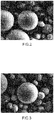
- the SEM images ( ⁇ 5000) of the transition metal hydroxide particles obtained in Examples 1 to 6 are shown in Figs. 2 to 7
- the SEM images ( ⁇ 5000) of the transition metal hydroxide particles obtained in Comparative Examples 1 to 4 are shown in Figs 8 to 11 .
- Examples 1 to 6 using the reaction apparatus of the present invention could improve fundamental properties such as an average secondary particle diameter (D50), a tap density, a bulk density, bulk density/tap density, and a BET specific surface area in a balanced manner without impairing the fundamental properties, and obtain transition metal hydroxide particles having an excellent crystallinity (half width of diffraction peak of (101) plane by X-ray diffraction) regardless of the composition of the transition metal hydroxide particles.
- D50 average secondary particle diameter
- D50 average secondary particle diameter
- a tap density a bulk density
- bulk density/tap density bulk density/tap density
- BET specific surface area a BET specific surface area
- Example 2 In particular, from contrast of Example 2 with Comparative Example 2, wherein the conditions of a circulating flow rate and a raw material liquid flow rate in Example 2 were the same as those in Comparative Example 2, the use of the reaction apparatus of the present invention improved each of the average secondary particle diameter (D50), the tap density, the bulk density, the bulk density/tap density, and the BET specific surface area which constitute the fundamental properties. Furthermore, Examples 4 to 6 in which the raw material liquid flow rate was 36 to 50 ml/min, and circulating flow rate/raw material liquid flow rate was 800 to 1111 could obtain excellent transition metal hydroxide particles having a BET specific surface area and a crystallinity further improved in a balanced manner among the fundamental properties. From Figs. 2 to 7 , in Examples 1 to 6, the shapes of the transition metal hydroxide particles could be more uniformly spheroidized.
- Comparative Examples 1 to 4 could not improve the fundamental properties in a balanced manner regardless of the composition of the transition metal hydroxide particles.
- Comparative Examples 1 to 4 could not obtain a good crystallinity as compared with Examples 1 to 6.
- Comparative Example 4 in which the raw material liquid flow rate was 36 ml/min had a BET specific surface area remarkably decreased among the fundamental properties as compared with Example 5 in which the raw material liquid flow rate was similarly 36 ml/min.
- the raw material liquid flow rate was 36 to 40 ml/min, and more than 20 ml/min in Comparative Example 1.
- Comparative Examples 3 and 4 in which the temperature of the mother liquid of the pH adjusting tank was 50°C, and higher than 45°C in Comparative Example 1, the shapes of the transition metal hydroxide particles could not be uniformly spheroidized.
- the present invention can improve fundamental properties such as a bulk density, a tapping density, a particle diameter, and a BET specific surface area in a balanced manner without impairing the fundamental properties, and obtain particles having an excellent crystallinity, whereby the present invention has a high utility value, for example, in the field of manufacture of a positive electrode active material precursor of a rechargeable battery.
Landscapes
- Chemical & Material Sciences (AREA)
- Organic Chemistry (AREA)
- Chemical Kinetics & Catalysis (AREA)
- Inorganic Chemistry (AREA)
- Electrochemistry (AREA)
- General Chemical & Material Sciences (AREA)
- Inorganic Compounds Of Heavy Metals (AREA)
- Battery Electrode And Active Subsutance (AREA)
- Physical Or Chemical Processes And Apparatus (AREA)
Abstract
Description
- The present invention relates to a reaction apparatus for causing a mother liquid to continuously circulate to obtain inorganic particles as a reaction product, and a method for manufacturing inorganic particles in which a mother liquid is continuously circulated.
- As a conventional apparatus for manufacturing inorganic particles, an apparatus has been proposed which simultaneously charges an aqueous solution containing a transition metal salt as a raw material and an alkaline solution into a reaction tank from the upper part of the reaction tank, introduces the aqueous solution containing a transition metal salt into the reaction tank from a feed opening provided in the lower part of the reaction tank, and flows the aqueous solution upward from the bottom of the reaction tank to cause the aqueous solution to collide with coprecipitating microcrystals falling downward, to obtain a transition metal hydroxide or oxide from a capturing part provided in the lower part of the equipment (Patent Literature 1).
- However,
Patent Literature 1 has the following problems: the dispersion of the aqueous solution containing a transition metal salt as a raw material liquid in the reaction tank is not sufficient, whereby various physical properties of inorganic particles such as improvements in a bulk density and a tapping density, crystal growth of particles (that is, improvement in a particle diameter), and improvement in a crystallinity are not sufficiently obtained. - Then, an apparatus for manufacturing inorganic particles has been proposed in which a raw material liquid containing a reaction substance which should be newly added is injected into an external circulating path continuously extracting a portion of a liquid in a distributor, and returning it to the distributor via a returning path (Patent Literature 2).
- However, in Patent Literature 2, the dispersibility of the raw material liquid in a mother liquid is improved, but the crystal growth (that is, improvement in a particle diameter) of particles is not sufficient. Patent Literature 2 causes a problem that spherical particles are less likely to be obtained, that is, a problem that various excellent physical properties of inorganic particles are not still obtained.
-
- Patent Literature 1: Japanese Patent Application Publication No.
2003-86182 - Patent Literature 2: Japanese Patent Application Publication No.
2013-151383 - In view of the above circumstances, it is an object of the present invention to provide a reaction apparatus and a method for manufacturing inorganic particles which can improve the dispersibility of a raw material liquid in a mother liquid, improve fundamental properties such as a bulk density, a tapping density, a particle diameter, and a BET specific surface area in a balanced manner without impairing the fundamental properties, and obtain particles having an excellent crystallinity and a higher degree of sphericity.
- An aspect of the present invention is a reaction apparatus including: a pH adjusting tank for adjusting a pH of a mother liquid stored therein; a pH adjuster feeding means for feeding a pH adjuster to the pH adjusting tank; a circulating path for continuously extracting a portion of the mother liquid having the adjusted pH from the pH adjusting tank, and returning the extracted mother liquid to the pH adjusting tank; and a raw material liquid feeding means for feeding a raw material liquid to the mother liquid circulating in the circulating path.
- In the aspect of the present invention, an additional pH adjuster is newly fed to the mother liquid containing the raw material liquid in the pH adjusting tank (when the reaction apparatus is started, the pH adjuster is fed to the mother liquid which does not contain the pH adjuster), but the raw material liquid is not fed. In the circulating path, an additional raw material liquid is newly fed to the mother liquid containing the raw material liquid (when the reaction apparatus is started, the raw material liquid is fed to the mother liquid which does not contain the raw material liquid), but the pH adjuster is not fed.
- An aspect of the present invention is the reaction apparatus, wherein the raw material liquid is fed to the mother liquid from a direction parallel to, or an acute angle direction with respect to, a flow direction of the mother liquid circulating in the circulating path.
- In the aspect, the raw material liquid is not fed to the mother liquid from a direction orthogonal to the flow direction of the mother liquid circulating in the circulating path.
- An aspect of the present invention is the reaction apparatus, wherein the circulating path is a tubular body, and the raw material liquid is fed by the raw material liquid feeding means from a region of the tubular body.
- An aspect of the present invention is the reaction apparatus, wherein an overflow pipe for taking out a reaction product is provided in the pH adjusting tank.
- An aspect of the present invention is the reaction apparatus for manufacturing a positive electrode active material precursor of a rechargeable battery.
- An aspect of the present invention is a method for manufacturing inorganic particles including the steps of: continuously feeding a raw material liquid to a mother liquid circulating in a circulating path for continuously extracting a portion of the mother liquid having an adjusted pH from a pH adjusting tank, and returning the extracted mother liquid to the pH adjusting tank; and continuously feeding a pH adjuster to the pH adjusting tank storing the mother liquid with the fed raw material liquid, to adjust a pH of the mother liquid.
- In the aspect of the present invention, an additional pH adjuster is newly fed to the mother liquid containing the raw material liquid in the pH adjusting tank (when the manufacturing method of the present invention is started, the pH adjuster is fed to the mother liquid which does not contain the pH adjuster), but the raw material liquid is not fed. In the circulating path, an additional raw material liquid is newly fed to the mother liquid containing the raw material liquid (when the manufacturing method of the present invention is started, the raw material liquid is fed to the mother liquid which does not contain the raw material liquid), but the pH adjuster is not fed.
- An aspect of the present invention is the method for manufacturing inorganic particles, wherein the raw material liquid is fed to the mother liquid from a direction parallel to, or an acute angle direction with respect to, a flow direction of the mother liquid circulating in the circulating path.
- In the aspect, the raw material liquid is not fed to the mother liquid from a direction orthogonal to the flow direction of the mother liquid circulating in the circulating path.
- An aspect of the present invention is the method for manufacturing inorganic particles, wherein the circulating path is a tubular body; and the raw material liquid is fed from a region of the tubular body.
- An aspect of the present invention is the method for manufacturing inorganic particles, wherein an overflow pipe for taking out the inorganic particles is provided in the pH adjusting tank.
- An aspect of the present invention is the method for manufacturing inorganic particles, wherein a value of a flow rate of the mother liquid circulating in the circulating path/a feed flow rate of the raw material liquid is 400 or more and less than 2400.
- An aspect of the present invention is the method for manufacturing inorganic particles, wherein the raw material liquid contains a transition metal ion.
- An aspect of the present invention is the method for manufacturing inorganic particles, wherein the pH adjuster further contains a complexing agent.
- An aspect of the present invention is the method for manufacturing inorganic particles, wherein the inorganic particles manufacture a positive electrode active material precursor of a rechargeable battery.
- By feeding the raw material liquid to the mother liquid circulating in the circulating path while feeding the pH adjuster to the pH adjusting tank storing the mother liquid according to the aspect of the present invention, the dispersibility of the raw material liquid in the mother liquid in the circulating path can be improved, whereby the crystal growth potential of the particles as a reaction product from the raw material liquid is improved, which can improve fundamental properties such as a bulk density, a tapping density, a particle diameter, and a BET specific surface area in a balanced manner without impairing the fundamental properties, and obtain particles having an excellent crystallinity and a higher degree of sphericity.
- According to the aspect of the present invention, the raw material liquid is fed to the mother liquid from a direction parallel to, or an acute angle direction with respect to, the flow direction of the mother liquid circulating in the circulating path, whereby the raw material liquid can be prevented from adhering to the inner surface of the circulating path, and the dispersibility of the raw material liquid in the mother liquid is further improved.
- According to the aspect of the present invention, the circulating path is the tubular body, and the raw material liquid is fed from the region of the tubular body, whereby the structure of the feed region of the raw material liquid in the circulating path can be simplified, and therefore, the whole structure of the circulating path can be simplified.
- According to the aspect of the present invention, the flow rate of the mother liquid circulating in the circulating path/the feed flow rate of the raw material liquid is 400 or more and less than 2400, which can improve fundamental properties such as a bulk density, a tapping density, a particle diameter, and a BET specific surface area in a balanced manner without impairing the fundamental properties, and obtain particles having an excellent crystallinity and a higher degree of sphericity.
-
- [
Fig. 1 ] A cross-sectional side view of a reaction apparatus according to an embodiment example of the present invention. - [
Fig. 2 ] An SEM image (× 5000) of transition metal hydroxide particles obtained in Example 1. - [
Fig. 3 ] An SEM image (× 5000) of transition metal hydroxide particles obtained in Example 2. - [
Fig. 4 ] An SEM image (× 5000) of transition metal hydroxide particles obtained in Example 3. - [
Fig. 5 ] An SEM image (× 5000) of transition metal hydroxide particles obtained in Example 4. - [
Fig. 6 ] An SEM image (× 5000) of transition metal hydroxide particles obtained in Example 5. - [
Fig. 7 ] An SEM image (× 5000) of transition metal hydroxide particles obtained in Example 6. - [
Fig. 8 ] An SEM image (× 5000) of transition metal hydroxide particles obtained in Comparative Example 1. - [
Fig. 9 ] An SEM image (× 5000) of transition metal hydroxide particles obtained in Comparative Example 2. - [
Fig. 10 ] An SEM image (× 5000) of transition metal hydroxide particles obtained in Comparative Example 3. - [
Fig. 11 ] An SEM image (× 5000) of transition metal hydroxide particles obtained in Comparative Example 4. - Thereafter, the present invention will be described in detail. First, an embodiment example of a reaction apparatus of the present invention will be described below with reference to the drawings.
- As shown in
Fig. 1 , areaction apparatus 1 according to an embodiment example of the present invention includes a pH adjustingtank 10 for adjusting the pH of amother liquid 14 stored therein, a pH adjuster feeding means 11 for feeding apH adjuster 15 to the pH adjustingtank 10, a circulatingpath 12 for continuously extracting a portion of themother liquid 14 having the adjusted pH from the pH adjustingtank 10, and continuously returning the extractedmother liquid 14 to the pH adjustingtank 10, and a raw material liquid feeding means 13 for feeding araw material liquid 16 to themother liquid 14 circulating in the circulatingpath 12. - The pH adjuster feeding means 11 provided in the pH adjusting
tank 10 is a tubular body including one end part communicated with the pH adjustingtank 10 and another end part communicated with a pH adjuster storing tank (not shown) storing thepH adjuster 15. The inner diameter of the tubular body is substantially uniform in any region. In thereaction apparatus 1, the pH of themother liquid 14 stored in thepH adjusting tank 10 is continuously measured by using a pH measuring instrument (not shown). According to a pH value measured by the pH measuring instrument, a pump (not shown) provided in the pH adjuster storing tank is operated, to feed thepH adjuster 15 to themother liquid 14 stored in pH adjustingtank 10 from the pH adjuster storing tank via the pH adjuster feeding means 11. According to the aspect, the pH of themother liquid 14 stored in the pH adjustingtank 10 is adjusted within a predetermined range. - In the pH adjusting
tank 10, astirrer 17 is provided. Thestirrer 17 mixes theraw material liquid 16 contained in themother liquid 14 stored in the pH adjustingtank 10 with thepH adjuster 15 fed from the pH adjuster feeding means 11, to uniformize the whole OH concentration of themother liquid 14 stored in the pH adjustingtank 10. - The whole OH concentration of the
mother liquid 14 is uniformized while themother liquid 14 is stored in the pH adjustingtank 10, whereby the reaction condition of themother liquid 14 is stable, and the reaction of theraw material liquid 16 in themother liquid 14 is stable. Even when the pH adjuster 15 and another ingredient (for example, complexing agent) are added by using the pH adjuster feeding means 11, the whole reaction condition of themother liquid 14 is uniformized, whereby the reaction of theraw material liquid 16 in themother liquid 14 is stable. - Particles as the reaction product which has been produced and grown are obtained from the pH adjusting
tank 10 storing themother liquid 14 having the uniformized OH concentration and containing an ingredient derived from theraw material liquid 16. Anoverflow pipe 18 communicated with the pH adjustingtank 10 is provided in a side surface part located on the top part side of thepH adjusting tank 10. The particles which have been produced and grown are taken out to the outside from thepH adjusting tank 10 via theoverflow pipe 18. - As shown in
Fig. 1 , a mother liquid extracting port 19 (inFig. 1 , provided in the bottom surface of the pH adjusting tank 10) and a mother liquid returning port 20 (inFig. 1 , provided in the top part of the pH adjusting tank 10) are provided in thepH adjusting tank 10. The circulatingpath 12 is a path of a tubular body connecting the motherliquid extracting port 19 to the motherliquid returning port 20. The inner diameter of the tubular body is substantially uniform in any region. A portion of the mother liquid 14 in thepH adjusting tank 10 is continuously extracted from the motherliquid extracting port 19, and the extracted mother liquid 14 is fed to the circulatingpath 12. The mother liquid 14 fed to the circulatingpath 12 circulates in the direction of the motherliquid returning port 20 from the motherliquid extracting port 19 in the circulatingpath 12. The mother liquid 14 circulating in the direction of the motherliquid returning port 20 from the motherliquid extracting port 19 in the circulatingpath 12 is fed to the motherliquid returning port 20 from the circulatingpath 12. Furthermore, themother liquid 14 is returned into thepH adjusting tank 10 from the motherliquid returning port 20. - The flow of the mother liquid 14 from mother
liquid extracting port 19 in the circulatingpath 12 to the direction of the motherliquid returning port 20 is achieved by a circulatingpump 21 provided in the circulatingpath 12. - The raw material liquid feeding means 13 for feeding the
raw material liquid 16 to the mother liquid 14 circulating in the circulatingpath 12 is provided in the circulatingpath 12. The raw material liquid feeding means 13 is a tubular body having one end part communicated with the circulatingpath 12 and another end part communicated with a raw material liquid storing tank (not shown) storing theraw material liquid 16. The inner diameter of the tubular body is substantially uniform in any region. Theraw material liquid 16 is fed to the mother liquid 14 flowing in the circulatingpath 12 from the raw material liquid feeding means 13, whereby the dispersibility of theraw material liquid 16 in themother liquid 14 is improved in the circulatingpath 12. Therefore, the reactivity of theraw material liquid 16 in themother liquid 14 is improved, which causes the particles as the reaction product to be satisfactorily produced, and causes the produced particles to be satisfactorily grown. - Thus, the reactivity of the
raw material liquid 16 is improved in themother liquid 14, and furthermore, as described above, the reaction condition of themother liquid 14 is stable, and the reaction of theraw material liquid 16 in themother liquid 14 is also stable, which can improve fundamental properties such as a bulk density, a tapping density, a particle diameter, and a BET specific surface area in a balanced manner without impairing the fundamental properties, and obtain particles having an excellent crystallinity and a higher degree of sphericity. - As shown in
Fig. 1 , in thereaction apparatus 1, theraw material liquid 16 is fed to the mother liquid 14 from a direction parallel to the flow direction of the mother liquid 14 circulating in the circulatingpath 12. That is, in thereaction apparatus 1, in a region in which one end part of the raw material liquid feeding means 13 is communicated with the circulatingpath 12, the flow direction of theraw material liquid 16 circulating in the raw material liquid feeding means 13 and the flow direction of the mother liquid 14 circulating in the circulatingpath 12 are parallel to each other in plan view. Therefore, in plan view, the raw material liquid feeding means 13 is provided so that the position of one end part side of the raw material liquid feeding means 13 is overlapped with the position of the circulatingpath 12 in a region communicated with one end part of the raw material liquid feeding means 13. That is, in a region in which the raw material liquid feeding means 13 and the circulatingpath 12 are communicated with each other, the raw material liquid feeding means 13 is provided in a direction parallel to the circulatingpath 12 in plan view. - As shown in
Fig. 1 , in thereaction apparatus 1, in the region in which the raw material liquid feeding means 13 and the circulatingpath 12 are communicated with each other, the raw material liquid feeding means 13 is provided in the direction of an acute angle (the direction of about 45° inFig. 1 ) in side view with respect to the circulatingpath 12. Therefore, the raw material liquid feeding means 13 is not provided in an orthogonal direction designed in order to generate swirl flow with respect to the circulatingpath 12 in both plan view and side view. - By the positional relationship between the raw material liquid feeding means 13 and the circulating
path 12, theraw material liquid 16 can be prevented from adhering to the inner surface of the circulatingpath 12. By the positional relationship between the raw material liquid feeding means 13 and the circulatingpath 12, theraw material liquid 16 can be certainly fed to a region in which the flow velocity of themother liquid 14 is high, whereby the dispersibility of theraw material liquid 16 in themother liquid 14 is further improved, and therefore, the reactivity of theraw material liquid 16 in themother liquid 14 is further improved. The positional relationship can suppress the disorder of the flow of the mother liquid 14 even if the flow of themother liquid 14 and the flow of theraw material liquid 16 converge, whereby the mother liquid 14 can smoothly circulate in the circulatingpath 12. Furthermore, the positional relationship provides easy maintenance when the clogging of theraw material liquid 16, or the like occurs. - Thereafter, another embodiment example of the reaction apparatus of the present invention will be described. In the reaction apparatus according to the embodiment example, in a region in which a raw material liquid feeding means and a circulating path are communicated with each other, the raw material liquid feeding means is provided in a direction parallel to the circulating path in plan view, but the feed direction of a raw material liquid to a mother liquid in the circulating path is not particularly limited. For example, even if the raw material liquid feeding means is provided in a direction substantially parallel to, or an acute angle direction with respect to, the circulating path in plan view, the effect of the positional relationship can be obtained.
- In the reaction apparatus according to the embodiment example, as described above, in the region in which the raw material liquid feeding means and the circulating path are communicated with each other, the raw material liquid feeding means is provided in a direction parallel to the circulating path in plan view. In place of this constitution, the raw material liquid feeding means may be provided in a direction parallel to the circulating
path 12 in the region in which the raw material liquid feeding means and the circulating path are communicated with each other in side view. - As necessary, on the upper stream side of the converging point between the mother liquid of the circulating path and the raw material liquid, that is, on the upper stream side with respect to a region communicated with the raw material liquid feeding means of the circulating path, a flow rate regulating member (for example, funnel or the like) may be set to reduce the inner diameter of the circulating path to change the flow velocity and flow rate of the mother liquid. By setting the flow rate regulating member in the circulating path, the flow velocity and flow rate of the mother liquid are adjusted just before an additional raw material liquid is fed to the mother liquid, whereby the dispersibility of the raw material liquid in the mother liquid can be adjusted.
- In the reaction apparatus according to the embodiment example, as necessary, furthermore, a particle size distribution controller may be provided in the reaction apparatus. By providing the particle size distribution controller, particles having a comparatively narrow particle size distribution can be obtained. Examples of the particle size distribution controller include an apparatus including a discharge pump for pumping a portion of the mother liquid and discharging it to the outside of the system after the amount of the mother liquid stored in the pH adjusting tank reaches a predetermined amount, a solid-liquid separator for subjecting the mother liquid discharged to the outside of the system to solid-liquid separation to remove a liquid phase, and producing a concentration slurry of the mother liquid, and a returning piping system for returning the concentration slurry obtained in the solid-liquid separator to the pH adjusting tank. In the reaction apparatus according to the embodiment example, the overflow pipe for continuously taking out the particles from the pH adjusting tank is provided. In place of the constitution, the particles may be taken out in a batch type from the pH adjusting tank without providing the overflow pipe.
- Thereafter, an example of a method using the
reaction apparatus 1 according to the embodiment example of the present invention will be described. The ingredient of inorganic particles is not particularly limited, and can be suitably selected according to the use application. Herein, a method used for manufacture of transition metal hydroxide particles such as nickel/cobalt/zinc composite hydroxide particles, and nickel/cobalt/magnesium composite hydroxide particles as a positive electrode active material precursor of a nickel hydrogen rechargeable battery as the inorganic particles, and nickel/cobalt/manganese composite hydroxide particles as a positive electrode active material precursor of a lithium rechargeable battery will be described as an example. - When the transition metal hydroxide particles are manufactured in the
reaction apparatus 1, an aqueous solution containing a nickel salt, a cobalt salt, and a transition metal salt is used as theraw material liquid 16, and an aqueous solution of an alkali metal hydroxide (for example, sodium hydroxide) is used as thepH adjuster 15. Furthermore, a complexing agent (for example, ammonium ion donor such as ammonia or ammonium sulfate) is fed to thepH adjusting tank 10 together with thepH adjuster 15 by using the pH adjuster feeding means 11. The complexing agent (for example, ammonium ion donor such as ammonia or ammonium sulfate) may be previously dissolved in theraw material liquid 16 and sent with theraw material liquid 16. - By using the circulating
pump 21, a portion of the mother liquid 14 having a pH adjusted by thepH adjuster 15 is continuously extracted from the motherliquid extracting port 19 of thepH adjusting tank 10 to the circulatingpath 12, and the extracted mother liquid 14 is caused to circulate in the circulatingpath 12. Theraw material liquid 16 is continuously fed to the mother liquid 14 flowing in the circulatingpath 12 by using the raw material liquid feeding means 13. The circulatingpath 12 continuously returns the mother liquid 14 to which theraw material liquid 16 has been fed, to thepH adjusting tank 10 via the motherliquid returning port 20. ThepH adjuster 15 and the complexing agent are continuously fed to thepH adjusting tank 10 storing the mother liquid 14 to which theraw material liquid 16 has been fed, by using the pH adjuster feeding means 11, to feed the complexing agent to the mother liquid 14 while adjusting the pH of themother liquid 14. - The value of the flow rate of the mother liquid 14 circulating in the circulating path 12 (circulating flow rate)/the feed amount of the raw material liquid 16 (raw material liquid flow rate) is not particularly limited. The value is preferably 400 or more and less than 2400 from the viewpoints of improving fundamental properties such as a bulk density, a tapping density, a particle diameter, and a BET specific surface area in a balanced manner without impairing the fundamental properties, and obtaining spherical particles having an excellent crystallinity, particularly preferably 1200 or more and less than 2400 from the viewpoints of obtaining an excellent crystallinity and further improving a bulk density, a tapping density, and a particle diameter, and particularly preferably 800 or more and less than 1200 from the viewpoint of further improving a crystallinity without impairing a bulk density, a tapping density, and a particle diameter.
- By carrying out the step in the
reaction apparatus 1, the transition metal hydroxide particles (herein, nickel/cobalt/zinc composite hydroxide particles, nickel/cobalt/magnesium composite hydroxide particles, nickel/cobalt/manganese composite hydroxide particles) can be obtained. By providing theoverflow pipe 18 in thepH adjusting tank 10, the transition metal hydroxide particles can be continuously taken out from thepH adjusting tank 10. - By using the
reaction apparatus 1 according to the embodiment example of the present invention, and further adding a metal salt solution containing cobalt ions or the like from the raw material liquid feeding means, the inorganic particles obtained as described above may be subjected to surface modification due to metallic coating of cobalt or the like. In thereaction apparatus 1 according to the embodiment example of the present invention, inorganic particles as oxyhydroxide particles of a transition metal can also be manufactured by further adding an oxidizer. - The reaction apparatus of the present invention may perform only the covering of the particles. That is, by separately charging the manufactured particles into the mother liquid of the reaction apparatus of the present invention in another reaction apparatus without using the reaction apparatus of the present invention, and adding the raw material liquid for covering from the raw material liquid feeding means to the circulating path, the covering may be provided on the particles.
- Thereafter, Examples of the present invention will be described below, but the present invention is not limited to these examples within a range not to exceed the scope of the present invention.
- Examples 1, 2, and 3 and Comparative Examples 1 and 2 are examples for obtaining nickel/cobalt/zinc composite hydroxide particles. By using a reaction apparatus (a reaction apparatus including an overflow pipe) of the present invention designed in a continuous type in Examples 1 and 2, and a reaction apparatus (a reaction apparatus including no overflow pipe) of the present invention designed in a batch type in Example 3, transition metal hydroxide particles were manufactured under conditions shown in the following Table 1. In Example 3 using the reaction apparatus of the present invention of a batch type, a raw material liquid was fed to a mother liquid circulating in a circulating path in a state where the mother liquid was present at a depth capable of being stirred by a stirring blade in a pH adjusting tank, to start the reaction. After the pH adjusting tank was filled with the mother liquid, the feeding of the raw material liquid to the circulating path was stopped as an aging step, and the mother liquid was continuously circulated in the circulating path for 1 hour. In Comparative Example 1, by using an overflow type reaction apparatus in which neither a mother liquid nor a raw material liquid circulated (a reaction apparatus for directly feeding a raw material liquid, a pH adjuster, and a complexing agent from a top plate of a pH adjusting tank to a mother liquid in the pH adjusting tank) in place of the reaction apparatus of the present invention, transition metal hydroxide particles were manufactured under conditions shown in the following Table 1. In Comparative Example 2, by using a reaction apparatus for directly feeding a raw material liquid not in a circulating path but from a top plate of a pH adjusting tank to a mother liquid in the pH adjusting tank while causing the mother liquid to circulate in the circulating path in place of the reaction apparatus of the present invention (a pH adjuster and a complexing agent were also directly fed into the pH adjusting tank from the top plate), transition metal hydroxide particles were manufactured under conditions shown in the following Table 1.
- Example 4 and Comparative Example 3 are examples for obtaining nickel/cobalt/magnesium composite hydroxide particles, and Examples 5 and 6 and Comparative Example 4 are examples for obtaining nickel/cobalt/manganese composite hydroxide particles. In Examples 4, 5, and 6, transition metal hydroxide particles were manufactured under conditions shown in the following Table 1 by using a reaction apparatus (a reaction apparatus including an overflow pipe) of the present invention designed in a continuation type. In Comparative Examples 3 and 4, by using an overflow type reaction apparatus in which neither a mother liquid nor a raw material liquid circulated (a reaction apparatus for directly feeding a raw material liquid, a pH adjuster, and a complexing agent from a top plate of a pH adjusting tank to a mother liquid in the pH adjusting tank) in place of the reaction apparatus of the present invention, transition metal hydroxide particles were manufactured under conditions shown in the following Table 1.
- Sodium hydroxide of 32% by mass was used as the pH adjuster. Together with the pH adjuster, 100 g/L of an ammonium sulfate aqueous solution as the complexing agent was added, to keep an ammonium ion concentration in the mother liquid of the pH adjusting tank at 12 g/L. As the raw material liquid, a transition metal salt such as nickel sulfate or cobalt sulfate was used to manufacture transition metal hydroxide particles.
[Table 1] Example 1 Example 2 Example 3 Example 4 Example 5 Example 6 Comparative Example 1 Comparative Example 2 Comparative Example 3 Comparative Example 4 Raw material liquid addition position Circulating path Circulating path Circulating path Circulating path Circulating path Circulating path Top plate of pH adjusting tank Top plate of pH adjusting tank Top plate of pH adjusting tank Top plate of pH adjusting tank Raw material liquid flow rate ml/min 20,00 20,00 20,00 40,00 36,00 50,00 20,00 20,00 40,00 36,00 Circulating flow rate L/min 24 40 40 40 40 40 - 40 - - Circulating flow rate/raw material liquid flow rate 1200 2000 2000 1000 1111 800 - 2000 - - Volume of pH adjusting tank L 50 50 50 50 50 50 50 50 50 50 Temperature of mother liquid of pH adjusting tank °C 45,0 45,0 45,0 50,0 50,0 50,0 45,0 45,0 50,0 50,0 Average secondary particle diameter (D50) µm 9,4 9,7 8,4 6,7 8,3 8,9 9,9 8,5 5,5 11,0 Tap density g/mL 2,24 2,27 1,93 2,20 2,04 2,13 2,19 2,24 1,76 2,25 Bulk density g/mL 1,75 1,87 1,44 1,67 1,57 1,71 1,71 1,66 1,30 1,70 Bulk density/tap density 0,78 0,82 0,75 0,76 0,77 0,80 0,78 0,74 0,74 0,76 Half width of diffraction peak of (101) plane by X-ray diffraction deg. 1,11 1,13 1,13 1,17 1,14 1,21 1,05 1,06 1,08 0,87 BET specific surface area m2/g 12,2 13,7 8,7 11,3 20,0 15,9 8,3 11,0 14,1 5,7 - Evaluation items of the transition metal hydroxide particles as a sample are as follows.
- The average secondary particle diameter was measured with a particle size distribution measuring device (LA-950 manufactured by Horiba, Ltd.) (the principle was based on a laser diffraction-scattering method).
- The tap density was measured with a constant-volume measuring method in techniques described in JIS R1628 by using a tap denser (KYT-4000 manufactured by Seishin Enterprise Co., Ltd.).
- A sample was caused to free-fall to fill a container with the sample, and the bulk density was measured from the volume of the container and the mass of the sample.
- X diffraction measurement was performed under the following conditions using an X-ray diffraction device (RINT2200 manufactured by Rigaku Corporation).
X-rays: CuKα/40 kV/40 mA
Slit: DS/SS=1°, RS = 0.3 mm
Scanning Mode: FT measurement
Sampling Time: 0.4 seconds
Step Width: 0.01° - The BET specific surface area was measured according to a one-point BET method by using a specific surface area measuring device (Macsorb manufactured by Mountech Co., Ltd.).
- The SEM images (× 5000) of the transition metal hydroxide particles obtained in Examples 1 to 6 are shown in
Figs. 2 to 7 , and the SEM images (× 5000) of the transition metal hydroxide particles obtained in Comparative Examples 1 to 4 are shown inFigs 8 to 11 . - As shown in the above Table 1, Examples 1 to 6 using the reaction apparatus of the present invention could improve fundamental properties such as an average secondary particle diameter (D50), a tap density, a bulk density, bulk density/tap density, and a BET specific surface area in a balanced manner without impairing the fundamental properties, and obtain transition metal hydroxide particles having an excellent crystallinity (half width of diffraction peak of (101) plane by X-ray diffraction) regardless of the composition of the transition metal hydroxide particles. In particular, from contrast of Example 2 with Comparative Example 2, wherein the conditions of a circulating flow rate and a raw material liquid flow rate in Example 2 were the same as those in Comparative Example 2, the use of the reaction apparatus of the present invention improved each of the average secondary particle diameter (D50), the tap density, the bulk density, the bulk density/tap density, and the BET specific surface area which constitute the fundamental properties. Furthermore, Examples 4 to 6 in which the raw material liquid flow rate was 36 to 50 ml/min, and circulating flow rate/raw material liquid flow rate was 800 to 1111 could obtain excellent transition metal hydroxide particles having a BET specific surface area and a crystallinity further improved in a balanced manner among the fundamental properties. From
Figs. 2 to 7 , in Examples 1 to 6, the shapes of the transition metal hydroxide particles could be more uniformly spheroidized. - On the other hand, Comparative Examples 1 to 4 could not improve the fundamental properties in a balanced manner regardless of the composition of the transition metal hydroxide particles. In particular, Comparative Examples 1 to 4 could not obtain a good crystallinity as compared with Examples 1 to 6. In particular, Comparative Example 4 in which the raw material liquid flow rate was 36 ml/min had a BET specific surface area remarkably decreased among the fundamental properties as compared with Example 5 in which the raw material liquid flow rate was similarly 36 ml/min. Furthermore, from
Figs. 10 and 11 , the raw material liquid flow rate was 36 to 40 ml/min, and more than 20 ml/min in Comparative Example 1. In Comparative Examples 3 and 4 in which the temperature of the mother liquid of the pH adjusting tank was 50°C, and higher than 45°C in Comparative Example 1, the shapes of the transition metal hydroxide particles could not be uniformly spheroidized. - The present invention can improve fundamental properties such as a bulk density, a tapping density, a particle diameter, and a BET specific surface area in a balanced manner without impairing the fundamental properties, and obtain particles having an excellent crystallinity, whereby the present invention has a high utility value, for example, in the field of manufacture of a positive electrode active material precursor of a rechargeable battery.
-
- 1 reaction apparatus
- 10 pH adjusting tank
- 11 pH adjuster feeding means
- 12 circulating path
- 13 raw material liquid feeding means
Claims (13)
- A reaction apparatus comprising:a pH adjusting tank for adjusting a pH of a mother liquid stored therein;a pH adjuster feeding means for feeding a pH adjuster to the pH adjusting tank;a circulating path for continuously extracting a portion of the mother liquid having the adjusted pH from the pH adjusting tank, and returning the extracted mother liquid to the pH adjusting tank; anda raw material liquid feeding means for feeding a raw material liquid to the mother liquid circulating in the circulating path.
- The reaction apparatus according to claim 1, wherein the raw material liquid is fed to the mother liquid from a direction parallel to, or an acute angle direction with respect to, a flow direction of the mother liquid circulating in the circulating path.
- The reaction apparatus according to claim 1 or 2, wherein the circulating path is a tubular body, and the raw material liquid is fed by the raw material liquid feeding means from a region of the tubular body.
- The reaction apparatus according to any one of claims 1 to 3, wherein an overflow pipe for taking out a reaction product is provided in the pH adjusting tank.
- The reaction apparatus according to any one of claims 1 to 4 for manufacturing a positive electrode active material precursor of a rechargeable battery.
- A method for manufacturing inorganic particles comprising the steps of:continuously feeding a raw material liquid to a mother liquid circulating in a circulating path for continuously extracting a portion of the mother liquid having an adjusted pH from a pH adjusting tank, and returning the extracted mother liquid to the pH adjusting tank; andcontinuously feeding a pH adjuster to the pH adjusting tank storing the mother liquid with the fed raw material liquid, to adjust a pH of the mother liquid.
- The method for manufacturing inorganic particles according to claim 6, wherein the raw material liquid is fed to the mother liquid from a direction parallel to, or an acute angle direction with respect to, a flow direction of the mother liquid circulating in the circulating path.
- The method for manufacturing inorganic particles according to claim 6 or 7, wherein the circulating path is a tubular body, and the raw material liquid is fed from a region of the tubular body.
- The method for manufacturing inorganic particles according to any one of claims 6 to 8, wherein an overflow pipe for taking out the inorganic particles is provided in the pH adjusting tank.
- The method for manufacturing inorganic particles according to any one of claims 6 to 9, wherein a value of a flow rate of the mother liquid circulating in the circulating path/a feed flow rate of the raw material liquid is 400 or more and less than 2400.
- The method for manufacturing inorganic particles according to any one of claims 6 to 10, wherein the raw material liquid contains a transition metal ion.
- The method for manufacturing inorganic particles according to any one of claims 6 to 11, wherein the pH adjuster further contains a complexing agent.
- The method for manufacturing inorganic particles according to any one of claims 6 to 12, wherein the inorganic particles manufacture a positive electrode active material precursor of a rechargeable battery.
Applications Claiming Priority (2)
| Application Number | Priority Date | Filing Date | Title |
|---|---|---|---|
| JP2016113892 | 2016-06-07 | ||
| PCT/JP2017/019553 WO2017212937A1 (en) | 2016-06-07 | 2017-05-25 | Reaction apparatus for obtaining inorganic particles, and method for producing inorganic particles |
Publications (2)
| Publication Number | Publication Date |
|---|---|
| EP3466531A1 true EP3466531A1 (en) | 2019-04-10 |
| EP3466531A4 EP3466531A4 (en) | 2020-01-15 |
Family
ID=60577814
Family Applications (1)
| Application Number | Title | Priority Date | Filing Date |
|---|---|---|---|
| EP17810117.6A Withdrawn EP3466531A4 (en) | 2016-06-07 | 2017-05-25 | REACTION APPARATUS FOR OBTAINING INORGANIC PARTICLES AND METHOD FOR PRODUCING INORGANIC PARTICLES |
Country Status (5)
| Country | Link |
|---|---|
| EP (1) | EP3466531A4 (en) |
| JP (1) | JP7025324B2 (en) |
| KR (1) | KR102337437B1 (en) |
| CN (1) | CN109310976A (en) |
| WO (1) | WO2017212937A1 (en) |
Cited By (2)
| Publication number | Priority date | Publication date | Assignee | Title |
|---|---|---|---|---|
| EP3984631A4 (en) * | 2019-12-20 | 2022-08-31 | LG Chem, Ltd. | POSITIVE ELECTRODE ACTIVE MATERIAL PRECURSOR, AND PREPARATION METHOD AND PREPARATION APPARATUS THEREOF |
| EP4101523A4 (en) * | 2020-02-03 | 2023-03-22 | Nihon Spindle Manufacturing Co., Ltd. | POULLIE STORAGE DEVICE AND METHOD, AND POULLIE PRODUCTION SYSTEM |
Families Citing this family (4)
| Publication number | Priority date | Publication date | Assignee | Title |
|---|---|---|---|---|
| CN110314420A (en) * | 2019-07-17 | 2019-10-11 | 西安奕斯伟硅片技术有限公司 | A kind of processing method and processing unit of silicon powder |
| JP7452201B2 (en) * | 2020-04-01 | 2024-03-19 | 住友金属鉱山株式会社 | Nickel sulfate solution manufacturing equipment and manufacturing method |
| CN113800547A (en) * | 2021-10-08 | 2021-12-17 | 滨州职业学院 | Digestion-carbonization device and calcium carbonate nano-coating process |
| KR102922804B1 (en) * | 2023-02-21 | 2026-02-03 | (주)포스코퓨처엠 | Apparatus and method of preparing precursor of cathode material for lithium secondary battery |
Family Cites Families (8)
| Publication number | Priority date | Publication date | Assignee | Title |
|---|---|---|---|---|
| KR19990015234A (en) * | 1997-08-04 | 1999-03-05 | 손욱 | Manufacturing method of high density nickel hydroxide active material |
| JP3827545B2 (en) | 2001-09-13 | 2006-09-27 | 松下電器産業株式会社 | Positive electrode active material, method for producing the same, and nonaqueous electrolyte secondary battery |
| DE102006049107A1 (en) | 2006-10-13 | 2008-04-17 | H.C. Starck Gmbh | Powdery compounds, processes for their preparation and their use in electrochemical applications |
| KR100887186B1 (en) * | 2007-09-18 | 2009-03-10 | 한국화학연구원 | Apparatus and method for producing a cathode active material precursor for a lithium secondary battery |
| JP6149730B2 (en) | 2011-12-27 | 2017-06-21 | 日本ゼオン株式会社 | Positive electrode for secondary battery, method for producing the same, slurry composition, and secondary battery |
| JP2013151383A (en) | 2012-01-24 | 2013-08-08 | Tsukishima Kikai Co Ltd | Method for manufacturing aggregated particle of metal, method for manufacturing positive electrode active material for lithium ion battery, method for manufacturing lithium ion battery, and lithium ion battery |
| JP5466732B2 (en) * | 2012-06-21 | 2014-04-09 | 月島機械株式会社 | Method for producing reactive aggregated particles, method for producing positive electrode active material for lithium ion battery, method for producing lithium ion battery, and apparatus for producing reactive aggregated particles |
| CN204917975U (en) * | 2015-08-11 | 2015-12-30 | 贵州开磷集团股份有限公司 | A sour blender for in phosphoric acid by wet process production |
-
2017
- 2017-05-25 CN CN201780035803.2A patent/CN109310976A/en active Pending
- 2017-05-25 EP EP17810117.6A patent/EP3466531A4/en not_active Withdrawn
- 2017-05-25 KR KR1020187036696A patent/KR102337437B1/en not_active Expired - Fee Related
- 2017-05-25 JP JP2018522415A patent/JP7025324B2/en not_active Expired - Fee Related
- 2017-05-25 WO PCT/JP2017/019553 patent/WO2017212937A1/en not_active Ceased
Cited By (3)
| Publication number | Priority date | Publication date | Assignee | Title |
|---|---|---|---|---|
| EP3984631A4 (en) * | 2019-12-20 | 2022-08-31 | LG Chem, Ltd. | POSITIVE ELECTRODE ACTIVE MATERIAL PRECURSOR, AND PREPARATION METHOD AND PREPARATION APPARATUS THEREOF |
| EP4101523A4 (en) * | 2020-02-03 | 2023-03-22 | Nihon Spindle Manufacturing Co., Ltd. | POULLIE STORAGE DEVICE AND METHOD, AND POULLIE PRODUCTION SYSTEM |
| US12508553B2 (en) | 2020-02-03 | 2025-12-30 | Nihon Spindle Manufacturing Co., Ltd. | Slurry storage device, slurry production system and slurry storage method |
Also Published As
| Publication number | Publication date |
|---|---|
| EP3466531A4 (en) | 2020-01-15 |
| JPWO2017212937A1 (en) | 2019-03-28 |
| KR102337437B1 (en) | 2021-12-09 |
| CN109310976A (en) | 2019-02-05 |
| JP7025324B2 (en) | 2022-02-24 |
| WO2017212937A1 (en) | 2017-12-14 |
| KR20190013848A (en) | 2019-02-11 |
Similar Documents
| Publication | Publication Date | Title |
|---|---|---|
| EP3466531A1 (en) | Reaction apparatus for obtaining inorganic particles, and method for producing inorganic particles | |
| US11205774B2 (en) | Nickel composite hydroxide and process for producing same, positive electrode active material and process for producing same, and non-aqueous electrolyte secondary battery | |
| US11394024B2 (en) | Nickel-cobalt-manganese complex hydroxide particles and method for producing same, positive electrode active material for nonaqueous electrolyte secondary battery and method for producing same, and nonaqueous electrolyte secondary battery | |
| EP4086229A1 (en) | Preparation method for high nickel ternary precursor capable of preferential growth of crystal planes by adjusting and controlling addition amount of seed crystals | |
| EP3225591B1 (en) | Nickel composite hydroxide and process for producing same | |
| KR101644258B1 (en) | Nickel composite hydroxide and method for producing same, positive electrode active material for nonaqueous electrolyte secondary batteries and method for producing same, and nonaqueous electrolyte secondary battery | |
| EP3154909B1 (en) | Improved lithium metal oxide cathode materials and method to make them | |
| US20110300470A1 (en) | Device and method for the production of compounds by precipitation | |
| KR20140008445A (en) | Transition metal composite hydroxide capable of serving as precursor of positive electrode active material for nonaqueous electrolyte secondary batteries, method for producing same, positive electrode active material for nonaqueous electrolyte secondary batteries, method for producing positive electrode active material for nonaqueous electrolyte secondary batteries, and nonaqueous electrolyte secondary battery using positive electrode active material | |
| KR20140047044A (en) | Positive electrode active material for nonaqueous electrolyte secondary batteries, method for manufacturing the same, and nonaqueous electrolyte secondary battery using said positive electrode active material | |
| EP3846262A1 (en) | Positive electrode active material particles for secondary batteries, and method for producing positive electrode active material particles for secondary batteries | |
| JP2016138024A (en) | Transition metal composite hydroxide particles and production method thereof, positive electrode active material for non-aqueous electrolyte secondary battery, production method thereof, and non-aqueous electrolyte secondary battery | |
| US20190312265A1 (en) | Method for preparing cathode particles and cathode active materials having same | |
| CN100438152C (en) | Active mixed nickel hydroxide cathode material for alkaline storage battery and preparation method thereof | |
| US20050221179A1 (en) | Active mixed nickel hydroxide cathode material for alkaline storage batteries and process for its production | |
| JP2022180552A (en) | Positive electrode active material for alkaline storage battery and method for producing positive electrode active material for alkaline storage battery | |
| EP4195325A1 (en) | Positive electrode active material for non-aqueous electrolyte secondary cell, and non-aqueous electrolyte secondary cell | |
| JP2002029755A (en) | Method for producing nickel hydroxide powder for alkaline secondary battery | |
| JP2024007364A (en) | Positive electrode active material for secondary batteries, method for producing the same, positive electrode for secondary batteries and secondary battery using the same | |
| EP3561925A1 (en) | Nonaqueous electrolyte positive electrode active material precursor | |
| EP3467914A1 (en) | Positive electrode material for rechargeable battery | |
| EP4663608A1 (en) | Method for preparing metal-bearing hydroxide particulate material | |
| CN115210187B (en) | Manufacturing method of nickel-containing hydroxide | |
| EP4375239A1 (en) | Zirconium hydroxide powder | |
| CN116354414A (en) | A kind of precursor material and preparation method thereof |
Legal Events
| Date | Code | Title | Description |
|---|---|---|---|
| STAA | Information on the status of an ep patent application or granted ep patent |
Free format text: STATUS: THE INTERNATIONAL PUBLICATION HAS BEEN MADE |
|
| PUAI | Public reference made under article 153(3) epc to a published international application that has entered the european phase |
Free format text: ORIGINAL CODE: 0009012 |
|
| STAA | Information on the status of an ep patent application or granted ep patent |
Free format text: STATUS: REQUEST FOR EXAMINATION WAS MADE |
|
| 17P | Request for examination filed |
Effective date: 20190102 |
|
| AK | Designated contracting states |
Kind code of ref document: A1 Designated state(s): AL AT BE BG CH CY CZ DE DK EE ES FI FR GB GR HR HU IE IS IT LI LT LU LV MC MK MT NL NO PL PT RO RS SE SI SK SM TR |
|
| AX | Request for extension of the european patent |
Extension state: BA ME |
|
| DAV | Request for validation of the european patent (deleted) | ||
| DAX | Request for extension of the european patent (deleted) | ||
| A4 | Supplementary search report drawn up and despatched |
Effective date: 20191213 |
|
| RIC1 | Information provided on ipc code assigned before grant |
Ipc: H01M 4/525 20100101ALI20191209BHEP Ipc: C01G 53/00 20060101ALI20191209BHEP Ipc: B01J 19/00 20060101AFI20191209BHEP |
|
| STAA | Information on the status of an ep patent application or granted ep patent |
Free format text: STATUS: EXAMINATION IS IN PROGRESS |
|
| 17Q | First examination report despatched |
Effective date: 20200908 |
|
| GRAP | Despatch of communication of intention to grant a patent |
Free format text: ORIGINAL CODE: EPIDOSNIGR1 |
|
| STAA | Information on the status of an ep patent application or granted ep patent |
Free format text: STATUS: GRANT OF PATENT IS INTENDED |
|
| INTG | Intention to grant announced |
Effective date: 20240227 |
|
| STAA | Information on the status of an ep patent application or granted ep patent |
Free format text: STATUS: THE APPLICATION IS DEEMED TO BE WITHDRAWN |
|
| 18D | Application deemed to be withdrawn |
Effective date: 20240628 |