EP3466448B1 - Liquid preparation for contact lenses comprising hydrolyzed hyaluronic acid derivative and cationic bactericide - Google Patents
Liquid preparation for contact lenses comprising hydrolyzed hyaluronic acid derivative and cationic bactericide Download PDFInfo
- Publication number
- EP3466448B1 EP3466448B1 EP16903032.7A EP16903032A EP3466448B1 EP 3466448 B1 EP3466448 B1 EP 3466448B1 EP 16903032 A EP16903032 A EP 16903032A EP 3466448 B1 EP3466448 B1 EP 3466448B1
- Authority
- EP
- European Patent Office
- Prior art keywords
- hyaluronic acid
- acid derivative
- hydrolyzed hyaluronic
- scl
- liquid preparation
- Prior art date
- Legal status (The legal status is an assumption and is not a legal conclusion. Google has not performed a legal analysis and makes no representation as to the accuracy of the status listed.)
- Active
Links
Images




Classifications
-
- A—HUMAN NECESSITIES
- A61—MEDICAL OR VETERINARY SCIENCE; HYGIENE
- A61L—METHODS OR APPARATUS FOR STERILISING MATERIALS OR OBJECTS IN GENERAL; DISINFECTION, STERILISATION OR DEODORISATION OF AIR; CHEMICAL ASPECTS OF BANDAGES, DRESSINGS, ABSORBENT PADS OR SURGICAL ARTICLES; MATERIALS FOR BANDAGES, DRESSINGS, ABSORBENT PADS OR SURGICAL ARTICLES
- A61L12/00—Methods or apparatus for disinfecting or sterilising contact lenses; Accessories therefor
- A61L12/08—Methods or apparatus for disinfecting or sterilising contact lenses; Accessories therefor using chemical substances
- A61L12/14—Organic compounds not covered by groups A61L12/10 or A61L12/12
- A61L12/141—Biguanides, e.g. chlorhexidine
- A61L12/142—Polymeric biguanides
-
- A—HUMAN NECESSITIES
- A61—MEDICAL OR VETERINARY SCIENCE; HYGIENE
- A61L—METHODS OR APPARATUS FOR STERILISING MATERIALS OR OBJECTS IN GENERAL; DISINFECTION, STERILISATION OR DEODORISATION OF AIR; CHEMICAL ASPECTS OF BANDAGES, DRESSINGS, ABSORBENT PADS OR SURGICAL ARTICLES; MATERIALS FOR BANDAGES, DRESSINGS, ABSORBENT PADS OR SURGICAL ARTICLES
- A61L12/00—Methods or apparatus for disinfecting or sterilising contact lenses; Accessories therefor
- A61L12/08—Methods or apparatus for disinfecting or sterilising contact lenses; Accessories therefor using chemical substances
- A61L12/14—Organic compounds not covered by groups A61L12/10 or A61L12/12
- A61L12/141—Biguanides, e.g. chlorhexidine
-
- A—HUMAN NECESSITIES
- A61—MEDICAL OR VETERINARY SCIENCE; HYGIENE
- A61L—METHODS OR APPARATUS FOR STERILISING MATERIALS OR OBJECTS IN GENERAL; DISINFECTION, STERILISATION OR DEODORISATION OF AIR; CHEMICAL ASPECTS OF BANDAGES, DRESSINGS, ABSORBENT PADS OR SURGICAL ARTICLES; MATERIALS FOR BANDAGES, DRESSINGS, ABSORBENT PADS OR SURGICAL ARTICLES
- A61L12/00—Methods or apparatus for disinfecting or sterilising contact lenses; Accessories therefor
- A61L12/08—Methods or apparatus for disinfecting or sterilising contact lenses; Accessories therefor using chemical substances
- A61L12/14—Organic compounds not covered by groups A61L12/10 or A61L12/12
- A61L12/143—Quaternary ammonium compounds
-
- A—HUMAN NECESSITIES
- A61—MEDICAL OR VETERINARY SCIENCE; HYGIENE
- A61P—SPECIFIC THERAPEUTIC ACTIVITY OF CHEMICAL COMPOUNDS OR MEDICINAL PREPARATIONS
- A61P27/00—Drugs for disorders of the senses
- A61P27/02—Ophthalmic agents
-
- A—HUMAN NECESSITIES
- A61—MEDICAL OR VETERINARY SCIENCE; HYGIENE
- A61P—SPECIFIC THERAPEUTIC ACTIVITY OF CHEMICAL COMPOUNDS OR MEDICINAL PREPARATIONS
- A61P27/00—Drugs for disorders of the senses
- A61P27/02—Ophthalmic agents
- A61P27/04—Artificial tears; Irrigation solutions
-
- A—HUMAN NECESSITIES
- A61—MEDICAL OR VETERINARY SCIENCE; HYGIENE
- A61K—PREPARATIONS FOR MEDICAL, DENTAL OR TOILETRY PURPOSES
- A61K47/00—Medicinal preparations characterised by the non-active ingredients used, e.g. carriers or inert additives; Targeting or modifying agents chemically bound to the active ingredient
- A61K47/30—Macromolecular organic or inorganic compounds, e.g. inorganic polyphosphates
- A61K47/36—Polysaccharides; Derivatives thereof, e.g. gums, starch, alginate, dextrin, hyaluronic acid, chitosan, inulin, agar or pectin
-
- A—HUMAN NECESSITIES
- A61—MEDICAL OR VETERINARY SCIENCE; HYGIENE
- A61K—PREPARATIONS FOR MEDICAL, DENTAL OR TOILETRY PURPOSES
- A61K9/00—Medicinal preparations characterised by special physical form
- A61K9/0012—Galenical forms characterised by the site of application
- A61K9/0048—Eye, e.g. artificial tears
Definitions
- the present invention relates to the use of a liquid preparation as a hydrophilicity improving agent for soft contact lenses, as well as to a liquid preparation per se for soft contact lenses, wherein the liquid preparation comprises a specific hydrolyzed hyaluronic acid derivative as a humectant (aqueous liquid preparation).
- Patent Literature 1 discloses an ophthalmic composition for reducing a feeling of dryness in use of soft contact lenses, the ophthalmic composition containing vitamin A or vitamin D which is a fat-soluble vitamin.
- Patent Literature 2 discloses an ophthalmic composition for soft contact lenses containing (A) vitamin A, (B) panthenol, (C) a nonionic surfactant and polyhydric alcohol.
- Silicone hydrogel contact lenses are contact lenses developed as soft contact lenses having high oxygen permeability.
- chlorobutanol which is used as a bactericide for contact lenses is very easily adsorbed to silicone hydrogel contact lenses.
- Patent Literature 3 discloses an ophthalmic composition for contact lenses which is capable of suppressing adsorption of chlorobutanol to silicone hydrogel contact lenses, the ophthalmic composition containing a combination of (A) chlorobutanol and (B) at least one selected from the group consisting of hyaluronic acid, chondroitin sulfate, alginic acid, hydroxypropylmethyl cellulose, and a salt thereof.
- Patent Literature 4 discloses an ophthalmic solution for wearing contact lenses which includes (A) at least one selected from the group consisting of a cellulose-based polymer compound, a vinyl-based polymer compound and dextran and (B) at least one selected from the group consisting of chondroitin sulfate, hyaluronic acid, aspartic acid, aminoethylsulfonic acid, epsilon-aminocaproic acid and a salt thereof.
- the ophthalmic solution for wearing contact lenses is used for both a solution for wearing contact lenses and an ophthalmic solution during wear of contact lenses with the same composition.
- Non-Patent Literature 1 suggests that silicone hydrogel contact lenses may cause damage such as corneal staining when combined with some of multi-purpose solutions (MPS: disinfection solution capable of cleaning, rinsing, preserving and disinfecting soft contact lenses in one solution), and the cause of such is considered to be based on compatibility of silicone hydrogel contact lenses with a bactericide.
- MPS disinfection solution capable of cleaning, rinsing, preserving and disinfecting soft contact lenses in one solution
- NPL 1 Kudo Masayuki, Itoi Akira, New Ophthalmology, 22 (10): 1349-1355, 2005
- compositions disclosed in Patent Literatures 1 and 4 have the effect of reducing a feeling of dryness in soft contact lens users, the effect is not sufficient.
- research itself has not sufficiently made progress on a phenomenon in which a bactericide contained in a composition (liquid preparation) for soft contact lenses is adsorbed to soft contact lenses, and adversely affect the eyes of a user, and studies have hardly been conducted on means for suppressing adsorption of bactericide components to soft contact lenses.
- the present inventors have extensively conducted studies on components added in MPS for reducing a feeling of dryness in a user during wear of soft contact lenses. Resultantly, the present inventors have found that a hydrolyzed hyaluronic acid derivative having a specific structure (low-molecular-weight hyaluronic acid derivative) has higher hydrophilicity imparting effect than that of hyaluronic acid, and is capable of suppressing adsorption of a general-purpose bactericide to soft contact lenses, leading to completion of the present invention.
- the present invention relates to the use of a liquid preparation as a hydrophilicity improving agent for soft contact lenses, wherein said liquid preparation comprises a hydrolyzed hyaluronic acid derivative, the hydrolyzed hyaluronic acid derivative having a monoether of a linear or branched alkyl group or alkenyl group having 6 or more and 20 or less carbon atoms and glycerin in a side chain.
- the present invention further relates to a liquid preparation for soft contact lenses comprising a hydrolyzed hyaluronic acid derivative, the hydrolyzed hyaluronic acid derivative having a monoether of a linear or branched alkyl group or alkenyl group having 6 or more and 20 or less carbon atoms and glycerin in a side chain; further comprising at least one selected from the group consisting of an alexidine salt, a chlorhexidine salt, a polyhexamethylene biguanide salt and a quaternary ammonium salt as a cationic bactericide.
- the liquid preparation for soft contact lenses according to the present invention may be an aqueous liquid preparation which can be used as MPS for contact lenses or an artificial tear fluid, the liquid preparation containing as a humectant a hydrolyzed hyaluronic acid derivative having a specific structure.
- the hydrolyzed hyaluronic acid derivative having a specific structure (hydrolyzed alkyl glyceryl hyaluronate) for use in the present invention exhibits a higher hydrophilicity imparting effect as compared with hyaluronic acid, and is capable of suppressing adsorption of a cationic bactericide to contact lenses.
- the liquid preparation further contains at least one selected from the group consisting of an alexidine salt, a chlorhexidine salt, a polyhexamethylene biguanide salt and a quaternary ammonium salt as a cationic bactericide.
- a content of the hydrolyzed hyaluronic acid derivative in the liquid preparation is preferably 5 ppm or more and 5000 ppm or less.
- a concentration of the cationic bactericide in the liquid preparation is preferably 0.5 ppm or more and 50 ppm or less.
- the hydrolyzed hyaluronic acid derivative is preferably a hydrolyzed hyaluronic acid derivative having a chemical structure represented by the following chemical formula
- the liquid preparation is preferably a liquid preparation for hydrogel contact lenses or silicone hydrogel contact lenses.
- the present invention it is possible to prevent a feeling of dryness in a user during wear of soft contact lenses, and adsorption of a cationic bactericide to soft contact lenses, and suppress damage to the eyes of a user.
- the liquid preparation for soft contact lenses (SCL) contains as essential constituent components (1) at least one cationic bactericide selected from the group consisting of an alexidine salt, a chlorhexidine salt, a polyhexamethylene biguanide salt and a quaternary ammonium salt; and (2) a hydrolyzed hyaluronic acid derivative having a monoether of a linear or branched alkyl group or alkenyl group having 6 or more and 20 or less carbon atoms and glycerin in the side chain.
- the liquid preparation for CL according to the present invention may contain optional constituent components such as a pH adjuster or an osmotic pressure adjuster. As the optional components, known components that are used for MPS for CL may be contained at normal concentrations.
- the hydrolyzed hyaluronic acid derivative mentioned in the present invention is a compound obtained by hydrolyzing natural or synthetic hyaluronic acid to reduce the molecular weight thereof, and introducing a monoether of a linear or branched alkyl or alkenyl group having 6 or more and 20 or less carbon atoms and glycerin to the side chain.
- the concentration of the bactericide in the liquid preparation for CL is preferably 0.5 ppm or more and 50 ppm or less, more preferably 1 ppm or more and 20 ppm or less.
- the carbon chain of the side chain of the hydrolyzed hyaluronic acid derivative is preferably a linear or branched alkyl group or alkenyl group having 6 or more and 20 or less carbon atoms, more preferably a linear alkyl group having 10 or more and 15 or less carbon atoms.
- the concentration of the hydrolyzed hyaluronic acid derivative in the liquid preparation for CL is preferably 5 ppm or more and 5000 ppm or less, more preferably 20 ppm or more and 1000 ppm or less.
- the hydrolyzed hyaluronic acid derivative has a chemical structure represented by [Chemical Formula 1].
- the number of methylene groups in the side chain R is preferably 11 or 12.
- the hydrolyzed hyaluronic acid derivative has an average molecular weight of 5000 or more and 10000 or less.
- the average molecular weight means a value measured by the following method.
- 0.05 g of a sample is precisely weighed, and dissolved in a 0.2 mol/L sodium chloride solution, and the amount of the solution is adjusted to 100 mL accurately.
- the solution is taken in amounts of 8 mL, 12 mL and 16 mL accurately, a 0.2 mol/L sodium chloride solution is added to each solution accurately to 20 mL, and the thus-obtained solutions are used as sample solutions.
- the specific viscosity is measured at 30.0 ⁇ 0.1°C by the viscosity measurement method (first method: Capillary Viscometer Method) in General Test Method in the Japanese Pharmacopoeia (15th revision) (formula (A)), and the reduced viscosity at each concentration is calculated (formula (B)).
- the reduced viscosity is plotted on the ordinate, and the calculated concentration (g/100 mL) of the sample in the dried product is plotted on abscissa, and the intrinsic viscosity is determined from the intersection of the straight line connecting the points and the ordinate.
- the intrinsic viscosity determined here is substituted into the Laurent's equation (formula (C)) to calculate the average molecular weight ( TC Laurent, M. Ryan, A. Pietruszkiewicz,: BBA, 42, 476-485 (1960 )).
- the adsorptivity of the hydrolyzed hyaluronic acid derivative represented by [Chemical Formula 1] to a soft contact lenses (SCL) was evaluated in the following procedure.
- HYORORIPEAR registered trademark
- HYALO OLIGO registered trademark, low molecular weight hyaluronic acid having an average molecular weight of 10,000 or less and obtained by hydrolyzing hyaluronic acid
- sodium hyaluronate HA-LQ manufactured by Kewpie Corporation was used.
- hydrolyzed hyaluronic acid derivative hydrolyzed alkyl (C 12-13) glyceryl hyaluronate
- [Chemical formula 1] 50 mL of purified water and 380 mg of the hydrolyzed hyaluronic acid derivative (hydrolyzed alkyl (C 12-13) glyceryl hyaluronate) represented by [Chemical formula 1] were put in a 200 mL beaker, and stirred and dissolved.
- EDC 1-ethyl-3- (3-dimethylaminopropyl) carbodiimide hydrochloride
- DMEQ-hydrazide 1,2,3,4-tetrahydro-6,7-dimethoxy-1-methyl-2-oxoquinoxaline-3-propionic acid hydrazide
- the liquid after fluorescence labeling reaction was added to a dialysis membrane, and the mixture was stirred in 5 L of purified water to perform dialysis. 12-hours dialysis was repeated four times. Purified water was exchanged every time.
- Sodium hyaluronate and hydrolyzed hyaluronic acid were fluorescence-labeled by performing the same operation as in the case of the hydrolyzed hyaluronic acid derivative represented by [Chemical Formula 1]. These samples are referred to as fluorescence-labeled sample 2 and fluorescence-labeled sample 3, respectively.
- etafilcon A FDA Group IV
- senofilcon A FDA Group I
- balafilcon A FDA Group III
- the cycle treatment was repeated, and the SCL at the first day and 13th day of immersion was used as a measurement sample.
- the fluorescence intensity was measured in accordance with "Method for evaluating adsorptivity of fluorescence-labeled sample to SCL using fluorescence microscope" as described later, and adsorptivity of each fluorescence-labeled sample to SCL was evaluated.
- Three SCLs were used at each measurement point. Each SCL was taken out from the immersion liquid, then immersed in 2 mL of PBS for 5 minutes (repeated twice), and then used for the evaluation test.
- a mounting medium was dropped to two spots on a glass plate, and SCL cut into two halves was placed on the dropping spots, and covered with a cover glass. This was used as a specimen for a fluorescence microscope.
- the specimen was set on a fluorescence microscope (inverted research microscope IX71 manufactured by Olympus Corporation), four photographs were taken per SCL using a filter WU (excitation wavelength: 330 to 385 nm, fluorescence wavelength: 420 nm or more) with the device set to a magnification ratio of 4 and camera shutter speed of 200 ms. Thereafter, the fluorescence intensity on the SCL was measured, and the measurement result was analyzed using image analysis software Image-J.
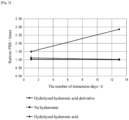
- Fig. 1 shows a graph obtained by plotting a relationship between the number of days of immersion of SCL having etafilcon A as a material in a hydrolyzed hyaluronic acid derivative, Na hyaluronate and hydrolyzed hyaluronic acid and a relative fluorescence intensity value.
- the fluorescence intensity of the hydrolyzed hyaluronic acid derivative 1 day after immersion was significantly different from the fluorescence intensity of Na hyaluronate and hydrolyzed hyaluronic acid at a risk ratio of less than 5%.
- the fluorescence intensity of the hydrolyzed hyaluronic acid derivative 13 days after immersion was significantly different from the fluorescence intensity of Na hyaluronate and hydrolyzed hyaluronic acid at a risk ratio of less than 5%. Further, the fluorescence intensity of the hydrolyzed hyaluronic acid derivative 13 days after immersion was significantly different from the fluorescence intensity of the hydrolyzed hyaluronic acid derivative 1 day after immersion at a risk ratio of less than 5%. On the other hand, the fluorescence intensities of Na hyaluronate and hydrolyzed hyaluronic acid 13 days after immersion were not significantly different from those 1 day after immersion.
- Fig. 2 shows a graph obtained by plotting a relationship between the number of days of immersion of SCL having balafilcon A as a material in a hydrolyzed hyaluronic acid derivative, Na hyaluronate and hydrolyzed hyaluronic acid and a relative fluorescence intensity value.
- the fluorescence intensity of the hydrolyzed hyaluronic acid derivative 1 day after immersion was significantly different from the fluorescence intensity of Na hyaluronate and hydrolyzed hyaluronic acid at a risk ratio of less than 5%.
- the fluorescence intensity of the hydrolyzed hyaluronic acid derivative 13 days after immersion was significantly different from the fluorescence intensity of Na hyaluronate and hydrolyzed hyaluronic acid at a risk ratio of less than 5%. Further, the fluorescence intensity of the hydrolyzed hyaluronic acid derivative 13 days after immersion was significantly different from the fluorescence intensity of the hydrolyzed hyaluronic acid derivative 1 day after immersion at a risk ratio of less than 5%. On the other hand, the fluorescence intensities of Na hyaluronate and hydrolyzed hyaluronic acid 13 days after immersion were not significantly different from those 1 day after immersion.
- Fig. 3 shows a graph obtained by plotting a relationship between the number of days of immersion of SCL having senofilcon A as a material in a hydrolyzed hyaluronic acid derivative, Na hyaluronate and hydrolyzed hyaluronic acid and a relative fluorescence intensity value.
- the fluorescence intensity of the hydrolyzed hyaluronic acid derivative 1 day after immersion was significantly different from the fluorescence intensity of Na hyaluronate and hydrolyzed hyaluronic acid at a risk ratio of less than 5%.
- the fluorescence intensity of the hydrolyzed hyaluronic acid derivative 13 days after immersion was significantly different from the fluorescence intensity of Na hyaluronate and hydrolyzed hyaluronic acid at a risk ratio of less than 5%. Further, the fluorescence intensity of the hydrolyzed hyaluronic acid derivative 13 days after immersion was significantly different from the fluorescence intensity of the hydrolyzed hyaluronic acid derivative 1 day after immersion at a risk ratio of less than 5%. On the other hand, the fluorescence intensities of Na hyaluronate and hydrolyzed hyaluronic acid 13 days after immersion were not significantly different from those 1 day after immersion.
- the hydrolyzed hyaluronic acid derivative represented by [Chemical Formula 1] is adsorbed in a larger amount to SCL having hydrogel or silicone hydrogel as a material as compared to Na hyaluronate or hydrolyzed hyaluronic acid.
- the hydrophilicity of the SCL surface is increased to stabilize the tear fluid layer on SCL.
- cationic disinfectant components hardly remain in SCL, and thus suppression of an adverse effect on the cornea can be expected.
- SCL having etafilcon A, senofilcon A or balafilcon A as a material was taken out from a blister pack. Moisture on SCL to be measured was wiped off twice with a paper waste cloth, and then the contact angle was measured using a dynamic contact angle measuring apparatus (automatic contact angle meter DSA 100 S manufactured by Kruss Company). SCL was set on a sample stage of the dynamic contact angle measuring apparatus in such a manner that the concave surface of the SCL faced upward, and 2 ⁇ L of PBS was dropped. After dropping, droplets were photographed with a camera after about 10 seconds, and the contact angle between the SCL surface and the droplet was calculated by analysis software.
- each SCL was immersed in a PBS solution containing 50 ppm of the hydrolyzed hyaluronic acid derivative.
- PBS a PBS solution containing 50 ppm of the hydrolyzed hyaluronic acid derivative.
- each SCL was immersed in PBS.
- the SCLs were immersed in the respective solutions overnight, and then subj ected to cycle treatment under the condition of immersion of the SCL in PBS for 8 hours in conformity to actual wear.
- the cycle treatment was repeated, and for SCL 1 day after immersion and 13 days after immersion, the contact angle was calculated in the same manner as described above.
- each SCL was immersed in a PBS solution containing 50 ppm of Na hyaluronate instead of the hydrolyzed hyaluronic acid derivative, and the contact angle was calculated in the same manner as in the case of the hydrolyzed hyaluronic acid derivative.
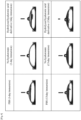
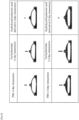
- Fig. 4 shows a photograph of a droplet on SCL having etafilcon A as a material, the photograph being taken by a dynamic contact angle measuring apparatus.
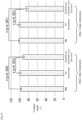
- Fig. 5 shows a contact angle calculated from Fig. 4 . From Fig. 5 , it is confirmed that SCL immersed in PBS containing 50 ppm of the hydrolyzed hyaluronic acid derivative represented by [Chemical formula 1] has a significantly smaller contact angle, i.e. higher hydrophilicity, as compared to SCL immersed in PBS, or PBS containing 50 ppm of Na hyaluronate (Mann-Whitney U test).
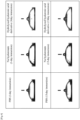
- Fig. 6 shows a photograph of a droplet on SCL having balafilcon A as a material, the photograph being taken by a dynamic contact angle measuring apparatus.
- Fig. 7 shows a contact angle calculated from Fig. 6 . From Fig. 6 , it is confirmed that SCL immersed in PBS containing 50 ppm of the hydrolyzed hyaluronic acid derivative represented by [Chemical formula 1] has a significantly smaller contact angle, i.e. higher hydrophilicity, as compared to SCL immersed in PBS, or PBS containing 50 ppm of Na hyaluronate (Mann-Whitney U test).
- Fig. 8 shows a photograph of a droplet on SCL having senofilcon A as a material, the photograph being taken by a dynamic contact angle measuring apparatus.
- Fig. 9 shows a contact angle calculated from Fig. 8 . From Fig. 6 , it is confirmed that SCL immersed in PBS containing 50 ppm of the hydrolyzed hyaluronic acid derivative represented by [Chemical formula 1] has a significantly smaller contact angle, i.e. higher hydrophilicity, as compared to SCL immersed in PBS, or PBS containing 50 ppm of Na hyaluronate (Mann-Whitney U test).
- the hydrolyzed hyaluronic acid derivative represented by [Chemical Formula 1] has a smaller contact angle, and a higher effect of increasing the hydrophilicity of the SCL surface as compared to Na hyaluronate.
- the adsorptivity of the hydrolyzed hyaluronic acid derivative represented by [Chemical Formula 1] to SCL is supposed to be derived from hydrophobic groups of the derivative.
- PHMB Polyhexamethylene biguanide
- Fig. 10 shows a graph showing the amount of PHMB adsorbed per SCL when the SCL is immersed in solution A containing a hydrolyzed hyaluronic acid derivative represented by [Chemical formula 1] and solution B which does not contain the hydrolyzed hyaluronic acid derivative. It is confirmed that the amount of PHMB adsorbed to SCL immersed in solution A containing the hydrolyzed hyaluronic acid derivative represented by [Chemical Formula 1] is smaller than the amount of PHMB adsorbed to SCL immersed in solution B which does not contain the hydrolyzed hyaluronic acid derivative represented by [Chemical formula 1], at a risk ratio of less than 1% (Mann-Whitney U test).
- hydrolyzed hyaluronic acid derivative represented by [Chemical Formula 1] is structurally characterized by having a carboxyl group, the hydrolyzed hyaluronic acid derivative repels cations when it adsorbed to the SCL surface, and therefore adsorption of a cationic bactericide to SCL is hindered.
- adsorption of cationic bactericides other than PHMB to SCL can also be hindered.
- Fig. 11 shows a graph showing SPK score measurement results for 15 subjects (30 eyes). It is confirmed that the SPK score for solution A containing the hydrolyzed hyaluronic acid derivative represented by [Chemical Formula 1] is significantly lower than that for solution B which does not contain the hydrolyzed hyaluronic acid derivative represented by [Chemical formula 1] (Mann-Whitney U test). That is, the hydrolyzed hyaluronic acid derivative represented by [Chemical Formula 1] is confirmed to have an effect of suppressing occurrence of corneal staining.
- the liquid preparation for SCL according to the present invention is useful in the technical field of soft contact lenses as a solution for preserving or wearing hydrogel contact lenses or silicone hydrogel contact lenses.
Landscapes
- Health & Medical Sciences (AREA)
- Chemical & Material Sciences (AREA)
- Chemical Kinetics & Catalysis (AREA)
- General Chemical & Material Sciences (AREA)
- Life Sciences & Earth Sciences (AREA)
- Animal Behavior & Ethology (AREA)
- General Health & Medical Sciences (AREA)
- Public Health (AREA)
- Veterinary Medicine (AREA)
- Epidemiology (AREA)
- Ophthalmology & Optometry (AREA)
- Engineering & Computer Science (AREA)
- Bioinformatics & Cheminformatics (AREA)
- Medicinal Chemistry (AREA)
- Nuclear Medicine, Radiotherapy & Molecular Imaging (AREA)
- Organic Chemistry (AREA)
- Pharmacology & Pharmacy (AREA)
- Cosmetics (AREA)
- Polysaccharides And Polysaccharide Derivatives (AREA)
- Pharmaceuticals Containing Other Organic And Inorganic Compounds (AREA)
- Eyeglasses (AREA)
- Medicinal Preparation (AREA)
Description
- The present invention relates to the use of a liquid preparation as a hydrophilicity improving agent for soft contact lenses, as well as to a liquid preparation per se for soft contact lenses, wherein the liquid preparation comprises a specific hydrolyzed hyaluronic acid derivative as a humectant (aqueous liquid preparation).
- Wear of contact lenses may cause various troubles such as dry eye, eye strain, itching or hyperemia in the eye. Particularly, soft contact lenses are often worn over a long period of time because of favorable wearability. However, soft contact lenses generally have low oxygen permeability, and the user often complains about a feeling of dryness of eyes when wearing contact lenses.
Patent Literature 1 discloses an ophthalmic composition for reducing a feeling of dryness in use of soft contact lenses, the ophthalmic composition containing vitamin A or vitamin D which is a fat-soluble vitamin.Patent Literature 2 discloses an ophthalmic composition for soft contact lenses containing (A) vitamin A, (B) panthenol, (C) a nonionic surfactant and polyhydric alcohol. - Silicone hydrogel contact lenses are contact lenses developed as soft contact lenses having high oxygen permeability. On the other hand, it has been reported that chlorobutanol which is used as a bactericide for contact lenses is very easily adsorbed to silicone hydrogel contact lenses. Patent Literature 3 discloses an ophthalmic composition for contact lenses which is capable of suppressing adsorption of chlorobutanol to silicone hydrogel contact lenses, the ophthalmic composition containing a combination of (A) chlorobutanol and (B) at least one selected from the group consisting of hyaluronic acid, chondroitin sulfate, alginic acid, hydroxypropylmethyl cellulose, and a salt thereof.
- As an ophthalmic composition which can be safely used by a contact lens wearer, and has an excellent eye strain ameliorating effect and an excellent blurred vision ameliorating effect,
Patent Literature 4 discloses an ophthalmic solution for wearing contact lenses which includes (A) at least one selected from the group consisting of a cellulose-based polymer compound, a vinyl-based polymer compound and dextran and (B) at least one selected from the group consisting of chondroitin sulfate, hyaluronic acid, aspartic acid, aminoethylsulfonic acid, epsilon-aminocaproic acid and a salt thereof. The ophthalmic solution for wearing contact lenses is used for both a solution for wearing contact lenses and an ophthalmic solution during wear of contact lenses with the same composition. - Non-Patent Literature 1 suggests that silicone hydrogel contact lenses may cause damage such as corneal staining when combined with some of multi-purpose solutions (MPS: disinfection solution capable of cleaning, rinsing, preserving and disinfecting soft contact lenses in one solution), and the cause of such is considered to be based on compatibility of silicone hydrogel contact lenses with a bactericide.
-
- PTL 1:
Japanese Patent Laid-Open Publication No. 2001-158734 - PTL2:
Japanese Patent Laid-Open Publication No. 2011-213 599 - PTL 3:
Japanese Patent Laid-Open Publication No. 2015-107993 - PTL4:
Japanese Patent Laid-Open Publication No. 2015-166398 - NPL 1: Kudo Masayuki, Itoi Akira, New Ophthalmology, 22 (10): 1349-1355, 2005
- Although the compositions disclosed in
Patent Literatures - The present inventors have extensively conducted studies on components added in MPS for reducing a feeling of dryness in a user during wear of soft contact lenses. Resultantly, the present inventors have found that a hydrolyzed hyaluronic acid derivative having a specific structure (low-molecular-weight hyaluronic acid derivative) has higher hydrophilicity imparting effect than that of hyaluronic acid, and is capable of suppressing adsorption of a general-purpose bactericide to soft contact lenses, leading to completion of the present invention.
- Specifically, the present invention relates to the use of a liquid preparation as a hydrophilicity improving agent for soft contact lenses, wherein said liquid preparation comprises a hydrolyzed hyaluronic acid derivative, the hydrolyzed hyaluronic acid derivative having a monoether of a linear or branched alkyl group or alkenyl group having 6 or more and 20 or less carbon atoms and glycerin in a side chain.
- The present invention further relates to a liquid preparation for soft contact lenses comprising a hydrolyzed hyaluronic acid derivative, the hydrolyzed hyaluronic acid derivative having a monoether of a linear or branched alkyl group or alkenyl group having 6 or more and 20 or less carbon atoms and glycerin in a side chain; further comprising at least one selected from the group consisting of an alexidine salt, a chlorhexidine salt, a polyhexamethylene biguanide salt and a quaternary ammonium salt as a cationic bactericide.
- The liquid preparation for soft contact lenses according to the present invention may be an aqueous liquid preparation which can be used as MPS for contact lenses or an artificial tear fluid, the liquid preparation containing as a humectant a hydrolyzed hyaluronic acid derivative having a specific structure. The hydrolyzed hyaluronic acid derivative having a specific structure (hydrolyzed alkyl glyceryl hyaluronate) for use in the present invention exhibits a higher hydrophilicity imparting effect as compared with hyaluronic acid, and is capable of suppressing adsorption of a cationic bactericide to contact lenses.
- Preferably, in the use of the present invention, the liquid preparation further contains at least one selected from the group consisting of an alexidine salt, a chlorhexidine salt, a polyhexamethylene biguanide salt and a quaternary ammonium salt as a cationic bactericide.
- In the use of the present invention as well as in the liquid preparation per se of the present invention, a content of the hydrolyzed hyaluronic acid derivative in the liquid preparation is preferably 5 ppm or more and 5000 ppm or less.
- In the use of the present invention as well as in the liquid preparation per se of the present invention, a concentration of the cationic bactericide in the liquid preparation is preferably 0.5 ppm or more and 50 ppm or less.
- In the use of the present invention as well as in the liquid preparation per se of the present invention, the hydrolyzed hyaluronic acid derivative is preferably a hydrolyzed hyaluronic acid derivative having a chemical structure represented by the following chemical formula

- In the use of the present invention as well as in the liquid preparation per se of the present invention, the liquid preparation is preferably a liquid preparation for hydrogel contact lenses or silicone hydrogel contact lenses.
- According to the present invention, it is possible to prevent a feeling of dryness in a user during wear of soft contact lenses, and adsorption of a cationic bactericide to soft contact lenses, and suppress damage to the eyes of a user.
-
-
Fig. 1 shows a graph obtained by plotting a relationship between the number of days of immersion of SCL having etafilcon A as a material in a hydrolyzed hyaluronic acid derivative, Na hyaluronate and hydrolyzed hyaluronic acid and a relative fluorescence intensity value. -
Fig. 2 shows a graph obtained by plotting a relationship between the number of days of immersion of SCL having balafilcon A as a material in a hydrolyzed hyaluronic acid derivative, Na hyaluronate and hydrolyzed hyaluronic acid and a relative fluorescence intensity value. -
Fig. 3 shows a graph obtained by plotting a relationship between the number of days of immersion of SCL having senofilcon A as a material in a hydrolyzed hyaluronic acid derivative, Na hyaluronate and hydrolyzed hyaluronic acid and a relative fluorescence intensity value. -
Fig. 4 shows a photograph of a droplet on SCL having etafilcon A as a material, the photograph being taken by a dynamic contact angle measuring apparatus. -
Fig. 5 shows a contact angle calculated fromFig. 4 . -
Fig. 6 shows a photograph of a droplet on SCL having balafilcon A as a material, the photograph being taken by a dynamic contact angle measuring apparatus. -
Fig. 7 shows a contact angle calculated fromFig. 6 . -
Fig. 8 shows a photograph of a droplet on SCL having senofilcon A as a material, the photograph being taken by a dynamic contact angle measuring apparatus. -
Fig. 9 shows a contact angle calculated fromFig. 8 . -
Fig. 10 shows a graph showing the amount of PHMB adsorbed per SCL when the SCL is immersed in solution A containing a hydrolyzed hyaluronic acid derivative represented by [Chemical formula 1] and solution B which does not contain the hydrolyzed hyaluronic acid derivative. -
Fig. 11 shows a graph showing SPK score measurement results for 15 subjects (30 eyes). - Embodiments of the present invention will be described with reference to the drawings as appropriate. The present invention is not limited to the following description.
- The liquid preparation for soft contact lenses (SCL) according to the present invention contains as essential constituent components (1) at least one cationic bactericide selected from the group consisting of an alexidine salt, a chlorhexidine salt, a polyhexamethylene biguanide salt and a quaternary ammonium salt; and (2) a hydrolyzed hyaluronic acid derivative having a monoether of a linear or branched alkyl group or alkenyl group having 6 or more and 20 or less carbon atoms and glycerin in the side chain. The liquid preparation for CL according to the present invention may contain optional constituent components such as a pH adjuster or an osmotic pressure adjuster. As the optional components, known components that are used for MPS for CL may be contained at normal concentrations.
- The hydrolyzed hyaluronic acid derivative mentioned in the present invention is a compound obtained by hydrolyzing natural or synthetic hyaluronic acid to reduce the molecular weight thereof, and introducing a monoether of a linear or branched alkyl or alkenyl group having 6 or more and 20 or less carbon atoms and glycerin to the side chain.
- It suffices that the pH and osmotic pressure of the liquid preparation for CL according to the present invention fall within the range of the pH and osmotic pressure of normal MPS for CL.
- As the cationic bactericide, polyhexamethylene biguanide, polyquaternium or alexidine is particularly preferable. The concentration of the bactericide in the liquid preparation for CL is preferably 0.5 ppm or more and 50 ppm or less, more preferably 1 ppm or more and 20 ppm or less.
- The carbon chain of the side chain of the hydrolyzed hyaluronic acid derivative is preferably a linear or branched alkyl group or alkenyl group having 6 or more and 20 or less carbon atoms, more preferably a linear alkyl group having 10 or more and 15 or less carbon atoms.
- The concentration of the hydrolyzed hyaluronic acid derivative in the liquid preparation for CL is preferably 5 ppm or more and 5000 ppm or less, more preferably 20 ppm or more and 1000 ppm or less.
- Most preferably, the hydrolyzed hyaluronic acid derivative has a chemical structure represented by [Chemical Formula 1]. The number of methylene groups in the side chain R is preferably 11 or 12.
- Preferably, the hydrolyzed hyaluronic acid derivative has an average molecular weight of 5000 or more and 10000 or less. Here, the average molecular weight means a value measured by the following method.
- About 0.05 g of a sample is precisely weighed, and dissolved in a 0.2 mol/L sodium chloride solution, and the amount of the solution is adjusted to 100 mL accurately. The solution is taken in amounts of 8 mL, 12 mL and 16 mL accurately, a 0.2 mol/L sodium chloride solution is added to each solution accurately to 20 mL, and the thus-obtained solutions are used as sample solutions. For the sample solution and the 0.2 mol/L sodium chloride solution, the specific viscosity is measured at 30.0 ± 0.1°C by the viscosity measurement method (first method: Capillary Viscometer Method) in General Test Method in the Japanese Pharmacopoeia (15th revision) (formula (A)), and the reduced viscosity at each concentration is calculated (formula (B)). The reduced viscosity is plotted on the ordinate, and the calculated concentration (g/100 mL) of the sample in the dried product is plotted on abscissa, and the intrinsic viscosity is determined from the intersection of the straight line connecting the points and the ordinate. The intrinsic viscosity determined here is substituted into the Laurent's equation (formula (C)) to calculate the average molecular weight (TC Laurent, M. Ryan, A. Pietruszkiewicz,: BBA, 42, 476-485 (1960)).
- <A. Evaluation of adsorptivity property of hydrolyzed hyaluronic acid derivative to soft contact lenses>
- The adsorptivity of the hydrolyzed hyaluronic acid derivative represented by [Chemical Formula 1] to a soft contact lenses (SCL) was evaluated in the following procedure. As the hydrolyzed hyaluronic acid derivative, HYORORIPEAR (registered trademark) manufactured by Kewpie Corporation which is a hydrolyzed hyaluronic acid derivative represented by [Chemical Formula 1] was used. As hydrolyzed hyaluronic acid, HYALO OLIGO (registered trademark, low molecular weight hyaluronic acid having an average molecular weight of 10,000 or less and obtained by hydrolyzing hyaluronic acid) manufactured by Kewpie Corporation was used. As sodium hyaluronate, HA-LQ manufactured by Kewpie Corporation was used.
- Method for fluorescence-labeling hydrolyzed hyaluronic acid derivative represented by [Chemical Formula 1]
- 50 mL of purified water and 380 mg of the hydrolyzed hyaluronic acid derivative (hydrolyzed alkyl (C 12-13) glyceryl hyaluronate) represented by [Chemical formula 1] were put in a 200 mL beaker, and stirred and dissolved.
- 225 mg of 1-ethyl-3- (3-dimethylaminopropyl) carbodiimide hydrochloride (EDC) was added in a 25 mL volumetric flask, and the volume was adjusted with purified water.
- 30 mL of N, N-dimethylformamide and 37.2 mg of 1,2,3,4-tetrahydro-6,7-dimethoxy-1-methyl-2-oxoquinoxaline-3-propionic acid hydrazide (DMEQ-hydrazide) was added in a 100 mL beaker, and stirred and dissolved.
- 1.5 mL of pyridine, 5 mL of a 9 mM aqueous EDC solution and 25 mL of a 1.24 mM DMEQ-hydrazide solution were added in this order to a 7.6 mM aqueous hydrolyzed hyaluronic acid derivative solution with stirring. Thereafter, the mixture was stirred at room temperature under a light-shielding environment for 2 hours. After 2 hours, 50 mL of purified water was further added, and the mixture was stirred again for 10 minutes.
- The liquid after fluorescence labeling reaction was added to a dialysis membrane, and the mixture was stirred in 5 L of purified water to perform dialysis. 12-hours dialysis was repeated four times. Purified water was exchanged every time.
- After completion of dialysis, the solution was transferred to an eggplant-shaped flask, and the solution was evaporated to dryness with an evaporator. The fluorescence-labeled hydrolyzed hyaluronic acid derivative deposited on the inner wall of the eggplant-shaped flask was scraped off, and sampled. The sample is referred to as fluorescence-labeled
sample 1. - Sodium hyaluronate and hydrolyzed hyaluronic acid were fluorescence-labeled by performing the same operation as in the case of the hydrolyzed hyaluronic acid derivative represented by [Chemical Formula 1]. These samples are referred to as fluorescence-labeled
sample 2 and fluorescence-labeled sample 3, respectively. - As SCL materials, etafilcon A (FDA Group IV) as a conventional hydrogel lens material, and senofilcon A (FDA Group I) and balafilcon A (FDA Group III) as silicone hydrogel lens materials were selected. The SCLs were immersed in solutions with fluorescence-labeled
samples 1 to 3 dissolved in PBS at a final concentration of 50 ppm. As a control test, each SCL was immersed in PBS. The SCLs were immersed in the respective solutions overnight, and then subjected to cycle treatment under the condition of immersion of the SCL in PBS for 8 hours in conformity to actual wear. - The cycle treatment was repeated, and the SCL at the first day and 13th day of immersion was used as a measurement sample. The fluorescence intensity was measured in accordance with "Method for evaluating adsorptivity of fluorescence-labeled sample to SCL using fluorescence microscope" as described later, and adsorptivity of each fluorescence-labeled sample to SCL was evaluated. Three SCLs were used at each measurement point. Each SCL was taken out from the immersion liquid, then immersed in 2 mL of PBS for 5 minutes (repeated twice), and then used for the evaluation test.
- A mounting medium was dropped to two spots on a glass plate, and SCL cut into two halves was placed on the dropping spots, and covered with a cover glass. This was used as a specimen for a fluorescence microscope. The specimen was set on a fluorescence microscope (inverted research microscope IX71 manufactured by Olympus Corporation), four photographs were taken per SCL using a filter WU (excitation wavelength: 330 to 385 nm, fluorescence wavelength: 420 nm or more) with the device set to a magnification ratio of 4 and camera shutter speed of 200 ms. Thereafter, the fluorescence intensity on the SCL was measured, and the measurement result was analyzed using image analysis software Image-J. Four contact lens portions on the photograph were randomly selected, the fluorescence intensity was measured in Image-J, and the average and the standard deviation of the fluorescence intensity were then calculated. The measurement result is shown as a relative value where the fluorescence intensity of the control test sample (SCL immersed in PBS) is 1. Statistic analysis was performed by the Mann-Whitney U test.
-
Fig. 1 shows a graph obtained by plotting a relationship between the number of days of immersion of SCL having etafilcon A as a material in a hydrolyzed hyaluronic acid derivative, Na hyaluronate and hydrolyzed hyaluronic acid and a relative fluorescence intensity value. The fluorescence intensity of the hydrolyzedhyaluronic acid derivative 1 day after immersion was significantly different from the fluorescence intensity of Na hyaluronate and hydrolyzed hyaluronic acid at a risk ratio of less than 5%. The fluorescence intensity of the hydrolyzed hyaluronic acid derivative 13 days after immersion was significantly different from the fluorescence intensity of Na hyaluronate and hydrolyzed hyaluronic acid at a risk ratio of less than 5%. Further, the fluorescence intensity of the hydrolyzed hyaluronic acid derivative 13 days after immersion was significantly different from the fluorescence intensity of the hydrolyzedhyaluronic acid derivative 1 day after immersion at a risk ratio of less than 5%. On the other hand, the fluorescence intensities of Na hyaluronate and hydrolyzedhyaluronic acid 13 days after immersion were not significantly different from those 1 day after immersion. -
Fig. 2 shows a graph obtained by plotting a relationship between the number of days of immersion of SCL having balafilcon A as a material in a hydrolyzed hyaluronic acid derivative, Na hyaluronate and hydrolyzed hyaluronic acid and a relative fluorescence intensity value. The fluorescence intensity of the hydrolyzedhyaluronic acid derivative 1 day after immersion was significantly different from the fluorescence intensity of Na hyaluronate and hydrolyzed hyaluronic acid at a risk ratio of less than 5%. The fluorescence intensity of the hydrolyzed hyaluronic acid derivative 13 days after immersion was significantly different from the fluorescence intensity of Na hyaluronate and hydrolyzed hyaluronic acid at a risk ratio of less than 5%. Further, the fluorescence intensity of the hydrolyzed hyaluronic acid derivative 13 days after immersion was significantly different from the fluorescence intensity of the hydrolyzedhyaluronic acid derivative 1 day after immersion at a risk ratio of less than 5%. On the other hand, the fluorescence intensities of Na hyaluronate and hydrolyzedhyaluronic acid 13 days after immersion were not significantly different from those 1 day after immersion. -
Fig. 3 shows a graph obtained by plotting a relationship between the number of days of immersion of SCL having senofilcon A as a material in a hydrolyzed hyaluronic acid derivative, Na hyaluronate and hydrolyzed hyaluronic acid and a relative fluorescence intensity value. The fluorescence intensity of the hydrolyzedhyaluronic acid derivative 1 day after immersion was significantly different from the fluorescence intensity of Na hyaluronate and hydrolyzed hyaluronic acid at a risk ratio of less than 5%. The fluorescence intensity of the hydrolyzed hyaluronic acid derivative 13 days after immersion was significantly different from the fluorescence intensity of Na hyaluronate and hydrolyzed hyaluronic acid at a risk ratio of less than 5%. Further, the fluorescence intensity of the hydrolyzed hyaluronic acid derivative 13 days after immersion was significantly different from the fluorescence intensity of the hydrolyzedhyaluronic acid derivative 1 day after immersion at a risk ratio of less than 5%. On the other hand, the fluorescence intensities of Na hyaluronate and hydrolyzedhyaluronic acid 13 days after immersion were not significantly different from those 1 day after immersion. - From
Figs. 1 to 3 , it is confirmed that the hydrolyzed hyaluronic acid derivative represented by [Chemical Formula 1] is adsorbed in a larger amount to SCL having hydrogel or silicone hydrogel as a material as compared to Na hyaluronate or hydrolyzed hyaluronic acid. When the adsorption amount to SCL is large, the hydrophilicity of the SCL surface is increased to stabilize the tear fluid layer on SCL. As a result, cationic disinfectant components hardly remain in SCL, and thus suppression of an adverse effect on the cornea can be expected. - The hydrophilicity of SCL to which the hydrolyzed hyaluronic acid derivative represented by [Chemical Formula 1] had been adsorbed was evaluated in the following procedure.
- SCL having etafilcon A, senofilcon A or balafilcon A as a material was taken out from a blister pack. Moisture on SCL to be measured was wiped off twice with a paper waste cloth, and then the contact angle was measured using a dynamic contact angle measuring apparatus (automatic contact angle meter DSA 100 S manufactured by Kruss Company). SCL was set on a sample stage of the dynamic contact angle measuring apparatus in such a manner that the concave surface of the SCL faced upward, and 2 µL of PBS was dropped. After dropping, droplets were photographed with a camera after about 10 seconds, and the contact angle between the SCL surface and the droplet was calculated by analysis software.
- Next, each SCL was immersed in a PBS solution containing 50 ppm of the hydrolyzed hyaluronic acid derivative. As a control test, each SCL was immersed in PBS. The SCLs were immersed in the respective solutions overnight, and then subj ected to cycle treatment under the condition of immersion of the SCL in PBS for 8 hours in conformity to actual wear. The cycle treatment was repeated, and for
SCL 1 day after immersion and 13 days after immersion, the contact angle was calculated in the same manner as described above. - Further, each SCL was immersed in a PBS solution containing 50 ppm of Na hyaluronate instead of the hydrolyzed hyaluronic acid derivative, and the contact angle was calculated in the same manner as in the case of the hydrolyzed hyaluronic acid derivative.
-
Fig. 4 shows a photograph of a droplet on SCL having etafilcon A as a material, the photograph being taken by a dynamic contact angle measuring apparatus.Fig. 5 shows a contact angle calculated fromFig. 4 . FromFig. 5 , it is confirmed that SCL immersed in PBS containing 50 ppm of the hydrolyzed hyaluronic acid derivative represented by [Chemical formula 1] has a significantly smaller contact angle, i.e. higher hydrophilicity, as compared to SCL immersed in PBS, or PBS containing 50 ppm of Na hyaluronate (Mann-Whitney U test). Further, it is also confirmed that SCL immersed for 13 days in PBS containing 50 ppm of the hydrolyzed hyaluronic acid derivative represented by [Chemical formula 1] has a contact angle significantly smaller than that of SCL immersed in the PBS for 1 day at a risk ratio of less than 5% (Mann-Whitney U test). -
Fig. 6 shows a photograph of a droplet on SCL having balafilcon A as a material, the photograph being taken by a dynamic contact angle measuring apparatus.Fig. 7 shows a contact angle calculated fromFig. 6 . FromFig. 6 , it is confirmed that SCL immersed in PBS containing 50 ppm of the hydrolyzed hyaluronic acid derivative represented by [Chemical formula 1] has a significantly smaller contact angle, i.e. higher hydrophilicity, as compared to SCL immersed in PBS, or PBS containing 50 ppm of Na hyaluronate (Mann-Whitney U test). Further, it is also confirmed that SCL immersed for 13 days in PBS containing 50 ppm of the hydrolyzed hyaluronic acid derivative represented by [Chemical formula 1] has a contact angle significantly smaller than that of SCL immersed in the PBS for 1 day at a risk ratio of less than 5% (Mann-Whitney U test). -
Fig. 8 shows a photograph of a droplet on SCL having senofilcon A as a material, the photograph being taken by a dynamic contact angle measuring apparatus.Fig. 9 shows a contact angle calculated fromFig. 8 . FromFig. 6 , it is confirmed that SCL immersed in PBS containing 50 ppm of the hydrolyzed hyaluronic acid derivative represented by [Chemical formula 1] has a significantly smaller contact angle, i.e. higher hydrophilicity, as compared to SCL immersed in PBS, or PBS containing 50 ppm of Na hyaluronate (Mann-Whitney U test). Further, it is also confirmed that SCL immersed for 13 days in PBS containing 50 ppm of the hydrolyzed hyaluronic acid derivative represented by [Chemical formula 1] has a contact angle significantly smaller than that of SCL immersed in the PBS for 1 day at a risk ratio of less than 5% (Mann-Whitney U test). - Thus, it is confirmed that for all of the three kinds of SCL, the hydrolyzed hyaluronic acid derivative represented by [Chemical Formula 1] has a smaller contact angle, and a higher effect of increasing the hydrophilicity of the SCL surface as compared to Na hyaluronate. The adsorptivity of the hydrolyzed hyaluronic acid derivative represented by [Chemical Formula 1] to SCL is supposed to be derived from hydrophobic groups of the derivative. As the frequency and degree of discomfort during wear of SCL is increased as the number of days on which SCL is worn increases, and therefore the hydrolyzed hyaluronic acid derivative represented by [Chemical Formula 1] is more effective for reducing discomfort during wear of SCL than Na hyaluronate.
- Polyhexamethylene biguanide (PHMB) is free of chlorine or an alcohol, odorless, non-bleaching and low-irritative, and the effect is hardly reduced even when organic contaminants are deposited. Thus, PHMB is commonly used for a SCL as a cationic bactericide having a high bactericidal effect against a wide range of bacteria. However, when PHMB is adsorbed to SCL, discomfort may be induced during wear of SCL. Thus, the following test was conducted on whether the hydrolyzed hyaluronic acid derivative represented by [Chemical formula 1] is capable of suppressing adsorption of PHMB to the SCL surface.
- For a week, 15 subjects each wore SCL having Lotrafilcon B as a material on both eyes during the day, and at night, the SCL was immersed in solution A containing 50 ppm of the hydrolyzed hyaluronic acid derivative represented by [Chemical Formula 1] or in solution B which did not contain 50 ppm of the hydrolyzed hyaluronic acid derivative represented by [Chemical Formula 1]. Thereafter, SCL was recovered, PHMB was extracted from SCL with PBS, PHMB was quantitatively determined by high performance liquid chromatography, and the amount of PHMB adsorbed to SCL was calculated. Table 1 shows the compositions of solution A and solution B.
[Table 1] Component name Solution A Solution B Sodium chloride 0.60%w/v Boric acid 0.65%w/v Anhydrous sodium monohydrogenphosphate 0.30%w/v Sodium edetate 0.05%w/v Polyhexamethylene biguanide 0.0001%w/v (1 ppm) Hydrolyzed hyaluronic acid derivative 0.005%w/v (50 ppm) 0 Purified water Appropriate amount Hydrochloric acid or sodium hydroxide Appropriate amount -
Fig. 10 shows a graph showing the amount of PHMB adsorbed per SCL when the SCL is immersed in solution A containing a hydrolyzed hyaluronic acid derivative represented by [Chemical formula 1] and solution B which does not contain the hydrolyzed hyaluronic acid derivative. It is confirmed that the amount of PHMB adsorbed to SCL immersed in solution A containing the hydrolyzed hyaluronic acid derivative represented by [Chemical Formula 1] is smaller than the amount of PHMB adsorbed to SCL immersed in solution B which does not contain the hydrolyzed hyaluronic acid derivative represented by [Chemical formula 1], at a risk ratio of less than 1% (Mann-Whitney U test). - It is considered that since the hydrolyzed hyaluronic acid derivative represented by [Chemical Formula 1] is structurally characterized by having a carboxyl group, the hydrolyzed hyaluronic acid derivative repels cations when it adsorbed to the SCL surface, and therefore adsorption of a cationic bactericide to SCL is hindered. Thus, it is thought that adsorption of cationic bactericides other than PHMB to SCL can also be hindered.
- For a week, 15 subjects each wore SCL having Lotrafilcon B as a material on both eyes during the day, and at night, the SCL was immersed in solution A containing 50 ppm of the hydrolyzed hyaluronic acid derivative represented by [Chemical Formula 1] or in solution B which did not contain 50 ppm of the hydrolyzed hyaluronic acid derivative represented by [Chemical Formula 1]. Thereafter, both eyes of 15 subjects were examined by an ophthalmologist, and the SPK (superficial punctate keratitis) score was measured.
-
Fig. 11 shows a graph showing SPK score measurement results for 15 subjects (30 eyes). It is confirmed that the SPK score for solution A containing the hydrolyzed hyaluronic acid derivative represented by [Chemical Formula 1] is significantly lower than that for solution B which does not contain the hydrolyzed hyaluronic acid derivative represented by [Chemical formula 1] (Mann-Whitney U test). That is, the hydrolyzed hyaluronic acid derivative represented by [Chemical Formula 1] is confirmed to have an effect of suppressing occurrence of corneal staining. - The liquid preparation for SCL according to the present invention is useful in the technical field of soft contact lenses as a solution for preserving or wearing hydrogel contact lenses or silicone hydrogel contact lenses.
Claims (7)
- The use of a liquid preparation as a hydrophilicity improving agent for soft contact lenses, wherein said liquid preparation comprises a hydrolyzed hyaluronic acid derivative, the hydrolyzed hyaluronic acid derivative having a monoether of a linear or branched alkyl group or alkenyl group having 6 or more and 20 or less carbon atoms and glycerin in a side chain.
- The use according to claim 1, wherein the liquid preparation further comprises at least one selected from the group consisting of an alexidine salt, a chlorhexidine salt, a polyhexamethylene biguanide salt and a quaternary ammonium salt as a cationic bactericide.
- The use according to claim 1 or 2, wherein a concentration of the hydrolyzed hyaluronic acid derivative in the liquid preparation is 5 ppm or more and 5000 ppm or less.
- The use according to claim 2 or 3, wherein a concentration of the cationic bactericide in the liquid preparation is 0.5 ppm or more and 50 ppm or less.
- The use according to any one of claims 1 to 4, wherein the hydrolyzed hyaluronic acid derivative has a chemical structure represented by the following chemical formula:

- The use according to any one of claims 1 to 5, wherein the liquid preparation is for hydrogel contact lenses or silicone hydrogel contact lenses.
- A liquid preparation for soft contact lenses comprising a hydrolyzed hyaluronic acid derivative, the hydrolyzed hyaluronic acid derivative having a monoether of a linear or branched alkyl group or alkenyl group having 6 or more and 20 or less carbon atoms and glycerin in a side chain;
further comprising at least one selected from the group consisting of an alexidine salt, a chlorhexidine salt, a polyhexamethylene biguanide salt and a quaternary ammonium salt as a cationic bactericide.
Applications Claiming Priority (1)
| Application Number | Priority Date | Filing Date | Title |
|---|---|---|---|
| PCT/JP2016/002558 WO2017203550A1 (en) | 2016-05-26 | 2016-05-26 | Liquid preparation for contact lenses comprising hydrolyzed hyaluronic acid derivative and cationic bactericide |
Publications (3)
| Publication Number | Publication Date |
|---|---|
| EP3466448A1 EP3466448A1 (en) | 2019-04-10 |
| EP3466448A4 EP3466448A4 (en) | 2019-10-23 |
| EP3466448B1 true EP3466448B1 (en) | 2024-03-27 |
Family
ID=60411716
Family Applications (1)
| Application Number | Title | Priority Date | Filing Date |
|---|---|---|---|
| EP16903032.7A Active EP3466448B1 (en) | 2016-05-26 | 2016-05-26 | Liquid preparation for contact lenses comprising hydrolyzed hyaluronic acid derivative and cationic bactericide |
Country Status (6)
| Country | Link |
|---|---|
| US (1) | US10525159B2 (en) |
| EP (1) | EP3466448B1 (en) |
| JP (1) | JP6356374B2 (en) |
| CN (1) | CN109562183B (en) |
| ES (1) | ES2979141T3 (en) |
| WO (1) | WO2017203550A1 (en) |
Families Citing this family (2)
| Publication number | Priority date | Publication date | Assignee | Title |
|---|---|---|---|---|
| IT202000029288A1 (en) | 2020-12-01 | 2022-06-01 | Altergon Sa | BIGUANIDINE MICROBIOCIDE SALTS WITH GLYCOSAMINOGLYCANS |
| TWI854139B (en) * | 2021-07-16 | 2024-09-01 | 晶碩光學股份有限公司 | Liquid composition for storing contact lenses |
Citations (1)
| Publication number | Priority date | Publication date | Assignee | Title |
|---|---|---|---|---|
| JP2016026201A (en) * | 2000-12-28 | 2016-02-12 | ロート製薬株式会社 | Ophthalmic composition |
Family Cites Families (17)
| Publication number | Priority date | Publication date | Assignee | Title |
|---|---|---|---|---|
| IT1306123B1 (en) * | 1999-04-02 | 2001-05-30 | Technopharma Sa | VISCOSIZED OPHTHALMIC SOLUTION WITH CLEANSING ACTION ON THE CONTACT LENSES. |
| JP2001158734A (en) | 1999-12-02 | 2001-06-12 | Lion Corp | Ophthalmic composition and method for suppressing adsorption to soft contact lens |
| US6805836B2 (en) * | 2000-12-15 | 2004-10-19 | Bausch & Lomb Incorporated | Prevention of preservative uptake into biomaterials |
| US6673919B2 (en) * | 2001-03-30 | 2004-01-06 | Chisso Cororation | Chemically modified hyaluronic acid or salts thereof, and a process for producing thereof |
| JP2003002837A (en) | 2001-06-21 | 2003-01-08 | Lion Corp | Aqueous external preparation composition and method for preventing clouding of liquid composition |
| JP3812656B2 (en) * | 2002-02-12 | 2006-08-23 | ライオン株式会社 | Contact lens ophthalmic solution and method for suppressing preservative adsorption on contact lens |
| JP4273297B2 (en) * | 2002-08-21 | 2009-06-03 | ライオン株式会社 | Composition for preventing moisture reduction of soft contact lens and method for preventing moisture reduction of soft contact lens |
| KR101411067B1 (en) * | 2005-10-12 | 2014-06-27 | 세이가가쿠 고교 가부시키가이샤 | Agent for applying to mucosa and method for production thereof |
| CN101484177B (en) * | 2006-06-28 | 2011-12-28 | 日本乐敦制药株式会社 | Ophthalmic composition containing alginic acid or salt thereof |
| US20080141628A1 (en) * | 2006-12-15 | 2008-06-19 | Bausch & Lomb Incorporated | Packaging Solutions |
| JP2008209677A (en) * | 2007-02-27 | 2008-09-11 | Menicon Co Ltd | Disinfectant inactivating liquid |
| JP2009096790A (en) | 2007-09-28 | 2009-05-07 | Rohto Pharmaceut Co Ltd | Contact lens fitting liquid for ameliorating eye strain and/or ameliorating blurred vision |
| CN102119932A (en) | 2009-12-25 | 2011-07-13 | 日本乐敦制药株式会社 | Ophthalmic composition for silicone hydrogel contact lenses |
| CN102770459B (en) * | 2010-02-19 | 2016-01-20 | 丘比株式会社 | Modify hyaluronic acid and/or its salt and manufacture method thereof and the makeup containing it |
| JP2011213599A (en) | 2010-03-31 | 2011-10-27 | Lion Corp | Ophthalmic composition for soft contact lens |
| JP5814181B2 (en) * | 2011-05-24 | 2015-11-17 | キユーピー株式会社 | Skin barrier function improver |
| WO2013031020A1 (en) * | 2011-09-02 | 2013-03-07 | 株式会社メニコン | System for improving hydrophilicity of contact lenses and application of same to contact lens packaging |
-
2016
- 2016-05-26 US US16/304,453 patent/US10525159B2/en active Active
- 2016-05-26 EP EP16903032.7A patent/EP3466448B1/en active Active
- 2016-05-26 WO PCT/JP2016/002558 patent/WO2017203550A1/en not_active Ceased
- 2016-05-26 JP JP2018518806A patent/JP6356374B2/en active Active
- 2016-05-26 CN CN201680086137.0A patent/CN109562183B/en active Active
- 2016-05-26 ES ES16903032T patent/ES2979141T3/en active Active
Patent Citations (1)
| Publication number | Priority date | Publication date | Assignee | Title |
|---|---|---|---|---|
| JP2016026201A (en) * | 2000-12-28 | 2016-02-12 | ロート製薬株式会社 | Ophthalmic composition |
Also Published As
| Publication number | Publication date |
|---|---|
| EP3466448A1 (en) | 2019-04-10 |
| ES2979141T3 (en) | 2024-09-24 |
| CN109562183B (en) | 2022-06-28 |
| US20190142990A1 (en) | 2019-05-16 |
| CN109562183A (en) | 2019-04-02 |
| EP3466448A4 (en) | 2019-10-23 |
| JP6356374B2 (en) | 2018-07-11 |
| US10525159B2 (en) | 2020-01-07 |
| JPWO2017203550A1 (en) | 2018-07-12 |
| WO2017203550A1 (en) | 2017-11-30 |
Similar Documents
| Publication | Publication Date | Title |
|---|---|---|
| CN1223665C (en) | Prevents ingestion of preservatives by biological material | |
| Yamasaki et al. | Impact of a low molecular weight hyaluronic acid derivative on contact lens wettability | |
| GB2101350A (en) | Contact lens cleaning and storage composition | |
| Willcox et al. | Interactions of lens care with silicone hydrogel lenses and effect on comfort | |
| TW200427473A (en) | Use of multifunctional surface active agents to clean contact lenses | |
| US5370744A (en) | Process for cleaning and disinfecting contact lenses | |
| EP3466448A1 (en) | Liquid preparation for contact lenses comprising hydrolyzed hyaluronic acid derivative and cationic bactericide | |
| EP1656955B1 (en) | Liquid preparation for contact lens | |
| EP2365806A1 (en) | Ophthalmic solutions, including contact lens care solutions and eye drops comprising carnosine, preferably in combination with dexpanthenol and/or hyaluronic acid | |
| EP2263699B1 (en) | Solution composition for contact lenses | |
| EP0115619B1 (en) | Improved cleaning and conditioning solutions for contact lenses and methods of use | |
| Yamasaki et al. | The impact of a hyaluronic acid derivative-containing care system on the wettability of PEG-coated rigid lenses | |
| BRPI0717877A2 (en) | ANTIMICROBIAL CONTACT LENS WITH REDUCED FOG AND THEIR PREPARATION | |
| WO2009096038A1 (en) | Liquid agent for contact lens | |
| RU2262342C1 (en) | Composition for treatment and storage of soft contact lens | |
| JP2015078234A (en) | Eye drops for silicone hydrogel contact lenses | |
| RU2442608C1 (en) | The multifunctional solution for soft contact lenses | |
| JP2025125493A (en) | Contact lens packaging solution and contact lens products containing the contact lens packaging solution | |
| EP4191324A1 (en) | Contact lens solution and utilization thereof | |
| RU2468823C2 (en) | Contact lens multipurpose solution | |
| CN120424720A (en) | Care composition for ophthalmic lenses and its application | |
| CA2257648C (en) | Process for cleaning and disinfecting contact lenses | |
| AU2004201867C1 (en) | Process for cleaning and disinfecting contact lenses | |
| JP2007072417A (en) | Contact lens solution | |
| JP2015078236A (en) | Ophthalmic composition for silicone hydrogel contact lens |
Legal Events
| Date | Code | Title | Description |
|---|---|---|---|
| STAA | Information on the status of an ep patent application or granted ep patent |
Free format text: STATUS: THE INTERNATIONAL PUBLICATION HAS BEEN MADE |
|
| PUAI | Public reference made under article 153(3) epc to a published international application that has entered the european phase |
Free format text: ORIGINAL CODE: 0009012 |
|
| STAA | Information on the status of an ep patent application or granted ep patent |
Free format text: STATUS: REQUEST FOR EXAMINATION WAS MADE |
|
| 17P | Request for examination filed |
Effective date: 20181207 |
|
| AK | Designated contracting states |
Kind code of ref document: A1 Designated state(s): AL AT BE BG CH CY CZ DE DK EE ES FI FR GB GR HR HU IE IS IT LI LT LU LV MC MK MT NL NO PL PT RO RS SE SI SK SM TR |
|
| AX | Request for extension of the european patent |
Extension state: BA ME |
|
| DAV | Request for validation of the european patent (deleted) | ||
| DAX | Request for extension of the european patent (deleted) | ||
| A4 | Supplementary search report drawn up and despatched |
Effective date: 20190923 |
|
| RIC1 | Information provided on ipc code assigned before grant |
Ipc: A61L 12/14 20060101ALI20190917BHEP Ipc: G02C 13/00 20060101ALI20190917BHEP Ipc: A61K 47/36 20060101AFI20190917BHEP Ipc: A61L 101/32 20060101ALI20190917BHEP Ipc: A61K 9/08 20060101ALI20190917BHEP Ipc: A61L 101/46 20060101ALI20190917BHEP Ipc: A61P 27/02 20060101ALI20190917BHEP |
|
| STAA | Information on the status of an ep patent application or granted ep patent |
Free format text: STATUS: EXAMINATION IS IN PROGRESS |
|
| 17Q | First examination report despatched |
Effective date: 20201124 |
|
| GRAP | Despatch of communication of intention to grant a patent |
Free format text: ORIGINAL CODE: EPIDOSNIGR1 |
|
| STAA | Information on the status of an ep patent application or granted ep patent |
Free format text: STATUS: GRANT OF PATENT IS INTENDED |
|
| RIC1 | Information provided on ipc code assigned before grant |
Ipc: A61P 27/04 20060101ALI20231004BHEP Ipc: A61K 9/00 20060101ALI20231004BHEP Ipc: A61K 9/08 20060101ALI20231004BHEP Ipc: A61L 12/14 20060101ALI20231004BHEP Ipc: A61P 27/02 20060101ALI20231004BHEP Ipc: G02C 13/00 20060101ALI20231004BHEP Ipc: A61K 47/36 20060101AFI20231004BHEP |
|
| INTG | Intention to grant announced |
Effective date: 20231030 |
|
| GRAS | Grant fee paid |
Free format text: ORIGINAL CODE: EPIDOSNIGR3 |
|
| GRAA | (expected) grant |
Free format text: ORIGINAL CODE: 0009210 |
|
| STAA | Information on the status of an ep patent application or granted ep patent |
Free format text: STATUS: THE PATENT HAS BEEN GRANTED |
|
| AK | Designated contracting states |
Kind code of ref document: B1 Designated state(s): AL AT BE BG CH CY CZ DE DK EE ES FI FR GB GR HR HU IE IS IT LI LT LU LV MC MK MT NL NO PL PT RO RS SE SI SK SM TR |
|
| P01 | Opt-out of the competence of the unified patent court (upc) registered |
Effective date: 20240216 |
|
| REG | Reference to a national code |
Ref country code: GB Ref legal event code: FG4D |
|
| REG | Reference to a national code |
Ref country code: CH Ref legal event code: EP |
|
| REG | Reference to a national code |
Ref country code: DE Ref legal event code: R096 Ref document number: 602016086597 Country of ref document: DE |
|
| REG | Reference to a national code |
Ref country code: IE Ref legal event code: FG4D |
|
| REG | Reference to a national code |
Ref country code: NL Ref legal event code: FP |
|
| PG25 | Lapsed in a contracting state [announced via postgrant information from national office to epo] |
Ref country code: LT Free format text: LAPSE BECAUSE OF FAILURE TO SUBMIT A TRANSLATION OF THE DESCRIPTION OR TO PAY THE FEE WITHIN THE PRESCRIBED TIME-LIMIT Effective date: 20240327 |
|
| REG | Reference to a national code |
Ref country code: LT Ref legal event code: MG9D |
|
| PG25 | Lapsed in a contracting state [announced via postgrant information from national office to epo] |
Ref country code: GR Free format text: LAPSE BECAUSE OF FAILURE TO SUBMIT A TRANSLATION OF THE DESCRIPTION OR TO PAY THE FEE WITHIN THE PRESCRIBED TIME-LIMIT Effective date: 20240628 |
|
| PG25 | Lapsed in a contracting state [announced via postgrant information from national office to epo] |
Ref country code: RS Free format text: LAPSE BECAUSE OF FAILURE TO SUBMIT A TRANSLATION OF THE DESCRIPTION OR TO PAY THE FEE WITHIN THE PRESCRIBED TIME-LIMIT Effective date: 20240627 Ref country code: HR Free format text: LAPSE BECAUSE OF FAILURE TO SUBMIT A TRANSLATION OF THE DESCRIPTION OR TO PAY THE FEE WITHIN THE PRESCRIBED TIME-LIMIT Effective date: 20240327 |
|
| PG25 | Lapsed in a contracting state [announced via postgrant information from national office to epo] |
Ref country code: RS Free format text: LAPSE BECAUSE OF FAILURE TO SUBMIT A TRANSLATION OF THE DESCRIPTION OR TO PAY THE FEE WITHIN THE PRESCRIBED TIME-LIMIT Effective date: 20240627 Ref country code: NO Free format text: LAPSE BECAUSE OF FAILURE TO SUBMIT A TRANSLATION OF THE DESCRIPTION OR TO PAY THE FEE WITHIN THE PRESCRIBED TIME-LIMIT Effective date: 20240627 Ref country code: LT Free format text: LAPSE BECAUSE OF FAILURE TO SUBMIT A TRANSLATION OF THE DESCRIPTION OR TO PAY THE FEE WITHIN THE PRESCRIBED TIME-LIMIT Effective date: 20240327 Ref country code: HR Free format text: LAPSE BECAUSE OF FAILURE TO SUBMIT A TRANSLATION OF THE DESCRIPTION OR TO PAY THE FEE WITHIN THE PRESCRIBED TIME-LIMIT Effective date: 20240327 Ref country code: GR Free format text: LAPSE BECAUSE OF FAILURE TO SUBMIT A TRANSLATION OF THE DESCRIPTION OR TO PAY THE FEE WITHIN THE PRESCRIBED TIME-LIMIT Effective date: 20240628 Ref country code: FI Free format text: LAPSE BECAUSE OF FAILURE TO SUBMIT A TRANSLATION OF THE DESCRIPTION OR TO PAY THE FEE WITHIN THE PRESCRIBED TIME-LIMIT Effective date: 20240327 Ref country code: BG Free format text: LAPSE BECAUSE OF FAILURE TO SUBMIT A TRANSLATION OF THE DESCRIPTION OR TO PAY THE FEE WITHIN THE PRESCRIBED TIME-LIMIT Effective date: 20240327 |
|
| PG25 | Lapsed in a contracting state [announced via postgrant information from national office to epo] |
Ref country code: SE Free format text: LAPSE BECAUSE OF FAILURE TO SUBMIT A TRANSLATION OF THE DESCRIPTION OR TO PAY THE FEE WITHIN THE PRESCRIBED TIME-LIMIT Effective date: 20240327 Ref country code: LV Free format text: LAPSE BECAUSE OF FAILURE TO SUBMIT A TRANSLATION OF THE DESCRIPTION OR TO PAY THE FEE WITHIN THE PRESCRIBED TIME-LIMIT Effective date: 20240327 |
|
| REG | Reference to a national code |
Ref country code: AT Ref legal event code: MK05 Ref document number: 1669296 Country of ref document: AT Kind code of ref document: T Effective date: 20240327 |
|
| REG | Reference to a national code |
Ref country code: ES Ref legal event code: FG2A Ref document number: 2979141 Country of ref document: ES Kind code of ref document: T3 Effective date: 20240924 |
|
| PG25 | Lapsed in a contracting state [announced via postgrant information from national office to epo] |
Ref country code: IS Free format text: LAPSE BECAUSE OF FAILURE TO SUBMIT A TRANSLATION OF THE DESCRIPTION OR TO PAY THE FEE WITHIN THE PRESCRIBED TIME-LIMIT Effective date: 20240727 |
|
| PG25 | Lapsed in a contracting state [announced via postgrant information from national office to epo] |
Ref country code: PT Free format text: LAPSE BECAUSE OF FAILURE TO SUBMIT A TRANSLATION OF THE DESCRIPTION OR TO PAY THE FEE WITHIN THE PRESCRIBED TIME-LIMIT Effective date: 20240729 Ref country code: SM Free format text: LAPSE BECAUSE OF FAILURE TO SUBMIT A TRANSLATION OF THE DESCRIPTION OR TO PAY THE FEE WITHIN THE PRESCRIBED TIME-LIMIT Effective date: 20240327 |
|
| PG25 | Lapsed in a contracting state [announced via postgrant information from national office to epo] |
Ref country code: EE Free format text: LAPSE BECAUSE OF FAILURE TO SUBMIT A TRANSLATION OF THE DESCRIPTION OR TO PAY THE FEE WITHIN THE PRESCRIBED TIME-LIMIT Effective date: 20240327 Ref country code: CZ Free format text: LAPSE BECAUSE OF FAILURE TO SUBMIT A TRANSLATION OF THE DESCRIPTION OR TO PAY THE FEE WITHIN THE PRESCRIBED TIME-LIMIT Effective date: 20240327 |
|
| PG25 | Lapsed in a contracting state [announced via postgrant information from national office to epo] |
Ref country code: AT Free format text: LAPSE BECAUSE OF FAILURE TO SUBMIT A TRANSLATION OF THE DESCRIPTION OR TO PAY THE FEE WITHIN THE PRESCRIBED TIME-LIMIT Effective date: 20240327 |
|
| PG25 | Lapsed in a contracting state [announced via postgrant information from national office to epo] |
Ref country code: PL Free format text: LAPSE BECAUSE OF FAILURE TO SUBMIT A TRANSLATION OF THE DESCRIPTION OR TO PAY THE FEE WITHIN THE PRESCRIBED TIME-LIMIT Effective date: 20240327 |
|
| PG25 | Lapsed in a contracting state [announced via postgrant information from national office to epo] |
Ref country code: SK Free format text: LAPSE BECAUSE OF FAILURE TO SUBMIT A TRANSLATION OF THE DESCRIPTION OR TO PAY THE FEE WITHIN THE PRESCRIBED TIME-LIMIT Effective date: 20240327 |
|
| PG25 | Lapsed in a contracting state [announced via postgrant information from national office to epo] |
Ref country code: SM Free format text: LAPSE BECAUSE OF FAILURE TO SUBMIT A TRANSLATION OF THE DESCRIPTION OR TO PAY THE FEE WITHIN THE PRESCRIBED TIME-LIMIT Effective date: 20240327 Ref country code: SK Free format text: LAPSE BECAUSE OF FAILURE TO SUBMIT A TRANSLATION OF THE DESCRIPTION OR TO PAY THE FEE WITHIN THE PRESCRIBED TIME-LIMIT Effective date: 20240327 Ref country code: RO Free format text: LAPSE BECAUSE OF FAILURE TO SUBMIT A TRANSLATION OF THE DESCRIPTION OR TO PAY THE FEE WITHIN THE PRESCRIBED TIME-LIMIT Effective date: 20240327 Ref country code: PT Free format text: LAPSE BECAUSE OF FAILURE TO SUBMIT A TRANSLATION OF THE DESCRIPTION OR TO PAY THE FEE WITHIN THE PRESCRIBED TIME-LIMIT Effective date: 20240729 Ref country code: PL Free format text: LAPSE BECAUSE OF FAILURE TO SUBMIT A TRANSLATION OF THE DESCRIPTION OR TO PAY THE FEE WITHIN THE PRESCRIBED TIME-LIMIT Effective date: 20240327 Ref country code: IS Free format text: LAPSE BECAUSE OF FAILURE TO SUBMIT A TRANSLATION OF THE DESCRIPTION OR TO PAY THE FEE WITHIN THE PRESCRIBED TIME-LIMIT Effective date: 20240727 Ref country code: EE Free format text: LAPSE BECAUSE OF FAILURE TO SUBMIT A TRANSLATION OF THE DESCRIPTION OR TO PAY THE FEE WITHIN THE PRESCRIBED TIME-LIMIT Effective date: 20240327 Ref country code: CZ Free format text: LAPSE BECAUSE OF FAILURE TO SUBMIT A TRANSLATION OF THE DESCRIPTION OR TO PAY THE FEE WITHIN THE PRESCRIBED TIME-LIMIT Effective date: 20240327 Ref country code: AT Free format text: LAPSE BECAUSE OF FAILURE TO SUBMIT A TRANSLATION OF THE DESCRIPTION OR TO PAY THE FEE WITHIN THE PRESCRIBED TIME-LIMIT Effective date: 20240327 |
|
| REG | Reference to a national code |
Ref country code: CH Ref legal event code: PL |
|
| REG | Reference to a national code |
Ref country code: DE Ref legal event code: R097 Ref document number: 602016086597 Country of ref document: DE |
|
| PG25 | Lapsed in a contracting state [announced via postgrant information from national office to epo] |
Ref country code: MC Free format text: LAPSE BECAUSE OF FAILURE TO SUBMIT A TRANSLATION OF THE DESCRIPTION OR TO PAY THE FEE WITHIN THE PRESCRIBED TIME-LIMIT Effective date: 20240327 |
|
| PG25 | Lapsed in a contracting state [announced via postgrant information from national office to epo] |
Ref country code: DK Free format text: LAPSE BECAUSE OF FAILURE TO SUBMIT A TRANSLATION OF THE DESCRIPTION OR TO PAY THE FEE WITHIN THE PRESCRIBED TIME-LIMIT Effective date: 20240327 |
|
| PG25 | Lapsed in a contracting state [announced via postgrant information from national office to epo] |
Ref country code: LU Free format text: LAPSE BECAUSE OF NON-PAYMENT OF DUE FEES Effective date: 20240526 |
|
| PG25 | Lapsed in a contracting state [announced via postgrant information from national office to epo] |
Ref country code: MC Free format text: LAPSE BECAUSE OF FAILURE TO SUBMIT A TRANSLATION OF THE DESCRIPTION OR TO PAY THE FEE WITHIN THE PRESCRIBED TIME-LIMIT Effective date: 20240327 Ref country code: LU Free format text: LAPSE BECAUSE OF NON-PAYMENT OF DUE FEES Effective date: 20240526 Ref country code: DK Free format text: LAPSE BECAUSE OF FAILURE TO SUBMIT A TRANSLATION OF THE DESCRIPTION OR TO PAY THE FEE WITHIN THE PRESCRIBED TIME-LIMIT Effective date: 20240327 Ref country code: CH Free format text: LAPSE BECAUSE OF NON-PAYMENT OF DUE FEES Effective date: 20240531 |
|
| PLBE | No opposition filed within time limit |
Free format text: ORIGINAL CODE: 0009261 |
|
| STAA | Information on the status of an ep patent application or granted ep patent |
Free format text: STATUS: NO OPPOSITION FILED WITHIN TIME LIMIT |
|
| REG | Reference to a national code |
Ref country code: BE Ref legal event code: MM Effective date: 20240531 |
|
| 26N | No opposition filed |
Effective date: 20250103 |
|
| PG25 | Lapsed in a contracting state [announced via postgrant information from national office to epo] |
Ref country code: IE Free format text: LAPSE BECAUSE OF NON-PAYMENT OF DUE FEES Effective date: 20240526 |
|
| PG25 | Lapsed in a contracting state [announced via postgrant information from national office to epo] |
Ref country code: BE Free format text: LAPSE BECAUSE OF NON-PAYMENT OF DUE FEES Effective date: 20240531 Ref country code: SI Free format text: LAPSE BECAUSE OF FAILURE TO SUBMIT A TRANSLATION OF THE DESCRIPTION OR TO PAY THE FEE WITHIN THE PRESCRIBED TIME-LIMIT Effective date: 20240327 |
|
| PGFP | Annual fee paid to national office [announced via postgrant information from national office to epo] |
Ref country code: NL Payment date: 20250522 Year of fee payment: 10 |
|
| PGFP | Annual fee paid to national office [announced via postgrant information from national office to epo] |
Ref country code: DE Payment date: 20250520 Year of fee payment: 10 |
|
| PGFP | Annual fee paid to national office [announced via postgrant information from national office to epo] |
Ref country code: GB Payment date: 20250520 Year of fee payment: 10 Ref country code: ES Payment date: 20250611 Year of fee payment: 10 |
|
| PGFP | Annual fee paid to national office [announced via postgrant information from national office to epo] |
Ref country code: IT Payment date: 20250528 Year of fee payment: 10 |
|
| PGFP | Annual fee paid to national office [announced via postgrant information from national office to epo] |
Ref country code: FR Payment date: 20250520 Year of fee payment: 10 |
|
| PG25 | Lapsed in a contracting state [announced via postgrant information from national office to epo] |
Ref country code: HU Free format text: LAPSE BECAUSE OF FAILURE TO SUBMIT A TRANSLATION OF THE DESCRIPTION OR TO PAY THE FEE WITHIN THE PRESCRIBED TIME-LIMIT; INVALID AB INITIO Effective date: 20160526 |
|
| PG25 | Lapsed in a contracting state [announced via postgrant information from national office to epo] |
Ref country code: CY Free format text: LAPSE BECAUSE OF FAILURE TO SUBMIT A TRANSLATION OF THE DESCRIPTION OR TO PAY THE FEE WITHIN THE PRESCRIBED TIME-LIMIT; INVALID AB INITIO Effective date: 20160526 |