EP3466274A2 - Method for preparing processed food using separated packaging and mild heat sterilization - Google Patents
Method for preparing processed food using separated packaging and mild heat sterilization Download PDFInfo
- Publication number
- EP3466274A2 EP3466274A2 EP17803123.3A EP17803123A EP3466274A2 EP 3466274 A2 EP3466274 A2 EP 3466274A2 EP 17803123 A EP17803123 A EP 17803123A EP 3466274 A2 EP3466274 A2 EP 3466274A2
- Authority
- EP
- European Patent Office
- Prior art keywords
- distributable
- room temperature
- food
- processed food
- heating
- Prior art date
- Legal status (The legal status is an assumption and is not a legal conclusion. Google has not performed a legal analysis and makes no representation as to the accuracy of the status listed.)
- Pending
Links
Images


Classifications
-
- A—HUMAN NECESSITIES
- A23—FOODS OR FOODSTUFFS; TREATMENT THEREOF, NOT COVERED BY OTHER CLASSES
- A23B—PRESERVATION OF FOODS, FOODSTUFFS OR NON-ALCOHOLIC BEVERAGES; CHEMICAL RIPENING OF FRUIT OR VEGETABLES
- A23B7/00—Preservation of fruit or vegetables; Chemical ripening of fruit or vegetables
- A23B7/005—Preserving by heating
-
- A—HUMAN NECESSITIES
- A23—FOODS OR FOODSTUFFS; TREATMENT THEREOF, NOT COVERED BY OTHER CLASSES
- A23B—PRESERVATION OF FOODS, FOODSTUFFS OR NON-ALCOHOLIC BEVERAGES; CHEMICAL RIPENING OF FRUIT OR VEGETABLES
- A23B2/00—Preservation of foods or foodstuffs, in general
- A23B2/003—Control or safety devices for sterilisation or pasteurisation systems
-
- A—HUMAN NECESSITIES
- A23—FOODS OR FOODSTUFFS; TREATMENT THEREOF, NOT COVERED BY OTHER CLASSES
- A23B—PRESERVATION OF FOODS, FOODSTUFFS OR NON-ALCOHOLIC BEVERAGES; CHEMICAL RIPENING OF FRUIT OR VEGETABLES
- A23B2/00—Preservation of foods or foodstuffs, in general
- A23B2/30—Preservation of foods or foodstuffs, in general by heating materials in packages which are not progressively transported through the apparatus
-
- A—HUMAN NECESSITIES
- A23—FOODS OR FOODSTUFFS; TREATMENT THEREOF, NOT COVERED BY OTHER CLASSES
- A23B—PRESERVATION OF FOODS, FOODSTUFFS OR NON-ALCOHOLIC BEVERAGES; CHEMICAL RIPENING OF FRUIT OR VEGETABLES
- A23B2/00—Preservation of foods or foodstuffs, in general
- A23B2/70—Preservation of foods or foodstuffs, in general by treatment with chemicals
- A23B2/725—Preservation of foods or foodstuffs, in general by treatment with chemicals in the form of liquids or solids
- A23B2/729—Organic compounds; Microorganisms; Enzymes
-
- A—HUMAN NECESSITIES
- A23—FOODS OR FOODSTUFFS; TREATMENT THEREOF, NOT COVERED BY OTHER CLASSES
- A23B—PRESERVATION OF FOODS, FOODSTUFFS OR NON-ALCOHOLIC BEVERAGES; CHEMICAL RIPENING OF FRUIT OR VEGETABLES
- A23B2/00—Preservation of foods or foodstuffs, in general
- A23B2/70—Preservation of foods or foodstuffs, in general by treatment with chemicals
- A23B2/725—Preservation of foods or foodstuffs, in general by treatment with chemicals in the form of liquids or solids
- A23B2/729—Organic compounds; Microorganisms; Enzymes
- A23B2/7295—Antibiotics
-
- A—HUMAN NECESSITIES
- A23—FOODS OR FOODSTUFFS; TREATMENT THEREOF, NOT COVERED BY OTHER CLASSES
- A23B—PRESERVATION OF FOODS, FOODSTUFFS OR NON-ALCOHOLIC BEVERAGES; CHEMICAL RIPENING OF FRUIT OR VEGETABLES
- A23B2/00—Preservation of foods or foodstuffs, in general
- A23B2/70—Preservation of foods or foodstuffs, in general by treatment with chemicals
- A23B2/725—Preservation of foods or foodstuffs, in general by treatment with chemicals in the form of liquids or solids
- A23B2/729—Organic compounds; Microorganisms; Enzymes
- A23B2/742—Organic compounds containing oxygen
- A23B2/754—Organic compounds containing oxygen containing carboxyl groups
-
- A—HUMAN NECESSITIES
- A23—FOODS OR FOODSTUFFS; TREATMENT THEREOF, NOT COVERED BY OTHER CLASSES
- A23B—PRESERVATION OF FOODS, FOODSTUFFS OR NON-ALCOHOLIC BEVERAGES; CHEMICAL RIPENING OF FRUIT OR VEGETABLES
- A23B4/00—Preservation of meat, sausages, fish or fish products
- A23B4/005—Preserving by heating
-
- A—HUMAN NECESSITIES
- A23—FOODS OR FOODSTUFFS; TREATMENT THEREOF, NOT COVERED BY OTHER CLASSES
- A23L—FOODS, FOODSTUFFS OR NON-ALCOHOLIC BEVERAGES, NOT OTHERWISE PROVIDED FOR; PREPARATION OR TREATMENT THEREOF
- A23L19/00—Products from fruits or vegetables; Preparation or treatment thereof
- A23L19/20—Products from fruits or vegetables; Preparation or treatment thereof by pickling, e.g. sauerkraut or pickles
-
- A—HUMAN NECESSITIES
- A23—FOODS OR FOODSTUFFS; TREATMENT THEREOF, NOT COVERED BY OTHER CLASSES
- A23L—FOODS, FOODSTUFFS OR NON-ALCOHOLIC BEVERAGES, NOT OTHERWISE PROVIDED FOR; PREPARATION OR TREATMENT THEREOF
- A23L23/00—Soups; Sauces; Preparation or treatment thereof
-
- A—HUMAN NECESSITIES
- A23—FOODS OR FOODSTUFFS; TREATMENT THEREOF, NOT COVERED BY OTHER CLASSES
- A23V—INDEXING SCHEME RELATING TO FOODS, FOODSTUFFS OR NON-ALCOHOLIC BEVERAGES AND LACTIC OR PROPIONIC ACID BACTERIA USED IN FOODSTUFFS OR FOOD PREPARATION
- A23V2002/00—Food compositions, function of food ingredients or processes for food or foodstuffs
-
- A—HUMAN NECESSITIES
- A23—FOODS OR FOODSTUFFS; TREATMENT THEREOF, NOT COVERED BY OTHER CLASSES
- A23V—INDEXING SCHEME RELATING TO FOODS, FOODSTUFFS OR NON-ALCOHOLIC BEVERAGES AND LACTIC OR PROPIONIC ACID BACTERIA USED IN FOODSTUFFS OR FOOD PREPARATION
- A23V2200/00—Function of food ingredients
- A23V2200/10—Preserving against microbes
-
- A—HUMAN NECESSITIES
- A23—FOODS OR FOODSTUFFS; TREATMENT THEREOF, NOT COVERED BY OTHER CLASSES
- A23V—INDEXING SCHEME RELATING TO FOODS, FOODSTUFFS OR NON-ALCOHOLIC BEVERAGES AND LACTIC OR PROPIONIC ACID BACTERIA USED IN FOODSTUFFS OR FOOD PREPARATION
- A23V2250/00—Food ingredients
- A23V2250/02—Acid
-
- A—HUMAN NECESSITIES
- A23—FOODS OR FOODSTUFFS; TREATMENT THEREOF, NOT COVERED BY OTHER CLASSES
- A23V—INDEXING SCHEME RELATING TO FOODS, FOODSTUFFS OR NON-ALCOHOLIC BEVERAGES AND LACTIC OR PROPIONIC ACID BACTERIA USED IN FOODSTUFFS OR FOOD PREPARATION
- A23V2250/00—Food ingredients
- A23V2250/15—Inorganic Compounds
- A23V2250/156—Mineral combination
- A23V2250/1578—Calcium
-
- A—HUMAN NECESSITIES
- A23—FOODS OR FOODSTUFFS; TREATMENT THEREOF, NOT COVERED BY OTHER CLASSES
- A23V—INDEXING SCHEME RELATING TO FOODS, FOODSTUFFS OR NON-ALCOHOLIC BEVERAGES AND LACTIC OR PROPIONIC ACID BACTERIA USED IN FOODSTUFFS OR FOOD PREPARATION
- A23V2250/00—Food ingredients
- A23V2250/60—Sugars, e.g. mono-, di-, tri-, tetra-saccharides
Definitions
- the present application relates to a method for manufacturing a processed food using separate packaging and mild heating sterilization.
- Processed foods distributable at room temperature require adequate sterilization (e.g., retort sterilization involving 15 to 30 minutes of heating under the conditions of 121°C and 2.1 kgf/cm 2 ) during manufacturing as they are exposed to room temperature during storage and circulation after manufacture until they are consumed.
- sterilization e.g., retort sterilization involving 15 to 30 minutes of heating under the conditions of 121°C and 2.1 kgf/cm 2
- meats, seaweeds, seafood, or root vegetables have many microorganisms that are highly thermostable, and thus require retort sterilization.
- process foods containing pastes or leafy vegetables are accompanied a problem of remarkably low quality as the paste denatures during the retort sterilization, and the leafy vegetables, vulnerable to heat, soften.
- the present inventors endeavored to develop a sterilization method facilitating room temperature distribution of processed foods including meats, seaweeds, seafoods, or root vegetables together with pastes or leafy vegetables while maintaining good sensory quality of the pastes and leafy vegetables, and as a result, found that microorganisms were removed through sterilization, which enables room temperature distribution, and the texture of the pastes and leafy vegetables could be maintained when the meats, seaweeds, seafoods, or root vegetables, and pastes or leafy vegetables were separated and heated at different temperature ranges, thereby completing the present application.
- Patent Document 1 JP 2010-057416 (March 18, 2010 )
- An object of the present application is to provide a processed food distributable at room temperature comprising (a) a first food part comprising a paste, a leafy vegetable, or a combination thereof; and (b) a second food part comprising at least one selected from the group consisting of a meat, a seaweed, a seafood, a root vegetable, a fruit vegetable, and a mushroom, wherein the first and second food parts are separately packaged.
- Another object of the present application is to provide a method for manufacturing a processed food distributable at room temperature.
- an aspect of the present application provides a processed food distributable at room temperature comprising (a) a first food part comprising a paste, a leafy vegetable, or a combination thereof; and (b) a second food part comprising at least one selected from the group consisting of a meat, a seaweed, a seafood, a root vegetable, a fruit vegetable, and a mushroom, wherein the first and second food parts are separately packaged.
- the term "paste” refers to a fermented food made by fermenting a bean or red pepper using a microorganism.
- the paste of the present application may be a red pepper paste ("Gochujang” in Korean) or soybean paste ("Doenjang” in Korean).
- the term "leafy vegetable” refers to a vegetable with a leaf.
- the leafy vegetable of the present application may be at least one selected from the group consisting of Korean cabbage, lettuce, spinach, and water parsley.
- the leafy vegetable of the present application may be Korean cabbage.
- the first food part of the present application may include kimchi.
- the present application may include at least one selected from the group consisting of a meat, a seafood, a root vegetable, a fruit vegetable, and a mushroom, together with a seaweed.
- the second part may include at least one selected from the group consisting of a meat, a seafood, a root vegetable, and a mushroom, together with a seaweed and a fruit vegetable.
- the term "meat” refers to a type of meat of a food animal.
- the meat of the present application may be at least one selected from the group consisting of beef, cow bone, pork, pig bone, chicken, and chicken bone.
- the term "seaweed” means an alga from the ocean.
- the seaweed of the present application may be at least one selected from the group consisting of laver, sea mustard, kelp, green laver, and hizikia fusiforme.
- the term "seafood” means all types of organisms obtainable from the ocean.
- the seafood of the present application may be at least one selected from the group consisting of anchovy, clam, Manila clam, squid, small octopus, webfoot octopus, mussel, crab, shrimp, oceanic bonito, and freshwater snail.
- root vegetable means a vegetable whose root or subterranean stem is edible.
- the root vegetable of the present application may be at least one selected from the group consisting of garlic, ginger, onion, potato, radish, carrot, taro, and burdock.
- the term "fruit vegetable” means a vegetable whose fruit is edible.
- the fruit vegetable of the present application may be at least one selected from the group consisting of cucumber, pumpkin, red pepper, eggplant, bean, and corn.
- the fruit vegetable of the present application may be at least one selected from the group consisting of pumpkin, red pepper, and tofu.
- the paste, leafy vegetable, meat, seaweed, seafood, root vegetable, fruit vegetable, and mushroom of the present application include the originals themselves and an extract thereof, a dried product, a processed product, and a powder thereof, but are not limited thereto.
- the processed foods of the present application may be soybean paste stew or kimchi stew.
- the kimchi stew may include calcium in the first food part.
- the calcium of the present application may be calcium lactate, calcium chloride, eggshell calcium, shell calcium, or calcium oxide.
- the calcium of the present application can be contained in the first food part in an amount of 0.1% (w/w) to 1.0% (w/w), 0.3% (w/w) to 0.8% (w/w), or 0.4% (w/w) to 0.6% (w/w) based on the weight of the first food part.
- the first food part may further comprise an antibiotic agent.
- the antibiotic agent may be at least one selected from the group consisting of nisin, polylysine, vitamin B1 dilaurylsulfate, and polyphenol. More specifically, the antibiotic agent of the present application may be contained in an amount of 0.01% (w/w) to 1.0% (w/w), 0.01% (w/w) to 0.5% (w/w), 0.01% (w/w) to 0.2% (w/w), 0.05% (w/w) to 1.0% (w/w), 0.05% (w/w) to 0.5% (w/w), or 0.05% (w/w) to 0.2% (w/w) based on the weight of the first food part.
- the concentration of microorganisms in the processed food distributable at room temperature of the present application may be less than 10 1 CFU/g at 15°C, 25°C, 35°C, or 45°C 1 month, 2 months, 3 months, 4 months, 5 months, or 6 months after it is manufactured.
- the processed food distributable at room temperature of the present application may contain various additional ingredients as other conventional processed foods. Specifically, starch syrup, flour, corn oil, soybean sauce, sugar, alpha rice flour, salt, yeast extract, flavor enhancer, coloring agent (e.g. , paprika extract coloring, caramel coloring), oleoresin capsicum, alcohol, and sodium carbonate may be included, but the food is not limited thereto.
- the present application provides a method for manufacturing a processed food distributable at room temperature, comprising (a) heating a first food product comprising a paste, a leafy vegetable, or a combination thereof at a temperature between 80°C and 110°C; and (b) heating a second food product comprising water and at least one food selected from the group consisting of a meat, a seaweed, a seafood, a root vegetable, and a tofu at a temperature between 115°C and 123°C.
- the present application employs (a) heating a first food product comprising a paste, a leafy vegetable, or a combination thereof at a temperature between 80°C and 110°C; and (b) heating a second food product comprising water and at least one food selected from the group consisting of a meat, a seaweed, a seafood, a root vegetable, and a tofu at a temperature between 115°C and 123°C consecutively, simultaneously, or in reverse order ( i.e., (a) after (b)).
- (a) can be considered as mild heating (i.e., heating under a mild condition).
- the heating of (a) can be performed for 10 minutes to 60 minutes, 10 minutes to 50 minutes, 10 minutes to 40 minutes, 10 minutes to 30 minutes, 20 minutes to 60 minutes, 20 minutes to 50 minutes, 20 minutes to 40 minutes, or 20 minutes to 30 minutes.
- the heating of (a) can be performed at 80°C to 105°C, 80°C to 100°C, 80°C to 95°C, 80°C to 90°C, 80°C to 85°C, 85°C to 110°C, 85°C to 105°C, 85°C to 100°C, 85°C to 95°C, 85°C to 90°C, 90°C to 110°C, 90°C to 105°C, 90°C to 100°C, 90°C to 95°C, 100°C to 110°C, 100°C to 105°C, or 105°C to 110°C.
- the heating of (a) may further comprise (a-1) heating at a temperature between 80°C and 95°C; followed by (a-2) heating at a temperature between 100°C and 110°C.
- the heating of (a-1) can be performed at 80°C to 95°C, 80°C to 90°C, 80°C to 85°C, 85°C to 95°C, 85°C to 90°C, or 90°C to 95°C
- the heating of (a-2) can be performed at 100°C to 110°C, 100°C to 105°C, or 105°C to 110°C.
- the heating of (a-1) can be performed for 5 minutes to 20 minutes, 10 minutes to 20 minutes, 15 minutes to 20 minutes, 5 minutes to 15 minutes, 10 minutes to 15 minutes, or 5 minutes to 10 minutes
- the heating of (a-2) can be performed for 5 minutes to 30 minutes, 5 minutes to 20 minutes, 5 minutes to 15 minutes, 10 minutes to 30 minutes, 10 minutes to 20 minutes, 10 minutes to 15 minutes, 15 minutes to 30 minutes, 15 minutes to 20 minutes, or 20 minutes to 30 minutes.
- the heating of (b) can be performed for 10 minutes to 60 minutes, 10 minutes to 50 minutes, 10 minutes to 40 minutes, 10 minutes to 30 minutes, 10 minutes to 20 minutes, 20 minutes to 60 minutes, 20 minutes to 50 minutes, 20 minutes to 40 minutes, 20 minutes to 30 minutes, 30 minutes to 60 minutes, 30 minutes to 50 minutes, 30 minutes to 40 minutes, 40 minutes to 60 minutes, or 40 minutes to 50 minutes.
- the heating of (b) can be performed at 115°C to 121.1°C, 120°C to 121.1°C, 121°C to 121.1°C, or 121°C.
- the heating of (b) may further comprise (pre-b) heating at a temperature between 85°C and 95°C before the heating at a temperature between 115°C and 123°C.
- pre-b) can be performed at 85°C to 90°C or 90°C to 95°C. More specifically, the heating of (pre-b) can be performed for 10 minutes to 30 minutes or 15 minutes to 25 minutes.
- the preparation method of the present application may further comprise (a-i) and (b-i) packaging the first and second food parts before or after (a) and (b), respectively.
- the preparation method may further comprise (pre-a) adjusting pH, salinity, or a sugar content of the first food part to 3.9 to 4.5, 3% to 15%, or 20 Brix% to 60 Brix%, respectively, before (a).
- the adjustment of pH can be performed by adding an organic acid to the first food part.
- the organic acid may be at least one selected from the group consisting of lactic acid, citric acid, acetic acid, malic acid, pectic acid, and succinic acid.
- the pH of the first food part may be adjusted to pH 4.0 to pH 4.4, pH 4.1 to pH 4.4 or pH 4.2 to pH 4.4.
- the adjustment of salinity may be performed by adding sodium chloride to the first food part. Specifically, the salinity of the first part may be adjusted to 5% to 15%, 8% to 15%, 8% to 12%, or 9% to 11%.
- the adjustment of sugar can be performed by adding a sugar to the first food part.
- the sugars of the present application may be sugar, glucose, trehalose, fructose, or starch syrup.
- the first and second food parts, and the food products included in the food parts in terms of the preparation method are the same as those described in terms of the processed foods distributable at room temperature above. To avoid undue complexity of the specification, the descriptions thereof are omitted.
- the present application is advantageous in that the food group which needs retort sterilization and that which needs heating at a temperature lower than that of the retort sterilization (mild sterilization) are separated and heated at different temperatures to minimize deterioration of flavor, fragrance, and texture of the original food that may be caused by retort sterilization of everything at once, so that a processed food distributable at room temperature having excellent sensory quality can be manufactured while effectively removing microorganisms through sterilization.
- a meat broth was prepared by adding a beef leg bone broth, anchovy extract, kelp extract, modified food starch, maltodextrin, and purified salt to distilled water and then boiling.
- Kimchi including pickled cabbage, red pepper powder, white sugar, garlic, and leek was mixed with red pepper paste, corn oil, and purified salt to prepare a kimchi sauce including kimchi.
- soybean paste stew potatoes, tofu, an onion, shiitake, king oyster mushroom, kelp extract, and purified salt were added to distilled water to prepare a broth.
- Soybean paste, clam extract, purified salt, kelp extract, and red pepper powder were mixed to prepare a soybean paste sauce.
- the broths prepared in (1) for kimchi stew and soybean paste stew were packaged in separate pouches and sealed to be retort heated.
- the broths include a large quantity of solids; thus, two-step retort heating comprising pre-heating at 95°C for 15 minutes and heat sterilization at 121°C for 15 minutes for a rapid temperature increase of the center part was employed.
- the retort sterilization was not performed for the sauces to prevent deterioration of flavor and texture; instead, considering pH, salinity, and sugar contents, heat sterilization was performed at a temperature lower than 121°C after mixing an organic acid, salt, and sugar.
- lactic acid was added to the kimchi sauce in an amount of 2.0% (w/w) based on the weight of the sauce to adjust pH to 4.3
- purified salt and sugar were added to the soybean paste sauce to adjust the salinity and sugar content to about 10% and 40 Brix%, respectively.
- Nisin a commercial natural bacteriocin antibiotic agent, was added to the soybean paste sauce in an amount of 0.1% (w/w), and 0.5 % (w/w) of calcium lactate was added to the kimchi sauce to enhance the texture.
- Each sauce was then packaged in a separate pouch and sealed, followed by heating the kimchi sauce at 105°C for 20 minutes and soybean paste sauce at 95°C for 20 minutes.
- the finished products of kimchi stew and soybean paste stew distributable at room temperature provide the broth pouch prepared in (2) together with the sauce pouch prepared in (3) ( Fig. 1 ).
- the disinfection and sterilization effects of the broths and sauces prepared in (2) and (3) of Preparation Example 1 were observed to determine whether they can be distributable at room temperature.
- Commercially available kimchi stew and soybean paste stew were used as controls.
- the strength of heating sterilization (Fo) was measured using a wireless data logger, and the number of microorganisms was measured by a clone coefficient method after incubating at 37°C for 48 hours using a proper medium for each microorganism.
- the proper media used for the total microorganisms, thermostable microorganisms, and fungi were Plate Count Agar (PCA), Tryptic Soy Agar (TSA), and Potat dextrose Agar (PDA), respectively.
- the processed food with separately packaged broth and sauce had an Fo value as much as 1.7 times higher under the same heating sterilization conditions due to the more rapid temperature increase, compared to the combined retort-sterilized process food.
- the processed food with separately packaged broth and sauce can exhibit the same heating sterilization effect with 1.8 times shorter retort heating time than the combined retort-sterilized process food. This confirms that the processed food with separately packaged broth and sauce has an advantage of reduced damage to the ingredients included in the broth caused by high temperature (Table 2 and Fig. 2 ).
- the mechanical firmness of the kimchi was measured using a texture analyzer (TA-XTPLUS, Stable micro system Co. Ltd., Surrey, England).
- the firmness was measured using a 5 mm plunger under the conditions of 2.0 mm/sec pretest speed, 1.0 mm/sec test speed, and 2.0 mm/sec and 20% strain.
- Each measured value was the result of 20 repeated measurements of the same location, and the accuracy of the experimental data was pursued according to Chauvenet's criterion by having an average value of the measurements excluding an outlier value as a measured value (p ⁇ 0.05).
- the kimchi stew and soybean paste stew prepared in Preparation Example 1 were compared with the control (combined retort-sterilized product) to measure sensory enhancement.
- the kimchi stew and soybean paste stew prepared in Preparation Example 1 showed a superior sensory quality, that is, a statistically significant difference of 0.3 to 0.5, compared to the control in terms of overall taste, texture of vegetables, appearance (color), etc. (Table 3).
Landscapes
- Life Sciences & Earth Sciences (AREA)
- Engineering & Computer Science (AREA)
- Chemical & Material Sciences (AREA)
- Polymers & Plastics (AREA)
- Food Science & Technology (AREA)
- Wood Science & Technology (AREA)
- Zoology (AREA)
- Nutrition Science (AREA)
- Health & Medical Sciences (AREA)
- Chemical Kinetics & Catalysis (AREA)
- General Chemical & Material Sciences (AREA)
- Seeds, Soups, And Other Foods (AREA)
- Microbiology (AREA)
- Food Preservation Except Freezing, Refrigeration, And Drying (AREA)
- Storage Of Fruits Or Vegetables (AREA)
- Edible Seaweed (AREA)
- Preparation Of Fruits And Vegetables (AREA)
Abstract
Description
- The present application relates to a method for manufacturing a processed food using separate packaging and mild heating sterilization.
- Processed foods distributable at room temperature require adequate sterilization (e.g., retort sterilization involving 15 to 30 minutes of heating under the conditions of 121°C and 2.1 kgf/cm2) during manufacturing as they are exposed to room temperature during storage and circulation after manufacture until they are consumed. In particular, meats, seaweeds, seafood, or root vegetables have many microorganisms that are highly thermostable, and thus require retort sterilization.
- In contrast, process foods containing pastes or leafy vegetables are accompanied a problem of remarkably low quality as the paste denatures during the retort sterilization, and the leafy vegetables, vulnerable to heat, soften.
- Under such circumstances, the present inventors endeavored to develop a sterilization method facilitating room temperature distribution of processed foods including meats, seaweeds, seafoods, or root vegetables together with pastes or leafy vegetables while maintaining good sensory quality of the pastes and leafy vegetables, and as a result, found that microorganisms were removed through sterilization, which enables room temperature distribution, and the texture of the pastes and leafy vegetables could be maintained when the meats, seaweeds, seafoods, or root vegetables, and pastes or leafy vegetables were separated and heated at different temperature ranges, thereby completing the present application.
- (Patent Document 1)
JP 2010-057416 (March 18, 2010 - An object of the present application is to provide a processed food distributable at room temperature comprising (a) a first food part comprising a paste, a leafy vegetable, or a combination thereof; and (b) a second food part comprising at least one selected from the group consisting of a meat, a seaweed, a seafood, a root vegetable, a fruit vegetable, and a mushroom, wherein the first and second food parts are separately packaged.
- Another object of the present application is to provide a method for manufacturing a processed food distributable at room temperature.
- Hereinafter, the present application will be described in more detail. The contents not described in this specification can be sufficiently recognized and inferred by those skilled in the technical field or a technical field similar to that of the present application, and thus, the description thereof will be omitted.
- To achieve the objects of the present application, an aspect of the present application provides a processed food distributable at room temperature comprising (a) a first food part comprising a paste, a leafy vegetable, or a combination thereof; and (b) a second food part comprising at least one selected from the group consisting of a meat, a seaweed, a seafood, a root vegetable, a fruit vegetable, and a mushroom, wherein the first and second food parts are separately packaged.
- As used herein, the term "paste" refers to a fermented food made by fermenting a bean or red pepper using a microorganism. According to an exemplary embodiment, the paste of the present application may be a red pepper paste ("Gochujang" in Korean) or soybean paste ("Doenjang" in Korean).
- As used herein, the term "leafy vegetable" refers to a vegetable with a leaf. According to an exemplary embodiment, the leafy vegetable of the present application may be at least one selected from the group consisting of Korean cabbage, lettuce, spinach, and water parsley. According to another exemplary embodiment, the leafy vegetable of the present application may be Korean cabbage. According to another exemplary embodiment, the first food part of the present application may include kimchi.
- Further, according to an exemplary embodiment, the present application may include at least one selected from the group consisting of a meat, a seafood, a root vegetable, a fruit vegetable, and a mushroom, together with a seaweed. Specifically, the second part may include at least one selected from the group consisting of a meat, a seafood, a root vegetable, and a mushroom, together with a seaweed and a fruit vegetable.
- As used herein, the term "meat" refers to a type of meat of a food animal. According to an exemplary embodiment, the meat of the present application may be at least one selected from the group consisting of beef, cow bone, pork, pig bone, chicken, and chicken bone.
- As used herein, the term "seaweed" means an alga from the ocean. According to an exemplary embodiment, the seaweed of the present application may be at least one selected from the group consisting of laver, sea mustard, kelp, green laver, and hizikia fusiforme.
- As used herein, the term "seafood" means all types of organisms obtainable from the ocean. According to an exemplary embodiment, the seafood of the present application may be at least one selected from the group consisting of anchovy, clam, Manila clam, squid, small octopus, webfoot octopus, mussel, crab, shrimp, oceanic bonito, and freshwater snail.
- As used herein, the term "root vegetable" means a vegetable whose root or subterranean stem is edible. According to an exemplary embodiment, the root vegetable of the present application may be at least one selected from the group consisting of garlic, ginger, onion, potato, radish, carrot, taro, and burdock.
- As used herein, the term "fruit vegetable" means a vegetable whose fruit is edible. According to an exemplary embodiment, the fruit vegetable of the present application may be at least one selected from the group consisting of cucumber, pumpkin, red pepper, eggplant, bean, and corn. Specifically, the fruit vegetable of the present application may be at least one selected from the group consisting of pumpkin, red pepper, and tofu.
- The paste, leafy vegetable, meat, seaweed, seafood, root vegetable, fruit vegetable, and mushroom of the present application include the originals themselves and an extract thereof, a dried product, a processed product, and a powder thereof, but are not limited thereto.
- According to an exemplary embodiment, the processed foods of the present application may be soybean paste stew or kimchi stew. Specifically, when the processed food is kimchi stew, the kimchi stew may include calcium in the first food part. More specifically, the calcium of the present application may be calcium lactate, calcium chloride, eggshell calcium, shell calcium, or calcium oxide. Further, the calcium of the present application can be contained in the first food part in an amount of 0.1% (w/w) to 1.0% (w/w), 0.3% (w/w) to 0.8% (w/w), or 0.4% (w/w) to 0.6% (w/w) based on the weight of the first food part.
- According to another exemplary embodiment, the first food part may further comprise an antibiotic agent. Specifically, the antibiotic agent may be at least one selected from the group consisting of nisin, polylysine, vitamin B1 dilaurylsulfate, and polyphenol. More specifically, the antibiotic agent of the present application may be contained in an amount of 0.01% (w/w) to 1.0% (w/w), 0.01% (w/w) to 0.5% (w/w), 0.01% (w/w) to 0.2% (w/w), 0.05% (w/w) to 1.0% (w/w), 0.05% (w/w) to 0.5% (w/w), or 0.05% (w/w) to 0.2% (w/w) based on the weight of the first food part.
- According to another exemplary embodiment, the concentration of microorganisms in the processed food distributable at room temperature of the present application may be less than 101 CFU/g at 15°C, 25°C, 35°C, or 45°C 1 month, 2 months, 3 months, 4 months, 5 months, or 6 months after it is manufactured.
- The processed food distributable at room temperature of the present application may contain various additional ingredients as other conventional processed foods. Specifically, starch syrup, flour, corn oil, soybean sauce, sugar, alpha rice flour, salt, yeast extract, flavor enhancer, coloring agent (e.g., paprika extract coloring, caramel coloring), oleoresin capsicum, alcohol, and sodium carbonate may be included, but the food is not limited thereto.
- As another aspect, the present application provides a method for manufacturing a processed food distributable at room temperature, comprising (a) heating a first food product comprising a paste, a leafy vegetable, or a combination thereof at a temperature between 80°C and 110°C; and (b) heating a second food product comprising water and at least one food selected from the group consisting of a meat, a seaweed, a seafood, a root vegetable, and a tofu at a temperature between 115°C and 123°C.
- A more detailed preparation method is described as follows:
The present application employs (a) heating a first food product comprising a paste, a leafy vegetable, or a combination thereof at a temperature between 80°C and 110°C; and (b) heating a second food product comprising water and at least one food selected from the group consisting of a meat, a seaweed, a seafood, a root vegetable, and a tofu at a temperature between 115°C and 123°C consecutively, simultaneously, or in reverse order (i.e., (a) after (b)). As it is performed at a temperature lower than that of the retort heating, (a) can be considered as mild heating (i.e., heating under a mild condition). - According to an exemplary embodiment, the heating of (a) can be performed for 10 minutes to 60 minutes, 10 minutes to 50 minutes, 10 minutes to 40 minutes, 10 minutes to 30 minutes, 20 minutes to 60 minutes, 20 minutes to 50 minutes, 20 minutes to 40 minutes, or 20 minutes to 30 minutes.
- According to another exemplary embodiment, the heating of (a) can be performed at 80°C to 105°C, 80°C to 100°C, 80°C to 95°C, 80°C to 90°C, 80°C to 85°C, 85°C to 110°C, 85°C to 105°C, 85°C to 100°C, 85°C to 95°C, 85°C to 90°C, 90°C to 110°C, 90°C to 105°C, 90°C to 100°C, 90°C to 95°C, 100°C to 110°C, 100°C to 105°C, or 105°C to 110°C.
- According to another exemplary embodiment, the heating of (a) may further comprise (a-1) heating at a temperature between 80°C and 95°C; followed by (a-2) heating at a temperature between 100°C and 110°C. Specifically, the heating of (a-1) can be performed at 80°C to 95°C, 80°C to 90°C, 80°C to 85°C, 85°C to 95°C, 85°C to 90°C, or 90°C to 95°C, and the heating of (a-2) can be performed at 100°C to 110°C, 100°C to 105°C, or 105°C to 110°C. More specifically, the heating of (a-1) can be performed for 5 minutes to 20 minutes, 10 minutes to 20 minutes, 15 minutes to 20 minutes, 5 minutes to 15 minutes, 10 minutes to 15 minutes, or 5 minutes to 10 minutes, and the heating of (a-2) can be performed for 5 minutes to 30 minutes, 5 minutes to 20 minutes, 5 minutes to 15 minutes, 10 minutes to 30 minutes, 10 minutes to 20 minutes, 10 minutes to 15 minutes, 15 minutes to 30 minutes, 15 minutes to 20 minutes, or 20 minutes to 30 minutes.
- According to an exemplary embodiment, the heating of (b) can be performed for 10 minutes to 60 minutes, 10 minutes to 50 minutes, 10 minutes to 40 minutes, 10 minutes to 30 minutes, 10 minutes to 20 minutes, 20 minutes to 60 minutes, 20 minutes to 50 minutes, 20 minutes to 40 minutes, 20 minutes to 30 minutes, 30 minutes to 60 minutes, 30 minutes to 50 minutes, 30 minutes to 40 minutes, 40 minutes to 60 minutes, or 40 minutes to 50 minutes. According to another exemplary embodiment, the heating of (b) can be performed at 115°C to 121.1°C, 120°C to 121.1°C, 121°C to 121.1°C, or 121°C.
- According to another exemplary embodiment, the heating of (b) may further comprise (pre-b) heating at a temperature between 85°C and 95°C before the heating at a temperature between 115°C and 123°C. Specifically, (pre-b) can be performed at 85°C to 90°C or 90°C to 95°C. More specifically, the heating of (pre-b) can be performed for 10 minutes to 30 minutes or 15 minutes to 25 minutes.
- According to another exemplary embodiment, the preparation method of the present application may further comprise (a-i) and (b-i) packaging the first and second food parts before or after (a) and (b), respectively.
- According to another exemplary embodiment, the preparation method may further comprise (pre-a) adjusting pH, salinity, or a sugar content of the first food part to 3.9 to 4.5, 3% to 15%, or 20 Brix% to 60 Brix%, respectively, before (a).
- Specifically, the adjustment of pH can be performed by adding an organic acid to the first food part. More specifically, the organic acid may be at least one selected from the group consisting of lactic acid, citric acid, acetic acid, malic acid, pectic acid, and succinic acid. Additionally, the pH of the first food part may be adjusted to pH 4.0 to pH 4.4, pH 4.1 to pH 4.4 or pH 4.2 to pH 4.4.
- Further, the adjustment of salinity may be performed by adding sodium chloride to the first food part. Specifically, the salinity of the first part may be adjusted to 5% to 15%, 8% to 15%, 8% to 12%, or 9% to 11%.
- In addition, the adjustment of sugar can be performed by adding a sugar to the first food part. Specifically, the sugars of the present application may be sugar, glucose, trehalose, fructose, or starch syrup.
- As used herein, the first and second food parts, and the food products included in the food parts in terms of the preparation method are the same as those described in terms of the processed foods distributable at room temperature above. To avoid undue complexity of the specification, the descriptions thereof are omitted.
- The present application is advantageous in that the food group which needs retort sterilization and that which needs heating at a temperature lower than that of the retort sterilization (mild sterilization) are separated and heated at different temperatures to minimize deterioration of flavor, fragrance, and texture of the original food that may be caused by retort sterilization of everything at once, so that a processed food distributable at room temperature having excellent sensory quality can be manufactured while effectively removing microorganisms through sterilization.
-
-
Fig. 1 shows a picture of kimchi stew and soybean paste stew distributable at room temperature according to an exemplary embodiment. -
Fig. 2 shows data of a retort heated meat stock pouch of the soybean paste stew according to an exemplary embodiment. -
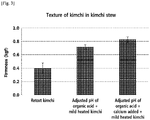
Fig. 3 shows the mechanical measurement of firmness of the texture of kimchi in kimchi stew distributable at room temperature according to an exemplary embodiment. - Hereinbelow, preferred embodiments of the present application will be provided. However, the embodiments provided are only for illustrative purposes for better understanding of the present application and should not be construed as limiting the present application.
- For kimchi stew, tofu, leek, and red pepper were sliced, and a meat broth was prepared by adding a beef leg bone broth, anchovy extract, kelp extract, modified food starch, maltodextrin, and purified salt to distilled water and then boiling. Kimchi including pickled cabbage, red pepper powder, white sugar, garlic, and leek was mixed with red pepper paste, corn oil, and purified salt to prepare a kimchi sauce including kimchi.
- For soybean paste stew, potatoes, tofu, an onion, shiitake, king oyster mushroom, kelp extract, and purified salt were added to distilled water to prepare a broth. Soybean paste, clam extract, purified salt, kelp extract, and red pepper powder were mixed to prepare a soybean paste sauce.
- The broths prepared in (1) for kimchi stew and soybean paste stew were packaged in separate pouches and sealed to be retort heated.
- Specifically, the broths include a large quantity of solids; thus, two-step retort heating comprising pre-heating at 95°C for 15 minutes and heat sterilization at 121°C for 15 minutes for a rapid temperature increase of the center part was employed.
- As the kimchi sauce includes kimchi and red pepper paste, and the soybean paste sauce includes soybean paste, the retort sterilization was not performed for the sauces to prevent deterioration of flavor and texture; instead, considering pH, salinity, and sugar contents, heat sterilization was performed at a temperature lower than 121°C after mixing an organic acid, salt, and sugar.
- Specifically, lactic acid was added to the kimchi sauce in an amount of 2.0% (w/w) based on the weight of the sauce to adjust pH to 4.3, and purified salt and sugar were added to the soybean paste sauce to adjust the salinity and sugar content to about 10% and 40 Brix%, respectively. Nisin, a commercial natural bacteriocin antibiotic agent, was added to the soybean paste sauce in an amount of 0.1% (w/w), and 0.5 % (w/w) of calcium lactate was added to the kimchi sauce to enhance the texture.
- Each sauce was then packaged in a separate pouch and sealed, followed by heating the kimchi sauce at 105°C for 20 minutes and soybean paste sauce at 95°C for 20 minutes.
- The finished products of kimchi stew and soybean paste stew distributable at room temperature provide the broth pouch prepared in (2) together with the sauce pouch prepared in (3) (
Fig. 1 ). - The disinfection and sterilization effects of the broths and sauces prepared in (2) and (3) of Preparation Example 1 were observed to determine whether they can be distributable at room temperature. Commercially available kimchi stew and soybean paste stew were used as controls. The strength of heating sterilization (Fo) was measured using a wireless data logger, and the number of microorganisms was measured by a clone coefficient method after incubating at 37°C for 48 hours using a proper medium for each microorganism. The proper media used for the total microorganisms, thermostable microorganisms, and fungi (mold and yeast) were Plate Count Agar (PCA), Tryptic Soy Agar (TSA), and Potat dextrose Agar (PDA), respectively.
- As a result, the total microorganisms, thermostable microorganisms, and fungi disappeared from the controls and the broths and kimchi sauce prepared in (2) and (3) of the Preparation Example as shown in the table below. In addition, no growth thereof was observed when stored for 6 months to 12 months at 10°C, 25°C, 35°C, and 45°C (cold, room temperature, and heat storage), indicating that the initial sterile condition was retained. The sauce concentrate for soybean paste stew did not reach its complete sterile status; however, the remaining microorganisms did not grow due to salinity and Brix, which demonstrates the feasibility of room temperature distribution. Additionally, compared to the soybean paste sauce prepared without adding nisin, that prepared in (3) of the Preparation Example showed a decrease in the microorganisms from 101 CFU/g to 102 CFU/g without having nisin added, thereby indicating that the microorganism stability was improved by the addition of nisin.
[Table 1] Result of sterilization of broths and sauces Sterilization conditions Total microorganisms (CFU/g) Thermostable microorganisms (CFU/g) Fungi (CFU/g) Pre-sterilization Post -sterilization and 6 to 12 months after storage Pre-sterilization Post-sterilization and 6 to 12 months after storage Pre-sterilization Post-sterilization and 6 to 12 months after storage Control (retort combined kimchi stew) 121.1°C, 25 minute heat sterilization 104 0 102 0 101 0 Preparational Example 1 (kimchi sauce) pH adjustment (4.3) +heating sterilization at 105°C 103 0 102 0 101 0 Preparational Example 1 (broth for kimchi stew) 95°C→121°C Two-step heating sterilization 104 0 102 0 101 0 Control (retort combined soybean paste stew) 121.1°C, 30 minute heating sterilization 106 0 106 0 102 0 Preparational Example 1 (soybean paste sauce) Adjustment of salinity and Brix+heating sterilization at 95°C 106 102-103 (Bacteriostatic) 104 101-102 (Bacteriostatic) 102 0 Preparational Example 1 (soybean paste sauce) Adjustment of salinity and Brix+nisin +heating sterilization at 95°C 106 101∼102 (Bacteriostatic) 104 101∼102 (Bacteriostatic) 102 0 Preparational Example 1 (broth for soybean paste stew) 95°C→121°C Two-step heating sterilization 104 0 102 0 101 0 - Further, the data for temperature and strength (Fo value) of retort heating sterilization were obtained, and as a result, the processed food with separately packaged broth and sauce had an Fo value as much as 1.7 times higher under the same heating sterilization conditions due to the more rapid temperature increase, compared to the combined retort-sterilized process food. In other words, the processed food with separately packaged broth and sauce can exhibit the same heating sterilization effect with 1.8 times shorter retort heating time than the combined retort-sterilized process food. This confirms that the processed food with separately packaged broth and sauce has an advantage of reduced damage to the ingredients included in the broth caused by high temperature (Table 2 and
Fig. 2 ).[Table 2] Classification (Package) Comparison of F0 under same retort conditions Comparison of retort conditions when reaching same F0 Miscellaneous (Notes) Heating sterilization conditions F0 values Conclusion Heating sterilization conditions F0 values Conclusion Combined pouch (control) Heating at 90°C for 15 minutes followed by 121.1°C for 10 minutes 3.36 Heating at 90°C for 15 minutes followed by 121.1°C for 18 minutes 5.76 F0 value: Strength of heat sterilization of microorganisms (F0=1 at 121.1°C for 1 minute) Separate pouch (present disclosure) 5.76 F0 value increased 1.7-fold by improved heat transfer rate Heating at 90°C for 15 minutes followed by 121.1°C for 10 minutes F0 value decreased 1.8-fold by improved heat transfer rate - To specifically measure the enhanced texture of the kimchi stew prepared in Preparation Example 1, the mechanical firmness of the kimchi was measured using a texture analyzer (TA-XTPLUS, Stable micro system Co. Ltd., Surrey, England).
- Specifically, the firmness was measured using a 5 mm plunger under the conditions of 2.0 mm/sec pretest speed, 1.0 mm/sec test speed, and 2.0 mm/sec and 20% strain. Each measured value was the result of 20 repeated measurements of the same location, and the accuracy of the experimental data was pursued according to Chauvenet's criterion by having an average value of the measurements excluding an outlier value as a measured value (p < 0.05).
- As a result, compared to the firmness (0.4 kgf) of the commercially available retort-sterilized kimchi, that of the kimchi in the kimchi sauce prepared in (3) of the Preparation Example was remarkably enhanced, about twice as high (0.8 kgf). Further, the firmness of the kimchi prepared in (3) of Preparation Example without adding calcium (0.7 kgf) was about twice that of the control, indicating that the texture of kimchi in the kimchi was enhanced by separated sterilization of the sauce and broth (
Fig. 3 ). - The kimchi stew and soybean paste stew prepared in Preparation Example 1 were compared with the control (combined retort-sterilized product) to measure sensory enhancement.
- Specifically, 15 panelists were involved for the sensory evaluation to compare taste quality (such as overall taste, texture of vegetables, appearance (color), etc.) of the kimchi stew and soybean paste stew prepared in Preparation Example 1.
- As a result, the kimchi stew and soybean paste stew prepared in Preparation Example 1 showed a superior sensory quality, that is, a statistically significant difference of 0.3 to 0.5, compared to the control in terms of overall taste, texture of vegetables, appearance (color), etc. (Table 3).
[Table 3] Result of sensory evaluation Menu Sample Preparation and sterilization methods Overall taste (five point-scale) Texture of vegetables Appearance (color) Storability Kimchi stew Control Retort combined kimchi stew (heating at 121°C for 25 min) 3.5b 3.4b 3.5b Distributable temperature Preparation Example 1 Separate sterilization 4.0a 3.9a 3.8a Distributable at room temperature Soybean paste stew Control Retort combined soybean paste stew (heating at 121°C for 30 min) 3.4b 3.4b 3.4b Distributable temperature Preparation Example 1 Separate sterilization 3.9a 3.8a 3.9a Distributable at room temperature * Significant difference verification (p < 0.05), no significant difference in regard to the same superscript
Claims (16)
- A processed food distributable at room temperature comprising:(a) a first food part comprising a paste, a leafy vegetable, or a combination thereof; and(b) a second food part comprising at least one selected from the group consisting of a meat, a seaweed, a seafood, a root vegetable, a fruit vegetable, and a mushroom,wherein the first and second food parts are separately packaged.
- The processed food distributable at room temperature of claim 1, wherein the paste is red pepper paste or soybean paste.
- The processed food distributable at room temperature of claim 1, wherein the leafy vegetable is at least one selected from the group consisting of Korean cabbage, lettuce, spinach, and water parsley.
- The processed food distributable at room temperature of claim 1, wherein the first food part comprises kimchi.
- The processed food distributable at room temperature of claim 1, wherein the meat is at least one selected from the group consisting of beef, cow bone, pork, pig bone, chicken, and chicken bone.
- The processed food distributable at room temperature of claim 1, wherein the seaweed is at least one selected from the group consisting of laver, sea mustard, kelp, green laver, and hizikia fusiforme.
- The processed food distributable at room temperature of claim 1, wherein the seafood is at least one selected from the group consisting of anchovy, clam, Manila clam, squid, small octopus, webfoot octopus, mussel, crab, shrimp, oceanic bonito, and freshwater snail.
- The processed food distributable at room temperature of claim 1, wherein the root vegetable is at least one selected from the group consisting of garlic, ginger, onion, potato, radish, carrot, taro, and burdock.
- The processed food distributable at room temperature of claim 1, wherein the fruit vegetable is at least one selected from the group consisting of cucumber, pumpkin, red pepper, eggplant, bean, and corn.
- The processed food distributable at room temperature of claim 1, wherein the fruit vegetable is at least one selected from the group consisting of pumpkin, red pepper, and tofu.
- The processed food distributable at room temperature of claim 1, wherein a concentration of a microorganism in the processed food distributable at room temperature is less than 101 CFU/g 1 month, 2 months, 3 months, 4 months, 5 months, or 6 months after a production date at a temperature of 15°C, 25°C, 35°C, or 45°C.
- A method for preparing a processed food distributable at room temperature, comprising:(a) heating a first food product comprising a paste, a leafy vegetable, or a combination thereof at a temperature between 80°C and 110°C; and(b) heating a second food product comprising water and at least one food selected from the group consisting of a meat, a seaweed, a seafood, a root vegetable, and a tofu at a temperature between 115°C and 123°C.
- The method of claim 12 for preparing a processed food distributable at room temperature, wherein the heating of (a) further comprises:(a-1) heating at a temperature between 80°C and 95°C; followed by(a-2) heating at a temperature between 100°C and 110°C.
- The method of claim 12 for preparing a processed food distributable at room temperature, wherein the heating of (b) further comprises:
(pre-b) heating at a temperature between 85°C and 95°C before the heating at a temperature between 115°C and 123°C. - The method of claim 12 for preparing a processed food distributable at room temperature, wherein the method further comprises:
(a-i) and (b-i) packaging the first and second food parts before or after (a) and (b), respectively. - The method of claim 12 for preparing a processed food distributable at room temperature, wherein the preparation method further comprises:
(pre-a) adjusting pH, salinity, or a sugar content of the first food part to 3.9 to 4.5, 3% to 15%, or 20 Brix% to 60 Brix%, respectively, before (a).
Applications Claiming Priority (2)
| Application Number | Priority Date | Filing Date | Title |
|---|---|---|---|
| KR20160065030 | 2016-05-26 | ||
| PCT/KR2017/005558 WO2017204605A2 (en) | 2016-05-26 | 2017-05-26 | Method for preparing processed food using separated packaging and mild heat sterilization |
Publications (2)
| Publication Number | Publication Date |
|---|---|
| EP3466274A2 true EP3466274A2 (en) | 2019-04-10 |
| EP3466274A4 EP3466274A4 (en) | 2020-01-22 |
Family
ID=60412003
Family Applications (1)
| Application Number | Title | Priority Date | Filing Date |
|---|---|---|---|
| EP17803123.3A Pending EP3466274A4 (en) | 2016-05-26 | 2017-05-26 | PROCESS FOR PREPARING PROCESSED FEEDING USING SEPARATE PACKAGING AND MODERATE HEAT STERILIZATION |
Country Status (6)
| Country | Link |
|---|---|
| US (1) | US20230180774A1 (en) |
| EP (1) | EP3466274A4 (en) |
| JP (1) | JP6896769B2 (en) |
| KR (4) | KR101881697B1 (en) |
| CN (1) | CN109475160B (en) |
| WO (1) | WO2017204605A2 (en) |
Families Citing this family (2)
| Publication number | Priority date | Publication date | Assignee | Title |
|---|---|---|---|---|
| KR102119856B1 (en) * | 2018-06-25 | 2020-06-10 | 대상 주식회사 | Method for Preparing Kimchi for Room Temperature Distribution |
| KR102152146B1 (en) * | 2019-11-28 | 2020-09-04 | 주식회사 아워홈 | Preparing method of kimchi stew distributable at room temperature and kimchi stew prepared thereby |
Family Cites Families (28)
| Publication number | Priority date | Publication date | Assignee | Title |
|---|---|---|---|---|
| JPS5266643A (en) * | 1975-11-29 | 1977-06-02 | Fujimori Kogyo Co Ltd | Heat sterilizing method of packed food |
| JPS5942190U (en) * | 1982-09-10 | 1984-03-19 | 旭松凍豆腐株式会社 | Instant combination soup |
| JPS6075265A (en) * | 1983-09-29 | 1985-04-27 | Shiyooman:Kk | Instant miso (fermented soybean paste) soup enriched with vitamin and its preparation |
| JPS62259A (en) * | 1985-06-25 | 1987-01-06 | Ajinomoto Co Inc | Preservable seasoned food |
| JPH05307619A (en) * | 1991-05-16 | 1993-11-19 | Nec Corp | Method for measuring ac characteristic of microprocessor |
| JPH0866170A (en) * | 1994-08-31 | 1996-03-12 | Masahiko Yamamoto | Instant miso soup |
| KR100434691B1 (en) * | 2001-11-13 | 2004-06-07 | 주식회사 진미식품 | Manufacturing Method for Instant Kimchi Jjigae Extended Shelf Life |
| AU2003292034A1 (en) * | 2002-12-19 | 2004-07-14 | Unilever Plc | Convenience food kit comprising fruit, vegetables or herbs, and a separately packaged soup or sauce concentrate |
| CN1306884C (en) * | 2003-06-01 | 2007-03-28 | 姜英姬 | Instant sauce soup material and its making method |
| WO2005067739A1 (en) * | 2003-12-18 | 2005-07-28 | Council Of Scientific And Industrial Research | Ready to serve soup and process for preparation thereof |
| KR20050096278A (en) * | 2004-03-30 | 2005-10-06 | 노병호 | Kimchi-stew for a long term storage in the room temperature and method thereof |
| US20050281921A1 (en) * | 2004-06-18 | 2005-12-22 | Kraft Foods Holdings, Inc. | Multiple-option meal kit |
| JP2006050995A (en) * | 2004-08-16 | 2006-02-23 | Ajinomoto Co Inc | Rice gruel topped with starchy soysauce |
| KR100665681B1 (en) * | 2005-02-25 | 2007-01-10 | 강상석 | Ginseng Pickles Using Kochujang and Manufacturing Method Thereof |
| KR100676297B1 (en) * | 2005-07-19 | 2007-01-30 | 씨제이 주식회사 | Process of manufacturing processed foods of root vegetables or fruit vegetables |
| CN1792226A (en) * | 2005-12-31 | 2006-06-28 | 刘�东 | Method for making fancy sandwich cakes |
| JP4975690B2 (en) * | 2008-07-07 | 2012-07-11 | アルファフーズ株式会社 | Method for producing retort food |
| KR101099935B1 (en) * | 2008-08-20 | 2011-12-28 | 씨제이제일제당 (주) | Retort-packed clam and its manufacturing method |
| KR20100024658A (en) * | 2008-08-26 | 2010-03-08 | 씨제이제일제당 (주) | Product of instant soybean paste stew distributable at the nomal temperature and method for preparation thereof |
| JP4931883B2 (en) | 2008-09-03 | 2012-05-16 | 日清フーズ株式会社 | Heat-sterilized sauces |
| KR101111590B1 (en) * | 2009-08-12 | 2012-03-13 | 씨제이제일제당 (주) | A Method for Producing Instant Retort Fotiaoqiang |
| KR20110082849A (en) * | 2010-01-12 | 2011-07-20 | 최희윤 | Instant dried kimchi stew and preparation method |
| SI2654440T1 (en) * | 2010-12-23 | 2015-03-31 | Dupont Nutrition Biosciences Aps | Microbicidal composition |
| CN102599428A (en) * | 2012-04-06 | 2012-07-25 | 江南大学 | Processing method of sushi with long shelf-life in normal-temperature storage |
| KR101459839B1 (en) * | 2012-11-15 | 2014-11-07 | 씨제이제일제당 (주) | Shelf-stable fermented soybean paste sauce and manufacturing method thereof |
| KR101636626B1 (en) * | 2014-12-24 | 2016-07-05 | 강원대학교산학협력단 | Manufacturing method of an instant food comprising separately sterilizing process of the solid contents and meat broth |
| KR20150119828A (en) * | 2015-10-06 | 2015-10-26 | 주식회사 진미식품 괴산공장 | Manufacturing method of doenjang sauce |
| KR101697765B1 (en) | 2016-03-04 | 2017-01-18 | 주식회사 글로벌제이컴퍼니 | Sweet taste rice bowl |
-
2017
- 2017-05-26 JP JP2018561947A patent/JP6896769B2/en active Active
- 2017-05-26 KR KR1020170065637A patent/KR101881697B1/en active Active
- 2017-05-26 CN CN201780044575.5A patent/CN109475160B/en active Active
- 2017-05-26 WO PCT/KR2017/005558 patent/WO2017204605A2/en not_active Ceased
- 2017-05-26 US US16/304,481 patent/US20230180774A1/en not_active Abandoned
- 2017-05-26 EP EP17803123.3A patent/EP3466274A4/en active Pending
-
2018
- 2018-05-29 KR KR1020180060860A patent/KR102251313B1/en active Active
- 2018-05-29 KR KR1020180060861A patent/KR102263090B1/en active Active
-
2021
- 2021-06-02 KR KR1020210071281A patent/KR102447428B1/en active Active
Also Published As
| Publication number | Publication date |
|---|---|
| US20230180774A1 (en) | 2023-06-15 |
| WO2017204605A2 (en) | 2017-11-30 |
| KR102251313B1 (en) | 2021-05-13 |
| JP2019516389A (en) | 2019-06-20 |
| KR20210068358A (en) | 2021-06-09 |
| KR20170134269A (en) | 2017-12-06 |
| KR102263090B1 (en) | 2021-06-11 |
| KR101881697B1 (en) | 2018-07-25 |
| JP6896769B2 (en) | 2021-06-30 |
| CN109475160B (en) | 2023-07-07 |
| KR20180064342A (en) | 2018-06-14 |
| KR102447428B1 (en) | 2022-09-27 |
| WO2017204605A3 (en) | 2018-01-18 |
| CN109475160A (en) | 2019-03-15 |
| KR20180064343A (en) | 2018-06-14 |
| EP3466274A4 (en) | 2020-01-22 |
Similar Documents
| Publication | Publication Date | Title |
|---|---|---|
| JP4679023B2 (en) | Production method and food preservative with excellent preservability | |
| KR102300895B1 (en) | Manufacturing method for broth material | |
| JPWO2001056408A1 (en) | Method for producing food with excellent shelf life and food preservatives | |
| KR20160122607A (en) | Manufacturing method is useful microbial fermentation of food material pickled vegetables | |
| JP2014226074A (en) | Masking agent, masking method using the same, and food product masked by the method | |
| CN101869239A (en) | Instant sea cucumber rice and its preparation method | |
| KR100926522B1 (en) | Method of manufacturing meat products using pickles | |
| KR102447428B1 (en) | Processed food manufacturing method using separate packaging and mild heat sterilization | |
| CN106213269A (en) | Method for making spicy salmon block | |
| KR20110082849A (en) | Instant dried kimchi stew and preparation method | |
| EP3466270B1 (en) | Method for sterilizing high-quality meat- and kimchi-based processed food by means of ph adjustment and mild heating | |
| KR101511987B1 (en) | Method for preparing kimchi comprising artichoke fermented solution | |
| KR101130515B1 (en) | Method for sterilizing surimi gel product available for normal temperature distribution and manufacturing method of retort surimi gel product using the same | |
| JP3977293B2 (en) | Manufacturing method of pescatoles pageti and source kit for pescatoles paghetti used therefor | |
| EP3738444B1 (en) | Ingredient-containing liquid seasoning in hermetically sealed container | |
| US20140127380A1 (en) | Method of preparing kimchi source | |
| KR20160139722A (en) | Low-salted Seafood Containing Pine Mushroom and Pine Mushroom Juice, and Method for Manufacturing the Same | |
| JP5162287B2 (en) | Method for producing seaweed food | |
| JP2003088345A (en) | Life prolonging agent for food | |
| JP2013042738A (en) | processed food | |
| JP2002171950A (en) | Dry foodstuff having heating history under pressure and method for producing the same | |
| KR20240121462A (en) | Spicy kimchi made whole without cutting and its manufacturing method | |
| JPH02135080A (en) | Sterilizing preservative for food | |
| HK40036477B (en) | Solid ingredient-containing liquid seasoning in sealed container | |
| KR20020085605A (en) | Composition for making kimchi soup |
Legal Events
| Date | Code | Title | Description |
|---|---|---|---|
| STAA | Information on the status of an ep patent application or granted ep patent |
Free format text: STATUS: THE INTERNATIONAL PUBLICATION HAS BEEN MADE |
|
| PUAI | Public reference made under article 153(3) epc to a published international application that has entered the european phase |
Free format text: ORIGINAL CODE: 0009012 |
|
| STAA | Information on the status of an ep patent application or granted ep patent |
Free format text: STATUS: REQUEST FOR EXAMINATION WAS MADE |
|
| 17P | Request for examination filed |
Effective date: 20181213 |
|
| AK | Designated contracting states |
Kind code of ref document: A2 Designated state(s): AL AT BE BG CH CY CZ DE DK EE ES FI FR GB GR HR HU IE IS IT LI LT LU LV MC MK MT NL NO PL PT RO RS SE SI SK SM TR |
|
| AX | Request for extension of the european patent |
Extension state: BA ME |
|
| DAV | Request for validation of the european patent (deleted) | ||
| DAX | Request for extension of the european patent (deleted) | ||
| A4 | Supplementary search report drawn up and despatched |
Effective date: 20200107 |
|
| RIC1 | Information provided on ipc code assigned before grant |
Ipc: A23L 3/02 20060101ALI20191219BHEP Ipc: A23L 3/3508 20060101ALI20191219BHEP Ipc: A23L 23/00 20160101AFI20191219BHEP Ipc: A23L 3/3463 20060101ALI20191219BHEP Ipc: A23L 3/00 20060101ALI20191219BHEP |
|
| STAA | Information on the status of an ep patent application or granted ep patent |
Free format text: STATUS: EXAMINATION IS IN PROGRESS |
|
| 17Q | First examination report despatched |
Effective date: 20221125 |
|
| P01 | Opt-out of the competence of the unified patent court (upc) registered |
Effective date: 20230606 |