EP3465918B1 - Verfahren und vorrichtung zur zuordnung eines zustands zu einer ausgabe mit neuem wert durch einen abweichenden sensor - Google Patents
Verfahren und vorrichtung zur zuordnung eines zustands zu einer ausgabe mit neuem wert durch einen abweichenden sensor Download PDFInfo
- Publication number
- EP3465918B1 EP3465918B1 EP17730683.4A EP17730683A EP3465918B1 EP 3465918 B1 EP3465918 B1 EP 3465918B1 EP 17730683 A EP17730683 A EP 17730683A EP 3465918 B1 EP3465918 B1 EP 3465918B1
- Authority
- EP
- European Patent Office
- Prior art keywords
- value
- signal
- average value
- values
- state
- Prior art date
- Legal status (The legal status is an assumption and is not a legal conclusion. Google has not performed a legal analysis and makes no representation as to the accuracy of the status listed.)
- Active
Links
Images


Classifications
-
- G—PHYSICS
- G06—COMPUTING OR CALCULATING; COUNTING
- G06N—COMPUTING ARRANGEMENTS BASED ON SPECIFIC COMPUTATIONAL MODELS
- G06N7/00—Computing arrangements based on specific mathematical models
- G06N7/01—Probabilistic graphical models, e.g. probabilistic networks
-
- G—PHYSICS
- G01—MEASURING; TESTING
- G01L—MEASURING FORCE, STRESS, TORQUE, WORK, MECHANICAL POWER, MECHANICAL EFFICIENCY, OR FLUID PRESSURE
- G01L1/00—Measuring force or stress, in general
- G01L1/26—Auxiliary measures taken, or devices used, in connection with the measurement of force, e.g. for preventing influence of transverse components of force, for preventing overload
-
- H—ELECTRICITY
- H03—ELECTRONIC CIRCUITRY
- H03M—CODING; DECODING; CODE CONVERSION IN GENERAL
- H03M7/00—Conversion of a code where information is represented by a given sequence or number of digits to a code where the same, similar or subset of information is represented by a different sequence or number of digits
- H03M7/30—Compression; Expansion; Suppression of unnecessary data, e.g. redundancy reduction
- H03M7/3059—Digital compression and data reduction techniques where the original information is represented by a subset or similar information, e.g. lossy compression
- H03M7/3064—Segmenting
Definitions
- the present invention relates to the domain of the sensors and especially to the domain of the use of a sensor while its value(s) may slightly drift.
- Document US2003/202709 A1 discloses the compression of a digital document by extracting and clustering data from the document.
- Document US2011/222584 A1 teaches a drift of an electronic circuit used in an active transmitter of a communication system, resulting in a problem of drift to be compensated between the drifting transmitter and the coupled receiver of the communication system.
- Document WO 2013/049748 discloses relevant background art.
- the users may expect that the output value may be constant if the detected characteristics are constant / are identical. For instance, for a pressure sensor, if the pressure to be detected is constant at 2 bars, it may be expected that the output value of the sensor is constant (e.g. 128 for 2 bars, 64 for 1 bar, 32 for 0.5 bars, etc.).
- the output value may slightly drift: the output value (e.g. numerical) may be 128 for 2 bars at a time t 0 , between 115 and 120 for 2 bars at a time t 0 +2h, etc.
- the output value represents a given state (e.g. a "high” value of the sensor may be associated with the state of the presence of a user on a pressure sensor, a “low” value of the sensor may be associated with the state of non-presence of a user on a pressure sensor) it may be difficult to determine in which state the sensor is.
- a given state e.g. a "high” value of the sensor may be associated with the state of the presence of a user on a pressure sensor, a "low” value of the sensor may be associated with the state of non-presence of a user on a pressure sensor
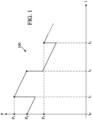
- the output value of a pressure sensor is represented by the curve 100.
- this pressure sensor is designed to detect if a user is on a bed (state: presence of the user or "high” state) or not on the bed (state: non-presence of the user or "low” state). Even if this example has only two different states, it is possible to generalize this example to any number of states (e.g. a motion sensor which has three states: one state for "no movement", one state for "walking", one state for "running”).
- the output value of the pressure may be p 0 which is, at that time t 0 , associated with the low state.
- the output value of the sensor may decrease (due for instance to leaks).
- time t 1 it is apparent, due to the sudden change of the output value up to p 1 , that a person is present in the bed (high state).
- the output value of the sensor may decrease (same reason(s) as above).
- time t 2 it is apparent, due to the sudden change of the output, that the person has left (low state).
- the output value of the sensor may decrease (same reason(s) as above).
- time t 3 it is apparent, due to the sudden change of the output value up to p 3 , that a person is present in the bed (high state). Nevertheless, it is noted that p 3 is less than p 0 . Therefore, if the value of p 0 is used as a reference of the low state, it may induce incorrect detections / determination of the state.
- the drifting of the sensor is determined by computing a running average or sliding window average of the value of the sensor. This process assumes that, most of the time, the sensor detects a "normal state": this is the reason a simple average may provide a satisfactory result in this specific situation. Nevertheless, if a plurality of states may be detected with important probabilities (e.g. three states may be detected with a respective probability rating of 30%, 30% and 40%), it is not possible to perform a simple mean.
- the memory of the device which should perform such determination could be limited. Therefore, the process used may limit the memory used for said determination.
- a method of associating at least one state in a plurality of states to a new value output by a drifting sensor comprising:
- the received signal may be a part of a more global signal.
- the received signal may be the last x seconds of a longer signal (sliding window).
- the distance of step /c/ may be a mathematical difference (absolute value) of the new value and the barycenter value of each cluster.
- the signal may be compressed into a compressed signal having values, the values of the compressed signal being used as the values of the signal in step /b/.
- the compressing may be an approximation of said signal by a piecewise constant function or staircase function.
- the compressing may also comprise:
- the first value of the signal may be a value output by the sensor before all second values.
- step /e/ for each second value in the order of the output by the sensor.
- Test /e1/ creates a new compressed value for the signal if the new value is "too" different from the previously computed compressed value (i.e. the average value), for example if it differs by more than a threshold amount.
- Test /e2/ updates the previously computed compressed value (i.e. the average value) if the previous tests are not matched. This updating may take into account the average value weighted by the number of second points used (e.g. /e/ is executed N times since the last storage, then this number would be N) and the new value. These last two values may be added and divided by N+1.
- another test may be executed: /e3/ if a number of second values used to determine the average value is greater than a predetermined threshold, setting the average value to the second value.
- test /e2/ is executed only both tests /e1/ and /e3/ fail.
- Test /e3/ creates a new compressed value for the signal if no important change in the signal (i.e. greater than the predetermined threshold) has been detected since a predetermined period of time (i.e. a predetermined number of second points). This new creation is motivated by the fact that, if a too great number is used to compute the average value, this average value may be non-representative of the signal.
- storage of the average value into a memory may be performed prior to setting the average value to the second value.
- the compressed value of the signal may be stored. If no storage is performed (which is also possible), it is equivalent to set the value of the compressed signal to the new average value for the period of time extending from the last storage to the current second point.
- the average value may be stored along a number of second values used for the determination of the average value after a previous storage of the average value.
- the storage of the number of second values used for the determination of the average value may be useful for weighting the clustering or for weighting the values of the cluster in the determination of its barycenter.
- each of the second value may be associated with a respective time/timestamp, and in step /e/, the average value may be stored along a minimum time among all the times associated with a second value used for the determination of the average value after a previous storage of the average value.
- step /b/ may comprise the use of a k-means algorithm or the use of an unsupervised clustering algorithm.
- the clustering of step /b/ may also comprises a weighting of the values of the signal by a number of second values used for the determination of the average value after a previous storage of the average value.
- Step /c/ may comprise the use of a forward algorithm (see “ An Efficient Forward-Backward Algorithm for an Explicit-Duration Hidden Markov Model” by Yu and Kobayashi, IEEE Signal Processing Letters, Vol. 10, No. 1, January 2003 )or the use of a decision tree (see “ Classification and Regression Trees” by Leland Wilkinson, University of Illinois at Urbana-Champaign, August 2013 (retrievable as of 25 May 2016 at http://cda.psych.uiuc.edu/multivariate_fall_2013/systat_cart_manual.pdf )).
- a second aspect relates to an apparatus comprising: a processor; and a memory including computer program code, the memory and the computer program code configured to, with the processor, cause the apparatus at least to perform: associating at least one state in a plurality of states to a new value output by a drifting sensor, comprising:
- a third aspect relates to a computer program product comprising a computer readable medium, having thereon a computer program comprising program instructions.
- the computer program is loadable into a data-processing unit and adapted to cause the data-processing unit to carry out the method described above when the computer program is run by the data-processing unit.
- an apparatus comprising means for performing any of the above described method steps.
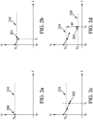
- Figure 2 is an example of "compression" of a signal into a piecewise function in a possible embodiment of the invention.
- a signal output by a sensor is often a high frequency sampled set of values.
- said of values may be derived from a continuous signal after a sampling of 5 Hz to 50 Hz or may be generated by measurements made by the sensor at 5 Hz to 50 Hz.
- a number of point N points is initialized to 1 and a starting time t start is set to t 0 ,
- the set of the average value V , the starting time t start and the number of points N points may be stored in a memory to represent the compressed signal.
- the average value V may be unset (or set to " undefined ”) .
- the set of the average value V , the starting time t start and the number of points N points may be stored in a memory to represent the compressed signal.
- the average value V may be unset (or set to " undefined ") .
- the value V 203 is thus processed as the value V 200 in figure 2(a) and a new average value V is created (220) equal to V 203 .
- the "compressed" signal comprises a number of “pieces” of piecewise signal, each piece being defined by a start (e.g. a starting time t start ), a length (e.g. a number of points N points ) and a value (e.g. an average value V ).
- the pseudo-code for this compressing may be:
- pseudo code may be also:
- nb_value has been split into two variables i.e. nb_value1 and nb_value2.
- nb_value1 represents the number of values used since the last storing of the average value
- nb_value2 represents the number of values used since the resetting of the average value. This splitting increases the impact of a new value on the average value.
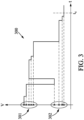
- Figure 3 is an example of "clustering" of a signal in a possible embodiment of the invention.
- Cluster analysis or “clustering” is the task of grouping a set of objects (here the values of the signal) in such a way that objects in the same group (called a cluster) are “closer” to each other than to those in other groups (clusters).
- the number of clusters may be set to any number greater or equal to 2.
- “Closer” may be understood as “closer according to a given mathematical distance”. Any mathematical distance may be used.
- This clustering is possible on the raw signal (i.e. the high frequency sampled signal) but it is advantageous to perform this clustering on a compressed signal (for instance, based on the method described in Figure 2 ) as the memory and the processing means of the device may be limited.
- a clustering algorithm may be applied to the values of the signal without weighting.
- a clustering algorithm may be applied to the values of the compressed signal (i.e. V according to Figure 2 ) with a weighting (i.e. each current point may be weighted by the length / the number of points N points associated with the current point).
- clustering algorithm such as an unsupervised clustering algorithm (e.g. k-means algorithm, see “ Algorithm AS 136: A K-Means Clustering Algorithm” by Hartigan and Wong, Journal of the Royal Statistical Society. Series C (Applied Statistics), Vol. 28, No. 1(1979), pp. 100-108, published by Blackwell Publishing ).
- unsupervised clustering algorithm e.g. k-means algorithm, see " Algorithm AS 136: A K-Means Clustering Algorithm” by Hartigan and Wong, Journal of the Royal Statistical Society. Series C (Applied Statistics), Vol. 28, No. 1(1979), pp. 100-108, published by Blackwell Publishing ).
- a clustering algorithm may determine that the values of signal 300 may be split into two clusters 301 and 302.
- clustering algorithm that supports update mechanisms: when the clusters are determined and when a new value is received in the signal at a time t c , the cluster may be easily updated without re-computing the whole clusters.
- this point may be associated with the closest cluster (e.g. the cluster whose barycenter is the closest).
- Figure 4 is an example of a determination of a cluster associated with a new event in the signal in a possible embodiment of the invention.
- the distance d H of said point 403 to C H (line 401) is determined and the distance d L of said point 403 to C L (line 402) is determined.
- a value representing the probability the new value 403 represents an event of the first cluster e.g. the user is present in the bed in the case the sensor is detecting a pressure in the bed
- This probability may be a binary probability (e.g. 0 or 1 only) or a "more complex" probability (e.g. a real value between 0 and 1).
- P H may also be function of the previous values of the signal.
- P H may be determined based on a learning process (e.g. with a neural network for instance). Therefore, a decision tree may be used to limit the use of memory during the determination of P H . Hysteresis thresholding or forward algorithm may also be used for such determination.
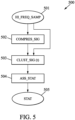
- Figure 5 is a flow chart describing a possible embodiment of the present invention. Part of this flow chart can represent steps of an example of a computer program which may be executed by an electronic device.
- a signal e.g. a high frequency sampled signal
- the reception of said signal may be in one "block” (i.e. receiving a single set of data containing the whole signal) but may also be “on the fly” (i.e. receiving the data as soon as it is generated by the sensor).
- the compression (step 502) is optional.
- the signal may be already compressed or it has been determined that the memory/processing means of the devices are not a limit for processing the data.
- step 503 two or more clusters based on the signal (step 503) as detailed in relation of Figure 3 .
- step 504 For each point of the signal (and especially the last received point if the signal is received on the fly), it is possible to determine a probability rating (step 504) as detailed in relation of Figure 4 .
- this probability rating (505) may be output.
- an indication to which state (i.e. cluster) the point is related may be output.
- Figure 6 is a possible embodiment for a device that enables the present invention.
- the device 600 comprise a computer, this computer comprising a memory 605 to store program instructions loadable into a circuit 604 and adapted to cause circuit 604 to carry out the steps of the present invention when the program instructions are run by the circuit 604.
- the memory 605 may also store data and useful information for carrying the steps of the present invention as described above.
- the circuit 604 may be for instance:
- This computer comprises an input interface 603 for the reception of the signal according to the invention and an output interface 606.
- a screen 601 and a keyboard 602 may be provided and connected to the computer circuit 604.
Landscapes
- Engineering & Computer Science (AREA)
- Physics & Mathematics (AREA)
- Theoretical Computer Science (AREA)
- General Physics & Mathematics (AREA)
- Mathematical Optimization (AREA)
- Pure & Applied Mathematics (AREA)
- Data Mining & Analysis (AREA)
- Evolutionary Computation (AREA)
- Artificial Intelligence (AREA)
- Mathematical Analysis (AREA)
- Algebra (AREA)
- Computational Mathematics (AREA)
- Computing Systems (AREA)
- General Engineering & Computer Science (AREA)
- Mathematical Physics (AREA)
- Software Systems (AREA)
- Probability & Statistics with Applications (AREA)
- Testing Or Calibration Of Command Recording Devices (AREA)
- Testing And Monitoring For Control Systems (AREA)
- Measurement Of The Respiration, Hearing Ability, Form, And Blood Characteristics Of Living Organisms (AREA)
Claims (13)
- Verfahren zum Erkennen der Anwesenheit eines Benutzers in einem Bett durch Zuordnen mindestens eines Zustands aus einer Vielzahl von Zuständen zu einem neuen Wert, der von einem driftenden Drucksensor ausgegeben wird, wobei die Vielzahl von Zuständen einen Zustand umfasst, der mit der Anwesenheit des Benutzers in dem Bett verbunden ist, und einen Zustand, der mit der Abwesenheit des Benutzers in dem Bett verbunden ist, wobei das Verfahren umfasst:/a/ Empfangen eines Signals (501) vom Driftdrucksensor, wobei das Signal eine Vielzahl von Werten (200, 201, 202, 203) umfasst;/Clustern (503) der Vielzahl von Werten des Signals in eine Anzahl von Clustern (301, 302), die gleich der Anzahl der Vielzahl von Zuständen ist, wobei jedes Cluster mit einem entsprechenden Zustand in der Vielzahl von Zuständen verbunden ist;/c/ für den neuen Wert des Signals, Zuordnen (504) mindestens eines Zustands in der Vielzahl von Zuständen oder einer Wahrscheinlichkeitsbewertung, die eine Wahrscheinlichkeit darstellt, mit einem Zustand in der Vielzahl von Zuständen für den neuen Wert des Signals verbunden zu sein, wobei der zugeordnete Zustand oder die zugeordnete Wahrscheinlichkeitsbewertung auf der Grundlage von mindestens Abständen (dH , dL ) des neuen Werts des Signals zu jeweiligen Clustern bestimmt wird, wobei jeder Abstand (dH , dL ) eine mathematische Differenz im Absolutwert zwischen dem neuen Wert und Baryzentrumswerten der Cluster (301, 302) ist,wobei vor dem Schritt /b/ das Signal in ein komprimiertes Signal mit komprimierten Werten komprimiert wird (502), wobei die komprimierten Werte des komprimierten Signals als die Vielzahl von Werten des Signals im Schritt /b/ verwendet werden,wobei das Komprimieren umfasst:/d/ Initialisierung eines Durchschnittswertes (210) auf einen ersten Wert (200) des Signals,/e/ für jeden zweiten Wert in einer Vielzahl von zweiten Werten (201, 202, 203) des nach dem ersten Wert vom Driftsensor ausgegebenen Signals:
/e1/, wenn ein Abstand (ΔV ) zwischen dem zweiten Wert und dem Durchschnittswert größer als ein vorbestimmter Schwellenwert ist, den Durchschnittswert als komprimierten Wert in einem Speicher speichern und den Durchschnittswert auf den zweiten Wert setzen,/e2/, andernfalls Aktualisierung des Durchschnittswerts zu einem neuen Durchschnittswert als Funktion des zweiten Werts und des Durchschnittswerts. - Verfahren zum Erfassen der Bewegung eines Benutzers durch Zuordnen mindestens eines Zustands aus einer Vielzahl von Zuständen zu einem neuen Wert, der von einem driftenden Bewegungssensor ausgegeben wird, wobei die Vielzahl von Zuständen einen Zustand, der dem sich nicht bewegenden Benutzer zugeordnet ist, einen Zustand, der dem Gehen des Benutzers zugeordnet ist, und einen Zustand, der dem Laufen des Benutzers zugeordnet ist, umfasst, wobei das Verfahren umfasst:/a/ Empfang eines Signals (501) von dem driftenden Bewegungssensor, wobei das Signal eine Vielzahl von Werten (200, 201, 202, 203) umfasst;/Clustern (503) der Vielzahl von Werten des Signals in eine Anzahl von Clustern (301, 302), die gleich der Anzahl der Vielzahl von Zuständen ist, wobei jedes Cluster mit einem entsprechenden Zustand in der Vielzahl von Zuständen verbunden ist;/c/ für den neuen Wert des Signals, Zuordnen (504) mindestens eines Zustands in der Vielzahl von Zuständen oder einer Wahrscheinlichkeitsbewertung, die eine Wahrscheinlichkeit darstellt, mit einem Zustand in der Vielzahl von Zuständen für den neuen Wert des Signals verbunden zu sein, wobei der zugeordnete Zustand oder die zugeordnete Wahrscheinlichkeitsbewertung auf der Grundlage von mindestens Abständen (dH , dL ) des neuen Werts des Signals zu jeweiligen Clustern bestimmt wird, wobei jeder Abstand (dH , dL ) eine mathematische Differenz im Absolutwert zwischen dem neuen Wert und Baryzentrumswerten der Cluster (301, 302) ist,wobei vor dem Schritt /b/ das Signal in ein komprimiertes Signal mit komprimierten Werten komprimiert wird (502), wobei die komprimierten Werte des komprimierten Signals als die Vielzahl von Werten des Signals im Schritt /b/ verwendet werden,wobei das Komprimieren umfasst:/d/ Initialisierung eines Durchschnittswertes (210) auf einen ersten Wert (200) des Signals,/e/ für jeden zweiten Wert in einer Vielzahl von zweiten Werten (201, 202, 203) des nach dem ersten Wert vom Driftsensor ausgegebenen Signals:
/e1/, wenn ein Abstand (ΔV ) zwischen dem zweiten Wert und dem Durchschnittswert größer als ein vorbestimmter Schwellenwert ist, den Durchschnittswert als komprimierten Wert in einem Speicher speichern und den Durchschnittswert auf den zweiten Wert setzen,/e2/, andernfalls Aktualisierung des Durchschnittswerts zu einem neuen Durchschnittswert als Funktion des zweiten Werts und des Durchschnittswerts. - Verfahren nach Anspruch 1 oder 2, wobei in dem Schritt /e/ und vor dem Test /e2/ ein weiterer Test durchgeführt wird:
/e3/ wenn eine Anzahl von zweiten Werten, die zur Bestimmung des Durchschnittswerts verwendet werden, größer ist als ein vorbestimmter Schwellenwert, wird der Durchschnittswert auf den zweiten Wert gesetzt. - Verfahren nach Anspruch 3, wobei im Test /e3/ die Speicherung des Durchschnittswerts in einem Speicher vor der Einstellung des Durchschnittswerts auf den zweiten Wert erfolgt.
- Verfahren nach Anspruch 1 oder 2, wobei in Schritt /e/ der Durchschnittswert zusammen mit einer Anzahl von zweiten Werten gespeichert wird, die für die Bestimmung des Durchschnittswerts nach einer vorherigen Speicherung des Durchschnittswerts verwendet werden.
- Verfahren nach Anspruch 1 oder 2, wobei jeder zweite Wert mit einer entsprechenden Zeit verknüpft ist, und
wobei im Schritt /e/ der Durchschnittswert entlang einer minimalen Zeit unter allen Zeiten gespeichert wird, die mit einem zweiten Wert verbunden sind, der für die Bestimmung des Durchschnittswerts nach einer vorherigen Speicherung des Durchschnittswerts verwendet wird. - Verfahren nach einem der vorhergehenden Ansprüche, wobei das Clustering von Schritt /b/ die Verwendung eines k-means-Algorithmus oder die Verwendung eines unüberwachten Clustering-Algorithmus umfasst.
- Verfahren nach Anspruch 1 oder 2, wobei das Clustering von Schritt /b/ eine Gewichtung der Vielzahl von Werten des Signals mit einer Anzahl von zweiten Werten umfasst, die für die Bestimmung des Mittelwertes nach einer vorherigen Speicherung des Mittelwertes verwendet werden.
- Verfahren nach einem der vorhergehenden Ansprüche, wobei Schritt /c/ die Verwendung eines Vorwärtsalgorithmus und/oder eines Entscheidungsbaums umfasst.
- Verfahren nach einem der vorhergehenden Ansprüche, wobei der Clustering-Algorithmus Aktualisierungsmechanismen unterstützt.
- Verfahren nach einem der vorhergehenden Ansprüche, wobei das empfangene Signal in einem gleitenden Zeitfenster enthalten ist.
- Nicht-transitorisches, computerlesbares Speichermedium, auf dem ein Computerprogramm mit Programmanweisungen gespeichert ist, wobei das Computerprogramm in eine Datenverarbeitungseinheit geladen werden kann und so beschaffen ist, dass es die Datenverarbeitungseinheit veranlasst, ein Verfahren nach einem der vorangehenden Ansprüche auszuführen, wenn das Computerprogramm von der Datenverarbeitungsvorrichtung ausgeführt wird.
- Vorrichtung mit Mitteln zur Durchführung des Verfahrens nach einem der Ansprüche 1 bis 11.
Applications Claiming Priority (2)
| Application Number | Priority Date | Filing Date | Title |
|---|---|---|---|
| US15/164,329 US10748073B2 (en) | 2016-05-25 | 2016-05-25 | Method and device for associating a state to a new value output by a drifting sensor |
| PCT/EP2017/062442 WO2017202856A1 (en) | 2016-05-25 | 2017-05-23 | Method and device for associating a state to a new value output by a drifting sensor |
Publications (2)
| Publication Number | Publication Date |
|---|---|
| EP3465918A1 EP3465918A1 (de) | 2019-04-10 |
| EP3465918B1 true EP3465918B1 (de) | 2024-11-06 |
Family
ID=59070600
Family Applications (1)
| Application Number | Title | Priority Date | Filing Date |
|---|---|---|---|
| EP17730683.4A Active EP3465918B1 (de) | 2016-05-25 | 2017-05-23 | Verfahren und vorrichtung zur zuordnung eines zustands zu einer ausgabe mit neuem wert durch einen abweichenden sensor |
Country Status (3)
| Country | Link |
|---|---|
| US (1) | US10748073B2 (de) |
| EP (1) | EP3465918B1 (de) |
| WO (1) | WO2017202856A1 (de) |
Citations (6)
| Publication number | Priority date | Publication date | Assignee | Title |
|---|---|---|---|---|
| EP1065097A1 (de) * | 1999-01-27 | 2001-01-03 | The Furukawa Electric Co., Ltd. | Vorrichtung zur erfassung der insassen eines fahrzeuges |
| US20030202709A1 (en) * | 2002-04-25 | 2003-10-30 | Simard Patrice Y. | Clustering |
| US20110222584A1 (en) * | 2010-03-11 | 2011-09-15 | Harris Corporation | Hidden markov model detection for spread spectrum waveforms |
| US20110264691A1 (en) * | 2010-04-26 | 2011-10-27 | Migita Takahito | Information processing apparatus, text selection method, and program |
| WO2013049748A2 (en) * | 2011-09-30 | 2013-04-04 | Newcare Solutions, Llc. | Sensors and monitoring systems comprising sensors |
| WO2016061668A1 (en) * | 2014-10-23 | 2016-04-28 | 2352409 Ontario Inc. | Device and method for identifying subject's activity profile |
Family Cites Families (8)
| Publication number | Priority date | Publication date | Assignee | Title |
|---|---|---|---|---|
| US4926674A (en) * | 1988-11-03 | 1990-05-22 | Innovex Inc. | Self-zeroing pressure signal generator |
| FR2683313B1 (fr) * | 1991-10-30 | 1995-12-08 | Labinal | Dispositif de mesure de parametres, notamment de parametres relatifs a des roues d'avion ou de vehicule. |
| JP3682039B2 (ja) * | 2002-10-02 | 2005-08-10 | 株式会社デンソー | 車両乗員検知装置 |
| US8838513B2 (en) * | 2011-03-24 | 2014-09-16 | WellDoc, Inc. | Adaptive analytical behavioral and health assistant system and related method of use |
| EP2017139A1 (de) * | 2007-07-17 | 2009-01-21 | IEE International Electronics & Engineering S.A.R.L. | Insassendetektionssystem für ein Kraftfahrzeug |
| US8219574B2 (en) * | 2009-06-22 | 2012-07-10 | Microsoft Corporation | Querying compressed time-series signals |
| US20120253233A1 (en) * | 2011-03-31 | 2012-10-04 | Greene Barry | Algorithm for quantitative standing balance assessment |
| US20170167939A1 (en) * | 2015-12-15 | 2017-06-15 | Honeywell International, Inc. | Pressure sensor drift detection and correction |
-
2016
- 2016-05-25 US US15/164,329 patent/US10748073B2/en active Active
-
2017
- 2017-05-23 EP EP17730683.4A patent/EP3465918B1/de active Active
- 2017-05-23 WO PCT/EP2017/062442 patent/WO2017202856A1/en not_active Ceased
Patent Citations (6)
| Publication number | Priority date | Publication date | Assignee | Title |
|---|---|---|---|---|
| EP1065097A1 (de) * | 1999-01-27 | 2001-01-03 | The Furukawa Electric Co., Ltd. | Vorrichtung zur erfassung der insassen eines fahrzeuges |
| US20030202709A1 (en) * | 2002-04-25 | 2003-10-30 | Simard Patrice Y. | Clustering |
| US20110222584A1 (en) * | 2010-03-11 | 2011-09-15 | Harris Corporation | Hidden markov model detection for spread spectrum waveforms |
| US20110264691A1 (en) * | 2010-04-26 | 2011-10-27 | Migita Takahito | Information processing apparatus, text selection method, and program |
| WO2013049748A2 (en) * | 2011-09-30 | 2013-04-04 | Newcare Solutions, Llc. | Sensors and monitoring systems comprising sensors |
| WO2016061668A1 (en) * | 2014-10-23 | 2016-04-28 | 2352409 Ontario Inc. | Device and method for identifying subject's activity profile |
Also Published As
| Publication number | Publication date |
|---|---|
| EP3465918A1 (de) | 2019-04-10 |
| US20170344894A1 (en) | 2017-11-30 |
| US10748073B2 (en) | 2020-08-18 |
| WO2017202856A1 (en) | 2017-11-30 |
Similar Documents
| Publication | Publication Date | Title |
|---|---|---|
| US11636341B2 (en) | Processing sequential interaction data | |
| US20230316720A1 (en) | Anomaly detection apparatus, anomaly detection method, and program | |
| US20200387798A1 (en) | Time invariant classification | |
| US10783452B2 (en) | Learning apparatus and method for learning a model corresponding to a function changing in time series | |
| KR20210017342A (ko) | 과거 데이터에 기초한 시계열 예측 방법 및 장치 | |
| EP4131076A1 (de) | Verfahren und vorrichtung zur seriellen datenverarbeitung sowie textverarbeitungsverfahren und -vorrichtung | |
| KR101593315B1 (ko) | 행동 인식을 위한 방법, 장치 및 컴퓨터 프로그램 제품 | |
| Haynes et al. | Efficient penalty search for multiple changepoint problems | |
| US11100388B2 (en) | Learning apparatus and method for learning a model corresponding to real number time-series input data | |
| US20180232342A1 (en) | Text preparation apparatus | |
| CN112166390A (zh) | 异常检测装置、异常检测方法、异常检测程序和记录介质 | |
| KR20180024660A (ko) | 기계 학습 시스템 및 그의 사용자 제어 패턴 학습 방법 | |
| CN113038386A (zh) | 基于学习模型的设备定位 | |
| CN116482524B (zh) | 输配电开关状态检测方法及系统 | |
| JP4265296B2 (ja) | 変化点検出装置,変化点検出方法および変化点検出用プログラム | |
| US8938389B2 (en) | Voice activity detector, voice activity detection program, and parameter adjusting method | |
| Vořechovský | Reliability analysis of discrete-state performance functions via adaptive sequential sampling with detection of failure surfaces | |
| CN112462261A (zh) | 一种电机异常检测方法、装置、电子设备及存储介质 | |
| CN114817363A (zh) | 确定数据相似性的方法、装置、电子设备以及存储介质 | |
| US10782791B2 (en) | Time domain feature transform for user gestures | |
| US20250272545A1 (en) | Time-series dimension compression | |
| Alshareef et al. | A case-based reasoning approach for pattern detection in Malaysia rainfall data | |
| US10748073B2 (en) | Method and device for associating a state to a new value output by a drifting sensor | |
| EP4492292A1 (de) | Maschinenlernmodelldomänenanpassung für zeitreihendaten | |
| US20260017928A1 (en) | Learning device, learning method, and learning program |
Legal Events
| Date | Code | Title | Description |
|---|---|---|---|
| STAA | Information on the status of an ep patent application or granted ep patent |
Free format text: STATUS: UNKNOWN |
|
| STAA | Information on the status of an ep patent application or granted ep patent |
Free format text: STATUS: THE INTERNATIONAL PUBLICATION HAS BEEN MADE |
|
| PUAI | Public reference made under article 153(3) epc to a published international application that has entered the european phase |
Free format text: ORIGINAL CODE: 0009012 |
|
| STAA | Information on the status of an ep patent application or granted ep patent |
Free format text: STATUS: REQUEST FOR EXAMINATION WAS MADE |
|
| 17P | Request for examination filed |
Effective date: 20181220 |
|
| AK | Designated contracting states |
Kind code of ref document: A1 Designated state(s): AL AT BE BG CH CY CZ DE DK EE ES FI FR GB GR HR HU IE IS IT LI LT LU LV MC MK MT NL NO PL PT RO RS SE SI SK SM TR |
|
| AX | Request for extension of the european patent |
Extension state: BA ME |
|
| RIN1 | Information on inventor provided before grant (corrected) |
Inventor name: YANG, RUI-YI Inventor name: EDOUARD, PAUL Inventor name: HUTCHINGS, CEDRIC |
|
| DAV | Request for validation of the european patent (deleted) | ||
| DAX | Request for extension of the european patent (deleted) | ||
| STAA | Information on the status of an ep patent application or granted ep patent |
Free format text: STATUS: EXAMINATION IS IN PROGRESS |
|
| 17Q | First examination report despatched |
Effective date: 20201109 |
|
| GRAP | Despatch of communication of intention to grant a patent |
Free format text: ORIGINAL CODE: EPIDOSNIGR1 |
|
| STAA | Information on the status of an ep patent application or granted ep patent |
Free format text: STATUS: GRANT OF PATENT IS INTENDED |
|
| GRAS | Grant fee paid |
Free format text: ORIGINAL CODE: EPIDOSNIGR3 |
|
| GRAA | (expected) grant |
Free format text: ORIGINAL CODE: 0009210 |
|
| STAA | Information on the status of an ep patent application or granted ep patent |
Free format text: STATUS: THE PATENT HAS BEEN GRANTED |
|
| INTG | Intention to grant announced |
Effective date: 20240916 |
|
| AK | Designated contracting states |
Kind code of ref document: B1 Designated state(s): AL AT BE BG CH CY CZ DE DK EE ES FI FR GB GR HR HU IE IS IT LI LT LU LV MC MK MT NL NO PL PT RO RS SE SI SK SM TR |
|
| REG | Reference to a national code |
Ref country code: GB Ref legal event code: FG4D |
|
| REG | Reference to a national code |
Ref country code: CH Ref legal event code: EP |
|
| REG | Reference to a national code |
Ref country code: DE Ref legal event code: R096 Ref document number: 602017085916 Country of ref document: DE |
|
| REG | Reference to a national code |
Ref country code: IE Ref legal event code: FG4D |
|
| REG | Reference to a national code |
Ref country code: LT Ref legal event code: MG9D |
|
| REG | Reference to a national code |
Ref country code: NL Ref legal event code: MP Effective date: 20241106 |
|
| PG25 | Lapsed in a contracting state [announced via postgrant information from national office to epo] |
Ref country code: PT Free format text: LAPSE BECAUSE OF FAILURE TO SUBMIT A TRANSLATION OF THE DESCRIPTION OR TO PAY THE FEE WITHIN THE PRESCRIBED TIME-LIMIT Effective date: 20250306 Ref country code: IS Free format text: LAPSE BECAUSE OF FAILURE TO SUBMIT A TRANSLATION OF THE DESCRIPTION OR TO PAY THE FEE WITHIN THE PRESCRIBED TIME-LIMIT Effective date: 20250306 Ref country code: HR Free format text: LAPSE BECAUSE OF FAILURE TO SUBMIT A TRANSLATION OF THE DESCRIPTION OR TO PAY THE FEE WITHIN THE PRESCRIBED TIME-LIMIT Effective date: 20241106 |
|
| PG25 | Lapsed in a contracting state [announced via postgrant information from national office to epo] |
Ref country code: FI Free format text: LAPSE BECAUSE OF FAILURE TO SUBMIT A TRANSLATION OF THE DESCRIPTION OR TO PAY THE FEE WITHIN THE PRESCRIBED TIME-LIMIT Effective date: 20241106 Ref country code: NL Free format text: LAPSE BECAUSE OF FAILURE TO SUBMIT A TRANSLATION OF THE DESCRIPTION OR TO PAY THE FEE WITHIN THE PRESCRIBED TIME-LIMIT Effective date: 20241106 |
|
| REG | Reference to a national code |
Ref country code: AT Ref legal event code: MK05 Ref document number: 1740510 Country of ref document: AT Kind code of ref document: T Effective date: 20241106 |
|
| PG25 | Lapsed in a contracting state [announced via postgrant information from national office to epo] |
Ref country code: BG Free format text: LAPSE BECAUSE OF FAILURE TO SUBMIT A TRANSLATION OF THE DESCRIPTION OR TO PAY THE FEE WITHIN THE PRESCRIBED TIME-LIMIT Effective date: 20241106 |
|
| PG25 | Lapsed in a contracting state [announced via postgrant information from national office to epo] |
Ref country code: ES Free format text: LAPSE BECAUSE OF FAILURE TO SUBMIT A TRANSLATION OF THE DESCRIPTION OR TO PAY THE FEE WITHIN THE PRESCRIBED TIME-LIMIT Effective date: 20241106 |
|
| PG25 | Lapsed in a contracting state [announced via postgrant information from national office to epo] |
Ref country code: NO Free format text: LAPSE BECAUSE OF FAILURE TO SUBMIT A TRANSLATION OF THE DESCRIPTION OR TO PAY THE FEE WITHIN THE PRESCRIBED TIME-LIMIT Effective date: 20250206 |
|
| PG25 | Lapsed in a contracting state [announced via postgrant information from national office to epo] |
Ref country code: AT Free format text: LAPSE BECAUSE OF FAILURE TO SUBMIT A TRANSLATION OF THE DESCRIPTION OR TO PAY THE FEE WITHIN THE PRESCRIBED TIME-LIMIT Effective date: 20241106 Ref country code: LV Free format text: LAPSE BECAUSE OF FAILURE TO SUBMIT A TRANSLATION OF THE DESCRIPTION OR TO PAY THE FEE WITHIN THE PRESCRIBED TIME-LIMIT Effective date: 20241106 Ref country code: GR Free format text: LAPSE BECAUSE OF FAILURE TO SUBMIT A TRANSLATION OF THE DESCRIPTION OR TO PAY THE FEE WITHIN THE PRESCRIBED TIME-LIMIT Effective date: 20250207 |
|
| PG25 | Lapsed in a contracting state [announced via postgrant information from national office to epo] |
Ref country code: PL Free format text: LAPSE BECAUSE OF FAILURE TO SUBMIT A TRANSLATION OF THE DESCRIPTION OR TO PAY THE FEE WITHIN THE PRESCRIBED TIME-LIMIT Effective date: 20241106 |
|
| PG25 | Lapsed in a contracting state [announced via postgrant information from national office to epo] |
Ref country code: RS Free format text: LAPSE BECAUSE OF FAILURE TO SUBMIT A TRANSLATION OF THE DESCRIPTION OR TO PAY THE FEE WITHIN THE PRESCRIBED TIME-LIMIT Effective date: 20250206 |
|
| PG25 | Lapsed in a contracting state [announced via postgrant information from national office to epo] |
Ref country code: SM Free format text: LAPSE BECAUSE OF FAILURE TO SUBMIT A TRANSLATION OF THE DESCRIPTION OR TO PAY THE FEE WITHIN THE PRESCRIBED TIME-LIMIT Effective date: 20241106 |
|
| PGFP | Annual fee paid to national office [announced via postgrant information from national office to epo] |
Ref country code: DE Payment date: 20250513 Year of fee payment: 9 |
|
| PG25 | Lapsed in a contracting state [announced via postgrant information from national office to epo] |
Ref country code: DK Free format text: LAPSE BECAUSE OF FAILURE TO SUBMIT A TRANSLATION OF THE DESCRIPTION OR TO PAY THE FEE WITHIN THE PRESCRIBED TIME-LIMIT Effective date: 20241106 |
|
| PGFP | Annual fee paid to national office [announced via postgrant information from national office to epo] |
Ref country code: GB Payment date: 20250521 Year of fee payment: 9 |
|
| PG25 | Lapsed in a contracting state [announced via postgrant information from national office to epo] |
Ref country code: EE Free format text: LAPSE BECAUSE OF FAILURE TO SUBMIT A TRANSLATION OF THE DESCRIPTION OR TO PAY THE FEE WITHIN THE PRESCRIBED TIME-LIMIT Effective date: 20241106 |
|
| PGFP | Annual fee paid to national office [announced via postgrant information from national office to epo] |
Ref country code: FR Payment date: 20250530 Year of fee payment: 9 |
|
| PG25 | Lapsed in a contracting state [announced via postgrant information from national office to epo] |
Ref country code: RO Free format text: LAPSE BECAUSE OF FAILURE TO SUBMIT A TRANSLATION OF THE DESCRIPTION OR TO PAY THE FEE WITHIN THE PRESCRIBED TIME-LIMIT Effective date: 20241106 |
|
| PG25 | Lapsed in a contracting state [announced via postgrant information from national office to epo] |
Ref country code: SK Free format text: LAPSE BECAUSE OF FAILURE TO SUBMIT A TRANSLATION OF THE DESCRIPTION OR TO PAY THE FEE WITHIN THE PRESCRIBED TIME-LIMIT Effective date: 20241106 |
|
| PG25 | Lapsed in a contracting state [announced via postgrant information from national office to epo] |
Ref country code: CZ Free format text: LAPSE BECAUSE OF FAILURE TO SUBMIT A TRANSLATION OF THE DESCRIPTION OR TO PAY THE FEE WITHIN THE PRESCRIBED TIME-LIMIT Effective date: 20241106 |
|
| PG25 | Lapsed in a contracting state [announced via postgrant information from national office to epo] |
Ref country code: IT Free format text: LAPSE BECAUSE OF FAILURE TO SUBMIT A TRANSLATION OF THE DESCRIPTION OR TO PAY THE FEE WITHIN THE PRESCRIBED TIME-LIMIT Effective date: 20241106 |
|
| REG | Reference to a national code |
Ref country code: DE Ref legal event code: R097 Ref document number: 602017085916 Country of ref document: DE |
|
| PG25 | Lapsed in a contracting state [announced via postgrant information from national office to epo] |
Ref country code: SE Free format text: LAPSE BECAUSE OF FAILURE TO SUBMIT A TRANSLATION OF THE DESCRIPTION OR TO PAY THE FEE WITHIN THE PRESCRIBED TIME-LIMIT Effective date: 20241106 |
|
| PLBE | No opposition filed within time limit |
Free format text: ORIGINAL CODE: 0009261 |
|
| STAA | Information on the status of an ep patent application or granted ep patent |
Free format text: STATUS: NO OPPOSITION FILED WITHIN TIME LIMIT |
|
| 26N | No opposition filed |
Effective date: 20250807 |
|
| REG | Reference to a national code |
Ref country code: CH Ref legal event code: H13 Free format text: ST27 STATUS EVENT CODE: U-0-0-H10-H13 (AS PROVIDED BY THE NATIONAL OFFICE) Effective date: 20251223 |
|
| PG25 | Lapsed in a contracting state [announced via postgrant information from national office to epo] |
Ref country code: LU Free format text: LAPSE BECAUSE OF NON-PAYMENT OF DUE FEES Effective date: 20250523 |
|
| PG25 | Lapsed in a contracting state [announced via postgrant information from national office to epo] |
Ref country code: CH Free format text: LAPSE BECAUSE OF NON-PAYMENT OF DUE FEES Effective date: 20250531 |
|
| REG | Reference to a national code |
Ref country code: BE Ref legal event code: MM Effective date: 20250531 |
|
| PG25 | Lapsed in a contracting state [announced via postgrant information from national office to epo] |
Ref country code: MC Free format text: LAPSE BECAUSE OF FAILURE TO SUBMIT A TRANSLATION OF THE DESCRIPTION OR TO PAY THE FEE WITHIN THE PRESCRIBED TIME-LIMIT Effective date: 20241106 |
|
| PG25 | Lapsed in a contracting state [announced via postgrant information from national office to epo] |
Ref country code: IE Free format text: LAPSE BECAUSE OF NON-PAYMENT OF DUE FEES Effective date: 20250523 |
|
| PG25 | Lapsed in a contracting state [announced via postgrant information from national office to epo] |
Ref country code: BE Free format text: LAPSE BECAUSE OF NON-PAYMENT OF DUE FEES Effective date: 20250531 |