EP3464362B1 - Anti-4-1bb antibodies and their uses - Google Patents
Anti-4-1bb antibodies and their uses Download PDFInfo
- Publication number
- EP3464362B1 EP3464362B1 EP17728412.2A EP17728412A EP3464362B1 EP 3464362 B1 EP3464362 B1 EP 3464362B1 EP 17728412 A EP17728412 A EP 17728412A EP 3464362 B1 EP3464362 B1 EP 3464362B1
- Authority
- EP
- European Patent Office
- Prior art keywords
- antibody
- seq
- artificial sequence
- antibodies
- sequence
- Prior art date
- Legal status (The legal status is an assumption and is not a legal conclusion. Google has not performed a legal analysis and makes no representation as to the accuracy of the status listed.)
- Not-in-force
Links
Images


Classifications
-
- C—CHEMISTRY; METALLURGY
- C07—ORGANIC CHEMISTRY
- C07K—PEPTIDES
- C07K16/00—Immunoglobulins [IG], e.g. monoclonal or polyclonal antibodies
- C07K16/18—Immunoglobulins [IG], e.g. monoclonal or polyclonal antibodies against material from animals or humans
- C07K16/28—Immunoglobulins [IG], e.g. monoclonal or polyclonal antibodies against material from animals or humans against receptors, cell surface antigens or cell surface determinants
- C07K16/2803—Immunoglobulins [IG], e.g. monoclonal or polyclonal antibodies against material from animals or humans against receptors, cell surface antigens or cell surface determinants against the immunoglobulin superfamily
- C07K16/2818—Immunoglobulins [IG], e.g. monoclonal or polyclonal antibodies against material from animals or humans against receptors, cell surface antigens or cell surface determinants against the immunoglobulin superfamily against CD28 or CD152
-
- C—CHEMISTRY; METALLURGY
- C07—ORGANIC CHEMISTRY
- C07K—PEPTIDES
- C07K16/00—Immunoglobulins [IG], e.g. monoclonal or polyclonal antibodies
- C07K16/18—Immunoglobulins [IG], e.g. monoclonal or polyclonal antibodies against material from animals or humans
- C07K16/28—Immunoglobulins [IG], e.g. monoclonal or polyclonal antibodies against material from animals or humans against receptors, cell surface antigens or cell surface determinants
- C07K16/2878—Immunoglobulins [IG], e.g. monoclonal or polyclonal antibodies against material from animals or humans against receptors, cell surface antigens or cell surface determinants against the NGF-receptor/TNF-receptor superfamily, e.g. CD27, CD30, CD40, CD95
-
- A—HUMAN NECESSITIES
- A61—MEDICAL OR VETERINARY SCIENCE; HYGIENE
- A61K—PREPARATIONS FOR MEDICAL, DENTAL OR TOILETRY PURPOSES
- A61K39/00—Medicinal preparations containing antigens or antibodies
- A61K2039/505—Medicinal preparations containing antigens or antibodies comprising antibodies
-
- A—HUMAN NECESSITIES
- A61—MEDICAL OR VETERINARY SCIENCE; HYGIENE
- A61K—PREPARATIONS FOR MEDICAL, DENTAL OR TOILETRY PURPOSES
- A61K39/00—Medicinal preparations containing antigens or antibodies
- A61K2039/505—Medicinal preparations containing antigens or antibodies comprising antibodies
- A61K2039/507—Comprising a combination of two or more separate antibodies
-
- C—CHEMISTRY; METALLURGY
- C07—ORGANIC CHEMISTRY
- C07K—PEPTIDES
- C07K2317/00—Immunoglobulins specific features
- C07K2317/20—Immunoglobulins specific features characterized by taxonomic origin
- C07K2317/24—Immunoglobulins specific features characterized by taxonomic origin containing regions, domains or residues from different species, e.g. chimeric, humanized or veneered
-
- C—CHEMISTRY; METALLURGY
- C07—ORGANIC CHEMISTRY
- C07K—PEPTIDES
- C07K2317/00—Immunoglobulins specific features
- C07K2317/50—Immunoglobulins specific features characterized by immunoglobulin fragments
- C07K2317/52—Constant or Fc region; Isotype
- C07K2317/53—Hinge
-
- C—CHEMISTRY; METALLURGY
- C07—ORGANIC CHEMISTRY
- C07K—PEPTIDES
- C07K2317/00—Immunoglobulins specific features
- C07K2317/70—Immunoglobulins specific features characterized by effect upon binding to a cell or to an antigen
- C07K2317/75—Agonist effect on antigen
Definitions
- the present application pertains to, among other things, novel anti-4-1BB antibodies, compositions including the new antibodies, nucleic acids encoding the antibodies, and methods of making and using the same.
- Cancer therapies comprise a wide range of therapeutic approaches, including surgery, radiation, and chemotherapy. While the various approaches allow a broad selection of treatments to be available to the medical practitioner to treat the cancer, existing therapeutics suffer from a number of disadvantages, such as a lack of selectivity of targeting cancer cells over normal, healthy cells, and the development of resistance by the cancer to the treatment.
- Cancer immunotherapy in particular the development of agents that activate T cells of the host's immune system to prevent the proliferation of or kill cancer cells, has emerged as a promising therapeutic approach to complement existing standards of care. See , e.g. , Miller, et al. Cancer Cell, 27, 439-449 (2015 ).
- Such immunotherapy approaches include the development of antibodies used to modulate the immune system to kill cancer cells.
- anti-PD-1 blocking antibodies pembrolizumab (Keytruda®) and nivolumab (Opdivo®) have been approved in the US and the European Union to treat diseases such as unresectable or metastatic melanoma and metastatic non-small cell lung cancer.
- Efforts to inhibit immunosuppressive proteins such as CTLA-4 have led to the development and clinical evaluation of anti-CTLA-4 antibodies, such as tremelimumab and ipilimumab (Yervoy®).
- WO 2012032433 A1 discloses 4-1BB binding molecules.
- Zhang et al. (Mol Cancer Ther (2006) 5(1) 149-155 ) discloses how the antitumor efficacy of CD137 ligation is maximized by the use of a CD137 single-chain Fv-expressing whole-cell tumor vaccine compared with a CD137-specific monoclonal antibody infusion.
- Fisher et al. (Cancer Immunol Immunother (2012) 61, 1721-1733 ) describes how targeting of 4-1BB by monoclonal antibody PF-05082566 enhances T-cell function and promotes anti-tumor activity.
- the invention provides an anti-4-1BB antibody or antigen binding fragment thereof, comprising (i) a VH chain comprising three CDRs; and (ii) a VL chain comprising three CDRs, wherein:
- Human 4-1BB (SEQ ID NO:1) is a tumor necrosis factor (TNF) receptor superfamily member (TNF superfamily member 9) expressed on a number of immune cells including activated T cells, B cells, dendritic cells (DC), activated natural killer (NK) cells, as well as nonimmune cells, such as activated endothelial cells.
- TNF tumor necrosis factor
- B cells B cells
- dendritic cells DC
- NK activated natural killer cells
- nonimmune cells such as activated endothelial cells.
- human 4-1BB ligand SEQ ID NO:2
- human 4-1BB costimulates T cells, thereby providing an effective T cell immune response and generating immune memory by inducing multiple signaling cascades.
- Agonistic 4-1BB agents such as anti-4-1BB antibodies, can induce an activated immune system to kill tumor cells, and thus lead to effective therapeutic treatment of solid tumors ( See Bartkowiak and Curran 2015, Frontiers in Oncology, 5: 117 ).
- anti-4-1BB antibodies and binding fragments thereof that specifically bind to human 4-1BB.
- the amino acid sequences of the CDRs, as well as the amino acid sequence of the V H and V L regions of the heavy and light chains of exemplary anti-4-1BB antibodies and/or binding fragments are provided in the Detailed Description below.
- an anti-4-1BB antibody described herein does not compete with human 4-1BB ligand (4-1BBL), binds both mouse and cynomolgus 4-1BB, and activates human 4-1BB only in the presence of a receptor crosslinker, such as a Fc receptor crosslinker expressed on cells.
- a receptor crosslinker such as a Fc receptor crosslinker expressed on cells.
- the anti-4-1BB antibodies may include modifications and/or mutations that alter the properties of the antibodies, such as increase half-life, increase or decrease ADCC, etc., as is known in the art.
- Nucleic acids comprising nucleotide sequences encoding the anti-4-1BB antibodies of the invention are provided herein, as are vectors comprising nucleic acids. Additionally, eukaryotic host cells transformed with a vector comprising a nucleotide sequence encoding the anti-4-1BB antibodies are provided herein. Methods of producing antibodies, by culturing host cells and recovering the antibodies are also provided, and discussed further in the Detailed Description below.
- compositions including the anti-4-1BB antibodies described herein.
- the compositions generally comprise one or more anti-4-1BB antibodies as described herein, and/or salts thereof, and one or more excipients, carriers or diluents.
- the anti-4-1BB antibody or binding fragment of the invention may be used in the treatment of cancer.
- the anti-4-1BB antibody or binding fragment may be administered to a subject in an amount effective to provide therapeutic benefit.
- the subject may be diagnosed with any one of a number of solid tumors that may be newly diagnosed, relapsed, or relapsed and refractory.
- An anti-4-1BB antibody is typically administered as an intravenous infusion twice a week, once a week, once every two weeks, once every three weeks, once every four weeks, once every five weeks, once every six weeks, once every seven weeks, or once every eight weeks.
- the anti-4-1BB antibodies may be administered as single therapeutic agents (monotherapy) or adjunctive to or with other therapeutic agents typically, but not necessarily, those used for the treatment of a solid tumor.
- Therapeutic agents typically will be used at their approved dose, route of administration, and frequency of administration, but may be used at lower dosages.
- the anti-4-1BB antibodies may be administered via a variety of routes or modes of administration, including but not limited to, intravenous infusion and/or injection, intratumoral injection, and subcutaneous injection.
- the amount administered will depend upon the route of administration, the dosing schedule, the type of cancer being treated, the stage of the cancer being treated, and other parameters such as the age and weight of the patient, as is well known in the art. Specific exemplary dosing schedules expected to provide therapeutic benefit are provided in the Detailed Description.
- the present disclosure concerns antibodies and fragments that specifically bind human 4-1BB, compositions comprising the antibodies, polynucleotides encoding anti-4-1BB antibodies, host cells capable of producing the antibodies, methods and compositions useful for making the antibodies, and various methods of using the same.
- antibodies are “modular” in nature. Throughout the disclosure, various specific embodiments of the various “modules” composing the antibodies are described. As specific non-limiting examples, various specific embodiments of V H CDRs, V H chains, V L CDRs and V L chains are described. It is intended that specific embodiments may be combined with each other as though each specific combination were explicitly described individually.
- polypeptide sequences described herein are, in many embodiments, described by way of their respective polypeptide or polynucleotide sequences. Unless indicated otherwise, polypeptide sequences are provided in N ⁇ C orientation; polynucleotide sequences in 5' ⁇ 3' orientation. For polypeptide sequences, the conventional three or one-letter abbreviations for the genetically encoded amino acids may be used, as noted in TABLE 1, below.
- Certain sequences are defined by structural formulae specifying amino acid residues belonging to certain classes (e.g. , aliphatic, hydrophobic, etc .) .
- the various classes to which the genetically encoded amino acids belong as used herein are noted in TABLE 2, below. Some amino acids may belong to more than one class. Cysteine, which contains a sulfhydryl group, and proline, which is conformationally constrained, are not assigned classes.
- TABLE 2 Encoded Amino Acid Classes Class Amino Acids Aliphatic A, I, L,V Aromatic F, Y, W Non-Polar M, A, I, L, V Polar N, Q, S, T Basic H, K, R Acidic D, E Small A, G
- the disclosure concerns antibodies and/or binding fragments thereof that specifically bind human 4-1BB receptor (SEQ ID NO:1) (also known as tumor necrosis factor receptor superfamily member 9, TNFRSF59 and CD137).
- SEQ ID NO:1 also known as tumor necrosis factor receptor superfamily member 9, TNFRSF59 and CD137.
- antibody refers to an immunoglobulin molecule that specifically binds to a particular antigen- here, 4-1BB.
- the anti-4-1BB antibodies of the disclosure bind to human 4-1BB and thereby modulate, e.g ., activate, the immune system. The resulting immune system response is cytotoxic to the tumor cells.
- Anti-4-1BB antibodies of the disclosure comprise complementarity determining regions (CDRs), also known as hypervariable regions, in both the light chain and the heavy chain variable domains. The more highly conserved portions of variable domains are called the framework (FR).
- CDRs complementarity determining regions
- the amino acid position/boundary delineating a hypervariable region of an antibody can vary, depending on the context and the various definitions known in the art. Some positions within a variable domain may be viewed as hybrid hypervariable positions in that these positions can be deemed to be within a hypervariable region under one set of criteria while being deemed to be outside a hypervariable region under a different set of criteria. One or more of these positions can also be found in extended hypervariable regions.
- the disclosure provides antibodies comprising modifications in these hybrid hypervariable positions.
- variable domains of native heavy and light chains each comprise four FR regions, largely by adopting a ⁇ -sheet configuration, connected by three CDRs, which form loops connecting, and in some cases forming part of, the ⁇ -sheet structure.
- the CDRs in each chain are held together in close proximity by the FR regions and, with the CDRs from the other chain, contribute to the formation of the target binding site of antibodies. See Kabat et al., Sequences of Proteins of Immunological Interest (National Institute of Health, Bethesda, Md. 1987 ).
- numbering of immunoglobulin amino acid residues is done according to the immunoglobulin amino acid residue numbering system of Kabat et al. unless otherwise indicated.
- the anti-4-1BB antibodies of the disclosure may be polyclonal, monoclonal, genetically engineered, and/or otherwise modified in nature, including but not limited to chimeric antibodies, humanized antibodies, human antibodies, primatized antibodies, single chain antibodies, etc.
- the anti-4-1BB antibodies comprise all or a portion of a constant region of an antibody.
- the constant region is an isotype selected from: IgA (e.g ., IgA 1 or IgA 2 ), IgD, IgE, IgG ( e.g., IgG 1 , IgG 2 , IgG 3 or IgG 4 ), and IgM.
- the anti-4-1BB antibody described herein is an IgG 1 .
- the anti-4-1BB antibody is an IgG 2 M3.
- the anti-4-1BB antibody is an IgG 4 .
- the "constant region" of an antibody includes the natural constant region and allotypes or natural variants, such as D356E and L358M, or A431G in human IgG 1 . See, e.g., Jefferis and Lefranc, MAbs, 1(4): 332-338 (Jul-Aug 2009 ).
- the light constant region of an anti-4-1BB antibody may be a kappa ( ⁇ ) light region or a lambda ( ⁇ ) region.
- a ⁇ light region can be any one of the known subtypes, e.g., ⁇ 1 , ⁇ 2 , ⁇ 3 , or ⁇ 4 .
- the ⁇ light region has a C-terminal residue truncation as compared to the corresponding wild type sequence. See , e.g ., Shen et al., MAbs, 5(3): 418-431 (May-June 2013 ).
- the anti-4-1BB antibody comprises a kappa ( ⁇ ) light region.
- the anti-4-1BB antibody comprises a lambda ( ⁇ ) light region.
- monoclonal antibody as used herein is not limited to antibodies produced through hybridoma technology.
- a monoclonal antibody is derived from a single clone, including any eukaryotic, prokaryotic, or phage clone, by any means available or known in the art.
- Monoclonal antibodies useful with the present disclosure can be prepared using a wide variety of techniques known in the art including the use of hybridoma, recombinant, and phage display technologies, or a combination thereof. In many uses of the present disclosure, including in vivo use of the anti-4-1BB antibodies in humans, chimeric, primatized, humanized, or human antibodies can suitably be used.
- chimeric antibody refers to an antibody having variable sequences derived from a non-human immunoglobulin, such as a rat or a mouse antibody, and human immunoglobulin constant regions, typically chosen from a human or a mouse immunoglobulin template.
- Methods for producing chimeric antibodies are known in the art. See, e.g ., Morrison, 1985, Science 229(4719):1202-7 ; Oi et al., 1986, BioTechniques 4:214-221 ; Gillies et al., 1985, J. Immunol. Methods 125:191-202 ; U.S. Pat. Nos. 5,807,715 ; 4,816,567 ; and 4,816,397 .
- Humanized forms of non-human (e.g., murine) antibodies are chimeric immunoglobulins that contain minimal sequences derived from non-human immunoglobulin.
- a humanized antibody will comprise substantially all of at least one, and typically two, variable domains, in which all or substantially all of the CDR regions correspond to those of a non-human immunoglobulin and all or substantially all of the FR regions are those of a human immunoglobulin sequence.
- the humanized antibody can also comprise at least a portion of an immunoglobulin constant region (Fc), typically that of a human immunoglobulin consensus sequence.
- Fc immunoglobulin constant region
- Human antibodies include antibodies having the amino acid sequence of a human immunoglobulin and include antibodies isolated from human immunoglobulin libraries or from animals transgenic for one or more human immunoglobulin and that do not express endogenous immunoglobulins. Human antibodies can be made by a variety of methods known in the art including phage display methods using antibody libraries derived from human immunoglobulin sequences. See , U.S. Patent Nos. 4,444,887 and 4,716,111 ; and PCT publications WO 98/46645 ; WO 98/50433 ; WO 98/24893 ; WO 98/16654 ; WO 96/34096 ; WO 96/33735 ; and WO 91/10741 .
- Human antibodies can also be produced using transgenic mice which are incapable of expressing functional endogenous immunoglobulins but which can express human immunoglobulin genes. See, e.g ., PCT publications WO 98/24893 ; WO 92/01047 ; WO 96/34096 ; WO 96/33735 ; U.S. Patent Nos. 5,413,923 ; 5,625,126 ; 5,633,425 ; 5,569,825 ; 5,661,016 ; 5,545,806 ; 5,814,318 ; 5,885,793 ; 5,916,771 ; and 5,939,598 . In addition, companies such as LakePharma, Inc.
- Primary antibodies comprise monkey variable regions and human constant regions. Methods for producing primatized antibodies are known in the art. See, e.g ., U.S. Patent Nos. 5,658,570 ; 5,681,722 ; and 5,693,780 .
- Anti-4-1BB antibodies of the disclosure include full-length (intact) antibody molecules that are capable of specifically binding human 4-1BB.
- anti-4-1BB binding fragments that are capable of specifically binding human 4-1BB.
- antibody binding fragments include by way of example and not limitation, Fab, Fab', F(ab') 2 , Fv fragments, single chain Fv fragments and single domain fragments.
- a Fab fragment contains the constant and variable domains of the light chain and the first constant domain (CH1) and the variable domain of the heavy chain.
- Fab' fragments differ from Fab fragments by the addition of a few residues at the carboxyl terminus of the heavy chain CH1 domain including one or more cysteines from the antibody hinge region.
- F(ab') fragments are produced by cleavage of the disulfide bond at the hinge cysteines of the F(ab') 2 pepsin digestion product. Additional chemical couplings of antibody fragments are known to those of ordinary skill in the art.
- Fab and F(ab') 2 fragments lack the Fc fragment of an intact antibody, clear more rapidly from the circulation of animals, and may have less non-specific tissue binding than an intact antibody (see, e.g ., Wahl et al., 1983, J. Nucl. Med. 24:316 ).
- an “Fv” fragment is the minimum fragment of an antibody that contains a complete target recognition and binding site.
- This region consists of a dimer of one heavy and one light chain variable domain in a tight, non-covalent association (V H -V L dimer). It is in this configuration that the three CDRs of each variable domain interact to define a target binding site on the surface of the V H -V L dimer. Often, the six CDRs confer target binding specificity to the antibody. However, in some instances even a single variable domain (or half of an Fv comprising only three CDRs specific for a target) can have the ability to recognize and bind target, although at a lower affinity than the entire binding site.
- Single-chain Fv or “scFv” antibody binding fragments comprise the V H and V L domains of an antibody, where these domains are present in a single polypeptide chain.
- the Fv polypeptide further comprises a polypeptide linker between the V H and V L domains which enables the scFv to form the desired structure for target binding.
- Single domain fragments are composed of a single V H or V L domains which exhibit sufficient affinity to human 4-1BB, such as a camelized fragment ( See , e.g ., Riechmann, 1999, Journal of Immunological Methods 231:25-38 ).
- the anti-4-1BB antibodies of the disclosure include derivatized antibodies.
- derivatized antibodies are typically modified by glycosylation, acetylation, pegylation, phosphorylation, amidation, derivatization by known protecting/blocking groups, proteolytic cleavage, linkage to a cellular ligand or other protein. Any of numerous chemical modifications can be carried out by known techniques, including, but not limited to, specific chemical cleavage, acetylation, formylation, metabolic synthesis of tunicamycin, etc.
- the derivative can contain one or more non-natural amino acids, e.g. , using Ambryx technology ( See , e.g. , Wolfson, 2006, Chem. Biol. 13(10):1011-2 ).
- the anti-4-1BB antibodies or binding fragments may be antibodies or fragments whose sequences have been modified to alter at least one constant region-mediated biological effector function.
- an anti-4-1BB antibody may be modified to reduce at least one constant region-mediated biological effector function relative to the unmodified antibody, e.g., reduced binding to one or more of the Fc receptors (Fc ⁇ R) such as Fc ⁇ RI, Fc ⁇ RIIA, Fc ⁇ RIIB, Fc ⁇ RIIIA and/or Fc ⁇ RIIIB.
- Fc ⁇ R binding can be reduced by mutating the immunoglobulin constant region segment of the antibody at particular regions necessary for Fc ⁇ R interactions ( See , e.g. , Canfield and Morrison, 1991, J.
- Reduction in Fc ⁇ R binding ability of the antibody can also reduce other effector functions which rely on Fc ⁇ R interactions, such as opsonization, phagocytosis and antigen-dependent cellular cytotoxicity ("ADCC").
- ADCC antigen-dependent cellular cytotoxicity
- the anti-4-1BB antibody or binding fragment described herein include antibodies that have been modified to acquire or improve at least one constant region-mediated biological effector function relative to an unmodified antibody, e.g. , to enhance Fc ⁇ R interactions ( See , e.g. , US Publication No. 2006/0134709 ).
- an anti-4-1BB antibody of the disclosure can have a constant region that binds Fc ⁇ RI, Fc ⁇ RIIA, Fc ⁇ RIIB, Fc ⁇ RIIIA and/or Fc ⁇ RIIIB with greater affinity than the corresponding wild type constant region.
- antibodies of the disclosure may have alterations in biological activity that result in increased or decreased opsonization, phagocytosis, or ADCC. Such alterations are known in the art. For example, modifications in antibodies that reduce ADCC activity are described in U.S. Patent No. 5,834,597 .
- An exemplary ADCC lowering variant corresponds to "mutant 3" (also known as "M3,” shown in FIG. 4 of U.S. Patent No. 5,834,597 ) in which residues 234 and 237 (using EU numbering) are substituted with alanines.
- a mutant 3 (also known as "M3") variation may be used in a number of antibody isotypes, e.g ., IgG 2 .
- Additional substitutions that can modify Fc ⁇ R binding and/or ADCC effector function include the K322A substitution or the L234A and L235A double substitution in the Fc region. See, e.g., Hezareh, et al. J. Virol., 75 (24): 12161-12168 (2001 ).
- the anti-4-1BB antibodies of the disclosure have low levels of, or lack, fucose.
- Antibodies lacking fucose have been correlated with enhanced ADCC activity, especially at low doses of antibody. See Shields et al., 2002, J. Biol. Chem. 277:26733-26740 ; Shinkawa et al., 2003, J. Biol. Chem. 278:3466-73 .
- Methods of preparing fucose-less antibodies include growth in rat myeloma YB2/0 cells (ATCC CRL 1662).
- YB2/0 cells express low levels of FUT8 mRNA, which encodes ⁇ -1,6-fucosyltransferase, an enzyme necessary for fucosylation of polypeptides.
- the anti-4-1BB antibodies of the disclosure can comprise modified (or variant) CH2 domains or entire Fc domains that include amino acid substitutions that increase binding to Fc ⁇ RIIB and/or reduced binding to Fc ⁇ RIIIA as compared to the binding of a corresponding wild-type CH2 or Fc region.
- Variant CH2 or variant Fc domains have been described in U.S. Patent Appl. No. 2014/0377253 .
- a variant CH2 or variant Fc domain typically includes one or more substitutions at position 263, position 266, position 273, and position 305, wherein the numbering of the residues in the Fc domain is that of the EU index as in Kabat.
- the anti-4-1BB antibodies comprise one or more substitutions selected from V263L, V266L, V273C, V273E, V273F, V273L, V273M, V273S, V273Y, V305K, and V305W, relative to the wild-type CH2 domain.
- the one or more substitutions of the CH2 domain are selected from V263L, V273E, V273F, V273M, V273S, and V273Y, relative to the CH2 domain of a human IgG 1 .
- the one or more substitutions of a CH2 domain can be V273E.
- the anti-4-1BB antibody of the disclosure comprises a variant CH2 domain comprising the amino acid substitution V263L.
- variant CH2 or variant Fc domains that can afford increased binding to Fc ⁇ RIIB and/or reduced binding to Fc ⁇ RIIIA as compared to the binding of a corresponding wild-type CH2 or Fc region include those found in Vonderheide, et al. Clin. Cancer Res., 19(5), 1035-1043 (2013 ), such as S267E or S267E/L328F in human IgG 1 .
- Anti-4-1BB antibodies of the disclosure may include modifications that increase or decrease their binding affinities to the fetal Fc receptor, FcRn, for example, by mutating the immunoglobulin constant region segment at particular regions involved in FcRn interactions (see, e.g ., WO 2005/123780 ).
- an anti-4-1BB antibody of the IgG class is mutated such that at least one of amino acid residues 250, 314, and 428 of the heavy chain constant region is substituted alone, or in any combinations thereof, such as at positions 250 and 428, or at positions 250 and 314, or at positions 314 and 428, or at positions 250, 314, and 428, with positions 250 and 428 a specific combination.
- the substituting amino acid residue can be any amino acid residue other than threonine, including, but not limited to, alanine, cysteine, aspartic acid, glutamic acid, phenylalanine, glycine, histidine, isoleucine, lysine, leucine, methionine, asparagine, proline, glutamine, arginine, serine, valine, tryptophan, or tyrosine.
- the substituting amino acid residue can be any amino acid residue other than leucine, including, but not limited to, alanine, cysteine, aspartic acid, glutamic acid, phenylalanine, glycine, histidine, isoleucine, lysine, methionine, asparagine, proline, glutamine, arginine, serine, threonine, valine, tryptophan, or tyrosine.
- the substituting amino acid residues can be any amino acid residue other than methionine, including, but not limited to, alanine, cysteine, aspartic acid, glutamic acid, phenylalanine, glycine, histidine, isoleucine, lysine, leucine, asparagine, proline, glutamine, arginine, serine, threonine, valine, tryptophan, or tyrosine.
- An exemplary substitution known to modify Fc effector function is the Fc substitution M428L, which can occur in combination with the Fc substitution T250Q. Specific combinations of suitable amino acid substitutions are identified in Table 1 of U.S. Patent No. 7,217,797 . Such mutations increase binding to FcRn, which protects the antibody from degradation and increases its half-life.
- An anti-4-1BB antibody may have one or more amino acids inserted into one or more of its CDRs, for example as described in Jung and Plückthun, 1997, Protein Engineering 10:9, 959-966 ; Yazaki et al., 2004, Protein Eng. Des. Sel. 17(5):481-9 . Epub 2004 Aug 17; and U.S. Pat. Appl. No. 2007/0280931 .
- Anti-4-1BB antibodies with affinity for human 4-1BB may be desirable for therapeutic and diagnostic uses. Accordingly, the present disclosure contemplates antibodies having binding affinity to human 4-1BB.
- the antibodies bind human 4
- Affinity of anti-4-1BB antibodies for human 4-1BB can be determined using techniques well known in the art or described herein, such as for example, but not by way of limitation, ELISA, FACS, isothermal titration calorimetry (ITC), surface plasmon resonance, or fluorescent polarization assay.
- Anti-4-1BB antibodies generally comprise a heavy chain comprising a variable region (V H ) having three complementarity determining regions ("CDRs") referred to herein (in N ⁇ C order) as V H CDR#1, V H CDR#2, and V H CDR#3, and a light chain comprising a variable region (V L ) having three complementarity determining regions referred to herein (in N ⁇ C order) as V L CDR#1, V L CDR#2, and V L CDR#3.
- the amino acid sequences of exemplary CDRs, as well as the amino acid sequence of the V H and V L regions of the heavy and light chains of exemplary anti-4-1BB are provided herein.
- the disclosure includes anti-4-1BB antibodies having these exemplary CDRs and/or V H and/or V L sequences, as well as antibodies that compete for binding human 4-1BB with such antibodies.
- the amino acid sequences of the CDRs of an anti-4-1BB antibody of the disclosure are selected from the following sequences: CDR Sequence (N ⁇ C) Identifier V H CDR#1: GYTFTDFAIH (SEQ ID NO:11) GYTLTSYYLN (SEQ ID NO:12) DYTFTSNFLH (SEQ ID NO:13) GFSLSTDGLGVT (SEQ ID NO:14) GFTFNNYDMA (SEQ ID NO:15) GYTFTSYYIY (SEQ ID NO:16) DYTFNDYWVS (SEQ ID NO:17) GYTITSAYDWS (SEQ ID NO:18) GYTFNDYWVS (SEQ ID NO:19)
- the amino acid sequences of the CDRs of an anti-4-1BB antibody are selected from the following sequences: CDR Sequence (N ⁇ C) Identifier V H CDR#1: GFTFSSYGMS (SEQ ID NO:201) GFTFSSFGMH (SEQ ID NO:203) GFNIKDYYMH (SEQ ID NO:205) GFSLTSYGVH (SEQ ID NO:209) GYTFTTYGMS (SEQ ID NO:210) V H CDR#2: AIISGGSYTYYPDSVKG (SEQ ID NO:211) YISSGSSTIYYADTLKG (SEQ ID NO:213) RIDPEDGDTEYVPKFQG (SEQ ID NO:215) RIDPEDGDTEYAPKFQG (SEQ ID NO:216) MIWSGGSTDYNAAFIS (SEQ ID NO:219) WINTYSGVPTYADDFKG (SEQ ID NO:220) V H CDR#3: HGGYDGNYDYY
- each CDR of an anti-4-1BB antibody is selected to correspond in sequence to the respective CDR of an antibody provided in TABLE 3.
- an anti-4-1BB antibody is an IgG, and has a V H and V L corresponding in sequence to the V H and V L of an antibody provided in TABLE 3.
- an anti-4-1BB antibody is a humanized version of an antibody provided in TABLE 3.
- an anti-4-1BB antibody is a humanized version of TABBY106 or TABBY107.
- an anti-4-1BB antibody has the CDRs of SEQ ID NOS: 11, 21, 31, 51, 61, and 71. In some aspects, an anti-4-1BB antibody has the CDRs of SEQ ID NOS: 12, 22, 32, 52, 62, and 72. In some aspects, an anti-4-1BB antibody has the CDRs of SEQ ID NOS: 13, 23, 33, 53, 63, and 73. In some aspects, an anti-4-1BB antibody has the CDRs of SEQ ID NOS: 14, 24, 34, 54, 64, and 74. In some aspects, an anti-4-1BB antibody has the CDRs of SEQ ID NOS: 15, 25, 35, 55, 65, and 75.
- an anti-4-1BB antibody has the CDRs of SEQ ID NOS: 18, 28, 38, 58, 68, and 78. In some aspects, an anti-4-1BB antibody has the CDRs of SEQ ID NOS: 19, 27, 37, 57, 67, and 77.
- the anti-4-1BB antibody of the invention has the CDRs of SEQ ID NOS: 16, 26, 36, 56, 66, and 76 or the CDRs of SEQ ID NOS: 17, 27, 37, 57, 67, and 77.
- an anti-4-1BB antibody has the CDRs of SEQ ID NOS: 201, 211, 221, 231, 241, and 251. In some aspects, an anti-4-1BB antibody has the CDRs of SEQ ID NOS: 203, 213, 223, 233, 243, and 253. In some aspects, an anti-4-1BB antibody has the CDRs of SEQ ID NOS: 205, 215, 225, 235, 245, and 255. In some aspects, an anti-4-1BB antibody has the CDRs of SEQ ID NOS: 205, 216, 225, 235, 245, and 255.
- an anti-4-1BB antibody has the CDRs of SEQ ID NOS: 209, 219, 229, 239, 249, and 259. In some aspects, an anti-4-1BB antibody has the CDRs of SEQ ID NOS: 210, 220, 230, 240, 250, and 260.
- an anti-4-1BB antibody comprises a V H chain corresponding in sequence to any one of SEQ ID NOS: 101-112; and a V L chain corresponding in sequence to any one of SEQ ID NOS: 151-165.
- an anti-4-1BB antibody comprises a V H chain corresponding in sequence to SEQ ID NO:101 and a V L chain corresponding in sequence to SEQ ID NO:151.
- an anti-4-1BB antibody comprises a V H chain corresponding in sequence to SEQ ID NO:102 and a V L chain corresponding in sequence to SEQ ID NO:152.
- an anti-4-1BB antibody comprises a V H chain corresponding in sequence to SEQ ID NO:103 and a V L chain corresponding in sequence to SEQ ID NO:153. In some aspects, an anti-4-1BB antibody comprises a V H chain corresponding in sequence to SEQ ID NO:104 and a V L chain corresponding in sequence to SEQ ID NO:154. In some aspects, an anti-4-1BB antibody comprises a V H chain corresponding in sequence to SEQ ID NO:105 and a V L chain corresponding in sequence to SEQ ID NO:155. In some embodiments, an anti-4-1BB antibody comprises a V H chain corresponding in sequence to SEQ ID NO:106 and a V L chain corresponding in sequence to SEQ ID NO:156.
- an anti-4-1BB antibody comprises a V H chain corresponding in sequence to SEQ ID NO:107 and a V L chain corresponding in sequence to SEQ ID NO:157. In some aspects, an anti-4-1BB antibody comprises a V H chain corresponding in sequence to SEQ ID NO:108 and a V L chain corresponding in sequence to SEQ ID NO:158.
- an anti-4-1BB antibody comprises a V H chain corresponding in sequence to any one of SEQ ID NOS:121, 123, 125, 126, 129, and 130; and a V L chain corresponding in sequence to any one of SEQ ID NOS:171, 173, 175, 176, 179, and 180.
- an anti-4-1BB antibody comprises a V H chain corresponding in sequence to SEQ ID NO:121 and a V L chain corresponding in sequence to SEQ ID NO:171.
- an anti-4-1BB antibody comprises a V H chain corresponding in sequence to SEQ ID NO:123 and a V L chain corresponding in sequence to SEQ ID NO:173.
- an anti-4-1BB antibody comprises a V H chain corresponding in sequence to SEQ ID NO:125 and a V L chain corresponding in sequence to SEQ ID NO:175. In some aspects, an anti-4-1BB antibody comprises a V H chain corresponding in sequence to SEQ ID NO:126 and a V L chain corresponding in sequence to SEQ ID NO:176. In some aspects, an anti-4-1BB antibody comprises a V H chain corresponding in sequence to SEQ ID NO:129 and a V L chain corresponding in sequence to SEQ ID NO:179. In some aspects, an anti-4-1BB antibody comprises a V H chain corresponding in sequence to SEQ ID NO:130 and a V L chain corresponding in sequence to SEQ ID NO:180.
- an anti-4-1BB antibody is suitable for administration to humans.
- the anti-4-1BB antibody is humanized.
- the amino acid sequences of the CDRs of the disclosed anti-4-1BB antibody are selected from: V H CDR#1 of SEQ ID NO:16, 17, or 19; V H CDR#2 of SEQ ID NO:26 or 27; V H CDR#3 of SEQ ID NO:36 or 37; V L CDR#1 of SEQ ID NO:56 or 57; V L CDR#2 of SEQ ID NO:66 or 67; and V L CDR#3 of SEQ ID NO:76 or 77.
- the anti-4-1BB antibody of the invention has the CDRs of SEQ ID NOS: 16, 26, 36, 56, 66, and 76 or the CDRs of SEQ ID NOS: 17, 27, 37, 57, 67, and 77. Also disclosed is an anti-4-1BB antibody which has the CDRs of SEQ ID NOS: 19, 27, 37, 57, 67, and 77.
- an anti-4-1BB antibody comprises a V H chain corresponding in sequence to any one of SEQ ID NOS:109, 110, 111, and 112; and a V L chain corresponding in sequence to any one of SEQ ID NOS:159, 160, 161, 162, 163, 164, and 165.
- an anti-4-1BB antibody comprises a V H chain corresponding in sequence to SEQ ID NO:109 and a V L chain corresponding in sequence to SEQ ID NO:159.
- an anti-4-1BB antibody comprises a V H chain corresponding in sequence to SEQ ID NO:109 and a V L chain corresponding in sequence to SEQ ID NO:160.
- an anti-4-1BB antibody comprises a V H chain corresponding in sequence to SEQ ID NO:110 and a V L chain corresponding in sequence to SEQ ID NO:159. In some embodiments, an anti-4-1BB antibody comprises a V H chain corresponding in sequence to SEQ ID NO:110 and a V L chain corresponding in sequence to SEQ ID NO:160. In some embodiments, an anti-4-1BB antibody comprises a V H chain corresponding in sequence to SEQ ID NO:109 and a V L chain corresponding in sequence to SEQ ID NO:161. In some embodiments, an anti-4-1BB antibody comprises a V H chain corresponding in sequence to SEQ ID NO:109 and a V L chain corresponding in sequence to SEQ ID NO:162.
- an anti-4-1BB antibody comprises a V H chain corresponding in sequence to SEQ ID NO:109 and a V L chain corresponding in sequence to SEQ ID NO:163. In some embodiments, an anti-4-1BB antibody comprises a V H chain corresponding in sequence to SEQ ID NO:110 and a V L chain corresponding in sequence to SEQ ID NO:159. In some embodiments, an anti-4-1BB antibody comprises a V H chain corresponding in sequence to SEQ ID NO:110 and a V L chain corresponding in sequence to SEQ ID NO:160. In some embodiments, an anti-4-1BB antibody comprises a V H chain corresponding in sequence to SEQ ID NO:110 and a V L chain corresponding in sequence to SEQ ID NO:161.
- an anti-4-1BB antibody comprises a V H chain corresponding in sequence to SEQ ID NO:110 and a V L chain corresponding in sequence to SEQ ID NO:162. In some embodiments, an anti-4-1BB antibody comprises a V H chain corresponding in sequence to SEQ ID NO:110 and a V L chain corresponding in sequence to SEQ ID NO:163. In some aspects, an anti-4-1BB antibody comprises a V H chain corresponding in sequence to SEQ ID NO:111 and a V L chain corresponding in sequence to SEQ ID NO:163. In some embodiments, an anti-4-1BB antibody comprises a V H chain corresponding in sequence to SEQ ID NO:111 and a V L chain corresponding in sequence to SEQ ID NO:164.
- an anti-4-1BB antibody comprises a V H chain corresponding in sequence to SEQ ID NO:111 and a V L chain corresponding in sequence to SEQ ID NO:165. In some aspects, an anti-4-1BB antibody comprises a V H chain corresponding in sequence to SEQ ID NO:112 and a V L chain corresponding in sequence to SEQ ID NO:165. In some aspects, an anti-4-1BB antibody comprises a V H chain corresponding in sequence to SEQ ID NO:112 and a V L chain corresponding in sequence to SEQ ID NO:164. In some embodiments, an anti-4-1BB antibody comprises a V H chain corresponding in sequence to SEQ ID NO:111 and a V L chain corresponding in sequence to SEQ ID NO:165.
- an anti-4-1BB antibody comprises a V H sequence having at least 85%, at least 90%, at least 93%, at least 95%, at least 96%, at least 97%, at least 98%, or at least 99% sequence identity to the V H sequence of any one of the antibodies shown in TABLE 3.
- An anti-4-1BB antibody can comprise a V H sequence having up to 8, up to 7, up to 6, up to 5, up to 4, up to 3, or up to 2 mutations compared with the V H sequence of any one of the antibodies shown in TABLE 3.
- an anti-4-1BB antibody can comprise a V H sequence having 5 or fewer, 4 or fewer, 3 or fewer, or 2 or fewer mutations compared with the V H sequence of any one of the antibodies shown in TABLE 3.
- an anti-4-1BB antibody comprises a V L sequence having at least 85%, at least 90%, at least 93%, at least 95%, at least 96%, at least 97%, at least 98%, or at least 99% sequence identity to the V L sequence of any one of the antibodies shown in TABLE 3.
- An anti-4-1BB antibody can comprise a V L sequence having up to 8, up to 7, up to 6, up to 5, up to 4, up to 3, or up to 2 mutations compared with the V L sequence of any one of the antibodies shown in TABLE 3.
- an anti-4-1BB antibody can comprise a V L sequence having 5 or fewer, 4 or fewer, 3 or fewer, or 2 or fewer mutations compared with the V L sequence of any one of the antibodies shown in TABLE 3.
- Post-translational modifications to the sequences of an anti-4-1BB antibody may occur, such as cleavage of one or more (e.g ., 1, 2, 3, or more) amino acid residues on the C-terminal end of the antibody heavy chain.
- an anti-4-1BB antibody has a heavy chain according to SEQ ID NO:310 or 311 and a light chain according to SEQ ID NO:314. In some embodiments, an anti-4-1BB antibody has a heavy chain according to SEQ ID NO:312 or 313 and a light chain according to SEQ ID NO:315.
- the anti-4-1BB antibodies of the disclosure compete for binding human 4-1BB in in vitro assays with a reference antibody.
- the anti-4-1BB antibodies compete for binding human 4-1BB on cells expressing human 4-1BB.
- the reference antibody may be any of the anti-4-1BB antibodies described herein.
- the reference antibody is an antibody provided in TABLE 3.
- the reference antibody is selected from antibody TABBY1.1 ("TABBY1.1”); antibody TABBY3 (“TABBY3”); antibody TABBY5 (“TABBY5"); antibody TABBY6 ("TABBY6”); antibody TABBY9 ("TABBY9”); antibody TABBY10 ("TABBY 10"); antibody TABBY101 ("TABBY 101”); antibody TABBY 102 ("TABBY 102”); antibody TABBY 103 ("TABBY 103"); antibody TABBY 104 (“TABBY 104"); antibody TABBY 105 ("TABBY105”); antibody TABBY106 (“TABBY106”); antibody TABBY107 (“TABBY107”); and antibody TABBY108 ("TABBY108").
- the reference antibody is a humanized version of an antibody provided in TABLE 3.
- the reference antibody is TABBY106.
- the reference antibody is TABBY107.
- an anti-4-1BB antibody activates, e.g., agonizes, human 4-1BB (SEQ ID NO:1). Activation of 4-1BB may occur with or without competitive binding to human 4-1BBL (SEQ ID NO:2). In some aspects, an anti-4-1BB antibody does not compete with 4-1BBL in binding to human 4-1BB. In some aspects, an anti-4-1BB antibody competes for binding human 4-1BB with a control antibody selected from an antibody of TABLE 3, but does not compete with human 4-1BBL binding to human 4-1BB in the competition assay of Section 8.1.3, and does not activate human 4-1BB in the absence of a receptor crosslinker in the CD8+ T-cell costimulation assay described in Section 8.1.5.
- an anti-4-1BB antibody competes for binding human 4-1BB with a control antibody selected from an antibody of TABLE 3, but does not compete with human 4-1BBL binding to human 4-1BB in the competition assay of Section 8.1.4, and does not activate human 4-1BB in the absence of a receptor crosslinker in the CD8+ T-cell costimulation assay described in Section 8.1.5.
- the anti-4-1BB antibodies described herein generally bind specifically to human 4-1BB.
- Cross reactivity of the antibodies for binding to 4-1BB from other species, for example, from mouse, rat or monkey, e.g ., cynomolgus monkey, may offer advantages, such as the ability to test in mouse, rat or monkey animal models for biological activity.
- animal model testing may be used to screen anti-4-1BB antibodies to select properties related to efficacy, e.g ., favorable pharmacokinetics, or those related to safety, e.g ., decreased hepatic toxicity.
- the anti-4-1BB antibodies bind to mouse 4-1BB (SEQ ID NO:3) as well as human 4-1BB.
- the anti-4-1BB antibodies bind to cynomolgus 4-1BB (SEQ ID NO:4) as well as human 4-1BB. In certain aspects, the anti-4-1BB antibodies bind to mouse 4-1BB and cynomolgus 4-1BB as well as human 4-1BB. In certain aspects, the anti-4-1BB antibodies bind to rat 4-1BB (SEQ ID NO:5) and cynomolgus 4-1BB as well as human 4-1BB.
- Assays for competition include, but are not limited to, a radioactive material labeled immunoassay (RIA), an enzyme-linked immunosorbent assay (ELISA), a sandwich ELISA, fluorescence activated cell sorting (FACS) assays, and surface plasmon resonance assays.
- RIA radioactive material labeled immunoassay
- ELISA enzyme-linked immunosorbent assay
- FACS fluorescence activated cell sorting
- a detectable label such as a fluorophore, biotin or an enzymatic (or even radioactive) label to enable subsequent identification.
- a detectable label such as a fluorophore, biotin or an enzymatic (or even radioactive) label.
- cells expressing human 4-1BB are incubated with unlabeled test antibody, labeled reference antibody is added, and the intensity of the bound label is measured. If the test antibody competes with the labeled reference antibody by binding to an overlapping epitope, the intensity will be decreased relative to a control reaction carried out without test antibody.
- the concentration of labeled reference antibody that yields 80% of maximal binding (“conc 80% ”) under the assay conditions e.g ., a specified density of cells
- a competition assay carried out with 10X conc 80% of unlabeled test antibody and conc 80% of labeled reference antibody.
- K i IC 50 / 1 + reference Ab concentration / K d , where IC 50 is the concentration of test antibody that yields a 50% reduction in binding of the reference antibody and K d is the dissociation constant of the reference antibody, a measure of its affinity for human 4-1BB.
- Antibodies that compete with anti-4-1BB antibodies disclosed herein can have a K i from 10 pM to 1000 nM under assay conditions described herein.
- a test antibody is considered to compete with a reference antibody if it decreases binding of the reference antibody by at least about 20% or more, for example, by at least about 20%, 30%, 40%, 50%, 60%, 70%, 80%, 90%, 95% or even more, or by a percentage ranging between any of the foregoing values, at a reference antibody concentration that is 80% of maximal binding under the specific assay conditions used, and a test antibody concentration that is 10-fold higher than the reference antibody concentration.
- Example 1 A specific assay and assay conditions useful for assessing whether an antibody competes for binding human 4-1BB with a reference antibody as described herein is provided in Example 1. Competition with a reference antibody may be determined by the binding competition assay described in Section 8.1.3 or Section 8.1.4.
- an anti-4-1BB antibody described herein competes for binding human 4-1BB (SEQ ID NO:1) with a control antibody selected from an antibody of TABLE 3, but does not compete with human 4-1BBL (SEQ ID NO:2) binding to human 4-1BB in a competition assay according to Section 8.1.3, binds to both mouse and cynomolgus 4-1BB in a binding assay according to Section 8.1.3, and does not activate human 4-1BB in the absence of a receptor crosslinker in a CD8+ T-cell costimulation assay according to Section 8.1.5.
- an anti-4-1BB antibody described herein competes for binding human 4-1BB (SEQ ID NO:1) with a control antibody selected from an antibody of TABLE 3, but does not compete with human 4-1BBL (SEQ ID NO:2) binding to human 4-1BB in a competition assay according to Section 8.1.4, binds to both mouse and cynomolgus 4-1BB in a binding assay according to Section 8.1.4, and does not activate human 4-1BB in the absence of a receptor crosslinker in a CD8+ T-cell costimulation assay according to Section 8.1.5.
- the receptor crosslinker is a Fc ⁇ receptor expressed on cells.
- the anti-4-1BB antibodies described herein generally activate, e.g., agonize, human 4-1BB in the presence of a 4-1BB receptor crosslinker, such as an Fc crosslinker, but do not activate human 4-1BB in the absence of a crosslinker.
- An anti-4-1BB antibody that activates only in the presence of an additional crosslinker may be advantageous to activate the immune system under certain in vivo conditions, e.g ., in the tumor microenvironment, rather than generally activating the immune system.
- Such activity can be assessed, for example, in a CD8+ T-cell costimulation assay, such as that described in Example 1 herein, with an endpoint determined by proliferation (e.g ., as measured by 3 H-thymidine incorporation) or by cytokine release (e.g ., as measured by interferon-gamma (IFN- ⁇ )).
- a 4-1BB receptor crosslinker can be provided by addition of an external agent, such as an anti-human IgG antibody.
- Crosslinking may also be effected via cellular Fc ⁇ R-mediated crosslinking, e.g ., the presence of Fc ⁇ RI, Fc ⁇ RIIA, Fc ⁇ RIIB, Fc ⁇ RIIIA and/or Fc ⁇ RIIIB receptors in the local cellular environment in vitro or in vivo.
- the activity of human 4-1BB is at least about 1.3-fold higher, such as about 1.4, 1.5, 1.6, 1.8, 2, 2.5, 3, 4, 5, 6, 8, 10, 20, 30, 40, 50, 60, 70, 80, 90, 100, 200, 300, 400, 500, 600, 700, 800, 900, 1000, 1500, 2000-fold or greater, with treatment of the anti-4-1BB antibody in the presence of a receptor crosslinker as compared to treatment with the same dose of control antibody in the assay of Section 8.1.5.
- the ability of the anti-4-1BB antibody of the disclosure to activate, e.g., agonize, human 4-1BB only in the presence of a 4-1BB receptor crosslinker is believed to effect activation of human 4-1BB under certain in vivo conditions where it may be advantageous to activate the immune system, e.g ., in the tumor microenvironment.
- Such conditional activation may afford a greater therapeutic window for treatment by an anti-4-1BB antibody, for example, through lower toxicity, e.g ., lower liver toxicity, associated with treatment of the anti-4-1BB antibody of the present disclosure as compared with the same dose of an anti-4-1BB antibody that activates human 4-1BB in the absence of a 4-1BB receptor crosslinker.
- Liver toxicity may be assessed by the measurement of serum enzyme levels, such as alanine aminotransferase (also known as ALT), and measured after treatment of an anti-4-1BB antibody or an equivalent dose of an isotype control.
- serum enzyme levels such as alanine aminotransferase (also known as ALT)
- ALT alanine aminotransferase
- elevated ALT levels after treatment of the anti-4-1BB antibody but not the isotype control may indicate liver toxicity.
- treatment of an anti-4-1BB antibody of the disclosure effects lower liver toxicity, e.g ., smaller increase in ALT levels compared with isotype, as compared with the same dose of an anti-4-1BB antibody that activates human 4-1BB in the absence of a 4-1BB receptor crosslinker.
- treatment of an anti-4-1BB antibody of the disclosure effects no change in liver toxicity, e.g ., no significant change in ALT levels compared with isotype, when administered at doses ranging from about 0.01 mg/kg to about 10 mg/kg, e.g ., from about 0.1 mg/kg to about 10 mg/kg or from about 1 mg/kg to about 10 mg/kg, e.g. , at about 0.01, 0.05, 0.1, 0.5, 1, 2, 5, or about 10 mg/kg.
- the present disclosure encompasses nucleic acid molecules encoding immunoglobulin light and heavy chain genes for anti-4-1BB antibodies, vectors comprising such nucleic acids, and host cells capable of producing the anti-4-1BB antibodies of the disclosure.
- An anti-4-1BB antibody of the disclosure can be prepared by recombinant expression of immunoglobulin light and heavy chain genes in a host cell.
- a host cell is transfected with one or more recombinant expression vectors carrying DNA fragments encoding the immunoglobulin light and heavy chains of the antibody such that the light and heavy chains are expressed in the host cell and, optionally, secreted into the medium in which the host cells are cultured, from which medium the antibodies can be recovered.
- Standard recombinant DNA methodologies are used to obtain antibody heavy and light chain genes, incorporate these genes into recombinant expression vectors and introduce the vectors into host cells, such as those described in Molecular Cloning; A Laboratory Manual, Second Edition (Sambrook, Fritsch and Maniatis (eds), Cold Spring Harbor, N. Y., 1989 ), Current Protocols in Molecular Biology (Ausubel, F.M. et al., eds., Greene Publishing Associates, 1989 ) and in U.S. Patent No. 4,816,397 .
- DNA fragments encoding the light and heavy chain variable regions are first obtained. These DNAs can be obtained by amplification and modification of germline DNA or cDNA encoding light and heavy chain variable sequences, for example using the polymerase chain reaction (PCR).
- PCR polymerase chain reaction
- Germline DNA sequences for human heavy and light chain variable region genes are known in the art (see , e.g. , the "VBASE" human germline sequence database; see also Kabat, E. A. et al., 1991, Sequences of Proteins of Immunological Interest, Fifth Edition, U.S. Department of Health and Human Services, NIH Publication No. 91-3242 ; Tomlinson et al., 1992, J. Mol. Biol. 22T: 116-198 ; and Cox et al., 1994, Eur. J. Immunol. 24:827-836 ).
- V L - or V H -encoding DNA fragment is operatively linked to another DNA fragment encoding another protein, such as an antibody constant region or a flexible linker.
- operatively linked is intended to mean that the two DNA fragments are joined such that the amino acid sequences encoded by the two DNA fragments remain in-frame.
- the isolated DNA encoding the V H region can be converted to a full-length heavy chain gene by operatively linking the V H -encoding DNA to another DNA molecule encoding heavy chain constant regions (CH1, CH2, CH3 and, optionally, CH4).
- heavy chain constant regions CH1, CH2, CH3 and, optionally, CH4.
- the sequences of human heavy chain constant region genes are known in the art ( See , e.g. , Kabat, E.A., et al., 1991, Sequences of Proteins of Immunological Interest, Fifth Edition, U.S. Department of Health and Human Services, NIH Publication No. 91-3242 ) and DNA fragments encompassing these regions can be obtained by standard PCR amplification.
- the heavy chain constant region can be an IgG 1 , IgG 2 , IgG 3 , IgG 4 , IgA, IgE, IgM or IgD constant region, but in certain embodiments is an IgG 1 or IgG 4 .
- the V H -encoding DNA can be operatively linked to another DNA molecule encoding only the heavy chain CH1 constant region.
- the isolated DNA encoding the V L region can be converted to a full-length light chain gene (as well as a Fab light chain gene) by operatively linking the V L -encoding DNA to another DNA molecule encoding the light chain constant region, CL.
- the sequences of human light chain constant region genes are known in the art ( See , e.g. , Kabat, et al., 1991, Sequences of Proteins of Immunological Interest, Fifth Edition, U.S. Department of Health and Human Services, NIH Publication No. 91-3242 ) and DNA fragments encompassing these regions can be obtained by standard PCR amplification.
- the light chain constant region can be a kappa or lambda constant region, but in certain embodiments is a kappa constant region.
- the V H - and V L -encoding DNA fragments are operatively linked to another fragment encoding a flexible linker, e.g., encoding the amino acid sequence (Gly 4 ⁇ Ser) 3 (SEQ ID NO:90), such that the V H and V L sequences can be expressed as a contiguous single-chain protein, with the V L and V H regions joined by the flexible linker ( See , e.g. , Bird et al., 1988, Science 242:423-426 ; Huston et al., 1988, Proc. Natl. Acad. Sci. USA 85:5879-5883 ; McCafferty et al., 1990, Nature 348:552-554 ).
- a flexible linker e.g., encoding the amino acid sequence (Gly 4 ⁇ Ser) 3 (
- DNAs encoding partial or full-length light and heavy chains, obtained as described above, are inserted into expression vectors such that the genes are operatively linked to transcriptional and translational control sequences.
- operatively linked is intended to mean that an antibody gene is ligated into a vector such that transcriptional and translational control sequences within the vector serve their intended function of regulating the transcription and translation of the antibody gene.
- the expression vector and expression control sequences are chosen to be compatible with the expression host cell used.
- the antibody light chain gene and the antibody heavy chain gene can be inserted into separate vectors or, more typically, both genes are inserted into the same expression vector.
- the antibody genes are inserted into the expression vector by standard methods (e.g ., ligation of complementary restriction sites on the antibody gene fragment and vector, or blunt end ligation if no restriction sites are present).
- the expression vector Prior to insertion of the anti-4-1BB antibody-related light or heavy chain sequences, the expression vector can already carry antibody constant region sequences.
- one approach to converting the anti-4-1BB monoclonal antibody-related V H and V L sequences to full-length antibody genes is to insert them into expression vectors already encoding heavy chain constant and light chain constant regions, respectively, such that the V H segment is operatively linked to the CH segment(s) within the vector and the V L segment is operatively linked to the CL segment within the vector.
- the recombinant expression vector can encode a signal peptide that facilitates secretion of the antibody chain from a host cell.
- the antibody chain gene can be cloned into the vector such that the signal peptide is linked in-frame to the amino terminus of the antibody chain gene.
- the signal peptide can be an immunoglobulin signal peptide or a heterologous signal peptide ( i.e. , a signal peptide from a non-immunoglobulin protein).
- the recombinant expression vectors of the disclosure carry regulatory sequences that control the expression of the antibody chain genes in a host cell.
- the term "regulatory sequence” is intended to include promoters, enhancers and other expression control elements (e.g ., polyadenylation signals) that control the transcription or translation of the antibody chain genes.
- Such regulatory sequences are described, for example, in Goeddel, Gene Expression Technology: Methods in Enzymology 185, Academic Press, San Diego, CA, 1990 . It will be appreciated by those skilled in the art that the design of the expression vector, including the selection of regulatory sequences may depend on such factors as the choice of the host cell to be transformed, the level of expression of protein desired, etc.
- Suitable regulatory sequences for mammalian host cell expression include viral elements that direct high levels of protein expression in mammalian cells, such as promoters and/or enhancers derived from cytomegalovirus (CMV) (such as the CMV promoter/enhancer), Simian Virus 40 (SV40) (such as the SV40 promoter/enhancer), adenovirus, ( e.g. , the adenovirus major late promoter (AdMLP)) and polyoma.
- CMV cytomegalovirus
- SV40 Simian Virus 40
- AdMLP adenovirus major late promoter
- the recombinant expression vectors of the disclosure can carry additional sequences, such as sequences that regulate replication of the vector in host cells (e.g ., origins of replication) and selectable marker genes.
- the selectable marker gene facilitates selection of host cells into which the vector has been introduced ( See , e.g. , U.S. Patents Nos. 4,399,216 , 4,634,665 and 5,179,017, all by Axel et al .).
- the selectable marker gene confers resistance to drugs, such as G418, hygromycin or methotrexate, on a host cell into which the vector has been introduced.
- Suitable selectable marker genes include the dihydrofolate reductase (DHFR) gene (for use in DHFR - host cells with methotrexate selection/amplification) and the neo gene (for G418 selection).
- DHFR dihydrofolate reductase
- neo gene for G418 selection.
- the expression vector(s) encoding the heavy and light chains is transfected into a host cell by standard techniques.
- the various forms of the term "transfection" are intended to encompass a wide variety of techniques commonly used for the introduction of exogenous DNA into a prokaryotic or eukaryotic host cell, e.g ., electroporation, lipofection, calcium-phosphate precipitation, DEAE-dextran transfection and the like.
- eukaryotic cells e.g. , mammalian host cells
- expression of antibodies is performed in eukaryotic cells, e.g. , mammalian host cells, of optimal secretion of a properly folded and immunologically active antibody.
- eukaryotic cells e.g. , mammalian host cells
- Exemplary mammalian host cells for expressing the recombinant antibodies of the disclosure include Chinese Hamster Ovary (CHO cells) (including DHFR - CHO cells, described in Urlaub and Chasin, 1980, Proc. Natl. Acad. Sci. USA 77:4216-4220 , used with a DHFR selectable marker, e.g ., as described in Kaufman and Sharp, 1982, Mol. Biol.
- NSO myeloma cells 159:601-621
- NSO myeloma cells COS cells and SP2 cells.
- the antibodies are produced by culturing the host cells for a period of time sufficient to allow for expression of the antibody in the host cells or secretion of the antibody into the culture medium in which the host cells are grown.
- Antibodies can be recovered from the culture medium using standard protein purification methods.
- Host cells can also be used to produce portions of intact antibodies, such as Fab fragments or scFv molecules. It is understood that variations on the above procedure are within the scope of the present disclosure. For example, it can be desirable to transfect a host cell with DNA encoding either the light chain or the heavy chain (but not both) of an anti-4-1BB antibody of this disclosure.
- Recombinant DNA technology can also be used to remove some or all of the DNA encoding either or both of the light and heavy chains that is not necessary for binding to human 4-1BB.
- the molecules expressed from such truncated DNA molecules are also encompassed by the antibodies of the disclosure.
- the host cell can be co-transfected with two expression vectors of the disclosure, the first vector encoding a heavy chain derived polypeptide and the second vector encoding a light chain derived polypeptide.
- the two vectors can contain identical selectable markers, or they can each contain a separate selectable marker.
- a single vector can be used which encodes both heavy and light chain polypeptides.
- nucleic acid encoding one or more portions of an anti-4-1BB antibody further alterations or mutations can be introduced into the coding sequence, for example to generate nucleic acids encoding antibodies with different CDR sequences, antibodies with reduced affinity to the Fc receptor, or antibodies of different subclasses.
- the anti-4-1BB antibodies of the disclosure can also be produced by chemical synthesis ( e.g ., by the methods described in Solid Phase Peptide Synthesis, 2nd ed., 1984, The Pierce Chemical Co., Rockford, Ill .). Variant antibodies can also be generated using a cell-free platform ( See , e.g. , Chu et al., Biochemia No. 2, 2001 (Roche Molecular Biologicals) and Murray et al., 2013, Current Opinion in Chemical Biology, 17:420-426 ).
- an anti-4-1BB antibody of the disclosure can be purified by any method known in the art for purification of an immunoglobulin molecule, for example, by chromatography (e.g ., ion exchange, affinity, and sizing column chromatography), centrifugation, differential solubility, or by any other standard technique for the purification of proteins.
- chromatography e.g ., ion exchange, affinity, and sizing column chromatography
- centrifugation e.g., centrifugation, differential solubility, or by any other standard technique for the purification of proteins.
- the anti-4-1BB antibodies of the present disclosure can be fused to heterologous polypeptide sequences described herein or otherwise known in the art to facilitate purification.
- the anti-4-1BB antibody can, if desired, be further purified, e.g ., by high performance liquid chromatography (see , e.g. , Fisher, Laboratory Techniques In Biochemistry And Molecular Biology, Work and Burdon, eds., Elsevier, 1980 ), or by gel filtration chromatography on a SuperdexTM 75 column (Pharmacia Biotech AB, Uppsala, Sweden).
- the anti-4-1BB antibodies described herein may be in the form of compositions comprising the antibody and one or more carriers, excipients and/or diluents.
- the compositions may be formulated for specific uses, such as for veterinary uses or pharmaceutical uses in humans.
- the form of the composition e.g ., dry powder, liquid formulation, etc .
- the excipients, diluents and/or carriers used will depend upon the intended uses of the antibody and, for therapeutic uses, the mode of administration.
- the compositions may be supplied as part of a sterile, pharmaceutical composition that includes a pharmaceutically acceptable carrier.
- This composition can be in any suitable form (depending upon the desired method of administering it to a subject, e.g ., a human subject, i.e ., patient).
- the pharmaceutical composition can be administered to a subject by a variety of routes such as orally, transdermally, subcutaneously, intranasally, intravenously, intramuscularly, intratumorally, intrathecally, topically or locally.
- routes for administration in any given case will depend on the particular antibody, the subject, and the nature and severity of the disease and the physical condition of the subject.
- the pharmaceutical composition will be administered intravenously or subcutaneously.
- compositions can be conveniently presented in unit dosage forms containing a predetermined amount of an anti-4-1BB antibody described herein per dose.
- the quantity of anti-4-1BB antibody included in a unit dose will depend on the disease being treated, as well as other factors as are well known in the art.
- Such unit dosages may be in the form of a lyophilized dry powder containing an amount of antibody suitable for a single administration, or in the form of a liquid.
- Dry powder unit dosage forms may be packaged in a kit with a syringe, a suitable quantity of diluent and/or other components useful for administration.
- Unit dosages in liquid form may be conveniently supplied in the form of a syringe pre-filled with a quantity of the anti-4-1BB antibody suitable for a single administration.
- compositions may also be supplied in bulk form containing quantities of anti-4-1BB antibody suitable for multiple administrations.
- compositions may be prepared for storage as lyophilized formulations or aqueous solutions by mixing an antibody having the desired degree of purity with optional pharmaceutically-acceptable carriers, excipients or stabilizers typically employed in the art (all of which are referred to herein as "carriers"), i.e. , buffering agents, stabilizing agents, preservatives, isotonifiers, non-ionic detergents, antioxidants, and other miscellaneous additives.
- carriers i.e. , buffering agents, stabilizing agents, preservatives, isotonifiers, non-ionic detergents, antioxidants, and other miscellaneous additives.
- carriers i.e. , buffering agents, stabilizing agents, preservatives, isotonifiers, non-ionic detergents, antioxidants, and other miscellaneous additives.
- Buffering agents help to maintain the pH in the range which approximates physiological conditions. They may be present at a wide variety of concentrations, but will typically be present in concentrations ranging from about 2 mM to about 50 mM.
- Suitable buffering agents for use with the present disclosure include both organic and inorganic acids and salts thereof such as citrate buffers ( e.g ., monosodium citrate-disodium citrate mixture, citric acid-trisodium citrate mixture, citric acid-monosodium citrate mixture, etc.
- succinate buffers e.g ., succinic acid-monosodium succinate mixture, succinic acid-sodium hydroxide mixture, succinic acid-disodium succinate mixture, etc .
- tartrate buffers e.g ., tartaric acid-sodium tartrate mixture, tartaric acid-potassium tartrate mixture, tartaric acid-sodium hydroxide mixture, etc.
- phosphate buffers e.g. , phosphoric acid-monosodium phosphate mixture, phosphoric acid-disodium phosphate mixture, monosodium phosphate -disodium phosphate mixture, etc.
- gluconate buffers e.g ., gluconic acid-sodium gluconate mixture, gluconic acid-sodium hydroxide mixture, gluconic acid-potassium gluconate mixture, etc.
- oxalate buffer e.g ., oxalic acid-sodium oxalate mixture, oxalic acid-sodium hydroxide mixture, oxalic acid-potassium oxalate mixture, etc.
- lactate buffers e.g. , lactic acid-sodium lactate mixture, lactic acid-sodium hydroxide mixture, lactic acid-potassium lactate mixture, etc.
- acetate buffers e.g ., acetic acid-sodium acetate mixture, acetic acid-sodium hydroxide mixture, etc.
- fumarate buffers, histidine buffers and trimethylamine salts such as 2-amino-2-hydroxymethyl-propane-1,3-diol ( i.e., Tris, THAM, or tris(hydroxymethyl)aminomethane) can be used.
- Isotonicifiers sometimes known as “stabilizers” can be added to ensure isotonicity of liquid compositions of the present disclosure and include polyhydric sugar alcohols, for example trihydric or higher sugar alcohols, such as glycerin, erythritol, arabitol, xylitol, sorbitol and mannitol.
- Stabilizers refer to a broad category of excipients which can range in function from a bulking agent to an additive which solubilizes the therapeutic agent or helps to prevent denaturation or adherence to the container wall.
- Typical stabilizers can be polyhydric sugar alcohols (enumerated above); amino acids such as arginine, lysine, glycine, glutamine, asparagine, histidine, alanine, ornithine, leucine, 2-phenylalanine, glutamic acid, threonine, etc ., organic sugars or sugar alcohols, such as lactose, trehalose, stachyose, mannitol, sorbitol, xylitol, ribitol, myoinositol, galactitol, glycerol and the like, including cyclitols such as inositol; polyethylene glycol; amino acid polymers; sulfur containing reducing agents, such as urea, glutathione, thioctic acid, sodium thioglycolate, thioglycerol, ⁇ -monothioglycerol and sodium thiosulfate; low mole
- Non-ionic surfactants or detergents may be added to help solubilize the glycoprotein as well as to protect the glycoprotein against agitation-induced aggregation, which also permits the formulation to be exposed to shear surface stressed without causing denaturation of the protein.
- Suitable non-ionic surfactants include polysorbates (20, 80, etc .), poloxamers (184, 188 etc. ), and pluronic polyols.
- Non-ionic surfactants may be present in a range of about 0.05 mg/mL to about 1.0 mg/mL.
- anti-4-1BB antibodies described herein that agonize 4-1BB in the presence of tumor cells exert potent anti-tumor activity against these solid tumors in vivo. Accordingly, the anti-4-1BB antibodies and/or pharmaceutical compositions comprising the anti-4-1BB antibodies may be used therapeutically to treat solid tumors.
- the methods involve administering to a human patient having a solid tumor an amount of an anti-4-1BB antibody that agonizes 4-1BB, and kills tumor cells at a rate effective to provide therapeutic benefit.
- Solid tumors that may be treated with the anti-4-1BB antibody include, but are not limited to, adrenal cancers, bone cancers, brain cancers, breast cancers, colorectal cancers, esophageal cancers, eye cancers, gastric cancers, head and neck cancers, kidney cancers, liver cancers, lung cancers (for example, non-small cell lung cancer, mesothelioma), lymphomas ( e.g ., B cell lymphomas), melanomas ( e.g ., advanced malignant melanoma), oral cancers, ovarian cancers, penile cancers, prostate cancers, pancreatic cancers, skin cancers, testicular cancers, thyroid cancers, uterine cancers, and vaginal cancers.
- the cancer may be newly diagnosed and naive to
- an anti-4-1BB antibody activates the immune system by agonizing 4-1BB. The subsequent immune response then exerts an antitumor effect on adjacent tumor cells, without regard to 4-1BB expression levels. Accordingly, an anti-4-1BB antibody of the disclosure is expected to be effective against 4-1BB-positive or 4-1BB-negative solid tumors. See, Yonezawa, A. et al. Clinical Cancer Research, 21 (14); 3113-3120 (2015 ).
- An anti-4-1BB antibody of the disclosure may be administered alone (monotherapy) or adjunctive to, or with, other anti-cancer therapies and/or targeted or non-targeted anti-cancer agents.
- an anti-4-1BB monotherapy one or more antibodies may be used.
- an amount of anti-4-1BB antibody is administered such that the overall treatment regimen provides therapeutic benefit.
- therapeutic benefit is meant that the use of anti-4-1BB antibodies to treat cancer in a patient results in any demonstrated clinical benefit compared with no therapy (when appropriate) or to a known standard of care.
- Clinical benefit can be assessed by any method known to one of ordinary skill in the art.
- clinical benefit is assessed based on objective response rate (ORR) (determined using RECIST version 1.1), duration of response (DOR), progression-free survival (PFS), and/or overall survival (OS).
- ORR objective response rate
- DOR duration of response
- PFS progression-free survival
- OS overall survival
- a complete response indicates therapeutic benefit.
- a partial response indicates therapeutic benefit.
- stable disease indicates therapeutic benefit.
- an increase in overall survival indicates therapeutic benefit.
- therapeutic benefit may constitute an improvement in time to disease progression and/or an improvement in symptoms or quality of life.
- therapeutic benefit may not translate to an increased period of disease control, but rather a markedly reduced symptom burden resulting in improved quality of life.
- a therapeutic benefit may be observed using the anti-4-1BB antibodies alone (monotherapy) or adjunctive to, or with, other anti-cancer therapies and/or targeted or non-targeted anti-cancer agents.
- therapeutic benefit is assessed using standard clinical tests designed to measure the response to a new treatment for cancer.
- RECIST Response Evaluation Criteria In Solid Tumors
- ECOG Eastern Cooperative Oncology Group
- irRC immune-related response criteria
- disease evaluable by assessment of tumor antigens (5) validated patient reported outcome scales, and/or (6) Kaplan-Meier estimates for overall survival and progression free survival.
- CR Response Criteria Complete Response
- Any pathological lymph nodes (whether target or non-target) must have reduction in short axis to ⁇ 10 mm.
- Partial Response (PR) At least a 30% decrease in the sum of diameters of target lesions, taking as reference the baseline sum diameters.
- Progressive Disease (PD) At least a 20% increase in the sum of diameters of target lesions, taking as reference the smallest sum on study (this includes the baseline sum if that is the smallest on study). In addition to the relative increase of 20%, the sum must also demonstrate an absolute increase of at least 5 mm. (Note: the appearance of one or more new lesions is also considered progression).
- Stable Disease (SD) Neither sufficient shrinkage to qualify for PR nor sufficient increase to qualify for PD, taking as reference the smallest sum diameters while on study.
- the ECOG Scale of Performance Status shown in TABLE 5 is used to describe a patient's level of functioning in terms of their ability to care for themselves, daily activity, and physical ability.
- the scale was developed by the Eastern Cooperative Oncology Group (ECOG), now part of the ECOG-ACRIN Cancer Research Group, and published in 1982.
- ECOG Eastern Cooperative Oncology Group
- Grade ECOG Performance Status 0 Fully active, able to carry on all pre-disease performance without restriction 1 Restricted in physically strenuous activity but ambulatory and able to carry out work of a light or sedentary nature, e.g.
- Tumor antigens that can be used to evaluate the therapeutic benefit of the anti-4-1BB antibodies described herein include ApoE, CD11c, CD40, CD45 (PTPRC), CD49D (ITGA4), CD80, CSF1R, CTSD, GZMB, Ly86, MS4A7, PIK3AP1, PIK3CD, CD74, CCL5, CCR5, CXCL10, IFNG, IL10RA1, IL-6, ACTA2, COL7A1, LOX, LRRC15, MCPT8, MMP10, NOG, SERPINE1, STAT1, TGFBR1, CTSS, PGF, VEGFA, C1QA, C1QB, ANGPTL4, EGLN, ANGPTL4, EGLN3, BNIP3, AIF1, CCL5, CXCL10, CXCL11, IFI6, PLOD2, KISS1R, STC2, DDIT4, PFKFB3, PGK1, PDK1, AKR1C1, AKR1C2,
- ORR Objective Response Rate
- PFS Progression Free Survival
- OS Overall Survival
- DOR Duration of Overall Response
- DpR Depth of Response
- ORR is defined as the proportion of the participants who achieve a complete response (CR) or partial response (PR).
- PFS is defined as the time from the first dose date of an anti-4-1BB antibody to either disease progression or death, whichever occurs first.
- OS is defined as the length of time from either the date of diagnosis or the start of treatment for a disease, that patients diagnosed with the disease are still alive.
- DOR is defined as the time from the participant's initial CR or PR to the time of disease progression.
- DpR is defined as the percentage of tumor shrinkage observed at the maximal response point compared to baseline tumor load.
- Clinical endpoints for both ORR and PFS can be determined based on RECIST 1.1 criteria described above.
- irRC immune-related response criteria
- Partial Response Disappearance of all target lesions in two consecutive observations not less than 4 weeks apart
- Partial Response At least a 30% decrease in the sum of the longest diameters of target lesions, taking as reference the baseline sum diameters.
- Progressive Disease At least a 20% increase in the sum of diameters of target lesions, taking as reference the smallest sum on study (this includes the baseline sum if that is the smallest on study). (Note: the appearance of one or more new lesions is not considered progression. The measurement of new lesions is included in the sum of the measurements).
- Stable Disease SD Neither sufficient shrinkage to qualify for PR nor sufficient increase to qualify for PD, taking as reference the smallest sum diameters while on study.
- One exemplary therapeutic benefit resulting from the use of anti-4-1BB antibodies described herein to treat solid tumors, whether administered as monotherapy or adjunctive to, or with, other therapies or agents, is a complete response.
- Another exemplary therapeutic benefit resulting from the use of anti-4-1BB antibodies described herein to treat solid tumors, whether administered as monotherapy or adjunctive to, or with, other therapies or agents, is a partial response.
- Validated patient reported outcome scales can also be used to denote response provided by each patient through a specific reporting system. Rather than being disease focused, such outcome scales are concerned with retained function while managing a chronic condition.
- One non-limiting example of a validated patient reported outcome scale is PROMIS® (Patient Reported Outcomes Measurement Information System) from the United States National Institutes of Health.
- PROMIS® Physical Function Instrument for adult cancer patients can evaluate self-reported capabilities for the functioning of upper extremities (e.g. , dexterity), lower extremities (e.g. , walking or mobility), and central regions ( e.g. , neck, back mobility), and includes routine daily activities, such as running errands.
- Kaplan-Meier curves ( Kaplan and Meier, J. Am. Stat. Assoc. 1958; 53(282): 457-481 ) can also be used to estimate overall survival and progression free survival for cancer patients undergoing anti-4-1BB antibody therapy in comparison to standard of care.
- the anti-4-1BB antibodies may be used adjunctive to, or with, other agents or treatments having anti-cancer properties.
- the anti-4-1BB antibody and other agent(s) may be formulated together in a single, combination pharmaceutical formulation, or may be formulated and administered separately, either on a single coordinated dosing regimen or on different dosing regimens.
- Agents administered adjunctively with the anti-4-1BB antibodies will typically have complementary activities to the anti-4-1BB antibodies such that the antibodies and other agents do not adversely affect each other.
- Agents that may be administered adjunctive to or with an anti-4-1BB antibody include, but are not limited to, alkylating agents, angiogenesis inhibitors, antibodies, antimetabolites, antimitotics, antiproliferatives, antivirals, aurora kinase inhibitors, apoptosis promoters (for example, Bcl-2 family inhibitors), activators of death receptor pathway, Bcr-Abl kinase inhibitors, BiTE (Bi-Specific T cell Engager) antibodies, antibody drug conjugates, biologic response modifiers, cyclin-dependent kinase inhibitors, cell cycle inhibitors, cyclooxygenase-2 inhibitors, DVDs, leukemia viral oncogene homolog (ErbB2) receptor inhibitors, growth factor inhibitors, heat shock protein (HSP)-90 inhibitors, histone deacetylase (HDAC) inhibitors, hormonal therapies, immunologicals, inhibitors of inhibitors of apoptosis proteins (IAPs), intercalating antibiotics, kinas
- ibrutinib ibrutinib
- acalabrutinib polo-like kinase (Plk) inhibitors
- Plk polo-like kinase
- PI3K phosphoinositide-3 kinase
- proteasome inhibitors purine analogs, pyrimidine analogs, receptor tyrosine kinase inhibitors, retinoids/deltoids plant alkaloids, small inhibitory ribonucleic acids (siRNAs), topoisomerase inhibitors, ubiquitin ligase inhibitors, and the like, as well as combinations of one or more of these agents.
- siRNAs small inhibitory ribonucleic acids
- topoisomerase inhibitors ubiquitin ligase inhibitors, and the like, as well as combinations of one or more of these agents.
- immunologicals include, but are not limited to, interferons, immune checkpoint inhibitors, and other immune-enhancing agents.
- Interferons include interferon alpha, interferon alpha-2a, interferon alpha-2b, interferon beta, interferon gamma-la, ACTIMMUNE® (interferon gamma-lb) or interferon gamma-n1, combinations thereof and the like.
- Immune check point inhibitors include antibodies that target PD-1 (e.g. , pembrolizumab and nivolumab), PD-L1 (e.g.
- Immune-enhancing agents include anti-OX40 agonist antibodies that activate T cells.
- An anti-4-1BB antibody may also be used to enhance the efficacy of radiation therapy.
- radiation therapy include external beam radiation therapy, internal radiation therapy (i.e. , brachytherapy) and systemic radiation therapy.
- the amount of anti-4-1BB antibodies administered will depend upon a variety of factors, including but not limited to, the particular type of solid tumor treated, the stage of the solid tumor being treated, the mode of administration, the frequency of administration, the desired therapeutic benefit, and other parameters such as the age, weight and other characteristics of the patient, etc. Determination of dosages effective to provide therapeutic benefit for specific modes and frequency of administration is within the capabilities of those skilled in the art.
- Dosages effective to provide therapeutic benefit may be estimated initially from in vivo animal models or clinical trials. Suitable animal models for various diseases are known in the art.
- an anti-4-1BB antibody may be administered by any route appropriate to the condition to be treated.
- An anti-4-1BB antibody will typically be administered parenterally, i.e. , infusion, subcutaneous, intramuscular, intravenous (IV), intradermal, intrathecal, bolus, intratumor injection or epidural (( Shire et al., 2004, J. Pharm. Sciences 93(6): 1390-1402 )).
- an anti-4-1BB antibody is provided as a lyophilized powder in a vial. Prior to administration, the lyophilized powder is reconstituted with sterile water for injection (SWFI) or other suitable medium to provide a solution containing an anti-4-1BB antibody.
- SWFI sterile water for injection
- the resulting reconstituted solution is further diluted with saline or other suitable medium and administered via an IV infusion twice every 7 days, once every 7 days, once every 14 days, once every 21 days, once every 28 days, once every 35 days, once every 42 days, once every 49 days, or once every 56 days.
- the anti-4-1BB antibodies When administered adjunctive to, or with, other agents, such as other chemotherapeutic agents, the anti-4-1BB antibodies may be administered on the same schedule as the other agent(s), or on a different schedule. When administered on the same schedule, the anti-4-1BB antibody may be administered before, after, or concurrently with the other agent. In some embodiments where an anti-4-1BB antibody is administered adjunctive to, or with, standards of care, the anti-4-1BB antibody may be initiated prior to commencement of the standard therapy, for example a day, several days, a week, several weeks, a month, or even several months before starting standard of care therapy.
- the recommended dosages for the various agents described above may need to be adjusted to optimize patient response and maximize therapeutic benefit.
- HEK293 cells previously transduced with the pLenti-NF ⁇ B-Luciferase vector was transfected with a plasmid expressing the human, cynomolgus, or mouse 4-1BB proteins using Lipofectamine 2000 (Invitrogen, Grand Island, NY, USA).
- Activation of 4-1BB on the surface of reporter cells triggers a signaling cascade leading to the activation of NF- ⁇ B and the subsequent expression of luciferase.
- a dose titration of purified antibody preparations were added in duplicate at 30, 10, 3.33, 1.11, 0.37, or 0.12 ⁇ g/mL at 50 ( ⁇ L/well.
- Crosslinkers were added in duplicate at 120, 40, 13.33, 4.44, 1.48, or 0.49 ⁇ g/mL or media at 50 ( ⁇ L/well.
- the following reagents were used as crosslinkers: Goat anti-mouse IgG Fc (Jackson Immunochemicals), Goat anti-human IgG Fc (Jackson Immunochemicals), or Goat anti-rat IgG Fc (Jackson Immunochemicals).
- HEK293 cells were transfected with a plasmid expressing the human, cynomolgus, or mouse 4-1BB proteins. Stable, high expressing populations were sorted on the MoFlo sorter (Beckman) and maintained in DMEM, 10% fetal bovine serum, containing 500 ⁇ g/mL G418. For the assay, cells were dissociated with trypsin, resuspended at 5x10 6 cells/mL and transferred to the 500 ⁇ L polypropylene plate (Nunc) at 50 ⁇ L/well (250,000 cells/well).
- Test antibodies were added to appropriate wells of the assay plate at 20, 10, 5, 2.5, 1.25, 0.625, 0.312, 0.156, 0.078, 0.039, 0.0195, 0.00976 ⁇ g/mL (50 ⁇ L/well, singlets) and incubated at room temperature for 20 minutes. Cells were washed twice with 250 uL/PBS (Hyclone) per well. PE-labelled detection antibodies were added at 1:250 dilution of stock, 50 ⁇ L/well, and incubated for 20 minutes at room temperature.
- Goat anti-Rat IgG-PE Pacificn Biotech
- Goat anti-Mouse IgG-PE Southern Biotech
- Goat anti-Human IgG-PE Southern Biotech
- the binding kinetics of the 4-1BB antibodies for target proteins were determined by using a Biacore T200 surface plasmon resonance system (BIAcore, GE Healthcare, Piscataway, NJ).
- Biacore surface plasmon resonance system
- Polyclonal goat anti-human Fc antibody (Pierce 31125) was first immobilized to the biosensor surface using standard amine coupling reagents (N-ethyl-N'-dimethylamino-propylcarbodiimide, EDC; N-hydroxysuccinimide, NHS; and ethanolamine HCl, pH 8.5), followed by the capture of antibodies on parallel surfaces at a low flow rate of 10 ⁇ L/min. No capture of the antibody was made on the reference surface to serve as a negative control.
- Antigen His-tagged ECD of 4-1BB derived from human, cynomolgus monkey, or mouse was injected to all flow cells at a flow rate of 80 ⁇ L/min for three minutes to monitor association followed by a 10-20-minute flow of HBS-EP+ running buffer (10 mM HEPES, 150 mM sodium chloride, 3mM EDTA, 0.05% Tween-20, pH 7.5) to monitor the dissociation phase. At each cycle, four different concentrations of antigens ranging between 100 nM and 3.7 nM and at three-fold increments, were injected over the surface.
- the surface was regenerated by two consecutive injections of 10 mM glycine (pH 1.5) at a flow rate of 60 ⁇ L/min at the end of each cycle. Binding data were fit to the 1:1 Langmuir model to extract binding constants from the BIAevaluate software. Double referencing was applied in each analysis to eliminate background responses from the reference surface and buffer only control.
- surface plasmon resonance can be used to determine binding competition as follows.
- the epitope grouping of test anti-4-1BB antibodies for recombinant soluble 4-1BB ECD (extracellular domain) was determined by competition assays using surface plasmon resonance-based measurements made on Biacore T200 instrument (GE Healthcare) using an anti-Fc capture assay approach. Chip preparation and competition measurements were made in the assay buffer HBS-EP+ (10 mM Hepes, pH 7.4, 150 mM NaCl, 3 mM EDTA, 0.05% Tween 20).
- For anti-Fc capture chip preparation approximately 2000 RU of goat anti-human IgG Fc polyclonal antibody (Thermo Fisher Scientific Inc., cat. No.
- Each assay cycle consisted of the following steps: 1) capture of first test antibody at 10 ⁇ g/mL on test surface only; 2) blocking injection of isotype control cocktail at 100 ⁇ g/mL over both reference and test surface; 3) analyte injection (4-1BB ECD at 500 nM or buffer only) over both reference and test surface; 4) second test antibody injection at 10 ⁇ g/mL over both reference and test surface; 5) regeneration of capture surface by 10 mM Glycine-HCl, pH 1.5 injections over both reference and test surface. During the assay, all measurements were referenced against the capture surface alone (i.e. with no captured test antibody) and buffer-only injections were used for double referencing for each antibody pair individually. Binding of second test antibody was used as a reporter of simultaneous binding.
- the above protocol can be adapted to determine competition of a test anti-4-1BB antibody with 4-1BBL in solution.
- an ELISA assay was developed. Immunlon 4 plates (Dynatec) were coated with Goat anti-human IgG Fc specific at 0.5 ⁇ g/mL (Jackson Immunochemicals) in Carbonate-Bicarbonate buffer (Pierce), overnight at room temperature. Plates were washed and either mouse (R&D Systems) or human 4-1BB-Fc (R&D Systems) proteins were added at 0.2 ⁇ g/mL and incubated for 1 hour at room temperature.
- Goat anti-human IgG Fc specific 0.5 ⁇ g/mL (Jackson Immunochemicals) in Carbonate-Bicarbonate buffer (Pierce), overnight at room temperature. Plates were washed and either mouse (R&D Systems) or human 4-1BB-Fc (R&D Systems) proteins were added at 0.2 ⁇ g/mL and incubated for 1 hour at room temperature.
- test antibodies were added as follows: 10, 5, 2.5, 1.25, 0.625, 0.3125, 0.156, 0.078, 0.039, 0.0195, 0.00976, or 0 ⁇ g/mL in duplicate and incubated for 1 hour at room temperature. Solution was then removed from the wells. Either human 4-1BBL (SEQ ID NO:2) (R&D Systems, at 0.02 ⁇ g/mL) or mouse 4-1BBL (R&D Systems, at 0.04 ⁇ g/mL) was added to respective wells and incubated for 1 hour at room temperature.
- SEQ ID NO:2 human 4-1BBL
- mouse 4-1BBL R&D Systems, at 0.04 ⁇ g/mL
- % Max Binding OD 650 of sample / OD 650 at 0 ⁇ g / mL antibody ⁇ 100 .
- Human PBMC were purified from buffy coat by Ficoll-paque centrifugation and the CD8+ T cells were then purified from the PBMC using CD8+ T cells negative selection kit (StemCell Technologies).
- CD8+ T cells were resuspended in AIM-V medium.
- Antibodies were also prepared in this medium.
- a 96-well flat bottom plate was coated with 100 ⁇ L of 0.5 ⁇ g/mL OKT3 in PBS for 2hr in the incubator, and the plate was washed twice with AIM-V.
- CD8+ T cells 2x10 5
- 50 ⁇ L anti-4-1BB antibody (30 ⁇ g/mL or desired concentration gradient)
- 50 ⁇ L goat anti-human IgG crosslinker 120 ⁇ g/mL or 4 times the amount of anti-4-1BB antibody used.
- the plates were incubated for 72 hr, after which 50 ⁇ L supernatant was taken for cytokine analysis by Luminex, including determination of interferon-gamma (1FN- ⁇ ) levels.
- To the plate was added 50 ⁇ L AIM-V/0.5 ⁇ Ci 3 H per well and the mixtures incubated for 6 hr to measure 3 H-thymidine incorporation (proliferation). Costimulation can be measured as a function of proliferation ( i.e. , change in thymidine incorporation) or modulation of downstream cytokine levels ( e.g. , increase in IFN- ⁇ ).
- irradiated cells (2x10 4 /well) were placed in a 96-well plate in complete medium the day before experiment.
- CD8+ T cells and antibody gradient were prepared in AIM-V medium.
- the medium in the wells was replaced with 100 ⁇ L CD8+ T cells (2x10 5 /well) and 100 ⁇ L anti-4-1BB antibody containing 1 ⁇ g/mL OKT3.
- the plates were incubated, and analysis for cytokine release and proliferation was performed as above.
- Rats and mice were immunized according to the methods known in the art ( E. Harlow, D. Lane. Antibody: A Laboratory Manual, (Cold Spring Harbor Laboratory Press, Cold Spring Harbor, NY, 1998 )).
- Recombinant mouse 4-1BB-ECD-human Fc fusion or mouse 4-1BB-FCD-his proteins were used as immunogens.
- Human cell lines expressing human and mouse 4-1BB were used for determining anti-sera titer and for screening antigen-specific antibodies.
- Sprague-Dawley rats were immunized in the hock with dosages containing 10 ⁇ g protein per animal per injection in the presence of Gerbu MM adjuvant (Cooper-Casey Corporation) for both primary and boost immunizations.
- the animals were further boosted with a mixture of human and mouse 4-1BB-ECD-his proteins for the final boosts.
- Hits were expanded and binding specificity was confirmed by FACS using a human cell line expressing the human 4-1BB, cynomolgus 4-1BB, and mouse 4-1BB and Goat anti-rat IgG-PE (Jackson Immunochemicals) or Goat anti-mouse IgG-PE (Jackson Immunochemicals) for detection.
- a selection of hits were subcloned using the MoFlo (Beckman) by depositing a single cell per well into 96-well cell culture plates to ensure clonality of the cell line. Resulting colonies were screened for specificity by FACS using human cell lines expressing the human 4-1BB protein, cynomolgus 4-1BB or mouse 4-1BB.
- Isotype of each monoclonal antibody was determined using the Rat Monoclonal Isotyping kit (Serotec) or the Mouse Isotyping kit (Roche). Hybridoma clones producing antibodies of interest were purified and further characterized for affinity by surface plasmon resonance, potency (NF ⁇ B reporter assay), and ligand competition (ELISA).
- Exemplary antibodies to murine 4-1BB were generated, and the amino acid sequences for the corresponding V H and V L sequences are shown in FIGS. 2A-2C . Binding of exemplary antibodies to endogenous human 4-1BB, as well as their respective EC 50 s, was determined by surface plasmon resonance as described in Section 8.1.3.
- rat antibodies TABBY101 through TABBY108 displaying either a rat IgG 1 or rat IgG 2a constant region, all exhibited binding to murine 4-1BB (mu4-1BB) as demonstrated by the surface plasmon resonance (Biacore) described in Section 8.1.3 with the results as shown in Table 2-1 below.
- Table 2-2 Binding of murine antibodies to human 4-1BB by Biacore Antibody hu4-1BB K D (nM) TABBY 1.1-mIgG 1 2.0 TABBY3-mIgG 2b 6.6 TABBY5-mIgG 2b 0.3 TABBY6-mIgG 1 1.9 TABBY 10-mIgG 1 3.1
- Table 2-3 shows that the rat anti-4-1BB antibodies TABBY106 and TABBY107 exhibit a different binding profile than literature anti-4-1BB antibodies 3H3 and 1D8. In contrast to 3H3 and 1D8, the presently disclosed antibodies show binding to human 4-1BB.
- the anti-4-1BB antibodies TABBY106 and TABBY107 also bind to murine 4-1BB.
- the exemplary anti-4-1BB antibodies TABBY106 and TABBY107 also bind to cynomolgus 4-1BB in contrast to the literature anti-4-1BB antibodies 3H3 and 1D8 that do not exhibit significant binding.
- Table 2-4 The results are summarized in Table 2-4.
- the rat antibodies TABBY101 through TABBY108 were tested for competitive binding with human 4-1BB ligand against human 4-1BB according to the ELISA competition assay described in Section 8.1.4. None of the antibodies competed with human 4-1BB ligand for binding to human 4-1BB.
- Anti-4-1BB rat antibodies TABBY106 and TABBY107 were humanized according to methods known in the art to provide humanized antibodies having variable heavy and light chains shown in FIG. 2D .
- Antibody variable regions were humanized using a structure-guided method as described by Queen et al. (Proc. Natl. Acad. Sci. USA, 1989; 86:10029-10033 ).
- Human V region frameworks to be used as acceptors for rodent CDR regions were chosen based on sequence homology, and a homology model of the variable region was constructed in silico. Amino acids in the V regions predicted to have contact with the CDR regions were substituted with the corresponding residues of the rodent antibody where different.
- Both hu106-1-hIgG 1 and hu107-1-hIgG 1 display huIgG 1 constant regions bearing L234A and L235A substitutions.
- Hu106-1-hIgG 1 has a heavy chain sequence according to SEQ ID NO:310 or 311, and a light chain sequence according to SEQ ID NO:314.
- Hu107-1-hIgG 1 has a heavy chain sequence according to SEQ ID NO:312 or 313, and a light chain sequence according to SEQ ID NO:315.
- Humanized antibody hu107-1-hIgG 1 showed a similar binding profile by surface plasmon resonance (Tables 2-5 and 2-6) compared with that of TABBY 107-rIgG 1 .
- TABLE 2-5 Humanized anti-4-1BB antibody binding kinetics* Antibody Human 4-1BB Mouse 4-1BB k a (1/M-s) k d (1/s) K D (M) k a (1/M-s) k d (1/s) K D (M) hu106-1-hIgG 1 5.7E+05 7.4E-02 1.3E-07 2.2E+06 3.6E-02 1.7E-08 hu106-4-hIgG 4 2.1E+05 4.2E-02 2.0E-07 1.6E+06 1.5E-02 9.3E-09 hu106-7-hIgG 4 1.1E+05 4.7E-02 4.2E-07 2.2E+06 3.7E-02 1.7E-08 hu107-1-
- anti-4-1BB antibodies disclosed herein showed different cross-reactivity as compared to known anti-4-1BB antibodies.
- reference antibodies 20H4.9-hIgG 4 see, e.g. , US Patent No. 8,137,660
- MOR-7480.1-hIgG 2 see, e.g., US Publication No. 20140178368
- MOR-7480.1-hIgG 2 did not show any cross-reactivity to mouse 4-1BB (Table 2-5).
- MOR-7480.1-hIgG 2 showed cross-reactivity to cynomolgus 4-1BB but 20H4.9-hIgG 4 did not exhibit binding (Table 2-6).
- humanized antibodies derived from TABBY106 and 107 showed binding to both murine and cynomolgus 4-1BB, and thus retained cross-reactivity among species after humanization (Tables 2-5 and 2-6).
- the ability to cross-react with different species can be useful to monitor safety for immuno-oncology drug candidates which can cause severe adverse events. It has been reported that an agonistic 4-1BB antibody can cause hepatic toxicity in humans. See, e.g., Yonezawa, A. et al. Clinical Cancer Research, 21 (14); 3113-3120 (2015 ). Hence, it may be necessary to monitor safety signals such as the levels of certain liver enzymes. With the anti-4-1BB antibodies described herein, potential liver toxicity can be addressed at an early stage, e.g. , by monitoring ALT levels in a pre-clinical mouse model as described in Examples 6 and 7 below and shown in FIGS. 7 and 9 .
- chimeric antibodies TABBY 106 and TABBY 107 showed a lack of competitive binding with 4-1BBL to 4-1BB (Table 2-7).
- MOR-7480.1-hIgG 2 competed with 4-1BBL for binding 4-1BB.
- TABBY106 and TABBY107 did not compete with 20H4.9-hIgG 4 , but did compete with MOR-7480.1-hIgG 2 , for binding to 4-1BB.
- Exemplary chimeric anti-4-1BB antibodies TABBY106 and TABBY107 generated with rat variable regions and a human IgG 4 constant region i.e. , TABBY106-hIgG 4 and TABBY 107-hIgG 4 , respectively
- TABBY106-hIgG 4 and TABBY 107-hIgG 4 showed Fc ⁇ R-dependent proliferation effects.
- FIG. 3 depicts the effects of TABBY106-hIgG 4 or TABBY107-hIgG 4 on T-cell co-cultures with CHOK1 cells with or without expression of an Fc ⁇ receptor as compared with a human IgG 4 isotype control (AB095).
- Anti-CD3 antibody and the anti-4-1BB antibody were added in solution.
- Upper left panel depicts the effects of TABBY 106-hIgG 4 or TABBY 107-hIgG 4 in CHOK1 cell co-cultures without Fc ⁇ receptor expression.
- the anti-4-1BB antibodies did not show significantly different proliferation effects compared with isotype control.
- CHOK1 cell co-cultures expressing an Fc ⁇ receptor exhibited significantly higher proliferation when dosed with anti-4-1BB antibodies compared with isotype control as shown in FIG. 3 .
- CHOK1 cell co-cultures expressing CD32A (Fc ⁇ RIIA) (upper right), CD32B (FcyRIIB) (lower left), or CD64 (Fc ⁇ RI) (lower right) dosed with an anti-4-1BB antibody TABBY106-hIgG 4 or TABBY107-hIgG 4 demonstrated significantly higher T cell proliferation compared with the same dose of the control.
- Additional chimeric antibodies were generated with the rat variable regions described above, and constant regions from human IgG 1 , IgG 2 , and IgG 4 , as well as variant constant regions, such as IgG 1 with the V273E substitution.
- the differences in constant regions in anti-4-1BB antibodies afforded differing biological characteristics, such as altered T-cell stimulation results in a human CD8+ T-cell stimulation assay according to Section 8.1.5. Results for exemplary anti-4-1BB antibodies TABBY106 and TABBY107 are shown in FIG. 4 .
- FIGS. 4A-4B show the concentration effect of chimeric antibodies TABBY106 ( FIG. 4A ) or TABBY 107 ( FIG. 4B ), with rat variable domains and displaying the human constant regions as indicated in the legend (IgG 1 , IgG 1 V273E, IgG 2 , or IgG 4 ), on production of interferon-gamma (IFN- ⁇ ) in T-cells.
- IFN- ⁇ interferon-gamma
- the exemplary anti-4-1BB antibodies TABBY106 and TABBY107 described herein exhibited a unique binding profile that provided the observed biochemical activities. For instance, neither antibody significantly competed with natural ligand 4-1BBL (SEQ ID NO:2).
- TABBY106 and TABBY107 demonstrated T-cell stimulation effects in the presence of a second antibody crosslinker under standard T-cell stimulation assay conditions.
- the two anti-4-1BB antibodies did not exhibit significant T-cell stimulation in the absence of a crosslinker.
- TABBY106 and TABBY107 also exhibited human CD8+ T-cell stimulation effects in CHO cells expressing FcyRIIB.
- Chimeric antibodies having V H and V L chains of TABBY106 and TABBY107 were also compared with known anti-4-1BB antibodies 20H4.9-hIgG 4 (see, e.g. , US 8,137,667 ) and MOR-7480.1-hIgG 2 (see, e.g. , PCT publication WO 2012/145183 ) produced from transient transfection of HEK293 cells.
- the heavy and light chain amino acid sequences, respectively, for 20H4.9-hIgG 4 were:
- the heavy and light chain amino acid sequences, respectively, for MOR-7480.1-hIgG 2 were:
- Reference antibodies 20H4.9-hIgG 4 and MOR-7480.1-hIgG 2 were compared along with TABBY 106-hIgG 1 V273E and TABBY 107-hIgG 1 V273E in the human CD8+ T cell costimulation assay of Section 8.1.5 in the presence of CD32B ( FIG. 4C ).
- Antibody 20H4.9-hIgG 4 was significantly potent on T-cell costimulation while little activity was observed with dosing of MOR-7480.1.
- Chimeric antibodies TABBY106-hIgG 1 V273E and TABBY 107-hIgG 1 V273E were not as potent as 20H4.9-hIgG 4 but showed higher activity than MOR-7480.1-hIgG 2 .
- exemplary agonistic anti-4-1BB antibodies shown herein correlated with in vivo antitumor activity in mouse tumor models.
- the anti-4-1BB antibodies showed an inhibition of tumor growth in Balb/c mice bearing CT26 tumors.
- Such cancer tumor animal models are well-known in the art. See, e.g. , James, E. et al. Journal of Immunology, 185 (9), 5048-5055 (2010 ), for an exemplary CT26 Balb/c mouse model protocol.
- Antitumor effects of exemplary anti-4-1BB antibodies are shown in FIG. 5 .
- the anti-4-1BB antibodies TABBY101-rIgG 1 , TABBY102-rIgG 1 , TABBY103-rIgG 1 , TABBY104-rIgG 1 , TABBY105-rIgG 2a , TABBY106-rIgG 1 , TABBY 107-rIgG 1 , and TABBY108-rIgG 1 inhibited the growth of CT26 colorectal adenocarcinoma cells in Balb/c mice at 10 mg/kg dosed intraperitoneally (IP) q7d X 3 ( i.e. , once every seven days for a total of three doses).
- IP intraperitoneally
- the antitumor efficacy correlated with an increase in the number of CD8+ T cells and a change in the type of T cells that were present in the tumors ( FIG. 6 ).
- a sample of tumor was extracted on Day 8 and digested to determine if the proportion and type of CD8+ T cells had changed upon dosing with an anti-4-1BB antibody.
- the percentage of CD8+ T cells within the tumor increased compared to isotype antibody or PBS controls.
- a statistically significant increase in the number of PD1+ cells as a fraction of total CD8+ T cells was observed in comparison to isotype antibody or PBS dosing (right graph).
- Exemplary rat anti-4-1BB antibodies did not show elevated liver enzyme alanine aminotransferase (ALT) levels after completion of the third dose in the dosing protocol that resulted in antitumor activity as described in Example 5.
- ALT alanine aminotransferase
- Example 7 Anti-4-1BB Antibody TABBY106 Shows Lower Liver Toxicity than Comparable Antibody
- FIG. 8 depicts the results showing that TABBY 106-muIgG 1 , i.e. , having the rat variable domains and murine IgG 1 constant region, had a dose-dependent antitumor effect comparable to literature anti-4-1BB antibody 3H3 in inhibiting growth of CT26 tumors in Balb/c mice at 0.3, 1, or 10 mg/kg dosed intraperitoneally q7d X 3 ( i.e. , once every seven days for a total of three doses).
- TABBY106-muIgG 1 demonstrated lower effects on elevating liver enzyme levels than literature anti-4-1BB antibody 3H3 ( FIG. 9 ).
- Blood antibody levels (in ⁇ g/mL) for each antibody were comparable at all dose levels of 0.3, 1, or 10 mg/kg (upper graph), measured 1 hour after the third dose in the antitumor trial depicted in FIG. 8 .
- 3H3 showed dose-dependent elevation at 1 and 10 mg/kg doses, while TABBY 106-muIgG 1 did not exhibit any significant increases even at the highest 10 mg/kg dose.
- FIG. 10 depicts the effect on growth of MC-38 tumors after 10 mg/kg of chimeric antibody or control AB095-muIgG 1 dosed intraperitoneally q7d X 3 ( i.e. , once every seven days for a total of three doses).
- Different murine constant regions in the chimeric anti-4-1BB antibodies were evaluated, including muIgG 1 , muIgG 2a , and muIgG 2a with D265A and N297A mutations ("DANA"). The DANA mutations have been reported to afford lower FcyR binding. See, US Patent No. 7,332,581 .
- the antibodies bearing muIgG 1 or muIgG 2a constant regions exhibited significant inhibition of tumor growth.
- the chimeric anti-4-1BB antibodies bearing muIgG 2a DANA constant regions exhibited a lower level of efficacy at the same dosing levels, suggesting that the effect on inhibiting growth of MC-38 tumors in C57BL6 mice by agonistic anti-4-1BB antibodies was driven at least in part by antibody Fc ⁇ R binding.
- Exemplary chimeric antibody TABBY107-muIgG 1 was evaluated for effects in Balb/c-FcyRIIB knockout mice bearing CT26 tumors.
- FIG. 11 depicts the effect on growth of CT26 tumors after 10 mg/kg of chimeric antibody or control dosed intraperitoneally q7d X 3 ( i.e. , once every seven days for a total of three doses).
- Chimeric anti-4-1BB antibody TABBY107-muIgG 1 did not show any significant effect on inhibiting tumor growth as compared with the same dose of control antibody.
- the chimeric anti-4-1BB antibody TABBY 106-muIgG 1 was effective in inhibiting B16F10 melanoma tumors in C57BL6 mice when dosed in combination with a proprietary anti-PD-1 antibody.
- Exemplary protocols for this tumor model may be found, for instance, in Overwijk and Restifo, Curr. Protoc. Immunol. 2001 May; CHAPTER: Unit-20.1 .
- FIG. 12 shows the antitumor effects of an anti-4-1BB antibody combined with an anti-PD-1 antibody.
- Mice were dosed intraperitoneally with 10 mg/kg antibody q7d X 3 ( i.e. , once every seven days for a total of three doses total), or with 10 mg/kg each of the anti-4-1-BB and the anti-PD-1 antibodies.
- Either the anti-4-1BB or the anti-PD-1 antibody at 10 mg/kg had no significant antitumor effects as a monotherapy in this model.
- the combination of anti-4-1BB antibody TABBY106-muIgG1 with the anti-PD-1 antibody significantly reduced the growth rate of B16F10 melanoma tumors in C57BL6 mice, and led to cures in four out of nine animals.
- a "cure" showed an animal in which the tumor was unmeasurable after treatment, thereby indicating complete tumor regression.
Landscapes
- Health & Medical Sciences (AREA)
- Chemical & Material Sciences (AREA)
- Immunology (AREA)
- Organic Chemistry (AREA)
- General Health & Medical Sciences (AREA)
- Biophysics (AREA)
- Biochemistry (AREA)
- Genetics & Genomics (AREA)
- Medicinal Chemistry (AREA)
- Molecular Biology (AREA)
- Proteomics, Peptides & Aminoacids (AREA)
- Life Sciences & Earth Sciences (AREA)
- Peptides Or Proteins (AREA)
- Medicines Containing Antibodies Or Antigens For Use As Internal Diagnostic Agents (AREA)
Description
- The present application pertains to, among other things, novel anti-4-1BB antibodies, compositions including the new antibodies, nucleic acids encoding the antibodies, and methods of making and using the same.
- Cancer therapies comprise a wide range of therapeutic approaches, including surgery, radiation, and chemotherapy. While the various approaches allow a broad selection of treatments to be available to the medical practitioner to treat the cancer, existing therapeutics suffer from a number of disadvantages, such as a lack of selectivity of targeting cancer cells over normal, healthy cells, and the development of resistance by the cancer to the treatment.
- Recent approaches based on targeted therapeutics, which interfere with cellular processes of cancer cells preferentially over normal cells, have led to chemotherapeutic regimens with fewer side effects as compared to non-targeted therapies such as radiation treatment.
- Cancer immunotherapy, in particular the development of agents that activate T cells of the host's immune system to prevent the proliferation of or kill cancer cells, has emerged as a promising therapeutic approach to complement existing standards of care. See, e.g., Miller, et al. Cancer Cell, 27, 439-449 (2015). Such immunotherapy approaches include the development of antibodies used to modulate the immune system to kill cancer cells. For example, anti-PD-1 blocking antibodies pembrolizumab (Keytruda®) and nivolumab (Opdivo®) have been approved in the US and the European Union to treat diseases such as unresectable or metastatic melanoma and metastatic non-small cell lung cancer. Efforts to inhibit immunosuppressive proteins such as CTLA-4 have led to the development and clinical evaluation of anti-CTLA-4 antibodies, such as tremelimumab and ipilimumab (Yervoy®).
- There remains a need for alternative approaches and additional cancer treatments to complement existing therapeutic standards of care.
-
WO 2012032433 A1 discloses 4-1BB binding molecules. - Zhang et al. (Mol Cancer Ther (2006) 5(1) 149-155) discloses how the antitumor efficacy of CD137 ligation is maximized by the use of a CD137 single-chain Fv-expressing whole-cell tumor vaccine compared with a CD137-specific monoclonal antibody infusion.
- Fisher et al. (Cancer Immunol Immunother (2012) 61, 1721-1733) describes how targeting of 4-1BB by monoclonal antibody PF-05082566 enhances T-cell function and promotes anti-tumor activity.
- Loo et al. (The Journal of Biological Chemistry (1997) 272, 6448-6456) describes the analysis of 4-1BBL and laminin binding to murine 4-1BB.
- The invention provides an anti-4-1BB antibody or antigen binding fragment thereof, comprising (i) a VH chain comprising three CDRs; and (ii) a VL chain comprising three CDRs, wherein:
-
VH CDR# 1 is GYTFTSYYIY (SEQ ID NO:16); - VH
CDR# 2 is NIWPGNGGTFYGEKFMG (SEQ ID NO:26); -
VH CDR# 3 is RPDYSGDDYFDY (SEQ ID NO:36); -
VL CDR# 1 is KLNSGNIGSYYVH (SEQ ID NO:56); -
VL CDR# 2 is RDDKRPD (SEQ ID NO:66); and -
VL CDR# 3 is HSYDSTITPV (SEQ ID NO:76), -
VH CDR# 1 is DYTFNDYWVS (SEQ ID NO:17); -
VH CDR# 2 is EIYPNSGATNFNGKFRG (SEQ ID NO:27); -
VH CDR# 3 is EYTRDWFAY (SEQ ID NO:37); - VL
CDR# 1 is RSSQSLLDSDGNTYLY (SEQ ID NO:57); - VL
CDR# 2 is LVSNLGS (SEQ ID NO:67); and -
VL CDR# 3 is MQPTHAPYT (SEQ ID NO:77). - a pharmaceutical composition comprising an anti-4-1BB antibody or binding fragment of the invention and a pharmaceutically acceptable carrier;
- the anti-4-1BB antibody or binding fragment of the invention for use in the treatment of cancer;
- a nucleic acid comprising a nucleotide sequence encoding an anti-4-1BB antibody or binding fragment of the invention;
- a vector comprising the nucleic acid of the invention;
- an eukaryotic host cell transformed with the vector of the invention; and
- a method of producing an anti-4-1BB antibody or binding fragment thereof, comprising: (a) culturing the host cell of the invention and (b) recovering the antibody or binding fragment.
- Human 4-1BB (SEQ ID NO:1) is a tumor necrosis factor (TNF) receptor superfamily member (TNF superfamily member 9) expressed on a number of immune cells including activated T cells, B cells, dendritic cells (DC), activated natural killer (NK) cells, as well as nonimmune cells, such as activated endothelial cells. When activated by human 4-1BB ligand (SEQ ID NO:2), human 4-1BB costimulates T cells, thereby providing an effective T cell immune response and generating immune memory by inducing multiple signaling cascades. Agonistic 4-1BB agents, such as anti-4-1BB antibodies, can induce an activated immune system to kill tumor cells, and thus lead to effective therapeutic treatment of solid tumors (See Bartkowiak and Curran 2015, Frontiers in Oncology, 5: 117).
- Provided are anti-4-1BB antibodies and binding fragments thereof that specifically bind to human 4-1BB. The amino acid sequences of the CDRs, as well as the amino acid sequence of the VH and VL regions of the heavy and light chains of exemplary anti-4-1BB antibodies and/or binding fragments are provided in the Detailed Description below.
- In some aspects, an anti-4-1BB antibody described herein does not compete with human 4-1BB ligand (4-1BBL), binds both mouse and cynomolgus 4-1BB, and activates human 4-1BB only in the presence of a receptor crosslinker, such as a Fc receptor crosslinker expressed on cells.
- The anti-4-1BB antibodies may include modifications and/or mutations that alter the properties of the antibodies, such as increase half-life, increase or decrease ADCC, etc., as is known in the art.
- Nucleic acids comprising nucleotide sequences encoding the anti-4-1BB antibodies of the invention are provided herein, as are vectors comprising nucleic acids. Additionally, eukaryotic host cells transformed with a vector comprising a nucleotide sequence encoding the anti-4-1BB antibodies are provided herein. Methods of producing antibodies, by culturing host cells and recovering the antibodies are also provided, and discussed further in the Detailed Description below.
- Also provided are compositions including the anti-4-1BB antibodies described herein. The compositions generally comprise one or more anti-4-1BB antibodies as described herein, and/or salts thereof, and one or more excipients, carriers or diluents.
- The anti-4-1BB antibody or binding fragment of the invention may be used in the treatment of cancer. The anti-4-1BB antibody or binding fragment may be administered to a subject in an amount effective to provide therapeutic benefit. The subject may be diagnosed with any one of a number of solid tumors that may be newly diagnosed, relapsed, or relapsed and refractory. An anti-4-1BB antibody is typically administered as an intravenous infusion twice a week, once a week, once every two weeks, once every three weeks, once every four weeks, once every five weeks, once every six weeks, once every seven weeks, or once every eight weeks.
- The anti-4-1BB antibodies may be administered as single therapeutic agents (monotherapy) or adjunctive to or with other therapeutic agents typically, but not necessarily, those used for the treatment of a solid tumor. Therapeutic agents typically will be used at their approved dose, route of administration, and frequency of administration, but may be used at lower dosages.
- The anti-4-1BB antibodies may be administered via a variety of routes or modes of administration, including but not limited to, intravenous infusion and/or injection, intratumoral injection, and subcutaneous injection. The amount administered will depend upon the route of administration, the dosing schedule, the type of cancer being treated, the stage of the cancer being treated, and other parameters such as the age and weight of the patient, as is well known in the art. Specific exemplary dosing schedules expected to provide therapeutic benefit are provided in the Detailed Description.
-
-
FIG. 1A shows the amino acid sequences of 4-1BB receptor in human (SEQ ID NO: 1), mouse (SEQ ID NO:3), cynomolgus monkey (SEQ ID NO:4), and rat (SEQ ID NO:5);FIG. 1B shows the sequence for human 4-1BB ligand (SEQ ID NO:2). -
FIGS. 2A-2F provide amino acid sequences for VH and VL of exemplary anti-4-1BB antibodies.FIG. 2A shows amino acid sequences for VH and VL of rat anti-4-1BB antibodies TABBY101 through TABBY 104;FIG. 2B shows amino acid sequences for VH and VL of rat anti-4-1BB antibodies TABBY105 through TABBY108;FIG. 2C shows amino acid sequences for VH and VL of exemplary murine anti-4-1BB antibodies;FIG. 2D shows amino acid sequences for VH and VL of murine anti-4-1BB antibodies TABBY9 and TABBY10;FIG. 2E shows the amino acid sequences for VH and VL of humanized anti-4-1BB antibodies derived from TABBY106;FIG. 2F shows the amino acid sequences for VH and VL of humanized anti-4-1BB antibodies derived from TABBY107. -
FIG. 3 shows effects of exemplary chimeric anti-4-1BB antibodies TABBY106-hIgG4 or TABBY107-hIgG4 on human CD8+ T cell proliferation co-cultured with CHOK1 with or without Fcγ receptor expression as measured by 3H-thymidine incorporation (CPM). -
FIGS. 4A-4C show the effects of different human constant regions IgG1, IgG1 with V273E substitution, IgG2, or IgG4, in exemplary chimeric anti-4-1BB antibodies TABBY106 or TABBY 107 on T-cell stimulation as measured by IFN-γ secretion in pg/mL;FIG. 4A shows data forchimeric TABBY 106 antibodies;FIG. 4B shows data for chimeric TABBY 107 antibodies;FIG. 4C shows data for humanized antibodies hu106-1-hIgG1 V273E and hu107-1-hIgG1 V273E, and reference antibodies. -
FIG. 5 shows the volume of CT26 colon carcinoma tumors in Balb/c mice after dosing at 10 mg/kg intraperitoneally once every seven days for a total of three doses with exemplary anti-4-1BB antibodies derived from rat hybridoma. -
FIG. 6 shows the CD8+ T cell population after in vivo dosing of an exemplary anti-4-1BB antibody in Balb/c mice bearing CT26 tumors. Left graph shows the number of CD8+ T cells as a percentage of CD45+ cells; right graph shows the number of PD-1+ cells as a percentage of CD8+ T cells. -
FIG. 7 shows alanine aminotransferase (ALT) levels in the serum of Balb/c mice bearing CT26 tumors after the third dose of an exemplary rat anti-4-1BB antibody or control (HRPN). -
FIG. 8 shows the volume of CT26 tumors in Balb/c mice after dosing with 0.3, 1, or 10 mg/kg of anti-4-1BB antibody 3H3-ratIgG2a or chimeric antibody TABBY 106-muIgG1 intraperitoneally once every seven days for a total of three doses. -
FIG. 9 shows blood antibody levels (upper graph) and alanine aminotransferase (ALT) levels (lower graph) of CT26 tumor model in Balb/c mice after dosing with anti-4-1BB antibody 3H3-ratIgG2a or chimeric antibody TABBY 106-muIgG1. -
FIG. 10 shows the volume of MC-38 adenocarcinoma tumors in C57BL6 mice after dosing with an exemplary chimeric anti-4-1BB antibody or control (AB095). -
FIG. 11 shows the volume of CT26 tumors in Balb/c mice lacking FcγRIIB expression after 10 mg/kg intraperitoneal dosing once every seven days for a total of three doses of chimeric anti-4-1BB antibody TABBY107-muIgG1 or control muIgG1 antibody. -
FIG. 12 depicts tumor volume after dosing with exemplary anti-4-1BB antibody TABBY106-mlgG1, an anti-PD-1 antibody, or a combination of TABBY106-muIgG1 and the anti-PD-1 antibody on B16F10 melanoma tumors in C57BL6 mice ("B16F10/C57BL6"). - The present disclosure concerns antibodies and fragments that specifically bind human 4-1BB, compositions comprising the antibodies, polynucleotides encoding anti-4-1BB antibodies, host cells capable of producing the antibodies, methods and compositions useful for making the antibodies, and various methods of using the same.
- As will be appreciated by skilled artisans, antibodies are "modular" in nature. Throughout the disclosure, various specific embodiments of the various "modules" composing the antibodies are described. As specific non-limiting examples, various specific embodiments of VH CDRs, VH chains, VL CDRs and VL chains are described. It is intended that specific embodiments may be combined with each other as though each specific combination were explicitly described individually.
- The antibodies, binding fragments and polynucleotides described herein are, in many embodiments, described by way of their respective polypeptide or polynucleotide sequences. Unless indicated otherwise, polypeptide sequences are provided in N→C orientation; polynucleotide sequences in 5'→3' orientation. For polypeptide sequences, the conventional three or one-letter abbreviations for the genetically encoded amino acids may be used, as noted in TABLE 1, below.
TABLE 1 Encoded Amino Acid Abbreviations Amino Acid Three Letter Abbreviation One-Letter Abbreviation Alanine Ala A Arginine Arg R Asparagine Asn N Aspartic acid Asp D Cysteine Cys C Glutamic acid Glu E Glutamine Gln Q Glycine Gly G Histidine His H Isoleucine Ile I Leucine Leu L Lysine Lys K Methionine Met M Phenylalanine Phe F Proline Pro P Serine Ser S Threonine Thr T Tryptophan Trp W Tyrosine Tyr Y Valine Val V - Certain sequences are defined by structural formulae specifying amino acid residues belonging to certain classes (e.g., aliphatic, hydrophobic, etc.). The various classes to which the genetically encoded amino acids belong as used herein are noted in TABLE 2, below. Some amino acids may belong to more than one class. Cysteine, which contains a sulfhydryl group, and proline, which is conformationally constrained, are not assigned classes.
TABLE 2 Encoded Amino Acid Classes Class Amino Acids Aliphatic A, I, L,V Aromatic F, Y, W Non-Polar M, A, I, L, V Polar N, Q, S, T Basic H, K, R Acidic D, E Small A, G - The abbreviations used for the various exemplary antibodies disclosed herein are provided in TABLE 3, below:
TABLE 3 Antibody Abbreviations Name/Description Abbreviation VH Sequence ( FIGS. 2A-2D )VL Sequence ( FIGS. 2A-2D )Rat TABBY101 with rat IgG1 constant TABBY101-rIgG1 TABBY101VH SEQ ID NO:101 TABBY101VL SEQ ID NO:151 Rat TABBY102 with rat IgG1 constant TABBY102-rIgG1 TABBY102VH SEQ ID NO:102 TABBY102VL SEQ ID NO:152 Rat TABBY103 with rat IgG1 constant TABBY103-rIgG1 TABBY103VH SEQ ID NO:103 TABBY103VL SEQ ID NO:153 Rat TABBY104 with rat IgG1 constant TABBY104-rIgG1 TABBY104VH SEQ ID NO:104 TABBY104VL SEQ ID NO:154 Rat TABBY105 with rat IgG2a constant TABBY105-rIgG2a TABBY105VH SEQ ID NO:105 TABBY105VL SEQ ID NO:155 Rat TABBY106 with rat IgG1 constant TABBY106-rIgG1 TABBY106VH SEQ ID NO:106 TABBY106VL SEQ ID NO:156 Rat TABBY107 with rat IgG1 constant TABBY107-rIgG1 TABBY107VH SEQ ID NO:107 TABBY107VL SEQ ID NO:157 Rat TABBY108 with rat IgG1 constant TABBY108-rIgG1 TABBY108VH SEQ ID NO:108 TABBY108VL SEQ ID NO:158 hu106.1x.1x hu106-1 hu106.1x VH SEQ ID NO:109 hu106.1x VL SEQ ID NO:159 hu106.1y.1x hu106-2 hu106.1y VH SEQ ID NO: 110 hu106.1x VL SEQ ID NO:159 hu106.1x.2x hu106-3 hu106.1x VH SEQ ID NO:109 hu106.2x VL SEQ ID NO:160 hu106.1x.3x hu106-4 hu106.1x VH SEQ ID NO:109 hu106.3x VL SEQ ID NO:161 hu106.1x.4x hu106-5 hu106.1x VH SEQ ID NO:109 hu106.4x VL SEQ ID NO:162 hu106.1x.5x hu106-6 hu106.1x VH SEQ ID NO:109 hu106.5x VL SEQ ID NO:163 hu106.1y.3x hu106-7 hu106.1y VH SEQ ID NO:110 hu106.3x VL SEQ ID NO:161 hu107.1x.1x hu107-1 hu107.1x VH SEQ ID NO:111 hu107.1x VL SEQ ID NO:164 hu107.1y.1y hu107-2 hu107.1y VH SEQ ID NO:112 hu107.1y VL SEQ ID NO:165 hu107.1x.1y hu107-3 hu107.1x VH SEQ ID NO:111 hu107.1y VL SEQ ID NO:165 Mouse TABBY 1.1 with mouse IgG1 constant TABBY1.1-mIgG1 TABBY1.1VH SEQ ID NO:121 TABBY1.1VL SEQ ID NO:171 Mouse TABBY3 with mouse IgG1 constant TABBY3-mIgG2b TABBY3 VH SEQ ID NO:123 TABBY3 VL SEQ ID NO:173 Mouse TABBY5 with mouse IgG1 constant TABBY5-mIgG2b TABBY5 VH SEQ ID NO:125 TABBY5 VL SEQ ID NO:175 Mouse TABBY6 with mouse IgG1 constant TABBY6-mIgG1 TABBY6 VH SEQ ID NO:126 TABBY6 VL SEQ ID NO:176 Mouse TABBY9 with mouse IgG1 constant TABBY9-mIgG1 TABBY9 VH SEQ ID NO:129 TABBY9 VL SEQ ID NO:179 Mouse TABBY10 with mouse IgG1 constant TABBY10-mIgG1 TABBY10 VH SEQ ID NO:130 TABBY10 VL SEQ ID NO:180 - Unless otherwise defined herein, scientific and technical terms used in connection with the present disclosure shall have the meanings that are commonly understood by those of ordinary skill in the art.
- In one aspect, the disclosure concerns antibodies and/or binding fragments thereof that specifically bind human 4-1BB receptor (SEQ ID NO:1) (also known as tumor necrosis factor receptor superfamily member 9, TNFRSF59 and CD137).
- As used herein, the term "antibody" (Ab) refers to an immunoglobulin molecule that specifically binds to a particular antigen- here, 4-1BB. The anti-4-1BB antibodies of the disclosure bind to human 4-1BB and thereby modulate, e.g., activate, the immune system. The resulting immune system response is cytotoxic to the tumor cells. Anti-4-1BB antibodies of the disclosure comprise complementarity determining regions (CDRs), also known as hypervariable regions, in both the light chain and the heavy chain variable domains. The more highly conserved portions of variable domains are called the framework (FR). As is known in the art, the amino acid position/boundary delineating a hypervariable region of an antibody can vary, depending on the context and the various definitions known in the art. Some positions within a variable domain may be viewed as hybrid hypervariable positions in that these positions can be deemed to be within a hypervariable region under one set of criteria while being deemed to be outside a hypervariable region under a different set of criteria. One or more of these positions can also be found in extended hypervariable regions. The disclosure provides antibodies comprising modifications in these hybrid hypervariable positions. The variable domains of native heavy and light chains each comprise four FR regions, largely by adopting a β-sheet configuration, connected by three CDRs, which form loops connecting, and in some cases forming part of, the β-sheet structure. The CDRs in each chain are held together in close proximity by the FR regions and, with the CDRs from the other chain, contribute to the formation of the target binding site of antibodies. See Kabat et al., Sequences of Proteins of Immunological Interest (National Institute of Health, Bethesda, Md. 1987). As used herein, numbering of immunoglobulin amino acid residues is done according to the immunoglobulin amino acid residue numbering system of Kabat et al. unless otherwise indicated.
- The anti-4-1BB antibodies of the disclosure may be polyclonal, monoclonal, genetically engineered, and/or otherwise modified in nature, including but not limited to chimeric antibodies, humanized antibodies, human antibodies, primatized antibodies, single chain antibodies, etc. In various embodiments, the anti-4-1BB antibodies comprise all or a portion of a constant region of an antibody. In some embodiments, the constant region is an isotype selected from: IgA (e.g., IgA1 or IgA2), IgD, IgE, IgG (e.g., IgG1, IgG2, IgG3 or IgG4), and IgM. In specific embodiments, the anti-4-1BB antibody described herein is an IgG1. In other embodiments, the anti-4-1BB antibody is an IgG2 M3. In yet other embodiments, the anti-4-1BB antibody is an IgG4. As used herein, the "constant region" of an antibody includes the natural constant region and allotypes or natural variants, such as D356E and L358M, or A431G in human IgG1. See, e.g., Jefferis and Lefranc, MAbs, 1(4): 332-338 (Jul-Aug 2009).
- The light constant region of an anti-4-1BB antibody may be a kappa (κ) light region or a lambda (λ) region. A λ light region can be any one of the known subtypes, e.g., λ1, λ2, λ3, or λ4. In some embodiments, the λ light region has a C-terminal residue truncation as compared to the corresponding wild type sequence. See, e.g., Shen et al., MAbs, 5(3): 418-431 (May-June 2013). In some embodiments, the anti-4-1BB antibody comprises a kappa (κ) light region. In some embodiments, the anti-4-1BB antibody comprises a lambda (λ) light region.
- The term "monoclonal antibody" as used herein is not limited to antibodies produced through hybridoma technology. A monoclonal antibody is derived from a single clone, including any eukaryotic, prokaryotic, or phage clone, by any means available or known in the art. Monoclonal antibodies useful with the present disclosure can be prepared using a wide variety of techniques known in the art including the use of hybridoma, recombinant, and phage display technologies, or a combination thereof. In many uses of the present disclosure, including in vivo use of the anti-4-1BB antibodies in humans, chimeric, primatized, humanized, or human antibodies can suitably be used.
- The term "chimeric" antibody as used herein refers to an antibody having variable sequences derived from a non-human immunoglobulin, such as a rat or a mouse antibody, and human immunoglobulin constant regions, typically chosen from a human or a mouse immunoglobulin template. Methods for producing chimeric antibodies are known in the art. See, e.g., Morrison, 1985, Science 229(4719):1202-7; Oi et al., 1986, BioTechniques 4:214-221; Gillies et al., 1985, J. Immunol. Methods 125:191-202;
U.S. Pat. Nos. 5,807,715 ;4,816,567 ; and4,816,397 . - "Humanized" forms of non-human (e.g., murine) antibodies are chimeric immunoglobulins that contain minimal sequences derived from non-human immunoglobulin. In general, a humanized antibody will comprise substantially all of at least one, and typically two, variable domains, in which all or substantially all of the CDR regions correspond to those of a non-human immunoglobulin and all or substantially all of the FR regions are those of a human immunoglobulin sequence. The humanized antibody can also comprise at least a portion of an immunoglobulin constant region (Fc), typically that of a human immunoglobulin consensus sequence. Methods of antibody humanization are known in the art. See, e.g., Riechmann et al., 1988, Nature 332:323-7;
U.S. Patent Nos: 5,530,101 ;5,585,089 ;5,693,761 ;5,693,762 ; and6,180,370 to Queen et al .;EP239400 PCT publication WO 91/09967 U.S. Patent No. 5,225,539 ;EP592106 EP519596 U.S. Patent No. 5,565,332 . - "Human antibodies" include antibodies having the amino acid sequence of a human immunoglobulin and include antibodies isolated from human immunoglobulin libraries or from animals transgenic for one or more human immunoglobulin and that do not express endogenous immunoglobulins. Human antibodies can be made by a variety of methods known in the art including phage display methods using antibody libraries derived from human immunoglobulin sequences. See,
U.S. Patent Nos. 4,444,887 and4,716,111 ; andPCT publications WO 98/46645 WO 98/50433 WO 98/24893 WO 98/16654 WO 96/34096 WO 96/33735 WO 91/10741 PCT publications WO 98/24893 WO 92/01047 WO 96/34096 WO 96/33735 U.S. Patent Nos. 5,413,923 ;5,625,126 ;5,633,425 ;5,569,825 ;5,661,016 ;5,545,806 ;5,814,318 ;5,885,793 ;5,916,771 ; and5,939,598 . In addition, companies such as LakePharma, Inc. (Belmont, CA) or Creative BioLabs (Shirley, NY) can be engaged to provide human antibodies directed against a selected antigen using technology similar to that described above. Fully human antibodies that recognize a selected epitope can be generated using a technique referred to as "guided selection." In this approach, a selected non-human monoclonal antibody, e.g., a mouse antibody, is used to guide the selection of a completely human antibody recognizing the same epitope (see, Jespers et al., 1988, Biotechnology 12:899-903). - "Primatized antibodies" comprise monkey variable regions and human constant regions. Methods for producing primatized antibodies are known in the art. See, e.g.,
U.S. Patent Nos. 5,658,570 ;5,681,722 ; and5,693,780 . - Anti-4-1BB antibodies of the disclosure include full-length (intact) antibody molecules that are capable of specifically binding human 4-1BB.
- Also disclosed herein are anti-4-1BB binding fragments that are capable of specifically binding human 4-1BB. Examples of antibody binding fragments include by way of example and not limitation, Fab, Fab', F(ab')2, Fv fragments, single chain Fv fragments and single domain fragments.
- A Fab fragment contains the constant and variable domains of the light chain and the first constant domain (CH1) and the variable domain of the heavy chain. Fab' fragments differ from Fab fragments by the addition of a few residues at the carboxyl terminus of the heavy chain CH1 domain including one or more cysteines from the antibody hinge region. F(ab') fragments are produced by cleavage of the disulfide bond at the hinge cysteines of the F(ab')2 pepsin digestion product. Additional chemical couplings of antibody fragments are known to those of ordinary skill in the art. Fab and F(ab')2 fragments lack the Fc fragment of an intact antibody, clear more rapidly from the circulation of animals, and may have less non-specific tissue binding than an intact antibody (see, e.g., Wahl et al., 1983, J. Nucl. Med. 24:316).
- An "Fv" fragment is the minimum fragment of an antibody that contains a complete target recognition and binding site. This region consists of a dimer of one heavy and one light chain variable domain in a tight, non-covalent association (VH-VL dimer). It is in this configuration that the three CDRs of each variable domain interact to define a target binding site on the surface of the VH-VL dimer. Often, the six CDRs confer target binding specificity to the antibody. However, in some instances even a single variable domain (or half of an Fv comprising only three CDRs specific for a target) can have the ability to recognize and bind target, although at a lower affinity than the entire binding site.
- "Single-chain Fv" or "scFv" antibody binding fragments comprise the VH and VL domains of an antibody, where these domains are present in a single polypeptide chain. Generally, the Fv polypeptide further comprises a polypeptide linker between the VH and VL domains which enables the scFv to form the desired structure for target binding.
- "Single domain fragments" are composed of a single VH or VL domains which exhibit sufficient affinity to human 4-1BB, such as a camelized fragment (See, e.g., Riechmann, 1999, Journal of Immunological Methods 231:25-38).
- The anti-4-1BB antibodies of the disclosure include derivatized antibodies. For example, but not by way of limitation, derivatized antibodies are typically modified by glycosylation, acetylation, pegylation, phosphorylation, amidation, derivatization by known protecting/blocking groups, proteolytic cleavage, linkage to a cellular ligand or other protein. Any of numerous chemical modifications can be carried out by known techniques, including, but not limited to, specific chemical cleavage, acetylation, formylation, metabolic synthesis of tunicamycin, etc. Additionally, the derivative can contain one or more non-natural amino acids, e.g., using Ambryx technology (See, e.g., Wolfson, 2006, Chem. Biol. 13(10):1011-2).
- The anti-4-1BB antibodies or binding fragments may be antibodies or fragments whose sequences have been modified to alter at least one constant region-mediated biological effector function. For example, in some embodiments, an anti-4-1BB antibody may be modified to reduce at least one constant region-mediated biological effector function relative to the unmodified antibody, e.g., reduced binding to one or more of the Fc receptors (FcγR) such as FcγRI, FcγRIIA, FcγRIIB, FcγRIIIA and/or FcγRIIIB. FcγR binding can be reduced by mutating the immunoglobulin constant region segment of the antibody at particular regions necessary for FcγR interactions (See, e.g., Canfield and Morrison, 1991, J. Exp. Med. 173:1483-1491; and Lund et al., 1991, J. Immunol. 147:2657-2662). Reduction in FcγR binding ability of the antibody can also reduce other effector functions which rely on FcγR interactions, such as opsonization, phagocytosis and antigen-dependent cellular cytotoxicity ("ADCC").
- The anti-4-1BB antibody or binding fragment described herein include antibodies that have been modified to acquire or improve at least one constant region-mediated biological effector function relative to an unmodified antibody, e.g., to enhance FcγR interactions (See, e.g.,
US Publication No. 2006/0134709 ). For example, an anti-4-1BB antibody of the disclosure can have a constant region that binds FcγRI, FcγRIIA, FcγRIIB, FcγRIIIA and/or FcγRIIIB with greater affinity than the corresponding wild type constant region. - Thus, antibodies of the disclosure may have alterations in biological activity that result in increased or decreased opsonization, phagocytosis, or ADCC. Such alterations are known in the art. For example, modifications in antibodies that reduce ADCC activity are described in
U.S. Patent No. 5,834,597 . An exemplary ADCC lowering variant corresponds to "mutant 3" (also known as "M3," shown inFIG. 4 ofU.S. Patent No. 5,834,597 ) in which residues 234 and 237 (using EU numbering) are substituted with alanines. A mutant 3 (also known as "M3") variation may be used in a number of antibody isotypes, e.g., IgG2. - Additional substitutions that can modify FcγR binding and/or ADCC effector function include the K322A substitution or the L234A and L235A double substitution in the Fc region. See, e.g., Hezareh, et al. J. Virol., 75 (24): 12161-12168 (2001).
- In some embodiments, the anti-4-1BB antibodies of the disclosure have low levels of, or lack, fucose. Antibodies lacking fucose have been correlated with enhanced ADCC activity, especially at low doses of antibody. See Shields et al., 2002, J. Biol. Chem. 277:26733-26740; Shinkawa et al., 2003, J. Biol. Chem. 278:3466-73. Methods of preparing fucose-less antibodies include growth in rat myeloma YB2/0 cells (ATCC CRL 1662). YB2/0 cells express low levels of FUT8 mRNA, which encodes α-1,6-fucosyltransferase, an enzyme necessary for fucosylation of polypeptides.
- The anti-4-1BB antibodies of the disclosure can comprise modified (or variant) CH2 domains or entire Fc domains that include amino acid substitutions that increase binding to FcγRIIB and/or reduced binding to FcγRIIIA as compared to the binding of a corresponding wild-type CH2 or Fc region. Variant CH2 or variant Fc domains have been described in
U.S. Patent Appl. No. 2014/0377253 . A variant CH2 or variant Fc domain typically includes one or more substitutions at position 263, position 266, position 273, and position 305, wherein the numbering of the residues in the Fc domain is that of the EU index as in Kabat. Described herein, the anti-4-1BB antibodies comprise one or more substitutions selected from V263L, V266L, V273C, V273E, V273F, V273L, V273M, V273S, V273Y, V305K, and V305W, relative to the wild-type CH2 domain. Optionally, the one or more substitutions of the CH2 domain are selected from V263L, V273E, V273F, V273M, V273S, and V273Y, relative to the CH2 domain of a human IgG1. For example, the one or more substitutions of a CH2 domain can be V273E. Alternatively, the anti-4-1BB antibody of the disclosure comprises a variant CH2 domain comprising the amino acid substitution V263L. - Other examples of variant CH2 or variant Fc domains that can afford increased binding to FcγRIIB and/or reduced binding to FcγRIIIA as compared to the binding of a corresponding wild-type CH2 or Fc region include those found in Vonderheide, et al. Clin. Cancer Res., 19(5), 1035-1043 (2013), such as S267E or S267E/L328F in human IgG1.
- Anti-4-1BB antibodies of the disclosure may include modifications that increase or decrease their binding affinities to the fetal Fc receptor, FcRn, for example, by mutating the immunoglobulin constant region segment at particular regions involved in FcRn interactions (see, e.g.,
WO 2005/123780 ). In particular aspects, an anti-4-1BB antibody of the IgG class is mutated such that at least one ofamino acid residues 250, 314, and 428 of the heavy chain constant region is substituted alone, or in any combinations thereof, such as atpositions 250 and 428, or atpositions 250 and 314, or at positions 314 and 428, or atpositions 250, 314, and 428, withpositions 250 and 428 a specific combination. Forposition 250, the substituting amino acid residue can be any amino acid residue other than threonine, including, but not limited to, alanine, cysteine, aspartic acid, glutamic acid, phenylalanine, glycine, histidine, isoleucine, lysine, leucine, methionine, asparagine, proline, glutamine, arginine, serine, valine, tryptophan, or tyrosine. For position 314, the substituting amino acid residue can be any amino acid residue other than leucine, including, but not limited to, alanine, cysteine, aspartic acid, glutamic acid, phenylalanine, glycine, histidine, isoleucine, lysine, methionine, asparagine, proline, glutamine, arginine, serine, threonine, valine, tryptophan, or tyrosine. For position 428, the substituting amino acid residues can be any amino acid residue other than methionine, including, but not limited to, alanine, cysteine, aspartic acid, glutamic acid, phenylalanine, glycine, histidine, isoleucine, lysine, leucine, asparagine, proline, glutamine, arginine, serine, threonine, valine, tryptophan, or tyrosine. An exemplary substitution known to modify Fc effector function is the Fc substitution M428L, which can occur in combination with the Fc substitution T250Q. Specific combinations of suitable amino acid substitutions are identified in Table 1 ofU.S. Patent No. 7,217,797 . Such mutations increase binding to FcRn, which protects the antibody from degradation and increases its half-life. - An anti-4-1BB antibody may have one or more amino acids inserted into one or more of its CDRs, for example as described in Jung and Plückthun, 1997, Protein Engineering 10:9, 959-966; Yazaki et al., 2004, Protein Eng. Des. Sel. 17(5):481-9. Epub 2004 Aug 17; and
U.S. Pat. Appl. No. 2007/0280931 . - Anti-4-1BB antibodies with affinity for human 4-1BB may be desirable for therapeutic and diagnostic uses. Accordingly, the present disclosure contemplates antibodies having binding affinity to human 4-1BB. In specific embodiments, the anti-4-1BB antibodies that bind human 4-1BB with an affinity of at least about 1000 nM, but may exhibit higher affinity, for example, at least about 900 nM, 800 nM, 700 nM, 600 nM, 500 nM, 400 nM, 300 nM, 250 nM, 200 nM, 150 nM, 100 nM, 90 nM, 80 nM, 70 nM, 60 nM, 50 nM, 40 nM, 30 nM, 25 nM, 20 nM, 15 nM, 10 nM, 7 nM, 6 nM, 5 nM, 4 nM, 3 nM, 2 nM, 1 nM, 0.1 nM, 0.01 nM, or even higher. In some embodiments, the antibodies bind human 4-1BB with an affinity in the range of about 1 pM to about 1000 nM, or an affinity ranging between any of the foregoing values.
- Affinity of anti-4-1BB antibodies for human 4-1BB can be determined using techniques well known in the art or described herein, such as for example, but not by way of limitation, ELISA, FACS, isothermal titration calorimetry (ITC), surface plasmon resonance, or fluorescent polarization assay.
- Anti-4-1BB antibodies generally comprise a heavy chain comprising a variable region (VH) having three complementarity determining regions ("CDRs") referred to herein (in N→C order) as VH CDR#1, VH CDR#2, and VH CDR#3, and a light chain comprising a variable region (VL) having three complementarity determining regions referred to herein (in N→C order) as VL CDR#1, VL CDR#2, and VL CDR#3. The amino acid sequences of exemplary CDRs, as well as the amino acid sequence of the VH and VL regions of the heavy and light chains of exemplary anti-4-1BB are provided herein. The disclosure includes anti-4-1BB antibodies having these exemplary CDRs and/or VH and/or VL sequences, as well as antibodies that compete for binding human 4-1BB with such antibodies.
- The amino acid sequences of the CDRs of an anti-4-1BB antibody of the disclosure are selected from the following sequences:
CDR Sequence (N→C) Identifier VH CDR#1: GYTFTDFAIH (SEQ ID NO:11) GYTLTSYYLN (SEQ ID NO:12) DYTFTSNFLH (SEQ ID NO:13) GFSLSTDGLGVT (SEQ ID NO:14) GFTFNNYDMA (SEQ ID NO:15) GYTFTSYYIY (SEQ ID NO:16) DYTFNDYWVS (SEQ ID NO:17) GYTITSAYDWS (SEQ ID NO:18) GYTFNDYWVS (SEQ ID NO:19) VH CDR#2: WINTYTGKPTYADDFKG (SEQ ID NO:21) YIDTGSGGSHYNEKFKG (SEQ ID NO:22) WINPGDGDTYYNQKFNG (SEQ ID NO:23) NIWWDDDKDYNPSLKN (SEQ ID NO:24) TISYDGSTTYYRDSVKG (SEQ ID NO:25) NIWPGNGGTFYGEKFMG (SEQ ID NO:26) EIYPNSGATNFNGKFRG (SEQ ID NO:27) YIAYIGFTNSNPSLKS (SEQ ID NO:28) VH CDR#3: GAPRPTN (SEQ ID NO:31) GGYYDGFFDY (SEQ ID NO:32) GNYYAAHYPPGPWYFDF (SEQ ID NO:33) IVPNSGHEDY (SEQ ID NO:34) VGAGDFDY (SEQ ID NO:35) RPDYSGDDYFDY (SEQ ID NO:36) EYTRDWFAY (SEQ ID NO:37) WSSYIPRYFDF (SEQ ID NO:38) VL CDR#1: LASEDIYNNLA (SEQ ID NO:51) LASEGISNDLA (SEQ ID NO:52) RASKSVSIYMH (SEQ ID NO:53) KASQNINRYLN (SEQ ID NO:54) LASEDIYSDLA (SEQ ID NO:55) KLNSGNIGSYYVH (SEQ ID NO:56) RSSQSLLDSDGNTYLY (SEQ ID NO:57) TITSGNIEDNFVH (SEQ ID NO:58) VL CDR#2: YESRLQD (SEQ ID NO:61) AASRLQD (SEQ ID NO:62) TASNLES (SEQ ID NO:63) NTNSMQT (SEQ ID NO:64) STNTLQN (SEQ ID NO:65) RDDKRPD (SEQ ID NO:66) LVSNLGS (SEQ ID NO:67) NDDKRPD (SEQ ID NO:68) VL CDR#3: LQDSEYPYT (SEQ ID NO:71) QQSYKYPPT (SEQ ID NO:72) QQSNELPFT (SEQ ID NO:73) LQHNSWPRT (SEQ ID NO:74) QQNNNYPYT (SEQ ID NO:75) HSYDSTITPV (SEQ ID NO:76) MQPTHAPYT (SEQ ID NO:77) HSYVSSINI (SEQ ID NO:78) - In some aspects of the disclosure, the amino acid sequences of the CDRs of an anti-4-1BB antibody are selected from the following sequences:
CDR Sequence (N→C) Identifier VH CDR#1: GFTFSSYGMS (SEQ ID NO:201) GFTFSSFGMH (SEQ ID NO:203) GFNIKDYYMH (SEQ ID NO:205) GFSLTSYGVH (SEQ ID NO:209) GYTFTTYGMS (SEQ ID NO:210) VH CDR#2: AIISGGSYTYYPDSVKG (SEQ ID NO:211) YISSGSSTIYYADTLKG (SEQ ID NO:213) RIDPEDGDTEYVPKFQG (SEQ ID NO:215) RIDPEDGDTEYAPKFQG (SEQ ID NO:216) MIWSGGSTDYNAAFIS (SEQ ID NO:219) WINTYSGVPTYADDFKG (SEQ ID NO:220) VH CDR#3: HGGYDGNYDYYAMDY (SEQ ID NO:221) DWVDY (SEQ ID NO:223) YSNYVYWYFDV (SEQ ID NO:225) YGGFYETMDY (SEQ ID NO:229) GNDGNYYGWFAH (SEQ ID NO:230) VL CDR#1: RSSQSIVDSDGITYLE (SEQ ID NO:231) RSSKSLLYKDGKTYLN (SEQ ID NO:233) KSSQSLLDSDGKTYLN (SEQ ID NO:235) RASQDISNYLN (SEQ ID NO:239) KASQDIHNYIS (SEQ ID NO:240) VL CDR#2: KVSNRFS (SEQ ID NO:241) LMSTRAS (SEQ ID NO:243) LVSKLDS (SEQ ID NO:245) YTSRLHS (SEQ ID NO:249) YTSTLQP (SEQ ID NO:250) VL CDR#3: FQVSHVPWT (SEQ ID NO:251) QQPVEYPYT (SEQ ID NO:253) WQGTHFPHT (SEQ ID NO:255) QQGNTLPYT (SEQ ID NO:259) LQYDNLYT (SEQ ID NO:260) - In some aspects, each CDR of an anti-4-1BB antibody, independently of the others, is selected to correspond in sequence to the respective CDR of an antibody provided in TABLE 3. In some aspects, an anti-4-1BB antibody is an IgG, and has a VH and VL corresponding in sequence to the VH and VL of an antibody provided in TABLE 3. In some aspects, an anti-4-1BB antibody is a humanized version of an antibody provided in TABLE 3. In some embodiments, an anti-4-1BB antibody is a humanized version of TABBY106 or TABBY107.
- Exemplary anti-4-1BB antibodies with the above CDRs are described herein. In some aspects, an anti-4-1BB antibody has the CDRs of SEQ ID NOS: 11, 21, 31, 51, 61, and 71. In some aspects, an anti-4-1BB antibody has the CDRs of SEQ ID NOS: 12, 22, 32, 52, 62, and 72. In some aspects, an anti-4-1BB antibody has the CDRs of SEQ ID NOS: 13, 23, 33, 53, 63, and 73. In some aspects, an anti-4-1BB antibody has the CDRs of SEQ ID NOS: 14, 24, 34, 54, 64, and 74. In some aspects, an anti-4-1BB antibody has the CDRs of SEQ ID NOS: 15, 25, 35, 55, 65, and 75. In some aspects, an anti-4-1BB antibody has the CDRs of SEQ ID NOS: 18, 28, 38, 58, 68, and 78. In some aspects, an anti-4-1BB antibody has the CDRs of SEQ ID NOS: 19, 27, 37, 57, 67, and 77. The anti-4-1BB antibody of the invention has the CDRs of SEQ ID NOS: 16, 26, 36, 56, 66, and 76 or the CDRs of SEQ ID NOS: 17, 27, 37, 57, 67, and 77.
- In some aspects of the disclosure, an anti-4-1BB antibody has the CDRs of SEQ ID NOS: 201, 211, 221, 231, 241, and 251. In some aspects, an anti-4-1BB antibody has the CDRs of SEQ ID NOS: 203, 213, 223, 233, 243, and 253. In some aspects, an anti-4-1BB antibody has the CDRs of SEQ ID NOS: 205, 215, 225, 235, 245, and 255. In some aspects, an anti-4-1BB antibody has the CDRs of SEQ ID NOS: 205, 216, 225, 235, 245, and 255. In some aspects, an anti-4-1BB antibody has the CDRs of SEQ ID NOS: 209, 219, 229, 239, 249, and 259. In some aspects, an anti-4-1BB antibody has the CDRs of SEQ ID NOS: 210, 220, 230, 240, 250, and 260.
- In some aspects of the disclosure, an anti-4-1BB antibody comprises a VH chain corresponding in sequence to any one of SEQ ID NOS: 101-112; and a VL chain corresponding in sequence to any one of SEQ ID NOS: 151-165. In some aspects, an anti-4-1BB antibody comprises a VH chain corresponding in sequence to SEQ ID NO:101 and a VL chain corresponding in sequence to SEQ ID NO:151. In some aspects, an anti-4-1BB antibody comprises a VH chain corresponding in sequence to SEQ ID NO:102 and a VL chain corresponding in sequence to SEQ ID NO:152. In some aspects, an anti-4-1BB antibody comprises a VH chain corresponding in sequence to SEQ ID NO:103 and a VL chain corresponding in sequence to SEQ ID NO:153. In some aspects, an anti-4-1BB antibody comprises a VH chain corresponding in sequence to SEQ ID NO:104 and a VL chain corresponding in sequence to SEQ ID NO:154. In some aspects, an anti-4-1BB antibody comprises a VH chain corresponding in sequence to SEQ ID NO:105 and a VL chain corresponding in sequence to SEQ ID NO:155. In some embodiments, an anti-4-1BB antibody comprises a VH chain corresponding in sequence to SEQ ID NO:106 and a VL chain corresponding in sequence to SEQ ID NO:156. In some embodiments, an anti-4-1BB antibody comprises a VH chain corresponding in sequence to SEQ ID NO:107 and a VL chain corresponding in sequence to SEQ ID NO:157. In some aspects, an anti-4-1BB antibody comprises a VH chain corresponding in sequence to SEQ ID NO:108 and a VL chain corresponding in sequence to SEQ ID NO:158.
- In some aspects of the disclosure, an anti-4-1BB antibody comprises a VH chain corresponding in sequence to any one of SEQ ID NOS:121, 123, 125, 126, 129, and 130; and a VL chain corresponding in sequence to any one of SEQ ID NOS:171, 173, 175, 176, 179, and 180. In some aspects, an anti-4-1BB antibody comprises a VH chain corresponding in sequence to SEQ ID NO:121 and a VL chain corresponding in sequence to SEQ ID NO:171. In some aspects, an anti-4-1BB antibody comprises a VH chain corresponding in sequence to SEQ ID NO:123 and a VL chain corresponding in sequence to SEQ ID NO:173. In some aspects, an anti-4-1BB antibody comprises a VH chain corresponding in sequence to SEQ ID NO:125 and a VL chain corresponding in sequence to SEQ ID NO:175. In some aspects, an anti-4-1BB antibody comprises a VH chain corresponding in sequence to SEQ ID NO:126 and a VL chain corresponding in sequence to SEQ ID NO:176. In some aspects, an anti-4-1BB antibody comprises a VH chain corresponding in sequence to SEQ ID NO:129 and a VL chain corresponding in sequence to SEQ ID NO:179. In some aspects, an anti-4-1BB antibody comprises a VH chain corresponding in sequence to SEQ ID NO:130 and a VL chain corresponding in sequence to SEQ ID NO:180.
- In some embodiments, an anti-4-1BB antibody is suitable for administration to humans. In a specific embodiment, the anti-4-1BB antibody is humanized. The amino acid sequences of the CDRs of the disclosed anti-4-1BB antibody are selected from: VH CDR#1 of SEQ ID NO:16, 17, or 19; VH CDR#2 of SEQ ID NO:26 or 27; VH CDR#3 of SEQ ID NO:36 or 37; VL CDR#1 of SEQ ID NO:56 or 57; VL CDR#2 of SEQ ID NO:66 or 67; and VL CDR#3 of SEQ ID NO:76 or 77. The anti-4-1BB antibody of the invention has the CDRs of SEQ ID NOS: 16, 26, 36, 56, 66, and 76 or the CDRs of SEQ ID NOS: 17, 27, 37, 57, 67, and 77. Also disclosed is an anti-4-1BB antibody which has the CDRs of SEQ ID NOS: 19, 27, 37, 57, 67, and 77.
- In some aspects, an anti-4-1BB antibody comprises a VH chain corresponding in sequence to any one of SEQ ID NOS:109, 110, 111, and 112; and a VL chain corresponding in sequence to any one of SEQ ID NOS:159, 160, 161, 162, 163, 164, and 165. In some embodiments, an anti-4-1BB antibody comprises a VH chain corresponding in sequence to SEQ ID NO:109 and a VL chain corresponding in sequence to SEQ ID NO:159. In some embodiments, an anti-4-1BB antibody comprises a VH chain corresponding in sequence to SEQ ID NO:109 and a VL chain corresponding in sequence to SEQ ID NO:160. In some embodiments, an anti-4-1BB antibody comprises a VH chain corresponding in sequence to SEQ ID NO:110 and a VL chain corresponding in sequence to SEQ ID NO:159. In some embodiments, an anti-4-1BB antibody comprises a VH chain corresponding in sequence to SEQ ID NO:110 and a VL chain corresponding in sequence to SEQ ID NO:160. In some embodiments, an anti-4-1BB antibody comprises a VH chain corresponding in sequence to SEQ ID NO:109 and a VL chain corresponding in sequence to SEQ ID NO:161. In some embodiments, an anti-4-1BB antibody comprises a VH chain corresponding in sequence to SEQ ID NO:109 and a VL chain corresponding in sequence to SEQ ID NO:162. In some aspects, an anti-4-1BB antibody comprises a VH chain corresponding in sequence to SEQ ID NO:109 and a VL chain corresponding in sequence to SEQ ID NO:163. In some embodiments, an anti-4-1BB antibody comprises a VH chain corresponding in sequence to SEQ ID NO:110 and a VL chain corresponding in sequence to SEQ ID NO:159. In some embodiments, an anti-4-1BB antibody comprises a VH chain corresponding in sequence to SEQ ID NO:110 and a VL chain corresponding in sequence to SEQ ID NO:160. In some embodiments, an anti-4-1BB antibody comprises a VH chain corresponding in sequence to SEQ ID NO:110 and a VL chain corresponding in sequence to SEQ ID NO:161. In some embodiments, an anti-4-1BB antibody comprises a VH chain corresponding in sequence to SEQ ID NO:110 and a VL chain corresponding in sequence to SEQ ID NO:162. In some embodiments, an anti-4-1BB antibody comprises a VH chain corresponding in sequence to SEQ ID NO:110 and a VL chain corresponding in sequence to SEQ ID NO:163. In some aspects, an anti-4-1BB antibody comprises a VH chain corresponding in sequence to SEQ ID NO:111 and a VL chain corresponding in sequence to SEQ ID NO:163. In some embodiments, an anti-4-1BB antibody comprises a VH chain corresponding in sequence to SEQ ID NO:111 and a VL chain corresponding in sequence to SEQ ID NO:164. In some embodiments, an anti-4-1BB antibody comprises a VH chain corresponding in sequence to SEQ ID NO:111 and a VL chain corresponding in sequence to SEQ ID NO:165. In some aspects, an anti-4-1BB antibody comprises a VH chain corresponding in sequence to SEQ ID NO:112 and a VL chain corresponding in sequence to SEQ ID NO:165. In some aspects, an anti-4-1BB antibody comprises a VH chain corresponding in sequence to SEQ ID NO:112 and a VL chain corresponding in sequence to SEQ ID NO:164. In some embodiments, an anti-4-1BB antibody comprises a VH chain corresponding in sequence to SEQ ID NO:111 and a VL chain corresponding in sequence to SEQ ID NO:165.
- Certain mutations of a VH or VL sequence in an anti-4-1BB antibody described herein would be understood by a person of skill to afford anti-4-1BB antibodies within the scope of the disclosure. Mutations may include amino acid substitutions, additions, or deletions from a VH or VL sequence as disclosed herein while retaining significant anti-4-1BB activity. Accordingly, in some aspects, an anti-4-1BB antibody comprises a VH sequence having at least 85%, at least 90%, at least 93%, at least 95%, at least 96%, at least 97%, at least 98%, or at least 99% sequence identity to the VH sequence of any one of the antibodies shown in TABLE 3. An anti-4-1BB antibody can comprise a VH sequence having up to 8, up to 7, up to 6, up to 5, up to 4, up to 3, or up to 2 mutations compared with the VH sequence of any one of the antibodies shown in TABLE 3. In some aspects, an anti-4-1BB antibody can comprise a VH sequence having 5 or fewer, 4 or fewer, 3 or fewer, or 2 or fewer mutations compared with the VH sequence of any one of the antibodies shown in TABLE 3. In some aspects, an anti-4-1BB antibody comprises a VL sequence having at least 85%, at least 90%, at least 93%, at least 95%, at least 96%, at least 97%, at least 98%, or at least 99% sequence identity to the VL sequence of any one of the antibodies shown in TABLE 3. An anti-4-1BB antibody can comprise a VL sequence having up to 8, up to 7, up to 6, up to 5, up to 4, up to 3, or up to 2 mutations compared with the VL sequence of any one of the antibodies shown in TABLE 3. In some aspects, an anti-4-1BB antibody can comprise a VL sequence having 5 or fewer, 4 or fewer, 3 or fewer, or 2 or fewer mutations compared with the VL sequence of any one of the antibodies shown in TABLE 3.
- Post-translational modifications to the sequences of an anti-4-1BB antibody may occur, such as cleavage of one or more (e.g., 1, 2, 3, or more) amino acid residues on the C-terminal end of the antibody heavy chain.
- In some embodiments, an anti-4-1BB antibody has a heavy chain according to SEQ ID NO:310 or 311 and a light chain according to SEQ ID NO:314. In some embodiments, an anti-4-1BB antibody has a heavy chain according to SEQ ID NO:312 or 313 and a light chain according to SEQ ID NO:315.
- In some aspects, the anti-4-1BB antibodies of the disclosure compete for binding human 4-1BB in in vitro assays with a reference antibody. In some aspects, the anti-4-1BB antibodies compete for binding human 4-1BB on cells expressing human 4-1BB. The reference antibody may be any of the anti-4-1BB antibodies described herein. In some aspects, the reference antibody is an antibody provided in TABLE 3. In specific aspects, the reference antibody is selected from antibody TABBY1.1 ("TABBY1.1"); antibody TABBY3 ("TABBY3"); antibody TABBY5 ("TABBY5"); antibody TABBY6 ("TABBY6"); antibody TABBY9 ("TABBY9"); antibody TABBY10 ("
TABBY 10"); antibody TABBY101 ("TABBY 101"); antibody TABBY 102 ("TABBY 102"); antibody TABBY 103 ("TABBY 103"); antibody TABBY 104 ("TABBY 104"); antibody TABBY 105 ("TABBY105"); antibody TABBY106 ("TABBY106"); antibody TABBY107 ("TABBY107"); and antibody TABBY108 ("TABBY108"). In some aspects, the reference antibody is a humanized version of an antibody provided in TABLE 3. In a specific aspect, the reference antibody is TABBY106. In another specific aspect, the reference antibody is TABBY107. - In some aspects, an anti-4-1BB antibody activates, e.g., agonizes, human 4-1BB (SEQ ID NO:1). Activation of 4-1BB may occur with or without competitive binding to human 4-1BBL (SEQ ID NO:2). In some aspects, an anti-4-1BB antibody does not compete with 4-1BBL in binding to human 4-1BB. In some aspects, an anti-4-1BB antibody competes for binding human 4-1BB with a control antibody selected from an antibody of TABLE 3, but does not compete with human 4-1BBL binding to human 4-1BB in the competition assay of Section 8.1.3, and does not activate human 4-1BB in the absence of a receptor crosslinker in the CD8+ T-cell costimulation assay described in Section 8.1.5. In some aspects, an anti-4-1BB antibody competes for binding human 4-1BB with a control antibody selected from an antibody of TABLE 3, but does not compete with human 4-1BBL binding to human 4-1BB in the competition assay of Section 8.1.4, and does not activate human 4-1BB in the absence of a receptor crosslinker in the CD8+ T-cell costimulation assay described in Section 8.1.5.
- The anti-4-1BB antibodies described herein generally bind specifically to human 4-1BB. Cross reactivity of the antibodies for binding to 4-1BB from other species, for example, from mouse, rat or monkey, e.g., cynomolgus monkey, may offer advantages, such as the ability to test in mouse, rat or monkey animal models for biological activity. Such animal model testing may be used to screen anti-4-1BB antibodies to select properties related to efficacy, e.g., favorable pharmacokinetics, or those related to safety, e.g., decreased hepatic toxicity. In some aspects, the anti-4-1BB antibodies bind to mouse 4-1BB (SEQ ID NO:3) as well as human 4-1BB. In other aspects, the anti-4-1BB antibodies bind to cynomolgus 4-1BB (SEQ ID NO:4) as well as human 4-1BB. In certain aspects, the anti-4-1BB antibodies bind to mouse 4-1BB and cynomolgus 4-1BB as well as human 4-1BB. In certain aspects, the anti-4-1BB antibodies bind to rat 4-1BB (SEQ ID NO:5) and cynomolgus 4-1BB as well as human 4-1BB.
- Assays for competition include, but are not limited to, a radioactive material labeled immunoassay (RIA), an enzyme-linked immunosorbent assay (ELISA), a sandwich ELISA, fluorescence activated cell sorting (FACS) assays, and surface plasmon resonance assays.
- In conducting an antibody competition assay between a reference antibody and a test antibody (irrespective of species or isotype), one may first label the reference with a detectable label, such as a fluorophore, biotin or an enzymatic (or even radioactive) label to enable subsequent identification. In this case, cells expressing human 4-1BB are incubated with unlabeled test antibody, labeled reference antibody is added, and the intensity of the bound label is measured. If the test antibody competes with the labeled reference antibody by binding to an overlapping epitope, the intensity will be decreased relative to a control reaction carried out without test antibody.
- In a specific assay, the concentration of labeled reference antibody that yields 80% of maximal binding ("conc80%") under the assay conditions (e.g., a specified density of cells) is first determined, and a competition assay carried out with 10X conc80% of unlabeled test antibody and conc80% of labeled reference antibody.
- The inhibition can be expressed as an inhibition constant, or Ki, which is calculated according to the following formula:

- In various aspects, a test antibody is considered to compete with a reference antibody if it decreases binding of the reference antibody by at least about 20% or more, for example, by at least about 20%, 30%, 40%, 50%, 60%, 70%, 80%, 90%, 95% or even more, or by a percentage ranging between any of the foregoing values, at a reference antibody concentration that is 80% of maximal binding under the specific assay conditions used, and a test antibody concentration that is 10-fold higher than the reference antibody concentration.
- A specific assay and assay conditions useful for assessing whether an antibody competes for binding human 4-1BB with a reference antibody as described herein is provided in Example 1. Competition with a reference antibody may be determined by the binding competition assay described in Section 8.1.3 or Section 8.1.4.
- In some aspects, an anti-4-1BB antibody described herein competes for binding human 4-1BB (SEQ ID NO:1) with a control antibody selected from an antibody of TABLE 3, but does not compete with human 4-1BBL (SEQ ID NO:2) binding to human 4-1BB in a competition assay according to Section 8.1.3, binds to both mouse and cynomolgus 4-1BB in a binding assay according to Section 8.1.3, and does not activate human 4-1BB in the absence of a receptor crosslinker in a CD8+ T-cell costimulation assay according to Section 8.1.5. In some aspects, an anti-4-1BB antibody described herein competes for binding human 4-1BB (SEQ ID NO:1) with a control antibody selected from an antibody of TABLE 3, but does not compete with human 4-1BBL (SEQ ID NO:2) binding to human 4-1BB in a competition assay according to Section 8.1.4, binds to both mouse and cynomolgus 4-1BB in a binding assay according to Section 8.1.4, and does not activate human 4-1BB in the absence of a receptor crosslinker in a CD8+ T-cell costimulation assay according to Section 8.1.5. In some aspects, the receptor crosslinker is a Fcγ receptor expressed on cells.
- The anti-4-1BB antibodies described herein generally activate, e.g., agonize, human 4-1BB in the presence of a 4-1BB receptor crosslinker, such as an Fc crosslinker, but do not activate human 4-1BB in the absence of a crosslinker. An anti-4-1BB antibody that activates only in the presence of an additional crosslinker may be advantageous to activate the immune system under certain in vivo conditions, e.g., in the tumor microenvironment, rather than generally activating the immune system. Such activity can be assessed, for example, in a CD8+ T-cell costimulation assay, such as that described in Example 1 herein, with an endpoint determined by proliferation (e.g., as measured by 3H-thymidine incorporation) or by cytokine release (e.g., as measured by interferon-gamma (IFN-γ)). In an assay, a 4-1BB receptor crosslinker can be provided by addition of an external agent, such as an anti-human IgG antibody. Crosslinking may also be effected via cellular FcγR-mediated crosslinking, e.g., the presence of FcγRI, FcγRIIA, FcγRIIB, FcγRIIIA and/or FcγRIIIB receptors in the local cellular environment in vitro or in vivo. In some aspects, the activity of human 4-1BB is at least about 1.3-fold higher, such as about 1.4, 1.5, 1.6, 1.8, 2, 2.5, 3, 4, 5, 6, 8, 10, 20, 30, 40, 50, 60, 70, 80, 90, 100, 200, 300, 400, 500, 600, 700, 800, 900, 1000, 1500, 2000-fold or greater, with treatment of the anti-4-1BB antibody in the presence of a receptor crosslinker as compared to treatment with the same dose of control antibody in the assay of Section 8.1.5.
- While not wishing to be bound by theory, the ability of the anti-4-1BB antibody of the disclosure to activate, e.g., agonize, human 4-1BB only in the presence of a 4-1BB receptor crosslinker is believed to effect activation of human 4-1BB under certain in vivo conditions where it may be advantageous to activate the immune system, e.g., in the tumor microenvironment. Such conditional activation may afford a greater therapeutic window for treatment by an anti-4-1BB antibody, for example, through lower toxicity, e.g., lower liver toxicity, associated with treatment of the anti-4-1BB antibody of the present disclosure as compared with the same dose of an anti-4-1BB antibody that activates human 4-1BB in the absence of a 4-1BB receptor crosslinker. Liver toxicity may be assessed by the measurement of serum enzyme levels, such as alanine aminotransferase (also known as ALT), and measured after treatment of an anti-4-1BB antibody or an equivalent dose of an isotype control. For example, elevated ALT levels after treatment of the anti-4-1BB antibody but not the isotype control may indicate liver toxicity. In some aspects, treatment of an anti-4-1BB antibody of the disclosure effects lower liver toxicity, e.g., smaller increase in ALT levels compared with isotype, as compared with the same dose of an anti-4-1BB antibody that activates human 4-1BB in the absence of a 4-1BB receptor crosslinker. In some aspects, treatment of an anti-4-1BB antibody of the disclosure effects no change in liver toxicity, e.g., no significant change in ALT levels compared with isotype, when administered at doses ranging from about 0.01 mg/kg to about 10 mg/kg, e.g., from about 0.1 mg/kg to about 10 mg/kg or from about 1 mg/kg to about 10 mg/kg, e.g., at about 0.01, 0.05, 0.1, 0.5, 1, 2, 5, or about 10 mg/kg.
- The present disclosure encompasses nucleic acid molecules encoding immunoglobulin light and heavy chain genes for anti-4-1BB antibodies, vectors comprising such nucleic acids, and host cells capable of producing the anti-4-1BB antibodies of the disclosure.
- An anti-4-1BB antibody of the disclosure can be prepared by recombinant expression of immunoglobulin light and heavy chain genes in a host cell. To express an antibody recombinantly, a host cell is transfected with one or more recombinant expression vectors carrying DNA fragments encoding the immunoglobulin light and heavy chains of the antibody such that the light and heavy chains are expressed in the host cell and, optionally, secreted into the medium in which the host cells are cultured, from which medium the antibodies can be recovered. Standard recombinant DNA methodologies are used to obtain antibody heavy and light chain genes, incorporate these genes into recombinant expression vectors and introduce the vectors into host cells, such as those described in Molecular Cloning; A Laboratory Manual, Second Edition (Sambrook, Fritsch and Maniatis (eds), Cold Spring Harbor, N. Y., 1989), Current Protocols in Molecular Biology (Ausubel, F.M. et al., eds., Greene Publishing Associates, 1989) and in
U.S. Patent No. 4,816,397 . - To generate nucleic acids encoding such anti-4-1BB antibodies, DNA fragments encoding the light and heavy chain variable regions are first obtained. These DNAs can be obtained by amplification and modification of germline DNA or cDNA encoding light and heavy chain variable sequences, for example using the polymerase chain reaction (PCR). Germline DNA sequences for human heavy and light chain variable region genes are known in the art (See, e.g., the "VBASE" human germline sequence database; see also Kabat, E. A. et al., 1991, Sequences of Proteins of Immunological Interest, Fifth Edition, U.S. Department of Health and Human Services, NIH Publication No. 91-3242; Tomlinson et al., 1992, J. Mol. Biol. 22T: 116-198; and Cox et al., 1994, Eur. J. Immunol. 24:827-836).
- Once DNA fragments encoding anti-4-1BB antibody-related VH and VL segments are obtained, these DNA fragments can be further manipulated by standard recombinant DNA techniques, for example to convert the variable region genes to full-length antibody chain genes, to Fab fragment genes or to a scFv gene. In these manipulations, a VL- or VH-encoding DNA fragment is operatively linked to another DNA fragment encoding another protein, such as an antibody constant region or a flexible linker. The term "operatively linked," as used in this context, is intended to mean that the two DNA fragments are joined such that the amino acid sequences encoded by the two DNA fragments remain in-frame.
- The isolated DNA encoding the VH region can be converted to a full-length heavy chain gene by operatively linking the VH-encoding DNA to another DNA molecule encoding heavy chain constant regions (CH1, CH2, CH3 and, optionally, CH4). The sequences of human heavy chain constant region genes are known in the art (See, e.g., Kabat, E.A., et al., 1991, Sequences of Proteins of Immunological Interest, Fifth Edition, U.S. Department of Health and Human Services, NIH Publication No. 91-3242) and DNA fragments encompassing these regions can be obtained by standard PCR amplification. The heavy chain constant region can be an IgG1, IgG2, IgG3, IgG4, IgA, IgE, IgM or IgD constant region, but in certain embodiments is an IgG1 or IgG4. For a Fab fragment heavy chain gene, the VH-encoding DNA can be operatively linked to another DNA molecule encoding only the heavy chain CH1 constant region.
- The isolated DNA encoding the VL region can be converted to a full-length light chain gene (as well as a Fab light chain gene) by operatively linking the VL-encoding DNA to another DNA molecule encoding the light chain constant region, CL. The sequences of human light chain constant region genes are known in the art (See, e.g., Kabat, et al., 1991, Sequences of Proteins of Immunological Interest, Fifth Edition, U.S. Department of Health and Human Services, NIH Publication No. 91-3242) and DNA fragments encompassing these regions can be obtained by standard PCR amplification. The light chain constant region can be a kappa or lambda constant region, but in certain embodiments is a kappa constant region. To create a scFv gene, the VH- and VL-encoding DNA fragments are operatively linked to another fragment encoding a flexible linker, e.g., encoding the amino acid sequence (Gly4∼Ser)3 (SEQ ID NO:90), such that the VH and VL sequences can be expressed as a contiguous single-chain protein, with the VL and VH regions joined by the flexible linker (See, e.g., Bird et al., 1988, Science 242:423-426; Huston et al., 1988, Proc. Natl. Acad. Sci. USA 85:5879-5883; McCafferty et al., 1990, Nature 348:552-554).
- To express the anti-4-1BB antibodies of the disclosure, DNAs encoding partial or full-length light and heavy chains, obtained as described above, are inserted into expression vectors such that the genes are operatively linked to transcriptional and translational control sequences. In this context, the term "operatively linked" is intended to mean that an antibody gene is ligated into a vector such that transcriptional and translational control sequences within the vector serve their intended function of regulating the transcription and translation of the antibody gene. The expression vector and expression control sequences are chosen to be compatible with the expression host cell used. The antibody light chain gene and the antibody heavy chain gene can be inserted into separate vectors or, more typically, both genes are inserted into the same expression vector.
- The antibody genes are inserted into the expression vector by standard methods (e.g., ligation of complementary restriction sites on the antibody gene fragment and vector, or blunt end ligation if no restriction sites are present). Prior to insertion of the anti-4-1BB antibody-related light or heavy chain sequences, the expression vector can already carry antibody constant region sequences. For example, one approach to converting the anti-4-1BB monoclonal antibody-related VH and VL sequences to full-length antibody genes is to insert them into expression vectors already encoding heavy chain constant and light chain constant regions, respectively, such that the VH segment is operatively linked to the CH segment(s) within the vector and the VL segment is operatively linked to the CL segment within the vector. Additionally or alternatively, the recombinant expression vector can encode a signal peptide that facilitates secretion of the antibody chain from a host cell. The antibody chain gene can be cloned into the vector such that the signal peptide is linked in-frame to the amino terminus of the antibody chain gene. The signal peptide can be an immunoglobulin signal peptide or a heterologous signal peptide (i.e., a signal peptide from a non-immunoglobulin protein).
- In addition to the antibody chain genes, the recombinant expression vectors of the disclosure carry regulatory sequences that control the expression of the antibody chain genes in a host cell. The term "regulatory sequence" is intended to include promoters, enhancers and other expression control elements (e.g., polyadenylation signals) that control the transcription or translation of the antibody chain genes. Such regulatory sequences are described, for example, in Goeddel, Gene Expression Technology: Methods in Enzymology 185, Academic Press, San Diego, CA, 1990. It will be appreciated by those skilled in the art that the design of the expression vector, including the selection of regulatory sequences may depend on such factors as the choice of the host cell to be transformed, the level of expression of protein desired, etc. Suitable regulatory sequences for mammalian host cell expression include viral elements that direct high levels of protein expression in mammalian cells, such as promoters and/or enhancers derived from cytomegalovirus (CMV) (such as the CMV promoter/enhancer), Simian Virus 40 (SV40) (such as the SV40 promoter/enhancer), adenovirus, (e.g., the adenovirus major late promoter (AdMLP)) and polyoma. For further description of viral regulatory elements, and sequences thereof, see, e.g.,
U.S. Patent No. 5,168,062 by Stinski ,U.S. Patent No. 4,510,245 by Bell et al. , andU.S. Patent No. 4,968,615 by Schaffner et al. - In addition to the antibody chain genes and regulatory sequences, the recombinant expression vectors of the disclosure can carry additional sequences, such as sequences that regulate replication of the vector in host cells (e.g., origins of replication) and selectable marker genes. The selectable marker gene facilitates selection of host cells into which the vector has been introduced (See, e.g.,
U.S. Patents Nos. 4,399,216 ,4,634,665 and5,179,017, all by Axel et al .). For example, typically the selectable marker gene confers resistance to drugs, such as G418, hygromycin or methotrexate, on a host cell into which the vector has been introduced. Suitable selectable marker genes include the dihydrofolate reductase (DHFR) gene (for use in DHFR- host cells with methotrexate selection/amplification) and the neo gene (for G418 selection). For expression of the light and heavy chains, the expression vector(s) encoding the heavy and light chains is transfected into a host cell by standard techniques. The various forms of the term "transfection" are intended to encompass a wide variety of techniques commonly used for the introduction of exogenous DNA into a prokaryotic or eukaryotic host cell, e.g., electroporation, lipofection, calcium-phosphate precipitation, DEAE-dextran transfection and the like. - It is possible to express the antibodies of the disclosure in either prokaryotic or eukaryotic host cells. In certain embodiments, expression of antibodies is performed in eukaryotic cells, e.g., mammalian host cells, of optimal secretion of a properly folded and immunologically active antibody. Exemplary mammalian host cells for expressing the recombinant antibodies of the disclosure include Chinese Hamster Ovary (CHO cells) (including DHFR- CHO cells, described in Urlaub and Chasin, 1980, Proc. Natl. Acad. Sci. USA 77:4216-4220, used with a DHFR selectable marker, e.g., as described in Kaufman and Sharp, 1982, Mol. Biol. 159:601-621), NSO myeloma cells, COS cells and SP2 cells. When recombinant expression vectors encoding antibody genes are introduced into mammalian host cells, the antibodies are produced by culturing the host cells for a period of time sufficient to allow for expression of the antibody in the host cells or secretion of the antibody into the culture medium in which the host cells are grown. Antibodies can be recovered from the culture medium using standard protein purification methods. Host cells can also be used to produce portions of intact antibodies, such as Fab fragments or scFv molecules. It is understood that variations on the above procedure are within the scope of the present disclosure. For example, it can be desirable to transfect a host cell with DNA encoding either the light chain or the heavy chain (but not both) of an anti-4-1BB antibody of this disclosure.
- Recombinant DNA technology can also be used to remove some or all of the DNA encoding either or both of the light and heavy chains that is not necessary for binding to human 4-1BB. The molecules expressed from such truncated DNA molecules are also encompassed by the antibodies of the disclosure.
- For recombinant expression of an anti-4-1BB antibody of the disclosure, the host cell can be co-transfected with two expression vectors of the disclosure, the first vector encoding a heavy chain derived polypeptide and the second vector encoding a light chain derived polypeptide. The two vectors can contain identical selectable markers, or they can each contain a separate selectable marker. Alternatively, a single vector can be used which encodes both heavy and light chain polypeptides.
- Once a nucleic acid encoding one or more portions of an anti-4-1BB antibody, further alterations or mutations can be introduced into the coding sequence, for example to generate nucleic acids encoding antibodies with different CDR sequences, antibodies with reduced affinity to the Fc receptor, or antibodies of different subclasses.
- The anti-4-1BB antibodies of the disclosure can also be produced by chemical synthesis (e.g., by the methods described in Solid Phase Peptide Synthesis, 2nd ed., 1984, The Pierce Chemical Co., Rockford, Ill.). Variant antibodies can also be generated using a cell-free platform (See, e.g., Chu et al., Biochemia No. 2, 2001 (Roche Molecular Biologicals) and Murray et al., 2013, Current Opinion in Chemical Biology, 17:420-426).
- Once an anti-4-1BB antibody of the disclosure has been produced by recombinant expression, it can be purified by any method known in the art for purification of an immunoglobulin molecule, for example, by chromatography (e.g., ion exchange, affinity, and sizing column chromatography), centrifugation, differential solubility, or by any other standard technique for the purification of proteins. Further, the anti-4-1BB antibodies of the present disclosure can be fused to heterologous polypeptide sequences described herein or otherwise known in the art to facilitate purification.
- Once isolated, the anti-4-1BB antibody can, if desired, be further purified, e.g., by high performance liquid chromatography (see, e.g., Fisher, Laboratory Techniques In Biochemistry And Molecular Biology, Work and Burdon, eds., Elsevier, 1980), or by gel filtration chromatography on a Superdex™ 75 column (Pharmacia Biotech AB, Uppsala, Sweden).
- The anti-4-1BB antibodies described herein may be in the form of compositions comprising the antibody and one or more carriers, excipients and/or diluents. The compositions may be formulated for specific uses, such as for veterinary uses or pharmaceutical uses in humans. The form of the composition (e.g., dry powder, liquid formulation, etc.) and the excipients, diluents and/or carriers used will depend upon the intended uses of the antibody and, for therapeutic uses, the mode of administration.
- For therapeutic uses, the compositions may be supplied as part of a sterile, pharmaceutical composition that includes a pharmaceutically acceptable carrier. This composition can be in any suitable form (depending upon the desired method of administering it to a subject, e.g., a human subject, i.e., patient). The pharmaceutical composition can be administered to a subject by a variety of routes such as orally, transdermally, subcutaneously, intranasally, intravenously, intramuscularly, intratumorally, intrathecally, topically or locally. The most suitable route for administration in any given case will depend on the particular antibody, the subject, and the nature and severity of the disease and the physical condition of the subject. Typically, the pharmaceutical composition will be administered intravenously or subcutaneously.
- Pharmaceutical compositions can be conveniently presented in unit dosage forms containing a predetermined amount of an anti-4-1BB antibody described herein per dose. The quantity of anti-4-1BB antibody included in a unit dose will depend on the disease being treated, as well as other factors as are well known in the art. Such unit dosages may be in the form of a lyophilized dry powder containing an amount of antibody suitable for a single administration, or in the form of a liquid. Dry powder unit dosage forms may be packaged in a kit with a syringe, a suitable quantity of diluent and/or other components useful for administration. Unit dosages in liquid form may be conveniently supplied in the form of a syringe pre-filled with a quantity of the anti-4-1BB antibody suitable for a single administration.
- The pharmaceutical compositions may also be supplied in bulk form containing quantities of anti-4-1BB antibody suitable for multiple administrations.
- Pharmaceutical compositions may be prepared for storage as lyophilized formulations or aqueous solutions by mixing an antibody having the desired degree of purity with optional pharmaceutically-acceptable carriers, excipients or stabilizers typically employed in the art (all of which are referred to herein as "carriers"), i.e., buffering agents, stabilizing agents, preservatives, isotonifiers, non-ionic detergents, antioxidants, and other miscellaneous additives. See, Remington's Pharmaceutical Sciences, 16th edition (Osol, ed. 1980). Such additives should be nontoxic to the recipients at the dosages and concentrations employed.
- Buffering agents help to maintain the pH in the range which approximates physiological conditions. They may be present at a wide variety of concentrations, but will typically be present in concentrations ranging from about 2 mM to about 50 mM. Suitable buffering agents for use with the present disclosure include both organic and inorganic acids and salts thereof such as citrate buffers (e.g., monosodium citrate-disodium citrate mixture, citric acid-trisodium citrate mixture, citric acid-monosodium citrate mixture, etc.), succinate buffers (e.g., succinic acid-monosodium succinate mixture, succinic acid-sodium hydroxide mixture, succinic acid-disodium succinate mixture, etc.), tartrate buffers (e.g., tartaric acid-sodium tartrate mixture, tartaric acid-potassium tartrate mixture, tartaric acid-sodium hydroxide mixture, etc.), phosphate buffers (e.g., phosphoric acid-monosodium phosphate mixture, phosphoric acid-disodium phosphate mixture, monosodium phosphate -disodium phosphate mixture, etc.), gluconate buffers (e.g., gluconic acid-sodium gluconate mixture, gluconic acid-sodium hydroxide mixture, gluconic acid-potassium gluconate mixture, etc.), oxalate buffer (e.g., oxalic acid-sodium oxalate mixture, oxalic acid-sodium hydroxide mixture, oxalic acid-potassium oxalate mixture, etc.), lactate buffers (e.g., lactic acid-sodium lactate mixture, lactic acid-sodium hydroxide mixture, lactic acid-potassium lactate mixture, etc.) and acetate buffers (e.g., acetic acid-sodium acetate mixture, acetic acid-sodium hydroxide mixture, etc.). Additionally, fumarate buffers, histidine buffers and trimethylamine salts such as 2-amino-2-hydroxymethyl-propane-1,3-diol (i.e., Tris, THAM, or tris(hydroxymethyl)aminomethane) can be used.
- Isotonicifiers sometimes known as "stabilizers" can be added to ensure isotonicity of liquid compositions of the present disclosure and include polyhydric sugar alcohols, for example trihydric or higher sugar alcohols, such as glycerin, erythritol, arabitol, xylitol, sorbitol and mannitol. Stabilizers refer to a broad category of excipients which can range in function from a bulking agent to an additive which solubilizes the therapeutic agent or helps to prevent denaturation or adherence to the container wall. Typical stabilizers can be polyhydric sugar alcohols (enumerated above); amino acids such as arginine, lysine, glycine, glutamine, asparagine, histidine, alanine, ornithine, leucine, 2-phenylalanine, glutamic acid, threonine, etc., organic sugars or sugar alcohols, such as lactose, trehalose, stachyose, mannitol, sorbitol, xylitol, ribitol, myoinositol, galactitol, glycerol and the like, including cyclitols such as inositol; polyethylene glycol; amino acid polymers; sulfur containing reducing agents, such as urea, glutathione, thioctic acid, sodium thioglycolate, thioglycerol, α-monothioglycerol and sodium thiosulfate; low molecular weight polypeptides (e.g., peptides of 10 residues or fewer); hydrophilic polymers, such as polyvinylpyrrolidone monosaccharides, such as xylose, mannose, fructose, glucose; disaccharides such as lactose, maltose, sucrose and trehalose; and trisaccacharides such as raffinose; and polysaccharides such as dextran. Stabilizers may be present in amounts ranging from 0.5 to 10 weight% per weight of antibody.
- Non-ionic surfactants or detergents (also known as "wetting agents") may be added to help solubilize the glycoprotein as well as to protect the glycoprotein against agitation-induced aggregation, which also permits the formulation to be exposed to shear surface stressed without causing denaturation of the protein. Suitable non-ionic surfactants include polysorbates (20, 80, etc.), poloxamers (184, 188 etc.), and pluronic polyols. Non-ionic surfactants may be present in a range of about 0.05 mg/mL to about 1.0 mg/mL.
- Data provided herein demonstrate that anti-4-1BB antibodies described herein that agonize 4-1BB in the presence of tumor cells exert potent anti-tumor activity against these solid tumors in vivo. Accordingly, the anti-4-1BB antibodies and/or pharmaceutical compositions comprising the anti-4-1BB antibodies may be used therapeutically to treat solid tumors.
- Generally, the methods involve administering to a human patient having a solid tumor an amount of an anti-4-1BB antibody that agonizes 4-1BB, and kills tumor cells at a rate effective to provide therapeutic benefit. Solid tumors that may be treated with the anti-4-1BB antibody include, but are not limited to, adrenal cancers, bone cancers, brain cancers, breast cancers, colorectal cancers, esophageal cancers, eye cancers, gastric cancers, head and neck cancers, kidney cancers, liver cancers, lung cancers (for example, non-small cell lung cancer, mesothelioma), lymphomas (e.g., B cell lymphomas), melanomas (e.g., advanced malignant melanoma), oral cancers, ovarian cancers, penile cancers, prostate cancers, pancreatic cancers, skin cancers, testicular cancers, thyroid cancers, uterine cancers, and vaginal cancers. The cancer may be newly diagnosed and naive to treatment, or may be relapsed, refractory, or relapsed and refractory, or a metastatic form of a solid tumor.
- Without wishing to be limited by theory, it is believed that an anti-4-1BB antibody activates the immune system by agonizing 4-1BB. The subsequent immune response then exerts an antitumor effect on adjacent tumor cells, without regard to 4-1BB expression levels. Accordingly, an anti-4-1BB antibody of the disclosure is expected to be effective against 4-1BB-positive or 4-1BB-negative solid tumors. See, Yonezawa, A. et al. Clinical Cancer Research, 21 (14); 3113-3120 (2015).
- An anti-4-1BB antibody of the disclosure may be administered alone (monotherapy) or adjunctive to, or with, other anti-cancer therapies and/or targeted or non-targeted anti-cancer agents. When administered as an anti-4-1BB monotherapy, one or more antibodies may be used. Whether administered as monotherapy or adjunctive to, or with, other therapies or agents, an amount of anti-4-1BB antibody is administered such that the overall treatment regimen provides therapeutic benefit.
- By therapeutic benefit is meant that the use of anti-4-1BB antibodies to treat cancer in a patient results in any demonstrated clinical benefit compared with no therapy (when appropriate) or to a known standard of care. Clinical benefit can be assessed by any method known to one of ordinary skill in the art. In one aspect, clinical benefit is assessed based on objective response rate (ORR) (determined using RECIST version 1.1), duration of response (DOR), progression-free survival (PFS), and/or overall survival (OS). In some aspects, a complete response indicates therapeutic benefit. In some aspects, a partial response indicates therapeutic benefit. In some aspects, stable disease indicates therapeutic benefit. In some aspects, an increase in overall survival indicates therapeutic benefit. In some aspects, therapeutic benefit may constitute an improvement in time to disease progression and/or an improvement in symptoms or quality of life. In other aspects, therapeutic benefit may not translate to an increased period of disease control, but rather a markedly reduced symptom burden resulting in improved quality of life. As will be apparent to those of skill in the art, a therapeutic benefit may be observed using the anti-4-1BB antibodies alone (monotherapy) or adjunctive to, or with, other anti-cancer therapies and/or targeted or non-targeted anti-cancer agents.
- Typically, therapeutic benefit is assessed using standard clinical tests designed to measure the response to a new treatment for cancer. To assess the therapeutic benefits of the anti-4-1BB antibodies described herein one or a combination of the following tests can be used: (1) the Response Evaluation Criteria In Solid Tumors (RECIST) version 1.1, (2) the Eastern Cooperative Oncology Group (ECOG) Performance Status, (3) immune-related response criteria (irRC), (4) disease evaluable by assessment of tumor antigens, (5) validated patient reported outcome scales, and/or (6) Kaplan-Meier estimates for overall survival and progression free survival.
- Assessment of the change in tumor burden is an important feature of the clinical evaluation of cancer therapeutics. Both tumor shrinkage (objective response) and time to the development of disease progression are important endpoints in cancer clinical trials. Standardized response criteria, known as RECIST (Response Evaluation Criteria in Solid Tumors), were published in 2000. An update (RECIST 1.1) was released in 2009. RECIST criteria are typically used in clinical trials where objective response is the primary study endpoint, as well as in trials where assessment of stable disease, tumor progression or time to progression analyses are undertaken because these outcome measures are based on an assessment of anatomical tumor burden and its change over the course of the trial. TABLE 4 provides the definitions of the response criteria used to determine objective tumor response to a study drug, such as the anti-4-1BB antibodies described herein.
TABLE 4 Response Criteria Complete Response (CR) Disappearance of all target lesions. Any pathological lymph nodes (whether target or non-target) must have reduction in short axis to <10 mm. Partial Response (PR) At least a 30% decrease in the sum of diameters of target lesions, taking as reference the baseline sum diameters. Progressive Disease (PD) At least a 20% increase in the sum of diameters of target lesions, taking as reference the smallest sum on study (this includes the baseline sum if that is the smallest on study). In addition to the relative increase of 20%, the sum must also demonstrate an absolute increase of at least 5 mm. (Note: the appearance of one or more new lesions is also considered progression). Stable Disease (SD) Neither sufficient shrinkage to qualify for PR nor sufficient increase to qualify for PD, taking as reference the smallest sum diameters while on study. - The ECOG Scale of Performance Status shown in TABLE 5 is used to describe a patient's level of functioning in terms of their ability to care for themselves, daily activity, and physical ability. The scale was developed by the Eastern Cooperative Oncology Group (ECOG), now part of the ECOG-ACRIN Cancer Research Group, and published in 1982.
TABLE 5 Grade ECOG Performance Status 0 Fully active, able to carry on all pre-disease performance without restriction 1 Restricted in physically strenuous activity but ambulatory and able to carry out work of a light or sedentary nature, e.g., light house work, office work 2 Ambulatory and capable of all selfcare but unable to carry out any work activities; up and about more than 50% of waking hours 3 Capable of only limited selfcare; confined to bed or chair more than 50% of waking hours 4 Completely disabled; cannot carry on any selfcare; totally confined to bed or chair 5 Dead - Tumor antigens that can be used to evaluate the therapeutic benefit of the anti-4-1BB antibodies described herein include ApoE, CD11c, CD40, CD45 (PTPRC), CD49D (ITGA4), CD80, CSF1R, CTSD, GZMB, Ly86, MS4A7, PIK3AP1, PIK3CD, CD74, CCL5, CCR5, CXCL10, IFNG, IL10RA1, IL-6, ACTA2, COL7A1, LOX, LRRC15, MCPT8, MMP10, NOG, SERPINE1, STAT1, TGFBR1, CTSS, PGF, VEGFA, C1QA, C1QB, ANGPTL4, EGLN, ANGPTL4, EGLN3, BNIP3, AIF1, CCL5, CXCL10, CXCL11, IFI6, PLOD2, KISS1R, STC2, DDIT4, PFKFB3, PGK1, PDK1, AKR1C1, AKR1C2, CADM1, CDH11, COL6A3, CTGF, HMOX1, KRT33A, LUM, WNT5A, IGFBP3, MMP14, CDCP1, PDGFRA, TCF4, TGF, TGFB1, TGFB2, CD11b, ADGRE1 (EMR1, F4/80), CD86, CD68, MHC-Class II, CD3, HLA-DR, CD4, CD3, CD5, CD19, CD7, CD8, CD16, TCRαβ, TCRγδ, PD-1, PDL-1, CTLA-4, acid phosphatase, ACTH, alkaline phosphatase, alpha-fetoprotein, CA-125, CA15-3, CA19-9, CA-195, C-212, CA-549, calcitonin, catecholamines, cathepsin-D, CEA, ERBB2 (HER2/neu), chromagranin-A, c-Myc, EGFR, ERA (estrogen receptor assay), ferritin, gastrin, 5-HIAA, hCG, alpha-HCG, beta-HCG, HVA, LDH1-5, mesothelin, NSE (neuron specific enolase), pancreatic polypeptide, PLAP, PLP, PRA (progesterone receptor A), proinsulin C-peptide, PSA, SMA, SCC, thyroglobulin, TDT, TPA, and alpha-TSH. These antigens can be assessed at the DNA, RNA or protein level using DNA sequencing techniques, RNA sequencing techniques, gene chip microarray, PCR based methods, flow cytometry or immunohistochemistry methods as known to experts in the art.
- Secondary outcome measures that can be used to determine the therapeutic benefit of the anti-4-1BB antibodies described herein include, Objective Response Rate (ORR), Progression Free Survival (PFS), Overall Survival (OS), Duration of Overall Response (DOR), and Depth of Response (DpR). ORR is defined as the proportion of the participants who achieve a complete response (CR) or partial response (PR). PFS is defined as the time from the first dose date of an anti-4-1BB antibody to either disease progression or death, whichever occurs first. OS is defined as the length of time from either the date of diagnosis or the start of treatment for a disease, that patients diagnosed with the disease are still alive. DOR is defined as the time from the participant's initial CR or PR to the time of disease progression. DpR is defined as the percentage of tumor shrinkage observed at the maximal response point compared to baseline tumor load. Clinical endpoints for both ORR and PFS can be determined based on RECIST 1.1 criteria described above.
- Another set of criteria that can be used to characterize fully and to determine response to immunotherapeutic agents, such as antibody-based cancer therapies, is the immune-related response criteria (irRC), which was developed for measurement of solid tumors in 2009, and updated in 2013 (Wolchok, et al. Clin. Cancer Res. 2009; 15(23): 7412-7420 and Nishino, et al. Clin. Cancer Res. 2013; 19(14): 3936-3943). The updated irRC criteria are typically used to assess the effect of an immunotherapeutic agent, such as an anti-4-1BB antibody described herein, on tumor burden, and defines response according to TABLE 6.
TABLE 6 Response Criteria Complete Response (CR) Disappearance of all target lesions in two consecutive observations not less than 4 weeks apart Partial Response (PR) At least a 30% decrease in the sum of the longest diameters of target lesions, taking as reference the baseline sum diameters. Progressive Disease (PD) At least a 20% increase in the sum of diameters of target lesions, taking as reference the smallest sum on study (this includes the baseline sum if that is the smallest on study). (Note: the appearance of one or more new lesions is not considered progression. The measurement of new lesions is included in the sum of the measurements). Stable Disease (SD) Neither sufficient shrinkage to qualify for PR nor sufficient increase to qualify for PD, taking as reference the smallest sum diameters while on study. - One exemplary therapeutic benefit resulting from the use of anti-4-1BB antibodies described herein to treat solid tumors, whether administered as monotherapy or adjunctive to, or with, other therapies or agents, is a complete response. Another exemplary therapeutic benefit resulting from the use of anti-4-1BB antibodies described herein to treat solid tumors, whether administered as monotherapy or adjunctive to, or with, other therapies or agents, is a partial response.
- Validated patient reported outcome scales can also be used to denote response provided by each patient through a specific reporting system. Rather than being disease focused, such outcome scales are concerned with retained function while managing a chronic condition. One non-limiting example of a validated patient reported outcome scale is PROMIS® (Patient Reported Outcomes Measurement Information System) from the United States National Institutes of Health. For example, PROMIS® Physical Function Instrument for adult cancer patients can evaluate self-reported capabilities for the functioning of upper extremities (e.g., dexterity), lower extremities (e.g., walking or mobility), and central regions (e.g., neck, back mobility), and includes routine daily activities, such as running errands.
- Kaplan-Meier curves (Kaplan and Meier, J. Am. Stat. Assoc. 1958; 53(282): 457-481) can also be used to estimate overall survival and progression free survival for cancer patients undergoing anti-4-1BB antibody therapy in comparison to standard of care.
- The anti-4-1BB antibodies may be used adjunctive to, or with, other agents or treatments having anti-cancer properties. When used adjunctively, the anti-4-1BB antibody and other agent(s) may be formulated together in a single, combination pharmaceutical formulation, or may be formulated and administered separately, either on a single coordinated dosing regimen or on different dosing regimens. Agents administered adjunctively with the anti-4-1BB antibodies will typically have complementary activities to the anti-4-1BB antibodies such that the antibodies and other agents do not adversely affect each other.
- Agents that may be administered adjunctive to or with an anti-4-1BB antibody include, but are not limited to, alkylating agents, angiogenesis inhibitors, antibodies, antimetabolites, antimitotics, antiproliferatives, antivirals, aurora kinase inhibitors, apoptosis promoters (for example, Bcl-2 family inhibitors), activators of death receptor pathway, Bcr-Abl kinase inhibitors, BiTE (Bi-Specific T cell Engager) antibodies, antibody drug conjugates, biologic response modifiers, cyclin-dependent kinase inhibitors, cell cycle inhibitors, cyclooxygenase-2 inhibitors, DVDs, leukemia viral oncogene homolog (ErbB2) receptor inhibitors, growth factor inhibitors, heat shock protein (HSP)-90 inhibitors, histone deacetylase (HDAC) inhibitors, hormonal therapies, immunologicals, inhibitors of inhibitors of apoptosis proteins (IAPs), intercalating antibiotics, kinase inhibitors, kinesin inhibitors, Jak2 inhibitors, mammalian target of rapamycin (mTor) inhibitors, microRNAs, mitogen-activated extracellular signal-regulated kinase inhibitors, non-steroidal anti-inflammatory drugs (NSAIDs), poly ADP (adenosine diphosphate)-ribose polymerase (PARP) inhibitors, platinum chemotherapeutics, Bruton's tyrosine kinase (BTK) inhibitors (e.g., ibrutinib, acalabrutinib), polo-like kinase (Plk) inhibitors, phosphoinositide-3 kinase (PI3K) inhibitors, proteasome inhibitors, purine analogs, pyrimidine analogs, receptor tyrosine kinase inhibitors, retinoids/deltoids plant alkaloids, small inhibitory ribonucleic acids (siRNAs), topoisomerase inhibitors, ubiquitin ligase inhibitors, and the like, as well as combinations of one or more of these agents.
- Examples of immunologicals include, but are not limited to, interferons, immune checkpoint inhibitors, and other immune-enhancing agents. Interferons include interferon alpha, interferon alpha-2a, interferon alpha-2b, interferon beta, interferon gamma-la, ACTIMMUNE® (interferon gamma-lb) or interferon gamma-n1, combinations thereof and the like. Immune check point inhibitors include antibodies that target PD-1 (e.g., pembrolizumab and nivolumab), PD-L1 (e.g., durvalumab, atezolizumab, avelumab, MEDI4736, MSB0010718C and MPDL3280A), and CTLA4 (
cytotoxic lymphocyte antigen 4; e.g., ipilimumab, tremelimumab). Immune-enhancing agents include anti-OX40 agonist antibodies that activate T cells. - An anti-4-1BB antibody may also be used to enhance the efficacy of radiation therapy. Examples of radiation therapy include external beam radiation therapy, internal radiation therapy (i.e., brachytherapy) and systemic radiation therapy.
- The amount of anti-4-1BB antibodies administered will depend upon a variety of factors, including but not limited to, the particular type of solid tumor treated, the stage of the solid tumor being treated, the mode of administration, the frequency of administration, the desired therapeutic benefit, and other parameters such as the age, weight and other characteristics of the patient, etc. Determination of dosages effective to provide therapeutic benefit for specific modes and frequency of administration is within the capabilities of those skilled in the art.
- Dosages effective to provide therapeutic benefit may be estimated initially from in vivo animal models or clinical trials. Suitable animal models for various diseases are known in the art.
- The anti-4-1BB antibodies disclosed herein may be administered by any route appropriate to the condition to be treated. An anti-4-1BB antibody will typically be administered parenterally, i.e., infusion, subcutaneous, intramuscular, intravenous (IV), intradermal, intrathecal, bolus, intratumor injection or epidural ((Shire et al., 2004, J. Pharm. Sciences 93(6): 1390-1402)). In one embodiment, an anti-4-1BB antibody is provided as a lyophilized powder in a vial. Prior to administration, the lyophilized powder is reconstituted with sterile water for injection (SWFI) or other suitable medium to provide a solution containing an anti-4-1BB antibody. The resulting reconstituted solution is further diluted with saline or other suitable medium and administered via an IV infusion twice every 7 days, once every 7 days, once every 14 days, once every 21 days, once every 28 days, once every 35 days, once every 42 days, once every 49 days, or once every 56 days.
- When administered adjunctive to, or with, other agents, such as other chemotherapeutic agents, the anti-4-1BB antibodies may be administered on the same schedule as the other agent(s), or on a different schedule. When administered on the same schedule, the anti-4-1BB antibody may be administered before, after, or concurrently with the other agent. In some embodiments where an anti-4-1BB antibody is administered adjunctive to, or with, standards of care, the anti-4-1BB antibody may be initiated prior to commencement of the standard therapy, for example a day, several days, a week, several weeks, a month, or even several months before starting standard of care therapy.
- As will be appreciated by those of skill in the art, the recommended dosages for the various agents described above may need to be adjusted to optimize patient response and maximize therapeutic benefit.
- The following Examples, which highlight certain features and properties of the exemplary embodiments of the anti-4-1BB antibodies described herein are provided for purposes of illustration, and not limitation.
- HEK293 cells previously transduced with the pLenti-NFκB-Luciferase vector was transfected with a plasmid expressing the human, cynomolgus, or mouse 4-1BB proteins using Lipofectamine 2000 (Invitrogen, Grand Island, NY, USA). Activation of 4-1BB on the surface of reporter cells triggers a signaling cascade leading to the activation of NF-κB and the subsequent expression of luciferase. Cells were thawed, resuspended at 5x10⁵ cells/mL, and directly plated into 96-well format white/clear bottom plates (Thermo Fisher) at 50 (µL/well (25,000 cells per well). A dose titration of purified antibody preparations were added in duplicate at 30, 10, 3.33, 1.11, 0.37, or 0.12 µg/mL at 50 (µL/well. Crosslinkers were added in duplicate at 120, 40, 13.33, 4.44, 1.48, or 0.49 µg/mL or media at 50 (µL/well. The following reagents were used as crosslinkers: Goat anti-mouse IgG Fc (Jackson Immunochemicals), Goat anti-human IgG Fc (Jackson Immunochemicals), or Goat anti-rat IgG Fc (Jackson Immunochemicals). Recombinant human (Abbvie, 6 µg/mL) or mouse 4-1BB Ligand (R&D, 6 µg/mL), TNFα (R&D, 60 ng/mL) or growth media were add to control wells for maximum and minimum luciferase activities for each of the cell lines. Assay plates were incubated overnight at 37 °C and luciferase activity was measured by relative luminescence (RLU) of the BriteLite Substrate (Perkin Elmer) at 75 (µL/well. Data was plotted as percent ligand activity as follows:

- To determine species specificity and relative binding affinities of the test antibodies, cell lines were generated to exogenously express 4-1BB on the membrane. HEK293 cells were transfected with a plasmid expressing the human, cynomolgus, or mouse 4-1BB proteins. Stable, high expressing populations were sorted on the MoFlo sorter (Beckman) and maintained in DMEM, 10% fetal bovine serum, containing 500 µg/mL G418. For the assay, cells were dissociated with trypsin, resuspended at 5x10⁶ cells/mL and transferred to the 500 µL polypropylene plate (Nunc) at 50 µL/well (250,000 cells/well). Test antibodies were added to appropriate wells of the assay plate at 20, 10, 5, 2.5, 1.25, 0.625, 0.312, 0.156, 0.078, 0.039, 0.0195, 0.00976 µg/mL (50 µL/well, singlets) and incubated at room temperature for 20 minutes. Cells were washed twice with 250 uL/PBS (Hyclone) per well. PE-labelled detection antibodies were added at 1:250 dilution of stock, 50 µL/well, and incubated for 20 minutes at room temperature. The following detection antibodies were used: Goat anti-Rat IgG-PE (Southern Biotech), Goat anti-Mouse IgG-PE (Southern Biotech) or Goat anti-Human IgG-PE (Southern Biotech). Cells were washed once and fixed with PBS containing 1% Formaldehyde. Plate was analyzed for fluorescence on the FACSCalibur (Becton Dickinson).
- The binding kinetics of the 4-1BB antibodies for target proteins were determined by using a Biacore T200 surface plasmon resonance system (BIAcore, GE Healthcare, Piscataway, NJ). Polyclonal goat anti-human Fc antibody (Pierce 31125) was first immobilized to the biosensor surface using standard amine coupling reagents (N-ethyl-N'-dimethylamino-propylcarbodiimide, EDC; N-hydroxysuccinimide, NHS; and ethanolamine HCl, pH 8.5), followed by the capture of antibodies on parallel surfaces at a low flow rate of 10 µL/min. No capture of the antibody was made on the reference surface to serve as a negative control. Antigen (His-tagged ECD of 4-1BB derived from human, cynomolgus monkey, or mouse) was injected to all flow cells at a flow rate of 80 µL/min for three minutes to monitor association followed by a 10-20-minute flow of HBS-EP+ running buffer (10 mM HEPES, 150 mM sodium chloride, 3mM EDTA, 0.05% Tween-20, pH 7.5) to monitor the dissociation phase. At each cycle, four different concentrations of antigens ranging between 100 nM and 3.7 nM and at three-fold increments, were injected over the surface. The surface was regenerated by two consecutive injections of 10 mM glycine (pH 1.5) at a flow rate of 60 µL/min at the end of each cycle. Binding data were fit to the 1:1 Langmuir model to extract binding constants from the BIAevaluate software. Double referencing was applied in each analysis to eliminate background responses from the reference surface and buffer only control.
- In addition to binding kinetics of two proteins, surface plasmon resonance can be used to determine binding competition as follows. The epitope grouping of test anti-4-1BB antibodies for recombinant soluble 4-1BB ECD (extracellular domain) was determined by competition assays using surface plasmon resonance-based measurements made on Biacore T200 instrument (GE Healthcare) using an anti-Fc capture assay approach. Chip preparation and competition measurements were made in the assay buffer HBS-EP+ (10 mM Hepes, pH 7.4, 150 mM NaCl, 3 mM EDTA, 0.05% Tween 20). For anti-Fc capture chip preparation, approximately 2000 RU of goat anti-human IgG Fc polyclonal antibody (Thermo Fisher Scientific Inc., cat. No. 31125), diluted to 25 µg/mL in 10 mM sodium acetate (pH 4.5), was directly immobilized across a CM5 biosensor chip using a standard amine coupling kit according to manufacturer's instructions and procedures. Unreacted moieties on the biosensor surface were blocked with ethanolamine. Binding competition measurements were made at 12 °C to slow the off-rates of antibody: antigen interactions. Each assay cycle consisted of the following steps: 1) capture of first test antibody at 10 µg/mL on test surface only; 2) blocking injection of isotype control cocktail at 100 µg/mL over both reference and test surface; 3) analyte injection (4-1BB ECD at 500 nM or buffer only) over both reference and test surface; 4) second test antibody injection at 10 µg/mL over both reference and test surface; 5) regeneration of capture surface by 10 mM Glycine-HCl, pH 1.5 injections over both reference and test surface. During the assay, all measurements were referenced against the capture surface alone (i.e. with no captured test antibody) and buffer-only injections were used for double referencing for each antibody pair individually. Binding of second test antibody was used as a reporter of simultaneous binding.
- In a similar manner, the above protocol can be adapted to determine competition of a test anti-4-1BB antibody with 4-1BBL in solution.
- To evaluate the ability of the anti-4-1BB antibodies to compete with the 4-1BB ligand (4-1BBL) for binding, an ELISA assay was developed.
Immunlon 4 plates (Dynatec) were coated with Goat anti-human IgG Fc specific at 0.5 µg/mL (Jackson Immunochemicals) in Carbonate-Bicarbonate buffer (Pierce), overnight at room temperature. Plates were washed and either mouse (R&D Systems) or human 4-1BB-Fc (R&D Systems) proteins were added at 0.2 µg/mL and incubated for 1 hour at room temperature. Plates were washed and the test antibodies were added as follows: 10, 5, 2.5, 1.25, 0.625, 0.3125, 0.156, 0.078, 0.039, 0.0195, 0.00976, or 0 µg/mL in duplicate and incubated for 1 hour at room temperature. Solution was then removed from the wells. Either human 4-1BBL (SEQ ID NO:2) (R&D Systems, at 0.02 µg/mL) or mouse 4-1BBL (R&D Systems, at 0.04 µg/mL) was added to respective wells and incubated for 1 hour at room temperature. Plates were washed and either biotinylated anti-human 4-1BBL (R&D Systems) or biotinylated anti-mouse 4-1BBL (R&D Systems) reagents were added at 0.05 µg/mL to detect the presence of 4-1BBL in the assay plates. Plates were washed and the complex was detected with Avidin-HRP (Jackson Immunochemicals) at 1:5000 dilution, incubated for 30 minutes at room temperature. Plates were washed and TMB Substrate (BioFx) was added to each well 100 µL/well. After 5 minutes of incubation, TMB Stop buffer (BioFx) was added at 50 µL/well. Plates were read at 650 nM on the Spectramax (Molecular Devices). Data was plotted as Percent Maximum (4-1BBL) binding as follows:
- Human PBMC were purified from buffy coat by Ficoll-paque centrifugation and the CD8+ T cells were then purified from the PBMC using CD8+ T cells negative selection kit (StemCell Technologies). CD8+ T cells were resuspended in AIM-V medium. Antibodies were also prepared in this medium. A 96-well flat bottom plate was coated with 100 µL of 0.5 µg/mL OKT3 in PBS for 2hr in the incubator, and the plate was washed twice with AIM-V. To the plate was added 50 µL CD8+ T cells (2x10⁵) per well, with 50 µL anti-4-1BB antibody (30 µg/mL or desired concentration gradient), and 50 µL goat anti-human IgG crosslinker (120 µg/mL or 4 times the amount of anti-4-1BB antibody used). The plates were incubated for 72 hr, after which 50 µL supernatant was taken for cytokine analysis by Luminex, including determination of interferon-gamma (1FN-γ) levels. To the plate was added 50 µL AIM-V/0.5 µCi 3H per well and the mixtures incubated for 6 hr to measure 3H-thymidine incorporation (proliferation). Costimulation can be measured as a function of proliferation (i.e., change in thymidine incorporation) or modulation of downstream cytokine levels (e.g., increase in IFN-γ).
- Alternatively, with CHOK1-FcγRtransfectants or PC3-MSLN as crosslinker, irradiated cells (2x10⁴/well) were placed in a 96-well plate in complete medium the day before experiment. CD8+ T cells and antibody gradient were prepared in AIM-V medium. The medium in the wells was replaced with 100 µL CD8+ T cells (2x10⁵/well) and 100 µL anti-4-1BB antibody containing 1 µg/mL OKT3. The plates were incubated, and analysis for cytokine release and proliferation was performed as above.
- Rats and mice were immunized according to the methods known in the art (E. Harlow, D. Lane. Antibody: A Laboratory Manual, (Cold Spring Harbor Laboratory Press, Cold Spring Harbor, NY, 1998)). Recombinant mouse 4-1BB-ECD-human Fc fusion or mouse 4-1BB-FCD-his proteins were used as immunogens. Human cell lines expressing human and mouse 4-1BB were used for determining anti-sera titer and for screening antigen-specific antibodies. Sprague-Dawley rats were immunized in the hock with dosages containing 10 µg protein per animal per injection in the presence of Gerbu MM adjuvant (Cooper-Casey Corporation) for both primary and boost immunizations. To increase immune response to the counter species 4-1BB, the animals were further boosted with a mixture of human and mouse 4-1BB-ECD-his proteins for the final boosts.
- Cells of murine myeloma cell line NS0 were cultured to reach the log phase stage right before fusion. Popliteal and inguinal lymph nodes were removed from each mouse and single cell suspensions were prepared sterilely. Lymphocytes were fused with myeloma cells according the methods known in the art (E. Harlow, D. Lane. Antibody: A Laboratory Manual, (Cold Spring Harbor Laboratory Press, Cold Spring Harbor, NY, 1998); Kohler G. and Milstein C., Nature, 256:495-497 (1975); BTX Harvard Apparatus (Holliston, MA, US) ECM 2001 technical manual). Fused hybrid cells were dispensed into 96-well plates in DMEM/10%FBS/HAT media. Supernatants from surviving hybridoma colonies were subjected to cell-based screening using human cell lines expressing the recombinant human 4-1BB or mouse 4-1BB.
- Hits were expanded and binding specificity was confirmed by FACS using a human cell line expressing the human 4-1BB, cynomolgus 4-1BB, and mouse 4-1BB and Goat anti-rat IgG-PE (Jackson Immunochemicals) or Goat anti-mouse IgG-PE (Jackson Immunochemicals) for detection. A selection of hits were subcloned using the MoFlo (Beckman) by depositing a single cell per well into 96-well cell culture plates to ensure clonality of the cell line. Resulting colonies were screened for specificity by FACS using human cell lines expressing the human 4-1BB protein, cynomolgus 4-1BB or mouse 4-1BB. Isotype of each monoclonal antibody was determined using the Rat Monoclonal Isotyping kit (Serotec) or the Mouse Isotyping kit (Roche). Hybridoma clones producing antibodies of interest were purified and further characterized for affinity by surface plasmon resonance, potency (NFκB reporter assay), and ligand competition (ELISA).
- Exemplary antibodies to murine 4-1BB were generated, and the amino acid sequences for the corresponding VH and VL sequences are shown in
FIGS. 2A-2C . Binding of exemplary antibodies to endogenous human 4-1BB, as well as their respective EC50s, was determined by surface plasmon resonance as described in Section 8.1.3. - The rat antibodies TABBY101 through TABBY108, displaying either a rat IgG1 or rat IgG2a constant region, all exhibited binding to murine 4-1BB (mu4-1BB) as demonstrated by the surface plasmon resonance (Biacore) described in Section 8.1.3 with the results as shown in Table 2-1 below.
TABLE 2-1 Binding of rat antibodies to murine 4-1BB by Biacore Antibody Light chain mu4-1BB KD (nM) TABBY101-rIgG1 kappa 0.82 TABBY 102-rIgG1 kappa 0.84 TABBY103-rIgG1 kappa 0.17 TABBY 104-rIgG1 kappa 0.14 TABBY105-rIgG2a kappa 15 TABBY 106-rIgG1 lambda 1.6 TABBY 107-rIgG1 kappa 6.7 TABBY 108-rIgG1 kappa 0.36 - Additionally, the murine antibodies TABBY 1.1 through
TABBY 10, displaying either a mouse IgG1 or IgG2b constant region, exhibited binding to human 4-1BB (hu4-1BB) by Biacore as shown in Table 2-2.TABLE 2-2 Binding of murine antibodies to human 4-1BB by Biacore Antibody hu4-1BB KD (nM) TABBY 1.1-mIgG1 2.0 TABBY3-mIgG2b 6.6 TABBY5-mIgG2b 0.3 TABBY6-mIgG1 1.9 TABBY 10-mIgG1 3.1 - Table 2-3 shows that the rat anti-4-1BB antibodies TABBY106 and TABBY107 exhibit a different binding profile than literature anti-4-1BB antibodies 3H3 and 1D8. In contrast to 3H3 and 1D8, the presently disclosed antibodies show binding to human 4-1BB. The anti-4-1BB antibodies TABBY106 and TABBY107 also bind to murine 4-1BB.
TABLE 2-3 Binding kinetics of exemplary antibodies to human and mouse 4-1BB* Antibody Human 4-1BB Mouse 4-1BB ka (1/M-s) kd (1/s) KD (M) ka (1/M-s) kd (1/s) KD (M) 3H3 Not detected 5.8E+06 5.7E-03 9.8E-10 1D8 Not detected 2.1E+06 8.0E-03 3.9E-09 TABBY 106-rIgG1 2.2E+06 2.6E-02 1.2E-08 8.1E+06 1.3E-02 1.6E-09 TABBY 107-rIgG1 4.5E+05 1.4E-04 3.2E-10 2.4E+05 1.6E-03 6.7E-09 *Values refer to exponential notation, e.g., 3.0E-09 = 3.0 X 10⁻⁹. - Additionally, the exemplary anti-4-1BB antibodies TABBY106 and TABBY107 also bind to cynomolgus 4-1BB in contrast to the literature anti-4-1BB antibodies 3H3 and 1D8 that do not exhibit significant binding. The results are summarized in Table 2-4.
TABLE 2-4 Binding kinetics of exemplary antibodies to cynomolgus 4-1BB* Antibody Cynomolgus 4-1BB ka (1/M-s) kd (1/s) KD (M) 3H3 Not detected 1D8 Not detected TABBY 106-rIgG1 1.2E+06 2.2E-02 1.8E-08 TABBY 107-rIgG1 3.5E+05 1.3E-04 3.6E-10 *Values refer to exponential notation, e.g., 3.0E-09 = 3.0 X 10⁻⁹. - The rat antibodies TABBY101 through TABBY108 were tested for competitive binding with human 4-1BB ligand against human 4-1BB according to the ELISA competition assay described in Section 8.1.4. None of the antibodies competed with human 4-1BB ligand for binding to human 4-1BB.
- Anti-4-1BB rat antibodies TABBY106 and TABBY107 were humanized according to methods known in the art to provide humanized antibodies having variable heavy and light chains shown in
FIG. 2D . Antibody variable regions were humanized using a structure-guided method as described by Queen et al. (Proc. Natl. Acad. Sci. USA, 1989; 86:10029-10033). Human V region frameworks to be used as acceptors for rodent CDR regions were chosen based on sequence homology, and a homology model of the variable region was constructed in silico. Amino acids in the V regions predicted to have contact with the CDR regions were substituted with the corresponding residues of the rodent antibody where different. Both hu106-1-hIgG1 and hu107-1-hIgG1 display huIgG1 constant regions bearing L234A and L235A substitutions. Hu106-1-hIgG1 has a heavy chain sequence according to SEQ ID NO:310 or 311, and a light chain sequence according to SEQ ID NO:314. Hu107-1-hIgG1 has a heavy chain sequence according to SEQ ID NO:312 or 313, and a light chain sequence according to SEQ ID NO:315. - Humanized antibody hu107-1-hIgG1 showed a similar binding profile by surface plasmon resonance (Tables 2-5 and 2-6) compared with that of TABBY 107-rIgG1.
TABLE 2-5 Humanized anti-4-1BB antibody binding kinetics* Antibody Human 4-1BB Mouse 4-1BB ka (1/M-s) kd (1/s) KD (M) ka (1/M-s) kd (1/s) KD (M) hu106-1-hIgG1 5.7E+05 7.4E-02 1.3E-07 2.2E+06 3.6E-02 1.7E-08 hu106-4-hIgG4 2.1E+05 4.2E-02 2.0E-07 1.6E+06 1.5E-02 9.3E-09 hu106-7-hIgG4 1.1E+05 4.7E-02 4.2E-07 2.2E+06 3.7E-02 1.7E-08 hu107-1-hIgG1 4.1E+05 6.5E-05 1.6E-10 2.4E+05 1.3E-03 5.2E-09 hu107-1-hIgG4 1.4E+05 8.0E-05 5.8E-10 3.3E+05 1.3E-03 4.0E-09 hu107-3-hIgG4 1.3E+05 1.1E-04 8.1E-10 3.2E+05 1.6E-03 5.1E-09 20H4.9-hIgG4 4.2E+05 2.1E-03 4.9E-09 Not detected MOR-7480.1-hIgG2 8.4E+05 1.2E-02 1.5E-08 Not detected *Values refer to exponential notation, e.g., 3.0E-09 = 3.0 X 10⁻⁹; hIgG1 antibodies above displayed constant regions with L234A and L235A mutations; hIgG4 antibodies above displayed constant regions with the S228P mutation. TABLE 2-6 Humanized anti-4-1BB antibody binding kinetics to cyno 4-1BB* Antibody Cynomolgus 4-1BB ka (1/M-s) kd (1/s) KD (M) hu106-1-hIgG1 6.2E+05 1.0E-01 1.7E-07 hu106-4-hIgG4 2.8E+05 5.2E-02 1.8E-07 hu106-7-hIgG4 1.7E+05 5.6E-02 3.3E-07 hu107-1-hIgG1 3.1E+05 4.0E-05 1.3E-10 hu107-1-hIgG4 2.4E+05 5.2E-05 2.2E-10 hu107-3-hIgG4 2.4E+05 7.0E-05 2.9E-10 20H4.9-hIgG4 Not detected MOR-7480.1-hIgG2 8.6E+05 2.6E-02 3.0E-08 *Values refer to exponential notation, e.g., 3.0E-09 = 3.0 X 10⁻⁹; hIgG1 antibodies above displayed constant regions with L234A and L235A mutations; hIgG4 antibodies above displayed constant regions with the S228P mutation. - Additionally, the anti-4-1BB antibodies disclosed herein showed different cross-reactivity as compared to known anti-4-1BB antibodies. In an illustrative example, reference antibodies 20H4.9-hIgG4 (see, e.g.,
US Patent No. 8,137,660 ) and MOR-7480.1-hIgG2 (see, e.g.,US Publication No. 20140178368 ) did not show any cross-reactivity to mouse 4-1BB (Table 2-5). MOR-7480.1-hIgG2 showed cross-reactivity to cynomolgus 4-1BB but 20H4.9-hIgG4 did not exhibit binding (Table 2-6). By contrast, humanized antibodies derived from TABBY106 and 107 showed binding to both murine and cynomolgus 4-1BB, and thus retained cross-reactivity among species after humanization (Tables 2-5 and 2-6). - The ability to cross-react with different species can be useful to monitor safety for immuno-oncology drug candidates which can cause severe adverse events. It has been reported that an agonistic 4-1BB antibody can cause hepatic toxicity in humans. See, e.g., Yonezawa, A. et al. Clinical Cancer Research, 21 (14); 3113-3120 (2015). Hence, it may be necessary to monitor safety signals such as the levels of certain liver enzymes. With the anti-4-1BB antibodies described herein, potential liver toxicity can be addressed at an early stage, e.g., by monitoring ALT levels in a pre-clinical mouse model as described in Examples 6 and 7 below and shown in
FIGS. 7 and9 . - In a surface plasmon resonance assay as described in Section 8.1.3,
chimeric antibodies TABBY 106 and TABBY 107, both exhibiting a human IgG1 constant region, showed a lack of competitive binding with 4-1BBL to 4-1BB (Table 2-7). By contrast, MOR-7480.1-hIgG2 competed with 4-1BBL for binding 4-1BB. Additionally, TABBY106 and TABBY107 did not compete with 20H4.9-hIgG4, but did compete with MOR-7480.1-hIgG2, for binding to 4-1BB.
- Exemplary chimeric anti-4-1BB antibodies TABBY106 and TABBY107 generated with rat variable regions and a human IgG4 constant region (i.e., TABBY106-hIgG4 and TABBY 107-hIgG4, respectively) showed FcγR-dependent proliferation effects.
-
FIG. 3 depicts the effects of TABBY106-hIgG4 or TABBY107-hIgG4 on T-cell co-cultures with CHOK1 cells with or without expression of an Fcγ receptor as compared with a human IgG4 isotype control (AB095). Anti-CD3 antibody and the anti-4-1BB antibody were added in solution. Upper left panel depicts the effects of TABBY 106-hIgG4 or TABBY 107-hIgG4 in CHOK1 cell co-cultures without Fcγ receptor expression. The anti-4-1BB antibodies did not show significantly different proliferation effects compared with isotype control. - CHOK1 cell co-cultures expressing an Fcγ receptor exhibited significantly higher proliferation when dosed with anti-4-1BB antibodies compared with isotype control as shown in
FIG. 3 . CHOK1 cell co-cultures expressing CD32A (FcγRIIA) (upper right), CD32B (FcyRIIB) (lower left), or CD64 (FcγRI) (lower right) dosed with an anti-4-1BB antibody TABBY106-hIgG4 or TABBY107-hIgG4 demonstrated significantly higher T cell proliferation compared with the same dose of the control. - Additional chimeric antibodies were generated with the rat variable regions described above, and constant regions from human IgG1, IgG2, and IgG4, as well as variant constant regions, such as IgG1 with the V273E substitution. The differences in constant regions in anti-4-1BB antibodies afforded differing biological characteristics, such as altered T-cell stimulation results in a human CD8+ T-cell stimulation assay according to Section 8.1.5. Results for exemplary anti-4-1BB antibodies TABBY106 and TABBY107 are shown in
FIG. 4 . -
FIGS. 4A-4B show the concentration effect of chimeric antibodies TABBY106 (FIG. 4A ) or TABBY 107 (FIG. 4B ), with rat variable domains and displaying the human constant regions as indicated in the legend (IgG1, IgG1 V273E, IgG2, or IgG4), on production of interferon-gamma (IFN-γ) in T-cells. For both TABBY106 and TABBY107, the human IgG4 and human IgG1 V273E constant regions afforded the highest T-cell stimulation as measured by IFN-γ production. By contrast,TABBY 106 or TABBY 107 with either human IgG1 or human IgG2 showed a lower level of T cell costimulation activity. - The exemplary anti-4-1BB antibodies TABBY106 and TABBY107 described herein exhibited a unique binding profile that provided the observed biochemical activities. For instance, neither antibody significantly competed with natural ligand 4-1BBL (SEQ ID NO:2).
- As shown above, TABBY106 and TABBY107 demonstrated T-cell stimulation effects in the presence of a second antibody crosslinker under standard T-cell stimulation assay conditions. However, the two anti-4-1BB antibodies did not exhibit significant T-cell stimulation in the absence of a crosslinker. Further, in addition to the T-cell proliferation effects shown in Example 3, TABBY106 and TABBY107 also exhibited human CD8+ T-cell stimulation effects in CHO cells expressing FcyRIIB.
- Chimeric antibodies having VH and VL chains of TABBY106 and TABBY107 were also compared with known anti-4-1BB antibodies 20H4.9-hIgG4 (see, e.g.,
US 8,137,667 ) and MOR-7480.1-hIgG2 (see, e.g.,PCT publication WO 2012/145183 ) produced from transient transfection of HEK293 cells. The heavy and light chain amino acid sequences, respectively, for 20H4.9-hIgG4 were: The heavy and light chain amino acid sequences, respectively, for MOR-7480.1-hIgG2 were:


- Reference antibodies 20H4.9-hIgG4 and MOR-7480.1-hIgG2 were compared along with TABBY 106-hIgG1 V273E and TABBY 107-hIgG1 V273E in the human CD8+ T cell costimulation assay of Section 8.1.5 in the presence of CD32B (
FIG. 4C ). Antibody 20H4.9-hIgG4 was significantly potent on T-cell costimulation while little activity was observed with dosing of MOR-7480.1. Chimeric antibodies TABBY106-hIgG1 V273E and TABBY 107-hIgG1 V273E were not as potent as 20H4.9-hIgG4 but showed higher activity than MOR-7480.1-hIgG2. - Enhanced T cell effects afforded by exemplary agonistic anti-4-1BB antibodies shown herein correlated with in vivo antitumor activity in mouse tumor models. For example, the anti-4-1BB antibodies showed an inhibition of tumor growth in Balb/c mice bearing CT26 tumors. Such cancer tumor animal models are well-known in the art. See, e.g., James, E. et al. Journal of Immunology, 185 (9), 5048-5055 (2010), for an exemplary CT26 Balb/c mouse model protocol.
- Antitumor effects of exemplary anti-4-1BB antibodies are shown in
FIG. 5 . As compared with isotype control rat IgG1 antibody ("HRPN rat G1"), the anti-4-1BB antibodies TABBY101-rIgG1, TABBY102-rIgG1, TABBY103-rIgG1, TABBY104-rIgG1, TABBY105-rIgG2a, TABBY106-rIgG1, TABBY 107-rIgG1, and TABBY108-rIgG1 inhibited the growth of CT26 colorectal adenocarcinoma cells in Balb/c mice at 10 mg/kg dosed intraperitoneally (IP) q7d X 3 (i.e., once every seven days for a total of three doses). - The antitumor efficacy correlated with an increase in the number of CD8+ T cells and a change in the type of T cells that were present in the tumors (
FIG. 6 ). After the first two doses atDay 0 and at Day 7, a sample of tumor was extracted on Day 8 and digested to determine if the proportion and type of CD8+ T cells had changed upon dosing with an anti-4-1BB antibody. As shown inFIG. 6 (left graph), the percentage of CD8+ T cells within the tumor (measured as a percentage of all CD45+ cells) increased compared to isotype antibody or PBS controls. Additionally, a statistically significant increase in the number of PD1+ cells as a fraction of total CD8+ T cells was observed in comparison to isotype antibody or PBS dosing (right graph). - Exemplary rat anti-4-1BB antibodies did not show elevated liver enzyme alanine aminotransferase (ALT) levels after completion of the third dose in the dosing protocol that resulted in antitumor activity as described in Example 5. TABBY 106-rIgG1, TABBY107-rIgG1, and TABBY108-rIgG1 did not show significant elevation of ALT levels (
FIG. 7 ). - In addition to the potent antitumor effects shown above, TABBY106 also demonstrated dose-dependent pharmacological effects in Balb/c mice bearing CT26 tumors.
FIG. 8 depicts the results showing that TABBY 106-muIgG1, i.e., having the rat variable domains and murine IgG1 constant region, had a dose-dependent antitumor effect comparable to literature anti-4-1BB antibody 3H3 in inhibiting growth of CT26 tumors in Balb/c mice at 0.3, 1, or 10 mg/kg dosed intraperitoneally q7d X 3 (i.e., once every seven days for a total of three doses). - TABBY106-muIgG1 demonstrated lower effects on elevating liver enzyme levels than literature anti-4-1BB antibody 3H3 (
FIG. 9 ). Blood antibody levels (in µg/mL) for each antibody were comparable at all dose levels of 0.3, 1, or 10 mg/kg (upper graph), measured 1 hour after the third dose in the antitumor trial depicted inFIG. 8 . However, in terms of liver enzyme alanine aminotransferase (ALT) levels (lower graph), 3H3 showed dose-dependent elevation at 1 and 10 mg/kg doses, while TABBY 106-muIgG1 did not exhibit any significant increases even at the highest 10 mg/kg dose. - Chimeric anti-4-1BB antibodies TABBY106 and TABBY107 bearing murine constant regions showed tumor growth inhibition on MC-38 colorectal adenocarcinoma tumors in C57BL6 mice.
FIG. 10 depicts the effect on growth of MC-38 tumors after 10 mg/kg of chimeric antibody or control AB095-muIgG1 dosed intraperitoneally q7d X 3 (i.e., once every seven days for a total of three doses). Different murine constant regions in the chimeric anti-4-1BB antibodies were evaluated, including muIgG1, muIgG2a, and muIgG2a with D265A and N297A mutations ("DANA"). The DANA mutations have been reported to afford lower FcyR binding. See,US Patent No. 7,332,581 . - For both TABBY106 and TABBY107, the antibodies bearing muIgG1 or muIgG2a constant regions exhibited significant inhibition of tumor growth. The chimeric anti-4-1BB antibodies bearing muIgG2a DANA constant regions exhibited a lower level of efficacy at the same dosing levels, suggesting that the effect on inhibiting growth of MC-38 tumors in C57BL6 mice by agonistic anti-4-1BB antibodies was driven at least in part by antibody FcγR binding.
- Exemplary chimeric antibody TABBY107-muIgG1, i.e., with rat variable domains and murine IgG1 constant region, was evaluated for effects in Balb/c-FcyRIIB knockout mice bearing CT26 tumors.
FIG. 11 depicts the effect on growth of CT26 tumors after 10 mg/kg of chimeric antibody or control dosed intraperitoneally q7d X 3 (i.e., once every seven days for a total of three doses). Chimeric anti-4-1BB antibody TABBY107-muIgG1 did not show any significant effect on inhibiting tumor growth as compared with the same dose of control antibody. - The chimeric anti-4-1BB antibody TABBY 106-muIgG1 was effective in inhibiting B16F10 melanoma tumors in C57BL6 mice when dosed in combination with a proprietary anti-PD-1 antibody. Exemplary protocols for this tumor model may be found, for instance, in Overwijk and Restifo, Curr. Protoc. Immunol. 2001 May; CHAPTER: Unit-20.1.
-
FIG. 12 shows the antitumor effects of an anti-4-1BB antibody combined with an anti-PD-1 antibody. Mice were dosed intraperitoneally with 10 mg/kg antibody q7d X 3 (i.e., once every seven days for a total of three doses total), or with 10 mg/kg each of the anti-4-1-BB and the anti-PD-1 antibodies. Either the anti-4-1BB or the anti-PD-1 antibody at 10 mg/kg had no significant antitumor effects as a monotherapy in this model. But the combination of anti-4-1BB antibody TABBY106-muIgG1 with the anti-PD-1 antibody significantly reduced the growth rate of B16F10 melanoma tumors in C57BL6 mice, and led to cures in four out of nine animals. In the context of this Example, a "cure" showed an animal in which the tumor was unmeasurable after treatment, thereby indicating complete tumor regression. -
- <110> ABBVIE BIOTHERAPEUTICS INC.
- <120> ANTI-4-1BB ANTIBODIES AND THEIR USES
- <130> 381493-287WO
- <140>
<141> - <150>
62/342,497
<151> 2016-05-27 - <160> 315
- <170> PatentIn version 3.5
- <210> 1
<211> 184
<212> PRT
<213> Homo sapiens - <400> 1


- <210> 2
<211> 254
<212> PRT
<213> Homo sapiens - <400> 2
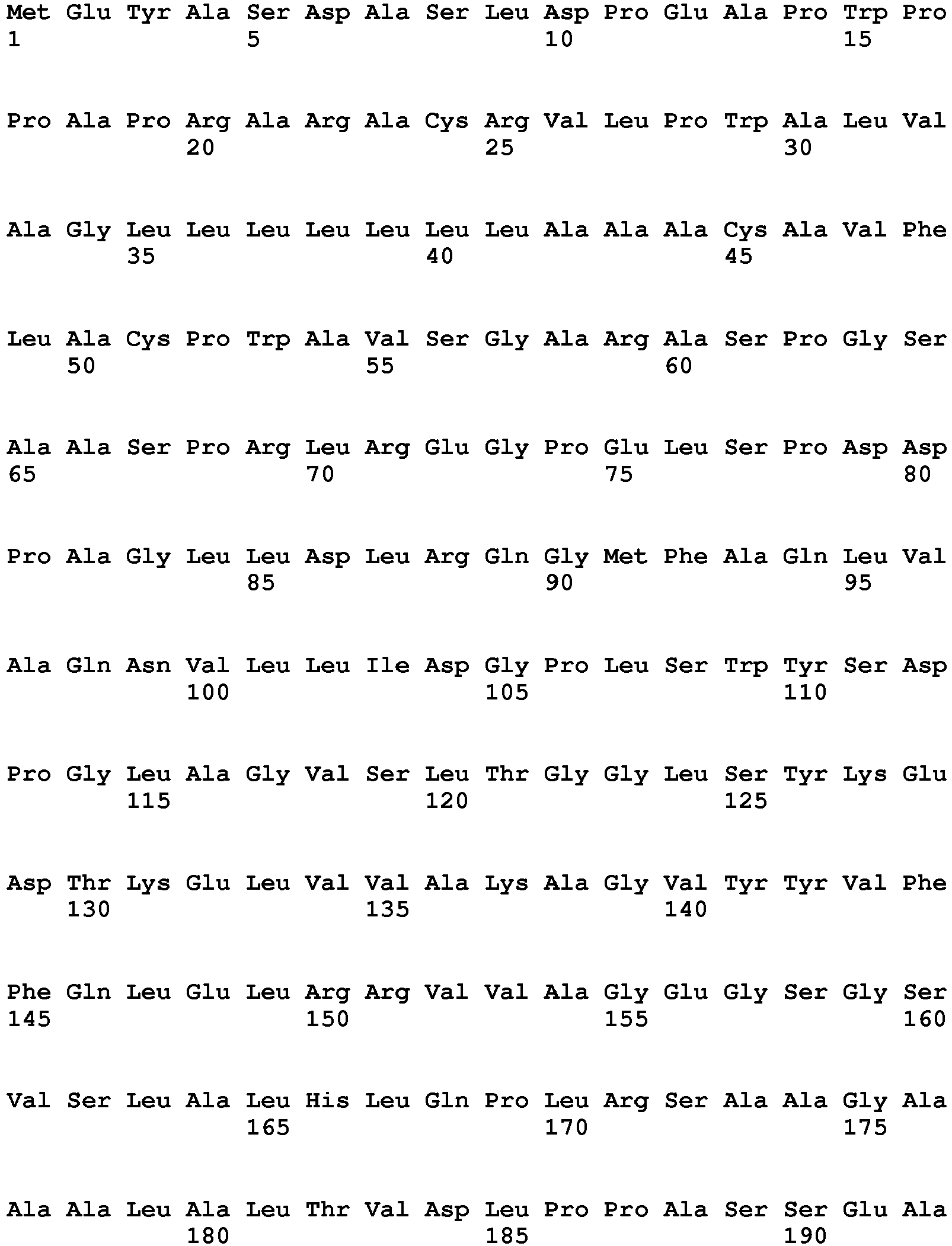

- <210> 3
<211> 256
<212> PRT
<213> Mus sp. - <400> 3


- <210> 4
<211> 254
<212> PRT
<213> Macaca fascicularis - <400> 4


- <210> 5
<211> 258
<212> PRT
<213> Rattus sp. - <400> 5


- <210> 6
- <400> 6
000 - <210> 7
- <400> 7
000 - <210> 8
- <400> 8
000 - <210> 9
- <400> 9
000 - <210> 10
- <400> 10
000 - <210> 11
<211> 10
<212> PRT
<213> Artificial Sequence - <220>
<221> source
<223> /note="Description of Artificial Sequence: Synthetic peptide" - <400> 11

- <210> 12
<211> 10
<212> PRT
<213> Artificial Sequence - <220>
<221> source
<223> /note="Description of Artificial Sequence: Synthetic peptide" - <400> 12

- <210> 13
<211> 10
<212> PRT
<213> Artificial Sequence - <220>
<221> source
<223> /note="Description of Artificial Sequence: Synthetic peptide" - <400> 13

- <210> 14
<211> 12
<212> PRT
<213> Artificial Sequence - <220>
<221> source
<223> /note="Description of Artificial Sequence: Synthetic peptide" - <400> 14

- <210> 15
<211> 10
<212> PRT
<213> Artificial Sequence - <220>
<221> source
<223> /note="Description of Artificial Sequence: Synthetic peptide" - <400> 15

- <210> 16
<211> 10
<212> PRT
<213> Artificial Sequence - <220>
<221> source
<223> /note="Description of Artificial Sequence: Synthetic peptide" - <400> 16

- <210> 17
<211> 10
<212> PRT
<213> Artificial Sequence - <220>
<221> source
<223> /note="Description of Artificial Sequence: Synthetic peptide" - <400> 17

- <210> 18
<211> 11
<212> PRT
<213> Artificial Sequence - <220>
<221> source
<223> /note="Description of Artificial Sequence: Synthetic peptide" - <400> 18

- <210> 19
<211> 10
<212> PRT
<213> Artificial Sequence - <220>
<221> source
<223> /note="Description of Artificial Sequence: Synthetic peptide" - <400> 19

- <210> 20
- <400> 20
000 - <210> 21
<211> 17
<212> PRT
<213> Artificial Sequence - <220>
<221> source
<223> /note="Description of Artificial Sequence: Synthetic peptide" - <400> 21

- <210> 22
<211> 17
<212> PRT
<213> Artificial Sequence - <220>
<221> source
<223> /note="Description of Artificial Sequence: Synthetic peptide" - <400> 22

- <210> 23
<211> 17
<212> PRT
<213> Artificial Sequence - <220>
<221> source
<223> /note="Description of Artificial Sequence: Synthetic peptide" - <400> 23

- <210> 24
<211> 16
<212> PRT
<213> Artificial Sequence - <220>
<221> source
<223> /note="Description of Artificial Sequence: Synthetic peptide" - <400> 24

- <210> 25
<211> 17
<212> PRT
<213> Artificial Sequence - <220>
<221> source
<223> /note="Description of Artificial Sequence: Synthetic peptide" - <400> 25

- <210> 26
<211> 17
<212> PRT
<213> Artificial Sequence - <220>
<221> source
<223> /note="Description of Artificial Sequence: Synthetic peptide" - <400> 26


- <210> 27
<211> 17
<212> PRT
<213> Artificial Sequence - <220>
<221> source
<223> /note="Description of Artificial Sequence: Synthetic peptide" - <400> 27

- <210> 28
<211> 16
<212> PRT
<213> Artificial Sequence - <220>
<221> source
<223> /note="Description of Artificial Sequence: Synthetic peptide" - <400> 28

- <210> 29
- <400> 29
000 - <210> 30
- <400> 30
000 - <210> 31
<211> 7
<212> PRT
<213> Artificial Sequence - <220>
<221> source
<223> /note="Description of Artificial Sequence: Synthetic peptide" - <400> 31

- <210> 32
<211> 10
<212> PRT
<213> Artificial Sequence - <220>
<221> source
<223> /note="Description of Artificial Sequence: Synthetic peptide" - <400> 32

- <210> 33
<211> 17
<212> PRT
<213> Artificial Sequence - <220>
<221> source
<223> /note="Description of Artificial Sequence: Synthetic peptide" - <400> 33

- <210> 34
<211> 10
<212> PRT
<213> Artificial Sequence - <220>
<221> source
<223> /note="Description of Artificial Sequence: Synthetic peptide" - <400> 34

- <210> 35
<211> 8
<212> PRT
<213> Artificial Sequence - <220>
<221> source
<223> /note="Description of Artificial Sequence: Synthetic peptide" - <400> 35

- <210> 36
<211> 12
<212> PRT
<213> Artificial Sequence - <220>
<221> source
<223> /note="Description of Artificial Sequence: Synthetic peptide" - <400> 36

- <210> 37
<211> 9
<212> PRT
<213> Artificial Sequence - <220>
<221> source
<223> /note="Description of Artificial Sequence: Synthetic peptide" - <400> 37

- <210> 38
<211> 11
<212> PRT
<213> Artificial Sequence - <220>
<221> source
<223> /note="Description of Artificial Sequence: Synthetic peptide" - <400> 38

- <210> 39
- <400> 39
000 - <210> 40
- <400> 40
000 - <210> 41
- <400> 41
000 - <210> 42
- <400> 42
000 - <210> 43
- <400> 43
000 - <210> 44
- <400> 44
000 - <210> 45
- <400> 45
000 - <210> 46
- <400> 46
000 - <210> 47
- <400> 47
000 - <210> 48
- <400> 48
000 - <210> 49
- <400> 49
000 - <210> 50
- <400> 50
000 - <210> 51
<211> 11
<212> PRT
<213> Artificial Sequence - <220>
<221> source
<223> /note="Description of Artificial Sequence: Synthetic peptide" - <400> 51

- <210> 52
<211> 11
<212> PRT
<213> Artificial Sequence - <220>
<221> source
<223> /note="Description of Artificial Sequence: Synthetic peptide" - <400> 52

- <210> 53
<211> 11
<212> PRT
<213> Artificial Sequence - <220>
<221> source
<223> /note="Description of Artificial Sequence: Synthetic peptide" - <400> 53

- <210> 54
<211> 11
<212> PRT
<213> Artificial Sequence - <220>
<221> source
<223> /note="Description of Artificial Sequence: Synthetic peptide" - <400> 54

- <210> 55
<211> 11
<212> PRT
<213> Artificial Sequence - <220>
<221> source
<223> /note="Description of Artificial Sequence: Synthetic peptide" - <400> 55

- <210> 56
<211> 13
<212> PRT
<213> Artificial Sequence - <220>
<221> source
<223> /note="Description of Artificial Sequence: Synthetic peptide" - <400> 56

- <210> 57
<211> 16
<212> PRT
<213> Artificial Sequence - <220>
<221> source
<223> /note="Description of Artificial Sequence: Synthetic peptide" - <400> 57

- <210> 58
<211> 13
<212> PRT
<213> Artificial Sequence - <220>
<221> source
<223> /note="Description of Artificial Sequence: Synthetic peptide" - <400> 58

- <210> 59
- <400> 59
000 - <210> 60
- <400> 60
000 - <210> 61
<211> 7
<212> PRT
<213> Artificial Sequence - <220>
<221> source
<223> /note="Description of Artificial Sequence: Synthetic peptide" - <400> 61

- <210> 62
<211> 7
<212> PRT
<213> Artificial Sequence - <220>
<221> source
<223> /note="Description of Artificial Sequence: Synthetic peptide" - <400> 62

- <210> 63
<211> 7
<212> PRT
<213> Artificial Sequence - <220>
<221> source
<223> /note="Description of Artificial Sequence: Synthetic peptide" - <400> 63

- <210> 64
<211> 7
<212> PRT
<213> Artificial Sequence - <220>
<221> source
<223> /note="Description of Artificial Sequence: Synthetic peptide" - <400> 64

- <210> 65
<211> 7
<212> PRT
<213> Artificial Sequence - <220>
<221> source
<223> /note="Description of Artificial Sequence: Synthetic peptide" - <400> 65

- <210> 66
<211> 7
<212> PRT
<213> Artificial Sequence - <220>
<221> source
<223> /note="Description of Artificial Sequence: Synthetic peptide" - <400> 66

- <210> 67
<211> 7
<212> PRT
<213> Artificial Sequence - <220>
<221> source
<223> /note="Description of Artificial Sequence: Synthetic peptide" - <400> 67

- <210> 68
<211> 7
<212> PRT
<213> Artificial Sequence - <220>
<221> source
<223> /note="Description of Artificial Sequence: Synthetic peptide" - <400> 68

- <210> 69
- <400> 69
000 - <210> 70
- <400> 70
000 - <210> 71
<211> 9
<212> PRT
<213> Artificial Sequence - <220>
<221> source
<223> /note="Description of Artificial Sequence: Synthetic peptide" - <400> 71

- <210> 72
<211> 9
<212> PRT
<213> Artificial Sequence - <220>
<221> source
<223> /note="Description of Artificial Sequence: Synthetic peptide" - <400> 72

- <210> 73
<211> 9
<212> PRT
<213> Artificial Sequence - <220>
<221> source
<223> /note="Description of Artificial Sequence: Synthetic peptide" - <400> 73

- <210> 74
<211> 9
<212> PRT
<213> Artificial Sequence - <220>
<221> source
<223> /note="Description of Artificial Sequence: Synthetic peptide" - <400> 74

- <210> 75
<211> 9
<212> PRT
<213> Artificial Sequence - <220>
<221> source
<223> /note="Description of Artificial Sequence: Synthetic peptide" - <400> 75

- <210> 76
<211> 10
<212> PRT
<213> Artificial Sequence - <220>
<221> source
<223> /note="Description of Artificial Sequence: Synthetic peptide" - <400> 76

- <210> 77
<211> 9
<212> PRT
<213> Artificial Sequence - <220>
<221> source
<223> /note="Description of Artificial Sequence: Synthetic peptide" - <400> 77

- <210> 78
<211> 9
<212> PRT
<213> Artificial Sequence - <220>
<221> source
<223> /note="Description of Artificial Sequence: Synthetic peptide" - <400> 78


- <210> 79
- <400> 79
000 - <210> 80
- <400> 80
000 - <210> 81
- <400> 81
000 - <210> 82
- <400> 82
000 - <210> 83
- <400> 83
000 - <210> 84
- <400> 84
000 - <210> 85
- <400> 85
000 - <210> 86
- <400> 86
000 - <210> 87
- <400> 87
000 - <210> 88
- <400> 88
000 - <210> 89
- <400> 89
000 - <210> 90
<211> 15
<212> PRT
<213> Artificial Sequence - <220>
<221> source
<223> /note="Description of Artificial Sequence: Synthetic peptide" - <400> 90

- <210> 91
- <400> 91
000 - <210> 92
- <400> 92
000 - <210> 93
- <400> 93
000 - <210> 94
- <400> 94
000 - <210> 95
- <400> 95
000 - <210> 96
- <400> 96
000 - <210> 97
- <400> 97
000 - <210> 98
- <400> 98
000 - <210> 99
- <400> 99
000 - <210> 100
- <400> 100
000 - <210> 101
<211> 116
<212> PRT
<213> Artificial Sequence - <220>
<221> source
<223> /note="Description of Artificial Sequence: Synthetic polypeptide" - <400> 101

- <210> 102
<211> 119
<212> PRT
<213> Artificial Sequence - <220>
<221> source
<223> /note="Description of Artificial Sequence: Synthetic polypeptide" - <400> 102

- <210> 103
<211> 126
<212> PRT
<213> Artificial Sequence - <220>
<221> source
<223> /note="Description of Artificial Sequence: Synthetic polypeptide" - <400> 103


- <210> 104
<211> 120
<212> PRT
<213> Artificial Sequence - <220>
<221> source
<223> /note="Description of Artificial Sequence: Synthetic polypeptide" - <400> 104

- <210> 105
<211> 117
<212> PRT
<213> Artificial Sequence - <220>
<221> source
<223> /note="Description of Artificial Sequence: Synthetic polypeptide" - <400> 105

- <210> 106
<211> 121
<212> PRT
<213> Artificial Sequence - <220>
<221> source
<223> /note="Description of Artificial Sequence: Synthetic polypeptide" - <400> 106


- <210> 107
<211> 118
<212> PRT
<213> Artificial Sequence - <220>
<221> source
<223> /note="Description of Artificial Sequence: Synthetic polypeptide" - <400> 107


- <210> 108
<211> 120
<212> PRT
<213> Artificial Sequence - <220>
<221> source
<223> /note="Description of Artificial Sequence: Synthetic polypeptide" - <400> 108

- <210> 109
<211> 121
<212> PRT
<213> Artificial Sequence - <220>
<221> source
<223> /note="Description of Artificial Sequence: Synthetic polypeptide" - <400> 109


- <210> 110
<211> 121
<212> PRT
<213> Artificial Sequence - <220>
<221> source
<223> /note="Description of Artificial Sequence: Synthetic polypeptide" - <400> 110


- <210> 111
<211> 118
<212> PRT
<213> Artificial Sequence - <220>
<221> source
<223> /note="Description of Artificial Sequence: Synthetic polypeptide" - <400> 111

- <210> 112
<211> 118
<212> PRT
<213> Artificial Sequence - <220>
<221> source
<223> /note="Description of Artificial Sequence: Synthetic polypeptide" - <400> 112


- <210> 113
- <400> 113
000 - <210> 114
- <400> 114
000 - <210> 115
- <400> 115
000 - <210> 116
- <400> 116
000 - <210> 117
- <400> 117
000 - <210> 118
- <400> 118
000 - <210> 119
- <400> 119
000 - <210> 120
- <400> 120
000 - <210> 121
<211> 124
<212> PRT
<213> Artificial Sequence - <220>
<221> source
<223> /note="Description of Artificial Sequence: Synthetic polypeptide" - <400> 121

- <210> 122
- <400> 122
000 - <210> 123
<211> 114
<212> PRT
<213> Artificial Sequence - <220>
<221> source
<223> /note="Description of Artificial Sequence: Synthetic polypeptide" - <400> 123

- <210> 124
- <400> 124
000 - <210> 125
<211> 120
<212> PRT
<213> Artificial Sequence - <220>
<221> source
<223> /note="Description of Artificial Sequence: Synthetic polypeptide" - <400> 125


- <210> 126
<211> 120
<212> PRT
<213> Artificial Sequence - <220>
<221> source
<223> /note="Description of Artificial Sequence: Synthetic polypeptide" - <400> 126
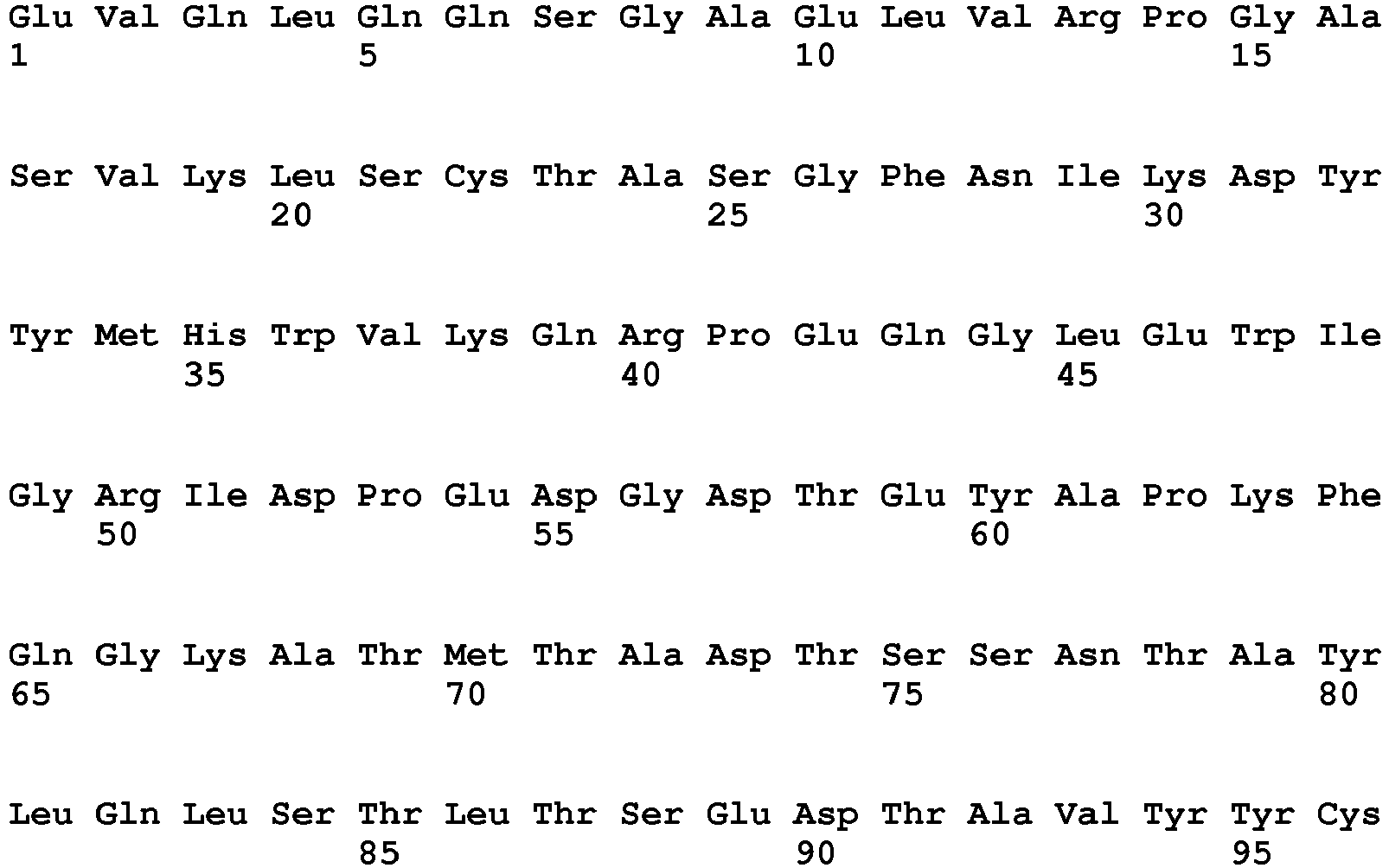

- <210> 127
- <400> 127
000 - <210> 128
- <400> 128
000 - <210> 129
<211> 118
<212> PRT
<213> Artificial Sequence - <220>
<221> source
<223> /note="Description of Artificial Sequence: Synthetic polypeptide" - <400> 129

- <210> 130
<211> 121
<212> PRT
<213> Artificial Sequence - <220>
<221> source
<223> /note="Description of Artificial Sequence: Synthetic polypeptide" - <400> 130

- <210> 131
- <400> 131
000 - <210> 132
- <400> 132
000 - <210> 133
- <400> 133
000 - <210> 134
- <400> 134
000 - <210> 135
- <400> 135
000 - <210> 136
- <400> 136
000 - <210> 137
- <400> 137
000 - <210> 138
- <400> 138
000 - <210> 139
- <400> 139
000 - <210> 140
- <400> 140
000 - <210> 141
- <400> 141
000 - <210> 142
- <400> 142
000 - <210> 143
- <400> 143
000 - <210> 144
- <400> 144
000 - <210> 145
- <400> 145
000 - <210> 146
- <400> 146
000 - <210> 147
- <400> 147
000 - <210> 148
- <400> 148
000 - <210> 149
- <400> 149
000 - <210> 150
- <400> 150
000 - <210> 151
<211> 107
<212> PRT
<213> Artificial Sequence - <220>
<221> source
<223> /note="Description of Artificial Sequence: Synthetic polypeptide" - <400> 151


- <210> 152
<211> 107
<212> PRT
<213> Artificial Sequence - <220>
<221> source
<223> /note="Description of Artificial Sequence: Synthetic polypeptide" - <400> 152
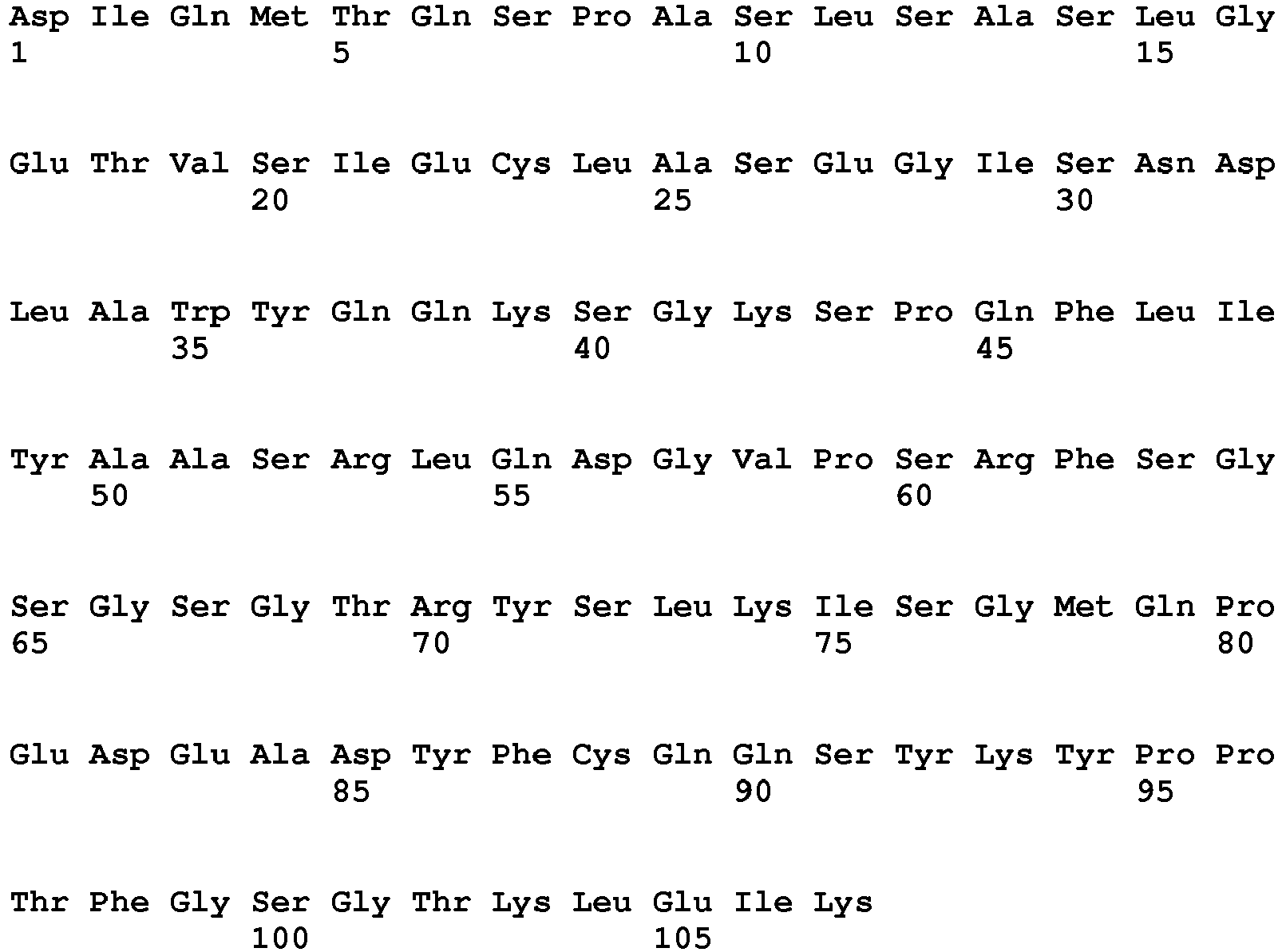
- <210> 153
<211> 106
<212> PRT
<213> Artificial Sequence - <220>
<221> source
<223> /note="Description of Artificial Sequence: Synthetic polypeptide" - <400> 153

- <210> 154
<211> 107
<212> PRT
<213> Artificial Sequence - <220>
<221> source
<223> /note="Description of Artificial Sequence: Synthetic polypeptide" - <400> 154


- <210> 155
<211> 107
<212> PRT
<213> Artificial Sequence - <220>
<221> source
<223> /note="Description of Artificial Sequence: Synthetic polypeptide" - <400> 155

- <210> 156
<211> 111
<212> PRT
<213> Artificial Sequence - <220>
<221> source
<223> /note="Description of Artificial Sequence: Synthetic polypeptide" - <400> 156

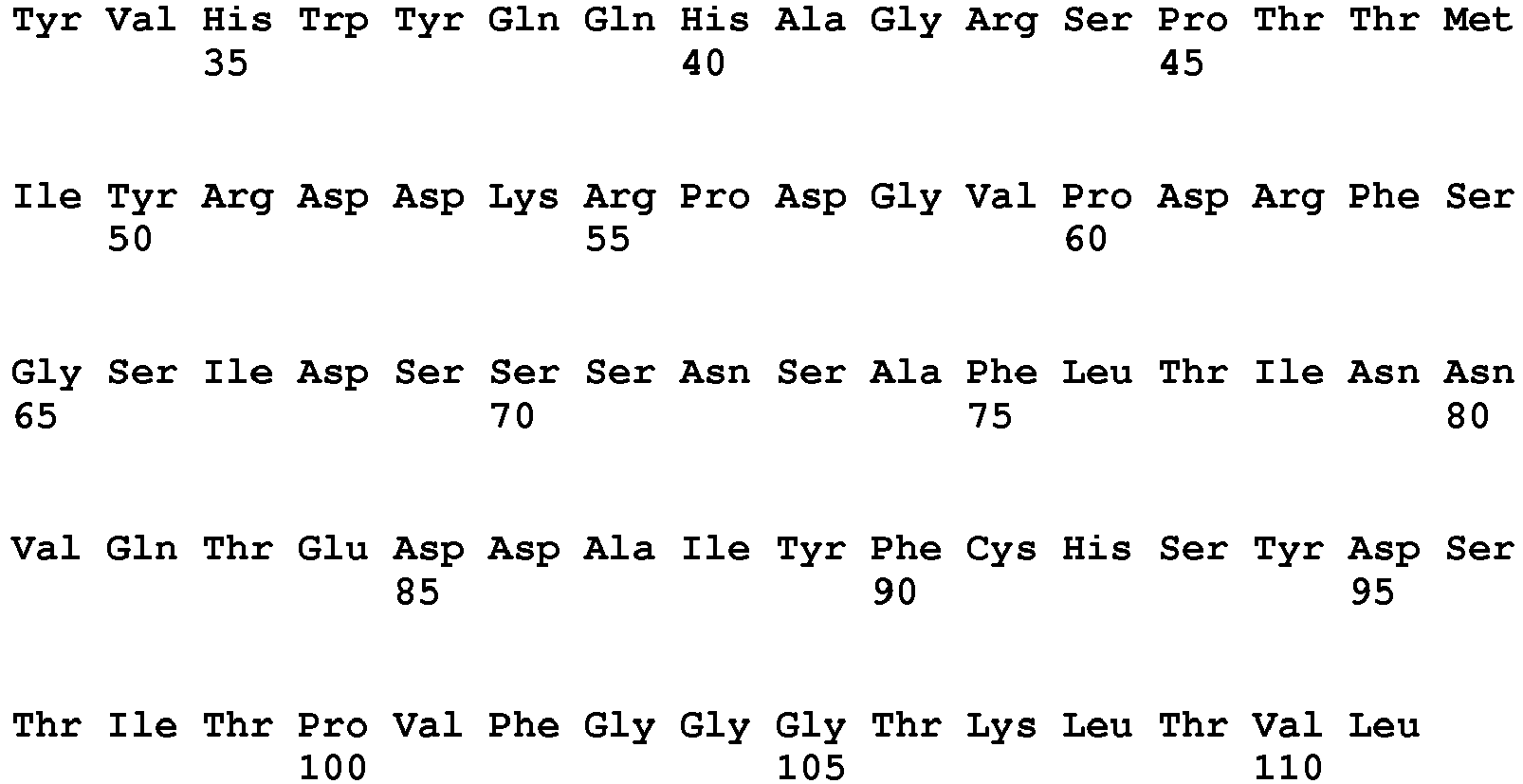
- <210> 157
<211> 112
<212> PRT
<213> Artificial Sequence - <220>
<221> source
<223> /note="Description of Artificial Sequence: Synthetic polypeptide" - <400> 157

- <210> 158
<211> 110
<212> PRT
<213> Artificial Sequence - <220>
<221> source
<223> /note="Description of Artificial Sequence: Synthetic polypeptide" - <400> 158

- <210> 159
<211> 111
<212> PRT
<213> Artificial Sequence - <220>
<221> source
<223> /note="Description of Artificial Sequence: Synthetic polypeptide" - <400> 159


- <210> 160
<211> 109
<212> PRT
<213> Artificial Sequence - <220>
<221> source
<223> /note="Description of Artificial Sequence: Synthetic polypeptide" - <400> 160

- <210> 161
<211> 111
<212> PRT
<213> Artificial Sequence - <220>
<221> source
<223> /note="Description of Artificial Sequence: Synthetic polypeptide" - <400> 161


- <210> 162
<211> 111
<212> PRT
<213> Artificial Sequence - <220>
<221> source
<223> /note="Description of Artificial Sequence: Synthetic polypeptide" - <400> 162


- <210> 163
<211> 112
<212> PRT
<213> Artificial Sequence - <220>
<221> source
<223> /note="Description of Artificial Sequence: Synthetic polypeptide" - <400> 163

- <210> 164
<211> 112
<212> PRT
<213> Artificial Sequence - <220>
<221> source
<223> /note="Description of Artificial Sequence: Synthetic polypeptide" - <400> 164


- <210> 165
<211> 112
<212> PRT
<213> Artificial Sequence - <220>
<221> source
<223> /note="Description of Artificial Sequence: Synthetic polypeptide" - <400> 165

- <210> 166
- <400> 166
000 - <210> 167
- <400> 167
000 - <210> 168
- <400> 168
000 - <210> 169
- <400> 169
000 - <210> 170
- <400> 170
000 - <210> 171
<211> 112
<212> PRT
<213> Artificial Sequence - <220>
<221> source
<223> /note="Description of Artificial Sequence: Synthetic polypeptide" - <400> 171

- <210> 172
- <400> 172
000 - <210> 173
<211> 112
<212> PRT
<213> Artificial Sequence - <220>
<221> source
<223> /note="Description of Artificial Sequence: Synthetic polypeptide" - <400> 173

- <210> 174
- <400> 174
000 - <210> 175
<211> 112
<212> PRT
<213> Artificial Sequence - <220>
<221> source
<223> /note="Description of Artificial Sequence: Synthetic polypeptide" - <400> 175


- <210> 176
<211> 112
<212> PRT
<213> Artificial Sequence - <220>
<221> source
<223> /note="Description of Artificial Sequence: Synthetic polypeptide" - <400> 176


- <210> 177
- <400> 177
000 - <210> 178
- <400> 178
000 - <210> 179
<211> 107
<212> PRT
<213> Artificial Sequence - <220>
<221> source
<223> /note="Description of Artificial Sequence: Synthetic polypeptide" - <400> 179
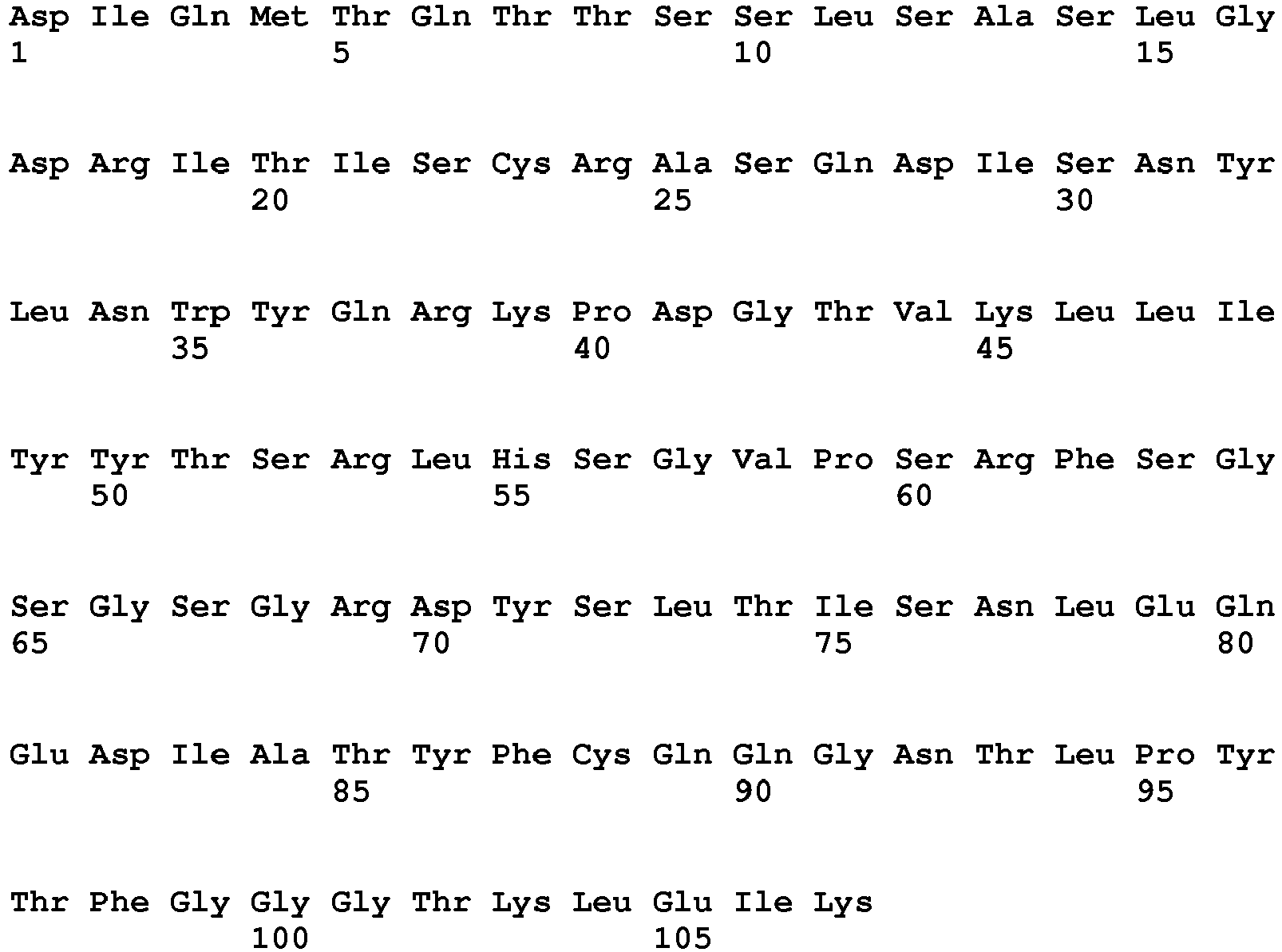
- <210> 180
<211> 106
<212> PRT
<213> Artificial Sequence - <220>
<221> source
<223> /note="Description of Artificial Sequence: Synthetic polypeptide" - <400> 180

- <210> 181
- <400> 181
000 - <210> 182
- <400> 182
000 - <210> 183
- <400> 183
000 - <210> 184
- <400> 184
000 - <210> 185
- <400> 185
000 - <210> 186
- <400> 186
000 - <210> 187
- <400> 187
000 - <210> 188
- <400> 188
000 - <210> 189
- <400> 189
000 - <210> 190
- <400> 190
000 - <210> 191
- <400> 191
000 - <210> 192
- <400> 192
000 - <210> 193
- <400> 193
000 - <210> 194
- <400> 194
000 - <210> 195
- <400> 195
000 - <210> 196
- <400> 196
000 - <210> 197
- <400> 197
000 - <210> 198
- <400> 198
000 - <210> 199
- <400> 199
000 - <210> 200
- <400> 200
000 - <210> 201
<211> 10
<212> PRT
<213> Artificial Sequence - <220>
<221> source
<223> /note="Description of Artificial Sequence: Synthetic peptide" - <400> 201

- <210> 202
- <400> 202
000 - <210> 203
<211> 10
<212> PRT
<213> Artificial Sequence - <220>
<221> source
<223> /note="Description of Artificial Sequence: Synthetic peptide" - <400> 203

- <210> 204
- <400> 204
000 - <210> 205
<211> 10
<212> PRT
<213> Artificial Sequence - <220>
<221> source
<223> /note="Description of Artificial Sequence: Synthetic peptide" - <400> 205

- <210> 206
- <400> 206
000 - <210> 207
- <400> 207
000 - <210> 208
- <400> 208
000 - <210> 209
<211> 10
<212> PRT
<213> Artificial Sequence - <220>
<221> source
<223> /note="Description of Artificial Sequence: Synthetic peptide" - <400> 209

- <210> 210
<211> 10
<212> PRT
<213> Artificial Sequence - <220>
<221> source
<223> /note="Description of Artificial Sequence: Synthetic peptide" - <400> 210


- <210> 211
<211> 17
<212> PRT
<213> Artificial Sequence - <220>
<221> source
<223> /note="Description of Artificial Sequence: Synthetic peptide" - <400> 211

- <210> 212
- <400> 212
000 - <210> 213
<211> 17
<212> PRT
<213> Artificial Sequence - <220>
<221> source
<223> /note="Description of Artificial Sequence: Synthetic peptide" - <400> 213

- <210> 214
- <400> 214
000 - <210> 215
<211> 17
<212> PRT
<213> Artificial Sequence - <220>
<221> source
<223> /note="Description of Artificial Sequence: Synthetic peptide" - <400> 215

- <210> 216
<211> 17
<212> PRT
<213> Artificial Sequence - <220>
<221> source
<223> /note="Description of Artificial Sequence: Synthetic peptide" - <400> 216

- <210> 217
- <400> 217
000 - <210> 218
- <400> 218
000 - <210> 219
<211> 16
<212> PRT
<213> Artificial Sequence - <220>
<221> source
<223> /note="Description of Artificial Sequence: Synthetic peptide" - <400> 219

- <210> 220
<211> 17
<212> PRT
<213> Artificial Sequence - <220>
<221> source
<223> /note="Description of Artificial Sequence: Synthetic peptide" - <400> 220

- <210> 221
<211> 15
<212> PRT
<213> Artificial Sequence - <220>
<221> source
<223> /note="Description of Artificial Sequence: Synthetic peptide" - <400> 221

- <210> 222
- <400> 222
000 - <210> 223
<211> 5
<212> PRT
<213> Artificial Sequence - <220>
<221> source
<223> /note="Description of Artificial Sequence: Synthetic peptide" - <400> 223

- <210> 224
- <400> 224
000 - <210> 225
<211> 11
<212> PRT
<213> Artificial Sequence - <220>
<221> source
<223> /note="Description of Artificial Sequence: Synthetic peptide" - <400> 225

- <210> 226
- <400> 226
000 - <210> 227
- <400> 227
000 - <210> 228
- <400> 228
000 - <210> 229
<211> 10
<212> PRT
<213> Artificial Sequence - <220>
<221> source
<223> /note="Description of Artificial Sequence: Synthetic peptide" - <400> 229

- <210> 230
<211> 12
<212> PRT
<213> Artificial Sequence - <220>
<221> source
<223> /note="Description of Artificial Sequence: Synthetic peptide" - <400> 230

- <210> 231
<211> 16
<212> PRT
<213> Artificial Sequence - <220>
<221> source
<223> /note="Description of Artificial Sequence: Synthetic peptide" - <400> 231

- <210> 232
- <400> 232
000 - <210> 233
<211> 16
<212> PRT
<213> Artificial Sequence - <220>
<221> source
<223> /note="Description of Artificial Sequence: Synthetic peptide" - <400> 233

- <210> 234
- <400> 234
000 - <210> 235
<211> 16
<212> PRT
<213> Artificial Sequence - <220>
<221> source
<223> /note="Description of Artificial Sequence: Synthetic peptide" - <400> 235

- <210> 236
- <400> 236
000 - <210> 237
- <400> 237
000 - <210> 238
- <400> 238
000 - <210> 239
<211> 11
<212> PRT
<213> Artificial Sequence - <220>
<221> source
<223> /note="Description of Artificial Sequence: Synthetic peptide" - <400> 239

- <210> 240
<211> 11
<212> PRT
<213> Artificial Sequence - <220>
<221> source
<223> /note="Description of Artificial Sequence: Synthetic peptide" - <400> 240

- <210> 241
<211> 7
<212> PRT
<213> Artificial Sequence - <220>
<221> source
<223> /note="Description of Artificial Sequence: Synthetic peptide" - <400> 241

- <210> 242
- <400> 242
000 - <210> 243
<211> 7
<212> PRT
<213> Artificial Sequence - <220>
<221> source
<223> /note="Description of Artificial Sequence: Synthetic peptide" - <400> 243

- <210> 244
- <400> 244
000 - <210> 245
<211> 7
<212> PRT
<213> Artificial Sequence - <220>
<221> source
<223> /note="Description of Artificial Sequence: Synthetic peptide" - <400> 245

- <210> 246
- <400> 246
000 - <210> 247
- <400> 247
000 - <210> 248
- <400> 248
000 - <210> 249
<211> 7
<212> PRT
<213> Artificial Sequence - <220>
<221> source
<223> /note="Description of Artificial Sequence: Synthetic peptide" - <400> 249

- <210> 250
<211> 7
<212> PRT
<213> Artificial Sequence - <220>
<221> source
<223> /note="Description of Artificial Sequence: Synthetic peptide" - <400> 250

- <210> 251
<211> 9
<212> PRT
<213> Artificial Sequence - <220>
<221> source
<223> /note="Description of Artificial Sequence: Synthetic peptide" - <400> 251

- <210> 252
- <400> 252
000 - <210> 253
<211> 9
<212> PRT
<213> Artificial Sequence - <220>
<221> source
<223> /note="Description of Artificial Sequence: Synthetic peptide" - <400> 253

- <210> 254
- <400> 254
000 - <210> 255
<211> 9
<212> PRT
<213> Artificial Sequence - <220>
<221> source
<223> /note="Description of Artificial Sequence: Synthetic peptide" - <400> 255

- <210> 256
- <400> 256
000 - <210> 257
- <400> 257
000 - <210> 258
- <400> 258
000 - <210> 259
<211> 9
<212> PRT
<213> Artificial Sequence - <220>
<221> source
<223> /note="Description of Artificial Sequence: Synthetic peptide" - <400> 259

- <210> 260
<211> 8
<212> PRT
<213> Artificial Sequence - <220>
<221> source
<223> /note="Description of Artificial Sequence: Synthetic peptide" - <400> 260

- <210> 261
- <400> 261
000 - <210> 262
- <400> 262
000 - <210> 263
- <400> 263
000 - <210> 264
- <400> 264
000 - <210> 265
- <400> 265
000 - <210> 266
- <400> 266
000 - <210> 267
- <400> 267
000 - <210> 268
- <400> 268
000 - <210> 269
- <400> 269
000 - <210> 270
- <400> 270
000 - <210> 271
- <400> 271
000 - <210> 272
- <400> 272
000 - <210> 273
- <400> 273
000 - <210> 274
- <400> 274
000 - <210> 275
- <400> 275
000 - <210> 276
- <400> 276
000 - <210> 277
- <400> 277
000 - <210> 278
- <400> 278
000 - <210> 279
- <400> 279
000 - <210> 280
- <400> 280
000 - <210> 281
- <400> 281
000 - <210> 282
- <400> 282
000 - <210> 283
- <400> 283
000 - <210> 284
- <400> 284
000 - <210> 285
- <400> 285
000 - <210> 286
- <400> 286
000 - <210> 287
- <400> 287
000 - <210> 288
- <400> 288
000 - <210> 289
- <400> 289
000 - <210> 290
- <400> 290
000 - <210> 291
- <400> 291
000 - <210> 292
- <400> 292
000 - <210> 293
- <400> 293
000 - <210> 294
- <400> 294
000 - <210> 295
- <400> 295
000 - <210> 296
- <400> 296
000 - <210> 297
- <400> 297
000 - <210> 298
- <400> 298
000 - <210> 299
- <400> 299
000 - <210> 300
- <400> 300
000 - <210> 301
<211> 448
<212> PRT
<213> Artificial Sequence - <220>
<221> source
<223> /note="Description of Artificial Sequence: Synthetic polypeptide" - <400> 301


- <210> 302
<211> 216
<212> PRT
<213> Artificial Sequence - <220>
<221> source
<223> /note="Description of Artificial Sequence: Synthetic polypeptide" - <400> 302


- <210> 303
<211> 442
<212> PRT
<213> Artificial Sequence - <220>
<221> source
<223> /note="Description of Artificial Sequence: Synthetic polypeptide" - <400> 303


- <210> 304
<211> 214
<212> PRT
<213> Artificial Sequence - <220>
<221> source
<223> /note="Description of Artificial Sequence: Synthetic polypeptide" - <400> 304


- <210> 305
- <400> 305
000 - <210> 306
- <400> 306
000 - <210> 307
- <400> 307
000 - <210> 308
- <400> 308
000 - <210> 309
- <400> 309
000 - <210> 310
<211> 451
<212> PRT
<213> Artificial Sequence - <220>
<221> source
<223> /note="Description of Artificial Sequence: Synthetic polypeptide" - <400> 310


- <210> 311
<211> 450
<212> PRT
<213> Artificial Sequence - <220>
<221> source
<223> /note="Description of Artificial Sequence: Synthetic polypeptide" - <400> 311


- <210> 312
<211> 448
<212> PRT
<213> Artificial Sequence - <220>
<221> source
<223> /note="Description of Artificial Sequence: Synthetic polypeptide" - <400> 312


- <210> 313
<211> 447
<212> PRT
<213> Artificial Sequence - <220>
<221> source
<223> /note="Description of Artificial Sequence: Synthetic polypeptide" - <400> 313


- <210> 314
<211> 217
<212> PRT
<213> Artificial Sequence - <220>
<221> source
<223> /note="Description of Artificial Sequence: Synthetic polypeptide" - <400> 314


- <210> 315
<211> 219
<212> PRT
<213> Artificial Sequence - <220>
<221> source
<223> /note="Description of Artificial Sequence: Synthetic polypeptide" - <400> 315


Claims (15)
- An anti-4-1BB antibody or antigen binding fragment thereof, comprising (i) a VH chain comprising three CDRs; and (ii) a VL chain comprising three CDRs, wherein:VH CDR#1 is GYTFTSYYIY (SEQ ID NO:16);VH CDR#2 is NIWPGNGGTFYGEKFMG (SEQ ID NO:26);VH CDR#3 is RPDYSGDDYFDY (SEQ ID NO:36);VL CDR#1 is KLNSGNIGSYYVH (SEQ ID NO:56);VL CDR#2 is RDDKRPD (SEQ ID NO:66); andVL CDR#3 is HSYDSTITPV (SEQ ID NO:76),orVH CDR#1 is DYTFNDYWVS (SEQ ID NO:17);VH CDR#2 is EIYPNSGATNFNGKFRG (SEQ ID NO:27);VH CDR#3 is EYTRDWFAY (SEQ ID NO:37);VL CDR#1 is RSSQSLLDSDGNTYLY (SEQ ID NO:57);VL CDR#2 is LVSNLGS (SEQ ID NO:67); andVL CDR#3 is MQPTHAPYT (SEQ ID NO:77).
- The anti-4-1BB antibody or binding fragment of claim 1 which is human or humanized.
- The anti-4-1BB antibody or binding fragment of claim 2, which comprises a VH chain corresponding in sequence to SEQ ID NO:109 and a VL chain corresponding in sequence to SEQ ID NO:161.
- The anti-4-1BB antibody or binding fragment claim 2, which comprises a VH chain corresponding in sequence to SEQ ID NO:109 and a VL chain corresponding in sequence to SEQ ID NO:159.
- The anti-4-1BB antibody or binding fragment claim 2, which comprises a VH chain corresponding in sequence to SEQ ID NO:111 and a VL chain corresponding in sequence to SEQ ID NO:165.
- The anti-4-1BB antibody or binding fragment of any one of claims 1 to 5, which is an IgG, optionally an IgG1 or IgG4.
- The anti-4-1BB antibody of claim 6, which is an IgG1 and comprises a variant CH2 region comprising the amino acid substitution V273E.
- The anti-4-1BB antibody of claim 6, which is an IgG1 and comprises a variant CH2 region comprising the amino acid substitution V273Y.
- The anti-4-1BB antibody of claim 6, which is an IgG4 and comprises a variant hinge region comprising the amino acid substitution S228P.
- A pharmaceutical composition comprising an anti-4-1BB antibody or binding fragment of any one of claims 1 to 9, and a pharmaceutically acceptable carrier.
- The anti-4-1BB antibody or binding fragment of any one of claims 1 to 9 for use in the treatment of cancer.
- A nucleic acid comprising a nucleotide sequence encoding an anti-4-1BB antibody or binding fragment of any one of claims 1 to 9.
- A vector comprising the nucleic acid of claim 12.
- A eukaryotic host cell transformed with the vector of claim 13.
- A method of producing an anti-4-1BB antibody or binding fragment thereof, comprising: (a) culturing the host cell of claim 14 and (b) recovering the antibody or binding fragment.
Applications Claiming Priority (2)
| Application Number | Priority Date | Filing Date | Title |
|---|---|---|---|
| US201662342497P | 2016-05-27 | 2016-05-27 | |
| PCT/US2017/034687 WO2017205745A1 (en) | 2016-05-27 | 2017-05-26 | Anti-4-1bb antibodies and their uses |
Publications (2)
| Publication Number | Publication Date |
|---|---|
| EP3464362A1 EP3464362A1 (en) | 2019-04-10 |
| EP3464362B1 true EP3464362B1 (en) | 2020-12-09 |
Family
ID=59014834
Family Applications (1)
| Application Number | Title | Priority Date | Filing Date |
|---|---|---|---|
| EP17728412.2A Not-in-force EP3464362B1 (en) | 2016-05-27 | 2017-05-26 | Anti-4-1bb antibodies and their uses |
Country Status (3)
| Country | Link |
|---|---|
| US (1) | US10875921B2 (en) |
| EP (1) | EP3464362B1 (en) |
| WO (1) | WO2017205745A1 (en) |
Families Citing this family (27)
| Publication number | Priority date | Publication date | Assignee | Title |
|---|---|---|---|---|
| KR101503341B1 (en) | 2014-03-12 | 2015-03-18 | 국립암센터 | Methods for isolation and proliferation of autologous cancer antigen-specific CD8+ T cells |
| JP6609724B1 (en) | 2017-01-06 | 2019-11-20 | ユーティレックス カンパニー リミテッド | Anti-human 4-1BB antibody and use thereof |
| JP7297672B2 (en) | 2017-04-13 | 2023-06-26 | アジェナス インコーポレイテッド | ANTI-CD137 ANTIBODY AND METHODS OF USE THEREOF |
| EP3652209A2 (en) | 2017-07-11 | 2020-05-20 | Compass Therapeutics LLC | Agonist antibodies that bind human cd137 and uses thereof |
| CN111511762B (en) | 2017-08-21 | 2025-05-06 | 天演药业公司 | Anti-CD 137 molecules and uses thereof |
| US11718679B2 (en) | 2017-10-31 | 2023-08-08 | Compass Therapeutics Llc | CD137 antibodies and PD-1 antagonists and uses thereof |
| EP3713961A2 (en) | 2017-11-20 | 2020-09-30 | Compass Therapeutics LLC | Cd137 antibodies and tumor antigen-targeting antibodies and uses thereof |
| WO2019109238A1 (en) * | 2017-12-05 | 2019-06-13 | Lyvgen Biopharma Co., Ltd. | Anti-cd137 antibodies and uses thereof |
| EP3744734A1 (en) | 2018-01-22 | 2020-12-02 | Jiangsu Hengrui Medicine Co., Ltd. | Anti-4-1bb antibody, antigen-binding fragment thereof and medical use thereof |
| WO2019148445A1 (en) | 2018-02-02 | 2019-08-08 | Adagene Inc. | Precision/context-dependent activatable antibodies, and methods of making and using the same |
| EP3773720A4 (en) * | 2018-04-10 | 2022-01-05 | Wuxi Biologics (Shanghai) Co. Ltd. | MONOCLONAL ANTIBODY AGAINST HUMAN 4-1BB, ITS PREPARATION PROCESS, AND ITS USE |
| WO2019226617A1 (en) | 2018-05-21 | 2019-11-28 | Compass Therapeutics Llc | Compositions and methods for enhancing the killing of target cells by nk cells |
| IL317002A (en) | 2018-08-10 | 2025-01-01 | Chugai Pharmaceutical Co Ltd | Anti-cd137 antigen-binding molecule and utilization thereof |
| BR112021004698A2 (en) * | 2018-09-12 | 2021-06-01 | Eucure (Beijing) Biopharma Co., Ltd | anti-tnfrsf9 antibodies and their uses |
| CN113039201A (en) * | 2018-09-28 | 2021-06-25 | 礼进生物医药科技(上海)有限公司 | anti-CD 137 binding molecules with engineered Fc domains and therapeutic uses thereof |
| PE20211778A1 (en) * | 2018-11-30 | 2021-09-08 | Abl Bio Inc | ANTI-PD-L1 / ANTI-4-1BB BI-SPECIFIC ANTIBODIES AND USES OF THEM |
| WO2020231809A1 (en) | 2019-05-10 | 2020-11-19 | Lyvgen Biopharma Co., Ltd. | Humanized anti-cd137 antibodies and uses thereof |
| CN112010973B (en) * | 2019-05-30 | 2022-08-16 | 山东博安生物技术股份有限公司 | Anti-4-1BB antibody, composition containing same and application thereof |
| CN112794906B (en) * | 2019-11-13 | 2022-04-05 | 合肥瀚科迈博生物技术有限公司 | Anti-4-1BB single chain antibody and its application |
| AU2020400801B2 (en) | 2019-12-10 | 2024-11-14 | Abl Bio, Inc. | Anti-BCMA/anti-4-1BB bispecific antibodies and uses thereof |
| WO2021132746A1 (en) * | 2019-12-24 | 2021-07-01 | Abl Bio, Inc. | Anti-bcma/anti-4-1bb bispecific antibodies and uses thereof |
| TWI895351B (en) * | 2020-02-12 | 2025-09-01 | 日商中外製藥股份有限公司 | Anti-CD137 antigen binding molecules for the treatment of cancer |
| EP4106880A4 (en) * | 2020-02-17 | 2024-07-03 | Board of Regents, The University of Texas System | HUMAN 4-1BB AGONIST ANTIBODIES AND METHODS OF USE THEREOF |
| WO2021209017A1 (en) * | 2020-04-17 | 2021-10-21 | 苏州丁孚靶点生物技术有限公司 | Preparation specifically bound with cd137 and use thereof |
| CA3181677A1 (en) * | 2020-06-23 | 2021-12-30 | Guizhong Liu | Combination therapy comprising anti-cd137 antibodies |
| WO2022231930A1 (en) | 2021-04-26 | 2022-11-03 | Celanese Eva Performance Polymers Llc | Implantable device for sustained release of a macromolecular drug compound |
| WO2023215560A1 (en) | 2022-05-05 | 2023-11-09 | Atoosa Corporation | Tumor cell/immune cell multivalent receptor engager – bio-nanoparticle (timre-bnp) |
Family Cites Families (46)
| Publication number | Priority date | Publication date | Assignee | Title |
|---|---|---|---|---|
| US4444887A (en) | 1979-12-10 | 1984-04-24 | Sloan-Kettering Institute | Process for making human antibody producing B-lymphocytes |
| US4634665A (en) | 1980-02-25 | 1987-01-06 | The Trustees Of Columbia University In The City Of New York | Processes for inserting DNA into eucaryotic cells and for producing proteinaceous materials |
| US5179017A (en) | 1980-02-25 | 1993-01-12 | The Trustees Of Columbia University In The City Of New York | Processes for inserting DNA into eucaryotic cells and for producing proteinaceous materials |
| US4399216A (en) | 1980-02-25 | 1983-08-16 | The Trustees Of Columbia University | Processes for inserting DNA into eucaryotic cells and for producing proteinaceous materials |
| US4716111A (en) | 1982-08-11 | 1987-12-29 | Trustees Of Boston University | Process for producing human antibodies |
| US4510245A (en) | 1982-11-18 | 1985-04-09 | Chiron Corporation | Adenovirus promoter system |
| GB8308235D0 (en) | 1983-03-25 | 1983-05-05 | Celltech Ltd | Polypeptides |
| US4816567A (en) | 1983-04-08 | 1989-03-28 | Genentech, Inc. | Recombinant immunoglobin preparations |
| US5807715A (en) | 1984-08-27 | 1998-09-15 | The Board Of Trustees Of The Leland Stanford Junior University | Methods and transformed mammalian lymphocyte cells for producing functional antigen-binding protein including chimeric immunoglobulin |
| US5168062A (en) | 1985-01-30 | 1992-12-01 | University Of Iowa Research Foundation | Transfer vectors and microorganisms containing human cytomegalovirus immediate-early promoter-regulatory DNA sequence |
| US4968615A (en) | 1985-12-18 | 1990-11-06 | Ciba-Geigy Corporation | Deoxyribonucleic acid segment from a virus |
| US5225539A (en) | 1986-03-27 | 1993-07-06 | Medical Research Council | Recombinant altered antibodies and methods of making altered antibodies |
| GB8607679D0 (en) | 1986-03-27 | 1986-04-30 | Winter G P | Recombinant dna product |
| US5530101A (en) | 1988-12-28 | 1996-06-25 | Protein Design Labs, Inc. | Humanized immunoglobulins |
| US5413923A (en) | 1989-07-25 | 1995-05-09 | Cell Genesys, Inc. | Homologous recombination for universal donor cells and chimeric mammalian hosts |
| GB8928874D0 (en) | 1989-12-21 | 1990-02-28 | Celltech Ltd | Humanised antibodies |
| ES2284161T3 (en) | 1990-01-12 | 2007-11-01 | Amgen Fremont Inc. | GENERATION OF XENOGENIC ANTIBODIES. |
| GB9015198D0 (en) | 1990-07-10 | 1990-08-29 | Brien Caroline J O | Binding substance |
| US5814318A (en) | 1990-08-29 | 1998-09-29 | Genpharm International Inc. | Transgenic non-human animals for producing heterologous antibodies |
| US5661016A (en) | 1990-08-29 | 1997-08-26 | Genpharm International Inc. | Transgenic non-human animals capable of producing heterologous antibodies of various isotypes |
| AU8507191A (en) | 1990-08-29 | 1992-03-30 | Genpharm International, Inc. | Transgenic non-human animals capable of producing heterologous antibodies |
| US5633425A (en) | 1990-08-29 | 1997-05-27 | Genpharm International, Inc. | Transgenic non-human animals capable of producing heterologous antibodies |
| US5545806A (en) | 1990-08-29 | 1996-08-13 | Genpharm International, Inc. | Ransgenic non-human animals for producing heterologous antibodies |
| US5625126A (en) | 1990-08-29 | 1997-04-29 | Genpharm International, Inc. | Transgenic non-human animals for producing heterologous antibodies |
| DE69233482T2 (en) | 1991-05-17 | 2006-01-12 | Merck & Co., Inc. | Method for reducing the immunogenicity of antibody variable domains |
| MX9204374A (en) | 1991-07-25 | 1993-03-01 | Idec Pharma Corp | RECOMBINANT ANTIBODY AND METHOD FOR ITS PRODUCTION. |
| US5565332A (en) | 1991-09-23 | 1996-10-15 | Medical Research Council | Production of chimeric antibodies - a combinatorial approach |
| PT1696031E (en) | 1991-12-02 | 2010-06-25 | Medical Res Council | Production of anti-self antibodies from antibody segment repertoires and displayed on phage |
| US5639641A (en) | 1992-09-09 | 1997-06-17 | Immunogen Inc. | Resurfacing of rodent antibodies |
| EP0822830B1 (en) | 1995-04-27 | 2008-04-02 | Amgen Fremont Inc. | Human anti-IL-8 antibodies, derived from immunized xenomice |
| WO1996034096A1 (en) | 1995-04-28 | 1996-10-31 | Abgenix, Inc. | Human antibodies derived from immunized xenomice |
| US5834597A (en) | 1996-05-20 | 1998-11-10 | Protein Design Labs, Inc. | Mutated nonactivating IgG2 domains and anti CD3 antibodies incorporating the same |
| US5916771A (en) | 1996-10-11 | 1999-06-29 | Abgenix, Inc. | Production of a multimeric protein by cell fusion method |
| ATE549918T1 (en) | 1996-12-03 | 2012-04-15 | Amgen Fremont Inc | HUMAN ANTIBODIES THAT EXPRESSLY BIND HUMAN TNF ALPHA |
| TR199902553T2 (en) | 1997-04-14 | 2000-03-21 | Micromet Gesellschaft F�R Biomedizinische Forschung Mbh | New methods and uses for the production of antigen receptors against the human body. |
| US6235883B1 (en) | 1997-05-05 | 2001-05-22 | Abgenix, Inc. | Human monoclonal antibodies to epidermal growth factor receptor |
| DE69938054T2 (en) | 1998-11-18 | 2009-02-12 | Genentech, Inc., South San Francisco | ANTIBODY VARIANTS HAVING HIGHER BINDING SAFFINITIES COMPARED TO PARENTAL ANTIBODIES |
| US6737056B1 (en) | 1999-01-15 | 2004-05-18 | Genentech, Inc. | Polypeptide variants with altered effector function |
| US7217797B2 (en) | 2002-10-15 | 2007-05-15 | Pdl Biopharma, Inc. | Alteration of FcRn binding affinities or serum half-lives of antibodies by mutagenesis |
| US7288638B2 (en) | 2003-10-10 | 2007-10-30 | Bristol-Myers Squibb Company | Fully human antibodies against human 4-1BB |
| WO2005123780A2 (en) | 2004-04-09 | 2005-12-29 | Protein Design Labs, Inc. | Alteration of fcrn binding affinities or serum half-lives of antibodies by mutagenesis |
| WO2007024249A2 (en) | 2004-11-10 | 2007-03-01 | Macrogenics, Inc. | Engineering fc antibody regions to confer effector function |
| US8137660B1 (en) | 2009-03-11 | 2012-03-20 | The United States Of America, As Represented By The Secretary Of Agriculture | Application of tannins to reduce odor emissions from animal waste |
| SG10201912092VA (en) | 2010-09-09 | 2020-02-27 | Pfizer | 4-1bb binding molecules |
| EP2699598B1 (en) | 2011-04-19 | 2019-03-06 | Pfizer Inc | Combinations of anti-4-1bb antibodies and adcc-inducing antibodies for the treatment of cancer |
| BR112015022119A2 (en) | 2013-03-15 | 2017-08-29 | Abbvie Biotherapeutics Inc | POLYPEPTIDE, CONJUGATE COMPOUND, PHARMACEUTICAL COMPOSITION, NUCLEIC ACID, VECTOR, PROKARYOTIC AND EUKARYOTIC HOST CELLS, METHOD OF PRODUCTION OF A POLYPEPTIDE, AND, METHOD OF TREATMENT |
-
2017
- 2017-05-26 US US16/304,646 patent/US10875921B2/en active Active
- 2017-05-26 EP EP17728412.2A patent/EP3464362B1/en not_active Not-in-force
- 2017-05-26 WO PCT/US2017/034687 patent/WO2017205745A1/en not_active Ceased
Non-Patent Citations (1)
| Title |
|---|
| None * |
Also Published As
| Publication number | Publication date |
|---|---|
| WO2017205745A1 (en) | 2017-11-30 |
| US20190194329A1 (en) | 2019-06-27 |
| US10875921B2 (en) | 2020-12-29 |
| EP3464362A1 (en) | 2019-04-10 |
Similar Documents
| Publication | Publication Date | Title |
|---|---|---|
| US10875921B2 (en) | Anti-4-1BB antibodies and their uses | |
| US10597460B2 (en) | Anti-CD40 antibodies | |
| US10233258B2 (en) | Bispecific binding proteins that bind CD40 and mesothelin | |
| EP3504242B1 (en) | Anti-ox40 antibodies and their uses | |
| US20220025055A1 (en) | Flt3 agonist antibodies and uses thereof | |
| HK40006958B (en) | Anti-cd40 antibodies and their uses | |
| HK40029314A (en) | Anti-ox40 antibodies and their uses | |
| HK40003363A (en) | Anti-ox40 antibodies and their uses | |
| HK40003363B (en) | Anti-ox40 antibodies and their uses |
Legal Events
| Date | Code | Title | Description |
|---|---|---|---|
| STAA | Information on the status of an ep patent application or granted ep patent |
Free format text: STATUS: UNKNOWN |
|
| STAA | Information on the status of an ep patent application or granted ep patent |
Free format text: STATUS: THE INTERNATIONAL PUBLICATION HAS BEEN MADE |
|
| PUAI | Public reference made under article 153(3) epc to a published international application that has entered the european phase |
Free format text: ORIGINAL CODE: 0009012 |
|
| STAA | Information on the status of an ep patent application or granted ep patent |
Free format text: STATUS: REQUEST FOR EXAMINATION WAS MADE |
|
| 17P | Request for examination filed |
Effective date: 20181218 |
|
| AK | Designated contracting states |
Kind code of ref document: A1 Designated state(s): AL AT BE BG CH CY CZ DE DK EE ES FI FR GB GR HR HU IE IS IT LI LT LU LV MC MK MT NL NO PL PT RO RS SE SI SK SM TR |
|
| AX | Request for extension of the european patent |
Extension state: BA ME |
|
| DAV | Request for validation of the european patent (deleted) | ||
| DAX | Request for extension of the european patent (deleted) | ||
| STAA | Information on the status of an ep patent application or granted ep patent |
Free format text: STATUS: EXAMINATION IS IN PROGRESS |
|
| 17Q | First examination report despatched |
Effective date: 20200122 |
|
| GRAP | Despatch of communication of intention to grant a patent |
Free format text: ORIGINAL CODE: EPIDOSNIGR1 |
|
| STAA | Information on the status of an ep patent application or granted ep patent |
Free format text: STATUS: GRANT OF PATENT IS INTENDED |
|
| INTG | Intention to grant announced |
Effective date: 20200916 |
|
| GRAS | Grant fee paid |
Free format text: ORIGINAL CODE: EPIDOSNIGR3 |
|
| GRAA | (expected) grant |
Free format text: ORIGINAL CODE: 0009210 |
|
| STAA | Information on the status of an ep patent application or granted ep patent |
Free format text: STATUS: THE PATENT HAS BEEN GRANTED |
|
| AK | Designated contracting states |
Kind code of ref document: B1 Designated state(s): AL AT BE BG CH CY CZ DE DK EE ES FI FR GB GR HR HU IE IS IT LI LT LU LV MC MK MT NL NO PL PT RO RS SE SI SK SM TR |
|
| REG | Reference to a national code |
Ref country code: GB Ref legal event code: FG4D |
|
| REG | Reference to a national code |
Ref country code: AT Ref legal event code: REF Ref document number: 1343363 Country of ref document: AT Kind code of ref document: T Effective date: 20201215 Ref country code: CH Ref legal event code: EP |
|
| REG | Reference to a national code |
Ref country code: DE Ref legal event code: R096 Ref document number: 602017029244 Country of ref document: DE |
|
| REG | Reference to a national code |
Ref country code: IE Ref legal event code: FG4D |
|
| PG25 | Lapsed in a contracting state [announced via postgrant information from national office to epo] |
Ref country code: GR Free format text: LAPSE BECAUSE OF FAILURE TO SUBMIT A TRANSLATION OF THE DESCRIPTION OR TO PAY THE FEE WITHIN THE PRESCRIBED TIME-LIMIT Effective date: 20210310 Ref country code: FI Free format text: LAPSE BECAUSE OF FAILURE TO SUBMIT A TRANSLATION OF THE DESCRIPTION OR TO PAY THE FEE WITHIN THE PRESCRIBED TIME-LIMIT Effective date: 20201209 Ref country code: NO Free format text: LAPSE BECAUSE OF FAILURE TO SUBMIT A TRANSLATION OF THE DESCRIPTION OR TO PAY THE FEE WITHIN THE PRESCRIBED TIME-LIMIT Effective date: 20210309 Ref country code: RS Free format text: LAPSE BECAUSE OF FAILURE TO SUBMIT A TRANSLATION OF THE DESCRIPTION OR TO PAY THE FEE WITHIN THE PRESCRIBED TIME-LIMIT Effective date: 20201209 |
|
| REG | Reference to a national code |
Ref country code: AT Ref legal event code: MK05 Ref document number: 1343363 Country of ref document: AT Kind code of ref document: T Effective date: 20201209 |
|
| PG25 | Lapsed in a contracting state [announced via postgrant information from national office to epo] |
Ref country code: SE Free format text: LAPSE BECAUSE OF FAILURE TO SUBMIT A TRANSLATION OF THE DESCRIPTION OR TO PAY THE FEE WITHIN THE PRESCRIBED TIME-LIMIT Effective date: 20201209 Ref country code: BG Free format text: LAPSE BECAUSE OF FAILURE TO SUBMIT A TRANSLATION OF THE DESCRIPTION OR TO PAY THE FEE WITHIN THE PRESCRIBED TIME-LIMIT Effective date: 20210309 Ref country code: LV Free format text: LAPSE BECAUSE OF FAILURE TO SUBMIT A TRANSLATION OF THE DESCRIPTION OR TO PAY THE FEE WITHIN THE PRESCRIBED TIME-LIMIT Effective date: 20201209 |
|
| REG | Reference to a national code |
Ref country code: NL Ref legal event code: MP Effective date: 20201209 |
|
| PG25 | Lapsed in a contracting state [announced via postgrant information from national office to epo] |
Ref country code: NL Free format text: LAPSE BECAUSE OF FAILURE TO SUBMIT A TRANSLATION OF THE DESCRIPTION OR TO PAY THE FEE WITHIN THE PRESCRIBED TIME-LIMIT Effective date: 20201209 Ref country code: HR Free format text: LAPSE BECAUSE OF FAILURE TO SUBMIT A TRANSLATION OF THE DESCRIPTION OR TO PAY THE FEE WITHIN THE PRESCRIBED TIME-LIMIT Effective date: 20201209 |
|
| REG | Reference to a national code |
Ref country code: LT Ref legal event code: MG9D |
|
| PG25 | Lapsed in a contracting state [announced via postgrant information from national office to epo] |
Ref country code: SK Free format text: LAPSE BECAUSE OF FAILURE TO SUBMIT A TRANSLATION OF THE DESCRIPTION OR TO PAY THE FEE WITHIN THE PRESCRIBED TIME-LIMIT Effective date: 20201209 Ref country code: RO Free format text: LAPSE BECAUSE OF FAILURE TO SUBMIT A TRANSLATION OF THE DESCRIPTION OR TO PAY THE FEE WITHIN THE PRESCRIBED TIME-LIMIT Effective date: 20201209 Ref country code: PT Free format text: LAPSE BECAUSE OF FAILURE TO SUBMIT A TRANSLATION OF THE DESCRIPTION OR TO PAY THE FEE WITHIN THE PRESCRIBED TIME-LIMIT Effective date: 20210409 Ref country code: SM Free format text: LAPSE BECAUSE OF FAILURE TO SUBMIT A TRANSLATION OF THE DESCRIPTION OR TO PAY THE FEE WITHIN THE PRESCRIBED TIME-LIMIT Effective date: 20201209 Ref country code: EE Free format text: LAPSE BECAUSE OF FAILURE TO SUBMIT A TRANSLATION OF THE DESCRIPTION OR TO PAY THE FEE WITHIN THE PRESCRIBED TIME-LIMIT Effective date: 20201209 Ref country code: CZ Free format text: LAPSE BECAUSE OF FAILURE TO SUBMIT A TRANSLATION OF THE DESCRIPTION OR TO PAY THE FEE WITHIN THE PRESCRIBED TIME-LIMIT Effective date: 20201209 Ref country code: LT Free format text: LAPSE BECAUSE OF FAILURE TO SUBMIT A TRANSLATION OF THE DESCRIPTION OR TO PAY THE FEE WITHIN THE PRESCRIBED TIME-LIMIT Effective date: 20201209 |
|
| PG25 | Lapsed in a contracting state [announced via postgrant information from national office to epo] |
Ref country code: AT Free format text: LAPSE BECAUSE OF FAILURE TO SUBMIT A TRANSLATION OF THE DESCRIPTION OR TO PAY THE FEE WITHIN THE PRESCRIBED TIME-LIMIT Effective date: 20201209 Ref country code: PL Free format text: LAPSE BECAUSE OF FAILURE TO SUBMIT A TRANSLATION OF THE DESCRIPTION OR TO PAY THE FEE WITHIN THE PRESCRIBED TIME-LIMIT Effective date: 20201209 |
|
| REG | Reference to a national code |
Ref country code: DE Ref legal event code: R097 Ref document number: 602017029244 Country of ref document: DE |
|
| PG25 | Lapsed in a contracting state [announced via postgrant information from national office to epo] |
Ref country code: IS Free format text: LAPSE BECAUSE OF FAILURE TO SUBMIT A TRANSLATION OF THE DESCRIPTION OR TO PAY THE FEE WITHIN THE PRESCRIBED TIME-LIMIT Effective date: 20210409 |
|
| PLBE | No opposition filed within time limit |
Free format text: ORIGINAL CODE: 0009261 |
|
| STAA | Information on the status of an ep patent application or granted ep patent |
Free format text: STATUS: NO OPPOSITION FILED WITHIN TIME LIMIT |
|
| PG25 | Lapsed in a contracting state [announced via postgrant information from national office to epo] |
Ref country code: IT Free format text: LAPSE BECAUSE OF FAILURE TO SUBMIT A TRANSLATION OF THE DESCRIPTION OR TO PAY THE FEE WITHIN THE PRESCRIBED TIME-LIMIT Effective date: 20201209 Ref country code: AL Free format text: LAPSE BECAUSE OF FAILURE TO SUBMIT A TRANSLATION OF THE DESCRIPTION OR TO PAY THE FEE WITHIN THE PRESCRIBED TIME-LIMIT Effective date: 20201209 |
|
| 26N | No opposition filed |
Effective date: 20210910 |
|
| PG25 | Lapsed in a contracting state [announced via postgrant information from national office to epo] |
Ref country code: DK Free format text: LAPSE BECAUSE OF FAILURE TO SUBMIT A TRANSLATION OF THE DESCRIPTION OR TO PAY THE FEE WITHIN THE PRESCRIBED TIME-LIMIT Effective date: 20201209 Ref country code: SI Free format text: LAPSE BECAUSE OF FAILURE TO SUBMIT A TRANSLATION OF THE DESCRIPTION OR TO PAY THE FEE WITHIN THE PRESCRIBED TIME-LIMIT Effective date: 20201209 |
|
| REG | Reference to a national code |
Ref country code: CH Ref legal event code: PL |
|
| PG25 | Lapsed in a contracting state [announced via postgrant information from national office to epo] |
Ref country code: MC Free format text: LAPSE BECAUSE OF FAILURE TO SUBMIT A TRANSLATION OF THE DESCRIPTION OR TO PAY THE FEE WITHIN THE PRESCRIBED TIME-LIMIT Effective date: 20201209 Ref country code: LU Free format text: LAPSE BECAUSE OF NON-PAYMENT OF DUE FEES Effective date: 20210526 Ref country code: LI Free format text: LAPSE BECAUSE OF NON-PAYMENT OF DUE FEES Effective date: 20210531 Ref country code: CH Free format text: LAPSE BECAUSE OF NON-PAYMENT OF DUE FEES Effective date: 20210531 Ref country code: ES Free format text: LAPSE BECAUSE OF FAILURE TO SUBMIT A TRANSLATION OF THE DESCRIPTION OR TO PAY THE FEE WITHIN THE PRESCRIBED TIME-LIMIT Effective date: 20201209 |
|
| REG | Reference to a national code |
Ref country code: BE Ref legal event code: MM Effective date: 20210531 |
|
| PG25 | Lapsed in a contracting state [announced via postgrant information from national office to epo] |
Ref country code: IE Free format text: LAPSE BECAUSE OF NON-PAYMENT OF DUE FEES Effective date: 20210526 |
|
| PG25 | Lapsed in a contracting state [announced via postgrant information from national office to epo] |
Ref country code: IS Free format text: LAPSE BECAUSE OF FAILURE TO SUBMIT A TRANSLATION OF THE DESCRIPTION OR TO PAY THE FEE WITHIN THE PRESCRIBED TIME-LIMIT Effective date: 20210409 |
|
| PG25 | Lapsed in a contracting state [announced via postgrant information from national office to epo] |
Ref country code: BE Free format text: LAPSE BECAUSE OF NON-PAYMENT OF DUE FEES Effective date: 20210531 |
|
| PGFP | Annual fee paid to national office [announced via postgrant information from national office to epo] |
Ref country code: GB Payment date: 20220421 Year of fee payment: 6 Ref country code: FR Payment date: 20220422 Year of fee payment: 6 Ref country code: DE Payment date: 20220411 Year of fee payment: 6 |
|
| P01 | Opt-out of the competence of the unified patent court (upc) registered |
Effective date: 20230519 |
|
| PG25 | Lapsed in a contracting state [announced via postgrant information from national office to epo] |
Ref country code: CY Free format text: LAPSE BECAUSE OF FAILURE TO SUBMIT A TRANSLATION OF THE DESCRIPTION OR TO PAY THE FEE WITHIN THE PRESCRIBED TIME-LIMIT Effective date: 20201209 |
|
| PG25 | Lapsed in a contracting state [announced via postgrant information from national office to epo] |
Ref country code: HU Free format text: LAPSE BECAUSE OF FAILURE TO SUBMIT A TRANSLATION OF THE DESCRIPTION OR TO PAY THE FEE WITHIN THE PRESCRIBED TIME-LIMIT; INVALID AB INITIO Effective date: 20170526 |
|
| REG | Reference to a national code |
Ref country code: DE Ref legal event code: R119 Ref document number: 602017029244 Country of ref document: DE |
|
| GBPC | Gb: european patent ceased through non-payment of renewal fee |
Effective date: 20230526 |
|
| PG25 | Lapsed in a contracting state [announced via postgrant information from national office to epo] |
Ref country code: MK Free format text: LAPSE BECAUSE OF FAILURE TO SUBMIT A TRANSLATION OF THE DESCRIPTION OR TO PAY THE FEE WITHIN THE PRESCRIBED TIME-LIMIT Effective date: 20201209 Ref country code: DE Free format text: LAPSE BECAUSE OF NON-PAYMENT OF DUE FEES Effective date: 20231201 Ref country code: GB Free format text: LAPSE BECAUSE OF NON-PAYMENT OF DUE FEES Effective date: 20230526 |
|
| PG25 | Lapsed in a contracting state [announced via postgrant information from national office to epo] |
Ref country code: FR Free format text: LAPSE BECAUSE OF NON-PAYMENT OF DUE FEES Effective date: 20230531 |
|
| PG25 | Lapsed in a contracting state [announced via postgrant information from national office to epo] |
Ref country code: TR Free format text: LAPSE BECAUSE OF FAILURE TO SUBMIT A TRANSLATION OF THE DESCRIPTION OR TO PAY THE FEE WITHIN THE PRESCRIBED TIME-LIMIT Effective date: 20201209 |
|
| PG25 | Lapsed in a contracting state [announced via postgrant information from national office to epo] |
Ref country code: MT Free format text: LAPSE BECAUSE OF FAILURE TO SUBMIT A TRANSLATION OF THE DESCRIPTION OR TO PAY THE FEE WITHIN THE PRESCRIBED TIME-LIMIT Effective date: 20201209 |