EP3461164A1 - Method, system and intelligent terminal for pairing between intelligent wearable device and intelligent terminal - Google Patents
Method, system and intelligent terminal for pairing between intelligent wearable device and intelligent terminal Download PDFInfo
- Publication number
- EP3461164A1 EP3461164A1 EP17798573.6A EP17798573A EP3461164A1 EP 3461164 A1 EP3461164 A1 EP 3461164A1 EP 17798573 A EP17798573 A EP 17798573A EP 3461164 A1 EP3461164 A1 EP 3461164A1
- Authority
- EP
- European Patent Office
- Prior art keywords
- identification code
- wearable device
- intelligent wearable
- intelligent
- intelligent terminal
- Prior art date
- Legal status (The legal status is an assumption and is not a legal conclusion. Google has not performed a legal analysis and makes no representation as to the accuracy of the status listed.)
- Granted
Links
Images


Classifications
-
- G—PHYSICS
- G06—COMPUTING OR CALCULATING; COUNTING
- G06K—GRAPHICAL DATA READING; PRESENTATION OF DATA; RECORD CARRIERS; HANDLING RECORD CARRIERS
- G06K7/00—Methods or arrangements for sensing record carriers, e.g. for reading patterns
- G06K7/10—Methods or arrangements for sensing record carriers, e.g. for reading patterns by electromagnetic radiation, e.g. optical sensing; by corpuscular radiation
- G06K7/14—Methods or arrangements for sensing record carriers, e.g. for reading patterns by electromagnetic radiation, e.g. optical sensing; by corpuscular radiation using light without selection of wavelength, e.g. sensing reflected white light
- G06K7/1404—Methods for optical code recognition
- G06K7/1408—Methods for optical code recognition the method being specifically adapted for the type of code
- G06K7/1417—2D bar codes
-
- H—ELECTRICITY
- H04—ELECTRIC COMMUNICATION TECHNIQUE
- H04W—WIRELESS COMMUNICATION NETWORKS
- H04W12/00—Security arrangements; Authentication; Protecting privacy or anonymity
- H04W12/02—Protecting privacy or anonymity, e.g. protecting personally identifiable information [PII]
-
- G—PHYSICS
- G06—COMPUTING OR CALCULATING; COUNTING
- G06K—GRAPHICAL DATA READING; PRESENTATION OF DATA; RECORD CARRIERS; HANDLING RECORD CARRIERS
- G06K19/00—Record carriers for use with machines and with at least a part designed to carry digital markings
- G06K19/06—Record carriers for use with machines and with at least a part designed to carry digital markings characterised by the kind of the digital marking, e.g. shape, nature, code
- G06K19/06009—Record carriers for use with machines and with at least a part designed to carry digital markings characterised by the kind of the digital marking, e.g. shape, nature, code with optically detectable marking
- G06K19/06018—Record carriers for use with machines and with at least a part designed to carry digital markings characterised by the kind of the digital marking, e.g. shape, nature, code with optically detectable marking one-dimensional coding
- G06K19/06028—Record carriers for use with machines and with at least a part designed to carry digital markings characterised by the kind of the digital marking, e.g. shape, nature, code with optically detectable marking one-dimensional coding using bar codes
-
- G—PHYSICS
- G06—COMPUTING OR CALCULATING; COUNTING
- G06K—GRAPHICAL DATA READING; PRESENTATION OF DATA; RECORD CARRIERS; HANDLING RECORD CARRIERS
- G06K19/00—Record carriers for use with machines and with at least a part designed to carry digital markings
- G06K19/06—Record carriers for use with machines and with at least a part designed to carry digital markings characterised by the kind of the digital marking, e.g. shape, nature, code
- G06K19/06009—Record carriers for use with machines and with at least a part designed to carry digital markings characterised by the kind of the digital marking, e.g. shape, nature, code with optically detectable marking
- G06K19/06037—Record carriers for use with machines and with at least a part designed to carry digital markings characterised by the kind of the digital marking, e.g. shape, nature, code with optically detectable marking multi-dimensional coding
-
- G—PHYSICS
- G06—COMPUTING OR CALCULATING; COUNTING
- G06K—GRAPHICAL DATA READING; PRESENTATION OF DATA; RECORD CARRIERS; HANDLING RECORD CARRIERS
- G06K7/00—Methods or arrangements for sensing record carriers, e.g. for reading patterns
- G06K7/10—Methods or arrangements for sensing record carriers, e.g. for reading patterns by electromagnetic radiation, e.g. optical sensing; by corpuscular radiation
- G06K7/14—Methods or arrangements for sensing record carriers, e.g. for reading patterns by electromagnetic radiation, e.g. optical sensing; by corpuscular radiation using light without selection of wavelength, e.g. sensing reflected white light
- G06K7/1404—Methods for optical code recognition
- G06K7/1408—Methods for optical code recognition the method being specifically adapted for the type of code
- G06K7/1413—1D bar codes
-
- H—ELECTRICITY
- H04—ELECTRIC COMMUNICATION TECHNIQUE
- H04W—WIRELESS COMMUNICATION NETWORKS
- H04W12/00—Security arrangements; Authentication; Protecting privacy or anonymity
- H04W12/06—Authentication
-
- H—ELECTRICITY
- H04—ELECTRIC COMMUNICATION TECHNIQUE
- H04W—WIRELESS COMMUNICATION NETWORKS
- H04W12/00—Security arrangements; Authentication; Protecting privacy or anonymity
- H04W12/08—Access security
-
- H—ELECTRICITY
- H04—ELECTRIC COMMUNICATION TECHNIQUE
- H04W—WIRELESS COMMUNICATION NETWORKS
- H04W12/00—Security arrangements; Authentication; Protecting privacy or anonymity
- H04W12/30—Security of mobile devices; Security of mobile applications
-
- H—ELECTRICITY
- H04—ELECTRIC COMMUNICATION TECHNIQUE
- H04W—WIRELESS COMMUNICATION NETWORKS
- H04W12/00—Security arrangements; Authentication; Protecting privacy or anonymity
- H04W12/30—Security of mobile devices; Security of mobile applications
- H04W12/33—Security of mobile devices; Security of mobile applications using wearable devices, e.g. using a smartwatch or smart-glasses
-
- H—ELECTRICITY
- H04—ELECTRIC COMMUNICATION TECHNIQUE
- H04W—WIRELESS COMMUNICATION NETWORKS
- H04W12/00—Security arrangements; Authentication; Protecting privacy or anonymity
- H04W12/50—Secure pairing of devices
-
- H—ELECTRICITY
- H04—ELECTRIC COMMUNICATION TECHNIQUE
- H04W—WIRELESS COMMUNICATION NETWORKS
- H04W4/00—Services specially adapted for wireless communication networks; Facilities therefor
- H04W4/80—Services using short range communication, e.g. near-field communication [NFC], radio-frequency identification [RFID] or low energy communication
-
- H—ELECTRICITY
- H04—ELECTRIC COMMUNICATION TECHNIQUE
- H04W—WIRELESS COMMUNICATION NETWORKS
- H04W48/00—Access restriction; Network selection; Access point selection
- H04W48/16—Discovering, processing access restriction or access information
-
- H—ELECTRICITY
- H04—ELECTRIC COMMUNICATION TECHNIQUE
- H04W—WIRELESS COMMUNICATION NETWORKS
- H04W12/00—Security arrangements; Authentication; Protecting privacy or anonymity
- H04W12/60—Context-dependent security
- H04W12/69—Identity-dependent
- H04W12/77—Graphical identity
Definitions
- the present application relates to the field of intelligent wearable device technologies, and in particular, to a method, a system and an intelligent terminal for pairing between an intelligent wearable device and an intelligent terminal.
- An intelligent wearable device generally needs to be connected to an intelligent terminal. To establish a connection, pairing needs to be first completed.
- the applications generally invoke a wireless module of the intelligent terminal to complete a connection to the intelligent wearable device.
- an application on a smartphone can be paired with the smart wristband by using Bluetooth.
- the smartphone (as a master device) usually sends a Bluetooth broadcast signal
- a smart wristband (as a slave device) receiving the broadcast signal sends a response to the smartphone, so the smartphone and the smart wristband that sends the response are paired and establish a connection.
- An objective of implementations of the present application is to provide a method, a system and an intelligent terminal for pairing between an intelligent wearable device and an intelligent terminal, to implement secure pairing between the intelligent terminal and the intelligent wearable device.
- a method for pairing between an intelligent wearable device and an intelligent terminal including: displaying, by the intelligent wearable device, an identification code; scanning, by the intelligent terminal, the identification code displayed by the intelligent wearable device; sending, by the intelligent terminal, a wireless broadcast signal, and monitoring a response sent to the intelligent terminal; returning, by the intelligent wearable device, the response after the intelligent wearable device receives the wireless broadcast signal sent by the intelligent terminal, where the response includes the identification code; receiving, by the intelligent terminal, the response, and extracting the identification code from the received response; and comparing, by the intelligent terminal, the extracted identification code and the scanned identification code, and pairing up with the intelligent wearable device if the extracted identification code and the scanned identification code are consistent.
- a method for pairing between an intelligent wearable device and an intelligent terminal where at least one set of keys is pre-stored in the intelligent wearable device and an application installed on the intelligent terminal.
- Each set of keys has a corresponding index
- the method includes: displaying, by the intelligent wearable device, an identification code, and displaying a key index; scanning, by the intelligent terminal, the identification code and the key index that are displayed by the intelligent wearable device; sending, by the intelligent terminal, a wireless broadcast signal, and monitoring a response sent to the intelligent terminal; returning, by the intelligent wearable device, the response after the intelligent wearable device receives the wireless broadcast signal sent by the intelligent terminal, where the response includes the identification code; receiving, by the intelligent terminal, the response and extracting the identification code from the received response; comparing, by the intelligent terminal, the extracted identification code and the scanned identification code, and pairing up with the intelligent wearable device if the extracted identification code and the scanned identification code are consistent; and performing, by the intelligent terminal, encrypted communication with the intelligent wearable device by using a key corresponding to the
- a method for pairing between an intelligent wearable device and an intelligent terminal including: scanning, by the intelligent terminal, an identification code displayed by the intelligent wearable device; sending, by the intelligent terminal, a wireless broadcast signal, and monitoring a response sent by the intelligent wearable device; receiving, by the intelligent terminal, the response, and extracting the identification code from the received response; and comparing, by the intelligent terminal, the extracted identification code and the scanned identification code, and pairing up with the intelligent wearable device if the extracted identification code and the scanned identification code are consistent.
- a method for pairing between an intelligent wearable device and an intelligent terminal including: scanning, by the intelligent terminal, an identification code and a key index that are displayed by the intelligent wearable device; sending, by the intelligent terminal, a wireless broadcast signal, and monitoring a response sent by the intelligent wearable device; receiving, by the intelligent terminal, the response, and extracting the identification code from the received response; comparing, by the intelligent terminal, the extracted identification code and the scanned identification code, and pairing up with the intelligent wearable device if the extracted identification code and the scanned identification code are consistent; and performing, by the intelligent wearable device, encrypted communication with the intelligent terminal by using a key corresponding to the key index.
- a system for pairing between an intelligent wearable device and an intelligent terminal including: the intelligent wearable device, configured to display an identification code, and return a response after the intelligent wearable device receives a wireless broadcast signal sent by the intelligent terminal, where the response includes the identification code; and the intelligent terminal, configured to scan the identification code displayed by the intelligent wearable device, send the wireless broadcast signal and monitor the response sent by the intelligent wearable device, receive the response and extract the identification code from the received response, compare the extracted identification code with the scanned identification code, and pair up with the intelligent wearable device if the extracted identification code and the scanned identification code are consistent.
- a system for pairing between an intelligent wearable device and an intelligent terminal is provided.
- the intelligent wearable device where at least one set of keys is pre-stored, each set of keys has a corresponding index, and the intelligent wearable device is configured to display an identification code and a key index, return a response after the intelligent wearable device receives a wireless broadcast signal sent by the intelligent terminal, where the response includes the identification code, and perform encrypted communication with the intelligent terminal by using a key corresponding to the key index.
- the intelligent terminal where at least one set of keys that is the same as the set of keys of the intelligent wearable device is pre-stored, each set of keys has a corresponding index, and the intelligent terminal is further configured to scan the identification code and the key index that are displayed by the intelligent wearable device, send the wireless broadcast signal, and monitor a response sent to the intelligent terminal, receive the response, and extract the identification code from the received response, compare the extracted identification code with the scanned identification code, and pair up with the intelligent wearable device if the extracted identification code and the scanned identification code are consistent. Moreover, perform encrypted communication with the intelligent wearable device by using a key corresponding to the key index.
- An intelligent terminal including: a scanning unit, configured to scan an identification code displayed by an intelligent wearable device; a broadcasting unit, configured to send a wireless broadcast signal; a monitoring unit, configured to monitor a response sent by the intelligent wearable device; an extraction unit, configured to extract the identification code from the received response after the monitoring unit receives the response; a comparison unit, configured to compare the extracted identification code with the scanned identification code; and a pairing unit, configured to pair up with the intelligent wearable device if a comparison result of the comparison unit is that the extracted identification code and the scanned identification code are consistent.
- An intelligent terminal including: a scanning unit, configured to scan an identification code and a key index that are displayed by an intelligent wearable device; a broadcasting unit, configured to send a wireless broadcast signal; a monitoring unit, configured to monitor a response sent by the intelligent wearable device; an extraction unit, configured to extract the identification code from the received response after the monitoring unit receives the response; and a comparison unit, configured to compare the extracted identification code with the scanned identification code; a pairing unit, configured to pair up with the intelligent wearable device if a comparison result of the comparison unit is that the extracted identification code and the scanned identification code are consistent; and a communications unit, configured to perform encrypted communication with the intelligent wearable device by using a key corresponding to the key index.
- the intelligent terminal can obtain the identification code of the intelligent wearable device through scanning, and can further extract the identification code of the intelligent wearable device from the received response. Further, the intelligent terminal can compare the two identification codes. If the two identification codes are consistent, it can be determined that the intelligent wearable device to be paired currently is the same as the scanned intelligent wearable device. That is, the intelligent wearable device to be paired currently is the intelligent wearable device to be connected, so that pairing can be completed.
- the problem that the intelligent wearable device to be paired is not an intelligent wearable device that needs to be paired in fact can be alleviated, so that pairing security can be ensured.
- Implementations of the present application provide a method, a system and an intelligent terminal for pairing between an intelligent wearable device and an intelligent terminal.
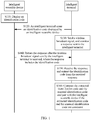
- the present disclosure provides an implementation of a method for pairing between an intelligent wearable device and an intelligent terminal. As shown in FIG. 1 , the method includes the following steps.
- S110 The intelligent wearable device displays an identification code.
- the identification code can be used to identify the intelligent wearable device.
- the intelligent wearable device can store the identification code and can display the stored identification code when pairing is started.
- the intelligent wearable device can alternatively dynamically generate the identification code and display the dynamically generated identification code when pairing is started.
- the identification code can be a barcode, a two-dimensional code, etc.
- S120 The intelligent terminal scans the identification code displayed by the intelligent wearable device.
- An application implementing a specific function can be installed on the intelligent terminal.
- the application can implement the specific function by using a connected intelligent wearable device.
- the application generally needs to complete pairing with the intelligent wearable device to further establish a connection.
- the intelligent terminal can have a camera.
- the application can invoke a camera module installed on the intelligent terminal, to scan the identification code.
- the intelligent terminal sends a wireless broadcast signal, and monitors a response sent to the intelligent terminal.
- the intelligent terminal can send the wireless broadcast signal, to search for an intelligent wearable device to be paired.
- S140 The intelligent wearable device returns the response after receiving the wireless broadcast signal sent by the intelligent terminal, where the response includes the identification code.
- the identification code can be placed in a self-defined field of the response message.
- a location and a length of the self-defined field can be determined in advance through negotiation between the intelligent wearable device and an application installed on the intelligent terminal.
- the Bluetooth technology is used as an example in S130 and S140.
- An implementation process is as follows: First, a master device (a device initiating pairing, for example, a mobile phone) sends a broadcast signal to page (page) a slave device (a device receiving the pairing, for example, a Bluetooth headset). Specifically, the master device can page the slave device using a frequency hopping method, and the slave device scans (scan) external paging at a fixed interval, which is referred to as page scan. When scanning the external paging, the slave device can return a response (response), to respond to the paging. As such, the two devices can further perform a pairing operation.
- S150 The intelligent terminal receives the response, and extracts the identification code from the received response.
- the intelligent terminal can receive the response, and can extract the identification code from the response based on a pre-negotiated location.
- S160 The intelligent terminal compares the extracted identification code and the scanned identification code, and pairs up with the intelligent wearable device if the extracted identification code and the scanned identification code are consistent.
- the intelligent terminal can obtain the identification code of the intelligent wearable device through scanning in S120, and can further extract the identification code of the intelligent wearable device from the received response in S150. Further, the intelligent terminal can compare the two identification codes. If the two identification codes are consistent, it can be determined that the intelligent wearable device to be paired currently is the same as the scanned intelligent wearable device, that is, the intelligent wearable device is the device to be connected, so that pairing can be completed.
- the problem that the intelligent wearable device to be paired is not an intelligent wearable device that needs to be paired in fact can be alleviated, so that pairing security can be ensured.
- the intelligent wearable device can connect to the intelligent terminal using a wireless connection method such as Bluetooth.
- the wireless connection method such as Bluetooth is weak in encryption, and data is easily monitored and intercepted.
- a common practice is that no other encryption is performed on data except the Bluetooth encryption.
- the practice can be used in a scenario that does not require a very high security level, for example, motion data.
- Another practice is that an ECDH key agreement algorithm is used to negotiate a key encrypted transmission. As such an eSE chip needs to be embedded in the smart wristband, and costs are relatively high.
- a data transmission process can be further executed using an encryption method.
- At least one set of keys is pre-stored in an intelligent wearable device and an application installed on an intelligent terminal, and each set of keys has a corresponding index. The following process is included.
- the intelligent wearable device displays an identification code, and displays a key index.
- S220 The intelligent terminal scans the identification code and the key index that are displayed by the intelligent wearable device.
- the intelligent terminal sends a wireless broadcast signal, and monitors a response sent to the intelligent terminal.
- S240 The intelligent wearable device returns the response after receiving the wireless broadcast signal sent by the intelligent terminal, where the response includes the identification code.
- S250 The intelligent terminal receives the response, and extracts the identification code from the received response.
- S260 The intelligent terminal compares the extracted identification code and the scanned identification code, and pair up with the intelligent wearable device if the extracted identification code and the scanned identification code are consistent.
- S270 The intelligent terminal performs encrypted communication with the intelligent wearable device by using a key corresponding to the key index.
- data sent by the intelligent wearable device to the intelligent terminal can be encrypted by using the key corresponding to the key index, and then transmitted to the intelligent terminal.
- the intelligent terminal can scan the key index in S220, and the intelligent terminal stores at least one set of keys that is the same as the set of keys of the intelligent wearable device, after receiving the data transmitted by the intelligent wearable device, the intelligent terminal can decrypt the received data by using the key corresponding to the key index.
- the data sent by the intelligent terminal to the intelligent wearable device can be encrypted by using the key corresponding to the key index. Therefore, after receiving the transmitted data, the intelligent wearable device can perform decryption by using the key corresponding to the key index.
- the intelligent terminal performs encrypted communication with the intelligent wearable device by using the key corresponding to the key index. As such, security of the communication process can be improved.
- the encrypted communication method can be a symmetrically encrypted communication method.
- the encrypted communication can be performed by using a symmetric encryption algorithm such as a DES (Data Encryption Standard), an AES (Advanced Encryption Standard), an ECB (Electronic Codebook), or PKCS5Padding.
- a symmetric encryption algorithm such as a DES (Data Encryption Standard), an AES (Advanced Encryption Standard), an ECB (Electronic Codebook), or PKCS5Padding.
- the present application further provides an implementation of a system for pairing between an intelligent wearable device and an intelligent terminal.
- the system includes: the intelligent wearable device, configured to display an identification code, return a response after the intelligent wearable device receives a wireless broadcast signal sent by the intelligent terminal, where the response includes the identification code; and the intelligent terminal, configured to scan the identification code displayed by the intelligent wearable device, send the wireless broadcast signal, and monitor the response sent by the intelligent wearable device, receive the response and extract the identification code from the received response; and compare the extracted identification code with the scanned identification code, and pair up with the intelligent wearable device if the extracted identification code and the scanned identification code are consistent.
- the intelligent wearable device displays the identification code includes the intelligent wearable device displays a stored identification code; or the intelligent wearable device displays a dynamically generated identification code when pairing is started.
- the identification code includes a barcode and a two-dimensional code.
- the present application further provides an implementation of a system for pairing between an intelligent wearable device and an intelligent terminal.
- the system includes: the intelligent wearable device, where at least one set of keys is pre-stored, each set of keys has a corresponding index, and the intelligent wearable device is configured to display an identification code and a key index, return a response after the intelligent wearable device receives a wireless broadcast signal sent by the intelligent terminal, where the response includes the identification code, and perform encrypted communication with the intelligent terminal by using a key corresponding to the key index; and the intelligent terminal, where at least one set of keys that is the same as the set of keys of the intelligent wearable device is pre-stored, each set of keys has a corresponding index, and the intelligent terminal is further configured to scan the identification code and the key index that are displayed by the intelligent wearable device, send the wireless broadcast signal and monitor a response sent to the intelligent terminal, receive the response and extract the identification code from the received response, compare the extracted identification code with the scanned identification code, pair up with the intelligent wearable device if the extracted identification
- the intelligent wearable device displays the identification code includes the intelligent wearable device displays a stored identification code; or the intelligent wearable device displays a dynamically generated identification code when pairing is started.
- the identification code includes a barcode and a two-dimensional code.
- an encryption method includes at least one of a DES, an AES, an ECB, and PKCS5Padding.
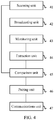
- the intelligent terminal includes: a scanning unit 31, configured to scan an identification code displayed by an intelligent wearable device; a broadcasting unit 32, configured to send a wireless broadcast signal; a monitoring unit 33, configured to monitor a response sent by the intelligent wearable device; an extraction unit 34, configured to extract the identification code from the received response after the monitoring unit receives the response; a comparison unit 35, configured to compare the extracted identification code with the scanned identification code; and a pairing unit 36, configured to pair up with the intelligent wearable device if a comparison result of the comparison unit is that the extracted identification code and the scanned identification code are consistent.
- the identification code includes a barcode and a two-dimensional code.
- the intelligent terminal includes: a scanning unit 41, configured to scan an identification code and a key index that are displayed by an intelligent wearable device; a broadcasting unit 42, configured to send a wireless broadcast signal; a monitoring unit 43, configured to monitor a response sent by the intelligent wearable device; an extraction unit 44, configured to extract the identification code from the received response after the monitoring unit receives the response; and a comparison unit 45, configured to compare the extracted identification code with the scanned identification code; a pairing unit 46, configured to pair up with the intelligent wearable device if a comparison result of the comparison unit is that the extracted identification code and the scanned identification code are consistent; and a communications unit 47, configured to perform encrypted communication with the intelligent wearable device by using a key corresponding to the key index.
- a scanning unit 41 configured to scan an identification code and a key index that are displayed by an intelligent wearable device
- a broadcasting unit 42 configured to send a wireless broadcast signal
- a monitoring unit 43 configured to monitor a response sent by the intelligent wearable device
- an extraction unit 44 configured
- the identification code includes a barcode and a two-dimensional code.
- an encryption method includes at least one of a DES, an AES, an ECB, and PKCS5Padding.
- an improvement of a technology can be clearly distinguished between a hardware improvement (for example, an improvement of circuit structures, such as a diode, a transistor, and a switch) and a software improvement (an improvement of a method procedure).
- a hardware improvement for example, an improvement of circuit structures, such as a diode, a transistor, and a switch
- a software improvement an improvement of a method procedure.
- improvement of a plurality of method procedures can be considered as a direct improvement of a hardware circuit structure.
- Almost all designers obtain a corresponding hardware circuit structure by programming an improved method procedure to a hardware circuit. Therefore, it cannot be said that an improvement of a method procedure cannot be implemented by using a hardware entity module.
- a programmable logic device for example, a field programmable gate array (FPGA)
- FPGA field programmable gate array
- a logical function of the programmable logic device is determined by programming a device by a user.
- the designers independently perform programming to "integrate” a digital system into a single PLD without requiring a chip manufacturer to design and produce an application-specific integrated circuit chip.
- the programming is mostly implemented by "logic compiler (logic compiler)” software, which is similar to a software compiler used during program development today.
- Original code that exists before compiling also needs to be written in a specific programming language, which is referred to as a hardware description language (HDL).
- HDL hardware description language
- HDLs there is more than one type of HDLs, such as an ABEL (Advanced Boolean Expression Language), an AHDL (Altera Hardware Description Language), Confluence, a CUPL (Cornell University Programming Language), HDCal, a JHDL (Java Hardware Description Language), Lava, Lola, MyHDL, PALASM, RHDL (Ruby Hardware Description Language), etc.
- ABEL Advanced Boolean Expression Language
- AHDL Altera Hardware Description Language
- Confluence a CUPL (Cornell University Programming Language)
- HDCal a JHDL (Java Hardware Description Language)
- Lava Lava
- Lola MyHDL
- PALASM Phase Change Language
- RHDL Ruby Hardware Description Language
- VHDL Very-High-Speed Integrated Circuit Hardware Description Language
- Verilog Verilog
- a controller can be implemented in any proper method.
- the controller can be a microprocessor or a processor, a computer readable medium that stores computer readable program code (for example, software or firmware) that is executed by the (micro) processor, a logic gate, a switch, an application-specific integrated circuit (Application-Specific Integrated Circuit, ASIC), a programmable logic controller, or an embedded microcontroller.
- the controller can include but are not limited to the following microcontrollers: ARC 625D, Atmel AT91SAM, Microchip PIC18F26K20, and Silicone Labs C8051F320.
- a controller of a memory can also be implemented as a part of controlling logic of the memory.
- the controller can be implemented in a method of pure computer readable program code, and the steps in the method can be logically programmed to enable the controller to further implement same functions in forms of a logical gate, a switch, an application-specific integrated circuit, a programmable logic controller, an embedded microcontroller, etc. Therefore, the controller can be considered as a hardware component, and an apparatus that is included in the controller and that is configured to implement various functions can also be considered as a structure inside the hardware component. Alternatively, an apparatus configured to implement various functions can also be considered as both a software module for implementing the method and a structure in a hardware component.
- the system, apparatus, module, or unit illustrated in the previous implementations can be implemented by using a computer chip or an entity, or can be implemented by using a product having a certain function.
- the implementations of the present disclosure can be provided as a method, a system, or a computer program product. Therefore, the present disclosure can use a form of hardware only implementations, software only implementations, or implementations with a combination of software and hardware. Moreover, the present disclosure can use a form of a computer program product that is implemented on one or more computer-usable storage media (including but not limited to a magnetic disk storage, a CD-ROM, an optical memory, etc.) that include computer-usable program code.
- computer-usable storage media including but not limited to a magnetic disk storage, a CD-ROM, an optical memory, etc.
- These computer program instructions can be provided for a general-purpose computer, a dedicated computer, an embedded processor, or a processor of another programmable data processing device to generate a machine, so that the instructions executed by the computer or the processor of another programmable data processing device generate an apparatus for implementing a specific function in one or more processes in the flowcharts and/or in one or more blocks in the block diagrams.
- These computer program instructions can be stored in a computer readable memory that can instruct the computer or the other programmable data processing device to work in a specific method, so that the instructions stored in the computer readable memory generate an artifact that includes an instruction apparatus.
- the instruction apparatus implements a specific function in one or more processes in the flowcharts and/or in one or more blocks in the block diagrams.
- a computing device includes one or more processors (CPU), an input/output interface, a network interface, and a memory.
- the memory can include a non-persistent memory, a random access memory (RAM), a nonvolatile memory, and/or another form that are in a computer readable medium, for example, a read-only memory (ROM) or a flash memory (flash RAM).
- RAM random access memory
- flash RAM flash memory
- the memory is an example of the computer readable medium.
- the computer readable medium includes persistent, non-persistent, movable, and unmovable media that can implement information storage by using any method or technology.
- Information can be a computer readable instruction, a data structure, a program module, or other data.
- An example of a computer storage medium includes but is not limited to a parallel random-access machine (PRAM), a static random access memory (SRAM), a dynamic random access memory (DRAM), another type of random access memory (RAM), a read-only memory (ROM), an electrically erasable programmable read only memory (EEPROM), a flash memory or another memory technology, a compact disc read-only memory (CD-ROM), a digital versatile disc (DVD), or another optical storage, a cassette, a cassette magnetic disk storage, or another magnetic storage device, or any other non-transmission medium.
- the computer storage medium can be configured to store information that can be accessed by a computing device. Based on the definition in the present specification, the computer readable medium does not include transitory computer-readable media (trans
- the implementations of the present application can be provided as a method, a system, or a computer program product. Therefore, the present application can use a form of hardware only implementations, software only implementations, or implementations with a combination of software and hardware. In addition, the present application can use a form of a computer program product that is implemented on one or more computer-usable storage media (including but not limited to a magnetic disk storage, a CD-ROM, and an optical memory) that include computer-usable program code.
- computer-usable storage media including but not limited to a magnetic disk storage, a CD-ROM, and an optical memory
- the present application can be described in the general context of computer executable instructions executed by a computer, for example, a program module.
- the program module includes a routine, a program, an object, a component, a data structure, etc. executing a specific task or implementing a specific abstract data type.
- the present application can also be practiced in a distributed computing environment. In the distributed computing environments, tasks are performed by remote processing devices connected through a communications network. In the distributed computing environment, the program module can be located in both local and remote computer storage media including storage devices.
Landscapes
- Engineering & Computer Science (AREA)
- Computer Security & Cryptography (AREA)
- Signal Processing (AREA)
- Computer Networks & Wireless Communication (AREA)
- Physics & Mathematics (AREA)
- General Physics & Mathematics (AREA)
- Theoretical Computer Science (AREA)
- Health & Medical Sciences (AREA)
- Artificial Intelligence (AREA)
- Computer Vision & Pattern Recognition (AREA)
- Toxicology (AREA)
- General Health & Medical Sciences (AREA)
- Electromagnetism (AREA)
- Telephone Function (AREA)
- Mobile Radio Communication Systems (AREA)
- User Interface Of Digital Computer (AREA)
Abstract
Description
- The present application relates to the field of intelligent wearable device technologies, and in particular, to a method, a system and an intelligent terminal for pairing between an intelligent wearable device and an intelligent terminal.
- An intelligent wearable device generally needs to be connected to an intelligent terminal. To establish a connection, pairing needs to be first completed. In particular, as various applications can be installed on the intelligent terminal today, to implement corresponding functions of the applications, the applications generally invoke a wireless module of the intelligent terminal to complete a connection to the intelligent wearable device.
- In the existing technology, in an example of a smart wristband, an application on a smartphone can be paired with the smart wristband by using Bluetooth. Specifically, the smartphone (as a master device) usually sends a Bluetooth broadcast signal, and a smart wristband (as a slave device) receiving the broadcast signal sends a response to the smartphone, so the smartphone and the smart wristband that sends the response are paired and establish a connection.
- Currently, applications have an increasingly high demand for security connection, especially the applications related to personal information and payment on the intelligent terminal, and the function needs to be implemented in a relatively secure environment. Based on previous description, in the existing technology, there is probably more than one smart wristband that can respond to the smartphone. If the smart wristbands that need to connect to the smartphone are not screened, a security risk can be caused.
- An objective of implementations of the present application is to provide a method, a system and an intelligent terminal for pairing between an intelligent wearable device and an intelligent terminal, to implement secure pairing between the intelligent terminal and the intelligent wearable device.
- To resolve the previous technical problem, the implementations of the present application are implemented as follows.
- A method for pairing between an intelligent wearable device and an intelligent terminal is provided, including: displaying, by the intelligent wearable device, an identification code; scanning, by the intelligent terminal, the identification code displayed by the intelligent wearable device; sending, by the intelligent terminal, a wireless broadcast signal, and monitoring a response sent to the intelligent terminal; returning, by the intelligent wearable device, the response after the intelligent wearable device receives the wireless broadcast signal sent by the intelligent terminal, where the response includes the identification code; receiving, by the intelligent terminal, the response, and extracting the identification code from the received response; and comparing, by the intelligent terminal, the extracted identification code and the scanned identification code, and pairing up with the intelligent wearable device if the extracted identification code and the scanned identification code are consistent.
- A method for pairing between an intelligent wearable device and an intelligent terminal is provided, where at least one set of keys is pre-stored in the intelligent wearable device and an application installed on the intelligent terminal. Each set of keys has a corresponding index, and the method includes: displaying, by the intelligent wearable device, an identification code, and displaying a key index; scanning, by the intelligent terminal, the identification code and the key index that are displayed by the intelligent wearable device; sending, by the intelligent terminal, a wireless broadcast signal, and monitoring a response sent to the intelligent terminal; returning, by the intelligent wearable device, the response after the intelligent wearable device receives the wireless broadcast signal sent by the intelligent terminal, where the response includes the identification code; receiving, by the intelligent terminal, the response and extracting the identification code from the received response; comparing, by the intelligent terminal, the extracted identification code and the scanned identification code, and pairing up with the intelligent wearable device if the extracted identification code and the scanned identification code are consistent; and performing, by the intelligent terminal, encrypted communication with the intelligent wearable device by using a key corresponding to the key index.
- A method for pairing between an intelligent wearable device and an intelligent terminal is provided, including: scanning, by the intelligent terminal, an identification code displayed by the intelligent wearable device; sending, by the intelligent terminal, a wireless broadcast signal, and monitoring a response sent by the intelligent wearable device; receiving, by the intelligent terminal, the response, and extracting the identification code from the received response; and comparing, by the intelligent terminal, the extracted identification code and the scanned identification code, and pairing up with the intelligent wearable device if the extracted identification code and the scanned identification code are consistent.
- A method for pairing between an intelligent wearable device and an intelligent terminal is provided, including: scanning, by the intelligent terminal, an identification code and a key index that are displayed by the intelligent wearable device; sending, by the intelligent terminal, a wireless broadcast signal, and monitoring a response sent by the intelligent wearable device; receiving, by the intelligent terminal, the response, and extracting the identification code from the received response; comparing, by the intelligent terminal, the extracted identification code and the scanned identification code, and pairing up with the intelligent wearable device if the extracted identification code and the scanned identification code are consistent; and performing, by the intelligent wearable device, encrypted communication with the intelligent terminal by using a key corresponding to the key index.
- A system for pairing between an intelligent wearable device and an intelligent terminal is provided, including: the intelligent wearable device, configured to display an identification code, and return a response after the intelligent wearable device receives a wireless broadcast signal sent by the intelligent terminal, where the response includes the identification code; and the intelligent terminal, configured to scan the identification code displayed by the intelligent wearable device, send the wireless broadcast signal and monitor the response sent by the intelligent wearable device, receive the response and extract the identification code from the received response, compare the extracted identification code with the scanned identification code, and pair up with the intelligent wearable device if the extracted identification code and the scanned identification code are consistent.
- A system for pairing between an intelligent wearable device and an intelligent terminal is provided. The intelligent wearable device, where at least one set of keys is pre-stored, each set of keys has a corresponding index, and the intelligent wearable device is configured to display an identification code and a key index, return a response after the intelligent wearable device receives a wireless broadcast signal sent by the intelligent terminal, where the response includes the identification code, and perform encrypted communication with the intelligent terminal by using a key corresponding to the key index. The intelligent terminal, where at least one set of keys that is the same as the set of keys of the intelligent wearable device is pre-stored, each set of keys has a corresponding index, and the intelligent terminal is further configured to scan the identification code and the key index that are displayed by the intelligent wearable device, send the wireless broadcast signal, and monitor a response sent to the intelligent terminal, receive the response, and extract the identification code from the received response, compare the extracted identification code with the scanned identification code, and pair up with the intelligent wearable device if the extracted identification code and the scanned identification code are consistent. Moreover, perform encrypted communication with the intelligent wearable device by using a key corresponding to the key index.
- An intelligent terminal is provided, including: a scanning unit, configured to scan an identification code displayed by an intelligent wearable device; a broadcasting unit, configured to send a wireless broadcast signal; a monitoring unit, configured to monitor a response sent by the intelligent wearable device; an extraction unit, configured to extract the identification code from the received response after the monitoring unit receives the response; a comparison unit, configured to compare the extracted identification code with the scanned identification code; and a pairing unit, configured to pair up with the intelligent wearable device if a comparison result of the comparison unit is that the extracted identification code and the scanned identification code are consistent.
- An intelligent terminal is provided, including: a scanning unit, configured to scan an identification code and a key index that are displayed by an intelligent wearable device; a broadcasting unit, configured to send a wireless broadcast signal; a monitoring unit, configured to monitor a response sent by the intelligent wearable device; an extraction unit, configured to extract the identification code from the received response after the monitoring unit receives the response; and a comparison unit, configured to compare the extracted identification code with the scanned identification code; a pairing unit, configured to pair up with the intelligent wearable device if a comparison result of the comparison unit is that the extracted identification code and the scanned identification code are consistent; and a communications unit, configured to perform encrypted communication with the intelligent wearable device by using a key corresponding to the key index.
- It can be seen from the previous technical solution provided in the implementations of the present application that, the intelligent terminal can obtain the identification code of the intelligent wearable device through scanning, and can further extract the identification code of the intelligent wearable device from the received response. Further, the intelligent terminal can compare the two identification codes. If the two identification codes are consistent, it can be determined that the intelligent wearable device to be paired currently is the same as the scanned intelligent wearable device. That is, the intelligent wearable device to be paired currently is the intelligent wearable device to be connected, so that pairing can be completed. By using the previous implementations, the problem that the intelligent wearable device to be paired is not an intelligent wearable device that needs to be paired in fact can be alleviated, so that pairing security can be ensured.
- To describe the technical solutions in the implementations of the present application or in the existing technology more clearly, the following briefly describes the accompanying drawings required for describing the implementations or the existing technology. Apparently, the accompanying drawings in the following description merely show some implementations of the present application, and a person of ordinary skill in the art can still derive other drawings based on these accompanying drawings without creative efforts.
-
FIG. 1 is a flowchart illustrating an implementation of a method for pairing between an intelligent wearable device and an intelligent terminal, according to the present application; -
FIG. 2 is a flowchart illustrating an implementation of a method for pairing between an intelligent wearable device and an intelligent terminal, according to the present application; -
FIG. 3 is a module diagram illustrating an implementation of an intelligent terminal, according to the present application; and -
FIG. 4 is a module diagram illustrating an implementation of an intelligent terminal, according to the present application. - DESCRIPTION OF IMPLEMENTATIONS
- Implementations of the present application provide a method, a system and an intelligent terminal for pairing between an intelligent wearable device and an intelligent terminal.
- To make a person skilled in the art better understand the technical solutions in the present application, the following clearly and completely describes the technical solutions in the implementations of the present application with reference to the accompanying drawings in the implementations of the present application. Apparently, the described implementations are merely some but not all of the implementations of the present application. All other implementations obtained by a person of ordinary skill in the art based on the implementations of the present application without creative efforts shall fall within the protection scope of the present application.
- The present disclosure provides an implementation of a method for pairing between an intelligent wearable device and an intelligent terminal. As shown in
FIG. 1 , the method includes the following steps. - S110: The intelligent wearable device displays an identification code.
- The identification code can be used to identify the intelligent wearable device.
- The intelligent wearable device can store the identification code and can display the stored identification code when pairing is started. In addition, the intelligent wearable device can alternatively dynamically generate the identification code and display the dynamically generated identification code when pairing is started.
- The identification code can be a barcode, a two-dimensional code, etc.
- S120: The intelligent terminal scans the identification code displayed by the intelligent wearable device.
- An application implementing a specific function can be installed on the intelligent terminal. The application can implement the specific function by using a connected intelligent wearable device. To connecting to the intelligent wearable device to implement the specific function, the application generally needs to complete pairing with the intelligent wearable device to further establish a connection.
- The intelligent terminal can have a camera. The application can invoke a camera module installed on the intelligent terminal, to scan the identification code.
- S130: The intelligent terminal sends a wireless broadcast signal, and monitors a response sent to the intelligent terminal.
- The intelligent terminal can send the wireless broadcast signal, to search for an intelligent wearable device to be paired.
- S140: The intelligent wearable device returns the response after receiving the wireless broadcast signal sent by the intelligent terminal, where the response includes the identification code.
- The identification code can be placed in a self-defined field of the response message. A location and a length of the self-defined field can be determined in advance through negotiation between the intelligent wearable device and an application installed on the intelligent terminal.
- The Bluetooth technology is used as an example in S130 and S140. An implementation process is as follows: First, a master device (a device initiating pairing, for example, a mobile phone) sends a broadcast signal to page (page) a slave device (a device receiving the pairing, for example, a Bluetooth headset). Specifically, the master device can page the slave device using a frequency hopping method, and the slave device scans (scan) external paging at a fixed interval, which is referred to as page scan. When scanning the external paging, the slave device can return a response (response), to respond to the paging. As such, the two devices can further perform a pairing operation.
- S150: The intelligent terminal receives the response, and extracts the identification code from the received response.
- The intelligent terminal can receive the response, and can extract the identification code from the response based on a pre-negotiated location.
- S160: The intelligent terminal compares the extracted identification code and the scanned identification code, and pairs up with the intelligent wearable device if the extracted identification code and the scanned identification code are consistent.
- The intelligent terminal can obtain the identification code of the intelligent wearable device through scanning in S120, and can further extract the identification code of the intelligent wearable device from the received response in S150. Further, the intelligent terminal can compare the two identification codes. If the two identification codes are consistent, it can be determined that the intelligent wearable device to be paired currently is the same as the scanned intelligent wearable device, that is, the intelligent wearable device is the device to be connected, so that pairing can be completed. By using the previous implementation, the problem that the intelligent wearable device to be paired is not an intelligent wearable device that needs to be paired in fact can be alleviated, so that pairing security can be ensured.
- The intelligent wearable device can connect to the intelligent terminal using a wireless connection method such as Bluetooth. The wireless connection method such as Bluetooth is weak in encryption, and data is easily monitored and intercepted. In the existing technology, a common practice is that no other encryption is performed on data except the Bluetooth encryption. The practice can be used in a scenario that does not require a very high security level, for example, motion data. Another practice is that an ECDH key agreement algorithm is used to negotiate a key encrypted transmission. As such an eSE chip needs to be embedded in the smart wristband, and costs are relatively high.
- In an implementation of the present application, a data transmission process can be further executed using an encryption method.
- Specifically, for example, at least one set of keys is pre-stored in an intelligent wearable device and an application installed on an intelligent terminal, and each set of keys has a corresponding index. The following process is included.
- S210: The intelligent wearable device displays an identification code, and displays a key index.
- S220: The intelligent terminal scans the identification code and the key index that are displayed by the intelligent wearable device.
- S230: The intelligent terminal sends a wireless broadcast signal, and monitors a response sent to the intelligent terminal.
- S240: The intelligent wearable device returns the response after receiving the wireless broadcast signal sent by the intelligent terminal, where the response includes the identification code.
- S250: The intelligent terminal receives the response, and extracts the identification code from the received response.
- S260: The intelligent terminal compares the extracted identification code and the scanned identification code, and pair up with the intelligent wearable device if the extracted identification code and the scanned identification code are consistent.
- S270: The intelligent terminal performs encrypted communication with the intelligent wearable device by using a key corresponding to the key index.
- As such, data sent by the intelligent wearable device to the intelligent terminal can be encrypted by using the key corresponding to the key index, and then transmitted to the intelligent terminal. Because the intelligent terminal can scan the key index in S220, and the intelligent terminal stores at least one set of keys that is the same as the set of keys of the intelligent wearable device, after receiving the data transmitted by the intelligent wearable device, the intelligent terminal can decrypt the received data by using the key corresponding to the key index. Similarly, the data sent by the intelligent terminal to the intelligent wearable device can be encrypted by using the key corresponding to the key index. Therefore, after receiving the transmitted data, the intelligent wearable device can perform decryption by using the key corresponding to the key index. By using the previous process, the intelligent terminal performs encrypted communication with the intelligent wearable device by using the key corresponding to the key index. As such, security of the communication process can be improved.
- The encrypted communication method can be a symmetrically encrypted communication method. Specifically, the encrypted communication can be performed by using a symmetric encryption algorithm such as a DES (Data Encryption Standard), an AES (Advanced Encryption Standard), an ECB (Electronic Codebook), or PKCS5Padding.
- The present application further provides an implementation of a system for pairing between an intelligent wearable device and an intelligent terminal. The system includes: the intelligent wearable device, configured to display an identification code, return a response after the intelligent wearable device receives a wireless broadcast signal sent by the intelligent terminal, where the response includes the identification code; and the intelligent terminal, configured to scan the identification code displayed by the intelligent wearable device, send the wireless broadcast signal, and monitor the response sent by the intelligent wearable device, receive the response and extract the identification code from the received response; and compare the extracted identification code with the scanned identification code, and pair up with the intelligent wearable device if the extracted identification code and the scanned identification code are consistent.
- Preferably, that the intelligent wearable device displays the identification code includes the intelligent wearable device displays a stored identification code; or the intelligent wearable device displays a dynamically generated identification code when pairing is started.
- Preferably, the identification code includes a barcode and a two-dimensional code.
- The present application further provides an implementation of a system for pairing between an intelligent wearable device and an intelligent terminal. The system includes: the intelligent wearable device, where at least one set of keys is pre-stored, each set of keys has a corresponding index, and the intelligent wearable device is configured to display an identification code and a key index, return a response after the intelligent wearable device receives a wireless broadcast signal sent by the intelligent terminal, where the response includes the identification code, and perform encrypted communication with the intelligent terminal by using a key corresponding to the key index; and the intelligent terminal, where at least one set of keys that is the same as the set of keys of the intelligent wearable device is pre-stored, each set of keys has a corresponding index, and the intelligent terminal is further configured to scan the identification code and the key index that are displayed by the intelligent wearable device, send the wireless broadcast signal and monitor a response sent to the intelligent terminal, receive the response and extract the identification code from the received response, compare the extracted identification code with the scanned identification code, pair up with the intelligent wearable device if the extracted identification code and the scanned identification code are consistent, and perform encrypted communication with the intelligent wearable device by using a key corresponding to the key index.
- Preferably, that the intelligent wearable device displays the identification code includes the intelligent wearable device displays a stored identification code; or the intelligent wearable device displays a dynamically generated identification code when pairing is started.
- Preferably, the identification code includes a barcode and a two-dimensional code.
- Preferably, an encryption method includes at least one of a DES, an AES, an ECB, and PKCS5Padding.
- The present application further provides an implementation of an intelligent terminal. As shown in
FIG. 3 , the intelligent terminal includes: a scanningunit 31, configured to scan an identification code displayed by an intelligent wearable device; abroadcasting unit 32, configured to send a wireless broadcast signal; amonitoring unit 33, configured to monitor a response sent by the intelligent wearable device; anextraction unit 34, configured to extract the identification code from the received response after the monitoring unit receives the response; acomparison unit 35, configured to compare the extracted identification code with the scanned identification code; and apairing unit 36, configured to pair up with the intelligent wearable device if a comparison result of the comparison unit is that the extracted identification code and the scanned identification code are consistent. - Preferably, the identification code includes a barcode and a two-dimensional code.
- The present application further provides an implementation of an intelligent terminal. As shown in
FIG. 4 , the intelligent terminal includes: a scanningunit 41, configured to scan an identification code and a key index that are displayed by an intelligent wearable device; abroadcasting unit 42, configured to send a wireless broadcast signal; a monitoring unit 43, configured to monitor a response sent by the intelligent wearable device; anextraction unit 44, configured to extract the identification code from the received response after the monitoring unit receives the response; and acomparison unit 45, configured to compare the extracted identification code with the scanned identification code; apairing unit 46, configured to pair up with the intelligent wearable device if a comparison result of the comparison unit is that the extracted identification code and the scanned identification code are consistent; and acommunications unit 47, configured to perform encrypted communication with the intelligent wearable device by using a key corresponding to the key index. - Preferably, the identification code includes a barcode and a two-dimensional code.
- Preferably, an encryption method includes at least one of a DES, an AES, an ECB, and PKCS5Padding.
- In the 1990s, an improvement of a technology can be clearly distinguished between a hardware improvement (for example, an improvement of circuit structures, such as a diode, a transistor, and a switch) and a software improvement (an improvement of a method procedure). However, with development of the technology, nowadays improvement of a plurality of method procedures can be considered as a direct improvement of a hardware circuit structure. Almost all designers obtain a corresponding hardware circuit structure by programming an improved method procedure to a hardware circuit. Therefore, it cannot be said that an improvement of a method procedure cannot be implemented by using a hardware entity module. For example, a programmable logic device (PLD) (for example, a field programmable gate array (FPGA)) is such an integrated circuit. A logical function of the programmable logic device is determined by programming a device by a user. The designers independently perform programming to "integrate" a digital system into a single PLD without requiring a chip manufacturer to design and produce an application-specific integrated circuit chip. In addition, instead of manually producing an integrated circuit chip, the programming is mostly implemented by "logic compiler (logic compiler)" software, which is similar to a software compiler used during program development today. Original code that exists before compiling also needs to be written in a specific programming language, which is referred to as a hardware description language (HDL). There is more than one type of HDLs, such as an ABEL (Advanced Boolean Expression Language), an AHDL (Altera Hardware Description Language), Confluence, a CUPL (Cornell University Programming Language), HDCal, a JHDL (Java Hardware Description Language), Lava, Lola, MyHDL, PALASM, RHDL (Ruby Hardware Description Language), etc. Currently, VHDL (Very-High-Speed Integrated Circuit Hardware Description Language) and Verilog are most commonly used. A person skilled in the art should also be understood that a hardware circuit that implements a logical method procedure can be easily obtained provided that the method procedure is locally programmed by using several previous hardware description languages.
- A controller can be implemented in any proper method. For example, the controller can be a microprocessor or a processor, a computer readable medium that stores computer readable program code (for example, software or firmware) that is executed by the (micro) processor, a logic gate, a switch, an application-specific integrated circuit (Application-Specific Integrated Circuit, ASIC), a programmable logic controller, or an embedded microcontroller. Examples of the controller can include but are not limited to the following microcontrollers: ARC 625D, Atmel AT91SAM, Microchip PIC18F26K20, and Silicone Labs C8051F320. A controller of a memory can also be implemented as a part of controlling logic of the memory. A person skilled in the art also knows that that the controller can be implemented in a method of pure computer readable program code, and the steps in the method can be logically programmed to enable the controller to further implement same functions in forms of a logical gate, a switch, an application-specific integrated circuit, a programmable logic controller, an embedded microcontroller, etc. Therefore, the controller can be considered as a hardware component, and an apparatus that is included in the controller and that is configured to implement various functions can also be considered as a structure inside the hardware component. Alternatively, an apparatus configured to implement various functions can also be considered as both a software module for implementing the method and a structure in a hardware component.
- The system, apparatus, module, or unit illustrated in the previous implementations can be implemented by using a computer chip or an entity, or can be implemented by using a product having a certain function.
- For ease of description, the described apparatus is described by dividing functions into various units. Certainly, when the present application is implemented, a function of each unit can be implemented in one or more pieces of software and/or hardware.
- A person skilled in the art should understand that the implementations of the present disclosure can be provided as a method, a system, or a computer program product. Therefore, the present disclosure can use a form of hardware only implementations, software only implementations, or implementations with a combination of software and hardware. Moreover, the present disclosure can use a form of a computer program product that is implemented on one or more computer-usable storage media (including but not limited to a magnetic disk storage, a CD-ROM, an optical memory, etc.) that include computer-usable program code.
- The present disclosure is described with reference to the flowcharts and/or block diagrams of the method, the device (system), and the computer program product according to the implementations of the present disclosure. It should be understood that computer program instructions can be used to implement each process and/or each block in the flowcharts and/or the block diagrams and a combination of a process and/or a block in the flowcharts and/or the block diagrams. These computer program instructions can be provided for a general-purpose computer, a dedicated computer, an embedded processor, or a processor of another programmable data processing device to generate a machine, so that the instructions executed by the computer or the processor of another programmable data processing device generate an apparatus for implementing a specific function in one or more processes in the flowcharts and/or in one or more blocks in the block diagrams.
- These computer program instructions can be stored in a computer readable memory that can instruct the computer or the other programmable data processing device to work in a specific method, so that the instructions stored in the computer readable memory generate an artifact that includes an instruction apparatus. The instruction apparatus implements a specific function in one or more processes in the flowcharts and/or in one or more blocks in the block diagrams.
- These computer program instructions can be loaded onto the computer or the other programmable data processing device, so that a series of operations and steps are performed on the computer or the other programmable device, thereby generating computer-implemented processing. Therefore, the instructions executed on the computer or the other programmable device provide steps for implementing a specific function in one or more processes in the flowcharts and/or in one or more blocks in the block diagrams.
- In typical configuration, a computing device includes one or more processors (CPU), an input/output interface, a network interface, and a memory.
- The memory can include a non-persistent memory, a random access memory (RAM), a nonvolatile memory, and/or another form that are in a computer readable medium, for example, a read-only memory (ROM) or a flash memory (flash RAM). The memory is an example of the computer readable medium.
- The computer readable medium includes persistent, non-persistent, movable, and unmovable media that can implement information storage by using any method or technology. Information can be a computer readable instruction, a data structure, a program module, or other data. An example of a computer storage medium includes but is not limited to a parallel random-access machine (PRAM), a static random access memory (SRAM), a dynamic random access memory (DRAM), another type of random access memory (RAM), a read-only memory (ROM), an electrically erasable programmable read only memory (EEPROM), a flash memory or another memory technology, a compact disc read-only memory (CD-ROM), a digital versatile disc (DVD), or another optical storage, a cassette, a cassette magnetic disk storage, or another magnetic storage device, or any other non-transmission medium. The computer storage medium can be configured to store information that can be accessed by a computing device. Based on the definition in the present specification, the computer readable medium does not include transitory computer-readable media (transitory media), for example, a modulated data signal and carrier.
- It is worthwhile to further note that the terms "include", "comprise", or their any other variant is intended to cover a non-exclusive inclusion, so that a process, a method, an article, or a device that includes a list of elements not only includes those elements but also includes other elements that are not expressly listed, or further includes elements inherent to such process, method, article, or device. An element preceded by "includes a ..." does not, without more constraints, preclude the existence of additional identical elements in the process, method, article, or device that includes the element.
- A person skilled in the art should understand that the implementations of the present application can be provided as a method, a system, or a computer program product. Therefore, the present application can use a form of hardware only implementations, software only implementations, or implementations with a combination of software and hardware. In addition, the present application can use a form of a computer program product that is implemented on one or more computer-usable storage media (including but not limited to a magnetic disk storage, a CD-ROM, and an optical memory) that include computer-usable program code.
- The present application can be described in the general context of computer executable instructions executed by a computer, for example, a program module. Generally, the program module includes a routine, a program, an object, a component, a data structure, etc. executing a specific task or implementing a specific abstract data type. The present application can also be practiced in a distributed computing environment. In the distributed computing environments, tasks are performed by remote processing devices connected through a communications network. In the distributed computing environment, the program module can be located in both local and remote computer storage media including storage devices.
- The implementations in the present application are described in a progressive way. For same or similar parts in the implementations, references can be made to the implementations. Each implementation focuses on a difference from other implementations. Particularly, a system implementation is basically similar to a method implementation, and therefore, is described briefly. For related parts, references can be made to related descriptions in the method implementation.
- The previous descriptions are merely implementations of the present application, and are not intended to limit the present application. For a person skilled in the art, the present application can have various modifications and changes. Any modifications, equivalent substitutions, improvements, etc. made in the spirit and principle of the present application shall fall within the scope of the claims in the present application.
Claims (24)
- A method for pairing between an intelligent wearable device and an intelligent terminal, comprising:displaying, by the intelligent wearable device, an identification code;scanning, by the intelligent terminal, the identification code displayed by the intelligent wearable device;sending, by the intelligent terminal, a wireless broadcast signal, and monitoring a response sent to the intelligent terminal;returning, by the intelligent wearable device, the response after the intelligent wearable device receives the wireless broadcast signal sent by the intelligent terminal, wherein the response comprises the identification code;receiving, by the intelligent terminal, the response, and extracting the identification code from the received response; andcomparing, by the intelligent terminal, the extracted identification code and the scanned identification code, and pairing up with the intelligent wearable device if the extracted identification code and the scanned identification code are consistent.
- The method according to claim 1, wherein the displaying, by the intelligent wearable device, an identification code comprises:displaying, by the intelligent wearable device, a stored identification code; ordisplaying, by the intelligent wearable device, a dynamically generated identification code when pairing is started.
- The method according to claim 1, wherein the identification code comprises a bar code and a two-dimensional code.
- A method for pairing between an intelligent wearable device and an intelligent terminal, wherein at least one same set of keys is pre-stored in the intelligent wearable device and an application installed on the intelligent terminal, each set of keys has a corresponding index, and the method comprises:displaying, by the intelligent wearable device, an identification code, and displaying a key index;scanning, by the intelligent terminal, the identification code and the key index that are displayed by the intelligent wearable device;sending, by the intelligent terminal, a wireless broadcast signal, and monitoring a response sent to the intelligent terminal;returning, by the intelligent wearable device, the response after the intelligent wearable device receives the wireless broadcast signal sent by the intelligent terminal, wherein the response comprises the identification code;receiving, by the intelligent terminal, the response, and extracting the identification code from the received response;comparing, by the intelligent terminal, the extracted identification code and the scanned identification code, and pairing up with the intelligent wearable device if the extracted identification code and the scanned identification code are consistent; andperforming, by the intelligent terminal, encrypted communication with the intelligent wearable device by using a key corresponding to the key index.
- The method according to claim 4, wherein the displaying, by the intelligent wearable device, an identification code comprises:displaying, by the intelligent wearable device, a stored identification code; ordisplaying, by the intelligent wearable device, a dynamically generated identification code when pairing is started.
- The method according to claim 4, wherein the identification code comprises a bar code and a two-dimensional code.
- The method according to claim 4, wherein an encryption method comprises at least one of a DES, an AES, an ECB, and PKCS5Padding.
- A method for pairing between an intelligent wearable device and an intelligent terminal, comprising:scanning, by the intelligent terminal, an identification code displayed by the intelligent wearable device;sending, by the intelligent terminal, a wireless broadcast signal, and monitoring a response sent by the intelligent wearable device;receiving, by the intelligent terminal, the response, and extracting the identification code from the received response; andcomparing, by the intelligent terminal, the extracted identification code and the scanned identification code, and pairing up with the intelligent wearable device if the extracted identification code and the scanned identification code are consistent.
- The method according to claim 8, wherein the identification code comprises a bar code and a two-dimensional code.
- A method for pairing between an intelligent wearable device and an intelligent terminal, comprising:scanning, by the intelligent terminal, an identification code and a key index that are displayed by the intelligent wearable device;sending, by the intelligent terminal, a wireless broadcast signal, and monitoring a response sent by the intelligent wearable device;receiving, by the intelligent terminal, the response, and extracting the identification code from the received response;comparing, by the intelligent terminal, the extracted identification code and the scanned identification code, and pairing up with the intelligent wearable device if the extracted identification code and the scanned identification code are consistent; andperforming, by the intelligent wearable device, encrypted communication with the intelligent terminal by using a key corresponding to the key index.
- The method according to claim 10, wherein the identification code comprises a bar code and a two-dimensional code.
- The method according to claim 10, wherein an encryption method comprises at least one of a DES, an AES, an ECB, and PKCS5Padding.
- A system for pairing between an intelligent wearable device and an intelligent terminal, comprising:the intelligent wearable device, configured to: display an identification code; and return a response after the intelligent wearable device receives a wireless broadcast signal sent by the intelligent terminal, wherein the response comprises the identification code; andthe intelligent terminal, configured to: scan the identification code displayed by the intelligent wearable device; send the wireless broadcast signal, and monitor the response sent by the intelligent wearable device; receive the response, and extract the identification code from the received response; and compare the extracted identification code with the scanned identification code, and pair up with the intelligent wearable device if the extracted identification code and the scanned identification code are consistent.
- The system according to claim 13, wherein that the intelligent wearable device displays the identification code comprises:displaying, by the intelligent wearable device, a stored identification code; ordisplaying, by the intelligent wearable device, a dynamically generated identification code when pairing is started.
- The system according to claim 13, wherein the identification code comprises a bar code and a two-dimensional code.
- A system for pairing between an intelligent wearable device and an intelligent terminal, comprising:the intelligent wearable device, wherein at least one set of keys is pre-stored, each set of keys has a corresponding index, and the intelligent wearable device is configured to: display an identification code and a key index; return a response after the intelligent wearable device receives a wireless broadcast signal sent by the intelligent terminal, wherein the response comprises the identification code; and perform encrypted communication with the intelligent terminal by using a key corresponding to the key index; andthe intelligent terminal, wherein at least one set of keys that is the same as the at least one set of keys of the intelligent wearable device is pre-stored, each set of keys has a corresponding index, and the intelligent terminal is further configured to: scan the identification code and the key index that are displayed by the intelligent wearable device; send the wireless broadcast signal, and monitor a response sent to the intelligent terminal; receive the response, and extract the identification code from the received response; compare the extracted identification code with the scanned identification code, and pair up with the intelligent wearable device if the extracted identification code and the scanned identification code are consistent; and perform encrypted communication with the intelligent wearable device by using a key corresponding to the key index.
- The system according to claim 16, wherein that the intelligent wearable device displays the identification code comprises:displaying, by the intelligent wearable device, a stored identification code; ordisplaying, by the intelligent wearable device, a dynamically generated identification code when pairing is started.
- The system according to claim 16, wherein the identification code comprises a bar code and a two-dimensional code.
- The method according to claim 16, wherein an encryption method comprises at least one of a DES, an AES, an ECB, and PKCS5Padding.
- An intelligent terminal, comprising:a scanning unit, configured to scan an identification code displayed by an intelligent wearable device;a broadcasting unit, configured to send a wireless broadcast signal;a monitoring unit, configured to monitor a response sent by the intelligent wearable device;an extraction unit, configured to extract the identification code from the received response after the monitoring unit receives the response;a comparison unit, configured to compare the extracted identification code with the scanned identification code; anda pairing unit, configured to pair up with the intelligent wearable device if a comparison result of the comparison unit is that the extracted identification code and the scanned identification code are consistent.
- The intelligent terminal according to claim 20, wherein the identification code comprises a bar code and a two-dimensional code.
- An intelligent terminal, comprising:a scanning unit, configured to scan an identification code and a key index that are displayed by an intelligent wearable device;a broadcasting unit, configured to send a wireless broadcast signal;a monitoring unit, configured to monitor a response sent by the intelligent wearable device;an extraction unit, configured to extract the identification code from the received response after the monitoring unit receives the response;a comparison unit, configured to compare the extracted identification code with the scanned identification code;a pairing unit, configured to pair up with the intelligent wearable device if a comparison result of the comparison unit is that the extracted identification code and the scanned identification code are consistent; anda communications unit, configured to perform encrypted communication with the intelligent wearable device by using a key corresponding to the key index.
- The intelligent terminal according to claim 22, wherein the identification code comprises a bar code and a two-dimensional code.
- The intelligent terminal according to claim 22, wherein an encryption method comprises at least one of a DES, an AES, an ECB, and PKCS5Padding.
Applications Claiming Priority (2)
| Application Number | Priority Date | Filing Date | Title |
|---|---|---|---|
| CN201610322257.8A CN107396347A (en) | 2016-05-16 | 2016-05-16 | A kind of Intelligent worn device and method, system and the intelligent terminal of intelligent terminal pairing |
| PCT/CN2017/080189 WO2017198009A1 (en) | 2016-05-16 | 2017-04-12 | Method, system and intelligent terminal for pairing between intelligent wearable device and intelligent terminal |
Publications (3)
| Publication Number | Publication Date |
|---|---|
| EP3461164A1 true EP3461164A1 (en) | 2019-03-27 |
| EP3461164A4 EP3461164A4 (en) | 2019-04-24 |
| EP3461164B1 EP3461164B1 (en) | 2021-07-14 |
Family
ID=60324758
Family Applications (1)
| Application Number | Title | Priority Date | Filing Date |
|---|---|---|---|
| EP17798573.6A Active EP3461164B1 (en) | 2016-05-16 | 2017-04-12 | Method, system and intelligent terminal for pairing between intelligent wearable device and intelligent terminal |
Country Status (10)
| Country | Link |
|---|---|
| US (1) | US10798568B2 (en) |
| EP (1) | EP3461164B1 (en) |
| JP (1) | JP2019521578A (en) |
| KR (1) | KR102151337B1 (en) |
| CN (1) | CN107396347A (en) |
| MY (1) | MY188630A (en) |
| PH (1) | PH12018502408A1 (en) |
| SG (1) | SG11201810025SA (en) |
| TW (1) | TWI675301B (en) |
| WO (1) | WO2017198009A1 (en) |
Families Citing this family (15)
| Publication number | Priority date | Publication date | Assignee | Title |
|---|---|---|---|---|
| US10581608B2 (en) * | 2016-09-26 | 2020-03-03 | Snap Inc. | Wearable device pairing with optical codes |
| CN110248040B (en) * | 2018-03-08 | 2021-08-20 | 阿里巴巴集团控股有限公司 | Image data transmission method, device and electronic device |
| CA3099548A1 (en) * | 2018-05-08 | 2019-11-14 | Square Panda Inc. | Peripheral device identification system and method |
| CN109068303B (en) * | 2018-07-18 | 2022-07-05 | 创新先进技术有限公司 | Resource sharing method and device and electronic equipment |
| CN110889522B (en) * | 2018-09-07 | 2024-04-09 | 盒马(中国)有限公司 | Cooking information processing method, device and system |
| CN111110050B (en) * | 2018-11-01 | 2022-09-13 | 阿里巴巴集团控股有限公司 | Cooking equipment identification code generation method and device and cooking equipment |
| CN111615095B (en) * | 2020-05-28 | 2023-08-15 | 上海蕴迩通讯设备有限公司 | Crowd interaction situation awareness method and system for primary and secondary schools |
| CN115606212A (en) * | 2020-08-12 | 2023-01-13 | Oppo广东移动通信有限公司(Cn) | Method and device for device discovery |
| CN112019756B (en) * | 2020-10-06 | 2021-05-18 | 盛夏 | Control method and system of intelligent wearable equipment based on 5G |
| CN113645265A (en) * | 2021-05-22 | 2021-11-12 | 运链物流管理(江苏)有限公司 | Intelligent identification system of Internet of things |
| CN117098118A (en) * | 2022-05-12 | 2023-11-21 | 格力博(江苏)股份有限公司 | A pairing method and system |
| CN115665657B (en) * | 2022-10-27 | 2025-09-16 | 歌尔科技有限公司 | Wireless pairing method, device, equipment and storage medium |
| TWI848602B (en) * | 2023-03-07 | 2024-07-11 | 群光電子股份有限公司 | Inventory management system and inventory management method |
| CN117279119B (en) * | 2023-11-21 | 2024-02-02 | 微泰医疗器械(杭州)股份有限公司 | Method and communication device for wireless communication between devices |
| JP7514582B1 (en) * | 2024-03-29 | 2024-07-11 | オプテックス株式会社 | COMMUNICATION SYSTEM AND METHOD FOR CONTROLLING COMMUNICATION SYSTEM |
Family Cites Families (14)
| Publication number | Priority date | Publication date | Assignee | Title |
|---|---|---|---|---|
| US20030163691A1 (en) * | 2002-02-28 | 2003-08-28 | Johnson Ted Christian | System and method for authenticating sessions and other transactions |
| JP2004274520A (en) * | 2003-03-11 | 2004-09-30 | Casio Comput Co Ltd | Terminal communication system and program |
| US8768251B2 (en) * | 2007-05-17 | 2014-07-01 | Abbott Medical Optics Inc. | Exclusive pairing technique for Bluetooth compliant medical devices |
| KR101824921B1 (en) * | 2013-06-11 | 2018-02-05 | 삼성전자주식회사 | Method And Apparatus For Performing Communication Service Based On Gesture |
| CN103701503A (en) * | 2013-12-25 | 2014-04-02 | 深圳市文鼎创数据科技有限公司 | Bluetooth pairing method and system, and Bluetooth KEY |
| EP3117358B1 (en) * | 2014-03-12 | 2019-03-06 | Tencent Technology (Shenzhen) Company Limited | Method and device for controlling peripheral devices via a social networking platform |
| CN104200176A (en) * | 2014-08-28 | 2014-12-10 | 电子科技大学 | System and method for carrying out transparent encryption and decryption on file in intelligent mobile terminal |
| CN204203650U (en) * | 2014-11-12 | 2015-03-11 | 无锡点星互联网络技术有限公司 | A kind of wireless remote intelligent home security control system based on Quick Response Code way to manage |
| CN104378145B (en) * | 2014-11-27 | 2018-08-31 | 北京深思数盾科技股份有限公司 | The matching method and system of bluetooth equipment |
| CN104540190B (en) * | 2014-12-30 | 2018-04-20 | 广州视源电子科技股份有限公司 | Method and system for pairing with Bluetooth device |
| CN104735607B (en) * | 2015-02-26 | 2018-05-29 | 广东欧珀移动通信有限公司 | A kind of data transmission method, mobile terminal and system |
| CN104715365B (en) * | 2015-03-13 | 2018-09-07 | 江苏创新睿智科技有限公司 | A method of stored value card space transference is realized based on Bluetooth transmission channel |
| CN105142095B (en) * | 2015-08-07 | 2018-09-25 | 深圳市昇润科技有限公司 | Smart bluetooth group matching method mutually passes control method with interconnection |
| CN105376696A (en) * | 2015-10-09 | 2016-03-02 | 惠州Tcl移动通信有限公司 | Data transmission method and intelligent terminal |
-
2016
- 2016-05-16 CN CN201610322257.8A patent/CN107396347A/en active Pending
-
2017
- 2017-03-15 TW TW106108585A patent/TWI675301B/en not_active IP Right Cessation
- 2017-04-12 MY MYPI2018001916A patent/MY188630A/en unknown
- 2017-04-12 SG SG11201810025SA patent/SG11201810025SA/en unknown
- 2017-04-12 KR KR1020187035935A patent/KR102151337B1/en active Active
- 2017-04-12 EP EP17798573.6A patent/EP3461164B1/en active Active
- 2017-04-12 WO PCT/CN2017/080189 patent/WO2017198009A1/en not_active Ceased
- 2017-04-12 JP JP2018560477A patent/JP2019521578A/en active Pending
-
2018
- 2018-11-15 PH PH12018502408A patent/PH12018502408A1/en unknown
- 2018-11-15 US US16/192,329 patent/US10798568B2/en active Active
Also Published As
| Publication number | Publication date |
|---|---|
| KR20190007020A (en) | 2019-01-21 |
| PH12018502408B1 (en) | 2019-04-08 |
| KR102151337B1 (en) | 2020-09-03 |
| US10798568B2 (en) | 2020-10-06 |
| MY188630A (en) | 2021-12-22 |
| CN107396347A (en) | 2017-11-24 |
| PH12018502408A1 (en) | 2019-04-08 |
| TWI675301B (en) | 2019-10-21 |
| JP2019521578A (en) | 2019-07-25 |
| EP3461164A4 (en) | 2019-04-24 |
| SG11201810025SA (en) | 2018-12-28 |
| WO2017198009A1 (en) | 2017-11-23 |
| US20190104406A1 (en) | 2019-04-04 |
| EP3461164B1 (en) | 2021-07-14 |
| TW201810068A (en) | 2018-03-16 |
Similar Documents
| Publication | Publication Date | Title |
|---|---|---|
| EP3461164B1 (en) | Method, system and intelligent terminal for pairing between intelligent wearable device and intelligent terminal | |
| US11068676B2 (en) | Service processing method, device and apparatus | |
| US10713457B2 (en) | Two-dimensional code generation and processing | |
| EP3457656A1 (en) | Identity verification method and system, and intelligent wearable device | |
| AU2020289748A1 (en) | Blockchain data processing method and apparatus | |
| JP2020510329A (en) | Login information processing method and device | |
| EP3553705A1 (en) | Service processing method and device | |
| JP2020509674A (en) | Two-dimensional code generation method and device, and two-dimensional code recognition method and device | |
| US9875255B2 (en) | Terminal and method for sharing content thereof | |
| US12271889B2 (en) | Fare payment | |
| KR20160041147A (en) | Method for controlling and an electronic device thereof | |
| US11290883B2 (en) | Data transmission method, data transmitter, data receiver, and system | |
| WO2019089737A1 (en) | Data statistical analysis method, apparatus, and device | |
| WO2019154168A1 (en) | Method and device for displaying identification code of application | |
| KR20150098075A (en) | Method for inputting/outputting security information and Electronic device using the same | |
| KR20150128081A (en) | Method For Managing Key And Electronic Device Using The Same | |
| US20150235061A1 (en) | Tag reading apparatus and method, tag identification system | |
| CN110942304A (en) | Payment result acquisition method, device, payment device and cash register device | |
| US20240127227A1 (en) | Offline transaction processing | |
| HK1247495A1 (en) | Pairing method and system for intelligent wearable equipment and intelligent terminal, and intelligent terminal | |
| HK1247495A (en) | Pairing method and system for intelligent wearable equipment and intelligent terminal, and intelligent terminal | |
| HK40047870A (en) | Method, device and equipment for connecting equipment | |
| HK1249288A1 (en) | Information interaction method, device and apparatus | |
| KR20200000739A (en) | User terminal device, electronic devie and method for controlling thereof | |
| CN105574394A (en) | Unlocking method for intelligent wearable equipment and intelligent wearable equipment |
Legal Events
| Date | Code | Title | Description |
|---|---|---|---|
| STAA | Information on the status of an ep patent application or granted ep patent |
Free format text: STATUS: THE INTERNATIONAL PUBLICATION HAS BEEN MADE |
|
| PUAI | Public reference made under article 153(3) epc to a published international application that has entered the european phase |
Free format text: ORIGINAL CODE: 0009012 |
|
| STAA | Information on the status of an ep patent application or granted ep patent |
Free format text: STATUS: REQUEST FOR EXAMINATION WAS MADE |
|
| 17P | Request for examination filed |
Effective date: 20181217 |
|
| AK | Designated contracting states |
Kind code of ref document: A1 Designated state(s): AL AT BE BG CH CY CZ DE DK EE ES FI FR GB GR HR HU IE IS IT LI LT LU LV MC MK MT NL NO PL PT RO RS SE SI SK SM TR |
|
| AX | Request for extension of the european patent |
Extension state: BA ME |
|
| A4 | Supplementary search report drawn up and despatched |
Effective date: 20190322 |
|
| RIC1 | Information provided on ipc code assigned before grant |
Ipc: H04W 12/08 20090101AFI20190318BHEP Ipc: H04W 12/06 20090101ALI20190318BHEP |
|
| DAV | Request for validation of the european patent (deleted) | ||
| DAX | Request for extension of the european patent (deleted) | ||
| STAA | Information on the status of an ep patent application or granted ep patent |
Free format text: STATUS: EXAMINATION IS IN PROGRESS |
|
| 17Q | First examination report despatched |
Effective date: 20200911 |
|
| GRAP | Despatch of communication of intention to grant a patent |
Free format text: ORIGINAL CODE: EPIDOSNIGR1 |
|
| STAA | Information on the status of an ep patent application or granted ep patent |
Free format text: STATUS: GRANT OF PATENT IS INTENDED |
|
| INTG | Intention to grant announced |
Effective date: 20201223 |
|
| RAP1 | Party data changed (applicant data changed or rights of an application transferred) |
Owner name: ADVANCED NEW TECHNOLOGIES CO., LTD. |
|
| GRAJ | Information related to disapproval of communication of intention to grant by the applicant or resumption of examination proceedings by the epo deleted |
Free format text: ORIGINAL CODE: EPIDOSDIGR1 |
|
| STAA | Information on the status of an ep patent application or granted ep patent |
Free format text: STATUS: EXAMINATION IS IN PROGRESS |
|
| GRAP | Despatch of communication of intention to grant a patent |
Free format text: ORIGINAL CODE: EPIDOSNIGR1 |
|
| STAA | Information on the status of an ep patent application or granted ep patent |
Free format text: STATUS: GRANT OF PATENT IS INTENDED |
|
| INTC | Intention to grant announced (deleted) | ||
| INTG | Intention to grant announced |
Effective date: 20210302 |
|
| GRAS | Grant fee paid |
Free format text: ORIGINAL CODE: EPIDOSNIGR3 |
|
| GRAA | (expected) grant |
Free format text: ORIGINAL CODE: 0009210 |
|
| STAA | Information on the status of an ep patent application or granted ep patent |
Free format text: STATUS: THE PATENT HAS BEEN GRANTED |
|
| AK | Designated contracting states |
Kind code of ref document: B1 Designated state(s): AL AT BE BG CH CY CZ DE DK EE ES FI FR GB GR HR HU IE IS IT LI LT LU LV MC MK MT NL NO PL PT RO RS SE SI SK SM TR |
|
| REG | Reference to a national code |
Ref country code: GB Ref legal event code: FG4D |
|
| REG | Reference to a national code |
Ref country code: IE Ref legal event code: FG4D |
|
| REG | Reference to a national code |
Ref country code: DE Ref legal event code: R096 Ref document number: 602017042190 Country of ref document: DE |
|
| REG | Reference to a national code |
Ref country code: AT Ref legal event code: REF Ref document number: 1411608 Country of ref document: AT Kind code of ref document: T Effective date: 20210815 |
|
| REG | Reference to a national code |
Ref country code: LT Ref legal event code: MG9D |
|
| REG | Reference to a national code |
Ref country code: NL Ref legal event code: MP Effective date: 20210714 |
|
| REG | Reference to a national code |
Ref country code: AT Ref legal event code: MK05 Ref document number: 1411608 Country of ref document: AT Kind code of ref document: T Effective date: 20210714 |
|
| PG25 | Lapsed in a contracting state [announced via postgrant information from national office to epo] |
Ref country code: RS Free format text: LAPSE BECAUSE OF FAILURE TO SUBMIT A TRANSLATION OF THE DESCRIPTION OR TO PAY THE FEE WITHIN THE PRESCRIBED TIME-LIMIT Effective date: 20210714 Ref country code: SE Free format text: LAPSE BECAUSE OF FAILURE TO SUBMIT A TRANSLATION OF THE DESCRIPTION OR TO PAY THE FEE WITHIN THE PRESCRIBED TIME-LIMIT Effective date: 20210714 Ref country code: HR Free format text: LAPSE BECAUSE OF FAILURE TO SUBMIT A TRANSLATION OF THE DESCRIPTION OR TO PAY THE FEE WITHIN THE PRESCRIBED TIME-LIMIT Effective date: 20210714 Ref country code: ES Free format text: LAPSE BECAUSE OF FAILURE TO SUBMIT A TRANSLATION OF THE DESCRIPTION OR TO PAY THE FEE WITHIN THE PRESCRIBED TIME-LIMIT Effective date: 20210714 Ref country code: FI Free format text: LAPSE BECAUSE OF FAILURE TO SUBMIT A TRANSLATION OF THE DESCRIPTION OR TO PAY THE FEE WITHIN THE PRESCRIBED TIME-LIMIT Effective date: 20210714 Ref country code: NL Free format text: LAPSE BECAUSE OF FAILURE TO SUBMIT A TRANSLATION OF THE DESCRIPTION OR TO PAY THE FEE WITHIN THE PRESCRIBED TIME-LIMIT Effective date: 20210714 Ref country code: PT Free format text: LAPSE BECAUSE OF FAILURE TO SUBMIT A TRANSLATION OF THE DESCRIPTION OR TO PAY THE FEE WITHIN THE PRESCRIBED TIME-LIMIT Effective date: 20211115 Ref country code: NO Free format text: LAPSE BECAUSE OF FAILURE TO SUBMIT A TRANSLATION OF THE DESCRIPTION OR TO PAY THE FEE WITHIN THE PRESCRIBED TIME-LIMIT Effective date: 20211014 Ref country code: LT Free format text: LAPSE BECAUSE OF FAILURE TO SUBMIT A TRANSLATION OF THE DESCRIPTION OR TO PAY THE FEE WITHIN THE PRESCRIBED TIME-LIMIT Effective date: 20210714 Ref country code: BG Free format text: LAPSE BECAUSE OF FAILURE TO SUBMIT A TRANSLATION OF THE DESCRIPTION OR TO PAY THE FEE WITHIN THE PRESCRIBED TIME-LIMIT Effective date: 20211014 Ref country code: AT Free format text: LAPSE BECAUSE OF FAILURE TO SUBMIT A TRANSLATION OF THE DESCRIPTION OR TO PAY THE FEE WITHIN THE PRESCRIBED TIME-LIMIT Effective date: 20210714 |
|
| PG25 | Lapsed in a contracting state [announced via postgrant information from national office to epo] |
Ref country code: PL Free format text: LAPSE BECAUSE OF FAILURE TO SUBMIT A TRANSLATION OF THE DESCRIPTION OR TO PAY THE FEE WITHIN THE PRESCRIBED TIME-LIMIT Effective date: 20210714 Ref country code: LV Free format text: LAPSE BECAUSE OF FAILURE TO SUBMIT A TRANSLATION OF THE DESCRIPTION OR TO PAY THE FEE WITHIN THE PRESCRIBED TIME-LIMIT Effective date: 20210714 Ref country code: GR Free format text: LAPSE BECAUSE OF FAILURE TO SUBMIT A TRANSLATION OF THE DESCRIPTION OR TO PAY THE FEE WITHIN THE PRESCRIBED TIME-LIMIT Effective date: 20211015 |
|
| REG | Reference to a national code |
Ref country code: DE Ref legal event code: R097 Ref document number: 602017042190 Country of ref document: DE |
|
| PG25 | Lapsed in a contracting state [announced via postgrant information from national office to epo] |
Ref country code: DK Free format text: LAPSE BECAUSE OF FAILURE TO SUBMIT A TRANSLATION OF THE DESCRIPTION OR TO PAY THE FEE WITHIN THE PRESCRIBED TIME-LIMIT Effective date: 20210714 |
|
| PLBE | No opposition filed within time limit |
Free format text: ORIGINAL CODE: 0009261 |
|
| STAA | Information on the status of an ep patent application or granted ep patent |
Free format text: STATUS: NO OPPOSITION FILED WITHIN TIME LIMIT |
|
| PG25 | Lapsed in a contracting state [announced via postgrant information from national office to epo] |
Ref country code: SM Free format text: LAPSE BECAUSE OF FAILURE TO SUBMIT A TRANSLATION OF THE DESCRIPTION OR TO PAY THE FEE WITHIN THE PRESCRIBED TIME-LIMIT Effective date: 20210714 Ref country code: SK Free format text: LAPSE BECAUSE OF FAILURE TO SUBMIT A TRANSLATION OF THE DESCRIPTION OR TO PAY THE FEE WITHIN THE PRESCRIBED TIME-LIMIT Effective date: 20210714 Ref country code: RO Free format text: LAPSE BECAUSE OF FAILURE TO SUBMIT A TRANSLATION OF THE DESCRIPTION OR TO PAY THE FEE WITHIN THE PRESCRIBED TIME-LIMIT Effective date: 20210714 Ref country code: EE Free format text: LAPSE BECAUSE OF FAILURE TO SUBMIT A TRANSLATION OF THE DESCRIPTION OR TO PAY THE FEE WITHIN THE PRESCRIBED TIME-LIMIT Effective date: 20210714 Ref country code: CZ Free format text: LAPSE BECAUSE OF FAILURE TO SUBMIT A TRANSLATION OF THE DESCRIPTION OR TO PAY THE FEE WITHIN THE PRESCRIBED TIME-LIMIT Effective date: 20210714 Ref country code: AL Free format text: LAPSE BECAUSE OF FAILURE TO SUBMIT A TRANSLATION OF THE DESCRIPTION OR TO PAY THE FEE WITHIN THE PRESCRIBED TIME-LIMIT Effective date: 20210714 |
|
| 26N | No opposition filed |
Effective date: 20220419 |
|
| PG25 | Lapsed in a contracting state [announced via postgrant information from national office to epo] |
Ref country code: IT Free format text: LAPSE BECAUSE OF FAILURE TO SUBMIT A TRANSLATION OF THE DESCRIPTION OR TO PAY THE FEE WITHIN THE PRESCRIBED TIME-LIMIT Effective date: 20210714 |
|
| REG | Reference to a national code |
Ref country code: CH Ref legal event code: PL |
|
| REG | Reference to a national code |
Ref country code: BE Ref legal event code: MM Effective date: 20220430 |
|
| PG25 | Lapsed in a contracting state [announced via postgrant information from national office to epo] |
Ref country code: MC Free format text: LAPSE BECAUSE OF FAILURE TO SUBMIT A TRANSLATION OF THE DESCRIPTION OR TO PAY THE FEE WITHIN THE PRESCRIBED TIME-LIMIT Effective date: 20210714 Ref country code: LU Free format text: LAPSE BECAUSE OF NON-PAYMENT OF DUE FEES Effective date: 20220412 Ref country code: LI Free format text: LAPSE BECAUSE OF NON-PAYMENT OF DUE FEES Effective date: 20220430 Ref country code: CH Free format text: LAPSE BECAUSE OF NON-PAYMENT OF DUE FEES Effective date: 20220430 |
|
| PG25 | Lapsed in a contracting state [announced via postgrant information from national office to epo] |
Ref country code: BE Free format text: LAPSE BECAUSE OF NON-PAYMENT OF DUE FEES Effective date: 20220430 |
|
| PG25 | Lapsed in a contracting state [announced via postgrant information from national office to epo] |
Ref country code: IE Free format text: LAPSE BECAUSE OF NON-PAYMENT OF DUE FEES Effective date: 20220412 |
|
| P01 | Opt-out of the competence of the unified patent court (upc) registered |
Effective date: 20230521 |
|
| PG25 | Lapsed in a contracting state [announced via postgrant information from national office to epo] |
Ref country code: HU Free format text: LAPSE BECAUSE OF FAILURE TO SUBMIT A TRANSLATION OF THE DESCRIPTION OR TO PAY THE FEE WITHIN THE PRESCRIBED TIME-LIMIT; INVALID AB INITIO Effective date: 20170412 |
|
| PG25 | Lapsed in a contracting state [announced via postgrant information from national office to epo] |
Ref country code: MK Free format text: LAPSE BECAUSE OF FAILURE TO SUBMIT A TRANSLATION OF THE DESCRIPTION OR TO PAY THE FEE WITHIN THE PRESCRIBED TIME-LIMIT Effective date: 20210714 Ref country code: CY Free format text: LAPSE BECAUSE OF FAILURE TO SUBMIT A TRANSLATION OF THE DESCRIPTION OR TO PAY THE FEE WITHIN THE PRESCRIBED TIME-LIMIT Effective date: 20210714 |
|
| PG25 | Lapsed in a contracting state [announced via postgrant information from national office to epo] |
Ref country code: TR Free format text: LAPSE BECAUSE OF FAILURE TO SUBMIT A TRANSLATION OF THE DESCRIPTION OR TO PAY THE FEE WITHIN THE PRESCRIBED TIME-LIMIT Effective date: 20210714 |
|
| PG25 | Lapsed in a contracting state [announced via postgrant information from national office to epo] |
Ref country code: MT Free format text: LAPSE BECAUSE OF FAILURE TO SUBMIT A TRANSLATION OF THE DESCRIPTION OR TO PAY THE FEE WITHIN THE PRESCRIBED TIME-LIMIT Effective date: 20210714 |
|
| PGFP | Annual fee paid to national office [announced via postgrant information from national office to epo] |
Ref country code: DE Payment date: 20250218 Year of fee payment: 9 |
|
| PGFP | Annual fee paid to national office [announced via postgrant information from national office to epo] |
Ref country code: GB Payment date: 20260325 Year of fee payment: 10 |
|
| PGFP | Annual fee paid to national office [announced via postgrant information from national office to epo] |
Ref country code: FR Payment date: 20260323 Year of fee payment: 10 |