EP3460677A1 - Assessment program, assessment device, and assessment method - Google Patents
Assessment program, assessment device, and assessment method Download PDFInfo
- Publication number
- EP3460677A1 EP3460677A1 EP16902329.8A EP16902329A EP3460677A1 EP 3460677 A1 EP3460677 A1 EP 3460677A1 EP 16902329 A EP16902329 A EP 16902329A EP 3460677 A1 EP3460677 A1 EP 3460677A1
- Authority
- EP
- European Patent Office
- Prior art keywords
- combination
- lines
- data
- line
- data classifications
- Prior art date
- Legal status (The legal status is an assumption and is not a legal conclusion. Google has not performed a legal analysis and makes no representation as to the accuracy of the status listed.)
- Ceased
Links
Images







Classifications
-
- G—PHYSICS
- G06—COMPUTING OR CALCULATING; COUNTING
- G06F—ELECTRIC DIGITAL DATA PROCESSING
- G06F40/00—Handling natural language data
- G06F40/10—Text processing
- G06F40/12—Use of codes for handling textual entities
- G06F40/14—Tree-structured documents
- G06F40/143—Markup, e.g. Standard Generalized Markup Language [SGML] or Document Type Definition [DTD]
-
- G—PHYSICS
- G06—COMPUTING OR CALCULATING; COUNTING
- G06F—ELECTRIC DIGITAL DATA PROCESSING
- G06F40/00—Handling natural language data
- G06F40/10—Text processing
-
- G—PHYSICS
- G06—COMPUTING OR CALCULATING; COUNTING
- G06F—ELECTRIC DIGITAL DATA PROCESSING
- G06F40/00—Handling natural language data
- G06F40/10—Text processing
- G06F40/12—Use of codes for handling textual entities
-
- G—PHYSICS
- G06—COMPUTING OR CALCULATING; COUNTING
- G06F—ELECTRIC DIGITAL DATA PROCESSING
- G06F40/00—Handling natural language data
- G06F40/10—Text processing
- G06F40/12—Use of codes for handling textual entities
- G06F40/123—Storage facilities
-
- G—PHYSICS
- G06—COMPUTING OR CALCULATING; COUNTING
- G06F—ELECTRIC DIGITAL DATA PROCESSING
- G06F40/00—Handling natural language data
- G06F40/10—Text processing
- G06F40/166—Editing, e.g. inserting or deleting
-
- G—PHYSICS
- G06—COMPUTING OR CALCULATING; COUNTING
- G06F—ELECTRIC DIGITAL DATA PROCESSING
- G06F40/00—Handling natural language data
- G06F40/10—Text processing
- G06F40/166—Editing, e.g. inserting or deleting
- G06F40/177—Editing, e.g. inserting or deleting of tables; using ruled lines
-
- G—PHYSICS
- G06—COMPUTING OR CALCULATING; COUNTING
- G06Q—INFORMATION AND COMMUNICATION TECHNOLOGY [ICT] SPECIALLY ADAPTED FOR ADMINISTRATIVE, COMMERCIAL, FINANCIAL, MANAGERIAL OR SUPERVISORY PURPOSES; SYSTEMS OR METHODS SPECIALLY ADAPTED FOR ADMINISTRATIVE, COMMERCIAL, FINANCIAL, MANAGERIAL OR SUPERVISORY PURPOSES, NOT OTHERWISE PROVIDED FOR
- G06Q40/00—Finance; Insurance; Tax strategies; Processing of corporate or income taxes
-
- G—PHYSICS
- G06—COMPUTING OR CALCULATING; COUNTING
- G06F—ELECTRIC DIGITAL DATA PROCESSING
- G06F40/00—Handling natural language data
- G06F40/10—Text processing
- G06F40/166—Editing, e.g. inserting or deleting
- G06F40/177—Editing, e.g. inserting or deleting of tables; using ruled lines
- G06F40/18—Editing, e.g. inserting or deleting of tables; using ruled lines of spreadsheets
-
- G—PHYSICS
- G06—COMPUTING OR CALCULATING; COUNTING
- G06F—ELECTRIC DIGITAL DATA PROCESSING
- G06F40/00—Handling natural language data
- G06F40/10—Text processing
- G06F40/166—Editing, e.g. inserting or deleting
- G06F40/186—Templates
-
- G—PHYSICS
- G06—COMPUTING OR CALCULATING; COUNTING
- G06Q—INFORMATION AND COMMUNICATION TECHNOLOGY [ICT] SPECIALLY ADAPTED FOR ADMINISTRATIVE, COMMERCIAL, FINANCIAL, MANAGERIAL OR SUPERVISORY PURPOSES; SYSTEMS OR METHODS SPECIALLY ADAPTED FOR ADMINISTRATIVE, COMMERCIAL, FINANCIAL, MANAGERIAL OR SUPERVISORY PURPOSES, NOT OTHERWISE PROVIDED FOR
- G06Q40/00—Finance; Insurance; Tax strategies; Processing of corporate or income taxes
- G06Q40/12—Accounting
Definitions
- the present invention relates to an evaluation method and the like.
- XBRL Extensible Business Reporting Language
- XBRL is an Extensible Markup Language (XML) based language developed as a data description language used for easily preparing, distributing, and using business reports.
- XML Extensible Markup Language
- Taxonomies are constituted of schemas, in each of which a name or type information of an XBRL element corresponding to an item is defined, and linkbases, in each of which a relationship between XBRLs is defined.
- the relationship between XBRL elements correspond to, for example, a display order or an aggregation method of items in the financial statements.
- FIG. 15 is a diagram illustrating a reference example of the flow of generating instances.
- taxonomies described in XBRL are stored and opened to the public.
- a mapping engine downloads a released taxonomy (Step S110) and generates a mapping definition and a template sheet based on the taxonomy (Step S120).
- the template sheet mentioned here indicates a table generated by using spreadsheet software, such as Excel.
- the mapping definition mentioned here indicates a definition in which position and size information on cells of a header portion or input portions in the table is associated with property information on XBRL elements that are associated with the cells.
- a person in charge inputs financial data to the template sheet and generates an input completion sheet (Step S130).
- the person in charge inputs the input completion sheet to the mapping engine and the mapping engine converts the received input completion sheet to an instance (Step S140) and then uploads the instance to the supervisory authority (Step S150).
- the supervisory authority accumulates and verifies the instances.
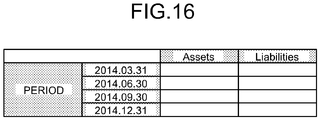
- FIG. 16 is a diagram illustrating a reference example of the table that indicates the template sheet. As illustrated in FIG. 16 , the template sheet is a two-dimensional table and the format of the template sheet is unified.
- the mapping engine uses the taxonomy that is opened to the public and prepares the unified template sheet and the mapping definition, thereby converting the input completion sheet that has been input to the template sheet to the instance.
- FIG. 17 is a diagram illustrating a reference example of the mapping process.
- the mapping engine sequentially reads each of lines in the input completion sheet from the top; refers to, regarding the read lines, the mapping definition; and converts the input completion sheet to the instance.
- the international standard specifications for describing table layout of XBRL data are recommended. Consequently, it is conceivable that the tables used for financial reports are changed from the two-dimensional tables to tables with different sizes or tables having a different number of tables for each submission company. For example, it is conceivable that a single table generated in units of the whole company is changed to a plurality of tables to be generated in units of business facilities or it is conceivable that a single table generated every year is changed to a plurality of tables to be generated every month.
- mapping engine converts tables to instances, if a plurality of tables is present, the mapping engine is not able to distinguish the start position of each of the tables. Namely, the mapping engine sequentially read each of the lines in the tables from the top; refers to the mapping definition regarding the read lines; and converts to the instances.
- the mapping engine is not able to distinguish the end position of each of the tables by referring to the mapping definition. As a result, the mapping engine is not able to distinguish the start position of the next table.
- An evaluation program causes a computer to execute a process including: specifying, by referring to a storage unit that stores therein table information having a plurality of lines each of which includes a plurality of cells that are associated with characters or character strings, regarding each of the lines out of the plurality of lines, a combination of data classifications of the characters or the character strings associated with the plurality of cells that are included in each of the lines; acquiring, by referring to a storage unit that stores therein information on combinations of data classifications associated with a plurality of cells that are included in specific lines out of the plurality of lines, a combination of the data classifications stored in the storage unit; comparing, regarding each of the lines out of the plurality of lines, the acquired combination of the data classifications with the specified combination of the data classifications; and evaluating, in accordance with comparison results, the line targeted for a comparison process.
- FIG. 1 is a functional block diagram illustrating a configuration of an evaluation device according to an embodiment.
- an evaluation device 1 converts data in a table format to an instance described in XBRL
- the evaluation device 1 uses combinations of data classifications included in each line in each of the tables, performs evaluation on each line, and distinguishes the start position of each of the tables.
- the instance mentioned here is referred to as an "XBRL instance". Converting the data in a table format to the XBRL instance is synonymous with mapping the data in a table format to the XBRL instance.
- the evaluation device 1 includes a storage unit 2 and a control unit 3.
- the storage unit 2 is, for example, a storage device, such as a nonvolatile semiconductor memory device including a flash memory, a ferroelectric random access memory (FRAM) (registered trademark), and the like. Furthermore, the storage unit 2 includes an XBRL taxonomy 21, a mapping definition 22, a template sheet 23, and an input completion sheet 24.
- a storage device such as a nonvolatile semiconductor memory device including a flash memory, a ferroelectric random access memory (FRAM) (registered trademark), and the like.
- FRAM ferroelectric random access memory
- the storage unit 2 includes an XBRL taxonomy 21, a mapping definition 22, a template sheet 23, and an input completion sheet 24.
- the XBRL taxonomy 21 is obtained by defining the structure of each of the XBRL elements and is formed by schemas, linkbases, and table linkbases.
- the schema is a dictionary that stores therein attribute information, such as a name or a data type of an XBRL element, and corresponds to, in the embodiment, an "item definition".
- the linkbase is a document in which, for example, a parent-child relationship between the XBRL elements, the display order, the display name, and the like are described.
- the table linkbase is a document in which a table layout of the XBRL elements is described and corresponds to, in the embodiment, a "table layout".
- the mapping definition 22 defines combination information on data types in a header (title) portion in a table.
- a combination of data types in each of a header portion in the X-axis, a header portion in the Y-axis, and a header portion in the Z-axis is defined.
- Examples of the data types include a character string type, a date type, and a numerical value type; however, the data types are not limited to these.
- the mapping definition 22 defines association between cells and the XBRL elements in a table. For example, in the mapping definition 22, property information on an XBRL element that is associated with the position of a line of a cell or associated with a cell in the header portion or the input portion in the table is defined.
- the mapping definition 22 is generated by a structural analysis unit 32, which will be described later. Furthermore, an example of the content of the mapping definition 22 will be described later.
- the template sheet 23 is a general-purpose template sheet representing an input form reproduced from a financial statement.
- the template sheet 23 mentioned here is a table generated by using spreadsheet software, such as Excel or the like.
- the template sheet 23 is defined by using a table linkbase and is generated by the structural analysis unit 32 that will be described later. Furthermore, an example of the content of the template sheet 23 will be described later.
- the input completion sheet 24 is a sheet in which financial data has already been input to the template sheet 23.
- the input completion sheet 24 is input by a user.
- the control unit 3 includes an internal memory that stores therein control data and programs in which various kinds of procedures are prescribed, whereby the control unit 3 executes various processes. Furthermore, the control unit 3 corresponds to, for example, an integrated circuit, such as an application specific integrated circuit (ASIC), a field programmable gate array (FPGA), or the like, or corresponds to an electronic circuit, such as a central processing unit (CPU), a micro processing unit (MPU), or the like. Furthermore, the control unit 3 includes an input unit 31, the structural analysis unit 32, a data conversion unit 33, and an output unit 34.
- ASIC application specific integrated circuit
- FPGA field programmable gate array
- CPU central processing unit
- MPU micro processing unit
- the control unit 3 includes an input unit 31, the structural analysis unit 32, a data conversion unit 33, and an output unit 34.
- the input unit 31 inputs the XBRL taxonomy 21 and stores the input XBRL taxonomy 21 in the storage unit 2.
- the structural analysis unit 32 analyzes the XBRL taxonomy 21 and generates the mapping definition 22 and the template sheet 23 that are in accordance with the definition of the table linkbase (table layout).
- the structural analysis unit 32 stores the generated mapping definition 22 and the template sheet 23 in the storage unit 2.
- FIG. 2 is a diagram illustrating an example of the template sheet according to the embodiment.
- the template sheet 23 has the header portion in the X-axis, the header portion in the Y-axis, the header portion in the Z-axis, and a value cell portion.
- the header portion in each of the axes is hierarchically defined.
- the header portion in the Z-axis is set at the top in a single table as a substitute for the title.
- the header portion in the Z-axis has parent headers z-1 and z-3 and child headers z-2 and z-4.
- parent header z-1 "SEGMENT” (section name) is set.
- child header z-2 as a child header associated with "SEGMENT”
- a value is input by the user.
- AREA restrictive name
- a value is input by the user.
- the header portion in the Z-axis represents the line indicating the title of the table and is thus referred to as the "title line of the table".
- the "title line of the table” indicates the line that has been added in order to input a new value to another table.
- the header portion in the Y-axis has a parent header y-1 and a child header y-2.
- "PERIOD" is set in the parent header y-1.
- the child header y-2 as a child header associated with "PERIOD", a value is input by the user.
- the header portion in the Y-axis represents the line in which data is input and is thus sometimes referred to as a "data input line".
- the "data input line” indicates the line that has been added in order to continuously input a value to the same table.
- the header portion in the X-axis has parent headers x-1 and x-2 and value cell portions x-3 and x-4 that are associated with the corresponding parent headers.
- “Assets” (property) is set as an XBRL element.
- the value cell portion x-3 the value associated with "Assets” is input by the user.
- “Liabilities” (debt) is set as an XBRL element.
- the value cell portion x-4 the value associated with "Liabilities” is input by the user.
- the value cell portion represents the line in which data is input and is thus sometimes referred to as a "data input line”.
- each of the data types is input to the corresponding cells in the template sheet 23.
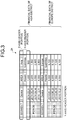
- FIG. 3 is a diagram illustrating an example of an input completion sheet according to the embodiment.
- the input completion sheet 24 illustrated in FIG. 3 is the result obtained after the user has input the financial data to the template sheet 23 illustrated in FIG. 2 .
- the input completion sheet 24 is constituted by a plurality of tables and each of the tables uses the Z-axis header portion as a start line.
- two tables are illustrated. In one table, financial data of the Asia district is illustrated and, in the other table, financial data of the Europe district is illustrated.
- the number of tables is two; however, the number of tables is not limited to this and three tables or four tables may also be used. Furthermore, the number of tables may also be one.
- FIG. 4 is a diagram illustrating a first example of the mapping definition according to the embodiment.
- the mapping definition 22 includes combination information on the data types.
- a combination of the data types in the header portion in the X-axis is set.
- a combination of the data types in the header portion in the Y-axis is set.
- a combination of the data types in the header portion in the Z-axis is set.
- a combination of values in the value cell portion is set.
- a set of "character string type, character string type" is set as the combination of the data types in the header portion in the X-axis.
- a set of "character string type, date type” is set.
- a set of "character string type, character string type, character string type, character string type” is set.
- a set of "numerical value type, numerical value type” is set.
- the mapping definition 22 further includes association information between cells and XBRL elements.
- association information between cells and XBRL elements regarding the cell in which a value is input, association between a position and an XBRL element is set.
- the cell in which a value is input to a line B if the line is a title line, the cell is associated with the value of the SEGMENT that is represented as an XBRL element. If the line is a data input line, the cell is associated with the value of PERIOD that is represented as an XBRL element.
- the cell in which a value is input to a line C if the line is a data input line, the cell is associated with the value of ⁇ Assets> that is represented as an XBRL element.
- the cell in which a value is input to a line D if the line is a data input line, the cell is associated with the value of ⁇ Liabilities> that is represented as an XBRL element. If the line is a title line, the cell is associated with the value of AREA that is represented as an XBRL element.
- the data conversion unit 33 refers to the input completion sheet 24 and specifies, regarding each of the lines out of the plurality of lines, a combination of data types of data associated with a plurality of cells that are included in each of the lines.
- the data type is an example of a data classification.
- the data conversion unit 33 reads, when starting data conversion, the header portion in the Z-axis and the header portion in the X-axis from the input completion sheet 24.
- the data conversion unit 33 sequentially reads the subsequent lines.
- the data conversion unit 33 specifies a combination of data types in the read line.
- the combination of data types in the read line is specified from the data types that are set in the input completion sheet 24.
- the data conversion unit 33 refers to the mapping definition 22 and acquires each of the combinations of the data classifications that are associated with the plurality of cells included in the data input lines and the title line in the table. Furthermore, the combination of the data types in the data input line corresponds to the sum of the combination of the data types in the header portion in the Y-axis included in the mapping definition 22 and the combination of the data types in the value cell portion. The combination of the data types in the title line of the table corresponds to the combination of the data types in the header portion in the Z-axis included in the mapping definition 22.
- the data conversion unit 33 compares, regarding each of the lines out of the plurality of lines, the acquired combination of the data types with the specified combination of the data types and performs evaluation on the line targeted for a comparison process in accordance with the comparison result. For example, the data conversion unit 33 determines whether the combination of the data types in the read line is the same as that in the data input line. If the combination of the data types in the read line is not the same as that in the data input line, the data conversion unit 33 determines whether the combination of the data types in the read line is the same as that in the title line of the table. If the combination of the data types in the read line is the same as that in the title line of the table, the data conversion unit 33 detects that the read line is the start position of the next table.
- the data conversion unit 33 analyzes the cell for each line from the top to the bottom and from the left end to the right end, the data conversion unit 33 detects the start position of the next table by checking the cells against the mapping definition 22. Then, when the data conversion unit 33 detects the start position of the next table, the data conversion unit 33 performs the data conversion process on the next table. Furthermore, if the combination of the data types in the read line is the same as that in the data input line, the data conversion unit 33 maps the data input line and adds the line to an XBRL instance 41. Then, the data conversion unit 33 performs the data conversion process on the subsequent line.
- the output unit 34 outputs the XBRL instance 41 that indicates the results obtained by conversion performed by the data conversion unit 33.
- the output unit 34 may also output the XBRL instance 41 that is the conversion results to a monitor or may also store the XBRL instance 41 in the storage unit 2.
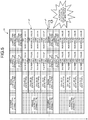
- FIG. 5 is a diagram illustrating a first specific example of the data conversion process according to the embodiment.
- the input completion sheet 24 is illustrated.
- the data conversion unit 33 detects the start position of the next table in the input completion sheet 24 by sequentially checking, one by one, each of the lines in the input completion sheet 24 from the top to the bottom against the mapping definition 22.
- the data conversion unit 33 refers to the input completion sheet 24 and reads a line indicated by a code a1.
- the data conversion unit 33 specifies a combination of the data types included in the read line.
- the combination of the data types in the line indicated by the code a1 is a set of "character string type, date type, numerical value type, numerical value type".
- the data conversion unit 33 refers to the mapping definition 22 and acquires each of the combinations of the data types included in the data input line and the title line of the table.
- the combination of the data types in the line corresponds to the combination of the combination of the data types in the header portion in the Y-axis included in the combination information on the data types in the mapping definition 22 and the combination of the data types in the value cell portion.
- the combination of the data types in the data input line is a set of "character string type, date type, numerical value type, numerical value type".
- the combination of the data types included in the title line of the table corresponds to the combination of the data types in the header portion in the Z-axis included in the combination information on the data types in the mapping definition 22 and is a set of "character string type, character string type, character string type, character string type".
- the data conversion unit 33 determines whether the combinations of the data types in the lines indicated by the code a1 are the same as those in the data input lines. In this case, the combinations of the data types in all of the lines are a set of "character string type, date type, numerical value type, numerical value type". Thus, the data conversion unit 33 maps the lines indicated by the code a1, adds the lines to the XBRL instance 41, and performs the data conversion process on the subsequent lines that are present below the processed line.
- the data conversion unit 33 refers to the input completion sheet 24 and reads the line indicated by a code a2.
- the data conversion unit 33 specifies the combination of the data types in the read line.
- the combination of the data types in the line indicated by the code a2 is a set of "character string type, character string type, character string type, character string type".
- the data conversion unit 33 determines whether the combination of the data types in the line indicated by the code a2 is the same as that in the data input line. In this case, because the combination of the data types in the line indicated by the code a2 is a set of "character string type, character string type, character string type, character string type" and the combination of the data types in the data input line is a set of "character string type, date type, numerical value type, numerical value type", the combinations of the data types are not the same. Thus, the data conversion unit 33 determines whether the combination of the data types in the line indicated by the code a2 is the same as that in the title line of the table.
- the combinations of the data types in all of the lines are a set of "character string type, character string type, character string type, character string type".
- the data conversion unit 33 detects that the line indicated by the code a2 is the start position of the next table. Then, the data conversion unit 33 performs the data conversion process on the next table in the input completion sheet 24.
- the combinations of the data types in all of the lines in the input completion sheet 24 are the same.
- the combinations of the data types in all of the lines are a set of "character string type, character string type, character string type, character string type".
- the data conversion unit 33 is not able to distinguish whether the line read from the input completion sheet 24 is the data input line or the title line of the table, the data conversion unit 33 is not able to detect the start position of the next table.
- the data conversion unit 33 determines whether the read line has the same combination as the combination of a fixed character string and the data type in the title line of the table. In the following, a second example of the mapping definition 22 used for this determination will be described.
- FIG. 6 is a diagram illustrating a second example of the mapping definition according to the embodiment.
- the mapping definition 22 includes the combination information on the data types.
- a combination of fixed character strings in the header portion in the X-axis is set.
- a combination of the fixed character string and the data type in the header portion in the Y-axis is set.
- a combination of the fixed character string and the data type in the header portion in the Z-axis is set.
- a combination of the data types in the value cell portion is set.
- a set of ""Assets Evaluation, "Liabilities Rank”” is set.
- a set of ""PERIOD”, character string type” is set.
- a set of ""SEGMENT”, character string type, "AREA”, character string type” is set.
- a set of "character string type, character string type” is set.
- Each of "Assets Evaluation”, “Liabilities Rank”, “PERIOD”, “SEGMENT”, and “AREA” is an XBRL element. These fixed character strings are set, by the structural analysis unit 32, in the mapping definition 22 in accordance with the definition of the table layout of the XBRL taxonomy 21.
- mapping definition 22 further includes association information between the cells and the XBRL elements; however, descriptions thereof are the same as those described with reference to FIG. 4 and will be thus omitted.
- FIG. 7 is a diagram illustrating a second specific example of the data conversion process according to the embodiment.
- the input completion sheet 24 is illustrated.
- the data conversion unit 33 detects the start position of the next table in the input completion sheet 24 by sequentially checking the lines in the input completion sheet 24 for each line from the top to the bottom against the mapping definition 22.
- the data conversion unit 33 refers to the input completion sheet 24 and reads the line indicated by a code b1.
- the data conversion unit 33 specifies, regarding the read line, the combination of the characters or the character strings and the combination of the data types.
- a set of ""PERIOD”, “2014.2Q”, “Good”, and "C”" is specified.
- a set of "character string type, character string type, character string type, character string type" is specified.
- the data conversion unit 33 refers to the mapping definition 22 and acquires each of the combinations of the character strings and the data types included in the data input lines and the title lines in the table.
- the combination of the character strings and the data types in the data input line is the combination of the character strings and the data types in each of the header portion in the Y-axis and the value cell portion that are included in the combination information on the data types stored in the mapping definition 22. Consequently, the combination of the character strings and the data types in the data input line is a set of ""PERIOD" (character string type), character string type, character string type, character string type"".
- the combination of the character strings and the data types included in the title line of the table is the combination of the data types in the header portion in the Z-axis included in the combination information on the data types stored in the mapping definition 22. Consequently, the combination of the character strings and the data types included in the title line of the table is a set of ""SEGMENT” (character string type), character string type, "AREA” (character string type), character string type”.
- the data conversion unit 33 determines whether the combinations of the data types in the line indicated by the code b1 are the same as those in the data input line.
- the combinations of the data types in all of the lines are a set of "character string type, character string type, character string type, character string type”.
- the data conversion unit 33 determines whether the combination of each of the lines indicated by the code b1 is the same as that of the character strings and the data types in the title line of the table.
- the combination of the character strings and the data types in each of the lines indicated by the code b1 is a set of ""PERIOD", character string type, "Good", character string type".
- the combination of the character strings and the data types in the title line of the table is a set of ""SEGMENT", character string type, "AREA”, character string type” (see FIG. 6 ).
- the lines indicated by the code b1 do not have the same combination as that of the character strings and the data types in the title line of the table. Namely, each of the lines indicated by the code b1 is not the title line of the table but is the data input line.
- the data conversion unit 33 maps the lines indicated by the code b1, and adds the lines to the XBRL instance 41, and performs the data conversion process on the subsequent lines that are present below the processed line.
- the data conversion unit 33 refers to the input completion sheet 24 and reads the code b2.
- the data conversion unit 33 specifies, regarding the read line, the combination of the characters or the character strings and the combination of the data types.
- a set of ""SEGMENT”, “Device”, “AREA”, "Europe”” is specified.
- a set of "character string type, character string type, character string type, character string type” is specified.
- the data conversion unit 33 determines whether the combination of the data types in the line indicated by the code b2 is the same as that in the data input line.
- the combinations of the data types in all of the lines are a set of "character string type, character string type, character string type, character string type”.
- the data conversion unit 33 determines whether the line indicated by the code b2 has the same combination as the combination of the character strings and the data types in the title line of the table.
- the combination of the character strings and the data types in the line indicated by the code b2 is a set of ""SEGMENT", character string type, "AREA", character string type".
- the combination of the character strings and the data types in the title line of the table is a set of ""SEGMENT", character string type, "AREA", character string type”.
- the line indicated by the code b2 has the same combination as the combination of the character strings and the data types in the title line of the table. Namely, the line indicated by the code b2 is the title line of the table.
- the data conversion unit 33 detects that the line indicated by the code b2 is the start position of the next table. Then, a data conversion unit 33 performs the data conversion process on the next table in the input completion sheet 24.
- the combination information on the data types in the mapping definition 22 is set.
- the combination information on the data types in the mapping definition 22 is not limited to this. There may be a case in which data indicated by a data type is previously set and enumerated. In such a case, an identifier of the enumeration type may be set as a data type indicated by the combination information on the data type.
- the identifier of the enumeration type is associated with the XBRL taxonomy 21. Examples of the identifiers of the enumeration type include an enumeration type x and an enumeration type y.
- the data conversion unit 33 uses this type of the mapping definition 22 and reads a line in the input completion sheet 24, if the combination of the data types in the read line has the same combination as that in the data input line, the data conversion unit 33 may also further perform the following process. Namely, the data conversion unit 33 determines whether the read line has the same combination as the combination of the character strings that includes the character string having the enumeration type in the title line of the table. In the following, a third example of the mapping definition 22 that is used for this determination will be described.
- FIG. 8 is a diagram illustrating a third example of the mapping definition according to the embodiment.
- the mapping definition 22 includes combination information on the data types.
- a combination of fixed character strings in the header portion in the X-axis is set.
- a combination of the fixed character string and the data type in the header portion in the Y-axis is set.
- a combination of the fixed character strings in the header portion in the Z-axis and the identifiers of the enumeration type as the character string types is set.
- a set of ""Assets Evaluation”, “Liabilities Rank”” is set.
- a set of ""PERIOD”, character string type” is set.
- a set of ""SEGMENT”, enumeration type x, "AREA”, enumeration type y" is set.
- the data conversion unit 33 may acquire, from the XBRL taxonomy 21, an enumeration value associated with the identifier of the enumeration type and determine whether the read line has the same combination of the character strings including one of the character strings of the enumeration value in the title line of the table.
- the data conversion unit 33 refers to the input completion sheet 24 and reads the line indicated by the code b2.
- the data conversion unit 33 specifies, regarding the read line, the combination of the characters or the character strings and the combination of the data types.
- a set of ""SEGMENT”, “Device”, “AREA”, "Europe”” is specified.
- a set of "character string type, character string type, character string type, character string type” is specified.
- the data conversion unit 33 determines whether the combination of the data types in the line indicated by the code b2 has the same combination as that in the data input line.
- the combinations of the data types in all of the lines have a set of "character string type, character string type, character string type, character string type".
- the data conversion unit 33 determines whether the line indicated by the code b2 has the same combination as the combination of the character strings in the title line of the table.
- the combination of the character strings indicated by the code b2 is a set of ""SEGMENT", “Device”, “AREA”, “Europe””.
- the combination of the character strings in the title line of the table is a set of ""SEGMENT", enumeration type x, "AREA", enumeration type y”.
- the data conversion unit 33 inquires of the XBRL taxonomy 21 about the enumeration values of the enumeration type x and the enumeration type y.
- the combination of the character strings in the title line of the table is a set of ""SEGMENT", “Device” or “Ubiquitous” or “Technology”, “AREA”, “Asia” or “Oceania” or “Europe” or “America””.
- the first character string out of each of the combinations is “SEGMENT” and is thus the same.
- the character string of "Device” in the line indicated by the code b2 is included in the combination of the character strings in the title line of the table and is thus the same.
- the third character string out of each of the combinations is "AREA" and is thus the same.
- the character string of "Europe" in the line indicated by the code b2 is included in the combination of the character strings in the title line of the table and is thus the same. Accordingly, the line indicated by the code b2 has the same combination as that of the character strings in the title line of the table. Namely, the line indicated by the code b2 is the title line of the table.
- the data conversion unit 33 detects that the line indicated by the code b2 is the start position of the next table. Then, the data conversion unit 33 performs the data conversion process on the next table in the input completion sheet 24.
- FIG. 9 is a diagram illustrating the outline of a structural analysis process according to the embodiment.
- the structural analysis unit 32 inputs the XBRL taxonomy 21. Then, the structural analysis unit 32 analyzes the input XBRL taxonomy 21 and generates and outputs the mapping definition 22 and the template sheet 23.
- the structural analysis unit 32 acquires, from the table layout of the XBRL taxonomy 21, the layout (arrangement order) of the header portions in the X-, Y- and, Z-axes and the value cell portions.
- the structural analysis unit 32 acquires, from the table layout of the XBRL taxonomy 21, information on the header portions in the X-, Y- and, Z-axes and the data types in the value cell portion.
- An example of the information on the header portions in the X-, Y- and, Z-axes includes the character string of the title and the data type of the value of the character string.
- “Assets" and "Liabilities" are listed in this order.
- the data type of the value of "PERIOD” indicates the character string type.
- the data type of the value of "SEGMENT” indicates the enumeration type.
- the data type of the value of "AREA” indicates the enumeration type.
- the value cell portion is associated with the cell, in which the value of "Assets" in the X-axis is input, and the cell, in which the value of "Liabilities" is input.
- the data type in the cell in which the value of "Assets” is input, is the data type of element indicated by Assets and indicates the numerical value type.
- the data type in the cell in which the value of "Liabilities” is input, is the data type of the element indicated by Liabilities and indicates the numerical value type.
- the data types of the XBRL elements are acquired from the item definition.
- the structural analysis unit 32 generates the template sheet 23 in accordance with the analyzed layout and outputs the generated template sheet 23.
- the structural analysis unit 32 sets the information on the XBRL element associated with each of the cells in the template sheet 23 in the association information on the cells and the XBRL elements in the mapping definition 22.
- the structural analysis unit 32 sets, in accordance with the analyzed layout, the combination of the data types of the title in the header portion and the combination of the data types in the value cell portion in the combination information on the data types in the mapping definition 22.
- the combination information on the character string type and the character string type is set.
- the combination information on the character string type and the character string type is set.
- the combination information on the character string type, the enumeration type x, the character string type, and the enumeration type y is set.
- the value cell portion combination information on the numerical value type and the numerical value type is set.
- the structural analysis unit 32 has generated the combination information on the data types in the mapping definition 22 as the combination of data types and the character strings including the character strings of the enumeration types; however, the combination is not limited to this.
- the structural analysis unit 32 may also generate, similarly to the second mapping definition 22, a combination by using a combination of a fixed character string and a data type or may also generate, similarly to the third mapping definition 22, a combination by using a combination of character strings including character strings of the enumeration types.
- FIG. 10 is a diagram illustrating the outline of the data conversion process according to the embodiment.
- the data conversion unit 33 inputs the input completion sheet 24 and the mapping definition 22. Then, the data conversion unit 33 refers to the mapping definition 22 and the XBRL taxonomy 21, maps (converts) the financial data that has been input to the input completion sheet 24, and outputs (adds) the financial data to the XBRL instance 41.
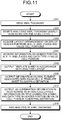
- FIG. 11 is a flowchart illustrating an example of the structural analysis process according to the embodiment.
- the structural analysis unit 32 reads the XBRL taxonomy 21 (Step S11).
- the structural analysis unit 32 starts analyzing the XBRL taxonomy 21 (Step S12).
- the analyzation of the XBRL taxonomy 21 mentioned here is mainly analyzing the item definition and the table layout.
- the structural analysis unit 32 refers to the table layout and acquires the layout (arrangement order) of the header portions in the X-, Y- and, Z-axes and the value cell portion (Step S13).
- the structural analysis unit 32 refers to the table layout and the item definition and acquires information on the header portion in the X-, Y- and, Z-axes and the data type in the value cell portion (Step S14).
- the character strings of the title and the data types of the values of the character string are included.
- the structural analysis unit 32 generates the template sheet 23 in accordance with the analyzed layout (arrangement order) and outputs the template sheet 23 (Step S15) .
- the structural analysis unit 32 outputs the information on the XBRL element associated with each of the cells in the generated template sheet 23 to the cells in the mapping definition 22 and the association information in the XBRL element (Step S16).
- the structural analysis unit 32 outputs, as combination information in accordance with the analyzed layout (arrangement order), the information on the character strings and the data types included in the title in the header portion and the value cell portion to the combination information on the data types in the mapping definition 22 (Step S17). Then, the structural analysis unit 32 ends analysis of the XBRL taxonomy 21 (Step S18).
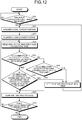
- FIG. 12 is a flowchart illustrating an example of the data conversion process according to the embodiment.
- the data conversion unit 33 determines whether the data conversion unit 33 has received the input completion sheet 24 (Step S20). If the data conversion unit 33 determines that the data conversion unit 33 has not received the input completion sheet 24 (No at Step S20), the data conversion unit 33 repeats the determination process until the data conversion unit 33 receives the input completion sheet 24.
- the data conversion unit 33 acquires the header portion in the Z-axis from the received input completion sheet 24 (Step S21). Namely, the data conversion unit 33 sequentially reads, for each line, the line from the header portion in the Z-axis that is present in the first line of the table in the received input completion sheet 24. Then, the data conversion unit 33 acquires the header portion in the X-axis from the input completion sheet 24 (Step S22).
- the data conversion unit 33 reads the next single line as the analysis target line (Step S23). Namely, the data conversion unit 33 analyzes the line subsequent to the header portion in the Y-axis in the first table and detects the start position of the next table. The data conversion unit 33 determines whether the combination of the data types in the analysis target line has the same combination as that in the data input line registered in the mapping definition 22 (Step S24). The combination of the data types in the data input line is obtained by adding the combination of the data types in the header portion in the Y-axis to the combination of the data types in the value cell portion.
- Step S24 If the data conversion unit 33 determines that the combination of the data types in the analysis target line is the same as that in the data input line (Yes at Step S24), the data conversion unit 33 proceeds to Step S27.
- the data conversion unit 33 determines whether the combination of the data types in the analysis target line is the same as that in the title line of the table stored in the mapping definition 22 (Step S25).
- the combination of the data types in the title line of the table is the combination of the data types in the header portion in the Z-axis.
- Step S25 If the data conversion unit 33 determines that the combination of the data types in the analysis target line is the same as that in the title line of the table (Yes at Step S25), the data conversion unit 33 detects the analysis target line as the start position of the next table (Step S26). Then, the data conversion unit 33 proceeds to Step S21 in order to perform the mapping process on the next table.
- the data conversion unit 33 determines that the combination of the data types in the analysis target line is not the same as that in the title line of the table (No at Step S25), the data conversion unit 33 proceeds to Step S28 in order to perform the mapping process on the analysis target line. Furthermore, in such a case, the analysis target line does not match the data input line and the title line of the table; therefore, this is a case of an input error caused by a user. Thus, the data conversion unit 33 may also send, as a notification at the time of mapping process, an error in accordance with the input data type.
- Step S24 if the data conversion unit 33 determines that the combination of the data types in the analysis target line is the same as that in the data input line (Yes at Step S24), the data conversion unit 33 performs the following process. Namely, the data conversion unit 33 determines whether the combination of the character string and the data type in the analysis target line is the same as that in the title line of the table registered in the mapping definition 22. This case is a case of using the second mapping definition 22. Alternatively, the data conversion unit 33 determines whether the combination of the character strings in the analysis target line is the same as that in the title line of the table registered in the mapping definition 22 (Step S27). This case is a case of using the third mapping definition 22.
- Step S27 If the data conversion unit 33 determines that the combination of the character string and the data type in the analysis target line or the combination of the character strings in the analysis target line is the same as that in the title line of the table (Yes at Step S27), the data conversion unit 33 proceeds to Step S26. Namely, the data conversion unit 33 detects the analysis target line as the start position of the next table.
- the data conversion unit 33 determines that the combination of the character string and the data type in the analysis target line or the combination of the character strings in the analysis target line is not the same as that in the title line of the table (No at Step S27), the data conversion unit 33 determines that the analysis target line is the same as the header portion in the Y-axis. Then, the data conversion unit 33 performs the mapping process on the analysis target line (Step S28).
- the data conversion unit 33 determines whether the position is the termination of the data (Step S29). If the data conversion unit 33 determines that the position is not the termination of the data (No at Step S29), the data conversion unit 33 proceeds to Step S23 in order to read the next single line. In contrast, if the data conversion unit 33 determines that the position is the termination of the data (Yes at Step S29), the data conversion unit 33 ends the data conversion process.
- FIG. 13 is a diagram illustrating an example of a use of the evaluation device according to the embodiment.
- the evaluation device 1 is installed on the supervisory authority side.
- the XBRL taxonomy 21 is generated by the supervisory authority.
- the structural analysis unit 32 inputs the generated XBRL taxonomy 21 and generates, by using the input XBRL taxonomy 21, the template sheet 23 and the mapping definition 22 (S210).
- the supervisory authority opens the generated template sheet 23 and the mapping definition 22 to the public such that the submission company can acquire the template sheet 23.
- the submission company inputs the financial data by using the acquired template sheet 23 and generates the input completion sheet 24. Then, the data conversion unit 33 inputs the input completion sheet 24 and converts the input completion sheet 24, which has been input, to the XBRL instance 41 (S220).
- the evaluation device 1 illustrated in FIG. 13 is a server model installed on the supervisory authority side; however, the configuration is not limited to this.
- the evaluation device 1 may also be a client model that is installed on the submission company side.
- the evaluation device 1 refers to the input completion sheet 24 that stores therein table information having a plurality of lines and specifies, regarding each of the lines out of the plurality of lines, a combination of data classifications of characters or character strings associated with a plurality of cells that are included in each of the lines.
- the evaluation device 1 refers to the mapping definition 22 that stores therein information on combinations of data classifications associated with a plurality of cells included in specific lines out of the plurality of lines and then acquires a combination of data classifications stored in the mapping definition 22.
- the evaluation device 1 compares, regarding each of the lines out of the plurality of lines, the acquired combination of the data classifications with the specified combination of the data classifications and evaluates, in accordance with the comparison result, the line targeted for the comparison process.
- the evaluation device 1 can specify the same line as a specific line out of the plurality of lines that are included in the table information in the input completion sheet 24.
- the evaluation device 1 performs the following process.
- the evaluation device 1 refers to the input completion sheet 24 and further specifies, regarding each of the lines out of the plurality of lines, a combination of characters or character strings and data classifications that are associated with the plurality of cells included in each of the lines.
- the evaluation device 1 refers to the mapping definition 22 that stores therein the combinations of the characters or the character strings and the data classifications that are associated with the plurality of cells included in the specific lines and then acquires a combination of the characters, the character strings, and the data classifications stored in the mapping definition 22.
- the evaluation device 1 compares, regarding each of the lines out of the plurality of lines, the acquired combination of the characters, the character strings, and the data classification with the specified combination of the characters, the character strings, and the data classifications. With this configuration, the evaluation device 1 can more reliably specify the same line as the specific line.
- the evaluation device 1 refers to the XBRL taxonomy 21 and generates information on the combinations of data classifications associated with the plurality of cells that are included in the specific lines.
- the evaluation device 1 stores the information on the combinations of the generated data classifications in the mapping definition 22.
- the mapping definition 22 that stores therein information on the combinations of the data classifications, the evaluation device 1 can specify a specific line in each of the tables even if a plurality of tables is present in the input completion sheet 24.
- the evaluation device 1 refers to the XBRL taxonomy 21 and generates information on combinations of characters or character strings and the data classifications associated with the plurality of cells included in the specific lines.
- the evaluation device 1 stores, in the mapping definition 22, the generated information on the combinations of the characters or the character strings and the data classifications.
- the evaluation device 1 can further specify a specific line in each of the tables even if a plurality of tables is present in the input completion sheet 24.
- the evaluation device 1 can be implemented by mounting each of the functions of the control unit 3, the storage unit 2, and the like described above on an information processing apparatus, such as a known personal computer or a workstation.
- each of the components in the evaluation device 1 illustrated in the drawings is not always physically configured as illustrated in the drawings.
- the specific shape of the separate or integrated the evaluation device 1 is not limited to the drawings; however, all or part of the device can be configured by functionally or physically separating or integrating any of the units depending on various loads or use conditions.
- the input unit 31 and the structural analysis unit 32 may also be integrated as a single unit.
- the data conversion unit 33 and the output unit 34 may also be integrated as a single unit.
- the structural analysis unit 32 may also be separated into a first creating unit that generates the mapping definition 22 and a second creating unit that generates the template sheet 23.
- the storage unit 2, such as the XBRL taxonomy 21, the mapping definition 22, the template sheet 23, and the input completion sheet 24, may also be connected as an external device of the evaluation device 1 via a network.
- FIG. 14 is a diagram illustrating an example of a computer that executes an evaluation program.
- a computer 200 includes a CPU 203 that executes various kinds arithmetic processing, an input device 215 that receives an input of data from a user, and a display control unit 207 that controls a display device 209. Furthermore, the computer 200 includes a drive device 213 that reads programs or the like from a storage medium and a communication control unit 217 that sends and receives data to and from another computer via the network. Furthermore, the computer 200 includes a memory 201 that temporarily stores therein various kinds of information and an HDD 205. Then, the memory 201, the CPU 203, the HDD 205, the display control unit 207, the drive device 213, the input device 215, and the communication control unit 217 are connected by a bus 219.
- the drive device 213 is a device for, for example, a removable disk 211.
- the HDD 205 stores therein an evaluation program 205a and evaluation process related information 205b.
- the CPU 203 reads the evaluation program 205a and loads the evaluation program 205a in the memory 201.
- the evaluation program 205a functions as an evaluation process.
- the evaluation process corresponds to each of the functioning units in the control unit 3.
- the evaluation process related information 205b corresponds to the XBRL taxonomy 21, the mapping definition 22, the template sheet 23, and the input completion sheet 24.
- the evaluation program 205a does not need to be stored in the HDD 205 from the beginning.
- the program is stored in a "portable physical medium", such as a flexible disk (FD), a CD-ROM, a DVD disk, a magneto-optic disk, an IC CARD, or the like, that is to be inserted into the computer 200.
- the computer 200 may also read and execute the evaluation program 205a from the portable physical medium.
Landscapes
- Engineering & Computer Science (AREA)
- Theoretical Computer Science (AREA)
- Physics & Mathematics (AREA)
- General Physics & Mathematics (AREA)
- Health & Medical Sciences (AREA)
- Artificial Intelligence (AREA)
- Audiology, Speech & Language Pathology (AREA)
- Computational Linguistics (AREA)
- General Health & Medical Sciences (AREA)
- General Engineering & Computer Science (AREA)
- Business, Economics & Management (AREA)
- Accounting & Taxation (AREA)
- Development Economics (AREA)
- Economics (AREA)
- Finance (AREA)
- Marketing (AREA)
- Strategic Management (AREA)
- Technology Law (AREA)
- General Business, Economics & Management (AREA)
- Document Processing Apparatus (AREA)
- Financial Or Insurance-Related Operations Such As Payment And Settlement (AREA)
Abstract
Description
- The present invention relates to an evaluation method and the like.
- Financial statements using Extensible Business Reporting Language (XBRL) are obliged to submit to the Financial Service Agency. XBRL is an Extensible Markup Language (XML) based language developed as a data description language used for easily preparing, distributing, and using business reports.
- The data of financial statements submitted to the supervisory authorities, such as the Financial Service Agency or the Tokyo Stock Exchange, is referred to as instances. The instances are generated based on fields of definition (called "taxonomies") that are opened to the public by the supervisory authorities. Taxonomies are constituted of schemas, in each of which a name or type information of an XBRL element corresponding to an item is defined, and linkbases, in each of which a relationship between XBRLs is defined. The relationship between XBRL elements correspond to, for example, a display order or an aggregation method of items in the financial statements.
- Here, a reference example of the flow of generating instances as financial statements will be described with reference to
FIG. 15. FIG. 15 is a diagram illustrating a reference example of the flow of generating instances. In a supervisory authority, taxonomies described in XBRL are stored and opened to the public. In a submission company, a mapping engine downloads a released taxonomy (Step S110) and generates a mapping definition and a template sheet based on the taxonomy (Step S120). The template sheet mentioned here indicates a table generated by using spreadsheet software, such as Excel. The mapping definition mentioned here indicates a definition in which position and size information on cells of a header portion or input portions in the table is associated with property information on XBRL elements that are associated with the cells. - Then, a person in charge inputs financial data to the template sheet and generates an input completion sheet (Step S130). The person in charge inputs the input completion sheet to the mapping engine and the mapping engine converts the received input completion sheet to an instance (Step S140) and then uploads the instance to the supervisory authority (Step S150). The supervisory authority accumulates and verifies the instances.
-
FIG. 16 is a diagram illustrating a reference example of the table that indicates the template sheet. As illustrated inFIG. 16 , the template sheet is a two-dimensional table and the format of the template sheet is unified. - In this way, the mapping engine uses the taxonomy that is opened to the public and prepares the unified template sheet and the mapping definition, thereby converting the input completion sheet that has been input to the template sheet to the instance.
- Here, a reference example of a mapping process of converting the input completion sheet to the instance will be described with reference to
FIG. 17. FIG. 17 is a diagram illustrating a reference example of the mapping process. As illustrated inFIG. 17 , the mapping engine sequentially reads each of lines in the input completion sheet from the top; refers to, regarding the read lines, the mapping definition; and converts the input completion sheet to the instance. -
- Patent Document 1: Japanese Laid-open Patent Publication No.
2010-123149 - Patent Document 2: Japanese Laid-open Patent Publication No.
2010-146109 - However, in recent years, in response to requests from the supervisory authorities and users for more detailed financial reports, the international standard specifications (table linkbase) for describing table layout of XBRL data are recommended. Consequently, it is conceivable that the tables used for financial reports are changed from the two-dimensional tables to tables with different sizes or tables having a different number of tables for each submission company. For example, it is conceivable that a single table generated in units of the whole company is changed to a plurality of tables to be generated in units of business facilities or it is conceivable that a single table generated every year is changed to a plurality of tables to be generated every month.
- If so, there is a problem in that, when the mapping engine converts tables to instances, if a plurality of tables is present, the mapping engine is not able to distinguish the start position of each of the tables. Namely, the mapping engine sequentially read each of the lines in the tables from the top; refers to the mapping definition regarding the read lines; and converts to the instances. However, because the cells used in the tables are variable cells, the mapping engine is not able to distinguish the end position of each of the tables by referring to the mapping definition. As a result, the mapping engine is not able to distinguish the start position of the next table.
- Accordingly, it is an object in one aspect of an embodiment of the invention to distinguish, when a plurality of tables are converted to instances, the start position of each of the tables.
- An evaluation program according to an aspect causes a computer to execute a process including: specifying, by referring to a storage unit that stores therein table information having a plurality of lines each of which includes a plurality of cells that are associated with characters or character strings, regarding each of the lines out of the plurality of lines, a combination of data classifications of the characters or the character strings associated with the plurality of cells that are included in each of the lines; acquiring, by referring to a storage unit that stores therein information on combinations of data classifications associated with a plurality of cells that are included in specific lines out of the plurality of lines, a combination of the data classifications stored in the storage unit; comparing, regarding each of the lines out of the plurality of lines, the acquired combination of the data classifications with the specified combination of the data classifications; and evaluating, in accordance with comparison results, the line targeted for a comparison process.
- According to an aspect of an embodiment, when a plurality of tables is converted to instances, it is possible to distinguish the start position of each of the tables.
-
-
FIG. 1 is a functional block diagram illustrating a configuration of an evaluation device according to an embodiment. -
FIG. 2 is a diagram illustrating an example of a template sheet according to the embodiment. -
FIG. 3 is a diagram illustrating an example of an input completion sheet according to the embodiment. -
FIG. 4 is a diagram illustrating a first example of mapping definition according to the embodiment. -
FIG. 5 is a diagram illustrating a first specific example of a data conversion process according to the embodiment. -
FIG. 6 is a diagram illustrating a second example of the mapping definition according to the embodiment. -
FIG. 7 is a diagram illustrating a second specific example of the data conversion process according to the embodiment. -
FIG. 8 is a diagram illustrating a third example of the mapping definition according to the embodiment. -
FIG. 9 is a diagram illustrating the outline of a structural analysis process according to the embodiment. -
FIG. 10 is a diagram illustrating the outline of the data conversion process according to the embodiment. -
FIG. 11 is a flowchart illustrating an example of the structural analysis process according to the embodiment. -
FIG. 12 is a flowchart illustrating an example of the data conversion process according to the embodiment. -
FIG. 13 is a diagram illustrating an example of a use of the evaluation device according to the embodiment. -
FIG. 14 is a diagram illustrating an example of a computer that executes an evaluation program. -
FIG. 15 is a diagram illustrating a reference example of the flow of generating instances. -
FIG. 16 is a diagram illustrating a reference example of a table that indicates a template sheet. -
FIG. 17 is a diagram illustrating a reference example of a mapping process. - Preferred embodiments of an evaluation program, an evaluation device, and an evaluation method disclosed in the present invention will be described in detail below with reference to the accompanying drawings. Furthermore, the present invention is not limited to the embodiments.
-
FIG. 1 is a functional block diagram illustrating a configuration of an evaluation device according to an embodiment. As illustrated inFIG. 1 , when anevaluation device 1 converts data in a table format to an instance described in XBRL, if a plurality of tables is present, theevaluation device 1 uses combinations of data classifications included in each line in each of the tables, performs evaluation on each line, and distinguishes the start position of each of the tables. The instance mentioned here is referred to as an "XBRL instance". Converting the data in a table format to the XBRL instance is synonymous with mapping the data in a table format to the XBRL instance. - The
evaluation device 1 includes astorage unit 2 and acontrol unit 3. - The
storage unit 2 is, for example, a storage device, such as a nonvolatile semiconductor memory device including a flash memory, a ferroelectric random access memory (FRAM) (registered trademark), and the like. Furthermore, thestorage unit 2 includes anXBRL taxonomy 21, amapping definition 22, atemplate sheet 23, and aninput completion sheet 24. - The
XBRL taxonomy 21 is obtained by defining the structure of each of the XBRL elements and is formed by schemas, linkbases, and table linkbases. The schema is a dictionary that stores therein attribute information, such as a name or a data type of an XBRL element, and corresponds to, in the embodiment, an "item definition". The linkbase is a document in which, for example, a parent-child relationship between the XBRL elements, the display order, the display name, and the like are described. The table linkbase is a document in which a table layout of the XBRL elements is described and corresponds to, in the embodiment, a "table layout". - The
mapping definition 22 defines combination information on data types in a header (title) portion in a table. In themapping definition 22, for example, a combination of data types in each of a header portion in the X-axis, a header portion in the Y-axis, and a header portion in the Z-axis is defined. Examples of the data types include a character string type, a date type, and a numerical value type; however, the data types are not limited to these. Furthermore, themapping definition 22 defines association between cells and the XBRL elements in a table. For example, in themapping definition 22, property information on an XBRL element that is associated with the position of a line of a cell or associated with a cell in the header portion or the input portion in the table is defined. Furthermore, themapping definition 22 is generated by a structural analysis unit 32, which will be described later. Furthermore, an example of the content of themapping definition 22 will be described later. - The
template sheet 23 is a general-purpose template sheet representing an input form reproduced from a financial statement. Thetemplate sheet 23 mentioned here is a table generated by using spreadsheet software, such as Excel or the like. Furthermore, thetemplate sheet 23 is defined by using a table linkbase and is generated by the structural analysis unit 32 that will be described later. Furthermore, an example of the content of thetemplate sheet 23 will be described later. - The
input completion sheet 24 is a sheet in which financial data has already been input to thetemplate sheet 23. Theinput completion sheet 24 is input by a user. - The
control unit 3 includes an internal memory that stores therein control data and programs in which various kinds of procedures are prescribed, whereby thecontrol unit 3 executes various processes. Furthermore, thecontrol unit 3 corresponds to, for example, an integrated circuit, such as an application specific integrated circuit (ASIC), a field programmable gate array (FPGA), or the like, or corresponds to an electronic circuit, such as a central processing unit (CPU), a micro processing unit (MPU), or the like. Furthermore, thecontrol unit 3 includes aninput unit 31, the structural analysis unit 32, adata conversion unit 33, and an output unit 34. - The
input unit 31 inputs theXBRL taxonomy 21 and stores theinput XBRL taxonomy 21 in thestorage unit 2. - The structural analysis unit 32 analyzes the
XBRL taxonomy 21 and generates themapping definition 22 and thetemplate sheet 23 that are in accordance with the definition of the table linkbase (table layout). The structural analysis unit 32 stores the generatedmapping definition 22 and thetemplate sheet 23 in thestorage unit 2. - In the following, an example of the
template sheet 23 will be described with reference toFIG. 2. FIG. 2 is a diagram illustrating an example of the template sheet according to the embodiment. As illustrated inFIG. 2 , thetemplate sheet 23 has the header portion in the X-axis, the header portion in the Y-axis, the header portion in the Z-axis, and a value cell portion. The header portion in each of the axes is hierarchically defined. - The header portion in the Z-axis is set at the top in a single table as a substitute for the title. The header portion in the Z-axis has parent headers z-1 and z-3 and child headers z-2 and z-4. Here, in the parent header z-1, "SEGMENT" (section name) is set. In the child header z-2, as a child header associated with "SEGMENT", a value is input by the user. Similarly, in the parent header z-3, "AREA" (district name) is set. In the child header z-4, as a child header associated with "AREA", a value is input by the user. Furthermore, the header portion in the Z-axis represents the line indicating the title of the table and is thus referred to as the "title line of the table". In other words, the "title line of the table" indicates the line that has been added in order to input a new value to another table.
- The header portion in the Y-axis has a parent header y-1 and a child header y-2. Here, in the parent header y-1, "PERIOD" is set. In the child header y-2, as a child header associated with "PERIOD", a value is input by the user. In the child header y-2, for example, a year and a period can be added. Furthermore, the header portion in the Y-axis represents the line in which data is input and is thus sometimes referred to as a "data input line". In other words, the "data input line" indicates the line that has been added in order to continuously input a value to the same table.
- The header portion in the X-axis has parent headers x-1 and x-2 and value cell portions x-3 and x-4 that are associated with the corresponding parent headers. Here, in the parent header x-1, "Assets" (property) is set as an XBRL element. In the value cell portion x-3, the value associated with "Assets" is input by the user. In the parent header x-2, "Liabilities" (debt) is set as an XBRL element. In the value cell portion x-4, the value associated with "Liabilities" is input by the user. Furthermore, the value cell portion represents the line in which data is input and is thus sometimes referred to as a "data input line".
- Furthermore, each of the data types is input to the corresponding cells in the
template sheet 23. -
FIG. 3 is a diagram illustrating an example of an input completion sheet according to the embodiment. Theinput completion sheet 24 illustrated inFIG. 3 is the result obtained after the user has input the financial data to thetemplate sheet 23 illustrated inFIG. 2 . Theinput completion sheet 24 is constituted by a plurality of tables and each of the tables uses the Z-axis header portion as a start line. Here, two tables are illustrated. In one table, financial data of the Asia district is illustrated and, in the other table, financial data of the Europe district is illustrated. Furthermore, inFIG. 3 , the number of tables is two; however, the number of tables is not limited to this and three tables or four tables may also be used. Furthermore, the number of tables may also be one. -
FIG. 4 is a diagram illustrating a first example of the mapping definition according to the embodiment. As illustrated inFIG. 4 , themapping definition 22 includes combination information on the data types. In the combination information on the data types, a combination of the data types in the header portion in the X-axis is set. In the combination information on the data types, a combination of the data types in the header portion in the Y-axis is set. In the combination information on the data types, a combination of the data types in the header portion in the Z-axis is set. In the combination information on the data types, a combination of values in the value cell portion is set. Here, as the combination of the data types in the header portion in the X-axis, a set of "character string type, character string type" is set. As the combination of the data types in the header portion in the Y-axis, a set of "character string type, date type" is set. As the combination of the data types in the header portion in the Z-axis, a set of "character string type, character string type, character string type, character string type" is set. As the combination of the data types in the value cell portion, a set of "numerical value type, numerical value type" is set. - The
mapping definition 22 further includes association information between cells and XBRL elements. In the association information between cells and XBRL elements, regarding the cell in which a value is input, association between a position and an XBRL element is set. Here, regarding the cell in which a value is input to a line B, if the line is a title line, the cell is associated with the value of the SEGMENT that is represented as an XBRL element. If the line is a data input line, the cell is associated with the value of PERIOD that is represented as an XBRL element. Regarding the cell in which a value is input to a line C, if the line is a data input line, the cell is associated with the value of <Assets> that is represented as an XBRL element. Regarding the cell in which a value is input to a line D, if the line is a data input line, the cell is associated with the value of <Liabilities> that is represented as an XBRL element. If the line is a title line, the cell is associated with the value of AREA that is represented as an XBRL element. - A description will be given here by referring back to
FIG. 1 . Thedata conversion unit 33 refers to theinput completion sheet 24 and specifies, regarding each of the lines out of the plurality of lines, a combination of data types of data associated with a plurality of cells that are included in each of the lines. The data type is an example of a data classification. For example, thedata conversion unit 33 reads, when starting data conversion, the header portion in the Z-axis and the header portion in the X-axis from theinput completion sheet 24. Thedata conversion unit 33 sequentially reads the subsequent lines. When thedata conversion unit 33 reads a line, thedata conversion unit 33 specifies a combination of data types in the read line. Furthermore, the combination of data types in the read line is specified from the data types that are set in theinput completion sheet 24. - The
data conversion unit 33 refers to themapping definition 22 and acquires each of the combinations of the data classifications that are associated with the plurality of cells included in the data input lines and the title line in the table. Furthermore, the combination of the data types in the data input line corresponds to the sum of the combination of the data types in the header portion in the Y-axis included in themapping definition 22 and the combination of the data types in the value cell portion. The combination of the data types in the title line of the table corresponds to the combination of the data types in the header portion in the Z-axis included in themapping definition 22. - The
data conversion unit 33 compares, regarding each of the lines out of the plurality of lines, the acquired combination of the data types with the specified combination of the data types and performs evaluation on the line targeted for a comparison process in accordance with the comparison result. For example, thedata conversion unit 33 determines whether the combination of the data types in the read line is the same as that in the data input line. If the combination of the data types in the read line is not the same as that in the data input line, thedata conversion unit 33 determines whether the combination of the data types in the read line is the same as that in the title line of the table. If the combination of the data types in the read line is the same as that in the title line of the table, thedata conversion unit 33 detects that the read line is the start position of the next table. Namely, when thedata conversion unit 33 analyzes the cell for each line from the top to the bottom and from the left end to the right end, thedata conversion unit 33 detects the start position of the next table by checking the cells against themapping definition 22. Then, when thedata conversion unit 33 detects the start position of the next table, thedata conversion unit 33 performs the data conversion process on the next table. Furthermore, if the combination of the data types in the read line is the same as that in the data input line, thedata conversion unit 33 maps the data input line and adds the line to anXBRL instance 41. Then, thedata conversion unit 33 performs the data conversion process on the subsequent line. - The output unit 34 outputs the
XBRL instance 41 that indicates the results obtained by conversion performed by thedata conversion unit 33. For example, the output unit 34 may also output theXBRL instance 41 that is the conversion results to a monitor or may also store theXBRL instance 41 in thestorage unit 2. - In the following, a specific example of the data conversion process performed by using the
mapping definition 22 illustrated inFIG. 4 will be described with reference toFIG. 5. FIG. 5 is a diagram illustrating a first specific example of the data conversion process according to the embodiment. InFIG. 5 , theinput completion sheet 24 is illustrated. - As illustrated in
FIG. 5 , thedata conversion unit 33 detects the start position of the next table in theinput completion sheet 24 by sequentially checking, one by one, each of the lines in theinput completion sheet 24 from the top to the bottom against themapping definition 22. - For example, it is assumed that the
data conversion unit 33 refers to theinput completion sheet 24 and reads a line indicated by a code a1. Thedata conversion unit 33 specifies a combination of the data types included in the read line. In this case, the combination of the data types in the line indicated by the code a1 is a set of "character string type, date type, numerical value type, numerical value type". - The
data conversion unit 33 refers to themapping definition 22 and acquires each of the combinations of the data types included in the data input line and the title line of the table. Here, the combination of the data types in the line corresponds to the combination of the combination of the data types in the header portion in the Y-axis included in the combination information on the data types in themapping definition 22 and the combination of the data types in the value cell portion. As a result, the combination of the data types in the data input line is a set of "character string type, date type, numerical value type, numerical value type". The combination of the data types included in the title line of the table corresponds to the combination of the data types in the header portion in the Z-axis included in the combination information on the data types in themapping definition 22 and is a set of "character string type, character string type, character string type, character string type". - The
data conversion unit 33 determines whether the combinations of the data types in the lines indicated by the code a1 are the same as those in the data input lines. In this case, the combinations of the data types in all of the lines are a set of "character string type, date type, numerical value type, numerical value type". Thus, thedata conversion unit 33 maps the lines indicated by the code a1, adds the lines to theXBRL instance 41, and performs the data conversion process on the subsequent lines that are present below the processed line. - Then, it is assumed that the
data conversion unit 33 refers to theinput completion sheet 24 and reads the line indicated by a code a2. Thedata conversion unit 33 specifies the combination of the data types in the read line. In this case, the combination of the data types in the line indicated by the code a2 is a set of "character string type, character string type, character string type, character string type". - The
data conversion unit 33 determines whether the combination of the data types in the line indicated by the code a2 is the same as that in the data input line. In this case, because the combination of the data types in the line indicated by the code a2 is a set of "character string type, character string type, character string type, character string type" and the combination of the data types in the data input line is a set of "character string type, date type, numerical value type, numerical value type", the combinations of the data types are not the same. Thus, thedata conversion unit 33 determines whether the combination of the data types in the line indicated by the code a2 is the same as that in the title line of the table. Here, the combinations of the data types in all of the lines are a set of "character string type, character string type, character string type, character string type". - Thus, the
data conversion unit 33 detects that the line indicated by the code a2 is the start position of the next table. Then, thedata conversion unit 33 performs the data conversion process on the next table in theinput completion sheet 24. - Incidentally, there may be a case in which the combinations of the data types in all of the lines in the
input completion sheet 24 are the same. For example, this is a case in which the combinations of the data types in all of the lines are a set of "character string type, character string type, character string type, character string type". In such a case, because thedata conversion unit 33 is not able to distinguish whether the line read from theinput completion sheet 24 is the data input line or the title line of the table, thedata conversion unit 33 is not able to detect the start position of the next table. Thus, if the combination of the data types read from theinput completion sheet 24 is the same as that in the data input line, thedata conversion unit 33 determines whether the read line has the same combination as the combination of a fixed character string and the data type in the title line of the table. In the following, a second example of themapping definition 22 used for this determination will be described. -
FIG. 6 is a diagram illustrating a second example of the mapping definition according to the embodiment. As illustrated inFIG. 6 , themapping definition 22 includes the combination information on the data types. In the combination information on the data types, a combination of fixed character strings in the header portion in the X-axis is set. In the combination information on the data types, a combination of the fixed character string and the data type in the header portion in the Y-axis is set. In the combination information on the data types, a combination of the fixed character string and the data type in the header portion in the Z-axis is set. In the combination information on the data types, a combination of the data types in the value cell portion is set. Here, as the combination of the data types in the header portion in the X-axis, a set of ""Assets Evaluation, "Liabilities Rank"" is set. As the combination of the data types in the header portion in the Y-axis, a set of ""PERIOD", character string type"" is set. As the combination of the data types in the header portion in the Z-axis, a set of ""SEGMENT", character string type, "AREA", character string type"" is set. As the combination of the data types in the value cell portion, a set of "character string type, character string type" is set. Each of "Assets Evaluation", "Liabilities Rank", "PERIOD", "SEGMENT", and "AREA" is an XBRL element. These fixed character strings are set, by the structural analysis unit 32, in themapping definition 22 in accordance with the definition of the table layout of theXBRL taxonomy 21. - Furthermore, the
mapping definition 22 further includes association information between the cells and the XBRL elements; however, descriptions thereof are the same as those described with reference toFIG. 4 and will be thus omitted. - A specific example of the data conversion process performed by using the
mapping definition 22 illustrated inFIG. 6 will be described with reference toFIG. 7. FIG. 7 is a diagram illustrating a second specific example of the data conversion process according to the embodiment. InFIG. 7 , theinput completion sheet 24 is illustrated. - As illustrated in
FIG. 7 , thedata conversion unit 33 detects the start position of the next table in theinput completion sheet 24 by sequentially checking the lines in theinput completion sheet 24 for each line from the top to the bottom against themapping definition 22. - For example, it is assumed that the
data conversion unit 33 refers to theinput completion sheet 24 and reads the line indicated by a code b1. Thedata conversion unit 33 specifies, regarding the read line, the combination of the characters or the character strings and the combination of the data types. In this case, regarding the combination of the characters or the character strings in the line indicated by the code b1, a set of ""PERIOD", "2014.2Q", "Good", and "C"" is specified. Regarding the combination of the data types in the line indicated by the code b1, a set of "character string type, character string type, character string type, character string type" is specified. - The
data conversion unit 33 refers to themapping definition 22 and acquires each of the combinations of the character strings and the data types included in the data input lines and the title lines in the table. Here, the combination of the character strings and the data types in the data input line is the combination of the character strings and the data types in each of the header portion in the Y-axis and the value cell portion that are included in the combination information on the data types stored in themapping definition 22. Consequently, the combination of the character strings and the data types in the data input line is a set of ""PERIOD" (character string type), character string type, character string type, character string type"". The combination of the character strings and the data types included in the title line of the table is the combination of the data types in the header portion in the Z-axis included in the combination information on the data types stored in themapping definition 22. Consequently, the combination of the character strings and the data types included in the title line of the table is a set of ""SEGMENT" (character string type), character string type, "AREA" (character string type), character string type". - The
data conversion unit 33 determines whether the combinations of the data types in the line indicated by the code b1 are the same as those in the data input line. Here, the combinations of the data types in all of the lines are a set of "character string type, character string type, character string type, character string type". Thus, thedata conversion unit 33 determines whether the combination of each of the lines indicated by the code b1 is the same as that of the character strings and the data types in the title line of the table. Here, the combination of the character strings and the data types in each of the lines indicated by the code b1 is a set of ""PERIOD", character string type, "Good", character string type". The combination of the character strings and the data types in the title line of the table is a set of ""SEGMENT", character string type, "AREA", character string type" (seeFIG. 6 ). The lines indicated by the code b1 do not have the same combination as that of the character strings and the data types in the title line of the table. Namely, each of the lines indicated by the code b1 is not the title line of the table but is the data input line. Thus, thedata conversion unit 33 maps the lines indicated by the code b1, and adds the lines to theXBRL instance 41, and performs the data conversion process on the subsequent lines that are present below the processed line. - Then, it is assumed that the
data conversion unit 33 refers to theinput completion sheet 24 and reads the code b2. Thedata conversion unit 33 specifies, regarding the read line, the combination of the characters or the character strings and the combination of the data types. Here, regarding the combination of the characters or the character strings in the line indicated by the code b2, a set of ""SEGMENT", "Device", "AREA", "Europe"" is specified. Regarding the combination of the data types in the line indicated by the code b2, a set of "character string type, character string type, character string type, character string type" is specified. - The
data conversion unit 33 determines whether the combination of the data types in the line indicated by the code b2 is the same as that in the data input line. Here, the combinations of the data types in all of the lines are a set of "character string type, character string type, character string type, character string type". Thus, thedata conversion unit 33 determines whether the line indicated by the code b2 has the same combination as the combination of the character strings and the data types in the title line of the table. Here, the combination of the character strings and the data types in the line indicated by the code b2 is a set of ""SEGMENT", character string type, "AREA", character string type". The combination of the character strings and the data types in the title line of the table is a set of ""SEGMENT", character string type, "AREA", character string type". The line indicated by the code b2 has the same combination as the combination of the character strings and the data types in the title line of the table. Namely, the line indicated by the code b2 is the title line of the table. - Thus, the
data conversion unit 33 detects that the line indicated by the code b2 is the start position of the next table. Then, adata conversion unit 33 performs the data conversion process on the next table in theinput completion sheet 24. - As described above, in the combination information on the data types in the
mapping definition 22, the combination of the fixed character strings and the data types in the header portion in each of the axes is set. However, the combination information on the data types in themapping definition 22 is not limited to this. There may be a case in which data indicated by a data type is previously set and enumerated. In such a case, an identifier of the enumeration type may be set as a data type indicated by the combination information on the data type. The identifier of the enumeration type is associated with theXBRL taxonomy 21. Examples of the identifiers of the enumeration type include an enumeration type x and an enumeration type y. When thedata conversion unit 33 uses this type of themapping definition 22 and reads a line in theinput completion sheet 24, if the combination of the data types in the read line has the same combination as that in the data input line, thedata conversion unit 33 may also further perform the following process. Namely, thedata conversion unit 33 determines whether the read line has the same combination as the combination of the character strings that includes the character string having the enumeration type in the title line of the table. In the following, a third example of themapping definition 22 that is used for this determination will be described. -
FIG. 8 is a diagram illustrating a third example of the mapping definition according to the embodiment. As illustrated inFIG. 8 , themapping definition 22 includes combination information on the data types. In the combination information on the data types, a combination of fixed character strings in the header portion in the X-axis is set. In the combination information on the data types, a combination of the fixed character string and the data type in the header portion in the Y-axis is set. In the combination information on the data types, a combination of the fixed character strings in the header portion in the Z-axis and the identifiers of the enumeration type as the character string types is set. Here, as the combination of the data types in the header portion in the X-axis, a set of ""Assets Evaluation", "Liabilities Rank"" is set. As the combination of the data types in the header portion in the Y-axis, a set of ""PERIOD", character string type" is set. As the combination of the data types in the header portion in the Z-axis, a set of ""SEGMENT", enumeration type x, "AREA", enumeration type y" is set. When thedata conversion unit 33 performs the data conversion process on the read line, thedata conversion unit 33 may acquire, from theXBRL taxonomy 21, an enumeration value associated with the identifier of the enumeration type and determine whether the read line has the same combination of the character strings including one of the character strings of the enumeration value in the title line of the table. - In the following, a third specific example of the data conversion process performed by using the
mapping definition 22 illustrated inFIG. 8 will be described with reference toFIG. 7 . - For example, because the case in which the
data conversion unit 33 refers to theinput completion sheet 24 and reads the line indicated by the code b1 is the same as that described in the second specific example, descriptions thereof will be omitted. - Then, it is assumed that the
data conversion unit 33 refers to theinput completion sheet 24 and reads the line indicated by the code b2. Thedata conversion unit 33 specifies, regarding the read line, the combination of the characters or the character strings and the combination of the data types. Here, regarding the combination of the characters or the character strings indicated by the code b2, a set of ""SEGMENT", "Device", "AREA", "Europe"" is specified. Regarding the combination of the data types in the line indicated by the code b2, a set of "character string type, character string type, character string type, character string type" is specified. - The
data conversion unit 33 determines whether the combination of the data types in the line indicated by the code b2 has the same combination as that in the data input line. Here, the combinations of the data types in all of the lines have a set of "character string type, character string type, character string type, character string type". - Thus, the
data conversion unit 33 determines whether the line indicated by the code b2 has the same combination as the combination of the character strings in the title line of the table. Here, the combination of the character strings indicated by the code b2 is a set of ""SEGMENT", "Device", "AREA", "Europe"". The combination of the character strings in the title line of the table is a set of ""SEGMENT", enumeration type x, "AREA", enumeration type y". Thus, thedata conversion unit 33 inquires of theXBRL taxonomy 21 about the enumeration values of the enumeration type x and the enumeration type y. Then, the combination of the character strings in the title line of the table is a set of ""SEGMENT", "Device" or "Ubiquitous" or "Technology", "AREA", "Asia" or "Oceania" or "Europe" or "America"". The first character string out of each of the combinations is "SEGMENT" and is thus the same. Regarding the second character string out of each of the combinations, the character string of "Device" in the line indicated by the code b2 is included in the combination of the character strings in the title line of the table and is thus the same. The third character string out of each of the combinations is "AREA" and is thus the same. Regarding the fourth character string out of each of the combinations, the character string of "Europe" in the line indicated by the code b2 is included in the combination of the character strings in the title line of the table and is thus the same. Accordingly, the line indicated by the code b2 has the same combination as that of the character strings in the title line of the table. Namely, the line indicated by the code b2 is the title line of the table. - Thus, the
data conversion unit 33 detects that the line indicated by the code b2 is the start position of the next table. Then, thedata conversion unit 33 performs the data conversion process on the next table in theinput completion sheet 24. - In the following, the outline of the structural analysis process according to the embodiment will be described with reference to
FIG. 9. FIG. 9 is a diagram illustrating the outline of a structural analysis process according to the embodiment. As illustrated inFIG. 9 , the structural analysis unit 32 inputs theXBRL taxonomy 21. Then, the structural analysis unit 32 analyzes theinput XBRL taxonomy 21 and generates and outputs themapping definition 22 and thetemplate sheet 23. - For example, the structural analysis unit 32 acquires, from the table layout of the
XBRL taxonomy 21, the layout (arrangement order) of the header portions in the X-, Y- and, Z-axes and the value cell portions. The structural analysis unit 32 acquires, from the table layout of theXBRL taxonomy 21, information on the header portions in the X-, Y- and, Z-axes and the data types in the value cell portion. An example of the information on the header portions in the X-, Y- and, Z-axes includes the character string of the title and the data type of the value of the character string. Here, in the X-axis, as the title, "Assets" and "Liabilities" are listed in this order. In the Y-axis, as the title, "PERIOD" and the value of "PERIOD" are listed in this order. Then, the data type of the value of "PERIOD" indicates the character string type. In the Z-axis, as the title, "SEGMENT", the value of "SEGMENT", "AREA", and the value of "AREA" are listed in this order. Furthermore, the data type of the value of "SEGMENT" indicates the enumeration type. The data type of the value of "AREA" indicates the enumeration type. The value cell portion is associated with the cell, in which the value of "Assets" in the X-axis is input, and the cell, in which the value of "Liabilities" is input. The data type in the cell, in which the value of "Assets" is input, is the data type of element indicated by Assets and indicates the numerical value type. The data type in the cell, in which the value of "Liabilities" is input, is the data type of the element indicated by Liabilities and indicates the numerical value type. The data types of the XBRL elements are acquired from the item definition. - Then, the structural analysis unit 32 generates the
template sheet 23 in accordance with the analyzed layout and outputs the generatedtemplate sheet 23. - Then, the structural analysis unit 32 sets the information on the XBRL element associated with each of the cells in the
template sheet 23 in the association information on the cells and the XBRL elements in themapping definition 22. The structural analysis unit 32 sets, in accordance with the analyzed layout, the combination of the data types of the title in the header portion and the combination of the data types in the value cell portion in the combination information on the data types in themapping definition 22. Here, in the header portion in the X-axis, the combination information on the character string type and the character string type is set. In the header portion in the Y-axis, the combination information on the character string type and the character string type is set. In the header portion in the Z-axis, the combination information on the character string type, the enumeration type x, the character string type, and the enumeration type y is set. In the value cell portion, combination information on the numerical value type and the numerical value type is set. - Furthermore, in
FIG. 9 , the structural analysis unit 32 has generated the combination information on the data types in themapping definition 22 as the combination of data types and the character strings including the character strings of the enumeration types; however, the combination is not limited to this. The structural analysis unit 32 may also generate, similarly to thesecond mapping definition 22, a combination by using a combination of a fixed character string and a data type or may also generate, similarly to thethird mapping definition 22, a combination by using a combination of character strings including character strings of the enumeration types. - In the following, the outline of the data conversion process according to the embodiment will be described with reference to
FIG. 10. FIG. 10 is a diagram illustrating the outline of the data conversion process according to the embodiment. As illustrated inFIG. 10 , thedata conversion unit 33 inputs theinput completion sheet 24 and themapping definition 22. Then, thedata conversion unit 33 refers to themapping definition 22 and theXBRL taxonomy 21, maps (converts) the financial data that has been input to theinput completion sheet 24, and outputs (adds) the financial data to theXBRL instance 41. - Here, in the
XBRL instance 41 converted from theinput completion sheet 24, if SEGMENT is "Device" and AREA is "Asia", the value of Assets indicated as PERIOD "2014.03.31" is set to "1000". Furthermore, if SEGMENT is "Device" and AREA is "Europe", the value of Liabilities indicated as PERIOD "2014.12.31" is set to "8100". - In the following, a flowchart of the structural analysis process according to the embodiment will be described with reference to
FIG. 11. FIG. 11 is a flowchart illustrating an example of the structural analysis process according to the embodiment. - First, the structural analysis unit 32 reads the XBRL taxonomy 21 (Step S11). The structural analysis unit 32 starts analyzing the XBRL taxonomy 21 (Step S12). The analyzation of the
XBRL taxonomy 21 mentioned here is mainly analyzing the item definition and the table layout. - The structural analysis unit 32 refers to the table layout and acquires the layout (arrangement order) of the header portions in the X-, Y- and, Z-axes and the value cell portion (Step S13). The structural analysis unit 32 refers to the table layout and the item definition and acquires information on the header portion in the X-, Y- and, Z-axes and the data type in the value cell portion (Step S14). In the information in the header portion in the X-, Y- and, Z-axes, the character strings of the title and the data types of the values of the character string are included.
- The structural analysis unit 32 generates the
template sheet 23 in accordance with the analyzed layout (arrangement order) and outputs the template sheet 23 (Step S15) . - The structural analysis unit 32 outputs the information on the XBRL element associated with each of the cells in the generated
template sheet 23 to the cells in themapping definition 22 and the association information in the XBRL element (Step S16). The structural analysis unit 32 outputs, as combination information in accordance with the analyzed layout (arrangement order), the information on the character strings and the data types included in the title in the header portion and the value cell portion to the combination information on the data types in the mapping definition 22 (Step S17). Then, the structural analysis unit 32 ends analysis of the XBRL taxonomy 21 (Step S18). - In the following, the flowchart of the data conversion process according to the embodiment will be described with reference to
FIG. 12. FIG. 12 is a flowchart illustrating an example of the data conversion process according to the embodiment. - First, the
data conversion unit 33 determines whether thedata conversion unit 33 has received the input completion sheet 24 (Step S20). If thedata conversion unit 33 determines that thedata conversion unit 33 has not received the input completion sheet 24 (No at Step S20), thedata conversion unit 33 repeats the determination process until thedata conversion unit 33 receives theinput completion sheet 24. - In contrast, if it is determined that the
input completion sheet 24 has been received (Yes at Step S20), thedata conversion unit 33 acquires the header portion in the Z-axis from the received input completion sheet 24 (Step S21). Namely, thedata conversion unit 33 sequentially reads, for each line, the line from the header portion in the Z-axis that is present in the first line of the table in the receivedinput completion sheet 24. Then, thedata conversion unit 33 acquires the header portion in the X-axis from the input completion sheet 24 (Step S22). - Subsequently, the
data conversion unit 33 reads the next single line as the analysis target line (Step S23). Namely, thedata conversion unit 33 analyzes the line subsequent to the header portion in the Y-axis in the first table and detects the start position of the next table. Thedata conversion unit 33 determines whether the combination of the data types in the analysis target line has the same combination as that in the data input line registered in the mapping definition 22 (Step S24). The combination of the data types in the data input line is obtained by adding the combination of the data types in the header portion in the Y-axis to the combination of the data types in the value cell portion. - If the
data conversion unit 33 determines that the combination of the data types in the analysis target line is the same as that in the data input line (Yes at Step S24), thedata conversion unit 33 proceeds to Step S27. - If the
data conversion unit 33 determines that the combination of the data types in the analysis target line is not the same as that in the data input line (No at Step S24), thedata conversion unit 33 performs the following process. Namely, thedata conversion unit 33 determines whether the combination of the data types in the analysis target line is the same as that in the title line of the table stored in the mapping definition 22 (Step S25). The combination of the data types in the title line of the table is the combination of the data types in the header portion in the Z-axis. - If the
data conversion unit 33 determines that the combination of the data types in the analysis target line is the same as that in the title line of the table (Yes at Step S25), thedata conversion unit 33 detects the analysis target line as the start position of the next table (Step S26). Then, thedata conversion unit 33 proceeds to Step S21 in order to perform the mapping process on the next table. - In contrast, if the
data conversion unit 33 determines that the combination of the data types in the analysis target line is not the same as that in the title line of the table (No at Step S25), thedata conversion unit 33 proceeds to Step S28 in order to perform the mapping process on the analysis target line. Furthermore, in such a case, the analysis target line does not match the data input line and the title line of the table; therefore, this is a case of an input error caused by a user. Thus, thedata conversion unit 33 may also send, as a notification at the time of mapping process, an error in accordance with the input data type. - At Step S24, if the
data conversion unit 33 determines that the combination of the data types in the analysis target line is the same as that in the data input line (Yes at Step S24), thedata conversion unit 33 performs the following process. Namely, thedata conversion unit 33 determines whether the combination of the character string and the data type in the analysis target line is the same as that in the title line of the table registered in themapping definition 22. This case is a case of using thesecond mapping definition 22. Alternatively, thedata conversion unit 33 determines whether the combination of the character strings in the analysis target line is the same as that in the title line of the table registered in the mapping definition 22 (Step S27). This case is a case of using thethird mapping definition 22. - If the
data conversion unit 33 determines that the combination of the character string and the data type in the analysis target line or the combination of the character strings in the analysis target line is the same as that in the title line of the table (Yes at Step S27), thedata conversion unit 33 proceeds to Step S26. Namely, thedata conversion unit 33 detects the analysis target line as the start position of the next table. - In contrast, if the
data conversion unit 33 determines that the combination of the character string and the data type in the analysis target line or the combination of the character strings in the analysis target line is not the same as that in the title line of the table (No at Step S27), thedata conversion unit 33 determines that the analysis target line is the same as the header portion in the Y-axis. Then, thedata conversion unit 33 performs the mapping process on the analysis target line (Step S28). - The
data conversion unit 33 determines whether the position is the termination of the data (Step S29). If thedata conversion unit 33 determines that the position is not the termination of the data (No at Step S29), thedata conversion unit 33 proceeds to Step S23 in order to read the next single line. In contrast, if thedata conversion unit 33 determines that the position is the termination of the data (Yes at Step S29), thedata conversion unit 33 ends the data conversion process. - In the following, an example of a use of the evaluation device according to the embodiment will be described with reference to
FIG. 13. FIG. 13 is a diagram illustrating an example of a use of the evaluation device according to the embodiment. As illustrated inFIG. 13 , theevaluation device 1 is installed on the supervisory authority side. TheXBRL taxonomy 21 is generated by the supervisory authority. Then, the structural analysis unit 32 inputs the generatedXBRL taxonomy 21 and generates, by using theinput XBRL taxonomy 21, thetemplate sheet 23 and the mapping definition 22 (S210). The supervisory authority opens the generatedtemplate sheet 23 and themapping definition 22 to the public such that the submission company can acquire thetemplate sheet 23. The submission company inputs the financial data by using the acquiredtemplate sheet 23 and generates theinput completion sheet 24. Then, thedata conversion unit 33 inputs theinput completion sheet 24 and converts theinput completion sheet 24, which has been input, to the XBRL instance 41 (S220). - Furthermore, the
evaluation device 1 illustrated inFIG. 13 is a server model installed on the supervisory authority side; however, the configuration is not limited to this. Theevaluation device 1 may also be a client model that is installed on the submission company side. - According to the embodiment described above, the
evaluation device 1 refers to theinput completion sheet 24 that stores therein table information having a plurality of lines and specifies, regarding each of the lines out of the plurality of lines, a combination of data classifications of characters or character strings associated with a plurality of cells that are included in each of the lines. Theevaluation device 1 refers to themapping definition 22 that stores therein information on combinations of data classifications associated with a plurality of cells included in specific lines out of the plurality of lines and then acquires a combination of data classifications stored in themapping definition 22. Theevaluation device 1 compares, regarding each of the lines out of the plurality of lines, the acquired combination of the data classifications with the specified combination of the data classifications and evaluates, in accordance with the comparison result, the line targeted for the comparison process. With this configuration, theevaluation device 1 can specify the same line as a specific line out of the plurality of lines that are included in the table information in theinput completion sheet 24. - Furthermore, according to the embodiment described above, if the combination of the data classifications acquired from the
mapping definition 22 is the same as the combination of the data classifications specified from theinput completion sheet 24, theevaluation device 1 performs the following process. Theevaluation device 1 refers to theinput completion sheet 24 and further specifies, regarding each of the lines out of the plurality of lines, a combination of characters or character strings and data classifications that are associated with the plurality of cells included in each of the lines. Theevaluation device 1 refers to themapping definition 22 that stores therein the combinations of the characters or the character strings and the data classifications that are associated with the plurality of cells included in the specific lines and then acquires a combination of the characters, the character strings, and the data classifications stored in themapping definition 22. Theevaluation device 1 compares, regarding each of the lines out of the plurality of lines, the acquired combination of the characters, the character strings, and the data classification with the specified combination of the characters, the character strings, and the data classifications. With this configuration, theevaluation device 1 can more reliably specify the same line as the specific line. - Furthermore, according to the embodiment described above, the
evaluation device 1 refers to theXBRL taxonomy 21 and generates information on the combinations of data classifications associated with the plurality of cells that are included in the specific lines. Theevaluation device 1 stores the information on the combinations of the generated data classifications in themapping definition 22. With this configuration, by using themapping definition 22 that stores therein information on the combinations of the data classifications, theevaluation device 1 can specify a specific line in each of the tables even if a plurality of tables is present in theinput completion sheet 24. - Furthermore, according to the embodiment described above, the
evaluation device 1 refers to theXBRL taxonomy 21 and generates information on combinations of characters or character strings and the data classifications associated with the plurality of cells included in the specific lines. Theevaluation device 1 stores, in themapping definition 22, the generated information on the combinations of the characters or the character strings and the data classifications. With this configuration, by using themapping definition 22 that stores therein information on the combinations of the characters or the character strings and the data classification, theevaluation device 1 can further specify a specific line in each of the tables even if a plurality of tables is present in theinput completion sheet 24. - Furthermore, the
evaluation device 1 can be implemented by mounting each of the functions of thecontrol unit 3, thestorage unit 2, and the like described above on an information processing apparatus, such as a known personal computer or a workstation. - Furthermore, each of the components in the
evaluation device 1 illustrated in the drawings is not always physically configured as illustrated in the drawings. In other words, the specific shape of the separate or integrated theevaluation device 1 is not limited to the drawings; however, all or part of the device can be configured by functionally or physically separating or integrating any of the units depending on various loads or use conditions. For example, theinput unit 31 and the structural analysis unit 32 may also be integrated as a single unit. Thedata conversion unit 33 and the output unit 34 may also be integrated as a single unit. In contrast, the structural analysis unit 32 may also be separated into a first creating unit that generates themapping definition 22 and a second creating unit that generates thetemplate sheet 23. Furthermore, thestorage unit 2, such as theXBRL taxonomy 21, themapping definition 22, thetemplate sheet 23, and theinput completion sheet 24, may also be connected as an external device of theevaluation device 1 via a network. - Furthermore, various kinds of processes described in the above embodiments can be implemented by executing programs prepared in advance in a computer system, such as a personal computer, a workstation, or the like. Thus, in the following, an example of a computer that executes an evaluation program that implements the same function as that performed by the
evaluation device 1 illustrated inFIG. 1 will be described.FIG. 14 is a diagram illustrating an example of a computer that executes an evaluation program. - As illustrated in
FIG. 14 , acomputer 200 includes aCPU 203 that executes various kinds arithmetic processing, aninput device 215 that receives an input of data from a user, and adisplay control unit 207 that controls adisplay device 209. Furthermore, thecomputer 200 includes adrive device 213 that reads programs or the like from a storage medium and acommunication control unit 217 that sends and receives data to and from another computer via the network. Furthermore, thecomputer 200 includes amemory 201 that temporarily stores therein various kinds of information and anHDD 205. Then, thememory 201, theCPU 203, theHDD 205, thedisplay control unit 207, thedrive device 213, theinput device 215, and thecommunication control unit 217 are connected by abus 219. - The
drive device 213 is a device for, for example, aremovable disk 211. TheHDD 205 stores therein anevaluation program 205a and evaluation processrelated information 205b. - The
CPU 203 reads theevaluation program 205a and loads theevaluation program 205a in thememory 201. Theevaluation program 205a functions as an evaluation process. - For example, the evaluation process corresponds to each of the functioning units in the
control unit 3. The evaluation processrelated information 205b corresponds to theXBRL taxonomy 21, themapping definition 22, thetemplate sheet 23, and theinput completion sheet 24. - Furthermore, the
evaluation program 205a does not need to be stored in theHDD 205 from the beginning. For example, the program is stored in a "portable physical medium", such as a flexible disk (FD), a CD-ROM, a DVD disk, a magneto-optic disk, an IC CARD, or the like, that is to be inserted into thecomputer 200. Then, thecomputer 200 may also read and execute theevaluation program 205a from the portable physical medium. -
- 1
- evaluation device
- 2
- storage unit
- 3
- control unit
- 21
- XBRL taxonomy
- 22
- mapping definition
- 23
- template sheet
- 24
- input completion sheet
- 31
- input unit
- 32
- structural analysis unit
- 33
- data conversion unit
- 34
- output unit
- 41
- XBRL instance
Claims (6)
- An evaluation program that causes a computer to execute a process comprising:specifying, by referring to a storage unit that stores therein table information having a plurality of lines each of which includes a plurality of cells that are associated with characters or character strings, regarding each of the lines out of the plurality of lines, a combination of data classifications of the characters or the character strings associated with the plurality of cells that are included in each of the lines;acquiring, by referring to a storage unit that stores therein information on combinations of data classifications associated with a plurality of cells that are included in specific lines out of the plurality of lines, a combination of the data classifications stored in the storage unit;comparing, regarding each of the lines out of the plurality of lines, the acquired combination of the data classifications with the specified combination of the data classifications; andevaluating, in accordance with comparison results, the line targeted for a comparison process.
- The evaluation program according to claim 1, wherein
the comparing includesfurther specifying, by referring to, when the acquired combination of the data classifications and the specified combination of the data classifications are the same, a first storage unit that stores therein the table information, regarding each of the lines out of the plurality of lines, a combination of characters or character strings and data classifications that are associated with the plurality of cells included in each of the lines,acquiring, by referring to a third storage unit that stores therein combinations of the characters or the character strings and the data classifications that are associated with the plurality of cells included in the specific lines, a combination of the characters, the character strings, and the data classifications stored in the third storage unit, andcomparing, regarding each of the lines out of the plurality of lines, the acquired combination of the characters, the character strings, and the data classifications with the specified combination of the characters, the character strings, and the data classifications. - The evaluation program according to claim 1, further including:generating, by referring to definition information that defines a layout of a table, information on combinations of the data classifications associated with the plurality of cells that are included in the specific lines; andstoring the generated information on the combinations of the data classifications in a second storage unit.
- The evaluation program according to claim 2, further including:generating, by referring to definition information that defines a layout of a table, information on combinations of the characters or the character strings and the data classifications that are associated with the plurality of cells included in the specific lines; andstoring the generated information on the combinations of the characters or the character strings and the data classifications in the third storage unit.
- An evaluation device comprising:a specifying unit configured to specify, by referring to a storage unit configured to store therein table information having a plurality of lines each of which includes a plurality of cells that are associated with characters or character strings, regarding each of the lines out of the plurality of lines, a combination of data classifications of the characters or the character strings associated with the plurality of cells that are included in each of the lines;an acquiring unit configured to acquire, by referring to a storage unit configured to store therein information on combinations of data classifications associated with a plurality of cells that are included in specific lines out of the plurality of lines, a combination of the data classifications stored in the storage unit;a comparing unit configured to compare, regarding each of the lines out of the plurality of lines, the acquired combination of the data classifications with the specified combination of the data classifications; andan evaluating unit configured to evaluate, in accordance with comparison results, the line targeted for a comparison process.
- An evaluation method performed by a computer comprising:specifying, by referring to a storage unit that stores therein table information having a plurality of lines each of which includes a plurality of cells that are associated with characters or character strings, regarding each of the lines out of the plurality of lines, a combination of data classifications of the characters or the character strings associated with the plurality of cells that are included in each of the lines;acquiring, by referring to a storage unit that stores therein information on combinations of data classifications associated with a plurality of cells that are included in specific lines out of the plurality of lines, a combination of the data classifications stored in the storage unit;comparing, regarding each of the lines out of the plurality of lines, the acquired combination of the data classifications with the specified combination of the data classifications; andevaluating, in accordance with comparison results, the line targeted for a comparison process.
Applications Claiming Priority (1)
| Application Number | Priority Date | Filing Date | Title |
|---|---|---|---|
| PCT/JP2016/064521 WO2017199309A1 (en) | 2016-05-16 | 2016-05-16 | Assessment program, assessment device, and assessment method |
Publications (2)
| Publication Number | Publication Date |
|---|---|
| EP3460677A1 true EP3460677A1 (en) | 2019-03-27 |
| EP3460677A4 EP3460677A4 (en) | 2019-12-11 |
Family
ID=60324887
Family Applications (1)
| Application Number | Title | Priority Date | Filing Date |
|---|---|---|---|
| EP16902329.8A Ceased EP3460677A4 (en) | 2016-05-16 | 2016-05-16 | EVALUATION PROGRAM, EVALUATION DEVICE AND EVALUATION METHOD |
Country Status (4)
| Country | Link |
|---|---|
| US (1) | US11055477B2 (en) |
| EP (1) | EP3460677A4 (en) |
| JP (1) | JP6708253B2 (en) |
| WO (1) | WO2017199309A1 (en) |
Families Citing this family (6)
| Publication number | Priority date | Publication date | Assignee | Title |
|---|---|---|---|---|
| JP7063341B2 (en) | 2018-01-26 | 2022-05-09 | 富士通株式会社 | Evaluation program, information processing device and evaluation method |
| RU2751580C1 (en) | 2018-01-31 | 2021-07-15 | Фудзицу Лимитед | Specification program, information processing device and specification method |
| WO2025129272A1 (en) * | 2023-12-22 | 2025-06-26 | Pyxta Pty Ltd | System and method for data processing |
| CN118674131B (en) * | 2024-08-26 | 2024-12-24 | 山东航宇游艇发展有限公司 | Intelligent ship information optimization management method based on digital twinning |
| JP2026044186A (en) * | 2024-08-29 | 2026-03-12 | ダイキン工業株式会社 | Program, information processing method, and information processing apparatus |
| JP2026044185A (en) * | 2024-08-29 | 2026-03-12 | ダイキン工業株式会社 | Program, information processing method, and information processing apparatus |
Family Cites Families (16)
| Publication number | Priority date | Publication date | Assignee | Title |
|---|---|---|---|---|
| JP3166555B2 (en) * | 1995-04-13 | 2001-05-14 | 富士ゼロックス株式会社 | Document processing device |
| US7149967B2 (en) * | 2003-03-27 | 2006-12-12 | Microsoft Corporation | Method and system for creating a table version of a document |
| JP2005352774A (en) * | 2004-06-10 | 2005-12-22 | Nippon Yunishisu Kk | Information processing apparatus, information processing apparatus control method, computer program, and storage medium |
| US20060167911A1 (en) * | 2005-01-24 | 2006-07-27 | Stephane Le Cam | Automatic data pattern recognition and extraction |
| US20090019358A1 (en) * | 2005-02-11 | 2009-01-15 | Rivet Software, Inc. A Delaware Corporation | Extensible business reporting language (xbrl) enabler for business documents |
| US7415482B2 (en) * | 2005-02-11 | 2008-08-19 | Rivet Software, Inc. | XBRL enabler for business documents |
| JP4256416B2 (en) * | 2006-09-29 | 2009-04-22 | 株式会社東芝 | Data structure conversion system and program |
| JP2009059250A (en) | 2007-08-31 | 2009-03-19 | Just Syst Corp | Data processing apparatus and data processing method |
| JP2009187414A (en) * | 2008-02-08 | 2009-08-20 | Fujitsu Ltd | Attribute item extraction program for analysis, attribute item extraction method for analysis, and information analysis apparatus |
| JP2010146109A (en) | 2008-12-16 | 2010-07-01 | Internet Disclosure Co Ltd | Xbrl data verification/creation system and xbrl data verification/creation program |
| JP4885285B2 (en) | 2010-03-12 | 2012-02-29 | 株式会社エヌ・ティ・ティ・データ | Accounting information collection / analysis system, method and program thereof |
| US9811604B2 (en) * | 2010-07-09 | 2017-11-07 | International Business Machines Corporation | Method and system for defining an extension taxonomy |
| US8990202B2 (en) * | 2011-11-03 | 2015-03-24 | Corefiling S.A.R.L. | Identifying and suggesting classifications for financial data according to a taxonomy |
| EP2874070A4 (en) | 2012-07-12 | 2015-12-23 | Fujitsu Ltd | PROGRAM, DOCUMENT CONVERTING DEVICE, AND DOCUMENT CONVERTING METHOD |
| JP2014021694A (en) * | 2012-07-18 | 2014-02-03 | Morisawa:Kk | Portable information terminal, table display method for portable information terminal and table display program for portable information terminal |
| JP6020161B2 (en) * | 2012-12-28 | 2016-11-02 | 富士通株式会社 | Graph creation program, information processing apparatus, and graph creation method |
-
2016
- 2016-05-16 JP JP2018517951A patent/JP6708253B2/en not_active Expired - Fee Related
- 2016-05-16 EP EP16902329.8A patent/EP3460677A4/en not_active Ceased
- 2016-05-16 WO PCT/JP2016/064521 patent/WO2017199309A1/en not_active Ceased
-
2018
- 2018-10-30 US US16/175,336 patent/US11055477B2/en not_active Expired - Fee Related
Also Published As
| Publication number | Publication date |
|---|---|
| JPWO2017199309A1 (en) | 2019-02-28 |
| JP6708253B2 (en) | 2020-06-10 |
| US20190095412A1 (en) | 2019-03-28 |
| WO2017199309A1 (en) | 2017-11-23 |
| US11055477B2 (en) | 2021-07-06 |
| EP3460677A4 (en) | 2019-12-11 |
Similar Documents
| Publication | Publication Date | Title |
|---|---|---|
| US11055477B2 (en) | Evaluation device, evaluation method, and recording medium evaluating a line as a start line of a table | |
| CN110489120B (en) | Page development method based on components and server | |
| CN110275861B (en) | Data storage method and device, storage medium and electronic device | |
| JP5496853B2 (en) | Method for generating rules for classifying structured documents, and computer program and computer for the same | |
| CN107862425B (en) | Wind control data acquisition method, device and system and readable storage medium | |
| US20170345102A1 (en) | Computer readable recording medium, extraction apparatus, and extraction method | |
| CN115033606A (en) | Data checking method, device, equipment and medium based on rule engine | |
| CN117707951A (en) | Method, device, equipment and medium for improving coverage rate of test cases | |
| CN110414989A (en) | Method for detecting abnormality and device, electronic equipment and computer readable storage medium | |
| US8504506B2 (en) | Systems and methods for modeling and analyzing solution requirements and assets | |
| CN110543426A (en) | software performance risk detection method and device | |
| US9594757B2 (en) | Document management system, document management method, and document management program | |
| CN118092988A (en) | A server firmware upgrade method, device, storage medium and electronic device | |
| CN112579458A (en) | Test method, device, equipment and storage medium of actuarial system | |
| CN116860356A (en) | Plug-in generation method, plug-in generation device, electronic equipment and computer readable storage medium | |
| CN115630628A (en) | File checking method and device, computer equipment and computer readable storage medium | |
| CN120654658A (en) | Document format conversion method, format conversion device, apparatus, medium, and product | |
| CN119474131A (en) | Query statement generation method and device, electronic device and storage medium | |
| CN117951214A (en) | Risk assessment method, device and equipment for business data and storage medium | |
| CN110502483B (en) | Data processing method, data processing device, computer equipment and storage medium | |
| CN116894104A (en) | Data processing method, device and computer-readable storage medium | |
| CN114461583A (en) | BOM file analysis method and device and terminal equipment | |
| CN112712866A (en) | Method and device for determining text information similarity | |
| CN120407645B (en) | Tabular data processing method, device, medium and program product | |
| KR101895881B1 (en) | Intellectual property right managment method and system performing the same |
Legal Events
| Date | Code | Title | Description |
|---|---|---|---|
| STAA | Information on the status of an ep patent application or granted ep patent |
Free format text: STATUS: THE INTERNATIONAL PUBLICATION HAS BEEN MADE |
|
| PUAI | Public reference made under article 153(3) epc to a published international application that has entered the european phase |
Free format text: ORIGINAL CODE: 0009012 |
|
| STAA | Information on the status of an ep patent application or granted ep patent |
Free format text: STATUS: REQUEST FOR EXAMINATION WAS MADE |
|
| 17P | Request for examination filed |
Effective date: 20181113 |
|
| AK | Designated contracting states |
Kind code of ref document: A1 Designated state(s): AL AT BE BG CH CY CZ DE DK EE ES FI FR GB GR HR HU IE IS IT LI LT LU LV MC MK MT NL NO PL PT RO RS SE SI SK SM TR |
|
| AX | Request for extension of the european patent |
Extension state: BA ME |
|
| DAV | Request for validation of the european patent (deleted) | ||
| DAX | Request for extension of the european patent (deleted) | ||
| A4 | Supplementary search report drawn up and despatched |
Effective date: 20191112 |
|
| RIC1 | Information provided on ipc code assigned before grant |
Ipc: G06F 17/24 20060101AFI20191106BHEP Ipc: G06Q 40/00 20120101ALI20191106BHEP Ipc: G06F 17/21 20060101ALI20191106BHEP Ipc: G06F 17/22 20060101ALI20191106BHEP |
|
| STAA | Information on the status of an ep patent application or granted ep patent |
Free format text: STATUS: EXAMINATION IS IN PROGRESS |
|
| 17Q | First examination report despatched |
Effective date: 20210726 |
|
| REG | Reference to a national code |
Ref country code: DE Ref legal event code: R003 |
|
| STAA | Information on the status of an ep patent application or granted ep patent |
Free format text: STATUS: THE APPLICATION HAS BEEN REFUSED |
|
| 18R | Application refused |
Effective date: 20230911 |