EP3459727A1 - Schlauch - Google Patents
Schlauch Download PDFInfo
- Publication number
- EP3459727A1 EP3459727A1 EP18192680.9A EP18192680A EP3459727A1 EP 3459727 A1 EP3459727 A1 EP 3459727A1 EP 18192680 A EP18192680 A EP 18192680A EP 3459727 A1 EP3459727 A1 EP 3459727A1
- Authority
- EP
- European Patent Office
- Prior art keywords
- layer
- tpu
- pvc
- hose
- support layer
- Prior art date
- Legal status (The legal status is an assumption and is not a legal conclusion. Google has not performed a legal analysis and makes no representation as to the accuracy of the status listed.)
- Granted
Links
Images
Classifications
-
- B—PERFORMING OPERATIONS; TRANSPORTING
- B32—LAYERED PRODUCTS
- B32B—LAYERED PRODUCTS, i.e. PRODUCTS BUILT-UP OF STRATA OF FLAT OR NON-FLAT, e.g. CELLULAR OR HONEYCOMB, FORM
- B32B1/00—Layered products having a non-planar shape
- B32B1/08—Tubular products
-
- B—PERFORMING OPERATIONS; TRANSPORTING
- B29—WORKING OF PLASTICS; WORKING OF SUBSTANCES IN A PLASTIC STATE IN GENERAL
- B29C—SHAPING OR JOINING OF PLASTICS; SHAPING OF MATERIAL IN A PLASTIC STATE, NOT OTHERWISE PROVIDED FOR; AFTER-TREATMENT OF THE SHAPED PRODUCTS, e.g. REPAIRING
- B29C48/00—Extrusion moulding, i.e. expressing the moulding material through a die or nozzle which imparts the desired form; Apparatus therefor
- B29C48/03—Extrusion moulding, i.e. expressing the moulding material through a die or nozzle which imparts the desired form; Apparatus therefor characterised by the shape of the extruded material at extrusion
- B29C48/09—Articles with cross-sections having partially or fully enclosed cavities, e.g. pipes or channels
-
- B—PERFORMING OPERATIONS; TRANSPORTING
- B29—WORKING OF PLASTICS; WORKING OF SUBSTANCES IN A PLASTIC STATE IN GENERAL
- B29C—SHAPING OR JOINING OF PLASTICS; SHAPING OF MATERIAL IN A PLASTIC STATE, NOT OTHERWISE PROVIDED FOR; AFTER-TREATMENT OF THE SHAPED PRODUCTS, e.g. REPAIRING
- B29C48/00—Extrusion moulding, i.e. expressing the moulding material through a die or nozzle which imparts the desired form; Apparatus therefor
- B29C48/15—Extrusion moulding, i.e. expressing the moulding material through a die or nozzle which imparts the desired form; Apparatus therefor incorporating preformed parts or layers, e.g. extrusion moulding around inserts
-
- B—PERFORMING OPERATIONS; TRANSPORTING
- B29—WORKING OF PLASTICS; WORKING OF SUBSTANCES IN A PLASTIC STATE IN GENERAL
- B29C—SHAPING OR JOINING OF PLASTICS; SHAPING OF MATERIAL IN A PLASTIC STATE, NOT OTHERWISE PROVIDED FOR; AFTER-TREATMENT OF THE SHAPED PRODUCTS, e.g. REPAIRING
- B29C48/00—Extrusion moulding, i.e. expressing the moulding material through a die or nozzle which imparts the desired form; Apparatus therefor
- B29C48/16—Articles comprising two or more components, e.g. co-extruded layers
-
- B—PERFORMING OPERATIONS; TRANSPORTING
- B29—WORKING OF PLASTICS; WORKING OF SUBSTANCES IN A PLASTIC STATE IN GENERAL
- B29C—SHAPING OR JOINING OF PLASTICS; SHAPING OF MATERIAL IN A PLASTIC STATE, NOT OTHERWISE PROVIDED FOR; AFTER-TREATMENT OF THE SHAPED PRODUCTS, e.g. REPAIRING
- B29C48/00—Extrusion moulding, i.e. expressing the moulding material through a die or nozzle which imparts the desired form; Apparatus therefor
- B29C48/25—Component parts, details or accessories; Auxiliary operations
- B29C48/285—Feeding the extrusion material to the extruder
- B29C48/297—Feeding the extrusion material to the extruder at several locations, e.g. using several hoppers or using a separate additive feeding
-
- B—PERFORMING OPERATIONS; TRANSPORTING
- B32—LAYERED PRODUCTS
- B32B—LAYERED PRODUCTS, i.e. PRODUCTS BUILT-UP OF STRATA OF FLAT OR NON-FLAT, e.g. CELLULAR OR HONEYCOMB, FORM
- B32B27/00—Layered products comprising a layer of synthetic resin
- B32B27/12—Layered products comprising a layer of synthetic resin next to a fibrous or filamentary layer
-
- B—PERFORMING OPERATIONS; TRANSPORTING
- B32—LAYERED PRODUCTS
- B32B—LAYERED PRODUCTS, i.e. PRODUCTS BUILT-UP OF STRATA OF FLAT OR NON-FLAT, e.g. CELLULAR OR HONEYCOMB, FORM
- B32B27/00—Layered products comprising a layer of synthetic resin
- B32B27/30—Layered products comprising a layer of synthetic resin comprising vinyl (co)polymers; comprising acrylic (co)polymers
- B32B27/304—Layered products comprising a layer of synthetic resin comprising vinyl (co)polymers; comprising acrylic (co)polymers comprising vinyl halide (co)polymers, e.g. PVC, PVDC, PVF, PVDF
-
- B—PERFORMING OPERATIONS; TRANSPORTING
- B32—LAYERED PRODUCTS
- B32B—LAYERED PRODUCTS, i.e. PRODUCTS BUILT-UP OF STRATA OF FLAT OR NON-FLAT, e.g. CELLULAR OR HONEYCOMB, FORM
- B32B27/00—Layered products comprising a layer of synthetic resin
- B32B27/40—Layered products comprising a layer of synthetic resin comprising polyurethanes
-
- B—PERFORMING OPERATIONS; TRANSPORTING
- B32—LAYERED PRODUCTS
- B32B—LAYERED PRODUCTS, i.e. PRODUCTS BUILT-UP OF STRATA OF FLAT OR NON-FLAT, e.g. CELLULAR OR HONEYCOMB, FORM
- B32B5/00—Layered products characterised by the non- homogeneity or physical structure, i.e. comprising a fibrous, filamentary, particulate or foam layer; Layered products characterised by having a layer differing constitutionally or physically in different parts
- B32B5/02—Layered products characterised by the non- homogeneity or physical structure, i.e. comprising a fibrous, filamentary, particulate or foam layer; Layered products characterised by having a layer differing constitutionally or physically in different parts characterised by structural features of a fibrous or filamentary layer
- B32B5/026—Knitted fabric
-
- C—CHEMISTRY; METALLURGY
- C08—ORGANIC MACROMOLECULAR COMPOUNDS; THEIR PREPARATION OR CHEMICAL WORKING-UP; COMPOSITIONS BASED THEREON
- C08L—COMPOSITIONS OF MACROMOLECULAR COMPOUNDS
- C08L27/00—Compositions of homopolymers or copolymers of compounds having one or more unsaturated aliphatic radicals, each having only one carbon-to-carbon double bond, and at least one being terminated by a halogen; Compositions of derivatives of such polymers
- C08L27/02—Compositions of homopolymers or copolymers of compounds having one or more unsaturated aliphatic radicals, each having only one carbon-to-carbon double bond, and at least one being terminated by a halogen; Compositions of derivatives of such polymers not modified by chemical after-treatment
- C08L27/04—Compositions of homopolymers or copolymers of compounds having one or more unsaturated aliphatic radicals, each having only one carbon-to-carbon double bond, and at least one being terminated by a halogen; Compositions of derivatives of such polymers not modified by chemical after-treatment containing chlorine atoms
- C08L27/06—Homopolymers or copolymers of vinyl chloride
-
- C—CHEMISTRY; METALLURGY
- C08—ORGANIC MACROMOLECULAR COMPOUNDS; THEIR PREPARATION OR CHEMICAL WORKING-UP; COMPOSITIONS BASED THEREON
- C08L—COMPOSITIONS OF MACROMOLECULAR COMPOUNDS
- C08L75/00—Compositions of polyureas or polyurethanes; Compositions of derivatives of such polymers
- C08L75/04—Polyurethanes
-
- F—MECHANICAL ENGINEERING; LIGHTING; HEATING; WEAPONS; BLASTING
- F16—ENGINEERING ELEMENTS AND UNITS; GENERAL MEASURES FOR PRODUCING AND MAINTAINING EFFECTIVE FUNCTIONING OF MACHINES OR INSTALLATIONS; THERMAL INSULATION IN GENERAL
- F16L—PIPES; JOINTS OR FITTINGS FOR PIPES; SUPPORTS FOR PIPES, CABLES OR PROTECTIVE TUBING; MEANS FOR THERMAL INSULATION IN GENERAL
- F16L11/00—Hoses, i.e. flexible pipes
- F16L11/04—Hoses, i.e. flexible pipes made of rubber or flexible plastics
- F16L11/08—Hoses, i.e. flexible pipes made of rubber or flexible plastics with reinforcements embedded in the wall
- F16L11/085—Hoses, i.e. flexible pipes made of rubber or flexible plastics with reinforcements embedded in the wall comprising one or more braided layers
-
- C—CHEMISTRY; METALLURGY
- C08—ORGANIC MACROMOLECULAR COMPOUNDS; THEIR PREPARATION OR CHEMICAL WORKING-UP; COMPOSITIONS BASED THEREON
- C08L—COMPOSITIONS OF MACROMOLECULAR COMPOUNDS
- C08L2203/00—Applications
- C08L2203/18—Applications used for pipes
Definitions
- Such hoses are well known in the art and are used for example for tool cooling in machines, especially injection molding machines.
- the abrasion resistance and the temperature resistance of the PVC material used high demands that continue to increase. This depends, inter alia. e.g.
- Pure PVC is limited to values of approx. 60 ° C.
- the cycle times are steadily shorter and the maintenance times must be reduced to a minimum (economic maintenance) in order to keep the output quantity and product quality of the injection moldings at a consistently high level.
- the hoses installed in the coolant circuit also require less maintenance, i. become more durable and wear-resistant.
- PVC material With PVC material, it is therefore increasingly difficult to meet the requirements described.
- thermally higher-strength and wear-resistant materials are known; However, these are relatively expensive.
- the invention has for its object to provide a hose with the features described above, which is thermally highly resilient, has a high wear resistance and at the same time is inexpensive to produce.
- the support layer in addition to PVC additionally contains a thermoplastic urethane-based elastomer (TPU), which increases both the flexibility and the thermal resistance of the support layer.
- TPU thermoplastic urethane-based elastomer
- plasticizer e.g., phthalates, DINCH, soybean oil, etc.
- the support layer has a hardness Shore A of 60 to 85.
- PVC and TPU are homogeneously distributed in the support layer in the finished tube.
- the reinforcing layer may be formed from wound and / or braided threads and / or filaments.
- the reinforcing layer is surrounded by a polymeric protective layer, which preferably also contains a, in particular homogeneous, mixture of PVC and TPU.
- This protective layer is expediently free of an additional plasticizer.
- the protective layer may have a Shore A hardness of 60 to 85.
- the mixing ratio of PVC to TPU 40:60 to 80:20 preferably 45:55 to 55:45 or 65:35 to 75:25.
- the TPU is designed as an aromatic polyether type (TPU-ARET);
- TPU-ARCE aromatic polyethercarbonates
- TPU-ARCE aromatic polyethercarbonates
- the invention also provides a method for producing a hose as described above, wherein the support layer and / or the protective layer is produced by means of an extrusion and wherein the mixing of the materials PVC and TPU takes place only in the context of the extrusion step.
- the shear forces caused by the extrusion in the base layer or protective layer material are sufficient to ensure a homogeneous mixture of PVC and TPU in the finished layers.
- the extrusion is carried out with a screw extruder. By the screw, the two components are brought so intimately into contact with each other that the desired homogeneous mixture is present in the extruder head.
- the production of a PVC-TPU blend in a separate mixer before the extrusion step is then no longer necessary.
- the hose according to the invention can be used in particular as a coolant hose for injection molding machines.
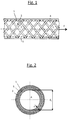
- the Fig. 1 and 2 show a coolant hose 1 according to the invention, which is provided for transporting a liquid coolant F in an (not shown) injection molding machine.
- the tube 1 has a PVC material 20 (s. Fig. 3 ) and a supporting layer 1 surrounding reinforcing layer 2.
- the Tragsch ⁇ cht 1 forms the innermost layer of the hose.
- the reinforcing layer 2 is formed from openly braided threads 3, so that free spaces 4 remain between the threads.
- the inner diameter d i of the support layer defining the free flow cross-section A is 5 to 30 mm, for example 10 to 20 mm.
- the layer thickness s of the support layer is 0.5 to 4 mm, for example 1 to 3 mm.
- the base layer 1 additionally contains a thermoplastic urethane-based elastomer (TPU) 30 (see FIG. Fig. 3 ), which increases both the flexibility and the thermal resistance of the base layer 1. For this reason, no additional plasticizer is added to the base layer 1.
- TPU thermoplastic urethane-based elastomer
- the PVC 20 and the TPU 30 are homogeneously distributed in the support layer.
- the reinforcing layer 2 is surrounded by a polymeric protective layer 5, which also contains a mixture of PVC 20 and TPU 30.
- the mixing ratio of PVC to TPU is 65:35 to 75:25 by weight, in particular 70:30, while in the protective layer 5, this mixing ratio is 45:55 to 55:45, in particular 50:50.
- the TPU 30 is formed both in the base layer 1 and in the protective layer 5 as an aromatic polyether type (TPU-ARET).
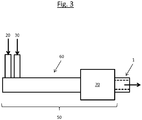
- the Fig. 3 shows a method for producing the in the Fig. 1 and 2
- the base layer 1 is produced by means of an extrusion, wherein the mixing of the materials PVC 20 and TPU 30 takes place only in the context of the extrusion step.
- the extrusion is carried out with a screw extruder 50.
- the shear forces of the extruder screw located in a housing 60 are sufficient to thoroughly mix the two materials 20 and 30 as they pass through the extruder screw, so that they are present in the extruder head 60 as a homogeneous mixture.
- This homogeneous mixture can then be processed in the extruder head 60 to the support layer 1.
- the protective layer 5 can be prepared in an analogous manner to the base layer 1 and applied to the reinforcing layer 2.
Landscapes
- Engineering & Computer Science (AREA)
- Mechanical Engineering (AREA)
- Chemical & Material Sciences (AREA)
- General Engineering & Computer Science (AREA)
- Health & Medical Sciences (AREA)
- Chemical Kinetics & Catalysis (AREA)
- Medicinal Chemistry (AREA)
- Polymers & Plastics (AREA)
- Organic Chemistry (AREA)
- Textile Engineering (AREA)
- Extrusion Moulding Of Plastics Or The Like (AREA)
- Rigid Pipes And Flexible Pipes (AREA)
Abstract
Description
- Die Erfindung betrifft einen Schlauch, insbesondere Kühlmittelschlauch für den Anlagen- und Gerätebau, zum Transport eines Fluides mit
- einer PVC-Material enthaltenden Tragschicht und
- einer die Tragschicht umgebenden Armierungsschicht.
- Derartige Schläuche sind im Stand der Technik weithin bekannt und werden beispielsweise zur Werkzeugkühlung in Maschinen, insbesondere Spritzgussmaschinen eingesetzt. Hierbei werden an die Abriebfestigkeit und auch die Temperaturbeständigkeit des eingesetzten PVC-Materials hohe Anforderungen gestellt, die immer weiter ansteigen. Dies hängt u.a. z.B. bei Spritzugussmaschinen damit zusammen, dass thermisch immer höher belastbare Werkstoffe im Spritzguss verarbeitet werden und damit entsprechend auch die Verarbeitungstemperaturen steigen, wodurch sich wiederum die Temperaturen im Kühlmittelkreislauf erhöhen. Reines PVC ist hierbei auf Werte von ca. 60 °C limitiert. Zudem werden aus ökonomischen Gründen die Taktzeiten stetig kürzer und die Wartungszeiten müssen auf ein Minimum reduziert werden (economic maintenance), um die Ausbringungsmenge und Produktqualität der Spritzlinge auf einem konstant hohen Niveau zu halten. Dadurch müssen auch die im Kühlmittelkreislauf verbauten Schläuche wartungsärmer, d.h. langlebiger und verschleißfester werden. Mit PVC-Material wird es daher immer schwieriger, die geschilderten Anforderungen zu erfüllen. Im Stand der Technik sind thermisch höher belastbare und verschleißfeste Materialien bekannt; diese sind jedoch vergleichsweise teuer.
- Vor dem beschriebenen Hintergrund liegt der Erfindung die Aufgabe zugrunde, einen Schlauch mit den eingangs beschriebenen Merkmalen anzugeben, der thermisch hoch belastbar ist, eine hohe Verschleißfestigkeit aufweist und dabei gleichzeitig kostengünstig herstellbar ist.
- Erfindungsgemäß wird diese Aufgabe dadurch gelöst, dass die Tragschicht neben PVC zusätzlich ein thermoplatisches Elastomer auf Urethanbasis (TPU) enthält, welches sowohl die Flexibilität als auch die thermische Beständigkeit der Tragschicht erhöht. Erfindungsgemäß wurde erkannt, dass durch ein physikalisches Einmischen von TPU in das PVC-Material die thermische und mechanische Belastbarkeit des Blends gegenüber reinem PVC deutlich verbessert werden kann, ohne dass hierdurch die Herstellungskosten zu stark ansteigen. Da es sich bei PVC und TPU um miteinander verträgliche Materialien handelt, können beide Materialien gemeinsam als homogene Schmelze zur Tragschicht verarbeitet, z.B. extrudiert werden. Zweckmäßigerweise bildet die Tragschicht die innerste Schicht des Schlauches.
- Im Rahmen der Erfindung liegt es, dass der Tragschicht kein zusätzlicher Weichmacher (z.B. Phthalate, DINCH, Sojaöl etc.) zugesetzt ist, wie er ansonsten beim Einsatz von reinem PVC-Material zur Gewährleistung der gewünschten Flexibilität praktisch immer erforderlich ist. Es wurde erkannt, dass durch die Zumischung von TPU der erhaltene Blend über eine ausreichende Flexibilität verfügt. Der Zusatz von Weichmachern wird hierdurch jedoch nicht ausgeschlossen. Im Rahmen der Erfindung liegt es hierbei, dass die Tragschicht eine Härte Shore A von 60 bis 85 aufweist.
- Zweckmäßigerweise sind im fertig hergestellten Schlauch PVC und TPU in der Tragschicht homogen verteilt. Die Armierungsschicht kann aus gewickelten und / oder geflochtenen Fäden und / oder Filamenten gebildet sein. Hierdurch wird die Druckbelastbarkeit des Schlauches gegenüber unarmierten Ausführungsformen wesentlich verbessert, so dass beispielsweise Betriebsdrücke zur Führung des Fluides von 10 bar ü problemlos realisiert werden können.
- Gemäß einer bevorzugten Ausführungsform der Erfindung ist die Armierungsschicht von einer polymeren Schutzschicht umgeben, die vorzugsweise ebenfalls eine, insbesondere homogene, Mischung aus PVC und TPU enthält. Auch diese Schutzschicht ist zweckmäigerweise frei von einem zusätzlichen Weichmacher. Die Schutzschicht kann eine Härte Shore A von 60 bis 85 aufweisen.
- Im Rahmen der Erfindung liegt es insbesondere, dass in der Tragschicht und/oder in der Schutzschicht in Gewichtsanteilen das Mischungsverhältnis von PVC zu TPU 40:60 bis 80:20, vorzugsweise 45:55 bis 55:45 oder 65:35 bis 75:25 beträgt. Hierdurch ist es in vorteilhafter Weise möglich, zumindest kurzzeitig den Schlauch mit einer Temperatur von 80 °C zu beaufschlagen, ohne dass dieser hierdurch Schaden nimmt. Zweckmäßigerweise ist das TPU als aromatischer Polyethertyp (TPU-ARET) ausgebildet; alternativ können auch aromatische Polyethercarbonate (TPU-ARCE) oder auch aromatische oder aliphatische Polyester- oder Ether-Ester-Hybrid-TPUs eingesetzt werden.
- Gegenstand der Erfindung ist auch ein Verfahren zur Herstellung eines vorbeschriebenen Schlauches, wobei die Tragschicht und/oder die Schutzschicht mittels einer Extrusion hergestellt wird und wobei die Vermischung der Materialen PVC und TPU erst im Rahmen des Extrusionsschrittes erfolgt. Im Rahmen der Erfindung hat sich herausgestellt, dass die durch die Extrusion hervorgerufenen Scherkräfte im Tragschicht- bzw. Schutzschichtmaterial ausreichen, um eine homogene Mischung von PVC und TPU in den fertig hergestellten Schichten zu gewährleisten. Vorzugsweise wird hierbei die Extrusion mit einem Schneckenextruder durchgeführt. Durch die Schnecke werden die beiden Komponenten so innig miteinander in Kontakt gebracht, dass im Extruderkopf die gewünschte homogene Mischung vorliegt. Die Herstellung eines PVC-TPU-Blends in einem separaten Mischer vor der Extrusionsschritt ist dann nicht mehr erforderlich.
- Wie bereits erläutert, kann der erfindungsgemäße Schlauch insbesondere als Kühlmittelschlauch für Spritzgussmaschinen verwendet werden. Andere Einsatzgebiete, insbesondere als Kühlmittelschlauch im Anlagen- und/oder Gerätebau, werden hierdurch jedoch nicht ausgeschlossen.
- Im Folgenden wird die Erfindung anhand einer lediglich ein Ausführungsbeispiel darstellenden Zeichnung ausführlich erläutert. Es zeigen schematisch:
- Fig. 1
- einen erfindungsgemäßen Schlauch ausschnittsweise in einer Seitenansicht,
- Fig. 2
- den in
Fig. 1 gezeigten Schlauch in einer Querschnittsdarstellung und - Fig. 3
- einen Verfahrensschritt zur Herstellung des in den
Fig. 1 und 2 dargestellten Schlauches. - Die
Fig. 1 und 2 zeigen einen erfindungsgemäßen Kühlmittelschlauch 1, der zum Transport eines flüssigen Kühlmittels F in einer (nicht dargestellten) Spritzgussmaschine vorgesehen ist. Der Schlauch 1 weist eine PVC-Material 20 (s.Fig. 3 ) enthaltende Tragschicht 1 und eine die Tragschicht 1 umgebenden Armierungsschicht 2 auf. Die Tragschícht 1 bildet die innerste Schicht des Schlauches. Die Armierungsschicht 2 ist aus offen geflochtenen Fäden 3 gebildet, so dass zwischen den Fäden Freiräume 4 verbleiben. Der Innendurchmesser di der den freien Strömungsquerschnitt A definierenden Tragschicht beträgt 5 bis 30 mm, zum Beispiel 10 bis 20 mm. Die Schichtdicke s der Tragschicht beträgt 0,5 bis 4 mm, z.B. 1 bis 3 mm. - Die Tragschicht 1 enthält neben dem PVC 20 zusätzlich ein thermoplatisches Elastomer auf Urethanbasis (TPU) 30 (s.
Fig. 3 ), welches sowohl die Flexibilität als auch die thermische Beständigkeit der Tragschicht 1 erhöht. Aus diesem Grund ist der Tragschicht 1 kein zusätzlicher Weichmacher zugesetzt. Das PVC 20 und das TPU 30 sind in der Tragschicht homogen verteilt. Die Armierungsschicht 2 ist von einer polymeren Schutzschicht 5 umgeben, die ebenfalls eine Mischung aus PVC 20 und TPU 30 enthält. In der Tragschicht 1 beträgt in Gewichtsanteilen das Mischungsverhältnis von PVC zu TPU 65:35 bis 75:25, insbesondere 70:30, während in der Schutzschicht 5 dieses Mischungsverhältnis 45:55 bis 55:45, insbesondere 50:50 beträgt. Das TPU 30 ist sowohl in der Tragschicht 1 als auch in der Schutzschicht 5 als aromatischer Polyethertyp (TPU-ARET) ausgebildet. - Die
Fig. 3 zeigt ein Verfahren zur Herstellung der in denFig. 1 und 2 dargestellten Tragschicht 1. Die Tragschicht 1 wird mittels einer Extrusion hergestellt, wobei die Vermischung der Materialen PVC 20 und TPU 30 erst im Rahmen des Extrusionsschrittes erfolgt. Die Extrusion wird mit einem Schneckenextruder 50 durchgeführt. Die Scherkräfte der in einem Gehäuse 60 befindlichen (nicht näher dargestellten) Extruderschnecke reichen aus, um die beiden Materialien 20 und 30 bei deren Durchlauf entlang der Extruderschnecke intensiv zu durchmischen, so dass sie im Extruderkopf 60 als homogene Mischung vorliegen. Diese homogene Mischung kann dann im Extruderkopf 60 zur Tragschicht 1 verarbeitet werden. Nach einer Umflechtung dieser Tragschicht 1 durch die Fäden 3 der Armierungsschicht 2 kann die Schutzschicht 5 in zur Tragschicht 1 analoger Weise hergestellt und auf die Armierungsschicht 2 aufgebracht werden.
Claims (10)
- Schlauch, insbesondere Kühlmittelschlauch für den Anlagen- und Gerätebau, zum Transport eines Fluides (F) mit- einer PVC-Material enthaltenden Tragschicht (1) und- einer die Tragschicht (1) umgebenden Armierungsschicht (2),dadurch gekennzeichnet, dass die Tragschicht (1) neben PVC zusätzlich ein thermoplatisches Elastomer auf Urethanbasis (TPU) enthält, welches sowohl die Flexibilität als auch die thermische Beständigkeit der Tragschicht (1) erhöht.
- Schlauch nach Anspruch 1, dadurch gekennzeichnet, dass die Tragschícht (1) die innerste Schicht des Schlauches bildet.
- Schlauch nach Anspruch 1 oder 2, dadurch gekennzeichnet, dass der Tragschicht (1) kein zusätzlicher Weichmacher zugesetzt ist.
- Schlauch nach einem der Ansprüche 1 bis 3, dadurch gekennzeichnet, dass PVC und TPU in der Tragschicht homogen verteilt sind.
- Schlauch nach einem der Ansprüche 1 bis 4, dadurch gekennzeichnet, dass die Armierungsschicht (2) aus gewickelten und / oder geflochtenen Fäden (3) und / oder Filamenten gebildet ist.
- Schlauch nach einem der Ansprüche 1 bis 5, dadurch gekennzeichnet, dass die Armierungsschicht (2) von einer polymeren Schutzschicht (5) umgeben ist, die vorzugsweise ebenfalls eine Mischung aus PVC und TPU enthält.
- Schlauch nach einem der Ansprüche 1 bis 6, dadurch gekennzeichnet, dass in der Tragschicht (1) und/oder in der Schutzschicht (5) in Gewichtsanteilen das Mischungsverhältnis von PVC zu TPU 40:60 bis 80:20, vorzugsweise 45:55 bis 55:45 oder 65:35 bis 75:25 beträgt.
- Schlauch nach einem der Ansprüche 1 bis 7, dadurch gekennzeichnet, dass das TPU als aromatischer Polyethertyp (TPU-ARET) ausgebildet ist.
- Verfahren zur Herstellung eines Schlauches nach einem der Ansprüche 1 bis 8, wobei die Tragschicht (1) und/oder die Schutzschicht (5) mittels einer Extrusion hergestellt wird und wobei die Vermischung der Materialen PVC und TPU erst im Rahmen des Extrusionsschrittes erfolgt.
- Verfahren nach Anspruch 9, wobei die Extrusion mit einem Schneckenextruder durchgeführt wird.
Applications Claiming Priority (1)
| Application Number | Priority Date | Filing Date | Title |
|---|---|---|---|
| DE102017122206.5A DE102017122206A1 (de) | 2017-09-26 | 2017-09-26 | Schlauch |
Publications (2)
| Publication Number | Publication Date |
|---|---|
| EP3459727A1 true EP3459727A1 (de) | 2019-03-27 |
| EP3459727B1 EP3459727B1 (de) | 2020-04-29 |
Family
ID=63517739
Family Applications (1)
| Application Number | Title | Priority Date | Filing Date |
|---|---|---|---|
| EP18192680.9A Active EP3459727B1 (de) | 2017-09-26 | 2018-09-05 | Schlauch |
Country Status (2)
| Country | Link |
|---|---|
| EP (1) | EP3459727B1 (de) |
| DE (1) | DE102017122206A1 (de) |
Citations (1)
| Publication number | Priority date | Publication date | Assignee | Title |
|---|---|---|---|---|
| CN105437576A (zh) * | 2015-12-08 | 2016-03-30 | 五行科技股份有限公司 | 一种耐温连续复合内衬软管及其制造方法 |
Family Cites Families (3)
| Publication number | Priority date | Publication date | Assignee | Title |
|---|---|---|---|---|
| US8752591B2 (en) * | 2010-06-10 | 2014-06-17 | Veyance Technologies, Inc | Kink, crush, and burst resistant flexible hose |
| DE102015114117A1 (de) * | 2015-08-26 | 2017-03-02 | NORRES Beteiligungs-GmbH | Kunststoffschlauch mit äußerem Verschleißschutz |
| DE102017001316A1 (de) * | 2017-02-11 | 2017-08-17 | Daimler Ag | Leitungselement, insbesondere für ein Fahrzeug |
-
2017
- 2017-09-26 DE DE102017122206.5A patent/DE102017122206A1/de not_active Withdrawn
-
2018
- 2018-09-05 EP EP18192680.9A patent/EP3459727B1/de active Active
Patent Citations (1)
| Publication number | Priority date | Publication date | Assignee | Title |
|---|---|---|---|---|
| CN105437576A (zh) * | 2015-12-08 | 2016-03-30 | 五行科技股份有限公司 | 一种耐温连续复合内衬软管及其制造方法 |
Non-Patent Citations (1)
| Title |
|---|
| DATABASE WPI Week 201632, Derwent World Patents Index; AN 2016-215029, XP002787882 * |
Also Published As
| Publication number | Publication date |
|---|---|
| DE102017122206A1 (de) | 2019-03-28 |
| EP3459727B1 (de) | 2020-04-29 |
Similar Documents
| Publication | Publication Date | Title |
|---|---|---|
| DE2138632C2 (de) | Formkörper aus einem elastomeren Material, sowie Verfahren und Vorrichtung zu seiner Herstellung | |
| EP2518381B1 (de) | Flexibler Schlauch | |
| EP3459727B1 (de) | Schlauch | |
| EP3365573B1 (de) | Gleitlagerbuchse mit integrierter dichtlippe | |
| DE69113303T2 (de) | Rohr aus Polyvinylchlorid zur Innenauskleidung von verlegten Rohren. | |
| EP3521674B1 (de) | Verwendung eines schlauches zum transport eines fluides in form eines kühlmittels im anlagen- und gerätebau | |
| WO2001036175A1 (de) | Extruder zur aufbereitung von kautschukmischungen | |
| EP3153295B1 (de) | Verfahren zur herstellung einer armierten flexiblen schlauchleitung sowie schlauchleitung | |
| DE102014215775A1 (de) | Vorrichtung und Verfahren zur Herstellung von faserverstärkten Bauteilen | |
| DE102006023760B4 (de) | Verfahren zur automatisierten Materialentwicklung | |
| DE102022210592A1 (de) | Anlage zur Herstellung eines extrudierten Silikon-Halbzeuges, Verwendung eines gleichlaufenden Doppelschneckenextruders sowie Verfahren zur Herstellung eines Silikon-Roh-Extrudates | |
| EP3512685B1 (de) | Extruder-vorrichtung | |
| DE102018122797A1 (de) | Vorrichtung zum Formen eines Kunststoffbauteils | |
| DE2505700B2 (de) | Biegsame Schlauchleitung für hydraulische Druckanlagen | |
| DE60308038T2 (de) | Verfahren zur kontinuierlichen herstellung einer kautschuk, kohlenwasserstoffharz und lösungsmittel enthaltenden zusammensetzung | |
| DE102017001316A1 (de) | Leitungselement, insbesondere für ein Fahrzeug | |
| EP1685946B1 (de) | Verfahren zur Herstellung eines Schlauches aus thermoplastischem Polyurethan | |
| DE102010049392A1 (de) | Harstellung hoch gefüllter Kunststoffe | |
| DE2014887C3 (de) | Flexibler Hochdruckschlauch | |
| DE102013220893A1 (de) | Reinigungsmasse für die Thermoplastverarbeitung | |
| DE102013103741A1 (de) | Verfahren zur Herstellung einer armierten Schlauchleitung | |
| DE102014220134A1 (de) | Verfahren zur Herstellung von Faserverbund-Hohlprofilen | |
| DE102015206653A1 (de) | Schaum und Verfahren zur Herstellung eines Bauteils eines Kraftfahrzeugs | |
| DE102021207511A1 (de) | Kunststoffteil und Verfahren zur Herstellung | |
| DE102013105940A1 (de) | Verfahren zur Herstellung eines Faserverbundbauteils |
Legal Events
| Date | Code | Title | Description |
|---|---|---|---|
| PUAI | Public reference made under article 153(3) epc to a published international application that has entered the european phase |
Free format text: ORIGINAL CODE: 0009012 |
|
| STAA | Information on the status of an ep patent application or granted ep patent |
Free format text: STATUS: THE APPLICATION HAS BEEN PUBLISHED |
|
| AK | Designated contracting states |
Kind code of ref document: A1 Designated state(s): AL AT BE BG CH CY CZ DE DK EE ES FI FR GB GR HR HU IE IS IT LI LT LU LV MC MK MT NL NO PL PT RO RS SE SI SK SM TR |
|
| AX | Request for extension of the european patent |
Extension state: BA ME |
|
| STAA | Information on the status of an ep patent application or granted ep patent |
Free format text: STATUS: REQUEST FOR EXAMINATION WAS MADE |
|
| 17P | Request for examination filed |
Effective date: 20190919 |
|
| RBV | Designated contracting states (corrected) |
Designated state(s): AL AT BE BG CH CY CZ DE DK EE ES FI FR GB GR HR HU IE IS IT LI LT LU LV MC MK MT NL NO PL PT RO RS SE SI SK SM TR |
|
| GRAP | Despatch of communication of intention to grant a patent |
Free format text: ORIGINAL CODE: EPIDOSNIGR1 |
|
| STAA | Information on the status of an ep patent application or granted ep patent |
Free format text: STATUS: GRANT OF PATENT IS INTENDED |
|
| RIC1 | Information provided on ipc code assigned before grant |
Ipc: B32B 27/40 20060101ALI20191129BHEP Ipc: F16L 11/08 20060101ALI20191129BHEP Ipc: B32B 1/08 20060101ALI20191129BHEP Ipc: B32B 5/02 20060101AFI20191129BHEP Ipc: C08L 75/04 20060101ALI20191129BHEP Ipc: B32B 27/12 20060101ALI20191129BHEP Ipc: B29D 23/00 20060101ALI20191129BHEP Ipc: C08L 27/06 20060101ALI20191129BHEP Ipc: B32B 27/30 20060101ALI20191129BHEP Ipc: B32B 25/14 20060101ALI20191129BHEP |
|
| INTG | Intention to grant announced |
Effective date: 20200103 |
|
| GRAS | Grant fee paid |
Free format text: ORIGINAL CODE: EPIDOSNIGR3 |
|
| GRAA | (expected) grant |
Free format text: ORIGINAL CODE: 0009210 |
|
| STAA | Information on the status of an ep patent application or granted ep patent |
Free format text: STATUS: THE PATENT HAS BEEN GRANTED |
|
| AK | Designated contracting states |
Kind code of ref document: B1 Designated state(s): AL AT BE BG CH CY CZ DE DK EE ES FI FR GB GR HR HU IE IS IT LI LT LU LV MC MK MT NL NO PL PT RO RS SE SI SK SM TR |
|
| REG | Reference to a national code |
Ref country code: GB Ref legal event code: FG4D Free format text: NOT ENGLISH |
|
| REG | Reference to a national code |
Ref country code: CH Ref legal event code: EP |
|
| REG | Reference to a national code |
Ref country code: AT Ref legal event code: REF Ref document number: 1262672 Country of ref document: AT Kind code of ref document: T Effective date: 20200515 |
|
| REG | Reference to a national code |
Ref country code: DE Ref legal event code: R096 Ref document number: 502018001321 Country of ref document: DE |
|
| REG | Reference to a national code |
Ref country code: IE Ref legal event code: FG4D Free format text: LANGUAGE OF EP DOCUMENT: GERMAN |
|
| REG | Reference to a national code |
Ref country code: NL Ref legal event code: MP Effective date: 20200429 |
|
| REG | Reference to a national code |
Ref country code: LT Ref legal event code: MG4D |
|
| PG25 | Lapsed in a contracting state [announced via postgrant information from national office to epo] |
Ref country code: FI Free format text: LAPSE BECAUSE OF FAILURE TO SUBMIT A TRANSLATION OF THE DESCRIPTION OR TO PAY THE FEE WITHIN THE PRESCRIBED TIME-LIMIT Effective date: 20200429 Ref country code: LT Free format text: LAPSE BECAUSE OF FAILURE TO SUBMIT A TRANSLATION OF THE DESCRIPTION OR TO PAY THE FEE WITHIN THE PRESCRIBED TIME-LIMIT Effective date: 20200429 Ref country code: GR Free format text: LAPSE BECAUSE OF FAILURE TO SUBMIT A TRANSLATION OF THE DESCRIPTION OR TO PAY THE FEE WITHIN THE PRESCRIBED TIME-LIMIT Effective date: 20200730 Ref country code: SE Free format text: LAPSE BECAUSE OF FAILURE TO SUBMIT A TRANSLATION OF THE DESCRIPTION OR TO PAY THE FEE WITHIN THE PRESCRIBED TIME-LIMIT Effective date: 20200429 Ref country code: IS Free format text: LAPSE BECAUSE OF FAILURE TO SUBMIT A TRANSLATION OF THE DESCRIPTION OR TO PAY THE FEE WITHIN THE PRESCRIBED TIME-LIMIT Effective date: 20200829 Ref country code: NO Free format text: LAPSE BECAUSE OF FAILURE TO SUBMIT A TRANSLATION OF THE DESCRIPTION OR TO PAY THE FEE WITHIN THE PRESCRIBED TIME-LIMIT Effective date: 20200729 Ref country code: PT Free format text: LAPSE BECAUSE OF FAILURE TO SUBMIT A TRANSLATION OF THE DESCRIPTION OR TO PAY THE FEE WITHIN THE PRESCRIBED TIME-LIMIT Effective date: 20200831 |
|
| RAP2 | Party data changed (patent owner data changed or rights of a patent transferred) |
Owner name: REHAU AG + CO |
|
| PG25 | Lapsed in a contracting state [announced via postgrant information from national office to epo] |
Ref country code: HR Free format text: LAPSE BECAUSE OF FAILURE TO SUBMIT A TRANSLATION OF THE DESCRIPTION OR TO PAY THE FEE WITHIN THE PRESCRIBED TIME-LIMIT Effective date: 20200429 Ref country code: RS Free format text: LAPSE BECAUSE OF FAILURE TO SUBMIT A TRANSLATION OF THE DESCRIPTION OR TO PAY THE FEE WITHIN THE PRESCRIBED TIME-LIMIT Effective date: 20200429 Ref country code: BG Free format text: LAPSE BECAUSE OF FAILURE TO SUBMIT A TRANSLATION OF THE DESCRIPTION OR TO PAY THE FEE WITHIN THE PRESCRIBED TIME-LIMIT Effective date: 20200729 Ref country code: LV Free format text: LAPSE BECAUSE OF FAILURE TO SUBMIT A TRANSLATION OF THE DESCRIPTION OR TO PAY THE FEE WITHIN THE PRESCRIBED TIME-LIMIT Effective date: 20200429 |
|
| PG25 | Lapsed in a contracting state [announced via postgrant information from national office to epo] |
Ref country code: AL Free format text: LAPSE BECAUSE OF FAILURE TO SUBMIT A TRANSLATION OF THE DESCRIPTION OR TO PAY THE FEE WITHIN THE PRESCRIBED TIME-LIMIT Effective date: 20200429 Ref country code: NL Free format text: LAPSE BECAUSE OF FAILURE TO SUBMIT A TRANSLATION OF THE DESCRIPTION OR TO PAY THE FEE WITHIN THE PRESCRIBED TIME-LIMIT Effective date: 20200429 |
|
| PG25 | Lapsed in a contracting state [announced via postgrant information from national office to epo] |
Ref country code: ES Free format text: LAPSE BECAUSE OF FAILURE TO SUBMIT A TRANSLATION OF THE DESCRIPTION OR TO PAY THE FEE WITHIN THE PRESCRIBED TIME-LIMIT Effective date: 20200429 Ref country code: RO Free format text: LAPSE BECAUSE OF FAILURE TO SUBMIT A TRANSLATION OF THE DESCRIPTION OR TO PAY THE FEE WITHIN THE PRESCRIBED TIME-LIMIT Effective date: 20200429 Ref country code: CZ Free format text: LAPSE BECAUSE OF FAILURE TO SUBMIT A TRANSLATION OF THE DESCRIPTION OR TO PAY THE FEE WITHIN THE PRESCRIBED TIME-LIMIT Effective date: 20200429 Ref country code: SM Free format text: LAPSE BECAUSE OF FAILURE TO SUBMIT A TRANSLATION OF THE DESCRIPTION OR TO PAY THE FEE WITHIN THE PRESCRIBED TIME-LIMIT Effective date: 20200429 Ref country code: EE Free format text: LAPSE BECAUSE OF FAILURE TO SUBMIT A TRANSLATION OF THE DESCRIPTION OR TO PAY THE FEE WITHIN THE PRESCRIBED TIME-LIMIT Effective date: 20200429 Ref country code: DK Free format text: LAPSE BECAUSE OF FAILURE TO SUBMIT A TRANSLATION OF THE DESCRIPTION OR TO PAY THE FEE WITHIN THE PRESCRIBED TIME-LIMIT Effective date: 20200429 |
|
| REG | Reference to a national code |
Ref country code: DE Ref legal event code: R097 Ref document number: 502018001321 Country of ref document: DE |
|
| PG25 | Lapsed in a contracting state [announced via postgrant information from national office to epo] |
Ref country code: SK Free format text: LAPSE BECAUSE OF FAILURE TO SUBMIT A TRANSLATION OF THE DESCRIPTION OR TO PAY THE FEE WITHIN THE PRESCRIBED TIME-LIMIT Effective date: 20200429 Ref country code: PL Free format text: LAPSE BECAUSE OF FAILURE TO SUBMIT A TRANSLATION OF THE DESCRIPTION OR TO PAY THE FEE WITHIN THE PRESCRIBED TIME-LIMIT Effective date: 20200429 |
|
| PLBE | No opposition filed within time limit |
Free format text: ORIGINAL CODE: 0009261 |
|
| STAA | Information on the status of an ep patent application or granted ep patent |
Free format text: STATUS: NO OPPOSITION FILED WITHIN TIME LIMIT |
|
| 26N | No opposition filed |
Effective date: 20210201 |
|
| PG25 | Lapsed in a contracting state [announced via postgrant information from national office to epo] |
Ref country code: SI Free format text: LAPSE BECAUSE OF FAILURE TO SUBMIT A TRANSLATION OF THE DESCRIPTION OR TO PAY THE FEE WITHIN THE PRESCRIBED TIME-LIMIT Effective date: 20200429 |
|
| REG | Reference to a national code |
Ref country code: BE Ref legal event code: MM Effective date: 20200930 |
|
| PG25 | Lapsed in a contracting state [announced via postgrant information from national office to epo] |
Ref country code: LU Free format text: LAPSE BECAUSE OF NON-PAYMENT OF DUE FEES Effective date: 20200905 |
|
| PG25 | Lapsed in a contracting state [announced via postgrant information from national office to epo] |
Ref country code: IE Free format text: LAPSE BECAUSE OF NON-PAYMENT OF DUE FEES Effective date: 20200905 Ref country code: BE Free format text: LAPSE BECAUSE OF NON-PAYMENT OF DUE FEES Effective date: 20200930 |
|
| REG | Reference to a national code |
Ref country code: DE Ref legal event code: R081 Ref document number: 502018001321 Country of ref document: DE Owner name: REHAU INDUSTRIES SE & CO. KG, DE Free format text: FORMER OWNER: REHAU AG + CO, 95111 REHAU, DE |
|
| REG | Reference to a national code |
Ref country code: CH Ref legal event code: PL |
|
| PG25 | Lapsed in a contracting state [announced via postgrant information from national office to epo] |
Ref country code: TR Free format text: LAPSE BECAUSE OF FAILURE TO SUBMIT A TRANSLATION OF THE DESCRIPTION OR TO PAY THE FEE WITHIN THE PRESCRIBED TIME-LIMIT Effective date: 20200429 Ref country code: MT Free format text: LAPSE BECAUSE OF FAILURE TO SUBMIT A TRANSLATION OF THE DESCRIPTION OR TO PAY THE FEE WITHIN THE PRESCRIBED TIME-LIMIT Effective date: 20200429 Ref country code: CY Free format text: LAPSE BECAUSE OF FAILURE TO SUBMIT A TRANSLATION OF THE DESCRIPTION OR TO PAY THE FEE WITHIN THE PRESCRIBED TIME-LIMIT Effective date: 20200429 |
|
| REG | Reference to a national code |
Ref country code: AT Ref legal event code: PC Ref document number: 1262672 Country of ref document: AT Kind code of ref document: T Owner name: REHAU INDUSTRIES SE & CO. KG, DE Effective date: 20220419 |
|
| PG25 | Lapsed in a contracting state [announced via postgrant information from national office to epo] |
Ref country code: MK Free format text: LAPSE BECAUSE OF FAILURE TO SUBMIT A TRANSLATION OF THE DESCRIPTION OR TO PAY THE FEE WITHIN THE PRESCRIBED TIME-LIMIT Effective date: 20200429 Ref country code: MC Free format text: LAPSE BECAUSE OF FAILURE TO SUBMIT A TRANSLATION OF THE DESCRIPTION OR TO PAY THE FEE WITHIN THE PRESCRIBED TIME-LIMIT Effective date: 20200429 |
|
| PG25 | Lapsed in a contracting state [announced via postgrant information from national office to epo] |
Ref country code: LI Free format text: LAPSE BECAUSE OF NON-PAYMENT OF DUE FEES Effective date: 20210930 Ref country code: CH Free format text: LAPSE BECAUSE OF NON-PAYMENT OF DUE FEES Effective date: 20210930 |
|
| PGFP | Annual fee paid to national office [announced via postgrant information from national office to epo] |
Ref country code: FR Payment date: 20220726 Year of fee payment: 5 |
|
| PGFP | Annual fee paid to national office [announced via postgrant information from national office to epo] |
Ref country code: IT Payment date: 20220929 Year of fee payment: 5 |
|
| GBPC | Gb: european patent ceased through non-payment of renewal fee |
Effective date: 20220905 |
|
| PG25 | Lapsed in a contracting state [announced via postgrant information from national office to epo] |
Ref country code: GB Free format text: LAPSE BECAUSE OF NON-PAYMENT OF DUE FEES Effective date: 20220905 |
|
| PG25 | Lapsed in a contracting state [announced via postgrant information from national office to epo] |
Ref country code: FR Free format text: LAPSE BECAUSE OF NON-PAYMENT OF DUE FEES Effective date: 20230930 |
|
| PGFP | Annual fee paid to national office [announced via postgrant information from national office to epo] |
Ref country code: DE Payment date: 20240930 Year of fee payment: 7 |
|
| REG | Reference to a national code |
Ref country code: AT Ref legal event code: MM01 Ref document number: 1262672 Country of ref document: AT Kind code of ref document: T Effective date: 20230905 |
|
| PG25 | Lapsed in a contracting state [announced via postgrant information from national office to epo] |
Ref country code: IT Free format text: LAPSE BECAUSE OF NON-PAYMENT OF DUE FEES Effective date: 20230905 |
|
| PG25 | Lapsed in a contracting state [announced via postgrant information from national office to epo] |
Ref country code: IT Free format text: LAPSE BECAUSE OF NON-PAYMENT OF DUE FEES Effective date: 20230905 |
|
| PG25 | Lapsed in a contracting state [announced via postgrant information from national office to epo] |
Ref country code: AT Free format text: LAPSE BECAUSE OF NON-PAYMENT OF DUE FEES Effective date: 20230905 |
|
| PG25 | Lapsed in a contracting state [announced via postgrant information from national office to epo] |
Ref country code: AT Free format text: LAPSE BECAUSE OF NON-PAYMENT OF DUE FEES Effective date: 20230905 |
|
| REG | Reference to a national code |
Ref country code: DE Ref legal event code: R119 Ref document number: 502018001321 Country of ref document: DE |
|
| PGFP | Annual fee paid to national office [announced via postgrant information from national office to epo] |
Ref country code: AT Payment date: 20260410 Year of fee payment: 5 |
|
| PG25 | Lapsed in a contracting state [announced via postgrant information from national office to epo] |
Ref country code: DE Free format text: LAPSE BECAUSE OF NON-PAYMENT OF DUE FEES Effective date: 20260401 |