EP3456692B1 - Method for producing ltp or latp crystal particle - Google Patents
Method for producing ltp or latp crystal particle Download PDFInfo
- Publication number
- EP3456692B1 EP3456692B1 EP16901581.5A EP16901581A EP3456692B1 EP 3456692 B1 EP3456692 B1 EP 3456692B1 EP 16901581 A EP16901581 A EP 16901581A EP 3456692 B1 EP3456692 B1 EP 3456692B1
- Authority
- EP
- European Patent Office
- Prior art keywords
- latp
- glass
- latp crystal
- ltp
- zno
- Prior art date
- Legal status (The legal status is an assumption and is not a legal conclusion. Google has not performed a legal analysis and makes no representation as to the accuracy of the status listed.)
- Active
Links
Images






Classifications
-
- C—CHEMISTRY; METALLURGY
- C01—INORGANIC CHEMISTRY
- C01B—NON-METALLIC ELEMENTS; COMPOUNDS THEREOF; METALLOIDS OR COMPOUNDS THEREOF NOT COVERED BY SUBCLASS C01C
- C01B25/00—Phosphorus; Compounds thereof
- C01B25/16—Oxyacids of phosphorus; Salts thereof
- C01B25/26—Phosphates
- C01B25/45—Phosphates containing plural metal, or metal and ammonium
-
- C—CHEMISTRY; METALLURGY
- C03—GLASS; MINERAL OR SLAG WOOL
- C03C—CHEMICAL COMPOSITION OF GLASSES, GLAZES OR VITREOUS ENAMELS; SURFACE TREATMENT OF GLASS; SURFACE TREATMENT OF FIBRES OR FILAMENTS MADE FROM GLASS, MINERALS OR SLAGS; JOINING GLASS TO GLASS OR OTHER MATERIALS
- C03C3/00—Glass compositions
- C03C3/12—Silica-free oxide glass compositions
- C03C3/16—Silica-free oxide glass compositions containing phosphorus
- C03C3/17—Silica-free oxide glass compositions containing phosphorus containing aluminium or beryllium
-
- C—CHEMISTRY; METALLURGY
- C03—GLASS; MINERAL OR SLAG WOOL
- C03B—MANUFACTURE, SHAPING, OR SUPPLEMENTARY PROCESSES
- C03B32/00—Thermal after-treatment of glass products not provided for in groups C03B19/00, C03B25/00 - C03B31/00 or C03B37/00, e.g. crystallisation, eliminating gas inclusions or other impurities; Hot-pressing vitrified, non-porous, shaped glass products
- C03B32/02—Thermal crystallisation, e.g. for crystallising glass bodies into glass-ceramic articles
-
- C—CHEMISTRY; METALLURGY
- C03—GLASS; MINERAL OR SLAG WOOL
- C03C—CHEMICAL COMPOSITION OF GLASSES, GLAZES OR VITREOUS ENAMELS; SURFACE TREATMENT OF GLASS; SURFACE TREATMENT OF FIBRES OR FILAMENTS MADE FROM GLASS, MINERALS OR SLAGS; JOINING GLASS TO GLASS OR OTHER MATERIALS
- C03C10/00—Devitrified glass ceramics, i.e. glass ceramics having a crystalline phase dispersed in a glassy phase and constituting at least 50% by weight of the total composition
-
- C—CHEMISTRY; METALLURGY
- C03—GLASS; MINERAL OR SLAG WOOL
- C03C—CHEMICAL COMPOSITION OF GLASSES, GLAZES OR VITREOUS ENAMELS; SURFACE TREATMENT OF GLASS; SURFACE TREATMENT OF FIBRES OR FILAMENTS MADE FROM GLASS, MINERALS OR SLAGS; JOINING GLASS TO GLASS OR OTHER MATERIALS
- C03C15/00—Surface treatment of glass, not in the form of fibres or filaments, by etching
-
- C—CHEMISTRY; METALLURGY
- C03—GLASS; MINERAL OR SLAG WOOL
- C03C—CHEMICAL COMPOSITION OF GLASSES, GLAZES OR VITREOUS ENAMELS; SURFACE TREATMENT OF GLASS; SURFACE TREATMENT OF FIBRES OR FILAMENTS MADE FROM GLASS, MINERALS OR SLAGS; JOINING GLASS TO GLASS OR OTHER MATERIALS
- C03C23/00—Other surface treatment of glass not in the form of fibres or filaments
- C03C23/007—Other surface treatment of glass not in the form of fibres or filaments by thermal treatment
-
- C—CHEMISTRY; METALLURGY
- C03—GLASS; MINERAL OR SLAG WOOL
- C03C—CHEMICAL COMPOSITION OF GLASSES, GLAZES OR VITREOUS ENAMELS; SURFACE TREATMENT OF GLASS; SURFACE TREATMENT OF FIBRES OR FILAMENTS MADE FROM GLASS, MINERALS OR SLAGS; JOINING GLASS TO GLASS OR OTHER MATERIALS
- C03C23/00—Other surface treatment of glass not in the form of fibres or filaments
- C03C23/008—Other surface treatment of glass not in the form of fibres or filaments comprising a lixiviation step
-
- C—CHEMISTRY; METALLURGY
- C03—GLASS; MINERAL OR SLAG WOOL
- C03C—CHEMICAL COMPOSITION OF GLASSES, GLAZES OR VITREOUS ENAMELS; SURFACE TREATMENT OF GLASS; SURFACE TREATMENT OF FIBRES OR FILAMENTS MADE FROM GLASS, MINERALS OR SLAGS; JOINING GLASS TO GLASS OR OTHER MATERIALS
- C03C3/00—Glass compositions
- C03C3/12—Silica-free oxide glass compositions
- C03C3/16—Silica-free oxide glass compositions containing phosphorus
- C03C3/21—Silica-free oxide glass compositions containing phosphorus containing titanium, zirconium, vanadium, tungsten or molybdenum
-
- C—CHEMISTRY; METALLURGY
- C03—GLASS; MINERAL OR SLAG WOOL
- C03C—CHEMICAL COMPOSITION OF GLASSES, GLAZES OR VITREOUS ENAMELS; SURFACE TREATMENT OF GLASS; SURFACE TREATMENT OF FIBRES OR FILAMENTS MADE FROM GLASS, MINERALS OR SLAGS; JOINING GLASS TO GLASS OR OTHER MATERIALS
- C03C4/00—Compositions for glass with special properties
- C03C4/14—Compositions for glass with special properties for electro-conductive glass
-
- H—ELECTRICITY
- H01—ELECTRIC ELEMENTS
- H01M—PROCESSES OR MEANS, e.g. BATTERIES, FOR THE DIRECT CONVERSION OF CHEMICAL ENERGY INTO ELECTRICAL ENERGY
- H01M10/00—Secondary cells; Manufacture thereof
- H01M10/05—Accumulators with non-aqueous electrolyte
- H01M10/052—Li-accumulators
-
- H—ELECTRICITY
- H01—ELECTRIC ELEMENTS
- H01M—PROCESSES OR MEANS, e.g. BATTERIES, FOR THE DIRECT CONVERSION OF CHEMICAL ENERGY INTO ELECTRICAL ENERGY
- H01M10/00—Secondary cells; Manufacture thereof
- H01M10/05—Accumulators with non-aqueous electrolyte
- H01M10/056—Accumulators with non-aqueous electrolyte characterised by the materials used as electrolytes, e.g. mixed inorganic/organic electrolytes
- H01M10/0561—Accumulators with non-aqueous electrolyte characterised by the materials used as electrolytes, e.g. mixed inorganic/organic electrolytes the electrolyte being constituted of inorganic materials only
- H01M10/0562—Solid materials
-
- C—CHEMISTRY; METALLURGY
- C03—GLASS; MINERAL OR SLAG WOOL
- C03C—CHEMICAL COMPOSITION OF GLASSES, GLAZES OR VITREOUS ENAMELS; SURFACE TREATMENT OF GLASS; SURFACE TREATMENT OF FIBRES OR FILAMENTS MADE FROM GLASS, MINERALS OR SLAGS; JOINING GLASS TO GLASS OR OTHER MATERIALS
- C03C2204/00—Glasses, glazes or enamels with special properties
-
- H—ELECTRICITY
- H01—ELECTRIC ELEMENTS
- H01M—PROCESSES OR MEANS, e.g. BATTERIES, FOR THE DIRECT CONVERSION OF CHEMICAL ENERGY INTO ELECTRICAL ENERGY
- H01M2300/00—Electrolytes
- H01M2300/0017—Non-aqueous electrolytes
- H01M2300/0065—Solid electrolytes
- H01M2300/0068—Solid electrolytes inorganic
-
- Y—GENERAL TAGGING OF NEW TECHNOLOGICAL DEVELOPMENTS; GENERAL TAGGING OF CROSS-SECTIONAL TECHNOLOGIES SPANNING OVER SEVERAL SECTIONS OF THE IPC; TECHNICAL SUBJECTS COVERED BY FORMER USPC CROSS-REFERENCE ART COLLECTIONS [XRACs] AND DIGESTS
- Y02—TECHNOLOGIES OR APPLICATIONS FOR MITIGATION OR ADAPTATION AGAINST CLIMATE CHANGE
- Y02E—REDUCTION OF GREENHOUSE GAS [GHG] EMISSIONS, RELATED TO ENERGY GENERATION, TRANSMISSION OR DISTRIBUTION
- Y02E60/00—Enabling technologies; Technologies with a potential or indirect contribution to GHG emissions mitigation
- Y02E60/10—Energy storage using batteries
Definitions
- the present disclosure relates to a method of producing a LTP or LATP crystal particle that has reduced impurity contamination, high crystallinity, and excellent dispersibility.
- a lithium-based composite oxide crystal with a nasicon-type crystal structure shows promise as a solid electrolyte material of a lithium ion battery due to its chemical stability and high lithium ion conductivity at room temperature. To achieve high battery performance, impurity reduction, high crystallization, and microparticulation are required for the solid electrolyte material.
- the solid-phase method, sol-gel method, and vitrification method are generally used as a method of producing the LTP or LATP crystal, and any of these methods involves milling for microparticulation. Milling might pose problems, such as impurity contamination and strain occurring in the crystal structure, which might be a cause of a decrease in lithium ion conductivity. Furthermore, since a high-level milling technique is required for sharpening particle size distribution, a microparticulation technique which does not involve milling is sought for.
- the porous body of the LTP or LATP crystals produced by the production method described in Patent Literature 1 contains a large amount of Ca as an impurity, has low crystallinity, and moreover, requires milling to obtain crystal particles with excellent dispersibility.
- the present disclosure has been conceived in view of the above respect, and the present disclosure is to provide a method of producing a LTP or LATP crystal particle that has reduced impurity contamination, high crystallinity, and excellent dispersibility.
- the present inventors have conducted earnest studies on the above problem and found that a LTP or LATP crystal particle that has reduced impurity contamination, high crystallinity, and excellent dispersibility is obtained without the need for milling, by forming glass containing, in molar ratio, 1 + x of Li 2 O, x of Al 2 O 3 , 4 - 2x of TiO 2 (0 ⁇ x ⁇ 1), 3 + y of P 2 O 5 , and from more than y to less than 3y of ZnO (1 ⁇ y ⁇ 4), and, after that, by subjecting the glass to thermal treatment for crystallization, and by selectively eluting a substance other than a LTP or LATP crystal through acid treatment.
- the present inventors have completed the present disclosure.
- the present disclosure makes it possible to produce a LTP or LATP crystal particle that has reduced impurity contamination, high crystallinity, and excellent dispersibility.
- the method of producing a LTP or LATP crystal particle according to the present embodiment uses respective materials, such as oxide, hydroxide, carbonate, nitrate, and phosphate, that, when vitrified, correspond to components given as Li 2 O, Al 2 O 3 , TiO 2 , P 2 O 5 , and ZnO.
- Li 2 O is a component that constitutes a LTP or LATP crystal, and the molar ratio of Li 2 O, when vitrified, is 1 + x. Due to the relation with Al 2 O 3 and TiO 2 , x ranges from 0 to 1 inclusive. When x is more than 1, the LATP crystal structure may collapse. Preferably, x is 0.8 or less. More preferably, x is 0.6 or less.
- materials of the Li 2 O component phosphate, such as LiPO 3 , and carbonate, such as Li 2 CO 3 , are used, for example.
- Al 2 O 3 is a component that constitutes a LATP crystal, and the molar ratio of Al 2 O 3 , when vitrified, is x.
- materials of the Al 2 O 3 component phosphate, such as Al(PO 3 ) 3 , and hydroxide, such as Al(OH) 3 , are used, for example.
- TiO 2 is a component that constitutes a LTP or LATP crystal, and the molar ratio of TiO 2 , when vitrified, is 4 - 2x.
- materials of the TiO 2 component phosphate, such as TiP 2 O 7 , and oxide, such as TiO 2 , are used, for example.
- P 2 O 5 is a component that constitutes a LTP or LATP crystal and that also constitutes zinc pyrophosphate, which is precipitated during thermal treatment performed after vitrification.
- the molar ratio of P 2 O 5 , when vitrified, is 3 + y. Due to the relation with Li 2 O, Al 2 O 3 , and TiO 2 , y ranges from 1 to 4 inclusive. When y is less than 1, vitrification is difficult. When y is more than 4, glass loses stability, and precipitation of a crystal through thermal treatment, performed after vitrification, is difficult. Preferably, y ranges from 1.5 to 3.5 inclusive. More preferably, y ranges from 2 to 3 inclusive.
- the aforementioned phosphate, acid, such as H 3 PO 4 , and oxide, such as P 2 O 5 are used, for example.
- ZnO is a component that constitutes zinc pyrophosphate, which is precipitated during thermal treatment performed after vitrification, and the molar ratio of ZnO, when vitrified, ranges from more than y to less than 3y.
- a titanium pyrophosphate crystal which is not eluted by acid, may be precipitated during thermal treatment performed after vitrification.
- the molar ratio of ZnO is 3y or more, although a zinc phosphate crystal and a zinc pyrophosphate crystal, which may be eluted by acid, are precipitated during thermal treatment performed after vitrification, Zn may be partially introduced into a LTP or LATP crystal and remain as an impurity.
- the molar ratio of ZnO ranges from more than y to 2y or less.
- a sub-phase other than a zinc pyrophosphate crystal is reduced at the stage of crystallized glass, and impurities are less likely to remain in a LTP or LATP crystal particle.
- phosphate such as Zn(PO 3 ) 2
- oxide such as ZnO
- oxide, hydroxide, carbonate, nitrate, phosphate, or the like which are the materials corresponding to the components, are weighed according to predetermined percentages and mixed fully. Subsequently, the mixed materials are introduced into, for example, a platinum crucible that is not reactive the glass materials and others, are stirred timely while melt by heating the materials to from 1200 to 1500 °C in an electric furnace, and after that, are clarified and homogenized in the electric furnace. Then, the melt is poured into a tank filled with sufficient water and granulated and rapidly cooled. Thus, glass is prepared.
- the prepared glass is subject to thermal treatment in two steps each conducted for from 10 to 30 hours, with first step at from 400 to 600 °C and the second step at from 700 to 900 °C.
- the thermal treatment is conducted to obtain crystallized glass inside which a LTP or LATP crystal particle and mainly a zinc pyrophosphate crystal as an eluted phase are precipitated, and after acid treatment which is described below, a LTP or LATP crystal particle having a diameter of from 0.1 to 10 ⁇ m is obtained.
- the obtained crystallized glass is subject to acid treatment by immersing the crystallized glass in 1 to 5N nitric acid or 1 to 5N hydrochloric acid at from 30 to 90 °C for 3 to 24 hours. During the immersion, stirring with a stirrer or the like is preferably conducted.
- an eluted phase, other than a LTP or LATP crystal, that is mainly composed of a zinc pyrophosphate crystal is eluted.
- a LTP or LATP crystal is separated from an acid solution with use of a filter paper or the like, and thus, a LTP or LATP crystal particle having a diameter of from 0.1 to 10 ⁇ m is obtained.
- a LTP or LATP crystal particle of the present embodiment configured as above, since mainly the zinc pyrophosphate crystal is precipitated as the eluted phase at the time of vitrification, solubility of the eluted phase with respect to acid is higher than before, and this prevents residual components to be eluted in the acid treatment. Accordingly, impurity contamination is reduced, and manufacturing of a LTP or LATP crystal particle having high crystallinity and excellent dispersibility is allowed.
- the crystallized glass was subject to acid treatment by immersing the crystallized glass in 5N nitric acid at 60 °C for 12 hours, and subsequently, filtering was conducted to obtain a porous body.
- the obtained porous body was milled in a ball mill for 12 hours, and LATP crystal particles of Comparative Example 1 were obtained.
- FIGs. 1 to 3 and FIGs. 4 to 6 respectively illustrate the X-ray diffraction spectra of Examples 1 to 3 and Comparative Examples 1 to 3.
- FIGs. 1 and 2 it has been found that LATP crystals and zinc pyrophosphate crystals are precipitated in Examples 1 and 2.
- FIG. 3 it has been found that LATP crystals, zinc pyrophosphate crystals, and partially, sub-phases are precipitated in Example 3.
- FIG. 1 and 2 it has been found that LATP crystals, zinc pyrophosphate crystals, and partially, sub-phases are precipitated in Example 3.
- FIGs. 7 to 9 and FIGs. 10 to 12 respectively illustrate the X-ray diffraction spectra of Examples 1 to 3 and Comparative Examples 1 to 3.
- FIGs. 7 to 9 it has been found that the LATP crystal particles of Examples 1 to 3 are single-phase LATP crystals.
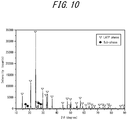
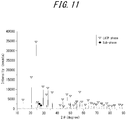
- FIGs. 10 and 11 it has been found that sub-phase peaks are observed in the LATP crystal particles of Comparative Examples 1 and 2 and that these LATP crystal particles are not single-phase LATP crystals.
- FIG. 12 it has been found that a titanium pyrophosphate peak and a sub-phase peak are observed in the LATP crystal particles of Comparative Example 3 and that these LATP crystal particles are not single-phase LATP crystals.
- FIGs. 13 to 15 and FIGs. 16 to 18 respectively illustrate the backscattered electron images of Examples 1 to 3 and Comparative Examples 1 to 3.
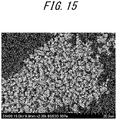
- the LATP crystal particles of Examples 1 to 3 have a quadrangular prism-like shape having high crystallinity, with no agglomeration observed.
- the LATP crystal particles of Comparative Example 1 have a shape having no sharp edges and having low crystallinity, with partial agglomeration observed.
- the LATP crystal particles of Comparative Example 2 are observed to have a shape having no sharp edges and having low crystallinity.
- the LATP crystal particles of Comparative Example 3 are generally observed to have a shape having no sharp edges and having low crystallinity, although partially observed to have a shape having high crystallinity.
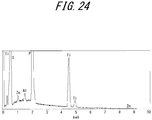
- FIGs. 19 to 21 and FIGs. 22 to 24 respectively illustrate the EDS spectra of Examples 1 to 3 and Comparative Examples 1 to 3.
- FIGs. 19 to 21 in the LATP crystal particles of Examples 1 to 3, an element other than the elements constituting the LATP crystals is not detected.
- FIG. 22 in the LATP crystal particles of Comparative Example 1, in addition to the elements constituting the LATP crystals, Ca is detected.
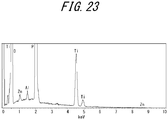
- FIGs. 23 and 24 in the LATP crystal particles of Comparative Examples 2 and 3, in addition to the elements constituting the LATP crystals, Zn is detected.
Landscapes
- Chemical & Material Sciences (AREA)
- Engineering & Computer Science (AREA)
- General Chemical & Material Sciences (AREA)
- Chemical Kinetics & Catalysis (AREA)
- Organic Chemistry (AREA)
- Materials Engineering (AREA)
- Geochemistry & Mineralogy (AREA)
- Life Sciences & Earth Sciences (AREA)
- Physics & Mathematics (AREA)
- Manufacturing & Machinery (AREA)
- Electrochemistry (AREA)
- Crystallography & Structural Chemistry (AREA)
- Ceramic Engineering (AREA)
- Inorganic Chemistry (AREA)
- Thermal Sciences (AREA)
- Dispersion Chemistry (AREA)
- Condensed Matter Physics & Semiconductors (AREA)
- General Physics & Mathematics (AREA)
- Glass Compositions (AREA)
Description
- The present disclosure relates to a method of producing a LTP or LATP crystal particle that has reduced impurity contamination, high crystallinity, and excellent dispersibility.
- A lithium-based composite oxide crystal with a nasicon-type crystal structure shows promise as a solid electrolyte material of a lithium ion battery due to its chemical stability and high lithium ion conductivity at room temperature. To achieve high battery performance, impurity reduction, high crystallization, and microparticulation are required for the solid electrolyte material.
- In this regard, a lithium-based composite oxide crystal represented by Formula (I)

- At present, the solid-phase method, sol-gel method, and vitrification method are generally used as a method of producing the LTP or LATP crystal, and any of these methods involves milling for microparticulation. Milling might pose problems, such as impurity contamination and strain occurring in the crystal structure, which might be a cause of a decrease in lithium ion conductivity. Furthermore, since a high-level milling technique is required for sharpening particle size distribution, a microparticulation technique which does not involve milling is sought for.
- Therefore, there has been proposed a method of producing a porous body of LTP or LATP crystals, the method including vitrification of a plurality of oxides, as materials of the LTP or LATP crystals, together with Ca3(PO4)2, followed by thermal treatment and acid treatment of glass resulting from the vitrification (refer to Patent Literature 1).
- PTL 1: Japanese Patent No.
2656415 - However, the porous body of the LTP or LATP crystals produced by the production method described in
Patent Literature 1 contains a large amount of Ca as an impurity, has low crystallinity, and moreover, requires milling to obtain crystal particles with excellent dispersibility. - The present disclosure has been conceived in view of the above respect, and the present disclosure is to provide a method of producing a LTP or LATP crystal particle that has reduced impurity contamination, high crystallinity, and excellent dispersibility.
- The present inventors have conducted earnest studies on the above problem and found that a LTP or LATP crystal particle that has reduced impurity contamination, high crystallinity, and excellent dispersibility is obtained without the need for milling, by forming glass containing, in molar ratio, 1 + x of Li2O, x of Al2O3, 4 - 2x of TiO2 (0 ≤ x ≤ 1), 3 + y of P2O5, and from more than y to less than 3y of ZnO (1 ≤ y ≤ 4), and, after that, by subjecting the glass to thermal treatment for crystallization, and by selectively eluting a substance other than a LTP or LATP crystal through acid treatment. Thus, the present inventors have completed the present disclosure.
- That is to say, some of modes for solving the above problem are as follows.
- 1. A method of producing a LTP or LATP crystal particle, the method including:
- preparing glass containing,
- in molar ratio,
- 1 + x of Li2O, where 0 ≤ x ≤ 1,
- x of Al2O3,
- 4 - 2x of TiO2,
- 3 + y of P2O5, where 1 ≤ y ≤ 4, and
- from more than y to less than 3y of ZnO;
- subjecting, after the preparation of glass, the glass to thermal treatment for crystallization; and
- selectively eluting a substance other than a LTP or LATP crystal through acid treatment.
- 2. The method of producing according to 1, wherein
the molar ratio of ZnO, in materials of the glass, ranges from more than y to 2y or less. - The present disclosure makes it possible to produce a LTP or LATP crystal particle that has reduced impurity contamination, high crystallinity, and excellent dispersibility.
- In the accompanying drawings:
-
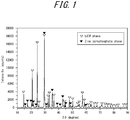
FIG. 1 illustrates an X-ray diffraction pattern of crystallized glass in a process of preparing a LATP crystal particle of Example 1; -
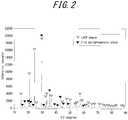
FIG. 2 illustrates an X-ray diffraction pattern of crystallized glass in a process of preparing a LATP crystal particle of Example 2; -
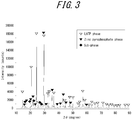
FIG. 3 illustrates an X-ray diffraction pattern of crystallized glass in a process of preparing a LATP crystal particle of Example 3; -
FIG. 4 illustrates an X-ray diffraction pattern of crystallized glass in a process of preparing a LATP crystal particle of Comparative Example 1; -
FIG. 5 illustrates an X-ray diffraction pattern of crystallized glass in a process of preparing a LATP crystal particle of Comparative Example 2; -
FIG. 6 illustrates an X-ray diffraction pattern of crystallized glass in a process of preparing a LATP crystal particle of Comparative Example 3; -
FIG. 7 illustrates an X-ray diffraction pattern of a LATP crystal particle of Example 1; -
FIG. 8 illustrates an X-ray diffraction pattern of a LATP crystal particle of Example 2; -
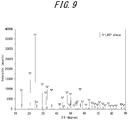
FIG. 9 illustrates an X-ray diffraction pattern of a LATP crystal particle of Example 3; -
FIG. 10 illustrates an X-ray diffraction pattern of a LATP crystal particle of Comparative Example 1; -
FIG. 11 illustrates an X-ray diffraction pattern of a LATP crystal particle of Comparative Example 2; -
FIG. 12 illustrates an X-ray diffraction pattern of a LATP crystal particle of Comparative Example 3; -
FIG. 13 illustrates a backscattered electron image of a LATP crystal particle of Example 1; -
FIG. 14 illustrates a backscattered electron image of a LATP crystal particle of Example 2; -
FIG. 15 illustrates a backscattered electron image of a LATP crystal particle of Example 3; -
FIG. 16 illustrates a backscattered electron image of a LATP crystal particle of Comparative Example 1; -
FIG. 17 illustrates a backscattered electron image of a LATP crystal particle of Comparative Example 2; -
FIG. 18 illustrates a backscattered electron image of a LATP crystal particle of Comparative Example 3; -
FIG. 19 illustrates an EDS spectrum of a LATP crystal particle of Example 1; -
FIG. 20 illustrates an EDS spectrum of a LATP crystal particle of Example 2; -
FIG. 21 illustrates an EDS spectrum of a LATP crystal particle of Example 3; -
FIG. 22 illustrates an EDS spectrum of a LATP crystal particle of Comparative Example 1; -
FIG. 23 illustrates an EDS spectrum of a LATP crystal particle of Comparative Example 2; and -
FIG. 24 illustrates an EDS spectrum of a LATP crystal particle of Comparative Example 3. - A description is given in detail below of a method of producing a LTP or LATP crystal particle according to one of embodiments of the present disclosure.
- The method of producing a LTP or LATP crystal particle according to the present embodiment uses respective materials, such as oxide, hydroxide, carbonate, nitrate, and phosphate, that, when vitrified, correspond to components given as Li2O, Al2O3, TiO2, P2O5, and ZnO.
- Li2O is a component that constitutes a LTP or LATP crystal, and the molar ratio of Li2O, when vitrified, is 1 + x. Due to the relation with Al2O3 and TiO2, x ranges from 0 to 1 inclusive. When x is more than 1, the LATP crystal structure may collapse. Preferably, x is 0.8 or less. More preferably, x is 0.6 or less. As materials of the Li2O component, phosphate, such as LiPO3, and carbonate, such as Li2CO3, are used, for example.
- Al2O3 is a component that constitutes a LATP crystal, and the molar ratio of Al2O3, when vitrified, is x. As materials of the Al2O3 component, phosphate, such as Al(PO3)3, and hydroxide, such as Al(OH)3, are used, for example.
- TiO2 is a component that constitutes a LTP or LATP crystal, and the molar ratio of TiO2, when vitrified, is 4 - 2x. As materials of the TiO2 component, phosphate, such as TiP2O7, and oxide, such as TiO2, are used, for example.
- P2O5 is a component that constitutes a LTP or LATP crystal and that also constitutes zinc pyrophosphate, which is precipitated during thermal treatment performed after vitrification. The molar ratio of P2O5, when vitrified, is 3 + y. Due to the relation with Li2O, Al2O3, and TiO2, y ranges from 1 to 4 inclusive. When y is less than 1, vitrification is difficult. When y is more than 4, glass loses stability, and precipitation of a crystal through thermal treatment, performed after vitrification, is difficult. Preferably, y ranges from 1.5 to 3.5 inclusive. More preferably, y ranges from 2 to 3 inclusive. As materials of the P2O5 component, the aforementioned phosphate, acid, such as H3PO4, and oxide, such as P2O5, are used, for example.
- ZnO is a component that constitutes zinc pyrophosphate, which is precipitated during thermal treatment performed after vitrification, and the molar ratio of ZnO, when vitrified, ranges from more than y to less than 3y. When the molar ratio of ZnO is y or less, in addition to a LTP or LATP crystal, a titanium pyrophosphate crystal, which is not eluted by acid, may be precipitated during thermal treatment performed after vitrification. When the molar ratio of ZnO is 3y or more, although a zinc phosphate crystal and a zinc pyrophosphate crystal, which may be eluted by acid, are precipitated during thermal treatment performed after vitrification, Zn may be partially introduced into a LTP or LATP crystal and remain as an impurity. Preferably, the molar ratio of ZnO ranges from more than y to 2y or less. By setting the molar ratio of ZnO to be 2y or less, a sub-phase other than a zinc pyrophosphate crystal is reduced at the stage of crystallized glass, and impurities are less likely to remain in a LTP or LATP crystal particle. As materials of the ZnO component, phosphate, such as Zn(PO3)2, and oxide, such as ZnO, are used, for example.
- As glass materials, oxide, hydroxide, carbonate, nitrate, phosphate, or the like, which are the materials corresponding to the components, are weighed according to predetermined percentages and mixed fully. Subsequently, the mixed materials are introduced into, for example, a platinum crucible that is not reactive the glass materials and others, are stirred timely while melt by heating the materials to from 1200 to 1500 °C in an electric furnace, and after that, are clarified and homogenized in the electric furnace. Then, the melt is poured into a tank filled with sufficient water and granulated and rapidly cooled. Thus, glass is prepared.
- Subsequently, the prepared glass is subject to thermal treatment in two steps each conducted for from 10 to 30 hours, with first step at from 400 to 600 °C and the second step at from 700 to 900 °C. The thermal treatment is conducted to obtain crystallized glass inside which a LTP or LATP crystal particle and mainly a zinc pyrophosphate crystal as an eluted phase are precipitated, and after acid treatment which is described below, a LTP or LATP crystal particle having a diameter of from 0.1 to 10 µm is obtained.
- Furthermore, the obtained crystallized glass is subject to acid treatment by immersing the crystallized glass in 1 to 5N nitric acid or 1 to 5N hydrochloric acid at from 30 to 90 °C for 3 to 24 hours. During the immersion, stirring with a stirrer or the like is preferably conducted. By the acid treatment, an eluted phase, other than a LTP or LATP crystal, that is mainly composed of a zinc pyrophosphate crystal is eluted. After the acid treatment, a LTP or LATP crystal is separated from an acid solution with use of a filter paper or the like, and thus, a LTP or LATP crystal particle having a diameter of from 0.1 to 10 µm is obtained.
- According to the method of manufacturing a LTP or LATP crystal particle of the present embodiment configured as above, since mainly the zinc pyrophosphate crystal is precipitated as the eluted phase at the time of vitrification, solubility of the eluted phase with respect to acid is higher than before, and this prevents residual components to be eluted in the acid treatment. Accordingly, impurity contamination is reduced, and manufacturing of a LTP or LATP crystal particle having high crystallinity and excellent dispersibility is allowed.
- Furthermore, according to the method of manufacturing a LTP or LATP crystal particle of the present embodiment, when the molar ratio of ZnO in the glass materials ranges from more than y to 2y or less, impurities are even less likely to remain in a LTP or LATP crystal particle.
- A description is given below of a method of manufacturing a LTP or LATP crystal particle according to the present disclosure with reference to Examples and Comparative Examples. However, the present disclosure is not limited to these Examples.
- By using LiPO3, Al(PO3)3, Zn(PO3)2, TiO2, and ZnO as materials, glass composed, in molar ratio, of 1.2 of Li2O, 0.2 of Al2O3, 3.6 of TiO2, 6 of P2O5, and 6 of ZnO was prepared. That is to say, glass according to the above embodiment in which x = 0.2, y = 3, and ZnO was 2y in molar ratio was prepared. Subsequently, the prepared glass was subject to thermal treatment in two steps, the first step at 520 °C for 20 hours and the second step at 850 °C for 20 hours, and thus, crystallized glass was obtained. The crystallized glass was subject to acid treatment by immersing the crystallized glass in 5N nitric acid at 60 °C for 12 hours, and subsequently, particles were collected by filtering to obtain LATP crystal particles of Example 1.
- By using LiPO3, Al(PO3)3, Zn(PO3)2, TiO2, and ZnO as materials, glass composed, in molar ratio, of 1.3 of Li2O, 0.3 of Al2O3, 3.4 of TiO2, 5 of P2O5, and 4 of ZnO was prepared. That is to say, glass according to the above embodiment in which x = 0.3, y = 2, and ZnO was 2y in molar ratio was prepared. Subsequently, the prepared glass was subject to thermal treatment in two steps, the first step at 480 °C for 20 hours and the second step at 820 °C for 20 hours, and thus, crystallized glass was obtained. The crystallized glass was subject to acid treatment by immersing the crystallized glass in 3N hydrochloric acid at 60 °C for 12 hours, and subsequently, particles were collected by filtering to obtain LATP crystal particles of Example 2.
- By using LiPO3, Al(PO3)3, Zn(PO3)2, TiO2, and ZnO as materials, glass composed, in molar ratio, of 1.4 of Li2O, 0.4 of Al2O3, 3.2 of TiO2, 6 of P2O5, and 7 of ZnO was prepared. That is to say, glass according to the above embodiment in which x = 0.4, y = 3, and ZnO was 2.3y in molar ratio was prepared. Subsequently, the prepared glass was subject to thermal treatment in two steps, the first step at 470 °C for 20 hours and the second step at 790 °C for 20 hours, and thus, crystallized glass was obtained. The crystallized glass was subject to acid treatment by immersing the crystallized glass in 3N hydrochloric acid at 60 °C for 12 hours, and subsequently, particles were collected by filtering to obtain LATP crystal particles of Example 3.
- By using LiPO3, Al(PO3)3, Ca(PO3)2, TiO2, and CaCO3 as materials, glass composed, in molar ratio, of 1.3 of Li2O, 0.3 of Al2O3, 3.4 of TiO2, 5.2 of P2O5, and 6.6 of CaO was prepared. Subsequently, the prepared glass was subject to thermal treatment in two steps, the first step at 580 °C for 20 hours and the second step at 700 °C for 12 hours, and thus, crystallized glass was obtained. The crystallized glass was subject to acid treatment by immersing the crystallized glass in 5N nitric acid at 60 °C for 12 hours, and subsequently, filtering was conducted to obtain a porous body. The obtained porous body was milled in a ball mill for 12 hours, and LATP crystal particles of Comparative Example 1 were obtained.
- By using LiPO3, Al(PO3)3, Zn(PO3)2, TiO2, and ZnO as materials, glass composed, in molar ratio, of 1.4 of Li2O, 0.4 of Al2O3, 3.2 of TiO2, 6 of P2O5, and 9 of ZnO was prepared. That is to say, glass according to the above embodiment in which x = 0.4, y = 3, and ZnO was 3y in molar ratio was prepared. Subsequently, the prepared glass was subject to thermal treatment in two steps, the first step at 460 °C for 20 hours and the second step at 810 °C for 20 hours, and thus, crystallized glass was obtained. The crystallized glass was subject to acid treatment by immersing the crystallized glass in 5N nitric acid at 60 °C for 12 hours, and subsequently, particles were collected by filtering to obtain LATP crystal particles of Comparative Example 2.
- By using LiPO3, Al(PO3)3, Zn(PO3)2, TiP2O7, and TiO2 as materials, glass composed, in molar ratio, of 1.4 of Li2O, 0.4 of Al2O3, 3.2 of TiO2, 6 of P2O5, and 3 of ZnO was prepared. That is to say, glass according to the above embodiment in which x = 0.4, y = 3, and ZnO was y in molar ratio was prepared. Subsequently, the prepared glass was subject to thermal treatment in two steps, the first step at 440 °C for 20 hours and the second step at 790 °C for 20 hours, and thus, crystallized glass was obtained. The crystallized glass was subject to acid treatment by immersing the crystallized glass in 5N nitric acid at 60 °C for 12 hours, and subsequently, particles were collected by filtering to obtain LATP crystal particles of Comparative Example 3.
- By using LiPO3, Al(PO3)3, Zn(PO3)2, TiO2, and ZnO as materials, glass composed, in molar ratio, of 1.2 of Li2O, 0.2 of Al2O3, 3.6 of TiO2, 8 of P2O5, and 12 of ZnO was prepared. That is to say, glass according to the above embodiment in which x = 0.2, y = 5, and ZnO was 2.4y in molar ratio was prepared. Although the prepared glass was subject to thermal treatment at a melting point or less, no crystal was precipitated.
- By using LiPO3, Al(PO3)3, Zn(PO3)2, TiP2O7, and TiO2 as materials, a melt composed, in molar ratio, of 1.1 of Li2O, 0.1 of Al2O3, 3.8 of TiO2, 3.5 of P2O5, and 1 of ZnO was prepared. Although granulated and rapidly cooled, the prepared melt was not vitrified. That is to say, with the molar ratio of x = 0.1, y = 0.5, and ZnO was 2y in the above embodiment, glass was not prepared.
- By using an X-ray diffractometer Ultima IV (manufactured by Rigaku Co., Ltd.), X-ray diffraction spectra of crystallized glass in the process of preparing the LATP crystal particles of Examples 1 to 3 and Comparative Examples 1 to 3 were measured.
FIGs. 1 to 3 andFIGs. 4 to 6 respectively illustrate the X-ray diffraction spectra of Examples 1 to 3 and Comparative Examples 1 to 3. As illustrated inFIGs. 1 and2 , it has been found that LATP crystals and zinc pyrophosphate crystals are precipitated in Examples 1 and 2. As illustrated inFIG. 3 , it has been found that LATP crystals, zinc pyrophosphate crystals, and partially, sub-phases are precipitated in Example 3. As illustrated inFIG. 4 , it has been found that LATP crystals, calcium phosphate crystals, and sub-phases are precipitated in Comparative Example 1. As illustrated inFIG. 5 , it has been found that LATP crystals, zinc phosphate crystals, and sub-phases are precipitated in Comparative Example 2. As illustrated inFIG. 6 , it has been found that LATP crystals, titanium pyrophosphate crystals, and sub-phases are precipitated in Comparative Example 3. - By using the X-ray diffractometer Ultima IV (manufactured by Rigaku Co., Ltd.), X-ray diffraction spectra of LATP crystal particles of Examples 1 to 3 and Comparative Examples 1 to 3 were measured.
FIGs. 7 to 9 andFIGs. 10 to 12 respectively illustrate the X-ray diffraction spectra of Examples 1 to 3 and Comparative Examples 1 to 3. As illustrated inFIGs. 7 to 9 , it has been found that the LATP crystal particles of Examples 1 to 3 are single-phase LATP crystals. As illustrated inFIGs. 10 and11 , it has been found that sub-phase peaks are observed in the LATP crystal particles of Comparative Examples 1 and 2 and that these LATP crystal particles are not single-phase LATP crystals. As illustrated inFIG. 12 , it has been found that a titanium pyrophosphate peak and a sub-phase peak are observed in the LATP crystal particles of Comparative Example 3 and that these LATP crystal particles are not single-phase LATP crystals. - By using a scanning electron microscope S-3400N (manufactured by Hitachi High Technologies Co., Ltd.), backscattered electron images of the LATP crystal particles of Examples 1 to 3 and Comparative Examples 1 to 3 were studied.
FIGs. 13 to 15 andFIGs. 16 to 18 respectively illustrate the backscattered electron images of Examples 1 to 3 and Comparative Examples 1 to 3. As illustrated inFIGs. 13 to 15 , the LATP crystal particles of Examples 1 to 3 have a quadrangular prism-like shape having high crystallinity, with no agglomeration observed. As illustrated inFIG. 16 , the LATP crystal particles of Comparative Example 1 have a shape having no sharp edges and having low crystallinity, with partial agglomeration observed. As illustrated inFIG. 17 , the LATP crystal particles of Comparative Example 2 are observed to have a shape having no sharp edges and having low crystallinity. As illustrated inFIG. 18 , the LATP crystal particles of Comparative Example 3 are generally observed to have a shape having no sharp edges and having low crystallinity, although partially observed to have a shape having high crystallinity. - By using an energy-dispersive X-ray analysis device INCA Energy manufactured by Oxford Instruments Plc.), EDS spectra of the LATP crystal particles of Examples 1 to 3 and Comparative Examples 1 to 3 were measured.
FIGs. 19 to 21 andFIGs. 22 to 24 respectively illustrate the EDS spectra of Examples 1 to 3 and Comparative Examples 1 to 3. As illustrated inFIGs. 19 to 21 , in the LATP crystal particles of Examples 1 to 3, an element other than the elements constituting the LATP crystals is not detected. As illustrated inFIG. 22 , in the LATP crystal particles of Comparative Example 1, in addition to the elements constituting the LATP crystals, Ca is detected. As illustrated inFIGs. 23 and24 , in the LATP crystal particles of Comparative Examples 2 and 3, in addition to the elements constituting the LATP crystals, Zn is detected. - Although the present disclosure has been described based on the drawings and the embodiment, it is to be noted that a variety of changes and modifications may be made by a person skilled in the art. It is therefore to be noted that these changes and modifications are included in the scope of the present disclosure.
Claims (2)
- A method of producing a LTP or LATP crystal particle, the method comprising:preparing glass containing,in molar ratio,1 + x of Li2O, where 0 ≤ x ≤ 1,x of Al2O3,4 - 2x of TiO2,3 + y of P2O5, where 1 ≤ y ≤ 4, andfrom more than y to less than 3y of ZnO;subjecting, after the preparation of glass, the glass to thermal treatment for crystallization; andselectively eluting a substance other than a LTP or LATP crystal through acid treatment.
- The method of producing according to claim 1, wherein
the molar ratio of ZnO, in materials of the glass, ranges from more than y to 2y or less.
Applications Claiming Priority (1)
| Application Number | Priority Date | Filing Date | Title |
|---|---|---|---|
| PCT/JP2016/002299 WO2017195232A1 (en) | 2016-05-10 | 2016-05-10 | Method for producing ltp or latp crystal particle |
Publications (3)
| Publication Number | Publication Date |
|---|---|
| EP3456692A1 EP3456692A1 (en) | 2019-03-20 |
| EP3456692A4 EP3456692A4 (en) | 2020-01-08 |
| EP3456692B1 true EP3456692B1 (en) | 2020-12-30 |
Family
ID=60266430
Family Applications (1)
| Application Number | Title | Priority Date | Filing Date |
|---|---|---|---|
| EP16901581.5A Active EP3456692B1 (en) | 2016-05-10 | 2016-05-10 | Method for producing ltp or latp crystal particle |
Country Status (5)
| Country | Link |
|---|---|
| US (1) | US10611665B2 (en) |
| EP (1) | EP3456692B1 (en) |
| KR (1) | KR101945363B1 (en) |
| CN (1) | CN107592857B (en) |
| WO (1) | WO2017195232A1 (en) |
Families Citing this family (3)
| Publication number | Priority date | Publication date | Assignee | Title |
|---|---|---|---|---|
| JP6992966B2 (en) * | 2017-08-24 | 2022-01-13 | 株式会社住田光学ガラス | Lithium-phosphorus composite oxide precursor glass and its production method, lithium-phosphorus composite oxide precursor crystallized glass, and lithium-phosphorus composite oxide powder and its production method. |
| JP7424783B2 (en) * | 2019-07-31 | 2024-01-30 | 株式会社オハラ | glass ceramic solid electrolyte |
| CN114804051A (en) * | 2021-01-29 | 2022-07-29 | 贝特瑞新材料集团股份有限公司 | NASICON type solid electrolyte, preparation method and application thereof, and secondary battery |
Family Cites Families (17)
| Publication number | Priority date | Publication date | Assignee | Title |
|---|---|---|---|---|
| DE3639312A1 (en) * | 1986-11-17 | 1988-05-26 | Battelle Institut E V | SOLID ELEMENT FOR DETERMINING SODIUM CONCENTRATIONS IN SOLUTIONS |
| JPS63162545A (en) * | 1986-12-26 | 1988-07-06 | Central Glass Co Ltd | Translucent crystalline glass |
| US4874724A (en) * | 1988-10-17 | 1989-10-17 | Corning Incorporated | Alkali zinc aluminophosphate glass-ceramics |
| JP2656415B2 (en) * | 1991-11-22 | 1997-09-24 | 科学技術振興事業団 | Lithium crystallized glass |
| US7211532B2 (en) * | 1995-11-15 | 2007-05-01 | Kabushiki Kaisha Ohara | Alkali ion conductive glass-ceramics and electric cells and gas sensors using the same |
| US6667258B2 (en) * | 2001-01-19 | 2003-12-23 | Corning Incorporated | Zinc phosphate glass compositions |
| US7435695B2 (en) * | 2004-12-09 | 2008-10-14 | B.G. Negev Technologies And Applications Ltd. | Lead-free phosphate glasses |
| JP4921428B2 (en) * | 2008-06-30 | 2012-04-25 | 株式会社オハラ | Method for producing lithium ion conductive solid electrolyte green sheet |
| KR101028340B1 (en) | 2008-09-26 | 2011-04-11 | 한국세라믹기술원 | Low temperature softenable glass composition |
| JP5882592B2 (en) * | 2010-04-21 | 2016-03-09 | 株式会社オハラ | Glass ceramics and manufacturing method thereof |
| US10411288B2 (en) * | 2011-11-29 | 2019-09-10 | Corning Incorporated | Reactive sintering of ceramic lithium-ion solid electrolytes |
| DE102012100233B4 (en) * | 2012-01-12 | 2014-05-15 | Schott Ag | Highly solar-resistant high-transmission glasses, their use and process for their preparation |
| JP2013199386A (en) * | 2012-03-23 | 2013-10-03 | Nippon Electric Glass Co Ltd | Lithium ion conductor precursor glass and lithium ion conductor |
| JP2013237578A (en) * | 2012-05-14 | 2013-11-28 | Nippon Electric Glass Co Ltd | Method for producing lithium ion conducting glass ceramics |
| US8821771B2 (en) * | 2012-09-26 | 2014-09-02 | Corning Incorporated | Flame spray pyrolysis method for forming nanoscale lithium metal phosphate powders |
| JP6391926B2 (en) | 2012-10-10 | 2018-09-19 | 株式会社オハラ | Crystallized glass and manufacturing method thereof |
| CN103825052B (en) * | 2014-02-24 | 2015-09-23 | 华中科技大学 | A kind of preparation method of NASICON type lithium ion solid electrolyte |
-
2016
- 2016-05-10 US US15/523,470 patent/US10611665B2/en active Active
- 2016-05-10 KR KR1020177012949A patent/KR101945363B1/en active Active
- 2016-05-10 WO PCT/JP2016/002299 patent/WO2017195232A1/en not_active Ceased
- 2016-05-10 CN CN201680003303.6A patent/CN107592857B/en active Active
- 2016-05-10 EP EP16901581.5A patent/EP3456692B1/en active Active
Non-Patent Citations (1)
| Title |
|---|
| None * |
Also Published As
| Publication number | Publication date |
|---|---|
| WO2017195232A1 (en) | 2017-11-16 |
| EP3456692A1 (en) | 2019-03-20 |
| CN107592857A (en) | 2018-01-16 |
| EP3456692A4 (en) | 2020-01-08 |
| US20180105450A1 (en) | 2018-04-19 |
| KR20180116110A (en) | 2018-10-24 |
| US10611665B2 (en) | 2020-04-07 |
| CN107592857B (en) | 2020-08-28 |
| KR101945363B1 (en) | 2019-02-07 |
Similar Documents
| Publication | Publication Date | Title |
|---|---|---|
| RU2687730C1 (en) | Ion-conducting oxide with garnet structure and method of producing sintered body of oxide electrolyte | |
| EP3135634B1 (en) | Method for producing garnet-type compound | |
| KR102028362B1 (en) | Method for producing garnet type oxide solid electrolyte | |
| EP2488451B1 (en) | Phase-shift-free lithium aluminum titanium phosphate, and method for the production thereof and use thereof | |
| DE102012103409B3 (en) | Preparing lithium-aluminum-titanium phosphate compounds useful for preparing solid-state electrolyte for lithium ion batteries, comprises e.g. providing aqueous solutions of lithium, aluminum, and phosphate salts, and forming sol | |
| DE112014004983T5 (en) | Solid electrolyte precursors, production process therefor, process for producing a solid electrolyte and process for producing a complex of solid electrolyte and electrode active material | |
| DE102009049694A1 (en) | Pure phase lithium aluminum titanium phosphate and process for its preparation and use | |
| Yuan et al. | Effects of temperature on conversion of Li2CO3 to LiOH in Ca (OH) 2 suspension | |
| TW202128554A (en) | Amorphous lithium ion conducting oxide powder and method for production thereof, and method for production of lithium ion conducting oxide powder having nasicon-type crystal structure | |
| US10611665B2 (en) | Method of producing LTP or LATP crystal particle | |
| EP3674270B1 (en) | Precursor glass of lithium phosphorous complex oxide and method of producing same, method of producing precursor crystallized glass of lithium phosphorous complex oxide, and lithium phosphorous complex oxide powder and method of producing same | |
| Raju et al. | Formation of Ca2Gd8 (SiO4) 6O2 nanorod bundles based on crystal splitting by mixed solvothermal and hydrothermal reaction methods | |
| CN114804051A (en) | NASICON type solid electrolyte, preparation method and application thereof, and secondary battery | |
| JP6438798B2 (en) | Method for producing LTP or LATP crystal particles | |
| Bridges et al. | Defect chemistry of phospho-olivine nanoparticles synthesized by a microwave-assisted solvothermal process | |
| TWI606019B (en) | Crystal particle production method | |
| JPH10114570A (en) | Shape anisotropic ceramic powder and method for producing the same | |
| Kang et al. | The solvolytic disproportionation of mixed-valence compounds: III. Pb3O4 | |
| CN102173772A (en) | Synthesis method of yttrium aluminium garnet spherical powder or doped yttrium aluminium garnet spherical powder | |
| CN121285526A (en) | Method for producing lithium cobalt composite oxide particles | |
| Minamoto et al. | Lithium and sodium ion-exchange behavior of (H3O) Zr2 (PO4) 3 with three-dimensional network structure | |
| JP2025125626A (en) | Method for producing lithium vanadium phosphate |
Legal Events
| Date | Code | Title | Description |
|---|---|---|---|
| STAA | Information on the status of an ep patent application or granted ep patent |
Free format text: STATUS: THE INTERNATIONAL PUBLICATION HAS BEEN MADE |
|
| PUAI | Public reference made under article 153(3) epc to a published international application that has entered the european phase |
Free format text: ORIGINAL CODE: 0009012 |
|
| STAA | Information on the status of an ep patent application or granted ep patent |
Free format text: STATUS: REQUEST FOR EXAMINATION WAS MADE |
|
| 17P | Request for examination filed |
Effective date: 20180503 |
|
| AK | Designated contracting states |
Kind code of ref document: A1 Designated state(s): AL AT BE BG CH CY CZ DE DK EE ES FI FR GB GR HR HU IE IS IT LI LT LU LV MC MK MT NL NO PL PT RO RS SE SI SK SM TR |
|
| AX | Request for extension of the european patent |
Extension state: BA ME |
|
| DAV | Request for validation of the european patent (deleted) | ||
| DAX | Request for extension of the european patent (deleted) | ||
| A4 | Supplementary search report drawn up and despatched |
Effective date: 20191210 |
|
| RIC1 | Information provided on ipc code assigned before grant |
Ipc: C03C 4/14 20060101ALI20191204BHEP Ipc: C03C 23/00 20060101ALI20191204BHEP Ipc: C03C 10/02 20060101AFI20191204BHEP Ipc: H01B 13/00 20060101ALI20191204BHEP Ipc: H01M 10/0562 20100101ALI20191204BHEP Ipc: C03C 3/21 20060101ALI20191204BHEP Ipc: C01B 25/45 20060101ALI20191204BHEP Ipc: C03B 32/02 20060101ALI20191204BHEP |
|
| GRAP | Despatch of communication of intention to grant a patent |
Free format text: ORIGINAL CODE: EPIDOSNIGR1 |
|
| STAA | Information on the status of an ep patent application or granted ep patent |
Free format text: STATUS: GRANT OF PATENT IS INTENDED |
|
| INTG | Intention to grant announced |
Effective date: 20200724 |
|
| GRAS | Grant fee paid |
Free format text: ORIGINAL CODE: EPIDOSNIGR3 |
|
| GRAA | (expected) grant |
Free format text: ORIGINAL CODE: 0009210 |
|
| STAA | Information on the status of an ep patent application or granted ep patent |
Free format text: STATUS: THE PATENT HAS BEEN GRANTED |
|
| AK | Designated contracting states |
Kind code of ref document: B1 Designated state(s): AL AT BE BG CH CY CZ DE DK EE ES FI FR GB GR HR HU IE IS IT LI LT LU LV MC MK MT NL NO PL PT RO RS SE SI SK SM TR |
|
| REG | Reference to a national code |
Ref country code: GB Ref legal event code: FG4D |
|
| REG | Reference to a national code |
Ref country code: DE Ref legal event code: R096 Ref document number: 602016050841 Country of ref document: DE |
|
| REG | Reference to a national code |
Ref country code: AT Ref legal event code: REF Ref document number: 1349775 Country of ref document: AT Kind code of ref document: T Effective date: 20210115 |
|
| REG | Reference to a national code |
Ref country code: IE Ref legal event code: FG4D |
|
| PG25 | Lapsed in a contracting state [announced via postgrant information from national office to epo] |
Ref country code: NO Free format text: LAPSE BECAUSE OF FAILURE TO SUBMIT A TRANSLATION OF THE DESCRIPTION OR TO PAY THE FEE WITHIN THE PRESCRIBED TIME-LIMIT Effective date: 20210330 Ref country code: RS Free format text: LAPSE BECAUSE OF FAILURE TO SUBMIT A TRANSLATION OF THE DESCRIPTION OR TO PAY THE FEE WITHIN THE PRESCRIBED TIME-LIMIT Effective date: 20201230 Ref country code: GR Free format text: LAPSE BECAUSE OF FAILURE TO SUBMIT A TRANSLATION OF THE DESCRIPTION OR TO PAY THE FEE WITHIN THE PRESCRIBED TIME-LIMIT Effective date: 20210331 Ref country code: FI Free format text: LAPSE BECAUSE OF FAILURE TO SUBMIT A TRANSLATION OF THE DESCRIPTION OR TO PAY THE FEE WITHIN THE PRESCRIBED TIME-LIMIT Effective date: 20201230 |
|
| PG25 | Lapsed in a contracting state [announced via postgrant information from national office to epo] |
Ref country code: SE Free format text: LAPSE BECAUSE OF FAILURE TO SUBMIT A TRANSLATION OF THE DESCRIPTION OR TO PAY THE FEE WITHIN THE PRESCRIBED TIME-LIMIT Effective date: 20201230 Ref country code: BG Free format text: LAPSE BECAUSE OF FAILURE TO SUBMIT A TRANSLATION OF THE DESCRIPTION OR TO PAY THE FEE WITHIN THE PRESCRIBED TIME-LIMIT Effective date: 20210330 Ref country code: LV Free format text: LAPSE BECAUSE OF FAILURE TO SUBMIT A TRANSLATION OF THE DESCRIPTION OR TO PAY THE FEE WITHIN THE PRESCRIBED TIME-LIMIT Effective date: 20201230 |
|
| REG | Reference to a national code |
Ref country code: NL Ref legal event code: MP Effective date: 20201230 |
|
| PG25 | Lapsed in a contracting state [announced via postgrant information from national office to epo] |
Ref country code: HR Free format text: LAPSE BECAUSE OF FAILURE TO SUBMIT A TRANSLATION OF THE DESCRIPTION OR TO PAY THE FEE WITHIN THE PRESCRIBED TIME-LIMIT Effective date: 20201230 |
|
| REG | Reference to a national code |
Ref country code: LT Ref legal event code: MG9D |
|
| PG25 | Lapsed in a contracting state [announced via postgrant information from national office to epo] |
Ref country code: RO Free format text: LAPSE BECAUSE OF FAILURE TO SUBMIT A TRANSLATION OF THE DESCRIPTION OR TO PAY THE FEE WITHIN THE PRESCRIBED TIME-LIMIT Effective date: 20201230 Ref country code: PT Free format text: LAPSE BECAUSE OF FAILURE TO SUBMIT A TRANSLATION OF THE DESCRIPTION OR TO PAY THE FEE WITHIN THE PRESCRIBED TIME-LIMIT Effective date: 20210430 Ref country code: SK Free format text: LAPSE BECAUSE OF FAILURE TO SUBMIT A TRANSLATION OF THE DESCRIPTION OR TO PAY THE FEE WITHIN THE PRESCRIBED TIME-LIMIT Effective date: 20201230 Ref country code: CZ Free format text: LAPSE BECAUSE OF FAILURE TO SUBMIT A TRANSLATION OF THE DESCRIPTION OR TO PAY THE FEE WITHIN THE PRESCRIBED TIME-LIMIT Effective date: 20201230 Ref country code: EE Free format text: LAPSE BECAUSE OF FAILURE TO SUBMIT A TRANSLATION OF THE DESCRIPTION OR TO PAY THE FEE WITHIN THE PRESCRIBED TIME-LIMIT Effective date: 20201230 Ref country code: LT Free format text: LAPSE BECAUSE OF FAILURE TO SUBMIT A TRANSLATION OF THE DESCRIPTION OR TO PAY THE FEE WITHIN THE PRESCRIBED TIME-LIMIT Effective date: 20201230 |
|
| PG25 | Lapsed in a contracting state [announced via postgrant information from national office to epo] |
Ref country code: PL Free format text: LAPSE BECAUSE OF FAILURE TO SUBMIT A TRANSLATION OF THE DESCRIPTION OR TO PAY THE FEE WITHIN THE PRESCRIBED TIME-LIMIT Effective date: 20201230 |
|
| PG25 | Lapsed in a contracting state [announced via postgrant information from national office to epo] |
Ref country code: IS Free format text: LAPSE BECAUSE OF FAILURE TO SUBMIT A TRANSLATION OF THE DESCRIPTION OR TO PAY THE FEE WITHIN THE PRESCRIBED TIME-LIMIT Effective date: 20210430 |
|
| REG | Reference to a national code |
Ref country code: DE Ref legal event code: R097 Ref document number: 602016050841 Country of ref document: DE |
|
| PG25 | Lapsed in a contracting state [announced via postgrant information from national office to epo] |
Ref country code: IT Free format text: LAPSE BECAUSE OF FAILURE TO SUBMIT A TRANSLATION OF THE DESCRIPTION OR TO PAY THE FEE WITHIN THE PRESCRIBED TIME-LIMIT Effective date: 20201230 Ref country code: AL Free format text: LAPSE BECAUSE OF FAILURE TO SUBMIT A TRANSLATION OF THE DESCRIPTION OR TO PAY THE FEE WITHIN THE PRESCRIBED TIME-LIMIT Effective date: 20201230 |
|
| PLBE | No opposition filed within time limit |
Free format text: ORIGINAL CODE: 0009261 |
|
| STAA | Information on the status of an ep patent application or granted ep patent |
Free format text: STATUS: NO OPPOSITION FILED WITHIN TIME LIMIT |
|
| PG25 | Lapsed in a contracting state [announced via postgrant information from national office to epo] |
Ref country code: DK Free format text: LAPSE BECAUSE OF FAILURE TO SUBMIT A TRANSLATION OF THE DESCRIPTION OR TO PAY THE FEE WITHIN THE PRESCRIBED TIME-LIMIT Effective date: 20201230 |
|
| 26N | No opposition filed |
Effective date: 20211001 |
|
| REG | Reference to a national code |
Ref country code: CH Ref legal event code: PL |
|
| PG25 | Lapsed in a contracting state [announced via postgrant information from national office to epo] |
Ref country code: ES Free format text: LAPSE BECAUSE OF FAILURE TO SUBMIT A TRANSLATION OF THE DESCRIPTION OR TO PAY THE FEE WITHIN THE PRESCRIBED TIME-LIMIT Effective date: 20201230 Ref country code: CH Free format text: LAPSE BECAUSE OF NON-PAYMENT OF DUE FEES Effective date: 20210531 Ref country code: LI Free format text: LAPSE BECAUSE OF NON-PAYMENT OF DUE FEES Effective date: 20210531 Ref country code: MC Free format text: LAPSE BECAUSE OF FAILURE TO SUBMIT A TRANSLATION OF THE DESCRIPTION OR TO PAY THE FEE WITHIN THE PRESCRIBED TIME-LIMIT Effective date: 20201230 Ref country code: LU Free format text: LAPSE BECAUSE OF NON-PAYMENT OF DUE FEES Effective date: 20210510 |
|
| REG | Reference to a national code |
Ref country code: BE Ref legal event code: MM Effective date: 20210531 |
|
| PG25 | Lapsed in a contracting state [announced via postgrant information from national office to epo] |
Ref country code: SI Free format text: LAPSE BECAUSE OF FAILURE TO SUBMIT A TRANSLATION OF THE DESCRIPTION OR TO PAY THE FEE WITHIN THE PRESCRIBED TIME-LIMIT Effective date: 20201230 |
|
| PG25 | Lapsed in a contracting state [announced via postgrant information from national office to epo] |
Ref country code: IE Free format text: LAPSE BECAUSE OF NON-PAYMENT OF DUE FEES Effective date: 20210510 |
|
| PG25 | Lapsed in a contracting state [announced via postgrant information from national office to epo] |
Ref country code: IS Free format text: LAPSE BECAUSE OF FAILURE TO SUBMIT A TRANSLATION OF THE DESCRIPTION OR TO PAY THE FEE WITHIN THE PRESCRIBED TIME-LIMIT Effective date: 20210430 |
|
| PG25 | Lapsed in a contracting state [announced via postgrant information from national office to epo] |
Ref country code: BE Free format text: LAPSE BECAUSE OF NON-PAYMENT OF DUE FEES Effective date: 20210531 |
|
| PG25 | Lapsed in a contracting state [announced via postgrant information from national office to epo] |
Ref country code: NL Free format text: LAPSE BECAUSE OF NON-PAYMENT OF DUE FEES Effective date: 20201230 Ref country code: CY Free format text: LAPSE BECAUSE OF FAILURE TO SUBMIT A TRANSLATION OF THE DESCRIPTION OR TO PAY THE FEE WITHIN THE PRESCRIBED TIME-LIMIT Effective date: 20201230 |
|
| PG25 | Lapsed in a contracting state [announced via postgrant information from national office to epo] |
Ref country code: SM Free format text: LAPSE BECAUSE OF FAILURE TO SUBMIT A TRANSLATION OF THE DESCRIPTION OR TO PAY THE FEE WITHIN THE PRESCRIBED TIME-LIMIT Effective date: 20201230 Ref country code: HU Free format text: LAPSE BECAUSE OF FAILURE TO SUBMIT A TRANSLATION OF THE DESCRIPTION OR TO PAY THE FEE WITHIN THE PRESCRIBED TIME-LIMIT; INVALID AB INITIO Effective date: 20160510 |
|
| REG | Reference to a national code |
Ref country code: AT Ref legal event code: UEP Ref document number: 1349775 Country of ref document: AT Kind code of ref document: T Effective date: 20201230 |
|
| PG25 | Lapsed in a contracting state [announced via postgrant information from national office to epo] |
Ref country code: MK Free format text: LAPSE BECAUSE OF FAILURE TO SUBMIT A TRANSLATION OF THE DESCRIPTION OR TO PAY THE FEE WITHIN THE PRESCRIBED TIME-LIMIT Effective date: 20201230 |
|
| PG25 | Lapsed in a contracting state [announced via postgrant information from national office to epo] |
Ref country code: MT Free format text: LAPSE BECAUSE OF FAILURE TO SUBMIT A TRANSLATION OF THE DESCRIPTION OR TO PAY THE FEE WITHIN THE PRESCRIBED TIME-LIMIT Effective date: 20201230 |
|
| PGFP | Annual fee paid to national office [announced via postgrant information from national office to epo] |
Ref country code: DE Payment date: 20250521 Year of fee payment: 10 |
|
| PGFP | Annual fee paid to national office [announced via postgrant information from national office to epo] |
Ref country code: GB Payment date: 20250527 Year of fee payment: 10 |
|
| PGFP | Annual fee paid to national office [announced via postgrant information from national office to epo] |
Ref country code: FR Payment date: 20250528 Year of fee payment: 10 |
|
| PGFP | Annual fee paid to national office [announced via postgrant information from national office to epo] |
Ref country code: AT Payment date: 20250522 Year of fee payment: 10 |
|
| PG25 | Lapsed in a contracting state [announced via postgrant information from national office to epo] |
Ref country code: TR Free format text: LAPSE BECAUSE OF FAILURE TO SUBMIT A TRANSLATION OF THE DESCRIPTION OR TO PAY THE FEE WITHIN THE PRESCRIBED TIME-LIMIT Effective date: 20201230 |