EP3455380B1 - Methods for characterizing drug resistant bacteria from formalin-fixed paraffin-embedded biological samples - Google Patents
Methods for characterizing drug resistant bacteria from formalin-fixed paraffin-embedded biological samples Download PDFInfo
- Publication number
- EP3455380B1 EP3455380B1 EP17796738.7A EP17796738A EP3455380B1 EP 3455380 B1 EP3455380 B1 EP 3455380B1 EP 17796738 A EP17796738 A EP 17796738A EP 3455380 B1 EP3455380 B1 EP 3455380B1
- Authority
- EP
- European Patent Office
- Prior art keywords
- sample
- pcr primer
- amplicons
- pool
- pylori
- Prior art date
- Legal status (The legal status is an assumption and is not a legal conclusion. Google has not performed a legal analysis and makes no representation as to the accuracy of the status listed.)
- Active
Links
Images




Classifications
-
- C—CHEMISTRY; METALLURGY
- C12—BIOCHEMISTRY; BEER; SPIRITS; WINE; VINEGAR; MICROBIOLOGY; ENZYMOLOGY; MUTATION OR GENETIC ENGINEERING
- C12Q—MEASURING OR TESTING PROCESSES INVOLVING ENZYMES, NUCLEIC ACIDS OR MICROORGANISMS; COMPOSITIONS OR TEST PAPERS THEREFOR; PROCESSES OF PREPARING SUCH COMPOSITIONS; CONDITION-RESPONSIVE CONTROL IN MICROBIOLOGICAL OR ENZYMOLOGICAL PROCESSES
- C12Q1/00—Measuring or testing processes involving enzymes, nucleic acids or microorganisms; Compositions therefor; Processes of preparing such compositions
- C12Q1/68—Measuring or testing processes involving enzymes, nucleic acids or microorganisms; Compositions therefor; Processes of preparing such compositions involving nucleic acids
- C12Q1/6876—Nucleic acid products used in the analysis of nucleic acids, e.g. primers or probes
- C12Q1/6888—Nucleic acid products used in the analysis of nucleic acids, e.g. primers or probes for detection or identification of organisms
- C12Q1/689—Nucleic acid products used in the analysis of nucleic acids, e.g. primers or probes for detection or identification of organisms for bacteria
-
- C—CHEMISTRY; METALLURGY
- C12—BIOCHEMISTRY; BEER; SPIRITS; WINE; VINEGAR; MICROBIOLOGY; ENZYMOLOGY; MUTATION OR GENETIC ENGINEERING
- C12Q—MEASURING OR TESTING PROCESSES INVOLVING ENZYMES, NUCLEIC ACIDS OR MICROORGANISMS; COMPOSITIONS OR TEST PAPERS THEREFOR; PROCESSES OF PREPARING SUCH COMPOSITIONS; CONDITION-RESPONSIVE CONTROL IN MICROBIOLOGICAL OR ENZYMOLOGICAL PROCESSES
- C12Q1/00—Measuring or testing processes involving enzymes, nucleic acids or microorganisms; Compositions therefor; Processes of preparing such compositions
- C12Q1/68—Measuring or testing processes involving enzymes, nucleic acids or microorganisms; Compositions therefor; Processes of preparing such compositions involving nucleic acids
- C12Q1/6813—Hybridisation assays
- C12Q1/6827—Hybridisation assays for detection of mutation or polymorphism
-
- G—PHYSICS
- G16—INFORMATION AND COMMUNICATION TECHNOLOGY [ICT] SPECIALLY ADAPTED FOR SPECIFIC APPLICATION FIELDS
- G16B—BIOINFORMATICS, i.e. INFORMATION AND COMMUNICATION TECHNOLOGY [ICT] SPECIALLY ADAPTED FOR GENETIC OR PROTEIN-RELATED DATA PROCESSING IN COMPUTATIONAL MOLECULAR BIOLOGY
- G16B30/00—ICT specially adapted for sequence analysis involving nucleotides or amino acids
-
- C—CHEMISTRY; METALLURGY
- C12—BIOCHEMISTRY; BEER; SPIRITS; WINE; VINEGAR; MICROBIOLOGY; ENZYMOLOGY; MUTATION OR GENETIC ENGINEERING
- C12Q—MEASURING OR TESTING PROCESSES INVOLVING ENZYMES, NUCLEIC ACIDS OR MICROORGANISMS; COMPOSITIONS OR TEST PAPERS THEREFOR; PROCESSES OF PREPARING SUCH COMPOSITIONS; CONDITION-RESPONSIVE CONTROL IN MICROBIOLOGICAL OR ENZYMOLOGICAL PROCESSES
- C12Q2600/00—Oligonucleotides characterized by their use
- C12Q2600/106—Pharmacogenomics, i.e. genetic variability in individual responses to drugs and drug metabolism
-
- C—CHEMISTRY; METALLURGY
- C12—BIOCHEMISTRY; BEER; SPIRITS; WINE; VINEGAR; MICROBIOLOGY; ENZYMOLOGY; MUTATION OR GENETIC ENGINEERING
- C12Q—MEASURING OR TESTING PROCESSES INVOLVING ENZYMES, NUCLEIC ACIDS OR MICROORGANISMS; COMPOSITIONS OR TEST PAPERS THEREFOR; PROCESSES OF PREPARING SUCH COMPOSITIONS; CONDITION-RESPONSIVE CONTROL IN MICROBIOLOGICAL OR ENZYMOLOGICAL PROCESSES
- C12Q2600/00—Oligonucleotides characterized by their use
- C12Q2600/156—Polymorphic or mutational markers
-
- C—CHEMISTRY; METALLURGY
- C12—BIOCHEMISTRY; BEER; SPIRITS; WINE; VINEGAR; MICROBIOLOGY; ENZYMOLOGY; MUTATION OR GENETIC ENGINEERING
- C12Q—MEASURING OR TESTING PROCESSES INVOLVING ENZYMES, NUCLEIC ACIDS OR MICROORGANISMS; COMPOSITIONS OR TEST PAPERS THEREFOR; PROCESSES OF PREPARING SUCH COMPOSITIONS; CONDITION-RESPONSIVE CONTROL IN MICROBIOLOGICAL OR ENZYMOLOGICAL PROCESSES
- C12Q2600/00—Oligonucleotides characterized by their use
- C12Q2600/158—Expression markers
-
- C—CHEMISTRY; METALLURGY
- C12—BIOCHEMISTRY; BEER; SPIRITS; WINE; VINEGAR; MICROBIOLOGY; ENZYMOLOGY; MUTATION OR GENETIC ENGINEERING
- C12Q—MEASURING OR TESTING PROCESSES INVOLVING ENZYMES, NUCLEIC ACIDS OR MICROORGANISMS; COMPOSITIONS OR TEST PAPERS THEREFOR; PROCESSES OF PREPARING SUCH COMPOSITIONS; CONDITION-RESPONSIVE CONTROL IN MICROBIOLOGICAL OR ENZYMOLOGICAL PROCESSES
- C12Q2600/00—Oligonucleotides characterized by their use
- C12Q2600/16—Primer sets for multiplex assays
-
- G—PHYSICS
- G16—INFORMATION AND COMMUNICATION TECHNOLOGY [ICT] SPECIALLY ADAPTED FOR SPECIFIC APPLICATION FIELDS
- G16B—BIOINFORMATICS, i.e. INFORMATION AND COMMUNICATION TECHNOLOGY [ICT] SPECIALLY ADAPTED FOR GENETIC OR PROTEIN-RELATED DATA PROCESSING IN COMPUTATIONAL MOLECULAR BIOLOGY
- G16B30/00—ICT specially adapted for sequence analysis involving nucleotides or amino acids
- G16B30/10—Sequence alignment; Homology search
Definitions
- the described methods and compositions are generally relevant to the use of polymerase chain reaction (PCR) amplification of trace DNA sequences from formalin-fixed paraffin-embedded (FFPE) biopsy samples.
- PCR polymerase chain reaction
- the methods and materials facilitate PCR amplification of trace bacterial DNA sequences within human biopsy FFPE preserved samples.
- the methods and compositions are suited to characterizing multi-drug resistant Helicobacter pylori ( H. pylori ) present in human gastric biopsy FFPE samples.
- H. pylori is a significant human pathogen primarily found in the stomach. H. pylori plays an important role in gastritis, peptic ulcers and gastric cancer. Drug resistant and multi-drug resistant strains of H. pylori are increasingly common and front line therapy for treating H. pylori usually involves triple antibiotic therapy, comprising administering a proton-pump inhibitor (PPI) and two more antibiotics, typically clarithromycin and either metronidazole or amoxicillin, simultaneously.
- PPI proton-pump inhibitor
- two more antibiotics typically clarithromycin and either metronidazole or amoxicillin
- H. pylori strain afflicting the patient is predisposed to resistance to any particular antibiotic to provide effective therapeutic treatment.
- a number of diagnostic methods for detecting the presence of H. pylori have been developed including, a urea breathe test, rapid urease tests, and anti- H . pylori antibody tests for serum and stool samples as well as an extensive range of immunohistologic staining methods. For the most part such methods require use of cultured isolates or recently obtained clinical samples. Culture of H. pylori and antibiotic susceptibility testing are not commonly performed in routine practice due to the specific requirements of H. pylori in terms of growth and transport. It is difficult and not always successful.
- FFPE formalin-fixed paraffin-embedded sample
- PCR amplification of DNA from FFPE preserved samples is targeted to analysis of the human DNA sequences present in the biopsy and there is a relatively large amount of target DNA that can be amplified. This is important, since chemical cross-linking by formalin occurs randomly and with sufficiently high copy numbers of any given target DNA sequence within a PCR amplification reaction, it is likely that at least one or some combination of the multiple copies of the desired target DNA sequence is available for amplification and thus amenable to PCR-based analyses.
- kits are available for direct analysis of human DNA recovered from FFPE biopsy samples, for example Illumina's TruSeq Custom Amplicon Low Input Kit (Illumina).
- Illumina TruSeq Custom Amplicon Low Input Kit
- the situation is very different when applied to less abundant DNA sequences such as those of bacterial pathogens present at low copy number within the FFPE preserved tissue.
- the DNA sequence targeted for PCR amplification is at very low copy number the likelihood of a cross-link or adduct comprising each and every copy of the target DNA is a major concern.
- each amplicon must be produced individually to avoid formation of primer dimers or recombinant amplification products produced during the PCR amplification process by cross hybridization of amplicon strands. Practically speaking, this requires that the target DNA be diluted among multiple PCR reactions which is an inefficient use of target DNA and is not practical with the tiny amount of bacterial DNA that can be recovered from FFPE biopsy samples.
- the more efficient method disclosed here involves segregating PCR primer pairs into mutually compatible pools such that there is minimal risk of primer-dimer formation or cross-hybridization between nascent amplicons during PCR amplification. This sort of segregational pooling of primer pairs allows efficient and automatable handling of FFPE samples containing rare DNA sequences to be analyzed by PCR-amplification-based methods in a clinical laboratory setting.
- the disclosure provides a set of PCR amplification primers for characterizing the presence of drug resistant H. pylori in FFPE preserved tissue.
- Primers consisting of two pairs of primers (one forward and one reverse in each pair) for separate genes characteristic of known drug resistant H. pylori strains are listed in Figure 2 .
- the example genes presented here include 16S rRNA (related to tetracycline resistance), 23S rRNA (related to clarithromycin resistance), pbp1 (related to resistance to penicillin antibiotics), gyrA (related to resistance to fluoroquinone antibiotics), rpoB (related to rifabutin resistance) and rdxA (involved in resistance to metronidazole).
- PCR primer pairs targeting different genes and producing amplicons with no homologous sequences can be pooled and thus the limited amount of target bacterial DNA that can be amplified from FFPE-preserved tissue used as efficiently as possible.
- the invention teaches segregation of primer pairs targeting an overlapping set of amplicons into separate pools and performing a single PCR amplification reaction on the segregated pools to produce the desired amplicons.
- as many as 10 amplicons diagnostic for the five different types of drug resistant H. pylori genes listed above can be produced from just two PCR reactions using DNA extracted from FFPE gastric biopsy samples.
- One embodiment of the disclosure is a method for detecting within a sample mutations in a plurality of genes, the method comprising a) identifying PCR primer pairs suitable for producing amplicons comprising regions of each of the genes containing one or more mutations, b) segregating PCR primer pairs comprising one or more primers that interfere with amplicon generation by another PCR primer pair into separate PCR primer pair pools, wherein each of the separate PCR primer pair pools contain a plurality of PCR primer pairs; c) generating amplicons from each of the separate PCR primer pair pools and target DNA isolated from the sample; d) combining all amplicons produced from each of the separate PCR primer pair pools and the target DNA into a sample amplicon pool, adding a unique index sequence to the amplicons within the sample amplicon pool to generate an indexed sample amplicon pool, optionally further combining the indexed sample amplicon pool with one or more differentially indexed sample amplicon pools from different samples, and sequencing all indexed sample amplicons simultaneously; and e)
- the sample is a biopsy sample and, in another embodiment, the biopsy is a gastric biopsy.
- the biopsy sample comprises a formalin-fixed paraffin embedden biopsy sample.
- the sample contains Helicobacter pylori ( H. pylori ) .
- the plurality of genes comprises genes selected from the group consisting of H. pylori 16S rRNA, 23S rRNA, gyrA, rpoB, pbp1, and rdxA.
- the identified mutation is an A2142G, A2143G, and/or A2142C mutation of the H. pylori 23S rRNA gene; an A928C, AG926-927GT, A926G/A928C and/or AGA926-928TTC mutation of the H. pylori 16S rRNA gene; a C261A, C261G, G271A, and/or G271T mutation of the H.
- the identified mutation produces a loss of function of H. pylori oxygen-insensitive (Type I) NAPD(P)H nitroreductase encoded by rdxA.
- the amplicons do not exceed 230 base pairs in length. In another embodiment, the amplicons are greater than 130 base pairs in length. In a further embodiment, the PCR primer pair comprising one or more primers that interfere with amplicon generation by another PCR primer pair interfere by forming cross pair primer-dimers or by forming cross pair truncated amplicons.
- Another embodiment of the invention is directed to a method for detecting within a patient derived sample the presence of drug resistant H. pylori, the method comprising: a) generating amplicons from DNA isolated from the patient derived sample and; i) PCR primer pair pool 1 comprising primers SEQ ID NOs. 1-10; ii) PCR primer pair pool 2 comprising primers SEQ ID Nos. 11-22; iii) PCR primer pair pool 3 comprising primers SEQ ID Nos. 23-28; iv) PCR primer pair pool 4 comprising primers SEQ ID Nos. 29-32; v) PCR primer pair pool 5 comprising primers SEQ ID Nos.
- PCR primer pair pool 6 comprising primers SEQ ID Nos. 39-44; b) combining all amplicons produced from PCR primer pair pools 1-6 in step a) into a sample amplicon pool, adding a unique index sequence to the amplicons within the sample amplicon pool to generate an indexed sample amplicon pool, optionally further combining the indexed sample amplicon pool with one or more differentially indexed sample amplicon pools from different patient derived samples, and sequencing all indexed sample amplicons simultaneously; c) identifying mutations within the sequenced indexed sample amplicons by reference to SEQ ID Nos. 47-51, and d) determining the drug-resistant profile of H. pylori present in the patient-derived profile by the presence or absence of mutations identified in step c).
- Yet another embodiment of the invention is directed to a method for detecting within a patient derived sample the presence of drug resistant H. pylori, the method comprising: a) generating amplicons from DNA isolated from the patient derived sample and; i) PCR primer pair pool 1 comprising primers SEQ ID Nos. 23-28; ii) PCR primer pair pool 2 comprising primers SEQ ID Nos. 29-32; iii) PCR primer pair pool 3 comprising primers SEQ ID Nos. 33-38; iv) PCR primer pair pool 4 comprising primers SEQ ID Nos.
- step b) combining all amplicons produced from PCR primer pair pools 1-4 in step a) into a sample amplicon pool, adding a unique index sequence to the amplicons within the sample amplicon pool to generate an indexed sample amplicon pool, optionally further combining the indexed sample amplicon pool with one or more differentially indexed sample amplicon pools from different patient derived samples, and sequencing all indexed sample amplicons simultaneously; c) identifying mutations within the sequenced indexed sample amplicons by reference to SEQ ID Nos. 47-51; and d) determining the drug-resistant profile of H. pylori present in the patient-derived profile by the presence or absence of mutations identified in step c).
- any of the amplicon pools described here can be sequenced by classical Sanger sequencing methods using one of the terminal primers to a single amplicon within the pool as a forward sequencing primer and the other terminal primer to that amplicon as a reverse sequencing primer.
- unique sequencing primers specific to each desired reaction for each individual amplicon within the amplicon pool can be used for the same purpose. In this way each of the amplicons can be directly sequenced from an amplicon pool.
- the amplicon pool may or may not be combined with other amplicon pools from the same FFPE extracted biopsy sample and the combined amplicons prepared for sequencing by addition of adaptors and indexing tags in preparation for Next Generation sequencing (NGS).
- NGS Next Generation sequencing
- Tagged amplicon pools derived from a single FFPE biopsy sample can be further combined with differentially tagged amplicon pools from different FFPE biopsy samples and the combined sample amplicon pools directly sequenced by high-throughput multiplex sequencing methods.
- the present invention provides methods as claimed for amplifying trace DNA sequences present in FFPE biopsy samples. These methods and compositions are useful for determining the presence of and characterizing the drug and multi-drug resistance profiles of H. pylori from FFPE gastric biopsy samples.
- the methods and compositions described herein are directed to generating amplicons from trace bacterial DNA present in FFPE biopsy samples.
- DNA is especially subject to damage and PCR amplification of damaged DNA requires special steps to ensure that the desired sequences are amplified from the target DNA. These steps include minimizing the length of each amplicon recovered from the amplification reactions, determining the optimal primer sequences within the targeted DNA sequence, and strategically pooling overlapping amplicons and primers to avoid interference with one another.
- primer selection is not as limited as it is when the template DNA is known to be damaged by cross-linking or the presence of base adducts, as with FFPE derived DNA.
- absolute levels of bacterial DNA that are found in typical biopsy samples are many orders of magnitude lower than the DNA of the host organism. This means that the sequences that are targeted for amplification are a minority of the total DNA in the sample and successfully amplifying one or more amplicons from such rare DNA sequences requires the most optimal primers and the most efficient use of the target DNA possible.
- such methods should be compatible with and make use of established techniques and reagents to the greatest extent possible.
- Total DNA was extracted from FFPE gastric biopsy samples using the Qiagen QIAamp DSP DNA FFPE Tissue Kit (Qiagen, Cat. No. 60404) following the manufacturer's instructions. Briefly, five 5 ⁇ m thick sections of a single FFPE biopsy sample were placed in a single tube and de-paraffinized with xylene, treated with proteinase K at 65 °C for one hour to lyse the cells within the de-paraffinized samples, and then held at 90 °C for an additional hour to de-cross-link cellular structures and to denature proteinase K. The de-paraffinized and lysed samples are cooled to room temperature applied to MiniElute PCR Purification column (Qiagen, Cat. No.
- MiniElute column is washed twice and the DNA recovered from the FFPE biopsy sample recovered from the column with elution buffer.
- the recovered DNA was quantified with a Qubit 2.0 fluorometer (Thermo Fisher Scientific) and the DNA purity determined with a Nanodrop instrument (Thermo Fisher Scientific).
- PCR amplification of a specific 125 base-pair fragment unique highly conserved region of the 23 S rRNA gene of H. pylori was performed using PCR primers SEQ ID Nos: 45 and 46.
- the PCR product was purified and sequenced and confirmed to be specific to H. pylori by BLAST analysis [ Altschul, S.F., Gish, W., Miller, W., Myers, E.W. & Lipman, D.J. (1990) "Basic local alignment search tool.” J. Mol. Biol. 215:403-410 ].
- Samples that did produce the 125 base-pair H. pylori specific PCR amplicon were further investigated to determine the quality of the recovered DNA.
- a multiplex PCR qualification assay was developed. This qualification assay involves PCR amplification of the human GAPDH gene encoding glyceraldehyde-3-phosphate dehydrogenase with a set of PCR primers capable of producing an amplicon ladder of 100, 200, 300, 400 and 500 base-pair fragments.
- FFPE DNA with no significant damage, with large fragment sizes and at relatively high concentration produces all five "rungs" of the amplicon ladder, whereas highly damaged and significantly fragmented DNA will not produce any of the expected amplicons.
- the overall frequency of the number of amplicon bands observed across numerous FFPE extracted biopsy samples indicates that limiting analytical amplicon size to about 200 base-pairs or less provides the best balance between producing as much contiguous sequence as possible and avoiding PCR amplification terminating damage in the template DNA.
- PCR amplification reactions using both freshly prepared or frozen H. pylori chromosomal DNA (as a positive control) and samples extracted from FFPE gastric biopsy samples (experimental samples) were performed with 1U of Taq DNA Polymerase, 10 mM dNTP mix in a 100 mM Tris-HCl, 500 mM KCl and 25 mM MgCl2 buffer.
- PCR primers in Figure 1 were used as indicated with the thermal cycling parameters are: initial denaturing at 95 °C for 10 minutes, followed by 35 cycles of 30 seconds at 95 °C, 30 seconds at 55 °C and 30 seconds at 72 °C, then a final extension at 72 °C for 10 minutes.
- the resulting amplicons from each amplification reaction were purified with a MiniElute PCR Purification column following the manufacturer's instructions.
- the purified amplicons were processed for Sanger sequencing with the BigDye Terminator v3.1 Cycle Sequencing Kit (Applied Biosystems, Cat. No. 4337455) following the manufacturer's protocol.
- the PCR sequencing reaction was executed with the following thermal parameters: 95 °C for 1 minute, then 25 cycles of 95 °C for 30 seconds, 56 °C for 30 seconds and 60 °C for 1 minute.
- the primer extension reactions were processed with the Agencourt CleanSEQ kit (Beckman Coulter Life Sciences Cat. No. A29151) following the manufacturer's instructions. Samples were loaded and analyzed on an ABI 3500 Genetic Analyzer (Applied Biosystems). Raw sequence data was collected with 3500 Series Data Collection Software (Applied Biosystems) and assembled and aligned against reference sequences using Sequencher v 5.4 software (Gene Codes Corp.).
- the Illumina overhang adapter sequence is added to the locus-specific primer sequences listed in Figure 2 (SEQ ID NOs 1-44).
- the forward overhang sequence (added to the 5' side of the locus specific forward primer sequence) is TCGTCGGCAGCGTCAGATGTGTAT-AAGAGACAG (SEQ ID NO. 47) and the reverse overhang sequence (added to the 5' side of the locus specific reverse primer sequence) is GTCTCGTGGGCTCGGAG-ATGTGTATAAGAGACAG (SEQ ID NO. 48).
- the first round PCR amplification thermal cycling parameters are: initial denaturing at 95 °C for 11 minutes, followed by 35 cycles of 30 seconds at 95 °C, 1 minute at 59 °C and 1 minute at 72 °C, then a final extension at 72 °C for 10 minutes.
- Second stage PCR reactions (involving addition of multiplex index adapters) involved thermal cycling parameters: 98 °C for 30 seconds, 17 cycles of 98 °C for 20 seconds, 60 °C for 30 seconds and 72 °C for 45 seconds and a final extension at 72 °C for 5 minutes.
- the libraries were then processed with the Agencourt AMPure XP kit (Beckman Coulter Life Sciences Cat. No.
- multiple loci encoding different forms of drug-resistance can be simultaneously characterized by segregating the PCR primers used to generate the diagnostic amplicons covering each of the targeted loci.
- PCR primer pairs comprising SEQ ID NOs: 1 and 2 for producing a 168 base-pair amplicon (16SrRNA 168) spanning positions 926-928 of the 16S rRNA gene of H. pylori. Virtually any mutation in these positions produces a low level of tetracycline resistance, while the triple mutation AGA926-928TTC is associated with very high levels of tetracycline resistance.
- a second primer pair comprising SEQ ID NOs: 11 and 12 produce a 162 base-pair amplicon (16SrRNA 162) also encompassing positions 926-928 of the H. pylori 16S rRNA.
- Another PCR primer pair comprising SEQ ID NOs: 3 and 4 produces a 194 base pair amplicon (23SrRNA 194) spanning positions 2142 and 2143 of the 23S rRNA gene of H. pylori. Mutation of these positions, particularly A2142G, A2142C and A2143G mutations are associated with clarithromycin resistance.
- a second primer pair comprising SEQ ID NOs: 13 and 14 produces a 170 base-pair amplicon (23SrRNA 170) which also spans positions 2142 and 2143 of the H. pylori 23S rRNA.
- Another PCR primer pair comprising SEQ ID NOs: 5 and 6 produces a 193 base-pair amplicon (gyrA 193) which spans the region encoding amino acid positions 87 to 91 of the A subunit of H. pylori gyrase, encoded by the gyrA gene. Mutations of Asn87 to Lys or Tyr and mutation of Asp91 to Gly, Asn or Tyr, individually or together are known to produce resistance to fluoroquinone antibiotics.
- a second PCR primer pair spanning this region of the H. pylori gyrA gene, comprising SEQ ID NOs: 15 and 16 produces a 139 base-pair amplicon (gyrA 139).
- a third PCR primer pair spanning the same region comprising SEQ ID NOs: 17 and 18 produce a 137 base-pair amplicon (gyrA 137).
- Another PCR primer pair comprising SEQ ID NOs: 7 and 8 produce a 159 base-pair amplicon (pbpA 159) which encompasses the sequence encoding amino acid position 414 of the H. pylori pbp1 gene.
- PCR primer pair SEQ ID NOs: 19 and 20 produce a 140 base-pair amplicon (pbpA 140) that also encompasses the sequence encoding position 414 of H. pylori penicillin-binding protein 1.
- Another PCR primer pair comprising SEQ ID NOs: 9 and 10 produce a 228 base-pair amplicon encompassing codons 525 to 545 of the H. pylori rpoB gene encoding the ⁇ / ⁇ ' subunit of RNA polymerase.
- a PCR primer pair comprising SEQ ID NOs: 21 and 22 also produces an amplicon (rpoB-R-167) which is 167 base-pairs and encompasses the critical codons within rpoB.
- pool 5GF comprises PCR primer pairs 16SrRNA 168, 23SrRNA 194, gyrA193, pbpA 159 and rpoB 228.
- Amplicon pool 5GR ( Figure 2 ) comprises PCR primer pairs 16SrRNA 162R, 23SrRNA 170R, gyrA 139R, gyrA 137R, pbpA 140 and rpoB-R-167.
- FFPE derived H . pylori target DNA is amplified with these primer pairs as many as 8 amplicons are produced.
- Four of these are unique amplicons of 140, 162, 167 and 170 base-pairs (corresponding to the pbpA-specific amplicon, 16S rRNA-specific amplicon, the rpoB-specific amplicon and the 23S rRNA-specific amplicon, respectively).
- the remaining four amplicons represent permutations of the two pairs of gyrA-specific PCR primer pairs present in pool 5GR. These primer pairs partially overlap one another in the same direction such that four possible amplicons can be produced from the two pairs of primers. Because the partial overlap of primers is limited to primers that have the same strand orientation (direction) there is no risk of primer-dimer formation, and because the amplified sequence between the primers is identical (except for the absolute length of the amplified sequence) no cross-hybridization between amplicons will produce new sequences. Thus, the two pairs of semi-unique primers can be accommodated within the amplicon pool.
- these primers may produce as many as four homologous amplicons of 131, 137, 139 and 145 base-pairs.
- the sequence of these amplicons is identical from end to end with the sequence in each of the other amplicons- with the exception of the few base-pairs missing from the ends of the shorter amplicons, which are present in the longer amplicons.
- FIG. 4 is an example of the A2142G mutation in the 23S rRNA identified in two independent FFPE derived sample ("E" and "K") that indicates that treatment of the H. pylori strains afflicting the patients from whom these samples were derived is unlikely to respond to clarithromycin.
- the top sequence is a known clarithromycin resistant strain of H. pylori while the two sequences immediately below the control are independent PCR amplicons from sample "E” and the last two sequences are independent amplicons from sample "F”.
- segregated PCR primer pools allow efficient coverage of an entire gene.
- Resistance to metronidazole can occur as a result of any loss of function mutation in the H. pylori rdxA gene encoding the bacterial oxygen-insensitive (Type I) NAD(P)H nitroreductase.
- Metronidazole is activated by the action of this enzyme and thus, any frameshift, or point mutation within the rdxA gene encoding this enzyme has the potential to confer resistance to metronidazole.
- no single short amplicon can encompass the known mutational spectrum of metronidazole resistance encountered in H. pylori.
- the sequence derived from amplicons produced by one series of PCR primers can be assembled with amplicons produced from the other series of PCR primers to ensure that complete coverage of the rdxA gene is achieved from the total set of primer pools.
- Each series of primers is placed into one of two amplicon pools for each series so that amplicons within the series that may overlap and which are produced from primers that are prone to form primer-dimers are segregated into separate pools.
- the H. pylori rdxA gene one series of five short amplicons collectively span the entire rdxA coding sequence.
- amplicons from 5' to 3' comprise the rdxA 188 amplicon (produced from PCR primer pair SEQ ID NOs: 23 and 24), the rdxA-5-2-163 amplicon (produced from PCR primer pair SEQ ID NOs: 29 and 30), the rdxA 156 amplicon (produced from PCR primer pair SEQ ID NOs: 25 and 26), the rdxA 182 amplicon (produced from PCR primer pair SEQ ID NOs: 31 and 32) and the rdxA 177 amplicon (produced from PCR primer pair SEQ ID NOs: 27 and 28).
- PCR primer pairs producing amplicons rdxA 188, rdxA156 and rdxA 177 are placed into a single pool designated rdxA-F1, while PCR primer pairs producing amplicons rdxA-5-2-163 and rdxA 182 are combined into a different pool designated rdxA-F2 ( Figure 2 ).
- six short amplicons are used to span the entire H. pylori rdxA gene.
- amplicons arrayed 5' to 3' comprise the rdxA-R-150 amplicon (produced from PCR primer pair SEQ ID NOs: 33 and 34), the rdxA-R-187 amplicon (produced from PCR primer pair SEQ ID NOs: 39 and 40), the rdxA-R-164 amplicon (produced from PCR primer pair SEQ ID NOs: 35 and 36), the rdxA-R0174 amplicon (produced from PCR primer pair SEQ ID NOs: 41 and 42, the rdxA-R-171 amplicon (produced from PCR primer pair SEQ ID NOs: 37 and 38) and the rdxA-R-189 amplicon (produced from PCR primer pair SEQ ID NOs: 43 and 44).
- PCR primer pairs producing amplicons rdxA-R-150, rdxA-R-164 and rdxA-R-171 are combined into one pool designated rdxA-R1, while PCR primer pairs producing amplicons rdxA-R-187, rdxA-R-174 and rdxA-R-189 are combined into a different pool designated rdxA-R2 ( Figure 2 ).
- PCR primer pools are used to generate their cognate amplicons from H. pylori DNA extracted from FFPE biopsy samples.
- amplicons are to be sequenced amplicons from each PCR reaction may be further combined so that each series is represented by a single amplicon pool.
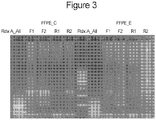
- Lanes 1 and 7 labeled "RDX-All" are the result of PCR amplification reactions containing all the PCR primers of the amplicons spanning the entire rdxA gene described above.
- the lanes marked “F1" correspond to the rdxA-F1 pool comprising the rdxA 188, rdxA156 and rdxA 177 amplicon primes and both sample lanes contain amplicons between 150 and 200 base-pairs as predicted.
- the lanes marked "F2" correspond to the rdxA-F2 pool comprising the rdxA-5-2-163 and rdxA 182 amplicon primers and both sample lanes contain amplicons of the correct size. Note that a minor product of about 60 base-pairs is also present, however this amplicon does not interfere in sequencing the correct amplicons and likely represents a product of internal recombination within or between one of the desired amplicons.
- the lanes marked "R1" correspond to the rdxA-R1 pool comprising the rdxA-R-150, rdxA-R-164 and rdxA-R-171 amplicon primers and the desired amplicons are clustered on the gel between 150 and around 170 base-pairs.
- the lanes marked "R2" (lanes 5 and 11) correspond to the rdxA-R2 pool comprising the rdxA-R-187, rdxA-R-174 and rdxA-R-189 amplicon primers produce the proper sized amplicons.
- Figure 5 illustrates the ability of the method to determine the presence and pattern of drug and multi-drug resistance in multiple isolates derived from FFPE samples based on a single NGS analysis.
- the 5 separate genes analyzed as described in Example 1, as well as the rdxA gene analyzed as described in Example 2 are collated into a single report outlining the potential resistance profile of H. pylori in each patient-derived FFPE biopsy sample to each of the six drugs.
- Figure 6 also illustrates the ability of the method to determine the presence and pattern of drug and multi-drug resistance in multiple isolates derived from FFPE samples based on NGS analysis as described in Examples 1 and 2.
- the table lists the genetic mutations found in each sample as well as the frequency of each mutation.
- the results show that NGS analysis can distinguish between FFPE samples that do not have any mutations versus those that do. For example, of the 24 samples, 10 (42%) had no mutations (Nos. 5, 6, 8, 9, 13, 17, and 21-24). However, the results also show that NGS analysis can detect both single and multiple mutations within one FFPE sample. For example, 14 samples (58%) had at least one gene mutation (Nos. 1-4, 7, 10-12, 14-16, and 18-20). Of these 14 samples, 11 samples had mutations in a single gene (Nos. 2, 4, 7, 11-12, 14-16, 18, 19, and 20) and 3 samples had mutations in multiple genes (Nos. 1, 3, and 10).
- the 3 samples with multiple gene mutations had mutations in both 23S rRNA and gyrA (Nos. 1 and 3) and both gyrA and rdxA (No. 10).
- the concurrent 23S rRNA and gyrA mutations indicate both clarithromycin and fluoroquinone antibiotic resistance; whereas, the concurrent gyrA and rdxA mutations indicate both fluoroquinone antibiotic resistance and metronidazole resistance.
Landscapes
- Chemical & Material Sciences (AREA)
- Life Sciences & Earth Sciences (AREA)
- Proteomics, Peptides & Aminoacids (AREA)
- Organic Chemistry (AREA)
- Analytical Chemistry (AREA)
- Health & Medical Sciences (AREA)
- Engineering & Computer Science (AREA)
- Physics & Mathematics (AREA)
- Zoology (AREA)
- Wood Science & Technology (AREA)
- Biophysics (AREA)
- General Health & Medical Sciences (AREA)
- Bioinformatics & Cheminformatics (AREA)
- Biotechnology (AREA)
- General Engineering & Computer Science (AREA)
- Biochemistry (AREA)
- Molecular Biology (AREA)
- Immunology (AREA)
- Microbiology (AREA)
- Genetics & Genomics (AREA)
- Evolutionary Biology (AREA)
- Bioinformatics & Computational Biology (AREA)
- Medical Informatics (AREA)
- Spectroscopy & Molecular Physics (AREA)
- Theoretical Computer Science (AREA)
- Measuring Or Testing Involving Enzymes Or Micro-Organisms (AREA)
- Enzymes And Modification Thereof (AREA)
- Agricultural Chemicals And Associated Chemicals (AREA)
Description
- The described methods and compositions are generally relevant to the use of polymerase chain reaction (PCR) amplification of trace DNA sequences from formalin-fixed paraffin-embedded (FFPE) biopsy samples. In particular, the methods and materials facilitate PCR amplification of trace bacterial DNA sequences within human biopsy FFPE preserved samples. More particularly, the methods and compositions are suited to characterizing multi-drug resistant Helicobacter pylori (H. pylori) present in human gastric biopsy FFPE samples.
- H. pylori is a significant human pathogen primarily found in the stomach. H. pylori plays an important role in gastritis, peptic ulcers and gastric cancer. Drug resistant and multi-drug resistant strains of H. pylori are increasingly common and front line therapy for treating H. pylori usually involves triple antibiotic therapy, comprising administering a proton-pump inhibitor (PPI) and two more antibiotics, typically clarithromycin and either metronidazole or amoxicillin, simultaneously. However, such therapy is only effective if the clinical isolate against which it is targeted is not clarithromycin resistant or resistant to metronidazole or penicillin-like drugs such as amoxicillin. Other antibiotics may be used, but in each case it is critical to know whether the H. pylori strain afflicting the patient is predisposed to resistance to any particular antibiotic to provide effective therapeutic treatment. A number of diagnostic methods for detecting the presence of H. pylori have been developed including, a urea breathe test, rapid urease tests, and anti-H. pylori antibody tests for serum and stool samples as well as an extensive range of immunohistologic staining methods. For the most part such methods require use of cultured isolates or recently obtained clinical samples. Culture of H. pylori and antibiotic susceptibility testing are not commonly performed in routine practice due to the specific requirements of H. pylori in terms of growth and transport. It is difficult and not always successful. Furthermore, there are no good methods that allow the drug resistance profile of any H. pylori detected to be determined. A robust and inexpensive method capable of detecting H. pylori while simultaneously determining the drug resistance profile of the detected bacteria represents a significant improvement over existing technologies.
- Historically, biopsy tissue, specifically gastric biopsy tissue is preserved in formalin-fixed paraffin-embedded sample (FFPE) "blocks". Such blocks do not require special handling or storage and represent a common way of preserving human biopsy materials in clinical histology laboratories. FFPE preserves the ultrastructural relationships of the embedded tissue over long periods of time, the samples are not subject to exogenous contamination and FFPE facilitates processing for histological staining and is amenable to many antibody based analyses. Unfortunately, formalin fixation, which allows immobilization of cellular matter (primarily by cross-linking nitrogenous groups in macromolecules), reduces the efficacy of many nucleic acid methods such as polymerase chain reaction (PCR) amplification of specific gene sequences in FFPE biopsy samples. The DNA-dependent DNA polymerases used for PCR amplification can neither traverse nor accurately replicate DNA sequences that are chemically cross-linked or contain many modified nitrogenous bases.
- Fortunately, the level of cross-linking in most FFPE samples does not completely preclude nucleic acid analysis. The methods and compositions described here improve the efficacy of PCR amplification of such cross-linked and otherwise damaged trace DNA from biopsy FFPE samples over existing methods. Typically, PCR amplification of DNA from FFPE preserved samples is targeted to analysis of the human DNA sequences present in the biopsy and there is a relatively large amount of target DNA that can be amplified. This is important, since chemical cross-linking by formalin occurs randomly and with sufficiently high copy numbers of any given target DNA sequence within a PCR amplification reaction, it is likely that at least one or some combination of the multiple copies of the desired target DNA sequence is available for amplification and thus amenable to PCR-based analyses. Commercial kits are available for direct analysis of human DNA recovered from FFPE biopsy samples, for example Illumina's TruSeq Custom Amplicon Low Input Kit (Illumina). However, the situation is very different when applied to less abundant DNA sequences such as those of bacterial pathogens present at low copy number within the FFPE preserved tissue. In cases where the DNA sequence targeted for PCR amplification is at very low copy number the likelihood of a cross-link or adduct comprising each and every copy of the target DNA is a major concern. To maximize the chances of a successful PCR amplification it is necessary to limit the size of DNA fragments produced by the PCR amplification (amplicons) to the minimum necessary for analysis, to use only the most favored primer sequences producing such minimal amplicons, and to produce as many diagnostic amplicons from a single aliquot of target DNA as possible.
- The requirement for such small amplicon size limits the number of choices for distributing primers along a target sequence and requires that multiple closely related priming sites be used to ensure that no single site is compromised by cross-linking or the presence of a disruptive adduct within the primer binding sequence. Because, DNA sequences are not entirely heterologous, and because optimal primer binding sites tend to favor higher G-C content, especially at the 3' end of the primer sequence, the best primers for generating a set of amplicons tend to cluster into narrow regions of a given target sequence. To ensure that each amplicon is produced specifically and solely from the desired primer pair usually each amplicon must be produced individually to avoid formation of primer dimers or recombinant amplification products produced during the PCR amplification process by cross hybridization of amplicon strands. Practically speaking, this requires that the target DNA be diluted among multiple PCR reactions which is an inefficient use of target DNA and is not practical with the tiny amount of bacterial DNA that can be recovered from FFPE biopsy samples. The more efficient method disclosed here involves segregating PCR primer pairs into mutually compatible pools such that there is minimal risk of primer-dimer formation or cross-hybridization between nascent amplicons during PCR amplification. This sort of segregational pooling of primer pairs allows efficient and automatable handling of FFPE samples containing rare DNA sequences to be analyzed by PCR-amplification-based methods in a clinical laboratory setting.
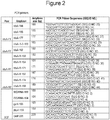
- In one aspect the disclosure provides a set of PCR amplification primers for characterizing the presence of drug resistant H. pylori in FFPE preserved tissue. Primers consisting of two pairs of primers (one forward and one reverse in each pair) for separate genes characteristic of known drug resistant H. pylori strains are listed in
Figure 2 . The example genes presented here include 16S rRNA (related to tetracycline resistance), 23S rRNA (related to clarithromycin resistance), pbp1 (related to resistance to penicillin antibiotics), gyrA (related to resistance to fluoroquinone antibiotics), rpoB (related to rifabutin resistance) and rdxA (involved in resistance to metronidazole). Those skilled in the art understand that other genetic loci involved in resistance to other antibiotics are known and may be included in or substituted for those described here. Practically, use of two primer pairs for each target gene minimizes the chance that any particular lesion (such as a cross-link or adduct) found in the target DNA sequences will inhibit PCR amplification from both amplicons, since such lesions are unlikely to occur at two different primer binding sites and involve all copies of the target gene within the target (template) DNA. However, the use of two pairs of primers targeting the same region of the bacterial chromosome, yet producing different but overlapping fragments requires that the PCR amplification reactions be carried out separately in order to avoid producing hybrid amplicons that do not match the full length amplicons each primer pair is designed to produce. Thus, at least two PCR amplification reactions must be performed for each set of primer pairs. In contrast, PCR primer pairs targeting different genes and producing amplicons with no homologous sequences can be pooled and thus the limited amount of target bacterial DNA that can be amplified from FFPE-preserved tissue used as efficiently as possible. The invention teaches segregation of primer pairs targeting an overlapping set of amplicons into separate pools and performing a single PCR amplification reaction on the segregated pools to produce the desired amplicons. In one example presented here, as many as 10 amplicons diagnostic for the five different types of drug resistant H. pylori genes listed above can be produced from just two PCR reactions using DNA extracted from FFPE gastric biopsy samples. - One embodiment of the disclosure is a method for detecting within a sample mutations in a plurality of genes, the method comprising a) identifying PCR primer pairs suitable for producing amplicons comprising regions of each of the genes containing one or more mutations, b) segregating PCR primer pairs comprising one or more primers that interfere with amplicon generation by another PCR primer pair into separate PCR primer pair pools, wherein each of the separate PCR primer pair pools contain a plurality of PCR primer pairs; c) generating amplicons from each of the separate PCR primer pair pools and target DNA isolated from the sample; d) combining all amplicons produced from each of the separate PCR primer pair pools and the target DNA into a sample amplicon pool, adding a unique index sequence to the amplicons within the sample amplicon pool to generate an indexed sample amplicon pool, optionally further combining the indexed sample amplicon pool with one or more differentially indexed sample amplicon pools from different samples, and sequencing all indexed sample amplicons simultaneously; and e) identifying mutations within the indexed sequenced amplicons from a sample by reference to corresponding wild-type gene sequences.
- In one embodiment of the invention, the sample is a biopsy sample and, in another embodiment, the biopsy is a gastric biopsy. In a further embodiment, the biopsy sample comprises a formalin-fixed paraffin embedden biopsy sample. In another embodiment, the sample contains Helicobacter pylori (H. pylori).
- In another embodiment, the plurality of genes comprises genes selected from the group consisting of
H. pylori 16S rRNA, 23S rRNA, gyrA, rpoB, pbp1, and rdxA. In further embodiments, the identified mutation is an A2142G, A2143G, and/or A2142C mutation of theH. pylori 23S rRNA gene; an A928C, AG926-927GT, A926G/A928C and/or AGA926-928TTC mutation of theH. pylori 16S rRNA gene; a C261A, C261G, G271A, and/or G271T mutation of the H. pylori gyrA gene encoding DNA gyrase subunit A; between codons 525 and 545 of the H. pylori rpoB gene encoding the beta/beta' subunit of DNA-directed RNA polymerase; a C1242A or C1242G mutation in the H. pylori pbp1 gene encoding penicillin-bindingprotein 1; or within the H. pylori rdxA gene. In another embodiment, the identified mutation produces a loss of function of H. pylori oxygen-insensitive (Type I) NAPD(P)H nitroreductase encoded by rdxA. - In one embodiment of the invention, the amplicons do not exceed 230 base pairs in length. In another embodiment, the amplicons are greater than 130 base pairs in length. In a further embodiment, the PCR primer pair comprising one or more primers that interfere with amplicon generation by another PCR primer pair interfere by forming cross pair primer-dimers or by forming cross pair truncated amplicons.
- Another embodiment of the invention is directed to a method for detecting within a patient derived sample the presence of drug resistant H. pylori, the method comprising: a) generating amplicons from DNA isolated from the patient derived sample and; i) PCR
primer pair pool 1 comprising primers SEQ ID NOs. 1-10; ii) PCRprimer pair pool 2 comprising primers SEQ ID Nos. 11-22; iii) PCRprimer pair pool 3 comprising primers SEQ ID Nos. 23-28; iv) PCRprimer pair pool 4 comprising primers SEQ ID Nos. 29-32; v) PCRprimer pair pool 5 comprising primers SEQ ID Nos. 33-38; vi) PCRprimer pair pool 6 comprising primers SEQ ID Nos. 39-44; b) combining all amplicons produced from PCR primer pair pools 1-6 in step a) into a sample amplicon pool, adding a unique index sequence to the amplicons within the sample amplicon pool to generate an indexed sample amplicon pool, optionally further combining the indexed sample amplicon pool with one or more differentially indexed sample amplicon pools from different patient derived samples, and sequencing all indexed sample amplicons simultaneously; c) identifying mutations within the sequenced indexed sample amplicons by reference to SEQ ID Nos. 47-51, and d) determining the drug-resistant profile of H. pylori present in the patient-derived profile by the presence or absence of mutations identified in step c). - Yet another embodiment of the invention is directed to a method for detecting within a patient derived sample the presence of drug resistant H. pylori, the method comprising: a) generating amplicons from DNA isolated from the patient derived sample and; i) PCR
primer pair pool 1 comprising primers SEQ ID Nos. 23-28; ii) PCRprimer pair pool 2 comprising primers SEQ ID Nos. 29-32; iii) PCRprimer pair pool 3 comprising primers SEQ ID Nos. 33-38; iv) PCRprimer pair pool 4 comprising primers SEQ ID Nos. 39-44; b) combining all amplicons produced from PCR primer pair pools 1-4 in step a) into a sample amplicon pool, adding a unique index sequence to the amplicons within the sample amplicon pool to generate an indexed sample amplicon pool, optionally further combining the indexed sample amplicon pool with one or more differentially indexed sample amplicon pools from different patient derived samples, and sequencing all indexed sample amplicons simultaneously; c) identifying mutations within the sequenced indexed sample amplicons by reference to SEQ ID Nos. 47-51; and d) determining the drug-resistant profile of H. pylori present in the patient-derived profile by the presence or absence of mutations identified in step c). - In a further embodiment any of the amplicon pools described here can be sequenced by classical Sanger sequencing methods using one of the terminal primers to a single amplicon within the pool as a forward sequencing primer and the other terminal primer to that amplicon as a reverse sequencing primer. Alternatively, unique sequencing primers specific to each desired reaction for each individual amplicon within the amplicon pool can be used for the same purpose. In this way each of the amplicons can be directly sequenced from an amplicon pool. The amplicon pool may or may not be combined with other amplicon pools from the same FFPE extracted biopsy sample and the combined amplicons prepared for sequencing by addition of adaptors and indexing tags in preparation for Next Generation sequencing (NGS). Tagged amplicon pools derived from a single FFPE biopsy sample can be further combined with differentially tagged amplicon pools from different FFPE biopsy samples and the combined sample amplicon pools directly sequenced by high-throughput multiplex sequencing methods.
-
-
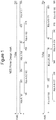
Figure 1 depicts the H. pylori rdxA gene and illustrates the relative arrangement of the described amplicons. -
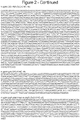
Figure 2 is a table of the individual primers disclosed in the Descriptions and Examples. -
Figure 3 is an electrophoresis gel demonstrating that pooling all rdxA specific primers generates incorrect sized amplicons, whereas the segregated primer pools described here generate correct sized amplicons. -
Figure 4 identifies a representative mutation in 23S rRNA (in FFPE samples FFPE_ K and L) 23S rRNA Clarithromycin sequences alignment sequenced with 23S rRNA 194-F and 170R-F. The red box shows the mutation loci on 23S rRNA -
Figure 5 is a summary data table of 16 FFPE samples analyzed by Next Generation Sequencing (NGS) data from 16 FFPE samples using the segregational pooling and pooled amplicon strategy with mutations in each of six different genes characteristic of drug-resistant H. pylori identified. All mutations identified by NGS were confirmed by Sanger sequencing. -
Figure 6 is a summary data table of 24 FFPE samples analyzed by NGS data from 24 FFPE samples using the segregational pooling and pooled amplicon strategy with mutation in each of six different genes characteristic of drug-resistant H. pylori identified. The data table lists the gene mutations identified by NGS as well as their mutation frequency. - The present invention provides methods as claimed for amplifying trace DNA sequences present in FFPE biopsy samples. These methods and compositions are useful for determining the presence of and characterizing the drug and multi-drug resistance profiles of H. pylori from FFPE gastric biopsy samples.
- The methods and compositions described herein are directed to generating amplicons from trace bacterial DNA present in FFPE biopsy samples. Such DNA is especially subject to damage and PCR amplification of damaged DNA requires special steps to ensure that the desired sequences are amplified from the target DNA. These steps include minimizing the length of each amplicon recovered from the amplification reactions, determining the optimal primer sequences within the targeted DNA sequence, and strategically pooling overlapping amplicons and primers to avoid interference with one another. A process referred to as segregational pooling. In a typical PCR amplification scheme, where DNA integrity can be assumed to be relatively high, primer selection is not as limited as it is when the template DNA is known to be damaged by cross-linking or the presence of base adducts, as with FFPE derived DNA. Furthermore, the absolute levels of bacterial DNA that are found in typical biopsy samples are many orders of magnitude lower than the DNA of the host organism. This means that the sequences that are targeted for amplification are a minority of the total DNA in the sample and successfully amplifying one or more amplicons from such rare DNA sequences requires the most optimal primers and the most efficient use of the target DNA possible. Furthermore, to be generally useful in the commercial clinical laboratory, such methods should be compatible with and make use of established techniques and reagents to the greatest extent possible.
- Total DNA was extracted from FFPE gastric biopsy samples using the Qiagen QIAamp DSP DNA FFPE Tissue Kit (Qiagen, Cat. No. 60404) following the manufacturer's instructions. Briefly, five 5 µm thick sections of a single FFPE biopsy sample were placed in a single tube and de-paraffinized with xylene, treated with proteinase K at 65 °C for one hour to lyse the cells within the de-paraffinized samples, and then held at 90 °C for an additional hour to de-cross-link cellular structures and to denature proteinase K. The de-paraffinized and lysed samples are cooled to room temperature applied to MiniElute PCR Purification column (Qiagen, Cat. No. 28004) following the manufacturers recommended procedure. The MiniElute column is washed twice and the DNA recovered from the FFPE biopsy sample recovered from the column with elution buffer. The recovered DNA was quantified with a Qubit 2.0 fluorometer (Thermo Fisher Scientific) and the DNA purity determined with a Nanodrop instrument (Thermo Fisher Scientific).
- To verify the presence of H. pylori sequences within the total DNA samples from each biopsy sample, PCR amplification of a specific 125 base-pair fragment unique highly conserved region of the 23 S rRNA gene of H. pylori was performed using PCR primers SEQ ID Nos: 45 and 46. The PCR product was purified and sequenced and confirmed to be specific to H. pylori by BLAST analysis [Altschul, S.F., Gish, W., Miller, W., Myers, E.W. & Lipman, D.J. (1990) "Basic local alignment search tool." J. Mol. Biol. 215:403-410]. The absence of the correct amplified product (amplicon) indicated no usable H. pylori DNA was present in the sample.
- Samples that did produce the 125 base-pair H. pylori specific PCR amplicon were further investigated to determine the quality of the recovered DNA. To determine the suitability of the extracted DNA from FFPE gastric biopsy samples containing H. pylori for PCR amplification and sequencing, a multiplex PCR qualification assay was developed. This qualification assay involves PCR amplification of the human GAPDH gene encoding glyceraldehyde-3-phosphate dehydrogenase with a set of PCR primers capable of producing an amplicon ladder of 100, 200, 300, 400 and 500 base-pair fragments. FFPE DNA with no significant damage, with large fragment sizes and at relatively high concentration produces all five "rungs" of the amplicon ladder, whereas highly damaged and significantly fragmented DNA will not produce any of the expected amplicons. With our accumulated experience with this method, we rate DNA recovered from FFPE gastric biopsy samples as good if this test produces 2 to 5 bands of the amplicon ladder, intermediate if it produces only a single band, and poor if no bands are observed at all. The overall frequency of the number of amplicon bands observed across numerous FFPE extracted biopsy samples indicates that limiting analytical amplicon size to about 200 base-pairs or less provides the best balance between producing as much contiguous sequence as possible and avoiding PCR amplification terminating damage in the template DNA.
- PCR amplification reactions using both freshly prepared or frozen H. pylori chromosomal DNA (as a positive control) and samples extracted from FFPE gastric biopsy samples (experimental samples) were performed with 1U of Taq DNA Polymerase, 10 mM dNTP mix in a 100 mM Tris-HCl, 500 mM KCl and 25 mM MgCl2 buffer.
- For samples analyzed by Sanger sequencing methods the PCR primers in
Figure 1 (SEQ ID NOs 1-44) were used as indicated with the thermal cycling parameters are: initial denaturing at 95 °C for 10 minutes, followed by 35 cycles of 30 seconds at 95 °C, 30 seconds at 55 °C and 30 seconds at 72 °C, then a final extension at 72 °C for 10 minutes. The resulting amplicons from each amplification reaction were purified with a MiniElute PCR Purification column following the manufacturer's instructions. - The purified amplicons were processed for Sanger sequencing with the BigDye Terminator v3.1 Cycle Sequencing Kit (Applied Biosystems, Cat. No. 4337455) following the manufacturer's protocol. The PCR sequencing reaction was executed with the following thermal parameters: 95 °C for 1 minute, then 25 cycles of 95 °C for 30 seconds, 56 °C for 30 seconds and 60 °C for 1 minute. The primer extension reactions were processed with the Agencourt CleanSEQ kit (Beckman Coulter Life Sciences Cat. No. A29151) following the manufacturer's instructions. Samples were loaded and analyzed on an ABI 3500 Genetic Analyzer (Applied Biosystems). Raw sequence data was collected with 3500 Series Data Collection Software (Applied Biosystems) and assembled and aligned against reference sequences using Sequencher v 5.4 software (Gene Codes Corp.).
- In the case of samples destined for NGS sequencing the Illumina overhang adapter sequence is added to the locus-specific primer sequences listed in
Figure 2 (SEQ ID NOs 1-44). The forward overhang sequence (added to the 5' side of the locus specific forward primer sequence) is TCGTCGGCAGCGTCAGATGTGTAT-AAGAGACAG (SEQ ID NO. 47) and the reverse overhang sequence (added to the 5' side of the locus specific reverse primer sequence) is GTCTCGTGGGCTCGGAG-ATGTGTATAAGAGACAG (SEQ ID NO. 48). The first round PCR amplification thermal cycling parameters are: initial denaturing at 95 °C for 11 minutes, followed by 35 cycles of 30 seconds at 95 °C, 1 minute at 59 °C and 1 minute at 72 °C, then a final extension at 72 °C for 10 minutes. Second stage PCR reactions (involving addition of multiplex index adapters) involved thermal cycling parameters: 98 °C for 30 seconds, 17 cycles of 98 °C for 20 seconds, 60 °C for 30 seconds and 72 °C for 45 seconds and a final extension at 72 °C for 5 minutes. The libraries were then processed with the Agencourt AMPure XP kit (Beckman Coulter Life Sciences Cat. No. A63880) following the manufacturer's instructions, quantitated on a 2100 BioAnalyzer (Agilent Technologies) diluted as necessary and loaded onto the Illumina MiSeq sequencing instrument (Illumina, Inc.). Data analysis was performed using NextGENe V 2.4.1.1 software (SoftGenetics). - The present invention is illustrated in the following Examples, which are set forth to aid in understanding the invention, but should not be construed to limit in any way the scope of the invention as defined in the claims that follow.
- In one aspect of the invention, multiple loci encoding different forms of drug-resistance can be simultaneously characterized by segregating the PCR primers used to generate the diagnostic amplicons covering each of the targeted loci. PCR primer pairs comprising SEQ ID NOs: 1 and 2 for producing a 168 base-pair amplicon (16SrRNA 168) spanning positions 926-928 of the 16S rRNA gene of H. pylori. Virtually any mutation in these positions produces a low level of tetracycline resistance, while the triple mutation AGA926-928TTC is associated with very high levels of tetracycline resistance. A second primer pair comprising SEQ ID NOs: 11 and 12 produce a 162 base-pair amplicon (16SrRNA 162) also encompassing positions 926-928 of the
H. pylori 16S rRNA. Another PCR primer pair comprising SEQ ID NOs: 3 and 4 produces a 194 base pair amplicon (23SrRNA 194) spanning positions 2142 and 2143 of the 23S rRNA gene of H. pylori. Mutation of these positions, particularly A2142G, A2142C and A2143G mutations are associated with clarithromycin resistance. A second primer pair comprising SEQ ID NOs: 13 and 14 produces a 170 base-pair amplicon (23SrRNA 170) which also spans positions 2142 and 2143 of theH. pylori 23S rRNA. Another PCR primer pair comprising SEQ ID NOs: 5 and 6 produces a 193 base-pair amplicon (gyrA 193) which spans the region encoding amino acid positions 87 to 91 of the A subunit of H. pylori gyrase, encoded by the gyrA gene. Mutations of Asn87 to Lys or Tyr and mutation of Asp91 to Gly, Asn or Tyr, individually or together are known to produce resistance to fluoroquinone antibiotics. A second PCR primer pair spanning this region of the H. pylori gyrA gene, comprising SEQ ID NOs: 15 and 16 produces a 139 base-pair amplicon (gyrA 139). A third PCR primer pair spanning the same region comprising SEQ ID NOs: 17 and 18 produce a 137 base-pair amplicon (gyrA 137). Another PCR primer pair comprising SEQ ID NOs: 7 and 8 produce a 159 base-pair amplicon (pbpA 159) which encompasses the sequence encoding amino acid position 414 of the H. pylori pbp1 gene. Mutation of the serine normally found at position 414 of penicillin-bindingprotein 1 to an arginine produces resistance to amoxicillin and other penicillin antibiotics. Another PCR primer pair, SEQ ID NOs: 19 and 20 produce a 140 base-pair amplicon (pbpA 140) that also encompasses the sequence encoding position 414 of H. pylori penicillin-bindingprotein 1. Another PCR primer pair comprising SEQ ID NOs: 9 and 10 produce a 228 base-pair amplicon encompassing codons 525 to 545 of the H. pylori rpoB gene encoding the β/β' subunit of RNA polymerase. Mutation of any of the codons within this region can confer resistance to rifabutin and other rifamycin-like antibiotics. A PCR primer pair comprising SEQ ID NOs: 21 and 22 also produces an amplicon (rpoB-R-167) which is 167 base-pairs and encompasses the critical codons within rpoB. - Each pair of PCR primers targeting a particular gene region potentially encoding a drug-resistant mutation are segregated into separate PCR primer pair pools containing one or more unique primer pairs targeting different genes. Thus, PCR amplification of each pool produces amplicons specific to the plurality of genes within each pool and minimizes the chance of PCR amplification artifacts such as primer-dimers or cross pair amplicon truncation caused by homologous pairing within overlapping amplicon sequences. As shown in
Figure 2 , pool 5GF comprises PCR primer pairs16SrRNA 168,23SrRNA 194, gyrA193,pbpA 159 andrpoB 228. When FFPE derived H. pylori target DNA is amplified with these primer pairs five unique amplicons of 159, 168, 193, 194 and 228 base-pairs are produced. - Amplicon pool 5GR (
Figure 2 ) comprises PCR primer pairs16SrRNA 162R,23SrRNA 170R,gyrA 139R,gyrA 137R,pbpA 140 and rpoB-R-167. When FFPE derived H. pylori target DNA is amplified with these primer pairs as many as 8 amplicons are produced. Four of these are unique amplicons of 140, 162, 167 and 170 base-pairs (corresponding to the pbpA-specific amplicon, 16S rRNA-specific amplicon, the rpoB-specific amplicon and the 23S rRNA-specific amplicon, respectively). The remaining four amplicons represent permutations of the two pairs of gyrA-specific PCR primer pairs present in pool 5GR. These primer pairs partially overlap one another in the same direction such that four possible amplicons can be produced from the two pairs of primers. Because the partial overlap of primers is limited to primers that have the same strand orientation (direction) there is no risk of primer-dimer formation, and because the amplified sequence between the primers is identical (except for the absolute length of the amplified sequence) no cross-hybridization between amplicons will produce new sequences. Thus, the two pairs of semi-unique primers can be accommodated within the amplicon pool. In this case, these primers may produce as many as four homologous amplicons of 131, 137, 139 and 145 base-pairs. The sequence of these amplicons is identical from end to end with the sequence in each of the other amplicons- with the exception of the few base-pairs missing from the ends of the shorter amplicons, which are present in the longer amplicons. - Alignment of each of the sequenced amplicons allows identification of mutations conferring drug resistance.
Figure 4 is an example of the A2142G mutation in the 23S rRNA identified in two independent FFPE derived sample ("E" and "K") that indicates that treatment of the H. pylori strains afflicting the patients from whom these samples were derived is unlikely to respond to clarithromycin. The top sequence is a known clarithromycin resistant strain of H. pylori while the two sequences immediately below the control are independent PCR amplicons from sample "E" and the last two sequences are independent amplicons from sample "F". - In another aspect of the invention, segregated PCR primer pools allow efficient coverage of an entire gene. Resistance to metronidazole can occur as a result of any loss of function mutation in the H. pylori rdxA gene encoding the bacterial oxygen-insensitive (Type I) NAD(P)H nitroreductase. Metronidazole is activated by the action of this enzyme and thus, any frameshift, or point mutation within the rdxA gene encoding this enzyme has the potential to confer resistance to metronidazole. Unlike the previously described embodiments, no single short amplicon can encompass the known mutational spectrum of metronidazole resistance encountered in H. pylori. To address this problem, two series of PCR primer pairs producing overlapping amplicons were designed such that the primers within each series produce short amplicons that together cover the entire coding region of the rdxA gene. The primers between the two series are located in unique positions, but some may be within the coding sequence of the rdxA gene offset by only a few bases in one direction relative to the analogous primers in the other series (in a manner similar to the partially overlapping gyrA primers within amplicon pool 5GR described in the previous paragraph). This strategy reduces the chance of a single cross-link or adduct present in the target DNA from entirely blocking production of an amplicon. The sequence derived from amplicons produced by one series of PCR primers can be assembled with amplicons produced from the other series of PCR primers to ensure that complete coverage of the rdxA gene is achieved from the total set of primer pools. Each series of primers is placed into one of two amplicon pools for each series so that amplicons within the series that may overlap and which are produced from primers that are prone to form primer-dimers are segregated into separate pools. In the case of the H. pylori rdxA gene, one series of five short amplicons collectively span the entire rdxA coding sequence. These five amplicons, from 5' to 3' comprise the
rdxA 188 amplicon (produced from PCR primer pair SEQ ID NOs: 23 and 24), the rdxA-5-2-163 amplicon (produced from PCR primer pair SEQ ID NOs: 29 and 30), therdxA 156 amplicon (produced from PCR primer pair SEQ ID NOs: 25 and 26), therdxA 182 amplicon (produced from PCR primer pair SEQ ID NOs: 31 and 32) and therdxA 177 amplicon (produced from PCR primer pair SEQ ID NOs: 27 and 28). Within this series PCR primer pairs producingamplicons rdxA 188, rdxA156 andrdxA 177 are placed into a single pool designated rdxA-F1, while PCR primer pairs producing amplicons rdxA-5-2-163 andrdxA 182 are combined into a different pool designated rdxA-F2 (Figure 2 ). In another series six short amplicons are used to span the entire H. pylori rdxA gene. These amplicons, arrayed 5' to 3' comprise the rdxA-R-150 amplicon (produced from PCR primer pair SEQ ID NOs: 33 and 34), the rdxA-R-187 amplicon (produced from PCR primer pair SEQ ID NOs: 39 and 40), the rdxA-R-164 amplicon (produced from PCR primer pair SEQ ID NOs: 35 and 36), the rdxA-R0174 amplicon (produced from PCR primer pair SEQ ID NOs: 41 and 42, the rdxA-R-171 amplicon (produced from PCR primer pair SEQ ID NOs: 37 and 38) and the rdxA-R-189 amplicon (produced from PCR primer pair SEQ ID NOs: 43 and 44). Within this series PCR primer pairs producing amplicons rdxA-R-150, rdxA-R-164 and rdxA-R-171 are combined into one pool designated rdxA-R1, while PCR primer pairs producing amplicons rdxA-R-187, rdxA-R-174 and rdxA-R-189 are combined into a different pool designated rdxA-R2 (Figure 2 ). These PCR primer pools are used to generate their cognate amplicons from H. pylori DNA extracted from FFPE biopsy samples. Depending on how the amplicons are to be sequenced amplicons from each PCR reaction may be further combined so that each series is represented by a single amplicon pool. - As shown in
Figure 3 proper segregational pooling produces the correct (predicted) amplicons, whereas the same primers when present in a single pool produce a series of PCR products comprised of incorrect amplicons and primer dimers. Two FFPE samples. "FFPE_C" and "FFPE_E" were processed as described and served as target DNA for analysis of the rdxA gene. Lane 6 (counting from the left-most lane as lane 1) is a double-stranded DNA size marker (Ready-to-Use 100 bp DNA Ladder, Biotium, Inc.). The size marker is flanked on each side by sample specific pooled amplification products.Lanes lanes 2 and 8) correspond to the rdxA-F1 pool comprising therdxA 188, rdxA156 andrdxA 177 amplicon primes and both sample lanes contain amplicons between 150 and 200 base-pairs as predicted. The lanes marked "F2" (lanes 3 and 9) correspond to the rdxA-F2 pool comprising the rdxA-5-2-163 andrdxA 182 amplicon primers and both sample lanes contain amplicons of the correct size. Note that a minor product of about 60 base-pairs is also present, however this amplicon does not interfere in sequencing the correct amplicons and likely represents a product of internal recombination within or between one of the desired amplicons. The lanes marked "R1" (lanes 4 and 10) correspond to the rdxA-R1 pool comprising the rdxA-R-150, rdxA-R-164 and rdxA-R-171 amplicon primers and the desired amplicons are clustered on the gel between 150 and around 170 base-pairs. The lanes marked "R2" (lanes 5 and 11) correspond to the rdxA-R2 pool comprising the rdxA-R-187, rdxA-R-174 and rdxA-R-189 amplicon primers produce the proper sized amplicons. -
Figure 5 illustrates the ability of the method to determine the presence and pattern of drug and multi-drug resistance in multiple isolates derived from FFPE samples based on a single NGS analysis. In this case, the 5 separate genes analyzed as described in Example 1, as well as the rdxA gene analyzed as described in Example 2 are collated into a single report outlining the potential resistance profile of H. pylori in each patient-derived FFPE biopsy sample to each of the six drugs. -
Figure 6 also illustrates the ability of the method to determine the presence and pattern of drug and multi-drug resistance in multiple isolates derived from FFPE samples based on NGS analysis as described in Examples 1 and 2. The table lists the genetic mutations found in each sample as well as the frequency of each mutation. The results show that NGS analysis can distinguish between FFPE samples that do not have any mutations versus those that do. For example, of the 24 samples, 10 (42%) had no mutations (Nos. 5, 6, 8, 9, 13, 17, and 21-24). However, the results also show that NGS analysis can detect both single and multiple mutations within one FFPE sample. For example, 14 samples (58%) had at least one gene mutation (Nos. 1-4, 7, 10-12, 14-16, and 18-20). Of these 14 samples, 11 samples had mutations in a single gene (Nos. 2, 4, 7, 11-12, 14-16, 18, 19, and 20) and 3 samples had mutations in multiple genes (Nos. 1, 3, and 10). - Of the samples with single gene mutations, 5 samples had gyrA gene mutations only (Nos. 2, 4, 15, 18, and 19), 2 samples had rdxA gene mutations only (Nos. 7 and 20), and 4 samples had 23S rRNA gene mutations only (Nos. 11, 12, 14, and 16). Of the samples with gyrA mutations only, one of the samples had two mutations with the gyrA gene (No. 19). As discussed above, the presence of gyrA gene mutations indicates fluoroquinone antibiotic resistance. Of the samples with rdxA gene mutations only, one of the samples had two mutations within the rdxA gene (No. 7). As discussed above, the presence of rdxA gene mutations indicates resistance to metronidazole.
- The 3 samples with multiple gene mutations had mutations in both 23S rRNA and gyrA (Nos. 1 and 3) and both gyrA and rdxA (No. 10). The concurrent 23S rRNA and gyrA mutations indicate both clarithromycin and fluoroquinone antibiotic resistance; whereas, the concurrent gyrA and rdxA mutations indicate both fluoroquinone antibiotic resistance and metronidazole resistance.
-
- <110> American Molecular Laboratories, Inc. Zhou, Y1 Jung, Daniel Rao, Kakuturu
- <120> Methods and Compositions For Characterizing Drug Resistant Bacteria from Formalin-Fixed Paraffin-Embedded Biological Samples
- <130> 116110-5001 P
- <150> 62/334,185
<151> 2016-05-10 - <160> 52
- <170> PatentIn version 3.5
- <210> 1
<211> 17
<212> DNA
<213> Artificial Sequence - <220>
<223> PCR primer - <400> 1
taacgcatta agcatcc 17 - <210> 2
<211> 18
<212> DNA
<213> Artificial Sequence - <220>
<223> PCR primer - <400> 2
ccagacactc cactattt 18 - <210> 3
<211> 15
<212> DNA
<213> Artificial Sequence - <220>
<223> PCR primer - <400> 3
ccgacctgca tgaat 15 - <210> 4
<211> 15
<212> DNA
<213> Artificial Sequence - <220>
<223> PCR primer - <400> 4
agccaaagcc cttac 15 - <210> 5
<211> 19
<212> DNA
<213> Artificial Sequence - <220>
<223> PCR primer - <400> 5
tatgcgatgc atgaattag 19 - <210> 6
<211> 19
<212> DNA
<213> Artificial Sequence - <220>
<223> PCR primer - <400> 6
catcaataga gccaaagtt 19 - <210> 7
<211> 17
<212> DNA
<213> Artificial Sequence - <220>
<223> PCR primer - <400> 7
ttgataatgg ctattcc 17 - <210> 8
<211> 15
<212> DNA
<213> Artificial Sequence - <220>
<223> PCR primer - <400> 8
ggctcaaggc ttctt 15 - <210> 9
<211> 20
<212> DNA
<213> Artificial Sequence - <220>
<223> PCR primer - <400> 9
gacaagctca ctaccatgag 20 - <210> 10
<211> 18
<212> DNA
<213> Artificial Sequence - <220>
<223> PCR primer - <400> 10
cacatccctg gcttcaaa 18 - <210> 11
<211> 17
<212> DNA
<213> Artificial Sequence - <220>
<223> PCR primer - <400> 11
ctagcggatt ctctcaa 17 - <210> 12
<211> 17
<212> DNA
<213> Artificial Sequence - <220>
<223> PCR primer - <400> 12
cagtaatgca gctaacg 17 - <210> 13
<211> 17
<212> DNA
<213> Artificial Sequence - <220>
<223> PCR primer - <400> 13
catcaagggt ggtatct 17 - <210> 14
<211> 17
<212> DNA
<213> Artificial Sequence - <220>
<223> PCR primer - <400> 14
ttgtagtgga ggtgaaa 17 - <210> 15
<211> 18
<212> DNA
<213> Artificial Sequence - <220>
<223> PCR primer - <400> 15
cgttatcgcc atcaatag 18 - <210> 16
<211> 19
<212> DNA
<213> Artificial Sequence - <220>
<223> PCR primer - <400> 16
ggtgatgtga ttggtaaat 19 - <210> 17
<211> 18
<212> DNA
<213> Artificial Sequence - <220>
<223> PCR primer - <400> 17
ccatcaatag agccaaag 18 - <210> 18
<211> 15
<212> DNA
<213> Artificial Sequence - <220>
<223> PCR primer - <400> 18
atcgtgggtg atgtg 15 - <210> 19
<211> 17
<212> DNA
<213> Artificial Sequence - <220>
<223> PCR primer - <400> 19
ttgataatgg ctattcc 17 - <210> 20
<211> 16
<212> DNA
<213> Artificial Sequence - <220>
<223> PCR primer - <400> 20
ggttacaagc cctaaa 16 - <210> 21
<211> 20
<212> DNA
<213> Artificial Sequence - <220>
<223> PCR primer - <400> 21
tgggacaaat tcggccataa 20 - <210> 22
<211> 17
<212> DNA
<213> Artificial Sequence - <220>
<223> PCR primer - <400> 22
tttcatgggc ggtcagc 17 - <210> 23
<211> 22
<212> DNA
<213> Artificial Sequence - <220>
<223> PCR primer - <400> 23
tggtaattgt ttcgttaggg at 22 - <210> 24
<211> 18
<212> DNA
<213> Artificial Sequence - <220>
<223> PCR primer - <400> 24
tggcgatttc agcgattt 18 - <210> 25
<211> 18
<212> DNA
<213> Artificial Sequence - <220>
<223> PCR primer - <400> 25
aagcgcttca gcgttaat 18 - <210> 26
<211> 18
<212> DNA
<213> Artificial Sequence - <220>
<223> PCR primer - <400> 26
tgcatgctgt ggttgaat 18 - <210> 27
<211> 24
<212> DNA
<213> Artificial Sequence - <220>
<223> PCR primer - <400> 27
gaagagcgta tcaataagcc taaa 24 - <210> 28
<211> 22
<212> DNA
<213> Artificial Sequence - <220>
<223> PCR primer - <400> 28
atgccactcc ttgaacttta at 22 - <210> 29
<211> 23
<212> DNA
<213> Artificial Sequence - <220>
<223> PCR primer - <400> 29
agcctccaat aatgcaacta tcc 23 - <210> 30
<211> 22
<212> DNA
<213> Artificial Sequence - <220>
<223> PCR primer - <400> 30
cataccacca ttaacgctgaag 22 - <210> 31
<211> 18
<212> DNA
<213> Artificial Sequence - <220>
<223> PCR primer - <400> 31
atgcttggcg tgagattc 18 - <210> 32
<211> 21
<212> DNA
<213> Artificial Sequence - <220>
<223> PCR primer - <400> 32
ggcttattga tacgctcttct 21 - <210> 33
<211> 20
<212> DNA
<213> Artificial Sequence - <220>
<223> PCR primer - <400> 33
atgccactcc ttgaacttta 20 - <210> 34
<211> 18
<212> DNA
<213> Artificial Sequence - <220>
<223> PCR primer - <400> 34
gcatgcttga tcgctttg 18 - <210> 35
<211> 22
<212> DNA
<213> Artificial Sequence - <220>
<223> PCR primer - <400> 35
atgcaactat ccaatcccat ta 22 - <210> 36
<211> 24
<212> DNA
<213> Artificial Sequence - <220>
<223> PCR primer - <400> 36
ccggagtctt ataaagttag agtg 24 - <210> 37
<211> 18
<212> DNA
<213> Artificial Sequence - <220>
<223> PCR primer - <400> 37
gtgcgctgca atttgttt 18 - <210> 38
<211> 19
<212> DNA
<213> Artificial Sequence - <220>
<223> PCR primer - <400> 38
ttaaacgagc gccattctt 19 - <210> 39
<211> 21
<212> DNA
<213> Artificial Sequence - <220>
<223> PCR primer - <400> 39
caaccaagta atcgcatcaac 21 - <210> 40
<211> 18
<212> DNA
<213> Artificial Sequence - <220>
<223> PCR primer - <400> 40
catgggcgtg agcttaat 18 - <210> 41
<211> 25
<212> DNA
<213> Artificial Sequence - <220>
<223> PCR primer - <400> 41
ctaactttat aagactccgg ataga 25 - <210> 42
<211> 22
<212> DNA
<213> Artificial Sequence - <220>
<223> PCR primer - <400> 42
tgtgatggtt actgataagg at 22 - <210> 43
<211> 19
<212> DNA
<213> Artificial Sequence - <220>
<223> PCR primers - <400> 43
ctggcgattt cagcgattt 19 - <210> 44
<211> 22
<212> DNA
<213> Artificial Sequence - <220>
<223> PCR primer - <400> 44
tggtaattgt ttcgttaggg at 22 - <210> 45
<211> 22
<212> DNA
<213> Artificial Sequence - <220>
<223> PCR primer - <400> 45
acaacccaga ctaccaaataag 22 - <210> 46
<211> 19
<212> DNA
<213> Artificial Sequence - <220>
<223> PCR primer - <400> 46
gtgagctgtt acgctttct 19 - <210> 47
<211> 500
<212> DNA
<213> Helicobacter pylori - <400> 47

- <210> 48
<211> 1500
<212> DNA
<213> Helicobacter pylori - <400> 48


- <210> 49
<211> 550
<212> DNA
<213> Helicobacter pylori - <400> 49
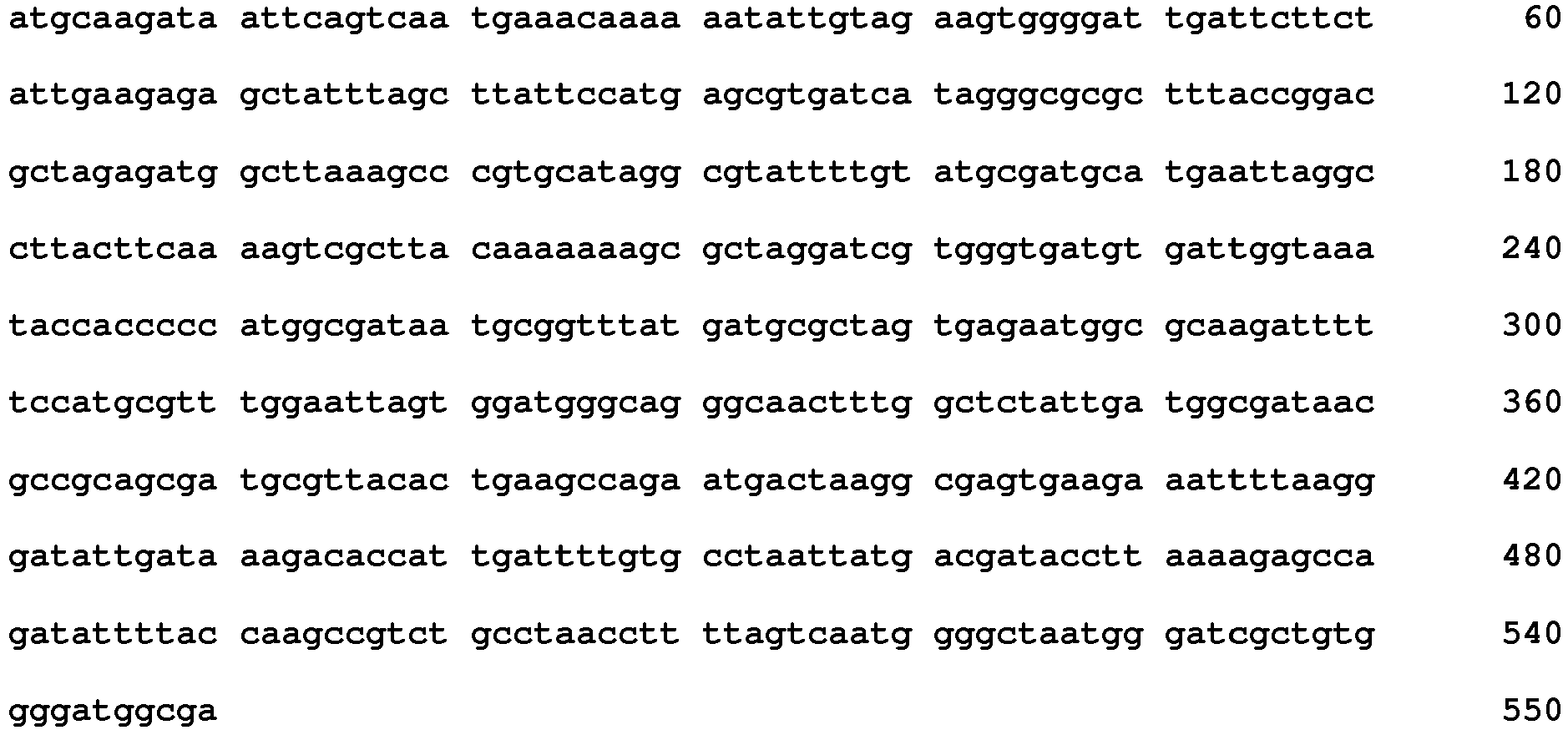
- <210> 50
<211> 500
<212> DNA
<213> Helicobacter pylori - <400> 50


- <210> 51
<211> 600
<212> DNA
<213> Helicobacter pylori - <400> 51

- <210> 52
<211> 1032
<212> DNA
<213> Helicobacter pylori - <400> 52


Claims (7)
- A method for(A) detecting within a patient derived sample the presence of drug resistant H. pylori, the method comprising:a) generating amplicons from DNA isolated from the patient derived sample and from:i) PCR primer pair pool 1 comprising primers SEQ ID Nos. 1-10;ii) PCR primer pair pool 2 comprising primers SEQ ID Nos. 11-22;iii) PCR primer pair pool 3 comprising primers SEQ ID Nos. 23-28;iv) PCR primer pair pool 4 comprising primers SEQ ID Nos. 29-32;v) PCR primer pair pool 5 comprising primers SEQ ID Nos. 33-38;vi) PCR primer pair pool 6 comprising primers SEQ ID Nos. 39-44;b) combining all amplicons produced from PCR primer pair pools 1-6 in step a) into a sample amplicon pool, adding a unique index sequence to the amplicons within the sample amplicon pool to generate an indexed sample amplicon pool, optionally further combining the indexed sample amplicon pool with one or more differentially indexed sample amplicon pools from different patient derived samples, and sequencing all indexed sample amplicons simultaneously;c) identifying mutations within the sequenced indexed sample amplicons by reference to SEQ ID Nos. 47-51; andd) determining the drug-resistant profile of H. pylori present in the patient-derived profile by the presence or absence of mutations identified in step c);or(B) detecting within a patient derived sample the presence of mutations in rdxA in H. pylori, the method comprising:a) generating amplicons from DNA isolated from the patient derived sample and from:i) PCR primer pair pool 1 comprising primers SEQ ID Nos. 23-28;ii) PCR primer pair pool 2 comprising primers SEQ ID Nos. 29-32;iii) PCR primer pair pool 3 comprising primers SEQ ID Nos. 33-38;iv) PCR primer pair pool 4 comprising primers SEQ ID Nos. 39-44;b) combining all amplicons produced from PCR primer pair pools 1-4 in step a) into a sample amplicon pool, adding a unique index sequence to the amplicons within the sample amplicon pool to generate an indexed sample amplicon pool, optionally further combining the indexed sample amplicon pool with one or more differentially indexed sample amplicon pools from different patient derived samples, and sequencing all indexed sample amplicons simultaneously;c) identifying mutations within the sequenced indexed sample amplicons by reference to SEQ ID Nos. 47-51; andd) determining whether the H. pylori present in the patient-derived sample has rdxA mutations by the presence or absence of mutations identified in step c).
- The method of claim 1, wherein the sample is a biopsy sample, optionally
wherein the biopsy is a gastric biopsy, or
wherein the sample comprises a formalin-fixed paraffin embedded biopsy sample, or wherein the sample contains Helicobacter pylori (H. pylori). - The method of any of the preceding claims, wherein the identified mutation is an A2142G, A2143G, and/or A2142C mutation of the H. pylori 23S rRNA gene.
- The method of any of the preceding claims, wherein the identified mutation is an A928C, AG926-927GT, A926G/A928C and/or AGA926-928TTC mutation of the H. pylori 16S rRNA gene.
- The method of any of the preceding claims, wherein the identified mutation is a C261A, C261G, G271A, and/or G271T mutation of the H. pylori gyrA gene encoding DNA gyrase subunit A.
- The method of any of the preceding claims, wherein the identified mutation is between codons 525 and 545 of the H. pylori rpoB gene encoding the beta/beta' subunit of DNA-directed RNA polymerase.
- The method of any of the preceding claims, wherein the identified mutation is a C1242A or C1242G mutation in the H. pylori pbp1 gene encoding penicillin-binding protein 1.
Applications Claiming Priority (2)
| Application Number | Priority Date | Filing Date | Title |
|---|---|---|---|
| US201662334185P | 2016-05-10 | 2016-05-10 | |
| PCT/US2017/031901 WO2017196941A1 (en) | 2016-05-10 | 2017-05-10 | Methods and compositions for characterizing drug resistant bacteria from formalin-fixed paraffin-embedded biological samples |
Publications (3)
| Publication Number | Publication Date |
|---|---|
| EP3455380A1 EP3455380A1 (en) | 2019-03-20 |
| EP3455380A4 EP3455380A4 (en) | 2020-03-11 |
| EP3455380B1 true EP3455380B1 (en) | 2021-07-07 |
Family
ID=60266713
Family Applications (1)
| Application Number | Title | Priority Date | Filing Date |
|---|---|---|---|
| EP17796738.7A Active EP3455380B1 (en) | 2016-05-10 | 2017-05-10 | Methods for characterizing drug resistant bacteria from formalin-fixed paraffin-embedded biological samples |
Country Status (10)
| Country | Link |
|---|---|
| US (1) | US10968489B2 (en) |
| EP (1) | EP3455380B1 (en) |
| JP (1) | JP7143284B2 (en) |
| KR (1) | KR102326351B1 (en) |
| CN (1) | CN109312410B (en) |
| AU (1) | AU2017262776B2 (en) |
| CA (1) | CA3023685A1 (en) |
| ES (1) | ES2886270T3 (en) |
| MX (1) | MX386318B (en) |
| WO (1) | WO2017196941A1 (en) |
Families Citing this family (7)
| Publication number | Priority date | Publication date | Assignee | Title |
|---|---|---|---|---|
| WO2019099775A1 (en) * | 2017-11-16 | 2019-05-23 | American Molecular Laboratories, Inc. | Methods for detection of antibiotic resistant h.pylori |
| US20210355526A1 (en) * | 2018-08-08 | 2021-11-18 | Ministry Of Health, State Of Israel | Molecular typing of microbes |
| CN109141963B (en) * | 2018-09-27 | 2023-12-19 | 上海海洋大学 | An instrument for trace sampling and embedding of isotope determination samples |
| EP3973532A4 (en) * | 2019-05-23 | 2022-08-31 | American Molecular Laboratories, Inc. | Methods for detecting a level of h. pylori in a fecal sample |
| CN110184331A (en) * | 2019-05-27 | 2019-08-30 | 深圳前海大井医疗股份有限公司 | Helicobacter pylori yin and yang attribute and clarithromycin drug resistance synchronization detection method |
| CN110423799A (en) * | 2019-08-12 | 2019-11-08 | 复旦大学 | A kind of helicobacter pylori lavo-ofloxacin Drug Resistance Detection method |
| CN115786551A (en) * | 2022-11-23 | 2023-03-14 | 济南艾迪康医学检验中心有限公司 | Primer, kit and method for detecting mutation condition of drug-resistant gene 16S RNA of tetracycline treatment helicobacter pylori infection |
Family Cites Families (9)
| Publication number | Priority date | Publication date | Assignee | Title |
|---|---|---|---|---|
| US20040052799A1 (en) * | 1996-11-15 | 2004-03-18 | Astra Aktiebolag | Nucleic acid and amino acid sequences relating to Helicobacter pylori for diagnostics and therapeutics |
| DE60038695T2 (en) | 1999-11-29 | 2009-05-28 | Avi Biopharma, Inc., Corvallis | AGAINST BACTERIAL 16S AND 23S RRNAS UNLOCKED ANTISENSE OLIGONUCLEOTIDES AND ITS USES |
| EP2633311A4 (en) * | 2010-10-26 | 2014-05-07 | Univ Stanford | NON-INVASIVE F TAL GENE SCREENING BY SEQUENCING ANALYSIS |
| US20130059762A1 (en) * | 2011-04-28 | 2013-03-07 | Life Technologies Corporation | Methods and compositions for multiplex pcr |
| WO2012149438A1 (en) | 2011-04-28 | 2012-11-01 | Life Technologies Corporation | Methods and compositions for multiplex pcr |
| WO2015095225A1 (en) | 2013-12-19 | 2015-06-25 | The Board Of Trustees Of The Leland Stanford Junior University | Quantification of mutant alleles and copy number variation using digital pcr with nonspecific dna-binding dyes |
| US20170247756A1 (en) * | 2014-10-03 | 2017-08-31 | Life Technologies Corporation | Genetic sequence verification compositions, methods and kits |
| CN104846097B (en) * | 2015-05-21 | 2017-12-22 | 杭州千基生物科技有限公司 | Helicobacter pylori parting and drug resistant mutant genes detection kit |
| CN105368825B (en) * | 2015-10-14 | 2019-09-10 | 华东医院 | Helicobacter pylori antibiotic resistance assay kit and Resistance detection method |
-
2017
- 2017-05-10 CN CN201780035926.6A patent/CN109312410B/en active Active
- 2017-05-10 EP EP17796738.7A patent/EP3455380B1/en active Active
- 2017-05-10 AU AU2017262776A patent/AU2017262776B2/en active Active
- 2017-05-10 WO PCT/US2017/031901 patent/WO2017196941A1/en not_active Ceased
- 2017-05-10 US US15/591,724 patent/US10968489B2/en active Active
- 2017-05-10 CA CA3023685A patent/CA3023685A1/en active Pending
- 2017-05-10 MX MX2018013791A patent/MX386318B/en unknown
- 2017-05-10 ES ES17796738T patent/ES2886270T3/en active Active
- 2017-05-10 JP JP2019511824A patent/JP7143284B2/en active Active
- 2017-05-10 KR KR1020187035088A patent/KR102326351B1/en active Active
Non-Patent Citations (1)
| Title |
|---|
| None * |
Also Published As
| Publication number | Publication date |
|---|---|
| MX386318B (en) | 2025-03-18 |
| US20170327873A1 (en) | 2017-11-16 |
| EP3455380A4 (en) | 2020-03-11 |
| WO2017196941A1 (en) | 2017-11-16 |
| JP2019514438A (en) | 2019-06-06 |
| CN109312410B (en) | 2022-10-28 |
| KR20190003739A (en) | 2019-01-09 |
| AU2017262776B2 (en) | 2023-07-06 |
| CA3023685A1 (en) | 2017-11-16 |
| MX2018013791A (en) | 2019-08-05 |
| AU2017262776A1 (en) | 2018-12-06 |
| CN109312410A (en) | 2019-02-05 |
| KR102326351B1 (en) | 2021-11-12 |
| ES2886270T3 (en) | 2021-12-16 |
| US10968489B2 (en) | 2021-04-06 |
| JP7143284B2 (en) | 2022-09-28 |
| EP3455380A1 (en) | 2019-03-20 |
Similar Documents
| Publication | Publication Date | Title |
|---|---|---|
| AU2017262776B2 (en) | Methods and compositions for characterizing drug resistant bacteria from formalin-fixed paraffin-embedded biological samples | |
| CN105087771B (en) | Method and kit for identifying microbial species in samples | |
| US10550427B2 (en) | Systems and methods for universal tail-based indexing strategies for amplicon sequencing | |
| KR101923647B1 (en) | SNP markers for discrimination of Jubilee type or Crimson type watermelon cultivar | |
| EP3346006A1 (en) | Method for amplifying dna | |
| CA3029167C (en) | Method for producing dna library and method for analyzing genomic dna using the dna library | |
| US20200224192A1 (en) | Method and Kit for Constructing a Simplified Genomic Library | |
| Wyrwa et al. | Integration of Lupinus angustifolius L.(narrow-leafed lupin) genome maps and comparative mapping within legumes | |
| US20250388954A1 (en) | Primers with self-complementary sequences for multiple displacement amplification | |
| US11708616B2 (en) | Methods for detection of antibiotic resistant H. pylori | |
| EP3474168B1 (en) | Method for measuring mutation rate | |
| CN112708658A (en) | Liquid chip primer group for detecting multiple drug-resistant genes and application thereof | |
| CN108699594B (en) | Selective Amplification of Desired Nucleic Acid Regions in Target Sequences | |
| Fransen et al. | Reference standards for the development and analytical validation of a next-generation lung cancer liquid biopsy assay | |
| KR20240072342A (en) | SNP markers for identification of radish root skin color and use thereof | |
| KR20240173330A (en) | Composition for multiple diagnosis of virus from tulip | |
| WO2025087469A1 (en) | Set of primers, diagnostic set, method of detecting the v600e mutation in the braf gene and use thereof | |
| KR101849235B1 (en) | Molecular biomarker composition for identification of Korean domestic chicken, Araucana, and Leghorn breeds through comparative genomics | |
| KR20240031934A (en) | Composition for selective amplifying multiple target DNA and the method of thereof | |
| CN117265116A (en) | Detection method, kit and probe library of TFE3 fusion gene | |
| Barry | Overcoming the challenges of applying target enrichment for translational research |
Legal Events
| Date | Code | Title | Description |
|---|---|---|---|
| STAA | Information on the status of an ep patent application or granted ep patent |
Free format text: STATUS: THE INTERNATIONAL PUBLICATION HAS BEEN MADE |
|
| PUAI | Public reference made under article 153(3) epc to a published international application that has entered the european phase |
Free format text: ORIGINAL CODE: 0009012 |
|
| STAA | Information on the status of an ep patent application or granted ep patent |
Free format text: STATUS: REQUEST FOR EXAMINATION WAS MADE |
|
| 17P | Request for examination filed |
Effective date: 20181204 |
|
| AK | Designated contracting states |
Kind code of ref document: A1 Designated state(s): AL AT BE BG CH CY CZ DE DK EE ES FI FR GB GR HR HU IE IS IT LI LT LU LV MC MK MT NL NO PL PT RO RS SE SI SK SM TR |
|
| AX | Request for extension of the european patent |
Extension state: BA ME |
|
| DAV | Request for validation of the european patent (deleted) | ||
| DAX | Request for extension of the european patent (deleted) | ||
| RIC1 | Information provided on ipc code assigned before grant |
Ipc: C12Q 1/68 20180101AFI20191031BHEP Ipc: C40B 30/04 20060101ALI20191031BHEP Ipc: C12P 19/34 20060101ALI20191031BHEP |
|
| A4 | Supplementary search report drawn up and despatched |
Effective date: 20200210 |
|
| RIC1 | Information provided on ipc code assigned before grant |
Ipc: C12P 19/34 20060101ALI20200204BHEP Ipc: C12Q 1/689 20180101AFI20200204BHEP Ipc: G16B 30/00 20190101ALI20200204BHEP Ipc: C40B 30/04 20060101ALI20200204BHEP |
|
| REG | Reference to a national code |
Ref country code: DE Ref legal event code: R079 Ref document number: 602017041754 Country of ref document: DE Free format text: PREVIOUS MAIN CLASS: C12Q0001680000 Ipc: C12Q0001689000 |
|
| GRAP | Despatch of communication of intention to grant a patent |
Free format text: ORIGINAL CODE: EPIDOSNIGR1 |
|
| STAA | Information on the status of an ep patent application or granted ep patent |
Free format text: STATUS: GRANT OF PATENT IS INTENDED |
|
| RIC1 | Information provided on ipc code assigned before grant |
Ipc: C40B 30/04 20060101ALI20201118BHEP Ipc: C12P 19/34 20060101ALI20201118BHEP Ipc: G16B 30/00 20190101ALI20201118BHEP Ipc: C12Q 1/689 20180101AFI20201118BHEP |
|
| INTG | Intention to grant announced |
Effective date: 20201210 |
|
| GRAS | Grant fee paid |
Free format text: ORIGINAL CODE: EPIDOSNIGR3 |
|
| GRAA | (expected) grant |
Free format text: ORIGINAL CODE: 0009210 |
|
| STAA | Information on the status of an ep patent application or granted ep patent |
Free format text: STATUS: THE PATENT HAS BEEN GRANTED |
|
| AK | Designated contracting states |
Kind code of ref document: B1 Designated state(s): AL AT BE BG CH CY CZ DE DK EE ES FI FR GB GR HR HU IE IS IT LI LT LU LV MC MK MT NL NO PL PT RO RS SE SI SK SM TR |
|
| REG | Reference to a national code |
Ref country code: GB Ref legal event code: FG4D |
|
| REG | Reference to a national code |
Ref country code: AT Ref legal event code: REF Ref document number: 1408668 Country of ref document: AT Kind code of ref document: T Effective date: 20210715 |
|
| REG | Reference to a national code |
Ref country code: DE Ref legal event code: R096 Ref document number: 602017041754 Country of ref document: DE |
|
| REG | Reference to a national code |
Ref country code: IE Ref legal event code: FG4D |
|
| REG | Reference to a national code |
Ref country code: LT Ref legal event code: MG9D |
|
| REG | Reference to a national code |
Ref country code: NL Ref legal event code: MP Effective date: 20210707 |
|
| REG | Reference to a national code |
Ref country code: AT Ref legal event code: MK05 Ref document number: 1408668 Country of ref document: AT Kind code of ref document: T Effective date: 20210707 |
|
| REG | Reference to a national code |
Ref country code: ES Ref legal event code: FG2A Ref document number: 2886270 Country of ref document: ES Kind code of ref document: T3 Effective date: 20211216 |
|
| PG25 | Lapsed in a contracting state [announced via postgrant information from national office to epo] |
Ref country code: LT Free format text: LAPSE BECAUSE OF FAILURE TO SUBMIT A TRANSLATION OF THE DESCRIPTION OR TO PAY THE FEE WITHIN THE PRESCRIBED TIME-LIMIT Effective date: 20210707 Ref country code: BG Free format text: LAPSE BECAUSE OF FAILURE TO SUBMIT A TRANSLATION OF THE DESCRIPTION OR TO PAY THE FEE WITHIN THE PRESCRIBED TIME-LIMIT Effective date: 20211007 Ref country code: AT Free format text: LAPSE BECAUSE OF FAILURE TO SUBMIT A TRANSLATION OF THE DESCRIPTION OR TO PAY THE FEE WITHIN THE PRESCRIBED TIME-LIMIT Effective date: 20210707 Ref country code: FI Free format text: LAPSE BECAUSE OF FAILURE TO SUBMIT A TRANSLATION OF THE DESCRIPTION OR TO PAY THE FEE WITHIN THE PRESCRIBED TIME-LIMIT Effective date: 20210707 Ref country code: PT Free format text: LAPSE BECAUSE OF FAILURE TO SUBMIT A TRANSLATION OF THE DESCRIPTION OR TO PAY THE FEE WITHIN THE PRESCRIBED TIME-LIMIT Effective date: 20211108 Ref country code: NL Free format text: LAPSE BECAUSE OF FAILURE TO SUBMIT A TRANSLATION OF THE DESCRIPTION OR TO PAY THE FEE WITHIN THE PRESCRIBED TIME-LIMIT Effective date: 20210707 Ref country code: NO Free format text: LAPSE BECAUSE OF FAILURE TO SUBMIT A TRANSLATION OF THE DESCRIPTION OR TO PAY THE FEE WITHIN THE PRESCRIBED TIME-LIMIT Effective date: 20211007 Ref country code: HR Free format text: LAPSE BECAUSE OF FAILURE TO SUBMIT A TRANSLATION OF THE DESCRIPTION OR TO PAY THE FEE WITHIN THE PRESCRIBED TIME-LIMIT Effective date: 20210707 Ref country code: RS Free format text: LAPSE BECAUSE OF FAILURE TO SUBMIT A TRANSLATION OF THE DESCRIPTION OR TO PAY THE FEE WITHIN THE PRESCRIBED TIME-LIMIT Effective date: 20210707 Ref country code: SE Free format text: LAPSE BECAUSE OF FAILURE TO SUBMIT A TRANSLATION OF THE DESCRIPTION OR TO PAY THE FEE WITHIN THE PRESCRIBED TIME-LIMIT Effective date: 20210707 |
|
| PG25 | Lapsed in a contracting state [announced via postgrant information from national office to epo] |
Ref country code: PL Free format text: LAPSE BECAUSE OF FAILURE TO SUBMIT A TRANSLATION OF THE DESCRIPTION OR TO PAY THE FEE WITHIN THE PRESCRIBED TIME-LIMIT Effective date: 20210707 Ref country code: LV Free format text: LAPSE BECAUSE OF FAILURE TO SUBMIT A TRANSLATION OF THE DESCRIPTION OR TO PAY THE FEE WITHIN THE PRESCRIBED TIME-LIMIT Effective date: 20210707 Ref country code: GR Free format text: LAPSE BECAUSE OF FAILURE TO SUBMIT A TRANSLATION OF THE DESCRIPTION OR TO PAY THE FEE WITHIN THE PRESCRIBED TIME-LIMIT Effective date: 20211008 |
|
| REG | Reference to a national code |
Ref country code: DE Ref legal event code: R097 Ref document number: 602017041754 Country of ref document: DE |
|
| PG25 | Lapsed in a contracting state [announced via postgrant information from national office to epo] |
Ref country code: DK Free format text: LAPSE BECAUSE OF FAILURE TO SUBMIT A TRANSLATION OF THE DESCRIPTION OR TO PAY THE FEE WITHIN THE PRESCRIBED TIME-LIMIT Effective date: 20210707 |
|
| PLBE | No opposition filed within time limit |
Free format text: ORIGINAL CODE: 0009261 |
|
| STAA | Information on the status of an ep patent application or granted ep patent |
Free format text: STATUS: NO OPPOSITION FILED WITHIN TIME LIMIT |
|
| PG25 | Lapsed in a contracting state [announced via postgrant information from national office to epo] |
Ref country code: SM Free format text: LAPSE BECAUSE OF FAILURE TO SUBMIT A TRANSLATION OF THE DESCRIPTION OR TO PAY THE FEE WITHIN THE PRESCRIBED TIME-LIMIT Effective date: 20210707 Ref country code: SK Free format text: LAPSE BECAUSE OF FAILURE TO SUBMIT A TRANSLATION OF THE DESCRIPTION OR TO PAY THE FEE WITHIN THE PRESCRIBED TIME-LIMIT Effective date: 20210707 Ref country code: RO Free format text: LAPSE BECAUSE OF FAILURE TO SUBMIT A TRANSLATION OF THE DESCRIPTION OR TO PAY THE FEE WITHIN THE PRESCRIBED TIME-LIMIT Effective date: 20210707 Ref country code: EE Free format text: LAPSE BECAUSE OF FAILURE TO SUBMIT A TRANSLATION OF THE DESCRIPTION OR TO PAY THE FEE WITHIN THE PRESCRIBED TIME-LIMIT Effective date: 20210707 Ref country code: CZ Free format text: LAPSE BECAUSE OF FAILURE TO SUBMIT A TRANSLATION OF THE DESCRIPTION OR TO PAY THE FEE WITHIN THE PRESCRIBED TIME-LIMIT Effective date: 20210707 Ref country code: AL Free format text: LAPSE BECAUSE OF FAILURE TO SUBMIT A TRANSLATION OF THE DESCRIPTION OR TO PAY THE FEE WITHIN THE PRESCRIBED TIME-LIMIT Effective date: 20210707 |
|
| 26N | No opposition filed |
Effective date: 20220408 |
|
| REG | Reference to a national code |
Ref country code: CH Ref legal event code: PL |
|
| REG | Reference to a national code |
Ref country code: BE Ref legal event code: MM Effective date: 20220531 |
|
| PG25 | Lapsed in a contracting state [announced via postgrant information from national office to epo] |
Ref country code: MC Free format text: LAPSE BECAUSE OF FAILURE TO SUBMIT A TRANSLATION OF THE DESCRIPTION OR TO PAY THE FEE WITHIN THE PRESCRIBED TIME-LIMIT Effective date: 20210707 Ref country code: LU Free format text: LAPSE BECAUSE OF NON-PAYMENT OF DUE FEES Effective date: 20220510 Ref country code: LI Free format text: LAPSE BECAUSE OF NON-PAYMENT OF DUE FEES Effective date: 20220531 Ref country code: CH Free format text: LAPSE BECAUSE OF NON-PAYMENT OF DUE FEES Effective date: 20220531 |
|
| PG25 | Lapsed in a contracting state [announced via postgrant information from national office to epo] |
Ref country code: IE Free format text: LAPSE BECAUSE OF NON-PAYMENT OF DUE FEES Effective date: 20220510 |
|
| PG25 | Lapsed in a contracting state [announced via postgrant information from national office to epo] |
Ref country code: BE Free format text: LAPSE BECAUSE OF NON-PAYMENT OF DUE FEES Effective date: 20220531 |
|
| P01 | Opt-out of the competence of the unified patent court (upc) registered |
Effective date: 20230414 |
|
| PG25 | Lapsed in a contracting state [announced via postgrant information from national office to epo] |
Ref country code: HU Free format text: LAPSE BECAUSE OF FAILURE TO SUBMIT A TRANSLATION OF THE DESCRIPTION OR TO PAY THE FEE WITHIN THE PRESCRIBED TIME-LIMIT; INVALID AB INITIO Effective date: 20170510 |
|
| PG25 | Lapsed in a contracting state [announced via postgrant information from national office to epo] |
Ref country code: MK Free format text: LAPSE BECAUSE OF FAILURE TO SUBMIT A TRANSLATION OF THE DESCRIPTION OR TO PAY THE FEE WITHIN THE PRESCRIBED TIME-LIMIT Effective date: 20210707 Ref country code: CY Free format text: LAPSE BECAUSE OF FAILURE TO SUBMIT A TRANSLATION OF THE DESCRIPTION OR TO PAY THE FEE WITHIN THE PRESCRIBED TIME-LIMIT Effective date: 20210707 |
|
| PG25 | Lapsed in a contracting state [announced via postgrant information from national office to epo] |
Ref country code: MT Free format text: LAPSE BECAUSE OF FAILURE TO SUBMIT A TRANSLATION OF THE DESCRIPTION OR TO PAY THE FEE WITHIN THE PRESCRIBED TIME-LIMIT Effective date: 20210707 |
|
| PGFP | Annual fee paid to national office [announced via postgrant information from national office to epo] |
Ref country code: DE Payment date: 20250627 Year of fee payment: 9 |
|
| PGFP | Annual fee paid to national office [announced via postgrant information from national office to epo] |
Ref country code: GB Payment date: 20250627 Year of fee payment: 9 Ref country code: ES Payment date: 20250602 Year of fee payment: 9 |
|
| PGFP | Annual fee paid to national office [announced via postgrant information from national office to epo] |
Ref country code: FR Payment date: 20250625 Year of fee payment: 9 |
|
| PGFP | Annual fee paid to national office [announced via postgrant information from national office to epo] |
Ref country code: IT Payment date: 20250619 Year of fee payment: 9 |
|
| PG25 | Lapsed in a contracting state [announced via postgrant information from national office to epo] |
Ref country code: TR Free format text: LAPSE BECAUSE OF FAILURE TO SUBMIT A TRANSLATION OF THE DESCRIPTION OR TO PAY THE FEE WITHIN THE PRESCRIBED TIME-LIMIT Effective date: 20210707 |