EP3454209A1 - Multi-task scheduling method and system, application server and computer-readable storage medium - Google Patents
Multi-task scheduling method and system, application server and computer-readable storage medium Download PDFInfo
- Publication number
- EP3454209A1 EP3454209A1 EP17904352.6A EP17904352A EP3454209A1 EP 3454209 A1 EP3454209 A1 EP 3454209A1 EP 17904352 A EP17904352 A EP 17904352A EP 3454209 A1 EP3454209 A1 EP 3454209A1
- Authority
- EP
- European Patent Office
- Prior art keywords
- task
- data
- source
- synchronization
- type
- Prior art date
- Legal status (The legal status is an assumption and is not a legal conclusion. Google has not performed a legal analysis and makes no representation as to the accuracy of the status listed.)
- Ceased
Links
Images

Classifications
-
- G—PHYSICS
- G06—COMPUTING OR CALCULATING; COUNTING
- G06F—ELECTRIC DIGITAL DATA PROCESSING
- G06F16/00—Information retrieval; Database structures therefor; File system structures therefor
- G06F16/20—Information retrieval; Database structures therefor; File system structures therefor of structured data, e.g. relational data
- G06F16/21—Design, administration or maintenance of databases
- G06F16/214—Database migration support
-
- G—PHYSICS
- G06—COMPUTING OR CALCULATING; COUNTING
- G06F—ELECTRIC DIGITAL DATA PROCESSING
- G06F9/00—Arrangements for program control, e.g. control units
- G06F9/06—Arrangements for program control, e.g. control units using stored programs, i.e. using an internal store of processing equipment to receive or retain programs
- G06F9/46—Multiprogramming arrangements
- G06F9/48—Program initiating; Program switching, e.g. by interrupt
- G06F9/4806—Task transfer initiation or dispatching
-
- G—PHYSICS
- G06—COMPUTING OR CALCULATING; COUNTING
- G06F—ELECTRIC DIGITAL DATA PROCESSING
- G06F16/00—Information retrieval; Database structures therefor; File system structures therefor
- G06F16/20—Information retrieval; Database structures therefor; File system structures therefor of structured data, e.g. relational data
- G06F16/27—Replication, distribution or synchronisation of data between databases or within a distributed database system; Distributed database system architectures therefor
-
- G—PHYSICS
- G06—COMPUTING OR CALCULATING; COUNTING
- G06F—ELECTRIC DIGITAL DATA PROCESSING
- G06F16/00—Information retrieval; Database structures therefor; File system structures therefor
- G06F16/20—Information retrieval; Database structures therefor; File system structures therefor of structured data, e.g. relational data
- G06F16/27—Replication, distribution or synchronisation of data between databases or within a distributed database system; Distributed database system architectures therefor
- G06F16/273—Asynchronous replication or reconciliation
-
- G—PHYSICS
- G06—COMPUTING OR CALCULATING; COUNTING
- G06F—ELECTRIC DIGITAL DATA PROCESSING
- G06F9/00—Arrangements for program control, e.g. control units
- G06F9/06—Arrangements for program control, e.g. control units using stored programs, i.e. using an internal store of processing equipment to receive or retain programs
- G06F9/46—Multiprogramming arrangements
- G06F9/48—Program initiating; Program switching, e.g. by interrupt
- G06F9/4806—Task transfer initiation or dispatching
- G06F9/4843—Task transfer initiation or dispatching by program, e.g. task dispatcher, supervisor, operating system
- G06F9/4881—Scheduling strategies for dispatcher, e.g. round robin, multi-level priority queues
Definitions
- This disclosure relates to the technical field of computer information, and particularly relates to a multi-task scheduling method, an application server and a computer-readable storage medium.
- task scheduling interface for example, oozie web service Application Programming Interface (API)
- API Application Programming Interface
- HDFS Hadoop Distributed File System
- the disclosure discloses a multi-task scheduling method and system, an application server and a computer-readable storage medium.
- Parameterization for API calling is implemented, and during data synchronization, a synchronization task may be completed only by transmitting a synchronization parameter without a deployment flow.
- an application server which includes a memory and a processor, wherein a multi-task scheduling system capable of running on the processor is stored on the memory, and when the multi-task scheduling system is executed by the processor, the following steps are implemented:
- the disclosure also provides a multi-task scheduling method, which is applied to an application server and includes:
- the task scheduling interface template includes a parameter configuration script, task execution scripts and a task scheduling script
- the parameter configuration script is configured to receive the synchronization parameters transmitted by the workflow scheduling engine
- the task execution scripts are configured to execute the task creation task and data synchronization task corresponding to each data source according to the synchronization parameter of the data synchronization task corresponding to each data source
- the task scheduling script is configured to manage an execution sequence of the data synchronization task corresponding to each data source.
- the disclosure also provides a computer-readable storage medium, which stores a multi-task scheduling system, wherein the multi-task scheduling system may be executed by at least one processor to implement the following steps:
- the disclosure also provides a multi-task scheduling system, which includes:
- the application server, multi-task scheduling method and system and computer-readable storage medium disclosed by the disclosure have the following advantages: the table creation task and data synchronization task corresponding to each data source are automatically generated according to the source tables selected by the user to be synchronized and the data source types; meanwhile, different specified files (for example, the parameter configuration script, the task execution scripts and the task scheduling script) are deployed in the task scheduling interface template at one time, and when data synchronization operation is executed, the task scheduling interface template is directly called, the synchronization parameter of the data synchronization task corresponding to each data source is transmitted to the task scheduling interface template, and the table creation task and data synchronization task corresponding to each data source are automatically executed; and therefore, the whole data synchronization process of multiple data sources is automatically implemented without a deployment flow, parameterization for API calling is implemented, and during data synchronization, the synchronization tasks may be completed only by transmitting the synchronization parameters.
- different specified files for example, the parameter configuration script, the task execution scripts and the task scheduling script
- FIG. 1 a schematic diagram of an optional application environment according to each embodiment of the disclosure is shown.
- the disclosure may be applied to an application environment including, but not limited to, an application server 2, networks 3, a data platform 4 and data sources 5, wherein the application server 2 may be computing equipment such as a rack server, a blade server, a tower server or a cabinet server, and the application server 2 may be an independent server and may also be a server cluster formed by multiple servers; and the networks 3 may be wireless or wired networks such as an intranet of an enterprise, the Internet, a Global System of Mobile communication (GSM), Wideband Code Division Multiple Access (WCDMA), a 4th-Generation (4G) network, a 5th-Generation (5G) network, Bluetooth and Wireless Fidelity (Wi-Fi).
- GSM Global System of Mobile communication
- WCDMA Wideband Code Division Multiple Access
- 4G 4th-Generation
- 5G 5th-Generation
- Wi-Fi Wireless Fidelity
- the application server 2 forms a communication connection with the data platform 4 through the network 3, and the data platform 4 forms a communication connection with each data source 5 through the network 3.
- a first connection (or called a first-type connection) is established between the data platform 4 and each data source 5, so that the data platform 4 may perform data transmission and interaction with each data source 5 through the first connection.
- a second connection (or called a second-type connection) is established between the data platform 4 and the application server 2, so that the data platform 4 may perform data transmission and interaction with the application server 2 through the second connection.
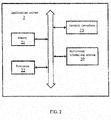
- the application server 2 may include, but not limited to, a memory 21, processor 22 and network interface 23 which may form communication connections with one another through a system bus. It is important to point out that the application server 2 with the components 21-23 is only shown in FIG. 2 . However, it should be understood that not all of the shown components are required to be implemented and more or fewer components may be implemented instead.
- the memory 21 includes at least one type of readable storage medium, and the readable storage medium includes a flash memory, a hard disk, a multimedia card, a card type memory (for example, a Secure Digital (SD) or DX memory), a Random Access Memory (RAM), a Static RAM (SRAM), a Read-Only Memory (ROM), an Electrically Erasable Programmable ROM (EEPROM), a Programmable ROM (PROM), a magnetic memory, a magnetic disk, an optical disk and the like.
- the memory 21 may be an internal storage unit of the application server 2, for example, a hard disk or memory of the application server 2.
- the memory 21 may also be external storage equipment of the application server 2, for example, a plug-in type hard disk, Smart Media Card (SMC), Secure Digital (SD) card and flash card configured on the application server 2.
- the memory 21 may not only include the internal storage unit of the application server 2 but also include the external storage equipment.
- the memory 21 is usually configured to store an operating system and various types of application software installed in the application server 2, for example, a program code of a multi-task scheduling system 20.
- the memory 21 may further be configured to temporally store various types of data which has been output or will be output.
- the processor 22 is usually configured to control overall operation of the application server 2, for example, executing control and processing related to data interaction or communication with the application server 2.
- the processor 22 is configured to run the program code stored in the memory 21 or process data, for example, running the multi-task scheduling system 20.
- the network interface 23 may include a wireless network interface or a wired network interface, and the network interface 23 is usually configured to establish a communication connection between the application server 2 and other electronic equipment.
- the network interface 23 is mainly configured to connect the application server 2 with the data platform 4 through the network 3 and establish a data transmission channel and a communication connection between the application server 2 and the data platform 4.
- the disclosure discloses a multi-task scheduling system 20.
- the multi-task scheduling system 20 may be divided into one or more modules, and the one or more modules are stored in a memory 21 and are executed by one or more processors (a processor 22 in the embodiment) to implement the disclosure.
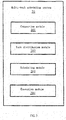
- the multi-task scheduling system 20 may be divided into a connection module 201, a task distribution module 202, a scheduling module 203 and an execution module 204.
- Functional module mentioned in the disclosure refers to a series of computer program instruction segments capable of realizing specific functions and is more suitable than a program to describe an execution process of the multi-task scheduling system 20 in the application server 2. Functions of each of the functional modules 201-204 will be described below in detail.
- the connection module 201 is configured to establish a first connection (or called a first-type connection) between a data platform 4 and at least one data source 5 and establish a second connection (or called a second-type connection) between the data platform 4 and an application server 2 (for example, a parsing server).
- a first connection or called a first-type connection
- a second connection or called a second-type connection
- the data platform 4 adopts a Hadoop data platform, and the first connection between the data platform 4 and each data source 5 is established through a data transmission tool in the data platform 4.
- the data transmission tool is a Sqoop tool set in Hadoop.
- the data platform and the data transmission tool may also adopt other types in other embodiments.
- the task distribution module 202 is configured to receive source tables (part or all) selected by a user to be synchronized and data source types, generate a table creation task and data synchronization task (or called a data extraction task) corresponding to each data source according to a source table structure, obtained by pre-parsing, of each data source and distribute the generated table creation task and data synchronization task corresponding to each data source to a preset workflow scheduling engine (for example, an oozie scheduling engine).
- a preset workflow scheduling engine for example, an oozie scheduling engine
- the data source types include, but not limited to, a first-type data source (for example, a Microsoft Structured Query Language (MS SQL) server data source), a second-type data source (for example, an Oracle data source), a third-type data source (for example, a MySQL data source) and the like.
- a first-type data source for example, a Microsoft Structured Query Language (MS SQL) server data source
- a second-type data source for example, an Oracle data source
- a third-type data source for example, a MySQL data source
- the source table structure of the data source includes, but not limited to, a data type, included field information and the like of each data source.
- a parsing script file corresponding to each data source 5 is set in the application server 2, and the data transmission tool in the data platform 4 is controlled through a parallel scheduling mechanism to execute a source table structure parsing task in each parsing script file in parallel to obtain the source table structure of each data source by parsing and return the source table structure, obtained by parsing, of each data source to the application server 2 through the second connection.
- the operation that the table creation task corresponding to each data source is generated includes that: target tables corresponding to types of the selected source tables are generated according to the source tables (part or all) selected by the user to be synchronized and the type of each source table.
- the types of the source tables include, but not limited to, a first-type dimension table (i.e., a source table with a small data volume and associatively configured for use), a second-type task table (i.e., a table in which data is kept updated and added and historical data except data of the present day may be updated on the present day) and a third-type day-to-day table (i.e., a table in which data is kept added and historical data except data of the present day may not be updated on the present day).
- a first-type dimension table i.e., a source table with a small data volume and associatively configured for use
- a second-type task table i.e., a table in which data is kept updated and added and historical data except data of the present day may be updated on the present day
- a third-type day-to-day table i.e., a table in which data is kept added and historical data except data of the present day may not be updated on the present day.
- first-type dimension tables i.e., source tables with small data volumes and associatively configured for use
- first-type target tables corresponding to source table structures of the first-type dimension tables are generated, wherein the number of the first-type target tables is determined according to the number of the first-type source tables selected by the user to be synchronized.
- second-type task tables i.e., tables in which data is kept updated and added and historical data except data of the present day may be updated on the present day
- second-type target tables corresponding to source table structures of the second-type task tables are generated, wherein the number of the second-type target tables is determined according to the number of the second-type source tables selected by the user to be synchronized.
- third-type day-to-day tables i.e., tables in which data is kept added and historical data except data of the present day may not be updated on the present day
- third-type target tables corresponding to source table structures of the third-type day-to-day tables are generated, wherein the number of the third-type target tables is determined according to the number of the third-type source tables selected by the user to be synchronized.
- the operation that the data synchronization task corresponding to each data source is generated includes that:
- the types of the source tables selected by the user to be synchronized are the first-type dimension tables, a corresponding relationship between corresponding fields of the first-type dimension tables selected to be synchronized and corresponding fields of each generated first-type target table is established, and a data extraction task corresponding to each first-type dimension table is generated according to the corresponding relationship between the corresponding fields of the first-type dimension tables and the first-type target tables;
- the types of the source tables selected by the user to be synchronized are the second-type task tables, a corresponding relationship between corresponding fields of the second-type task tables selected to be synchronized and corresponding fields of each generated second-type target table is established, and a data extraction task corresponding to each second-type task table is generated according to the corresponding relationship between the corresponding fields of the second-type task tables and the second-type target tables; and if the types of the source tables selected by the user to be synchronized are the third-type day-to-day tables, a corresponding relationship between corresponding fields of the third
- the scheduling module 203 is configured to, when synchronization starting time selected by the user is reached, call a preset task scheduling interface template from a specified file system through the preset workflow scheduling engine and transmit a synchronization parameter of the data synchronization task corresponding to each data source to the task scheduling interface template through the preset workflow scheduling engine.
- the specified file system is a distributed file system, for example, an HDFS
- the task scheduling interface template is an oozie web service API template, wherein the task scheduling interface template is pre-deployed in the specified file system.
- the synchronization parameter includes, but not limited to, information about the resource configuration and resource management node required by each task, the starting time and ending time of data synchronization, a username selecting the synchronization parameter and the like.
- the task scheduling interface template includes, but not limited to, a parameter configuration script, task execution scripts and a task scheduling script
- the parameter configuration script is a shell script, and is configured to receive the synchronization parameters transmitted by the workflow scheduling engine
- the task execution scripts are Extensible Markup Language (XML) scripts, and are configured to execute the task creation task and data synchronization task corresponding to each data source according to the synchronization parameter of the data synchronization task corresponding to each data source
- the task scheduling script is an XML script, and is configured to manage an execution sequence of the data synchronization task corresponding to each data source.
- the task execution scripts include, but not limited to, a first execution script configured to extract data from the first-type dimension tables, a second execution script configured to extract data from the second-type task tables and a third execution script configured to extract data from the third-type day-to-day tables.
- the execution module 204 is configured to call a corresponding task execution script in the task scheduling interface template according to the synchronization parameter of the data synchronization task corresponding to each data source and execute the table creation task and data synchronization task corresponding to each data source.
- the execution of the data synchronization task includes that:
- the task execution script corresponding to each data source in the task scheduling interface template is called, the resource configuration required by each task during data synchronization is acquired, data (metadata information) corresponding to the corresponding field is extracted from each source table and the extracted data is stored into the corresponding field of each target table.
- the first execution script in the task scheduling interface template is called, first data corresponding to the corresponding field is extracted from each first-type dimension table, and the extracted first data is stored into the corresponding field of each first-type target table;
- the second execution script in the task scheduling interface template is called, second data corresponding to the corresponding field is extracted from each second-type task table, and the extracted second data is stored into the corresponding field of each second-type target table;
- the third execution script in the task scheduling interface template is called, third data corresponding to the corresponding field is extracted from each third-type day-to-day table, and the extracted third data is stored into the corresponding field of each third-type target table.
- the corresponding task execution script in the task scheduling interface template is called through the parallel scheduling mechanism to execute the table creation task and data synchronization task corresponding to each data source in parallel, extract the data corresponding to the corresponding field from each source table and store the extracted data into the corresponding field of each target table.
- the table creation task and data synchronization task corresponding to each data source are automatically generated according to the source tables selected by the user to be synchronized and the data source types; meanwhile, different specified files (for example, the parameter configuration script, the task execution scripts and the task scheduling script) are deployed in the task scheduling interface template at one time, and when data synchronization operation is executed, the task scheduling interface template is directly called, the synchronization parameter of the data synchronization task corresponding to each data source is transmitted to the task scheduling interface template, and the table creation task and data synchronization task corresponding to each data source are automatically executed; and therefore, the whole data synchronization process of multiple data sources is automatically implemented without a deployment flow, parameterization for API calling is implemented, and during data synchronization, the synchronization tasks may be completed only by transmitting the synchronization parameters.
- different specified files for example, the parameter configuration script, the task execution scripts and the task scheduling script
- the disclosure further discloses a multi-task scheduling method.
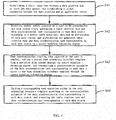
- FIG. 4 an implementation flowchart of an embodiment of a multi-task scheduling method according to the disclosure is shown.
- an execution sequence of steps in the flowchart shown in FIG. 4 may be changed and some steps may be eliminated.
- Step S41 a first connection (or called a first-type connection) is established between a data platform 4 and at least one data source 5, and a second connection (or called a second-type connection) is established between the data platform 4 and an application server 2 (for example, a parsing server).
- a first connection or called a first-type connection
- a second connection or called a second-type connection
- the data platform 4 adopts a Hadoop data platform, and the first connection between the data platform 4 and each data source 5 is established through a data transmission tool in the data platform 4.
- the data transmission tool is a Sqoop tool set in Hadoop.
- Step S42 source tables (part or all) selected by a user to be synchronized and data source types are received, a table creation task and data synchronization task (or called a data extraction task) corresponding to each data source are generated according to a source table structure, obtained by pre-parsing, of each data source, and the generated table creation task and data synchronization task corresponding to each data source are distributed to a preset workflow scheduling engine (for example, an oozie scheduling engine).
- a preset workflow scheduling engine for example, an oozie scheduling engine
- the data source types include, but not limited to, a first-type data source (for example, an MS SQL server data source), a second-type data source (for example, an Oracle data source), a third-type data source (for example, a MySQL data source) and the like.
- a first-type data source for example, an MS SQL server data source
- a second-type data source for example, an Oracle data source
- a third-type data source for example, a MySQL data source
- the number of the data source types may also be increased or decreased according to requirements of different data platforms in the other embodiments.
- the user may select to synchronize part of source tables in first-type data sources.
- the source table structure of the data source includes, but not limited to, a data type, included field information and the like of each data source.
- a parsing script file corresponding to each data source 5 is set in the application server 2, and the data transmission tool in the data platform 4 is controlled through a parallel scheduling mechanism to execute a source table structure parsing task in each parsing script file in parallel to obtain the source table structure of each data source by parsing and return the source table structure, obtained by parsing, of each data source to the application server 2 through the second connection.
- the operation that the table creation task corresponding to each data source is generated includes that: target tables corresponding to types of the selected source tables are generated according to the source tables (part or all) selected by the user to be synchronized and the type of each source table.
- the types of the source tables include, but not limited to, a first-type dimension table (i.e., a source table with a small data volume and associatively configured for use), a second-type task table (i.e., a table in which data is kept updated and added and historical data except data of the present day may be updated on the present day) and a third-type day-to-day table (i.e., a table in which data is kept added and historical data except data of the present day may not be updated on the present day).
- a first-type dimension table i.e., a source table with a small data volume and associatively configured for use
- a second-type task table i.e., a table in which data is kept updated and added and historical data except data of the present day may be updated on the present day
- a third-type day-to-day table i.e., a table in which data is kept added and historical data except data of the present day may not be updated on the present day.
- first-type dimension tables i.e., source tables with small data volumes and associatively configured for use
- first-type target tables corresponding to source table structures of the first-type dimension tables are generated, wherein the number of the first-type target tables is determined according to the number of the first-type source tables selected by the user to be synchronized.
- second-type task tables i.e., tables in which data is kept updated and added and historical data except data of the present day may be updated on the present day
- second-type target tables corresponding to source table structures of the second-type task tables are generated, wherein the number of the second-type target tables is determined according to the number of the second-type source tables selected by the user to be synchronized.
- third-type day-to-day tables i.e., tables in which data is kept added and historical data except data of the present day may not be updated on the present day
- third-type target tables corresponding to source table structures of the third-type day-to-day tables are generated, wherein the number of the third-type target tables is determined according to the number of the third-type source tables selected by the user to be synchronized.
- the operation that the data synchronization task corresponding to each data source is generated includes that:
- the types of the source tables selected by the user to be synchronized are the first-type dimension tables, a corresponding relationship between corresponding fields of the first-type dimension tables selected to be synchronized and corresponding fields of each generated first-type target table is established, and a data extraction task corresponding to each first-type dimension table is generated according to the corresponding relationship between the corresponding fields of the first-type dimension tables and the first-type target tables;
- the types of the source tables selected by the user to be synchronized are the second-type task tables, a corresponding relationship between corresponding fields of the second-type task tables selected to be synchronized and corresponding fields of each generated second-type target table is established, and a data extraction task corresponding to each second-type task table is generated according to the corresponding relationship between the corresponding fields of the second-type task tables and the second-type target tables; and if the types of the source tables selected by the user to be synchronized are the third-type day-to-day tables, a corresponding relationship between corresponding fields of the third
- Step S43 when synchronization starting time selected by the user is reached, a preset task scheduling interface template is called from a specified file system through the preset workflow scheduling engine, and a synchronization parameter of the data synchronization task corresponding to each data source is transmitted to the task scheduling interface template through the preset workflow scheduling engine.
- the specified file system is a distributed file system, for example, an HDFS
- the task scheduling interface template is an oozie web service API template, wherein the task scheduling interface template is pre-deployed in the specified file system.
- the synchronization parameter includes, but not limited to, information about the resource configuration and resource management node required by each task, the starting time and ending time of data synchronization, a username selecting the synchronization parameter and the like.
- the task scheduling interface template includes, but not limited to, a parameter configuration script, task execution scripts and a task scheduling script
- the parameter configuration script is a shell script, and is configured to receive the synchronization parameters transmitted by the workflow scheduling engine
- the task execution scripts are XML scripts, and are configured to execute the task creation task and data synchronization task corresponding to each data source according to the synchronization parameter of the data synchronization task corresponding to each data source
- the task scheduling script is an XML script, and is configured to manage an execution sequence of the data synchronization task corresponding to each data source.
- the task execution scripts include, but not limited to, a first execution script configured to extract data from the first-type dimension tables, a second execution script configured to extract data from the second-type task tables and a third execution script configured to extract data from the third-type day-to-day tables.
- Step S44 a corresponding task execution script in the task scheduling interface template is called according to the synchronization parameter of the data synchronization task corresponding to each data source, the table creation task and data synchronization task corresponding to each data source are executed.
- the execution of the data synchronization task includes that: the task execution script corresponding to each data source in the task scheduling interface template is called, the resource configuration required by each task during data synchronization is acquired, data (metadata information) corresponding to the corresponding field is extracted from each source table and the extracted data is stored into the corresponding field of each target table.
- the first execution script in the task scheduling interface template is called, first data corresponding to the corresponding field is extracted from each first-type dimension table, and the extracted first data is stored into the corresponding field of each first-type target table;
- the second execution script in the task scheduling interface template is called, second data corresponding to the corresponding field is extracted from each second-type task table, and the extracted second data is stored into the corresponding field of each second-type target table;
- the third execution script in the task scheduling interface template is called, third data corresponding to the corresponding field is extracted from each third-type day-to-day table, and the extracted third data is stored into the corresponding field of each third-type target table.
- the method further includes the following step: the corresponding task execution script in the task scheduling interface template is called through the parallel scheduling mechanism to execute the table creation task and data synchronization task corresponding to each data source in parallel, extract the data corresponding to the corresponding field from each source table and store the extracted data into the corresponding field of each target table.
- the table creation task and data synchronization task corresponding to each data source are automatically generated according to the source tables selected by the user to be synchronized and the data source types; meanwhile, different specified files (for example, the parameter configuration script, the task execution scripts and the task scheduling script) are deployed in the task scheduling interface template at one time, and when data synchronization operation is executed, the task scheduling interface template is directly called, the synchronization parameter of the data synchronization task corresponding to each data source is transmitted to the task scheduling interface template, and the table creation task and data synchronization task corresponding to each data source are automatically executed; and therefore, the whole data synchronization process of multiple data sources is automatically implemented without a deployment flow, parameterization for API calling is implemented, and during data synchronization, the synchronization tasks may be completed only by transmitting the synchronization parameters.
- different specified files for example, the parameter configuration script, the task execution scripts and the task scheduling script
- the disclosure also provides a computer-readable storage medium (for example, a ROM/RAM, a magnetic disk and an optical disk), which stores a multi-task scheduling system 20, wherein the multi-task scheduling system 20 may be executed by at least one processor 22 to enable the at least one processor 22 to execute the steps of the abovementioned multi-task scheduling method.
- a computer-readable storage medium for example, a ROM/RAM, a magnetic disk and an optical disk
Landscapes
- Engineering & Computer Science (AREA)
- Theoretical Computer Science (AREA)
- Databases & Information Systems (AREA)
- Physics & Mathematics (AREA)
- General Engineering & Computer Science (AREA)
- General Physics & Mathematics (AREA)
- Software Systems (AREA)
- Data Mining & Analysis (AREA)
- Computing Systems (AREA)
- Management, Administration, Business Operations System, And Electronic Commerce (AREA)
- Stored Programmes (AREA)
- Information Retrieval, Db Structures And Fs Structures Therefor (AREA)
Abstract
Description
- This application claims priority to China Patent Application No.
201710490454.5, filed on June 25, 2017 - This disclosure relates to the technical field of computer information, and particularly relates to a multi-task scheduling method, an application server and a computer-readable storage medium.
- In existing task scheduling interface (for example, oozie web service Application Programming Interface (API)) design, it is necessary to sequentially deploy different specified files (for example, an execution script and a scheduling script) into a Hadoop Distributed File System (HDFS). Such a design manner definitely requires a deployment flow and is not so convenient. Therefore, task scheduling interface design in the prior art is not reasonable enough and needs to be improved.
- In view of this, the disclosure discloses a multi-task scheduling method and system, an application server and a computer-readable storage medium. Parameterization for API calling is implemented, and during data synchronization, a synchronization task may be completed only by transmitting a synchronization parameter without a deployment flow.
- At first, to achieve the purpose, the disclosure discloses an application server, which includes a memory and a processor, wherein a multi-task scheduling system capable of running on the processor is stored on the memory, and when the multi-task scheduling system is executed by the processor, the following steps are implemented:
- establishing a first connection between a data platform and at least one data source, and establishing a second connection between the data platform and the application server;
- receiving source tables selected by a user to be synchronized and data source types, generating a table creation task and data synchronization task corresponding to each data source according to a source table structure, obtained by pre-parsing, of each data source, and distributing the generated table creation task and data synchronization task corresponding to each data source to a preset workflow scheduling engine;
- when synchronization starting time selected by the user is reached, calling a preset task scheduling interface template from a specified file system through the preset workflow scheduling engine, and transmitting a synchronization parameter of the data synchronization task corresponding to each data source to the task scheduling interface template through the preset workflow scheduling engine; and
- calling a corresponding task execution script in the task scheduling interface template according to the synchronization parameter of the data synchronization task corresponding to each data source, and executing the table creation task and data synchronization task corresponding to each data source.
- In addition, to achieve the purpose, the disclosure also provides a multi-task scheduling method, which is applied to an application server and includes:
- establishing a first connection between a data platform and at least one data source, and establishing a second connection between the data platform and the application server;
- receiving source tables selected by a user to be synchronized and data source types, generating a table creation task and data synchronization task corresponding to each data source according to a source table structure, obtained by pre-parsing, of each data source, and distributing the generated table creation task and data synchronization task corresponding to each data source to a preset workflow scheduling engine;
- when synchronization starting time selected by the user is reached, calling a preset task scheduling interface template from a specified file system through the preset workflow scheduling engine, and transmitting a synchronization parameter of the data synchronization task corresponding to each data source to the task scheduling interface template through the preset workflow scheduling engine; and
- calling a corresponding task execution script in the task scheduling interface template according to the synchronization parameter of the data synchronization task corresponding to each data source, and executing the table creation task and data synchronization task corresponding to each data source.
- Preferably, the task scheduling interface template includes a parameter configuration script, task execution scripts and a task scheduling script, the parameter configuration script is configured to receive the synchronization parameters transmitted by the workflow scheduling engine, the task execution scripts are configured to execute the task creation task and data synchronization task corresponding to each data source according to the synchronization parameter of the data synchronization task corresponding to each data source, and the task scheduling script is configured to manage an execution sequence of the data synchronization task corresponding to each data source.
- Further, to achieve the purpose, the disclosure also provides a computer-readable storage medium, which stores a multi-task scheduling system, wherein the multi-task scheduling system may be executed by at least one processor to implement the following steps:
- establishing a first connection between a data platform and at least one data source, and establishing a second connection between the data platform and an application server;
- receiving source tables selected by a user to be synchronized and data source types, generating a table creation task and data synchronization task corresponding to each data source according to a source table structure, obtained by pre-parsing, of each data source, and distributing the generated table creation task and data synchronization task corresponding to each data source to a preset workflow scheduling engine;
- when synchronization starting time selected by the user is reached, calling a preset task scheduling interface template from a specified file system through the preset workflow scheduling engine, and transmitting a synchronization parameter of the data synchronization task corresponding to each data source to the task scheduling interface template through the preset workflow scheduling engine; and
- calling a corresponding task execution script in the task scheduling interface template according to the synchronization parameter of the data synchronization task corresponding to each data source, and executing the table creation task and data synchronization task corresponding to each data source.
- Furthermore, to achieve the purpose, the disclosure also provides a multi-task scheduling system, which includes:
- a connection module, configured to establish a first connection between a data platform and at least one data source and establish a second connection between the data platform and an application server;
- a task distribution module, configured to receive source tables selected by a user to be synchronized and data source types, generate a table creation task and data synchronization task corresponding to each data source according to a source table structure, obtained by pre-parsing, of each data source and distribute the generated table creation task and data synchronization task corresponding to each data source to a preset workflow scheduling engine;
- a scheduling module, configured to, when synchronization starting time selected by the user is reached, call a preset task scheduling interface template from a specified file system through the preset workflow scheduling engine and transmit a synchronization parameter of the data synchronization task corresponding to each data source to the task scheduling interface template through the preset workflow scheduling engine; and
- an execution module, configured to call a corresponding task execution script in the task scheduling interface template according to the synchronization parameter of the data synchronization task corresponding to each data source and execute the table creation task and data synchronization task corresponding to each data source.
- Compared with the prior art, the application server, multi-task scheduling method and system and computer-readable storage medium disclosed by the disclosure have the following advantages: the table creation task and data synchronization task corresponding to each data source are automatically generated according to the source tables selected by the user to be synchronized and the data source types; meanwhile, different specified files (for example, the parameter configuration script, the task execution scripts and the task scheduling script) are deployed in the task scheduling interface template at one time, and when data synchronization operation is executed, the task scheduling interface template is directly called, the synchronization parameter of the data synchronization task corresponding to each data source is transmitted to the task scheduling interface template, and the table creation task and data synchronization task corresponding to each data source are automatically executed; and therefore, the whole data synchronization process of multiple data sources is automatically implemented without a deployment flow, parameterization for API calling is implemented, and during data synchronization, the synchronization tasks may be completed only by transmitting the synchronization parameters.
-
-
FIG. 1 is a schematic diagram of an optional application environment according to each embodiment of the disclosure. -
FIG. 2 is a schematic diagram of an optional hardware architecture of the application server inFIG. 1 . -
FIG. 3 is a schematic diagram of functional modules in an embodiment of a multi-task scheduling system in an application server. -
FIG. 4 is an implementation flowchart of an embodiment of a multi-task scheduling method according to the disclosure. - Reference signs in the accompanying drawings:
Application server 2 Network 3 Data platform 4 Data source 5 Memory 21 Processor 22 Network interface 23 Multi-task scheduling system 20 Connection module 201 Task distribution module 202 Scheduling module 203 Execution module 204 Flow steps S41-S44 - Achievement of the purpose, functional characteristics and advantages of the disclosure will be further described with reference to the accompanying drawings.
- For making the purpose, technical solutions and advantages of the disclosure clearer, the disclosure will be further described below in combination with the accompanying drawings and embodiments in detail. It should be understood that the specific embodiments described herein are adopted not to limit the disclosure but only to explain the disclosure. All other embodiments obtained by those of ordinary skilled in the art on the basis of the embodiments in the disclosure without creative work shall fall within the scope of protection of the disclosure.
- It is important to note that descriptions involving "first", "second" and the like in the disclosure are only intended for description and should not be understood to indicate or imply relative importance or implicitly indicate the number of indicated technical characteristics. Therefore, the characteristic defined with "first" and "second" may explicitly or implicitly indicate inclusion of at least one such characteristic. In addition, the technical solutions of each embodiment may be combined as long as such combinations may be implemented by those of ordinary skilled in the art, and when a combination of the technical solutions has a conflict or may not be implemented, this combination of the technical solutions should be considered to not exist and be out of the claimed scope of protection of the disclosure.
- It is important to further note that terms "include" and "contain" or any other variation thereof in the disclosure is intended to cover nonexclusive inclusions, so that a process, method, object or device including a series of elements may not only include those elements but also include other elements which are not explicitly listed or further include elements intrinsic to the process, the method, the object or the device. Under the circumstance of no more limits, an element defined by a statement "including a/an......" does not exclude existence of the same other element in a process, method, object or device including the element.
- Referring to
FIG. 1 , a schematic diagram of an optional application environment according to each embodiment of the disclosure is shown. - In the embodiment, the disclosure may be applied to an application environment including, but not limited to, an
application server 2,networks 3, a data platform 4 anddata sources 5, wherein theapplication server 2 may be computing equipment such as a rack server, a blade server, a tower server or a cabinet server, and theapplication server 2 may be an independent server and may also be a server cluster formed by multiple servers; and thenetworks 3 may be wireless or wired networks such as an intranet of an enterprise, the Internet, a Global System of Mobile communication (GSM), Wideband Code Division Multiple Access (WCDMA), a 4th-Generation (4G) network, a 5th-Generation (5G) network, Bluetooth and Wireless Fidelity (Wi-Fi). - Wherein, the
application server 2 forms a communication connection with the data platform 4 through thenetwork 3, and the data platform 4 forms a communication connection with eachdata source 5 through thenetwork 3. A first connection (or called a first-type connection) is established between the data platform 4 and eachdata source 5, so that the data platform 4 may perform data transmission and interaction with eachdata source 5 through the first connection. A second connection (or called a second-type connection) is established between the data platform 4 and theapplication server 2, so that the data platform 4 may perform data transmission and interaction with theapplication server 2 through the second connection. - Referring to
FIG. 2 , a schematic diagram of an optional hardware architecture of theapplication server 2 inFIG. 1 is shown. In the embodiment, theapplication server 2 may include, but not limited to, amemory 21, processor 22 andnetwork interface 23 which may form communication connections with one another through a system bus. It is important to point out that theapplication server 2 with the components 21-23 is only shown inFIG. 2 . However, it should be understood that not all of the shown components are required to be implemented and more or fewer components may be implemented instead. - Wherein, the
memory 21 includes at least one type of readable storage medium, and the readable storage medium includes a flash memory, a hard disk, a multimedia card, a card type memory (for example, a Secure Digital (SD) or DX memory), a Random Access Memory (RAM), a Static RAM (SRAM), a Read-Only Memory (ROM), an Electrically Erasable Programmable ROM (EEPROM), a Programmable ROM (PROM), a magnetic memory, a magnetic disk, an optical disk and the like. In some embodiments, thememory 21 may be an internal storage unit of theapplication server 2, for example, a hard disk or memory of theapplication server 2. In some other embodiments, thememory 21 may also be external storage equipment of theapplication server 2, for example, a plug-in type hard disk, Smart Media Card (SMC), Secure Digital (SD) card and flash card configured on theapplication server 2. Of course, thememory 21 may not only include the internal storage unit of theapplication server 2 but also include the external storage equipment. In the embodiment, thememory 21 is usually configured to store an operating system and various types of application software installed in theapplication server 2, for example, a program code of amulti-task scheduling system 20. In addition, thememory 21 may further be configured to temporally store various types of data which has been output or will be output. - The processor 12, in some embodiments, may be a Central Processing Unit (CPU), a controller, a microcontroller, a microprocessor or another data processing chip. The processor 22 is usually configured to control overall operation of the
application server 2, for example, executing control and processing related to data interaction or communication with theapplication server 2. In the embodiment, the processor 22 is configured to run the program code stored in thememory 21 or process data, for example, running themulti-task scheduling system 20. - The
network interface 23 may include a wireless network interface or a wired network interface, and thenetwork interface 23 is usually configured to establish a communication connection between theapplication server 2 and other electronic equipment. In the embodiment, thenetwork interface 23 is mainly configured to connect theapplication server 2 with the data platform 4 through thenetwork 3 and establish a data transmission channel and a communication connection between theapplication server 2 and the data platform 4. - So far, the application environment of each embodiment of the disclosure, and a hardware structure and function of related equipment have been introduced in detail. Each embodiment of the disclosure will be disclosed below on the basis of the application environment and the related equipment.
- At first, the disclosure discloses a
multi-task scheduling system 20. - Referring to
FIG. 3 , a diagram of functional modules in an embodiment of amulti-task scheduling system 20 in anapplication server 2 is shown. In the embodiment, themulti-task scheduling system 20 may be divided into one or more modules, and the one or more modules are stored in amemory 21 and are executed by one or more processors (a processor 22 in the embodiment) to implement the disclosure. For example, inFIG. 3 , themulti-task scheduling system 20 may be divided into aconnection module 201, atask distribution module 202, ascheduling module 203 and anexecution module 204. Functional module mentioned in the disclosure refers to a series of computer program instruction segments capable of realizing specific functions and is more suitable than a program to describe an execution process of themulti-task scheduling system 20 in theapplication server 2. Functions of each of the functional modules 201-204 will be described below in detail. - The
connection module 201 is configured to establish a first connection (or called a first-type connection) between a data platform 4 and at least onedata source 5 and establish a second connection (or called a second-type connection) between the data platform 4 and an application server 2 (for example, a parsing server). - Preferably, in the embodiment, the data platform 4 adopts a Hadoop data platform, and the first connection between the data platform 4 and each
data source 5 is established through a data transmission tool in the data platform 4. For example, the data transmission tool is a Sqoop tool set in Hadoop. Those skilled in the art should know that the data platform and the data transmission tool may also adopt other types in other embodiments. - The
task distribution module 202 is configured to receive source tables (part or all) selected by a user to be synchronized and data source types, generate a table creation task and data synchronization task (or called a data extraction task) corresponding to each data source according to a source table structure, obtained by pre-parsing, of each data source and distribute the generated table creation task and data synchronization task corresponding to each data source to a preset workflow scheduling engine (for example, an oozie scheduling engine). - Preferably, in the embodiment, the data source types include, but not limited to, a first-type data source (for example, a Microsoft Structured Query Language (MS SQL) server data source), a second-type data source (for example, an Oracle data source), a third-type data source (for example, a MySQL data source) and the like. Those skilled in the art should know that the number of the data source types may also be increased or decreased according to requirements of different data platforms in the other embodiments. For example, the user may select to synchronize part of source tables in first-type data sources.
- Preferably, in the embodiment, the source table structure of the data source includes, but not limited to, a data type, included field information and the like of each data source.
- Preferably, in the embodiment, a parsing script file corresponding to each
data source 5 is set in theapplication server 2, and the data transmission tool in the data platform 4 is controlled through a parallel scheduling mechanism to execute a source table structure parsing task in each parsing script file in parallel to obtain the source table structure of each data source by parsing and return the source table structure, obtained by parsing, of each data source to theapplication server 2 through the second connection. - Preferably, in the embodiment, the operation that the table creation task corresponding to each data source is generated includes that: target tables corresponding to types of the selected source tables are generated according to the source tables (part or all) selected by the user to be synchronized and the type of each source table. Preferably, in the embodiment, the types of the source tables include, but not limited to, a first-type dimension table (i.e., a source table with a small data volume and associatively configured for use), a second-type task table (i.e., a table in which data is kept updated and added and historical data except data of the present day may be updated on the present day) and a third-type day-to-day table (i.e., a table in which data is kept added and historical data except data of the present day may not be updated on the present day).
- Specifically, if the types of the source tables selected by the user to be synchronized are first-type dimension tables (i.e., source tables with small data volumes and associatively configured for use), first-type target tables corresponding to source table structures of the first-type dimension tables are generated, wherein the number of the first-type target tables is determined according to the number of the first-type source tables selected by the user to be synchronized.
- If the types of the source tables selected by the user to be synchronized are second-type task tables (i.e., tables in which data is kept updated and added and historical data except data of the present day may be updated on the present day), second-type target tables corresponding to source table structures of the second-type task tables are generated, wherein the number of the second-type target tables is determined according to the number of the second-type source tables selected by the user to be synchronized.
- If the types of the source tables selected by the user to be synchronized are third-type day-to-day tables (i.e., tables in which data is kept added and historical data except data of the present day may not be updated on the present day), third-type target tables corresponding to source table structures of the third-type day-to-day tables are generated, wherein the number of the third-type target tables is determined according to the number of the third-type source tables selected by the user to be synchronized.
- Preferably, in the embodiment, the operation that the data synchronization task corresponding to each data source is generated includes that:
- starting time of data extraction and stopping time of data extraction from each source table are determined according to starting time and ending time, selected by the user, of required synchronization;
- a resource configuration (for example, a CPU, a memory and a magnetic disk) and resource management node required by each task during data synchronization are determined according to the number of the source tables selected by the user to be synchronized and a target synchronization user, wherein the resource configuration may be implemented in a list manner, and the resource management node may be implemented by adopting a Hadoop resource representation model and a resource allocation model; and
- a corresponding relationship between corresponding fields of the source tables selected to be synchronized and corresponding fields of each generated target table is established, and a data extraction task corresponding to each source table is generated according to the corresponding relationship between the corresponding fields of the source tables and the target tables.
- Specifically, if the types of the source tables selected by the user to be synchronized are the first-type dimension tables, a corresponding relationship between corresponding fields of the first-type dimension tables selected to be synchronized and corresponding fields of each generated first-type target table is established, and a data extraction task corresponding to each first-type dimension table is generated according to the corresponding relationship between the corresponding fields of the first-type dimension tables and the first-type target tables;
if the types of the source tables selected by the user to be synchronized are the second-type task tables, a corresponding relationship between corresponding fields of the second-type task tables selected to be synchronized and corresponding fields of each generated second-type target table is established, and a data extraction task corresponding to each second-type task table is generated according to the corresponding relationship between the corresponding fields of the second-type task tables and the second-type target tables; and
if the types of the source tables selected by the user to be synchronized are the third-type day-to-day tables, a corresponding relationship between corresponding fields of the third-type day-to-day tables selected to be synchronized and corresponding fields of each generated third-type target table is established, and a data extraction task corresponding to each third-type day-to-day table is generated according to the corresponding relationship between the corresponding fields of the third-type day-to-day tables and the third-type target tables. - The
scheduling module 203 is configured to, when synchronization starting time selected by the user is reached, call a preset task scheduling interface template from a specified file system through the preset workflow scheduling engine and transmit a synchronization parameter of the data synchronization task corresponding to each data source to the task scheduling interface template through the preset workflow scheduling engine. In the implementation mode, the specified file system is a distributed file system, for example, an HDFS, and the task scheduling interface template is an oozie web service API template, wherein the task scheduling interface template is pre-deployed in the specified file system. - Preferably, in the embodiment, the synchronization parameter includes, but not limited to, information about the resource configuration and resource management node required by each task, the starting time and ending time of data synchronization, a username selecting the synchronization parameter and the like.
- Preferably, in the embodiment, the task scheduling interface template includes, but not limited to, a parameter configuration script, task execution scripts and a task scheduling script, wherein the parameter configuration script is a shell script, and is configured to receive the synchronization parameters transmitted by the workflow scheduling engine; the task execution scripts are Extensible Markup Language (XML) scripts, and are configured to execute the task creation task and data synchronization task corresponding to each data source according to the synchronization parameter of the data synchronization task corresponding to each data source; and the task scheduling script is an XML script, and is configured to manage an execution sequence of the data synchronization task corresponding to each data source.
- Preferably, in the embodiment, the task execution scripts include, but not limited to, a first execution script configured to extract data from the first-type dimension tables, a second execution script configured to extract data from the second-type task tables and a third execution script configured to extract data from the third-type day-to-day tables.
- The
execution module 204 is configured to call a corresponding task execution script in the task scheduling interface template according to the synchronization parameter of the data synchronization task corresponding to each data source and execute the table creation task and data synchronization task corresponding to each data source. - Preferably, in the embodiment, the execution of the data synchronization task includes that:
- the task execution script corresponding to each data source in the task scheduling interface template is called, the resource configuration required by each task during data synchronization is acquired, data (metadata information) corresponding to the corresponding field is extracted from each source table and the extracted data is stored into the corresponding field of each target table.
- Specifically, if the types of the source tables selected by the user to be synchronized are the first-type dimension tables, the first execution script in the task scheduling interface template is called, first data corresponding to the corresponding field is extracted from each first-type dimension table, and the extracted first data is stored into the corresponding field of each first-type target table;
if the types of the source tables selected by the user to be synchronized are the second-type task tables, the second execution script in the task scheduling interface template is called, second data corresponding to the corresponding field is extracted from each second-type task table, and the extracted second data is stored into the corresponding field of each second-type target table; and
if the types of the source tables selected by the user to be synchronized are the third-type day-to-day tables, the third execution script in the task scheduling interface template is called, third data corresponding to the corresponding field is extracted from each third-type day-to-day table, and the extracted third data is stored into the corresponding field of each third-type target table. - Preferably, in other embodiments, when the
multi-task scheduling system 20 is executed by the processor 22, the following step is further implemented:
the corresponding task execution script in the task scheduling interface template is called through the parallel scheduling mechanism to execute the table creation task and data synchronization task corresponding to each data source in parallel, extract the data corresponding to the corresponding field from each source table and store the extracted data into the corresponding field of each target table. - According to the
multi-task scheduling system 20 disclosed in the disclosure, through the functional modules 201-204, the table creation task and data synchronization task corresponding to each data source are automatically generated according to the source tables selected by the user to be synchronized and the data source types; meanwhile, different specified files (for example, the parameter configuration script, the task execution scripts and the task scheduling script) are deployed in the task scheduling interface template at one time, and when data synchronization operation is executed, the task scheduling interface template is directly called, the synchronization parameter of the data synchronization task corresponding to each data source is transmitted to the task scheduling interface template, and the table creation task and data synchronization task corresponding to each data source are automatically executed; and therefore, the whole data synchronization process of multiple data sources is automatically implemented without a deployment flow, parameterization for API calling is implemented, and during data synchronization, the synchronization tasks may be completed only by transmitting the synchronization parameters. - In addition, the disclosure further discloses a multi-task scheduling method.
- Referring to
FIG. 4 , an implementation flowchart of an embodiment of a multi-task scheduling method according to the disclosure is shown. In the embodiment, according to different requirements, an execution sequence of steps in the flowchart shown inFIG. 4 may be changed and some steps may be eliminated. - In Step S41, a first connection (or called a first-type connection) is established between a data platform 4 and at least one
data source 5, and a second connection (or called a second-type connection) is established between the data platform 4 and an application server 2 (for example, a parsing server). - Preferably, in the embodiment, the data platform 4 adopts a Hadoop data platform, and the first connection between the data platform 4 and each
data source 5 is established through a data transmission tool in the data platform 4. For example, the data transmission tool is a Sqoop tool set in Hadoop. Those skilled in the art should know that other types of the data platform and the data transmission tool may also be adopted in other embodiments. - 100801 In Step S42, source tables (part or all) selected by a user to be synchronized and data source types are received, a table creation task and data synchronization task (or called a data extraction task) corresponding to each data source are generated according to a source table structure, obtained by pre-parsing, of each data source, and the generated table creation task and data synchronization task corresponding to each data source are distributed to a preset workflow scheduling engine (for example, an oozie scheduling engine).
- Preferably, in the embodiment, the data source types include, but not limited to, a first-type data source (for example, an MS SQL server data source), a second-type data source (for example, an Oracle data source), a third-type data source (for example, a MySQL data source) and the like. Those skilled in the art should know that the number of the data source types may also be increased or decreased according to requirements of different data platforms in the other embodiments. For example, the user may select to synchronize part of source tables in first-type data sources.
- Preferably, in the embodiment, the source table structure of the data source includes, but not limited to, a data type, included field information and the like of each data source.
- Preferably, in the embodiment, a parsing script file corresponding to each
data source 5 is set in theapplication server 2, and the data transmission tool in the data platform 4 is controlled through a parallel scheduling mechanism to execute a source table structure parsing task in each parsing script file in parallel to obtain the source table structure of each data source by parsing and return the source table structure, obtained by parsing, of each data source to theapplication server 2 through the second connection. - Preferably, in the embodiment, the operation that the table creation task corresponding to each data source is generated includes that: target tables corresponding to types of the selected source tables are generated according to the source tables (part or all) selected by the user to be synchronized and the type of each source table. Preferably, in the embodiment, the types of the source tables include, but not limited to, a first-type dimension table (i.e., a source table with a small data volume and associatively configured for use), a second-type task table (i.e., a table in which data is kept updated and added and historical data except data of the present day may be updated on the present day) and a third-type day-to-day table (i.e., a table in which data is kept added and historical data except data of the present day may not be updated on the present day).
- Specifically, if the types of the source tables selected by the user to be synchronized are first-type dimension tables (i.e., source tables with small data volumes and associatively configured for use), first-type target tables corresponding to source table structures of the first-type dimension tables are generated, wherein the number of the first-type target tables is determined according to the number of the first-type source tables selected by the user to be synchronized.
- If the types of the source tables selected by the user to be synchronized are second-type task tables (i.e., tables in which data is kept updated and added and historical data except data of the present day may be updated on the present day), second-type target tables corresponding to source table structures of the second-type task tables are generated, wherein the number of the second-type target tables is determined according to the number of the second-type source tables selected by the user to be synchronized.
- If the types of the source tables selected by the user to be synchronized are third-type day-to-day tables (i.e., tables in which data is kept added and historical data except data of the present day may not be updated on the present day), third-type target tables corresponding to source table structures of the third-type day-to-day tables are generated, wherein the number of the third-type target tables is determined according to the number of the third-type source tables selected by the user to be synchronized.
- Preferably, in the embodiment, the operation that the data synchronization task corresponding to each data source is generated includes that:
- starting time of data extraction and stopping time of data extraction from each source table are determined according to starting time and ending time, selected by the user, of required synchronization;
- a resource configuration (for example, a CPU, a memory and a magnetic disk) and resource management node required by each task during data synchronization are determined according to the number of the source tables selected by the user to be synchronized and a target synchronization user, wherein the resource configuration may be implemented in a list manner, and the resource management node may be implemented by adopting a Hadoop resource representation model and a resource allocation model; and
- a corresponding relationship between corresponding fields of the source tables selected to be synchronized and corresponding fields of each generated target table is established, and a data extraction task corresponding to each source table is generated according to the corresponding relationship between the corresponding fields of the source tables and the target tables.
- Specifically, if the types of the source tables selected by the user to be synchronized are the first-type dimension tables, a corresponding relationship between corresponding fields of the first-type dimension tables selected to be synchronized and corresponding fields of each generated first-type target table is established, and a data extraction task corresponding to each first-type dimension table is generated according to the corresponding relationship between the corresponding fields of the first-type dimension tables and the first-type target tables;
if the types of the source tables selected by the user to be synchronized are the second-type task tables, a corresponding relationship between corresponding fields of the second-type task tables selected to be synchronized and corresponding fields of each generated second-type target table is established, and a data extraction task corresponding to each second-type task table is generated according to the corresponding relationship between the corresponding fields of the second-type task tables and the second-type target tables; and
if the types of the source tables selected by the user to be synchronized are the third-type day-to-day tables, a corresponding relationship between corresponding fields of the third-type day-to-day tables selected to be synchronized and corresponding fields of each generated third-type target table is established, and a data extraction task corresponding to each third-type day-to-day table is generated according to the corresponding relationship between the corresponding fields of the third-type day-to-day tables and the third-type target tables. - In Step S43, when synchronization starting time selected by the user is reached, a preset task scheduling interface template is called from a specified file system through the preset workflow scheduling engine, and a synchronization parameter of the data synchronization task corresponding to each data source is transmitted to the task scheduling interface template through the preset workflow scheduling engine. In the implementation mode, the specified file system is a distributed file system, for example, an HDFS, and the task scheduling interface template is an oozie web service API template, wherein the task scheduling interface template is pre-deployed in the specified file system.
- Preferably, in the embodiment, the synchronization parameter includes, but not limited to, information about the resource configuration and resource management node required by each task, the starting time and ending time of data synchronization, a username selecting the synchronization parameter and the like.
- Preferably, in the embodiment, the task scheduling interface template includes, but not limited to, a parameter configuration script, task execution scripts and a task scheduling script, wherein the parameter configuration script is a shell script, and is configured to receive the synchronization parameters transmitted by the workflow scheduling engine; the task execution scripts are XML scripts, and are configured to execute the task creation task and data synchronization task corresponding to each data source according to the synchronization parameter of the data synchronization task corresponding to each data source; and the task scheduling script is an XML script, and is configured to manage an execution sequence of the data synchronization task corresponding to each data source.
- Preferably, in the embodiment, the task execution scripts include, but not limited to, a first execution script configured to extract data from the first-type dimension tables, a second execution script configured to extract data from the second-type task tables and a third execution script configured to extract data from the third-type day-to-day tables.
- In Step S44, a corresponding task execution script in the task scheduling interface template is called according to the synchronization parameter of the data synchronization task corresponding to each data source, the table creation task and data synchronization task corresponding to each data source are executed.
- Preferably, in the embodiment, the execution of the data synchronization task includes that:
the task execution script corresponding to each data source in the task scheduling interface template is called, the resource configuration required by each task during data synchronization is acquired, data (metadata information) corresponding to the corresponding field is extracted from each source table and the extracted data is stored into the corresponding field of each target table. - Specifically, if the types of the source tables selected by the user to be synchronized are the first-type dimension tables, the first execution script in the task scheduling interface template is called, first data corresponding to the corresponding field is extracted from each first-type dimension table, and the extracted first data is stored into the corresponding field of each first-type target table;
if the types of the source tables selected by the user to be synchronized are the second-type task tables, the second execution script in the task scheduling interface template is called, second data corresponding to the corresponding field is extracted from each second-type task table, and the extracted second data is stored into the corresponding field of each second-type target table; and
if the types of the source tables selected by the user to be synchronized are the third-type day-to-day tables, the third execution script in the task scheduling interface template is called, third data corresponding to the corresponding field is extracted from each third-type day-to-day table, and the extracted third data is stored into the corresponding field of each third-type target table. - Preferably, in other embodiments, the method further includes the following step:
the corresponding task execution script in the task scheduling interface template is called through the parallel scheduling mechanism to execute the table creation task and data synchronization task corresponding to each data source in parallel, extract the data corresponding to the corresponding field from each source table and store the extracted data into the corresponding field of each target table. - According to the multi-task scheduling method disclosed in the disclosure, by the Steps S41-S44, the table creation task and data synchronization task corresponding to each data source are automatically generated according to the source tables selected by the user to be synchronized and the data source types; meanwhile, different specified files (for example, the parameter configuration script, the task execution scripts and the task scheduling script) are deployed in the task scheduling interface template at one time, and when data synchronization operation is executed, the task scheduling interface template is directly called, the synchronization parameter of the data synchronization task corresponding to each data source is transmitted to the task scheduling interface template, and the table creation task and data synchronization task corresponding to each data source are automatically executed; and therefore, the whole data synchronization process of multiple data sources is automatically implemented without a deployment flow, parameterization for API calling is implemented, and during data synchronization, the synchronization tasks may be completed only by transmitting the synchronization parameters.
- Furthermore, to achieve the purpose, the disclosure also provides a computer-readable storage medium (for example, a ROM/RAM, a magnetic disk and an optical disk), which stores a
multi-task scheduling system 20, wherein themulti-task scheduling system 20 may be executed by at least one processor 22 to enable the at least one processor 22 to execute the steps of the abovementioned multi-task scheduling method. - By the description of the foregoing implementation modes, it will be evident to those skilled in the art that the method according to the above embodiments can be implemented by means of software plus the necessary general-purpose hardware platform; and they can of course be implemented by hardware, but in many cases the former will be a preferred implementation mode. Based on such an understanding, the essential technical solution of the disclosure, or the portion that contributes to the prior art may be embodied as software products. Computer software products can be stored in a storage medium (e.g., a ROM/RAM, a magnetic disk and an optical disc) and may include multiple instructions that, when executed, can cause a piece of terminal equipment (e.g., a mobile phone, a computer, a server or network equipment) to execute the method described in the various embodiments of the disclosure.
- The foregoing description merely depicts the preferred embodiments of the disclosure with reference to the accompanying drawings and is not thus intended to limit the patentable scope of the disclosure. Sequence numbers of the embodiments of the disclosure are adopted not to represent quality of the embodiments but only for description. In addition, although a logic sequence is shown in the flowchart, the shown or described steps may be executed in a sequence different from that shown herein under some circumstances.
- Those skilled in the art may implement the disclosure with multiple transformed solutions without departing from the scope and essence of the disclosure. For example, a characteristic taken as an embodiment may be adopted for another embodiment to obtain a third embodiment. Any equivalent structure or equivalent flow transformations made by virtue of the contents of the specification and accompanying drawings of the disclosure or direct or indirect application thereof to the other related technical fields shall also fall within the patent protection scope of the disclosure.
Claims (20)
- An application server, comprising a memory and a processor, wherein a multi-task scheduling system capable of running on the processor is stored on the memory, and when the multi-task scheduling system is executed by the processor, the following steps are implemented:establishing a first connection between a data platform and at least one data source, and establishing a second connection between the data platform and the application server;receiving source tables selected by a user to be synchronized and data source types, generating a table creation task and data synchronization task corresponding to each data source according to a source table structure, obtained by pre-parsing, of each data source, and distributing the generated table creation task and data synchronization task corresponding to each data source to a preset workflow scheduling engine;when synchronization starting time selected by the user is reached, calling a preset task scheduling interface template from a specified file system through the preset workflow scheduling engine, and transmitting a synchronization parameter of the data synchronization task corresponding to each data source to the task scheduling interface template through the preset workflow scheduling engine; andcalling a corresponding task execution script in the task scheduling interface template according to the synchronization parameter of the data synchronization task corresponding to each data source, and executing the table creation task and data synchronization task corresponding to each data source,
- The application server of claim 1, wherein the task scheduling interface template comprises a parameter configuration script, task execution scripts and a task scheduling script, the parameter configuration script is configured to receive the synchronization parameters transmitted by the workflow scheduling engine, the task execution scripts are configured to execute the task creation task and data synchronization task corresponding to each data source according to the synchronization parameter of the data synchronization task corresponding to each data source, and the task scheduling script is configured to manage an execution sequence of the data synchronization task corresponding to each data source.
- The application server of claim 2, wherein the task execution scripts comprise a first execution script configured to extract data from first-type dimension tables, a second execution script configured to extract data from second-type task tables and a third execution script configured to extract data from third-type day-to-day tables.
- The application server of claim 2 or 3, wherein the execution of the data synchronization task comprises:
calling the task execution script corresponding to each data source in the task scheduling interface template, acquiring a resource configuration required by each task during data synchronization, extracting data corresponding to a corresponding field from each source table and storing the extracted data into a corresponding field of each target table. - The application server of claim 4, wherein the execution of the data synchronization task comprises:if types of the source tables selected by the user to be synchronized are the first-type dimension tables, calling the first execution script in the task scheduling interface template, extracting first data corresponding to a corresponding field from each first-type dimension table, and storing the extracted first data into a corresponding field of each first-type target table;if the types of the source tables selected by the user to be synchronized are the second-type task tables, calling the second execution script in the task scheduling interface template, extracting second data corresponding to a corresponding field from each second-type task table, and storing the extracted second data into a corresponding field of each second-type target table; andif the types of the source tables selected by the user to be synchronized are the third-type day-to-day tables, calling the third execution script in the task scheduling interface template, extracting third data corresponding to a corresponding field from each third-type day-to-day table, and storing the extracted third data into a corresponding field of each third-type target table.
- A multi-task scheduling method, applied to an application server, comprising:establishing a first connection between a data platform and at least one data source, and establishing a second connection between the data platform and the application server;receiving source tables selected by a user to be synchronized and data source types, generating a table creation task and data synchronization task corresponding to each data source according to a source table structure, obtained by pre-parsing, of each data source, and distributing the generated table creation task and data synchronization task corresponding to each data source to a preset workflow scheduling engine;when synchronization starting time selected by the user is reached, calling a preset task scheduling interface template from a specified file system through the preset workflow scheduling engine, and transmitting a synchronization parameter of the data synchronization task corresponding to each data source to the task scheduling interface template through the preset workflow scheduling engine; andcalling a corresponding task execution script in the task scheduling interface template according to the synchronization parameter of the data synchronization task corresponding to each data source, and executing the table creation task and data synchronization task corresponding to each data source.
- The multi-task scheduling method of claim 6, wherein the task scheduling interface template comprises a parameter configuration script, task execution scripts and a task scheduling script, the parameter configuration script is configured to receive the synchronization parameters transmitted by the workflow scheduling engine, the task execution scripts are configured to execute the task creation task and data synchronization task corresponding to each data source according to the synchronization parameter of the data synchronization task corresponding to each data source, and the task scheduling script is configured to manage an execution sequence of the data synchronization task corresponding to each data source.
- The multi-task scheduling method of claim 7, wherein the task execution scripts comprise a first execution script configured to extract data from first-type dimension tables, a second execution script configured to extract data from second-type task tables and a third execution script configured to extract data from third-type day-to-day tables.
- The multi-task scheduling method of claim 8 or 7, wherein the execution of the data synchronization task comprises:
calling the task execution script corresponding to each data source in the task scheduling interface template, acquiring a resource configuration required by each task during data synchronization, extracting data corresponding to a corresponding field from each source table and storing the extracted data into a corresponding field of each target table. - The multi-task scheduling method of claim 9, wherein the execution of the data synchronization task comprises:if types of the source tables selected by the user to be synchronized are the first-type dimension tables, calling the first execution script in the task scheduling interface template, extracting first data corresponding to a corresponding field from each first-type dimension table, and storing the extracted first data into a corresponding field of each first-type target table;if the types of the source tables selected by the user to be synchronized are the second-type task tables, calling the second execution script in the task scheduling interface template, extracting second data corresponding to a corresponding field from each second-type task table, and storing the extracted second data into a corresponding field of each second-type target table; andif the types of the source tables selected by the user to be synchronized are the third-type day-to-day tables, calling the third execution script in the task scheduling interface template, extracting third data corresponding to a corresponding field from each third-type day-to-day table, and storing the extracted third data into a corresponding field of each third-type target table.
- A computer-readable storage medium, storing a multi-task scheduling system, wherein the multi-task scheduling system may be executed by at least one processor to implement the following steps:establishing a first connection between a data platform and at least one data source, and establishing a second connection between the data platform and an application server;receiving source tables selected by a user to be synchronized and data source types, generating a table creation task and data synchronization task corresponding to each data source according to a source table structure, obtained by pre-parsing, of each data source, and distributing the generated table creation task and data synchronization task corresponding to each data source to a preset workflow scheduling engine;when synchronization starting time selected by the user is reached, calling a preset task scheduling interface template from a specified file system through the preset workflow scheduling engine, and transmitting a synchronization parameter of the data synchronization task corresponding to each data source to the task scheduling interface template through the preset workflow scheduling engine; andcalling a corresponding task execution script in the task scheduling interface template according to the synchronization parameter of the data synchronization task corresponding to each data source, and executing the table creation task and data synchronization task corresponding to each data source.
- The computer-readable storage medium of claim 11, wherein the task scheduling interface template comprises a parameter configuration script, task execution scripts and a task scheduling script, the parameter configuration script is configured to receive the synchronization parameters transmitted by the workflow scheduling engine, the task execution scripts are configured to execute the task creation task and data synchronization task corresponding to each data source according to the synchronization parameter of the data synchronization task corresponding to each data source, and the task scheduling script is configured to manage an execution sequence of the data synchronization task corresponding to each data source.
- The computer-readable storage medium of claim 12, wherein the task execution scripts comprise a first execution script configured to extract data from first-type dimension tables, a second execution script configured to extract data from second-type task tables and a third execution script configured to extract data from third-type day-to-day tables.
- The computer-readable storage medium of claim 13 or 12, wherein execution of the data synchronization task comprises:
calling the task execution script corresponding to each data source in the task scheduling interface template, acquiring a resource configuration required by each task during data synchronization, extracting data corresponding to a corresponding field from each source table and storing the extracted data into a corresponding field of each target table. - The computer-readable storage medium of claim 14, wherein the execution of the data synchronization task comprises:if types of the source tables selected by the user to be synchronized are the first-type dimension tables, calling the first execution script in the task scheduling interface template, extracting first data corresponding to a corresponding field from each first-type dimension table, and storing the extracted first data into a corresponding field of each first-type target table;if the types of the source tables selected by the user to be synchronized are the second-type task tables, calling the second execution script in the task scheduling interface template, extracting second data corresponding to a corresponding field from each second-type task table, and storing the extracted second data into a corresponding field of each second-type target table; andif the types of the source tables selected by the user to be synchronized are the third-type day-to-day tables, calling the third execution script in the task scheduling interface template, extracting third data corresponding to a corresponding field from each third-type day-to-day table, and storing the extracted third data into a corresponding field of each third-type target table.
- A multi-task scheduling system, comprising:a connection module, configured to establish a first connection between a data platform and at least one data source and establish a second connection between the data platform and an application server;a task distribution module, configured to receive source tables selected by a user to be synchronized and data source types, generate a table creation task and data synchronization task corresponding to each data source according to a source table structure, obtained by pre-parsing, of each data source and distribute the generated table creation task and data synchronization task corresponding to each data source to a preset workflow scheduling engine;a scheduling module, configured to, when synchronization starting time selected by the user is reached, call a preset task scheduling interface template from a specified file system through the preset workflow scheduling engine and transmit a synchronization parameter of the data synchronization task corresponding to each data source to the task scheduling interface template through the preset workflow scheduling engine; andan execution module, configured to call a corresponding task execution script in the task scheduling interface template according to the synchronization parameter of the data synchronization task corresponding to each data source and execute the table creation task and data synchronization task corresponding to each data source.
- The multi-task scheduling system of claim 16, wherein the task scheduling interface template comprises a parameter configuration script, task execution scripts and a task scheduling script, the parameter configuration script is configured to receive the synchronization parameters transmitted by the workflow scheduling engine, the task execution scripts are configured to execute the task creation task and data synchronization task corresponding to each data source according to the synchronization parameter of the data synchronization task corresponding to each data source, and the task scheduling script is configured to manage an execution sequence of the data synchronization task corresponding to each data source.
- The multi-task scheduling system of claim 17, wherein the task execution scripts comprise a first execution script configured to extract data from first-type dimension tables, a second execution script configured to extract data from second-type task tables and a third execution script configured to extract data from third-type day-to-day tables.
- The multi-task scheduling system of claim 17 or 18, wherein the execution of the data synchronization task comprises:calling the task execution script corresponding to each data source in the task scheduling interface template, acquiring a resource configuration required by each task during data synchronization, extracting data corresponding to a corresponding field from each source table and storing the extracted data into a corresponding field of each target table.
- The multi-task scheduling system of claim 19, wherein the execution of the data synchronization task comprises:if types of the source tables selected by the user to be synchronized are the first-type dimension tables, calling the first execution script in the task scheduling interface template, extracting first data corresponding to a corresponding field from each first-type dimension table, and storing the extracted first data into a corresponding field of each first-type target table;if the types of the source tables selected by the user to be synchronized are the second-type task tables, calling the second execution script in the task scheduling interface template, extracting second data corresponding to a corresponding field from each second-type task table, and storing the extracted second data into a corresponding field of each second-type target table; andif the types of the source tables selected by the user to be synchronized are the third-type day-to-day tables, calling the third execution script in the task scheduling interface template, extracting third data corresponding to a corresponding field from each third-type day-to-day table, and storing the extracted third data into a corresponding field of each third-type target table.
Applications Claiming Priority (2)
| Application Number | Priority Date | Filing Date | Title |
|---|---|---|---|
| CN201710490454.5A CN107766132B (en) | 2017-06-25 | 2017-06-25 | Multi-task scheduling method, application server and computer readable storage medium |
| PCT/CN2017/100052 WO2019000630A1 (en) | 2017-06-25 | 2017-08-31 | Multi-task scheduling method and system, application server and computer-readable storage medium |
Publications (2)
| Publication Number | Publication Date |
|---|---|
| EP3454209A1 true EP3454209A1 (en) | 2019-03-13 |
| EP3454209A4 EP3454209A4 (en) | 2020-01-01 |
Family
ID=61264944
Family Applications (1)
| Application Number | Title | Priority Date | Filing Date |
|---|---|---|---|
| EP17904352.6A Ceased EP3454209A4 (en) | 2017-06-25 | 2017-08-31 | METHOD AND SYSTEM FOR PLANNING MULTIPLE TASKS, APPLICATION SERVER AND COMPUTER READABLE STORAGE MEDIUM |
Country Status (7)
| Country | Link |
|---|---|
| US (1) | US11061925B2 (en) |
| EP (1) | EP3454209A4 (en) |
| JP (1) | JP6695984B2 (en) |
| KR (1) | KR102162872B1 (en) |
| CN (1) | CN107766132B (en) |
| AU (1) | AU2017409830B2 (en) |
| WO (1) | WO2019000630A1 (en) |
Cited By (1)
| Publication number | Priority date | Publication date | Assignee | Title |
|---|---|---|---|---|
| CN111625331A (en) * | 2020-05-20 | 2020-09-04 | 拉扎斯网络科技(上海)有限公司 | Task scheduling method, device, platform, server and storage medium |
Families Citing this family (42)
| Publication number | Priority date | Publication date | Assignee | Title |
|---|---|---|---|---|
| CN108763341B (en) * | 2018-05-14 | 2023-07-25 | 中国平安人寿保险股份有限公司 | Electronic device, automatic table building method and storage medium |
| CN110866062B (en) * | 2018-08-09 | 2023-11-24 | 菜鸟智能物流控股有限公司 | Data synchronization method and device based on distributed cluster |
| CN109684053B (en) * | 2018-11-05 | 2023-08-01 | 广东岭南通股份有限公司 | Task scheduling method and system for big data |
| CN109614446A (en) * | 2018-11-23 | 2019-04-12 | 金色熊猫有限公司 | Data synchronization method, device, electronic device and storage medium |
| CN109542920B (en) * | 2018-11-23 | 2021-11-19 | 泰康保险集团股份有限公司 | Data transmission method, device, medium and electronic equipment |
| CN110209652B (en) * | 2019-05-20 | 2024-02-02 | 平安科技(深圳)有限公司 | Data table migration method, device, computer equipment and storage medium |
| CN110780937B (en) * | 2019-09-16 | 2023-12-08 | 腾讯大地通途(北京)科技有限公司 | Task release method, device, computer-readable storage medium and equipment |
| CN110716987B (en) * | 2019-10-18 | 2023-06-20 | 浪潮软件股份有限公司 | Method and scheduling system for asynchronous execution of synchronous tasks |
| CN111708750A (en) * | 2019-12-27 | 2020-09-25 | 山东鲁能软件技术有限公司 | Big data platform based storage adaptation method, system, equipment and readable storage medium |
| CN111177247B (en) * | 2019-12-30 | 2023-10-20 | 腾讯科技(深圳)有限公司 | A data conversion method, device and storage medium |
| CN111324434B (en) * | 2020-02-04 | 2023-03-21 | 支付宝(杭州)信息技术有限公司 | Configuration method, device and execution system of computing task |
| CN111258742B (en) * | 2020-02-17 | 2023-08-04 | 杭州依图医疗技术有限公司 | A data synchronization method, system, computing device and storage medium |
| KR102298342B1 (en) * | 2020-05-11 | 2021-09-06 | 주식회사제이앤케이씨 | Information Interface System and Method for Information Interface |
| US11113105B1 (en) * | 2020-06-09 | 2021-09-07 | Infosys Limited | Computer implemented system and method for generating platform agnostic digital worker |
| CN111913791B (en) * | 2020-07-02 | 2023-10-13 | 北京和瑞精湛医学检验实验室有限公司 | Task scheduling method, device, equipment and computer readable storage medium |
| CN113760240B (en) * | 2020-09-02 | 2024-06-14 | 北京沃东天骏信息技术有限公司 | A method and device for generating a data model |
| CN112487090A (en) * | 2020-11-30 | 2021-03-12 | 乐刷科技有限公司 | Data synchronization method, data display platform and computer readable storage medium |
| CN112597242B (en) * | 2020-12-16 | 2023-06-06 | 四川新网银行股份有限公司 | Extraction method based on application system data slices related to batch tasks |
| CN112905339B (en) * | 2021-02-08 | 2024-02-13 | 中国工商银行股份有限公司 | Task scheduling execution method, device and system |
| CN112925622A (en) * | 2021-02-26 | 2021-06-08 | 北信源系统集成有限公司 | System timing task processing method and device, electronic equipment and storage medium |
| CN113238846A (en) * | 2021-05-20 | 2021-08-10 | 浙江网商银行股份有限公司 | Task scheduling method and device |
| KR102566983B1 (en) * | 2021-06-01 | 2023-08-14 | 성균관대학교산학협력단 | Automation model device for scheduler-based workflow process |
| CN113220694A (en) * | 2021-06-02 | 2021-08-06 | 中国农业银行股份有限公司 | Data table processing method and device, server and storage medium |
| CN113296915B (en) * | 2021-06-18 | 2023-07-18 | 瀚云科技有限公司 | Task generation method and system based on industrial Internet platform |
| CN113449035B (en) * | 2021-06-29 | 2024-06-04 | 平安健康保险股份有限公司 | Data synchronization method, device, computer equipment and readable storage medium |
| CN113641362A (en) * | 2021-08-10 | 2021-11-12 | 中国平安人寿保险股份有限公司 | Update method, device, device and storage medium for customer portrait |
| CN113918636B (en) * | 2021-10-21 | 2024-04-19 | 中通服公众信息产业股份有限公司 | ETL-based data throughput analysis method |
| CN114020840B (en) * | 2021-10-29 | 2024-12-24 | 建信金融科技有限责任公司 | Data processing method, device, server, storage medium and product |
| CN114020763A (en) * | 2021-11-12 | 2022-02-08 | 杭州雷数科技有限公司 | Kafka-based real-time power generation data acquisition and transmission and data monitoring method |
| WO2023101610A2 (en) * | 2021-12-01 | 2023-06-08 | Shopee IP Singapore Private Limited | Device and method for synchronizing data between data sources |
| CN114254039A (en) * | 2021-12-02 | 2022-03-29 | 东方财富信息股份有限公司 | Distributed synchronization system |
| CN114371808B (en) * | 2022-01-10 | 2024-09-10 | 百融至信(北京)科技有限公司 | A method and system for transferring parameters based on process nodes of a scheduling system |
| CN114625649B (en) * | 2022-03-15 | 2025-10-28 | 北京京东拓先科技有限公司 | Method and device for generating task test data |
| CN114816453A (en) * | 2022-04-26 | 2022-07-29 | 中国农业银行股份有限公司 | Configuration method and device of WAS data source |
| CN116303768B (en) * | 2023-02-15 | 2026-05-01 | 平安科技(深圳)有限公司 | Data synchronization method based on artificial intelligence and related equipment |
| CN115834605B (en) * | 2023-02-20 | 2023-05-12 | 塔比星信息技术(深圳)有限公司 | Data acquisition method, device, equipment and storage medium |
| CN116225650A (en) * | 2023-03-06 | 2023-06-06 | 浪潮软件股份有限公司 | A method and device for distributed scheduling of data processing tasks based on webspoon |
| CN116561225A (en) * | 2023-05-06 | 2023-08-08 | 上海二三四五网络科技有限公司 | A system and method for automatically generating synchronous data |
| CN116700983B (en) * | 2023-06-25 | 2025-03-07 | 北京柏睿数据技术股份有限公司 | Multi-type AI task dynamic scheduling method |
| EP4489348B1 (en) * | 2023-07-06 | 2026-03-04 | Bull Sas | An access controller for a three-dimensional content system |
| CN116860227B (en) * | 2023-07-12 | 2024-02-09 | 北京东方金信科技股份有限公司 | Data development system and method based on big data ETL script arrangement |
| CN117608553A (en) * | 2023-11-17 | 2024-02-27 | 中国人民财产保险股份有限公司 | Configurable basic data synchronization method, device and equipment based on multiple data sources |
Family Cites Families (23)
| Publication number | Priority date | Publication date | Assignee | Title |
|---|---|---|---|---|
| US6151608A (en) * | 1998-04-07 | 2000-11-21 | Crystallize, Inc. | Method and system for migrating data |
| US7107589B1 (en) | 2001-09-28 | 2006-09-12 | Siebel Systems, Inc. | Infrastructure for the automation of the assembly of schema maintenance scripts |
| KR100491541B1 (en) | 2003-08-01 | 2005-05-25 | 니트젠테크놀러지스 주식회사 | A contents synchronization system in network environment and a method therefor |
| US7865574B1 (en) * | 2003-10-09 | 2011-01-04 | Sprint Communications Company L.P. | System for processing data retrieved from an information service layer |
| WO2005089239A2 (en) * | 2004-03-13 | 2005-09-29 | Cluster Resources, Inc. | System and method of providing a self-optimizing reservation in space of compute resources |
| JP2007241325A (en) * | 2004-12-21 | 2007-09-20 | Nippon Telegr & Teleph Corp <Ntt> | Multiplexed database system, synchronization method thereof, mediation apparatus, and mediation program |
| CN101419616A (en) * | 2008-12-10 | 2009-04-29 | 阿里巴巴集团控股有限公司 | Data synchronization method and device |
| WO2010140160A2 (en) * | 2009-06-05 | 2010-12-09 | Hewlett-Packard Development Company, L. P. | System and method for representing user interaction with a web service |
| JP4959774B2 (en) * | 2009-11-30 | 2012-06-27 | インターナショナル・ビジネス・マシーンズ・コーポレーション | Application generation system, method and program |
| US9430505B2 (en) | 2011-04-18 | 2016-08-30 | Infosys Limited | Automated data warehouse migration |
| CN102339323B (en) * | 2011-11-11 | 2015-12-16 | 江苏鸿信系统集成有限公司 | A kind of method of carrying out data pick-up for DB2 data warehouse, dispatching and representing |
| WO2014043416A1 (en) * | 2012-09-12 | 2014-03-20 | Genesys Telecommunications Laboratories, Inc. | System and method for dynamic configuration of contact centers via templates |
| JP2014106907A (en) * | 2012-11-29 | 2014-06-09 | Ricoh Co Ltd | Information processing device and program |
| US9805070B2 (en) | 2013-07-09 | 2017-10-31 | Oracle International Corporation | Dynamic migration script management |
| US9607020B1 (en) * | 2013-09-17 | 2017-03-28 | Amazon Technologies, Inc. | Data migration system |
| CN105095327A (en) * | 2014-05-23 | 2015-11-25 | 深圳市珍爱网信息技术有限公司 | Distributed ELT system and scheduling method |
| CN104317843B (en) * | 2014-10-11 | 2017-08-25 | 上海瀚之友信息技术服务有限公司 | A kind of data syn-chronization ETL system |
| CN104410875B (en) * | 2014-11-25 | 2018-08-24 | 上海赛特斯信息科技股份有限公司 | Realize the system and method that IPTV boxes end business zero configuration is opened automatically |
| CN106156165A (en) * | 2015-04-16 | 2016-11-23 | 阿里巴巴集团控股有限公司 | Method of data synchronization between heterogeneous data source and device |
| CN105045602B (en) * | 2015-08-24 | 2019-07-23 | 北京金山安全软件有限公司 | Method and device for constructing Hadoop application development framework and electronic device |
| CN106528070B (en) * | 2015-09-15 | 2019-09-03 | 阿里巴巴集团控股有限公司 | Method and device for generating a data table |
| US20170098180A1 (en) * | 2015-10-05 | 2017-04-06 | Yahoo! Inc. | Method and system for automatically generating and completing a task |
| US10620974B2 (en) * | 2017-02-13 | 2020-04-14 | Microsoft Technology Licensing, Llc | Gallery control with dynamically determined control template replica sizes |
-
2017
- 2017-06-25 CN CN201710490454.5A patent/CN107766132B/en active Active
- 2017-08-31 US US16/084,980 patent/US11061925B2/en active Active
- 2017-08-31 KR KR1020187024858A patent/KR102162872B1/en not_active Expired - Fee Related
- 2017-08-31 AU AU2017409830A patent/AU2017409830B2/en not_active Ceased
- 2017-08-31 EP EP17904352.6A patent/EP3454209A4/en not_active Ceased
- 2017-08-31 WO PCT/CN2017/100052 patent/WO2019000630A1/en not_active Ceased
- 2017-08-31 JP JP2018537644A patent/JP6695984B2/en not_active Expired - Fee Related
Cited By (1)
| Publication number | Priority date | Publication date | Assignee | Title |
|---|---|---|---|---|
| CN111625331A (en) * | 2020-05-20 | 2020-09-04 | 拉扎斯网络科技(上海)有限公司 | Task scheduling method, device, platform, server and storage medium |
Also Published As
| Publication number | Publication date |
|---|---|
| KR20190038750A (en) | 2019-04-09 |
| CN107766132A (en) | 2018-03-06 |
| EP3454209A4 (en) | 2020-01-01 |
| AU2017409830A1 (en) | 2019-01-17 |
| AU2017409830B2 (en) | 2019-10-03 |
| US11061925B2 (en) | 2021-07-13 |
| WO2019000630A1 (en) | 2019-01-03 |
| JP2019523462A (en) | 2019-08-22 |
| KR102162872B1 (en) | 2020-10-08 |
| JP6695984B2 (en) | 2020-05-20 |
| US20210124757A1 (en) | 2021-04-29 |
| CN107766132B (en) | 2019-03-15 |
Similar Documents
| Publication | Publication Date | Title |
|---|---|---|
| US11061925B2 (en) | Multi-task scheduling method and system, application server and computer-readable storage medium | |
| CN111339041B (en) | File analysis and storage method and device and file generation method and device | |
| CN110175157B (en) | Query method and query device for column storage file | |
| CN101656623B (en) | Software installing method, sever and system | |
| WO2017161984A1 (en) | Method, device and system for deploying data clusters, and computer storage medium | |
| CN110347747A (en) | Database data synchronic method, system, computer equipment and storage medium | |
| CN107689982A (en) | Multi-data source method of data synchronization, application server and computer-readable recording medium | |
| CN111159226A (en) | Index query method and system | |
| CN113449035B (en) | Data synchronization method, device, computer equipment and readable storage medium | |
| CN111666145A (en) | Message processing method and system of message queue and computer equipment | |
| CN112286664A (en) | Task scheduling method and device, computer equipment and readable storage medium | |
| CN111294377B (en) | Dependency network request sending method, terminal device and storage medium | |
| CN117056562B (en) | Synchronous storage methods, systems, terminals, and storage media for unstructured data | |
| CN112579877B (en) | Control method, device, storage medium and equipment of information source system | |
| CN112416384A (en) | Software upgrading method and device and computer equipment | |
| CN108595924B (en) | Business authority management method and device, computer equipment and storage medium | |
| CN114116063A (en) | Business process processing method and device, computer equipment and storage medium | |
| CN112988806A (en) | Data processing method and device | |
| CN108415922B (en) | Database modification method and application server | |
| CN108427600B (en) | Data task processing method, application server and computer readable storage medium | |
| CN120104589B (en) | File migration method and device | |
| CN106649720B (en) | Data processing method and server | |
| CN113129049B (en) | File configuration method and system for model training and application | |
| CN110727457A (en) | Component management method, device, storage medium and electronic equipment | |
| CN116170822B (en) | 5G network resource management method and system |
Legal Events
| Date | Code | Title | Description |
|---|---|---|---|
| STAA | Information on the status of an ep patent application or granted ep patent |
Free format text: STATUS: UNKNOWN |
|
| STAA | Information on the status of an ep patent application or granted ep patent |
Free format text: STATUS: THE INTERNATIONAL PUBLICATION HAS BEEN MADE |
|
| PUAI | Public reference made under article 153(3) epc to a published international application that has entered the european phase |
Free format text: ORIGINAL CODE: 0009012 |
|
| STAA | Information on the status of an ep patent application or granted ep patent |
Free format text: STATUS: REQUEST FOR EXAMINATION WAS MADE |
|
| 17P | Request for examination filed |
Effective date: 20181008 |
|
| AK | Designated contracting states |
Kind code of ref document: A1 Designated state(s): AL AT BE BG CH CY CZ DE DK EE ES FI FR GB GR HR HU IE IS IT LI LT LU LV MC MK MT NL NO PL PT RO RS SE SI SK SM TR |
|
| AX | Request for extension of the european patent |
Extension state: BA ME |
|
| RIN1 | Information on inventor provided before grant (corrected) |
Inventor name: FU, JUN |
|
| R17P | Request for examination filed (corrected) |
Effective date: 20181008 |
|
| A4 | Supplementary search report drawn up and despatched |
Effective date: 20191129 |
|
| RIC1 | Information provided on ipc code assigned before grant |
Ipc: G06F 16/21 20190101AFI20191125BHEP Ipc: G06F 16/27 20190101ALI20191125BHEP |
|
| STAA | Information on the status of an ep patent application or granted ep patent |
Free format text: STATUS: EXAMINATION IS IN PROGRESS |
|
| 17Q | First examination report despatched |
Effective date: 20200702 |
|
| DAV | Request for validation of the european patent (deleted) | ||
| DAX | Request for extension of the european patent (deleted) | ||
| REG | Reference to a national code |
Ref country code: DE Ref legal event code: R003 |
|
| STAA | Information on the status of an ep patent application or granted ep patent |
Free format text: STATUS: THE APPLICATION HAS BEEN REFUSED |
|
| 18R | Application refused |
Effective date: 20210611 |